Taking a Closer Look

Hlwd CS 03 Frnt Hills 2

It’s so strange how you can pass by something a million times, and not really even notice it. Until it’s in danger of disappearing. The Fifth Church of Christ, Scientist, at the corner of Hollywood and La Brea, was built just after I was born. I’ve been driving by it or walking by it all my life. I remember thinking that it was kind of an unusual building, but I never stopped to take to take a closer look. It was always just part of the landscape.

So recently I did take a closer look, and I started to realize what a beautiful building it was. The site is no longer home to a Christian Science congregation. For the last few years it has housed Mosaic, a non-denominational Christian church. The current congregation recently renovated the building, and I’ll talk more about that later.

Actually, the first version of the church was built back in 1915, according to the Pacific Coast Architecture Database. Back then Christian Science was a growing denomination, and the original design stuck to a pretty traditional classical revival style. But in the 1950s the congregation must have decided they needed a different look, and they hired an architect named Howard G. Elwell.

Very little is known about Elwell. One source I found said that he was active in the LA area as early as 1916. I’ve searched the net, but there’s not much documentation of his work. I found a few photos of a movie theatre in Victorville. I found some images of a doctor’s office he may have designed, but the site is unknown. Apparently he also worked on some houses in Pasadena and San Marino.

But the guy definitely had talent. A walk around the church at Hollywood and La Brea shows that it was created by someone fluent in the modern style. Here are a couple photos of the building as it originally appeared.

Fifth Church of Christ, Scientist seen from Hollywood Blvd. circa 1977

Fifth Church of Christ, Scientist seen from Hollywood Blvd. circa 1977

Fifth Church of Christ, Scientist, also from Hollywood Blvd. circa 1977

Fifth Church of Christ, Scientist, also from Hollywood Blvd. circa 1977

It’s too bad they’re in black and white, because the color scheme was one of the unique aspects of the design. If I remember correctly, the curved section at the corner was clad in lavender tile, and the arched windows were painted a similar pastel shade. The effect was subtle and unobtrusive, which is maybe part of the reason it didn’t attract my attention.

Here’s how the church looks today.

Mosaic, Hollywood seen from Hollywood Blvd.

Mosaic, Hollywood seen from Hollywood Blvd.

The Mosaic congregation did a nice job of renovating the building. They didn’t touch the structure, but they completely rethought the textures and colors. Removing the tile cladding to reveal the brickwork gives the corner of the church a rustic look, and painting the arched windows grey creates a nice contrast. The building definitely has more of a presence than it did before.

a view of the church from La Brea Ave.
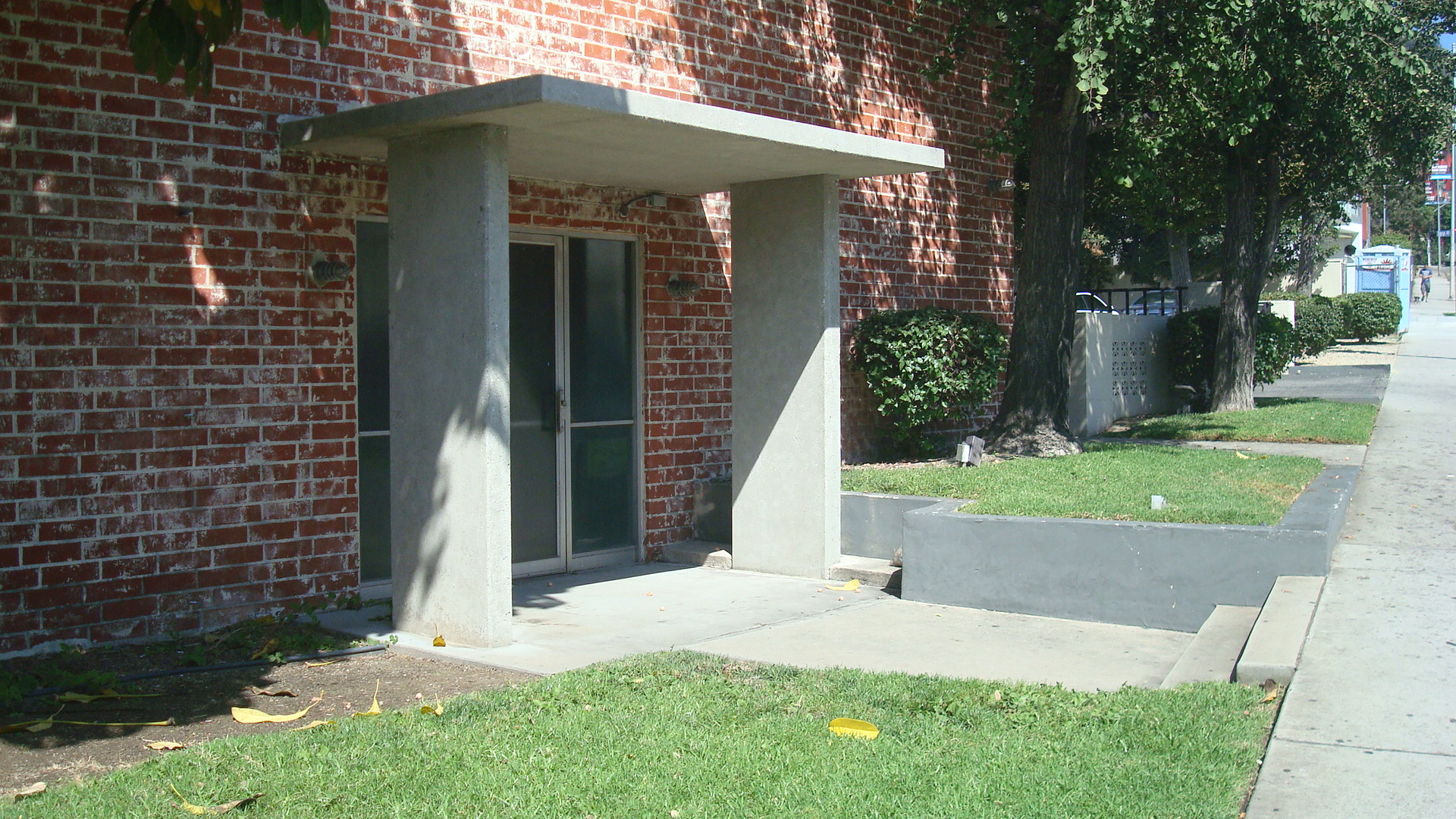
a view of the church from La Brea Ave.

another view of the church from La Brea Ave.

another view of the church from La Brea Ave.

But the structure still retains Elwell’s design, which is a unique and interesting adaptation of the modern style. The building has the dignity appropriate to a church, but without the rhetorical flourishes that make some other sacred structures look pompous. It occupies the site beautifully, with the curved wall at the corner giving way to symmetrical rows of arched windows on either side. And while some churches are basically a façade stuck on a box, Elwell thought about the whole structure, making sure that the rear of the building adheres to the same pattern of curved surfaces and strong verticals.

a view of the church from the parking lot

a view of the church from the parking lot

another view from the parking lot, this time facing La Brea Ave.

another view from the parking lot, this time facing La Brea Ave.

Now here’s the bad news. This building will probably be gone in a year or so. Developers want to build a project called Horizon Hollywood, which will consist of 400 residential units with retail and restaurants on the ground floor. Some people think the renderings look pretty nice. Honestly, to me the project looks like another set of generic mixed-use towers. But here’s a link to a write-up at Building Los Angeles. You can judge for yourself.

Hollywood and La Brea’s High-Rise Complex

Personally I’d rather have the church. But I don’t think there’s much chance of saving it. The building has not been designated as a historic landmark. And I don’t see any way it could be incorporated into the high-rise project.

But they won’t start construction on the Horizon Hollywood for a while, so if you’re interested in architecture you might want to take a trip over there. It’s a striking example of mid-century modern, and one of the few known buildings by Howard G. Elwell.

The larger concern is that it seems like historic buildings are once again being threatened by the current development boom. We’ve already lost the Morgan, Walls and Clements building on La Brea near Melrose. This one is probably a goner. And there’s talk of demolishing the Pacific Theatre on Hollywood Boulevard. For a while it seemed like LA was getting better at preserving the past. But these days I get the feeling that money is more important than history.

[For an an update on the status of the Mosaic Church, click here.]

Hlwd CS Frnt Angle 1

The two black and white photos above come from the Security Pacific National Bank Collection of the Los Angeles Public Library’s photo archive. No photographer is credited.

Hollywood Journal – A Different Kind of Marathon

DSC06891

March, Nineteen Ninety Nine

A weird, ugly, fun day.

I woke up around ten. Played some music. Robert Goulet, Sid Ramin, June Christy.

Around noon I realized that the hangover I’d been hoping to avoid was kicking in. Lying on the living room floor, I could hear car horns honking outside. Had no idea what that was about. I dozed for a while.

Woke up around two and told myself I’d have to move if I was gonna make the three forty show of Fallen Angels at the Beverly.

I walked out onto the street and saw that Cahuenga was a parking lot. Massive traffic jam. Then it hit me. The marathon.

I was thinking I’d catch the two twelve on Hollywood Boulevard, but the marathon meant Hollywood Boulevard was closed. Should I go back home? Skip the movie?

Nah. I didn’t feel too hung over at that point, and I felt like walking a little might clear my head. I decided to go down to Sunset and catch the bus over to La Brea in the hope that the two twelve would be running that part of its route.

But Sunset was closed, too. So I figured, okay, I’ll go down to Santa Monica. Which I did. The only westbound bus that went by was so packed I couldn’t get on it.

So I walked down to Melrose. By this time I wasn’t feeling too good. I leaned against the pole at the bus stop, wishing the bus would come. Another guy who was waiting told me that it was gone arrive in about five minutes.

Ten minutes passed. Fifteen. I finally decided to just go on walking, and it’s a good thing cuz not a single bus passed me in the time it took me to reach La Brea.

From there it was a short walk down to the theatre. As much trouble as it was, the movies were worth the trip. Fallen Angels was wonderful. And I liked Chungking Express much better seeing it a second time.

FA 2

Preserving a Palace

Hlwd Pac Wilc

The Warner Pacific Theatre on Hollywood Blvd. has been boarded up for a while now. The church that was using the auditorium is gone, and the small retail tenants have vanished, too. Apparently the owner, Pacific Theatres, has plans for the building, though no one is sure what they are. Rumors are circulating that the plans may involve structural changes, but at this point nothing specific has been announced.

The fear is that Pacific will make changes to the theatre that would compromise its historic status. The Warner Pacific Theatre is part of the Hollywood Boulevard Commercial and Entertainment District, No. 85000704 on the National Register of Historic Places. This stretch of the boulevard contains a number of movie palaces, and is an important cultural resource for the community. The Chinese, the El Capitan, the Egyptian and the Pantages are all found in this area.

I understand that Pacific needs to make a profit, but it would be a shame if their plans did not make the preservation of the theatre’s historic status a priority. There are numerous examples of classic theatres that have been restored over the years, and many have them are very profitable. The El Capitan has been spectacularly successful since its restoration, and still functions as a first-run theatre. The Pantages has been drawing crowds consistently since it was converted to host live stage shows. The Wiltern is an example of a classic theatre that has become a hot venue for concerts.

Pacific can even look to its own recent history to back up the argument for preservation. In the nineties they announced a plan for the Cinerama Dome that would have included gutting the theatre and putting a restaurant in the lobby. The preservation community was outraged, and to their credit, Pacific listened. They changed course, and built the Arclight, which has become a mecca for movie lovers in the Hollywood area.

For more information about the Warner Pacific Theatre, you can visit the Hollywood Heritage web site by clicking the link below. Choose Preservation Issues from the menu on the left, and then click on Endangered Buildings.

Hollywood Heritage

DSC06196

The Changing Face of Hollywood

Rendering of the proposed Kilroy project at Vine and De Longpre

Rendering of the proposed Kilroy project at Vine and De Longpre

Hollywood is hot. Developers are jumping in with both feet. A number of projects have gone up in the last few years, and many more are in the works. My feelings about the building boom vary greatly, mostly depending on the quality of the individual projects. Some of them will definitely benefit the community, some I can tolerate, and others should never have gotten off the drawing board.

Just recently Kilroy Realty unveiled their plans for a project on Vine, south of Sunset. Over all, I’m inclined to support it. As many people have pointed out, almost anything would be better than what occupies the site now. It’s an underutilized parcel, and Kilroy’s idea of turning it into a media campus makes perfect sense for the area.

A recent shot of the site from the corner of Vine and De Longpre

A recent shot of the site from the corner of Vine and De Longpre

But I do have a couple of reservations….

First, traffic.

Anyone who’s lived in Hollywood for a while can tell you that traffic is steadily getting worse. This is especially interesting when you consider that the Hollywood area lost over 10,000 residents between 2000 and 2010. So even though there are fewer people living in the community, more of them are driving. It seems probable that this is because the low-income residents who were forced out by rising rents have been replaced by more affluent residents who are more likely to own cars. The Kilroy project will be continuing this trend, since the residential units are geared toward people who have money to spend.

For those of you who don’t live in the area, here are a few photos of the northbound traffic on Vine on a Wednesday evening around 7:00 pm. These were taken at the corner of Vine and De Longpre, right across from the project site.

Traffic on Vine, heading toward Sunset.

Traffic on Vine, heading toward Sunset.

Traffic on Vine, coming from Fountain.

Traffic on Vine, coming from Fountain.

Same perspective as previous shot.  Note that cars are not entering the intersection even though the light is green.

Same perspective as previous shot. Note that cars are not entering the intersection even though the light is green.

This project will definitely be putting more cars on the road. What really concerns me is that it’s just one of many projects being considered for the Hollywood area. My point is that the City of LA needs to do a cumulative traffic study to plan for all this growth. The City argues they don’t have the money, which is ridiculous. They don’t have a problem throwing away millions of dollars on legal fees to defend projects that never should have seen the light of day, but they won’t spend a relatively modest sum to plan for a sustainable future. If Garcetti wants to push for big growth in Hollywood, he needs to start by springing for a cumulative traffic study that will help to lay the groundwork.

Second, the residential component of the Kilroy project is definitely catering to the crowd that makes six figure salaries. Again, it’s not so much that I have a problem with this specific project, but the vast majority of the residential units that have been built in the area over the past ten years are geared towards the rich. You can’t move into places like the W, Blvd. 6200 or the Avenue unless you have money to burn. This push to make Hollywood a playground for the wealthy is driving rents up throughout the community. It’s not just the low-income working class families that are being forced out. The artists, musicians and writers who used to live in Hollywood are having to look for less expensive places. The desperate drive for gentrification is great for bringing in the trust fund kids who want to party, but it’s pushing out a lot of the people who really enriched the local culture.

Over all, Kilroy seems to be making an effort to respect the community. This project is planned more or less within the current zoning laws, though the residential tower does go a little high. They’re including a fair amount of open space. It makes sense that they’re catering to media/entertainment companies, and, according to the LA Times story, there is a demand for office space in Hollywood.

So my problem isn’t with this project itself, but the trend that it’s a part of. Hollywood is becoming more expensive and more congested. The mayor doesn’t care. He’s got a mansion in Hancock Park and a driver that takes him wherever he wants to go, both of which are paid for by the taxpayers. So naturally Garcetti wouldn’t be concerned about housing prices and traffic, since he doesn’t have to deal with those problems.

Unfortunately, the rest of us do.

If you want to take a look at the LA Times article on the Kilroy project, the link is below.

Kilroy Unveil Plans for Complex in Hollywood

Hollywood Journal – Preservation Prevails

The Cinerama Dome under construction in 1963.

The Cinerama Dome under construction in 1963.

I spent a good part of 1998 freaking out over Pacific Theaters’ plans for “renovating” the Cinerama Dome. The initial proposal involved gutting the auditorium, removing the curved screen and putting a fast food restaurant in the lobby. The film and preservation communities protested loudly. To their credit, the people at Pacific met with the opposition and made a number of important concessions.

If you’re not into film, and if you don’t care about Hollywood history, you might be mystified by the uproar. So let me offer a little background….

Cinerama was a process that revolutionized the production and exhibition of films back in the early fifties. Three strips of film were projected in perfect synchronization to create the illusion of a continuous widescreen image, accompanied by stereophonic sound playback. The image was shown on a huge curved screen to produce an early version of what we now call immersive entertainment.

In the early sixties, Cinerama, Inc. unveiled an ambitious plan to create hundreds of Cinerama theatres based on a radical new model. They would construct geodesic domes using prefabricated panels, which would supposedly allow them to build a theatre in half the time and for half the cost of using conventional methods. They purchased a site on Sunset Blvd. in Hollywood and hired the firm of Welton Becket and Associates to design what would become the Cinerama Dome.

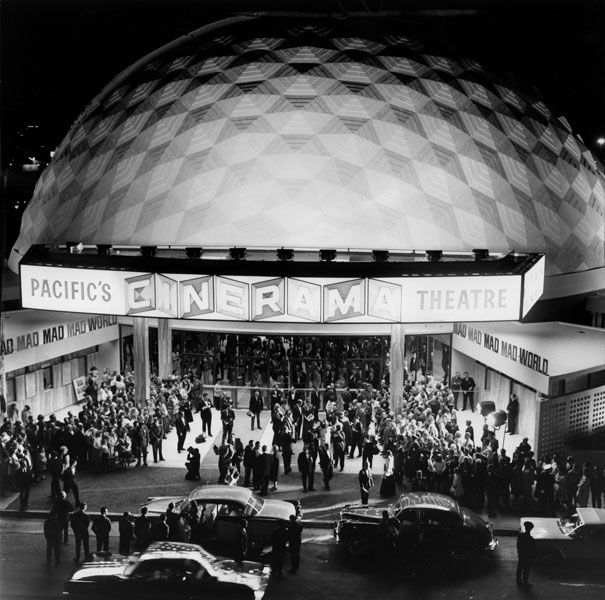
The premiere of It's a Mad, Mad, Mad, Mad World at the Dome in 1963.

The premiere of It’s a Mad, Mad, Mad, Mad World at the Dome in 1963.

Becket’s company was one of the major architectural firms in the city at that time, and played a large part in setting the look and tone of mid-century Los Angeles. To my mind the Dome is something of a companion piece to one of their earlier signature creations, the Capitol Records Building, which is just a few blocks away on Vine. Together these two icons helped to define space age architecture.

Of the theatres that were constructed to show films in the Cinerama process, only a handful are left today. The Dome is a unique creation designed by one of the most important architectural firms in the city’s history. That’s why so many of us got so crazy when we saw the initial plans to renovate it. I will always be grateful to Pacific for listening to the community and preserving the Dome.

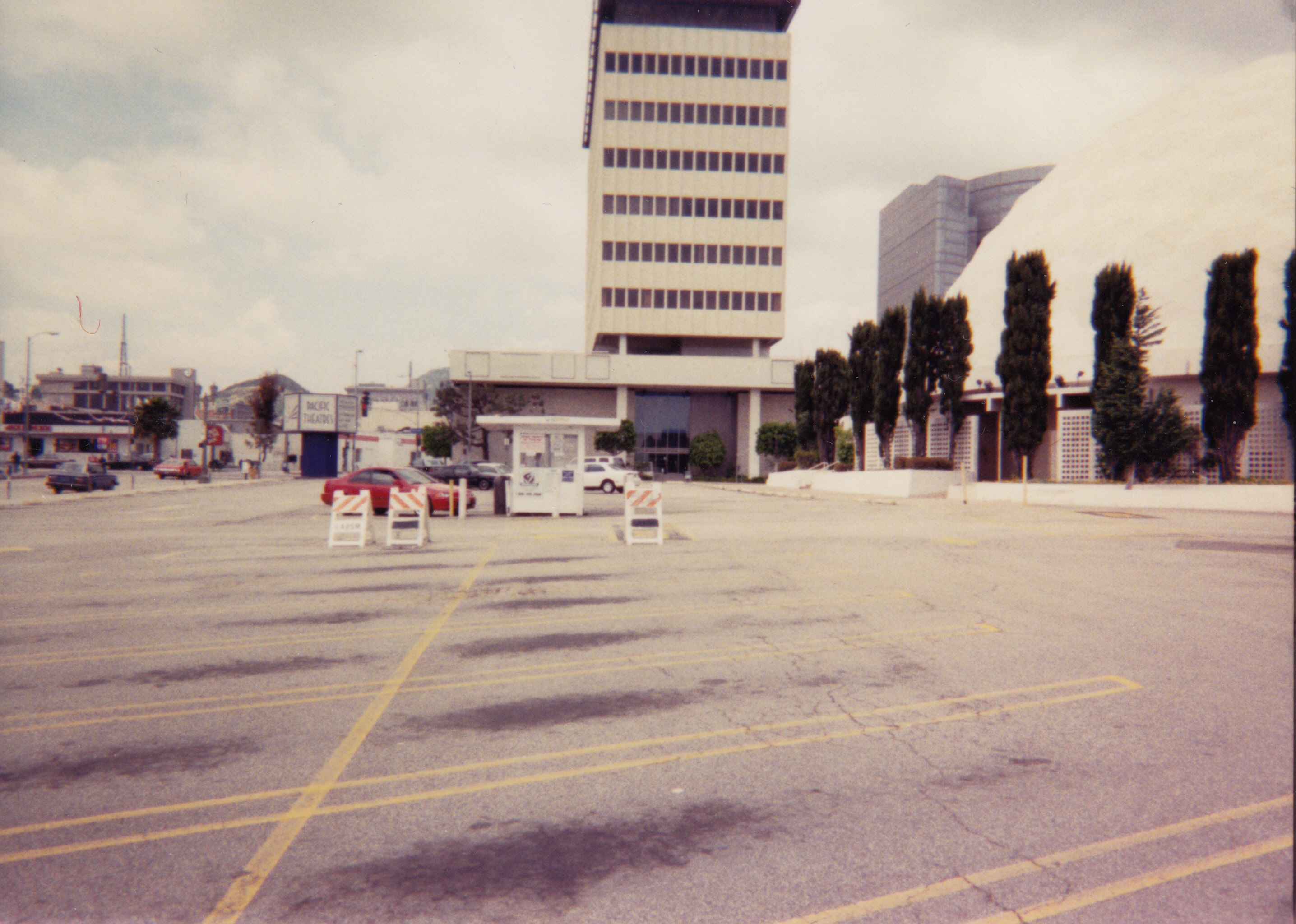
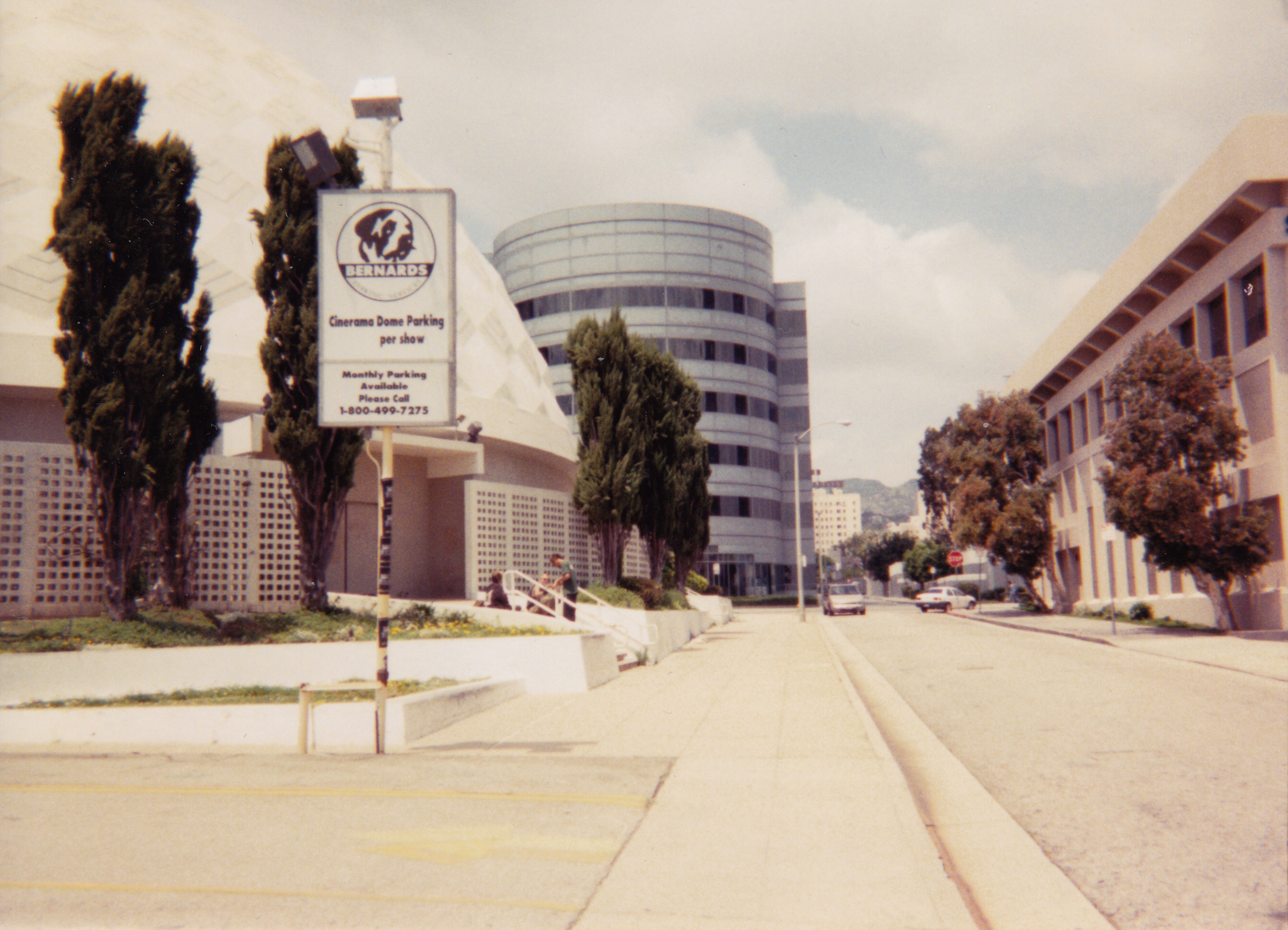
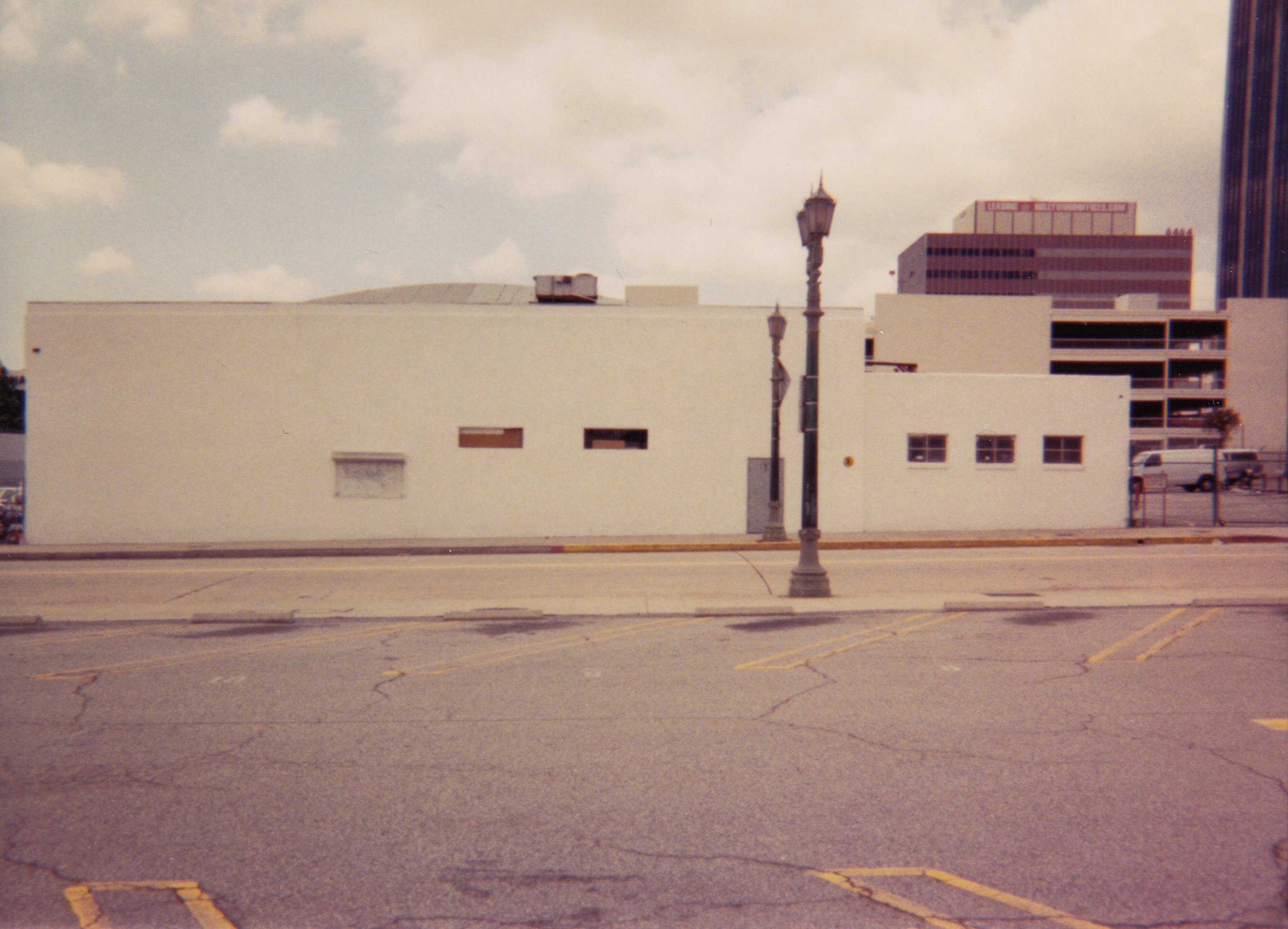
The two pictures above are from the Los Angeles Public Library photo archive. The first shows the dome under construction. It was taken by Howard D. Kelly in 1963. The second shows the premiere of the film that the Dome opened with, It’s a Mad, Mad, Mad, Mad World. It was also taken in 1963, but no photographer is credited. Below are some photos I took of the Dome and the area surrounding it back in 1998. Sorry that the quality isn’t better. They were taken with a disposable camera, and have faded over the years. A couple of photos were taken from Morningside Court, which used to go through to De Longpre, but was closed off with the construction of the Arclight parking structure.

February, Nineteen Ninety Nine

For weeks I’ve been meaning to write abut the latest on the Cinerama Dome. Here it is.

Apparently the people from Pacific Theaters sat down and talked with the preservation people, and the end result was Pacific gave up a lot of the changes they were going to make. As I recall, these are some of the things pacific agreed to.

The entrance will remain at the front of the theatre.

The layout of the seating will stay basically the same, though they will be putting new seats in.

They won’t alter the ceiling of the auditorium.

And —

They’ll keep the curved screen.

I’m actually really grateful to Pacific for giving in on all this stuff. I doubt they understand why the Dome is such a great piece of architecture, so from their point of view the preservationists are going crazy over nothing.

Of course, we still don’t know what the Dome is gonna look like when they’re through. But at this point I’m cautiously optimistic.

The front of the Cinerama Dome in 1998.

The front of the Cinerama Dome in 1998.

Screen walls and landscaping on the periphery of the Dome.

Screen walls and landscaping on the periphery of the Dome.

A shot from the parking lot, looking north to Sunset.

A shot from the parking lot, looking north to Sunset.

A shot of Morningside Court, looking toward Sunset.

A shot of Morningside Court, looking toward Sunset.

Another shot of Morningside Court, this time looking in the opposite direction towards De Longpre.

Another shot of Morningside Court, this time looking in the opposite direction towards De Longpre.

This was taken from the parking lot behind the Dome, facing west.  The site just across the street is where Amoeba now stands.

This was taken from the parking lot behind the Dome, facing west. The site just across the street is where Amoeba now stands.

This shot was taken facing the opposite direction, now looking across the parking lot towards Morningside Court.

This shot was taken facing the opposite direction, now looking across the parking lot towards Morningside Court.

Hollywood Journal – Relaxing at the Roosevelt

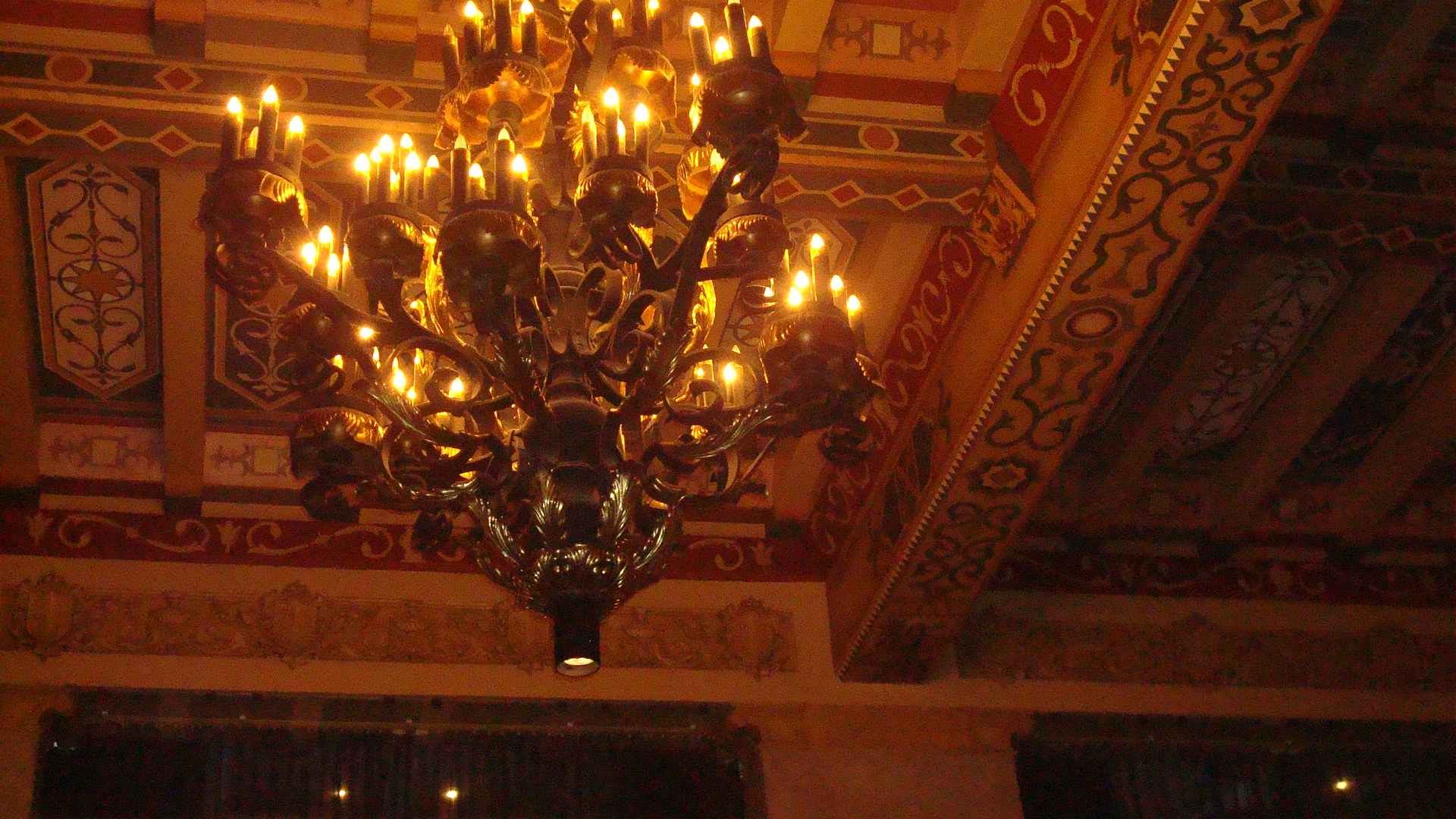
Another visit to the lobby of the Roosevelt Hotel. I used to like hanging out there back in the nineties because the lobby was big and dark and quiet. It was a great place to chill, in large part because it was usually pretty empty. Since then it’s been remodelled, and they’ve managed to attract a young, hip crowd, so the place is a little more lively these days. I’m glad they’re doing more business, but I spend less time there now.

The photos were taken recently, and while the lobby is substantially the same, it has changed some in the past fifteen years. And as I’ve mentioned before, in transcribing these entries from my journal I’ve left the errors alone. The correct spelling for the name of the hotel is “Roosevelt”.

January, Nineteen Ninety Nine

Today I was on Hollywood Boulevard. I think it was around four o’ clock. And I decided to go to the Rooseveldt. Have a beer. Kick back. It’s been a while since I stopped in there.

The lobby was pretty empty. I walked up to the bar. Ordered a beer. Then strolled over to the table by the piano and sank into a big, soft chair.

It was so nice. So quiet. I sat there looking at the patterns on the ceiling. I finished my beer and thought, what the hell, why not have another.

Rsvt Chand

The guy comes in to play the piano. I ask him if he knows any Mancini. He says not a lot. I mention Charade. No dice. He throws out a few titles. Pink Panther. Baby Elephant Walk. I’m disappointed but I settle for The Pink Panther.

There are quite a few people in the lobby by now. A man with a cell phone sitting across the table from me. At the next table over a woman reading a paperback. And there are a couple of guys sitting to my left. One of them is talking about Barry Fitzgerald. He’s trying to name movies Fitzgerald was in. The man with the cell phone jumps into the conversation. He offers Going My Way. Then he says Ten Little Indians. I want to correct him, he’s thinking of And Then There Were None. But these days I’m reluctant to start chatting with strangers.

So they go on talking. The guy who was going on about Barry Fitzgerald says he works in movies. I think he said either as an actor or a stunt man. The guy with the cell phone says he’s a producer. In the exchange that follows I’m obviously not setting down what was said verbatim. I’m just trying to give an outline of the conversation.

The actor (stunt man?) asks,

What did you produce?

The producer answers,

The Buddy Holly Story.

At this point I can’t restrain myself.

You produced The Buddy Holly Story? I say. I liked that movie.

I never thought it’d make any money, the producer says.

What else did you make?

Diner.

That was a cool movie.

Who was in Diner, asks the actor.

Oh, wow, a lot of people. Mickey Rourke.

And Kevin Bacon, says the woman with the paperback.

Now I know there are a lot of people in this town who will claim to have produced, directed, written all sorts of famous films. Who knows if this guy was legit. But I think I was on my third beer by that time and obviously not feeling very skeptical. The guy probably could’ve said he produced Dinner at Eight and I would have believed him.

The conversation moves on to other subjects. Italian food in New Jersey. Mexican food in LA. I ask the pianist for something by Gershwin. He plays Someone to Watch over Me.

I felt pretty good when I left.

Rsvt Chat

Art Is Everywhere

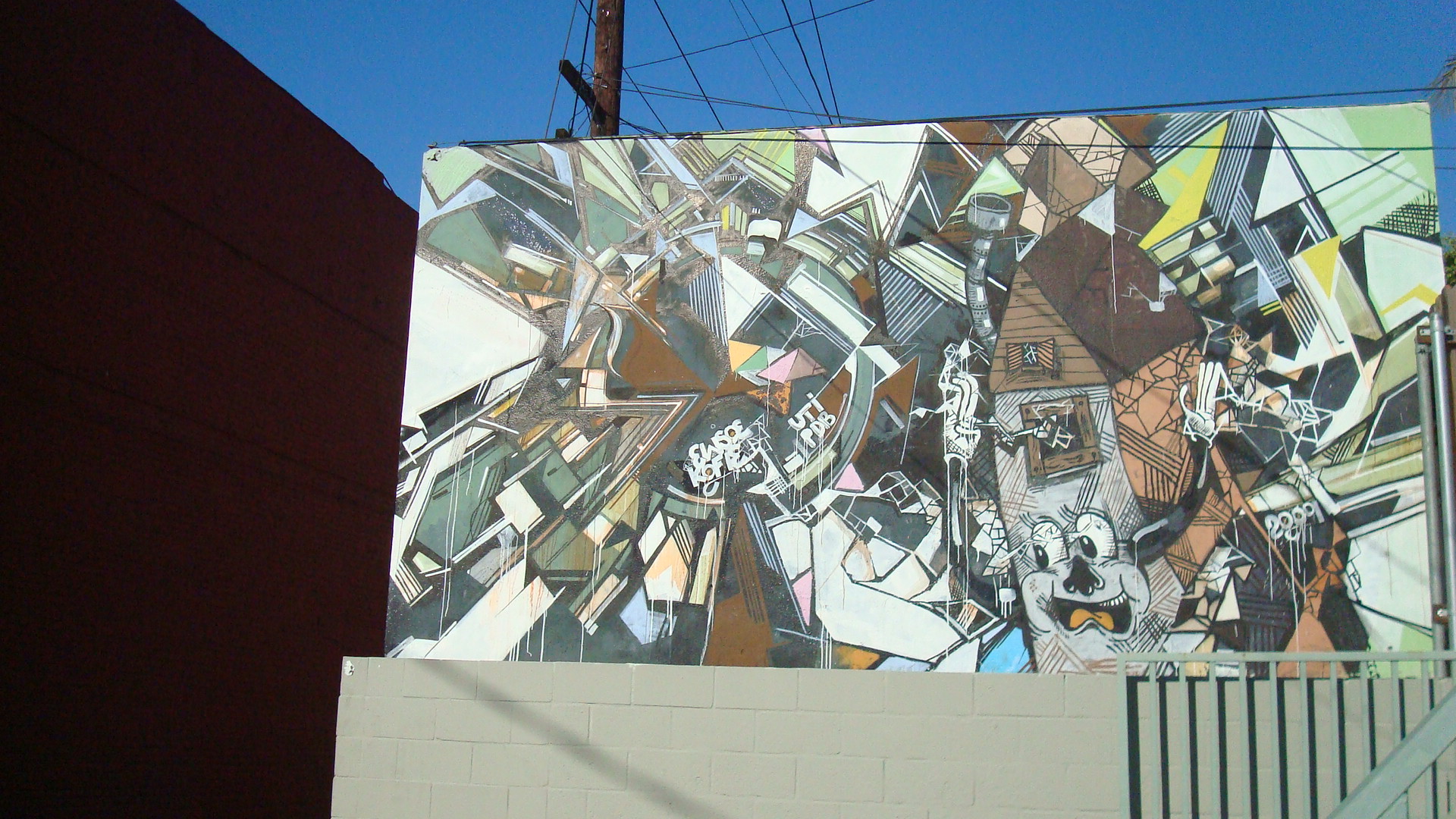
Sunset & Hillhurst, in the alley behind the Vista

Sunset/Hillhurst, in the alley behind the Vista

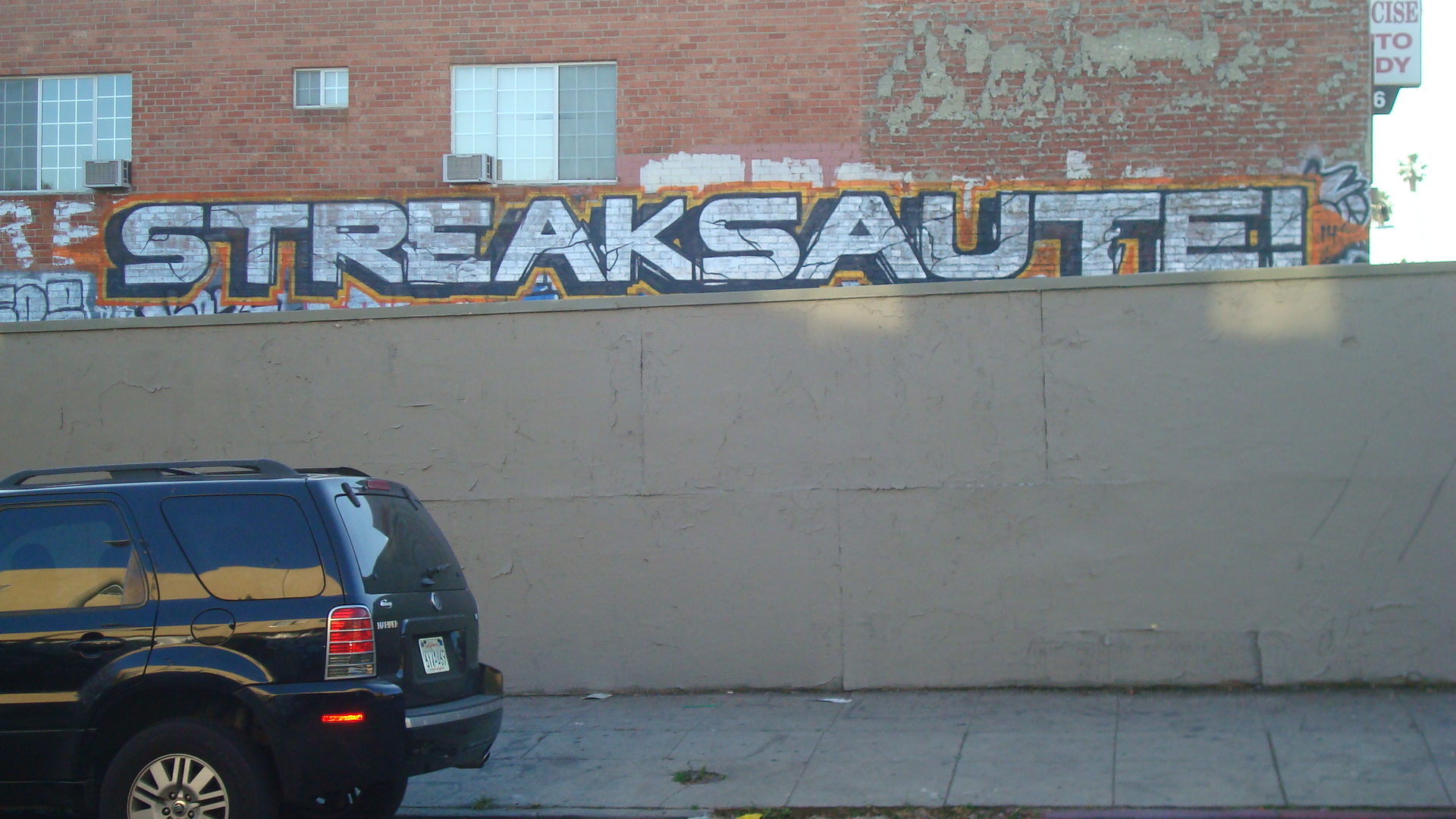
In most major cities, we can see art all around us. Any blank wall can end up being a canvas for a kid with a can of spray paint. I’m not talking about the taggers who just scrawl their name anywhere they can find the space. I’m talking about artists who have an eye and a style and maybe even something to say.

Here are some shots I’ve taken of street art in the Hollywood area. They cover a wide range, from paintings by professional artists who’ve been commissioned to decorate a building, to kids working on a blank wall in a vacant lot in the middle of the night. Below each photo I’ve given the approximate location, and I’ve included the artist’s contact info when it was available.

Hollywood & Normandie

Hollywood/Normandie

Hollywood/west of Normandie

Hollywood/west of Normandie

Hollywood/St. Andrews

Hollywood/St. Andrews

Here’s a guy who knows how to get attention.

Hollywood/St. Andrews

Hollywood/St. Andrews

But, as you can see below, he’s not the only person who’s been working on that wall.

Hollywood/St. Andrews

Hollywood/St. Andrews

Hollywood/Harvard

Hollywood/Harvard

I love this one because it’s totally ephemeral. Drawn in chalk, it’ll be gone the next time it rains. That is, if it ever rains in LA again.

Hollywood/Western

Hollywood/Western

Hollywood & Western

Hollywood/Western

Artist’s Web Site: ELMAC

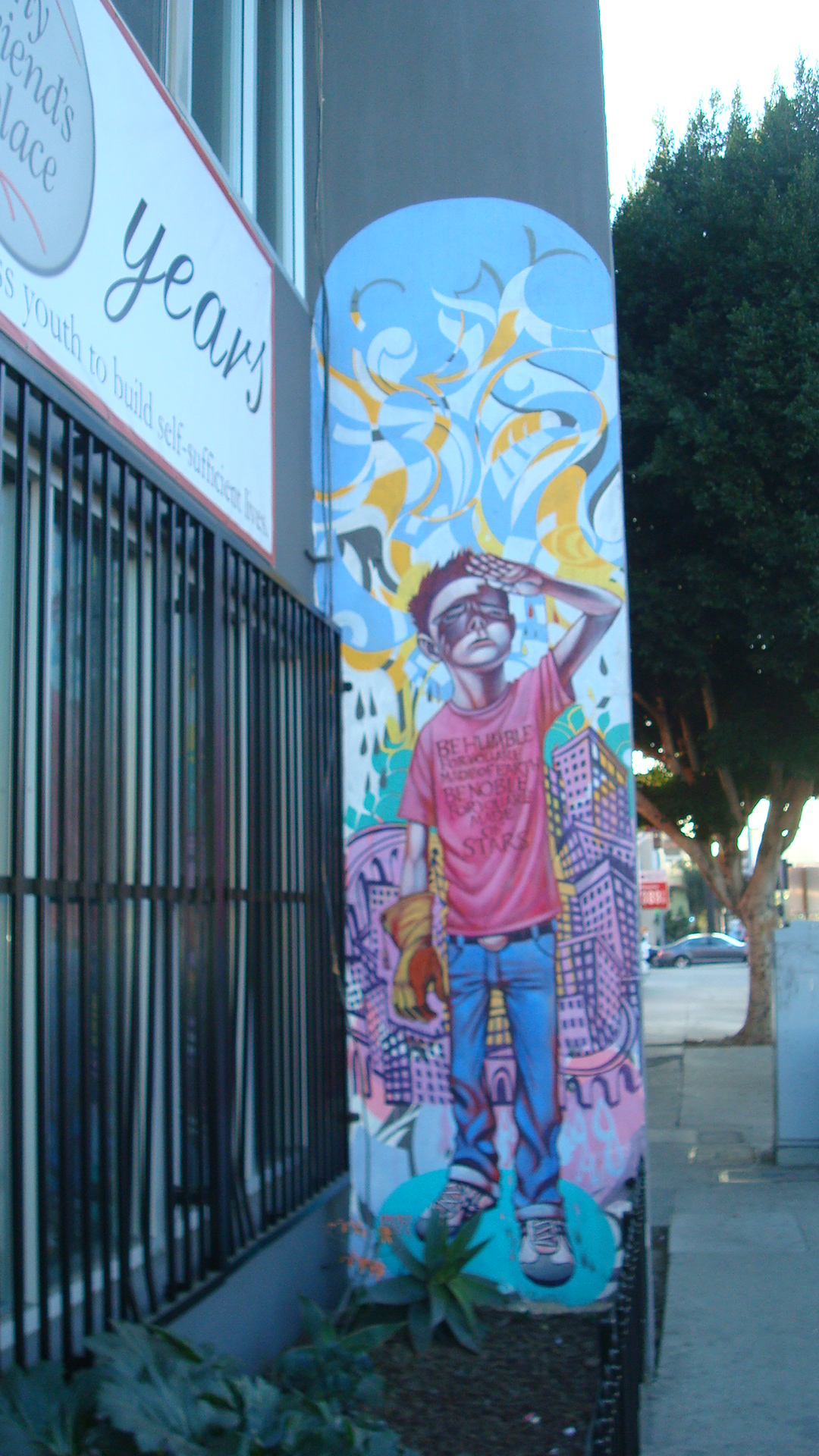
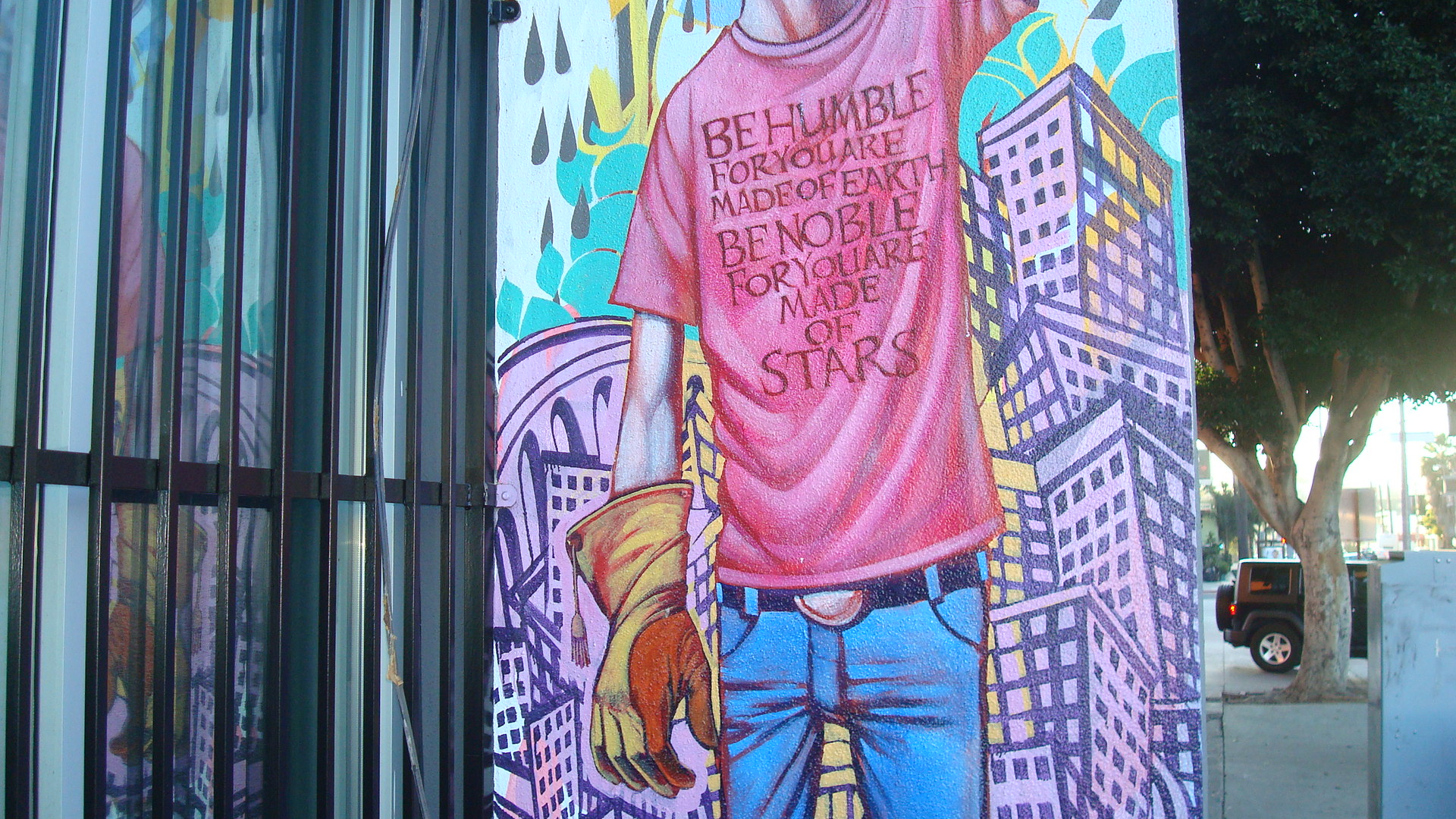
The following images are painted on a building that sits right next to the Hollywood Freeway. I later learned that this was My Friend’s Place, an organization that helps homeless youth. They provide meals, and also assist young people with health care and housing. Sounds pretty cool. For more information, click here.

Hollywood/Hollywood Freeway

Hollywood/Hollywood Freeway

Below is a closer look at the words on the boy’s shirt.

same as above

same as above

same as above

same as above

Artist’s Web Site: Bumblebee

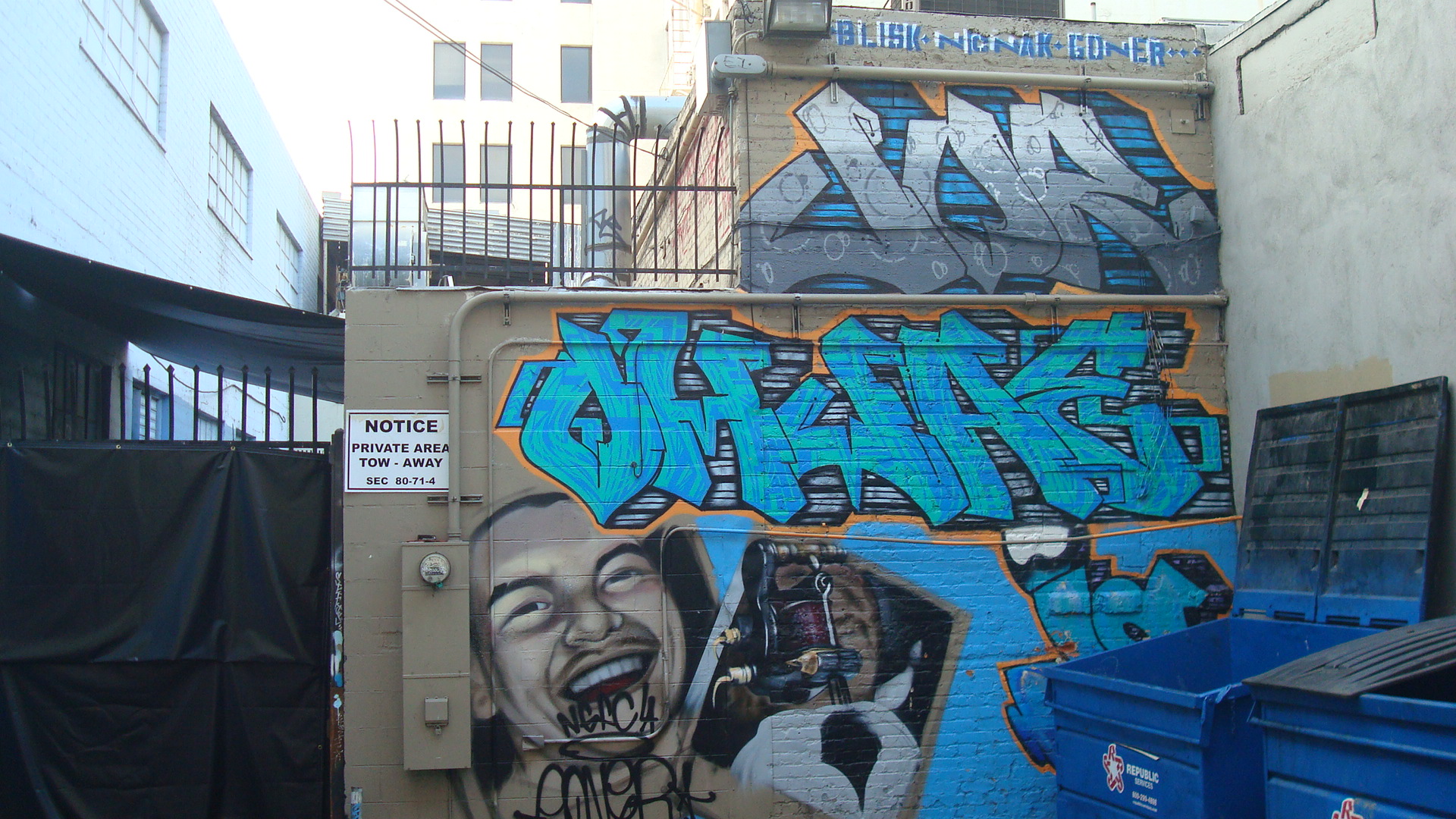
Hollywood/Highland, behind First National Bldg.

Hollywood/Highland, behind First National Bldg.

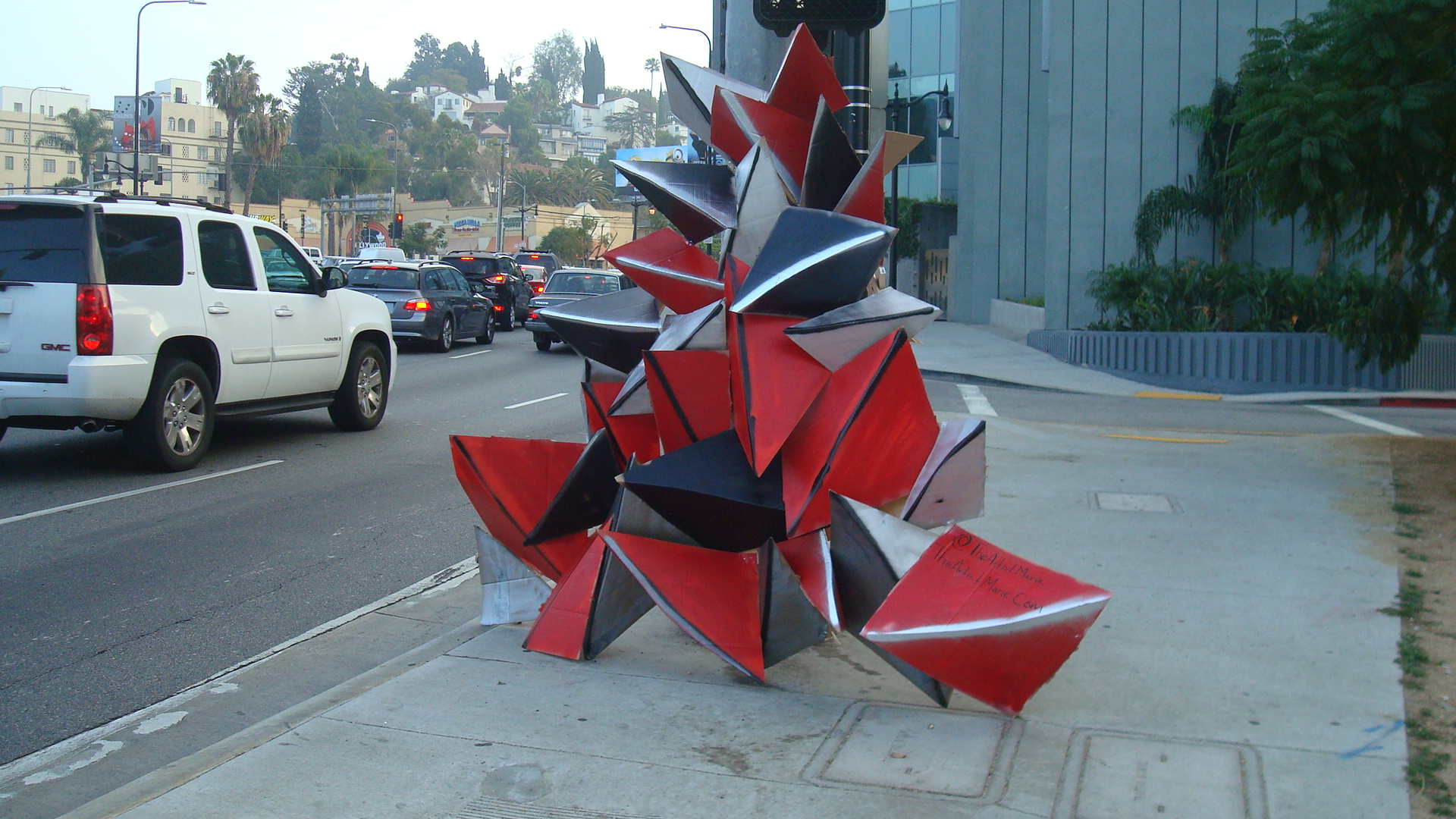
I was walking to the subway one morning and saw this at Highland and Franklin. It didn’t hold up for very long, but it was cool while it lasted.

Highland/Franklin

Highland/Franklin

Artist’s Web Site: The Artist Marie

This image seemed like a good one to close with.

Highland/Franklin, in front of the mini-mall

Highland/Franklin, in front of the mini-mall

Artist’s Web Site: Skechy

Sunset Rising

The new Emerson College campus on Sunset Blvd..

The new Emerson College campus on Sunset Blvd..

Sunset Boulevard is changing rapidly. Developers sense there’s big money to be made, and the City Council is rushing to approve their wish lists with as much speed and as little oversight as possible. Let’s take a look at three projects that are in various stages of completion….

A view of the Emerson campus at street level.

A view of the Emerson campus at street level.

The most interesting of these projects, and in my view the one most likely to produce real benefits for the community, is Emerson College. The school’s new LA campus was designed by Morphosis, and while I’m not a huge fan of the firm’s approach, I have to say this is a nice piece of work. By far the most striking building on the streetscape, it certainly calls attention to itself, but without being ostentatious or garish. It’s a sophisticated modern structure that also manages to be playful. It’s been a while since anyone built anything this cool in the Hollywood area.

A view from a terrace at the entrance to the campus.

A view from a terrace at the entrance to the campus.

Also, Emerson will be bringing teaching and administrative jobs to the community. The City Council insists that development is necessary to reduce unemployment, which sounds logical, but most of the projects they approve will only create low-paying service sector jobs. They seem to feel Hollywood residents should be satisfied with waiting tables and vacuuming hotel rooms. Anyway, Emerson just opened in January and is located at the corner of Sunset and Gordon.

A new residential/retail complex across from the Emerson campus.

A new residential/retail complex across from the Emerson campus.

Right across the street is yet another mixed-use, residential/retail tower. This seems to be the kind of project that developers can’t get enough of right now, high-end housing combined with ground floor retail. By combining the two they can claim they’re addressing the traffic problem by making it easier for people to shop where they live. In reality, I don’t see any evidence that this approach is reducing congestion in the LA area. But there are plenty more projects like this in the works. At least this one looks kind of nice.

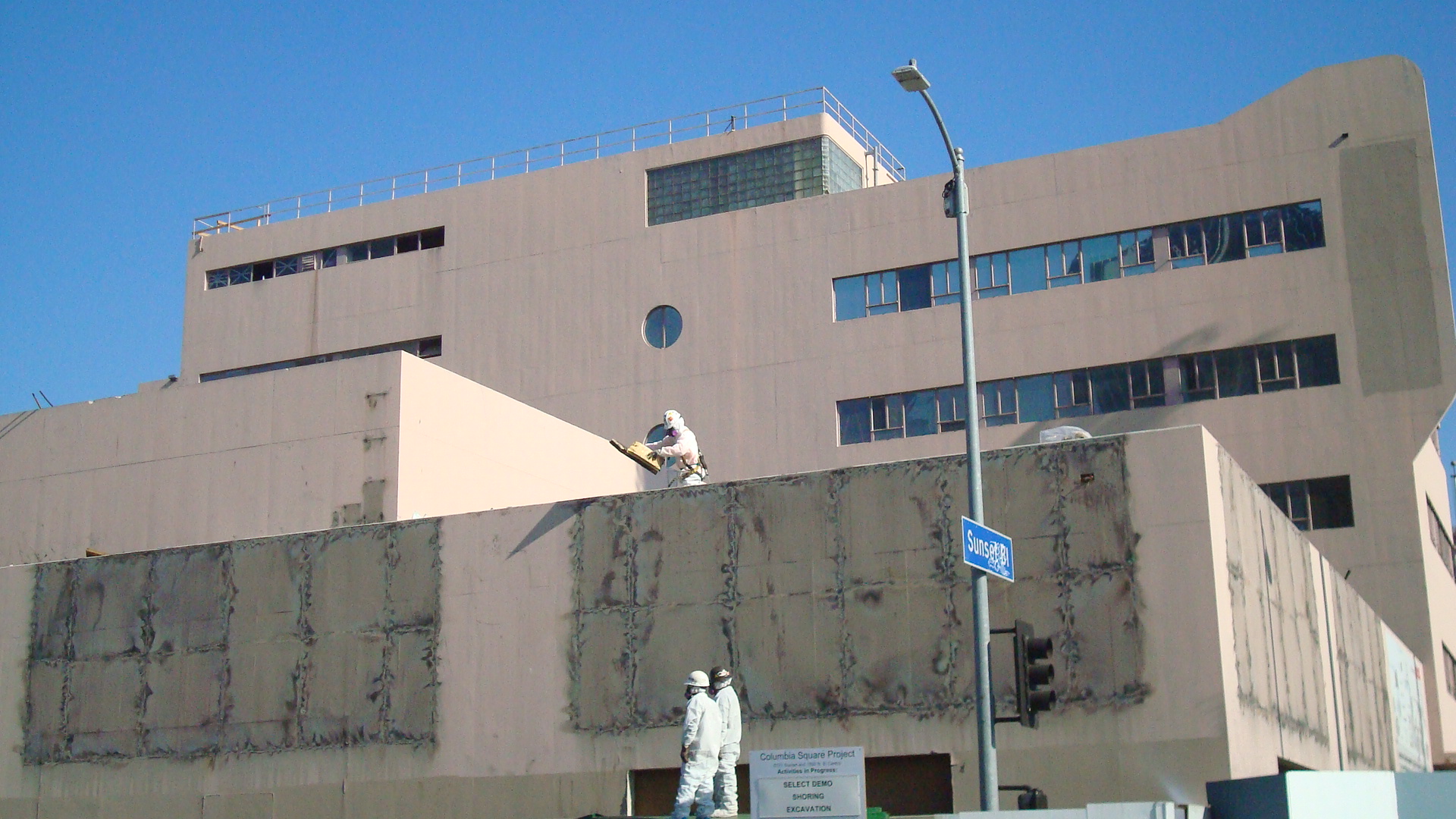
The biggest thing going up on Sunset right now is Columbia Square, which will be a massive mixed-use project that incorporates the old CBS Studios. You probably won’t be surprised that it promises still more high-end housing with still more ground floor retail. They’re also billing it as “Hollywood’s New Creative Media Campus”. I’m not sure exactly what that means, but hopefully the finished product will deliver more than I expect. You can click here for more details. At least they’re preserving the CBS building, so I guess I should be thankful for that. To read more about the history of CBS Studios, click here.

Workers atop the old CBS Studios.

Workers atop the old CBS Studios.

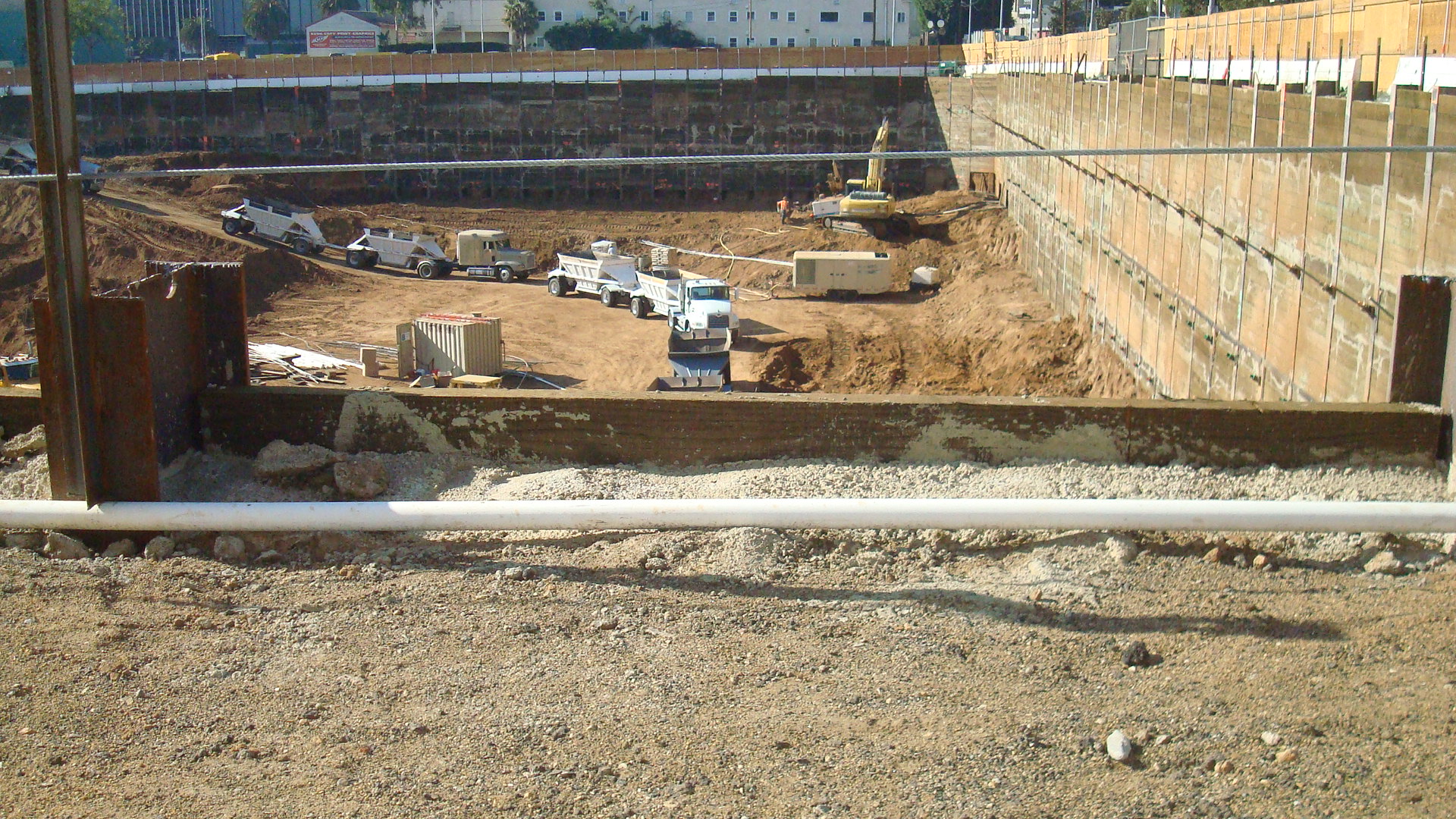
Columbia Square will occupy a full city block. Right now workers are busy inside a massive excavation as they prepare the foundation. There’s something about the scale of these enormous projects that’s kind of overwhelming. I look down into this huge pit and see hundreds of workers, I see trucks, tractors and cranes. A whole city block is being transformed.

Workers preparing the foundation for the Columbia Square project.

Workers preparing the foundation for the Columbia Square project.

Another shot of workers preparing the foundation.

Another shot of workers preparing the foundation.

Here are a few more images….

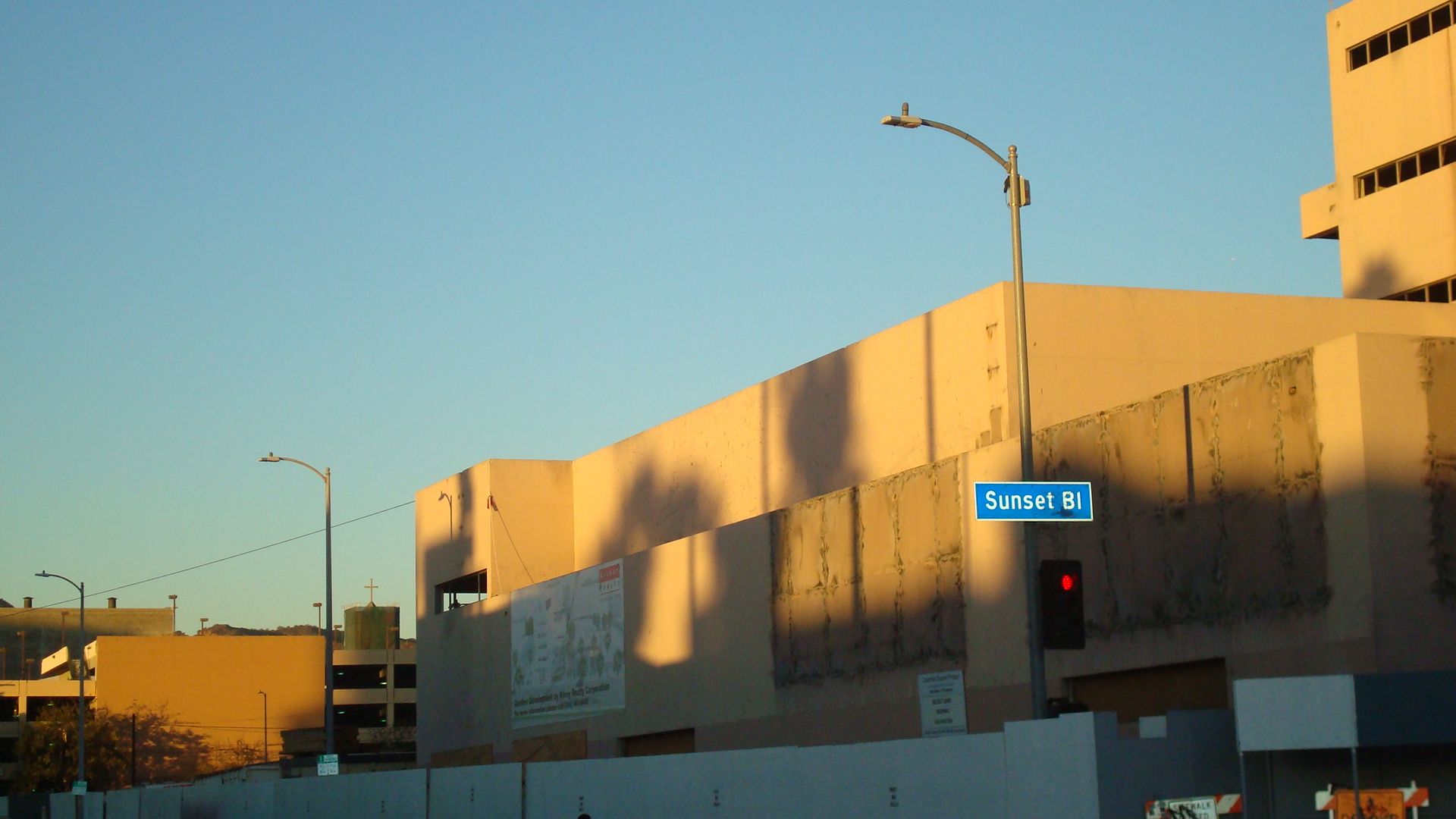
A side view of the site, facing west.

A side view of the site, facing west.

Another side view, again facing west.

Another side view, again facing west.

A shot of CBS Studios taken in the late afternoon.

A shot of CBS Studios taken in the late afternoon.

You may wonder why I included these, since they’re mostly shots of the sky above the project. It probably seems like just a lot of empty space. But that’s what I wanted to capture. When Columbia Square is finished, it will rise twenty stories above street level.

All this space will be gone.

Building Blitz

LA will be changing dramatically in this new year. We’re going to see a wave of construction that will transform the city, for better or worse. The mayor and the city council are decidedly pro-development. They will tell you it’s because they’re looking to the future and trying to create jobs. It might also have something to do with the massive amount of campaign cash that local politicians have received from developers.

But I don’t want to be totally negative. Development is necessary. And change can be good. It’s the beginning of the new year. Let’s try to accentuate the positive.

DOWNTOWN

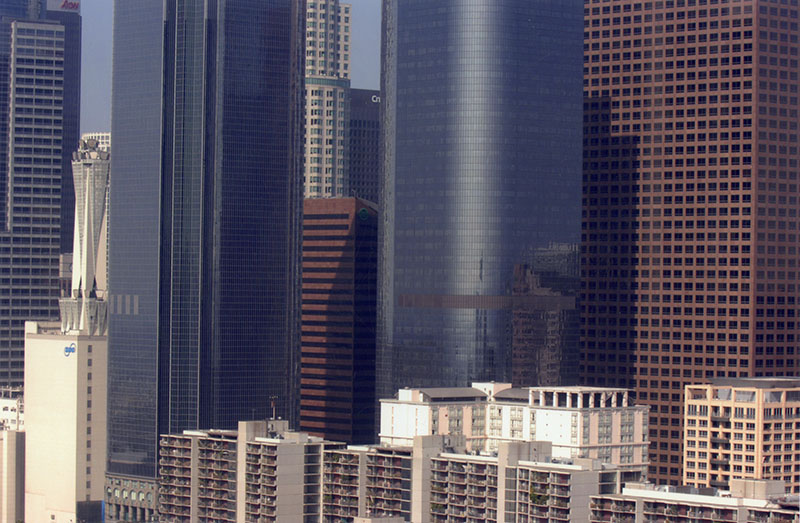
Downtown will definitely be getting more dense.

Downtown will definitely be getting more dense.

A wave of construction is hitting Downtown LA. There are a staggering number of projects in the works, and the landscape is going to change considerably. For an overview, check out this summary in the Downtown News.

Downtown Development

The project I’m most excited about is The Broad. The building looks cool, the collection is impressive and admission will be free. What more could you ask for? A link to the site is below, but like the building, it’s still under construction.

The Broad Museum

HOLLYWOOD

More cranes on the horizon for Hollywood?

More cranes on the horizon for Hollywood?

These huge cranes have become a familiar sight in Hollywood. There are a number of buildings going up right now, and many more in the works. Under construction at the moment are Blvd 6200, Columbia Square, Emerson College, and a ton of new residential and retail space on La Brea.

But the projects that may have the most significant impact are the expansions planned by Paramount and Universal Studios. I know Universal isn’t located in Hollywood, but their “Evolution Plan” will certainly impact the Hollywood area, both in terms of jobs and traffic. Click on the link for more info.

NBC Universal Evolution Plan

Next is a link to an article in the New York Times which talks about both the Paramount and Universal projects.

Bold Growth Plans at Hollywood Studios

SANTA MONICA

An image of Santa Monica back when it was less crowded and less expensive.

An image of Santa Monica back when it was less crowded and less expensive.

The picture you see above doesn’t represent Santa Monica as it is today. It shows the Santa Monica I knew when I was growing up, a sleepy, laid back community where rent was cheap and traffic was light. But those days are gone. While the residents staunchly supported a slow growth policy thirty years ago, today the city council is enthusiastically pro-development. There have been some complaints from locals, but that hasn’t stopped the council from approving a slew of projects. The first article, from the LA Times, is an overview. The second, from The Architect’s Newspaper, is about a group that wants the council to slow down.

Santa Monica Bracing for Growth Spurt

Wealthy Coalition Demands Halt

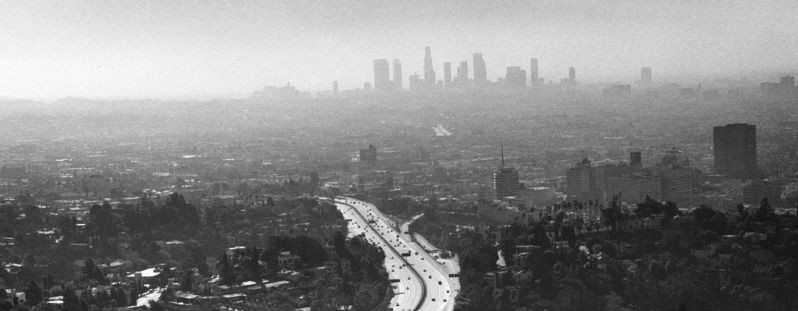
The photo of skyscrapers on Bunker Hill is by Gary Leonard, and comes from the Los Angeles Public Library’s on-line archive. The image of Hollywood was taken by me. The photo of Santa Monica was taken by Anne Laskey, and also comes from the LAPL archive.

High-Rise Cynicism

Eric Garcetti's vision for the future of Los Angeles

Eric Garcetti’s vision for the future of Los Angeles

It should come as no surprise to anyone that last week a judge ruled that the Hollywood Community Plan Update (HCPU) was fatally flawed. From the beginning, the plan was basically a tool to overrule those who want responsible, sustainable growth and give carte blanche to developers. It would have allowed the construction of skyscrapers fifty stories high, without any serious consideration given to how such high-density development would affect traffic, infrastructure and emergency services. The Hollywood Chamber of Commerce seems to believe that Hollywood should become a west coast version of Las Vegas, with massive high-rises filled with luxury condos and trendy clubs on every corner. Sadly, rather than choosing to protect the interests of local residents, the Mayor and the City Council jumped on board to promote this destructive plan.

Fortunately, they ran into a judge that actually expected the city to comply with state law. LA County Superior Court Judge Allan J. Goodman said that,

….forging ahead in the processing of the HCPU, EIR and related documents in this case based on fundamentally flawed factual premises has resulted in a failure to proceed in the manner required by law.

The biggest problem was that the plan was based on a population estimate that was obviously wrong. In preparing the Environmental Impact Report for the HCPU, the City claimed that approximately 224,426 people lived in the Hollywood area. They got this number, an estimate, from the Southern California Association of Governments (SCAG). Using this figure, the City argued that Hollywood was growing and would continue to grow, meaning that high-density development was the only solution.

But the judge points out that the city didn’t produce any documentation from SCAG to support this figure. On the other hand, the groups fighting the HCPU took a look at the US Census, which says that in 2010 Hollywood’s population was actually about 198,228. Hollywood has actually lost over 12,000 residents since 2000. While the Census info wasn’t available when the Draft EIR was originally prepared, it was available before the City Council voted to approve the plan. But they weren’t going to let the facts stand in their way. The City also insisted that Hollywood was going to experience substantial growth over the next twenty years, but in fact growth has slowed considerably in Los Angeles, and right now there’s no reason to expect that will change in the near future.

Community groups were alarmed at the problems with the plan, and asked the City to revise it. The City refused, and voted to adopt the HCPU in spite of strong opposition by many Hollywood residents, leading the judge to conclude,

The evidence in this record strongly supports petitioners’ contention that there has been an insufficiently-reasoned rush to completion of the EIR process, and that the process was administered in a way that is clearly contrary to well-established laws as interpreted by the appellate courts.

It’s not surprising to see developers running high-pressure campaigns to push their projects through. That’s what they do. But our elected officials are supposed to be protecting our interests. They’re supposed to be serving us. Instead, Garcetti and the City Council approved a plan that they knew was seriously flawed from the beginning. They knew the population figures were wrong. They knew the plan didn’t adequately consider alternatives. They knew there were serious questions about infrastructure and emergency services. They knew the plan didn’t follow state law. Then, as if to prove how completely cynical they are, to show us how little they care about serving the citizens, they spend our tax dollars fighting to ram the HCPU down our throats, when they knew it should never have been approved in the first place.

No wonder voter turnout is so low in LA. It’s easy to see that our elected officials have complete contempt for us.

The image above is from Bladerunner, directed by Ridley Scott, photographed by Jordan Cronenweth, production design by Lawrence Paull, art direction by David Snyder.