Culture Is Community

MM 000 Open Energy

Years ago I worked at The Museum of Contemporary Art (MOCA) in Downtown. I loved working there, because it meant always being around art. That was very cool. But after a while, I started to realize there was a problem with museums. Just by their nature, they put barriers between the art and the audience. For instance, MOCA had a Rauschenberg combine in its collection. When it was first shown back in the 50s, it was an interactive piece and the artist expected people to touch it. But by the time it was acquired by the museum, the combine was worth over a million bucks, and if you tried to touch it, the security guard would freak out. Unfortunately, that’s what happens when artists become icons and their work ends up in institutions.

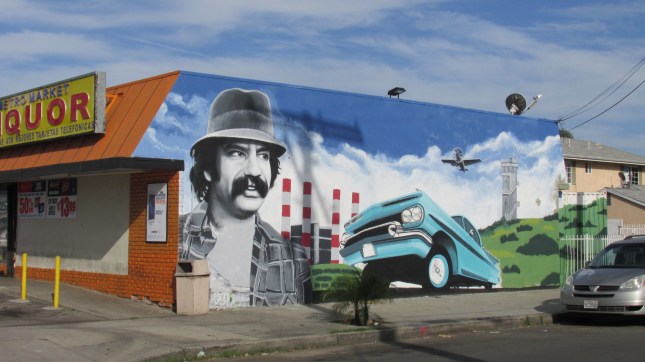
So it’s really cool when artists make work that’s always accessible to its audience. Art that’s part of the daily life of the community. That’s why LA’s murals are so important. They’re not sitting in a temperature controlled gallery surrounded by security guards. They’re out there on the street, in the midst of the community. And Pacoima is one community that’s extremely lucky in this respect. The streets there are loaded with murals. They come in all sizes, shapes and colors. They can be poetic, patriotic or political. Many feature pop culture icons, but some of them are all about ideas.

MM 005 VN SF EDITED

Van Nuys Boulevard at San Fernando Road

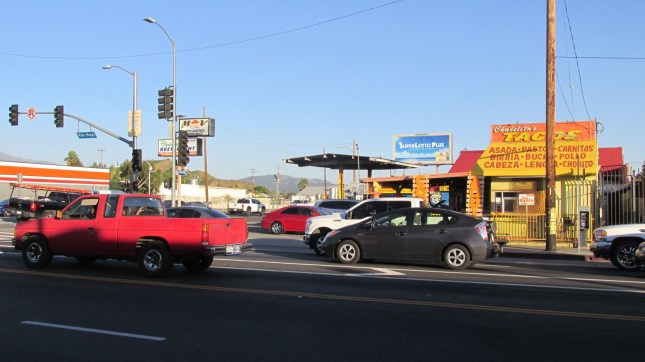
Once you get to Pacoima, it’s not even like you have to go looking for the murals. Just head up Van Nuys Blvd. and the art starts jumping out at you. This community has actively supported local artists, and it’s important to emphasize that this is a community effort. While individual artists put their names to the finished work, these murals are a team effort, and often they list the names of the many people involved in making it happen.

MM 010 LotV 1

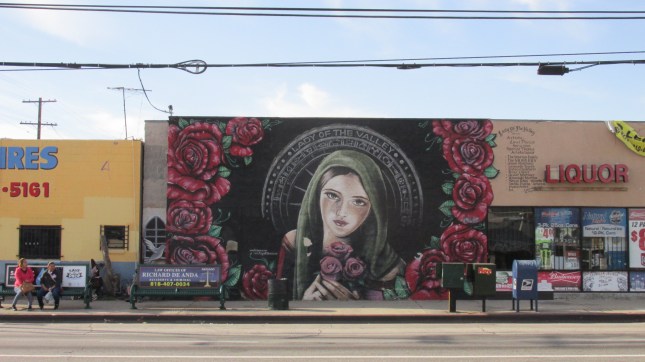
Lady of the Valley by Levi Ponce, near Van Nuys and Arleta

MM 020 Born

Born in East Valley by Levi Ponce, at Van Nuys and Bartee

LA has come to be known as a mural mecca, but City Hall hasn’t always treated these artists well. In 2002, to settle a longstanding dispute with billboard companies, an ordinance was passed to make murals illegal. But it got worse. In the years that followed, the City obliterated a number of these works by painting them over. One article I read said that 300 murals were lost, but it’s probably impossible to calculate the real number. The City passed an ordinance to lift the ban in 2013, and since then artists have been making up for lost time. It’s weird, though, because while the City went after illegal murals with a vengeance, it’s never taken any serious action to crack down on illegal billboards. I bet if the artists had been able to shower our elected officials with campaign cash like the billboard companies have, there never would have been a ban in the first place.

MM 030 Sacrificing

Sacrificing to Protect by STP Foundation, near Van Nuys and Vena

MM 040 FK DR

Pacoima Kahlo* by Levi Ponce, at Van Nuys and Ralston

Many of the murals celebrate pop culture icons, like the two pictured here featuring Ritchie Valens and Elvira.

MM 065 RV

La Bamba/Ritchie Valens by Hector Ponce, at Van Nuys and Amboy

MM 067 RV CU

Closer shot of Ritchie Valens

MM 070 Elvira

Elvira en Pacoima by Hector Ponce, near Van Nuys and Haddon

But they also focus on lesser known names, people whose lives and work have a meaning to those in the community.

MM 060 Artistas

Artistas de la Comunidad by Hector Ponce, near Van Nuys and Laurel Canyon

This isn’t a mural, but it caught my eye. The caricature of Cantinflas, a forgotten star from another age, painted on the front of a shuttered fast-food stand, seemed both funny and sad at the same time.

MM 050 Cantinflas

The theme of freedom comes up over and over again. Sometimes it’s political. Sometimes it’s purely personal.

MM 080 Freedom Fighter

Freedom Fighter by Kristy Sandoval, at Van Nuys and Pala

MM 090 Decol

Decolonized by Kristy Sandoval, at Van Nuys and Bradley

MM 100 La Lady Liberty

La Lady Liberty by Levi Ponce, at Van Nuys and Bradley

MM 110 WO Boundaries

Without Boundaries by Levi Ponce, at Van Nuys and Haddon

There’s plenty of awesome art in Pacoima, but you can find murals all over LA. If you want to see more, The Mural Conservancy of Los Angeles is a great place to start. If you haven’t been to their web site already, you need to pay them a visit.

The Mural Conservancy of Los Angeles


*  This seems to be the second mural featuring Frida Kahlo by Levi Ponce at this same location.  I found an earlier version on the net that had the title Pacoima Kahlo, but I’m not sure if that title applies to the current version.

MM 120 Metro Market

Trashing a Treasure

Norton Entrance a

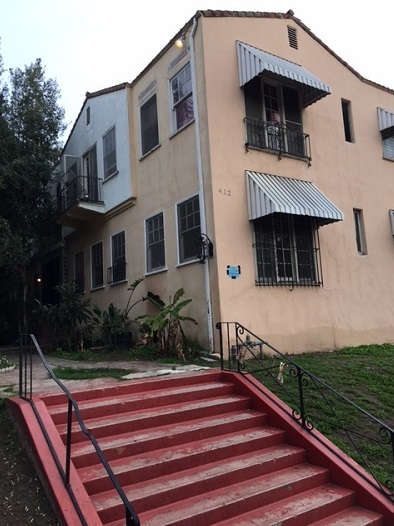
Well, for a while it looked as though the preservation community might manage to save the two lovely apartment buildings on Norton Avenue that were slated for demolition.  But the developers have some sharp lawyers on their side, and now it appears that Norton Court (424-430 N. Norton Avenue) and Norton Flats (412-420 N. Norton Avenue) will soon be gone.

Members of the community have been working for months to save these beautiful examples of courtyard apartments.  Both buildings were constructed in the 20s, and according to Survey LA, they are among the “few remaining examples in the area that [retain their] original site plan, landscape and hardscape elements, and architectural features.”

Councilmember David Ryu came to the rescue recently with an emergency nomination of the buildings as Historical-Cultural Monuments (HCMs).  But the developers’ lawyers found a way to block the nomination on a technicality.  It seems they’re determined to destroy these buildings at all costs.

Norton Stairs b

This is not the first time the Cohanzads have knocked down a building that could have been protected as an HCM.  Whether they’re operating as Wiseman Residential, or one of the numerous LLCs they’ve created to protect themselves from liability, the Cohanzads have made a practice of knocking down older buildings to put up new ones.  They don’t seem to care how much of LA’s history they’re destroying, or how their projects affect LA’s communities.  They argue that by levelling small buildings and putting up big ones they’re doing us a favor by increasing the supply of housing.  But many of the units they’ve demolished were rent controlled, and the new units they’re creating are way too expensive for someone earning LA’s median income.  Doesn’t sound like a very good deal to me.

And then there’s the loss of treasures like the Norton courtyard apartments.  The number of structures like this is shrinking, and there are few left that are still substantially intact.  But the Cohanzads don’t seem to care.  I guess it’s all about profit for them.

It may be too late to save the Norton apartments, but we can try.  Please e-mail Councilmember David Ryu to thank him for his efforts so far, and to encourage him to maintain his support for preservation of these buildings.

David E. Ryu            david.ryu@lacity.org

Use the subject line, “Demolition of Norton Apartments”.

While you’re at it, copy your own Councilmember on the message.  Or better yet, copy them all.  And don’t forget the Mayor.

Gilbert Cedillo           councilmember.cedillo@lacity.org

Paul Krekorian         councilmember.krekorian@lacity.org

Bob Blumenfield      councilmember.blumenfield@lacity.org

Paul Koretz   paul.koretz@lacity.org

Nury Martinez           councilmember.martinez@lacity.org

Felipe Fuentes         councilmember.fuentes@lacity.org

Marqueece Harris-Dawson            councilmember.harris-dawson@lacity.org

Curren D. Price, Jr.  councilmember.price@lacity.org

Herb J. Wesson, Jr.             councilmember.wesson@lacity.org

Mike Bonin    councilmember.bonin@lacity.org

Mitchell Englander councilmember.englander@lacity.org

Mitch O’Farrell          councilmember.ofarrell@lacity.org

Jose Huizar   councilmember.huizar@lacity.org

Joe Buscaino           councildistrict15@lacity.org

Eric Garcetti  mayor.garcetti@lacity.org

We may not win this fight, but we can go down swinging.

Norton Lamp c

A Crash Course in Asian American Activism

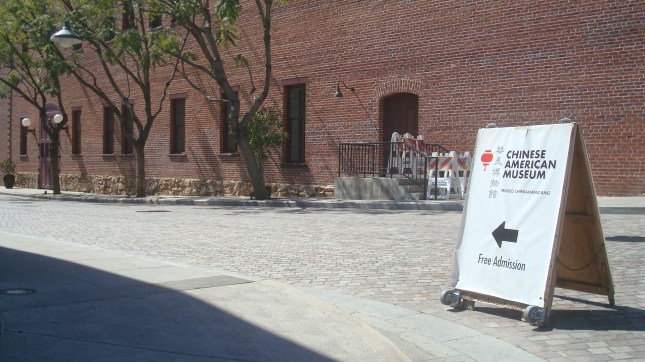
CAM 01 Ext Sign Stand

A while ago I read in the LA Weekly that the Chinese American Museum was presenting an exhibit about the Asian American activist movement from the 60s through the 80s.  It caught my attention for two reasons.  First, I had no idea that Asian Americans played a significant part in that era’s counterculture.  Second, I didn’t even know we had a Chinese American Museum in LA.  So I figured it was time to learn more about both.

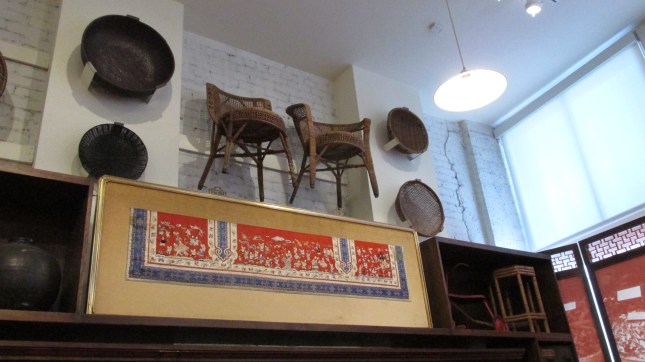
It was well worth taking the trip to Downtown.  The museum is in a historic building just off the plaza at El Pueblo de Los Angeles.  Before I even got to the exhibition about Asian American activism, I spent some time with two smaller shows on the ground floor.  Journeys and Origins deal with Chinese migration to the US and the formation of Chinese communities in LA.  These shows are small, but beautifully put together, with a rich collection of artifacts.

CAM 10 Imm Room

Exhibits on the first floor document Chinese migration to the US.

CAM 12 Imm Page

Documents and photos help tell the story.

CAM 14 Imm Chairs

Furniture, cookery, toys and textiles are featured.

CAM Imm Abacus

Does anyone under 40 even know what an abacus is?

Then I went upstairs to check out the main attraction, Roots, Asian American Movements in Los Angeles, 1968-80s.

CAM 20 Rts Title

This show was a real eye opener.  Like I said before, I had no idea Asian Americans were so much a part of the counterculture in the 60s and 70s.  In one respect what they accomplished is even more impressive than the Black and Latino movements, because the Asian community was so much more diverse.  Activists representing Japanese, Korean, Chinese, Filipino and other cultures made a conscious effort to work together to push for change.  These groups did not have a shared history, and at times had been bitterly divided, but they realized they had a better chance of being heard if they spoke with one voice.

CAM 22 Rts Shirts

Silkscreened T-shirts were one way of spreading the message.

CAM 23 Rts Buttons

Activists worked to address a variety of issues.

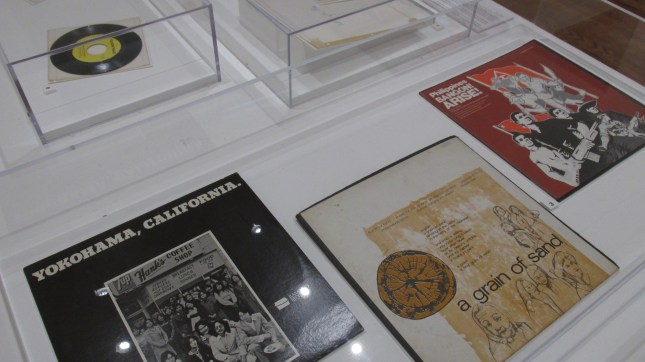
CAM 24 Rts Records

Music was another way of reaching out.

CAM 26 Rts Gidra

Gidra published news, commentary and art from 1969 through 1974.

CAM 28 Rts X

Come-Unity promoted cooperation across racial boundaries.

In the 60s pop culture was exploding, and members of the movement recognized that mass media was a powerful tool for getting the word out.  The show includes records, magazines, posters and other artifacts from the era.  Staging concerts, printing posters and making T-shirts helped spread awareness beyond the community.  While these activists addressed issues that affected Asian Americans, they also reached out and forged bonds with the wider protest movement.  It was a time when boundaries were being erased, and people of all kinds were coming together to address the problems facing the country.  If only we could revive that spirit these days.

The show runs through June 11, 2017.  If you want more info, here’s the link.

Chinese American Museum

CAM 50 Rts Posts

Post-it notes left by museum visitors.

Tenants Kicked Out as Landlords Cash In

lp-01-notice

Ellis Act evictions are so common in LA these days that I’ve gotten used to hearing reports of landlords kicking their tenants out. It happens all the time. As speculative development continues to push property values higher, property owners are eager to cash in. Over 20,000 units have been removed from the rental market through the Ellis Act since 2000. And in addition to the thousands of tenants who’ve been kicked out under Ellis, it’s likely that thousands more have lost their apartments because they were bamboozled by unscrupulous landlords using cash-for-keys scams.

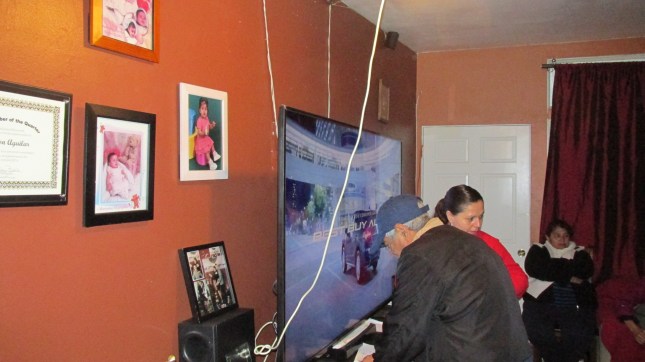
In the course of writing this blog I’ve met a number of people who’ve either already been evicted or are facing eviction. So when I went to meet a group of tenants who live in a small building on Las Palmas it seemed like a familiar scenario. The owner plans to demolish the existing structure in order to build a 7-story mixed-use project, and so the people currently living there have got to go. The breadwinners in these families are working hard to make ends meet, and odds are they’re getting by on paychecks that add up to well below LA’s median income. While I’m sure they’re worried about getting evicted, one thing that encouraged me is that they seemed much more angry than scared. They’re not going to take this lying down.

lp-02-tenants-int

Some of the tenants facing eviction.

The tenants are paying much less than the area’s median rent, but they’re also getting next to nothing in terms of repairs and maintenance. I could see walking into the building that the owner wasn’t taking care of it properly. The tenants told me a number of stories about problems with their units that the landlord was either slow to fix or didn’t fix at all. My guess is that he’s been sitting on the property, waiting for the right deal to come along, and didn’t see any point in spending money on upkeep. I should mention that he has laid out some cash to fix up a few of the units, just not the ones that are occupied by the current tenants. You may be asking, why would he do that? The answer is simple. He’s posting the refurbished units on the net as short-term rentals. This is a pretty common practice. Landlords are doing it all over the city, and it’s more or less legal unless the tenants were evicted under the Ellis Act. So when we talk about a shortage of apartments in LA, we have to remember that there are probably thousands of units that are actually being used as unofficial hotel rooms.

lp-03-mtg-sylvie-cu-2

Council District 13 Candidate Sylvie Shain.

My friend Sylvie Shain came by to talk with the tenants. Sylvie is running for the CD 13 council seat, in large part because of her concern over LA’s affordable housing crisis. She knows first-hand what it’s like to be evicted, having been forced out of her apartment by owners who planned to turn the building into a boutique hotel. Sylvie spent over an hour with the tenants, giving them info on what protections they had under the law and helping them figure out their next steps.

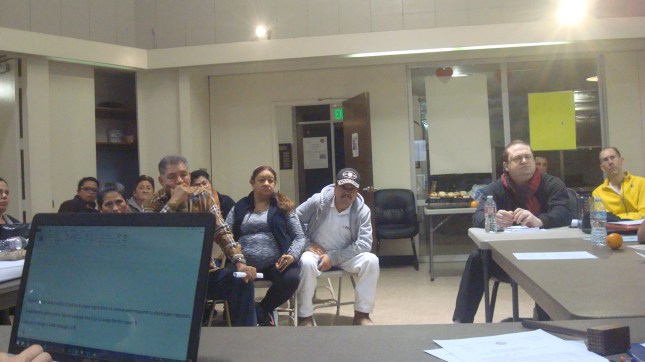
Several days later I went to a neighborhood council meeting on the proposed project. The purpose of the meeting was to talk about the impacts of the new structure, not the eviction of the current tenants, but it’s hard to separate the two. The owner has said that he will reserve seven units in the new building to replace the seven units that are currently occupied in the old building, and that he will offer them to the current tenants at the price they’re now paying. This may sound like a good deal, but there are a few problems with it. First, the owner hasn’t actually signed an agreement, which means he’s under no obligation to honor these terms. Second, while the owner is offering to replace seven units, there are actually fifteen units in the existing building that are covered by the rent stabilization ordinance (RSO). His deal would mean the loss of eight more RSO units. This may not sound like a lot by itself, but thousands of RSO units have been taken off the market in recent years, which is one of the reasons affordable housing is so scarce these days. Third, the owner knows that the new structure will probably take a couple of years to complete. If the current tenants get forced out, there’s a good chance they won’t find anything they can afford in LA. It’s entirely possible that by the time the proposed project is completed, none of them will still be living in the area, and he won’t have to offer them anything.

lp-04-nc-mtg

Neighborhood Council meeting on the proposed project.

Then there’s the way the Department of City Planning (DCP) is trying to push this project through. They’re trying to approve it with a categorical exemption, which means they’re arguing that because it’s in-fill development and conforms to the current zoning, the California Environmental Quality Act (CEQA) doesn’t require an environmental assessment. And to make that argument, they cite CEQA Guidelines, Section 15332. But CEQA requires that the project meet a number of conditions in order to grant the exemption, including the following….

Approval of the project would not result in any significant effects relating to traffic, noise, air quality, or water quality.

Traffic is already getting to be a problem on Las Palmas. Formerly a quiet residential street with one lane going each direction, in recent years it’s become a short cut for drivers looking to avoid congestion on Highland during rush hour. And traffic on Las Palmas is going to get a lot worse, because in addition to this project there are two others about the same size that are currently under construction, one just to the north and one just to the south of the existing building. But wait, there’s more. At the corner of Las Palmas and Franklin work recently began on a complex that wil contain over 100 units. In other words, if this project is approved, the neighborhood will gain about 300 units, which will definitely have a significant impact on traffic.*

lp-05-las-palmas-traffic

Traffic northbound on Las Palmas at rush hour.

What’s more, the proposed project is about 500 feet away from the facility that houses both the Canyon Pre-School and the Las Palmas Sr. Center. Children and seniors are known to be sensitive receptors, and to say that there will be no significant impacts to air quality or noise levels during construction is ridiculous. The kids and seniors at this small facility already suffered an onslaught of construction dust and noise when work on the project at Las Palmas and Franklin began last year. But the DCP apparently just doesn’t give a damn, and so they’re trying to rush this project through with no environmental review whatsoever.

After the neighborhood council meeting, I contacted the DCP hearing officer to find out what the timetable was for the project’s approval. It’s tentatively scheduled to go before the City Planning Commission on April 13, though it could get pushed back. Meanwhile, the tenants wait and wonder whether they’ll have to find a new place to live, in a city where rents are spiralling higher every year.

*
Some housing advocates may be cheered by this news, but don’t get too excited. The vast majority of these units will be well beyond the reach of those making the area’s median income, $34,807 a year. [Source: LA Times, Measuring income along L.A.’s Metro stations by Kyle Kim and Sandra Poindexter, March 4, 2016]

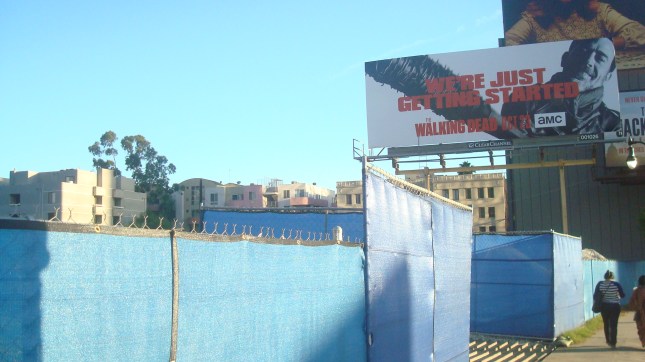
lp-06-1840-highland-billboard

View of construction site from Highland.

Protesters March to Remind Us Who We Are

im-prtst-10-i-am-im

It’s heartening to see that thousands of Angelenos know that neither this city nor this country would exist without immigrants, and that they’re willing to take to the streets to remind others who have forgotten that fact. Crowds of protesters marched through Downtown on Saturday to protest the White House’s policies targeting immigrants. Here are a few photos.

im-prtst-30-phone

Thousands of protesters marched north on Broadway.

im-prtst-40-grn-jckt

Protesters at the intersection of First and Broadway.

im-prtst-25-dancers

Marchers dressed in traditional Aztec garb.

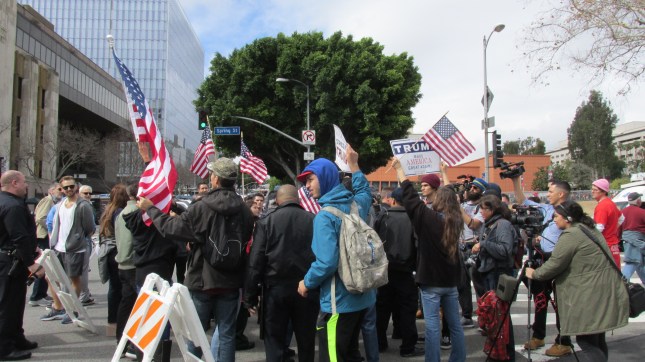
There was also a small crowd of people gathered around a speaker who was urging deportation for all undocumented immigrants. I’d say there were less than fifty in that group.

im-prtst-42-deport

A small group gathered around a speaker advocating stricter immigration policies.

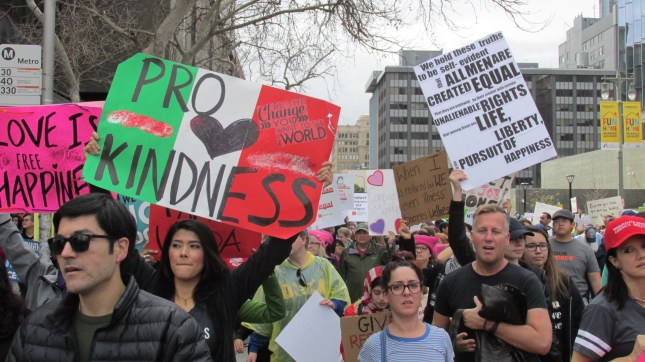
The pro-immigrant demonstrators marched north on Broadway, and then circled around back to City Hall where speakers urged resistance to anti-immigrant policies. Many carried signs, some mass-produced, some handmade, explaining why the US needs to keep its borders open.

im-prtst-20-all-men

“All men are created equal.”

im-prtst-35-without

“Without immigrants I would have no friends.”

im-prtst-45-no-human

“No human is illegal.”

It seems unlikely that the White House is listening. But Congress certainly is. Even if some representatives may be inclined to support restricting immigration, they’ll be getting some heavy pushback from the farming, hotel and restaurant industries. Sadly, anti-immigrant fervor rises up regularly in the the US, and this won’t be the last time it happens. Which is why we have to speak out to remind the White House who really built this country.

im-prtst-50-signs

Mayor Missing in Action

garcetti-mia

On Wednesday, February 15, eight neighborhood councils sponsored a forum for candidates in the mayoral race. Almost all of them showed up to share their views on the state of the City and to present their vision for the future. Unfortunately, incumbent Eric Garcetti couldn’t make it. Certainly the Mayor is a busy guy, and it might be understandable if he couldn’t appear in person, but his office did tell the organizers that he would be sending a representative to speak in his place. Inexplicably, Garcetti’s representative didn’t make it either. Why is this?

As everybody who lives in LA knows, we’re facing major challenges right now. Nine of the eleven candidates for mayor felt it was important to show up and speak to the community. Apparently the Mayor didn’t feel like it was worth his time.

The neighborhood councils organizing this event spent a lot of time putting it together. Citizens concerned about their communities gave up their Wednesday night to learn where the candidates stood on the issues. But the Mayor couldn’t even send a representative to outline his agenda for a second term. Spokesman Yusef Robb didn’t offer an explanation for Garcetti’s absence, stating only that he was “unavailable”. Anastasia Mann, President of the Hollywood Hills West Neighborhood Council, said she was told by the Mayor’s office that Garcetti didn’t need to be at the event since the other candidates weren’t doing well in the polls. Mann expressed her disappointment at the Mayor’s decision. I’m disappointed, too.

While we’ve seen improvement in LA’s economy during the last four years, Garcetti seems unable (or unwilling) to deal with a number of problems that have only grown more pronounced during his tenure. Families are struggling to cover spiralling costs for housing. Homelessness has risen dramatically. Some of LA’s communities have seen huge spikes in crime. The City’s budget is awash in red ink, even though revenue is up. And in spite of the Mayor’s insistence that the City is promoting transit-oriented development, transit ridership continues to decline.

If you ask me, it’s clear that Garcetti’s tenure as Mayor has been a disaster for Los Angeles, and maybe this explains why he didn’t show up at the forum. If he had been there, he would have had talk about why the City is in such dire straits. So it’s really not surprising that he didn’t have time to appear at this event.

On the other hand, the Mayor does have time for events where he has a chance to suck up more campaign cash. He apparently flew to Sacramento on Wednesday to meet with state officials and attend a fundraiser. It’s clear he hopes to run for higher office, probably governor or senator, and doesn’t plan on serving the full term if re-elected. Maybe that’s why he doesn’t seem terribly interested in solving LA’s problems. Running a city can suck up a lot of time, and who needs the headaches when your number one priority is funding your political career?

Garcetti’s spokesman was right. He is “unavailable”. Also disinterested and disengaged. Apparently the only thing he’s really passionate about is fulfilling his political ambitions. It shouldn’t be hard to find a candidate who cares more than the Mayor about finding solutions to the City’s problems, because the Mayor doesn’t seem to care at all.

Party Hotel Will Be Elementary School’s New Neighbor

sh-selma-elem-1

It’s rough for elementary schools in urban Los Angeles. In addition to the usual challenges involved in providing kids with an education, they’ve also got to deal with gangs, vandalism, and a growing homeless population which includes a number of people with mental health and substance abuse issues. I used to work as a TA at a Hollywood elementary school. Sadly, during the time I worked there the security problems got so bad that we had to restrict parents’ access to the school.

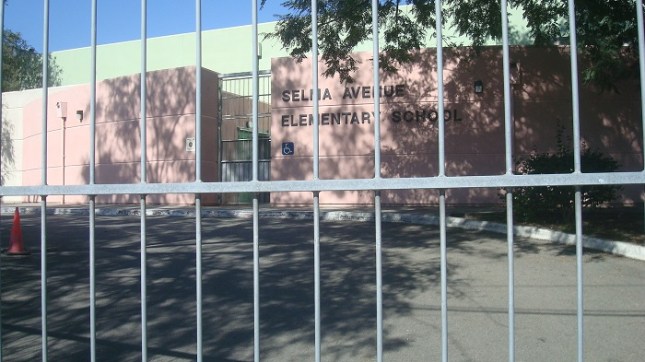
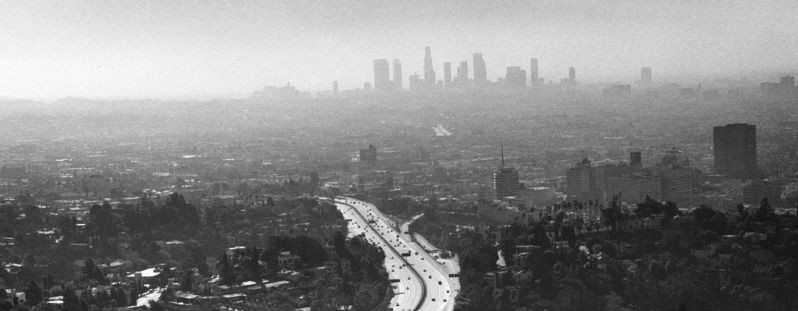
You can tell by the high fence surrounding Selma Avenue Elementary that security is an issue there. When I walked by a few days ago there were a number of homeless people camped out near the school. There were signs posted which read “POSSESSION OF WEAPONS ON SCHOOL GROUNDS IS A CRIME”. Traffic is also increasing on this formerly quiet street. So it’s clear that the kids at Selma Elementary are already dealing with a number of challenges. I can’t understand why the Department of City Planning wants to make life even harder for them.

Toward the end of January I attended a City Planning Commission hearing where Commissioners adopted the Mitigated Negative Declaration (MND) for the tommie hotel at 6516 Selma, a short distance from Selma Elementary. The hotel will be built by developer Five Chairs, and operated by Two Roads Hospitality. The building will rise eight stories, with bar/lounges on the ground floor and rooftop deck, and it will offer live entertainment.
sh-selma-apts

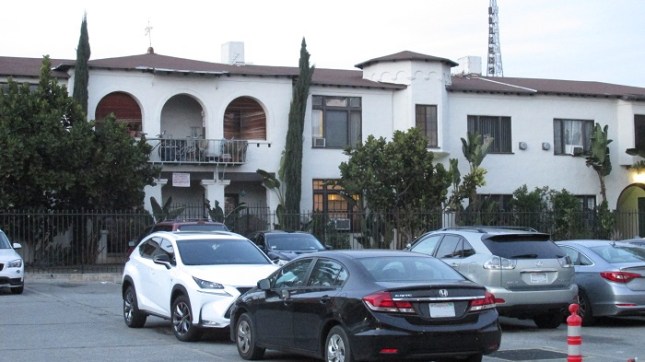
Apartment building directly across from the project site.

Let me say right off that Two Roads is an international firm with an excellent reputation. They operate hotels in the US and overseas, the majority of which are very popular with travellers, receiving high ratings on Yelp. But the tommie hotel is a new concept for them, and very different from most of their other locations. Two Roads mostly runs resort getaways in scenic areas and classy hotels in big cities. They’re trying something different here, aiming at a younger crowd, making restaurants, bars and nightlife part of the appeal. I wanted to get a better idea of what to expect from tommie, so I went to the company’s web site to see if they had any other hotels that offered a similar experience.

I found the Phoenix in San Francisco. Like tommie, it’s geared toward a youthful crowd, and like tommie, food, drink, music and nightlife are a central part of the experience. I took a look at the comments on Yelp, and most of the guests really liked the place. Some had complaints, which I’ll get to in a minute. But everybody seemed to agree that the Phoenix was a party hotel. And everybody also seemed to agree that it often got really loud. Let me share a few of the comments with you….

My little one and I were kept awake. Whe. I called and checked the webpage, no one mentioned therw would be large hotel parties. Profanity, arguments and glass breaking occured right outside our door well past midnight.

The noise from the all night non stop party allowed us zero sleep!! [The guest goes with the night manager to talk to the rowdy neighbors.] Then a wasted (not booze or weed either) guy stumbles out of room 26 and says to me, “why did you book a room at
the Phoenix knowing it was a party hotel.”

A great hotel if you’re not at all interested in sleeping. Ever. The bar is ridiculously loud considering its size, not to mention that it’s brimming with attitude. I’m kit joking. This is the loudest hotel ever.

This hotel is only good if you are a stoner. Loud, druggie infused place. I have never seen worse and I should have read the other reviews. The guy that checked us in was stoned. NOT a family place.

There was literally a huge party of hundreds happening 20 yards from our door. The front desk seemed surprised that this was bothersome since the “loudspeaker and mics” were to be off by ten. Trust me, the party continued,

I had a terrible experience here. Apparently during the summer on Saturdays they host some kind of swap meet and show where they take over the courtyard and blast music at full volume all day. It was terrible.

The reason I was not happy with the place is because I was very tired when I arrived and needed to get some sleep. It turns out that it is a PARTY hotel. The entire courtyard is part of the bar at the hotel. It is not just a little bar, it is a big bar/club for all of the locals. If I would have known this I would have not stayed their. On the other hand, if you are looking for a place to get rowdy and party all night, this hotel is for you.

So Two Roads is trying out a new concept designed for young people who like to party. I don’t have a problem with that at all. It might be a great idea for a bustling commercial district. But in a neighborhood filled with dozens of apartment buildings? With low-income housing right next door? With dormitories for students nearby? With senior housing just over two blocks away? And with an elementary school less than 500 feet away? This is a really bad idea.
sh-selma-cv

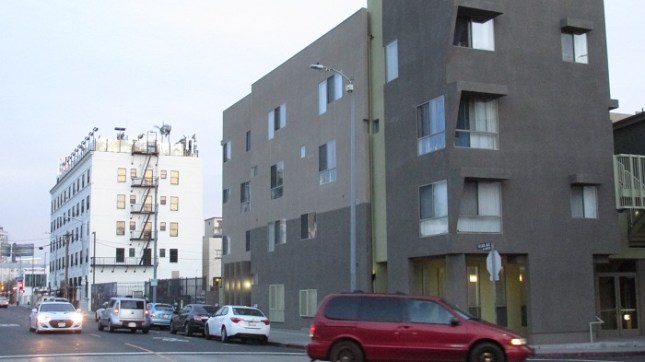
Casa Verde in foreground, right next to the project site.

I’m sure some people will be saying, “What’s the problem? The kids are in school on weekdays and the hotel will probably host parties on weekend nights. What are you worried about?” First, the hotel will be serving alcohol throughout the day, seven days a week. I’m very concerned about people having a couple of martinis over a late lunch and then getting in their car and heading west on Selma around 3:00 pm. Second, while the hotel will most likely be scheduling any parties for the weekend, I don’t recall any conditions that would prohibit them from throwing a bash during the week. Third, I’ve got a news flash for you. Small children don’t magically vanish over the weekend. Even if they’re not in school, they’re still living in the neighborhood and they still have to deal with whatever’s going on around them, including raucous parties at chic hotels, along with whatever action spills over onto the street.

But let’s go back to the MND. For those who aren’t familiar with the California Environmental Quality Act (CEQA), let me give you a very quick, very rough overview. Generally speaking, there are three levels of environmental review. The MND falls in between the lowest, a Negative Declaration, and the highest, an Environmental Impact Report (EIR). By choosing to do an MND, the Department of City Planning (DCP) is basically saying, “Yes, there could be impacts to the community, but it’s okay, because the developer can mitigate those impacts so they won’t be a problem.” This might sound reasonable, but lately the DCP has made a habit of using MNDs to rush approval of projects that really require an EIR. An EIR takes time and costs money, and you have to get input from the community. An MND takes less time, costs less money, and when the DCP goes this route, community input becomes an annoying formality that they try to dispense with as quickly as possible. But the worst part is, the DCP doesn’t even seem to feel that MNDs need to be complete or accurate. Often they’re downright dishonest. You want an example? The MND for the tommie contains a section entitled Surrounding Land Uses on page II-5. While the authors list a number of buildings that are close by the project site, they somehow fail to mention that there’s an elementary school just down the street. In fact, they list a number of historic structures that are within a 3,000 foot radius, but they somehow neglect to say that Selma Elementary is less than 500 feet away.

How could this be? Was it an oversight? Maybe the folks that prepared the MND, EcoTierra Consulting, are just so inept that they never noticed the elementary school. But what about the people at the DCP? Aren’t they supposed to review environmental documents to make sure they’re accurate? Yeah, they are. And they wouldn’t even have to leave their Downtown offices to check this out. All they’d have to do is get on ZIMAS, a web site maintained by the City to provide zoning and planning info, to find out what’s in the surrounding area. Here’s a screen shot to give you an idea.

zimas-selma-hotel-lg-w-project-site-resized


The red box is the project site, and the area highlighted in green is Selma Elementary. But how would the people at the DCP know it’s a school? It’s marked as a public facility, but that’s pretty general. Could be almost anything. For future reference, I’d like to point out to DCP staff that all they have do is click on the tab titled Planning and Zoning to see that ZIMAS clearly indicates that the site is within 500 feet of a school. In fact, in addition to Selma Elementary, the site is also home to Larchmont Charter School.

zimas-selma-hotel-school-zone-w-outline


So how about the folks on the City Planning Commission? If the MND didn’t mention the school, how could they have known about it? Well, I mentioned it, both in written comments submitted to the DCP and in my verbal comments on the day of the hearing. Did that get a reaction? Nope. While the Commissioners spent plenty of time haggling over conditions of use and mitigation measures, they didn’t refer to the school once during their deliberations. They didn’t express surprise that the MND fails to state that a school is located nearby. They didn’t even ask how far away the school is.

The Commissioners asked how Councilmember Mitch O’Farrell felt about the project, and learned that he doesn’t support or oppose it. That’s understandable. O’Farrell’s up for re-election, and he knows a lot of people are really ticked off about the fact that he’s backed some lousy projects before. On the other hand, he can’t really oppose it either, because he’s received a few thousand bucks from people involved with the project. According to the Los Angeles Ethics Commission web site, Richard Heyman of Five Chairs gave $1,400 to O’Farrell’s legal defense fund on April 4, 2016. Andrew Shayne of Hollywood International Regional Center, Five Chairs’ parent company, also gave $1,400 to O’Farrell’s legal defense fund on April 26, 2016. And Jeffrey Reinstein of Geolo Capital, which is a co-developer of this project, gave $700 to O’Farrell’s re-election campaign on March 21, 2016. So this must be a tough one for Mitch. If you ask me, he should have come out against this project a long time ago, simply based on the fact that it’s less than 500 feet from an elementary school. But maybe like the consultant who prepared the MND and the folks who reviewed it at the DCP, O’Farrell isn’t aware that the school is there. Wouldn’t surprise me. Maybe that pile of cash from the developers is blocking his view.

When I was at the hearing, I was surprised how few people showed up to speak against the project. Nobody from Casa Verde, the apartment building right next to the site that offers affordable housing. Nobody from the other apartment buildings close by. And nobody from the Los Angeles Unified School District?! That was really weird.

Then I started wondering. Did they even know about the hearing?

I called LAUSD and left a message, even though I wasn’t sure I had the right person. Then I called Larchmont Charter School, which operates a school on the Selma Elementary campus. They hadn’t heard a thing about the hotel. Next I called Hollywood Community Housing Corporation, the affordable housing developer that owns Casa Verde. The woman I spoke to said she had only just heard about the hotel.

Then I heard back from LAUSD, and after talking with them, they offered this statement.

“The Office of Environmental Health & Safety does not have record of receiving notice regarding this project at the newly proposed location.

L.A. Unified will be preparing and submitting a comment letter to the City of Los Angeles that will express our concerns with regard to this proposed project.

Specifically, L.A. Unified will be looking at potential air quality, noise, and traffic/pedestrian safety issues, as well as land use compatibility issues associated with alcohol service in close proximity to Selma Avenue Elementary School.”

I want to be clear here. The DCP is not required to send notices to stakeholders about proposed projects. The California Environmental Quality Act offers three options for informing people, and the lead agency can satisfy the requirement just by putting a notice in the newspaper, which is probably what the DCP did. But I have to say that in a case like this, where there are a number of sensitive uses nearby, one of them being an elementary school, the DCP had a moral obligation to get the word out to the community. They should have made every effort to insure that all stakeholders were involved in the environmental review process, especially the parents and staff at Selma Elementary and Larchmont Charter.

How is it possible that this MND was prepared without making sure that LAUSD had reviewed it and had the opportunity to comment? How is it possible that not one of the Commissioners expressed surprise that an LAUSD representative was not present at the CPC hearing? How is it possible that no one representing CD 13 stepped in to point out that the project site was a few hundred feet away from a school?

How come no one was looking out for these kids?

The California Environmental Quality Act says that….

“An EIR must be prepared when there is substantial evidence in the record that supports a fair argument that significant effects may occur.”

CEQA Flow Chart

There’s no question that a hotel offering bar/lounges on the ground floor and rooftop, which also offers live entertainment, and which is intended to attract both paying guests and local club-goers, is going to have substantial effects on the community. Clearly this project requires a full EIR.

So what are the next steps? Three things need to happen here….

1.
At its next hearing, the CPC needs to rescind their adoption of the MND.

2.
After rescinding the MND, all of the Commissioners should resign immediately. Their failure to show the slightest interest in the health and safety of LAUSD students is inexcusable.

3.
The DCP needs to start the process all over again with full EIR.

If you agree with me that this whole process has been unfair and dishonest, I’d like to suggest that you communicate with the following people….

Contact May Sirinopwongsagon, the DCP staff contact for this project, and tell her you can’t believe the MND doesn’t list the school among the surrounding uses.
May Sirinopwongsagon, Department of City Planning
may.sirinopwongsagon@lacity.org

Contact Councilmember Mitch O’Farrell and ask him why his office didn’t object from the start to building a project like this less than 500 feet from an elementary school.
Councilmember Mitch O’Farrell, Council District 13
councilmember.ofarrell@lacity.org

Contact Mayor Eric Garcetti and tell him he needs to demand resignations from all the members of the City Planning Commission.
Mayor Eric Garcetti
mayor.garcetti@lacity.org

It would be a good idea to include the following information in the subject line.

tommie hotel, CPC-2016-270-VZC-HDCUB-SPR, ENV-2016-4313-MND

I urge you to speak up for these kids, because they need to have someone looking out for them. It doesn’t seem like anybody at City Hall gives a damn.

sh-selma-elem-2

Showing Up and Speaking Out

march-01-love

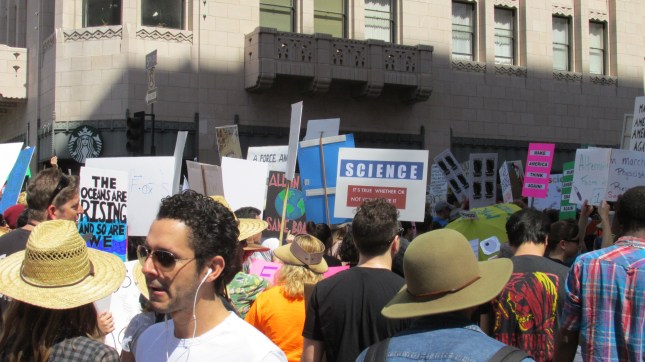
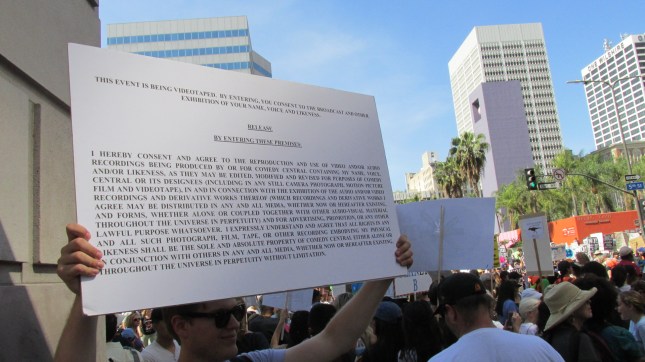
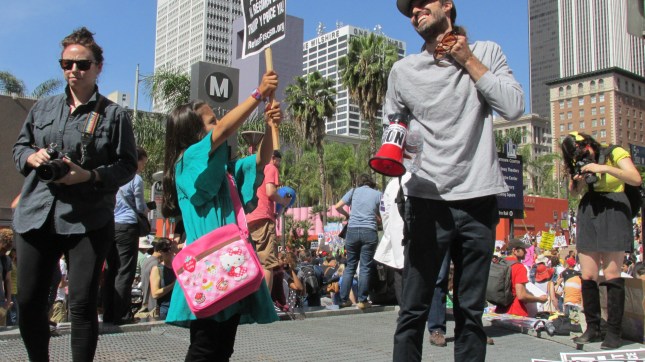
The recent presidential election has a lot of people worried. But instead of running for cover and cowering in fear, concerned citizens are showing up and speaking out. Today thousands of people gathered in Downtown to show their support for justice, tolerance and equality.

When I got to Grand Park this afternoon, I pulled out my camera and shot some photos of the crowd as I made my way toward City Hall.

march-10-ch-wtp

Crowd gathered in front of City Hall.

march-12-not-divide

Many people let their signs do the talking.

march-18-shout

While others shouted out how they felt.

march-16-woman-arms

Another shot of the crowd.

march-14-no-illegal

Human rights was a recurring theme.

I saw signs announcing groups from Santa Barbara and Coachella, and it’s my guess that people had come from all over California to attend.

march-20-coachella

The Coachella crowd.

march-22-sb-women

Others made the trip from Santa Barbara.

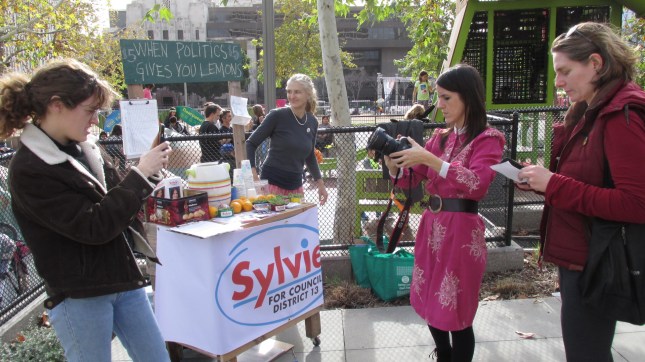
CD 13 Candidate Sylvie Shain showed up to talk about how the problems affecting us as a nation are also felt at the local level. And she also took a few photos while she was at it.

march-30-sylvie-1

CD 13 Candidate Sylvie Shain, in the pink dress.

As it was getting close to three o’ clock, I had to get moving. I walked across the park to the Civic Center Red Line Station, where scores of protesters crowded the platform. And I snapped a few more photos before the train arrived.

march-40-rl-crowd

Protesters on their way home.

march-42-rl-sisters

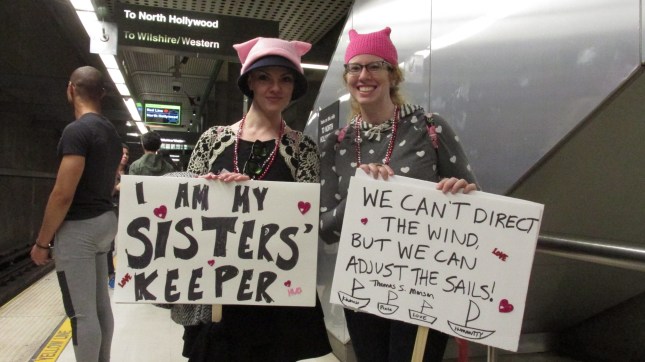
Strength in sisterhood.

march-50-rl-equality

My favorite sign of the day.

Fantasy and Reality

hlwd-arc-la-la-3

Last week a friend of mine called to tell me he’d just seen La La Land. The movie knocked him out, and he urged me to see it. I didn’t need too much urging, since I’d already heard good stuff about it. So last night I went down to the Arclight to see what all the fuss was about.

I loved the movie. I was hooked from the opening sequence, a massive dance number in the middle of a freeway traffic jam. In fact, it started off so well I was afraid the makers wouldn’t be able to sustain that level of energy and creativity throughout. But I didn’t need to worry. Writer/director Damien Chazelle shows amazing skill and style. I was completely swept up in this archetypal Hollywood romance, and pulled into the lives of the struggling actress and the stubborn musician.

I was so completely involved that I was totally bummed when the film stopped abruptly and the theatre’s fire alarm started sounding. But we all got up and went outside. The courtyard was packed and it was freezing cold while we waited to see what would happen. Fortunately, the fire department showed up right away and resolved the problem quickly. (I never found out what triggered the alarm.) We were back inside within twenty minutes.
hlwd-arc-outside-1

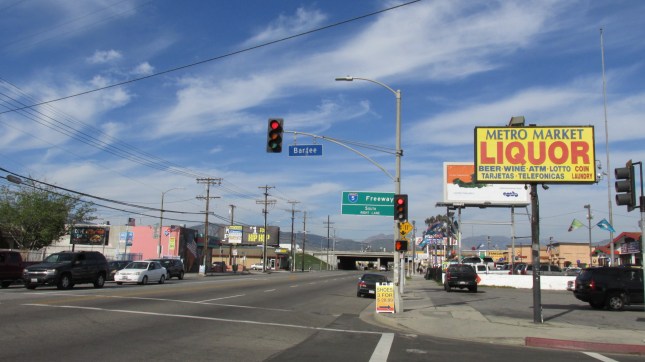
La La Land is a lovely fantasy about Los Angeles. While no one would mistake it for a realistic picture of this crazy town, it was good to see a movie that focussed on the positive rather than the negative. There’s plenty to hate in LA, but also plenty to love. Chazelle celebrates the city’s beauty and history without sliding into maudlin sentimentality. And while La La Land certainly doesn’t show the ugliest or scariest aspects of life in LA, it spends a fair amount of time delving into the downside. The two main characters are both struggling to get a break, and the film doesn’t shy away from their disappointment, frustration and bitterness. And while the movie features plenty of the shallow, superficial types that are often associated with LA, I liked the fact that it focussed on two people who are passionate about their art. Those people live here, too, even though we don’t see them on the screen too often.

I felt elated when I walked out of the theatre. The reality we’re living these days is so damn scary, it was good to see a movie that showed how joyous life can be. But going back home I passed through the real Hollywood. Walking down those streets on a cold December night it was clear that the divide between success and failure, wealth and poverty, is much wider, much more stark, than anything we see on the big screen. It’s great when you can settle down in a dark theatre and escape into a movie. But when the movie’s over, the world is still waiting for you outside.

hlwd-ivar-night-3

Waiting for Help, While Demolition Draws Nearer

Squatters have taken over a house in Valley Village.

Squatters have taken over a house in Valley Village.

Six months ago I’d never heard of The Hermitage. Because I follow development issues, I’d been copied on a few e-mails that described an urban farm in Valley Village that was threatened by a proposed residential project. But there are so many communities getting hammered by reckless development, I didn’t pay much attention. Until November, when I finally decided to check it out.

First, let me show you a few photos of what The Hermitage used to look like.

A garden in front of The Hermitage.

A garden in front of The Hermitage.

Chickens roaming freely.

Chickens roaming freely.

Open space inside The Hermitage.

Open space inside The Hermitage.

A cat checking out the garden.

A cat checking out the garden.

Ducks by the pool.

Ducks by the pool.

Another one of the residents of The Hermitage.

Another one of the residents of The Hermitage.

As you can see, it used to be a lovely place, a small collection of rustic buildings that served as a home to chickens, ducks, dogs, cats and bees. A unique urban farm in the middle of the San Fernando Valley. Now let me show you what it looked like when I visited.

This is what the garden out front looks like now.

This is what the garden out front looks like now.

A car left sitting on the property by squatters.

A car left sitting on the property by squatters.

A view of the open space within The Hermitage.

A view of the open space within The Hermitage.

Quite a change. You’re probably asking, “What happened?” Well, a lot of things. The story is so complicated, so twisted, and so disturbing on so many levels, I’m not sure if I can tell it properly. But this story needs to be told, so I’ll do my best.

Let’s start with the former manager, who still resides on the property, though she’s facing eviction. Because of her current situation (which will become clear as you read on), she was nervous about having her name appear in print, so I’ll call her the caretaker. The caretaker has been living at The Hermitage for over 20 years, and has truly taken care of the place. In addition to renting and maintaining the units, she also planted gardens, cared for the animals, and invited groups from the surrounding community to come and learn about nature.

But last year the caretaker’s lawyer informed her that developer Urban Blox was planning to buy the property. She was surprised, since she had an agreement with the owners that gave her the option to purchase The Hermitage if they ever decided to sell.

And this is where it starts getting complicated. Urban Blox did sign an agreement to purchase the property, but it’s not clear whether the owners, two elderly women, signed or not. While their signatures appear to be on a contract for the sale of the property, both women stated in subsequent depositions that they had no recollection of signing the agreement. It may be that a relative arranged the deal without their permission. In October 2014, the grandson of one of the owner’s showed up at the caretaker’s door to deliver a letter stating that she was no longer the manager. But in spite of his claim to be acting on the owners’ authority, their signatures were nowhere to be found on the letter. And in the same depositions referenced above, the owners say they never retained the grandson to represent them.

The caretaker made numerous attempts to contact the owners, without success. After months of uncertainty, having heard nothing from the owners and fearing that they were ready to sell to Urban Blox, the caretaker sued them to enforce her right to buy The Hermitage. In fall of this year, the LLC set up by Urban Blox to develop the property filed a suit against the owners, then amended the complaint to include the caretaker, then dropped the owners from the suit. Both cases are still pending

But that’s just one part of the story. By summer of this year, all the former residents of The Hermitage were gone. And while the legal power plays were unfolding, squatters began moving in to one of the vacant buildings on the property. The first one arrived in early summer, and by September a number of others had moved in. Since the squatters’ arrival, the caretaker reports numerous acts of theft and vandalism. Tools have been stolen from her workshop. Trees have been cut down and plants have been ripped out of the ground. She doesn’t feel safe when she’s at home, but she’s also afraid to leave, for fear of what might happen when she’s gone. And she’s kept a detailed log recounting numerous incidents.

But it’s not just the caretaker who’s been affected. Neighbors started getting nervous when they noticed strange chemical smells emanating from the house occupied by the squatters, and they were more than nervous when they saw visitors coming and going at all hours of the night. And there’s more. One of the squatters has been seen by neighbors walking down the sidewalk with a rifle in hand. This has also been documented in photographs. Since the squatters showed up the neighborhood has seen a rise in burglaries and car break-ins.

I talked to a couple of people who live in the community. The first woman I asked about the squatters told me she was frightened for the caretaker and frightened for the neighborhood. She also asked me to withhold her name for fear of reprisals. She did share her suspicions about the squatters running a drug lab, and told me that one of them had been shot recently. She didn’t feel safe, and wondered why the police weren’t doing more to protect residents. The second woman I spoke to was more angry than frightened, and she didn’t mind giving her name. Fiona Manning confirmed what the first neighbor had reported, and added a few more details. She has seen the squatters sitting out in the open drinking and smoking dope. She’s heard gunshots at night. She recounted an incident where a neighbor asked the squatters to turn down their music, and they responded with threats. Fiona also described an encounter she had with one of the squatters. As she was walking down the street, a young man reeking of pot started following her, and calling out, “I know you, I know you. Are you a friend of my grandmother’s?”

I had a brief exchange with one of the squatters on my first visit to The Hermitage. I don’t claim to be a substance abuse expert, but having lived in Hollywood for 20 years, I’ve gotten pretty good at recognizing meth addicts. This glassy-eyed, jacked-up, paranoid kid seemed to show all the signs.

What makes this even weirder is that the caretaker and her neighbors have called the North Hollywood Division of the LAPD on numerous occasions, and while the police have come by about a dozen times, they’ve taken no action to rein in the squatters. The caretaker and Fiona both report that they’ve been told by officers not to call any more. Apparently the North Hollywood Division has decided the problems have arisen from a landlord/tenant dispute, but that doesn’t begin to explain the numerous issues involved. Whatever’s happening with the property itself, the fact that the neighbors have seen one of the squatters carrying a gun, have heard gunshots, and reported burglaries and car break-ins seems to indicate there’s a little more going on than a tiff between a landlord and a tenant. I was surprised to hear about the North Hollywood Division’s apparent reluctance to take action. The few times I’ve called the LAPD they’ve usually been quick to respond and ready to help. I can’t understand why they haven’t tried harder to address this situation, especially since it seems that some of the squatters are on probation.

Once it became clear that the police weren’t going to take action, Fiona and others tried calling Councilmember Paul Krekorian’s office. Though there were numerous conversations with one of his staffers, and promises of help, nothing ever materialized. Actually, this doesn’t surprise me at all. I’ve been in touch with a number of people who live in Krekorian’s district who’ve reported the same thing. His staffers are friendly, they’re always willing to listen, but the conversations never produce any results. A number of Krekorian’s constituents seem to feel that time spent talking to his staff is time wasted. You’d think that a councilmember might be moved to take action if constituents complained they were living in fear because of a group of squatters. Apparently Krekorian doesn’t think it’s a problem.

After receiving no help from Krekorian, the caretaker tried getting in touch with State Assemblymember Adrin Nazarian, but nothing came of that. In desperation, she tried contacting every member of the State Assembly. Only Patty López’ office responded. Fiona says, “She was a godsend.” While the neighborhood’s own elected representatives apparently didn’t feel the situation warranted taking action, Patty López organized a meeting with members of the community. About 15 people showed up, and they had plenty to say. While López declined to get involved in problems related to the squatters, she was concerned enough about the project proposed by Urban Blox that she wrote a letter to Nazarian’s office. In it, she lists a number issues raised by the community, including vacating a public street for the developer’s benefit, the loss of green space, the loss of parking and impacts to wildlife.

The City Council's PLUM Committee has approved turning over the west end of Weddington to the developer.

The City Council has approved turning over the west end of Weddington to the developer.

In fact, throughout the approval process people have expressed serious doubts about the project. When it came before the Area Planning Commission, Vice-President Lydia Drew Mather said she wished the Council Office and the Developer had worked more with the community to address potential problems, and added that she felt the project was moving forward too fast. Commissioner Rebecca Beatty voiced concern about the fact that the project would get rid of rent-controlled units. Even City Councilmember José Huizar, Chair of the Planning & Land Use Management Committee, questioned the wisdom of greenlighting a project when the developer’s right to the property was being debated in court.

A rendering of the bland, generic units that Urban Blox wants to build.

A rendering of the bland, generic units that Urban Blox wants to build.

But did that stop the City Council from approving Urban Blox’ plan? Of course not. The Council gave it a thumbs up. They’re apparently okay with bulldozing rent-controlled units, vacating a public street, cutting down trees and displacing wildlife. This is what City Hall does. Our elected officials are happy to hand the developers an entitlement worth millions of dollars so they can get rid of a unique community resource and replace it with high-priced housing.

There’s one more detail I want to add just to throw a little more light on how projects get approved in LA. When a developer comes to the City with a proposed project, California law requires the Department of City Planning to prepare an Initial Study to assess what impacts the project might have. The Initial Study is used to determine what level of environmental review is required. In this case the Initial Study was signed by Planning Assistant Courtney Shum. Does it surprise you to learn that before taking the position at City Planning, Ms. Shum worked as a registered lobbyist for Max Development, LLC (DBA three6ixty), a firm that has received tens of thousands of dollars from its client Urban Blox?

If it was just a matter of the caretaker finding a new place, maybe she could walk away from this mess. But The Hermitage is also home to chickens, ducks, dogs, cats and bees. She is responsible for all of them. So she stays close to her small house and cares for the animals, reluctant to leave for fear of what might happen while she’s gone. And she still hopes that somehow she can hang on to her home.

———-

If you see a problem with a City Planning Assistant being involved with a project that benefits a client of her former employer’s, you might want to drop a line to Planning Director Vince Bertoni. Here’s his e-mail address.

vince.bertoni@lacity.org

Don’t forget to include the case number in the subject line.

ENV-2015-2618-MND

And you could also copy your own Councilmember on the e-mail, just to let them know you’re fed up with the way City Hall does business.

A view of Weddington from The Hermitage before the trouble started.

A view of Weddington from The Hermitage before the trouble started.