The “No-Plan” Olympics

Forget about planning for the 2028 Olympics.

UPDATE: This post was originally written prior to the LA City Council meeting on Feburary 21. The item about expediting projects for the Olympics was continued, and will now be heard on Friday, February 28. PLEASE NOTE: This meeting will be held at Van Nuys City Hall, 14410 Sylvan St. Van Nuys. You can also call your councilmember to express your views.

***

When the politicians at LA City Hall first approved hosting the 2028 Olympics, they said LA wouldn’t need to build new sports venues or new infrastructure. A post on the LA28 web site says that “The LA28 Games are designed to fit the city as-is [….]”. The talk was that this would be a “no-build” Olympics. The post goes on to say….

As a global leader in sports, entertainment and technology, LA is built to host large-scale, sustainable, global events that benefit everyone and will be the first-ever Games to not build permanent infrastructure. [Emphasis added.]

Well, anybody who believed that obviously hadn’t spent much time around City Hall. Now the LA City Council apparently wants to build a whole lot of new stuff, and they want to be able to build temporary and permanent venues, training facilities, broadcast and media centers, transit infrastructure, and other projects that could be associated with the Olympics or the Paralympics without having to receive planning approvals, obey zoning regulations, observe height restrictions or setback requirements, or any other regulations that could delay construction. You can read the language from the motion yourself. (Council File 15-0989-S47)

This is just crazy. But tomorrow, Friday, February 21, the City Council will likely approve this motion directing City departments to prepare an ordinance to make this crazy idea a reality. If the ordinance is approved, you can bet we’ll see a barrage of new projects being justified because they’re supposedly associated with the Olympics or the Paralympics. These projects will be approved with no public engagement and no environmental review. In other words, once they’re proposed, they’re approved. And don’t be surprised if they use this to greenlight Frank McCourt’s Dodger Gondola project.

In other words, this has gone from being the “no-build” Olympics to being the “no-plan” Olympics. It was pretty clear even before this that our elected officials were in over their heads. Now it seems they’re trying to dig themselves out by eliminating planning, eliminating environmental review, and cutting the public out of the process.

If you have something you’d like to say to the City Council about this, the best thing to do would be to show up at City Hall before 10:00 am tomorrow, Friday, February 21. (You can’t call in anymore, because Council President Marqueece Harris-Dawson doesn’t want you to.) If you can’t make it down there, I suggest you call your council office when they open tomorrow morning and let them know how you feel.

City of LA Elected Officials

It’s been clear for a long time that the folks at LA City Hall don’t care about planning. Now they apparently aren’t even trying to pretend they care.

Why Can’t the City of LA Maintain Its Parks?

Pershing Square Park in Downtown.

The LA Department of Recreation & Parks (RAP) has been underfunded and understaffed for years. While LA politicians talk a lot about the importance of green space and open space, when it comes to actual funding, LA’s parks seem to be a very low priority. Some of the city’s parks are well-maintained, but these tend to be in more affluent areas, where residents have access to additional funding resources. Many of LA’s parks are in bad shape because RAP doesn’t have the money or the staff to give them proper care.

One of the biggest problems for RAP is that it’s one of only two LA City departments that’s subject to the “full cost recovery program”, something that City Hall imposed when it was dealing with the 2008 financial crisis. This means that RAP has to reimburse the City for the cost of the water and power it uses, in addition to the cost of employee benefits. (The only other department required to do this is the LA Public Library, and they were able to mitigate the loss of funding through a ballot measure.) This means that RAP is paying tens of millions of dollars every year to cover these costs, which is a huge chunk of its budget. To give you an idea of what a drain this is, here’s an excerpt from a memo sent by RAP General Manager Jimmy Kim regarding the Department’s 2023-24 budget….

CHALLENGES:
RAP is required to continue to use $98M (28.92% of the total operating budget) to pay reimbursements to the City’s General Fund for employee benefits ($64.7M), the Department of Water and Power (DWP) for utilities ($30.4M), and the Bureau of Sanitation for refuse costs ($2.9M). These increases diminish RAP’s ability to meet and increase vital maintenance and recreational programming needs. Since the inception of these Department contributions in FY ‘08-09, approximately $969M has been diverted away from RAP’s core operations.

So if you’re wondering why the playground in your local park is looking so worn out, or why the restrooms aren’t properly maintained, or why the pool has been closed for so long, there’s a good chance it’s because RAP doesn’t have the money to take care of these things. A 2018 Parks Condition Assessment Report recommended that 20 recreation centers be replaced because they were in poor condition, needing major retrofits and renovation. The same report recommended that 12 pool and bathhouse facilities be replaced because many of them were over 60 years old and had surpassed their expected service life. But more than six years later, much of that work has still not been done because of insufficient funds.

The people of LA need clean, well-maintained parks. It’s possible to provide the funding to accomplish that, but any effort along those lines needs to be open and transparent, with strong public engagement and careful oversight. I’ll be writing a follow-up to this post where I’ll talk more about how we can make that happen.

What’s Happening with the Headworks Reservoir?

Proposed conceptual plan for Headworks Site Development Project.

When I first started this blog over a decade ago, one of the first things I posted about was the construction of the Headworks Water Complex on the LA River just north of Griffith Park. (I also posted a follow-up in 2028.) The project consisted primarily of two underground reservoirs that were built in response to Federal laws that prohibited storing drinking water in open reservoirs, but the LA Department of Water & Power (LADWP) is now moving forward with other components, including a water quality laboratory, a direct potable reuse demonstration facility, and a public park.

View of Headworks site from Forest Lawn Drive, looking north toward Burbank.

The first reservoir was completed in 2015, and the second in 2022. The public park was part of the original proposal, and I’d been wondering for years if it was ever going to happen, but in 2024 LADWP released an environmental study which includes the park proposal. It looks like it’s moving forward.

Another view of Headworks site from Forest Lawn Drive.

In addition to providing new recreational space, the proposed Headworks Restoration Park would provide facilities to educate the pubic about local ecosystems and water use. The centerpiece would be the gardens constructed on top of the West Reservoir. Currently the plan for the gardens includes a series of ramps, landings, and walkways along with groves of trees and bike paths. The image at the top of this post gives a general idea of what it would look like.

Top of reservoir protruding through landscape at Headworks site.

Right now LADWP is projecting that the park would be completed in 2028. Let’s hope it happens, but it’s important to remember that infrastructure projects have a way of dragging out longer than expected.

The Fourth Street Bridge

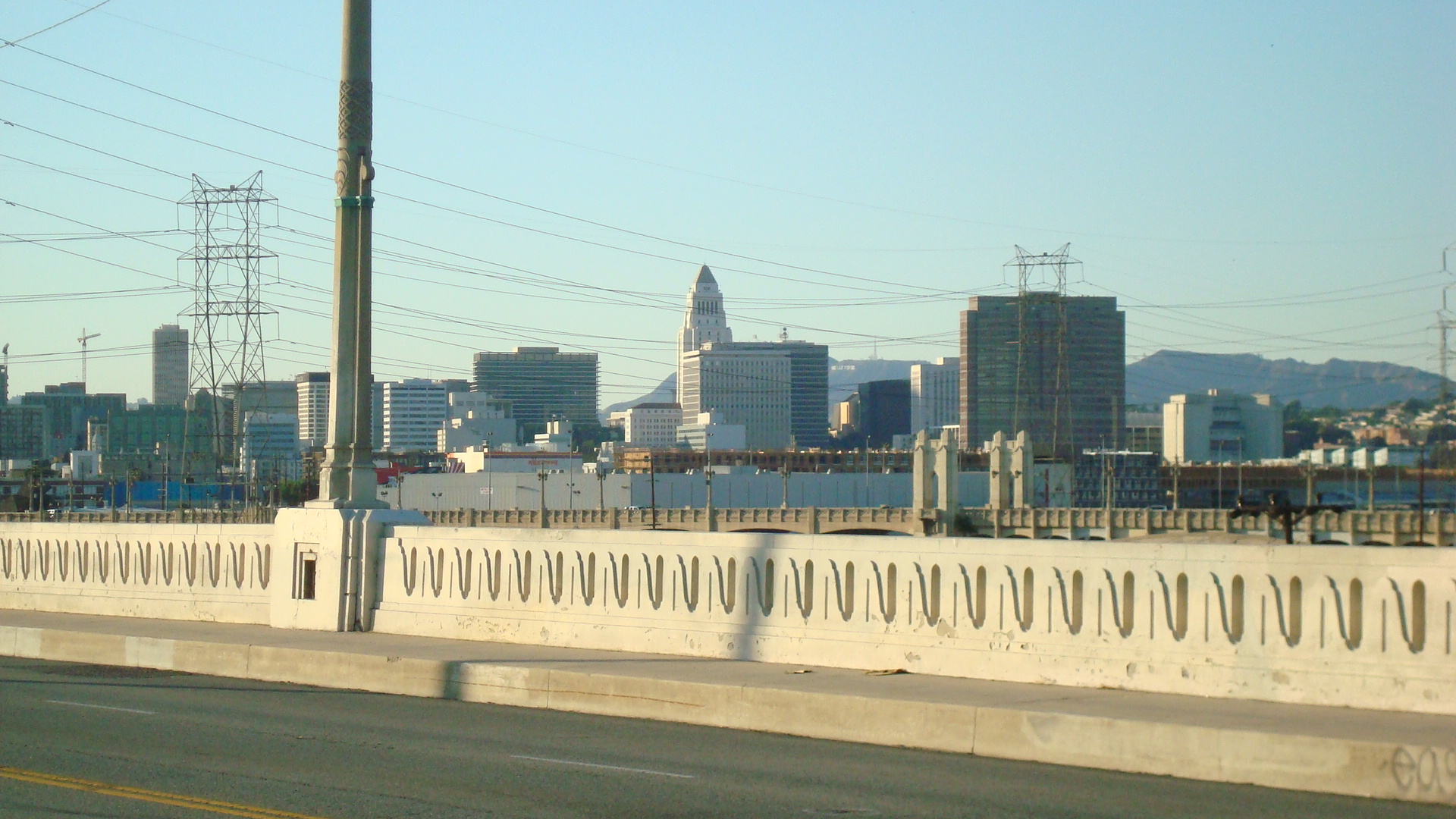
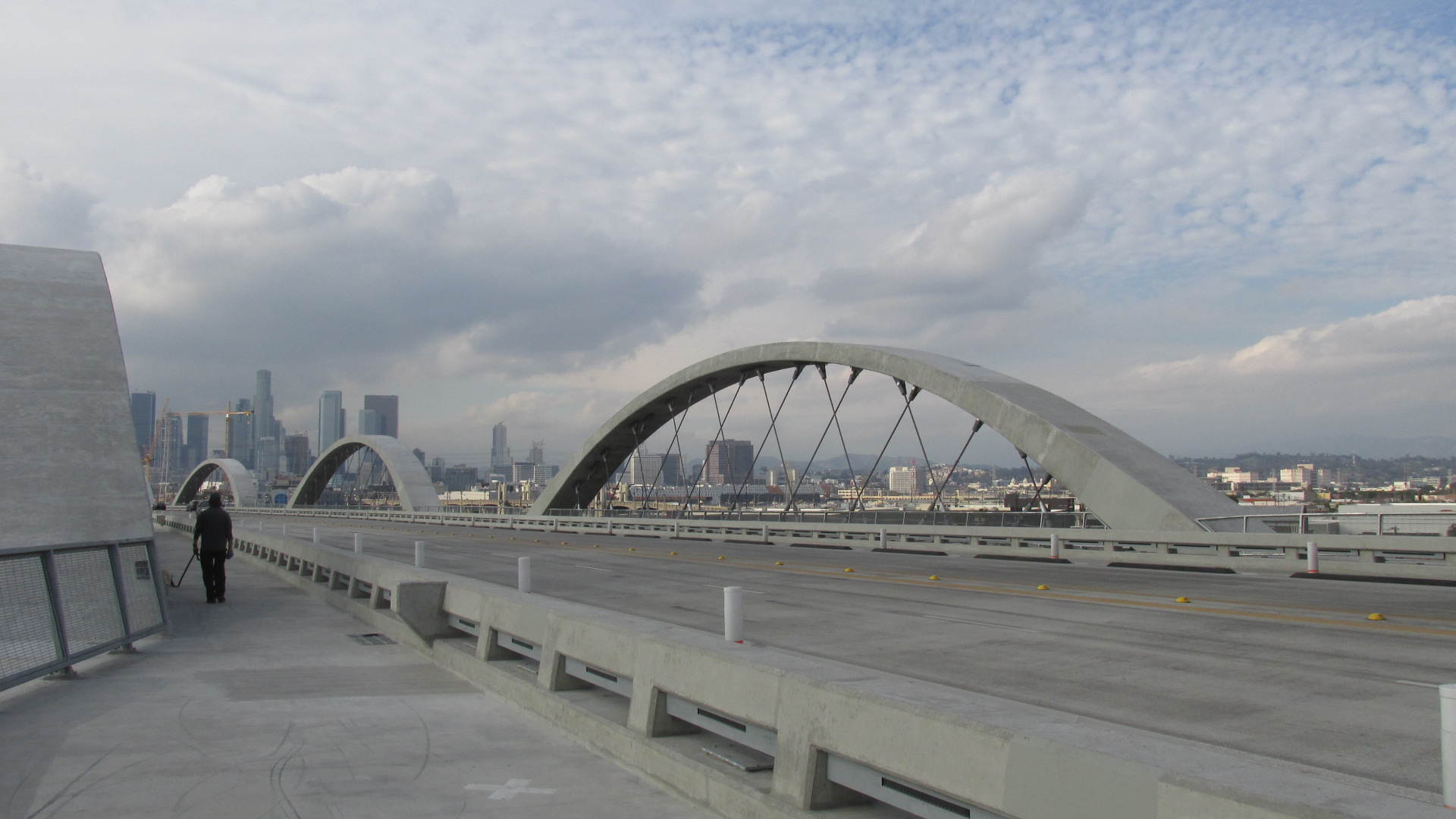
A view of Downtown from the Fourth Street Bridge.

Back in 2017, I walked across the Fourth Street Bridge and took a bunch of photos, thinking it would be a great subject to write about on this blog.  Now, only seven years later, I’m finally getting around to doing this post.  What can I say?  Time flies….

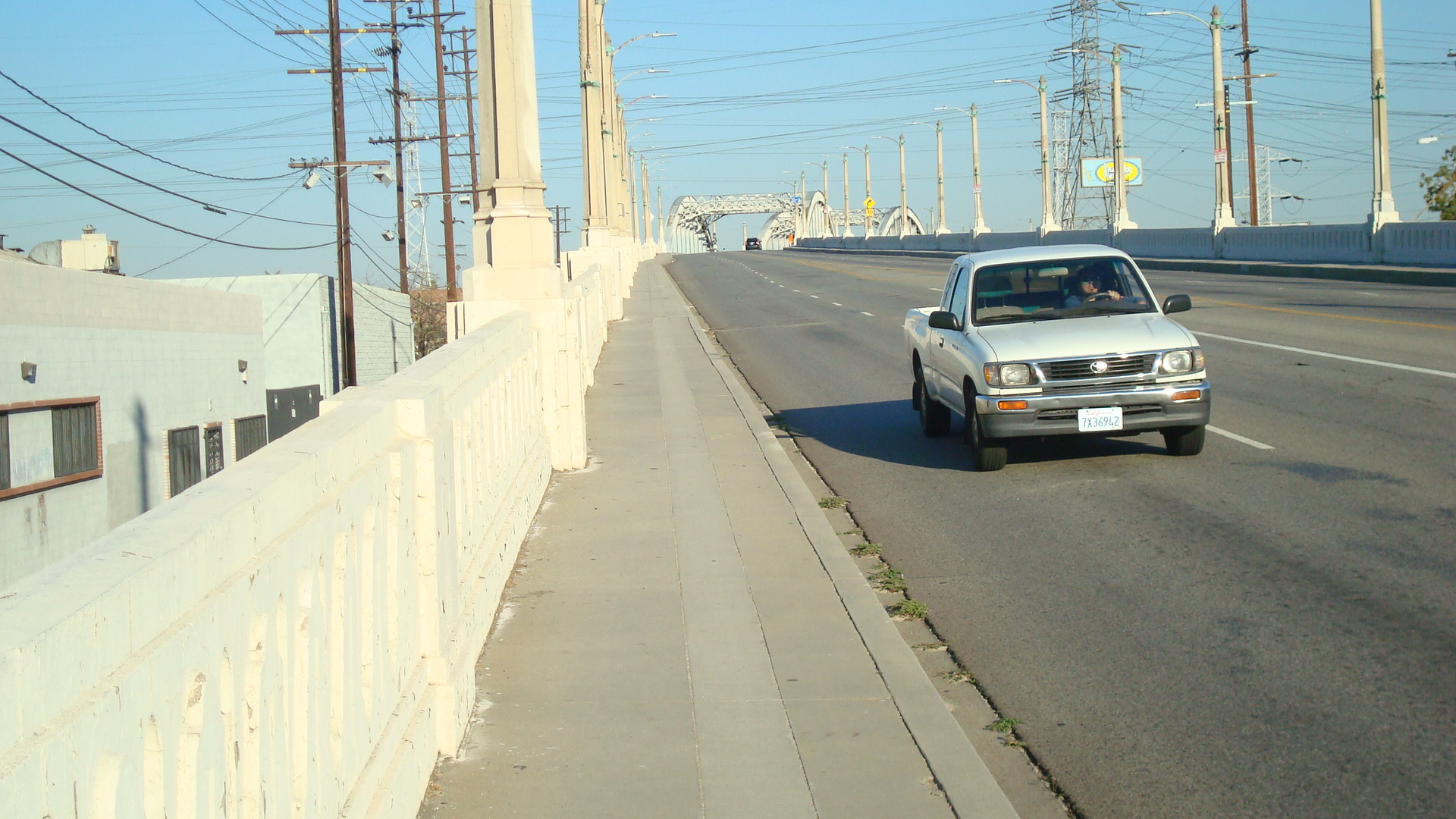
Fourth Place, leading up to the Fourth Street Bridge.

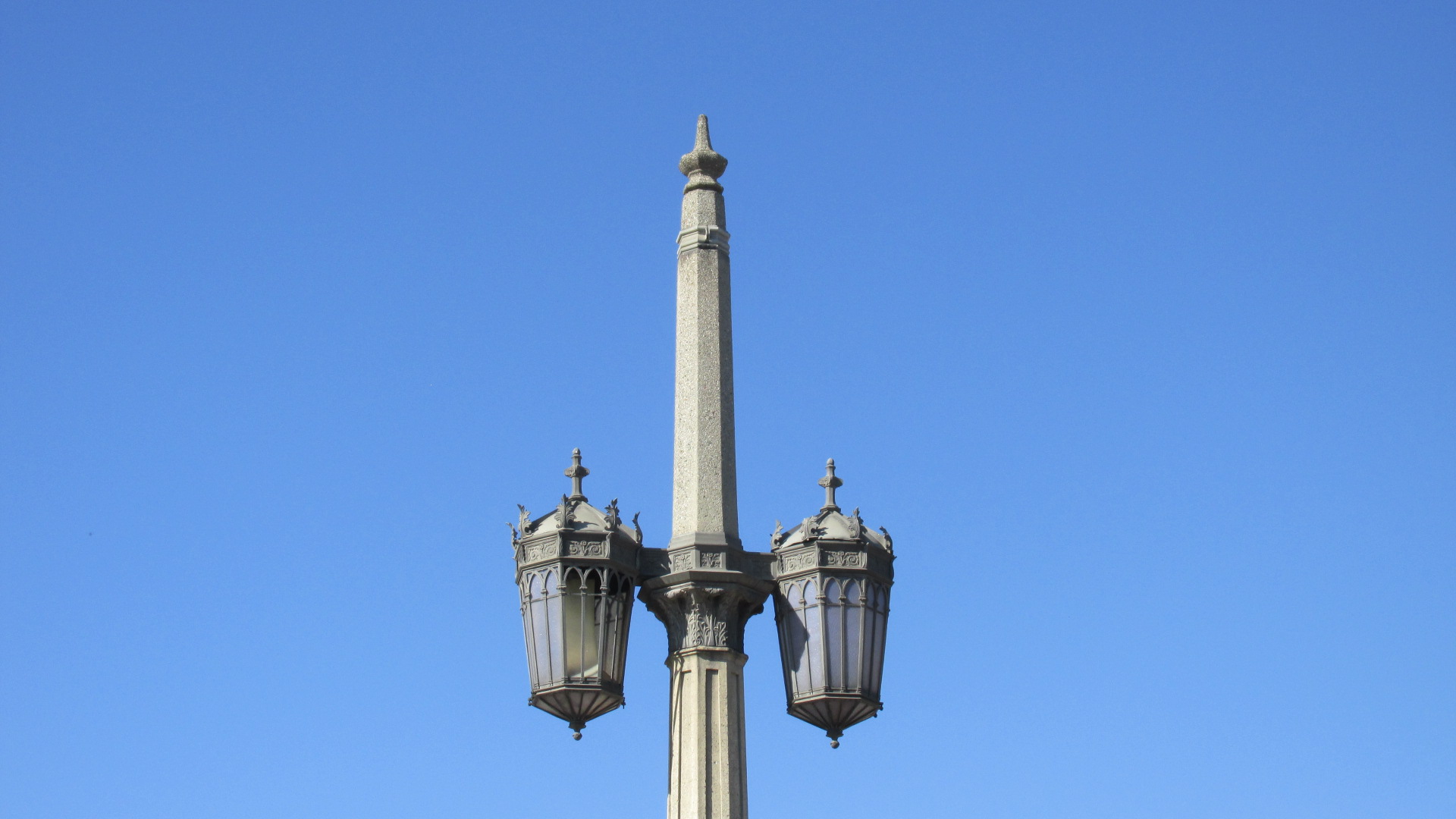
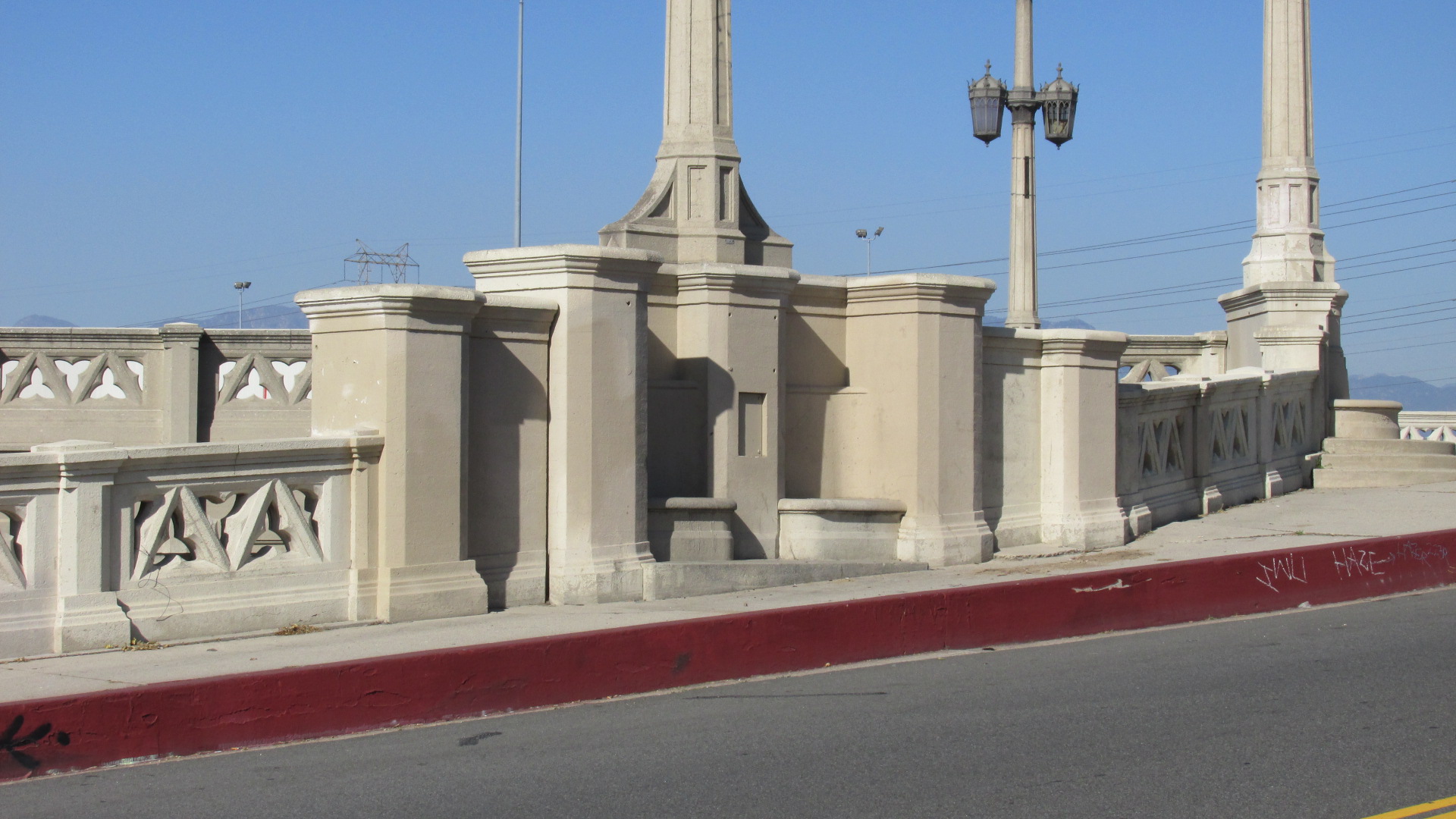
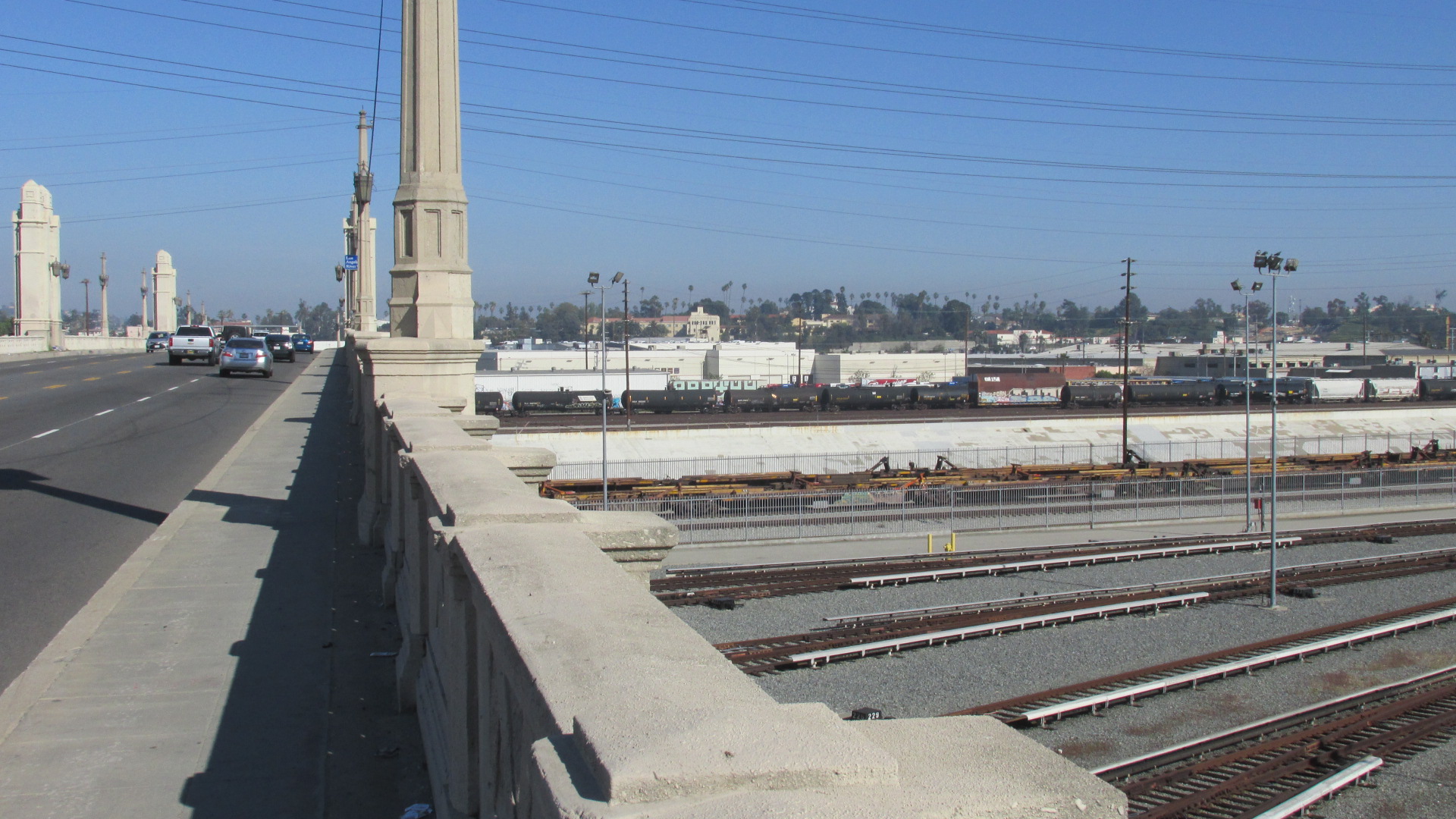
To my mind, the Fourth Street Bridge is one of the most striking bridges in LA.  I don’t claim to be an architecture critic, but it seems like there was unusual amount of care put into the design.  The streetlights, porticos and concrete railing were fashioned in a mix of Beaux Art and Gothic Revival styles that was carefully worked out by the architects.  These aren’t just decorative elements that were tacked on.  They’re well-suited to the scale and the massing of the bridge.

Fourth Place merges with the Fourth Street Bridge.
The streetlights echo European Gothic design.
Some of the piers feature built-in seating.

Constructed in 1931, the bridge was part of a massive investment in infrastructure made possible by the passage in the 20s of LA’s Viaduct Bond Act.  (To show you how ignorant I am, I didn’t know until recently what the difference was between a bridge and viaduct.  Apparently, a bridge is a small structure built to cross a fairly narrow river or ravine.  A viaduct is a larger structure made up of a series of bridges that crosses a wide river or a valley.  But I’m still going to call it the “Fourth Street Bridge”.  Old habits die hard.)

A view of the bridge looking toward East LA.
The San Gabriel Mountains to the north.
Unfortunately, these days many of the porticos are filled with trash.

The Fourth Street Bridge was built by the LA City Bureau of Engineering under the supervision of Bridge and Viaduct Engineer Merrill Butler.  Butler had a long career in LA, working for the City in various capacities until his retirement in 1961.  Over the years the projects designed under his direction included the First Street (now Cesar Chavez) Bridge, the Hyperion Bridge, the Figueroa Street Tunnels and the Hyperion Sewage Treatment Plant.

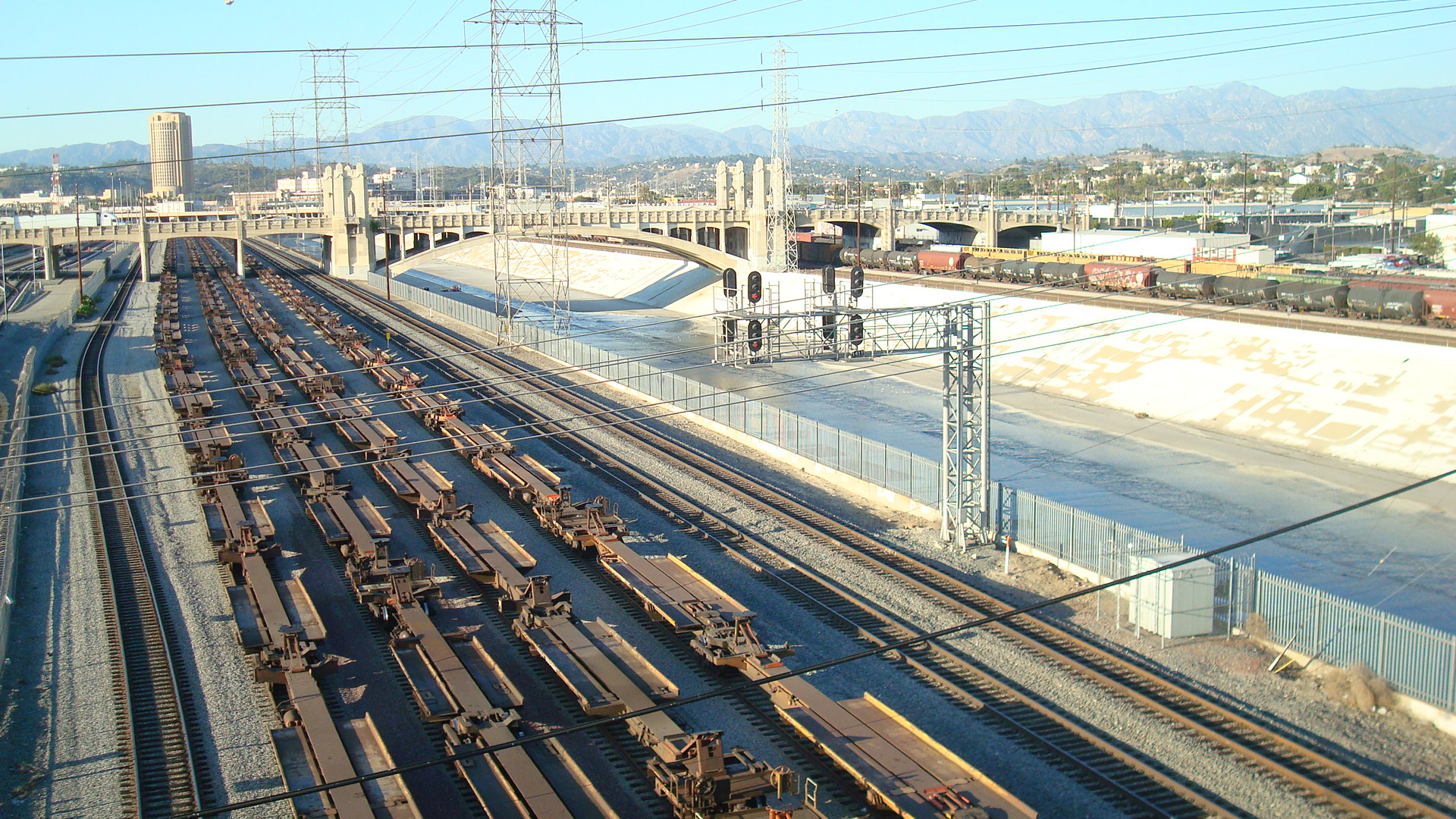
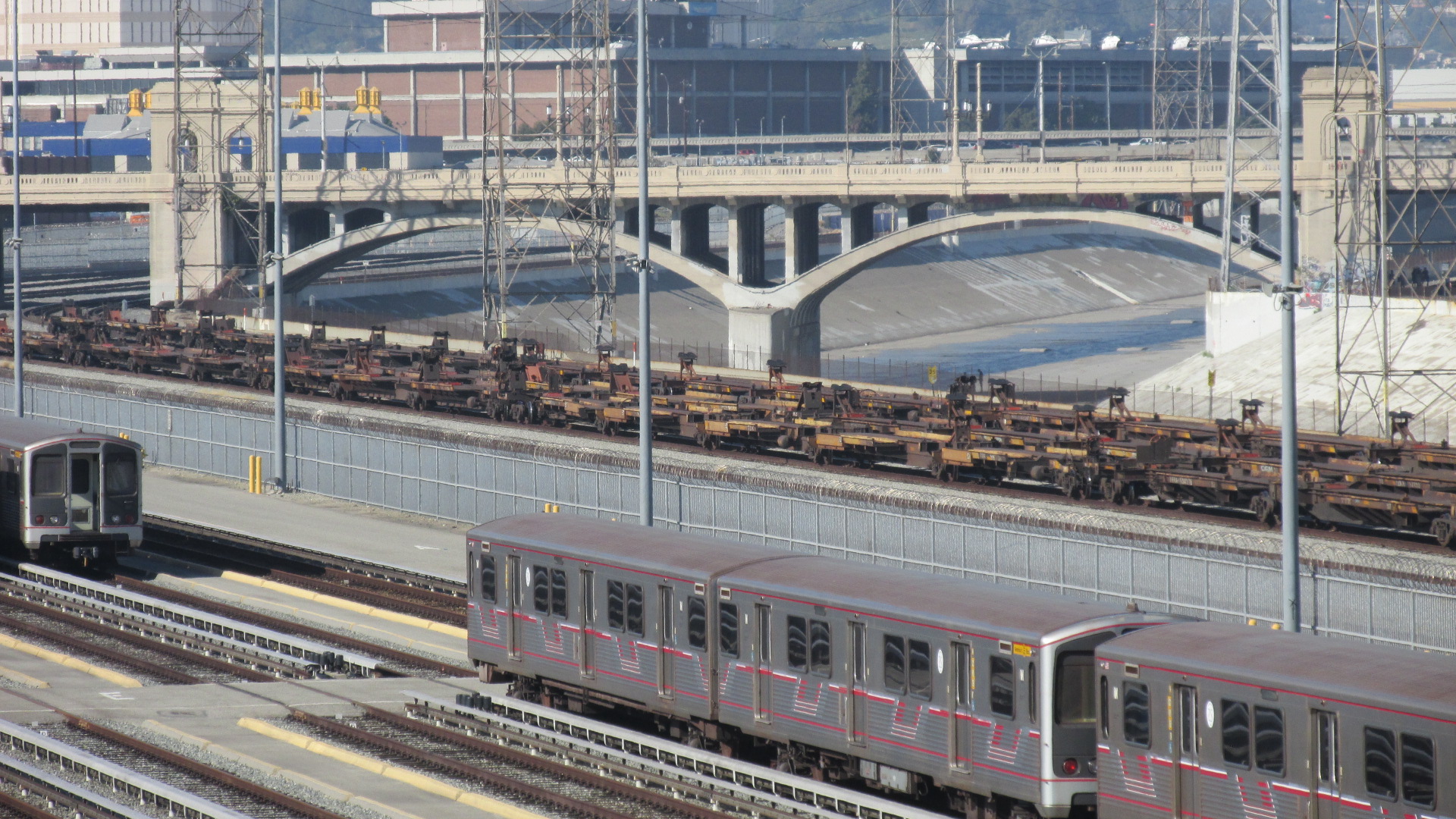
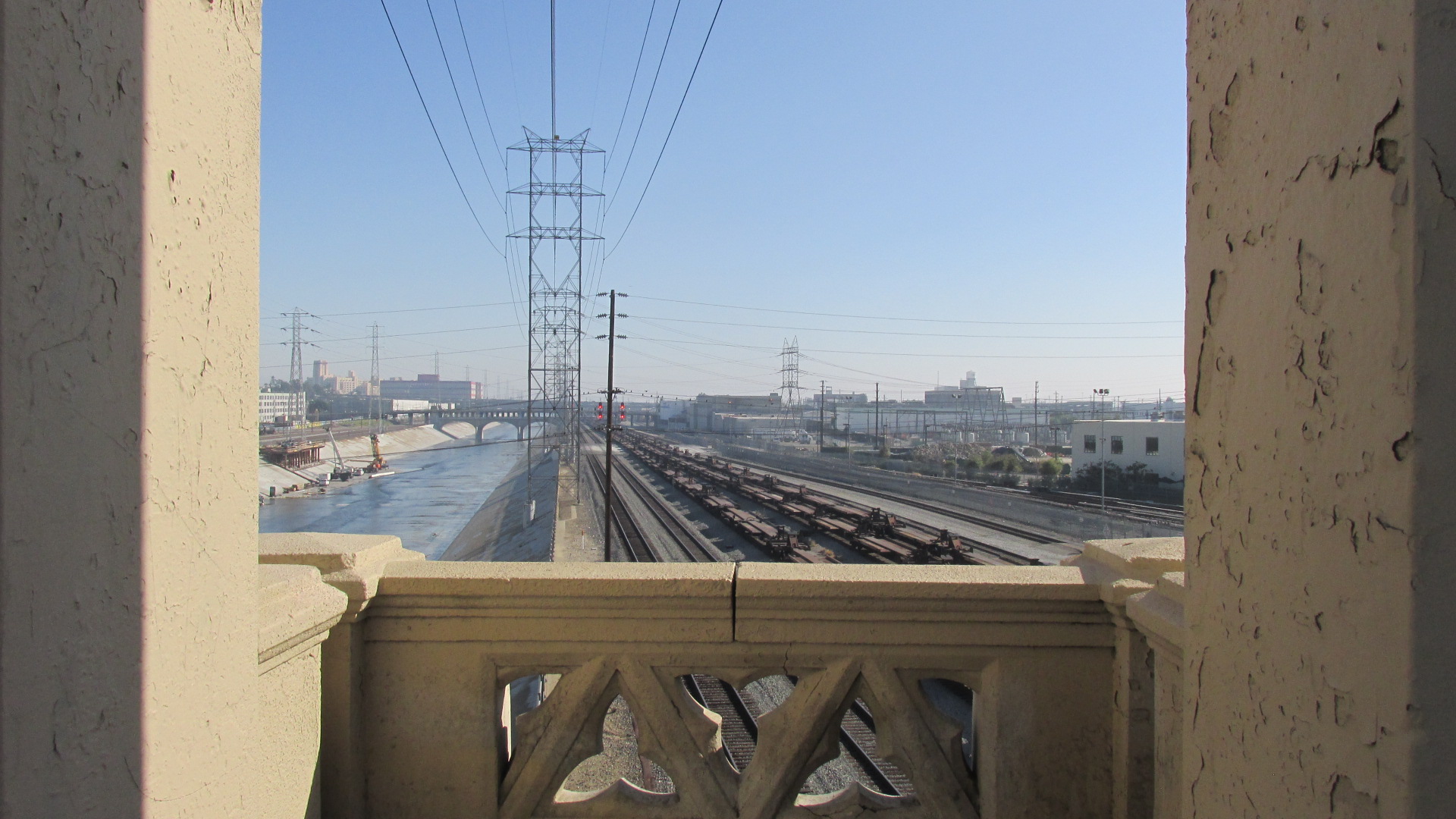
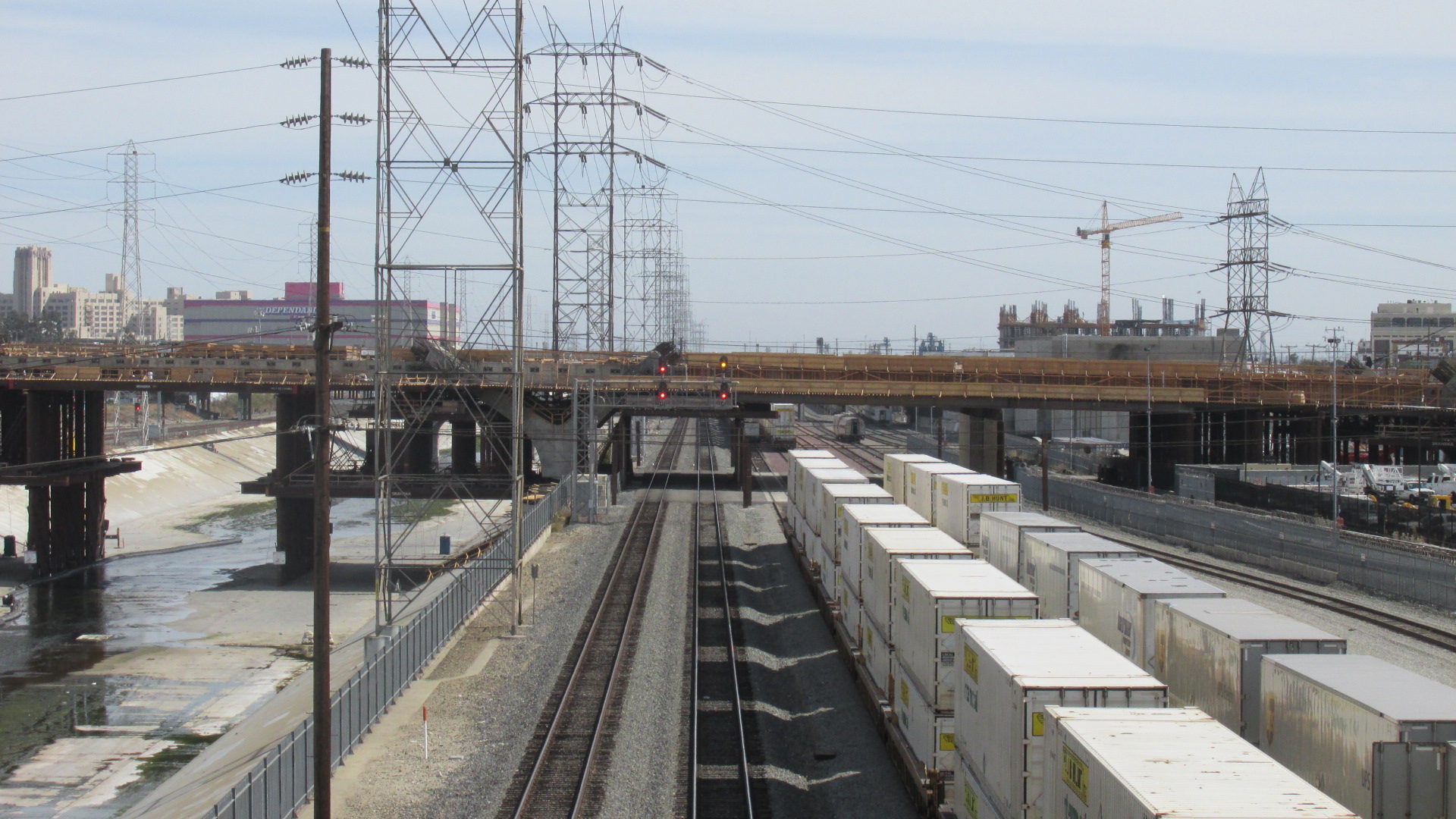
The series of bridges that connect East LA to Downtown are part of a massive infrastructure nexus that played a key role in LA’s growth.  In the latter part of the 30s, work began on the flood control projects that would shape the LA River as we know it today.  One of the reasons for encasing the River in concrete was to protect the rail lines that ran adjacent to it.  You couldn’t move goods without trains.  And rising above the concrete channel is a vast network of power lines.

Rail lines next to the LA River.
Miles of power lines run above the River.
Rows of flat cars lying on the tracks below.

In 1995, the Fourth Street Bridge was retrofitted to bring it into compliance with current seismic safety standards.  And in 2008 it was declared a Historic Cultural Monument by the City of LA.

The Cesar Chavez Bridge lies just north of the Fourth Street Bridge.
Looking west toward Downtown.

Here are a couple of links, for anyone who wants to dig a little deeper.  Thie first will take you to Water & Power Associates, which has a number of historic photos of the Fourth Street Bridge.  And if you’re into LA history, check out the Museum tab in the index on the left.  Their virtual museum offers an amazing collection of images and information.

Fourth Street Viaduct at Water & Power Associates

And here’s a brief bio on Merrill Butler that was apparently written at the time of his retirement.  Not surprisingly, it’s pretty superficial, but it also seems to offer a small snapshot of mid-century LA.  A different time, a different culture.

Merrill Butler Bio from LA Public Library

A Walk across the Sixth Street Bridge

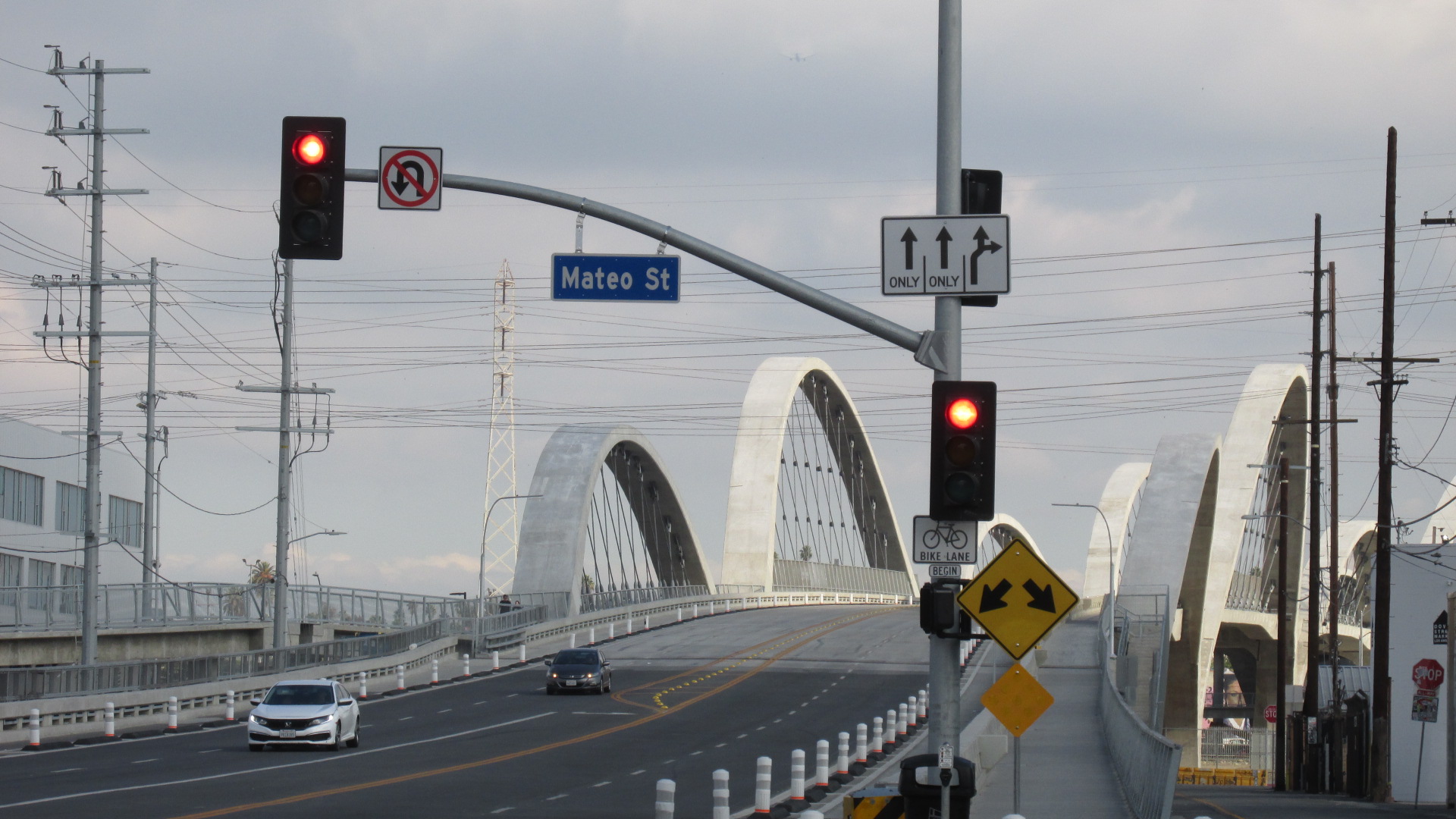
A view of the Sixth Street Bridge from Mateo Street.

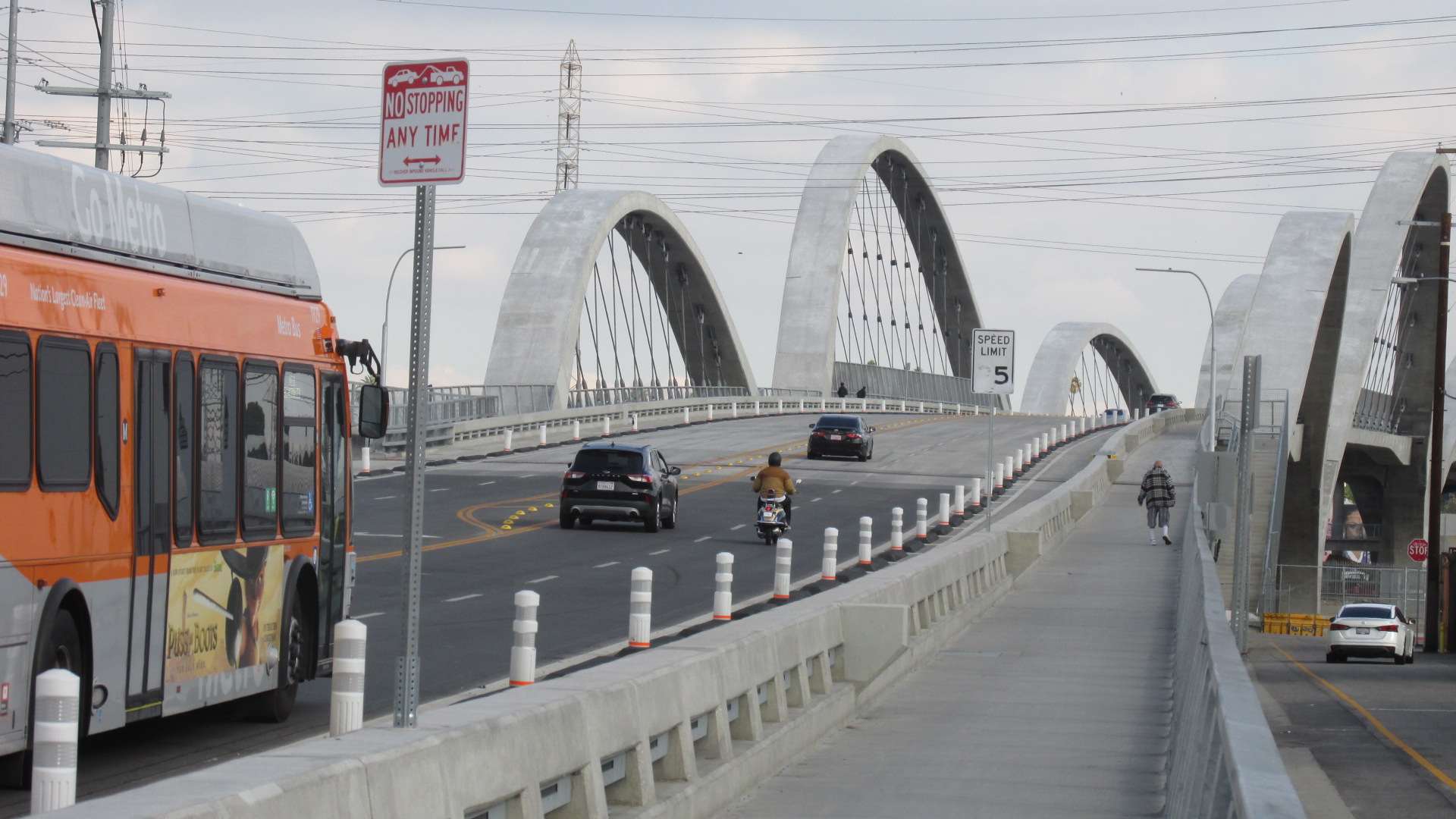
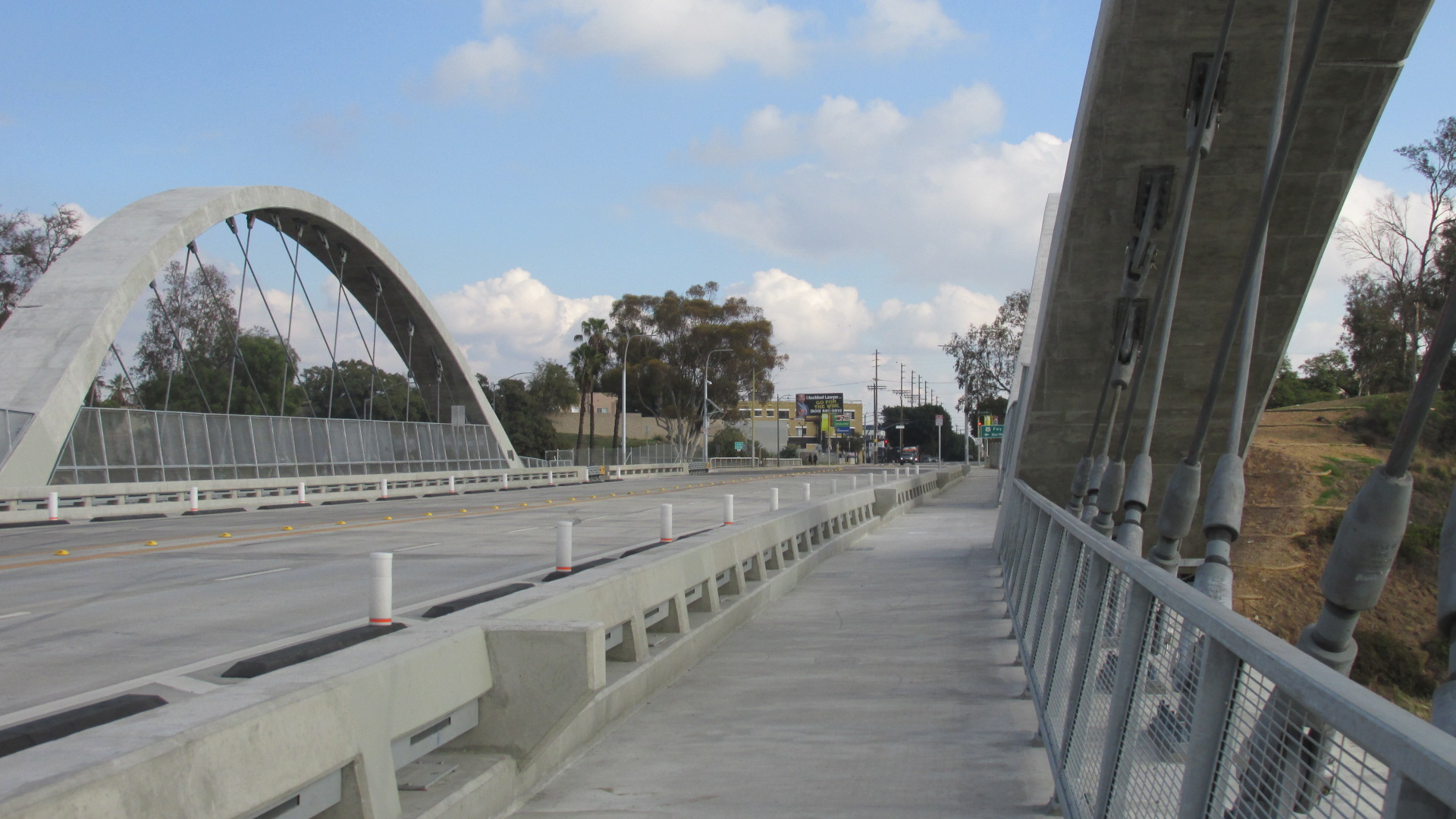
The new Sixth Street Bridge opened in July of this year.  The first few weeks were pretty chaotic, with drivers doing stunts, daredevils climbing the arches, street artists getting creative with spray paint, and more.  Things got so bad the LAPD ended up closing the bridge just to keep a lid on the mayhem.  Scenes of crashes, fireworks and people partying were making the nightly news.

Starting across the bridge from the Downtown side.

But now all the chaos seems to have faded away.  When I took a walk across the bridge earlier in December, there wasn’t much traffic and I saw only a handful of pedestrians.  It was a cool, cloudy day, and things seemed pretty peaceful.

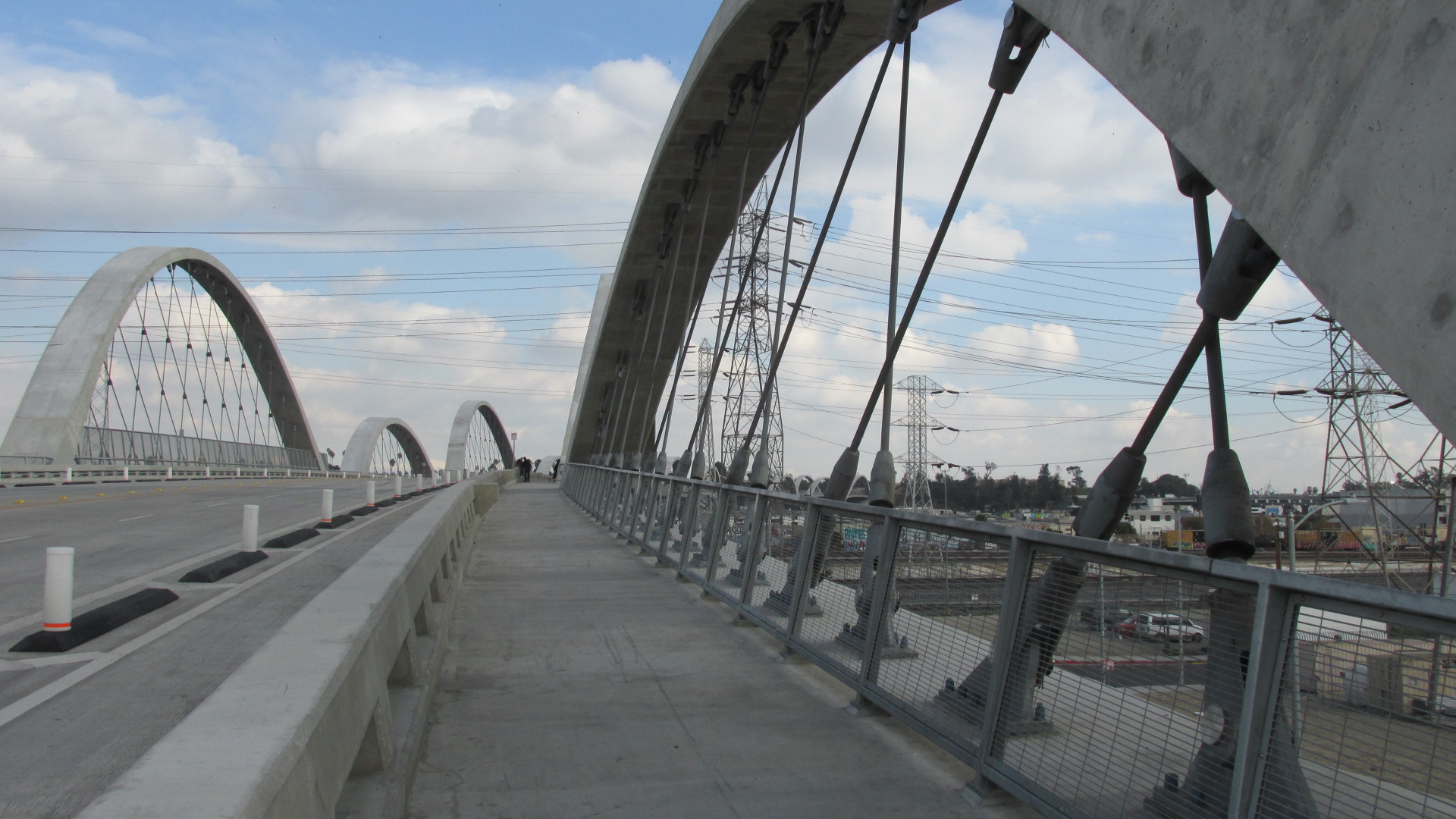
The bridge’s arches create a sense of energy.

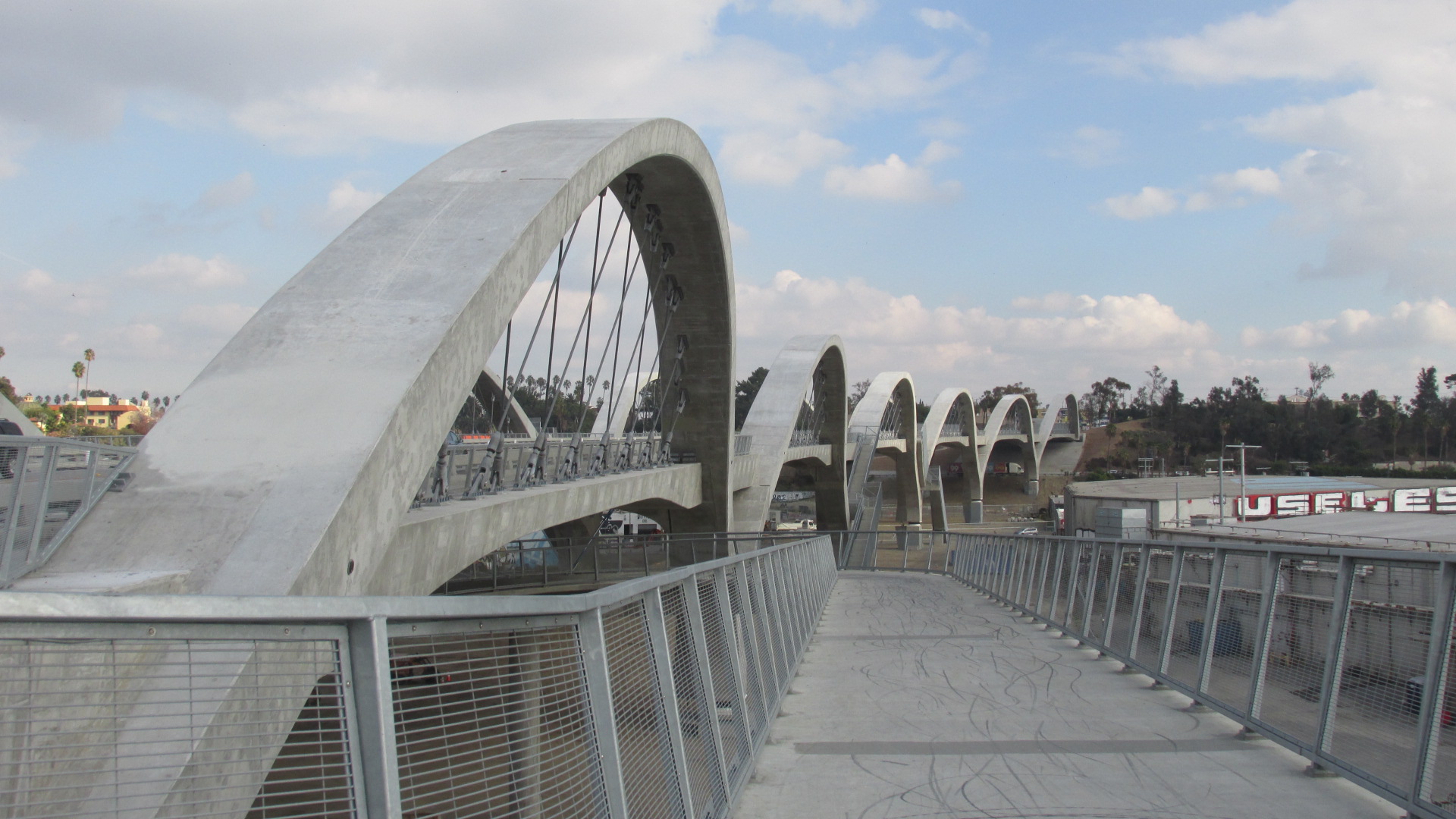
I have mixed feelings about the Sixth Street Bridge, which I’ve written about previously.  In this post I want to focus on the positive.  The bridge really is beautiful.  The design, by Michael Maltzan, is impressive, with the fluid lines of the arches rolling off to the horizon.  Walking across you get a sense of being lifted into the air, with stunning views of LA’s various landscapes surrounding you on all sides. 

The new Sixth Street Bridge is actually a replacement for the previous version, which was built in the early 30s.  It’s just one of a series of bridges that run across the LA River between Downtown and East LA, including the Cesar Chavez Bridge, the Fourth Street Bridge, and the Seventh Street Bridge.  All of these were built in the first half of the 20th century.

A view of the Fourth Street Bridge.
A view of the Seventh Street Bridge.

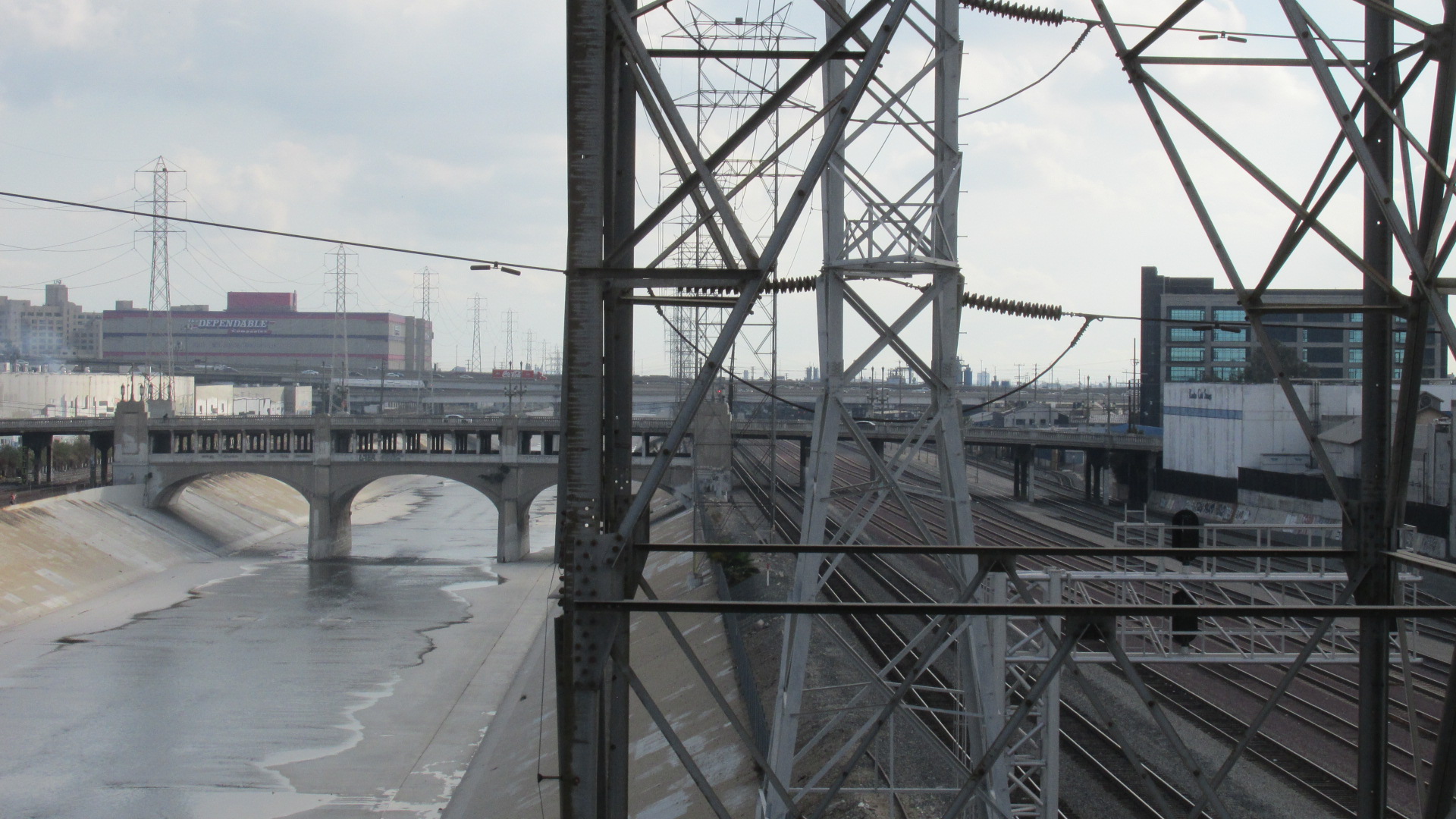
As you can see from the photo above, this area, which borders Downtown LA, is criss-crossed with multiple layers of infrastructure.  Aside from the bridges, you have the concrete surface of the LA River, rows of train tracks, and miles of electric power lines, all surrounded by a massive industrial district. 

The arches rolling off to the horizon.

Beneath the bridge you can see scores of large, nondescript buildings which were built for manufacturing and storage.  These days you’ll probably find that a number of them have been converted to ghost kitchens and cannabis greenhouses.

A view of the industrial district that lies below the Sixth Street Bridge.
Scores of drab buildings cover the landscape.

Nestled inside this vast maze of commercial buildings you’ll often come across pockets that seem neglected or deserted.  These spaces are a magnet for street artists that love the expansive, windowless exterior walls. 

The desolate spaces between these buildings draw street artists…
…who love the wide, windowless exteriors.

Coming down on the other side of the bridge, Sixth Street becomes Whittier Boulevard, which is lined with shops and restaurants serving the working class community of Boyle Heights.

The bridge lands in Boyle Heights.

It will probably be a long time before we can really see the impacts caused by the new Sixth Street Bridge.  There’s been lots of hype about the upside of this new LA landmark, but it’s also likely to accelerate the waves of gentrification and displacement that have been sweeping across the city.  Property values have already risen in Boyle Heights, and so has the number of evictions.

Like I said, though, for the moment I’ll focus on the positive.  It is a lovely bridge.

Work Continues on Sixth Street Bridge

The Sixth Street Bridge’s arches rising above the surrounding landscape.

Work on the new Sixth Street Bridge is still moving along.  Originally scheduled for completion in 2019, it’s now supposed to be finished by summer of 2022.  This shouldn’t surprise anyone who follows the progress of large infrastructure projects.  It’s also no surprise that the cost of the project has risen from $420 million to $588 million.  But even though repeated delays and cost overruns are fairly common with projects of this kind, it seems like LA is especially prone to these problems.  (I guess it could be worse.  Just take a look at the California High Speed Rail.)

LA River running beneath the Sixth Street Bridge.

When the bridge is done, there are plans to create a 12-acre park within the bed of the LA River, with public art and recreational programs.  I hate to be cynical, but it will be interesting to see what actually materializes.  While the FTA and CalTrans are helping with funds for the construction of the bridge, I don’t know if they’re also kicking in for the park.  I mention this because the LA Recreation & Parks Department is chronically underfunded, and can’t even maintain existing parks.  I’m also concerned because it seems some of the features that were supposed to be included in the new bridge have been cut.  The original design had protected bike lanes.  Apparently those are gone.  And I’ve seen some chatter on-line about the removal of the stairs that would have connected the bridge to the park, but I haven’t been able to find any confirmation.

Downtown side of the bridge.

But the biggest cause for concern is that the completion of the bridge will bring further gentrification and displacement on the east side of the LA River.  Many residents of Boyle Heights and surrounding communities are worried that the Sixth Street Bridge will bring another wave of real estate investors looking to cash in.  The eviction of the seniors at Sakura Gardens is not a good sign.

Many people are excited about the new Sixth Street Bridge and its promised benefits.  I hope their optimism is justified.  When I first heard about the project years ago, I was excited, too.  I have to say that now my hopes are outweighed by a deep cynicism.  The City of LA’s leaders have been promising a more livable, equitable city for years.  Instead it seems that the population is increasingly divided and increasingly desperate.  Bridges are supposed to bring people together, but I’m worried that this one will end up driving people apart.

Burbank Blvd. Bridge Demolition

Brbk Bridge Demo from Live Feed 9 200426 CROPPED

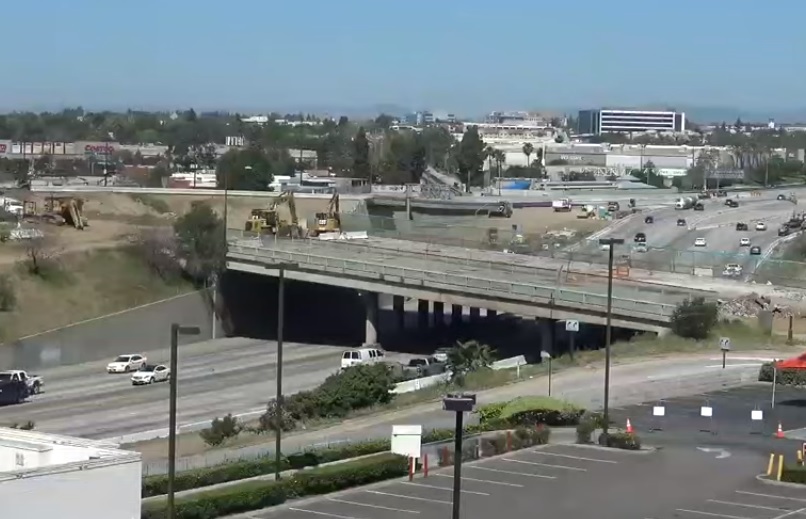
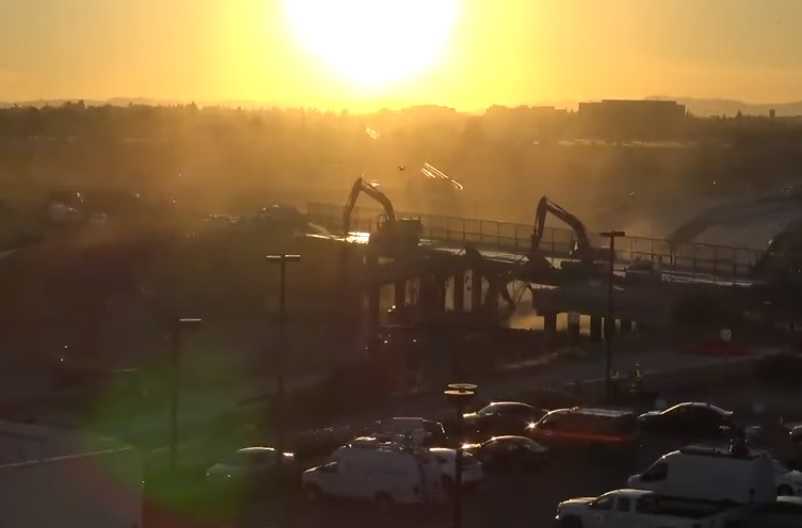
An image from Sunday morning, when demolition was largely completed.

A few months back I wrote about the Empire Interchange/Interstate 5 Improvement Project, a massive undertaking that’s been in process for years. One component of the project is the demolition and replacement of the Burbank Blvd. Bridge over the I-5. This weekend the freeway was shut down and the demolition took place. The photo above is from a live feed that was posted on-line, and shows what the scene looked like this morning. Here are a few more shots from the live feed that show the demo in progress.

Brbk Bridge Demo from Live Feed 0 BEFORE CROPPED

An image from the live feed before the freeway closure, when the bridge was still standing.

Brbk Bridge Demo from Live Feed 3 200425 CROPPED

An image from Saturday, when demolition had begun.

Brbk Bridge Demo from Live Feed 5 200425 CROPPED

Demolition continues on Saturday, as the sun goes down.

The project is way behind schedule and there’s no telling when it will actually be completed. For more info, you can read my previous post by clicking here.


Building Empire

Emp 10 Fwy Banners

For years now construction crews have been tearing up Downtown Burbank. Caltrans is the lead agency on a huge infrastructure project which is remaking the I-5/Golden State Freeway corridor, as well as bringing changes to a number of Burbank’s surface streets. The actual name for all this activity is the Empire Interchange/Interstate 5 Improvement Project. Here’s a brief overview from the City of Burbank’s web site.

“This project, lead [sic] by Caltrans and funded primarily by State transportation funds and Los Angeles County transportation sales tax funds, will relieve congestion along Interstate 5 while providing an important new access to the Golden State area of Burbank, including the Empire Center and Bob Hope Airport.”

Emp 12 Fwy Bridge Trucks

The I-5/Golden State Freeway as it passes through Burbank

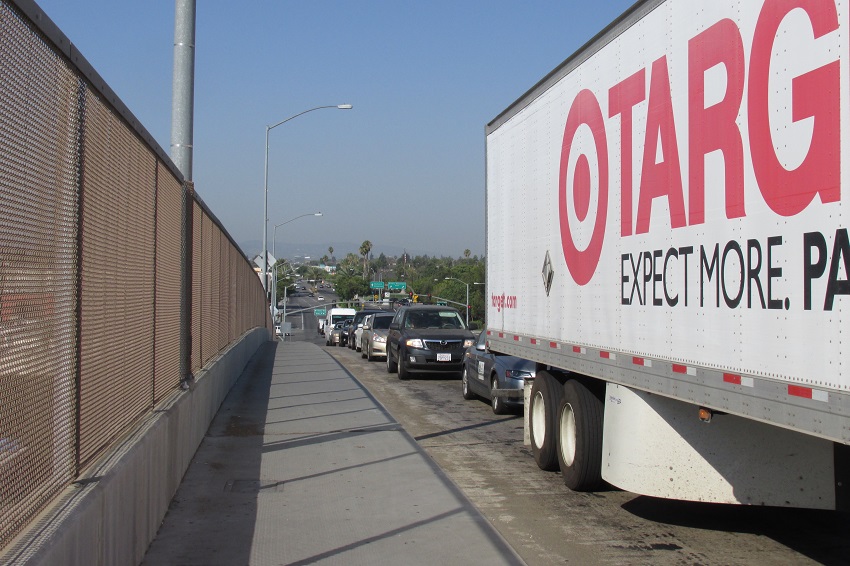
Emp 14 Burb Bridge Target

Traffic on Burbank Blvd. where it crosses over the freeway

Here’s a short list of specific changes that are part of the project.

> Full freeway interchange at Empire Avenue
> New freeway and railroad crossing allowing access to Empire Center
> Freeway widening including 2 carpool lanes and weaving lanes
> Burbank Blvd. Interchange Demolition & Reconstruction
> Railroad grade separation at Buena Vista Street
> Realignment / Closure of San Fernando Blvd near Lincoln Street.

You’ll notice one of the main goals is to improve access to the Empire Center. If you’ve never been there, it’s basically a massive mall that has all the same chain retail stores and restaurants you can find almost anywhere else in Southern California. But more on that later.

Emp 20 Columns 1

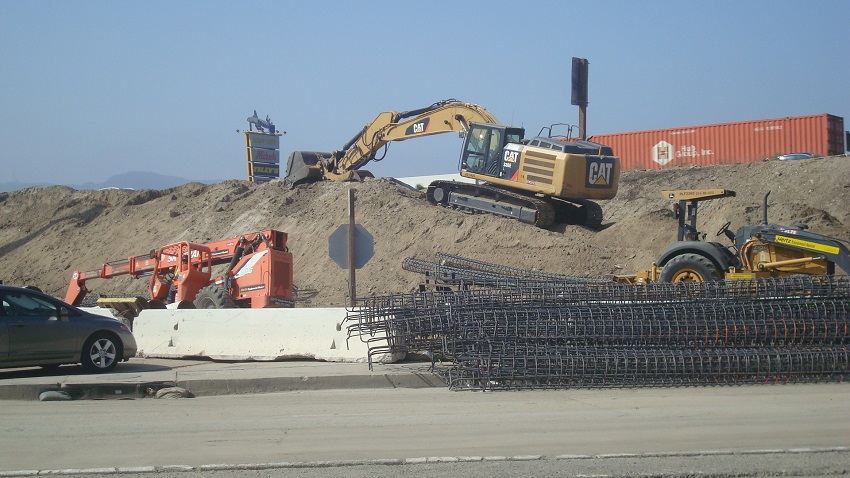
Excavation next to the Empire Center

Emp 21 Hill Jeep EDITED

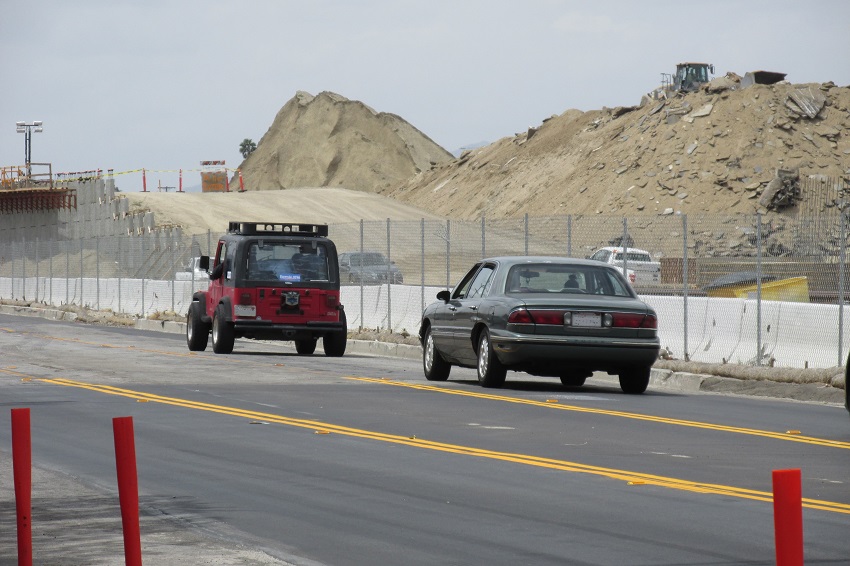
Mounds of dirt rising above Victory Place

The project is way behind schedule. Various factors have pushed completion back substantially, including a dispute with a contractor and this year’s heavy rains. Demolition and replacement of the Burbank Blvd. bridge had been scheduled to start this year, but now Caltrans says they’ll start in 2020. It isn’t unusual for a project this big and this complex to take longer than expected, but Caltrans’ original 2018 deadline was ridiculously ambitious. Work has already been going on for over five years, and will continue for at least a couple more years.

Emp 22 SFB Winona Const 1

A barrier under construction at San Fernando and Winona

Emp 24 Const Site SFB Winona 2

Construction site at San Fernando and Winona

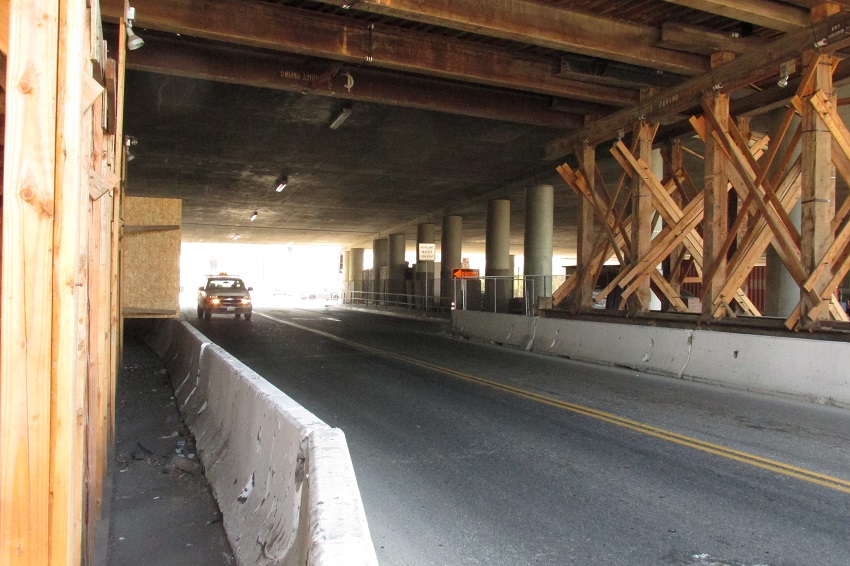
Emp 28 Winona Under Fwy

Work on Winona where it passes under the freeway

In the project overview above, you may have noticed that it said funding comes in part from an LA County transportation sales tax. This would be Measure R, which was approved by voters about a decade ago. Measure R money funds a lot of different things, but the major categories are: 35% to new rail and bus rapid transit projects; 20% to carpool lanes, highways and other highway related improvements; 20% to bus operations; and 15% for local city sponsored improvements.

Emp 29 Shovel SF Blvd Red Truck

Construction on San Fernando next to the freeway

LA voters have consistently approved new taxes for transit and road upgrades, but there’s an ongoing debate about the way these measures are structured, with many transit advocates saying it’s counterproductive to levy new taxes to fund both transit and highway improvements. Their argument is that if we continue to invest in infrastructure that makes it easier to drive cars, then people will just continue to drive cars, even though billions are being invested in new rail infrastructure. On the other hand, the people who write these measures say that voters won’t approve them if there’s no money for roadwork.

There does seem to be a conflict here, which may, in part, explain the dismal performance of LA’s investments in transit. The Los Angeles County Metropolitan Transportation Authority (or Metro) has spent billions on new rail infrastructure over the past two decades, and yet transit ridership is lower than it was in the 80s. Some commentators believe that LA voters like the idea of transit, but ultimately end up sticking with their cars.

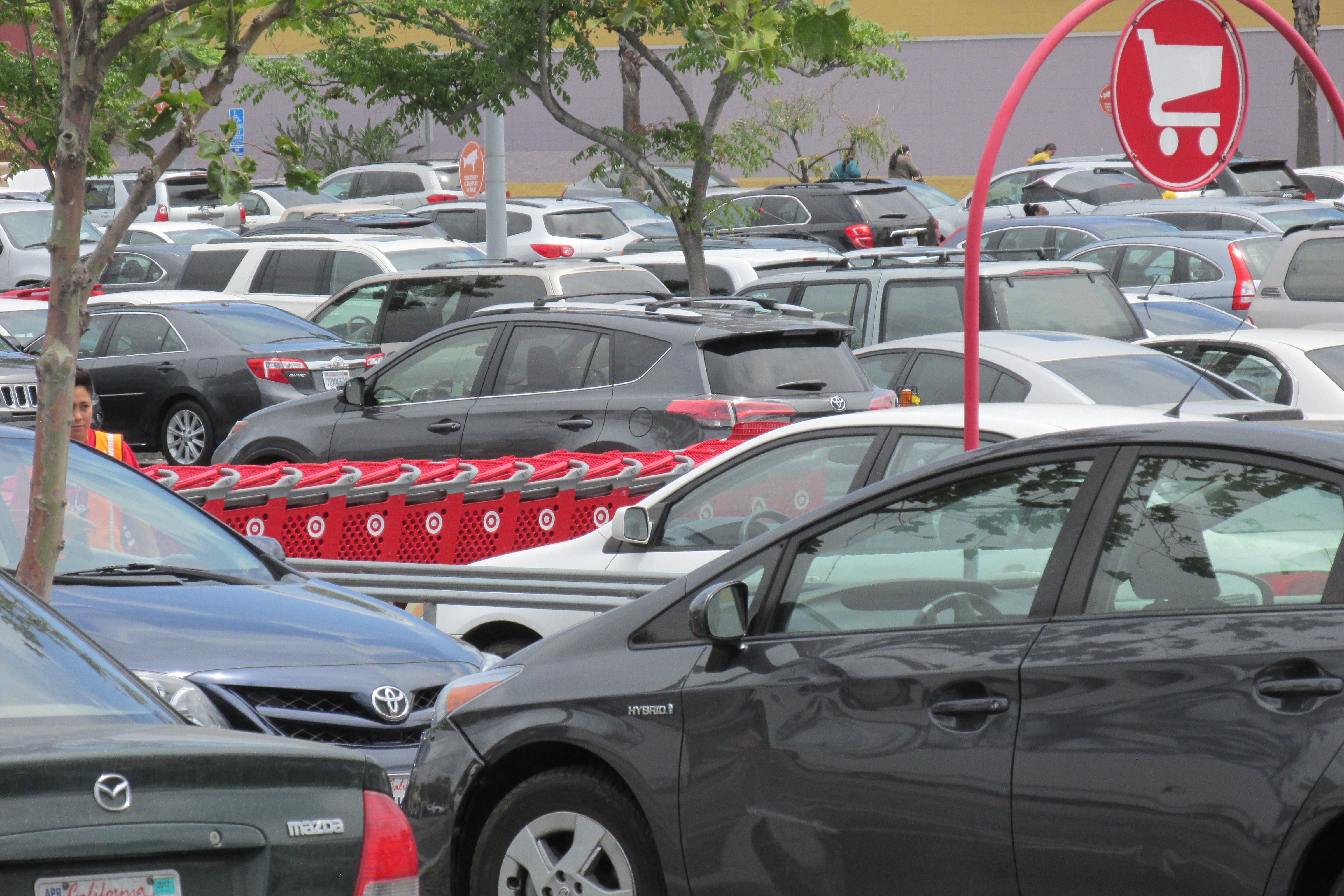
You can take the bus to the Empire Center, but as you can see by the photos below, most folks drive.

Emp 30 EC Pkng 2

Parking lot at the Empire Center

Emp 32 Pkng 2

Another shot of the parking lot at the Empire Center

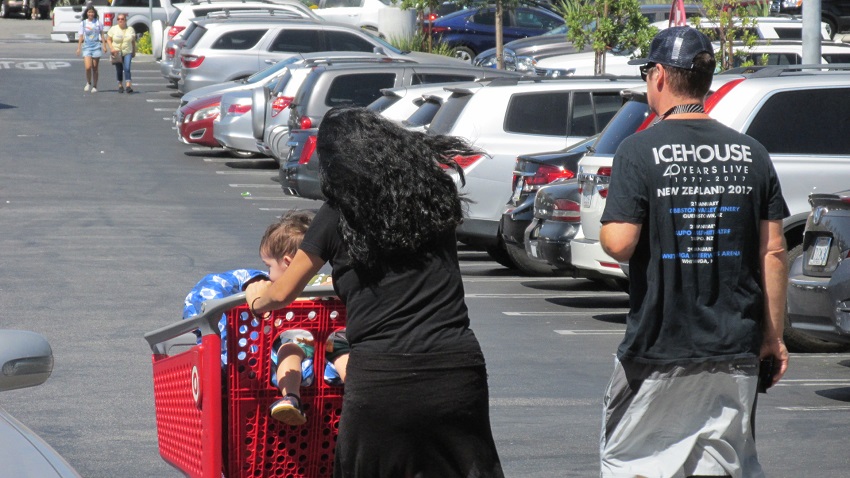
Burbank is a really car-centric town. Aside from the Empire Center, the Downtown area also has the Burbank Town Center and an adjacent outdoor mall. On weekends the parking areas/structures for all three of these malls are packed with cars. Burbank residents love to participate in the great American pastime of driving somewhere and buying stuff.

Emp 40 Pkng Family

A family heading back to the car

Emp 42 Pkng Shoppers

Shoppers in the parking lot at Empire Center

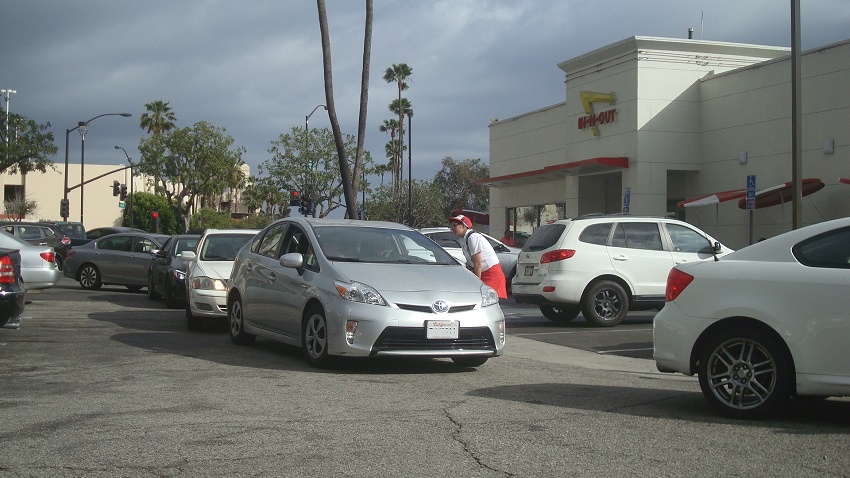
And let’s not forget the other great American pastime of sitting in a line of cars waiting for food.

Emp 50 INO A

Line of cars waiting for their turn at the window

Emp 52 INO B EDITED

The line of cars looping back through the parking lot

Emp 54 INO C 2 EDITED

The line of cars extends back around the building

Let’s face it. This is what powers our economy. Which I’m sure is why two of the primary goals of this project involve making it easier for people to drive to the Empire Center. Cars don’t just make it easier for Americans to buy stuff. Cars themselves are products that Americans love to buy. For decades one of the main drivers of the US economy has been the auto industry. After WWII, car manufacturing helped make the US the world’s major economic power. The jobs generated by the industry helped to create the American middle class, and the fact that they were union jobs meant fat paychecks that pumped dollars into the consumer economy. When the big auto makers were on the ropes a decade ago, Washington stepped in to rescue them, and the rebound in car sales was one of the things that lifted the US out of the recession.

Emp 70 Car Truck

Freeway onramp to be permanently closed

But it does seem like we have a problem. One the one hand, we have government officials telling us we need to get away from cars and rely more on transit if we want to fight climate change. On the other hand, we have government officials, sometimes the same ones, promoting efforts like the Empire Interchange/Interstate 5 Improvement Project. We’re spending tons of money on transit, and at the same time we’re spending tons of money to make it easier for people to drive to the mall.

Does this make sense to you?

Emp 60 New Rd 3 Depth

Completed section of new roadway near Empire Center

Here are some links to basic info about the project.

Burbank Empire Project Page

The Empire Project: A Virtual Tour

My5LA Home Page

And here’s a story from the Burbank Leader that covers some of the reasons for delay.

5 Freeway Project, Hampered by Winter Weather, Has New Finish Date

Emp 90 Detour Clouds

Where Is this Bridge Going?

B6 00 1708 Wide Long 2

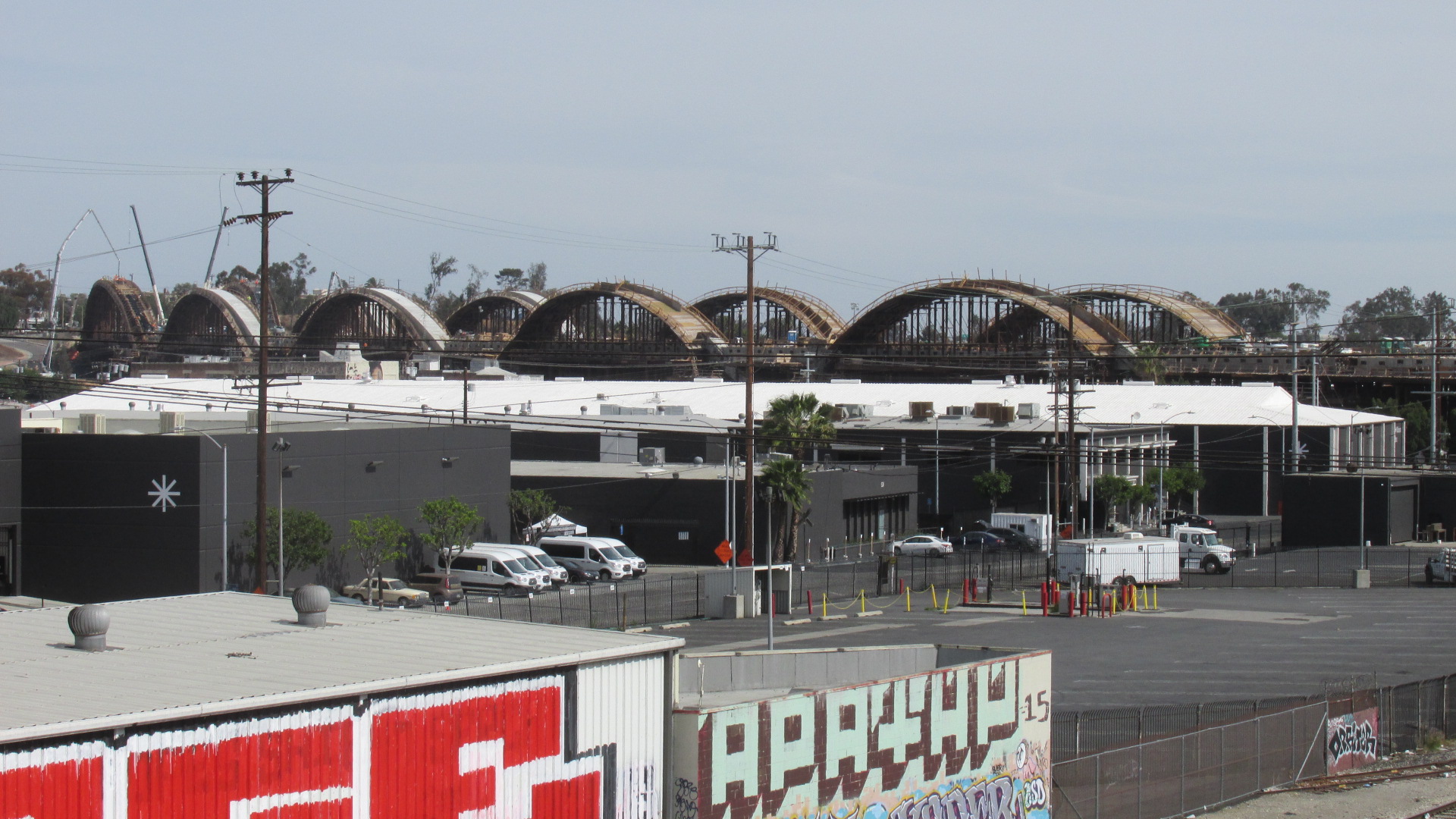
The old Sixth Street Bridge is gone. It was torn down early in 2016. The demolition was necessary because the concrete in the original structure was decaying. Work has begun on constructing a new Sixth Street Bridge, and right now it looks like it will be finished in 2020. (For the record, the formal project title is the Sixth Street Viaduct Replacement Project.)

Bridges are about making connections. The original structure was built in 1932, and was one of a series of bridges that spans the LA River. This ambitious infrastructure project started in the 20s and continued through the 30s, eventually allowing numerous crossings between Downtown and East LA. Here are a few photos of the old Sixth Street Bridge.

B6 1310 05 Base

A shot from the base of the bridge.

B6 1310 10 Truck

A truck coming down the west side.

B6 1310 15 View Dntn 1

A view of the bridge facing west.

B6 1310 17 View Side Dntn

Downtown in the distance.

B6 1310 18 View Dntn Trains

A view of the San Gabriel Mountains from the old bridge.

The renderings of the new bridge are striking. It was designed by architect Michael Maltzan, but the project is a team effort, and the goal is to produce something much more than a bridge. Here’s a quote from Maltzan’s web site.

The design team including Michael Maltzan Architecture (Design Architect), HNTB (Engineer and Executive Architect), Hargreaves Associates (Landscape Architect), and AC Martin (Urban Planning) began with the fundamental understanding that the Viaduct is more than a simple replacement thoroughfare crossing the Los Angeles River. The project instead foresees a multimodal future for the City, one that accommodates cars, incorporates significant new bicycle connections. It also increases connectivity for pedestrians to access the Viaduct, not only at its endpoints, but along the entirety of the span, linking the bridge, the Los Angeles River, and future urban landscapes in a more meaningful relationship.

The project also includes a park and an arts center. You can see some images here.

Sixth Street Viaduct/PARC from LA Bureau of Engineering

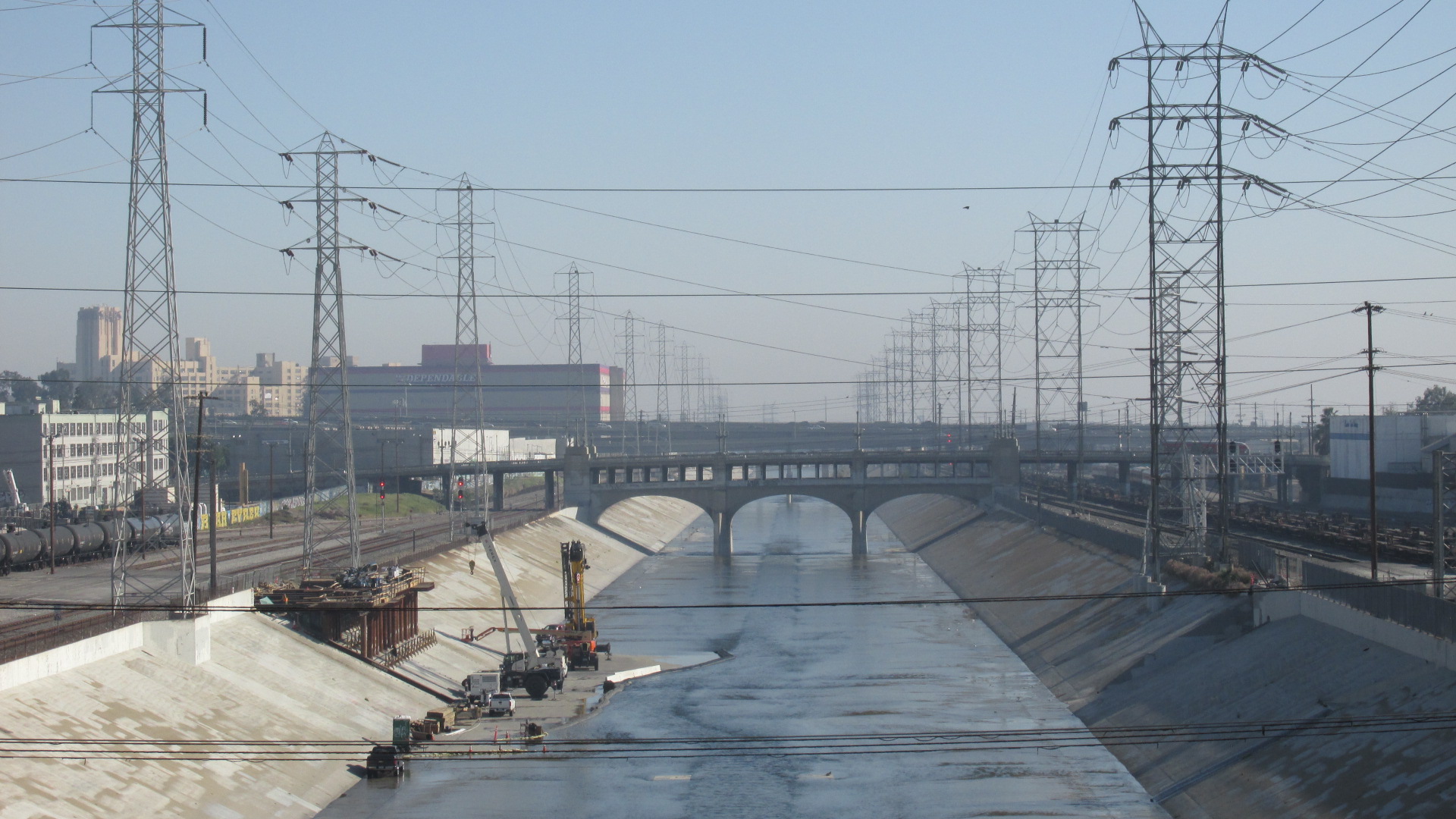
Here are some shots of the project site from March 2017, when work on the new bridge was just beginning.

B6 1703 05 Road Closed

For the time being, this is where Sixth St. ends.
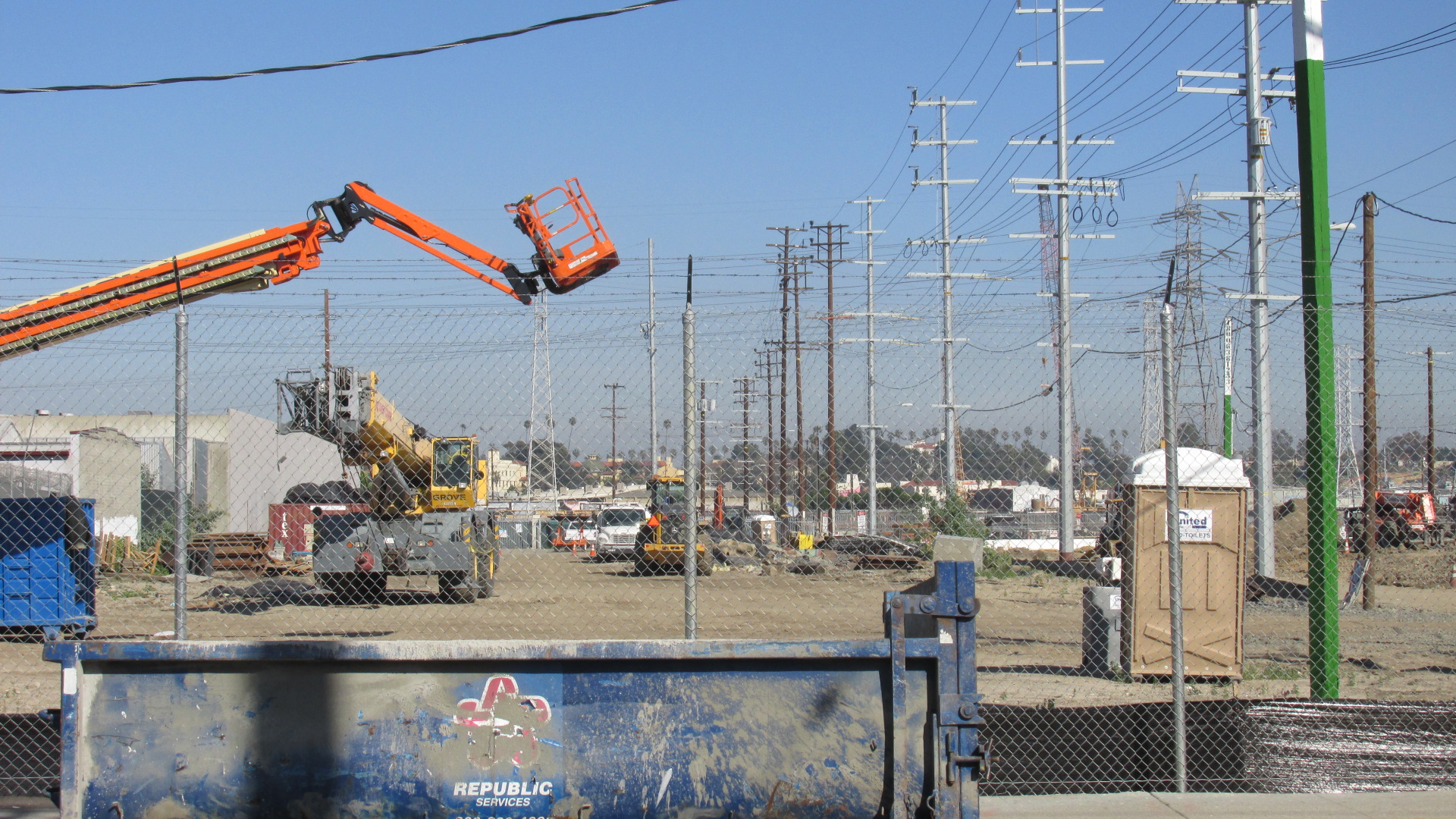
B6 1703 12 Orange Crane

Lots of machinery on the project site.

B6 1703 15 Fence Machinery

Looking across the river toward East LA.
B6 1703 25 Riv Wide Straight

A shot of the riverbed when construction was just starting.

B6 1703 27 Riv Tower Mach

Another angle.

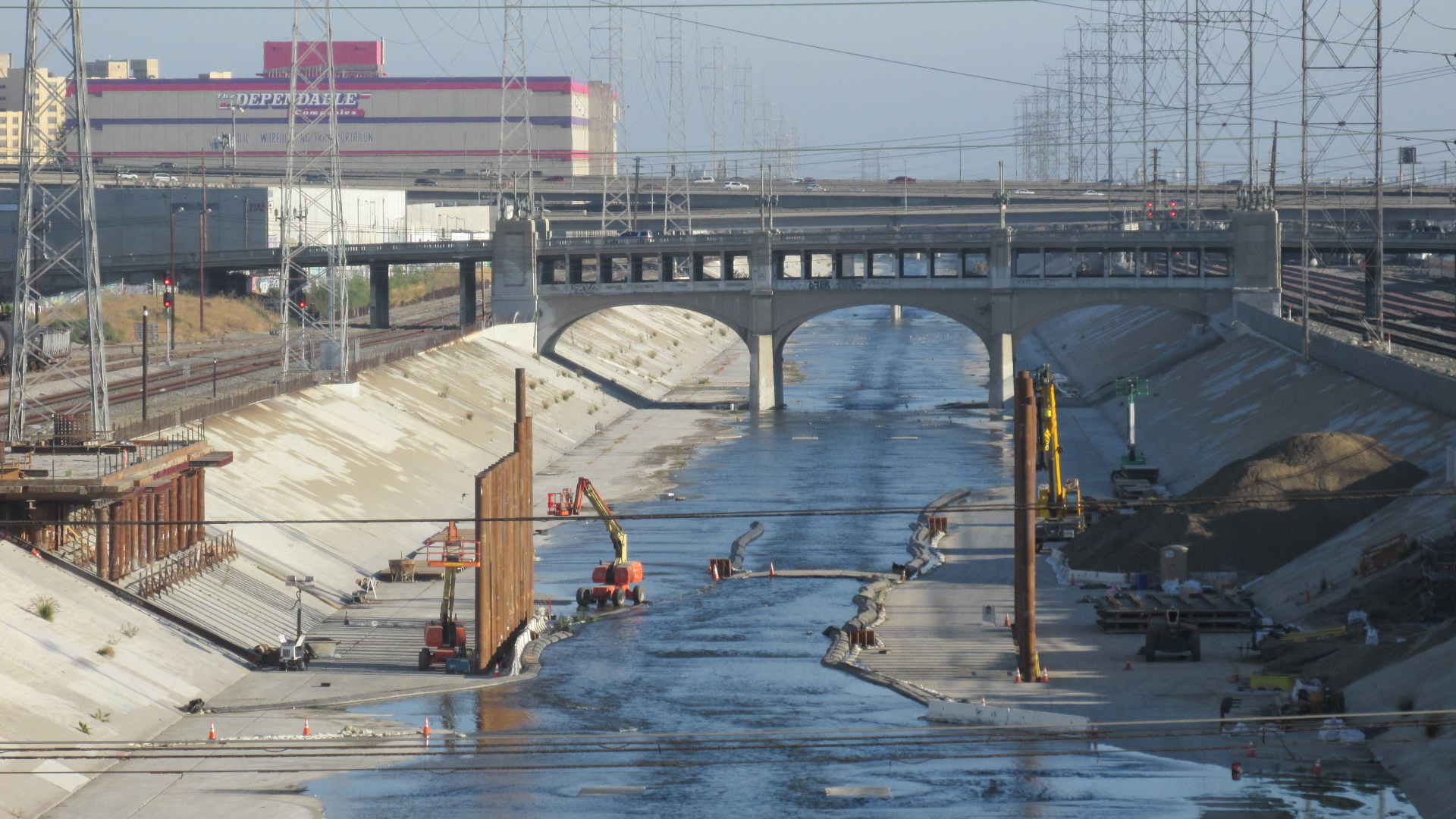
And here are some shots from August 2017.
B6 1708 05 Wide

A little more progress has been made.

B6 1708 10 C w Crane 2

A closer view.

For the team involved with the design, this project is all about bringing things together, creating connections and offering new ways for people to experience this space. One of the chief goals is to link the Arts District with Boyle Heights and the LA River. That sounds pretty cool in the abstract, but in actual fact there are a lot of reasons to worry about the downside. I’m sure Maltzan and his team see this project as a positive thing, but that’s not surprising. They’re architects and engineers engaged in creating a spectacular new piece of infrastructure. And of course the City’s website  is all about the upside.  But really, the City’s glib promo materials don’t begin to describe what’s happening here. By itself, the new bridge may sound great, but if you look at it in the larger context of the area’s culture and economy, you start to realize that this project could have serious negative impacts.

Any large scale infrastructure project, any attempt to remake the landscape, is going to affect the surrounding communities. These impacts can be good or bad, and often it’s a mix of the two. In this case, the biggest issue is one that never gets mentioned on the City’s web site. It’s the same issue that communities all over LA are dealing with. Displacement. Downtown LA has been going through a massive construction boom, with high-end housing and high-end retail largely transforming that community into an upscale enclave. Now developers are eyeing neighborhoods on the other side of the river.

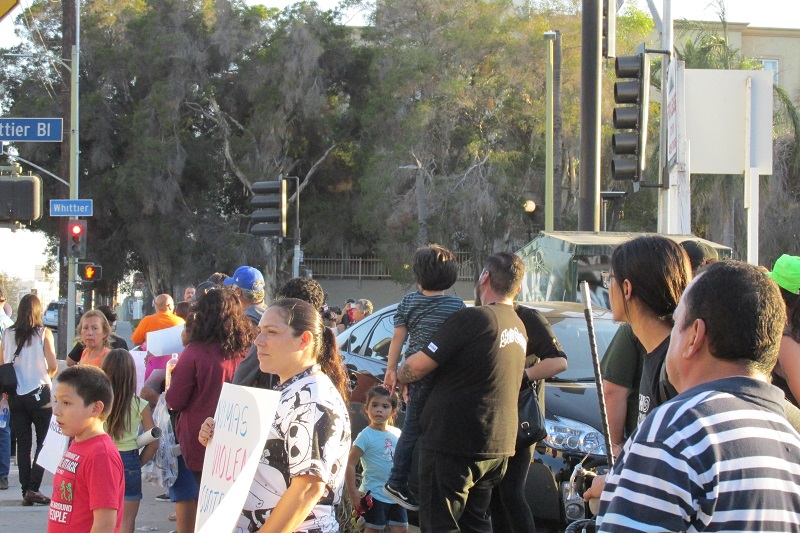
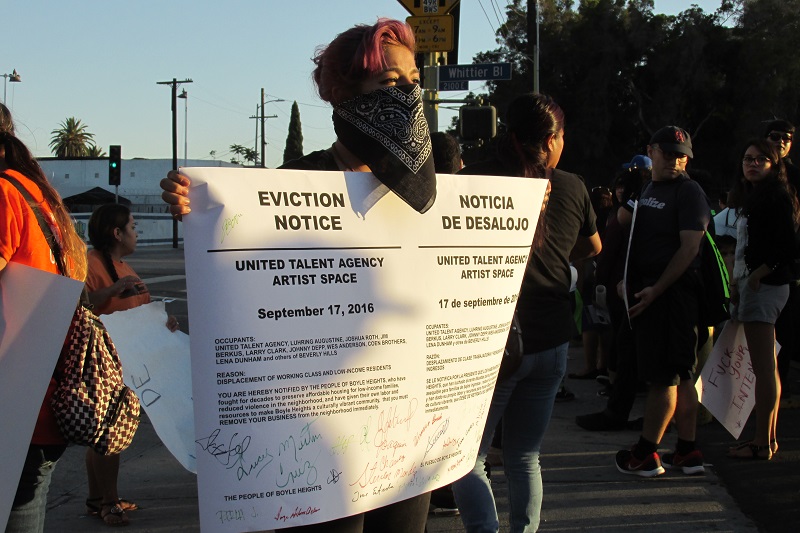
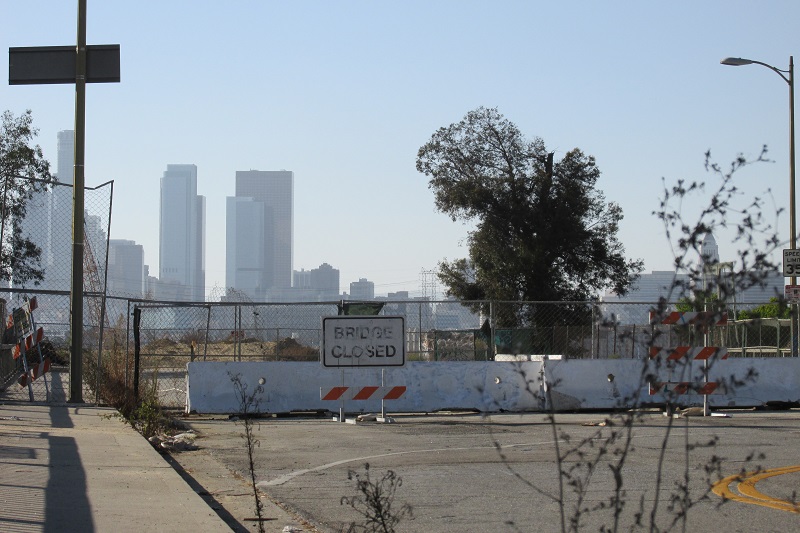
The residents of Boyle Heights are already feeling the effects of gentrification, as real estate investors looking for cheap land and big profits have been buying up parcels in the area. Evictions are already happening, and many people who live in this largely Latino community are afraid they’ll be next. You may have read about the protests that have taken place in recent years. Here are some shots from an action staged by East LA residents in September 2016.  Protesters met at the intersection of Whittier and Boyle, where the old bridge touched down on the East Side.

ELA 10 No Se Vende

“Boyle Heights Is Not for Sale.”

ELA 15 Group 2

Families are worried about losing their homes.

ELA 20 G Is V

Many people on this side of the river see gentrification as violence.
ELA 80 Bandana

New art galleries are seen as harbingers of displacement.

The protest movement in Boyle Heights has gotten a fair amount of media attention, partly because in some cases the protesters have used aggressive tactics in trying to shut down a new coffee house and some local galleries. They see these businesses as the first outposts of coming gentrification. There are people who have questioned the protesters’ methods, complaining that they’ve gone too far. But let me ask you this. If you were in danger of losing your home and being driven out of your neighborhood, how far do you think you’d be willing to go?

It’s no accident that communities like Boyle Heights have been targeted by real estate investors. Land is cheaper there than in Downtown, and they know that the completion of the bridge and the accompanying amenities will make the area more desirable to upscale residents. We’ve already seen something similar happen in the Arts District. A largely low-income community has been rapidly transformed by a massive influx of developer dollars, and the people who had lived there for years, in fact, the people who actually built the community, have been driven out.  A similar scenario has been unfolding in Hollywood, and with the construction of the Crenshaw/LAX line you can see the same thing happening in communities like Leimert Park.

Investment in a community can be a good thing, but not when it drives out the people who have spent their lives there. And these days it’s not a gradual evolution. City Hall works with developers to target areas for rapid growth, almost all of it geared toward affluent new residents. When the City or County lays plans for new infrastructure, like light rail or parks or, in this case, a bridge, real estate investors move in quickly.  Often these investors are well connected at City Hall and already have possible projects in mind.  In other cases they’re speculators just snapping up parcels that they know will rise in value. They don’t plan to build anything, since they know they can make a profit just by sitting on the property until new infrastructure is in place.  And Mayor Garcetti gleefully promotes the aggressive transformation of these communities, apparently without giving a thought to the real suffering that displacement is causing for thousands of Angelenos. It seems he feels he was elected just to serve the affluent.

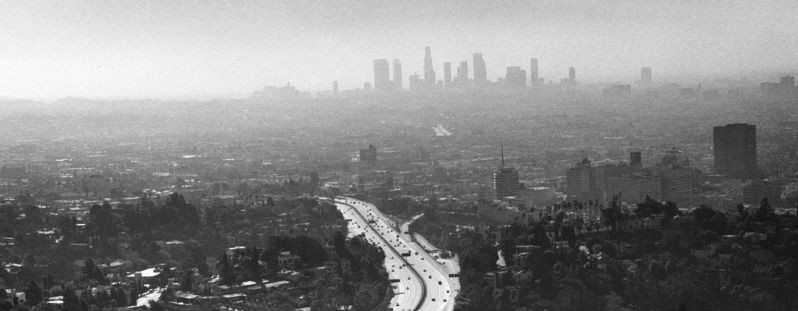
These days I hear so much talk about making LA a “world class city”, and I’m really sick of it. Garcetti’s idea of creating a “world class city” is about pouring billions into new infrastructure so that developers can cash in by building upscale enclaves for the affluent. Personally, I don’t care what class LA is in. If we can’t help hardworking people stay in their homes, if we can’t support communities that people have invested their lives in building, then this city is a failure.

You can spend all the money you want on bridges and parks and rivers and rail lines. All that stuff is meaningless if at the same time we’re dismantling our communities, the human infrastructure that really holds this city together.
ELA 97 Skyline 1

Glendale Puts Hold on Grayson Repowering

GCH 10 GTU

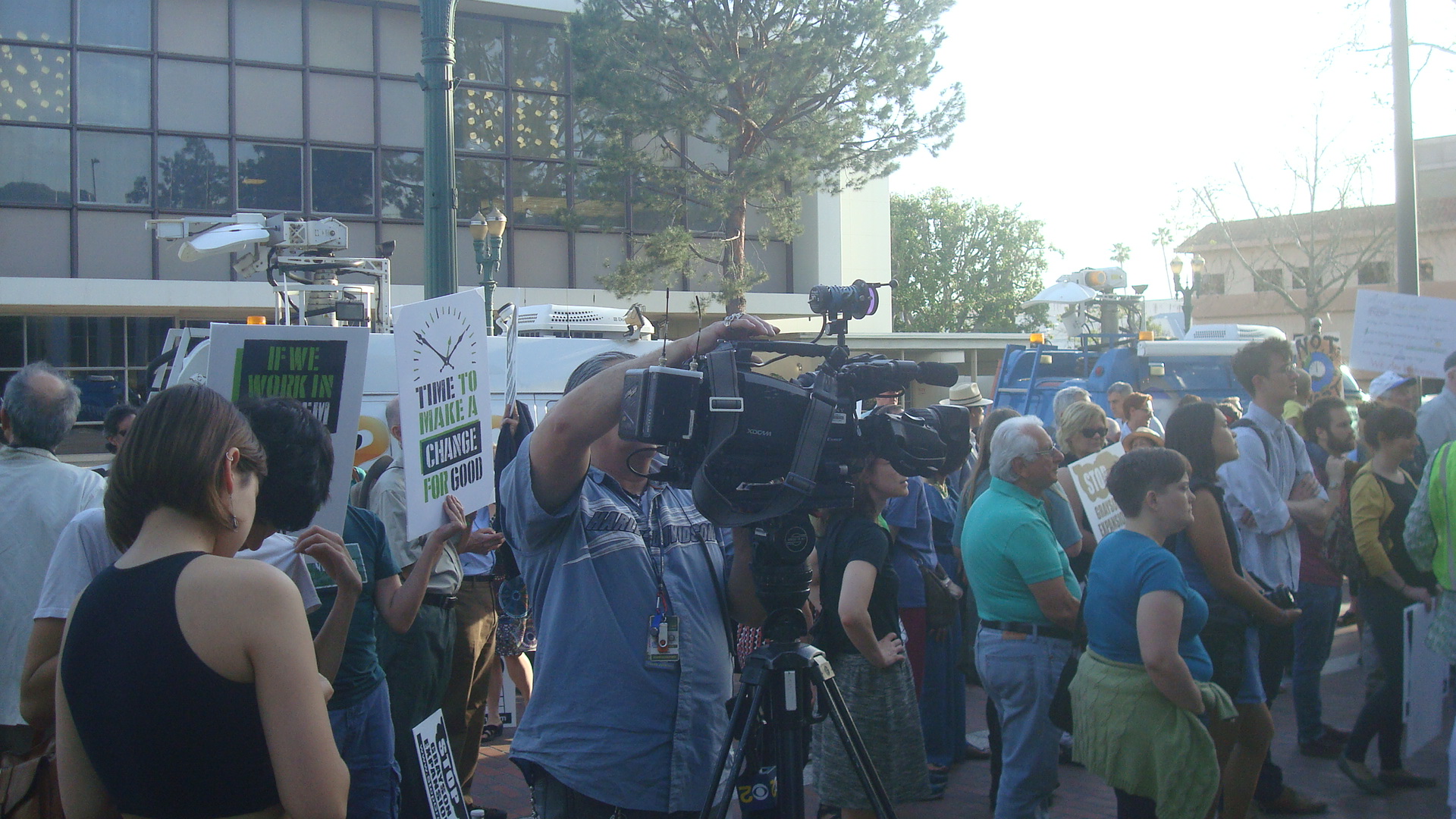
On Tuesday night protesters gathered in front of Glendale City Hall to oppose spending $500 million on rebuilding the Grayson Power Plant. Glendale Water and Power (GWP) has put forward a plan to replace obsolete generating units with newer ones, increasing the plant’s output significantly. The process is called repowering, and the GWP says it’s necessary to provide a reliable supply of electricity for the city.

GCH 20 Sign Speaker

Speakers talked about the problems with the current plan for Grayson.

But there are many who feel that upping Grayson’s output is a bad idea, since it means a big increase in the plant’s fossil fuel consumption. Debate over Glendale’s plan has been intense, with environmentalists claiming that the GWP has failed to explore clean energy alternatives. They point out that repowering Grayson would mean significant increases in CO2, ozone and particulate emissions.

GCH 50 Cam 2

The media showed up to cover the protest.

The Grayson plan was on the City Council’s agenda that night, and council members would be deciding whether or not to approve the project’s Environmental Impact Report (EIR). The rally broke up as the meeting was starting. I went home and watched the proceedings on my laptop. It was long night. I wanted to hang on until the Council voted, but at 10:00 pm they were still taking public comment, and I finally gave up.

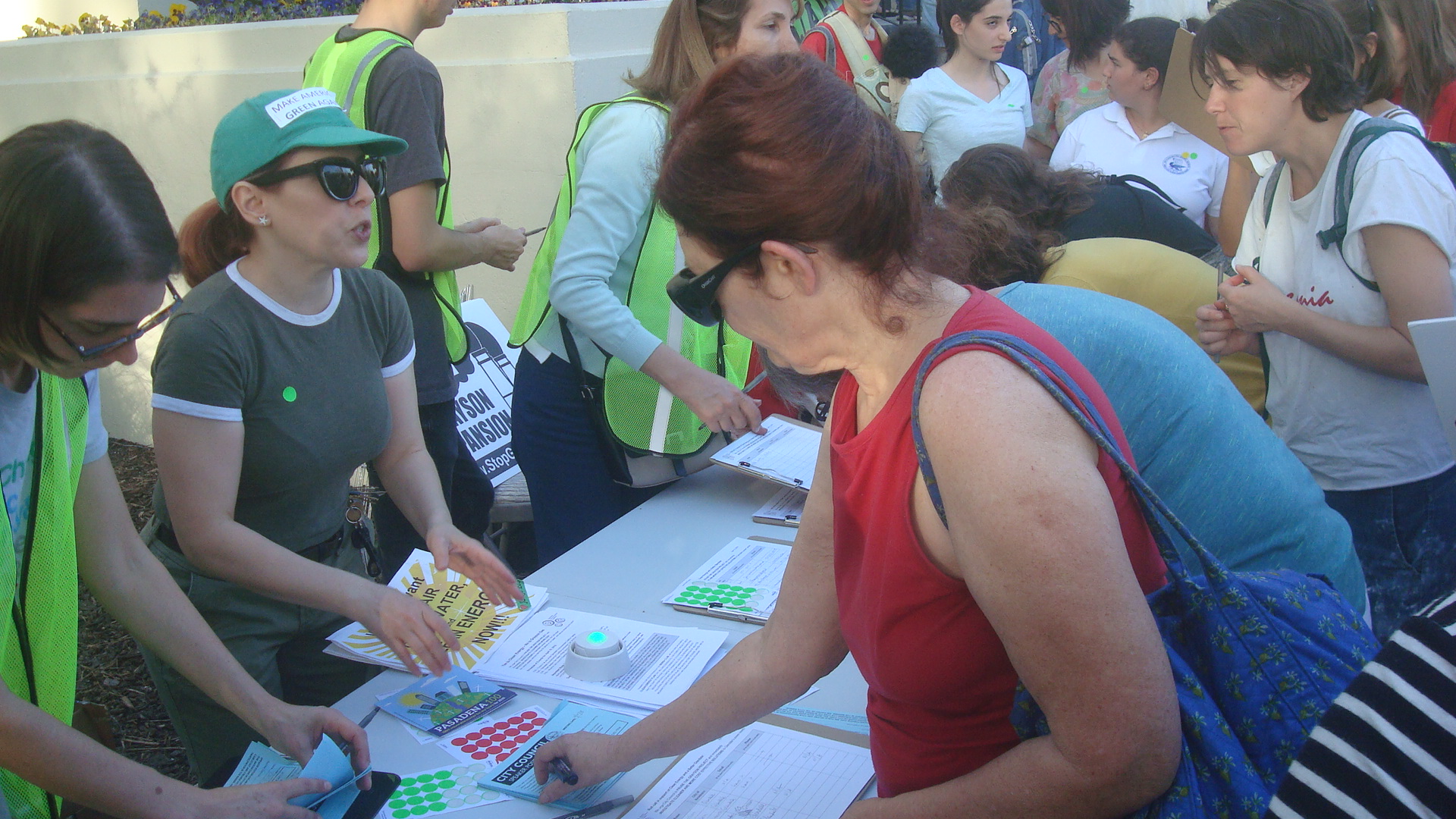
GCH 60 Table

Volunteers manning the table.

The tone of the meeting was civil, but tense. Evan Gillespie spoke on behalf of the Sierra Club, and he questioned some of the claims made by GWP. The utility had initially said that Grayson needed to produce 250 megawatts or there was a danger of power shortages, but then later said they might be able to do with less. He also was skeptical of the claim that the cost of the current plan wouldn’t mean raising rates down he road.

Angela Johnson Meszaros, a staff attorney with Earth Justice, stated that the EIR had serious problems. The EIR says that the project’s emissions woudn’t be significant because of offsets provided by the South Coast Air Quality Management District (SCAQMD). How does this work? Polluters can bank credits for emissions they don’t produce, which in turn can be traded to polluters who produce more than they should. But wouldn’t Grayson still be pumping a lot of dirt into the sky over Glendale? You bet, and Johnson Meszaros pointed this out. The idea that emissions offsets will somehow even things out across the LA area sounds good in theory, but if you live anywhere near the power plant you’ll still be breathing a lot of dirty air. She also said that the biggest problem with the EIR was that it didn’t present enough viable alternatives, especially with respect to clean energy.

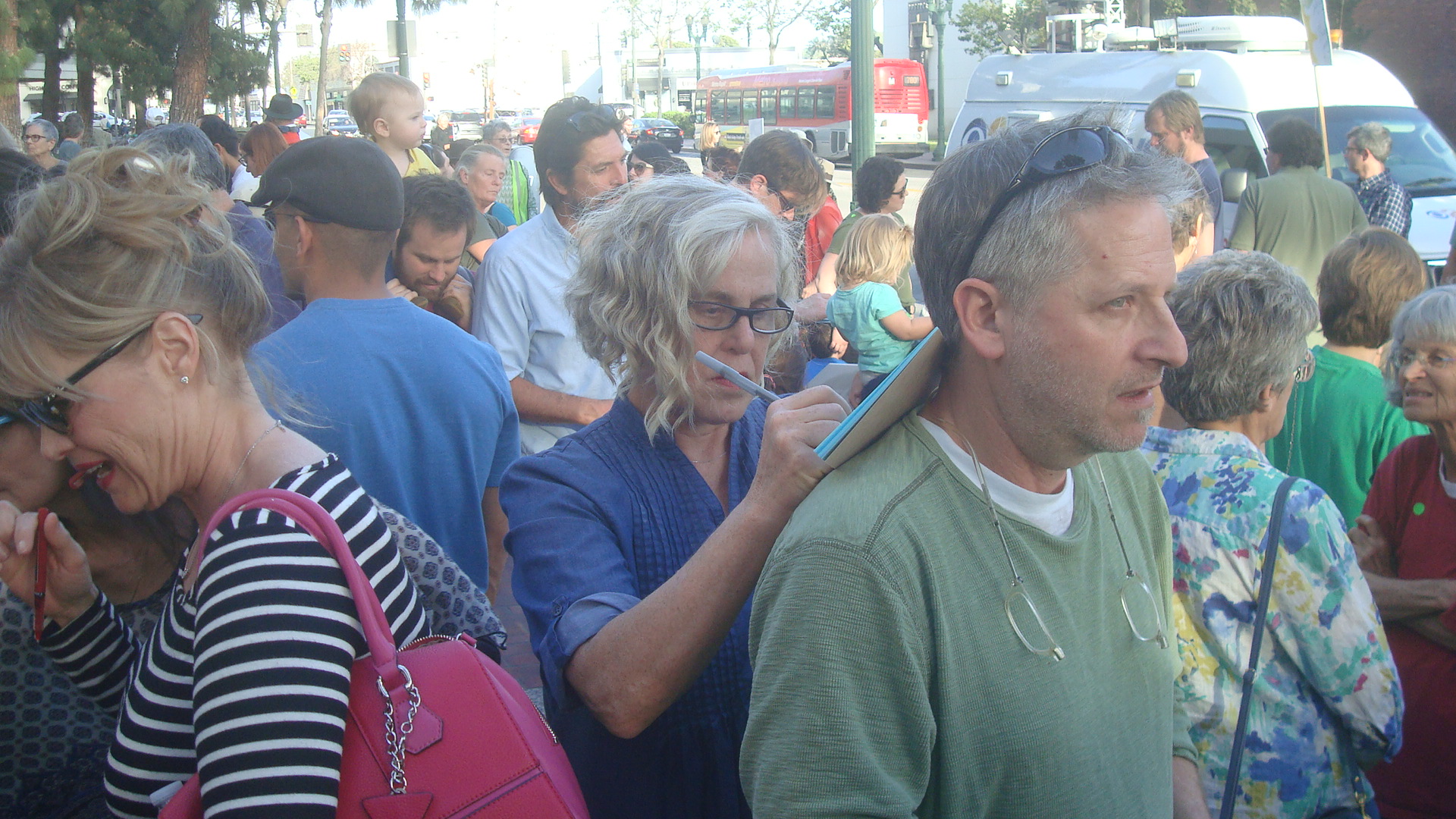
GCH 70 Writing

Sometimes you just can’t find a sturdy surface to write on.

Like I said, I bailed before the end of the meeting, but this morning I sent a message to the folks at Stop Grayson Expansion. They responded with the news that the Council voted 4 to 1 to put a hold on things for 90 days and issue a Request for Information (RFI). This means they’re going to look for alternative solutions for Glendale’s energy needs, including clean energy options. Stop Grayson had been hoping for an independent study of possible alternatives, but they believe that if the RFI is prepared carefully it could be a step in the right direction.

Bottom line, we need to get away from fossil fuels. This isn’t going to happen right away, but it’s never going to happen if we don’t push aggressively for alternatives. Thanks to all those who showed up at the rally on Tuesday, and thanks to all the groups who worked so hard to change the discussion about Grayson. This isn’t over yet, but things are looking a whole lot better.
GCH 90 Crowd Light