Sunset Rising

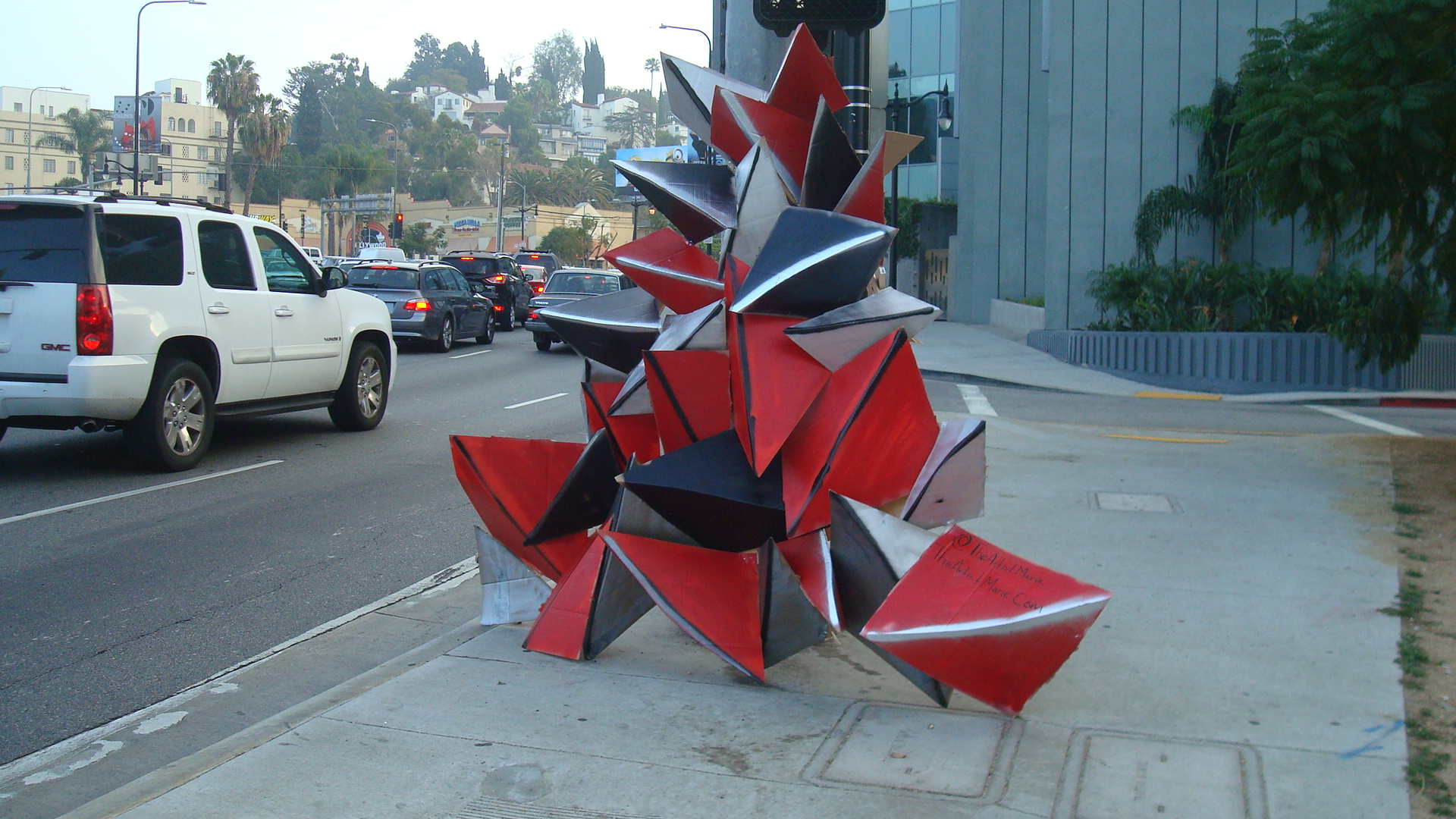
The new Emerson College campus on Sunset Blvd..

The new Emerson College campus on Sunset Blvd..

Sunset Boulevard is changing rapidly. Developers sense there’s big money to be made, and the City Council is rushing to approve their wish lists with as much speed and as little oversight as possible. Let’s take a look at three projects that are in various stages of completion….

A view of the Emerson campus at street level.

A view of the Emerson campus at street level.

The most interesting of these projects, and in my view the one most likely to produce real benefits for the community, is Emerson College. The school’s new LA campus was designed by Morphosis, and while I’m not a huge fan of the firm’s approach, I have to say this is a nice piece of work. By far the most striking building on the streetscape, it certainly calls attention to itself, but without being ostentatious or garish. It’s a sophisticated modern structure that also manages to be playful. It’s been a while since anyone built anything this cool in the Hollywood area.

A view from a terrace at the entrance to the campus.

A view from a terrace at the entrance to the campus.

Also, Emerson will be bringing teaching and administrative jobs to the community. The City Council insists that development is necessary to reduce unemployment, which sounds logical, but most of the projects they approve will only create low-paying service sector jobs. They seem to feel Hollywood residents should be satisfied with waiting tables and vacuuming hotel rooms. Anyway, Emerson just opened in January and is located at the corner of Sunset and Gordon.

A new residential/retail complex across from the Emerson campus.

A new residential/retail complex across from the Emerson campus.

Right across the street is yet another mixed-use, residential/retail tower. This seems to be the kind of project that developers can’t get enough of right now, high-end housing combined with ground floor retail. By combining the two they can claim they’re addressing the traffic problem by making it easier for people to shop where they live. In reality, I don’t see any evidence that this approach is reducing congestion in the LA area. But there are plenty more projects like this in the works. At least this one looks kind of nice.

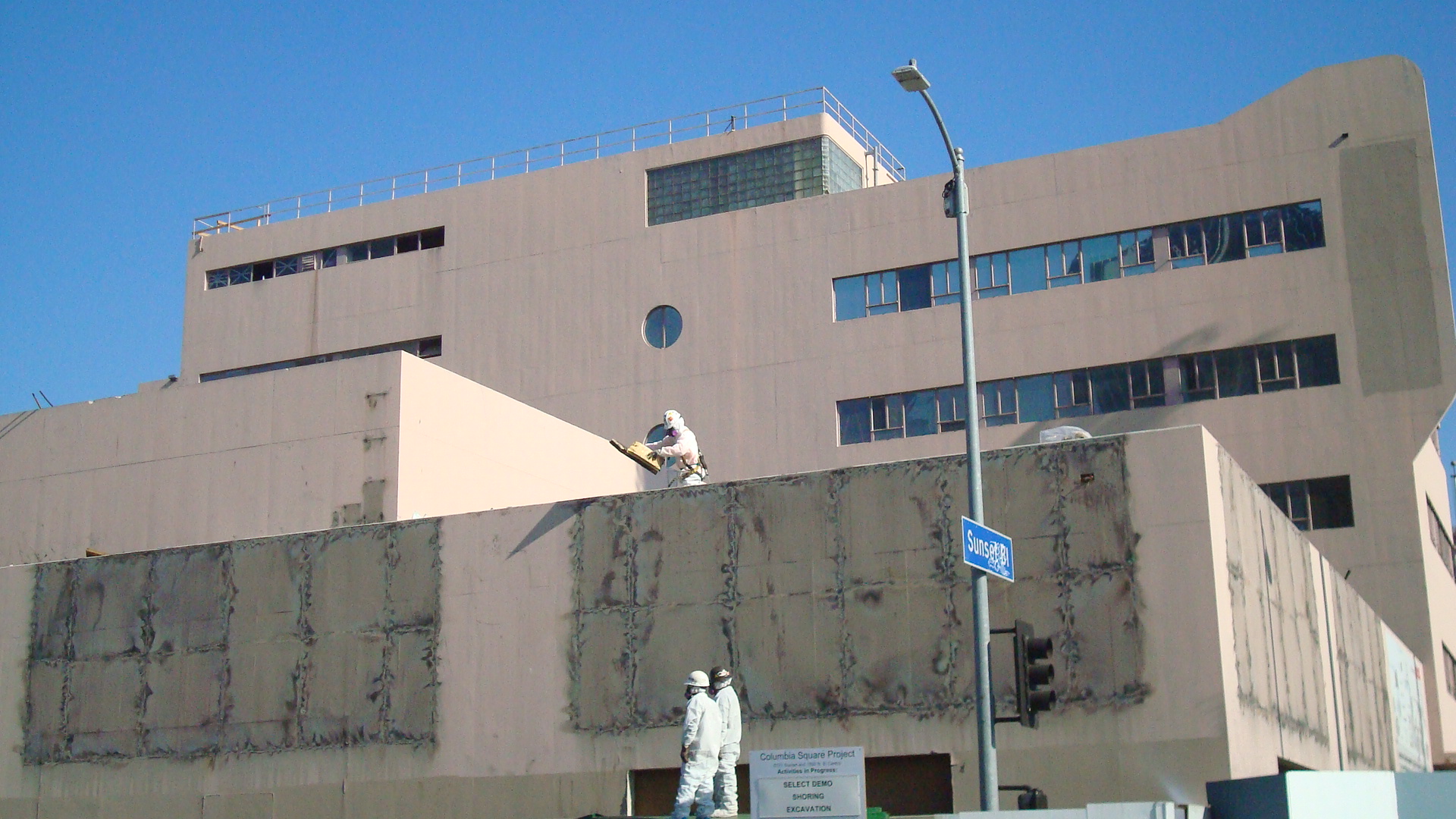
The biggest thing going up on Sunset right now is Columbia Square, which will be a massive mixed-use project that incorporates the old CBS Studios. You probably won’t be surprised that it promises still more high-end housing with still more ground floor retail. They’re also billing it as “Hollywood’s New Creative Media Campus”. I’m not sure exactly what that means, but hopefully the finished product will deliver more than I expect. You can click here for more details. At least they’re preserving the CBS building, so I guess I should be thankful for that. To read more about the history of CBS Studios, click here.

Workers atop the old CBS Studios.

Workers atop the old CBS Studios.

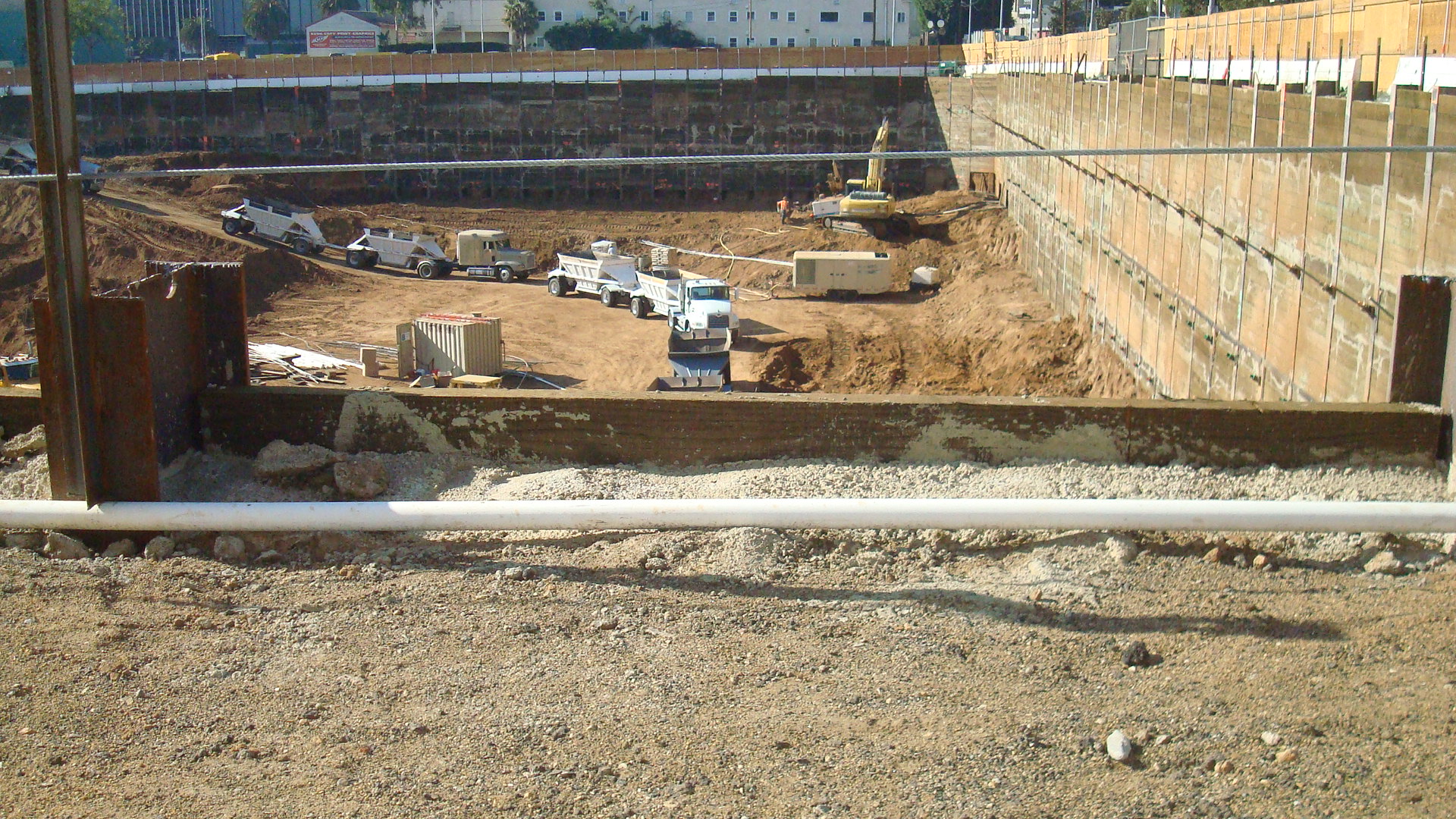
Columbia Square will occupy a full city block. Right now workers are busy inside a massive excavation as they prepare the foundation. There’s something about the scale of these enormous projects that’s kind of overwhelming. I look down into this huge pit and see hundreds of workers, I see trucks, tractors and cranes. A whole city block is being transformed.

Workers preparing the foundation for the Columbia Square project.

Workers preparing the foundation for the Columbia Square project.

Another shot of workers preparing the foundation.

Another shot of workers preparing the foundation.

Here are a few more images….

A side view of the site, facing west.

A side view of the site, facing west.

Another side view, again facing west.

Another side view, again facing west.

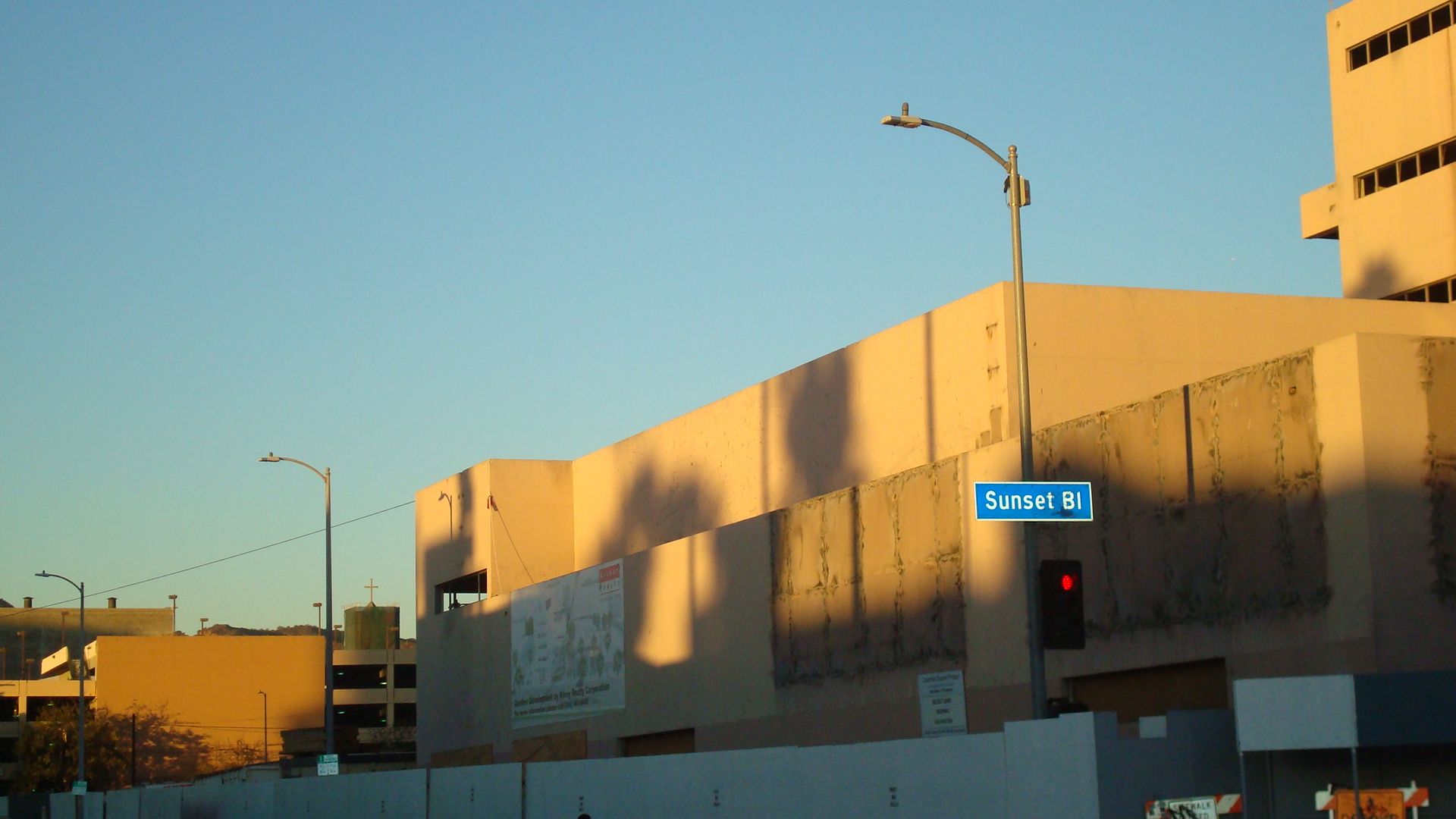
A shot of CBS Studios taken in the late afternoon.

A shot of CBS Studios taken in the late afternoon.

You may wonder why I included these, since they’re mostly shots of the sky above the project. It probably seems like just a lot of empty space. But that’s what I wanted to capture. When Columbia Square is finished, it will rise twenty stories above street level.

All this space will be gone.

A Day in the Park

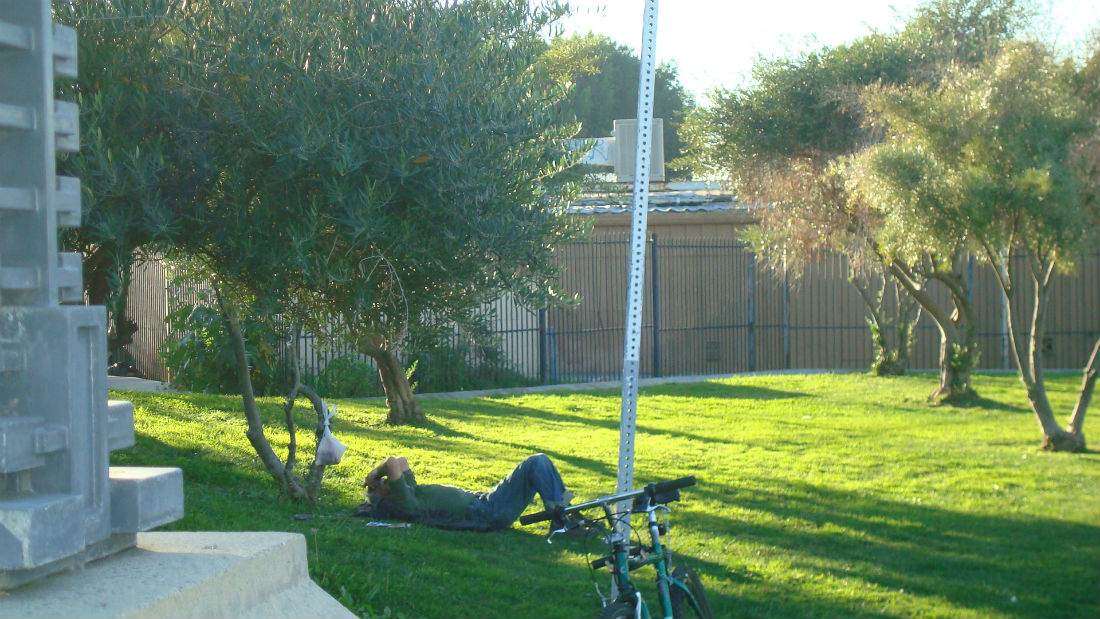
Late afternoon in Barnsdall Park.

Late afternoon in Barnsdall Park.

Years ago I used to live on Edgemont between Hollywood and Sunset. One of the great things about the neighborhood was that Barnsdall Park was right across the street. I used to go there fairly often, but then I moved away, and Barnsdall kind of fell off my radar. I’ve been meaning to go back for years, and this last weekend I finally made the trip.

A cyclist resting at the base of the hill.

A cyclist resting at the base of the hill.

There are lots of parks in urban areas, but somehow Barnsdall seems different. I think this is mostly because it sits on top of a hill. As you climb the stairs, the sounds of the city, the traffic, the sirens, the helicopters, all seem to fade into the background. Then you get to the top and there are these amazing panoramic views of Los Angeles.

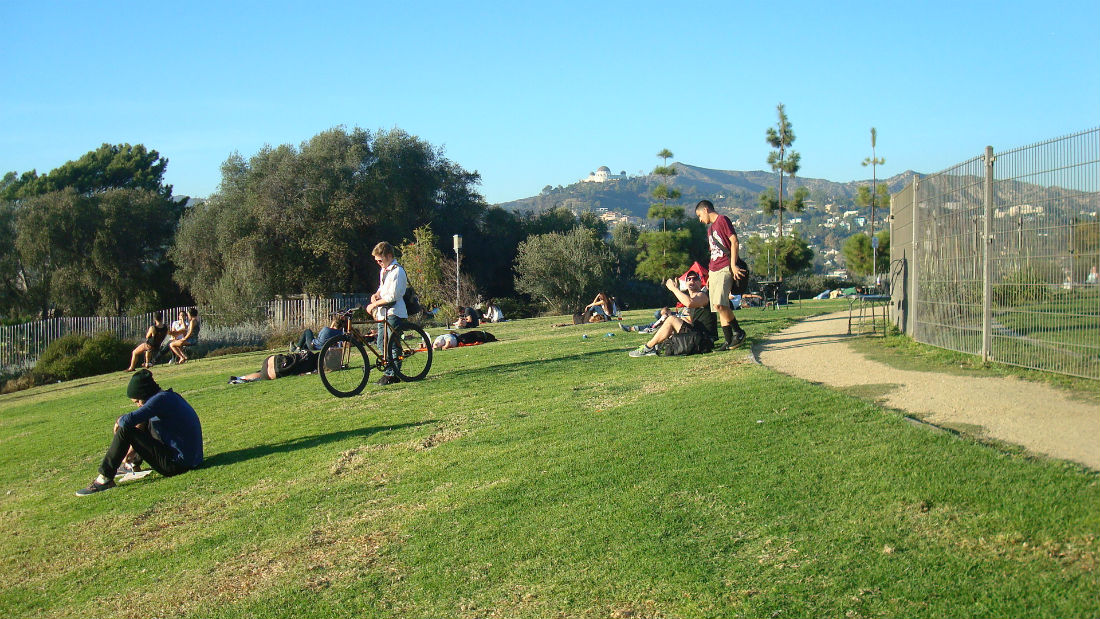
The Griffith Observatory is perched on the hills opposite Barnsdall Park.

The Griffith Observatory is perched on the hills opposite Barnsdall Park.

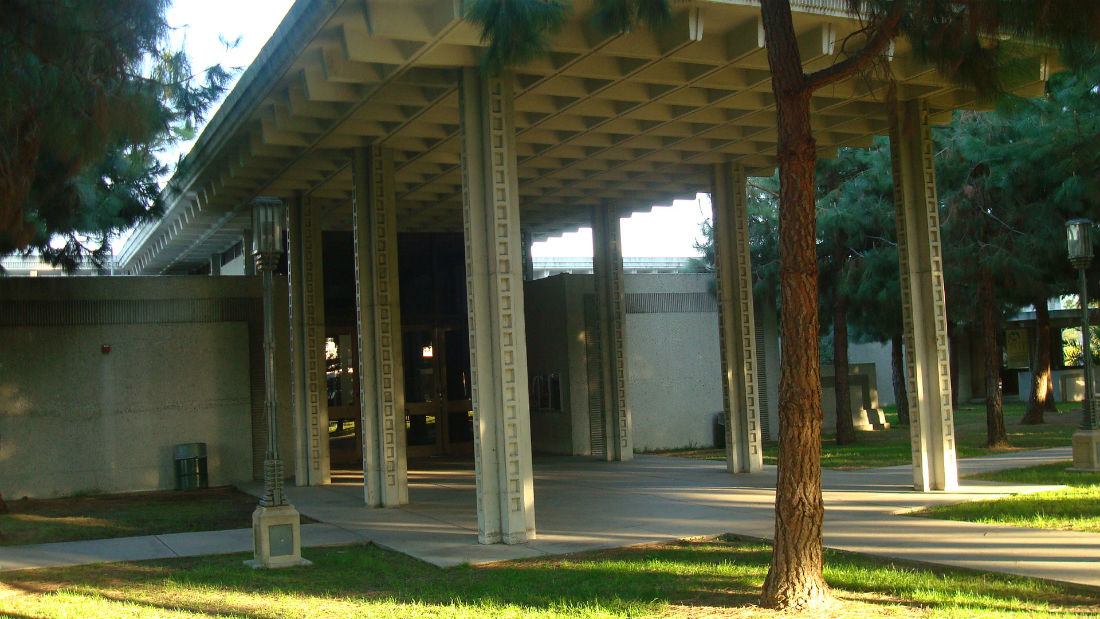
Another reason the park is special is that it’s home to Frank Lloyd Wright’s Hollyhock House. Completed in nineteen twenty three, this was Wright’s first project in Los Angeles. I’ve only been inside once, but the memory has stayed with me. The house is beautiful and unique. Unfortunately, it’s closed right now for restoration.

The entrance to Hollyhock House.

The entrance to Hollyhock House.

A view of Hollyhock House.

The west end of Hollyhock House.

Hollyhock House's central courtyard

Hollyhock House’s central courtyard.

We have the park thanks to the generosity of Aline Barnsdall, who donated it to the city back in the twenties. Originally from Pennsylvania, Barnsdall wanted to create a theatrical community on what was then known as Olive Hill. She commissioned Wright to design Hollyhock House, as well as several other structures, but the two parted ways and the complete plan was never realized.

The Municipal Art Gallery at Barnsdall Park.

The Municipal Art Gallery at Barnsdall Park.

Barnsdall Park is also home to the Municipal Art Gallery and the Junior Arts Center. For more information on the programs offered, follow the link below.

Barnsdall Art Park

And if you’d like more information on Hollyhock House, click here

Hollyhock House

People on the grass at the western edge of the park.

People on the grass at the western edge of the park.

Building Blitz

LA will be changing dramatically in this new year. We’re going to see a wave of construction that will transform the city, for better or worse. The mayor and the city council are decidedly pro-development. They will tell you it’s because they’re looking to the future and trying to create jobs. It might also have something to do with the massive amount of campaign cash that local politicians have received from developers.

But I don’t want to be totally negative. Development is necessary. And change can be good. It’s the beginning of the new year. Let’s try to accentuate the positive.

DOWNTOWN

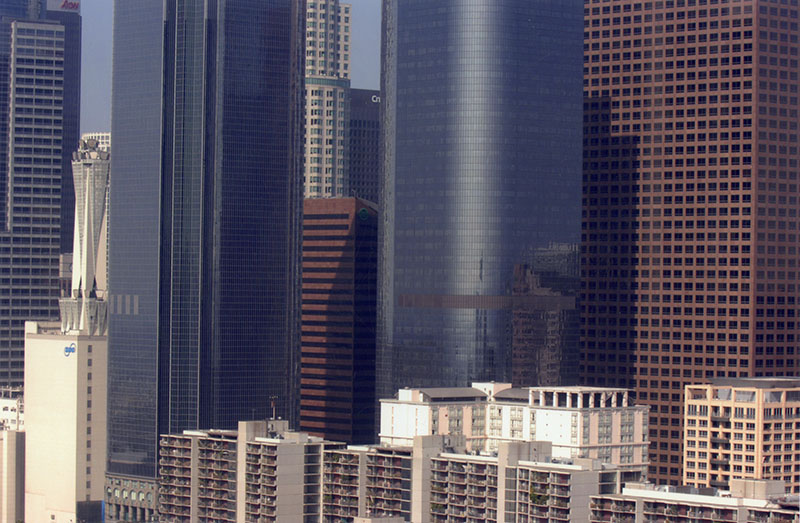
Downtown will definitely be getting more dense.

Downtown will definitely be getting more dense.

A wave of construction is hitting Downtown LA. There are a staggering number of projects in the works, and the landscape is going to change considerably. For an overview, check out this summary in the Downtown News.

Downtown Development

The project I’m most excited about is The Broad. The building looks cool, the collection is impressive and admission will be free. What more could you ask for? A link to the site is below, but like the building, it’s still under construction.

The Broad Museum

HOLLYWOOD

More cranes on the horizon for Hollywood?

More cranes on the horizon for Hollywood?

These huge cranes have become a familiar sight in Hollywood. There are a number of buildings going up right now, and many more in the works. Under construction at the moment are Blvd 6200, Columbia Square, Emerson College, and a ton of new residential and retail space on La Brea.

But the projects that may have the most significant impact are the expansions planned by Paramount and Universal Studios. I know Universal isn’t located in Hollywood, but their “Evolution Plan” will certainly impact the Hollywood area, both in terms of jobs and traffic. Click on the link for more info.

NBC Universal Evolution Plan

Next is a link to an article in the New York Times which talks about both the Paramount and Universal projects.

Bold Growth Plans at Hollywood Studios

SANTA MONICA

An image of Santa Monica back when it was less crowded and less expensive.

An image of Santa Monica back when it was less crowded and less expensive.

The picture you see above doesn’t represent Santa Monica as it is today. It shows the Santa Monica I knew when I was growing up, a sleepy, laid back community where rent was cheap and traffic was light. But those days are gone. While the residents staunchly supported a slow growth policy thirty years ago, today the city council is enthusiastically pro-development. There have been some complaints from locals, but that hasn’t stopped the council from approving a slew of projects. The first article, from the LA Times, is an overview. The second, from The Architect’s Newspaper, is about a group that wants the council to slow down.

Santa Monica Bracing for Growth Spurt

Wealthy Coalition Demands Halt

The photo of skyscrapers on Bunker Hill is by Gary Leonard, and comes from the Los Angeles Public Library’s on-line archive. The image of Hollywood was taken by me. The photo of Santa Monica was taken by Anne Laskey, and also comes from the LAPL archive.

High-Rise Cynicism

Eric Garcetti's vision for the future of Los Angeles

Eric Garcetti’s vision for the future of Los Angeles

It should come as no surprise to anyone that last week a judge ruled that the Hollywood Community Plan Update (HCPU) was fatally flawed. From the beginning, the plan was basically a tool to overrule those who want responsible, sustainable growth and give carte blanche to developers. It would have allowed the construction of skyscrapers fifty stories high, without any serious consideration given to how such high-density development would affect traffic, infrastructure and emergency services. The Hollywood Chamber of Commerce seems to believe that Hollywood should become a west coast version of Las Vegas, with massive high-rises filled with luxury condos and trendy clubs on every corner. Sadly, rather than choosing to protect the interests of local residents, the Mayor and the City Council jumped on board to promote this destructive plan.

Fortunately, they ran into a judge that actually expected the city to comply with state law. LA County Superior Court Judge Allan J. Goodman said that,

….forging ahead in the processing of the HCPU, EIR and related documents in this case based on fundamentally flawed factual premises has resulted in a failure to proceed in the manner required by law.

The biggest problem was that the plan was based on a population estimate that was obviously wrong. In preparing the Environmental Impact Report for the HCPU, the City claimed that approximately 224,426 people lived in the Hollywood area. They got this number, an estimate, from the Southern California Association of Governments (SCAG). Using this figure, the City argued that Hollywood was growing and would continue to grow, meaning that high-density development was the only solution.

But the judge points out that the city didn’t produce any documentation from SCAG to support this figure. On the other hand, the groups fighting the HCPU took a look at the US Census, which says that in 2010 Hollywood’s population was actually about 198,228. Hollywood has actually lost over 12,000 residents since 2000. While the Census info wasn’t available when the Draft EIR was originally prepared, it was available before the City Council voted to approve the plan. But they weren’t going to let the facts stand in their way. The City also insisted that Hollywood was going to experience substantial growth over the next twenty years, but in fact growth has slowed considerably in Los Angeles, and right now there’s no reason to expect that will change in the near future.

Community groups were alarmed at the problems with the plan, and asked the City to revise it. The City refused, and voted to adopt the HCPU in spite of strong opposition by many Hollywood residents, leading the judge to conclude,

The evidence in this record strongly supports petitioners’ contention that there has been an insufficiently-reasoned rush to completion of the EIR process, and that the process was administered in a way that is clearly contrary to well-established laws as interpreted by the appellate courts.

It’s not surprising to see developers running high-pressure campaigns to push their projects through. That’s what they do. But our elected officials are supposed to be protecting our interests. They’re supposed to be serving us. Instead, Garcetti and the City Council approved a plan that they knew was seriously flawed from the beginning. They knew the population figures were wrong. They knew the plan didn’t adequately consider alternatives. They knew there were serious questions about infrastructure and emergency services. They knew the plan didn’t follow state law. Then, as if to prove how completely cynical they are, to show us how little they care about serving the citizens, they spend our tax dollars fighting to ram the HCPU down our throats, when they knew it should never have been approved in the first place.

No wonder voter turnout is so low in LA. It’s easy to see that our elected officials have complete contempt for us.

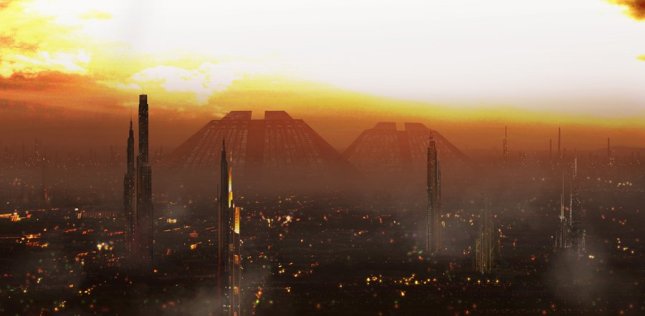
The image above is from Bladerunner, directed by Ridley Scott, photographed by Jordan Cronenweth, production design by Lawrence Paull, art direction by David Snyder.
Hollywood Journal – Some Photos

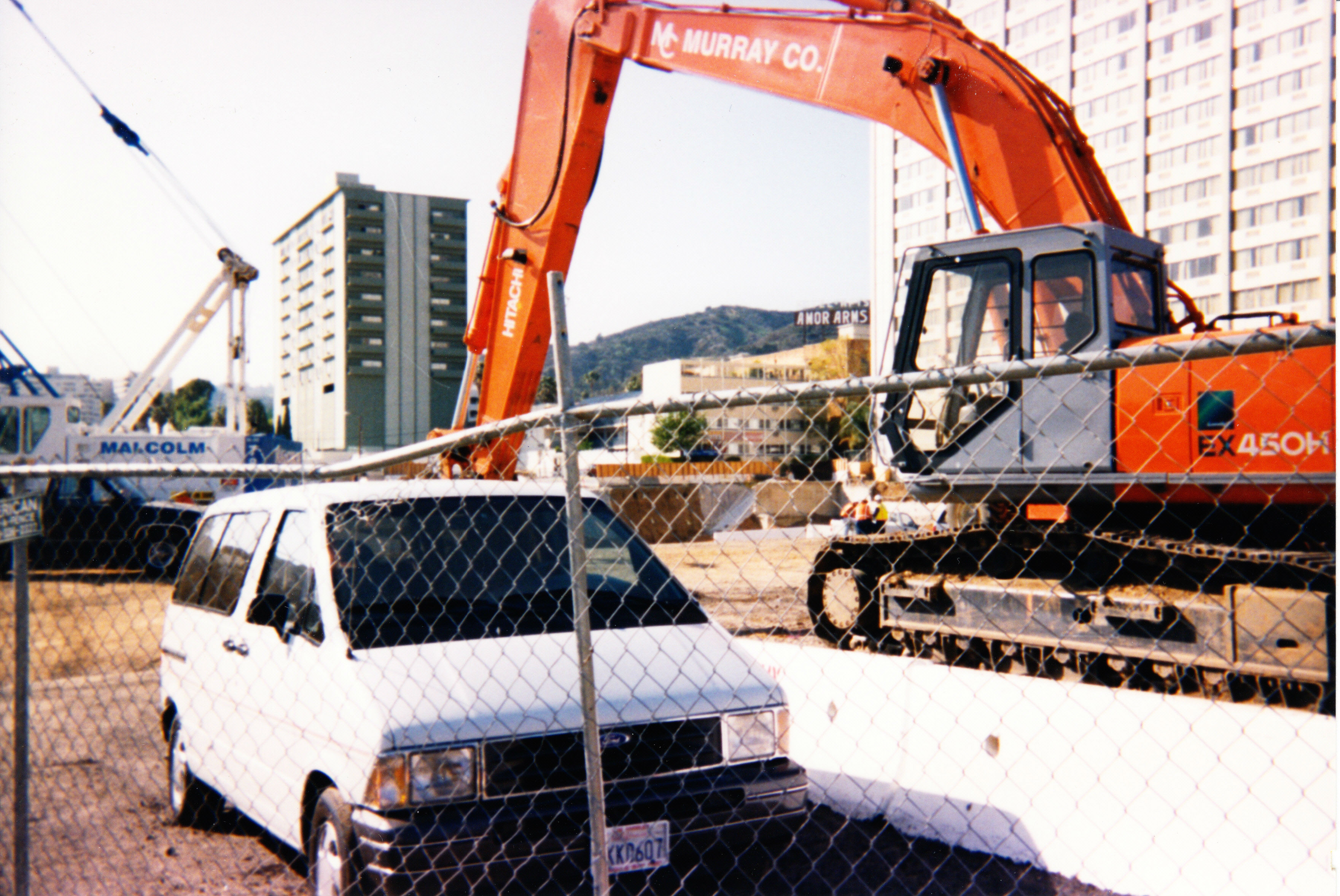
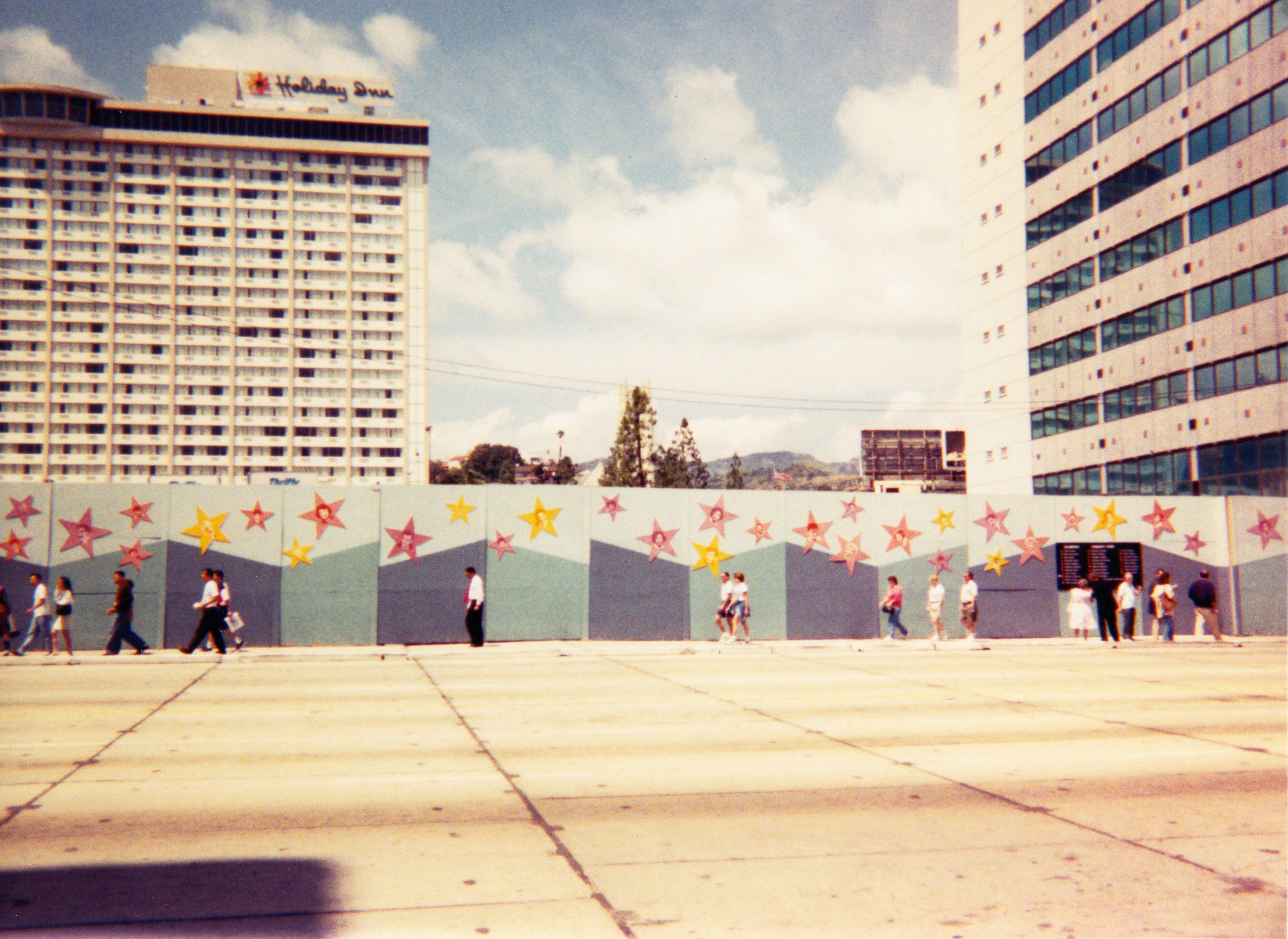
While I was keeping my Hollywood Journal, I tried to take photos to document some of the changes that were occurring. These were taken while the Hollywood & Highland Center was being constructed, and they sort of go along with the first entry I wrote (Hollywood Journal – Intro). Sorry the quality isn’t better. I’m not a great photographer, and these were taken with a disposable camera.

It’s important to remember that Hollywood & Highland was being built as the same time as the Red Line was under construction below Hollywood Boulevard. Because one of the subway stops is built into the complex, the two projects had to be done concurrently. It was a crazy time, because the construction of that stretch of the Red Line was a mess. Hollywood Boulevard sank six inches, in part because the contractor was was not following proper procedures during tunneling. It was reported that they were using telephone books instead of metal wedges to prop up the supports.

Construction site on Hollywood Boulevard.

Construction site on Hollywood Boulevard.

A different angle on the site.

A different angle on the site.

Above are two views of the construction site from Hollywood Boulevard. In both you can see part of the office building that used to stand on the northwest corner of Hollywood and Highland. Also, in the background you can see the former Holiday Inn, which is now Loews Hollywood Hotel. Those familiar with the area will notice that in those days it didn’t have the facade which was added back when it was known as the Renaissance.

Looking down Orchid to the El Capitan.

Looking down Orchid to the El Capitan.

This is a shot of the El Capitan from Orchid. This part of the street no longer exists, since it was closed off in order to construct Hollywood & Highland. You can still enter Orchid from the north on Franklin, but it no longer continues through to Hollywood Boulevard.

The Walk of Fame during construction.

The Walk of Fame during construction.

The stars on the sidewalk in front of the project were removed during construction, and then replaced when the project was finished.

Looking west on Hollywood Boulevard.

Looking west on Hollywood Boulevard.

Above is a shot looking west. It’s too bad the image isn’t very sharp, but you can see the remnants of a cool mural depicting whales in the ocean. It was painted on the side of the Chinese Theatres. Also, in the distance, you can see the Roosevelt Hotel.

The construction site, again facing west.

The construction site, again facing west.

Another shot of the construction site facing west.

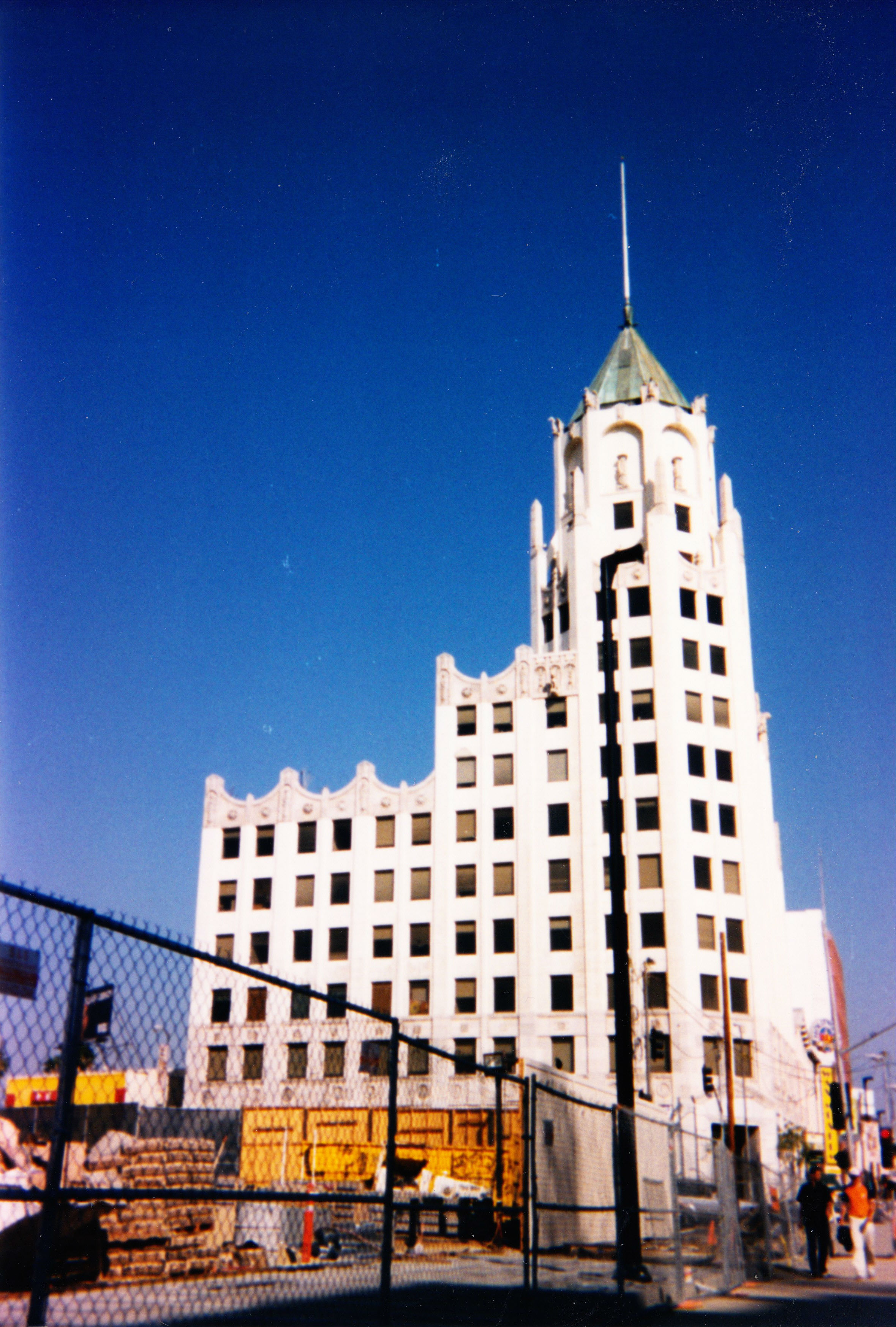
The First National Building stands alone against the sky.

The First National Building stands alone against the sky.

In the first two photos above you can see the office building that used to stand on the northwest corner of Hollywood and Highland. It had to be demolished to make way for the new mall, and I remember how its disappearance created this amazing sense of space. Before the new structure rose up, you had a mostly unobstructed view of the hills. And for a while the First National Building, which still stands today, seemed to tower over everything.

Looking across the construction site towards the El Capitan.

Looking across the construction site towards the El Capitan.

Another view of the construction site, looking towards the El Capitan.

Next to the Chinese Theatre, you can see the Chinese Two and Three, not long before demolition.

Next to the Chinese Theatre, you can see the Chinese Two and Three, not long before demolition.

During the eighties movie exhibitors began building multiplexes instead of stand-alone theatres. In order to compete, the company that owned the Chinese built two more auditoriums right next door, the Chinese Two and Three. They didn’t look like much from the outside, but they both offered large screens and excellent sound. When Hollywood & Highland was built these two theatres were demolished, and were replaced with six more inside the mall.

Brake Lights at Midnight

I wanted to follow up on my earlier post about two proposed projects, one at Highland and Selma and the other at Highland and Franklin. Together these developments will bring over four hundred new residential units to an already crowded corridor. But the problem isn’t just on Highland. As anybody who lives in the area knows, traffic on Franklin is also pretty damn bad. Highland is a major thoroughfare that is primarily commercial north of Melrose. From Highland to Cahuenga, Franklin is completely residential, and has only one lane running in each direction.
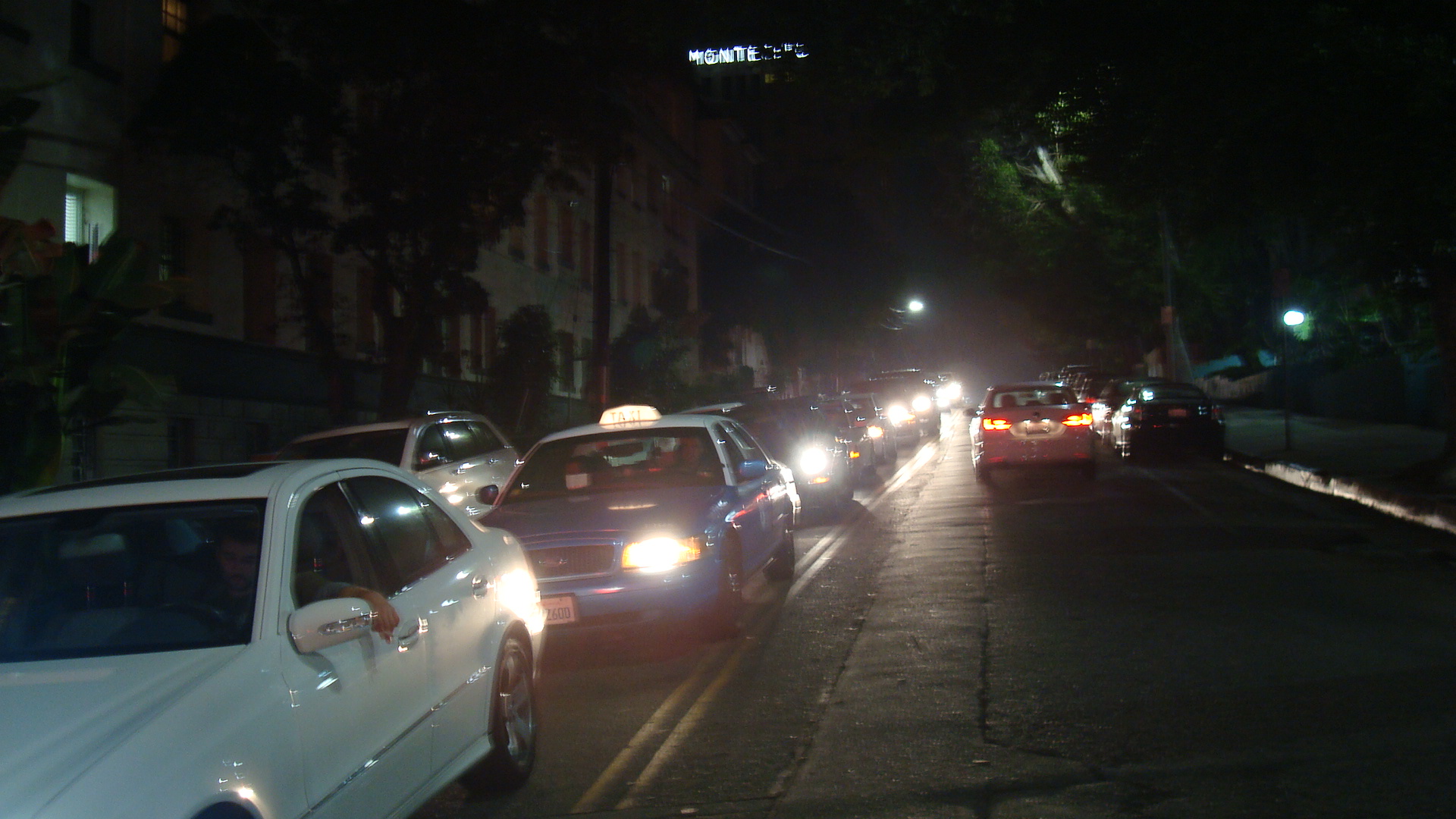
Twenty years ago, this was not a problem. These days, though, Franklin is carrying much more traffic than it was designed for. In an earlier post (Hell on Highland, October 25), I talked about the night Katy Perry played the Hollywood Bowl, and traffic was backed up all the way to the freeway. That’s by far the worst I’ve even seen on Franklin. But check out these photos of a couple other traffic jams I witnessed lately. These were both taken at the intersection of Franklin and Whitley….

DSC02737

The photo above shows traffic heading toward Cahuenga. And this next one…

DSC02738

…shows traffic coming from the direction of Highland. Locals looking at these pictures are probably saying, Big deal. It’s always like that at rush hour. But these weren’t taken at rush hour. These were taken around twelve thirty am. A car had stalled near Grace, and a steady flow of westbound traffic kept drivers from getting around it.

Now check these out.

DSC02764

This was taken just before eight o’ clock on a Saturday morning as I was coming up on Whitley. And this next one…

DSC02771

…was taken as I was approaching Las Palmas. Pretty nasty for a Saturday morning. Now in this case, one of the left turn lanes at Highland was closed. Not sure why, but it may have had something to do with the fact that Hollywood was closed at Highland that morning.

Now in all three cases I’ve mentioned, there are unusual circumstances that caused the back-up. A concert at the Bowl, a stalled car, a closed lane. But it shows that it doesn’t take much to turn this residential street into a sea of brake lights. Franklin is already carrying way beyond the capacity it was designed for. It amazes me not only that the city wants to add to the congestion, but that they have determined that the two new complexes mentioned above will have no significant negative impacts.

Again, if you disagree with the city’s finding, if you think Franklin is maxed out as it is, please let the City Council know how you feel.

LA City Council

Hell on Highland

An image from Jean-Luc Godard's "Weekend". Frustrated drivers, stuck in an endless traffic jam,  start attacking each other.

An image from Jean-Luc Godard’s “Weekend”. Frustrated drivers, stuck in an endless traffic jam,
start attacking each other.

I wish I’d had a camera with me last night. I got off the Red Line in Hollywood around seven, and started walking north on Highland. The northbound traffic was backed up and moving slowly, but that’s not unusual. Then I got to Franklin and saw that westbound traffic was backed up there, too. That’s when I realized something was probably going on at the Bowl. (Later I learned it was a Katy Perry concert.) Again, this is nothing out of the ordinary. As the Bowl continues to schedule more off-season events, the horrible congestion that used to be confined to summer is becoming a year-round phenomenon.

But then I got to Wilcox, and I saw that the westbound traffic on Franklin was backed up all the way to freeway. I’ve seen congestion on Franklin before, but never this bad. This was also affecting the traffic on Wilcox, which was backed up as far south as I could see.

Now, I’m not bringing this up just to whine about traffic. The reason this spectacle freaked me out is because it seems like a vision of things to come. Anyone who lives in Hollywood knows how bad the traffic is already, but the City of LA continues to approve massive projects, often over the vocal objections of Hollywood residents. Just days ago I learned about two new residential complexes that are slated to be built on Highland, in this same area. Right at the corner of Highland and Franklin, a developer plans to build a residential complex with over a hundred units. And at Highland and Selma, just about a half mile away, the plan is to build a residential/retail complex with over three hundred units.

The fact that these two projects will make traffic on Highland even worse is probably obvious to everyone, except the people in the Department of City Planning. They are pushing these two projects forward using Mitigated Negative Declarations (MNDs), which means they have determined that building over four hundred new units within a half mile of each other in an already congested corridor will have no significant negative impacts. Remember, the recently completed Jefferson, at Highland and Yucca, contains two hundred and seventy units. And on La Brea there are a number of projects already under construction which will total over a thousand new units. Much of the traffic generated by these projects will be travelling through the Highland/Cahuenga corridor.

Is the City Council ever going to stop this insanity?! Not unless local residents apply a lot of pressure. If you live in Hollywood, and if you think the traffic is bad enough already, please call your City Council representative. It should be either Tom LaBonge or Mitch O’Farrell, but check the maps to make sure. The boundaries are tricky. Here’s the link….

LA City Council Directory

By the way, last night I stopped to have a cup of coffee at a place on the corner of Franklin and Cahuenga. When I left about a half hour later, the westbound traffic on Franklin was still backed up to the freeway.

Hollywood Journal – The Egyptian

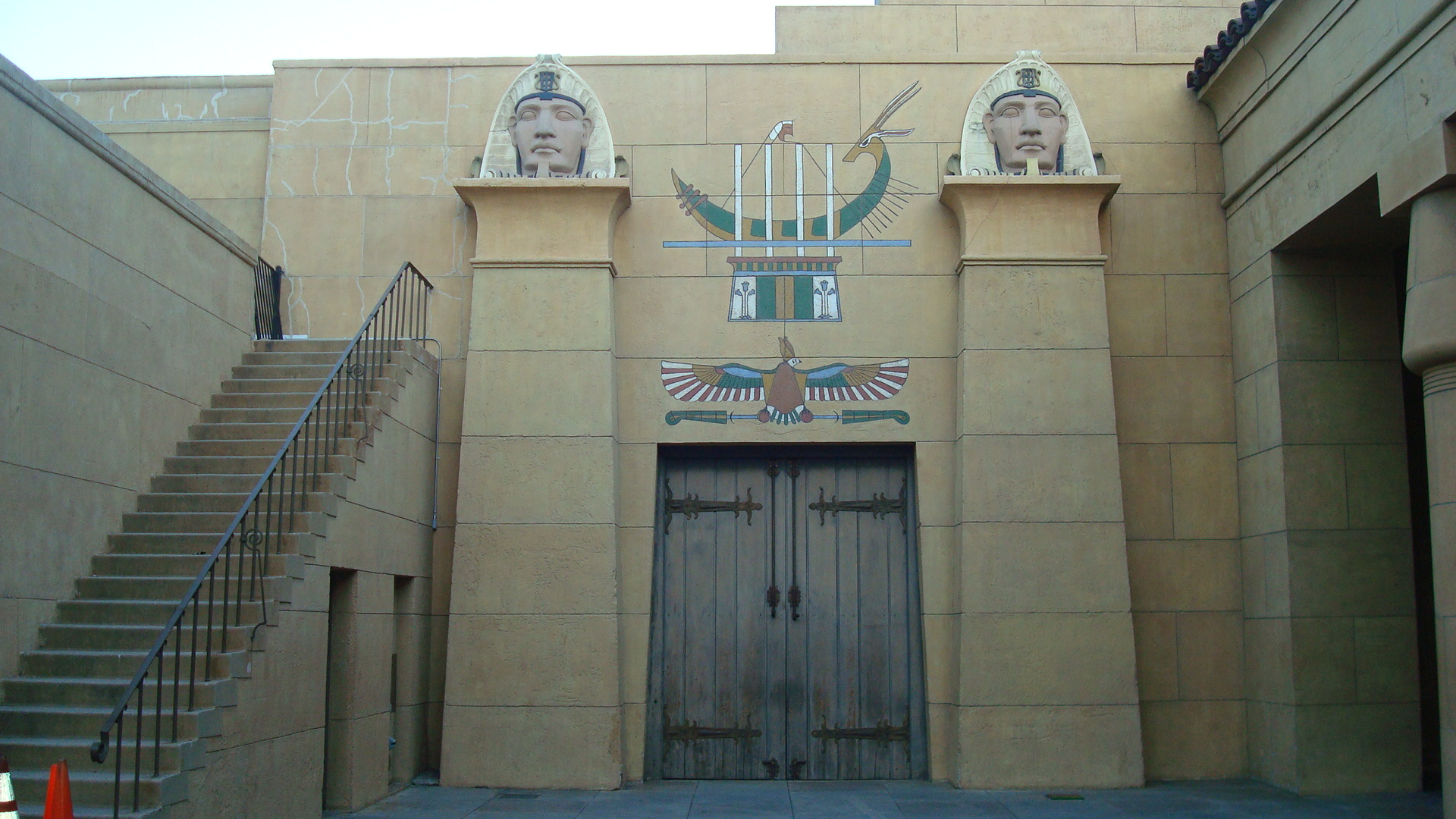
The Egyptian Theatre, Hollywood’s first movie palace, opened in nineteen twenty two with Robin Hood, starring Douglas Fairbanks. Over the years its fortunes rose and fell along with the rest of Hollywood Boulevard. I started going to the Egyptian around nineteen seventy. My friend Paul took me there to see 2001. It blew me away.

I saw many more films at the Egyptian throughout the seventies and eighties, but by the early nineties the theatre was in bad shape. It closed in ninety two. After the Northridge earthquake in ninety four, I was walking past the rear of the auditorium and saw a gaping hole in the wall. I was sure they’d tear it down and put up a mini-mall.

Fortunately, the American Cinematheque bought the Egyptian from the City of LA a few years later, and it reopened in nineteen ninety eight. Hodgetts + Fung was the firm in charge of the renovation/restoration. This journal entry was written around the time they were finishing up.

The photo below is not from the nineties. It was just taken recently.

DSC02060

December, Nineteen Ninety Eight

A cold, windy day in Hollywood. But still a lot of people out and about. The coffee house I’m sitting in seems to be doing good business.

On my way over here I went by the Egyptian. In fact, I walked into the courtyard. It’s open again. They’ve finally finished their renovation or restoration or whatever they’re calling it. My feelings were mixed. On one hand, yeah, I’m glad it’s open and I’m glad it’s being used as a theatre instead of a swap meet.

On the other hand I can’t say I’m crazy about the finished product. Even though they’ve obviously gone to a lot of trouble to restore certain features of the original design. I feel like they’ve ended up with self-conscious kitsch. But I should wait till I’ve seen the inside before I make any rash judgments.

It’s gotta be hard for an architect working on a project like this. The original Egyptian wasn’t a masterpiece of design. It was impressive, theatrical kitsch that overwhelmed you with its size. And god, it was a great place to see movies. Brian says when the Times reviewed the restored building they didn’t even mention that the auditorium is much smaller than it used to be.

Housing in Hollywood

A while ago I was riding the bus down La Brea and I was surprised to see a number of projects under construction. There seems to be a small explosion of residential and retail going up. Here are a few photos….

La Brea & Santa Monica

La Brea 2

La Brea 1

Jerry Solomon

For a really thorough overview of this mini-building boom, check out this article by Daniel Safarik for The Faster Times. He gives an excellent breakdown of each project and talks about what all this development could mean for the community. Safarik points out that large stretches of La Brea have fallen into decline, and that it makes sense to replace vacant, decaying buildings with new structures that will contribute something to the neighborhood. And I’m certainly in favor of development, as long as it responds to an actual need.

And that’s the tricky part. What does this community actually need? And in a larger context, what does the city of LA actually need?

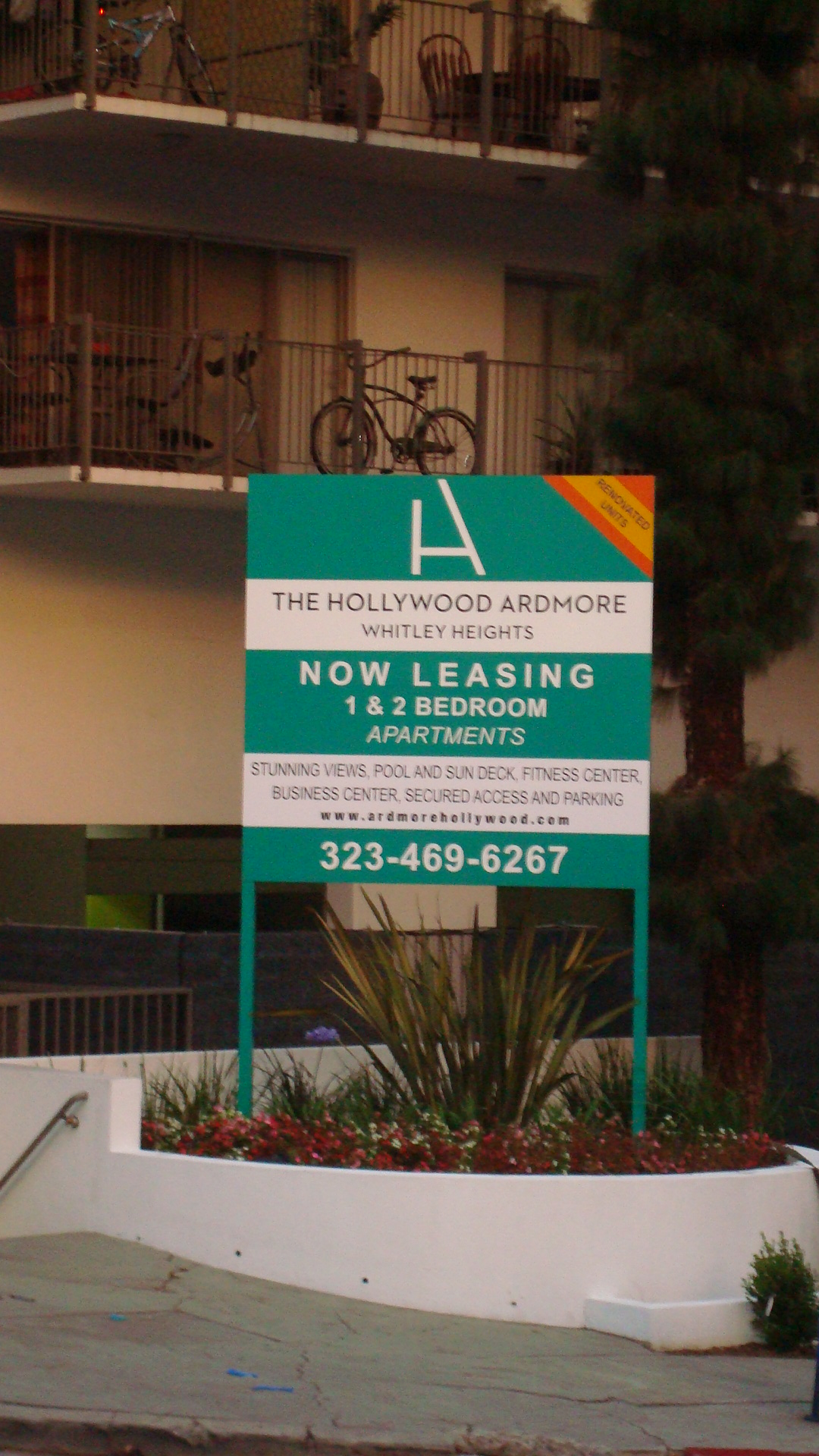
Not too long after my trip down La Brea, I was walking along Franklin and I noticed a number of apartment buildings sporting brightly colored banners to let people know they had vacant units. Here’s a selection….

El Cerrito

Banners 2

Ardmore

Lido

Grace

Vida

These are just half of the pictures I took. For those of you who aren’t familiar with the area, La Brea intersects Franklin at the foot of the Hollywood Hills. All of the signs I photographed are on buildings within a mile of that intersection. I didn’t have to look for them. All I did was walk along Franklin to Wilcox, where I made a right. I’m willing to bet there are many more buildings with vacancies on the streets between Franklin and Hollywood Boulevard.

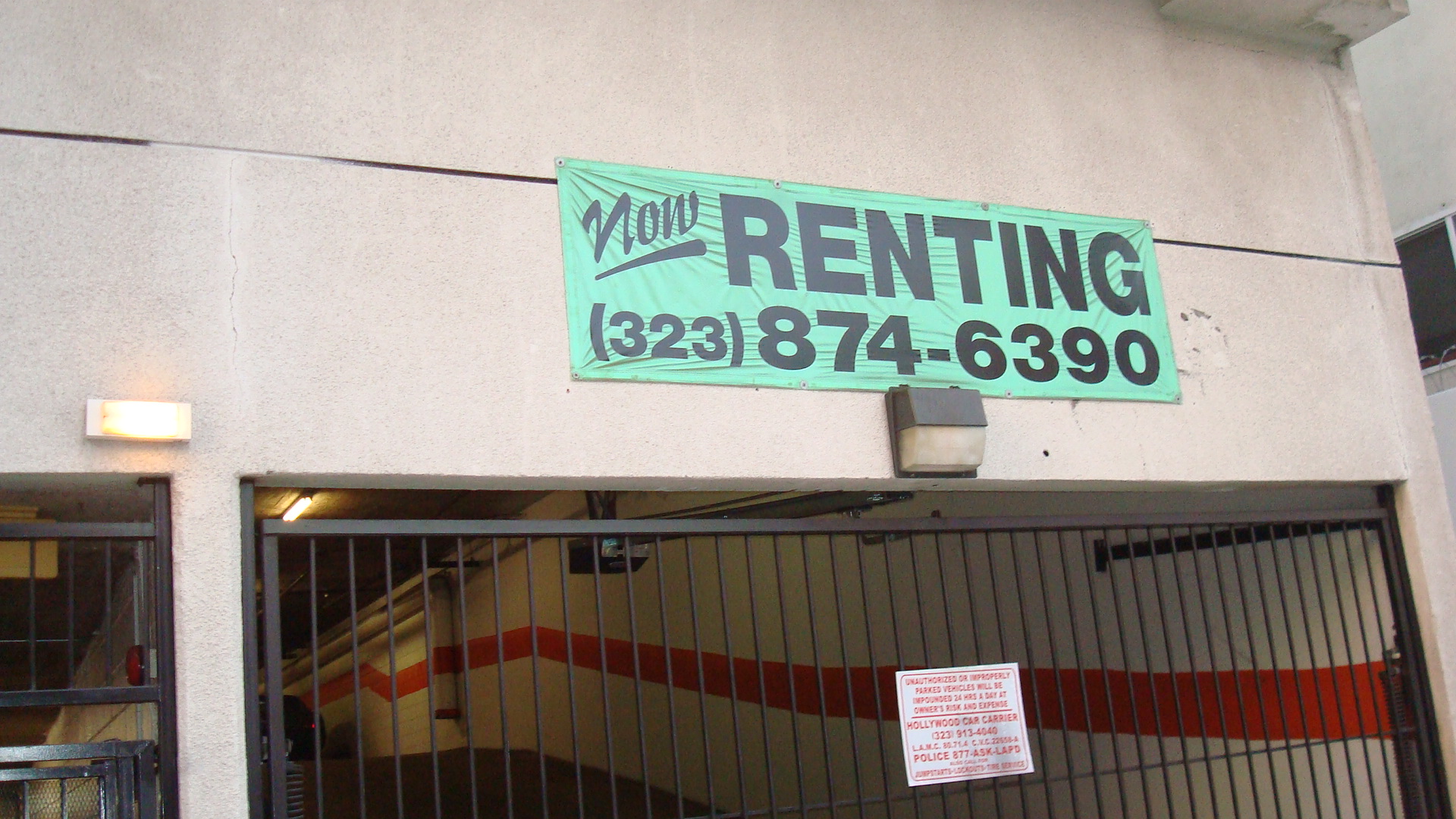
Sure, I understand that all apartment complexes are going to have vacant units at times, and the larger ones will always have a higher turnover. But ten years ago I wasn’t seeing green and red banners shouting “NOW RENTING” at passersby. Ten years ago apartments were in demand, and landlords didn’t have to worry about luring tenants.

So I guess I’m skeptical about the necessity of building over a thousand new units on La Brea. If there’s that much demand, why are there so many empty apartments just blocks away? It’s true that vacancy rates can vary widely from one neighborhood to another. But it’s interesting that of all the buildings going up on La Brea, only one is going to provide affordable housing. The rest are all geared for the upscale crowd. I’m assuming prices will be in the same range as The Avenue, a recently completed complex near Hollywood and La Brea where rents start at $2,350 a month.

I’ve heard so much about how LA needs to accept high-density housing, that there’s no other solution for the city’s future. But LA is not growing the way it used to. Census data shows that the city’s population increased just 2.65 percent between 2000 and 2010. In the Hollywood area the population actually shrank by more than 12,000.

So are we building all these units because people can’t find housing? Or are we building them because developers stand to make a lot of money?

Hollywood Journal – Leave the Dome Alone

Another entry from my Hollywood journal, this one very brief.

The wrangling over Pacific Theaters’ plans for the Cinerama Dome continues. There was a good deal of anger in the Hollywood community over the proposed project. The Community Redevelopment Agency had received letters of protest from over a hundred concerned citizens, including Steven Spielberg and Richard Schickel. And the people at Pacific had started paying attention.

I also mention a couple of record stores I used to frequent. Eastside was in a strip-mall on Hillhurst. It’s long gone now. Record Recycler was on Sunset near Vermont. It’s actually still around, though it hasn’t been at that location for years. The owner moved the store down to Torrance. Those of you who are into used vinyl can get more info by clicking here.

For a while I was in the habit of hitting the Roosevelt Hotel for a drink at the end of the day. I loved zoning out in the lobby and listening to the guy at the piano. Totally relaxing. I should point out that the photo below was not taken at the time I wrote this journal entry. I snapped it on a recent visit. I wanted to show a little bit of the Roosevelt lobby, but it’s important to say that it’s been remodeled since this entry was written.

And finally, in transcribing this journal I’ve decided to leave the errors in, which is why “Roosevelt” is misspelled in the last paragraph.

June, Nineteen Ninety Eight

Yesterday I called Pacific Theaters again to see if there was any change in the Cinerama Dome situation. And apparently, yeah, they’ve made some concessions. It’s still hard to say whether this so-called remodeling is gonna work out okay, but from what the woman told me, it sounds like they’re finally thinking a little bit about design. I heard they were talking to the L.A. Conservancy. Thank God for the Conservancy.

This afternoon I went and bought some records, first at Eastside, then at Record Recycler.

A little after six I walked into the lobby of the Rooseveldt. Ordered a beer. Sat down in a chair over by the piano. The guy actually played Three Coins in the Fountain. Mercy.

Rsvt Lobby