Inept or Corrupt? Does It Matter?

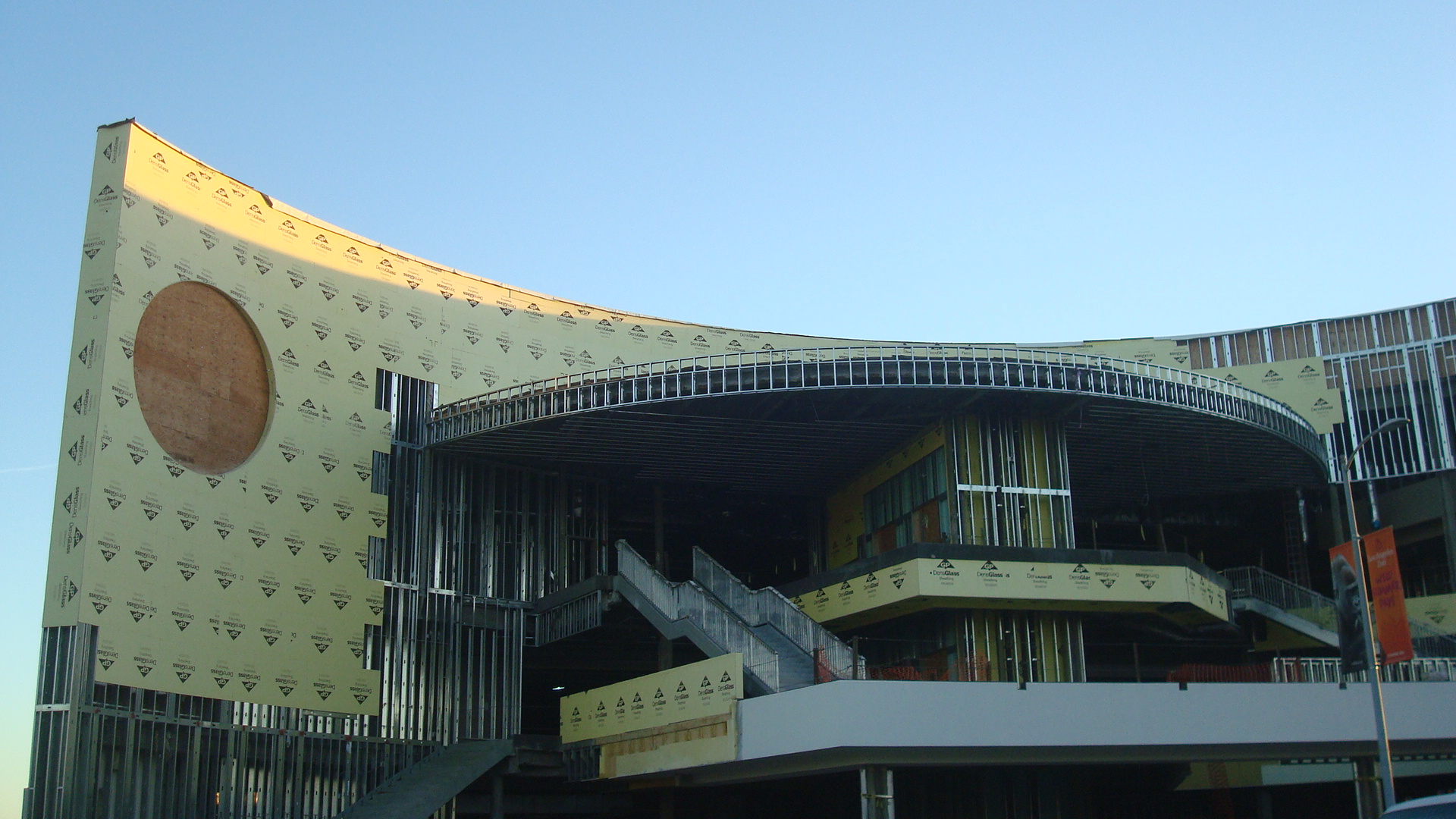
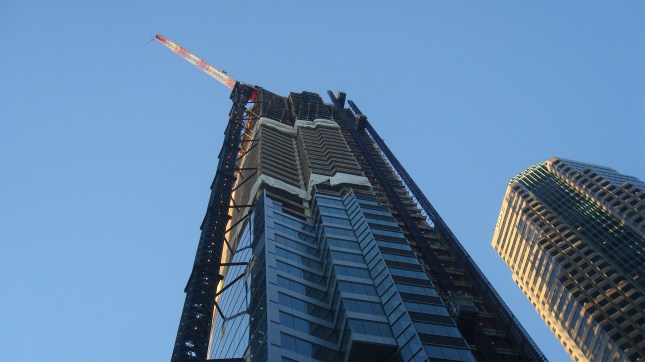
Construction on the Wilshire Grand in Downtown LA.

Construction on the Wilshire Grand in Downtown LA.

Last week City Controller Ron Galperin published an audit detailing the City’s record on collecting and spending development impact fees. As I read the press release, it’s hard to say whether I was more shocked or angry. The upshot is that the City of LA is failing to collect tens of millions of dollars in fees from developers, and it’s not even spending the money that has been collected. Here’s the lead from the press release.

City Controller Ron Galperin issued an audit that found the City of Los Angeles is failing to exercise its power to charge citywide development impact fees, which State law says can be collected from developers to mitigate their projects’ impacts on neighborhoods and defray the costs of public facilities and infrastructure, such as roads, bridges, libraries, parks and police stations.

I have to ask, What the hell is wrong with out elected officials?! Are they so inept they don’t realize that we can and should collect this money? Or have they gotten so much campaign cash from developers that they feel compelled to let them off the hook when it comes to charging legitimate fees? Either way, these revelations are shocking. This City’s infrastructure is crumbling, we’re seeing an avalanche of new development which is putting an even greater strain on roads, water and public services, and the people at City Hall aren’t even asking for money that we need to address these problems.

The whole thing is just mind-boggling. Here’s another paragraph from the press release.

In preparing their report, auditors in Galperin’s office compared Los Angeles with other western cities. In FY 2013-14, San Francisco had $3.6 billion in permitted construction and collected $96 million in impact fees. Portland had $1.5 billion in permitted construction and collected $31 million. Meanwhile, Los Angeles had $5.3 billion in permitted construction but collected less than $5 million in impact fees. Based on these numbers, auditors said Los Angeles had the potential to collect tens of millions of dollars more in fees.

So even though the value of permitted projects in LA was greater than San Francisco and Portland put together, our local government collected less than 5% of the total fees received by those two cities. Again, I’m shaking my head in disbelief.

Recently Mayor Garcetti made a show of announcing a program to collect linkage fees from developers to fund affordable housing. But in 2011 the City hired a consultant to produce a report which showed that LA could be collecting between $37 million and $112 million annually. Why have our elected officials taken so long to act? It’s going to take at least another year for the City Council to enact this program, and during that time we’ll lose out on many more millions.

Here’s a quote from the letter that Galperin sent to the Mayor with the audit.

The City of Los Angeles’ approach to collecting and spending impact fees to date has been haphazard and most often neighborhood-specific rather than Citywide, as is customary in some other localities, and sometimes, not sensible. No central entity has been responsible for monitoring the fees. And key officials from various City departments told auditors they did not know what other departments were charging.

This City has so many pressing needs, and we’re constantly told by our elected officials that we don’t have the money to address those needs. But according to Galperin’s office, we’ve had the ability to access a major revenue stream that City Hall has almost completely ignored. It’s insane.

If you want to look at the audit, here’s the link.

Audit of Development Impact Fees

And after reading the audit, you might want to call your City Council rep and ask why we didn’t start collecting these fees years ago.
Who’s Really Standing Up for Artists?

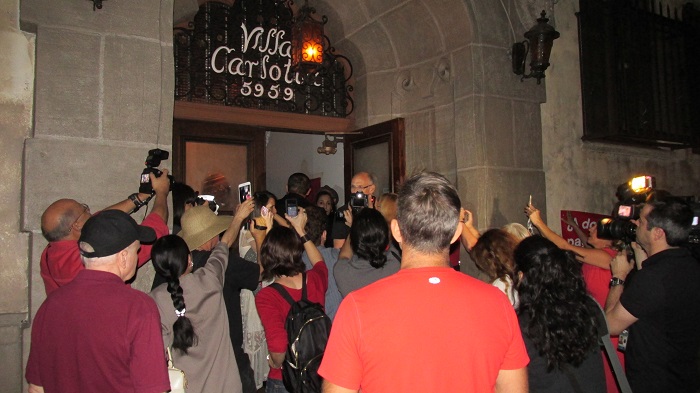
Tensions running high at the Villa Carlotta on Sunday night.

Tensions running high at the Villa Carlotta on Sunday night.

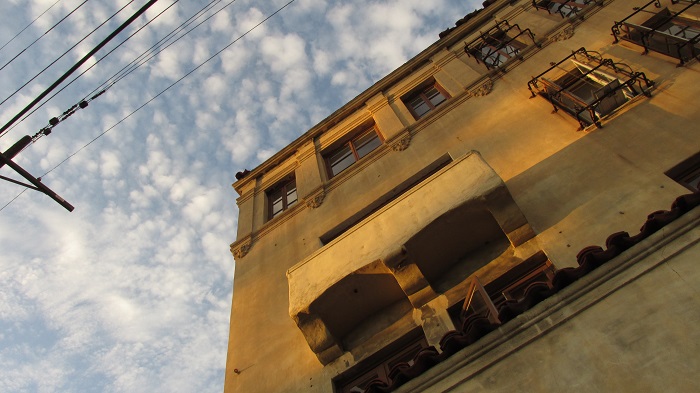
In case you haven’t been following recent events at the Villa Carlotta, I’ll give it to you real quick. It’s a piece of Hollywood history, built in the 20s, and home for many years to musicians, artists, writers and other creative folk. But it was rent-controlled, and not too long ago the owner decided he wasn’t making enough money off it, so he sold the property to a developer who planned to turn it into an extended-stay hotel. As part of the process, it was deemed necessary to get rid of the existing tenants. Many of them were forced out using the Ellis Act.

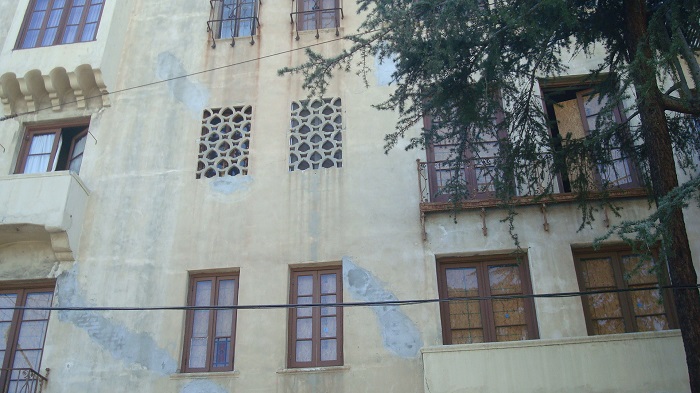
Windows boarded up at the Villa Carlotta.

Windows boarded up at the Villa Carlotta.

Of the 50 apartments in the Carlotta, four are still occupied. Some of the tenants decided to fight the evictions, and not just because they wanted to hang on to their homes. There are a number of reasons to object to what the developer is doing here. First, the Carlotta is a historic building, and as such it’s protected by state law. In order to turn it into a hotel, the current owner planned extensive alterations to the structure. The remaining tenants, worried that the modifications would do irreparable damage, took their case to the Cultural Heritage Commission, which sided with them. Second, Ellis Act evictions have caused the loss of thousands of rent-controlled units in LA. A recent study by UCLA found that this city is the least affordable major city in the nation, and mass evictions are only making things worse.

And third, up until this whole mess started, the Carlotta was home to a community of creative people. According to many of the former tenants, it was a place where budding screenwriters and struggling artists could meet friends and make connections, where they could share their work and shape their ideas.

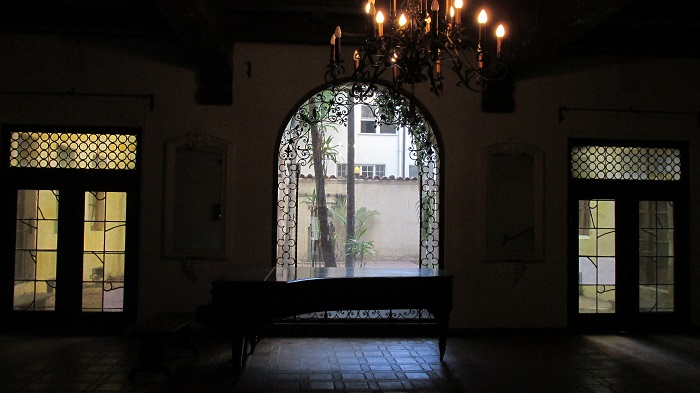
The lobby where tenants used to gather, now deserted.

The lobby where tenants used to gather, now deserted.

This aspect of the story took on new importance when it was announced that the Hollywood Arts Council had decided to hold a fundraiser at the Carlotta. The HAC apparently thought it would be the ideal place for the event, which was held to raise money for arts education at nearby Cheremoya Elementary School. The remaining tenants at the Carlotta were surprised by the announcement. It seemed odd that an organization which has the stated goal of supporting the arts in Hollywood had decided to hold their event at a venue that was nearly vacant because dozens of artists had been forced to leave.

They contacted the HAC and explained the situation, asking if the organization would consider moving the event. The answer was polite, but firm, no. Bothered by the apparent hypocrisy of the HAC’s actions, the tenants decided to protest.

Sylvie Shain, one of the few remaining inhabitants, had imagined the protest as an elaborate performance piece. Former tenants were asked to come to the event wearing white, and they would stand for the ghosts of the Villa Carlotta. Alternately, attendees could show up dressed in red to symbolize of the affordable housing massacre that’s taking place. The idea was to dramatize the plight of renters throughout the City.

Protesters holding a banner to protest evictions.

Protesters holding a banner to protest evictions.

The same message in English.

The same message in English.

Unfortunately, things didn’t work out as planned. The first part of the protest, with people congregating on the sidewalk outside, went smoothly. But when Sylvie led a group into the building things got kind of chaotic. There were moments when I couldn’t figure out what was going on. But one thing is clear. At one point Sylvie was forcibly ejected from the building and temporarily denied re-entry.

On the positive side, the event got a fair amount of media coverage. Two local stations showed footage on the evening news, and Curbed did a piece as well. The Los Angeles Tenants Union joined the residents of the Carlotta, and LATU members spoke eloquently about the affordable housing crisis in LA, emphatically pointing out the damage that the Ellis Act is doing.

It’s important to say that artists aren’t just having a hard time finding housing in Hollywood. In recent years Silverlake and Echo Park have both seen an exodus of musicians, writers and others who can’t afford to pay what landlords are asking these days. And then there’s the sick joke of the Arts District in Downtown. In the late 70s, creative people started moving to the industrial districts in the City’s center. The community came together because people who were struggling to make music or art or whatever could find cheap rents in areas that nobody else wanted to live in. But then the developers discovered it, started marketing it as the Arts District, and housing prices soared. Many of the artists who had created the community were forced to leave because it got too damn expensive.

So let’s get back to the question I asked in the heading for this post. This past Sunday night, who was really standing up for artists? Was it the Hollywood Arts Council, knowingly holding their fundraiser at a site where dozens of creative people had been forced to leave? Or was it the scrappy band of tenants who staged an action to call attention to the fact that artists and others are being thrown out of their homes all over LA?

You can probably guess what my answer would be.

Sylvie put together a beautiful brochure for the event, which you can view by clicking on the link below.

Ghosts of the Carlotta

And if you’d like more info about the situation at this historic building, here’s a link to the Save Villa Carlotta Facebook page.

Save Villa Carlotta

VC 6 Fac Clouds

Talking About Displacement

MTA construction along Crenshaw Blvd.

MTA construction along Crenshaw Blvd.

Speaking at a recent Los Angeles Current Affairs Forum, MTA CEO Phil Washington talked about how the growth of LA’s transit network has been accompanied in some areas by gentrification and displacement. Washington is concerned about the fact that low-income residents are being pushed out of the communities they call home, and he wants the MTA to do more to address the problem.

It’s good to hear somebody at the MTA talking about this. The question is what can actually be done. Earlier this year the MTA Board agreed that when new residential units were built on the agency’s land their goal would be to set aside 35% for low-income renters or owners. That’s fine, but it’s not nearly enough. What we really need is to have the City and the County commit to changing their planning practices. Mayor Eric Garcetti and Supervisor Mark Ridley-Thomas serve on the MTA Board. They should both support Washington and take a public stand against displacement. Then they should push for the City and the County to create policies to address the problem.

While gentrification is happening all over the city, the growth of LA’s transit system definitely seems to be a catalyst. Downtown, Koreatown, Hollywood, and Highland Park have already seen thousands of low-income residents displaced. Leimert Park and Boyle Heights seem to be next on the list as the MTA continues its rapid push to expand, bringing an influx of developer dollars to neighborhoods near rail stops. As property values skyrocket, rents go up, too, and low-income tenants who can’t afford to pay must find somewhere else to live. Tenants in rent-controlled apartments can be forced out by landlords who use the Ellis Act to convert their units to condos.

I’m really glad to hear Washington talking about displacement, and I hope others back him up on this issue. This is a conversation we need to have, and it should have started long ago.

MTA construction in North Hollywood

MTA construction in North Hollywood

Homeless Emergency? Stop Evictions!

DSC00557

The Mayor and the City Council recently declared that LA is in the throes of a homeless emergency. While I’m glad that our elected officials have finally decided to acknowledge how serious the problem is, they still haven’t offered any concrete plan of action. The promise of a hundred million dollars in funding is worthless until we know where that money’s coming from and how it’s going to be spent.

But I’d like to offer a suggestion on how to combat homelessness, and the people at City Hall should be glad to hear that they won’t have to spend a penny to implement it. My proposal is simple. I can give it to you in two sentences.

Stop Ellis Act evictions.

Stop the destruction of affordable housing.

Now, you may be saying, that’s ridiculous. The City doesn’t have the authority to do either one of those things. The Ellis Act, a state law, gives landlords the right to evict tenants if they decide they don’t want to be landlords any more. And the City can’t prevent a property owner from demolishing rental units if the owner does so within the boundaries of the law.

But the City can stop giving landlords incentives to do these things.

As the housing market heats up again, the potential to reap huge profits has drawn a slew of developers to LA. Speculators swoop into neighborhoods offering wads of cash to landlords, but they don’t just want to buy existing buildings. They’re interested in maximizing their profits, which often means kicking tenants out of rent-controlled apartments and either converting the units to condos or knocking the building down and putting up something larger.

And here’s where the City comes in. For developers to accomplish their goals, they often need to get the City to grant variances. They might ask the Department of City Planning to reduce the required setbacks from the sidewalk or neighboring buildings. Or maybe to relax the height limit. In some cases they ask the DCP to change the way an area is zoned, which could allow them to turn an apartment building into a boutique hotel.

All of these entitlements granted by the City increase the value of the property because they increase the potential for profit. The more money there is to made, the greater the attraction for investors. The more money investors offer, the greater the temptation for landlords to evict their tenants and sell the building. During the last housing bubble, this trend peaked in 2005 when over 5,000 rental units were taken off the market. When the recession hit, property values plunged and evictions dropped. But as the market heats up again, we’re seeing this practice becoming popular once more. In 2013, landlords took 308 units off the market. That figure more than doubled in 2014, rising to 725. And as long as housing prices continue to rise, you can bet that evictions will rise as well. For more details, take a look at this article from the KPCC web site.

Ellis Act Evictions in LA on the Rise

While there’s usually some negotiation involved when developers seek variances from the Department of City Planning, they usually get most of what they want. And as long as the DCP continues to hand out entitlements like candy, developers will feel confident that they can make tons of money by converting existing buildings to condos, small-lot subdivisions or boutique hotels. This means more people will be evicted, and more affordable housing will be taken off the market.

DSC00565

I’m not claiming that everybody who gets evicted ends up living on the street, but a significant number do. While I couldn’t fine any data on evictions leading to homelessness in Los Angeles, in New York the data shows that it’s a leading cause. Check out this article from CityLimits.

Evictions Are Top Driver of Homelessness

So if the City of LA is really serious aout tackling homelessness, our elected officials need to stop making it so attractive for landlords to evict their tenants. The Department of City Planning needs to start asking if the needs of wealthy developers outweigh the needs of renters on a limited income. Yes, we are dealing with a homeless emergency. The people at City Hall must start looking at the policies that have contributed to this situation, and think about the changes that need to be made.

Building shelters for people living on the streets is fine. But an even better approach would be to prevent people from losing their homes to begin with. As long as City Hall continues to put the needs of developers over the needs of its citizens, the homeless situation will only get worse.

DSC00562

Showdown on Sunset

Tgt Curve

If you haven’t already heard, the Department of City Planning is holding a hearing this coming Friday on a proposal to restart the half-completed Target on Sunset. The project was stopped by a judge because it violated the Station Neighborhood Area Plan (SNAP). The City wants to create a sub-area within the SNAP which would allow Target to finish the building as is.

For those of you who haven’t been following this long, nasty struggle, the project that Target originally proposed for the corner of Sunset and Western was in compliance with the SNAP, and it seemed like pretty much everybody was on board with the idea. Then, at the behest of city officials, Target significantly increased the height of the project, making it more than double what the plan allowed. The revised design would have also required a number of other variances. At that point, community members who had supported the original project came out against the new, larger version. They filed a law suit, and Target, inexplicably, forged ahead with construction. When the judge sided with the plaintiffs, construction screeched to a halt. And this hulking, half-finished curiosity has been sitting at the corner of Sunset and Western ever since.

Tgt Crnr Side

Why is this happening? Local residents worked with the City for years to formulate the Station Neighborhood Area Plan. The whole idea was to create a framework for development that would stimulate growth without trashing the community. Why did members of the community invest years of time and effort into writing the SNAP if a city official can sweep it aside with a wave of their hand? (Many point the finger at then-Councilmember Eric Garcetti, who’s been pushing for taller buildings all over LA.)

Target gambled when they started construction on a project that was facing a legal challenge. They lost. Why should we bail them out? They should go back to the drawing board and create a project that complies with the law. And if they don’t want to do that, they should forget the whole thing and just sell the site.

But instead of making Target deal with the consequences of their actions, the City of LA is running to the rescue by creating a new sub-area within the SNAP. This is so depressing. But certainly not surprising. When you look at the amount of money that developers have given to the Mayor and City Council, it’s easy to see who’s really running things.

My feeling is that this is probably a done deal. The Department of City Planning is putting on a show this Friday to make it look like the public has had a chance to be heard. After the hearing is over, my bet is that they’ll approve the sub-area, and Target will go ahead and finish their building.

But don’t let my pessimistic, defeatist attitude infect you. In spite of my misgivings, I still sent an e-mail to the hearing officer to let the DCP know I was completely opposed to this stunt. I urge you to write as well, or better yet, show up at the meeting and let them know how you feel. We may not win, but we can go down fighting.

Here’s the info for the meeting.

Friday, October 2, 2015, 10:00 am
City Hall, 10th Floor, Room 1020
200 N. Spring St.

You can send an e-mail to the hearing officer at the address below. Be sure to include the case number in your subject line.

Blake Lamb
Blake.Lamb@lacity.org
Case No. CPC-2015-74-GPA-SP-CUB-SPP-SPR

And here’s the link to the meeting notice.

Target Sunset Hearing Notice

Tgt Sunset

Church Clears Another Hurdle

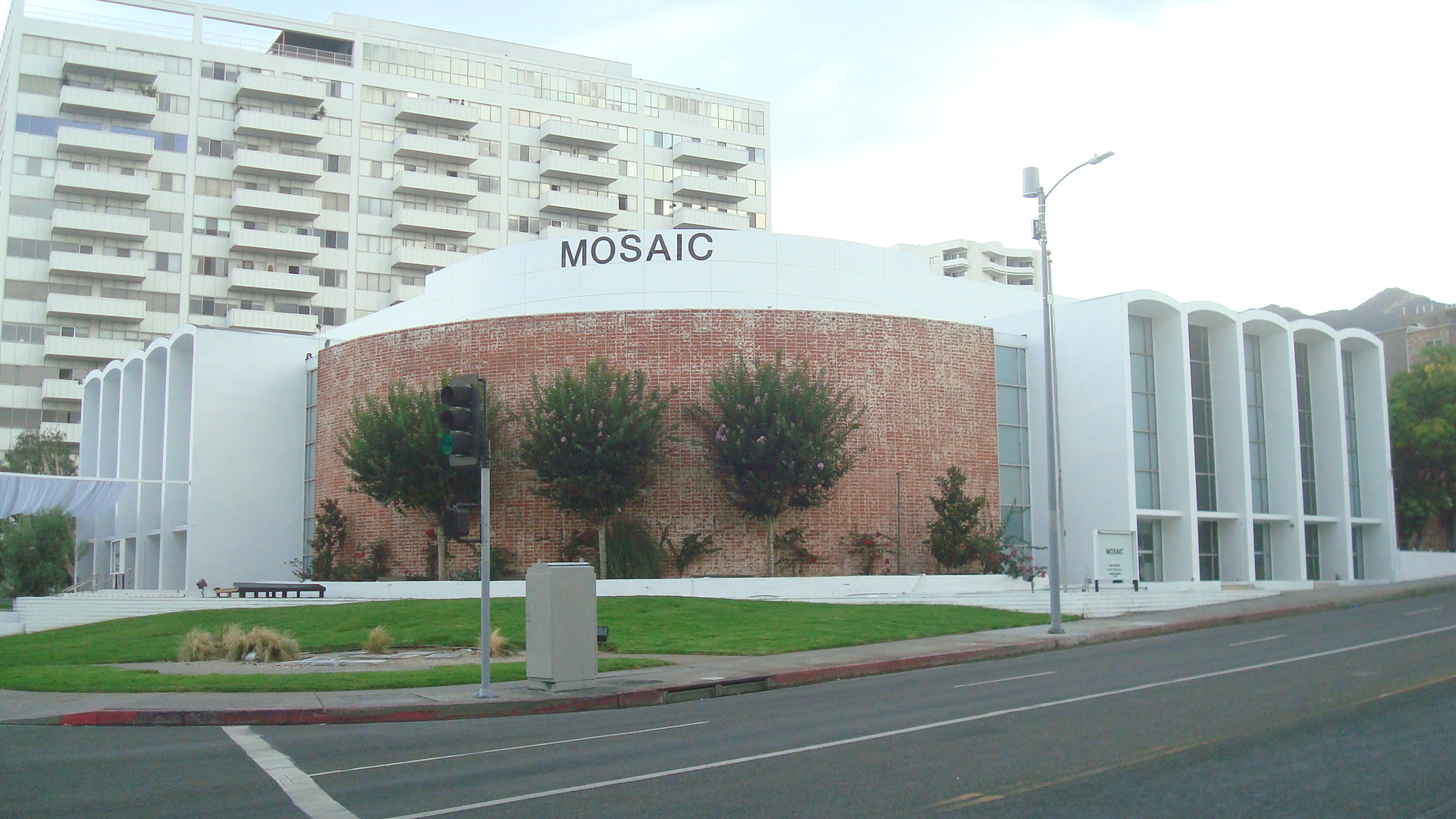
Mosaic Front

A quick update on the status of the Mosaic Church at Hollywood and La Brea. Earlier this week, the Cultural Heritage Commission voted unanimously to recommend that the structure be designated a cultural-historic monument. Click on the link below to get all the details.

Hollywood Church Closer to Becoming Historical Monument from Park La Brea News

This is good news, but as Helen Berman of Save Residential Hollywood points out, the fight is far from over. Developers LeFrak and Kennedy Wilson want to demolish the church so they can build a large mixed-use complex. They claim the building isn’t worthy of historic status, and they have very deep pockets. No doubt, they’ll be pushing hard to scuttle the designation.

So even though the groups hoping to preserve the church have won an important victory, they still have a long way to go. The CHC’s recommendation will go to the Planning and Land Use Management Committee next, and eventually the City Council will vote on the issue.
Thanks to Save Residential Hollywood for all their efforts so far. Here’s a link, in case you’d like to get involved.

Save Residential Hollywood

Thanks also to Councilmember David Ryu, who has come down firmly in support of granting the church historic-cultural monument status. If you’d like to thank him yourself, here’s his e-mail address.

david.ryu@lacity.org

More About Housing and Transit

Post Final

As a follow-up to my last post, I wanted to share this article from LA StreetsBlog. It’s a summary of a panel discussion, Rescuing the California Dream: Policies for an Affordable Future, sponsored by KPCC and the Milken Institute. The participants talked about the challenges posed by LA’s affordable housing crisis, and offered some possible solutions.

Nobody was saying there’s an easy way out, but there are things we can be doing to address the situation. Two things I got from the article were that we need to do a better job of planning, and we need to create local funding sources to support affordable housing. But the panel offered lots of ideas, and the consensus seems to be that we can change things for the better.

Can High-Density Housing Solve Our Regional Housing Crisis? The Answer: It’s Complicated

A New Vision or Another Con?

A view of the Hollywood Freeway from Franklin

A view of the Hollywood Freeway from Franklin

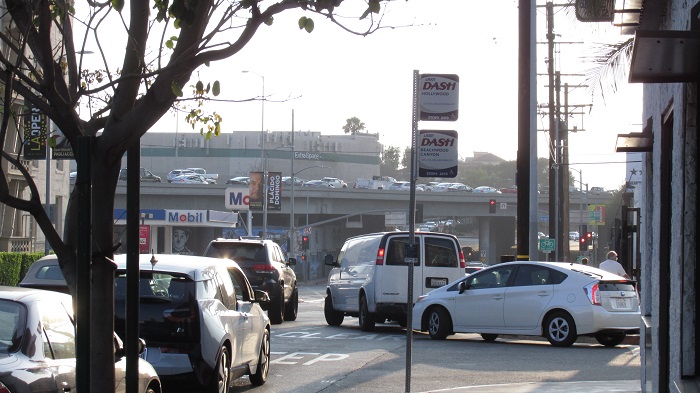
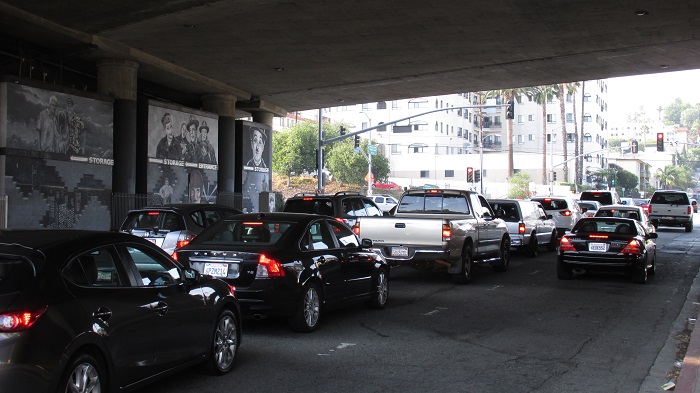
A while ago I was walking down Franklin around rush hour, and I came across a sight that’s becoming way too familiar. Looking down Vine, I saw a line of cars that extended all the way down the block.

Looking down Vine at rush hour

Looking down Vine at rush hour

I pulled out my camera, because I’ve kind of gotten obsessed with documenting traffic in LA. You probably think this is a pretty weird pasttime, but it keeps me off the streets. Oh, wait. No, actually it doesn’t….

Intersection of Vine and Yucca

Intersection of Vine and Yucca

Anyway, I walked down Vine taking pictures, and guess what I saw when I got to Yucca?

Cars lining up in the left turn lane on Yucca

Cars lining up in the left turn lane on Yucca

If you guessed another long line of cars, you were right. If you don’t live in the area, this may not seem like anything remarkable. But having lived in Hollywood for a while, I can tell you that this is a pretty recent phenomenon. Yucca used to be very quiet. I’d say up to three or four years ago Yucca was empty even at rush hour. Obviously that’s changed.

I kept on walking, and you’ve probably already guessed that when I got to Argyle, I saw yet another line of cars crawling along.

More cars backed up on Argyle

More cars backed up on Argyle

But the thing that surprised me was, traffic on Argyle was backed up all the way to Hollywood Blvd..

Still more cars backed up on Argyle

Still more cars backed up on Argyle

I walked up Argyle, shooting more photos as I passed underneath the bridge.

Traffic crawling north on Argyle

Traffic crawling north on Argyle

Then I was back at Franklin, and by now everybody knows what I found when I got there.

Westbound traffic on Franklin

Westbound traffic on Franklin

You may be asking, where were all these cars heading? Well, they were all trying to get on the northbound Hollywood Freeway. And traffic on the freeway was moving pretty damn slow.

Northbound onramp for the Hollywood Freeway

Northbound onramp for the Hollywood Freeway

I think we’d all agree that LA’s streets are way too congested, and we’ve got to start thinking about transportation in new ways. Cars are a dead end. We’ve got to stop building to accomodate them. The recent expansion of the San Diego Freeway showed what a waste of time that is. We can add as many lanes as we want, and they’ll all end up choked with traffic.

So some people see the City Council’s adoption of the Mobility Plan 2035 as a major step in the right direction. It sure sounds swell. With chapters titled “Safety First”, “World Class Infrastructure” and “Access for All Angelenos”, the MP 2035 paints a picture of a utopian LA, where everybody can get everywhere they want without ever needing a car.

But a lot of people are skeptical about the benefits the plan will actually provide, and I’m one of them. I totally support increased access to all modes of transportation, and if you take the MP 2035 at face value, it sounds great. The question is, will the plan deliver what it promises, and to answer that question you have to look at what our elected officials have actually been doing for the last several years.

Under the heading Key Policy Initiatives, the plan includes the following goal….

Consider the strong link between land use and transportation

No doubt about it, land use and transportation have to be considered together. For years now the Mayor and the City Council have been pushing transit oriented density (TOD). In theory, planning for higher density near transit centers will create a new dynamic where people will find using public transit preferable to driving a car. Now, if we were building affordable housing near transit centers that allowed easy access to the areas where jobs were concentrated, this might actually work. But that’s not what the Mayor and the City Council have actually been doing. Instead, they’ve been pushing relentlessly for high-end, high-rise housing that caters to people with six figure incomes. Check out the proposed 8150 Sunset, Horizon Hollywood and Shenzhen Hazens project in South Park for three examples. There are many more in the planning stages. Do the rich ride the subway? I’m sure some of them do, but let’s be honest. In LA, this is the demographic that is least likely to use public transit, while people at the lower end of the economic spectrum often have no other choice.

This is not transit oriented density. It’s profit oriented density. The Mayor and the City Council can tell us they’re linking land use to transportation to make transit more accessible, but recent history shows that this is mostly a con used to push through projects that only benefit developers who are looking to make a pile of money. Not only have our elected officials’ efforts to create affordable housing been pathetic, but by pushing gentrification in areas that used to be affordable, they’re actually forcing low-income workers farther away from job centers.

So if you ask me whether the MP 2035 will deliver what it promises, I can’t say I’m optimistic. Even before Garcetti became the Mayor, when his council district covered much of central Hollywood, he pushed through a number of “TOD” projects, telling residents that this would solve our transportation problems. Take a look at the video below and let me know if you think it’s working.

Losing a World of Inspiration

Leimert Park

Leimert Park

All over Los Angeles neighborhoods are changing. Developers with deep pockets are buying up real estate in the hope of making a bundle. New projects are transforming the landscape from Venice to East LA. We need development, but there has to be a balance between business interests and community interests. The community needs to be involved, and that involvement has to be based on trust. The only way you can build trust is through honesty and transparency.

Unfortunately, we’re not seeing much honesty or transparency in LA these days. Many developers are doing their best to shut the public out by keeping their activities secret, and our elected officials often seem to be willing accomplices. As a result, communities across the city have suffered some terrible losses. Buildings have been demolished. Businesses have been driven out. Thousands of renters have lost their homes. People and places that defined our neighborhoods are disappearing.

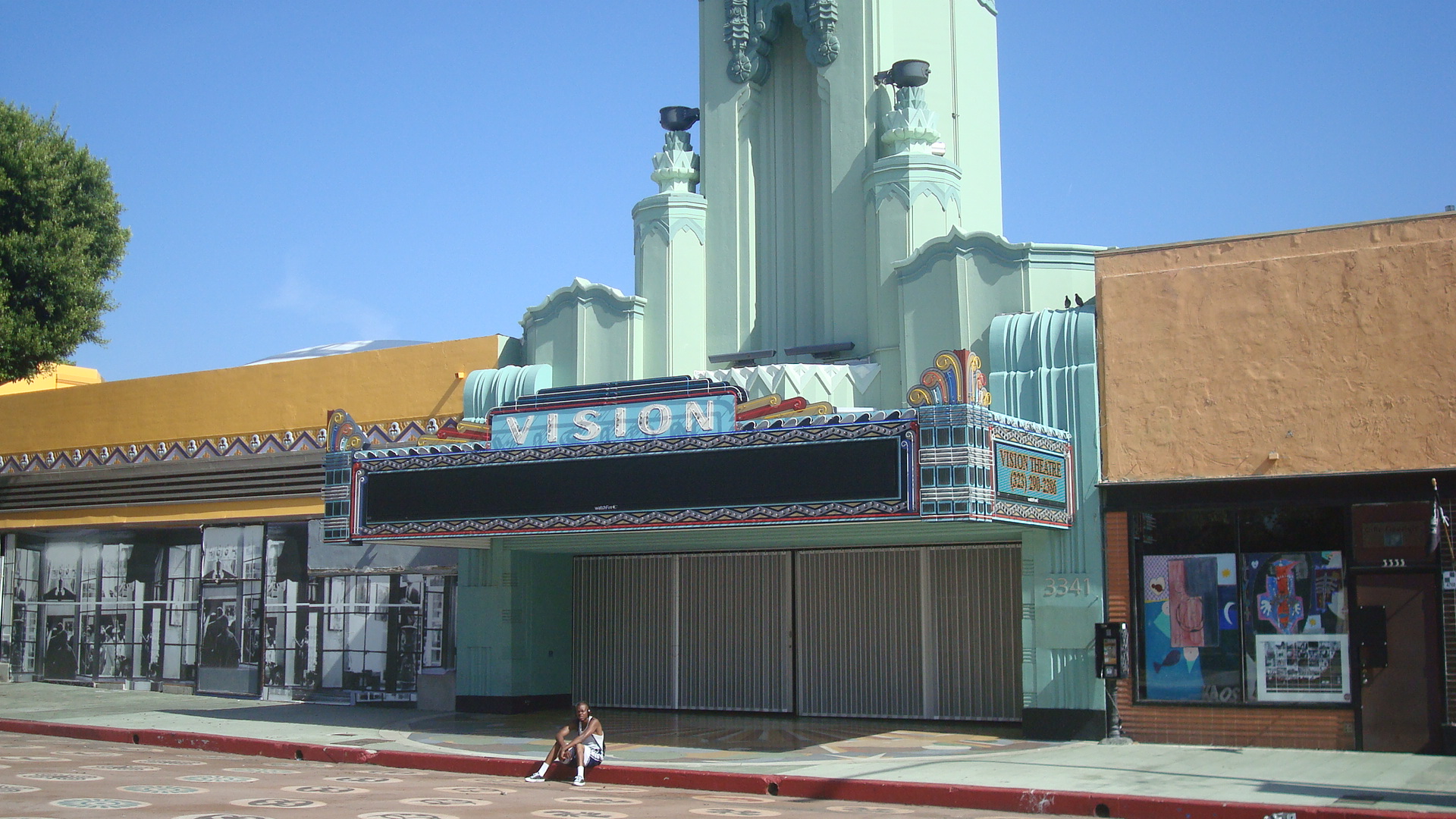
The Vision Theatre

The Vision Theatre

In the last few years Leimert Park has drawn a lot of attention from investors. Built as a planned community in the 20s, Leimert Park was predominantly white up til WWII. After restrictive covenants were declared illegal in 1948, the demographics started shifting and by the 60s the area was largely African-American. For decades it’s been a center for black culture in LA, figuring prominently in the local jazz and hip hop scene. In Leimert Park you can find a beautifully preserved remnant of the past like the Vision Theatre sitting right next door to a cutting edge media lab like KAOS Network.

KAOS Network

KAOS Network

And just around the corner you can also find the World Stage, although that may change in the months to come. This is one of the saddest casualties of the redevelopment frenzy that’s sweeping across LA. Founded in 1989 by drummer Billy Higgins and poet Kamau Daáood, the World Stage has been a major part of the neighborhood’s cultural life for over 25 years. Back in the 90s it was an important part of the renaissance that breathed new life into Leimert Park. Even when the recession hit and neighboring shops and restaurants were closing down, the World Stage remained an anchor for the community.

The World Stage

The World Stage

But it looks like the World Stage will be leaving Leimert Park. The building it’s housed in changed hands a while back, and the new owners will not renew the lease. In fact, World Stage Executive Director Dwight Trible says the new owners have refused to even meet with him. Trible says that after months of discussion, the Board of Directors has decided that it’s best to look for a new location. So while the World Stage will still go on, it will be cut off from the community that has been its home since the very beginning.

The story of who’s been buying up property in Leimert Park and why is complicated, and if you’re interested in the details I recommend reading this piece that appeared in the LA Weekly a few months back.

Who’s in Control of Leimert Park’s Future? It’s Hard to Tell.

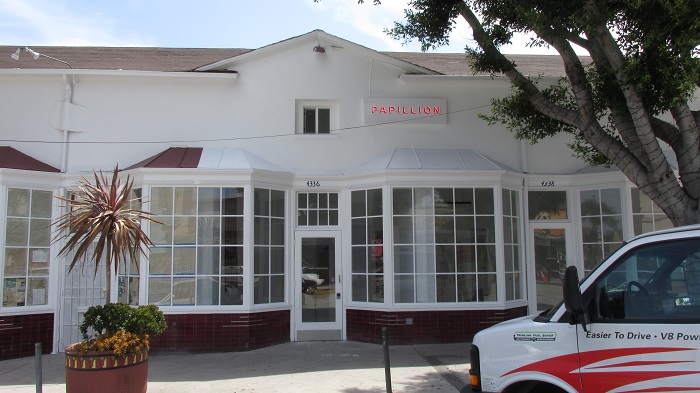
Papillion

Papillion

Briefly, the local real estate market started heating up back in 2012 when the MTA decided that the new Crenshaw/LAX line would have a stop at Crenshaw and 43rd. Since then a number of buildings have been purchased by limited liability corporations that seem to be controlled by Allan DiCastro. DiCastro is associated with artist Mark Bradford and philanthropist Eileen Norton, and together they’ve made a serious commitment to investing in the local art scene. To their credit, they’ve brought the non-profit Art + Practice and the contemporary art space Papillion to the neighborhood. That’s all to the good. Leimert Park has been struggling in recent years, and could certainly use a shot in the arm.

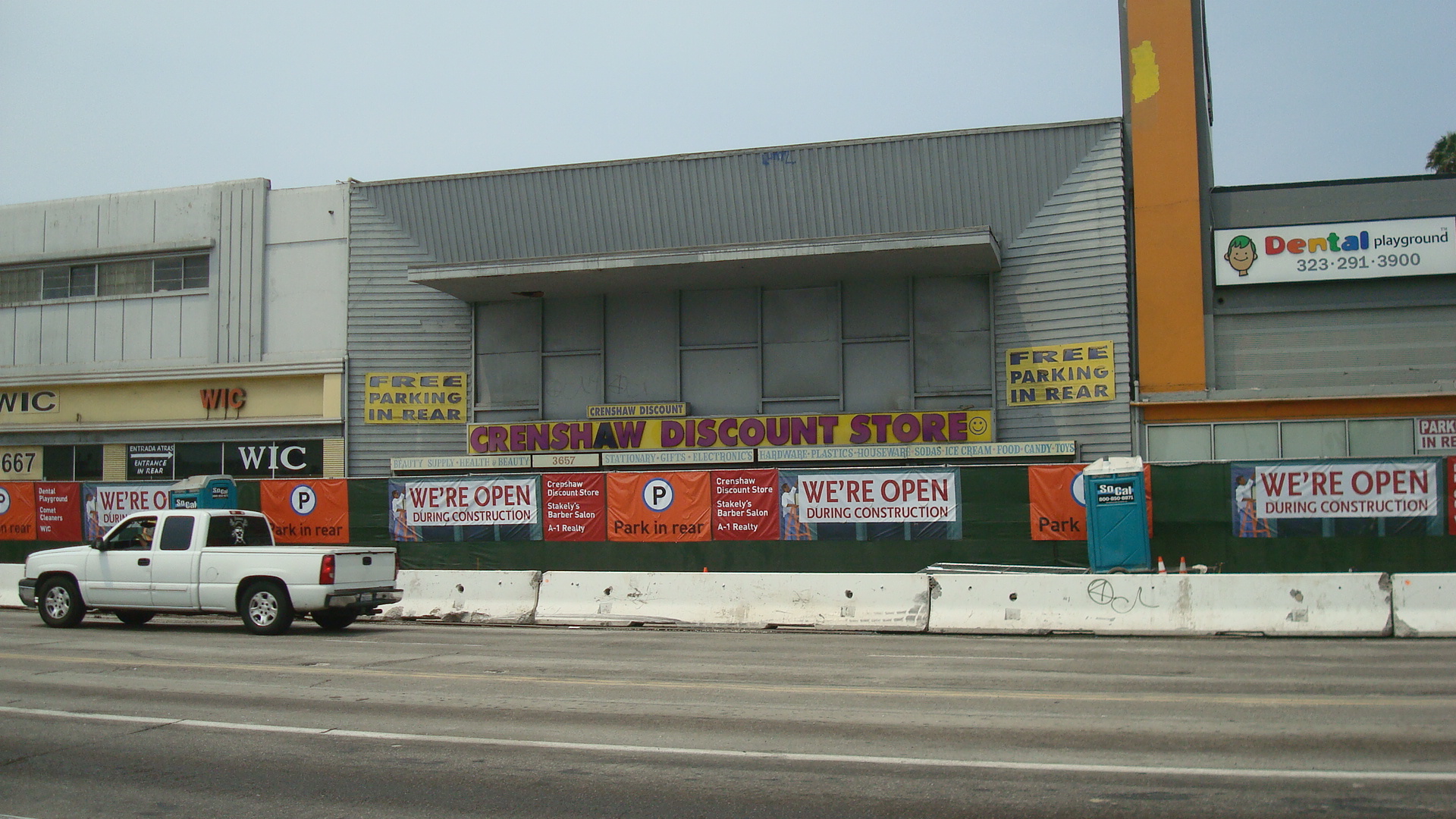
Shuttered businesses on Crenshaw Blvd..

Shuttered businesses on Crenshaw Blvd..

But DiCastro and his associates have not been open or honest with the community about their plans, and that’s a problem. People who’ve lived and worked in Leimert Park for decades can’t get straight answers about what the new owners have in mind. Unfortunately, this is a scenario that’s playing out all over LA these days. Investors with deep pockets and connections at City Hall move into a neighborhood and work behind the scenes to push their own agenda. Residents are told they should be happy about how their community is being “transformed”, but they find they have no voice in the process.

Music is one of the fundamental things that binds a community together. It’s a powerful, immediate way for people to connect and share their experience. For years the World Stage has been a place where musicians and audiences come together, where the distance between the people who come to play and the people who come to listen disappears. Leimert Park isn’t just its physical home, but also its spiritual home. If the World Stage ends up having to leave, it will be a terrible loss for the community.

Future site of the Leimert Park stop on the Crenshaw/LAX Line.

Future site of the Leimert Park stop on the Crenshaw/LAX Line.

Parking Problems

Pk 03 HH 1 B

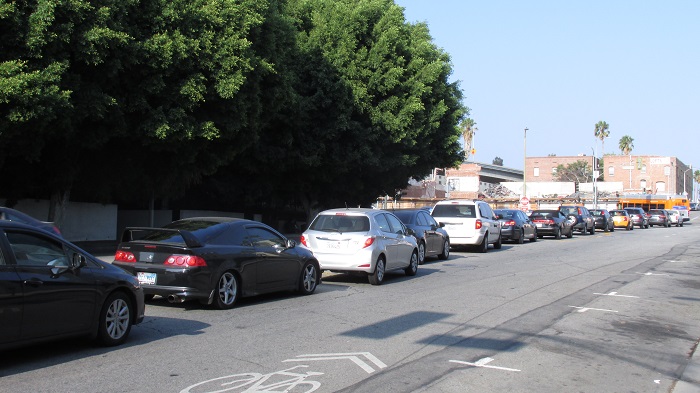
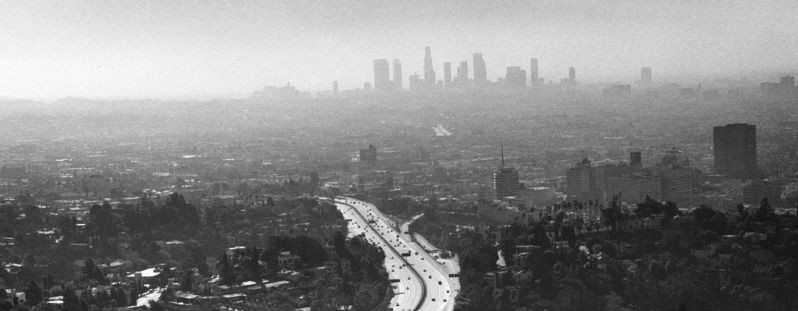
I keep hearing about how Angelenos are giving up their cars in favor of other means of travel. But really it looks like traffic all over the city is steadily getting worse. In spite of the fact that our public transit is slowly improving. In spite of the fact that we have more bike lanes than ever. In spite of all the hype about ride-sharing services. To me it looks like there are more people driving in LA than ever before.

Part of the reason for this is that there are more people in LA than ever before. The City’s population is around 3.9 million, with more arriving every day. But let’s face it, most Angelenos are not ready to give up their cars just yet. There are many reasons for this. For the vast majority of Angelenos I’ve spoken to, taking public transit still means at least doubling your commute time.* And citizens looking for affordable housing are having to look farther and farther away from the City’s center, making public transit more time consuming. Practical reasons aside, though, a lot of people who live in LA just love their cars. They love the freedom of going wherever they want whenever they want. They love being able to shut out the world around them. They love having a set of wheels that makes a statement about who they are or how big their bank account is. And so they’re willing to spend a large part of their paycheck to have a car, even if most of the time their car is sitting idle.

Pk 05 Hlwd Row B

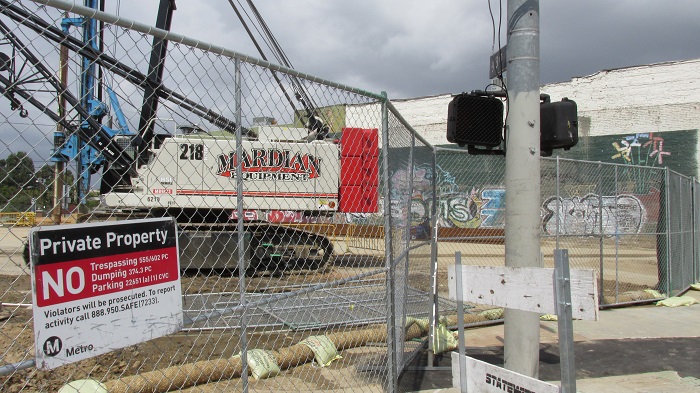
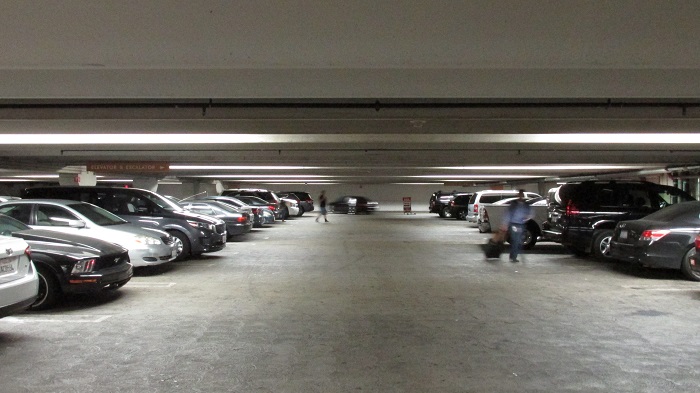
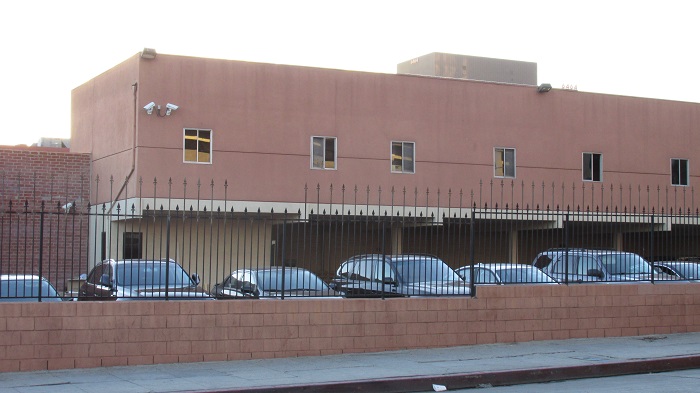
Think about it. Even if you spend two hours commuting each way every day, that means your car is parked in a lot or on the street for twenty hours a day. Seems kind of wasteful, doesn’t it? And speaking of wasteful, look at the enormous amounts of space we set aside for parking. Shopping malls, stadiums, beaches and other destinations often provide massive lots just so people can park their cars. For parking structures, the average cost per space in the US is about $15,000, though it can go much higher. This means that parking alone can increase the price tag for development by hundreds of thousands or millions of dollars. And in the case of residential development, this cost is passed along to the renter or buyer.

Pk 02 Arc 4 B

Of course, most people don’t think about this, which is why there’s a school of thought that says developers ought to stop bundling the price of parking with the price of a residential unit. In other words, you’d pay for your new condo by itself, with no parking, and then decide if you wanted to purchase a parking space to go with it. This sounds logical. With this approach, buyers have to think about the cost of parking their car, and the idea is that some of them will dump their car to save money.

But not everybody’s buying it. In LA these days, developers are encouraged by city planners to pitch projects with reduced parking in the hope that this will encourage use of public transit. I’ve been to a number of meetings where project reps try to sell this idea to local residents, and local residents are always against it. Why? Because they believe that a lot of buyers will forego the parking space to save money, and just leave their car on the street, making it even harder for the locals who already struggle to find parking. Advocates of transit oriented density (TOD) argue in favor of projects with reduced parking, saying that parking cost and availability influence transit ridership, but there’s no conclusive evidence. There are many things that affect transit usage, and no one has proven that this is a major factor.

Pk 06 NH St B

Parking is a huge problem in LA, and even though I don’t own a car, I sympathize with people who sometimes have to circle their block repeatedly to find a space. Transit advocates will say they should dump their vehicle and buy an MTA pass, but that’s not feasible for everybody. Some people have jobs that require a car. And those who work night shifts or graveyard shifts, say restaurant workers or security guards, may not be willing to ride public transit late at night. Having spent many hours standing on desolate street corners in the small hours, I can understand their reluctance. The number of busses that run after midnight is limited, and they only run once an hour. The subways shut down around one.

There are some encouraging signs. A number of people have chosen to give up their wheels and ride public transit instead. Car sharing services like Zipcar are becoming more popular. Apparently a lot of kids in their teens are willing to wait on a driver’s license because they’re happy socializing over their smartphones.

But we’ve still got a long way to go. For all the benefits cars offer, they suck up way too much of our resources. And in a city as crowded as LA, one of our most important resources is space. How many thousands of acres have we paved with asphalt just so we can have a place to leave our cars?

There’s got to be a better way.

* Some readers have taken issue with this statement. See comments below for details.

Pk 04 HH Full B