We Need Trees, Not Fees

T C Vn Bldg 2

The City has a problem. The Urban Forestry Division (UFD) has scores of trees sitting in boxes in storage that it can’t plant. Why is this? In large part it’s because when developers remove trees to build projects, they agree to replace them by purchasing new ones for the City to plant elsewhere. Unfortunately, due to budget cuts, the UFD has no staff to do the planting. And worse, when trees are stuck in boxes for long periods of time, their health declines, sometimes to the point where they’re not viable any more.

Actually, the City has an even bigger problem than this. We’re losing a huge chunk of our urban forest. Years of dry weather has already impacted the health of thousands of trees in the LA area, but now there’s a worse threat. A beetle called the shot hole borer has come to the region. It nests in trees and in the process often kills them. The die-off has already begun, and if it continues at its current pace we can expect to lose millions of trees throughout Southern California over the next several years. This isn’t just a matter of erasing pretty landscapes. As a result of this massive reduction of our urban forest, there will be impacts to our water resources, our air will be dirtier, and our cities will grow hotter than they are already.

So you’d think we’d be doing everything we can to protect the trees we’ve got. Unfortunately, that’s not the case. Aside from the natural threats to our trees, development is taking a toll on the urban forest. City Hall is pushing hard to boost construction of housing and hotels, as well as office and commercial space. Which brings us back to the first point. Developers generally want to squeeze as much square footage as they can out of a project. Often they ask the City to reduce required setbacks, or even let them build right out to the property line. In many cases they also ask the City to reduce the requirements for open space. The Department of City Planning (DCP) is usually pretty generous in granting developers’ wishes, especially if it’s a housing project that includes some affordable units.

To give you an idea of how bad things have gotten, let’s talk about the City’s Protected Tree Ordinance (PTO). Some species are considered so important that we should afford them special protection. A while back the City Council approved the PTO in order to prevent their removal except under extraordinary circumstances. So how’s that working out? Not so good. In November of last year Councilmembers Paul Koretz and Mike Bonin introduced a motion to strengthen the ordinance. Here’s a quote.

”Unfortunately, trees are not being adequately protected and departments are not working well together to protect them. Trees are being cut before development permits are applied for, trees are not being protected during construction activities, and building permits are routinely issued without the Department of Building and Safety being aware of the presence of protected trees on the affected properties, all resulting in an accumulating net loss of trees, tree canopy and the accompanying ecosystem services across the City.”

This is serious. We need trees. Our water resources are increasingly stressed. LA’s air quality ranks among the worst in the nation. And temperatures in the city continue to rise. A robust urban forest would help us deal with all of those problems, but instead of enhancing our tree canopy we’re cutting it down.

IMG_2559

The reason I’m bringing all this up is that there’s a proposal before the City right now to allow developers to fulfill the requirement for replacing trees simply by paying a fee. For new projects that remove trees, the City would calculate the required number of replacements (usually at a ratio between 2 to 1 and 4 to 1), and then bill the developer for in-lieu fees of $2,612 per tree. This amount would cover the cost of procurement, planting and providing water for three years.

At first glance, this might look like a good deal. The UFD doesn’t have staff to plant the replacement trees it’s been receiving, and storing them for long periods of time impacts the trees’ health. There apparently has been talk of restoring some of the UDF’s funding in the City’s next budget, which could lead to the hiring of personnel to plant trees. But that’s definitely a roll of the dice, since LA is struggling with a structural deficit, and for years now its budgets have been held together with scotch tape and bubble gum. Many City departments suffered staff cuts during the recession, and they’re all lobbying to restore those positions. So without any certainty over staffing for the UFD, the in-lieu fee probably seems pretty attractive, since the cost of planting and watering is built in. The City is outsourcing a lot of work already, and it could just hire a contractor to do the job.

But really, there are a number of problems with just charging an in lieu-fee….

First, it makes it even easier for the DCP to allow developers to do away with trees. If, in theory, all the trees that are removed will be replaced at a 2 to 1 ratio or better, and if the money collected includes planting and watering, then why would they hesitate to reduce setbacks and open space? Let the developers do whatever they want! Problem solved. But in reality, we have no guarantee that this system will work as promised. Think about it. Supposedly the current system of requiring developers to replace trees was going to solve the problem. And what actually happened? We have a lot of trees sitting in City-owned storage areas. Some have been sitting in boxes so long that they’re no longer viable. And at the same time developers have been cutting down trees and putting hardscape in their place.

But the City would certainly spend the money they collect. Right? Not necessarily. You may recall that back in 2015 City Controller Ron Galperin did an audit of fees collected from developers. He found $54 million that had been sitting in City-controlled accounts for at least three years. This money had been collected, but it hadn’t been spent. Unfortunately, City Hall isn’t always great about following through.

Second, while charging the in-lieu fees may lead to a better replacement rate in the future, there’s no guarantee that the City will do anything about the trees the UFD currently has in stock. If the budget for the next fiscal year doesn’t include funds for additional staff, these trees could easily sit in storage until they die. It’s been suggested that non-profits could step in to do the planting. If that’s a possibility, why hasn’t it already happened?

Third, and most important, this is not a solution, it’s a quick fix. In order to find a solution, you have to first identify the problem, and the City hasn’t done that. It’s proposing in-lieu fees as a way of replacing trees that are cut down for development, but that’s really just one aspect of the situation.

The real problem is that we’re facing a potentially devastating loss of our urban forest.

If we fail to maintain our urban forest, our air quality will suffer, our water quality will be diminished, and LA will continue to grow hotter than it already is.

LA needs a comprehensive, holistic approach to managing our urban forest. We must do a complete inventory of the city’s tree canopy, and also an inventory of space available for planting trees. We then need to use this data to develop a unified policy based on actual science that will address all aspects of the problem. Rather than coming up with quick fixes to deal with tree loss caused by new development or sidewalk repair or insect infestation, we need an integrated approach that brings all these things together.

In other words, we need to gather the data, look at the science, and then develop an actual plan.

If we don’t do this, our urban forest will continue to decline, and we will suffer the consequences.

If you want to take a look at the proposed ordinance, here’s the link.

Tree Replacement In-Lieu Fee

If you want to contact your City Council rep about this issue, be sure to include this council file number in the subject line.

CF-16-0461

And to make sure your comments are included in the file, don’t forget to copy the City Clerk.

cityclerk@lacity.org

Finally, if you want to voice your comments in person, this issue will be considered by the Community Forest Advisory Committee (CFAC) later this week.

CFAC Meeting
Thursday, March 1, 1:00 pm
City Hall, 200 N. Spring St, Room 361
[USE MAIN ST. ENTRANCE.]

For more information, follow the link below.
CFAC Meetings

IMG_2608


Westlake Residents Speak Out Against “Design District”

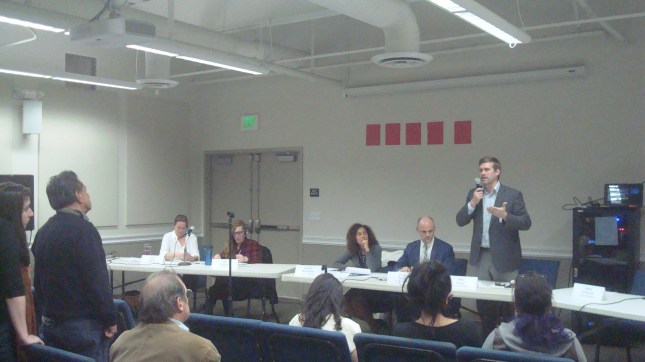
CDW Audience

Attendees at a community forum on the North Westlake Design District.

It’s clear that the people at City Hall think they know better than we do how our communities should grow. The latest example of their arrogance is the proposed North Westlake Design District (NWDD). It’s another attempt to put money in developers’ pockets by pushing for gentrification and displacement in low-income communities. Check out the language from the notice announcing a hearing held by the Department of City Planning (DCP) back in 2014.

“The proposed Design District is being considered to guide new development that will complement the existing character of the neighborhood, create a pedestrian friendly environment, and provide neighborhood-serving amenities. The proposed zoning ordinance is initiated by the City of Los Angeles.”

Pay attention to that last sentence, because it’s the key to what’s happening here. This “design district” is not something that the community asked for. It’s something City Hall wants. Are any of the area’s residents in favor? Local activists organized a community forum in January. I was there for about an hour, and I only heard one speaker who thought this was a good idea. Everybody else who spoke while I was there was against it. Why? Well, there were a lot of reasons, but it boils down to the fact that a lot of them are worried they’re going to get kicked out of their own community.

Why are they afraid that’s going to happen?

Because that’s what’s been happening in communities all over LA for well over a decade. As real estate investment interests have moved into places like Echo Park, Highland Park, Boyle Heights and Hollywood, low-income residents have been forced out by rising rental prices. Even units protected by the Rent Stabilization Ordinance (RSO) aren’t safe. In 2017 landlords took 1,824 RSO units off the market using the Ellis Act. Over 23,000 RSO units have been lost since 2001. So the residents of the Westlake area, including Historic Filipinotown, have good reason to be worried.

Real estate investors are already buying up property in the area. The City Planning Commission recently approved The Lake, a huge mixed-use project that includes a hotel and a 41 story residential tower, at Wilshire and Bonnie Brae. Other projects in the works are a 54-unit building at 1246 Court and a 243-unit mixed-use complex at 1800 Beverly. As investors move in, you can bet a lot of locals will be forced out.

The impacts are already being felt in the community. One of the speakers talked about how the office building he works in was recently purchased by a new owner, and the non-profit the speaker works for has already received an eviction notice. Another speaker complained that a project containing over 200 condos at Temple and Hoover will take away what little open space the neighborhood has.

CDW Glesne

City planning staff responds to community concerns.

There were a lot of unhappy people at the forum. Speaker after speaker came forward to talk about their concerns, and some weren’t shy about expressing their anger. Three representatives from the DCP attended, and they did their best to defend the design district. Personally I didn’t think their arguments were persuasive, but at least they showed up. The organizers of the forum invited Councilmember Mitch O’Farrell to come and hear what the community had to say, but he was a no-show. Didn’t even send a rep from his office. I guess that shows just how much he cares about the folks who live in the area.

We’ve seen this all before. The City pushes a plan that will create a “pedestrian friendly environment” and bring “neighborhood-serving amenities”. They talk about “walkable”, “vibrant” urban spaces, where people can shop, dine, drink and party. The only problem is, once the City’s done with its makeover of these areas, the people who get to enjoy them are the affluent newcomers who’ve taken the place over. Families who used to call the neighborhood home have to leave. They can’t afford to live there any more.

In response to the NWDD, a group called The Coalition to Defend Westlake has been formed. To view their Facebook page, click on the link below.

Coalition to Defend Westlake

CDW Line

People wait in line to have their say about the NWDD.

To Have and Have Not

Bilt Where Will

I was so bummed. I desperately wanted to go to UCLA’s 32nd Annual Land Use Law & Planning Conference. Unfortunately, the $535 registration fee was a little too pricey for me. But just the thrill of being close to all the movers and shakers who were attending the conference drew me to Downtown. Even though I couldn’t afford to go in I just stood on the sidewalk across from the Biltmore, gazing up at the windows where I knew the attendees were debating lots of heavy issues.

Bilt Angle

The conference brochure definitely made it sound cool. They had a bunch of high-powered attorneys and consultants on hand to talk about CEQA reform, the housing crisis, infrastructure and other important stuff. And beyond all those big, heavy issues, they even found time for a session entitled Community, Health, and Planning for Environmental Justice. I mean, okay, they kind of jammed that into a half hour slot along with about half a dozen other topics, but I’m sure they covered everything they needed to.

Unfortunately, my reverie was interrupted by a bunch of noisy protesters who were standing nearby, holding signs and chanting slogans. What were they complaining about? Well, they were angry because one of the speakers was Sacramento superstar Scott Wiener, the Senator from San Francisco. The protesters had a problem with a bill the Senator just introduced, SB 827, which takes zoning authority away from cities. Wiener says if we override local zoning to allow developers to build housing up to eight stories along transit corridors, we can solve both our housing problems and fight climate change. Doesn’t that sound great? According to Wiener, his bill will let developers build tons of new units so housing prices will definitely go down. And because the new units are close to transit, everybody will dump their car and jump on the train.

I wonder if anybody at the conference asked Wiener about a recent report from UCLA that shows transit ridership is way down in Southern California, even though local officials have been approving pretty much any crazy project developers propose as long as it’s near transit. If so, I really would’ve liked to hear his response. I’m sure Wiener had a ready answer for the cynics who point out that in New York housing is still outrageously expensive even though the city has been building tens of thousands of new units every year. And so what if cities like Vancouver and Toronto have thousands of units sitting empty while middle-income and low-income families struggle to pay the rent? Foreign investors need homes, too, although, okay, maybe they don’t always really need them.

Bilt Speaker

At lunch all the power players adjourned to the Gold Room, where they heard the keynote address from Richard Rothstein, author of The Color of Law: A Forgotten History of How Our Government Segregated America. Rothstein apparently talked about how federal, state, and local governments have implemented and upheld racist policies to create and maintain segregated communities since this country’s inception. Of course, he’s absolutely right. I wonder if he spoke about the fact that many of these policies were formed as a result of intense lobbying by development and real estate interests that wanted to protect their investments? Kind of like the development and real estate interests that are pouring money into Sacramento right now. It would’ve been nice to hear what he had to say about research from the Urban Displacement Project, which shows that current government policies promoting transit-oriented development have resulted in gentrification, pushing low-income people of color away from transit hubs in LA and the Bay Area.

Bilt Hand

Even though I was standing across the street, I could feel the soothing vibrations emanating from the collective wealth and wisdom gathered inside the Biltmore. So what if most of these people make six figures, live in single-family homes, and drive nice cars? So what if most of them rarely ride transit and never had to worry about getting evicted? They’ve got college degrees and lots of money and they go to a lot of conferences. They’re well qualified to tell the rest of us what to do about housing and transit.

But the protesters kept disrupting all the good vibes I was getting from the Biltmore. I guess some of them are facing eviction, or they’ve already been evicted, and they’re ticked off because they’re losing their homes. Yeah, okay, that’s a bummer. But they need to trust the folks inside the Bltmore. All we need to do is listen to people like Scott Wiener and let developers build tons of new housing around transit. Just because the median income for people living around rail lines in LA is mostly between $30,000 and $40,000 a year, and they could never afford the new units, which usually start around $2,000 a month, is no reason to keep the developers at bay. I’m sure at some point we’ll have such a housing glut that these new units will lose 50% of their value, and then the families that were kicked out could return to their neighborhoods.

So, okay, it could take decades. And yeah, it might never actually happen. But that’s no reason to rethink policies that are displacing the poor and destroying communities.

Is it?

Bilt No Nos


The Hollywood Rip-Off

DH SM 01 Tao Dream 2

The other day I picked up a copy of the LA Weekly and came across Besha Rodell’s review for Tao in Hollywood. Clueless loser that I am, I’d never heard of this popular mini-chain before, and had no idea it had been a huge success in New York and Las Vegas. Tao’s latest location is tucked into the just-opened Dream Hotel in Hollywood, and it seems to be doing big business. But Rodell wasn’t impressed. At all. You can read his review here.

Worse Than We Imagined from LA Weekly

Reading Rodell’s description of the decor’s garish excess and ridiculously inflated prices, I felt like his review could apply to a lot of what’s happening in Hollywood these days. The Dream Hotel and Tao just seem like the latest in City Hall’s efforts to wreck the community.

DH SM 10 Tao

Tao on Selma in Hollywood

Does that sound extreme? And does it sound strange to be railing against garish excess in Hollywood? Hasn’t that been Hollywood’s game all along? Certainly if you look at the movie industry’s output, from the lurid spectacles of the 20s to this summer’s CGI-fueled action flicks, you’ll find plenty of outrageous, vacuous entertainment. You could also point to the sumptuous nightclubs and decadent nightlife that flourished during the studio era, when gossip columns were filled with the shameless antics of movie stars.

But the studio era ended decades ago, and over the years the place called Hollywood has grown into something very different. For a long time now it’s been a low to middle-income community with a fairly dense mix of residential and commercial. The movie stars are long gone, but there are lots of hardworking people here, people who run small shops and family-owned restaurants. Would-be actors and actresses who knock themselves out waiting tables while trying to get auditions. Kids who walk to school on streets where they have to learn early to look out for themselves.

And these people are struggling harder than ever because the City seems to be doing everything it can to push them out of Hollywood. What these people need more than anything is housing they can afford, and instead the City keeps approving high-end mutli-family projects that most Hollywood residents could never hope to move into. Yes, some affordable units have been created in recent years, but the wave of evictions continues, and we’re still losing scores of rent-stabilized apartments.

And with all this going on, the City decides we need over a dozen new high-end hotels? With multiple bars? Rooftop decks? Live entertainment? In some cases right up against apartment buildings? Really?

The City has long said that one of the key components to its plan to revitalize Hollywood is to boost the night life, but how’s that working out? I like a drink as well as the next guy, but last time I counted there were 67 places that serve alcohol in Central Hollywood. It’s not hard to get a drink here. And still the City continues to approve new liquor permits, even though violent crime and property crimes have been rising steadily in the area since 2014. Are you wondering if there’s a connection? Actually there are years of research that show a strong connection between alcohol and crime. Check out this report from the Department of Justice if you’re skeptical.

Alcohol and Violent Crime

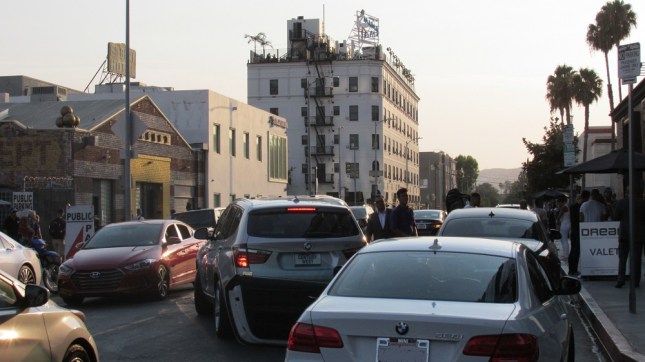
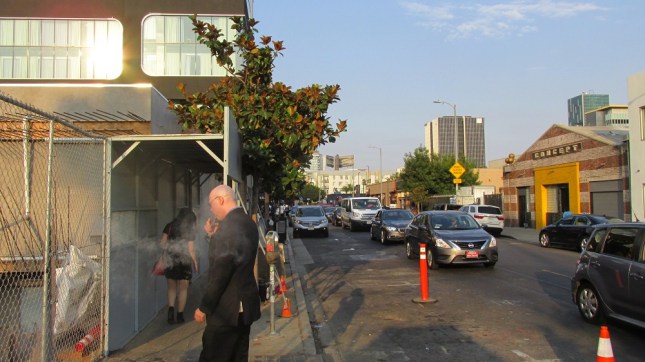
And then there’s the traffic. Every time the City approves one of these projects, planners insist it won’t have any significant impact on congestion because Hollywood is a transit hub. The hotel guests and the partiers won’t need to drive because they can ride the bus instead. Well, take a look at these photos I snapped in front of the Dream Hotel around seven o’clock on Saturday night.

DH SM 20 Cars Crowd

Cars lining up in front of the hotel.

DH SM 22 Guy Smoke

The line of cars continues west on Selma.

And now let’s take a look at traffic a half a block away on Cahuenga.

DH SM 50 Cah N

A shot of traffic on Cahuenga, facing Hollywood.

DH SM 52 Cah S

A shot of traffic on Cahuenga, facing Sunset.

Remember, this is not a weekday at rush hour. This is early evening on a Saturday. Somehow I don’t find the City’s claims about people taking transit to be completely credible.

It used to be the club scene in Hollywood was mostly concentrated on Cahuenga. But the City wants to change that. Selma used to be a fairly quiet street running through a largely residential neighborhood between Vine and Highland. There’s a senior center about a block and a half away from the Dream Hotel. And there’s an elementary school about two blocks away in the other direction. But the City doesn’t seem too concerned about the elderly or the children living in the neighborhood. Our elected officials are going to turn Selma into a party corridor. A few years back Mama Shelter opened up, now the Dream, and the City Planning Commission (CPC) recently approved the tommie, an eight-story hotel featuring 2 bars, a rooftop deck, and live entertainment. It didn’t bother the CPC at all that Selma Elementary is less than 500 feet away from this latest project.

And you haven’t even heard the best part. Just blocks away, a developer is planning to build the massive Crossroads Hollywood project, and they’re asking for a master alcohol permit to allow 22 establishments to serve alcohol. You read that right. Twenty two. And not only is Crossroads Hollywood in close proximity to Selma Elementary, it’s right across the street from Hollywood High School.

DH SM 70 Front

The front of the Dream Hotel.

This is the City’s idea of revitalizing Hollywood. We need low-cost housing. They give us high-end hotels. We need relief from violent crime. They keep pouring on the alcohol. Meanwhile traffic is worse than ever, transit ridership continues to decline, and the number of homeless keeps growing.

City Hall keeps saying they’re trying to bring Hollywood back to life. Why does it feel like they’re trying to kill it?

DH SM 90 Motorcycle

Skyscrapers Keep Rising in Downtown, and So Does Crime

DSC06826

There were a couple of articles in the Downtown News that caught my eye this week. The first was a piece about a 67-story residential tower that’s been proposed for a parcel near Figueroa and Seventh. Developers are falling all over themselves in the rush to build high-end high-rises in the area, and City Hall has been bending over backwards to help them along. The article also mentions a few other skyscrapers that are currently in the pipeline, as the the Downtown development juggeraut keeps rolling along. While it’s conceivable that a few affordable apartments will be tacked on to some of these projects in the course of the bargaining process, the vast majority of these new units will be far beyond the reach of the average Angeleno. Here’s the article if you want to take a look.

Brookfield to Build 64-Story Condo Tower

The other article was about the sharp increase in crime Downtown. For those of you who haven’t been following this issue, crime has increased in many of LA’s neighborhoods in recent years, and Downtown is one of the areas hardest hit. Violent crime in the LAPD’s Central Division is up 8.3% through June 3 compared with the same period in 2015. This includes a 15.7% increase in aggravated assault. Property crimes are up 14%, with a 64% rise in burglaries and thefts from vehicles.

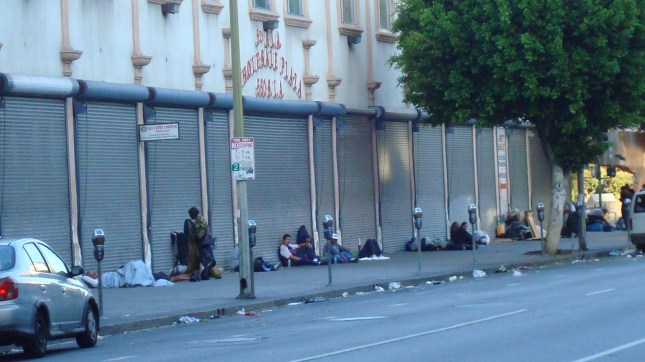
The article acknowledges that rising crime is at least in part due to the fact that the area is seeing an influx of well-to-do residents at the same time that the homeless population continues to rise. In Downtown these days the gap between cozy affluence and desperate poverty is glaringly, disturbingly obvious. As City Hall continues to approve one gleaming skyscraper after another, and takes every opportunity to advertise the booming Downtown scene, its efforts to deal with the growing homeless population are still outrageously inadequate.

It’s not just the current crowd at City Hall that’s to blame for LA’s ongoing homeless crisis. For decades our elected officials have preferred to ignore the problem rather than take steps to address it. Fifty years ago the City’s approach was to try to herd the unsheltered population into Skid Row and keep them contained there. In recent years our elected officials tried more aggressive tactics, confiscating the belongings of people living on the streets and criminalizing homelessness. City Hall only backed off on this approach after losing a series of legal challenges to these practices. And in the meantime, homelessness continued to rise.

Last year it seems the Mayor and City Council finally realized how serious the situation was and how bad it was making them look. There’s been a lot of fanfare about the passage of both Measure H and Measure HHH, which will build permanent supportive housing (PSH) and provide services to treat those with mental health and addiction problems. Certainly this is an important first step, but it’s only a first step. It’ll take years to put the housing and services in place, and it’s hard to say how many units will actually be created. Meanwhile, the 2017 homeless count shows that the population increased from last year’s record high of 28,464 to a new record high of 34,189. A staggering 20% jump.

It’s great that H and HHH passed, but this is far too little, far too late. And still City Hall continues to approve endless luxury high-rises, luring more upscale residents to Downtown. They say they’re concerned about rising crime in the area, but adding more police and encouraging the formation of neighborhood watch groups isn’t going to solve the problem.

City Hall needs to start doing some planning. It needs to step back from the mad rush to build luxury skyscrapers, and start thinking seriously about how to reduce homelessness in Downtown. By now it should be obvious that the “Build, Baby, Build” approach isn’t working. Filling the urban core with high-rises for the rich while people wallow in abject poverty on the streets below has created an unsafe environment for residents and stretched the LAPD’s resources dangerously thin. The Mayor and the City Council need to accept the fact that this strategy is seriously flawed, and scale back further construction until they’ve found a way to create a safer, more equitable environment for EVERYONE who lives Downtown.

You can access the article on rising crime by clicking on the link below. I should point out that the link will take you to an on-line tabloid version of the Downtown News, and you’ll have to flip forward to page 10.
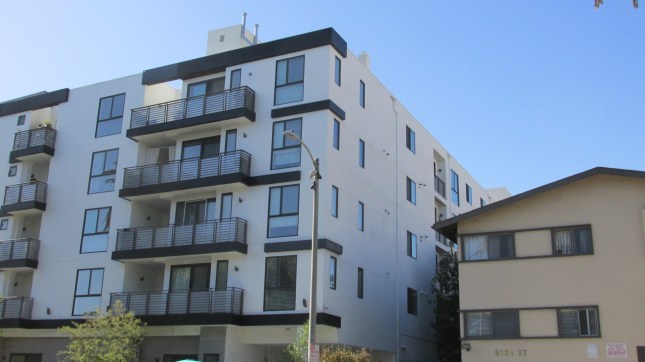
Is Downtown LA Getting More Dangerous?

010

A Breath of Fresh Exhaust

Breath 01

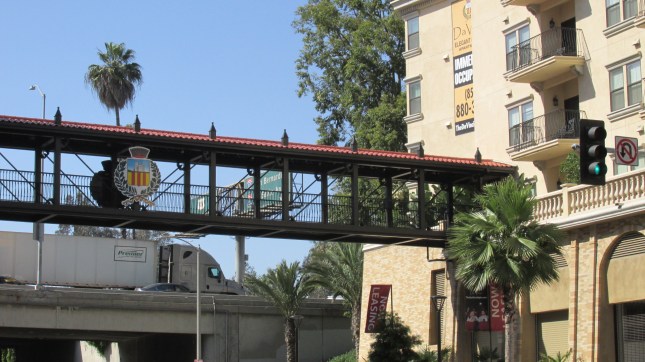
The balconies at the Da Vinci offer a view of the Hollywood Freeway.

A while ago I wrote a post about a project going up in my neighborhood. The site was less than 200 feet from the Hollywood Freeway, and the developer was capping it with rooftop decks. In light of the extensive research showing elevated health risks for people living near freeways, this seemed absolutely insane. But after a few phone calls and e-mails I confirmed that both the Department of City Planning (DCP) and the Department of Building & Safety (DBS) had signed off on it. And while I don’t have much respect for the the folks at City Hall these days, this seemed like a new low. I felt like they’d really crossed a line.

I was so wrong. The City crossed that line a long time ago. Turns out they’ve been routinely approving new residential projects near freeways that include rooftop decks and/or balconies. In spite of years of research that has shown strong links between exposure to freeway traffic and increased health risks, especially for children, the DCP and the DBS have okayed a number of projects near freeways that offer these amenities.

For over 20 years, USC has been gathering data on health impacts related to living near freeways. By the early years of the last decade, they were warning that residents in these areas faced significantly higher risk of asmtha, heart attacks and lung cancer, and that children were at risk of suffering permanent lung damage. In 2005 the California Air Resources Board published a handbook that specifically warned against residential construction within 500 feet of freeways. The City of LA, however, argues that the need for new housing outweighs the health risks.

But even if you buy that argument, how can you justify approving amenities that put people in direct contact with some of the most toxic air in the nation? Balconies and rooftop decks are not necessary. And in fact, when they’re placed on residential structures less than 500 feet from a freeway, this clearly fits the definition of a hazardous building as outlined by the LA Municipal Code:

Whenever a building or structure, used or intended to be used for dwelling purposes, because of dilapidation, decay, damage or faulty construction or arrangement, or otherwise, is insanitary or unfit for human habitation or is in a condition that is likely to cause sickness or disease, when so determined by the health officer, or is likely to work injury to the health, safety or general welfare of those living within.  [Emphasis mine.]

So allowing these features creates buildings that the City’s own Municipal Code defines as hazardous. Does that stop the City from approving them? Of course not.

The City does require that new buildings provide a certain amount of open space, and certainly developers will tell you that rooftop decks and balconies are one way of fulfilling that requirement in dense urban areas. But let’s look at a couple of the objectives listed for open space in the City’s General Plan….

2) to provide safer play areas for children

4) to increase natural light and ventilation

Can anybody argue that a balcony placed a couple hundred feet from a dense concentration of nitrogen oxide, CO2 and particulate emissions fulfills these objectives?

Sure, there are a number of apartment buildings near freeways with balconies and/or rooftop decks that were constructed long before the health risks became clear. But City Hall has known about the dangers since at least 2005. Let’s take a look at some of the residential projects they’ve approved over the last ten years or so….

Here’s Patio del Cielo at 4410 Sepulveda in Sherman Oaks. You could translate “cielo” as either “sky” or “heaven”, but obviously the implication is you’ll be living somewhere far removed from the hustle and bustle of the city. Not too far removed from the San Diego Freeway, though, which is just about 200 feet away.

Breath 10

Traffic lining up for the freeway in front of Patio del Cielo.

Breath 12

Rush hour traffic on the San Diego Freeway.

The balconies/decks that adorn these homes along 2775 Cahuenga are between 100 and 300 feet from the traffic on the Hollywood Freeway. And since this housing complex is right on Cahuenga Blvd., from June through September residents can enjoy the spectacle of thousands of cars inching their way past during Hollywood Bowl season.

Breath 20

Balconies at the front of 2775 Cahuenga.

Breath 22

Traffic on the Hollywood Freeway near 2775 Cahuenga.

The Carlton, at 5845 Carlton Way, has both balconies and rooftop decks. I bet you get a stunning view of the Hollywood Freeway from the roof. It’s just about 200 feet away.

Breath 30

The Carlton is the white building on the left.

Breath 32

A view of the rooftop from the rear of The Carlton.

Breath 34

A view of rush hour traffic near The Carlton.

But first prize for really bad planning goes to the Da Vinci, at 909 W. Temple. Developer Geoff Palmer has made a fortune building massive residential complexes near freeways, but this may be his masterpiece. The Da Vinci sits right where the Hollywood and the Harbor Freeways meet. And just like every other Palmer apartment block I’ve seen Downtown, the developer has made sure that residents can get their fill of diesel fumes and particulate emissions simply by stepping out onto their private balcony.

Breath 40

Would you say those balconies are 100 feet away from the freeway?

Breath 45

Traffic on the freeway north of the Da Vinci.

You could argue that a number of Palmer’s buildings went up before the adverse impacts of living near freeways were fully known. But City Hall approved the Da Vinci years after our elected officials had learned about the dangers. Again, they’ll tell you that we can’t afford not to build near freeways. But giving people balconies so they can get a face full of auto exhaust? How do you justify that?

I’ve suggested before that people write to the Mayor if they feel this needs to stop. Obviously, it hasn’t had much impact. But I’d like to suggest something a little different this time. How about writing to the Mayor and copying your congressional rep? Maybe if City Hall heard from someone at the federal level they’d think twice before approving hazardous amenities on apartments next to freeways.

Try using the following subject line….

Why Does the City of LA Keep Putting Residents’ Health at Risk?

Here’s Garcetti’s e-mail address.

mayor.garcetti@lacity.org

And if you don’t know who represents you in Congress, use the link below to find out.

http://www.house.gov/representatives/find/

LA’s Latest Innovation: Freeway-Adjacent Rooftop Decks

RD Ovrcast

You just never know what the City of LA will come up with next….

There was an empty lot in my neighborhood that had been sitting vacant for years.  After a developer pitched a hotel for the site and got turned down, a new project came along consisting of 18 3-story condos.  It seemed like a good fit, the Hollywood Hills West Neighborhood Council (HHWNC) looked it over and gave it a thumbs up, and construction started last year.

Everything seemed okay until last November when I noticed what looked like a railing going up around the perimeter of the roof.  Were they adding rooftop decks?  That wasn’t mentioned in the hearing notice for the project or the environmental assessment, and it wasn’t part of the project approved by the HHWNC.  Not long after the railing went up, it became clear that the construction crew had added staircases leading to the roof, and soon they were building stairwell coverings.

Why was I concerned?  Well, here in Hollywood people like to give parties.  Nothing wrong with parties in general, but sometimes they get pretty noisy, and sometimes they go on really late.  It’s already an issue in the neighborhood, and building 18 individual rooftop decks seemed like it was just increasing the chances of someone throwing an all-night open-air bash.

So initially my concern was selfish.  I was worried about the noise this project might create, and I was wondering why the rooftop decks hadn’t been included in the package that was presented to the community and approved by the Department of City Planning (DCP).  I called up my City Council office, and talked to a very nice guy who said he’d look into it.  Over the next two months I sent three e-mails to this Council Office staffer asking for an update.  Never got an answer.

But during that time it occurred to me that there might be another problem with this project, a much more serious issue than raucous late night parties….

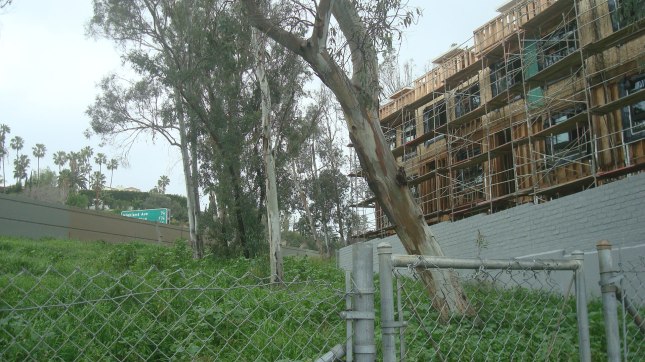
You see, these condos are going up right next to the Hollywood Freeway.  I’d say at the farthest point the structure is about 150 feet from the freeway and at the nearest point about 50.   I started wondering if building so close to a major traffic corridor wouldn’t pose health risks for the future occupants, so I got on the net to do some research.

RD Fwy

The space between the project site and the freeway.

Probably everybody reading this already knows what I found out.  There’s a large body of research showing a higher incidence of respiratory problems among people who live near freeways.  The risk is especially high for children and seniors.  In fact, young people can suffer lifelong damage since ongoing exposure to pollutants from auto exhaust may affect the development of their lungs.  This problem has gotten a lot of media attention recently, but the information has been out there for years.  USC has been studying the effects of air pollution on children since the 90s.  Here’s an article published by USC News back in 2004.

USC Study Links Smoggy Air to Lung Damage in Children, September 2004

Not long after, the California Air Resources Board (CARB) published their Air Quality and Land Use Handbook, warning cities about the risks of building housing near freeways.  Here’s the number one item on the handbook’s list of recommendations.

“Avoid siting new sensitive land uses within 500 feet of a freeway, urban roads with 100,000 vehicles/day, or rural roads with 50,000 vehicles/day.”

So the information has been out there for more than a decade, and the City Council is well aware of the health impacts to people living close to freeways.  They’ve talked about ways to deal with the risks, but very little has happened in the way of concrete action.  In fact, in recent years the Council has approved thousands of residential units in close proximity to freeways.  They argue that LA’s housing shortage is so dire we can’t afford to prohibit construction in these areas even if there are health risks.  Even though I don’t buy that argument, I know that many people would agree.

But rooftop decks?!  Are they crazy?!

After reading up on the potential health risks, the idea of adding rooftop decks to these condos seemed so absolutely insane I thought it was worth making a few phone calls.  I rang up the woman at the DCP who prepared the initial study for the project.  I explained that the rooftop decks hadn’t been included in the project description or the renderings that were shown to the HHWNC, and that the height had increased by 30%.  She said that the project complied with existing zoning and that the Department of Building and Safety (LADBS) had the final authority over what was permitted.  I asked how the DCP could allow this since noise impacts from rooftop decks weren’t considered in the environmental assessment.  She replied that the DCP had considered operational impacts from the project and had approved the assessment.  Finally, I pointed out that the rooftop decks posed significant potential health risks to the future tenants.  Her response was that the California Environmental Quality Act (CEQA) did not require the DCP to consider impacts to those who would live on the site in the future.

I was angry, but not really surprised.  I’ve realized over the last few years that the folks at the DCP really don’t care about how proposed projects will affect the lives of the people who live in this city.  It’s all about keeping the developers happy.

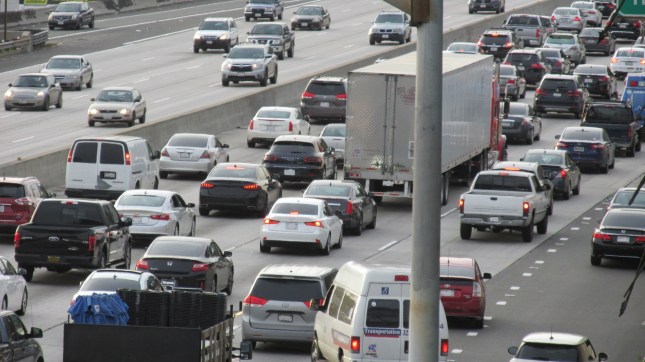
RD Traffic EDITED

Traffic on the Hollywood Freeway near the project site.

Who knows why I even went on to contact LADBS.  I guess I must get some kind of sick kick out of banging my head against a wall.  Anyway, here’s their response.


The roof top decks and the overall building height of 44.9 feet is allowed by right, therefore LADBS does have the ability to approve the project as proposed.  The Zoning Variance reviewed by City Planning only addressed a parking requirement.  City Planning has approved the plans for the current project.

LADBS’ authority to approve projects is based on Building Code requirements.  The Building Code does not have any restrictions for a rooftop deck near a freeway.


So according to LADBS, they did everything by the book.  They don’t see a problem.

But there is a problem here.  It’s bad enough that a developer is allowed to present one project to the community and then build something substantially different.  But it’s even worse when a developer is allowed to create a clear health risk for the people who will live in the finished building.

I tried arguing with the bureaucrats who approve these projects and got nowhere.  Maybe it’s time to take it to the higher-ups.  If you feel there’s a problem here that needs to be addressed, I hope you’ll feel strongly enough about it to write an e-mail to the three people listed below.  And please use the following subject line….
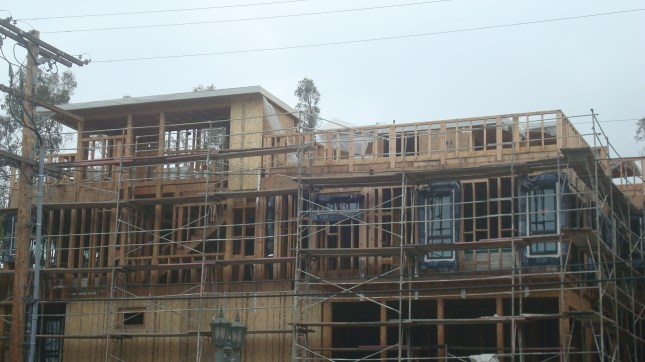
Freeway-Adjacent Rooftop Decks at 2111 Cahuenga

Eric Garcetti, Mayor

mayor.garcetti@lacity.org

Vince Bertoni, Director of City Planning

vince.bertoni@lacity.org

Frank M. Bush, LADBS General Manager

frank.bush@lacity.org

RD Tight


Traffic-Oriented Development

traffic-hlwd-video-1

For over a decade people at City Hall have been talking about transit-oriented development (TOD). In theory, if we create high-density residential and commercial developments near transit centers, people will be encouraged to take busses and trains instead of driving their cars. Makes sense, right? So for years the City has been telling us we have to build up instead of out, that we need to go vertical instead of horizontal. And they’ve approved a slew of high-rises, all the while insisting that this will get people out of cars and onto transit.

Before I go any further, I’d like you to watch a video. It lasts about twelve minutes, and it was shot during rush hour not too far from Hollywood and Vine.

I hope the video makes my point clear.* The City keeps approving high-rises, and when communities complain that congestion will get worse, planners and politicians invariably say that the people who live and/or work in these buildings will surely take transit. But they’ve been saying that for over a decade now, and it ain’t working. The MTA station at Hollywood and Vine is a hub for a number of bus lines, as well as the subway. But these people are all driving right past it.

I’m not against TOD, but to make it work, you’ve got to do some planning. Instead of creating a well thought out framework for all this development, the City keeps dumping project after project in the Hollywood area. Mayor Garcetti will tell you that the City did produce the Hollywood Community Plan Update (HCPU), and residents sued to overturn it. That’s true. Among the HCPU’s many shortcomings, the population figure it was based on was inflated by about 10%, in spite of the fact that US Census numbers were readily available. The judge who threw the plan out called it “fatally flawed”.

To give you an idea of how little City Hall cares about planning, let’s go back to those two buildings in the video. The residential high-rise on the southwest corner is just getting started, and the hotel on the northeast corner isn’t quite finished. But look at how bad traffic is already, long before these projects are completed. Unbelievably, the City is considering approval of a third high-rise at the very same intersection. How clueless can you get?!

As I said in the video, I don’t own a car and depend on transit to get around. I support planning to encourage transit use. But TOD isn’t working in LA. Why? I think primarily it’s because that’s not really what the City is building. If our elected officials were really interested in building TOD, they’d be pushing high-density housing made up mostly of affordable units. But instead, the City has been encouraging developers to build high-priced housing by offering them generous entitlements.

I got on the Department of City Planning web site and took a look at multi-family projects in Hollywood and North Hollywood that have been built near Red Line stations since the subway was completed. The Lofts and The Gallery at Noho Commons combined contain 724 units. Eastown, when the second phase is completed, will have over 1,000. The Jefferson has 270, and is the only one that offers any affordable housing, 27 units. So out of about 2,000 apartments, only 27 are accessible to people in lower income brackets. And if you’re not one of the lucky few to snag one of low cost units, you can expect to spend at least $2,000 a month for a one bedroom. Let’s not even talk about what it might cost to live at The Vermont, which sits just across from the Vermont/Wilshire station. And call it a hunch, but I don’t think the massive Wilshire Grand Tower, which is rising up next to the 7th/Figueroa station, will be offering any affordable units at all.

According to a story published by the LA Times earlier this year (Measuring Income along LA’s Metro Stations, March 4, 2016), the median income in almost all communities served by the Red Line is well below the County median of $55,870, ranging roughly from $22,000 to $46,000 a year. (Universal City is the lone exception, with residents there making well above the County median.) For the people in the lowest income bracket, renting an apartment at the newer “TOD” buildings would consume pretty much all their earnings, and even at the higher end of the scale it would mean spending over half what they make in a year. The City says these high-density projects encourage transit use, but most transit riders couldn’t afford to live in them.

Could this be one of the reasons that transit ridership is lower now than it was back in 1985? There may be many reasons for the decline, but you’ve got to wonder why the MTA is serving fewer people than it did three decades ago. The drop in ridership is even more disturbing when you realize that the population of LA County (the area served by the MTA) has grown by over a million since 1985. Does anyone see a problem here? City Hall has been telling us for years that their policies will get people off the road and onto transit. Instead, we’ve seen a net loss in transit ridership since the eighties, in spite of the fact that the population has continued to climb. And the traffic that used to just clog the main thoroughfares is now spilling over onto side streets.

The City’s claim that they’re promoting transit-oriented density is bogus. What they’re really doing is allowing developers who spend a fortune lobbying City Hall to cash in on projects that don’t serve the majority of Angelenos. They’re backing projects geared towards the affluent, which is what developers want because that’s where the highest profits are. Meanwhile lines of cars sit on our streets and freeways at rush hour, burning fossil fuels and spewing greenhouse gasses into the atmosphere.

You call this transit-oriented development? I call it a disgusting sham.

————————————————–

*
Just in case you’re thinking traffic is bad because it’s a Hollywood Bowl night, it’s not. The video was shot on Tuesday, October 25. Nothing was on the schedule that evening. But I can tell you the back-up on these streets can get way worse when something is happening at the Bowl.

traffic-hlwd-video-2

Tenants Take a Stand

ya-address

There’s been a noticeable shift in City Hall’s public stance on evictions recently. A couple years ago, the Mayor and the City Council weren’t saying much, and certainly weren’t doing much, about the wave of displacement that was sweeping across LA. Ellis Act evictions had been rising steadily, thousands of tenants had been forced out of rent-stabilized apartments, and City Hall’s reaction was pretty much, “Who cares?”

But now that the issue is getting media attention and our elected officials are taking some serious heat for their inaction, the change in attitude at City Hall is noticeable. Mayor Garcetti has unveiled the Home for Renters campaign, designed to inform tenants of their rights. The Housing & Community Investment Department (HCIDLA) web site is offering booklets renters can download in English and Spanish to learn about how the law protects them. There’s also been an accompanying media blitz to get the word out. I have to wonder if City Hall’s sudden concern for LA’s renters will last beyond next year’s election, but right now you can tell the politicians are nervous.

One of the most striking examples of this turnaround can be found in the story of a group of tenants living in the apartment building at the corner of Yucca and Argyle in Hollywood. The building is home to 44 households, including singles, couples, families with children, seniors and veterans. It’s subject to LA’s Rent Stabilization Ordinance (RSO), which means that rents can only go up about 3% every year. A while ago they got word that the building was going to be sold to Champion Real Estate, a developer that had plans to build a luxury high-rise on the site. It seemed like it would just be a matter of time before the new owner started handing out eviction notices.

ya-yucca

But that hasn’t happened. Yet. And a large part of it has to do with the fact that the tenants decided they weren’t going to let themselves be pushed around. They connected with the LA Tenants Union (LATU), which helped them organize the Yucca Argyle Tenants Association (YATA). They spoke out. They took part in public actions. They got support from their neighborhood council. They let the world know they weren’t going without a fight.

In fact they made so much noise that the developer stepped forward with pretty unusual offer. I asked Sasha Ali, of YATA, for an update, and here’s her response.

The developer recently stated at the Hollywood United Neighborhood Council’s Planning and Land Use Management meeting that he is willing to offer affected tenants the right of return to the proposed development at their existing terms of rent. He also offered to relocate returning tenants in Hollywood during construction and subsidize their rent.

When you think about the fact that many tenants evicted under the Ellis Act have to fight to get the payments that the law requires, this is pretty impressive. It’s a sign that the media attention about displacement is having an impact. Remember, this is happening in Councilmember Mitch O’Farrell’s district, and O’Farrell has been getting a lot of heat about widespread evictions happening on his watch. Could he have asked Champion to make some concessions in order to cool things down? Well, O’Farrell is up for re-election next year.

There’s no way of saying for sure what will happen next. Sasha said that at this point, eviction notices have not been served, and in fact Champion hasn’t actually bought the building yet. The tenants have retained a lawyer to help them negotiate with the developer.

I’m glad that the tenants at Yucca and Argyle are demanding a fair deal, and I wish them the best. But the dynamics that have created this situation are still wreaking havoc across LA. The eviction juggernaut is being driven by the huge profits developers can reap by buying an existing building, knocking it down, and putting up something much larger. This usually works pretty smoothly, because the City Council is mostly willing to grant whatever entitlements the developer asks for. Want a zone change? Sure! Boost the floor area ratio? No problem! Reduce setbacks to zero? Hell, yeah! Developers feel pretty confident they can make a bundle on these projects because they know all they have to do is hand a wish list to someone like O’Farrell, and he’ll do everything he can to make their wishes come true.

ya-front-hotel

The City Council has no legal authority to stop Ellis Act evictions, but they need to stop incentivizing the practice. They need to stop handing developers massive profits by approving endless entitlements. If you want to talk about building higher density, fine. Let’s create community plans that will allow the City to increase density in an orderly way. Let’s revise our zoning so that developers can work within a consistent framework. (And I’m not talking about wasting time on a worthless sham like re:code LA.) And then let’s make the City Council abide by those plans, instead of making exceptions for every project that comes their way.

Hopefully things will turn out okay for the folks at Yucca and Argyle. But we need to stop the practices that create these situations in the first place. The City Council needs to stop handing out favors and start doing some planning.

ya-destruct

Let’s Do Some Planning

Planning Graphic

A friend recently sent me a link to an article from The Planning Report where Bill Witte, CEO and Chairman of Related California, talks about the toxic development debate in California. He focusses mostly on LA, and discusses the factors that drove activists to put Build Better LA and the Neighborhood Integrity Initiative on upcoming ballots. I have to say it was really refreshing to hear a developer talk honestly about why the situation has gotten so bad, and to offer a plausible solution.

What does Witte recommend? That we actually do some planning. And he’s not talking about blueprints drawn up in a backroom by politicians and lobbyists. Witte urges developers to engage with communities in order to create a realistic framework that will allow us to build for the future. And he also asks for leadership from City Hall that will make this happen.

Really, this is the only way to break the current stalemate. People all over LA are furious because they feel they’ve lost control of their communities. Developers are constantly asking for zone changes and general plan amendments, and City Hall hands these out freely. When people complain, our elected officials often adopt a condescending tone and insist that they have to grant entitlements to encourage growth. They also tend to characterize anyone who objects as an anti-development NIMBY. City Hall tells us they’re acting in our best interests, but affordable housing is disappearing, the number of homeless keeps growing, traffic is steadily getting worse, air quality is declining, crime is on the rise, and our water resources are drying up.

But if our elected officials made a serious attempt to bring developers and communities together to plan for the future, we could make some real progress in addressing these problems. It wouldn’t be easy. Witte says flat out that developers would have to make concessions. Community stakeholders would also have to give some ground. But the end result would offer huge rewards for both sides. Residents would finally feel like they had some control over how their community was going to grow. Developers would know exactly what the plan allowed and could build their projects without going through endless meetings and without facing court challenges.
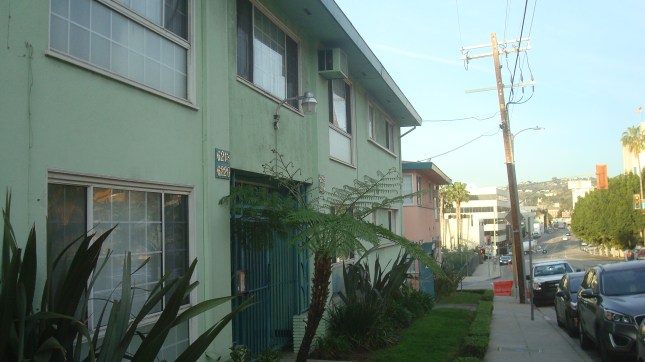
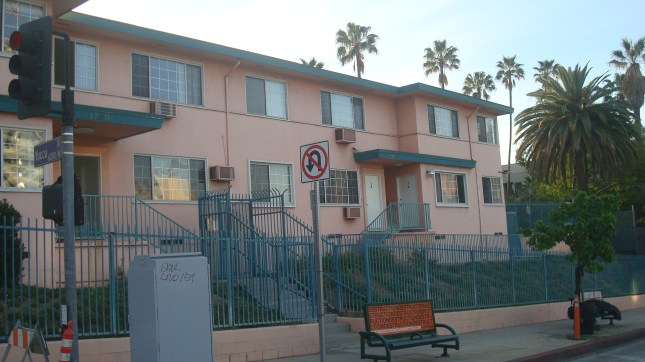
Could this really happen? It’s probably a long shot. Developers would be reluctant to give up potential profits. No doubt some communities would be averse to making any significant concessions. And while City Hall is good at staging dog and pony shows, they’ve shown zero interest in seeking meaningful input from LA’s communities. In fact, in recent years they seem to be doing everything they can to shut the public out.

Still, it would be great if we could all get together and do some planning. It’s really the only way out of this mess.

Here’s the link to Witte’s comments. They’re worth a read.

Related’s Witte Tells Developers to Engage in Planning from The Planning Report