
To Prevent More Crises Like Garden Grove, California Needs to Stop Gutting Environmental Laws

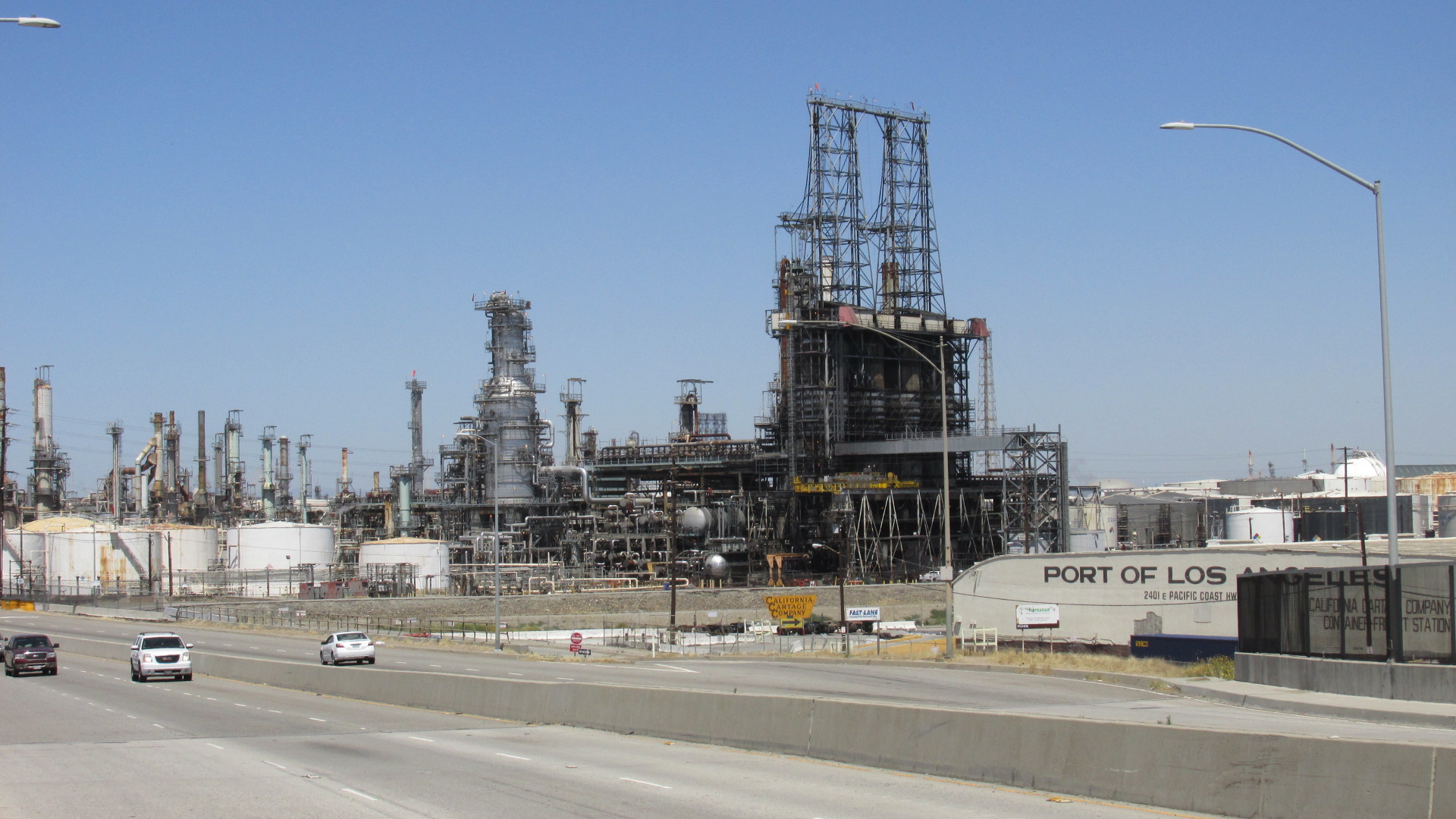
Marathon Oil Refinery in Wilmington where a fire broke out in 2020. While no one was injured, it took over a day to put out the fire.

Over the past decade, it’s become popular to bash the California Environmental Quality Act (CEQA). First it was claimed that CEQA was a major reason for the lack of affordable housing in California, but a study by the Rose Foundation found that only 2% of approved projects faced CEQA lawsuits. Then lawmakers in Sacramento began claiming that CEQA was holding back all kinds of projects, not just housing. The result was State Senator Scott Wiener’s SB 131, which made a vaguely defined category of “advanced manufacturing projects” exempt from environmental review. As I wrote earlier, this category could include a number of projects that produce toxic waste, including the production of organic fertilizer, semiconductors and lithium ion batteries. There was heavy opposition to this bill from environmental groups, but Gov. Gavin Newsom strongarmed the legislature into approving it.

Now the California Chamber of Commerce has proposed a ballot measure that would substantially rewrite CEQA, making major changes to accelerate the approval of “essential” projects. The measure is called the Building an Affordable California Act (BACA), and they’ve already gathered enough signatures to put it on the November 2026 ballot. As you may have guessed by the title, the Chamber is arguing that CEQA makes the approval of projects too time-consuming and costly, and that Californians are paying more for housing, water and electricity as a result. While the Chamber’s web site features commentary by CEO Jennifer Barrera citing six projects that have been delayed by CEQA, I couldn’t find any actual research or data on their site to support their assertion that CEQA has played a significant role in raising the cost of living for Californians. The Chamber makes a point of saying that BACA would still leave Federal environmental laws in place, but they don’t mention that the Trump administration has been aggressively pushing to roll back enforcement of those laws and to rewrite environmental regulations. And while the Chamber makes unsubstantiated claims about higher costs for housing and utilities, they don’t talk about the huge cost of cleaning up toxic sites. Some readers may remember the Stringfellow Acid Pits, a toxic waste dump that leaked contaminants into the surrounding communities. Tens of millions of your tax dollars have already gone into cleaning up this site, and the job isn’t over.

An analysis on Legal Planet says that BACA would create a new CEQA process for “essential” projects, laying out shorter timeframes for environmental review. It could also limit the kind of environmental impacts that the project applicant would be required to analyze. Legal Planet’s post gives a list of projects that would likely qualify for streamlined review under BACA, including freeways, dams, and possibly data centers. And since the Chamber talks about speeding up energy projects, my guess is that nuclear reactors would also probably qualify for the shorter review process.

But all these people who keep telling us how bad CEQA is don’t often talk about the good things CEQA does. A community in Fontana filed a CEQA lawsuit over the approval of a logistics center that would have brought a huge increase in diesel truck traffic and made the area’s poor air quality even worse. They achieved a settlement requiring the project proponent to take concrete steps to reduce air pollution. In 2018 the City of Arvin approved a permit allowing an oil company to drill four wells in a residential community. Residents filed a CEQA lawsuit and stopped the drilling. Think for a moment about how you’d react if a company wanted to build a large logistics center or start drilling oil wells in your neighborhood. Would you consider filing a lawsuit to protect the environment you live in?
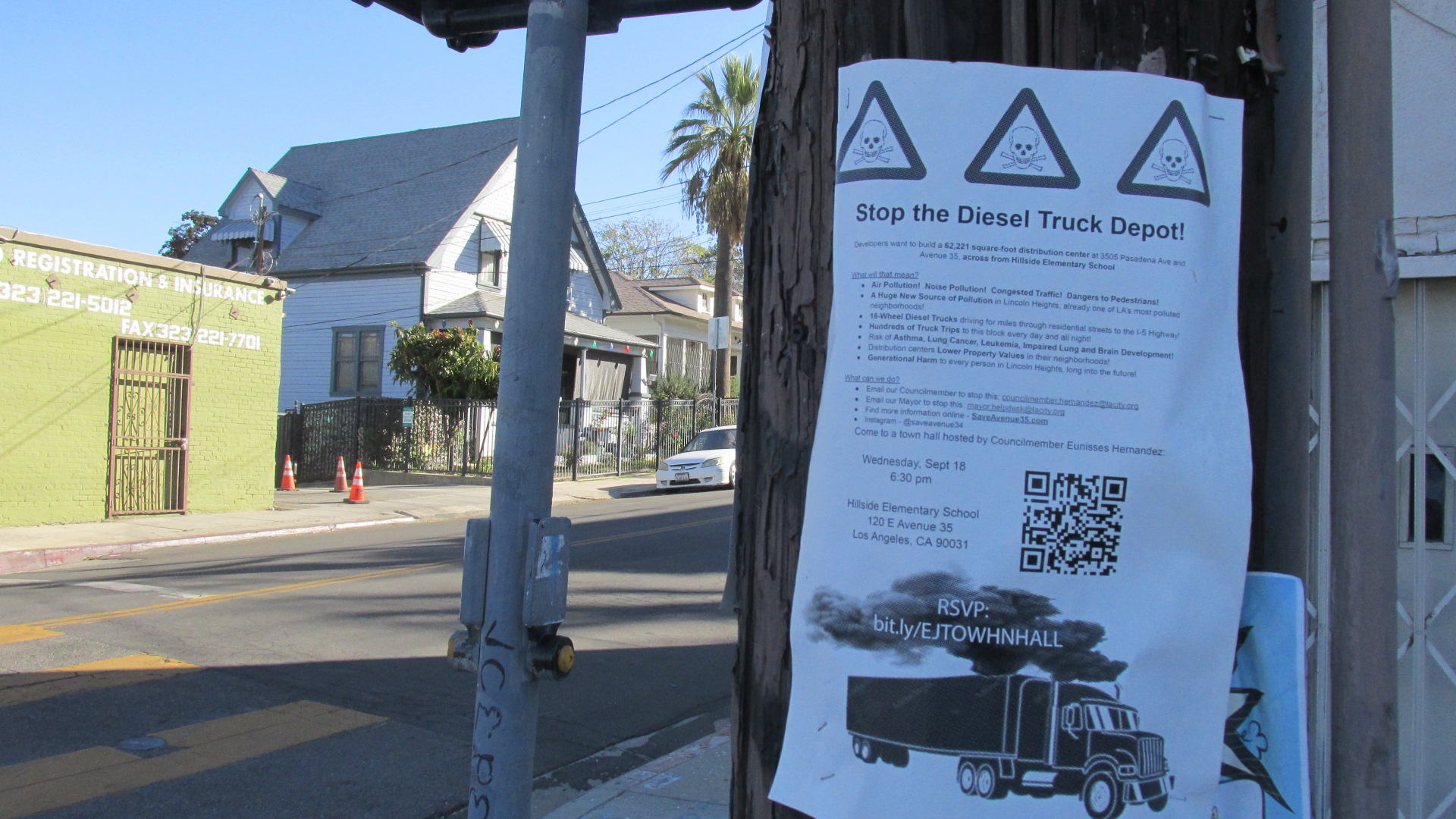
Residents have been fighting to stop a proposed 56,000 sq. ft. distribution center which would sit within 300 feet of Hillside Elementary in Lincoln Heights.

Now the crisis at the GKN Aerospace facility in Garden Grove has brought new attention to how environmental hazards can impact nearby communities. When the temperature of a chemical storage tank began to rise unexpectedly, fears that the tank might explode led to the evacuation of an estimated 50,000 people in the area. While a catastrophe was averted, it was a stark reminder of the dangers that can arise from planning decisions that put residential buildings near industrial uses. In a story related to the GKN Aerospace situation, the Daily News reported that nearly two million Californians live within a three-mile radius of a facility that uses the same chemical that caused the crisis in Garden Grove. The LA Times also followed up with a story examining the risks involved in rolling back environmental regulations. In that story, the authors reminded readers of other recent events: the damage done to surrounding communities by lead contaminants from the Exide battery plant in Vernon; the risks to students at Jordan High School due to toxic waste from S&W Atlas Iron & Metal in Watts; the rupture of an oil line in East LA that sent over 2,000 gallons of crude into the LA River; the recent fire at tire recycling center in South Gate. The Times story also points out that the push to build more housing quickly has led to the approval of projects in areas at high risk of fire.

The point here is that while Gavin Newsom and Scott Wiener and the folks at the California Chamber go around bashing CEQA, they don’t talk about the risks we face when we cut corners on environmental review. And, as the situation in Garden Grove showed, there are very real risks to public health and safety when we don’t properly examine a project’s impacts on communities. Aside from a frightening crisis like a chemical tank overheating to the point where it could explode, there are less dramatic but still very real threats to the air we breathe and the water we drink. If we don’t examine potential problems when we build chemical plants, or data centers, or logistics hubs, we will end up creating more risks to our health and safety.

Fortunately, people are pushing back against the California Chamber’s efforts to undermine CEQA. Led by the Planning & Conservation League, scores of public health and environmental groups have come together to fight BACA. They’ve created a web site where you can learn about their efforts and find out how to join if you want to get involved.

Bottom line, CEQA is about giving people a voice about what gets built in their community. It gives you a chance to inform yourself about a project’s impacts, and to speak about your concerns. Elected officials like Scott Wiener and Gavin Newsom have been working hard to take power away from communities and to give it to corporations. The California Chamber’s measure is another aggressive attempt to silence Californians who care about their communities.

We can’t let them get away with it.

Los Angeles River at the Willow Street Estuary.

Sacramento’s Legislators Are So Wrong on Housing

Graph from California Legislature’s report “Recent Legislative Actions to Increase Housing Production in California”

As has become usual over the past several years, the California legislature is considering a number of bills that would override local planning control and weaken environmental review for new development projects. Two of the most controversial bills are SB 79 and SB 607. SB 79, from State Senator Scott Wiener, would remove local zoning restrictions for housing projects proposed on sites near transit. SB 607, also from Senator Wiener, along with principal co-author Assembly Member Buffy Wicks, would essentially gut the California Environmental Quality Act (CEQA), giving local agencies broad latitude in deciding what level of environmental review was needed for a project, if any. (On May 19, both bills were placed in the Senate Appropriations Committee suspense file, which generally means a bill is on hold, but both are scheduled to be heard again by the Committee today, May 23.)

You probably won’t be surprised to hear that, while these bills have a long list of supporters, they’ve also generated major pushback from both individuals and established organizations. SB 79 is opposed by Public Counsel, the Public Interest Law Project, the Western Center on Law & Poverty, and numerous California cities. SB 607 is opposed by a number of environmental groups, including the Center for Biological Diversity, Sierra Club California and Friends of the LA River. (Full disclosure: I work with a group that has sent letters opposing both bills, United Neighborhoods for Los Angeles.)

This has turned into a routine. Every new session, state legislators present a number of bills designed to allow developers to build bigger and faster, with little or no environmental review. The legislators claim it’s the only way to solve the housing crisis. What’s unusual about this year is that Governor Gavin Newsom has upped the ante. As the efforts of citizens and organizations opposed to these bills seem to be having an impact on legislators, Newsom has come forward to say that he’s going to use the budget process to achieve the goal of speeding up new development. Like Wiener, Wicks and many others, Newsom sees the housing affordability crisis purely as a matter of supply and demand. They believe that housing prices will go down if they erase local planning authority and let developers build with little or no environmental review. It’s the classic supply-side economics argument. Unleash the free market, and it will solve your problems.

Unfortunately, the legislature has been unleashing the free market for years now, and it doesn’t seem to working. Take a look at the graph above. This is taken from a report produced by the State Senate and State Assembly Housing Committees. The report is titled….

Recent Legislative Actions to Increase Housing Production in California

With the sub-heading….

California’s Housing Crisis: More Construction Is Needed to Meet the State’s Housing Needs

The paper was produced by the State Senate and Assembly Housing Committees. It argues that California has failed to produce enough housing for decades, and that lawmakers in Sacramento have been reversing this trend with the many bills that have been passed in recent years. They cite reforms to density bonus law, reforms to the Surplus Lands Act, faster approval timelines, and increases in “by-right” approvals. (When a project is approved “by-right”, it means an application is approved automatically, with no public hearings and no environmental review.) The text emphasizes large increases in the percentage of Low-Income and Very Low-Income units completed, and says there’s been a 61.5% overall increase in affordable housing production. That’s great, but the report doesn’t give numbers for rent-stabilized units lost during the same period, or the number of affordable units that converted to market-rate when their covenant expired, which means we don’t know if there’s really been a net gain.

And in spite of the report’s claims about increased housing production, the graph seems to show the opposite. By my count, the report lists 98 bills that were intended to spur housing growth over the last two decades. Things really kicked into high gear in 2017, when Sacramento passed 15 pieces of legislation related to housing. Looking at the lists compiled in the report, it appears that from 2017 through 2024 the Legislature approved a startling 87 bills to jump start housing. Based on the number of bills, if you accept the arguments that Wiener and friends are making, you’d expect housing production to go through the roof. But if we look at the chart above, you can see that the number of units permitted since 2017 is well below the number permitted during the first decade of this century. While it looks like there’s been a slight increase in multi-family units produced over that period, there’s been a huge drop in the number of single-family homes produced. The numbers look even worse if we go back to the 80s. The quantities of both multi-family and single-family homes produced in that decade are far higher than the quantities produced since 2017.

Which brings us to the question, What has this onslaught of legislation actually accomplished? Wiener and his pals have spent years pushing bills to override local zoning restrictions, and they’ve also been busy hacking away at the California Environmental Quality Act (CEQA). They argue that loosening local zoning and sidelining CEQA will spur new housing growth. But look at the numbers. Wiener and friends started their assault on local zoning and CEQA back in 2017. While the text of the report seems to be telling us that their campaign has been a resounding success, the graph the authors lead off with tells a different story. Housing production since 2017 is well below what it was in the 2000s, and it’s WAY below what it was in the 1980s. And it’s important to point out that in both of these earlier periods, local zoning was more restrictive than it is now, and CEQA was in full force. No doubt some will argue that the pandemic held down new construction, but California’s own housing dashboard shows that the number of permits issued actually increased during the crisis. (See slide 8 on the housing data dashboard.)


Newsom, Wiener, Wicks and their cohorts keep telling us that local zoning and environmental review are two of the biggest roadblocks to new housing. But given the numbers that we see in the Legislature’s own report, it seems these folks have no idea what they’re talking about. The graph they lead off with tells the story. California was producing more new housing before the Legislature began its attack on local zoning and environmental review.

Have Developers Been Pushing Back against Laws that Would Restrict Building in Fire Prone Areas?

Image from Cal Fire Update, January 9, 2025

As LA struggles to deal with the massive devastation of the recent fires (which are still not completely contained), I wanted to repost this article from The Lever, which argues that developers and real estate interests pushed back against efforts to limit development in fire prone areas. You have to sign up to read it, but it’s free, and it’s an interesting read.

The Architects of L.A.’s Wildfire Devastation

It reminded me of the debate over SB 610, recently introduced in the California Legislature by State Senator Scott Wiener, which would have radically changed the approach to fire hazard rankings in California. Opponents saw it as an attempt to allow new development in areas where wildfire risk is high. The bill was not approved, but supporters have said they’ll try again.

As I said in my previous post, I believe we need careful review of new projects in areas where there’s a risk of fire. The fires that burned across LA this month resulted in lost lives, lost homes and lost businesses. We need to do everything we can to make sure a disaster like this doesn’t happen again.

To Have and Have Not

Bilt Where Will

I was so bummed. I desperately wanted to go to UCLA’s 32nd Annual Land Use Law & Planning Conference. Unfortunately, the $535 registration fee was a little too pricey for me. But just the thrill of being close to all the movers and shakers who were attending the conference drew me to Downtown. Even though I couldn’t afford to go in I just stood on the sidewalk across from the Biltmore, gazing up at the windows where I knew the attendees were debating lots of heavy issues.

Bilt Angle

The conference brochure definitely made it sound cool. They had a bunch of high-powered attorneys and consultants on hand to talk about CEQA reform, the housing crisis, infrastructure and other important stuff. And beyond all those big, heavy issues, they even found time for a session entitled Community, Health, and Planning for Environmental Justice. I mean, okay, they kind of jammed that into a half hour slot along with about half a dozen other topics, but I’m sure they covered everything they needed to.

Unfortunately, my reverie was interrupted by a bunch of noisy protesters who were standing nearby, holding signs and chanting slogans. What were they complaining about? Well, they were angry because one of the speakers was Sacramento superstar Scott Wiener, the Senator from San Francisco. The protesters had a problem with a bill the Senator just introduced, SB 827, which takes zoning authority away from cities. Wiener says if we override local zoning to allow developers to build housing up to eight stories along transit corridors, we can solve both our housing problems and fight climate change. Doesn’t that sound great? According to Wiener, his bill will let developers build tons of new units so housing prices will definitely go down. And because the new units are close to transit, everybody will dump their car and jump on the train.

I wonder if anybody at the conference asked Wiener about a recent report from UCLA that shows transit ridership is way down in Southern California, even though local officials have been approving pretty much any crazy project developers propose as long as it’s near transit. If so, I really would’ve liked to hear his response. I’m sure Wiener had a ready answer for the cynics who point out that in New York housing is still outrageously expensive even though the city has been building tens of thousands of new units every year. And so what if cities like Vancouver and Toronto have thousands of units sitting empty while middle-income and low-income families struggle to pay the rent? Foreign investors need homes, too, although, okay, maybe they don’t always really need them.

Bilt Speaker

At lunch all the power players adjourned to the Gold Room, where they heard the keynote address from Richard Rothstein, author of The Color of Law: A Forgotten History of How Our Government Segregated America. Rothstein apparently talked about how federal, state, and local governments have implemented and upheld racist policies to create and maintain segregated communities since this country’s inception. Of course, he’s absolutely right. I wonder if he spoke about the fact that many of these policies were formed as a result of intense lobbying by development and real estate interests that wanted to protect their investments? Kind of like the development and real estate interests that are pouring money into Sacramento right now. It would’ve been nice to hear what he had to say about research from the Urban Displacement Project, which shows that current government policies promoting transit-oriented development have resulted in gentrification, pushing low-income people of color away from transit hubs in LA and the Bay Area.

Bilt Hand

Even though I was standing across the street, I could feel the soothing vibrations emanating from the collective wealth and wisdom gathered inside the Biltmore. So what if most of these people make six figures, live in single-family homes, and drive nice cars? So what if most of them rarely ride transit and never had to worry about getting evicted? They’ve got college degrees and lots of money and they go to a lot of conferences. They’re well qualified to tell the rest of us what to do about housing and transit.

But the protesters kept disrupting all the good vibes I was getting from the Biltmore. I guess some of them are facing eviction, or they’ve already been evicted, and they’re ticked off because they’re losing their homes. Yeah, okay, that’s a bummer. But they need to trust the folks inside the Bltmore. All we need to do is listen to people like Scott Wiener and let developers build tons of new housing around transit. Just because the median income for people living around rail lines in LA is mostly between $30,000 and $40,000 a year, and they could never afford the new units, which usually start around $2,000 a month, is no reason to keep the developers at bay. I’m sure at some point we’ll have such a housing glut that these new units will lose 50% of their value, and then the families that were kicked out could return to their neighborhoods.

So, okay, it could take decades. And yeah, it might never actually happen. But that’s no reason to rethink policies that are displacing the poor and destroying communities.

Is it?

Bilt No Nos