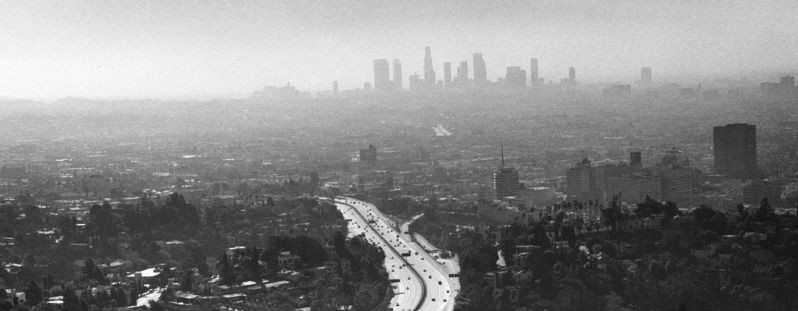
San Fernando Road

SF A1 Desolate

Even if you’ve lived in a city your whole life, you probably only know a small part of it. We tend to stay in our own little worlds. There are the neighborhoods we know, the hangouts where we feel comfortable, the landmarks that are familiar. In our mind that becomes the map of the city. Everything else becomes irrelevant or invisible.

For a long time San Fernando Road was invisible to me. It’s one of the oldest streets in LA, and I’ve been travelling along it since I was a kid, but I never paid any attention to the landscape that was sliding by. It was just a route I’d take to get from one place to another.

Last year I was riding down San Fernando on the bus and I looked out the window. I can’t say I saw anything remarkable, but I started to notice things I’d never paid attention to before. I saw the railroad tracks and the industrial parks. The markets and the restaurants. The trees and the billboards. It’s not a pretty stretch of road, and there’s not much that would attract people from other places, but there’s a lot going on. There are manufacturing and recycling centers, there are auto repair shops and wholesale outlets, and there are trucks and trains that run up and down the road all day long. In other words, there are a lot of things that are made here or processed here or transported through here that touch our lives every day.

San Fernando Road has been called different things over the years. The state and local governments have defined it in different ways. Even now it’s called The Old Road up north in Santa Clarita. In Burbank it’s called San Fernando Boulevard, and it’s interrupted briefly by a mall. When it crosses the LA border again it turns back into San Fernando Road, and it runs all the way into Downtown.

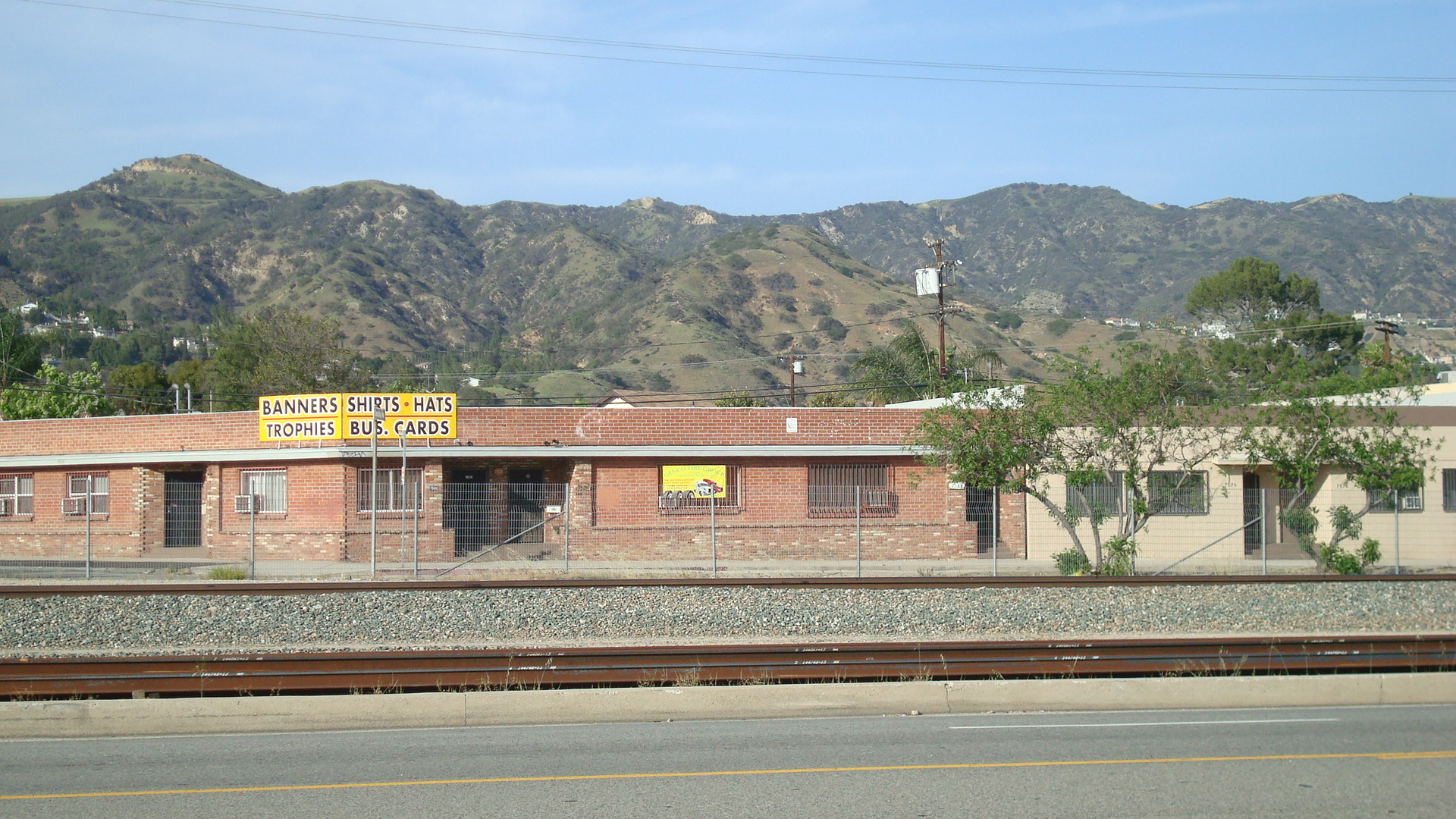
For now I’m just going to focus on the stretch between Hollywood Way and Tuxford. As San Fernando Road leaves Burbank behind, you have the hills on one side….

SF A2 Banners Hills

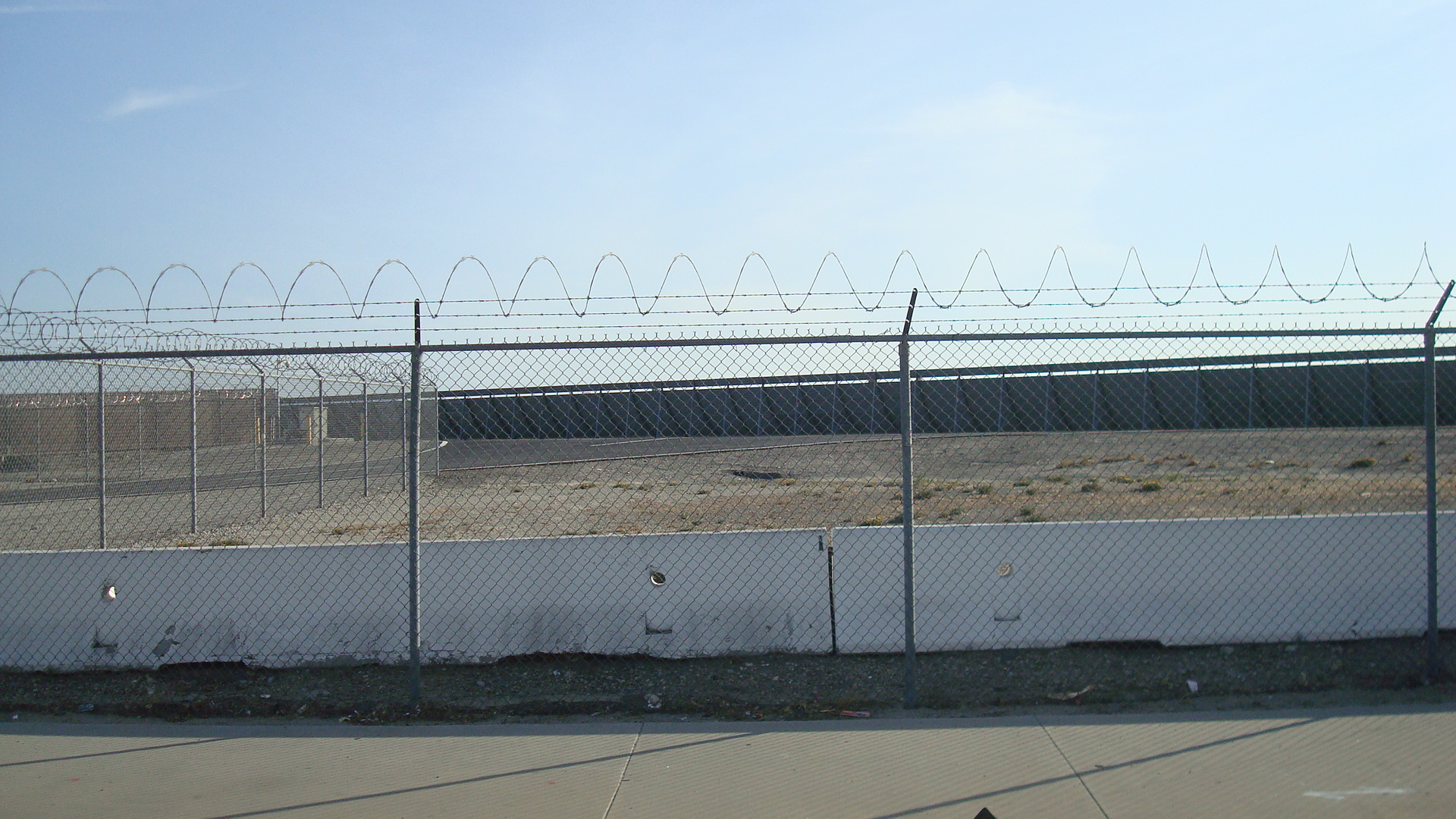
And Burbank Airport on the other.

SF A3 Airport (2)

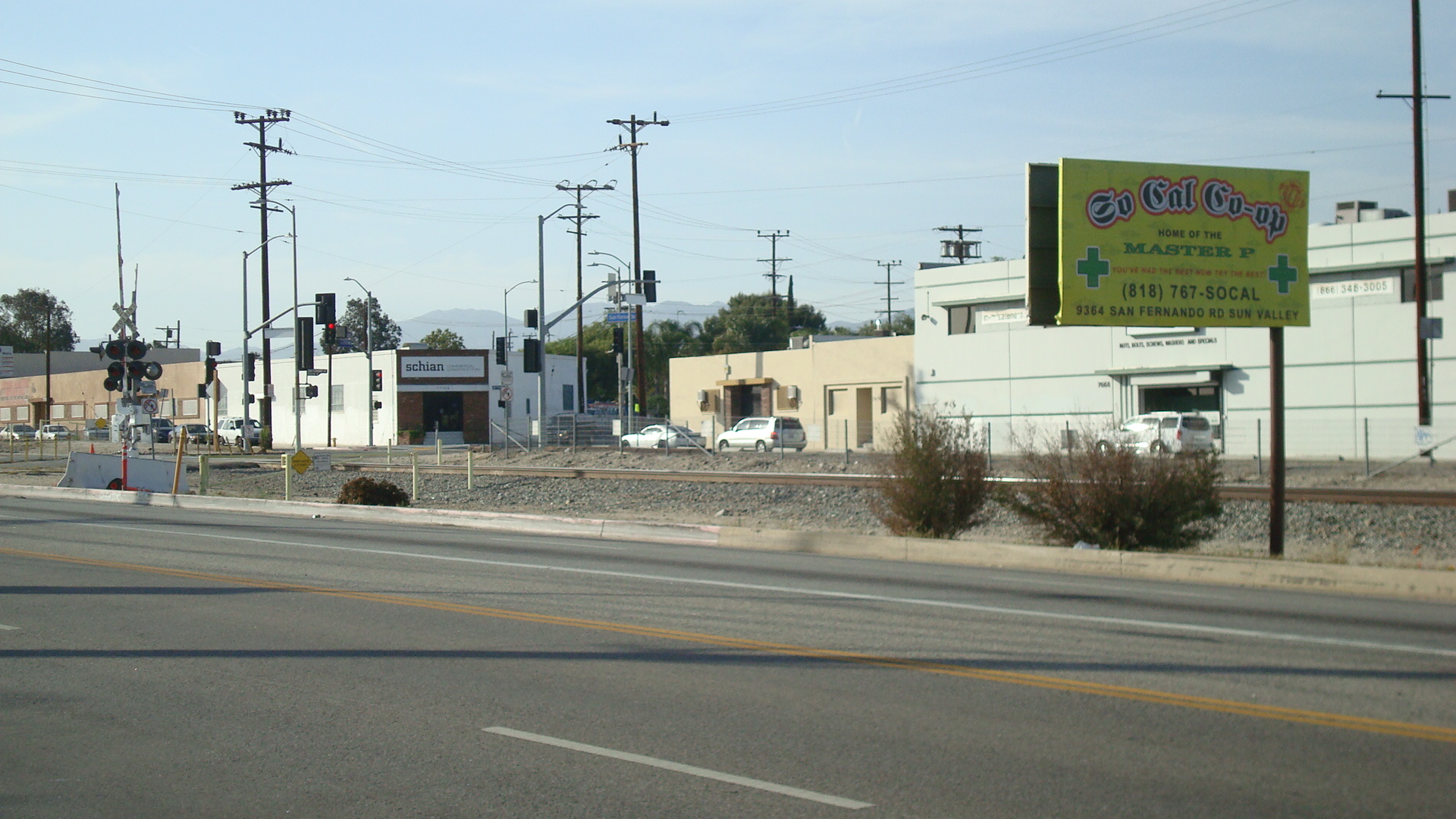
The road is lined mostly with one-story buildings.

SF A4 Coop

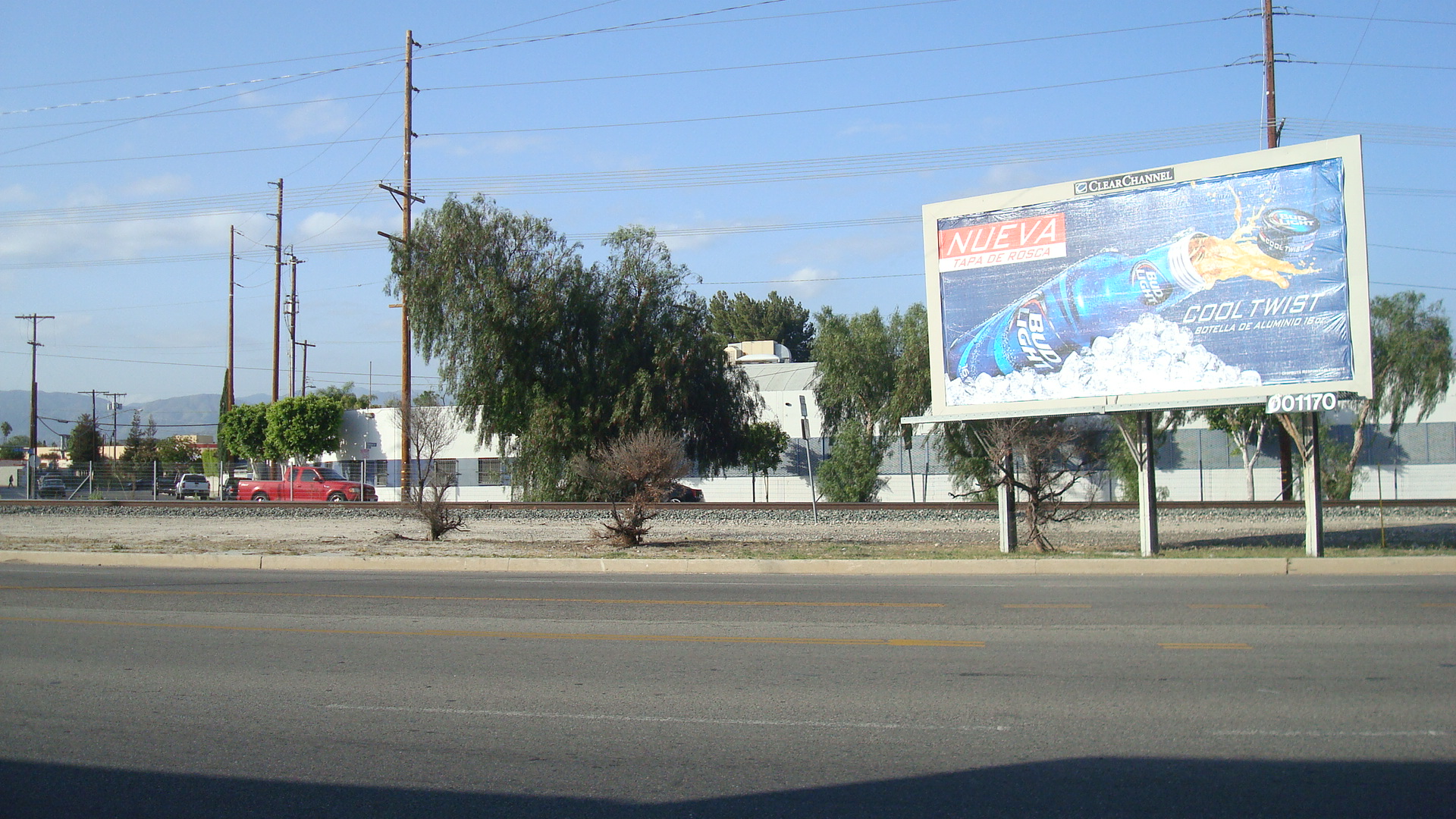
Here and there the monotony is broken by a few trees or a billboard.

SF A5 Beer

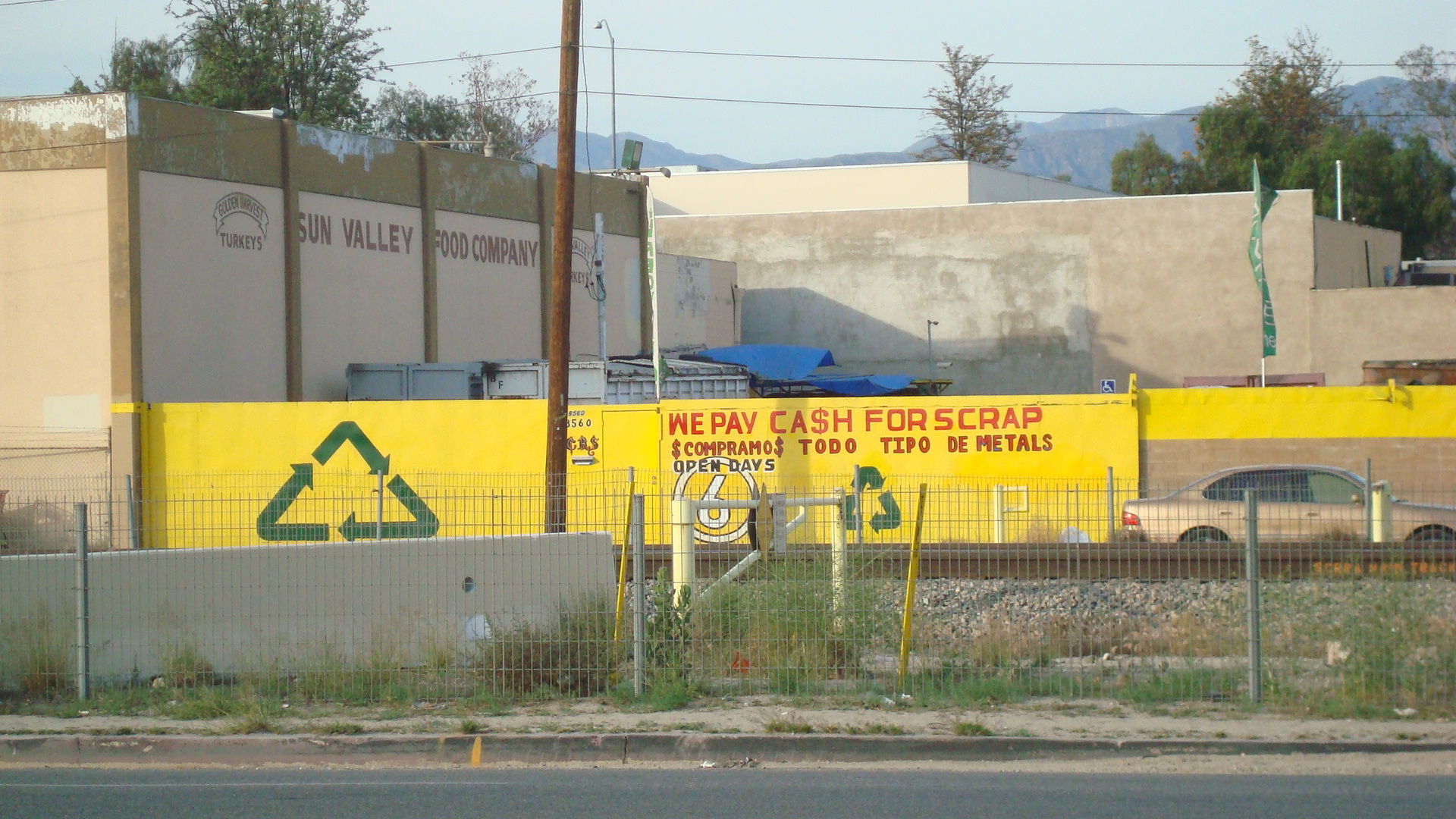
There are all kinds of businesses, many of them dealing with recycling things in one way or another.

a recycling center

a recycling center

La Raza Foods

La Raza Foods

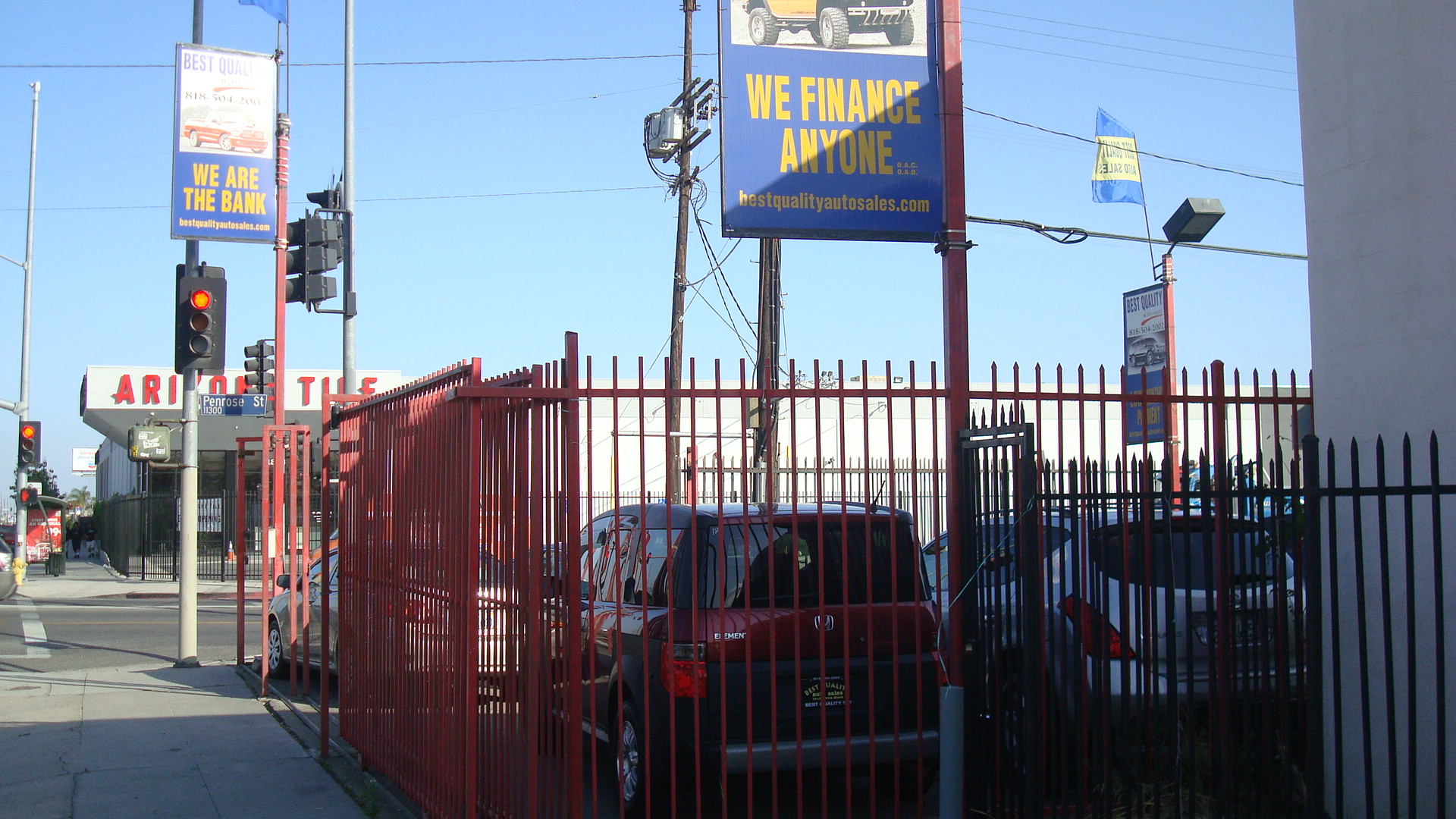
a used car lot

a used car lot

Lite-Weight Tool Mfg.

Lite-Weight Tool Mfg.

The Relic

The Relic

a neighborhood market

a neighborhood market

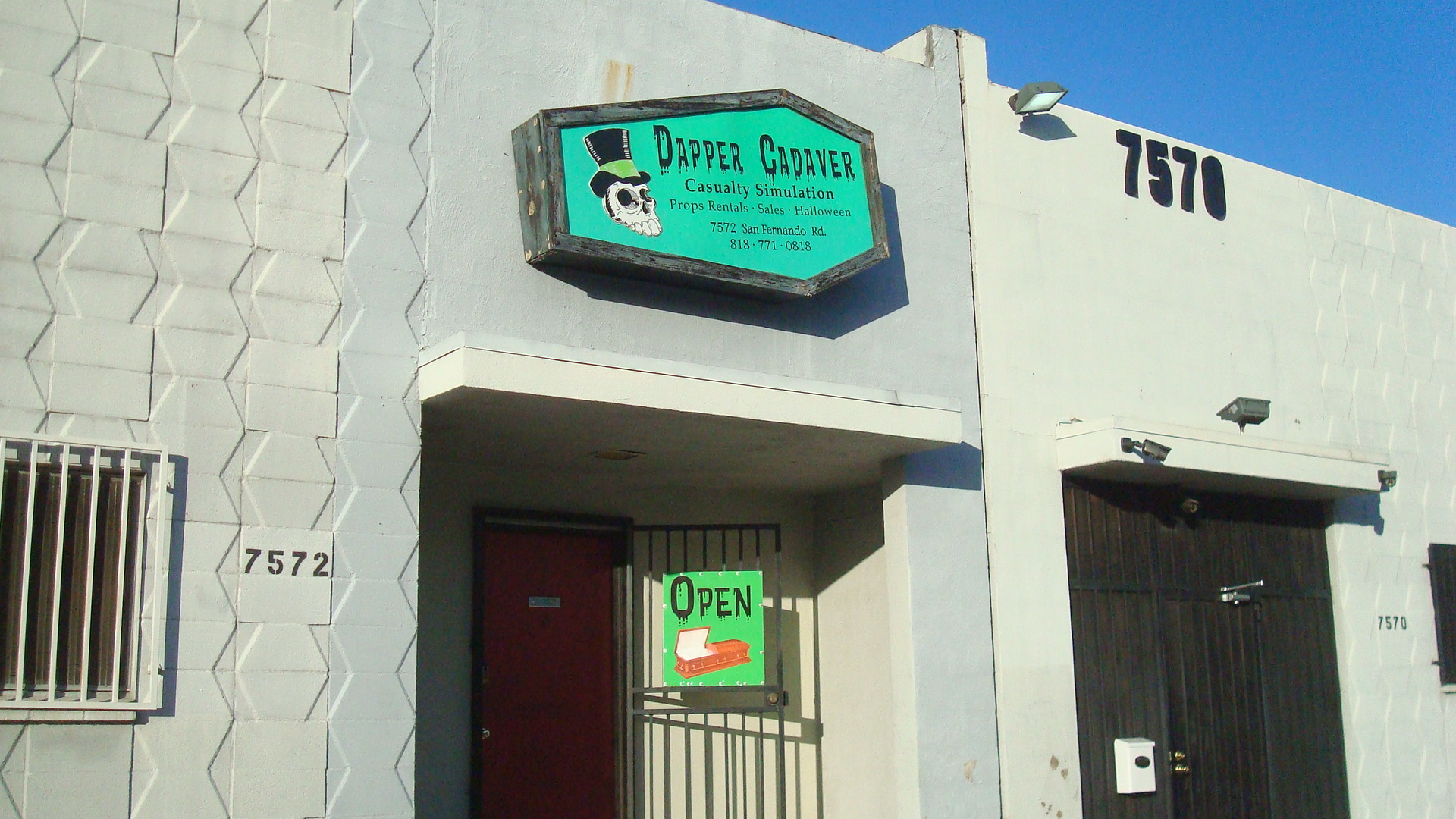
Dapper Cadaver

Dapper Cadaver

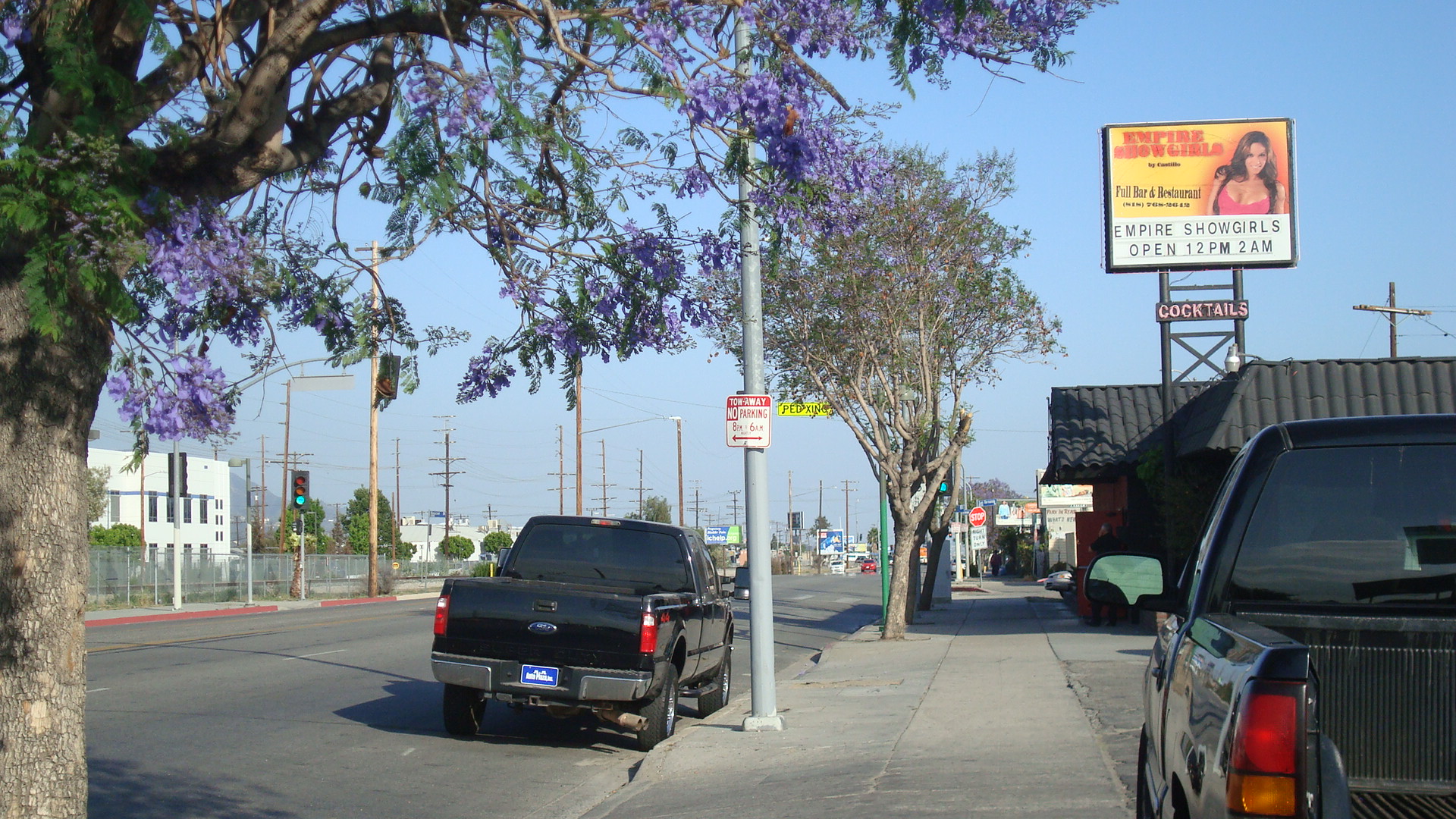
Empire Showgirls

Empire Showgirls

There’s even a couple of places for those seeking a spiritual experience.

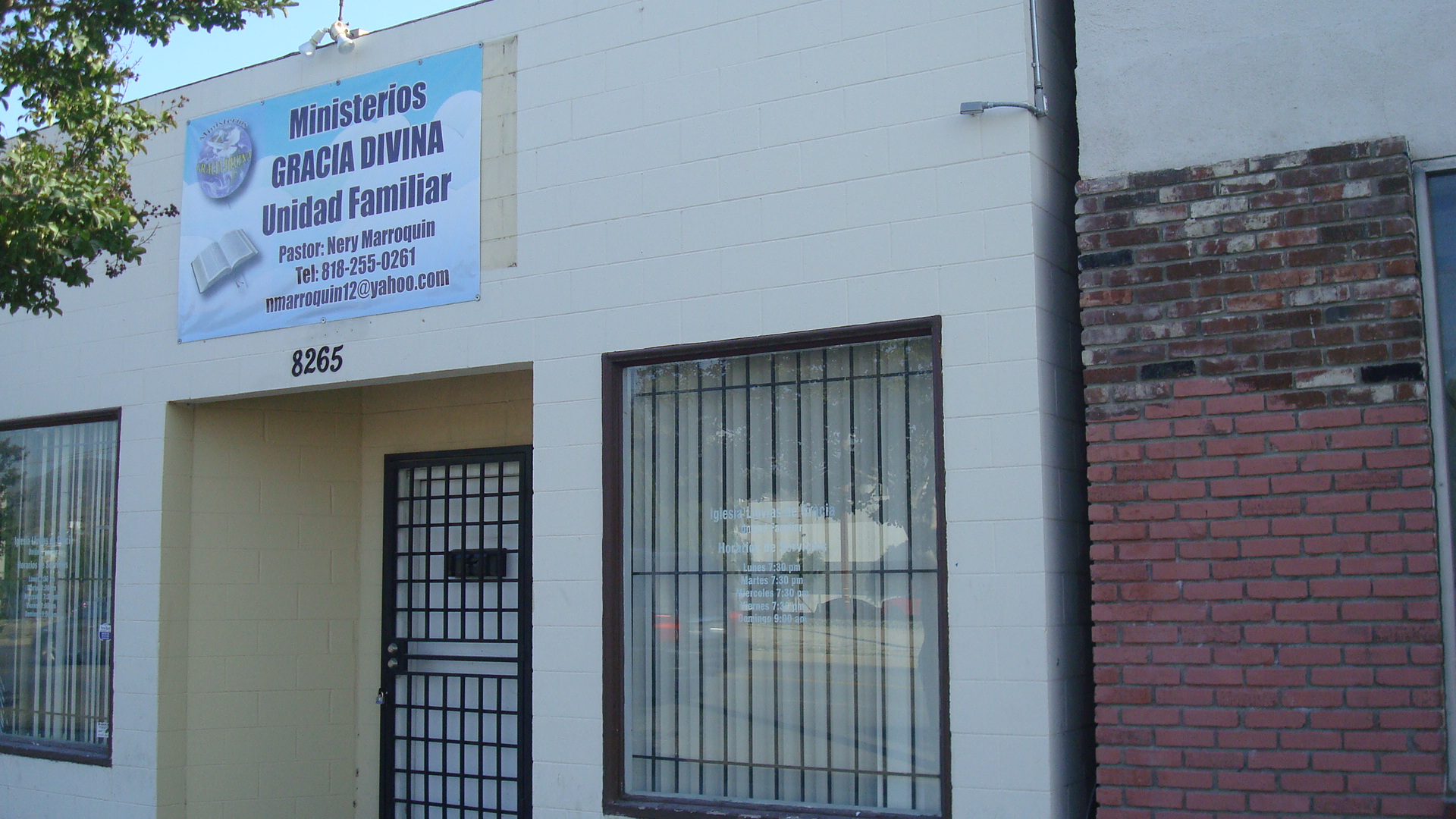
Ministerios Gracia Divina

Ministerios Gracia Divina

Burbank Islamic Center

Burbank Islamic Center

Security is obviously a concern.

bougainvillea and barbed wire

bougainvillea and barbed wire

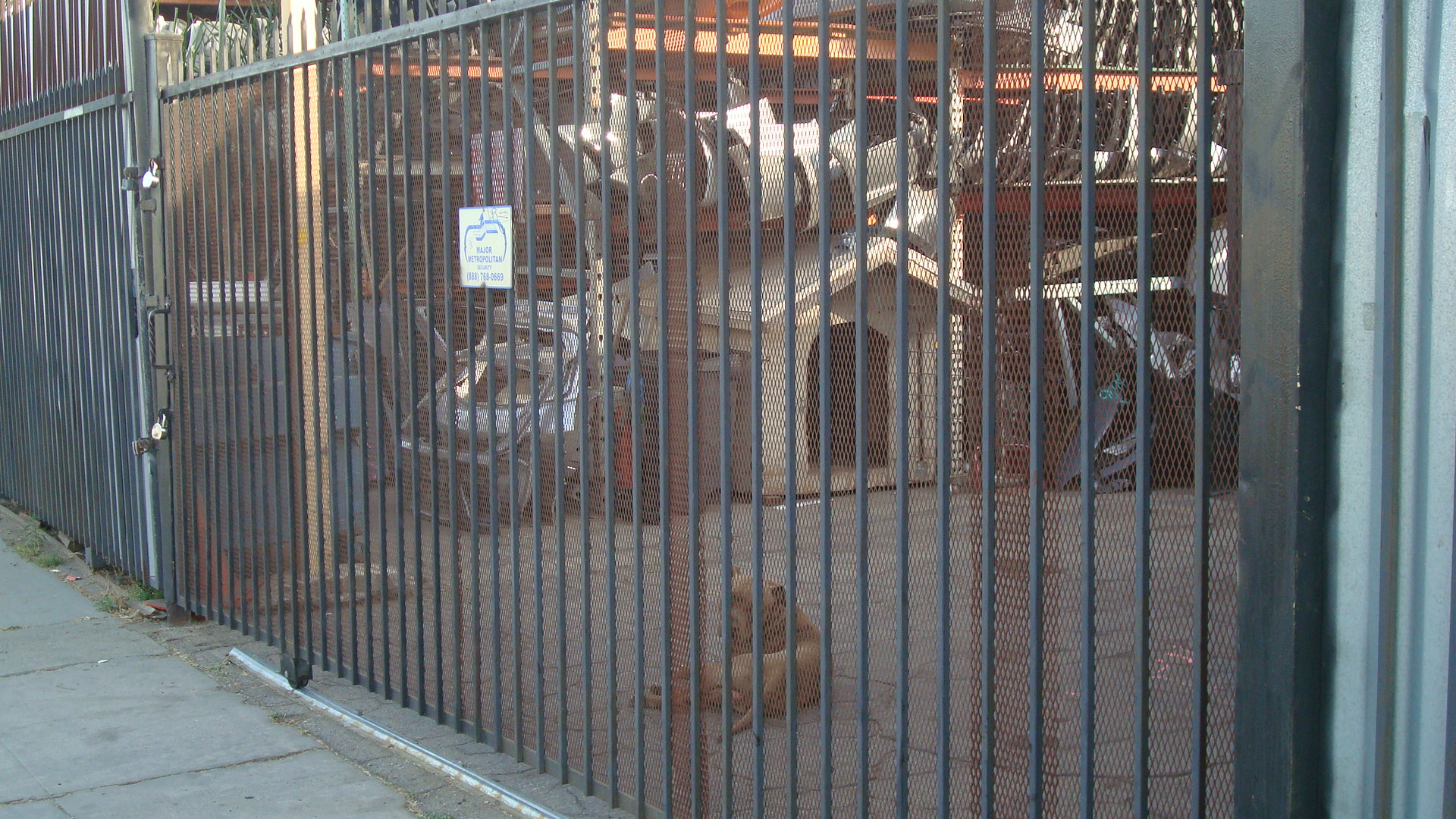
a guard dog eyes me suspiciously

a guard dog eyes me suspiciously

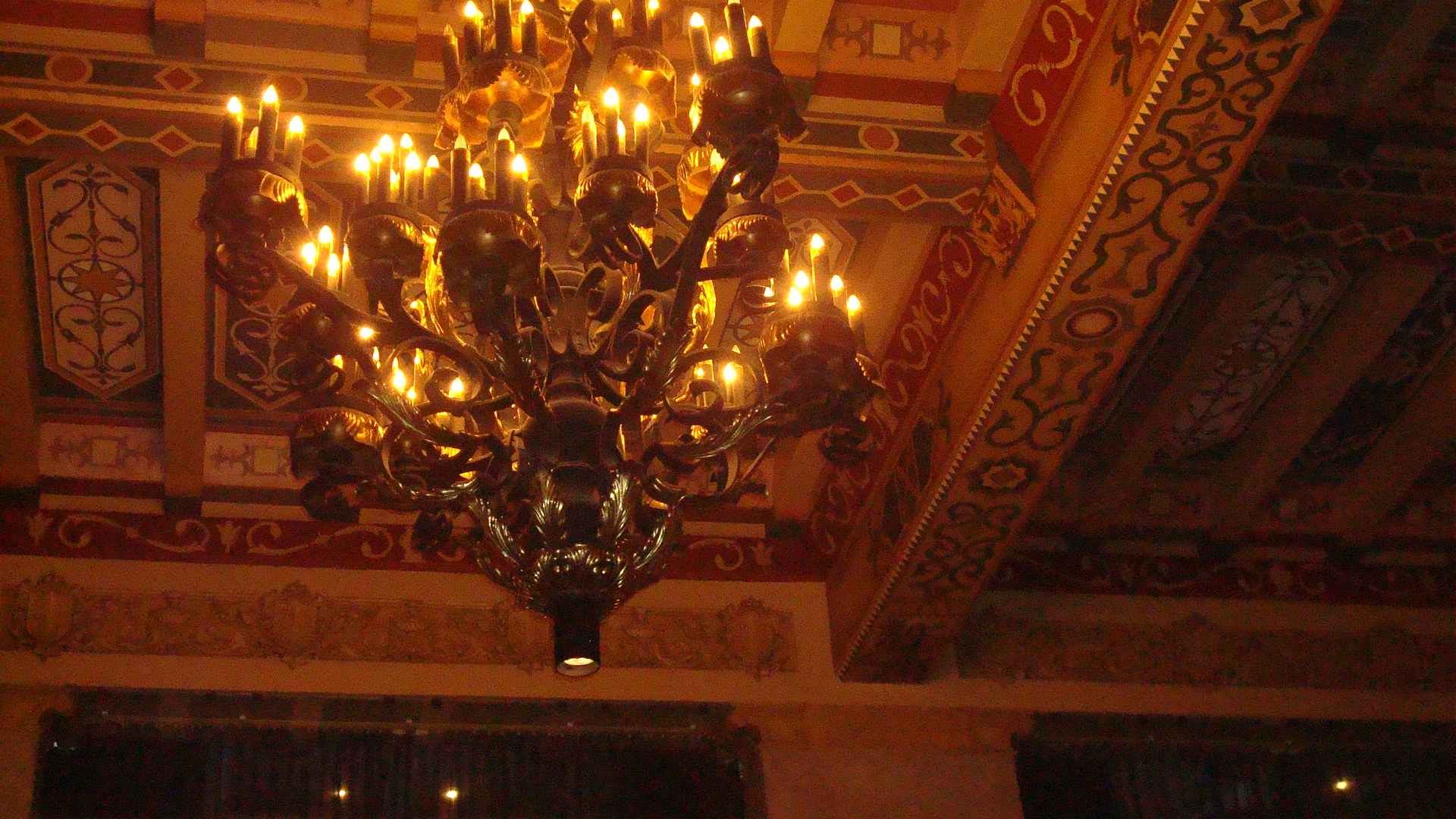
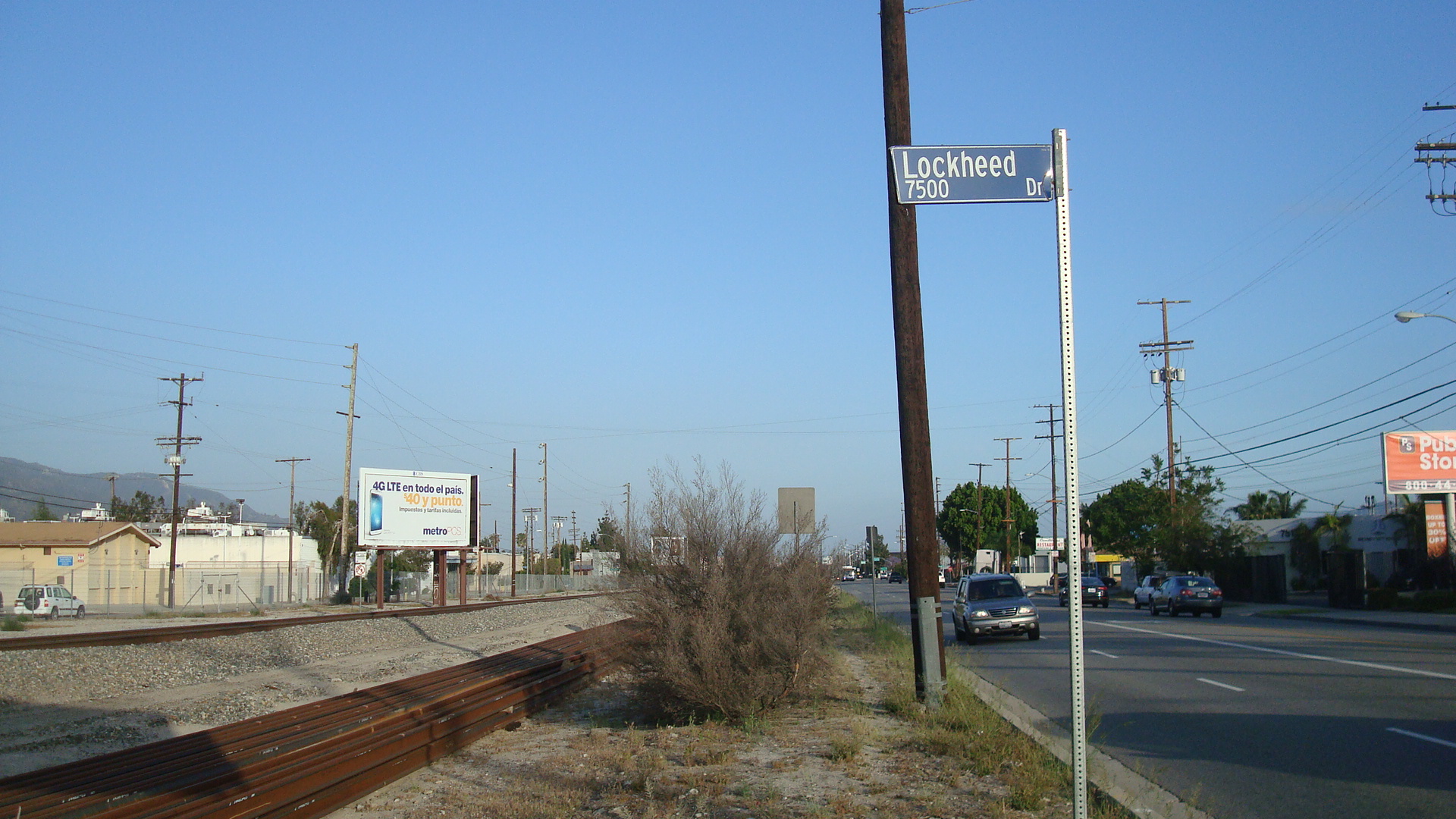
Here’s a relic from the past.

SF C3 Lckd 2

This is one of the few visible reminders of the days when aerospace was a major industry in the area. Lockheed came to Burbank back in the twenties. During and after WWII it employed tens of thousands of workers. The aerospace industry was a major factor in driving the post-war growth of the San Fernando Valley.

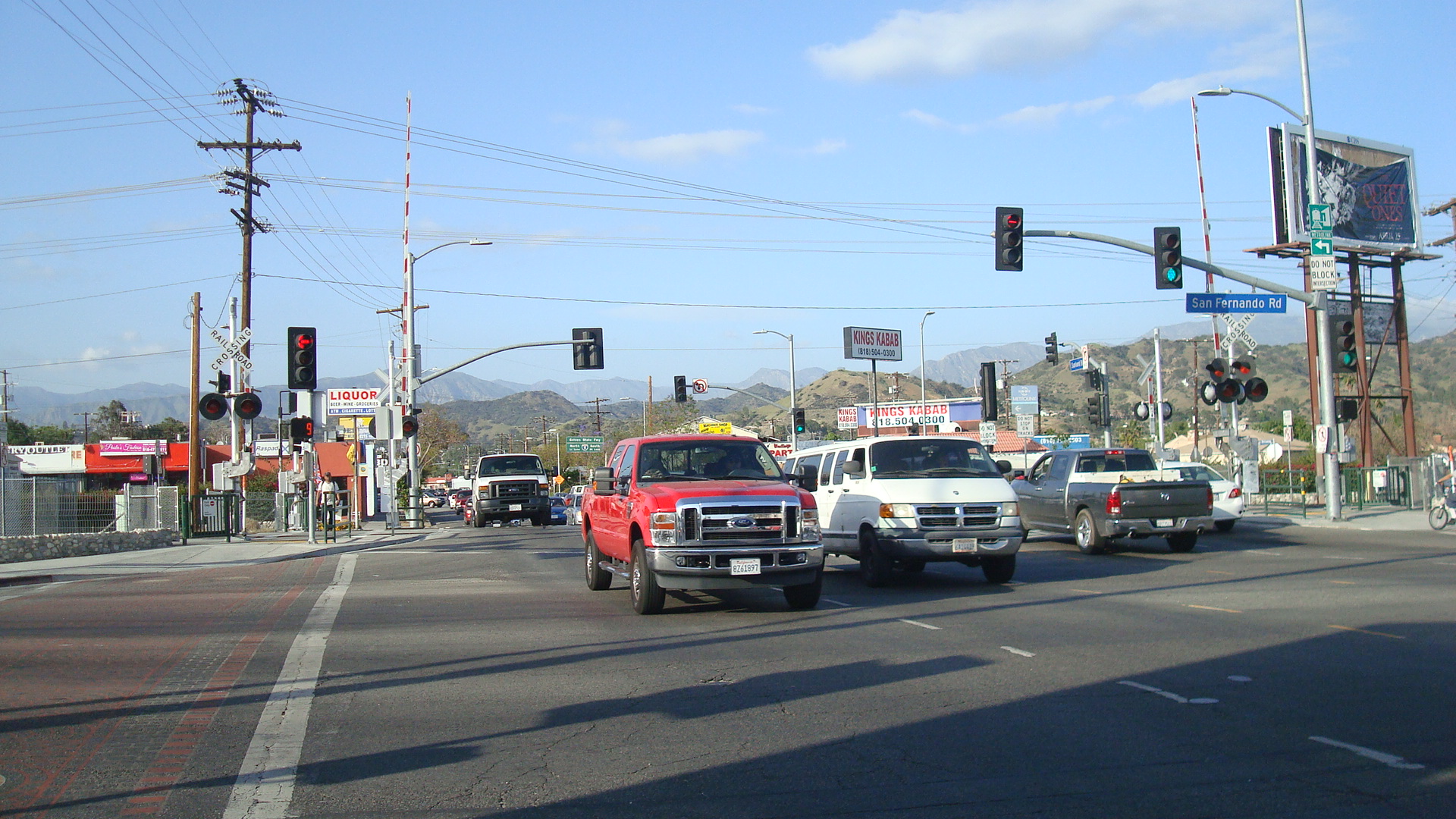
This is the intersection of San Fernando and Sunland.

traffic at San Fernando and Sunland

traffic at San Fernando and Sunland

another shot of San Fernando and Sunland

another shot of San Fernando and Sunland

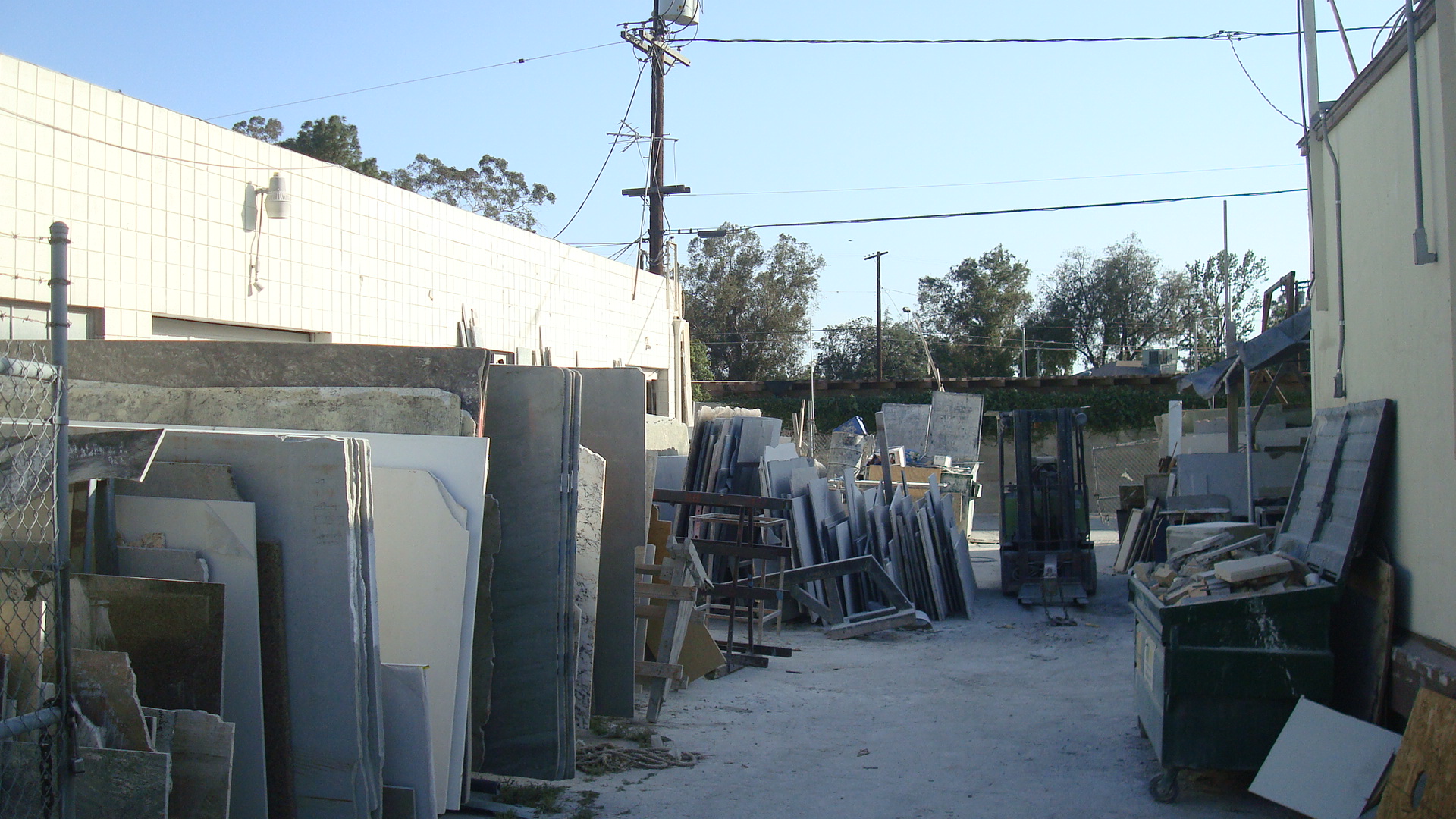
There are a lot of businesses that deal in stone, either polished or pulverized.

sheet rock

sheet rock

paving stone

paving stone

decorative stone

decorative stone

concrete, asphalt, sand and gravel

concrete, asphalt, sand and gravel

The railroad runs right down the middle of San Fernando Road.

tracks originally laid by  Southern Pacific Railroad

tracks originally laid by Southern Pacific Railroad

And here’s the Metrolink, a commuter train that serves Southern California.

northbound Metrolink train

northbound Metrolink train

The entrance to the Golden State Freeway is on Tuxford just a short block from San Fernando. The next few shots were all taken along Tuxford.

SF E1 Fwy Ent

You can see all kinds of trucks going up and down Tuxford.

SF E2 Tux Trucks Fwy

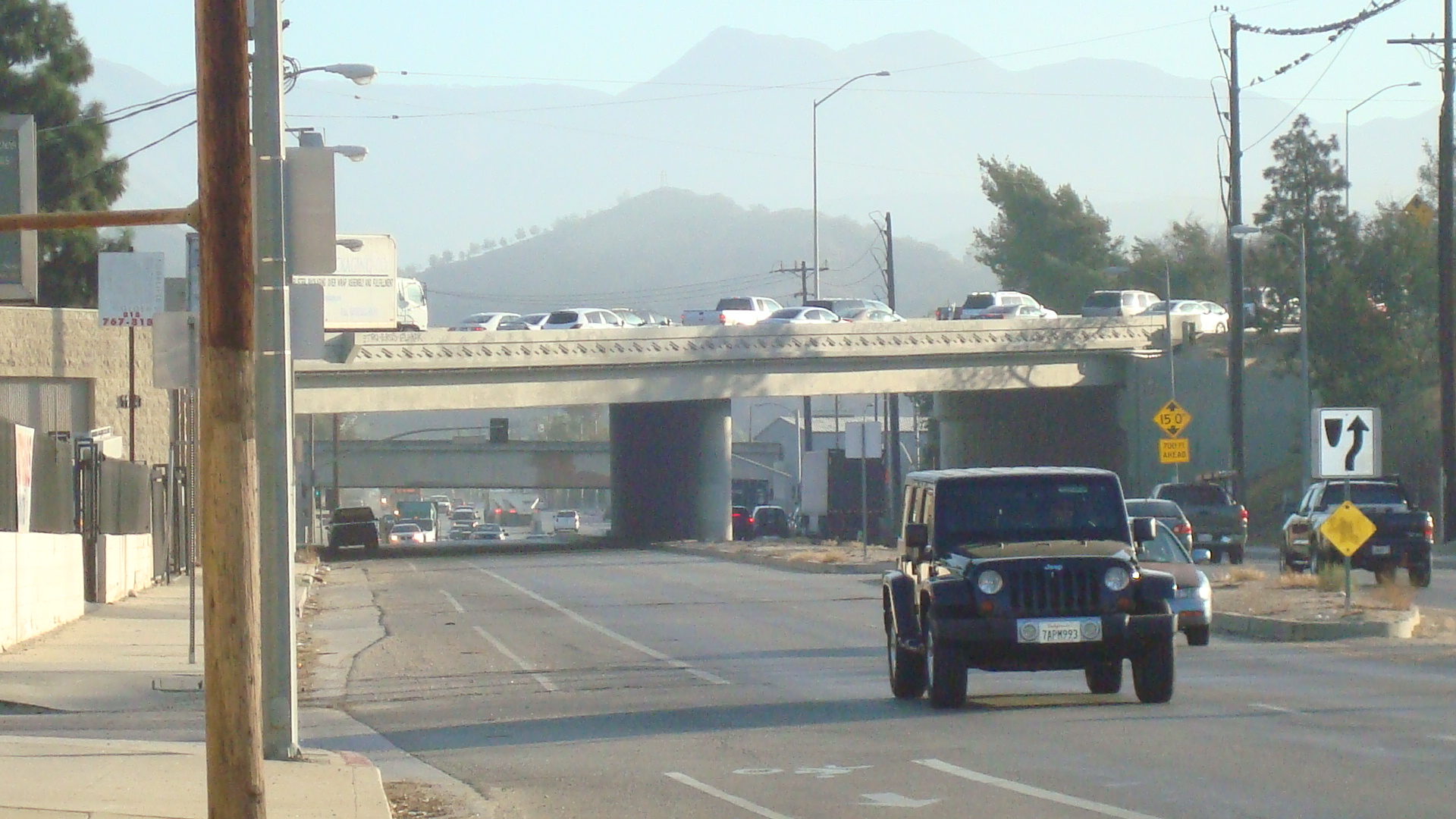
And you can see the traffic on the freeway gets pretty bad at rush hour.

SF E3 Tux Jeep Fwy

I have no idea what this is about, but it seems to be tied to a place that buys junk cars.

SF E4 Big Wheel

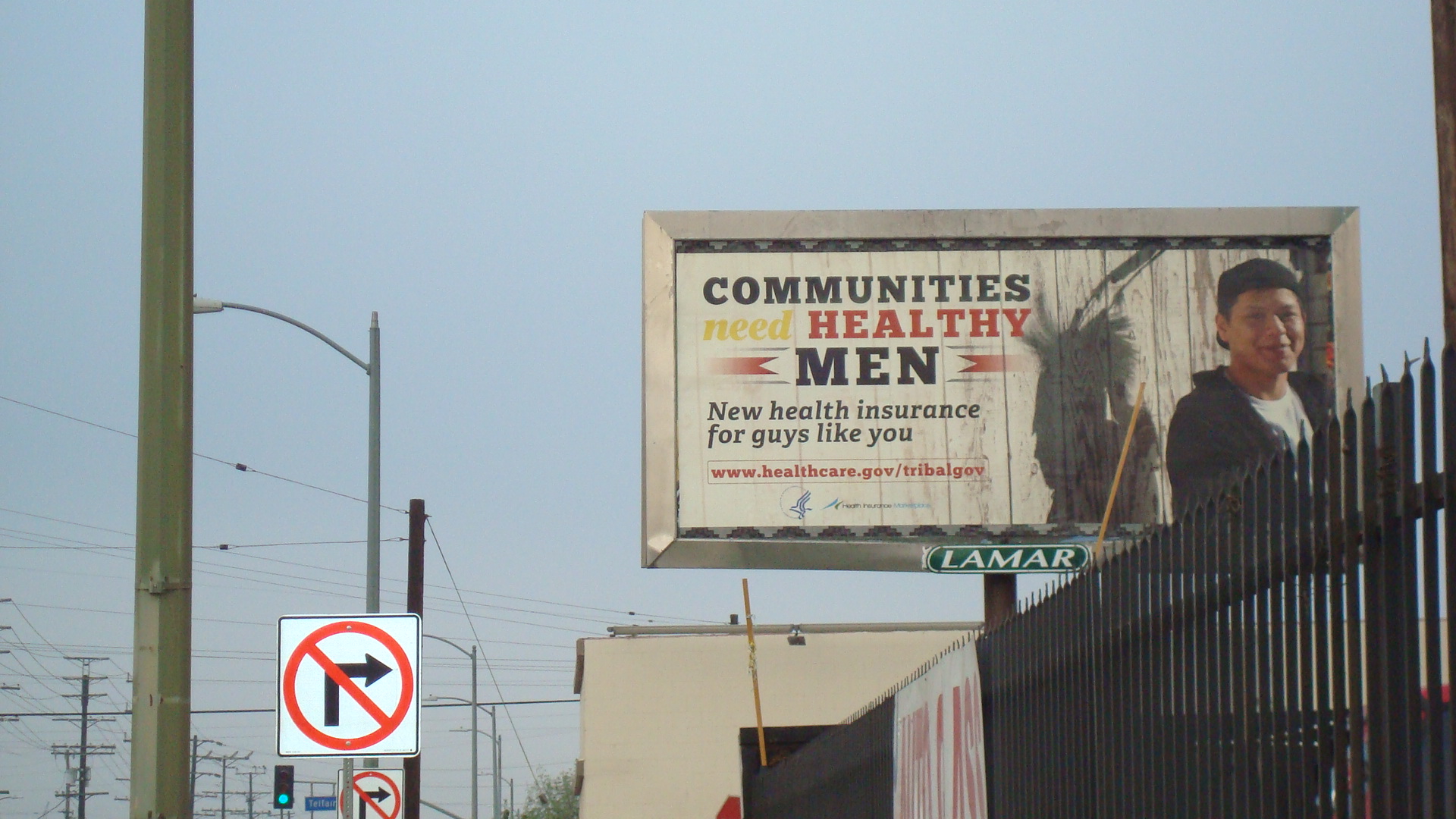
Lots of the billboards in this area carry public service announcements.

SF E5 Communities

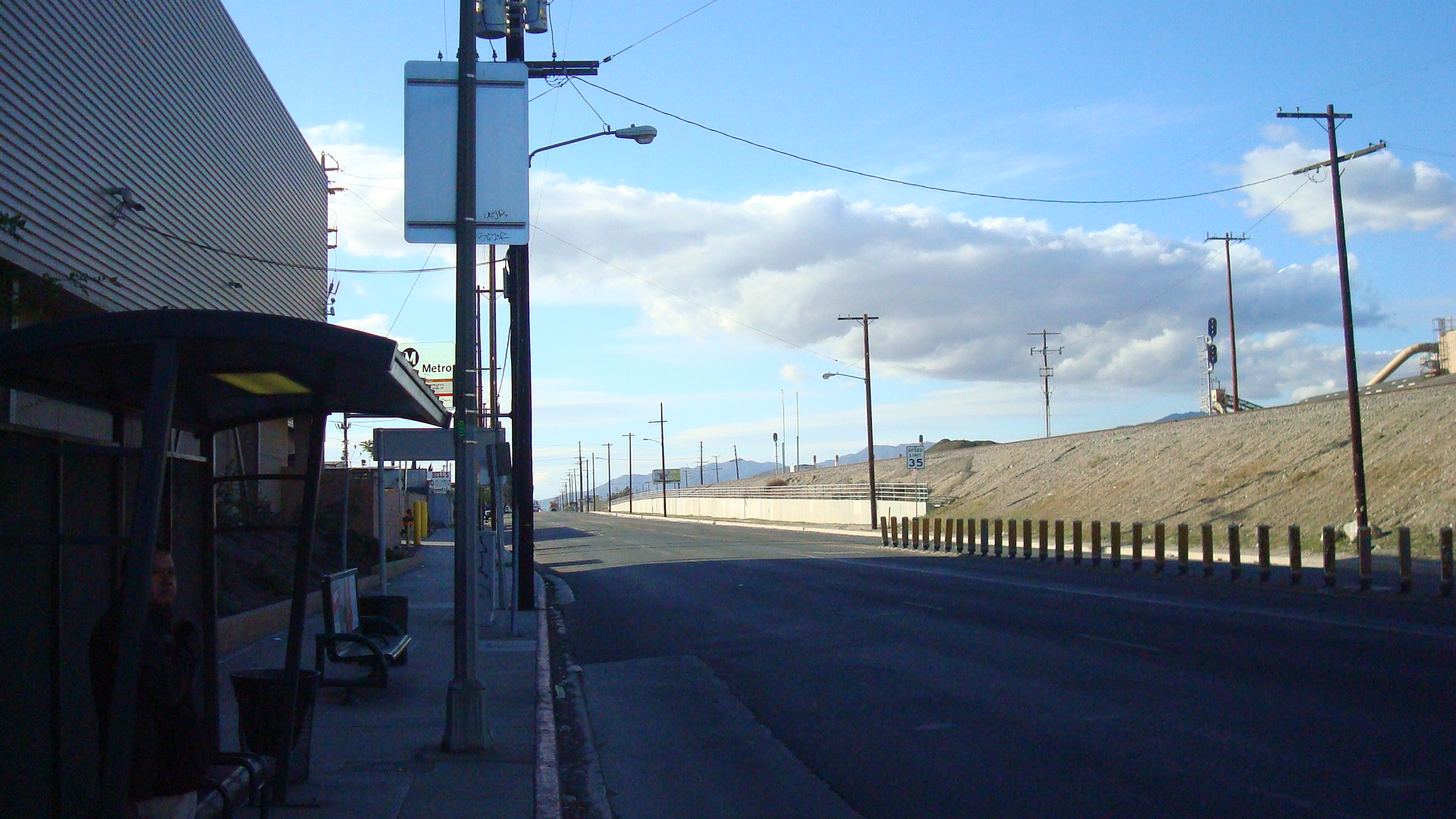
A shot of a guy waiting for the bus on San Fernando at Tuxford.

SF F1 Busstop Clouds

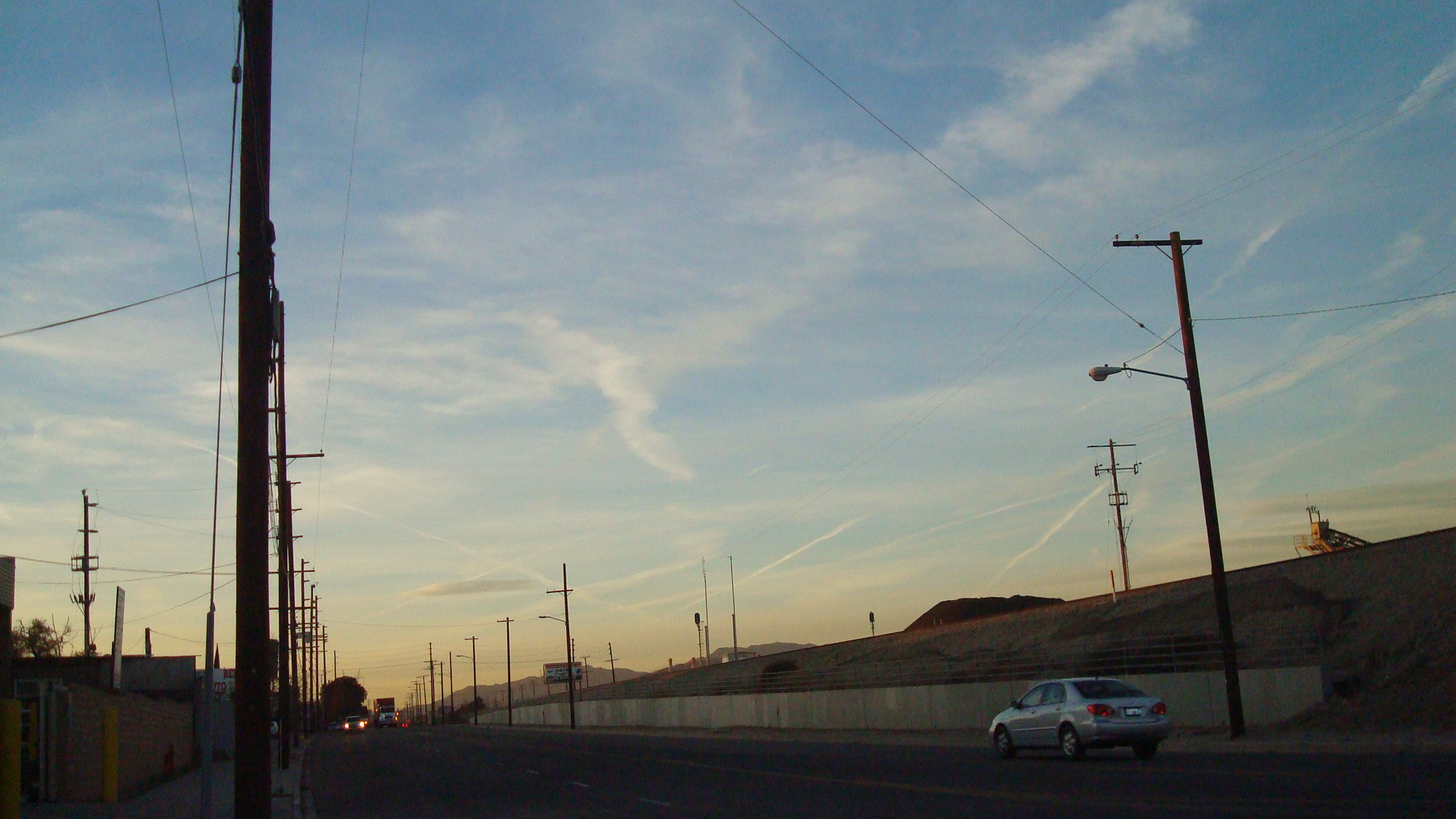
And this is what San Fernando Road looks like as the light starts to fade.

SF F2 Distance Twlght 2

Looking to the Future

DSC02666

Not long ago the City of LA released two documents for public review. The Mobility Plan 2035 and The Plan for a Healthy Los Angeles are both intended to create a framework for the city’s future growth. There are many good things in both plans, and I certainly support efforts to improve public transit and develop a healthier environment. However….

I have to say I don’t trust our elected officials. If you take the documents at face value, they present a thrilling utopian vision for the city where everyone will have the opportunity to live a healthy, productive life. But unfortunately, the Mayor and the City Council have shown over and over again that they’re willing to put the interests of their wealthy buddies ahead of the interests of the average citizen.

The thing that makes me suspicious is that both documents talk about land use, and both documents promote higher density. This is not bad in itself. LA is notorious for its sprawling communities and there are many areas where we could reap significant benefits by creating greater density. My concern is that the Mayor and the City Council want to change land use policy not to build a healthier city, but rather to let their developer friends build skyscrapers wherever they like. We’ve already seen our elected officials playing fast and loose with the facts with the Hollywood Community Plan Update. They argued that greater density was necessary because Hollywood’s population had increased, when in fact they knew that the community had lost thousands of residents in recent years. Fortunately the courts set them straight.

But I don’t want to go off on another rant. I do too much of that already. As I said, there are many good things about both plans, and I encourage you to take a look at them. We should all be thinking about what direction we want this city to take. LA seems to be riding a new wave of growth, and it’s important that we make informed, intelligent decisions about how that growth occurs. If we aren’t involved in the process, others will make those decisions for us, and they may not have our best interests at heart.

Here are links to both plans.

Mobility Plan 2035

Plan for a Healthy LA

How Safe Is Your Home?

Quake Graphic 3

I have to say I’m impressed by Mayor Garcetti’s earthquake safety plan. The idea of rating buildings according to how well they’d weather a quake, and making that information available to the public, is pretty smart. It’s been suggested that LA should a adopt a mandatory retrofit program for soft story buildings, which is what San Francisco has done. The problem, of course, is that property owners are freaked out by the potential cost. Renters aren’t happy either, since San Francisco’s law allows landlords to pass the cost along to tenants over a twenty year period.

But soft story buildings need to be upgraded. Failing to do so could mean a massive death toll when the next major quake strikes LA. So how do you get property owners and renters to support a costly retrofit program? By rating buildings according to how safe they are. Garcetti’s plan will make the public aware of how serious the threat is. People will probably be much more willing to support retrofitting once they realize that their property or their life could be at stake.

The only drawback is that this will take time. Garcetti’s earthquake czar, Lucy Jones, has emphasized that this isn’t going to happen right away. The work of creating a rating system and then actually evaluating all the buildings at risk will probably take two or three years. Let’s hope we have that much time.

But this is a good first step. I’m impressed that Garcetti is leading the way on this. I’ll be even more impressed if he makes it happen.

For more details, here’s the story from the LA Times.

Garcetti Wants Buildings Graded for Earthquake Safety

Art Is Everywhere

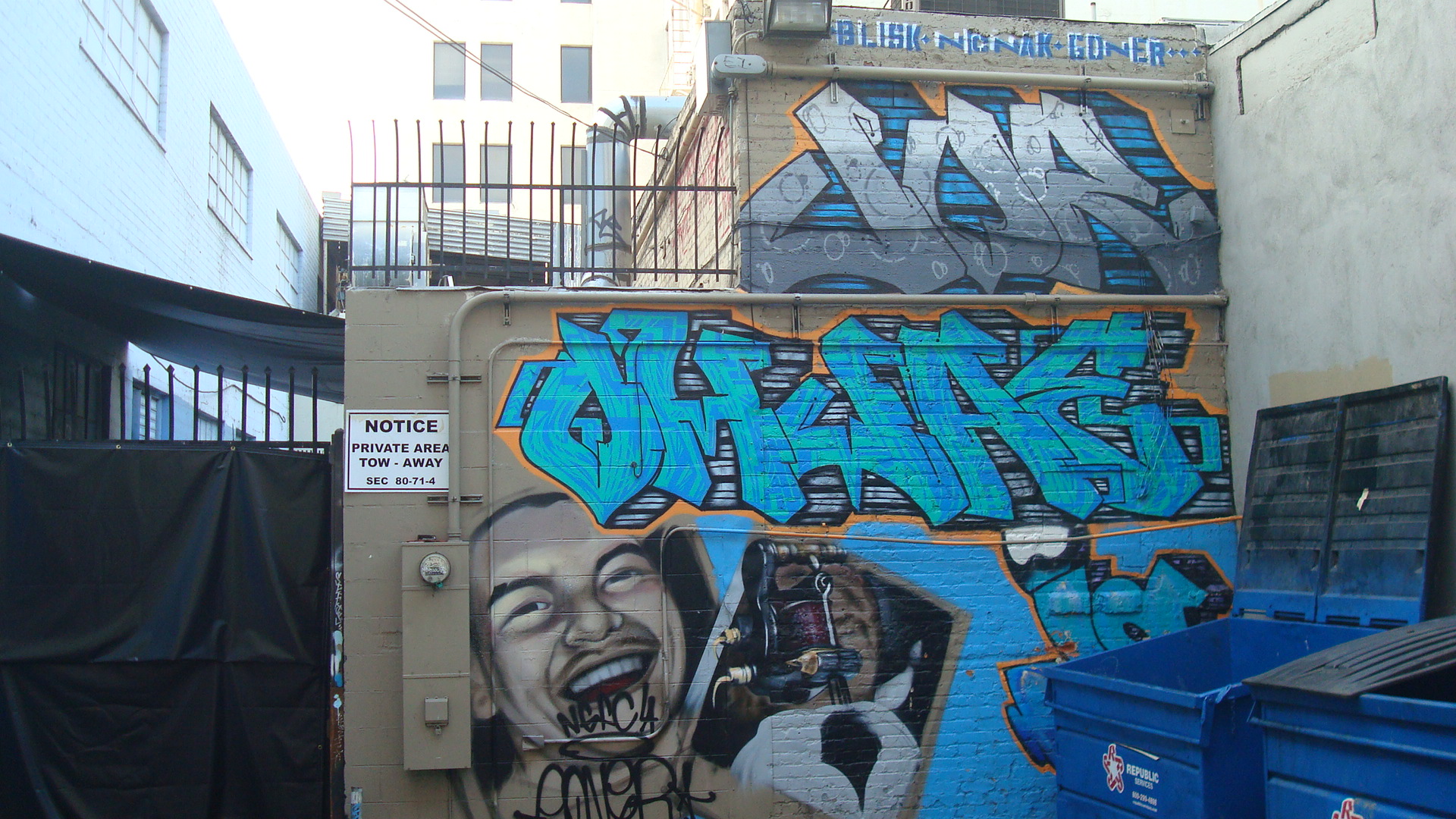
Sunset & Hillhurst, in the alley behind the Vista

Sunset/Hillhurst, in the alley behind the Vista

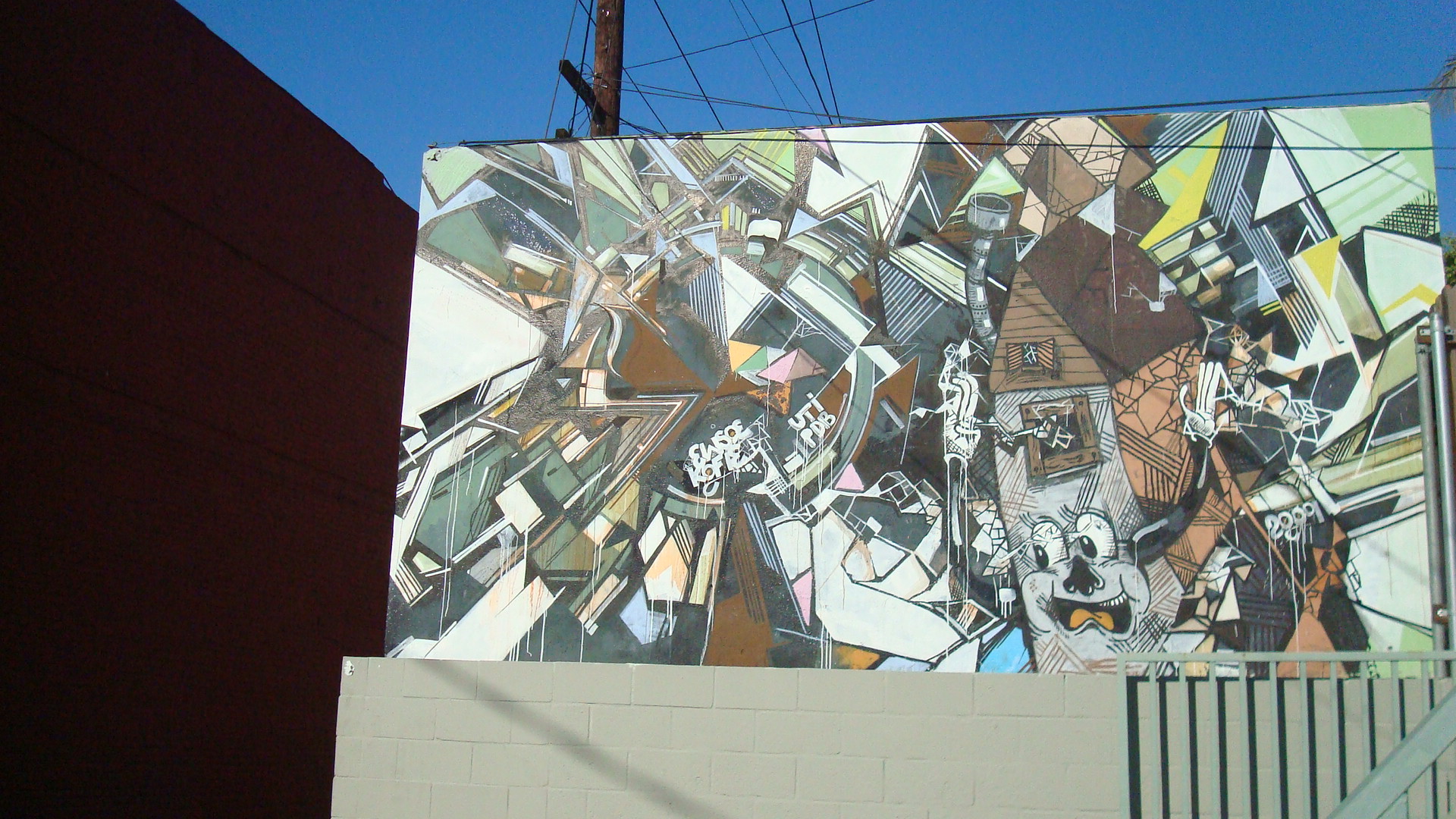
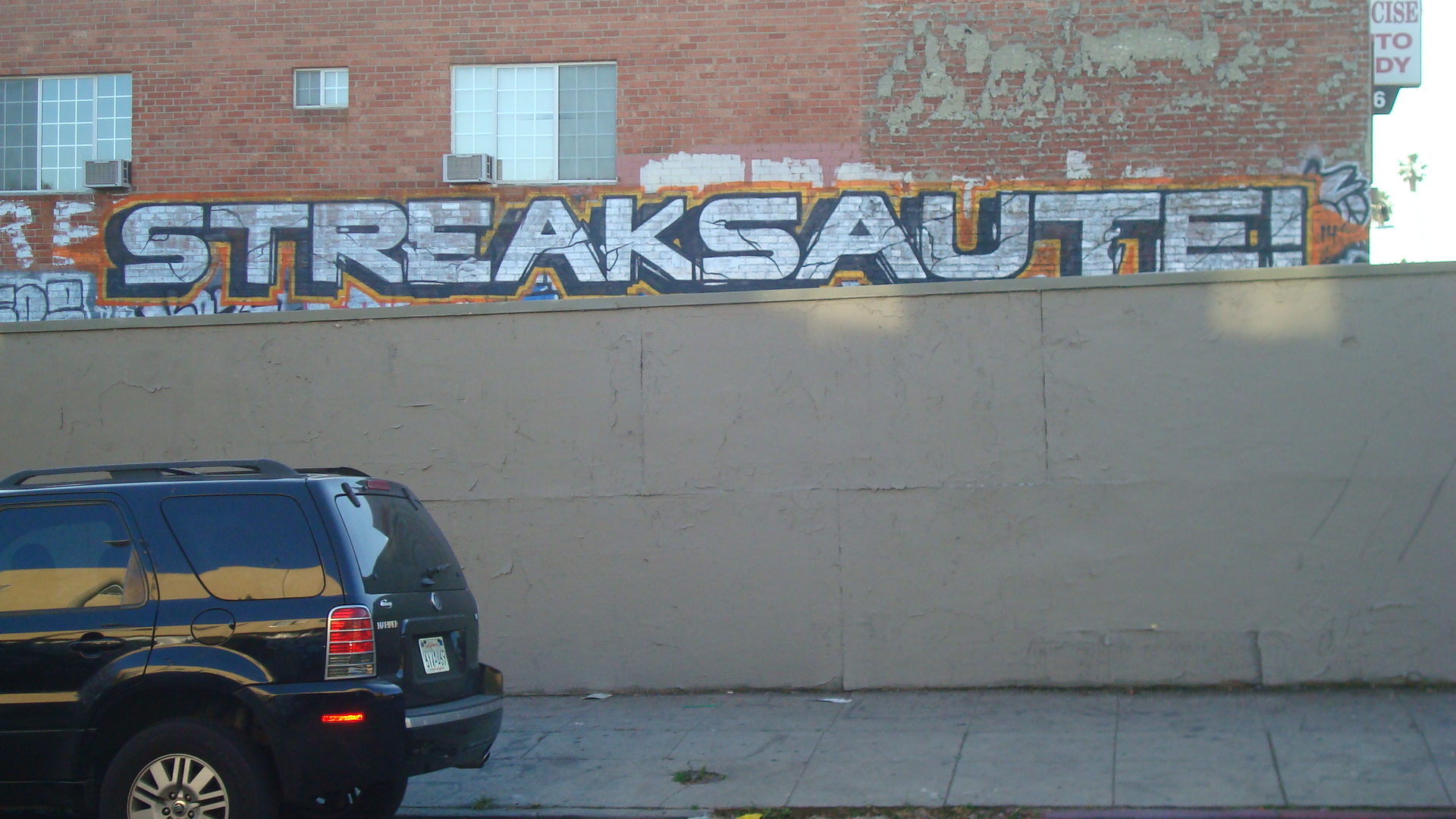
In most major cities, we can see art all around us. Any blank wall can end up being a canvas for a kid with a can of spray paint. I’m not talking about the taggers who just scrawl their name anywhere they can find the space. I’m talking about artists who have an eye and a style and maybe even something to say.

Here are some shots I’ve taken of street art in the Hollywood area. They cover a wide range, from paintings by professional artists who’ve been commissioned to decorate a building, to kids working on a blank wall in a vacant lot in the middle of the night. Below each photo I’ve given the approximate location, and I’ve included the artist’s contact info when it was available.

Hollywood & Normandie

Hollywood/Normandie

Hollywood/west of Normandie

Hollywood/west of Normandie

Hollywood/St. Andrews

Hollywood/St. Andrews

Here’s a guy who knows how to get attention.

Hollywood/St. Andrews

Hollywood/St. Andrews

But, as you can see below, he’s not the only person who’s been working on that wall.

Hollywood/St. Andrews

Hollywood/St. Andrews

Hollywood/Harvard

Hollywood/Harvard

I love this one because it’s totally ephemeral. Drawn in chalk, it’ll be gone the next time it rains. That is, if it ever rains in LA again.

Hollywood/Western

Hollywood/Western

Hollywood & Western

Hollywood/Western

Artist’s Web Site: ELMAC

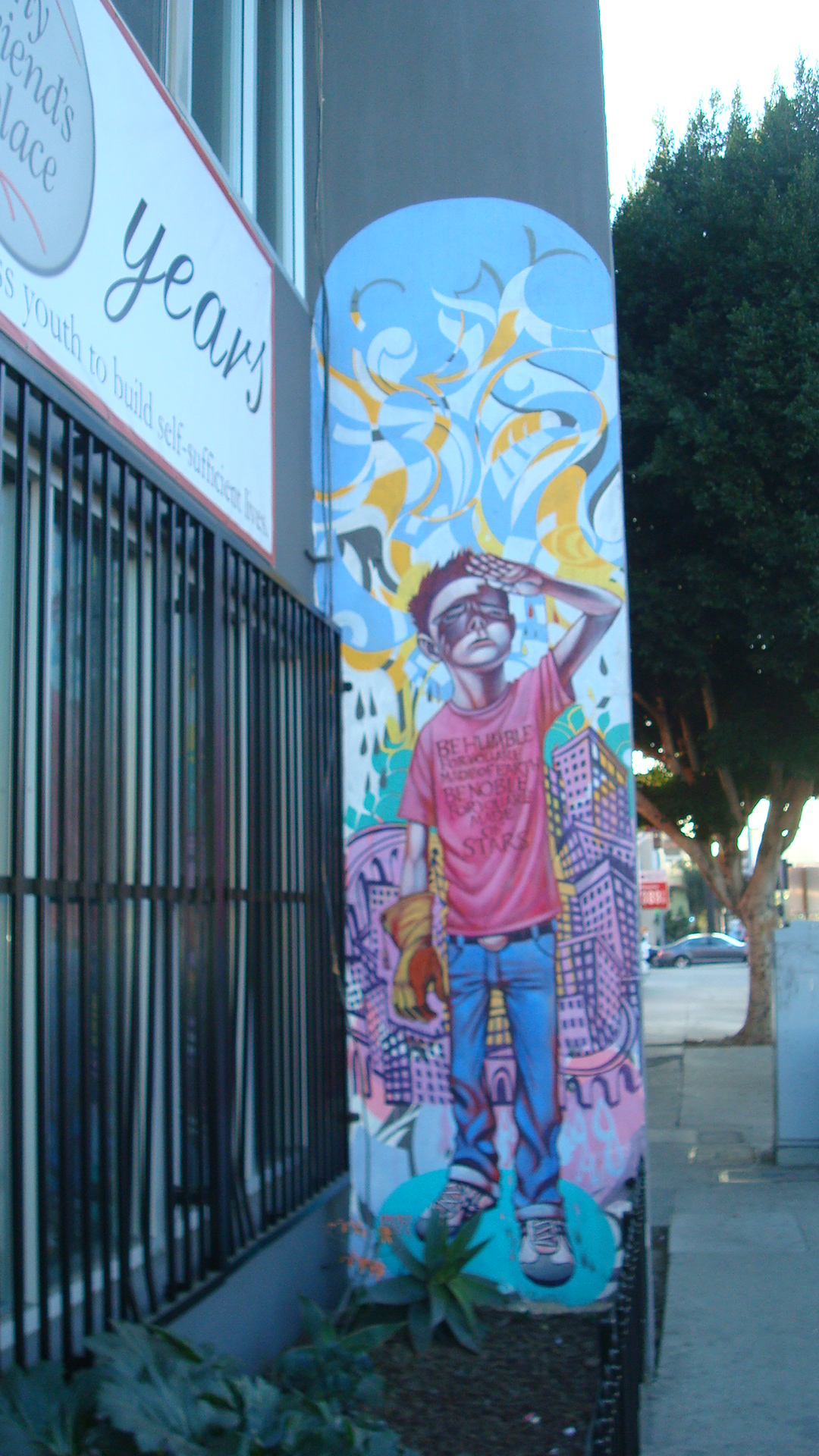
The following images are painted on a building that sits right next to the Hollywood Freeway. I later learned that this was My Friend’s Place, an organization that helps homeless youth. They provide meals, and also assist young people with health care and housing. Sounds pretty cool. For more information, click here.
Hollywood/Hollywood Freeway

Hollywood/Hollywood Freeway

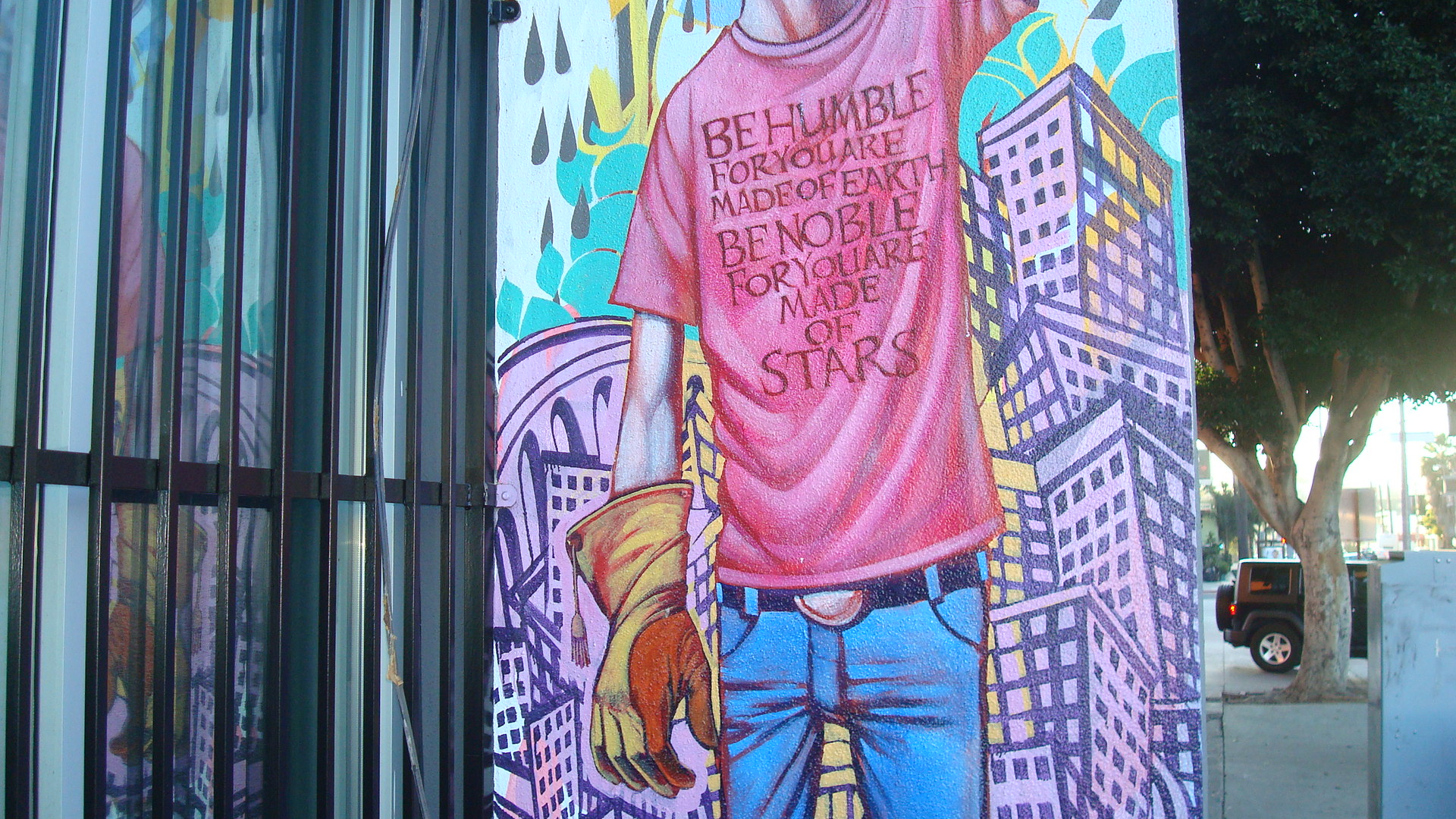
Below is a closer look at the words on the boy’s shirt.

same as above

same as above

same as above

same as above

Artist’s Web Site: Bumblebee

Hollywood/Highland, behind First National Bldg.

Hollywood/Highland, behind First National Bldg.

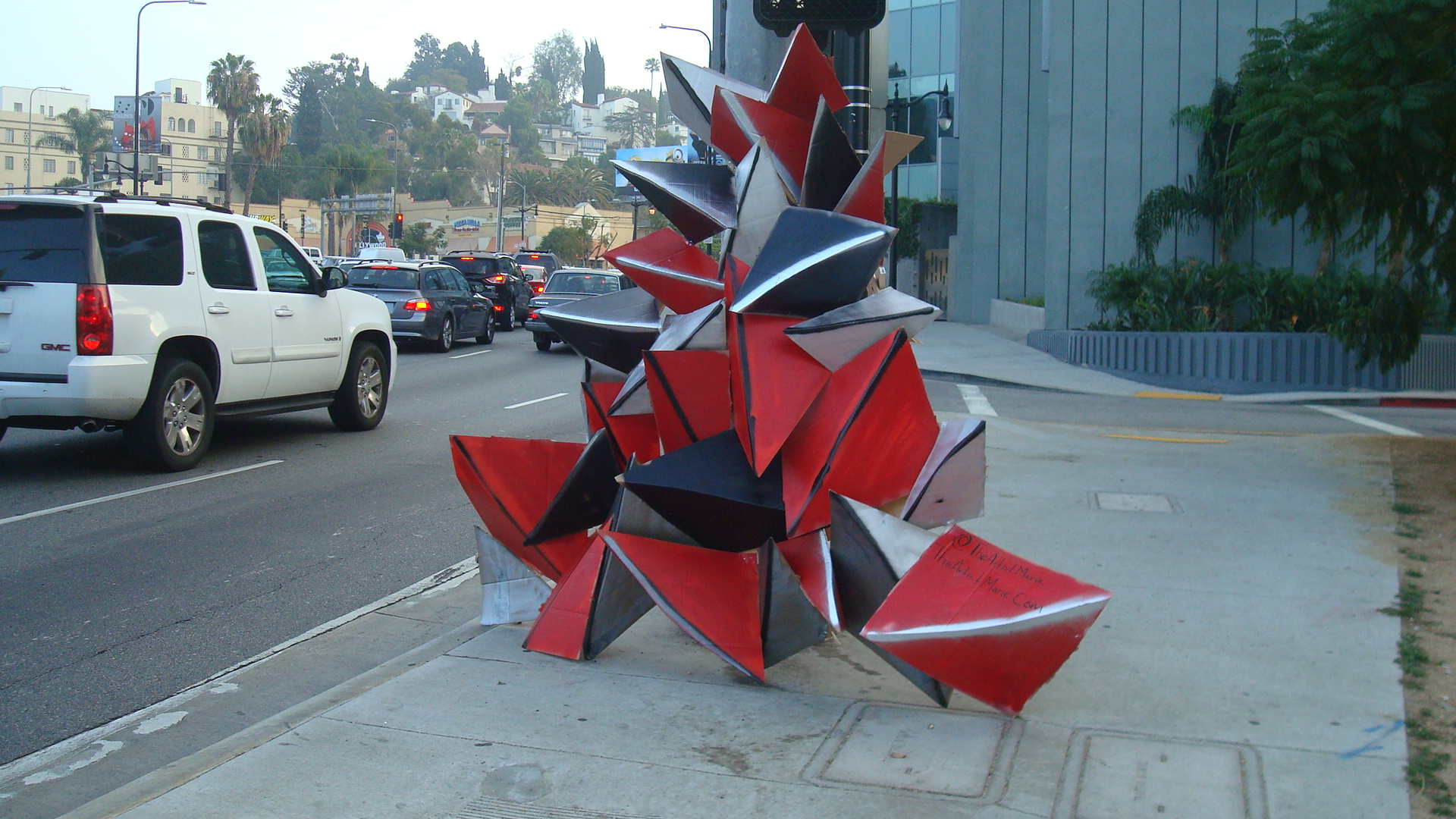
I was walking to the subway one morning and saw this at Highland and Franklin. It didn’t hold up for very long, but it was cool while it lasted.

Highland/Franklin

Highland/Franklin

Artist’s Web Site: The Artist Marie

This image seemed like a good one to close with.

Highland/Franklin, in front of the mini-mall

Highland/Franklin, in front of the mini-mall

Artist’s Web Site: Skechy

Transit Tempest

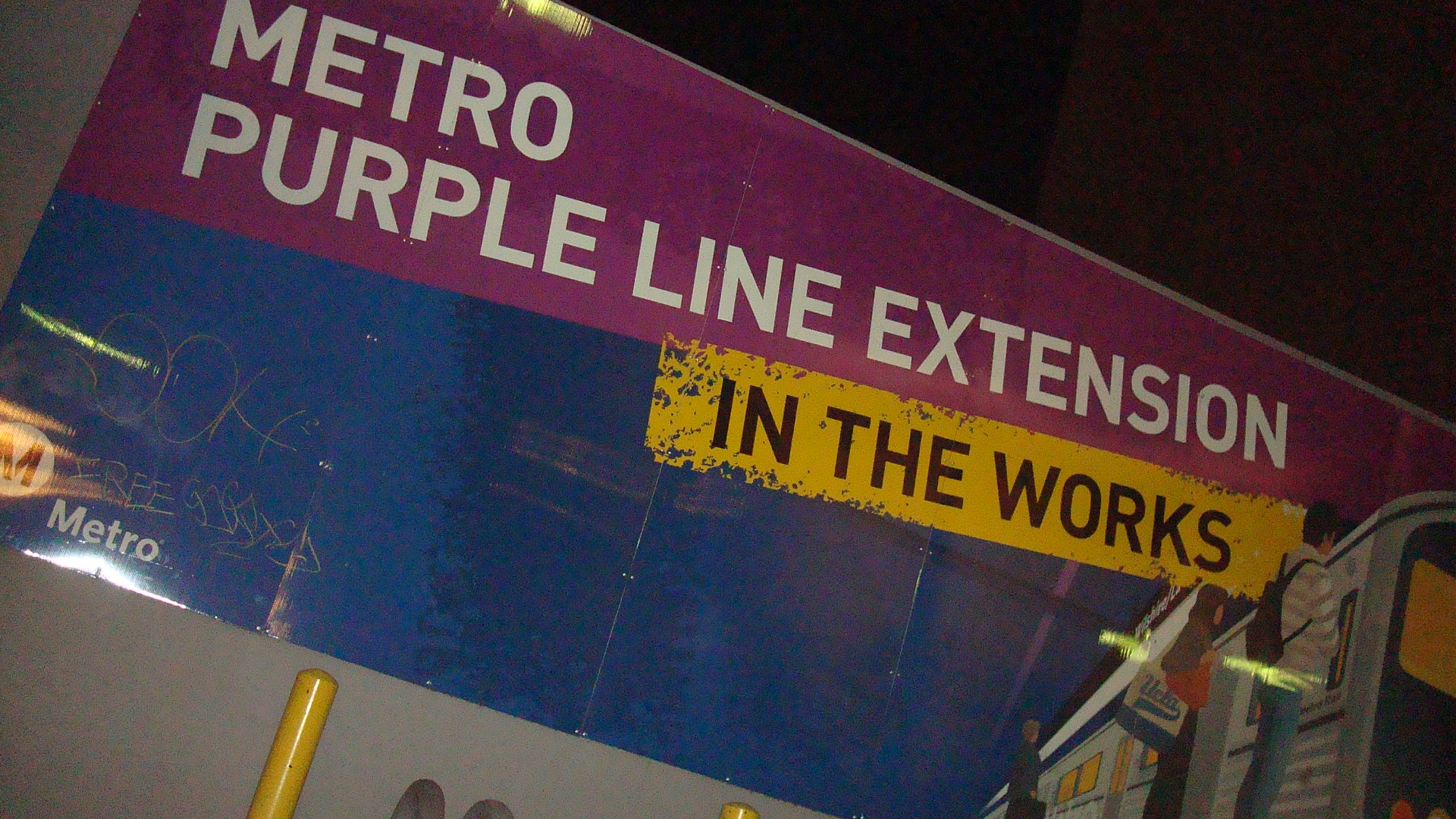
MTA advertisement on Wilshire Blvd.

MTA advertisement on Wilshire Blvd.

On Saturday the LA Times ran an article on the Purple Line extension that was real eye-opener for me. Let me say up front that I absolutely support the extension, and I’m glad the MTA is expanding our transit network. But I hadn’t realized how disruptive the construction would be, and I have to say I sympathize with the residents who are up in arms. They’re looking at years of noise, dust, traffic and general chaos. Even some of those who want to see the Purple Line go farther west are freaking out now that they’re realizing what it means for residents and businesses in the Wilshire Corridor.

If all goes well, the first phase of the project will be completed in nine years. That will only take the Purple Line to La Cienega. It will be over ten more years before it reaches its ultimate destination, the VA campus in West LA. I want to repeat the phrase “if all goes well”. Those of you who were around in the nineties will recall the mixture of disbelief and disgust that Angelenos felt during the construction of the Red Line, when stories about delays, cost overruns, incompetence and corruption appeared regularly in the news. The actual timeline for the Purple Line could easily end up stretching beyond current estimates, and I have no doubt it’ll cost way more than the MTA is telling us.

I am really glad the MTA is moving aggressively to expand our transit system, not just along this corridor but all over the county. I hope, though, that they’re letting residents know what they’re in for, and taking the time to listen to citizens’ complaints. The people who live along the Wilshire Corridor are going to be dealing with some real problems over the next two decades. The City of LA and the MTA need to do everything they can to minimize the disruptions.

Here’s the story from the Times.

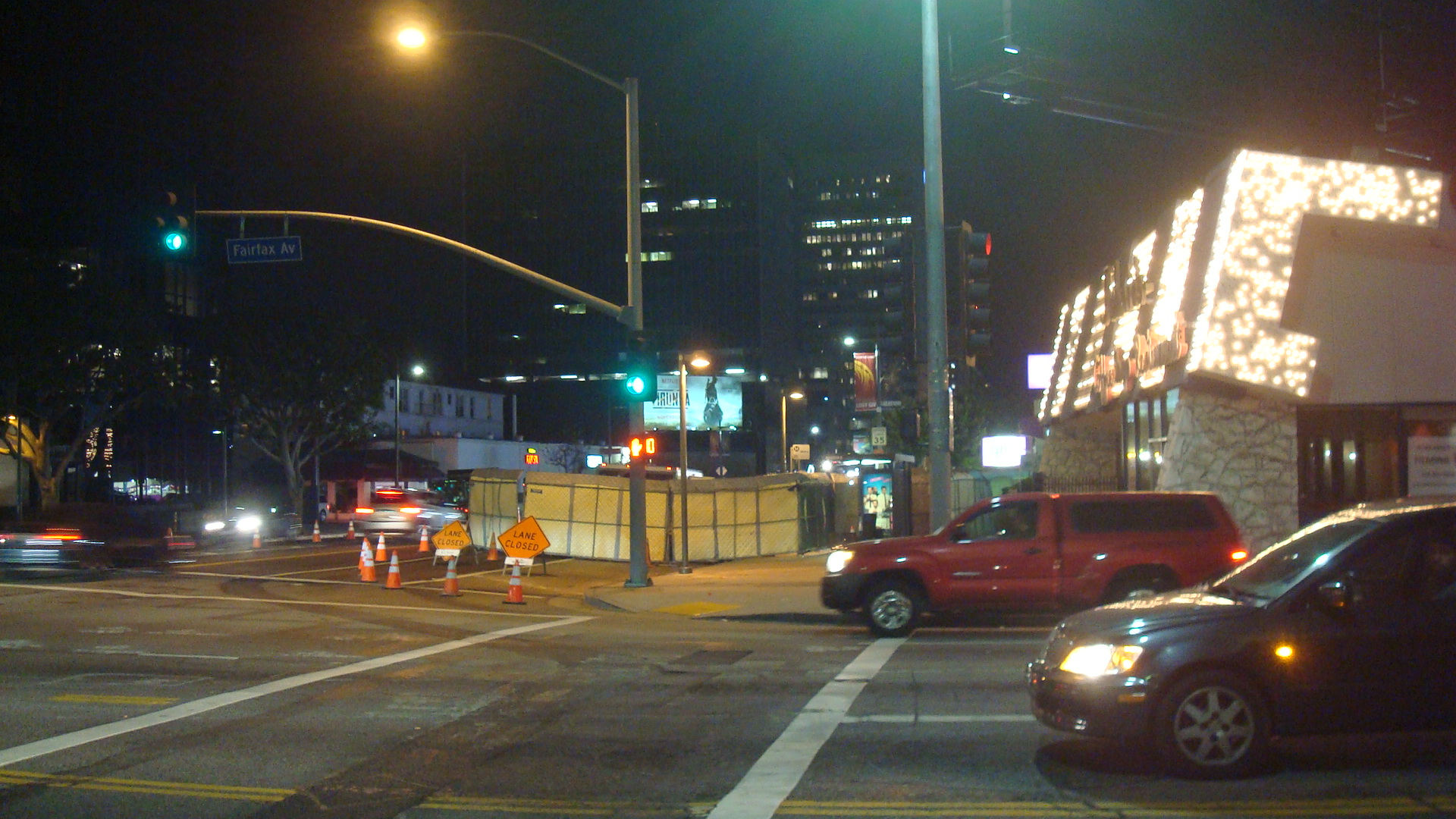
Purple Line Construction

MTA construction site at Wilshire and Fairfax

MTA construction site at Wilshire and Fairfax

Caution: Quake Zone

Nrthrdge Quake

Yesterday’s small temblor was really no big deal. But it does serve as a reminder that we need to be thinking about earthquake safety. Researchers at UCLA and Berkeley have determined that there are many buildings in LA which could collapse in a major quake. They warn that thousands of “soft-story” buildings (mostly condos and apartments), and over one thousand “nonductile” concrete buildings are at risk.

Earlier this month, the LA Weekly ran an excellent article by Gracie Zheng, which not only discusses the danger we’re facing but the inability (or unwillingness) of local politicians to take action. You can read the article by clicking here.

We can make these buildings safe. It won’t be easy. It will cost money. But it can be done. San Francisco has already tackled this problem and found a solution. We need to follow their lead. If, after reading the article, you’re as concerned as I am, a good first step might be to call your council representative. Let them know you want action.

The photo above is from Wikimedia Commons. It shows a damaged building after the Northridge earthquake, and was taken by Gary B. Edstrom.

Out with the Old….

Frfx 01 Kid Corner

The Fairfax district is going through some changes. When I was growing up, Fairfax was a largely Jewish neighborhood with a bunch of delicatessens and kosher markets….

Schwartz Bakery

Schwartz Bakery

There was the newsstand at Oakwood….

Kosher News

Kosher News

There was the Silent Movie Theatre….

Silent Movie Theatre

Silent Movie Theatre

There are still kosher markets and delis on Fairfax. The newsstand is hanging on somehow. And the Silent Movie Theatre seems to be going strong, though they don’t show a lot of silent movies there any more.

But the neighborhood is undergoing a rapid transformation. In the last few years, many of the buildings have changed hands. The new owners have jacked up the rent, forcing out a lot of the older businesses, in some cases businesses that had been serving the community for decades.

Let me give you a few examples. Here’s old Fairfax….

Frfx 05 Hebrew

And here’s new Fairfax.

Frfx 06 Car

Old Fairfax.

Frfx 07 Solomon

New Fairfax.

Frfx 08 Chic Rest

Old Fairfax.

Frfx 09 Two Women

New Fairfax.

Frfx 10 Youth

You can see the landscape is changing. Some of the older establishments are still around, like Canter’s, which is eternal.

Frfx 11 Cntrs Sign

I first started hanging out at Canter’s when I was in my teens. It was a place to go after seeing a movie or a band, because back then it was one of the few restaurants that was open twenty four hours. I didn’t know until recently that Canter’s was originally located in Boyle Heights, which was home to a large Jewish enclave in the first half of the twentieth century. After WWII, when the Jewish community started moving to the west side, the owners followed the exodus and moved the restaurant to Fairfax.

Here’s an article from the LA Times that gives more detail on the transformation that’s taking place.

Fairfax Area Losing Its Kosher Flavor

Things change. Over the years I’ve seen a few places disappear from the neighborhood. I was sorry to see Largo move to La Cienega. I’m sure the new venue is great, but I still remember seeing Weba Garretson, Two-Foot Yard and Jon Brion at the old location. And it broke my heart when Eat a Pita closed.

But it’s not just that the community is changing. I don’t have a problem with Fairfax being a hangout for skateboarders and kids who are into hiphop. They’re bringing life to the neighborhood.
Kids on skateboards are a common sight.

Kids on skateboards are a common sight.

Street artists have been busy on Fairfax.

Street artists have been busy on Fairfax.

Frfx 16 SignI do have a problem with Fairfax becoming a destination for the hip and trendy crowd who see it as just another place to shop and eat. At the rate things are going, it looks like this neighborhood, which used to have so much charm and character, will soon become as superficial and soulless as the worst parts of Melrose.

There’s nothing wrong with people doing business and making a profit, but there are different ways of going about it. There are some investors who move into a particular community not just to make money, but because they see value in being a part of the community. They’re willing to work with the residents. They’re willing to respect the history. My problem is with the people who only see profit and nothing else. They don’t see the community, they don’t see the tradition, they don’t see the culture.

All they see is money.

One of the newer storefronts on Fairfax.

One of the newer storefronts on Fairfax.

A Bridge from the Past to the Future

Figueroa Bridge

Just today I learned about an interesting proposal for the old Riverside-Figueroa Bridge. It was slated to be demolished following the completion of a new bridge, but some people think it could be redesigned to create a public space. Sounds like a good idea to me. If you want to learn more, click on the link below.

LandBridge at Figueroa

The photo above was taken by Osceola Refetoff, and I found it at the LA Creek Freak blog. The author gives an exhaustive history of this bridge, which you can access by clicking here.

Sunset Rising

The new Emerson College campus on Sunset Blvd..

The new Emerson College campus on Sunset Blvd..

Sunset Boulevard is changing rapidly. Developers sense there’s big money to be made, and the City Council is rushing to approve their wish lists with as much speed and as little oversight as possible. Let’s take a look at three projects that are in various stages of completion….

A view of the Emerson campus at street level.

A view of the Emerson campus at street level.

The most interesting of these projects, and in my view the one most likely to produce real benefits for the community, is Emerson College. The school’s new LA campus was designed by Morphosis, and while I’m not a huge fan of the firm’s approach, I have to say this is a nice piece of work. By far the most striking building on the streetscape, it certainly calls attention to itself, but without being ostentatious or garish. It’s a sophisticated modern structure that also manages to be playful. It’s been a while since anyone built anything this cool in the Hollywood area.

A view from a terrace at the entrance to the campus.

A view from a terrace at the entrance to the campus.

Also, Emerson will be bringing teaching and administrative jobs to the community. The City Council insists that development is necessary to reduce unemployment, which sounds logical, but most of the projects they approve will only create low-paying service sector jobs. They seem to feel Hollywood residents should be satisfied with waiting tables and vacuuming hotel rooms. Anyway, Emerson just opened in January and is located at the corner of Sunset and Gordon.

A new residential/retail complex across from the Emerson campus.

A new residential/retail complex across from the Emerson campus.

Right across the street is yet another mixed-use, residential/retail tower. This seems to be the kind of project that developers can’t get enough of right now, high-end housing combined with ground floor retail. By combining the two they can claim they’re addressing the traffic problem by making it easier for people to shop where they live. In reality, I don’t see any evidence that this approach is reducing congestion in the LA area. But there are plenty more projects like this in the works. At least this one looks kind of nice.

The biggest thing going up on Sunset right now is Columbia Square, which will be a massive mixed-use project that incorporates the old CBS Studios. You probably won’t be surprised that it promises still more high-end housing with still more ground floor retail. They’re also billing it as “Hollywood’s New Creative Media Campus”. I’m not sure exactly what that means, but hopefully the finished product will deliver more than I expect. You can click here for more details. At least they’re preserving the CBS building, so I guess I should be thankful for that. To read more about the history of CBS Studios, click here.

Workers atop the old CBS Studios.

Workers atop the old CBS Studios.

Columbia Square will occupy a full city block. Right now workers are busy inside a massive excavation as they prepare the foundation. There’s something about the scale of these enormous projects that’s kind of overwhelming. I look down into this huge pit and see hundreds of workers, I see trucks, tractors and cranes. A whole city block is being transformed.

Workers preparing the foundation for the Columbia Square project.

Workers preparing the foundation for the Columbia Square project.

Another shot of workers preparing the foundation.

Another shot of workers preparing the foundation.

Here are a few more images….

A side view of the site, facing west.

A side view of the site, facing west.

Another side view, again facing west.

Another side view, again facing west.

A shot of CBS Studios taken in the late afternoon.

A shot of CBS Studios taken in the late afternoon.

You may wonder why I included these, since they’re mostly shots of the sky above the project. It probably seems like just a lot of empty space. But that’s what I wanted to capture. When Columbia Square is finished, it will rise twenty stories above street level.

All this space will be gone.

The Cornfield Under Construction

The Cornfield on a day in January.

The Cornfield on a day in January.

You may not be familiar with Los Angeles State Historic Park, AKA the Cornfield. Downtown residents probably know it best, though it’s also hosted a number of popular music festivals. It is kind of off the beaten path, lying on the outskirts of the downtown area, and it’s only been around since two thousand five.

The entrance to the Cornfield.

The entrance to the Cornfield.

Unfortunately, if you haven’t made it down there yet, you’re going to have to wait until next year. Plans to expand and improve the site have been on the drawing board for a while, and the state has finally approved the funds. So the park will be closing this month as work begins. Among the changes will be the creation of a wetlands area, the construction of an amphitheatre and the addition of a space for a farmers market.

I actually like the park as it is, a plain, open space with grass and trees. So I decided to take some photos of it before the closure. The park was pretty empty on the day I made it down there, probably in part because the sky was overcast.

Downtown is visible off in the distance...

Downtown is visible off in the distance…

...and industrial area lies on one side...

…an industrial area lies on one side…

...and train tracks on the other.

…and train tracks on the other.

The site that the park is on has a pretty interesting history. Community groups fought with a developer who wanted to build warehouses on the land. This article on the KCET web site offers a good deal of information. The designers who created the park’s current state incorporated markers to commemorate some of the groups that have been a part of LA’s history.

The path leading up to a low hill...

The path leading up to a low hill…

...where you'll find a concrete marker...

…where you’ll find a concrete marker…

...that commemorates some of the people who make up the city's history.

…that commemorates some of the people who make up the city’s history.

Creating the park was a long and difficult process, and there were disagreements among some of the groups involved. This article from the LA Times covers the conceptual art event that re-opened the park, and also details some of the differing points of view.

Not a Cornfield

And for the official story (much less interesting), you can take a look at the state’s web page.

Los Angeles State Historic Park

Corn 10 Hill w Trees