They Work by Night

Workers 01 Dark

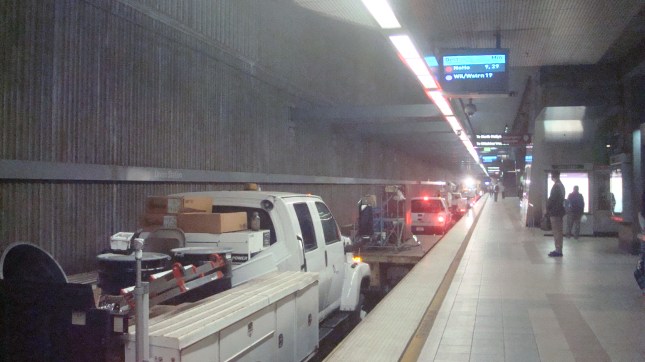
There was a night, maybe a couple years ago, when I was going home after visiting a friend. I was at a Red Line station, waiting for the train to come. There were probably about twenty or thirty people standing on the platform. But before the train showed up, an interesting procession emerged from the tunnel. A group of vehicles rolled slowly out of the darkness and into the light. One of them was a flatbed truck with a few guys in orange and yellow vests riding along. The people on the platform called and waved to them. They waved back. The truck kept rolling along, and so did the rest of the vehicles in the caravan, and in a minute or two they were out of sight.

Don’t ask me why, but after that happened I kept hoping I’d catch another glimpse of these workers and their machines. It’s probably a sign of how dull my life is that I get excited about seeing an MTA maintenance crew. But I guess part of why this caught my attention was that I’d never really thought about who kept the subways running. The city we live in is woven together by massive infrastructure networks, but most of us rarely think about how they’re maintained. We just want things to work, and we get ticked off when they don’t. But most of us are completely clueless about the massive effort it takes to keep LA running day in and day out.

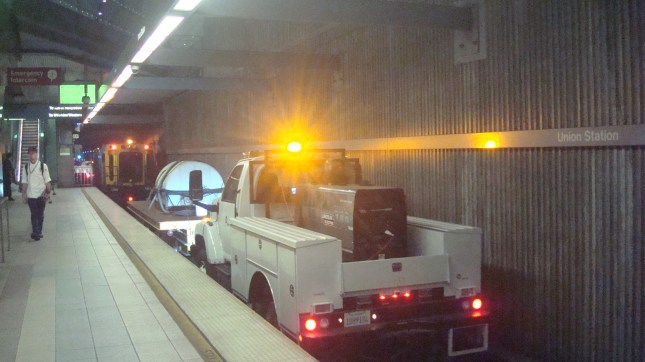
So I kept hoping I’d catch another glimpse of the workers who maintain the trains. And since then, whenever it happened I snapped a few photos. As far as I can tell, most subway maintenance is done at night. These people spend hours rolling around in shadowy tunnels doing the many large and small jobs it takes to keep the trains running.

Workers 05 Night

A caravan of maintenance trucks.

Workers 25 Other

Another shot of maintenance trucks.

One night I got a shot of this….

Workers 30 Harsco

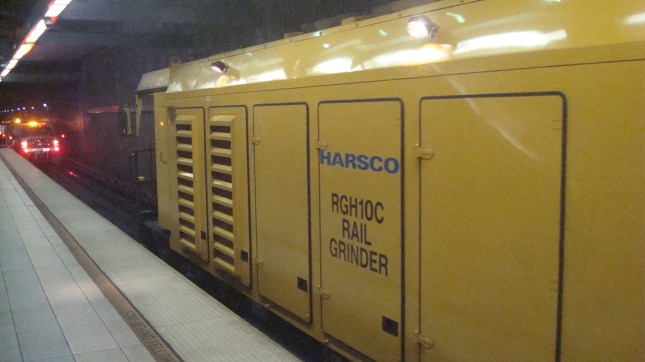
A rail grinder.

I’d never seen a rail grinder. I didn’t even know they existed. But they’re routinely used by rail lines all over the world to maintain tracks and increase their lifespan. I went looking on YouTube and found a video. Interestingly, there are dozens available. (I guess there are a lot of folks out there whose lives are as dull as mine.) The model you see here is different from the one I saw, but it gives you an idea of what these things look like in action.

Loram Rail Grinder

And if you want to find out more about what rail grinders are and how they work, here’s the article from Wikipedia.

Rail Grinders

Last weekend I was making my way down the stairs at the North Hollywood station and saw a couple of trucks on the track and some workers hanging out. I pulled out my camera and started taking pictures. Then I thought, why not ask them what they’re doing? Turns out they weren’t doing maintenance, they were installing the hardware to make cell phone access available on the subway. I asked them if I could take their picture, and they said yeah.

Workers 60 Guys

Here are the rolls of cable they’re installing.

Workers 65 Cable

The point of all this being, this stuff doesn’t happen by magic. So many of the things we rely on every day, subways, cell phones, roads, sidewalks, TVs and water taps, are only there because people put them together and people keep them maintained. Most of the time the folks who do all these jobs are completely invisible to us. But I think it’s good to remind ourselves that they’re out there. They make the city work.

Workers 70 Tunnel

People’s Climate March in Wilmington

PCM 01 Basta

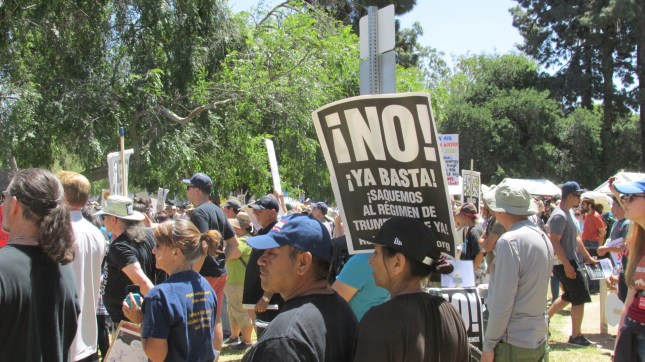
The communities clustered around the Ports of Los Angeles and Long Beach face higher health risks due to contamination than any other part of LA.  With diesel trucks, heavy machinery, oil refineries and industrial waste all causing impacts on the local enviroment, the people who live in this area have suffered from the effects of toxic air, toxic water and toxic soil.  They’re getting it from all sides.

PCM 10 Cap

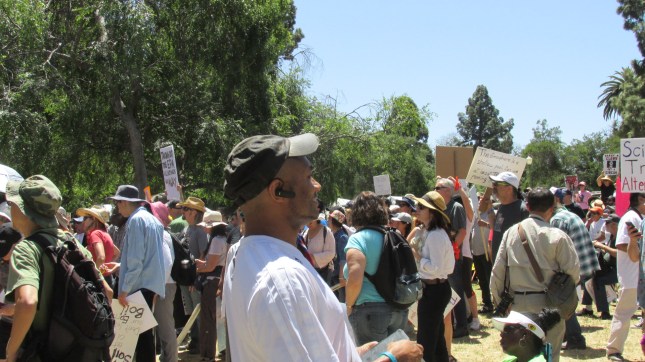
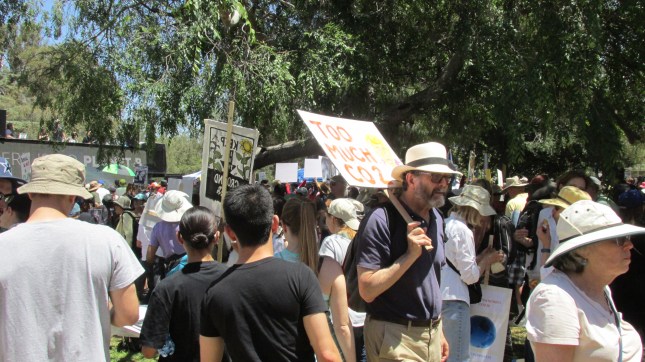
Thousands of people showed up for the march.

PCM 12 CO2

A shot of the crowd with the stage in the background.

PCM 14 Hands

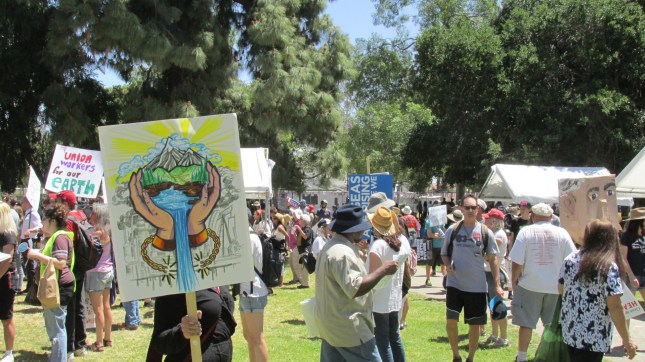
This sign caught my eye.

So the People’s Climate March had a special meaning for the folks who live in these communities.  Last Saturday, April 29, there were demonstrations in cities across the US, and here in LA protesters congregated in Wilmington.  They started with a rally in Banning Park, and then marched to the nearby Tesoro Refinery to voice their fears about increased levels of contamination.

PCM 20 Cart

Even protesters gotta eat.

PCM 22 Cells

And they gotta check their cell phones.

Jane Fonda and Robert Kennedy, Jr. both showed up at the rally to talk about the importance of protecting the environment.  Representative Nanette Diaz Barragán gave a fiery speech, railing against the injustice of subjecting low-income familes to hazardous levels of contamination.

PCM 50 Stage

The crowd gathered in front of the stage.

PCM 52 Stage Wave

Spirits were high.

PCM 54 Stage NDB

Representative Nanette Diaz Barragan lays it down for the crowd.

It does seem crazy that at a time when the vast majority of scientists agree on the dangers of climate change, the US government is doing everything it can to roll back environmental protections.  But this isn’t the first time we’ve seen politicians put corporate profits above the public good.  Which is why we have to keep reminding them that they were put in office to serve us.

PCM 58 March

Protesters getting ready to march.

PCM 60 Lavender

It took a while to get things started.

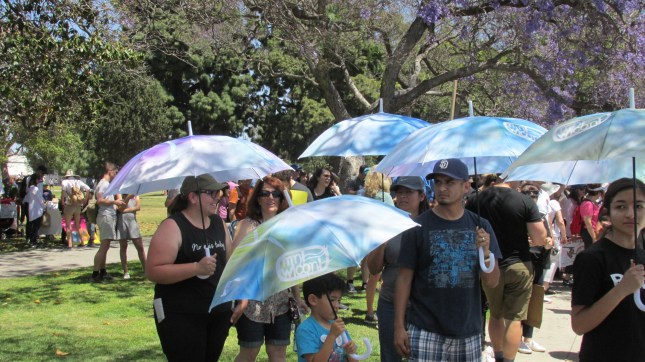
PCM 62 Umbrellas

Lots of folks carrying umbrellas.

Marching is good.  Staying engaged with your elected officials is even better.  This is going to be a long fight, but we’ve won before, and we can win again.

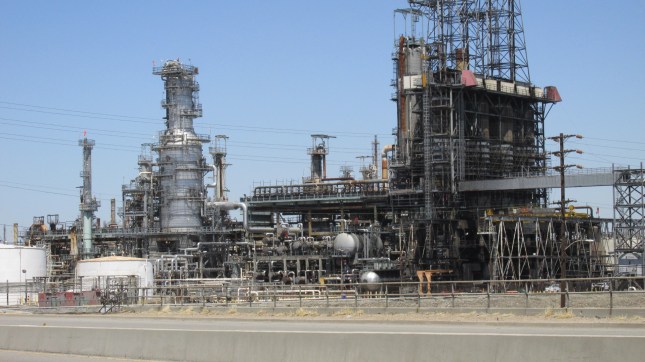
PCM 90 Ref

Tesoro Refinery

Twilight: Los Angeles, 1992

Twi 1

During the month of April there were plenty of reminders in newspapers and magazines, on radio and TV, of the civil disturbance that rocked Los Angeles twenty five years ago. I’ve seen plenty of coverage of those events over the years, but for my money the most honest and most insightful account of what went down is still Anna Deavere Smith’s Twilight: Los Angeles, 1992.

I went back and watched it again recently. If you’re not familiar it, Smith started by interviewing scores of people who lived in LA at the time the violence broke out. Using only the words of these witnesses, she constructed a one-woman show where she transforms herself into one character atfer another, weaving together an amazingly complex panorama, not just of the events of April 1992, but of the city at that time.

If you haven’t seen it, I recommend it highly. A video of the entire performance is available via WNET, a PBS affiliate. Here’s the link.

Twilight: Los Angeles, 1992

Twi 6 Baton

LA River Clean-Up: Willow Street Estuary

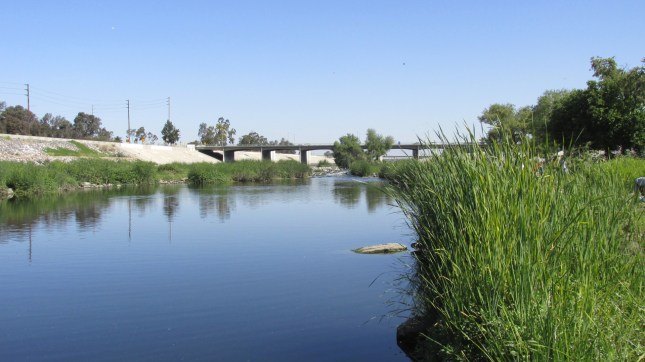
LAR WCU 00 Grass Water 1

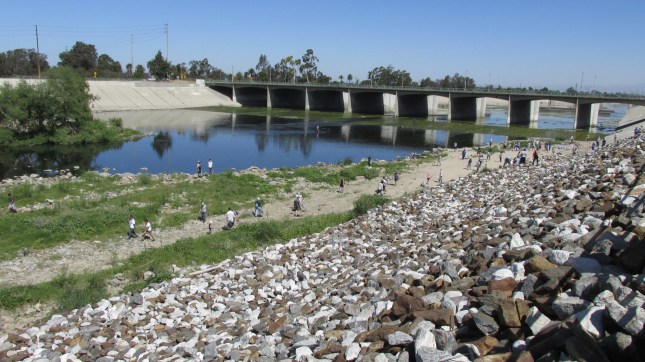
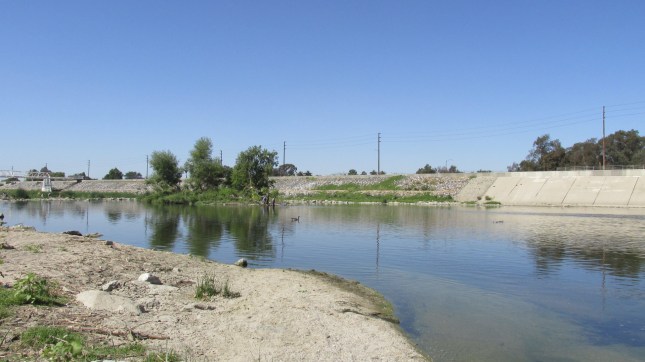
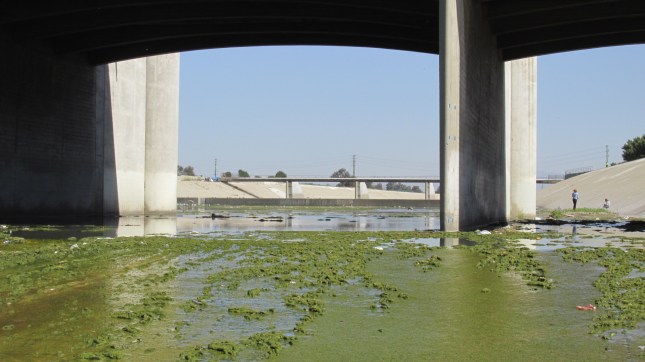
Yesterday I went down to Long Beach to take part in the annual LA River Clean-Up, organized by Friends of the Los Angeles River (FOLAR). The Willow Street Estuary isn’t far from where the river flows into the ocean, and it’s one of the few stretches where the bottom is earth instead of concrete.

LAR WCU 10 Sign

It wasn’t hard to find the clean-up.

LAR WCU 12 Cones

Dozens of people beat me down there.

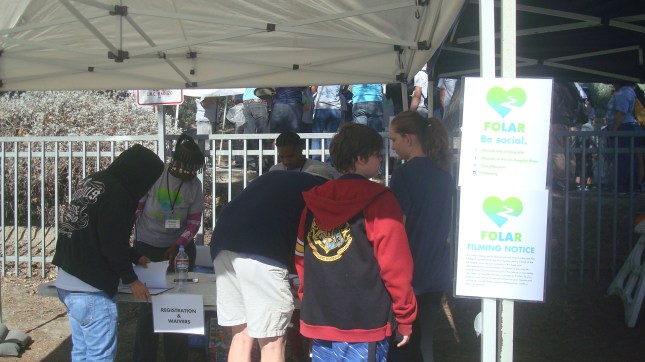
LAR WCU 14 Registration

The people working the registration table were keeping busy.

LAR WCU 16 Bags

Everybody got a pair of gloves and a bag.

There were already plenty of people there when I showed up a little after nine. It took just a few minutes to sign the waiver, grab a trash bag and do the orientation. Then I joined the crowd of people climbing down the bank to the river.

LAR WCU 18 Rocks Down

Heading down the bank to the river.

LAR WCU 20 Trees 1

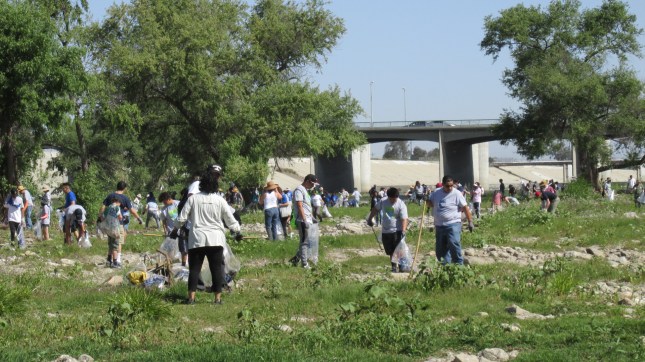
Hundreds of people combing the river bed for trash.

LAR WCU 22 Two Kids

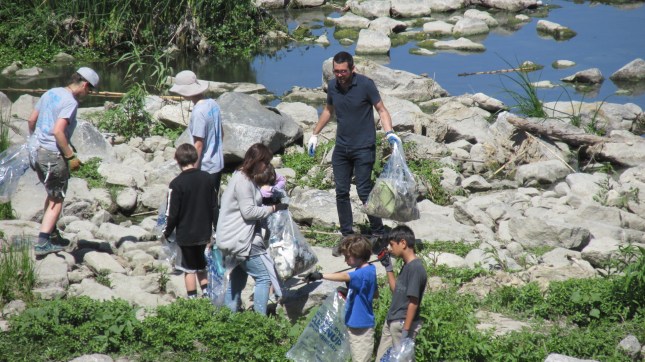
Lots of families showed up.

LAR WCU 24 Kids

Kids were some of the hardest workers.

LAR WCU 29 Face

It wasn’t all trash.  I found this face staring at me from among the rocks.

LAR WCU 27 Duck

A few guys waded all the way across the river.

LAR WCU 30 Trash

This is just some of the trash that was collected.

LAR WCU 28 Wide Stoop

The work wasn’t hard, and it was a great day to be outdoors.

If you don’t know what an estuary is, don’t feel bad. I didn’t either until I looked it up on the net. Generally speaking it’s where a river nears the ocean, and fresh water meets salt water. They’re an important part of the ecosystem, filtering runoff and serving as a breeding ground for fish and birds. Watch this video from the National Oceanic and Atmospheric Administration to learn more.

What Is an Estuary?

LAR WCU 40 River Bridge CU

The water is placid as it emerges from under the Willow Street Bridge.

LAR WCU 40 River Rapid

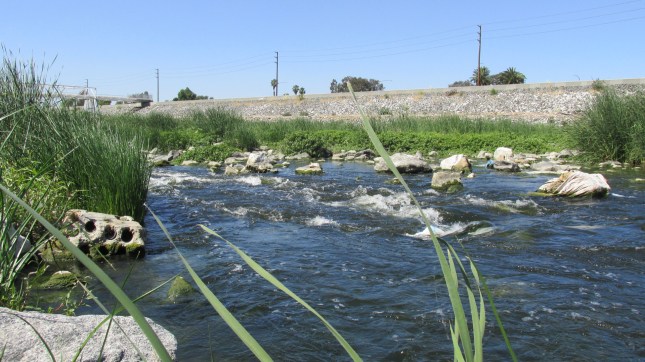
The surface gets a little roiled where the river narrows.

LAR WCU 65 River Long

From the estuary, the river rolls down to meet the ocean.

Aside from organizing the LA River Clean-Up, FOLAR presents events throughout the year. They’ve been working to preserve and restore the river longer than anyone else, and they’ve racked up an impressive list of accomplishments in their 30 year history. If you want to get involved, start by visiting their web site.

FOLAR

LAR WCU 70 Green Bridge

Protest to Save the Planet

MS 01 Crowd 3

The vast majority of climate scientists agree that climate change is a threat and that it’s caused by human activity. But the White House is determined to ignore that threat, and has taken steps to back away from agreements the US has signed to reduce global warming. On top of that, the new administration has proposed to cut the Environmental Protection Agency’s budget by almost a third, and roll back regulations designed to protect our air and water.

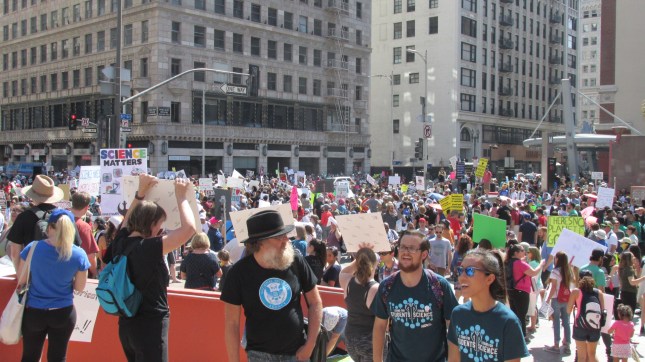
But scientists are fighting back. Last Saturday was Earth Day, and to push back against Washington’s assault on the environment a broad coalition of academics and activists organized the March for Science. All across the country Americans gathered in cities big and small to speak out in favor of protecting the planet.

When I got off the subway at Fifth and Hill the streets were already packed.

MS 10 Crowd 5th Hill

The street was jammed when I arrived.

MS 11 Release

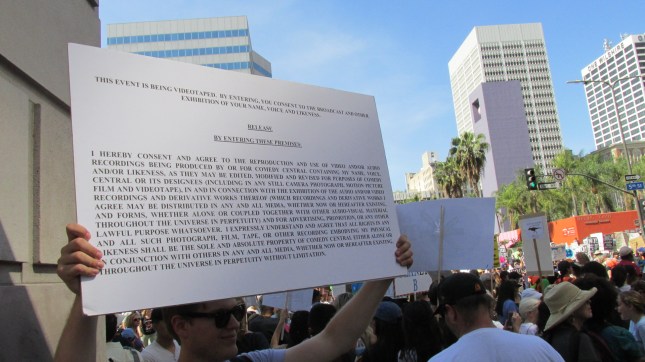
Glad to know it was okay to take photos.

MS 13 Misc Kitty

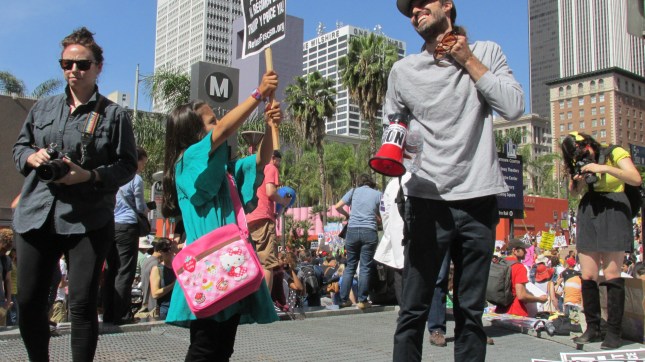
Even Hello Kitty fans turned out to protest.

MS 14 Crowd Flowers

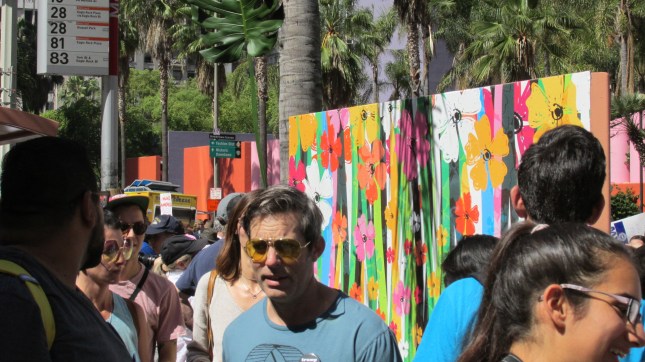
The sidewalks were so crowded it wasn’t always easy to get around.

I could hear people speaking over a PA in Pershing Square, so I headed over there. The crowd was so thick I couldn’t get near the stage, so I wandered around and snapped a few photos.

MS 20 Crowd Orange

I couldn’t get near the stage in Pershing Square…

MS 21 Crowd Darkness

…so I made my way through the throng…

MS 22 Crowd Vert

…to another part of the plaza…

MS 25 Misc Santas

…where I ran into Santa Claus.

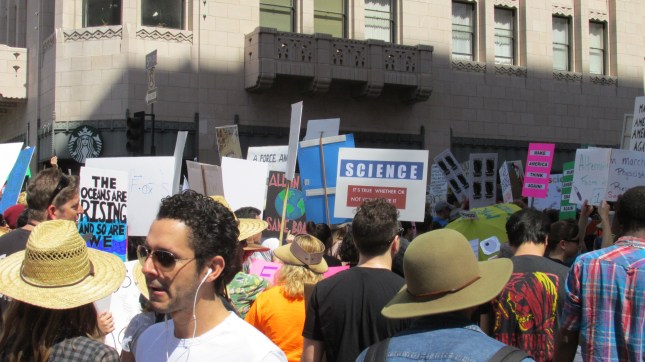
Here are a few signs that jumped out at me.

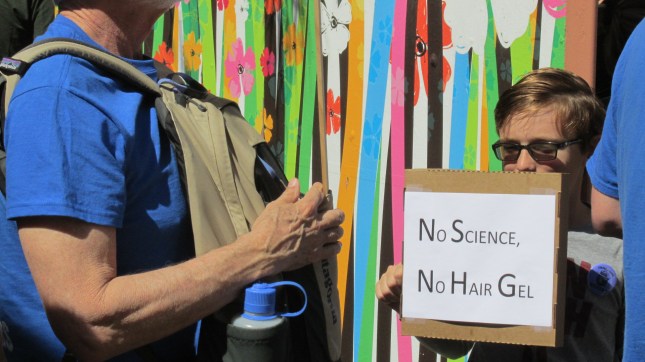
MS 30 Sign Gel

My favorite sign of the day.

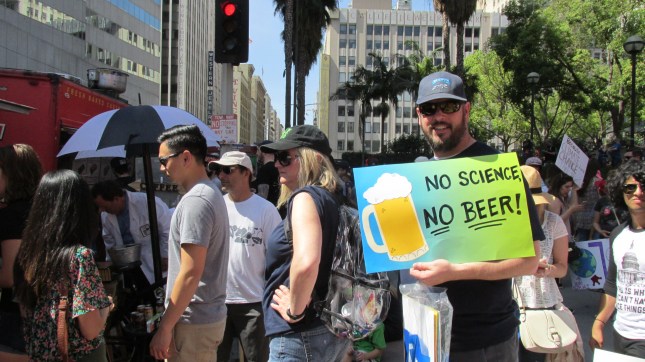
MS 32 Sign Beer

The scariest sign of the day.

MS 34 Sign Sign

The most honest sign of the day.

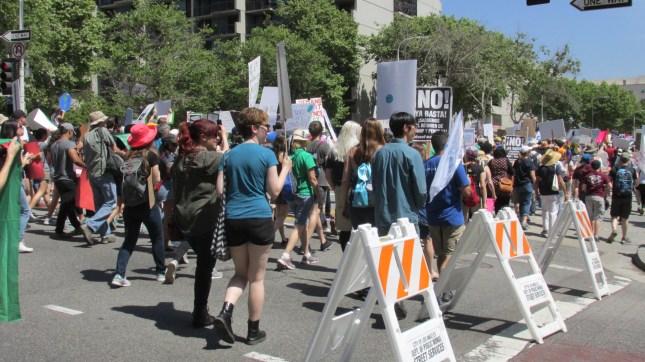
Finally the march got started. A huge crowd headed up Hill Street and then over to City Hall.

MS 40 March Crswlk Truck

The crowd getting ready to march.

MS 42 March Hill North 2

Protesters made their way up Hill Street.

MS 44 March Blue Ts

Another shot of the march.

MS 46 March She Blinded

And yet another shot of the march.

Earth Day is over, but the fight is just starting. We need to speak out loudly against policies that put profit ahead of the planet. To learn how you can get involved, visit the March for Science web site.

March for Science

MS 70 Crowd St V

LA’s Latest Innovation: Freeway-Adjacent Rooftop Decks

RD Ovrcast

You just never know what the City of LA will come up with next….

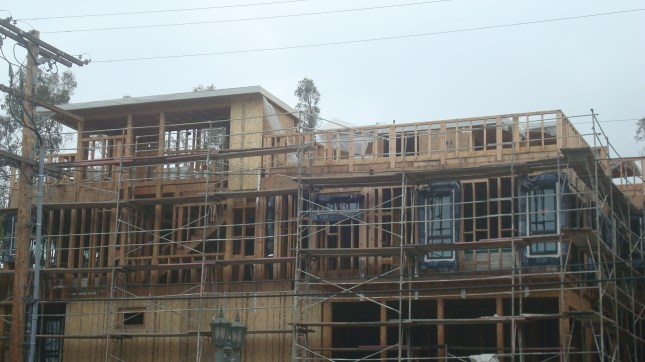
There was an empty lot in my neighborhood that had been sitting vacant for years.  After a developer pitched a hotel for the site and got turned down, a new project came along consisting of 18 3-story condos.  It seemed like a good fit, the Hollywood Hills West Neighborhood Council (HHWNC) looked it over and gave it a thumbs up, and construction started last year.

Everything seemed okay until last November when I noticed what looked like a railing going up around the perimeter of the roof.  Were they adding rooftop decks?  That wasn’t mentioned in the hearing notice for the project or the environmental assessment, and it wasn’t part of the project approved by the HHWNC.  Not long after the railing went up, it became clear that the construction crew had added staircases leading to the roof, and soon they were building stairwell coverings.

Why was I concerned?  Well, here in Hollywood people like to give parties.  Nothing wrong with parties in general, but sometimes they get pretty noisy, and sometimes they go on really late.  It’s already an issue in the neighborhood, and building 18 individual rooftop decks seemed like it was just increasing the chances of someone throwing an all-night open-air bash.

So initially my concern was selfish.  I was worried about the noise this project might create, and I was wondering why the rooftop decks hadn’t been included in the package that was presented to the community and approved by the Department of City Planning (DCP).  I called up my City Council office, and talked to a very nice guy who said he’d look into it.  Over the next two months I sent three e-mails to this Council Office staffer asking for an update.  Never got an answer.

But during that time it occurred to me that there might be another problem with this project, a much more serious issue than raucous late night parties….

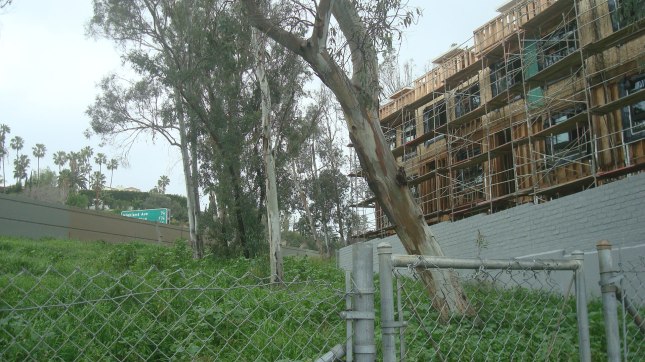
You see, these condos are going up right next to the Hollywood Freeway.  I’d say at the farthest point the structure is about 150 feet from the freeway and at the nearest point about 50.   I started wondering if building so close to a major traffic corridor wouldn’t pose health risks for the future occupants, so I got on the net to do some research.

RD Fwy

The space between the project site and the freeway.

Probably everybody reading this already knows what I found out.  There’s a large body of research showing a higher incidence of respiratory problems among people who live near freeways.  The risk is especially high for children and seniors.  In fact, young people can suffer lifelong damage since ongoing exposure to pollutants from auto exhaust may affect the development of their lungs.  This problem has gotten a lot of media attention recently, but the information has been out there for years.  USC has been studying the effects of air pollution on children since the 90s.  Here’s an article published by USC News back in 2004.

USC Study Links Smoggy Air to Lung Damage in Children, September 2004

Not long after, the California Air Resources Board (CARB) published their Air Quality and Land Use Handbook, warning cities about the risks of building housing near freeways.  Here’s the number one item on the handbook’s list of recommendations.

“Avoid siting new sensitive land uses within 500 feet of a freeway, urban roads with 100,000 vehicles/day, or rural roads with 50,000 vehicles/day.”

So the information has been out there for more than a decade, and the City Council is well aware of the health impacts to people living close to freeways.  They’ve talked about ways to deal with the risks, but very little has happened in the way of concrete action.  In fact, in recent years the Council has approved thousands of residential units in close proximity to freeways.  They argue that LA’s housing shortage is so dire we can’t afford to prohibit construction in these areas even if there are health risks.  Even though I don’t buy that argument, I know that many people would agree.

But rooftop decks?!  Are they crazy?!

After reading up on the potential health risks, the idea of adding rooftop decks to these condos seemed so absolutely insane I thought it was worth making a few phone calls.  I rang up the woman at the DCP who prepared the initial study for the project.  I explained that the rooftop decks hadn’t been included in the project description or the renderings that were shown to the HHWNC, and that the height had increased by 30%.  She said that the project complied with existing zoning and that the Department of Building and Safety (LADBS) had the final authority over what was permitted.  I asked how the DCP could allow this since noise impacts from rooftop decks weren’t considered in the environmental assessment.  She replied that the DCP had considered operational impacts from the project and had approved the assessment.  Finally, I pointed out that the rooftop decks posed significant potential health risks to the future tenants.  Her response was that the California Environmental Quality Act (CEQA) did not require the DCP to consider impacts to those who would live on the site in the future.

I was angry, but not really surprised.  I’ve realized over the last few years that the folks at the DCP really don’t care about how proposed projects will affect the lives of the people who live in this city.  It’s all about keeping the developers happy.

RD Traffic EDITED

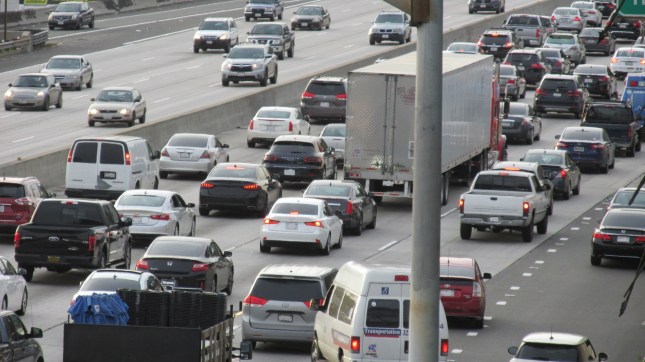
Traffic on the Hollywood Freeway near the project site.

Who knows why I even went on to contact LADBS.  I guess I must get some kind of sick kick out of banging my head against a wall.  Anyway, here’s their response.


The roof top decks and the overall building height of 44.9 feet is allowed by right, therefore LADBS does have the ability to approve the project as proposed.  The Zoning Variance reviewed by City Planning only addressed a parking requirement.  City Planning has approved the plans for the current project.

LADBS’ authority to approve projects is based on Building Code requirements.  The Building Code does not have any restrictions for a rooftop deck near a freeway.


So according to LADBS, they did everything by the book.  They don’t see a problem.

But there is a problem here.  It’s bad enough that a developer is allowed to present one project to the community and then build something substantially different.  But it’s even worse when a developer is allowed to create a clear health risk for the people who will live in the finished building.

I tried arguing with the bureaucrats who approve these projects and got nowhere.  Maybe it’s time to take it to the higher-ups.  If you feel there’s a problem here that needs to be addressed, I hope you’ll feel strongly enough about it to write an e-mail to the three people listed below.  And please use the following subject line….

Freeway-Adjacent Rooftop Decks at 2111 Cahuenga

Eric Garcetti, Mayor

mayor.garcetti@lacity.org

Vince Bertoni, Director of City Planning

vince.bertoni@lacity.org

Frank M. Bush, LADBS General Manager

frank.bush@lacity.org

RD Tight


Culture Is Community

MM 000 Open Energy

Years ago I worked at The Museum of Contemporary Art (MOCA) in Downtown. I loved working there, because it meant always being around art. That was very cool. But after a while, I started to realize there was a problem with museums. Just by their nature, they put barriers between the art and the audience. For instance, MOCA had a Rauschenberg combine in its collection. When it was first shown back in the 50s, it was an interactive piece and the artist expected people to touch it. But by the time it was acquired by the museum, the combine was worth over a million bucks, and if you tried to touch it, the security guard would freak out. Unfortunately, that’s what happens when artists become icons and their work ends up in institutions.

So it’s really cool when artists make work that’s always accessible to its audience. Art that’s part of the daily life of the community. That’s why LA’s murals are so important. They’re not sitting in a temperature controlled gallery surrounded by security guards. They’re out there on the street, in the midst of the community. And Pacoima is one community that’s extremely lucky in this respect. The streets there are loaded with murals. They come in all sizes, shapes and colors. They can be poetic, patriotic or political. Many feature pop culture icons, but some of them are all about ideas.

MM 005 VN SF EDITED

Van Nuys Boulevard at San Fernando Road

Once you get to Pacoima, it’s not even like you have to go looking for the murals. Just head up Van Nuys Blvd. and the art starts jumping out at you. This community has actively supported local artists, and it’s important to emphasize that this is a community effort. While individual artists put their names to the finished work, these murals are a team effort, and often they list the names of the many people involved in making it happen.

MM 010 LotV 1

Lady of the Valley by Levi Ponce, near Van Nuys and Arleta

MM 020 Born

Born in East Valley by Levi Ponce, at Van Nuys and Bartee

LA has come to be known as a mural mecca, but City Hall hasn’t always treated these artists well. In 2002, to settle a longstanding dispute with billboard companies, an ordinance was passed to make murals illegal. But it got worse. In the years that followed, the City obliterated a number of these works by painting them over. One article I read said that 300 murals were lost, but it’s probably impossible to calculate the real number. The City passed an ordinance to lift the ban in 2013, and since then artists have been making up for lost time. It’s weird, though, because while the City went after illegal murals with a vengeance, it’s never taken any serious action to crack down on illegal billboards. I bet if the artists had been able to shower our elected officials with campaign cash like the billboard companies have, there never would have been a ban in the first place.

MM 030 Sacrificing

Sacrificing to Protect by STP Foundation, near Van Nuys and Vena

MM 040 FK DR

Pacoima Kahlo* by Levi Ponce, at Van Nuys and Ralston

Many of the murals celebrate pop culture icons, like the two pictured here featuring Ritchie Valens and Elvira.

MM 065 RV

La Bamba/Ritchie Valens by Hector Ponce, at Van Nuys and Amboy

MM 067 RV CU

Closer shot of Ritchie Valens

MM 070 Elvira

Elvira en Pacoima by Hector Ponce, near Van Nuys and Haddon

But they also focus on lesser known names, people whose lives and work have a meaning to those in the community.

MM 060 Artistas

Artistas de la Comunidad by Hector Ponce, near Van Nuys and Laurel Canyon

This isn’t a mural, but it caught my eye. The caricature of Cantinflas, a forgotten star from another age, painted on the front of a shuttered fast-food stand, seemed both funny and sad at the same time.

MM 050 Cantinflas

The theme of freedom comes up over and over again. Sometimes it’s political. Sometimes it’s purely personal.

MM 080 Freedom Fighter

Freedom Fighter by Kristy Sandoval, at Van Nuys and Pala

MM 090 Decol

Decolonized by Kristy Sandoval, at Van Nuys and Bradley

MM 100 La Lady Liberty

La Lady Liberty by Levi Ponce, at Van Nuys and Bradley

MM 110 WO Boundaries

Without Boundaries by Levi Ponce, at Van Nuys and Haddon

There’s plenty of awesome art in Pacoima, but you can find murals all over LA. If you want to see more, The Mural Conservancy of Los Angeles is a great place to start. If you haven’t been to their web site already, you need to pay them a visit.

The Mural Conservancy of Los Angeles


*  This seems to be the second mural featuring Frida Kahlo by Levi Ponce at this same location.  I found an earlier version on the net that had the title Pacoima Kahlo, but I’m not sure if that title applies to the current version.

MM 120 Metro Market

Trashing a Treasure

Norton Entrance a

Well, for a while it looked as though the preservation community might manage to save the two lovely apartment buildings on Norton Avenue that were slated for demolition.  But the developers have some sharp lawyers on their side, and now it appears that Norton Court (424-430 N. Norton Avenue) and Norton Flats (412-420 N. Norton Avenue) will soon be gone.

Members of the community have been working for months to save these beautiful examples of courtyard apartments.  Both buildings were constructed in the 20s, and according to Survey LA, they are among the “few remaining examples in the area that [retain their] original site plan, landscape and hardscape elements, and architectural features.”

Councilmember David Ryu came to the rescue recently with an emergency nomination of the buildings as Historical-Cultural Monuments (HCMs).  But the developers’ lawyers found a way to block the nomination on a technicality.  It seems they’re determined to destroy these buildings at all costs.

Norton Stairs b

This is not the first time the Cohanzads have knocked down a building that could have been protected as an HCM.  Whether they’re operating as Wiseman Residential, or one of the numerous LLCs they’ve created to protect themselves from liability, the Cohanzads have made a practice of knocking down older buildings to put up new ones.  They don’t seem to care how much of LA’s history they’re destroying, or how their projects affect LA’s communities.  They argue that by levelling small buildings and putting up big ones they’re doing us a favor by increasing the supply of housing.  But many of the units they’ve demolished were rent controlled, and the new units they’re creating are way too expensive for someone earning LA’s median income.  Doesn’t sound like a very good deal to me.

And then there’s the loss of treasures like the Norton courtyard apartments.  The number of structures like this is shrinking, and there are few left that are still substantially intact.  But the Cohanzads don’t seem to care.  I guess it’s all about profit for them.

It may be too late to save the Norton apartments, but we can try.  Please e-mail Councilmember David Ryu to thank him for his efforts so far, and to encourage him to maintain his support for preservation of these buildings.

David E. Ryu            david.ryu@lacity.org

Use the subject line, “Demolition of Norton Apartments”.

While you’re at it, copy your own Councilmember on the message.  Or better yet, copy them all.  And don’t forget the Mayor.

Gilbert Cedillo           councilmember.cedillo@lacity.org

Paul Krekorian         councilmember.krekorian@lacity.org

Bob Blumenfield      councilmember.blumenfield@lacity.org

Paul Koretz   paul.koretz@lacity.org

Nury Martinez           councilmember.martinez@lacity.org

Felipe Fuentes         councilmember.fuentes@lacity.org

Marqueece Harris-Dawson            councilmember.harris-dawson@lacity.org

Curren D. Price, Jr.  councilmember.price@lacity.org

Herb J. Wesson, Jr.             councilmember.wesson@lacity.org

Mike Bonin    councilmember.bonin@lacity.org

Mitchell Englander councilmember.englander@lacity.org

Mitch O’Farrell          councilmember.ofarrell@lacity.org

Jose Huizar   councilmember.huizar@lacity.org

Joe Buscaino           councildistrict15@lacity.org

Eric Garcetti  mayor.garcetti@lacity.org

We may not win this fight, but we can go down swinging.

Norton Lamp c

A Crash Course in Asian American Activism

CAM 01 Ext Sign Stand

A while ago I read in the LA Weekly that the Chinese American Museum was presenting an exhibit about the Asian American activist movement from the 60s through the 80s.  It caught my attention for two reasons.  First, I had no idea that Asian Americans played a significant part in that era’s counterculture.  Second, I didn’t even know we had a Chinese American Museum in LA.  So I figured it was time to learn more about both.

It was well worth taking the trip to Downtown.  The museum is in a historic building just off the plaza at El Pueblo de Los Angeles.  Before I even got to the exhibition about Asian American activism, I spent some time with two smaller shows on the ground floor.  Journeys and Origins deal with Chinese migration to the US and the formation of Chinese communities in LA.  These shows are small, but beautifully put together, with a rich collection of artifacts.

CAM 10 Imm Room

Exhibits on the first floor document Chinese migration to the US.

CAM 12 Imm Page

Documents and photos help tell the story.

CAM 14 Imm Chairs

Furniture, cookery, toys and textiles are featured.

CAM Imm Abacus

Does anyone under 40 even know what an abacus is?

Then I went upstairs to check out the main attraction, Roots, Asian American Movements in Los Angeles, 1968-80s.

CAM 20 Rts Title

This show was a real eye opener.  Like I said before, I had no idea Asian Americans were so much a part of the counterculture in the 60s and 70s.  In one respect what they accomplished is even more impressive than the Black and Latino movements, because the Asian community was so much more diverse.  Activists representing Japanese, Korean, Chinese, Filipino and other cultures made a conscious effort to work together to push for change.  These groups did not have a shared history, and at times had been bitterly divided, but they realized they had a better chance of being heard if they spoke with one voice.

CAM 22 Rts Shirts

Silkscreened T-shirts were one way of spreading the message.

CAM 23 Rts Buttons

Activists worked to address a variety of issues.

CAM 24 Rts Records

Music was another way of reaching out.

CAM 26 Rts Gidra

Gidra published news, commentary and art from 1969 through 1974.

CAM 28 Rts X

Come-Unity promoted cooperation across racial boundaries.

In the 60s pop culture was exploding, and members of the movement recognized that mass media was a powerful tool for getting the word out.  The show includes records, magazines, posters and other artifacts from the era.  Staging concerts, printing posters and making T-shirts helped spread awareness beyond the community.  While these activists addressed issues that affected Asian Americans, they also reached out and forged bonds with the wider protest movement.  It was a time when boundaries were being erased, and people of all kinds were coming together to address the problems facing the country.  If only we could revive that spirit these days.

The show runs through June 11, 2017.  If you want more info, here’s the link.

Chinese American Museum

CAM 50 Rts Posts

Post-it notes left by museum visitors.

Tenants Kicked Out as Landlords Cash In

lp-01-notice

Ellis Act evictions are so common in LA these days that I’ve gotten used to hearing reports of landlords kicking their tenants out. It happens all the time. As speculative development continues to push property values higher, property owners are eager to cash in. Over 20,000 units have been removed from the rental market through the Ellis Act since 2000. And in addition to the thousands of tenants who’ve been kicked out under Ellis, it’s likely that thousands more have lost their apartments because they were bamboozled by unscrupulous landlords using cash-for-keys scams.

In the course of writing this blog I’ve met a number of people who’ve either already been evicted or are facing eviction. So when I went to meet a group of tenants who live in a small building on Las Palmas it seemed like a familiar scenario. The owner plans to demolish the existing structure in order to build a 7-story mixed-use project, and so the people currently living there have got to go. The breadwinners in these families are working hard to make ends meet, and odds are they’re getting by on paychecks that add up to well below LA’s median income. While I’m sure they’re worried about getting evicted, one thing that encouraged me is that they seemed much more angry than scared. They’re not going to take this lying down.

lp-02-tenants-int

Some of the tenants facing eviction.

The tenants are paying much less than the area’s median rent, but they’re also getting next to nothing in terms of repairs and maintenance. I could see walking into the building that the owner wasn’t taking care of it properly. The tenants told me a number of stories about problems with their units that the landlord was either slow to fix or didn’t fix at all. My guess is that he’s been sitting on the property, waiting for the right deal to come along, and didn’t see any point in spending money on upkeep. I should mention that he has laid out some cash to fix up a few of the units, just not the ones that are occupied by the current tenants. You may be asking, why would he do that? The answer is simple. He’s posting the refurbished units on the net as short-term rentals. This is a pretty common practice. Landlords are doing it all over the city, and it’s more or less legal unless the tenants were evicted under the Ellis Act. So when we talk about a shortage of apartments in LA, we have to remember that there are probably thousands of units that are actually being used as unofficial hotel rooms.

lp-03-mtg-sylvie-cu-2

Council District 13 Candidate Sylvie Shain.

My friend Sylvie Shain came by to talk with the tenants. Sylvie is running for the CD 13 council seat, in large part because of her concern over LA’s affordable housing crisis. She knows first-hand what it’s like to be evicted, having been forced out of her apartment by owners who planned to turn the building into a boutique hotel. Sylvie spent over an hour with the tenants, giving them info on what protections they had under the law and helping them figure out their next steps.

Several days later I went to a neighborhood council meeting on the proposed project. The purpose of the meeting was to talk about the impacts of the new structure, not the eviction of the current tenants, but it’s hard to separate the two. The owner has said that he will reserve seven units in the new building to replace the seven units that are currently occupied in the old building, and that he will offer them to the current tenants at the price they’re now paying. This may sound like a good deal, but there are a few problems with it. First, the owner hasn’t actually signed an agreement, which means he’s under no obligation to honor these terms. Second, while the owner is offering to replace seven units, there are actually fifteen units in the existing building that are covered by the rent stabilization ordinance (RSO). His deal would mean the loss of eight more RSO units. This may not sound like a lot by itself, but thousands of RSO units have been taken off the market in recent years, which is one of the reasons affordable housing is so scarce these days. Third, the owner knows that the new structure will probably take a couple of years to complete. If the current tenants get forced out, there’s a good chance they won’t find anything they can afford in LA. It’s entirely possible that by the time the proposed project is completed, none of them will still be living in the area, and he won’t have to offer them anything.

lp-04-nc-mtg

Neighborhood Council meeting on the proposed project.

Then there’s the way the Department of City Planning (DCP) is trying to push this project through. They’re trying to approve it with a categorical exemption, which means they’re arguing that because it’s in-fill development and conforms to the current zoning, the California Environmental Quality Act (CEQA) doesn’t require an environmental assessment. And to make that argument, they cite CEQA Guidelines, Section 15332. But CEQA requires that the project meet a number of conditions in order to grant the exemption, including the following….

Approval of the project would not result in any significant effects relating to traffic, noise, air quality, or water quality.

Traffic is already getting to be a problem on Las Palmas. Formerly a quiet residential street with one lane going each direction, in recent years it’s become a short cut for drivers looking to avoid congestion on Highland during rush hour. And traffic on Las Palmas is going to get a lot worse, because in addition to this project there are two others about the same size that are currently under construction, one just to the north and one just to the south of the existing building. But wait, there’s more. At the corner of Las Palmas and Franklin work recently began on a complex that wil contain over 100 units. In other words, if this project is approved, the neighborhood will gain about 300 units, which will definitely have a significant impact on traffic.*

lp-05-las-palmas-traffic

Traffic northbound on Las Palmas at rush hour.

What’s more, the proposed project is about 500 feet away from the facility that houses both the Canyon Pre-School and the Las Palmas Sr. Center. Children and seniors are known to be sensitive receptors, and to say that there will be no significant impacts to air quality or noise levels during construction is ridiculous. The kids and seniors at this small facility already suffered an onslaught of construction dust and noise when work on the project at Las Palmas and Franklin began last year. But the DCP apparently just doesn’t give a damn, and so they’re trying to rush this project through with no environmental review whatsoever.

After the neighborhood council meeting, I contacted the DCP hearing officer to find out what the timetable was for the project’s approval. It’s tentatively scheduled to go before the City Planning Commission on April 13, though it could get pushed back. Meanwhile, the tenants wait and wonder whether they’ll have to find a new place to live, in a city where rents are spiralling higher every year.

*
Some housing advocates may be cheered by this news, but don’t get too excited. The vast majority of these units will be well beyond the reach of those making the area’s median income, $34,807 a year. [Source: LA Times, Measuring income along L.A.’s Metro stations by Kyle Kim and Sandra Poindexter, March 4, 2016]

lp-06-1840-highland-billboard

View of construction site from Highland.