LA’s Latest Innovation: Freeway-Adjacent Rooftop Decks

RD Ovrcast

You just never know what the City of LA will come up with next….

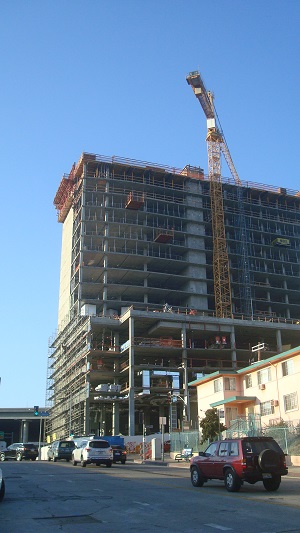
There was an empty lot in my neighborhood that had been sitting vacant for years.  After a developer pitched a hotel for the site and got turned down, a new project came along consisting of 18 3-story condos.  It seemed like a good fit, the Hollywood Hills West Neighborhood Council (HHWNC) looked it over and gave it a thumbs up, and construction started last year.

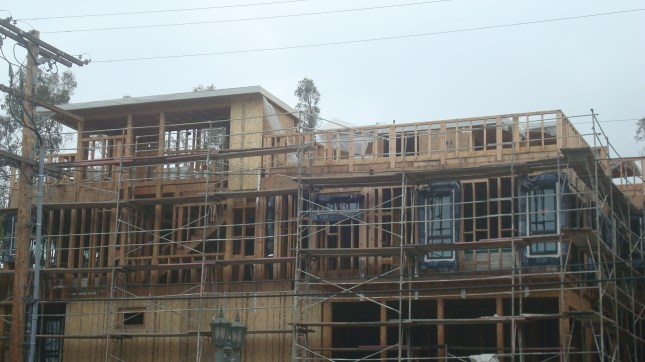
Everything seemed okay until last November when I noticed what looked like a railing going up around the perimeter of the roof.  Were they adding rooftop decks?  That wasn’t mentioned in the hearing notice for the project or the environmental assessment, and it wasn’t part of the project approved by the HHWNC.  Not long after the railing went up, it became clear that the construction crew had added staircases leading to the roof, and soon they were building stairwell coverings.

Why was I concerned?  Well, here in Hollywood people like to give parties.  Nothing wrong with parties in general, but sometimes they get pretty noisy, and sometimes they go on really late.  It’s already an issue in the neighborhood, and building 18 individual rooftop decks seemed like it was just increasing the chances of someone throwing an all-night open-air bash.

So initially my concern was selfish.  I was worried about the noise this project might create, and I was wondering why the rooftop decks hadn’t been included in the package that was presented to the community and approved by the Department of City Planning (DCP).  I called up my City Council office, and talked to a very nice guy who said he’d look into it.  Over the next two months I sent three e-mails to this Council Office staffer asking for an update.  Never got an answer.

But during that time it occurred to me that there might be another problem with this project, a much more serious issue than raucous late night parties….

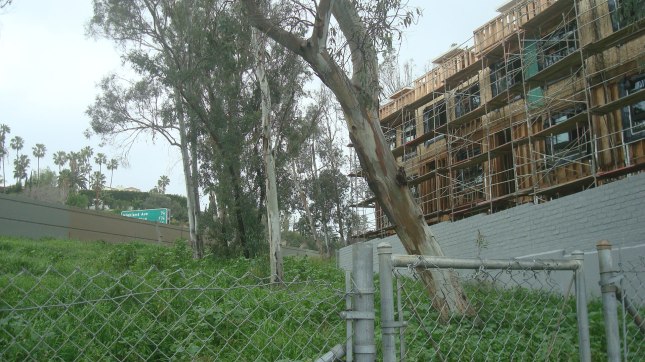
You see, these condos are going up right next to the Hollywood Freeway.  I’d say at the farthest point the structure is about 150 feet from the freeway and at the nearest point about 50.   I started wondering if building so close to a major traffic corridor wouldn’t pose health risks for the future occupants, so I got on the net to do some research.

RD Fwy

The space between the project site and the freeway.

Probably everybody reading this already knows what I found out.  There’s a large body of research showing a higher incidence of respiratory problems among people who live near freeways.  The risk is especially high for children and seniors.  In fact, young people can suffer lifelong damage since ongoing exposure to pollutants from auto exhaust may affect the development of their lungs.  This problem has gotten a lot of media attention recently, but the information has been out there for years.  USC has been studying the effects of air pollution on children since the 90s.  Here’s an article published by USC News back in 2004.

USC Study Links Smoggy Air to Lung Damage in Children, September 2004

Not long after, the California Air Resources Board (CARB) published their Air Quality and Land Use Handbook, warning cities about the risks of building housing near freeways.  Here’s the number one item on the handbook’s list of recommendations.

“Avoid siting new sensitive land uses within 500 feet of a freeway, urban roads with 100,000 vehicles/day, or rural roads with 50,000 vehicles/day.”

So the information has been out there for more than a decade, and the City Council is well aware of the health impacts to people living close to freeways.  They’ve talked about ways to deal with the risks, but very little has happened in the way of concrete action.  In fact, in recent years the Council has approved thousands of residential units in close proximity to freeways.  They argue that LA’s housing shortage is so dire we can’t afford to prohibit construction in these areas even if there are health risks.  Even though I don’t buy that argument, I know that many people would agree.

But rooftop decks?!  Are they crazy?!

After reading up on the potential health risks, the idea of adding rooftop decks to these condos seemed so absolutely insane I thought it was worth making a few phone calls.  I rang up the woman at the DCP who prepared the initial study for the project.  I explained that the rooftop decks hadn’t been included in the project description or the renderings that were shown to the HHWNC, and that the height had increased by 30%.  She said that the project complied with existing zoning and that the Department of Building and Safety (LADBS) had the final authority over what was permitted.  I asked how the DCP could allow this since noise impacts from rooftop decks weren’t considered in the environmental assessment.  She replied that the DCP had considered operational impacts from the project and had approved the assessment.  Finally, I pointed out that the rooftop decks posed significant potential health risks to the future tenants.  Her response was that the California Environmental Quality Act (CEQA) did not require the DCP to consider impacts to those who would live on the site in the future.

I was angry, but not really surprised.  I’ve realized over the last few years that the folks at the DCP really don’t care about how proposed projects will affect the lives of the people who live in this city.  It’s all about keeping the developers happy.

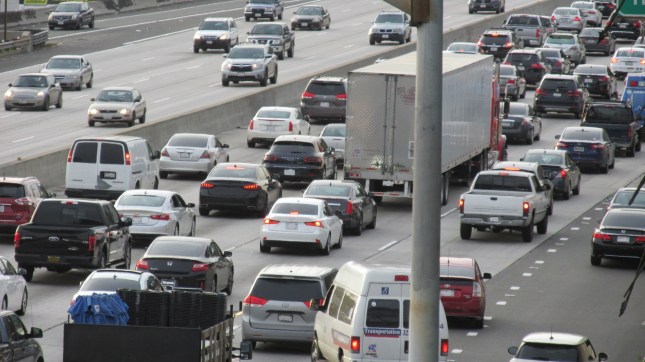
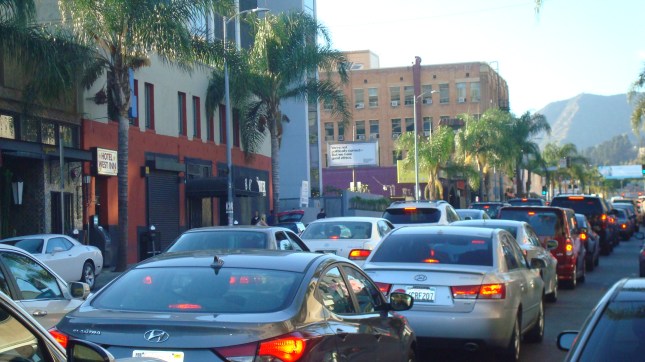
RD Traffic EDITED

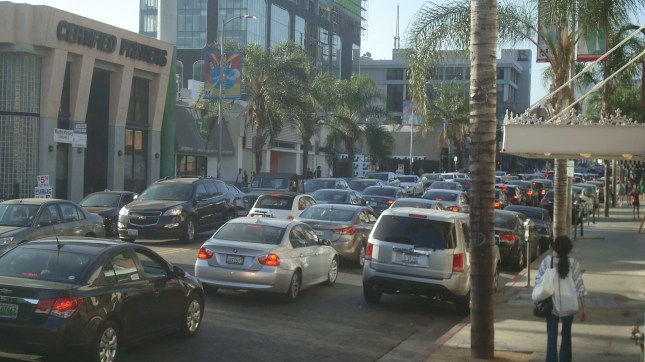
Traffic on the Hollywood Freeway near the project site.

Who knows why I even went on to contact LADBS.  I guess I must get some kind of sick kick out of banging my head against a wall.  Anyway, here’s their response.


The roof top decks and the overall building height of 44.9 feet is allowed by right, therefore LADBS does have the ability to approve the project as proposed.  The Zoning Variance reviewed by City Planning only addressed a parking requirement.  City Planning has approved the plans for the current project.

LADBS’ authority to approve projects is based on Building Code requirements.  The Building Code does not have any restrictions for a rooftop deck near a freeway.


So according to LADBS, they did everything by the book.  They don’t see a problem.

But there is a problem here.  It’s bad enough that a developer is allowed to present one project to the community and then build something substantially different.  But it’s even worse when a developer is allowed to create a clear health risk for the people who will live in the finished building.

I tried arguing with the bureaucrats who approve these projects and got nowhere.  Maybe it’s time to take it to the higher-ups.  If you feel there’s a problem here that needs to be addressed, I hope you’ll feel strongly enough about it to write an e-mail to the three people listed below.  And please use the following subject line….

Freeway-Adjacent Rooftop Decks at 2111 Cahuenga

Eric Garcetti, Mayor

mayor.garcetti@lacity.org

Vince Bertoni, Director of City Planning

vince.bertoni@lacity.org

Frank M. Bush, LADBS General Manager

frank.bush@lacity.org

RD Tight


Tenants Kicked Out as Landlords Cash In

lp-01-notice

Ellis Act evictions are so common in LA these days that I’ve gotten used to hearing reports of landlords kicking their tenants out. It happens all the time. As speculative development continues to push property values higher, property owners are eager to cash in. Over 20,000 units have been removed from the rental market through the Ellis Act since 2000. And in addition to the thousands of tenants who’ve been kicked out under Ellis, it’s likely that thousands more have lost their apartments because they were bamboozled by unscrupulous landlords using cash-for-keys scams.

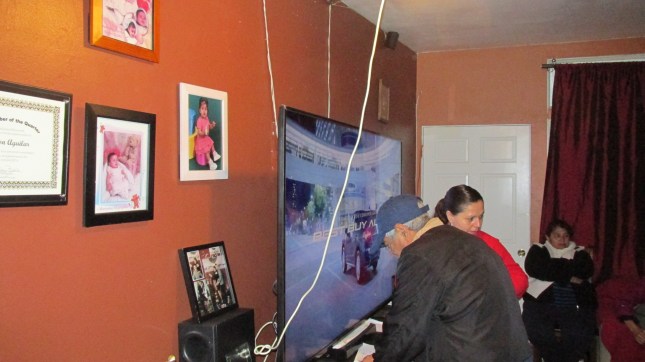
In the course of writing this blog I’ve met a number of people who’ve either already been evicted or are facing eviction. So when I went to meet a group of tenants who live in a small building on Las Palmas it seemed like a familiar scenario. The owner plans to demolish the existing structure in order to build a 7-story mixed-use project, and so the people currently living there have got to go. The breadwinners in these families are working hard to make ends meet, and odds are they’re getting by on paychecks that add up to well below LA’s median income. While I’m sure they’re worried about getting evicted, one thing that encouraged me is that they seemed much more angry than scared. They’re not going to take this lying down.

lp-02-tenants-int

Some of the tenants facing eviction.

The tenants are paying much less than the area’s median rent, but they’re also getting next to nothing in terms of repairs and maintenance. I could see walking into the building that the owner wasn’t taking care of it properly. The tenants told me a number of stories about problems with their units that the landlord was either slow to fix or didn’t fix at all. My guess is that he’s been sitting on the property, waiting for the right deal to come along, and didn’t see any point in spending money on upkeep. I should mention that he has laid out some cash to fix up a few of the units, just not the ones that are occupied by the current tenants. You may be asking, why would he do that? The answer is simple. He’s posting the refurbished units on the net as short-term rentals. This is a pretty common practice. Landlords are doing it all over the city, and it’s more or less legal unless the tenants were evicted under the Ellis Act. So when we talk about a shortage of apartments in LA, we have to remember that there are probably thousands of units that are actually being used as unofficial hotel rooms.

lp-03-mtg-sylvie-cu-2

Council District 13 Candidate Sylvie Shain.

My friend Sylvie Shain came by to talk with the tenants. Sylvie is running for the CD 13 council seat, in large part because of her concern over LA’s affordable housing crisis. She knows first-hand what it’s like to be evicted, having been forced out of her apartment by owners who planned to turn the building into a boutique hotel. Sylvie spent over an hour with the tenants, giving them info on what protections they had under the law and helping them figure out their next steps.

Several days later I went to a neighborhood council meeting on the proposed project. The purpose of the meeting was to talk about the impacts of the new structure, not the eviction of the current tenants, but it’s hard to separate the two. The owner has said that he will reserve seven units in the new building to replace the seven units that are currently occupied in the old building, and that he will offer them to the current tenants at the price they’re now paying. This may sound like a good deal, but there are a few problems with it. First, the owner hasn’t actually signed an agreement, which means he’s under no obligation to honor these terms. Second, while the owner is offering to replace seven units, there are actually fifteen units in the existing building that are covered by the rent stabilization ordinance (RSO). His deal would mean the loss of eight more RSO units. This may not sound like a lot by itself, but thousands of RSO units have been taken off the market in recent years, which is one of the reasons affordable housing is so scarce these days. Third, the owner knows that the new structure will probably take a couple of years to complete. If the current tenants get forced out, there’s a good chance they won’t find anything they can afford in LA. It’s entirely possible that by the time the proposed project is completed, none of them will still be living in the area, and he won’t have to offer them anything.

lp-04-nc-mtg

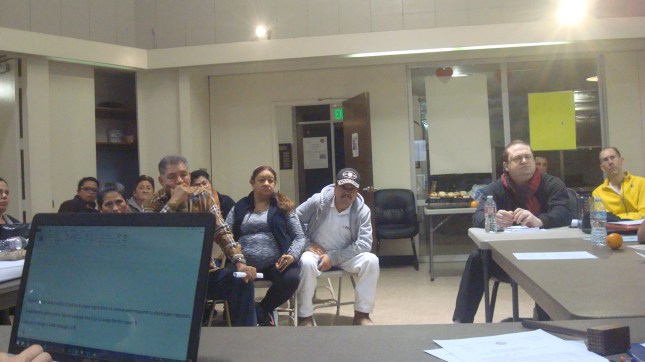
Neighborhood Council meeting on the proposed project.

Then there’s the way the Department of City Planning (DCP) is trying to push this project through. They’re trying to approve it with a categorical exemption, which means they’re arguing that because it’s in-fill development and conforms to the current zoning, the California Environmental Quality Act (CEQA) doesn’t require an environmental assessment. And to make that argument, they cite CEQA Guidelines, Section 15332. But CEQA requires that the project meet a number of conditions in order to grant the exemption, including the following….

Approval of the project would not result in any significant effects relating to traffic, noise, air quality, or water quality.

Traffic is already getting to be a problem on Las Palmas. Formerly a quiet residential street with one lane going each direction, in recent years it’s become a short cut for drivers looking to avoid congestion on Highland during rush hour. And traffic on Las Palmas is going to get a lot worse, because in addition to this project there are two others about the same size that are currently under construction, one just to the north and one just to the south of the existing building. But wait, there’s more. At the corner of Las Palmas and Franklin work recently began on a complex that wil contain over 100 units. In other words, if this project is approved, the neighborhood will gain about 300 units, which will definitely have a significant impact on traffic.*

lp-05-las-palmas-traffic

Traffic northbound on Las Palmas at rush hour.

What’s more, the proposed project is about 500 feet away from the facility that houses both the Canyon Pre-School and the Las Palmas Sr. Center. Children and seniors are known to be sensitive receptors, and to say that there will be no significant impacts to air quality or noise levels during construction is ridiculous. The kids and seniors at this small facility already suffered an onslaught of construction dust and noise when work on the project at Las Palmas and Franklin began last year. But the DCP apparently just doesn’t give a damn, and so they’re trying to rush this project through with no environmental review whatsoever.

After the neighborhood council meeting, I contacted the DCP hearing officer to find out what the timetable was for the project’s approval. It’s tentatively scheduled to go before the City Planning Commission on April 13, though it could get pushed back. Meanwhile, the tenants wait and wonder whether they’ll have to find a new place to live, in a city where rents are spiralling higher every year.

*
Some housing advocates may be cheered by this news, but don’t get too excited. The vast majority of these units will be well beyond the reach of those making the area’s median income, $34,807 a year. [Source: LA Times, Measuring income along L.A.’s Metro stations by Kyle Kim and Sandra Poindexter, March 4, 2016]

lp-06-1840-highland-billboard

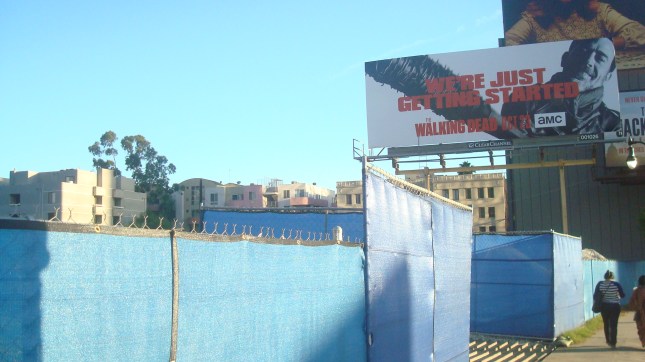
View of construction site from Highland.

Party Hotel Will Be Elementary School’s New Neighbor

sh-selma-elem-1

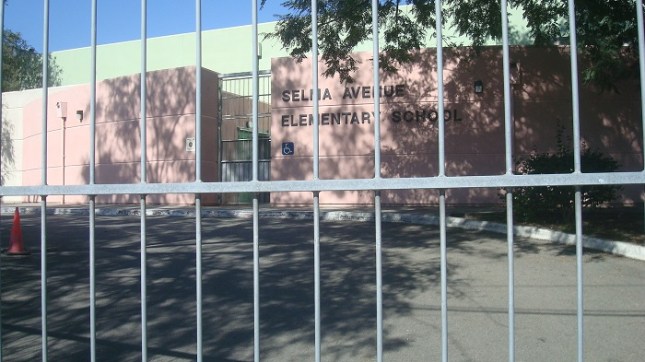
It’s rough for elementary schools in urban Los Angeles. In addition to the usual challenges involved in providing kids with an education, they’ve also got to deal with gangs, vandalism, and a growing homeless population which includes a number of people with mental health and substance abuse issues. I used to work as a TA at a Hollywood elementary school. Sadly, during the time I worked there the security problems got so bad that we had to restrict parents’ access to the school.

You can tell by the high fence surrounding Selma Avenue Elementary that security is an issue there. When I walked by a few days ago there were a number of homeless people camped out near the school. There were signs posted which read “POSSESSION OF WEAPONS ON SCHOOL GROUNDS IS A CRIME”. Traffic is also increasing on this formerly quiet street. So it’s clear that the kids at Selma Elementary are already dealing with a number of challenges. I can’t understand why the Department of City Planning wants to make life even harder for them.

Toward the end of January I attended a City Planning Commission hearing where Commissioners adopted the Mitigated Negative Declaration (MND) for the tommie hotel at 6516 Selma, a short distance from Selma Elementary. The hotel will be built by developer Five Chairs, and operated by Two Roads Hospitality. The building will rise eight stories, with bar/lounges on the ground floor and rooftop deck, and it will offer live entertainment.
sh-selma-apts

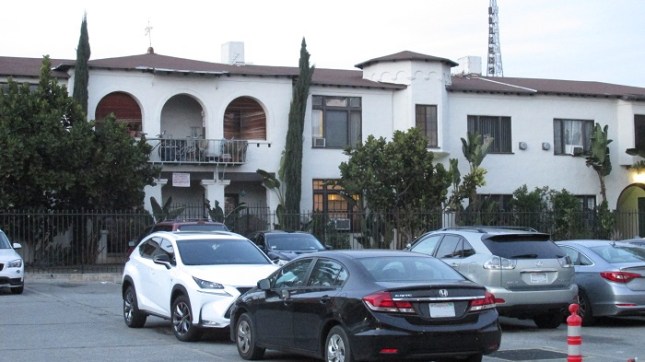
Apartment building directly across from the project site.

Let me say right off that Two Roads is an international firm with an excellent reputation. They operate hotels in the US and overseas, the majority of which are very popular with travellers, receiving high ratings on Yelp. But the tommie hotel is a new concept for them, and very different from most of their other locations. Two Roads mostly runs resort getaways in scenic areas and classy hotels in big cities. They’re trying something different here, aiming at a younger crowd, making restaurants, bars and nightlife part of the appeal. I wanted to get a better idea of what to expect from tommie, so I went to the company’s web site to see if they had any other hotels that offered a similar experience.

I found the Phoenix in San Francisco. Like tommie, it’s geared toward a youthful crowd, and like tommie, food, drink, music and nightlife are a central part of the experience. I took a look at the comments on Yelp, and most of the guests really liked the place. Some had complaints, which I’ll get to in a minute. But everybody seemed to agree that the Phoenix was a party hotel. And everybody also seemed to agree that it often got really loud. Let me share a few of the comments with you….

My little one and I were kept awake. Whe. I called and checked the webpage, no one mentioned therw would be large hotel parties. Profanity, arguments and glass breaking occured right outside our door well past midnight.

The noise from the all night non stop party allowed us zero sleep!! [The guest goes with the night manager to talk to the rowdy neighbors.] Then a wasted (not booze or weed either) guy stumbles out of room 26 and says to me, “why did you book a room at
the Phoenix knowing it was a party hotel.”

A great hotel if you’re not at all interested in sleeping. Ever. The bar is ridiculously loud considering its size, not to mention that it’s brimming with attitude. I’m kit joking. This is the loudest hotel ever.

This hotel is only good if you are a stoner. Loud, druggie infused place. I have never seen worse and I should have read the other reviews. The guy that checked us in was stoned. NOT a family place.

There was literally a huge party of hundreds happening 20 yards from our door. The front desk seemed surprised that this was bothersome since the “loudspeaker and mics” were to be off by ten. Trust me, the party continued,

I had a terrible experience here. Apparently during the summer on Saturdays they host some kind of swap meet and show where they take over the courtyard and blast music at full volume all day. It was terrible.

The reason I was not happy with the place is because I was very tired when I arrived and needed to get some sleep. It turns out that it is a PARTY hotel. The entire courtyard is part of the bar at the hotel. It is not just a little bar, it is a big bar/club for all of the locals. If I would have known this I would have not stayed their. On the other hand, if you are looking for a place to get rowdy and party all night, this hotel is for you.

So Two Roads is trying out a new concept designed for young people who like to party. I don’t have a problem with that at all. It might be a great idea for a bustling commercial district. But in a neighborhood filled with dozens of apartment buildings? With low-income housing right next door? With dormitories for students nearby? With senior housing just over two blocks away? And with an elementary school less than 500 feet away? This is a really bad idea.
sh-selma-cv

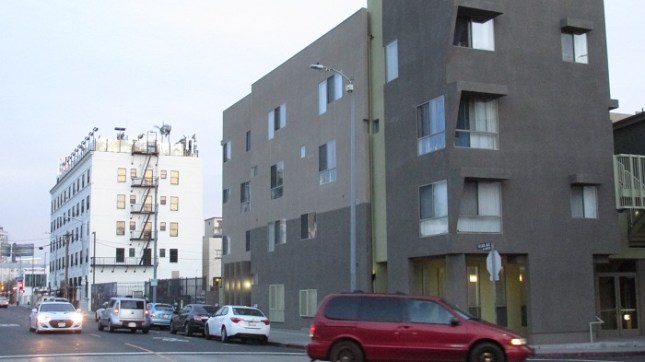
Casa Verde in foreground, right next to the project site.

I’m sure some people will be saying, “What’s the problem? The kids are in school on weekdays and the hotel will probably host parties on weekend nights. What are you worried about?” First, the hotel will be serving alcohol throughout the day, seven days a week. I’m very concerned about people having a couple of martinis over a late lunch and then getting in their car and heading west on Selma around 3:00 pm. Second, while the hotel will most likely be scheduling any parties for the weekend, I don’t recall any conditions that would prohibit them from throwing a bash during the week. Third, I’ve got a news flash for you. Small children don’t magically vanish over the weekend. Even if they’re not in school, they’re still living in the neighborhood and they still have to deal with whatever’s going on around them, including raucous parties at chic hotels, along with whatever action spills over onto the street.

But let’s go back to the MND. For those who aren’t familiar with the California Environmental Quality Act (CEQA), let me give you a very quick, very rough overview. Generally speaking, there are three levels of environmental review. The MND falls in between the lowest, a Negative Declaration, and the highest, an Environmental Impact Report (EIR). By choosing to do an MND, the Department of City Planning (DCP) is basically saying, “Yes, there could be impacts to the community, but it’s okay, because the developer can mitigate those impacts so they won’t be a problem.” This might sound reasonable, but lately the DCP has made a habit of using MNDs to rush approval of projects that really require an EIR. An EIR takes time and costs money, and you have to get input from the community. An MND takes less time, costs less money, and when the DCP goes this route, community input becomes an annoying formality that they try to dispense with as quickly as possible. But the worst part is, the DCP doesn’t even seem to feel that MNDs need to be complete or accurate. Often they’re downright dishonest. You want an example? The MND for the tommie contains a section entitled Surrounding Land Uses on page II-5. While the authors list a number of buildings that are close by the project site, they somehow fail to mention that there’s an elementary school just down the street. In fact, they list a number of historic structures that are within a 3,000 foot radius, but they somehow neglect to say that Selma Elementary is less than 500 feet away.

How could this be? Was it an oversight? Maybe the folks that prepared the MND, EcoTierra Consulting, are just so inept that they never noticed the elementary school. But what about the people at the DCP? Aren’t they supposed to review environmental documents to make sure they’re accurate? Yeah, they are. And they wouldn’t even have to leave their Downtown offices to check this out. All they’d have to do is get on ZIMAS, a web site maintained by the City to provide zoning and planning info, to find out what’s in the surrounding area. Here’s a screen shot to give you an idea.

zimas-selma-hotel-lg-w-project-site-resized


The red box is the project site, and the area highlighted in green is Selma Elementary. But how would the people at the DCP know it’s a school? It’s marked as a public facility, but that’s pretty general. Could be almost anything. For future reference, I’d like to point out to DCP staff that all they have do is click on the tab titled Planning and Zoning to see that ZIMAS clearly indicates that the site is within 500 feet of a school. In fact, in addition to Selma Elementary, the site is also home to Larchmont Charter School.

zimas-selma-hotel-school-zone-w-outline


So how about the folks on the City Planning Commission? If the MND didn’t mention the school, how could they have known about it? Well, I mentioned it, both in written comments submitted to the DCP and in my verbal comments on the day of the hearing. Did that get a reaction? Nope. While the Commissioners spent plenty of time haggling over conditions of use and mitigation measures, they didn’t refer to the school once during their deliberations. They didn’t express surprise that the MND fails to state that a school is located nearby. They didn’t even ask how far away the school is.

The Commissioners asked how Councilmember Mitch O’Farrell felt about the project, and learned that he doesn’t support or oppose it. That’s understandable. O’Farrell’s up for re-election, and he knows a lot of people are really ticked off about the fact that he’s backed some lousy projects before. On the other hand, he can’t really oppose it either, because he’s received a few thousand bucks from people involved with the project. According to the Los Angeles Ethics Commission web site, Richard Heyman of Five Chairs gave $1,400 to O’Farrell’s legal defense fund on April 4, 2016. Andrew Shayne of Hollywood International Regional Center, Five Chairs’ parent company, also gave $1,400 to O’Farrell’s legal defense fund on April 26, 2016. And Jeffrey Reinstein of Geolo Capital, which is a co-developer of this project, gave $700 to O’Farrell’s re-election campaign on March 21, 2016. So this must be a tough one for Mitch. If you ask me, he should have come out against this project a long time ago, simply based on the fact that it’s less than 500 feet from an elementary school. But maybe like the consultant who prepared the MND and the folks who reviewed it at the DCP, O’Farrell isn’t aware that the school is there. Wouldn’t surprise me. Maybe that pile of cash from the developers is blocking his view.

When I was at the hearing, I was surprised how few people showed up to speak against the project. Nobody from Casa Verde, the apartment building right next to the site that offers affordable housing. Nobody from the other apartment buildings close by. And nobody from the Los Angeles Unified School District?! That was really weird.

Then I started wondering. Did they even know about the hearing?

I called LAUSD and left a message, even though I wasn’t sure I had the right person. Then I called Larchmont Charter School, which operates a school on the Selma Elementary campus. They hadn’t heard a thing about the hotel. Next I called Hollywood Community Housing Corporation, the affordable housing developer that owns Casa Verde. The woman I spoke to said she had only just heard about the hotel.

Then I heard back from LAUSD, and after talking with them, they offered this statement.

“The Office of Environmental Health & Safety does not have record of receiving notice regarding this project at the newly proposed location.

L.A. Unified will be preparing and submitting a comment letter to the City of Los Angeles that will express our concerns with regard to this proposed project.

Specifically, L.A. Unified will be looking at potential air quality, noise, and traffic/pedestrian safety issues, as well as land use compatibility issues associated with alcohol service in close proximity to Selma Avenue Elementary School.”

I want to be clear here. The DCP is not required to send notices to stakeholders about proposed projects. The California Environmental Quality Act offers three options for informing people, and the lead agency can satisfy the requirement just by putting a notice in the newspaper, which is probably what the DCP did. But I have to say that in a case like this, where there are a number of sensitive uses nearby, one of them being an elementary school, the DCP had a moral obligation to get the word out to the community. They should have made every effort to insure that all stakeholders were involved in the environmental review process, especially the parents and staff at Selma Elementary and Larchmont Charter.

How is it possible that this MND was prepared without making sure that LAUSD had reviewed it and had the opportunity to comment? How is it possible that not one of the Commissioners expressed surprise that an LAUSD representative was not present at the CPC hearing? How is it possible that no one representing CD 13 stepped in to point out that the project site was a few hundred feet away from a school?

How come no one was looking out for these kids?

The California Environmental Quality Act says that….

“An EIR must be prepared when there is substantial evidence in the record that supports a fair argument that significant effects may occur.”

CEQA Flow Chart

There’s no question that a hotel offering bar/lounges on the ground floor and rooftop, which also offers live entertainment, and which is intended to attract both paying guests and local club-goers, is going to have substantial effects on the community. Clearly this project requires a full EIR.

So what are the next steps? Three things need to happen here….

1.
At its next hearing, the CPC needs to rescind their adoption of the MND.

2.
After rescinding the MND, all of the Commissioners should resign immediately. Their failure to show the slightest interest in the health and safety of LAUSD students is inexcusable.

3.
The DCP needs to start the process all over again with full EIR.

If you agree with me that this whole process has been unfair and dishonest, I’d like to suggest that you communicate with the following people….

Contact May Sirinopwongsagon, the DCP staff contact for this project, and tell her you can’t believe the MND doesn’t list the school among the surrounding uses.
May Sirinopwongsagon, Department of City Planning
may.sirinopwongsagon@lacity.org

Contact Councilmember Mitch O’Farrell and ask him why his office didn’t object from the start to building a project like this less than 500 feet from an elementary school.
Councilmember Mitch O’Farrell, Council District 13
councilmember.ofarrell@lacity.org

Contact Mayor Eric Garcetti and tell him he needs to demand resignations from all the members of the City Planning Commission.
Mayor Eric Garcetti
mayor.garcetti@lacity.org

It would be a good idea to include the following information in the subject line.

tommie hotel, CPC-2016-270-VZC-HDCUB-SPR, ENV-2016-4313-MND

I urge you to speak up for these kids, because they need to have someone looking out for them. It doesn’t seem like anybody at City Hall gives a damn.

sh-selma-elem-2

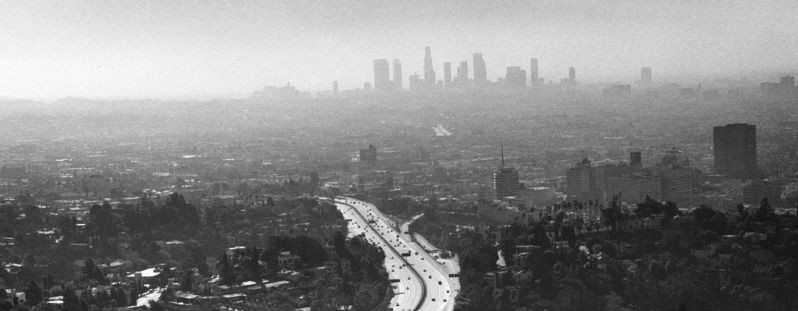
Waiting for Help, While Demolition Draws Nearer

Squatters have taken over a house in Valley Village.

Squatters have taken over a house in Valley Village.

Six months ago I’d never heard of The Hermitage. Because I follow development issues, I’d been copied on a few e-mails that described an urban farm in Valley Village that was threatened by a proposed residential project. But there are so many communities getting hammered by reckless development, I didn’t pay much attention. Until November, when I finally decided to check it out.
First, let me show you a few photos of what The Hermitage used to look like.

A garden in front of The Hermitage.

A garden in front of The Hermitage.

Chickens roaming freely.

Chickens roaming freely.

Open space inside The Hermitage.

Open space inside The Hermitage.

A cat checking out the garden.

A cat checking out the garden.

Ducks by the pool.

Ducks by the pool.

Another one of the residents of The Hermitage.

Another one of the residents of The Hermitage.

As you can see, it used to be a lovely place, a small collection of rustic buildings that served as a home to chickens, ducks, dogs, cats and bees. A unique urban farm in the middle of the San Fernando Valley. Now let me show you what it looked like when I visited.

This is what the garden out front looks like now.

This is what the garden out front looks like now.

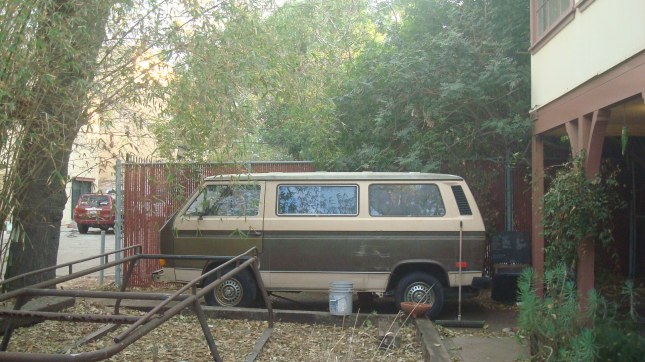
A car left sitting on the property by squatters.

A car left sitting on the property by squatters.

A view of the open space within The Hermitage.

A view of the open space within The Hermitage.

Quite a change. You’re probably asking, “What happened?” Well, a lot of things. The story is so complicated, so twisted, and so disturbing on so many levels, I’m not sure if I can tell it properly. But this story needs to be told, so I’ll do my best.

Let’s start with the former manager, who still resides on the property, though she’s facing eviction. Because of her current situation (which will become clear as you read on), she was nervous about having her name appear in print, so I’ll call her the caretaker. The caretaker has been living at The Hermitage for over 20 years, and has truly taken care of the place. In addition to renting and maintaining the units, she also planted gardens, cared for the animals, and invited groups from the surrounding community to come and learn about nature.

But last year the caretaker’s lawyer informed her that developer Urban Blox was planning to buy the property. She was surprised, since she had an agreement with the owners that gave her the option to purchase The Hermitage if they ever decided to sell.

And this is where it starts getting complicated. Urban Blox did sign an agreement to purchase the property, but it’s not clear whether the owners, two elderly women, signed or not. While their signatures appear to be on a contract for the sale of the property, both women stated in subsequent depositions that they had no recollection of signing the agreement. It may be that a relative arranged the deal without their permission. In October 2014, the grandson of one of the owner’s showed up at the caretaker’s door to deliver a letter stating that she was no longer the manager. But in spite of his claim to be acting on the owners’ authority, their signatures were nowhere to be found on the letter. And in the same depositions referenced above, the owners say they never retained the grandson to represent them.

The caretaker made numerous attempts to contact the owners, without success. After months of uncertainty, having heard nothing from the owners and fearing that they were ready to sell to Urban Blox, the caretaker sued them to enforce her right to buy The Hermitage. In fall of this year, the LLC set up by Urban Blox to develop the property filed a suit against the owners, then amended the complaint to include the caretaker, then dropped the owners from the suit. Both cases are still pending

But that’s just one part of the story. By summer of this year, all the former residents of The Hermitage were gone. And while the legal power plays were unfolding, squatters began moving in to one of the vacant buildings on the property. The first one arrived in early summer, and by September a number of others had moved in. Since the squatters’ arrival, the caretaker reports numerous acts of theft and vandalism. Tools have been stolen from her workshop. Trees have been cut down and plants have been ripped out of the ground. She doesn’t feel safe when she’s at home, but she’s also afraid to leave, for fear of what might happen when she’s gone. And she’s kept a detailed log recounting numerous incidents.

But it’s not just the caretaker who’s been affected. Neighbors started getting nervous when they noticed strange chemical smells emanating from the house occupied by the squatters, and they were more than nervous when they saw visitors coming and going at all hours of the night. And there’s more. One of the squatters has been seen by neighbors walking down the sidewalk with a rifle in hand. This has also been documented in photographs. Since the squatters showed up the neighborhood has seen a rise in burglaries and car break-ins.

I talked to a couple of people who live in the community. The first woman I asked about the squatters told me she was frightened for the caretaker and frightened for the neighborhood. She also asked me to withhold her name for fear of reprisals. She did share her suspicions about the squatters running a drug lab, and told me that one of them had been shot recently. She didn’t feel safe, and wondered why the police weren’t doing more to protect residents. The second woman I spoke to was more angry than frightened, and she didn’t mind giving her name. Fiona Manning confirmed what the first neighbor had reported, and added a few more details. She has seen the squatters sitting out in the open drinking and smoking dope. She’s heard gunshots at night. She recounted an incident where a neighbor asked the squatters to turn down their music, and they responded with threats. Fiona also described an encounter she had with one of the squatters. As she was walking down the street, a young man reeking of pot started following her, and calling out, “I know you, I know you. Are you a friend of my grandmother’s?”

I had a brief exchange with one of the squatters on my first visit to The Hermitage. I don’t claim to be a substance abuse expert, but having lived in Hollywood for 20 years, I’ve gotten pretty good at recognizing meth addicts. This glassy-eyed, jacked-up, paranoid kid seemed to show all the signs.

What makes this even weirder is that the caretaker and her neighbors have called the North Hollywood Division of the LAPD on numerous occasions, and while the police have come by about a dozen times, they’ve taken no action to rein in the squatters. The caretaker and Fiona both report that they’ve been told by officers not to call any more. Apparently the North Hollywood Division has decided the problems have arisen from a landlord/tenant dispute, but that doesn’t begin to explain the numerous issues involved. Whatever’s happening with the property itself, the fact that the neighbors have seen one of the squatters carrying a gun, have heard gunshots, and reported burglaries and car break-ins seems to indicate there’s a little more going on than a tiff between a landlord and a tenant. I was surprised to hear about the North Hollywood Division’s apparent reluctance to take action. The few times I’ve called the LAPD they’ve usually been quick to respond and ready to help. I can’t understand why they haven’t tried harder to address this situation, especially since it seems that some of the squatters are on probation.

Once it became clear that the police weren’t going to take action, Fiona and others tried calling Councilmember Paul Krekorian’s office. Though there were numerous conversations with one of his staffers, and promises of help, nothing ever materialized. Actually, this doesn’t surprise me at all. I’ve been in touch with a number of people who live in Krekorian’s district who’ve reported the same thing. His staffers are friendly, they’re always willing to listen, but the conversations never produce any results. A number of Krekorian’s constituents seem to feel that time spent talking to his staff is time wasted. You’d think that a councilmember might be moved to take action if constituents complained they were living in fear because of a group of squatters. Apparently Krekorian doesn’t think it’s a problem.

After receiving no help from Krekorian, the caretaker tried getting in touch with State Assemblymember Adrin Nazarian, but nothing came of that. In desperation, she tried contacting every member of the State Assembly. Only Patty López’ office responded. Fiona says, “She was a godsend.” While the neighborhood’s own elected representatives apparently didn’t feel the situation warranted taking action, Patty López organized a meeting with members of the community. About 15 people showed up, and they had plenty to say. While López declined to get involved in problems related to the squatters, she was concerned enough about the project proposed by Urban Blox that she wrote a letter to Nazarian’s office. In it, she lists a number issues raised by the community, including vacating a public street for the developer’s benefit, the loss of green space, the loss of parking and impacts to wildlife.

The City Council's PLUM Committee has approved turning over the west end of Weddington to the developer.

The City Council has approved turning over the west end of Weddington to the developer.

In fact, throughout the approval process people have expressed serious doubts about the project. When it came before the Area Planning Commission, Vice-President Lydia Drew Mather said she wished the Council Office and the Developer had worked more with the community to address potential problems, and added that she felt the project was moving forward too fast. Commissioner Rebecca Beatty voiced concern about the fact that the project would get rid of rent-controlled units. Even City Councilmember José Huizar, Chair of the Planning & Land Use Management Committee, questioned the wisdom of greenlighting a project when the developer’s right to the property was being debated in court.

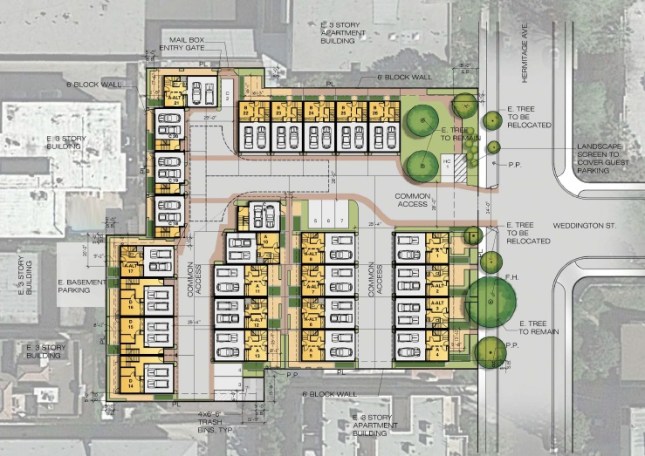
A rendering of the bland, generic units that Urban Blox wants to build.

A rendering of the bland, generic units that Urban Blox wants to build.

But did that stop the City Council from approving Urban Blox’ plan? Of course not. The Council gave it a thumbs up. They’re apparently okay with bulldozing rent-controlled units, vacating a public street, cutting down trees and displacing wildlife. This is what City Hall does. Our elected officials are happy to hand the developers an entitlement worth millions of dollars so they can get rid of a unique community resource and replace it with high-priced housing.

There’s one more detail I want to add just to throw a little more light on how projects get approved in LA. When a developer comes to the City with a proposed project, California law requires the Department of City Planning to prepare an Initial Study to assess what impacts the project might have. The Initial Study is used to determine what level of environmental review is required. In this case the Initial Study was signed by Planning Assistant Courtney Shum. Does it surprise you to learn that before taking the position at City Planning, Ms. Shum worked as a registered lobbyist for Max Development, LLC (DBA three6ixty), a firm that has received tens of thousands of dollars from its client Urban Blox?

If it was just a matter of the caretaker finding a new place, maybe she could walk away from this mess. But The Hermitage is also home to chickens, ducks, dogs, cats and bees. She is responsible for all of them. So she stays close to her small house and cares for the animals, reluctant to leave for fear of what might happen while she’s gone. And she still hopes that somehow she can hang on to her home.

———-

If you see a problem with a City Planning Assistant being involved with a project that benefits a client of her former employer’s, you might want to drop a line to Planning Director Vince Bertoni. Here’s his e-mail address.

vince.bertoni@lacity.org

Don’t forget to include the case number in the subject line.

ENV-2015-2618-MND

And you could also copy your own Councilmember on the e-mail, just to let them know you’re fed up with the way City Hall does business.

A view of Weddington from The Hermitage before the trouble started.

A view of Weddington from The Hermitage before the trouble started.

Traffic-Oriented Development

traffic-hlwd-video-1

For over a decade people at City Hall have been talking about transit-oriented development (TOD). In theory, if we create high-density residential and commercial developments near transit centers, people will be encouraged to take busses and trains instead of driving their cars. Makes sense, right? So for years the City has been telling us we have to build up instead of out, that we need to go vertical instead of horizontal. And they’ve approved a slew of high-rises, all the while insisting that this will get people out of cars and onto transit.

Before I go any further, I’d like you to watch a video. It lasts about twelve minutes, and it was shot during rush hour not too far from Hollywood and Vine.

I hope the video makes my point clear.* The City keeps approving high-rises, and when communities complain that congestion will get worse, planners and politicians invariably say that the people who live and/or work in these buildings will surely take transit. But they’ve been saying that for over a decade now, and it ain’t working. The MTA station at Hollywood and Vine is a hub for a number of bus lines, as well as the subway. But these people are all driving right past it.

I’m not against TOD, but to make it work, you’ve got to do some planning. Instead of creating a well thought out framework for all this development, the City keeps dumping project after project in the Hollywood area. Mayor Garcetti will tell you that the City did produce the Hollywood Community Plan Update (HCPU), and residents sued to overturn it. That’s true. Among the HCPU’s many shortcomings, the population figure it was based on was inflated by about 10%, in spite of the fact that US Census numbers were readily available. The judge who threw the plan out called it “fatally flawed”.

To give you an idea of how little City Hall cares about planning, let’s go back to those two buildings in the video. The residential high-rise on the southwest corner is just getting started, and the hotel on the northeast corner isn’t quite finished. But look at how bad traffic is already, long before these projects are completed. Unbelievably, the City is considering approval of a third high-rise at the very same intersection. How clueless can you get?!

As I said in the video, I don’t own a car and depend on transit to get around. I support planning to encourage transit use. But TOD isn’t working in LA. Why? I think primarily it’s because that’s not really what the City is building. If our elected officials were really interested in building TOD, they’d be pushing high-density housing made up mostly of affordable units. But instead, the City has been encouraging developers to build high-priced housing by offering them generous entitlements.

I got on the Department of City Planning web site and took a look at multi-family projects in Hollywood and North Hollywood that have been built near Red Line stations since the subway was completed. The Lofts and The Gallery at Noho Commons combined contain 724 units. Eastown, when the second phase is completed, will have over 1,000. The Jefferson has 270, and is the only one that offers any affordable housing, 27 units. So out of about 2,000 apartments, only 27 are accessible to people in lower income brackets. And if you’re not one of the lucky few to snag one of low cost units, you can expect to spend at least $2,000 a month for a one bedroom. Let’s not even talk about what it might cost to live at The Vermont, which sits just across from the Vermont/Wilshire station. And call it a hunch, but I don’t think the massive Wilshire Grand Tower, which is rising up next to the 7th/Figueroa station, will be offering any affordable units at all.

According to a story published by the LA Times earlier this year (Measuring Income along LA’s Metro Stations, March 4, 2016), the median income in almost all communities served by the Red Line is well below the County median of $55,870, ranging roughly from $22,000 to $46,000 a year. (Universal City is the lone exception, with residents there making well above the County median.) For the people in the lowest income bracket, renting an apartment at the newer “TOD” buildings would consume pretty much all their earnings, and even at the higher end of the scale it would mean spending over half what they make in a year. The City says these high-density projects encourage transit use, but most transit riders couldn’t afford to live in them.

Could this be one of the reasons that transit ridership is lower now than it was back in 1985? There may be many reasons for the decline, but you’ve got to wonder why the MTA is serving fewer people than it did three decades ago. The drop in ridership is even more disturbing when you realize that the population of LA County (the area served by the MTA) has grown by over a million since 1985. Does anyone see a problem here? City Hall has been telling us for years that their policies will get people off the road and onto transit. Instead, we’ve seen a net loss in transit ridership since the eighties, in spite of the fact that the population has continued to climb. And the traffic that used to just clog the main thoroughfares is now spilling over onto side streets.

The City’s claim that they’re promoting transit-oriented density is bogus. What they’re really doing is allowing developers who spend a fortune lobbying City Hall to cash in on projects that don’t serve the majority of Angelenos. They’re backing projects geared towards the affluent, which is what developers want because that’s where the highest profits are. Meanwhile lines of cars sit on our streets and freeways at rush hour, burning fossil fuels and spewing greenhouse gasses into the atmosphere.

You call this transit-oriented development? I call it a disgusting sham.

————————————————–

*
Just in case you’re thinking traffic is bad because it’s a Hollywood Bowl night, it’s not. The video was shot on Tuesday, October 25. Nothing was on the schedule that evening. But I can tell you the back-up on these streets can get way worse when something is happening at the Bowl.

traffic-hlwd-video-2

I Can’t Vote for Measure M

Construction moves forward on MTA's Regional Connector in Little Tokyo.

Construction moves forward on MTA’s Regional Connector in Little Tokyo.

I ride public transit almost every day. I really believe we need to invest in building a better transit system. And I used to think we were doing that, but not any more.

Measure M, the LA County Traffic Improvement Plan, is an ambitious attempt to do a lot of things. By adding another half cent to our sales tax, the County hopes to fund a variety of projects, with a good part of the money going toward enlarging the Metropolitan Transit Authority’s rail system. The MTA has already embarked on an ambitious program of building new rail lines and expanding others. You’d think that would be a good thing, but looking at the facts, I’m really not so sure.

For years now the MTA has been building rail all over LA County. First we got the Red Line and the Purple Line, then the Green, Blue and Gold Lines. The Expo Line was recently extended west, and the Crenshaw/LAX Line is currently under construction. You’d think that with this massive investment in rail, taking public transit would be so easy and fast that everyone would be jumping on board.

But that’s not what’s happening. In fact, transit ridership in LA County is lower than it was 30 years ago. When the LA Times reported this disturbing fact at the beginning of the year, the article sparked a lot of heated discussion. Some claimed that the Times was giving a distorted view. Others looked to the future, saying that stats would get better with time. But in the reading I did, there was one crucial fact that no one commented on. The County’s population has grown by over a million since 1990. To my mind, when you take that into account, there’s only one conclusion you can reach. Our current approach has been a disaster. If the population has grown by more than 10% over the past 30 years, how can we say that a decline in ridership during the same period represents anything but failure.

Another shot of construction on the Regional Connector.

Another shot of construction on the Regional Connector.

There are a lot of different theories floating around as to why ridership hasn’t grown along with the system, and I’m sure there are a number of factors in play. But I think one of the most important factors is the City of LA’s insane approach to planning. I read a lot of the stuff that comes out of City Hall, and over and over I hear the refrain that transit and land use must be considered together. Sounds logical, doesn’t it? It would make sense to think about where you’re putting housing at the same time as you think about where the next rail line goes. In theory, people could just step out of their apartment, walk down to the platform and catch a train wherever they’re going. Who needs a car?

The problem is, when the housing starts at $2,000 a month, and often goes much higher, you’re really not building housing for the people who use public transit. For the most part the people who depend on the MTA can’t afford that kind of rent. And the people who can pay that much are more likely to own cars. What’s even worse, as the rail network has expanded, City Hall’s policies have actively encouraged gentrification around new rail stops. It used to be pretty much anybody could afford to live in Hollywood. Not any more. As the Department of City Planning approves an endless parade of high-end housing projects and chic hotels, as they continue to hand out liquor permits to trendy restaurants and clubs, rents keep spiralling higher and the demographic most likely to use transit is being squeezed out. A similar scenario has already played out in North Hollywood, Downtown, and Highland Park, and you can look for more of the same in Leimert Park and Boyle Heights in a few years. So while City Hall claims to be thinking about transportation and land use together, in reality their policies are driving transit riders farther away from transit hubs.

Construction site for Purple Line extension at Wilshire and La Brea.

Construction site for Purple Line extension at Wilshire and La Brea.

Another problem I have with Measure M is the fact a large portion of the funding goes toward road and freeway improvements, and this is something many people have commented on. There are those transit critics who complain that the MTA is heavily subsidized by our tax dollars, but they never seem to mention that a huge share of our tax dollars also goes to subsidizing travel by car. If we’re trying to reduce our use of fossil fuels and cut down on greenhouse gas emissions, then our focus should be on investing in public transit. But Measure M continues our current policy of investing in both at the same time. How’s this working? Well, our recent experience with widening the San Diego Freeway tells the story. After years of work and millions of dollars, traffic is still awful. We do need to maintain roads and freeways, since busses travel on both, but massive investment in “upgrades” is just encouraging people to keep driving their cars.

I’d love to see us build a transit system that made travelling by rail and bus attractive to a majority of Angelenos. But that isn’t what’s been happenning. Instead, a bizarre tangle of policies has led to a decline in transit use even as the County has continued to grow. The City of LA seems dead set on continuing its drive to build upscale urban enclaves, forcing low-income Angelenos away from transit hubs. And for all the money Measure M would put into transit, it would also spend a lot of money on keeping people in their cars.

Sorry. I can’t vote for Measure M.

Another shot of construction at Wilshire and La Brea.

Another shot of construction at Wilshire and La Brea.

Tenants Take a Stand

ya-address

There’s been a noticeable shift in City Hall’s public stance on evictions recently. A couple years ago, the Mayor and the City Council weren’t saying much, and certainly weren’t doing much, about the wave of displacement that was sweeping across LA. Ellis Act evictions had been rising steadily, thousands of tenants had been forced out of rent-stabilized apartments, and City Hall’s reaction was pretty much, “Who cares?”

But now that the issue is getting media attention and our elected officials are taking some serious heat for their inaction, the change in attitude at City Hall is noticeable. Mayor Garcetti has unveiled the Home for Renters campaign, designed to inform tenants of their rights. The Housing & Community Investment Department (HCIDLA) web site is offering booklets renters can download in English and Spanish to learn about how the law protects them. There’s also been an accompanying media blitz to get the word out. I have to wonder if City Hall’s sudden concern for LA’s renters will last beyond next year’s election, but right now you can tell the politicians are nervous.

One of the most striking examples of this turnaround can be found in the story of a group of tenants living in the apartment building at the corner of Yucca and Argyle in Hollywood. The building is home to 44 households, including singles, couples, families with children, seniors and veterans. It’s subject to LA’s Rent Stabilization Ordinance (RSO), which means that rents can only go up about 3% every year. A while ago they got word that the building was going to be sold to Champion Real Estate, a developer that had plans to build a luxury high-rise on the site. It seemed like it would just be a matter of time before the new owner started handing out eviction notices.

ya-yucca

But that hasn’t happened. Yet. And a large part of it has to do with the fact that the tenants decided they weren’t going to let themselves be pushed around. They connected with the LA Tenants Union (LATU), which helped them organize the Yucca Argyle Tenants Association (YATA). They spoke out. They took part in public actions. They got support from their neighborhood council. They let the world know they weren’t going without a fight.

In fact they made so much noise that the developer stepped forward with pretty unusual offer. I asked Sasha Ali, of YATA, for an update, and here’s her response.

The developer recently stated at the Hollywood United Neighborhood Council’s Planning and Land Use Management meeting that he is willing to offer affected tenants the right of return to the proposed development at their existing terms of rent. He also offered to relocate returning tenants in Hollywood during construction and subsidize their rent.

When you think about the fact that many tenants evicted under the Ellis Act have to fight to get the payments that the law requires, this is pretty impressive. It’s a sign that the media attention about displacement is having an impact. Remember, this is happening in Councilmember Mitch O’Farrell’s district, and O’Farrell has been getting a lot of heat about widespread evictions happening on his watch. Could he have asked Champion to make some concessions in order to cool things down? Well, O’Farrell is up for re-election next year.

There’s no way of saying for sure what will happen next. Sasha said that at this point, eviction notices have not been served, and in fact Champion hasn’t actually bought the building yet. The tenants have retained a lawyer to help them negotiate with the developer.

I’m glad that the tenants at Yucca and Argyle are demanding a fair deal, and I wish them the best. But the dynamics that have created this situation are still wreaking havoc across LA. The eviction juggernaut is being driven by the huge profits developers can reap by buying an existing building, knocking it down, and putting up something much larger. This usually works pretty smoothly, because the City Council is mostly willing to grant whatever entitlements the developer asks for. Want a zone change? Sure! Boost the floor area ratio? No problem! Reduce setbacks to zero? Hell, yeah! Developers feel pretty confident they can make a bundle on these projects because they know all they have to do is hand a wish list to someone like O’Farrell, and he’ll do everything he can to make their wishes come true.

ya-front-hotel

The City Council has no legal authority to stop Ellis Act evictions, but they need to stop incentivizing the practice. They need to stop handing developers massive profits by approving endless entitlements. If you want to talk about building higher density, fine. Let’s create community plans that will allow the City to increase density in an orderly way. Let’s revise our zoning so that developers can work within a consistent framework. (And I’m not talking about wasting time on a worthless sham like re:code LA.) And then let’s make the City Council abide by those plans, instead of making exceptions for every project that comes their way.

Hopefully things will turn out okay for the folks at Yucca and Argyle. But we need to stop the practices that create these situations in the first place. The City Council needs to stop handing out favors and start doing some planning.

ya-destruct

Manufacturing the Facts

dsc02694

At a hearing last week, the City Planning Commission gave a green light to the proposed Ivar Gardens Hotel, which is planned for the intersection of Sunset and Cahuenga. But like a lot of projects planned for Hollywood in recent years, it wasn’t a smooth path to approval.

The hearing room was crowded with people. Most of those who were there to speak about the hotel were against, but there were also those who wanted to support it. A representative of the Central Hollywood Neighborhood Council gave it a thumbs up, and a woman from the Hollywood Chamber of Commerce went through the usual spiel about how the hotel will bring jobs and revenue.

Let me say up front, I can see good reasons for making something happen at the corner of Sunset and Cahuenga. The Jack in the Box that ‘s been sitting there for years isn’t exactly an architectural jewel. Sure, the block is underutilized. Could it be a good place for a hotel? Maybe. But a twenty one story hotel? At one of the busiest intersections in the city? I’m not so sure that’s a good idea. Still, I should try to keep an open mind. I should think about the possible benefits. And I should trust that the City of Los Angeles would only approve such a project after the most rigorous review. I should have faith that the City would never approve such a project unless it was absolutely certain that the positive would outweigh the negative.

Yeah, right.

Before I start talking about the Department of City Planning, let me say that I believe that most of the folks who work there are smart and capable. In most of my dealings with them I’ve been impressed by how friendly and helpful they are. But I also believe the culture at the DCP has been warped by outside pressures, and I often get the impression that the state-mandated environmental review process is seen as a pointless waste of time. The documents that are supposed to assess the pros and cons of a project often seem like they’ve been slapped together as quickly as possible. In some cases the data is presented in misleading ways, and in other cases it’s clearly wrong.

Like with this hotel. To begin with, a project of this size really needs the highest level of environmental review, in other words, an Environmental Impact Report (EIR). But the folks at the DCP disagreed, and they went ahead with a much lower level of review, a Mitigated Negative Declaration (MND). By making this choice they’re basically saying that all of the impacts caused by this project can be mitigated to the point where they’re insignificant. Whether or not that’s true is not important to the City. What’s important here is that the MND is much easier to prepare and makes the approval process much faster.

So let’s get back to the hearing. Like I said, there were a few people who supported the project, but a solid majority came out against it, and the speakers represented a wide variety of interests. Many of them belonged to various unions, and they raised a number of issues, but the biggest one was jobs. They couldn’t believe the City was going to approve this project without any requirement for local hire. A woman representing the Los Angeles Film School came to the mike to say they were concerned about impacts during the construction phase. The LAFS is right across the street from the site, and their programs could be severely affected by the project, but apparently the developer has shown little interest in meeting to discuss these issues so far. A number of people expressed concern over increased traffic from the hotel. One group talked about the importance of properly assessing hazardous wastes at the site. Others asked why the City was ready to hand the developer entitlements worth millions, while the developer was offering a pathetically small package of benefits to the community. And yes, the Commission was asked why an MND was being used for a project that clearly required an EIR.

That’s what I wanted to know. And I also wanted to know why the MND being considered was such an inaccurate, dishonest piece of work. I know that’s a strong statement. But let’s take a look together.

The MND supposedly assesses greenhouse gas (GHG) emissions produced by the project. Honestly, I think the numbers are questionable, and the reductions promised by mitigation measures are pretty optimistic. There’s a lot of talk about building clean, green structures these days, but environmentalists are starting to realize that developers don’t always deliver what they promise. Still, let’s pretend the GHG numbers are accurate. The MND offers a table to show how small the impacts are.

sh-ghg

In assessing the production of CO2 emissions, the bottom line says the “project net total” will be 1,921.34 metric tons per year (MTY). But what it should actually say is “project net total increase”. If you look at the table carefully, you can see that the actual total is 3,102.31 MTY. They came up with the 1,921.34 figure by subtracting the estimated emissions produced by the existing fast food restaurant. In reality, the proposed hotel will be spewing out CO2 at a rate of 3,102.31 MTY, or over two and a half times what the site produces now. At a time when the state is struggling to reduce greenhouse gas emissions, and traffic in LA is getting steadily worse, can the DCP really claim that this is not a significant impact?

Under Public Services the MND talks about police protection. Now, the LAPD has been pretty up front in admitting that it’s struggling to deal with increases in crime across the city. The MND includes a table showing that crime has been steadily rising in Hollywood since 2013. In light of the fact that the LAPD has said they don’t have enough staff to deal with current levels of crime, how can the DCP claim this hotel, along with a number of other projects under construction in Hollywood, won’t put an even greater strain on law enforcement? In addition to the hotel’s security lighting and secure parking facilities, the MND claims that, “the continuous visible and non-visible presence of guests staying at the hotel at all times of the day would provide a sense of security during evening and early morning hours.” Actually, there are already plenty of people on the street in this area, and it doesn’t seem to be doing much to discourage crime.

To demonstrate how little the DCP cares about facts, under Population and Housing they say, “The Hollywood Community Plan (HCP) projected a 2010 population of approximately 219,000 persons….” This is true. The HCP did make that projection. What the MND doesn’t say is that the Plan was written back in the 1980s, and that according to the US Census, Hollywood’s actual population in 2010 was 198,228, about 20,000 people less than the figure they reference. The DCP surely knows that the projection was mistaken, because a judge threw out their HCP Update in 2011, largely because the population figures were wildly off base.

One of the biggest problems with the MND is its cavalier approach to cumulative impacts. This project is just one of more than sixty planned for the Hollywood area, but I haven’t seen a single environmental document come out of the DCP in the last five years that sees any significant cumulative impacts. The DCP always inserts endless bureaucratic double-speak citing regional planning reports and state guidelines. And they always find ways to ignore anyone who produces real data to call their conclusions into question. CalTrans has made numerous attempts to get the DCP to do a serious analysis of traffic impacts from all these projects. The DCP’s response is to pretend that CalTrans doesn’t exist.

I’ve saved the best for last, because it’s such a classic example of the City’s shameless dishonesty. Under Transportation/Traffic, a study included in the MND states that PM rush hour traffic at the intersections of Cahuenga/DeLongpre, Cahuenga/Sunset and Cahuenga/Hollywood flows at Level of Service A, in other words that there’s no congestion at all. Here’s a table from the MND.

sh-traffic-pm

This is so absurd it’s laughable. Anyone who’s travelled north on Cahuenga during evening rush hour knows it’s a parking lot. And in case you don’t live in the area, here are a few photos of what traffic really looks like on Cahuenga after working hours are over.

Rush hour on Cahuenga, July 2014.

Rush hour on Cahuenga, July 2014.

Rush hour on Cahuenga, same day as above.

Rush hour on Cahuenga, same day as above.

Rush hour on Cahuenga, July 2016.

Rush hour on Cahuenga, July 2016.

Rush hour on Cahuenga, same day as above.

Rush hour on Cahuenga, same day as above.

A lot of the people who spoke at the CPC hearing complained that traffic was bad enough and that this project would only make things worse. Knowing that this was a hot topic, Commission President David Ambroz realized he had to do something to prop up the MND’s ridiculous claim that rush hour traffic flowed smoothly. So he called on a guy from the DCP to get up and talk about the traffic study. And this guy rambled on for a few minutes about how the analysis was done in accordance with LA Department of Transportation standards, and that LADOT had approved the analysis, and that any variation may have been due to the fact that counts were taken during a holiday week. In other words, he didn’t claim that the traffic study actually reflected reality. Just that the people who compiled it followed the rules.

But it gets better. At the hearing, Commission President Ambroz mentioned that he lives in Hollywood, and that he’s familiar with the site for the proposed hotel, which means that he must know how bad the traffic is on Cahuenga at rush hour. And that means he also knows that the traffic report in the MND is substantially incorrect. But of course, he would never acknowledge that, because then he’d have to ask for the report to be done again, and done correctly. Instead, Ambroz sat there, somehow keeping a straight face, while the bureaucrat from the DCP went through his routine, trying to legitimize a traffic study that most of the people in the room knew was rubbish.

And then the Commission voted to adopt the MND and send the project on to the City Council. Interestingly, some of the Commissioners did vote no, not because of the MND, but because they felt the community benefits being offered by the developer were totally inadequate. This in spite of the fact that a last minute deal was cobbled together where the developer committed to 50% local hire.

So is the hotel a done deal? Not quite yet. It still has to go before the Planning & Land Use Management Committee (PLUM), and then on to the full City Council. Many of the people in the room were disappointed in the CPC’s decision. Afterwards I wrote to Elle Farmer of Unite Here, a labor group that spoke against the project, to ask how they felt about the outcome. Here’s a quote from their response.

We are still in this, and we still oppose the project as it currently stands, with no real community benefits, and no care for the environmental protection process.

And Unite Here is not satisfied with the last minute promise of local hire, as they feel it’s impossible to enforce.

I also asked for a statement from the Los Angeles Film School. Here’s an excerpt.

We support a vibrant Hollywood community and believe we played a major role in kickstarting the current renaissance. We are also the largest and most impacted stakeholder of this proposed project. Although the Commission did not grant a continuance, representatives for the developer did convey their willingness to sit down with us and discuss the project and its impacts to our campus after the hearing. We look forward to that opportunity.

And what am I looking forward to? The day when the DCP can put together an MND that actually reflects reality. And in the process shows a willingness to put the interests of the community ahead the interests of developers.

Let’s Do Some Planning

Planning Graphic

A friend recently sent me a link to an article from The Planning Report where Bill Witte, CEO and Chairman of Related California, talks about the toxic development debate in California. He focusses mostly on LA, and discusses the factors that drove activists to put Build Better LA and the Neighborhood Integrity Initiative on upcoming ballots. I have to say it was really refreshing to hear a developer talk honestly about why the situation has gotten so bad, and to offer a plausible solution.

What does Witte recommend? That we actually do some planning. And he’s not talking about blueprints drawn up in a backroom by politicians and lobbyists. Witte urges developers to engage with communities in order to create a realistic framework that will allow us to build for the future. And he also asks for leadership from City Hall that will make this happen.

Really, this is the only way to break the current stalemate. People all over LA are furious because they feel they’ve lost control of their communities. Developers are constantly asking for zone changes and general plan amendments, and City Hall hands these out freely. When people complain, our elected officials often adopt a condescending tone and insist that they have to grant entitlements to encourage growth. They also tend to characterize anyone who objects as an anti-development NIMBY. City Hall tells us they’re acting in our best interests, but affordable housing is disappearing, the number of homeless keeps growing, traffic is steadily getting worse, air quality is declining, crime is on the rise, and our water resources are drying up.

But if our elected officials made a serious attempt to bring developers and communities together to plan for the future, we could make some real progress in addressing these problems. It wouldn’t be easy. Witte says flat out that developers would have to make concessions. Community stakeholders would also have to give some ground. But the end result would offer huge rewards for both sides. Residents would finally feel like they had some control over how their community was going to grow. Developers would know exactly what the plan allowed and could build their projects without going through endless meetings and without facing court challenges.

Could this really happen? It’s probably a long shot. Developers would be reluctant to give up potential profits. No doubt some communities would be averse to making any significant concessions. And while City Hall is good at staging dog and pony shows, they’ve shown zero interest in seeking meaningful input from LA’s communities. In fact, in recent years they seem to be doing everything they can to shut the public out.

Still, it would be great if we could all get together and do some planning. It’s really the only way out of this mess.

Here’s the link to Witte’s comments. They’re worth a read.

Related’s Witte Tells Developers to Engage in Planning from The Planning Report

How Many Hotels Do You Need?

DSC02054

Hotel construction is booming in Hollywood. Obviously, tourism is big business and brings a lot of money into the area, so it makes sense to build accommodations for visitors. But there are also tens of thousands of people who actually live in the community, and they need to be considered, too. Is City Hall thinking about them? Why don’t we ponder that question as we do a quick rundown of the hotels that are coming to Hollywood. It’s quite a list. We’ll start with the ones that are currently under construction.

1 Camden

The Camden
There’s the nearly completed Camden at the corner of Vine and Selma. In addition to the beautifully appointed rooms, the Camden also offers a heated saltwater pool, a movie lounge, a dog den, and the “The Garden”, a “quiet zen filled space to meditate and reflect.”

2 Dream

Dream Hollywood
According to the web site, “Dream Hollywood is an ultra-luxury merger of familiar and fantasy, where the line between entrée and exclusivity is refreshingly blurred.” Geared toward the “creative class”, it offers 179 “hyper-chic, yet comfortable” rooms and suites, along with a rooftop pool, restaurant and lounge “destined to become a player in the Hollywood skyline scene.”

3 Argyle Hotel b

Argyle Hotel
Currently under construction, the Argyle Hotel will rise 16 stories above the intersection of Yucca and Argyle. It will feature 225 rooms, 6,000 square feet of meeting space and 3,000 square feet of restaurant space. There are also two residential high-rises planned for this same intersection, one already under construction. Afternoon rush hour traffic on Argyle is already pretty bad. Expect it to get way worse.

4 1850 Cherokee

1850 Cherokee
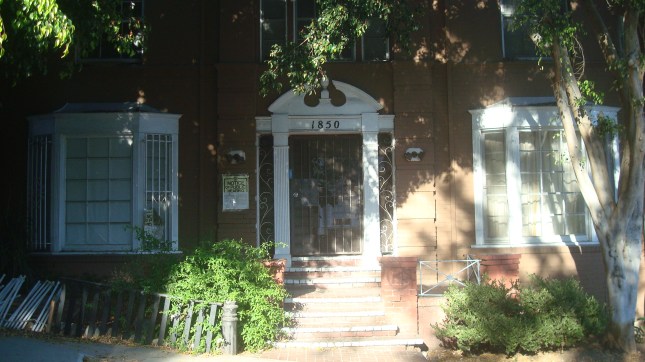
The owner of this formerly rent-controlled apartment building realized he could make more money by evicting the tenants and turning it into something else. He used the Ellis Act to get rid of the residents a few years ago, saying that he was going to build condos on the site. When that project fell through, he decided to turn the building into a boutique hotel. The owner asked the City for a zone change to make it happen, and no surprise, the City let him have it.

A similar scenario has also played out at the historic Villa Carlotta on Franklin. The owners evicted the tenants from their rent-controlled units with the aim of turning it into a boutique hotel. It was only through the efforts of dedicated activists that the change of use was thwarted. But the evictions have already taken place, and 50 rent-controlled units were taken off the market.

5 Crossroads

Crossraods Hollywood
This massive project would be situated near the intersection of Sunset and Highland. Three skyscrapers are planned, including a 32-story hotel tower featuring 308 guest rooms and 10,500 square feet of ground-level retail and restaurant space. The developers are also asking for a Master Conditional Use Permit for “the sale of alcoholic beverages and for live entertainment in connection with a total of 22 alcohol-related uses”. You read that right. Twenty two new places for folks to buy alcohol in this one project. In addition, approximately 80 rent-controlled units will be demolished to build this behemoth, which the developer says will be replaced by approximately 80 affordable units. Even if the current tenants are granted right-of-return, where they’re supposed to live during the construction phase isn’t clear.

6 Ivar Gardens

Ivar Gardens
The Department of City Planning(DCP) decided this 21-story hotel at the extremely congested intersection of Sunset and Cahuenga didn’t need a full Environmental Impact Report. Instead, planners have been trying to rush this through with a Mitigated Negative Declaration, a much lower level of environmental review. The traffic study claims that PM rush hour traffic northbound on Cahuenga flows freely with no significant delays. Anyone who’s made that trip at rush hour knows how ridiculous that claim is. But that didn’t stop the LA Department of Transportation from approving the report. Just further proof that when a developer with deep pockets wants something to happen, the City of LA is only too happy to oblige.

1919 Wilcox
One more example of how Hollywood area developers are pushing hotels into residential neighborhoods. While a small hotel does exist on Franklin just to the south, apartment buildings are directly adjacent to this proposed project on the north and west boundaries of the site. Residents were not happy to learn that they might have a 6-story, 150 room hotel next door. It didn’t help matters that the developer is seeking a liquor permit for a 1,200 sq. ft. bar/lounge in the lobby and a 3,500 sq. ft. restaurant/lounge on the north side of the site. Who cares if Chief Beck has written to the DCP warning about the oversaturation of locations that serve alcohol in Hollywood and the resulting problems with violent crime? Certainly nobody at the DCP. They keep handing out liquor permits like there’s no tomorrow.

1717 Wilcox

Also on Wilcox, but closer to Hollywood Blvd., is this planned 134-room hotel with a 2,500 sq. ft. ground floor restaurant and a rooftop bar. You can never have too many rooftop bars, right? Who cares if the people in the apartment building next door don’t like it? And as traffic on Cahuenga continues to spill onto neighboring streets, you can bet these two projects will help turn Wilcox into a parking lot at rush hour.

The point of all this is not to say that we shouldn’t have hotels in Hollywood. The point is that these 8 hotels are just a few of the over 60 projects currently proposed for the Hollywood area. All of these projects will have impacts on infrastructure, air quality, traffic, and LAPD response times, but the City of LA isn’t making any serious effort to assess the cumulative effects of all this development. Whenever possible the DCP tries to approve these projects with a quick MND, and even when they do an EIR there’s no credible attempt made to calculate the collective impacts caused by this massive building binge. The Hollywood Community Plan Update was thrown out by a judge, in large part because the City inflated its population figures, but that hasn’t stopped the City from going full speed ahead. With no community plan in place, the DCP continues to approve thousands of new residential units, hundreds of thousands of square feet of commercial, and who knows how many new hotels.

No doubt all these classy new hotels will make Hollywood a great place for tourists. Just not so great for the people who actually live in the community.