Mariachi Plaza

BH 01 Virg 1

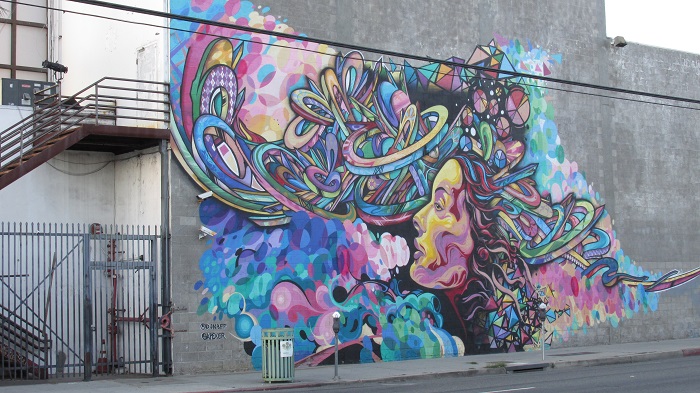
Mariachi Plaza isn’t just a place. It’s a part of LA’s history. A piece of the city’s culture. Musicians have been gathering there since the 1930s, making music, looking for work, hanging out with friends, killing time. The plaza is also a gathering place for the community in Boyle Heights, vendors setting up booths to sell their wares, crowds gathering for a celebration.

Mariachi music is the result of hundreds of years of cultural give and take between the indigenous people of Mexico and the colonists from Spain. It started to take the shape we recognize today in the nineteenth century in the state of Jalisco. Mariachi ensembles come in many different sizes. There are the full orchestras with a string section, a couple of trumpets, a variety of guitars and a harp, but the musicians often play in smaller groups, too. It depends on the occasion and how much money’s being offered.

A view of First Street, bordering the plaza.

A view of First Street, bordering the plaza.

On the plaza there’s a large bandstand that was donated by the people of Jalisco, as well as a small amphitheatre which was built in the process of constructing the MTA Gold Line station. There are also a few modest buildings that have stood on the plaza for years, their walls decorated with colorful murals. Aside from the changes that came with the construction of the Gold Line stop, the plaza has looked pretty much the same for decades.
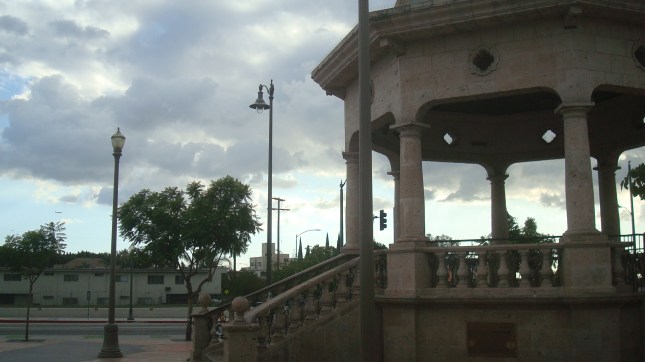
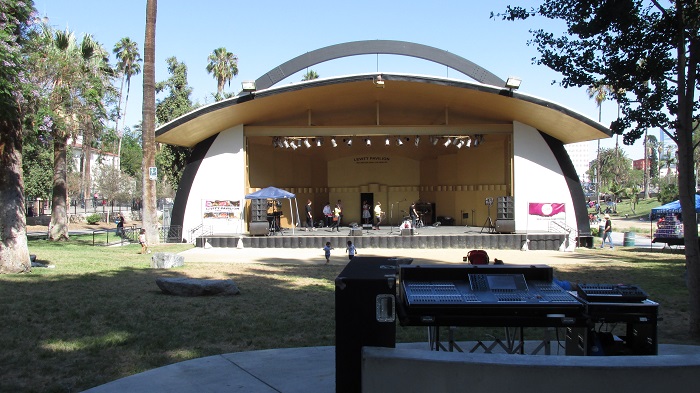
The bandstand.
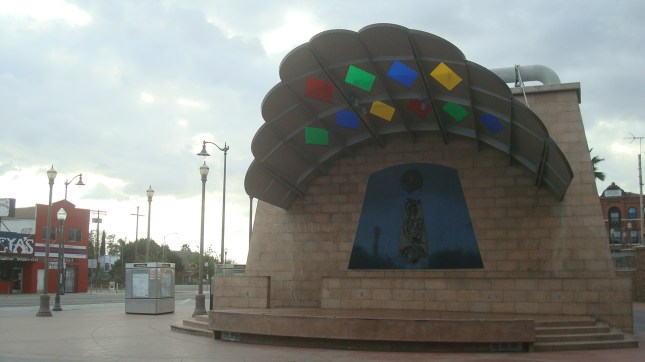
The bandstand.

The amphitheatre.

The amphitheatre.

But the future of Mariachi Plaza is being hotly debated now, and it’s hard to say who will win in the struggle to shape its future. At the beginning of 2015 there was a huge uproar when the MTA unveiled its plan to develop the site. In the agency’s view, they were doing the community a big favor by bringing in an eight story project that included medical offices, a gym, restaurants and shops. Unfortunately, the MTA forgot to ask the community how they felt about it. Local residents were furious. The people of Boyle Heights were understandably angry about the fact that City and County officials had not brought them into the planning process. The MTA backed down, saying that they were going to start from scratch, and promising to involve residents this time. Some in the community are concerned, though, that all the agency intends to do is hold a few public meetings to steer people towards a plan they’ve already decided on. If that’s what happens, it wouldn’t be surprising. That’s standard operating procedure in LA.

The people of Boyle Heights are used to being ignored. Historically, few people at City Hall have shown much interest in this largely Latino community. It’s only in recent years, with the arrival of the Gold Line and the onset of gentrification that developers have started paying attention to the area. No one would argue that the community needs investment, and some locals feel that Boyle Heights would benefit from “gentefication”, in other words, a push for revitalization that maintained the neighborhood’s Latino character. But the past several years have shown that the City really doesn’t care much about preserving the character of existing communities. Residents of Hollywood, the Crenshaw District, Koreatown, Sherman Oaks and other neighborhoods have been hammered by the unholy alliance between City Hall and real estate speculators.

I went down to Mariachi Plaza a few weeks ago to take some pictures. It was a cloudy day, and not much was happening. This didn’t bother me because I always get a little nervous about shooting photos when people are walking by. I’m not crazy about having my own picture taken, and I don’t want to intrude on other people’s privacy. But then I realized, Hey, you’re at Mariachi Plaza. You’ve gotta get at least one shot of the musicians. And there’s another layer of anxiety here, because I knew some of the guys hanging out on the plaza were probably undocumented. It’s understandable that some immigrants get a little nervous when a stranger with a camera walks up and starts snapping photos. I finally did ask a group six guys if I could take a picture. Three of them walked away, but the other three were cool with it.

Musicians hanging out on the plaza.

Musicians hanging out on the plaza.

On the west side of the plaza you can see the Mariachi Hotel, also called the Boyle Hotel, originally the Cummings Hotel.

The Mariachi Hotel.

The Mariachi Hotel.

It has stood at the corner of Boyle and First since the end of the nineteenth century. Today it’s home to a number of the musicians who populate the plaza. You can see by the sign at the top of the hotel that some residents are concerned about outsiders taking over their community.  It says, “Alto a la Gentrificación.  Un Boyle Heights, Por Boyle Heights, Para Boyle Heights.”  (“Stop Gentrification.  One Boyle Heights, by Boyle Heights, for Boyle Heights.”)

Libros Schmibros

Libros Schmibros

Libros Schmibros is right on the plaza. It’s a lending library dedicated to making books available to everybody. The statement on their web site says that, “Libros Schmibros champions the pleasures of literature and its power to change lives,” which sounds pretty cool to me. Here’s the link if you want to learn more.

Libros Schmibros

Just around the corner I found an artist working on a mural.

Artist working on a mural just off the plaza.

Artist working on a mural just off the plaza.

Another view of the mural.

Another view of the mural.

Sorry, but the alley was really narrow, and I couldn’t get far enough away to take a picture of the whole thing. I guess if you want to see how beautiful it really is, you’ll just have to go down there yourself.

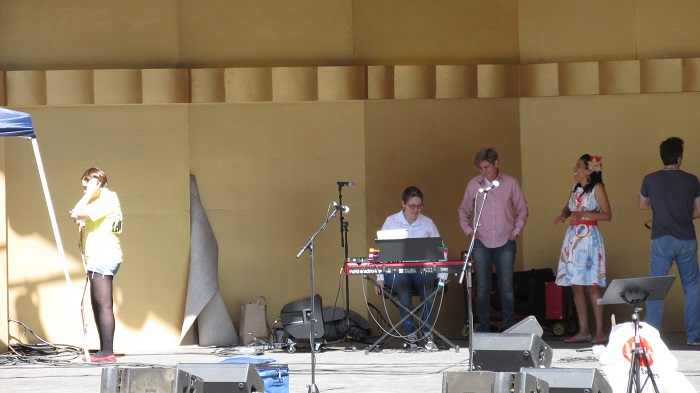
I went back another day and things were much more lively. A band was on stage in the amphitheatre, people were dancing on the plaza, and the place was crowded with booths offering all sorts of stuff.

People having a good time on the plaza.
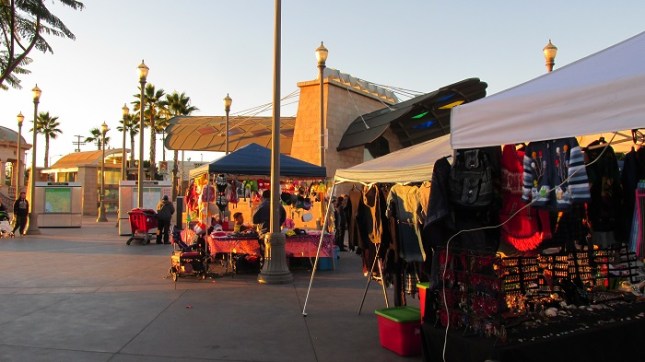
People having a good time on the plaza.

The plaza crowded with booths.

The plaza crowded with booths.

I don’t think many of the residents of Boyle Heights would argue against the need for development. What they want is to have a voice in the planning. So many of the projects proposed in this city are the result of deals made between politicians and developers behind closed doors. That’s got to stop. The only way to plan for a community is to invite the community’s participation. This can be a long, slow, difficult process, but in the end it’s more efficient than the City’s current approach. If the MTA had talked to the people of Boyle Heights first, they could have avoided the huge embarrassment of having their project shut down. If the MTA had spent some time listening to residents, by now they might be well on the way to building something that they community could really support.

If you want to dig deeper into the history of Mariachi Plaza, check out the web site.

Mariachi Plaza

And this essay with photos is worth taking a look at.

The History of the Cummings Block

Banner by artist Dalia Ruiz.
Banner by artist Dalia Ruiz.

Waking Up in the Park

NH 05 Pk Tree Shad

I’ve been going past North Hollywood Park since I was a kid, but I’ve hardly ever set foot in it. Lately, though, every time I’ve gone by I’ve felt like I needed to check it out. So I finally decided to take the time.

NH 07 Pk Tent

God knows what possessed me to go over there at seven in the morning. I’m barely awake at that hour. But it was cool because I had the park mostly to myself. The sun was just coming up and the only other people around were the dog walkers and the joggers. Not that the park was quiet. It’s bounded on all sides by major roadways, occupying the triangle made by Chandler, Tujunga and the Hollywood Freeway.

NH 14 Pk Church

You can see the traffic backed up on Tujunga. And you can also see St. Paul’s First Lutheran Church in the background. I looked on the net for a history of the church, but didn’t find much. Their web site said the congregation has been active in the area since the twenties, but didn’t offer too many details. I was curious about the campus, because it’s an interesting mix of old and new styles.

Also across the street from the park is Masonic Lodge #542.

NH 15 Pk Mason

Freemasonry has pretty much disappeared these days, but it played a large part in European and American history for hundreds of years. Ben Franklin, W. A. Mozart, Simón Bolívar, Duke Ellington and Dizzy Gillespie were all Masons. The history of Freemasonry is long and complex, and because it was a secret society there’s much that will never be known. Some people see it as an important fraternal organization that helped shaped democracy, others see it as a band of power mad imperialists who wanted to rule the world. If you’re into conspiracy theories, you can’t go wrong with the Masons. There are all sorts of crazy stories out there. But to get back to Lodge #542, in its heyday its members included many Hollywood luminaries like Clark Gable, Stan Laurel, Oliver Hardy and Audie Murphy. The Los Angeles Conservancy has a nice write-up about the building’s design.

Masonic Lodge #542 at The Los Angeles Conservancy

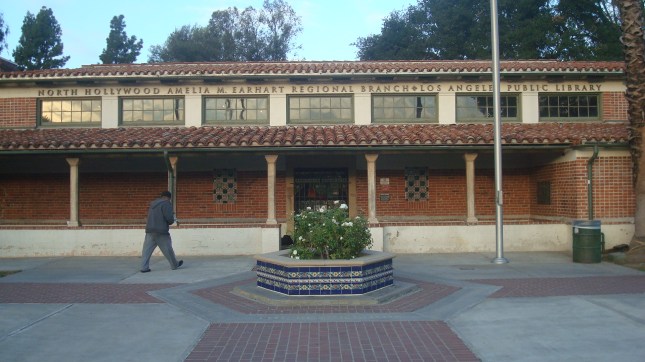
Inside the park itself is the North Hollywood Amelia Earhart Library. This beautiful little Mission style building was originally constructed in 1929, and it was designed by architects Lewis Eugene Weston and Lewis Eugene Weston, Jr..

The front of the Amelia Earhart Library.

The front of the Amelia Earhart Library.

A side view of the library's entrance.

A side view of the library’s entrance.

The back of the library.

The back of the library.

In the decades since it was built, the library has undergone a number of transformations. Like so many buildings, it’s been adapted over and over again as the community around it changed. To learn more, follow the link below.

Amelia Earhart Regional Branch History at LAPL

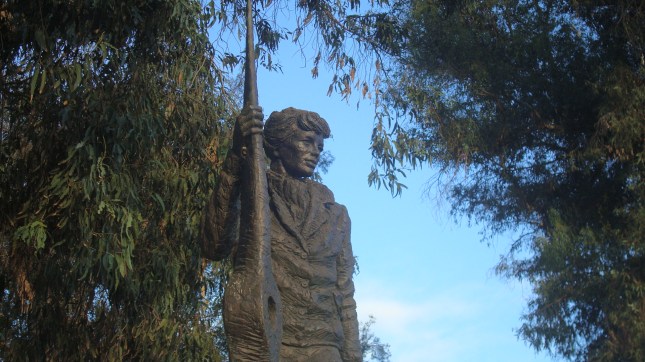
If you’re wondering why this branch library is named after Amelia Earhart, it’s because she was living in nearby Toluca Lake at the time she took off on her final flight. There’s also a statue of Earhart in the park at the corner of Tujunga and Magnolia.

NH 30 Pk Amelia

Honestly, until yesterday the only thing I knew about this early aviator was that she died trying to fly around the world. After doing a little reading, I found out that she racked up a number of impressive accomplishments in her short life. You might want to do a little reading about her yourself.

Amelia Earhart Bio

Even though there wasn’t a lot happening at seven a.m., the park is often crowded when I go by in the afternoon. Activities are offered for people of all ages, and there are plenty of folks who go there just to hang out. In spite of the cars rushing along the park’s perimeter, once you get away from the traffic it’s easy to forget about the city buzzing around you. The paths wend their way through large expanses of grass. There are fabulous old trees rising up above you.

NH 33 Pk Flowers

For years I’ve been rushing past this beautiful park, convinced I didn’t have the time to stop and linger. We get so caught up in being busy that we tell ourselves we can’t take a break. We’re plugged into so many different things that we’re bombarded with stimulus all day long, and we convince ourselves it has to be that way. It doesn’t. We need to step away from the traffic, phones, TV, etc., and let ourselves walk on the grass, feel the breeze, lose ourselves in the blue of the sky.

We need to take the time for a walk in the park.

NH 50 Pk Wide

Who’s Really Standing Up for Artists?

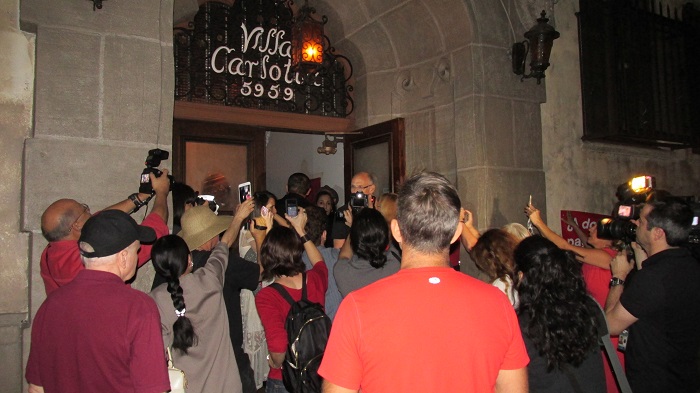
Tensions running high at the Villa Carlotta on Sunday night.

Tensions running high at the Villa Carlotta on Sunday night.

In case you haven’t been following recent events at the Villa Carlotta, I’ll give it to you real quick. It’s a piece of Hollywood history, built in the 20s, and home for many years to musicians, artists, writers and other creative folk. But it was rent-controlled, and not too long ago the owner decided he wasn’t making enough money off it, so he sold the property to a developer who planned to turn it into an extended-stay hotel. As part of the process, it was deemed necessary to get rid of the existing tenants. Many of them were forced out using the Ellis Act.

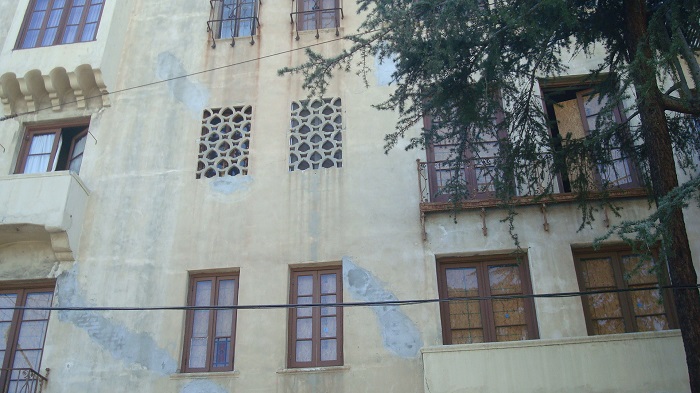
Windows boarded up at the Villa Carlotta.

Windows boarded up at the Villa Carlotta.

Of the 50 apartments in the Carlotta, four are still occupied. Some of the tenants decided to fight the evictions, and not just because they wanted to hang on to their homes. There are a number of reasons to object to what the developer is doing here. First, the Carlotta is a historic building, and as such it’s protected by state law. In order to turn it into a hotel, the current owner planned extensive alterations to the structure. The remaining tenants, worried that the modifications would do irreparable damage, took their case to the Cultural Heritage Commission, which sided with them. Second, Ellis Act evictions have caused the loss of thousands of rent-controlled units in LA. A recent study by UCLA found that this city is the least affordable major city in the nation, and mass evictions are only making things worse.

And third, up until this whole mess started, the Carlotta was home to a community of creative people. According to many of the former tenants, it was a place where budding screenwriters and struggling artists could meet friends and make connections, where they could share their work and shape their ideas.

The lobby where tenants used to gather, now deserted.

The lobby where tenants used to gather, now deserted.

This aspect of the story took on new importance when it was announced that the Hollywood Arts Council had decided to hold a fundraiser at the Carlotta. The HAC apparently thought it would be the ideal place for the event, which was held to raise money for arts education at nearby Cheremoya Elementary School. The remaining tenants at the Carlotta were surprised by the announcement. It seemed odd that an organization which has the stated goal of supporting the arts in Hollywood had decided to hold their event at a venue that was nearly vacant because dozens of artists had been forced to leave.

They contacted the HAC and explained the situation, asking if the organization would consider moving the event. The answer was polite, but firm, no. Bothered by the apparent hypocrisy of the HAC’s actions, the tenants decided to protest.

Sylvie Shain, one of the few remaining inhabitants, had imagined the protest as an elaborate performance piece. Former tenants were asked to come to the event wearing white, and they would stand for the ghosts of the Villa Carlotta. Alternately, attendees could show up dressed in red to symbolize of the affordable housing massacre that’s taking place. The idea was to dramatize the plight of renters throughout the City.

Protesters holding a banner to protest evictions.

Protesters holding a banner to protest evictions.

The same message in English.

The same message in English.

Unfortunately, things didn’t work out as planned. The first part of the protest, with people congregating on the sidewalk outside, went smoothly. But when Sylvie led a group into the building things got kind of chaotic. There were moments when I couldn’t figure out what was going on. But one thing is clear. At one point Sylvie was forcibly ejected from the building and temporarily denied re-entry.

On the positive side, the event got a fair amount of media coverage. Two local stations showed footage on the evening news, and Curbed did a piece as well. The Los Angeles Tenants Union joined the residents of the Carlotta, and LATU members spoke eloquently about the affordable housing crisis in LA, emphatically pointing out the damage that the Ellis Act is doing.

It’s important to say that artists aren’t just having a hard time finding housing in Hollywood. In recent years Silverlake and Echo Park have both seen an exodus of musicians, writers and others who can’t afford to pay what landlords are asking these days. And then there’s the sick joke of the Arts District in Downtown. In the late 70s, creative people started moving to the industrial districts in the City’s center. The community came together because people who were struggling to make music or art or whatever could find cheap rents in areas that nobody else wanted to live in. But then the developers discovered it, started marketing it as the Arts District, and housing prices soared. Many of the artists who had created the community were forced to leave because it got too damn expensive.

So let’s get back to the question I asked in the heading for this post. This past Sunday night, who was really standing up for artists? Was it the Hollywood Arts Council, knowingly holding their fundraiser at a site where dozens of creative people had been forced to leave? Or was it the scrappy band of tenants who staged an action to call attention to the fact that artists and others are being thrown out of their homes all over LA?

You can probably guess what my answer would be.

Sylvie put together a beautiful brochure for the event, which you can view by clicking on the link below.

Ghosts of the Carlotta

And if you’d like more info about the situation at this historic building, here’s a link to the Save Villa Carlotta Facebook page.

Save Villa Carlotta

VC 6 Fac Clouds

Losing a World of Inspiration

Leimert Park

Leimert Park

All over Los Angeles neighborhoods are changing. Developers with deep pockets are buying up real estate in the hope of making a bundle. New projects are transforming the landscape from Venice to East LA. We need development, but there has to be a balance between business interests and community interests. The community needs to be involved, and that involvement has to be based on trust. The only way you can build trust is through honesty and transparency.

Unfortunately, we’re not seeing much honesty or transparency in LA these days. Many developers are doing their best to shut the public out by keeping their activities secret, and our elected officials often seem to be willing accomplices. As a result, communities across the city have suffered some terrible losses. Buildings have been demolished. Businesses have been driven out. Thousands of renters have lost their homes. People and places that defined our neighborhoods are disappearing.

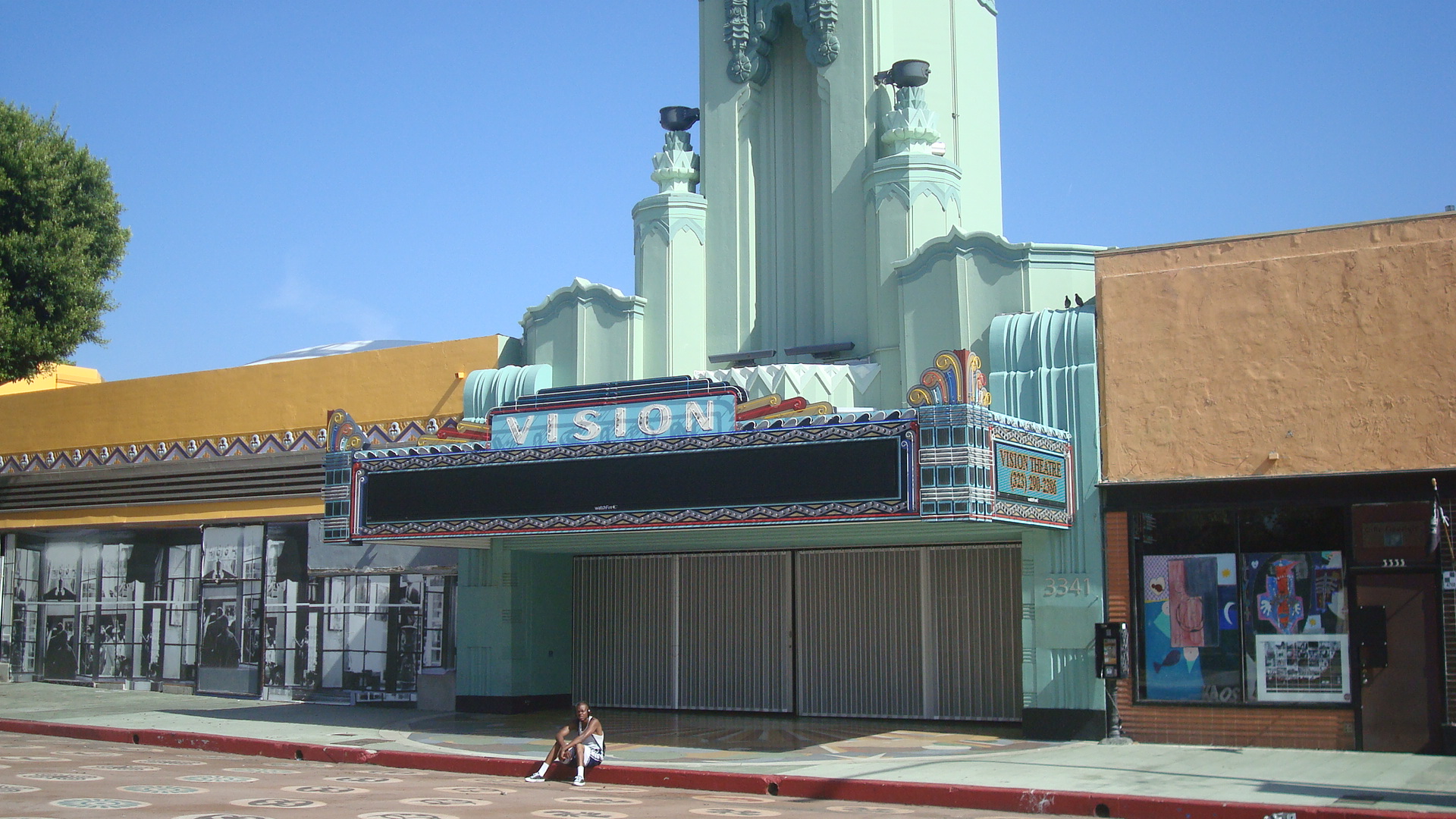
The Vision Theatre

The Vision Theatre

In the last few years Leimert Park has drawn a lot of attention from investors. Built as a planned community in the 20s, Leimert Park was predominantly white up til WWII. After restrictive covenants were declared illegal in 1948, the demographics started shifting and by the 60s the area was largely African-American. For decades it’s been a center for black culture in LA, figuring prominently in the local jazz and hip hop scene. In Leimert Park you can find a beautifully preserved remnant of the past like the Vision Theatre sitting right next door to a cutting edge media lab like KAOS Network.

KAOS Network

KAOS Network

And just around the corner you can also find the World Stage, although that may change in the months to come. This is one of the saddest casualties of the redevelopment frenzy that’s sweeping across LA. Founded in 1989 by drummer Billy Higgins and poet Kamau Daáood, the World Stage has been a major part of the neighborhood’s cultural life for over 25 years. Back in the 90s it was an important part of the renaissance that breathed new life into Leimert Park. Even when the recession hit and neighboring shops and restaurants were closing down, the World Stage remained an anchor for the community.

The World Stage

The World Stage

But it looks like the World Stage will be leaving Leimert Park. The building it’s housed in changed hands a while back, and the new owners will not renew the lease. In fact, World Stage Executive Director Dwight Trible says the new owners have refused to even meet with him. Trible says that after months of discussion, the Board of Directors has decided that it’s best to look for a new location. So while the World Stage will still go on, it will be cut off from the community that has been its home since the very beginning.

The story of who’s been buying up property in Leimert Park and why is complicated, and if you’re interested in the details I recommend reading this piece that appeared in the LA Weekly a few months back.

Who’s in Control of Leimert Park’s Future? It’s Hard to Tell.

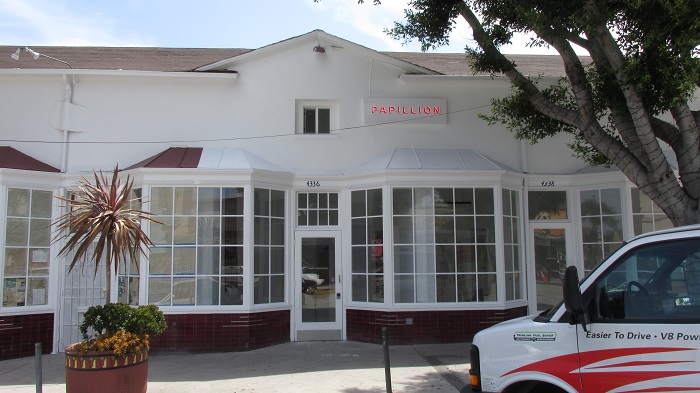
Papillion

Papillion

Briefly, the local real estate market started heating up back in 2012 when the MTA decided that the new Crenshaw/LAX line would have a stop at Crenshaw and 43rd. Since then a number of buildings have been purchased by limited liability corporations that seem to be controlled by Allan DiCastro. DiCastro is associated with artist Mark Bradford and philanthropist Eileen Norton, and together they’ve made a serious commitment to investing in the local art scene. To their credit, they’ve brought the non-profit Art + Practice and the contemporary art space Papillion to the neighborhood. That’s all to the good. Leimert Park has been struggling in recent years, and could certainly use a shot in the arm.

Shuttered businesses on Crenshaw Blvd..

Shuttered businesses on Crenshaw Blvd..

But DiCastro and his associates have not been open or honest with the community about their plans, and that’s a problem. People who’ve lived and worked in Leimert Park for decades can’t get straight answers about what the new owners have in mind. Unfortunately, this is a scenario that’s playing out all over LA these days. Investors with deep pockets and connections at City Hall move into a neighborhood and work behind the scenes to push their own agenda. Residents are told they should be happy about how their community is being “transformed”, but they find they have no voice in the process.

Music is one of the fundamental things that binds a community together. It’s a powerful, immediate way for people to connect and share their experience. For years the World Stage has been a place where musicians and audiences come together, where the distance between the people who come to play and the people who come to listen disappears. Leimert Park isn’t just its physical home, but also its spiritual home. If the World Stage ends up having to leave, it will be a terrible loss for the community.

Future site of the Leimert Park stop on the Crenshaw/LAX Line.

Future site of the Leimert Park stop on the Crenshaw/LAX Line.

Cesar Chavez Avenue Bridge

Looking north from the Cesar Chavez Avenue Bridge.

Looking north from the Cesar Chavez Avenue Bridge.

A while ago I took a walk across the Sixth Street Bridge to get some photos of it before they tear it down. Looking out over the landscape, I saw the other bridges that span the LA River, linking Downtown and East LA. I started thinking it would be cool to take pictures of them as well.

I started walking on the Downtown side of the bridge.

I started walking on the Downtown side of the bridge.

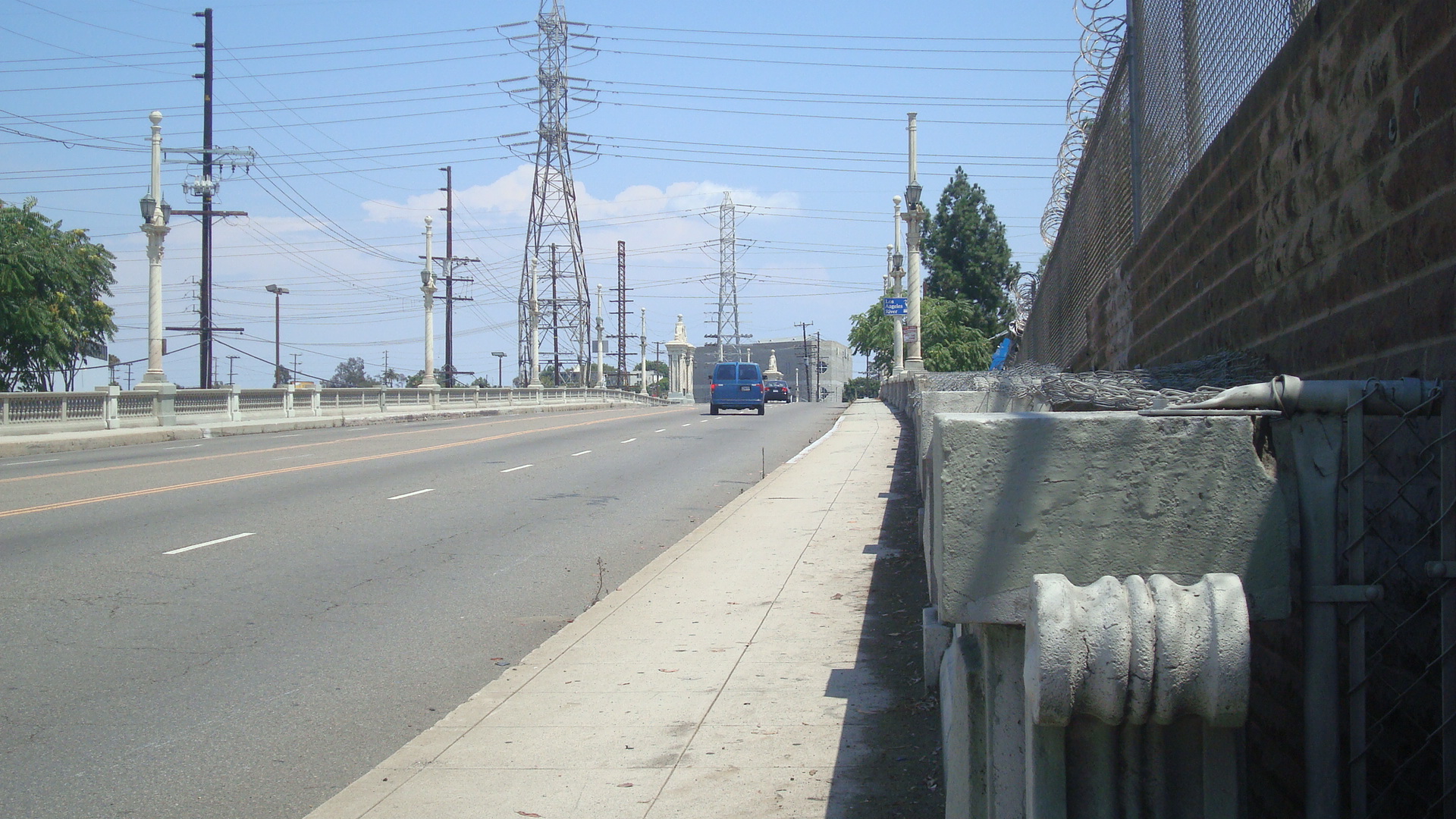
It’s taken me forever to get started on that project, but recently I took a walk across the Cesar Chavez Bridge. There is something kind of thrilling about seeing the surrounding area from that vantage point. Much of the landscape is hard, grey concrete. Power lines criss-cross the sky. But you can also see the hills in the distance, and on the day I crossed the bridge there were massive clouds billowing all along the horizon.

A view of the First Street Bridge.

A view of the First Street Bridge.

Today the bridge is part of Cesar Chavez Avenue, created back in the nineties to commemorate the courageous labor leader who helped organize California’s farm workers. The segment that includes the bridge was formerly called Macy Street, but it’s also part of the historic Camino Real, the road built by the Spanish to connect their missions back when they governed California. The first bridge built on the site was erected in the nineteenth century, but it was demolished at the beginning of the twentieth. In the twenties, the City of LA began an effort to construct a series of viaducts across the LA River, and this bridge, then called the Macy Street Bridge, was part of that effort.

A huge mound of debris on the north side of the bridge.

A huge mound of debris on the north side of the bridge.

For years I’ve seen this massive mound of debris resting on the north side of the bridge. I have no idea where it came from or if it’s ever going away. If you look closely you can see that plants have started to grow here and there. It’s become part of the landscape, an artificial hill rising up over the river and the rail lines.

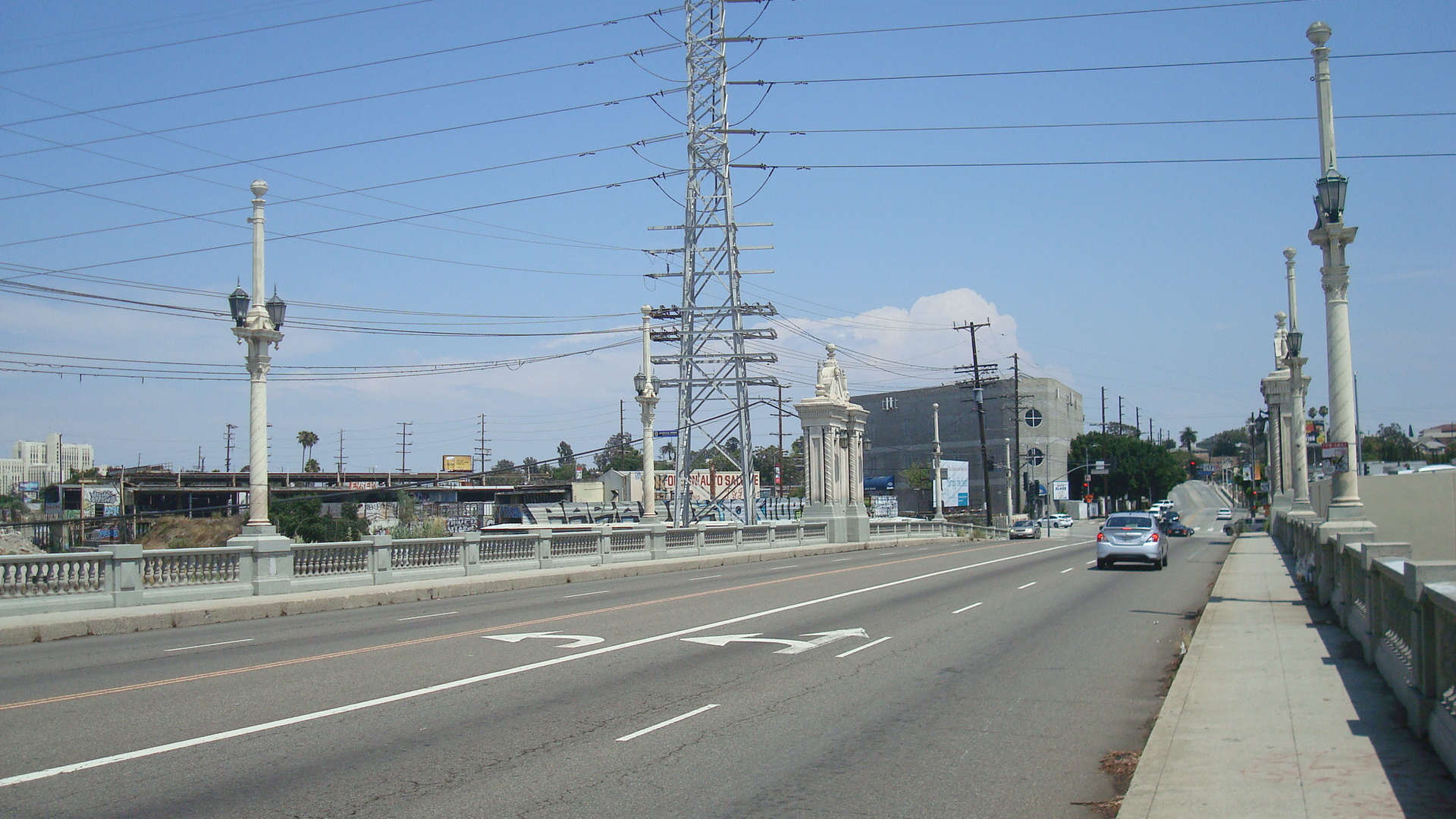
A view of the bridge heading toward East LA.

A view of the bridge heading toward East LA.

The bridge is lined with lampposts on either side, and decorated with porticos ornamented in the Spanish Revival style that was popular in the twenties. There are plaques affixed to the porticos explaining that the bridge is dedicated to Father Junipero Serra, the founder of the California missions. Serra’s legacy is controversial, since he was a major player in Spain’s effort to subjugate the native population. The Vatican’s recent decision to canonize him has ignited the debate all over again.

One of the porticoes that decorate the bridge.

One of the porticoes that decorate the bridge.

Another view of the same portico.

Another view of the same portico.

If you want to learn more about the Cesar Chavez Avenue Bridge, below is a link to an article on KCET’s web site that talks about the origins of a number of LA bridges. To see more images and to access info about it’s history, check out the links to the Library of Congress.

A Brief History of Bridges in Los Angeles County from KCET

Cesar Chavez Avenue Viaduct from Library of Congress

Photos of Cesar Chavez Bridge in the Library of Congress

CC 40 Deb Hills 1

We Still Haven’t Crossed the Finish Line

front of N.F. Stokes Residence

front of N.F. Stokes Residence

I was thrilled last week when I heard that LA’s Cultural Heritage Commission voted unanimously in favor of designating the N.F. Stokes Residence a historic cultural monument. The building, at 1905 Grace, dates back to 1917 and is one of the few structures from that era still standing in the Hollywood area. At the same meeting the CHC voted to consider the Mosaic Church, at Hollywood and La Brea, for designation as well. There were a number of people in the community who have worked long and hard to save these buildings, and reading the e-mails from those involved it seemed like everyone was breathing a collective sigh of relief.

But the fight isn’t over yet.

I don’t want to rain on anyone’s parade, but we have to remember that the Stokes house won’t actually be declared a monument until the City Council votes on it. That’s when it becomes official. And as for the Mosaic Church, I was at a meeting last week where a developer’s representative flatly declared that the building did not deserve monument status. Now, you might be thinking, Hey, the CHC vote was unanimous. They clearly believe that both buildings are worth saving! How could the City Council ignore their recommendation?

Better think again. Not too long ago Mayor Garcetti pushed for the demolition of the Oswald Bartlett House over the loud objections of the preservation community, and he got his way. That house is gone. Over the past few months the Mayor has overridden the City Planning Commission to revive two major developments that faced strong opposition from the neighboring communities. There are no guarantees here. Recent history has shown that the Mayor and the City Council will do what they want. Which is often exactly what the developers want.

So we need to keep the pressure on. If you live in Council District 4, where the Stokes Residence and the Mosaic Church are both located, you might want to contact newly elected Councilmember David Ryu. His support will be crucial. Here’s his info.

Councilmember David Ryu
david.ryu@lacity.org
323 957-6415

And if you don’t live in CD 4, you can still contact your councilmember and let them know you think these buildings are worth saving.

Mosaic Church

Mosaic Church

Hollywood Journal – It Wasn’t What I Wanted

Egyp Pylons Angle

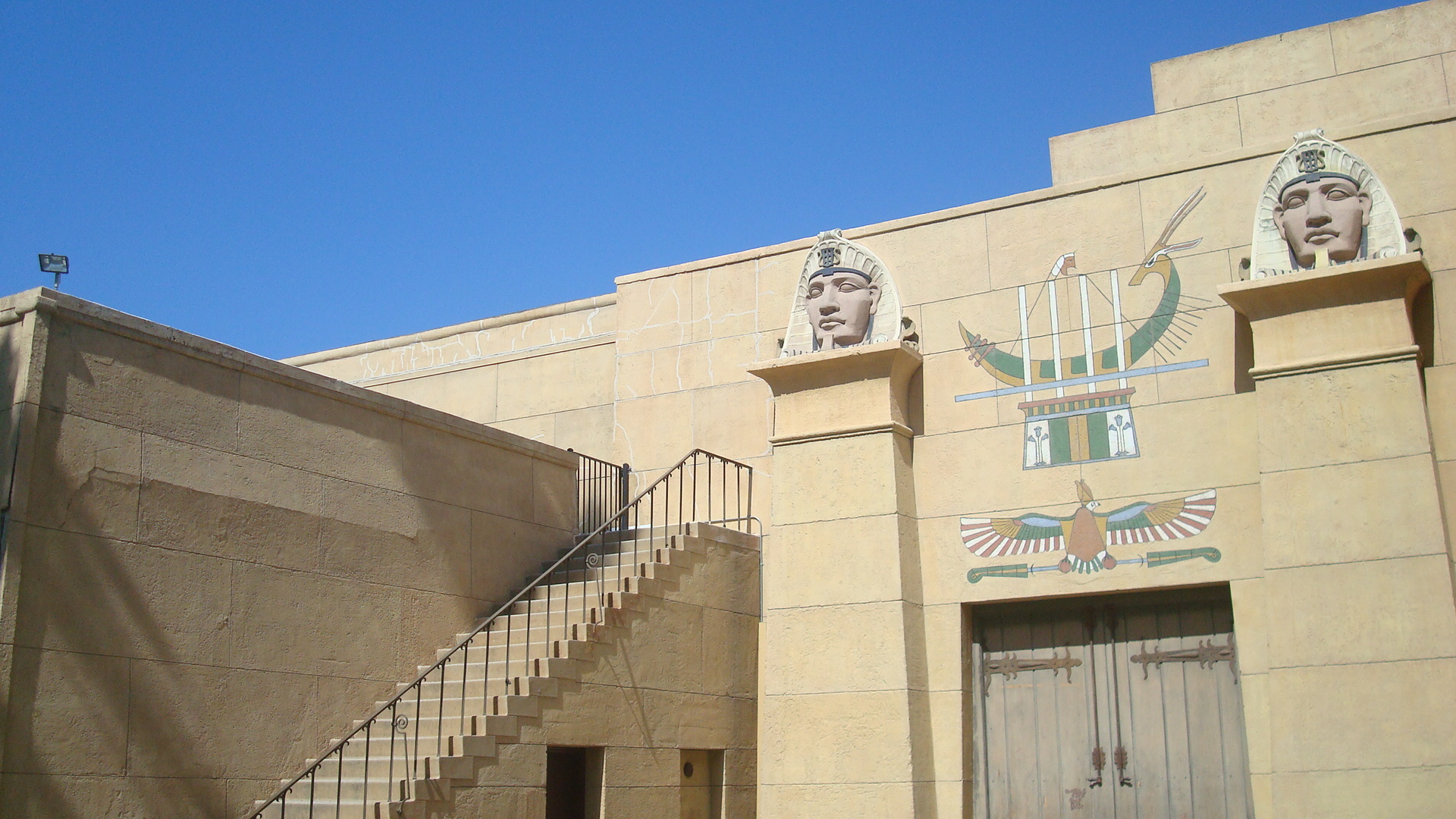
Things change, and sometimes change is hard to accept. Part of the reason I spent years keeping a journal on Hollywood was to record the transformations that were taking place. One of the biggest upheavals was in the way films were exhibited. Hollywood is home to a handful of movie palaces, all of them built over the course of a decade starting in the early twenties. Up through the eighties, those palaces were still playing first run movies, and on opening weekend you might see lines going down the block.

But in the eighties multi-plexes started springing up, and the huge Hollywood theatres couldn’t compete. They either had to change or die. The Egyptian Theatre was shuttered in 1992. I was really upset. I’d seen so many movies there, including 2001, Alien and Point Break. When it suffered major damage in the 1994 Northridge quake, I was sure the next step was demolition. So I was overjoyed when I heard the American Cinematheque had bought the building and was going to renovate it.

Overjoyed, that is, until the theatre reopened and I saw the results. The auditorium was less than half its original size and the screen was significantly smaller. Plus, there were a number of minor changes that bugged me. I wrote it all down in the journal entry below. I was ticked off.

On the plus side, though, the Cinematheque was on Hollywood Boulevard and they were showing some great stuff. I eventually signed on as a volunteer, and ended up giving tours of the theatre, which made me look at the changes in a whole new light. In the first place, there was no way the Cinematheque could run the Egyptian as a 2,000 seat house. It just wasn’t possible to fill an auditorium that big on a regular basis. They had to find a way to solve that problem, and the solution was building two smaller theatres inside the original structure. Second, the theatre I remembered was very different from the theatre Sid Grauman had built in nineteen twenty two. He created a silent movie palace. As soon as sound came in, the theatre had to start adapting to stay viable, and numerous changes had been made over the years. In the process of renovating the Egyptian, the Cinematheque actually revealed parts of the original structure that had been concealed for decades. Third, the process of renovating a historic building is incredibly complex and costly. The Cinematheque had to follow the City’s code for historic preservation and find the money to pay for everything. They were lucky to connect with a couple of very talented architects, Craig Hodgetts and Ming Fung. The team came up with a number of innovative and elegant solutions to some difficult problems.

I love seeing movies at the Egyptian these days. If the screen isn’t quite as big as it used to be, it’s still one of the largest you’ll find in LA. And the sound is way better than it was when the Egyptian was operating as a commercial movie theatre. So while the journal entry below shows my initial disappointment, as the politicians say, my views have evolved. When the theatre first reopened, I wanted it to be the way I remembered it in years past. That wasn’t possible. Things change.

Here’s a link to a page on the American Cinematheque web site that shows images of the Egyptian over the years.

Egyptian Theatre Past

And here’s a link to the Hodgetts and Fung web site that shows images of their renovation/restoration.

H+F Egyptian Theatre

Egyp Hier

January, Nineteen Ninety Nine

Well, last night I finally made it over to the American Cinematheque. And I’ve gotta say I’m pretty disappointed with what they’ve done to the Egyptian. I mean, if you just want to look at it as a modern, mid-sized theatre it’s fine. But, aside from preserving some of the decorative elements, it has nothing to do with what the Egyptian was. It seems like the auditorium is about half its original size. The screen is considerably smaller. The seats are cozy but narrow, and there’s very little leg room. I was more comfortable the other night at the Beverly. Why do they have that sign up that says it’s Grauman’s Egyptian? It’s not. Did any of the people involved seriously think they were restoring or renovating the original theatre? All they’ve done is build a mid-sized auditorium inside the shell of a movie palace. They’ve completely changed the interior and the exterior of the building. The experience of going to this new Egyptian Theatre is totally different, and it’s certainly not a change for the better.

Now that I’ve got that out of my system, I also have to say I’m really glad to have the American Cinematheque on Hollywood Boulevard. I’m pretty impressed by their programming so far. It seems like they really want to offer all kinds of films. In spite of what they’ve done to the Egyptian, I look forward to going back.

Last night we saw Cruising, and Friedkin was there to talk about it. I really liked the film. It was interesting to hear the director’s comments, too.

Egyp Columns

Reyner Banham Loves Los Angeles

Reyner Banham adjusting his rear-view mirror.

Reyner Banham adjusting his rear-view mirror.

I was surfing the net today and came across an amazing artifact from LA’s past. Reyner Banham was an achitectural theorist and historian. He was born in England, but came to America and fell in love with the place, especially Los Angeles. In 1972 he made a film essay about the city for the BBC. He called it Reyner Banham Loves Los Angeles. These days that title might not strike you as unusual, but back in the early seventies LA was seen by most architects and planners as a disaster on a massive scale. For Banham, a respected writer and professor at UC Santa Cruz, to proclaim his love for LA, loudly, frequently, unabashedly, was really controversial.

I’m not going to tell you it’s a great film, because it’s not. But I think anybody who cares about this city will be fascinated. First, you’ve got this really smart, perceptive guy giving you his thoughts on what most commentators at the time thought was an urban wasteland. Second, the movie gives you a good, long look at what LA was like back in 1972, and if you weren’t around in those days, you’ll find the contrast startling.

The film is slow in places, and kind of disjointed. Also, because it’s only an hour long, Banham doesn’t have time to take more than a cursory glance at some aspects of LA. The worst part is that the print is badly faded. In some scenes it’s hard to even make out what’s on screen. But you get to see images of Watts, Hollywood, Downtown and Venice as they looked over forty years ago. It’s a real time capsule. Here’s the link.

Reyner Banham Loves Los Angeles

The film is an entertaining artifact, but it just gives you a taste of what made Banham such an interesting and provocative character. If you want to learn more about him, check out his 1971 book, Los Angeles: The Architecture of Four Ecologies. Don’t be put off by the academic sounding title. It’s a fresh and entertaining exploration of the aspects of this city that make it unique. I recommend it to anybody who wants to gain a better understanding of LA.

Sunday Afternoon

WL a 02 Grass Relax

Not too long ago I took a trip down to Westlkake/MacArthur Park. It’s a popular gathering place on weekends. Thousands of people show up there to play games, listen to music, attend worship services, or maybe just lie on the grass and stare up at the sky.

The park was created by civic leaders back at the end of the nineteenth century. It’s bounded by Sixth, Alvarado, Seventh and Park View. Originally christened Westlake Park, the name was later changed to MacArthur Park, after the five star general who played a prominent role during WWII. Some years ago there was an intense debate over which name was more appropriate. When you ride the Red Line to Seventh and Alvarado, the automated PA announces Westlake/MacArthur Park.

When I first came up out of the subway, the first thing I saw was the crush of street vendors lining the sidewalk. There were dozens of people selling everything from jewelry to DVDs.

Street vendors on Alvarado.

Street vendors on Alvarado.

On the other side of Alvarado there were also people selling juices and ices from carts.

More vendors on the other side of Alvarado.

More vendors on the other side of Alvarado.

The City is currently considering new rules to regulate vending on sidewalks and in parks, and the debate is pretty contentious. Merchants in brick and mortar stores are angry because they’re competing with people who can operate with no overhead, and so offer lower prices. There are definite health concerns about vendors selling food without a license. But these people are just trying to make a buck like everyone else. This is their livelihood. I’m sure the debate will continue for years to come, and I doubt anyone will find a solution that makes everybody happy.

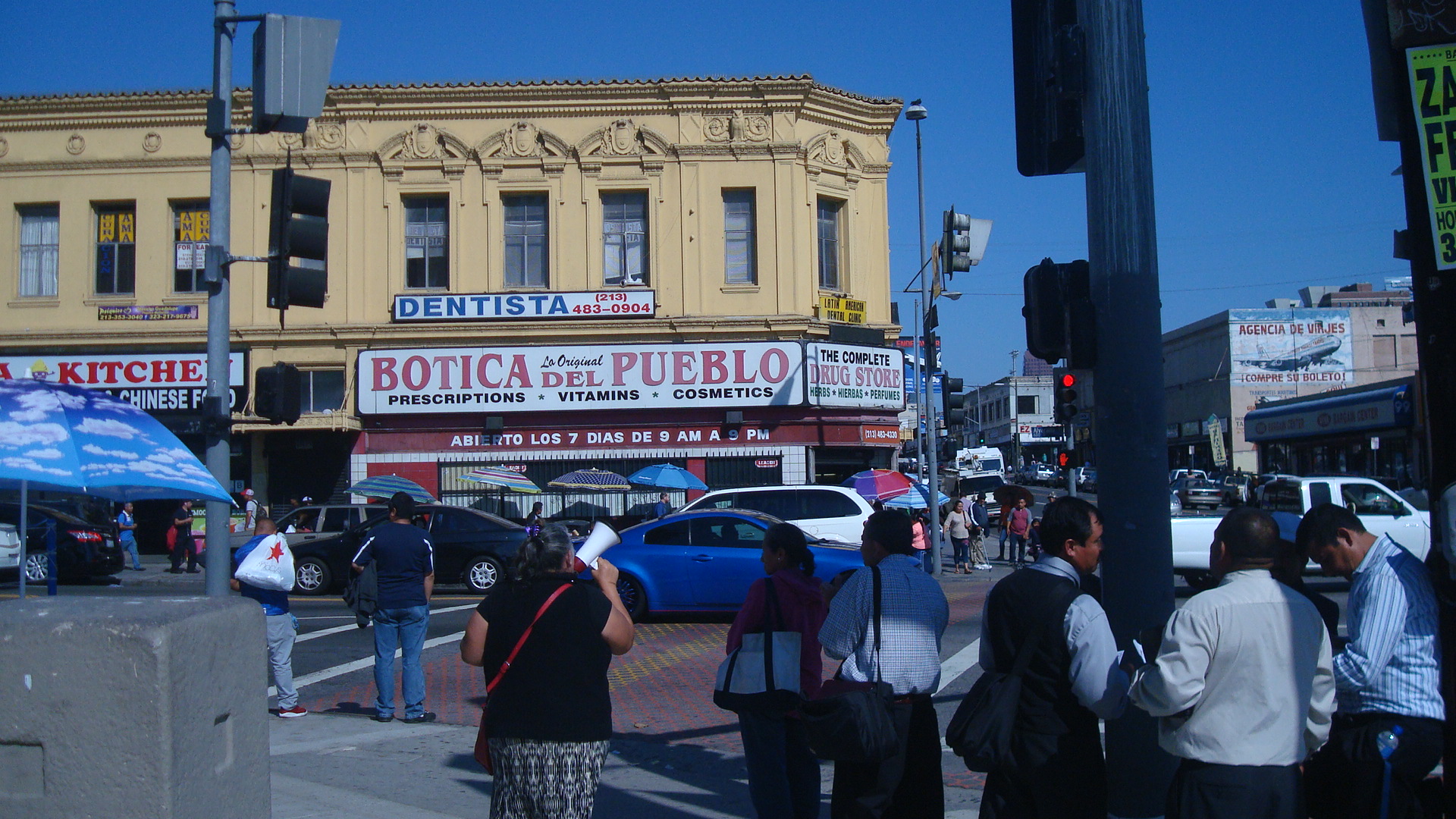
There was a woman at the corner of Seventh and Alvarado bellowing through a megaphone about how people should give their lives to Christ.

A woman evangelizing at Seventh and Alvarado.

A woman evangelizing at Seventh and Alvarado.

I’ve gotta say, this really drives me crazy. I know she feels like she needs to preach the Gospel, but there are plenty of Christians who do the same thing without resorting to amplified rants on a street corner.

At the corner of Seventh and Alvarado you have Langer’s, a deli that’s been around forever. I haven’t been there for years. Some day I’ll have to go back and check it out.

Langer's

Langer’s

Up at Wilshire and Alvarado stands the Westlake Theatre, which opened in 1926. It stopped showing movies a long time ago. For a while it was a swap meet, but it looks like it’s completely closed now.

Westlake Theatre

Westlake Theatre

The park bisected by Wilshire, which runs right down the middle of it, but there are tunnels running underneath that allow people to pass from one side to the other.

A view of Wilshire facing Park View

A view of Wilshire facing Park View

A view of Wilshire facing Alvarado.

A view of Wilshire facing Alvarado.

Now let’s head into the park.

Entrance to the park at Seventh and Alvarado.

Entrance to the park at Seventh and Alvarado.

But first, make sure you know the rules.

Sign posted inside the park.

Sign posted inside the park.

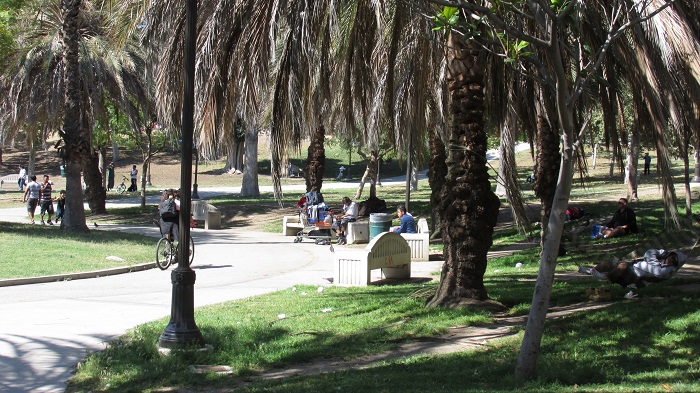
As you can see, a lot of people are just looking for a shady spot where they can hang out and relax.

Trees provide plenty of shade.

Trees provide plenty of shade.

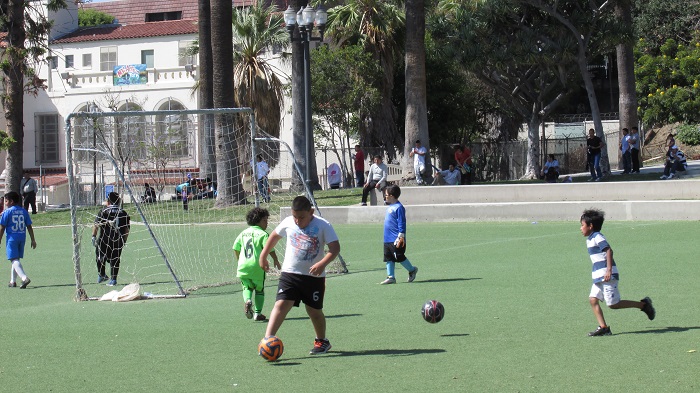
But not everybody is kicking back. Soccer is big here, and on weekends teams of kids take turns honing their skill on the field. Families line up around the perimeter, watching, cheering, coaching.

Kids playing soccer.

Kids playing soccer.

Families standing on the sidelines.

Families standing on the sidelines.

Soccer stars of tomorrow.

Soccer stars of tomorrow.

This looks like a pretty innocent shot of a food truck parked on Wilshire. But notice the graffiti on the concrete. “MS” stands for Mara Salvatrucha, a brutal gang that has a presence in the neighborhood. Fortunately, gang violence has been declining all over LA for several years. And the crowds of people enjoying the park didn’t seem concerned for their safety. The vibe was very relaxed.

Food truck parked on Wilshire.

Food truck parked on Wilshire.

The Levitt Pavilion offers a wide range of entertainment, and it’s free.

Levitt Pavilion

Levitt Pavilion

Performers getting ready for a show.

Performers getting ready for a show.

This is one of the tunnels that goes under Wilshire, linking the two sides of the park.

Tunnel running beneath Wilshire.

Tunnel running beneath Wilshire.

Mural running the length of the tunnel.

Mural running the length of the tunnel.

The lake is a draw for birds of all kinds. Please don’t ask me to name the different varieties. I know some of them are ducks. Other than that, I have no idea.

Birds at the edge of the lake.

Birds at the edge of the lake.

If you want to learn more about the park’s history, the link below will lead you to an article on the KCET web site that talks about its origins. Aside from the information, it includes some amazing images of the area through the years.

How a Neighborhood Dump Became a Civic Treaure

And this article on Wikipedia offers more detail on some interesting chapters in the life of the park.

Westlake/MacArthur Park on Wikipedia

WL a 90 Wtr Kids

Landmark? What Landmark?

Circus Disco

Circus Disco

When a proposed project might have significant impacts on the surrounding community, state law requires the developer to prepare an Environmental Impact Report (EIR). In theory, this is a good thing. The idea is to make sure that negative impacts are identified so that everyone is aware of how the project will affect the area. In practice, the whole EIR process is questionable. The basic problem is that the developer is the one who pays for the report, which means that it almost invariably focusses on the positive impacts, and either minimizes or ignores the negative impacts.

This is exactly what’s happing with the Lexington Project. The developer wants to build almost 700 residential units on a city block between Lexington, Santa Monica, Las Palmas and Seward. The EIR tells us it’s a terrific project with numerous benefits for the area. But there a lot of the people in the community who see things differently.

The aspect of the project that’s gotten the most media attention is the fact that the developer will be demolishing the Circus Disco. You may be wondering why this is a big deal. Hollywood is full of places to dance. But the Circus is an important landmark for the LGBT community in LA, and especially for non-white gays and lesbians. Back in the 70s, when disco was big, there were plenty of clubs where gay men could party all night long. Unfortunately many of those clubs didn’t admit blacks and Latinos. But the Circus Disco was open to everyone, and it’s been cherished for years by the LGBT community because of that.

But while the EIR mentions the Circus in its survey of structures on the property, the report concludes that, “… [N]one of these buildings appears eligible for listing in the National Register, California Register, or for local City of Los Angeles Historic-Cultural Monument designation.”

This is interesting. Sure, it would be hard to make a case that the Circus was significant enough to make the national or state registers. But are they saying it’s not a significant part of LA history? If so, it seems that the City of LA’s Office of Historic Preservation has a different view. Survey LA is a program initiated by the OHR to document significant buildings. Last year they released a document entitled LGBT Historic Context Statement which gives an overview of the community’s history and identifies potential landmarks. And the Circus Disco is on the list.

LGBT Historic Context Statement from Survey LA

But it’s not just the Circus that’s threatened. The French Market and Catch One, both of which hold a significant place in the LGBT community, may soon be gone. And let’s not forget that back in 2011 the building that originally housed A Different Light, an early gay bookstore, was demolished. That was the same year that the Spotlight, according to some the oldest gay bar in Hollywood, closed its doors. The building still stands, but now it’s just another upscale nightclub. It does seem like the LGBT community is losing a huge chunk of its history.

Not that any of us should be surprised. Preservation has never been a high priority in LA. Groups like the Los Angeles Conservancy and Hollywood Heritage keep fighting to save these buildings, but City Hall seems more interested in keeping the developers happy.

If you want to learn more, this article from the Daily News offers a good summary.

Disco to Become Site for Condominiums

Mural on the front of the building

Mural on the front of the building