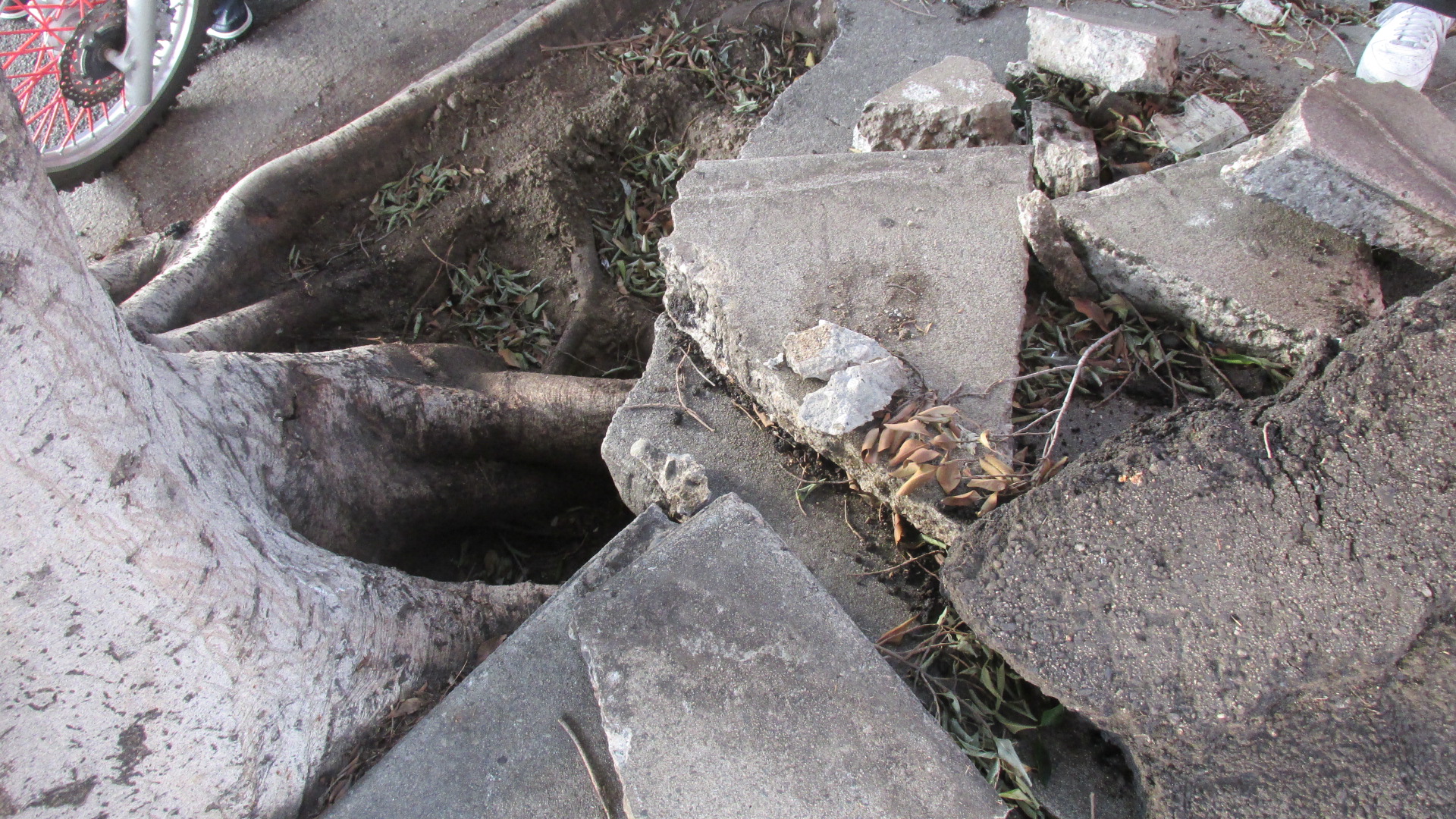
Have you ever wondered why the City of LA’s budget keeps increasing while services keep declining? Even as spending continues to grow, the City is doing less and less when it comes to repaving roads, trimming trees and fixing broken sidewalks. What’s going on?
While there isn’t one simple answer, there does seem to be an overarching problem that needs to be addressed: The City of LA has a broken bureaucracy. The municipal government has a vast network of departments that don’t always work well together and often fail to monitor their own performance. When former Deputy Controller Rick Cole stepped down from his position, he called out the City’s “mind-numbing bureaucracy” and said, “Beneath the broken sidewalks is a broken system.”
While I don’t advocate reckless downsizing, the City of LA really needs to cut spending and increase efficiency. Rather than saying more, I recommend the following article from Crosstown that lays out some of the City’s worst failings. The author simplifies some issues, and could have provided more context, but overall, he’s right on. The City of LA is growing increasingly dysfunctional, and the folks at City Hall need to get their act together.
We need to strike a balance between encouraging new development and protecting the environment.
One of the many measures you’ll find on the November ballot is Proposition 45. It’s backers claim that its passage will make California a more affordable place to live. Of course, that sounds great. It seems like the cost of living just keeps getting higher, and we’re all getting squeezed in one way or another.
Unfortunately, Prop 45’s backers don’t actually provide any evidence that their measure will bring prices down. They say that the California Environmental Quality Act (CEQA) makes completing projects too expensive, and they say that streamlining approvals for “essential” projects will make these projects less costly, and therefore make life more affordable for Californians.
But again, the backers of the measure don’t offer any meaningful analysis to show how the cost of living will come down, and the arguments they offer are deceptive. For instance, they claim that environmental review under CEQA makes it more expensive to build apartments and causes us to pay more for housing than we should. What they don’t tell you is that over the past decade the California Legislature has passed a number of bills that either reduce environmental review for housing projects or eliminate it altogether. In recent years the City of LA has made many large housing projects completely exempt from CEQA. A 27-story residential tower at 949 S. Hope was declared exempt. So was a 6-story apartment building with 28 units at 6555 Franklin. A 23-story residential tower with 129 units at 1715 Bronson was also declared exempt from CEQA. So it’s hard to understand how Prop 45 will make housing cheaper since many housing projects aren’t even subject to environmental review. They also claim that CEQA lawsuits make it harder to build housing, but two recent studies show that only between 2% and 3% of proposed projects actually face legal challenges.
Also, Prop 45’s backers don’t talk about who pays for clean-up when a project does impact the environment. Who pays to remediate contaminated soil? To remove toxic chemicals from our drinking water? To maintain public services and infrastructure? In most cases California’s taxpayers get to foot the bill. Interesting that Prop 45’s supporters don’t mention that.
What Prop 45 actually does is take power away from ordinary citizens. The measure aggressively shortens timelines for CEQA review, giving members of the public less time to inform themselves about projects being built in their community, and less time to raise concerns. These timelines can only be extended by the project applicant, which gives developers more power over the process.
(Full disclosure: I work with a group that has voted to oppose Prop 45, but I’m writing this post as an individual, and this blog has no connection to the group.)
California is facing a growing number of environmental crises, from increasingly destructive fires, coastal erosion, warming urban areas and declining water resources. This is not the time to undermine CEQA, California’s landmark environmental law. It won’t make California more affordable. It will put California’s citizens at higher risk of increasing environmental damage.