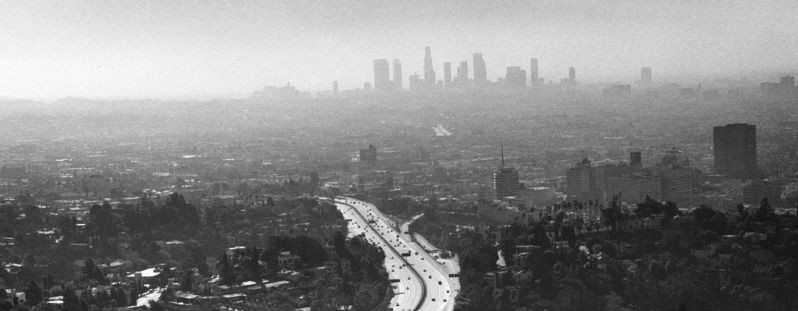
TOD? Really?

A few words about “transit oriented development” [TOD]. This is a phrase I hear a lot these days, especially from developers and city officials who want to build massive projects in congested urban areas. The other mantra they love to chant is “new urbanism”. They use these phrases like magic incantations, hoping to ward off opposition to their plans. If you question their sweeping vision for a new LA, you’re living in the past, you’re thinking small, you’re afraid to embrace the future. In reality they show little interest in the kind of careful, nuanced planning that would actually make the city a better place to live.

First, I should tell you that I don’t own a car, and I’m a great believer in public transit. Second, I can totally get behind TOD strategies when they are based on real data and a careful analysis of the local context. Often, though, developers don’t really give a damn about the facts. Often they’re only thinking about the massive amounts of money to be made if they can push their project through. And often the politicians, rather than protecting the interests of the people who elected them, are happy to fall in line because they know they’ll be richly rewarded for doing so.

The new Hollywood Community Plan is based on the premise that Los Angeles will continue to grow rapidly and that Transit Oriented Development is the only way to effectively manage the expected growth. But the truth is that this plan is based on fantasy rather than hard facts. US Census data shows that the population in the Hollywood area has not increased but has actually decreased over the last ten years. The Central Hollywood and East Hollywood areas have lost over 12,000 residents since 2000. The City Council argues that the population will rebound, but they have no data to support their assertion, and in fact they are ignoring the following facts:

1.
Population Growth in LA Is Slowing

Population growth in Los Angeles has slowed dramatically. While the city grew by leaps and bounds during the 20th century, census data shows that LA’s population has only increased by 2.65% percent since 2000. This is part of larger trend throughout California, which is expected to grow by only 1% annually in the foreseeable future. Current data seems to indicate that after a century of huge gains, California’s population growth is now levelling out.

2.
Dwindling Migration from Mexico

Immigrants are no longer coming to Los Angeles in the numbers they used to. The Mexican economy has been growing steadily for the past three years, which means many people who used to come to LA looking for work are now able to find jobs in their own country. It is a fact that immigration from Mexico to the US has slowed to almost nothing, and there is no reason to believe that this trend will be reversed in the near future. We can no longer expect a steady stream of immigrants coming from Mexico to Los Angeles.

3.
Rising Housing Costs

Higher prices for housing are driving out lower income residents. It used to be that low rents in Hollywood attracted families without a lot of money to spend. In recent years, as developers, property owners and real estate agents have pushed for gentrification, rents have skyrocketed and these families can no longer afford to live in the area. The units they used to occupy are increasingly taken over by singles and couples who make higher wages. The new Hollywood Community Plan in general, and the Millennium Hollywood project in particular, will accelerate this trend toward gentrification, ultimately causing lower population density in the Hollywood area.

4.
Fewer People, But More Traffic

The City Council has been arguing that TOD is necessary to reduce traffic, but higher density development in Hollywood hasn’t helped so far. In the past several years we’ve seen the construction of Sunset + Vine, the Redbury, the W Hotel and the Jefferson, all within easy walking distance of subway stations. But while the number of people living in Hollywood has dropped substantially, traffic has continued to get worse. I think this is because all these developments offer only high-end housing. The people who can afford to live in these buildings are also the people most likely to own cars. The people at the lower end of the economic spectrum who can’t afford cars and have to rely on public transportation are being squeezed out. Politicians and developers talk about TOD, but really their plans are causing more traffic and longer commutes.

Like I said before, I believe in TOD. I’d like to see more of it in LA. But what we’re getting now is not transit oriented development. What we’re really getting is a lot of empty hype designed to put money in developers’ pockets. The new Hollywood Community Plan and the Millennium Hollywood project were not designed to make our lives better. They were designed to make developers rich.

Hollywood Journal – Intro

As much as I enjoy ranting about greedy developers and sleazy politicians, I realize that this blog would be pretty boring if that’s all I ever wrote about. So I’m going to try to mix it up a little.

For over ten years I kept a journal about the Hollywood area. I’ll be posting excerpts here from time to time. Hopefully this will break the monotony of my ongoing diatribes against the powers that be.

A couple notes about the entry below. Those who have only known the Chinese Theatre in recent years may be puzzled by the mention of the two additional marquees. This was written at time when Mann Theatres had built two large auditoriums right next door, hoping to compete in the age of multi-plexes. These two theatres were torn down when Hollywood & Highland was constructed, and replaced by six inside the mall.

If you don’t live in the LA area, you’ll be wondering why I have a problem with Tutor-Saliba. Even back then they were notorious for cost overruns and long delays, but the city still awards them projects because they’re so well-connected. The names and faces may change, but the dynamics that shape the city stay the same.

April, Nineteen Ninety Eight

Sunday. Early afternoon. I’m sitting in a restaurant right across from the Chinese. In God’s Hands is playing at the main theatre. I look to the right and see that Tarzan and the Lost City is playing next door, and at the far end of the building is the now-familiar sign advertising the Titanic.

Beyond that, across Orchid Ave. is a construction site surrounded by a wooden barrier. The side of this barrier that runs along Hollwyood Boulevard is decorated with pink and yellow stars that have the faces of famous actors painted in the center. The Orchid Ave. side is covered with dull beige paint. And there is a sign announcing that the project is being handled by Tutor-Saliba-Perini. Good God, not again.

Beyond the construction site is the office building that stands at the corner of Hollywood and Highland. Off in the distance I can see a tall apartment complex, a billboard and a little piece of the Hollywood Hills.

*

A few days later I’m in my apartment, just a few blocks from Hollywood Boulevard. It’s after nine PM. I can hear the traffic on the Hollwyood Freeway. It’s always there, kind of like the ocean.

I’m thinking about all the stuff that’s happening in Hollywood, all the changes they’re making. There’s that big project over by the Chinese. The Max Factor building is being restored. The Cinerama Dome is gonna be sucked up into a shopping mall. It seems like the little shops and restaurants along the boulevard are doing better than they were five years ago. And I think the MTA still claims they’re gonna have a subway stop here eventually. I’m not holding my breath.

I’ve lived in or around this area for years. I really love Hollywood. Sometimes it tears my heart out when I see the things the crazy developers are doing. But then, this town wouldn’t even exist without the crazy developers.

The Capitol Records Tower

Capitol Records Tower

Capitol Records Tower

The CapitolRecordsTower is a Hollywood landmark.  It is totally unique, and helped set the stage for the era of space age design.  But it’s not just the look of the structure that makes it significant.  It’s one of a number of buildings designed by Welton Becket and Associates within the city of LA.  Becket was involved in creating some of the city’s most distinctive buildings, including the Pan-Pacific Auditorium [destroyed by fire] and the MusicCenter.  His work helped to define the look of mid-century LA.

Capitol Records is one of two Becket buildings that have become Hollywood icons.  The other is the Cinerama Dome, located just a few blocks away.  In light of the threat that the Millennium Hollywood project poses to the status of the former, it might be useful to review the recent history of the latter.

Cinerama Dome

Cinerama Dome

In the late nineties, Pacific Theaters presented a plan for redeveloping the Dome.  There was a huge public outcry, because in its initial form the plan would have meant ruining the Dome and building a nondescript mall around it.  To Pacific’s credit, they listened to the community, went back to the drawing board and came up with a far better design.  Not only did they refurbish the Dome and restore it to its place as a Hollywood landmark, they also added a beautiful state-of-the-art multiplex which includes a restaurant, bar and patio.  The completed complex was a welcome addition to the community, and it offers the best experience you can have in a commercial movie theatre.

It’s doubtful that the developers behind the Millennium Hollywood project will reconsider their plans, which would erase Capitol Records’ presence on the Hollywood skyline.  I like to think that the LA City Council might actually listen to the community and reconsider their support for the project.  But maybe that’s too much to hope for.

Gentrifying Hollywood

Hollywood used to be for everybody.  Not so in recent years.  Around the time we slid into the new millennium, real estate agents and developers started paying a lot of attention to the area.  It used to be a place where people without a lot of money, musicians, artists, immigrants, students, could find a cheap apartment.  But for the past ten years or so rents have been rising steadily.  And the new units that have been built are geared towards people with money. There was a break in the cycle when the stock market crashed, but now it’s picking up again.

In short, the powers that be want to turn Hollywood into a gentrified enclave like Santa Monica.  The City Council and the Hollywood Chamber of Commerce are trying to transform the area into an upscale haven for club-hopping hipsters.    Anyone who makes less than fifty thousand a year is no longer welcome.

The LA Weekly recently ran an article on this trend.  I do feel the title, “Hollywood’s Urban Cleansing”, is too extreme, but the story does a good job of laying out what the politicians and the developers are doing to the area.  The link is below.

http://www.laweekly.com/2013-01-03/news/hollywood-latino-population-drop-12878-diaspora-gentrification/

Millennium Hollywood Project

One of the things that motivated me to start this blog is the proposed Millennium Hollywood Project.  As a resident of Hollywood, I’m really concerned about this for a number of reasons.  While I support responsible, sustainable development, neither one of those adjectives can be applied to the project in its current form.  My main gripe is that two huge, high-rise towers will be erected next to the Capitol Records building.  My objections are based in part on aesthetics, since if the project is built these towers would completely overwhelm this Hollywood icon.  But the biggest problem with this project is that it will make traffic much worse.

The City of LA has been pursuing a policy of building high-density residential projects near transit centers.  In theory this sounds like good planning, and I used to support the idea.  But there have been a number of large residential projects built in Hollywood over the past several years, most of them less than a block away from subway stations, and traffic has only gotten worse.  The concept of having people live next to a subway so they won’t need to use their car sounds good, but the reality is that most Angelenos still take their cars most of the time.  The Millennium Hollywood Project will only make traffic worse, and the proposed mitigations are not sufficient.

I’ll write more later, but if you’re interested in finding out more about the project, here’s a link to an article that includes renderings of the finished development.

http://www.archdaily.com/290508/las-millennium-hollywood-project/