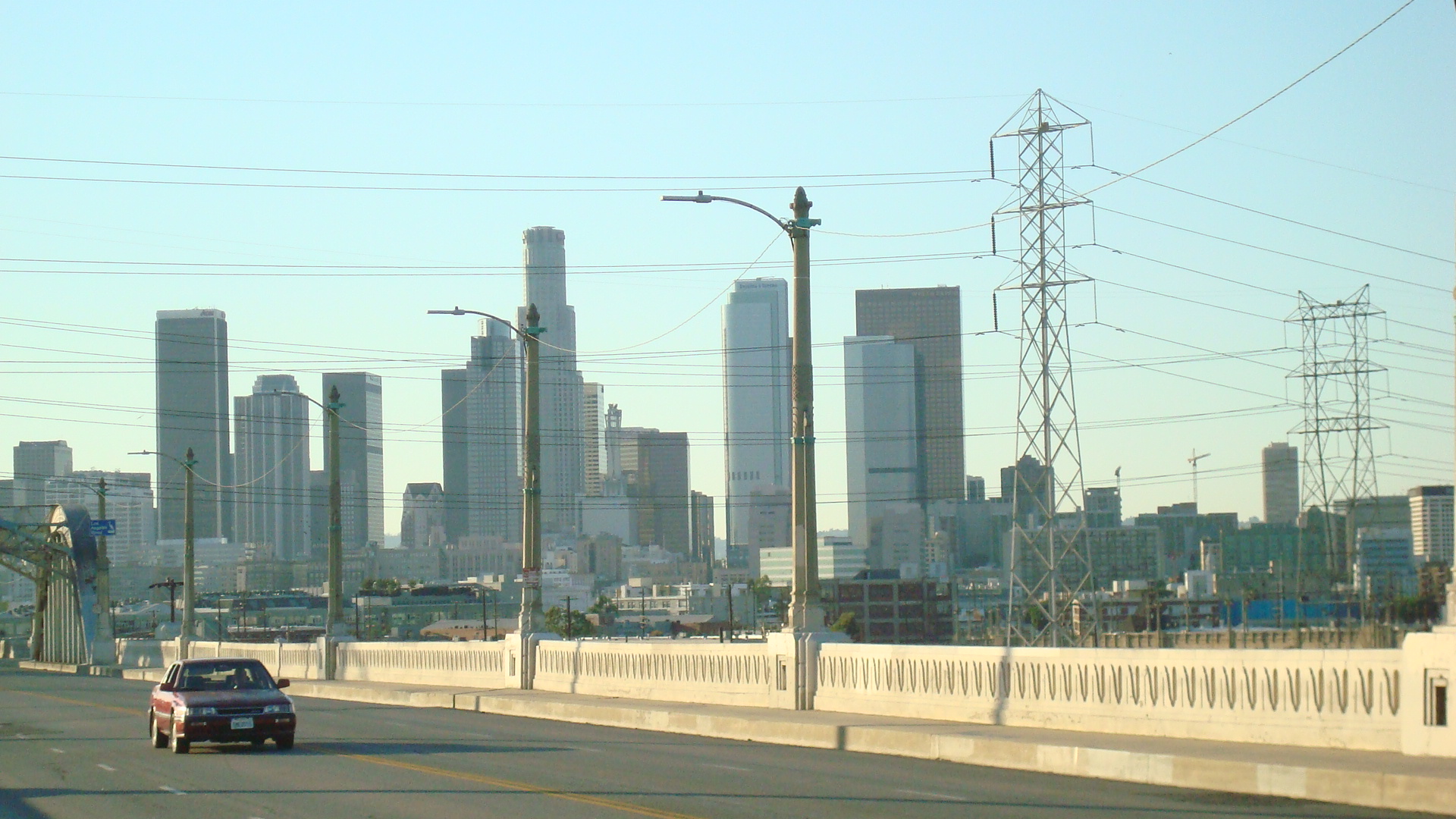
Boom Town

Dntn Fed 3 Skln

Downtown is exploding. There’s so much construction going on I can’t even keep track of it. Massive new office and residential buildings are springing up all over the place. There are also efforts underway to revitalize a number of older buildings. Some of this stuff is cool, some of it is dumb, but I’m less concerned about the quality of the individual projects than I am with the cumulative impact of all this construction. More on that later.

Let’s start by sampling a few of the projects currently under construction….

Dntn 00 ChTown

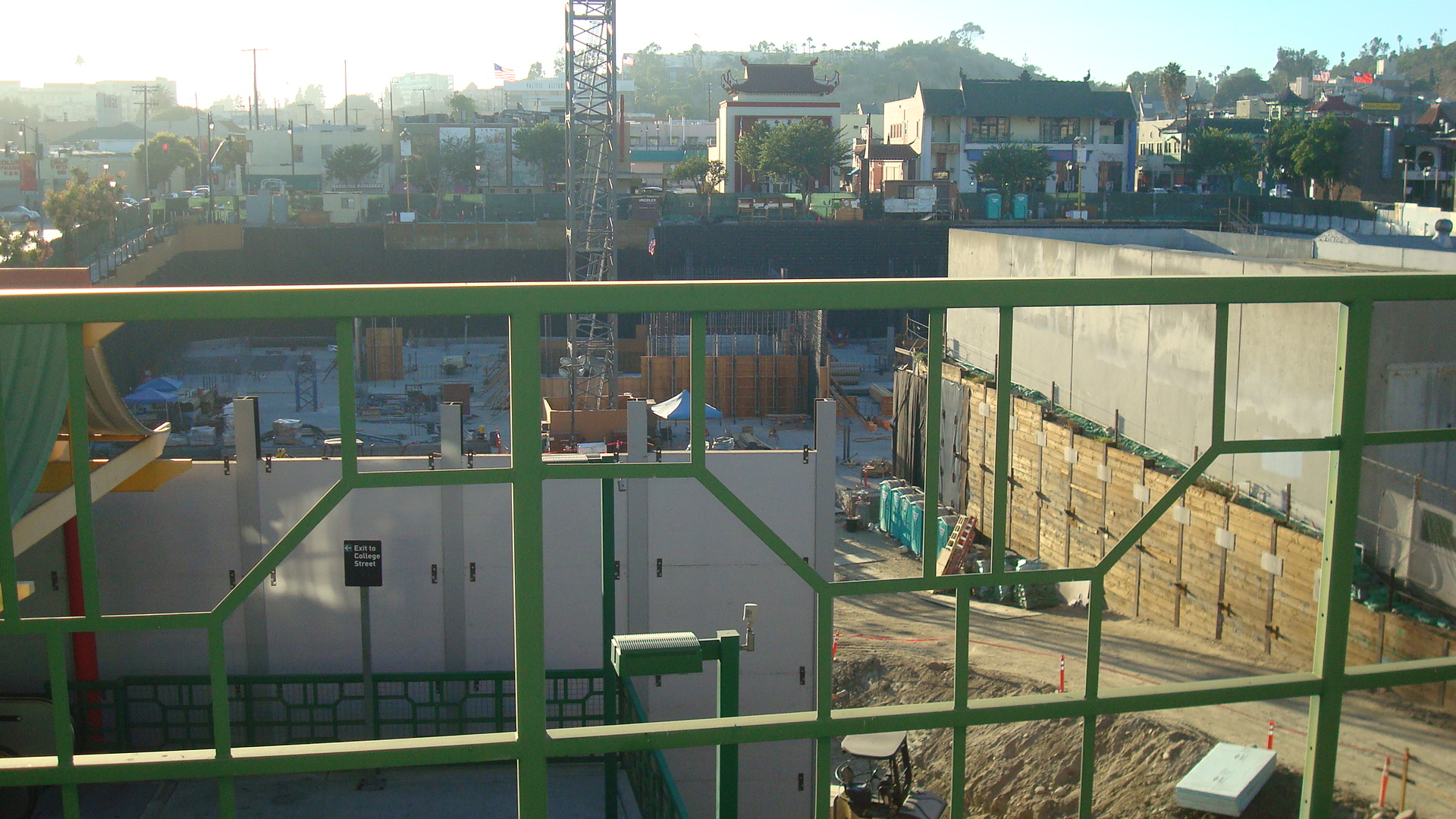
This is the Blossom Plaza, which combines retail and residential, including a fair number of affordable units. It took years for this to get off the ground, and there was a recent hitch when workers uncovered remnants of the original Zanja Madre, but things are moving forward. Curbed LA has been following the story for a while, and you can read more about it by clicking here.

Dntn 05 LT Site 2

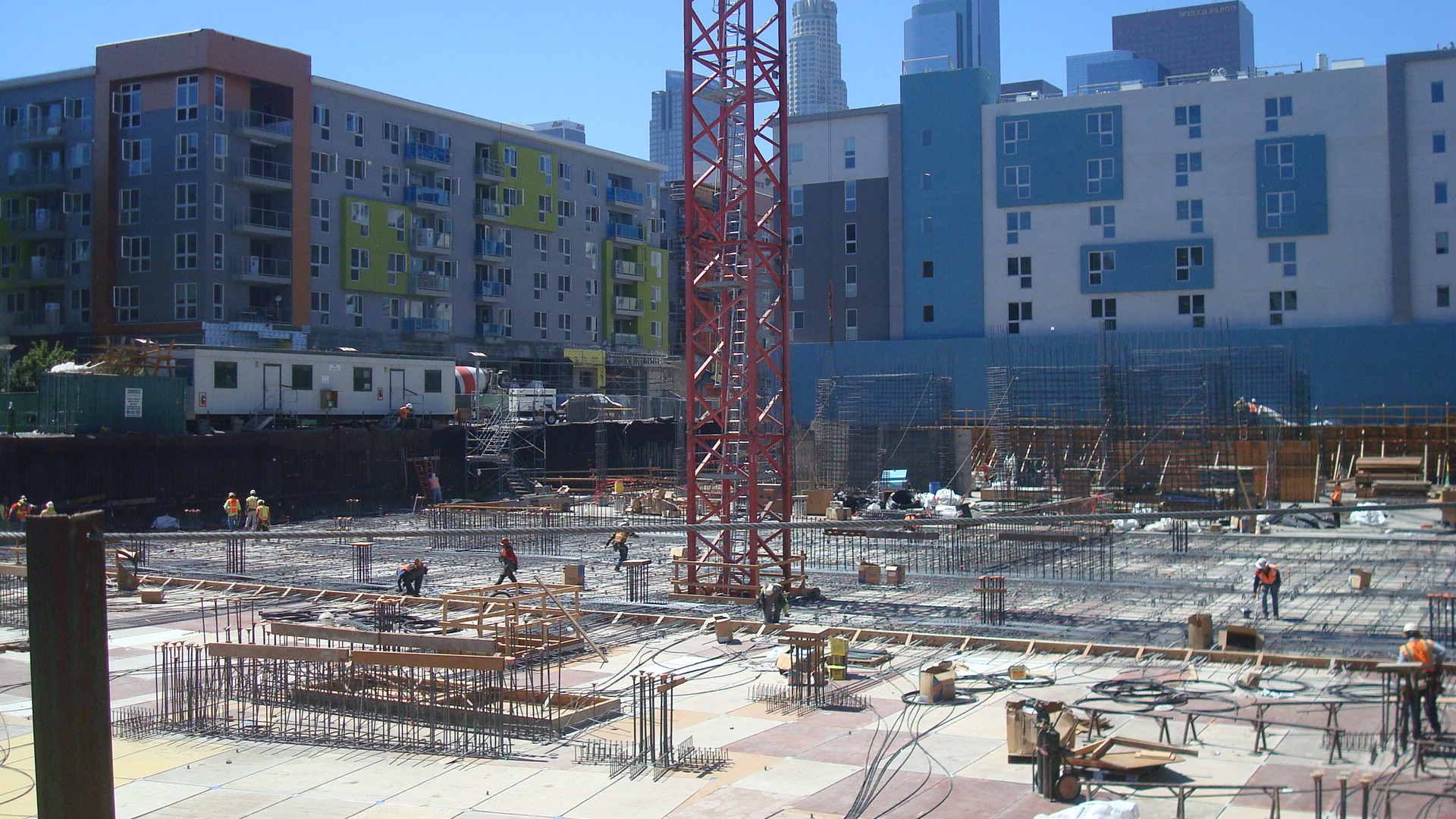
I had a harder time finding current info about this project. The most recent report I read said this was a 240 unit complex being developed by the Irvine-based Sares-Regis Group. Whatever it is, it looks like it’s going to be huge. The site is located at Second and San Pedro, right next to….

Dntn 10 Ava Trees

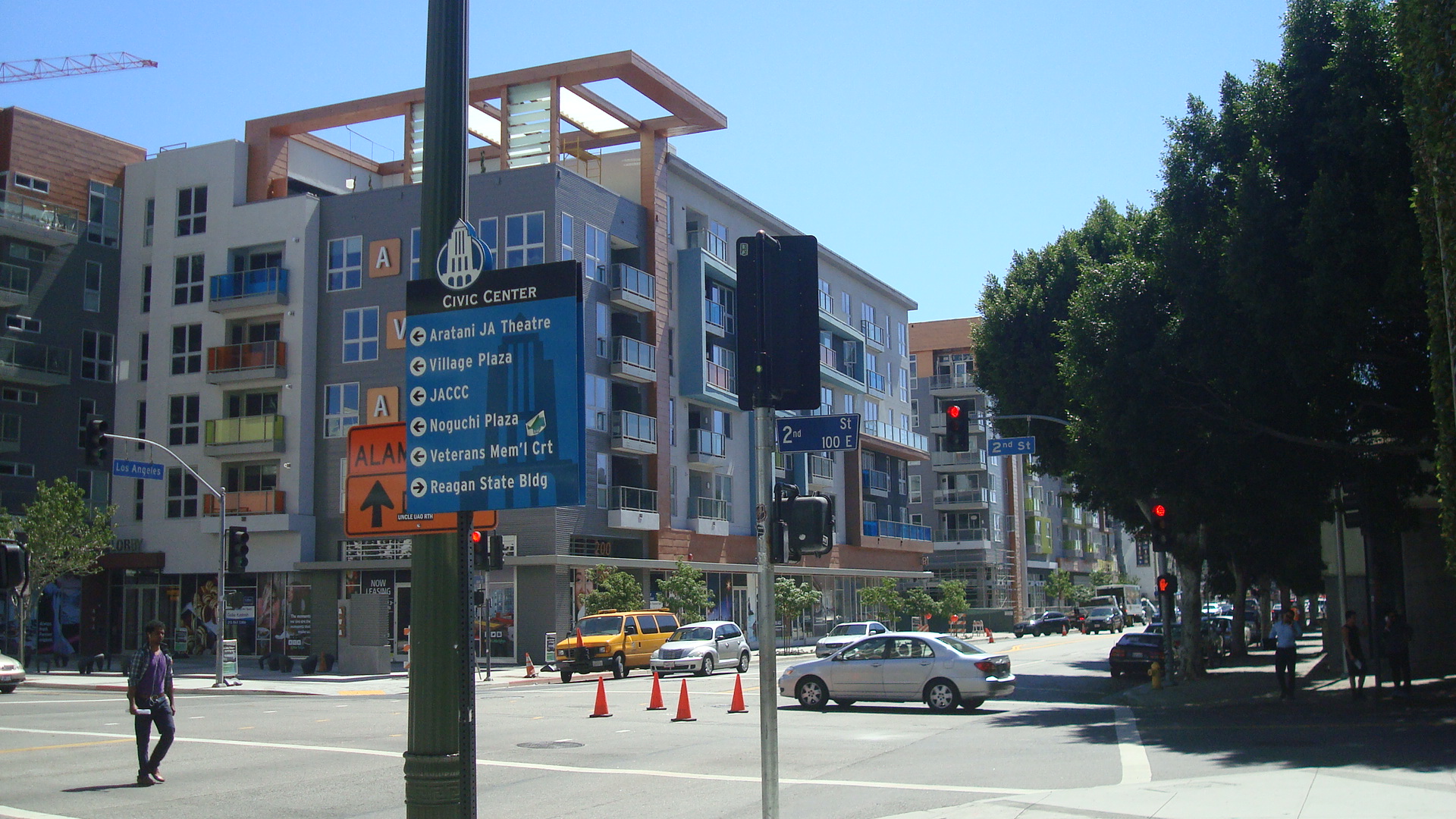
….the recently completed AVA Little Tokyo, another massive mixed-use structure. Apparently young people are flocking to Downtown LA these days, and developers are doing everything they can to capture that crowd. Check out this ad, seen in one of the windows on the ground floor.

Dntn 15 Ava Ad

The way I read this is, “If your highest priority is mindless self-indulgence, this is the place for you.”

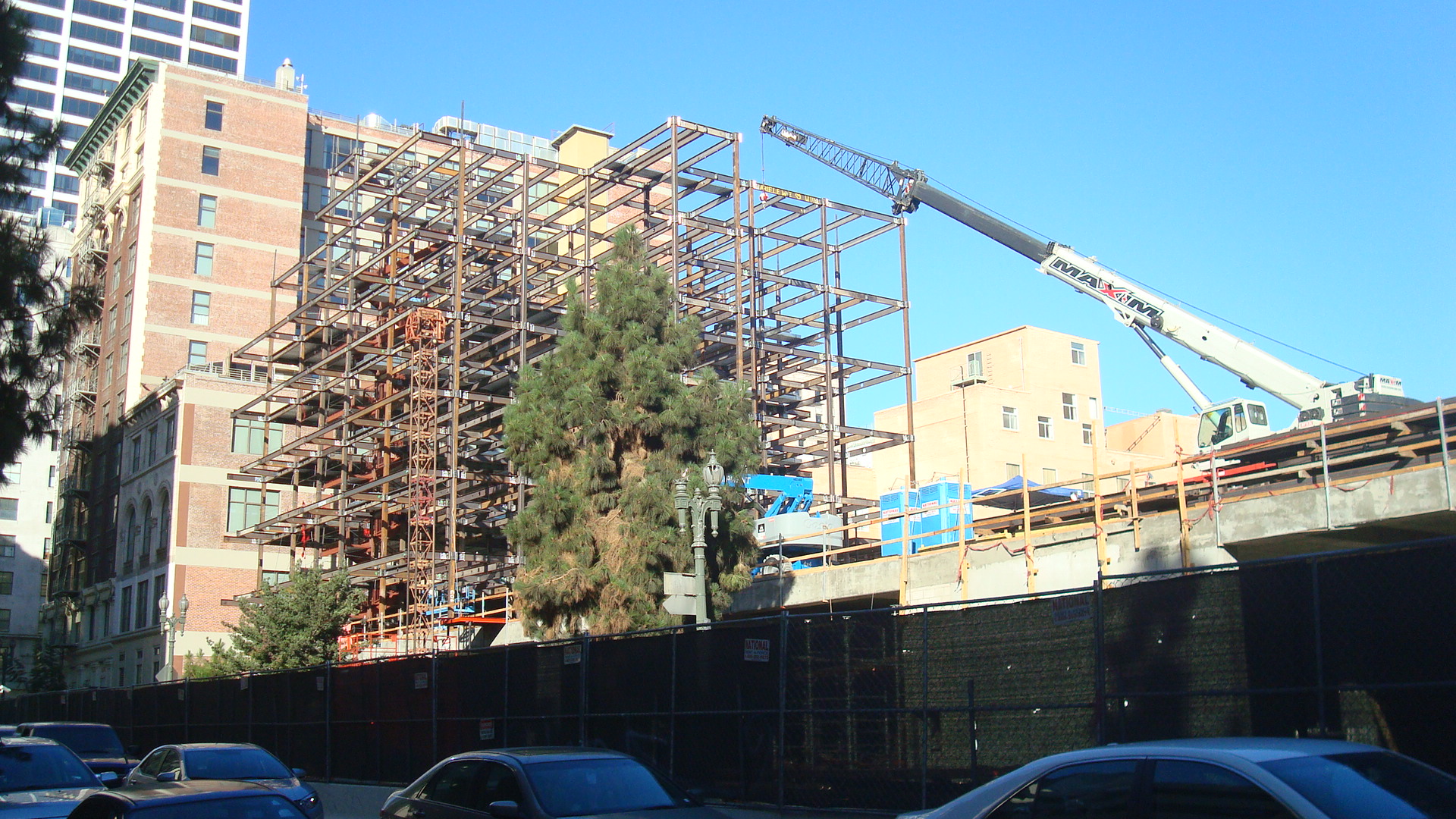
And since we don’t have enough luxury rental units in Downtown LA already, Carmel Partners has generously agreed to build 700 more. As you can see in the photo below, it’ll be a while before the project is complete.

Dntn 20 Bldg Frame

You may want to put a deposit down soon. Given the list of amenities, I don’t doubt that the Eighth & Grand complex will be popular. I was sold when I heard about the rooftop pool surrounded by cabanas. For more details, click here.

Dntn 30 Fed 4 Skln

But let’s talk about a project that might actually benefit the people of Los Angeles. Here’s the new federal courthouse, which is finally going up after being delayed for years. The courthouse is just one component in a larger scheme to revitalize this part of the civic center. Building Los Angeles offers a rundown on some of the related efforts.

Dntn 35 Broad 3

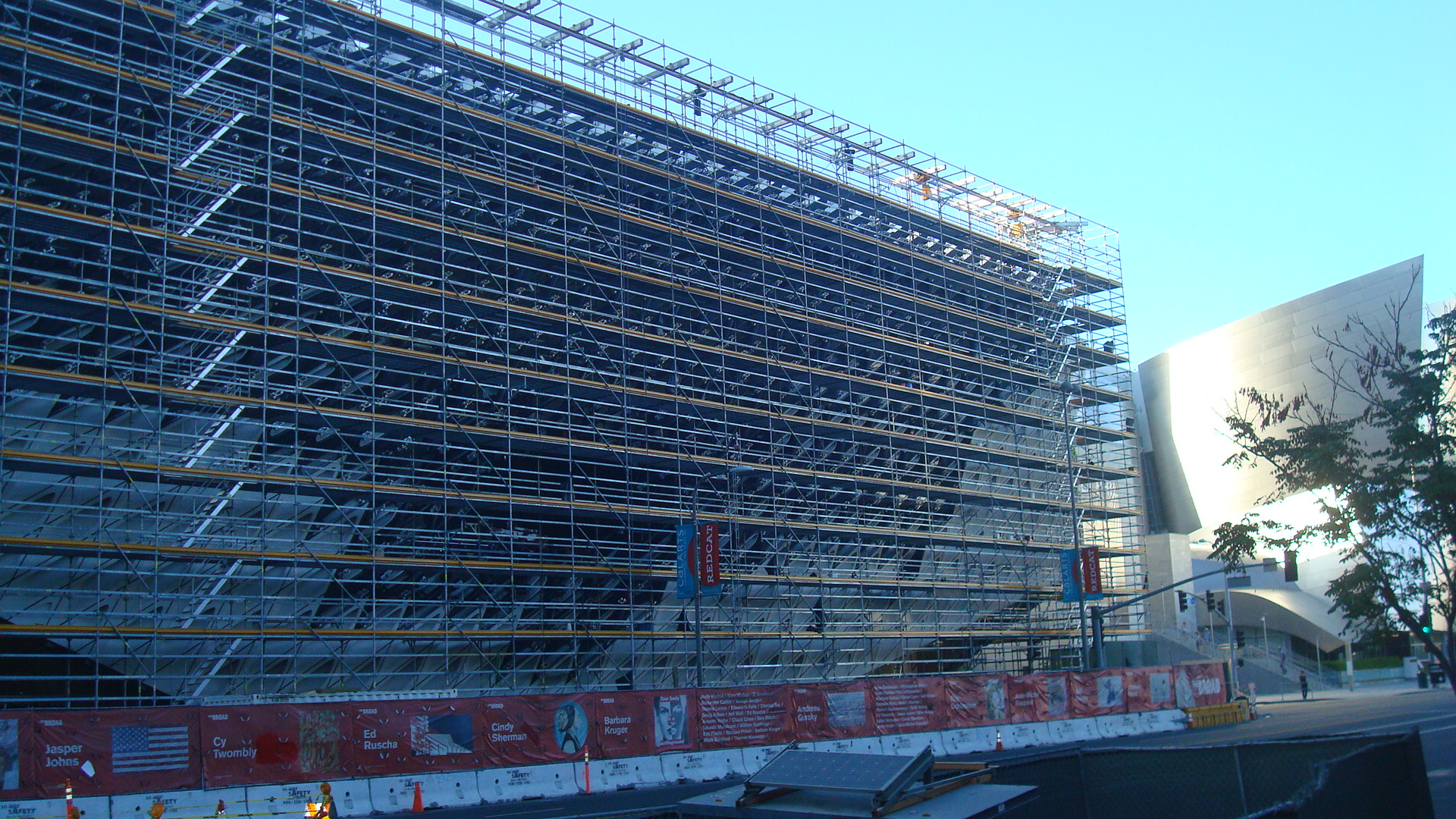
Honestly, of all the projects under construction in Downtown LA, the only one I can really get excited about is The Broad. It’s still a long way from completion, and the web site just says that it will open in 2015. But it’s something to look forward to. And they’re already doing some cool programming. Click here to find out what’s going on.

Dntn 40 TB Backhoe

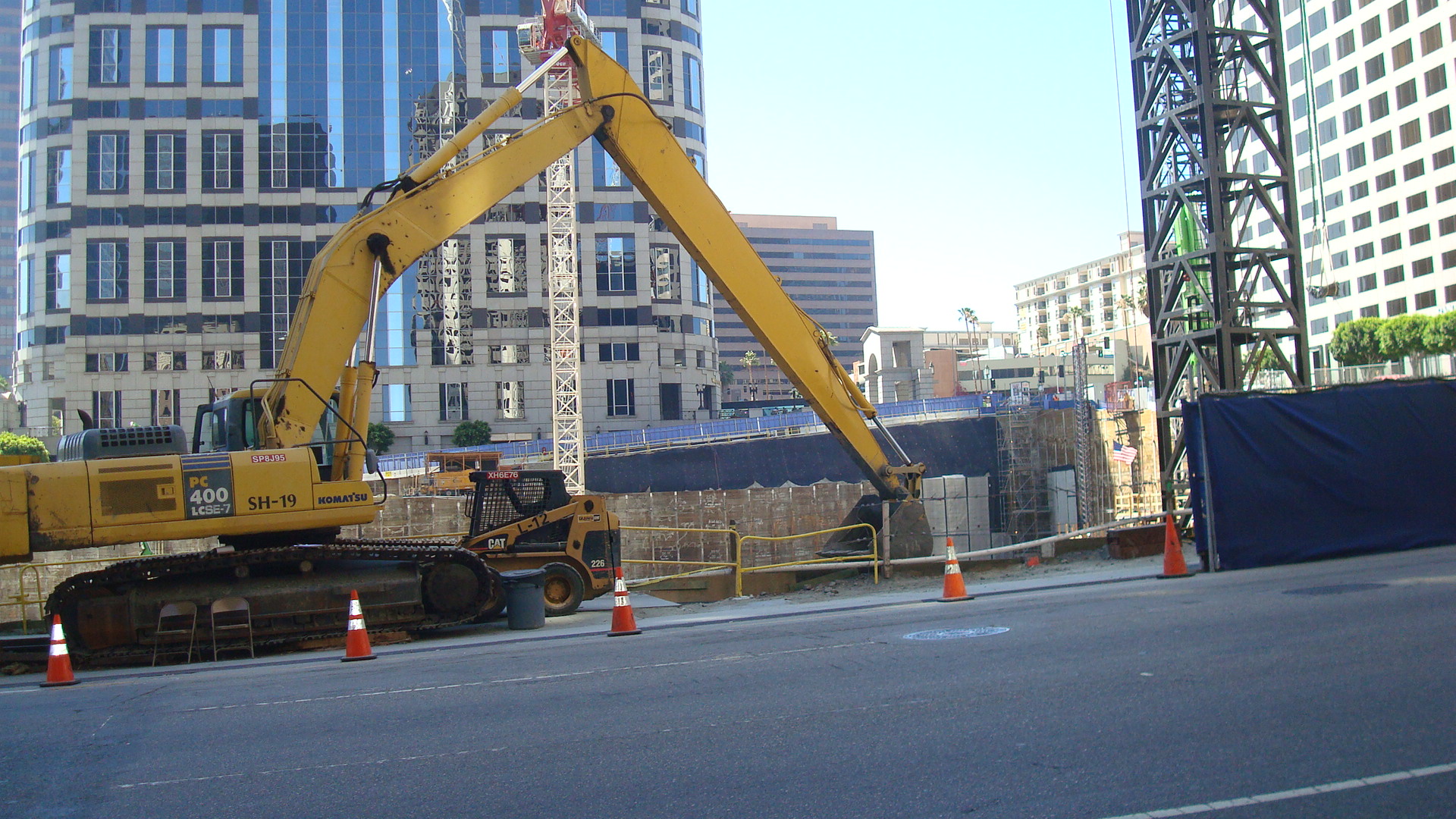
And let’s wrap it up with the New Wilshire Grand. It’s said that when the project is completed, this will be the tallest building west of the Mississippi. Who cares? I’m so tired of this kind of development. Does this really have anything to do with making the city a better place to live? Or is it just another monument to greed and vanity?

There’s a lot of talk right now about how LA has to embrace higher density development. Fine. There are good reasons to create a more compact city, and certainly sprawl has been a major problem throughout our history. But can anybody demonstrate a need for skyscrapers of this size? And looking at the bigger picture, do we really have the infrastructure to support development on this scale? I’m thinking especially of water, since we are in the middle of a drought. The projects I’ve highlighted here are just a few of the dozens that are either currently under construction or in the permitting process.

When I look at the avalanche of development that’s hitting Downtown LA, I have to ask if anybody at City Hall is thinking about the future, because I don’t see any evidence of rational planning. Instead, I see an onslaught of construction driven by developers who are falling all over themselves to get in on the gold rush. I really question whether the Mayor or the City Council have given any serious thought to how this massive growth spree is going to affect LA down the road. I wish I could believe they were really concerned about the well-being of the people of Los Angeles. It seems more likely that their chief concern is keeping their developer buddies happy.

We Can Do Better Than This

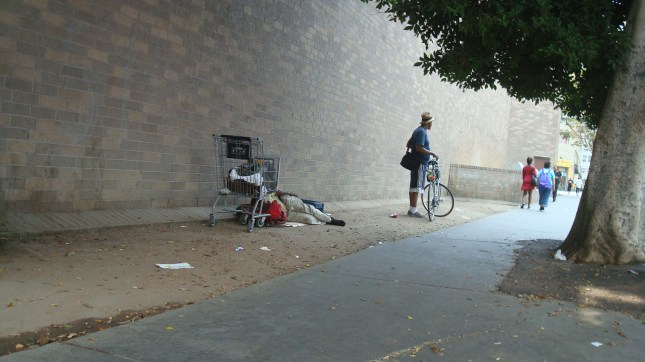
Dntn SR Cart
Toward the end of July there was a meeting at the Union Rescue Mission regarding the Safer Cities Initiative. I’d like to stop here for a minute and ask you to think about that phrase.

The Safer Cities Inititiative.

Of course, if you take the words at face value, who wouldn’t support it? We all want safer cities. So if our Mayor and City Council tell us they’re taking action to reduce the crime and the grime in Downtown, how could anyone argue against them. But, as is so often the case, the phrase was created to be blandly reassuring. It’s meant to make people feel good, even if a lot of the people most directly affected don’t feel good about it at all.

I don’t pretend to be an expert on the homeless problem in Downtown LA. It’s a messy, complicated situation. But what follows is a brief summary of how we got to this point, at least as I understand it….

Back in the seventies it was decided that the best way to deal with the homeless in LA would be to corral them all into one area, away from the financial district and the city government buildings. Local leaders had ambitious plans for the central city, and it doesn’t look good to have a guy who hasn’t bathed for a week sleeping on the street next to your shiny new skyscraper. So with the homeless now out of sight, they were also out of mind, and everybody thought the problem was solved.

Then in the eighties LA’s manufacturing base suddenly disappeared, and the illegal drug trade started ramping up. All of a sudden there was a whole new wave of people flooding Skid Row, and instead of docile winos you had guys strung out on crack and PCP. The fact that AIDS and hepatitis were also on the rise made the situation even more dire. But most of us didn’t worry too much about it. A lot of people living in the Valley couldn’t understand why anybody would even consider going to Downtown. The same applied to many west side residents. Successive city government regimes kept pouring money into the financial district, and kept hoping the homeless would just go away. The vast majority of Angelenos paid no attention at all.

Then, maybe ten or fifteen years ago, things started to change. Slowly the perception of Downtown started to shift. Younger Angelenos began to see the benefits of living in a place where art and music and bars and restaurants were all within walking distance. And the city government managed to lure a growing number of businesses to the area. Something like a renaissance was taking shape, and gradually Downtown became the cool place to be.

That was the upside. Unfortunately, in the middle of this renaissance, there were still all these homeless people hanging around. The business owners and some of the newer Downtown residents were freaking out, sometimes with good reason, over the problems created by having a huge number of people, some drug users, some mentally ill, living on the streets.

And this is where the Safer Cities Initiative comes in. Back in 2007, Mayor Villaraigosa and Chief Bratton decided to adopt a zero tolerance approach to crime in Skid Row. Even small offenses resulted in an arrest, with the possibility of time in jail. On top of that, the LAPD was charged with conducting regular sweeps of the area to clear away anything that was blocking the sidewalks, i.e. shopping carts, tents, boxes, etc.. Among other problems with this approach, they ended up trashing property belonging to homeless individuals, including personal documents and prescription medication. A suit was filed to stop the sweeps, and a judge agreed with the plaintiff, putting an end to the practice. For a while.

This put the city back at square one. How to deal with the impacts caused by thousands of people who have nowhere to go except the streets of Skid Row? At this point, the LA County Department of Health stepped in. They conducted an investigation and produced a harrowing report that documented the many health problems in the area, like rats, used hypodermic needles and human waste. This gave the city the justification they needed to start in with the sweeps again.

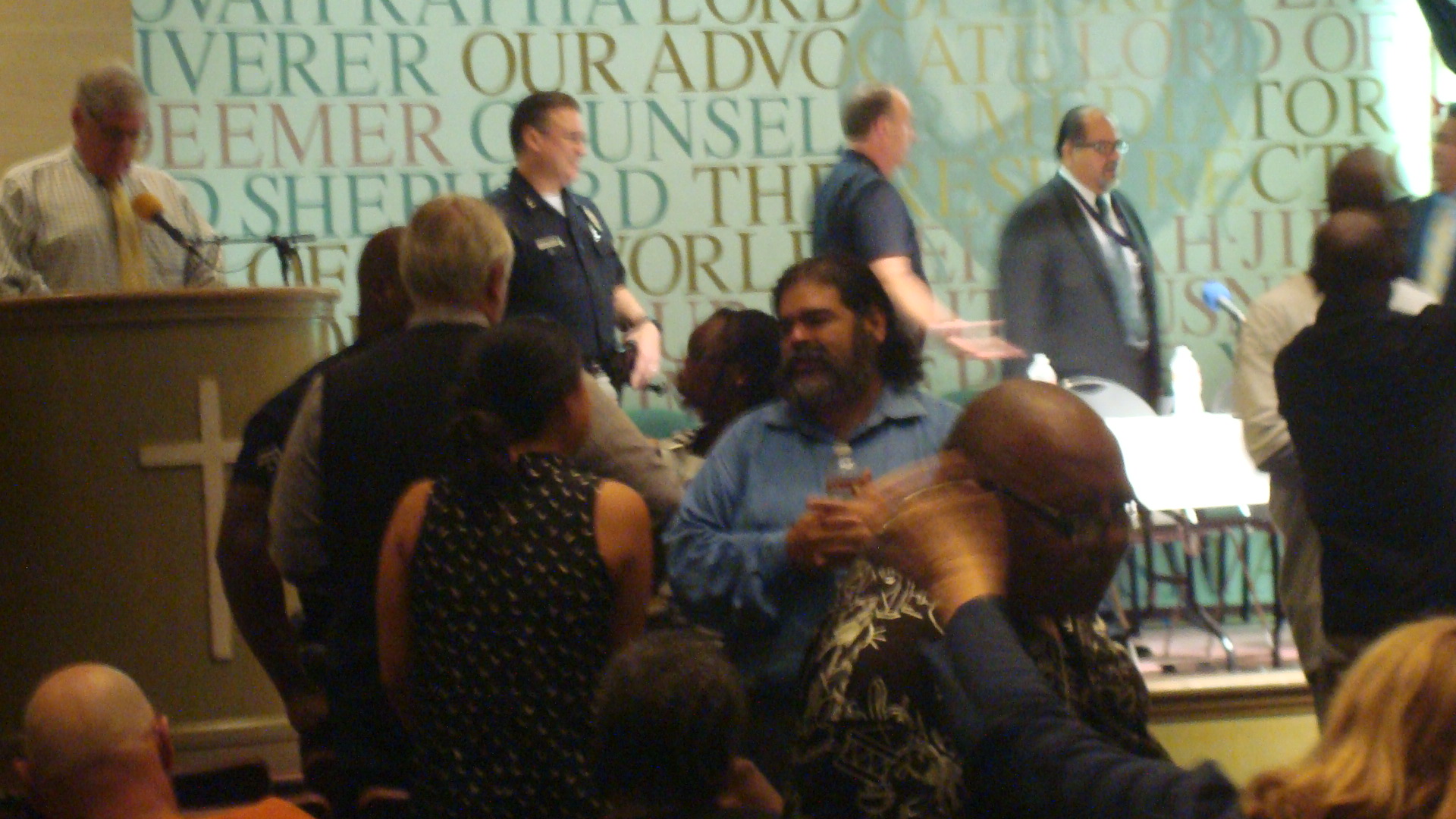
Which brings us up to the present, and back to the meeting at the Union Rescue Mission….

Dntn URM Crowd

While they’re still calling it the Safer Cities Initiative, officials have tweaked the program in the hope of making it more effective. Now the LAPD will issue citations for minor violations instead of arresting people. The sweeps will resume, as part of the Operation Healthy Streets program, but now case workers and mental health professionals will accompany the cleaning crews. The word is that the homeless will be offered free medical exams and TB tests, and an effort will be made to get people into detox or enroll in a health care program under the Affordable Care Act.

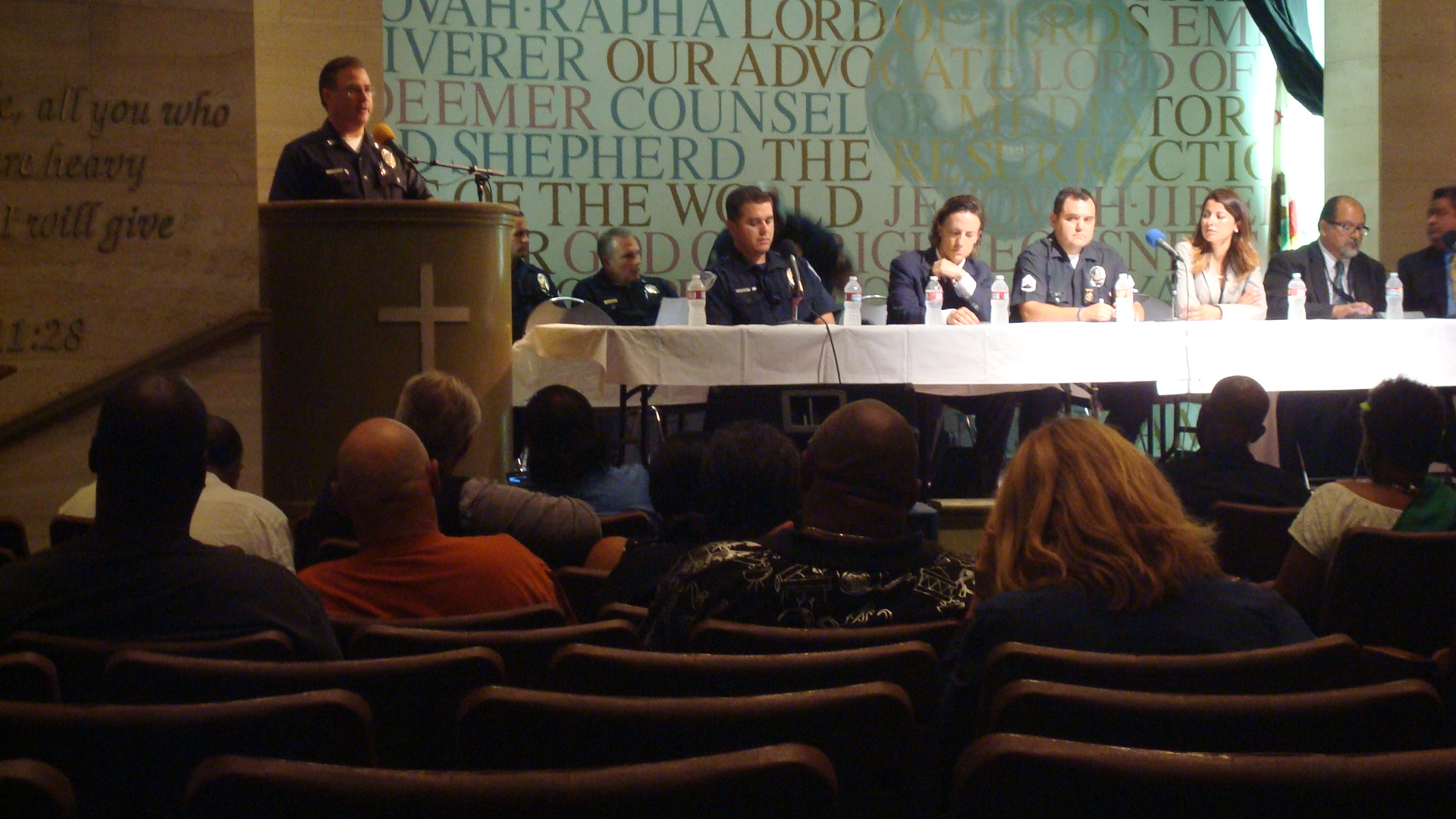
This sounds good on paper. The city officials who were on the panel at the meeting tried to keep it positive, though a woman from Jose Huizar’s office downplayed the modifications to the street cleaning program. She emphasized the fact that this was something the City was trying out, and that it wasn’t intended to be a solution to the homeless problem.
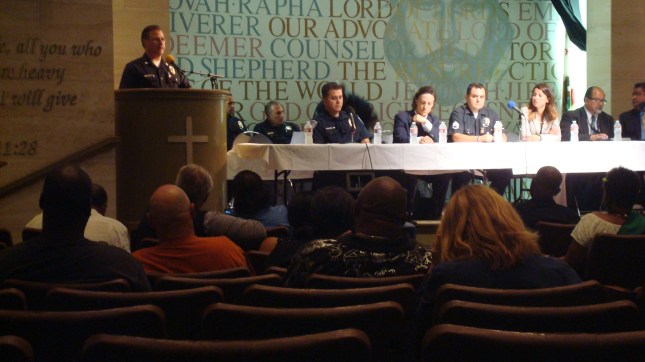
Dntn URM Panel

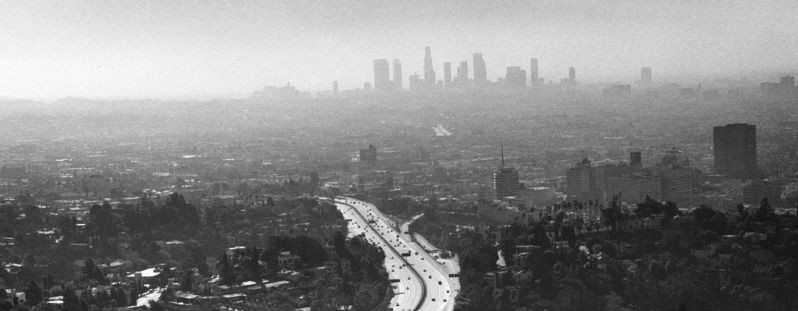
It’s not a solution. While this approach is better than what the City was doing before, it’s basically a band-aid, and the situation on Skid Row is not getting better. It’s getting worse. In recent years the State of California has been forced to release thousands of inmates from its prisons. It’s a real challenge for someone with a criminal record to find steady work, which also makes it hard to find a permanent place to stay. So a lot of those people who were pushed out of the prisons ended up on Skid Row. The non-profits who serve the homeless, like Union Rescue Mission, have been struggling for years. Now they’re completely overwhelmed.

The City needs to make a serious effort to provide permanent supportive housing for the homeless. Yes, this would cost money, and we’re still operating on a tight budget, but we could get the ball rolling. In New York, Mayor de Blasio has made a commitment to create permanent supportive housing, and we could do the same here. As expensive as this approach is, it’s still way cheaper than throwing people in jail for minor violations. We are currently spending a fortune on prison beds for non-violent offenders who would be better served by relatively inexpensive programs providing rehab and mental health care. And building permanent supportive housing would make Downtown a cleaner, safer place, creating an environment where business could thrive.

Phrases like Safer Cities Initiative and Operation Healthy Streets sound nice, but handing out tickets and clearing the streets every other month will not solve the problem. We need to stop being reactive and start being proactive. If you feel, like I do, that we could be doing more, then give your City Council rep a call and let them know.

Dntn SR Guy Looking

The Cornfield Under Construction

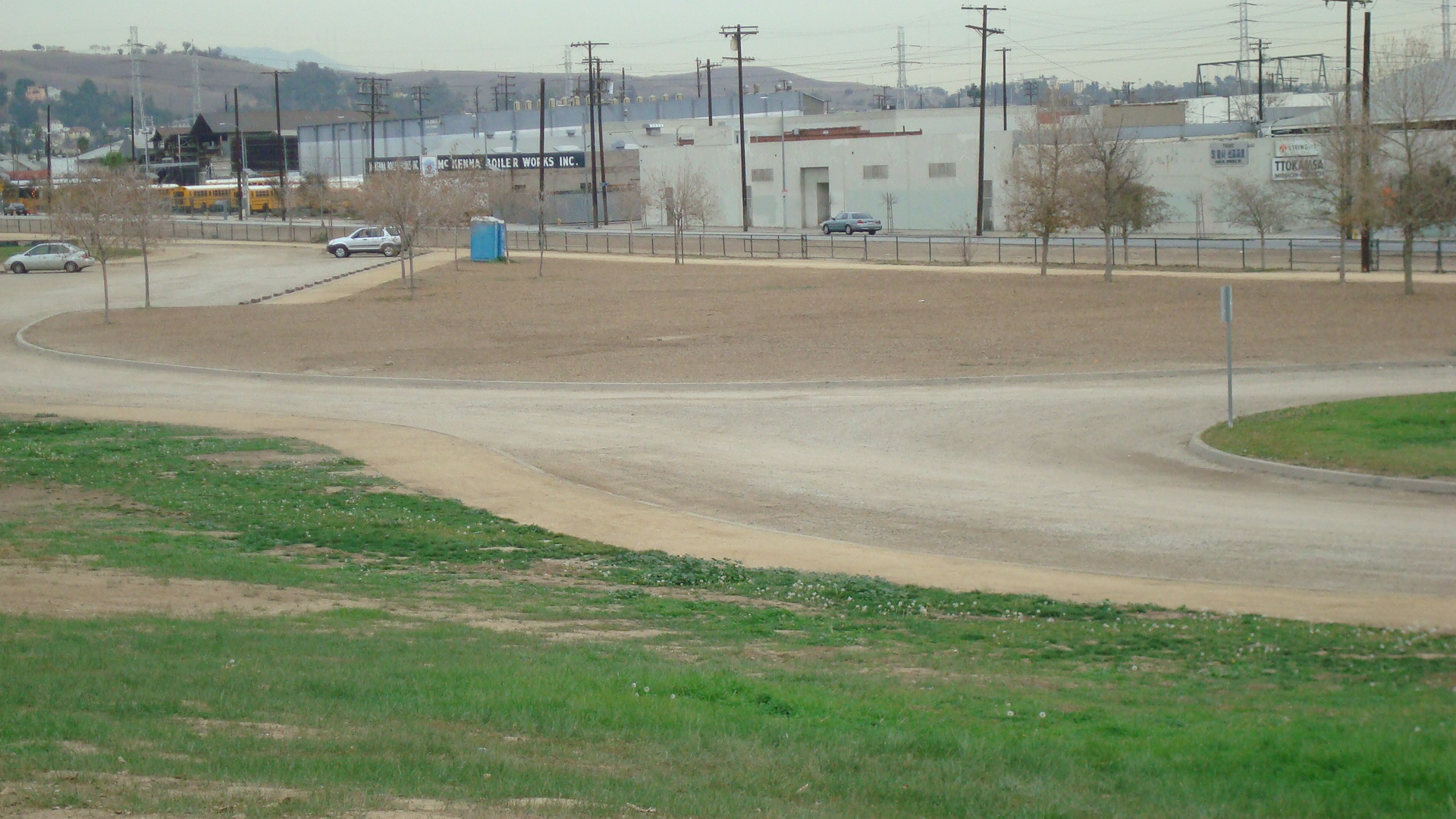
The Cornfield on a day in January.

The Cornfield on a day in January.

You may not be familiar with Los Angeles State Historic Park, AKA the Cornfield. Downtown residents probably know it best, though it’s also hosted a number of popular music festivals. It is kind of off the beaten path, lying on the outskirts of the downtown area, and it’s only been around since two thousand five.

The entrance to the Cornfield.

The entrance to the Cornfield.

Unfortunately, if you haven’t made it down there yet, you’re going to have to wait until next year. Plans to expand and improve the site have been on the drawing board for a while, and the state has finally approved the funds. So the park will be closing this month as work begins. Among the changes will be the creation of a wetlands area, the construction of an amphitheatre and the addition of a space for a farmers market.

I actually like the park as it is, a plain, open space with grass and trees. So I decided to take some photos of it before the closure. The park was pretty empty on the day I made it down there, probably in part because the sky was overcast.

Downtown is visible off in the distance...

Downtown is visible off in the distance…

...and industrial area lies on one side...

…an industrial area lies on one side…

...and train tracks on the other.

…and train tracks on the other.

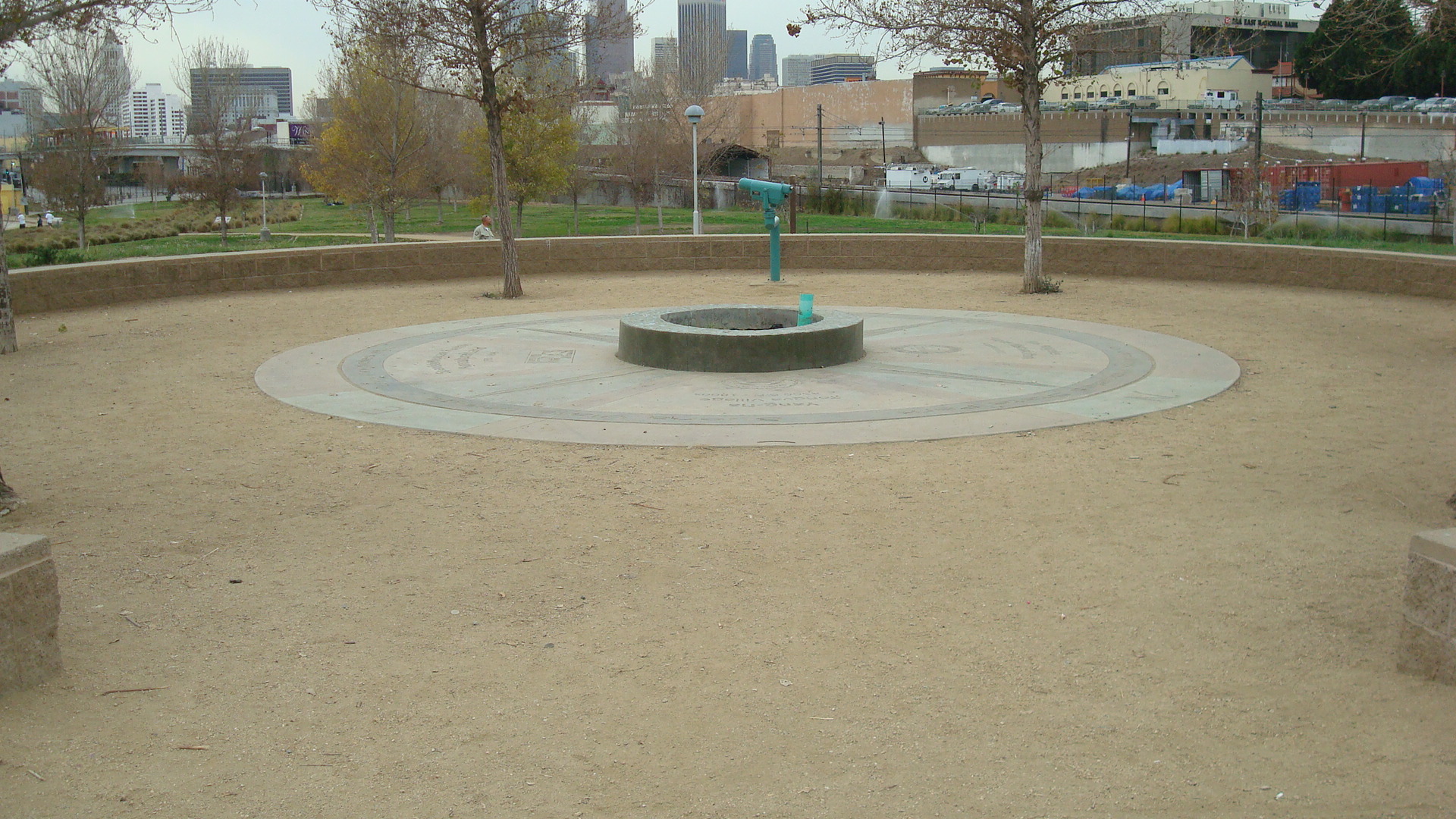
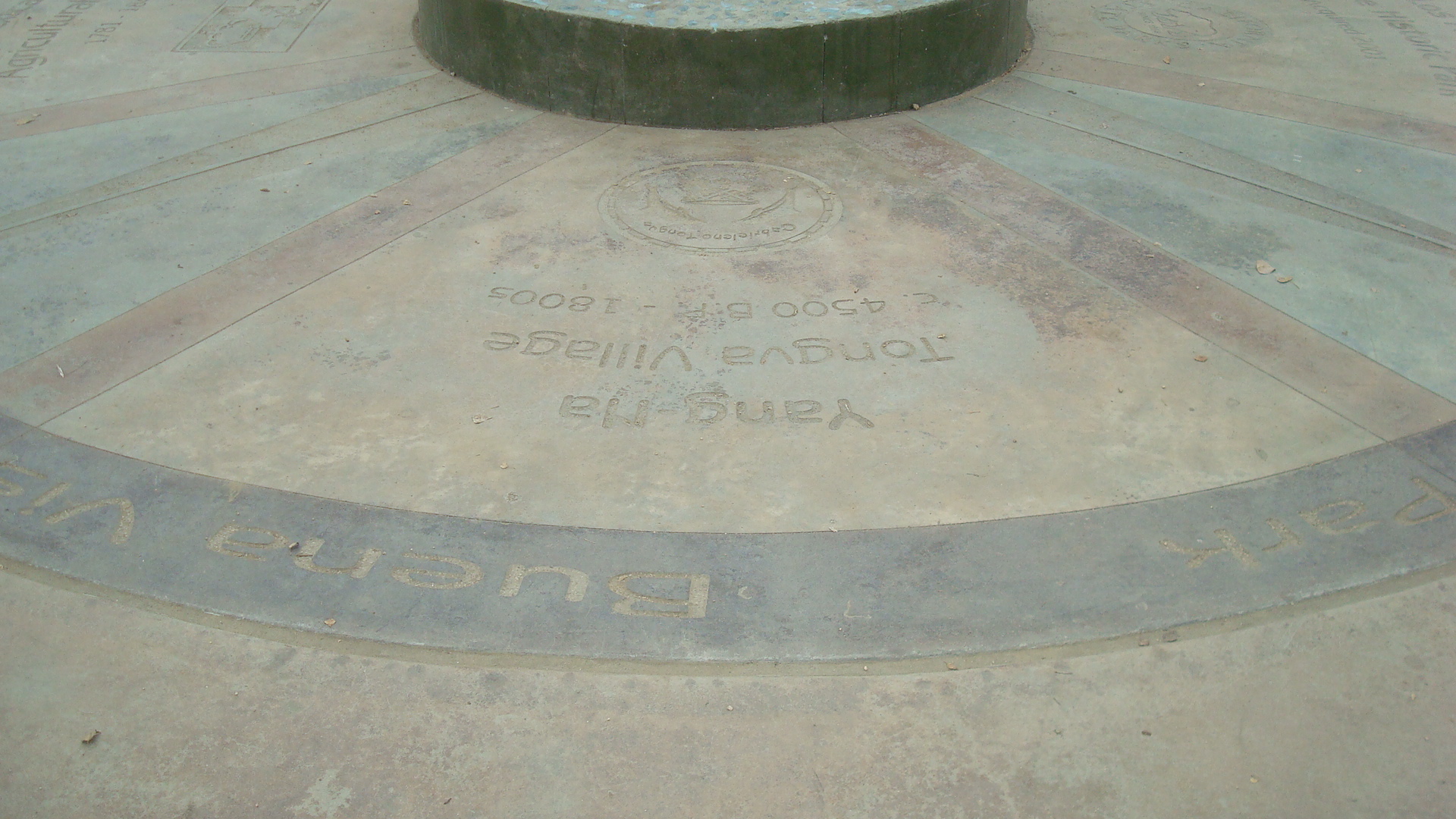
The site that the park is on has a pretty interesting history. Community groups fought with a developer who wanted to build warehouses on the land. This article on the KCET web site offers a good deal of information. The designers who created the park’s current state incorporated markers to commemorate some of the groups that have been a part of LA’s history.

The path leading up to a low hill...

The path leading up to a low hill…

...where you'll find a concrete marker...

…where you’ll find a concrete marker…

...that commemorates some of the people who make up the city's history.

…that commemorates some of the people who make up the city’s history.

Creating the park was a long and difficult process, and there were disagreements among some of the groups involved. This article from the LA Times covers the conceptual art event that re-opened the park, and also details some of the differing points of view.

Not a Cornfield

And for the official story (much less interesting), you can take a look at the state’s web page.

Los Angeles State Historic Park

Corn 10 Hill w Trees

Building Blitz

LA will be changing dramatically in this new year. We’re going to see a wave of construction that will transform the city, for better or worse. The mayor and the city council are decidedly pro-development. They will tell you it’s because they’re looking to the future and trying to create jobs. It might also have something to do with the massive amount of campaign cash that local politicians have received from developers.

But I don’t want to be totally negative. Development is necessary. And change can be good. It’s the beginning of the new year. Let’s try to accentuate the positive.

DOWNTOWN

Downtown will definitely be getting more dense.

Downtown will definitely be getting more dense.

A wave of construction is hitting Downtown LA. There are a staggering number of projects in the works, and the landscape is going to change considerably. For an overview, check out this summary in the Downtown News.

Downtown Development

The project I’m most excited about is The Broad. The building looks cool, the collection is impressive and admission will be free. What more could you ask for? A link to the site is below, but like the building, it’s still under construction.

The Broad Museum

HOLLYWOOD

More cranes on the horizon for Hollywood?

More cranes on the horizon for Hollywood?

These huge cranes have become a familiar sight in Hollywood. There are a number of buildings going up right now, and many more in the works. Under construction at the moment are Blvd 6200, Columbia Square, Emerson College, and a ton of new residential and retail space on La Brea.

But the projects that may have the most significant impact are the expansions planned by Paramount and Universal Studios. I know Universal isn’t located in Hollywood, but their “Evolution Plan” will certainly impact the Hollywood area, both in terms of jobs and traffic. Click on the link for more info.

NBC Universal Evolution Plan

Next is a link to an article in the New York Times which talks about both the Paramount and Universal projects.

Bold Growth Plans at Hollywood Studios

SANTA MONICA

An image of Santa Monica back when it was less crowded and less expensive.

An image of Santa Monica back when it was less crowded and less expensive.

The picture you see above doesn’t represent Santa Monica as it is today. It shows the Santa Monica I knew when I was growing up, a sleepy, laid back community where rent was cheap and traffic was light. But those days are gone. While the residents staunchly supported a slow growth policy thirty years ago, today the city council is enthusiastically pro-development. There have been some complaints from locals, but that hasn’t stopped the council from approving a slew of projects. The first article, from the LA Times, is an overview. The second, from The Architect’s Newspaper, is about a group that wants the council to slow down.

Santa Monica Bracing for Growth Spurt

Wealthy Coalition Demands Halt

The photo of skyscrapers on Bunker Hill is by Gary Leonard, and comes from the Los Angeles Public Library’s on-line archive. The image of Hollywood was taken by me. The photo of Santa Monica was taken by Anne Laskey, and also comes from the LAPL archive.

How to Find the LA River

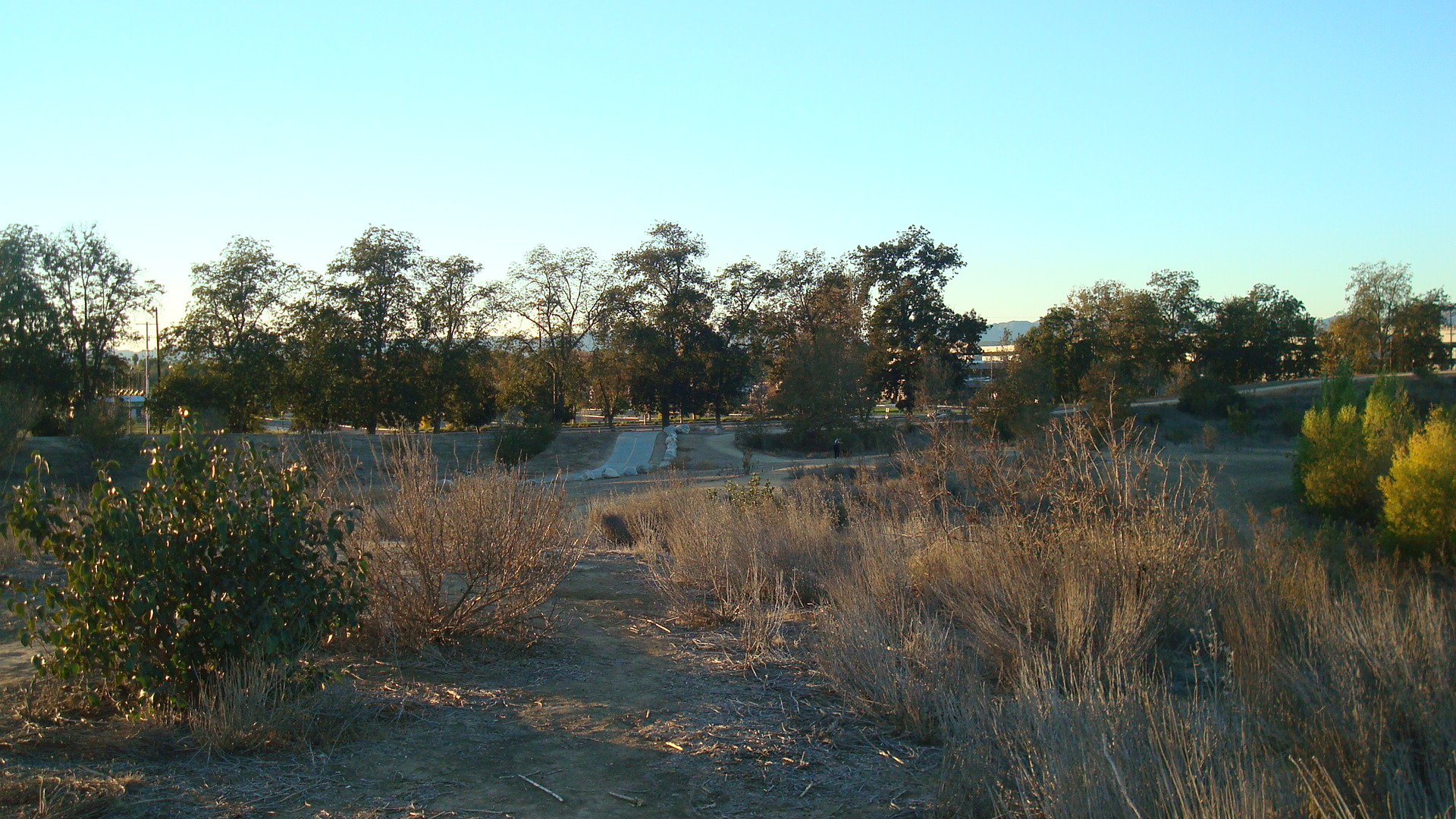
A view of the LA River in the late afternoon

A view of the LA River in the late afternoon

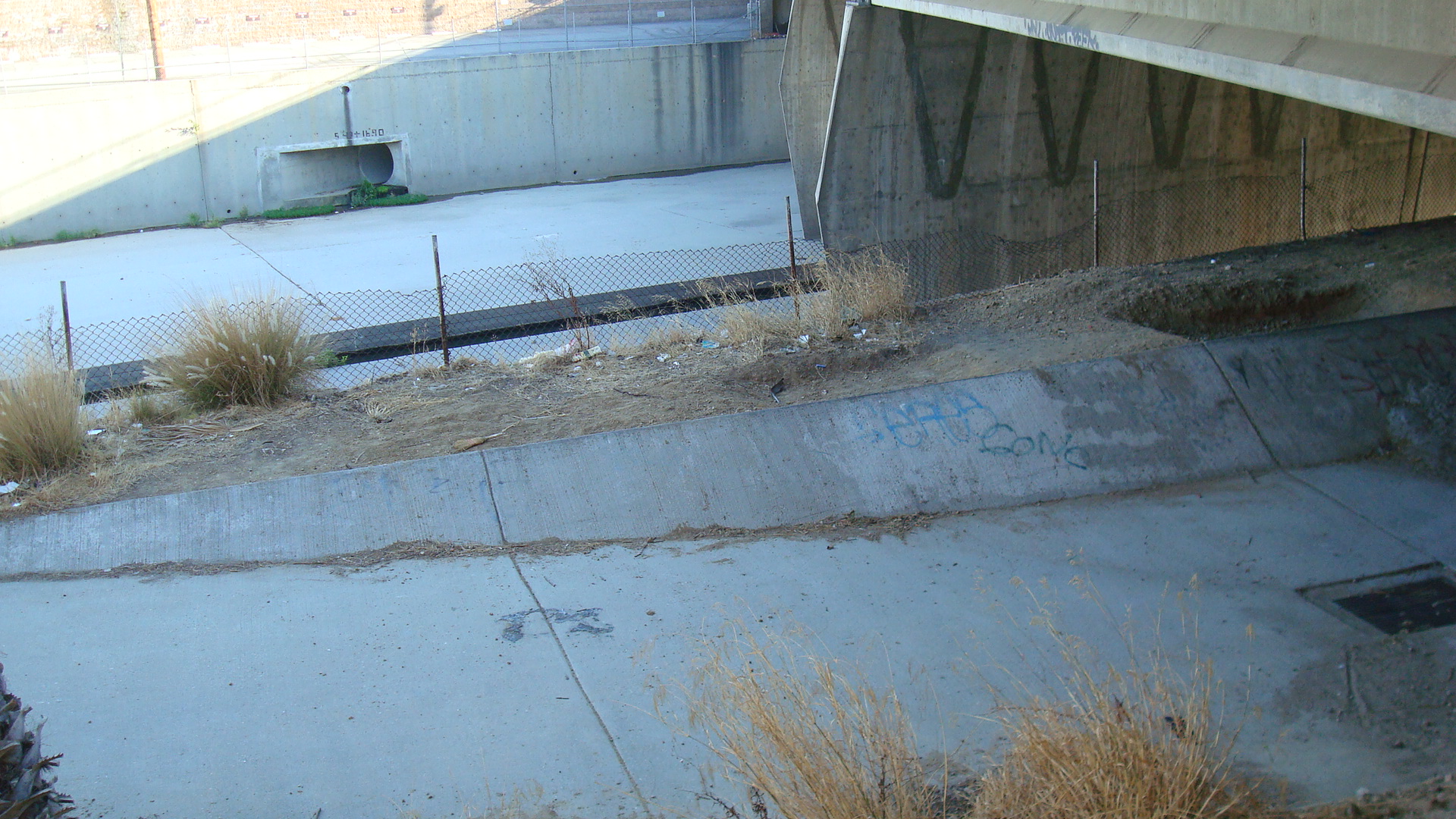
When I was a kid growing up in Burbank the LA River was a joke. It wasn’t a river at all. It was a huge concrete aqueduct with a tiny trickle of water running down the middle of it. Occasionally after heavy rains the water level would rise for a day or two. But it was nothing like the majestic waterways that flowed through other cities. It seemed like some kind of weird, synthetic excuse for a river, and it seemed perfectly in keeping with the image many people had of a LA as a weird, synthetic excuse for a city.

The LA River near Warner Bros. studios in Burbank

The LA River near Warner Bros. studios in Burbank

But over the years I’ve been hearing more and more about efforts to rethink the river. I understand now how important the LA River once was to the city, and I’m slowly beginning to realize how important it could be to LA’s future.

Back in the eighteenth century it was the source of water for the small settlement originally called El Pueblo de Nuestra Señora la Reina de Los Angeles. The river continued to provide most of LA’s water until the twentieth century, when the Owens Valley Aqueduct and the Colorado River Aqueduct were built. In the thirties, after a series of devastating floods, it was decided that the best thing to do with the LA River was encase it in cement. The US Army Corps of Engineers took charge, supervising one of the largest public works projects in US history. When it was done, the river had been transformed into a massive concrete channel.

But over the past twenty years or so, a growing number of people have been looking for ways to reclaim the river, to once again make it a vital part of the life of Los Angeles. It flows from Canoga Park across the Valley to the Glendale Narrows, and then winds through Downtown and continues all the way to Long Beach. In making that trip it is one of the few unifying factors in a city where residents often feel they have no connection to each other. It has the potential to become a vast linear park, winding its way through many of LA’s neighborhoods, providing a space where people could relax, enjoy themselves and connect with nature.

Lush greenery along the river as it runs through Griffith Park

Lush greenery along the river as it runs through Griffith Park

There are many groups involved in the effort to remake the river, but the one that’s been around the longest is Friends of the LA River.

FoLAR

If you’re interested in getting involved, there’s probably a group in your neighborhood that could put you to work.

A while ago I started taking photos of the river. It was an interesting exercise. I found that while the river has been there all my life, and I’ve crossed it at one point or another every day for decades, I’ve never taken the time to look at it. How many times did I drive past Balboa Park without ever realizing that the LA River runs right through it. I lived in Silverlake for a few years, and used the Hyperion Bridge regularly, but I never looked down to see what was below. And I’ve crossed the bridges east of downtown LA a million times, rarely pausing to take more than a glance at the river running underneath.
So if, like me, you haven’t paid much attention to the LA River, maybe you should take a walk down to the banks some time. You might be surprised at what you find.

Trees crowded around the river in Balboa Park

Trees crowded around the river in Balboa Park

Another shot of the park facing toward Balboa Blvd.

Another shot of the park facing toward Balboa Blvd.

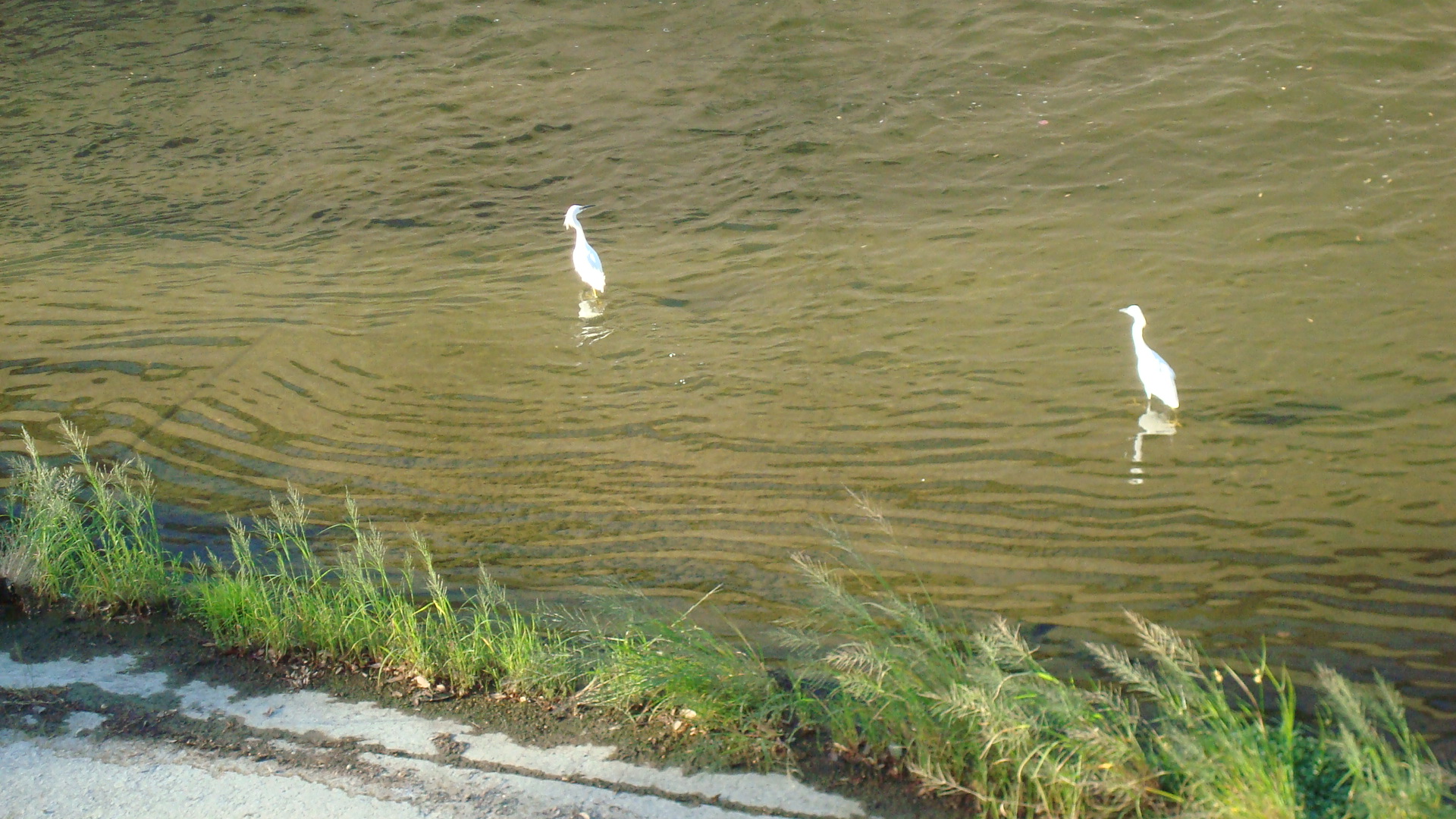
Ducks on the river in Sherman Oaks

Ducks on the river in Sherman Oaks

More birds on the river as it flows through Sherman Oaks

More birds on the river as it flows through Sherman Oaks

Another shot of the river on the edge of Griffith Park

Another shot of the river on the edge of Griffith Park

Facing west on the outskirts of Griffith Park

Facing west on the outskirts of Griffith Park

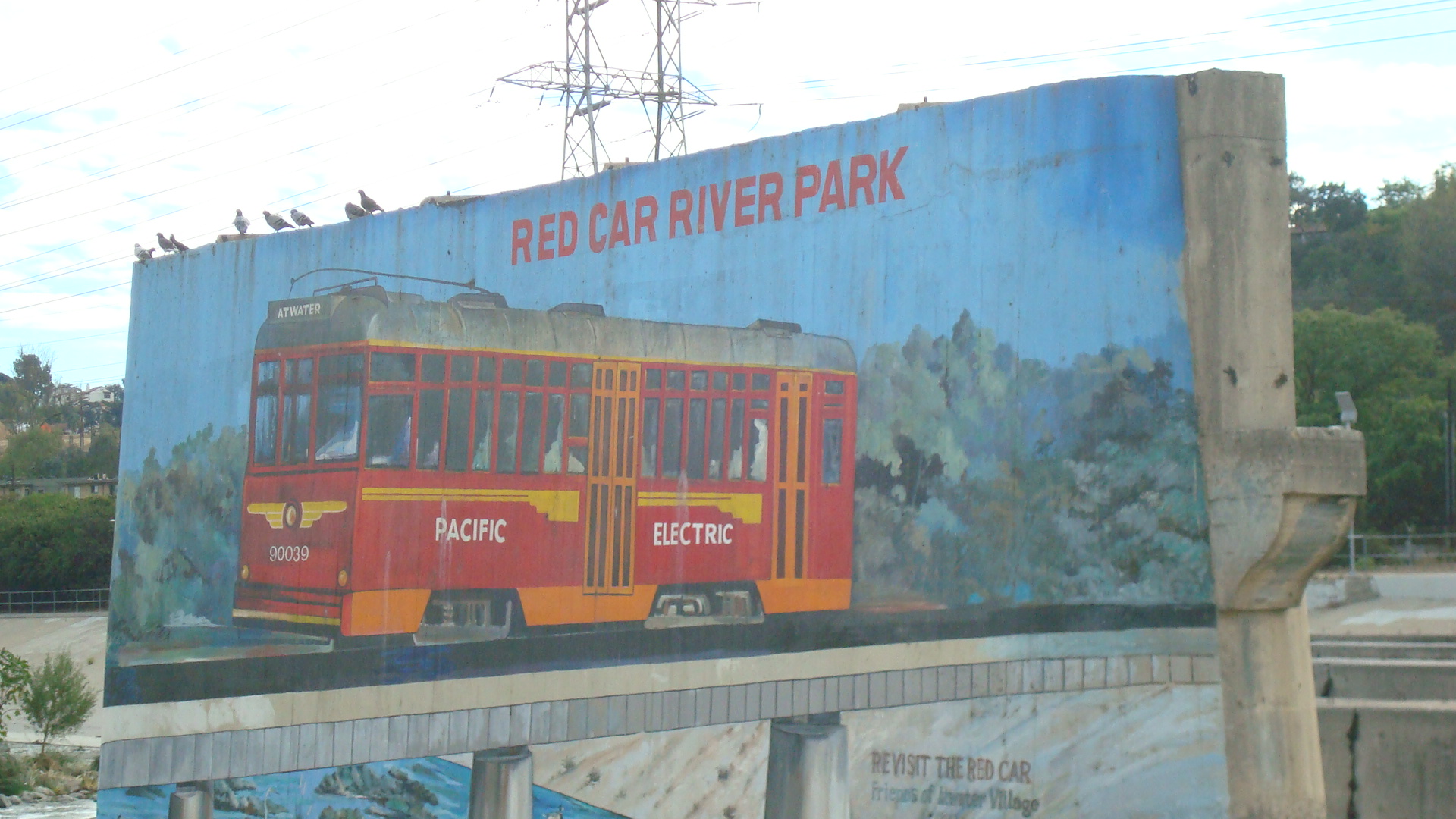
A mural marking a tiny, but cool, park in the Glendale Narrows

A mural marking a tiny, but cool, park in the Glendale Narrows

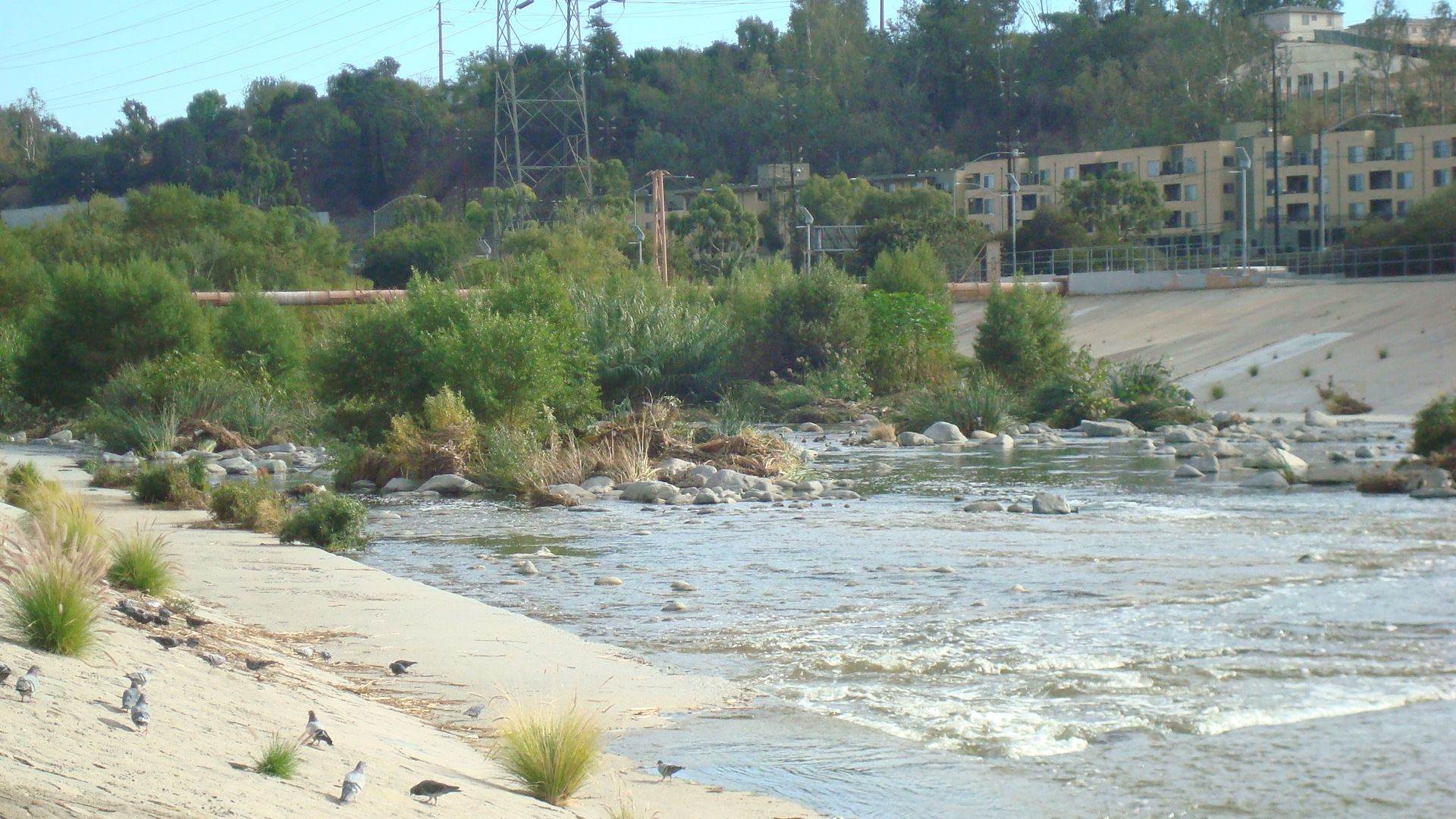
The Glendale Narrows, just below Atwater

The Glendale Narrows, just below Atwater

The river flowing past the railyards at the edge of Downtown LA

The river flowing past the railyards at the edge of Downtown LA

The river heading out of Downtown LA, on its way to Long Beach

The river heading out of Downtown LA, on its way to Long Beach

Old and New

DSC02587There were two things I’d been wanting to do for a while. The first was to visit the Natural History Museum to see their show on LA history. The second was to take some photos of the Sixth Street Bridge, which is slated to be demolished and replaced, although that may not happen for a while. So Tuesday morning I took the Red Line down to Seventh and Figueroa, where I transferred to the Expo Line. Pretty soon I was standing on the platform at the Exposition Park station.

It might have been twenty years or more since I’d been to Exposition Park. Walking toward the fountain at the center of the gardens was sort of like walking into the past. In part, that’s because of my memory of visiting the museums as a child. But also, the three buildings that border the park are massive reminders of the ornate, imposing architecture that was considered appropriate for museums a hundred years ago. In fact, the Natural History Museum is celebrating its one hundredth anniversary this year. Their web site offers a brief history, which you can read by clicking here.

The photo above shows the current entrance to the museum, which presents a modern facade. It’s an interesting contrast to the NHM’s original entrance, which is what you see in this next photo.

DSC02590

The exhibition I went to see, Becoming LA, was really good. The curators did a nice job of presenting the area’s multi-layered history, weaving together the threads of all the diverse groups that made the city what it is. Of course Becoming LA is just the latest in the recent onslaught of shows about Los Angeles. Local museums have been giving a lot of attention to the city in the past few years. I’m all in favor of highlighting LA’s art, culture, etc., but at times it seems like we’re crossing the line into bombastic self-promotion. Which, I guess, isn’t really that surprising.

After I was finished with the museum, I took the bus north on Vermont to Olympic, where I had to transfer. This put me right in the heart of Koreatown. There’s an interesting vibe in many parts of Koreatown, which I think has to do with the zillions of small businesses competing for your attention. There are numerous strip malls, and they all seem to be bursting with restaurants, karaoke bars, tech retail outlets, nail salons, etc.. Here’s one example….

DSC02609

But the look of Koreatown is changing. In the image below you’re looking up Vermont toward Wilshire, where you can see two high-rise towers that combine residential and retail. I understand some Koreatown residents aren’t too happy about the wave of high-density development that’s hitting their area. I doubt that bothers the City Council, though, and it certainly doesn’t bother Mayor Garcetti. They are all one hundred percent committed to serving the developers who put them in office. Click here for more info about this massive project.

DSC02625

The bus showed up and I got on. A few minutes later I got off at the end of the line, Sixth and Maple. I headed up Maple and over to Wall. As I was walking along, I heard a voice behind me.

“Excuse me. Are you a tourist?”

He must’ve seen the camera I was holding.

“No, I’ve lived in LA all my life.”

“Oh. Cuz I was just wondering if you knew this is a really horrible area.”

I laughed, but he had a point. The street was filled with people who were living on the sidewalk. The desperation was palpable. I can’t say I was really afraid, though. I spend a fair amount of time downtown, and I’ve walked through skid row now and again. If it was night, I probably would be worried. But in the harsh light of day, these people looked too beaten down, too demoralized, to be a threat.

We walked along together for a block or so. I told him I had the camera because I wanted to shoot photos of the Sixth Street Bridge. He knew the bridge was going to be replaced, but he felt it would be a long time before work actually started. Somehow we got talking about the LA City Council, and we both agreed they have absolutely no respect for the law. Interesting how the one thing that seems to bind Angelenos together is our absolute distrust of the people at City Hall.
Then we went our separate ways. I headed over to Little Tokyo for a bowl of udon and a beer. Then I started walking down Central to Sixth.

It was late afternoon. The streets were mostly deserted. There were few cars and fewer people. I walked past the Woori Market’s empty parking lot. It’s been closed for a while. There were large warehouses, like Los Angeles Cold Storage. A couple small restaurants. A lot of places have security fences, and a few were topped with barbed wire.

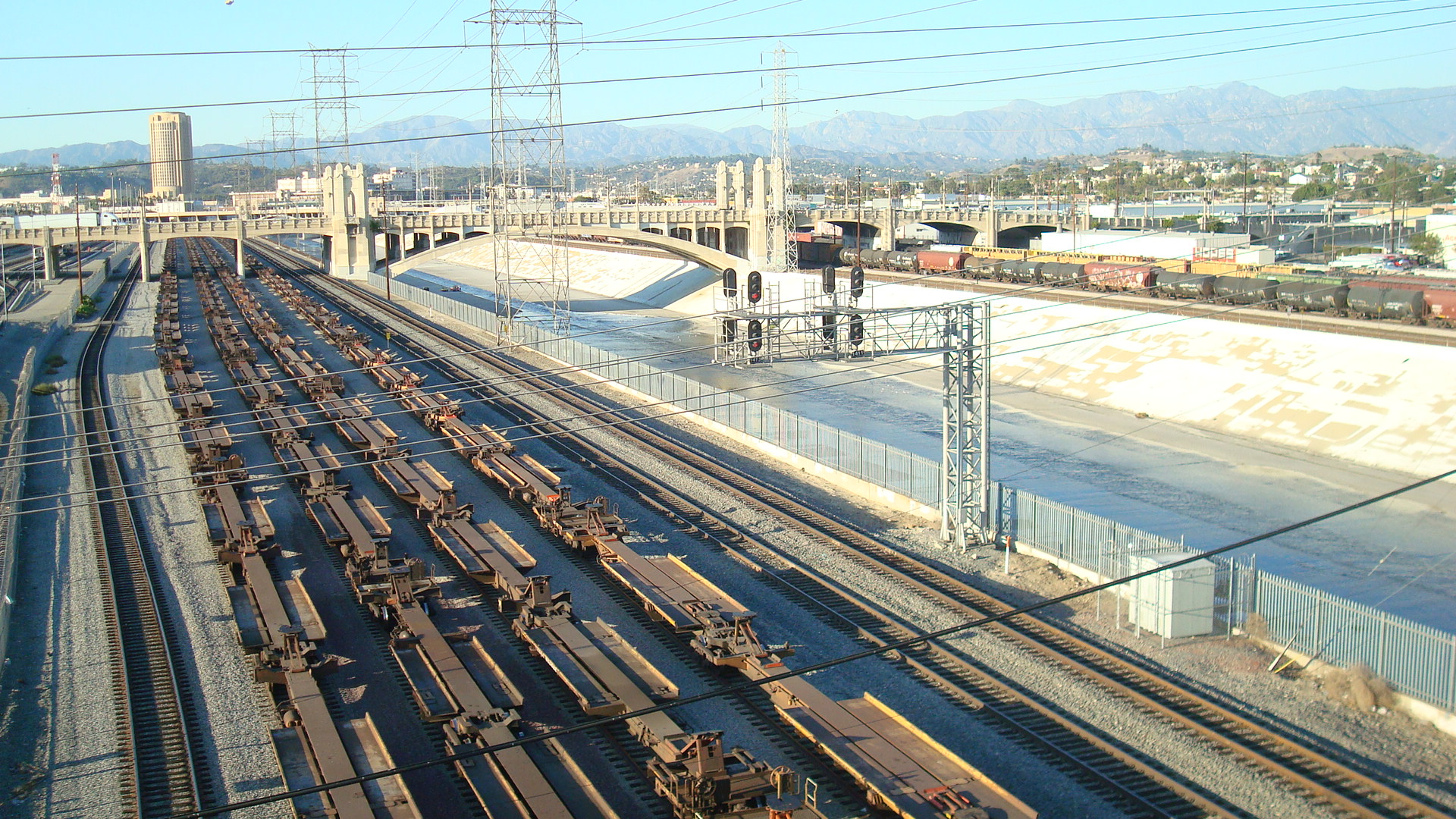
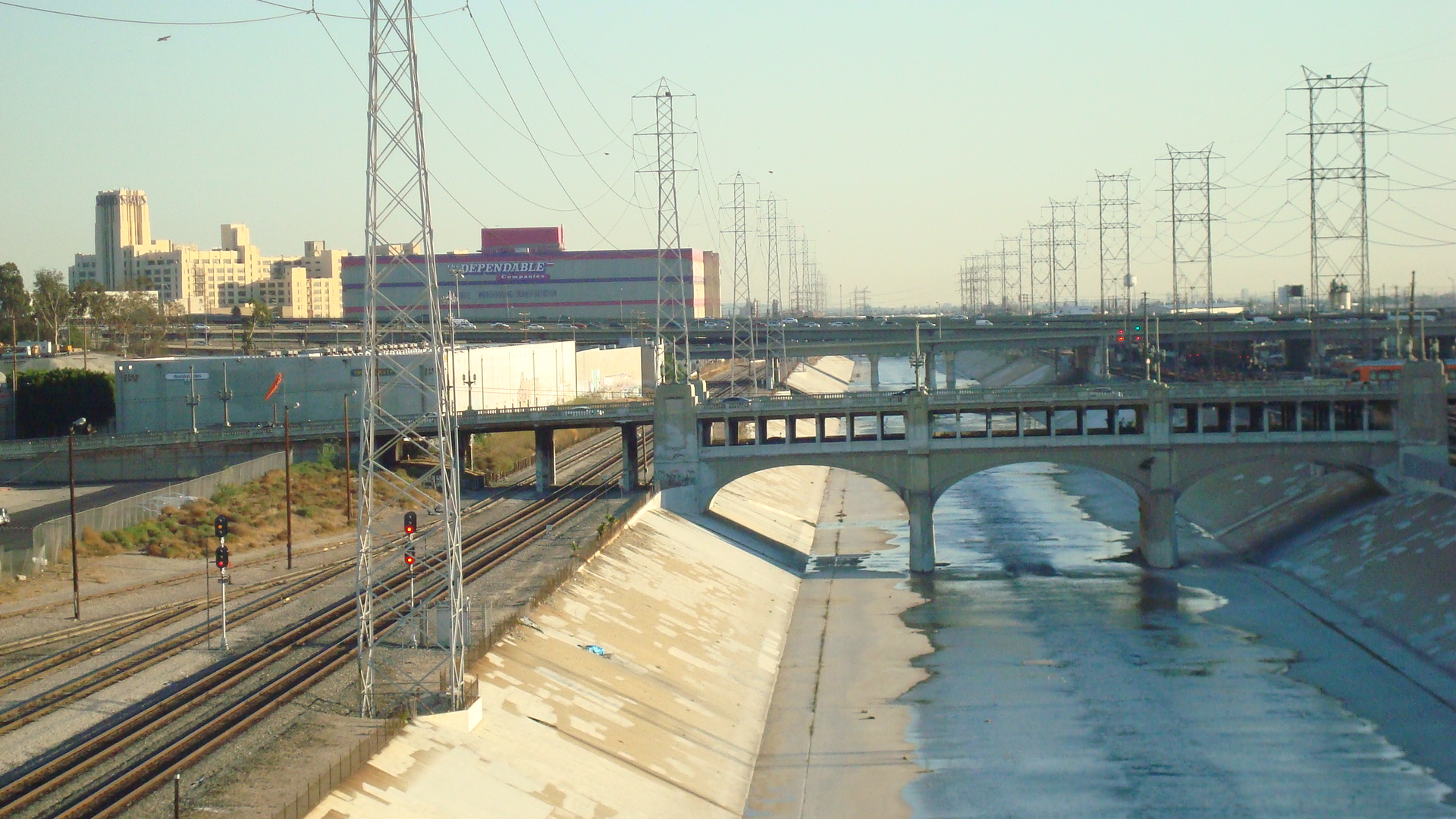
The bridge rises up over the warehouses and the railroad tracks. As you get near the mid-point, the landscape below stretches out for miles in every direction. Here’s a shot of the bridge looking back toward downtown.

DSC02655

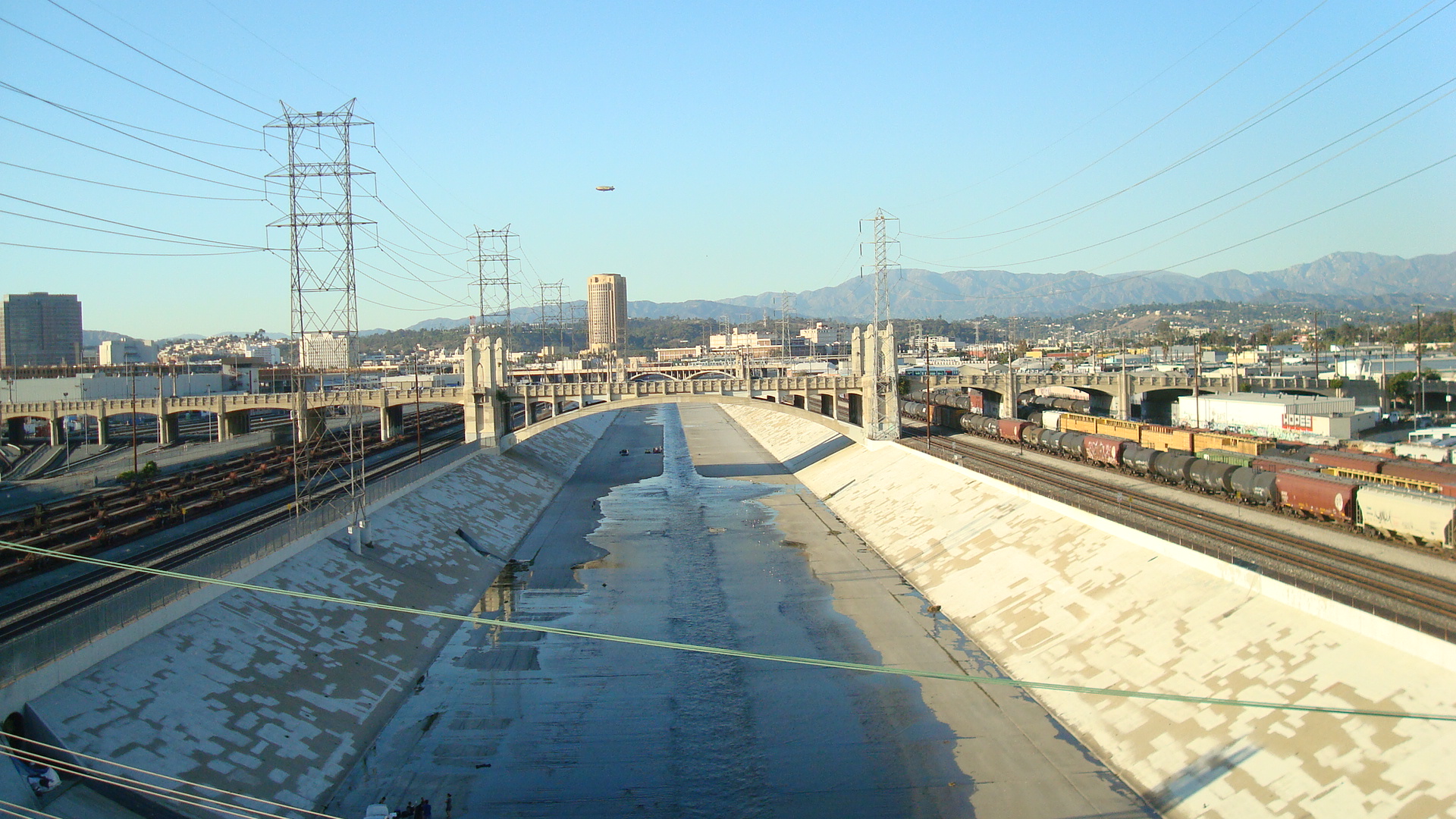
And here’s another looking down on the LA River.

DSC02651

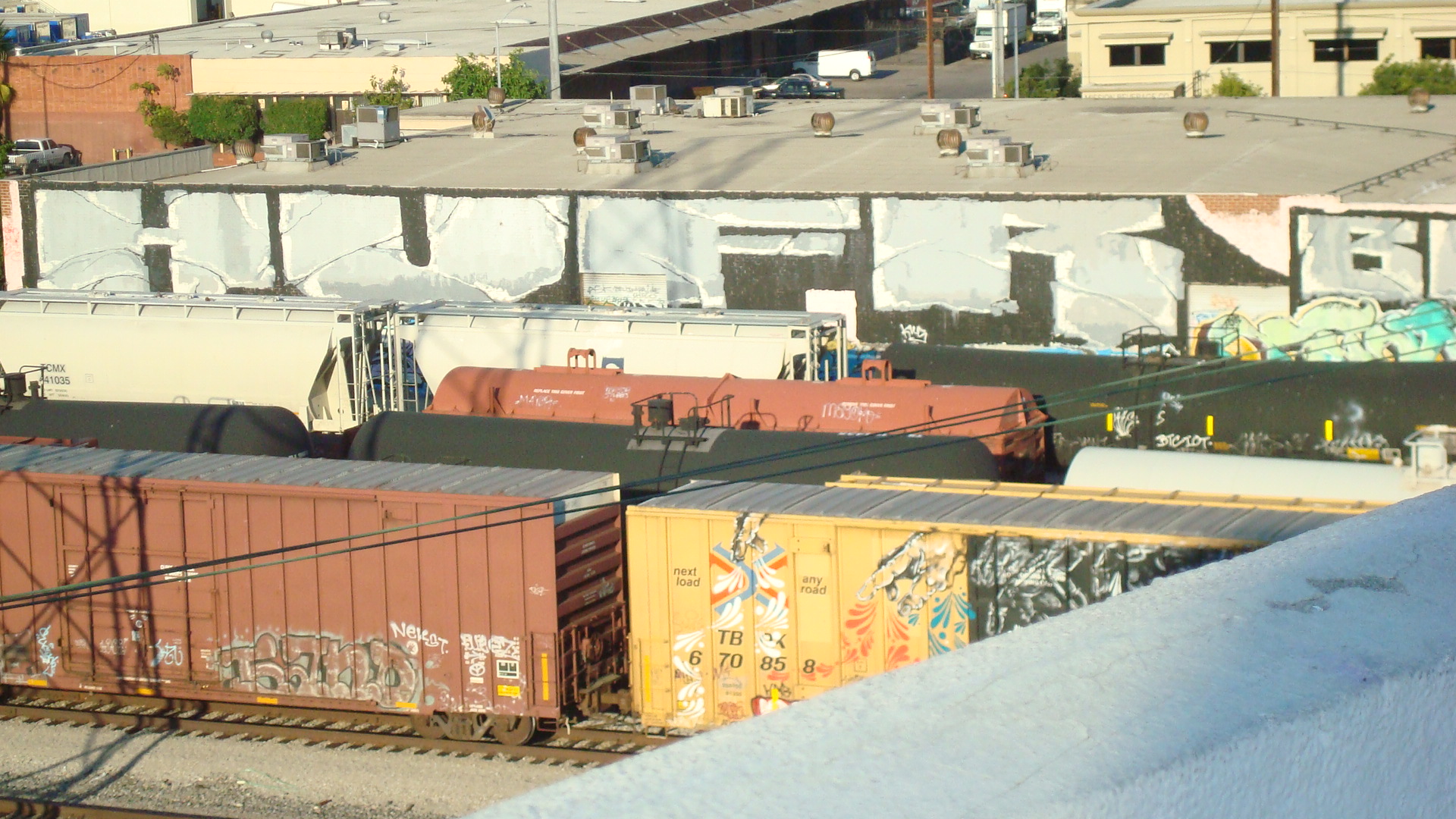
Freight cars covered with graffiti sit lined up below.

DSC02650

And here’s another shot of the downtown area.

DSC02666

On the other side of the bridge, Sixth Street becomes Whittier Blvd., which leads you into Boyle Heights. I waited for the bus in front of Carnitas Michoacán #3, which seemed to be doing steady business. And then the seven twenty showed up to take me home.