A Faster Future

fiber 3

I am not a techie. When I started this blog what I had in mind was writing about the built environment, but more and more our cities are defined by technology. I had heard about Google possibly installing a fiber optic network in LA. This could allow area residents to download data with amazing speed, but at the moment it seems to be just speculation. Then I came across this article about Google making a deal with Austin, Texas to bring fiber optic to them.

PandoDaily – Google’s Fiber Takeover

The article makes some pretty broad claims about Google’s intentions. I was skeptical. So I sent the link to my nephew, Morgan, in Santa Cruz, who is a techie. Here’s an excerpt of what he had to say:

I’m not so sure Google is planning to takeover. They might, but only if they think they can significantly improve service. I think for them the ideal case is that the existing ISPs just upgrade their service, currently the problem is that all the ISPs have more or less realized it’s easier to just make incremental upgrades as opposed to laying new infrastructure. There’s been severe stagnation because ISPs have a lot of power. Because of that, US internet is way behind.

Google wants everyone to have high speed internet because that increases their ad revenue, but it probably doesn’t make much of a difference to them whose internet service it is. From what I’ve read, these services are likely breaking even at best, since it’s a lot more expensive for them to lay new infrastructure. Therefore, Google’s probably hoping that by threatening ISPs with this service, they’ll push them to lay new infrastructure so that Google won’t have to. If the ISPs don’t get with it, they might just end up taking over, but I doubt that’s really what they want to do.

He also sent me this link from Wired. The premise of the article is that government needs to get out of the way and let ISPs build what they want.

Wired – Don’t Blame Big Cable

I don’t buy all of the author’s arguments. The idea that government should just step back and let business take over is called into question by recent history. You can look at the Enron debacle in California, where the state’s Democratic legislature let the energy giant write its own ticket. Enron proceeded to steal billions of dollars from California consumers, and there are numerous other examples of this kind of abuse. But he gives an interesting breakdown of the challenges that companies have to face when dealing with city government.

Lastly, a brief article from Maximum PC about a small town that did install its own fiber optic network and is doing quite well.

Maximum PC – Small Town Triumphs

I have no idea where all this is going. My grasp of this stuff is pretty tenuous. But it seems clear that cities, especially major cities that want to attract business, will need to create this kind of tech infrastructure if they want to be competitive. The future is here.

Lots of Hype, But No Jobs

I was checking the headlines at the LA Wave this morning, and came across an interesting story. There’s been a lot of hype about how great the Crenshaw Light Rail Line will be for the surrounding community, but I guess that doesn’t extend to providing jobs for local contractors. You can read the story by clicking here.

One aspect of the story that caught my attention is that the Young Black Contractors Association (YCBA) is planning a protest against the Los Angeles Urban League. The word is that the League has been chosen as the outreach coordinator for general contractor Walsh/Shea Corridor Constructors. The YCBA suspects that the League is going to take a few million from Walsh/Shea without making any real effort to bring local black contractors and construction workers onto the project. This is a fairly common ploy. In recent years non-profits have been starved for cash. Developers and contractors know this, so they offer a bunch of money to these groups to get their support. That way, Walsh/Shea can say, “Hey, the LA Urban League is backing us up!” Unfortunately, non-profits are sometimes willing to go along with this if they need the money badly enough. It’ll be interesting to see if the YCBA can make enough noise to bring jobs to a community where they are really needed.

Crenshaw-LAX Light Rail Line

A musician in Leimert Park.

A musician in Leimert Park.

Transit politics can be tricky. I’ve started following the discussion over the Crenshaw-LAX Light Rail Line, and I have to say the whole thing is pretty complicated. I think everyone agrees it’s a worthwhile project, but the devil is in the details. A heated debate has been going on, apparently for years, about how many stops would be on the line, where they would be located, and whether the line would run below grade in certain areas. The trains would run south on Crenshaw to Inglewood, turn west at Florence, and then follow Aviation south to LAX. Here’s a link to a map on the MTA web site.

Click to access Crenshaw-LAX_transit_corridor_map_eng.pdf

The project could give a much needed boost to the area, which the City of LA has neglected for years. Running between the Expo Line and the Green Line, it would provide an important transit link for people in the Crenshaw district and Inglewood. It could also create lots of jobs in neighborhoods where unemployment is high.

One of the key issues is safety. Most LA residents are probably aware of the problems with the Blue Line. There have been over nine hundred accidents at crossings where the trains run at street level, resulting in more than a hundred deaths. This is why many in the community are fighting to make sure this new train runs below grade in some segments. But digging tunnels would increase the cost significantly, and as far as I can tell the city hasn’t actually committed to do this for any segment of the line. The Crenshaw Subway Coalition has posted this document, which outlines their argument against grade level crossings.

The link below offers an interview with MTA Chief Art Leahy and gives a general update on the progress of the Crenshaw-LAX Line.

http://wavenewspapers.com/news/local/west_edition/article_a4586a8c-ce22-11e2-aeb8-0019bb30f31a.html

I’ve ridden public transit all my life, and I have to say that getting around LA is much easier now than it was twenty years ago. The MTA has made a lot of progress in recent years, and following a project like this you realize how difficult it can be to make things happen.

TOD? Really?

A few words about “transit oriented development” [TOD]. This is a phrase I hear a lot these days, especially from developers and city officials who want to build massive projects in congested urban areas. The other mantra they love to chant is “new urbanism”. They use these phrases like magic incantations, hoping to ward off opposition to their plans. If you question their sweeping vision for a new LA, you’re living in the past, you’re thinking small, you’re afraid to embrace the future. In reality they show little interest in the kind of careful, nuanced planning that would actually make the city a better place to live.

First, I should tell you that I don’t own a car, and I’m a great believer in public transit. Second, I can totally get behind TOD strategies when they are based on real data and a careful analysis of the local context. Often, though, developers don’t really give a damn about the facts. Often they’re only thinking about the massive amounts of money to be made if they can push their project through. And often the politicians, rather than protecting the interests of the people who elected them, are happy to fall in line because they know they’ll be richly rewarded for doing so.

The new Hollywood Community Plan is based on the premise that Los Angeles will continue to grow rapidly and that Transit Oriented Development is the only way to effectively manage the expected growth. But the truth is that this plan is based on fantasy rather than hard facts. US Census data shows that the population in the Hollywood area has not increased but has actually decreased over the last ten years. The Central Hollywood and East Hollywood areas have lost over 12,000 residents since 2000. The City Council argues that the population will rebound, but they have no data to support their assertion, and in fact they are ignoring the following facts:

1.
Population Growth in LA Is Slowing

Population growth in Los Angeles has slowed dramatically. While the city grew by leaps and bounds during the 20th century, census data shows that LA’s population has only increased by 2.65% percent since 2000. This is part of larger trend throughout California, which is expected to grow by only 1% annually in the foreseeable future. Current data seems to indicate that after a century of huge gains, California’s population growth is now levelling out.

2.
Dwindling Migration from Mexico

Immigrants are no longer coming to Los Angeles in the numbers they used to. The Mexican economy has been growing steadily for the past three years, which means many people who used to come to LA looking for work are now able to find jobs in their own country. It is a fact that immigration from Mexico to the US has slowed to almost nothing, and there is no reason to believe that this trend will be reversed in the near future. We can no longer expect a steady stream of immigrants coming from Mexico to Los Angeles.

3.
Rising Housing Costs

Higher prices for housing are driving out lower income residents. It used to be that low rents in Hollywood attracted families without a lot of money to spend. In recent years, as developers, property owners and real estate agents have pushed for gentrification, rents have skyrocketed and these families can no longer afford to live in the area. The units they used to occupy are increasingly taken over by singles and couples who make higher wages. The new Hollywood Community Plan in general, and the Millennium Hollywood project in particular, will accelerate this trend toward gentrification, ultimately causing lower population density in the Hollywood area.

4.
Fewer People, But More Traffic

The City Council has been arguing that TOD is necessary to reduce traffic, but higher density development in Hollywood hasn’t helped so far. In the past several years we’ve seen the construction of Sunset + Vine, the Redbury, the W Hotel and the Jefferson, all within easy walking distance of subway stations. But while the number of people living in Hollywood has dropped substantially, traffic has continued to get worse. I think this is because all these developments offer only high-end housing. The people who can afford to live in these buildings are also the people most likely to own cars. The people at the lower end of the economic spectrum who can’t afford cars and have to rely on public transportation are being squeezed out. Politicians and developers talk about TOD, but really their plans are causing more traffic and longer commutes.

Like I said before, I believe in TOD. I’d like to see more of it in LA. But what we’re getting now is not transit oriented development. What we’re really getting is a lot of empty hype designed to put money in developers’ pockets. The new Hollywood Community Plan and the Millennium Hollywood project were not designed to make our lives better. They were designed to make developers rich.

A Walk Around Downtown

As many people have pointed out, LA is different than most major cities. New York, Chicago, and San Francisco all have suburbs surrounding them, but people still go downtown for work, shopping, entertainment. Years ago that was also true of LA. When I was a kid my dad worked downtown, and we went there regularly for one reason or another. But over time the suburbs kept spreading farther outward, and many of them gradually became self-contained communities. There are a lot of people who live in LA who have never been downtown. What’s more, they don’t ever want to go there.

I love downtown LA. I go there often. Last month I made a couple trips downtown with a camera. What follows is a record of my ramble through the city center. So if you’re too busy or too tired or too scared to make the trip yourself, this will give you a taste of what you’re missing.

I started by taking the subway to Union Station. The photo above shows the main entrance. I was hoping to include a link with photos of the interior, but I couldn’t find a single site that did it justice. You can, however, just search for images of Union Station. There are many of them on the net. Trust me, it’s worth taking a look.

Olvera Y

Right across from Union Station is Olvera Street. Sure, it’s a tourist trap, but it’s the coolest tourist trap I know of. You may have to fight your way through the crowd, but there are some restaurants that are worth the trouble. And it’s part of the historic core of LA. Among other things, you’ll find the Avila Adobe, the oldest building in the city.
Plaza Y

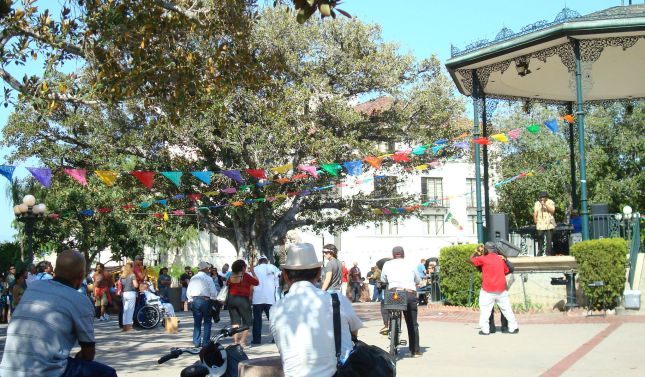
Right next door to Olvera Street is the plaza that sits at the center of El Pueblo de Los Angeles, a state historic park. The plaza is surrounded by a number buildings that date back to the nineteenth century, when this was the center of activity in the city.
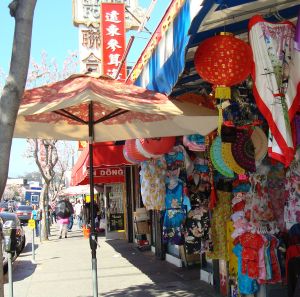
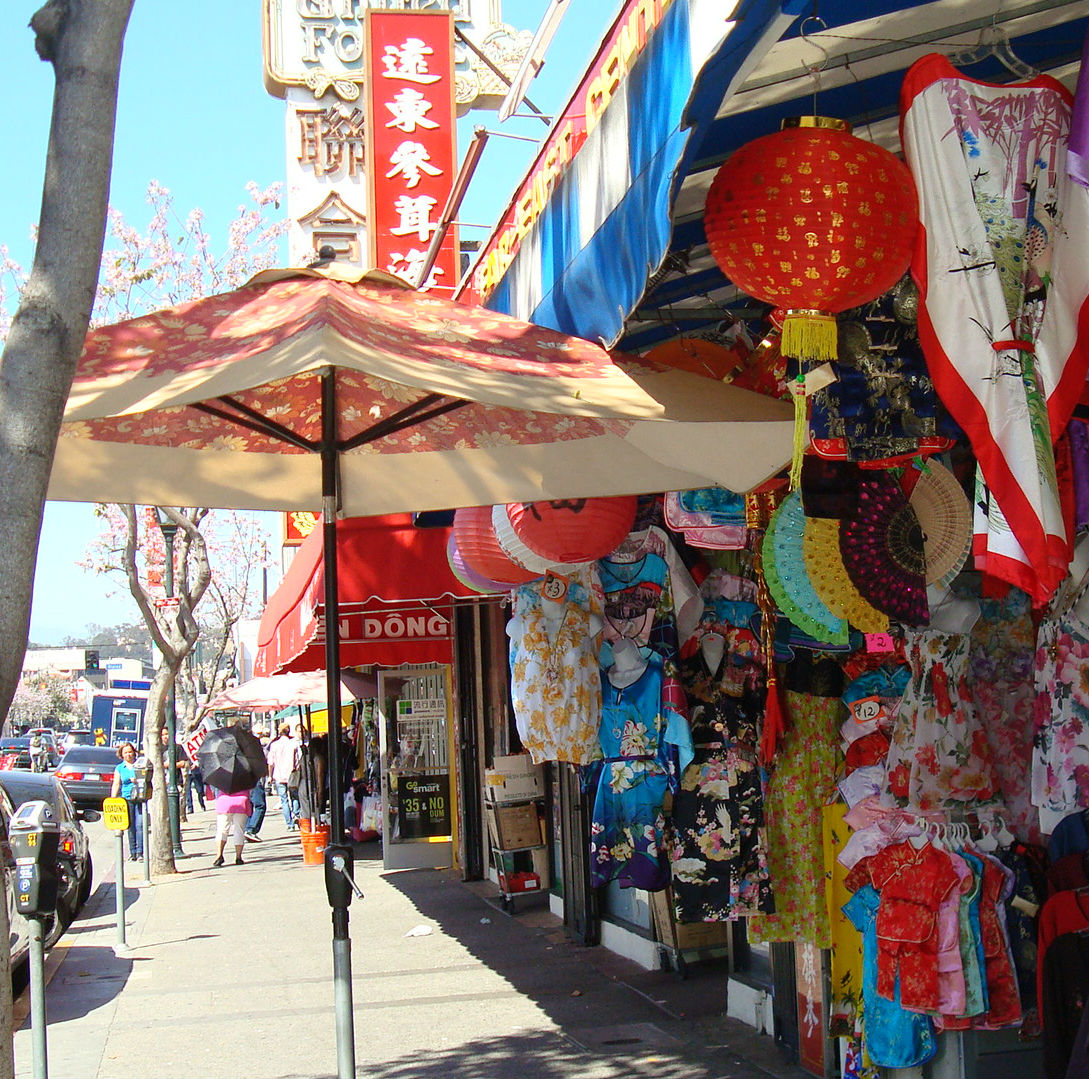
Chinatown 1 YIt won’t surprise you to learn that Chinatown got its name because it was home to a large Chinese community. These days, though, the name may be misleading since the area seems to be mostly drawing immigrants from Vietnam and Thailand. Now the largest Chinese communities are located in the San Gabriel Valley. Walking along Broadway, I have to say my impression was that the area is past its prime, but I see that some interesting events are taking place there in the next few months. Maybe I just caught Chinatown on a slow day.
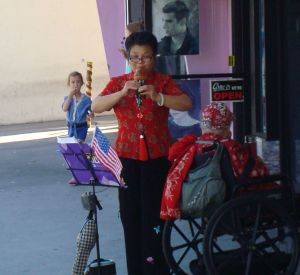
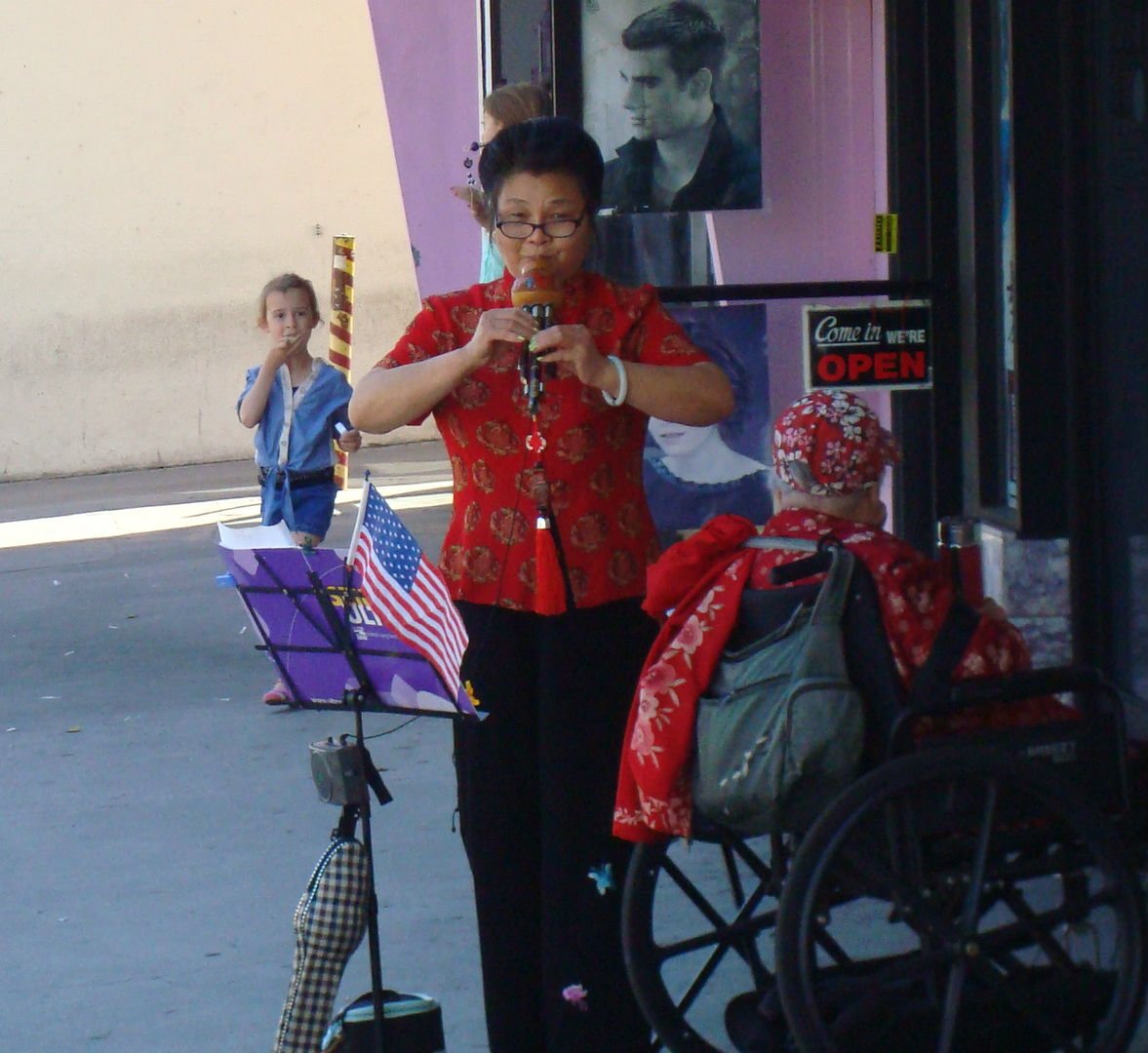
Musician YThis is an image of a woman playing traditional Chinese music. I passed another street musician, an older man, singing songs that sounded like they must have come from the old country. Sadly, these people are part of a dwindling minority. My impression is that even in China traditional music is quickly being forgotten as people rush to embrace pop, rap and techno. It’s frightening how Western pop culture buries everything it can’t market. When this older generation dies off, will there be anyone left to sing the old songs?

Tents

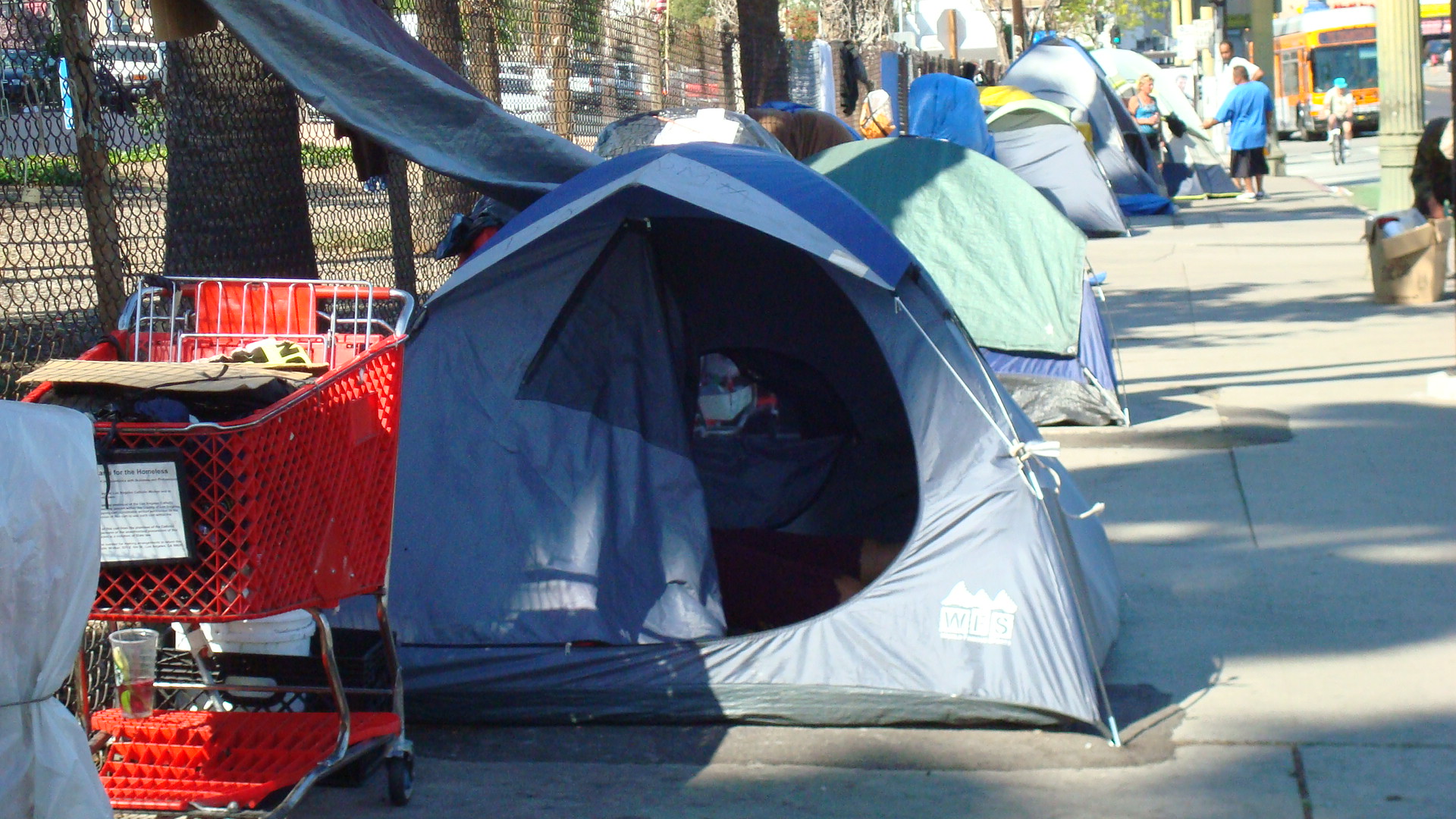
A tent settlement on Spring Street. Homelessness continues to be a problem all over LA.
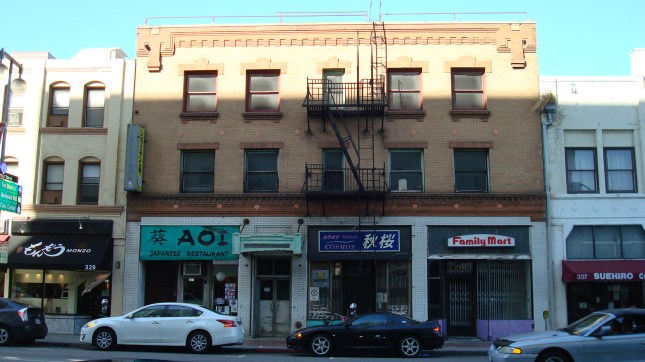
LT First

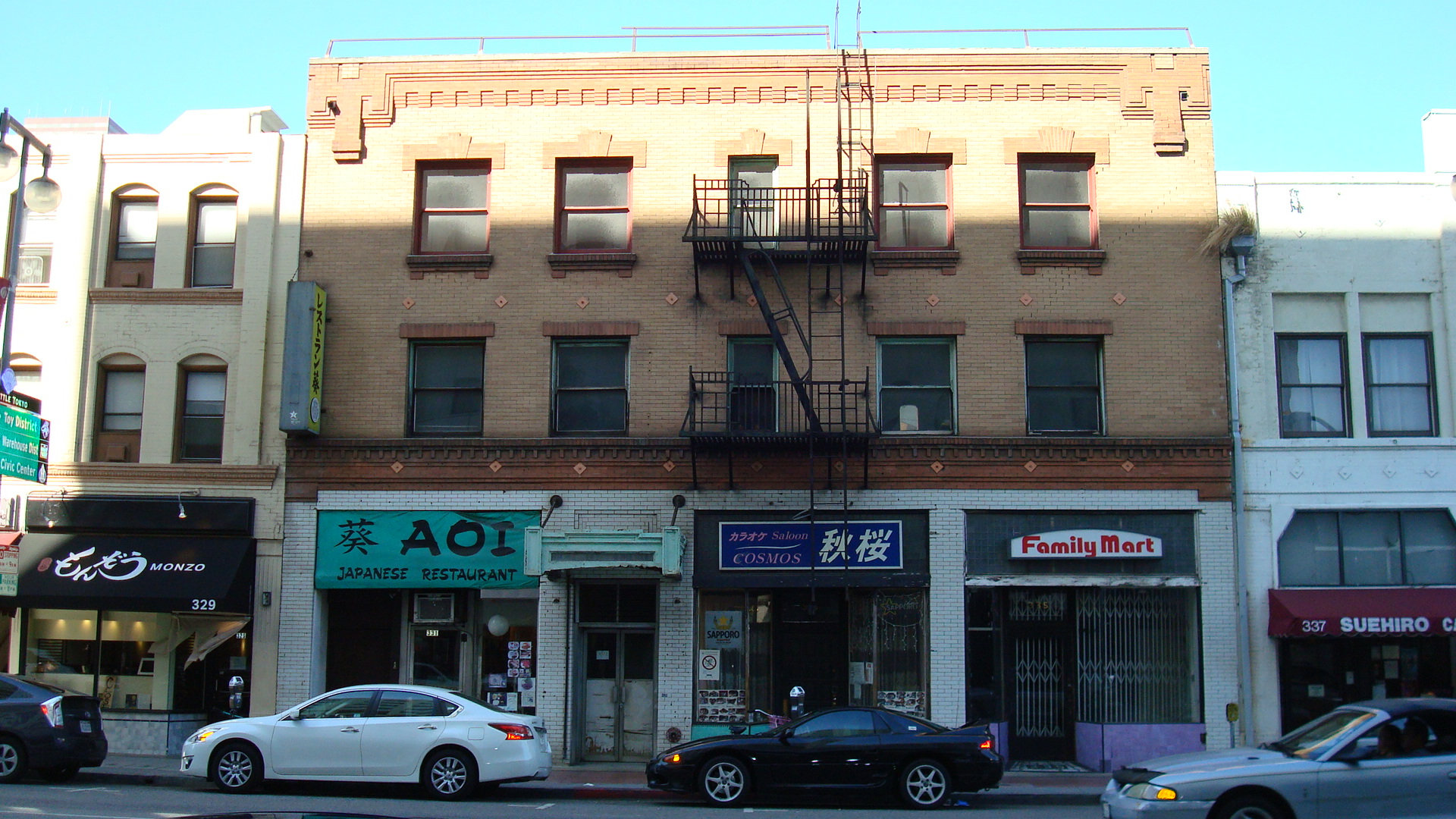
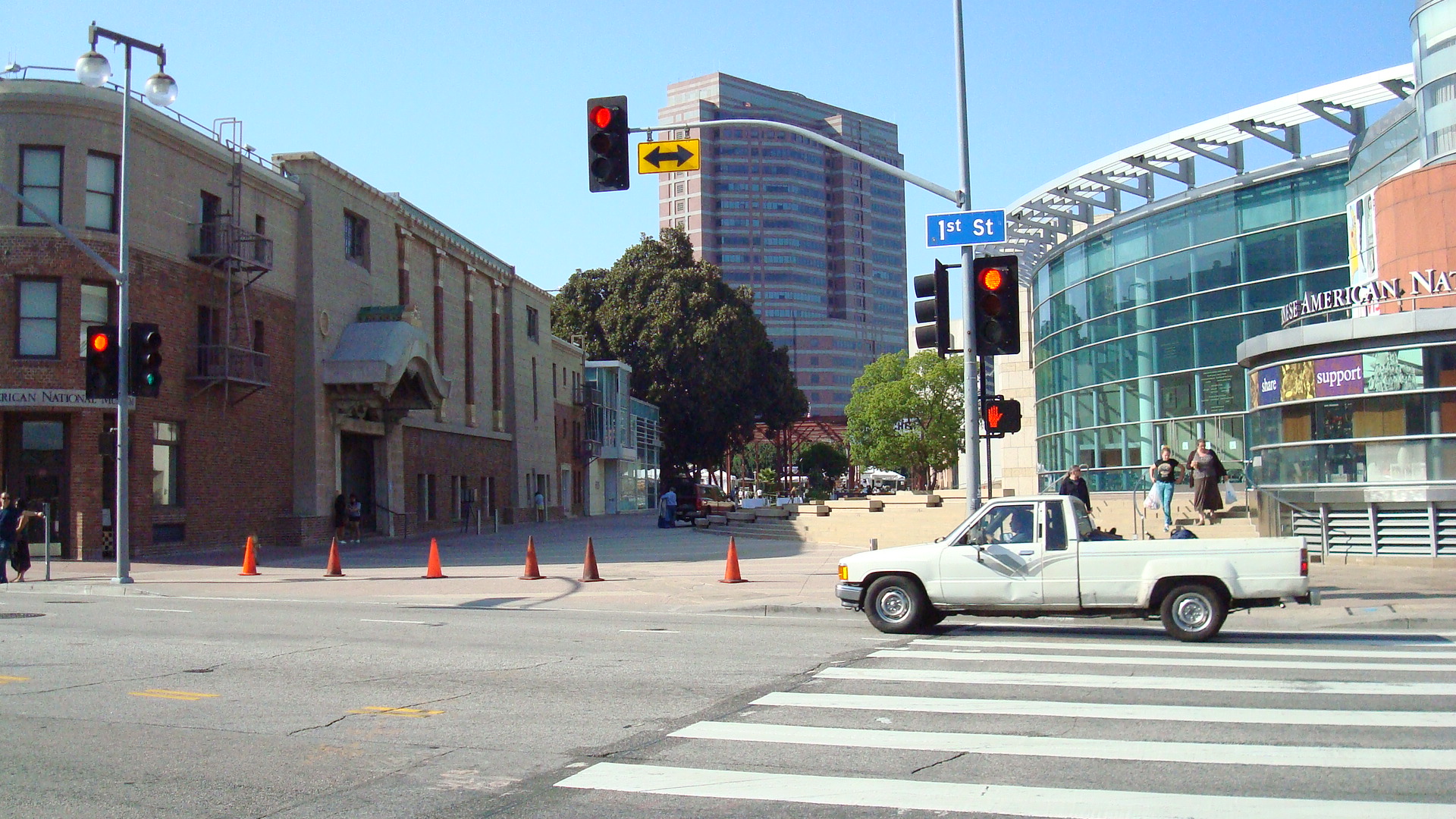
Little Tokyo is one of my favorite places to go, partly for the food, but I also just like the vibe. This is a row of shops and restaurants along First Street. And just around the corner….

LT Plaza 2

….is the Japanese American National Museum. The building on the left is the historic older building which I believe houses the museum’s offices. The newer building on the right is the exhibition space, and I have seen some very cool shows there.
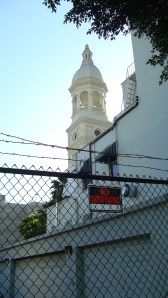
St V Sign 2

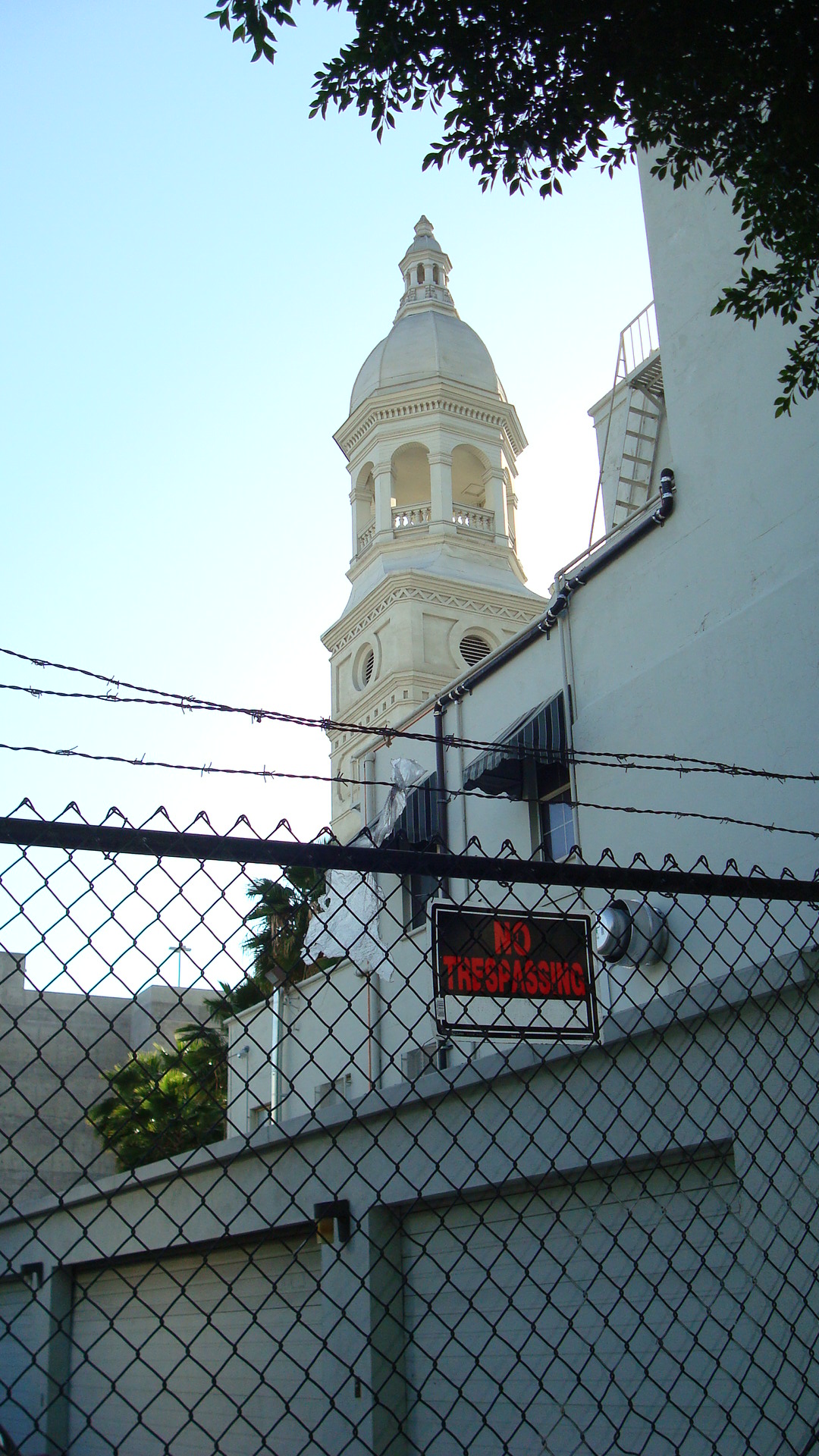
As I was walking down Second, I looked up and saw St. Vibiana. It’s one of the oldest buildings in the city, and we’re lucky it’s still standing. During the nineties, the Archdiocese made a deal with the City of LA to tear the cathedral down. The process was stopped by preservationists, who managed to get a court order which halted the demolition. Today it serves as a performing arts center and event venue.

StairsI was walking down Broadway and passed this doorway and it caught my eye. The stairs lead up to an organization called SHARE! which provides services for people dealing with a variety of issues. I looked up their web site and found this.

SHARE! empowers people to change their own lives and provides them a loving, safe, non-judgmental place where they can find community, information and support.

Walking through some parts of downtown there is definitely a sense of desperation. While gentrification is rapidly turning some neighborhoods into upscale enclaves, just around the corner you’ll find people living in total despair. I guess happening across this stairway I felt like I’d found an unexpected message of hope.

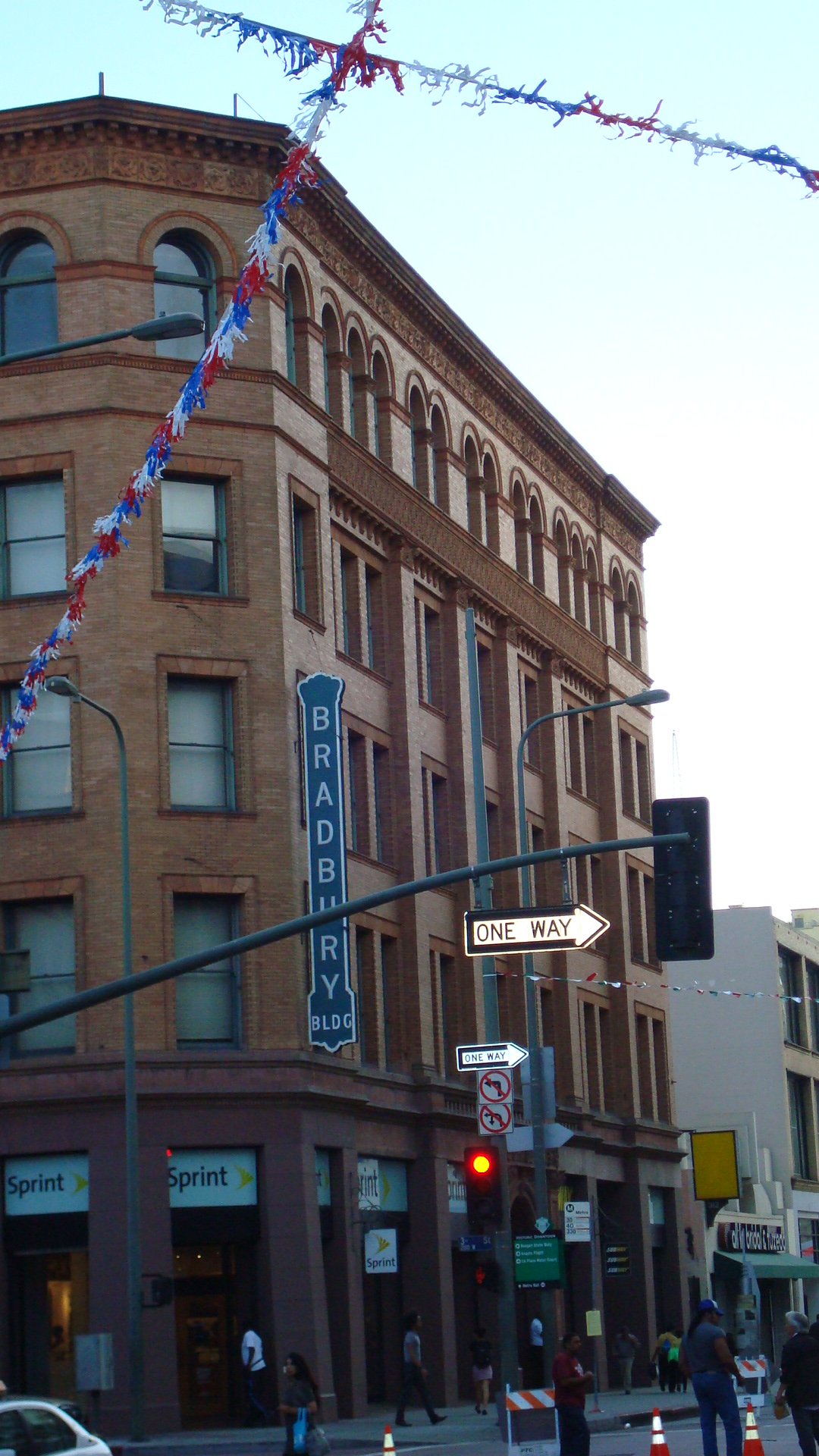
Bradbury 1I fell in love with the Bradbury Building years ago, and I try to visit it whenever I can. It has been standing at the corner of Third and Broadway since the end of the nineteenth century. The interior is gorgeous, but unfortunately these days only people who have business with one of the tenants can go above the first floor.

The Bradbury Building was designed by George Wyman, and the story of how he got the job is pretty unusual. To learn more about how it was created, and to get a glimpse of the inside, click here.

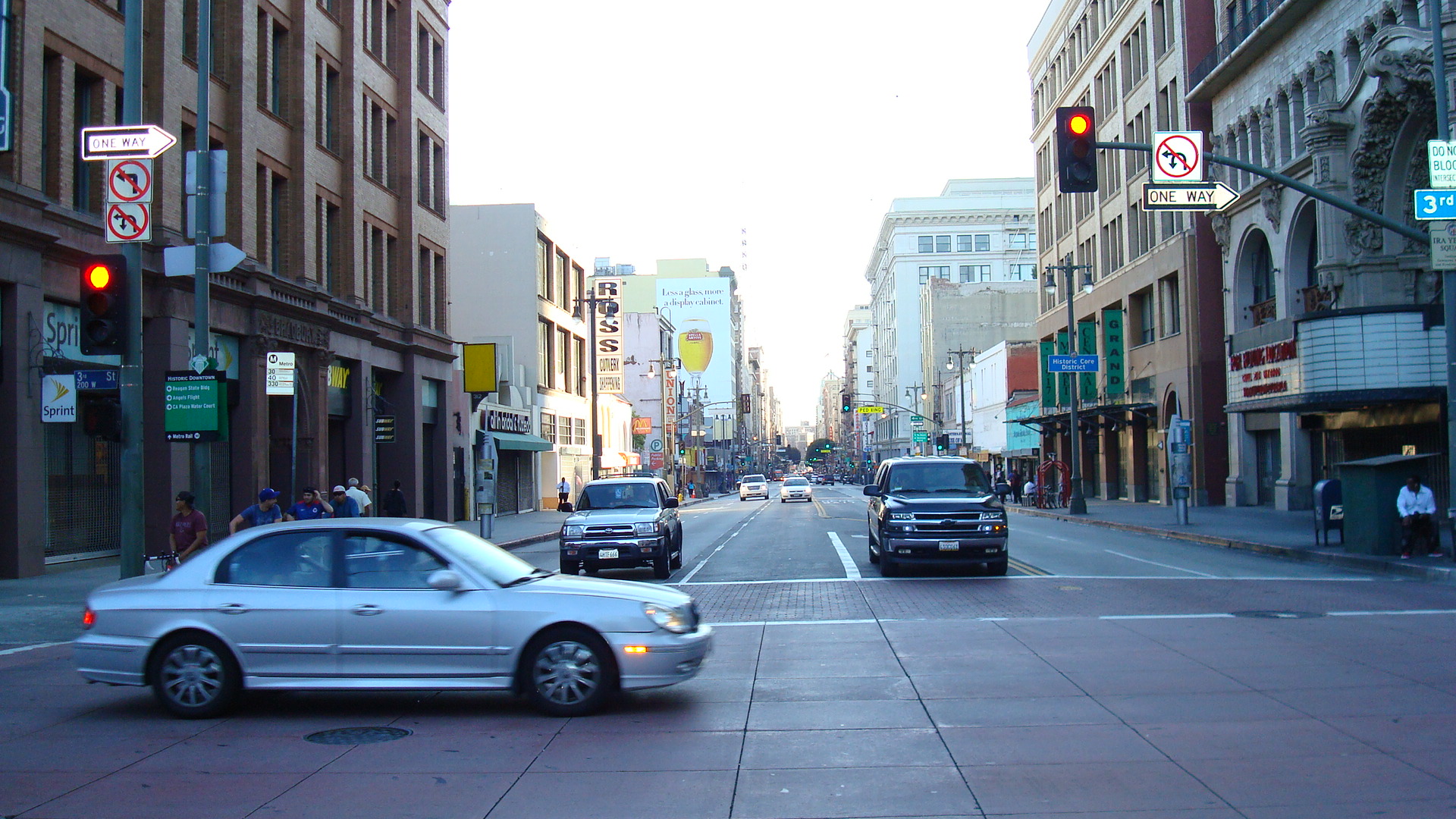
Broadway used to be the original theatre district in LA. In the photo below, the Bradbury Building is on the left, and on the right hand side you can see the Million Dollar Theater, which is where Sid Grauman set up shop when he first came to LA back in nineteen eighteen.

Broadway
Grauman didn’t stay on Broadway long. In a couple of years he moved to Hollywood, where he first built the Egyptian and then the Chinese.
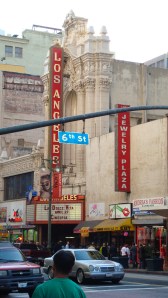
LA Theatre 3Farther down Broadway you’ll find the Los Angeles Theatre. This spectacularly gaudy movie palace was designed by S. Charles Lee, who designed many other theatres during his career. The first film to play there was City Lights. I’ve been inside only once, years ago, and I have to say it was pretty amazing. The lobby alone was worth the price of admission.

Unfortunately, it’s only open for special screenings these days, but if you get the chance I urge you to check it out. The Los Angeles Conservancy sponsors a series every summer called The Last Remaining Seats, during which they show films at some of the old movie palaces. The bad news is that this year’s screening of All About Eve at the Los Angeles Theatre is sold out. But you can check out photos of the interior on the theatre’s web site. Use the menu on the left to see images of the lobby, auditorium, etc..

Restaurant
This was taken at the corner of Sixth and Main. Upscale restaurants seem to be proliferating rapidly downtown.

People Street
Meanwhile there are still plenty of people who can’t even afford a cup of coffee. These folks don’t even have tents.

MC 1
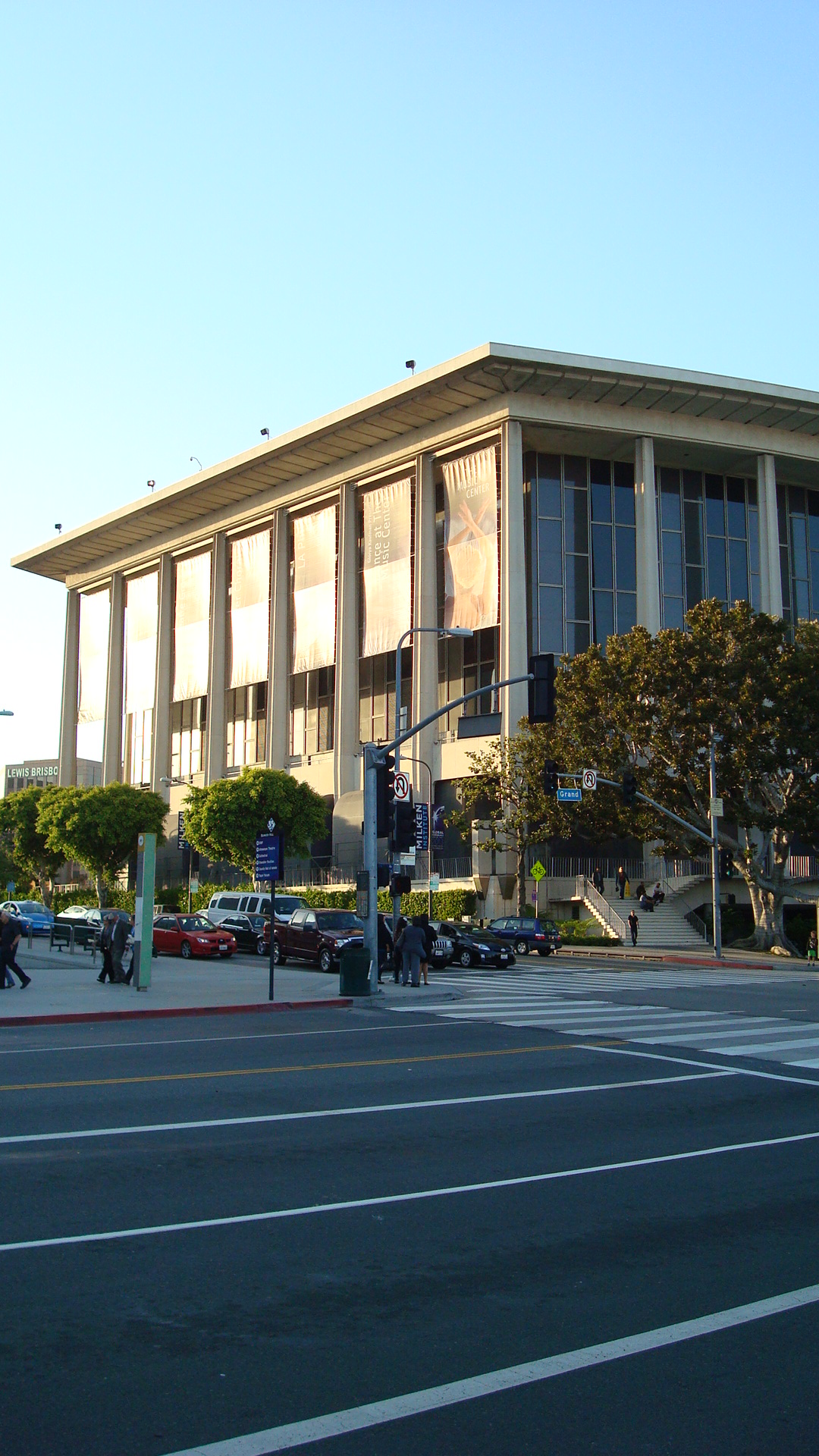
The Music Center is another mid-century classic by Welton Becket and Associates. It’s comprised of the Dorothy Chandler Pavilion, the Ahmanson Theatre and the Mark Taper Forum, and was completed in nineteen sixty seven. Becket believed in “total design”, meaning that he encouraged his clients to have the firm create not only the structure, but also furniture, carpeting, signage, dishes and flatware. Originally the Music Center did have an amazing unity of design, but in recent years there have been a number of additions to the plaza, and I feel like they’ve messed the place up. Still, the individual buildings are stunning. In nineteen ninety four, Ellerbe Becket Architects supervised some alterations to the Ahmanson, and the end result actually works pretty well.

Library 1
And this is where I ended up, as it was getting close to seven pm. The western entrance to the LA Public Library. I took this photo, then got back on the subway and went home.
Hollywood Journal – Intro

As much as I enjoy ranting about greedy developers and sleazy politicians, I realize that this blog would be pretty boring if that’s all I ever wrote about. So I’m going to try to mix it up a little.

For over ten years I kept a journal about the Hollywood area. I’ll be posting excerpts here from time to time. Hopefully this will break the monotony of my ongoing diatribes against the powers that be.

A couple notes about the entry below. Those who have only known the Chinese Theatre in recent years may be puzzled by the mention of the two additional marquees. This was written at time when Mann Theatres had built two large auditoriums right next door, hoping to compete in the age of multi-plexes. These two theatres were torn down when Hollywood & Highland was constructed, and replaced by six inside the mall.

If you don’t live in the LA area, you’ll be wondering why I have a problem with Tutor-Saliba. Even back then they were notorious for cost overruns and long delays, but the city still awards them projects because they’re so well-connected. The names and faces may change, but the dynamics that shape the city stay the same.

April, Nineteen Ninety Eight

Sunday. Early afternoon. I’m sitting in a restaurant right across from the Chinese. In God’s Hands is playing at the main theatre. I look to the right and see that Tarzan and the Lost City is playing next door, and at the far end of the building is the now-familiar sign advertising the Titanic.

Beyond that, across Orchid Ave. is a construction site surrounded by a wooden barrier. The side of this barrier that runs along Hollwyood Boulevard is decorated with pink and yellow stars that have the faces of famous actors painted in the center. The Orchid Ave. side is covered with dull beige paint. And there is a sign announcing that the project is being handled by Tutor-Saliba-Perini. Good God, not again.

Beyond the construction site is the office building that stands at the corner of Hollywood and Highland. Off in the distance I can see a tall apartment complex, a billboard and a little piece of the Hollywood Hills.

*

A few days later I’m in my apartment, just a few blocks from Hollywood Boulevard. It’s after nine PM. I can hear the traffic on the Hollwyood Freeway. It’s always there, kind of like the ocean.

I’m thinking about all the stuff that’s happening in Hollywood, all the changes they’re making. There’s that big project over by the Chinese. The Max Factor building is being restored. The Cinerama Dome is gonna be sucked up into a shopping mall. It seems like the little shops and restaurants along the boulevard are doing better than they were five years ago. And I think the MTA still claims they’re gonna have a subway stop here eventually. I’m not holding my breath.

I’ve lived in or around this area for years. I really love Hollywood. Sometimes it tears my heart out when I see the things the crazy developers are doing. But then, this town wouldn’t even exist without the crazy developers.

You Can Fight City Hall

DSC01449Okay. I’m in shock right now. I just read that the City Planning Commission approved the Millennium Hollywood project. I attended the meeting on Thursday, listened to the developers, the attorneys, union reps and residents talk about the project for hours. I left some time after two, feeling certain that the Commission would not approve the plan in its current form.

That shows you how naive I am. I just read the LA Times article stating that the Commission voted unanimously to approve this insane assault on the Hollywood landscape. At the meeting on Thursday I was thrilled to hear a representative from Eric Garcetti’s office say that the councilman had decided he couldn’t back the development in its current form. Now I’m thinking this was just political posturing, since Garcetti’s running for mayor and he knows how angry people are about the project.

I came up with the title for this post after I left the meeting, thinking the Commission was going to withhold approval. After reading the Times article, I debated changing it, since my initial reaction was that the city does what it wants no matter how many people show up to protest. But I believe we can still win this fight. The project has many problems, the biggest of which is that Millennium’s proposal does not actually outline what it is they’re going to build. They can’t even say how many residential units, how much office space, what kind of retail they’re proposing. They just want the city to grant them carte blanche to build whatever they want to. As many people pointed out at Thursday’s meeting, this clearly does not meet the California Environmental Quality Act’s requirements.

We’ve lost the battle, but we can still win the war. The link to the Times article is below. If you have the stomach to read it.

http://www.latimes.com/news/local/la-me-garcetti-hollywood-20130329,0,363474.story

Rush Hour on Cahuenga

Let’s talk traffic.

The streets directly adjacent to the proposed Millennium Hollywood project are actually fairly quiet.  Traffic impacts on Vine, Ivar and Argyle will probably not be too severe.  It’s the major corridors that serve this area that will have difficulty accommodating the increased traffic.  Take Cahuenga Blvd. for instance….

Anybody who’s driven north on Cahuenga at rush hour knows the traffic can get pretty heavy.  If you haven’t made the trip yourself, here are a few photos that will give you an idea of what it’s like.

021
The photo above was taken on the 1500 block of Cahuenga, east side facing south.

026
This photo was taken on the 1700 block of Cahuenga, east side facing south.

029
Now we’re on the 1800 block, just above Yucca, again east side facing south.

DSC01405
The 2100 block, again east side facing south.

DSC01394
Same location as the last photo, but now facing north.

These pictures may make it seem worse than it actually was on the days I was shooting.  I want to make clear that even though it was stop and go, traffic was moving.  In most cases the line of cars at an intersection were able to make it through on the green.  But as you can see, rush hour on Cahuenga is no picnic.

Keep in mind that these pictures were taken in March.  You should see what it looks like after the Hollywood Bowl season begins in June.  That’s when things really get scary.    On Bowl nights the traffic can start slowing as early as four, and rush hour can last til around seven.  When shows are sold out, Cahuenga, Highland and the freeway tend to look like parking lots.  And don’t forget there are additional performances scheduled outside the regular Bowl season.  Coming up in the next few months we have Fleetwood Mac, Andrea Bocelli and the Playboy Jazz Festival.

Now, in theory, the people who live in the Millennium Hollywood towers would have no reason to be involved in this rush hour morass.  So let’s assume that none of them will ever have any reason to be travelling through the Cahuenga Pass between four and six pm.  Still, the people who work at the complex will need to get home at the end of the day.  And many of them will wind up on Cahuenga at rush hour.

The Capitol Records Tower

Capitol Records Tower

Capitol Records Tower

The CapitolRecordsTower is a Hollywood landmark.  It is totally unique, and helped set the stage for the era of space age design.  But it’s not just the look of the structure that makes it significant.  It’s one of a number of buildings designed by Welton Becket and Associates within the city of LA.  Becket was involved in creating some of the city’s most distinctive buildings, including the Pan-Pacific Auditorium [destroyed by fire] and the MusicCenter.  His work helped to define the look of mid-century LA.

Capitol Records is one of two Becket buildings that have become Hollywood icons.  The other is the Cinerama Dome, located just a few blocks away.  In light of the threat that the Millennium Hollywood project poses to the status of the former, it might be useful to review the recent history of the latter.

Cinerama Dome

Cinerama Dome

In the late nineties, Pacific Theaters presented a plan for redeveloping the Dome.  There was a huge public outcry, because in its initial form the plan would have meant ruining the Dome and building a nondescript mall around it.  To Pacific’s credit, they listened to the community, went back to the drawing board and came up with a far better design.  Not only did they refurbish the Dome and restore it to its place as a Hollywood landmark, they also added a beautiful state-of-the-art multiplex which includes a restaurant, bar and patio.  The completed complex was a welcome addition to the community, and it offers the best experience you can have in a commercial movie theatre.

It’s doubtful that the developers behind the Millennium Hollywood project will reconsider their plans, which would erase Capitol Records’ presence on the Hollywood skyline.  I like to think that the LA City Council might actually listen to the community and reconsider their support for the project.  But maybe that’s too much to hope for.

Gentrifying Hollywood

Hollywood used to be for everybody.  Not so in recent years.  Around the time we slid into the new millennium, real estate agents and developers started paying a lot of attention to the area.  It used to be a place where people without a lot of money, musicians, artists, immigrants, students, could find a cheap apartment.  But for the past ten years or so rents have been rising steadily.  And the new units that have been built are geared towards people with money. There was a break in the cycle when the stock market crashed, but now it’s picking up again.

In short, the powers that be want to turn Hollywood into a gentrified enclave like Santa Monica.  The City Council and the Hollywood Chamber of Commerce are trying to transform the area into an upscale haven for club-hopping hipsters.    Anyone who makes less than fifty thousand a year is no longer welcome.

The LA Weekly recently ran an article on this trend.  I do feel the title, “Hollywood’s Urban Cleansing”, is too extreme, but the story does a good job of laying out what the politicians and the developers are doing to the area.  The link is below.

http://www.laweekly.com/2013-01-03/news/hollywood-latino-population-drop-12878-diaspora-gentrification/