Hell on Highland

An image from Jean-Luc Godard's "Weekend". Frustrated drivers, stuck in an endless traffic jam,  start attacking each other.

An image from Jean-Luc Godard’s “Weekend”. Frustrated drivers, stuck in an endless traffic jam,
start attacking each other.

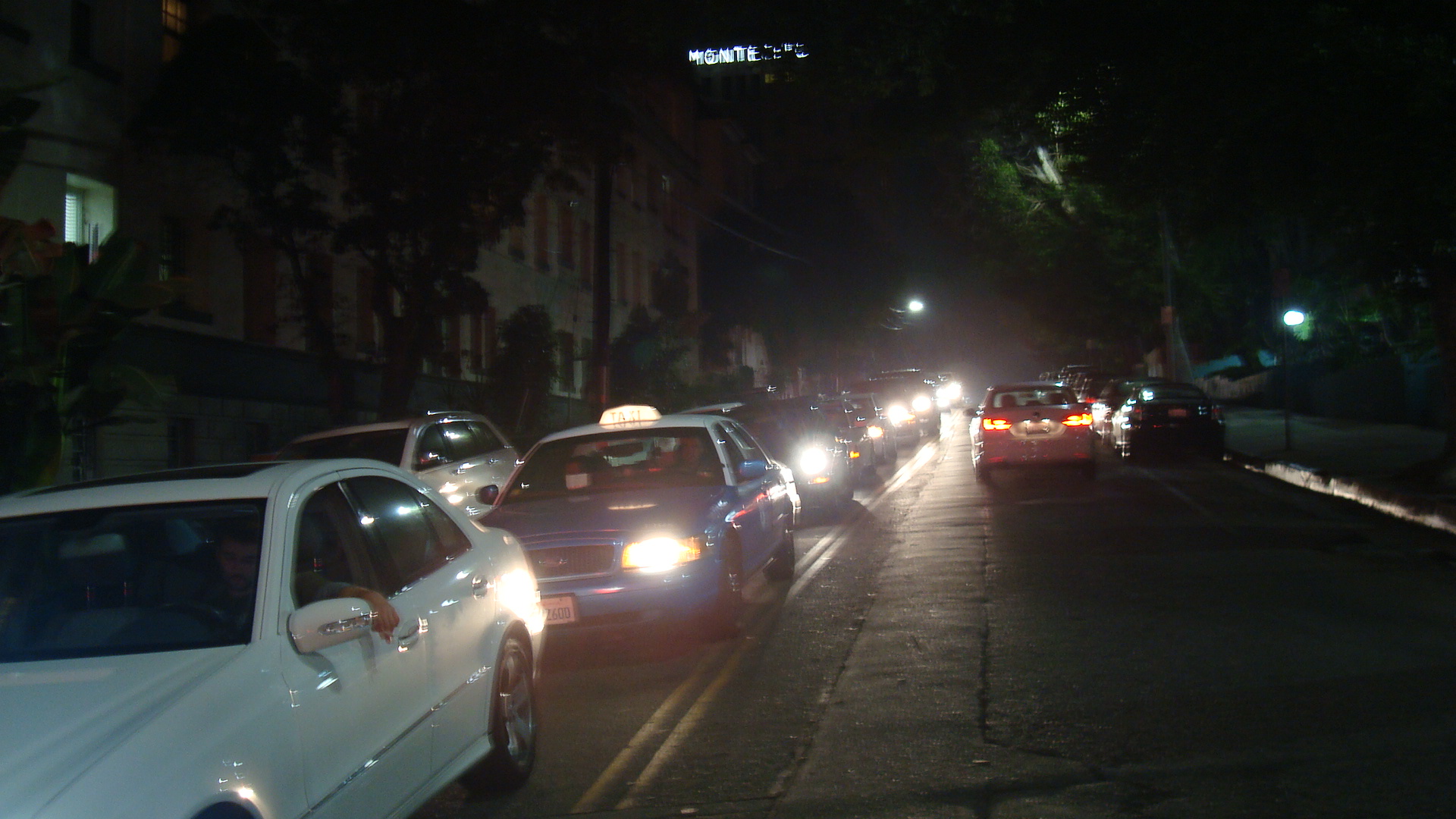
I wish I’d had a camera with me last night. I got off the Red Line in Hollywood around seven, and started walking north on Highland. The northbound traffic was backed up and moving slowly, but that’s not unusual. Then I got to Franklin and saw that westbound traffic was backed up there, too. That’s when I realized something was probably going on at the Bowl. (Later I learned it was a Katy Perry concert.) Again, this is nothing out of the ordinary. As the Bowl continues to schedule more off-season events, the horrible congestion that used to be confined to summer is becoming a year-round phenomenon.

But then I got to Wilcox, and I saw that the westbound traffic on Franklin was backed up all the way to freeway. I’ve seen congestion on Franklin before, but never this bad. This was also affecting the traffic on Wilcox, which was backed up as far south as I could see.

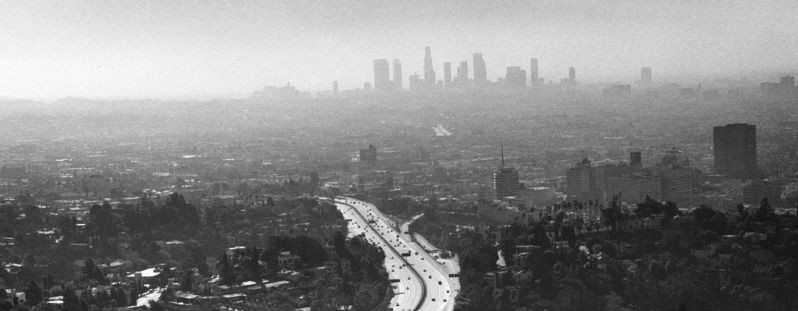
Now, I’m not bringing this up just to whine about traffic. The reason this spectacle freaked me out is because it seems like a vision of things to come. Anyone who lives in Hollywood knows how bad the traffic is already, but the City of LA continues to approve massive projects, often over the vocal objections of Hollywood residents. Just days ago I learned about two new residential complexes that are slated to be built on Highland, in this same area. Right at the corner of Highland and Franklin, a developer plans to build a residential complex with over a hundred units. And at Highland and Selma, just about a half mile away, the plan is to build a residential/retail complex with over three hundred units.

The fact that these two projects will make traffic on Highland even worse is probably obvious to everyone, except the people in the Department of City Planning. They are pushing these two projects forward using Mitigated Negative Declarations (MNDs), which means they have determined that building over four hundred new units within a half mile of each other in an already congested corridor will have no significant negative impacts. Remember, the recently completed Jefferson, at Highland and Yucca, contains two hundred and seventy units. And on La Brea there are a number of projects already under construction which will total over a thousand new units. Much of the traffic generated by these projects will be travelling through the Highland/Cahuenga corridor.

Is the City Council ever going to stop this insanity?! Not unless local residents apply a lot of pressure. If you live in Hollywood, and if you think the traffic is bad enough already, please call your City Council representative. It should be either Tom LaBonge or Mitch O’Farrell, but check the maps to make sure. The boundaries are tricky. Here’s the link….

LA City Council Directory

By the way, last night I stopped to have a cup of coffee at a place on the corner of Franklin and Cahuenga. When I left about a half hour later, the westbound traffic on Franklin was still backed up to the freeway.

Old and New

DSC02587There were two things I’d been wanting to do for a while. The first was to visit the Natural History Museum to see their show on LA history. The second was to take some photos of the Sixth Street Bridge, which is slated to be demolished and replaced, although that may not happen for a while. So Tuesday morning I took the Red Line down to Seventh and Figueroa, where I transferred to the Expo Line. Pretty soon I was standing on the platform at the Exposition Park station.

It might have been twenty years or more since I’d been to Exposition Park. Walking toward the fountain at the center of the gardens was sort of like walking into the past. In part, that’s because of my memory of visiting the museums as a child. But also, the three buildings that border the park are massive reminders of the ornate, imposing architecture that was considered appropriate for museums a hundred years ago. In fact, the Natural History Museum is celebrating its one hundredth anniversary this year. Their web site offers a brief history, which you can read by clicking here.

The photo above shows the current entrance to the museum, which presents a modern facade. It’s an interesting contrast to the NHM’s original entrance, which is what you see in this next photo.

DSC02590

The exhibition I went to see, Becoming LA, was really good. The curators did a nice job of presenting the area’s multi-layered history, weaving together the threads of all the diverse groups that made the city what it is. Of course Becoming LA is just the latest in the recent onslaught of shows about Los Angeles. Local museums have been giving a lot of attention to the city in the past few years. I’m all in favor of highlighting LA’s art, culture, etc., but at times it seems like we’re crossing the line into bombastic self-promotion. Which, I guess, isn’t really that surprising.

After I was finished with the museum, I took the bus north on Vermont to Olympic, where I had to transfer. This put me right in the heart of Koreatown. There’s an interesting vibe in many parts of Koreatown, which I think has to do with the zillions of small businesses competing for your attention. There are numerous strip malls, and they all seem to be bursting with restaurants, karaoke bars, tech retail outlets, nail salons, etc.. Here’s one example….

DSC02609

But the look of Koreatown is changing. In the image below you’re looking up Vermont toward Wilshire, where you can see two high-rise towers that combine residential and retail. I understand some Koreatown residents aren’t too happy about the wave of high-density development that’s hitting their area. I doubt that bothers the City Council, though, and it certainly doesn’t bother Mayor Garcetti. They are all one hundred percent committed to serving the developers who put them in office. Click here for more info about this massive project.

DSC02625

The bus showed up and I got on. A few minutes later I got off at the end of the line, Sixth and Maple. I headed up Maple and over to Wall. As I was walking along, I heard a voice behind me.

“Excuse me. Are you a tourist?”

He must’ve seen the camera I was holding.

“No, I’ve lived in LA all my life.”

“Oh. Cuz I was just wondering if you knew this is a really horrible area.”

I laughed, but he had a point. The street was filled with people who were living on the sidewalk. The desperation was palpable. I can’t say I was really afraid, though. I spend a fair amount of time downtown, and I’ve walked through skid row now and again. If it was night, I probably would be worried. But in the harsh light of day, these people looked too beaten down, too demoralized, to be a threat.

We walked along together for a block or so. I told him I had the camera because I wanted to shoot photos of the Sixth Street Bridge. He knew the bridge was going to be replaced, but he felt it would be a long time before work actually started. Somehow we got talking about the LA City Council, and we both agreed they have absolutely no respect for the law. Interesting how the one thing that seems to bind Angelenos together is our absolute distrust of the people at City Hall.

Then we went our separate ways. I headed over to Little Tokyo for a bowl of udon and a beer. Then I started walking down Central to Sixth.

It was late afternoon. The streets were mostly deserted. There were few cars and fewer people. I walked past the Woori Market’s empty parking lot. It’s been closed for a while. There were large warehouses, like Los Angeles Cold Storage. A couple small restaurants. A lot of places have security fences, and a few were topped with barbed wire.

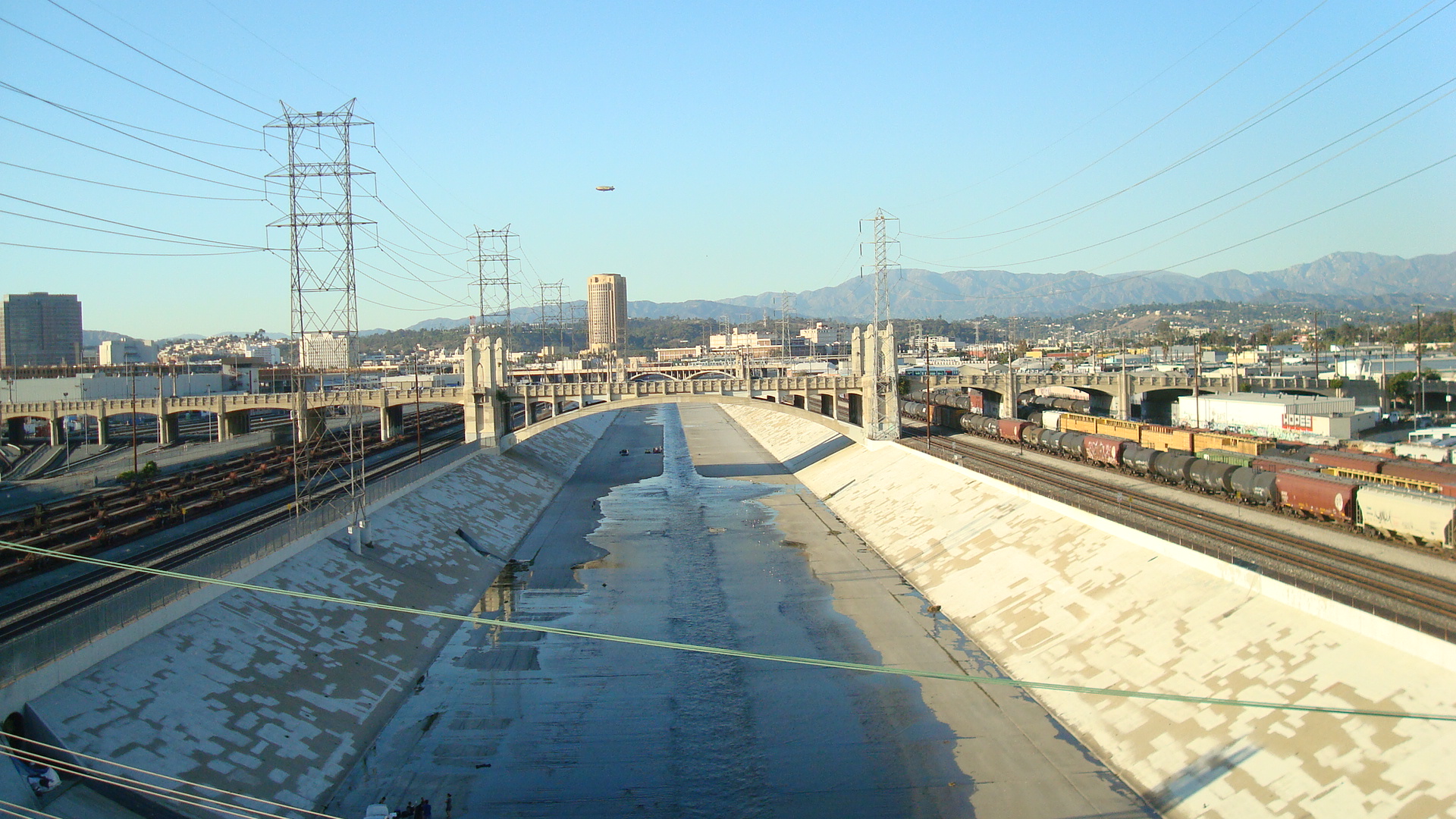
The bridge rises up over the warehouses and the railroad tracks. As you get near the mid-point, the landscape below stretches out for miles in every direction. Here’s a shot of the bridge looking back toward downtown.

DSC02655

And here’s another looking down on the LA River.

DSC02651

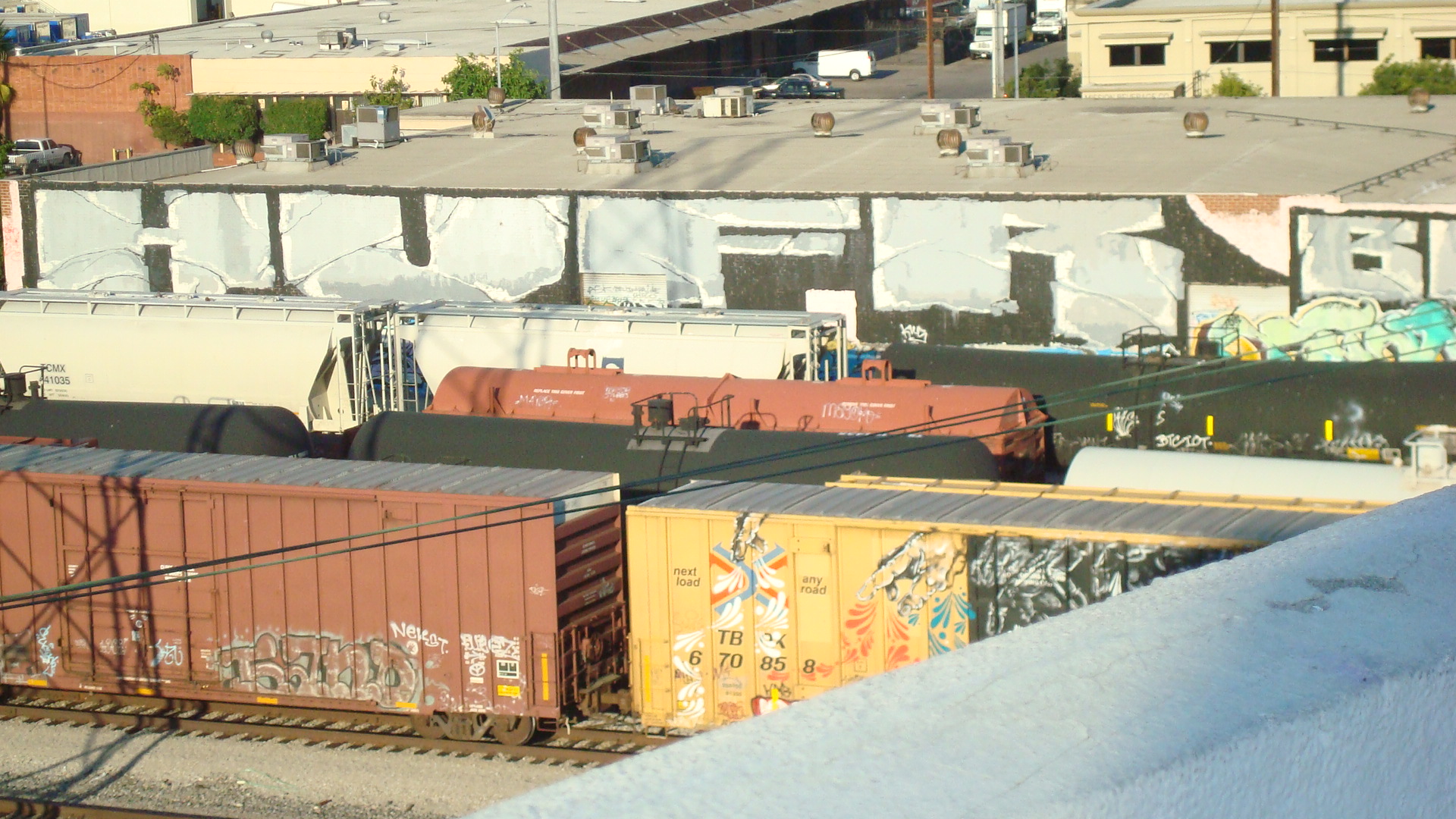
Freight cars covered with graffiti sit lined up below.

DSC02650

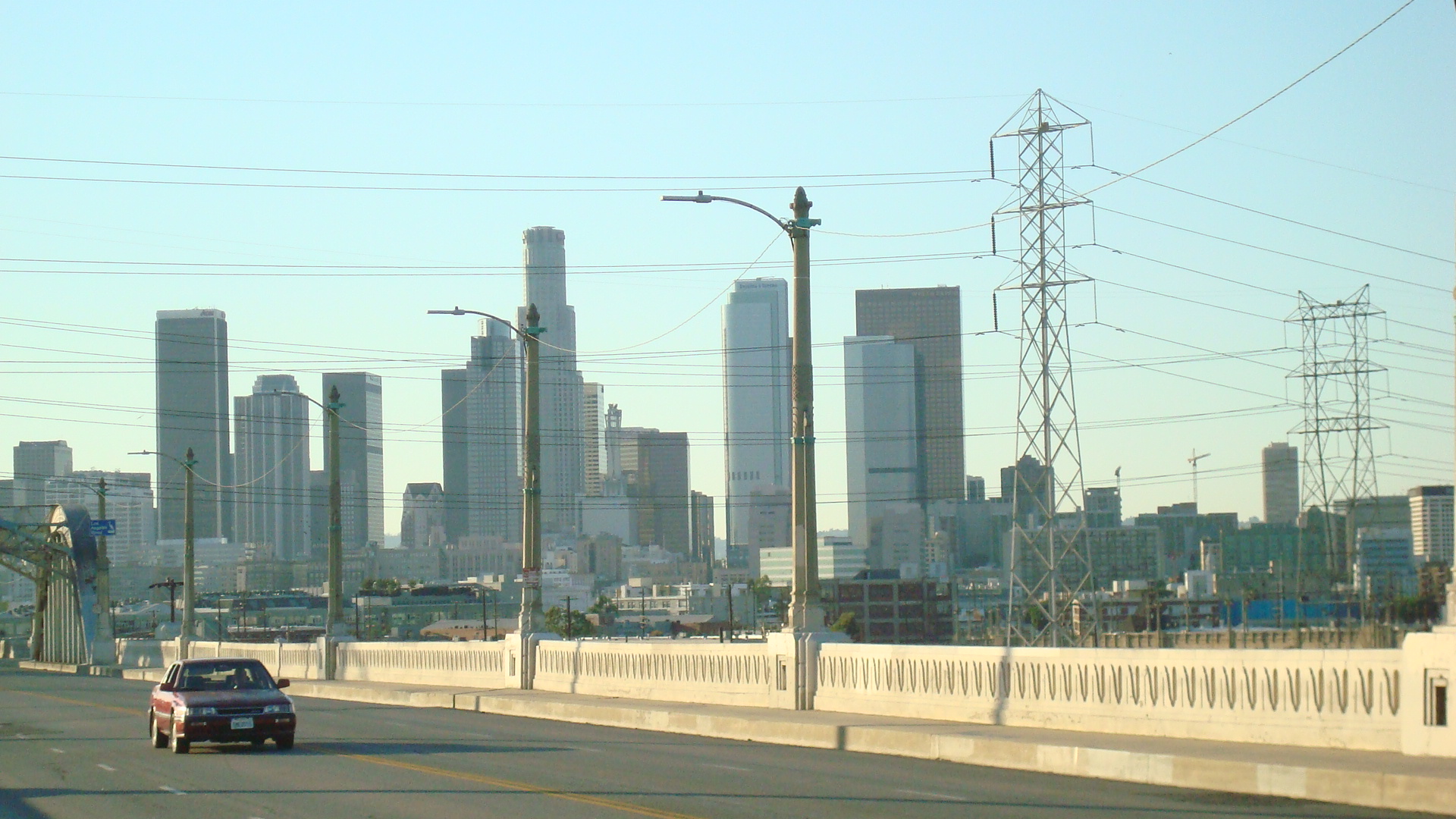
And here’s another shot of the downtown area.

DSC02666

On the other side of the bridge, Sixth Street becomes Whittier Blvd., which leads you into Boyle Heights. I waited for the bus in front of Carnitas Michoacán #3, which seemed to be doing steady business. And then the seven twenty showed up to take me home.

L.A. Aqueduct Centennial

aqueduct13

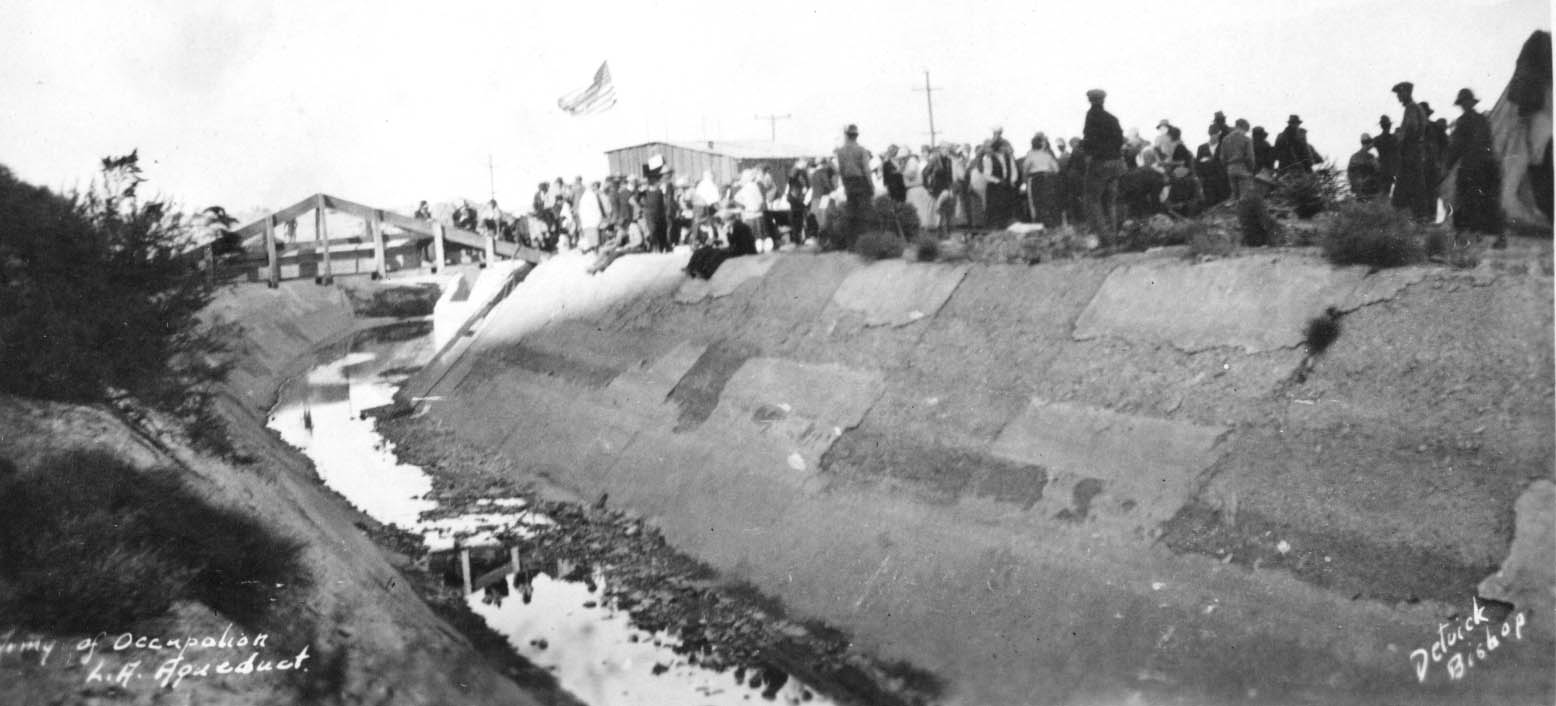
In case you haven’t heard, and I hadn’t until just recently, this year marks the one hundredth anniversary of the construction of the LA Aqueduct. This project was a major turning point in the city’s history. Without the water provided by the Aqueduct, LA never would have grown the way it did.

The LADWP has set up a web site as part of its effort to commemorate the Aqueduct’s centennial. It contains lots of interesting info, and lists numerous events that are tied to the celebration. Just click on the link below.

LA Aqueduct 100

Change Is the Only Constant at LACMA

A view of LACMA as it was in the sixties

A view of LACMA as it was in the sixties

The Los Angeles County Museum of Art is undergoing some major changes. Swiss architect Peter Zumthor has been commissioned to design a completely new campus for the museum. All of the original structures, plus the Anderson Building (now the Art of the Americas Building) will be demolished to make way for a brand new campus.

It makes sense. Over the years LACMA has become kind of a cluttered mess. I loved the original Pereira design, three unobtrusive modern structures surrounding a spacious plaza. To my mind the addition of the Anderson Building in the mid-eighties was a huge mistake. Sure, it was great to have the extra square footage for exhibitions, but the building itself was awful. The central plaza was taken away, and a blandly oppressive façade now towered over the sidewalk at the Wilshire entrance. Two years later they added the Japanese Pavilion, which I have mixed feeling about. Inside, it’s a great space for displaying art and artifacts. Outside, it’s just kind of weird and tacky, and adds to the general visual confusion.

So I totally understand why the LACMA Board wants to start over, more or less from scratch. Zumthor’s design is pretty interesting. Below is a link to a slide show on LACMA’s web site.

Peter Zumthor Reconsiders LACMA

There are a lot of good ideas here. I love the fact that the design allows for more interaction with the surrounding park. And I’m really intrigued by the concept of storing art in areas that would allow for public viewing day or night, all year round. This could turn out to be pretty cool….

But I couldn’t find any information on LACMA’s web site about when all this is going to happen. Making Zumthor’s design a reality will be a huge undertaking. The first step will be to demolish the four buildings that make up the core of the campus. And my guess is that it would take at least a couple years to complete the new structure. Which means LACMA’s exhibitions would be confined to the BCAM and the Resnick Pavilion for quite a while, although they might also look for a temporary space.

Big ambitious projects like this often sound really exciting in the planning stages. Then, when you start trying to figure out how to actually make it happen, the excitement fades as people realize what a huge challenge it will be. But I hope they can pull it off. This could take LACMA to a new level.

Hollywood Journal – The Egyptian

The Egyptian Theatre, Hollywood’s first movie palace, opened in nineteen twenty two with Robin Hood, starring Douglas Fairbanks. Over the years its fortunes rose and fell along with the rest of Hollywood Boulevard. I started going to the Egyptian around nineteen seventy. My friend Paul took me there to see 2001. It blew me away.

I saw many more films at the Egyptian throughout the seventies and eighties, but by the early nineties the theatre was in bad shape. It closed in ninety two. After the Northridge earthquake in ninety four, I was walking past the rear of the auditorium and saw a gaping hole in the wall. I was sure they’d tear it down and put up a mini-mall.

Fortunately, the American Cinematheque bought the Egyptian from the City of LA a few years later, and it reopened in nineteen ninety eight. Hodgetts + Fung was the firm in charge of the renovation/restoration. This journal entry was written around the time they were finishing up.

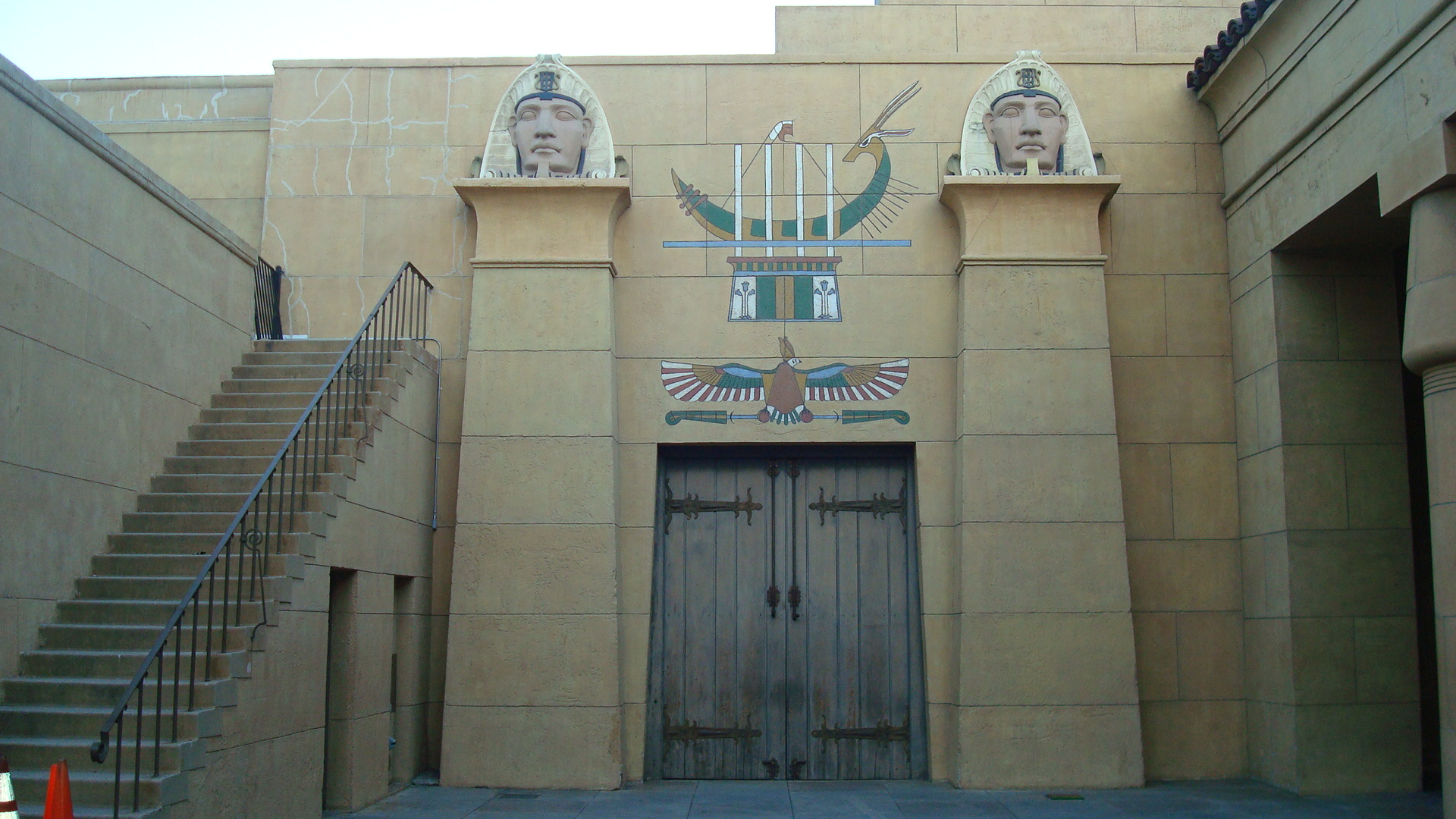
The photo below is not from the nineties. It was just taken recently.

DSC02060

December, Nineteen Ninety Eight

A cold, windy day in Hollywood. But still a lot of people out and about. The coffee house I’m sitting in seems to be doing good business.

On my way over here I went by the Egyptian. In fact, I walked into the courtyard. It’s open again. They’ve finally finished their renovation or restoration or whatever they’re calling it. My feelings were mixed. On one hand, yeah, I’m glad it’s open and I’m glad it’s being used as a theatre instead of a swap meet.

On the other hand I can’t say I’m crazy about the finished product. Even though they’ve obviously gone to a lot of trouble to restore certain features of the original design. I feel like they’ve ended up with self-conscious kitsch. But I should wait till I’ve seen the inside before I make any rash judgments.

It’s gotta be hard for an architect working on a project like this. The original Egyptian wasn’t a masterpiece of design. It was impressive, theatrical kitsch that overwhelmed you with its size. And god, it was a great place to see movies. Brian says when the Times reviewed the restored building they didn’t even mention that the auditorium is much smaller than it used to be.

Housing in Hollywood

A while ago I was riding the bus down La Brea and I was surprised to see a number of projects under construction. There seems to be a small explosion of residential and retail going up. Here are a few photos….

La Brea & Santa Monica

La Brea 2

La Brea 1

Jerry Solomon

For a really thorough overview of this mini-building boom, check out this article by Daniel Safarik for The Faster Times. He gives an excellent breakdown of each project and talks about what all this development could mean for the community. Safarik points out that large stretches of La Brea have fallen into decline, and that it makes sense to replace vacant, decaying buildings with new structures that will contribute something to the neighborhood. And I’m certainly in favor of development, as long as it responds to an actual need.

And that’s the tricky part. What does this community actually need? And in a larger context, what does the city of LA actually need?

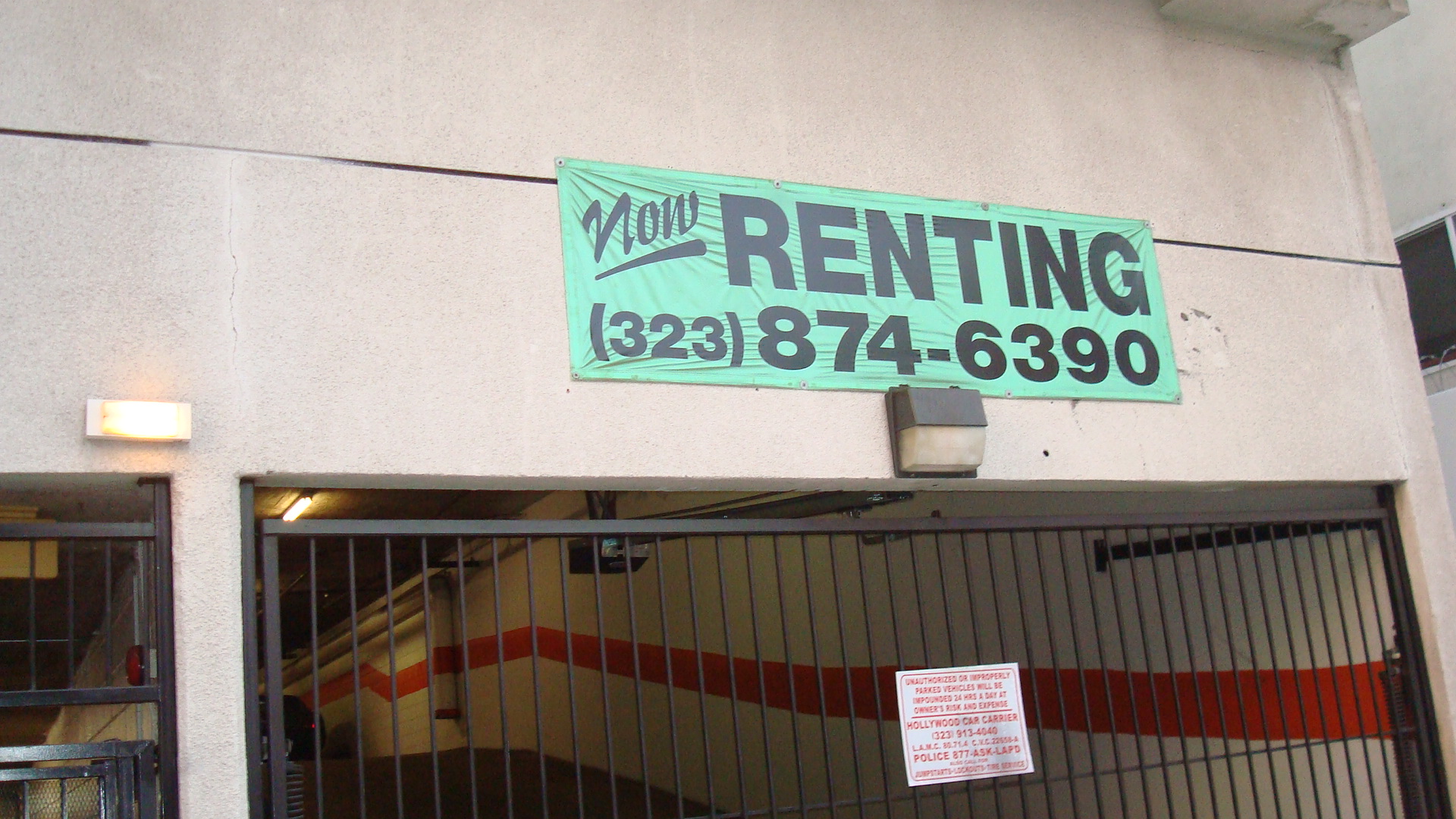
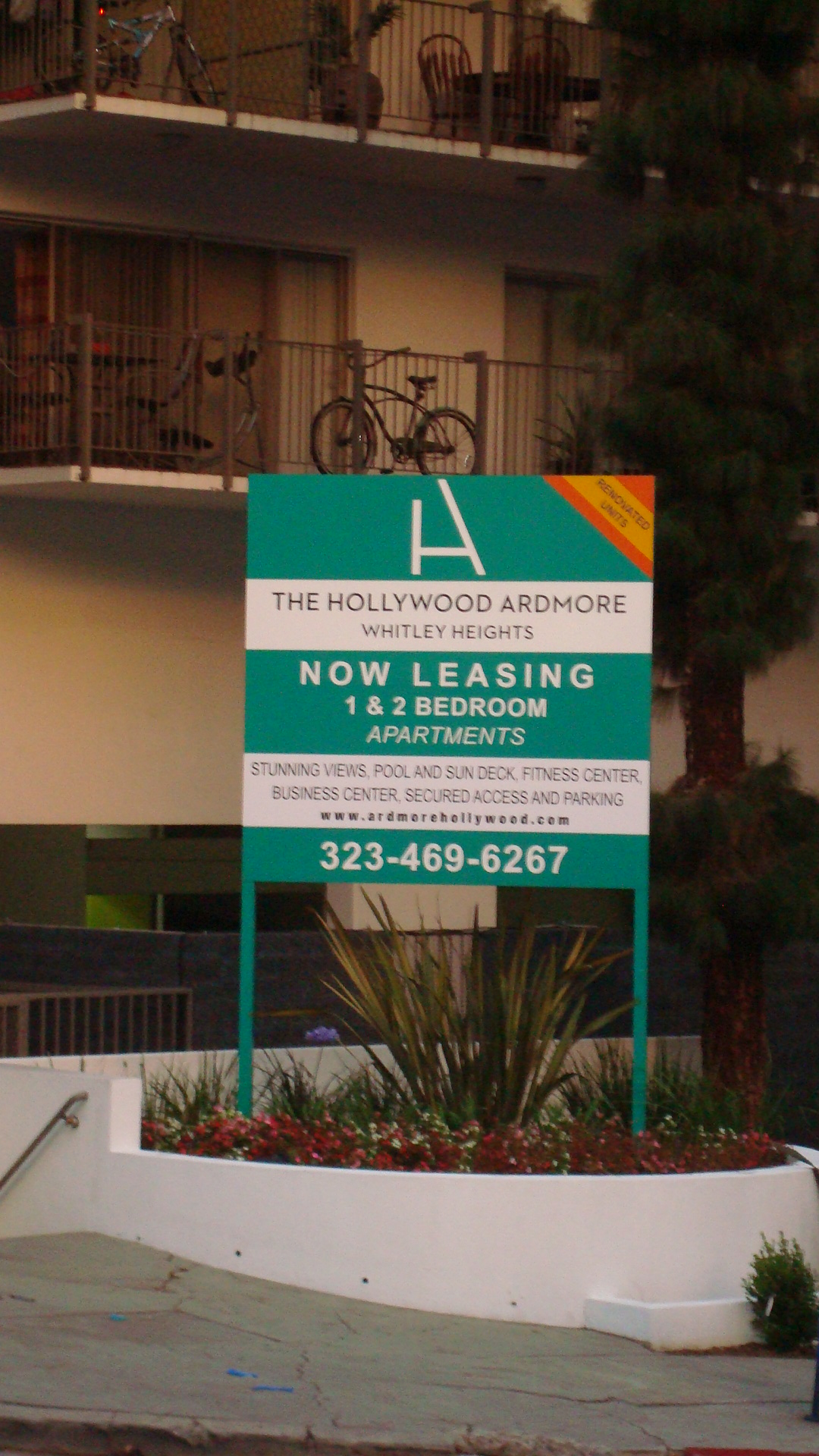
Not too long after my trip down La Brea, I was walking along Franklin and I noticed a number of apartment buildings sporting brightly colored banners to let people know they had vacant units. Here’s a selection….

El Cerrito

Banners 2

Ardmore

Lido

Grace

Vida

These are just half of the pictures I took. For those of you who aren’t familiar with the area, La Brea intersects Franklin at the foot of the Hollywood Hills. All of the signs I photographed are on buildings within a mile of that intersection. I didn’t have to look for them. All I did was walk along Franklin to Wilcox, where I made a right. I’m willing to bet there are many more buildings with vacancies on the streets between Franklin and Hollywood Boulevard.

Sure, I understand that all apartment complexes are going to have vacant units at times, and the larger ones will always have a higher turnover. But ten years ago I wasn’t seeing green and red banners shouting “NOW RENTING” at passersby. Ten years ago apartments were in demand, and landlords didn’t have to worry about luring tenants.

So I guess I’m skeptical about the necessity of building over a thousand new units on La Brea. If there’s that much demand, why are there so many empty apartments just blocks away? It’s true that vacancy rates can vary widely from one neighborhood to another. But it’s interesting that of all the buildings going up on La Brea, only one is going to provide affordable housing. The rest are all geared for the upscale crowd. I’m assuming prices will be in the same range as The Avenue, a recently completed complex near Hollywood and La Brea where rents start at $2,350 a month.

I’ve heard so much about how LA needs to accept high-density housing, that there’s no other solution for the city’s future. But LA is not growing the way it used to. Census data shows that the city’s population increased just 2.65 percent between 2000 and 2010. In the Hollywood area the population actually shrank by more than 12,000.

So are we building all these units because people can’t find housing? Or are we building them because developers stand to make a lot of money?

Hollywood Journal – Leave the Dome Alone

Another entry from my Hollywood journal, this one very brief.

The wrangling over Pacific Theaters’ plans for the Cinerama Dome continues. There was a good deal of anger in the Hollywood community over the proposed project. The Community Redevelopment Agency had received letters of protest from over a hundred concerned citizens, including Steven Spielberg and Richard Schickel. And the people at Pacific had started paying attention.

I also mention a couple of record stores I used to frequent. Eastside was in a strip-mall on Hillhurst. It’s long gone now. Record Recycler was on Sunset near Vermont. It’s actually still around, though it hasn’t been at that location for years. The owner moved the store down to Torrance. Those of you who are into used vinyl can get more info by clicking here.

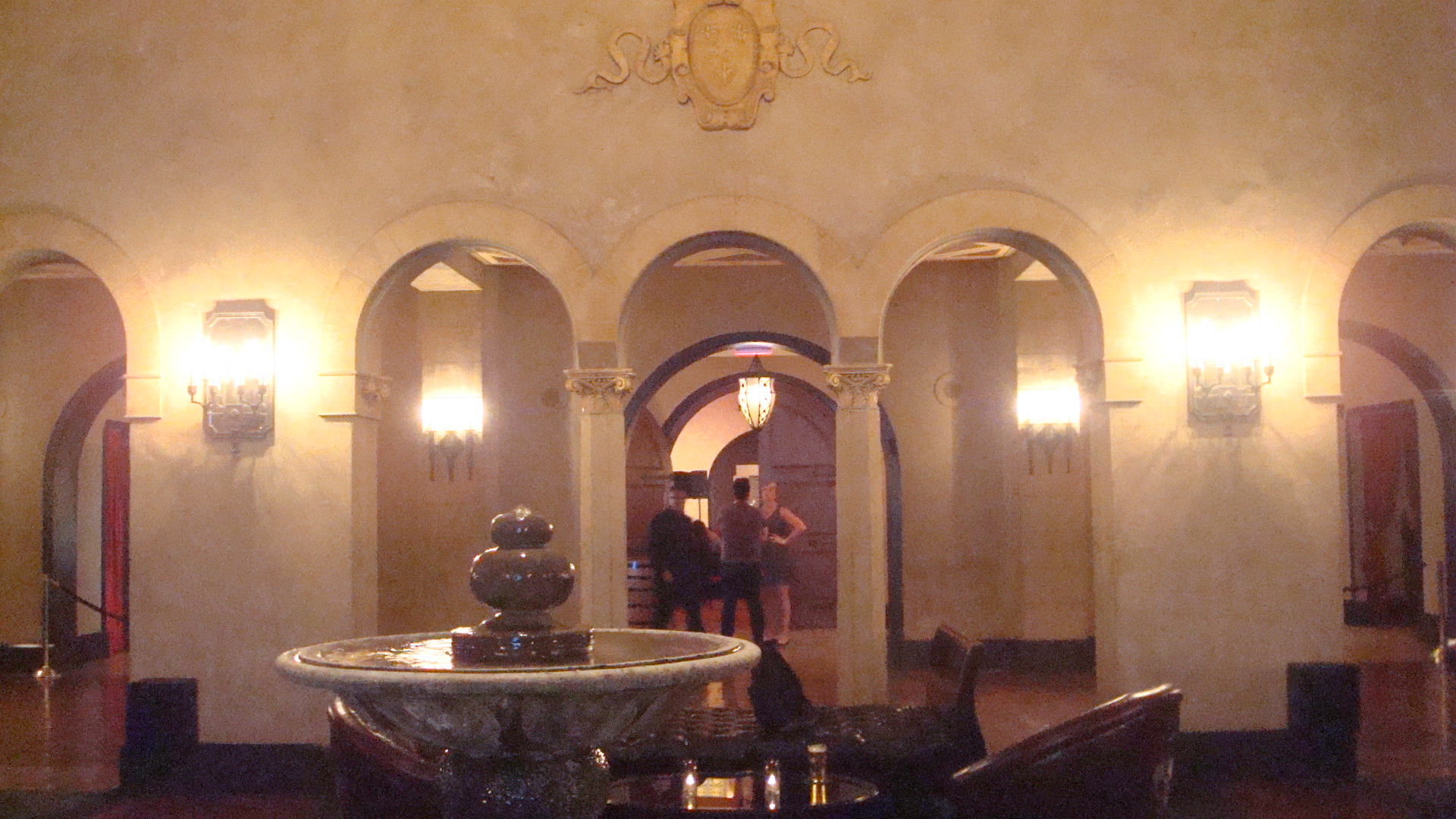
For a while I was in the habit of hitting the Roosevelt Hotel for a drink at the end of the day. I loved zoning out in the lobby and listening to the guy at the piano. Totally relaxing. I should point out that the photo below was not taken at the time I wrote this journal entry. I snapped it on a recent visit. I wanted to show a little bit of the Roosevelt lobby, but it’s important to say that it’s been remodeled since this entry was written.

And finally, in transcribing this journal I’ve decided to leave the errors in, which is why “Roosevelt” is misspelled in the last paragraph.

June, Nineteen Ninety Eight

Yesterday I called Pacific Theaters again to see if there was any change in the Cinerama Dome situation. And apparently, yeah, they’ve made some concessions. It’s still hard to say whether this so-called remodeling is gonna work out okay, but from what the woman told me, it sounds like they’re finally thinking a little bit about design. I heard they were talking to the L.A. Conservancy. Thank God for the Conservancy.

This afternoon I went and bought some records, first at Eastside, then at Record Recycler.

A little after six I walked into the lobby of the Rooseveldt. Ordered a beer. Sat down in a chair over by the piano. The guy actually played Three Coins in the Fountain. Mercy.

Rsvt Lobby

More Millennium Madness

There’s an excellent article in the August 9 issue of the LA Weekly covering recent revelations about the fault line that may run under the Millennium Hollywood site. You can follow the link below to the on-line version, but I urge you to also read the print version, which is more coherent and gives a broader picture of the situation. Reporter Gracie Zheng does a good job of sorting out the details of this depressing story, which clearly shows that campaign cash from developers is way more important to the City Council than the safety of LA’s residents.

Was Fault Hushed Up?

The Devil Is in the Details

Aerial view of Regional Connector station at First and Alameda.

Aerial view of Regional Connector station at First and Alameda.

To show you how clueless I am, I hadn’t heard anything about the MTA’s proposed Regional Connector project until a few days ago. This is a major undertaking, and it has major implications, not just for the downtown area but for all of LA. Briefly, the purpose of the project is to link together the Gold Line’s Little Tokyo Station with the Red Line’s 7th & Metro Station, which could make things a lot easier for transit riders. For a more complete explanation, here’s a link to the Regional Connector page on the MTA’s web site.

MTA Regional Connector

And if you’d like to see what the completed project would look like, click the link below to see proposed designs, as well as maps laying out the location of the stops. I thought some of the comments were interesting, too. A lot of people are less than thrilled with the way the stations are laid out.

LA.StreetsBlog

As with any project of this size, there are pros and cons. Overall, I think the Regional Connector could be tremendously beneficial. But there are also potential problems, and three different groups are suing the MTA over the project. One issue is that a number of local businesses will be displaced. Even businesses that don’t have to worry about being demolished are very concerned about being able to function during construction. Many of these are family-run enterprises, and a significant loss of customers over a period of years could kill them.

I spent some time this morning checking out a number of articles on the Regional Connector, and often the comments were the most interesting part of the story. A lot of downtown residents are totally gung ho on this project. Many of them dismiss the concerns of the local businesses as though the owners are worrying over nothing. A few of the commenters are so angry about the lawsuits that they suggested a boycott of the businesses involved. I wonder how these commenters would feel if an enterprise they’d worked for years to establish was threatened with extinction.

I also wonder if the people who are so enthusiastic about this project remember the last time the city built an underground rail line. I’m referring to the construction of the Red Line, which ran way behind schedule and way over budget, and caused massive problems when they were tunnelling under Hollywood Boulevard. The street actually sank six inches during this period, and the digging also affected water lines. There was also evidence of massive corruption and sub-standard work by the contractors. Here’s a link to some of the comments posted at the LA Times during this period.

LA Times – Red Line Comments

I do think the Regional Connector could be really good for LA, but we have to show a healthy skepticism about any project of this size. The picture the MTA paints makes it all sound great, but there’s a big difference between creating digital renderings and actually getting it done. Don’t forget, they’ve burned us before.

Furious

I can’t describe how angry I am over the LA City Council’s vote to approve the Millennium Hollywood project. After Caltrans contacted the city to ask why none of its concerns over traffic were addressed in the Final EIR. After the California Geological Survey wrote to say they believe an active fault line runs beneath the project area. After months of pleas from angry residents who do not want these towers. The City Council and the Mayor choose to ignore all of that and forge ahead.

It’s obvious they don’t care about the safety of Hollywood’s residents. It’s obvious they don’t care how much time LA’s citizens spend sitting in traffic. And it’s obvious they don’t care that state agencies have expressed serious reservations about this project. But their lack of concern shouldn’t surprise us, since they’ve demonstrated over and over again that their primary concern is representing the interests of developers and unions.

I think it’s time we asked the state to step in. Caltrans has said the project will seriously impact the Hollywood Freeway, making a bad situation even worse. The California Geological Survey has expressed concern about an active fault line. I think we need to contact our representatives on the State Legislature and ask them to get involved. The city has shown a total disregard for the state’s input on this project. We need to ask the State of California to take action.