Hollywood Journal – It Wasn’t What I Wanted

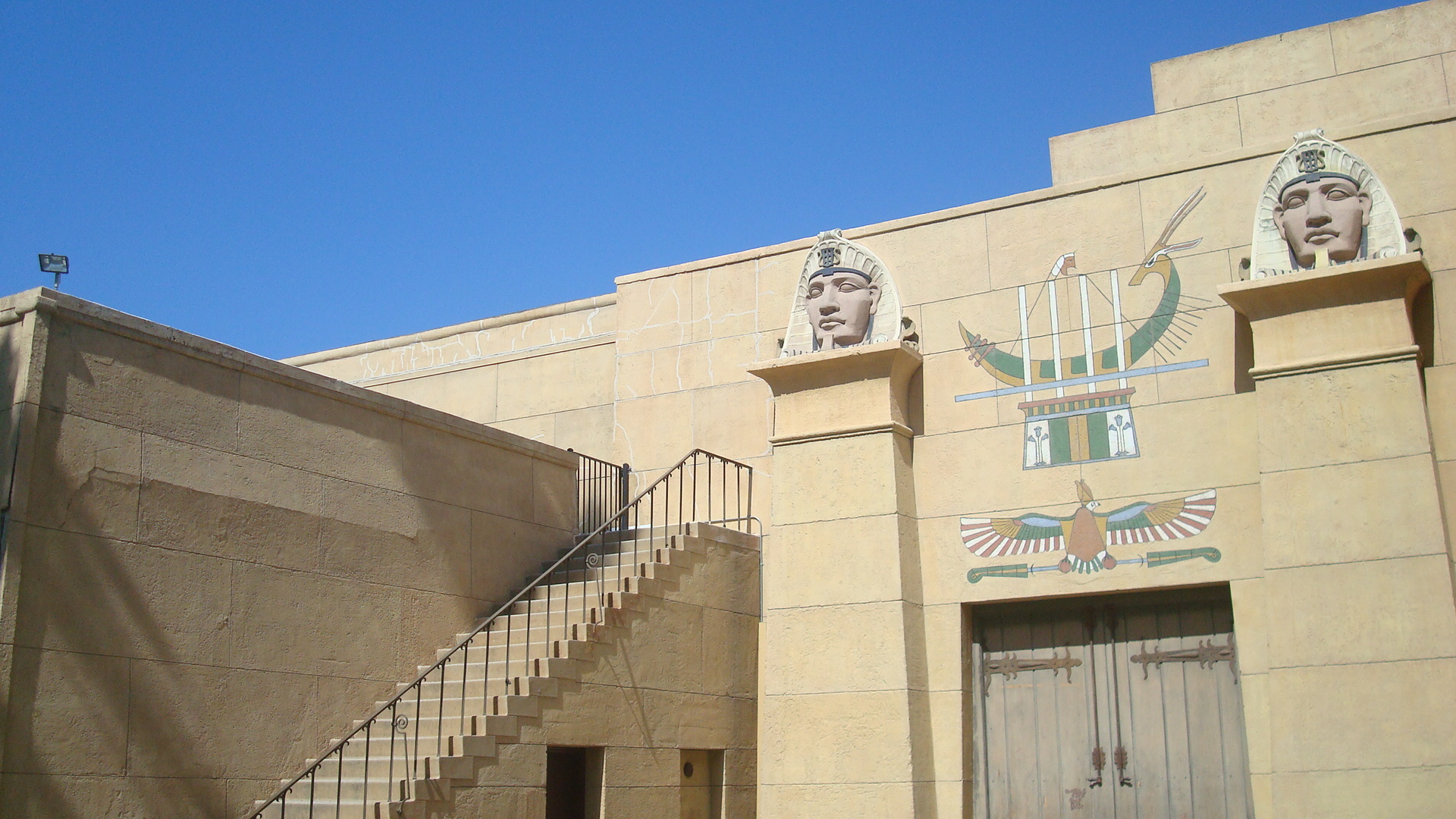
Egyp Pylons Angle

Things change, and sometimes change is hard to accept. Part of the reason I spent years keeping a journal on Hollywood was to record the transformations that were taking place. One of the biggest upheavals was in the way films were exhibited. Hollywood is home to a handful of movie palaces, all of them built over the course of a decade starting in the early twenties. Up through the eighties, those palaces were still playing first run movies, and on opening weekend you might see lines going down the block.

But in the eighties multi-plexes started springing up, and the huge Hollywood theatres couldn’t compete. They either had to change or die. The Egyptian Theatre was shuttered in 1992. I was really upset. I’d seen so many movies there, including 2001, Alien and Point Break. When it suffered major damage in the 1994 Northridge quake, I was sure the next step was demolition. So I was overjoyed when I heard the American Cinematheque had bought the building and was going to renovate it.

Overjoyed, that is, until the theatre reopened and I saw the results. The auditorium was less than half its original size and the screen was significantly smaller. Plus, there were a number of minor changes that bugged me. I wrote it all down in the journal entry below. I was ticked off.

On the plus side, though, the Cinematheque was on Hollywood Boulevard and they were showing some great stuff. I eventually signed on as a volunteer, and ended up giving tours of the theatre, which made me look at the changes in a whole new light. In the first place, there was no way the Cinematheque could run the Egyptian as a 2,000 seat house. It just wasn’t possible to fill an auditorium that big on a regular basis. They had to find a way to solve that problem, and the solution was building two smaller theatres inside the original structure. Second, the theatre I remembered was very different from the theatre Sid Grauman had built in nineteen twenty two. He created a silent movie palace. As soon as sound came in, the theatre had to start adapting to stay viable, and numerous changes had been made over the years. In the process of renovating the Egyptian, the Cinematheque actually revealed parts of the original structure that had been concealed for decades. Third, the process of renovating a historic building is incredibly complex and costly. The Cinematheque had to follow the City’s code for historic preservation and find the money to pay for everything. They were lucky to connect with a couple of very talented architects, Craig Hodgetts and Ming Fung. The team came up with a number of innovative and elegant solutions to some difficult problems.

I love seeing movies at the Egyptian these days. If the screen isn’t quite as big as it used to be, it’s still one of the largest you’ll find in LA. And the sound is way better than it was when the Egyptian was operating as a commercial movie theatre. So while the journal entry below shows my initial disappointment, as the politicians say, my views have evolved. When the theatre first reopened, I wanted it to be the way I remembered it in years past. That wasn’t possible. Things change.

Here’s a link to a page on the American Cinematheque web site that shows images of the Egyptian over the years.

Egyptian Theatre Past

And here’s a link to the Hodgetts and Fung web site that shows images of their renovation/restoration.

H+F Egyptian Theatre

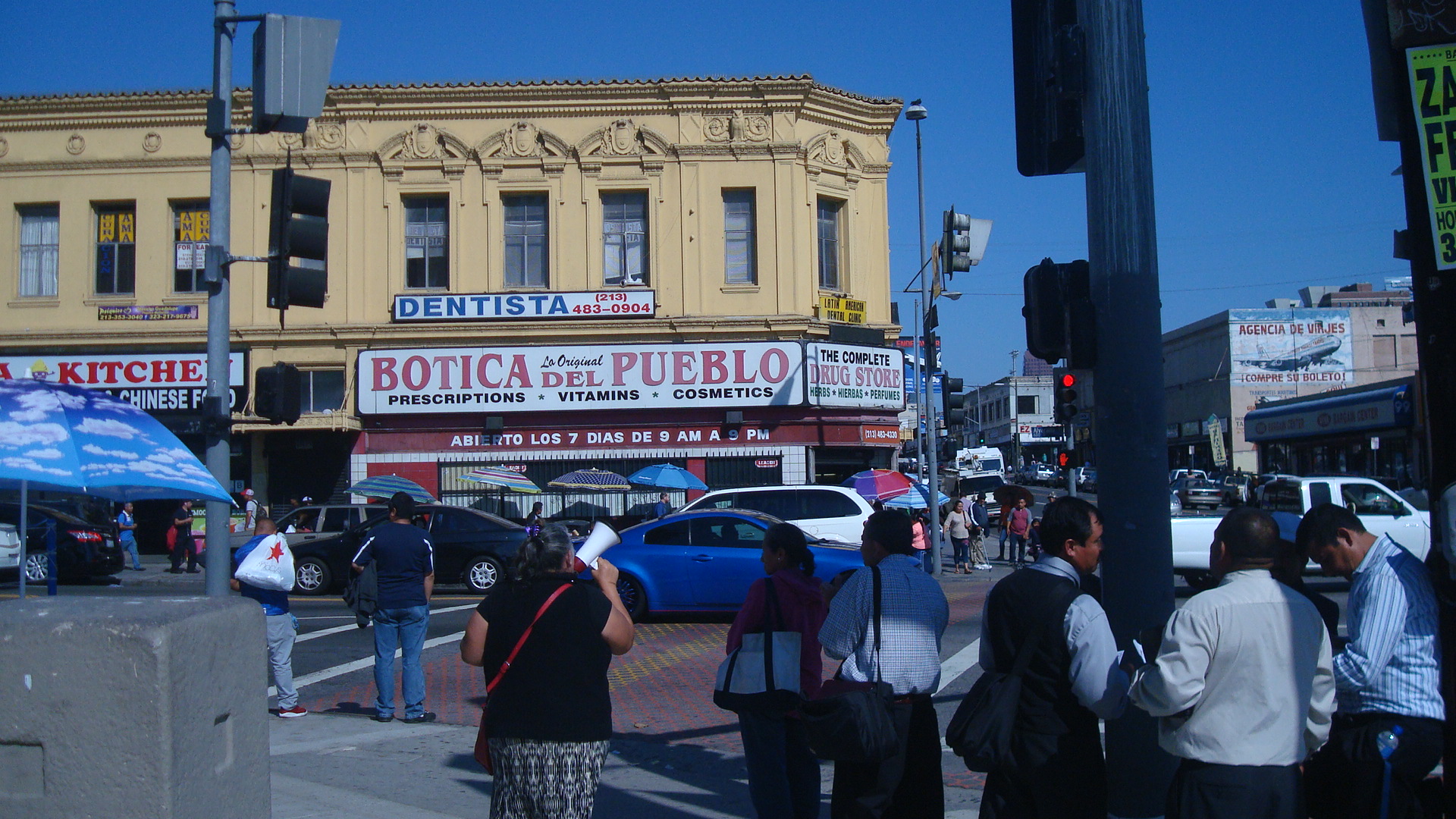
Egyp Hier

January, Nineteen Ninety Nine

Well, last night I finally made it over to the American Cinematheque. And I’ve gotta say I’m pretty disappointed with what they’ve done to the Egyptian. I mean, if you just want to look at it as a modern, mid-sized theatre it’s fine. But, aside from preserving some of the decorative elements, it has nothing to do with what the Egyptian was. It seems like the auditorium is about half its original size. The screen is considerably smaller. The seats are cozy but narrow, and there’s very little leg room. I was more comfortable the other night at the Beverly. Why do they have that sign up that says it’s Grauman’s Egyptian? It’s not. Did any of the people involved seriously think they were restoring or renovating the original theatre? All they’ve done is build a mid-sized auditorium inside the shell of a movie palace. They’ve completely changed the interior and the exterior of the building. The experience of going to this new Egyptian Theatre is totally different, and it’s certainly not a change for the better.

Now that I’ve got that out of my system, I also have to say I’m really glad to have the American Cinematheque on Hollywood Boulevard. I’m pretty impressed by their programming so far. It seems like they really want to offer all kinds of films. In spite of what they’ve done to the Egyptian, I look forward to going back.

Last night we saw Cruising, and Friedkin was there to talk about it. I really liked the film. It was interesting to hear the director’s comments, too.

Egyp Columns

SCAG’s Scam

SCAG Comp 1

I don’t have a car, and I use public transit almost everywhere I go. So when In opened my e-mail one morning and found an announcement with the heading “SCAG Seeking Input from SoCal Residents”, I was definitely interested. SCAG is the Southern California Association of Governments, and they handle regional planning initiatives. The announcement explained that SCAG was holding six open houses to get input from the public on their Regional Transportation Plan/Sustainable Communities Strategy (RTP/SCS).

Because transit planning affects me personally, I felt like I should show up at one of these meetings. But when I looked at the schedule, I realized that it would be pretty difficult to attend any of them. In the first place, all but one of the open houses were happening during working hours, which meant I’d have to take time off work. In the second place, it would take at least an hour for me to reach any of the locations by public transit.

To me the most bizarre thing about these open houses is that not a single one was held within the City of Los Angeles. When you think about the fact that LA is the largest city in the region that SCAG serves, doesn’t it seem weird that they would ignore it completely? There are tens of thousands of Angelenos who depend on public transit to get around. Apparently SCAG doesn’t feel that they need to hear our input.

I found this so hard to believe that I wanted to research it further, so I went to SCAG’s web page for the RTP/SCS. I found out that a couple of meetings had been held in Downtown LA back in May, but as I read further I was even more dismayed. The two meetings they held on March 17 and March 18 were part of the scoping process for the Program Environmental Impact Report. In other words, these meetings were intended to get feedback from the public that would determine the scope of the PEIR, or the range of issues that needed to be addressed. And that’s all they had. Two meetings. One started at 3:00 pm and the other started at 5:00 pm. Again, SCAG seems completely oblivious to the fact that most of us have to work for a living.

And now we have the same problem in reverse. This recent series of meetings leaves LA residents ouf of the picture. But the scoping process apparently excluded everybody else. Were there other meetings held throughout the region to kick off the scoping process? I couldn’t find anything else on-line. The SCAG web site also alluded to a 30 day comment period, which ended on April 7. Unfortunately, I don’t recall receiving notification about any of this. I would’ve liked to be involved in the scoping process, but I guess I’m just out of luck.

The web site itself is an indication of how little SCAG scares about getting the public involved. On the page titled Public Participation Opportunites there’s a timeline with a series of links. Unfortunately, all of the links open a blank page with the message “404 File Not Found”. A number of PDFs are embedded in the page titled Staff Reports and Presentations. I clicked on all of them, and none of the files opened.

So back to this series of so-called open houses. Check out this map. The sites for the meetings are marked by black dots.

Map LA City w Locations

Yeah, I suppose I could’ve gone to the meeting in Culver City. If I’d been able to take the day off from work. If I’d been willing to travel at least an hour each way. But if SCAG really wanted to get my input, wouldn’t they have scheduled at least one meeting in LA? One meeting that Angelenos could easily get to on public transit? And why weren’t all the meetings held either at night or on weekends? Do they really think it’s fair to make people take time off work, especially when for many transit riders that would mean losing income?

The bottom line is, they don’t want my input. Or your input. Like many government agencies, they see public meetings as a nuisance. They’ve already figured out what they want to do. Getting feedback from the people is a time consuming process, and there’s alays the possibility that the public might want something different than the plan they’ve already decided on. The problem for these agencies is that a lot of the funding they get requires them to show that they’ve solicited feedback from the community. So in many cases, they slap together a series of token meetings which are deliberately planned to discourage attendance. And then when they submit the documentation required to justify the funding, they claim they’ve done extensive outreach.

SCAG isn’t the only guilty party. The City of LA frequently does the same thing. And I’m sure it happens all over the country. But SCAG’s series of “open houses” is maybe the most transparent scam I’ve seen along these lines. It really does make me angry. Not just because they’re shutting the public out, but because they have the gall to claim they’re serving the public. What’s really happening is that a closed circle of planners and politicians have gotten together and decided they know what’s best. And that they don’t need to hear from the people.

The timeline on the SCAG web site indicates that they’re planning to hold more meetings for public comment when the PEIR is released in October. But my guess is that when they post the schedule it’ll be more of the same. Call me cynical, but based on past experience, I’ve really lowered my expectations.

Reyner Banham Loves Los Angeles

Reyner Banham adjusting his rear-view mirror.

Reyner Banham adjusting his rear-view mirror.

I was surfing the net today and came across an amazing artifact from LA’s past. Reyner Banham was an achitectural theorist and historian. He was born in England, but came to America and fell in love with the place, especially Los Angeles. In 1972 he made a film essay about the city for the BBC. He called it Reyner Banham Loves Los Angeles. These days that title might not strike you as unusual, but back in the early seventies LA was seen by most architects and planners as a disaster on a massive scale. For Banham, a respected writer and professor at UC Santa Cruz, to proclaim his love for LA, loudly, frequently, unabashedly, was really controversial.

I’m not going to tell you it’s a great film, because it’s not. But I think anybody who cares about this city will be fascinated. First, you’ve got this really smart, perceptive guy giving you his thoughts on what most commentators at the time thought was an urban wasteland. Second, the movie gives you a good, long look at what LA was like back in 1972, and if you weren’t around in those days, you’ll find the contrast startling.

The film is slow in places, and kind of disjointed. Also, because it’s only an hour long, Banham doesn’t have time to take more than a cursory glance at some aspects of LA. The worst part is that the print is badly faded. In some scenes it’s hard to even make out what’s on screen. But you get to see images of Watts, Hollywood, Downtown and Venice as they looked over forty years ago. It’s a real time capsule. Here’s the link.

Reyner Banham Loves Los Angeles

The film is an entertaining artifact, but it just gives you a taste of what made Banham such an interesting and provocative character. If you want to learn more about him, check out his 1971 book, Los Angeles: The Architecture of Four Ecologies. Don’t be put off by the academic sounding title. It’s a fresh and entertaining exploration of the aspects of this city that make it unique. I recommend it to anybody who wants to gain a better understanding of LA.

Sunday Afternoon

WL a 02 Grass Relax

Not too long ago I took a trip down to Westlkake/MacArthur Park. It’s a popular gathering place on weekends. Thousands of people show up there to play games, listen to music, attend worship services, or maybe just lie on the grass and stare up at the sky.

The park was created by civic leaders back at the end of the nineteenth century. It’s bounded by Sixth, Alvarado, Seventh and Park View. Originally christened Westlake Park, the name was later changed to MacArthur Park, after the five star general who played a prominent role during WWII. Some years ago there was an intense debate over which name was more appropriate. When you ride the Red Line to Seventh and Alvarado, the automated PA announces Westlake/MacArthur Park.

When I first came up out of the subway, the first thing I saw was the crush of street vendors lining the sidewalk. There were dozens of people selling everything from jewelry to DVDs.

Street vendors on Alvarado.

Street vendors on Alvarado.

On the other side of Alvarado there were also people selling juices and ices from carts.

More vendors on the other side of Alvarado.

More vendors on the other side of Alvarado.

The City is currently considering new rules to regulate vending on sidewalks and in parks, and the debate is pretty contentious. Merchants in brick and mortar stores are angry because they’re competing with people who can operate with no overhead, and so offer lower prices. There are definite health concerns about vendors selling food without a license. But these people are just trying to make a buck like everyone else. This is their livelihood. I’m sure the debate will continue for years to come, and I doubt anyone will find a solution that makes everybody happy.

There was a woman at the corner of Seventh and Alvarado bellowing through a megaphone about how people should give their lives to Christ.

A woman evangelizing at Seventh and Alvarado.

A woman evangelizing at Seventh and Alvarado.

I’ve gotta say, this really drives me crazy. I know she feels like she needs to preach the Gospel, but there are plenty of Christians who do the same thing without resorting to amplified rants on a street corner.

At the corner of Seventh and Alvarado you have Langer’s, a deli that’s been around forever. I haven’t been there for years. Some day I’ll have to go back and check it out.

Langer's

Langer’s

Up at Wilshire and Alvarado stands the Westlake Theatre, which opened in 1926. It stopped showing movies a long time ago. For a while it was a swap meet, but it looks like it’s completely closed now.

Westlake Theatre

Westlake Theatre

The park bisected by Wilshire, which runs right down the middle of it, but there are tunnels running underneath that allow people to pass from one side to the other.

A view of Wilshire facing Park View

A view of Wilshire facing Park View

A view of Wilshire facing Alvarado.

A view of Wilshire facing Alvarado.

Now let’s head into the park.

Entrance to the park at Seventh and Alvarado.

Entrance to the park at Seventh and Alvarado.

But first, make sure you know the rules.

Sign posted inside the park.

Sign posted inside the park.

As you can see, a lot of people are just looking for a shady spot where they can hang out and relax.

Trees provide plenty of shade.

Trees provide plenty of shade.

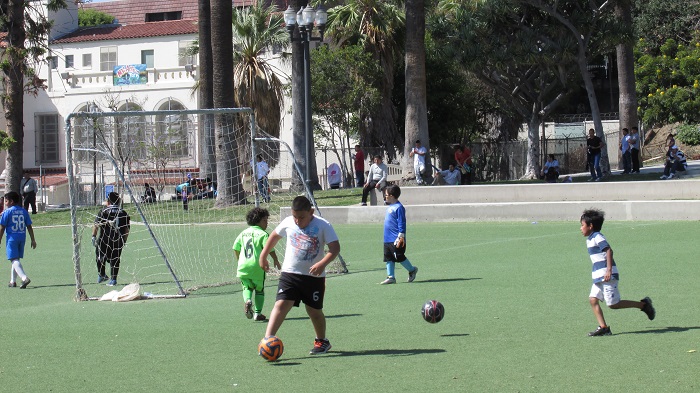
But not everybody is kicking back. Soccer is big here, and on weekends teams of kids take turns honing their skill on the field. Families line up around the perimeter, watching, cheering, coaching.

Kids playing soccer.

Kids playing soccer.

Families standing on the sidelines.

Families standing on the sidelines.

Soccer stars of tomorrow.

Soccer stars of tomorrow.

This looks like a pretty innocent shot of a food truck parked on Wilshire. But notice the graffiti on the concrete. “MS” stands for Mara Salvatrucha, a brutal gang that has a presence in the neighborhood. Fortunately, gang violence has been declining all over LA for several years. And the crowds of people enjoying the park didn’t seem concerned for their safety. The vibe was very relaxed.

Food truck parked on Wilshire.

Food truck parked on Wilshire.

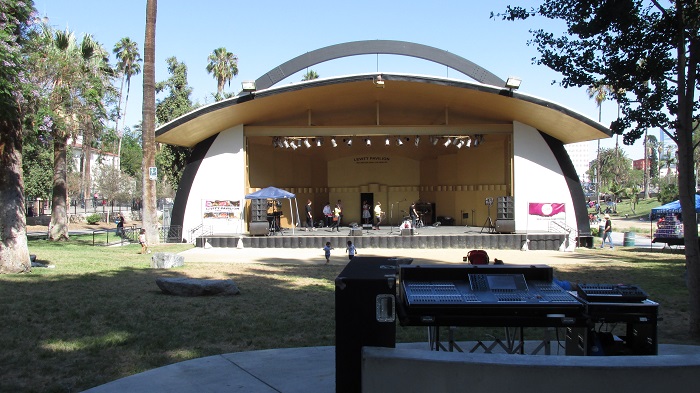
The Levitt Pavilion offers a wide range of entertainment, and it’s free.

Levitt Pavilion

Levitt Pavilion

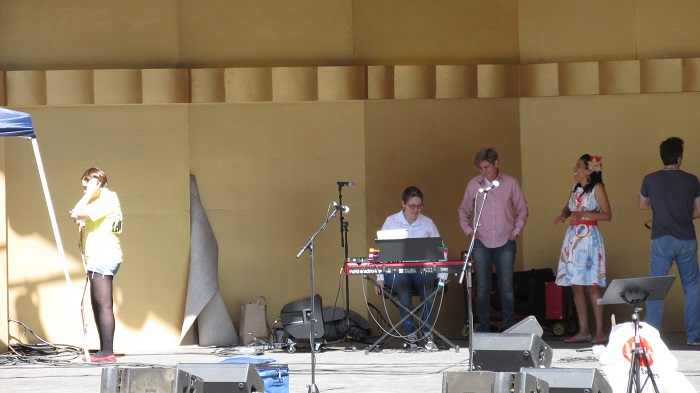
Performers getting ready for a show.

Performers getting ready for a show.

This is one of the tunnels that goes under Wilshire, linking the two sides of the park.

Tunnel running beneath Wilshire.

Tunnel running beneath Wilshire.

Mural running the length of the tunnel.

Mural running the length of the tunnel.

The lake is a draw for birds of all kinds. Please don’t ask me to name the different varieties. I know some of them are ducks. Other than that, I have no idea.

Birds at the edge of the lake.

Birds at the edge of the lake.

If you want to learn more about the park’s history, the link below will lead you to an article on the KCET web site that talks about its origins. Aside from the information, it includes some amazing images of the area through the years.

How a Neighborhood Dump Became a Civic Treaure

And this article on Wikipedia offers more detail on some interesting chapters in the life of the park.

Westlake/MacArthur Park on Wikipedia

WL a 90 Wtr Kids

Criminalizing Homelessness

DSC09677

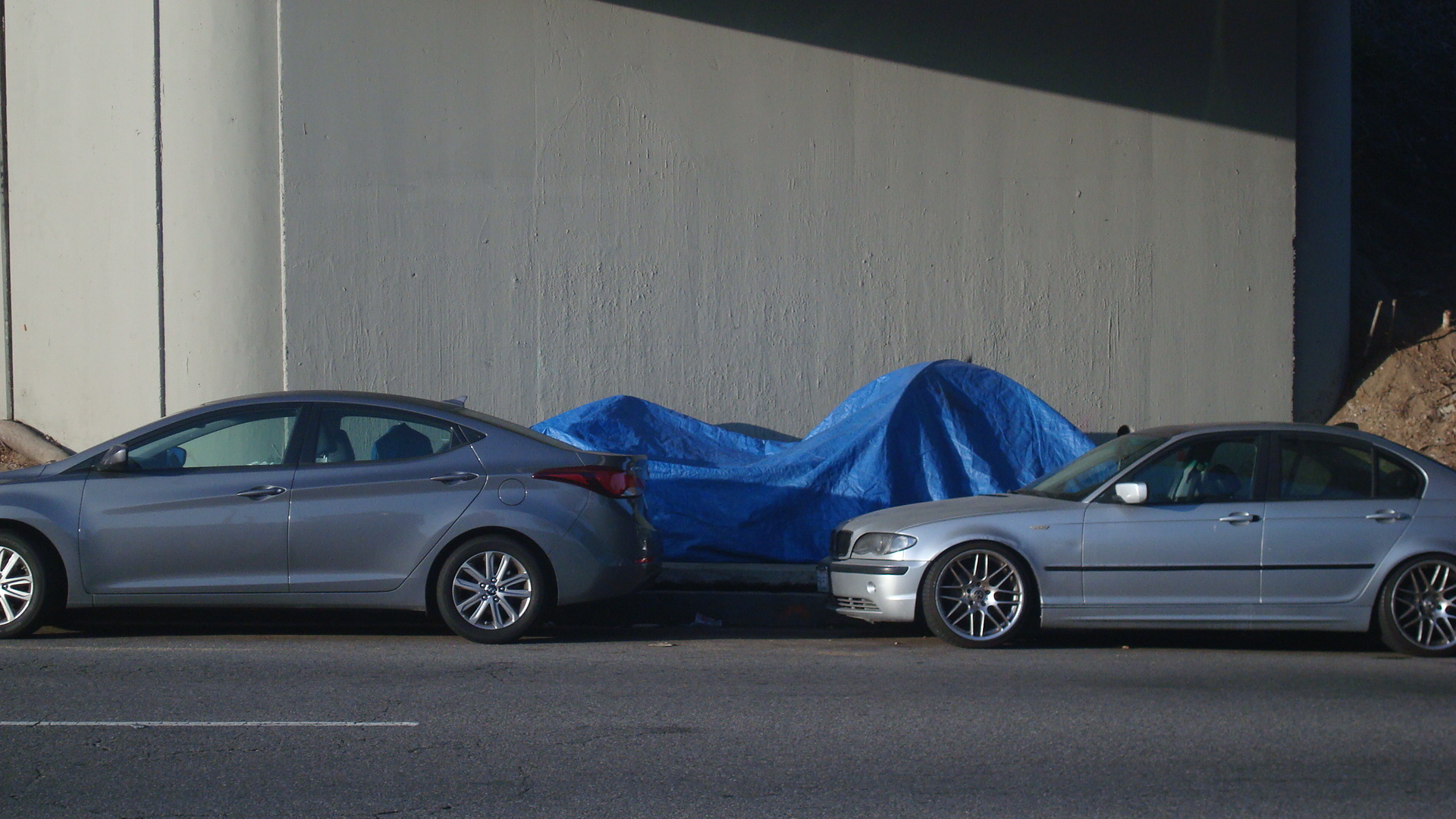
Once again our elected officials have shown us how little they really care about improving the quality of life in LA. On Tuesday the City Council passed two ordinances to make it easier to get rid of homeless encampments. Gil Cedillo cast the only dissenting vote. All the others fell right in line.

I totally understand that there are serious health and safety issues with the homeless camps that have been springing up all over LA. I know we have to deal with this. But as usual, the City Council has chosen to attack the symptoms rather than try to address the cause.

The reason people are living in tents is because we have an appalling shortage of affordable housing. The Mayor and the City Council continue to back to developers that want to build pricy condos and high-end apartments, but they seem to have no interest in providing homes for anyone besides the rich. Their meager efforts to build affordable housing are pathetic. LA real estate is being sucked up by developers with deep pockets who only care about maximizing their profits. In the past few years they’ve created thousands of new units that go from $2,000 a month on up into the stratosphere. And these same developers have taken thousands of rent-controlled units off the market as they demolish or refurbish older buildings.

According to the LA Times, the City’s homeless population currently stands at 26,000, a 12% increase over the past two years. This problem is not going away. It’s getting worse. Councilmember Cedillo makes the point that the vast majority of the funds the City spends on homelessness go toward law enforcement. This is crazy. The police can’t solve this problem.

Now you may be asking, can anyone solve this problem? The answer is yes. Follow the link below to an article from the LA Times about how Utah is dealing with chronic homelessness. They’ve made huge progress, and the state is actually saving money by providing housing for people who’ve been living on the streets.

Utah Is Winning the War on Chronic Homelessness

Of course, LA is not Utah. And I don’t mean to imply that there is a simple solution. But we could do a hell of a lot more than we’re doing now. And we need to start by making a serious effort to provide affordable housing.

For more info on the ordinances passed by the City Council, here’s a link to the story in the Times.

Vote Makes It Easier to Clear Homeless Camps

Landmark? What Landmark?

Circus Disco

Circus Disco

When a proposed project might have significant impacts on the surrounding community, state law requires the developer to prepare an Environmental Impact Report (EIR). In theory, this is a good thing. The idea is to make sure that negative impacts are identified so that everyone is aware of how the project will affect the area. In practice, the whole EIR process is questionable. The basic problem is that the developer is the one who pays for the report, which means that it almost invariably focusses on the positive impacts, and either minimizes or ignores the negative impacts.

This is exactly what’s happing with the Lexington Project. The developer wants to build almost 700 residential units on a city block between Lexington, Santa Monica, Las Palmas and Seward. The EIR tells us it’s a terrific project with numerous benefits for the area. But there a lot of the people in the community who see things differently.

The aspect of the project that’s gotten the most media attention is the fact that the developer will be demolishing the Circus Disco. You may be wondering why this is a big deal. Hollywood is full of places to dance. But the Circus is an important landmark for the LGBT community in LA, and especially for non-white gays and lesbians. Back in the 70s, when disco was big, there were plenty of clubs where gay men could party all night long. Unfortunately many of those clubs didn’t admit blacks and Latinos. But the Circus Disco was open to everyone, and it’s been cherished for years by the LGBT community because of that.

But while the EIR mentions the Circus in its survey of structures on the property, the report concludes that, “… [N]one of these buildings appears eligible for listing in the National Register, California Register, or for local City of Los Angeles Historic-Cultural Monument designation.”

This is interesting. Sure, it would be hard to make a case that the Circus was significant enough to make the national or state registers. But are they saying it’s not a significant part of LA history? If so, it seems that the City of LA’s Office of Historic Preservation has a different view. Survey LA is a program initiated by the OHR to document significant buildings. Last year they released a document entitled LGBT Historic Context Statement which gives an overview of the community’s history and identifies potential landmarks. And the Circus Disco is on the list.

LGBT Historic Context Statement from Survey LA

But it’s not just the Circus that’s threatened. The French Market and Catch One, both of which hold a significant place in the LGBT community, may soon be gone. And let’s not forget that back in 2011 the building that originally housed A Different Light, an early gay bookstore, was demolished. That was the same year that the Spotlight, according to some the oldest gay bar in Hollywood, closed its doors. The building still stands, but now it’s just another upscale nightclub. It does seem like the LGBT community is losing a huge chunk of its history.

Not that any of us should be surprised. Preservation has never been a high priority in LA. Groups like the Los Angeles Conservancy and Hollywood Heritage keep fighting to save these buildings, but City Hall seems more interested in keeping the developers happy.

If you want to learn more, this article from the Daily News offers a good summary.

Disco to Become Site for Condominiums

Mural on the front of the building

Mural on the front of the building

Flags

Image from the booklet prepared for Trinket

Image from the booklet prepared for Trinket

Yesterday a friend and I went down to MOCA to check out Trinket, an exhibition by Chicago-based artist William Pope.L. The centerpiece is a giant American flag, which is being continually buffeted by the wind from four large fans. The space grows brighter and darker at intervals as rows of lights go through pre-programmed cycles. It’s a pretty interesting show that raises lots of complicated questions about this country. I can’t say I felt emotionally engaged, and this is a problem I have with a lot of conceptual art. But it was well worth the trip, and it was cool to see work by an artist who’s willing to really dig into this country’s psyche.

After hitting MOCA, my friend and I went next door to check out the Japanese American National Museum. We spent some time in the galleries that document the internment of Japanese Americans during WWII. In a way, it was as though this show was the perfect follow up to the one we’d just seen. Both exhibitions make you think long and hard about this country, and some of the darker aspects of our history.

Then we decided to get some lunch. And this was the scene that caught my eye as we started walking down Central.

Man sleeping on Central Ave.

Man sleeping on Central Ave.

A man sleeping on the sidewalk, almost completely covered by an American flag blanket. An odd coincidence, given the shows we’d just seen, bringing up even more questions about where this country’s going.*

If you’re interested in taking a look at William Pope.L’s work, here’s the link for the show at MOCA.

Trinket

And if you haven’t seen the exhibition at the JANM, I urge you to make the trip down there. Even though the internment happened decades ago, the issues the show raises are absolutely relevant to what’s going on in this country now.

Japanese American National Museum

*
Later it occurred to me that the guy on the sidewalk might actually be a part of the show at MOCA. Even if that’s true, it’s a cool way to bring art out of the gallery and into the street.

This Is a Public Servant?

Cnsw Banner Crop

If you haven’t heard this story already, I’d like to draw your attention to a piece that ran this week on CityWatch. According to the article, 17 tenants are being evicted from four rent-controlled buildings in Beverly Grove and the Fairfax district. Now, you might be saying, why is this news? Evictions like this are a common occurrence in LA these days. All over the city developers are kicking people out of their homes so they can build high-end residential units. Why is this story special?

The reason this story deserves your attention is that the evictions are being carried out by Bulldog Partners, and the principal at Bulldog is Matthew Jacobs. Who is Matthew Jacobs? He’s the chairman of the board at the California Housing Finance Agency. Yes, this is a state agency that’s supposed to help people find housing. Not kick them out of their homes. The CalHFA web site says that their purpose is to “create safe, decent and affordable housing opportunities for low to moderate income Californians.”

Is this sick or what? Does this guy understand the mission of the agency he’s chairing? Doesn’t sound like it to me. That’s why I sent an e-mail to Jerry Brown asking that he be removed from the CalHFA board. If you’d like to contact the governor as well, here’s the link.

Contact Gov. Brown

And here’s the link to the story on CityWatch.

Evictions Spread to Fairfax

Crazy times we live in.

Losing the View

A view of construction underway at Sunset and La Cienega

A view of construction underway at Sunset and La Cienega

People have been building things along the Sunset Strip for a long time now. There are plenty of reasons to want to build there. Probably the people who put up the first houses and apartments along the winding hildside road were drawn by the view. The developers who came along in the twenties had something different in mind. Because at that time the area was unincorporated and beyond the reach of the LAPD, it was a great place to put bars and clubs. In the sixties the nightlife was still a draw, but it also became a hotspot for the counterculture. The clubs attracted bands that were playing all kinds of music, and the Strip in general became a magnet for anyone looking for a different kind of lifestyle.

So even before people began taking LA seriously as a city, the Strip had a reputation for being incredibly hip. Developers saw the potential for profit, and the number of high-rise apartments and hotels grew. Out of towners would come to the Strip to have a drink at the Viper Room or catch a band at the Whiskey. And if they had enough money they could rent a room at one of the hotels that offered a spectacular view of the city spreading out all the way to the horizon.

North side of Sunset at La Cienega

North side of Sunset at La Cienega

I’ve never had enough money to stay in one of those hotels, but I’ve still been able to enjoy the view. I remember ambling along Sunset as a kid, heading for Tower Records or Book Soup, turning my head now and then to gaze out over LA. Though there were a number of high-rises, much of the Strip was lined with one and two-story buildings. There were long stretches that allowed you to gaze out at incredible vistas.

A view of the city from Sunset

A view of the city from Sunset

But these days those views are disappearing. A new spate of development is rising up along the Strip, making it harder and harder to see those breathtaking vistas. There’s a massive project under construction right now which will occupy a good stretch of Sunset on both sides of La Cienega. And there are other projects under consideration, such as 8150 Sunset.

Construction site on Sunset west of La Cienega

Construction site on Sunset west of La Cienega

Many of the hillside residents are freaking out, and one of the reasons they’re upset is that these projects will block their view. (There are other reasons, too, including increased traffic and crumbling infrastructure.) Of course, the fact that the folks in the hills are mad about losing their view has riled the pro-development crowd. They’ve been reviled as elitist snobs who want to stop progress just so that can stand on their deck at sunset and gaze at the vast landscape below. It’s interesting, though, that the developers haven’t been the focus of similar criticism. Let’s get real. One of the main reasons they’re building high-rises along the Strip is so they can sell the view. The hotel rooms and condos in these new projects will go for outrageous prices precisely because they offer fantastic views. And if you think we really need another upscale high-rise in LA, I think you’re completely out of touch with reality. Developers are pushing these projects because they can make a mountain of cash. Meanwhile, there’s a serious shortage of affordable housing, in large part because the current wave of development is driving housing prices sky high.

Another view of construction at Sunset and La Cienega

Another view of construction at Sunset and La Cienega

As for me, I do feel like the Strip is losing something. It used to be that just standing on the sidewalk you could see a large swath of the city laid out before you. It was something free that anybody could enjoy. These new projects will make those views harder to find. And beyond that, I feel like the whole Strip is getting so pricey that ordinary people are being squeezed out. While there have always been ritzy restaurants and high-end clothing stores, there were also plenty of places where you could hang without spending a lot of money. Those cheaper places seem to be disappearing.

Another view of construction at Sunset and La Cienega

Another view of construction at Sunset and La Cienega

Maybe it’s just me. Now that I’m older, I do spend a fair amount of time reminiscing about how great things used to be, and I should probably focus more on the present. But back in the seventies when I wandered along Sunset I used to see all kinds of people on the street. There were rich kids in expensive clothes and vagrants without a nickel in their pocket. Beverly Hills types lunching at sidewalk cafes and runaways living on handouts. It seemed like the Strip was open to anyone, that everybody was welcome.

I feel like that’s changing. Is it just me, or is all this new development burying the welcome mat?

Looking down La Cienega from Sunset

Looking down La Cienega from Sunset

Pros and Cons of Expanding Transit

It’s hard to even keep track of all the different projects that the MTA is working on throughout the county. New rail lines are being constructed, old ones are being expanded, and improvements are being made to increase safety and ease of use. The photos below represent just some of the projects that are currently under construction.

In Little Tokyo, work is beginning on the Regional Connector. This will be a 1.9-mile underground light-rail system that connects the Gold Line to the 7th Street/Metro Station. It will also make it easier for passengers to transfer to the Red, Purple, Blue and Expo Lines.

First and Central, future site of a stop for the Regional Connector

First and Central, future site of a stop for the Regional Connector

Material and equipment stored on the site at First and Central

Material and equipment stored on the site at First and Central

Construction on the Crenshaw/LAX Line started last year. This will be 8.5 miles of light rail running from the Expo Line to the Green Line, with below-grade, at-grade and elevated segments.

Crenshaw/LAX Line construction site at Crenshaw and Exposition

Crenshaw/LAX Line construction site at Crenshaw and Exposition

Another shot of the site from Crenshaw and Rodeo

Another shot of the site from Crenshaw and Rodeo

This project could provide a huge boost to businesses along the line, although there are already signs that it could encourage gentrification which may drive long-time residents and business owners out of the area. Click on the link below to see what may be in store for the community once the line is finished.

Plan to Turn BHCP into a 24-Hour Community

There are smaller projects going forward, too. In North Hollywood, a subterranean tunnel will connect the Red Line station to the Orange Line station just across the street. This is a great idea, and hopefully will reduce the number of riders dashing across Lankershim against red lights in order to make a connection.

Construction of subterranean tunnel in North Hollywood

Construction of subterranean tunnel in North Hollywood

Another shot of construction at the North Hollywood site

Another shot of construction at the North Hollywood site

The photos below are a few months old, but they show MTA crews working on the Purple Line expansion at Wilshire and Fairfax. By day, traffic flowed through the intersection as usual. But at night, construction crews would show up with barricades, heavy machinery and blinding lights. This project highlights the problems of constructing a major transit line in a dense urban area.

Crews working through the night at Wilshire and Fairfax

Crews working through the night at Wilshire and Fairfax

Another shot of construction at Wilshire and Fairfax

Another shot of construction at Wilshire and Fairfax

All this sounds great in theory, but this kind of rapid expansion brings plenty of problems with it. I don’t have a car, so I use public transit almost every day. If you ask a simple question like, “Are you glad that the MTA is expanding its transit network?”, I can give you a simple answer like, “Yes.” But if you ask, “What long-term impacts will this expansion have on the City of LA?”, the answers are much more complicated.

In my mind, the biggest thing to worry about is whether or not we can afford all these projects. The MTA is facing a long-term budget shortfall, which could seriously impact its ability to function. Last year they raised the cost of the day pass and the monthly pass by 40% and 30% respectively. But there are almost certainly more increases to come, and it’s uncertain whether riders will pay the higher prices. Here’s an article that LA Streetsblog published in January of this year. It explains that while last year’s fare increase brought revenue up, it may have brought ridership down. If that trend continues, we’re in deep trouble.

MTA Revenue Up, Ridership Down

The MTA is receiving tons of federal funding for these projects, but those funds depend not just on increasing ridership, but also on increasing the share of operating costs covered by fares. If we see a decrease in ridership and/or revenue, we may not be able to count on the money from the feds.

Some people will point to the fact that the LA City Council just voted for a huge increase in the minimum wage, saying that this will enable low-income riders to afford future fare hikes. I don’t buy it. First, the cost of living in LA is increasing at a phenomenal rate. The amount we spend on housing is skyrocketing, DWP rates could easily double or triple, and food is getting more expensive as the impacts of the drought become more pronounced. A significant rise in the cost of public transit will be just one more blow to the bank accounts of minimum wage workers. And there are thousands of MTA riders who don’t even earn minimum wage. LA is the wage theft capitol of the country. Lots of people who work in the restaurant and garment industries are already being paid below the minimum, not to mention the undocumented workers who will take whatever they can get. Many of these people need public transit to get around, and none of them will earn a nickel more after the minimum wage rises.

I’m not arguing that we shouldn’t extend the reach of public transit, but I do question whether this massive expansion is sustainable. I guess all we can do is wait and see.