Money Talks, and the City Council Listens

Hills on the west side of Coldwater Canyon

Hills on the west side of Coldwater Canyon


This post was updated on March 14, 2016.

I saw an article on CityWatch today about Harvard-Westlake School’s continuing efforts to expand their campus on Coldwater Canyon. I’ve posted about this crazy project before, but reading the article made me want to do a follow-up. For those of you who haven’t been following the controversy, here’s a brief summary….

Harvard-Westlake, an elite prep school located in the hills just above Ventura Blvd., wants to build a three story parking lot that would hold 750 cars just across the road from their campus on Coldwater Canyon. But that’s not all. The structure would be capped by an athletic field, with the perimeter ringed by powerful lighting to accommodate night games. And to facilitate access, they want to build a bridge across Coldwater to connect the structure to the campus.

There are a lot of reasons to oppose this. The fact that the project would mean the removal of over 100 protected trees and 100,000 cubic yards of soil from the hillside is scary enough. Plus the loss of habitat for wildlife that lives in the hills. But we should also ask why, at a time when the City of LA is constantly telling us we need to reduce our carbon footprint, is Harvard-Westlake building a parking lot that will make it easier for people to drive to their campus?

But the CityWatch article focusses on efforts by people associated with Harvard-Westlake to push this project through. According to the author, a number of these people have given generously to Councilmember Paul Krekorian’s campaign committee. Now, there’s no law against giving money to a candidate, and for anybody living in LA, it’s certainly no surprise to hear about rich power players throwing money at the City Council. But it’s important to remember that the school is a 501C3, and there are strict rules about non-profit groups engaging in political activities. Here’s a quote from the IRS Compliance Guide for 501C3 Public Charities.

Political Campaign Intervention

Public charities are absolutely prohibited from directly or indirectly participating in, or intervening in, any political campaign on behalf of (or in opposition to) a candidate for public office. Contributions to political campaign funds or public statements of position made on behalf of the organization in favor of or in opposition to any candidate for public office clearly violate the prohibition against political campaign activity. Violation of this prohibition may result in revocation of tax-exempt status and/or imposition of certain excise taxes.

I took a look at the LA Ethics Commission web site, and found 14 people associated with Harvard-Westlake who all decided to throw something in Krekorian’s campaign coffers around the same time, from late October through late November 2014. That does seem a little suspicious. Especially since 9 of the 14 contributions are listed under the same date, November 3, 2014. Sure sounds like a coordinated effort to me. If that’s true, it would certainly be a violation of the law. The language in the IRS Compliance Guide is pretty clear. “Public charities are absolutely prohibited from directly or indirectly participating in, or intervening in, any political campaign on behalf of (or in opposition to) a candidate for public office.”

Sounds to me like these people broke the law. Does Krekorian care? I guess not, since he kept the money.

If you want to learn more about the situation, here’s a link to Save Coldwater Canyon, a group that opposes the project.

Save Coldwater Canyon

We Don’t Have the Water

WP 01 Head

Clearly, the crowd down at City Hall is totally out of touch with reality. They’re completely caught up in the delusion that they’re creating a dazzling new urban landscape, when in fact they’re doing tremendous damage to the City. They say they’re planning for the future, but rational people know that planning for the future means starting with the cold, hard reality of the present.

Here’s the reality. We don’t have enough water to support the current massive surge in development. Not by a long shot.

Recently the Downtown News ran an article listing more than 90 projects planned for Downtown LA. You read that right. Nine zero. But that’s only the beginning, because there are large projects planned for the Crenshaw District, Koreatown, Hollywood, West LA and Warner Center. These projects will bring thousands of new residential units, along with office space, retail and restaurants, and they will boost water consumption in LA by many thousands of acre feet per year. Yeah, I know they’ll have drought-tolerant landscaping and low flush toilets. Let me repeat. These projects will boost water consumption in LA by many thousands of acre feet per year.

Los Angeles, like the rest of the southwest, is facing a severe, long-term water shortage. The TV news tells us that the drought started four years ago, and everybody’s hoping it will end with El Niño. But the conditions that created this shortage have existed for decades. This isn’t just a matter of waiting out a few dry years until things get back to normal. This is the new normal.

Lawns are turning brown all over LA as people try to decide  whether to replace them or just let them die.

Lawns are turning brown all over LA as people try to decide whether to replace them or just let them die.

Let’s start with some basic facts. LA gets its water from four sources, the LA Aqueduct, the California Aqueduct/State Water Project, the Colorado River, and local groundwater. Here’s a breakdown of how each of these resources has been compromised in recent years.

LA Aqueduct
The LA Aqueduct was dammed from April through October of this year. This was done because the DWP has been ordered by the courts to mitigate environmental impacts in the Owens Valley. That means that for roughly six months out of the year, LA received no water from the LA Aqueduct. This is the first time in the one hundred year history of the Aqueduct that it’s been dammed, but there’s a good chance it will happen again as snow packs in the Eastern Sierras continue to decline.

California Aqueduct/State Water Project
The Metropolitan Water District (MWD), which serves LA, received only 20% of its allocation from the State Water Project (SWP) in 2015. The SWP depends on the Sierra Nevada snowpack for most of its water. On April 1, 2015, the statewide snowpack held only 5% of its average water content. Currently there’s no reason to believe that the decline of California’s snowpacks will be reversed in the near future, which means it’s likely that the MWD will receive only a fraction of its allotment for years to come.

Colorado River
This year the Colorado River was the one bright spot in the water picture, and local agencies received 100% of their allocations. But don’t expect that to continue. The amount of water flowing through the Colorado River has been declining for years. Lake Mead and Lake Powell are hitting record lows. It’s almost certain that allocations from the Colorado River will be slashed in the years to come.

Groundwater
For decades contamination from industrial waste has been encroaching on the wells in the San Fernando Valley. Right now about half the wells are closed. The DWP plans to build two new facilities to purify this water, but they haven’t even started construction yet, and it will be years before they’re completed.

Now maybe as you read this you’re saying, Oh, come on. It’s not so bleak. The weatherman says that El Niño is going to bring torrential rains to LA. All we need is a good wet year to fill up the reservoirs and recharge the aquifers and we’ll be okay. The drought will be over. Right?

Wrong.

Believe me, I hope we have a really wet winter this year. And if we get enough rain it could ease the drought for a couple of years. But it won’t solve the problem. All it will do is offer a reprieve.

Because the problem is not that we haven’t been getting enough rain in LA. The problem is that the snowpacks that we rely on for most of our water are shrinking steadily. This is not a new phenomenon. Snowpacks in the Western United States have been declining for decades. Check out this report issued by the American Meteorological Society.

Declining Mountain Snowpack in Western North America
American Meteorological Society, January 2005

It’s a lengthy document, and geared towards academics, so if you don’t want to plow through the whole thing I don’t blame you. Let me just give you this excerpt from the conclusion.

It is therefore likely that the losses in snowpack observed to date will continue and
even accelerate (Hamlet and Lettenmaier 1999a; Payne et al. 2004), with faster losses in milder climates like the Cascades and the slowest losses in the high peaks of the northern Rockies and southern Sierra. Indeed, the agreement in many details between observed changes in SWE [snow water equivalent, or water content of snowpacks] and simulated future changes is striking and leads us to answer the question at the beginning of this paragraph in the affirmative. It is becoming ever clearer that these projected declines in SWE, which are already well underway, will have profound consequences for water use in a region already contending with the clash between rising demands and increasing allocations of water for endangered fish and wildlife.

This report was written in 2005. Ten years later, the authors’ predictions have come true. We’ve seen California snowpacks decline drastically, and the data seems to indicate that they will continue to decline. This isn’t just limited to the West or to the US. This is part of a global trend. Check out the report released earlier this month by the Earth Institute at Columbia University.

Declining Snowpacks May Cut Many Nations’ Water

According to the DWP, between 2006 and 2010 we got about half our water from the Metropolitan Water District (SWP and Colorado River), about a third from the LA Aqueduct, and 11% from local groundwater. The water that flows from the SWP, Colorado River and LA Aqueduct originates as runoff from snowpacks. From all indications, those snowpacks are going to keep receding for the foreseeable future. That means we can no longer rely on the resources that used to supply about 90% of our water. And as for the aquifers that supply us with groundwater, it will be at least five years before the DWP can build the facilities to clean it up.

As the hillsides get drier, the risk of fire increases.

As the hillsides get drier, the risk of fire increases.

There are lots of ideas out there about how to cope with this crisis, recycling, greywater, stormwater capture, desalination. All of them have potential, but it’s going to be a long time before any of them start producing the quantities of water we need for a city of nearly 4,000,000 people. We can’t afford to squander water, but that’s exactly what our elected officials are doing. By allowing rampant, reckless development with no real planning behind it, they’re giving away water that we don’t have.

I am not saying we should put a halt to development. What we need to do immediately is make a realistic assessment of how much water will be consumed by all projects currently under construction, all those that are going through the approval process, and all those that are still in the planning stages. Then we need to set priorities, approving only projects that will truly benefit the people of LA, instead of continually greenlighting high-end high rises and luxury hotels.

Next we need to make a realistic assessment of how much water we can expect to have, and this is a good time to do so. The DWP is currently working on its 2015 Urban Water Management Plan (UWMP), and a draft will be released for public comment early next year. We need to make sure that the UWMP accurately reflects our current situation. The Plan will certainly emphasize conservation, recycling and stormwater capture, and that’s all to the good. But it also needs to reflect the fact that every source of water the City has depended on for a hundred years has been severely compromised.

Finally, we need to make sure that our elected officials acknowledge these limitations and start doing some real planning for the future. These days the people at City Hall are fervently, proudly, recklessly pro-development. That’s nothing new for LA politicians. This City was built by out-of-control, irresponsible development. Except for a few brief periods when voter backlash scared the people at City Hall, developers have almost always gotten their way. But that’s got to end. We can’t afford to keep doing business as usual.

We don’t have the water.

WP 50 River

Waking Up in the Park

NH 05 Pk Tree Shad

I’ve been going past North Hollywood Park since I was a kid, but I’ve hardly ever set foot in it. Lately, though, every time I’ve gone by I’ve felt like I needed to check it out. So I finally decided to take the time.

NH 07 Pk Tent

God knows what possessed me to go over there at seven in the morning. I’m barely awake at that hour. But it was cool because I had the park mostly to myself. The sun was just coming up and the only other people around were the dog walkers and the joggers. Not that the park was quiet. It’s bounded on all sides by major roadways, occupying the triangle made by Chandler, Tujunga and the Hollywood Freeway.

NH 14 Pk Church

You can see the traffic backed up on Tujunga. And you can also see St. Paul’s First Lutheran Church in the background. I looked on the net for a history of the church, but didn’t find much. Their web site said the congregation has been active in the area since the twenties, but didn’t offer too many details. I was curious about the campus, because it’s an interesting mix of old and new styles.

Also across the street from the park is Masonic Lodge #542.

NH 15 Pk Mason

Freemasonry has pretty much disappeared these days, but it played a large part in European and American history for hundreds of years. Ben Franklin, W. A. Mozart, Simón Bolívar, Duke Ellington and Dizzy Gillespie were all Masons. The history of Freemasonry is long and complex, and because it was a secret society there’s much that will never be known. Some people see it as an important fraternal organization that helped shaped democracy, others see it as a band of power mad imperialists who wanted to rule the world. If you’re into conspiracy theories, you can’t go wrong with the Masons. There are all sorts of crazy stories out there. But to get back to Lodge #542, in its heyday its members included many Hollywood luminaries like Clark Gable, Stan Laurel, Oliver Hardy and Audie Murphy. The Los Angeles Conservancy has a nice write-up about the building’s design.

Masonic Lodge #542 at The Los Angeles Conservancy

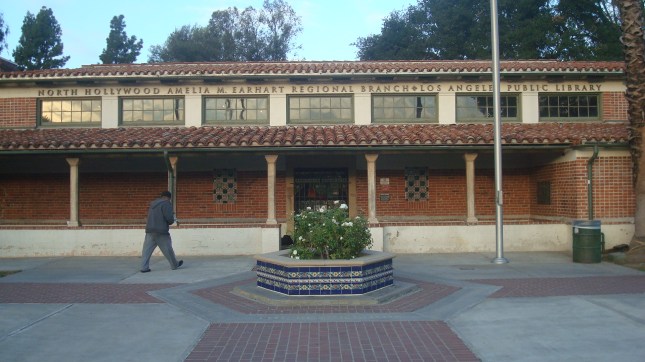
Inside the park itself is the North Hollywood Amelia Earhart Library. This beautiful little Mission style building was originally constructed in 1929, and it was designed by architects Lewis Eugene Weston and Lewis Eugene Weston, Jr..

The front of the Amelia Earhart Library.

The front of the Amelia Earhart Library.

A side view of the library's entrance.

A side view of the library’s entrance.

The back of the library.

The back of the library.

In the decades since it was built, the library has undergone a number of transformations. Like so many buildings, it’s been adapted over and over again as the community around it changed. To learn more, follow the link below.

Amelia Earhart Regional Branch History at LAPL

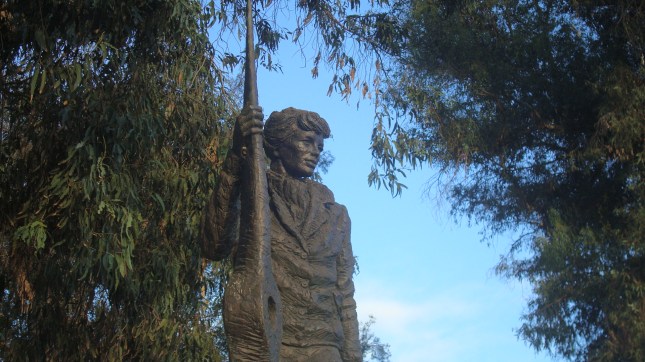
If you’re wondering why this branch library is named after Amelia Earhart, it’s because she was living in nearby Toluca Lake at the time she took off on her final flight. There’s also a statue of Earhart in the park at the corner of Tujunga and Magnolia.

NH 30 Pk Amelia

Honestly, until yesterday the only thing I knew about this early aviator was that she died trying to fly around the world. After doing a little reading, I found out that she racked up a number of impressive accomplishments in her short life. You might want to do a little reading about her yourself.

Amelia Earhart Bio

Even though there wasn’t a lot happening at seven a.m., the park is often crowded when I go by in the afternoon. Activities are offered for people of all ages, and there are plenty of folks who go there just to hang out. In spite of the cars rushing along the park’s perimeter, once you get away from the traffic it’s easy to forget about the city buzzing around you. The paths wend their way through large expanses of grass. There are fabulous old trees rising up above you.

NH 33 Pk Flowers

For years I’ve been rushing past this beautiful park, convinced I didn’t have the time to stop and linger. We get so caught up in being busy that we tell ourselves we can’t take a break. We’re plugged into so many different things that we’re bombarded with stimulus all day long, and we convince ourselves it has to be that way. It doesn’t. We need to step away from the traffic, phones, TV, etc., and let ourselves walk on the grass, feel the breeze, lose ourselves in the blue of the sky.

We need to take the time for a walk in the park.

NH 50 Pk Wide

Inept or Corrupt? Does It Matter?

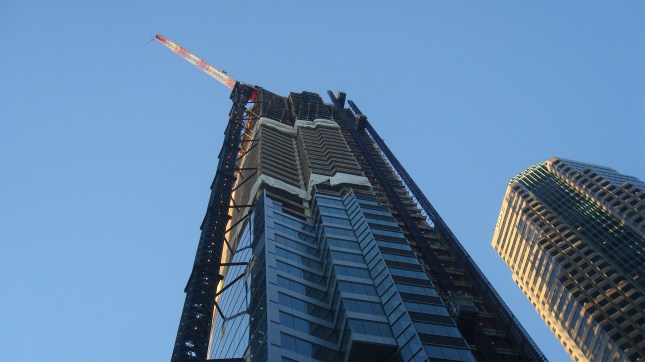
Construction on the Wilshire Grand in Downtown LA.

Construction on the Wilshire Grand in Downtown LA.

Last week City Controller Ron Galperin published an audit detailing the City’s record on collecting and spending development impact fees. As I read the press release, it’s hard to say whether I was more shocked or angry. The upshot is that the City of LA is failing to collect tens of millions of dollars in fees from developers, and it’s not even spending the money that has been collected. Here’s the lead from the press release.

City Controller Ron Galperin issued an audit that found the City of Los Angeles is failing to exercise its power to charge citywide development impact fees, which State law says can be collected from developers to mitigate their projects’ impacts on neighborhoods and defray the costs of public facilities and infrastructure, such as roads, bridges, libraries, parks and police stations.

I have to ask, What the hell is wrong with out elected officials?! Are they so inept they don’t realize that we can and should collect this money? Or have they gotten so much campaign cash from developers that they feel compelled to let them off the hook when it comes to charging legitimate fees? Either way, these revelations are shocking. This City’s infrastructure is crumbling, we’re seeing an avalanche of new development which is putting an even greater strain on roads, water and public services, and the people at City Hall aren’t even asking for money that we need to address these problems.

The whole thing is just mind-boggling. Here’s another paragraph from the press release.

In preparing their report, auditors in Galperin’s office compared Los Angeles with other western cities. In FY 2013-14, San Francisco had $3.6 billion in permitted construction and collected $96 million in impact fees. Portland had $1.5 billion in permitted construction and collected $31 million. Meanwhile, Los Angeles had $5.3 billion in permitted construction but collected less than $5 million in impact fees. Based on these numbers, auditors said Los Angeles had the potential to collect tens of millions of dollars more in fees.

So even though the value of permitted projects in LA was greater than San Francisco and Portland put together, our local government collected less than 5% of the total fees received by those two cities. Again, I’m shaking my head in disbelief.

Recently Mayor Garcetti made a show of announcing a program to collect linkage fees from developers to fund affordable housing. But in 2011 the City hired a consultant to produce a report which showed that LA could be collecting between $37 million and $112 million annually. Why have our elected officials taken so long to act? It’s going to take at least another year for the City Council to enact this program, and during that time we’ll lose out on many more millions.

Here’s a quote from the letter that Galperin sent to the Mayor with the audit.

The City of Los Angeles’ approach to collecting and spending impact fees to date has been haphazard and most often neighborhood-specific rather than Citywide, as is customary in some other localities, and sometimes, not sensible. No central entity has been responsible for monitoring the fees. And key officials from various City departments told auditors they did not know what other departments were charging.

This City has so many pressing needs, and we’re constantly told by our elected officials that we don’t have the money to address those needs. But according to Galperin’s office, we’ve had the ability to access a major revenue stream that City Hall has almost completely ignored. It’s insane.

If you want to look at the audit, here’s the link.

Audit of Development Impact Fees

And after reading the audit, you might want to call your City Council rep and ask why we didn’t start collecting these fees years ago.

Who’s Really Standing Up for Artists?

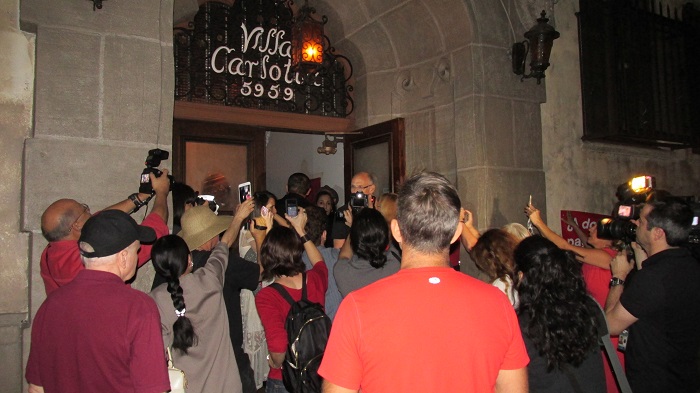
Tensions running high at the Villa Carlotta on Sunday night.

Tensions running high at the Villa Carlotta on Sunday night.

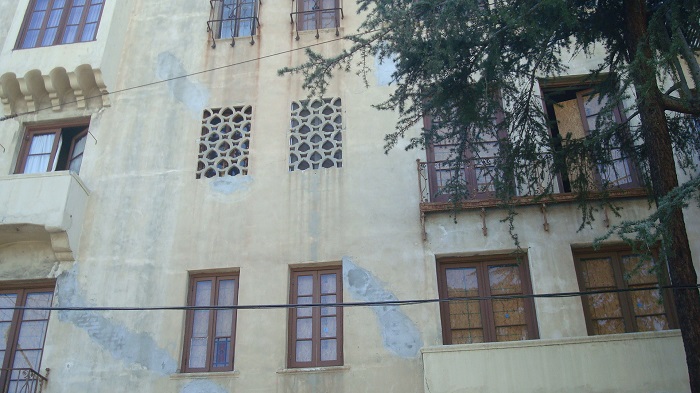
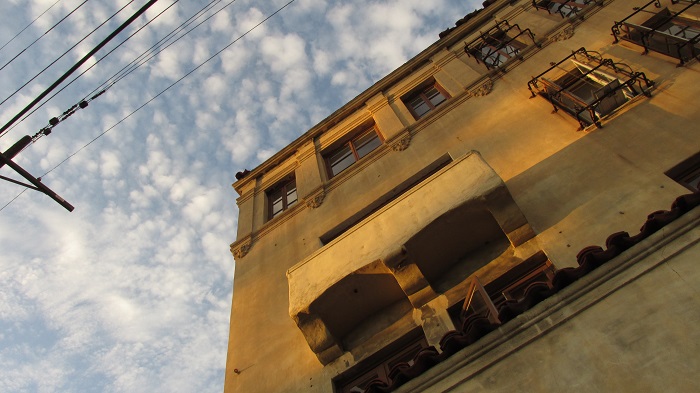
In case you haven’t been following recent events at the Villa Carlotta, I’ll give it to you real quick. It’s a piece of Hollywood history, built in the 20s, and home for many years to musicians, artists, writers and other creative folk. But it was rent-controlled, and not too long ago the owner decided he wasn’t making enough money off it, so he sold the property to a developer who planned to turn it into an extended-stay hotel. As part of the process, it was deemed necessary to get rid of the existing tenants. Many of them were forced out using the Ellis Act.

Windows boarded up at the Villa Carlotta.

Windows boarded up at the Villa Carlotta.

Of the 50 apartments in the Carlotta, four are still occupied. Some of the tenants decided to fight the evictions, and not just because they wanted to hang on to their homes. There are a number of reasons to object to what the developer is doing here. First, the Carlotta is a historic building, and as such it’s protected by state law. In order to turn it into a hotel, the current owner planned extensive alterations to the structure. The remaining tenants, worried that the modifications would do irreparable damage, took their case to the Cultural Heritage Commission, which sided with them. Second, Ellis Act evictions have caused the loss of thousands of rent-controlled units in LA. A recent study by UCLA found that this city is the least affordable major city in the nation, and mass evictions are only making things worse.

And third, up until this whole mess started, the Carlotta was home to a community of creative people. According to many of the former tenants, it was a place where budding screenwriters and struggling artists could meet friends and make connections, where they could share their work and shape their ideas.

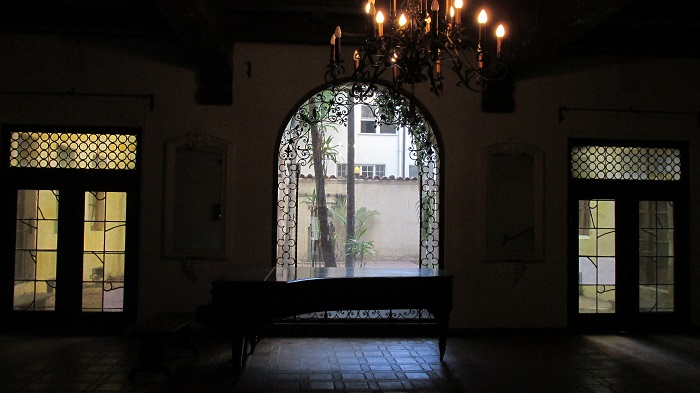
The lobby where tenants used to gather, now deserted.

The lobby where tenants used to gather, now deserted.

This aspect of the story took on new importance when it was announced that the Hollywood Arts Council had decided to hold a fundraiser at the Carlotta. The HAC apparently thought it would be the ideal place for the event, which was held to raise money for arts education at nearby Cheremoya Elementary School. The remaining tenants at the Carlotta were surprised by the announcement. It seemed odd that an organization which has the stated goal of supporting the arts in Hollywood had decided to hold their event at a venue that was nearly vacant because dozens of artists had been forced to leave.

They contacted the HAC and explained the situation, asking if the organization would consider moving the event. The answer was polite, but firm, no. Bothered by the apparent hypocrisy of the HAC’s actions, the tenants decided to protest.

Sylvie Shain, one of the few remaining inhabitants, had imagined the protest as an elaborate performance piece. Former tenants were asked to come to the event wearing white, and they would stand for the ghosts of the Villa Carlotta. Alternately, attendees could show up dressed in red to symbolize of the affordable housing massacre that’s taking place. The idea was to dramatize the plight of renters throughout the City.

Protesters holding a banner to protest evictions.

Protesters holding a banner to protest evictions.

The same message in English.

The same message in English.

Unfortunately, things didn’t work out as planned. The first part of the protest, with people congregating on the sidewalk outside, went smoothly. But when Sylvie led a group into the building things got kind of chaotic. There were moments when I couldn’t figure out what was going on. But one thing is clear. At one point Sylvie was forcibly ejected from the building and temporarily denied re-entry.

On the positive side, the event got a fair amount of media coverage. Two local stations showed footage on the evening news, and Curbed did a piece as well. The Los Angeles Tenants Union joined the residents of the Carlotta, and LATU members spoke eloquently about the affordable housing crisis in LA, emphatically pointing out the damage that the Ellis Act is doing.

It’s important to say that artists aren’t just having a hard time finding housing in Hollywood. In recent years Silverlake and Echo Park have both seen an exodus of musicians, writers and others who can’t afford to pay what landlords are asking these days. And then there’s the sick joke of the Arts District in Downtown. In the late 70s, creative people started moving to the industrial districts in the City’s center. The community came together because people who were struggling to make music or art or whatever could find cheap rents in areas that nobody else wanted to live in. But then the developers discovered it, started marketing it as the Arts District, and housing prices soared. Many of the artists who had created the community were forced to leave because it got too damn expensive.

So let’s get back to the question I asked in the heading for this post. This past Sunday night, who was really standing up for artists? Was it the Hollywood Arts Council, knowingly holding their fundraiser at a site where dozens of creative people had been forced to leave? Or was it the scrappy band of tenants who staged an action to call attention to the fact that artists and others are being thrown out of their homes all over LA?

You can probably guess what my answer would be.

Sylvie put together a beautiful brochure for the event, which you can view by clicking on the link below.

Ghosts of the Carlotta

And if you’d like more info about the situation at this historic building, here’s a link to the Save Villa Carlotta Facebook page.

Save Villa Carlotta

VC 6 Fac Clouds

Talking About Displacement

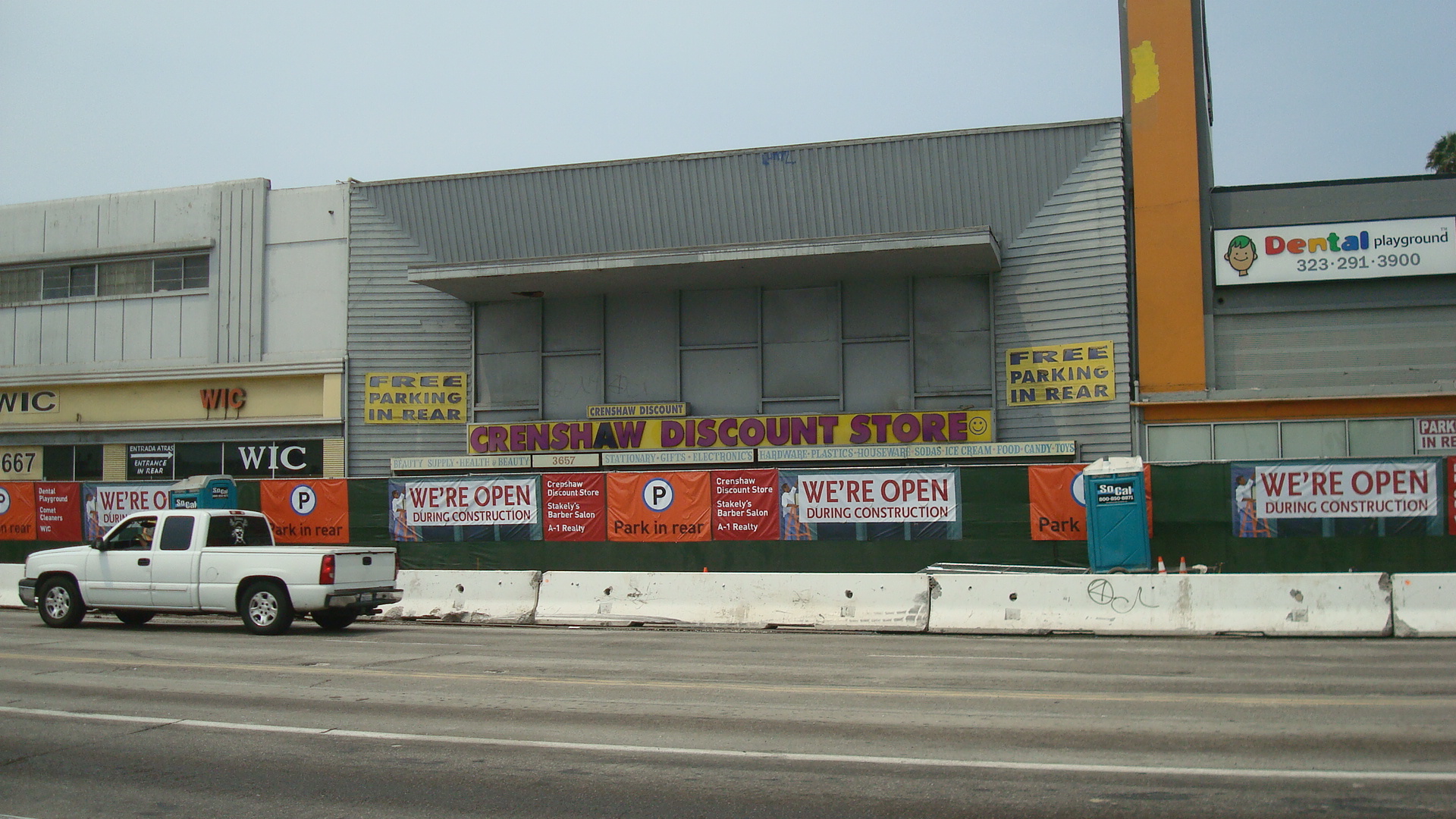
MTA construction along Crenshaw Blvd.

MTA construction along Crenshaw Blvd.

Speaking at a recent Los Angeles Current Affairs Forum, MTA CEO Phil Washington talked about how the growth of LA’s transit network has been accompanied in some areas by gentrification and displacement. Washington is concerned about the fact that low-income residents are being pushed out of the communities they call home, and he wants the MTA to do more to address the problem.

It’s good to hear somebody at the MTA talking about this. The question is what can actually be done. Earlier this year the MTA Board agreed that when new residential units were built on the agency’s land their goal would be to set aside 35% for low-income renters or owners. That’s fine, but it’s not nearly enough. What we really need is to have the City and the County commit to changing their planning practices. Mayor Eric Garcetti and Supervisor Mark Ridley-Thomas serve on the MTA Board. They should both support Washington and take a public stand against displacement. Then they should push for the City and the County to create policies to address the problem.

While gentrification is happening all over the city, the growth of LA’s transit system definitely seems to be a catalyst. Downtown, Koreatown, Hollywood, and Highland Park have already seen thousands of low-income residents displaced. Leimert Park and Boyle Heights seem to be next on the list as the MTA continues its rapid push to expand, bringing an influx of developer dollars to neighborhoods near rail stops. As property values skyrocket, rents go up, too, and low-income tenants who can’t afford to pay must find somewhere else to live. Tenants in rent-controlled apartments can be forced out by landlords who use the Ellis Act to convert their units to condos.

I’m really glad to hear Washington talking about displacement, and I hope others back him up on this issue. This is a conversation we need to have, and it should have started long ago.

MTA construction in North Hollywood

MTA construction in North Hollywood

Homeless Emergency? Stop Evictions!

DSC00557

The Mayor and the City Council recently declared that LA is in the throes of a homeless emergency. While I’m glad that our elected officials have finally decided to acknowledge how serious the problem is, they still haven’t offered any concrete plan of action. The promise of a hundred million dollars in funding is worthless until we know where that money’s coming from and how it’s going to be spent.

But I’d like to offer a suggestion on how to combat homelessness, and the people at City Hall should be glad to hear that they won’t have to spend a penny to implement it. My proposal is simple. I can give it to you in two sentences.

Stop Ellis Act evictions.

Stop the destruction of affordable housing.

Now, you may be saying, that’s ridiculous. The City doesn’t have the authority to do either one of those things. The Ellis Act, a state law, gives landlords the right to evict tenants if they decide they don’t want to be landlords any more. And the City can’t prevent a property owner from demolishing rental units if the owner does so within the boundaries of the law.

But the City can stop giving landlords incentives to do these things.

As the housing market heats up again, the potential to reap huge profits has drawn a slew of developers to LA. Speculators swoop into neighborhoods offering wads of cash to landlords, but they don’t just want to buy existing buildings. They’re interested in maximizing their profits, which often means kicking tenants out of rent-controlled apartments and either converting the units to condos or knocking the building down and putting up something larger.

And here’s where the City comes in. For developers to accomplish their goals, they often need to get the City to grant variances. They might ask the Department of City Planning to reduce the required setbacks from the sidewalk or neighboring buildings. Or maybe to relax the height limit. In some cases they ask the DCP to change the way an area is zoned, which could allow them to turn an apartment building into a boutique hotel.

All of these entitlements granted by the City increase the value of the property because they increase the potential for profit. The more money there is to made, the greater the attraction for investors. The more money investors offer, the greater the temptation for landlords to evict their tenants and sell the building. During the last housing bubble, this trend peaked in 2005 when over 5,000 rental units were taken off the market. When the recession hit, property values plunged and evictions dropped. But as the market heats up again, we’re seeing this practice becoming popular once more. In 2013, landlords took 308 units off the market. That figure more than doubled in 2014, rising to 725. And as long as housing prices continue to rise, you can bet that evictions will rise as well. For more details, take a look at this article from the KPCC web site.

Ellis Act Evictions in LA on the Rise

While there’s usually some negotiation involved when developers seek variances from the Department of City Planning, they usually get most of what they want. And as long as the DCP continues to hand out entitlements like candy, developers will feel confident that they can make tons of money by converting existing buildings to condos, small-lot subdivisions or boutique hotels. This means more people will be evicted, and more affordable housing will be taken off the market.

DSC00565

I’m not claiming that everybody who gets evicted ends up living on the street, but a significant number do. While I couldn’t fine any data on evictions leading to homelessness in Los Angeles, in New York the data shows that it’s a leading cause. Check out this article from CityLimits.

Evictions Are Top Driver of Homelessness

So if the City of LA is really serious aout tackling homelessness, our elected officials need to stop making it so attractive for landlords to evict their tenants. The Department of City Planning needs to start asking if the needs of wealthy developers outweigh the needs of renters on a limited income. Yes, we are dealing with a homeless emergency. The people at City Hall must start looking at the policies that have contributed to this situation, and think about the changes that need to be made.

Building shelters for people living on the streets is fine. But an even better approach would be to prevent people from losing their homes to begin with. As long as City Hall continues to put the needs of developers over the needs of its citizens, the homeless situation will only get worse.

DSC00562

Showdown on Sunset

Tgt Curve

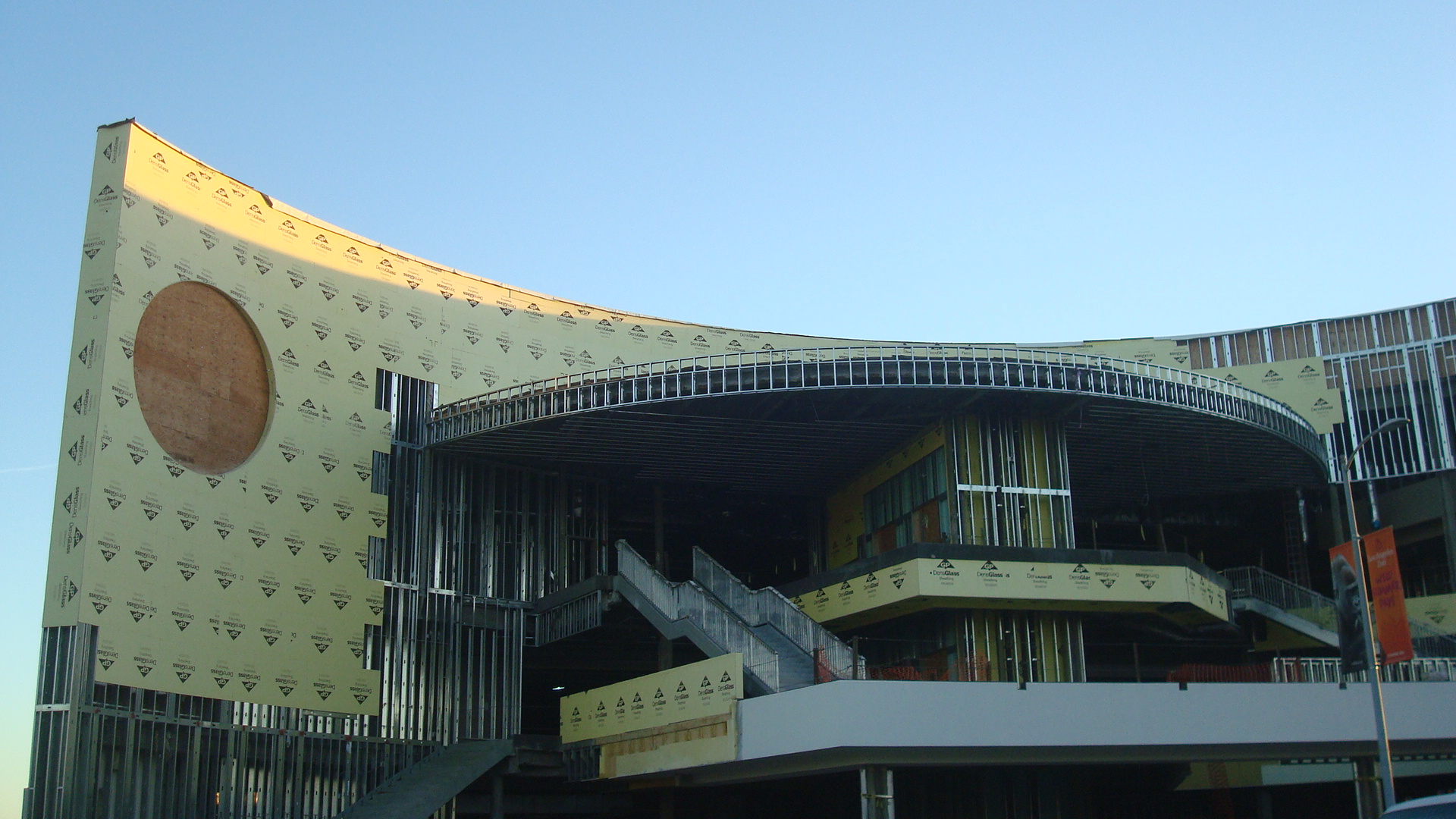
If you haven’t already heard, the Department of City Planning is holding a hearing this coming Friday on a proposal to restart the half-completed Target on Sunset. The project was stopped by a judge because it violated the Station Neighborhood Area Plan (SNAP). The City wants to create a sub-area within the SNAP which would allow Target to finish the building as is.

For those of you who haven’t been following this long, nasty struggle, the project that Target originally proposed for the corner of Sunset and Western was in compliance with the SNAP, and it seemed like pretty much everybody was on board with the idea. Then, at the behest of city officials, Target significantly increased the height of the project, making it more than double what the plan allowed. The revised design would have also required a number of other variances. At that point, community members who had supported the original project came out against the new, larger version. They filed a law suit, and Target, inexplicably, forged ahead with construction. When the judge sided with the plaintiffs, construction screeched to a halt. And this hulking, half-finished curiosity has been sitting at the corner of Sunset and Western ever since.

Tgt Crnr Side

Why is this happening? Local residents worked with the City for years to formulate the Station Neighborhood Area Plan. The whole idea was to create a framework for development that would stimulate growth without trashing the community. Why did members of the community invest years of time and effort into writing the SNAP if a city official can sweep it aside with a wave of their hand? (Many point the finger at then-Councilmember Eric Garcetti, who’s been pushing for taller buildings all over LA.)

Target gambled when they started construction on a project that was facing a legal challenge. They lost. Why should we bail them out? They should go back to the drawing board and create a project that complies with the law. And if they don’t want to do that, they should forget the whole thing and just sell the site.

But instead of making Target deal with the consequences of their actions, the City of LA is running to the rescue by creating a new sub-area within the SNAP. This is so depressing. But certainly not surprising. When you look at the amount of money that developers have given to the Mayor and City Council, it’s easy to see who’s really running things.

My feeling is that this is probably a done deal. The Department of City Planning is putting on a show this Friday to make it look like the public has had a chance to be heard. After the hearing is over, my bet is that they’ll approve the sub-area, and Target will go ahead and finish their building.

But don’t let my pessimistic, defeatist attitude infect you. In spite of my misgivings, I still sent an e-mail to the hearing officer to let the DCP know I was completely opposed to this stunt. I urge you to write as well, or better yet, show up at the meeting and let them know how you feel. We may not win, but we can go down fighting.

Here’s the info for the meeting.

Friday, October 2, 2015, 10:00 am
City Hall, 10th Floor, Room 1020
200 N. Spring St.

You can send an e-mail to the hearing officer at the address below. Be sure to include the case number in your subject line.

Blake Lamb
Blake.Lamb@lacity.org
Case No. CPC-2015-74-GPA-SP-CUB-SPP-SPR

And here’s the link to the meeting notice.

Target Sunset Hearing Notice

Tgt Sunset

Church Clears Another Hurdle

Mosaic Front

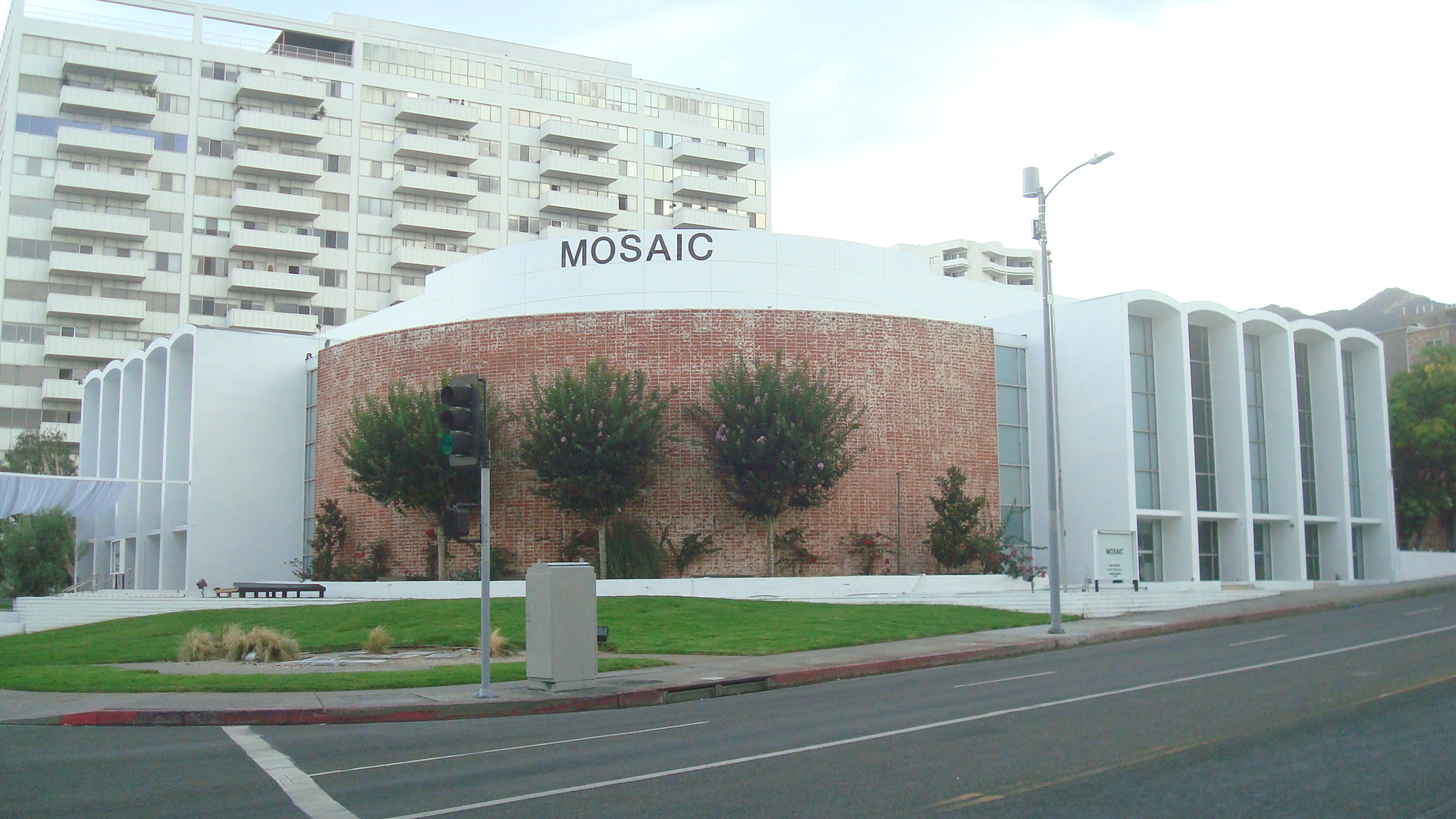
A quick update on the status of the Mosaic Church at Hollywood and La Brea. Earlier this week, the Cultural Heritage Commission voted unanimously to recommend that the structure be designated a cultural-historic monument. Click on the link below to get all the details.

Hollywood Church Closer to Becoming Historical Monument from Park La Brea News

This is good news, but as Helen Berman of Save Residential Hollywood points out, the fight is far from over. Developers LeFrak and Kennedy Wilson want to demolish the church so they can build a large mixed-use complex. They claim the building isn’t worthy of historic status, and they have very deep pockets. No doubt, they’ll be pushing hard to scuttle the designation.

So even though the groups hoping to preserve the church have won an important victory, they still have a long way to go. The CHC’s recommendation will go to the Planning and Land Use Management Committee next, and eventually the City Council will vote on the issue.

Thanks to Save Residential Hollywood for all their efforts so far. Here’s a link, in case you’d like to get involved.

Save Residential Hollywood

Thanks also to Councilmember David Ryu, who has come down firmly in support of granting the church historic-cultural monument status. If you’d like to thank him yourself, here’s his e-mail address.

david.ryu@lacity.org

Outdoor Ad Onslaught

Billboards at Highland and Franklin

Billboards at Highland and Franklin

I’ve written before about how our elected officials often try to cut the public out of the decision-making process. It’s happening again. This Thursday the City Planning Commission will be considering a number of proposals backed by outdoor advertising companies to increase their presence in our communities. There is significant opposition to these proposals among LA’s neighborhood councils, but the CPC has scheduled their vote without giving the NCs and other neighborhood groups a chance to weigh in.

Mini billboard tacked on to a mini mall

Mini billboard tacked on to a mini mall

This is hardly surprising. These companies want to increase the number of billboards they can put up, get amnesty for illegal billboards and clear the way for more digital billboards. It probably won’t surprise you if I tell you that they’ve spent over a million dollars lobbying our elected officials. But what if I tell you that they spent that much in just the first half of this year? They’ve actually spent many millions over the years to press their case with City Hall. Here’s an article with more details.

LA Billboard Companies Spend Over $1 Million Lobbying from Ban Billboard Blight

I’ve been making an effort to follow this issue, but I hadn’t heard anything at all about a possible vote by the CPC until I took a look at CityWatch earlier this week. That’s where I found this article. It gives a detailed breakdown of what’s going down, and also gives a clear picture of how the City has tried to slide this past us.

Sign Companies Call the Shots at City Hall from CityWatch

As the author points out, the CPC will argue that they heard public comment on this issue when it was before the Commission back in 2009. But the Planning & Land Use Management Committee has made significant changes to the previous proposals. The City has not given anybody (except the outdoor ad industry) a chance to be heard on the changes.

Ads on busses

Ads on busses

Both of these articles originated on the web site Ban Billboard Blight. If you’re concerned about this issue, I urge you to take a look. The site contains a number of worthwhile resources.

Ban Billboard Blight

I know that billboards are a part of life in the big city, and I’m not out to ban them. But we shouldn’t be giving these outdoor advertising companies permission to go hog wild just because they’re spending millions to lobby our elected officials. If anything, we need to set stricter guidelines for advertising in public spaces.

Here’s a link to the agenda for the CPC meeting.

CPC Meeting, Thursday, September 24

If you care about this issue and can make it down there, great. If you can’t make the meeting, you can still e-mail your comments to the Commission at the address below. Please use the subject line “CPC-2015-3059-CA, Citywide Sign Ordinance Changes”.

CPC@lacity.org

Ads at bus stops

Ads at bus stops