Twilight: Los Angeles, 1992

Twi 1

During the month of April there were plenty of reminders in newspapers and magazines, on radio and TV, of the civil disturbance that rocked Los Angeles twenty five years ago. I’ve seen plenty of coverage of those events over the years, but for my money the most honest and most insightful account of what went down is still Anna Deavere Smith’s Twilight: Los Angeles, 1992.

I went back and watched it again recently. If you’re not familiar it, Smith started by interviewing scores of people who lived in LA at the time the violence broke out. Using only the words of these witnesses, she constructed a one-woman show where she transforms herself into one character atfer another, weaving together an amazingly complex panorama, not just of the events of April 1992, but of the city at that time.

If you haven’t seen it, I recommend it highly. A video of the entire performance is available via WNET, a PBS affiliate. Here’s the link.

Twilight: Los Angeles, 1992

Twi 6 Baton

Culture Is Community

MM 000 Open Energy

Years ago I worked at The Museum of Contemporary Art (MOCA) in Downtown. I loved working there, because it meant always being around art. That was very cool. But after a while, I started to realize there was a problem with museums. Just by their nature, they put barriers between the art and the audience. For instance, MOCA had a Rauschenberg combine in its collection. When it was first shown back in the 50s, it was an interactive piece and the artist expected people to touch it. But by the time it was acquired by the museum, the combine was worth over a million bucks, and if you tried to touch it, the security guard would freak out. Unfortunately, that’s what happens when artists become icons and their work ends up in institutions.

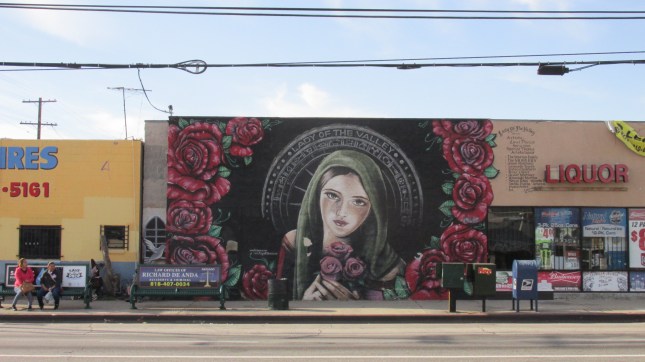
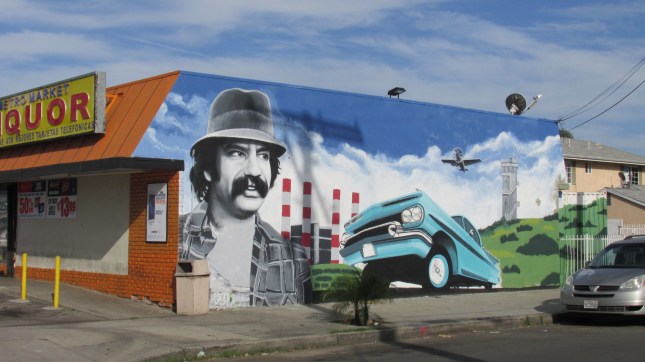
So it’s really cool when artists make work that’s always accessible to its audience. Art that’s part of the daily life of the community. That’s why LA’s murals are so important. They’re not sitting in a temperature controlled gallery surrounded by security guards. They’re out there on the street, in the midst of the community. And Pacoima is one community that’s extremely lucky in this respect. The streets there are loaded with murals. They come in all sizes, shapes and colors. They can be poetic, patriotic or political. Many feature pop culture icons, but some of them are all about ideas.

MM 005 VN SF EDITED

Van Nuys Boulevard at San Fernando Road

Once you get to Pacoima, it’s not even like you have to go looking for the murals. Just head up Van Nuys Blvd. and the art starts jumping out at you. This community has actively supported local artists, and it’s important to emphasize that this is a community effort. While individual artists put their names to the finished work, these murals are a team effort, and often they list the names of the many people involved in making it happen.

MM 010 LotV 1

Lady of the Valley by Levi Ponce, near Van Nuys and Arleta

MM 020 Born

Born in East Valley by Levi Ponce, at Van Nuys and Bartee

LA has come to be known as a mural mecca, but City Hall hasn’t always treated these artists well. In 2002, to settle a longstanding dispute with billboard companies, an ordinance was passed to make murals illegal. But it got worse. In the years that followed, the City obliterated a number of these works by painting them over. One article I read said that 300 murals were lost, but it’s probably impossible to calculate the real number. The City passed an ordinance to lift the ban in 2013, and since then artists have been making up for lost time. It’s weird, though, because while the City went after illegal murals with a vengeance, it’s never taken any serious action to crack down on illegal billboards. I bet if the artists had been able to shower our elected officials with campaign cash like the billboard companies have, there never would have been a ban in the first place.

MM 030 Sacrificing

Sacrificing to Protect by STP Foundation, near Van Nuys and Vena

MM 040 FK DR

Pacoima Kahlo* by Levi Ponce, at Van Nuys and Ralston

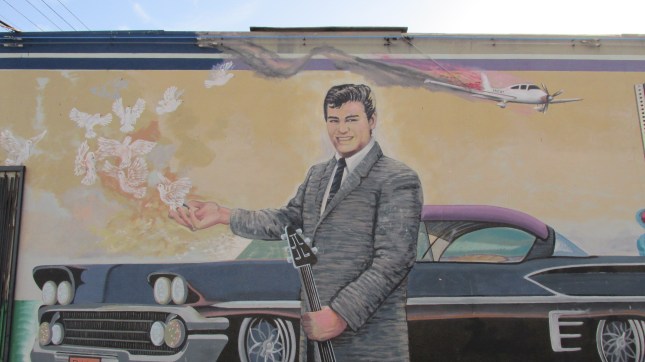
Many of the murals celebrate pop culture icons, like the two pictured here featuring Ritchie Valens and Elvira.

MM 065 RV

La Bamba/Ritchie Valens by Hector Ponce, at Van Nuys and Amboy

MM 067 RV CU

Closer shot of Ritchie Valens

MM 070 Elvira

Elvira en Pacoima by Hector Ponce, near Van Nuys and Haddon

But they also focus on lesser known names, people whose lives and work have a meaning to those in the community.

MM 060 Artistas

Artistas de la Comunidad by Hector Ponce, near Van Nuys and Laurel Canyon

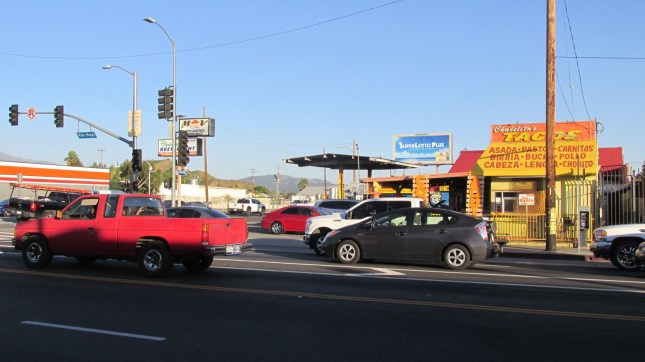
This isn’t a mural, but it caught my eye. The caricature of Cantinflas, a forgotten star from another age, painted on the front of a shuttered fast-food stand, seemed both funny and sad at the same time.

MM 050 Cantinflas

The theme of freedom comes up over and over again. Sometimes it’s political. Sometimes it’s purely personal.

MM 080 Freedom Fighter

Freedom Fighter by Kristy Sandoval, at Van Nuys and Pala

MM 090 Decol

Decolonized by Kristy Sandoval, at Van Nuys and Bradley

MM 100 La Lady Liberty

La Lady Liberty by Levi Ponce, at Van Nuys and Bradley

MM 110 WO Boundaries

Without Boundaries by Levi Ponce, at Van Nuys and Haddon

There’s plenty of awesome art in Pacoima, but you can find murals all over LA. If you want to see more, The Mural Conservancy of Los Angeles is a great place to start. If you haven’t been to their web site already, you need to pay them a visit.

The Mural Conservancy of Los Angeles


*  This seems to be the second mural featuring Frida Kahlo by Levi Ponce at this same location.  I found an earlier version on the net that had the title Pacoima Kahlo, but I’m not sure if that title applies to the current version.

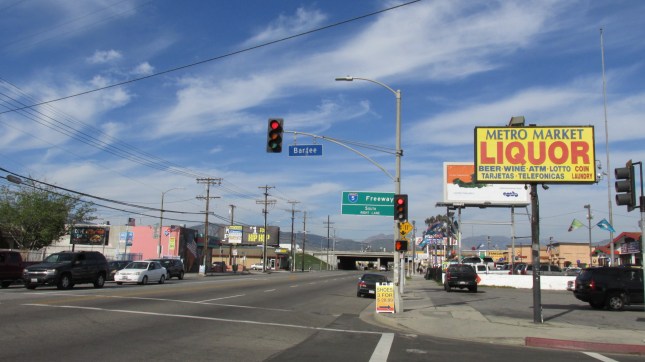
MM 120 Metro Market

Trashing a Treasure

Norton Entrance a

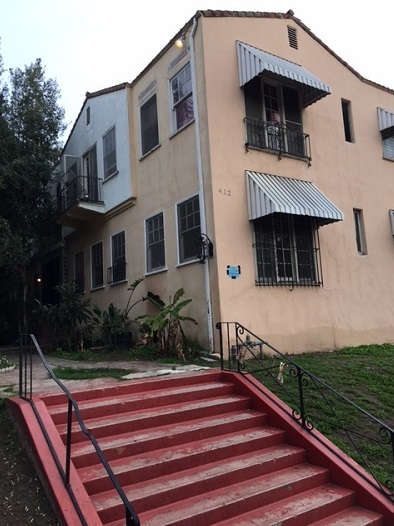
Well, for a while it looked as though the preservation community might manage to save the two lovely apartment buildings on Norton Avenue that were slated for demolition.  But the developers have some sharp lawyers on their side, and now it appears that Norton Court (424-430 N. Norton Avenue) and Norton Flats (412-420 N. Norton Avenue) will soon be gone.

Members of the community have been working for months to save these beautiful examples of courtyard apartments.  Both buildings were constructed in the 20s, and according to Survey LA, they are among the “few remaining examples in the area that [retain their] original site plan, landscape and hardscape elements, and architectural features.”

Councilmember David Ryu came to the rescue recently with an emergency nomination of the buildings as Historical-Cultural Monuments (HCMs).  But the developers’ lawyers found a way to block the nomination on a technicality.  It seems they’re determined to destroy these buildings at all costs.

Norton Stairs b

This is not the first time the Cohanzads have knocked down a building that could have been protected as an HCM.  Whether they’re operating as Wiseman Residential, or one of the numerous LLCs they’ve created to protect themselves from liability, the Cohanzads have made a practice of knocking down older buildings to put up new ones.  They don’t seem to care how much of LA’s history they’re destroying, or how their projects affect LA’s communities.  They argue that by levelling small buildings and putting up big ones they’re doing us a favor by increasing the supply of housing.  But many of the units they’ve demolished were rent controlled, and the new units they’re creating are way too expensive for someone earning LA’s median income.  Doesn’t sound like a very good deal to me.

And then there’s the loss of treasures like the Norton courtyard apartments.  The number of structures like this is shrinking, and there are few left that are still substantially intact.  But the Cohanzads don’t seem to care.  I guess it’s all about profit for them.

It may be too late to save the Norton apartments, but we can try.  Please e-mail Councilmember David Ryu to thank him for his efforts so far, and to encourage him to maintain his support for preservation of these buildings.

David E. Ryu            david.ryu@lacity.org

Use the subject line, “Demolition of Norton Apartments”.

While you’re at it, copy your own Councilmember on the message.  Or better yet, copy them all.  And don’t forget the Mayor.

Gilbert Cedillo           councilmember.cedillo@lacity.org

Paul Krekorian         councilmember.krekorian@lacity.org

Bob Blumenfield      councilmember.blumenfield@lacity.org

Paul Koretz   paul.koretz@lacity.org

Nury Martinez           councilmember.martinez@lacity.org

Felipe Fuentes         councilmember.fuentes@lacity.org

Marqueece Harris-Dawson            councilmember.harris-dawson@lacity.org

Curren D. Price, Jr.  councilmember.price@lacity.org

Herb J. Wesson, Jr.             councilmember.wesson@lacity.org

Mike Bonin    councilmember.bonin@lacity.org

Mitchell Englander councilmember.englander@lacity.org

Mitch O’Farrell          councilmember.ofarrell@lacity.org

Jose Huizar   councilmember.huizar@lacity.org

Joe Buscaino           councildistrict15@lacity.org

Eric Garcetti  mayor.garcetti@lacity.org

We may not win this fight, but we can go down swinging.

Norton Lamp c

A Crash Course in Asian American Activism

CAM 01 Ext Sign Stand

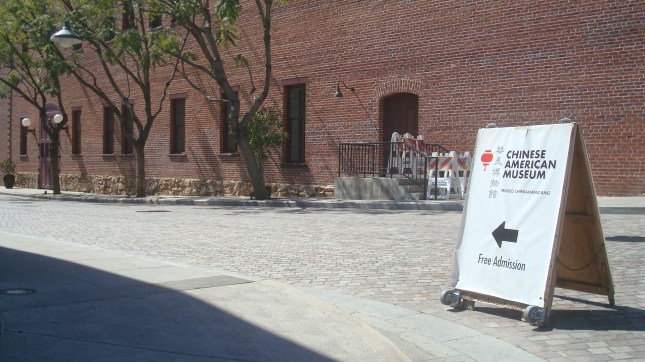
A while ago I read in the LA Weekly that the Chinese American Museum was presenting an exhibit about the Asian American activist movement from the 60s through the 80s.  It caught my attention for two reasons.  First, I had no idea that Asian Americans played a significant part in that era’s counterculture.  Second, I didn’t even know we had a Chinese American Museum in LA.  So I figured it was time to learn more about both.

It was well worth taking the trip to Downtown.  The museum is in a historic building just off the plaza at El Pueblo de Los Angeles.  Before I even got to the exhibition about Asian American activism, I spent some time with two smaller shows on the ground floor.  Journeys and Origins deal with Chinese migration to the US and the formation of Chinese communities in LA.  These shows are small, but beautifully put together, with a rich collection of artifacts.

CAM 10 Imm Room

Exhibits on the first floor document Chinese migration to the US.

CAM 12 Imm Page

Documents and photos help tell the story.

CAM 14 Imm Chairs

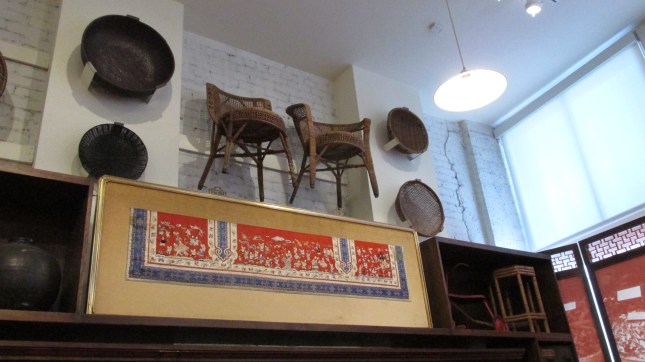
Furniture, cookery, toys and textiles are featured.

CAM Imm Abacus

Does anyone under 40 even know what an abacus is?

Then I went upstairs to check out the main attraction, Roots, Asian American Movements in Los Angeles, 1968-80s.

CAM 20 Rts Title

This show was a real eye opener.  Like I said before, I had no idea Asian Americans were so much a part of the counterculture in the 60s and 70s.  In one respect what they accomplished is even more impressive than the Black and Latino movements, because the Asian community was so much more diverse.  Activists representing Japanese, Korean, Chinese, Filipino and other cultures made a conscious effort to work together to push for change.  These groups did not have a shared history, and at times had been bitterly divided, but they realized they had a better chance of being heard if they spoke with one voice.

CAM 22 Rts Shirts

Silkscreened T-shirts were one way of spreading the message.

CAM 23 Rts Buttons

Activists worked to address a variety of issues.

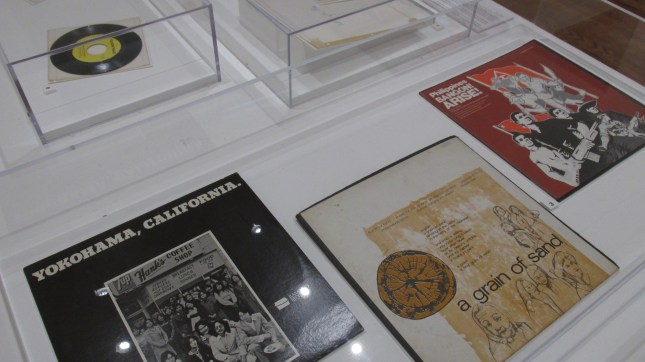
CAM 24 Rts Records

Music was another way of reaching out.

CAM 26 Rts Gidra

Gidra published news, commentary and art from 1969 through 1974.

CAM 28 Rts X

Come-Unity promoted cooperation across racial boundaries.

In the 60s pop culture was exploding, and members of the movement recognized that mass media was a powerful tool for getting the word out.  The show includes records, magazines, posters and other artifacts from the era.  Staging concerts, printing posters and making T-shirts helped spread awareness beyond the community.  While these activists addressed issues that affected Asian Americans, they also reached out and forged bonds with the wider protest movement.  It was a time when boundaries were being erased, and people of all kinds were coming together to address the problems facing the country.  If only we could revive that spirit these days.

The show runs through June 11, 2017.  If you want more info, here’s the link.

Chinese American Museum

CAM 50 Rts Posts

Post-it notes left by museum visitors.

Remaking the May Co.

Construction of the new Academy Museum has begun.

Construction of the new Academy Museum has begun.

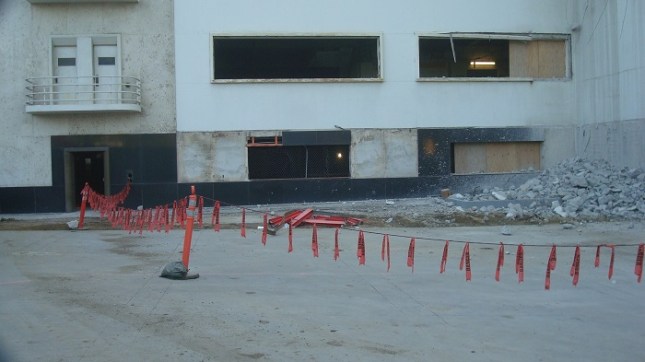
A while ago I was at LACMA, and as I walked down a flight of stairs on the west side of the campus I looked over at the May Co.. It had a big hole in it. Construction had started on the new museum for the Academy of Motion Picture Arts & Sciences.

May Co. building with a section removed.

May Co. building with a section removed.

Looking through the May Co. to Fairfax.

Looking through the May Co. to Fairfax.

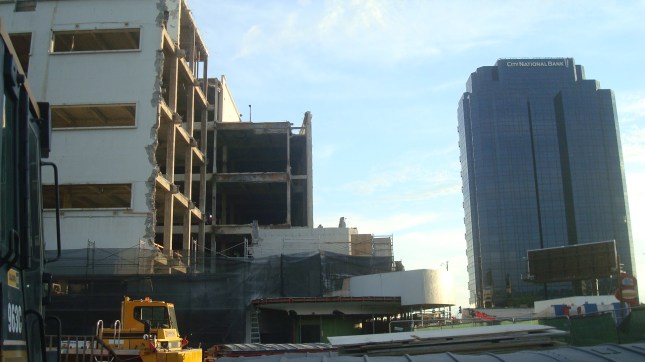
It’s taken a long time to get to this point. The project has been hampered by controversy, ranging from construction impacts on the community to issues with the design. Hopefully all that’s been resolved. At any rate, the May Co. is being taken apart so that it can be put back together again, this time with a massive annex that will contain a state of the art theatre.

A view of the site facing Fairfax.

A view of the site facing Fairfax.

The rear of the building.

The rear of the building.

The original May Co. building was designed by Albert C. Martin and Samuel Marx and it opened in 1939. For decades it was a major department store, but as malls began to draw more shoppers it went into decline. LACMA took it over 1994, but it seemed like they never used it much. In 2014 the Academy made a deal to lease the property with the goal of building a museum. After a long search, Renzo Piano was brought on as architect.

A view of the site facing Wilshire.

A view of the site facing Wilshire.

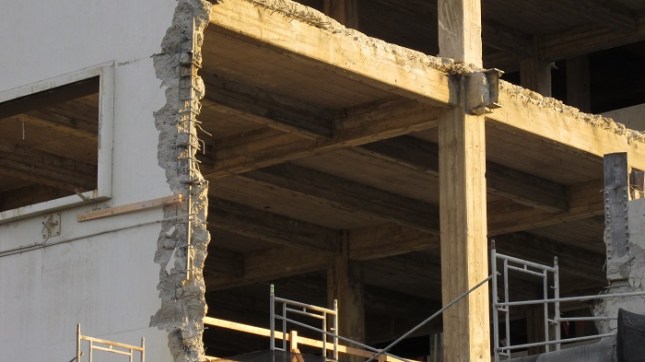
A view of the empty structure.

A view of the empty structure.

And a closer view of the interior.

And a closer view of the interior.

I’m glad things are moving forward. People have been talking for years about how LA should have a museum devoted to film, and it’s high time somebody made this happen. According to the Academy web site, “The Museum will provide interactive, immersive, and engaging exhibitions that will pull back the curtain on moviemaking and highlight the history and future of the arts and sciences of film.” Sounds good to me.

Heavy machinery and piles of debris.

Heavy machinery and piles of debris.

Check out the Academy’s web site to learn more.

Academy Museum

They’ve also got a cool timeline for the May Co., showing photos of the building through the years.

May Co. Building Timeline

I know it hasn’t been easy for the Academy to deal with all the challenges of creating a new museum, but it looks like they’re on their way. Let’s hope it’s smooth sailing from here on.

The corner of the building at Wilshire and Fairfax.

The corner of the building at Wilshire and Fairfax.

1939 Meets 1984

US Wide

Not too long ago I was taking the train to visit some friends. I got to Union Station a little early, so I thought I’d buy a paper to read on the trip. But as I was walking in the direction of the newsstand, I got a small shock. It wasn’t there any more.

The place where the newsstand used to be.

The place where the newsstand used to be.

Now, I know people don’t read papers like they used to, so maybe I’m just a dinosaur living in the past. This newsstand did have a pretty good selection of newspapers and magazines, but it’s not like it was a historic landmark. It was just a tiny little shop that sold the kind of stuff you buy when you’re waiting for a train.

But that isn’t the only thing that’s changed at Union Station. In fact, the whole feel of the place is changing, and I can’t say I like it.

Completed in 1939, Union Station was designed by a group of architects led by John and Donald Parkinson. It brings together a number of different styles that were popular at the time, including Streamline Moderne, Mission Revival and Art Deco, and it has the feel of a massive museum devoted to a bygone era. It used to be a great place to chill. I liked hanging out there. I’d show up early if I was taking the train and relax in the old leather chairs. Read a paper. Have some coffee. Watch the sunlight streaming down through the huge windows.

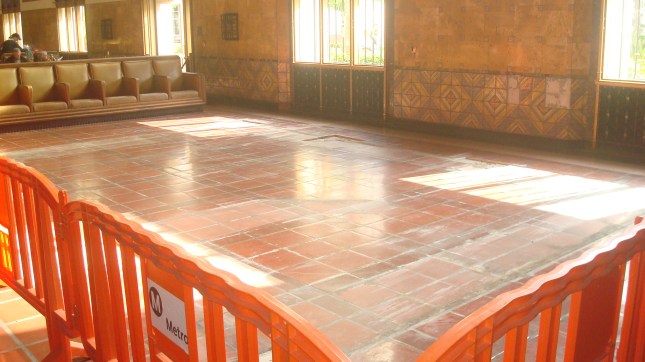
These days it doesn’t feel so relaxing. In the first place, the chairs are now cordoned off and there are guards making sure that only people with a ticket get in. I know there have been problems with homeless people camping out there and asking travellers for spare change. And I still remember the time I was waiting for a train and there was a guy who kept screaming really loud. He sat on the floor against one of the columns while two guards tried to talk to him, and he just kept on screaming. So I know there’s a reason for maintaining some restrictions, but it makes the place feel a whole lot less inviting. And let’s be honest, this approach is typical of the City of LA. Rather than actually trying to deal with the homeless, the addicted and the mentally ill, the City just shuts them out. Putting up another barrier doesn’t solve the problem. It’s just a way of avoiding it.

Waiting areas are now cordoned off.

Waiting areas are now cordoned off.

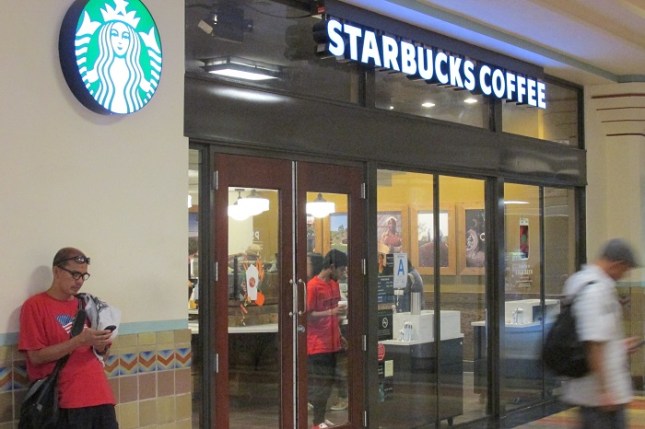
And what about the bagel shop? There used to be a little mom and pop place that sold a wide variety of bagels, and often when I was taking the train that’s where I’d stop to pick up some breakfast. It disappeared a while ago. What do we have in its place? You guessed it. Starbucks. We lost a little independent business that sold good bagels, and now we have another corporate coffee house. In fact, more and more Union Station has been taken over by chains.

Corporate coffee...

Corporate coffee…

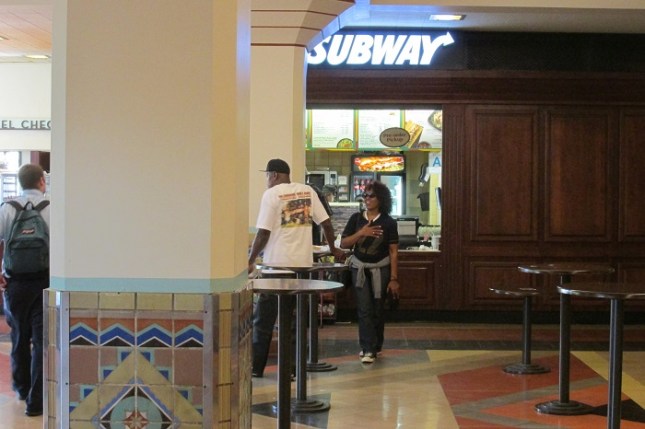
...corporate sandwiches...

…corporate sandwiches…

...corporate snacks.

…corporate snacks.

I used to like hanging out in Union Station, but not so much any more. These days it’s kind of like spending time in a detention center that’s attached to a strip mall. The vibe of the place has changed. It feels colder. More corporate.

But I shouldn’t be surprised. Isn’t that what’s happening to the whole country?

Pop Culture Past

VR 10 RR

Pop culture wasn’t meant to last. As the twentieth century kicked into high gear, products made for mass consumption were pumped out as fast as possible, generally with the idea that whatever the masses were dying to have one day would be tossed away the very next day. Permanence was considered passé. Forget about making things that would last forever. The idea was to make stuff that would last long enough to make a profit, and then jump on whatever trend came next. Studios threw out prints of old movies to free up storage space. Comic publishers tossed original art when their filing cabinets got too full. And developers bulldozed old buildings when they were past their prime.

But of course, people started falling in love with this stuff. In some cases it was just a sentimental attachment we felt for things we grew up with. In other cases we’d realize that this object we’d taken for granted was actually the product of careful, thoughtful design. And occasionally we’d come across something really beautiful. Some of this stuff was just too cool to throw away.

VR 55 VdK

You can find a staggering display of artifacts from our pop culture past at Valley Relics Museum. Curator Tommy Gelinas has been scouring the San Fernando Valley for twenty years looking for items that have something to say about the area’s history. The museum was set up as a non-profit in 2012, and in 2013 they opened their doors to the public.

Valley Relics is located in a business park in Chatsworth. It’s a small space, but it’s jam packed with objects ranging from the mundane to the bizarre. It’s kind of like if the Valley had an attic where people would put stuff they couldn’t use any more but couldn’t bear to part with. There are custom cars, video games, movie posters and plenty of neon.

VR 35 Ashtrays

But even though a lot of what they have on display belongs to the world of pop culture, Valley Relics has a broader mission. Here’s what they say on their web site.

Our endeavor is to collect, preserve, interpret, and present the history of The San Fernando Valley and surrounding areas in order to share with residents and visitors alike the stories of those who shaped the region and its role in the nation’s development.

So they’re not just trying to build a funhouse for nostalgia freaks. They’re really trying to tell the story of the Valley, and it’s high time somebody did. The massive plain that spreads toward the north from the foot of the Santa Monica Mountains generally gets short shrift when people talk about LA history, but you can’t really talk about the film or aerospace industries without talking about the Valley.

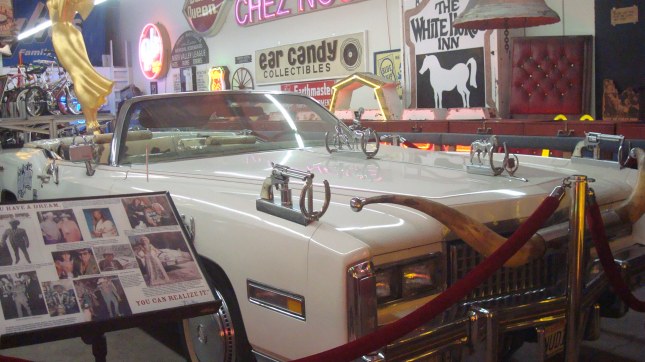
Of course cars played a huge part in the growth of the Valley. There were a couple of custom cars on display that caught my attention. One is the gaudy convertible driven by the owner of Nudie’s, the tailor that created one-of-a-kind outfits for country western luminaries.

VR 20 Car

The other is a humble VW decorated with a dizzying collage of images by artist Kent Bash. According to the text panel, the inside is supposed to be pretty cool, too, but it was hard to get a good look.

VR 25 VW

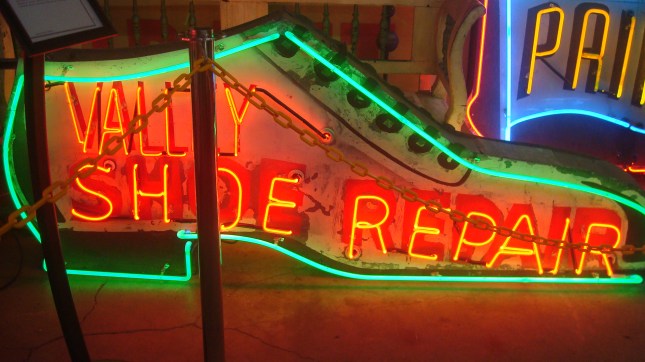
Music is a big part of the Valley’s history. It warmed my heart too see the sign from the Palomino glowing softly at the back of the building.

VR 45 Palomino

The club itself has been gone for years, but in its heyday it hosted many of the greatest stars of country music. Johnny Cash, Patsy Cline, Willie Nelson and many others played there. I only went a few times, but I will always remember catching the Collins Kids at the Palomino. It was one of the best shows I’ve seen in my life.

VR 40 Joni

Valley Relics is a young museum, and they have a lot of work to do. Right now it seems like the idea is to just display as much stuff as possible. The collection could be better organized, and it would help if there were more text to give visitors some background. Their biggest problem is lack of space. The day I was there I spoke to a guy who said they had tons of objects stored in a warehouse, and that they’re looking for a larger building. I hope they find some place a little closer to the center of the Valley. I’m sure plenty of people would dig the collection, but the location makes it kind of a long trip for most Angelenos.

Still, it’s definitely worth the trouble. Right now their hours are limited, only 10 am to 3 pm on Saturdays, but admission is free. If you do make the trip out there, and if you’re as impressed as I was, I’d urge you to put some money in the box for donations. Gelinas and company have gathered some amazing artifacts, and they’re telling a story that even people who live in this city don’t know much about. Right now they’re trying to take it to the next level. Let’s hope they can pull it off.

Here’s the link to the web site. You should check this place out.

Valley Relics

VR 50  Shoe

Mariachi Plaza

BH 01 Virg 1

Mariachi Plaza isn’t just a place. It’s a part of LA’s history. A piece of the city’s culture. Musicians have been gathering there since the 1930s, making music, looking for work, hanging out with friends, killing time. The plaza is also a gathering place for the community in Boyle Heights, vendors setting up booths to sell their wares, crowds gathering for a celebration.

Mariachi music is the result of hundreds of years of cultural give and take between the indigenous people of Mexico and the colonists from Spain. It started to take the shape we recognize today in the nineteenth century in the state of Jalisco. Mariachi ensembles come in many different sizes. There are the full orchestras with a string section, a couple of trumpets, a variety of guitars and a harp, but the musicians often play in smaller groups, too. It depends on the occasion and how much money’s being offered.

A view of First Street, bordering the plaza.

A view of First Street, bordering the plaza.

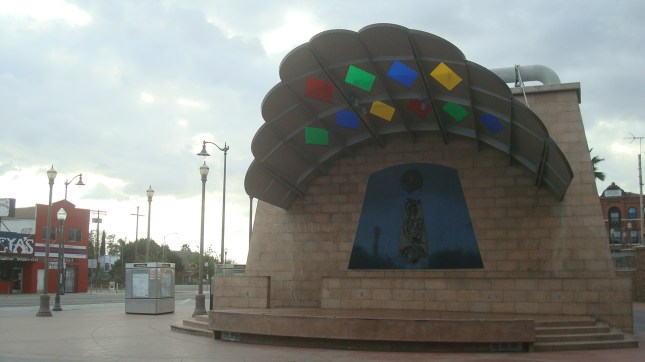
On the plaza there’s a large bandstand that was donated by the people of Jalisco, as well as a small amphitheatre which was built in the process of constructing the MTA Gold Line station. There are also a few modest buildings that have stood on the plaza for years, their walls decorated with colorful murals. Aside from the changes that came with the construction of the Gold Line stop, the plaza has looked pretty much the same for decades.
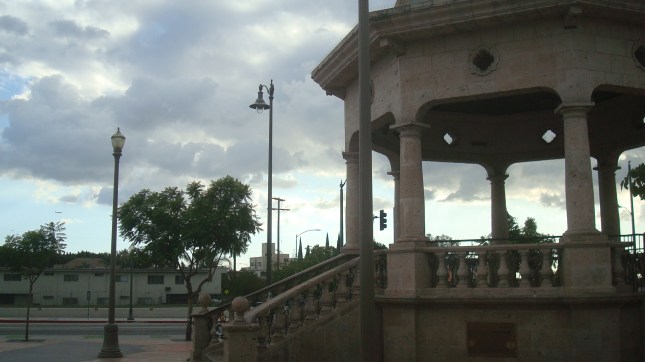
The bandstand.
The bandstand.

The amphitheatre.

The amphitheatre.

But the future of Mariachi Plaza is being hotly debated now, and it’s hard to say who will win in the struggle to shape its future. At the beginning of 2015 there was a huge uproar when the MTA unveiled its plan to develop the site. In the agency’s view, they were doing the community a big favor by bringing in an eight story project that included medical offices, a gym, restaurants and shops. Unfortunately, the MTA forgot to ask the community how they felt about it. Local residents were furious. The people of Boyle Heights were understandably angry about the fact that City and County officials had not brought them into the planning process. The MTA backed down, saying that they were going to start from scratch, and promising to involve residents this time. Some in the community are concerned, though, that all the agency intends to do is hold a few public meetings to steer people towards a plan they’ve already decided on. If that’s what happens, it wouldn’t be surprising. That’s standard operating procedure in LA.

The people of Boyle Heights are used to being ignored. Historically, few people at City Hall have shown much interest in this largely Latino community. It’s only in recent years, with the arrival of the Gold Line and the onset of gentrification that developers have started paying attention to the area. No one would argue that the community needs investment, and some locals feel that Boyle Heights would benefit from “gentefication”, in other words, a push for revitalization that maintained the neighborhood’s Latino character. But the past several years have shown that the City really doesn’t care much about preserving the character of existing communities. Residents of Hollywood, the Crenshaw District, Koreatown, Sherman Oaks and other neighborhoods have been hammered by the unholy alliance between City Hall and real estate speculators.

I went down to Mariachi Plaza a few weeks ago to take some pictures. It was a cloudy day, and not much was happening. This didn’t bother me because I always get a little nervous about shooting photos when people are walking by. I’m not crazy about having my own picture taken, and I don’t want to intrude on other people’s privacy. But then I realized, Hey, you’re at Mariachi Plaza. You’ve gotta get at least one shot of the musicians. And there’s another layer of anxiety here, because I knew some of the guys hanging out on the plaza were probably undocumented. It’s understandable that some immigrants get a little nervous when a stranger with a camera walks up and starts snapping photos. I finally did ask a group six guys if I could take a picture. Three of them walked away, but the other three were cool with it.

Musicians hanging out on the plaza.

Musicians hanging out on the plaza.

On the west side of the plaza you can see the Mariachi Hotel, also called the Boyle Hotel, originally the Cummings Hotel.

The Mariachi Hotel.

The Mariachi Hotel.

It has stood at the corner of Boyle and First since the end of the nineteenth century. Today it’s home to a number of the musicians who populate the plaza. You can see by the sign at the top of the hotel that some residents are concerned about outsiders taking over their community.  It says, “Alto a la Gentrificación.  Un Boyle Heights, Por Boyle Heights, Para Boyle Heights.”  (“Stop Gentrification.  One Boyle Heights, by Boyle Heights, for Boyle Heights.”)

Libros Schmibros

Libros Schmibros

Libros Schmibros is right on the plaza. It’s a lending library dedicated to making books available to everybody. The statement on their web site says that, “Libros Schmibros champions the pleasures of literature and its power to change lives,” which sounds pretty cool to me. Here’s the link if you want to learn more.

Libros Schmibros

Just around the corner I found an artist working on a mural.

Artist working on a mural just off the plaza.

Artist working on a mural just off the plaza.

Another view of the mural.

Another view of the mural.

Sorry, but the alley was really narrow, and I couldn’t get far enough away to take a picture of the whole thing. I guess if you want to see how beautiful it really is, you’ll just have to go down there yourself.

I went back another day and things were much more lively. A band was on stage in the amphitheatre, people were dancing on the plaza, and the place was crowded with booths offering all sorts of stuff.

People having a good time on the plaza.
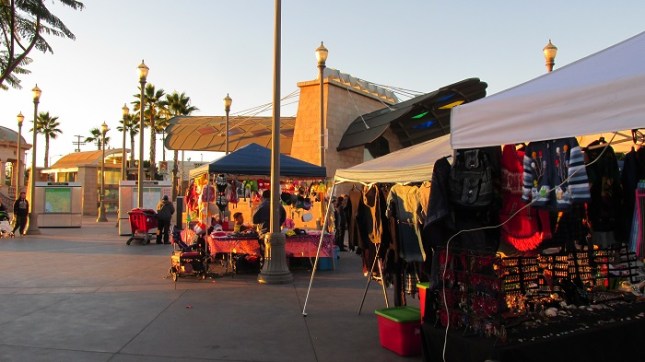
People having a good time on the plaza.

The plaza crowded with booths.

The plaza crowded with booths.

I don’t think many of the residents of Boyle Heights would argue against the need for development. What they want is to have a voice in the planning. So many of the projects proposed in this city are the result of deals made between politicians and developers behind closed doors. That’s got to stop. The only way to plan for a community is to invite the community’s participation. This can be a long, slow, difficult process, but in the end it’s more efficient than the City’s current approach. If the MTA had talked to the people of Boyle Heights first, they could have avoided the huge embarrassment of having their project shut down. If the MTA had spent some time listening to residents, by now they might be well on the way to building something that they community could really support.

If you want to dig deeper into the history of Mariachi Plaza, check out the web site.

Mariachi Plaza

And this essay with photos is worth taking a look at.

The History of the Cummings Block

Banner by artist Dalia Ruiz.
Banner by artist Dalia Ruiz.

Waking Up in the Park

NH 05 Pk Tree Shad

I’ve been going past North Hollywood Park since I was a kid, but I’ve hardly ever set foot in it. Lately, though, every time I’ve gone by I’ve felt like I needed to check it out. So I finally decided to take the time.
NH 07 Pk Tent

God knows what possessed me to go over there at seven in the morning. I’m barely awake at that hour. But it was cool because I had the park mostly to myself. The sun was just coming up and the only other people around were the dog walkers and the joggers. Not that the park was quiet. It’s bounded on all sides by major roadways, occupying the triangle made by Chandler, Tujunga and the Hollywood Freeway.

NH 14 Pk Church

You can see the traffic backed up on Tujunga. And you can also see St. Paul’s First Lutheran Church in the background. I looked on the net for a history of the church, but didn’t find much. Their web site said the congregation has been active in the area since the twenties, but didn’t offer too many details. I was curious about the campus, because it’s an interesting mix of old and new styles.

Also across the street from the park is Masonic Lodge #542.

NH 15 Pk Mason

Freemasonry has pretty much disappeared these days, but it played a large part in European and American history for hundreds of years. Ben Franklin, W. A. Mozart, Simón Bolívar, Duke Ellington and Dizzy Gillespie were all Masons. The history of Freemasonry is long and complex, and because it was a secret society there’s much that will never be known. Some people see it as an important fraternal organization that helped shaped democracy, others see it as a band of power mad imperialists who wanted to rule the world. If you’re into conspiracy theories, you can’t go wrong with the Masons. There are all sorts of crazy stories out there. But to get back to Lodge #542, in its heyday its members included many Hollywood luminaries like Clark Gable, Stan Laurel, Oliver Hardy and Audie Murphy. The Los Angeles Conservancy has a nice write-up about the building’s design.

Masonic Lodge #542 at The Los Angeles Conservancy

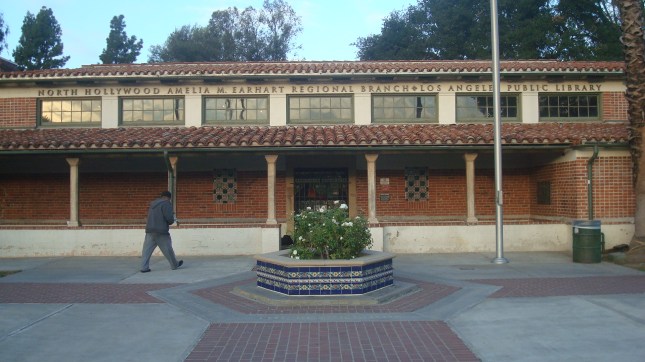
Inside the park itself is the North Hollywood Amelia Earhart Library. This beautiful little Mission style building was originally constructed in 1929, and it was designed by architects Lewis Eugene Weston and Lewis Eugene Weston, Jr..

The front of the Amelia Earhart Library.

The front of the Amelia Earhart Library.

A side view of the library's entrance.

A side view of the library’s entrance.

The back of the library.

The back of the library.

In the decades since it was built, the library has undergone a number of transformations. Like so many buildings, it’s been adapted over and over again as the community around it changed. To learn more, follow the link below.

Amelia Earhart Regional Branch History at LAPL

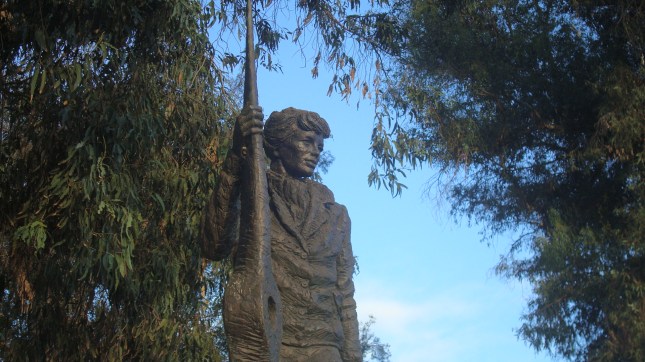
If you’re wondering why this branch library is named after Amelia Earhart, it’s because she was living in nearby Toluca Lake at the time she took off on her final flight. There’s also a statue of Earhart in the park at the corner of Tujunga and Magnolia.

NH 30 Pk Amelia

Honestly, until yesterday the only thing I knew about this early aviator was that she died trying to fly around the world. After doing a little reading, I found out that she racked up a number of impressive accomplishments in her short life. You might want to do a little reading about her yourself.

Amelia Earhart Bio

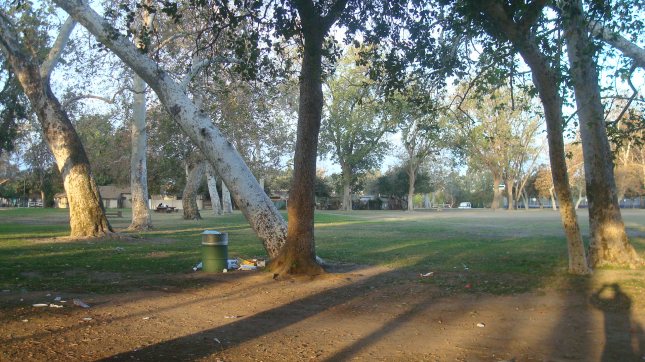
Even though there wasn’t a lot happening at seven a.m., the park is often crowded when I go by in the afternoon. Activities are offered for people of all ages, and there are plenty of folks who go there just to hang out. In spite of the cars rushing along the park’s perimeter, once you get away from the traffic it’s easy to forget about the city buzzing around you. The paths wend their way through large expanses of grass. There are fabulous old trees rising up above you.

NH 33 Pk Flowers

For years I’ve been rushing past this beautiful park, convinced I didn’t have the time to stop and linger. We get so caught up in being busy that we tell ourselves we can’t take a break. We’re plugged into so many different things that we’re bombarded with stimulus all day long, and we convince ourselves it has to be that way. It doesn’t. We need to step away from the traffic, phones, TV, etc., and let ourselves walk on the grass, feel the breeze, lose ourselves in the blue of the sky.

We need to take the time for a walk in the park.

NH 50 Pk Wide