The Neighborhood Is Changing, and Not for the Better

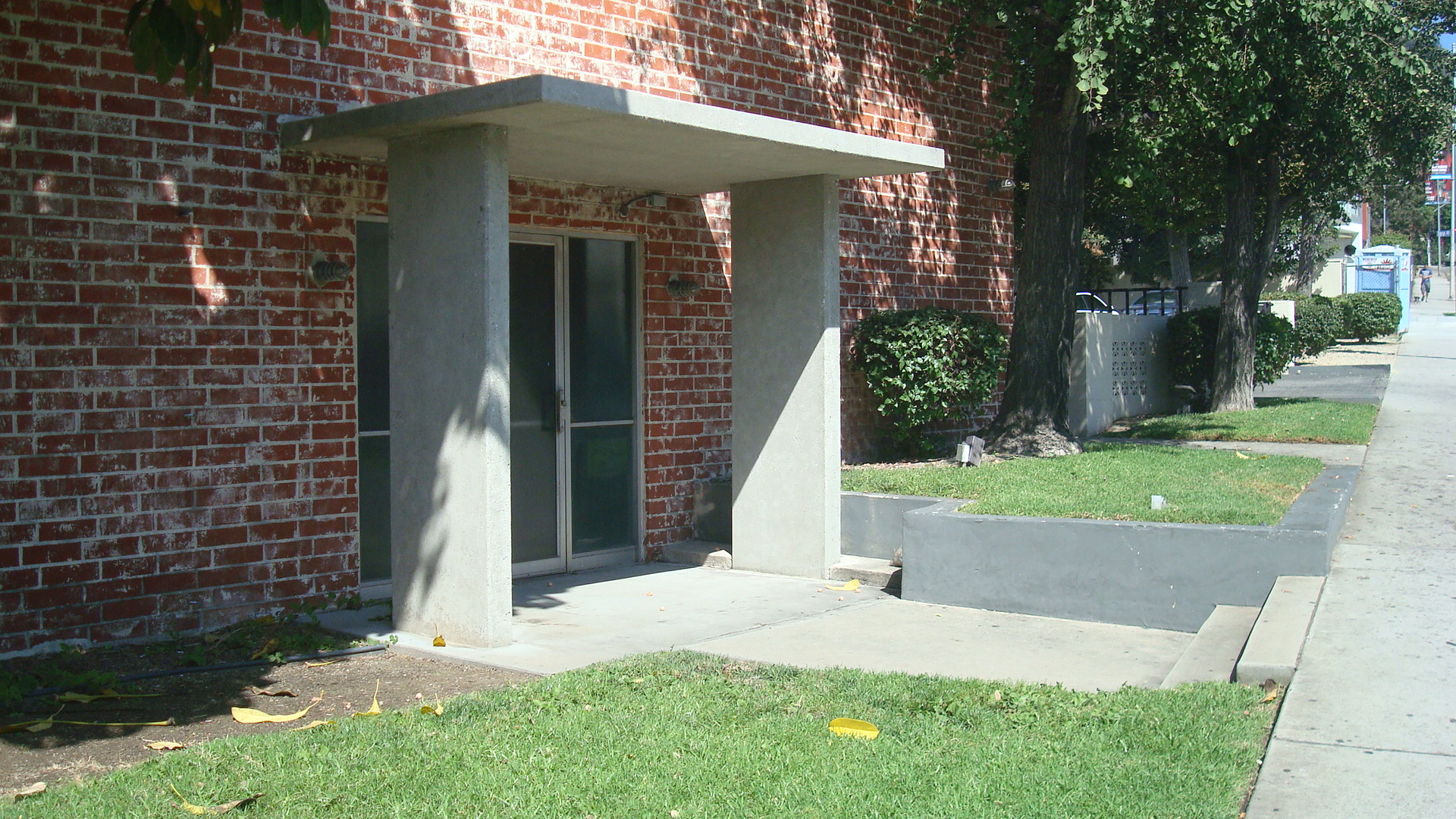
The main gate that used to lead to the Cat & Fiddle.

The main gate that used to lead to the Cat & Fiddle.

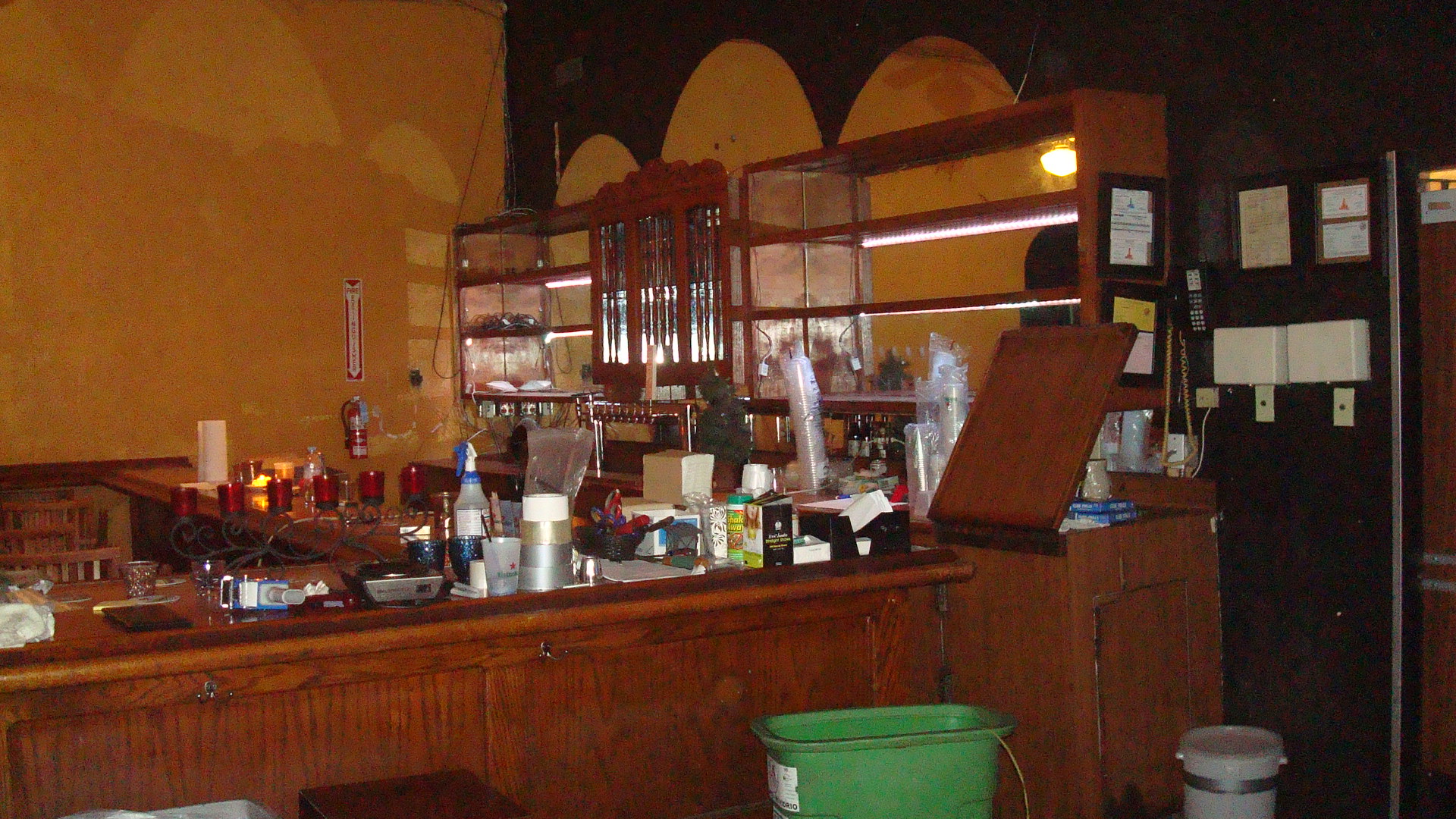
I was with with my brother and my nephew last week when we decided to go to the Cat & Fiddle for dinner. What a shock to find out that they were closing the place down. Apparently the owners are looking for a new location, but at this point they haven’t found anything. When I dropped in a couple days ago, the restaurant was almost cleaned out. I’ve had so many good times at the Cat & Fiddle, hung out there with so many good friends. It was strange to be standing there, surrounded by boxes and furniture. Nobody sitting in the booths. Nobody standing at the bar. No music. No conversation. Just silence.

The silent courtyard.

The silent courtyard.

The empty booths.

The empty booths.

The deserted bar.

The deserted bar.

According to the LA Weekly, the building was purchased by its current owners, an investment group headed by Jesse Shannon, in 2005. When the Cat & Fiddle’s lease was up, apparently Shannon wouldn’t consider renewing it. At this point he has not revealed who the new tenant will be. No doubt one more upscale bar/club/restaurant of the type that’s been spreading like a virus through Hollywood for the past decade. Shannon does say that his group plans to spend millions to renovate the building.

This is good news. I hope he’s serious. The building is a beautiful example of the Spanish Colonial Revival style, with some very cool Churrigueresque decoration. I hope the money Shannon spends is matched by a real desire to restore the building, rather than to make it a glitzy magnet for club-hopping kids.

A few links. The first is to the story in the LA Weekly. Next, a link to a Facebook page that was created in the hope that the Cat & Fiddle could stay at its old location. It has some photos that show how full of life the place was. And last, an article on LA Eater in which Shannon talks about the reasons for not renewing the restaurant’s lease.

Farewell to the Cat & Fiddle

Let’s Save the Cat & Fiddle

Why the Cat & Fiddle Had to Go

I look forward to checking out the next incarnation of the Cat & Fiddle whenever it finds a new location, but I’m really sad to see it leave the building on Sunset. Sad because it was such a great place to hang out. And also sad because it’s just the latest casualty of the gentrification craze that’s sweeping through LA. The new tenant may have an amazing menu and a fabulous bar, but I seriously doubt it will have one tenth of the character that the Cat & Fiddle had.

A photo of the Cat & Fiddle from September of this year.

A photo of the Cat & Fiddle from September of this year.

The Next Step

A recent protest at  the corner of Hollywood and Highland.

A recent protest at the corner of Hollywood and Highland.

Nationwide demonstrations against the use of deadly force by police offers have been going on for months. Protests erupted again after grand juries decided not to file indictments in both the Michael Brown and Eric Garner shootings. If you haven’t seen them on the streets, you’ve seen them in the news. There’s widespread outrage over the fact that police continue to use deadly force against unarmed men, and that our legal system seems incapable of holding anyone accountable.

It’s not just in Ferguson and New York that unarmed men are dying at the hands of the police. The LAPD has still not offered a concrete reason for stopping Ezell Ford as he was walking down the street near 65th and Broadway. They claim he reached for an officer’s gun before he was fatally shot. In Echo Park, David Martinez went out to buy some tacos for his family, and used his cell phone to call 911 when he heard gunshots. When police arrived on the scene, they shot Martinez himself, and months later he died from his injuries. This article from the Daily News offers details on recent shootings by the LAPD, and the resulting protests by angry citizens.

Shooting of Ezell Ford Protested at LAPD Headquarters

Protests are good for expressing outrage and drawing attention to an issue, but protests will only go so far. At some point you have to start thinking about concrete measures to bring about change. That’s exactly what the South Central Neighborhood Council has done. On December 16, the SCNC voted to pass the following resolution….

South Central Neighborhood Council resolves to request the Los Angeles City Council District nine, Councilmember Curren Price, to introduce the following resolution before the Los Angeles City Council chamber:

Whereas, accountability for the Los Angeles Police Department has not been achieved through the establishment of the Police Commmission, an appointed review board with no authority to discipline police officers;

And whereas, accountability for the Los Angeles Police Department has not been achieved through the establishment of the Federal Consent Decree;

And whereas, abuses of power by the Los Angeles Police Department continue to violate the Human and Civil Rights of the residents of Los Angeles;

And whereas, democracy and community control is the only way to ensure accountability for public institutions and to promote the general welfare;

Be it therefore resolved that the South Central Neighborhood Council calls upon Councilman Curren Price to introduce a resolution to the Los Angeles City Council to place on the ballot an amendment to the Los Angeles City Charter establishing democratic, community control over the Los Angeles Police Department through an all-elected, all-civilian, police control board with full authority over the department in all aspects at all levels.

They’re absolutely right. The LA Police Commisson has not been effective. They can hold hearings and talk about solutions, but they have no real power to change anything. We need an elected body that has the authority to effect change within the LAPD. This isn’t just a matter of prosecuting officers involved in shootings. We need to change the culture within the Department. We need elected representatives who will insist on accountability.

The SCNC deserves credit for taking this action. I hope Councilmember Price, and the entire City Council, take this up in the near future. And if they don’t, there are other ways to push this forward. I don’t think we’d have any trouble getting enough signatures to put it on the ballot.

Too Much Liquor, Not Enough Parking

Hotel at the Corner of Wilcox and Selma being renovated by Mama Shelter

Hotel at the Corner of Wilcox and Selma being renovated by Mama Shelter

Last week I went down to City Hall to attend a hearing. An old hotel at Wilcox and Selma that hasn’t been occupied for years is being renovated with the intention of turning it into a new boutique hotel run by the Mama Shelter chain. I have no problem with them renovating the hotel, and Mama Shelter seems like it might be a good addition to the neighborhood, but one of the variances they were asking for concerned me. Here’s the text from the hearing notice.

Pursuant to LA Municipal Code Section 12.24-W,1, a Conditional Use to permit the sale of a full line of alcoholic beverages for on-site consumption in conjunction with a proposed ground floor restaurant and a rooftop restaurant, with live entertainment.

Before I go any further, let me give you a little background. I like a having a drink as much as the next guy, and maybe even a little more than the next guy. I certainly don’t want to see Hollywood go dry. But for those of you who don’t live in the area, I can tell you that you couldn’t throw a rock down the street without hitting a bar or a club. The place is crawling with them. Some of you may be familiar with the Cahuenga club scene, which has become a major attraction for people who want to party.

This has caused some problems. In fact, the problems are so serious, that the LAPD recently sent a letter to the Chief Zoning Administrator which complained of the “oversaturation of ABC [Alcohol Beverage Control] locations in the area”. Among the problems caused by this high concentration of bars and clubs are “traffic collisons involving pedestrians, driving under the influence, assault with a deadly weapon, robberies, thefts, fights with serious injuries, shootings and rapes”.

You can see the problems are pretty serious. And while Mama Shelter’s reps at the meeting said that their focus is on serving food, not alcohol, the fact that they want a full liquor license, they want to have live entertainment, and they want to stay open til 2:00 am, seems to indicate that they’ll be drawing the party crowd.

There are other issues. A couple of senior citizens attended the meeting. They live in a building near the proposed hotel, and they both said that they’re already having trouble sleeping because of bars and clubs in the area that have live music. Live entertainment on the rooftop is only going to make it even harder for neighborhood residents to get a good night’s sleep. The noise issue was also brought up by a couple other people who attended, one of whom works for a hostel right across the street.
Then there’s the parking. Here’s another item from the hearing notice.

Pursuant to Los Angeles Municipal Code Section 12.27, a zone variance to permit the five (5) required parking spaces to be provided off-site within 750 feet by lease in lieu of covenant as required pursuant to Section 12.26-E.5.

This makes it sound as though the hotel has almost enough on-site parking, and they’re only asking to have five additional spaces located off-site. But during the hearing there was an exchange between the zoning administrator and the project rep, and it sounded like the hotel has no parking at all right now. The rep said they were still looking to sign a deal, but that parking is difficult to come by in Hollywood. Yep. Sure is. And if Mama Shelter opens their hotel without adequate parking for guests and visitors, that’s going to make it way harder for those who live in the neighborhood to park their cars.

It seemed unbelievable that Mama Shelter could be as close to opening as they are and still not have the parking nailed down. So earlier this week I e-mailed the zoning administrator to ask if I’d understood the situation correctly. I still haven’t heard back from him.

One of the project reps said the renovations are almost completed. Apparently they hope to open early next year. You might ask why anybody who had invested so much money in a project would wait until they were almost ready to open before having this hearing. They’re looking for permits to allow them to sell alcohol and have live entertainment, which apparently is a key part of their business model. And whatever the situation is with the parking, right now they don’t have enough to satisfy the City’s requirements.

So why would they go this far down the road without having resolved these key issues? Why would they spend millions of dollars on renovations before they’d even secured the necessary permits? Unless maybe somebody at City Hall told them not to worry about it. That it would all be taken care of.

The comment period has been extended to Wednesday, December 17. If you live in the area and you’re concerned about any of the issues this project raises, you might want to contact May Sirinopwongsagon at the Department of City Planning. Here’s her e-mail.

may.sirinopwongsagon@lacity.org

Taking a Closer Look

Hlwd CS 03 Frnt Hills 2

It’s so strange how you can pass by something a million times, and not really even notice it. Until it’s in danger of disappearing. The Fifth Church of Christ, Scientist, at the corner of Hollywood and La Brea, was built just after I was born. I’ve been driving by it or walking by it all my life. I remember thinking that it was kind of an unusual building, but I never stopped to take to take a closer look. It was always just part of the landscape.

So recently I did take a closer look, and I started to realize what a beautiful building it was. The site is no longer home to a Christian Science congregation. For the last few years it has housed Mosaic, a non-denominational Christian church. The current congregation recently renovated the building, and I’ll talk more about that later.

Actually, the first version of the church was built back in 1915, according to the Pacific Coast Architecture Database. Back then Christian Science was a growing denomination, and the original design stuck to a pretty traditional classical revival style. But in the 1950s the congregation must have decided they needed a different look, and they hired an architect named Howard G. Elwell.

Very little is known about Elwell. One source I found said that he was active in the LA area as early as 1916. I’ve searched the net, but there’s not much documentation of his work. I found a few photos of a movie theatre in Victorville. I found some images of a doctor’s office he may have designed, but the site is unknown. Apparently he also worked on some houses in Pasadena and San Marino.

But the guy definitely had talent. A walk around the church at Hollywood and La Brea shows that it was created by someone fluent in the modern style. Here are a couple photos of the building as it originally appeared.

Fifth Church of Christ, Scientist seen from Hollywood Blvd. circa 1977

Fifth Church of Christ, Scientist seen from Hollywood Blvd. circa 1977

Fifth Church of Christ, Scientist, also from Hollywood Blvd. circa 1977

Fifth Church of Christ, Scientist, also from Hollywood Blvd. circa 1977

It’s too bad they’re in black and white, because the color scheme was one of the unique aspects of the design. If I remember correctly, the curved section at the corner was clad in lavender tile, and the arched windows were painted a similar pastel shade. The effect was subtle and unobtrusive, which is maybe part of the reason it didn’t attract my attention.

Here’s how the church looks today.

Mosaic, Hollywood seen from Hollywood Blvd.

Mosaic, Hollywood seen from Hollywood Blvd.

The Mosaic congregation did a nice job of renovating the building. They didn’t touch the structure, but they completely rethought the textures and colors. Removing the tile cladding to reveal the brickwork gives the corner of the church a rustic look, and painting the arched windows grey creates a nice contrast. The building definitely has more of a presence than it did before.

a view of the church from La Brea Ave.

a view of the church from La Brea Ave.

another view of the church from La Brea Ave.

another view of the church from La Brea Ave.

But the structure still retains Elwell’s design, which is a unique and interesting adaptation of the modern style. The building has the dignity appropriate to a church, but without the rhetorical flourishes that make some other sacred structures look pompous. It occupies the site beautifully, with the curved wall at the corner giving way to symmetrical rows of arched windows on either side. And while some churches are basically a façade stuck on a box, Elwell thought about the whole structure, making sure that the rear of the building adheres to the same pattern of curved surfaces and strong verticals.

a view of the church from the parking lot

a view of the church from the parking lot

another view from the parking lot, this time facing La Brea Ave.

another view from the parking lot, this time facing La Brea Ave.

Now here’s the bad news. This building will probably be gone in a year or so. Developers want to build a project called Horizon Hollywood, which will consist of 400 residential units with retail and restaurants on the ground floor. Some people think the renderings look pretty nice. Honestly, to me the project looks like another set of generic mixed-use towers. But here’s a link to a write-up at Building Los Angeles. You can judge for yourself.

Hollywood and La Brea’s High-Rise Complex

Personally I’d rather have the church. But I don’t think there’s much chance of saving it. The building has not been designated as a historic landmark. And I don’t see any way it could be incorporated into the high-rise project.

But they won’t start construction on the Horizon Hollywood for a while, so if you’re interested in architecture you might want to take a trip over there. It’s a striking example of mid-century modern, and one of the few known buildings by Howard G. Elwell.

The larger concern is that it seems like historic buildings are once again being threatened by the current development boom. We’ve already lost the Morgan, Walls and Clements building on La Brea near Melrose. This one is probably a goner. And there’s talk of demolishing the Pacific Theatre on Hollywood Boulevard. For a while it seemed like LA was getting better at preserving the past. But these days I get the feeling that money is more important than history.

[For an an update on the status of the Mosaic Church, click here.]

Hlwd CS Frnt Angle 1

The two black and white photos above come from the Security Pacific National Bank Collection of the Los Angeles Public Library’s photo archive. No photographer is credited.

Hollywood Journal – A Different Kind of Marathon

DSC06891

March, Nineteen Ninety Nine

A weird, ugly, fun day.

I woke up around ten. Played some music. Robert Goulet, Sid Ramin, June Christy.

Around noon I realized that the hangover I’d been hoping to avoid was kicking in. Lying on the living room floor, I could hear car horns honking outside. Had no idea what that was about. I dozed for a while.

Woke up around two and told myself I’d have to move if I was gonna make the three forty show of Fallen Angels at the Beverly.

I walked out onto the street and saw that Cahuenga was a parking lot. Massive traffic jam. Then it hit me. The marathon.

I was thinking I’d catch the two twelve on Hollywood Boulevard, but the marathon meant Hollywood Boulevard was closed. Should I go back home? Skip the movie?

Nah. I didn’t feel too hung over at that point, and I felt like walking a little might clear my head. I decided to go down to Sunset and catch the bus over to La Brea in the hope that the two twelve would be running that part of its route.

But Sunset was closed, too. So I figured, okay, I’ll go down to Santa Monica. Which I did. The only westbound bus that went by was so packed I couldn’t get on it.

So I walked down to Melrose. By this time I wasn’t feeling too good. I leaned against the pole at the bus stop, wishing the bus would come. Another guy who was waiting told me that it was gone arrive in about five minutes.

Ten minutes passed. Fifteen. I finally decided to just go on walking, and it’s a good thing cuz not a single bus passed me in the time it took me to reach La Brea.

From there it was a short walk down to the theatre. As much trouble as it was, the movies were worth the trip. Fallen Angels was wonderful. And I liked Chungking Express much better seeing it a second time.

FA 2

Preserving a Palace

Hlwd Pac Wilc

The Warner Pacific Theatre on Hollywood Blvd. has been boarded up for a while now. The church that was using the auditorium is gone, and the small retail tenants have vanished, too. Apparently the owner, Pacific Theatres, has plans for the building, though no one is sure what they are. Rumors are circulating that the plans may involve structural changes, but at this point nothing specific has been announced.

The fear is that Pacific will make changes to the theatre that would compromise its historic status. The Warner Pacific Theatre is part of the Hollywood Boulevard Commercial and Entertainment District, No. 85000704 on the National Register of Historic Places. This stretch of the boulevard contains a number of movie palaces, and is an important cultural resource for the community. The Chinese, the El Capitan, the Egyptian and the Pantages are all found in this area.

I understand that Pacific needs to make a profit, but it would be a shame if their plans did not make the preservation of the theatre’s historic status a priority. There are numerous examples of classic theatres that have been restored over the years, and many have them are very profitable. The El Capitan has been spectacularly successful since its restoration, and still functions as a first-run theatre. The Pantages has been drawing crowds consistently since it was converted to host live stage shows. The Wiltern is an example of a classic theatre that has become a hot venue for concerts.

Pacific can even look to its own recent history to back up the argument for preservation. In the nineties they announced a plan for the Cinerama Dome that would have included gutting the theatre and putting a restaurant in the lobby. The preservation community was outraged, and to their credit, Pacific listened. They changed course, and built the Arclight, which has become a mecca for movie lovers in the Hollywood area.

For more information about the Warner Pacific Theatre, you can visit the Hollywood Heritage web site by clicking the link below. Choose Preservation Issues from the menu on the left, and then click on Endangered Buildings.

Hollywood Heritage

DSC06196

The Changing Face of Hollywood

Rendering of the proposed Kilroy project at Vine and De Longpre

Rendering of the proposed Kilroy project at Vine and De Longpre

Hollywood is hot. Developers are jumping in with both feet. A number of projects have gone up in the last few years, and many more are in the works. My feelings about the building boom vary greatly, mostly depending on the quality of the individual projects. Some of them will definitely benefit the community, some I can tolerate, and others should never have gotten off the drawing board.

Just recently Kilroy Realty unveiled their plans for a project on Vine, south of Sunset. Over all, I’m inclined to support it. As many people have pointed out, almost anything would be better than what occupies the site now. It’s an underutilized parcel, and Kilroy’s idea of turning it into a media campus makes perfect sense for the area.

A recent shot of the site from the corner of Vine and De Longpre

A recent shot of the site from the corner of Vine and De Longpre

But I do have a couple of reservations….

First, traffic.

Anyone who’s lived in Hollywood for a while can tell you that traffic is steadily getting worse. This is especially interesting when you consider that the Hollywood area lost over 10,000 residents between 2000 and 2010. So even though there are fewer people living in the community, more of them are driving. It seems probable that this is because the low-income residents who were forced out by rising rents have been replaced by more affluent residents who are more likely to own cars. The Kilroy project will be continuing this trend, since the residential units are geared toward people who have money to spend.

For those of you who don’t live in the area, here are a few photos of the northbound traffic on Vine on a Wednesday evening around 7:00 pm. These were taken at the corner of Vine and De Longpre, right across from the project site.

Traffic on Vine, heading toward Sunset.

Traffic on Vine, heading toward Sunset.

Traffic on Vine, coming from Fountain.

Traffic on Vine, coming from Fountain.

Same perspective as previous shot.  Note that cars are not entering the intersection even though the light is green.

Same perspective as previous shot. Note that cars are not entering the intersection even though the light is green.

This project will definitely be putting more cars on the road. What really concerns me is that it’s just one of many projects being considered for the Hollywood area. My point is that the City of LA needs to do a cumulative traffic study to plan for all this growth. The City argues they don’t have the money, which is ridiculous. They don’t have a problem throwing away millions of dollars on legal fees to defend projects that never should have seen the light of day, but they won’t spend a relatively modest sum to plan for a sustainable future. If Garcetti wants to push for big growth in Hollywood, he needs to start by springing for a cumulative traffic study that will help to lay the groundwork.

Second, the residential component of the Kilroy project is definitely catering to the crowd that makes six figure salaries. Again, it’s not so much that I have a problem with this specific project, but the vast majority of the residential units that have been built in the area over the past ten years are geared towards the rich. You can’t move into places like the W, Blvd. 6200 or the Avenue unless you have money to burn. This push to make Hollywood a playground for the wealthy is driving rents up throughout the community. It’s not just the low-income working class families that are being forced out. The artists, musicians and writers who used to live in Hollywood are having to look for less expensive places. The desperate drive for gentrification is great for bringing in the trust fund kids who want to party, but it’s pushing out a lot of the people who really enriched the local culture.

Over all, Kilroy seems to be making an effort to respect the community. This project is planned more or less within the current zoning laws, though the residential tower does go a little high. They’re including a fair amount of open space. It makes sense that they’re catering to media/entertainment companies, and, according to the LA Times story, there is a demand for office space in Hollywood.

So my problem isn’t with this project itself, but the trend that it’s a part of. Hollywood is becoming more expensive and more congested. The mayor doesn’t care. He’s got a mansion in Hancock Park and a driver that takes him wherever he wants to go, both of which are paid for by the taxpayers. So naturally Garcetti wouldn’t be concerned about housing prices and traffic, since he doesn’t have to deal with those problems.

Unfortunately, the rest of us do.

If you want to take a look at the LA Times article on the Kilroy project, the link is below.

Kilroy Unveil Plans for Complex in Hollywood

Hollywood Journal – Preservation Prevails

The Cinerama Dome under construction in 1963.

The Cinerama Dome under construction in 1963.

I spent a good part of 1998 freaking out over Pacific Theaters’ plans for “renovating” the Cinerama Dome. The initial proposal involved gutting the auditorium, removing the curved screen and putting a fast food restaurant in the lobby. The film and preservation communities protested loudly. To their credit, the people at Pacific met with the opposition and made a number of important concessions.

If you’re not into film, and if you don’t care about Hollywood history, you might be mystified by the uproar. So let me offer a little background….

Cinerama was a process that revolutionized the production and exhibition of films back in the early fifties. Three strips of film were projected in perfect synchronization to create the illusion of a continuous widescreen image, accompanied by stereophonic sound playback. The image was shown on a huge curved screen to produce an early version of what we now call immersive entertainment.

In the early sixties, Cinerama, Inc. unveiled an ambitious plan to create hundreds of Cinerama theatres based on a radical new model. They would construct geodesic domes using prefabricated panels, which would supposedly allow them to build a theatre in half the time and for half the cost of using conventional methods. They purchased a site on Sunset Blvd. in Hollywood and hired the firm of Welton Becket and Associates to design what would become the Cinerama Dome.

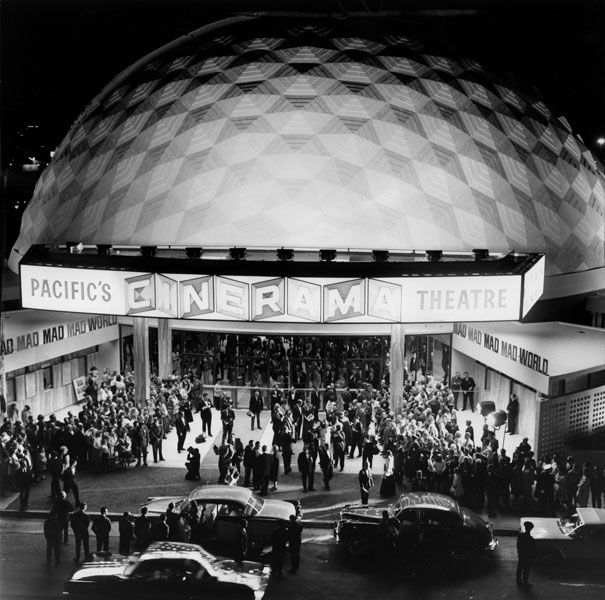
The premiere of It's a Mad, Mad, Mad, Mad World at the Dome in 1963.

The premiere of It’s a Mad, Mad, Mad, Mad World at the Dome in 1963.

Becket’s company was one of the major architectural firms in the city at that time, and played a large part in setting the look and tone of mid-century Los Angeles. To my mind the Dome is something of a companion piece to one of their earlier signature creations, the Capitol Records Building, which is just a few blocks away on Vine. Together these two icons helped to define space age architecture.

Of the theatres that were constructed to show films in the Cinerama process, only a handful are left today. The Dome is a unique creation designed by one of the most important architectural firms in the city’s history. That’s why so many of us got so crazy when we saw the initial plans to renovate it. I will always be grateful to Pacific for listening to the community and preserving the Dome.

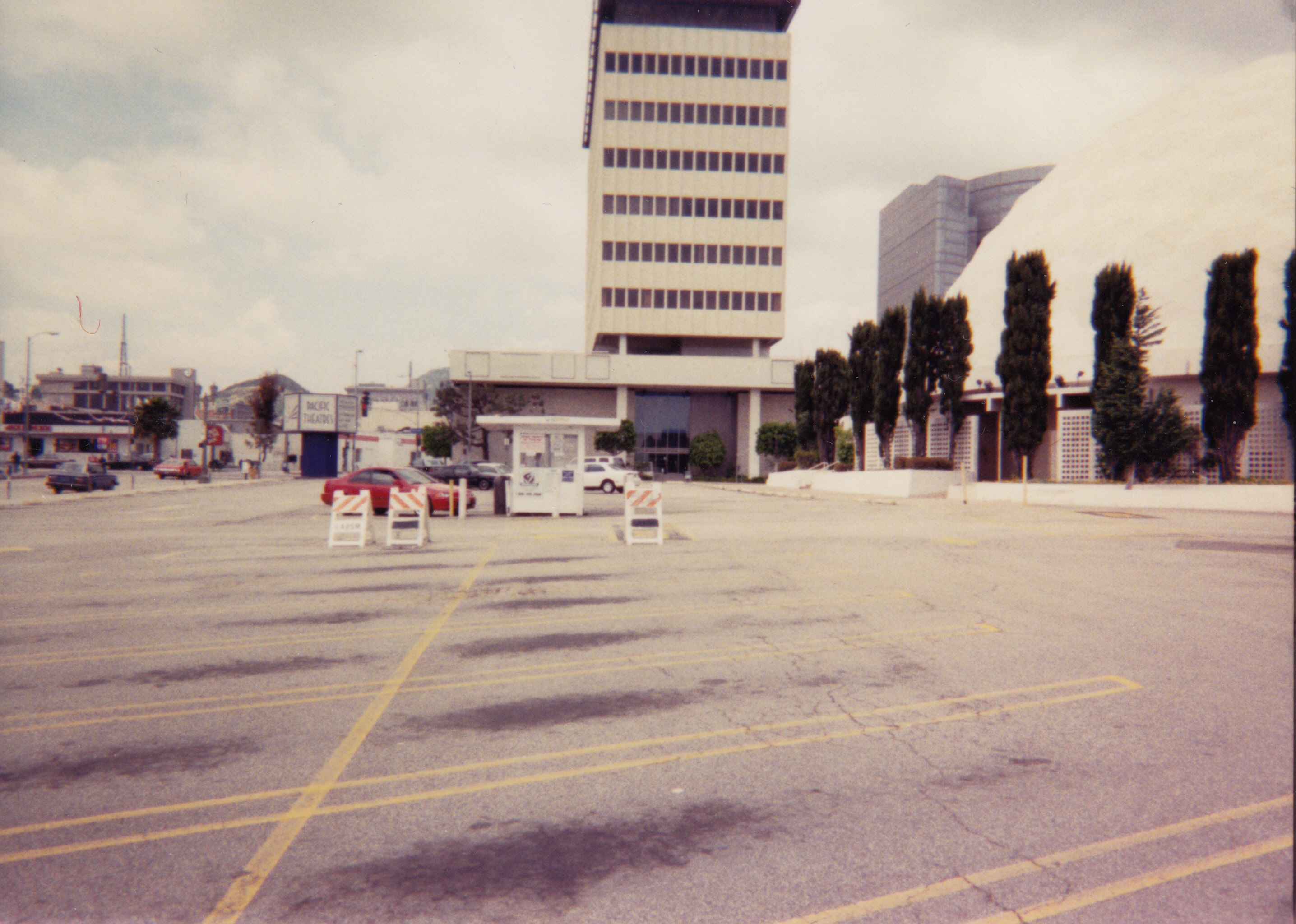
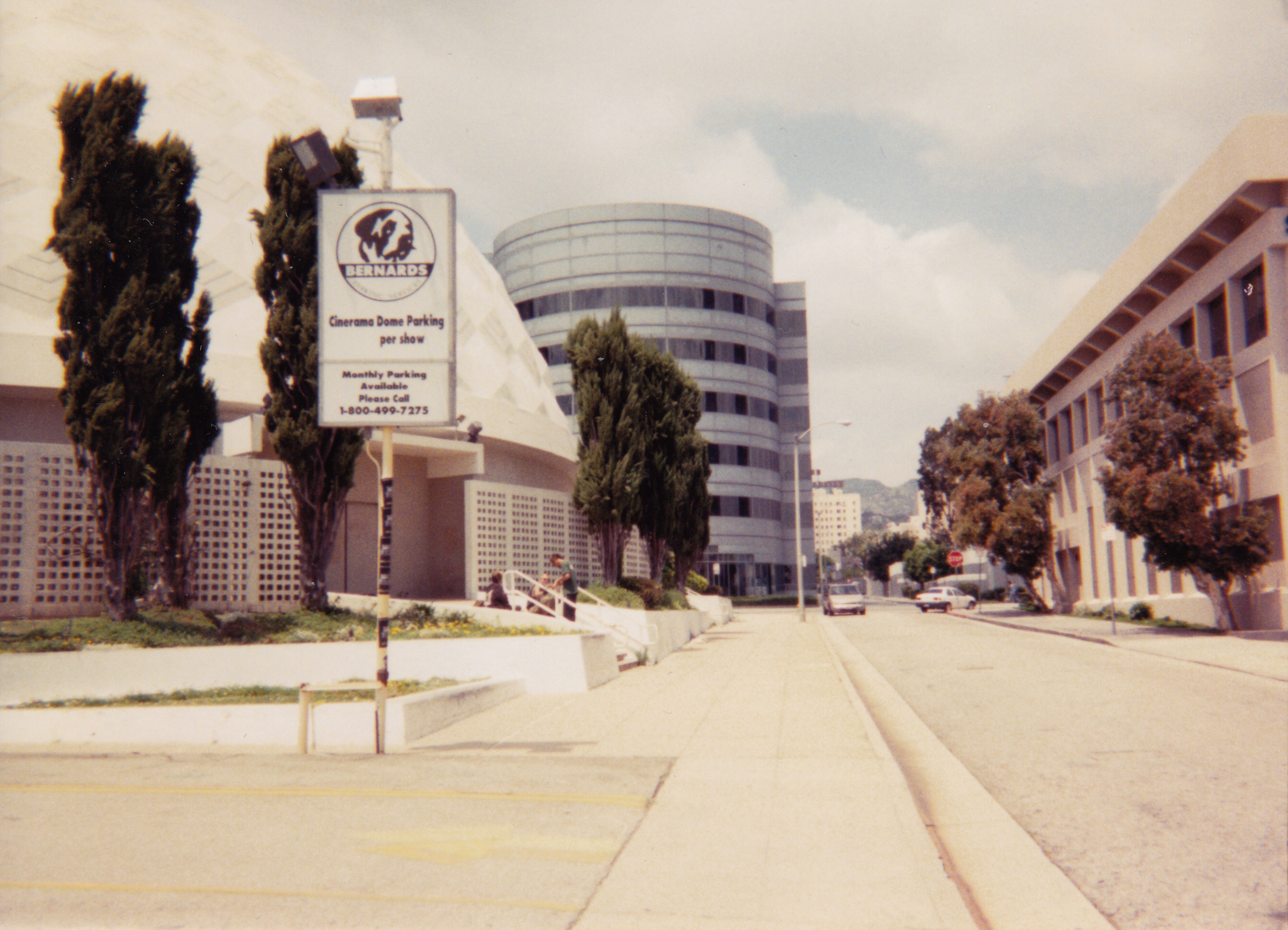
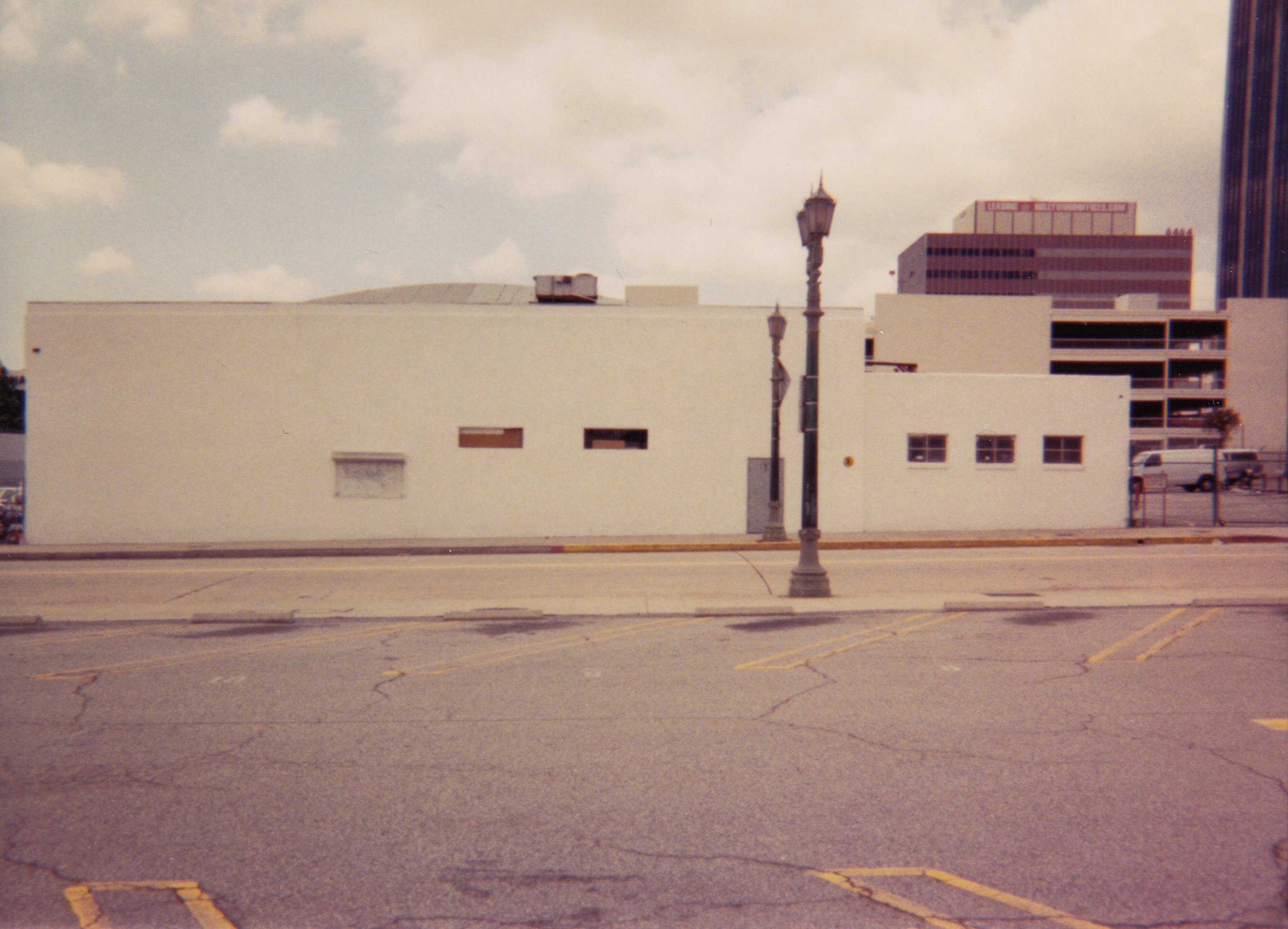
The two pictures above are from the Los Angeles Public Library photo archive. The first shows the dome under construction. It was taken by Howard D. Kelly in 1963. The second shows the premiere of the film that the Dome opened with, It’s a Mad, Mad, Mad, Mad World. It was also taken in 1963, but no photographer is credited. Below are some photos I took of the Dome and the area surrounding it back in 1998. Sorry that the quality isn’t better. They were taken with a disposable camera, and have faded over the years. A couple of photos were taken from Morningside Court, which used to go through to De Longpre, but was closed off with the construction of the Arclight parking structure.

February, Nineteen Ninety Nine

For weeks I’ve been meaning to write abut the latest on the Cinerama Dome. Here it is.

Apparently the people from Pacific Theaters sat down and talked with the preservation people, and the end result was Pacific gave up a lot of the changes they were going to make. As I recall, these are some of the things pacific agreed to.

The entrance will remain at the front of the theatre.

The layout of the seating will stay basically the same, though they will be putting new seats in.

They won’t alter the ceiling of the auditorium.

And —

They’ll keep the curved screen.

I’m actually really grateful to Pacific for giving in on all this stuff. I doubt they understand why the Dome is such a great piece of architecture, so from their point of view the preservationists are going crazy over nothing.

Of course, we still don’t know what the Dome is gonna look like when they’re through. But at this point I’m cautiously optimistic.

The front of the Cinerama Dome in 1998.

The front of the Cinerama Dome in 1998.

Screen walls and landscaping on the periphery of the Dome.

Screen walls and landscaping on the periphery of the Dome.

A shot from the parking lot, looking north to Sunset.

A shot from the parking lot, looking north to Sunset.

A shot of Morningside Court, looking toward Sunset.

A shot of Morningside Court, looking toward Sunset.

Another shot of Morningside Court, this time looking in the opposite direction towards De Longpre.

Another shot of Morningside Court, this time looking in the opposite direction towards De Longpre.

This was taken from the parking lot behind the Dome, facing west.  The site just across the street is where Amoeba now stands.

This was taken from the parking lot behind the Dome, facing west. The site just across the street is where Amoeba now stands.

This shot was taken facing the opposite direction, now looking across the parking lot towards Morningside Court.

This shot was taken facing the opposite direction, now looking across the parking lot towards Morningside Court.

Hollywood Journal – Relaxing at the Roosevelt

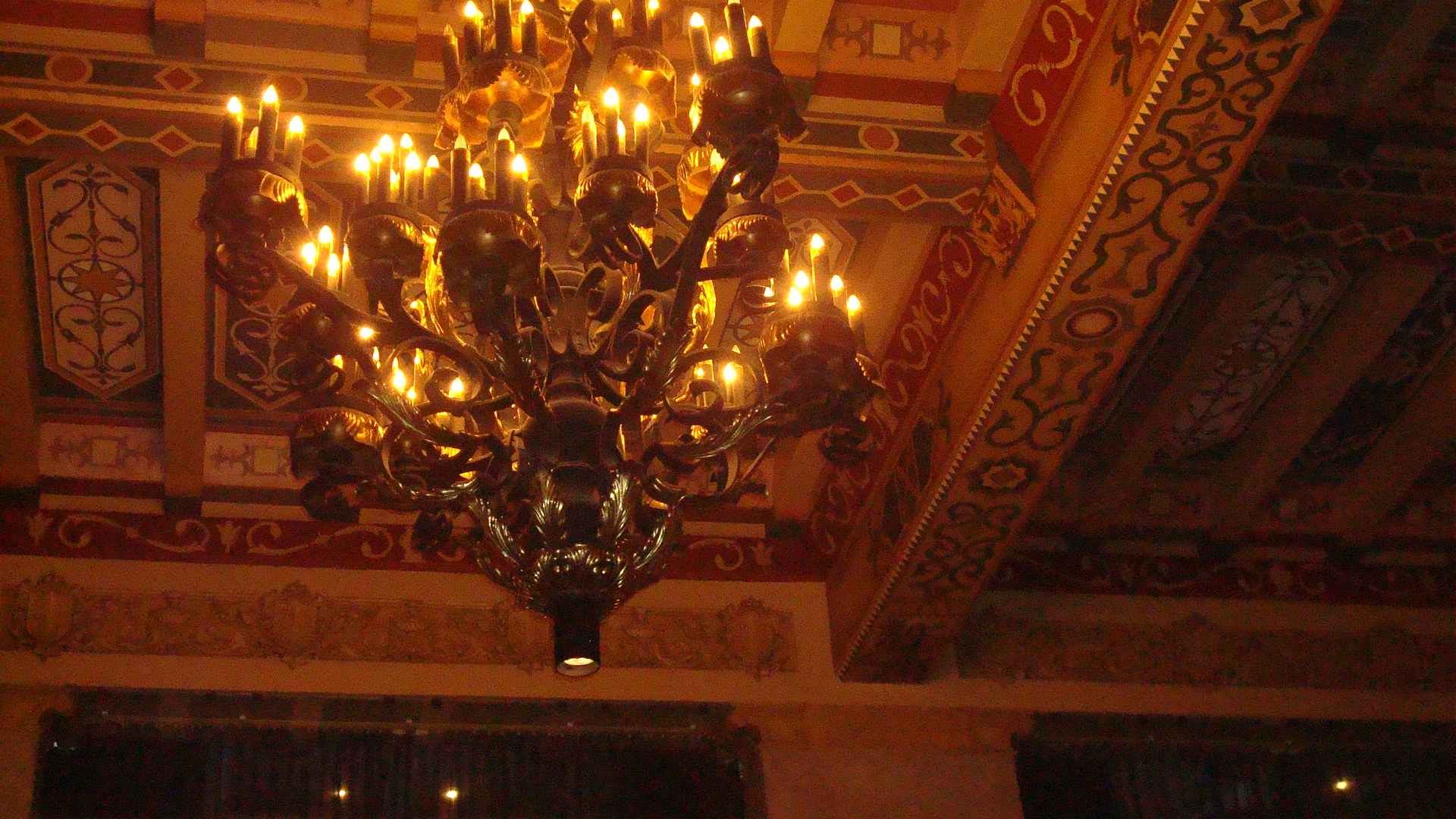
Another visit to the lobby of the Roosevelt Hotel. I used to like hanging out there back in the nineties because the lobby was big and dark and quiet. It was a great place to chill, in large part because it was usually pretty empty. Since then it’s been remodelled, and they’ve managed to attract a young, hip crowd, so the place is a little more lively these days. I’m glad they’re doing more business, but I spend less time there now.

The photos were taken recently, and while the lobby is substantially the same, it has changed some in the past fifteen years. And as I’ve mentioned before, in transcribing these entries from my journal I’ve left the errors alone. The correct spelling for the name of the hotel is “Roosevelt”.

January, Nineteen Ninety Nine

Today I was on Hollywood Boulevard. I think it was around four o’ clock. And I decided to go to the Rooseveldt. Have a beer. Kick back. It’s been a while since I stopped in there.

The lobby was pretty empty. I walked up to the bar. Ordered a beer. Then strolled over to the table by the piano and sank into a big, soft chair.

It was so nice. So quiet. I sat there looking at the patterns on the ceiling. I finished my beer and thought, what the hell, why not have another.

Rsvt Chand

The guy comes in to play the piano. I ask him if he knows any Mancini. He says not a lot. I mention Charade. No dice. He throws out a few titles. Pink Panther. Baby Elephant Walk. I’m disappointed but I settle for The Pink Panther.

There are quite a few people in the lobby by now. A man with a cell phone sitting across the table from me. At the next table over a woman reading a paperback. And there are a couple of guys sitting to my left. One of them is talking about Barry Fitzgerald. He’s trying to name movies Fitzgerald was in. The man with the cell phone jumps into the conversation. He offers Going My Way. Then he says Ten Little Indians. I want to correct him, he’s thinking of And Then There Were None. But these days I’m reluctant to start chatting with strangers.

So they go on talking. The guy who was going on about Barry Fitzgerald says he works in movies. I think he said either as an actor or a stunt man. The guy with the cell phone says he’s a producer. In the exchange that follows I’m obviously not setting down what was said verbatim. I’m just trying to give an outline of the conversation.

The actor (stunt man?) asks,

What did you produce?

The producer answers,

The Buddy Holly Story.

At this point I can’t restrain myself.

You produced The Buddy Holly Story? I say. I liked that movie.

I never thought it’d make any money, the producer says.

What else did you make?

Diner.

That was a cool movie.

Who was in Diner, asks the actor.

Oh, wow, a lot of people. Mickey Rourke.

And Kevin Bacon, says the woman with the paperback.

Now I know there are a lot of people in this town who will claim to have produced, directed, written all sorts of famous films. Who knows if this guy was legit. But I think I was on my third beer by that time and obviously not feeling very skeptical. The guy probably could’ve said he produced Dinner at Eight and I would have believed him.

The conversation moves on to other subjects. Italian food in New Jersey. Mexican food in LA. I ask the pianist for something by Gershwin. He plays Someone to Watch over Me.

I felt pretty good when I left.

Rsvt Chat

Art Is Everywhere

Sunset & Hillhurst, in the alley behind the Vista

Sunset/Hillhurst, in the alley behind the Vista

In most major cities, we can see art all around us. Any blank wall can end up being a canvas for a kid with a can of spray paint. I’m not talking about the taggers who just scrawl their name anywhere they can find the space. I’m talking about artists who have an eye and a style and maybe even something to say.

Here are some shots I’ve taken of street art in the Hollywood area. They cover a wide range, from paintings by professional artists who’ve been commissioned to decorate a building, to kids working on a blank wall in a vacant lot in the middle of the night. Below each photo I’ve given the approximate location, and I’ve included the artist’s contact info when it was available.

Hollywood & Normandie

Hollywood/Normandie

Hollywood/west of Normandie

Hollywood/west of Normandie

Hollywood/St. Andrews

Hollywood/St. Andrews

Here’s a guy who knows how to get attention.

Hollywood/St. Andrews

Hollywood/St. Andrews

But, as you can see below, he’s not the only person who’s been working on that wall.

Hollywood/St. Andrews

Hollywood/St. Andrews

Hollywood/Harvard

Hollywood/Harvard

I love this one because it’s totally ephemeral. Drawn in chalk, it’ll be gone the next time it rains. That is, if it ever rains in LA again.

Hollywood/Western

Hollywood/Western

Hollywood & Western

Hollywood/Western

Artist’s Web Site: ELMAC

The following images are painted on a building that sits right next to the Hollywood Freeway. I later learned that this was My Friend’s Place, an organization that helps homeless youth. They provide meals, and also assist young people with health care and housing. Sounds pretty cool. For more information, click here.

Hollywood/Hollywood Freeway

Hollywood/Hollywood Freeway

Below is a closer look at the words on the boy’s shirt.

same as above

same as above

same as above

same as above

Artist’s Web Site: Bumblebee

Hollywood/Highland, behind First National Bldg.

Hollywood/Highland, behind First National Bldg.

I was walking to the subway one morning and saw this at Highland and Franklin. It didn’t hold up for very long, but it was cool while it lasted.

Highland/Franklin

Highland/Franklin

Artist’s Web Site: The Artist Marie

This image seemed like a good one to close with.

Highland/Franklin, in front of the mini-mall

Highland/Franklin, in front of the mini-mall

Artist’s Web Site: Skechy