Seen on the Street

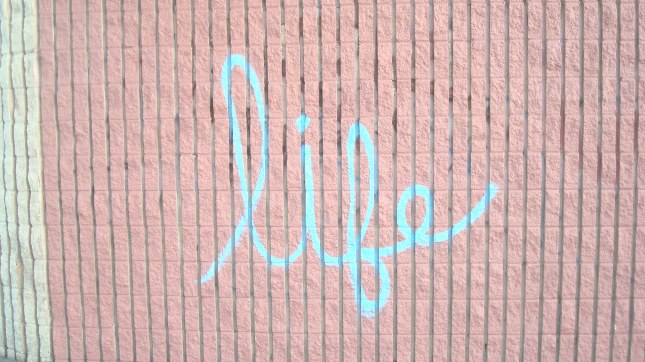
Unknown Artist, Sunset west of Highland

Unknown Artist, Sunset west of Highland

Nothing against museums, but there’s something really cool about artists who put their work right out on the street. A, it’s free. B, it makes walking around the city so much more interesting. And C, the best street art engages you in a way that’s more immediate than the experience you get in a museum. You’re strolling down to the liquor store to get a six pack and bang, you run up against something somebody stuck on the side of a building. Or a chalk drawing on the sidewalk. Or a billboard towering overhead.

It’s interesting how people’s attitudes to street art have changed. Back in the 70s guys who went around blasting walls with spray paint were vandals. Ten years later a lot of those same guys were showing their stuff at the Whitney Biennial. You can still find artists who sneak around with an aerosol can in the dead of night, but you can also find artists doing large scale public projects with backing from a foundation.

Here’s a sampling of some stuff I’ve found roaming around LA….

People are constantly pasting stuff up all over Hollywood. A lot of it’s junk, but this caught my eye one morning as I walked past the Pacific Theatre.

Unknown Artist, Wilcox north of Hollywood

Unknown Artist, Wilcox north of Hollywood

These images of bottles have been showing up in various places over the past year or so. Honestly, I can’t figure out what it’s about, but I think they’re kind of cool.

Unknown Artist, Beverly near Detroit
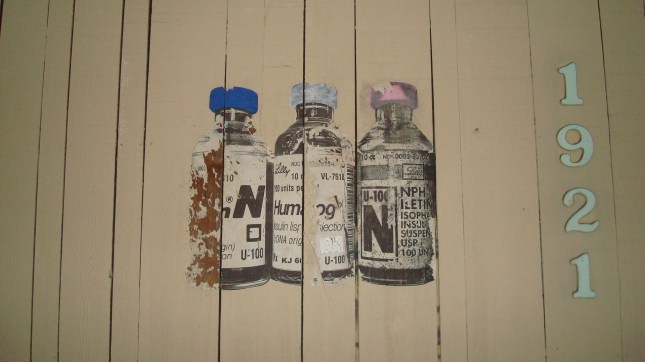
Unknown Artist, Beverly near Detroit

Unknown Artist, Cahuenga near Franklin

Unknown Artist, Cahuenga near Franklin

Unknown Artist, Cahuenga near Franklin

Unknown Artist, Cahuenga near Franklin

Is anything more tempting to guerilla artists than an abandoned structure? This building at the corner of Argyle and Yucca was demolished a while ago, but I got a few photos before it disappeared.

Unknown Artists, Yucca and Argyle

Unknown Artists, Yucca and Argyle

This is a shot of the same building from the freeway.
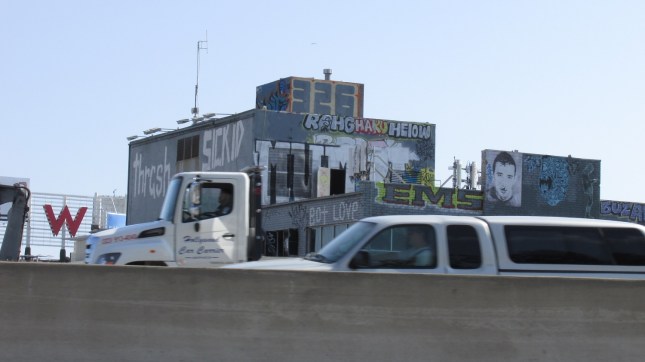
Unknown Artists, Yucca and Argyle

Unknown Artists, Yucca and Argyle

Some artists keep it simple and rough.
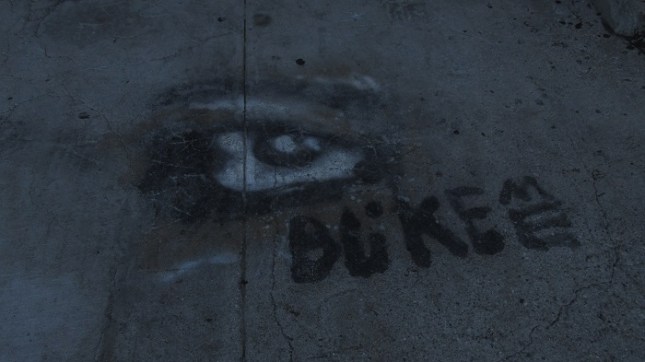
Unknown Artist, Wilcox north of Sunset

Unknown Artist, Wilcox north of Sunset

Others spend a lot of time and effort to make it as polished as possible.

D*Face, Santa Monica near Flemish Lane

D*Face, Santa Monica near Flemish Lane

The image above is by D*Face, a classic example of someone who started out doing his own thing on the street, and over time became an established professional. To see more of his work, check out his site.

D*Face

Sometimes it’s a political statement.
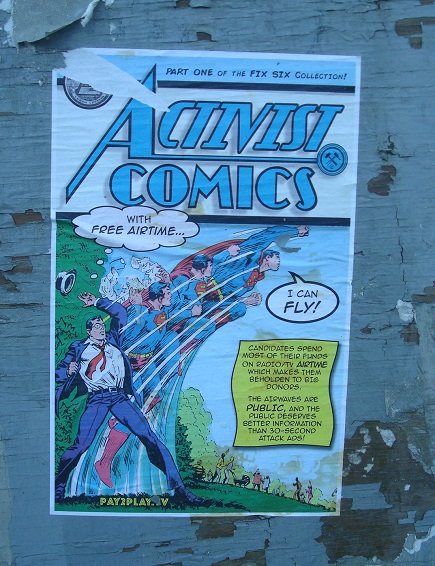
Unknown Artist, Wilcox near Hollywood

Unknown Artist, Wilcox near Hollywood

Unknown Artist, Wilcox near Franklin

Unknown Artist, Wilcox near Franklin

Other times it’s just a statement.

Unknown Artist, Selma and Ivar

Unknown Artist, Selma and Ivar

Unknown Artist, Sunset near Gardner

Unknown Artist, Sunset near Gardner

I was out in Boyle Heights a while ago and I saw these banners decorating a fence that surrounded a construction site.
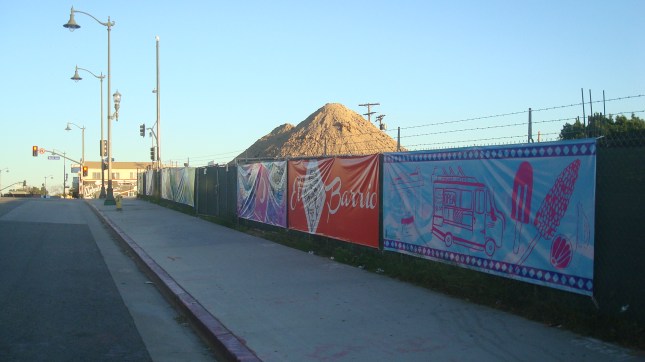
A row of banners at a construction site, First and Boyle
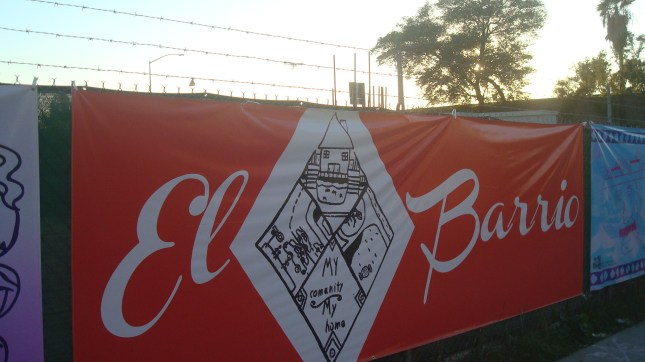
A row of banners at a construction site, First and Boyle

Lesther Cabrales, First and Boyle

Lesther Cabrales, First and Boyle

Izzy Jaquez and Diego Escamilla, First and Boyle

Izzy Jaquez and Diego Escamilla, First and Boyle

I was told that the project was put together by Self Help Graphics, a non-profit that’s been serving local communities for over forty years. Here’s the link.

Self Help Graphics & Art

Found this at a construction site in Downtown. Somehow it really seems to capture the vibe in LA right now.
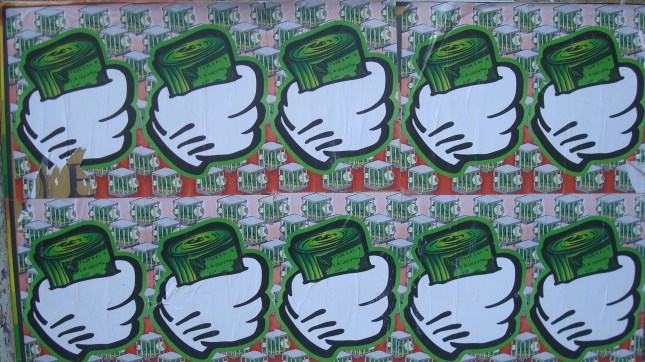
Unknown Artist, Fifth west of Broadway

Unknown Artist, Fifth west of Broadway

I think I saw this at a construction site on Hill. Honestly, I can’t remember exactly where it was.

Unknown Artist, Unknown Location

Unknown Artist, Unknown Location

Obviously phone kiosks aren’t getting a lot of use these days. Local artists have come up with lots of different ways to transform them.
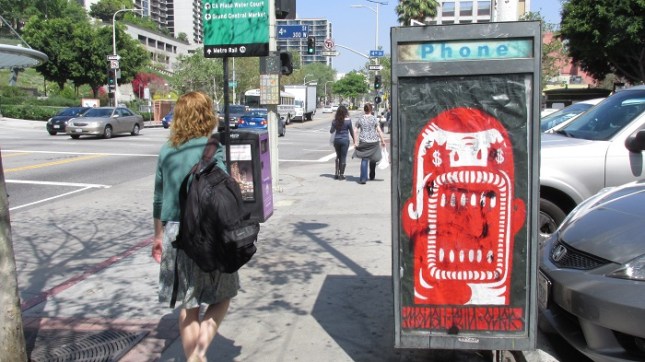
Unknown Artist, Hill near Fourth

Unknown Artist, Hill near Fourth

I’d seen these giant faces peering down from walls around town, but I didn’t realize they were part of a project by this guy who calls himself JR. Follow the link below to find out more. There’s a video you can watch that gives the lowdown.

Wrinkles of the City at DesignBoom

JR, Fifth near Main

JR, Fifth near Main

JR, Alameda and Traction, rear of building

JR, Alameda and Traction, rear of building

The image above can be found in back of Angel City Brewery on Alameda. And the mural you see below is right next to it.
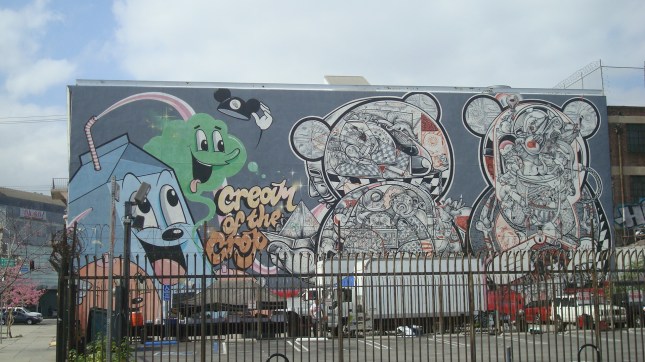
Dabs & Myla and How & Nosm, Alameda and Third, rear of building

Dabs & Myla and How & Nosm, Alameda and Third, rear of building

Finally this billboard by Robert Montgomery on Broadway near the UA Theatre. Not much to say about this one. I’ll let the work speak for itself.

Robert Montgomery, Broadway near Ninth
Robert Montgomery, Broadway near Ninth

The Broad

Brd 10 Main

Last week I finally made it down to The Broad. I lucked out because some friends had an extra ticket and invited me along. I really recommend making a reservation. The lines for visitors who don’t have one are still super long.

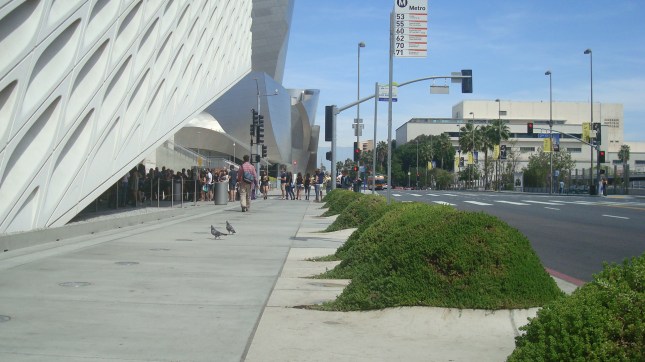
The front of the building on Grand Ave.

The front of the building on Grand Ave.

Riding up the escalator to the galleries.

Riding up the escalator to the galleries.

I got there a little early and spent some time just checking out the building’s exterior. It’s gorgeous. The two design firms that worked on the project, Diller Scofidio + Rensler and Gensler, worked from a concept they call “vault and veil”. The vault is where the museum stores its collection, and instead of trying to hide it, which is the standard approach, they allowed the structure of the vault to play a major role in shaping the space. The veil is the building’s outer layer, a porous sheath that lets natural light filter into the galleries.

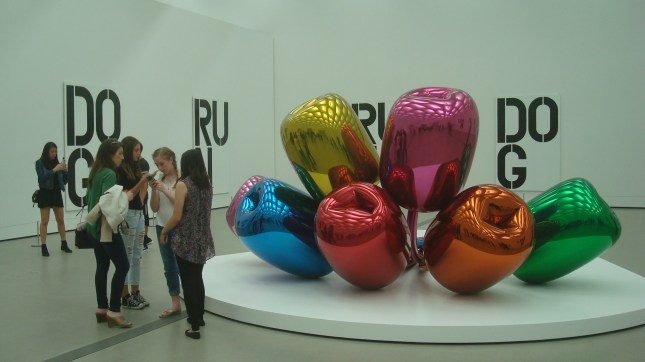
Jeff Koons, Tulips

Jeff Koons, Tulips

A room full of Warhol.

A room full of Warhol.

Mark Bradford, Corner of Desire and Piety

Mark Bradford, Corner of Desire and Piety

Mark Tansey, Forward Retreat

Mark Tansey, Forward Retreat

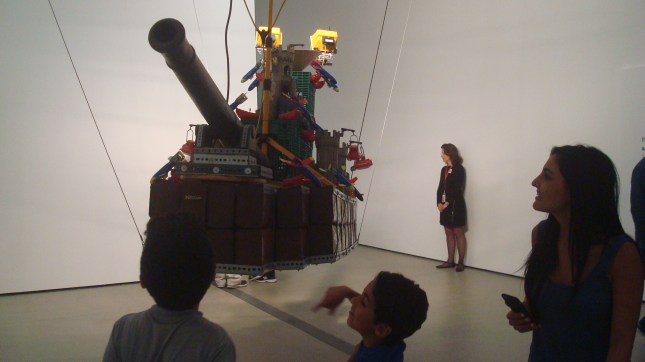
Chris Burden, Bateau de Guerre

Chris Burden, Bateau de Guerre

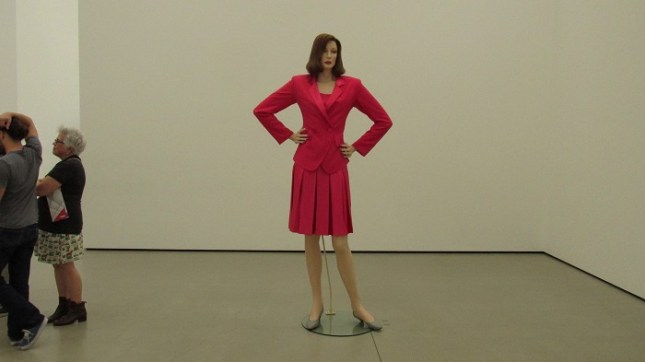
Looking at the works in Broad’s collection, it’s clear that the guy’s got a keen eye and an open mind. Unlike the super rich predators who’ve crowded into the art market looking for status symbols and investment opportunities, Broad is passionately interested in the ways that artists express themselves and interact with the world around them. Wandering through the galleries, I was struck by the depth and diversity of the works on view, but I was even more impressed by how engaging this innaugural show is. It can be tough just getting the general public to take a look at contemporary art. Believe it or not, some people don’t get excited about looking at massive hunks of sheet metal or walking into galleries filled with rotting vegetables. But the wide variety of pieces in this first show offer a range of experiences, and there’s something for everybody. If you’re an art scenester looking for challenging conceptual stuff, Mark Bradford takes over a wall to talk about post-Katrina economic realities in New Orleans. And if you’re a teen-age pop culture freak, you’ll probably want to whip out your phone and snap a few shots of Takashi Murakami’s giant psychedelic mushrooms. With works on display by Kara Walker, Joseph Beuys, Susan Rothenberg, Chris Burden, Ed Ruscha, Yayoi Kusama, Mark Tansey, Cady Noland and dozens of others, you’re sure to find something that will grab your attention.
Thomas Struth, Audience II (Galleria dell'Accademia) Florenz

Thomas Struth, Audience II (Galleria dell’Accademia) Florenz

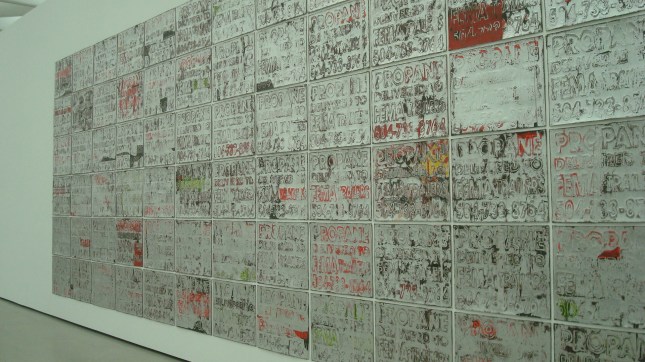
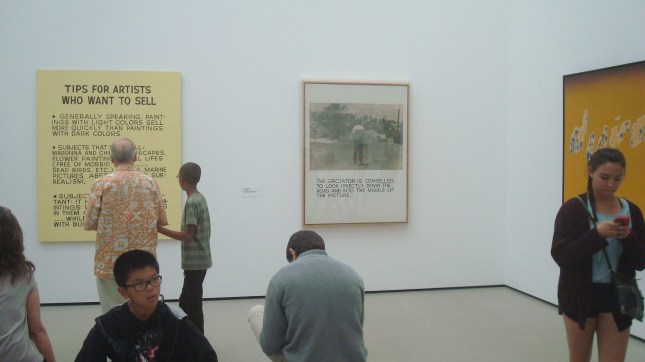
Art you can read, from John Baldessari and Ed Ruscha.

Art you can read, from John Baldessari and Ed Ruscha.

Charles Ray, Fall '91

Charles Ray, Fall ’91

I’m really grateful to Eli Broad for pulling this whole thing together. Aside from the thrill of seeing so much amazing art gathered together in one place, I was excited to see crowds of visitors milling through the galleries. And these people weren’t just passively strolling from one room to the next. They were posing with the art, laughing at the art, and talking about the art. This really is a museum for the people.

If you haven’t gone yet, what are you waiting for?

The Broad

Park located at the side of the building.

Park located at the side of the building.

1939 Meets 1984

US Wide

Not too long ago I was taking the train to visit some friends. I got to Union Station a little early, so I thought I’d buy a paper to read on the trip. But as I was walking in the direction of the newsstand, I got a small shock. It wasn’t there any more.

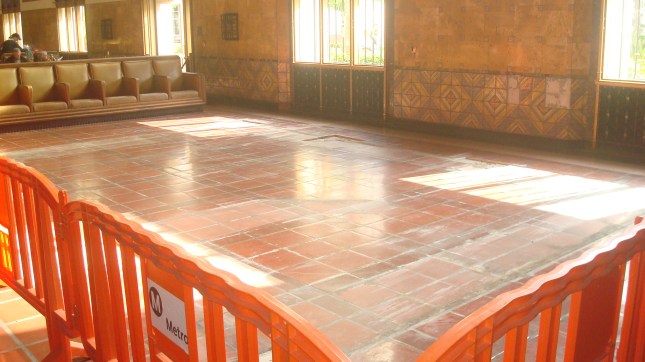
The place where the newsstand used to be.

The place where the newsstand used to be.

Now, I know people don’t read papers like they used to, so maybe I’m just a dinosaur living in the past. This newsstand did have a pretty good selection of newspapers and magazines, but it’s not like it was a historic landmark. It was just a tiny little shop that sold the kind of stuff you buy when you’re waiting for a train.

But that isn’t the only thing that’s changed at Union Station. In fact, the whole feel of the place is changing, and I can’t say I like it.

Completed in 1939, Union Station was designed by a group of architects led by John and Donald Parkinson. It brings together a number of different styles that were popular at the time, including Streamline Moderne, Mission Revival and Art Deco, and it has the feel of a massive museum devoted to a bygone era. It used to be a great place to chill. I liked hanging out there. I’d show up early if I was taking the train and relax in the old leather chairs. Read a paper. Have some coffee. Watch the sunlight streaming down through the huge windows.

These days it doesn’t feel so relaxing. In the first place, the chairs are now cordoned off and there are guards making sure that only people with a ticket get in. I know there have been problems with homeless people camping out there and asking travellers for spare change. And I still remember the time I was waiting for a train and there was a guy who kept screaming really loud. He sat on the floor against one of the columns while two guards tried to talk to him, and he just kept on screaming. So I know there’s a reason for maintaining some restrictions, but it makes the place feel a whole lot less inviting. And let’s be honest, this approach is typical of the City of LA. Rather than actually trying to deal with the homeless, the addicted and the mentally ill, the City just shuts them out. Putting up another barrier doesn’t solve the problem. It’s just a way of avoiding it.

Waiting areas are now cordoned off.

Waiting areas are now cordoned off.

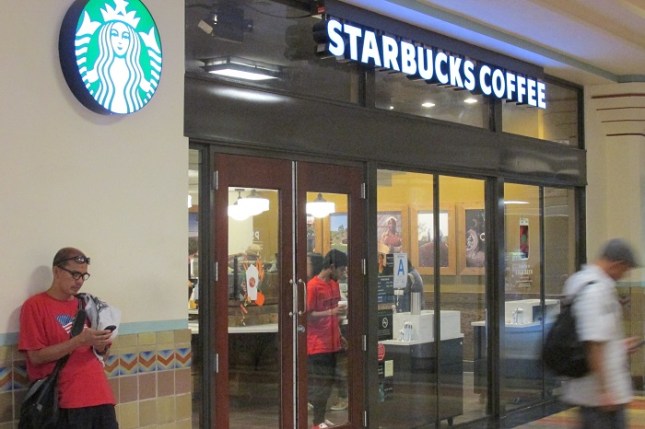
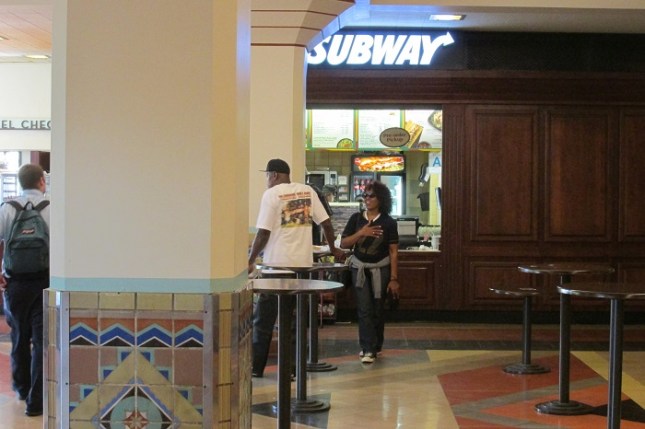
And what about the bagel shop? There used to be a little mom and pop place that sold a wide variety of bagels, and often when I was taking the train that’s where I’d stop to pick up some breakfast. It disappeared a while ago. What do we have in its place? You guessed it. Starbucks. We lost a little independent business that sold good bagels, and now we have another corporate coffee house. In fact, more and more Union Station has been taken over by chains.

Corporate coffee...

Corporate coffee…

...corporate sandwiches...

…corporate sandwiches…

...corporate snacks.

…corporate snacks.

I used to like hanging out in Union Station, but not so much any more. These days it’s kind of like spending time in a detention center that’s attached to a strip mall. The vibe of the place has changed. It feels colder. More corporate.

But I shouldn’t be surprised. Isn’t that what’s happening to the whole country?

Talking About Displacement

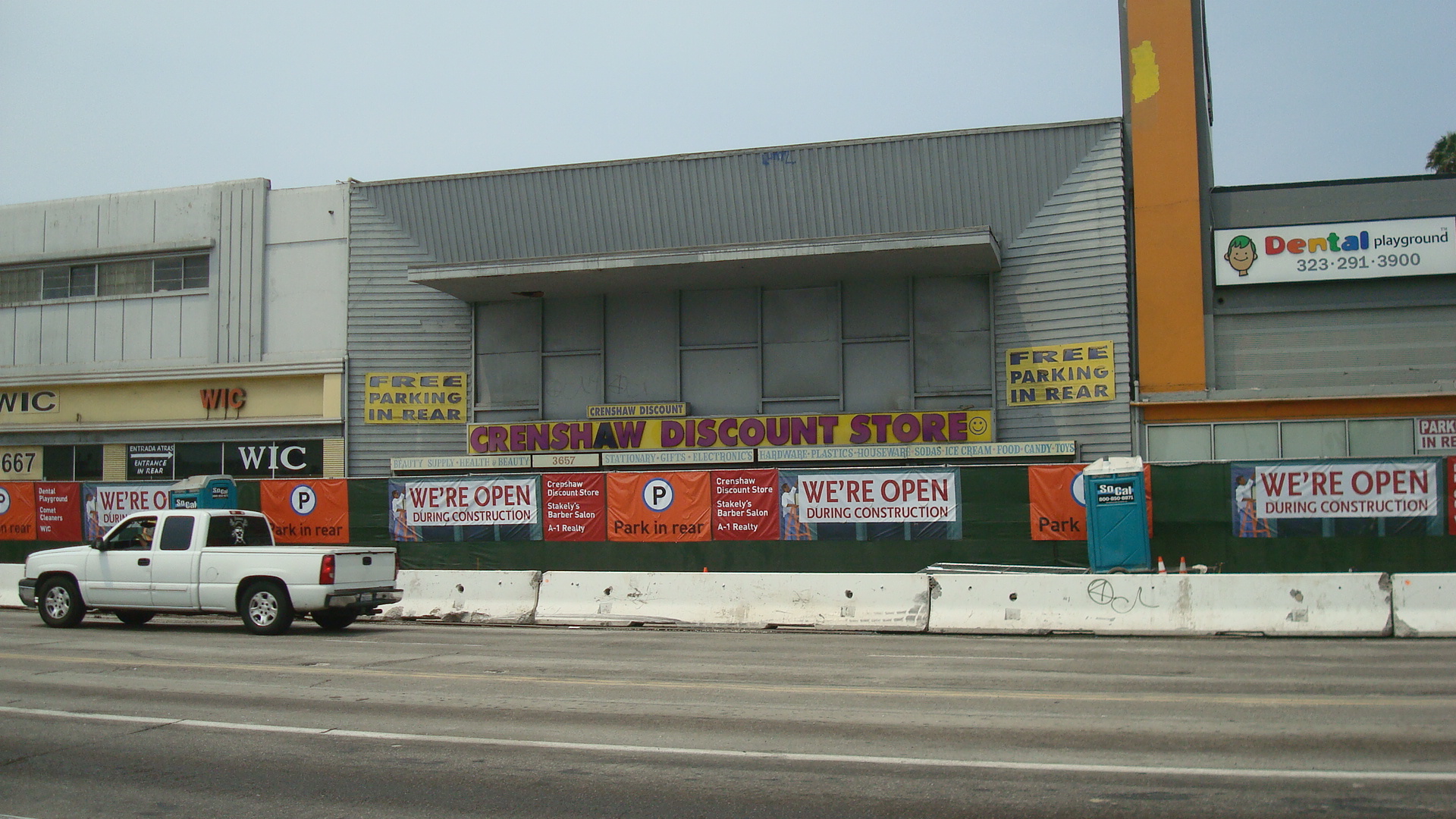
MTA construction along Crenshaw Blvd.

MTA construction along Crenshaw Blvd.

Speaking at a recent Los Angeles Current Affairs Forum, MTA CEO Phil Washington talked about how the growth of LA’s transit network has been accompanied in some areas by gentrification and displacement. Washington is concerned about the fact that low-income residents are being pushed out of the communities they call home, and he wants the MTA to do more to address the problem.

It’s good to hear somebody at the MTA talking about this. The question is what can actually be done. Earlier this year the MTA Board agreed that when new residential units were built on the agency’s land their goal would be to set aside 35% for low-income renters or owners. That’s fine, but it’s not nearly enough. What we really need is to have the City and the County commit to changing their planning practices. Mayor Eric Garcetti and Supervisor Mark Ridley-Thomas serve on the MTA Board. They should both support Washington and take a public stand against displacement. Then they should push for the City and the County to create policies to address the problem.

While gentrification is happening all over the city, the growth of LA’s transit system definitely seems to be a catalyst. Downtown, Koreatown, Hollywood, and Highland Park have already seen thousands of low-income residents displaced. Leimert Park and Boyle Heights seem to be next on the list as the MTA continues its rapid push to expand, bringing an influx of developer dollars to neighborhoods near rail stops. As property values skyrocket, rents go up, too, and low-income tenants who can’t afford to pay must find somewhere else to live. Tenants in rent-controlled apartments can be forced out by landlords who use the Ellis Act to convert their units to condos.

I’m really glad to hear Washington talking about displacement, and I hope others back him up on this issue. This is a conversation we need to have, and it should have started long ago.

MTA construction in North Hollywood

MTA construction in North Hollywood

Flags

Image from the booklet prepared for Trinket

Image from the booklet prepared for Trinket

Yesterday a friend and I went down to MOCA to check out Trinket, an exhibition by Chicago-based artist William Pope.L. The centerpiece is a giant American flag, which is being continually buffeted by the wind from four large fans. The space grows brighter and darker at intervals as rows of lights go through pre-programmed cycles. It’s a pretty interesting show that raises lots of complicated questions about this country. I can’t say I felt emotionally engaged, and this is a problem I have with a lot of conceptual art. But it was well worth the trip, and it was cool to see work by an artist who’s willing to really dig into this country’s psyche.

After hitting MOCA, my friend and I went next door to check out the Japanese American National Museum. We spent some time in the galleries that document the internment of Japanese Americans during WWII. In a way, it was as though this show was the perfect follow up to the one we’d just seen. Both exhibitions make you think long and hard about this country, and some of the darker aspects of our history.

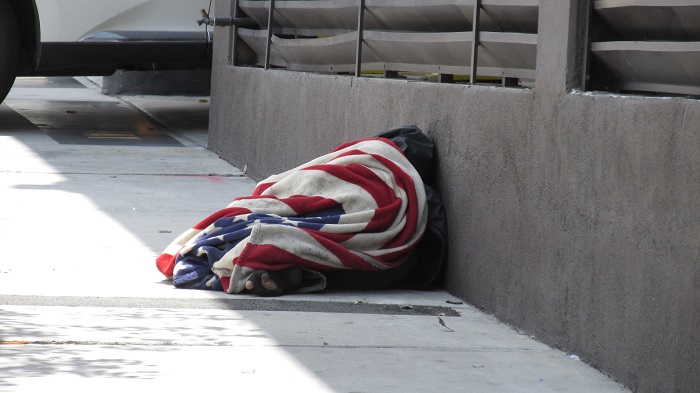
Then we decided to get some lunch. And this was the scene that caught my eye as we started walking down Central.

Man sleeping on Central Ave.

Man sleeping on Central Ave.

A man sleeping on the sidewalk, almost completely covered by an American flag blanket. An odd coincidence, given the shows we’d just seen, bringing up even more questions about where this country’s going.*

If you’re interested in taking a look at William Pope.L’s work, here’s the link for the show at MOCA.

Trinket

And if you haven’t seen the exhibition at the JANM, I urge you to make the trip down there. Even though the internment happened decades ago, the issues the show raises are absolutely relevant to what’s going on in this country now.

Japanese American National Museum

*
Later it occurred to me that the guy on the sidewalk might actually be a part of the show at MOCA. Even if that’s true, it’s a cool way to bring art out of the gallery and into the street.

Pros and Cons of Expanding Transit

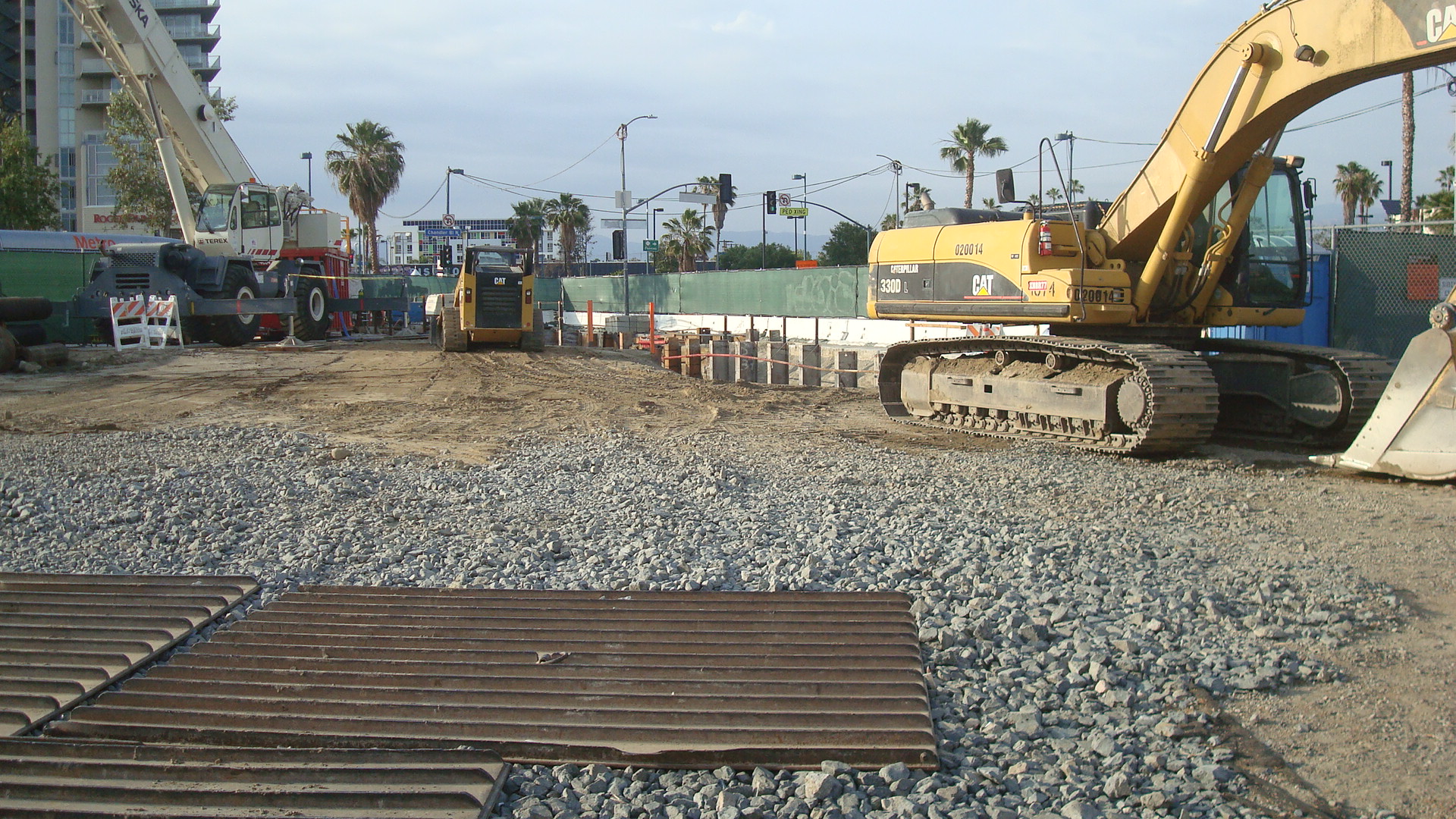
It’s hard to even keep track of all the different projects that the MTA is working on throughout the county. New rail lines are being constructed, old ones are being expanded, and improvements are being made to increase safety and ease of use. The photos below represent just some of the projects that are currently under construction.

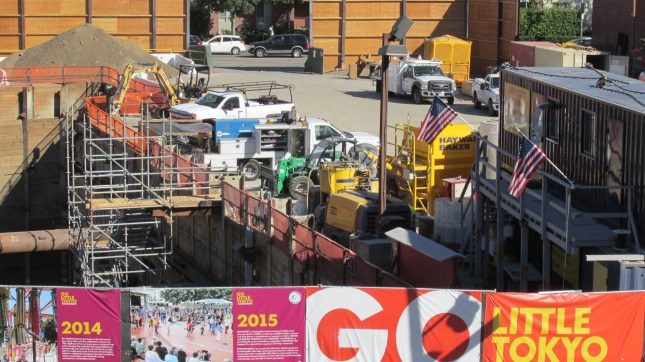
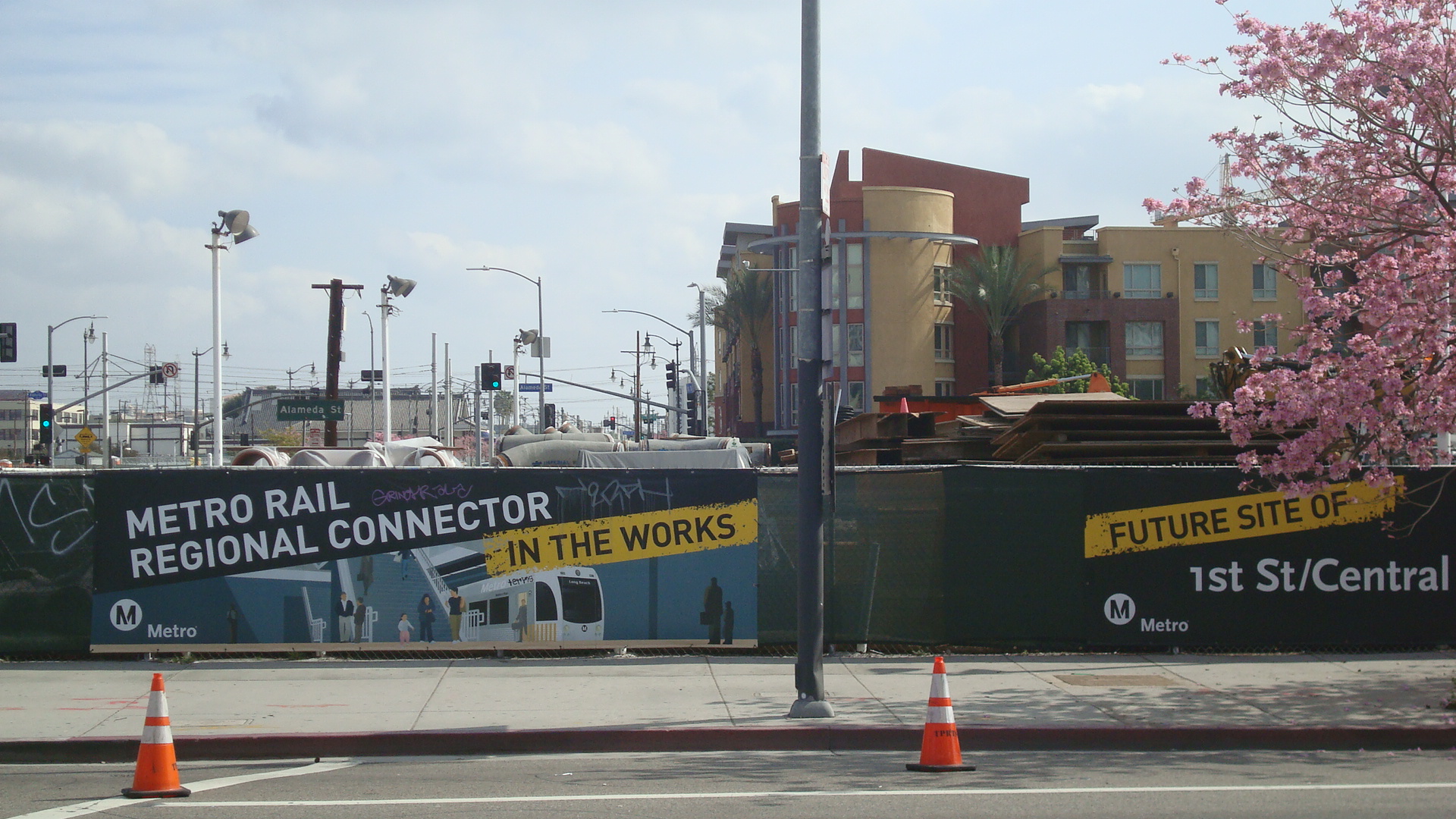
In Little Tokyo, work is beginning on the Regional Connector. This will be a 1.9-mile underground light-rail system that connects the Gold Line to the 7th Street/Metro Station. It will also make it easier for passengers to transfer to the Red, Purple, Blue and Expo Lines.

First and Central, future site of a stop for the Regional Connector

First and Central, future site of a stop for the Regional Connector

Material and equipment stored on the site at First and Central

Material and equipment stored on the site at First and Central

Construction on the Crenshaw/LAX Line started last year. This will be 8.5 miles of light rail running from the Expo Line to the Green Line, with below-grade, at-grade and elevated segments.

Crenshaw/LAX Line construction site at Crenshaw and Exposition

Crenshaw/LAX Line construction site at Crenshaw and Exposition

Another shot of the site from Crenshaw and Rodeo

Another shot of the site from Crenshaw and Rodeo

This project could provide a huge boost to businesses along the line, although there are already signs that it could encourage gentrification which may drive long-time residents and business owners out of the area. Click on the link below to see what may be in store for the community once the line is finished.

Plan to Turn BHCP into a 24-Hour Community

There are smaller projects going forward, too. In North Hollywood, a subterranean tunnel will connect the Red Line station to the Orange Line station just across the street. This is a great idea, and hopefully will reduce the number of riders dashing across Lankershim against red lights in order to make a connection.

Construction of subterranean tunnel in North Hollywood

Construction of subterranean tunnel in North Hollywood

Another shot of construction at the North Hollywood site

Another shot of construction at the North Hollywood site

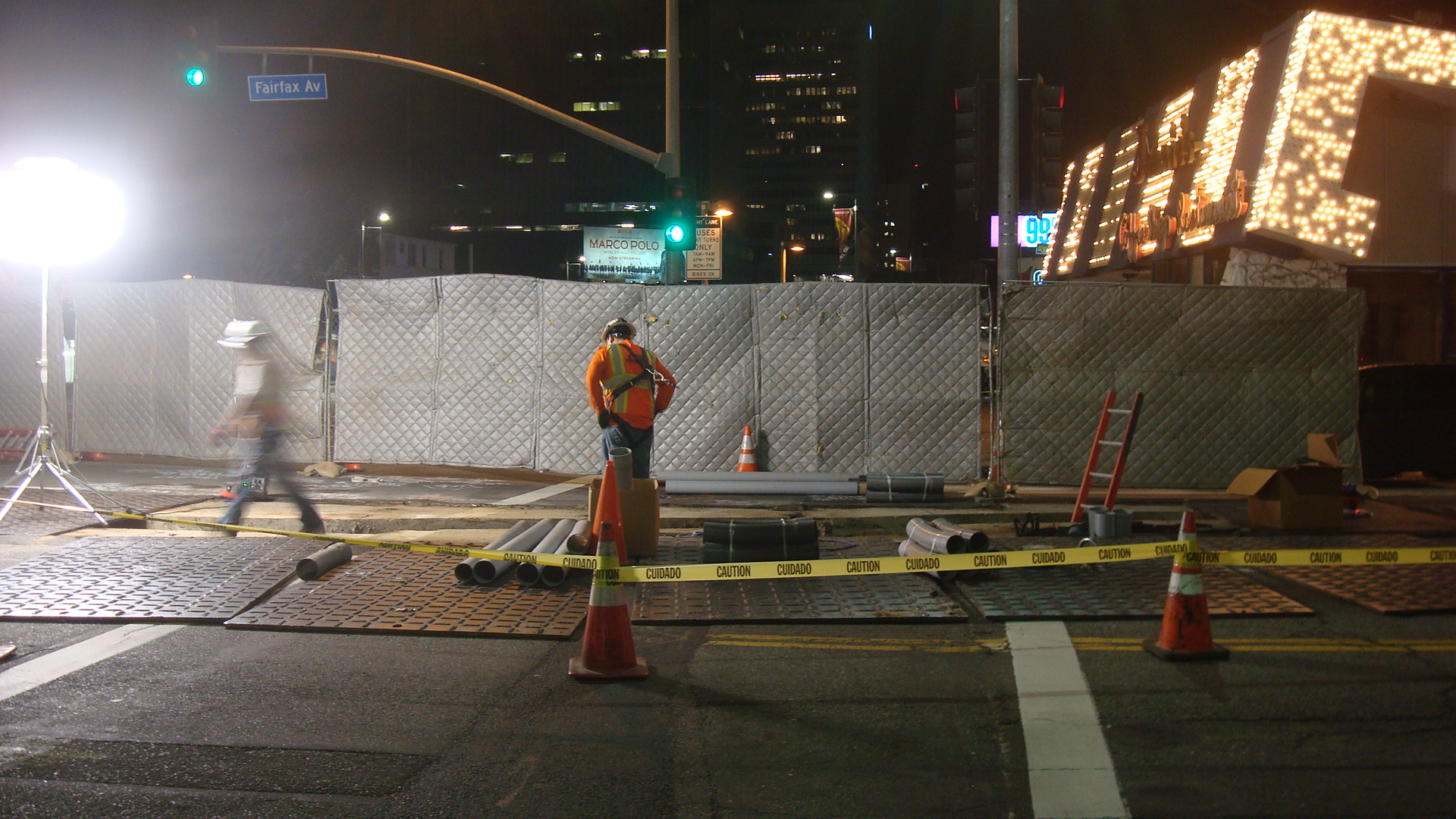
The photos below are a few months old, but they show MTA crews working on the Purple Line expansion at Wilshire and Fairfax. By day, traffic flowed through the intersection as usual. But at night, construction crews would show up with barricades, heavy machinery and blinding lights. This project highlights the problems of constructing a major transit line in a dense urban area.

Crews working through the night at Wilshire and Fairfax

Crews working through the night at Wilshire and Fairfax

Another shot of construction at Wilshire and Fairfax

Another shot of construction at Wilshire and Fairfax

All this sounds great in theory, but this kind of rapid expansion brings plenty of problems with it. I don’t have a car, so I use public transit almost every day. If you ask a simple question like, “Are you glad that the MTA is expanding its transit network?”, I can give you a simple answer like, “Yes.” But if you ask, “What long-term impacts will this expansion have on the City of LA?”, the answers are much more complicated.

In my mind, the biggest thing to worry about is whether or not we can afford all these projects. The MTA is facing a long-term budget shortfall, which could seriously impact its ability to function. Last year they raised the cost of the day pass and the monthly pass by 40% and 30% respectively. But there are almost certainly more increases to come, and it’s uncertain whether riders will pay the higher prices. Here’s an article that LA Streetsblog published in January of this year. It explains that while last year’s fare increase brought revenue up, it may have brought ridership down. If that trend continues, we’re in deep trouble.

MTA Revenue Up, Ridership Down

The MTA is receiving tons of federal funding for these projects, but those funds depend not just on increasing ridership, but also on increasing the share of operating costs covered by fares. If we see a decrease in ridership and/or revenue, we may not be able to count on the money from the feds.

Some people will point to the fact that the LA City Council just voted for a huge increase in the minimum wage, saying that this will enable low-income riders to afford future fare hikes. I don’t buy it. First, the cost of living in LA is increasing at a phenomenal rate. The amount we spend on housing is skyrocketing, DWP rates could easily double or triple, and food is getting more expensive as the impacts of the drought become more pronounced. A significant rise in the cost of public transit will be just one more blow to the bank accounts of minimum wage workers. And there are thousands of MTA riders who don’t even earn minimum wage. LA is the wage theft capitol of the country. Lots of people who work in the restaurant and garment industries are already being paid below the minimum, not to mention the undocumented workers who will take whatever they can get. Many of these people need public transit to get around, and none of them will earn a nickel more after the minimum wage rises.

I’m not arguing that we shouldn’t extend the reach of public transit, but I do question whether this massive expansion is sustainable. I guess all we can do is wait and see.

A Patch of Green in the Grey

LT X05 Pl Trees

Week before last I went downtown to attend a meeting at City Hall. When I got there, the room was packed. It was hard to even find a seat. The zoning administrators started off with the obligatory preliminaries, which went on for quite a while. I looked around me and realized that there were dozens of people besides me who wanted to speak. I knew I was in for a long, dull morning.

So I split. They didn’t need me, and it seemed crazy to sit there waiting for a chance to talk when I knew there were other people who would cover everything I had to say, and probably say it better than I could. I decided to grab some breakfast and find a quiet place to chill. I got some food and some coffee and headed over to the plaza by the Japanese American Cultural & Community Center (JACCC).

LT X10 Pl Guys

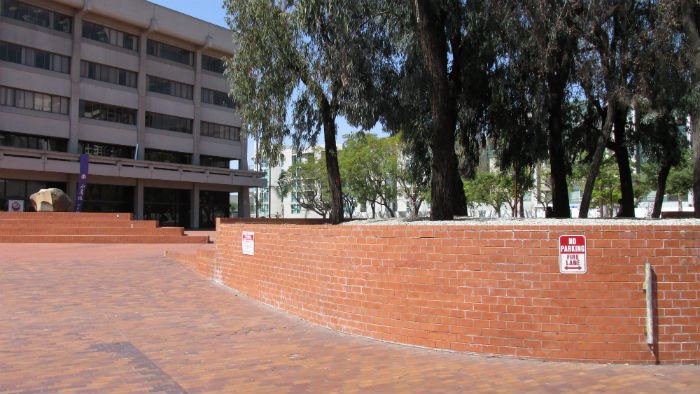
I love to hang out there. It’s spacious and usually pretty peaceful. Unless there’s an event going on, it’s unlikely you’ll find more than a handful of people on the plaza. One side is shaded by tall trees.

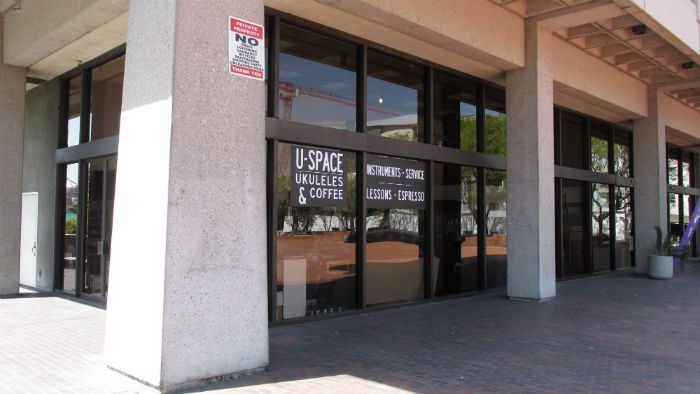
Opposite me I could see people coming and going at the JACCC. They do a lot of interesting programming. They even offer ukulele lessons.*

LT X12 Pl Uk

Take a look at the web site to find out about upcoming events.

JACCC

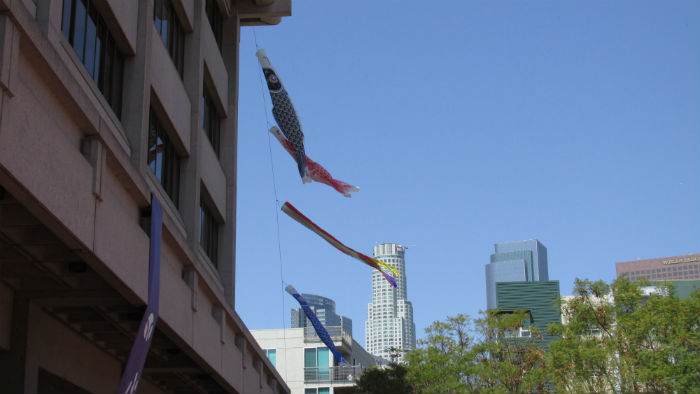
I spent a while looking at the kites on the west side of the building, as they rose and fell with the breeze.

LT X15 Pl Kites

Then I was ready to go. But as I was leaving I saw a grove of trees off to one side. I’d never really noticed them before, so I walked over to take a closer look.

LT X25 Pl Gdn Trees View

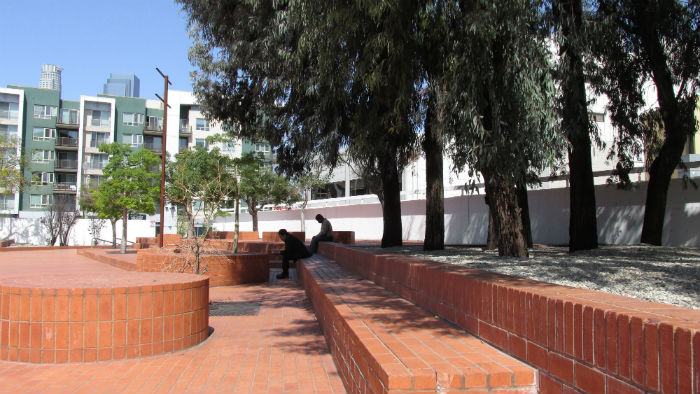
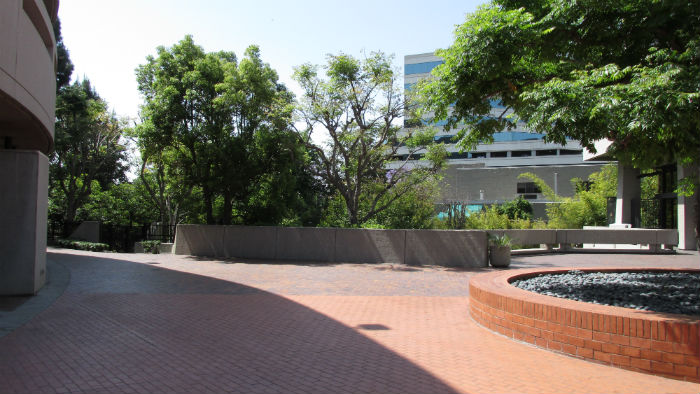
And as I neared the trees, I realized that they were part of a garden that rested just below the level of the plaza.

LT X30 Gdn Wide

As I stood there by the locked gate, an elderly woman walked past and told me that the garden was open to the public. All I had to do was go to the JACCC and sign in. So that’s what I did.

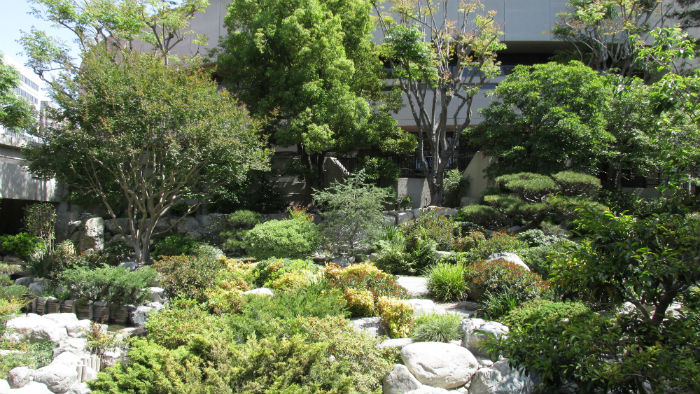
It was so cool to discover this peaceful patch of green in the middle of downtown. I walked around snapping photos and enjoying the quiet.

LT X45 Gdn Path

I’m sure the sound of traffic was all around me, but I was more focussed on the sound of the stream that runs through the middle of the garden. I would’ve loved to spend a while just sitting on a rock and gazing into the water. Unfortunately, I had other stuff to do, so I moved on after about fifteen minutes. But I will be back.

LT X50 Gdn Water

*
In surfing the net, I noticed this comment by a woman who’s apparently a regular at the JACCC. “It is ukulele heaven in DTLA.” An amazing claim, which I can’t verify. You’ll have to check it out yourself.

Putting Lives Back Together

SRHT Main All

LA is suffering from an affordable housing crisis, but there is some good news to celebrate. Thanks to the efforts of the Skid Row Housing Trust (SRHT), formerly homeless people are getting a roof over their heads and a place in the community. The SRHT is using innovative approaches to creating housing in the Downtown area.

Homelessness is a complex problem. It’s not just a matter of giving someone a place to live, because people living on the streets are often struggling with a variety of issues. In the first place, finding a job, which can be tough if you don’t have skills that are currently in demand. Depression, mental illness and substance abuse are also common problems, and these are not solved simply by giving someone the keys to an apartment.

But having a place to live is the first step. And the SRHT offers assistance to people grappling with other issues by creating permanent supportive housing. This means that the residents living in these communities have access to counseling, job training, health care and other services in order to get their life back on track.

The SRHT has been working on two new projects in Downtown. First, let’s take a look at the Star Apartments….

SRHT Star Frnt

The Star Apartments are located near the corner of Sixth and Wall. The project was designed by Michael Maltzan Architecture, and they used an interesting approach. The site was occupied by a one-story building, which they wanted to expand to create more units. The solution they hit on was stacking pre-fab cubes on top of the original structure, which in addition to being fast and economical, resulted in a striking piece of design.

SRHT Star Sky 1

You can read more on Maltzan’s web site.

Star Apartments

Next, check out the New Pershing Apartments at Fifth and Main. This project actually combines two structures, the Pershing Hotel and the Roma Hotel, built in 1889 and 1905, respectively. The new design, by Killefer Flammang Architects, preserves original elements of the exterior. In addition to the residential units, the New Pershing will also offer a courtyard, two recreation decks and planters for gardening.

First let’s look at a couple of shots taken while the project was under construction, back in October of 2014. The first was taken from the corner of Fifth and Main.

SRHT Main Const 1

This next photo was taken on Main, directly across from the building.

SRHT Main Const 2

Now let’s look at the finished project.

SRHT Main Frnt

And another shot from Fifth and Main.

SRHT Main Full

Here’s the article that the Downtown News ran on the New Pershing earlier this month.

A Victorian Victory

You can find more information about the SRHT’s activities by visiting their web page. And if you want to support their efforts, I’m sure a donation would be welcome.

Skid Row Housing Trust

On-Line Archeology

RG Close 1a

I first saw Renée Green’s work years ago at MOCA. It’s hard to describe what she does, because she uses a variety of different media, and her projects don’t fall into any traditional category. My personal take on her work is that it seems like a meditation on the world around us, but not just her own meditation. She invites us to join her. She wants the audience to be a part of the experience.

I found out just recently about a project of hers called code: survey. There’s a physical installation in the cafeteria at Caltrans in Downtown LA, but that’s just one aspect of the piece. Really it’s much bigger than that. The project gathers images, words and sounds from a variety of sources, and allows the viewer to access all of it on-line. It’s like a multi-media collage of the history of LA, but it allows you to choose what you want to explore.

RG Full a

The link is below. You may have to play with it a little to get the hang of it. Each time you click on an image it allows you to go further, reading texts, listening to voices, choosing your own direction and making your own associations.

code: survey, a project by renée green

One piece of advice. Give yourself some time. Once you get started exploring, you may find it’s easy to get lost.

RG Close 2a

A Trip to the Mall

Outside Macy's Plaza in Downtown LA.

Outside Macy’s Plaza in Downtown LA.

I hate shopping. Slob that I am, I’ll wait until my clothes are coming apart before I force myself to go out and buy new ones. And when I do finally get to a store, I grab the stuff I need, pay for it and leave as quickly as possible. I just want to get it over with.

So hating shopping like I do, you probably won’t be surprised to hear that I also hate malls. They seem so big and impersonal. But obviously I’m in the minority, because millions of people flock to malls every week, and seem to enjoy the experience. It’s been said, and I know it’s true, that malls have become the social center for communities, replacing parks and town squares. Whether I like it or not, they’ve become an important part of the fabric of American life.

When I do finally break down and go shopping, I usually head for Macy’s Plaza in Downtown. That’s where I went last Saturday night to pick up a couple pairs of pants. The main reason I like this mall is that there’s usually nobody there, and that was the case on Saturday. I breezed in, bought what I needed and breezed out, without having to fight my way through crowds. It was fairly painless.

But obviously, what makes Macy’s Plaza attractive to me is a sign that it’s not really attractive to other people. If nobody’s showing up to shop, stores can’t survive. This mall has been struggling for years. It’s never drawn the kind of crowds you’ll find in Burbank or Sherman Oaks or Santa Monica. There are times when I’ve visited that the place seems more like a ghost town.

So somebody’s trying to change all that. A couple years ago a developer bought the property and they’re pouring millions into a massive makeover. Construction has been going on for months. As I was walking out I stopped a moment to take a look at the work they’re doing in the central court. Here are a couple photos.

Interior court at Macy's Plaza under construction.

Interior court at Macy’s Plaza under construction.

Another shot of the interior court.

Another shot of the interior court.

Apparently this area will be opened up and turned into a public plaza, which is a smart move. This area will offer direct access to the subway as well, which also makes a lot of sense. If you’d like to see some renderings, take a look at this post on Curbed.

What Macy’s Fortress Will Become

Of course, if you’re throwing all this money into an extreme makeover, you’ve also got to throw a lot of money into rebranding the place. And this was the thing that really caught my eye on Saturday night. Apparently once the remodelling is done, the mall will be renamed The Bloc. The campaign they’re using to promote the change is interesting. Check out the temporary barriers that currently line the entrance to the mall.

Construction barrier with a quote from Byron.

Construction barrier with a quote from Byron.

Construction barrier with a quote from Euripides.

Construction barrier with a quote from Euripides.

Construction barrier with a quote from Hafiz.

Construction barrier with a quote from Hafiz.

I can’t remember the last time I went shopping and was greeted by quotes from Thoreau, Euripides and Hafiz. It definitely made me stop and look, but I wonder how these guys would feel about having their work used in a marketing campaign for a mall. On the other hand, it’s definitely better than having the place plastered with massive, garish images of supermodels and food.

And as I was snapping these photos I looked up and saw dozens of origami cranes hanging overhead.

Origami cranes suspended from scaffolding.

Origami cranes suspended from scaffolding.

For the past few years the only cranes I’ve seen in LA have been the massive metal kind that dominate the horizon. It was nice to see the other kind for a change. Something small, graceful and beautiful tucked into a hidden corner of the urban jungle.