Vincent Price Art Museum

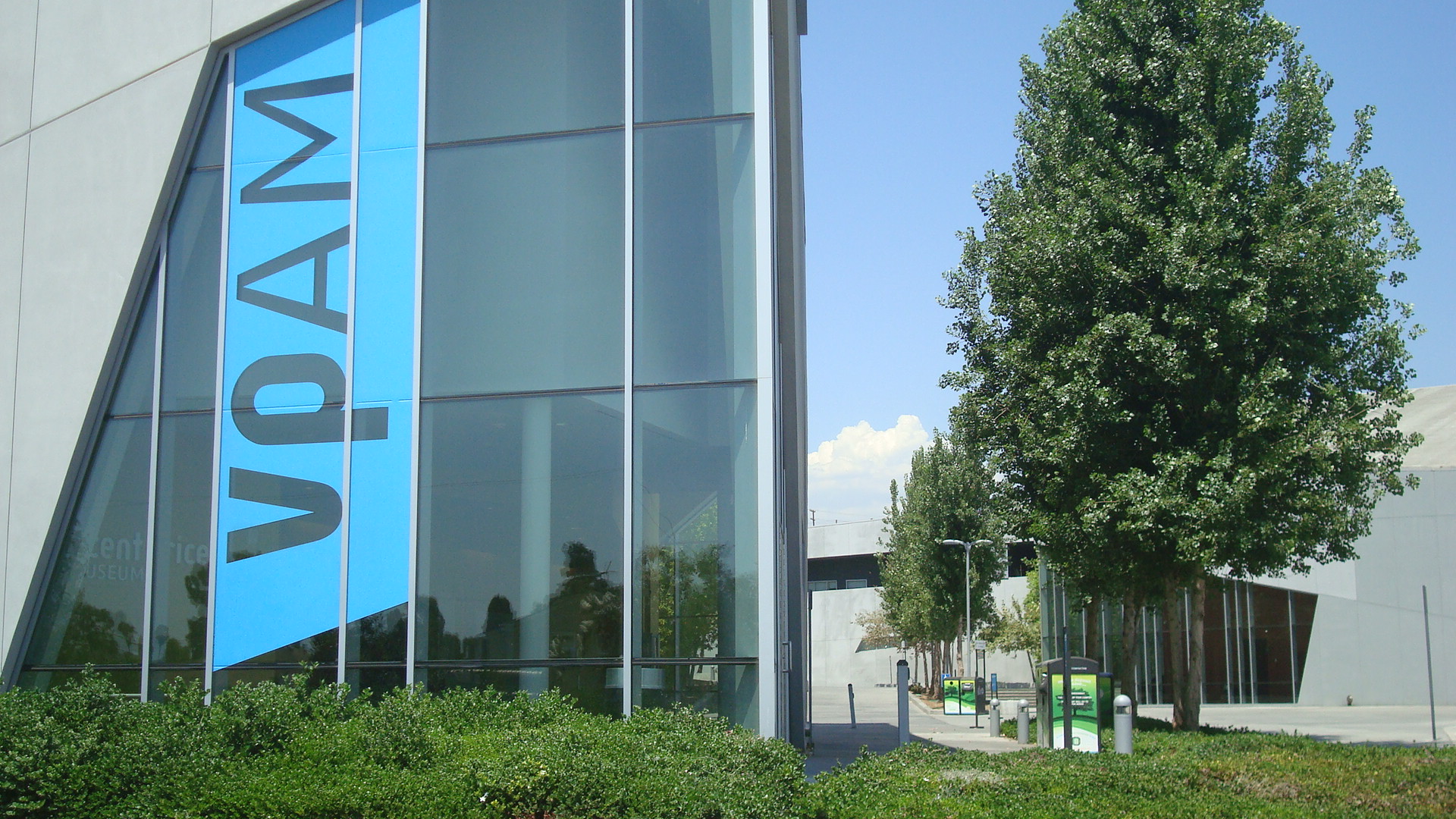
Vincent Price Art Museum at East Los Angeles College

Vincent Price Art Museum at East Los Angeles College

I don’t know how much you know about Vincent Price. If you’re over forty, you probably think of him as somebody who made a lot of horror flicks. If you’re under forty, there’s a good chance you’ve never heard of him. Actually, Vincent Price was a fine actor who worked in film, theatre, radio and TV. Sure, some of the movies he made were lame, but he did a lot of first rate work in films like Laura, Leave Her to Heaven and The Masque of the Red Death.

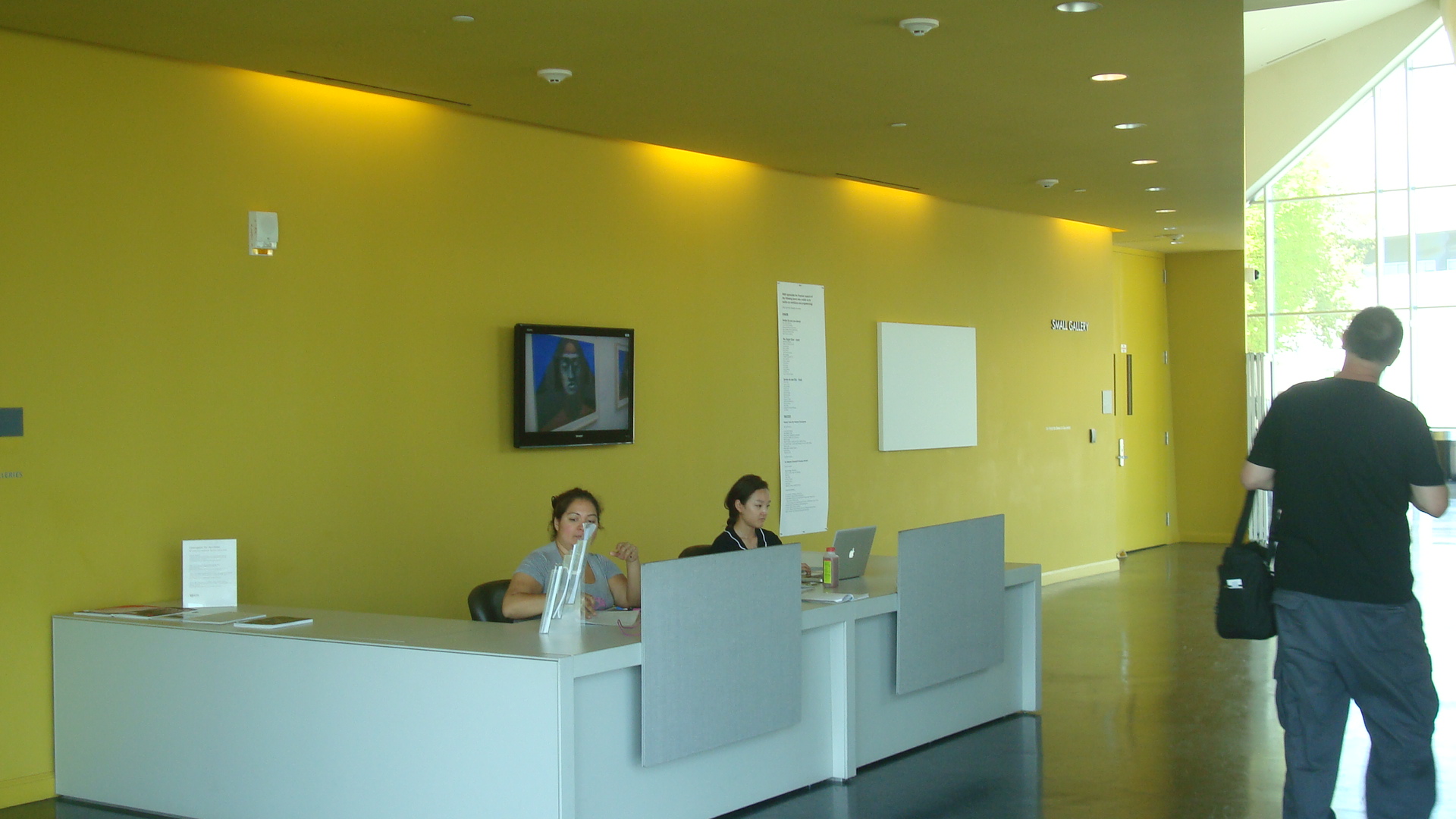
The reception area at VPAM

The reception area at VPAM

But he was also an art collector, and that’s why he has a museum named after him at East Los Angeles College. Before becoming an actor, Price studied art history at Yale, and in later years he travelled extensively giving lectures on the subject. In the fifties he decided it was important for art students to have access to paintings and drawings for their studies, and that was when he and his wife began donating works to ELAC. In 1957 they gave 90 pieces to the college. Now the VPAM collection consists of over 9,000 objects.

Death and Mother Struggling Over Child by Käthe Kollwitz

Death and Mother Struggling Over Child by Käthe Kollwitz

On the day I visited, the museum offered three shows from the permanent collection. The survey of Mexican modernism was excellent. I was also impressed by the twentieth century American and European art on display. (Honestly, I just took a quick stroll through the room full of pre-Colombian stuff. Not my cup of tea.) But the museum also develops its own shows and hosts travelling exhibitions. If you’re interested in checking out their upcoming shows, here’s the link.

Vincent Price Art Museum

No Room in the Inn by Gronk

No Room in the Inn by Gronk

The VPAM is open Tuesday through Saturday, and admission is free. Now that I’ve been there, I’m definitely planning on going back.

Twinka by Arnold Mesches

Twinka by Arnold Mesches

So What Are We Really Getting Here?

The new Regional Intermodal Transportation Center at Burbank Airport.

The new Regional Intermodal Transportation Center at Burbank Airport.

I’d heard that the Burbank Airport’s new Regional Intermodal Transportation Center opened some weeks ago, and I’d been meaning to check it out. This morning I went over and took a few photos. It looks nice, but at this point I’m not sure if it’s bringing any huge benefits.

I understand that it’s a work in progress, and I hope the completed project lives up to the PR, but right now it seems like what they’ve got is a massive new parking structure that houses a bunch of rental car companies. The MTA web site says….

“[The RITC] establishes the first direct rail-to-terminal connection at any Southern California airport.”

Actually, the airport was built adjacent to the rail line, which has been there since before WWII, and access to the Metrolink/Amtrak stop is no easier than it was before. Even the proposed bridge to the tracks isn’t going to make a huge difference. At some point the RITC is supposed to house a bus terminal, and that could be useful. Bicycle storage facilities are included in the project, but I’m not sure how many people are going to ride a bike to or from the airport.

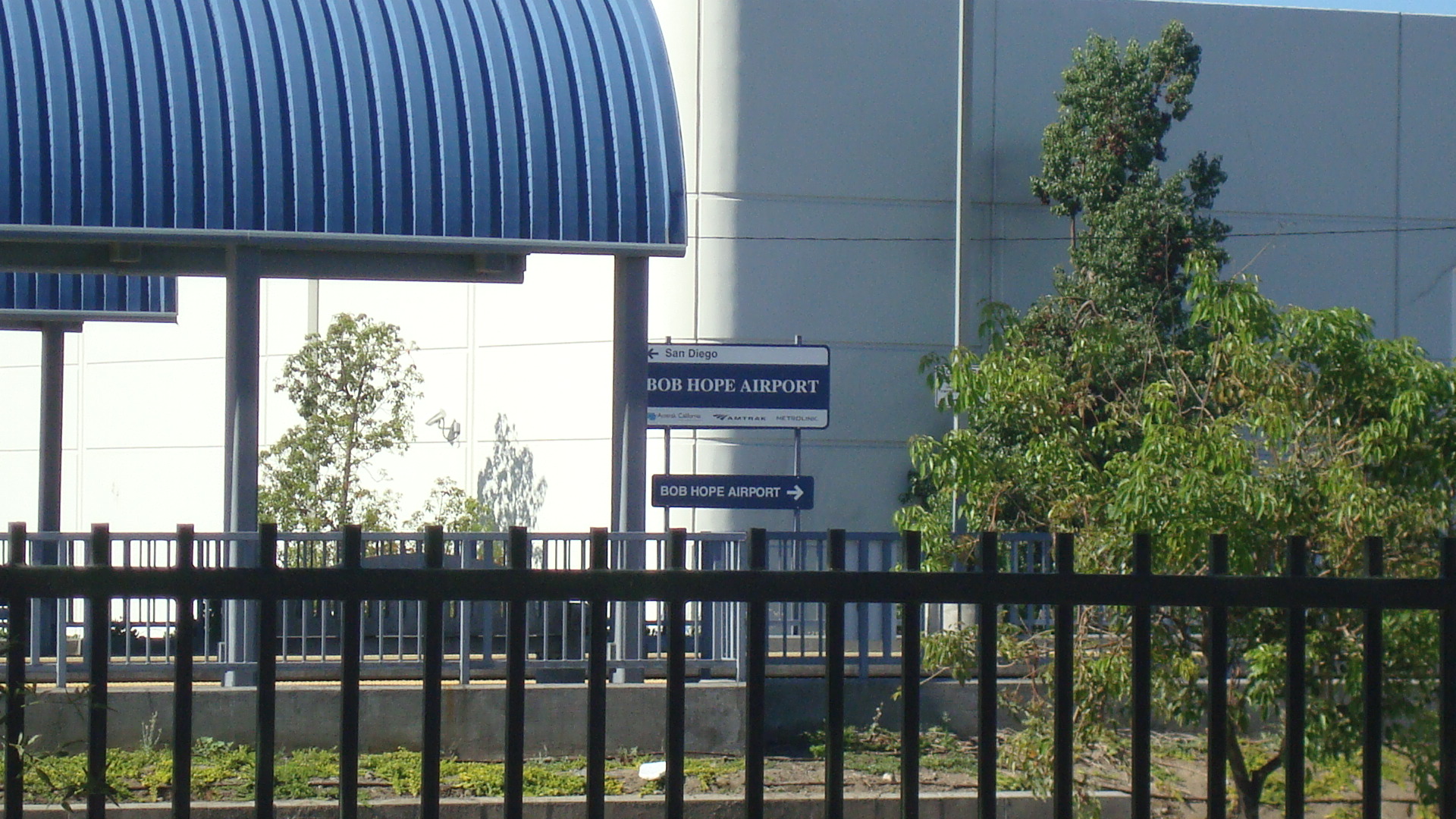
Metrolink/Amtrak stop near Burbank Airport.

Metrolink/Amtrak stop near Burbank Airport.

Below is a link to an article on Curbed. It’s a brief piece that just gives the basic facts about the RITC, but the comments are interesting.

New Transit Center at Bob Hope Airport

Some commenters point out that there would be real benefits in extending the Orange Line to Burbank Airport, and I agree completely. There is a shuttle from the transit center in North Hollywood to the airport, but light rail would be so much easier. I think, though, that plan was proposed years ago, and the MTA couldn’t sell it to the community. If I remember correctly, the Orange Line was originally supposed to be a light rail line that ran from Burbank Airport to Warner Center. As I recall, people in Burbank didn’t like the idea, and residents along the Chandler corridor were up in arms about trains running through their neighborhood. Cost was also a factor. So the MTA settled for what they could get, which was an express bus line from North Hollywood to the West Valley.

At Hertz, you're not just renting a car, you're renting a fantasy.

At Hertz, you’re not just renting a car, you’re renting a fantasy.

I don’t mean to dismiss the RITC, because in time it could become a useful transit nexus. But at this point it seems to be more about hype than about real benefit to the community.

From the RITC, a view of the mountains to the north.

From the RITC, a view of the mountains to the north.

We Can Do Better Than This

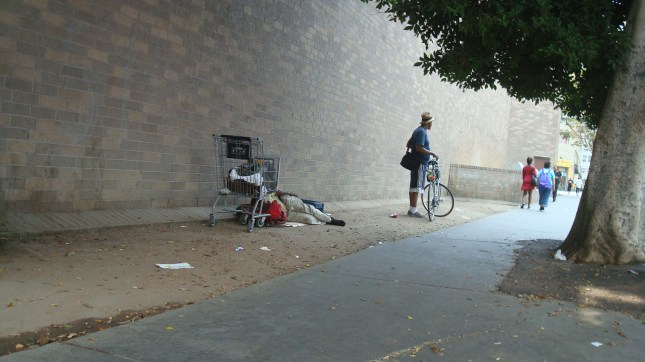
Dntn SR Cart
Toward the end of July there was a meeting at the Union Rescue Mission regarding the Safer Cities Initiative. I’d like to stop here for a minute and ask you to think about that phrase.

The Safer Cities Inititiative.

Of course, if you take the words at face value, who wouldn’t support it? We all want safer cities. So if our Mayor and City Council tell us they’re taking action to reduce the crime and the grime in Downtown, how could anyone argue against them. But, as is so often the case, the phrase was created to be blandly reassuring. It’s meant to make people feel good, even if a lot of the people most directly affected don’t feel good about it at all.

I don’t pretend to be an expert on the homeless problem in Downtown LA. It’s a messy, complicated situation. But what follows is a brief summary of how we got to this point, at least as I understand it….

Back in the seventies it was decided that the best way to deal with the homeless in LA would be to corral them all into one area, away from the financial district and the city government buildings. Local leaders had ambitious plans for the central city, and it doesn’t look good to have a guy who hasn’t bathed for a week sleeping on the street next to your shiny new skyscraper. So with the homeless now out of sight, they were also out of mind, and everybody thought the problem was solved.

Then in the eighties LA’s manufacturing base suddenly disappeared, and the illegal drug trade started ramping up. All of a sudden there was a whole new wave of people flooding Skid Row, and instead of docile winos you had guys strung out on crack and PCP. The fact that AIDS and hepatitis were also on the rise made the situation even more dire. But most of us didn’t worry too much about it. A lot of people living in the Valley couldn’t understand why anybody would even consider going to Downtown. The same applied to many west side residents. Successive city government regimes kept pouring money into the financial district, and kept hoping the homeless would just go away. The vast majority of Angelenos paid no attention at all.

Then, maybe ten or fifteen years ago, things started to change. Slowly the perception of Downtown started to shift. Younger Angelenos began to see the benefits of living in a place where art and music and bars and restaurants were all within walking distance. And the city government managed to lure a growing number of businesses to the area. Something like a renaissance was taking shape, and gradually Downtown became the cool place to be.

That was the upside. Unfortunately, in the middle of this renaissance, there were still all these homeless people hanging around. The business owners and some of the newer Downtown residents were freaking out, sometimes with good reason, over the problems created by having a huge number of people, some drug users, some mentally ill, living on the streets.

And this is where the Safer Cities Initiative comes in. Back in 2007, Mayor Villaraigosa and Chief Bratton decided to adopt a zero tolerance approach to crime in Skid Row. Even small offenses resulted in an arrest, with the possibility of time in jail. On top of that, the LAPD was charged with conducting regular sweeps of the area to clear away anything that was blocking the sidewalks, i.e. shopping carts, tents, boxes, etc.. Among other problems with this approach, they ended up trashing property belonging to homeless individuals, including personal documents and prescription medication. A suit was filed to stop the sweeps, and a judge agreed with the plaintiff, putting an end to the practice. For a while.

This put the city back at square one. How to deal with the impacts caused by thousands of people who have nowhere to go except the streets of Skid Row? At this point, the LA County Department of Health stepped in. They conducted an investigation and produced a harrowing report that documented the many health problems in the area, like rats, used hypodermic needles and human waste. This gave the city the justification they needed to start in with the sweeps again.

Which brings us up to the present, and back to the meeting at the Union Rescue Mission….

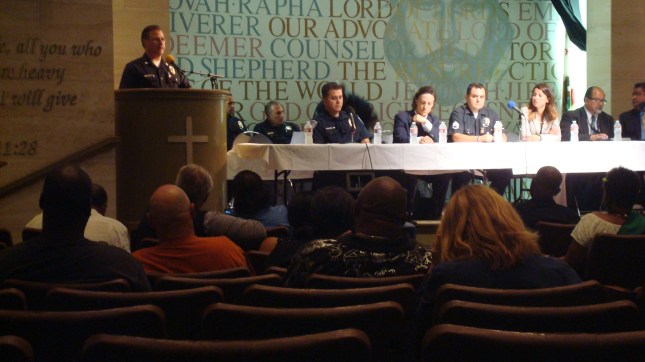
Dntn URM Crowd

While they’re still calling it the Safer Cities Initiative, officials have tweaked the program in the hope of making it more effective. Now the LAPD will issue citations for minor violations instead of arresting people. The sweeps will resume, as part of the Operation Healthy Streets program, but now case workers and mental health professionals will accompany the cleaning crews. The word is that the homeless will be offered free medical exams and TB tests, and an effort will be made to get people into detox or enroll in a health care program under the Affordable Care Act.

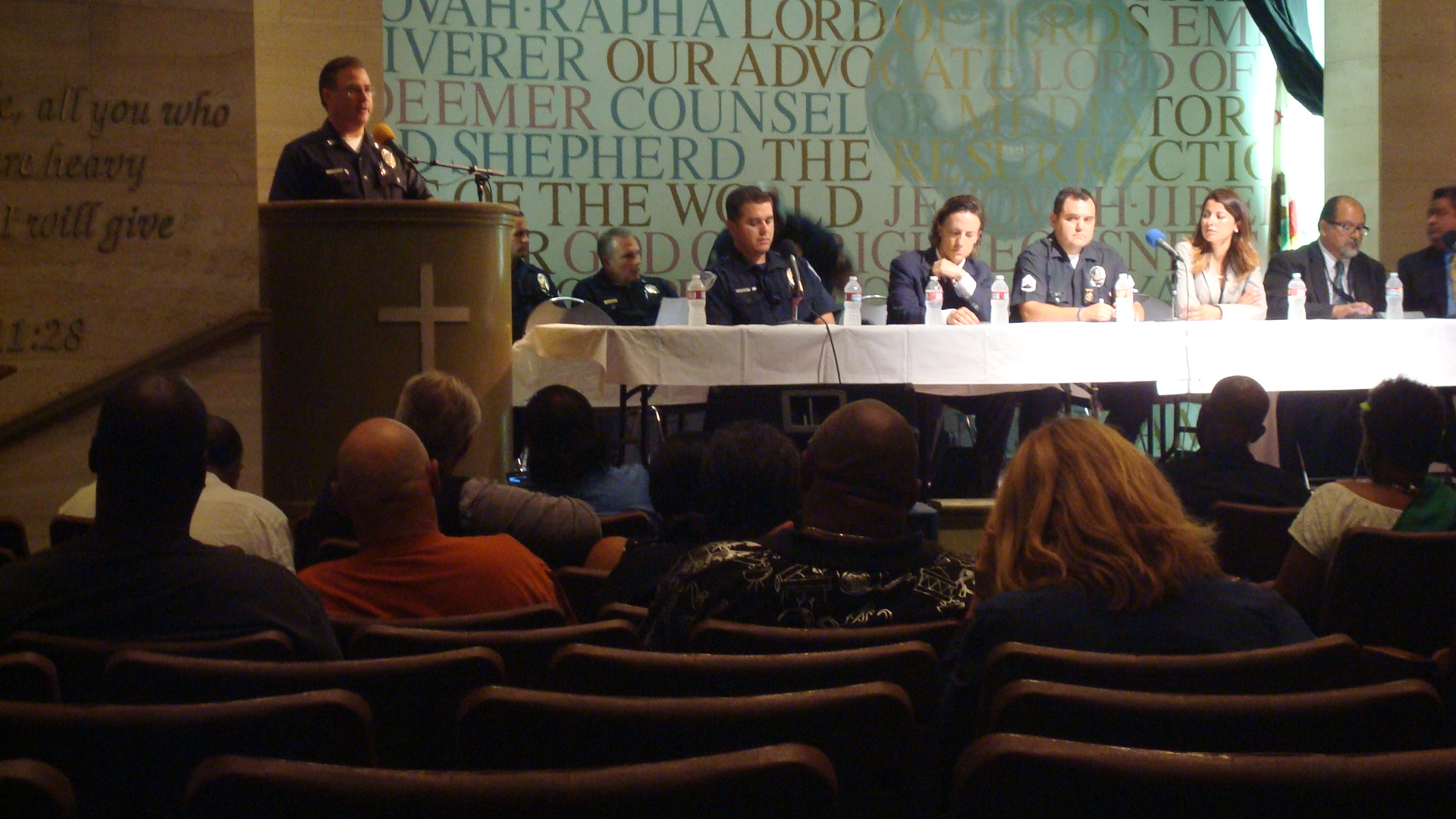
This sounds good on paper. The city officials who were on the panel at the meeting tried to keep it positive, though a woman from Jose Huizar’s office downplayed the modifications to the street cleaning program. She emphasized the fact that this was something the City was trying out, and that it wasn’t intended to be a solution to the homeless problem.
Dntn URM Panel

It’s not a solution. While this approach is better than what the City was doing before, it’s basically a band-aid, and the situation on Skid Row is not getting better. It’s getting worse. In recent years the State of California has been forced to release thousands of inmates from its prisons. It’s a real challenge for someone with a criminal record to find steady work, which also makes it hard to find a permanent place to stay. So a lot of those people who were pushed out of the prisons ended up on Skid Row. The non-profits who serve the homeless, like Union Rescue Mission, have been struggling for years. Now they’re completely overwhelmed.

The City needs to make a serious effort to provide permanent supportive housing for the homeless. Yes, this would cost money, and we’re still operating on a tight budget, but we could get the ball rolling. In New York, Mayor de Blasio has made a commitment to create permanent supportive housing, and we could do the same here. As expensive as this approach is, it’s still way cheaper than throwing people in jail for minor violations. We are currently spending a fortune on prison beds for non-violent offenders who would be better served by relatively inexpensive programs providing rehab and mental health care. And building permanent supportive housing would make Downtown a cleaner, safer place, creating an environment where business could thrive.

Phrases like Safer Cities Initiative and Operation Healthy Streets sound nice, but handing out tickets and clearing the streets every other month will not solve the problem. We need to stop being reactive and start being proactive. If you feel, like I do, that we could be doing more, then give your City Council rep a call and let them know.

Dntn SR Guy Looking

Don’t Destroy the Past

W&B in W Hlwd

This is pretty last minute, but I just found out about a historic building in West Hollywood that could be demolished as part of a proposed development. I hadn’t heard anything about it until I opened up my e-mail this afternoon. A friend forwarded a message to let me know that this structure, designed by Wurdeman & Becket back in the thirties, might be wiped off the map unless we take immediate action.

The building, located at 9080 Santa Monica Blvd. in West Hollywood, was originally the Jones Dog and Cat Hospital. Architects Walter Wurdeman and Welton Becket created a classic example of the streamline moderne style to house the veterinarian’s practice. As a firm, Wurdeman and Becket were active in the thirties and forties, their most famous creation being the Pan-Pacific Auditorium, which burned to the ground many years ago. After Wurdeman’s death, Becket’s new firm, Welton Becket & Associates went on to design some of the city’s most striking structures and played a huge role in defining the look of mid-century Los Angeles.

For more info about the building, click on this link.

Los Angeles Conservancy

And then if you decide you want to tell the West Hollywood City Council how you feel about this, here’s another link. See the left hand column for contact info.

Save the SMB Streamline Moderne

LA has made great strides in preservation over the last several years, but we’re still losing important parts of our past. The recent demolition of a building by Morgan, Walls & Clements on La Brea was a shock, and should be reminder to those of us who care about our city’s culture that we need to be vigilant and vocal.

Reconstructing Crenshaw

Crsw 01 Future

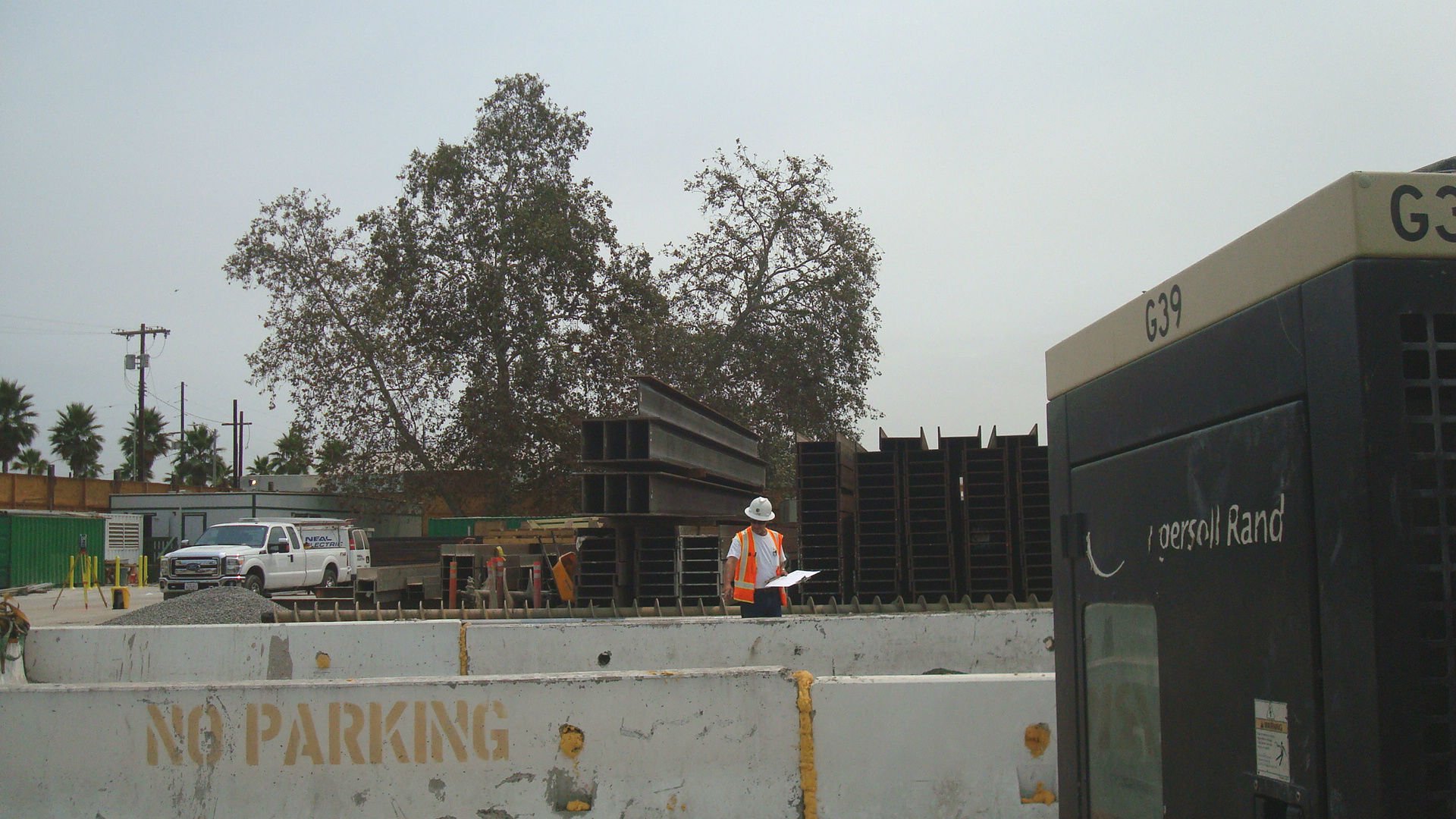
Last week I went down to Crenshaw and Exposition to see what was happening with the construction of the Crenshaw/LAX Line. Work is underway, though it will be years before the project is finished.

A view from the Crenshaw side of the construction site.

A view from the Crenshaw side of the construction site.

Another view from the Crenshaw side.

Another view from the Crenshaw side.

And here's a shot taken from the entrance to the site.

And here’s a shot taken from the entrance to the site.

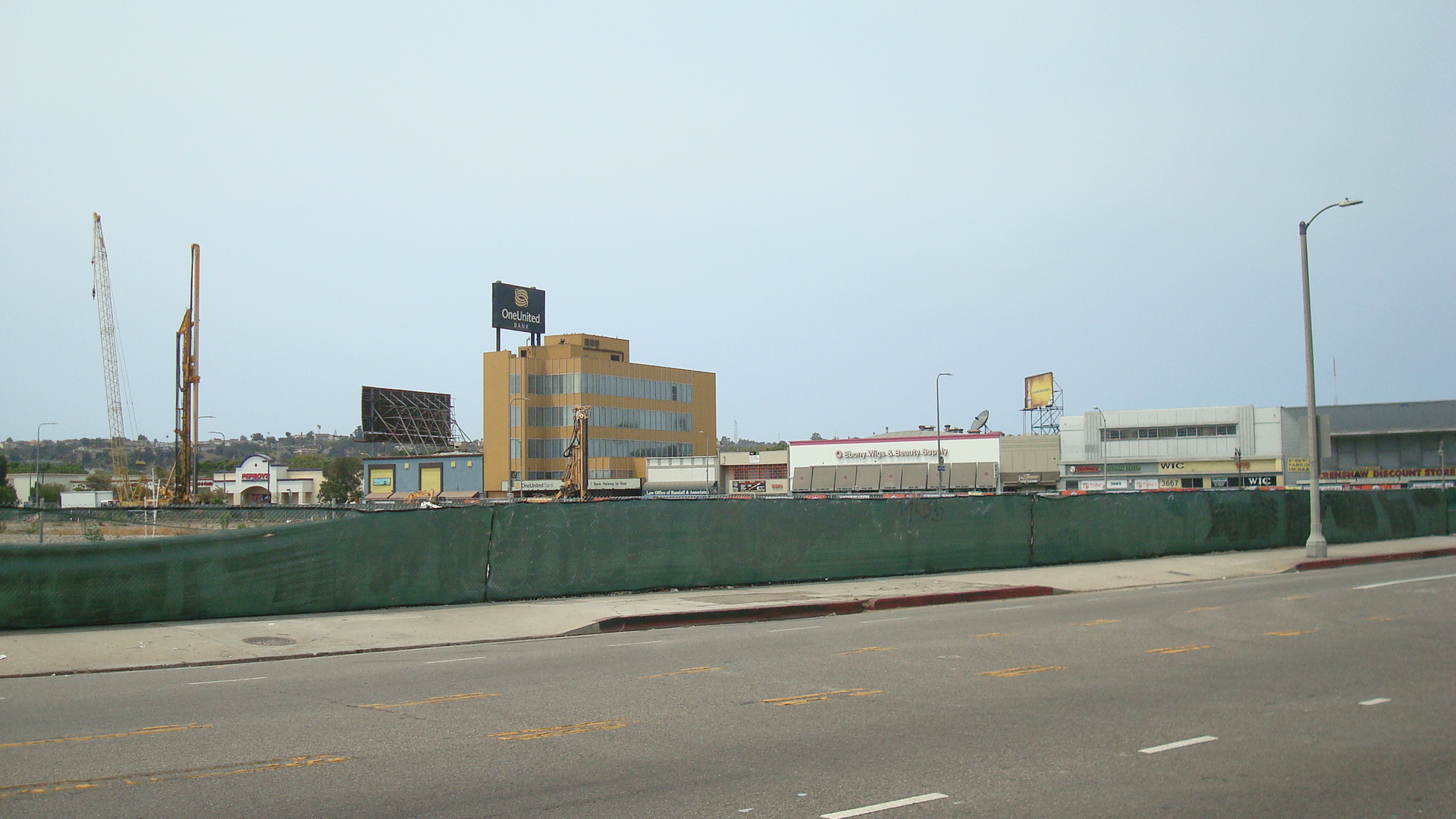
While I was there I also took a look at the huge vacant lot that runs along Crenshaw just below the MTA’s construction site.

The fence surrounds a large empty parcel just across the street from the MTA site.

The fence surrounds a large empty parcel just across the street from the MTA site.

I was wondering if there were any plans to develop the parcel, so I got on the net and started looking around. Apparently this will be the home of the proposed District Square retail complex. For more info, follow this link to a post from earlier this year on Building Los Angeles.

District Square

Right now it’s just a lot of dirt, but the temporary fence running around this area does offer the candidates in the school board special election a place to post their ads.

School board candidates vying for your vote.

School board candidates vying for your vote.

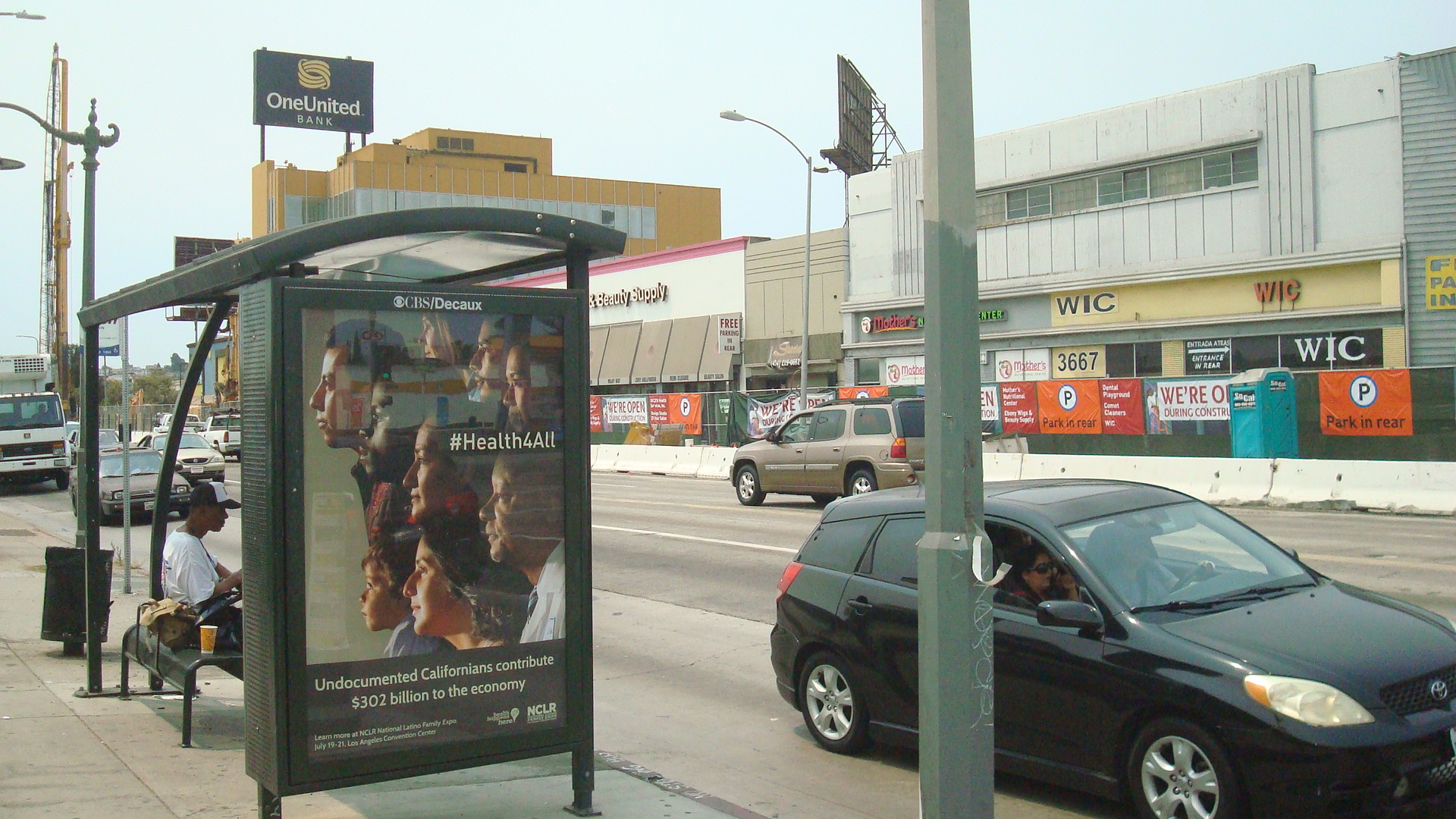
You can see the barricades blocking off a good stretch of Crenshaw. Also the large signs letting people know that the businesses along Crenshaw are open during construction.

Looking at the barricades set up on the west side of Crenshaw during construction.

Looking at the barricades set up on the west side of Crenshaw during construction.

Projects like this can be really hard on business owners, since the work impacts both traffic and parking. And we’re not just talking about a few months, but years. In the long run, the transit line will probably bring more people to the area and be a boon to local merchants, but in the short term, the construction can cause real hardship.

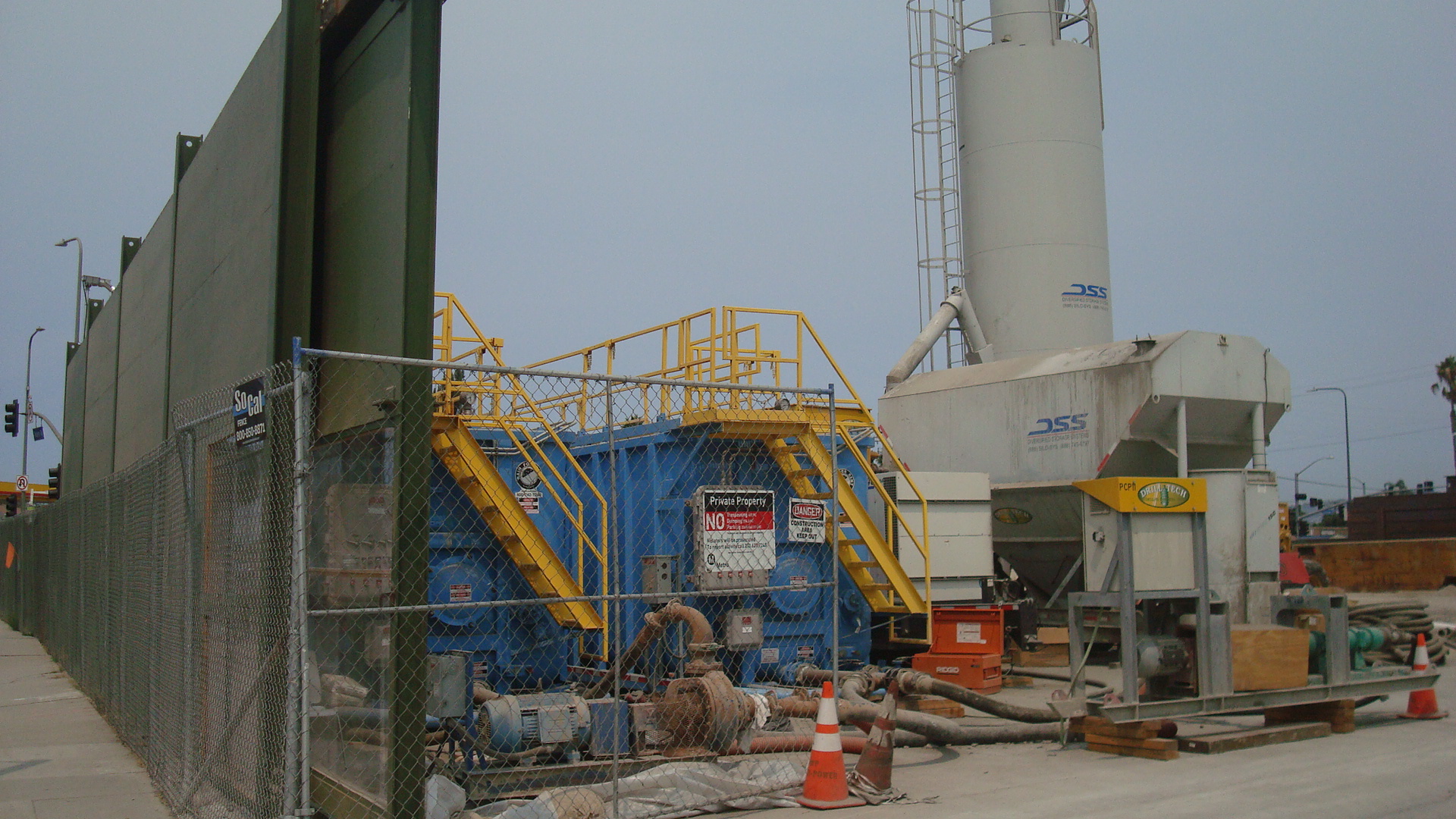
Heavy machinery parked on Crenshaw.

Heavy machinery parked on Crenshaw.

If you haven’t already read about the Crenshaw/LAX Line, here’s a link to the overview at the MTA’s web site.

Crenshaw/LAX Transit Project

Evergreen Cemetery

EC 01 EntI first saw Evergreen Cemetery in a movie. I was watching Sam Fuller’s 1959 film Crimson Kimono, much of which was shot on location in LA.* There’s a scene where a detective speaks with an elderly Japanese man in a cemetery. It stuck in my mind, and I got on the net to see if I could track the location down.

It wasn’t hard. There’s a fair amount of information available on Evergreen Cemetery, and the more I learned, the more I wanted to know. It was founded in 1877, and is located in Boyle Heights. Like every cemetery, it serves as a reminder and a record of the past, but it also holds a special place in LA history for a couple of reasons. First, it was unusual because in addition to serving the white community, it also served the African-American, Mexican and Japanese communities. Evergreen is an important reminder of the city’s multicultural heritage. Second, it’s the final resting place of a number of people who shaped not just LA history, but US history. Tombstones belonging to actors, journalists, business leaders, war heroes, musicians, can all be found at this cemetery.
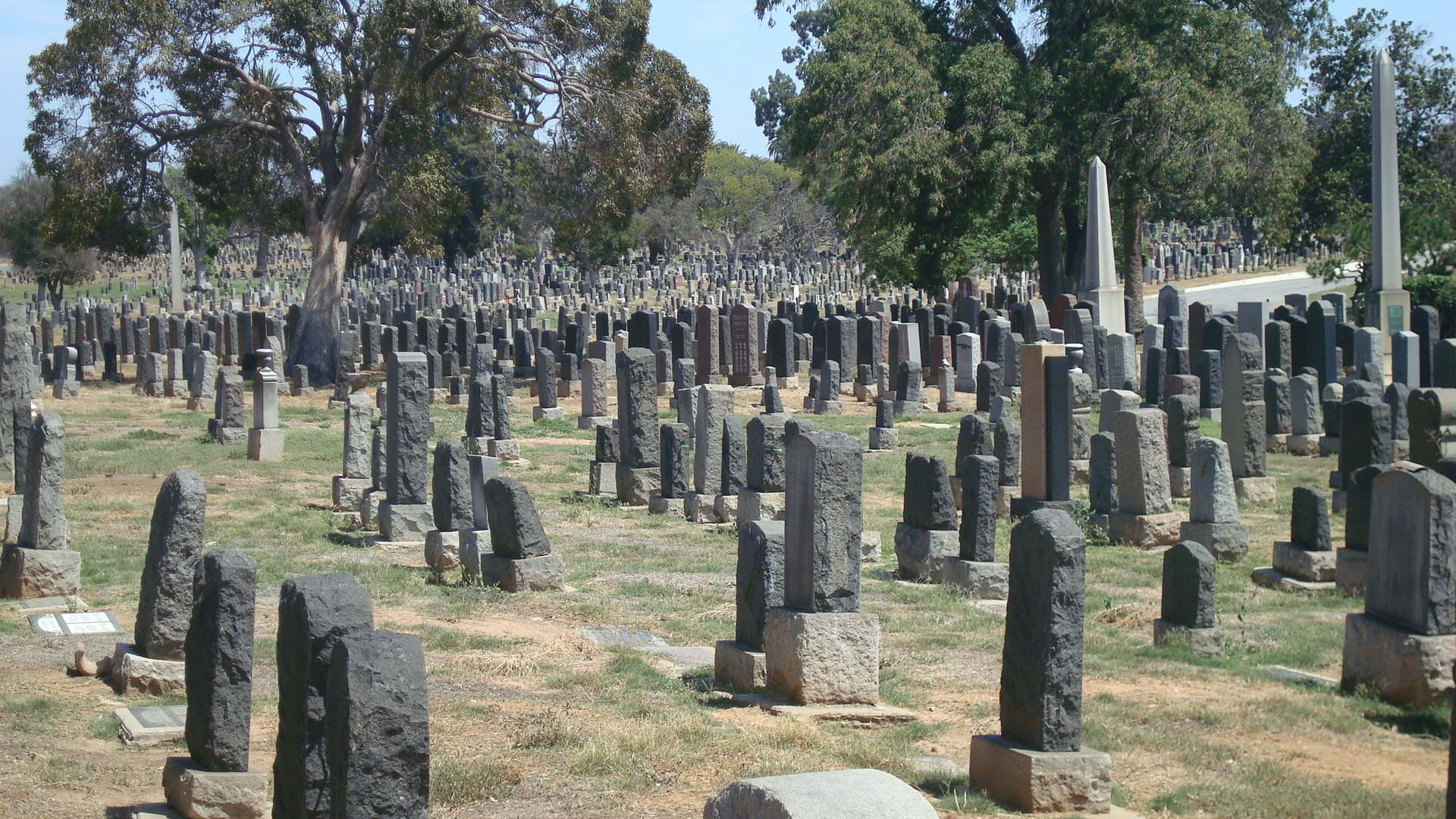
EC 15 Tmstns Lots

Charlotta Bass, publisher of the California Eagle, an early black-owned newspaper, and vice-presidential candidate for the Progressive Party in 1952 is interred here. So is rancher and farmer Isaac Lankershim, who played a major role in the early development of the San Fernando Valley. You’ll find the grave of Earl Gilmore, who, after taking over his father’s oil company, expanded his business interests in many directions, and created the Farmers Market at Third and Fairfax. The cemetery holds a monument to the 442nd Regimental Combat Unit, made up of Japanese-American soldiers, that served with distinction in World War II. And there is also the Nineteenth Century Chinese Memorial Shrine, which was restored back in the 1990s with the help of the Chinese Historical Society of Southern California.

EC 05 Tmstns Wall

Not too long ago, I went to visit Evergreen Cemetery with some people I know. There were a few others visitors, but most of the time it seemed like we were alone in this vast graveyard. The patchy grass was green in some places, brown in others. The sun was hot when we weren’t standing in the shade of the large trees. A few graves had fresh flowers on them. Many of them seemed like they hadn’t been touched in years. Aside from the occasional murmur of voices, or the sound of traffic passing on Cesar Chavez Ave., it was very quiet. Very peaceful.

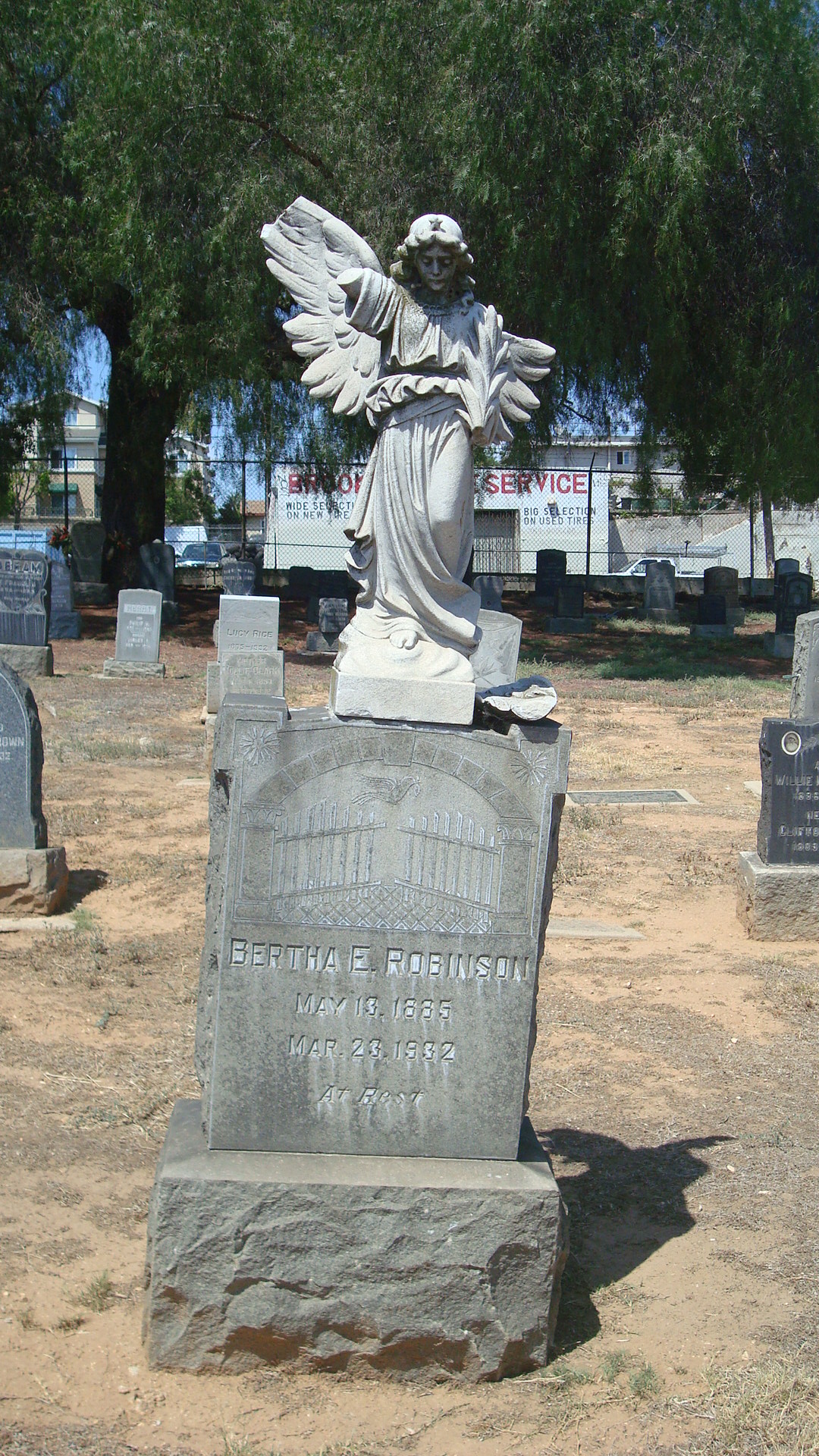
EC 06 AngelBelow are a few links to sites I visited while researching the cemetery. The first offers a list of some of the people buried at Evergreen, and also provides a timeline. The second, from the KCET web site, gives a vivid and engaging account of the cemetery’s history. Plus it includes lots of cool photos. Last, a fascinating account of the Chinese Memorial Shrine. This story shows how an important piece of LA’s history was almost lost, and also how difficult preserving the past can be.

Evergreen Cemetery

Evergreen Cemetery at KCET

Nineteenth Century Chinese Memorial Shrine

*
The majority of the location work for Crimson Kimono was shot in Little Tokyo, but Evergreen Cemetery is located in Boyle Heights. If you’re interested in LA history, the film offers extensive views of the city in the fifties, with a focus on the Japanese-American community.

The Changing Face of Hollywood

Rendering of the proposed Kilroy project at Vine and De Longpre

Rendering of the proposed Kilroy project at Vine and De Longpre

Hollywood is hot. Developers are jumping in with both feet. A number of projects have gone up in the last few years, and many more are in the works. My feelings about the building boom vary greatly, mostly depending on the quality of the individual projects. Some of them will definitely benefit the community, some I can tolerate, and others should never have gotten off the drawing board.

Just recently Kilroy Realty unveiled their plans for a project on Vine, south of Sunset. Over all, I’m inclined to support it. As many people have pointed out, almost anything would be better than what occupies the site now. It’s an underutilized parcel, and Kilroy’s idea of turning it into a media campus makes perfect sense for the area.

A recent shot of the site from the corner of Vine and De Longpre

A recent shot of the site from the corner of Vine and De Longpre

But I do have a couple of reservations….

First, traffic.

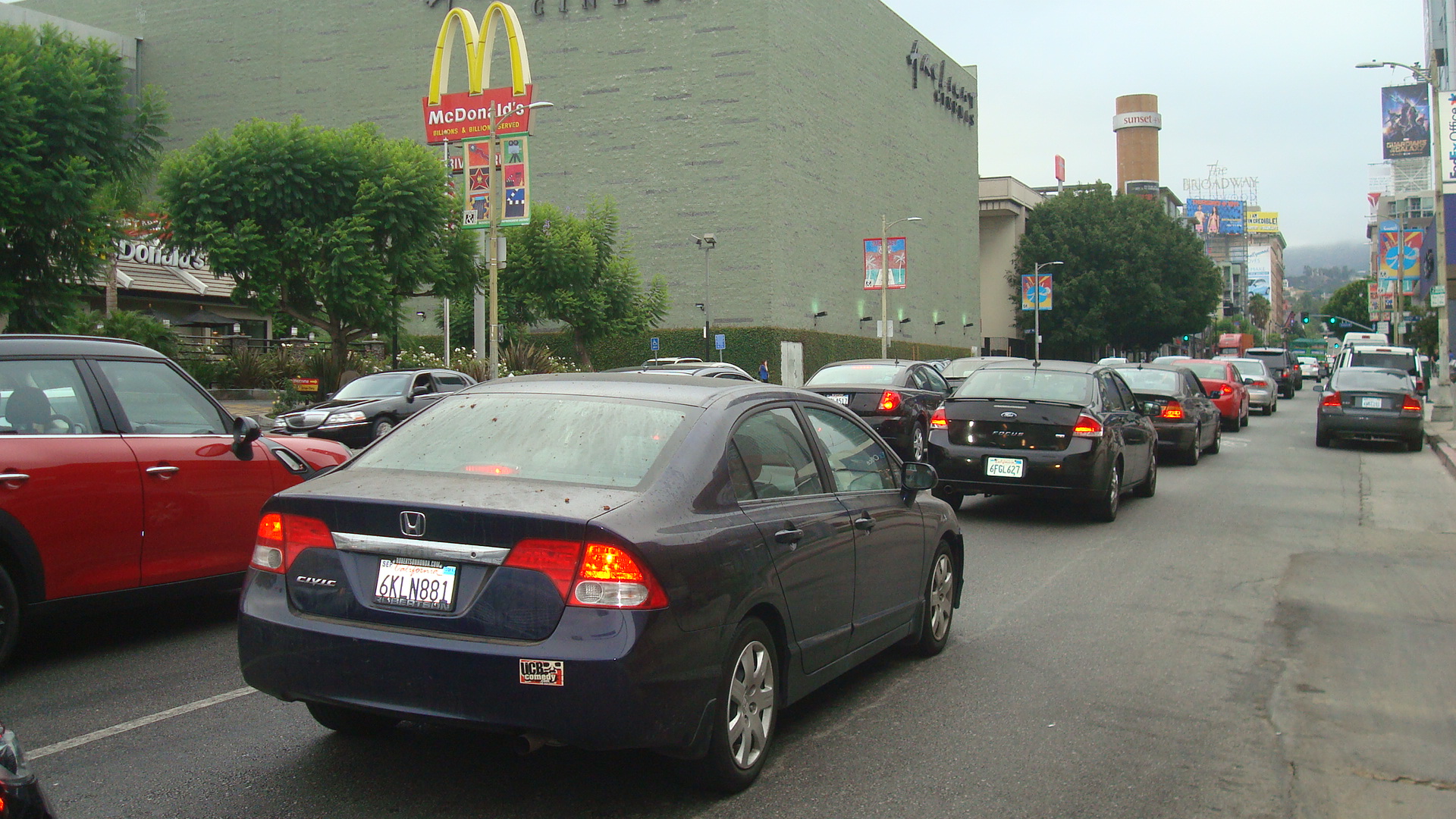
Anyone who’s lived in Hollywood for a while can tell you that traffic is steadily getting worse. This is especially interesting when you consider that the Hollywood area lost over 10,000 residents between 2000 and 2010. So even though there are fewer people living in the community, more of them are driving. It seems probable that this is because the low-income residents who were forced out by rising rents have been replaced by more affluent residents who are more likely to own cars. The Kilroy project will be continuing this trend, since the residential units are geared toward people who have money to spend.

For those of you who don’t live in the area, here are a few photos of the northbound traffic on Vine on a Wednesday evening around 7:00 pm. These were taken at the corner of Vine and De Longpre, right across from the project site.

Traffic on Vine, heading toward Sunset.

Traffic on Vine, heading toward Sunset.

Traffic on Vine, coming from Fountain.

Traffic on Vine, coming from Fountain.

Same perspective as previous shot.  Note that cars are not entering the intersection even though the light is green.

Same perspective as previous shot. Note that cars are not entering the intersection even though the light is green.

This project will definitely be putting more cars on the road. What really concerns me is that it’s just one of many projects being considered for the Hollywood area. My point is that the City of LA needs to do a cumulative traffic study to plan for all this growth. The City argues they don’t have the money, which is ridiculous. They don’t have a problem throwing away millions of dollars on legal fees to defend projects that never should have seen the light of day, but they won’t spend a relatively modest sum to plan for a sustainable future. If Garcetti wants to push for big growth in Hollywood, he needs to start by springing for a cumulative traffic study that will help to lay the groundwork.

Second, the residential component of the Kilroy project is definitely catering to the crowd that makes six figure salaries. Again, it’s not so much that I have a problem with this specific project, but the vast majority of the residential units that have been built in the area over the past ten years are geared towards the rich. You can’t move into places like the W, Blvd. 6200 or the Avenue unless you have money to burn. This push to make Hollywood a playground for the wealthy is driving rents up throughout the community. It’s not just the low-income working class families that are being forced out. The artists, musicians and writers who used to live in Hollywood are having to look for less expensive places. The desperate drive for gentrification is great for bringing in the trust fund kids who want to party, but it’s pushing out a lot of the people who really enriched the local culture.

Over all, Kilroy seems to be making an effort to respect the community. This project is planned more or less within the current zoning laws, though the residential tower does go a little high. They’re including a fair amount of open space. It makes sense that they’re catering to media/entertainment companies, and, according to the LA Times story, there is a demand for office space in Hollywood.

So my problem isn’t with this project itself, but the trend that it’s a part of. Hollywood is becoming more expensive and more congested. The mayor doesn’t care. He’s got a mansion in Hancock Park and a driver that takes him wherever he wants to go, both of which are paid for by the taxpayers. So naturally Garcetti wouldn’t be concerned about housing prices and traffic, since he doesn’t have to deal with those problems.

Unfortunately, the rest of us do.

If you want to take a look at the LA Times article on the Kilroy project, the link is below.

Kilroy Unveil Plans for Complex in Hollywood

Fourth of July on Sepulveda

Sepulveda
I was sitting at a bus stop on Sepulveda. It was late afternoon. There was one other guy waiting for the bus.

A man came walking up. I’d say he was around fifty. He had a full beard. From his face it looked like he’d spent a lot of time in the sun. The blue T-shirt and grey pants were both faded. No shoes, just socks on his feet. He seemed to be looking for something.

‘Hey, you guys seen a pack of Winstons?’

I took a quick look at the sidewalk.

‘No.’

But then I turned to the right and saw something that looked liked a pack of cigarettes lying on the ground a few feet away.

‘Is that it?’

I pointed. He walked over and picked them up. He opened the pack and took one out. Then he offered the pack to me.

‘No thanks. I don’t smoke.’

He sat down next to me.

‘So what’re you guys doin for the fourth?’

The other guy didn’t answer.

‘I’m just goin over to a friend’s house,’ I said. ‘We’re just gonna hang out.’

He reached into his pocket. Pulled out a small metal pipe and a cigarette lighter.

‘I’m gonna see if I can find someplace to watch the fireworks.’

‘Yeah. They got lots of shows all over the place. Maybe in Balboa Park.’

He lit his cigarette and took a drag.

‘They used to have free concerts over there,’ he said.

He went on to tell me about the bands that had played there. I said it sounded pretty cool. We went on talking aimlessly for a few minutes.

Then he put the pipe to his lips. He held the lit end of his cigarette in the bowl. Took a drag. A minute later he put the pipe to his lips again, and this time he took a really long pull.

Not long after that he started talking again, but now he wasn’t talking to me, and he wasn’t making any sense. He spoke in a low voice, and he just kind of rambled on. I couldn’t understand much of what he said. Slowly he started slouching forward. And then he kind of nodded off.

The bus came and I got on board. As I was riding down Sepulveda, I wondered how many other people like him were wandering around LA on the Fourth of July. Lost, lonely people, looking for someone to talk to, looking for a place to watch the fireworks.

Hollywood Journal – Preservation Prevails

The Cinerama Dome under construction in 1963.

The Cinerama Dome under construction in 1963.

I spent a good part of 1998 freaking out over Pacific Theaters’ plans for “renovating” the Cinerama Dome. The initial proposal involved gutting the auditorium, removing the curved screen and putting a fast food restaurant in the lobby. The film and preservation communities protested loudly. To their credit, the people at Pacific met with the opposition and made a number of important concessions.

If you’re not into film, and if you don’t care about Hollywood history, you might be mystified by the uproar. So let me offer a little background….

Cinerama was a process that revolutionized the production and exhibition of films back in the early fifties. Three strips of film were projected in perfect synchronization to create the illusion of a continuous widescreen image, accompanied by stereophonic sound playback. The image was shown on a huge curved screen to produce an early version of what we now call immersive entertainment.

In the early sixties, Cinerama, Inc. unveiled an ambitious plan to create hundreds of Cinerama theatres based on a radical new model. They would construct geodesic domes using prefabricated panels, which would supposedly allow them to build a theatre in half the time and for half the cost of using conventional methods. They purchased a site on Sunset Blvd. in Hollywood and hired the firm of Welton Becket and Associates to design what would become the Cinerama Dome.

The premiere of It's a Mad, Mad, Mad, Mad World at the Dome in 1963.

The premiere of It’s a Mad, Mad, Mad, Mad World at the Dome in 1963.

Becket’s company was one of the major architectural firms in the city at that time, and played a large part in setting the look and tone of mid-century Los Angeles. To my mind the Dome is something of a companion piece to one of their earlier signature creations, the Capitol Records Building, which is just a few blocks away on Vine. Together these two icons helped to define space age architecture.

Of the theatres that were constructed to show films in the Cinerama process, only a handful are left today. The Dome is a unique creation designed by one of the most important architectural firms in the city’s history. That’s why so many of us got so crazy when we saw the initial plans to renovate it. I will always be grateful to Pacific for listening to the community and preserving the Dome.

The two pictures above are from the Los Angeles Public Library photo archive. The first shows the dome under construction. It was taken by Howard D. Kelly in 1963. The second shows the premiere of the film that the Dome opened with, It’s a Mad, Mad, Mad, Mad World. It was also taken in 1963, but no photographer is credited. Below are some photos I took of the Dome and the area surrounding it back in 1998. Sorry that the quality isn’t better. They were taken with a disposable camera, and have faded over the years. A couple of photos were taken from Morningside Court, which used to go through to De Longpre, but was closed off with the construction of the Arclight parking structure.

February, Nineteen Ninety Nine

For weeks I’ve been meaning to write abut the latest on the Cinerama Dome. Here it is.

Apparently the people from Pacific Theaters sat down and talked with the preservation people, and the end result was Pacific gave up a lot of the changes they were going to make. As I recall, these are some of the things pacific agreed to.

The entrance will remain at the front of the theatre.

The layout of the seating will stay basically the same, though they will be putting new seats in.

They won’t alter the ceiling of the auditorium.

And —

They’ll keep the curved screen.

I’m actually really grateful to Pacific for giving in on all this stuff. I doubt they understand why the Dome is such a great piece of architecture, so from their point of view the preservationists are going crazy over nothing.

Of course, we still don’t know what the Dome is gonna look like when they’re through. But at this point I’m cautiously optimistic.

The front of the Cinerama Dome in 1998.

The front of the Cinerama Dome in 1998.

Screen walls and landscaping on the periphery of the Dome.

Screen walls and landscaping on the periphery of the Dome.

A shot from the parking lot, looking north to Sunset.

A shot from the parking lot, looking north to Sunset.

A shot of Morningside Court, looking toward Sunset.

A shot of Morningside Court, looking toward Sunset.

Another shot of Morningside Court, this time looking in the opposite direction towards De Longpre.

Another shot of Morningside Court, this time looking in the opposite direction towards De Longpre.

This was taken from the parking lot behind the Dome, facing west.  The site just across the street is where Amoeba now stands.

This was taken from the parking lot behind the Dome, facing west. The site just across the street is where Amoeba now stands.

This shot was taken facing the opposite direction, now looking across the parking lot towards Morningside Court.

This shot was taken facing the opposite direction, now looking across the parking lot towards Morningside Court.

Transformations

TW 00 GW Campus

Around the middle of the twentieth century, over a period of decades, the LA County Flood Control District did their damnedest to encase most of the city’s waterways in concrete. Apparently it seemed like a good idea at the time. From our contemporary perspective, it looks like a colossal mistake. But what can we do? We don’t have the means to break up the hundreds of miles of concrete that were poured back in the last century. So we’re doing what we can, getting behind small projects that we hope will eventually have a cumulative impact.

I’ve lived in LA all my life, and it still amazes me how little I know about this city. The Tujunga Wash runs from the San Gabriel Mountains, across the San Fernando Valley and feeds into the LA River around Studio City. Recently I started paying attention to the stretch that runs along Coldwater Canyon between Burbank and Oxnard. What I found was pretty interesting.

Above Oxnard, I found the Tujunga Wash Greenway and Stream Restoration Project. What used to be a drab stretch of land running alongside a drab stretch of concrete has been transformed into a lush green walkway which helps to replenish our groundwater.

TW 02 Green

For a better explanation than I could give, click on this link to a page at the Landscape Architecture Foundation. They also provide before and after pictures to give you a sense of how dramatic the change has been.

Tujunga Wash Greenway

TW 04 Green Bed

Below Oxnard, I found the Great Wall of Los Angeles. This is a massive, amazing public art project which presents a history of Los Angeles starting with the first people who lived in the area and ending in the fifties. The project is the brainchild of Judy Baca, founder of the Social and Public Art Resource Center (SPARC). It was begun in the seventies, with over 400 young people and their families working over five summers to create the mural that currently covers a half mile of concrete inside the Tujunga Wash.

The mural starts with images of the Chumash Indians.

TW 06 GW Chum

It covers the construction of the the massive projects that helped build the city, like the railroads….

TW 07 GW Chin

….and the aqueduct.

TW 09 GW Aque

It illustrates the multiple waves of migration the populated the area.

TW 09a GW Dust Big

There are images of the traumatic upheavals that shaped LA.

TW GW Zoot

It takes us through the baby boom….

TW 11 GW BB

….and the beginnings of rock n’ roll.

TW 12 GW  R&R

There are plans to paint another four decades, which would bring the project up to the end of the twentieth century. For more information, and to find out how to donate, visit SPARC’s web site.

The Great Wall of Los Angeles

You won’t find much water in the Tujunga Wash these days. But you will find some other things that are worth checking out.