The Renovated Glendale Central Library

GL 01 Wide

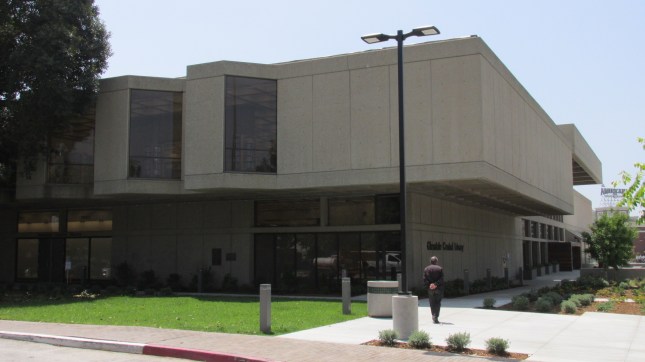
Months ago I was walking through Glendale and came to the corner of Harvard and Louise, where I saw something that freaked me out. The Glendale Central Library was surrounded by chain link fencing covered with green fabric. I knew that meant construction crews were working on the building, and I expected the worst. I love libraries, and the Glendale Central Library has long been one of my favorite places in LA. This brutalist beauty was designed by Welton Becket & Associates and opened in 1973. Its severe concrete exterior contains a wonderfully spacious interior that I’ve wandered through many times. I have fond memories pulling a few books off the shelf and sinking into a cozy chair in the ground floor reading area. When I saw they were remodelling it, I immediately expected the worst. I knew they were going to wreck the place.

But I was wrong. I have to give credit to the City of Glendale, and everyone else involved with the project. The renovated Central Library is total success. While there are a number of changes, they took care to respect the character of the original building. The entrance used to be from the parking lot on Louise. Now there are two entrances, one on Harvard and one at the rear of the library. In addition to upgrading the auditorium and the teen space, several new components have been added, including a Maker Space, a Digital Lab, and a Remembrance Room.

GL 11 Ent Harvard 2

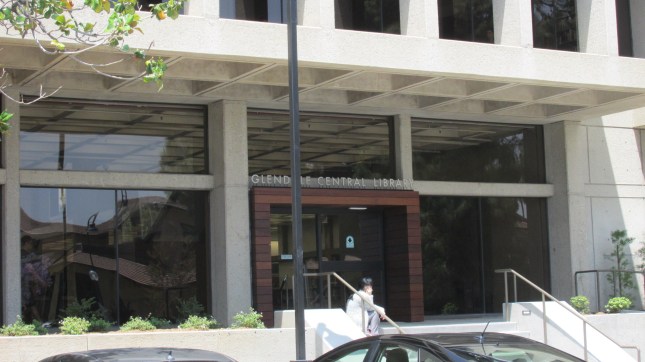
The main entrance has been moved to the Harvard side of the library.

GL 12 Ent Terrace

An open area has been added adjacent to the new entrance.

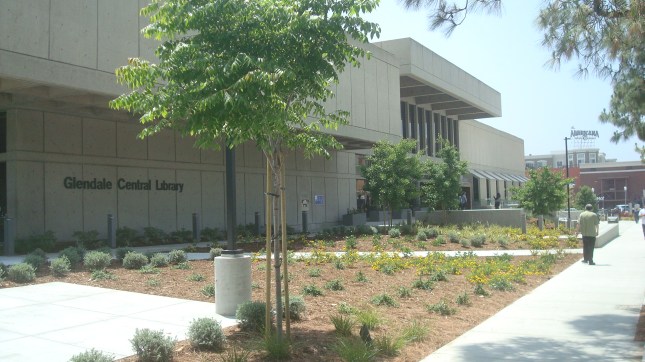
GL 14 Front Lndscp 2

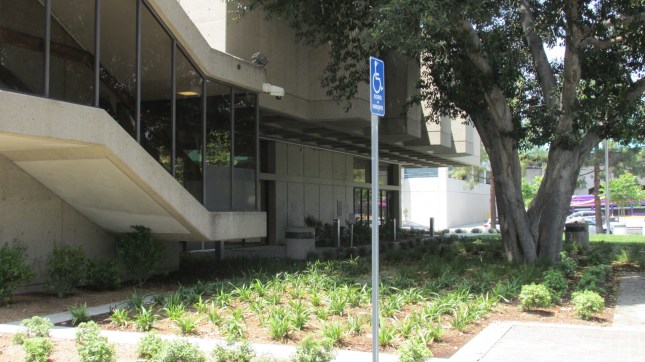
New landscaping on Harvard.

The City of Glendale chose Gruen Associates to oversee the renovation, and Debra Gerod headed up their team. Historic Resources Group was the preservation consultant. There were numerous others involved with the project, from City staff to individual contractors, and I hope they’ll forgive me for not mentioning them all by name.

GL 20 Ent Back

Another entrance was added at the rear.

GL 22 Stairwell 2

While the entrance on Louise has been closed, no alterations have been made to that side of the structure.

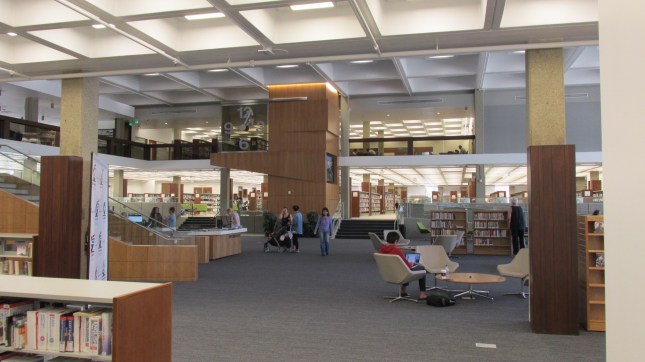
GL 30 Int Low

Here’s a shot of the lower level.

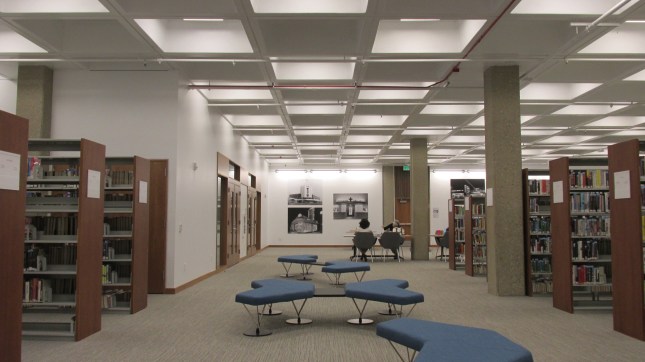
GL 32 Int Up

And here’s a shot of the upper level.

Renovating a historic building is a complex undertaking. Glendale wanted to take their 40+ year old Central Library and bring it into the 21st century, making sure it remains a relevant and useful part of the community. They did a beautiful job. I’m impressed.

GL Front Landscp 1

Bernie’s Norebang

BN 01 Side Car

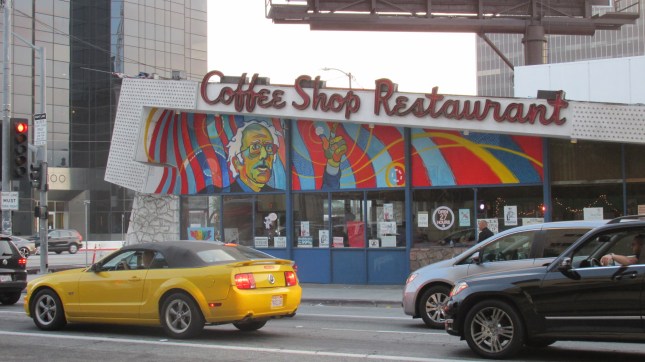
Bernie’s Coffee Shop, mural by Dionisio Ceballos

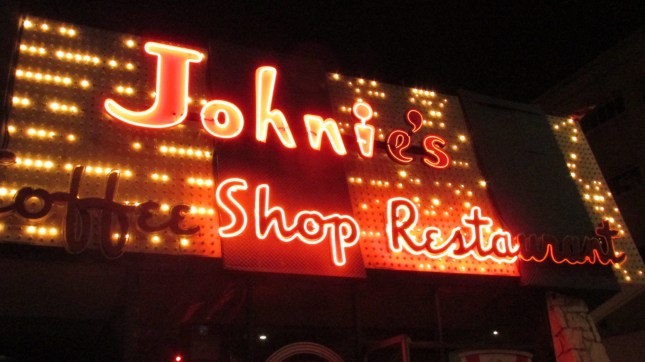
Okay, so I kind of have an obsession with Johnie’s Coffee Shop at Wilshire and Fairfax. When I was younger it was one of a number of coffee shops me and my friends used to hang at after movies or shows. It closed in 2000, and for years now I’ve been wondering if it would ever reopen.

Well, it has. Kind of.

Johnie’s isn’t a coffee shop any more. It’s morphed into something else. During last year’s presidential campaign, the owner of the restaurant offered it to a group of Bernie Sanders supporters, and it became the Sanders HQ in LA. After the campaign ended, the group continued to meet there to talk about ways to keep pressing for a progressive agenda.

BN 10 Johnies Corner

Johnie’s/Bernie’s Coffee Shop at Wilshire and Fairfax

I didn’t know about any of this until earlier this year when I was waiting at a bus stop with a friend, and we started talking to a guy about the coffee shop. He told us that it was a meeting place for the Sanders crowd. I immediately wanted to drop in and check it out.

So I was surfing the net in August, and came across a post advertising Bernie’s Norebang at Johnie’s. I knew I had to go.

I showed up at Johnie’s around seven o’ clock on a Friday night. It was early, and nobody was there yet, but the people were really friendly and I was soon deep into a discussion about how we could solve the housing crisis. One of the things that impressed me about everybody I talked to that night was that they all have a genuine desire to change things for the better.

For those of you who don’t know the word “norebang”, it’s the Korean version of karaoke. It was a blast. They asked for a twenty dollar donation at the door, but no one was turned away. Once inside, beer and food were free. I only had one plate of food. I don’t want to talk about how many beers I had.

But rather than tell you about it, let me just show you some pictures….

BN 20 Before

When I first arrived, there were just a few people setting up.

BN 30 Lights Hat

But soon the place started filling up.

BN 32 Progress

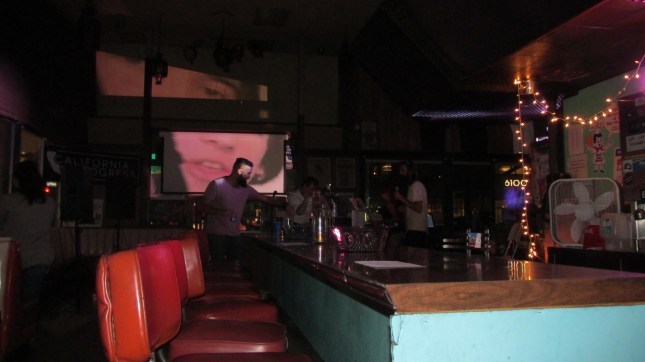
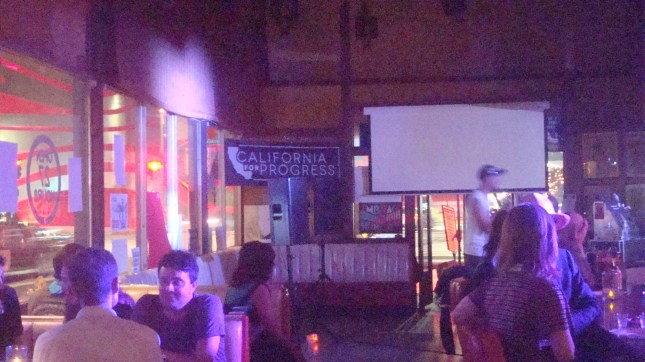
Everybody seemed to be having a good time.

BN 40 Singer

A vocalist cutting loose.

BN 42 Young Americans

Another vocalist takes a shot at Bowie’s Young Americans.

BN 60 Mural

I started wandering around, and found this mural in a corner of the restaurant.

BN 65 Counter Bottles

I wasn’t the only one drinking.

BN 70 Silhouettes

A shot taken from the corner by the mural.

I had a great time. I talked to a lot of interesting people. I sang a few songs. The only disappointment was that I didn’t get a standing ovation for my rendition of the Beatles’ Revolution. It could be that the other guests didn’t appreciate my talent. It could also be that I was on my fourth beer, and was having trouble staying on key.

Bernie’s Norebang was hosted by Ground Game LA.  They made it happen three times over the summer. Sorry I only made it to one. It was definitely one of the summer’s highlights.

BN 90 Sign

Tenants Raise Alarm at Historic Schindler Apartments

Sachs 01 Edg Front w Screen

The speculative real estate binge that’s sweeping across LA right now has drawn a swarm of unscrupulous people willing to do whatever it takes to make a profit. In talking to community members over the past few years I’ve heard some hair-raising stories, but nothing that tops the reports I’ve heard from the tenants of the Sachs Apartments in Silverlake.

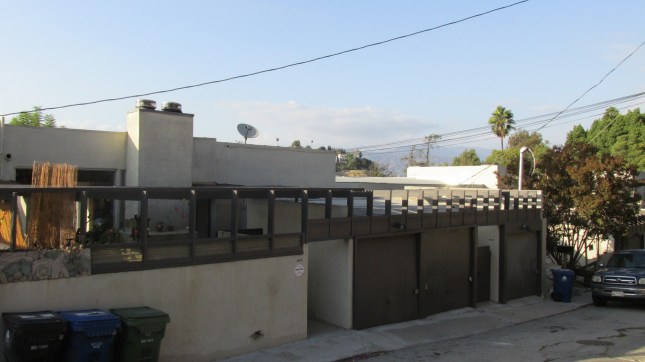
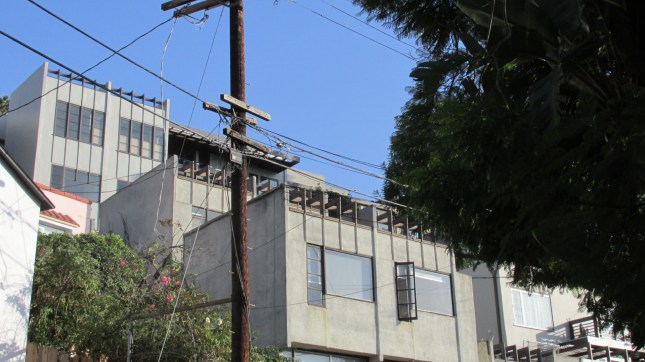
To give you some background, the Sachs Apartments (also known as Manola Court) were created by architect Rudolph Schindler for interior designer Herman Sachs. They’re a stunning example of Schindler’s work, a collection of buildings that step gracefully down a hillside, connected by steep stairways and terraced paths. The City of LA has recognized the importance of the site, naming it a Historic-Cultural Monument (HCM) in 2016.
Sachs 05 Edg Garages 2 EDITED

A view of the Sachs Apartments from Edgecliffe.

Sachs 10 Edg Garages

Another view from Edgecliffe.

Sachs 15 Edg Gate

A gate leading to a walkway between two buildings.

The Sachs Apartments were purchased by the current owners some years back. While there are three names listed on documents filed with the City, the person who has been dealing with the tenants and supervising the “restoration” is Paul Finegold. I’ve been hearing a lot about Mr. Finegold lately, and most of the comments have been pretty negative.

To start with, a number of tenants claim that Finegold has been harrassing them, and they believe he’s doing his best to get rid of them. There have been reports that he doesn’t maintain the units properly, and is slow to act when problems come up. I wanted to learn more, so last Thursday I showed up for a meeting of the Urban Design & Preservation Advisory Committee of the local neighborhood council. The only item on the agenda was the situation at the Sachs Apartments, and there was plenty to talk about. A number of tenants attended. They talked about water leaking through the ceiling, workers leaving debris on the site, and respiratory issues that may be related to dust from construction. Apparently Finegold has posted at least one unit on AirBnB, and the tenants said the guests are often out of control. One woman said she found a couple having sex right in front of her apartment.

And there’s more. According to the people at the meeting, three tenants have already been evicted by Finegold, who claimed that he, his mother, and a resident manager were moving in. But according to the current tenants, neither Finegold nor his mother nor the manager are living on the site.

Beyond all that, a lot of people are asking whether Finegold is restoring the Sachs Apartments or wrecking them. Remember, this is a Historic-Cultural Monument designed by someone who played a key role in LA’s architectural history. Having pledged to do a careful restoration of the site, Finegold is receiving substantial tax breaks under the Mills Act. But tenants say he’s made significant alterations, reconfiguring the interiors of some units and removing the bathroom from one. They also claim workers have cut down 4 mature trees and removed tiles designed by the original owner, Herman Sachs. Former tenant Judith Sheine, an authority on Schindler’s work, has expressed her concern that Finegold’s crews are doing damage to the complex.

I decided to go to the LA Department of Building & Safety (LADBS) web site to check out some of the permits that Finegold has pulled. Here are some excerpts….

“REMOVE FULL BATH ON FIRST FLOOR AND CREATE A POWDER ROOM ELSEWHERE ALSO ON FIRST FLOOR. NO CHANGE TO PLOT PLAN.”

“CONVERT A 3 UNIT APARTMENT TO A 4 UNIT APARTMENT WITH INTERIOR ALTERATIONS.”

“ADD NEW BATH; REMOVE AND REPLACE SELECTED WINDOWS; NEW ROOFING; NEW COLOR COAT EXTERIOR PLASTER”

Is it really okay to do all this with a building that’s been designated as an HCM? Was LADBS aware that this is a historic building? Obviously, any structure that’s over 80 years old is going to need some work to comply with current codes, but removing a bathroom? Converting one structure from 3 to 4 units? Remember, Finegold is getting tax breaks under the Mills Act for the work he’s doing, and that means he’s required to follow the Secretary of the Interior’s Standards for Rehabilitation. Historic Resources Group, a widely respected consulting firm, helped Finegold file the Mills Act application. Do they know what’s going on at the Sachs Apartments?
Sachs 20 Luc Front 1

A view of the Sachs Apartments from Lucile.

Sachs 22 Luc Corner

Far corner of the building on Lucile.

Sachs 24 Luc Front 5 w Bin

Another view of the building from Lucile.

And to top it all off, now Finegold has applied to convert 5 of the units to a bed and breakfast. That may seem like a small number, but remember, we’re in the middle of a housing crisis. And based on their experiences with Finegold, some of the tenants are worried that he eventually plans to convert the whole complex to a bed and breakfast.

So, will the Department of City Planning (DCP) reward this guy by allowing the change of use? Seems likely. In spite of the fact that City Hall keeps telling us that we don’t have nearly enough housing, the DCP has shown itself to be more than willing to work with owners who want to remove rental units from the market. The DCP has heard all about the tenants’ concerns, and so has Councilmember Mitch O’Farrell’s office. But so far nobody from the City seems willing to stand up and ask what the hell is going on at the Sachs Apartments.

If you think somebody from the City should be asking questions, maybe you could let them know you’re concerned. Send an e-mail to DCP staffer Azeen Khanmalek, and be sure to copy Councilmember Mitch O’Farrell.

How about this for a subject line?

Investigate Possible Damage to Historic Sachs Apartments

Azeen Khanmalek, Department of City Planning
Azeen.Khanmalek@lacity.org

Councilmember Mitch O’Farrell
councilmember.ofarrell@lacity.org

Sachs 30 Luc Rising

Use Your Creative Mind

Crenshaw Sign 1

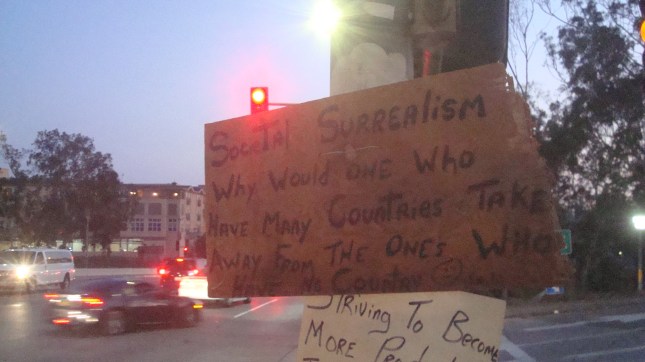
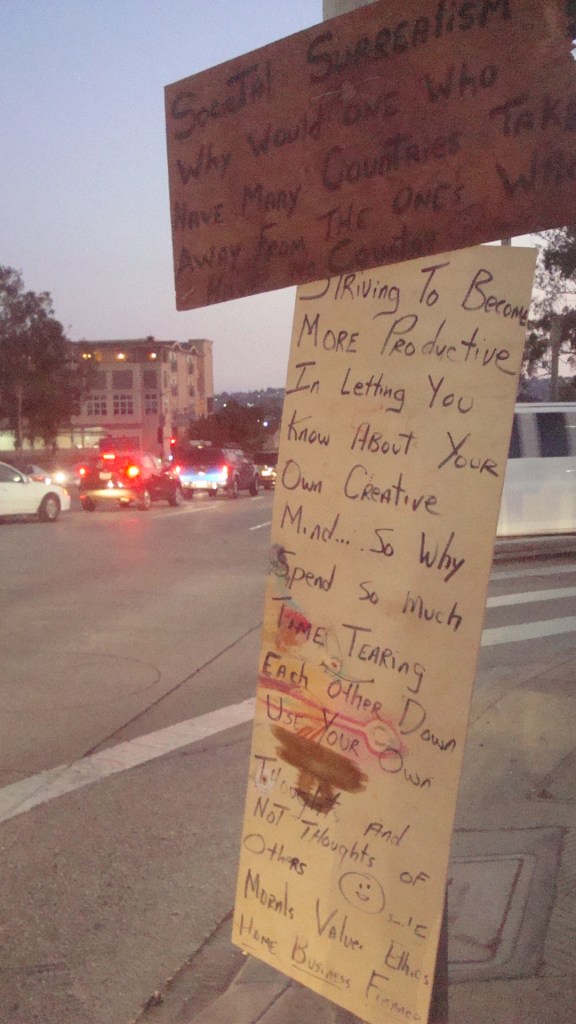
Last night I was walking down Crenshaw at dusk.  As I came up to the onramp for the Santa Monica Freeway I saw some signs fixed to a pole.  I thought the message was cool, so I pulled out my camera and snapped a few photos..

Crenshaw Sign 2

As I was taking the pictures, I wondered who put these signs up.  I didn’t have to wonder long.  He was standing a few feet away.  He came up to me and asked me why people didn’t use their creative mind.  It was a good question, and I didn’t have an answer.  We started talking.  He told me he thought the richest soil in the world was the soil you find in a cemetery, because so many people take their thoughts to the grave.

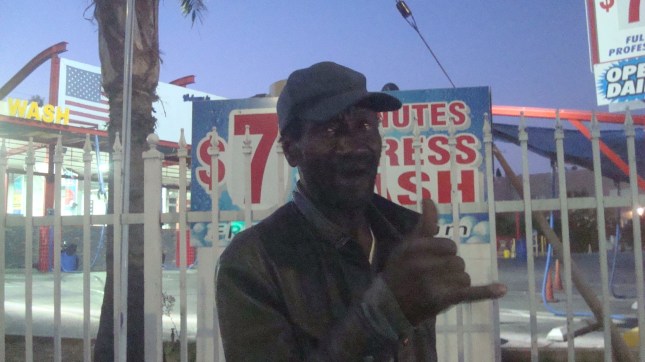
He told me his name was Lovell.  I told him I did a blog about LA, and asked if I could take his picture.  He said fine.

Crenshaw Lovell 1

We probably talked for about ten minutes.  Then I said goodbye and moved on.  But I was really glad I met Lovell.  He’s interesting guy, and he’s an optimist.  He really believes people can make the world a better place if they just allow themselves to explore their own potential.

It was a message I needed to hear.  The world seems so scary these days.  There’s so much violence and hate.  So much poverty and fear.  At times it feels like there’s no hope at all.  So it was good to talk to someone who does have hope.  Someone who believes we can change things for the better, if only we can just change ourselves.

Crenshaw Sign 3


Visualizing Language: Oaxaca in LA

Oax 01 Head

We may think of images and language as two separate things, but they’re not. They’re bound together in a million complicated ways, and it’s impossible to pull them apart. In a city like Los Angeles, we’re constantly surrounded by a swirl of words mutating into images (think the Hollywood sign, or a street artist spraypainting their name in neon colors) and images with easily recognizable meanings (a green cross, or a peace symbol).

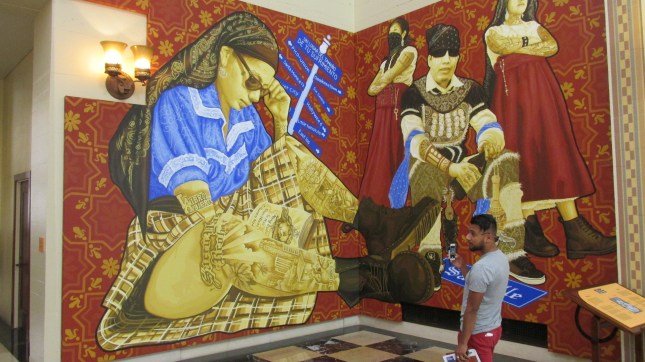
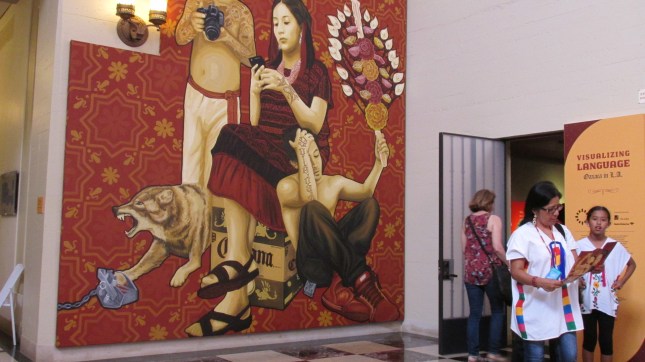
In Visualizing Language: Oaxaca in LA, a series of murals on display at the Central Library, the artist collective Tlacolulokos takes on the endlessly complex relationship between words and images, and at the same time they explore the equally complex cultural landscape of indigenous people who have migrated to Los Angeles.

Oax 05 Crowd

This newly written visual history is meant to be a response to earlier versions of history, specifically the series of murals by Dean Cornwell that decorates the Central Library’s rotunda. Cornwell’s images tell the story that the City’s leadership wanted to hear back in 1933, the discovery of the New World, the spread of Christianity, the march of Civilization. Of course, the indigenous people represented in those murals were generally down on their knees, waiting for salvation.

Oax 10 Old Mural 1

One of the murals painted by Dean Cornwell for the Library in 1933

There’s no point in me trying to write about these murals, because they speak so eloquently themselves. I’ll let the images do the talking. Just a word about the way they’re organized. The murals are conceived as three sets of diptychs, and the title for each set is given in Zapotec, the language of the indigenous people of Oaxaca.

Gal rabenee ladxuu/For the Pride of Your Hometown

Ra galumbanuu xhten guccran nii/The Way of the Elders

Ne guitenala’dxinu ca binni ma cusia’ndanu/And in Memory of the Forgotten

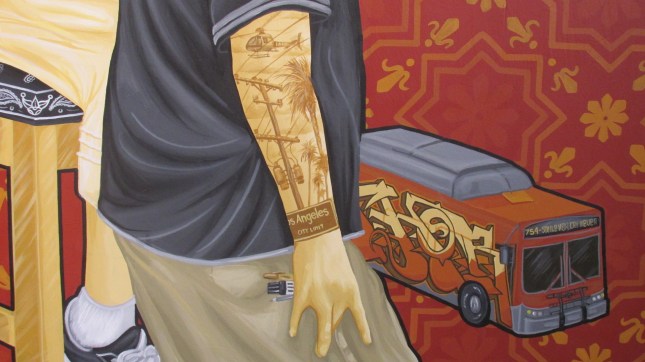
Oax 30 Boy Bus

Gal rabenee ladxuu/For the Pride of Your Hometown

Oax 35 Boy Bus Close

Gal rabenee ladxuu/For the Pride of Your Hometown (detail)

Oax 37 Never Forget Close

Gal rabenee ladxuu/For the Pride of Your Hometown

Oax 40 Cal Wide 01

Ra galumbanuu xhten guccran nii/The Way of the Elders

Oax 45 Cal Close

Ra galumbanuu xhten guccran nii/The Way of the Elders (detail)

Oax 47 St Sign 1

Ra galumbanuu xhten guccran nii/The Way of the Elders

Oax 50 Tattoo

Ne guitenala’dxinu ca binni ma cusia’ndanu/And in Memory of the Forgotten

Oax 60 Corona

Ne guitenala’dxinu ca binni ma cusia’ndanu/And in Memory of the Forgotten

The exhibition, a joint effort by the Library Foundation of Los Angeles and the Los Angeles Public Library, is part of Pacific Standard Time. Of course, these photos don’t do the murals justice. Really you should just head on down to the Central Library and see them for yourselves.

Visualizing Language: Oaxaca in LA


Commemorating Japanese Internment by Evicting Little Tokyo Artists

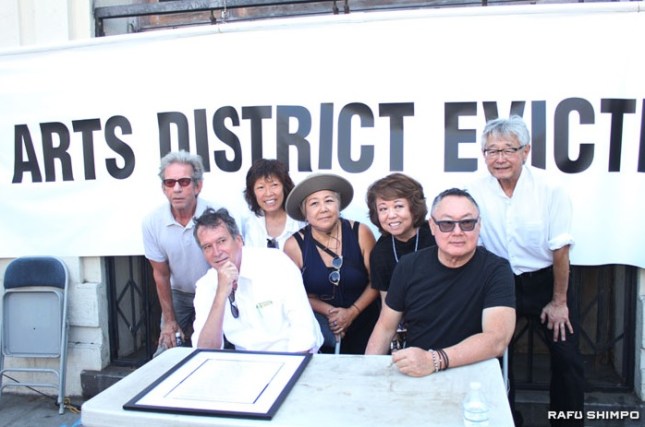
Little Tokyo Artists

It’s been 75 years since the US Government issued an order to intern all residents of Japanese descent. DLJ Real Estate Capital Partners is going to commemorate that event in a special way.  The company will soon be evicting the tenants at 800 Traction, another reminder to the residents of Little Tokyo of just how little their lives really mean.

Of course, you hear about evictions all the time in LA, and City Hall has let us know repeatedly that renters are completely disposable when their lives are weighed against investor profits. Mayor Garcetti has used the Department of City Planning like a sharp knife in carving out his radical gentrification agenda, and tenants from Boyle Heights to the beach communities know they have a target on their back.

But still, this case stands out, because of the history involved….

You see, Little Tokyo used to cover a lot more territory than it does now. While 800 Traction is no longer considered part of the district, prior to WWII it fell well within the bounds of the Japanese community. Many Japanese residents lost their homes and businesses because of the internment. City Hall took more land away in the 50s to build Parker Center. More land, more housing, more businesses were lost when (ironically) Japanese corporations moved in during the 70s and 80s. And so over time Little Tokyo has been reduced to a shadow of what it once was.

But there’s another layer to this that makes it even more disturbing. A number of the residents at 800 Traction are Japanese-American artists who’ve been living in the community for decades. They’ve worked with local cultural institutions, creating art for the people who live in Little Tokyo. They have deep roots in the neighborhood and helped create the Downtown art scene when nobody wanted to live there. Many people have pointed out the horrible irony in the fact that real estate interests have spent a fortune on branding the area as the Arts District, all the while kicking out the artists who made the place happen.

The tenants could be forced out by the end of this month. It’s hard to say whether they have any hope of keeping their homes, but it can’t hurt to raise your voice to support them. Please write to Councilmember Jose Huizar, and ask him why he isn’t doing more to protect the artists of 800 Traction against the soulless vampires at DLJ Capital Partners.

Here’s a clear, straightforward subject line.

STOP THE EVICTIONS AT 800 TRACTION!

Councilmember Jose Huizar
councilmember.huizar@lacity.org

And don’t forget to copy Mayor Garcetti, so he understands the damage his gentrification agenda is causing.

Mayor Eric Garcetti
mayor.garcetti@lacity.org
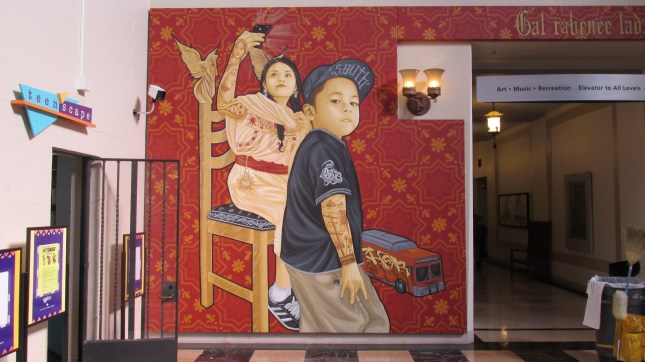
If you want more details, here’s an excellent piece from the Rafu Shimpo.

They Say Gentrify – We Must Unify!


Farming on a Sliver of Land in the Suburbs
CUF 01 Truck Elliot

I know there are urban farms all over LA, but the last place I would’ve expected to find one was Panorama City. One of the many suburbs that sprang up in the Valley after WWII, the area is a wide, flat expanse of tract homes and strip malls. Initially built in the late 40s, Panorama City was an early experiment in creating a master-planned community, filled largely with pre-fab houses made by Kaiser Homes.

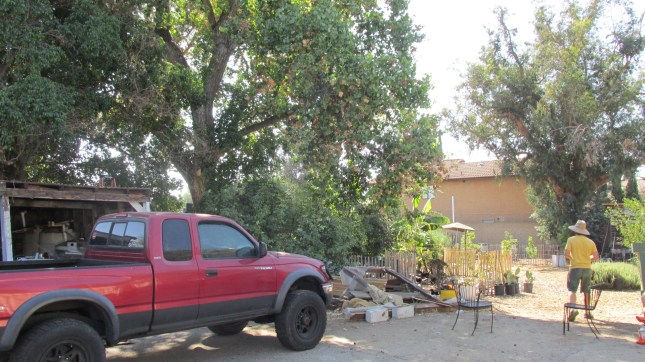
Elliott Kuhn bought this small piece of land near Roscoe Blvd. in 2011, and started Cottonwood Urban Farm (CUF) in 2013. The farm would never have existed had the previous owner done what his neighbors were doing and sold the parcel to developers. Roy Peterson had owned the land since the 60s, and lived in a small house that sat on the back of the lot. It would have been easy for him to take an offer from the investors who were buying up the neighborhood during the last decade, filling the surrounding lots with big, nondescript, stucco boxes. But Peterson didn’t want that to happen to his property, and so when Kuhn approached him about buying the parcel to create an urban farm, he took less than he could’ve gotten elsewhere. The idea appealed to him.

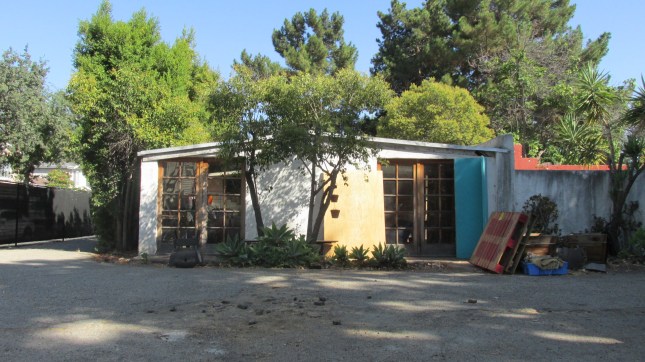
CUF 20 House

The home formerly occupied by Roy Peterson.

CUF 22 Shack House

Right next door you can see houses built during the construction boom of the last decade.

Kuhn had worked for a while as a teacher, and finally decided it wasn’t for him. He put in some time on farms in Austin, and also did a stint with Tree People. Buying the property in Panorama City was the first step toward starting his own farm, but it took a while to get the land in shape. One of the biggest challenges was clearing the property, which involved hauling off 15 tons of trash.

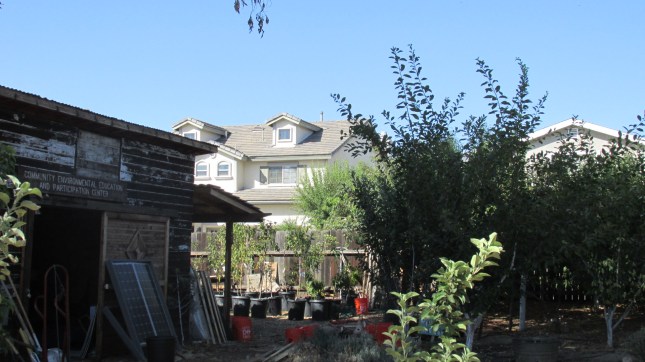
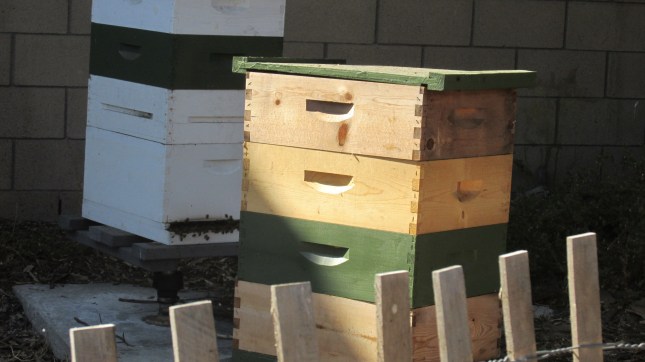
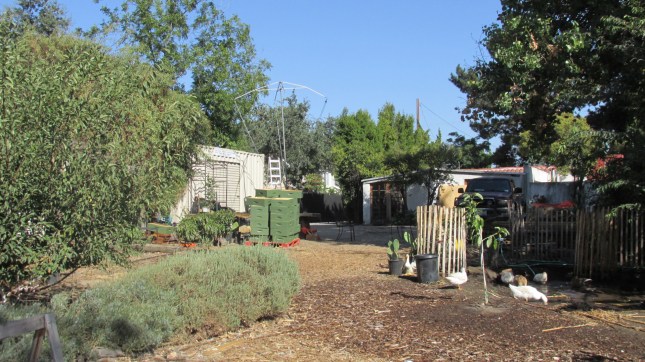
The farm is small, and the layout is compact, so it didn’t take long for Elliott to walk me through it. Toward the back there’s a tiny grove of fruit trees that produce peaches, plums, and nectarines. As we moved toward the front we walked past patches of lettuce, kale, and chard. A crowd of noisy ducks were splashing around in a tiny water hole, and off to one side there were stacks of boxes that serve as bee hives.

CUF 40 Orange Flowers

You can find all kinds of things growing on this farm.

CUF 43 Bees

You can see bees gathered around the opening in the box toward the back.

CUF 42 Ducks

The ducks try to keep cool on a hot summer day.

CUF 44 Buddha

A grinning statue of Buddha surrounded by greenery.

The farm gets its name from the giant cottonwood tree that rises high above it. Elliott believes it’s at least a hundred years old. I took a number of photos of the tree, and didn’t get a single image that really captured its beauty, but maybe this one will give you some idea.

CUF 50 Cottonwood Vert

Elliott explained that the produce is not certified organic, but he tries to rely on organic principles. Crop diversity and rotation help make the farm sustainable. I asked if he made his living just by farming, and he said no. He’s hoping to eventually make the farm economically self-sustaining by moving into specialty produce that he can sell for a higher profit. Right now he makes ends meet by patching together a few different gigs, including doing presentations for groups and also working as a gardener.

CUF 60 PLant Magenta Elliot 2

Elliott tending the farm.

CUF 62 Sunflower

Sunflowers are amazing.

When it was time for me to leave, Elliott opened the front gate and I stepped from the soft soil of the farm back onto the hard pavement that covers so much of suburbia. I walked back down to Roscoe Blvd. where rush hour traffic was speeding past in both directions.

I know there are a lot of good reasons to make farms a part of the urban fabric. They can foster a cleaner environment, reduce CO2 emissions and offer communities healthier food. But besides all that, it seems to me that in a sprawling metropolis like LA, it’s also important just to have a place that’s peaceful and green.

If you want to learn more about Cottonwood Urban Farm, here’s the link.

Cottonwood Urban Farm

CUF 90 Farm Wide

Moral Mondays in Hollywood

MM 01 Eld Ext Shoot 2

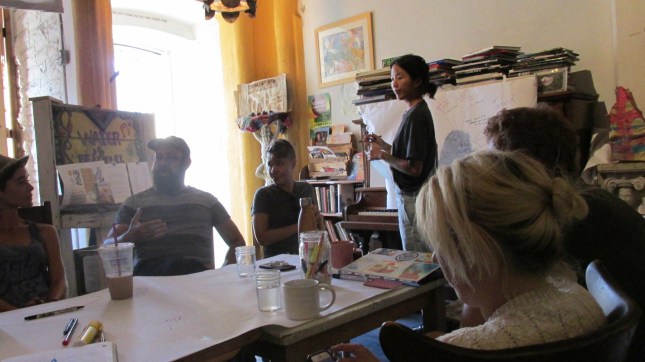
Does it seem to you like this country is coming apart at the seams? There’ so much turmoil right now, just looking at the news can be a frightening experience. So it was really reassuring to sit in on a Moral Mondays meeting last week. About a dozen people gathered at a coffee house in Hollywood to talk about how to deal with healthcare, homelessness, and environmental issues. There was no tension, no anger. Just people sitting around a table talking about solutions.

Moral Mondays began a few years ago in North Carolina. It was originally a movement led by religious progressives who were alarmed at actions taken by the legislature in that state. Since then Moral Mondays has evolved into an ongoing effort to press for social justice, with the movement spreading to Georgia, Illinois, New Mexico, and now California.

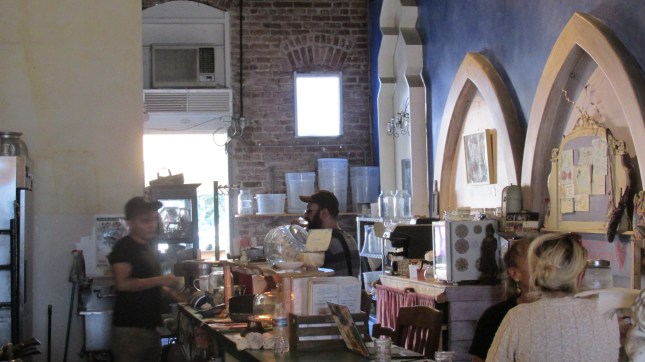
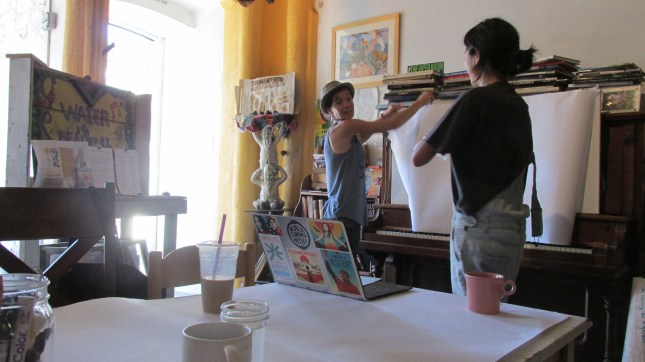
The group usually meets on Mondays at Elderberries on Sunset, an old school coffee house stuffed with books and art. The meeting was moderated by Kait Ziegler, who led the discussion and recorded everyone’s ideas on a sheet of paper propped up on the piano. The question for the evening was, How do you reach out to align groups with different interests? In other words, How do you bring people together? There are hundreds of groups out there campaigning for all sorts of things, from affordable housing to healthcare, from voting rights to the environment. And of course, we all feel the issue we’re engaged in is the most important. So how do we step outside of ourselves to see the bigger picture?

MM 10 Eld Int Bar

Elderberries is filled with all kinds of art…

MM 15 Eld Int Books

…and hundreds of books.

Everybody in the room agreed that empathy was the key. Kait suggested one way to practice that was to, “Imagine yourself as your neighbor.” That’s not easy. Most of us are pretty wrapped up in our own lives, often because it takes so much energy just to keep our own head above water. And everybody agreed that extending empathy to others can be difficult. There are so many people in need, and we all have to maintain some boundaries. But we still need to make the effort. Sometimes just letting people know that you’re listening can be powerful.

MM 20 Setting Up

Setting up for the meeting.

None of us came up with any brilliant solutions that night, but for me it was encouraging just to sit with a group of people who want to find solutions. Rather than letting the world get them down, or running from the chaos, these people are trying to make the world a better place. I was really struck when somebody said, “One of the biggest problems is that people feel helpless. We’re trained to think we’re helpless.” Is this true? Maybe. How many times have I heard people say they don’t watch the news because it’s depressing? How many times have I heard people say there’s no point in voting because it doesn’t matter who gets elected?

MM 30 Talking 2

Kait moderated the discussion and wrote down everybody’s ideas.

We’re not helpless. We can make things better. One of the other attendees said, “If everyone in this town took one small action, change would happen.” This is true. History has proved it, over an over again. Change won’t be easy. It won’t happen overnight. But it can happen.

MM 50 Laptop

Speaking Out on the Housing Crisis

HP 01 Crowd

Housing is the hottest issue in California right now. Here in LA housing costs continue to climb, the pace of evictions is quickening, and the number of homeless is increasing by leaps and bounds. The folks at City Hall talk a lot about taking action, but nothing they’ve done so far has had any significant impact. The situation just keeps getting worse.

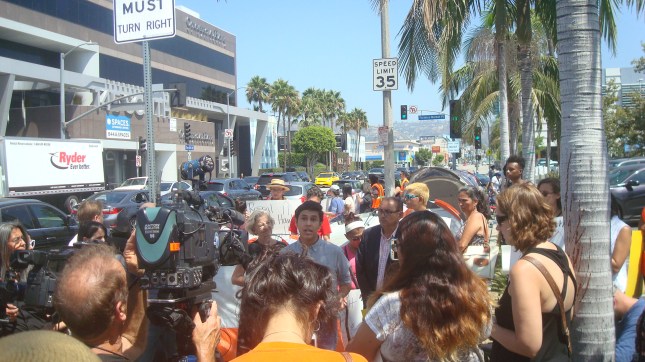
So a group of housing advocates, homeless advocates, and renters’ rights advocates decided to stage a protest on Fairfax last Friday. They put up a line of tents along the curb to dramatize the plight of those who are currently homeless, and also the thousands more who will likely become homeless in the next few years.

HP 10 Ellis

Protesters lined up on Fairfax.

The media showed up with their cameras to cover this tent city press conference. The organizers called on Mayor Garcetti and the City Council to develop a plan to create affordable housing, ensure responsible development, and expand rent control.

A number of people spoke about different aspects of the crisis. Victor García, a recent graduate of UCSB, talked about the invisible problem of student homelessness. He told the crowd about UCLA students living in their cars because they couldn’t afford student housing and apartments in Westwood were way beyond their reach. García would like to see an end to California’s Costa-Hawkins act, which the limits the expansion of rent control.

HP 30 VG

Victor Garcia speaks about student homelessness.

Emily Martiniuk told her own story, a harrowing account of being evicted at age 59 and having nowhere to go. Contemplating suicide, she had the presence of mind to check herself into Olive View Medical Center, and eventually was able to move into a permanent supportive housing facility. She escaped long-term homelessness, but there are tens of thousands of people on the streets of LA right now who weren’t so lucky. Martiniuk has travelled the US in recent years, speaking about the importance of creating more permanent supportive housing.

HP 35 EM

Emily Martiniuk is a vocal advocate for permanent supportive housing.

As cars drove by on Fairfax, protesters stood at the curb holding signs and chanting slogans. Just before I left I heard them shouting, “Tent city! Do something, Garcetti!” Hopefully somebody at City Hall is listening. It would be great if the Mayor and the City Council finally did decide to do something about this crisis.

HP Tents

The Hollywood Rip-Off

DH SM 01 Tao Dream 2

The other day I picked up a copy of the LA Weekly and came across Besha Rodell’s review for Tao in Hollywood. Clueless loser that I am, I’d never heard of this popular mini-chain before, and had no idea it had been a huge success in New York and Las Vegas. Tao’s latest location is tucked into the just-opened Dream Hotel in Hollywood, and it seems to be doing big business. But Rodell wasn’t impressed. At all. You can read his review here.

Worse Than We Imagined from LA Weekly

Reading Rodell’s description of the decor’s garish excess and ridiculously inflated prices, I felt like his review could apply to a lot of what’s happening in Hollywood these days. The Dream Hotel and Tao just seem like the latest in City Hall’s efforts to wreck the community.

DH SM 10 Tao

Tao on Selma in Hollywood

Does that sound extreme? And does it sound strange to be railing against garish excess in Hollywood? Hasn’t that been Hollywood’s game all along? Certainly if you look at the movie industry’s output, from the lurid spectacles of the 20s to this summer’s CGI-fueled action flicks, you’ll find plenty of outrageous, vacuous entertainment. You could also point to the sumptuous nightclubs and decadent nightlife that flourished during the studio era, when gossip columns were filled with the shameless antics of movie stars.

But the studio era ended decades ago, and over the years the place called Hollywood has grown into something very different. For a long time now it’s been a low to middle-income community with a fairly dense mix of residential and commercial. The movie stars are long gone, but there are lots of hardworking people here, people who run small shops and family-owned restaurants. Would-be actors and actresses who knock themselves out waiting tables while trying to get auditions. Kids who walk to school on streets where they have to learn early to look out for themselves.

And these people are struggling harder than ever because the City seems to be doing everything it can to push them out of Hollywood. What these people need more than anything is housing they can afford, and instead the City keeps approving high-end mutli-family projects that most Hollywood residents could never hope to move into. Yes, some affordable units have been created in recent years, but the wave of evictions continues, and we’re still losing scores of rent-stabilized apartments.

And with all this going on, the City decides we need over a dozen new high-end hotels? With multiple bars? Rooftop decks? Live entertainment? In some cases right up against apartment buildings? Really?

The City has long said that one of the key components to its plan to revitalize Hollywood is to boost the night life, but how’s that working out? I like a drink as well as the next guy, but last time I counted there were 67 places that serve alcohol in Central Hollywood. It’s not hard to get a drink here. And still the City continues to approve new liquor permits, even though violent crime and property crimes have been rising steadily in the area since 2014. Are you wondering if there’s a connection? Actually there are years of research that show a strong connection between alcohol and crime. Check out this report from the Department of Justice if you’re skeptical.

Alcohol and Violent Crime

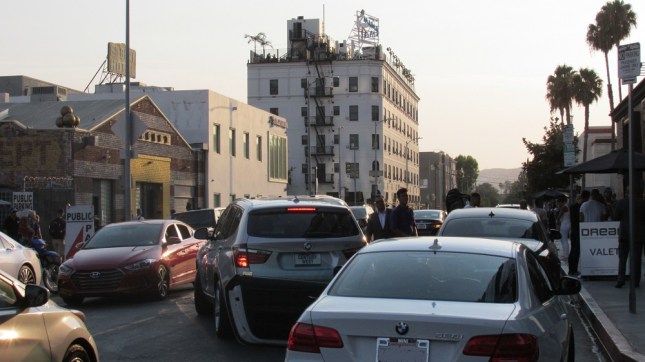
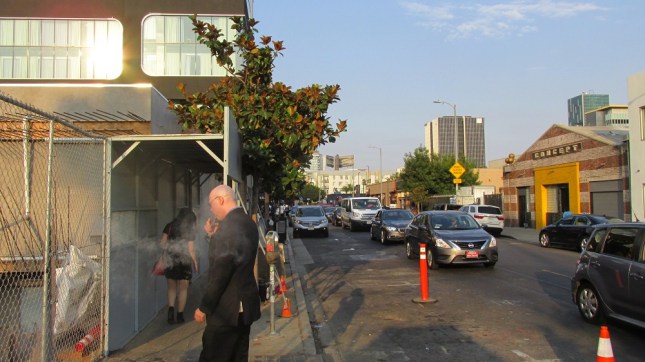
And then there’s the traffic. Every time the City approves one of these projects, planners insist it won’t have any significant impact on congestion because Hollywood is a transit hub. The hotel guests and the partiers won’t need to drive because they can ride the bus instead. Well, take a look at these photos I snapped in front of the Dream Hotel around seven o’clock on Saturday night.

DH SM 20 Cars Crowd

Cars lining up in front of the hotel.

DH SM 22 Guy Smoke

The line of cars continues west on Selma.

And now let’s take a look at traffic a half a block away on Cahuenga.

DH SM 50 Cah N

A shot of traffic on Cahuenga, facing Hollywood.

DH SM 52 Cah S

A shot of traffic on Cahuenga, facing Sunset.

Remember, this is not a weekday at rush hour. This is early evening on a Saturday. Somehow I don’t find the City’s claims about people taking transit to be completely credible.

It used to be the club scene in Hollywood was mostly concentrated on Cahuenga. But the City wants to change that. Selma used to be a fairly quiet street running through a largely residential neighborhood between Vine and Highland. There’s a senior center about a block and a half away from the Dream Hotel. And there’s an elementary school about two blocks away in the other direction. But the City doesn’t seem too concerned about the elderly or the children living in the neighborhood. Our elected officials are going to turn Selma into a party corridor. A few years back Mama Shelter opened up, now the Dream, and the City Planning Commission (CPC) recently approved the tommie, an eight-story hotel featuring 2 bars, a rooftop deck, and live entertainment. It didn’t bother the CPC at all that Selma Elementary is less than 500 feet away from this latest project.

And you haven’t even heard the best part. Just blocks away, a developer is planning to build the massive Crossroads Hollywood project, and they’re asking for a master alcohol permit to allow 22 establishments to serve alcohol. You read that right. Twenty two. And not only is Crossroads Hollywood in close proximity to Selma Elementary, it’s right across the street from Hollywood High School.

DH SM 70 Front

The front of the Dream Hotel.

This is the City’s idea of revitalizing Hollywood. We need low-cost housing. They give us high-end hotels. We need relief from violent crime. They keep pouring on the alcohol. Meanwhile traffic is worse than ever, transit ridership continues to decline, and the number of homeless keeps growing.

City Hall keeps saying they’re trying to bring Hollywood back to life. Why does it feel like they’re trying to kill it?

DH SM 90 Motorcycle