Hollywood Journal – It Wasn’t What I Wanted

Egyp Pylons Angle

Things change, and sometimes change is hard to accept. Part of the reason I spent years keeping a journal on Hollywood was to record the transformations that were taking place. One of the biggest upheavals was in the way films were exhibited. Hollywood is home to a handful of movie palaces, all of them built over the course of a decade starting in the early twenties. Up through the eighties, those palaces were still playing first run movies, and on opening weekend you might see lines going down the block.

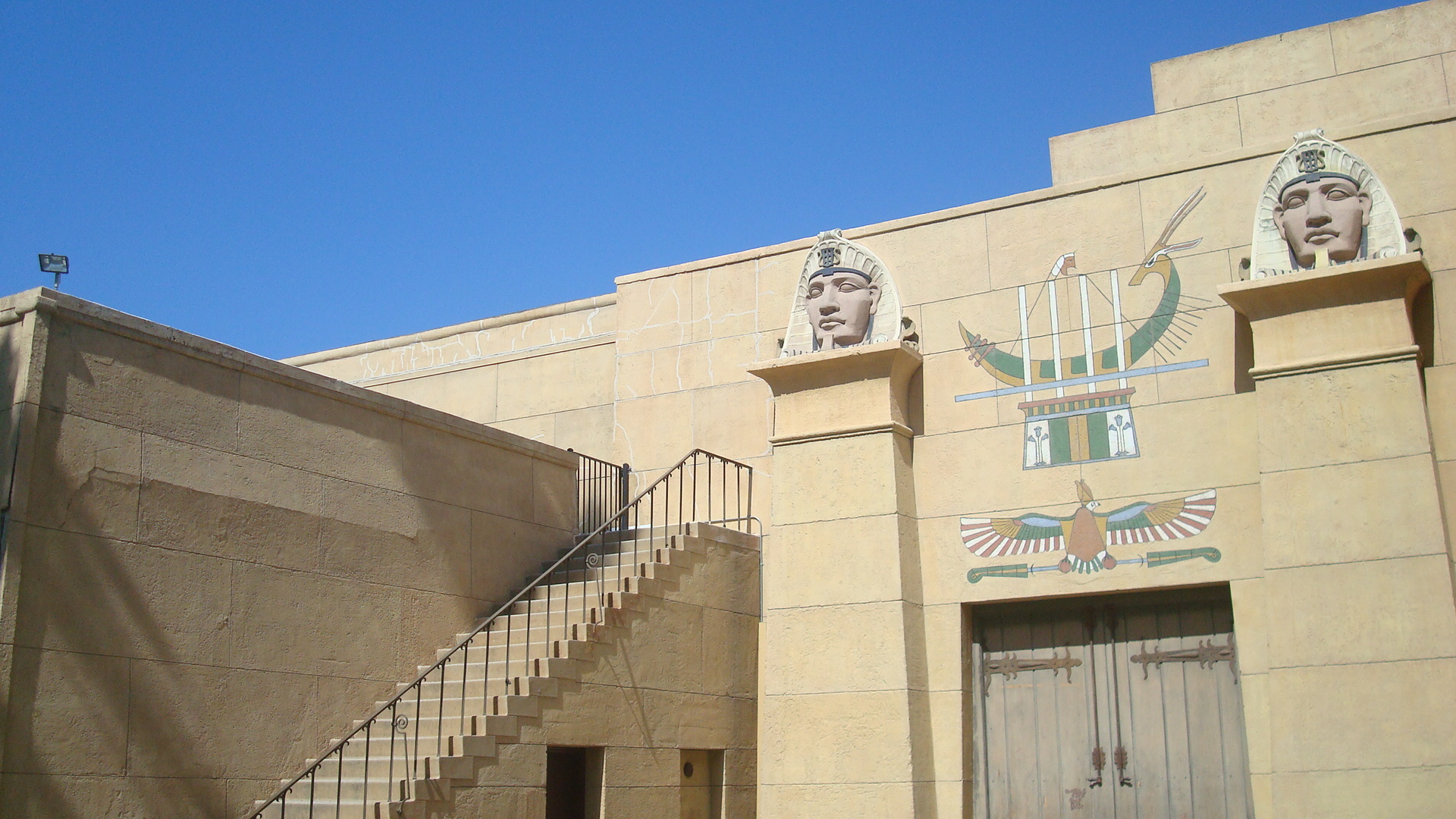
But in the eighties multi-plexes started springing up, and the huge Hollywood theatres couldn’t compete. They either had to change or die. The Egyptian Theatre was shuttered in 1992. I was really upset. I’d seen so many movies there, including 2001, Alien and Point Break. When it suffered major damage in the 1994 Northridge quake, I was sure the next step was demolition. So I was overjoyed when I heard the American Cinematheque had bought the building and was going to renovate it.

Overjoyed, that is, until the theatre reopened and I saw the results. The auditorium was less than half its original size and the screen was significantly smaller. Plus, there were a number of minor changes that bugged me. I wrote it all down in the journal entry below. I was ticked off.

On the plus side, though, the Cinematheque was on Hollywood Boulevard and they were showing some great stuff. I eventually signed on as a volunteer, and ended up giving tours of the theatre, which made me look at the changes in a whole new light. In the first place, there was no way the Cinematheque could run the Egyptian as a 2,000 seat house. It just wasn’t possible to fill an auditorium that big on a regular basis. They had to find a way to solve that problem, and the solution was building two smaller theatres inside the original structure. Second, the theatre I remembered was very different from the theatre Sid Grauman had built in nineteen twenty two. He created a silent movie palace. As soon as sound came in, the theatre had to start adapting to stay viable, and numerous changes had been made over the years. In the process of renovating the Egyptian, the Cinematheque actually revealed parts of the original structure that had been concealed for decades. Third, the process of renovating a historic building is incredibly complex and costly. The Cinematheque had to follow the City’s code for historic preservation and find the money to pay for everything. They were lucky to connect with a couple of very talented architects, Craig Hodgetts and Ming Fung. The team came up with a number of innovative and elegant solutions to some difficult problems.

I love seeing movies at the Egyptian these days. If the screen isn’t quite as big as it used to be, it’s still one of the largest you’ll find in LA. And the sound is way better than it was when the Egyptian was operating as a commercial movie theatre. So while the journal entry below shows my initial disappointment, as the politicians say, my views have evolved. When the theatre first reopened, I wanted it to be the way I remembered it in years past. That wasn’t possible. Things change.

Here’s a link to a page on the American Cinematheque web site that shows images of the Egyptian over the years.

Egyptian Theatre Past

And here’s a link to the Hodgetts and Fung web site that shows images of their renovation/restoration.

H+F Egyptian Theatre

Egyp Hier

January, Nineteen Ninety Nine

Well, last night I finally made it over to the American Cinematheque. And I’ve gotta say I’m pretty disappointed with what they’ve done to the Egyptian. I mean, if you just want to look at it as a modern, mid-sized theatre it’s fine. But, aside from preserving some of the decorative elements, it has nothing to do with what the Egyptian was. It seems like the auditorium is about half its original size. The screen is considerably smaller. The seats are cozy but narrow, and there’s very little leg room. I was more comfortable the other night at the Beverly. Why do they have that sign up that says it’s Grauman’s Egyptian? It’s not. Did any of the people involved seriously think they were restoring or renovating the original theatre? All they’ve done is build a mid-sized auditorium inside the shell of a movie palace. They’ve completely changed the interior and the exterior of the building. The experience of going to this new Egyptian Theatre is totally different, and it’s certainly not a change for the better.

Now that I’ve got that out of my system, I also have to say I’m really glad to have the American Cinematheque on Hollywood Boulevard. I’m pretty impressed by their programming so far. It seems like they really want to offer all kinds of films. In spite of what they’ve done to the Egyptian, I look forward to going back.

Last night we saw Cruising, and Friedkin was there to talk about it. I really liked the film. It was interesting to hear the director’s comments, too.

Egyp Columns

Landmark? What Landmark?

Circus Disco

Circus Disco

When a proposed project might have significant impacts on the surrounding community, state law requires the developer to prepare an Environmental Impact Report (EIR). In theory, this is a good thing. The idea is to make sure that negative impacts are identified so that everyone is aware of how the project will affect the area. In practice, the whole EIR process is questionable. The basic problem is that the developer is the one who pays for the report, which means that it almost invariably focusses on the positive impacts, and either minimizes or ignores the negative impacts.

This is exactly what’s happing with the Lexington Project. The developer wants to build almost 700 residential units on a city block between Lexington, Santa Monica, Las Palmas and Seward. The EIR tells us it’s a terrific project with numerous benefits for the area. But there a lot of the people in the community who see things differently.

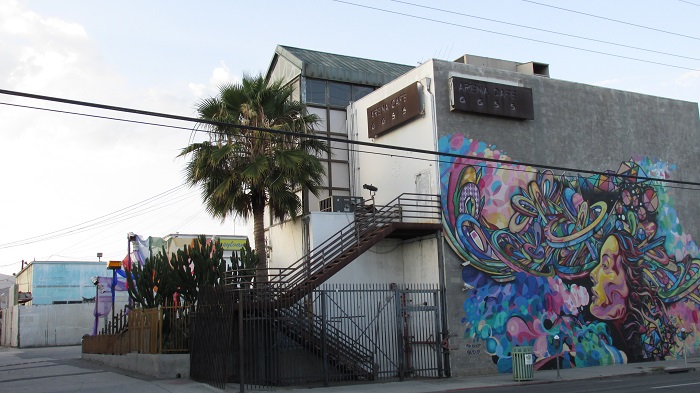
The aspect of the project that’s gotten the most media attention is the fact that the developer will be demolishing the Circus Disco. You may be wondering why this is a big deal. Hollywood is full of places to dance. But the Circus is an important landmark for the LGBT community in LA, and especially for non-white gays and lesbians. Back in the 70s, when disco was big, there were plenty of clubs where gay men could party all night long. Unfortunately many of those clubs didn’t admit blacks and Latinos. But the Circus Disco was open to everyone, and it’s been cherished for years by the LGBT community because of that.

But while the EIR mentions the Circus in its survey of structures on the property, the report concludes that, “… [N]one of these buildings appears eligible for listing in the National Register, California Register, or for local City of Los Angeles Historic-Cultural Monument designation.”

This is interesting. Sure, it would be hard to make a case that the Circus was significant enough to make the national or state registers. But are they saying it’s not a significant part of LA history? If so, it seems that the City of LA’s Office of Historic Preservation has a different view. Survey LA is a program initiated by the OHR to document significant buildings. Last year they released a document entitled LGBT Historic Context Statement which gives an overview of the community’s history and identifies potential landmarks. And the Circus Disco is on the list.

LGBT Historic Context Statement from Survey LA

But it’s not just the Circus that’s threatened. The French Market and Catch One, both of which hold a significant place in the LGBT community, may soon be gone. And let’s not forget that back in 2011 the building that originally housed A Different Light, an early gay bookstore, was demolished. That was the same year that the Spotlight, according to some the oldest gay bar in Hollywood, closed its doors. The building still stands, but now it’s just another upscale nightclub. It does seem like the LGBT community is losing a huge chunk of its history.

Not that any of us should be surprised. Preservation has never been a high priority in LA. Groups like the Los Angeles Conservancy and Hollywood Heritage keep fighting to save these buildings, but City Hall seems more interested in keeping the developers happy.

If you want to learn more, this article from the Daily News offers a good summary.

Disco to Become Site for Condominiums

Mural on the front of the building

Mural on the front of the building

Erasing Hollywood’s History

A view of 1905 Grace from Grace Ave..

A view of 1905 Grace from Grace Ave..

UPDATE: A time has been set for the meeting to consider this building as a historic landmark. Here are the details:

CULTURAL HERITAGE COMMISSION
SPECIAL MEETING
Tuesday, May 12, 2015, 10:00 am
200 North Spring St.
Room 1050, City Hall

You might also want to take the time to read the comment at the end of this post from John Girodo of Hollywood Heritage. He gives more information about what’s happening.

Thursday night I heard some disturbing news. An American Colonial mansion that was built in 1917, located at the corner of Grace and Franklin in Hollywood, is slated for demolition. A developer wants to knock the building down, probably with the intention of constructing high-end residential units.

Hollywood Heritage is trying to have the mansion nominated as a historic monument, but things don’t look good. The Office of Historic Resources will be holding a hearing to consider the nomination, but it’s on such short notice that it will be hard to rally the community. The meeting is scheduled for Tuesday, May 12. The last I heard, the time hasn’t been set.

It seems like the City is trying to rush this through, which doesn’t surprise me given their recent record. In just the last year the City has allowed developers to level the Mole-Richardson Building on La Brea and the Oswald Bartlett House in Los Feliz. Those are just the two most recent casualties of the current wave of development.

Can anybody stop this? I don’t know. It would be great to have a good turnout at the meeting on Tuesday. Hollywood Heritage says people must show up in person to express their views, but it’s hard to plan on attending when the time hasn’t even been set. Hopefully the OHR will nail that down pretty soon. It also might be helpful to find out what CD 4 candidates Carolyn Ramsay and David Ryu have to say about this. They’ve both said they want to preserve Hollywood’s history. Let’s find out if they really mean it.

Carolyn Ramsay

David Ryu

If you can’t make it to the meeting on Tuesday, you might still let the OHR know how you feel about this. The link is below.

Office of Historic Resources

[For an update on 1905 Grace, click here.]

A view of 1905 Grace from Franklin Ave..

A view of 1905 Grace from Franklin Ave..

Putting Lives Back Together

SRHT Main All

LA is suffering from an affordable housing crisis, but there is some good news to celebrate. Thanks to the efforts of the Skid Row Housing Trust (SRHT), formerly homeless people are getting a roof over their heads and a place in the community. The SRHT is using innovative approaches to creating housing in the Downtown area.

Homelessness is a complex problem. It’s not just a matter of giving someone a place to live, because people living on the streets are often struggling with a variety of issues. In the first place, finding a job, which can be tough if you don’t have skills that are currently in demand. Depression, mental illness and substance abuse are also common problems, and these are not solved simply by giving someone the keys to an apartment.

But having a place to live is the first step. And the SRHT offers assistance to people grappling with other issues by creating permanent supportive housing. This means that the residents living in these communities have access to counseling, job training, health care and other services in order to get their life back on track.

The SRHT has been working on two new projects in Downtown. First, let’s take a look at the Star Apartments….

SRHT Star Frnt

The Star Apartments are located near the corner of Sixth and Wall. The project was designed by Michael Maltzan Architecture, and they used an interesting approach. The site was occupied by a one-story building, which they wanted to expand to create more units. The solution they hit on was stacking pre-fab cubes on top of the original structure, which in addition to being fast and economical, resulted in a striking piece of design.

SRHT Star Sky 1

You can read more on Maltzan’s web site.

Star Apartments

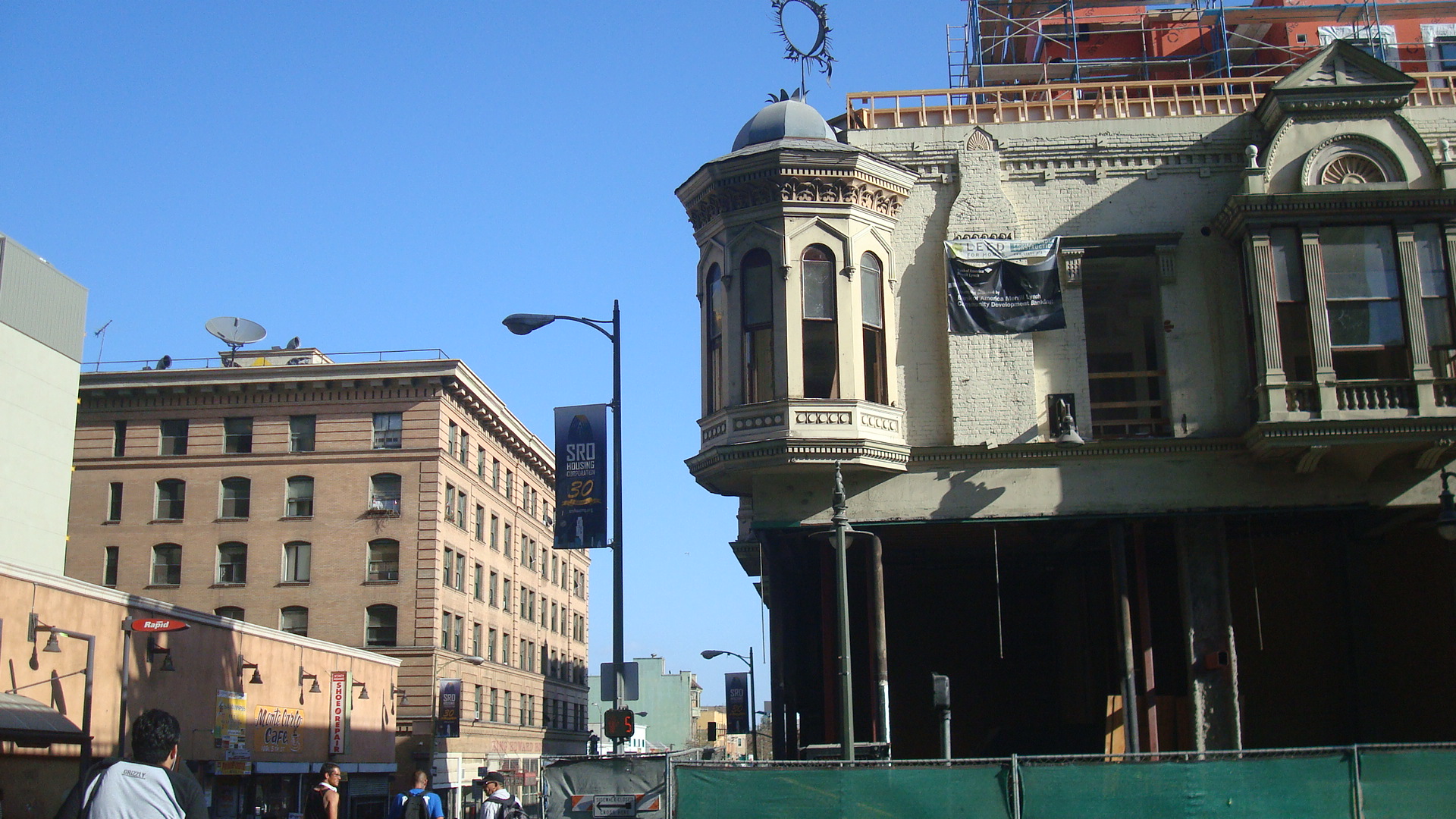
Next, check out the New Pershing Apartments at Fifth and Main. This project actually combines two structures, the Pershing Hotel and the Roma Hotel, built in 1889 and 1905, respectively. The new design, by Killefer Flammang Architects, preserves original elements of the exterior. In addition to the residential units, the New Pershing will also offer a courtyard, two recreation decks and planters for gardening.

First let’s look at a couple of shots taken while the project was under construction, back in October of 2014. The first was taken from the corner of Fifth and Main.

SRHT Main Const 1

This next photo was taken on Main, directly across from the building.

SRHT Main Const 2

Now let’s look at the finished project.

SRHT Main Frnt

And another shot from Fifth and Main.

SRHT Main Full

Here’s the article that the Downtown News ran on the New Pershing earlier this month.

A Victorian Victory

You can find more information about the SRHT’s activities by visiting their web page. And if you want to support their efforts, I’m sure a donation would be welcome.

Skid Row Housing Trust

The Ennis House

En 20 Sky

I’d read about Frank Lloyd Wright’s Ennis House for years, but I’d never actually been to see it.  So this last weekend I decided I was going to pay a visit.

The gate at the driveway.

The gate at the driveway.

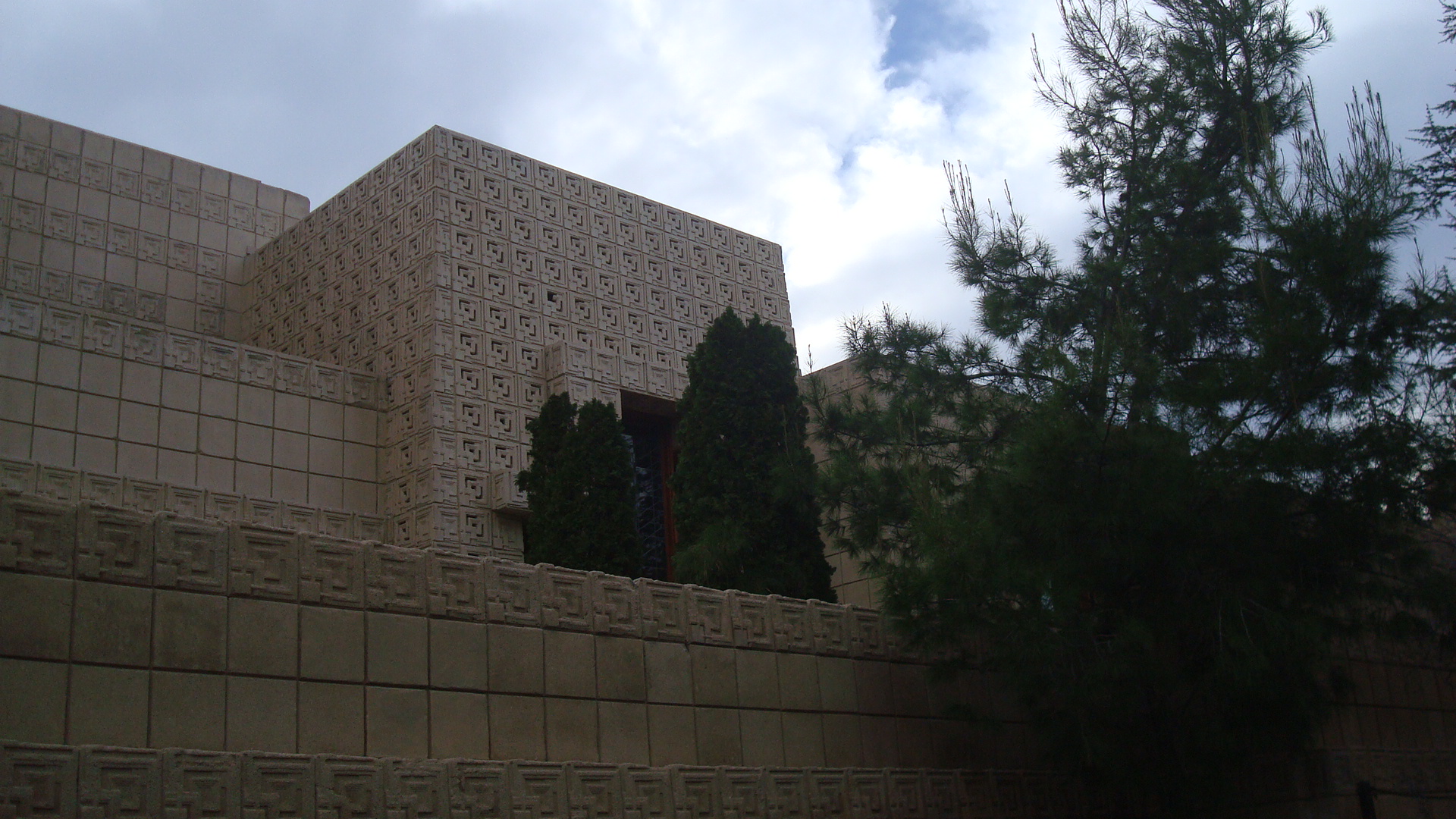
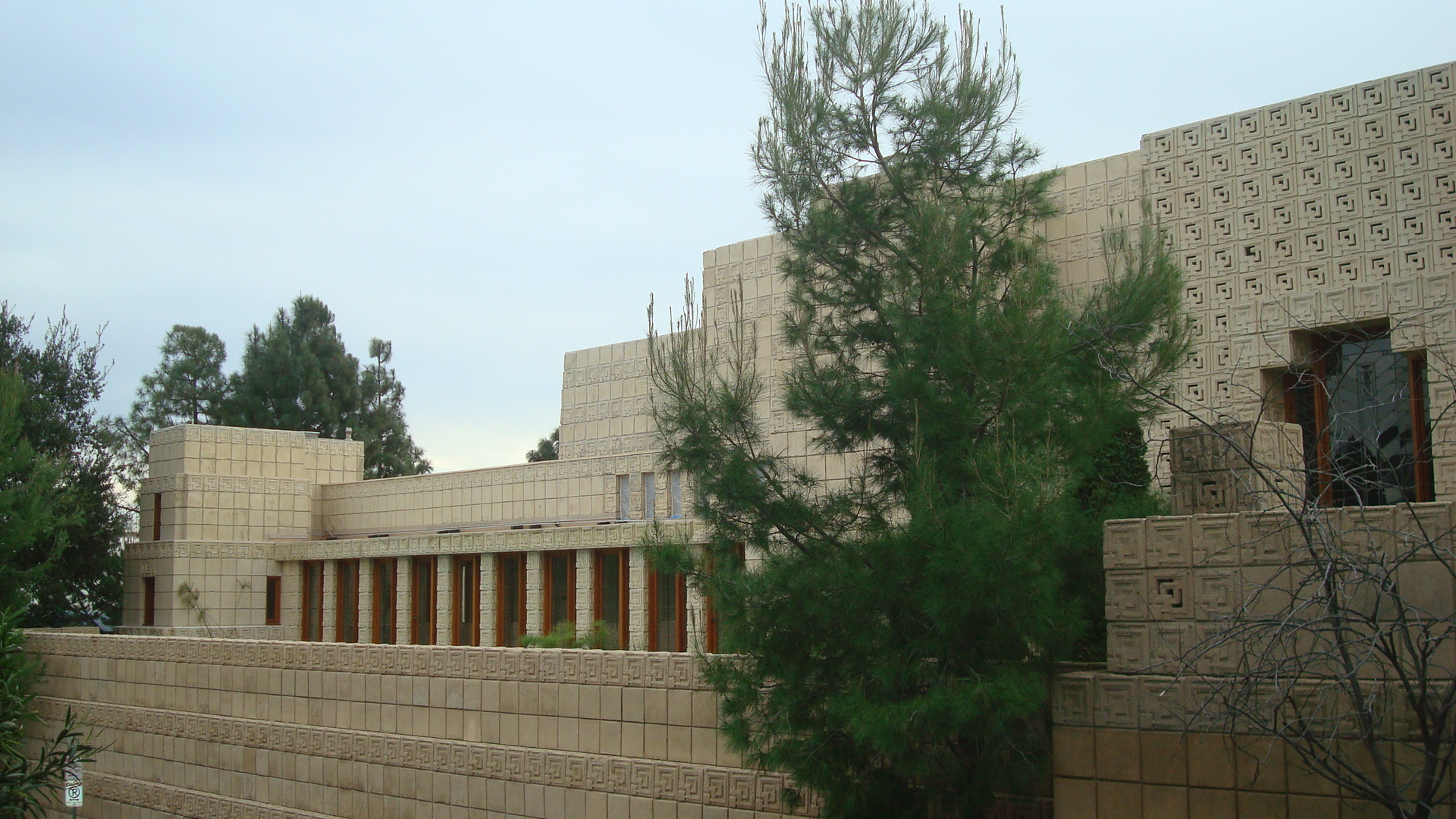
It’s an amazing structure, built using the “textile block” process that Wright explored during his time in the LA area.  Unfortunately, as beautiful as the house is, it started falling apart even before it was finished.  Wright’s idea of mixing granite from the site into the concrete used for the blocks probably sounded like a good idea at the time.  In practice, though, it made the blocks unstable.  Millions have been spent restoring the Ennis House over the years.  For a while, it was owned by a foundation that tried to rehabilitate it, but the process proved too costly and they ended up putting the house on the market.

The front of the house.

The front of the house.

Selling Wright’s LA area houses isn’t as easy as it might seem.  The Ennis House was on the market for years, and the price had to be lowered significantly before a buyer was found.  As far as I can tell, La Miniatura in Pasadena is still on the market.  The problem seems to be that beyond the purchase price, buyers know that they’ll have to spend a fortune on upkeep.  And because the houses are on the National Register of Historic Places, the standards for restoration are very strict.  If you need to patch a wall, you can’t just slap on some spackle.

The back of the house.

The back of the house.

But the Ennis House is lovely, and absolutely one of a kind.  Wright was influenced by Mayan architecture, and the house seems at once both ancient and modern.  To see what it looks like inside, visit the web site by clicking the link below.

The Ennis House

And if you’re not familiar with Wright’s work, you might want to visit the Wikipedia page devoted to him.  Aside from the quality of the work he did himself, he had a huge influence on American architecture.

Frank Lloyd Wright at Wikipedia

Wright thought he was creating a practical approach to constructing homes with his textile block system.  In reality, it turned out to be terribly inefficient and outrageously expensive.  But the fact that people have been willing to invest the time and money to maintain them over several decades is an indication of how precious these homes are.  Their value goes way beyond anything you can measure in dollars.

Another shot of the back of the house.

Another shot of the back of the house.

Another One Bites the Dust

Oswald Bartlett House, Los Feliz

Oswald Bartlett House, Los Feliz

Got this in my e-mail this morning. More bad new for those who care about LA’s history.

Press Advisory, Immediate Release

DEVELOPER SET TO DEMO LA’S CULTURAL HISTORY

Reprieve Denied: Historic Oswald Bartlett House Goes Down Today

WHAT: Demolition of the 100-year-old Oswald Bartlett House is set to begin today and members of the community are expected to be present to document and bear witness to the house’s undeserved and sad destruction in the middle of the season when Jews and Christians celebrate – instead of destroy – their history and traditions.

WHEN: Demolition work is set to begin at 7 am, today, Thursday, December 18, 2014.

WHERE: 1829 N. Kenmore Ave., Los Angeles – the Los Feliz neighborhood

BACKGROUND: The Oswald Bartlett House has been recognized by preservationists as a pristine and rare example of architect A.C. Martin’s work. Martin, one of Los Angeles’ leading architects in the first half of the 20th century, designed LA City Hall and a half-dozen other notable structures now designated as landmarks. The Bartlett House was designed by Martin for a friend and is a rare example of Martin’s youthful work in domestic design; his more lasting reputation was founded on his design of major public and religious buildings. Despite the recognition by experts of the cultural and historic significance of the Bartlett House, City Hall turned a deaf ear to the experts (including the LA Conservancy) and community’s appeals to spare the house from demolition to make way for a six-unit townhome project whose building entitlements were gained through misrepresentations about the historic nature of the Bartlett House. Last Wednesday the City Council gave the developer, a business ally of one of Mayor Garcetti’s top campaign fundraisers, the green-light to proceed with demolition. Today the sledgehammers and bobcats will start taking the house down.

For Additional Information Contact:
John Schwada, MediaFix Associates
john.schwada@gmail.com
310 709-0056
310 597-9345 w

So one more historic building bites the dust. Garcetti seems determined to let developers have their way, no matter the cost to the city’s cultural heritage. Some of you may remember that the Mole-Richardson building on La Brea was recently demolished, in spite of the fact that it was a classic art deco building by Morgan, Walls and Clements. If you missed that story, here’s a link to a piece on Curbed.

Art Deco Buidling Destroyed

Other historic structures currently being threatened are the Warner Pacific Theatre, the Mosaic Church, and the Chase Bank building at the corner of Sunset and Crescent Heights. But who cares about history, when you can have a shiny, new mixed-use skyscraper?

The photo of the Oswald Bartlett House was taken by Michael Locke, who has spent a fair amount of time documenting the Los Feliz area. To see more of his work, click on the link below.

Michael Locke at Flickr

Taking a Closer Look

Hlwd CS 03 Frnt Hills 2

It’s so strange how you can pass by something a million times, and not really even notice it. Until it’s in danger of disappearing. The Fifth Church of Christ, Scientist, at the corner of Hollywood and La Brea, was built just after I was born. I’ve been driving by it or walking by it all my life. I remember thinking that it was kind of an unusual building, but I never stopped to take to take a closer look. It was always just part of the landscape.

So recently I did take a closer look, and I started to realize what a beautiful building it was. The site is no longer home to a Christian Science congregation. For the last few years it has housed Mosaic, a non-denominational Christian church. The current congregation recently renovated the building, and I’ll talk more about that later.

Actually, the first version of the church was built back in 1915, according to the Pacific Coast Architecture Database. Back then Christian Science was a growing denomination, and the original design stuck to a pretty traditional classical revival style. But in the 1950s the congregation must have decided they needed a different look, and they hired an architect named Howard G. Elwell.

Very little is known about Elwell. One source I found said that he was active in the LA area as early as 1916. I’ve searched the net, but there’s not much documentation of his work. I found a few photos of a movie theatre in Victorville. I found some images of a doctor’s office he may have designed, but the site is unknown. Apparently he also worked on some houses in Pasadena and San Marino.

But the guy definitely had talent. A walk around the church at Hollywood and La Brea shows that it was created by someone fluent in the modern style. Here are a couple photos of the building as it originally appeared.

Fifth Church of Christ, Scientist seen from Hollywood Blvd. circa 1977

Fifth Church of Christ, Scientist seen from Hollywood Blvd. circa 1977

Fifth Church of Christ, Scientist, also from Hollywood Blvd. circa 1977

Fifth Church of Christ, Scientist, also from Hollywood Blvd. circa 1977

It’s too bad they’re in black and white, because the color scheme was one of the unique aspects of the design. If I remember correctly, the curved section at the corner was clad in lavender tile, and the arched windows were painted a similar pastel shade. The effect was subtle and unobtrusive, which is maybe part of the reason it didn’t attract my attention.

Here’s how the church looks today.

Mosaic, Hollywood seen from Hollywood Blvd.

Mosaic, Hollywood seen from Hollywood Blvd.

The Mosaic congregation did a nice job of renovating the building. They didn’t touch the structure, but they completely rethought the textures and colors. Removing the tile cladding to reveal the brickwork gives the corner of the church a rustic look, and painting the arched windows grey creates a nice contrast. The building definitely has more of a presence than it did before.

a view of the church from La Brea Ave.

a view of the church from La Brea Ave.

another view of the church from La Brea Ave.

another view of the church from La Brea Ave.

But the structure still retains Elwell’s design, which is a unique and interesting adaptation of the modern style. The building has the dignity appropriate to a church, but without the rhetorical flourishes that make some other sacred structures look pompous. It occupies the site beautifully, with the curved wall at the corner giving way to symmetrical rows of arched windows on either side. And while some churches are basically a façade stuck on a box, Elwell thought about the whole structure, making sure that the rear of the building adheres to the same pattern of curved surfaces and strong verticals.

a view of the church from the parking lot

a view of the church from the parking lot

another view from the parking lot, this time facing La Brea Ave.

another view from the parking lot, this time facing La Brea Ave.

Now here’s the bad news. This building will probably be gone in a year or so. Developers want to build a project called Horizon Hollywood, which will consist of 400 residential units with retail and restaurants on the ground floor. Some people think the renderings look pretty nice. Honestly, to me the project looks like another set of generic mixed-use towers. But here’s a link to a write-up at Building Los Angeles. You can judge for yourself.

Hollywood and La Brea’s High-Rise Complex

Personally I’d rather have the church. But I don’t think there’s much chance of saving it. The building has not been designated as a historic landmark. And I don’t see any way it could be incorporated into the high-rise project.

But they won’t start construction on the Horizon Hollywood for a while, so if you’re interested in architecture you might want to take a trip over there. It’s a striking example of mid-century modern, and one of the few known buildings by Howard G. Elwell.

The larger concern is that it seems like historic buildings are once again being threatened by the current development boom. We’ve already lost the Morgan, Walls and Clements building on La Brea near Melrose. This one is probably a goner. And there’s talk of demolishing the Pacific Theatre on Hollywood Boulevard. For a while it seemed like LA was getting better at preserving the past. But these days I get the feeling that money is more important than history.

[For an an update on the status of the Mosaic Church, click here.]

Hlwd CS Frnt Angle 1

The two black and white photos above come from the Security Pacific National Bank Collection of the Los Angeles Public Library’s photo archive. No photographer is credited.

Preserving a Palace

Hlwd Pac Wilc

The Warner Pacific Theatre on Hollywood Blvd. has been boarded up for a while now. The church that was using the auditorium is gone, and the small retail tenants have vanished, too. Apparently the owner, Pacific Theatres, has plans for the building, though no one is sure what they are. Rumors are circulating that the plans may involve structural changes, but at this point nothing specific has been announced.

The fear is that Pacific will make changes to the theatre that would compromise its historic status. The Warner Pacific Theatre is part of the Hollywood Boulevard Commercial and Entertainment District, No. 85000704 on the National Register of Historic Places. This stretch of the boulevard contains a number of movie palaces, and is an important cultural resource for the community. The Chinese, the El Capitan, the Egyptian and the Pantages are all found in this area.
I understand that Pacific needs to make a profit, but it would be a shame if their plans did not make the preservation of the theatre’s historic status a priority. There are numerous examples of classic theatres that have been restored over the years, and many have them are very profitable. The El Capitan has been spectacularly successful since its restoration, and still functions as a first-run theatre. The Pantages has been drawing crowds consistently since it was converted to host live stage shows. The Wiltern is an example of a classic theatre that has become a hot venue for concerts.

Pacific can even look to its own recent history to back up the argument for preservation. In the nineties they announced a plan for the Cinerama Dome that would have included gutting the theatre and putting a restaurant in the lobby. The preservation community was outraged, and to their credit, Pacific listened. They changed course, and built the Arclight, which has become a mecca for movie lovers in the Hollywood area.

For more information about the Warner Pacific Theatre, you can visit the Hollywood Heritage web site by clicking the link below. Choose Preservation Issues from the menu on the left, and then click on Endangered Buildings.

Hollywood Heritage

DSC06196

Don’t Destroy the Past

W&B in W Hlwd

This is pretty last minute, but I just found out about a historic building in West Hollywood that could be demolished as part of a proposed development. I hadn’t heard anything about it until I opened up my e-mail this afternoon. A friend forwarded a message to let me know that this structure, designed by Wurdeman & Becket back in the thirties, might be wiped off the map unless we take immediate action.

The building, located at 9080 Santa Monica Blvd. in West Hollywood, was originally the Jones Dog and Cat Hospital. Architects Walter Wurdeman and Welton Becket created a classic example of the streamline moderne style to house the veterinarian’s practice. As a firm, Wurdeman and Becket were active in the thirties and forties, their most famous creation being the Pan-Pacific Auditorium, which burned to the ground many years ago. After Wurdeman’s death, Becket’s new firm, Welton Becket & Associates went on to design some of the city’s most striking structures and played a huge role in defining the look of mid-century Los Angeles.

For more info about the building, click on this link.

Los Angeles Conservancy

And then if you decide you want to tell the West Hollywood City Council how you feel about this, here’s another link. See the left hand column for contact info.

Save the SMB Streamline Moderne

LA has made great strides in preservation over the last several years, but we’re still losing important parts of our past. The recent demolition of a building by Morgan, Walls & Clements on La Brea was a shock, and should be reminder to those of us who care about our city’s culture that we need to be vigilant and vocal.

Hollywood Journal – Preservation Prevails

The Cinerama Dome under construction in 1963.

The Cinerama Dome under construction in 1963.

I spent a good part of 1998 freaking out over Pacific Theaters’ plans for “renovating” the Cinerama Dome. The initial proposal involved gutting the auditorium, removing the curved screen and putting a fast food restaurant in the lobby. The film and preservation communities protested loudly. To their credit, the people at Pacific met with the opposition and made a number of important concessions.

If you’re not into film, and if you don’t care about Hollywood history, you might be mystified by the uproar. So let me offer a little background….

Cinerama was a process that revolutionized the production and exhibition of films back in the early fifties. Three strips of film were projected in perfect synchronization to create the illusion of a continuous widescreen image, accompanied by stereophonic sound playback. The image was shown on a huge curved screen to produce an early version of what we now call immersive entertainment.

In the early sixties, Cinerama, Inc. unveiled an ambitious plan to create hundreds of Cinerama theatres based on a radical new model. They would construct geodesic domes using prefabricated panels, which would supposedly allow them to build a theatre in half the time and for half the cost of using conventional methods. They purchased a site on Sunset Blvd. in Hollywood and hired the firm of Welton Becket and Associates to design what would become the Cinerama Dome.

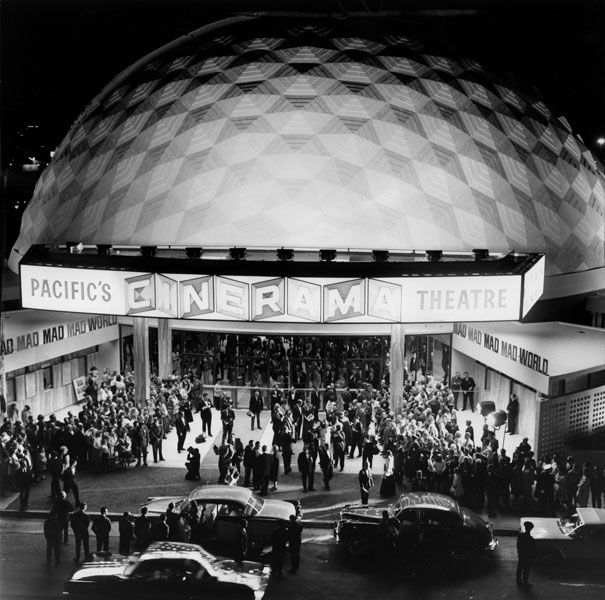
The premiere of It's a Mad, Mad, Mad, Mad World at the Dome in 1963.

The premiere of It’s a Mad, Mad, Mad, Mad World at the Dome in 1963.

Becket’s company was one of the major architectural firms in the city at that time, and played a large part in setting the look and tone of mid-century Los Angeles. To my mind the Dome is something of a companion piece to one of their earlier signature creations, the Capitol Records Building, which is just a few blocks away on Vine. Together these two icons helped to define space age architecture.

Of the theatres that were constructed to show films in the Cinerama process, only a handful are left today. The Dome is a unique creation designed by one of the most important architectural firms in the city’s history. That’s why so many of us got so crazy when we saw the initial plans to renovate it. I will always be grateful to Pacific for listening to the community and preserving the Dome.

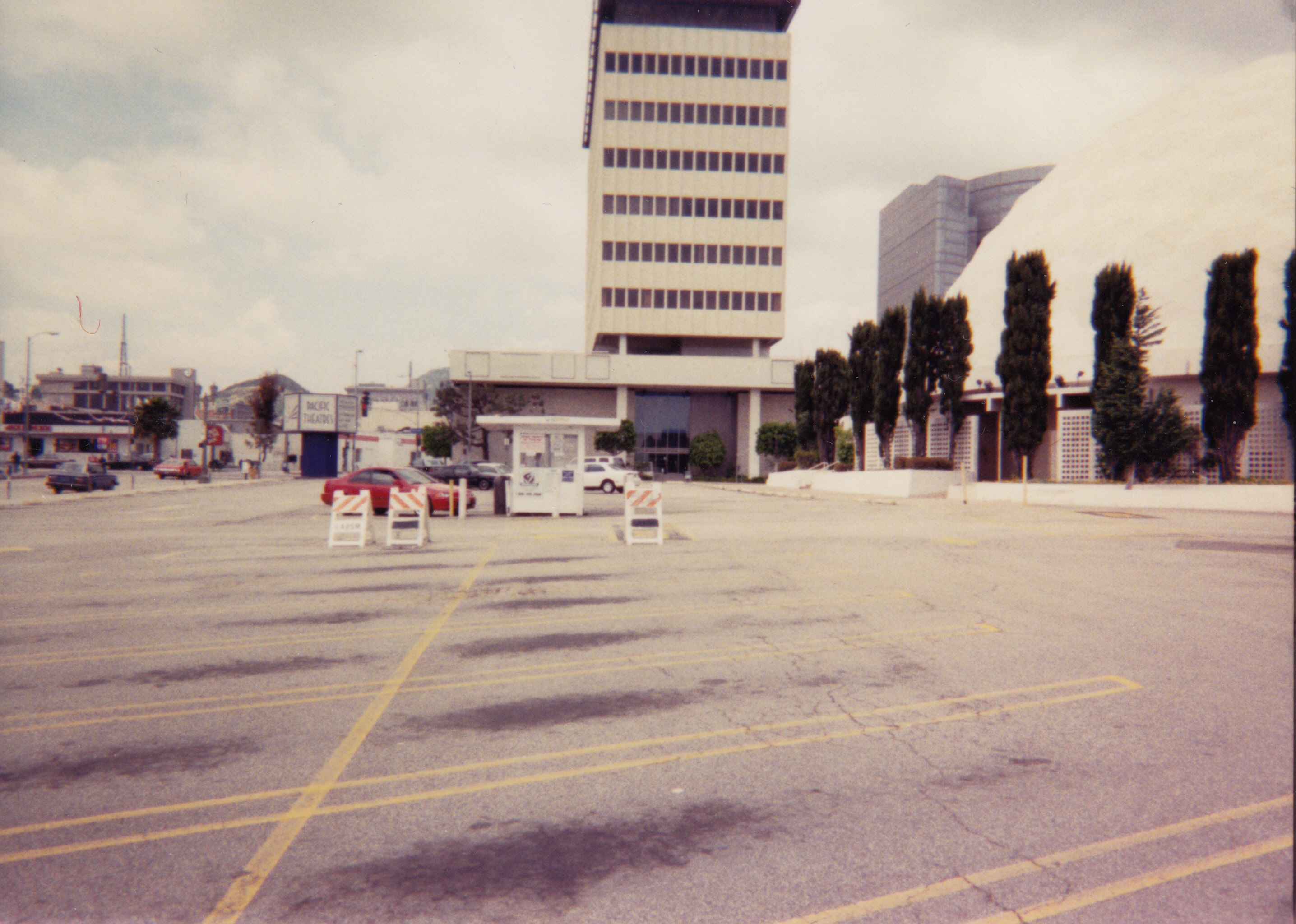
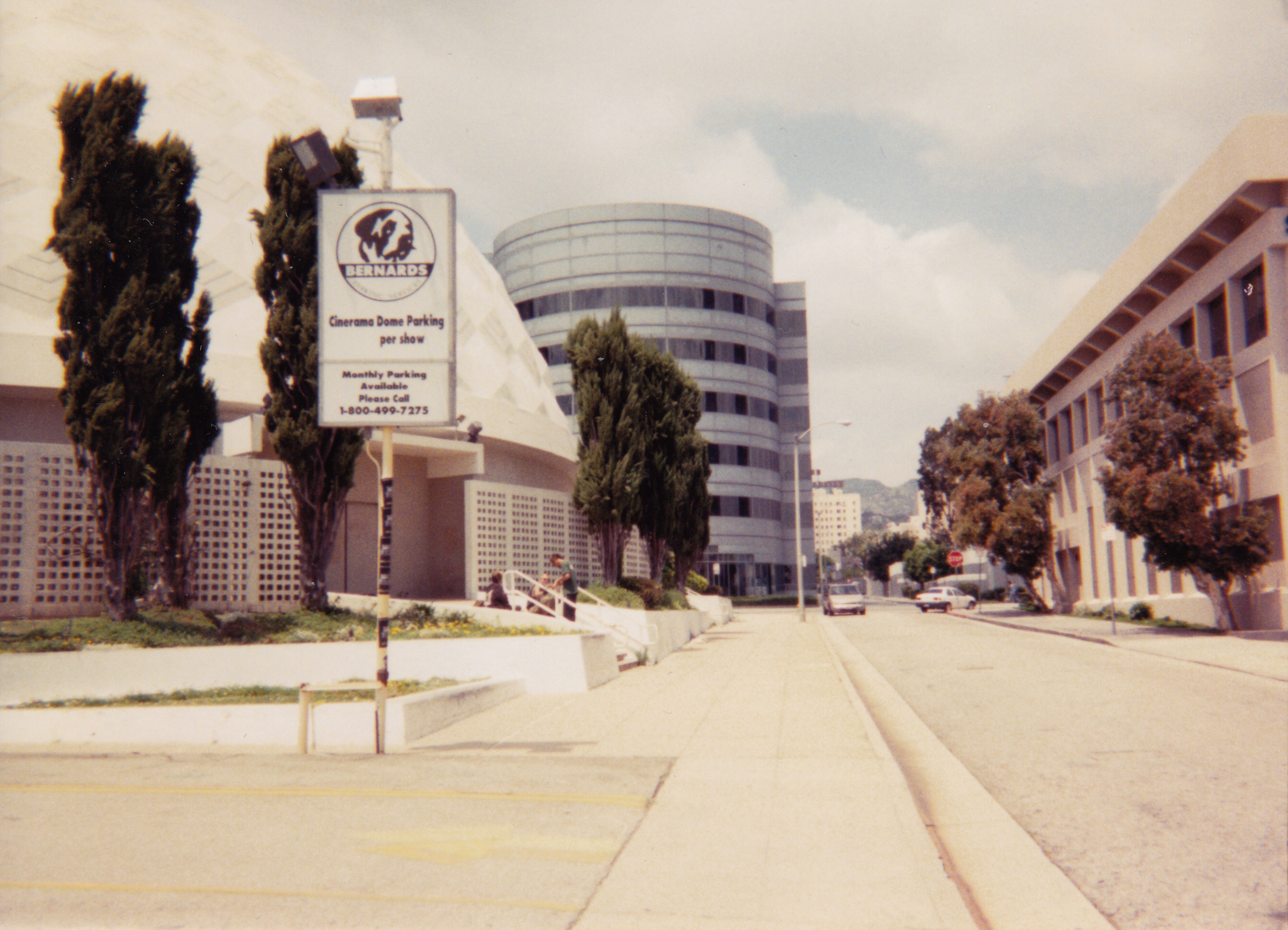
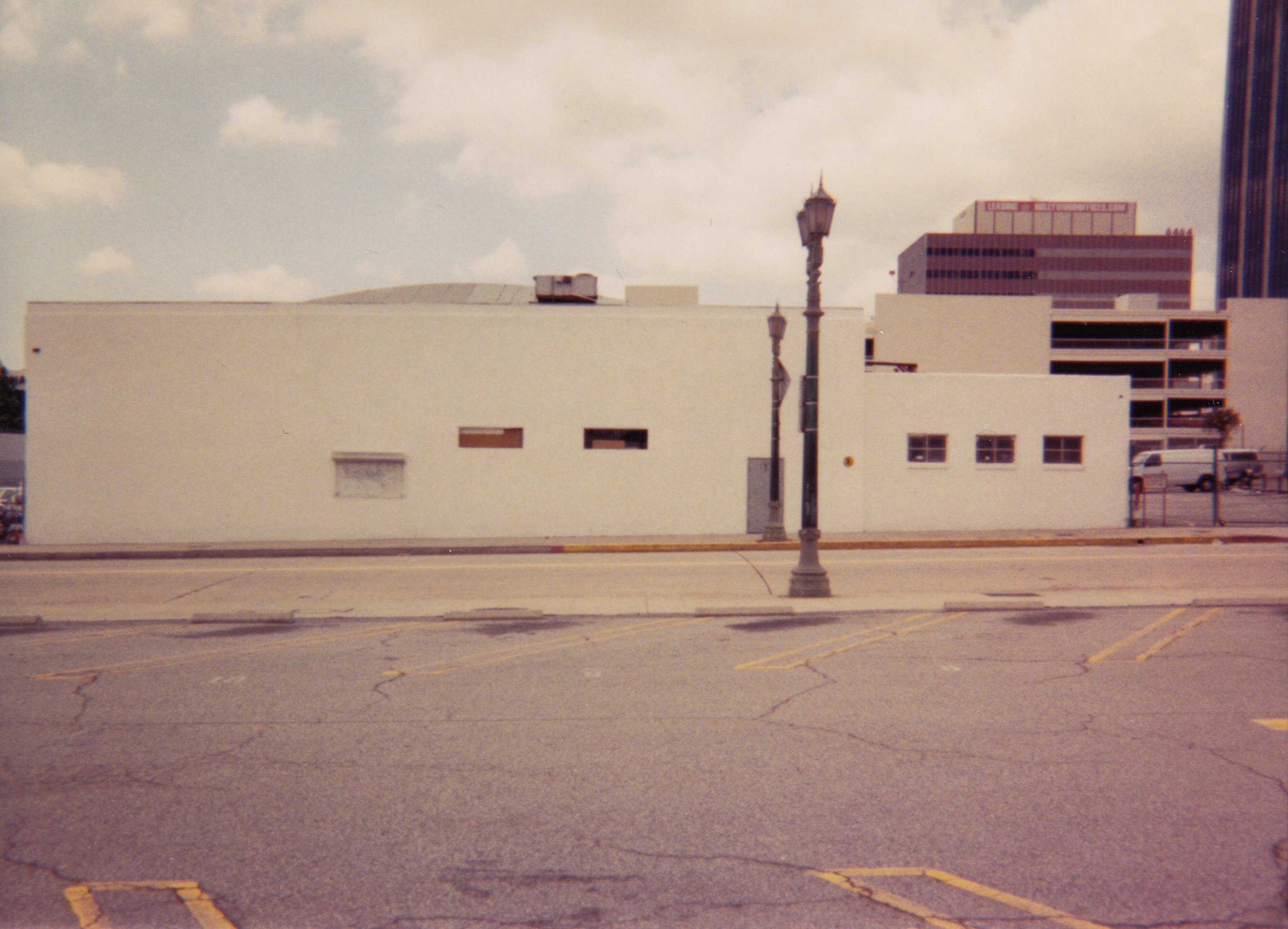
The two pictures above are from the Los Angeles Public Library photo archive. The first shows the dome under construction. It was taken by Howard D. Kelly in 1963. The second shows the premiere of the film that the Dome opened with, It’s a Mad, Mad, Mad, Mad World. It was also taken in 1963, but no photographer is credited. Below are some photos I took of the Dome and the area surrounding it back in 1998. Sorry that the quality isn’t better. They were taken with a disposable camera, and have faded over the years. A couple of photos were taken from Morningside Court, which used to go through to De Longpre, but was closed off with the construction of the Arclight parking structure.

February, Nineteen Ninety Nine

For weeks I’ve been meaning to write abut the latest on the Cinerama Dome. Here it is.

Apparently the people from Pacific Theaters sat down and talked with the preservation people, and the end result was Pacific gave up a lot of the changes they were going to make. As I recall, these are some of the things pacific agreed to.

The entrance will remain at the front of the theatre.

The layout of the seating will stay basically the same, though they will be putting new seats in.

They won’t alter the ceiling of the auditorium.

And —

They’ll keep the curved screen.

I’m actually really grateful to Pacific for giving in on all this stuff. I doubt they understand why the Dome is such a great piece of architecture, so from their point of view the preservationists are going crazy over nothing.

Of course, we still don’t know what the Dome is gonna look like when they’re through. But at this point I’m cautiously optimistic.

The front of the Cinerama Dome in 1998.

The front of the Cinerama Dome in 1998.

Screen walls and landscaping on the periphery of the Dome.

Screen walls and landscaping on the periphery of the Dome.

A shot from the parking lot, looking north to Sunset.

A shot from the parking lot, looking north to Sunset.

A shot of Morningside Court, looking toward Sunset.

A shot of Morningside Court, looking toward Sunset.

Another shot of Morningside Court, this time looking in the opposite direction towards De Longpre.

Another shot of Morningside Court, this time looking in the opposite direction towards De Longpre.

This was taken from the parking lot behind the Dome, facing west.  The site just across the street is where Amoeba now stands.

This was taken from the parking lot behind the Dome, facing west. The site just across the street is where Amoeba now stands.

This shot was taken facing the opposite direction, now looking across the parking lot towards Morningside Court.

This shot was taken facing the opposite direction, now looking across the parking lot towards Morningside Court.