How Many Hotels Do You Need?

DSC02054

Hotel construction is booming in Hollywood. Obviously, tourism is big business and brings a lot of money into the area, so it makes sense to build accommodations for visitors. But there are also tens of thousands of people who actually live in the community, and they need to be considered, too. Is City Hall thinking about them? Why don’t we ponder that question as we do a quick rundown of the hotels that are coming to Hollywood. It’s quite a list. We’ll start with the ones that are currently under construction.

1 Camden

The Camden
There’s the nearly completed Camden at the corner of Vine and Selma. In addition to the beautifully appointed rooms, the Camden also offers a heated saltwater pool, a movie lounge, a dog den, and the “The Garden”, a “quiet zen filled space to meditate and reflect.”

2 Dream

Dream Hollywood
According to the web site, “Dream Hollywood is an ultra-luxury merger of familiar and fantasy, where the line between entrée and exclusivity is refreshingly blurred.” Geared toward the “creative class”, it offers 179 “hyper-chic, yet comfortable” rooms and suites, along with a rooftop pool, restaurant and lounge “destined to become a player in the Hollywood skyline scene.”
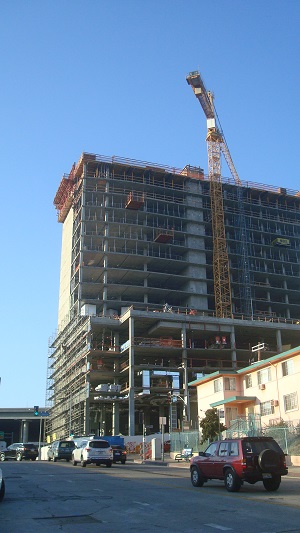
3 Argyle Hotel b

Argyle Hotel
Currently under construction, the Argyle Hotel will rise 16 stories above the intersection of Yucca and Argyle. It will feature 225 rooms, 6,000 square feet of meeting space and 3,000 square feet of restaurant space. There are also two residential high-rises planned for this same intersection, one already under construction. Afternoon rush hour traffic on Argyle is already pretty bad. Expect it to get way worse.
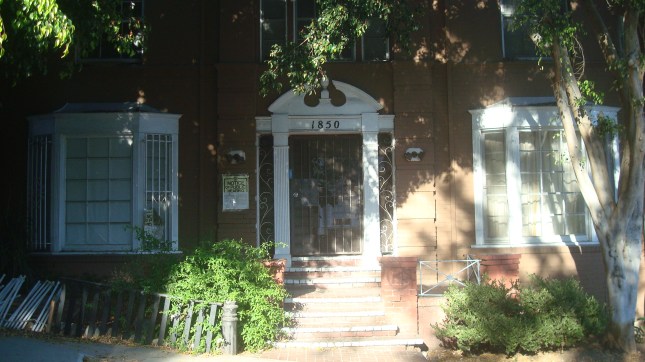
4 1850 Cherokee

1850 Cherokee
The owner of this formerly rent-controlled apartment building realized he could make more money by evicting the tenants and turning it into something else. He used the Ellis Act to get rid of the residents a few years ago, saying that he was going to build condos on the site. When that project fell through, he decided to turn the building into a boutique hotel. The owner asked the City for a zone change to make it happen, and no surprise, the City let him have it.

A similar scenario has also played out at the historic Villa Carlotta on Franklin. The owners evicted the tenants from their rent-controlled units with the aim of turning it into a boutique hotel. It was only through the efforts of dedicated activists that the change of use was thwarted. But the evictions have already taken place, and 50 rent-controlled units were taken off the market.

5 Crossroads

Crossraods Hollywood
This massive project would be situated near the intersection of Sunset and Highland. Three skyscrapers are planned, including a 32-story hotel tower featuring 308 guest rooms and 10,500 square feet of ground-level retail and restaurant space. The developers are also asking for a Master Conditional Use Permit for “the sale of alcoholic beverages and for live entertainment in connection with a total of 22 alcohol-related uses”. You read that right. Twenty two new places for folks to buy alcohol in this one project. In addition, approximately 80 rent-controlled units will be demolished to build this behemoth, which the developer says will be replaced by approximately 80 affordable units. Even if the current tenants are granted right-of-return, where they’re supposed to live during the construction phase isn’t clear.
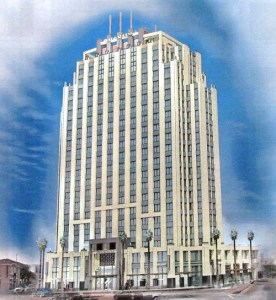
6 Ivar Gardens

Ivar Gardens
The Department of City Planning(DCP) decided this 21-story hotel at the extremely congested intersection of Sunset and Cahuenga didn’t need a full Environmental Impact Report. Instead, planners have been trying to rush this through with a Mitigated Negative Declaration, a much lower level of environmental review. The traffic study claims that PM rush hour traffic northbound on Cahuenga flows freely with no significant delays. Anyone who’s made that trip at rush hour knows how ridiculous that claim is. But that didn’t stop the LA Department of Transportation from approving the report. Just further proof that when a developer with deep pockets wants something to happen, the City of LA is only too happy to oblige.

1919 Wilcox
One more example of how Hollywood area developers are pushing hotels into residential neighborhoods. While a small hotel does exist on Franklin just to the south, apartment buildings are directly adjacent to this proposed project on the north and west boundaries of the site. Residents were not happy to learn that they might have a 6-story, 150 room hotel next door. It didn’t help matters that the developer is seeking a liquor permit for a 1,200 sq. ft. bar/lounge in the lobby and a 3,500 sq. ft. restaurant/lounge on the north side of the site. Who cares if Chief Beck has written to the DCP warning about the oversaturation of locations that serve alcohol in Hollywood and the resulting problems with violent crime? Certainly nobody at the DCP. They keep handing out liquor permits like there’s no tomorrow.

1717 Wilcox

Also on Wilcox, but closer to Hollywood Blvd., is this planned 134-room hotel with a 2,500 sq. ft. ground floor restaurant and a rooftop bar. You can never have too many rooftop bars, right? Who cares if the people in the apartment building next door don’t like it? And as traffic on Cahuenga continues to spill onto neighboring streets, you can bet these two projects will help turn Wilcox into a parking lot at rush hour.

The point of all this is not to say that we shouldn’t have hotels in Hollywood. The point is that these 8 hotels are just a few of the over 60 projects currently proposed for the Hollywood area. All of these projects will have impacts on infrastructure, air quality, traffic, and LAPD response times, but the City of LA isn’t making any serious effort to assess the cumulative effects of all this development. Whenever possible the DCP tries to approve these projects with a quick MND, and even when they do an EIR there’s no credible attempt made to calculate the collective impacts caused by this massive building binge. The Hollywood Community Plan Update was thrown out by a judge, in large part because the City inflated its population figures, but that hasn’t stopped the City from going full speed ahead. With no community plan in place, the DCP continues to approve thousands of new residential units, hundreds of thousands of square feet of commercial, and who knows how many new hotels.

No doubt all these classy new hotels will make Hollywood a great place for tourists. Just not so great for the people who actually live in the community.
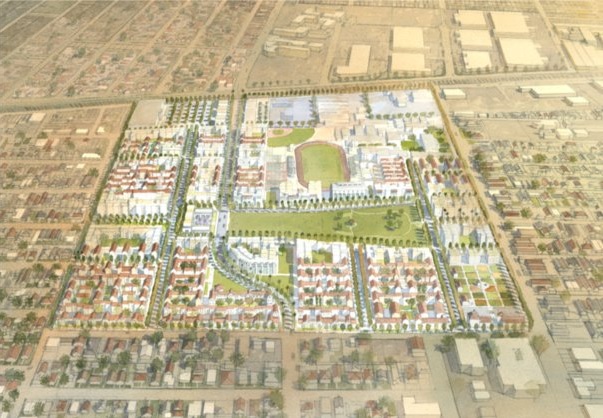
Pushing for Change at Jordan Downs

Aerial view of proposed Jordan Downs redevelopment project.

Aerial view of proposed Jordan Downs redevelopment project.

Sometimes you hear people complain that our elected officials are afraid to try anything new, that they devote most of their careers to propping up the status quo. I’ve said it myself, and I do feel like our politicians need to spend more time thinking outside the box.

But there are reasons why the folks at City Hall don’t like taking chances. It’s one thing to come up with an innovative idea. Making it a reality is a whole different story. It’s not uncommon for good ideas to get ground into dust by the system. Pushing for change can be a long, brutal process, sometimes dragging on for years and wearing everyone involved down. It’s not easy changing the status quo.

I first read about the Jordan Downs redevelopment initiative back in 2013. The idea was to take an aging housing project that was mired in poverty and remake it from the ground up. But this wasn’t just about knocking down one building and putting up another one. The idea was to create an expanded mixed-income complex where low-income families would live next door to middle class families. The project also included a new park and over 100,000 square feet of retail, bringing jobs and amenities to a community that hasn’t had had easy access to either.

Back in 2013 it was clear there were plenty of challenges, and the path hasn’t been easy. Though many of the current residents support the project, there are also fears about gentrification and displacement. And the process was complicated further by the news that the soil on the site was heavily contaminated, meaning that a long, costly clean-up would be necessary.

On top of all that, getting the funding for the project has been a huge hassle. Councilmember Joe Buscaino didn’t hide his anger when a grant application was rejected by the US Department of Housing and Urban Development (HUD), at least in part because the city agency handling it hadn’t submitted all the required materials. This was the second time that HUD had declined to award funds for the project.

But things are still moving forward, and it’s hoped that construction will begin by the end of this year. No doubt there will be more challenges. The concerns about displacement are certainly well founded. The Housing Authority of the City of Los Angeles (HACLA) has said that tenants “in good standing” will be guaranteed units in the new complex. However, they haven’t yet defined exactly what “in good standing” means. This could be a problem. A recent affordable housing project in Boyle Heights proposed the demolition of existing units to allow the construction of new ones. This sounded like a good idea until the residents of the existing units learned that strict conditions regarding right of return would have excluded many of them from moving into the new units.

The contamination also needs to be dealt with. I wondered how the clean-up was progressing, so I sent an e-mail to Joe Buscaino’s office. I got an answer within hours from Planning Deputy Heather Anderson. To put it in context, it’s important to understand that HACLA purchased additional property adjacent to Jordan Downs, and her response focusses on work at that site.

The Housing Authority of the City of Los Angeles (HACLA) purchased the property knowing that it was a former industrial site, and with the intent to remove the contamination and clean up the property. They have been in the process of remediation with the oversight of the California Department of Toxic Substances Control (DTSC) for a few months now. After removing 200,000 tons of contaminated soil, they are close to finished with the remediation. There has been testing of the soil around the site to ensure that nearby soil is safe.

She also attached a report documenting the clean-up through February. It sounds like the City and State are taking this seriously, which is good news. But it’s important to remember that there’s also concern about contaminants within the site that Jordan Downs currently occupies. Hopefully, as demolition of the existing buildings progresses, the City and State will continue to do the same thorough job of remediation.

There are those in the community who are skeptical about how this will all play out. This article from the LA Wave reports some of their concerns.

Feds Greenlight Plan to Redevelop Jordan Downs

Buscaino and Congressional Rep Janice Hahn both deserve credit for staying with this redevelopment effort. They could have stuck with the status quo and saved themselves a lot of headaches. And the residents of Jordan Downs also deserve a lot of credit for the hard work they’ve done as they’ve fought to improve their neighborhood. No doubt community activists and elected officials will be facing off as further issues arise. That’s to be expected. But hopefully everybody will continue to work together to build a better future for the people of Jordan Downs.

There are all sorts of possible pitfalls, but here’s the bottom line. If this project doesn’t go forward, the residents of Jordan Downs will continue to be trapped in the same cycle of poverty that has held the community back for decades. And that’s not an option. We can’t accept the status quo.

 Aerial view of Watts, looking northeast. Jordan Downs can be seen at lower center.  Photo by Howard D. Kelly, 1956.  From the Los Angeles Public Library, Kelly-Holiday Collection.


Aerial view of Watts, looking northeast. Jordan Downs can be seen at lower center. Photo by Howard D. Kelly, 1956. From the Los Angeles Public Library, Kelly-Holiday Collection.

Creating Community

New development in Boyle Heights, right next to the historic Mariachi Hotel.

New development in Boyle Heights, right next to the historic Mariachi Hotel.

I’ve heard people complain that Angelenos don’t know their neighbors. To a large degree that’s true. We tend to build our own little self-contained worlds, and get nervous when outsiders try to invade. In order to make it through the day, I try to keep interaction with strangers to an absolute minimum. In part, this is because I’ve found that some strangers want way more than I’m willing to give. Living in the city, you have to be at least a little wary.

But the downside is that there are very few places in LA where you can find a real sense of community. You might find a scene where you can hang out with people who share your passions, but chances are they’re coming from all over the city. You don’t find too many neighborhoods where everybody knows each other. And because of that, we don’t know our neighborhoods. The tenants in the building next to ours could be getting evicted for a condo conversion, and we might not be aware of it until the construction crews show up. Even when we find out what’s going on, we’re likely so wrapped up in ourselves that we don’t start worrying until the eviction notice shows up in our own mailbox.

So I was really intrigued when I heard about Union de Vecinos (UV), which could be translated as Neighbors United. It’s a grassroots group that’s been working in Boyle Heights for twenty years. They got their start back in 1996 when public housing in Pico Aliso was threatened with demolition, and they worked to protect renters threatened by displacement. But UV isn’t just reactive. They’re also creative. Starting with neighborhood committees, they work within the community for positive change. This is from their web site.

[Union de Vecinos promotes] economic and environmental justice, civic engagement, preservation of housing, and building healthy and stable community neighborhoods. We do this through community organizing, popular education and direct action. In our model, solutions to a problem are developed by those most affected – community – this is what drives us and is at the heart of our work.

The part of this paragraph that jumps out at me is, “solutions to a problem are developed by those most affected.” So often in the City of LA we have elected officials meeting behind closed doors with bureaucrats and business interests to devise plans that really don’t address the needs of the citizens. When they do hold public meetings and ask for input, it’s generally just for show. They’ve already decided what they want to do, and the meeting is really about selling their own agenda.

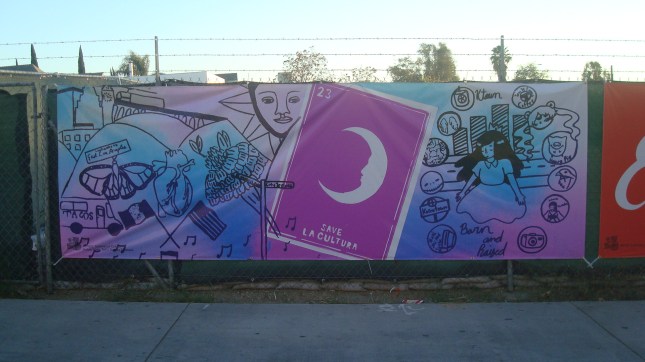
Banner on fence at a construction site on First Street.  Art by Gabriella Claro, Salma Sosa, and Tatei Torres Thomas.

Banner on fence at a construction site on First Street. Art by Gabriella Claro, Salma Sosa, and Tatei Torres Thomas.

So the idea of a neighborhood group that sets its own priorities and creates its own agenda sounded really good to me. I went to Boyle Heights to talk to UV members Leonardo Vilchis and Elizabeth Blaney about the challenges the Boyle Heights community is facing these days. A lot of it has to do with development, and the related problem of gentrification.

In early 2015, the Metropolitan Transit Authority (MTA) announced plans for a project to be built on Mariachi Plaza. Unfortunately, the MTA didn’t bother to ask the community how they felt about it. There was a huge public outcry, and Union de Vecinos was one of the groups that raised their voices in protest. The MTA shelved the project for the time being, but they’re planning to come back with another version. I asked Leonardo if he thought the public would have more of a voice this time.

“They said they’d reach out to us, but it’s really just pro forma,” he said. “The MTA sets up these meetings with focus groups, where you have to be invited.” He didn’t seem optimistic about the process. “They have these meetings, but they don’t really seem to be seeking input.”

Elizabeth spoke about UV’s engagement with the East LA Community Corporation, one of the developers building on and around MTA land. ELACC is working on creating affordable housing in Boyle Heights, but displacement of low-income families is still an issue. “We want affordable housing for the 7,000 families that make less than $25,000 in our community,” she explained, “but if they’re demolishing existing units, we have to make sure that those tenants will be welcome in the new project.” Recently UV negotiated a deal with ELACC to ease some restrictions to allow displaced tenants the right of return.

I asked what kind of projects UV was working on in the neighborhood.

“Garcetti talks about his Great Streets Initiative…,” Leonardo said with a smile, “but we’ve been doing great streets here in Boyle Heights for years.” When local alleys were attracting criminal activity, UV got residents involved in finding a solution. Elizabeth spoke with pride about the way the community turned the situation around. “We held movie nights and swap meets to reactivate these spaces. Residents went on to build street furniture, paint murals and install solar-powered lighting. Before people had been afraid to walk down these alleys, and now they’re gathering places for the community.”

What a concept. People taking responsibility for their neighborhood and working together to make it better. It’s not a new idea, but it’s something many of us who live in LA have forgotten how to do. Maybe we could learn a few things by following Union de Vecinos’ example.

If you want to learn more about what they’re up to, here’s the link to their web site.

Union de Vecinos

Leonardo Vilchis and Elizabeth Blaney of Union de Vecinos.

Leonardo Vilchis and Elizabeth Blaney of Union de Vecinos.

Who’s Really Standing Up for Artists?

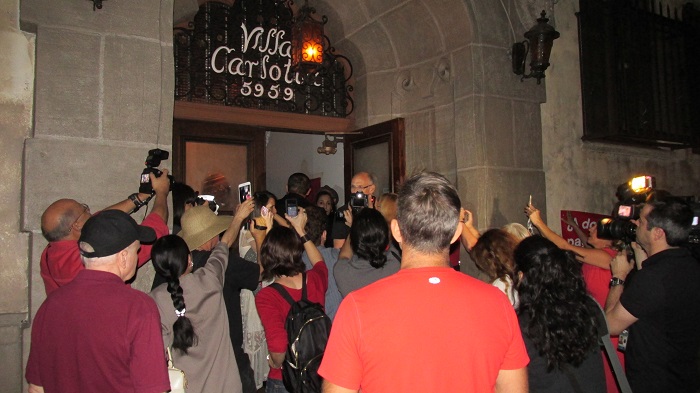
Tensions running high at the Villa Carlotta on Sunday night.

Tensions running high at the Villa Carlotta on Sunday night.

In case you haven’t been following recent events at the Villa Carlotta, I’ll give it to you real quick. It’s a piece of Hollywood history, built in the 20s, and home for many years to musicians, artists, writers and other creative folk. But it was rent-controlled, and not too long ago the owner decided he wasn’t making enough money off it, so he sold the property to a developer who planned to turn it into an extended-stay hotel. As part of the process, it was deemed necessary to get rid of the existing tenants. Many of them were forced out using the Ellis Act.

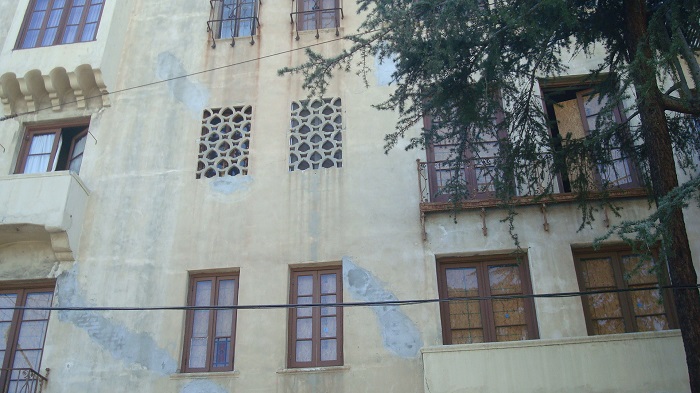
Windows boarded up at the Villa Carlotta.

Windows boarded up at the Villa Carlotta.

Of the 50 apartments in the Carlotta, four are still occupied. Some of the tenants decided to fight the evictions, and not just because they wanted to hang on to their homes. There are a number of reasons to object to what the developer is doing here. First, the Carlotta is a historic building, and as such it’s protected by state law. In order to turn it into a hotel, the current owner planned extensive alterations to the structure. The remaining tenants, worried that the modifications would do irreparable damage, took their case to the Cultural Heritage Commission, which sided with them. Second, Ellis Act evictions have caused the loss of thousands of rent-controlled units in LA. A recent study by UCLA found that this city is the least affordable major city in the nation, and mass evictions are only making things worse.

And third, up until this whole mess started, the Carlotta was home to a community of creative people. According to many of the former tenants, it was a place where budding screenwriters and struggling artists could meet friends and make connections, where they could share their work and shape their ideas.

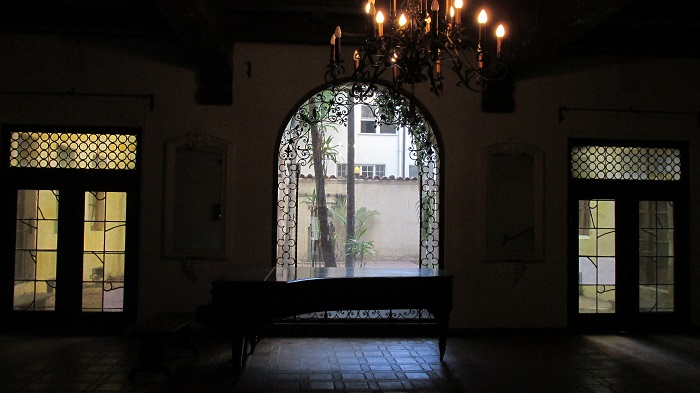
The lobby where tenants used to gather, now deserted.

The lobby where tenants used to gather, now deserted.

This aspect of the story took on new importance when it was announced that the Hollywood Arts Council had decided to hold a fundraiser at the Carlotta. The HAC apparently thought it would be the ideal place for the event, which was held to raise money for arts education at nearby Cheremoya Elementary School. The remaining tenants at the Carlotta were surprised by the announcement. It seemed odd that an organization which has the stated goal of supporting the arts in Hollywood had decided to hold their event at a venue that was nearly vacant because dozens of artists had been forced to leave.

They contacted the HAC and explained the situation, asking if the organization would consider moving the event. The answer was polite, but firm, no. Bothered by the apparent hypocrisy of the HAC’s actions, the tenants decided to protest.

Sylvie Shain, one of the few remaining inhabitants, had imagined the protest as an elaborate performance piece. Former tenants were asked to come to the event wearing white, and they would stand for the ghosts of the Villa Carlotta. Alternately, attendees could show up dressed in red to symbolize of the affordable housing massacre that’s taking place. The idea was to dramatize the plight of renters throughout the City.

Protesters holding a banner to protest evictions.

Protesters holding a banner to protest evictions.

The same message in English.

The same message in English.

Unfortunately, things didn’t work out as planned. The first part of the protest, with people congregating on the sidewalk outside, went smoothly. But when Sylvie led a group into the building things got kind of chaotic. There were moments when I couldn’t figure out what was going on. But one thing is clear. At one point Sylvie was forcibly ejected from the building and temporarily denied re-entry.

On the positive side, the event got a fair amount of media coverage. Two local stations showed footage on the evening news, and Curbed did a piece as well. The Los Angeles Tenants Union joined the residents of the Carlotta, and LATU members spoke eloquently about the affordable housing crisis in LA, emphatically pointing out the damage that the Ellis Act is doing.

It’s important to say that artists aren’t just having a hard time finding housing in Hollywood. In recent years Silverlake and Echo Park have both seen an exodus of musicians, writers and others who can’t afford to pay what landlords are asking these days. And then there’s the sick joke of the Arts District in Downtown. In the late 70s, creative people started moving to the industrial districts in the City’s center. The community came together because people who were struggling to make music or art or whatever could find cheap rents in areas that nobody else wanted to live in. But then the developers discovered it, started marketing it as the Arts District, and housing prices soared. Many of the artists who had created the community were forced to leave because it got too damn expensive.

So let’s get back to the question I asked in the heading for this post. This past Sunday night, who was really standing up for artists? Was it the Hollywood Arts Council, knowingly holding their fundraiser at a site where dozens of creative people had been forced to leave? Or was it the scrappy band of tenants who staged an action to call attention to the fact that artists and others are being thrown out of their homes all over LA?

You can probably guess what my answer would be.

Sylvie put together a beautiful brochure for the event, which you can view by clicking on the link below.

Ghosts of the Carlotta

And if you’d like more info about the situation at this historic building, here’s a link to the Save Villa Carlotta Facebook page.

Save Villa Carlotta

VC 6 Fac Clouds

Homeless Emergency? Stop Evictions!

DSC00557

The Mayor and the City Council recently declared that LA is in the throes of a homeless emergency. While I’m glad that our elected officials have finally decided to acknowledge how serious the problem is, they still haven’t offered any concrete plan of action. The promise of a hundred million dollars in funding is worthless until we know where that money’s coming from and how it’s going to be spent.

But I’d like to offer a suggestion on how to combat homelessness, and the people at City Hall should be glad to hear that they won’t have to spend a penny to implement it. My proposal is simple. I can give it to you in two sentences.

Stop Ellis Act evictions.

Stop the destruction of affordable housing.

Now, you may be saying, that’s ridiculous. The City doesn’t have the authority to do either one of those things. The Ellis Act, a state law, gives landlords the right to evict tenants if they decide they don’t want to be landlords any more. And the City can’t prevent a property owner from demolishing rental units if the owner does so within the boundaries of the law.

But the City can stop giving landlords incentives to do these things.

As the housing market heats up again, the potential to reap huge profits has drawn a slew of developers to LA. Speculators swoop into neighborhoods offering wads of cash to landlords, but they don’t just want to buy existing buildings. They’re interested in maximizing their profits, which often means kicking tenants out of rent-controlled apartments and either converting the units to condos or knocking the building down and putting up something larger.

And here’s where the City comes in. For developers to accomplish their goals, they often need to get the City to grant variances. They might ask the Department of City Planning to reduce the required setbacks from the sidewalk or neighboring buildings. Or maybe to relax the height limit. In some cases they ask the DCP to change the way an area is zoned, which could allow them to turn an apartment building into a boutique hotel.

All of these entitlements granted by the City increase the value of the property because they increase the potential for profit. The more money there is to made, the greater the attraction for investors. The more money investors offer, the greater the temptation for landlords to evict their tenants and sell the building. During the last housing bubble, this trend peaked in 2005 when over 5,000 rental units were taken off the market. When the recession hit, property values plunged and evictions dropped. But as the market heats up again, we’re seeing this practice becoming popular once more. In 2013, landlords took 308 units off the market. That figure more than doubled in 2014, rising to 725. And as long as housing prices continue to rise, you can bet that evictions will rise as well. For more details, take a look at this article from the KPCC web site.

Ellis Act Evictions in LA on the Rise

While there’s usually some negotiation involved when developers seek variances from the Department of City Planning, they usually get most of what they want. And as long as the DCP continues to hand out entitlements like candy, developers will feel confident that they can make tons of money by converting existing buildings to condos, small-lot subdivisions or boutique hotels. This means more people will be evicted, and more affordable housing will be taken off the market.

DSC00565

I’m not claiming that everybody who gets evicted ends up living on the street, but a significant number do. While I couldn’t fine any data on evictions leading to homelessness in Los Angeles, in New York the data shows that it’s a leading cause. Check out this article from CityLimits.

Evictions Are Top Driver of Homelessness

So if the City of LA is really serious aout tackling homelessness, our elected officials need to stop making it so attractive for landlords to evict their tenants. The Department of City Planning needs to start asking if the needs of wealthy developers outweigh the needs of renters on a limited income. Yes, we are dealing with a homeless emergency. The people at City Hall must start looking at the policies that have contributed to this situation, and think about the changes that need to be made.

Building shelters for people living on the streets is fine. But an even better approach would be to prevent people from losing their homes to begin with. As long as City Hall continues to put the needs of developers over the needs of its citizens, the homeless situation will only get worse.

DSC00562

More About Housing and Transit

Post Final

As a follow-up to my last post, I wanted to share this article from LA StreetsBlog. It’s a summary of a panel discussion, Rescuing the California Dream: Policies for an Affordable Future, sponsored by KPCC and the Milken Institute. The participants talked about the challenges posed by LA’s affordable housing crisis, and offered some possible solutions.

Nobody was saying there’s an easy way out, but there are things we can be doing to address the situation. Two things I got from the article were that we need to do a better job of planning, and we need to create local funding sources to support affordable housing. But the panel offered lots of ideas, and the consensus seems to be that we can change things for the better.

Can High-Density Housing Solve Our Regional Housing Crisis? The Answer: It’s Complicated

A New Vision or Another Con?

A view of the Hollywood Freeway from Franklin

A view of the Hollywood Freeway from Franklin

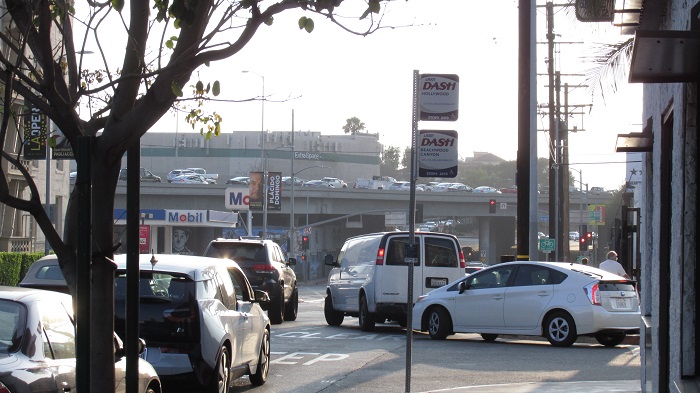
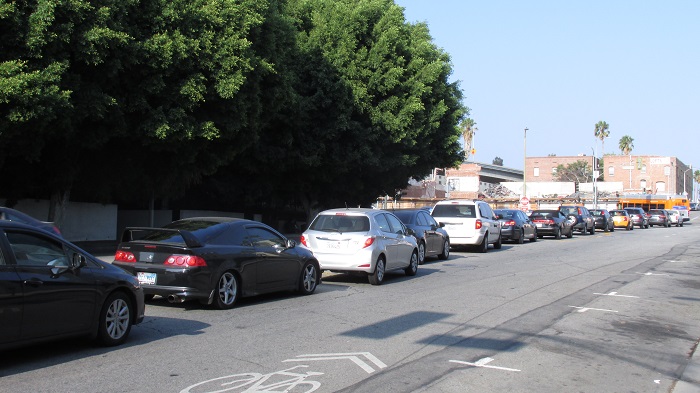
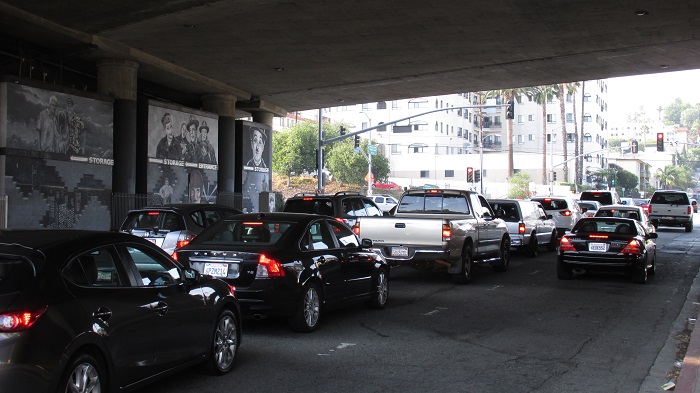
A while ago I was walking down Franklin around rush hour, and I came across a sight that’s becoming way too familiar. Looking down Vine, I saw a line of cars that extended all the way down the block.

Looking down Vine at rush hour

Looking down Vine at rush hour

I pulled out my camera, because I’ve kind of gotten obsessed with documenting traffic in LA. You probably think this is a pretty weird pasttime, but it keeps me off the streets. Oh, wait. No, actually it doesn’t….

Intersection of Vine and Yucca

Intersection of Vine and Yucca

Anyway, I walked down Vine taking pictures, and guess what I saw when I got to Yucca?

Cars lining up in the left turn lane on Yucca

Cars lining up in the left turn lane on Yucca

If you guessed another long line of cars, you were right. If you don’t live in the area, this may not seem like anything remarkable. But having lived in Hollywood for a while, I can tell you that this is a pretty recent phenomenon. Yucca used to be very quiet. I’d say up to three or four years ago Yucca was empty even at rush hour. Obviously that’s changed.

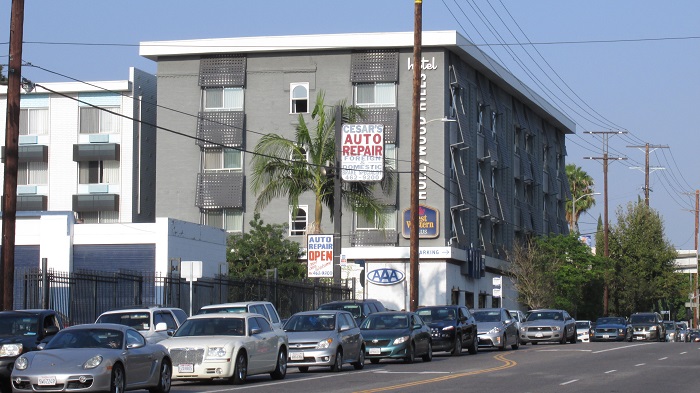
I kept on walking, and you’ve probably already guessed that when I got to Argyle, I saw yet another line of cars crawling along.

More cars backed up on Argyle

More cars backed up on Argyle

But the thing that surprised me was, traffic on Argyle was backed up all the way to Hollywood Blvd..

Still more cars backed up on Argyle

Still more cars backed up on Argyle

I walked up Argyle, shooting more photos as I passed underneath the bridge.

Traffic crawling north on Argyle

Traffic crawling north on Argyle

Then I was back at Franklin, and by now everybody knows what I found when I got there.

Westbound traffic on Franklin

Westbound traffic on Franklin

You may be asking, where were all these cars heading? Well, they were all trying to get on the northbound Hollywood Freeway. And traffic on the freeway was moving pretty damn slow.

Northbound onramp for the Hollywood Freeway

Northbound onramp for the Hollywood Freeway

I think we’d all agree that LA’s streets are way too congested, and we’ve got to start thinking about transportation in new ways. Cars are a dead end. We’ve got to stop building to accomodate them. The recent expansion of the San Diego Freeway showed what a waste of time that is. We can add as many lanes as we want, and they’ll all end up choked with traffic.

So some people see the City Council’s adoption of the Mobility Plan 2035 as a major step in the right direction. It sure sounds swell. With chapters titled “Safety First”, “World Class Infrastructure” and “Access for All Angelenos”, the MP 2035 paints a picture of a utopian LA, where everybody can get everywhere they want without ever needing a car.

But a lot of people are skeptical about the benefits the plan will actually provide, and I’m one of them. I totally support increased access to all modes of transportation, and if you take the MP 2035 at face value, it sounds great. The question is, will the plan deliver what it promises, and to answer that question you have to look at what our elected officials have actually been doing for the last several years.

Under the heading Key Policy Initiatives, the plan includes the following goal….

Consider the strong link between land use and transportation

No doubt about it, land use and transportation have to be considered together. For years now the Mayor and the City Council have been pushing transit oriented density (TOD). In theory, planning for higher density near transit centers will create a new dynamic where people will find using public transit preferable to driving a car. Now, if we were building affordable housing near transit centers that allowed easy access to the areas where jobs were concentrated, this might actually work. But that’s not what the Mayor and the City Council have actually been doing. Instead, they’ve been pushing relentlessly for high-end, high-rise housing that caters to people with six figure incomes. Check out the proposed 8150 Sunset, Horizon Hollywood and Shenzhen Hazens project in South Park for three examples. There are many more in the planning stages. Do the rich ride the subway? I’m sure some of them do, but let’s be honest. In LA, this is the demographic that is least likely to use public transit, while people at the lower end of the economic spectrum often have no other choice.

This is not transit oriented density. It’s profit oriented density. The Mayor and the City Council can tell us they’re linking land use to transportation to make transit more accessible, but recent history shows that this is mostly a con used to push through projects that only benefit developers who are looking to make a pile of money. Not only have our elected officials’ efforts to create affordable housing been pathetic, but by pushing gentrification in areas that used to be affordable, they’re actually forcing low-income workers farther away from job centers.

So if you ask me whether the MP 2035 will deliver what it promises, I can’t say I’m optimistic. Even before Garcetti became the Mayor, when his council district covered much of central Hollywood, he pushed through a number of “TOD” projects, telling residents that this would solve our transportation problems. Take a look at the video below and let me know if you think it’s working.

Criminalizing Homelessness

DSC09677

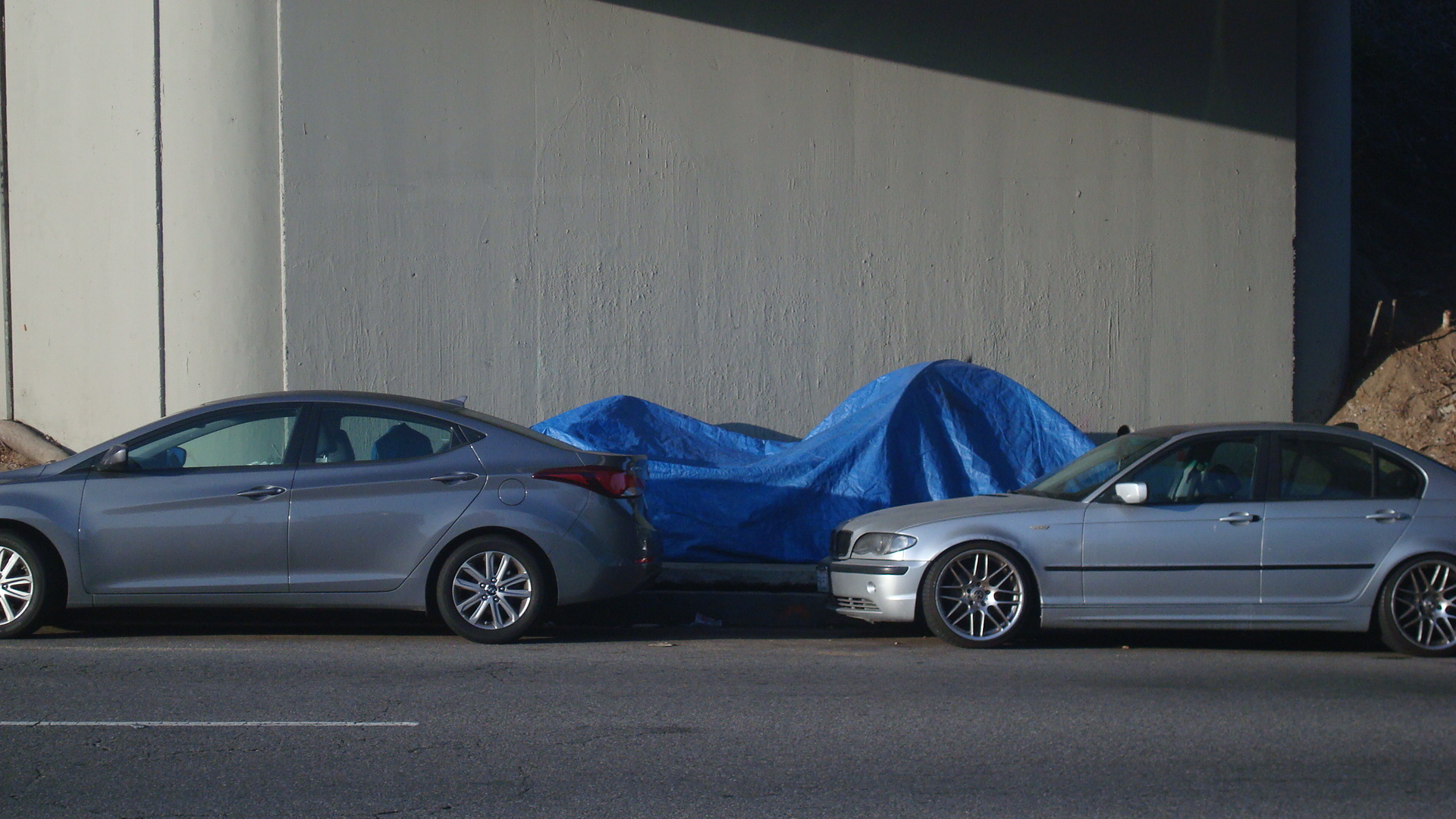
Once again our elected officials have shown us how little they really care about improving the quality of life in LA. On Tuesday the City Council passed two ordinances to make it easier to get rid of homeless encampments. Gil Cedillo cast the only dissenting vote. All the others fell right in line.

I totally understand that there are serious health and safety issues with the homeless camps that have been springing up all over LA. I know we have to deal with this. But as usual, the City Council has chosen to attack the symptoms rather than try to address the cause.

The reason people are living in tents is because we have an appalling shortage of affordable housing. The Mayor and the City Council continue to back to developers that want to build pricy condos and high-end apartments, but they seem to have no interest in providing homes for anyone besides the rich. Their meager efforts to build affordable housing are pathetic. LA real estate is being sucked up by developers with deep pockets who only care about maximizing their profits. In the past few years they’ve created thousands of new units that go from $2,000 a month on up into the stratosphere. And these same developers have taken thousands of rent-controlled units off the market as they demolish or refurbish older buildings.

According to the LA Times, the City’s homeless population currently stands at 26,000, a 12% increase over the past two years. This problem is not going away. It’s getting worse. Councilmember Cedillo makes the point that the vast majority of the funds the City spends on homelessness go toward law enforcement. This is crazy. The police can’t solve this problem.

Now you may be asking, can anyone solve this problem? The answer is yes. Follow the link below to an article from the LA Times about how Utah is dealing with chronic homelessness. They’ve made huge progress, and the state is actually saving money by providing housing for people who’ve been living on the streets.

Utah Is Winning the War on Chronic Homelessness

Of course, LA is not Utah. And I don’t mean to imply that there is a simple solution. But we could do a hell of a lot more than we’re doing now. And we need to start by making a serious effort to provide affordable housing.

For more info on the ordinances passed by the City Council, here’s a link to the story in the Times.

Vote Makes It Easier to Clear Homeless Camps

This Is a Public Servant?

Cnsw Banner Crop

If you haven’t heard this story already, I’d like to draw your attention to a piece that ran this week on CityWatch. According to the article, 17 tenants are being evicted from four rent-controlled buildings in Beverly Grove and the Fairfax district. Now, you might be saying, why is this news? Evictions like this are a common occurrence in LA these days. All over the city developers are kicking people out of their homes so they can build high-end residential units. Why is this story special?

The reason this story deserves your attention is that the evictions are being carried out by Bulldog Partners, and the principal at Bulldog is Matthew Jacobs. Who is Matthew Jacobs? He’s the chairman of the board at the California Housing Finance Agency. Yes, this is a state agency that’s supposed to help people find housing. Not kick them out of their homes. The CalHFA web site says that their purpose is to “create safe, decent and affordable housing opportunities for low to moderate income Californians.”

Is this sick or what? Does this guy understand the mission of the agency he’s chairing? Doesn’t sound like it to me. That’s why I sent an e-mail to Jerry Brown asking that he be removed from the CalHFA board. If you’d like to contact the governor as well, here’s the link.

Contact Gov. Brown

And here’s the link to the story on CityWatch.

Evictions Spread to Fairfax

Crazy times we live in.

Losing the View

A view of construction underway at Sunset and La Cienega

A view of construction underway at Sunset and La Cienega

People have been building things along the Sunset Strip for a long time now. There are plenty of reasons to want to build there. Probably the people who put up the first houses and apartments along the winding hildside road were drawn by the view. The developers who came along in the twenties had something different in mind. Because at that time the area was unincorporated and beyond the reach of the LAPD, it was a great place to put bars and clubs. In the sixties the nightlife was still a draw, but it also became a hotspot for the counterculture. The clubs attracted bands that were playing all kinds of music, and the Strip in general became a magnet for anyone looking for a different kind of lifestyle.

So even before people began taking LA seriously as a city, the Strip had a reputation for being incredibly hip. Developers saw the potential for profit, and the number of high-rise apartments and hotels grew. Out of towners would come to the Strip to have a drink at the Viper Room or catch a band at the Whiskey. And if they had enough money they could rent a room at one of the hotels that offered a spectacular view of the city spreading out all the way to the horizon.

North side of Sunset at La Cienega

North side of Sunset at La Cienega

I’ve never had enough money to stay in one of those hotels, but I’ve still been able to enjoy the view. I remember ambling along Sunset as a kid, heading for Tower Records or Book Soup, turning my head now and then to gaze out over LA. Though there were a number of high-rises, much of the Strip was lined with one and two-story buildings. There were long stretches that allowed you to gaze out at incredible vistas.

A view of the city from Sunset

A view of the city from Sunset

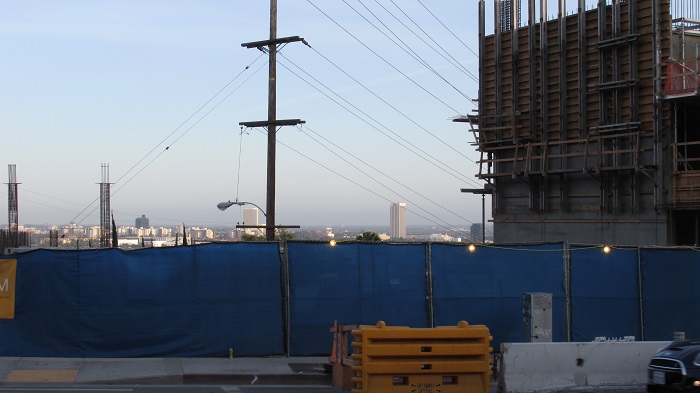
But these days those views are disappearing. A new spate of development is rising up along the Strip, making it harder and harder to see those breathtaking vistas. There’s a massive project under construction right now which will occupy a good stretch of Sunset on both sides of La Cienega. And there are other projects under consideration, such as 8150 Sunset.

Construction site on Sunset west of La Cienega

Construction site on Sunset west of La Cienega

Many of the hillside residents are freaking out, and one of the reasons they’re upset is that these projects will block their view. (There are other reasons, too, including increased traffic and crumbling infrastructure.) Of course, the fact that the folks in the hills are mad about losing their view has riled the pro-development crowd. They’ve been reviled as elitist snobs who want to stop progress just so that can stand on their deck at sunset and gaze at the vast landscape below. It’s interesting, though, that the developers haven’t been the focus of similar criticism. Let’s get real. One of the main reasons they’re building high-rises along the Strip is so they can sell the view. The hotel rooms and condos in these new projects will go for outrageous prices precisely because they offer fantastic views. And if you think we really need another upscale high-rise in LA, I think you’re completely out of touch with reality. Developers are pushing these projects because they can make a mountain of cash. Meanwhile, there’s a serious shortage of affordable housing, in large part because the current wave of development is driving housing prices sky high.

Another view of construction at Sunset and La Cienega

Another view of construction at Sunset and La Cienega

As for me, I do feel like the Strip is losing something. It used to be that just standing on the sidewalk you could see a large swath of the city laid out before you. It was something free that anybody could enjoy. These new projects will make those views harder to find. And beyond that, I feel like the whole Strip is getting so pricey that ordinary people are being squeezed out. While there have always been ritzy restaurants and high-end clothing stores, there were also plenty of places where you could hang without spending a lot of money. Those cheaper places seem to be disappearing.

Another view of construction at Sunset and La Cienega

Another view of construction at Sunset and La Cienega

Maybe it’s just me. Now that I’m older, I do spend a fair amount of time reminiscing about how great things used to be, and I should probably focus more on the present. But back in the seventies when I wandered along Sunset I used to see all kinds of people on the street. There were rich kids in expensive clothes and vagrants without a nickel in their pocket. Beverly Hills types lunching at sidewalk cafes and runaways living on handouts. It seemed like the Strip was open to anyone, that everybody was welcome.

I feel like that’s changing. Is it just me, or is all this new development burying the welcome mat?

Looking down La Cienega from Sunset

Looking down La Cienega from Sunset