Reconstructing Crenshaw

Crsw 01 Future

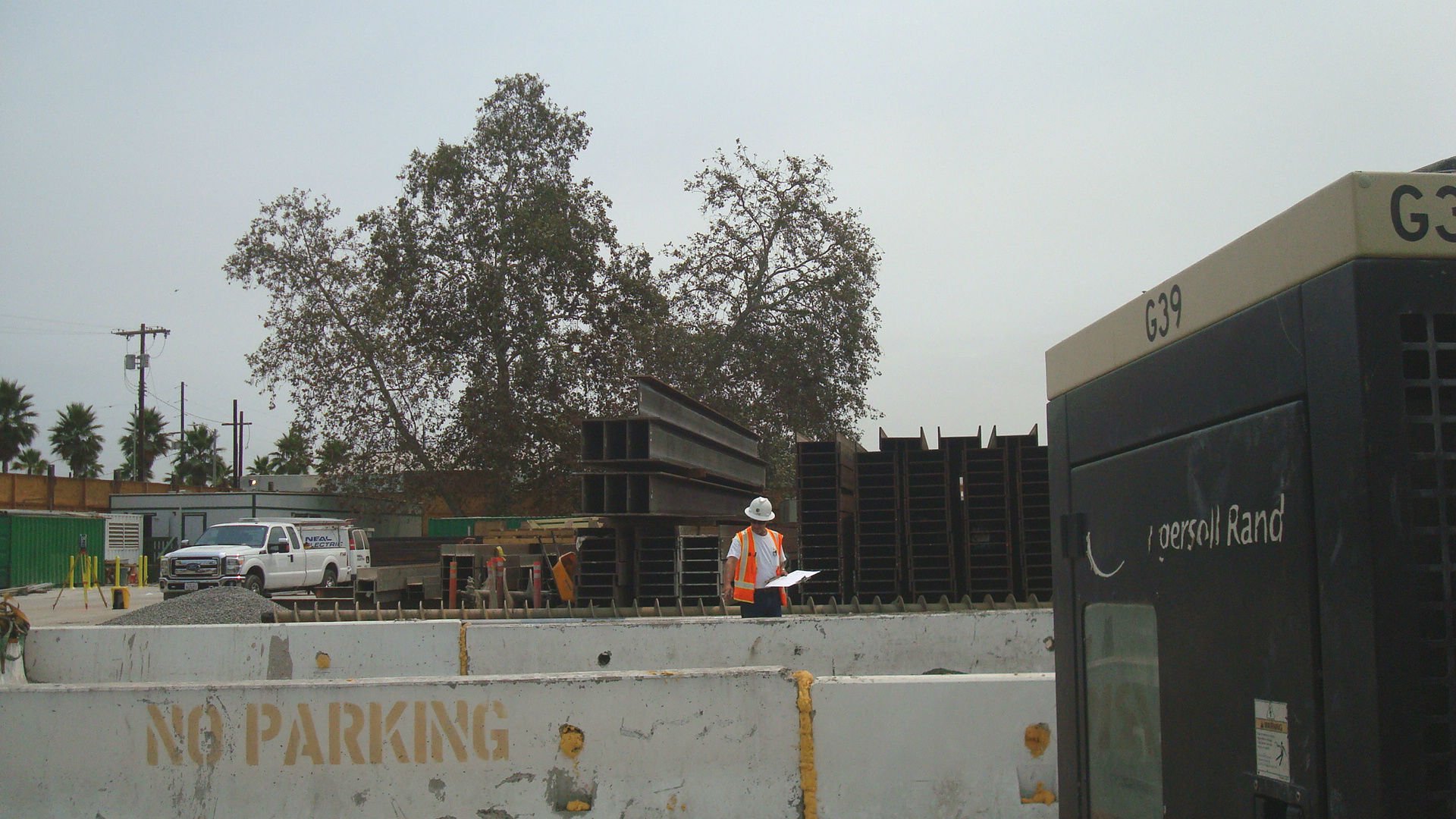
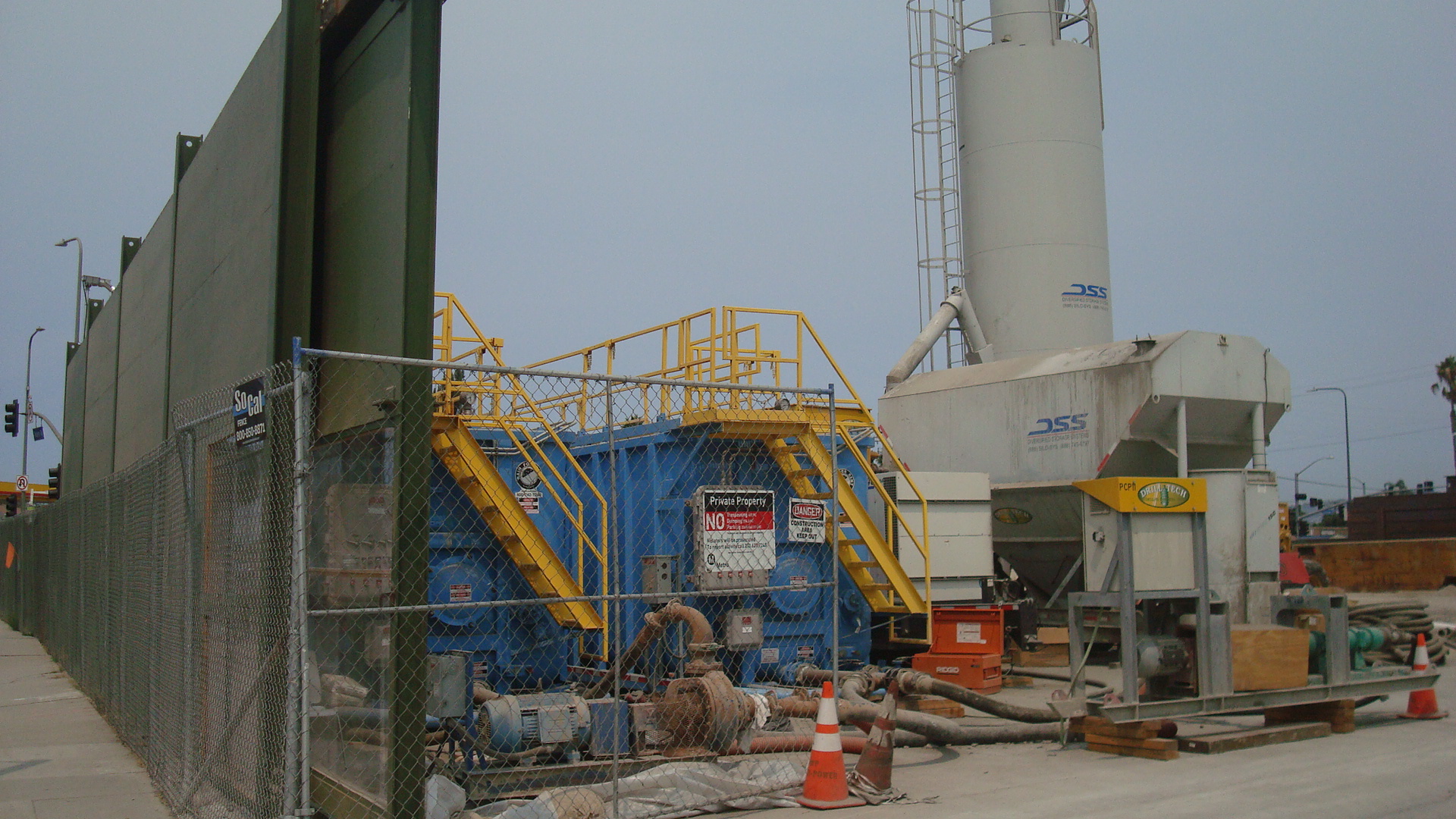
Last week I went down to Crenshaw and Exposition to see what was happening with the construction of the Crenshaw/LAX Line. Work is underway, though it will be years before the project is finished.

A view from the Crenshaw side of the construction site.

A view from the Crenshaw side of the construction site.

Another view from the Crenshaw side.

Another view from the Crenshaw side.

And here's a shot taken from the entrance to the site.

And here’s a shot taken from the entrance to the site.

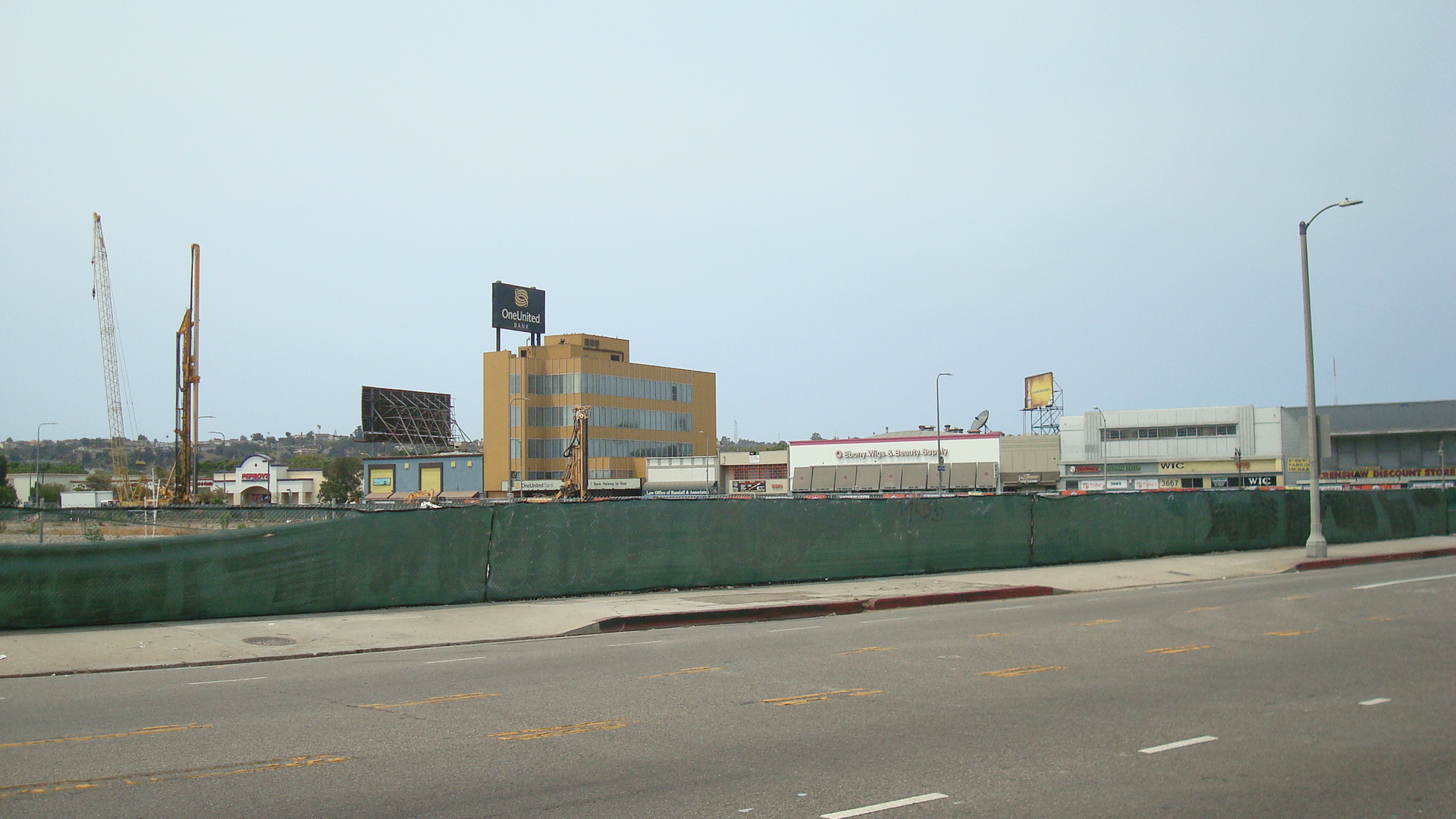
While I was there I also took a look at the huge vacant lot that runs along Crenshaw just below the MTA’s construction site.

The fence surrounds a large empty parcel just across the street from the MTA site.

The fence surrounds a large empty parcel just across the street from the MTA site.

I was wondering if there were any plans to develop the parcel, so I got on the net and started looking around. Apparently this will be the home of the proposed District Square retail complex. For more info, follow this link to a post from earlier this year on Building Los Angeles.

District Square

Right now it’s just a lot of dirt, but the temporary fence running around this area does offer the candidates in the school board special election a place to post their ads.

School board candidates vying for your vote.

School board candidates vying for your vote.

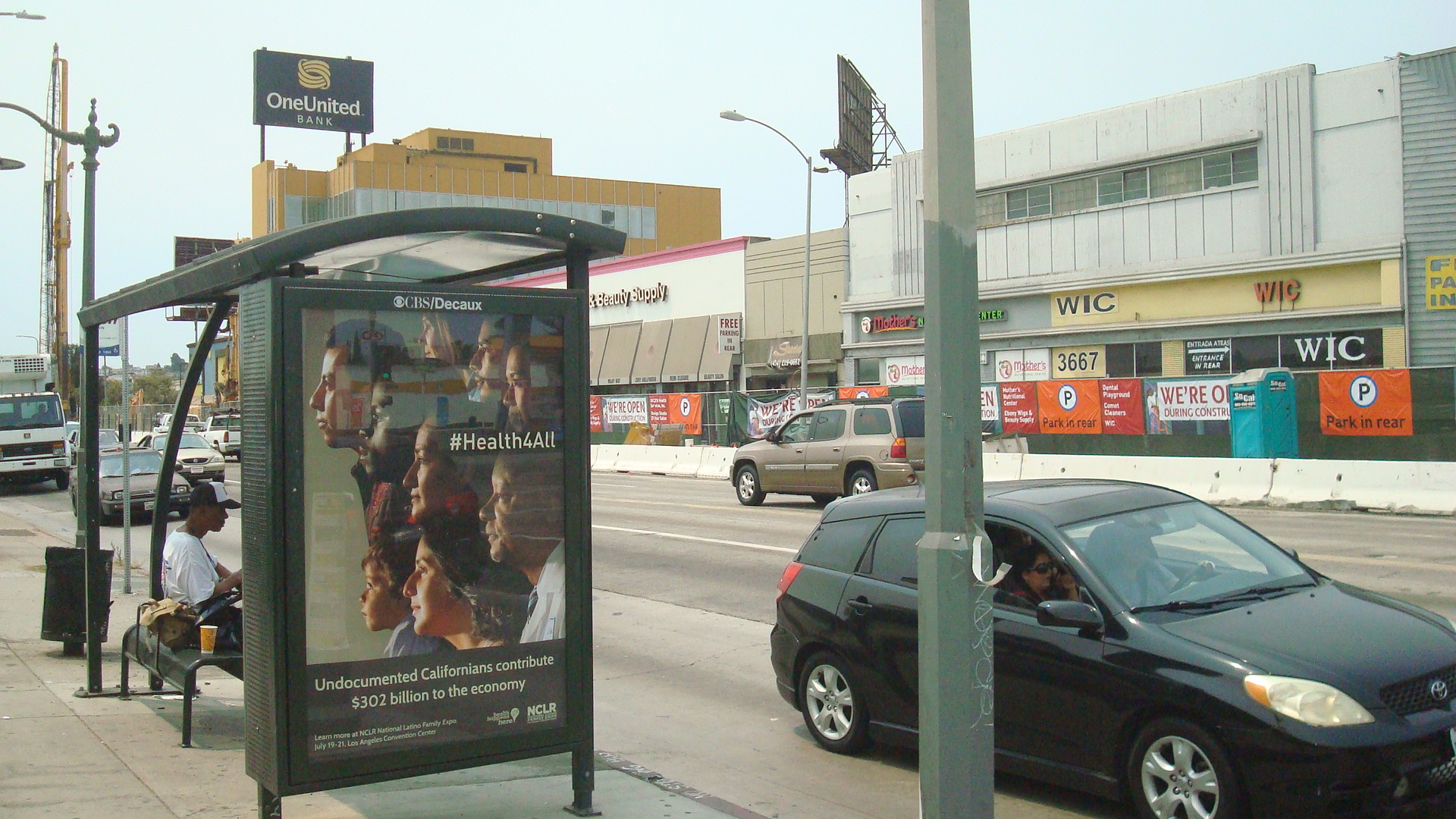
You can see the barricades blocking off a good stretch of Crenshaw. Also the large signs letting people know that the businesses along Crenshaw are open during construction.

Looking at the barricades set up on the west side of Crenshaw during construction.

Looking at the barricades set up on the west side of Crenshaw during construction.

Projects like this can be really hard on business owners, since the work impacts both traffic and parking. And we’re not just talking about a few months, but years. In the long run, the transit line will probably bring more people to the area and be a boon to local merchants, but in the short term, the construction can cause real hardship.

Heavy machinery parked on Crenshaw.

Heavy machinery parked on Crenshaw.

If you haven’t already read about the Crenshaw/LAX Line, here’s a link to the overview at the MTA’s web site.

Crenshaw/LAX Transit Project

Evergreen Cemetery

EC 01 EntI first saw Evergreen Cemetery in a movie. I was watching Sam Fuller’s 1959 film Crimson Kimono, much of which was shot on location in LA.* There’s a scene where a detective speaks with an elderly Japanese man in a cemetery. It stuck in my mind, and I got on the net to see if I could track the location down.

It wasn’t hard. There’s a fair amount of information available on Evergreen Cemetery, and the more I learned, the more I wanted to know. It was founded in 1877, and is located in Boyle Heights. Like every cemetery, it serves as a reminder and a record of the past, but it also holds a special place in LA history for a couple of reasons. First, it was unusual because in addition to serving the white community, it also served the African-American, Mexican and Japanese communities. Evergreen is an important reminder of the city’s multicultural heritage. Second, it’s the final resting place of a number of people who shaped not just LA history, but US history. Tombstones belonging to actors, journalists, business leaders, war heroes, musicians, can all be found at this cemetery.

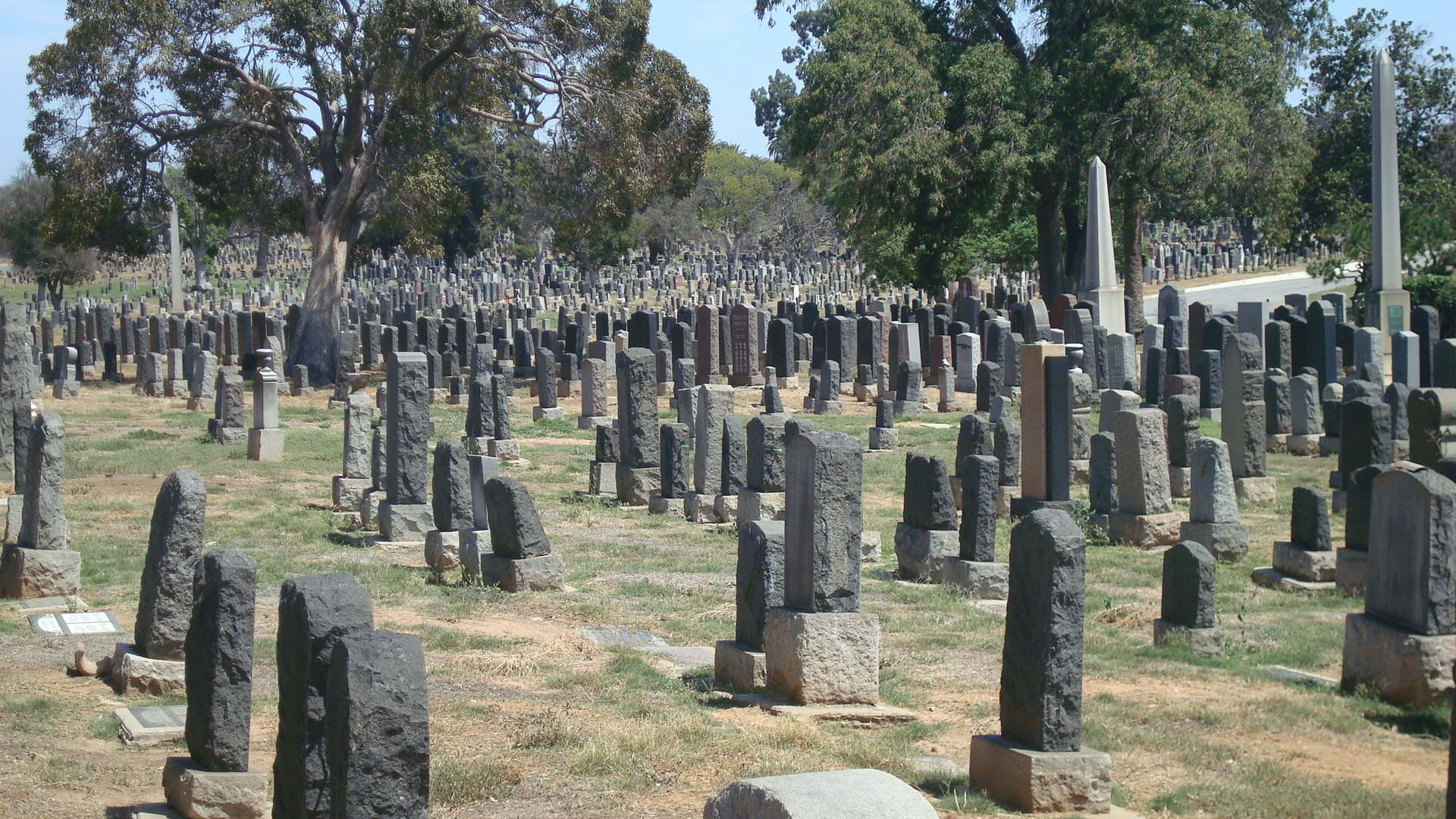
EC 15 Tmstns Lots

Charlotta Bass, publisher of the California Eagle, an early black-owned newspaper, and vice-presidential candidate for the Progressive Party in 1952 is interred here. So is rancher and farmer Isaac Lankershim, who played a major role in the early development of the San Fernando Valley. You’ll find the grave of Earl Gilmore, who, after taking over his father’s oil company, expanded his business interests in many directions, and created the Farmers Market at Third and Fairfax. The cemetery holds a monument to the 442nd Regimental Combat Unit, made up of Japanese-American soldiers, that served with distinction in World War II. And there is also the Nineteenth Century Chinese Memorial Shrine, which was restored back in the 1990s with the help of the Chinese Historical Society of Southern California.

EC 05 Tmstns Wall

Not too long ago, I went to visit Evergreen Cemetery with some people I know. There were a few others visitors, but most of the time it seemed like we were alone in this vast graveyard. The patchy grass was green in some places, brown in others. The sun was hot when we weren’t standing in the shade of the large trees. A few graves had fresh flowers on them. Many of them seemed like they hadn’t been touched in years. Aside from the occasional murmur of voices, or the sound of traffic passing on Cesar Chavez Ave., it was very quiet. Very peaceful.

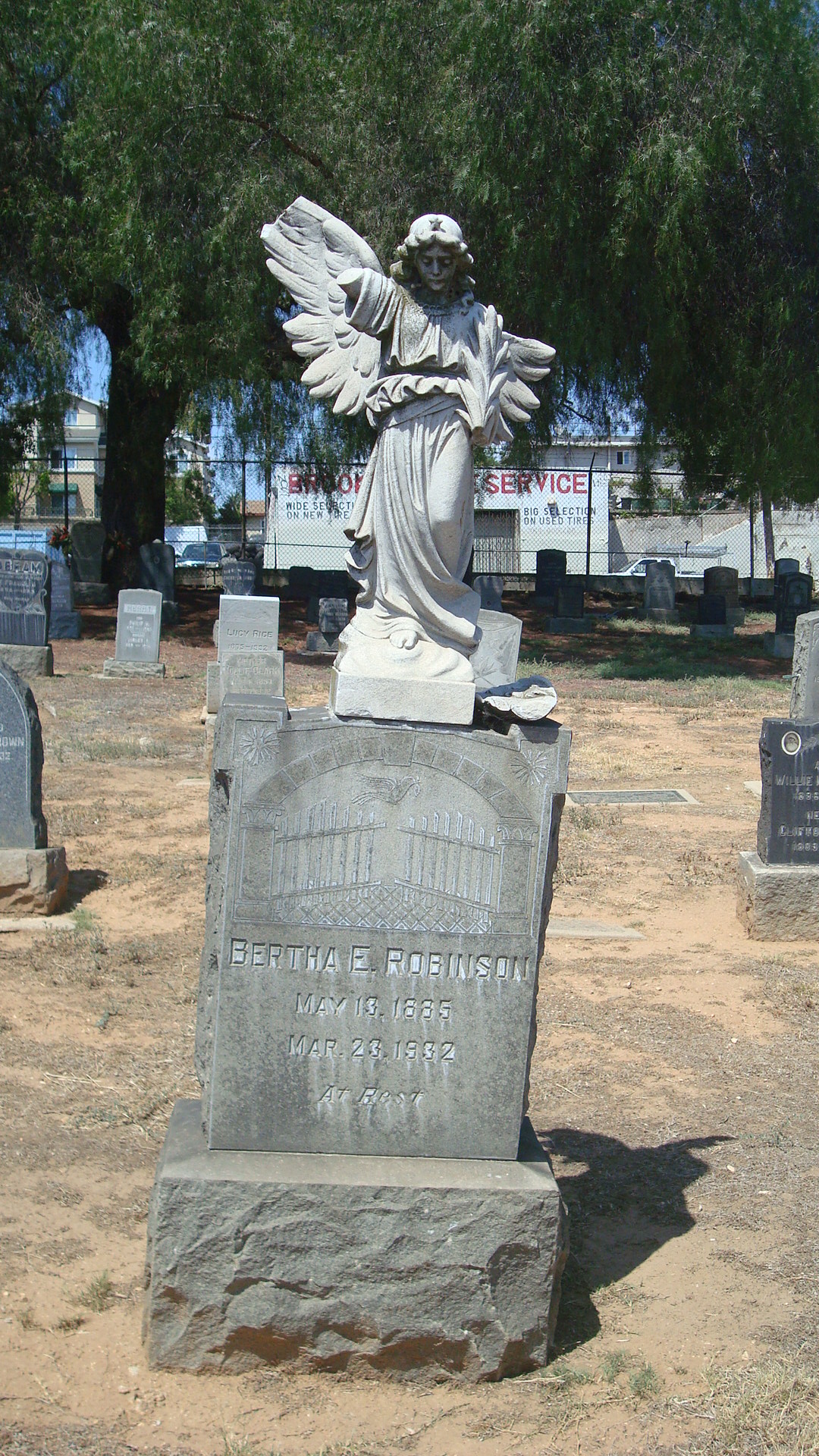
EC 06 AngelBelow are a few links to sites I visited while researching the cemetery. The first offers a list of some of the people buried at Evergreen, and also provides a timeline. The second, from the KCET web site, gives a vivid and engaging account of the cemetery’s history. Plus it includes lots of cool photos. Last, a fascinating account of the Chinese Memorial Shrine. This story shows how an important piece of LA’s history was almost lost, and also how difficult preserving the past can be.

Evergreen Cemetery

Evergreen Cemetery at KCET

Nineteenth Century Chinese Memorial Shrine

*
The majority of the location work for Crimson Kimono was shot in Little Tokyo, but Evergreen Cemetery is located in Boyle Heights. If you’re interested in LA history, the film offers extensive views of the city in the fifties, with a focus on the Japanese-American community.

The Changing Face of Hollywood

Rendering of the proposed Kilroy project at Vine and De Longpre

Rendering of the proposed Kilroy project at Vine and De Longpre

Hollywood is hot. Developers are jumping in with both feet. A number of projects have gone up in the last few years, and many more are in the works. My feelings about the building boom vary greatly, mostly depending on the quality of the individual projects. Some of them will definitely benefit the community, some I can tolerate, and others should never have gotten off the drawing board.

Just recently Kilroy Realty unveiled their plans for a project on Vine, south of Sunset. Over all, I’m inclined to support it. As many people have pointed out, almost anything would be better than what occupies the site now. It’s an underutilized parcel, and Kilroy’s idea of turning it into a media campus makes perfect sense for the area.
A recent shot of the site from the corner of Vine and De Longpre

A recent shot of the site from the corner of Vine and De Longpre

But I do have a couple of reservations….

First, traffic.

Anyone who’s lived in Hollywood for a while can tell you that traffic is steadily getting worse. This is especially interesting when you consider that the Hollywood area lost over 10,000 residents between 2000 and 2010. So even though there are fewer people living in the community, more of them are driving. It seems probable that this is because the low-income residents who were forced out by rising rents have been replaced by more affluent residents who are more likely to own cars. The Kilroy project will be continuing this trend, since the residential units are geared toward people who have money to spend.

For those of you who don’t live in the area, here are a few photos of the northbound traffic on Vine on a Wednesday evening around 7:00 pm. These were taken at the corner of Vine and De Longpre, right across from the project site.

Traffic on Vine, heading toward Sunset.

Traffic on Vine, heading toward Sunset.

Traffic on Vine, coming from Fountain.

Traffic on Vine, coming from Fountain.

Same perspective as previous shot.  Note that cars are not entering the intersection even though the light is green.

Same perspective as previous shot. Note that cars are not entering the intersection even though the light is green.

This project will definitely be putting more cars on the road. What really concerns me is that it’s just one of many projects being considered for the Hollywood area. My point is that the City of LA needs to do a cumulative traffic study to plan for all this growth. The City argues they don’t have the money, which is ridiculous. They don’t have a problem throwing away millions of dollars on legal fees to defend projects that never should have seen the light of day, but they won’t spend a relatively modest sum to plan for a sustainable future. If Garcetti wants to push for big growth in Hollywood, he needs to start by springing for a cumulative traffic study that will help to lay the groundwork.

Second, the residential component of the Kilroy project is definitely catering to the crowd that makes six figure salaries. Again, it’s not so much that I have a problem with this specific project, but the vast majority of the residential units that have been built in the area over the past ten years are geared towards the rich. You can’t move into places like the W, Blvd. 6200 or the Avenue unless you have money to burn. This push to make Hollywood a playground for the wealthy is driving rents up throughout the community. It’s not just the low-income working class families that are being forced out. The artists, musicians and writers who used to live in Hollywood are having to look for less expensive places. The desperate drive for gentrification is great for bringing in the trust fund kids who want to party, but it’s pushing out a lot of the people who really enriched the local culture.

Over all, Kilroy seems to be making an effort to respect the community. This project is planned more or less within the current zoning laws, though the residential tower does go a little high. They’re including a fair amount of open space. It makes sense that they’re catering to media/entertainment companies, and, according to the LA Times story, there is a demand for office space in Hollywood.

So my problem isn’t with this project itself, but the trend that it’s a part of. Hollywood is becoming more expensive and more congested. The mayor doesn’t care. He’s got a mansion in Hancock Park and a driver that takes him wherever he wants to go, both of which are paid for by the taxpayers. So naturally Garcetti wouldn’t be concerned about housing prices and traffic, since he doesn’t have to deal with those problems.

Unfortunately, the rest of us do.

If you want to take a look at the LA Times article on the Kilroy project, the link is below.

Kilroy Unveil Plans for Complex in Hollywood

Fourth of July on Sepulveda

Sepulveda
I was sitting at a bus stop on Sepulveda. It was late afternoon. There was one other guy waiting for the bus.

A man came walking up. I’d say he was around fifty. He had a full beard. From his face it looked like he’d spent a lot of time in the sun. The blue T-shirt and grey pants were both faded. No shoes, just socks on his feet. He seemed to be looking for something.

‘Hey, you guys seen a pack of Winstons?’

I took a quick look at the sidewalk.

‘No.’

But then I turned to the right and saw something that looked liked a pack of cigarettes lying on the ground a few feet away.

‘Is that it?’

I pointed. He walked over and picked them up. He opened the pack and took one out. Then he offered the pack to me.

‘No thanks. I don’t smoke.’

He sat down next to me.

‘So what’re you guys doin for the fourth?’

The other guy didn’t answer.

‘I’m just goin over to a friend’s house,’ I said. ‘We’re just gonna hang out.’

He reached into his pocket. Pulled out a small metal pipe and a cigarette lighter.

‘I’m gonna see if I can find someplace to watch the fireworks.’

‘Yeah. They got lots of shows all over the place. Maybe in Balboa Park.’

He lit his cigarette and took a drag.

‘They used to have free concerts over there,’ he said.

He went on to tell me about the bands that had played there. I said it sounded pretty cool. We went on talking aimlessly for a few minutes.

Then he put the pipe to his lips. He held the lit end of his cigarette in the bowl. Took a drag. A minute later he put the pipe to his lips again, and this time he took a really long pull.

Not long after that he started talking again, but now he wasn’t talking to me, and he wasn’t making any sense. He spoke in a low voice, and he just kind of rambled on. I couldn’t understand much of what he said. Slowly he started slouching forward. And then he kind of nodded off.

The bus came and I got on board. As I was riding down Sepulveda, I wondered how many other people like him were wandering around LA on the Fourth of July. Lost, lonely people, looking for someone to talk to, looking for a place to watch the fireworks.

Hollywood Journal – Preservation Prevails

The Cinerama Dome under construction in 1963.

The Cinerama Dome under construction in 1963.

I spent a good part of 1998 freaking out over Pacific Theaters’ plans for “renovating” the Cinerama Dome. The initial proposal involved gutting the auditorium, removing the curved screen and putting a fast food restaurant in the lobby. The film and preservation communities protested loudly. To their credit, the people at Pacific met with the opposition and made a number of important concessions.

If you’re not into film, and if you don’t care about Hollywood history, you might be mystified by the uproar. So let me offer a little background….

Cinerama was a process that revolutionized the production and exhibition of films back in the early fifties. Three strips of film were projected in perfect synchronization to create the illusion of a continuous widescreen image, accompanied by stereophonic sound playback. The image was shown on a huge curved screen to produce an early version of what we now call immersive entertainment.

In the early sixties, Cinerama, Inc. unveiled an ambitious plan to create hundreds of Cinerama theatres based on a radical new model. They would construct geodesic domes using prefabricated panels, which would supposedly allow them to build a theatre in half the time and for half the cost of using conventional methods. They purchased a site on Sunset Blvd. in Hollywood and hired the firm of Welton Becket and Associates to design what would become the Cinerama Dome.

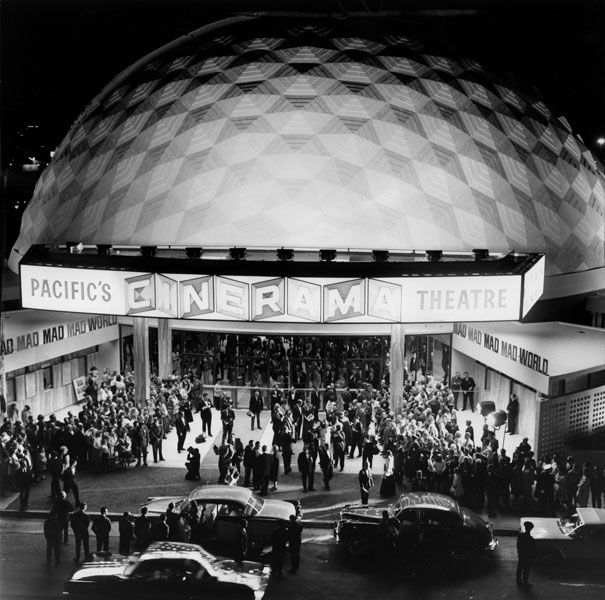
The premiere of It's a Mad, Mad, Mad, Mad World at the Dome in 1963.

The premiere of It’s a Mad, Mad, Mad, Mad World at the Dome in 1963.

Becket’s company was one of the major architectural firms in the city at that time, and played a large part in setting the look and tone of mid-century Los Angeles. To my mind the Dome is something of a companion piece to one of their earlier signature creations, the Capitol Records Building, which is just a few blocks away on Vine. Together these two icons helped to define space age architecture.

Of the theatres that were constructed to show films in the Cinerama process, only a handful are left today. The Dome is a unique creation designed by one of the most important architectural firms in the city’s history. That’s why so many of us got so crazy when we saw the initial plans to renovate it. I will always be grateful to Pacific for listening to the community and preserving the Dome.

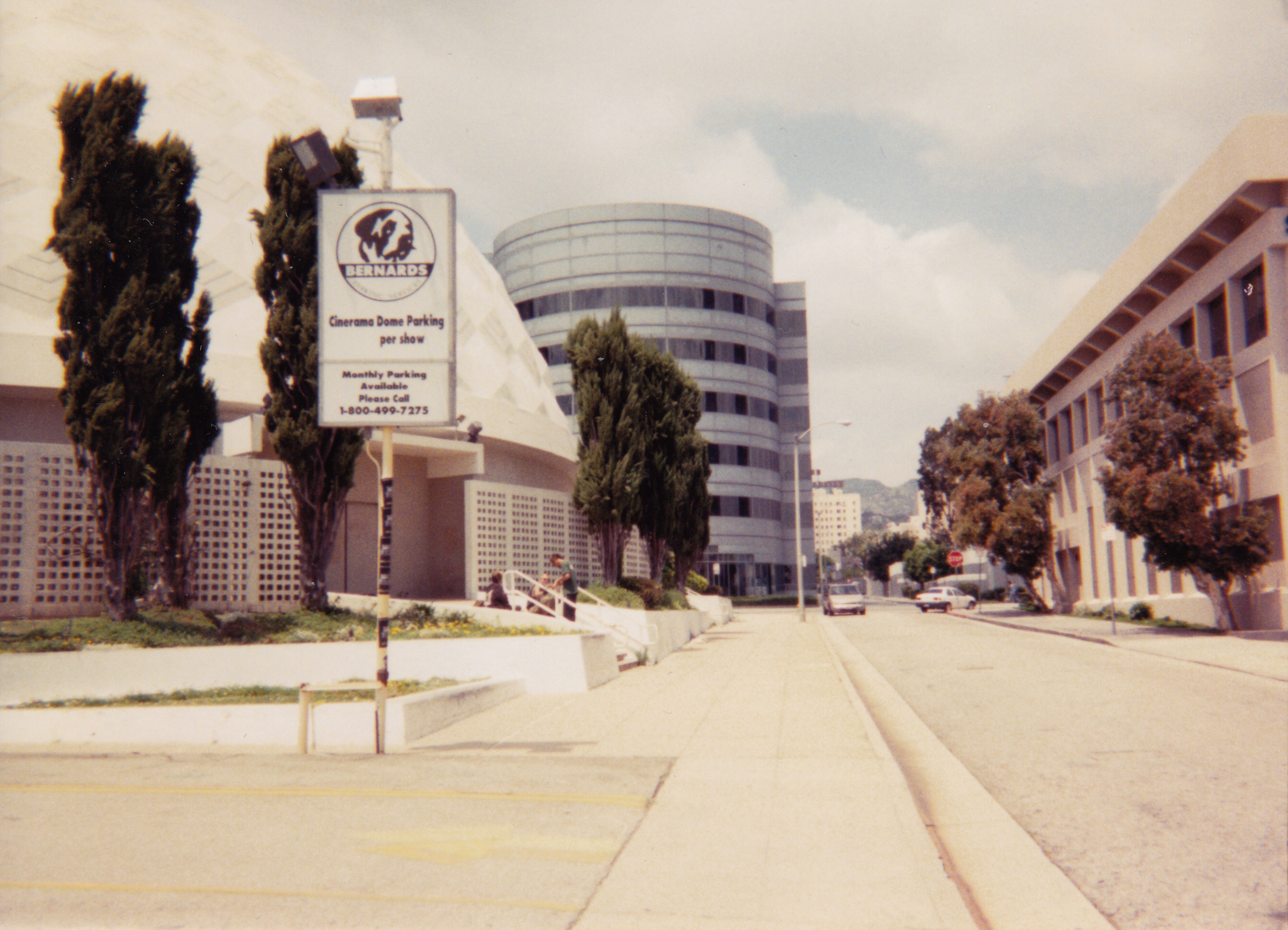
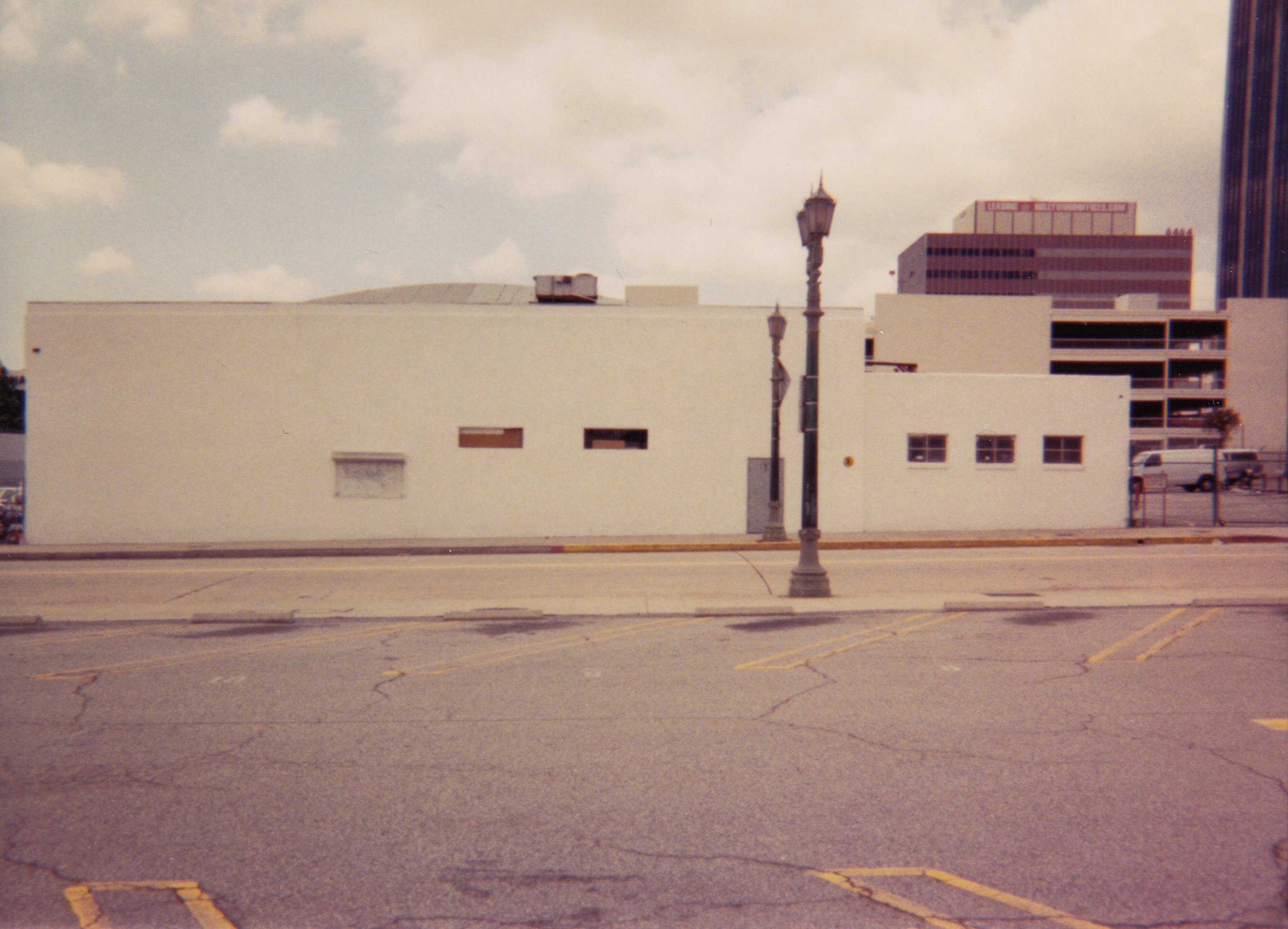
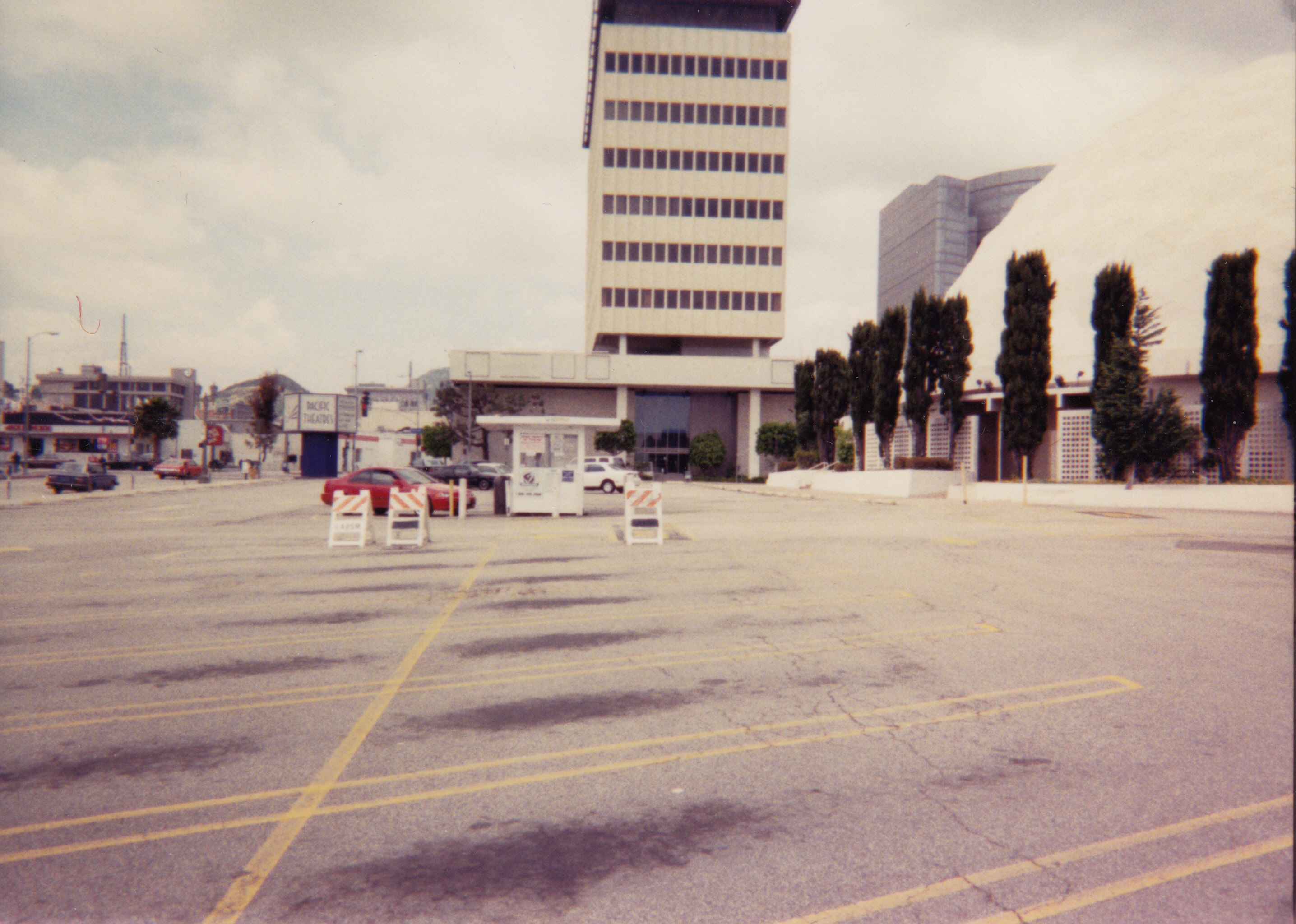
The two pictures above are from the Los Angeles Public Library photo archive. The first shows the dome under construction. It was taken by Howard D. Kelly in 1963. The second shows the premiere of the film that the Dome opened with, It’s a Mad, Mad, Mad, Mad World. It was also taken in 1963, but no photographer is credited. Below are some photos I took of the Dome and the area surrounding it back in 1998. Sorry that the quality isn’t better. They were taken with a disposable camera, and have faded over the years. A couple of photos were taken from Morningside Court, which used to go through to De Longpre, but was closed off with the construction of the Arclight parking structure.

February, Nineteen Ninety Nine

For weeks I’ve been meaning to write abut the latest on the Cinerama Dome. Here it is.

Apparently the people from Pacific Theaters sat down and talked with the preservation people, and the end result was Pacific gave up a lot of the changes they were going to make. As I recall, these are some of the things pacific agreed to.

The entrance will remain at the front of the theatre.

The layout of the seating will stay basically the same, though they will be putting new seats in.

They won’t alter the ceiling of the auditorium.

And —

They’ll keep the curved screen.

I’m actually really grateful to Pacific for giving in on all this stuff. I doubt they understand why the Dome is such a great piece of architecture, so from their point of view the preservationists are going crazy over nothing.

Of course, we still don’t know what the Dome is gonna look like when they’re through. But at this point I’m cautiously optimistic.

The front of the Cinerama Dome in 1998.

The front of the Cinerama Dome in 1998.

Screen walls and landscaping on the periphery of the Dome.

Screen walls and landscaping on the periphery of the Dome.

A shot from the parking lot, looking north to Sunset.

A shot from the parking lot, looking north to Sunset.

A shot of Morningside Court, looking toward Sunset.

A shot of Morningside Court, looking toward Sunset.

Another shot of Morningside Court, this time looking in the opposite direction towards De Longpre.

Another shot of Morningside Court, this time looking in the opposite direction towards De Longpre.

This was taken from the parking lot behind the Dome, facing west.  The site just across the street is where Amoeba now stands.

This was taken from the parking lot behind the Dome, facing west. The site just across the street is where Amoeba now stands.

This shot was taken facing the opposite direction, now looking across the parking lot towards Morningside Court.

This shot was taken facing the opposite direction, now looking across the parking lot towards Morningside Court.

Transformations

TW 00 GW Campus

Around the middle of the twentieth century, over a period of decades, the LA County Flood Control District did their damnedest to encase most of the city’s waterways in concrete. Apparently it seemed like a good idea at the time. From our contemporary perspective, it looks like a colossal mistake. But what can we do? We don’t have the means to break up the hundreds of miles of concrete that were poured back in the last century. So we’re doing what we can, getting behind small projects that we hope will eventually have a cumulative impact.

I’ve lived in LA all my life, and it still amazes me how little I know about this city. The Tujunga Wash runs from the San Gabriel Mountains, across the San Fernando Valley and feeds into the LA River around Studio City. Recently I started paying attention to the stretch that runs along Coldwater Canyon between Burbank and Oxnard. What I found was pretty interesting.

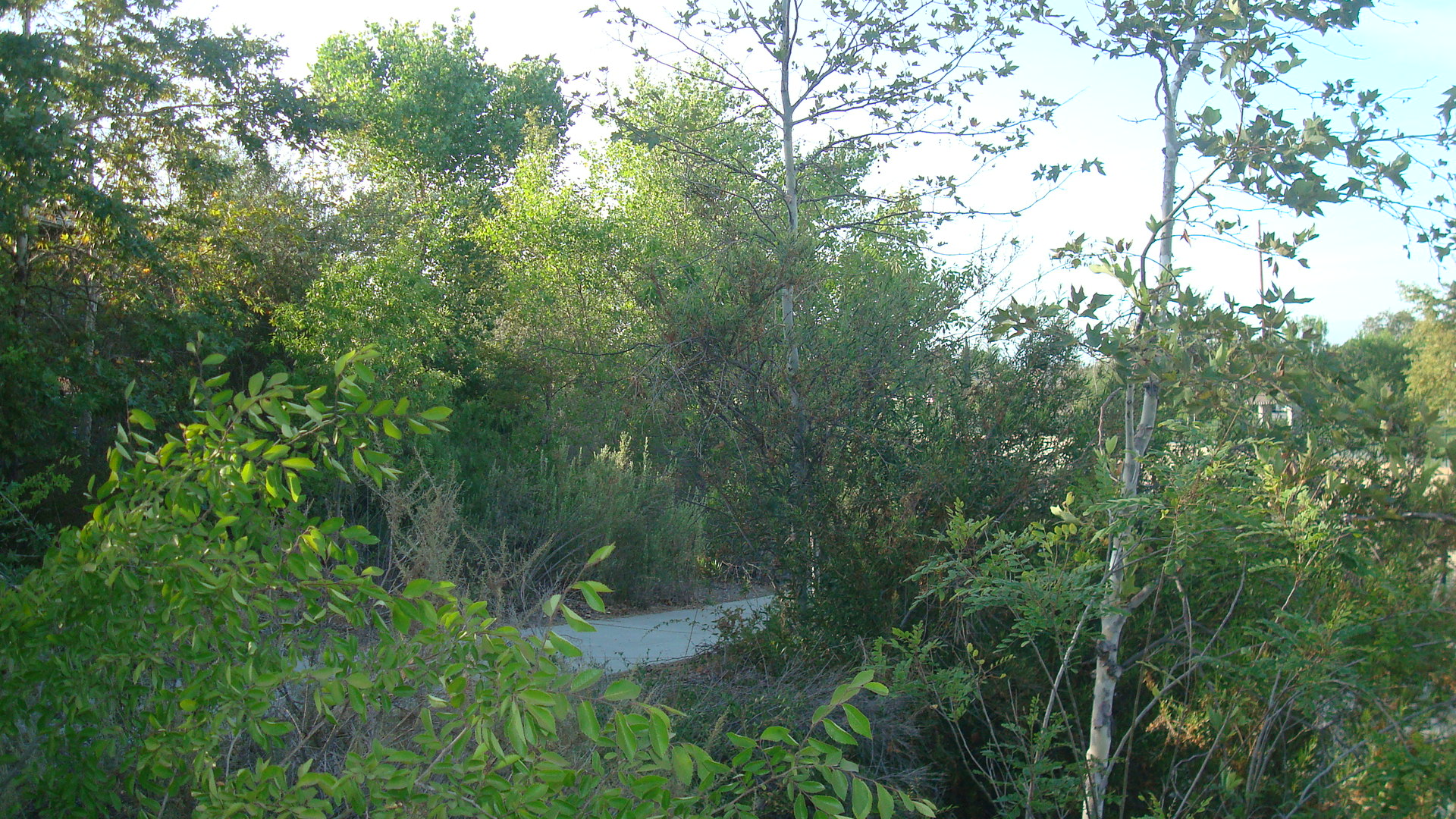
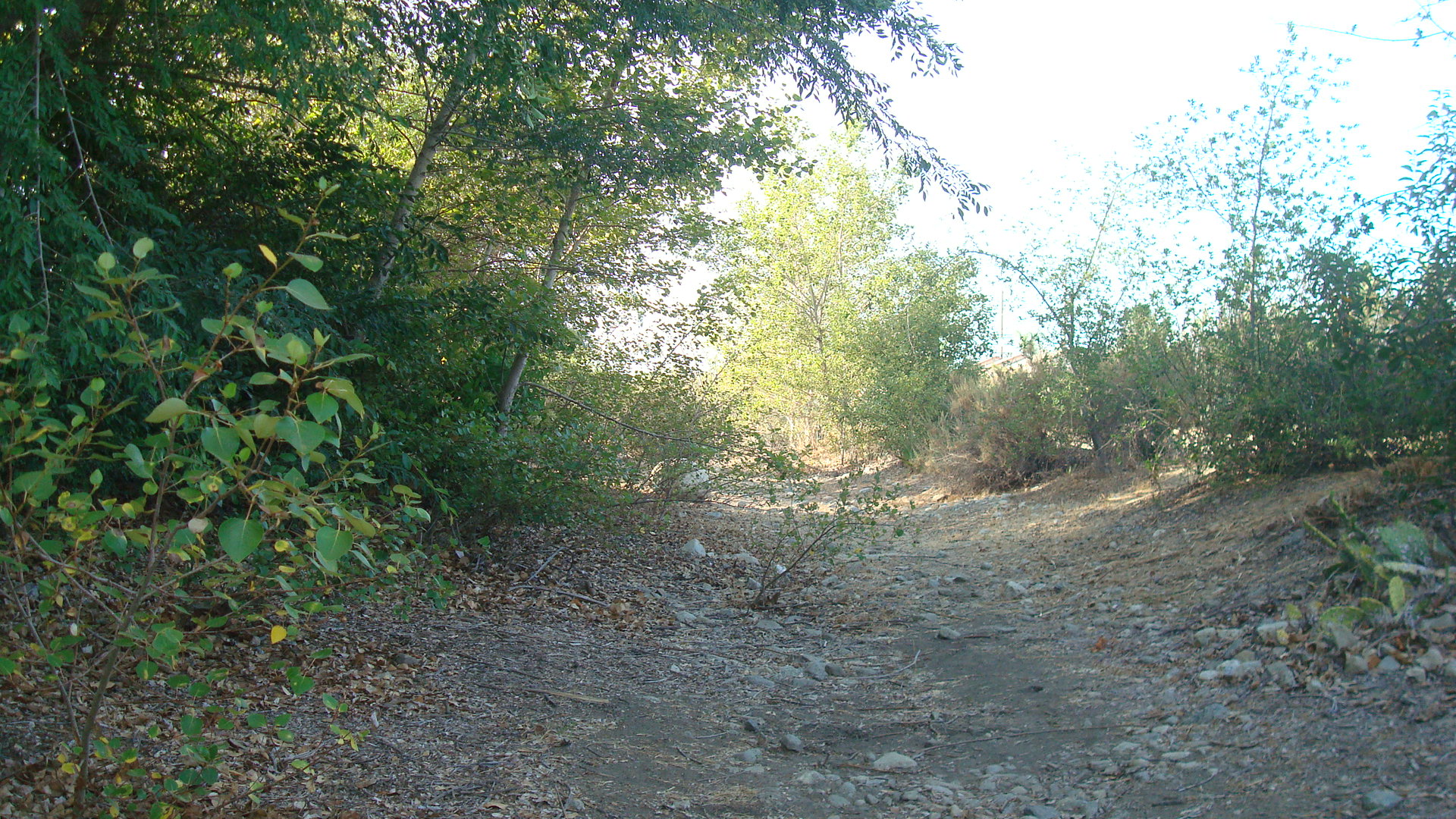
Above Oxnard, I found the Tujunga Wash Greenway and Stream Restoration Project. What used to be a drab stretch of land running alongside a drab stretch of concrete has been transformed into a lush green walkway which helps to replenish our groundwater.

TW 02 Green

For a better explanation than I could give, click on this link to a page at the Landscape Architecture Foundation. They also provide before and after pictures to give you a sense of how dramatic the change has been.

Tujunga Wash Greenway

TW 04 Green Bed

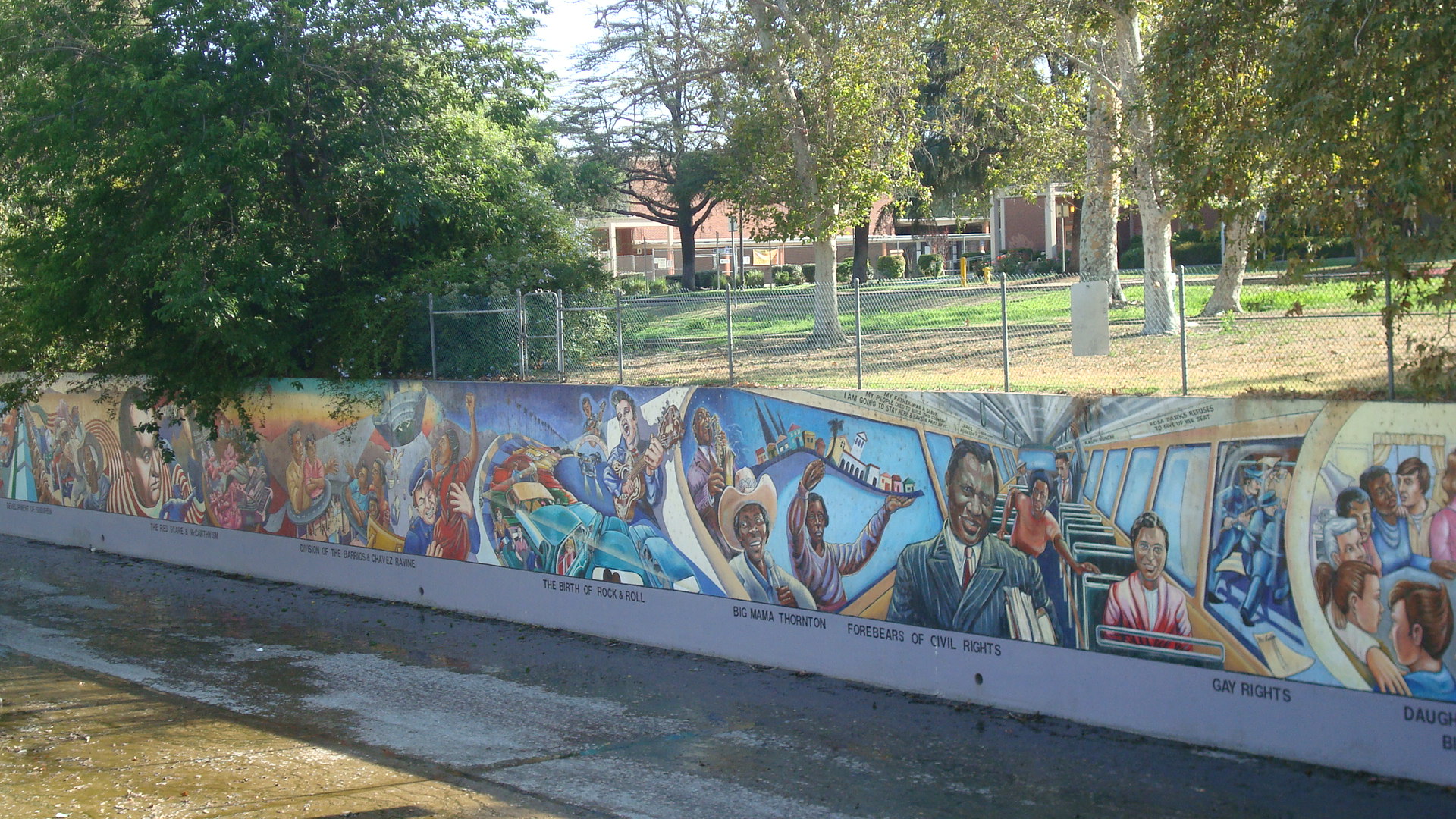
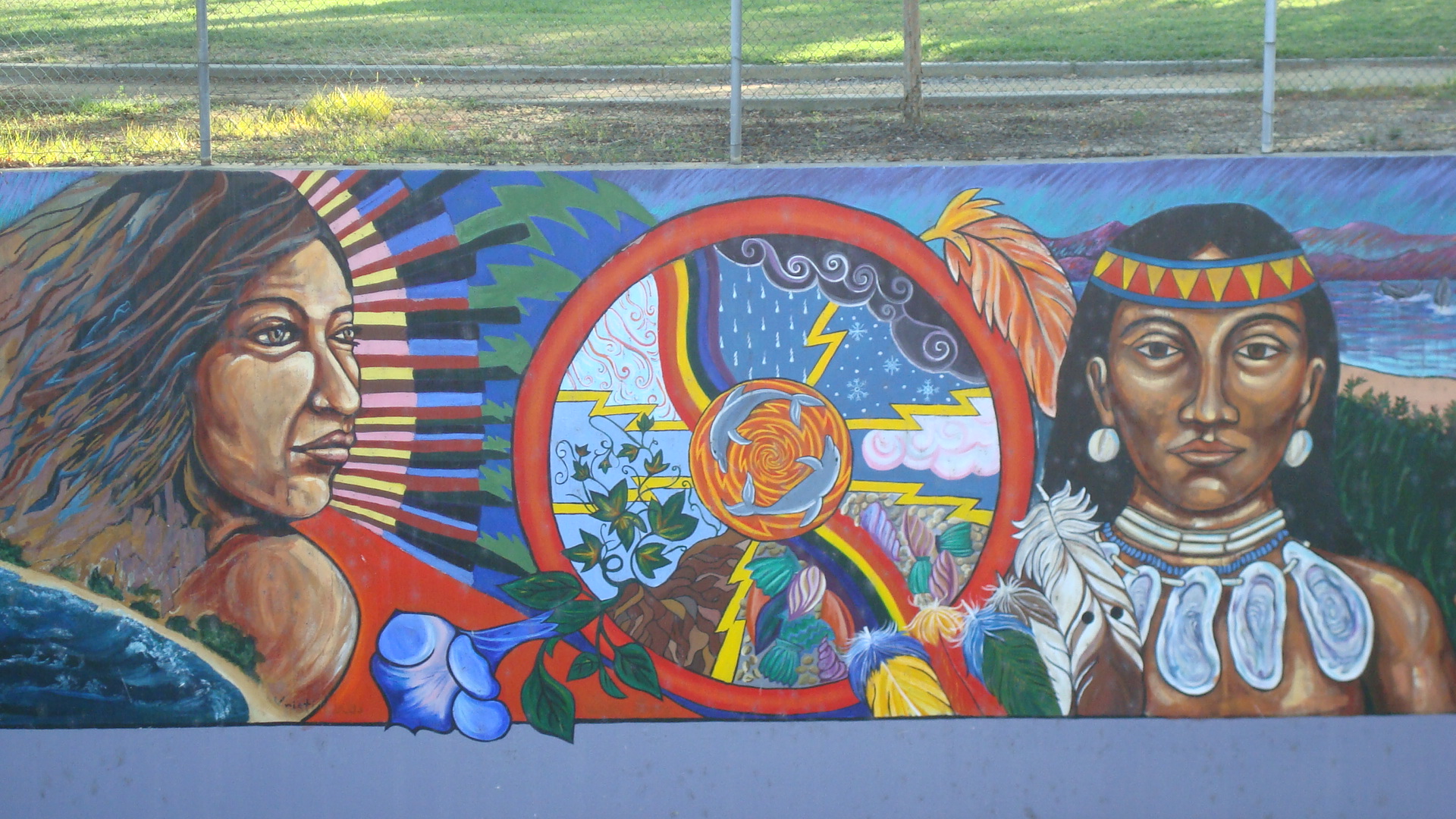
Below Oxnard, I found the Great Wall of Los Angeles. This is a massive, amazing public art project which presents a history of Los Angeles starting with the first people who lived in the area and ending in the fifties. The project is the brainchild of Judy Baca, founder of the Social and Public Art Resource Center (SPARC). It was begun in the seventies, with over 400 young people and their families working over five summers to create the mural that currently covers a half mile of concrete inside the Tujunga Wash.

The mural starts with images of the Chumash Indians.

TW 06 GW Chum

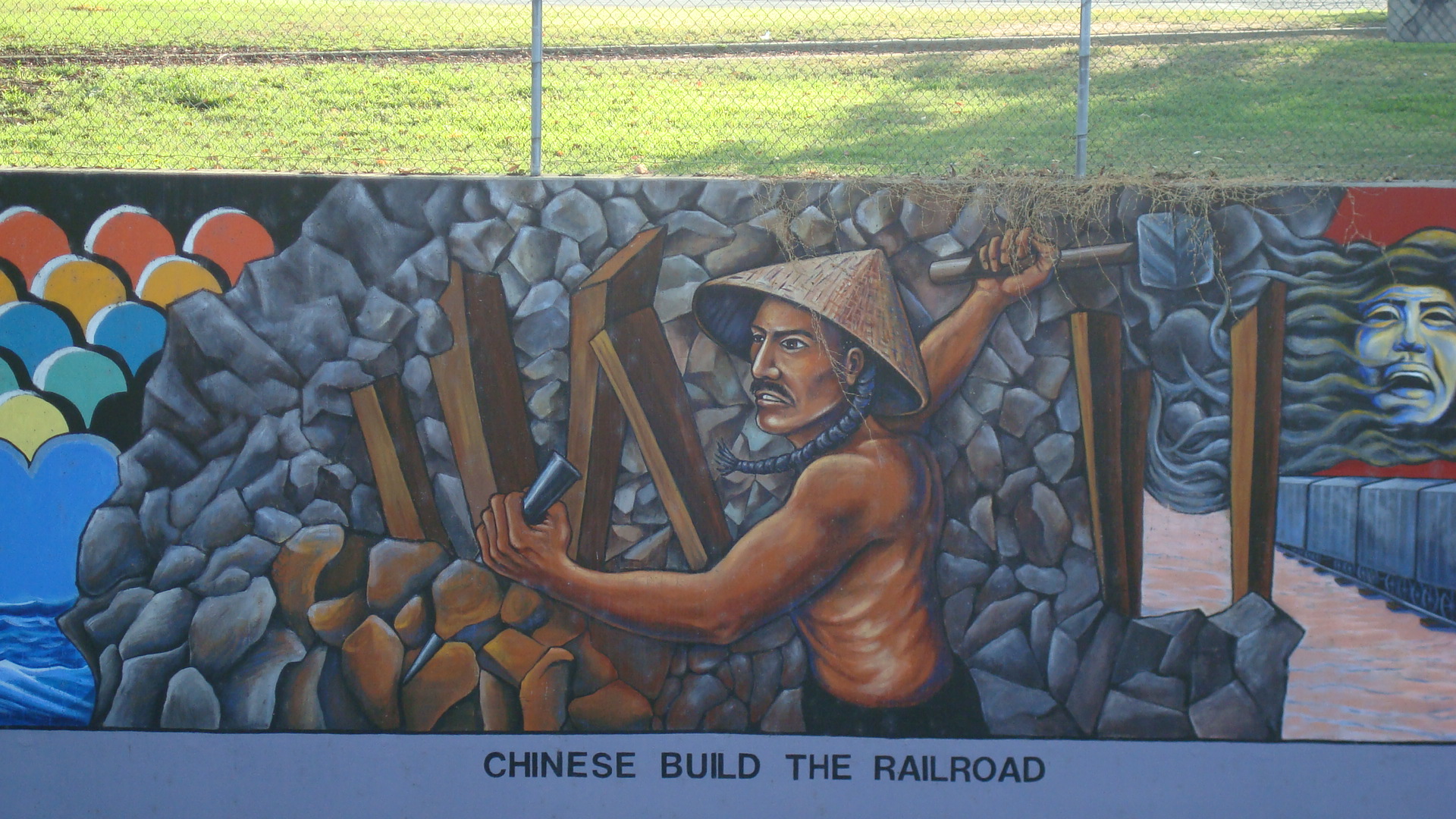
It covers the construction of the the massive projects that helped build the city, like the railroads….

TW 07 GW Chin

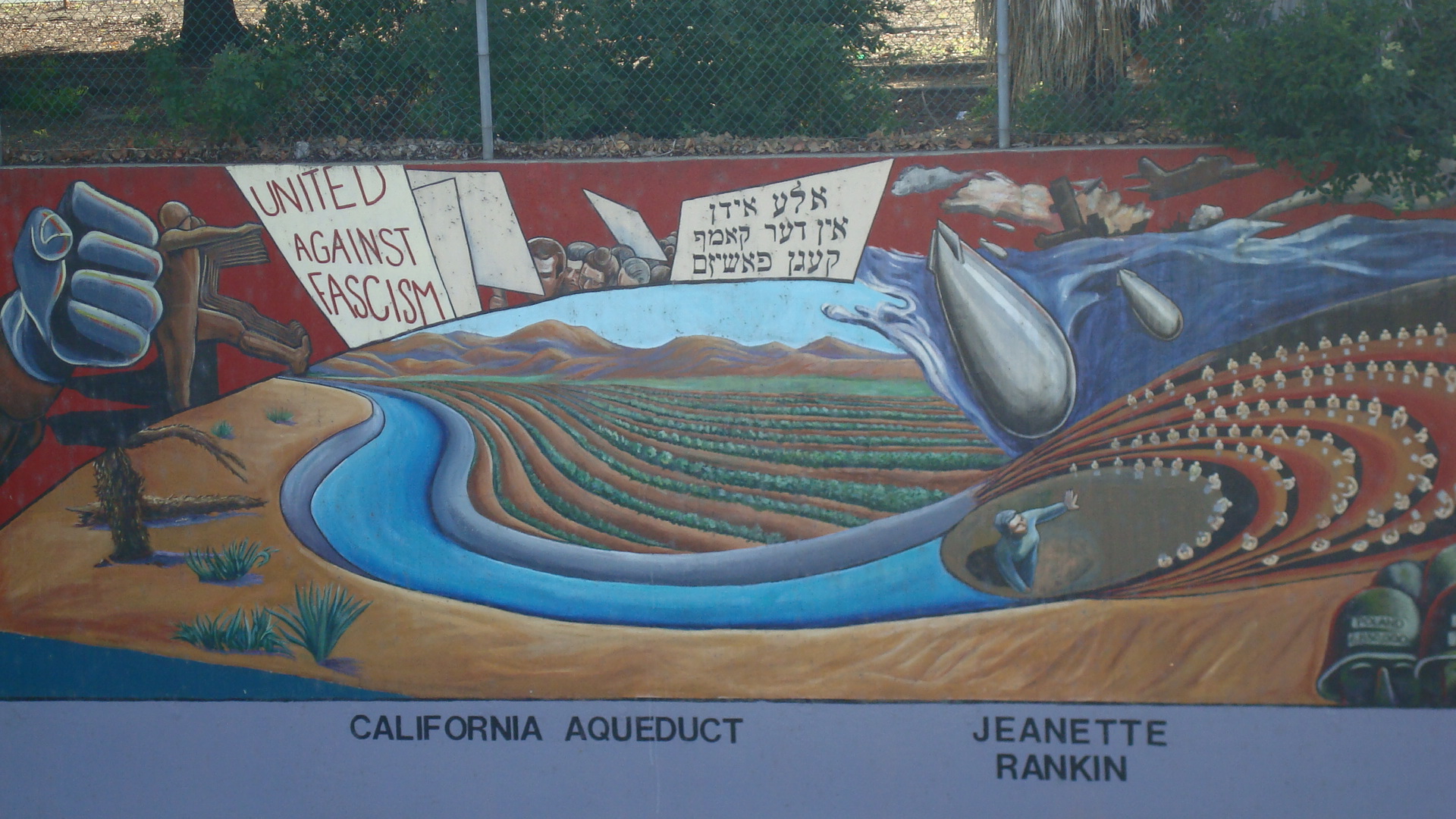
….and the aqueduct.

TW 09 GW Aque

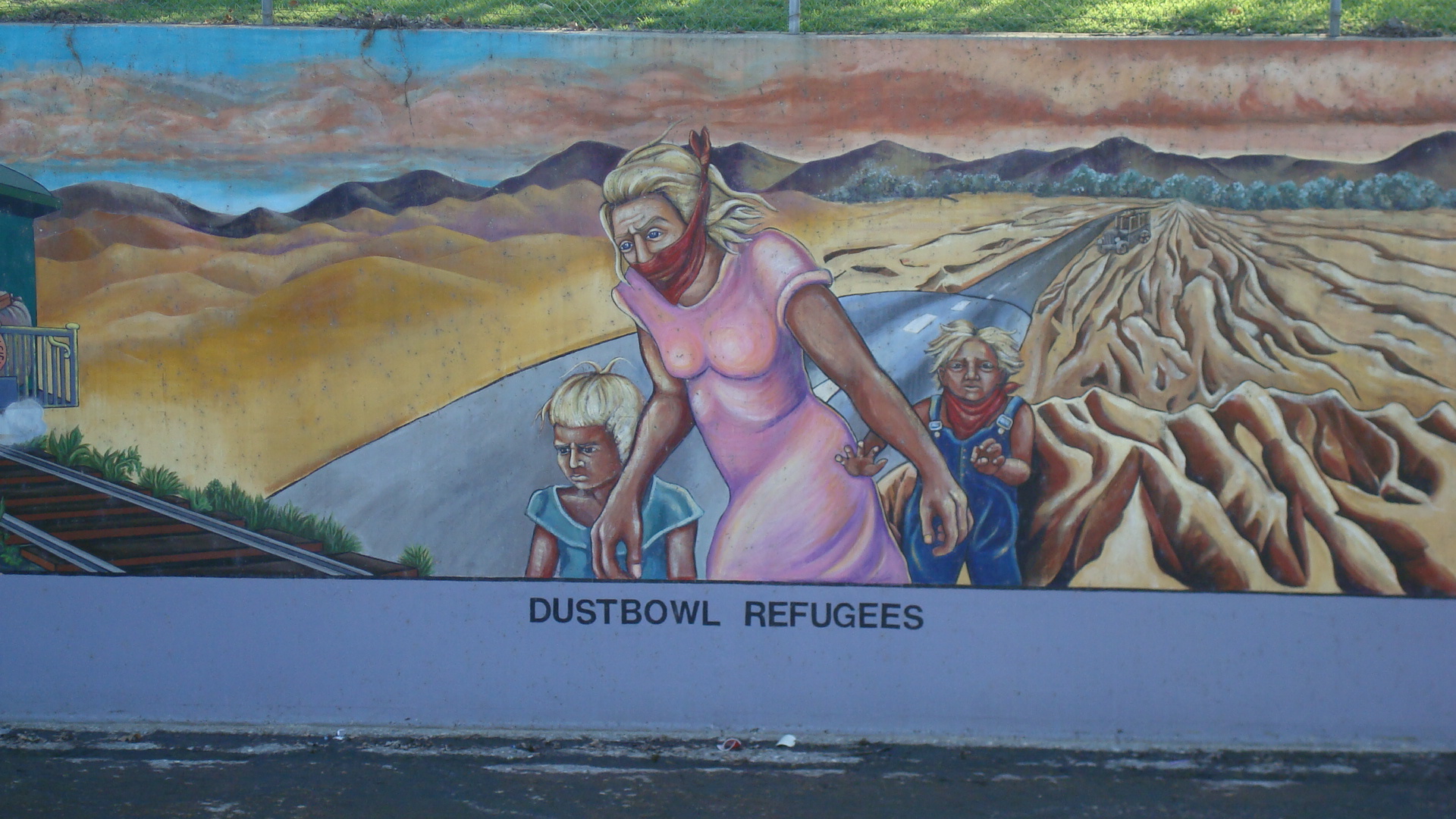
It illustrates the multiple waves of migration the populated the area.

TW 09a GW Dust Big

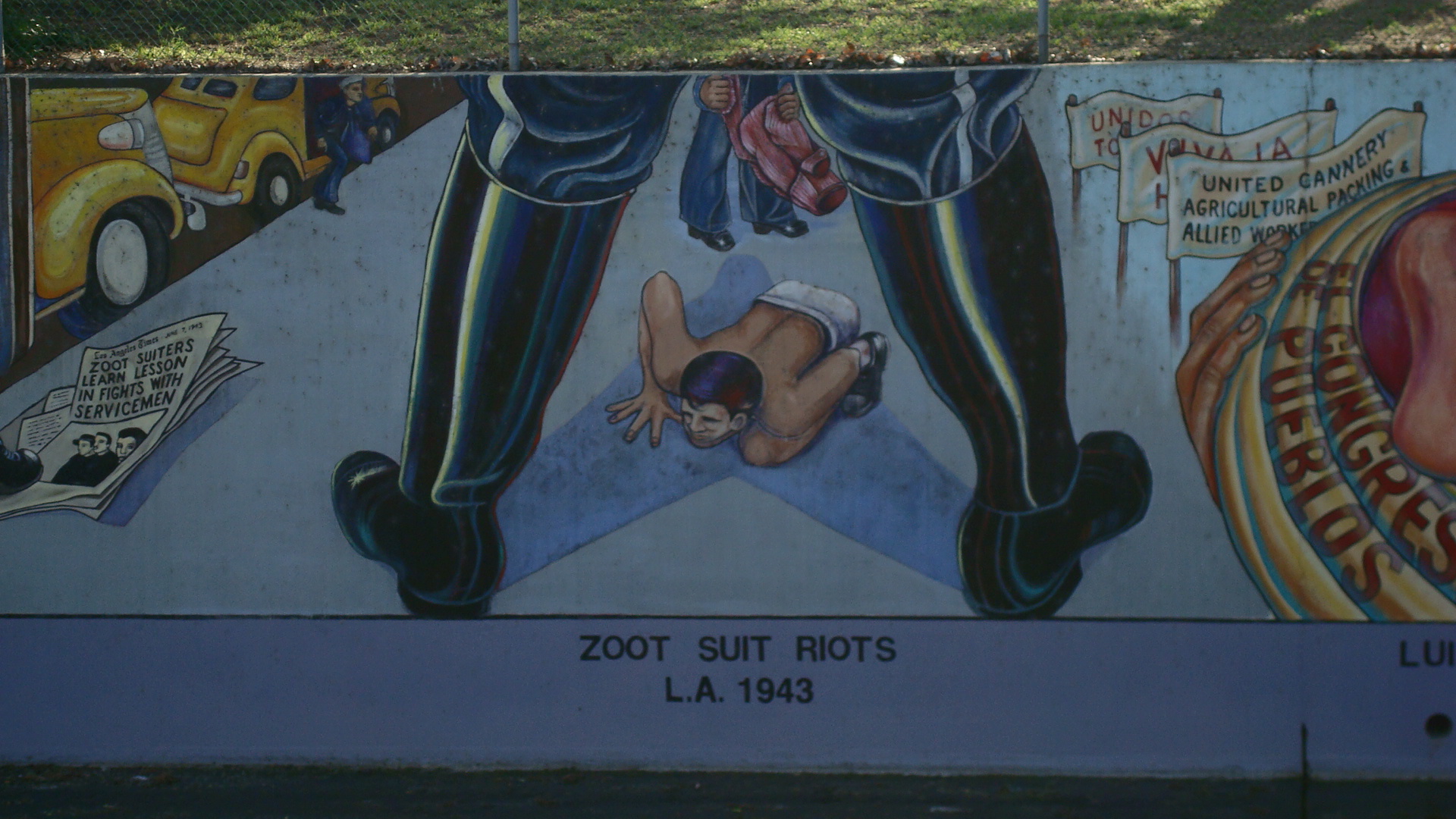
There are images of the traumatic upheavals that shaped LA.

TW GW Zoot

It takes us through the baby boom….

TW 11 GW BB

….and the beginnings of rock n’ roll.

TW 12 GW  R&R

There are plans to paint another four decades, which would bring the project up to the end of the twentieth century. For more information, and to find out how to donate, visit SPARC’s web site.

The Great Wall of Los Angeles

You won’t find much water in the Tujunga Wash these days. But you will find some other things that are worth checking out.

What Price Water?

LAR Headworks

A few months ago a friend and I were going down Forest Lawn Drive near Griffith Park. While she drove I was gazing out the window, and I was surprised to see a huge construction site spread out across the bed of the LA River. I hadn’t heard anything about a project planned for that area, and at first I was alarmed. What the hell were they doing to the river?

LAR Site Hills

After investigating a little, I found out that this was the Headworks Reservoir, and it involves the construction of two huge underground containers which will hold 110 million gallons of water. The idea is that when the project is completed it will provide drinking water to area residents who are now served by the Silverlake reservoir complex. In large part this effort was spurred by new rules handed down by the Environmental Protection Agency. Open reservoirs, like those in the Silverlake complex, are subject to contamination from many different sources. The Headworks project will comply with the new EPA rules and provide safe drinking water for thousands of Angelenos. Aside from improved water quality, the deal includes a 4-megawatt hydroelectric plant to provide more power for the city. And if that’s not enough, once the tanks are completed there are plans to turn the surface area into a park which would include riparian wetlands, bike paths and equestrian trails.

Sound cool? Well, the finished project probably will be pretty nice. The DWP had to find some way to comply with the new EPA standards. And the park/wetlands component will surely be a big improvement over the sterile concrete channel that exists now. But…

There are some questions about the cost of the project and the process that was followed to make it happen. The City of LA initially said the price tag would be $230 million. That figure has now risen to $319 million. Those who follow local news already know that the DWP has been accused more than once of scamming its customers. The fact that the tab for Headworks has gone up almost 40 percent is definitely troubling. There are also questions about why the City chose this option when there were other, cheaper proposals on the table. If you’re a DWP ratepayer, you’ll want to read Jack Humphreville’s breakdown of the project on CityWatch.
Is Headworks Project Another Example of Corruption?

For a general overview of the project, here’s a summary from the DWP.

Headworks Reservoir Fact Sheet

Bottom line, the project is happening. And I do believe it’s a good thing over all. But it bothers me to think that we’re getting ripped off by the DWP once again. I’m glad Garcetti is pushing for an audit of the agency’s shady non-profits, but I’d really like to see a full audit of the DWP. We deserve to know where our money is going.

LAR Concrete Horizon

Hollywood Journal – Relaxing at the Roosevelt

Another visit to the lobby of the Roosevelt Hotel. I used to like hanging out there back in the nineties because the lobby was big and dark and quiet. It was a great place to chill, in large part because it was usually pretty empty. Since then it’s been remodelled, and they’ve managed to attract a young, hip crowd, so the place is a little more lively these days. I’m glad they’re doing more business, but I spend less time there now.

The photos were taken recently, and while the lobby is substantially the same, it has changed some in the past fifteen years. And as I’ve mentioned before, in transcribing these entries from my journal I’ve left the errors alone. The correct spelling for the name of the hotel is “Roosevelt”.

January, Nineteen Ninety Nine

Today I was on Hollywood Boulevard. I think it was around four o’ clock. And I decided to go to the Rooseveldt. Have a beer. Kick back. It’s been a while since I stopped in there.

The lobby was pretty empty. I walked up to the bar. Ordered a beer. Then strolled over to the table by the piano and sank into a big, soft chair.

It was so nice. So quiet. I sat there looking at the patterns on the ceiling. I finished my beer and thought, what the hell, why not have another.

Rsvt Chand

The guy comes in to play the piano. I ask him if he knows any Mancini. He says not a lot. I mention Charade. No dice. He throws out a few titles. Pink Panther. Baby Elephant Walk. I’m disappointed but I settle for The Pink Panther.

There are quite a few people in the lobby by now. A man with a cell phone sitting across the table from me. At the next table over a woman reading a paperback. And there are a couple of guys sitting to my left. One of them is talking about Barry Fitzgerald. He’s trying to name movies Fitzgerald was in. The man with the cell phone jumps into the conversation. He offers Going My Way. Then he says Ten Little Indians. I want to correct him, he’s thinking of And Then There Were None. But these days I’m reluctant to start chatting with strangers.

So they go on talking. The guy who was going on about Barry Fitzgerald says he works in movies. I think he said either as an actor or a stunt man. The guy with the cell phone says he’s a producer. In the exchange that follows I’m obviously not setting down what was said verbatim. I’m just trying to give an outline of the conversation.

The actor (stunt man?) asks,

What did you produce?

The producer answers,

The Buddy Holly Story.

At this point I can’t restrain myself.

You produced The Buddy Holly Story? I say. I liked that movie.

I never thought it’d make any money, the producer says.

What else did you make?

Diner.

That was a cool movie.

Who was in Diner, asks the actor.

Oh, wow, a lot of people. Mickey Rourke.

And Kevin Bacon, says the woman with the paperback.

Now I know there are a lot of people in this town who will claim to have produced, directed, written all sorts of famous films. Who knows if this guy was legit. But I think I was on my third beer by that time and obviously not feeling very skeptical. The guy probably could’ve said he produced Dinner at Eight and I would have believed him.

The conversation moves on to other subjects. Italian food in New Jersey. Mexican food in LA. I ask the pianist for something by Gershwin. He plays Someone to Watch over Me.

I felt pretty good when I left.

Rsvt Chat

Let Them Eat Cake

Last week the Board of the Metropolitan Transportation Authority voted to raise fares. The cost of a monthly pass will go up from $75 to one $100, a thirty percent increase. The cost of a day pass will from $5 to $7, a forty percent increase. This is an outrageous example of a clueless elite making decisions with no regard for the needs of the population they’re serving. Citing the MTA’s own data, the LA Times reports that over 90 percent of riders are low income, and 80 percent make an average of less than $20,000 a year.

Supervisor Gloria Molina

Supervisor Gloria Molina

The Board projects a $36,000,000 deficit next year. They say that if they don’t raise fares they’ll be forced to lay off 1,000 workers or cut 1,000,000 hours of service. I don’t buy it. These are scare tactics. Gloria Molina, the one member to vote against the fare hike, offered a motion to investigate ways to cut the budget in order to stave off the increase. She couldn’t even get someone to second the motion. For more info on the meeting and the rate hike, you can access the MTA’s newsletter by clicking here.

It’s true that other cities have higher fares, because other cities have a more economically diverse ridership. In New York and San Francisco, a large number of well-paid professionals use mass transit for their daily commute. Not so in LA. The people who use public transit here are mostly on the bottom rung of the economic ladder. Charging them $300 more a year to ride the busses and trains in many cases literally means taking food out of their mouths.

For me personally, shelling out $25 more a month is not a huge sacrifice. I prefer to take public transit, and I don’t mind paying a little more. And up until now, I was pleased to see the MTA aggressively expanding the transit network. But now that I see the price tag, my feeling is that they’ve been grossly irresponsible. They embarked on these ambitious plans knowing full well that it would put the MTA in the red, and knowing full well they were going to use that as leverage to raise rates. They’ve obviously forgotten who they’re serving.

Eight of the Board’s thirteen members are either serving on the LA City Council or the LA County Board of Supervisors. All of these people make around $180,000 a year. In addition, most of them use cars and drivers that are paid for by taxpayers. Why is it that decisions about MTA fares are made by people who only take the subway when they’re touting some new program or taking part in a ceremony? None of them rides the bus to work. Obviously Molina is the only one who has any concept of who it is she was elected to serve. She’s the only one who seems to care that for a family living below the poverty line, carving $25 a month out of your budget is a real sacrifice. This is going to hurt a lot of families, and the pampered elitists sitting on the MTA Board don’t care.

Mayor Eric Garcetti

Mayor Eric Garcetti

And speaking of pampered elitists, let’s talk about Eric Garcetti. It should be obvious by now that Garcetti doesn’t give a damn about anyone who hasn’t made a campaign contribution. He has a bold vision for an exciting new LA, full of skyscrapers and wine bars, boutique hotels and high-end clubs. And he’ll bend over backwards to keep his wealthy developer buddies happy, handing out tax breaks and giving them great deals on city-owned land. But he can’t even support affordable fares for the vast majority of MTA riders who really need them.

How did this guy get elected?

Braking Is Better Than Crashing

design by Renzo Piano for the proposed Academy museum

design by Renzo Piano for the proposed Academy museum

I’ve been reading the news about Zoltan Pali’s departure from the AMPAS museum team. There are a lot of ways to look at this. And it’s important to remember that expensive, high-profile projects like this often take longer and cost more than anyone imagined. I think everyone agrees that the ultimate goal, building a museum dedicated to film history in Los Angeles, is definitely worthwhile. I’m anxious to see it completed, but I also want to them to do it right. I certainly don’t have any credentials that would give me special insight into this process, but I do have a few thoughts to offer….

Renzo Piano is a great architect. With buildings for the Centre Pompidou, the Menil Collection and the Zentrum Paul Klee on his resume, everybody seems to agree that he’s a good choice for the project. But even great architects are human, and therefore fallible. I read this morning that some Academy staff members are concerned about unresolved problems with the design of the new theatre. Movie theatres are technically complex structures that present a very specific set of challenges. No doubt Piano is aware of this, but is he going to bow to the experts who actually have experience in this area?

I used to work at MOCA on Grand Ave.. Isozaki is another great architect, and the building is a beautiful and complex creation. But I was friends with one of the preparators at MOCA, and he was very critical of the design. Sure, he would say, it’s a gorgeous building, but it wasn’t properly planned as an exhibition space. He cited a number of problems with the design that made his job difficult. According to my friend, Isozaki didn’t take enough time to understand the specific challenges of creating an exhibition space. Piano needs to listen to the experts in designing the theatre. Whatever his vision as an architect, it has to function as a place for audiences to see and hear movies.

May Company store on Wilshire, photo by Anne Laskey from LAPL archives

May Company store on Wilshire, photo by Anne Laskey from LAPL archives

Some images of Piano’s design were first made public last year, and then views of an updated version were released just recently. Both versions have been criticized. I don’t have a background in architecture, and honestly, it’s hard for me to evaluate renderings. My impression is that Piano has some great ideas, but I can’t say it totally works for me. I wonder though, if rather than finding fault with Piano’s new building, we shouldn’t look harder at the building that exists on the site already. Many people praise the May Co. building, designed back in the thirties by A. C. Martin. I don’t share their enthusiasm. I love the building because it is an iconic part of the LA landscape. It occupies the corner at Wilshire and Fairfax with a lot of authority, and the gold cylinder rising above the intersection gives it a great presence. But in terms of design, I don’t think it’s very impressive. It’s a big, bland box. Piano is obviously trying for a dramatic contrast with this new addition. Unfortunately, I think starting the project with the May Co. building is like starting the project with an anchor around your neck. I’m glad the Academy wants to use it, because it’s been sitting vacant for years, but Piano faces a real challenge coming up with a design that incorporates it successfully.

The Times ran a piece yesterday by their architecture critic, Christopher Hawthorne. He argues that the Academy needs to slow down and make sure this project is done right. I couldn’t agree more. Their public position is that everything’s going great and there’s no reason to reassess the timeline. Nobody’s buying it. Whatever the reason for Pali’s departure, it obviously signals a change of direction.

Rather than pretending everything’s hunky dory and pushing ahead, they need to pause and take stock of the situation. Why rush to break ground this year if the design isn’t right? I’m so glad the Academy is building this museum, but I also really want it to be something special.

A few links for those of you who want to read further. First is Hawthorne’s piece for the Times. Next a post that ran on Arch Daily back when Piano’s original design was made public in April of last year. And finally an article from the Hollywood Reporter that includes quotes from anonymous sources within the Academy. If these quotes give an accurate picture of what’s going on, there is good reason to be concerned about the viability of the project.

LA Times Commentary

Motion Picture Academy Unveils Designs

Academy Museum Architect Exits Amid Tension