Trying to Keep a Roof Over Their Heads

Protesters on Crenshaw Blvd.

Protesters on Crenshaw Blvd.

I was riding the bus along Crenshaw yesterday, when I saw a group of people gathered in front of a building holding banners and signs that read “Stop Evictions” and “Defend Affordable Housing”. I wanted to know what was going on, so I hopped off the bus at the next stop and walked back to check it out.

The protest was being held in front of the the apartment building at 1625 Crenshaw, and many of people involved were tenants there. Last December they’d been told they had 90 days to get out. Seems the owner has decided to kick everybody out in order to turn the building into high-end housing. Since it isn’t covered by the Ellis Act, the landlord is under no obligation to offer money for relocation.
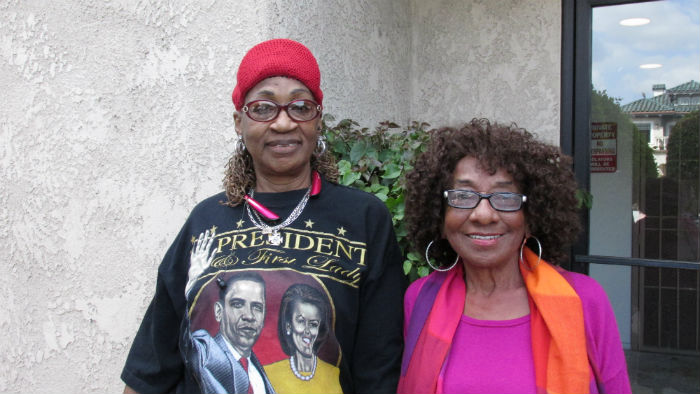
Ms. Bannister and Frances Bell

Ms. Bannister and Frances Bell

I talked to Frances Bell, who’s been a tenant there for 22 years. Because she pays market rate for her apartment, she’s been given additional time to leave, but she hasn’t yet found a new place to live. Moving can be expensive, and covering the cost herself is a hardship. There’s a sad irony to Frances’ story, because she works for the Department of Mental Health. One of the things she does as part of her job is help people relocate when they’ve been forced out of their home. Little did she know she’d one day be in the same predicament as her clients at the DMH.

Mark Simon

Mark Simon

I was surprised to run into a friend of mine, Mark Simon, who was holding up one of the banners. Mark lives in Hollywood, and he had told me a while ago that his landlord was trying to evict all the tenants in his building. They’ve been fighting it in court, and have managed to delay the process, but they’ll have to leave in January of next year unless something changes.

Walt Senterfitt

Walt Senterfitt

Then I talked to Walt Senterfitt, who lives in Los Feliz. He’s dealing with the same thing at his building, and to fight the evictions he’s helped organize the Rodney Drive Tenant Association. He feels that renters need to band together in order to push back. In recent years, thousands of Angelenos have been forced out of their apartments as landlords decide to pursue wealtheir tenants. It’s hardly surprising that the homeless population has increased sharply if you look at the all the people who have been evicted so that owners can jack up rents.

Hopefully the passage last year of AB 2222 will put a stop to this trend. But it won’t help any of the people I spoke to yesterday, because their landlords started the process before the bill was signed into law. Rents are skyrocketting across the city, and tenants in rent-controlled buildings will have a hell of a time finding a new home for a comparable price. It’s especially hard for seniors who are living on a fixed income.

Here’s the link for the Rodney Drive Tenant Association, if you want to get in touch with them.

RDTA

And if you believe that the LA City Council needs to take action to create more affordable housing, send them an e-mail and let them know how you feel.

LA City Council

Blocking Progress

The Reseda Theater

The Reseda Theater

The Reseda Theater has been sitting vacant for over 25 years. Built it 1948, it was part of a small business district clustered around the intersection of Reseda Blvd. and Sherman Way. As the suburbs grew in the years after WWII, neighborhood theatres like this popped up all over the Valley, showing inexpensive double features and drawing crowds of kids on weekends with matinees.

Those days are long gone. The Reseda closed in 1988, and suffered damage in the 1994 Northridge quake. Community members spent years trying to make something happen at the site, and in 2008 it looked like their efforts might pay off. The Community Redevelopment Agency (CRA) announced a public-private partnership with developer CIM, and each of them purchased additional parcels near the theatre. The idea was that The Reseda would be reopened as a dinner theatre, hosting different kinds of entertainment. The additional parcels would be used to further revitalize the neighborhood.

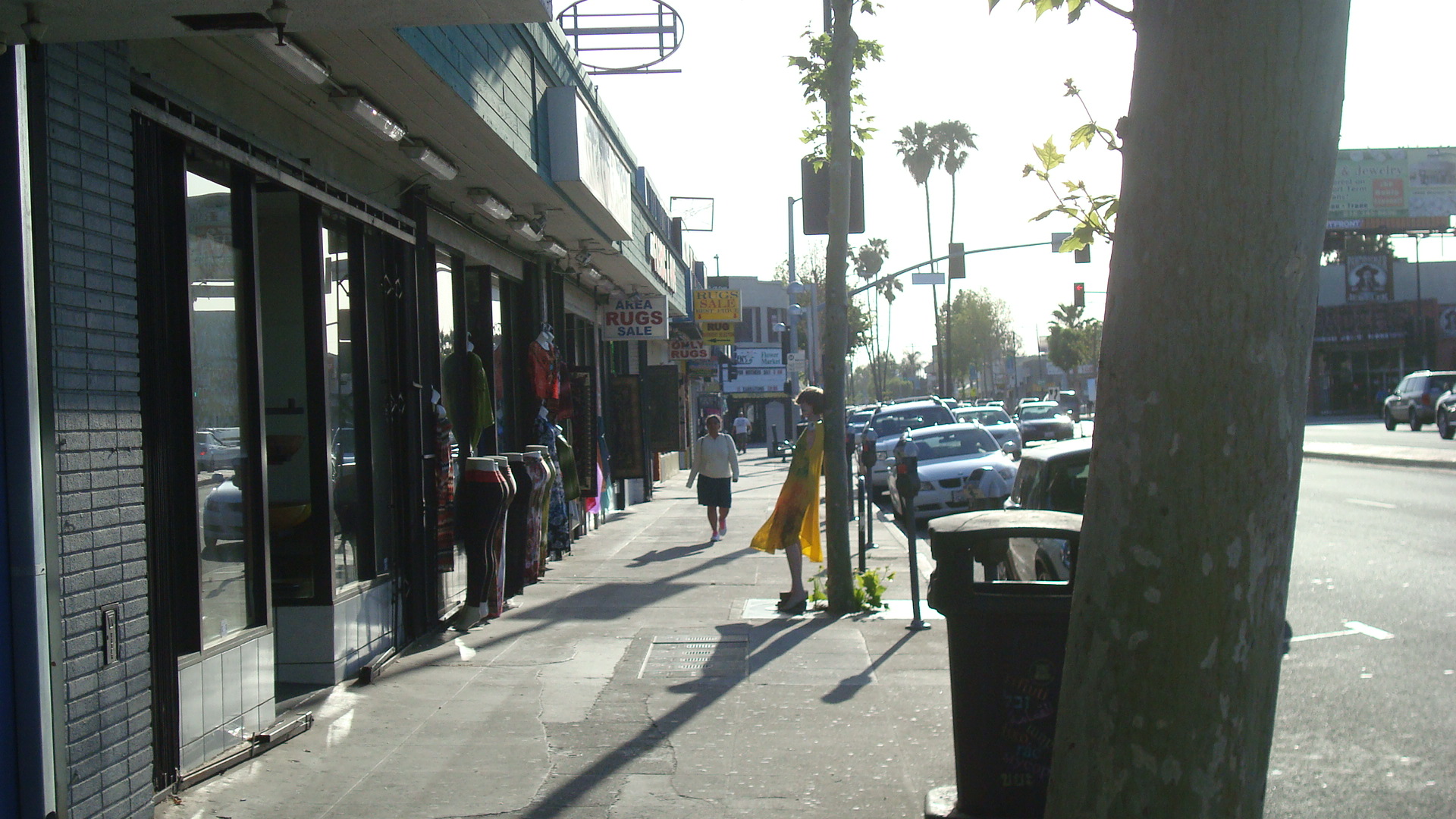
A row of shops directly opposite the theater

A row of shops directly opposite the theater

But that never happened. In an article that appeared in CityWatch last week, former LA City Councilmember Dennis Zine laid the blame squarely on CIM. Zine claims that after raising the community’s hopes, the developer never followed through. Instead, CIM has been sitting on their parcels for years, with no intention of developing them. According to Zine, their plan is to sell the parcels to the City at a profit.

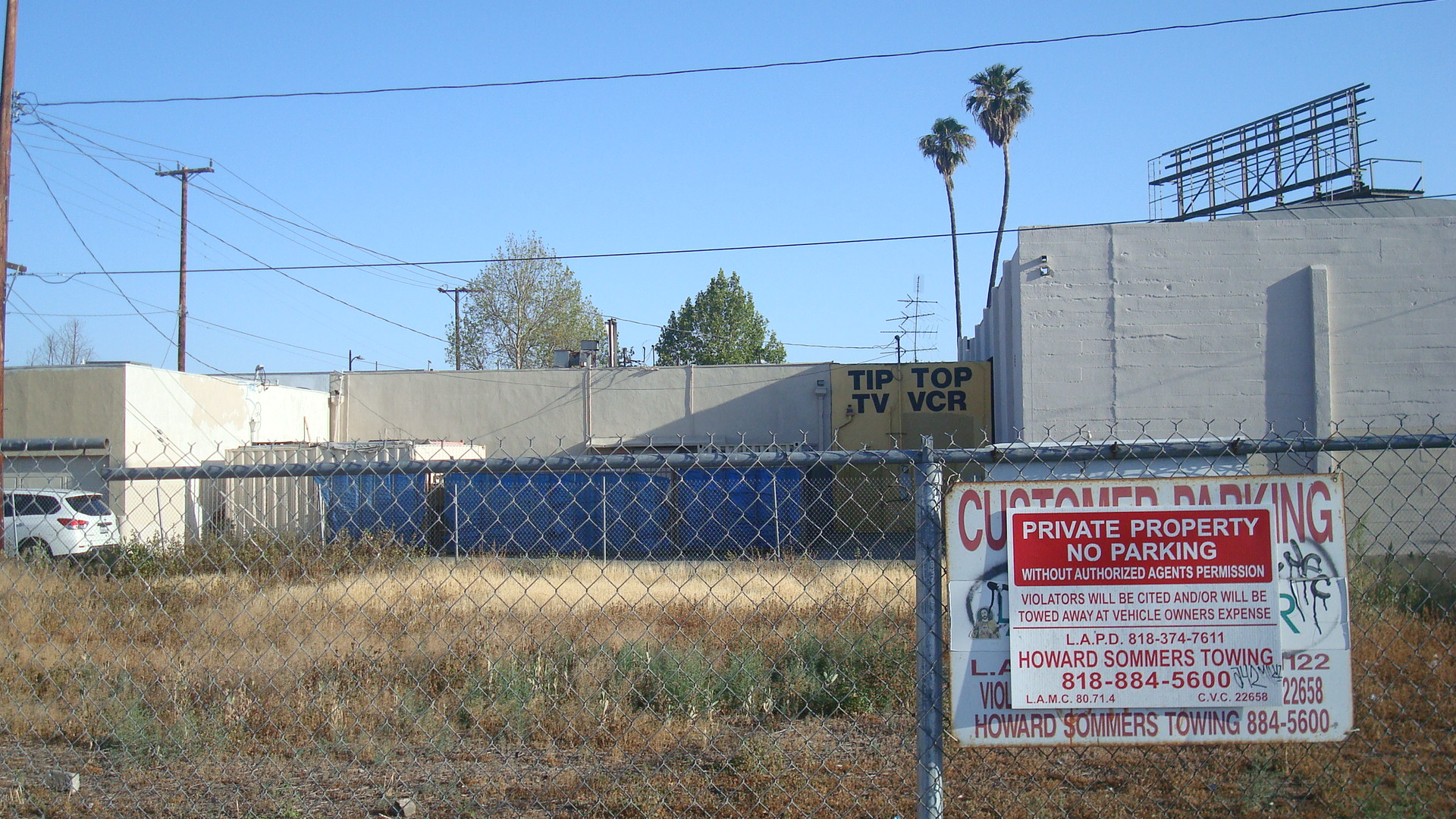
Vacant lot directly behind the theater

Vacant lot directly behind the theater

After reading Zine’s piece, I wanted to get more details, so I contacted Revitalize Reseda, a non-profit formed by community members who hope to inject some life into the area. The response I got from Walt Sweeney pretty much echoed what Zine had to say. “CIM was not a good business partner in Reseda,” he writes. “By stalling the project, CIM eventually ran into funding problems. The recession was the final nail in the coffin.” Sweeney says that CIM has received offers on their parcels that would have allowed them to sell out at a profit, but have decided instead to sit on the properties, to the detriment of the neighborhood. “Even though CIM has the expertise, money, and manpower, I would rather see anyone else develop this project. CIM has shown itself to not be a good community partner.”

Sounds pretty frustrated. And who can blame him? There’s substantial support in the community to bring this neighborhood back, but there’s no hope as long as the developer hangs on to these properties. If CIM doesn’t want to do anything with the parcels, they should sell them off. As it is, they’re just holding the community back.

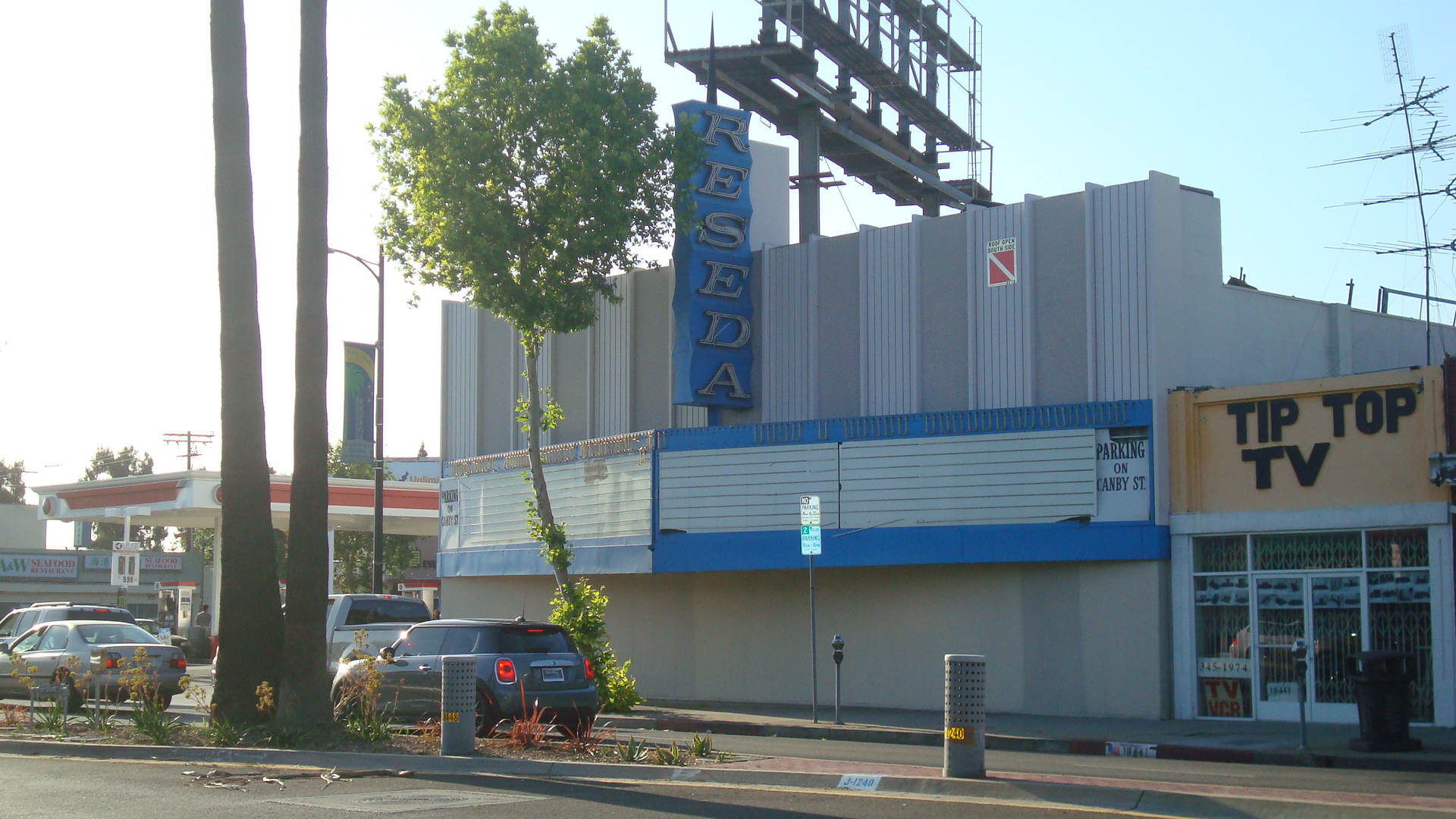
The marquee of The Reseda Theater

The marquee of The Reseda Theater

If you want to read Dennis Zine’s piece in CityWatch, here’s the link.

Development in LA Is Out of Control

And if you want to connect with Revitalize Reseda, click on the link below.

Revitalize Reseda

Another view of the shops opposite the theater

Another view of the shops opposite the theater

Why Do We Have So Many Homeless?

A tent settlement in Downtown LA

A tent settlement in Downtown LA

By now it’s clear to anyone who’s paying attention that the homeless population in LA is growing. Not only is Skid Row more crowded than ever, but we’re seeing people living on the streets in communities all over the county. Burbank is a relatively affluent city, and forty years ago it was unusual to see a homeless person on the street. Now it’s a common sight.

So the article in today’s LA Times about the rise in the homeless population doesn’t come as a big surprise. The number of people living on the streets in LA County has risen 12% since the last count was taken two years ago. The Times article was prompted by a report from the Los Angeles Homeless Services Authority (LAHSA). According to the report, one of the key factors driving people out into the streets is the lack of affordable housing.

The cost of housing in this city is too damn high. A recent study from UCLA’s Luskin School of Public Affairs found that LA is the most unaffordable rental market in the country. While the cost of housing in New York and San Francisco is sky-high, incomes are also significantly higher. Rental units may be cheaper in LA, but the average income is so much lower that it eats up a larger share of the tenant’s paycheck.

And here’s an interesting comment from Paul Ong, one of the authors of the UCLA study.

“During periods of increasing inequality, the burden has grown even more severe,” Ong said. “Vacancy rates have risen only slightly — even dipping at times when the housing burden has increased. And renters are paying more for the same quality housing, suggesting that neither market forces nor changing housing quality fully explain the increasing rents.”

So if market forces aren’t driving prices higher, what is? Could it be greed? Developers are falling all over themselves in the scramble to build high-end housing in this city. But there’s almost no interest in building affordable housing. In fact, we’ve lost thousands of affordable units in recent years. And because the interests of our Mayor and our City Council are so closely aligned with interests of the developers (campaign cash may be a factor), they’ve made no serious attempt to reverse the trend. The fact that the number of homeless has risen by 12% shows that the City’s meager efforts to create affordable housing are not nearly enough.

Anyway, if you haven’t seen the Times article, a link is below. I’m also including the report from the Los Angeles Homeless Services Authority. And if you aren’t totally depressed after reading the first two, there’s a link to a press release that summarizes the findings of the UCLA study.

Homelessness up 12%

Los Angeles Homeless Services Authority

LA Most Unaffordable Rental Market in the Nation

So if you read all this stuff, and feel like you’d like to do something about it, this final link will take you to the Skid Row Housing Trust. These are good people doing good work. They deserve your support.

Skid Row Housing Trust

Erasing Hollywood’s History

A view of 1905 Grace from Grace Ave..

A view of 1905 Grace from Grace Ave..

UPDATE: A time has been set for the meeting to consider this building as a historic landmark. Here are the details:

CULTURAL HERITAGE COMMISSION
SPECIAL MEETING
Tuesday, May 12, 2015, 10:00 am
200 North Spring St.
Room 1050, City Hall

You might also want to take the time to read the comment at the end of this post from John Girodo of Hollywood Heritage. He gives more information about what’s happening.

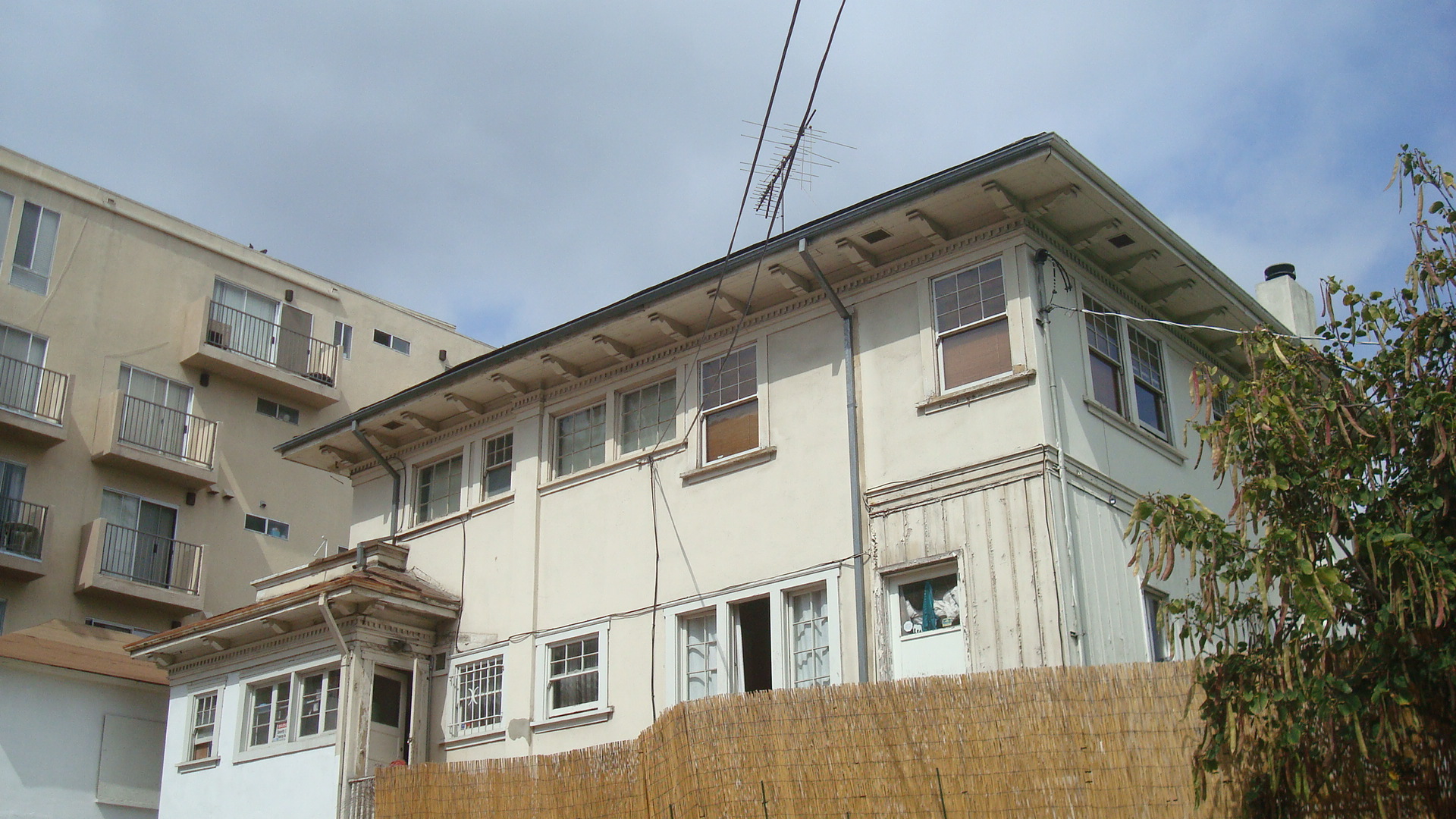
Thursday night I heard some disturbing news. An American Colonial mansion that was built in 1917, located at the corner of Grace and Franklin in Hollywood, is slated for demolition. A developer wants to knock the building down, probably with the intention of constructing high-end residential units.

Hollywood Heritage is trying to have the mansion nominated as a historic monument, but things don’t look good. The Office of Historic Resources will be holding a hearing to consider the nomination, but it’s on such short notice that it will be hard to rally the community. The meeting is scheduled for Tuesday, May 12. The last I heard, the time hasn’t been set.

It seems like the City is trying to rush this through, which doesn’t surprise me given their recent record. In just the last year the City has allowed developers to level the Mole-Richardson Building on La Brea and the Oswald Bartlett House in Los Feliz. Those are just the two most recent casualties of the current wave of development.

Can anybody stop this? I don’t know. It would be great to have a good turnout at the meeting on Tuesday. Hollywood Heritage says people must show up in person to express their views, but it’s hard to plan on attending when the time hasn’t even been set. Hopefully the OHR will nail that down pretty soon. It also might be helpful to find out what CD 4 candidates Carolyn Ramsay and David Ryu have to say about this. They’ve both said they want to preserve Hollywood’s history. Let’s find out if they really mean it.

Carolyn Ramsay

David Ryu

If you can’t make it to the meeting on Tuesday, you might still let the OHR know how you feel about this. The link is below.

Office of Historic Resources

[For an update on 1905 Grace, click here.]

A view of 1905 Grace from Franklin Ave..

A view of 1905 Grace from Franklin Ave..

Who Really Benefits?

Zimas 3

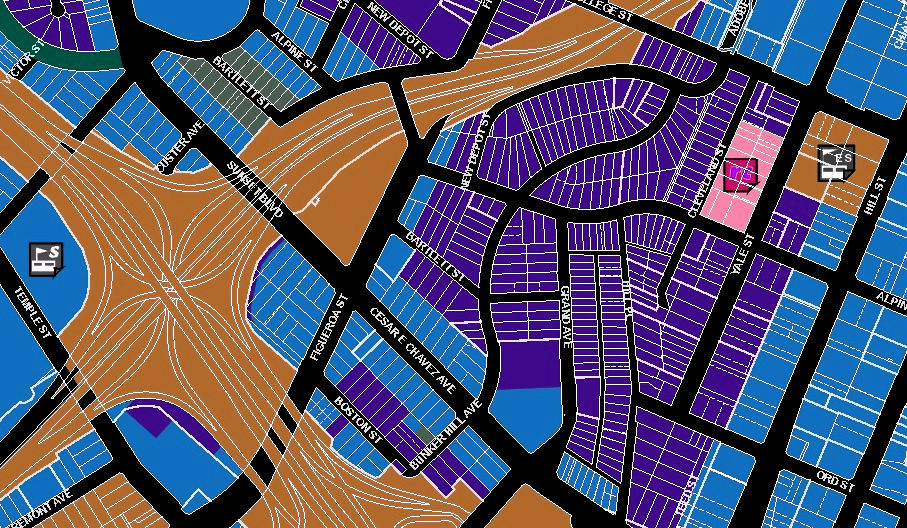
If you haven’t already seen it, I’d like to direct your attention to a piece that Dick Platkin wrote for CityWatch on re:code LA. If don’t know what re:code is, you’re not alone. In spite of our city officials’ claims that they’ve done extensive outreach, I bet less than one percent of the population has heard of it.

Briefly, it’s an attempt to redo the City’s zoning code, and there’s no question that the existing code is hopelessly out of date. The problem is, it seems like the people behind this effort seem more interested in serving developers than serving the people of LA.

But Platkin says it much better than I can. Click on the link below to learn more.

All That Glitters Is Not Gold

A Patch of Green in the Grey

LT X05 Pl Trees

Week before last I went downtown to attend a meeting at City Hall. When I got there, the room was packed. It was hard to even find a seat. The zoning administrators started off with the obligatory preliminaries, which went on for quite a while. I looked around me and realized that there were dozens of people besides me who wanted to speak. I knew I was in for a long, dull morning.

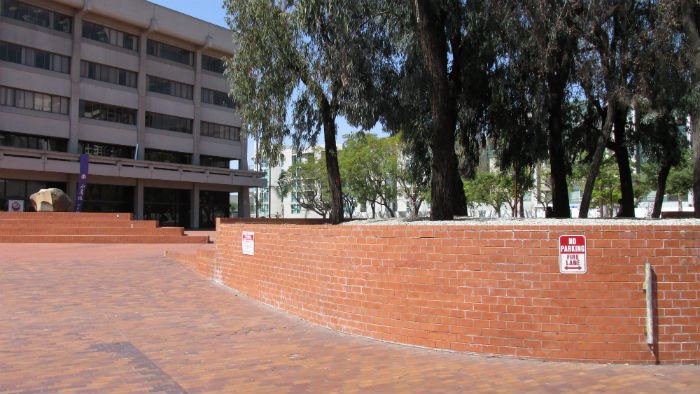
So I split. They didn’t need me, and it seemed crazy to sit there waiting for a chance to talk when I knew there were other people who would cover everything I had to say, and probably say it better than I could. I decided to grab some breakfast and find a quiet place to chill. I got some food and some coffee and headed over to the plaza by the Japanese American Cultural & Community Center (JACCC).

LT X10 Pl Guys

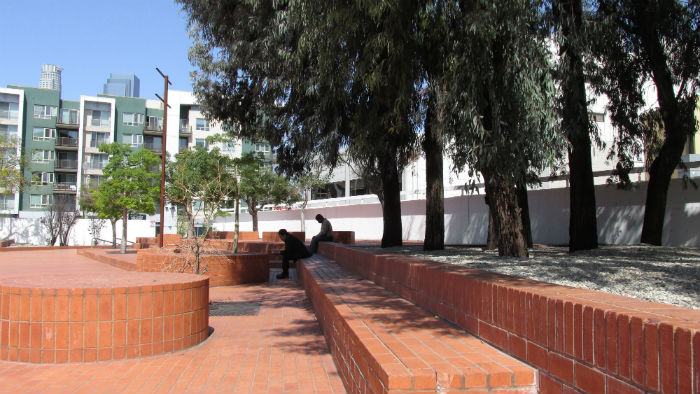
I love to hang out there. It’s spacious and usually pretty peaceful. Unless there’s an event going on, it’s unlikely you’ll find more than a handful of people on the plaza. One side is shaded by tall trees.

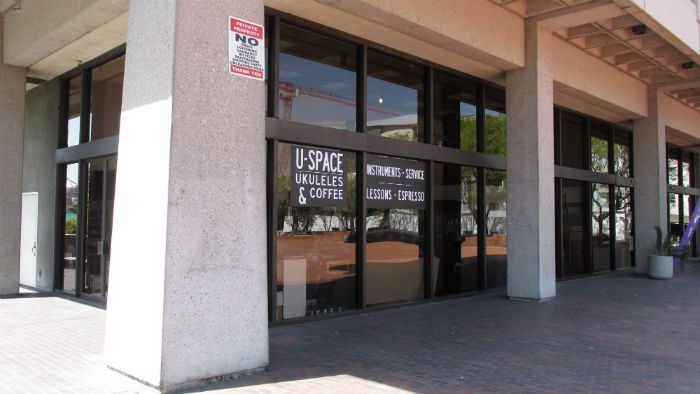
Opposite me I could see people coming and going at the JACCC. They do a lot of interesting programming. They even offer ukulele lessons.*

LT X12 Pl Uk

Take a look at the web site to find out about upcoming events.

JACCC

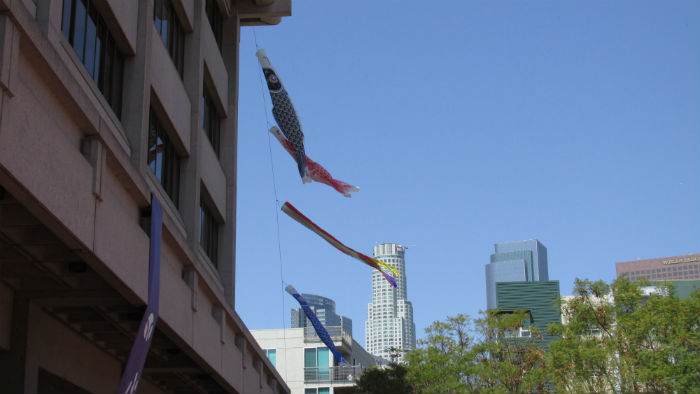
I spent a while looking at the kites on the west side of the building, as they rose and fell with the breeze.

LT X15 Pl Kites

Then I was ready to go. But as I was leaving I saw a grove of trees off to one side. I’d never really noticed them before, so I walked over to take a closer look.

LT X25 Pl Gdn Trees View

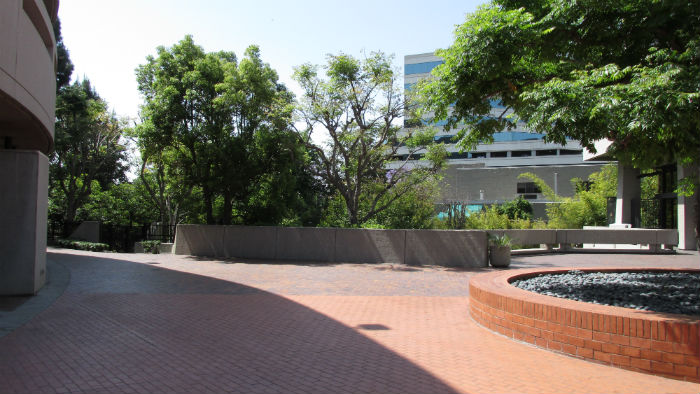
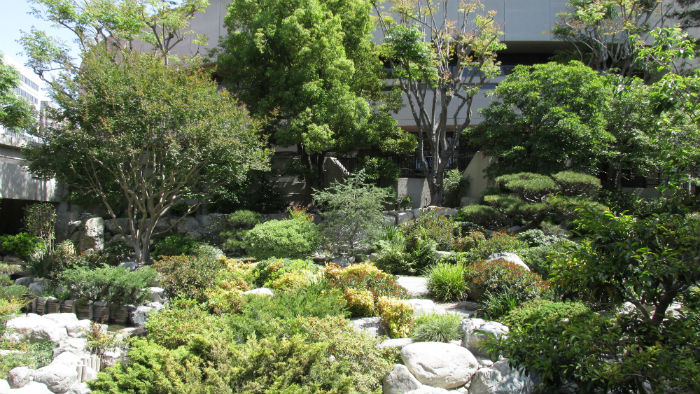
And as I neared the trees, I realized that they were part of a garden that rested just below the level of the plaza.

LT X30 Gdn Wide

As I stood there by the locked gate, an elderly woman walked past and told me that the garden was open to the public. All I had to do was go to the JACCC and sign in. So that’s what I did.

It was so cool to discover this peaceful patch of green in the middle of downtown. I walked around snapping photos and enjoying the quiet.

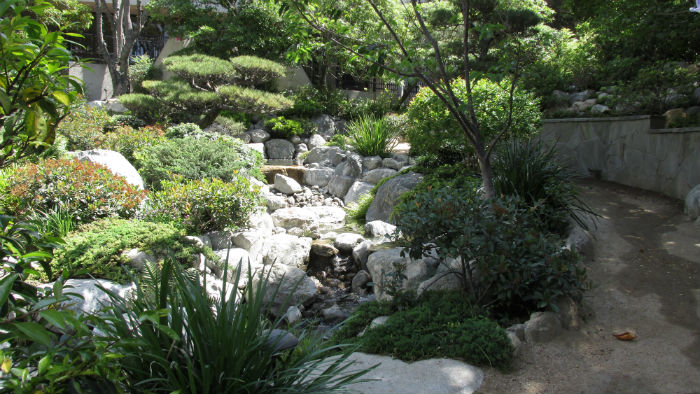
LT X45 Gdn Path

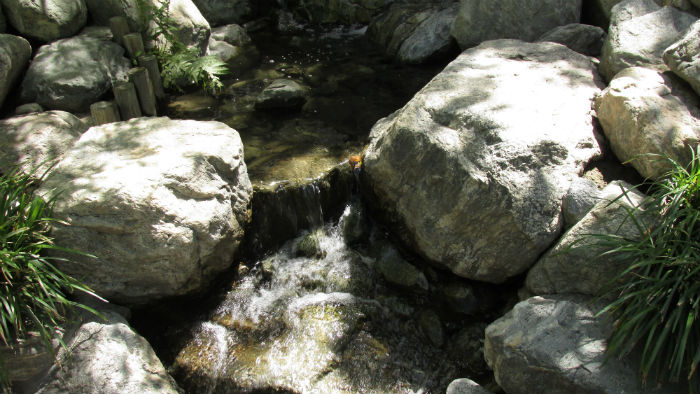
I’m sure the sound of traffic was all around me, but I was more focussed on the sound of the stream that runs through the middle of the garden. I would’ve loved to spend a while just sitting on a rock and gazing into the water. Unfortunately, I had other stuff to do, so I moved on after about fifteen minutes. But I will be back.

LT X50 Gdn Water

*
In surfing the net, I noticed this comment by a woman who’s apparently a regular at the JACCC. “It is ukulele heaven in DTLA.” An amazing claim, which I can’t verify. You’ll have to check it out yourself.

Dropping in at Tía Chucha’s

Tía Chucha's

Tía Chucha’s

One of the blogs I try to check in with on a regular basis is I Am San Fernando, which covers the East San Fernando Valley. That’s where I found out about Tía Chucha’s, a bookstore and cultural center located in Sylmar. I’ve been meaning to check it out for a while, and yesterday I finally made the trek out there.

It was worth the trip. The first thing that caught my attention was a mural on the side of the building.

Mural in back of Tía Chucha's.

Mural in back of Tía Chucha’s.

The place was kind of quiet when I got there, but it was afternoon, and most of their events take place in the evening. Tía Chucha’s hosts gatherings of musicians and poets, as well as offering a variety of classes. Right away I liked the place’s vibe, both colorful and comfortable. I took a few photos.

Tía Chucha's offers books...

Tía Chucha’s offers books…

...music...

…music…

...and art.

…and art.

I also flipped through a few books, and ended up buying Mahcic by Tomás Riley. I’ve only read a few of the peoms so far, but his work is pretty cool.

Mahcic by Tomás Riley

Mahcic by Tomás Riley

I liked the place so much I even put my name on their mailing list, which is something I rarely do these days, since I’m already overwhlemed by the amount of stuff that shows up in my inbox. But I was impressed with what Tía Chucha’s has to offer, and I’ll definitely be going back.

If you want to check them out yourself, here’s the link.

Tía Chucha’s

Where’s the Water Coming From?

The Palladium, with Columbia Square rising in the background.

The Palladium, with Columbia Square rising in the background.

There’s a hearing at City Hall this Wednesday on a project proposed for the site surrounding the Palladium on Sunset. The project is called Palladium Residences, and there are two ways it could go. Either 731 residential units, or 598 residential units and a 250 room hotel. Both options include 24,000 sq. ft. of retail and restaurant space.

My question is, where is the water for this going to come from? I think by now everybody in LA knows there’s a drought going on. In fact, an extreme drought. Gov. Brown has declared a drought state of emergency and soon the Metropolitan Water District will be cutting deliveries to its Southern California customers, including Los Angeles. Angelenos have already been asked to voluntarily cut their water consumption by 20%, but the move by the MWD means we have no choice.

So let’s look at the Palladium project in this context. How will it impact water usage in the Hollywood area?

First, in its current state, the site needs very little water. Aside from the Palladium, it’s pretty much all parking lot, so unless there’s a show going on, consumption is zero. Whatever the developer builds, it’s going to cause a large increase in water usage. Even if we assume that the project will be built utilizing every water conservation measure imaginable, we’re probably looking at a net increase of between 100 and 200 acre feet per year.

But that’s just looking at the Palladium Residences in isolation. The site is surrounded by a number of other projects that are already under construction. Right next door, we have Columbia Square, which includes 200 residential units, over 400,000 sq. ft. of office space and 30,000 sq. ft. of retail.

Columbia Square

Columbia Square

On the opposite side and just to the north the new Camden is going up, offering 287 rooms.

The Camden

The Camden

Just across the street from that is 1601 Vine, an 8-story office building. Relatively speaking, office space doesn’t require a lot of water, but since the site was previously a parking lot, there will still be a net increase in water use.

1601 Vine

1601 Vine

A couple blocks to the west, the new 182-room Dream Hotel is rising over Selma.

The Dream Hotel

The Dream Hotel

And just beyond that is the Mama Shelter Hotel, with 70 rooms, which will occupy a building that was previously vacant.

Mama Shelter Hotel

Mama Shelter Hotel

Remember, all of these projects are being built on sites that previously consumed little or no water. It’s important to say, too, that all these hotels will have at least two restaurants, and will be hosting banquets, which drives water use way up. So putting all this together, conservatively speaking, we’ll probably see a net usage increase of at least 500 acre feet of water per year.

But wait. There’s more. Aside from the projects I’ve already mentioned, there are around 60 others proposed for the Hollywood area, many of them just as large as the ones listed above. So we’re not just talking about 500 additional acre feet of water per year. We’re talking thousands more. And that’s just Hollywood. If you look at Downtown, you’ll see a similar number of projects, some of them way bigger than anything proposed for Hollywood. There are also plans for major developments for Wilshire Blvd., the Crenshaw District and Boyle Heights.

Does anyone see a problem with this?

I’m not saying we should put a halt to development. But we do need to figure out how much development we can actually support. The DWP says that LA is in fairly good shape in the near term, but they’re only looking a couple of years ahead. Some scientists think this drought could last for several more years. By now everybody who lives in California knows that many of our reservoirs are at less than half of capacity, and the snow pack has shrunk to 6% of what’s normal for spring. The wells in the San Fernando Valley that we used to rely on have become contaminated, and it will take years before they’re cleaned up.

We need to figure out a water budget. First the DWP needs to prepare a realistic estimate of how much water we can rely on for at least the next five years. Then the Department of City Planning needs to make sure they have solid numbers regarding the water that will be consumed by each proposed project. With that information, they can make a cumulative assessment of the impact all these projects will have on our water resources, and prioritize them based on how beneficial they’ll be to the community. Let’s get real. We don’t have the water to build all this stuff. Even if we have supplies to last for the next year or two, these projects will be consuming water for decades, and some scientists believe this drought could get much worse than it already is. We need to know how much water we can realistically count on, and then we need to plan accordingly.

The Mayor has been telling us that we need to cut our water use by 20%, but at the same time he’s pushing this aggressive development agenda which is guaranteed to boost water consumption even as Angelenos are told they need to conserve. And let’s be honest. We haven’t made much progress in cutting our water use. Even with the threat of a massive drought, we’re using about as much water as we always have. So residential towers and high-rise hotels are just pushing us farther into the danger zone.

We need development, but it has to be planned development. If the City of LA wants to grow, it needs to find out first how much water we have, and how much each of these projects is going to consume. Much of the reason we’re in trouble today is that for decades the City allowed massive growth without proper planning. We’ve been sucking up water from all over the Southwest to build a vast metropolis in an area that has very little water of its own. We can’t do that any more. We need to start living within our means.

Another view of The Palladium, now with The Camden construction site in the background.

Another view of The Palladium, now with The Camden construction site in the background.

Midnight at Wilshire and Fairfax

W&F 1 Scaf

Last week I went to one of the screenings in UCLA’s preservation festival. I think I left around eleven, and then caught the bus on Wilshire. I got off at Fairfax, where I have to transfer. It took a while for the next bus to show up, so I took some photos while I was waiting. It seemed like there was a lot of stuff going on….

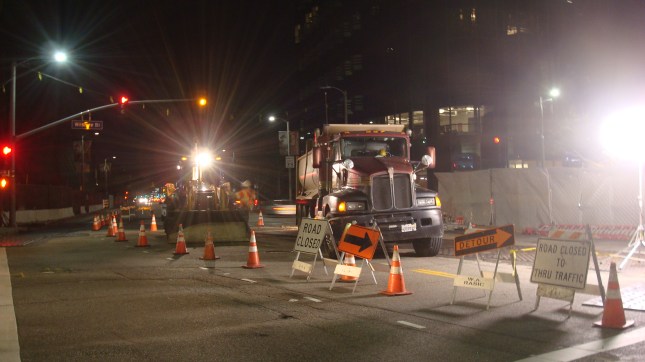
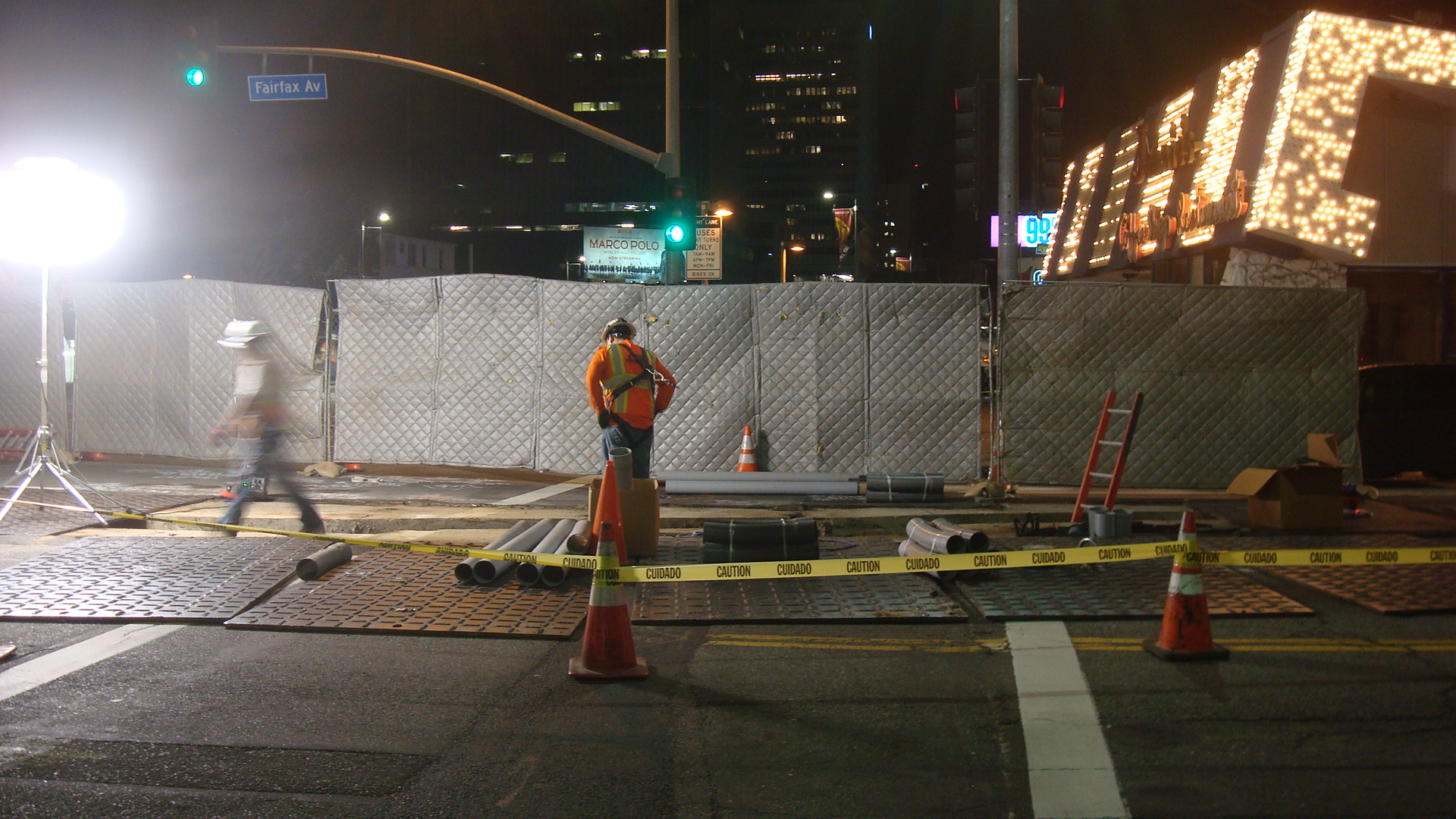
Night time is when the MTA crews show up to work on the Purple Line extension. You don’t see them during the day. Just metal plates lying all over the street. But at night these guys set up their barriers and their lights and go to work.

MTA crews work on the Purple Line at night.

MTA crews work on the Purple Line at night.

Just across the street, the old May Co. building is surrounded by scaffolding. It seems that the Academy is finally starting the process of transforming this dinosaur of a department store into a new museum devoted to film. I have no idea when it’ll be completed, but I’m glad to see that work has begun.

Scaffolding set up on the west side of the May Co. building.

Scaffolding set up on the west side of the May Co. building.

I was standing there on Fairfax snapping photos, when a few runners went speeding past. At first I thought it was just some people who lived in the neighborhood out for some exercise. But then another group ran by, and then another, and then it was a steady stream of people racing down Fairfax. My guess is that a couple hundred people went by, but it could have been more.

Runners stampeding down Fairfax toward Wilshire.

Runners stampeding down Fairfax toward Wilshire.

More runners heading down Fairfax.

More runners heading down Fairfax.

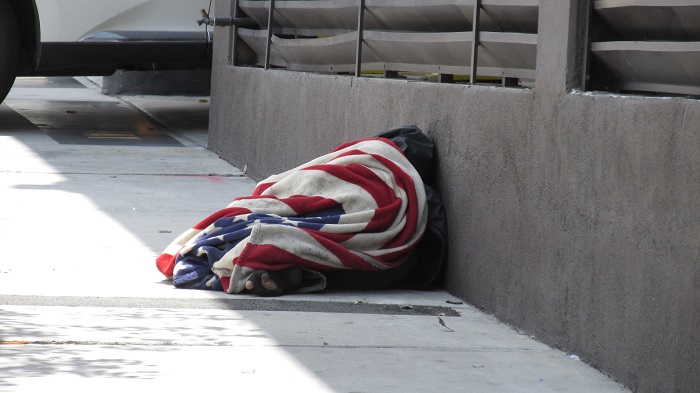
As usual, there was a homeless guy camped out in one of the recessed areas along the side of the May Co. building.

A homeless man taking shelter for the night.

A homeless man taking shelter for the night.

And of course there’s Johnie’s, blazing away in the darkness. The banks of lights that surround the building are slowly going out, but those that are left let you know that this classic coffee shop has not gone away. The place has been closed for years, but the flashing lights seem to be insisting that it’s still open for business. That it’s still alive.

Johnie's refuses to die.

Johnie’s refuses to die.

Putting Lives Back Together

SRHT Main All

LA is suffering from an affordable housing crisis, but there is some good news to celebrate. Thanks to the efforts of the Skid Row Housing Trust (SRHT), formerly homeless people are getting a roof over their heads and a place in the community. The SRHT is using innovative approaches to creating housing in the Downtown area.

Homelessness is a complex problem. It’s not just a matter of giving someone a place to live, because people living on the streets are often struggling with a variety of issues. In the first place, finding a job, which can be tough if you don’t have skills that are currently in demand. Depression, mental illness and substance abuse are also common problems, and these are not solved simply by giving someone the keys to an apartment.

But having a place to live is the first step. And the SRHT offers assistance to people grappling with other issues by creating permanent supportive housing. This means that the residents living in these communities have access to counseling, job training, health care and other services in order to get their life back on track.

The SRHT has been working on two new projects in Downtown. First, let’s take a look at the Star Apartments….

SRHT Star Frnt

The Star Apartments are located near the corner of Sixth and Wall. The project was designed by Michael Maltzan Architecture, and they used an interesting approach. The site was occupied by a one-story building, which they wanted to expand to create more units. The solution they hit on was stacking pre-fab cubes on top of the original structure, which in addition to being fast and economical, resulted in a striking piece of design.

SRHT Star Sky 1

You can read more on Maltzan’s web site.

Star Apartments

Next, check out the New Pershing Apartments at Fifth and Main. This project actually combines two structures, the Pershing Hotel and the Roma Hotel, built in 1889 and 1905, respectively. The new design, by Killefer Flammang Architects, preserves original elements of the exterior. In addition to the residential units, the New Pershing will also offer a courtyard, two recreation decks and planters for gardening.

First let’s look at a couple of shots taken while the project was under construction, back in October of 2014. The first was taken from the corner of Fifth and Main.

SRHT Main Const 1

This next photo was taken on Main, directly across from the building.

SRHT Main Const 2

Now let’s look at the finished project.

SRHT Main Frnt

And another shot from Fifth and Main.

SRHT Main Full

Here’s the article that the Downtown News ran on the New Pershing earlier this month.

A Victorian Victory

You can find more information about the SRHT’s activities by visiting their web page. And if you want to support their efforts, I’m sure a donation would be welcome.

Skid Row Housing Trust