Fire Season

Fire 05 Red Sun

Saturday morning I went outside while it was still dark. As I walked past an overhead light I looked up and saw a stream of tiny particles drifting down to the ground. It was ash. I knew there was a fire somewhere.

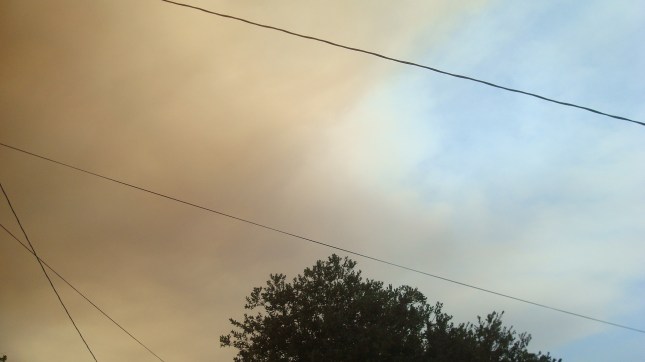
It wasn’t until later in the day that I found out the fire was in Santa Clarita. I was in Burbank, and looking toward the north you could see a massive, dark, grey cloud spreading across the sky.

A view of the sky over Burbank on Saturday.

A view of the sky over Burbank on Saturday.

The older I get, the more uneasy I feel during the fire season. I’m not worried about my own safety. The most destructive fires generally happen far away from the center of the city. What really scares me is knowing that thousands of acres and millions of trees are going up in smoke. Tune in to the news and you can see raging infernos sweeping across California’s hills and mountains. Sometimes it feels like the whole state is on fire.

I just mentioned how uneasy I felt during the fire season, but I should have said “seasons”. In California there are actually two periods when fires are likely to burn. The summer season, when high temperatures dry out our forests, and the Santa Ana season, when hot winds drive fast-burning blazes that generally threaten coastal areas. In recent years, both of these periods have grown longer, and the fires have grown larger. See this article from KCET’s web site for more details.

California Has Two Fire Seasons, and Climate Change Will Make Both Worse

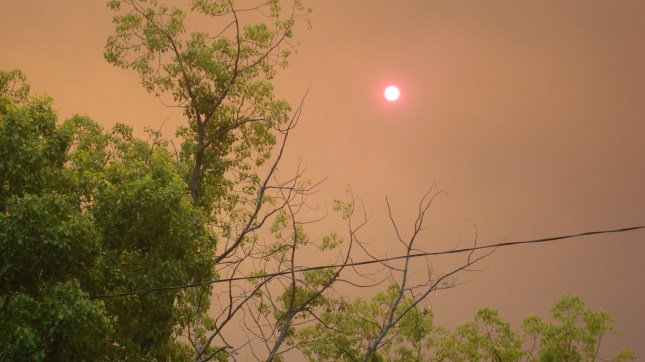
The sun seen through smoke from the Santa Clarita fire.

The sun seen through smoke from the Santa Clarita fire.

There’s a growing body of evidence that suggests that the hotter, drier weather we’ve been experiencing for years now isn’t just a drought, but that the climate in the Western US is changing. Snow packs have been declining for decades, and warmer temperatures are causing the snow to melt earlier. This is one of the reasons that our summer fire season has grown longer and more destructive.

If climate change is a factor in causing more large scale fires, this is doubly disturbing, because these fires also release huge amounts of carbon into the air. More carbon in the atmosphere accelerates climate change, which scientists believe will lead to even hotter, drier weather, which will lead to more intense and more destructive fires. This article from Berkeley News summarizes the findings of a study conducted by the National Park Service and UC Berkeley.

Wildfires Emit More Greenhouse Gases than Assumed

Watching thick, dark smoke billow across the sky on Saturday was scary. But what’s even scarier is what will happen in the years to come if the scientists are right. The evidence has been mounting for years that our addiction to fossil fuels will cause irreversible damage to the planet. We’ve made some progress on reducing greenhouse gas emissions in California, but we need to do a lot more. Otherwise our skies, and our future, will continue to grow darker.

A view of the sky from Riverside Dr. on Saturday.

A view of the sky from Riverside Dr. on Saturday.

Stop the Violence

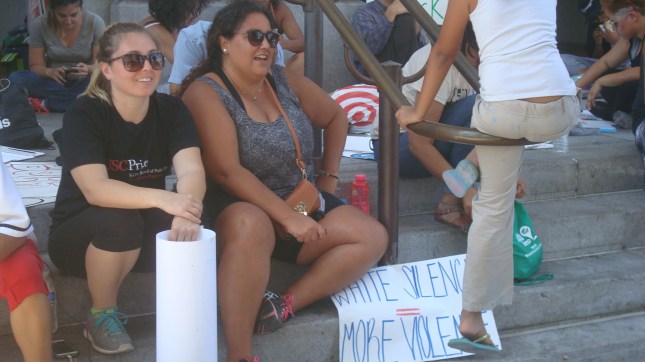
Protesters on the steps of City Hall this past week.

Protesters on the steps of City Hall this past week.

The past several days have been traumatic. Two more black men shot by police. Police shot by gunmen in retaliation. And protesters gathering across the nation to ask for an end to the violence.

While the focus has been on Baton Rouge, Falcon Heights and Dallas, protesters have staged demonstrations in a number of cities, including Los Angeles. Like every other major American urban center, LA has seen its share of unarmed black men die during encounters with police officers. To remind us of this, a number of peaceful civil actions have been staged at locations including City Hall, LAPD Headquarters and Pershing Square.

Another shot of protesters on City Hall steps.

Another shot of protesters on City Hall steps.

While there’s no question that we need to see changes in the way police do their job, the problem is much larger than that. It’s not just a matter of appointing a task force to do an investigation and come up with recommendations. As a nation, we need to acknowledge that we have a long way to go to achieve equality. And as a nation, we must all commit to working towards that goal. I thought Obama said it well in his speech in Dallas….

In the end, it’s not about finding policies that work. It’s about forging consensus and fighting cynicism and finding the will to make change. Can we do this? Can we find the character, as Americans, to open our hearts to each other? Can we see in each other a common humanity and a shared dignity, and recognize how our different experiences have shaped us?

Obama asks if we can do this. I don’t doubt that it’s possible. The question is whether we will commit to making it happen.

Chalk drawings on the sidewalk in front of City Hall.

Chalk drawings on the sidewalk in front of City Hall.

Moving Forward in Reseda

The Reseda Theater

The Reseda Theater

A little over a year ago I wrote a post about how people in Reseda were frustrated. For years the business district in the heart of the community has been struggling, and projects that were supposed to revitalize the area somehow never materialized.

Well, there’s been some progress since then. Just recently a deal was struck to reopen the long vacant Reseda Theater as a multiplex, and to create 34 units for senior citizens adjacent to the building. The multiplex will be operated by Laemmle Theatres, which played a part in revitalizing North Hollywood with its complex there.

This deal is just a first step. Members of the community have been struggling for years to revitalize the neighborhood, and many hope that this project signals a turnaround. The Reseda Neighborhood Council and Councilmember Bob Blumenfield have worked hard to engage the community and rustle up the money to make this happen. For more details, see this article from the Daily News.

Reseda Theater to become Laemmle Multiplex

But redevelopment is only part of the equation. Bringing new life to a community requires a lot more than investment. It’s really about people. Creating community means creating a sense that the people who live in the area are connected, that they share something more than a zip code. This piece from the LA Weekly caught my attention.

Reseda Rising Artwalk Proves the Valley Is Cool

The artwalk was put together by 11:11 ACC and the Department of Cultural Affairs. I’d never heard of 11:11 ACC before, so I took a look at their web site and found out that they’re an artists’ collective operating in the San Fernando Valley. Sounds like an interesting group. If you want to check them out, here’s the link.

11:11 ACC

Seems like things are finally happening in Reseda. Hopefully this is just the beginning.

Pushing for Change at Jordan Downs

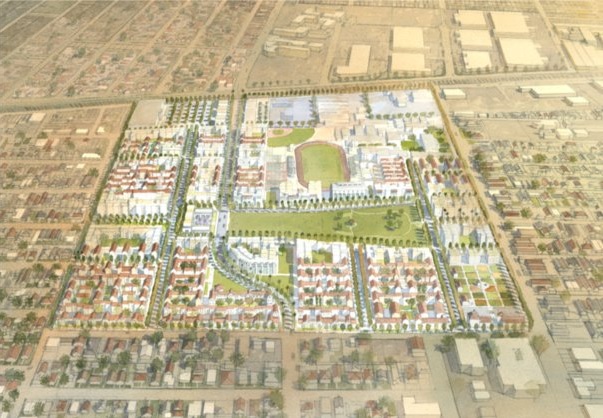
Aerial view of proposed Jordan Downs redevelopment project.

Aerial view of proposed Jordan Downs redevelopment project.

Sometimes you hear people complain that our elected officials are afraid to try anything new, that they devote most of their careers to propping up the status quo. I’ve said it myself, and I do feel like our politicians need to spend more time thinking outside the box.

But there are reasons why the folks at City Hall don’t like taking chances. It’s one thing to come up with an innovative idea. Making it a reality is a whole different story. It’s not uncommon for good ideas to get ground into dust by the system. Pushing for change can be a long, brutal process, sometimes dragging on for years and wearing everyone involved down. It’s not easy changing the status quo.

I first read about the Jordan Downs redevelopment initiative back in 2013. The idea was to take an aging housing project that was mired in poverty and remake it from the ground up. But this wasn’t just about knocking down one building and putting up another one. The idea was to create an expanded mixed-income complex where low-income families would live next door to middle class families. The project also included a new park and over 100,000 square feet of retail, bringing jobs and amenities to a community that hasn’t had had easy access to either.

Back in 2013 it was clear there were plenty of challenges, and the path hasn’t been easy. Though many of the current residents support the project, there are also fears about gentrification and displacement. And the process was complicated further by the news that the soil on the site was heavily contaminated, meaning that a long, costly clean-up would be necessary.

On top of all that, getting the funding for the project has been a huge hassle. Councilmember Joe Buscaino didn’t hide his anger when a grant application was rejected by the US Department of Housing and Urban Development (HUD), at least in part because the city agency handling it hadn’t submitted all the required materials. This was the second time that HUD had declined to award funds for the project.

But things are still moving forward, and it’s hoped that construction will begin by the end of this year. No doubt there will be more challenges. The concerns about displacement are certainly well founded. The Housing Authority of the City of Los Angeles (HACLA) has said that tenants “in good standing” will be guaranteed units in the new complex. However, they haven’t yet defined exactly what “in good standing” means. This could be a problem. A recent affordable housing project in Boyle Heights proposed the demolition of existing units to allow the construction of new ones. This sounded like a good idea until the residents of the existing units learned that strict conditions regarding right of return would have excluded many of them from moving into the new units.

The contamination also needs to be dealt with. I wondered how the clean-up was progressing, so I sent an e-mail to Joe Buscaino’s office. I got an answer within hours from Planning Deputy Heather Anderson. To put it in context, it’s important to understand that HACLA purchased additional property adjacent to Jordan Downs, and her response focusses on work at that site.

The Housing Authority of the City of Los Angeles (HACLA) purchased the property knowing that it was a former industrial site, and with the intent to remove the contamination and clean up the property. They have been in the process of remediation with the oversight of the California Department of Toxic Substances Control (DTSC) for a few months now. After removing 200,000 tons of contaminated soil, they are close to finished with the remediation. There has been testing of the soil around the site to ensure that nearby soil is safe.

She also attached a report documenting the clean-up through February. It sounds like the City and State are taking this seriously, which is good news. But it’s important to remember that there’s also concern about contaminants within the site that Jordan Downs currently occupies. Hopefully, as demolition of the existing buildings progresses, the City and State will continue to do the same thorough job of remediation.

There are those in the community who are skeptical about how this will all play out. This article from the LA Wave reports some of their concerns.

Feds Greenlight Plan to Redevelop Jordan Downs

Buscaino and Congressional Rep Janice Hahn both deserve credit for staying with this redevelopment effort. They could have stuck with the status quo and saved themselves a lot of headaches. And the residents of Jordan Downs also deserve a lot of credit for the hard work they’ve done as they’ve fought to improve their neighborhood. No doubt community activists and elected officials will be facing off as further issues arise. That’s to be expected. But hopefully everybody will continue to work together to build a better future for the people of Jordan Downs.

There are all sorts of possible pitfalls, but here’s the bottom line. If this project doesn’t go forward, the residents of Jordan Downs will continue to be trapped in the same cycle of poverty that has held the community back for decades. And that’s not an option. We can’t accept the status quo.

 Aerial view of Watts, looking northeast. Jordan Downs can be seen at lower center.  Photo by Howard D. Kelly, 1956.  From the Los Angeles Public Library, Kelly-Holiday Collection.


Aerial view of Watts, looking northeast. Jordan Downs can be seen at lower center. Photo by Howard D. Kelly, 1956. From the Los Angeles Public Library, Kelly-Holiday Collection.

Seen on the Street

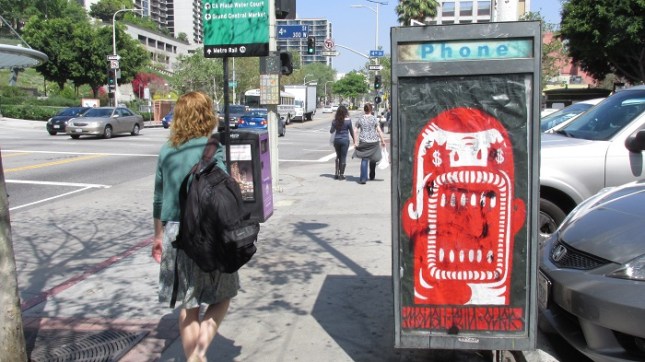
Unknown Artist, Sunset west of Highland

Unknown Artist, Sunset west of Highland

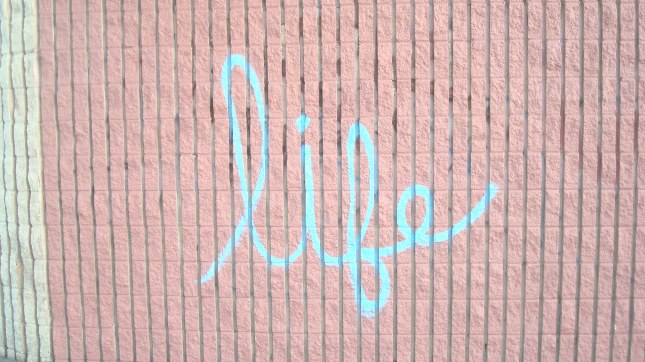
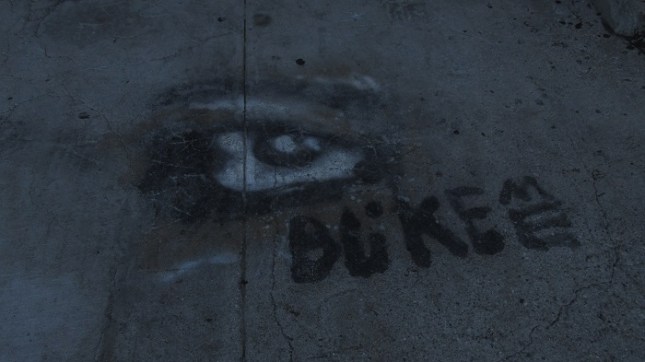
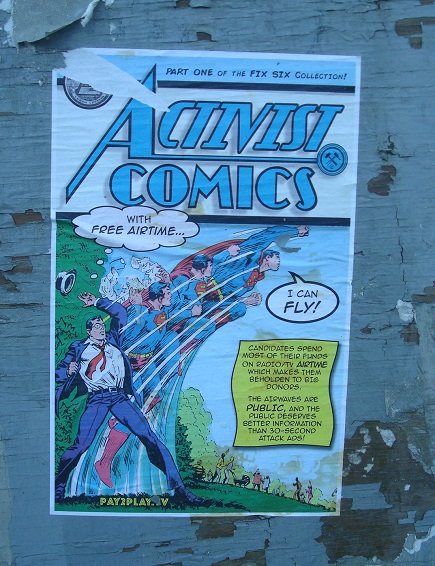
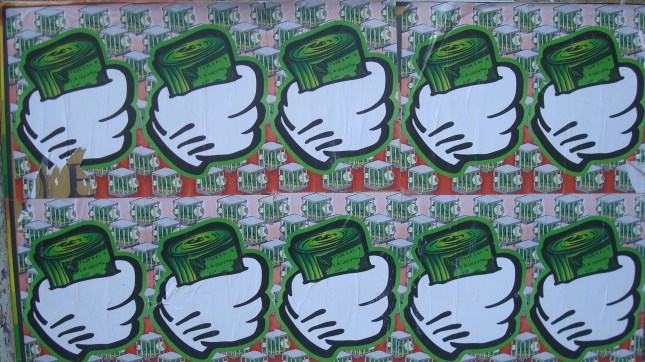
Nothing against museums, but there’s something really cool about artists who put their work right out on the street. A, it’s free. B, it makes walking around the city so much more interesting. And C, the best street art engages you in a way that’s more immediate than the experience you get in a museum. You’re strolling down to the liquor store to get a six pack and bang, you run up against something somebody stuck on the side of a building. Or a chalk drawing on the sidewalk. Or a billboard towering overhead.

It’s interesting how people’s attitudes to street art have changed. Back in the 70s guys who went around blasting walls with spray paint were vandals. Ten years later a lot of those same guys were showing their stuff at the Whitney Biennial. You can still find artists who sneak around with an aerosol can in the dead of night, but you can also find artists doing large scale public projects with backing from a foundation.

Here’s a sampling of some stuff I’ve found roaming around LA….

People are constantly pasting stuff up all over Hollywood. A lot of it’s junk, but this caught my eye one morning as I walked past the Pacific Theatre.

Unknown Artist, Wilcox north of Hollywood

Unknown Artist, Wilcox north of Hollywood

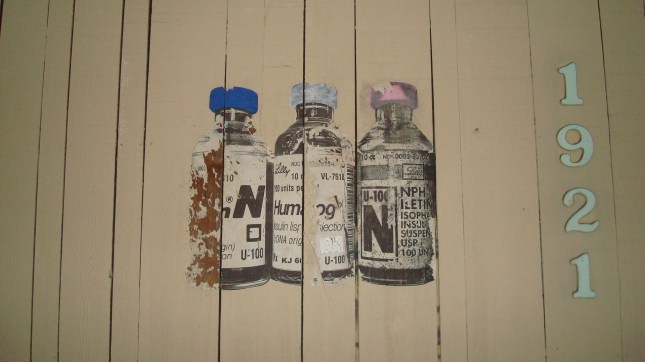
These images of bottles have been showing up in various places over the past year or so. Honestly, I can’t figure out what it’s about, but I think they’re kind of cool.

Unknown Artist, Beverly near Detroit

Unknown Artist, Beverly near Detroit

Unknown Artist, Cahuenga near Franklin

Unknown Artist, Cahuenga near Franklin

Unknown Artist, Cahuenga near Franklin

Unknown Artist, Cahuenga near Franklin

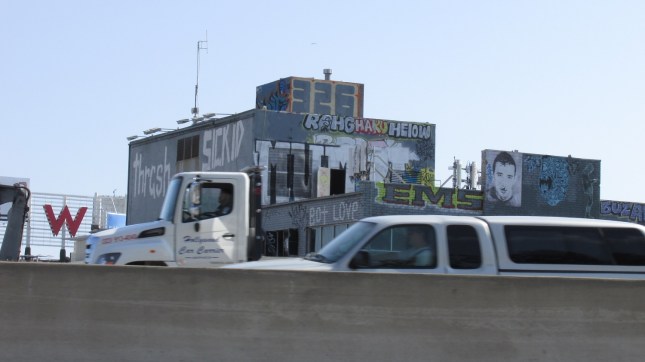
Is anything more tempting to guerilla artists than an abandoned structure? This building at the corner of Argyle and Yucca was demolished a while ago, but I got a few photos before it disappeared.

Unknown Artists, Yucca and Argyle

Unknown Artists, Yucca and Argyle

This is a shot of the same building from the freeway.

Unknown Artists, Yucca and Argyle

Unknown Artists, Yucca and Argyle

Some artists keep it simple and rough.

Unknown Artist, Wilcox north of Sunset

Unknown Artist, Wilcox north of Sunset

Others spend a lot of time and effort to make it as polished as possible.

D*Face, Santa Monica near Flemish Lane

D*Face, Santa Monica near Flemish Lane

The image above is by D*Face, a classic example of someone who started out doing his own thing on the street, and over time became an established professional. To see more of his work, check out his site.

D*Face

Sometimes it’s a political statement.

Unknown Artist, Wilcox near Hollywood

Unknown Artist, Wilcox near Hollywood

Unknown Artist, Wilcox near Franklin

Unknown Artist, Wilcox near Franklin

Other times it’s just a statement.

Unknown Artist, Selma and Ivar

Unknown Artist, Selma and Ivar

Unknown Artist, Sunset near Gardner

Unknown Artist, Sunset near Gardner

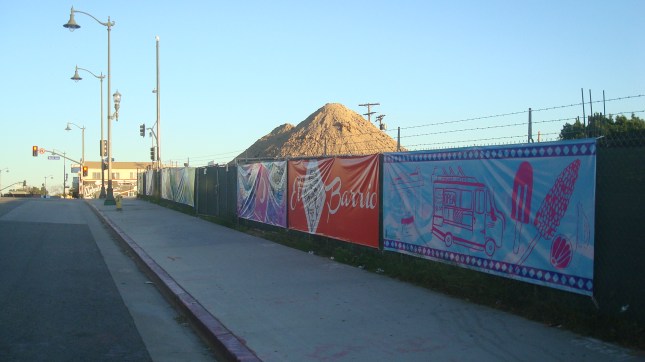
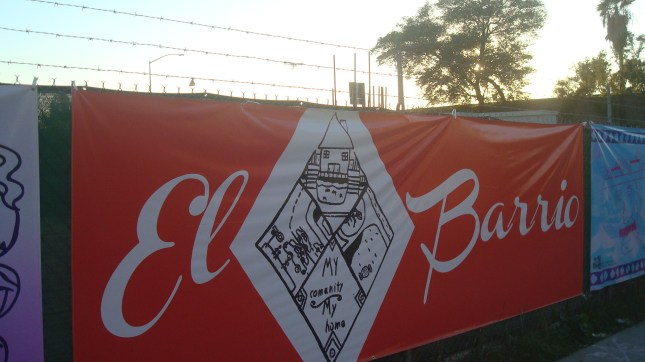
I was out in Boyle Heights a while ago and I saw these banners decorating a fence that surrounded a construction site.

A row of banners at a construction site, First and Boyle

A row of banners at a construction site, First and Boyle

Lesther Cabrales, First and Boyle

Lesther Cabrales, First and Boyle

Izzy Jaquez and Diego Escamilla, First and Boyle

Izzy Jaquez and Diego Escamilla, First and Boyle

I was told that the project was put together by Self Help Graphics, a non-profit that’s been serving local communities for over forty years. Here’s the link.

Self Help Graphics & Art

Found this at a construction site in Downtown. Somehow it really seems to capture the vibe in LA right now.
Unknown Artist, Fifth west of Broadway

Unknown Artist, Fifth west of Broadway

I think I saw this at a construction site on Hill. Honestly, I can’t remember exactly where it was.

Unknown Artist, Unknown Location

Unknown Artist, Unknown Location

Obviously phone kiosks aren’t getting a lot of use these days. Local artists have come up with lots of different ways to transform them.

Unknown Artist, Hill near Fourth

Unknown Artist, Hill near Fourth

I’d seen these giant faces peering down from walls around town, but I didn’t realize they were part of a project by this guy who calls himself JR. Follow the link below to find out more. There’s a video you can watch that gives the lowdown.

Wrinkles of the City at DesignBoom

JR, Fifth near Main

JR, Fifth near Main

JR, Alameda and Traction, rear of building

JR, Alameda and Traction, rear of building

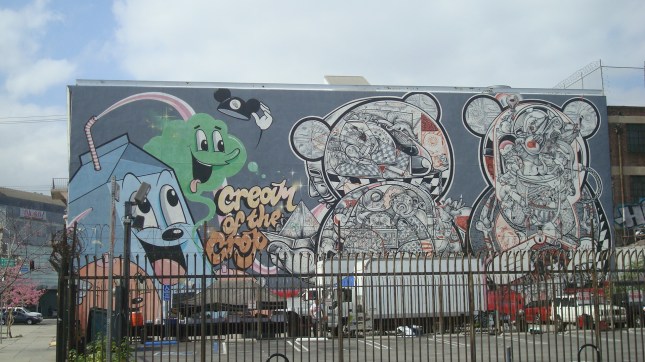
The image above can be found in back of Angel City Brewery on Alameda. And the mural you see below is right next to it.

Dabs & Myla and How & Nosm, Alameda and Third, rear of building

Dabs & Myla and How & Nosm, Alameda and Third, rear of building

Finally this billboard by Robert Montgomery on Broadway near the UA Theatre. Not much to say about this one. I’ll let the work speak for itself.

Robert Montgomery, Broadway near Ninth

Robert Montgomery, Broadway near Ninth

Keeping the River Clean

LAR 05 Riv Trees Fwy a

Yesterday I got up earlier than I usually do on a Saturday. It took some effort, but by nine o’ clock I’d made it to Marsh Park so I could take part in the annual LA River clean-up event organized by Friends of the Los Angeles River (FoLAR).

This stretch of the river is bordered by a mix of older stucco homes and industrial buildings. Marsh Park seems to wind its way through the neighborhood, I’m assuming because it was planned to take advantage of unused open space. It’s nicely landscaped, and has a cool play area for kids.

The entrance to Marsh Park.

The entrance to Marsh Park.

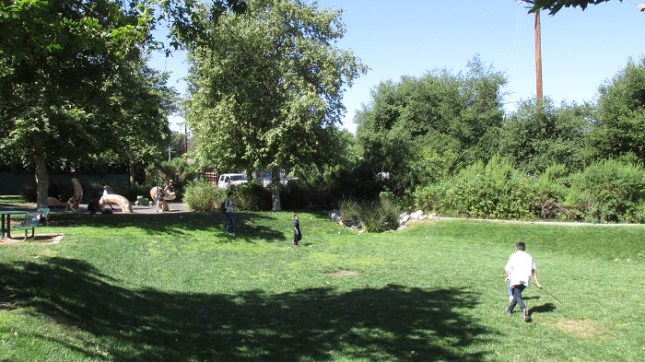
A grassy expanse in the park.

A grassy expanse in the park.

There's a cool play area for kids.

There’s a cool play area for kids.

These yellow flowers caught my eye.

These yellow flowers caught my eye.

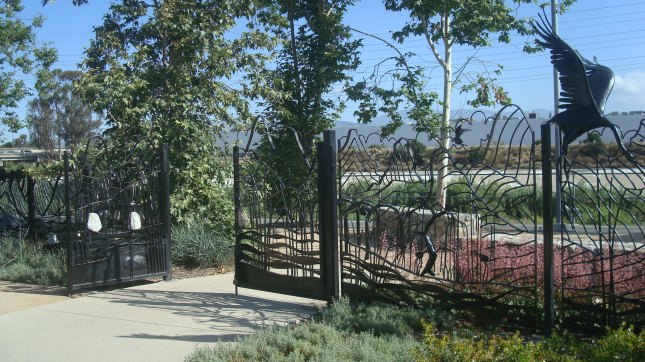
The gate that leads to the river.

The gate that leads to the river.

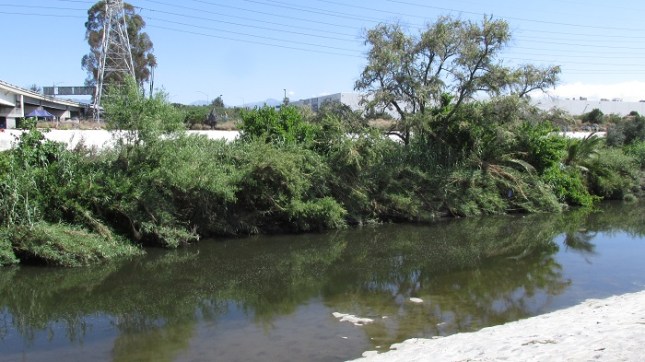
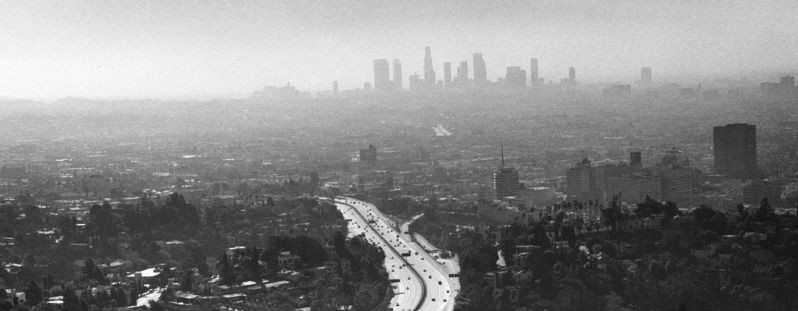
A shot of the river with the freeway in the background.

A shot of the river with the freeway in the background.

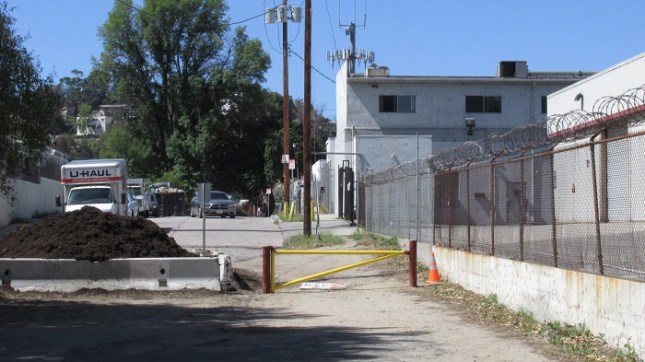
You'll find a mix of residential and industrial on the streets adjacent to the river.

You’ll find a mix of residential and industrial on the streets adjacent to the river.

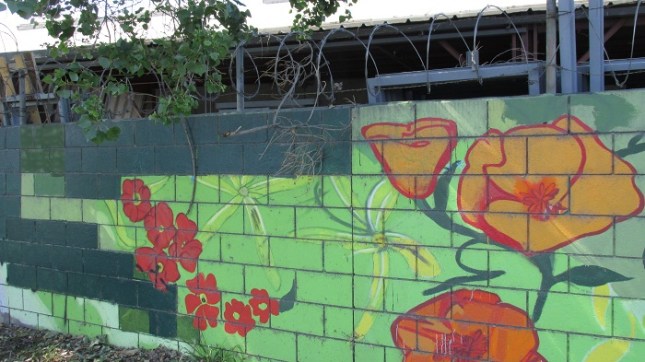
An artist's effort to beautify a wall.

An artist’s effort to beautify a wall.

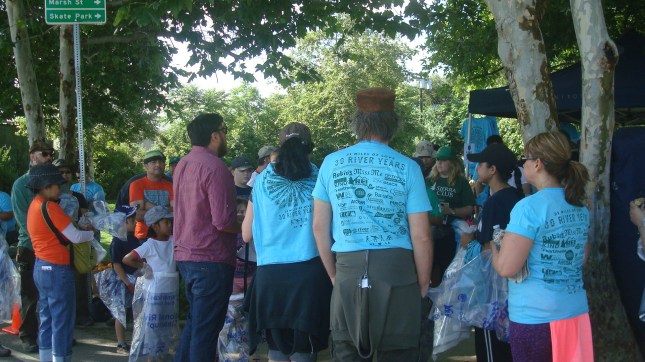
Dozens of people had made it there ahead of me. I got a pair of gloves and a trash bag, and after a brief orientation they set us loose on the river. The guy who gave us the ground rules said that twenty seven years ago, when FoLAR started doing these annual clean-ups, they came across all kinds of things in the river bed. In the early days they’d be hauling out mattresses, shopping carts, and even cars. These days, he went on to say, it was mostly a matter of picking up plastic bags.

A quick orientation before we got started.

A quick orientation before we got started.

Heading out to tackle the trash.

Heading out to tackle the trash.

Exploring the river bed.

Exploring the river bed.

Looking high and low for trash.

Looking high and low for trash.

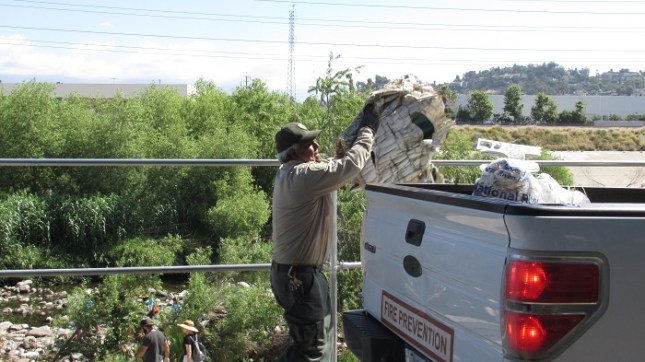
When the bags were full, we left them along the bike path.

When the bags were full, we left them along the bike path.

And this guy threw them in the back of a truck.

And this guy threw them in the back of a truck.

FoLAR has been taking care of this long-neglected natural treasure for thirty years. Unlike the Los Angeles River Revitalization Corporation, a latecomer with a pro-development agenda, FoLAR’s members have been trying for decades to realize the river’s tremendous potential as a public resource. Back when most of us were making jokes about this massive concrete channel that wound its way through the landscape, Lewis MacAdams and his cohorts saw what the river had once been and could be again. They’ve been working diligently since the eighties to protect and restore the LA River, and to educate the rest of us about its past and possible future.

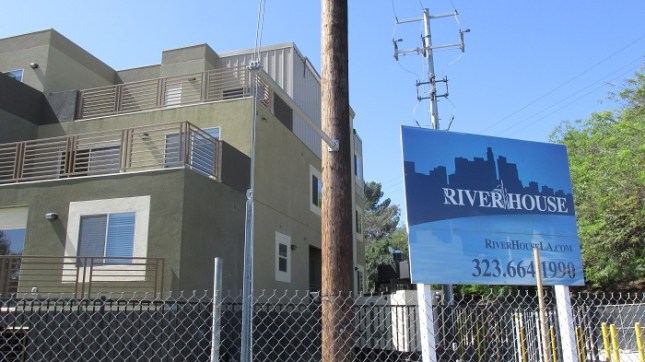
Developers have realized that there's money to be made by building along the banks.

Developers have realized that there’s money to be made by building along the banks.

One of the river's current residents.

One of the river’s current residents.

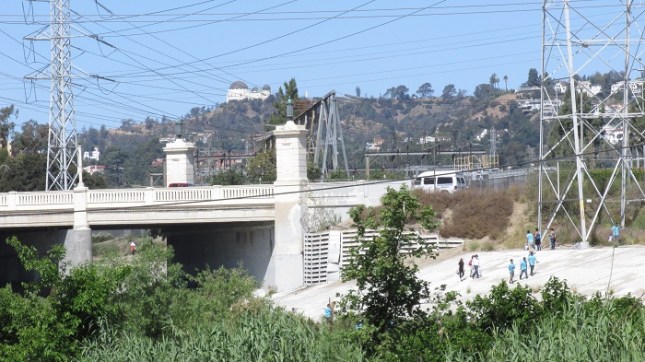
The Griffith Observatory was visible off in the distance.

The Griffith Observatory was visible off in the distance.

Standing under the freeway you could hear the steady din of the cars above.

Standing under the freeway you could hear the steady din of the cars above.

I spent a while collecting trash, and then I wandered off to take pictures. I’d never walked along the river bed before. It was pretty cool. I don’t know about you, but for most of my life I barely noticed the LA River. Encased in concete, bounded by industrial parks and rail lines, running beneath dozens of bridges, it’s as if the river has been buried by the city. We’re only starting to dig it out now. It will be many years before we uncover its real potential.

I’m so glad I made the effort to be there for the clean-up. It was a great day. And it’s just one of many events that FoLAR holds throughout the year. Check out their web site for more info.

FoLAR

LAR 90 Riv Path

How Will Communities Stay Connected?

Rafu Shimpo staff circa 1920.

Rafu Shimpo staff circa 1920.

Recently a friend sent me a link to a story about the Rafu Shimpo, a Los Angeles-based newspaper that serves the Japanese-American community. Publisher Michael Komai released an open letter explaining that the paper has been losing money for years and is in danger of closing. Not a big surprise, but still sad news. Newspapers everywhere have been struggling to survive in a world awash in new media options. Technology offers more ways for people to get their news than over before, although I’m often surprised at what folks call “news” these days.

Newspapers may not disappear altogether, but they’re going to occupy much less space in our culture than they did thirty years ago. LA’s major English-language papers, the Times and the Daily News, have seen their circulation and their staff shrink drastically. Our Spanish-language daily, La Opinión, is a shadow of what it used to be. Many of the smaller publications that serve specific communities or cultures have gone on-line or gone away.

The disappearance of these small community papers is troubling. It seems to me we’re losing something important here. These little, independent publications came into being to give a voice to people who didn’t have one. They covered events and issues that were often underreported or completely ignored by the mainstream media. And even with stories that got lots of play in the media, these papers sometimes offered perspectives that weren’t being heard anywhere else.

No question, the internet also gives people a chance to make their voice heard, sometimes far beyond the boundaries of their community. But even though you can reach a huge audience through social media, sometimes it’s hard to figure out who you’re talking to. Two of the key factors that used to bind groups together were place and race. The internet can render both of those things meaningless, or at least effectively obscure their meaning. Is this a good thing? Nowadays people can create their own cyber communities based on the music they like, their sexual orientation, or TV shows they watched as children. You can make friends with people on the other side of the planet, and you don’t even need to speak the same language.

All of that’s great, but every once in a while we have to drag ourselves away from the net and get back to our lives in the physical world. Even if we’re not crazy about the place we live or the people we live with, we still need to deal with that reality. You may be able to fly in cyberspace, but if the sidewalks on your block are buckling, you could fall flat on your face when you go for a stroll. There are a zillion amazing musicians to be found on the net, but the musician who plays at the local bar, who may even be your neighbor, would probably really appreciate your support. And if your community is threatened by neglect or crime or overdevelopment, your only hope of turning the tide is by connecting with the people next door.

The internet can help with that. It’s one more tool we can use to create connections. But small papers like the Rafu Shimpo exist to keep people connected to what’s happening in their own community. Their whole purpose is to bring people together. It may be that advances in technology and market dynamics will slowly bury them. But we will be losing an important resource. Don’t kid yourself that social media is going to fill the void. Sharing kitty videos with a million strangers may be loads of fun, but in the long run you’ll be better off if you take the time to learn what’s happening in your own neighborhood.

Here’s a link to the letter from Michael Komai.

Open Letter from the Publisher of the Rafu Shimpo

The Broad

Brd 10 Main

Last week I finally made it down to The Broad. I lucked out because some friends had an extra ticket and invited me along. I really recommend making a reservation. The lines for visitors who don’t have one are still super long.

The front of the building on Grand Ave.

The front of the building on Grand Ave.

Riding up the escalator to the galleries.

Riding up the escalator to the galleries.

I got there a little early and spent some time just checking out the building’s exterior. It’s gorgeous. The two design firms that worked on the project, Diller Scofidio + Rensler and Gensler, worked from a concept they call “vault and veil”. The vault is where the museum stores its collection, and instead of trying to hide it, which is the standard approach, they allowed the structure of the vault to play a major role in shaping the space. The veil is the building’s outer layer, a porous sheath that lets natural light filter into the galleries.

Jeff Koons, Tulips

Jeff Koons, Tulips

A room full of Warhol.

A room full of Warhol.

Mark Bradford, Corner of Desire and Piety

Mark Bradford, Corner of Desire and Piety

Mark Tansey, Forward Retreat

Mark Tansey, Forward Retreat

Chris Burden, Bateau de Guerre

Chris Burden, Bateau de Guerre

Looking at the works in Broad’s collection, it’s clear that the guy’s got a keen eye and an open mind. Unlike the super rich predators who’ve crowded into the art market looking for status symbols and investment opportunities, Broad is passionately interested in the ways that artists express themselves and interact with the world around them. Wandering through the galleries, I was struck by the depth and diversity of the works on view, but I was even more impressed by how engaging this innaugural show is. It can be tough just getting the general public to take a look at contemporary art. Believe it or not, some people don’t get excited about looking at massive hunks of sheet metal or walking into galleries filled with rotting vegetables. But the wide variety of pieces in this first show offer a range of experiences, and there’s something for everybody. If you’re an art scenester looking for challenging conceptual stuff, Mark Bradford takes over a wall to talk about post-Katrina economic realities in New Orleans. And if you’re a teen-age pop culture freak, you’ll probably want to whip out your phone and snap a few shots of Takashi Murakami’s giant psychedelic mushrooms. With works on display by Kara Walker, Joseph Beuys, Susan Rothenberg, Chris Burden, Ed Ruscha, Yayoi Kusama, Mark Tansey, Cady Noland and dozens of others, you’re sure to find something that will grab your attention.

Thomas Struth, Audience II (Galleria dell'Accademia) Florenz

Thomas Struth, Audience II (Galleria dell’Accademia) Florenz

Art you can read, from John Baldessari and Ed Ruscha.

Art you can read, from John Baldessari and Ed Ruscha.

Charles Ray, Fall '91

Charles Ray, Fall ’91

I’m really grateful to Eli Broad for pulling this whole thing together. Aside from the thrill of seeing so much amazing art gathered together in one place, I was excited to see crowds of visitors milling through the galleries. And these people weren’t just passively strolling from one room to the next. They were posing with the art, laughing at the art, and talking about the art. This really is a museum for the people.

If you haven’t gone yet, what are you waiting for?

The Broad

Park located at the side of the building.

Park located at the side of the building.

Who Are the Real Criminals?

East Los Angeles Courthouse

East Los Angeles Courthouse

Last week the trial of a group of Black Lives Matter activists ended in a hung jury. The seven defendants had participated in an act of civil disobedience that involved stopping traffic on the Hollywood Freeway. They were charged with two misdemeanors, obstructing a thoroughfare and refusal to comply with a police order. The protest was one of many that occurred nationwide after a Missouri grand jury decided not to indict a police officer in connection with the shooting death of Michael Brown.

The question I’m asking is, Why the hell did the City bother with this? Why did they waste the court’s time and the taxpayers’ money in an attempt to convict non-violent protesters of two misdemeanors? Does City Attorney Mike Feuer have nothing better to do with his time?

Before I go any further, I should mention that I know one of the defendants, so you can certainly question my objectivity.  But did this trial serve any real purpose?    I know that the Black Lives Matter movement is controversial. You may not agree with their statements. You may not approve of their actions. That’s fine. But by engaging in a non-violent act of civil disobedience, these people were continuing a tradition that goes back to this country’s origins. In arguing the case, prosecutor Jennifer Wexler is reported to have said, “Voice your opinion, but do it legally.” That’s interesting. Would she have given the same advice to Susan B. Anthony, Rosa Parks and Cesar Chavez?

But I suspect the justification for this idiotic waste of time and money has nothing to do with upholding the law. A friend told me that the defendants were offered a plea deal in advance of the trial, and one of the conditions was that they’d refrain from protesting for two years. Sounds to me like the City’s real goal was to quash dissent.

Was this trial really necessary? There are so many other people that deserve to be prosecuted for acts that have done real damage. We could start with Mayor Eric Garcetti, who took thousands of dollars in campaign cash from a lawn replacement company and gave them a plug in his State of the City speech. The company went on to suck up millions in rebates from the MWD, even though it did substandard work which may have actually done mare harm than good. Or maybe we could go after Ex-Councilmember Tom LaBonge, who attempted to destroy pretty much every document contained in his offices before stepping down. Among the thousands of records destroyed were files pertaining to major development projects and the disbursement of discretionary funds.

Instead the City Attorney goes after seven people who engaged in a non-violent protest, trying to convict them of two misdemeanors. I will be keeping this in mind when Mike Feuer is up for re-election.

Glendale Municipal Services Building

GCC 01 Crnr Full

LA has a remarkable architectural history. For decades writers and photographers have been documenting our homes and hotels, coffee shops and car washes, but there are still plenty of buildings that haven’t gotten nearly the attention they deserve. A prime example is the Glendale Municipal Services Building. It’s kind of surprising, given that the GMSB sits right out in the open at the corner of Glendale and Broadway, and that one of LA’s best known architectural firms was involved in the design.

The side of the building facing Broadway.

The side of the building facing Broadway.

Northwest corner of the building.

Northwest corner of the building.

Probably part of the reason for its neglect is that it’s in Glendale. When most people think about LA architecture, they think of Downtown or Hollywood or the West Side. Generally speaking, the Valley isn’t seen as a hotbed of innovation in design, though it does have its share of interesting structures. No question, the GMSB is one of them.

The building is lifted above street level by pylons of steel and concrete.

The building is lifted above street level by pylons of steel and concrete.

A close-up of one of the pylons.

A close-up of one of the pylons.

Stairway leading to the first level.

Stairway leading to the first level.

The fountain at the center of the courtyard.

The fountain at the center of the courtyard.

Another shot of the stairway.

Another shot of the stairway.

In surfing the net, I didn’t come up with a lot of information about the GMSB. Every web site I’ve been to mentions both Merrill Baird and the A.C. Martin firm. Baird is pretty obscure. It seems not much is known about him. The only other examples of his work I could uncover were a few homes, all in pretty traditional styles. Based on what I’ve seen, his involvement in a cutting-edge modern structure like the GMSB is pretty surprising.  It seems he had more to offer than his previous work suggests.  The Los Angeles Conservancy’s web site credits Baird with revealing the supporting pylons by removing decorative columns that were originally part of the GMSB’s design. Click on the link below to read more.

Municipal Services Building from LA Conservancy

All offices open onto the central atrium.

All offices open onto the central atrium.

A decorative pattern is worked into the railing.

A decorative pattern is worked into the railing.

There are three stories of offices, but the building is lifted off the ground at its base by concrete supports. To enter the GMSB, you walk down into the central courtyard, and then use the stairs or the elevator to get to the upper floors. All the offices open onto the central atrium, and there are plenty of windows allowing workers to enjoy natural light. Even though traffic is constantly flowing on the surrounding streets, the space at the center of the building is quiet and peaceful.

A shot of the fountain from above.

A shot of the fountain from above.

And a shot of the stairway from above.

And a shot of the stairway from above.

Walkway on the third level.

Walkway on the third level.

GCC 19 Crnr Up a

The Conservancy’s web site describes the building as brutalist. While some of its features connect it to that school, it doesn’t have the heavy, blunt appearance of other brutalist structures. Generally the apartment blocks and office buildings built in that style tend to dominate the landscape. But not this one. It has a totally different vibe. It illuminates the landscape.

GCC 50 Glndl Side