Is the MTA Sending Mixed Messages?

Ford Woman

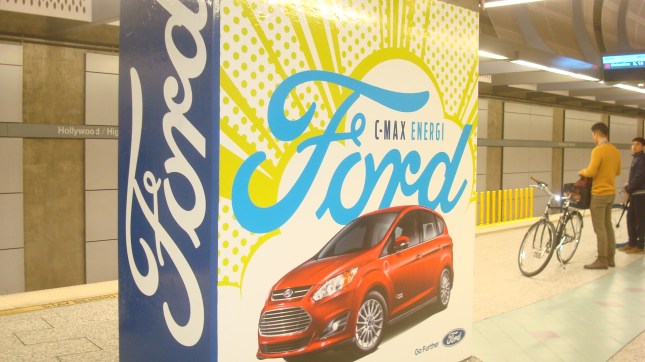
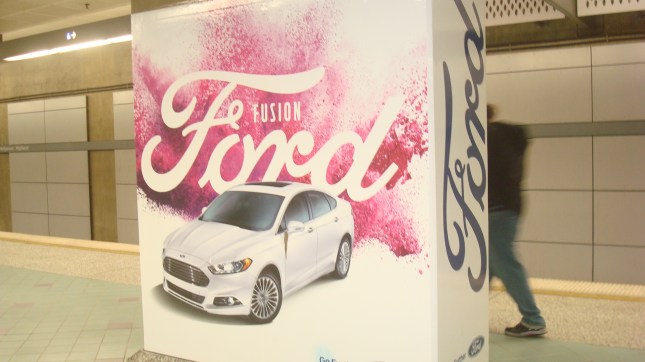
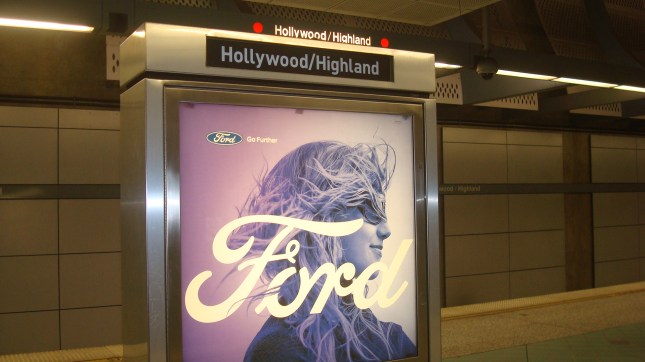
I was kind of surprised some weeks ago when I walked into the Hollywood/Highland Metro station and saw that the place was plastered with ads for a new line of cars from Ford. Not that I was surprised to see advertising in a Metro station. That’s become pretty routine, and even though I think some of the ads are intrusive and obnoxious, I’ve accepted it because I know the MTA needs the revenue

But advertising cars at subway stops? Isn’t that sending mixed messages to Metro riders? I thought we were supposed to be discouraging Angelenos from driving and encouraging them to take public transit. I don’t know how many subway riders will go out and buy cars because of this campaign, but Ford must think they can line up some customers or they wouldn’t have spent the money.

Ford Bike

This seems especially troubling at a time when transit ridership is dropping. Nobody’s sure exactly why this is happening, but with many MTA lines seeing a decline in the number of riders, do we really want to be tempting the people who do ride the subway with ads for affordable cars?

I know the MTA is dealing with an operating deficit, and the ad revenue is probably really helpful, but I still have to question the wisdom of this strategy. It used to be the MTA was telling us, “Dump your car. Ride public transit.” Now it seems the message is, “Go ahead and get a car. We give up.”

Ford Blur

Talking About Displacement

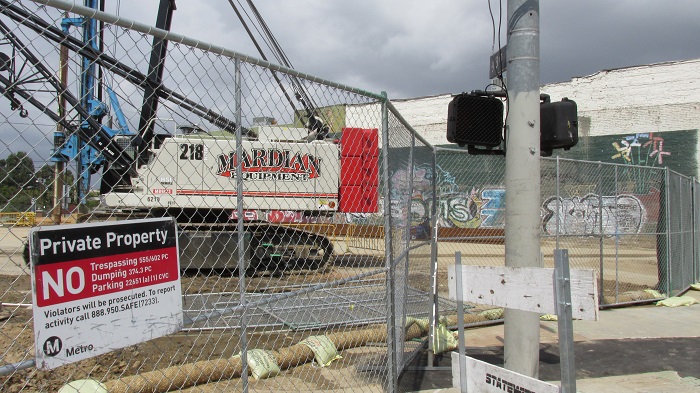
MTA construction along Crenshaw Blvd.

MTA construction along Crenshaw Blvd.

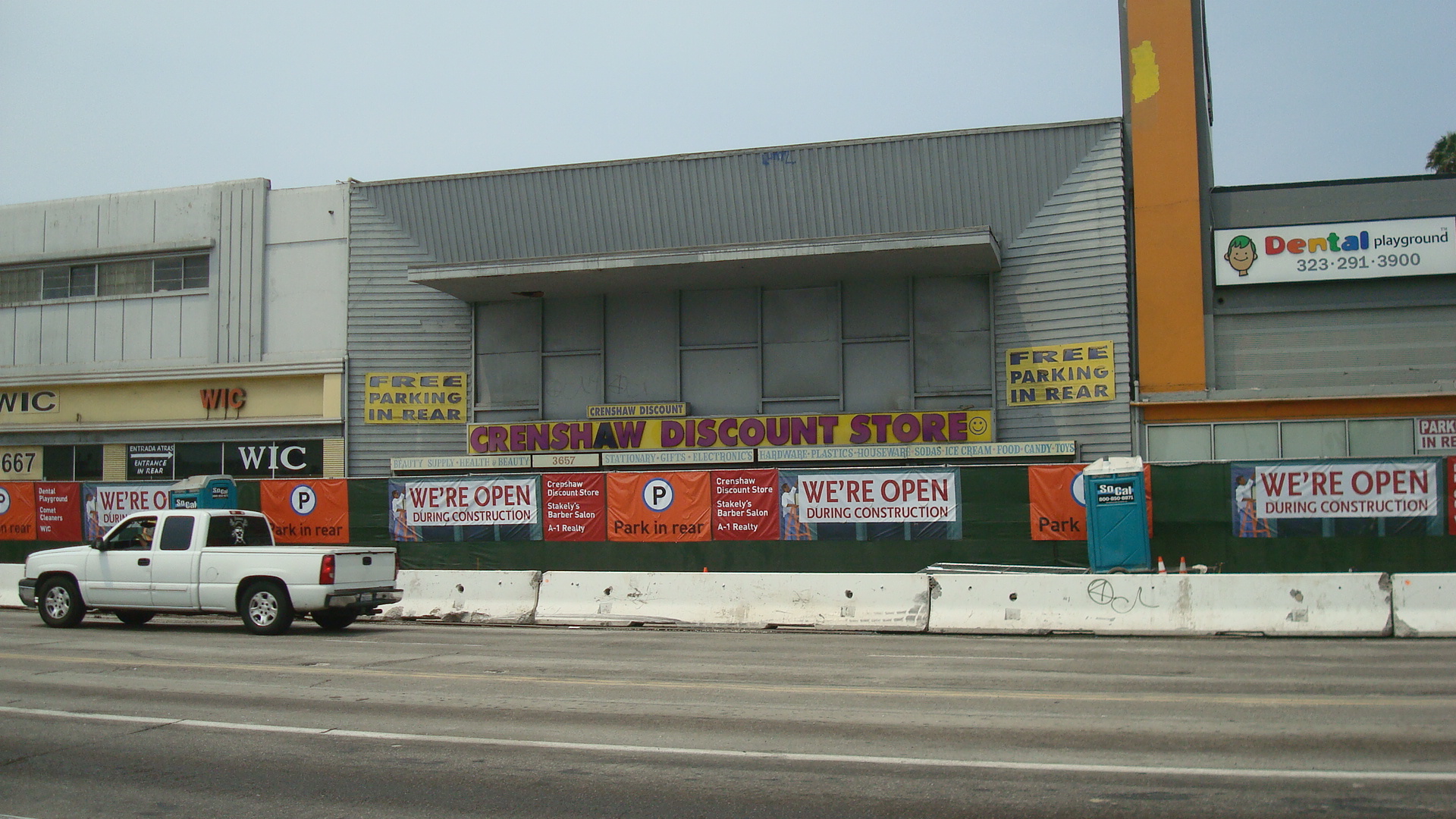
Speaking at a recent Los Angeles Current Affairs Forum, MTA CEO Phil Washington talked about how the growth of LA’s transit network has been accompanied in some areas by gentrification and displacement. Washington is concerned about the fact that low-income residents are being pushed out of the communities they call home, and he wants the MTA to do more to address the problem.

It’s good to hear somebody at the MTA talking about this. The question is what can actually be done. Earlier this year the MTA Board agreed that when new residential units were built on the agency’s land their goal would be to set aside 35% for low-income renters or owners. That’s fine, but it’s not nearly enough. What we really need is to have the City and the County commit to changing their planning practices. Mayor Eric Garcetti and Supervisor Mark Ridley-Thomas serve on the MTA Board. They should both support Washington and take a public stand against displacement. Then they should push for the City and the County to create policies to address the problem.

While gentrification is happening all over the city, the growth of LA’s transit system definitely seems to be a catalyst. Downtown, Koreatown, Hollywood, and Highland Park have already seen thousands of low-income residents displaced. Leimert Park and Boyle Heights seem to be next on the list as the MTA continues its rapid push to expand, bringing an influx of developer dollars to neighborhoods near rail stops. As property values skyrocket, rents go up, too, and low-income tenants who can’t afford to pay must find somewhere else to live. Tenants in rent-controlled apartments can be forced out by landlords who use the Ellis Act to convert their units to condos.

I’m really glad to hear Washington talking about displacement, and I hope others back him up on this issue. This is a conversation we need to have, and it should have started long ago.

MTA construction in North Hollywood

MTA construction in North Hollywood

More About Housing and Transit

Post Final

As a follow-up to my last post, I wanted to share this article from LA StreetsBlog. It’s a summary of a panel discussion, Rescuing the California Dream: Policies for an Affordable Future, sponsored by KPCC and the Milken Institute. The participants talked about the challenges posed by LA’s affordable housing crisis, and offered some possible solutions.

Nobody was saying there’s an easy way out, but there are things we can be doing to address the situation. Two things I got from the article were that we need to do a better job of planning, and we need to create local funding sources to support affordable housing. But the panel offered lots of ideas, and the consensus seems to be that we can change things for the better.

Can High-Density Housing Solve Our Regional Housing Crisis? The Answer: It’s Complicated

A New Vision or Another Con?

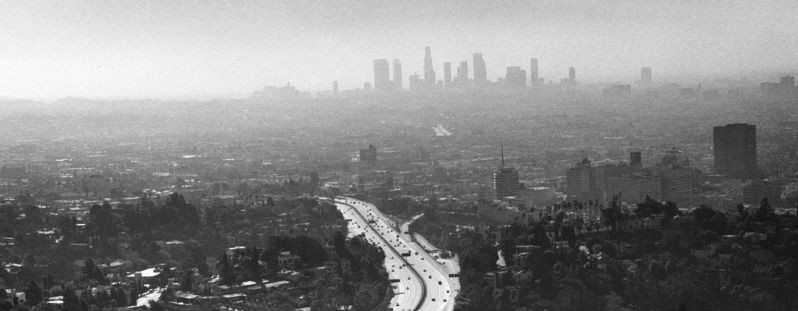
A view of the Hollywood Freeway from Franklin

A view of the Hollywood Freeway from Franklin

A while ago I was walking down Franklin around rush hour, and I came across a sight that’s becoming way too familiar. Looking down Vine, I saw a line of cars that extended all the way down the block.
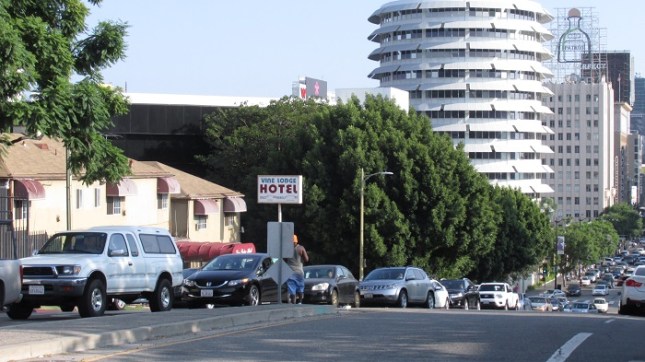
Looking down Vine at rush hour

Looking down Vine at rush hour

I pulled out my camera, because I’ve kind of gotten obsessed with documenting traffic in LA. You probably think this is a pretty weird pasttime, but it keeps me off the streets. Oh, wait. No, actually it doesn’t….

Intersection of Vine and Yucca

Intersection of Vine and Yucca

Anyway, I walked down Vine taking pictures, and guess what I saw when I got to Yucca?
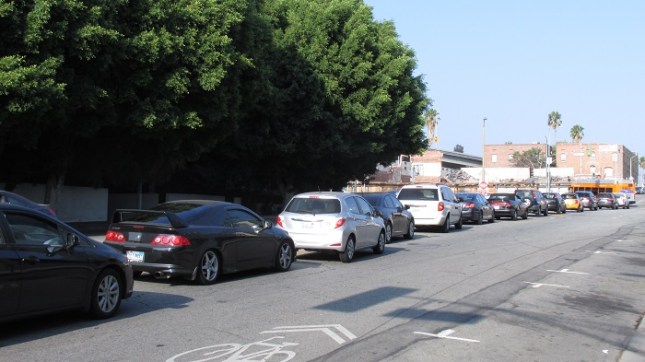
Cars lining up in the left turn lane on Yucca

Cars lining up in the left turn lane on Yucca

If you guessed another long line of cars, you were right. If you don’t live in the area, this may not seem like anything remarkable. But having lived in Hollywood for a while, I can tell you that this is a pretty recent phenomenon. Yucca used to be very quiet. I’d say up to three or four years ago Yucca was empty even at rush hour. Obviously that’s changed.

I kept on walking, and you’ve probably already guessed that when I got to Argyle, I saw yet another line of cars crawling along.

More cars backed up on Argyle

More cars backed up on Argyle

But the thing that surprised me was, traffic on Argyle was backed up all the way to Hollywood Blvd..

Still more cars backed up on Argyle

Still more cars backed up on Argyle

I walked up Argyle, shooting more photos as I passed underneath the bridge.
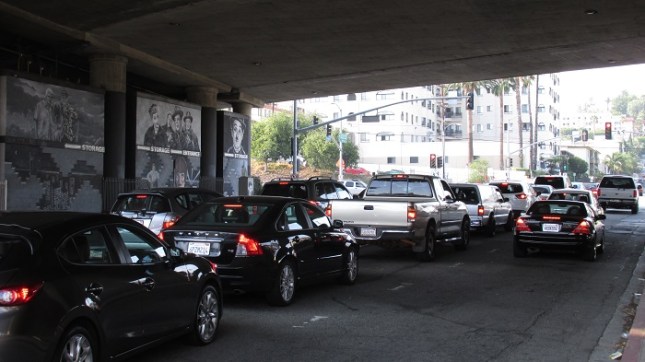
Traffic crawling north on Argyle

Traffic crawling north on Argyle

Then I was back at Franklin, and by now everybody knows what I found when I got there.

Westbound traffic on Franklin

Westbound traffic on Franklin

You may be asking, where were all these cars heading? Well, they were all trying to get on the northbound Hollywood Freeway. And traffic on the freeway was moving pretty damn slow.
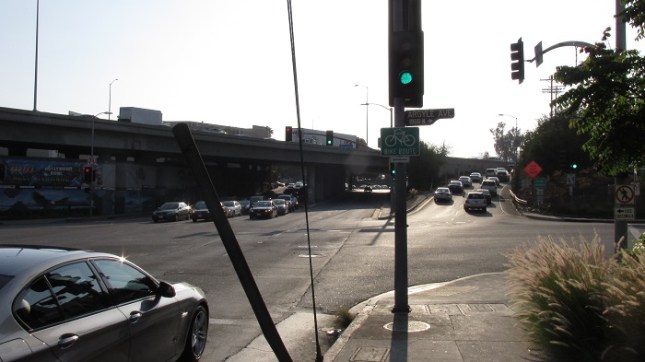
Northbound onramp for the Hollywood Freeway

Northbound onramp for the Hollywood Freeway

I think we’d all agree that LA’s streets are way too congested, and we’ve got to start thinking about transportation in new ways. Cars are a dead end. We’ve got to stop building to accomodate them. The recent expansion of the San Diego Freeway showed what a waste of time that is. We can add as many lanes as we want, and they’ll all end up choked with traffic.

So some people see the City Council’s adoption of the Mobility Plan 2035 as a major step in the right direction. It sure sounds swell. With chapters titled “Safety First”, “World Class Infrastructure” and “Access for All Angelenos”, the MP 2035 paints a picture of a utopian LA, where everybody can get everywhere they want without ever needing a car.

But a lot of people are skeptical about the benefits the plan will actually provide, and I’m one of them. I totally support increased access to all modes of transportation, and if you take the MP 2035 at face value, it sounds great. The question is, will the plan deliver what it promises, and to answer that question you have to look at what our elected officials have actually been doing for the last several years.

Under the heading Key Policy Initiatives, the plan includes the following goal….

Consider the strong link between land use and transportation

No doubt about it, land use and transportation have to be considered together. For years now the Mayor and the City Council have been pushing transit oriented density (TOD). In theory, planning for higher density near transit centers will create a new dynamic where people will find using public transit preferable to driving a car. Now, if we were building affordable housing near transit centers that allowed easy access to the areas where jobs were concentrated, this might actually work. But that’s not what the Mayor and the City Council have actually been doing. Instead, they’ve been pushing relentlessly for high-end, high-rise housing that caters to people with six figure incomes. Check out the proposed 8150 Sunset, Horizon Hollywood and Shenzhen Hazens project in South Park for three examples. There are many more in the planning stages. Do the rich ride the subway? I’m sure some of them do, but let’s be honest. In LA, this is the demographic that is least likely to use public transit, while people at the lower end of the economic spectrum often have no other choice.

This is not transit oriented density. It’s profit oriented density. The Mayor and the City Council can tell us they’re linking land use to transportation to make transit more accessible, but recent history shows that this is mostly a con used to push through projects that only benefit developers who are looking to make a pile of money. Not only have our elected officials’ efforts to create affordable housing been pathetic, but by pushing gentrification in areas that used to be affordable, they’re actually forcing low-income workers farther away from job centers.

So if you ask me whether the MP 2035 will deliver what it promises, I can’t say I’m optimistic. Even before Garcetti became the Mayor, when his council district covered much of central Hollywood, he pushed through a number of “TOD” projects, telling residents that this would solve our transportation problems. Take a look at the video below and let me know if you think it’s working.
Losing a World of Inspiration

Leimert Park

Leimert Park

All over Los Angeles neighborhoods are changing. Developers with deep pockets are buying up real estate in the hope of making a bundle. New projects are transforming the landscape from Venice to East LA. We need development, but there has to be a balance between business interests and community interests. The community needs to be involved, and that involvement has to be based on trust. The only way you can build trust is through honesty and transparency.

Unfortunately, we’re not seeing much honesty or transparency in LA these days. Many developers are doing their best to shut the public out by keeping their activities secret, and our elected officials often seem to be willing accomplices. As a result, communities across the city have suffered some terrible losses. Buildings have been demolished. Businesses have been driven out. Thousands of renters have lost their homes. People and places that defined our neighborhoods are disappearing.

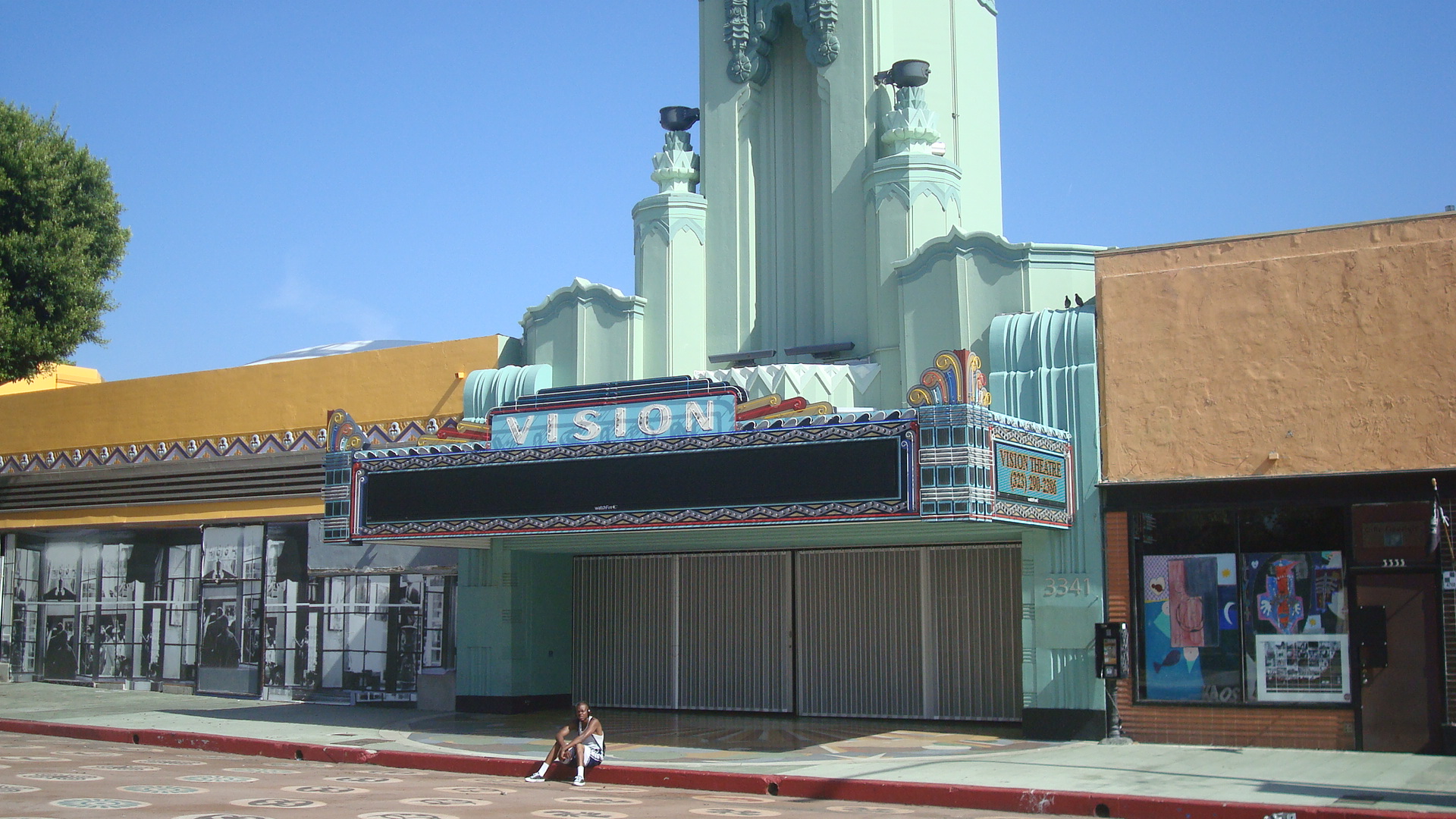
The Vision Theatre

The Vision Theatre

In the last few years Leimert Park has drawn a lot of attention from investors. Built as a planned community in the 20s, Leimert Park was predominantly white up til WWII. After restrictive covenants were declared illegal in 1948, the demographics started shifting and by the 60s the area was largely African-American. For decades it’s been a center for black culture in LA, figuring prominently in the local jazz and hip hop scene. In Leimert Park you can find a beautifully preserved remnant of the past like the Vision Theatre sitting right next door to a cutting edge media lab like KAOS Network.

KAOS Network

KAOS Network

And just around the corner you can also find the World Stage, although that may change in the months to come. This is one of the saddest casualties of the redevelopment frenzy that’s sweeping across LA. Founded in 1989 by drummer Billy Higgins and poet Kamau Daáood, the World Stage has been a major part of the neighborhood’s cultural life for over 25 years. Back in the 90s it was an important part of the renaissance that breathed new life into Leimert Park. Even when the recession hit and neighboring shops and restaurants were closing down, the World Stage remained an anchor for the community.

The World Stage

The World Stage

But it looks like the World Stage will be leaving Leimert Park. The building it’s housed in changed hands a while back, and the new owners will not renew the lease. In fact, World Stage Executive Director Dwight Trible says the new owners have refused to even meet with him. Trible says that after months of discussion, the Board of Directors has decided that it’s best to look for a new location. So while the World Stage will still go on, it will be cut off from the community that has been its home since the very beginning.

The story of who’s been buying up property in Leimert Park and why is complicated, and if you’re interested in the details I recommend reading this piece that appeared in the LA Weekly a few months back.

Who’s in Control of Leimert Park’s Future? It’s Hard to Tell.

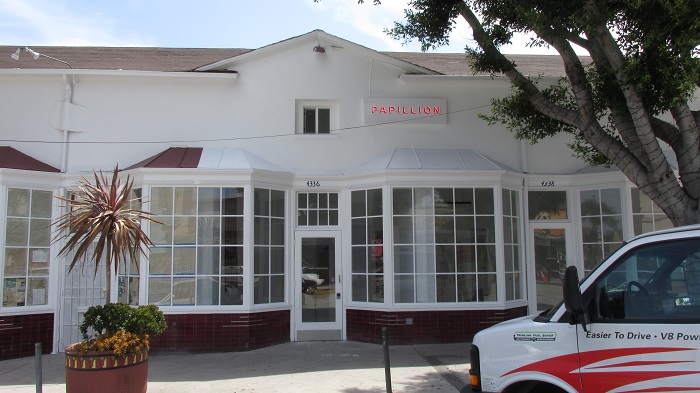
Papillion

Papillion

Briefly, the local real estate market started heating up back in 2012 when the MTA decided that the new Crenshaw/LAX line would have a stop at Crenshaw and 43rd. Since then a number of buildings have been purchased by limited liability corporations that seem to be controlled by Allan DiCastro. DiCastro is associated with artist Mark Bradford and philanthropist Eileen Norton, and together they’ve made a serious commitment to investing in the local art scene. To their credit, they’ve brought the non-profit Art + Practice and the contemporary art space Papillion to the neighborhood. That’s all to the good. Leimert Park has been struggling in recent years, and could certainly use a shot in the arm.

Shuttered businesses on Crenshaw Blvd..

Shuttered businesses on Crenshaw Blvd..

But DiCastro and his associates have not been open or honest with the community about their plans, and that’s a problem. People who’ve lived and worked in Leimert Park for decades can’t get straight answers about what the new owners have in mind. Unfortunately, this is a scenario that’s playing out all over LA these days. Investors with deep pockets and connections at City Hall move into a neighborhood and work behind the scenes to push their own agenda. Residents are told they should be happy about how their community is being “transformed”, but they find they have no voice in the process.

Music is one of the fundamental things that binds a community together. It’s a powerful, immediate way for people to connect and share their experience. For years the World Stage has been a place where musicians and audiences come together, where the distance between the people who come to play and the people who come to listen disappears. Leimert Park isn’t just its physical home, but also its spiritual home. If the World Stage ends up having to leave, it will be a terrible loss for the community.

Future site of the Leimert Park stop on the Crenshaw/LAX Line.

Future site of the Leimert Park stop on the Crenshaw/LAX Line.

Parking Problems

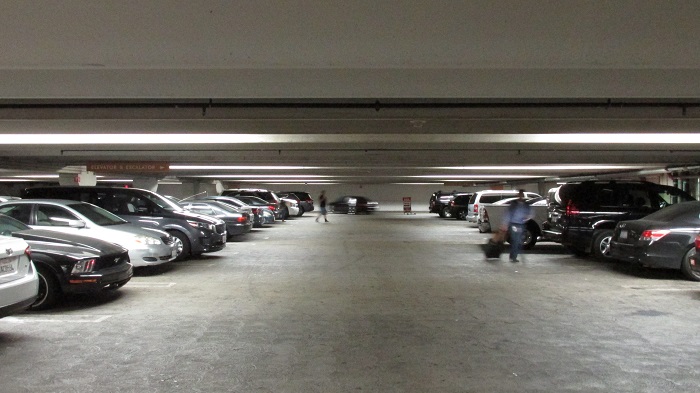
Pk 03 HH 1 B

I keep hearing about how Angelenos are giving up their cars in favor of other means of travel. But really it looks like traffic all over the city is steadily getting worse. In spite of the fact that our public transit is slowly improving. In spite of the fact that we have more bike lanes than ever. In spite of all the hype about ride-sharing services. To me it looks like there are more people driving in LA than ever before.

Part of the reason for this is that there are more people in LA than ever before. The City’s population is around 3.9 million, with more arriving every day. But let’s face it, most Angelenos are not ready to give up their cars just yet. There are many reasons for this. For the vast majority of Angelenos I’ve spoken to, taking public transit still means at least doubling your commute time.* And citizens looking for affordable housing are having to look farther and farther away from the City’s center, making public transit more time consuming. Practical reasons aside, though, a lot of people who live in LA just love their cars. They love the freedom of going wherever they want whenever they want. They love being able to shut out the world around them. They love having a set of wheels that makes a statement about who they are or how big their bank account is. And so they’re willing to spend a large part of their paycheck to have a car, even if most of the time their car is sitting idle.

Pk 05 Hlwd Row B

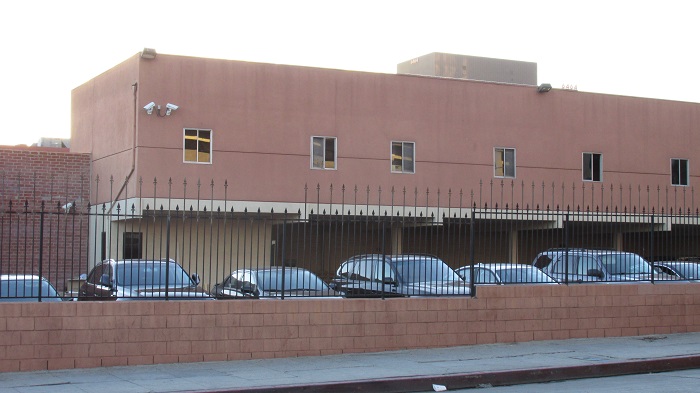
Think about it. Even if you spend two hours commuting each way every day, that means your car is parked in a lot or on the street for twenty hours a day. Seems kind of wasteful, doesn’t it? And speaking of wasteful, look at the enormous amounts of space we set aside for parking. Shopping malls, stadiums, beaches and other destinations often provide massive lots just so people can park their cars. For parking structures, the average cost per space in the US is about $15,000, though it can go much higher. This means that parking alone can increase the price tag for development by hundreds of thousands or millions of dollars. And in the case of residential development, this cost is passed along to the renter or buyer.

Pk 02 Arc 4 B

Of course, most people don’t think about this, which is why there’s a school of thought that says developers ought to stop bundling the price of parking with the price of a residential unit. In other words, you’d pay for your new condo by itself, with no parking, and then decide if you wanted to purchase a parking space to go with it. This sounds logical. With this approach, buyers have to think about the cost of parking their car, and the idea is that some of them will dump their car to save money.

But not everybody’s buying it. In LA these days, developers are encouraged by city planners to pitch projects with reduced parking in the hope that this will encourage use of public transit. I’ve been to a number of meetings where project reps try to sell this idea to local residents, and local residents are always against it. Why? Because they believe that a lot of buyers will forego the parking space to save money, and just leave their car on the street, making it even harder for the locals who already struggle to find parking. Advocates of transit oriented density (TOD) argue in favor of projects with reduced parking, saying that parking cost and availability influence transit ridership, but there’s no conclusive evidence. There are many things that affect transit usage, and no one has proven that this is a major factor.

Pk 06 NH St B

Parking is a huge problem in LA, and even though I don’t own a car, I sympathize with people who sometimes have to circle their block repeatedly to find a space. Transit advocates will say they should dump their vehicle and buy an MTA pass, but that’s not feasible for everybody. Some people have jobs that require a car. And those who work night shifts or graveyard shifts, say restaurant workers or security guards, may not be willing to ride public transit late at night. Having spent many hours standing on desolate street corners in the small hours, I can understand their reluctance. The number of busses that run after midnight is limited, and they only run once an hour. The subways shut down around one.

There are some encouraging signs. A number of people have chosen to give up their wheels and ride public transit instead. Car sharing services like Zipcar are becoming more popular. Apparently a lot of kids in their teens are willing to wait on a driver’s license because they’re happy socializing over their smartphones.

But we’ve still got a long way to go. For all the benefits cars offer, they suck up way too much of our resources. And in a city as crowded as LA, one of our most important resources is space. How many thousands of acres have we paved with asphalt just so we can have a place to leave our cars?

There’s got to be a better way.

* Some readers have taken issue with this statement. See comments below for details.

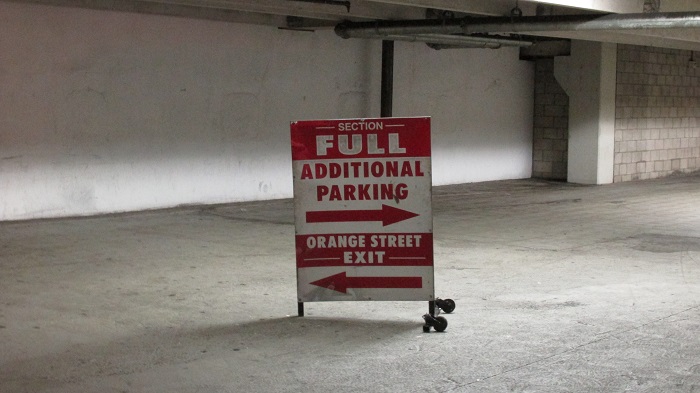
Pk 04 HH Full B

SCAG’s Scam

SCAG Comp 1

I don’t have a car, and I use public transit almost everywhere I go. So when In opened my e-mail one morning and found an announcement with the heading “SCAG Seeking Input from SoCal Residents”, I was definitely interested. SCAG is the Southern California Association of Governments, and they handle regional planning initiatives. The announcement explained that SCAG was holding six open houses to get input from the public on their Regional Transportation Plan/Sustainable Communities Strategy (RTP/SCS).

Because transit planning affects me personally, I felt like I should show up at one of these meetings. But when I looked at the schedule, I realized that it would be pretty difficult to attend any of them. In the first place, all but one of the open houses were happening during working hours, which meant I’d have to take time off work. In the second place, it would take at least an hour for me to reach any of the locations by public transit.

To me the most bizarre thing about these open houses is that not a single one was held within the City of Los Angeles. When you think about the fact that LA is the largest city in the region that SCAG serves, doesn’t it seem weird that they would ignore it completely? There are tens of thousands of Angelenos who depend on public transit to get around. Apparently SCAG doesn’t feel that they need to hear our input.

I found this so hard to believe that I wanted to research it further, so I went to SCAG’s web page for the RTP/SCS. I found out that a couple of meetings had been held in Downtown LA back in May, but as I read further I was even more dismayed. The two meetings they held on March 17 and March 18 were part of the scoping process for the Program Environmental Impact Report. In other words, these meetings were intended to get feedback from the public that would determine the scope of the PEIR, or the range of issues that needed to be addressed. And that’s all they had. Two meetings. One started at 3:00 pm and the other started at 5:00 pm. Again, SCAG seems completely oblivious to the fact that most of us have to work for a living.
And now we have the same problem in reverse. This recent series of meetings leaves LA residents ouf of the picture. But the scoping process apparently excluded everybody else. Were there other meetings held throughout the region to kick off the scoping process? I couldn’t find anything else on-line. The SCAG web site also alluded to a 30 day comment period, which ended on April 7. Unfortunately, I don’t recall receiving notification about any of this. I would’ve liked to be involved in the scoping process, but I guess I’m just out of luck.

The web site itself is an indication of how little SCAG scares about getting the public involved. On the page titled Public Participation Opportunites there’s a timeline with a series of links. Unfortunately, all of the links open a blank page with the message “404 File Not Found”. A number of PDFs are embedded in the page titled Staff Reports and Presentations. I clicked on all of them, and none of the files opened.

So back to this series of so-called open houses. Check out this map. The sites for the meetings are marked by black dots.

Map LA City w Locations

Yeah, I suppose I could’ve gone to the meeting in Culver City. If I’d been able to take the day off from work. If I’d been willing to travel at least an hour each way. But if SCAG really wanted to get my input, wouldn’t they have scheduled at least one meeting in LA? One meeting that Angelenos could easily get to on public transit? And why weren’t all the meetings held either at night or on weekends? Do they really think it’s fair to make people take time off work, especially when for many transit riders that would mean losing income?

The bottom line is, they don’t want my input. Or your input. Like many government agencies, they see public meetings as a nuisance. They’ve already figured out what they want to do. Getting feedback from the people is a time consuming process, and there’s alays the possibility that the public might want something different than the plan they’ve already decided on. The problem for these agencies is that a lot of the funding they get requires them to show that they’ve solicited feedback from the community. So in many cases, they slap together a series of token meetings which are deliberately planned to discourage attendance. And then when they submit the documentation required to justify the funding, they claim they’ve done extensive outreach.

SCAG isn’t the only guilty party. The City of LA frequently does the same thing. And I’m sure it happens all over the country. But SCAG’s series of “open houses” is maybe the most transparent scam I’ve seen along these lines. It really does make me angry. Not just because they’re shutting the public out, but because they have the gall to claim they’re serving the public. What’s really happening is that a closed circle of planners and politicians have gotten together and decided they know what’s best. And that they don’t need to hear from the people.

The timeline on the SCAG web site indicates that they’re planning to hold more meetings for public comment when the PEIR is released in October. But my guess is that when they post the schedule it’ll be more of the same. Call me cynical, but based on past experience, I’ve really lowered my expectations.

Reyner Banham Loves Los Angeles

Reyner Banham adjusting his rear-view mirror.

Reyner Banham adjusting his rear-view mirror.

I was surfing the net today and came across an amazing artifact from LA’s past. Reyner Banham was an achitectural theorist and historian. He was born in England, but came to America and fell in love with the place, especially Los Angeles. In 1972 he made a film essay about the city for the BBC. He called it Reyner Banham Loves Los Angeles. These days that title might not strike you as unusual, but back in the early seventies LA was seen by most architects and planners as a disaster on a massive scale. For Banham, a respected writer and professor at UC Santa Cruz, to proclaim his love for LA, loudly, frequently, unabashedly, was really controversial.

I’m not going to tell you it’s a great film, because it’s not. But I think anybody who cares about this city will be fascinated. First, you’ve got this really smart, perceptive guy giving you his thoughts on what most commentators at the time thought was an urban wasteland. Second, the movie gives you a good, long look at what LA was like back in 1972, and if you weren’t around in those days, you’ll find the contrast startling.
The film is slow in places, and kind of disjointed. Also, because it’s only an hour long, Banham doesn’t have time to take more than a cursory glance at some aspects of LA. The worst part is that the print is badly faded. In some scenes it’s hard to even make out what’s on screen. But you get to see images of Watts, Hollywood, Downtown and Venice as they looked over forty years ago. It’s a real time capsule. Here’s the link.

Reyner Banham Loves Los Angeles

The film is an entertaining artifact, but it just gives you a taste of what made Banham such an interesting and provocative character. If you want to learn more about him, check out his 1971 book, Los Angeles: The Architecture of Four Ecologies. Don’t be put off by the academic sounding title. It’s a fresh and entertaining exploration of the aspects of this city that make it unique. I recommend it to anybody who wants to gain a better understanding of LA.

Pros and Cons of Expanding Transit

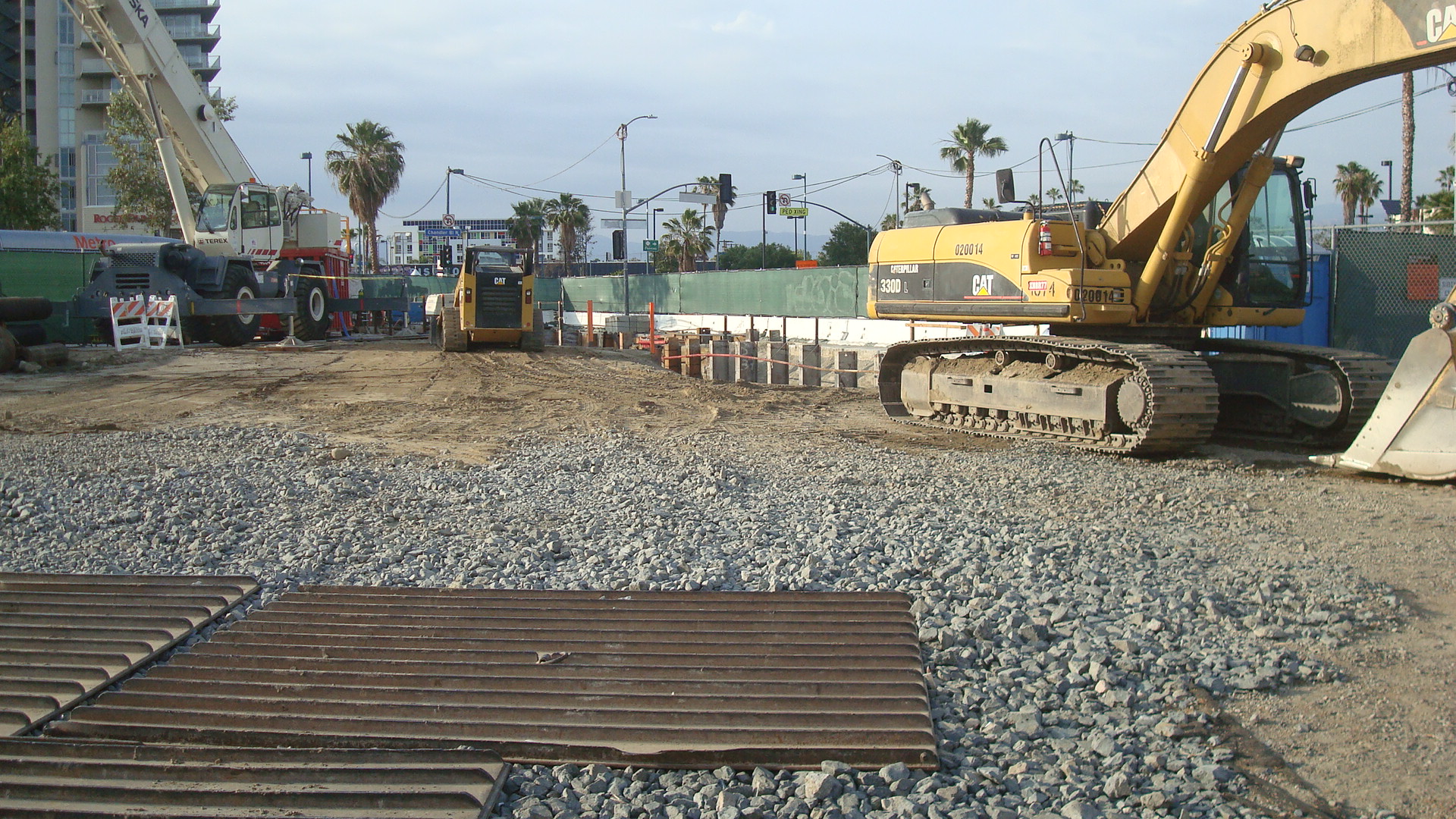
It’s hard to even keep track of all the different projects that the MTA is working on throughout the county. New rail lines are being constructed, old ones are being expanded, and improvements are being made to increase safety and ease of use. The photos below represent just some of the projects that are currently under construction.

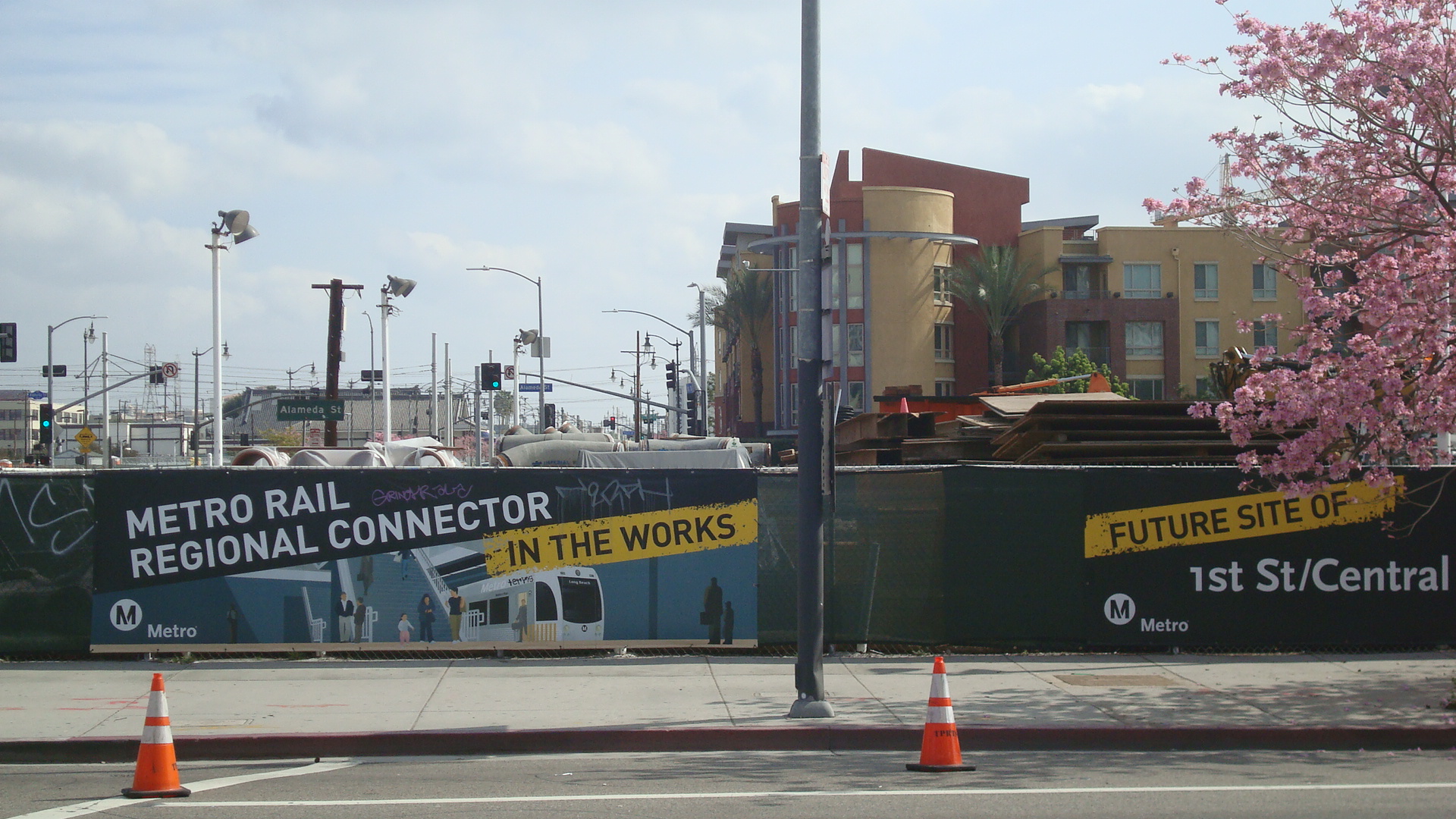
In Little Tokyo, work is beginning on the Regional Connector. This will be a 1.9-mile underground light-rail system that connects the Gold Line to the 7th Street/Metro Station. It will also make it easier for passengers to transfer to the Red, Purple, Blue and Expo Lines.

First and Central, future site of a stop for the Regional Connector

First and Central, future site of a stop for the Regional Connector

Material and equipment stored on the site at First and Central

Material and equipment stored on the site at First and Central

Construction on the Crenshaw/LAX Line started last year. This will be 8.5 miles of light rail running from the Expo Line to the Green Line, with below-grade, at-grade and elevated segments.

Crenshaw/LAX Line construction site at Crenshaw and Exposition

Crenshaw/LAX Line construction site at Crenshaw and Exposition

Another shot of the site from Crenshaw and Rodeo

Another shot of the site from Crenshaw and Rodeo

This project could provide a huge boost to businesses along the line, although there are already signs that it could encourage gentrification which may drive long-time residents and business owners out of the area. Click on the link below to see what may be in store for the community once the line is finished.

Plan to Turn BHCP into a 24-Hour Community

There are smaller projects going forward, too. In North Hollywood, a subterranean tunnel will connect the Red Line station to the Orange Line station just across the street. This is a great idea, and hopefully will reduce the number of riders dashing across Lankershim against red lights in order to make a connection.

Construction of subterranean tunnel in North Hollywood

Construction of subterranean tunnel in North Hollywood

Another shot of construction at the North Hollywood site

Another shot of construction at the North Hollywood site

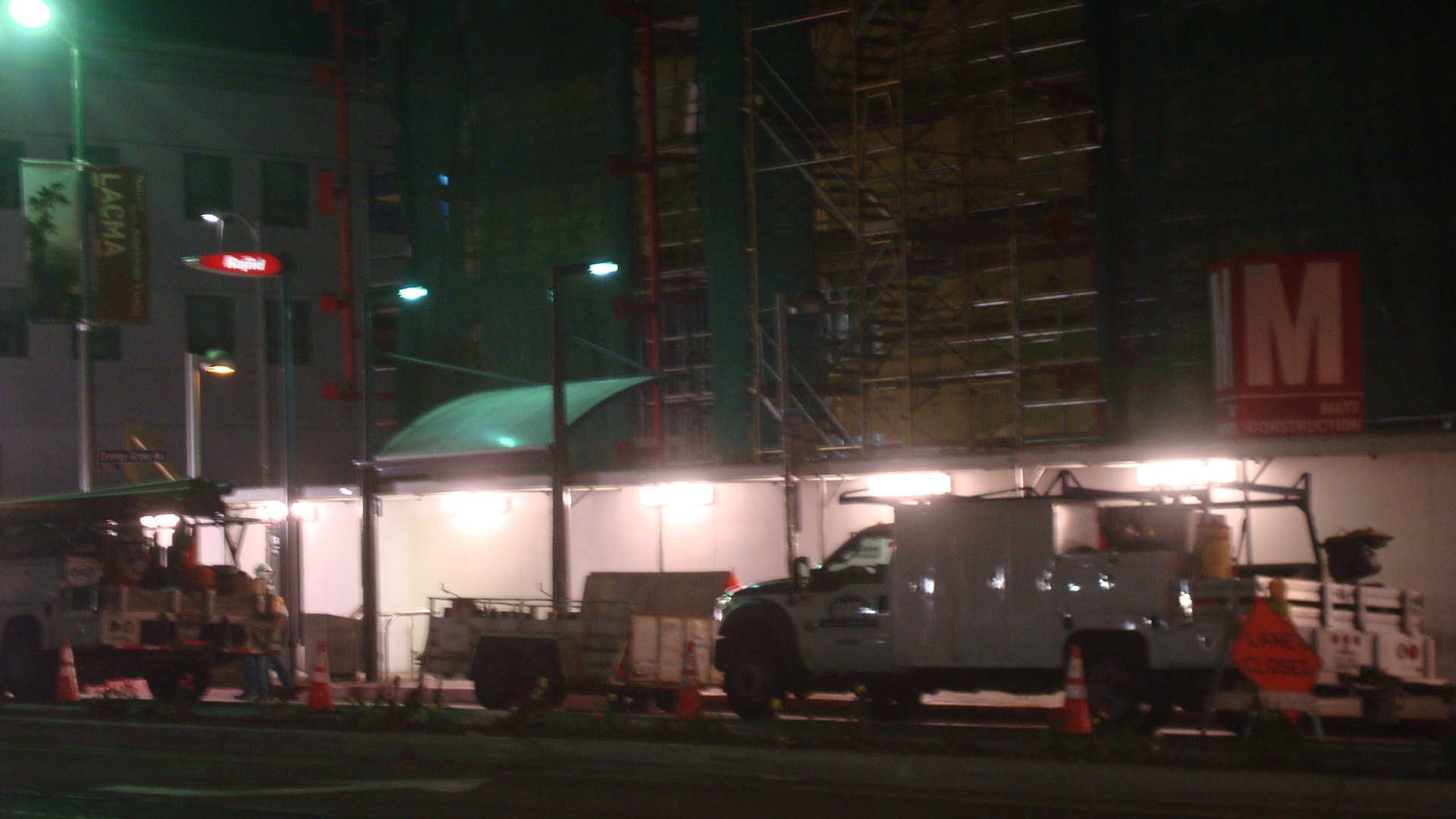
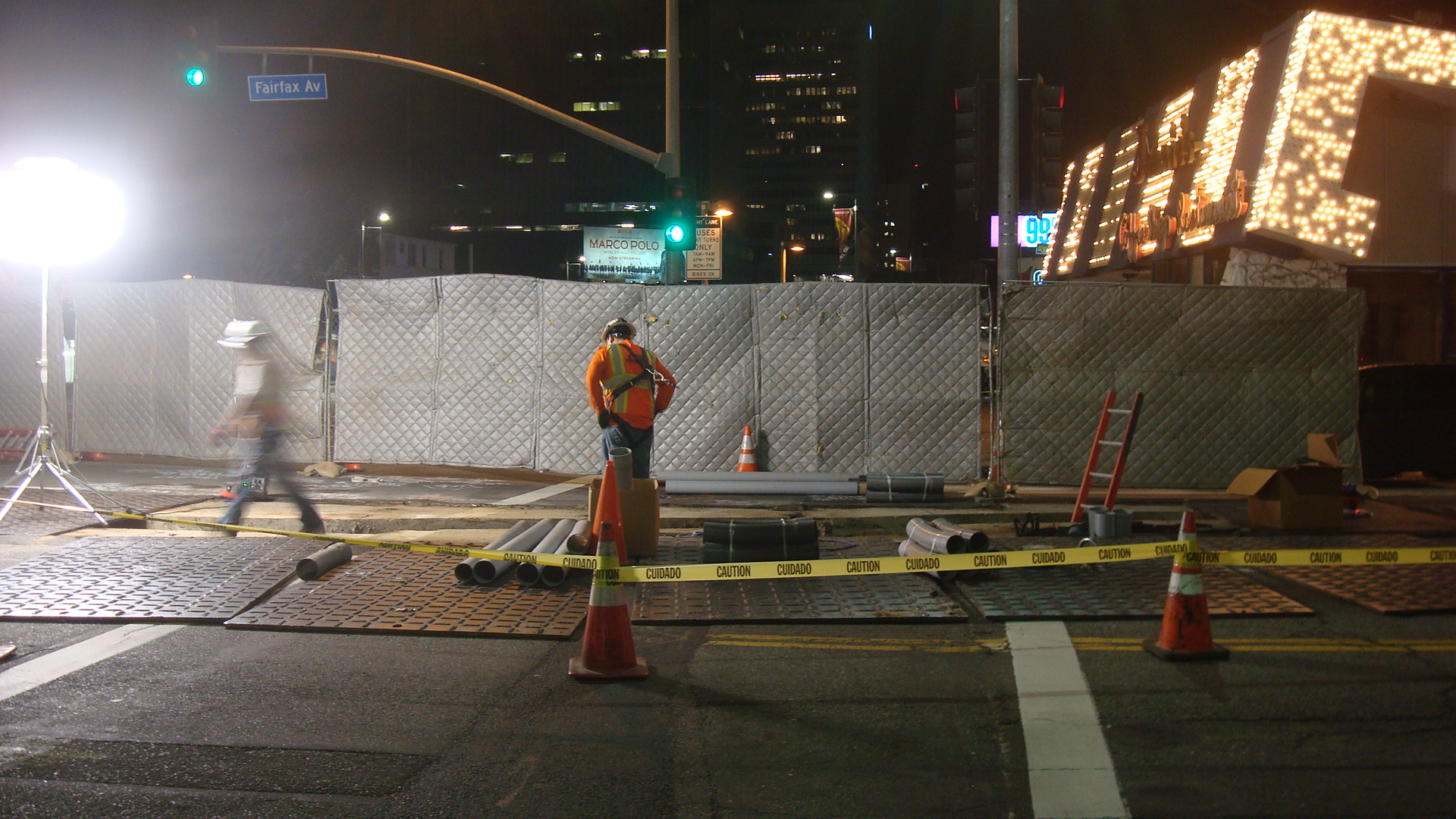
The photos below are a few months old, but they show MTA crews working on the Purple Line expansion at Wilshire and Fairfax. By day, traffic flowed through the intersection as usual. But at night, construction crews would show up with barricades, heavy machinery and blinding lights. This project highlights the problems of constructing a major transit line in a dense urban area.

Crews working through the night at Wilshire and Fairfax

Crews working through the night at Wilshire and Fairfax

Another shot of construction at Wilshire and Fairfax

Another shot of construction at Wilshire and Fairfax

All this sounds great in theory, but this kind of rapid expansion brings plenty of problems with it. I don’t have a car, so I use public transit almost every day. If you ask a simple question like, “Are you glad that the MTA is expanding its transit network?”, I can give you a simple answer like, “Yes.” But if you ask, “What long-term impacts will this expansion have on the City of LA?”, the answers are much more complicated.

In my mind, the biggest thing to worry about is whether or not we can afford all these projects. The MTA is facing a long-term budget shortfall, which could seriously impact its ability to function. Last year they raised the cost of the day pass and the monthly pass by 40% and 30% respectively. But there are almost certainly more increases to come, and it’s uncertain whether riders will pay the higher prices. Here’s an article that LA Streetsblog published in January of this year. It explains that while last year’s fare increase brought revenue up, it may have brought ridership down. If that trend continues, we’re in deep trouble.

MTA Revenue Up, Ridership Down

The MTA is receiving tons of federal funding for these projects, but those funds depend not just on increasing ridership, but also on increasing the share of operating costs covered by fares. If we see a decrease in ridership and/or revenue, we may not be able to count on the money from the feds.

Some people will point to the fact that the LA City Council just voted for a huge increase in the minimum wage, saying that this will enable low-income riders to afford future fare hikes. I don’t buy it. First, the cost of living in LA is increasing at a phenomenal rate. The amount we spend on housing is skyrocketing, DWP rates could easily double or triple, and food is getting more expensive as the impacts of the drought become more pronounced. A significant rise in the cost of public transit will be just one more blow to the bank accounts of minimum wage workers. And there are thousands of MTA riders who don’t even earn minimum wage. LA is the wage theft capitol of the country. Lots of people who work in the restaurant and garment industries are already being paid below the minimum, not to mention the undocumented workers who will take whatever they can get. Many of these people need public transit to get around, and none of them will earn a nickel more after the minimum wage rises.

I’m not arguing that we shouldn’t extend the reach of public transit, but I do question whether this massive expansion is sustainable. I guess all we can do is wait and see.

Midnight at Wilshire and Fairfax

W&F 1 Scaf

Last week I went to one of the screenings in UCLA’s preservation festival. I think I left around eleven, and then caught the bus on Wilshire. I got off at Fairfax, where I have to transfer. It took a while for the next bus to show up, so I took some photos while I was waiting. It seemed like there was a lot of stuff going on….

Night time is when the MTA crews show up to work on the Purple Line extension. You don’t see them during the day. Just metal plates lying all over the street. But at night these guys set up their barriers and their lights and go to work.

MTA crews work on the Purple Line at night.

MTA crews work on the Purple Line at night.

Just across the street, the old May Co. building is surrounded by scaffolding. It seems that the Academy is finally starting the process of transforming this dinosaur of a department store into a new museum devoted to film. I have no idea when it’ll be completed, but I’m glad to see that work has begun.

Scaffolding set up on the west side of the May Co. building.

Scaffolding set up on the west side of the May Co. building.

I was standing there on Fairfax snapping photos, when a few runners went speeding past. At first I thought it was just some people who lived in the neighborhood out for some exercise. But then another group ran by, and then another, and then it was a steady stream of people racing down Fairfax. My guess is that a couple hundred people went by, but it could have been more.

Runners stampeding down Fairfax toward Wilshire.

Runners stampeding down Fairfax toward Wilshire.

More runners heading down Fairfax.

More runners heading down Fairfax.

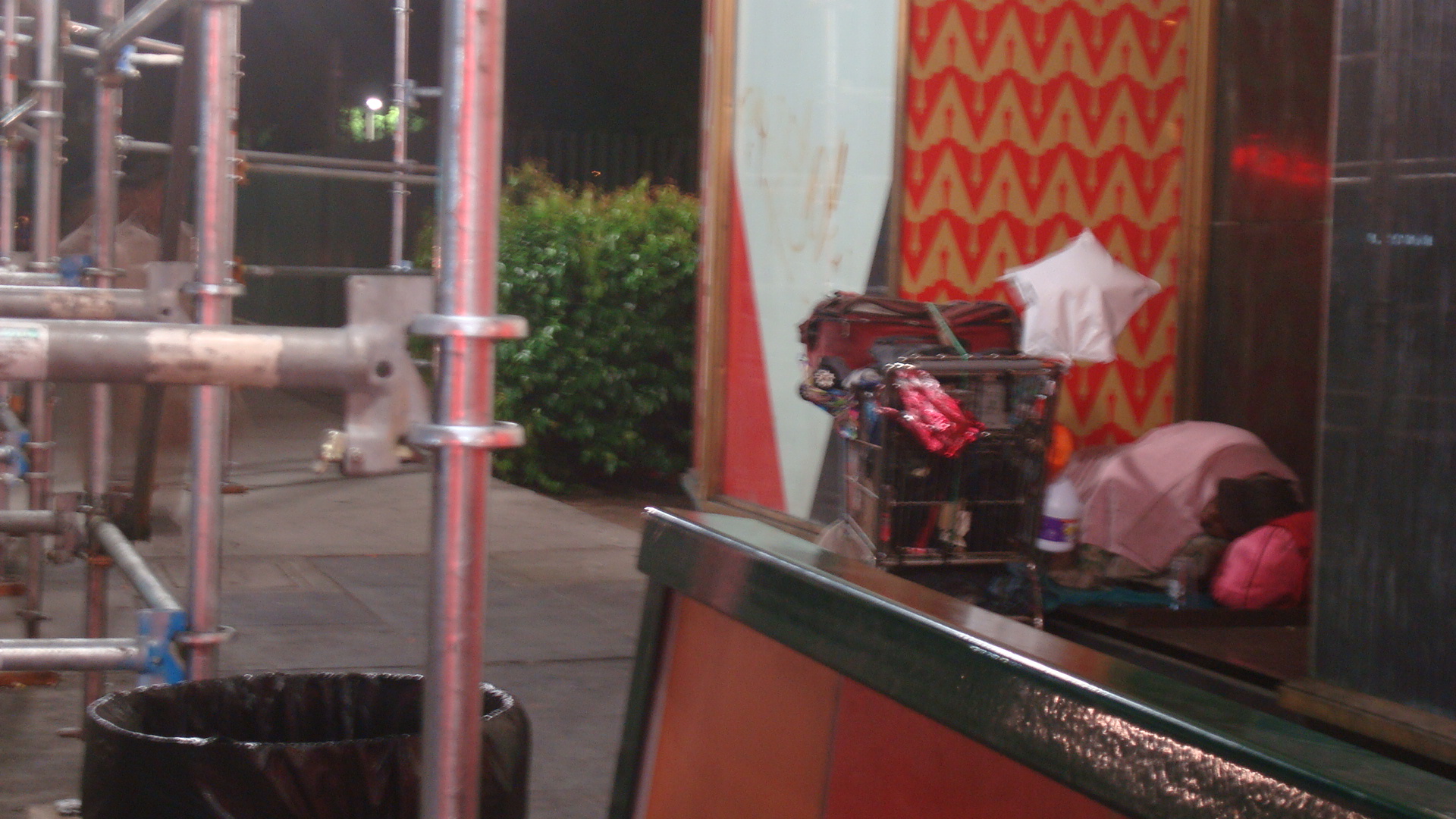
As usual, there was a homeless guy camped out in one of the recessed areas along the side of the May Co. building.

A homeless man taking shelter for the night.

A homeless man taking shelter for the night.

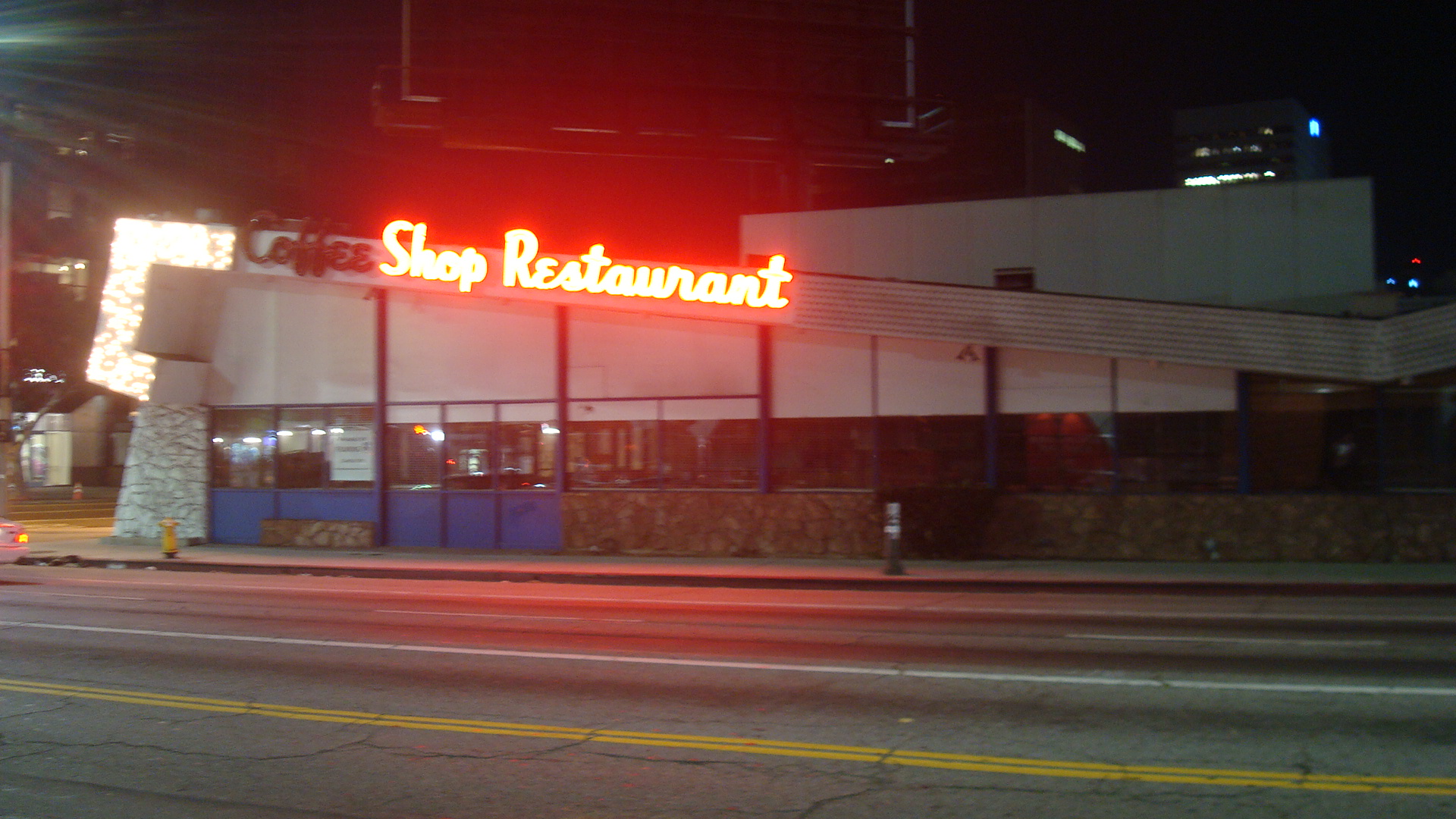
And of course there’s Johnie’s, blazing away in the darkness. The banks of lights that surround the building are slowly going out, but those that are left let you know that this classic coffee shop has not gone away. The place has been closed for years, but the flashing lights seem to be insisting that it’s still open for business. That it’s still alive.

Johnie's refuses to die.

Johnie’s refuses to die.