Mariachi Plaza

BH 01 Virg 1

Mariachi Plaza isn’t just a place. It’s a part of LA’s history. A piece of the city’s culture. Musicians have been gathering there since the 1930s, making music, looking for work, hanging out with friends, killing time. The plaza is also a gathering place for the community in Boyle Heights, vendors setting up booths to sell their wares, crowds gathering for a celebration.

Mariachi music is the result of hundreds of years of cultural give and take between the indigenous people of Mexico and the colonists from Spain. It started to take the shape we recognize today in the nineteenth century in the state of Jalisco. Mariachi ensembles come in many different sizes. There are the full orchestras with a string section, a couple of trumpets, a variety of guitars and a harp, but the musicians often play in smaller groups, too. It depends on the occasion and how much money’s being offered.

A view of First Street, bordering the plaza.

A view of First Street, bordering the plaza.

On the plaza there’s a large bandstand that was donated by the people of Jalisco, as well as a small amphitheatre which was built in the process of constructing the MTA Gold Line station. There are also a few modest buildings that have stood on the plaza for years, their walls decorated with colorful murals. Aside from the changes that came with the construction of the Gold Line stop, the plaza has looked pretty much the same for decades.
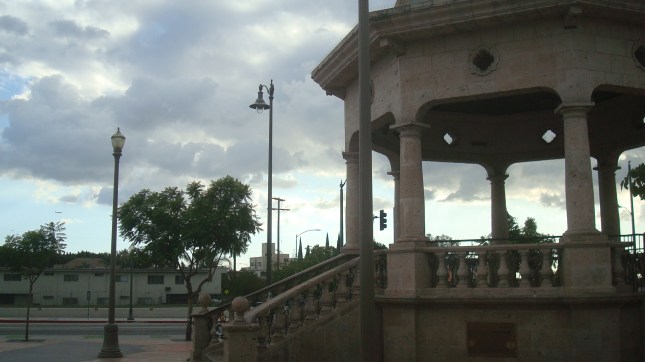
The bandstand.
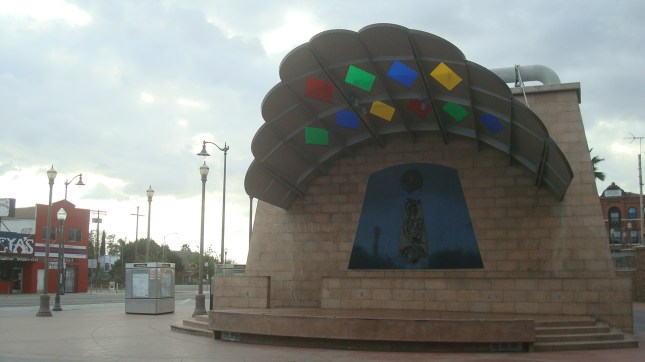
The bandstand.

The amphitheatre.

The amphitheatre.

But the future of Mariachi Plaza is being hotly debated now, and it’s hard to say who will win in the struggle to shape its future. At the beginning of 2015 there was a huge uproar when the MTA unveiled its plan to develop the site. In the agency’s view, they were doing the community a big favor by bringing in an eight story project that included medical offices, a gym, restaurants and shops. Unfortunately, the MTA forgot to ask the community how they felt about it. Local residents were furious. The people of Boyle Heights were understandably angry about the fact that City and County officials had not brought them into the planning process. The MTA backed down, saying that they were going to start from scratch, and promising to involve residents this time. Some in the community are concerned, though, that all the agency intends to do is hold a few public meetings to steer people towards a plan they’ve already decided on. If that’s what happens, it wouldn’t be surprising. That’s standard operating procedure in LA.

The people of Boyle Heights are used to being ignored. Historically, few people at City Hall have shown much interest in this largely Latino community. It’s only in recent years, with the arrival of the Gold Line and the onset of gentrification that developers have started paying attention to the area. No one would argue that the community needs investment, and some locals feel that Boyle Heights would benefit from “gentefication”, in other words, a push for revitalization that maintained the neighborhood’s Latino character. But the past several years have shown that the City really doesn’t care much about preserving the character of existing communities. Residents of Hollywood, the Crenshaw District, Koreatown, Sherman Oaks and other neighborhoods have been hammered by the unholy alliance between City Hall and real estate speculators.

I went down to Mariachi Plaza a few weeks ago to take some pictures. It was a cloudy day, and not much was happening. This didn’t bother me because I always get a little nervous about shooting photos when people are walking by. I’m not crazy about having my own picture taken, and I don’t want to intrude on other people’s privacy. But then I realized, Hey, you’re at Mariachi Plaza. You’ve gotta get at least one shot of the musicians. And there’s another layer of anxiety here, because I knew some of the guys hanging out on the plaza were probably undocumented. It’s understandable that some immigrants get a little nervous when a stranger with a camera walks up and starts snapping photos. I finally did ask a group six guys if I could take a picture. Three of them walked away, but the other three were cool with it.

Musicians hanging out on the plaza.

Musicians hanging out on the plaza.

On the west side of the plaza you can see the Mariachi Hotel, also called the Boyle Hotel, originally the Cummings Hotel.

The Mariachi Hotel.

The Mariachi Hotel.

It has stood at the corner of Boyle and First since the end of the nineteenth century. Today it’s home to a number of the musicians who populate the plaza. You can see by the sign at the top of the hotel that some residents are concerned about outsiders taking over their community.  It says, “Alto a la Gentrificación.  Un Boyle Heights, Por Boyle Heights, Para Boyle Heights.”  (“Stop Gentrification.  One Boyle Heights, by Boyle Heights, for Boyle Heights.”)

Libros Schmibros

Libros Schmibros

Libros Schmibros is right on the plaza. It’s a lending library dedicated to making books available to everybody. The statement on their web site says that, “Libros Schmibros champions the pleasures of literature and its power to change lives,” which sounds pretty cool to me. Here’s the link if you want to learn more.

Libros Schmibros

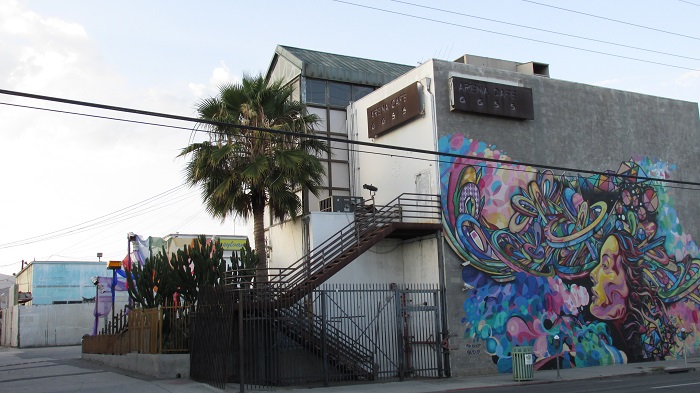
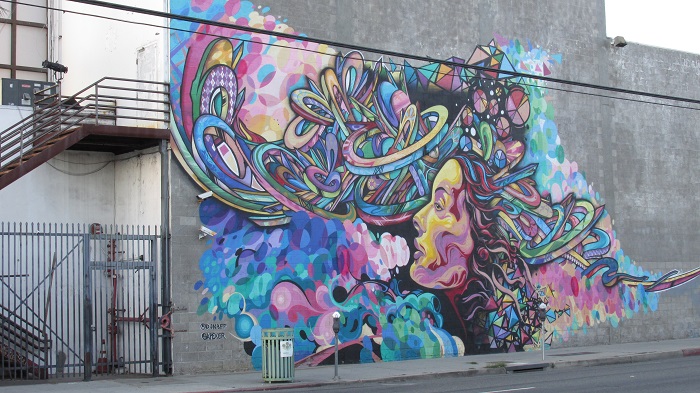
Just around the corner I found an artist working on a mural.

Artist working on a mural just off the plaza.

Artist working on a mural just off the plaza.

Another view of the mural.

Another view of the mural.

Sorry, but the alley was really narrow, and I couldn’t get far enough away to take a picture of the whole thing. I guess if you want to see how beautiful it really is, you’ll just have to go down there yourself.

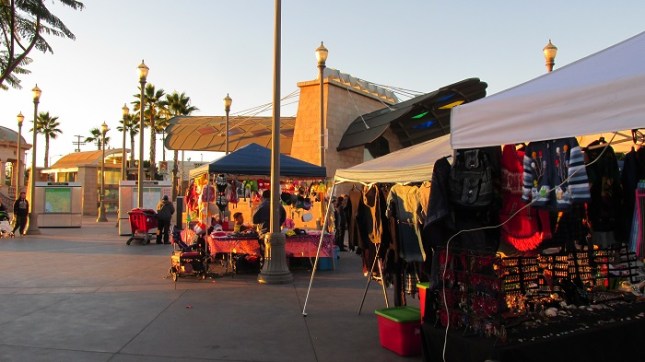
I went back another day and things were much more lively. A band was on stage in the amphitheatre, people were dancing on the plaza, and the place was crowded with booths offering all sorts of stuff.

People having a good time on the plaza.
People having a good time on the plaza.

The plaza crowded with booths.

The plaza crowded with booths.

I don’t think many of the residents of Boyle Heights would argue against the need for development. What they want is to have a voice in the planning. So many of the projects proposed in this city are the result of deals made between politicians and developers behind closed doors. That’s got to stop. The only way to plan for a community is to invite the community’s participation. This can be a long, slow, difficult process, but in the end it’s more efficient than the City’s current approach. If the MTA had talked to the people of Boyle Heights first, they could have avoided the huge embarrassment of having their project shut down. If the MTA had spent some time listening to residents, by now they might be well on the way to building something that they community could really support.

If you want to dig deeper into the history of Mariachi Plaza, check out the web site.

Mariachi Plaza

And this essay with photos is worth taking a look at.

The History of the Cummings Block

Banner by artist Dalia Ruiz.
Banner by artist Dalia Ruiz.
Who’s Really Standing Up for Artists?

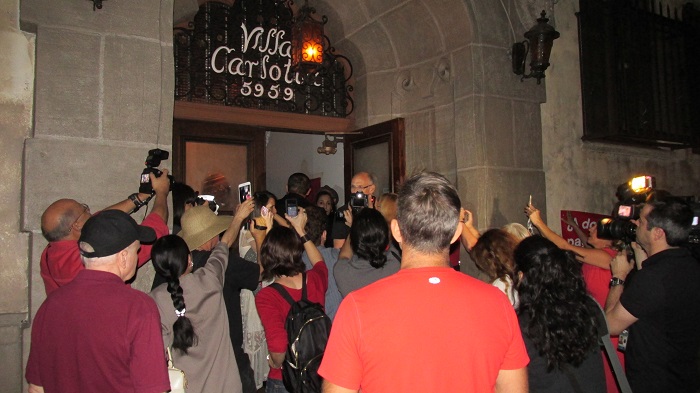
Tensions running high at the Villa Carlotta on Sunday night.

Tensions running high at the Villa Carlotta on Sunday night.

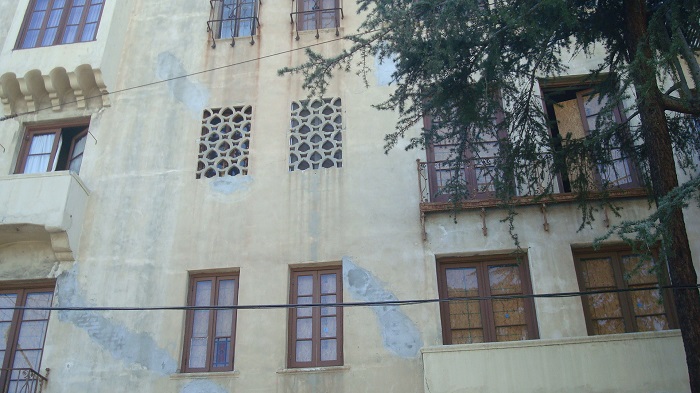
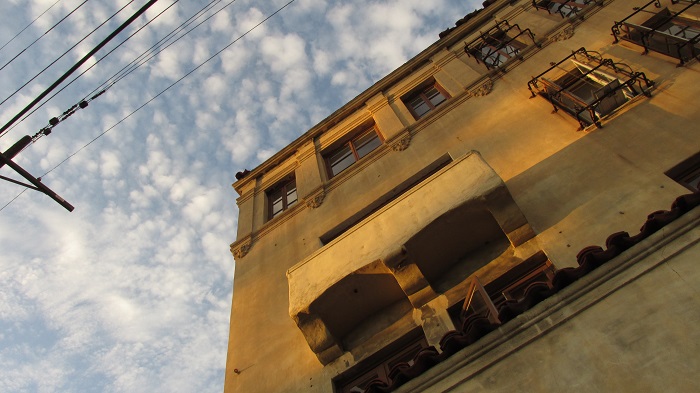
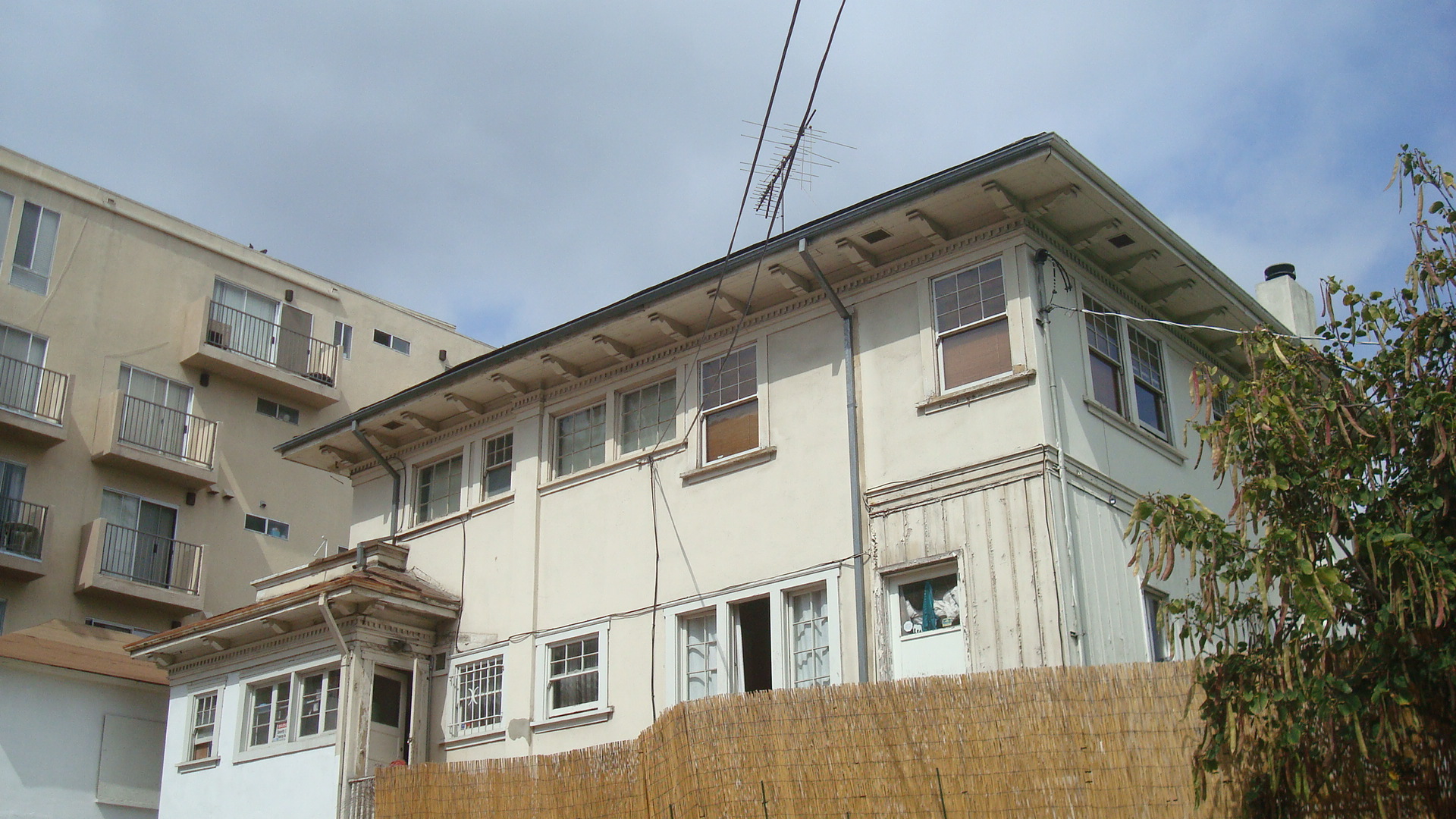
In case you haven’t been following recent events at the Villa Carlotta, I’ll give it to you real quick. It’s a piece of Hollywood history, built in the 20s, and home for many years to musicians, artists, writers and other creative folk. But it was rent-controlled, and not too long ago the owner decided he wasn’t making enough money off it, so he sold the property to a developer who planned to turn it into an extended-stay hotel. As part of the process, it was deemed necessary to get rid of the existing tenants. Many of them were forced out using the Ellis Act.

Windows boarded up at the Villa Carlotta.

Windows boarded up at the Villa Carlotta.

Of the 50 apartments in the Carlotta, four are still occupied. Some of the tenants decided to fight the evictions, and not just because they wanted to hang on to their homes. There are a number of reasons to object to what the developer is doing here. First, the Carlotta is a historic building, and as such it’s protected by state law. In order to turn it into a hotel, the current owner planned extensive alterations to the structure. The remaining tenants, worried that the modifications would do irreparable damage, took their case to the Cultural Heritage Commission, which sided with them. Second, Ellis Act evictions have caused the loss of thousands of rent-controlled units in LA. A recent study by UCLA found that this city is the least affordable major city in the nation, and mass evictions are only making things worse.

And third, up until this whole mess started, the Carlotta was home to a community of creative people. According to many of the former tenants, it was a place where budding screenwriters and struggling artists could meet friends and make connections, where they could share their work and shape their ideas.

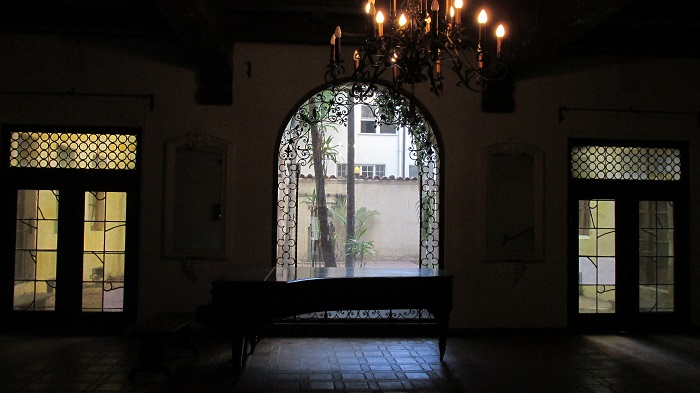
The lobby where tenants used to gather, now deserted.

The lobby where tenants used to gather, now deserted.

This aspect of the story took on new importance when it was announced that the Hollywood Arts Council had decided to hold a fundraiser at the Carlotta. The HAC apparently thought it would be the ideal place for the event, which was held to raise money for arts education at nearby Cheremoya Elementary School. The remaining tenants at the Carlotta were surprised by the announcement. It seemed odd that an organization which has the stated goal of supporting the arts in Hollywood had decided to hold their event at a venue that was nearly vacant because dozens of artists had been forced to leave.

They contacted the HAC and explained the situation, asking if the organization would consider moving the event. The answer was polite, but firm, no. Bothered by the apparent hypocrisy of the HAC’s actions, the tenants decided to protest.

Sylvie Shain, one of the few remaining inhabitants, had imagined the protest as an elaborate performance piece. Former tenants were asked to come to the event wearing white, and they would stand for the ghosts of the Villa Carlotta. Alternately, attendees could show up dressed in red to symbolize of the affordable housing massacre that’s taking place. The idea was to dramatize the plight of renters throughout the City.

Protesters holding a banner to protest evictions.

Protesters holding a banner to protest evictions.

The same message in English.

The same message in English.

Unfortunately, things didn’t work out as planned. The first part of the protest, with people congregating on the sidewalk outside, went smoothly. But when Sylvie led a group into the building things got kind of chaotic. There were moments when I couldn’t figure out what was going on. But one thing is clear. At one point Sylvie was forcibly ejected from the building and temporarily denied re-entry.

On the positive side, the event got a fair amount of media coverage. Two local stations showed footage on the evening news, and Curbed did a piece as well. The Los Angeles Tenants Union joined the residents of the Carlotta, and LATU members spoke eloquently about the affordable housing crisis in LA, emphatically pointing out the damage that the Ellis Act is doing.

It’s important to say that artists aren’t just having a hard time finding housing in Hollywood. In recent years Silverlake and Echo Park have both seen an exodus of musicians, writers and others who can’t afford to pay what landlords are asking these days. And then there’s the sick joke of the Arts District in Downtown. In the late 70s, creative people started moving to the industrial districts in the City’s center. The community came together because people who were struggling to make music or art or whatever could find cheap rents in areas that nobody else wanted to live in. But then the developers discovered it, started marketing it as the Arts District, and housing prices soared. Many of the artists who had created the community were forced to leave because it got too damn expensive.

So let’s get back to the question I asked in the heading for this post. This past Sunday night, who was really standing up for artists? Was it the Hollywood Arts Council, knowingly holding their fundraiser at a site where dozens of creative people had been forced to leave? Or was it the scrappy band of tenants who staged an action to call attention to the fact that artists and others are being thrown out of their homes all over LA?

You can probably guess what my answer would be.

Sylvie put together a beautiful brochure for the event, which you can view by clicking on the link below.

Ghosts of the Carlotta

And if you’d like more info about the situation at this historic building, here’s a link to the Save Villa Carlotta Facebook page.

Save Villa Carlotta

VC 6 Fac Clouds

Church Clears Another Hurdle

Mosaic Front

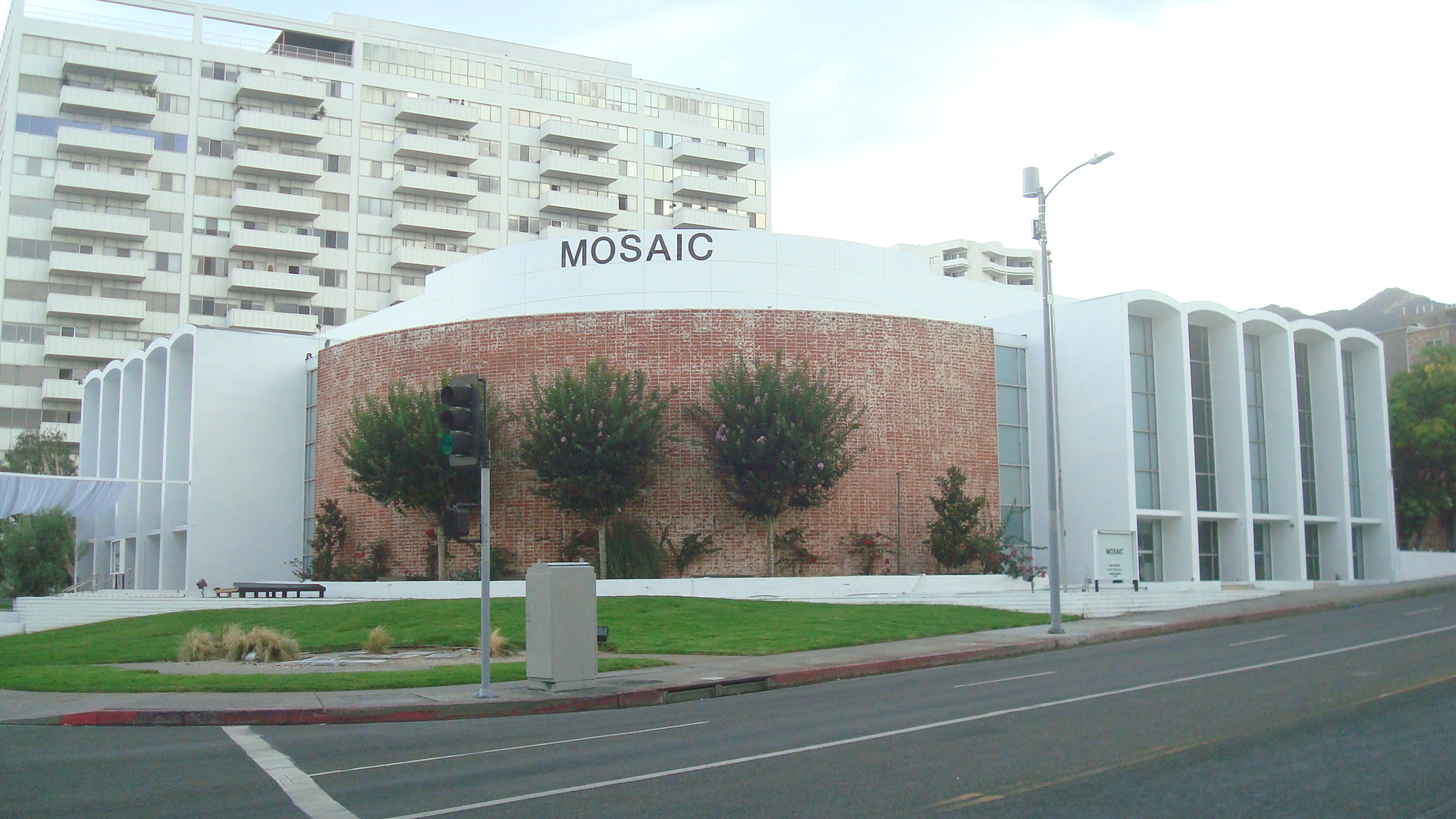
A quick update on the status of the Mosaic Church at Hollywood and La Brea. Earlier this week, the Cultural Heritage Commission voted unanimously to recommend that the structure be designated a cultural-historic monument. Click on the link below to get all the details.

Hollywood Church Closer to Becoming Historical Monument from Park La Brea News

This is good news, but as Helen Berman of Save Residential Hollywood points out, the fight is far from over. Developers LeFrak and Kennedy Wilson want to demolish the church so they can build a large mixed-use complex. They claim the building isn’t worthy of historic status, and they have very deep pockets. No doubt, they’ll be pushing hard to scuttle the designation.

So even though the groups hoping to preserve the church have won an important victory, they still have a long way to go. The CHC’s recommendation will go to the Planning and Land Use Management Committee next, and eventually the City Council will vote on the issue.

Thanks to Save Residential Hollywood for all their efforts so far. Here’s a link, in case you’d like to get involved.

Save Residential Hollywood

Thanks also to Councilmember David Ryu, who has come down firmly in support of granting the church historic-cultural monument status. If you’d like to thank him yourself, here’s his e-mail address.

david.ryu@lacity.org

We Still Haven’t Crossed the Finish Line

front of N.F. Stokes Residence

front of N.F. Stokes Residence

I was thrilled last week when I heard that LA’s Cultural Heritage Commission voted unanimously in favor of designating the N.F. Stokes Residence a historic cultural monument. The building, at 1905 Grace, dates back to 1917 and is one of the few structures from that era still standing in the Hollywood area. At the same meeting the CHC voted to consider the Mosaic Church, at Hollywood and La Brea, for designation as well. There were a number of people in the community who have worked long and hard to save these buildings, and reading the e-mails from those involved it seemed like everyone was breathing a collective sigh of relief.

But the fight isn’t over yet.

I don’t want to rain on anyone’s parade, but we have to remember that the Stokes house won’t actually be declared a monument until the City Council votes on it. That’s when it becomes official. And as for the Mosaic Church, I was at a meeting last week where a developer’s representative flatly declared that the building did not deserve monument status. Now, you might be thinking, Hey, the CHC vote was unanimous. They clearly believe that both buildings are worth saving! How could the City Council ignore their recommendation?

Better think again. Not too long ago Mayor Garcetti pushed for the demolition of the Oswald Bartlett House over the loud objections of the preservation community, and he got his way. That house is gone. Over the past few months the Mayor has overridden the City Planning Commission to revive two major developments that faced strong opposition from the neighboring communities. There are no guarantees here. Recent history has shown that the Mayor and the City Council will do what they want. Which is often exactly what the developers want.

So we need to keep the pressure on. If you live in Council District 4, where the Stokes Residence and the Mosaic Church are both located, you might want to contact newly elected Councilmember David Ryu. His support will be crucial. Here’s his info.

Councilmember David Ryu
david.ryu@lacity.org
323 957-6415

And if you don’t live in CD 4, you can still contact your councilmember and let them know you think these buildings are worth saving.

Mosaic Church

Mosaic Church

Hollywood Journal – It Wasn’t What I Wanted

Egyp Pylons Angle

Things change, and sometimes change is hard to accept. Part of the reason I spent years keeping a journal on Hollywood was to record the transformations that were taking place. One of the biggest upheavals was in the way films were exhibited. Hollywood is home to a handful of movie palaces, all of them built over the course of a decade starting in the early twenties. Up through the eighties, those palaces were still playing first run movies, and on opening weekend you might see lines going down the block.

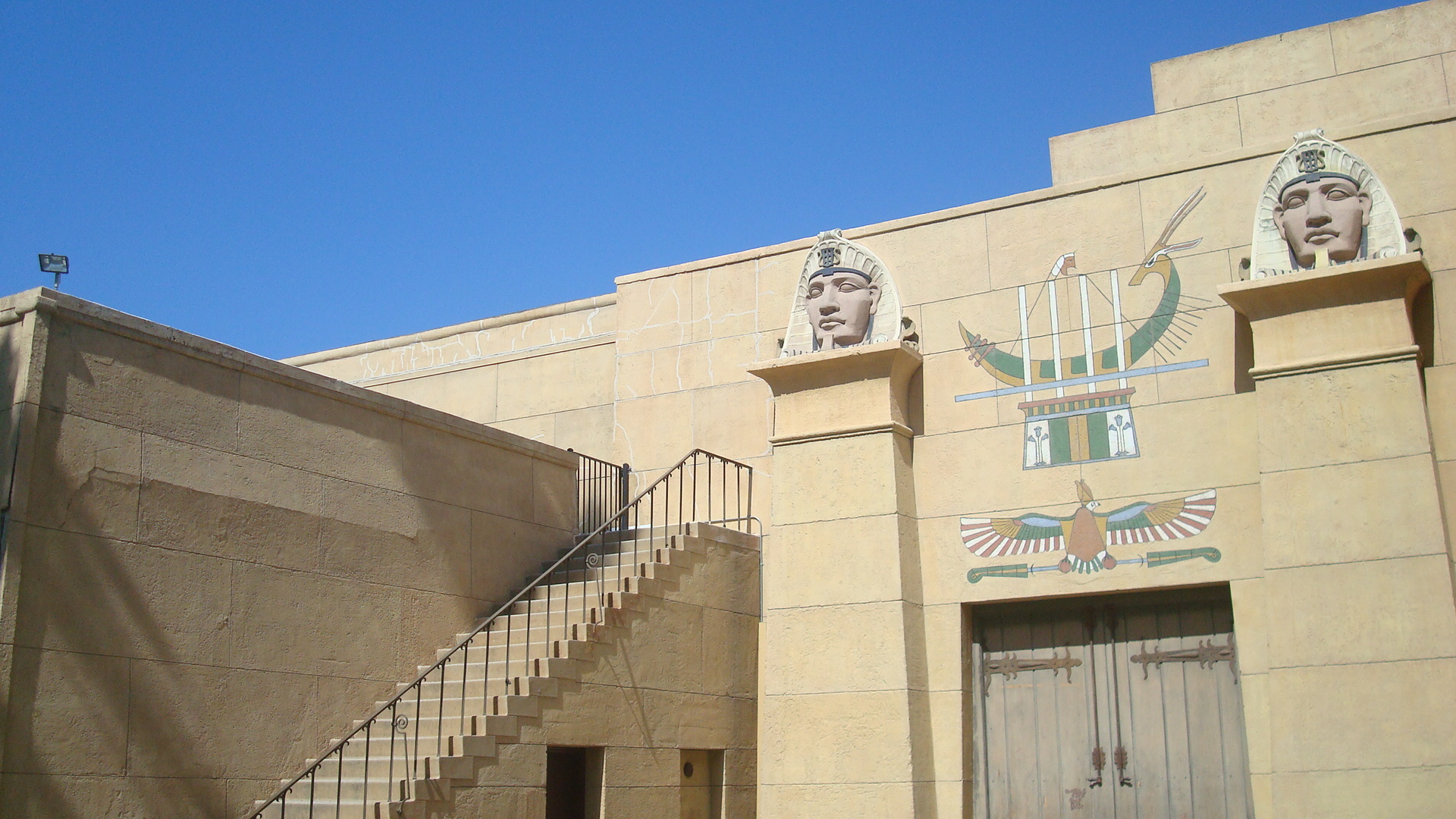
But in the eighties multi-plexes started springing up, and the huge Hollywood theatres couldn’t compete. They either had to change or die. The Egyptian Theatre was shuttered in 1992. I was really upset. I’d seen so many movies there, including 2001, Alien and Point Break. When it suffered major damage in the 1994 Northridge quake, I was sure the next step was demolition. So I was overjoyed when I heard the American Cinematheque had bought the building and was going to renovate it.

Overjoyed, that is, until the theatre reopened and I saw the results. The auditorium was less than half its original size and the screen was significantly smaller. Plus, there were a number of minor changes that bugged me. I wrote it all down in the journal entry below. I was ticked off.

On the plus side, though, the Cinematheque was on Hollywood Boulevard and they were showing some great stuff. I eventually signed on as a volunteer, and ended up giving tours of the theatre, which made me look at the changes in a whole new light. In the first place, there was no way the Cinematheque could run the Egyptian as a 2,000 seat house. It just wasn’t possible to fill an auditorium that big on a regular basis. They had to find a way to solve that problem, and the solution was building two smaller theatres inside the original structure. Second, the theatre I remembered was very different from the theatre Sid Grauman had built in nineteen twenty two. He created a silent movie palace. As soon as sound came in, the theatre had to start adapting to stay viable, and numerous changes had been made over the years. In the process of renovating the Egyptian, the Cinematheque actually revealed parts of the original structure that had been concealed for decades. Third, the process of renovating a historic building is incredibly complex and costly. The Cinematheque had to follow the City’s code for historic preservation and find the money to pay for everything. They were lucky to connect with a couple of very talented architects, Craig Hodgetts and Ming Fung. The team came up with a number of innovative and elegant solutions to some difficult problems.

I love seeing movies at the Egyptian these days. If the screen isn’t quite as big as it used to be, it’s still one of the largest you’ll find in LA. And the sound is way better than it was when the Egyptian was operating as a commercial movie theatre. So while the journal entry below shows my initial disappointment, as the politicians say, my views have evolved. When the theatre first reopened, I wanted it to be the way I remembered it in years past. That wasn’t possible. Things change.

Here’s a link to a page on the American Cinematheque web site that shows images of the Egyptian over the years.

Egyptian Theatre Past

And here’s a link to the Hodgetts and Fung web site that shows images of their renovation/restoration.

H+F Egyptian Theatre

Egyp Hier

January, Nineteen Ninety Nine

Well, last night I finally made it over to the American Cinematheque. And I’ve gotta say I’m pretty disappointed with what they’ve done to the Egyptian. I mean, if you just want to look at it as a modern, mid-sized theatre it’s fine. But, aside from preserving some of the decorative elements, it has nothing to do with what the Egyptian was. It seems like the auditorium is about half its original size. The screen is considerably smaller. The seats are cozy but narrow, and there’s very little leg room. I was more comfortable the other night at the Beverly. Why do they have that sign up that says it’s Grauman’s Egyptian? It’s not. Did any of the people involved seriously think they were restoring or renovating the original theatre? All they’ve done is build a mid-sized auditorium inside the shell of a movie palace. They’ve completely changed the interior and the exterior of the building. The experience of going to this new Egyptian Theatre is totally different, and it’s certainly not a change for the better.

Now that I’ve got that out of my system, I also have to say I’m really glad to have the American Cinematheque on Hollywood Boulevard. I’m pretty impressed by their programming so far. It seems like they really want to offer all kinds of films. In spite of what they’ve done to the Egyptian, I look forward to going back.

Last night we saw Cruising, and Friedkin was there to talk about it. I really liked the film. It was interesting to hear the director’s comments, too.

Egyp Columns

Landmark? What Landmark?

Circus Disco

Circus Disco

When a proposed project might have significant impacts on the surrounding community, state law requires the developer to prepare an Environmental Impact Report (EIR). In theory, this is a good thing. The idea is to make sure that negative impacts are identified so that everyone is aware of how the project will affect the area. In practice, the whole EIR process is questionable. The basic problem is that the developer is the one who pays for the report, which means that it almost invariably focusses on the positive impacts, and either minimizes or ignores the negative impacts.

This is exactly what’s happing with the Lexington Project. The developer wants to build almost 700 residential units on a city block between Lexington, Santa Monica, Las Palmas and Seward. The EIR tells us it’s a terrific project with numerous benefits for the area. But there a lot of the people in the community who see things differently.

The aspect of the project that’s gotten the most media attention is the fact that the developer will be demolishing the Circus Disco. You may be wondering why this is a big deal. Hollywood is full of places to dance. But the Circus is an important landmark for the LGBT community in LA, and especially for non-white gays and lesbians. Back in the 70s, when disco was big, there were plenty of clubs where gay men could party all night long. Unfortunately many of those clubs didn’t admit blacks and Latinos. But the Circus Disco was open to everyone, and it’s been cherished for years by the LGBT community because of that.

But while the EIR mentions the Circus in its survey of structures on the property, the report concludes that, “… [N]one of these buildings appears eligible for listing in the National Register, California Register, or for local City of Los Angeles Historic-Cultural Monument designation.”

This is interesting. Sure, it would be hard to make a case that the Circus was significant enough to make the national or state registers. But are they saying it’s not a significant part of LA history? If so, it seems that the City of LA’s Office of Historic Preservation has a different view. Survey LA is a program initiated by the OHR to document significant buildings. Last year they released a document entitled LGBT Historic Context Statement which gives an overview of the community’s history and identifies potential landmarks. And the Circus Disco is on the list.

LGBT Historic Context Statement from Survey LA

But it’s not just the Circus that’s threatened. The French Market and Catch One, both of which hold a significant place in the LGBT community, may soon be gone. And let’s not forget that back in 2011 the building that originally housed A Different Light, an early gay bookstore, was demolished. That was the same year that the Spotlight, according to some the oldest gay bar in Hollywood, closed its doors. The building still stands, but now it’s just another upscale nightclub. It does seem like the LGBT community is losing a huge chunk of its history.

Not that any of us should be surprised. Preservation has never been a high priority in LA. Groups like the Los Angeles Conservancy and Hollywood Heritage keep fighting to save these buildings, but City Hall seems more interested in keeping the developers happy.

If you want to learn more, this article from the Daily News offers a good summary.

Disco to Become Site for Condominiums

Mural on the front of the building

Mural on the front of the building

Erasing Hollywood’s History

A view of 1905 Grace from Grace Ave..

A view of 1905 Grace from Grace Ave..

UPDATE: A time has been set for the meeting to consider this building as a historic landmark. Here are the details:

CULTURAL HERITAGE COMMISSION
SPECIAL MEETING
Tuesday, May 12, 2015, 10:00 am
200 North Spring St.
Room 1050, City Hall

You might also want to take the time to read the comment at the end of this post from John Girodo of Hollywood Heritage. He gives more information about what’s happening.

Thursday night I heard some disturbing news. An American Colonial mansion that was built in 1917, located at the corner of Grace and Franklin in Hollywood, is slated for demolition. A developer wants to knock the building down, probably with the intention of constructing high-end residential units.

Hollywood Heritage is trying to have the mansion nominated as a historic monument, but things don’t look good. The Office of Historic Resources will be holding a hearing to consider the nomination, but it’s on such short notice that it will be hard to rally the community. The meeting is scheduled for Tuesday, May 12. The last I heard, the time hasn’t been set.

It seems like the City is trying to rush this through, which doesn’t surprise me given their recent record. In just the last year the City has allowed developers to level the Mole-Richardson Building on La Brea and the Oswald Bartlett House in Los Feliz. Those are just the two most recent casualties of the current wave of development.

Can anybody stop this? I don’t know. It would be great to have a good turnout at the meeting on Tuesday. Hollywood Heritage says people must show up in person to express their views, but it’s hard to plan on attending when the time hasn’t even been set. Hopefully the OHR will nail that down pretty soon. It also might be helpful to find out what CD 4 candidates Carolyn Ramsay and David Ryu have to say about this. They’ve both said they want to preserve Hollywood’s history. Let’s find out if they really mean it.

Carolyn Ramsay

David Ryu

If you can’t make it to the meeting on Tuesday, you might still let the OHR know how you feel about this. The link is below.

Office of Historic Resources

[For an update on 1905 Grace, click here.]

A view of 1905 Grace from Franklin Ave..

A view of 1905 Grace from Franklin Ave..

Midnight at Wilshire and Fairfax

W&F 1 Scaf

Last week I went to one of the screenings in UCLA’s preservation festival. I think I left around eleven, and then caught the bus on Wilshire. I got off at Fairfax, where I have to transfer. It took a while for the next bus to show up, so I took some photos while I was waiting. It seemed like there was a lot of stuff going on….

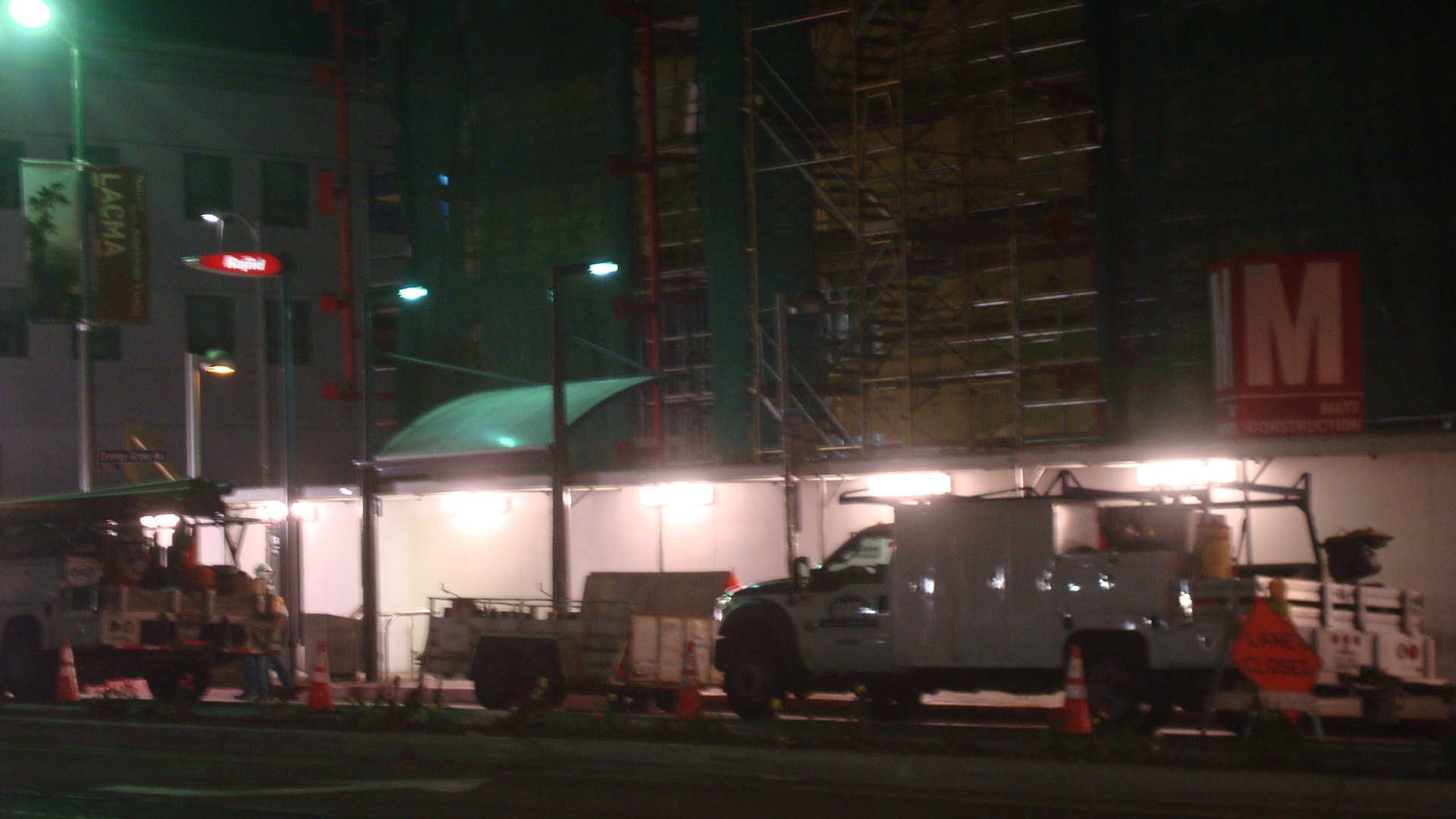
Night time is when the MTA crews show up to work on the Purple Line extension. You don’t see them during the day. Just metal plates lying all over the street. But at night these guys set up their barriers and their lights and go to work.

MTA crews work on the Purple Line at night.

MTA crews work on the Purple Line at night.

Just across the street, the old May Co. building is surrounded by scaffolding. It seems that the Academy is finally starting the process of transforming this dinosaur of a department store into a new museum devoted to film. I have no idea when it’ll be completed, but I’m glad to see that work has begun.

Scaffolding set up on the west side of the May Co. building.

Scaffolding set up on the west side of the May Co. building.

I was standing there on Fairfax snapping photos, when a few runners went speeding past. At first I thought it was just some people who lived in the neighborhood out for some exercise. But then another group ran by, and then another, and then it was a steady stream of people racing down Fairfax. My guess is that a couple hundred people went by, but it could have been more.

Runners stampeding down Fairfax toward Wilshire.

Runners stampeding down Fairfax toward Wilshire.

More runners heading down Fairfax.

More runners heading down Fairfax.

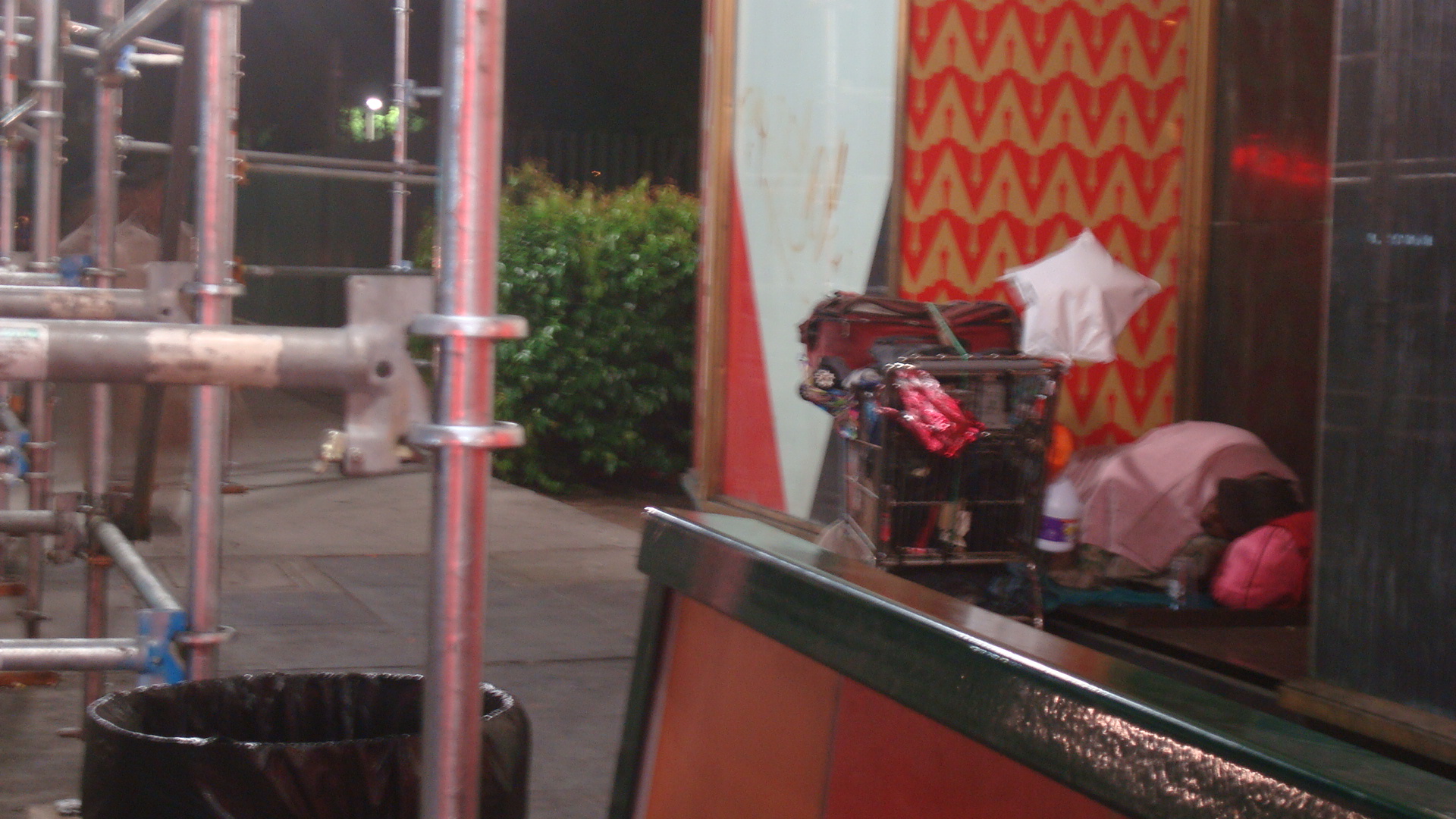
As usual, there was a homeless guy camped out in one of the recessed areas along the side of the May Co. building.

A homeless man taking shelter for the night.

A homeless man taking shelter for the night.

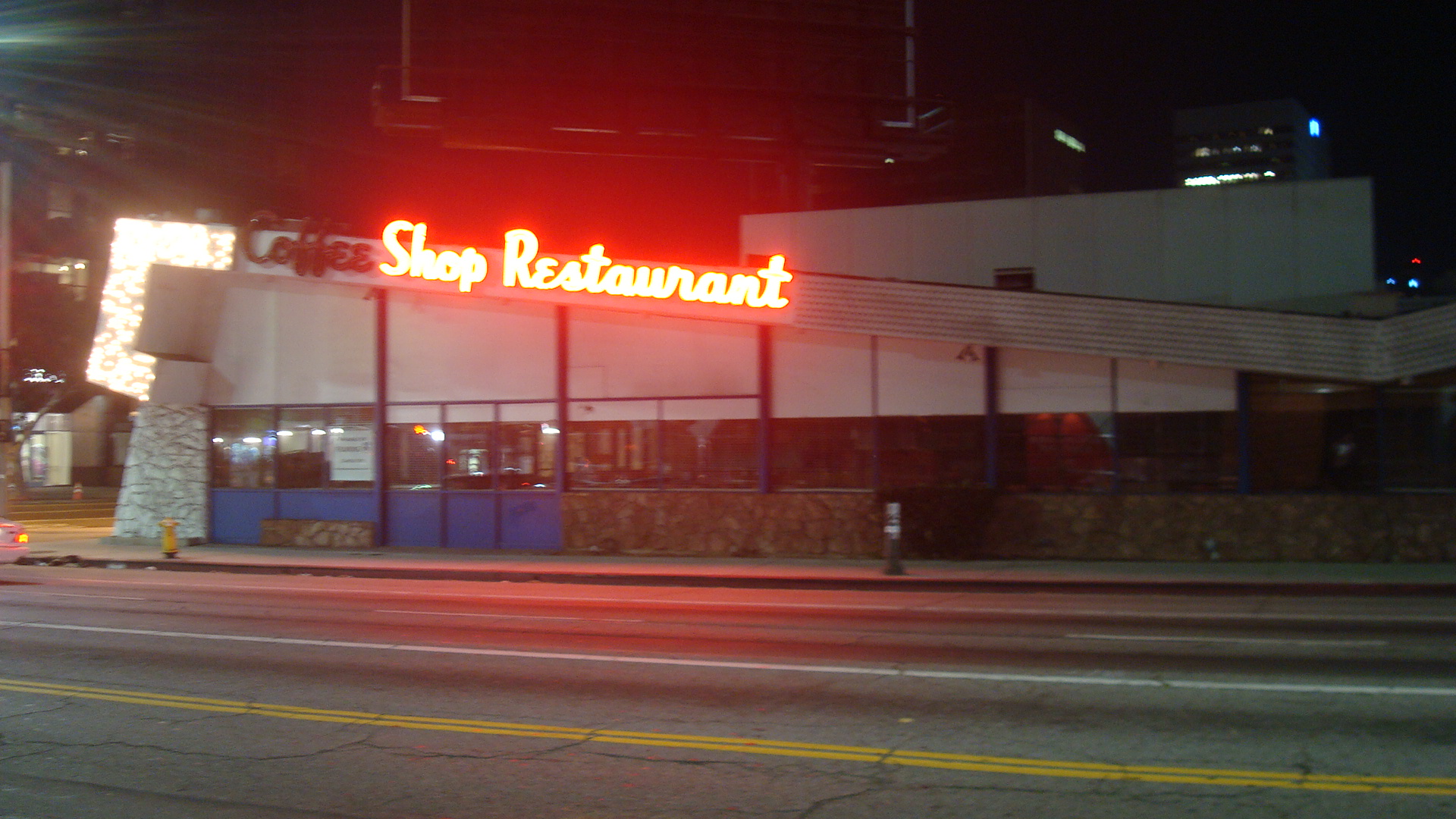
And of course there’s Johnie’s, blazing away in the darkness. The banks of lights that surround the building are slowly going out, but those that are left let you know that this classic coffee shop has not gone away. The place has been closed for years, but the flashing lights seem to be insisting that it’s still open for business. That it’s still alive.

Johnie's refuses to die.

Johnie’s refuses to die.

Putting Lives Back Together

SRHT Main All

LA is suffering from an affordable housing crisis, but there is some good news to celebrate. Thanks to the efforts of the Skid Row Housing Trust (SRHT), formerly homeless people are getting a roof over their heads and a place in the community. The SRHT is using innovative approaches to creating housing in the Downtown area.

Homelessness is a complex problem. It’s not just a matter of giving someone a place to live, because people living on the streets are often struggling with a variety of issues. In the first place, finding a job, which can be tough if you don’t have skills that are currently in demand. Depression, mental illness and substance abuse are also common problems, and these are not solved simply by giving someone the keys to an apartment.

But having a place to live is the first step. And the SRHT offers assistance to people grappling with other issues by creating permanent supportive housing. This means that the residents living in these communities have access to counseling, job training, health care and other services in order to get their life back on track.

The SRHT has been working on two new projects in Downtown. First, let’s take a look at the Star Apartments….

SRHT Star Frnt

The Star Apartments are located near the corner of Sixth and Wall. The project was designed by Michael Maltzan Architecture, and they used an interesting approach. The site was occupied by a one-story building, which they wanted to expand to create more units. The solution they hit on was stacking pre-fab cubes on top of the original structure, which in addition to being fast and economical, resulted in a striking piece of design.

SRHT Star Sky 1

You can read more on Maltzan’s web site.

Star Apartments

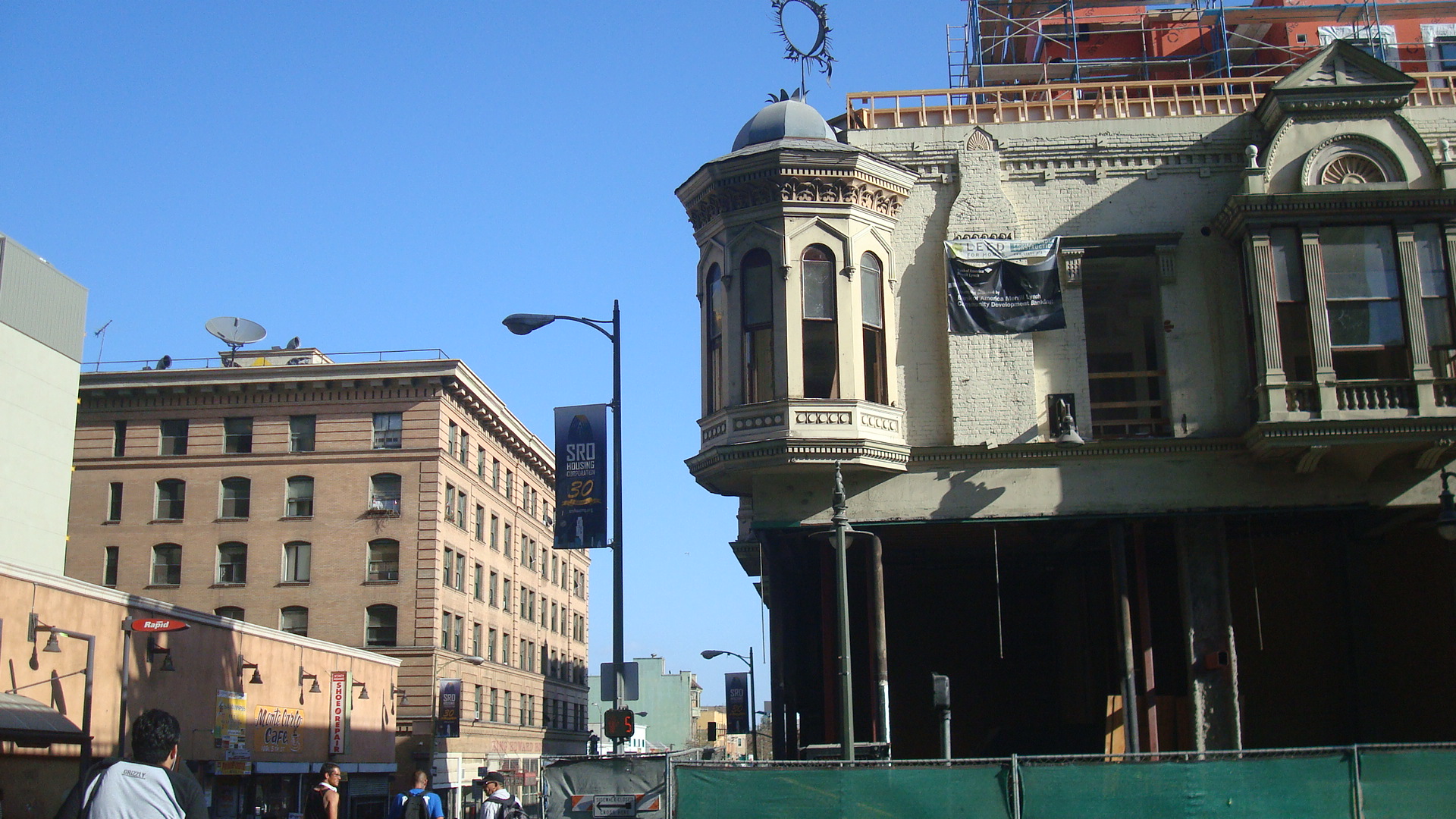
Next, check out the New Pershing Apartments at Fifth and Main. This project actually combines two structures, the Pershing Hotel and the Roma Hotel, built in 1889 and 1905, respectively. The new design, by Killefer Flammang Architects, preserves original elements of the exterior. In addition to the residential units, the New Pershing will also offer a courtyard, two recreation decks and planters for gardening.

First let’s look at a couple of shots taken while the project was under construction, back in October of 2014. The first was taken from the corner of Fifth and Main.

SRHT Main Const 1

This next photo was taken on Main, directly across from the building.

SRHT Main Const 2

Now let’s look at the finished project.

SRHT Main Frnt

And another shot from Fifth and Main.

SRHT Main Full

Here’s the article that the Downtown News ran on the New Pershing earlier this month.

A Victorian Victory

You can find more information about the SRHT’s activities by visiting their web page. And if you want to support their efforts, I’m sure a donation would be welcome.

Skid Row Housing Trust

The Ennis House

En 20 Sky

I’d read about Frank Lloyd Wright’s Ennis House for years, but I’d never actually been to see it.  So this last weekend I decided I was going to pay a visit.

The gate at the driveway.

The gate at the driveway.

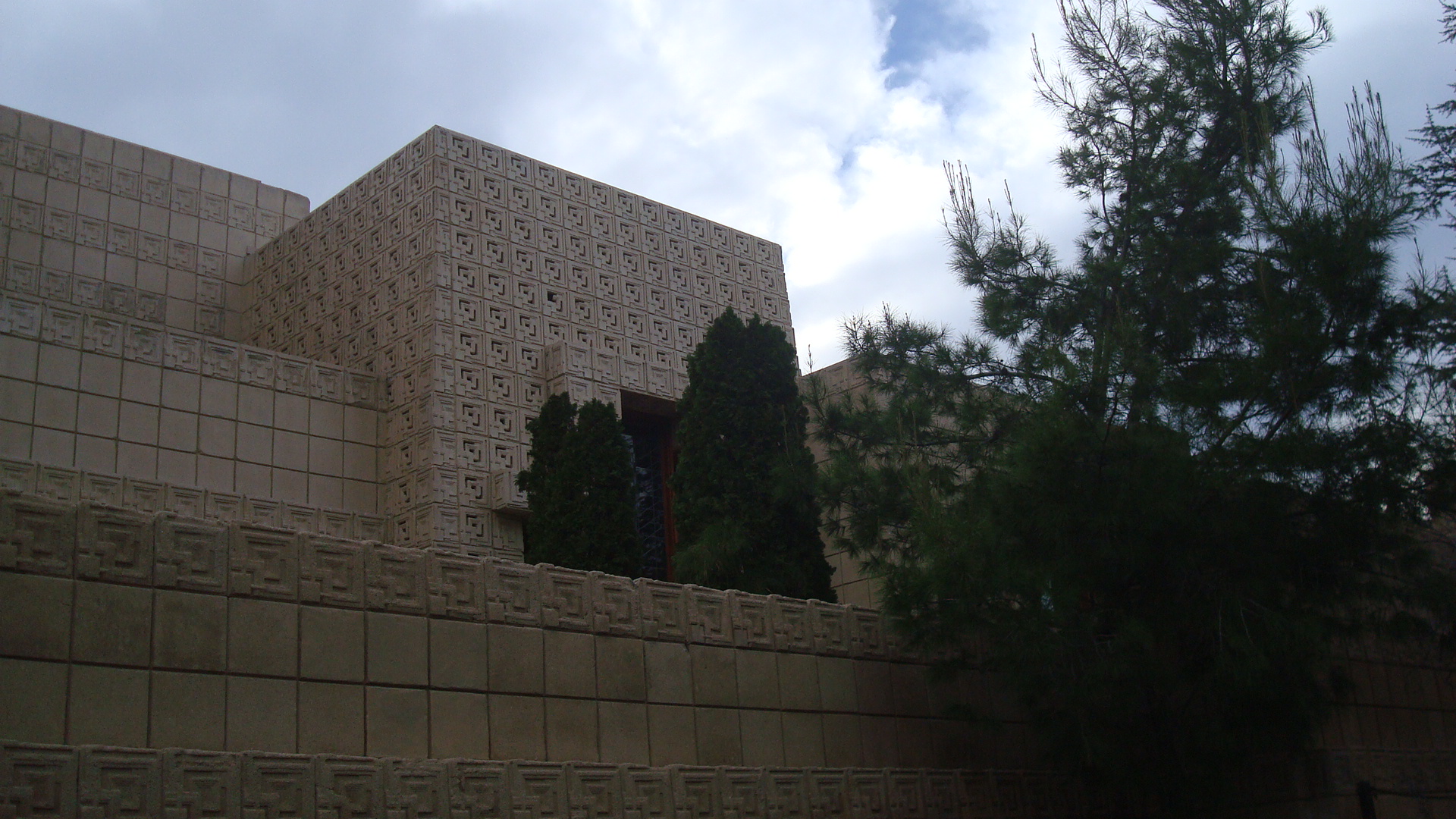
It’s an amazing structure, built using the “textile block” process that Wright explored during his time in the LA area.  Unfortunately, as beautiful as the house is, it started falling apart even before it was finished.  Wright’s idea of mixing granite from the site into the concrete used for the blocks probably sounded like a good idea at the time.  In practice, though, it made the blocks unstable.  Millions have been spent restoring the Ennis House over the years.  For a while, it was owned by a foundation that tried to rehabilitate it, but the process proved too costly and they ended up putting the house on the market.

The front of the house.

The front of the house.

Selling Wright’s LA area houses isn’t as easy as it might seem.  The Ennis House was on the market for years, and the price had to be lowered significantly before a buyer was found.  As far as I can tell, La Miniatura in Pasadena is still on the market.  The problem seems to be that beyond the purchase price, buyers know that they’ll have to spend a fortune on upkeep.  And because the houses are on the National Register of Historic Places, the standards for restoration are very strict.  If you need to patch a wall, you can’t just slap on some spackle.

The back of the house.

The back of the house.

But the Ennis House is lovely, and absolutely one of a kind.  Wright was influenced by Mayan architecture, and the house seems at once both ancient and modern.  To see what it looks like inside, visit the web site by clicking the link below.

The Ennis House

And if you’re not familiar with Wright’s work, you might want to visit the Wikipedia page devoted to him.  Aside from the quality of the work he did himself, he had a huge influence on American architecture.

Frank Lloyd Wright at Wikipedia

Wright thought he was creating a practical approach to constructing homes with his textile block system.  In reality, it turned out to be terribly inefficient and outrageously expensive.  But the fact that people have been willing to invest the time and money to maintain them over several decades is an indication of how precious these homes are.  Their value goes way beyond anything you can measure in dollars.

Another shot of the back of the house.

Another shot of the back of the house.