The City of LA’s parks are in trouble and they need your help. Lately I’ve been writing a lot about the City’s parks and the challenges they’re facing. The Department of Recreation & Parks (RAP) is aware of the problems, but at this point they don’t have the funding to invest in upgrading their facilities. One possible solution is a bond measure, but before the City goes that route, they want to get input from residents. That’s where you come in.
If you care about LA’s parks, get involved in the Park Needs Assessment. This is a process that will unfold over months. You can participate in community meetings, and if you can’t make the meetings there’s an on-line survey. Neighborhood Councils are also encouraged to submit comments. For more info, click on the link below.
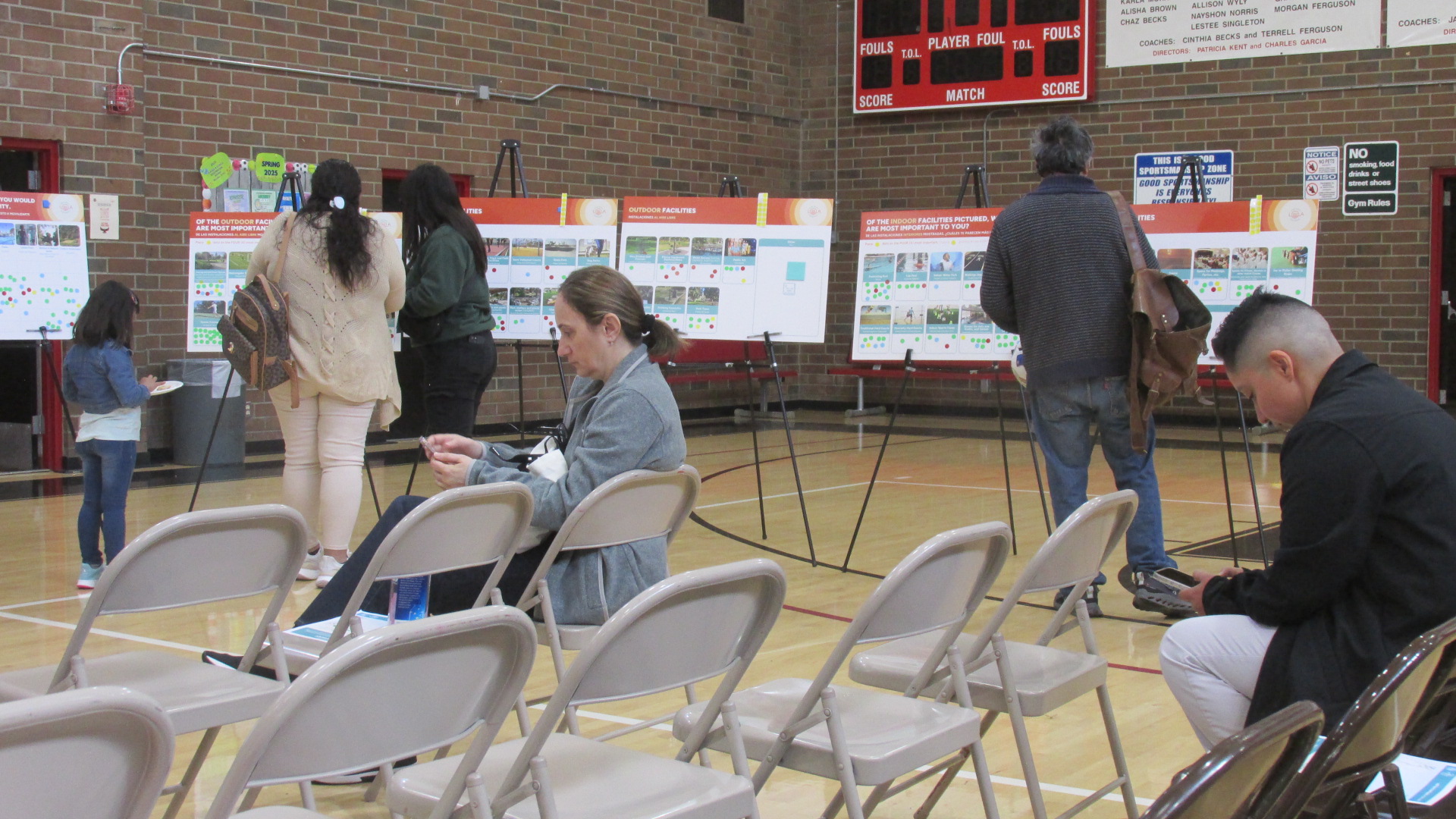
I went to a meeting at the Victory Vineland Community Center in February. They had lots of colorful boards with graphics. The presentation was brief and effective. And there were plenty of RAP staff members there to answer questions and take comments. I came away feeling like they really wanted to hear from the public.
So don’t be shy. Go to a meeting. If you can’t make a meeting, do the on-line survey. Let the City of LA know what kind of parks and recreation facilities you’d like to see. This is your chance to be heard.
Following up on my recent posts about funding for parks in the City of LA, I wanted to offer an update on a recent action by the LA City Council. Because of the budget crisis that the City is currently facing, the Council is looking for ways to generate more revenue. Last week they approved a report from the Budget & Finance Committee which asks City departments to report back on a number of possible options, including a bond measure to raise funds for both the LA Fire Department and the Department of Recreation & Parks (RAP). They’re also looking at increasing the base funding formula for RAP in the City Charter. (It’s actually worth reading the whole report. Some of the options are interesting. Some are bound to be controversial.)
Park advocate Ron Bitzer, who serves as a volunteer on the City Park Advisory Board in North Hollywood, also sees a possible opportunity emerging as the City tries to rebuild after the recent fires. Bitzer has written an open letter to Steve Soboroff, who was selected to lead the recovery effort, where he argues that planning for more parks, and creating funding streams, should be part of the process.
In general, I think we should be making sure that open space, green space, and the urban forest are integrated into all of LA’s planning efforts. In recent years both our local and State government have worked to fast-track project approvals, in large part arguing that we just need to build housing as fast as possible. Unfortunately, this has led to the removal of more trees and the loss of more permeable surface area, which will make LA even hotter and drier. Instead of just rushing to build as much as possible, we should be planning to build healthy, sustainable communities.
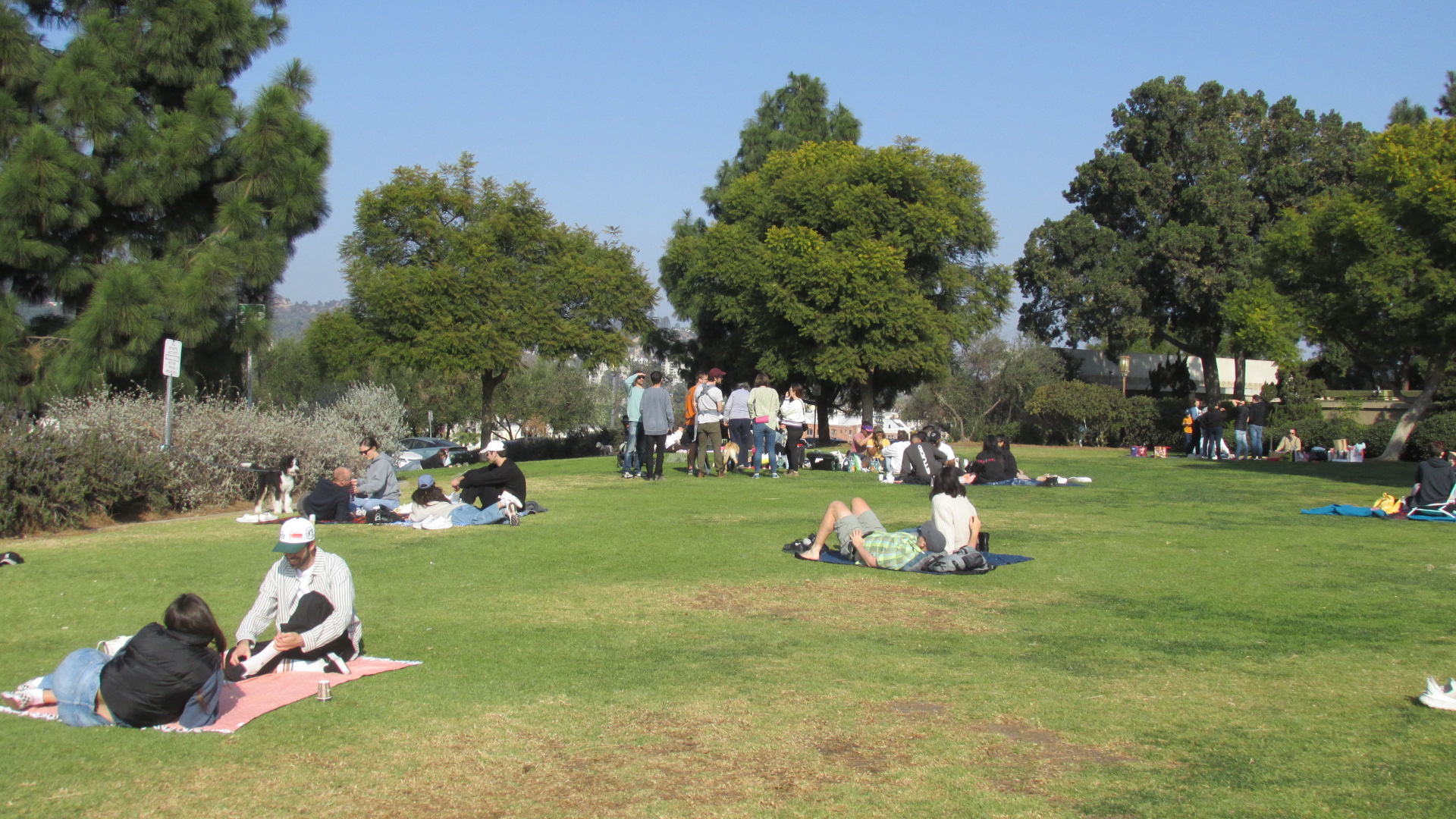
People enjoying the afternoon in one of LA’s parks.
In a recent post I talked about why the LA City Department of Recreation & Parks (RAP) is having such a hard time maintaining the parks in our communities. Mostly, it comes down to money. RAP doesn’t have the funds to hire enough staff or pay for upgrades, in large part because of what LA City Hall calls the “full cost recovery program”, and the City Council’s ongoing inability to create a balanced budget.
One solution to RAP’s problems would be a ballot measure, which has been done before. In 1996, voters approved Proposition K, the LA for Kids Program, which was designed to provide $25 million per year for 30 years. This money has been spent on capital improvements to parks, recreation, and community facilities. However, Prop K will expire in a few years, and this will leave RAP even more impoverished than it is now. But if we’re going to do another ballot measure, we need to do it right.
I’d like to introduce you to Ron Bitzer, who serves as a volunteer on the City Park Advisory Board in North Hollywood. Ron has been fighting for LA’s parks for years, and would like to see all Angelenos have access to clean, well-maintained areas for recreation and relaxation. In this article he offers a detailed breakdown of the challenges RAP is facing. He also talks about how we could create a funding stream to address these challenges.
UPDATE: RAP is in the process of preparing a Park Needs Assessment, and this will be discussed at a meeting of the Facility Repair & Maintenance Commission Task Force on Thursday, February 6, at 10:00 am. The meeting will be held at the Chevy Chase Recreation Center, 4165 E. Chevy Chase Drive. The Task Force will only take public comment from those who show up in person. Click on the link below for the agenda.
If you can’t make the meeting on February 6, see page 5 of the agenda for a tentative list of future meetings under the heading Public Engagement (Phase 1).
We can provide funding for LA’s parks, but the process must include real public engagement and meaningful oversight. Our parks belong to the people. Let’s make sure the people have a voice in planning for their future.
The LA Department of Recreation & Parks (RAP) has been underfunded and understaffed for years. While LA politicians talk a lot about the importance of green space and open space, when it comes to actual funding, LA’s parks seem to be a very low priority. Some of the city’s parks are well-maintained, but these tend to be in more affluent areas, where residents have access to additional funding resources. Many of LA’s parks are in bad shape because RAP doesn’t have the money or the staff to give them proper care.
One of the biggest problems for RAP is that it’s one of only two LA City departments that’s subject to the “full cost recovery program”, something that City Hall imposed when it was dealing with the 2008 financial crisis. This means that RAP has to reimburse the City for the cost of the water and power it uses, in addition to the cost of employee benefits. (The only other department required to do this is the LA Public Library, and they were able to mitigate the loss of funding through a ballot measure.) This means that RAP is paying tens of millions of dollars every year to cover these costs, which is a huge chunk of its budget. To give you an idea of what a drain this is, here’s an excerpt from a memo sent by RAP General Manager Jimmy Kim regarding the Department’s 2023-24 budget….
CHALLENGES: RAP is required to continue to use $98M (28.92% of the total operating budget) to pay reimbursements to the City’s General Fund for employee benefits ($64.7M), the Department of Water and Power (DWP) for utilities ($30.4M), and the Bureau of Sanitation for refuse costs ($2.9M). These increases diminish RAP’s ability to meet and increase vital maintenance and recreational programming needs. Since the inception of these Department contributions in FY ‘08-09, approximately $969M has been diverted away from RAP’s core operations.
So if you’re wondering why the playground in your local park is looking so worn out, or why the restrooms aren’t properly maintained, or why the pool has been closed for so long, there’s a good chance it’s because RAP doesn’t have the money to take care of these things. A 2018 Parks Condition Assessment Report recommended that 20 recreation centers be replaced because they were in poor condition, needing major retrofits and renovation. The same report recommended that 12 pool and bathhouse facilities be replaced because many of them were over 60 years old and had surpassed their expected service life. But more than six years later, much of that work has still not been done because of insufficient funds.
The people of LA need clean, well-maintained parks. It’s possible to provide the funding to accomplish that, but any effort along those lines needs to be open and transparent, with strong public engagement and careful oversight. I’ll be writing a follow-up to this post where I’ll talk more about how we can make that happen.
Proposed conceptual plan for Headworks Site Development Project.
When I first started this blog over a decade ago, one of the first things I posted about was the construction of the Headworks Water Complex on the LA River just north of Griffith Park. (I also posted a follow-up in 2028.) The project consisted primarily of two underground reservoirs that were built in response to Federal laws that prohibited storing drinking water in open reservoirs, but the LA Department of Water & Power (LADWP) is now moving forward with other components, including a water quality laboratory, a direct potable reuse demonstration facility, and a public park.
View of Headworks site from Forest Lawn Drive, looking north toward Burbank.
The first reservoir was completed in 2015, and the second in 2022. The public park was part of the original proposal, and I’d been wondering for years if it was ever going to happen, but in 2024 LADWP released an environmental study which includes the park proposal. It looks like it’s moving forward.
Another view of Headworks site from Forest Lawn Drive.
In addition to providing new recreational space, the proposed Headworks Restoration Park would provide facilities to educate the pubic about local ecosystems and water use. The centerpiece would be the gardens constructed on top of the West Reservoir. Currently the plan for the gardens includes a series of ramps, landings, and walkways along with groves of trees and bike paths. The image at the top of this post gives a general idea of what it would look like.
Top of reservoir protruding through landscape at Headworks site.
Right now LADWP is projecting that the park would be completed in 2028. Let’s hope it happens, but it’s important to remember that infrastructure projects have a way of dragging out longer than expected.
How much alcohol at LA City parks is too much alcohol? It appears that the City of LA doesn’t believe there’s any such thing as too much alcohol at city parks. At the April 20 meeting of the Board of Recreation and Park Commissioners, one of the agenda items was a proposal to revise the Recreation & Parks Alcoholic Beverage Policy.
The current policy says only beer and wine can be served at public events in LA City parks, and it limits the number of events where alcohol is served to no more than one event per park per year. The proposed revisions would allow the sale of a full line of alcoholic beverages and remove any limits on the number of events where alcohol is served.
Does that really seem like a good idea? Opening up our parks to an unlimited number of events that offer booze to attendees? There are so many problems with this it’s hard to know where to begin.
First, while the revised policy requires that event organizers hire security, the security is only going to be dealing with issues at the site of the event. What happens when people who’ve had too much to drink leave the area and start wandering around the park? Or get into their cars and start driving home? Just last year a cyclist riding through Griffith Park was hit and killed by a motorist. Police said the driver appeared to have been drinking.
Second, allowing more events that serve alcohol will likely bring a lot more people to LA’s parks, but the Department of Recreation & Parks hasn’t been able to properly maintain these important resources for years. Sadly, Rec & Parks has been the victim of severe budget cuts, and has been struggling without proper staffing. Increasing the number of visitors without increasing the budget for Rec & Parks just means the Department will be more burdened than ever.
And then there are the environmental issues. If increasing the number of events that offer alcohol would increase the number of visitors to LA’s parks, it seems likely that there would be significant impacts to the environment. This is especially true if the policy change means more live music festivals, which is almost certainly the case. There’s no sign that Rec & Parks has done any kind of environmental review, and there’s no way they could claim that this policy change wouldn’t have any impacts.
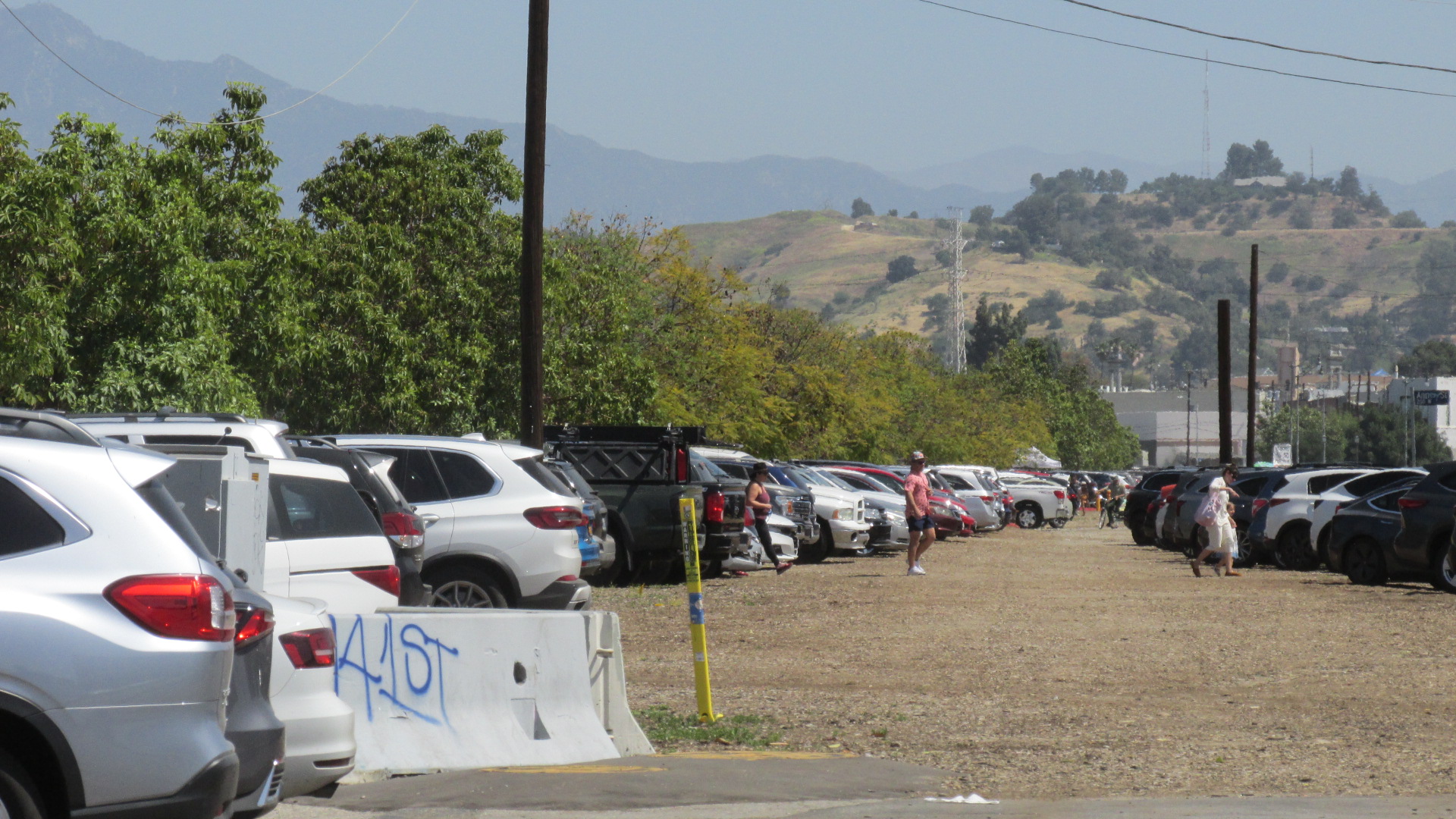
One impact would be traffic. I know our leaders like to pretend that nobody drives any more and everybody takes transit, but if you believe that’s true, you should check out the full parking lot and the cars lining the street on the periphery of the LA State Historic Park. You can see the same at many of LA’s other parks. Unfortunately, the vast majority of Angelenos still drive cars to get where they want to go.
Another impact is solid waste, and again, more music festivals would be a particular problem. The City will tell you that all the empty aluminum and plastic containers discarded at these events can be recycled, so there’s no impact to the environment. Sure, they can be recycled, but they’re often not, and the City has been struggling for years to comply with a State mandate that it divert 50% of its solid waste to recycling. More music festivals would also likely have significant impacts on habitat and wildlife, and these impacts should also be assessed.
One of the motivations for this policy change may be to generate more revenue for Rec & Parks, and the Department certainly needs more funding. But the change will probably result in higher costs, too, and there’s no sign that this has been analyzed. Before even considering increasing the number of events that offer alcohol, the Department should do a study to analyze whether increased revenue would offset the increased costs.
There may be good arguments for increasing the number of events that offer alcohol at LA’s parks, but lifting the current caps to allow an unlimited number, especially if serving a full line of alcohol is allowed, does not make sense. It might make sense to allow a small increase in the number of events with alcohol. Or it might make sense to designate certain parks that could host these events. Rec & Parks should study a few different options, and weigh the benefits against the costs. They also need to do environmental review.
If you’d like to offer input on the proposed revisions to Rec & Parks’ Alcoholic Beverage Policy, you can send an e-mail to the Board of Commissioners:
RAP.COMMISSIONERS@LACITY.ORG
You might also copy General Manager Jimmy Kim and his Administrative Assistant, Desiree Ramirez:
Jimmy.Kim@lacity.org
Desiree.Ramirez@lacity.org
It also couldn’t hurt to contact your LA City Councilmember to let them know how you feel.
There may be ways to update the current policy that would provide benefits, but just opening the door to an unlimited number of events with alcohol is not a good idea.
The pandemic wasn’t really over in April, but a lot of people, including me, were tired of being shut up at home. I wanted to get out into the world again. I’d been thinking for a while about paying a visit to Los Angeles State Historic Park on the outskirts of Downtown. I finally just got on the train and headed down there.
The park has been a work in progress for over a decade. I wrote a post about it in 2014, when many people still called it The Cornfield. Back then it was mostly just grass and dirt. Since then, it’s been transformed into a well-manicured open space….
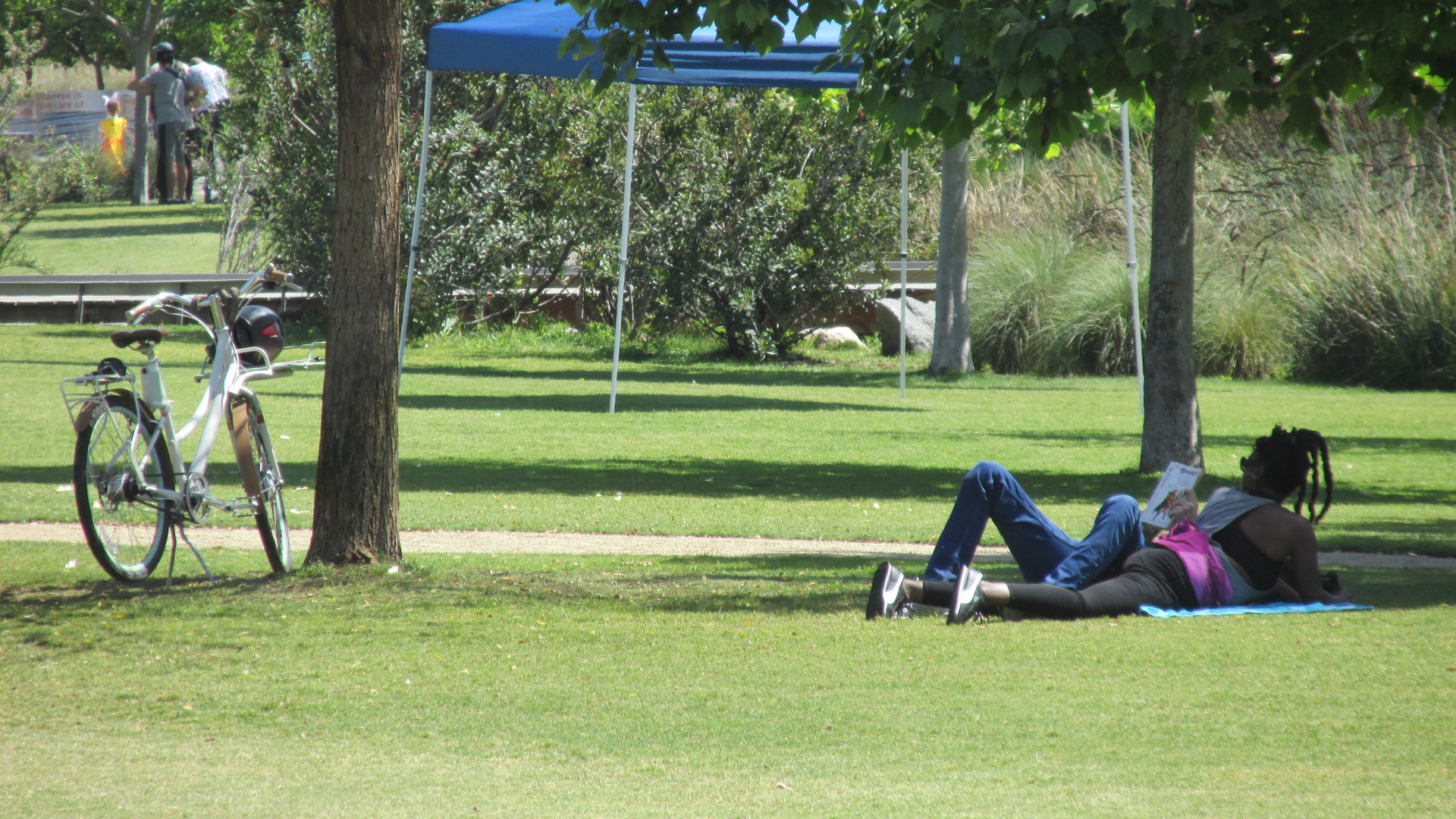
It certainly seems popular. On the day I showed up there were plenty of folks enjoying the park, and it’s not hard to see why. It’s impeccably landscaped, with gently curving paths winding through the grass, and rows of beautiful trees. There’s a good-sized field for those who want to get a game going. It seemed like the crowd was mostly younger, with a number of moms and dads and little kids.
It also seemed like the crowd was mostly made up of relatively affluent millennials. I have no hard data on where they came from, but I suspect that many of them live in Downtown. If that’s the case, they’d have to be making fairly good money. The listings on Apartment.com show that most of the studio apartments in the 90012 zip code start around $2,000, with one-bedrooms going for between $2,500 and $3,000. Rents at the Llewellyn, a fairly new building just across the street from the park, go from $2,450 to $5,155.
The City has had a good deal of success in luring people to Downtown, but let’s face it. Downtown is not open to everybody. If we go with the standard assumption that you’re supposed to spend about a third of your income on housing, you’d need to make $72,000 a year to afford a studio apartment in the area. A small family would probably have to have a combined income close to six figures just to get into a one-bedroom.
Back in March, I was listening in on a meeting of the City Council’s PLUM Committee where Director of Planning Vince Bertoni boasted about how proud he was of the City of LA’s Transit-Oriented Development program. I can’t imagine why. While City Planning has approved numerous residential skyscrapers near transit stops over the last decade, transit ridership has been declining steadily since 2014. Even in 2014, LA Metro was actually serving fewer people than it did back in the 80s, and it’s only been downhill since then.
If you want to know how successful LA’s attempts at Transit-Oriented Development have been, take a look at the parking area next to the State Historic Park. It was packed with cars on the morning I was there. And Spring St., which is on the park’s perimeter, was also lined with cars.
Please note in the last photo above that the L Line (Gold Line) Station is visible in the background. I’m sure some of the folks who showed up at the park that day rode the train, but obviously a lot of people decided to drive instead, in spite of the fact that the station is just a few hundred feet from the park entrance.
LA City Planning talks a lot about revitalizing LA’s urban centers, but we need to ask what they actually mean by “revitalization”. The cost of renting an apartment Downtown makes it clear that living there is mostly for the affluent. While thousands of new units have been built in Downtown over the past decade, the vast majority of them are for the upscale crowd. The same is true citywide. According to LA City Planning’s Housing Progress Dashboard, of the more than 184,000 new units that have been approved since July 2013, only about 26,000, or 14%, have been for middle-income, low-income and very low-income households. To be clear, these three categories COMBINED make up just 14% of the new housing approved.
As I said before, the City has been successful in luring people to live in Downtown, and I’m glad of that. Looking at US Census data for the 90012 zip code, which covers much of central Downtown, it’s clear that the area has seen substantial growth. According to the American Community Survey (ACS), the population in 90012 has grown from 29,298 in 2011 to 37,268 in 2020.
Unfortunately, even as Downtown’s population has grown, ridership on transit lines serving the area has been dropping steadily. The graph below shows the changes in ridership on lines serving Downtown in 2014 and 2019. It includes all rail lines serving the area, but only selected bus lines.
You can see there’s been a significant drop. It’s important to point out that the biggest decline was on the A Line (Blue Line), and much of this was due to the fact that portions of the line were closed during 2019 for repairs and upgrades. (They didn’t do much good. Problems arose soon after the line re-opened.)
But even if we pull the A Line out of the chart, we still see a loss in ridership. If the City’s Transit-Oriented Development program is such a success, then why is transit ridership declining in Downtown, even as the population grows. (If you don’t trust my numbers, and you want to do your own research, visit Metro Ridership Stats. Under the heading Systemwide (Bus and Rail), click Details.)
I think the answer has to do with the kind of people who are moving to Downtown. While I hear a lot of hype about young urbanites who love walkable neighborhoods, the crush of cars I saw crowding around State Park leads me to believe that many of Downtown’s new residents own some kind of vehicle. Of course, that’s just my personal view based on my personal experience. To get a more accurate idea of how many Downtown residents are car owners, let’s take another look at the U.S. Census’ American Community Survey.
Looking again at the 90012 zip code, let’s check out the stats for vehicle ownership in 2011.
2011 ACS Data on Vehicles Available to Population in 90012 Workers 16 Years and Over in Households
No vehicle available 10%
1 vehicle available 42.9%
2 vehicles available 36.4%
3 or more vehicles available 10.7%
Now let’s look at the stats for 90012 in 2020.
2020 ACS Data on Vehicles Available to Population in 90012 Workers 16 Years and Over in Households
No vehicles available 6.6%
1 vehicle available 42.4%
2 vehicles available 40.0%
3 or more vehicles available 11.0%
You can see that the number of workers 16 years and over with no vehicle available dropped from 10% to 6.6%. The number with one vehicle available is basically unchanged. Those with two vehicles available went up from 36.4% to 40%. These are not huge changes, but they do show that percentages of workers 16 years and over with access to a vehicle has gone up, not down. And when we consider that the population in 90012 rose from 29,298 in 2011 to 37,268 in 2020, this seems to indicate that there are a lot more cars than there used to be in Downtown. Put this together with the drop in transit ridership, and it’s hard to understand why the City thinks its efforts at Transit-Oriented Development have been a success. (If you believe there are a lot more people walking and biking in the central city, feel free to show me the data. I’ve looked, and I can’t find anything less than six years old.)
I want to emphasize that I’m a transit rider and I don’t own a car. I also want to say that I believe we need to focus new development around transit hubs, in areas where jobs and businesses are close by. In theory all this is great. In reality, though, the City of LA doesn’t seem to have achieved anything. In fact, it seems like the numbers are going in the wrong direction. And if we’re going in the wrong direction, shouldn’t the City assess the situation, find out what’s wrong, and try to do better?
Unfortunately, rather than being used as a strategy to create a more sustainable city, Transit-Oriented Development seems to have become an excuse to approve residential projects that are far too expensive for the average Angeleno. I can’t tell you how many times I’ve been at hearings held by City Planning where staff and/or Commissioners claim that big, new residential projects geared toward the affluent are exactly what the City needs to get people out of cars and onto busses and trains. When I present data showing that transit ridership has been going down since 2014, they don’t seem to hear. I’ve never gotten a response. The projects are always approved.
I think the State Park is cool. I’m glad people are spending time there. But I don’t buy the story that young urbanites are ditching their cars for busses, trains and bikes. The cars lined up across the street from the park seem to tell a different story, one that City Hall doesn’t want to hear.
I love cities. And I love Downtown LA. But the older I get, the more I think about the damage that cities do to the environment. At the beginning of the 20th century, Downtown was largely undeveloped. In a little over a hundred years, it’s become a dense urban landscape crowded with office buildings and residential towers, crisscrossed by roads and freeways. As a result, LA is hotter and drier, the air is dirtier, and like every other urban center, we’re contributing to climate change in a big way.
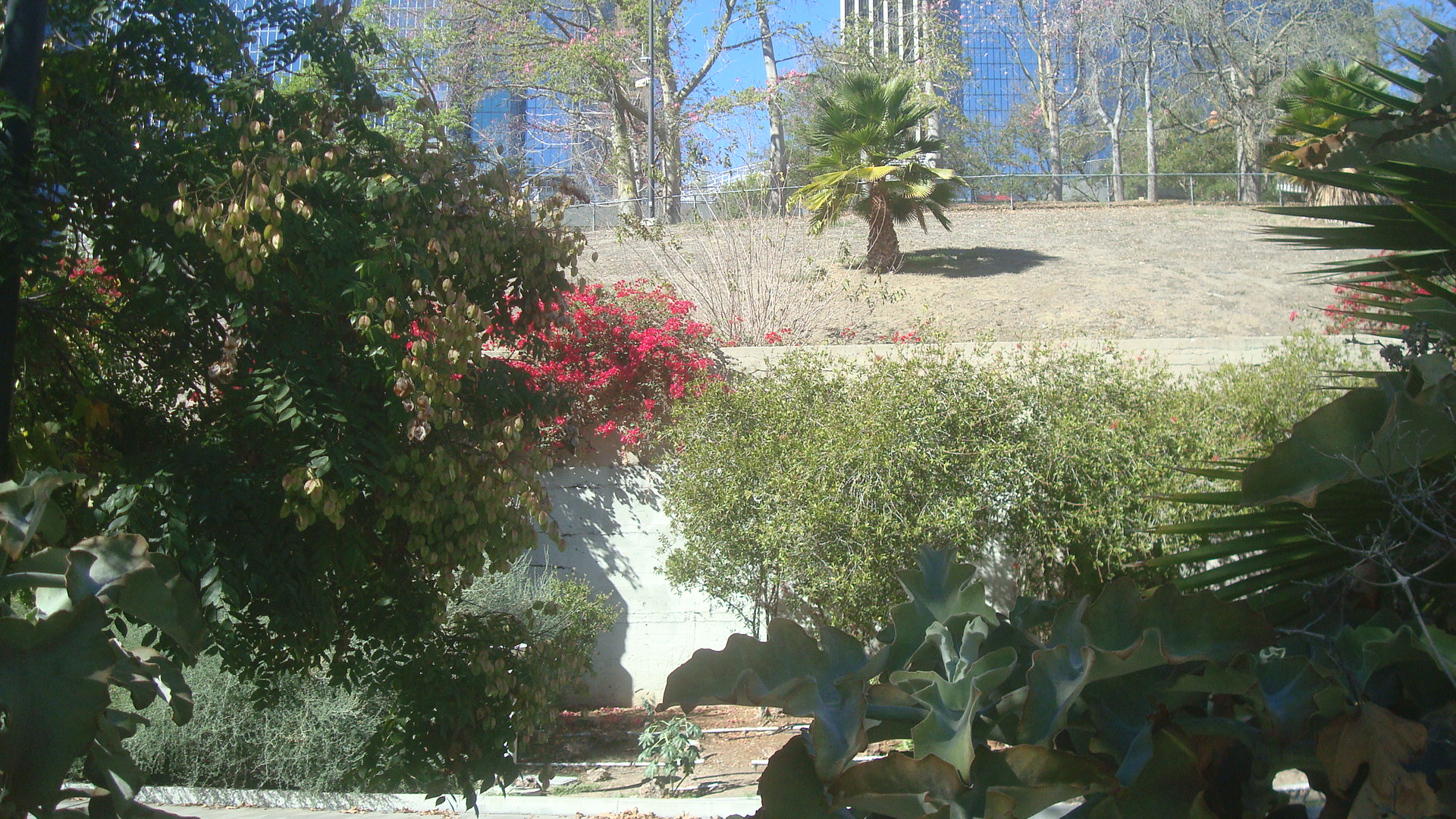
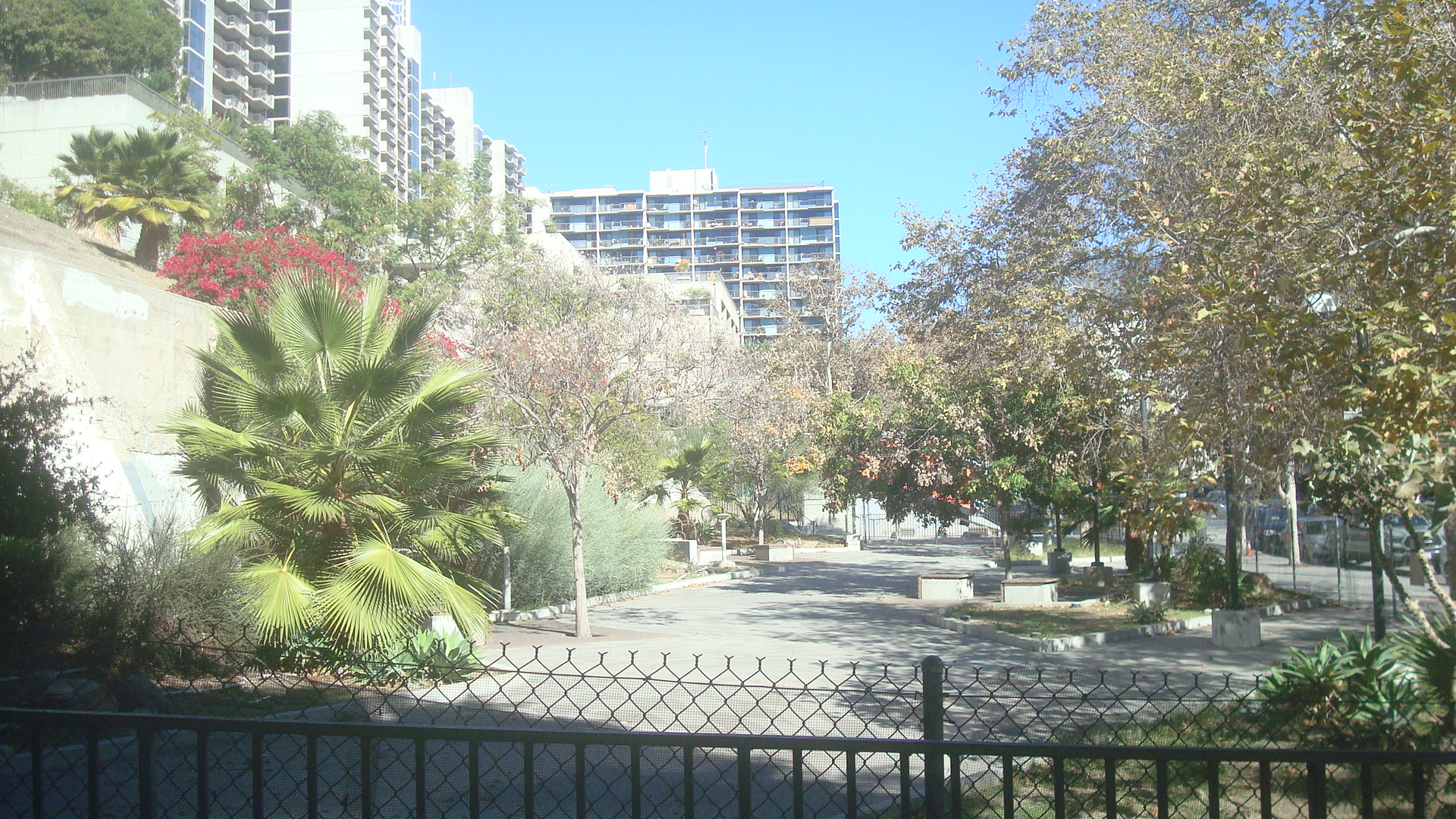
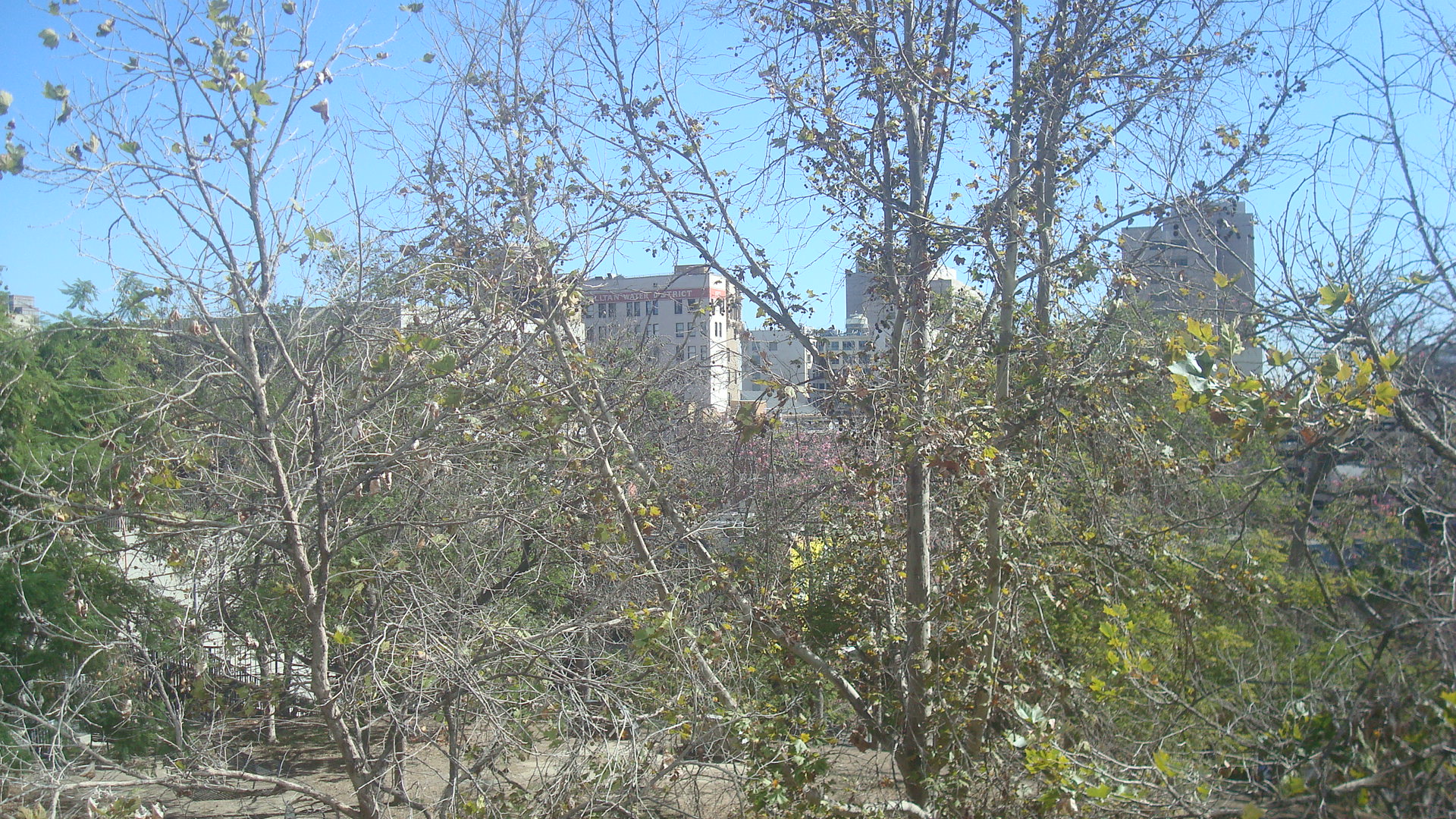
I was wandering around Cal Plaza a while ago, and ran across a piece of Downtown I’d forgotten about. As I looked out over the city in the direction of Hill Street, I saw that directly below me there was a small park. It took me a minute to realize it was the same park I’d seen many times at the intersection of Fourth and Hill. It’s been fenced off for years. Much of the greenery is dry, and the trees could certainly use some attention, but it was so cool to run across a patch of green space in the middle of all the steel and concrete.
Actually, it’s not technically a park. It’s a small patch of land called Angels Knoll that had been owned by the Community Redevelopment Agency (CRA). (I assume it got the name because it’s right night next to Angels Flight.) When the CRA was dissolved in 2012, a petition was circulated asking the City to turn the land over to the Department of Parks & Recreation. But that didn’t happen. As one of the few remaining undeveloped parcels in the Downtown area, the property is worth a fortune. The decision was made to put it up for sale.
A June, 2021 memo from CRA/LA, the successor agency to the CRA, sets the price of the parcel at $50 million. The buyer, Angels Landing Partners, is actually a joint venture by the Peebles Corporation, MacFarland Partners and Claridge Partners. According to the LA Department of City Panning web site, the proposed Angels Landing project involves the construction of two skyscrapers, one rising 63 stories and the other rising 42 stories. In addition to two hotels and 72,000 square feet of commercial space, the project also includes 180 condos and 252 apartments. Apparently some affordable housing is supposed to be provided, but at this point it’s not clear how much.
Of course, the project will generate lots of jobs and economic activity. According to the Environmental Impact Report, it will also generate 10,179 metric tons of CO2 equivalent during the construction phase alone. Beyond that, it will contribute to the steadily increasing temperatures in the LA area, along with a number of other massive projects planned for Downtown, Hollywood, Warner Center and elsewhere.
And we’ll also be losing one of the few remaining patches of green in Downtown. City Hall has made its priorities clear. They want the skyscrapers. Of course, LA was built by developers and politicians who prioritized growth over everything else. That’s how LA got to be what it is today. But the older I get, the more I feel that this addiction to growth is incredibly destructive. Our warming climate and shrinking water resources are a direct result of unchecked development.
We really don’t need another skyscraper. We absolutely need more parks.
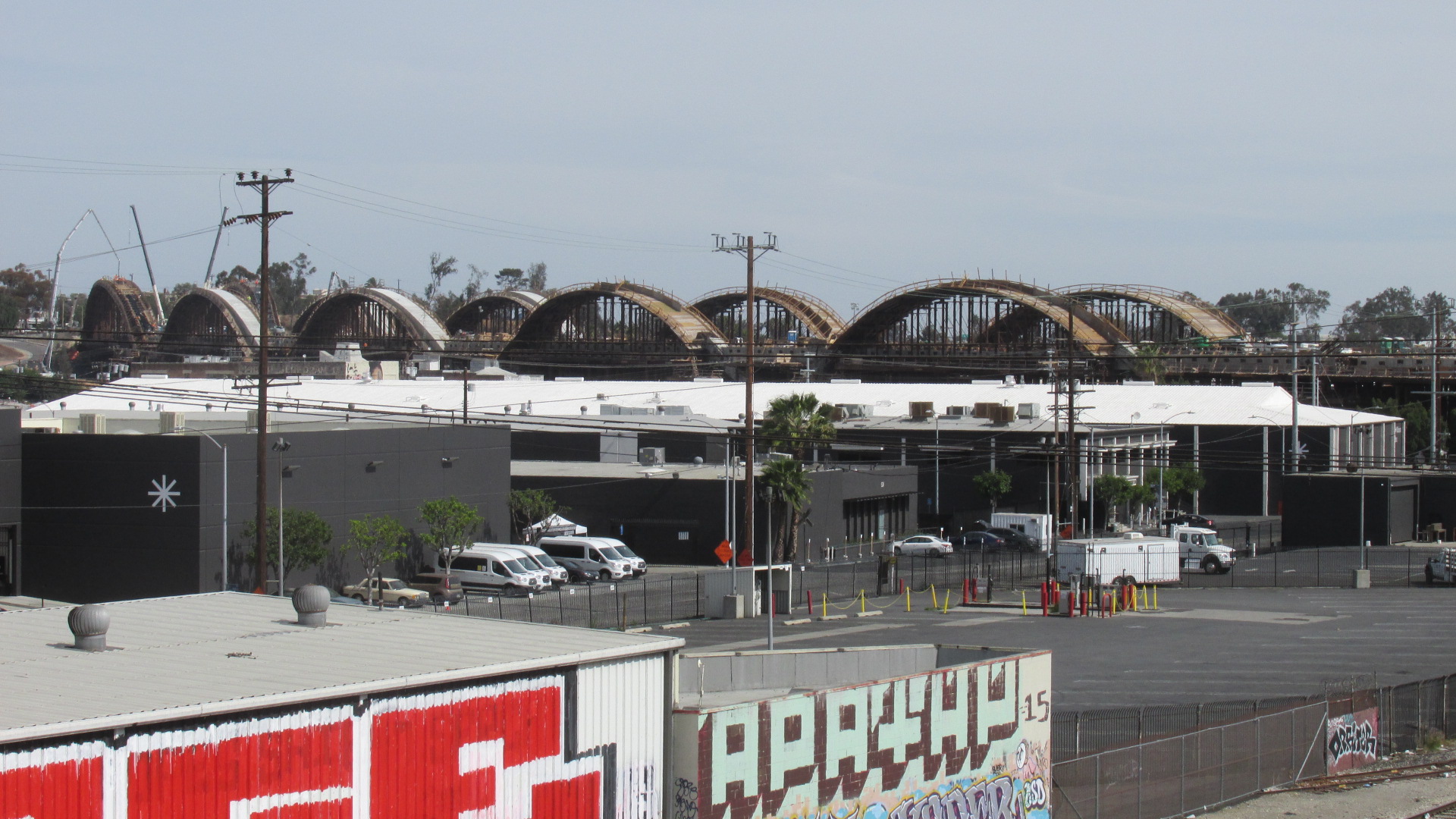
The Sixth Street Bridge’s arches rising above the surrounding landscape.
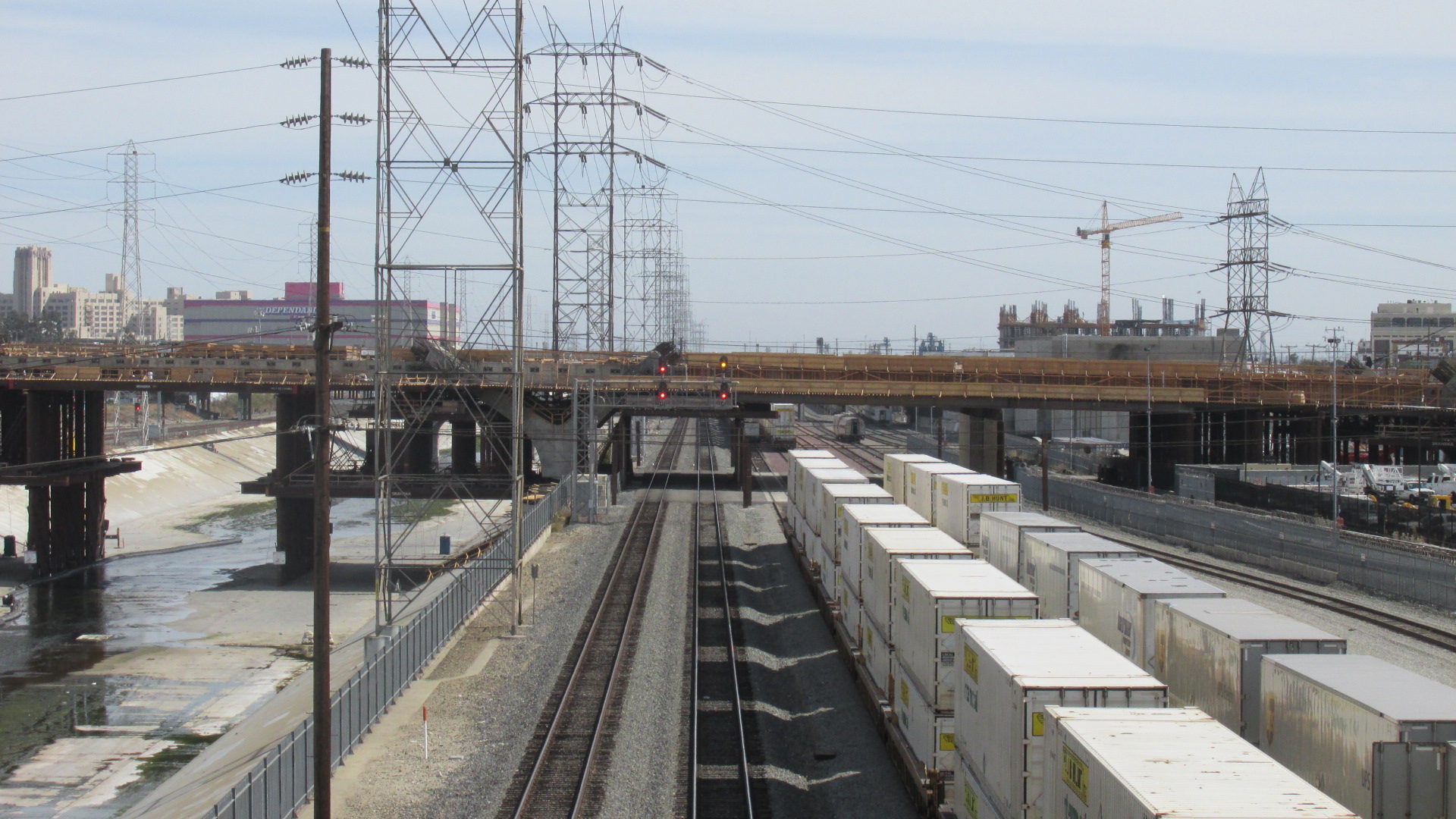
Work on the new Sixth Street Bridge is still moving along. Originally scheduled for completion in 2019, it’s now supposed to be finished by summer of 2022. This shouldn’t surprise anyone who follows the progress of large infrastructure projects. It’s also no surprise that the cost of the project has risen from $420 million to $588 million. But even though repeated delays and cost overruns are fairly common with projects of this kind, it seems like LA is especially prone to these problems. (I guess it could be worse. Just take a look at the California High Speed Rail.)
LA River running beneath the Sixth Street Bridge.
When the bridge is done, there are plans to create a 12-acre park within the bed of the LA River, with public art and recreational programs. I hate to be cynical, but it will be interesting to see what actually materializes. While the FTA and CalTrans are helping with funds for the construction of the bridge, I don’t know if they’re also kicking in for the park. I mention this because the LA Recreation & Parks Department is chronically underfunded, and can’t even maintain existing parks. I’m also concerned because it seems some of the features that were supposed to be included in the new bridge have been cut. The original design had protected bike lanes. Apparently those are gone. And I’ve seen some chatter on-line about the removal of the stairs that would have connected the bridge to the park, but I haven’t been able to find any confirmation.
Downtown side of the bridge.
But the biggest cause for concern is that the completion of the bridge will bring further gentrification and displacement on the east side of the LA River. Many residents of Boyle Heights and surrounding communities are worried that the Sixth Street Bridge will bring another wave of real estate investors looking to cash in. The eviction of the seniors at Sakura Gardens is not a good sign.
Many people are excited about the new Sixth Street Bridge and its promised benefits. I hope their optimism is justified. When I first heard about the project years ago, I was excited, too. I have to say that now my hopes are outweighed by a deep cynicism. The City of LA’s leaders have been promising a more livable, equitable city for years. Instead it seems that the population is increasingly divided and increasingly desperate. Bridges are supposed to bring people together, but I’m worried that this one will end up driving people apart.
Photo by Elizabeth Chou, Southern California News Group
The conflict over the homeless encampment at Echo Park Lake seems to be over. For now. After months of growing tension, things came to a head this week when the City of LA announced that it planned to close the park and that all persons living on the premises had to leave. Protests began on Wednesday morning. Later that day city workers showed up and began erecting a fence, while the LAPD announced that those remaining inside the park would be cited. Representatives of the LA Homeless Services Authority (LAHSA) offered temporary housing for those who wanted it, and while there were many takers, some declined.
After a couple of chaotic days, the LAPD announced on Thursday night that anyone remaining in the park would be subject to arrest. Apparently by Friday the park was closed and all those who had been living there were gone.
Of course, this is just the latest episode in the ongoing story of housing and homelessness in LA. Nothing has been resolved, and really there’s no reason to think anything will be resolved any time in the near future. The forces that are driving LA’s homeless epidemic are still at work, and the LA City Council is doing nothing meaningful to change the situation. A renter relief program and a temporary eviction moratorium are just band aids on a gaping wound. As long as the City Council continues to prioritize the wishes of real estate investors over the needs of LA’s renters, things will just keep getting worse.
As an LA Times editorial pointed out earlier this week, while LAHSA’s stats show that in 2019 an average of 207 homeless people were housed each day, the daily average of people who become newly homeless was 227. There are a lot of different factors that lead to people living on the street, but the biggest factor is that they can’t afford housing.
While Mayor Eric Garcetti and the City Council constantly tell us that their number one priority is providing housing for the people of LA, the facts tell us something completely different. According to the LA Department of City Planning’s Housing Dashboard, from July 2013 through December 2020 the City approved 162,706 new units. Of those units, 87% were for Above Moderate Income households. The remaining 13% is the total for Moderate Income, Low Income and Very Low Income households COMBINED. During this period, the City of LA has produced more than double the number of Above Moderate Income units required by the State’s Regional Housing Needs Assessment (RHNA). It has not come anywhere near meeting the goals for the other three RHNA categories.
And let’s take this further. The Housing Dashboard says that the total number of affordable units approved during this period was 20,591. But according to the Anti-Eviction Mapping Project (which gets its data from the City of LA), during roughly this same period, January 2014 through December 2020, 9,444 rent-stabilized (RSO) units were removed from the market under the Ellis Act. This leaves us with a net gain of 11,147 units accessible to Moderate and Low Income households.
Right about now some of you may be saying, “Well, if we just ramp up allowable density the free market will solve our housing problem for us. We need to upzone LA.” My response is, take a look at New York City. New York City has been on an upzoning binge for the past decade. What have they got to show for it? A bunch of super-tall skyscrapers that have created a massive glut on the luxury housing market, while the Coalition for the Homeless reports that in 2020 there were 122,926 different homeless men, women, and children who slept in New York City’s shelters.
Getting back to Echo Park Lake, about the only positive thing I can say is that there was some really good reporting by the local press. I was impressed by Elizabeth Chou’s work for the Daily News, and I’d like to link to the story, but it’s restricted by a paywall. LAist also did a solid job. Actually, one of the best commentaries on this mess was in an e-mail I got from LAist, their Morning Brief written by Jessica P. Ogilvie. I couldn’t find it on their web site, so I’ll quote an excerpt….
The Echo Park tent community has found itself at the center of several heated debates over how to handle the city’s dire housing crisis. In January of 2020, a planned sweep of the encampment, which can lead to residents losing their belongings and being left with no place to go, was met by protesters who blocked city vehicles and stood near tents.
The following month, protesters once again joined residents to defend their right to be there.
Many who oppose officials’ plan to clear the area say that it’s a public relations maneuver, and blame the area’s city council representative, Mitch O’Farrell, for not doing more to ensure the safety of those living in the encampment.
Recently, officials and advocates have announced plans to ease the plight of L.A.’s unhoused residents by building community land trusts, making it easier to construct granny flats, and establishing communities of tiny homes.
But these efforts, while no doubt well-intentioned, are only the latest in an exhausting series of projects to get the problem under control. Some ideas have also included government-funded campsites, vacant hotel rooms, empty parking lots, neighborhood shelters, new legislation, emergency shelters, RV parks, prevention efforts, and more.
Mitch O’Farrell claims he cares about the homeless and wants everybody to have secure housing. But this is the same man who recently voted to approve the hotel project at 1719 Whitley which involves the demolition of 40 rent-stabilized units. And all the rest of his fellow Councilmembers, with the exception of David Ryu, joined him in voting to greenlight the project.
That should give you an idea of how much the LA City Council really cares about solving our housing problems.
Still from video posted on Twitter by Services Not Sweeps















 The Horizon and the Skyline