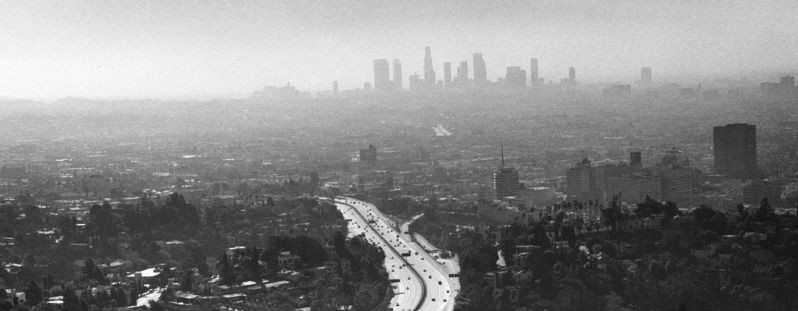
High-Speed on the Horizon?

Lt Comp 1 Db

Could we see universal high-speed connectivity come to Los Angeles in the near future? Maybe. The CityLinkLA initiative, backed by Mayor Eric Garcetti and Councilmember Bob Blumenfield, aims to make internet access available to all. Here’s a brief outline from the CityLinkLA web site.

CityLinkLA is an initiative designed to address both the digital divide and our virtual competitiveness. Launched in 2014 by Mayor Eric Garcetti and Councilmember Bob Blumenfield, CityLinkLA is an effort to encourage the private sector to deploy advanced wireline and Wi-Fi digital communications networks so that every residence and business in Los Angeles has access to world-class, high-speed Internet and at prices comparable to those in other innovative communities around the world. The goal is to provide basic access to all for free or at a very low cost and gigabit (1 Gbps) or higher speed access at competitive rates. CityLinkLA is envisioned to include wired gigabit access to every home and business and as close to ubiquitous wireless coverage for the entire City as possible.

First, let me say that I totally support the goal of giving everybody high-speed access to the internet. And I give Garcetti and Blumenfield credit for getting the ball rolling on this. High-speed connectivity will play a major role in making urban centers competitive in the future, and other other cities have already gotten the jump on us. Tech is something Garcetti understands, and he’s done a great job of luring tech companies to the LA area. Entertainment and media companies will also see the attraction of widely available broadband access. And I’m glad the CityLinkLA web site clearly states that one of the goals is to make the internet available to everybody, regardless of income or neighborhood.

But I do have a few reservations. There are different ways to wire a city for universal access. Take Chattanooga, Tennessee and Austin, Texas. Chattanooga’s network is owned by the city, and offers very high speeds to everyone for very low rates. Austin, on the other hand, is pursuing the same approach as LA. That is, inviting private industry the opportunity to do the job, in the hope that competition will keep rates low. And so far that doesn’t seem to be getting the job done. For details, check out the two articles below.

Chattanooga’s Super-Fast Publicly Owned Internet from CNN

Austin Shows Us What Broadband Competition Was Supposed to Look Like from TechDirt

Personally, I’d prefer to see LA offer broadband through a public utility, because I think it would lead to lower rates, more transparency and more control. Having said that, it’s important to note that Chattanooga is pretty small (population under 200,000) and LA is really big (population almost 4,000,000). There would certainly be huge hurdles to overcome in setting up a publicly owned network here. I’d like to know, though, if anybody really explored that possibility before opening this up to private companies.

My other reservation has to do with the fact that the City is offering some of its assets to the private sector in order to make the deal attractive. To a degree, this is reasonable, but I think we have to analyze this carefully to make sure we’re not compromising the City’s infrastructure or giving sweetheart deals to companies that stand to make a pile of money. In other words, we have to control the process, and we need to make sure we’re not getting ripped off.

I want to thank Stephanie Magnien Rockwell, Policy Director at Bob Blumenfield’s office, for her quick response to my e-mail asking for more information. She sent me the link to the council file on this initiative, which you’ll find below.

Council File: 13-0953, CityLinkLA

If you’re interested in getting more details, there’s tons of info here. It’s worth highlighting the fact that a number of neighborhood councils have submitted statements in support of the intitiative, though the South Robertson Neighborhood Council “requests that the City
include provisions protecting and requiring net neutrality”. Not a bad idea. For a thorough breakdown of the intitiative, click on this link to read the CAO’s analysis.

CAO’s Report on CityLinkLA Inititative

And here’s the link to the CityLinkLA web site.

CityLinkLA

This could be a real breakthrough for Los Angeles. High-speed access for all would be a huge step forward, but there are also huge risks involved. We need to stay informed and engaged as this process unfolds.

Trees

T A Birds

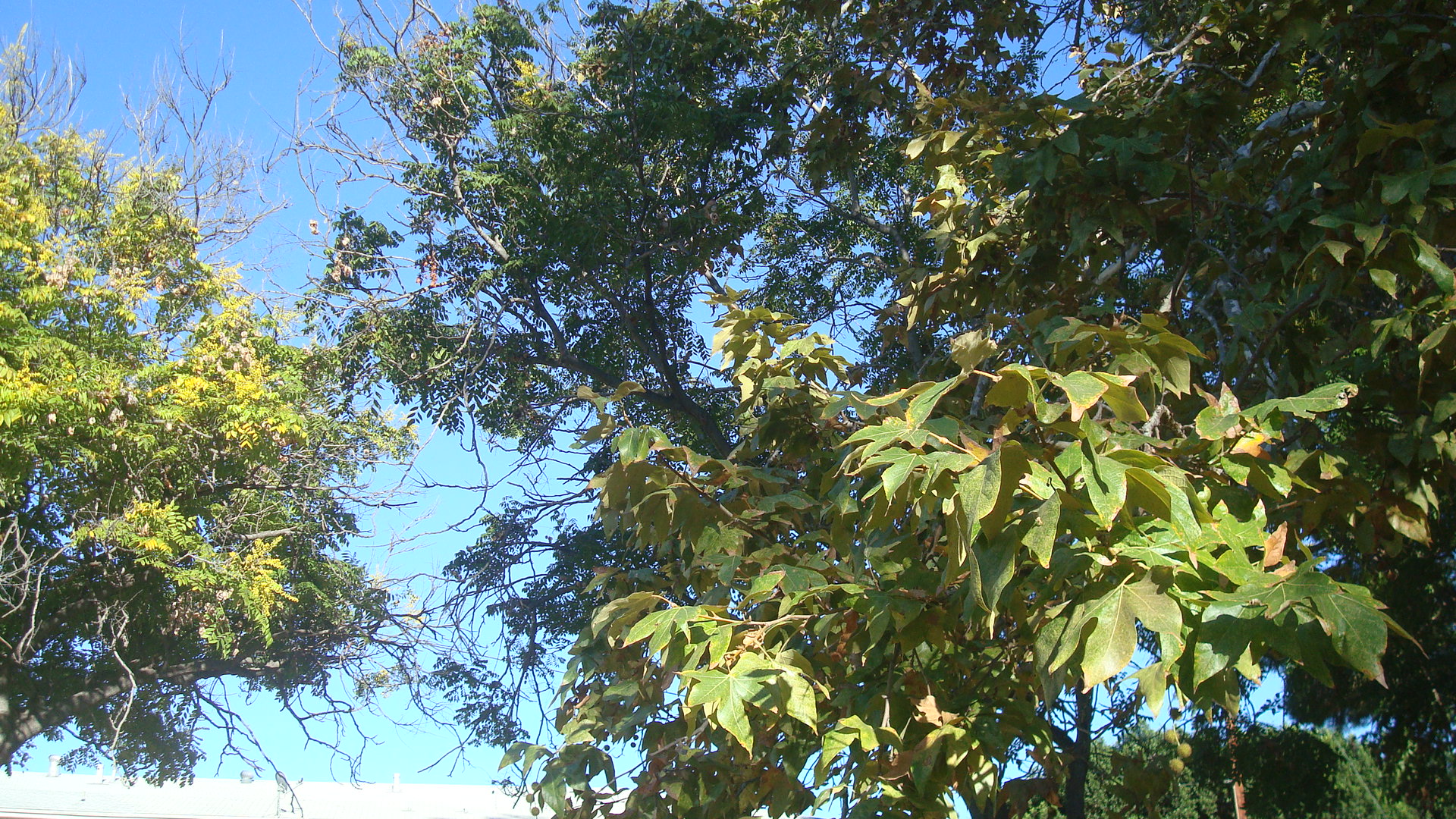
I have to admit, I used to take trees for granted.

T A Branch

I was lucky. I grew up in a neighborhood filled with trees. As kids we used to play all day under a canopy of lush green.

T A Lvs Shad

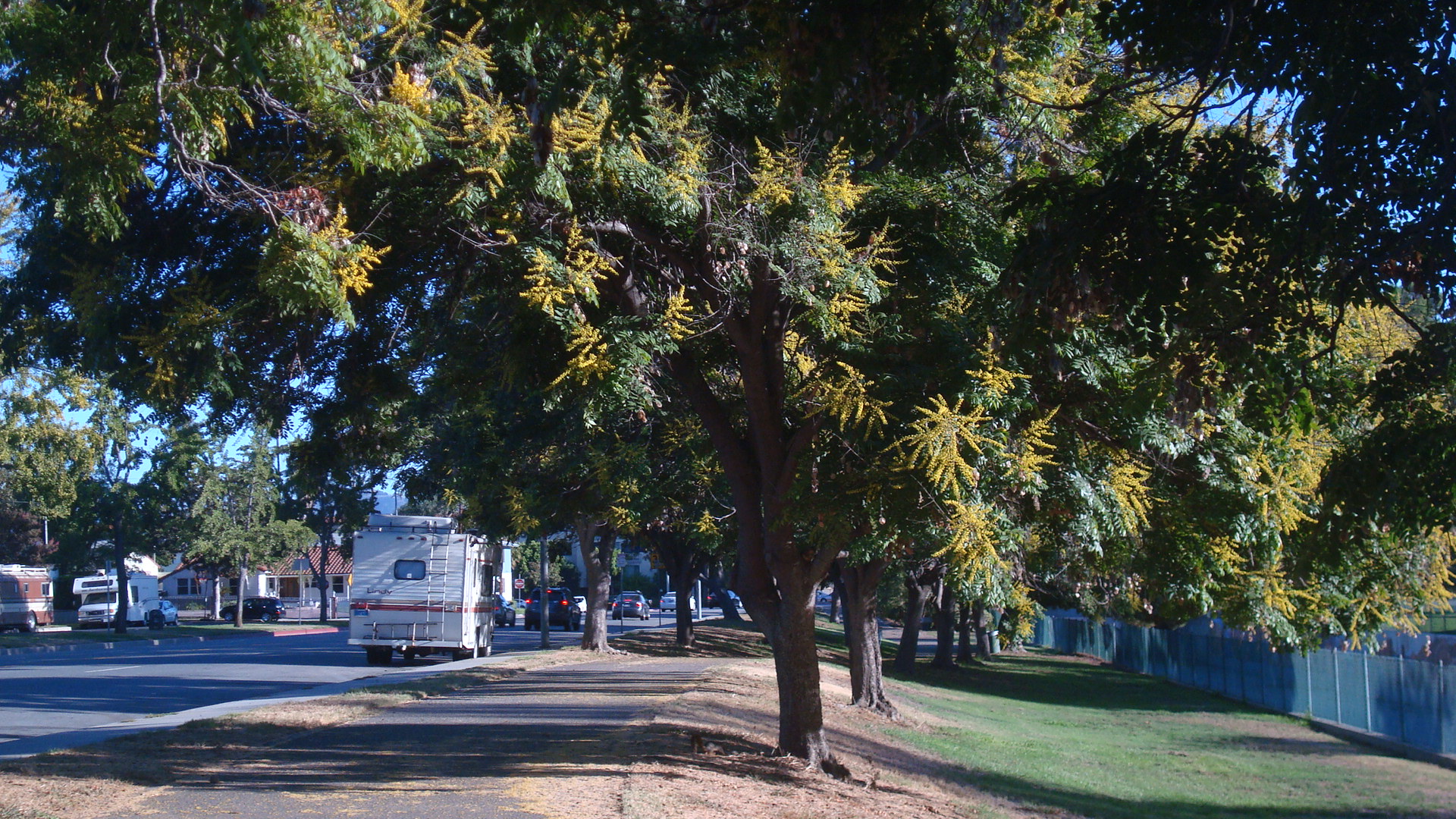
And I’m still lucky. The street I live on now is lined with trees. On weekend mornings I go running, and it’s amazing how many different shades of green I see.

T B Surround

Parks are cool, too. When I was younger I thought going to a park was boring. Now I really enjoy just strecthing out on the grass in a shady spot.

T C Home

I’ve been reading lately how the drought, and our reaction to the drought, is affecting trees. Of course, we’ve all been in a panic to save water, and it’s probably no surprise we’ve made mistakes. The City of LA has been criticized for its decision to stop watering medians, which will have a negative impact on the trees planted there, and since everything is connected to everything, this will cause further negative impacts.

T B Bark X

I can’t blame the City Council, because I’m just as ignorant as they are when it comes to this stuff, but we all have to educate ourselves and think before we act. If not, our response to one crisis will just create another.

T D Glare X

The City of LA has had trouble with trees for years. One of the biggest problems is that trees have roots.

T C Sdwlk X

I’m sure everybody in LA knows of at least one place where the sidewalk is slowly busting upward. And not only is this a safety hazard, but it makes it really difficult for people with disabilities to get around. Years ago the City started cutting down ficus trees so they could repair the sidewalks, and in some neighborhoods the residents went wild. A lot of people love trees, and it is pretty traumatic to see one you care about being chopped down. After struggling with angry residents for a while, the City backed off. But that left them back at square one, and in some areas the sidewalks were really getting dangerous.

T C Sdwlk 2 X

I was at a meeting recently where a representative from the Bureau of Street Services talked about this issue. He said that after fighting for years with people who were ready to chain themselves to ficus trees, the Bureau has decided that it’s best to let the residents decide whether or not a tree should be removed.

DSC00207

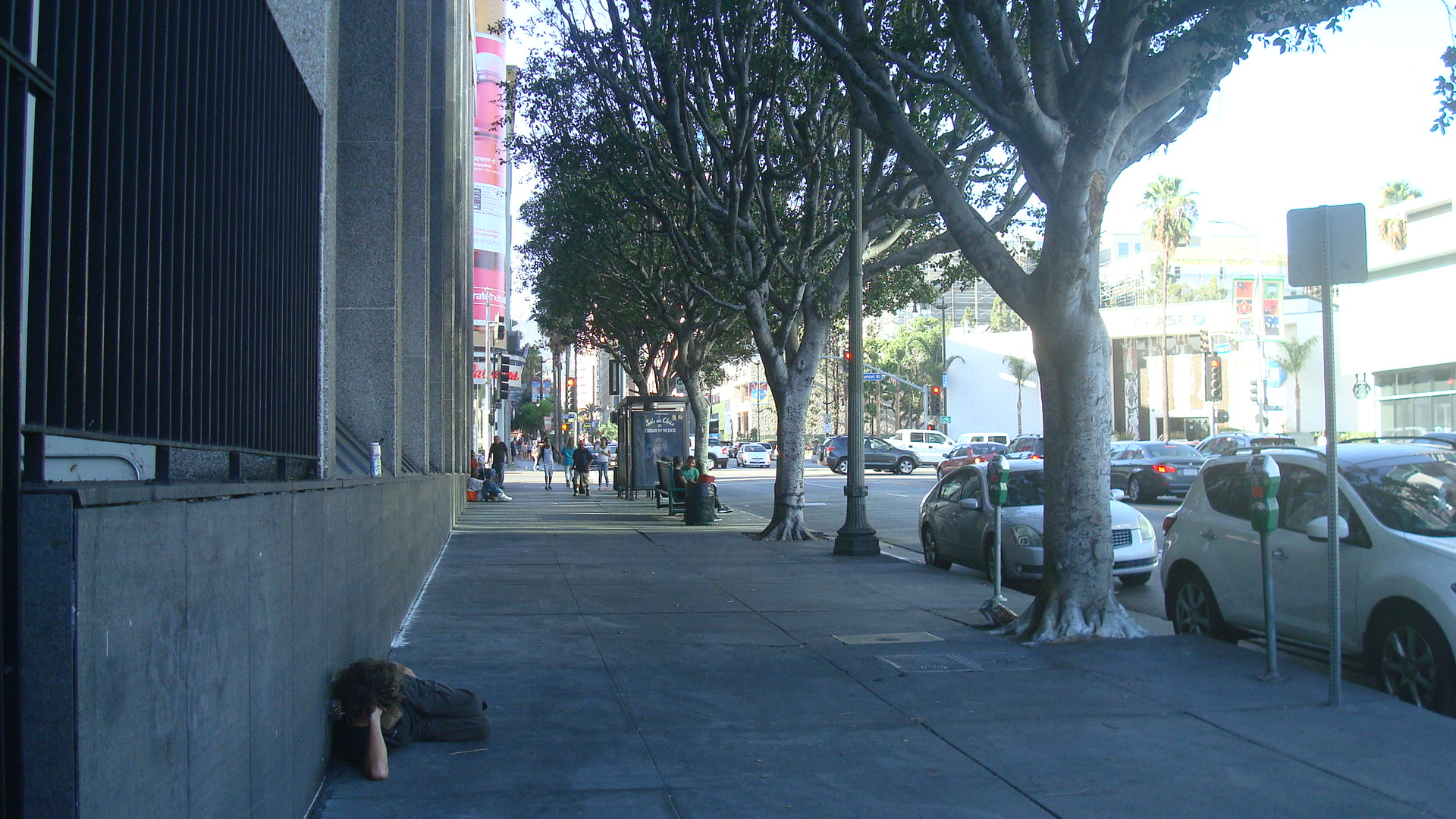
But he did mention one site where the Bureau plans to pull out the chain saws. There’s a row of trees on Vine just below Sunset. They are large and dense, and I think beautiful, but that spot has become a magnet for the homeless. This stretch has also become a hot spot for crime, and so the City has decided the trees have to go.

T C Vn Man

I’ll miss them. These photos were taken after they’d been trimmed, and you don’t really get a sense of how dense and dark the canopy ordinarily was. In the middle of the city, with traffic all around, you could feel like you were standing in the forest.

T C Vn Bldg 2

Trees aren’t permanent, but they live so long it seems that way. Many of the species that we find in our neighborhoods have an average life span of a hundred years, and some will live for two or three hundred years. Though they change over time, they seem like a fixed part of the landscape.

T C Branch Twst X

My mother still lives in the house I grew up in. Not too long ago the house across the street from her was sold, and the new owner cut down a large tree that dominated the front yard. It took some getting used to. I had played under that tree when it was a kid. It was part of the landscape of my childhood.

T B Pods X

There’s a growing awareness of how important trees are to the ecology of the city. They take CO2 out of the atmosphere, protect the soil and cool our neighborhoods. I have to thank Councilmember Paul Koretz for introducing a motion on tree health (Council File: 15-0467). It’s still making its way through committees and city departments, but hopefully it will come up for a vote soon.
T D Fuzz Bl X

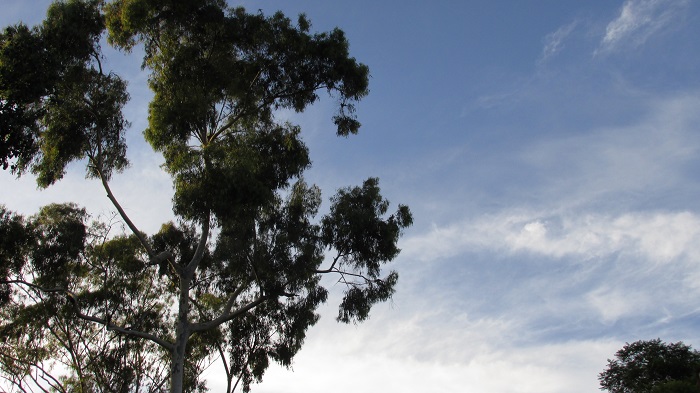
There’s a feeling I get when I’m walking through a quiet neighborhood at dusk. As the light fades, the trees lose their color. The shadows deepen. The branches and leaves rising up around you turn to silhouettes against the twilight sky.

T D Gath Dk X

It feels so peaceful.

T E Dark Mass X

More About Housing and Transit

Post Final

As a follow-up to my last post, I wanted to share this article from LA StreetsBlog. It’s a summary of a panel discussion, Rescuing the California Dream: Policies for an Affordable Future, sponsored by KPCC and the Milken Institute. The participants talked about the challenges posed by LA’s affordable housing crisis, and offered some possible solutions.

Nobody was saying there’s an easy way out, but there are things we can be doing to address the situation. Two things I got from the article were that we need to do a better job of planning, and we need to create local funding sources to support affordable housing. But the panel offered lots of ideas, and the consensus seems to be that we can change things for the better.

Can High-Density Housing Solve Our Regional Housing Crisis? The Answer: It’s Complicated

A New Vision or Another Con?

A view of the Hollywood Freeway from Franklin

A view of the Hollywood Freeway from Franklin

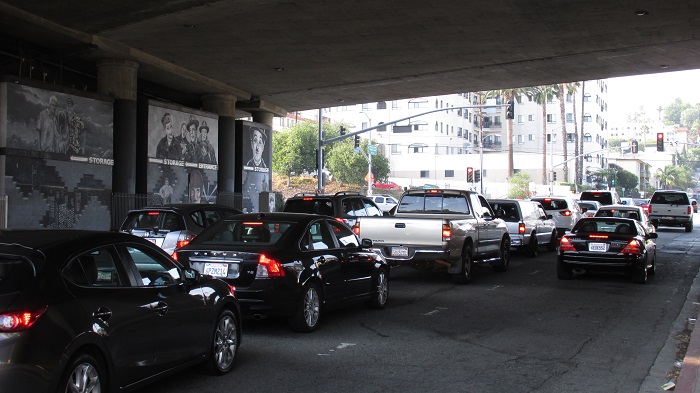
A while ago I was walking down Franklin around rush hour, and I came across a sight that’s becoming way too familiar. Looking down Vine, I saw a line of cars that extended all the way down the block.

Looking down Vine at rush hour

Looking down Vine at rush hour

I pulled out my camera, because I’ve kind of gotten obsessed with documenting traffic in LA. You probably think this is a pretty weird pasttime, but it keeps me off the streets. Oh, wait. No, actually it doesn’t….

Intersection of Vine and Yucca

Intersection of Vine and Yucca

Anyway, I walked down Vine taking pictures, and guess what I saw when I got to Yucca?

Cars lining up in the left turn lane on Yucca

Cars lining up in the left turn lane on Yucca

If you guessed another long line of cars, you were right. If you don’t live in the area, this may not seem like anything remarkable. But having lived in Hollywood for a while, I can tell you that this is a pretty recent phenomenon. Yucca used to be very quiet. I’d say up to three or four years ago Yucca was empty even at rush hour. Obviously that’s changed.

I kept on walking, and you’ve probably already guessed that when I got to Argyle, I saw yet another line of cars crawling along.

More cars backed up on Argyle

More cars backed up on Argyle

But the thing that surprised me was, traffic on Argyle was backed up all the way to Hollywood Blvd..

Still more cars backed up on Argyle

Still more cars backed up on Argyle

I walked up Argyle, shooting more photos as I passed underneath the bridge.

Traffic crawling north on Argyle

Traffic crawling north on Argyle

Then I was back at Franklin, and by now everybody knows what I found when I got there.

Westbound traffic on Franklin

Westbound traffic on Franklin

You may be asking, where were all these cars heading? Well, they were all trying to get on the northbound Hollywood Freeway. And traffic on the freeway was moving pretty damn slow.

Northbound onramp for the Hollywood Freeway

Northbound onramp for the Hollywood Freeway

I think we’d all agree that LA’s streets are way too congested, and we’ve got to start thinking about transportation in new ways. Cars are a dead end. We’ve got to stop building to accomodate them. The recent expansion of the San Diego Freeway showed what a waste of time that is. We can add as many lanes as we want, and they’ll all end up choked with traffic.

So some people see the City Council’s adoption of the Mobility Plan 2035 as a major step in the right direction. It sure sounds swell. With chapters titled “Safety First”, “World Class Infrastructure” and “Access for All Angelenos”, the MP 2035 paints a picture of a utopian LA, where everybody can get everywhere they want without ever needing a car.

But a lot of people are skeptical about the benefits the plan will actually provide, and I’m one of them. I totally support increased access to all modes of transportation, and if you take the MP 2035 at face value, it sounds great. The question is, will the plan deliver what it promises, and to answer that question you have to look at what our elected officials have actually been doing for the last several years.

Under the heading Key Policy Initiatives, the plan includes the following goal….

Consider the strong link between land use and transportation

No doubt about it, land use and transportation have to be considered together. For years now the Mayor and the City Council have been pushing transit oriented density (TOD). In theory, planning for higher density near transit centers will create a new dynamic where people will find using public transit preferable to driving a car. Now, if we were building affordable housing near transit centers that allowed easy access to the areas where jobs were concentrated, this might actually work. But that’s not what the Mayor and the City Council have actually been doing. Instead, they’ve been pushing relentlessly for high-end, high-rise housing that caters to people with six figure incomes. Check out the proposed 8150 Sunset, Horizon Hollywood and Shenzhen Hazens project in South Park for three examples. There are many more in the planning stages. Do the rich ride the subway? I’m sure some of them do, but let’s be honest. In LA, this is the demographic that is least likely to use public transit, while people at the lower end of the economic spectrum often have no other choice.

This is not transit oriented density. It’s profit oriented density. The Mayor and the City Council can tell us they’re linking land use to transportation to make transit more accessible, but recent history shows that this is mostly a con used to push through projects that only benefit developers who are looking to make a pile of money. Not only have our elected officials’ efforts to create affordable housing been pathetic, but by pushing gentrification in areas that used to be affordable, they’re actually forcing low-income workers farther away from job centers.

So if you ask me whether the MP 2035 will deliver what it promises, I can’t say I’m optimistic. Even before Garcetti became the Mayor, when his council district covered much of central Hollywood, he pushed through a number of “TOD” projects, telling residents that this would solve our transportation problems. Take a look at the video below and let me know if you think it’s working.

Parking Problems

Pk 03 HH 1 B

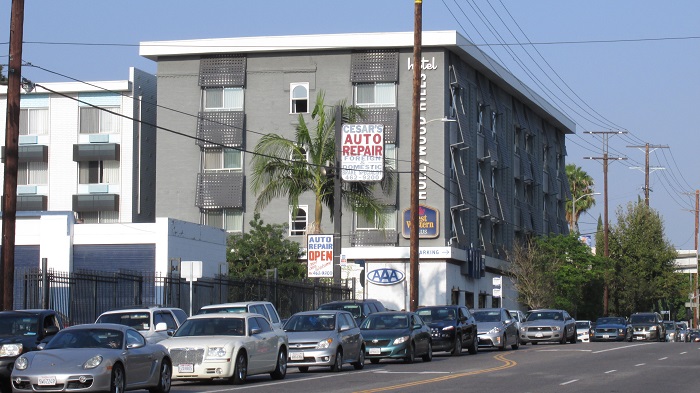
I keep hearing about how Angelenos are giving up their cars in favor of other means of travel. But really it looks like traffic all over the city is steadily getting worse. In spite of the fact that our public transit is slowly improving. In spite of the fact that we have more bike lanes than ever. In spite of all the hype about ride-sharing services. To me it looks like there are more people driving in LA than ever before.

Part of the reason for this is that there are more people in LA than ever before. The City’s population is around 3.9 million, with more arriving every day. But let’s face it, most Angelenos are not ready to give up their cars just yet. There are many reasons for this. For the vast majority of Angelenos I’ve spoken to, taking public transit still means at least doubling your commute time.* And citizens looking for affordable housing are having to look farther and farther away from the City’s center, making public transit more time consuming. Practical reasons aside, though, a lot of people who live in LA just love their cars. They love the freedom of going wherever they want whenever they want. They love being able to shut out the world around them. They love having a set of wheels that makes a statement about who they are or how big their bank account is. And so they’re willing to spend a large part of their paycheck to have a car, even if most of the time their car is sitting idle.

Pk 05 Hlwd Row B

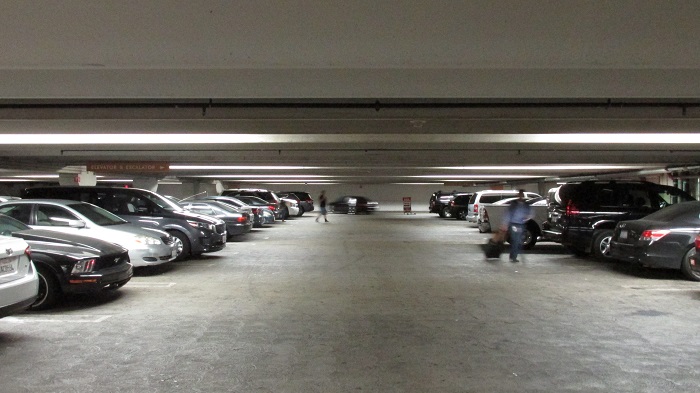
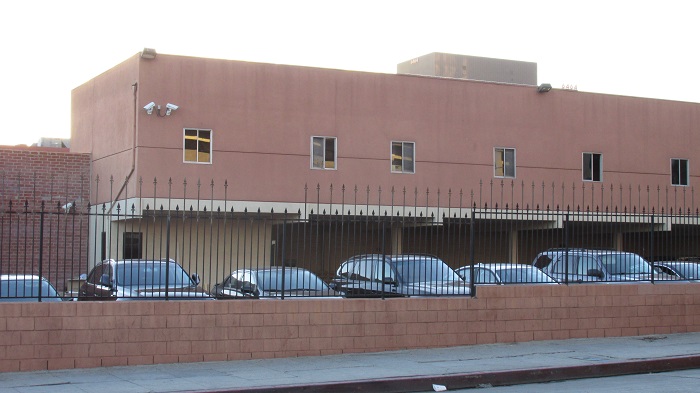
Think about it. Even if you spend two hours commuting each way every day, that means your car is parked in a lot or on the street for twenty hours a day. Seems kind of wasteful, doesn’t it? And speaking of wasteful, look at the enormous amounts of space we set aside for parking. Shopping malls, stadiums, beaches and other destinations often provide massive lots just so people can park their cars. For parking structures, the average cost per space in the US is about $15,000, though it can go much higher. This means that parking alone can increase the price tag for development by hundreds of thousands or millions of dollars. And in the case of residential development, this cost is passed along to the renter or buyer.

Pk 02 Arc 4 B

Of course, most people don’t think about this, which is why there’s a school of thought that says developers ought to stop bundling the price of parking with the price of a residential unit. In other words, you’d pay for your new condo by itself, with no parking, and then decide if you wanted to purchase a parking space to go with it. This sounds logical. With this approach, buyers have to think about the cost of parking their car, and the idea is that some of them will dump their car to save money.

But not everybody’s buying it. In LA these days, developers are encouraged by city planners to pitch projects with reduced parking in the hope that this will encourage use of public transit. I’ve been to a number of meetings where project reps try to sell this idea to local residents, and local residents are always against it. Why? Because they believe that a lot of buyers will forego the parking space to save money, and just leave their car on the street, making it even harder for the locals who already struggle to find parking. Advocates of transit oriented density (TOD) argue in favor of projects with reduced parking, saying that parking cost and availability influence transit ridership, but there’s no conclusive evidence. There are many things that affect transit usage, and no one has proven that this is a major factor.

Pk 06 NH St B

Parking is a huge problem in LA, and even though I don’t own a car, I sympathize with people who sometimes have to circle their block repeatedly to find a space. Transit advocates will say they should dump their vehicle and buy an MTA pass, but that’s not feasible for everybody. Some people have jobs that require a car. And those who work night shifts or graveyard shifts, say restaurant workers or security guards, may not be willing to ride public transit late at night. Having spent many hours standing on desolate street corners in the small hours, I can understand their reluctance. The number of busses that run after midnight is limited, and they only run once an hour. The subways shut down around one.

There are some encouraging signs. A number of people have chosen to give up their wheels and ride public transit instead. Car sharing services like Zipcar are becoming more popular. Apparently a lot of kids in their teens are willing to wait on a driver’s license because they’re happy socializing over their smartphones.

But we’ve still got a long way to go. For all the benefits cars offer, they suck up way too much of our resources. And in a city as crowded as LA, one of our most important resources is space. How many thousands of acres have we paved with asphalt just so we can have a place to leave our cars?

There’s got to be a better way.

* Some readers have taken issue with this statement. See comments below for details.

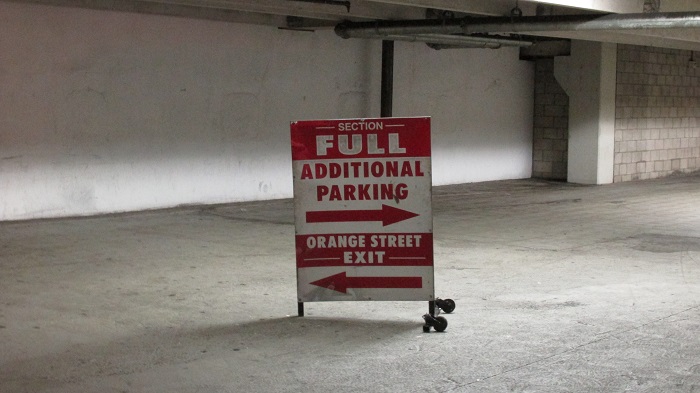
Pk 04 HH Full B

Cesar Chavez Avenue Bridge

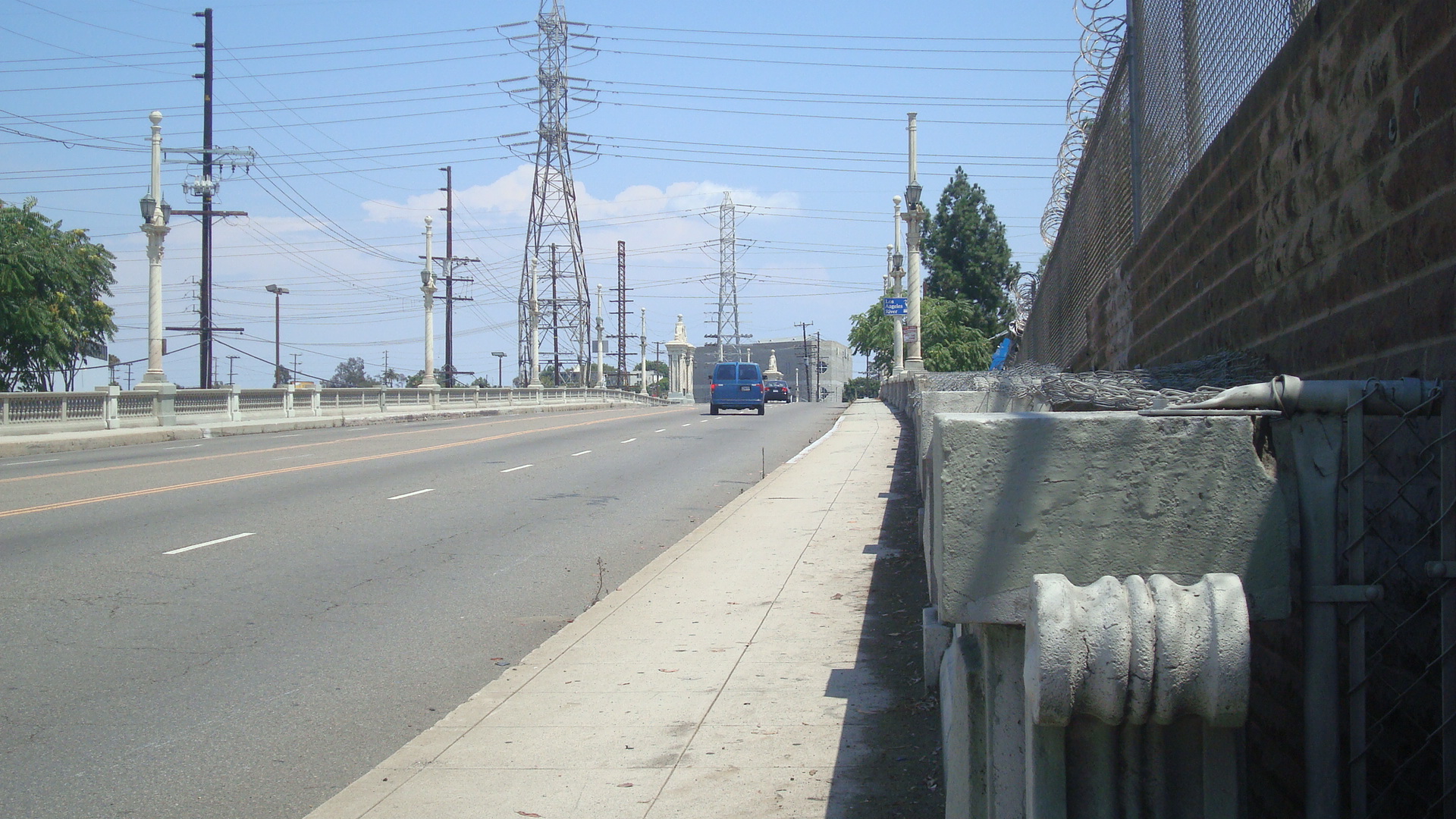
Looking north from the Cesar Chavez Avenue Bridge.

Looking north from the Cesar Chavez Avenue Bridge.

A while ago I took a walk across the Sixth Street Bridge to get some photos of it before they tear it down. Looking out over the landscape, I saw the other bridges that span the LA River, linking Downtown and East LA. I started thinking it would be cool to take pictures of them as well.

I started walking on the Downtown side of the bridge.

I started walking on the Downtown side of the bridge.

It’s taken me forever to get started on that project, but recently I took a walk across the Cesar Chavez Bridge. There is something kind of thrilling about seeing the surrounding area from that vantage point. Much of the landscape is hard, grey concrete. Power lines criss-cross the sky. But you can also see the hills in the distance, and on the day I crossed the bridge there were massive clouds billowing all along the horizon.

A view of the First Street Bridge.

A view of the First Street Bridge.

Today the bridge is part of Cesar Chavez Avenue, created back in the nineties to commemorate the courageous labor leader who helped organize California’s farm workers. The segment that includes the bridge was formerly called Macy Street, but it’s also part of the historic Camino Real, the road built by the Spanish to connect their missions back when they governed California. The first bridge built on the site was erected in the nineteenth century, but it was demolished at the beginning of the twentieth. In the twenties, the City of LA began an effort to construct a series of viaducts across the LA River, and this bridge, then called the Macy Street Bridge, was part of that effort.

A huge mound of debris on the north side of the bridge.

A huge mound of debris on the north side of the bridge.

For years I’ve seen this massive mound of debris resting on the north side of the bridge. I have no idea where it came from or if it’s ever going away. If you look closely you can see that plants have started to grow here and there. It’s become part of the landscape, an artificial hill rising up over the river and the rail lines.

A view of the bridge heading toward East LA.

A view of the bridge heading toward East LA.

The bridge is lined with lampposts on either side, and decorated with porticos ornamented in the Spanish Revival style that was popular in the twenties. There are plaques affixed to the porticos explaining that the bridge is dedicated to Father Junipero Serra, the founder of the California missions. Serra’s legacy is controversial, since he was a major player in Spain’s effort to subjugate the native population. The Vatican’s recent decision to canonize him has ignited the debate all over again.

One of the porticoes that decorate the bridge.

One of the porticoes that decorate the bridge.

Another view of the same portico.

Another view of the same portico.

If you want to learn more about the Cesar Chavez Avenue Bridge, below is a link to an article on KCET’s web site that talks about the origins of a number of LA bridges. To see more images and to access info about it’s history, check out the links to the Library of Congress.

A Brief History of Bridges in Los Angeles County from KCET

Cesar Chavez Avenue Viaduct from Library of Congress

Photos of Cesar Chavez Bridge in the Library of Congress

CC 40 Deb Hills 1

SCAG’s Scam

SCAG Comp 1

I don’t have a car, and I use public transit almost everywhere I go. So when In opened my e-mail one morning and found an announcement with the heading “SCAG Seeking Input from SoCal Residents”, I was definitely interested. SCAG is the Southern California Association of Governments, and they handle regional planning initiatives. The announcement explained that SCAG was holding six open houses to get input from the public on their Regional Transportation Plan/Sustainable Communities Strategy (RTP/SCS).

Because transit planning affects me personally, I felt like I should show up at one of these meetings. But when I looked at the schedule, I realized that it would be pretty difficult to attend any of them. In the first place, all but one of the open houses were happening during working hours, which meant I’d have to take time off work. In the second place, it would take at least an hour for me to reach any of the locations by public transit.

To me the most bizarre thing about these open houses is that not a single one was held within the City of Los Angeles. When you think about the fact that LA is the largest city in the region that SCAG serves, doesn’t it seem weird that they would ignore it completely? There are tens of thousands of Angelenos who depend on public transit to get around. Apparently SCAG doesn’t feel that they need to hear our input.

I found this so hard to believe that I wanted to research it further, so I went to SCAG’s web page for the RTP/SCS. I found out that a couple of meetings had been held in Downtown LA back in May, but as I read further I was even more dismayed. The two meetings they held on March 17 and March 18 were part of the scoping process for the Program Environmental Impact Report. In other words, these meetings were intended to get feedback from the public that would determine the scope of the PEIR, or the range of issues that needed to be addressed. And that’s all they had. Two meetings. One started at 3:00 pm and the other started at 5:00 pm. Again, SCAG seems completely oblivious to the fact that most of us have to work for a living.

And now we have the same problem in reverse. This recent series of meetings leaves LA residents ouf of the picture. But the scoping process apparently excluded everybody else. Were there other meetings held throughout the region to kick off the scoping process? I couldn’t find anything else on-line. The SCAG web site also alluded to a 30 day comment period, which ended on April 7. Unfortunately, I don’t recall receiving notification about any of this. I would’ve liked to be involved in the scoping process, but I guess I’m just out of luck.

The web site itself is an indication of how little SCAG scares about getting the public involved. On the page titled Public Participation Opportunites there’s a timeline with a series of links. Unfortunately, all of the links open a blank page with the message “404 File Not Found”. A number of PDFs are embedded in the page titled Staff Reports and Presentations. I clicked on all of them, and none of the files opened.

So back to this series of so-called open houses. Check out this map. The sites for the meetings are marked by black dots.

Map LA City w Locations

Yeah, I suppose I could’ve gone to the meeting in Culver City. If I’d been able to take the day off from work. If I’d been willing to travel at least an hour each way. But if SCAG really wanted to get my input, wouldn’t they have scheduled at least one meeting in LA? One meeting that Angelenos could easily get to on public transit? And why weren’t all the meetings held either at night or on weekends? Do they really think it’s fair to make people take time off work, especially when for many transit riders that would mean losing income?

The bottom line is, they don’t want my input. Or your input. Like many government agencies, they see public meetings as a nuisance. They’ve already figured out what they want to do. Getting feedback from the people is a time consuming process, and there’s alays the possibility that the public might want something different than the plan they’ve already decided on. The problem for these agencies is that a lot of the funding they get requires them to show that they’ve solicited feedback from the community. So in many cases, they slap together a series of token meetings which are deliberately planned to discourage attendance. And then when they submit the documentation required to justify the funding, they claim they’ve done extensive outreach.

SCAG isn’t the only guilty party. The City of LA frequently does the same thing. And I’m sure it happens all over the country. But SCAG’s series of “open houses” is maybe the most transparent scam I’ve seen along these lines. It really does make me angry. Not just because they’re shutting the public out, but because they have the gall to claim they’re serving the public. What’s really happening is that a closed circle of planners and politicians have gotten together and decided they know what’s best. And that they don’t need to hear from the people.

The timeline on the SCAG web site indicates that they’re planning to hold more meetings for public comment when the PEIR is released in October. But my guess is that when they post the schedule it’ll be more of the same. Call me cynical, but based on past experience, I’ve really lowered my expectations.

Pros and Cons of Expanding Transit

It’s hard to even keep track of all the different projects that the MTA is working on throughout the county. New rail lines are being constructed, old ones are being expanded, and improvements are being made to increase safety and ease of use. The photos below represent just some of the projects that are currently under construction.

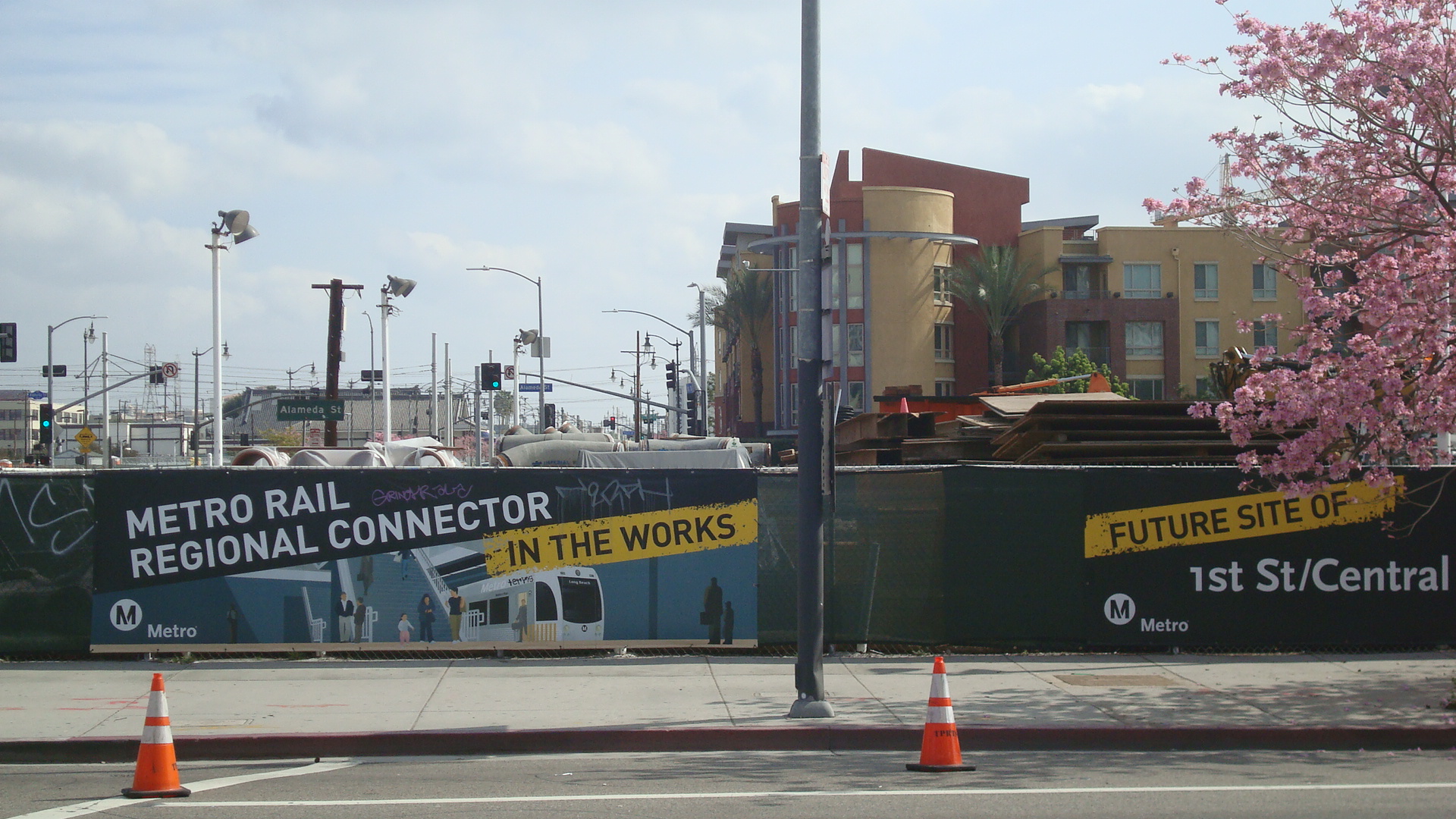
In Little Tokyo, work is beginning on the Regional Connector. This will be a 1.9-mile underground light-rail system that connects the Gold Line to the 7th Street/Metro Station. It will also make it easier for passengers to transfer to the Red, Purple, Blue and Expo Lines.

First and Central, future site of a stop for the Regional Connector

First and Central, future site of a stop for the Regional Connector

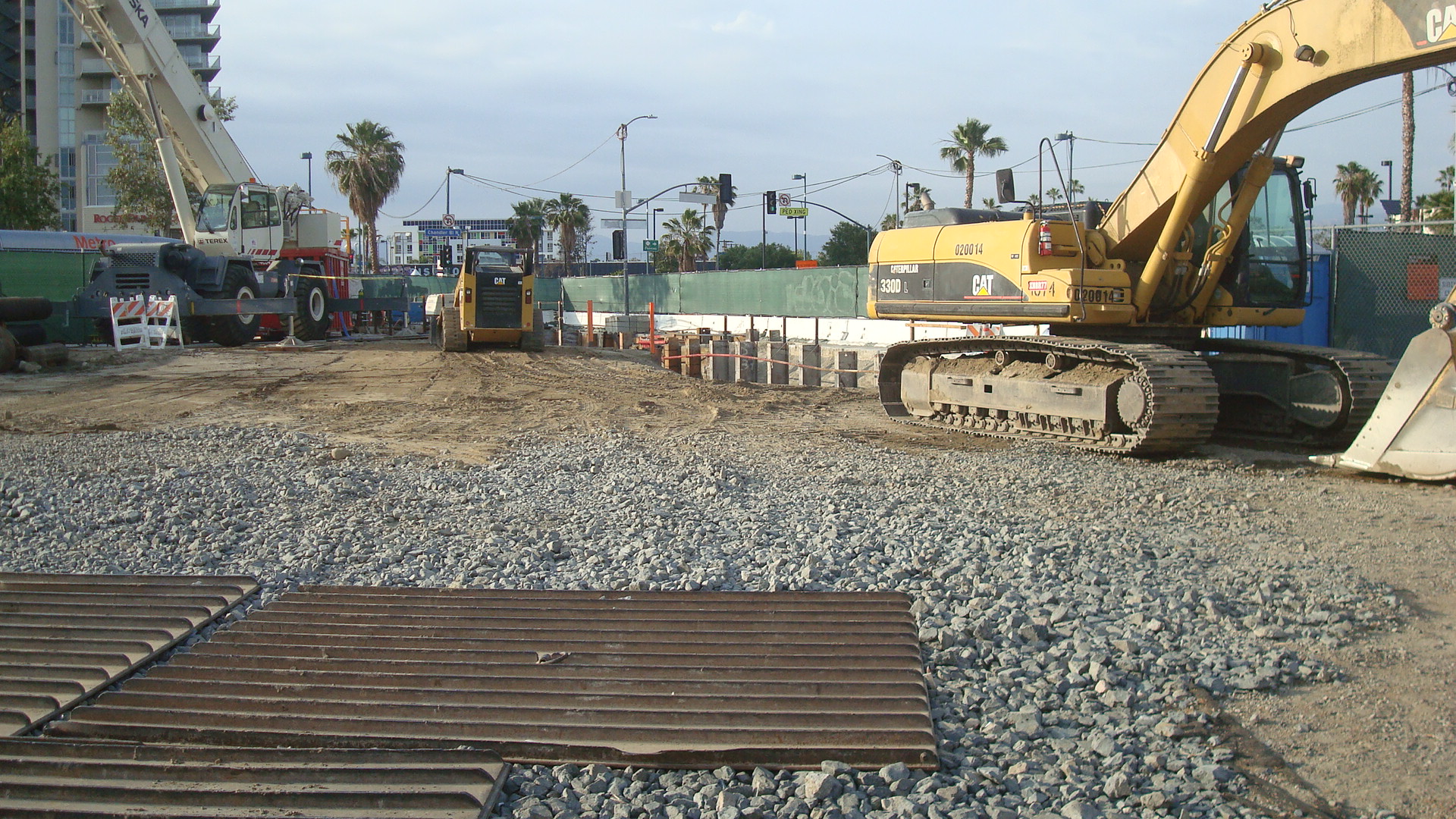
Material and equipment stored on the site at First and Central

Material and equipment stored on the site at First and Central

Construction on the Crenshaw/LAX Line started last year. This will be 8.5 miles of light rail running from the Expo Line to the Green Line, with below-grade, at-grade and elevated segments.

Crenshaw/LAX Line construction site at Crenshaw and Exposition

Crenshaw/LAX Line construction site at Crenshaw and Exposition

Another shot of the site from Crenshaw and Rodeo

Another shot of the site from Crenshaw and Rodeo

This project could provide a huge boost to businesses along the line, although there are already signs that it could encourage gentrification which may drive long-time residents and business owners out of the area. Click on the link below to see what may be in store for the community once the line is finished.

Plan to Turn BHCP into a 24-Hour Community

There are smaller projects going forward, too. In North Hollywood, a subterranean tunnel will connect the Red Line station to the Orange Line station just across the street. This is a great idea, and hopefully will reduce the number of riders dashing across Lankershim against red lights in order to make a connection.

Construction of subterranean tunnel in North Hollywood

Construction of subterranean tunnel in North Hollywood

Another shot of construction at the North Hollywood site

Another shot of construction at the North Hollywood site

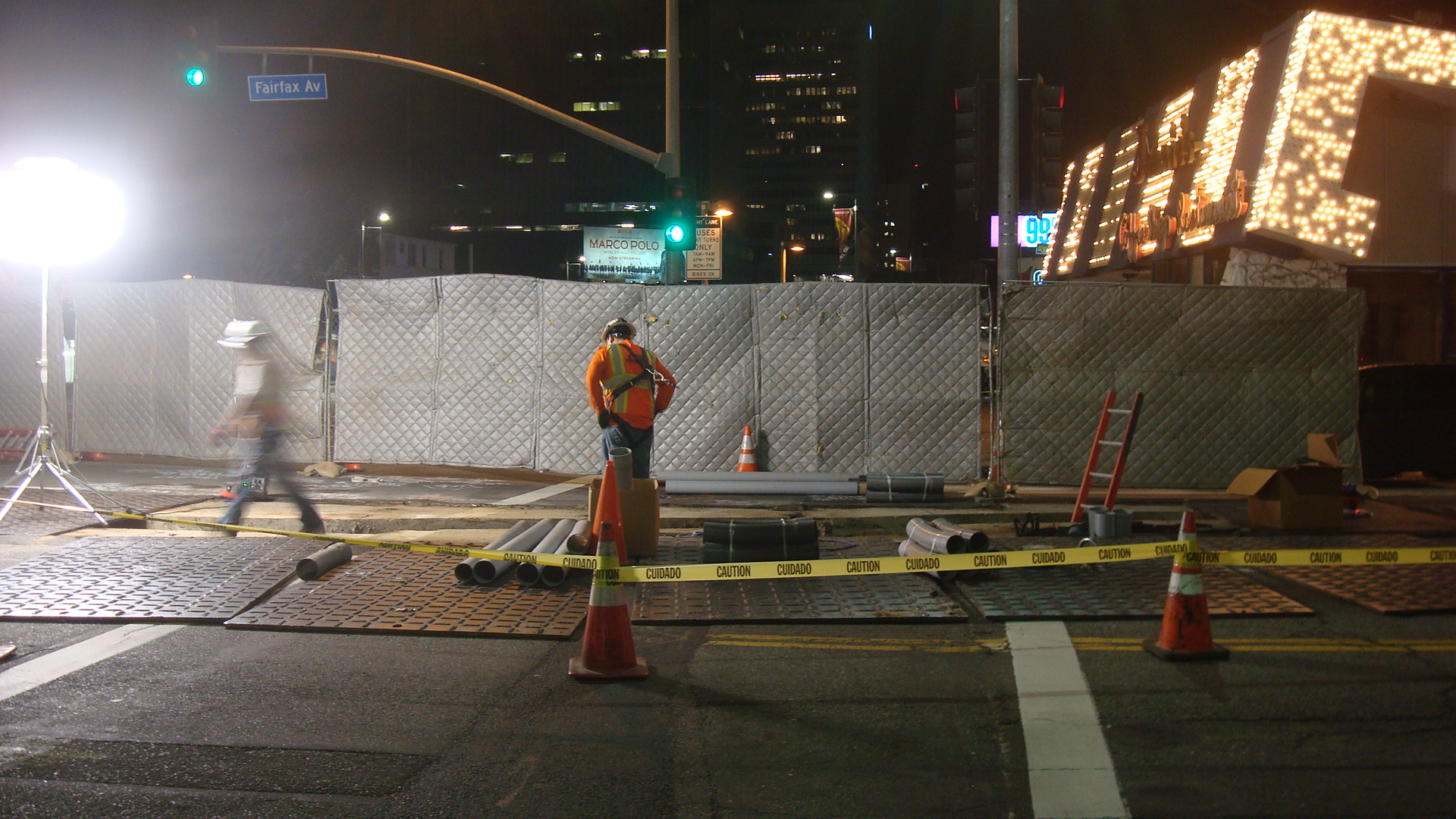
The photos below are a few months old, but they show MTA crews working on the Purple Line expansion at Wilshire and Fairfax. By day, traffic flowed through the intersection as usual. But at night, construction crews would show up with barricades, heavy machinery and blinding lights. This project highlights the problems of constructing a major transit line in a dense urban area.

Crews working through the night at Wilshire and Fairfax

Crews working through the night at Wilshire and Fairfax

Another shot of construction at Wilshire and Fairfax

Another shot of construction at Wilshire and Fairfax

All this sounds great in theory, but this kind of rapid expansion brings plenty of problems with it. I don’t have a car, so I use public transit almost every day. If you ask a simple question like, “Are you glad that the MTA is expanding its transit network?”, I can give you a simple answer like, “Yes.” But if you ask, “What long-term impacts will this expansion have on the City of LA?”, the answers are much more complicated.

In my mind, the biggest thing to worry about is whether or not we can afford all these projects. The MTA is facing a long-term budget shortfall, which could seriously impact its ability to function. Last year they raised the cost of the day pass and the monthly pass by 40% and 30% respectively. But there are almost certainly more increases to come, and it’s uncertain whether riders will pay the higher prices. Here’s an article that LA Streetsblog published in January of this year. It explains that while last year’s fare increase brought revenue up, it may have brought ridership down. If that trend continues, we’re in deep trouble.

MTA Revenue Up, Ridership Down

The MTA is receiving tons of federal funding for these projects, but those funds depend not just on increasing ridership, but also on increasing the share of operating costs covered by fares. If we see a decrease in ridership and/or revenue, we may not be able to count on the money from the feds.

Some people will point to the fact that the LA City Council just voted for a huge increase in the minimum wage, saying that this will enable low-income riders to afford future fare hikes. I don’t buy it. First, the cost of living in LA is increasing at a phenomenal rate. The amount we spend on housing is skyrocketing, DWP rates could easily double or triple, and food is getting more expensive as the impacts of the drought become more pronounced. A significant rise in the cost of public transit will be just one more blow to the bank accounts of minimum wage workers. And there are thousands of MTA riders who don’t even earn minimum wage. LA is the wage theft capitol of the country. Lots of people who work in the restaurant and garment industries are already being paid below the minimum, not to mention the undocumented workers who will take whatever they can get. Many of these people need public transit to get around, and none of them will earn a nickel more after the minimum wage rises.

I’m not arguing that we shouldn’t extend the reach of public transit, but I do question whether this massive expansion is sustainable. I guess all we can do is wait and see.

Midnight at Wilshire and Fairfax

W&F 1 Scaf

Last week I went to one of the screenings in UCLA’s preservation festival. I think I left around eleven, and then caught the bus on Wilshire. I got off at Fairfax, where I have to transfer. It took a while for the next bus to show up, so I took some photos while I was waiting. It seemed like there was a lot of stuff going on….

Night time is when the MTA crews show up to work on the Purple Line extension. You don’t see them during the day. Just metal plates lying all over the street. But at night these guys set up their barriers and their lights and go to work.

MTA crews work on the Purple Line at night.

MTA crews work on the Purple Line at night.

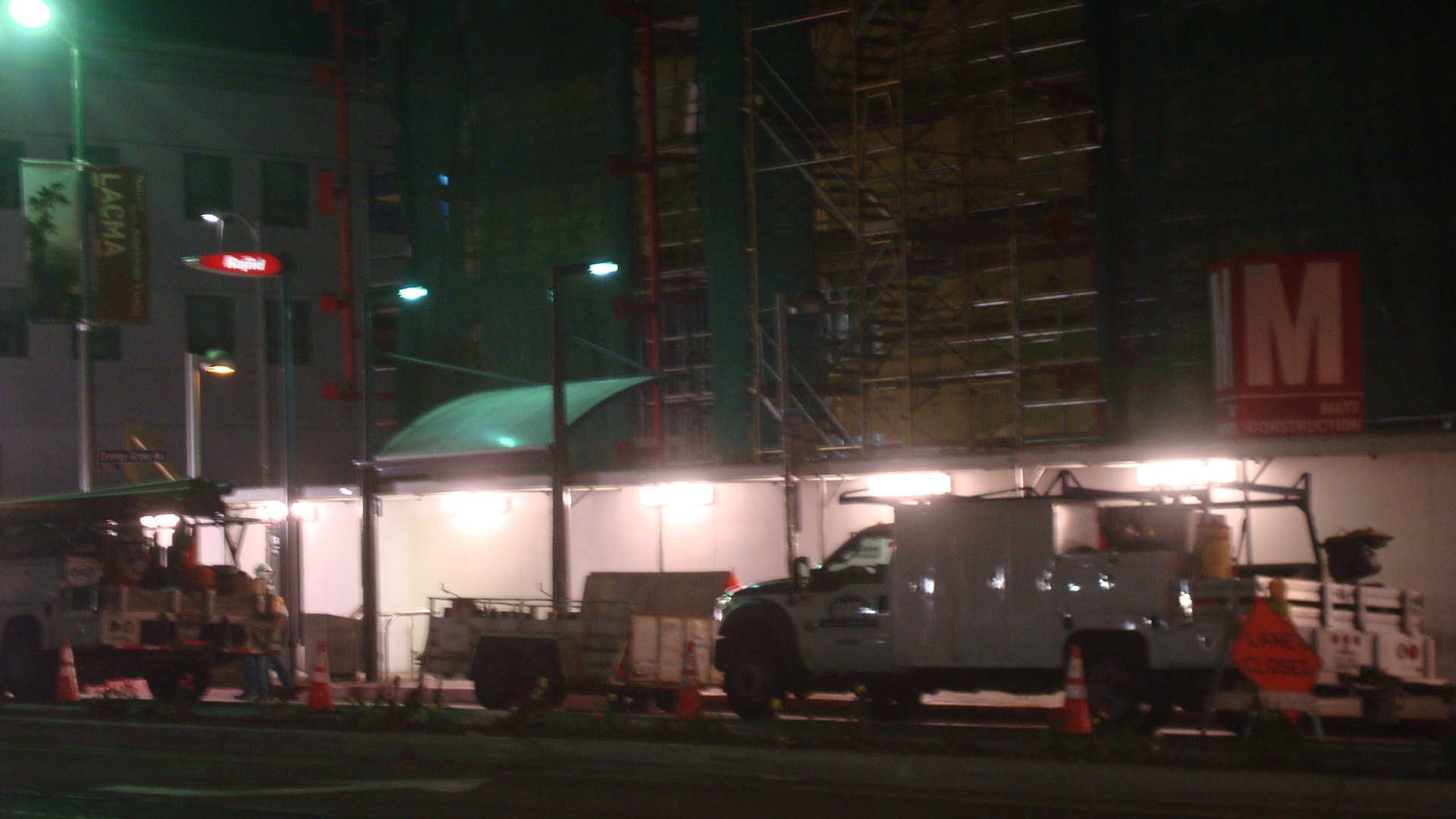
Just across the street, the old May Co. building is surrounded by scaffolding. It seems that the Academy is finally starting the process of transforming this dinosaur of a department store into a new museum devoted to film. I have no idea when it’ll be completed, but I’m glad to see that work has begun.

Scaffolding set up on the west side of the May Co. building.

Scaffolding set up on the west side of the May Co. building.

I was standing there on Fairfax snapping photos, when a few runners went speeding past. At first I thought it was just some people who lived in the neighborhood out for some exercise. But then another group ran by, and then another, and then it was a steady stream of people racing down Fairfax. My guess is that a couple hundred people went by, but it could have been more.

Runners stampeding down Fairfax toward Wilshire.

Runners stampeding down Fairfax toward Wilshire.

More runners heading down Fairfax.

More runners heading down Fairfax.

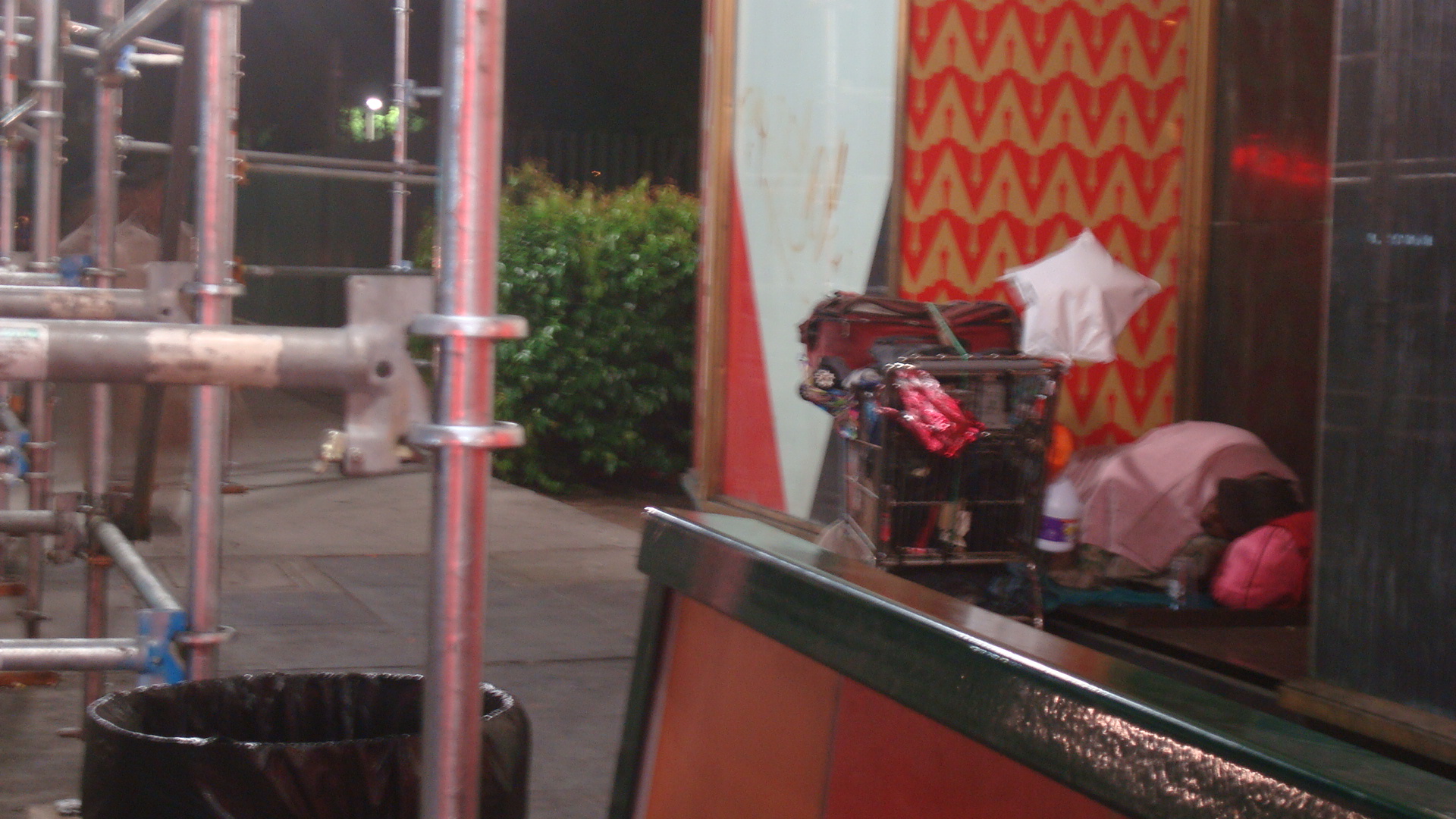
As usual, there was a homeless guy camped out in one of the recessed areas along the side of the May Co. building.

A homeless man taking shelter for the night.

A homeless man taking shelter for the night.

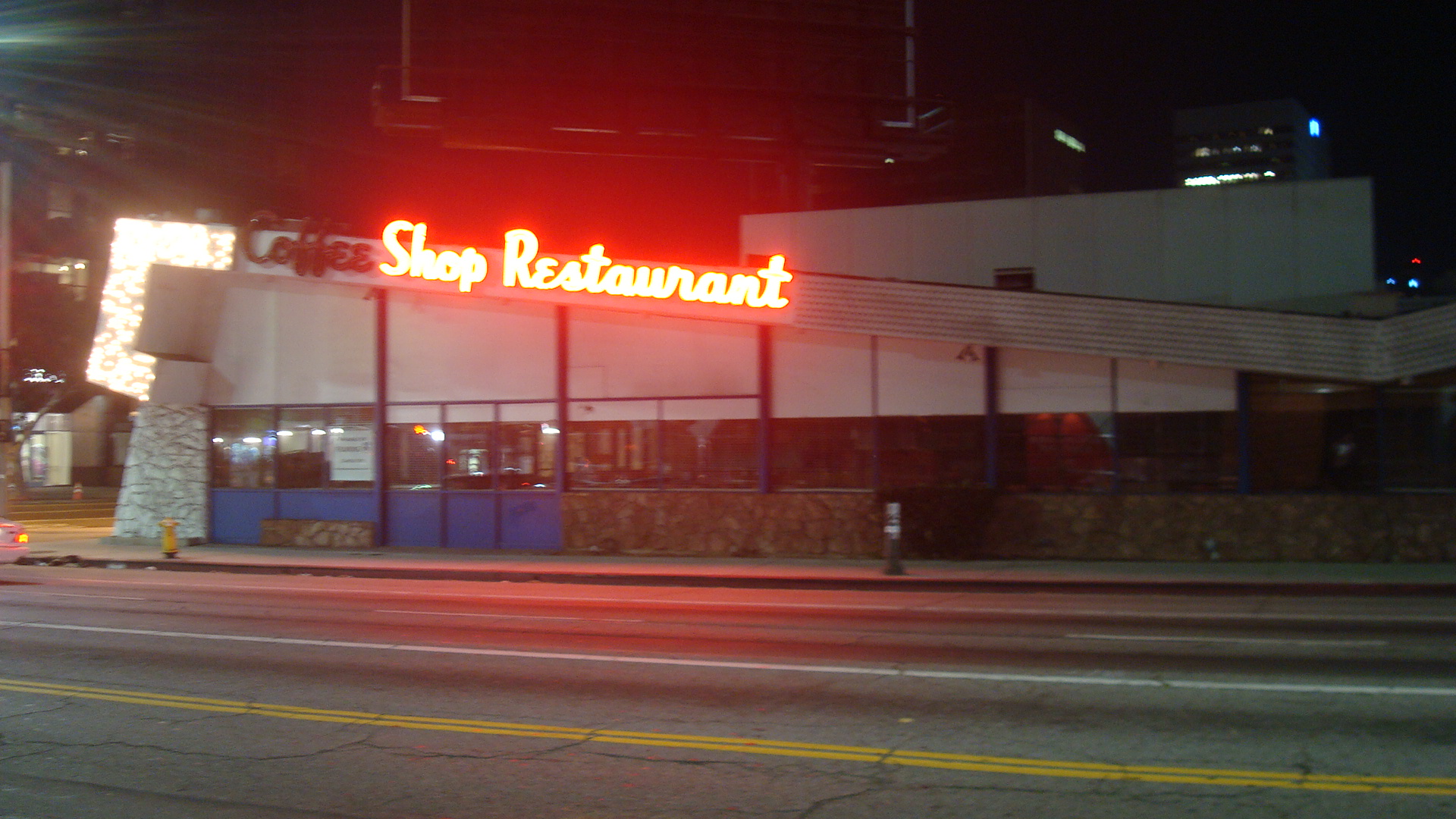
And of course there’s Johnie’s, blazing away in the darkness. The banks of lights that surround the building are slowly going out, but those that are left let you know that this classic coffee shop has not gone away. The place has been closed for years, but the flashing lights seem to be insisting that it’s still open for business. That it’s still alive.

Johnie's refuses to die.

Johnie’s refuses to die.

Lots of Questions, But No Answers

DSC08069

Last year I was elected to a seat on the Hollywood Hills West Neighborhood Council. It’s been interesting. On the one hand, I’ve made some good friends, and I have to say I’m impressed by the intelligence and dedication of the council members. On the other hand, it seems like the meetings never stop and the job requires sifting through endless amounts of information. It can be totally exhausting. But it’s gotta be done, because there are important issues that need to be addressed, and we can’t rely on city officials or developers to do the job properly.

Take the 8150 Sunset Blvd. project. The HHWNC held a public meeting a few days ago to give stakeholders a chance to ask questions of the developer reps regarding the Draft Environmental Impact Report. To prepare for the meeting, I had to read as much as I could of the DIER, which runs about a thousand pages. It was a mind-numbing experience, but I’m glad I took the time. There were a number of areas where I felt the information contained in the document was inadequate, but the most troubling omission was in the area of fire safety.

The LA Fire Department assessment states clearly that the 4 hydrants on-site have to provide a flow of 9,000 gallons per minute (gpm) for any of the high-rise alternatives. But the water main currently serving the site can only provide 3,750 gpm. Obviously, the water infrastructure has to be upgraded. So I went looking for specifics about how this was going to be done. The developer apparently has assumed responsibility for completing upgrades that will meet the needs for the project’s daily water usage, but they’ll need to do a whole lot more to satisfy the LAFD code requirements for a high-rise structure.

For projects like this, the DWP has to complete a Service Advisory Request, basically assessing the developer’s needs and stating what needs to be done to satisfy the City’s requirements. The DEIR references SAR Number 38449, approved in July 2013, in a footnote, and says it’s contained in Appendix G. But it’s not in the appendix.

So I thought I should contact the DWP to see if I could get hold of the SAR. On Monday I sent an e-mail to a DWP liaison explaining that the document was referenced in the DEIR, and asking if I could get a copy. The liaison wrote a nice e-mail back saying that he’d be happy to set up a meeting between DWP staff and the HHWNC in order to talk about the community’s water needs. I wrote back saying that I’d love to set up such a meeting, but I’d really like to get a copy of the SAR. That was on Thursday morning. I still haven’t gotten a response.

In the meantime, the HHWNC had it’s meeting where we got to ask developer reps questions about the DEIR. When my turn came, I mentioned that the LAFD code required a 9,000 gpm fire-flow for this kind of high-rise, and asked if there was a specific plan to satisfy this requirement. I also asked about the missing SAR. I may not be quoting them exactly, but basically their answer was, “We invite you to submit your comment on the DEIR.”

Call me paranoid, but I’m getting kind of concerned. We’re not talking about a minor disagreement on landscaping or a few extra cars on the road. This is a basic public safety issue. The LAFD requirements are clearly stated in the DEIR. Any of the high-rise alternatives for this project need a 9,000 gpm fire-flow. If there’s a plan in place to achieve this, that’s great. I’d love to see it. I’d also like to see the SAR that the DWP prepared back in 2013.

Compounding my concern are recollections of the water main rupture that flooded Sunset last year. I’m sure you all remember it, too, because it got plenty of media attention. In October, Wehoville ran an article on the flooding, and they quoted an e-mail from Steven Cole, of the DWP’s Water Distribution Division, to the West Hollywood Heights Neighborhood Association. In his e-mail, Cole said that the DWP was looking at replacing a 4 mile portion of a pipeline running along Sunset. He also said they were still analyzing the best way to accomplish that task. It makes me wonder if the DWP can guarantee that the water infrastructure needed to satisfy the LAFD requirements will be in place before 2018, when 8150 Sunset is supposed to be completed. Here’s the link to the article on Wehoville, in case you want to take a look at it.

LADWP Reveals Plans

Does anybody else see cause for concern here? I’d feel a whole lot better if if could see the DWP’s SAR. I’ve asked them for it twice. I’m still waiting.