Columbia Square

CS 01 Front 1

There are a number of different Hollywoods. It can be a noun or an adjective, a brand or a concept, a nostalgic fantasy or a nasty slur. But there’s also a physical place called Hollywood, and it’s been through a lot of changes over the years. About a century ago it became the center of the film industry, and what started out as a sleepy suburb grew rapidly. Its fortunes rose and fell as the studios left, radio and TV moved in, radio and TV moved on, and the internet conquered the world. For decades people have been asking how to bring media back to the Hollywood area to revitalize the local economy.

Columbia Square has played a key role in putting Hollywood, the place, back on the media map. Opening to great fanfare last year, the project brings together residential, office and commercial space to create a media campus. The owners were spectacularly successful in landing major industry tenants long before the project was completed. Columbia Square was widely hailed as a major step forward in Hollywood’s revitalization.
CS 07 EC Side

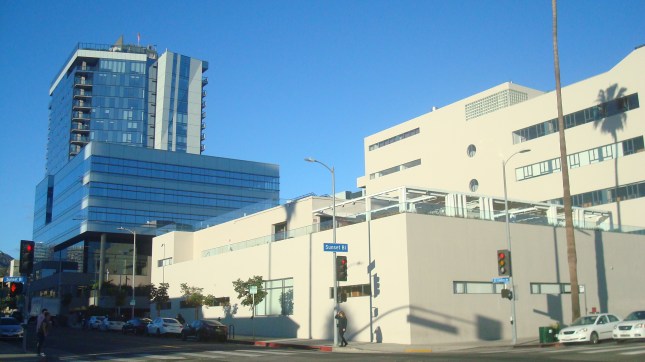
The El Centro side of Columbia Square
CS 08 Sidewalk

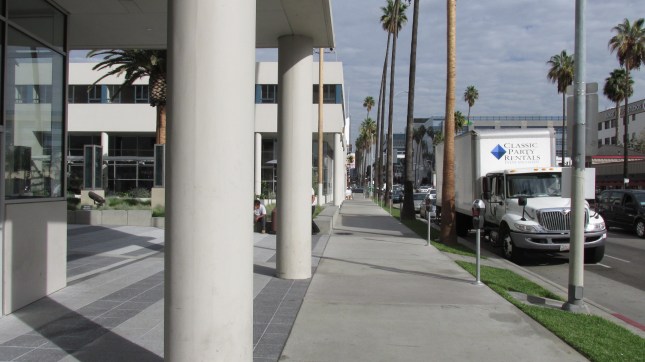
The front of the campus along Sunset

I have to say I’m pretty impressed myself. I was skeptical about how this modern media campus would come out, and I was pleasantly surprised. This was a complex project, and roused a certain amount of controversy when it was first proposed. But the developer did an admirable job, not just engaging the community, but actually responding to residents’ concerns. And here’s it’s probably a good idea to give some background….

Columbia Square, located on Sunset between El Centro and Gower, was first built in the late 30s by the Columbia Broadcasting System (CBS). Creating a major, state-of-the-art radio/recording studio in the area was seen as a boost, not just for Hollywood the place, but also Hollywood the brand. New York had dominated the national radio market since the beginning, but this was a sign that LA was trying to change that. The look of the building was an integral part of getting that message across. CBS chose modernist William Lescaze to design the project, and the building was one more landmark in LA’s long engagement with progressive architecture.

CS 10 Paley

The courtyard at the front of the complex
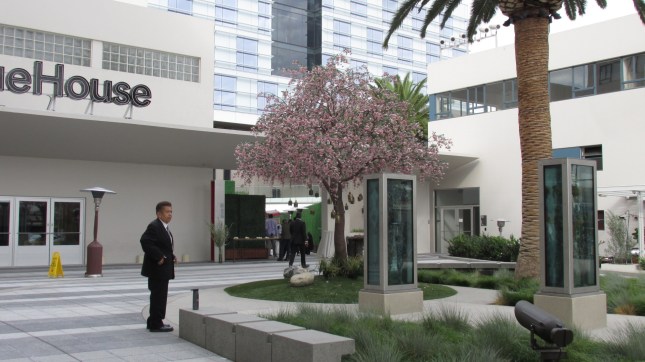
CS 12 Ctyrd Tree 1

Another shot of the courtyard

CS 16 Ctyrd NH People

One of the restored structures, now occupied by Neue House

CS 18 Ctyrd Out

A view of the courtyard looking toward Sunset

As TV took over in the 40s and 50s, a number of popular shows originated from Columbia Square, but it was radio that kept hanging on through the years. Broadcasts continued to emanate from the studios until 2007, when the last tenant left. Then the building went dark, and for a while no one was sure what would happen to it. The property changed hands a few times, and different ideas were thrown around. In 2009 the City released an EIR for a project that included a 40-story tower. If you’ve been following development in Hollywood for any length of time, you can probably imagine how that went over.

But then a new developer took charge, and things changed dramatically. When Kilroy Realty Group acquired the property in 2012, they took the time to listen to the community and made some changes, crucially lowering the height of the tower to 22 stories. This is pretty amazing when you consider that the City had actually approved 28. They also decided to rethink the layout of the campus, allowing for more open space to engage the public. And they agreed to work with local preservationists to restore the historic Lescaze structures.

CS 22 Stairs

Stairway leading to the rear of the campus
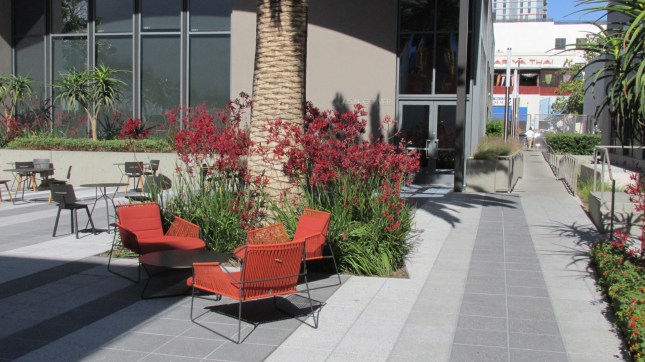
CS 24 Ctyrd Chairs 2

A space to hang out in

The end result is a jewel. I’ve actually gone to Columbia Square a few times since it opened, just to walk around and take pictures. (And because the weather was different each time, the light in the photos keeps changing. Sorry if it’s a little jarring.) I think it’s important to mention the people involved in making this happen. The firm of House & Robertson designed the campus and the new buildings. In restoring the original structures they worked with Historic Resources Group. And the landscapes were created by Rios Clementi Hale Studios. The Los Angeles Conservancy was so impressed with the finished product that they gave the developer their 2017 Preservation Award. It’s worth reading the Conservancy’s description of the project to get an idea of how much time, money, and work went into the restoration process.

Columbia Square from the Los Angeles Conservancy

I’m so knocked out by the new complex, and by the way Kilroy approached the project, that I hate to voice any reservations. While I was writing this post I kept asking myself whether I wanted to make any critical comments, because in some respects the revitalized ColumbiaSquare is a model of what redevelopment should be. But there are a couple of things I think it’s important to note….

First, while the residential tower is beautiful, the prices are way beyond what the average person living in Hollywood could afford. And the addition of a couple hundred high-end apartments is just another step in the ongoing gentrification of the area. Even as I write this, more low-income tenants are being pushed out of their homes.

Second, while the City has tried to portray this, and other projects like it, as transit-oriented development, it’s highly unlikely that the people who live at Columbia Square will be taking transit on a regular basis. The City has been pushing this line for years, and the results have been disastrous. Transit ridership in LA is lower now than it was back in the 80s, and continues to decline. City Hall’s continued insistence that building high-profile, high-end megaprojects is going to get people on busses and trains just shows how clueless our elected officials are.

CS 40 Gower Side 1

The Gower side of the campus

CS 44 Gower Side Benches

Landscaping and benches along Gower

But let’s end on a positive note. I want to congratulate Kilroy, and all the others involved, in coming up with a project that has so much to recommend it. This is an unusual instance where a major developer respected the local context, and more important, the local community. The new Columbia Square is a beautiful piece of design, and it’s brought some major media players to the area, along with hundreds of jobs. Over all, it’s an important step forward for Hollywood the brand, the concept, the industry, and the place.
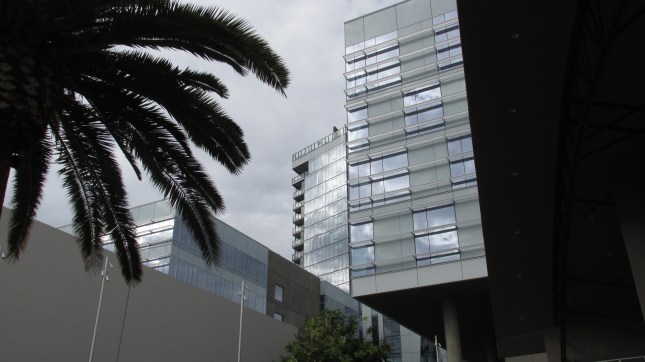
CS 50 Vert

Trashing a Treasure

Norton Entrance a

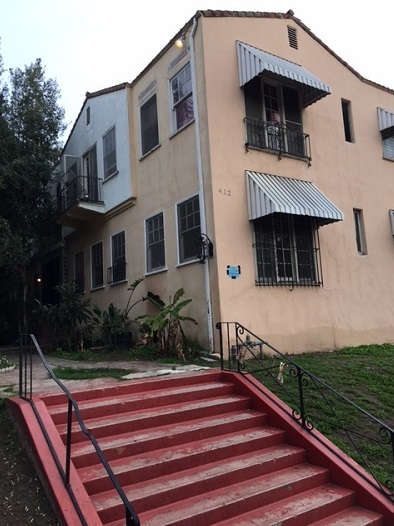
Well, for a while it looked as though the preservation community might manage to save the two lovely apartment buildings on Norton Avenue that were slated for demolition.  But the developers have some sharp lawyers on their side, and now it appears that Norton Court (424-430 N. Norton Avenue) and Norton Flats (412-420 N. Norton Avenue) will soon be gone.

Members of the community have been working for months to save these beautiful examples of courtyard apartments.  Both buildings were constructed in the 20s, and according to Survey LA, they are among the “few remaining examples in the area that [retain their] original site plan, landscape and hardscape elements, and architectural features.”

Councilmember David Ryu came to the rescue recently with an emergency nomination of the buildings as Historical-Cultural Monuments (HCMs).  But the developers’ lawyers found a way to block the nomination on a technicality.  It seems they’re determined to destroy these buildings at all costs.

Norton Stairs b

This is not the first time the Cohanzads have knocked down a building that could have been protected as an HCM.  Whether they’re operating as Wiseman Residential, or one of the numerous LLCs they’ve created to protect themselves from liability, the Cohanzads have made a practice of knocking down older buildings to put up new ones.  They don’t seem to care how much of LA’s history they’re destroying, or how their projects affect LA’s communities.  They argue that by levelling small buildings and putting up big ones they’re doing us a favor by increasing the supply of housing.  But many of the units they’ve demolished were rent controlled, and the new units they’re creating are way too expensive for someone earning LA’s median income.  Doesn’t sound like a very good deal to me.

And then there’s the loss of treasures like the Norton courtyard apartments.  The number of structures like this is shrinking, and there are few left that are still substantially intact.  But the Cohanzads don’t seem to care.  I guess it’s all about profit for them.

It may be too late to save the Norton apartments, but we can try.  Please e-mail Councilmember David Ryu to thank him for his efforts so far, and to encourage him to maintain his support for preservation of these buildings.

David E. Ryu            david.ryu@lacity.org

Use the subject line, “Demolition of Norton Apartments”.

While you’re at it, copy your own Councilmember on the message.  Or better yet, copy them all.  And don’t forget the Mayor.

Gilbert Cedillo           councilmember.cedillo@lacity.org

Paul Krekorian         councilmember.krekorian@lacity.org

Bob Blumenfield      councilmember.blumenfield@lacity.org

Paul Koretz   paul.koretz@lacity.org

Nury Martinez           councilmember.martinez@lacity.org

Felipe Fuentes         councilmember.fuentes@lacity.org

Marqueece Harris-Dawson            councilmember.harris-dawson@lacity.org

Curren D. Price, Jr.  councilmember.price@lacity.org

Herb J. Wesson, Jr.             councilmember.wesson@lacity.org

Mike Bonin    councilmember.bonin@lacity.org

Mitchell Englander councilmember.englander@lacity.org

Mitch O’Farrell          councilmember.ofarrell@lacity.org

Jose Huizar   councilmember.huizar@lacity.org

Joe Buscaino           councildistrict15@lacity.org

Eric Garcetti  mayor.garcetti@lacity.org

We may not win this fight, but we can go down swinging.

Norton Lamp c

The Sky Above, the Traffic Below

a MTA UC 10 Persp

Lately most of the press on the MTA has been about its rail expansions, but there are other, smaller projects that deserve attention, too. Work was recently completed on both the North Hollywood Station Underpass and the Universal City Pedestrian Bridge. There have been some complaints from transit advocates about these projects, but I have to say I think both offer significant benefits.

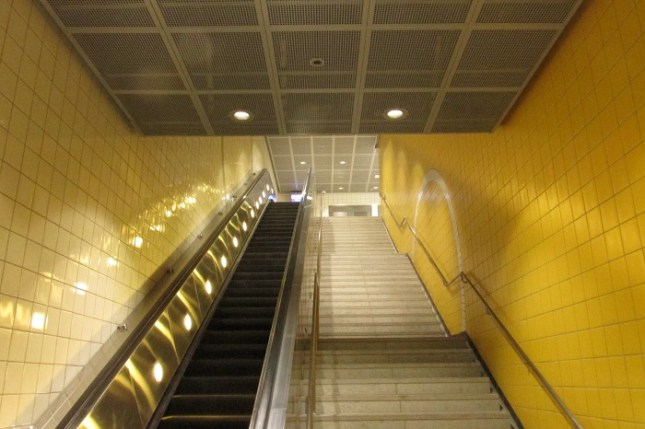
The smaller and less flashy of the two is the underpass. The construction phase was a huge pain, but now that it’s finished I think it’s a big improvement over the previous set-up. Using the tunnel to transfer from the Red Line to the Orange Line is much faster, and much safer. I remember waiting for the light to change so I could cross Lankershim, and I’d see people dashing across the street, dodging oncoming traffic, just so they could catch an Orange Line bus. So it’s definitely a step up in terms of safety. I also like the bright, playful design of the underpass. It fits in well with vibe of the Red Line Station.

Street level entrance to the North Hollywood Station Underpass.

Street level entrance to the North Hollywood Station Underpass.

A closer view of the entrance.

A closer view of the entrance.

Looking down the stairwell.

Looking down the stairwell.

Looking up the stairwell.

Looking up the stairwell.

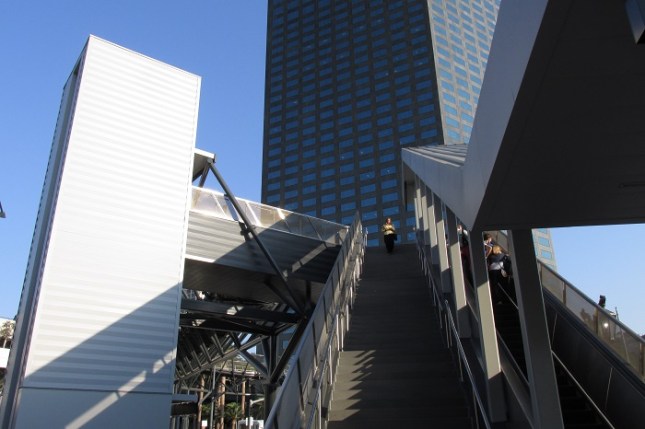
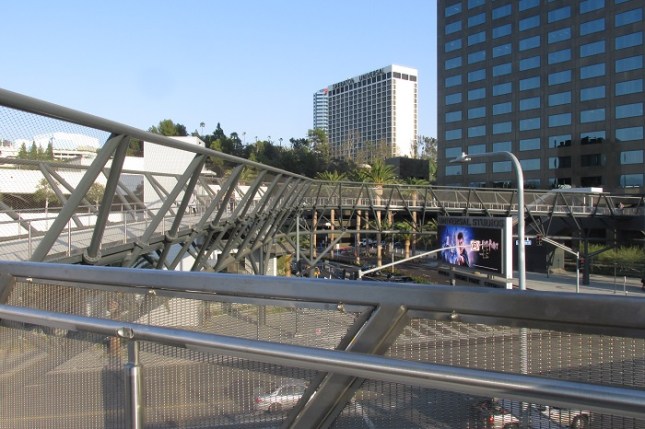
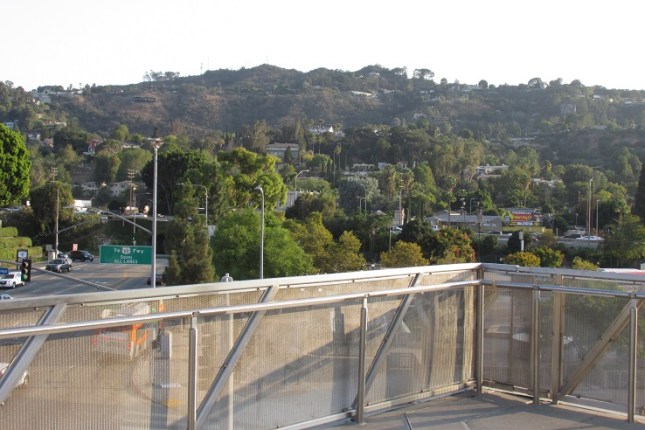
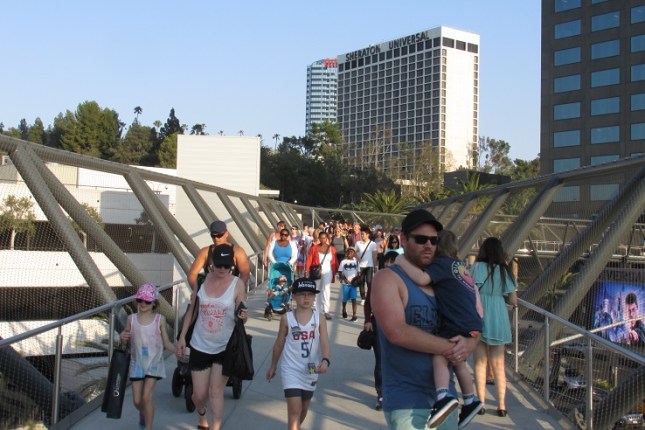
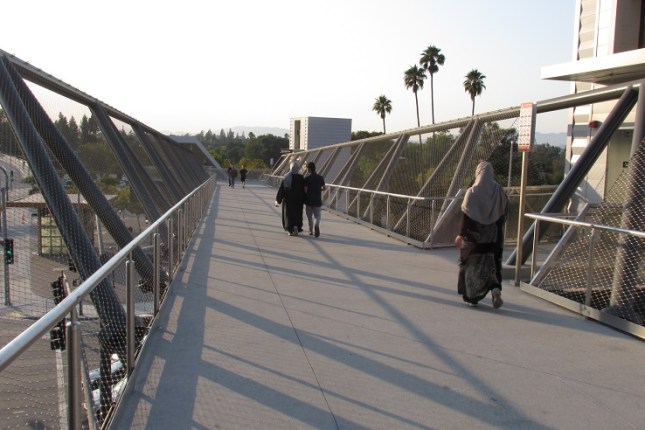
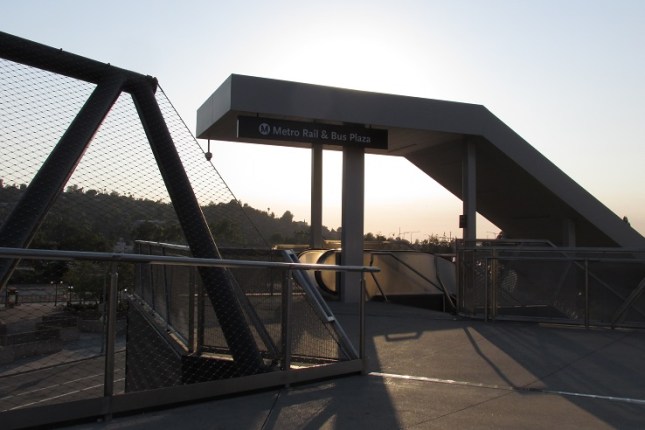
The first time I checked out the bridge at Universal City I had some reservations. While it’s an interesting structure, my initial reaction was that it was a little too severe. But while I was taking photos the other day, I was really impressed by the spaces it creates, and also how it exploits the views of the surrounding community. On one side you have the low roll of the Hollywood Hills, on the other side the Valley is stretching out to the horizon. Look up and you see massive high-rises cutting into the sky, look down and you see the traffic swirling on the street below.

A view from the west side of the Universal City Pedestrian Bridge.

A view from the west side of the Universal City Pedestrian Bridge.

Looking across the bridge to Universal City.

Looking across the bridge to Universal City.

Looking down on Lankershim Blvd..

Looking down on Lankershim Blvd..

A view of the Hollywood Hills.

A view of the Hollywood Hills.

A crowd of people leaving the theme park.

A crowd of people leaving the theme park.

Another shot of Lankershim.

Another shot of Lankershim.

Shadows stretching across the bridge as the sun goes down.

Shadows stretching across the bridge as the sun goes down.

The west end of the bridge, with the hills in the distance.

The west end of the bridge, with the hills in the distance.

Transit planning is a large and complicated puzzle. I don’t claim to understand all the intricacies, and I know that some people feel the money spent on these projects could have been used for other purposes. But I see definite advantages in both the bridge and the underpass. I’m glad to have them.

a MTA UC 75 Brdg Silh

The Broad

Brd 10 Main

Last week I finally made it down to The Broad. I lucked out because some friends had an extra ticket and invited me along. I really recommend making a reservation. The lines for visitors who don’t have one are still super long.

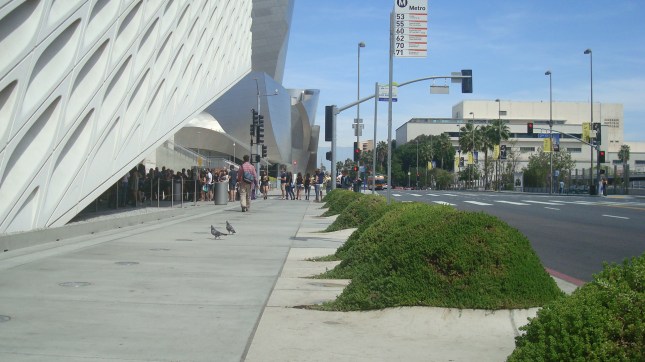
The front of the building on Grand Ave.

The front of the building on Grand Ave.

Riding up the escalator to the galleries.

Riding up the escalator to the galleries.

I got there a little early and spent some time just checking out the building’s exterior. It’s gorgeous. The two design firms that worked on the project, Diller Scofidio + Rensler and Gensler, worked from a concept they call “vault and veil”. The vault is where the museum stores its collection, and instead of trying to hide it, which is the standard approach, they allowed the structure of the vault to play a major role in shaping the space. The veil is the building’s outer layer, a porous sheath that lets natural light filter into the galleries.

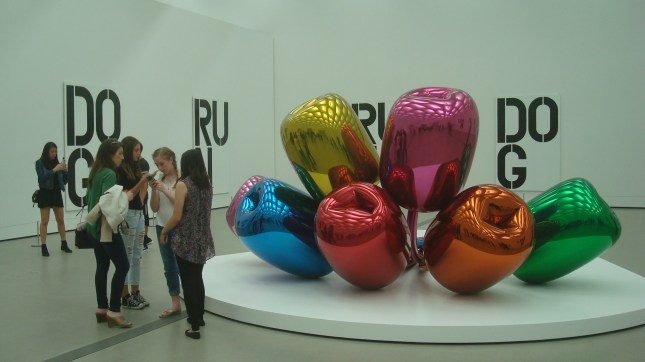
Jeff Koons, Tulips

Jeff Koons, Tulips

A room full of Warhol.

A room full of Warhol.

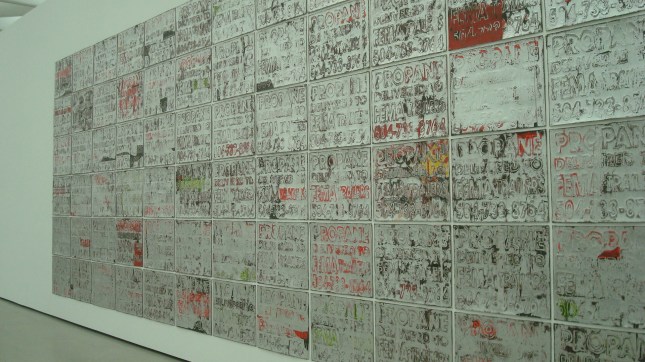
Mark Bradford, Corner of Desire and Piety

Mark Bradford, Corner of Desire and Piety

Mark Tansey, Forward Retreat

Mark Tansey, Forward Retreat

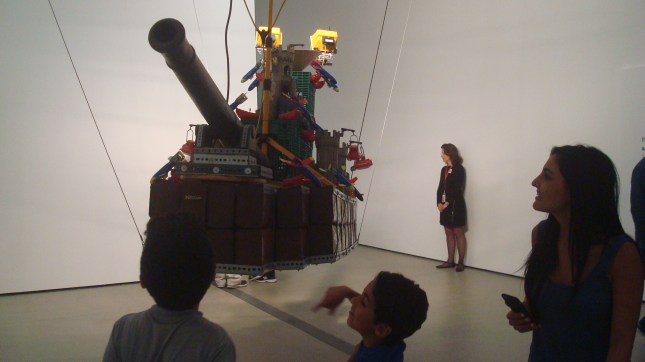
Chris Burden, Bateau de Guerre

Chris Burden, Bateau de Guerre

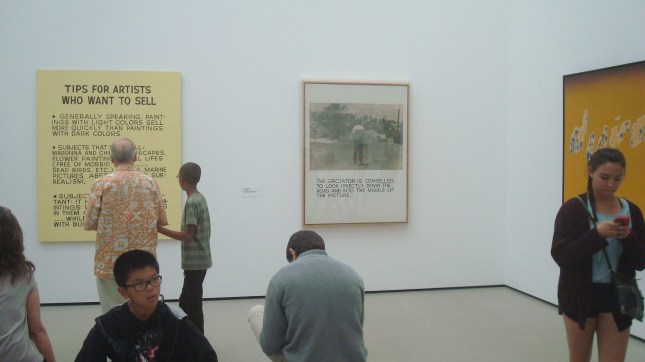
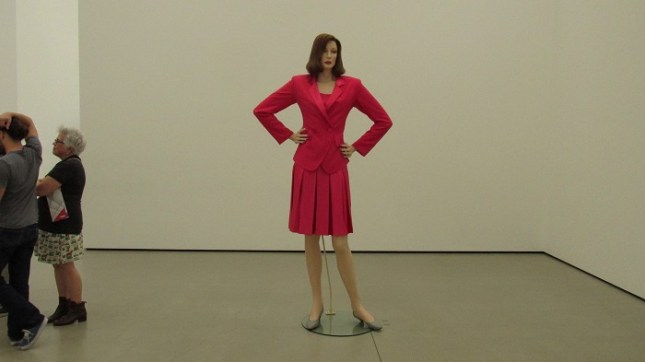
Looking at the works in Broad’s collection, it’s clear that the guy’s got a keen eye and an open mind. Unlike the super rich predators who’ve crowded into the art market looking for status symbols and investment opportunities, Broad is passionately interested in the ways that artists express themselves and interact with the world around them. Wandering through the galleries, I was struck by the depth and diversity of the works on view, but I was even more impressed by how engaging this innaugural show is. It can be tough just getting the general public to take a look at contemporary art. Believe it or not, some people don’t get excited about looking at massive hunks of sheet metal or walking into galleries filled with rotting vegetables. But the wide variety of pieces in this first show offer a range of experiences, and there’s something for everybody. If you’re an art scenester looking for challenging conceptual stuff, Mark Bradford takes over a wall to talk about post-Katrina economic realities in New Orleans. And if you’re a teen-age pop culture freak, you’ll probably want to whip out your phone and snap a few shots of Takashi Murakami’s giant psychedelic mushrooms. With works on display by Kara Walker, Joseph Beuys, Susan Rothenberg, Chris Burden, Ed Ruscha, Yayoi Kusama, Mark Tansey, Cady Noland and dozens of others, you’re sure to find something that will grab your attention.

Thomas Struth, Audience II (Galleria dell'Accademia) Florenz

Thomas Struth, Audience II (Galleria dell’Accademia) Florenz

Art you can read, from John Baldessari and Ed Ruscha.

Art you can read, from John Baldessari and Ed Ruscha.

Charles Ray, Fall '91

Charles Ray, Fall ’91

I’m really grateful to Eli Broad for pulling this whole thing together. Aside from the thrill of seeing so much amazing art gathered together in one place, I was excited to see crowds of visitors milling through the galleries. And these people weren’t just passively strolling from one room to the next. They were posing with the art, laughing at the art, and talking about the art. This really is a museum for the people.

If you haven’t gone yet, what are you waiting for?

The Broad

Park located at the side of the building.

Park located at the side of the building.

Glendale Municipal Services Building

GCC 01 Crnr Full

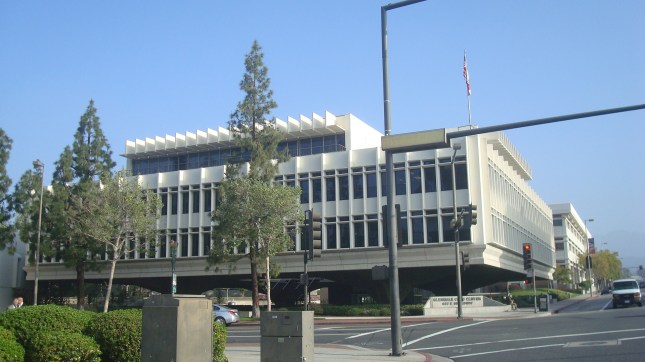
LA has a remarkable architectural history. For decades writers and photographers have been documenting our homes and hotels, coffee shops and car washes, but there are still plenty of buildings that haven’t gotten nearly the attention they deserve. A prime example is the Glendale Municipal Services Building. It’s kind of surprising, given that the GMSB sits right out in the open at the corner of Glendale and Broadway, and that one of LA’s best known architectural firms was involved in the design.

The side of the building facing Broadway.

The side of the building facing Broadway.

Northwest corner of the building.

Northwest corner of the building.

Probably part of the reason for its neglect is that it’s in Glendale. When most people think about LA architecture, they think of Downtown or Hollywood or the West Side. Generally speaking, the Valley isn’t seen as a hotbed of innovation in design, though it does have its share of interesting structures. No question, the GMSB is one of them.

The building is lifted above street level by pylons of steel and concrete.

The building is lifted above street level by pylons of steel and concrete.

A close-up of one of the pylons.

A close-up of one of the pylons.

Stairway leading to the first level.

Stairway leading to the first level.

The fountain at the center of the courtyard.

The fountain at the center of the courtyard.

Another shot of the stairway.

Another shot of the stairway.

In surfing the net, I didn’t come up with a lot of information about the GMSB. Every web site I’ve been to mentions both Merrill Baird and the A.C. Martin firm. Baird is pretty obscure. It seems not much is known about him. The only other examples of his work I could uncover were a few homes, all in pretty traditional styles. Based on what I’ve seen, his involvement in a cutting-edge modern structure like the GMSB is pretty surprising.  It seems he had more to offer than his previous work suggests.  The Los Angeles Conservancy’s web site credits Baird with revealing the supporting pylons by removing decorative columns that were originally part of the GMSB’s design. Click on the link below to read more.

Municipal Services Building from LA Conservancy

All offices open onto the central atrium.

All offices open onto the central atrium.

A decorative pattern is worked into the railing.

A decorative pattern is worked into the railing.

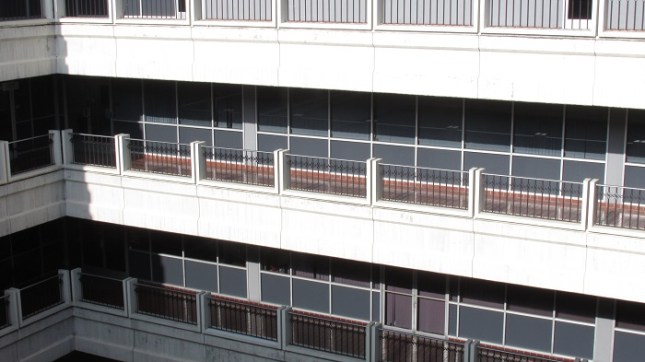
There are three stories of offices, but the building is lifted off the ground at its base by concrete supports. To enter the GMSB, you walk down into the central courtyard, and then use the stairs or the elevator to get to the upper floors. All the offices open onto the central atrium, and there are plenty of windows allowing workers to enjoy natural light. Even though traffic is constantly flowing on the surrounding streets, the space at the center of the building is quiet and peaceful.

A shot of the fountain from above.

A shot of the fountain from above.

And a shot of the stairway from above.

And a shot of the stairway from above.

Walkway on the third level.

Walkway on the third level.

GCC 19 Crnr Up a

The Conservancy’s web site describes the building as brutalist. While some of its features connect it to that school, it doesn’t have the heavy, blunt appearance of other brutalist structures. Generally the apartment blocks and office buildings built in that style tend to dominate the landscape. But not this one. It has a totally different vibe. It illuminates the landscape.

GCC 50 Glndl Side

Remaking the May Co.

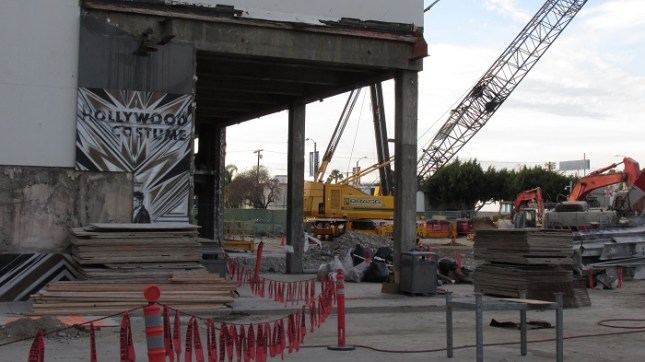
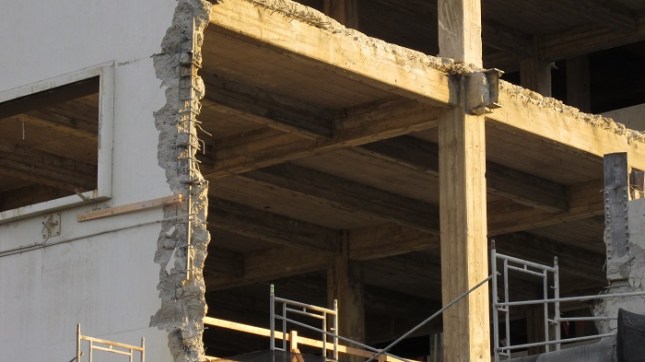
Construction of the new Academy Museum has begun.

Construction of the new Academy Museum has begun.

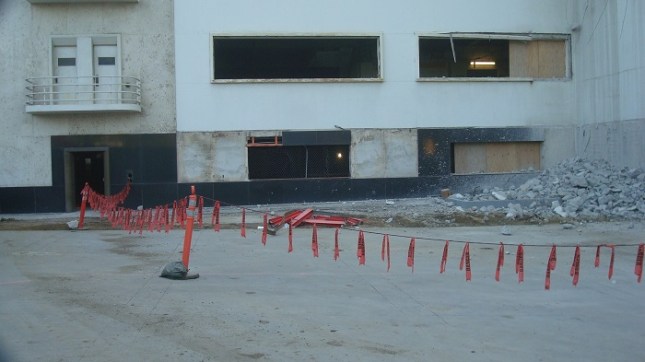
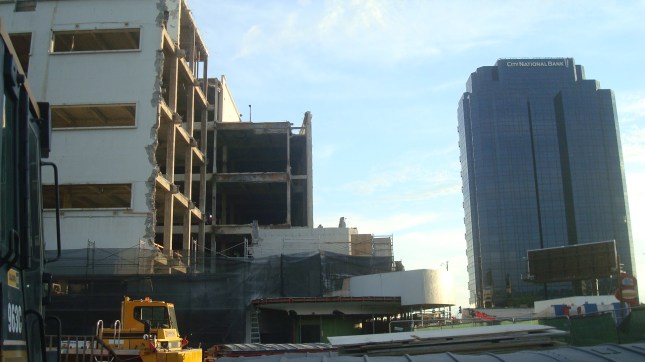
A while ago I was at LACMA, and as I walked down a flight of stairs on the west side of the campus I looked over at the May Co.. It had a big hole in it. Construction had started on the new museum for the Academy of Motion Picture Arts & Sciences.

May Co. building with a section removed.

May Co. building with a section removed.

Looking through the May Co. to Fairfax.

Looking through the May Co. to Fairfax.

It’s taken a long time to get to this point. The project has been hampered by controversy, ranging from construction impacts on the community to issues with the design. Hopefully all that’s been resolved. At any rate, the May Co. is being taken apart so that it can be put back together again, this time with a massive annex that will contain a state of the art theatre.

A view of the site facing Fairfax.

A view of the site facing Fairfax.

The rear of the building.

The rear of the building.

The original May Co. building was designed by Albert C. Martin and Samuel Marx and it opened in 1939. For decades it was a major department store, but as malls began to draw more shoppers it went into decline. LACMA took it over 1994, but it seemed like they never used it much. In 2014 the Academy made a deal to lease the property with the goal of building a museum. After a long search, Renzo Piano was brought on as architect.

A view of the site facing Wilshire.

A view of the site facing Wilshire.

A view of the empty structure.

A view of the empty structure.

And a closer view of the interior.

And a closer view of the interior.

I’m glad things are moving forward. People have been talking for years about how LA should have a museum devoted to film, and it’s high time somebody made this happen. According to the Academy web site, “The Museum will provide interactive, immersive, and engaging exhibitions that will pull back the curtain on moviemaking and highlight the history and future of the arts and sciences of film.” Sounds good to me.

Heavy machinery and piles of debris.

Heavy machinery and piles of debris.

Check out the Academy’s web site to learn more.

Academy Museum

They’ve also got a cool timeline for the May Co., showing photos of the building through the years.

May Co. Building Timeline

I know it hasn’t been easy for the Academy to deal with all the challenges of creating a new museum, but it looks like they’re on their way. Let’s hope it’s smooth sailing from here on.

The corner of the building at Wilshire and Fairfax.

The corner of the building at Wilshire and Fairfax.

1939 Meets 1984

US Wide

Not too long ago I was taking the train to visit some friends. I got to Union Station a little early, so I thought I’d buy a paper to read on the trip. But as I was walking in the direction of the newsstand, I got a small shock. It wasn’t there any more.

The place where the newsstand used to be.

The place where the newsstand used to be.

Now, I know people don’t read papers like they used to, so maybe I’m just a dinosaur living in the past. This newsstand did have a pretty good selection of newspapers and magazines, but it’s not like it was a historic landmark. It was just a tiny little shop that sold the kind of stuff you buy when you’re waiting for a train.

But that isn’t the only thing that’s changed at Union Station. In fact, the whole feel of the place is changing, and I can’t say I like it.

Completed in 1939, Union Station was designed by a group of architects led by John and Donald Parkinson. It brings together a number of different styles that were popular at the time, including Streamline Moderne, Mission Revival and Art Deco, and it has the feel of a massive museum devoted to a bygone era. It used to be a great place to chill. I liked hanging out there. I’d show up early if I was taking the train and relax in the old leather chairs. Read a paper. Have some coffee. Watch the sunlight streaming down through the huge windows.

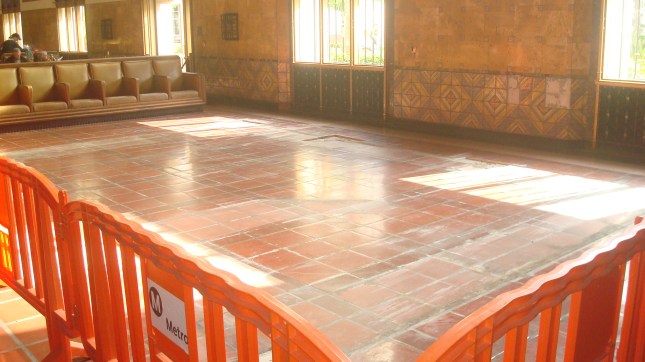
These days it doesn’t feel so relaxing. In the first place, the chairs are now cordoned off and there are guards making sure that only people with a ticket get in. I know there have been problems with homeless people camping out there and asking travellers for spare change. And I still remember the time I was waiting for a train and there was a guy who kept screaming really loud. He sat on the floor against one of the columns while two guards tried to talk to him, and he just kept on screaming. So I know there’s a reason for maintaining some restrictions, but it makes the place feel a whole lot less inviting. And let’s be honest, this approach is typical of the City of LA. Rather than actually trying to deal with the homeless, the addicted and the mentally ill, the City just shuts them out. Putting up another barrier doesn’t solve the problem. It’s just a way of avoiding it.

Waiting areas are now cordoned off.

Waiting areas are now cordoned off.

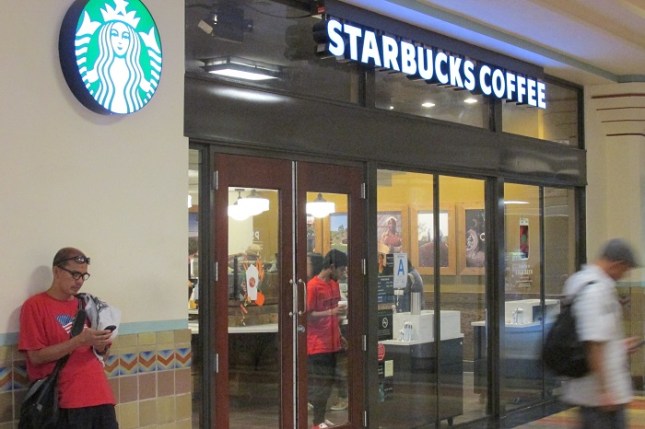
And what about the bagel shop? There used to be a little mom and pop place that sold a wide variety of bagels, and often when I was taking the train that’s where I’d stop to pick up some breakfast. It disappeared a while ago. What do we have in its place? You guessed it. Starbucks. We lost a little independent business that sold good bagels, and now we have another corporate coffee house. In fact, more and more Union Station has been taken over by chains.

Corporate coffee...

Corporate coffee…

...corporate sandwiches...

…corporate sandwiches…

...corporate snacks.

…corporate snacks.

I used to like hanging out in Union Station, but not so much any more. These days it’s kind of like spending time in a detention center that’s attached to a strip mall. The vibe of the place has changed. It feels colder. More corporate.

But I shouldn’t be surprised. Isn’t that what’s happening to the whole country?

Waking Up in the Park

NH 05 Pk Tree Shad

I’ve been going past North Hollywood Park since I was a kid, but I’ve hardly ever set foot in it. Lately, though, every time I’ve gone by I’ve felt like I needed to check it out. So I finally decided to take the time.

NH 07 Pk Tent

God knows what possessed me to go over there at seven in the morning. I’m barely awake at that hour. But it was cool because I had the park mostly to myself. The sun was just coming up and the only other people around were the dog walkers and the joggers. Not that the park was quiet. It’s bounded on all sides by major roadways, occupying the triangle made by Chandler, Tujunga and the Hollywood Freeway.

NH 14 Pk Church

You can see the traffic backed up on Tujunga. And you can also see St. Paul’s First Lutheran Church in the background. I looked on the net for a history of the church, but didn’t find much. Their web site said the congregation has been active in the area since the twenties, but didn’t offer too many details. I was curious about the campus, because it’s an interesting mix of old and new styles.

Also across the street from the park is Masonic Lodge #542.

NH 15 Pk Mason

Freemasonry has pretty much disappeared these days, but it played a large part in European and American history for hundreds of years. Ben Franklin, W. A. Mozart, Simón Bolívar, Duke Ellington and Dizzy Gillespie were all Masons. The history of Freemasonry is long and complex, and because it was a secret society there’s much that will never be known. Some people see it as an important fraternal organization that helped shaped democracy, others see it as a band of power mad imperialists who wanted to rule the world. If you’re into conspiracy theories, you can’t go wrong with the Masons. There are all sorts of crazy stories out there. But to get back to Lodge #542, in its heyday its members included many Hollywood luminaries like Clark Gable, Stan Laurel, Oliver Hardy and Audie Murphy. The Los Angeles Conservancy has a nice write-up about the building’s design.

Masonic Lodge #542 at The Los Angeles Conservancy

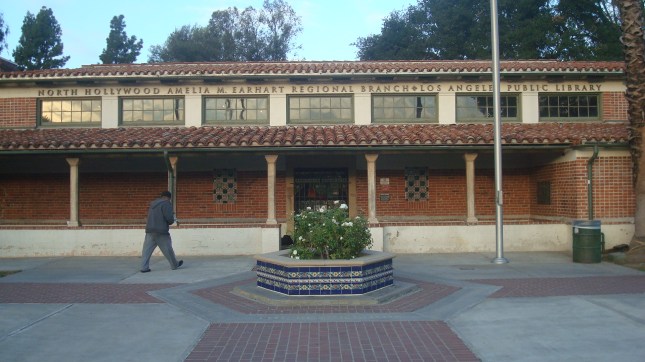
Inside the park itself is the North Hollywood Amelia Earhart Library. This beautiful little Mission style building was originally constructed in 1929, and it was designed by architects Lewis Eugene Weston and Lewis Eugene Weston, Jr..

The front of the Amelia Earhart Library.

The front of the Amelia Earhart Library.

A side view of the library's entrance.

A side view of the library’s entrance.
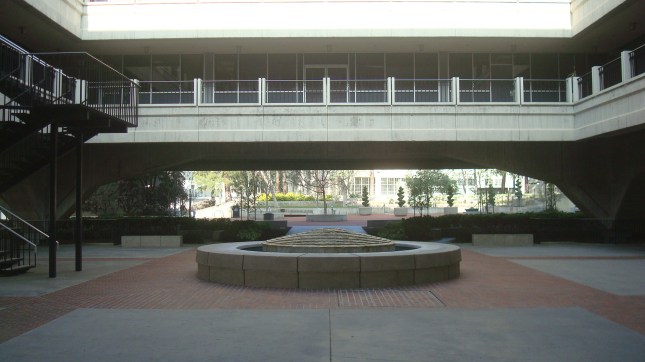
The back of the library.

The back of the library.

In the decades since it was built, the library has undergone a number of transformations. Like so many buildings, it’s been adapted over and over again as the community around it changed. To learn more, follow the link below.

Amelia Earhart Regional Branch History at LAPL

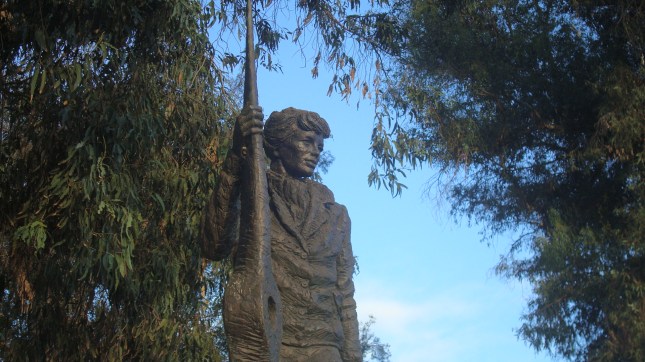
If you’re wondering why this branch library is named after Amelia Earhart, it’s because she was living in nearby Toluca Lake at the time she took off on her final flight. There’s also a statue of Earhart in the park at the corner of Tujunga and Magnolia.

NH 30 Pk Amelia

Honestly, until yesterday the only thing I knew about this early aviator was that she died trying to fly around the world. After doing a little reading, I found out that she racked up a number of impressive accomplishments in her short life. You might want to do a little reading about her yourself.

Amelia Earhart Bio

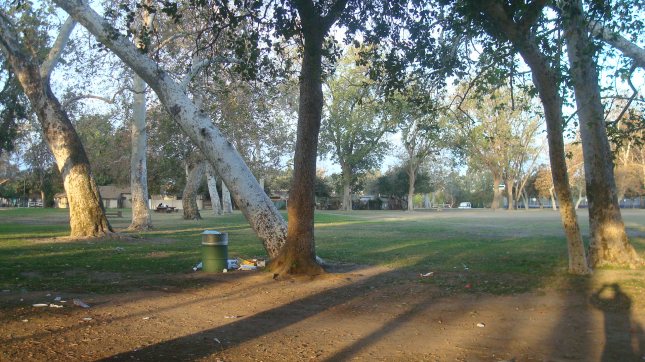
Even though there wasn’t a lot happening at seven a.m., the park is often crowded when I go by in the afternoon. Activities are offered for people of all ages, and there are plenty of folks who go there just to hang out. In spite of the cars rushing along the park’s perimeter, once you get away from the traffic it’s easy to forget about the city buzzing around you. The paths wend their way through large expanses of grass. There are fabulous old trees rising up above you.

NH 33 Pk Flowers

For years I’ve been rushing past this beautiful park, convinced I didn’t have the time to stop and linger. We get so caught up in being busy that we tell ourselves we can’t take a break. We’re plugged into so many different things that we’re bombarded with stimulus all day long, and we convince ourselves it has to be that way. It doesn’t. We need to step away from the traffic, phones, TV, etc., and let ourselves walk on the grass, feel the breeze, lose ourselves in the blue of the sky.

We need to take the time for a walk in the park.

NH 50 Pk Wide

Church Clears Another Hurdle

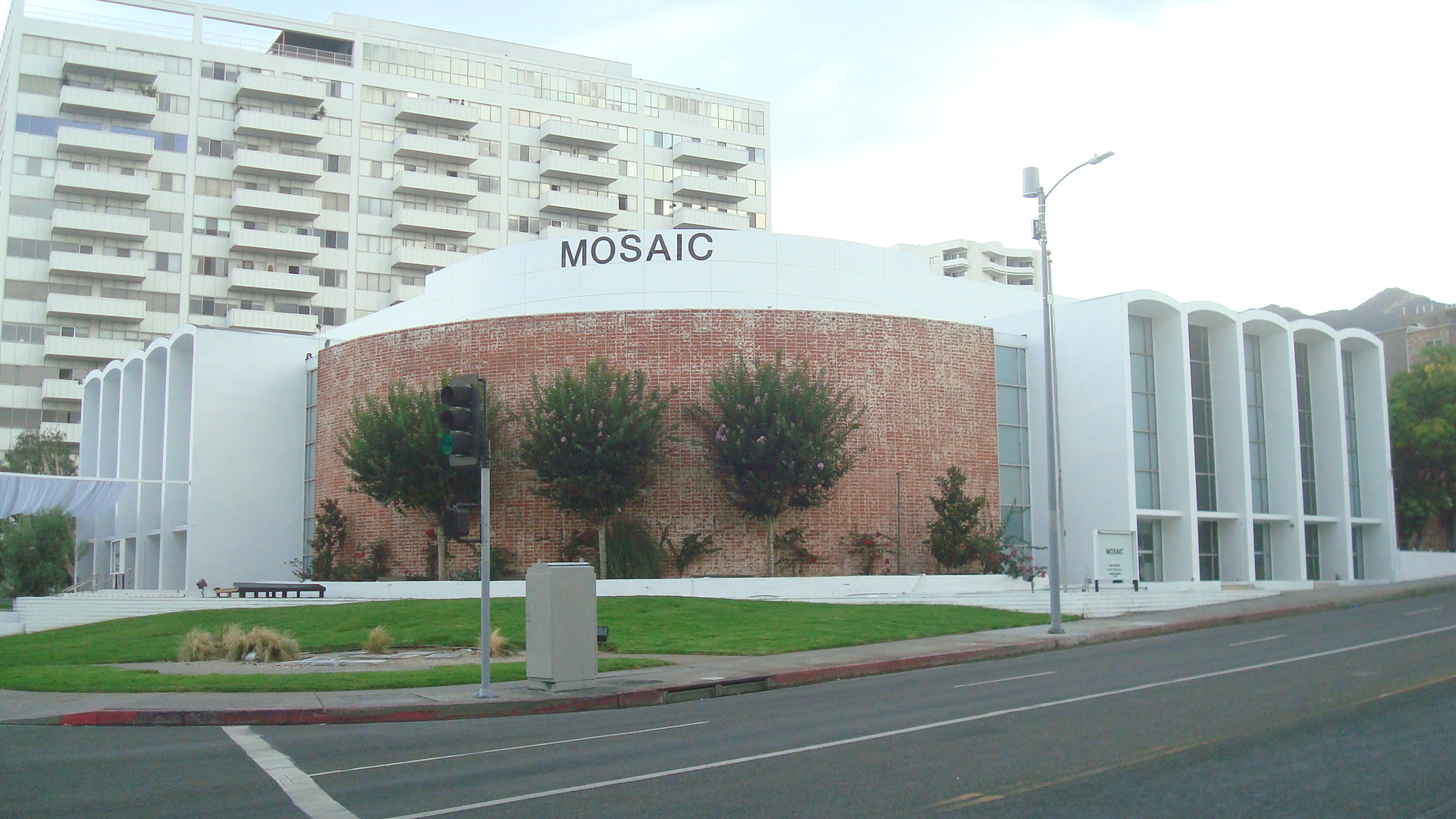
Mosaic Front

A quick update on the status of the Mosaic Church at Hollywood and La Brea. Earlier this week, the Cultural Heritage Commission voted unanimously to recommend that the structure be designated a cultural-historic monument. Click on the link below to get all the details.

Hollywood Church Closer to Becoming Historical Monument from Park La Brea News

This is good news, but as Helen Berman of Save Residential Hollywood points out, the fight is far from over. Developers LeFrak and Kennedy Wilson want to demolish the church so they can build a large mixed-use complex. They claim the building isn’t worthy of historic status, and they have very deep pockets. No doubt, they’ll be pushing hard to scuttle the designation.

So even though the groups hoping to preserve the church have won an important victory, they still have a long way to go. The CHC’s recommendation will go to the Planning and Land Use Management Committee next, and eventually the City Council will vote on the issue.

Thanks to Save Residential Hollywood for all their efforts so far. Here’s a link, in case you’d like to get involved.

Save Residential Hollywood

Thanks also to Councilmember David Ryu, who has come down firmly in support of granting the church historic-cultural monument status. If you’d like to thank him yourself, here’s his e-mail address.

david.ryu@lacity.org