A Digital Billboard for the Glendale Masonic Temple?

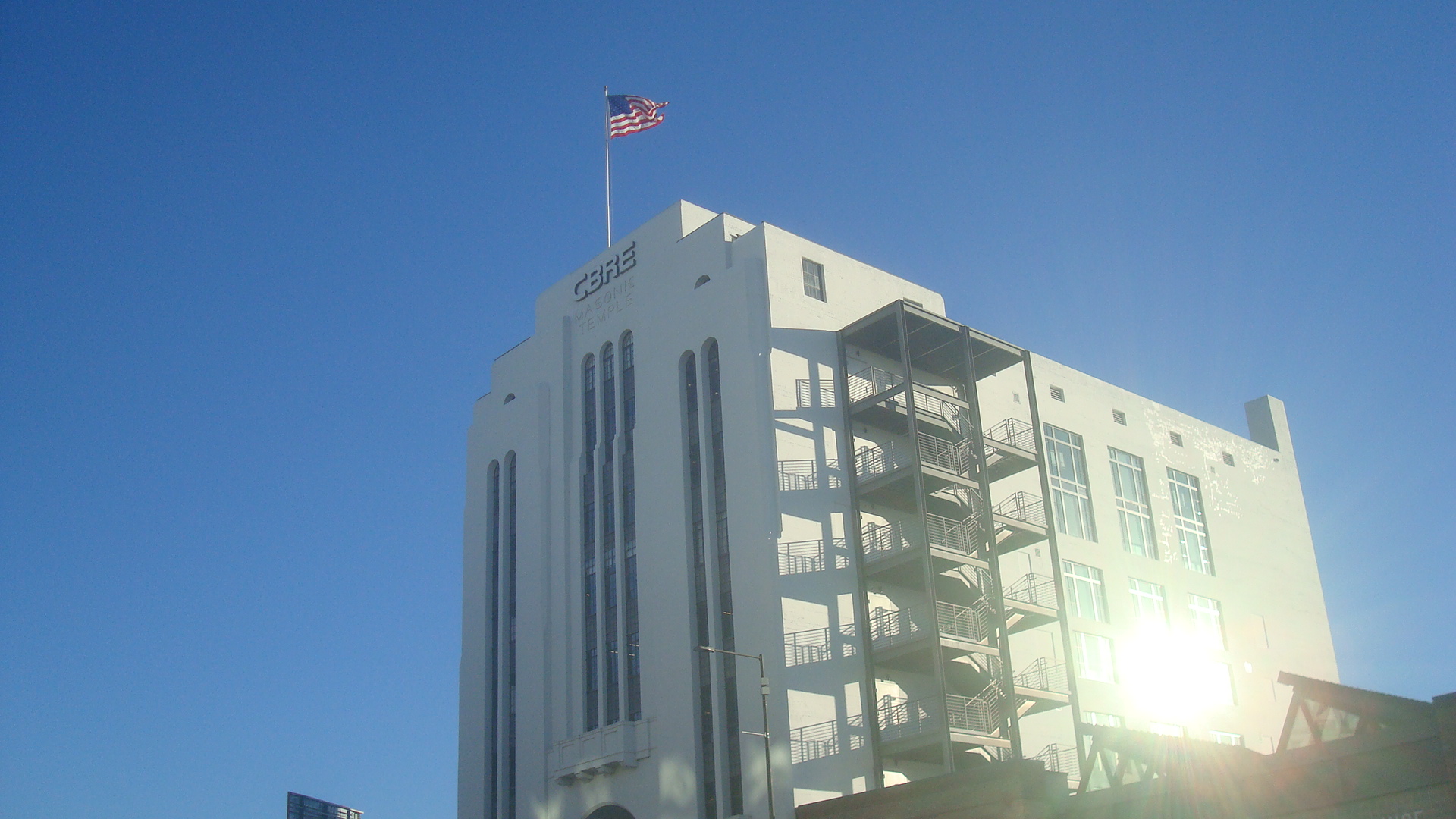
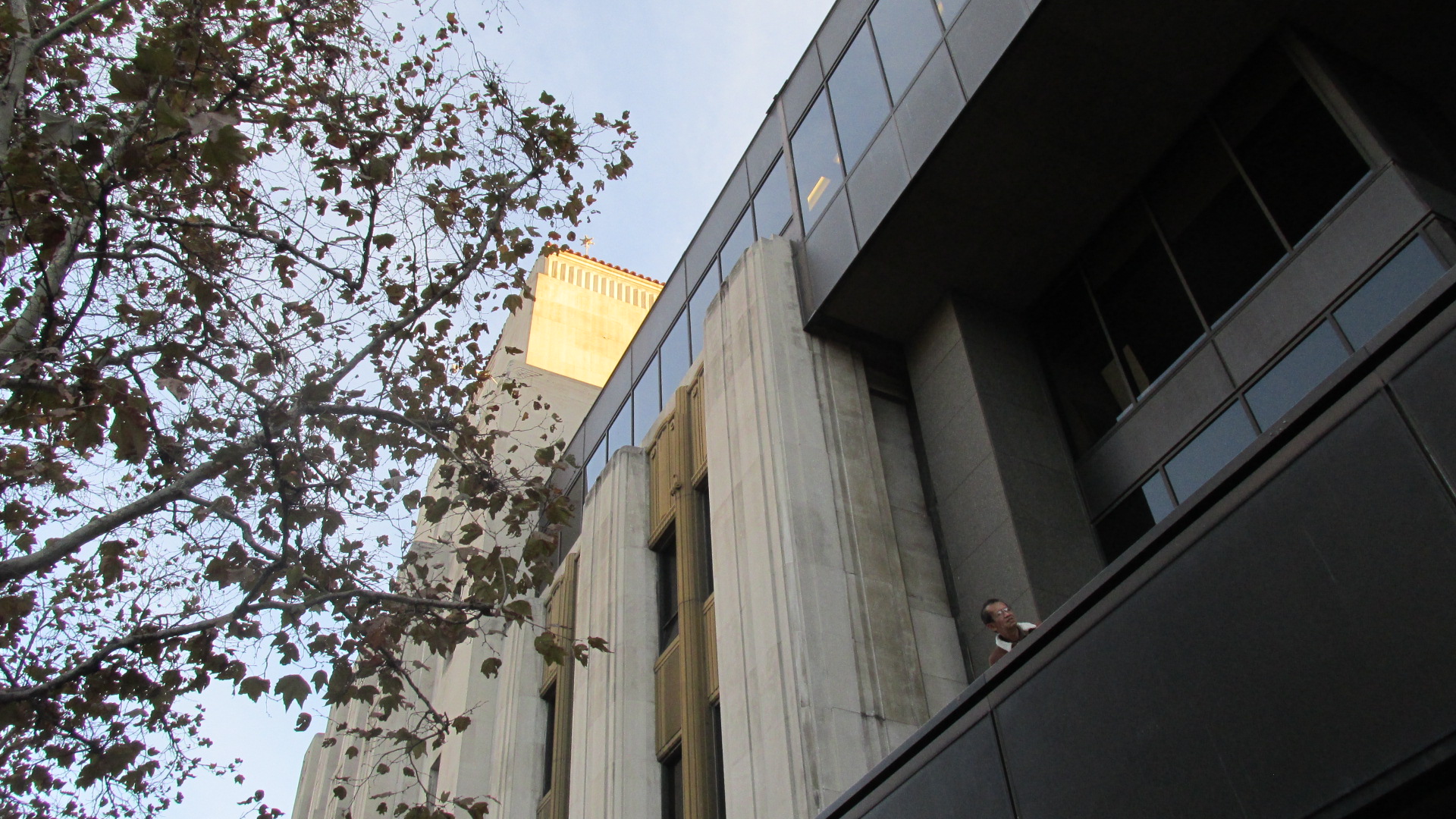
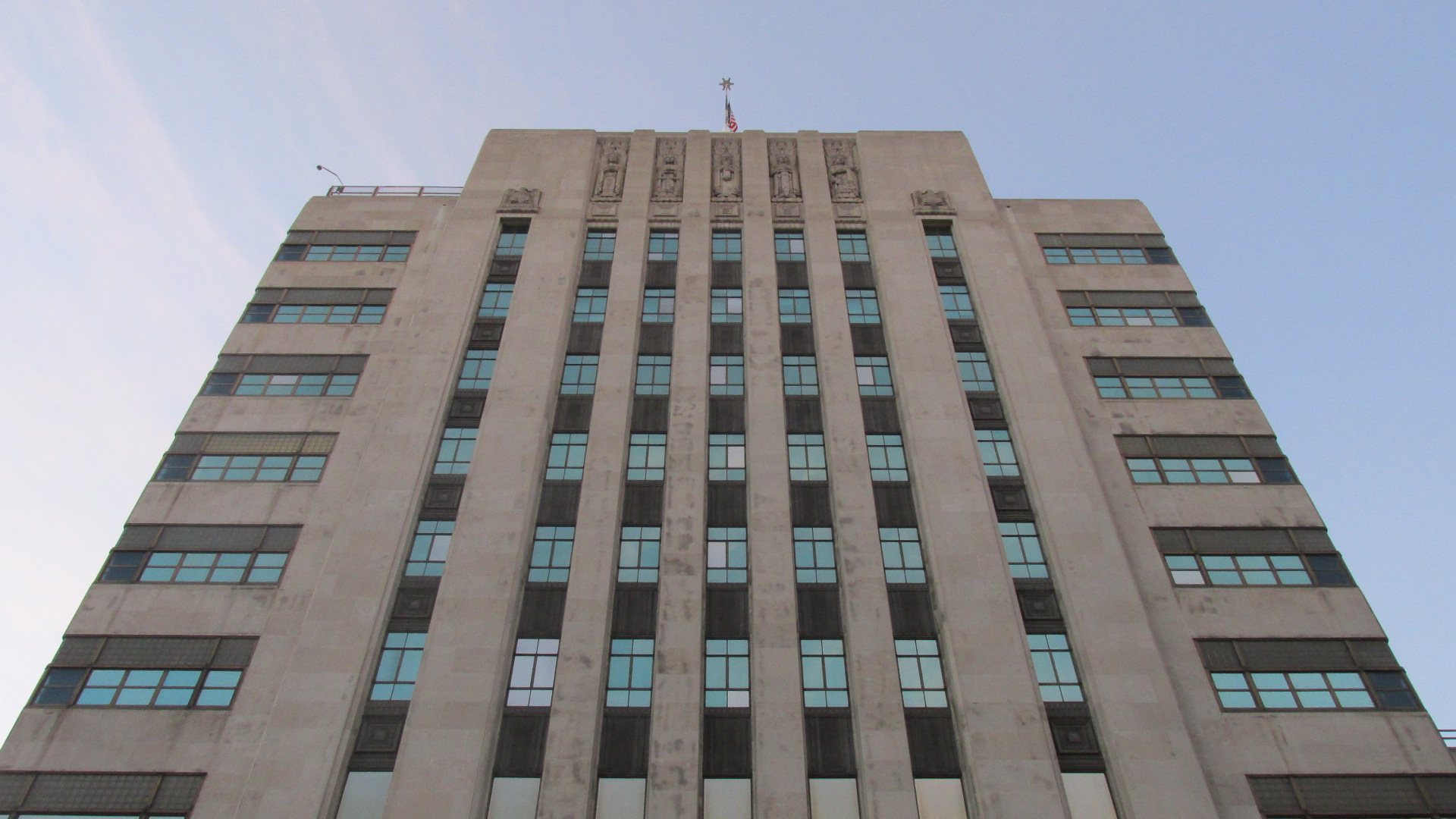
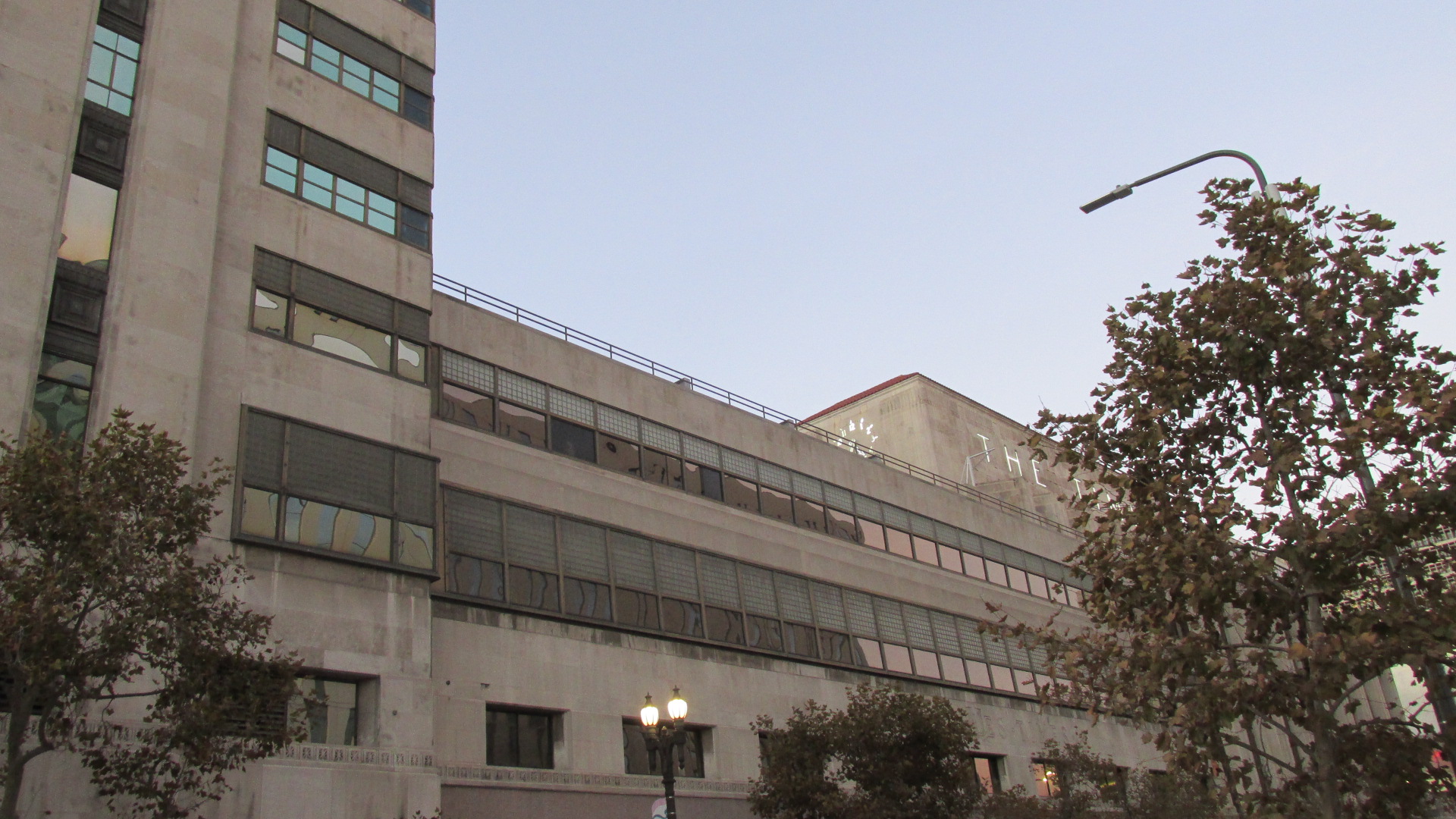
Glendale Masonic Temple at 234 S. Brand Blvd.

There’s a notice posted on the Glendale Masonic Temple at 234 S. Brand Boulevard. The text says that the City of Glendale is considering an amendment to its Advertising Signage Overlay Zone (ASOZ) which would expand the zone’s boundaries. It gives no further details about the scope of the expansion, or what kind of outdoor advertising is being contemplated.

But I’d be willing to bet that the City of Glendale wants to let advertisers install digital billboards, possibly on the side of the Masonic Temple. You can already find digital signage at the Americana mall on the south side of Brand. Outdoor ad companies are lobbying cities all over the US to open up to bigger and more invasive digital signage. It’s a hugely profitable business that’s growing rapidly.

Personally, I’m against outdoor digital advertising for a few reasons. One reason is that I see it as urban blight. But more importantly, I’m concerned about the way digital advertisers are collecting and sharing cell phone data. There are huge privacy risks here, and most city officials are completely oblivious.

A public hearing is scheduled later this month. If you’re interested in attending, here’s the info….

DATE: Wednesday, November 19, 2025

TIME: 5:00 PM

LOCATION: 633 E. Broadway (MSB), #105, Glendale, 91206

You can also contact Roger Kiesel, of the Glendale Community Development Department, at 818 937-8152.

The Glendale Masonic Temple was dedicated in 1929 and served as a meeting place for different Masonic Lodges into the 50s. It was designed by Arthur Lindley, who also designed the nearby Alex Theatre. Rick Caruso’s company bought the building about a decade ago and refurbished it, making some changes to the design. The building is a Glendale Historical Landmark and also on the National Register of Historic Places.

The Fourth Street Bridge

A view of Downtown from the Fourth Street Bridge.

Back in 2017, I walked across the Fourth Street Bridge and took a bunch of photos, thinking it would be a great subject to write about on this blog.  Now, only seven years later, I’m finally getting around to doing this post.  What can I say?  Time flies….

Fourth Place, leading up to the Fourth Street Bridge.

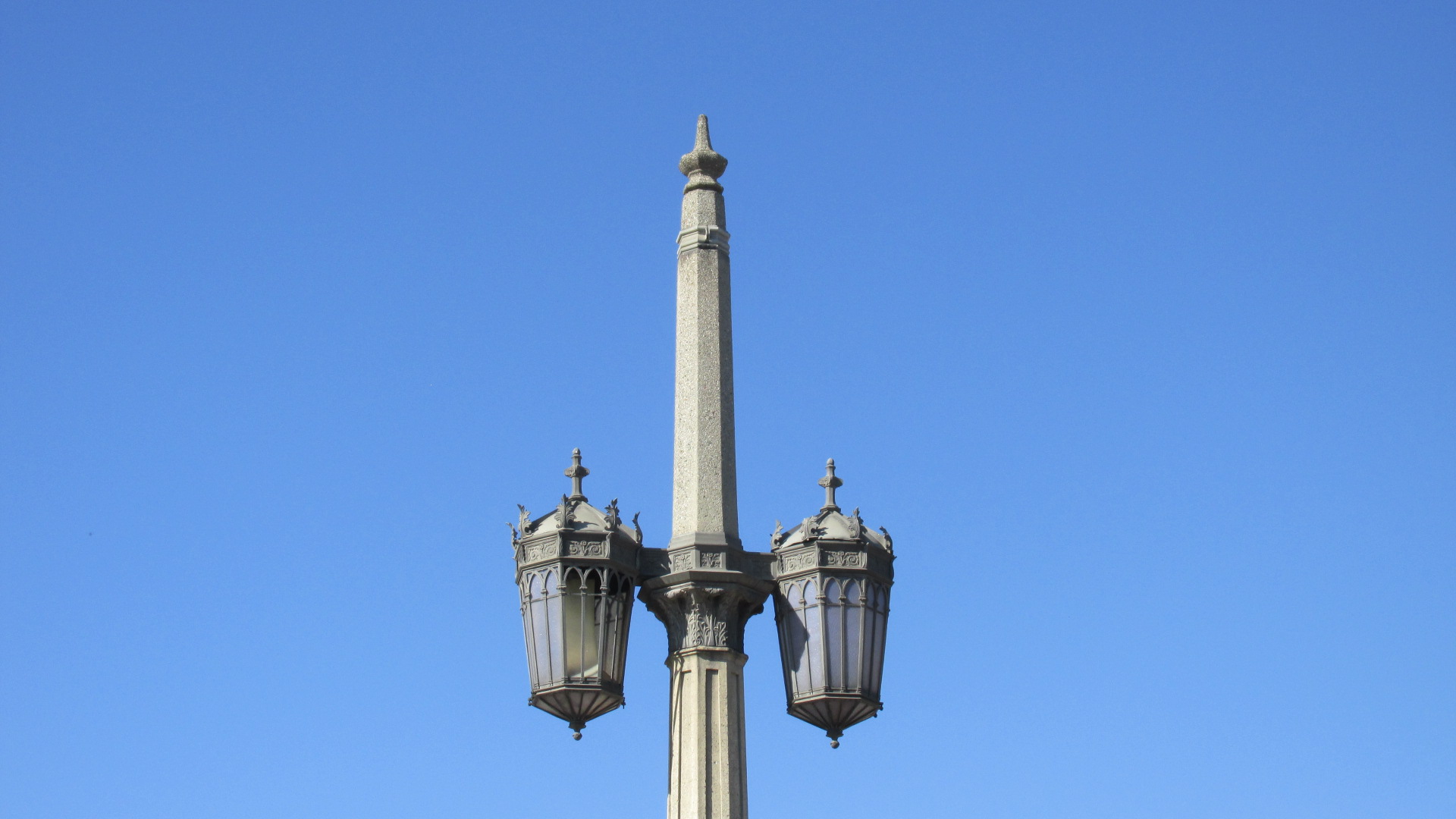
To my mind, the Fourth Street Bridge is one of the most striking bridges in LA.  I don’t claim to be an architecture critic, but it seems like there was unusual amount of care put into the design.  The streetlights, porticos and concrete railing were fashioned in a mix of Beaux Art and Gothic Revival styles that was carefully worked out by the architects.  These aren’t just decorative elements that were tacked on.  They’re well-suited to the scale and the massing of the bridge.

Fourth Place merges with the Fourth Street Bridge.
The streetlights echo European Gothic design.
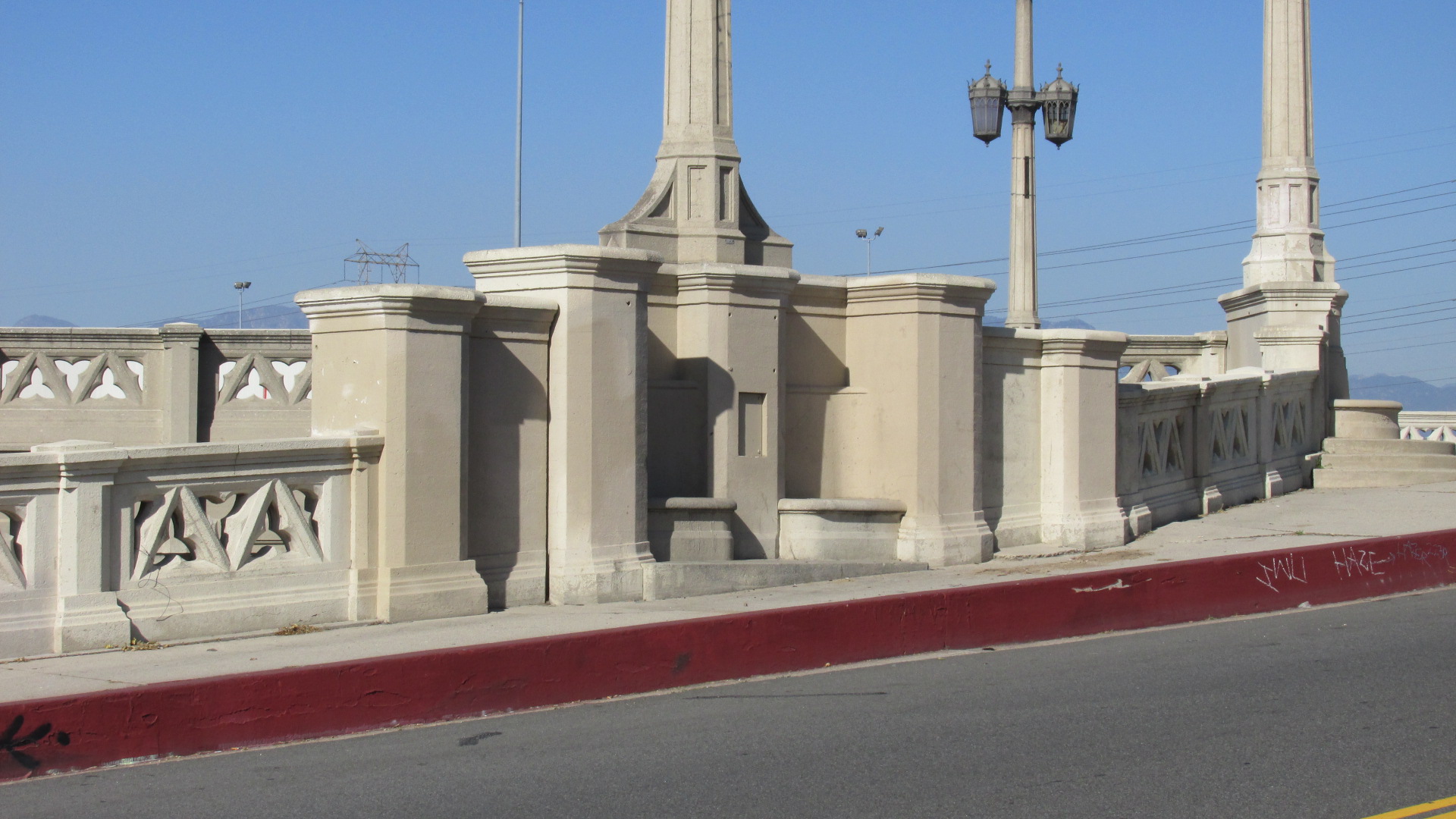
Some of the piers feature built-in seating.

Constructed in 1931, the bridge was part of a massive investment in infrastructure made possible by the passage in the 20s of LA’s Viaduct Bond Act.  (To show you how ignorant I am, I didn’t know until recently what the difference was between a bridge and viaduct.  Apparently, a bridge is a small structure built to cross a fairly narrow river or ravine.  A viaduct is a larger structure made up of a series of bridges that crosses a wide river or a valley.  But I’m still going to call it the “Fourth Street Bridge”.  Old habits die hard.)

A view of the bridge looking toward East LA.
The San Gabriel Mountains to the north.
Unfortunately, these days many of the porticos are filled with trash.

The Fourth Street Bridge was built by the LA City Bureau of Engineering under the supervision of Bridge and Viaduct Engineer Merrill Butler.  Butler had a long career in LA, working for the City in various capacities until his retirement in 1961.  Over the years the projects designed under his direction included the First Street (now Cesar Chavez) Bridge, the Hyperion Bridge, the Figueroa Street Tunnels and the Hyperion Sewage Treatment Plant.

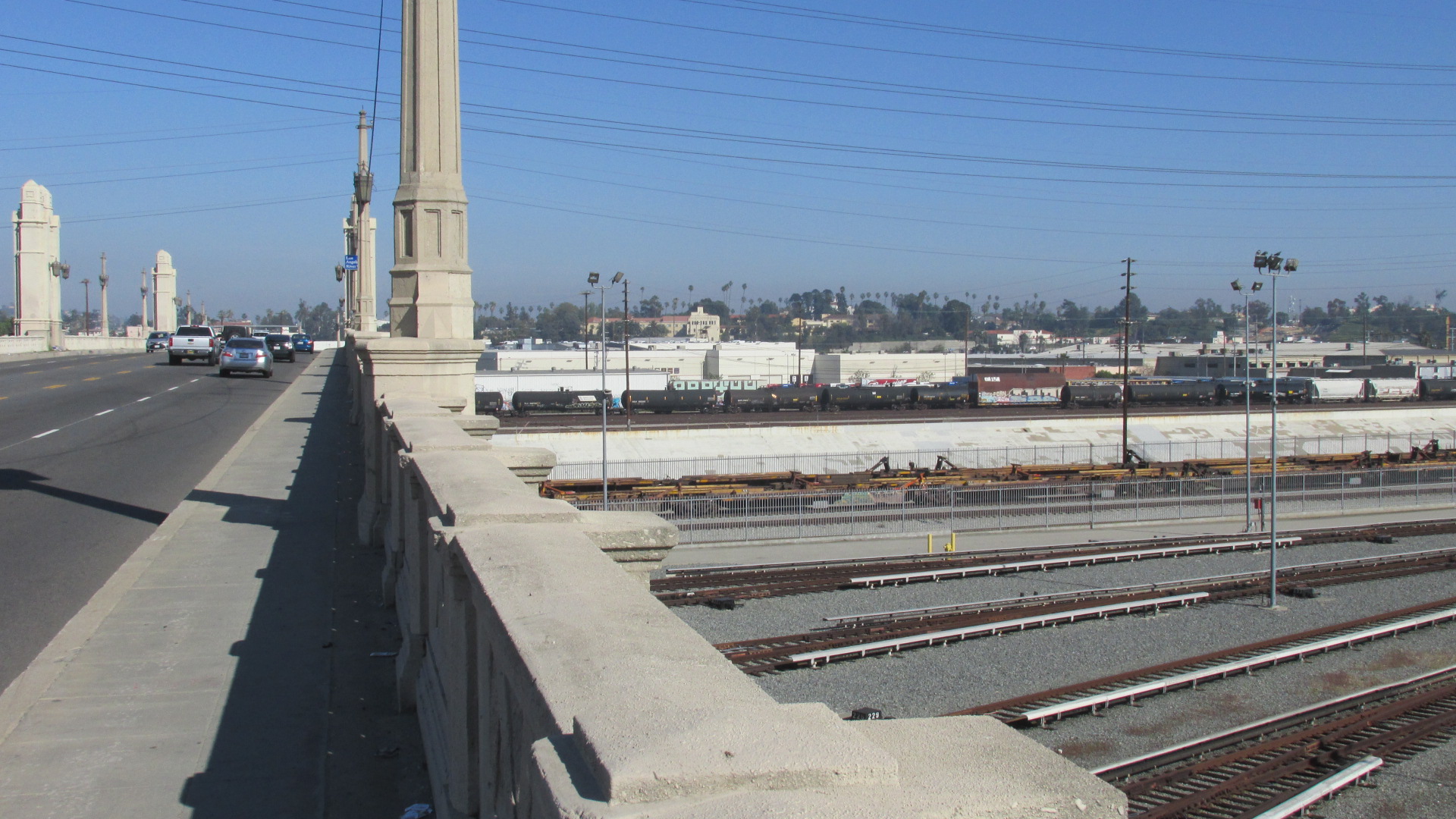
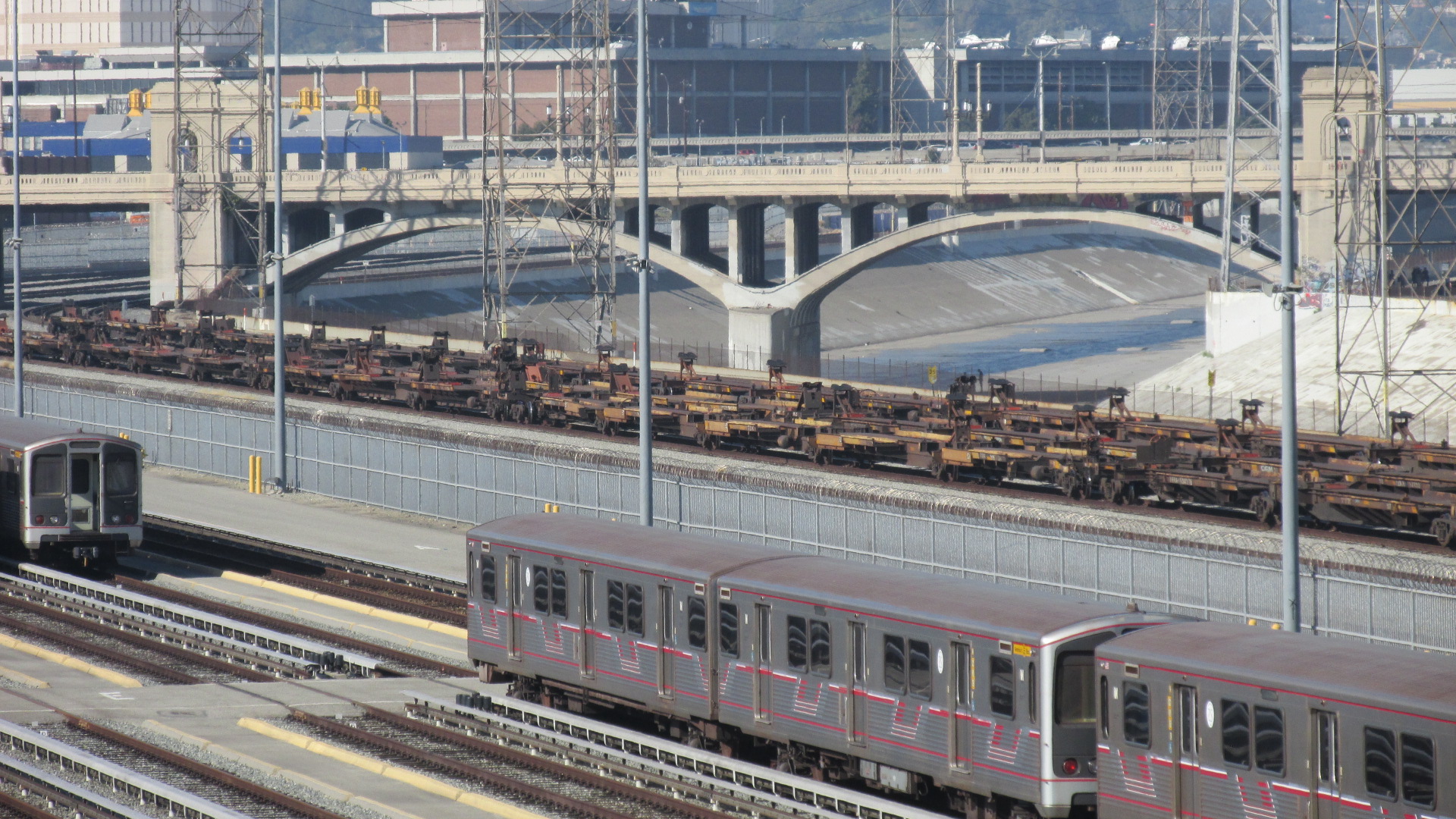
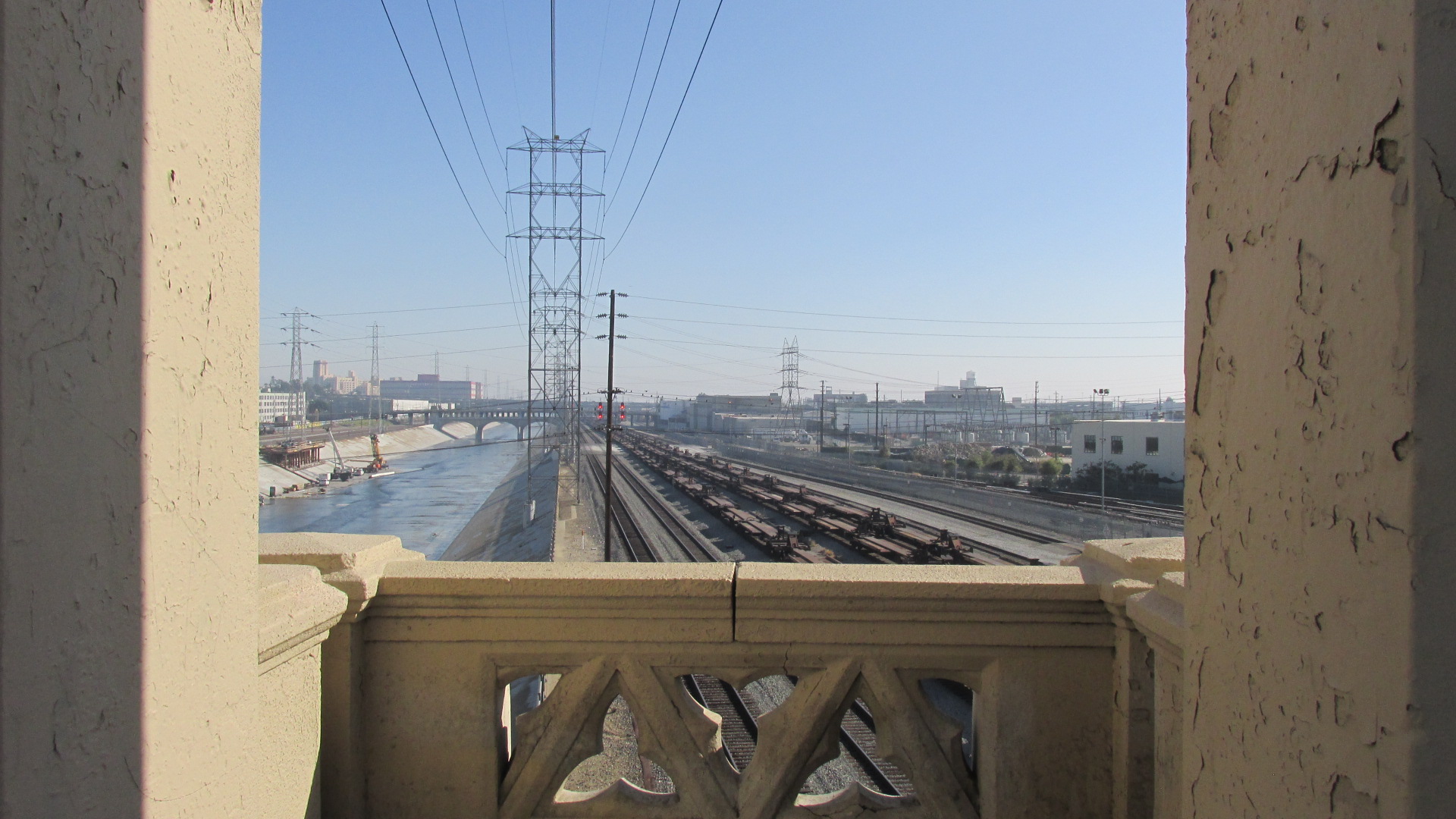
The series of bridges that connect East LA to Downtown are part of a massive infrastructure nexus that played a key role in LA’s growth.  In the latter part of the 30s, work began on the flood control projects that would shape the LA River as we know it today.  One of the reasons for encasing the River in concrete was to protect the rail lines that ran adjacent to it.  You couldn’t move goods without trains.  And rising above the concrete channel is a vast network of power lines.

Rail lines next to the LA River.
Miles of power lines run above the River.
Rows of flat cars lying on the tracks below.

In 1995, the Fourth Street Bridge was retrofitted to bring it into compliance with current seismic safety standards.  And in 2008 it was declared a Historic Cultural Monument by the City of LA.

The Cesar Chavez Bridge lies just north of the Fourth Street Bridge.
Looking west toward Downtown.

Here are a couple of links, for anyone who wants to dig a little deeper.  Thie first will take you to Water & Power Associates, which has a number of historic photos of the Fourth Street Bridge.  And if you’re into LA history, check out the Museum tab in the index on the left.  Their virtual museum offers an amazing collection of images and information.

Fourth Street Viaduct at Water & Power Associates

And here’s a brief bio on Merrill Butler that was apparently written at the time of his retirement.  Not surprisingly, it’s pretty superficial, but it also seems to offer a small snapshot of mid-century LA.  A different time, a different culture.

Merrill Butler Bio from LA Public Library

Art Deco Jewel in Hollywood Moves toward Landmark Status

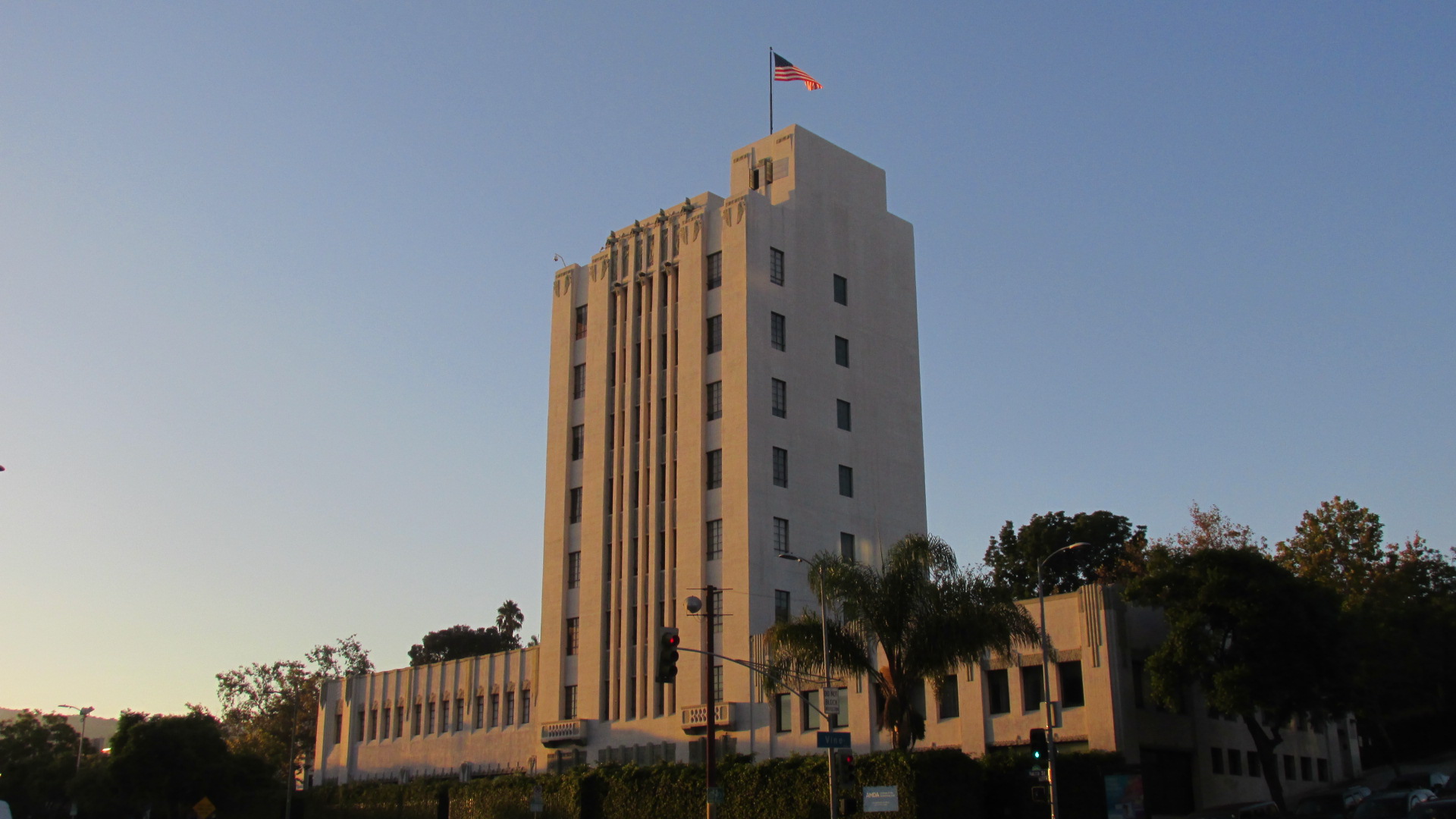
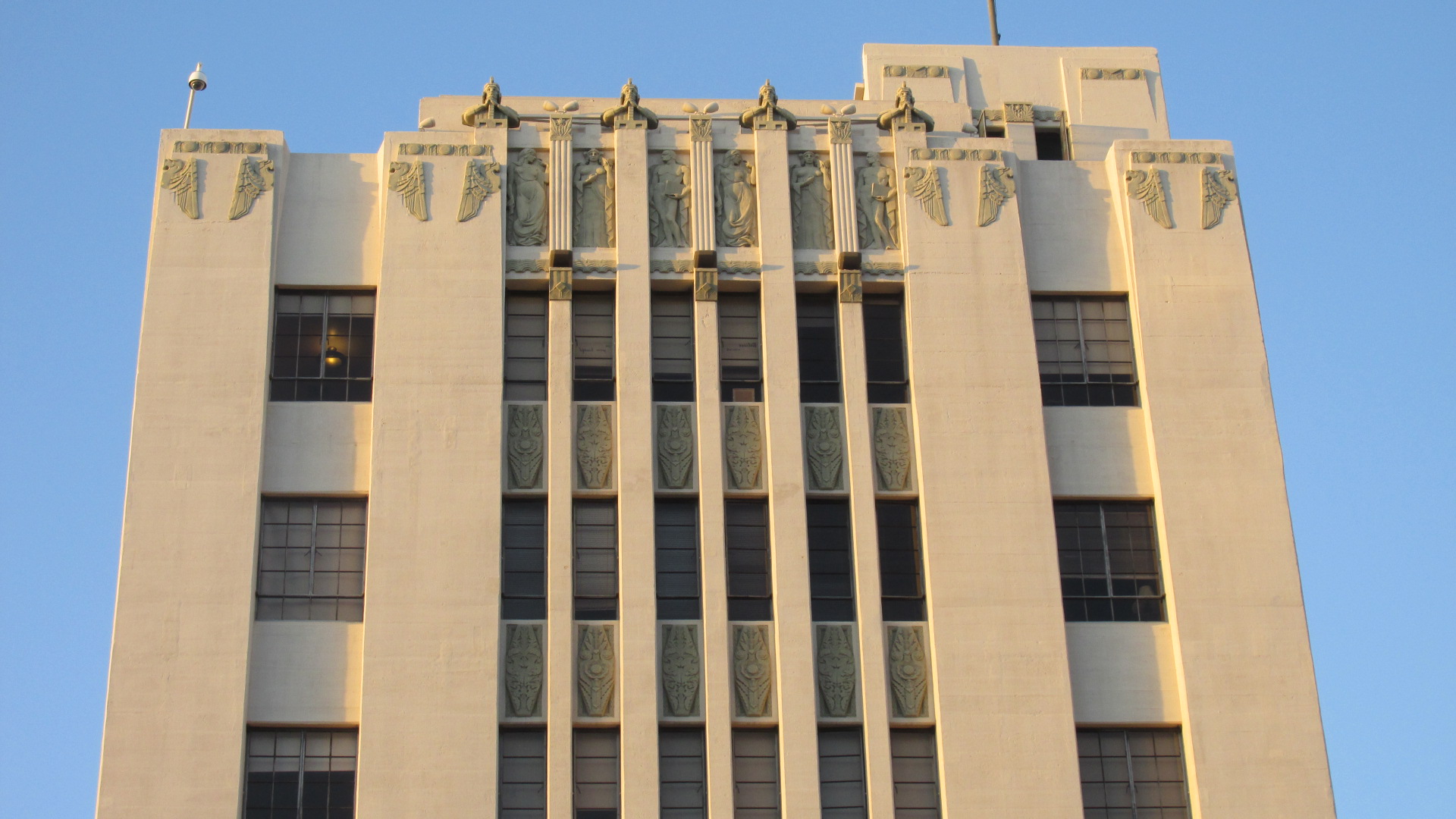
Yucca Vine Tower in Hollywood.

One of Hollywood’s most beautiful buildings is finally getting the recognition it deserves.  On April 18, the City of LA’s Cultural Heritage Commission voted unanimously to recommend that the Yucca Vine Tower be designated a Historic Cultural Monument. 

View of central tower.
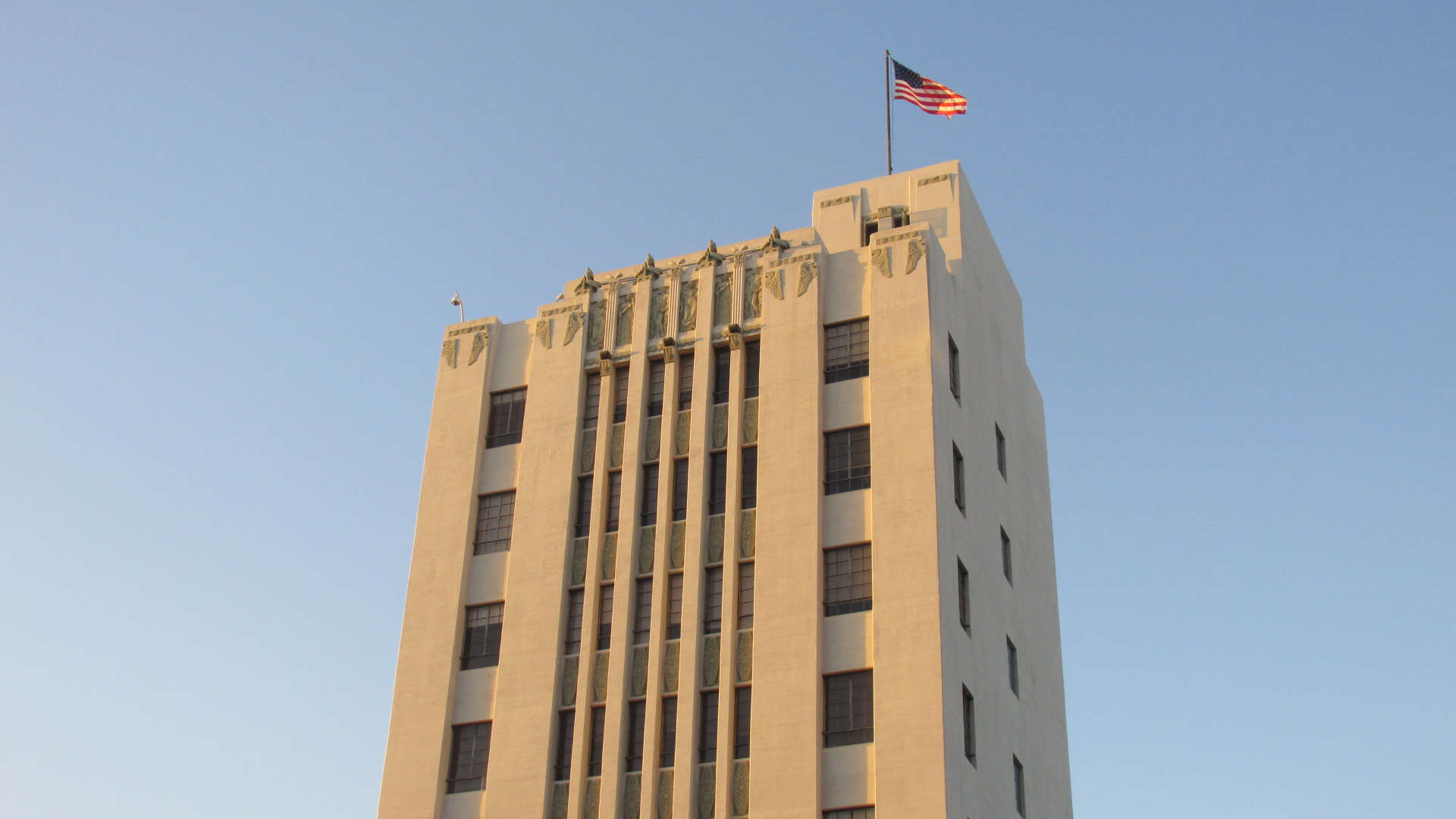
Top of central tower.

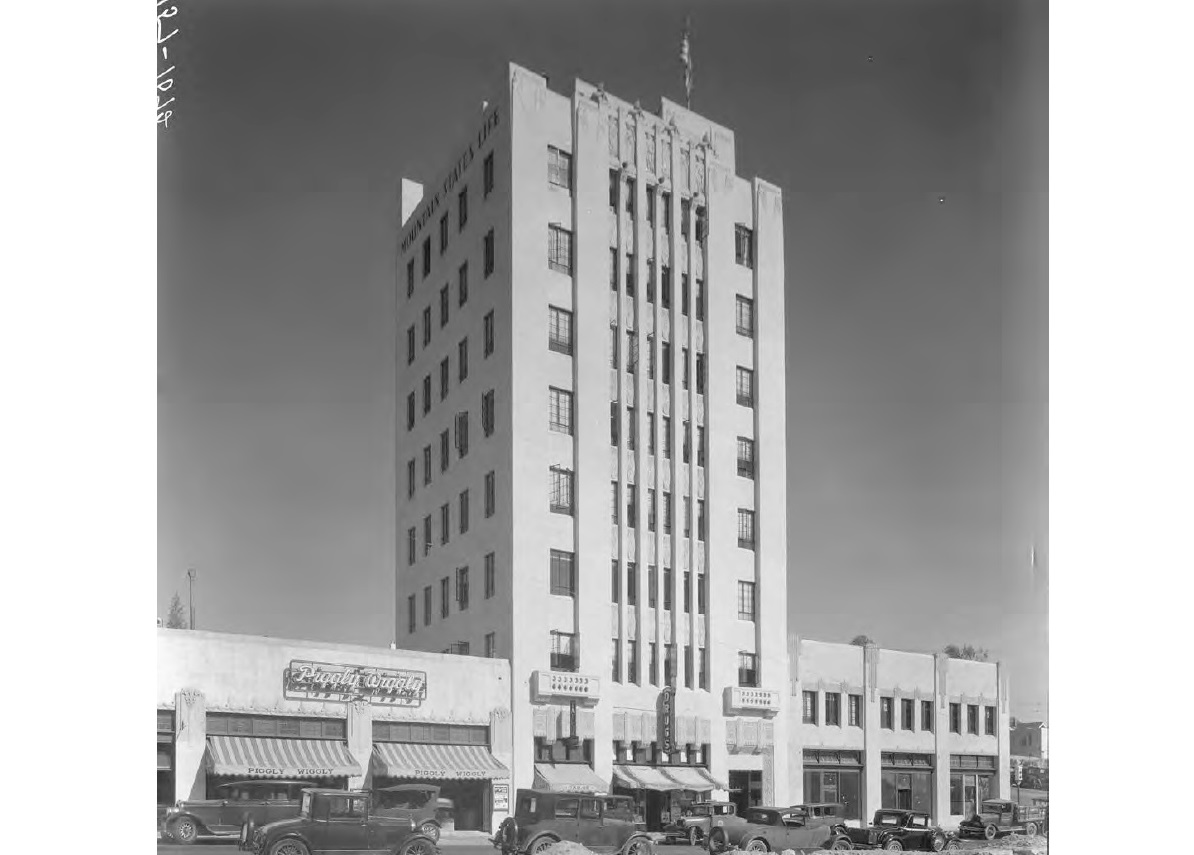
This Art Deco classic, constructed nearly 100 years ago as the Mountain States Life Building, was designed by LA-based architect Henry Gogerty.  Currently occupied by the AMDA College of the Performing Arts, the list of former tenants includes Gene Autry’s Western Music Publishing, Motion Picture Daily, the Hollywood Anti-Nazi League, and Chao Praya, one of the first Thai restaurants in LA.  In addition to designing other notable buildings in the Hollywood area, Gogerty worked on over 350 schools in Southern California.  His firm is also credited with designing the Hughes Aircraft complex in Playa Vista and the Grand Central Air Terminal at the former Glendale Airport.

Historic image of Yucca Vine Tower from California State Library.

Thanks to John Girodo and the Art Deco Society of Los Angeles, who submitted the nomination.  Thanks also to Kathleen Perricone, whose thorough research in preparing the nomination made an excellent case for historic designation.  For more background on this amazing building, take a look at the CHC agenda packet, which is available here.  The packet contains a wealth of historic photos.  You can jump to them by clicking on Historic-Cultural Monument Application in the index on the first page.

View of Yucca Vine Tower from west.
Detail of base.

The designation isn’t final yet.  It still has to be approved by the full City Council.  Hopefully they’ll vote soon to give this gorgeous building HCM status.

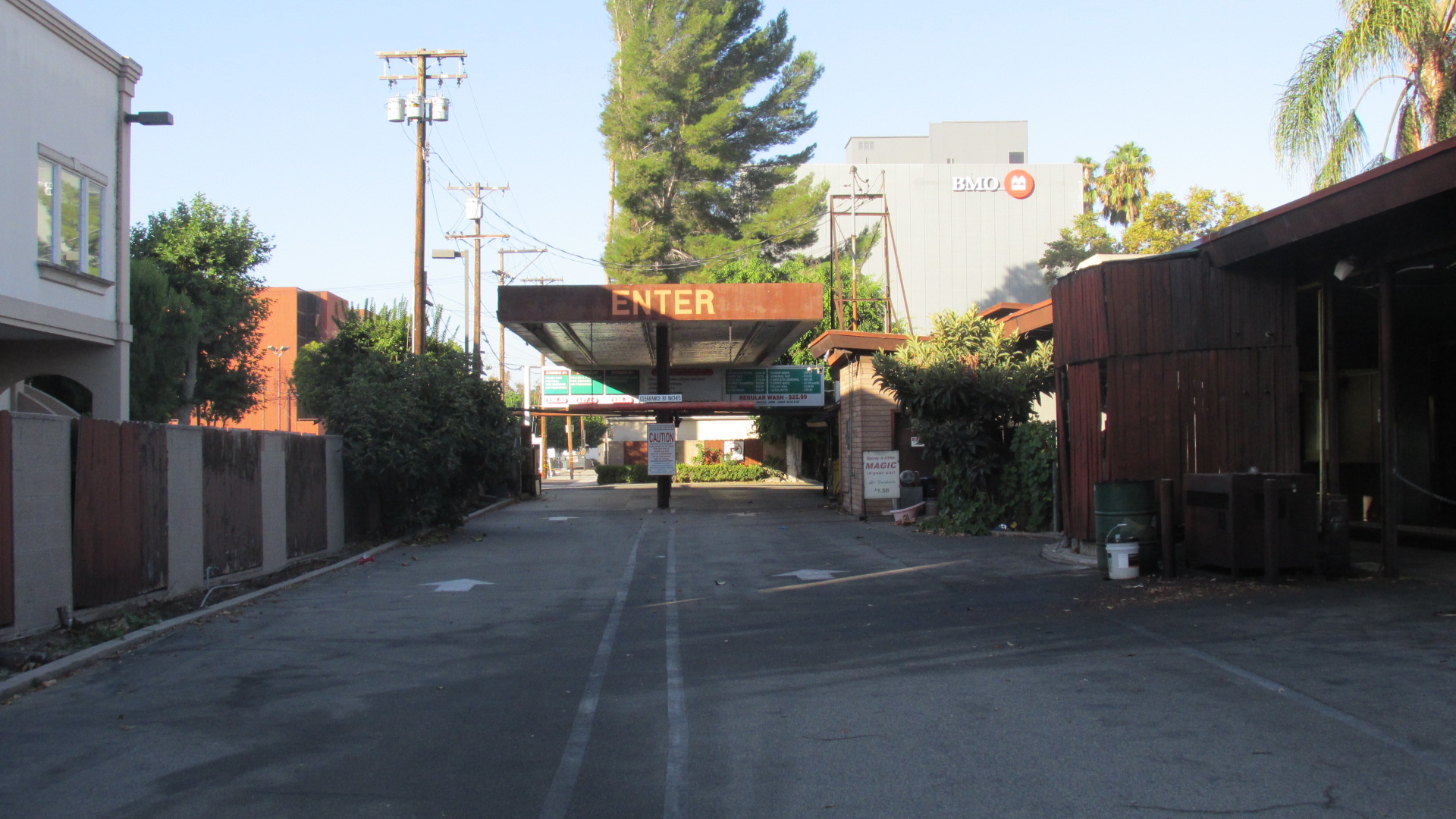
Lakeside Car Wash to Be Replaced by Mixed-Use Project

The LA area grew rapidly in the first half of the 20th century, and after WWII the population continued to climb.  Spurred in part by the growth of the freeway system, subdivisions started springing up all over the place, and LA’s car culture kicked into high gear.  Families went to see movies in drive-in theatres.  Teen-agers spent Saturday night at drive-in restaurants. 

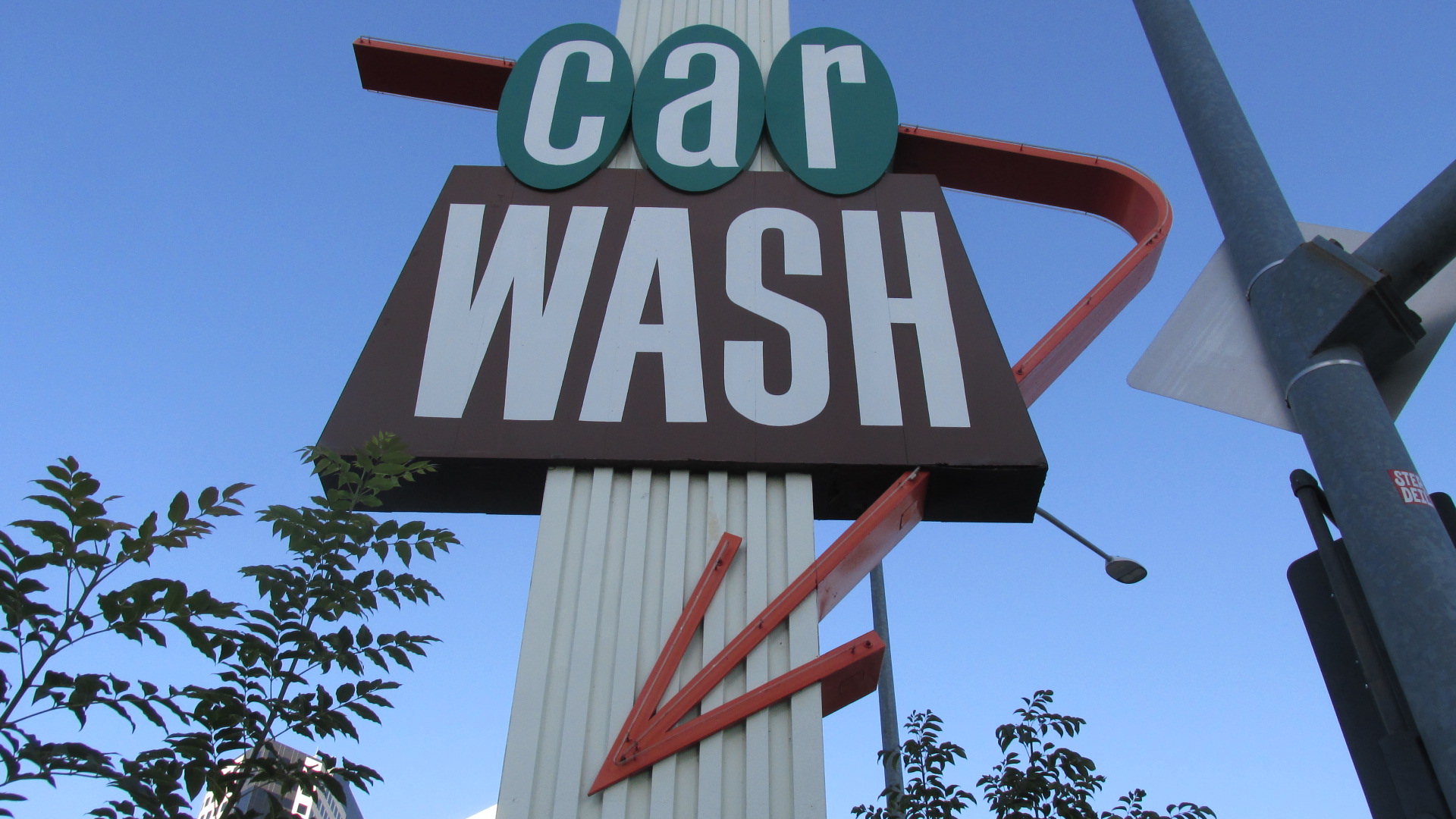
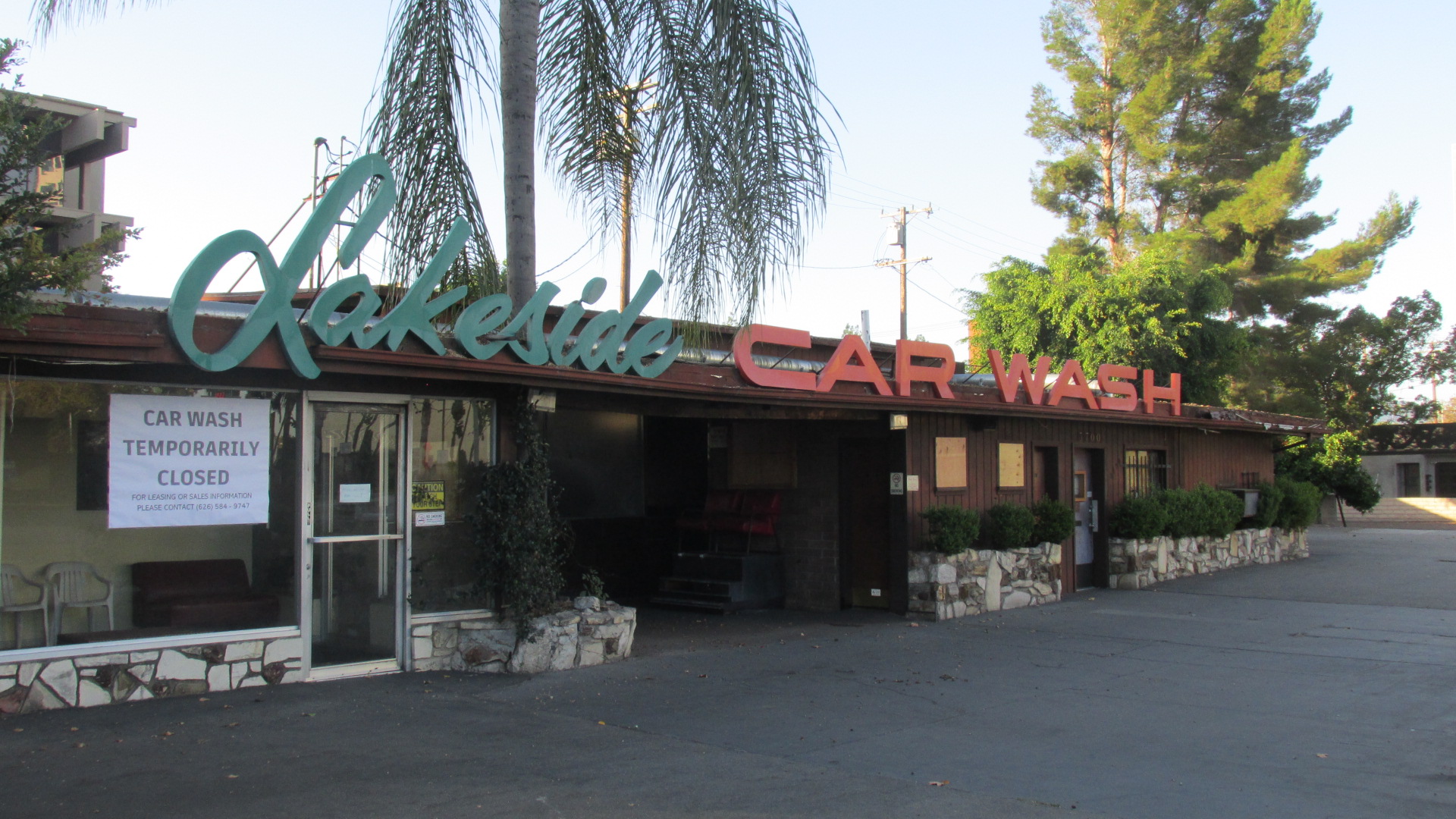
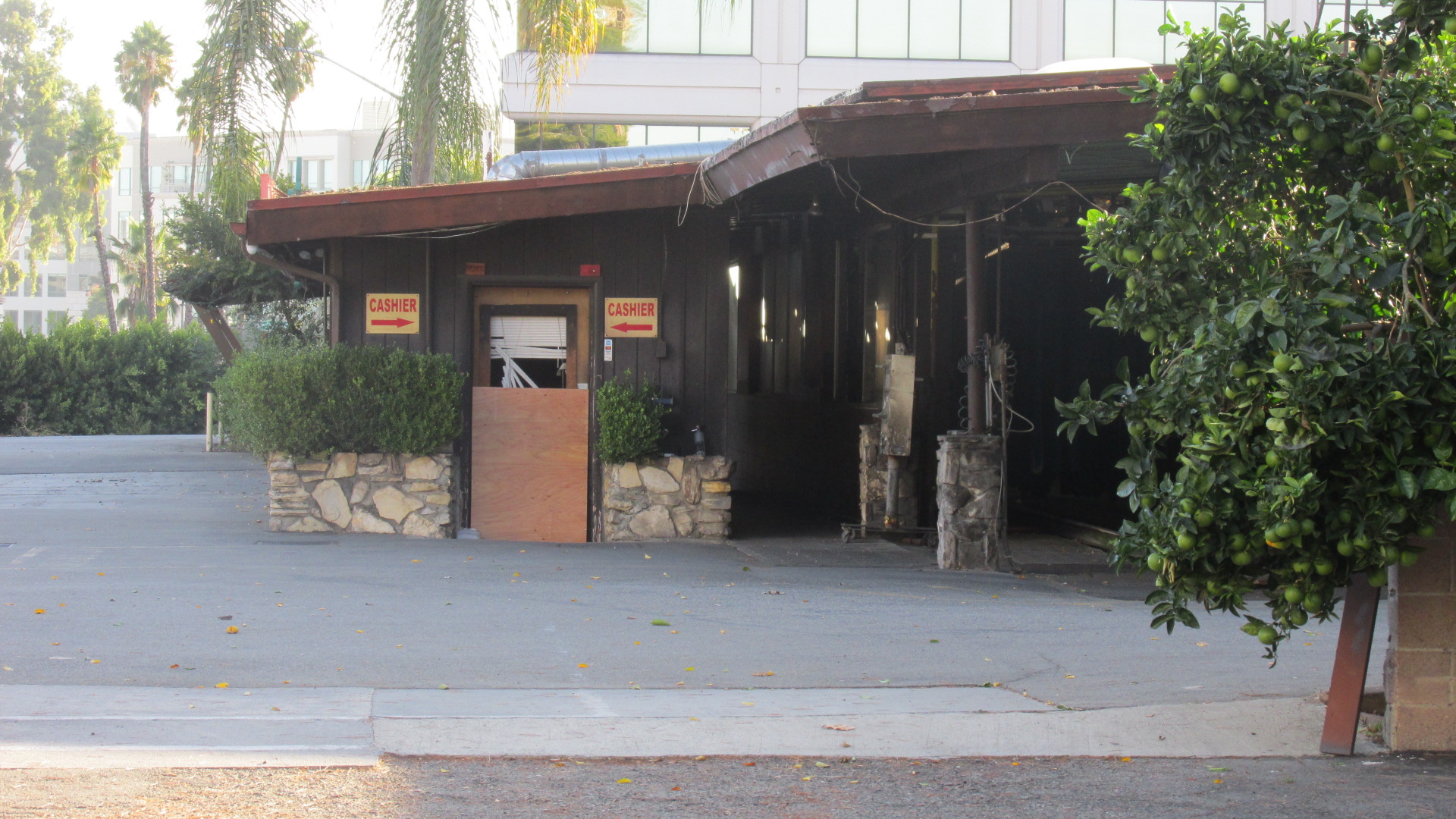
And the car wash became a familiar fixture in these new communities.  According to the LA Conservancy, the Lakeside Car Wash, located at Riverside and Hollywood Way, debuted in 1956.  The architect is unknown, but the structure stands out for its surprising combination of rustic ranch style and mid-century modern.  The Conservancy points out the connections to the Googie coffee shops that were popping up all over LA at the time.

View of Lakeside Car Wash from Riverside Drive.
Entrance to car wash

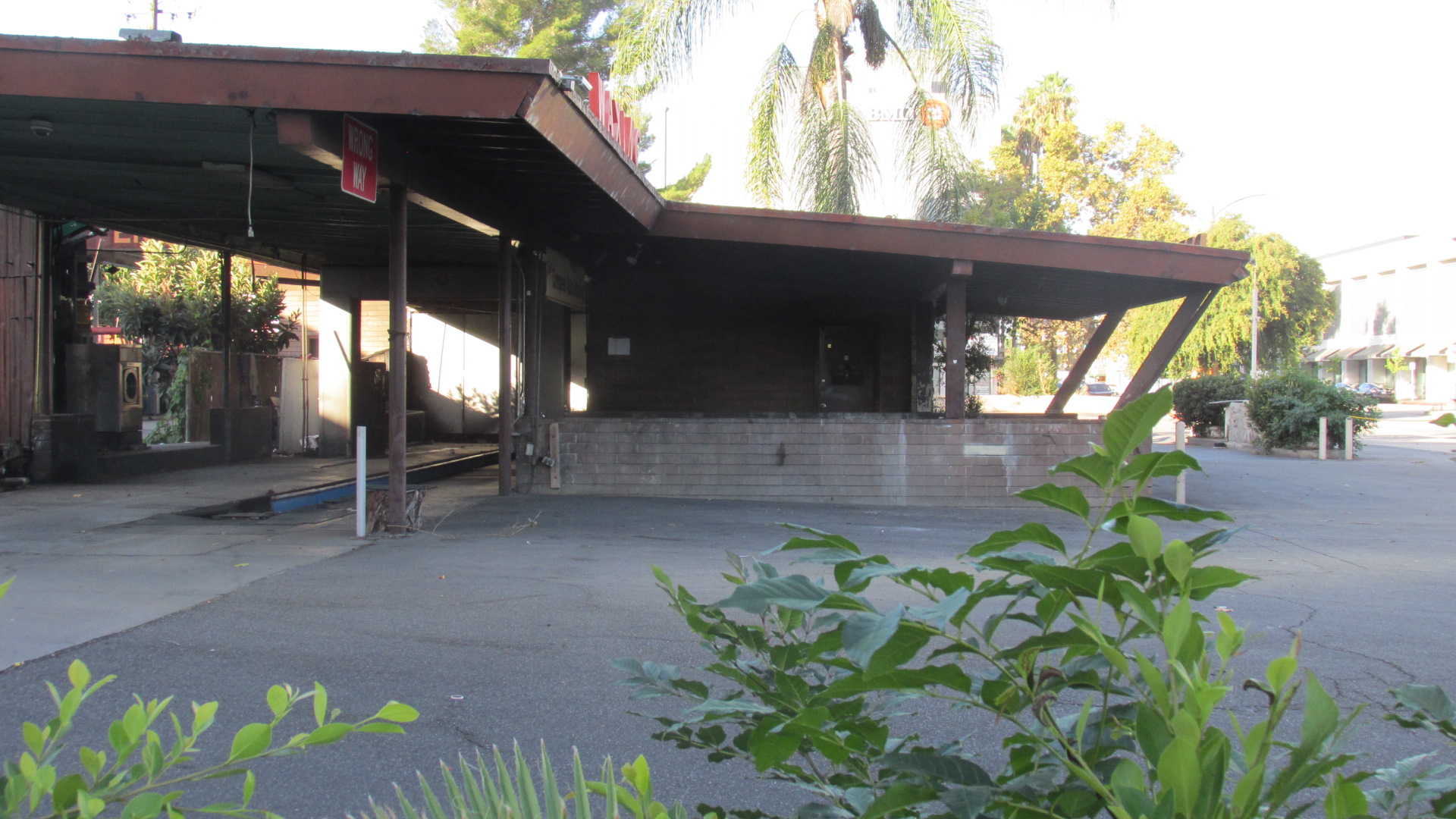
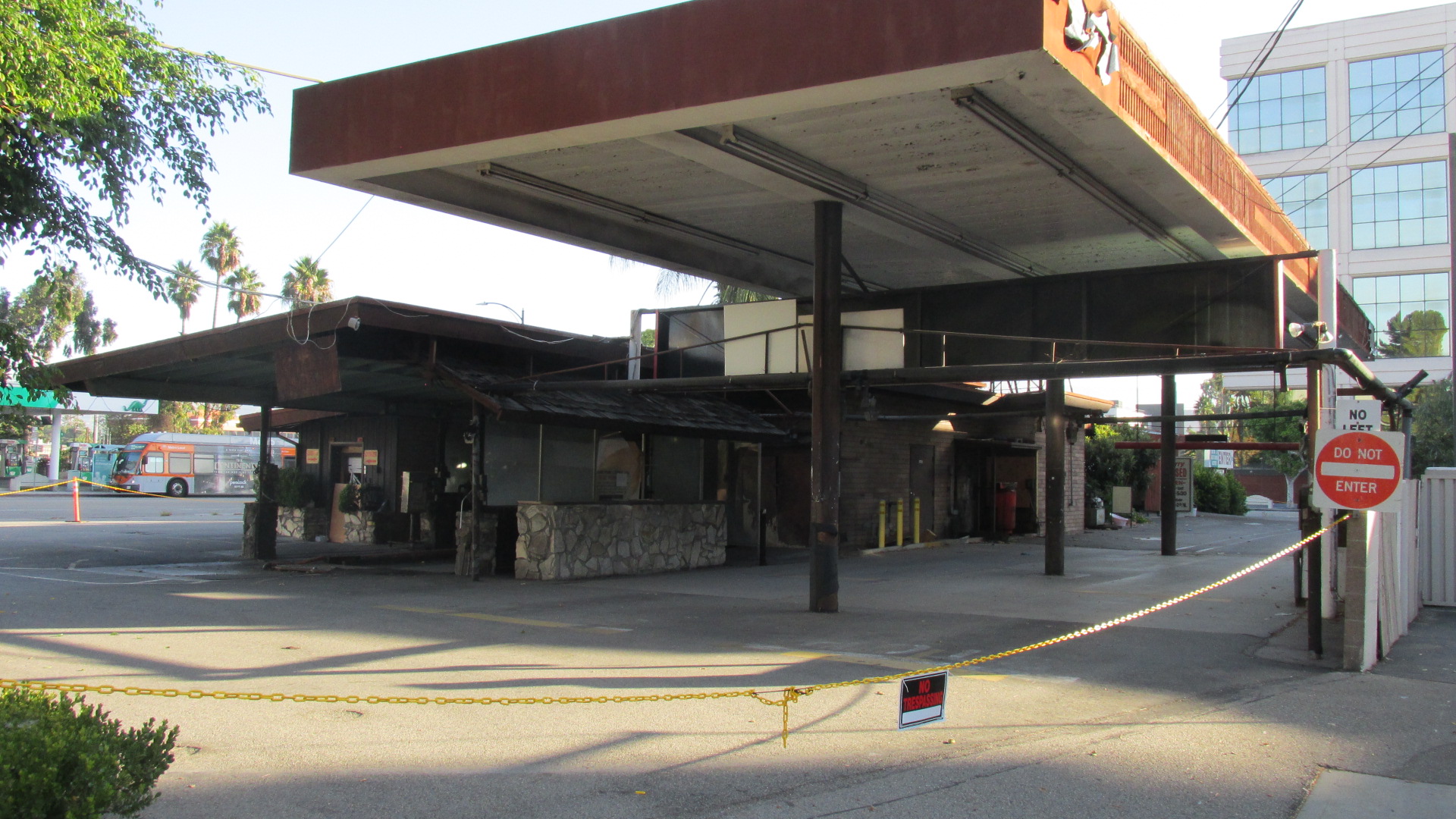
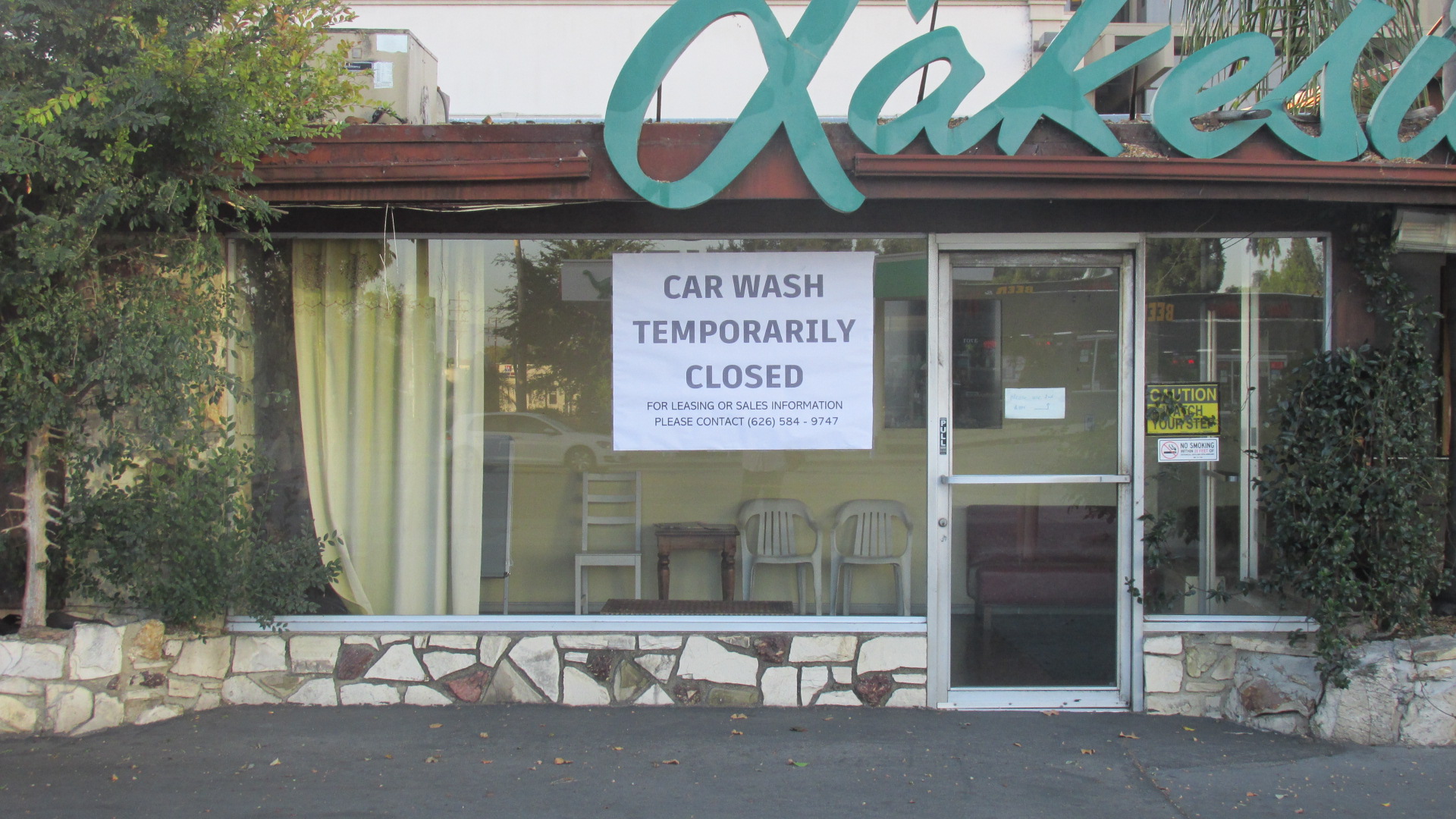
But whatever its architectural merits, the Lakeside Car Wash is now closed and will almost certainly disappear in the not too distant future.  In April 2022, the City of Burbank approved the construction of a mixed-use project on the site, which includes 49 condos and 2,000 square feet of commercial space and open space located at street level. 

Side view from Hollywood Way
The back of the car wash
Actually, the closure is probably permanent.
The cashier’s office

Remnants of the early days of California’s car culture have been disappearing for years.  The Reseda Drive-In Theatre was shuttered back in the 70s.  The Tiny Naylor’s at Sunset and La Brea, a Googie classic, was demolished in the 80s.  Burbank’s Pickwick Drive-In Theatre went dark in 1989 and is now a shopping center. 

But car culture isn’t disappearing, it’s just changing.  These days more California households have access to cars than ever before.  Check out this quote from Falling Transit Ridership, a study published by UCLA in 2018….

Census summary file data show that from 2000 to 2015, the SCAG region added 2.3 million people and 2.1 million household vehicles (or 0.95 vehicles per new resident). To put that growth in perspective, from 1990 to 2000 the region added 1.8 million people but only 456,000 household vehicles (0.25 vehicles per new resident). The growth of household vehicles in the last 15 years has been astonishing.

The Lakeside Car Wash will soon be gone, but cars are here to stay.  They’ll just have to go somewhere else to get clean.

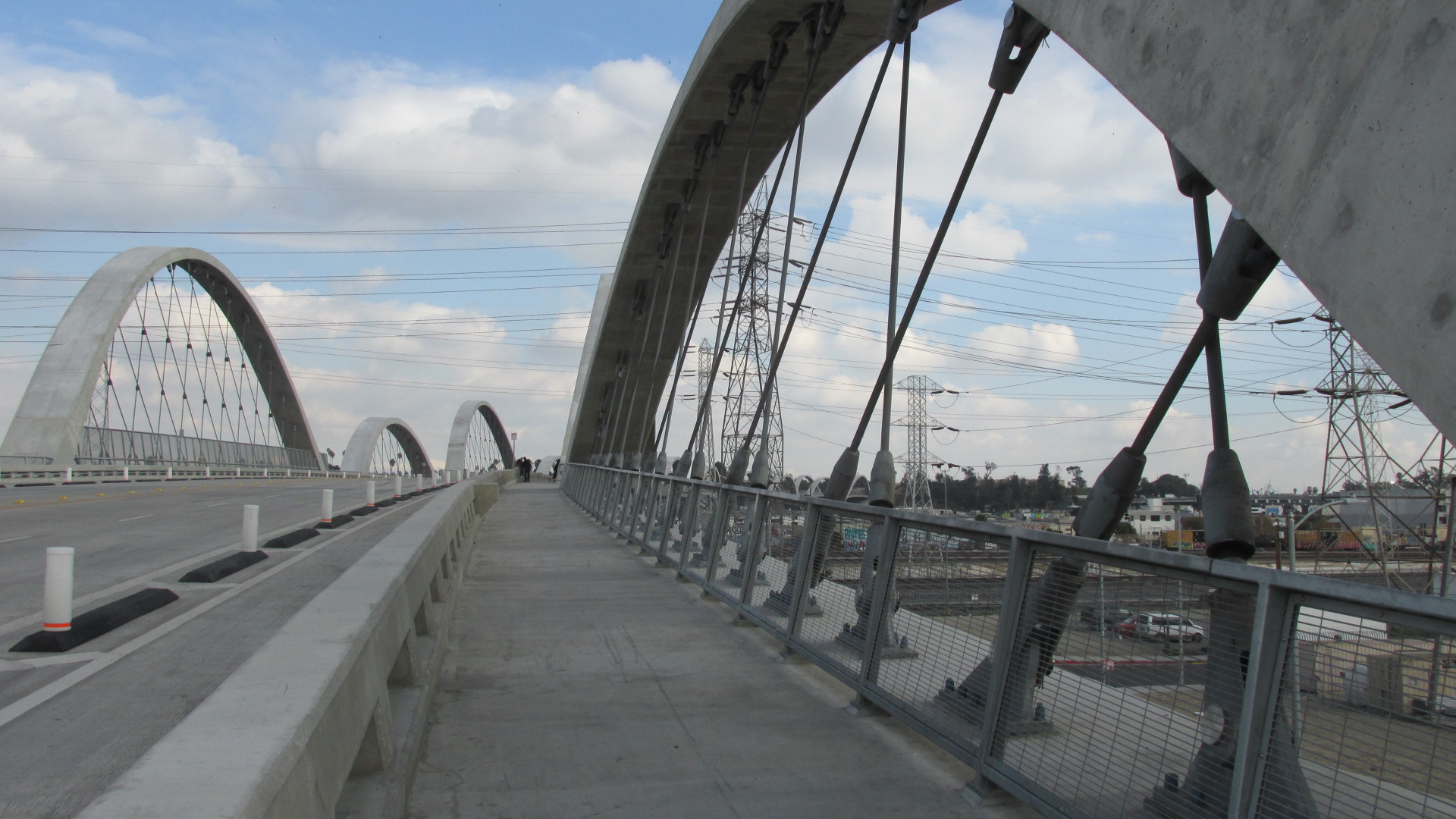
A Walk across the Sixth Street Bridge

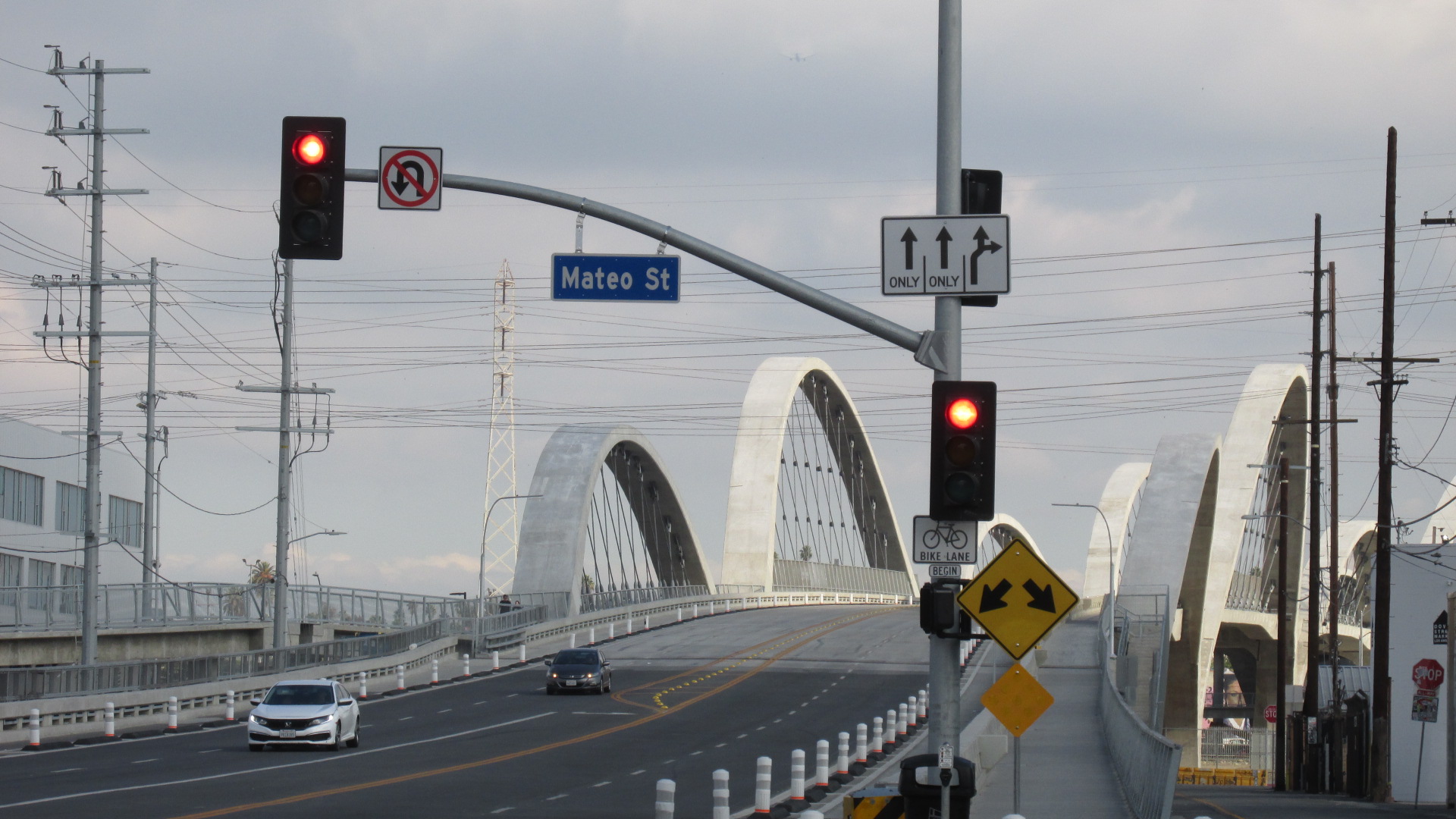
A view of the Sixth Street Bridge from Mateo Street.

The new Sixth Street Bridge opened in July of this year.  The first few weeks were pretty chaotic, with drivers doing stunts, daredevils climbing the arches, street artists getting creative with spray paint, and more.  Things got so bad the LAPD ended up closing the bridge just to keep a lid on the mayhem.  Scenes of crashes, fireworks and people partying were making the nightly news.

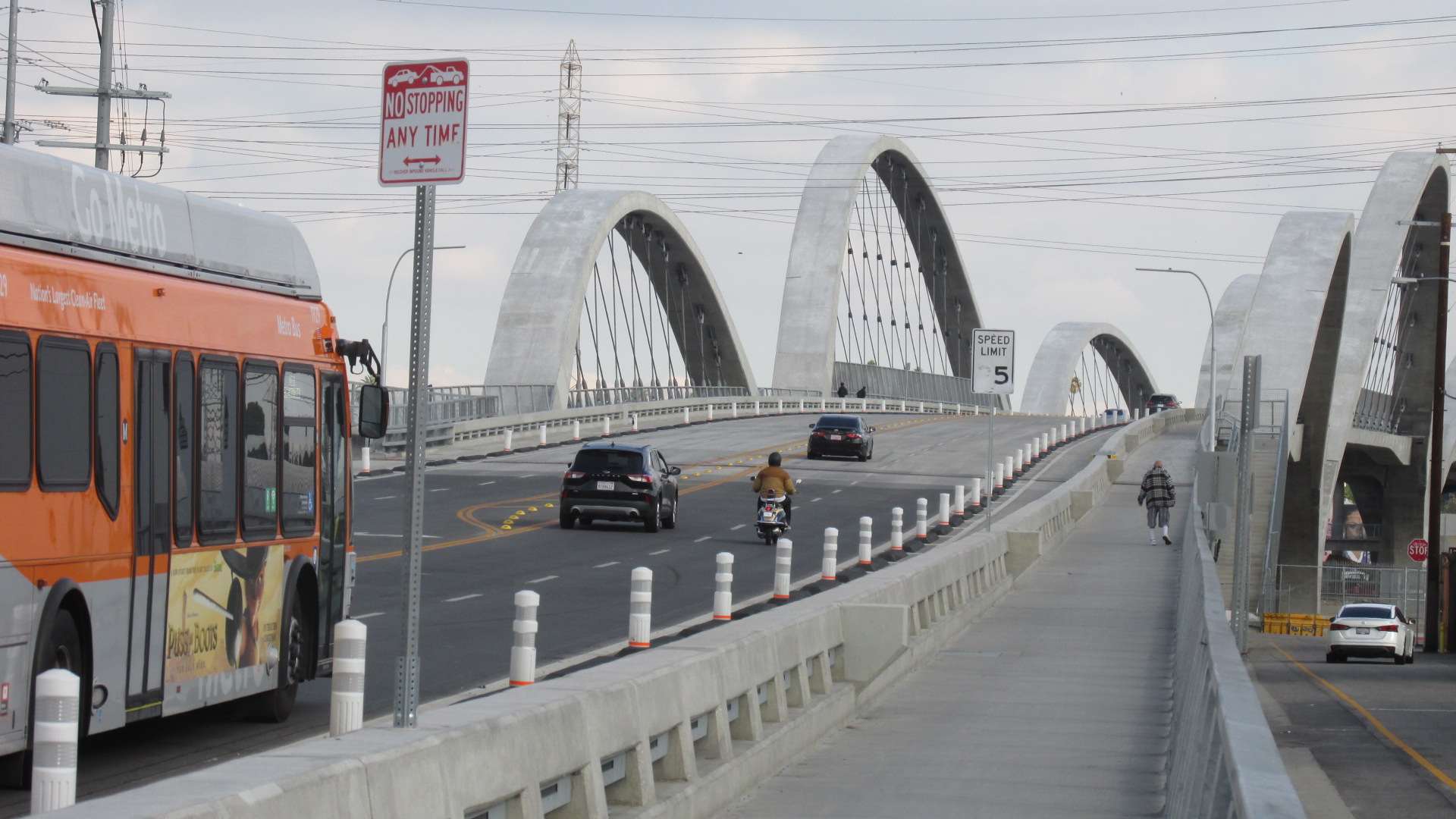
Starting across the bridge from the Downtown side.

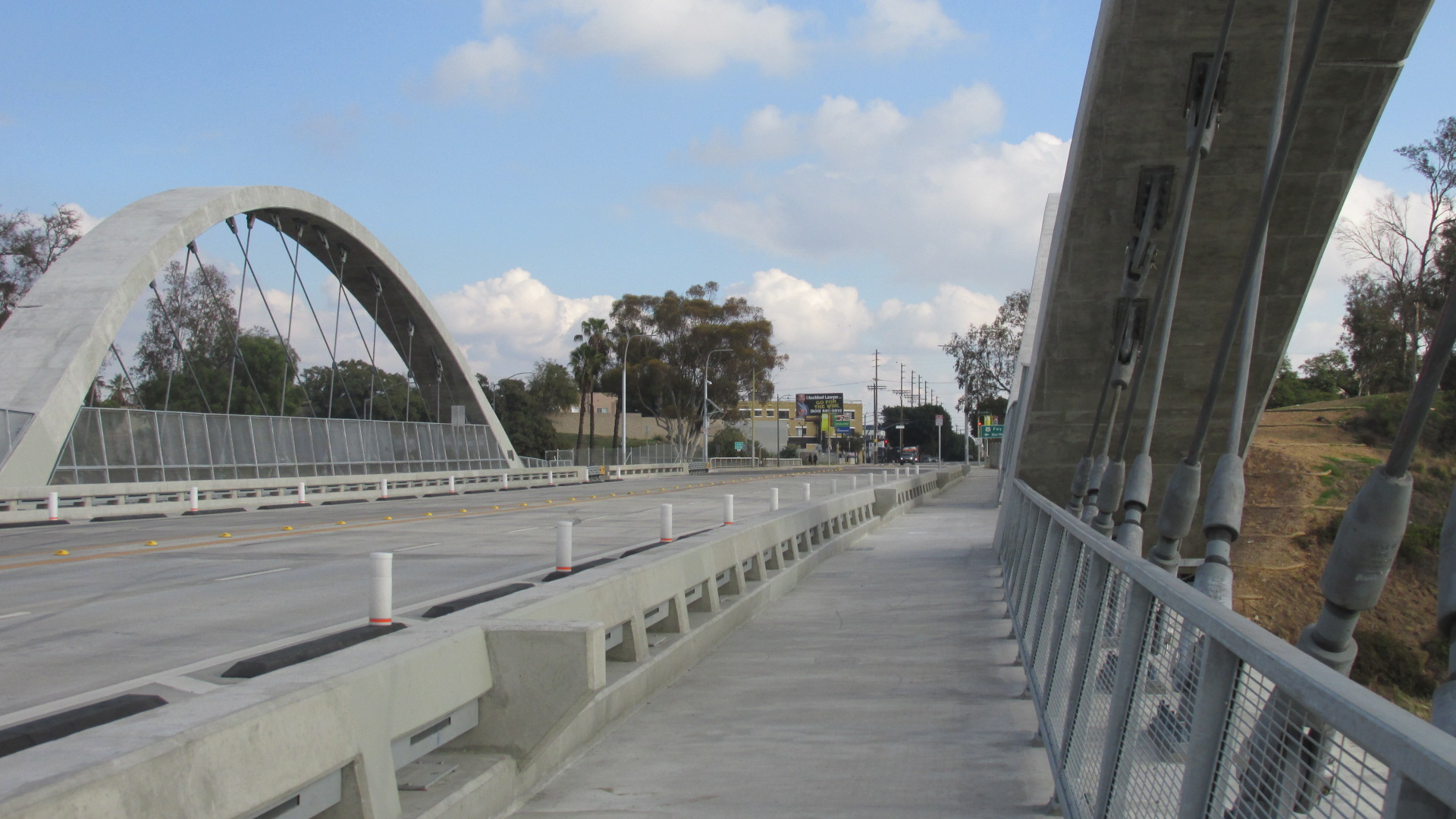
But now all the chaos seems to have faded away.  When I took a walk across the bridge earlier in December, there wasn’t much traffic and I saw only a handful of pedestrians.  It was a cool, cloudy day, and things seemed pretty peaceful.

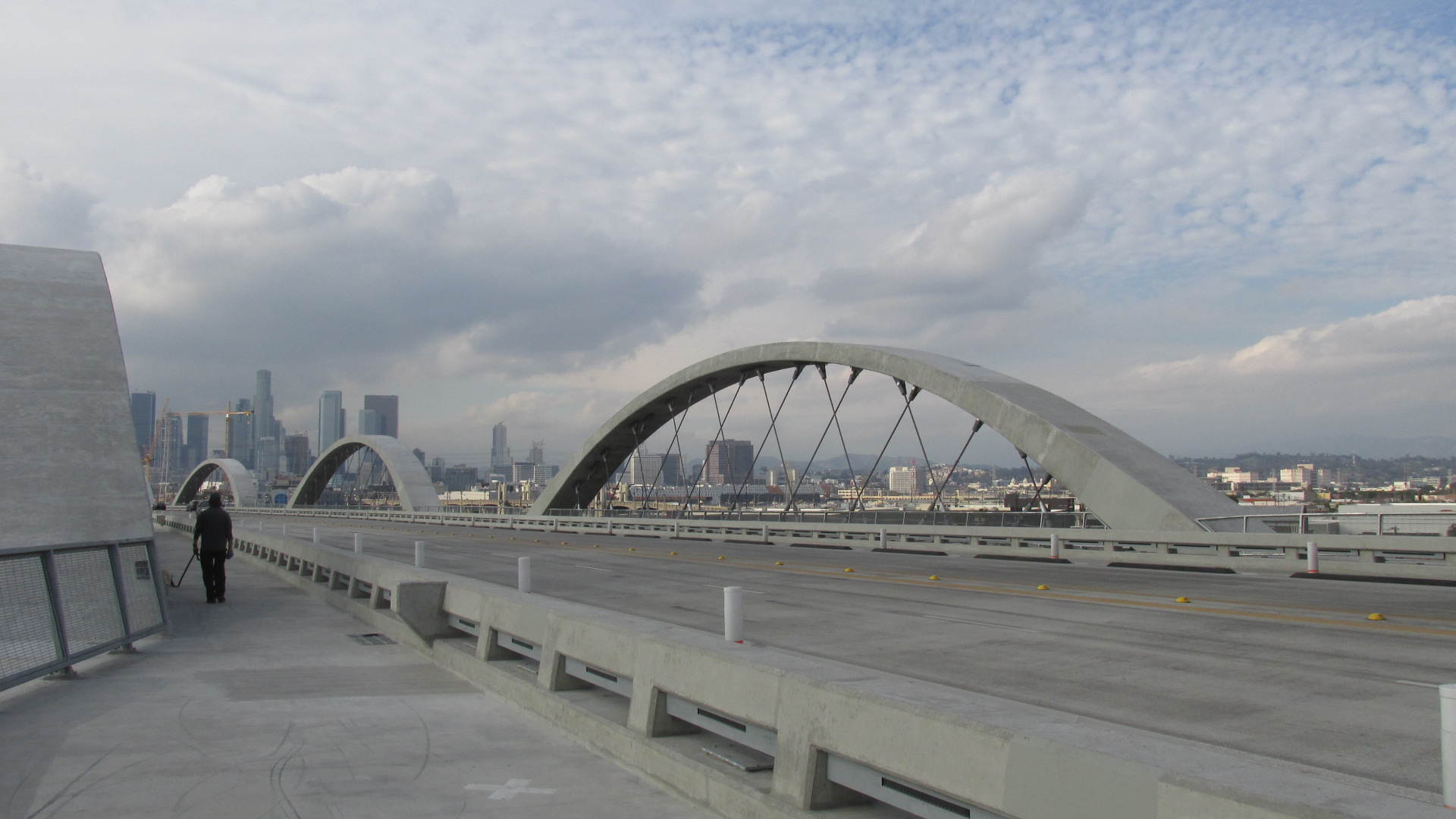
The bridge’s arches create a sense of energy.

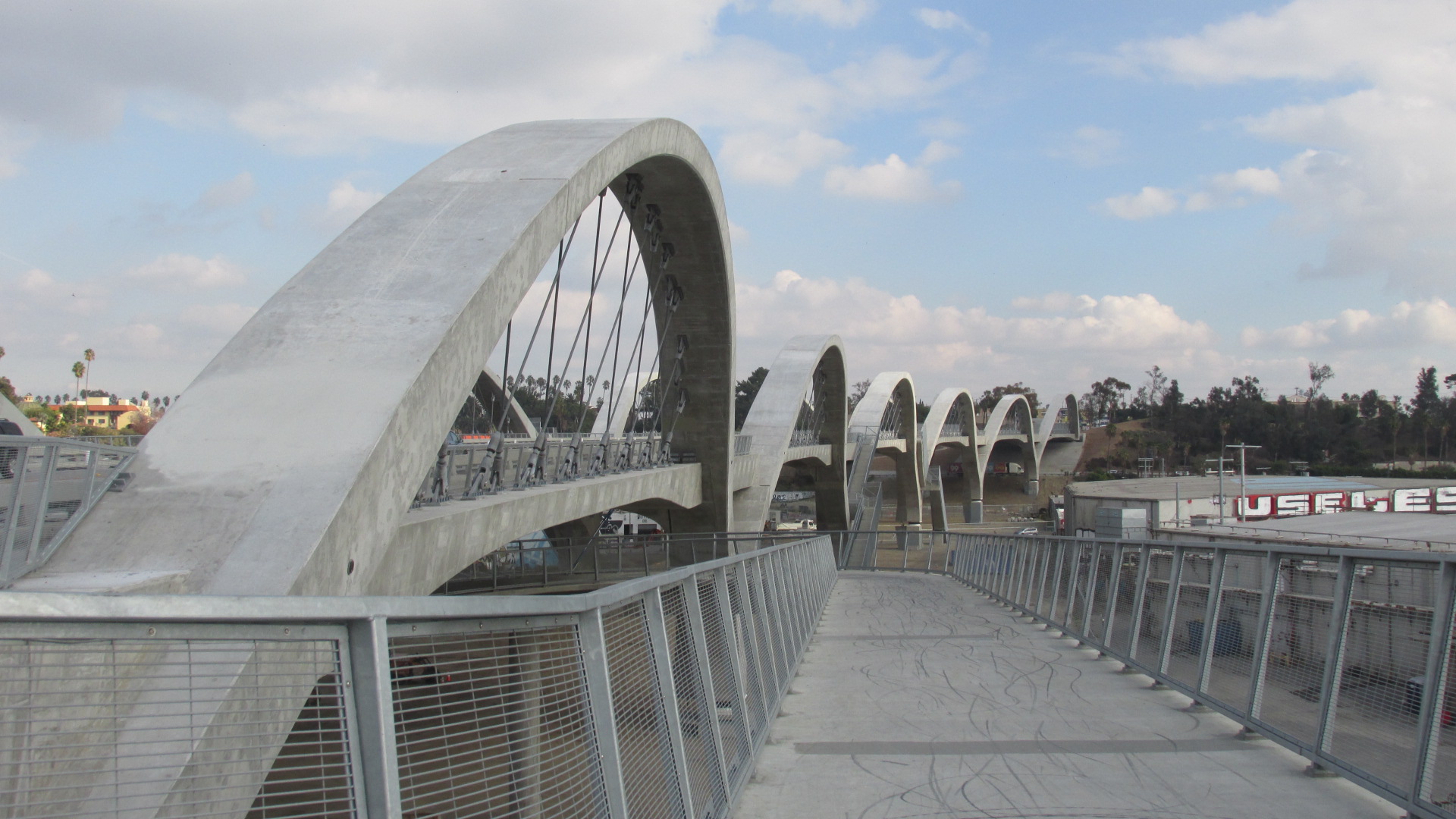
I have mixed feelings about the Sixth Street Bridge, which I’ve written about previously.  In this post I want to focus on the positive.  The bridge really is beautiful.  The design, by Michael Maltzan, is impressive, with the fluid lines of the arches rolling off to the horizon.  Walking across you get a sense of being lifted into the air, with stunning views of LA’s various landscapes surrounding you on all sides. 

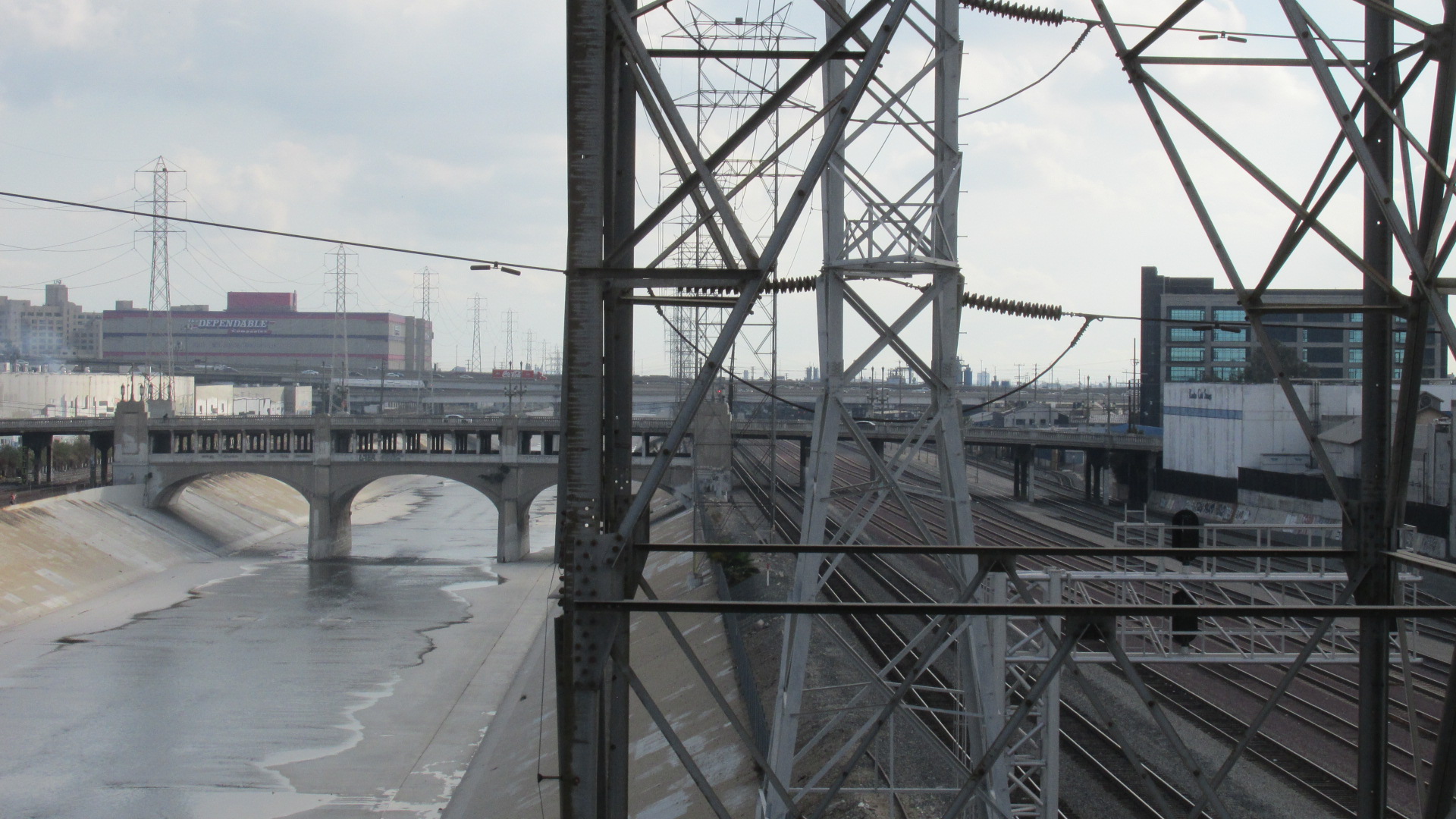
The new Sixth Street Bridge is actually a replacement for the previous version, which was built in the early 30s.  It’s just one of a series of bridges that run across the LA River between Downtown and East LA, including the Cesar Chavez Bridge, the Fourth Street Bridge, and the Seventh Street Bridge.  All of these were built in the first half of the 20th century.

A view of the Fourth Street Bridge.
A view of the Seventh Street Bridge.

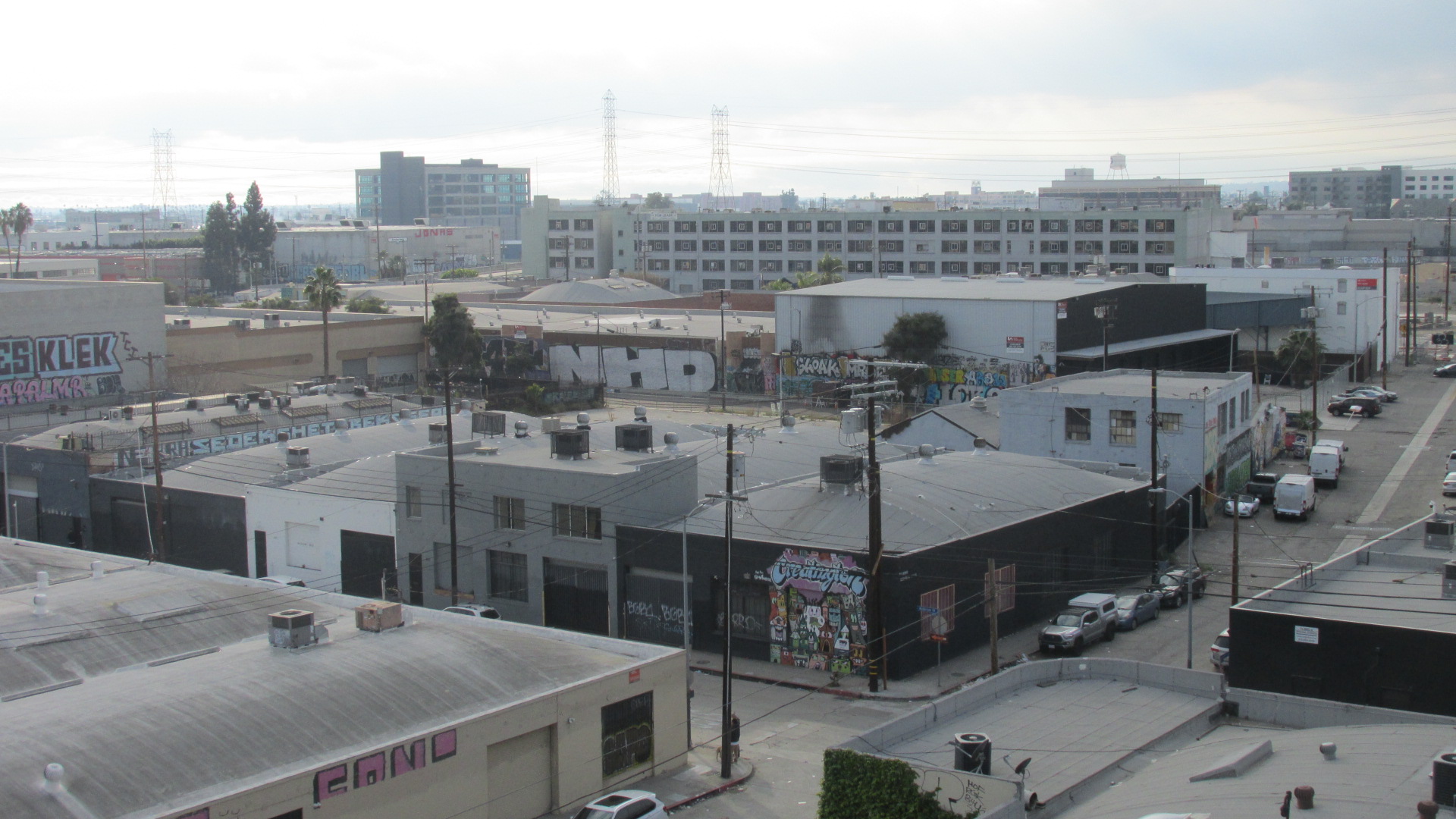
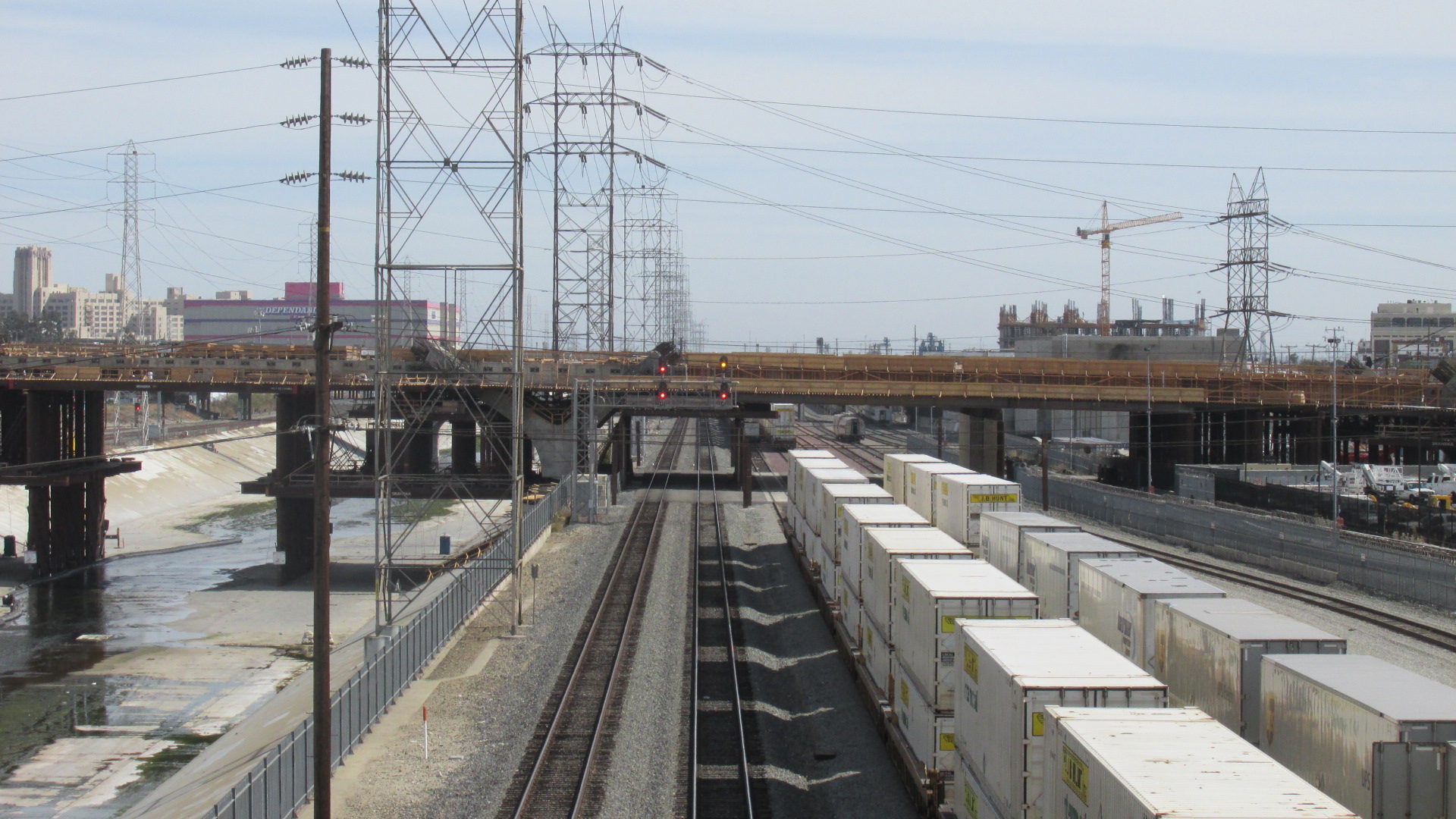
As you can see from the photo above, this area, which borders Downtown LA, is criss-crossed with multiple layers of infrastructure.  Aside from the bridges, you have the concrete surface of the LA River, rows of train tracks, and miles of electric power lines, all surrounded by a massive industrial district. 

The arches rolling off to the horizon.

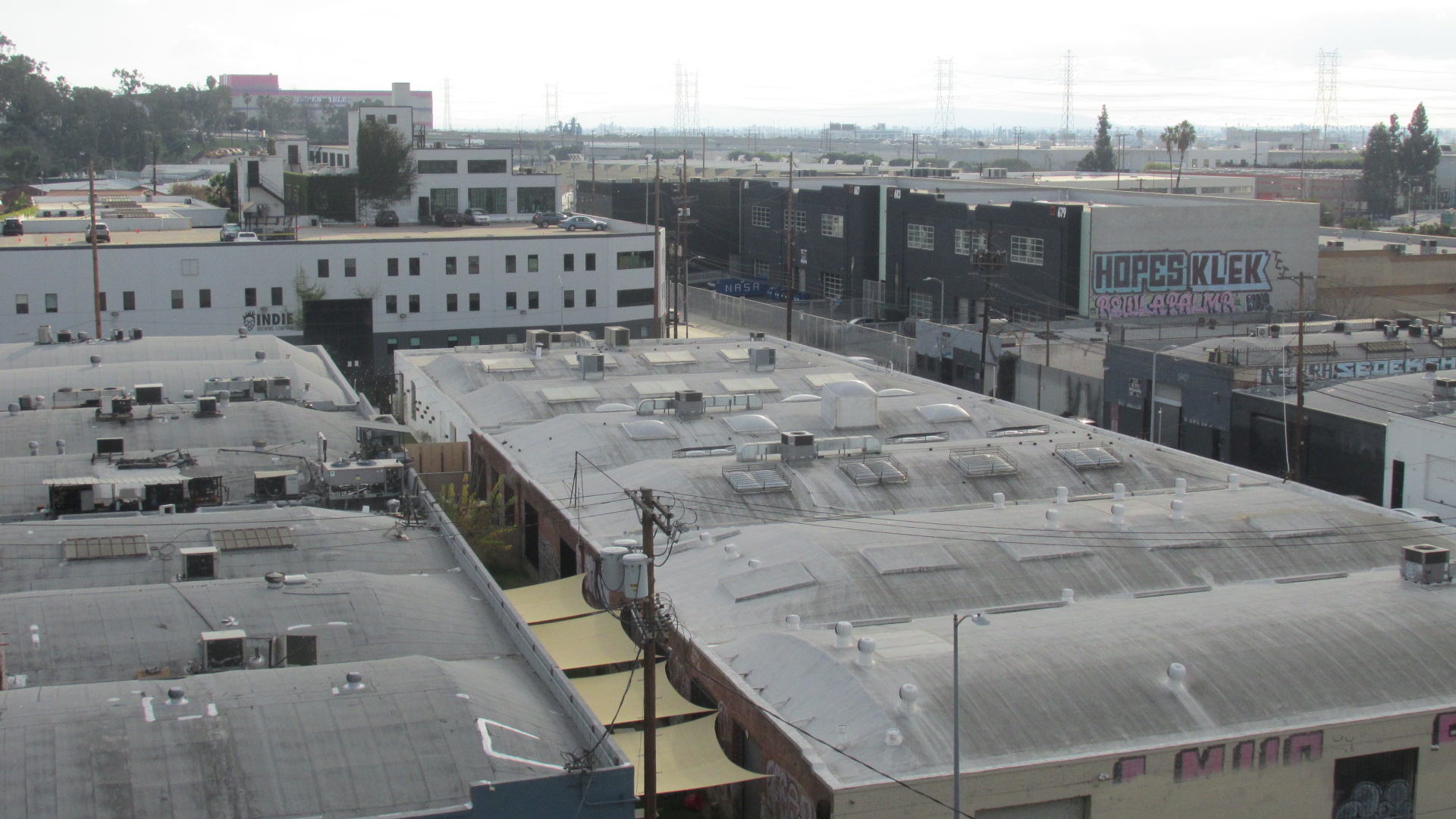
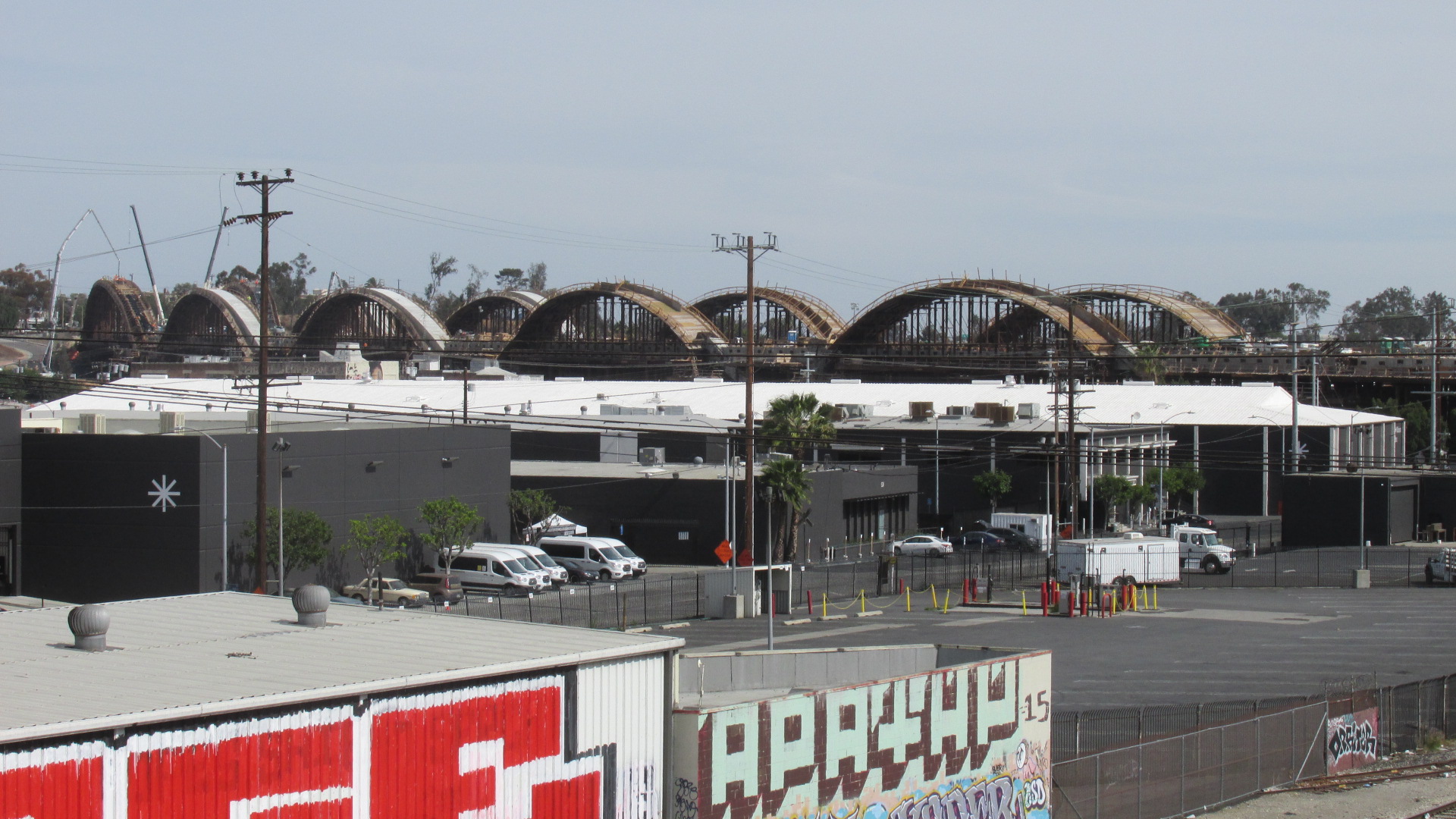
Beneath the bridge you can see scores of large, nondescript buildings which were built for manufacturing and storage.  These days you’ll probably find that a number of them have been converted to ghost kitchens and cannabis greenhouses.

A view of the industrial district that lies below the Sixth Street Bridge.
Scores of drab buildings cover the landscape.

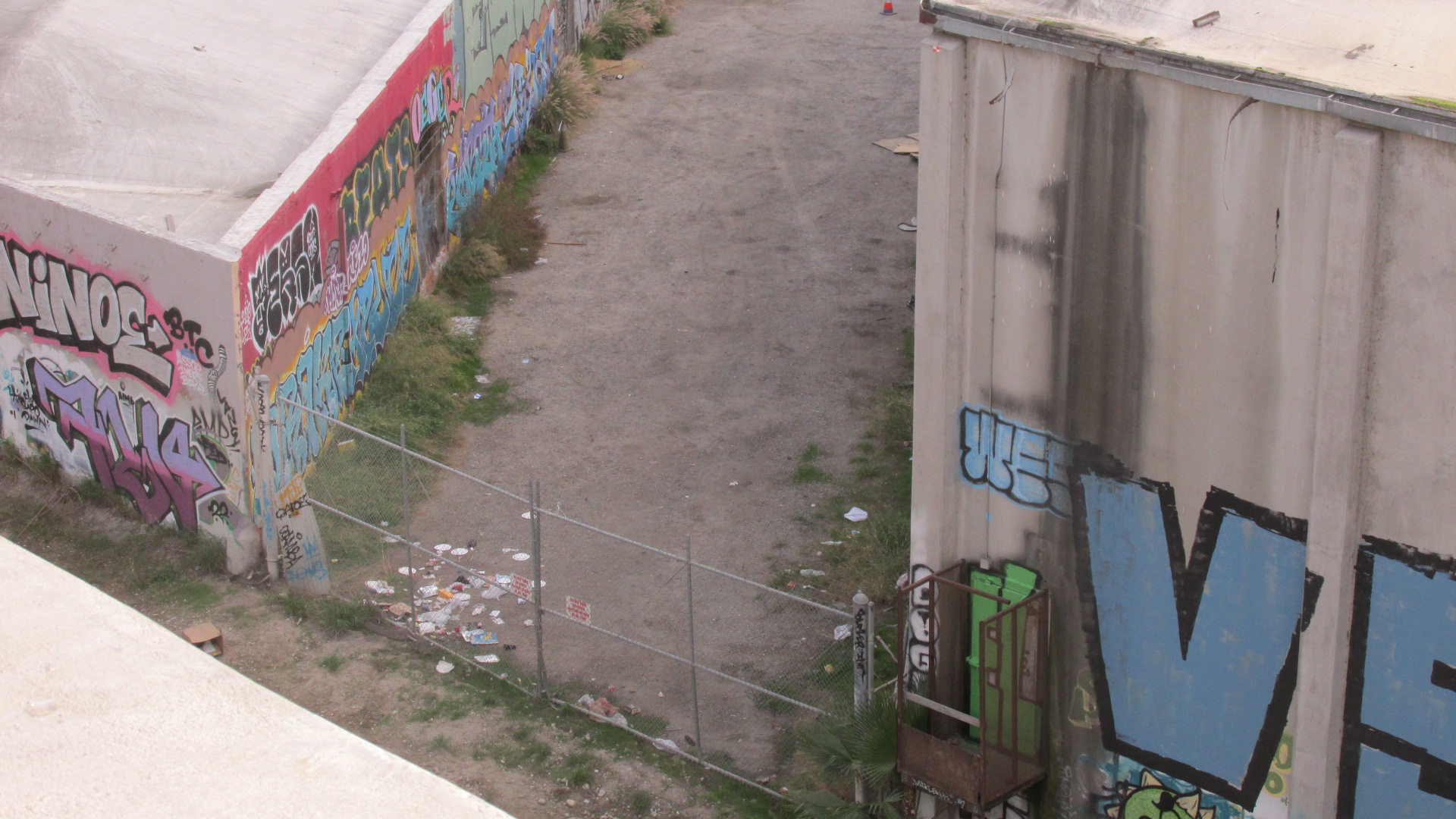
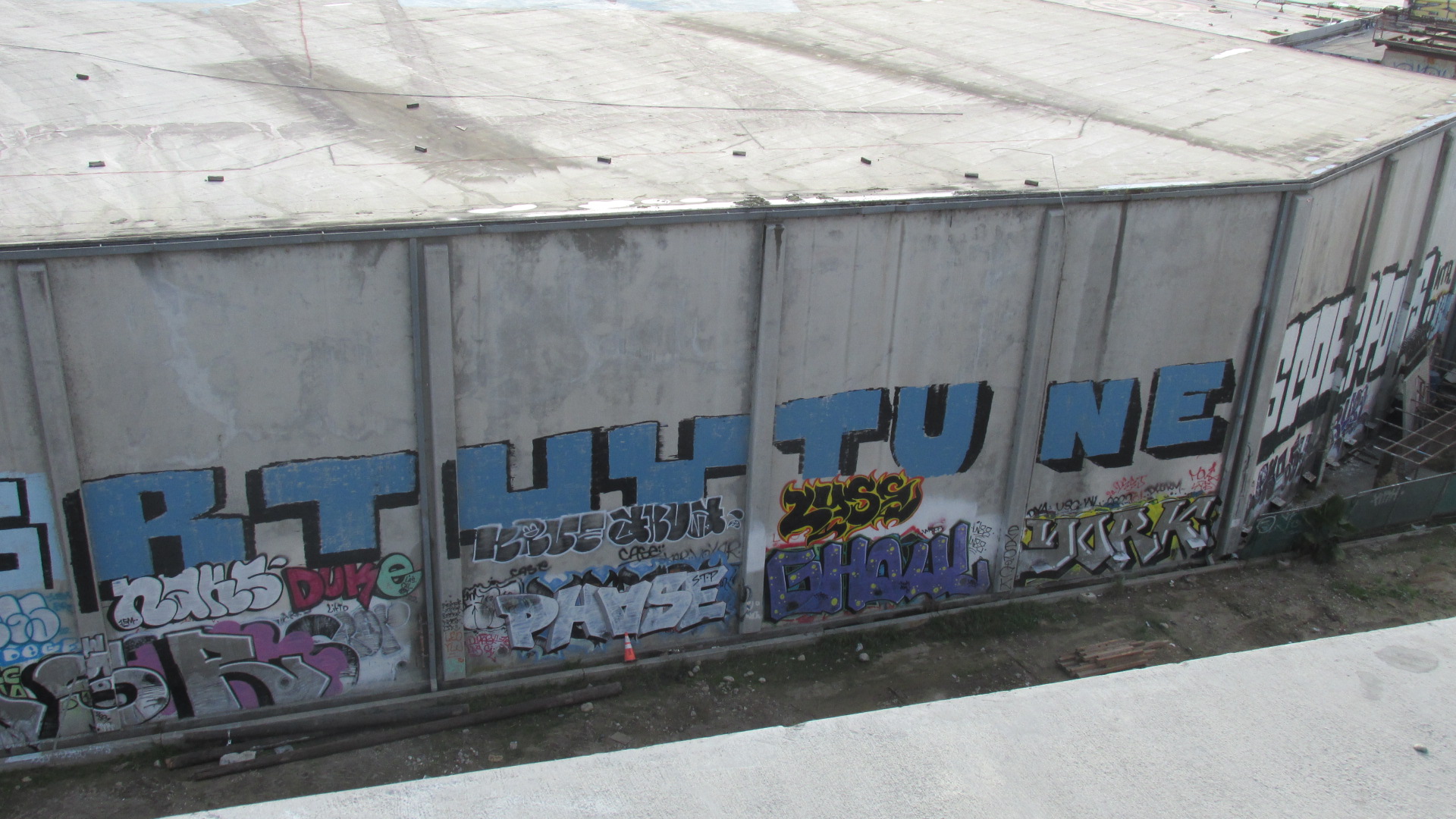
Nestled inside this vast maze of commercial buildings you’ll often come across pockets that seem neglected or deserted.  These spaces are a magnet for street artists that love the expansive, windowless exterior walls. 

The desolate spaces between these buildings draw street artists…
…who love the wide, windowless exteriors.

Coming down on the other side of the bridge, Sixth Street becomes Whittier Boulevard, which is lined with shops and restaurants serving the working class community of Boyle Heights.

The bridge lands in Boyle Heights.

It will probably be a long time before we can really see the impacts caused by the new Sixth Street Bridge.  There’s been lots of hype about the upside of this new LA landmark, but it’s also likely to accelerate the waves of gentrification and displacement that have been sweeping across the city.  Property values have already risen in Boyle Heights, and so has the number of evictions.

Like I said, though, for the moment I’ll focus on the positive.  It is a lovely bridge.

Work Continues on Sixth Street Bridge

The Sixth Street Bridge’s arches rising above the surrounding landscape.

Work on the new Sixth Street Bridge is still moving along.  Originally scheduled for completion in 2019, it’s now supposed to be finished by summer of 2022.  This shouldn’t surprise anyone who follows the progress of large infrastructure projects.  It’s also no surprise that the cost of the project has risen from $420 million to $588 million.  But even though repeated delays and cost overruns are fairly common with projects of this kind, it seems like LA is especially prone to these problems.  (I guess it could be worse.  Just take a look at the California High Speed Rail.)

LA River running beneath the Sixth Street Bridge.

When the bridge is done, there are plans to create a 12-acre park within the bed of the LA River, with public art and recreational programs.  I hate to be cynical, but it will be interesting to see what actually materializes.  While the FTA and CalTrans are helping with funds for the construction of the bridge, I don’t know if they’re also kicking in for the park.  I mention this because the LA Recreation & Parks Department is chronically underfunded, and can’t even maintain existing parks.  I’m also concerned because it seems some of the features that were supposed to be included in the new bridge have been cut.  The original design had protected bike lanes.  Apparently those are gone.  And I’ve seen some chatter on-line about the removal of the stairs that would have connected the bridge to the park, but I haven’t been able to find any confirmation.

Downtown side of the bridge.

But the biggest cause for concern is that the completion of the bridge will bring further gentrification and displacement on the east side of the LA River.  Many residents of Boyle Heights and surrounding communities are worried that the Sixth Street Bridge will bring another wave of real estate investors looking to cash in.  The eviction of the seniors at Sakura Gardens is not a good sign.

Many people are excited about the new Sixth Street Bridge and its promised benefits.  I hope their optimism is justified.  When I first heard about the project years ago, I was excited, too.  I have to say that now my hopes are outweighed by a deep cynicism.  The City of LA’s leaders have been promising a more livable, equitable city for years.  Instead it seems that the population is increasingly divided and increasingly desperate.  Bridges are supposed to bring people together, but I’m worried that this one will end up driving people apart.

Another Gathering Place Goes Down

Photo by Elina Shatkin/LAist

A couple days ago I came across a piece on LAist the really resonated with me. The author, John Kamp, talks about the impending demolition of a favorite hang-out, El Gran Burrito, near the Metro station at Santa Monica and Vermont. I’ve never eaten there, but Kamp’s description of this funky taco stand reminded me of so many other LA gathering places that have disappeared.

I understand the reasons why El Gran Burrito is getting bulldozed. The City has approved a Permanent Supportive Housing complex with 187 units, 105 for Extremely Low Income households, and 80 for Very Low Income households. (The two remaining units are for managers.) The City desperately needs Permanent Supportive Housing, and it makes perfect sense to build next to the Metro station so that residents will have easy access to transit. I really can’t object to the project. Still, we need to acknowledge what we’re losing.

Kamp identifies himself as a landscape and urban designer, and he’s not happy about the trend in LA toward “generic, modern, high-density apartment buildings with retail spaces on the ground floor”. He laments the loss of our “quirky, shacky spaces tucked into hillsides and between larger buildings”. I know where he’s coming from. And it’s not just the bland conformity that characterizes so many of the new buildings. The really painful thing is the loss of community. These low budget, lowbrow restaurants are where Angelenos gather and mingle. You stop in with a group of friends and run into some other folks you know, or maybe you start talking to a group of total strangers. You get to know the people behind the counter. You get to know the community.

I’m thinking of Carnitas Michoacan #3 in Boyle Heights, which got turned into a Panda Express. Longtime patrons were saddened to lose a place they’d been coming to for decades. Taix on Sunset has been purchased by a real estate investment group, and there are plans to construct a six-story mixed-use complex on the site. (The new project would include space for a scaled-down version of Taix.) One of the most depressing losses was El Chavo, also on Sunset, which was bought up by another real estate investment group. What used to be a cozy, old-school Mexican restaurant was turned into an oppressive modernist fortress. The plan was to make it into an upscale restaurant/nightclub with multiple bars. Last time I passed by the place looked like it was closed.

I also think of the way Union Station has changed. Up until a few years ago it had a great little bagel shop where you could pick up something to eat and drink while you were waiting for your train. There was also a small newsstand where you could get gum, snacks, sodas. Today both of them are gone. Instead of a mom-and-pop restaurant serving fresh bagels they now have a Starbucks serving cardboard pastries wrapped in plastic. Instead of the newsstand they now have a chain convenience store with all the personality of a concrete block.

But we also have to take the longer view. I love Union Station, but in order to build it the City razed a good part of LA’s original Chinatown. Many people were pushed out of their homes. As a compromise, the City agreed to build a new Chinatown, which is the one we know today. While many Angelenos have a real affection for the area’s funky charm, let’s face the facts: an authentic immigrant community was levelled with zero regard for how the residents would be impacted; the “replacement” was a faux-Chinese outdoor mall designed to lure tourists.

Nothing lasts forever. Especially restaurants. The City is constantly changing. If El Gran Burrito gets bulldozed to create housing for the people who need it most, I can see the justification. But in many other cases, including the ones listed above, it’s just a raw deal for the community. While fast food chains and investment groups boost their profits, neighborhoods lose gathering places that brought people together. Seems like this is happening more and more often in LA these days.

Kamp is one of the many Angelenos mourning these losses. If you’ve seen a beloved hang-out get bulldozed, you’ll want to take a look at his piece in LAist.

A Farewell To El Gran Burrito, East Hollywood’s Perfect Late-Night Pit-Stop

Supervisors Approve Seriously Flawed LACMA Plan

LA BOS Image 2

On Tuesday the LA County Board of Supervisors voted unanimously to approve a massive make-over of the LACMA campus. This was a major mistake. There’s been a lot of debate about the aesthetic quality of architect Peter Zumthor’s latest design, but really that’s a secondary issue. LACMA is a public institution and its primary purpose is to serve the public. I’m not the only one who feels that the project as proposed fails to accomplish that goal.

I wrote about the drawbacks to the plan a couple days ago, so I won’t go through it all again, but one of the main concerns is that LACMA is getting ready to spend hundreds of millions of dollars to create a new building with 10% less exhibition space. Does the LACMA Board really think that’s the best way to serve the public? Another serious problem with the new structure is that it doesn’t contain office space for most staff members, including curatorial staff. The museum will be renting space in a building across the street. Separating the staff from the exhibition space is a foolish and potentially costly move. How can anybody think this is a good idea?

To those who are angry about the loss of exhibition space, LACMA Director Michael Govan has said he wants to get away from the traditional idea of what a museum is. Rather than expecting people from all over LA County to come to the Wilshire District to look at art, Govan has proposed bringing the museum to the people by having LACMA open new spaces in various communities. Here are a couple paragraphs from the story in the LA Times….

Supervisor Kathryn Barger praised LACMA Director Michael Govan, who hopes to offset the loss of gallery space in the new building with future satellite locations in South Los Angeles and elsewhere.

“You really do have a vision, and it’s not just about four walls,” Barger said, later adding: “We believe it’s important to give exposure to people who wouldn’t otherwise have it.”

In theory this is a great idea. We shouldn’t keep clinging to old ideas about what a museum is, and the notion of creating different spaces in LA’s communities to engage the public directly makes perfect sense. But where’s the proposal for these satellite locations? What’s the budget? What’s the timetable? How is it going to happen?

Various sources reported that Govan pitched this idea in January 2018, and at the time he talked about the possibility of opening five different spaces anywhere between South LA and the Valley. What’s happened since then? Well, that same month the LA City Council approved an agreement which would allow the Department of Recreation & Parks to lease LACMA space at South Los Angeles Wetlands Park. The idea was that LACMA would gradually renovate an existing building at the same time it was providing programming in the park. Here’s an excerpt from the agreement.

LACMA proposes to begin providing museum programming services at designated recreation centers near the South LA Wetlands Park within six months of the execution of the Lease while the repair and retrofit work is being conducted in Building 71. Programming at the Park will be provided within eighteen (18) months of the execution of the Lease.

The LA City Council approved the lease in January 2018. The agreement says LACMA would start providing programming near the park within six months and that programming at the park would begin within 18 months. I looked all over the net. I looked at the Rec & Parks web site. I looked at the LACMA web site. I didn’t find anything about art-related activities provided by the museum anywhere near South LA Wetlands Park. The 18 month period will expire in July of this year. Will LACMA be providing programming at the park beginning in July?

What about the other locations? In July 2018 it was reported that LACMA had opened a small gallery at an elementary school near Westlake/MacArthur Park, but at that time it wasn’t yet open on weekends. Another site that’s been mentioned is Magic Johnson Park in South LA, but an article published in the LA Sentinel last month merely said that LACMA was “considering” a location there.

In other words, there is no plan in place. There are no details. Govan’s idea of bringing the museum to the people sounds good, but at this point it’s all up in the air. The locations haven’t been determined, there’s no timetable, and apparently no budget. This last part is especially concerning. Since fundraising for the new Wilshire campus has slowed, it’s hard to believe donors will be rushing forward with millions to fund this new idea of off-site locations. To say that the loss of exhibition space in the proposed building will be offset by new satellite locations without offering any concrete plan for how that’s going to happen is pathetic. Could some satellite spaces open in time? Possibly. But it’s also possible none of them will open.

I can’t believe anybody could buy this half-baked idea. But apparently the Board of Supervisors thought it all sounded great. You can read the write-up in the Times here.

LACMA’s $650 Million New Building Wins Approval from County Supervisors


Stop the Insanity at LACMA

LACMA Plaza

If you care about the Los Angeles County Museum of Art (LACMA), and you haven’t heard the latest about the massive makeover planned for the campus, please check out the articles below. There’s some crazy stuff going on. When the project was being discussed back in 2015, I wrote a post supporting the demolition of existing buildings and construction of new gallery space. But after reading reports in the media about the latest twists in the LACMA saga, I say we need to slam on the brakes. The project as currently proposed is just insane.

Read the articles below for more details, but the upshot is that LACMA will be spending hundreds of millions of dollars to create a new campus with a lot less gallery space. Even worse, the new buildings won’t contain offices for curators and other museum staff. LACMA will be leasing space for them in a building across the street. Unbelievable.

But it hasn’t been approved yet. The LA County Board of Supervisors will consider approval of the plan at their meeting on Tuesday, April 9. If you care about LACMA’s future, please write to your Supervisor TODAY and let them know you oppose the current plan.

LA County Board of Supervisors

Here are two articles that lay out what’s going on. The first is by Christopher Knight, who gives an overview of the proposal. The second is by Joseph Giovannini, who breaks down the numbers in excruciating detail. Both authors oppose the current plan

LACMA, the Incredible Shrinking Museum

LACMA: Suicide by Architecture

When the idea of remaking the LACMA campus was first proposed it seemed like a good idea, but over the years the proposal has morphed into an awful, pathetic mess. Please tell the Board of Supervisors to reject this idiotic plan.

Dismantling Times Mirror Square: Housing vs. History?

tms 01 p k 3 tree

In late November, the LA City Council’s Planning & Land Use Management (PLUM) Committee considered giving Times Mirror Square landmark status. It was an interesting hearing. The application nominating the site for Historic-Cultural Monument status was submitted by a group of people, including local preservationists Kim Cooper and Richard Schave, as well as architectural historian Alan Hess. There’s really no argument that Times Mirror Square has played a huge part in LA’s history. The debate centered around how much of it should be preserved.

As someone who grew up with newspapers, I have to remind myself that these days most people under 30 see them as a useless holdover from the past. The number of print publications has fallen dramatically over the past 20 years, and while a number of major papers continue to publish on-line, they’re struggling to reach an audience. These days a lot of Americans get their “news” from sources that don’t even claim to be news outlets. Do people under 30 have any idea how powerful and influential major newspapers were before the internet? From the early days of the 20th century the Times had a huge impact on local politics, the regional economy, and the built landscape. If the Times had never existed, LA would probably look very different than it does today.

tms 10 k clock

Los Angeles Times Building at First and Spring, designed by Gordon Kaufman

At the PLUM hearing, nobody questioned the site’s historical significance. The debate was all about the structure, or really the structures. Times Mirror Square was actually built in pieces over decades. The first segment, located at First and Spring and designed by Gordon Kaufman, was completed in 1935. In 1948 the owners extended the complex to the corner of Second and Spring, and the architect for this phase was Rowland Crawford. The final segment, built on the west side of the site in 1973, was designed by William Pereira. (And if you really want to dig into the details, you’d also have to count the plant building and the parking structure.)
tms 20 c 2

The Mirror Building at Spring and Second, designed by Rowland Crawford

For those who don’t know much about the Times’ history, here’s a quick summary. The paper was founded at the end of the 19th century and played a major role in LA’s development throughout the 20th. In its early years, editor Harrison Gray Otis made the paper successful through ardent boosterism, pushing hard for LA’s growth. The Times played a key role in advocating for the construction of the LA Aqueduct. Otis’ conservative, pro-business policies were shared by his successors, Harry Chandler and Norman Chandler. But things changed when Otis Chandler took over in 1960. The Times adopted a more independent perspective and expanded its staff, striving to become a national paper on the level of the New York Times. The change was quickly apparent. While in the past the Times had fanned the flames of bigotry, soon after Otis Chandler took over it ran a series exposing racism in the John Birch Society. When Richard Nixon lost the race for California governor, he blamed the LA TImes. Before 1960 the paper had never won a Pulitzer. Since 1960 it’s won 44.

Unfortunately, in 2000 the Times was sold to the pack of idiots at the Tribune Company. They spent over 15 years turning what had been a regional media giant into a pathetic shadow of its former self. In 2018 the paper was finally freed from the toxic grasp of the Tribune when it was purchased by billionaire Patrick Soon-Shiong. Not long after purchasing the Times, Soon-Shiong announced that its offices would be relocating to El Segundo, and that Times Mirror Square would be sold to developer Onni Group.

And this is what the debate at the PLUM hearing was all about. Onni has proposed preserving the Kaufman and Crawford buildings, but getting rid of the Pereira addition in order to build two residential towers. The preservationists who nominated Times Mirror Square wanted to landmark the entire site, which would make development more difficult.

tms 30 p angle

Times Mirror Headquarters at the corner of First and Broadway, designed by William Pereira

tms 32 p bdwy

View of Times Mirror building along Broadway

tms 34p refl csf ch

City Hall and the Clara Shortridge Foltz Criminal Justice Center reflected in the facade of the Times Mirror building

Back in September, the Cultural Heritage Commission (CHC) sided with the preservationists. In spite of a report from GPA Consulting that took great pains to play down the quality of the Pereira building, the CHC voted to include it in their recommendation, saying that all of Times Mirror Square was worthy of landmark status. Interestingly, GPA also dug deep into the Pereira firm’s archives to question whether the architect designed the project himself. They seemed determined to block the nomination of that segment, which is exactly what Onni Group wanted. But it’s commonplace for the principle of an architectural firm to assign a team to complete the bulk of the work on a project. While GPA argued at the hearing that the Pereira building was not a significant example of the architect’s work, many others, including architectural historian Hess, insisted that it was.

This is the second time I’ve run across GPA in covering preservation issues, and I have to say I’m not impressed by their work. When DLJ Capital bought the 800 Traction building and decided to evict the Japanese-American artists who lived and worked there, the new owners brought in GPA to evaluate the structure’s history. While GPA found that the building deserved landmark status, their report managed to avoid any mention of the Japanese-American community that had lived in the area for decades. They also whitewashed 800 Traction’s history by omitting references to the Japanese-American artists who had lived and worked in the building for years, some going back as far as the 80s. And somehow GPA failed to note that some of these artists played a key role in creating the Downtown Arts District. Seems to me that GPA Consulting basically serves as a hired gun, dedicated to helping real estate investors push their projects forward.

History is a complicated thing. Most of us know relatively little about the city we live in. Sometimes it turns out we aren’t even really familiar with the things we think we know well. In early December I went down to Times Mirror Square to shoot some photos. I have to say the visit was an eye-opener. I bet I’ve walked by the building a thousand times, but while I was taking pictures I realized there was a lot that I’d never really seen. Walking past the main entrance on First Street I’d certainly noticed the contrast between the Kaufman and Pereira buildings, but I’d never paid any attention to the Crawford building. I’d never looked closely at the lines or the materials. I’d never read the inscriptions on the First Street facade. I’d never really thought about the way the Pereira building shapes the space.

And I’d never noticed this plaque near the corner of Spring and Second.

tms 60 plaque

Looking at it made me think about the many changes that have happened in Downtown, and reminded me that things will always keep changing. There are whole histories that have been bulldozed and buried. Thousands of stories I’ll never know. And while I believe preservation is important, we can’t save every old building, or even every beautiful building. Inevitably, the City will keep growing. It can’t remain static. So we have to weigh these things, and ask whether the changes are happening for better or for worse.
tms 50 spring trees

View of Times Mirror Square from Spring

A number of people spoke at the PLUM Committee hearing, and again, the discussion was pretty all much about whether the Pereira structure should be preserved. Obviously, the developer reps and the business community argued against preserving that portion. The Committee also heard from a number of union workers who shared that view. On the other side you had preservationists arguing that the Pereira addition was an important example of the architect’s work, and an important part of the building’s history.

I agree with the preservationists. While all three architects involved with Times Mirror Square did impressive work, Pereira had the most extensive relationship with the LA area. He played a crucial role in shaping the city’s modernist period, and designed some of its most remarkable structures, including CBS Television City, Otis College of Art & Design (original campus), and the Los Angeles County Museum of Art (original campus). He also made significant contributions to Los Angeles International Airport,
the University of Southern California, and Occidental College. Pereira was a major player in creating the look of mid-century LA.

As for Times Mirror Square, I completely agree with the people who say the Pereira addition has a cold, corporate feel. That doesn’t make it bad architecture. In fact, it has a striking sculptural strength, and the way it shapes the space around it is impressive. Actually, I think it’s an appropriate expression of the power and position the Times held back in the 70s. Does it fit with the older buildings? Depends on what you mean by “fit”. The contrast between the Kaufman and Pereira structures is jarring, and I’m certain that’s what Pereira wanted. And remember, we’re talking about LA architecture. In most other cities this kind of mash-up would stand out as a bizarre oddity. In this city, it’s just one of many examples of extreme stylistic conflict. Over the last hundred years, the story of LA architecture has been all about brash, experimental eclecticism.

tms 65 p k 1

Pereira building in foreground and Kaufman building in background

But it was pretty clear where the PLUM Committee hearing was going. The developer didn’t want the Pereira building to be declared historic, and that was a pretty strong sign the PLUM Committee didn’t want that to happen either. They’re very accomodating. Anybody who thought replacing former Chair Jose Huizar with Marqueece Harris-Dawson might change things was living in a fool’s paradise. At this PLUM hearing the main order of business appeared to be giving real estate investors whatever they asked for, just like when Huizar was running the show.

I did think it was interesting that people kept bringing up housing as an important issue. The developer, the union folks, the PLUM Committee all kept talking about how Downtown needed housing badly, and how Onni’s proposed luxury skyscraper would help ease that need. That’s weird. When I look at web sites for residential buildings in Downtown I find that a lot of them are offering discounts for signing a lease. Some are offering up to two months free rent. You wouldn’t think they’d be offering such great deals if housing was in really short supply.

Something else that’s weird. Onni’s reps are claiming that there’s a housing shortage in Downtown, but at one of their other buildings not too far away they’re turning residential units into hotel rooms. A few years ago the developer opened Level Furnished Living at Ninth and Olive. It was approved as 303 residential units, but in 2017 local activists discovered that Level’s owners were actually offering the units as hotel rooms. At first they were doing it illegally, but City Hall was good enough to grant them a TORS conversion for 97 units. This stands for Transit Occupancy Residential Structure, and basically it means you’re turning housing into hotel rooms. And it looks like were going to see more of this. Another developer has filed an application to build a 27-story high-rise at 949 South Hope. The project description calls it a residential tower, but if you look at the requested approvals you’ll see that the developer is asking for the TORS designation up front. In other words, once the building is open it could be used as housing or hotel rooms.

This is a brilliant way to reduce vacancy rates in Downtown. Obviously Onni is really on to something. If you can’t market your units as apartments or condos, just turn them into hotel rooms. That way you’re turning a profit even if there really is no demand for housing. And the best part is, once you slap on the TORS designation, these units don’t have to be counted when calculating Downtown’s vacancy rate. If an apartment or condo is sitting empty, then it’s a vacant unit. If it’s a hotel room, it’s just an empty hotel room. It’s sheer genius. The City can reduce the Downtown vacancy rate just by calling these units something else.

Of couse, if Onni is turning residential units into hotel rooms at Level, you’ve got to ask if the need for housing in Downtown is really that severe. And at the same time, you have to ask if the PLUM Committee has any real interest in easing LA’s housing crisis. More likely they’re just helping a developer create another valuable asset for their portfolio.

After public comment, the PLUM Committee members spoke briefly, and it was pretty clear they were all on board with Onni’s agenda. They voted to recommend granting historic status to the Kaufman and Crawford buildings, but not to the Pereira building. In early December the full City Council adopted the Committee’s recommendation. Looks like Onni will get to go forward with its two residential towers. And if we find out in a few years that those residential towers have somehow turned into luxury hotels, well, that’s just the way things work in the City of LA.
tms 90 1st lights