How Many Hotels Do You Need?

DSC02054

Hotel construction is booming in Hollywood. Obviously, tourism is big business and brings a lot of money into the area, so it makes sense to build accommodations for visitors. But there are also tens of thousands of people who actually live in the community, and they need to be considered, too. Is City Hall thinking about them? Why don’t we ponder that question as we do a quick rundown of the hotels that are coming to Hollywood. It’s quite a list. We’ll start with the ones that are currently under construction.

1 Camden

The Camden
There’s the nearly completed Camden at the corner of Vine and Selma. In addition to the beautifully appointed rooms, the Camden also offers a heated saltwater pool, a movie lounge, a dog den, and the “The Garden”, a “quiet zen filled space to meditate and reflect.”

2 Dream

Dream Hollywood
According to the web site, “Dream Hollywood is an ultra-luxury merger of familiar and fantasy, where the line between entrée and exclusivity is refreshingly blurred.” Geared toward the “creative class”, it offers 179 “hyper-chic, yet comfortable” rooms and suites, along with a rooftop pool, restaurant and lounge “destined to become a player in the Hollywood skyline scene.”
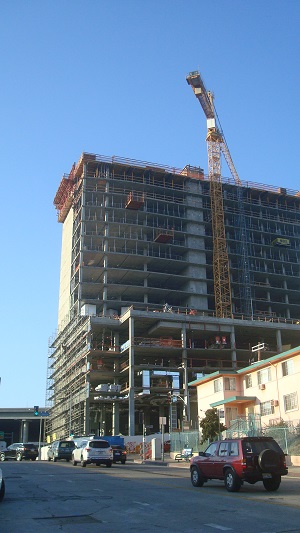
3 Argyle Hotel b

Argyle Hotel
Currently under construction, the Argyle Hotel will rise 16 stories above the intersection of Yucca and Argyle. It will feature 225 rooms, 6,000 square feet of meeting space and 3,000 square feet of restaurant space. There are also two residential high-rises planned for this same intersection, one already under construction. Afternoon rush hour traffic on Argyle is already pretty bad. Expect it to get way worse.
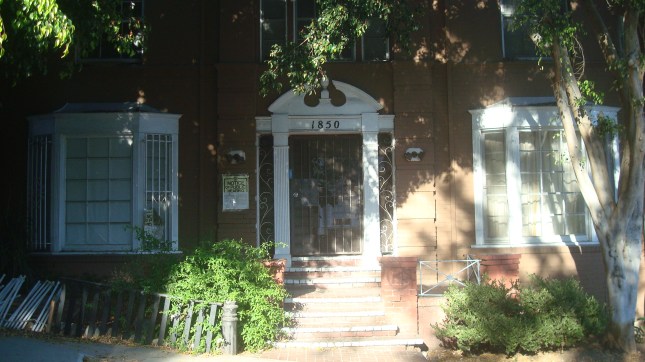
4 1850 Cherokee

1850 Cherokee
The owner of this formerly rent-controlled apartment building realized he could make more money by evicting the tenants and turning it into something else. He used the Ellis Act to get rid of the residents a few years ago, saying that he was going to build condos on the site. When that project fell through, he decided to turn the building into a boutique hotel. The owner asked the City for a zone change to make it happen, and no surprise, the City let him have it.

A similar scenario has also played out at the historic Villa Carlotta on Franklin. The owners evicted the tenants from their rent-controlled units with the aim of turning it into a boutique hotel. It was only through the efforts of dedicated activists that the change of use was thwarted. But the evictions have already taken place, and 50 rent-controlled units were taken off the market.

5 Crossroads

Crossraods Hollywood
This massive project would be situated near the intersection of Sunset and Highland. Three skyscrapers are planned, including a 32-story hotel tower featuring 308 guest rooms and 10,500 square feet of ground-level retail and restaurant space. The developers are also asking for a Master Conditional Use Permit for “the sale of alcoholic beverages and for live entertainment in connection with a total of 22 alcohol-related uses”. You read that right. Twenty two new places for folks to buy alcohol in this one project. In addition, approximately 80 rent-controlled units will be demolished to build this behemoth, which the developer says will be replaced by approximately 80 affordable units. Even if the current tenants are granted right-of-return, where they’re supposed to live during the construction phase isn’t clear.
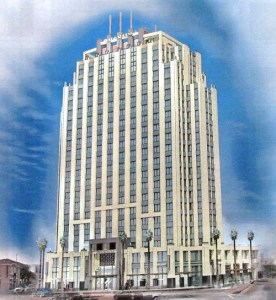
6 Ivar Gardens

Ivar Gardens
The Department of City Planning(DCP) decided this 21-story hotel at the extremely congested intersection of Sunset and Cahuenga didn’t need a full Environmental Impact Report. Instead, planners have been trying to rush this through with a Mitigated Negative Declaration, a much lower level of environmental review. The traffic study claims that PM rush hour traffic northbound on Cahuenga flows freely with no significant delays. Anyone who’s made that trip at rush hour knows how ridiculous that claim is. But that didn’t stop the LA Department of Transportation from approving the report. Just further proof that when a developer with deep pockets wants something to happen, the City of LA is only too happy to oblige.

1919 Wilcox
One more example of how Hollywood area developers are pushing hotels into residential neighborhoods. While a small hotel does exist on Franklin just to the south, apartment buildings are directly adjacent to this proposed project on the north and west boundaries of the site. Residents were not happy to learn that they might have a 6-story, 150 room hotel next door. It didn’t help matters that the developer is seeking a liquor permit for a 1,200 sq. ft. bar/lounge in the lobby and a 3,500 sq. ft. restaurant/lounge on the north side of the site. Who cares if Chief Beck has written to the DCP warning about the oversaturation of locations that serve alcohol in Hollywood and the resulting problems with violent crime? Certainly nobody at the DCP. They keep handing out liquor permits like there’s no tomorrow.

1717 Wilcox

Also on Wilcox, but closer to Hollywood Blvd., is this planned 134-room hotel with a 2,500 sq. ft. ground floor restaurant and a rooftop bar. You can never have too many rooftop bars, right? Who cares if the people in the apartment building next door don’t like it? And as traffic on Cahuenga continues to spill onto neighboring streets, you can bet these two projects will help turn Wilcox into a parking lot at rush hour.

The point of all this is not to say that we shouldn’t have hotels in Hollywood. The point is that these 8 hotels are just a few of the over 60 projects currently proposed for the Hollywood area. All of these projects will have impacts on infrastructure, air quality, traffic, and LAPD response times, but the City of LA isn’t making any serious effort to assess the cumulative effects of all this development. Whenever possible the DCP tries to approve these projects with a quick MND, and even when they do an EIR there’s no credible attempt made to calculate the collective impacts caused by this massive building binge. The Hollywood Community Plan Update was thrown out by a judge, in large part because the City inflated its population figures, but that hasn’t stopped the City from going full speed ahead. With no community plan in place, the DCP continues to approve thousands of new residential units, hundreds of thousands of square feet of commercial, and who knows how many new hotels.

No doubt all these classy new hotels will make Hollywood a great place for tourists. Just not so great for the people who actually live in the community.
Silverlake in Crisis: Acute Boutique Hotel Shortage

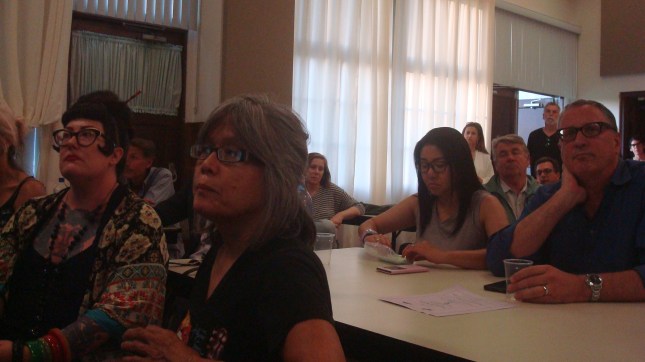
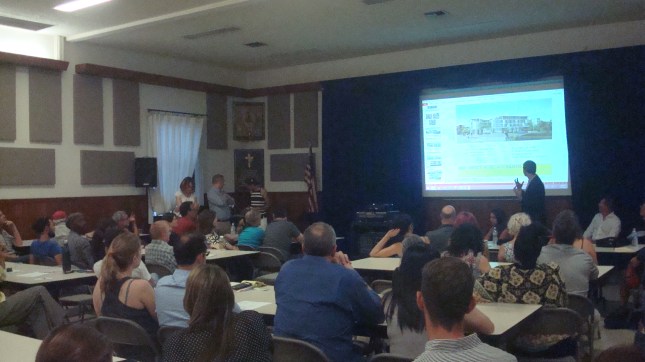
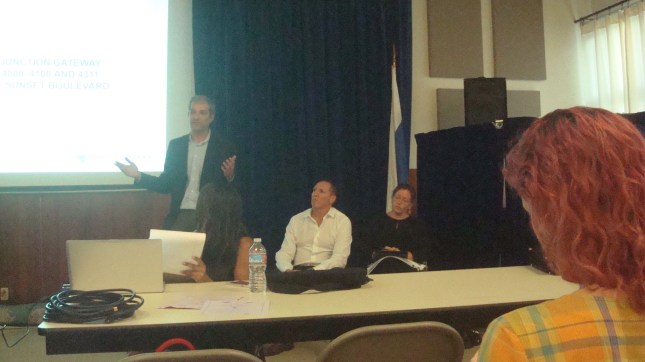
Town hall meeting on proposed Junction Gateway project.

Town hall meeting on proposed Junction Gateway project.

On Wednesday night the Silver Lake Neighborhood Council (SLNC) hosted a town hall meeting where the topic was the proposed Junction Gateway project. For those of you who haven’t been following this story, developer Frost Chaddock wants to build three structures on three sites along Sunset Blvd. in Silverlake. Two of the buildings are mixed-use, including residential, restaurant and retail space. The third is a boutique hotel. Predictably, the developer is asking for a number of entitlements, among them increases height and Floor Area Ratio (FAR). And predictably, a lot of the locals are ticked off.

By my count, the town hall drew about fifty area residents. The developer was there, along with the project architect, and a very smooth land use attorney from a high-powered law firm. They kicked the meeting off with a presentation on the project, emphasizing the ways they felt it would be beneficial to the community. Then two board members from the SLNC took turns reading questions that had been submitted by audience members. I want to say in passing that the SLNC board members handled the whole thing very well. The tension in the air was palpable, but they did an excellent job of minimizing disruption and keeping things on track.

A land use attorney explains why his client's project will be a boon to the community.

A land use attorney explains why his client’s project will be a boon to the community.

I have to admit I left early since I was taking the bus to Burbank and didn’t want to get started too late. But as I listened to the questions being read, it all sounded very familiar. While the developer claimed that Junction Gateway was absolutely right for the neighborhood, the tone of the questions made it clear that there was intense opposition in the community. The land use lawyer kept saying they had met with residents and made changes based on their input. But the changes mentioned were mostly cosmetic, and it was clear that the developer intended to build the project regardless of neighborhood oppostion. For me, the funniest moment was when the developer’s land used attorney insisted that in talking to the community, “We heard over and over again that Silverlake is lacking in boutique hotels.” That was a surprise to me. I know people who live in Silverlake, and I’ve never heard any of them complain about a shortage of boutique hotels.
The audience is skeptical.

The audience is skeptical.

But to my mind, the most crucial questions that were raised shouldn’t have been addressed to the developer. They should have been addressed to Councilmember Mitch O’Farrell, whose district includes Silverlake.

First, why are developers continually encouraged to build projects that violate the existing community plan for Silverlake and Echo Park?  According to the Department of City Planning web site, “the 35 Community Plans provide the specific, neighborhood-level detail, relevant policies, and implementation strategies necessary to achieve the General Plan objectives.”  When our City Council reps routinely allow developers to build beyond what the existing framework allows, they make planning meaningless.  Why do we have community plans if our elected officials are happy to toss them out for any developer with deep pockets?

Second, what about doing a meaningful assessment of all projects currently being considered for the area?  The developer’s team pointed out that Junction Gateway has been in process for years, and they argue that their assessment of cumulative impacts included everything that was happening when they started out.  Even if we accept this argument, there are a number of other projects that are coming through the pipeline and there hasn’t been any serious attempt to gauge their impacts on the community.  Infrastructure is already strained, air quality is deteriorating, and the streets are more congested than ever.  And yet O’Farrell keeps pushing new projects forward as though none of these problems existed.

The City of LA’s refusal to respect the planning process shows that our elected officials are far more interested in serving developers than in serving the citizens. Instead of creating a rational planning framework that starts with a genuine effort to engage the community, we get an avalanche of projects being dumped haphazardly on neighborhoods all over LA.

It’s no wonder the people at the meeting were ticked off. Affordable housing in Silverlake is fast becoming a distant memory, small-lot subdivisions are a plague sweeping the community, traffic keeps getting worse, the number of homeless is increasing. And still Mitch O’Farrell continues to back one project after another, blithely insisting that this onslaught of reckless overdevelopment will lead to a better and brighter future for his constituents.

Not surprisingly, a lot of people aren’t buying it. A number of those who attended the meeting belong to a group called Save Sunset Junction. If you’d like to connect with them, here’s the link.

Save Sunset Junction

TH Crwd Cls

We Don’t Have the Water

WP 01 Head

Clearly, the crowd down at City Hall is totally out of touch with reality. They’re completely caught up in the delusion that they’re creating a dazzling new urban landscape, when in fact they’re doing tremendous damage to the City. They say they’re planning for the future, but rational people know that planning for the future means starting with the cold, hard reality of the present.

Here’s the reality. We don’t have enough water to support the current massive surge in development. Not by a long shot.

Recently the Downtown News ran an article listing more than 90 projects planned for Downtown LA. You read that right. Nine zero. But that’s only the beginning, because there are large projects planned for the Crenshaw District, Koreatown, Hollywood, West LA and Warner Center. These projects will bring thousands of new residential units, along with office space, retail and restaurants, and they will boost water consumption in LA by many thousands of acre feet per year. Yeah, I know they’ll have drought-tolerant landscaping and low flush toilets. Let me repeat. These projects will boost water consumption in LA by many thousands of acre feet per year.

Los Angeles, like the rest of the southwest, is facing a severe, long-term water shortage. The TV news tells us that the drought started four years ago, and everybody’s hoping it will end with El Niño. But the conditions that created this shortage have existed for decades. This isn’t just a matter of waiting out a few dry years until things get back to normal. This is the new normal.

Lawns are turning brown all over LA as people try to decide  whether to replace them or just let them die.

Lawns are turning brown all over LA as people try to decide whether to replace them or just let them die.

Let’s start with some basic facts. LA gets its water from four sources, the LA Aqueduct, the California Aqueduct/State Water Project, the Colorado River, and local groundwater. Here’s a breakdown of how each of these resources has been compromised in recent years.

LA Aqueduct
The LA Aqueduct was dammed from April through October of this year. This was done because the DWP has been ordered by the courts to mitigate environmental impacts in the Owens Valley. That means that for roughly six months out of the year, LA received no water from the LA Aqueduct. This is the first time in the one hundred year history of the Aqueduct that it’s been dammed, but there’s a good chance it will happen again as snow packs in the Eastern Sierras continue to decline.

California Aqueduct/State Water Project
The Metropolitan Water District (MWD), which serves LA, received only 20% of its allocation from the State Water Project (SWP) in 2015. The SWP depends on the Sierra Nevada snowpack for most of its water. On April 1, 2015, the statewide snowpack held only 5% of its average water content. Currently there’s no reason to believe that the decline of California’s snowpacks will be reversed in the near future, which means it’s likely that the MWD will receive only a fraction of its allotment for years to come.

Colorado River
This year the Colorado River was the one bright spot in the water picture, and local agencies received 100% of their allocations. But don’t expect that to continue. The amount of water flowing through the Colorado River has been declining for years. Lake Mead and Lake Powell are hitting record lows. It’s almost certain that allocations from the Colorado River will be slashed in the years to come.

Groundwater
For decades contamination from industrial waste has been encroaching on the wells in the San Fernando Valley. Right now about half the wells are closed. The DWP plans to build two new facilities to purify this water, but they haven’t even started construction yet, and it will be years before they’re completed.

Now maybe as you read this you’re saying, Oh, come on. It’s not so bleak. The weatherman says that El Niño is going to bring torrential rains to LA. All we need is a good wet year to fill up the reservoirs and recharge the aquifers and we’ll be okay. The drought will be over. Right?

Wrong.

Believe me, I hope we have a really wet winter this year. And if we get enough rain it could ease the drought for a couple of years. But it won’t solve the problem. All it will do is offer a reprieve.

Because the problem is not that we haven’t been getting enough rain in LA. The problem is that the snowpacks that we rely on for most of our water are shrinking steadily. This is not a new phenomenon. Snowpacks in the Western United States have been declining for decades. Check out this report issued by the American Meteorological Society.

Declining Mountain Snowpack in Western North America
American Meteorological Society, January 2005

It’s a lengthy document, and geared towards academics, so if you don’t want to plow through the whole thing I don’t blame you. Let me just give you this excerpt from the conclusion.

It is therefore likely that the losses in snowpack observed to date will continue and
even accelerate (Hamlet and Lettenmaier 1999a; Payne et al. 2004), with faster losses in milder climates like the Cascades and the slowest losses in the high peaks of the northern Rockies and southern Sierra. Indeed, the agreement in many details between observed changes in SWE [snow water equivalent, or water content of snowpacks] and simulated future changes is striking and leads us to answer the question at the beginning of this paragraph in the affirmative. It is becoming ever clearer that these projected declines in SWE, which are already well underway, will have profound consequences for water use in a region already contending with the clash between rising demands and increasing allocations of water for endangered fish and wildlife.

This report was written in 2005. Ten years later, the authors’ predictions have come true. We’ve seen California snowpacks decline drastically, and the data seems to indicate that they will continue to decline. This isn’t just limited to the West or to the US. This is part of a global trend. Check out the report released earlier this month by the Earth Institute at Columbia University.

Declining Snowpacks May Cut Many Nations’ Water

According to the DWP, between 2006 and 2010 we got about half our water from the Metropolitan Water District (SWP and Colorado River), about a third from the LA Aqueduct, and 11% from local groundwater. The water that flows from the SWP, Colorado River and LA Aqueduct originates as runoff from snowpacks. From all indications, those snowpacks are going to keep receding for the foreseeable future. That means we can no longer rely on the resources that used to supply about 90% of our water. And as for the aquifers that supply us with groundwater, it will be at least five years before the DWP can build the facilities to clean it up.

As the hillsides get drier, the risk of fire increases.

As the hillsides get drier, the risk of fire increases.

There are lots of ideas out there about how to cope with this crisis, recycling, greywater, stormwater capture, desalination. All of them have potential, but it’s going to be a long time before any of them start producing the quantities of water we need for a city of nearly 4,000,000 people. We can’t afford to squander water, but that’s exactly what our elected officials are doing. By allowing rampant, reckless development with no real planning behind it, they’re giving away water that we don’t have.

I am not saying we should put a halt to development. What we need to do immediately is make a realistic assessment of how much water will be consumed by all projects currently under construction, all those that are going through the approval process, and all those that are still in the planning stages. Then we need to set priorities, approving only projects that will truly benefit the people of LA, instead of continually greenlighting high-end high rises and luxury hotels.

Next we need to make a realistic assessment of how much water we can expect to have, and this is a good time to do so. The DWP is currently working on its 2015 Urban Water Management Plan (UWMP), and a draft will be released for public comment early next year. We need to make sure that the UWMP accurately reflects our current situation. The Plan will certainly emphasize conservation, recycling and stormwater capture, and that’s all to the good. But it also needs to reflect the fact that every source of water the City has depended on for a hundred years has been severely compromised.

Finally, we need to make sure that our elected officials acknowledge these limitations and start doing some real planning for the future. These days the people at City Hall are fervently, proudly, recklessly pro-development. That’s nothing new for LA politicians. This City was built by out-of-control, irresponsible development. Except for a few brief periods when voter backlash scared the people at City Hall, developers have almost always gotten their way. But that’s got to end. We can’t afford to keep doing business as usual.

We don’t have the water.

WP 50 River

Showdown on Sunset

Tgt Curve

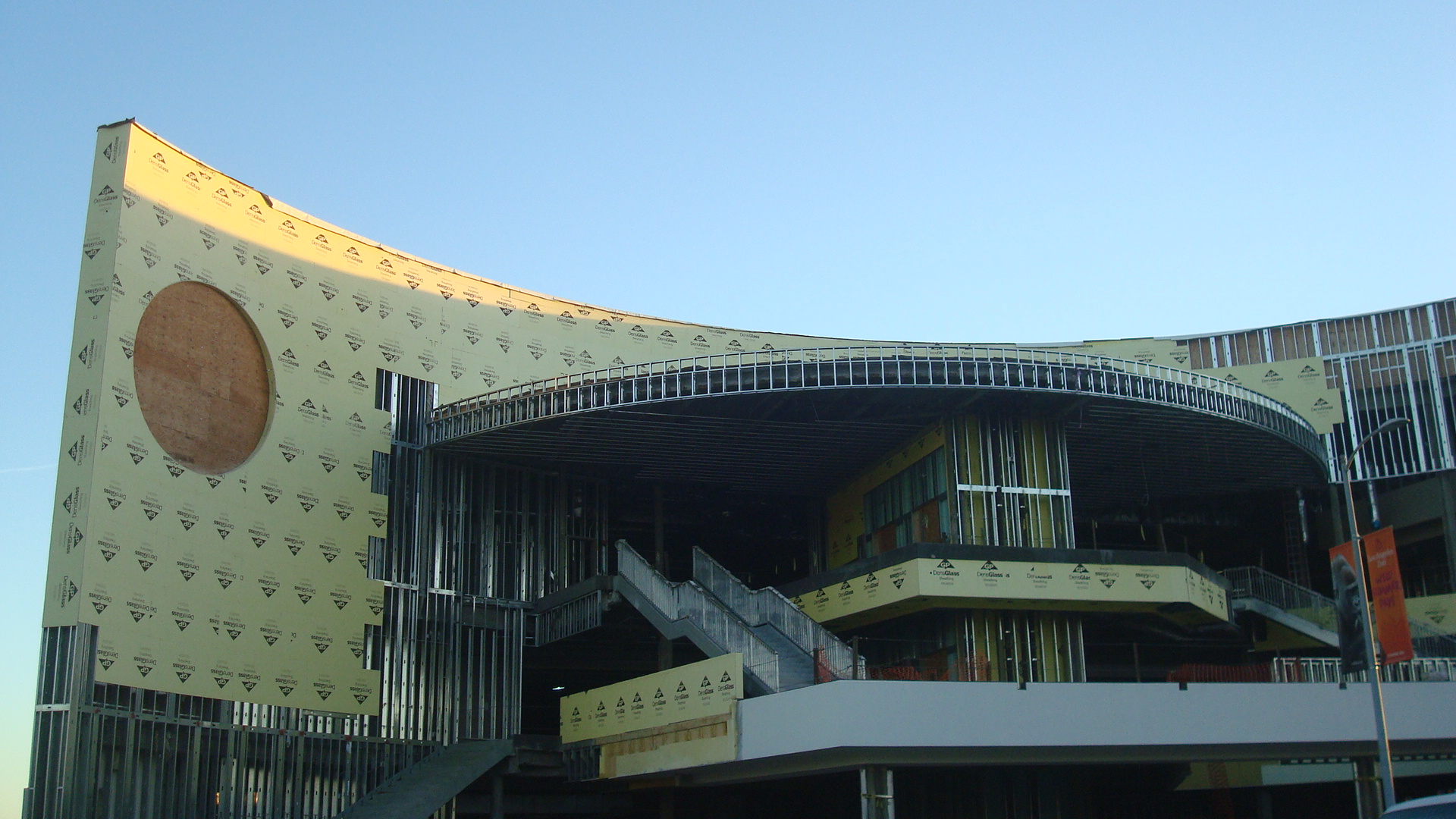
If you haven’t already heard, the Department of City Planning is holding a hearing this coming Friday on a proposal to restart the half-completed Target on Sunset. The project was stopped by a judge because it violated the Station Neighborhood Area Plan (SNAP). The City wants to create a sub-area within the SNAP which would allow Target to finish the building as is.

For those of you who haven’t been following this long, nasty struggle, the project that Target originally proposed for the corner of Sunset and Western was in compliance with the SNAP, and it seemed like pretty much everybody was on board with the idea. Then, at the behest of city officials, Target significantly increased the height of the project, making it more than double what the plan allowed. The revised design would have also required a number of other variances. At that point, community members who had supported the original project came out against the new, larger version. They filed a law suit, and Target, inexplicably, forged ahead with construction. When the judge sided with the plaintiffs, construction screeched to a halt. And this hulking, half-finished curiosity has been sitting at the corner of Sunset and Western ever since.

Tgt Crnr Side

Why is this happening? Local residents worked with the City for years to formulate the Station Neighborhood Area Plan. The whole idea was to create a framework for development that would stimulate growth without trashing the community. Why did members of the community invest years of time and effort into writing the SNAP if a city official can sweep it aside with a wave of their hand? (Many point the finger at then-Councilmember Eric Garcetti, who’s been pushing for taller buildings all over LA.)

Target gambled when they started construction on a project that was facing a legal challenge. They lost. Why should we bail them out? They should go back to the drawing board and create a project that complies with the law. And if they don’t want to do that, they should forget the whole thing and just sell the site.

But instead of making Target deal with the consequences of their actions, the City of LA is running to the rescue by creating a new sub-area within the SNAP. This is so depressing. But certainly not surprising. When you look at the amount of money that developers have given to the Mayor and City Council, it’s easy to see who’s really running things.

My feeling is that this is probably a done deal. The Department of City Planning is putting on a show this Friday to make it look like the public has had a chance to be heard. After the hearing is over, my bet is that they’ll approve the sub-area, and Target will go ahead and finish their building.

But don’t let my pessimistic, defeatist attitude infect you. In spite of my misgivings, I still sent an e-mail to the hearing officer to let the DCP know I was completely opposed to this stunt. I urge you to write as well, or better yet, show up at the meeting and let them know how you feel. We may not win, but we can go down fighting.

Here’s the info for the meeting.

Friday, October 2, 2015, 10:00 am
City Hall, 10th Floor, Room 1020
200 N. Spring St.

You can send an e-mail to the hearing officer at the address below. Be sure to include the case number in your subject line.

Blake Lamb
Blake.Lamb@lacity.org
Case No. CPC-2015-74-GPA-SP-CUB-SPP-SPR

And here’s the link to the meeting notice.

Target Sunset Hearing Notice

Tgt Sunset

More About Housing and Transit

Post Final

As a follow-up to my last post, I wanted to share this article from LA StreetsBlog. It’s a summary of a panel discussion, Rescuing the California Dream: Policies for an Affordable Future, sponsored by KPCC and the Milken Institute. The participants talked about the challenges posed by LA’s affordable housing crisis, and offered some possible solutions.

Nobody was saying there’s an easy way out, but there are things we can be doing to address the situation. Two things I got from the article were that we need to do a better job of planning, and we need to create local funding sources to support affordable housing. But the panel offered lots of ideas, and the consensus seems to be that we can change things for the better.

Can High-Density Housing Solve Our Regional Housing Crisis? The Answer: It’s Complicated

A New Vision or Another Con?

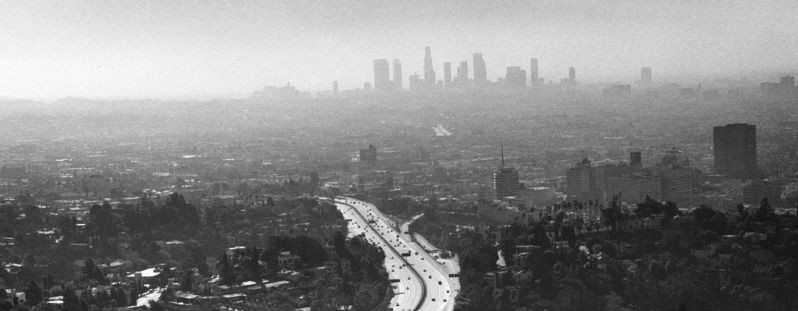
A view of the Hollywood Freeway from Franklin

A view of the Hollywood Freeway from Franklin

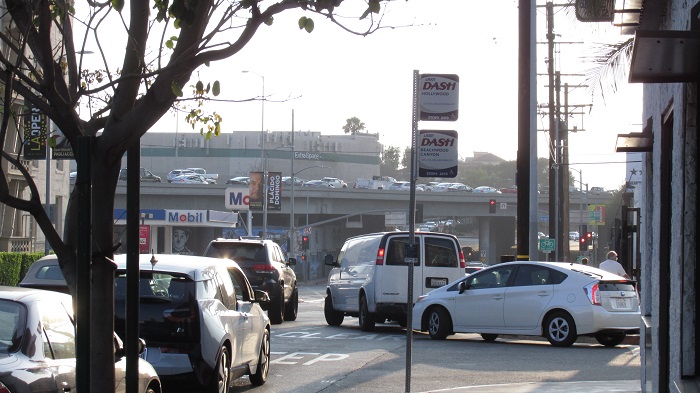
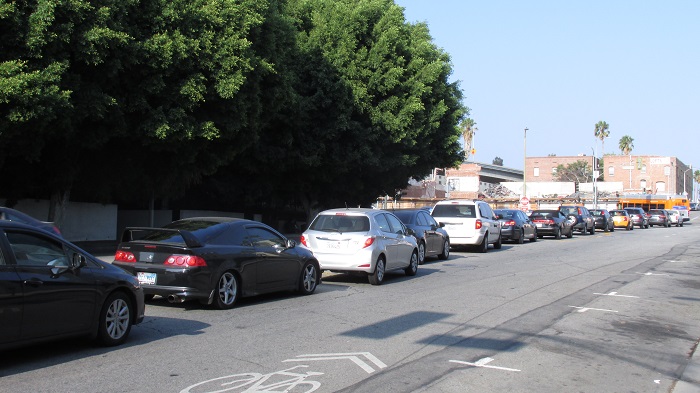
A while ago I was walking down Franklin around rush hour, and I came across a sight that’s becoming way too familiar. Looking down Vine, I saw a line of cars that extended all the way down the block.

Looking down Vine at rush hour

Looking down Vine at rush hour

I pulled out my camera, because I’ve kind of gotten obsessed with documenting traffic in LA. You probably think this is a pretty weird pasttime, but it keeps me off the streets. Oh, wait. No, actually it doesn’t….

Intersection of Vine and Yucca

Intersection of Vine and Yucca

Anyway, I walked down Vine taking pictures, and guess what I saw when I got to Yucca?

Cars lining up in the left turn lane on Yucca

Cars lining up in the left turn lane on Yucca

If you guessed another long line of cars, you were right. If you don’t live in the area, this may not seem like anything remarkable. But having lived in Hollywood for a while, I can tell you that this is a pretty recent phenomenon. Yucca used to be very quiet. I’d say up to three or four years ago Yucca was empty even at rush hour. Obviously that’s changed.

I kept on walking, and you’ve probably already guessed that when I got to Argyle, I saw yet another line of cars crawling along.

More cars backed up on Argyle

More cars backed up on Argyle

But the thing that surprised me was, traffic on Argyle was backed up all the way to Hollywood Blvd..

Still more cars backed up on Argyle

Still more cars backed up on Argyle

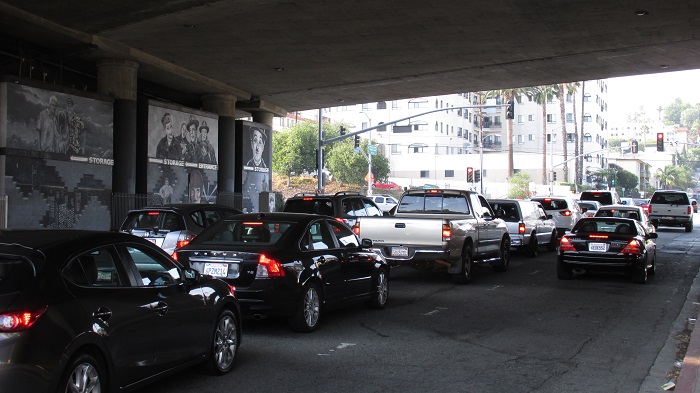
I walked up Argyle, shooting more photos as I passed underneath the bridge.

Traffic crawling north on Argyle

Traffic crawling north on Argyle

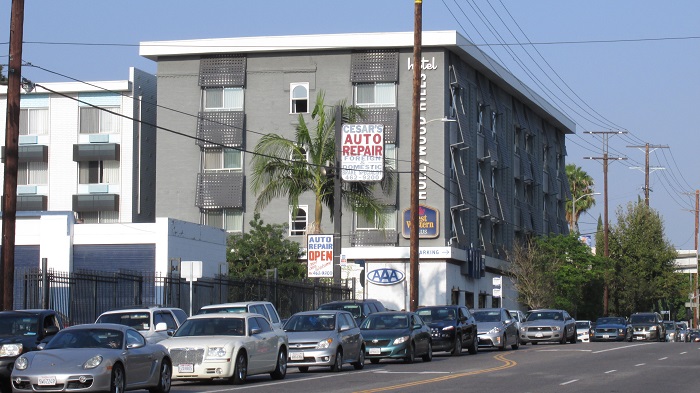
Then I was back at Franklin, and by now everybody knows what I found when I got there.

Westbound traffic on Franklin

Westbound traffic on Franklin

You may be asking, where were all these cars heading? Well, they were all trying to get on the northbound Hollywood Freeway. And traffic on the freeway was moving pretty damn slow.

Northbound onramp for the Hollywood Freeway

Northbound onramp for the Hollywood Freeway

I think we’d all agree that LA’s streets are way too congested, and we’ve got to start thinking about transportation in new ways. Cars are a dead end. We’ve got to stop building to accomodate them. The recent expansion of the San Diego Freeway showed what a waste of time that is. We can add as many lanes as we want, and they’ll all end up choked with traffic.

So some people see the City Council’s adoption of the Mobility Plan 2035 as a major step in the right direction. It sure sounds swell. With chapters titled “Safety First”, “World Class Infrastructure” and “Access for All Angelenos”, the MP 2035 paints a picture of a utopian LA, where everybody can get everywhere they want without ever needing a car.

But a lot of people are skeptical about the benefits the plan will actually provide, and I’m one of them. I totally support increased access to all modes of transportation, and if you take the MP 2035 at face value, it sounds great. The question is, will the plan deliver what it promises, and to answer that question you have to look at what our elected officials have actually been doing for the last several years.

Under the heading Key Policy Initiatives, the plan includes the following goal….

Consider the strong link between land use and transportation

No doubt about it, land use and transportation have to be considered together. For years now the Mayor and the City Council have been pushing transit oriented density (TOD). In theory, planning for higher density near transit centers will create a new dynamic where people will find using public transit preferable to driving a car. Now, if we were building affordable housing near transit centers that allowed easy access to the areas where jobs were concentrated, this might actually work. But that’s not what the Mayor and the City Council have actually been doing. Instead, they’ve been pushing relentlessly for high-end, high-rise housing that caters to people with six figure incomes. Check out the proposed 8150 Sunset, Horizon Hollywood and Shenzhen Hazens project in South Park for three examples. There are many more in the planning stages. Do the rich ride the subway? I’m sure some of them do, but let’s be honest. In LA, this is the demographic that is least likely to use public transit, while people at the lower end of the economic spectrum often have no other choice.

This is not transit oriented density. It’s profit oriented density. The Mayor and the City Council can tell us they’re linking land use to transportation to make transit more accessible, but recent history shows that this is mostly a con used to push through projects that only benefit developers who are looking to make a pile of money. Not only have our elected officials’ efforts to create affordable housing been pathetic, but by pushing gentrification in areas that used to be affordable, they’re actually forcing low-income workers farther away from job centers.

So if you ask me whether the MP 2035 will deliver what it promises, I can’t say I’m optimistic. Even before Garcetti became the Mayor, when his council district covered much of central Hollywood, he pushed through a number of “TOD” projects, telling residents that this would solve our transportation problems. Take a look at the video below and let me know if you think it’s working.

Who Really Benefits?

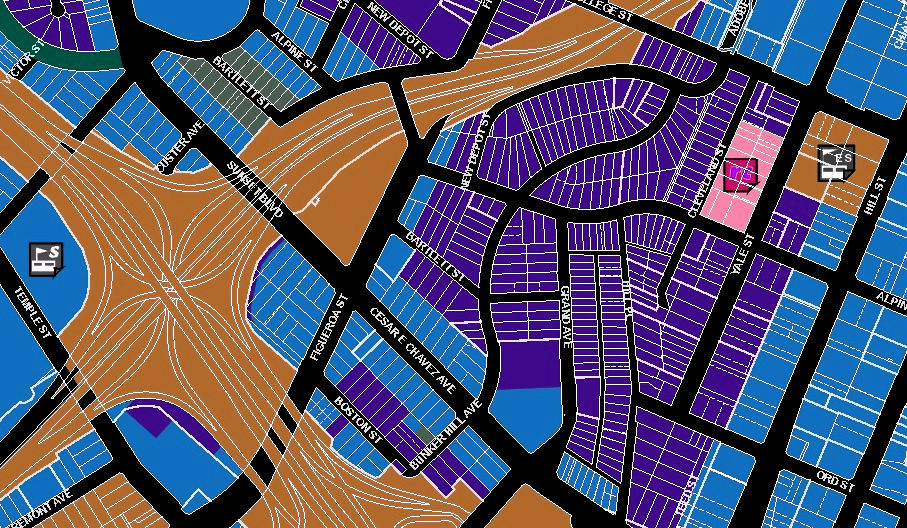
Zimas 3

If you haven’t already seen it, I’d like to direct your attention to a piece that Dick Platkin wrote for CityWatch on re:code LA. If don’t know what re:code is, you’re not alone. In spite of our city officials’ claims that they’ve done extensive outreach, I bet less than one percent of the population has heard of it.

Briefly, it’s an attempt to redo the City’s zoning code, and there’s no question that the existing code is hopelessly out of date. The problem is, it seems like the people behind this effort seem more interested in serving developers than serving the people of LA.

But Platkin says it much better than I can. Click on the link below to learn more.

All That Glitters Is Not Gold