Koreatown

This is the plaza above the Wilshire/Vermont Red Line station.
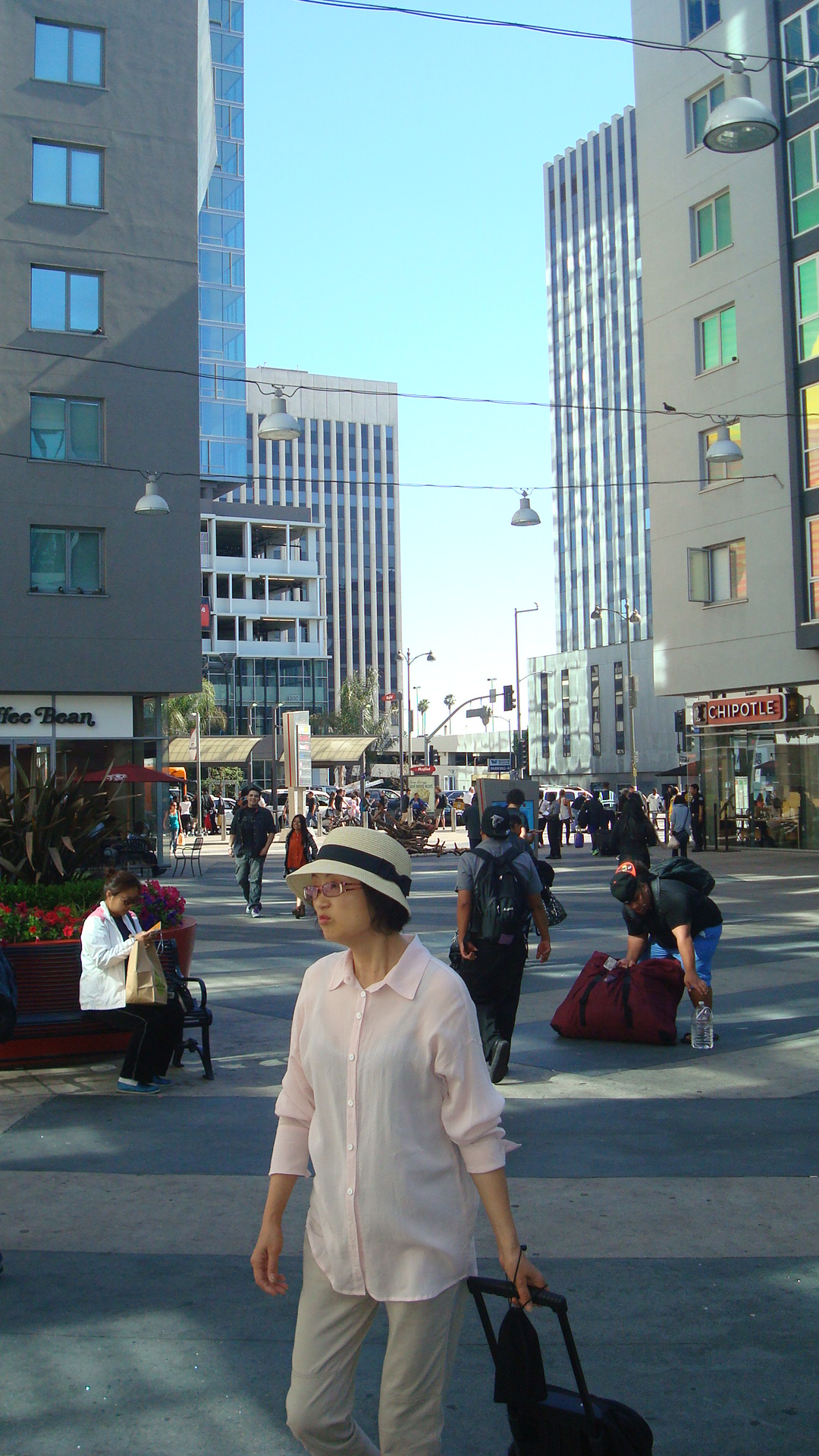
Ktwn 01 Plaza Woman

And here’s a wider view of the plaza.

Ktwn 10 Plaza Guy

The intersection at Vermont and Wilshire is a busy place. People live here, work here, eat here, shop here.

Ktwn 12 Bldg Bullocks

This is Koreatown. It’s the most densley populated neighborhood in LA County. While the exact boundaries are hard to nail down, roughly speaking the area is bordered by Beverly, Vermont, Olympic and Crenshaw.

It’s important to remember that even though it’s called Koreatown, the majority of the people who live there are Latino. About half the population is of Latin American descent, compared to about a third who are of Korean descent. The area came to be associated with Koreans because the vast majority of businesses are Korean-owned.

Ktwn 13 Vendor

On the sides of the residential complex that rises above the Wilshire/Vermont plaza, you can see April Greiman’s mural “Hand Holding a Bowl of Rice”.
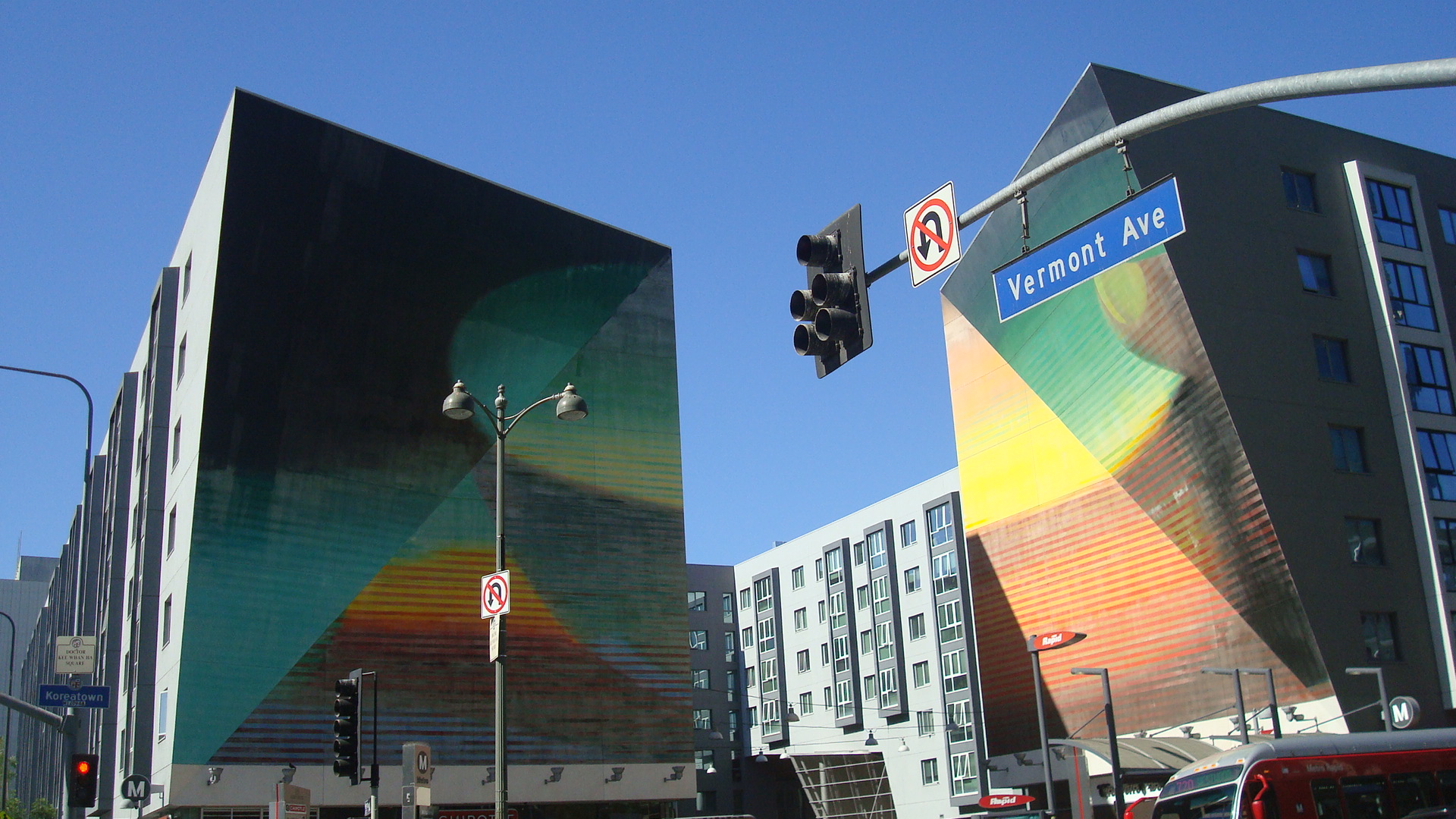
Ktwn 15 Bowl

You can visit the artist’s web site by clicking on the link below.

April Greiman.

Ktwn 16 Bldg New 3Directly across the street is The Vermont, a recently completed residential development comprised of two high-rise towers. This is the kind of high-end project that developers are pushing for all over LA, since they can be extremely profitable. But, not all Koreatown residents are happy about this trend. One concern is that projects like this will push rents up, making it harder for long-time residents to afford housing. Just to give you an idea, a one-bedroom apartment at The Vermont starts at $2,300 a month. In the near future, this trend will almost certainly continue, since The Vermont was recently sold for $283 million. With that kind of money being thrown around, you can be sure that developers will be knocking each other down in their rush to stake a claim in Koreatown.

Ktwn 17 Wiltern 2There are some beautiful older buildings in Koreatown, such as the Wiltern Theatre, designed by Stiles O. Clements of Morgan, Walls and Clements. This firm was a major player in LA back in the thirties and forties, designing local landmarks like Chapman Plaza, La Fonda Restaurant, and the El Capitan Theatre. The auditorium was designed by G. Albert Lansburgh, who also created interiors for the Palace and the Orpheum in downtown. I saw Tom Waits there years ago, and I can tell you that the inside is just as impressive as the outside. The Wiltern is actually part of a larger structure called the Pelissier Building, which was completed in 1931. It’s an amazing example of art deco architecture, with its blue-green tile cladding worked into elaborate zig-zag moderne designs. They don’t make ’em like this any more.

And on this stretch of Wilshire you can also find a number of bland office towers occupied by banks and financial services.

Ktwn 18 Bldgs Tall 2

Among the oldest buildings in Koreatown are the churches.

Ktwn 19 Ch Imm Wide

Immanuel Presbyterian Church was constructed in 1928, and for decades was a center for the Anglo community that populated the area up through the middle of the twentieth century. In recent years, many of these older churches have become home to multi-cultural congregations, and have services conducted in multiple languages.
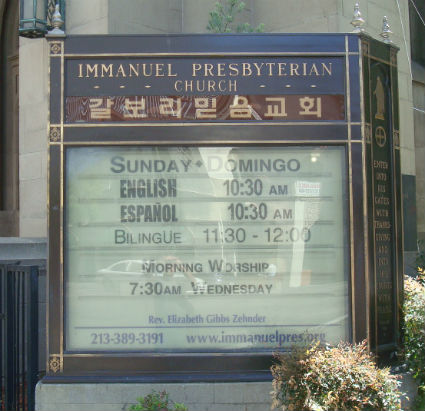
Ktwn 19b Ch Imm Sign

The media has given a lot of attention to Koreatown in recent years, but mostly the stories tend to focus on the night life. Sure, there are plenty of good restaurants, and tons of bars and clubs. But Koreatown is more than just a place where you can scarf kalbi and guzzle soju til you pass out. Like any community, it has many different sides. It’s a place where art, business, technology and politics mingle and collide on a daily basis. Aside from the Korean American population, there are Central Americans, African Americans, Latinos and Anglos. Really it’s impossible to define in terms of a single ethnicity or culture.

Koreatown is relatively young, even by LA standards. The number of Koreans in the city was pretty small until the sixties. It wasn’t until 1965, when the US rewrote its immigration policies, that Koreans started arriving in large numbers. The area we now call Koreatown didn’t really come together until the seventies. Since then it has continued to grow, in terms of both population and area.

The Korean Consulate is located on Wilshire not too far from Vermont. As I was walking by one day, I saw that community members had created a memorial to the victims of the Sewol ferry disaster.
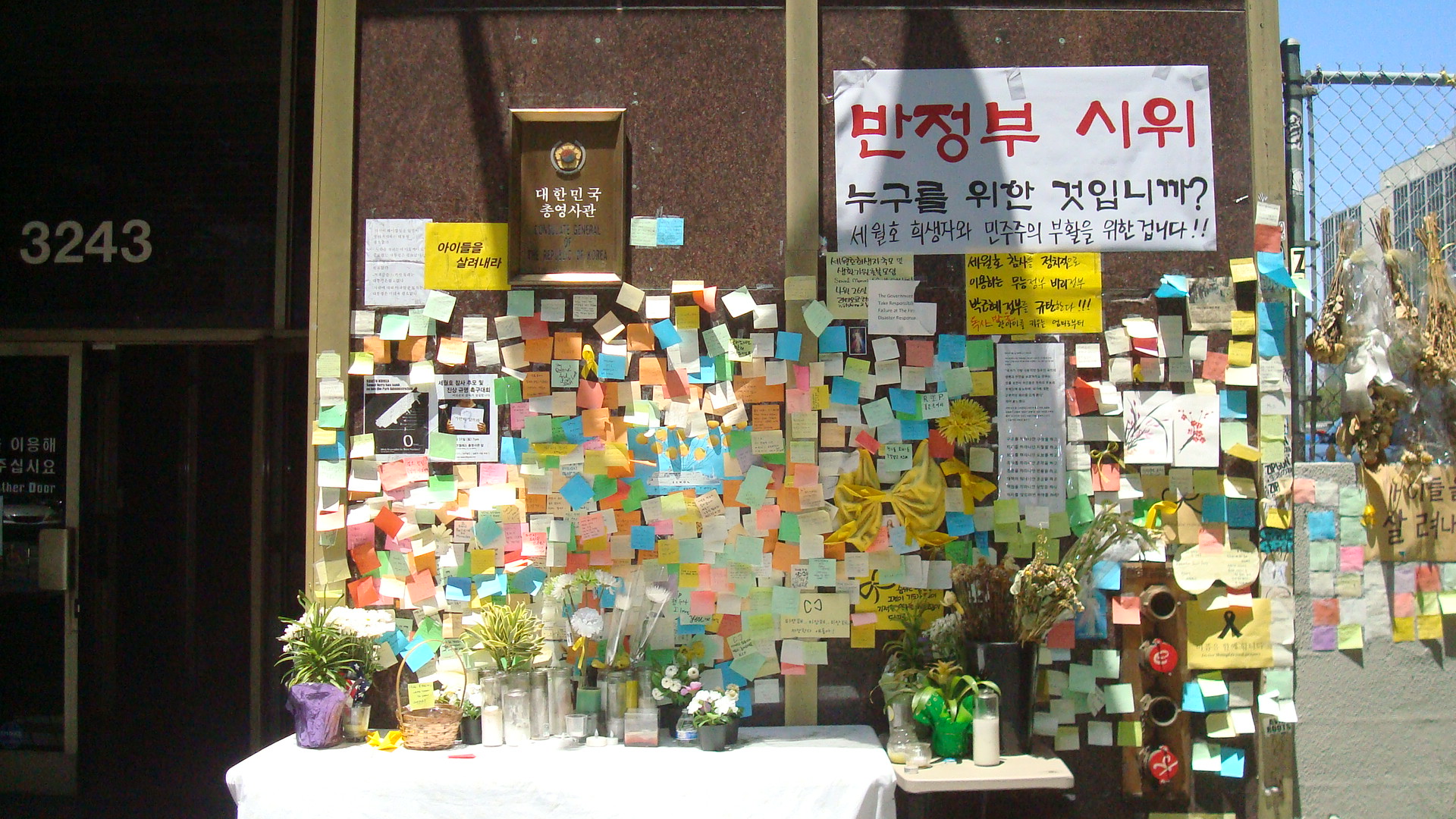
Ktwn 20 Ferry

Here in the US, the coverage of the Sewol incident was pretty limited and faded from the scene quickly. In Korea, it sparked a huge scandal, as a growing body of evidence suggested it could have been prevented. A series of protests were held in Seoul, with many people accusing the government of a cover-up and demanding that President Park Geun Hye resign. Here’s an article from the Washington Post that gives further details.

Grieving Families Want Independent Probe

Not too far off Wilshire is the Pío Pico Koreatown branch of the LA Public Library. Pico was the last Mexican governor of California before it was annexed by the United States. For many years he was one of the wealthiest and most influential people in the state, but by the time he died he was living in poverty.

Ktwn 25 Lib Ext

I love libraries. Maybe it’s the quiet. Maybe it’s being surrounded by people reading.

Ktwn 25 Lib Int

Something about this billboard caught my eye. K-Pop isn’t just huge in Asia. It’s got a significant following in the US, too. EXO is built around an unusual concept. The band actually consists of two groups. EXO-K performs their songs in Korean, and EXO-M performs the same songs in Mandarin.

Ktwn 60 Boy Grp Bldg Wilt

With groups like this, obviously the music is not the focus. Some promoter has gathered a bunch of cute guys that will look good in music videos. People have been doing this for decades, but to me it’s interesting that the Korean media have managed to turn K-Pop into such a cultural phenomenon.

Also on Sixth Street, I dropped in on Red Engine Studios. Actually, that was because of a misunderstanding. I thought the place was a gallery. Turns out it’s a school. The guy at the door seemed uncertain about letting me in, but I guess he finally decided I looked harmless enough. They do have some cool art on the walls, and you can view it by visiting their site.

Red Engine Studios

Ktwn 60 RE Guys 2

There are lots of skateboarders in Koreatown. I saw guys riding up and down the sidewalks everywhere, and there was this vacant lot on Sixth where a bunch of kids were practicing their moves.

Ktwn 60 Skate Comp

When I think of Koreatown, I think of malls. As I said earlier, Koreatown got its name because Korean entrepreneurs have been spectacularly successful in creating a vibrant community for businesses to thrive.

There are newer malls, that were built to house dozens of small shops.
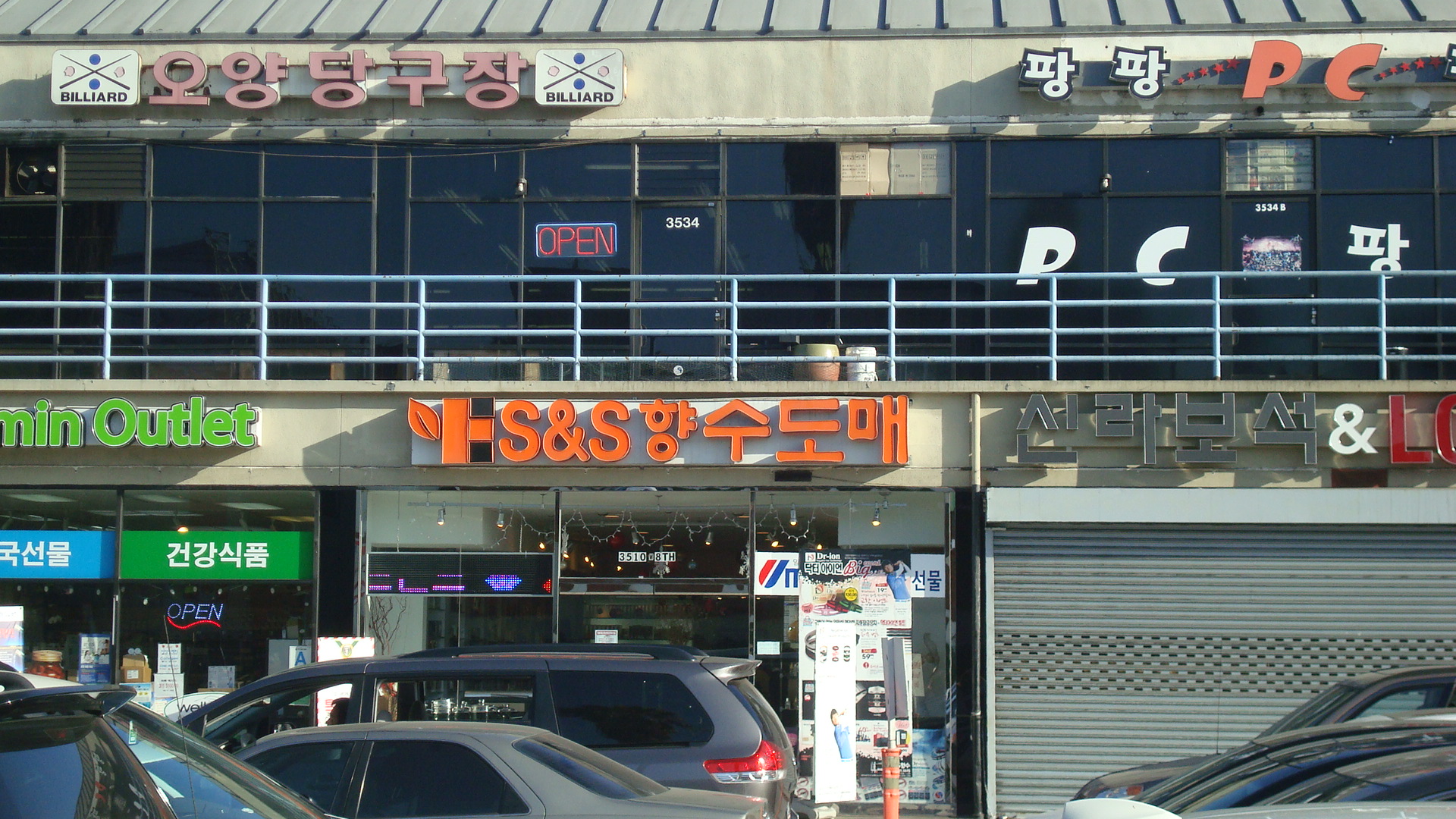
Ktwn 30 Mall S&S

And there are older malls, where a bunch of businesses are crowded around a tiny parking lot.

Ktwn 32 Mall Kids

This one looks like it dates back to the sixties. I’m kind of fascinated by how spaces like this change over time, evolving as the neighborhood changes around them.

Ktwn 32 Mall Rock

Of course there are also massive indoor malls. Like Koreatown Plaza.
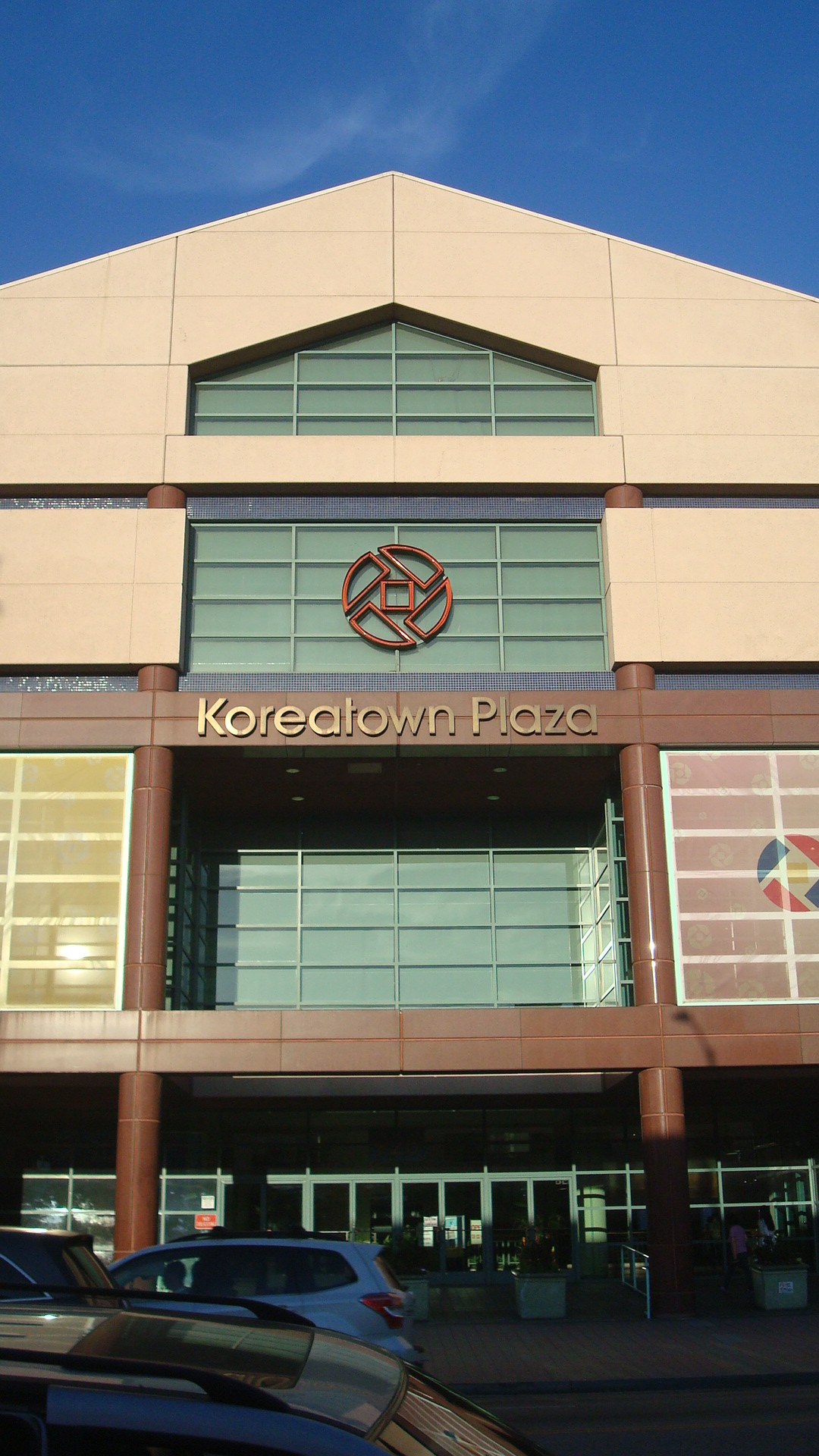
Ktwn 33 K Plaza

I went into Music Plaza looking for traditional Korean Music. They didn’t have much of a selection. But if you’re looking for the latest K-Pop releases, this is the place to be. It may not look too busy in this photo, but I had to stand in line to make my purchase. And I feel pretty certain that they make way more on the merchandise than they do on the music.

Ktwn 35 Music Plaza

I’m not sure why this bookstore seems quintessentially Korean to me, but it has something to do with the colors.
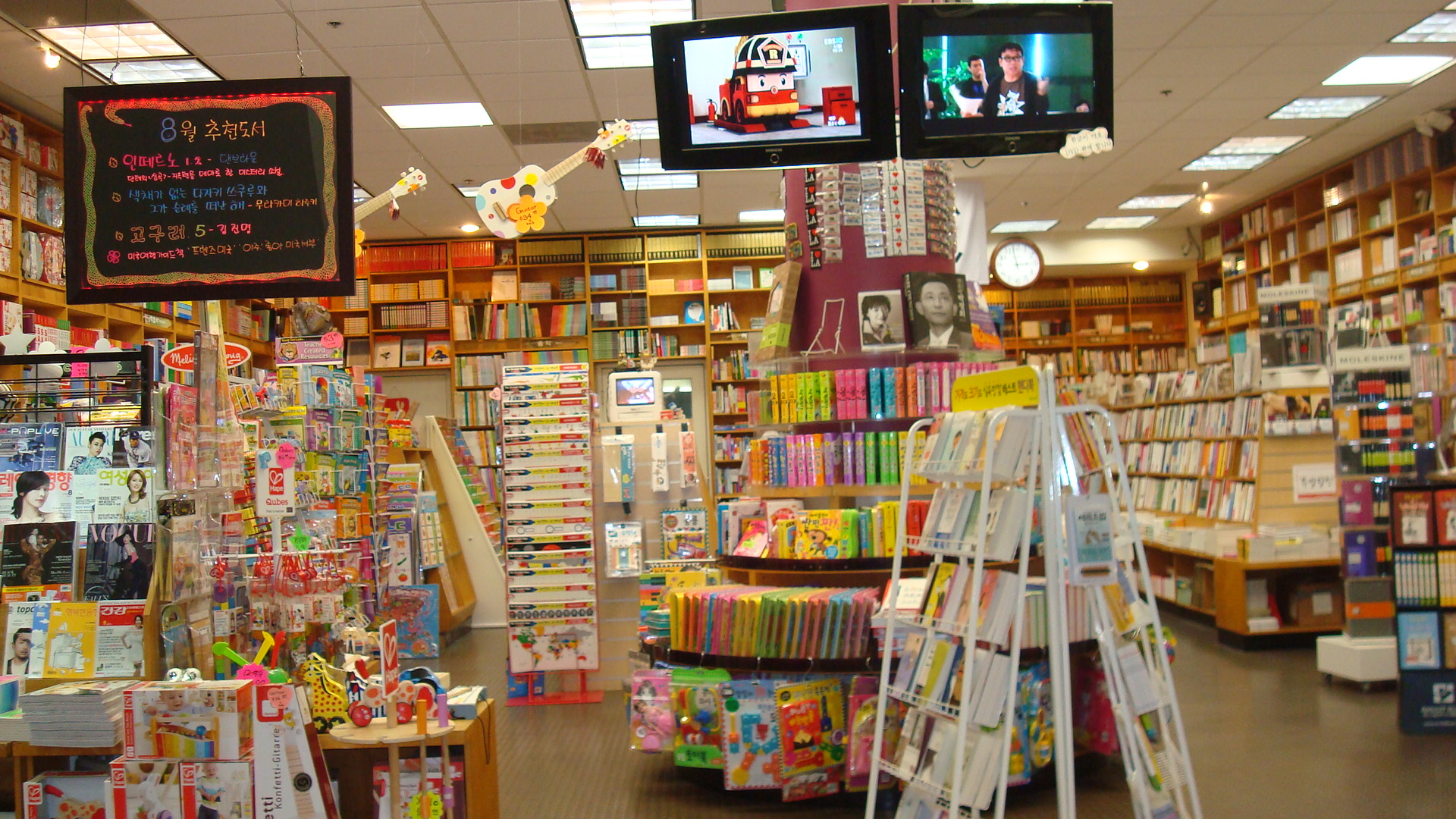
Ktwn 37 KBC

Like every other mall, Koreatown Plaza has a sizeable food court.

Ktwn 38 K P Court

Walking around the area you see that health and beauty are definitely marketable commodities. There are lots of spas and beauty parlors.

Ktwn 50 Bty All Rev

It was the stacks of firewood that made me want to take a picture of Pollo a la Brasa.
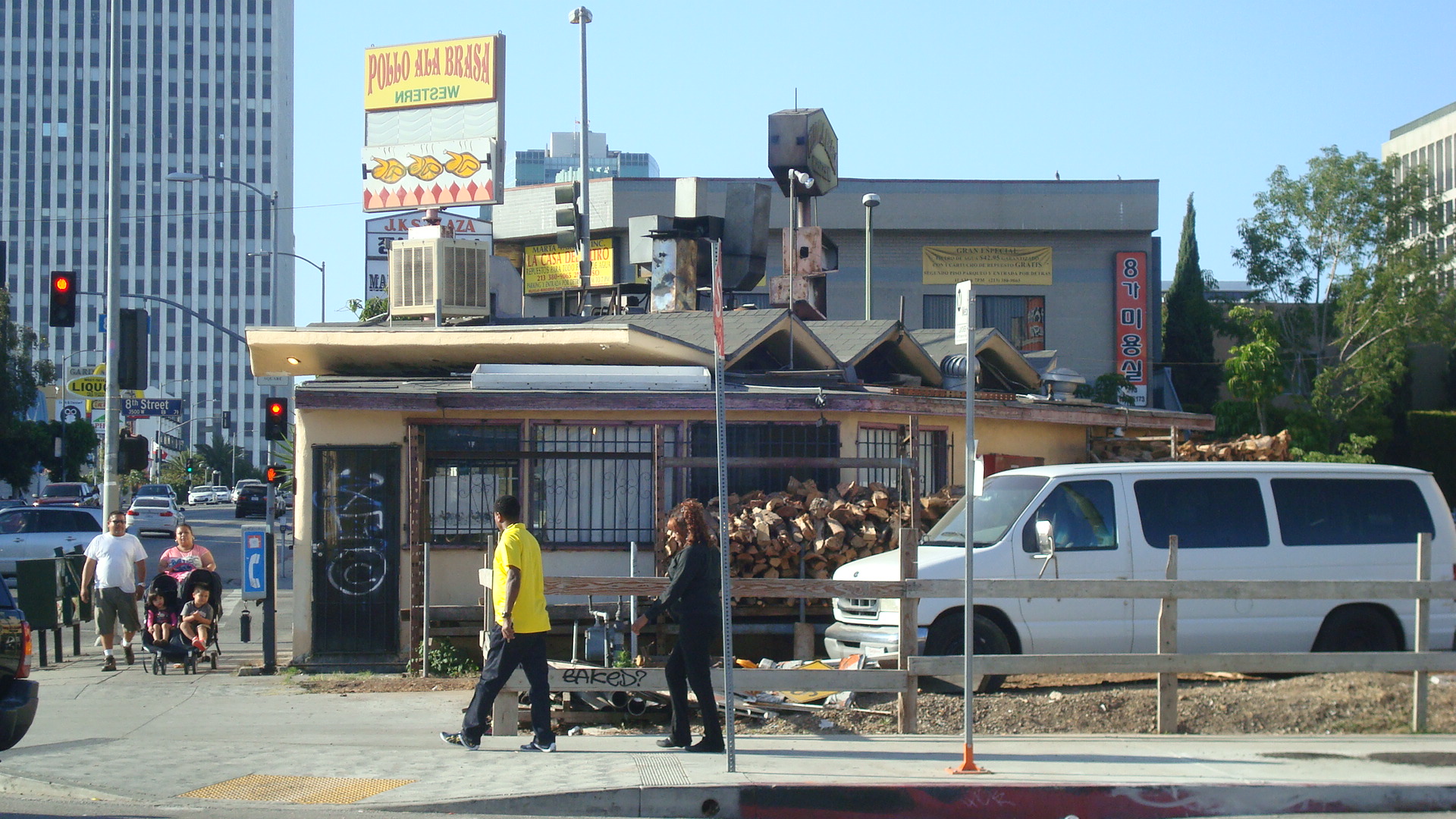
Ktwn 68 Pollo

As large swaths of LA get gentrified and prettified, it’s cool to see an old school restaurant that isn’t too worried about its appearance. And in addition to keeping the grills going…

Ktwn 69 Pollo Waiting

…the logs also serve as benches while people wait for the bus.

Yeah, LA’s sidewalks are a mess, but I have to say I have an affection for the huge, overgrown trees that are breaking up the concrete. The thick branches spreading over this stretch of Eighth Street made it seem like a small forest.

Ktwn 70 Eighth Shade

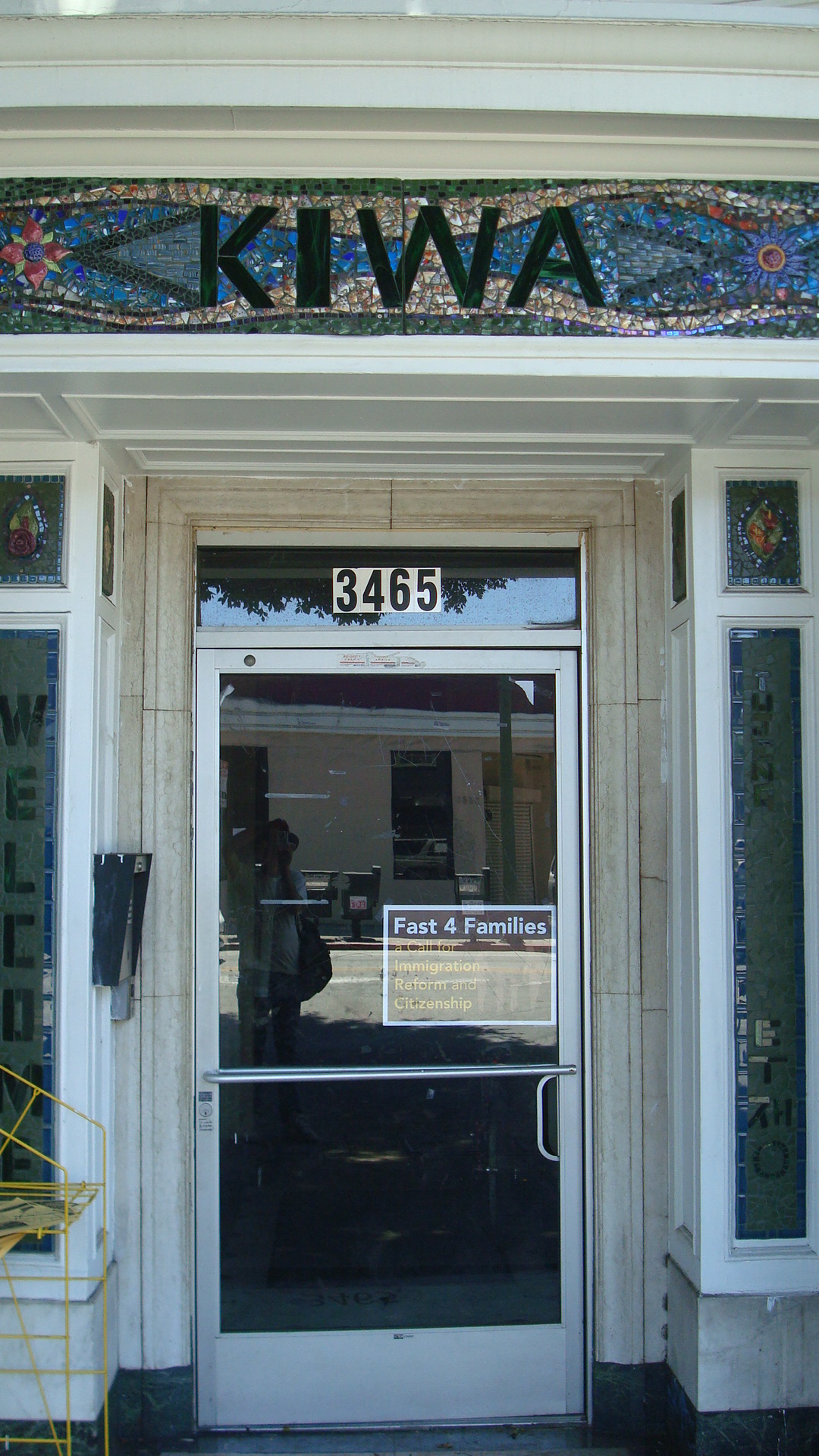
Ktwn 70 KIWAAnd right here on Eighth Street is the Koreatown Immigrant Workers Alliance. KIWA has worked for years to defend the rights of workers, and is currently engaged in a campaign to fight wage theft, which is rampant in LA. One of their notable victories was helping Heriberto Zamora recover wages that had been denied him by Urasawa, a posh restaurant in Beverly Hills. Even after being cited by the California Division of Labor Standards Enforcement for multiple violations related to wage theft, Urasawa resisted paying Zamora what he was owed until just before their final hearing before the DLSE. To find out more about KIWA’s work, click on the link below.

KIWA

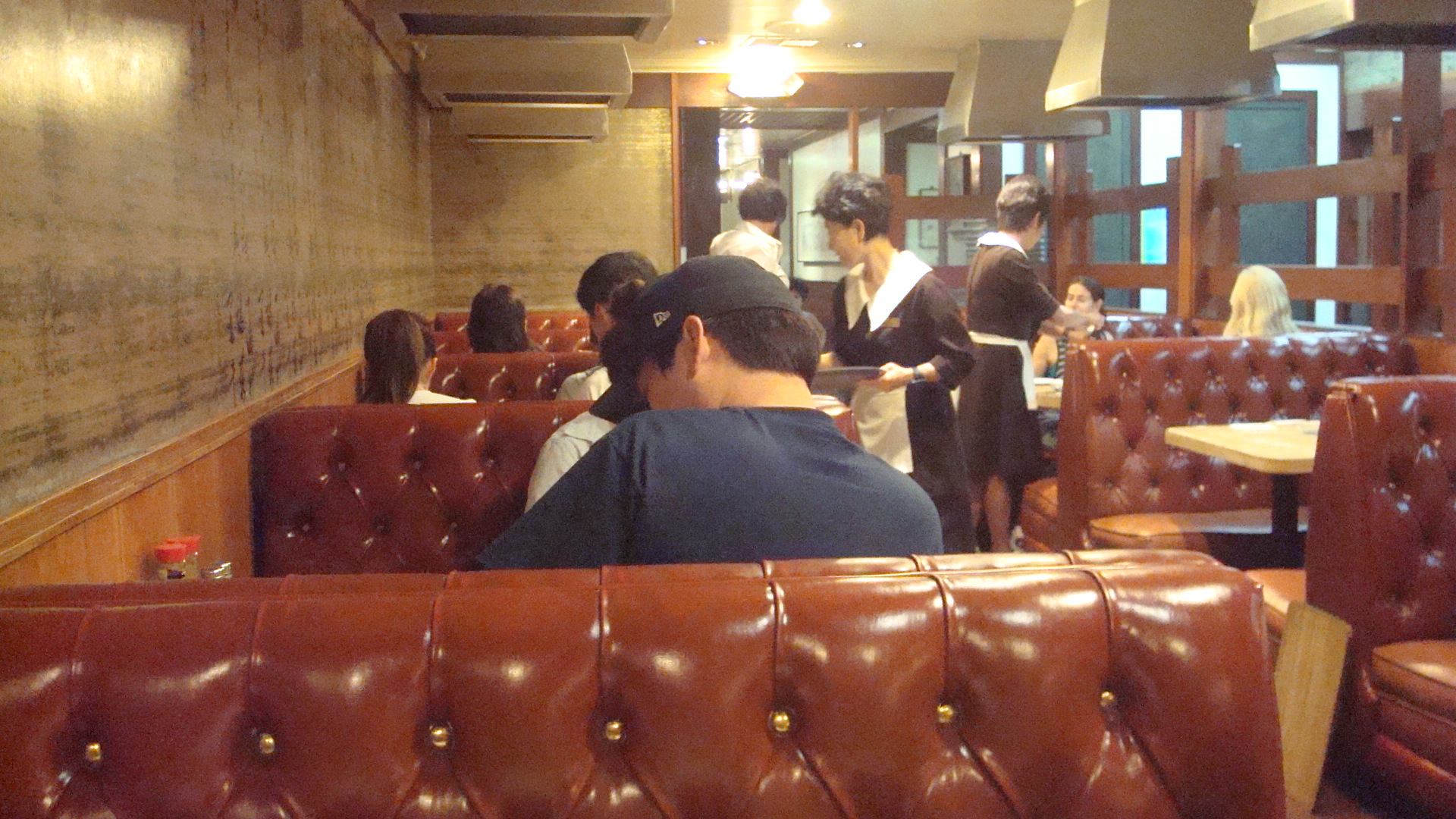
Koreatown is changing rapidly, but pieces of the past still remain. I hadn’t been to Dong Il Jang for decades, and I’d been thinking about stopping by for a while.
Ktwn 91 Dong Int

The waitresses were friendly. The food was good. Even though I hadn’t been there for years, it felt familiar. And it was just reassuring to know that it was still there.

Ktwn 92 Dong Food

Don’t Destroy the Past

W&B in W Hlwd

This is pretty last minute, but I just found out about a historic building in West Hollywood that could be demolished as part of a proposed development. I hadn’t heard anything about it until I opened up my e-mail this afternoon. A friend forwarded a message to let me know that this structure, designed by Wurdeman & Becket back in the thirties, might be wiped off the map unless we take immediate action.

The building, located at 9080 Santa Monica Blvd. in West Hollywood, was originally the Jones Dog and Cat Hospital. Architects Walter Wurdeman and Welton Becket created a classic example of the streamline moderne style to house the veterinarian’s practice. As a firm, Wurdeman and Becket were active in the thirties and forties, their most famous creation being the Pan-Pacific Auditorium, which burned to the ground many years ago. After Wurdeman’s death, Becket’s new firm, Welton Becket & Associates went on to design some of the city’s most striking structures and played a huge role in defining the look of mid-century Los Angeles.

For more info about the building, click on this link.

Los Angeles Conservancy

And then if you decide you want to tell the West Hollywood City Council how you feel about this, here’s another link. See the left hand column for contact info.

Save the SMB Streamline Moderne

LA has made great strides in preservation over the last several years, but we’re still losing important parts of our past. The recent demolition of a building by Morgan, Walls & Clements on La Brea was a shock, and should be reminder to those of us who care about our city’s culture that we need to be vigilant and vocal.

Hollywood Journal – Preservation Prevails

The Cinerama Dome under construction in 1963.

The Cinerama Dome under construction in 1963.

I spent a good part of 1998 freaking out over Pacific Theaters’ plans for “renovating” the Cinerama Dome. The initial proposal involved gutting the auditorium, removing the curved screen and putting a fast food restaurant in the lobby. The film and preservation communities protested loudly. To their credit, the people at Pacific met with the opposition and made a number of important concessions.

If you’re not into film, and if you don’t care about Hollywood history, you might be mystified by the uproar. So let me offer a little background….

Cinerama was a process that revolutionized the production and exhibition of films back in the early fifties. Three strips of film were projected in perfect synchronization to create the illusion of a continuous widescreen image, accompanied by stereophonic sound playback. The image was shown on a huge curved screen to produce an early version of what we now call immersive entertainment.

In the early sixties, Cinerama, Inc. unveiled an ambitious plan to create hundreds of Cinerama theatres based on a radical new model. They would construct geodesic domes using prefabricated panels, which would supposedly allow them to build a theatre in half the time and for half the cost of using conventional methods. They purchased a site on Sunset Blvd. in Hollywood and hired the firm of Welton Becket and Associates to design what would become the Cinerama Dome.

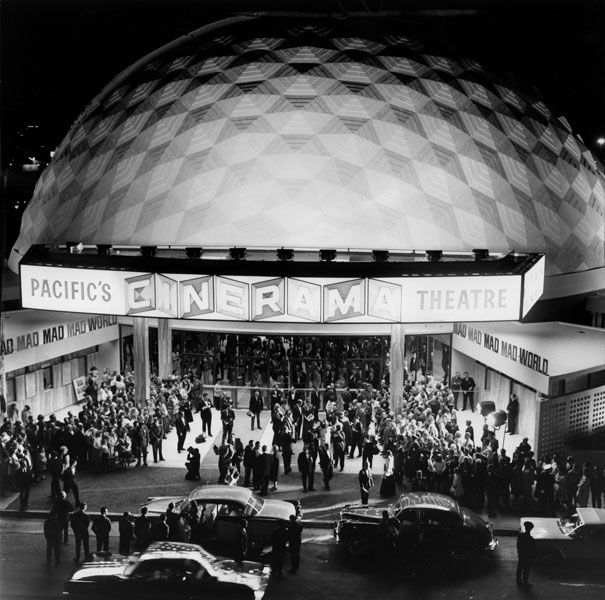
The premiere of It's a Mad, Mad, Mad, Mad World at the Dome in 1963.

The premiere of It’s a Mad, Mad, Mad, Mad World at the Dome in 1963.

Becket’s company was one of the major architectural firms in the city at that time, and played a large part in setting the look and tone of mid-century Los Angeles. To my mind the Dome is something of a companion piece to one of their earlier signature creations, the Capitol Records Building, which is just a few blocks away on Vine. Together these two icons helped to define space age architecture.

Of the theatres that were constructed to show films in the Cinerama process, only a handful are left today. The Dome is a unique creation designed by one of the most important architectural firms in the city’s history. That’s why so many of us got so crazy when we saw the initial plans to renovate it. I will always be grateful to Pacific for listening to the community and preserving the Dome.

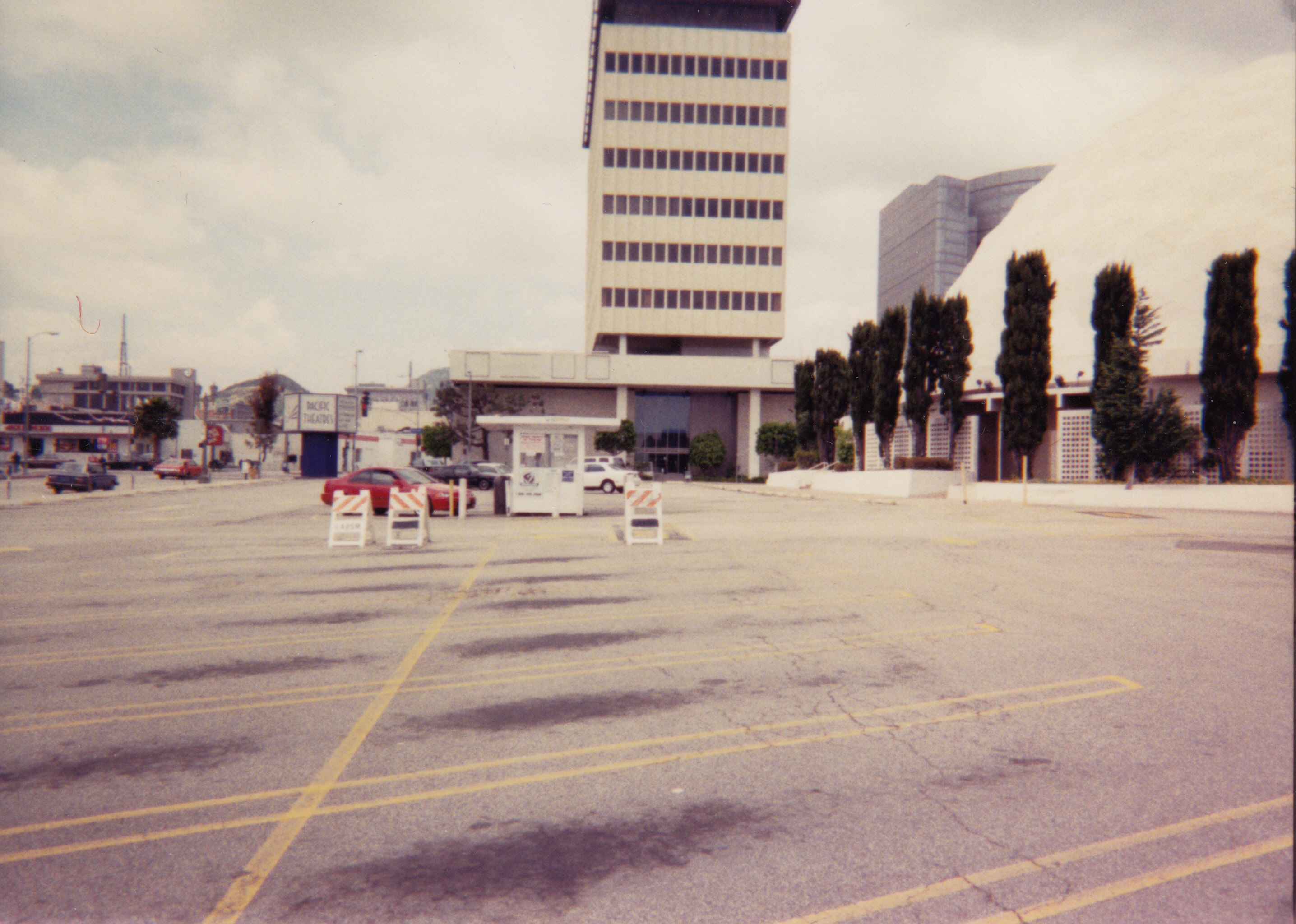
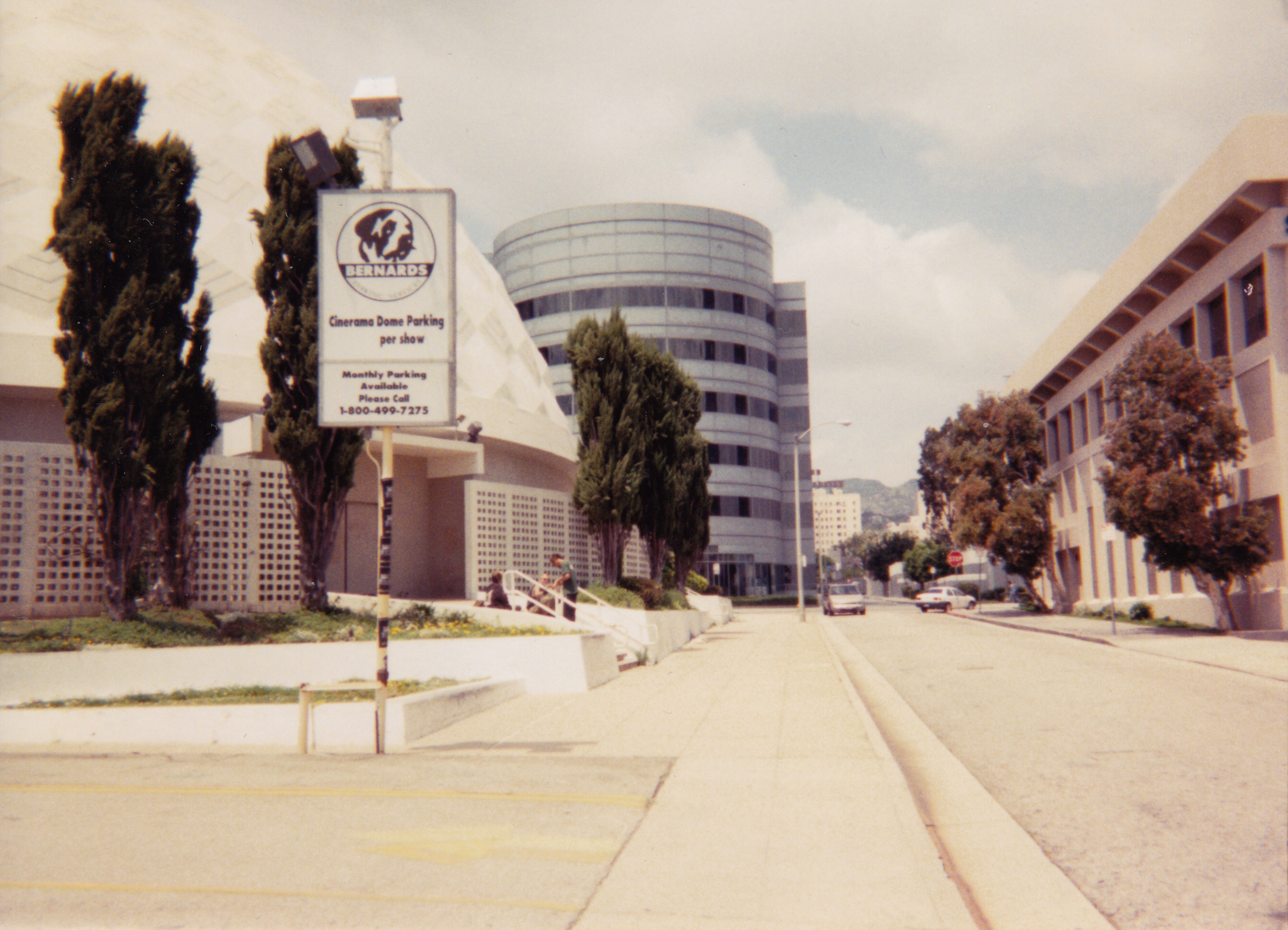
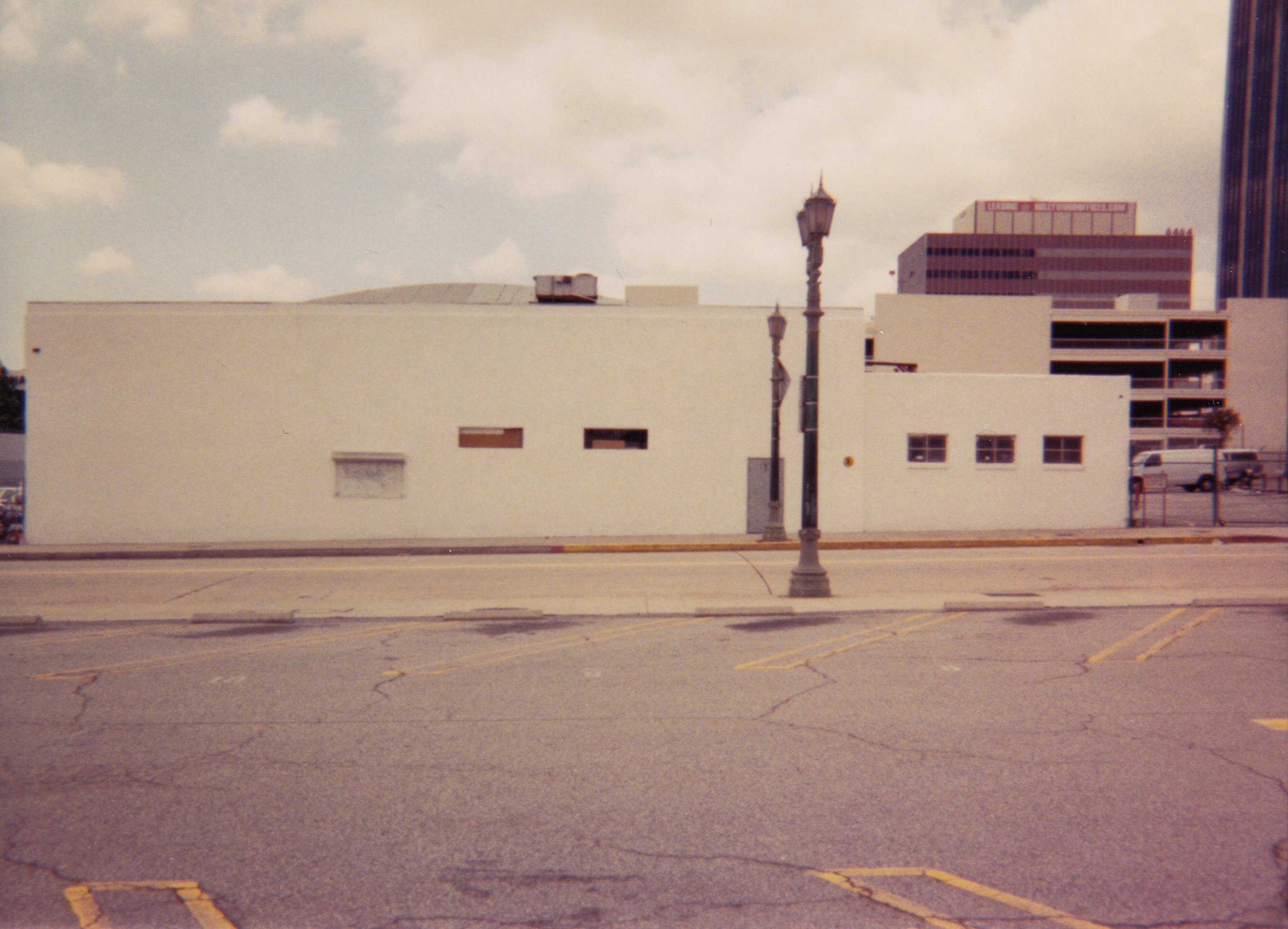
The two pictures above are from the Los Angeles Public Library photo archive. The first shows the dome under construction. It was taken by Howard D. Kelly in 1963. The second shows the premiere of the film that the Dome opened with, It’s a Mad, Mad, Mad, Mad World. It was also taken in 1963, but no photographer is credited. Below are some photos I took of the Dome and the area surrounding it back in 1998. Sorry that the quality isn’t better. They were taken with a disposable camera, and have faded over the years. A couple of photos were taken from Morningside Court, which used to go through to De Longpre, but was closed off with the construction of the Arclight parking structure.

February, Nineteen Ninety Nine

For weeks I’ve been meaning to write abut the latest on the Cinerama Dome. Here it is.

Apparently the people from Pacific Theaters sat down and talked with the preservation people, and the end result was Pacific gave up a lot of the changes they were going to make. As I recall, these are some of the things pacific agreed to.

The entrance will remain at the front of the theatre.

The layout of the seating will stay basically the same, though they will be putting new seats in.

They won’t alter the ceiling of the auditorium.

And —

They’ll keep the curved screen.

I’m actually really grateful to Pacific for giving in on all this stuff. I doubt they understand why the Dome is such a great piece of architecture, so from their point of view the preservationists are going crazy over nothing.

Of course, we still don’t know what the Dome is gonna look like when they’re through. But at this point I’m cautiously optimistic.

The front of the Cinerama Dome in 1998.

The front of the Cinerama Dome in 1998.

Screen walls and landscaping on the periphery of the Dome.

Screen walls and landscaping on the periphery of the Dome.

A shot from the parking lot, looking north to Sunset.

A shot from the parking lot, looking north to Sunset.

A shot of Morningside Court, looking toward Sunset.

A shot of Morningside Court, looking toward Sunset.

Another shot of Morningside Court, this time looking in the opposite direction towards De Longpre.

Another shot of Morningside Court, this time looking in the opposite direction towards De Longpre.

This was taken from the parking lot behind the Dome, facing west.  The site just across the street is where Amoeba now stands.

This was taken from the parking lot behind the Dome, facing west. The site just across the street is where Amoeba now stands.

This shot was taken facing the opposite direction, now looking across the parking lot towards Morningside Court.

This shot was taken facing the opposite direction, now looking across the parking lot towards Morningside Court.

Braking Is Better Than Crashing

design by Renzo Piano for the proposed Academy museum

design by Renzo Piano for the proposed Academy museum

I’ve been reading the news about Zoltan Pali’s departure from the AMPAS museum team. There are a lot of ways to look at this. And it’s important to remember that expensive, high-profile projects like this often take longer and cost more than anyone imagined. I think everyone agrees that the ultimate goal, building a museum dedicated to film history in Los Angeles, is definitely worthwhile. I’m anxious to see it completed, but I also want to them to do it right. I certainly don’t have any credentials that would give me special insight into this process, but I do have a few thoughts to offer….

Renzo Piano is a great architect. With buildings for the Centre Pompidou, the Menil Collection and the Zentrum Paul Klee on his resume, everybody seems to agree that he’s a good choice for the project. But even great architects are human, and therefore fallible. I read this morning that some Academy staff members are concerned about unresolved problems with the design of the new theatre. Movie theatres are technically complex structures that present a very specific set of challenges. No doubt Piano is aware of this, but is he going to bow to the experts who actually have experience in this area?

I used to work at MOCA on Grand Ave.. Isozaki is another great architect, and the building is a beautiful and complex creation. But I was friends with one of the preparators at MOCA, and he was very critical of the design. Sure, he would say, it’s a gorgeous building, but it wasn’t properly planned as an exhibition space. He cited a number of problems with the design that made his job difficult. According to my friend, Isozaki didn’t take enough time to understand the specific challenges of creating an exhibition space. Piano needs to listen to the experts in designing the theatre. Whatever his vision as an architect, it has to function as a place for audiences to see and hear movies.

May Company store on Wilshire, photo by Anne Laskey from LAPL archives

May Company store on Wilshire, photo by Anne Laskey from LAPL archives

Some images of Piano’s design were first made public last year, and then views of an updated version were released just recently. Both versions have been criticized. I don’t have a background in architecture, and honestly, it’s hard for me to evaluate renderings. My impression is that Piano has some great ideas, but I can’t say it totally works for me. I wonder though, if rather than finding fault with Piano’s new building, we shouldn’t look harder at the building that exists on the site already. Many people praise the May Co. building, designed back in the thirties by A. C. Martin. I don’t share their enthusiasm. I love the building because it is an iconic part of the LA landscape. It occupies the corner at Wilshire and Fairfax with a lot of authority, and the gold cylinder rising above the intersection gives it a great presence. But in terms of design, I don’t think it’s very impressive. It’s a big, bland box. Piano is obviously trying for a dramatic contrast with this new addition. Unfortunately, I think starting the project with the May Co. building is like starting the project with an anchor around your neck. I’m glad the Academy wants to use it, because it’s been sitting vacant for years, but Piano faces a real challenge coming up with a design that incorporates it successfully.

The Times ran a piece yesterday by their architecture critic, Christopher Hawthorne. He argues that the Academy needs to slow down and make sure this project is done right. I couldn’t agree more. Their public position is that everything’s going great and there’s no reason to reassess the timeline. Nobody’s buying it. Whatever the reason for Pali’s departure, it obviously signals a change of direction.

Rather than pretending everything’s hunky dory and pushing ahead, they need to pause and take stock of the situation. Why rush to break ground this year if the design isn’t right? I’m so glad the Academy is building this museum, but I also really want it to be something special.

A few links for those of you who want to read further. First is Hawthorne’s piece for the Times. Next a post that ran on Arch Daily back when Piano’s original design was made public in April of last year. And finally an article from the Hollywood Reporter that includes quotes from anonymous sources within the Academy. If these quotes give an accurate picture of what’s going on, there is good reason to be concerned about the viability of the project.

LA Times Commentary

Motion Picture Academy Unveils Designs

Academy Museum Architect Exits Amid Tension

Sunset Rising

The new Emerson College campus on Sunset Blvd..

The new Emerson College campus on Sunset Blvd..

Sunset Boulevard is changing rapidly. Developers sense there’s big money to be made, and the City Council is rushing to approve their wish lists with as much speed and as little oversight as possible. Let’s take a look at three projects that are in various stages of completion….

A view of the Emerson campus at street level.

A view of the Emerson campus at street level.

The most interesting of these projects, and in my view the one most likely to produce real benefits for the community, is Emerson College. The school’s new LA campus was designed by Morphosis, and while I’m not a huge fan of the firm’s approach, I have to say this is a nice piece of work. By far the most striking building on the streetscape, it certainly calls attention to itself, but without being ostentatious or garish. It’s a sophisticated modern structure that also manages to be playful. It’s been a while since anyone built anything this cool in the Hollywood area.

A view from a terrace at the entrance to the campus.

A view from a terrace at the entrance to the campus.

Also, Emerson will be bringing teaching and administrative jobs to the community. The City Council insists that development is necessary to reduce unemployment, which sounds logical, but most of the projects they approve will only create low-paying service sector jobs. They seem to feel Hollywood residents should be satisfied with waiting tables and vacuuming hotel rooms. Anyway, Emerson just opened in January and is located at the corner of Sunset and Gordon.

A new residential/retail complex across from the Emerson campus.

A new residential/retail complex across from the Emerson campus.

Right across the street is yet another mixed-use, residential/retail tower. This seems to be the kind of project that developers can’t get enough of right now, high-end housing combined with ground floor retail. By combining the two they can claim they’re addressing the traffic problem by making it easier for people to shop where they live. In reality, I don’t see any evidence that this approach is reducing congestion in the LA area. But there are plenty more projects like this in the works. At least this one looks kind of nice.

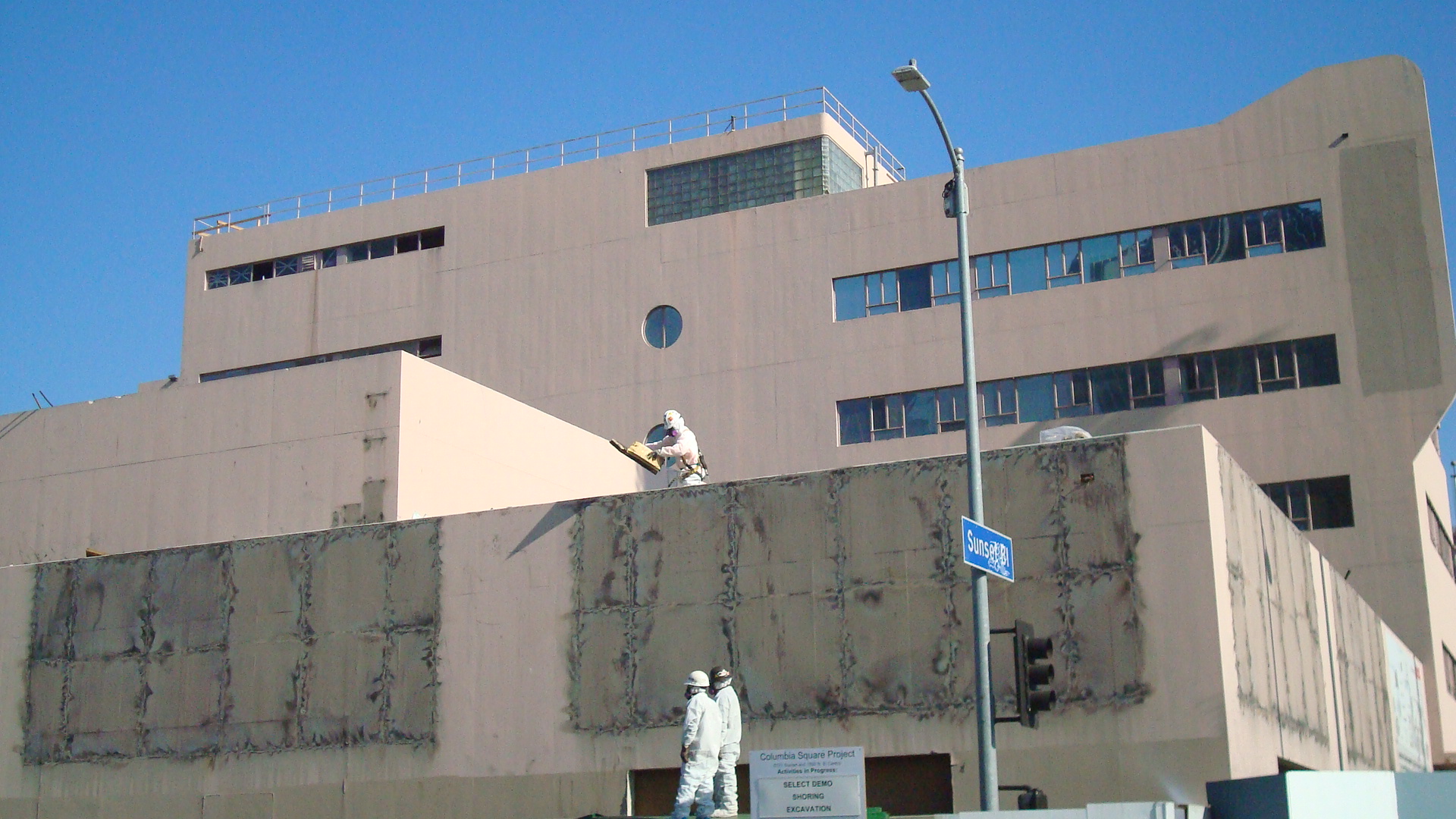
The biggest thing going up on Sunset right now is Columbia Square, which will be a massive mixed-use project that incorporates the old CBS Studios. You probably won’t be surprised that it promises still more high-end housing with still more ground floor retail. They’re also billing it as “Hollywood’s New Creative Media Campus”. I’m not sure exactly what that means, but hopefully the finished product will deliver more than I expect. You can click here for more details. At least they’re preserving the CBS building, so I guess I should be thankful for that. To read more about the history of CBS Studios, click here.

Workers atop the old CBS Studios.

Workers atop the old CBS Studios.

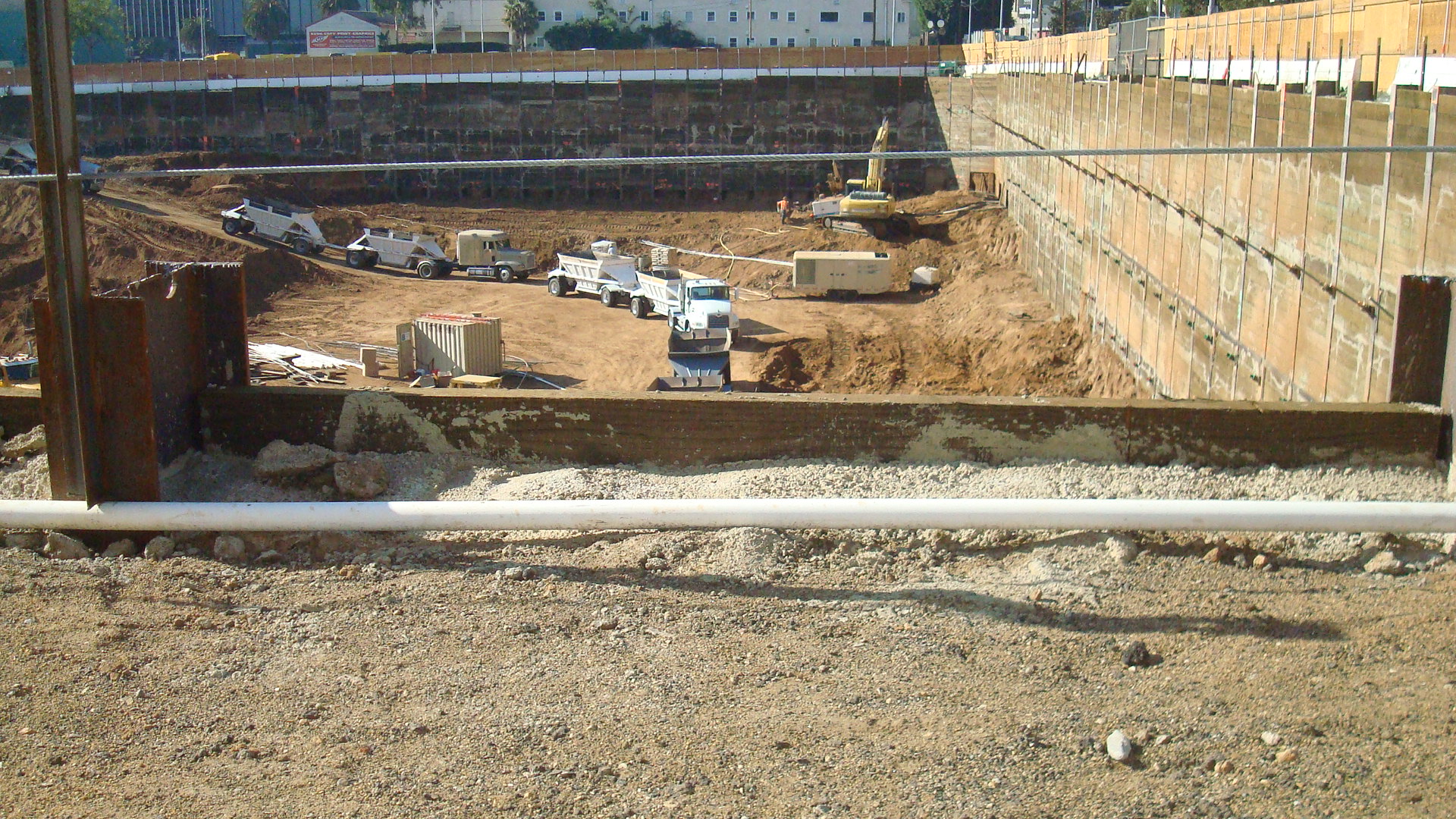
Columbia Square will occupy a full city block. Right now workers are busy inside a massive excavation as they prepare the foundation. There’s something about the scale of these enormous projects that’s kind of overwhelming. I look down into this huge pit and see hundreds of workers, I see trucks, tractors and cranes. A whole city block is being transformed.

Workers preparing the foundation for the Columbia Square project.

Workers preparing the foundation for the Columbia Square project.

Another shot of workers preparing the foundation.

Another shot of workers preparing the foundation.

Here are a few more images….

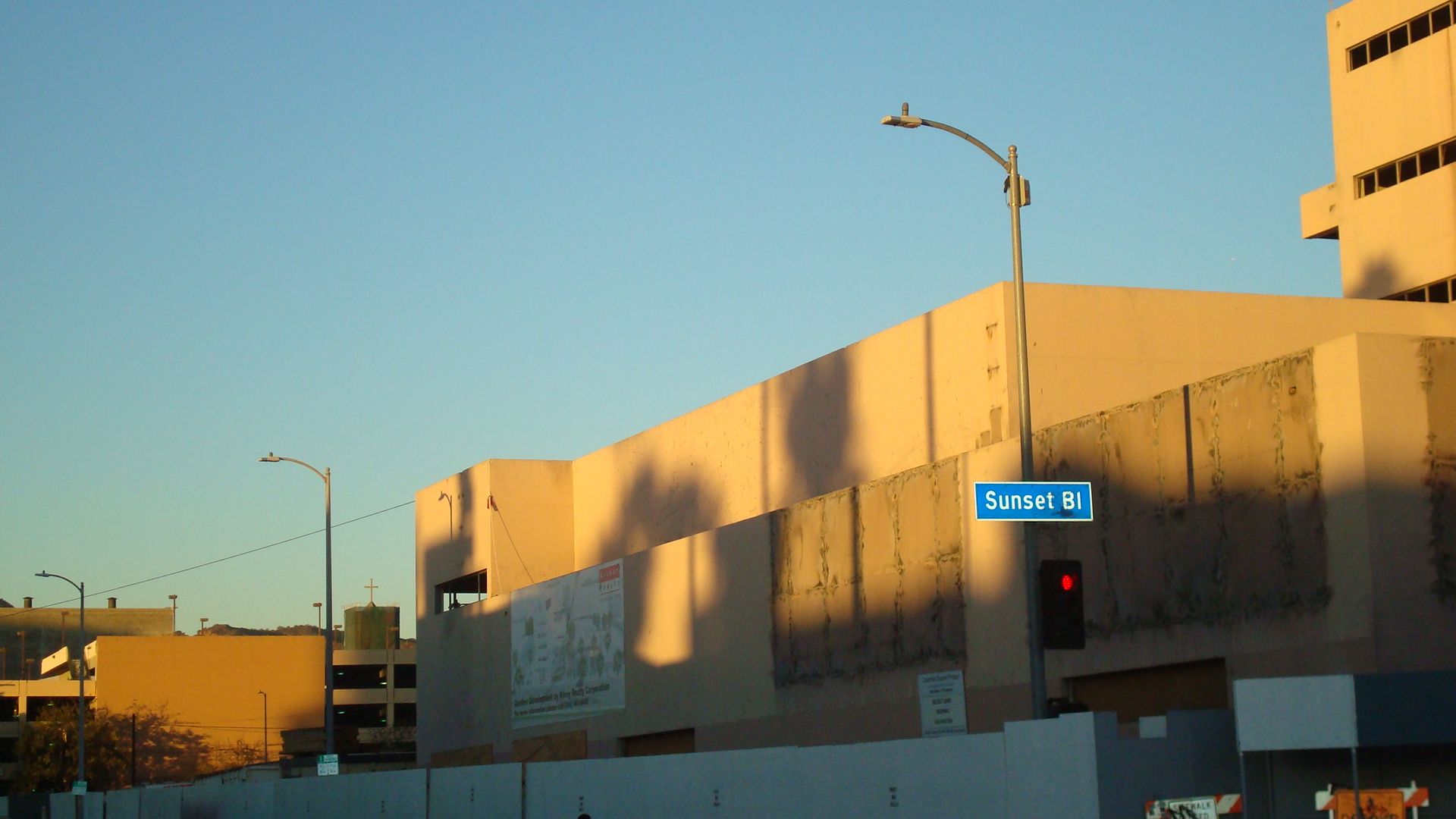
A side view of the site, facing west.

A side view of the site, facing west.

Another side view, again facing west.

Another side view, again facing west.

A shot of CBS Studios taken in the late afternoon.

A shot of CBS Studios taken in the late afternoon.

You may wonder why I included these, since they’re mostly shots of the sky above the project. It probably seems like just a lot of empty space. But that’s what I wanted to capture. When Columbia Square is finished, it will rise twenty stories above street level.

All this space will be gone.

Change Is the Only Constant at LACMA

A view of LACMA as it was in the sixties

A view of LACMA as it was in the sixties

The Los Angeles County Museum of Art is undergoing some major changes. Swiss architect Peter Zumthor has been commissioned to design a completely new campus for the museum. All of the original structures, plus the Anderson Building (now the Art of the Americas Building) will be demolished to make way for a brand new campus.

It makes sense. Over the years LACMA has become kind of a cluttered mess. I loved the original Pereira design, three unobtrusive modern structures surrounding a spacious plaza. To my mind the addition of the Anderson Building in the mid-eighties was a huge mistake. Sure, it was great to have the extra square footage for exhibitions, but the building itself was awful. The central plaza was taken away, and a blandly oppressive façade now towered over the sidewalk at the Wilshire entrance. Two years later they added the Japanese Pavilion, which I have mixed feeling about. Inside, it’s a great space for displaying art and artifacts. Outside, it’s just kind of weird and tacky, and adds to the general visual confusion.

So I totally understand why the LACMA Board wants to start over, more or less from scratch. Zumthor’s design is pretty interesting. Below is a link to a slide show on LACMA’s web site.

Peter Zumthor Reconsiders LACMA

There are a lot of good ideas here. I love the fact that the design allows for more interaction with the surrounding park. And I’m really intrigued by the concept of storing art in areas that would allow for public viewing day or night, all year round. This could turn out to be pretty cool….

But I couldn’t find any information on LACMA’s web site about when all this is going to happen. Making Zumthor’s design a reality will be a huge undertaking. The first step will be to demolish the four buildings that make up the core of the campus. And my guess is that it would take at least a couple years to complete the new structure. Which means LACMA’s exhibitions would be confined to the BCAM and the Resnick Pavilion for quite a while, although they might also look for a temporary space.

Big ambitious projects like this often sound really exciting in the planning stages. Then, when you start trying to figure out how to actually make it happen, the excitement fades as people realize what a huge challenge it will be. But I hope they can pull it off. This could take LACMA to a new level.