Another One Bites the Dust

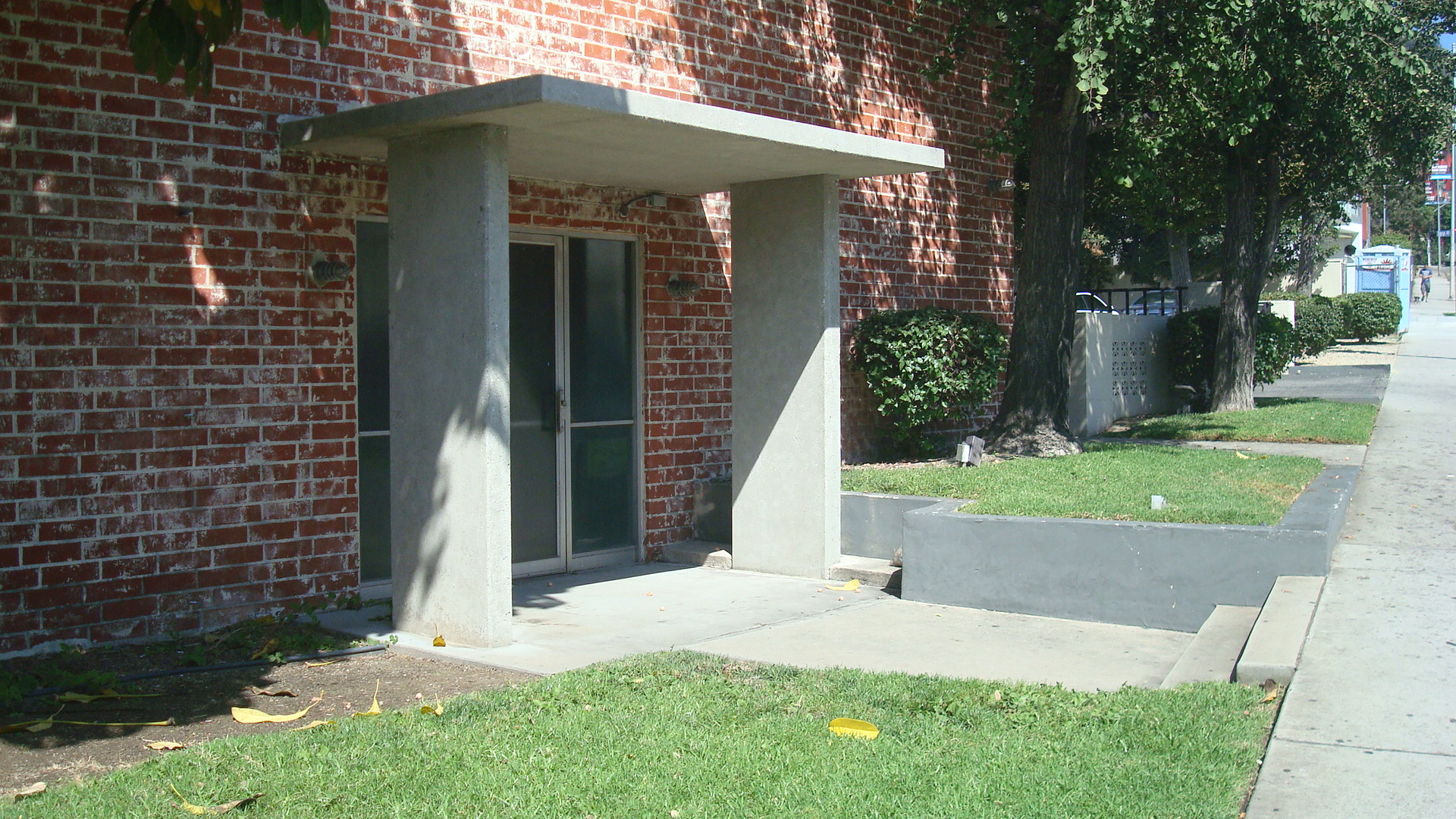
Oswald Bartlett House, Los Feliz

Oswald Bartlett House, Los Feliz

Got this in my e-mail this morning. More bad new for those who care about LA’s history.

Press Advisory, Immediate Release

DEVELOPER SET TO DEMO LA’S CULTURAL HISTORY

Reprieve Denied: Historic Oswald Bartlett House Goes Down Today

WHAT: Demolition of the 100-year-old Oswald Bartlett House is set to begin today and members of the community are expected to be present to document and bear witness to the house’s undeserved and sad destruction in the middle of the season when Jews and Christians celebrate – instead of destroy – their history and traditions.

WHEN: Demolition work is set to begin at 7 am, today, Thursday, December 18, 2014.

WHERE: 1829 N. Kenmore Ave., Los Angeles – the Los Feliz neighborhood

BACKGROUND: The Oswald Bartlett House has been recognized by preservationists as a pristine and rare example of architect A.C. Martin’s work. Martin, one of Los Angeles’ leading architects in the first half of the 20th century, designed LA City Hall and a half-dozen other notable structures now designated as landmarks. The Bartlett House was designed by Martin for a friend and is a rare example of Martin’s youthful work in domestic design; his more lasting reputation was founded on his design of major public and religious buildings. Despite the recognition by experts of the cultural and historic significance of the Bartlett House, City Hall turned a deaf ear to the experts (including the LA Conservancy) and community’s appeals to spare the house from demolition to make way for a six-unit townhome project whose building entitlements were gained through misrepresentations about the historic nature of the Bartlett House. Last Wednesday the City Council gave the developer, a business ally of one of Mayor Garcetti’s top campaign fundraisers, the green-light to proceed with demolition. Today the sledgehammers and bobcats will start taking the house down.

For Additional Information Contact:
John Schwada, MediaFix Associates
john.schwada@gmail.com
310 709-0056
310 597-9345 w

So one more historic building bites the dust. Garcetti seems determined to let developers have their way, no matter the cost to the city’s cultural heritage. Some of you may remember that the Mole-Richardson building on La Brea was recently demolished, in spite of the fact that it was a classic art deco building by Morgan, Walls and Clements. If you missed that story, here’s a link to a piece on Curbed.

Art Deco Buidling Destroyed

Other historic structures currently being threatened are the Warner Pacific Theatre, the Mosaic Church, and the Chase Bank building at the corner of Sunset and Crescent Heights. But who cares about history, when you can have a shiny, new mixed-use skyscraper?

The photo of the Oswald Bartlett House was taken by Michael Locke, who has spent a fair amount of time documenting the Los Feliz area. To see more of his work, click on the link below.

Michael Locke at Flickr

Taking a Closer Look

Hlwd CS 03 Frnt Hills 2

It’s so strange how you can pass by something a million times, and not really even notice it. Until it’s in danger of disappearing. The Fifth Church of Christ, Scientist, at the corner of Hollywood and La Brea, was built just after I was born. I’ve been driving by it or walking by it all my life. I remember thinking that it was kind of an unusual building, but I never stopped to take to take a closer look. It was always just part of the landscape.

So recently I did take a closer look, and I started to realize what a beautiful building it was. The site is no longer home to a Christian Science congregation. For the last few years it has housed Mosaic, a non-denominational Christian church. The current congregation recently renovated the building, and I’ll talk more about that later.

Actually, the first version of the church was built back in 1915, according to the Pacific Coast Architecture Database. Back then Christian Science was a growing denomination, and the original design stuck to a pretty traditional classical revival style. But in the 1950s the congregation must have decided they needed a different look, and they hired an architect named Howard G. Elwell.

Very little is known about Elwell. One source I found said that he was active in the LA area as early as 1916. I’ve searched the net, but there’s not much documentation of his work. I found a few photos of a movie theatre in Victorville. I found some images of a doctor’s office he may have designed, but the site is unknown. Apparently he also worked on some houses in Pasadena and San Marino.

But the guy definitely had talent. A walk around the church at Hollywood and La Brea shows that it was created by someone fluent in the modern style. Here are a couple photos of the building as it originally appeared.

Fifth Church of Christ, Scientist seen from Hollywood Blvd. circa 1977

Fifth Church of Christ, Scientist seen from Hollywood Blvd. circa 1977

Fifth Church of Christ, Scientist, also from Hollywood Blvd. circa 1977

Fifth Church of Christ, Scientist, also from Hollywood Blvd. circa 1977

It’s too bad they’re in black and white, because the color scheme was one of the unique aspects of the design. If I remember correctly, the curved section at the corner was clad in lavender tile, and the arched windows were painted a similar pastel shade. The effect was subtle and unobtrusive, which is maybe part of the reason it didn’t attract my attention.

Here’s how the church looks today.

Mosaic, Hollywood seen from Hollywood Blvd.

Mosaic, Hollywood seen from Hollywood Blvd.

The Mosaic congregation did a nice job of renovating the building. They didn’t touch the structure, but they completely rethought the textures and colors. Removing the tile cladding to reveal the brickwork gives the corner of the church a rustic look, and painting the arched windows grey creates a nice contrast. The building definitely has more of a presence than it did before.

a view of the church from La Brea Ave.

a view of the church from La Brea Ave.

another view of the church from La Brea Ave.

another view of the church from La Brea Ave.

But the structure still retains Elwell’s design, which is a unique and interesting adaptation of the modern style. The building has the dignity appropriate to a church, but without the rhetorical flourishes that make some other sacred structures look pompous. It occupies the site beautifully, with the curved wall at the corner giving way to symmetrical rows of arched windows on either side. And while some churches are basically a façade stuck on a box, Elwell thought about the whole structure, making sure that the rear of the building adheres to the same pattern of curved surfaces and strong verticals.

a view of the church from the parking lot

a view of the church from the parking lot

another view from the parking lot, this time facing La Brea Ave.

another view from the parking lot, this time facing La Brea Ave.

Now here’s the bad news. This building will probably be gone in a year or so. Developers want to build a project called Horizon Hollywood, which will consist of 400 residential units with retail and restaurants on the ground floor. Some people think the renderings look pretty nice. Honestly, to me the project looks like another set of generic mixed-use towers. But here’s a link to a write-up at Building Los Angeles. You can judge for yourself.

Hollywood and La Brea’s High-Rise Complex

Personally I’d rather have the church. But I don’t think there’s much chance of saving it. The building has not been designated as a historic landmark. And I don’t see any way it could be incorporated into the high-rise project.

But they won’t start construction on the Horizon Hollywood for a while, so if you’re interested in architecture you might want to take a trip over there. It’s a striking example of mid-century modern, and one of the few known buildings by Howard G. Elwell.

The larger concern is that it seems like historic buildings are once again being threatened by the current development boom. We’ve already lost the Morgan, Walls and Clements building on La Brea near Melrose. This one is probably a goner. And there’s talk of demolishing the Pacific Theatre on Hollywood Boulevard. For a while it seemed like LA was getting better at preserving the past. But these days I get the feeling that money is more important than history.

[For an an update on the status of the Mosaic Church, click here.]

Hlwd CS Frnt Angle 1

The two black and white photos above come from the Security Pacific National Bank Collection of the Los Angeles Public Library’s photo archive. No photographer is credited.

Preserving a Palace

Hlwd Pac Wilc

The Warner Pacific Theatre on Hollywood Blvd. has been boarded up for a while now. The church that was using the auditorium is gone, and the small retail tenants have vanished, too. Apparently the owner, Pacific Theatres, has plans for the building, though no one is sure what they are. Rumors are circulating that the plans may involve structural changes, but at this point nothing specific has been announced.

The fear is that Pacific will make changes to the theatre that would compromise its historic status. The Warner Pacific Theatre is part of the Hollywood Boulevard Commercial and Entertainment District, No. 85000704 on the National Register of Historic Places. This stretch of the boulevard contains a number of movie palaces, and is an important cultural resource for the community. The Chinese, the El Capitan, the Egyptian and the Pantages are all found in this area.

I understand that Pacific needs to make a profit, but it would be a shame if their plans did not make the preservation of the theatre’s historic status a priority. There are numerous examples of classic theatres that have been restored over the years, and many have them are very profitable. The El Capitan has been spectacularly successful since its restoration, and still functions as a first-run theatre. The Pantages has been drawing crowds consistently since it was converted to host live stage shows. The Wiltern is an example of a classic theatre that has become a hot venue for concerts.

Pacific can even look to its own recent history to back up the argument for preservation. In the nineties they announced a plan for the Cinerama Dome that would have included gutting the theatre and putting a restaurant in the lobby. The preservation community was outraged, and to their credit, Pacific listened. They changed course, and built the Arclight, which has become a mecca for movie lovers in the Hollywood area.

For more information about the Warner Pacific Theatre, you can visit the Hollywood Heritage web site by clicking the link below. Choose Preservation Issues from the menu on the left, and then click on Endangered Buildings.

Hollywood Heritage

DSC06196

Don’t Destroy the Past

W&B in W Hlwd

This is pretty last minute, but I just found out about a historic building in West Hollywood that could be demolished as part of a proposed development. I hadn’t heard anything about it until I opened up my e-mail this afternoon. A friend forwarded a message to let me know that this structure, designed by Wurdeman & Becket back in the thirties, might be wiped off the map unless we take immediate action.

The building, located at 9080 Santa Monica Blvd. in West Hollywood, was originally the Jones Dog and Cat Hospital. Architects Walter Wurdeman and Welton Becket created a classic example of the streamline moderne style to house the veterinarian’s practice. As a firm, Wurdeman and Becket were active in the thirties and forties, their most famous creation being the Pan-Pacific Auditorium, which burned to the ground many years ago. After Wurdeman’s death, Becket’s new firm, Welton Becket & Associates went on to design some of the city’s most striking structures and played a huge role in defining the look of mid-century Los Angeles.

For more info about the building, click on this link.

Los Angeles Conservancy

And then if you decide you want to tell the West Hollywood City Council how you feel about this, here’s another link. See the left hand column for contact info.

Save the SMB Streamline Moderne

LA has made great strides in preservation over the last several years, but we’re still losing important parts of our past. The recent demolition of a building by Morgan, Walls & Clements on La Brea was a shock, and should be reminder to those of us who care about our city’s culture that we need to be vigilant and vocal.

Braking Is Better Than Crashing

design by Renzo Piano for the proposed Academy museum

design by Renzo Piano for the proposed Academy museum

I’ve been reading the news about Zoltan Pali’s departure from the AMPAS museum team. There are a lot of ways to look at this. And it’s important to remember that expensive, high-profile projects like this often take longer and cost more than anyone imagined. I think everyone agrees that the ultimate goal, building a museum dedicated to film history in Los Angeles, is definitely worthwhile. I’m anxious to see it completed, but I also want to them to do it right. I certainly don’t have any credentials that would give me special insight into this process, but I do have a few thoughts to offer….

Renzo Piano is a great architect. With buildings for the Centre Pompidou, the Menil Collection and the Zentrum Paul Klee on his resume, everybody seems to agree that he’s a good choice for the project. But even great architects are human, and therefore fallible. I read this morning that some Academy staff members are concerned about unresolved problems with the design of the new theatre. Movie theatres are technically complex structures that present a very specific set of challenges. No doubt Piano is aware of this, but is he going to bow to the experts who actually have experience in this area?

I used to work at MOCA on Grand Ave.. Isozaki is another great architect, and the building is a beautiful and complex creation. But I was friends with one of the preparators at MOCA, and he was very critical of the design. Sure, he would say, it’s a gorgeous building, but it wasn’t properly planned as an exhibition space. He cited a number of problems with the design that made his job difficult. According to my friend, Isozaki didn’t take enough time to understand the specific challenges of creating an exhibition space. Piano needs to listen to the experts in designing the theatre. Whatever his vision as an architect, it has to function as a place for audiences to see and hear movies.

May Company store on Wilshire, photo by Anne Laskey from LAPL archives

May Company store on Wilshire, photo by Anne Laskey from LAPL archives

Some images of Piano’s design were first made public last year, and then views of an updated version were released just recently. Both versions have been criticized. I don’t have a background in architecture, and honestly, it’s hard for me to evaluate renderings. My impression is that Piano has some great ideas, but I can’t say it totally works for me. I wonder though, if rather than finding fault with Piano’s new building, we shouldn’t look harder at the building that exists on the site already. Many people praise the May Co. building, designed back in the thirties by A. C. Martin. I don’t share their enthusiasm. I love the building because it is an iconic part of the LA landscape. It occupies the corner at Wilshire and Fairfax with a lot of authority, and the gold cylinder rising above the intersection gives it a great presence. But in terms of design, I don’t think it’s very impressive. It’s a big, bland box. Piano is obviously trying for a dramatic contrast with this new addition. Unfortunately, I think starting the project with the May Co. building is like starting the project with an anchor around your neck. I’m glad the Academy wants to use it, because it’s been sitting vacant for years, but Piano faces a real challenge coming up with a design that incorporates it successfully.

The Times ran a piece yesterday by their architecture critic, Christopher Hawthorne. He argues that the Academy needs to slow down and make sure this project is done right. I couldn’t agree more. Their public position is that everything’s going great and there’s no reason to reassess the timeline. Nobody’s buying it. Whatever the reason for Pali’s departure, it obviously signals a change of direction.

Rather than pretending everything’s hunky dory and pushing ahead, they need to pause and take stock of the situation. Why rush to break ground this year if the design isn’t right? I’m so glad the Academy is building this museum, but I also really want it to be something special.

A few links for those of you who want to read further. First is Hawthorne’s piece for the Times. Next a post that ran on Arch Daily back when Piano’s original design was made public in April of last year. And finally an article from the Hollywood Reporter that includes quotes from anonymous sources within the Academy. If these quotes give an accurate picture of what’s going on, there is good reason to be concerned about the viability of the project.

LA Times Commentary

Motion Picture Academy Unveils Designs

Academy Museum Architect Exits Amid Tension