Midnight at Wilshire and Fairfax

W&F 1 Scaf

Last week I went to one of the screenings in UCLA’s preservation festival. I think I left around eleven, and then caught the bus on Wilshire. I got off at Fairfax, where I have to transfer. It took a while for the next bus to show up, so I took some photos while I was waiting. It seemed like there was a lot of stuff going on….

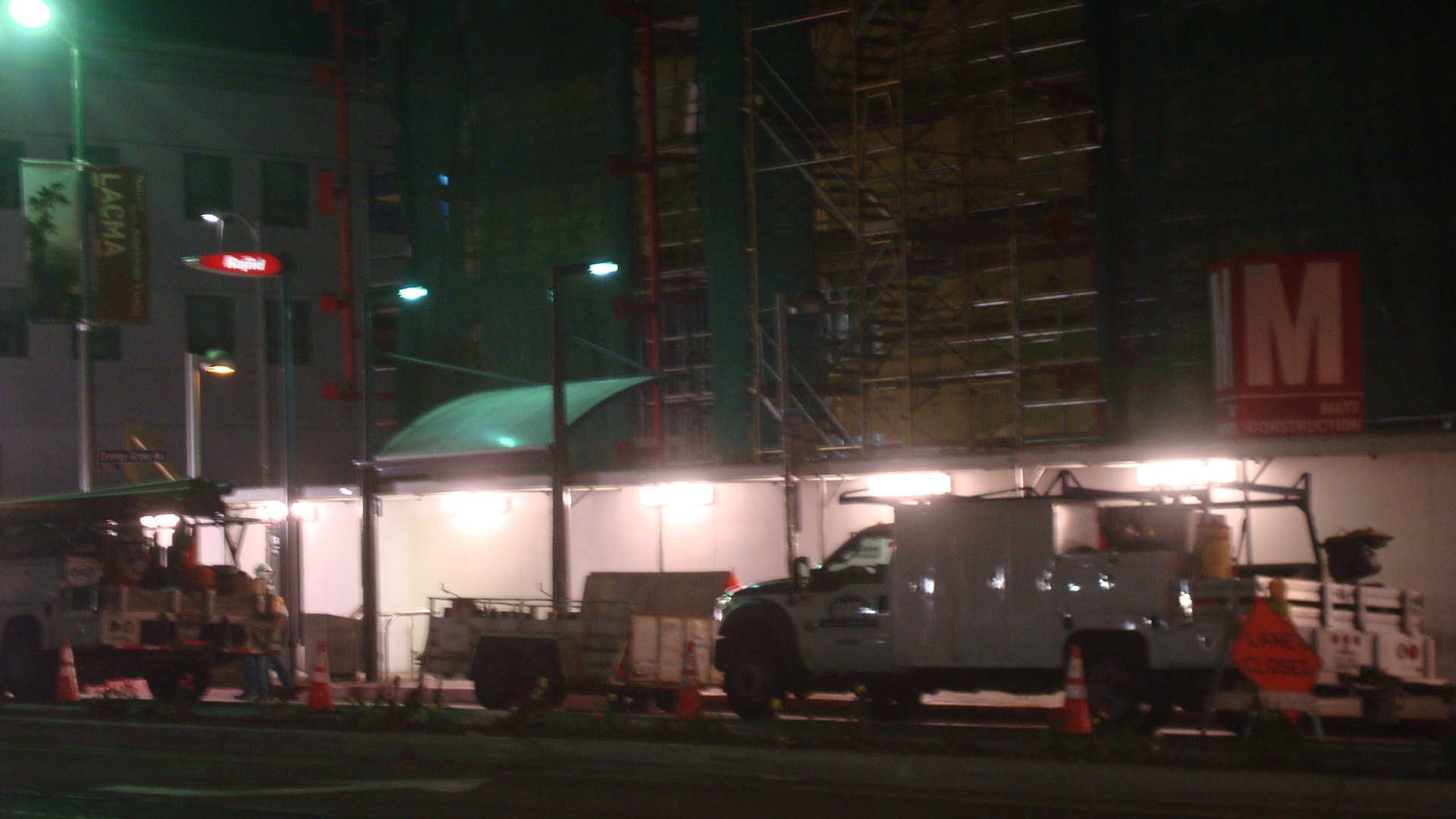
Night time is when the MTA crews show up to work on the Purple Line extension. You don’t see them during the day. Just metal plates lying all over the street. But at night these guys set up their barriers and their lights and go to work.

MTA crews work on the Purple Line at night.

MTA crews work on the Purple Line at night.

Just across the street, the old May Co. building is surrounded by scaffolding. It seems that the Academy is finally starting the process of transforming this dinosaur of a department store into a new museum devoted to film. I have no idea when it’ll be completed, but I’m glad to see that work has begun.

Scaffolding set up on the west side of the May Co. building.

Scaffolding set up on the west side of the May Co. building.

I was standing there on Fairfax snapping photos, when a few runners went speeding past. At first I thought it was just some people who lived in the neighborhood out for some exercise. But then another group ran by, and then another, and then it was a steady stream of people racing down Fairfax. My guess is that a couple hundred people went by, but it could have been more.

Runners stampeding down Fairfax toward Wilshire.

Runners stampeding down Fairfax toward Wilshire.

More runners heading down Fairfax.

More runners heading down Fairfax.

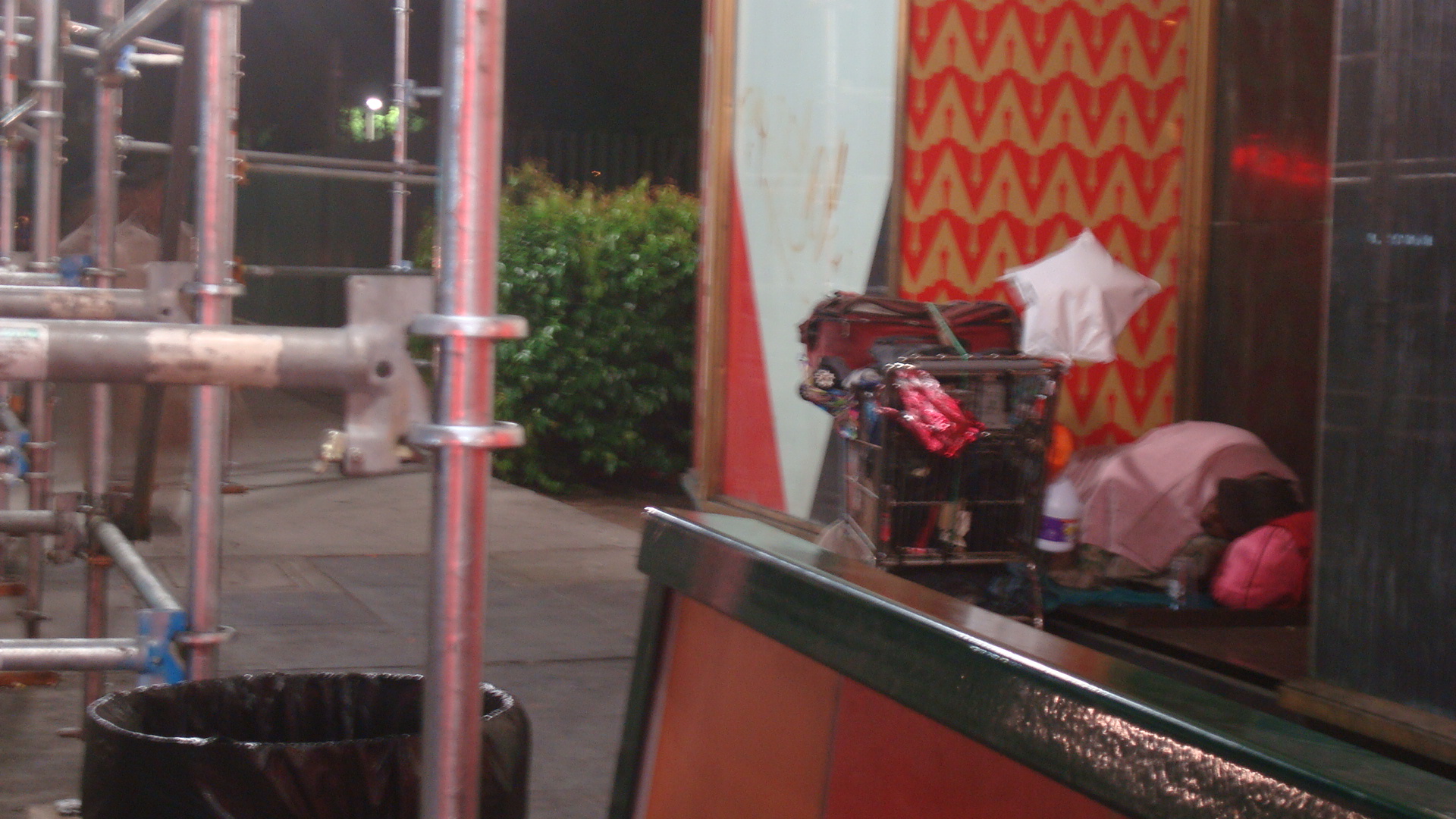
As usual, there was a homeless guy camped out in one of the recessed areas along the side of the May Co. building.

A homeless man taking shelter for the night.

A homeless man taking shelter for the night.

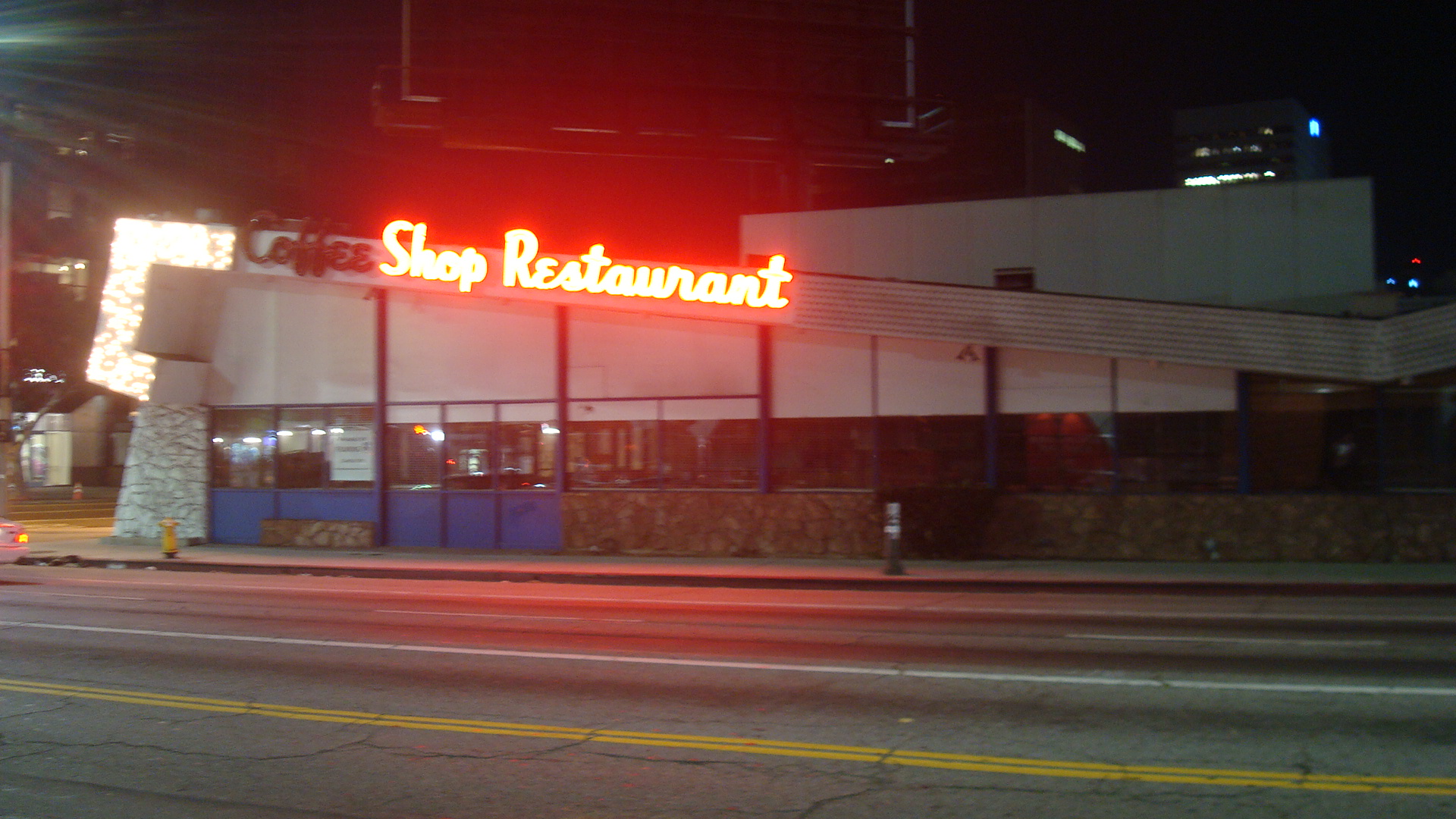
And of course there’s Johnie’s, blazing away in the darkness. The banks of lights that surround the building are slowly going out, but those that are left let you know that this classic coffee shop has not gone away. The place has been closed for years, but the flashing lights seem to be insisting that it’s still open for business. That it’s still alive.

Johnie's refuses to die.

Johnie’s refuses to die.

Putting Lives Back Together

SRHT Main All

LA is suffering from an affordable housing crisis, but there is some good news to celebrate. Thanks to the efforts of the Skid Row Housing Trust (SRHT), formerly homeless people are getting a roof over their heads and a place in the community. The SRHT is using innovative approaches to creating housing in the Downtown area.

Homelessness is a complex problem. It’s not just a matter of giving someone a place to live, because people living on the streets are often struggling with a variety of issues. In the first place, finding a job, which can be tough if you don’t have skills that are currently in demand. Depression, mental illness and substance abuse are also common problems, and these are not solved simply by giving someone the keys to an apartment.

But having a place to live is the first step. And the SRHT offers assistance to people grappling with other issues by creating permanent supportive housing. This means that the residents living in these communities have access to counseling, job training, health care and other services in order to get their life back on track.

The SRHT has been working on two new projects in Downtown. First, let’s take a look at the Star Apartments….

SRHT Star Frnt

The Star Apartments are located near the corner of Sixth and Wall. The project was designed by Michael Maltzan Architecture, and they used an interesting approach. The site was occupied by a one-story building, which they wanted to expand to create more units. The solution they hit on was stacking pre-fab cubes on top of the original structure, which in addition to being fast and economical, resulted in a striking piece of design.

SRHT Star Sky 1

You can read more on Maltzan’s web site.

Star Apartments

Next, check out the New Pershing Apartments at Fifth and Main. This project actually combines two structures, the Pershing Hotel and the Roma Hotel, built in 1889 and 1905, respectively. The new design, by Killefer Flammang Architects, preserves original elements of the exterior. In addition to the residential units, the New Pershing will also offer a courtyard, two recreation decks and planters for gardening.

First let’s look at a couple of shots taken while the project was under construction, back in October of 2014. The first was taken from the corner of Fifth and Main.

SRHT Main Const 1

This next photo was taken on Main, directly across from the building.

SRHT Main Const 2

Now let’s look at the finished project.

SRHT Main Frnt

And another shot from Fifth and Main.

SRHT Main Full

Here’s the article that the Downtown News ran on the New Pershing earlier this month.

A Victorian Victory

You can find more information about the SRHT’s activities by visiting their web page. And if you want to support their efforts, I’m sure a donation would be welcome.

Skid Row Housing Trust

On-Line Archeology

RG Close 1a

I first saw Renée Green’s work years ago at MOCA. It’s hard to describe what she does, because she uses a variety of different media, and her projects don’t fall into any traditional category. My personal take on her work is that it seems like a meditation on the world around us, but not just her own meditation. She invites us to join her. She wants the audience to be a part of the experience.

I found out just recently about a project of hers called code: survey. There’s a physical installation in the cafeteria at Caltrans in Downtown LA, but that’s just one aspect of the piece. Really it’s much bigger than that. The project gathers images, words and sounds from a variety of sources, and allows the viewer to access all of it on-line. It’s like a multi-media collage of the history of LA, but it allows you to choose what you want to explore.

RG Full a

The link is below. You may have to play with it a little to get the hang of it. Each time you click on an image it allows you to go further, reading texts, listening to voices, choosing your own direction and making your own associations.

code: survey, a project by renée green

One piece of advice. Give yourself some time. Once you get started exploring, you may find it’s easy to get lost.

RG Close 2a

Time to Move On

LAC 0B Tunnel

You may already know that LACMA is planning a major overhaul. I think it’s a good idea. The original design has been pretty badly compromised, and the campus is kind of a mess. The biggest mistake was the addition of the Anderson Building, but there are other changes that contributed to the general feeling of chaos. So, yeah, it’s time to hit reset. Peter Zumthor’s design for the new campus is pretty interesting. You never know how these things will work out in the long run, but I’m ready to climb on board. (I do have serious reservations about the plan for funding it, but that’s another story.)

I have to admit, though, I’ve got a fondness for this funky collection of buildings that don’t really fit together. There’s a lot about the current set-up that I’ll miss. So even though we’re probably still a long way away from starting construction, I thought I’d take a trip down to the old place and snap some photos.

The museum was originally designed by William Pereira, and in its first state there was a real sense of space and light. Now the plaza seems claustrophobic. Just to give a sense of Pereira’s orginal concept, take a look at the photo below.
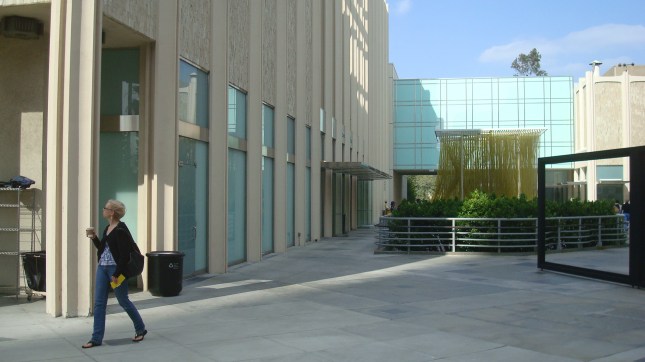
LAC 05 Plz Wom

On the left side you can see the Ahmanson Building, which has been there since the beginning. Back in the 60s you walked up a broad set of stairs onto a wide plaza that was surrounded on three sides by structures like this. It was a fantastic space, and a quintessential example of LA architecture. Now I move the camera to the right….

LAC 10 And Rt

…and you can see the Anderson Building, which was built in the 80s. It was great to have more gallery space, but the building always seemed like a massive intrusion. And if you look at the central plaza…

LAC 25 Plaza Brg

…you can see that the columns and the bridge and the canopy intrude even further. Nowadays this space just seems really odd and awkward. It doesn’t work at all.

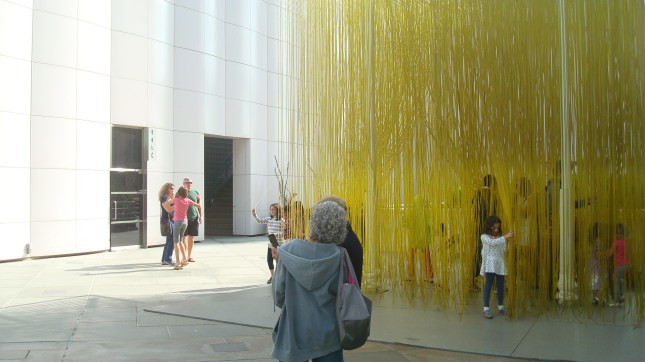
But there are still things to enjoy about the plaza. Like Jesús Rafael Soto’s Penetrable.
Penetrable by Jesús Rafael Soto

Penetrable by Jesús Rafael Soto

I love this installation, and kids love wandering through it. I know museums aren’t always a big favorite with children, so I think it’s great that Soto’s work is right out on the plaza, almost like it’s saying, “Come on in and play.”

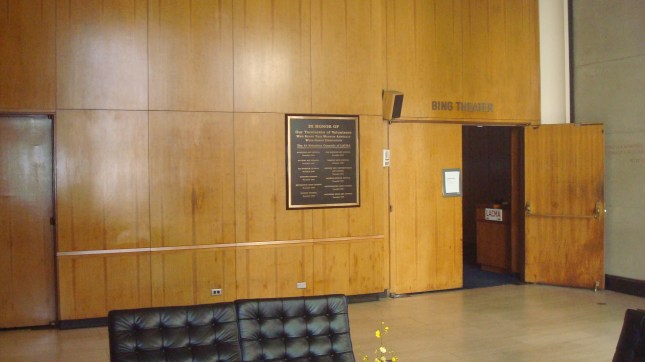
Another one of the original Pereira buildings houses the Bing Theatre, which I’ll really miss.
LAC 32 Bing Lobby 2

LACMA used to have incredible film programming. They did amazing retrospectives on Marlon Brando, William Wyler, Erich von Stroheim, FW Murnau and others. My friend Brian and I used to joke that there were times we were going there so often it seemed like we were living at LACMA.
LAC 40 Cafe Red

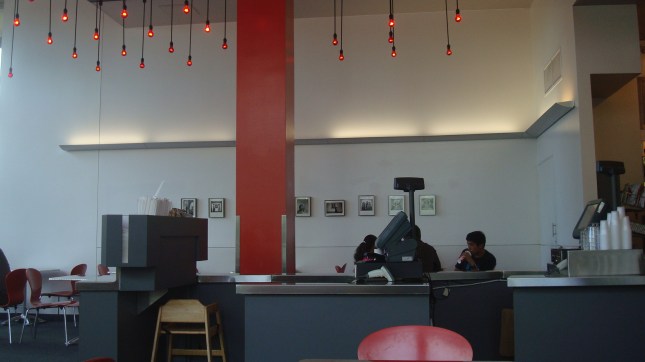
I’ll miss the cafe, too. I’ve spent lots of time there, either taking a break from the galleries or waiting for a movie to begin. Occasionally I’d take a cup of coffee outside…

LAC 27 Red Tbl

…and find a quiet place somewhere. In spite of all the people milling around the campus, it’s not too hard to get away from the crowds.

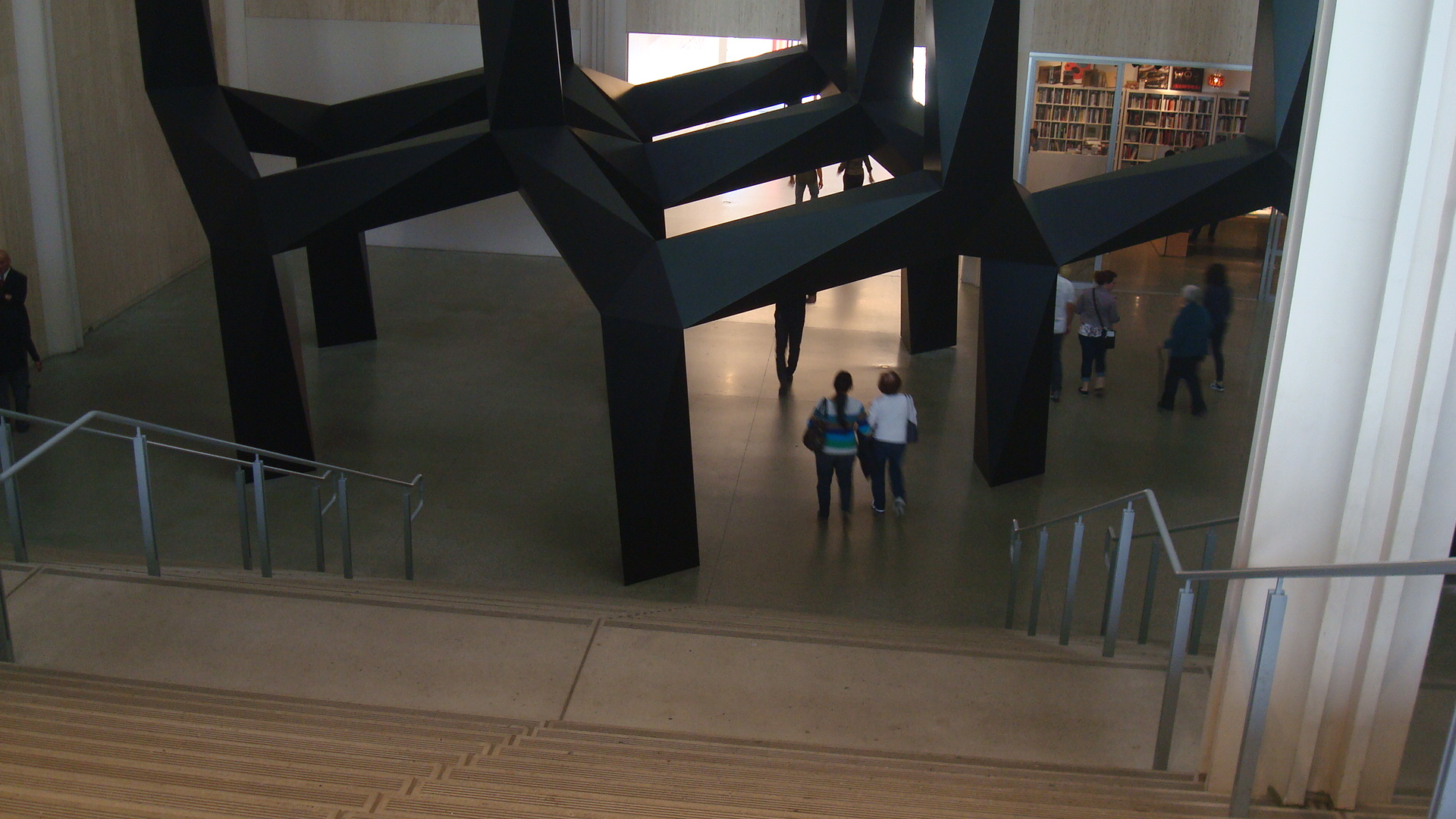
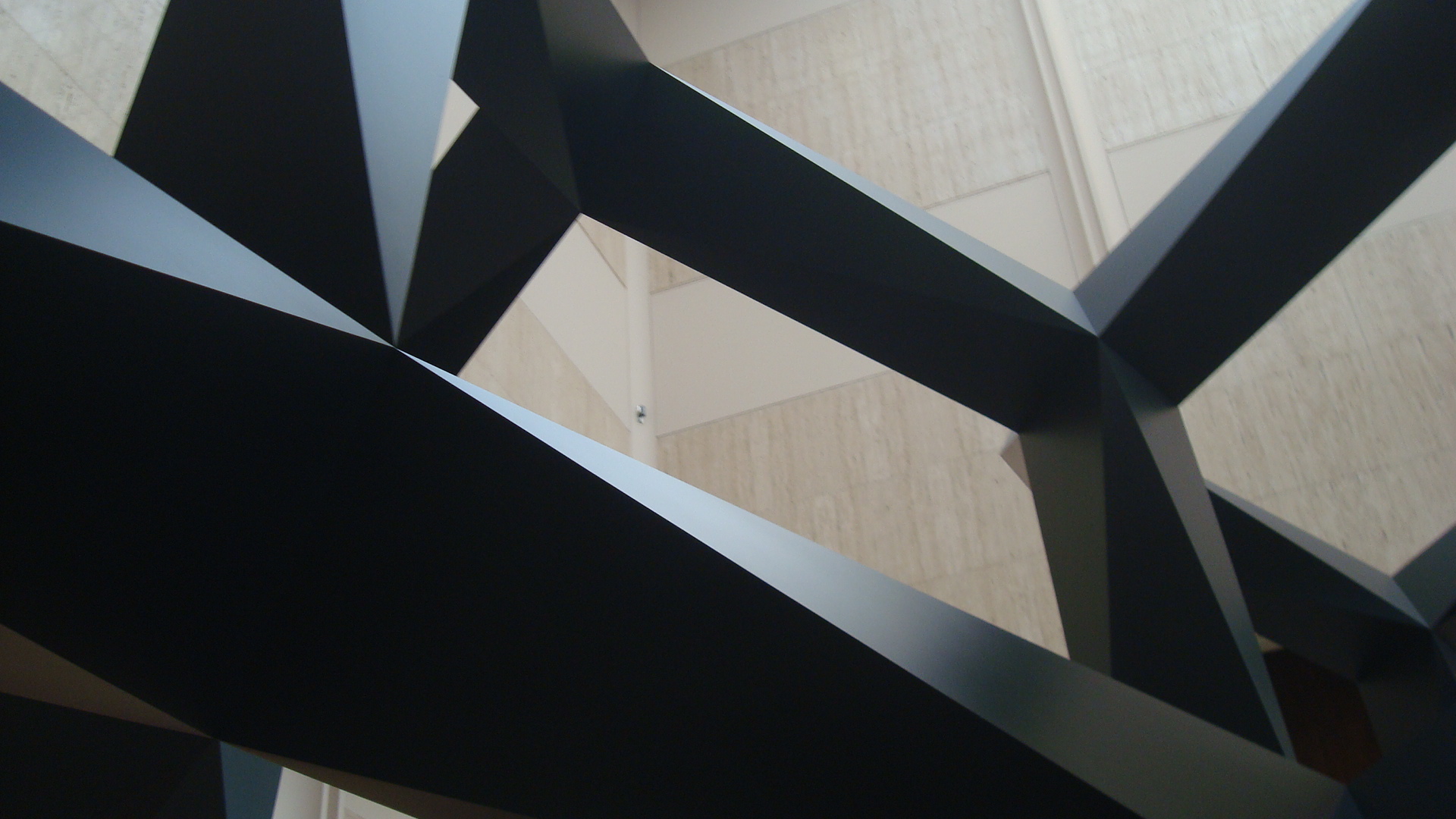
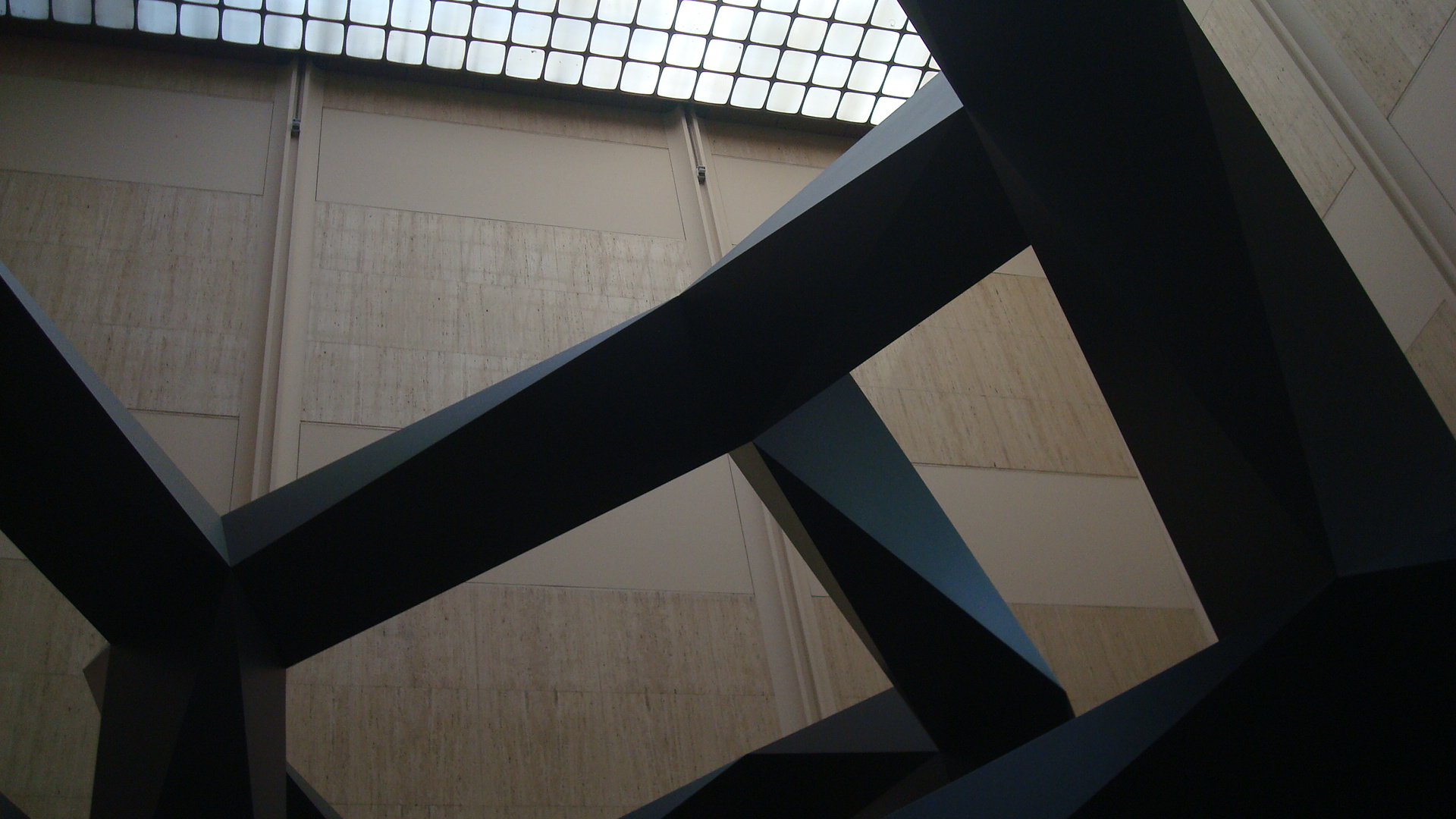
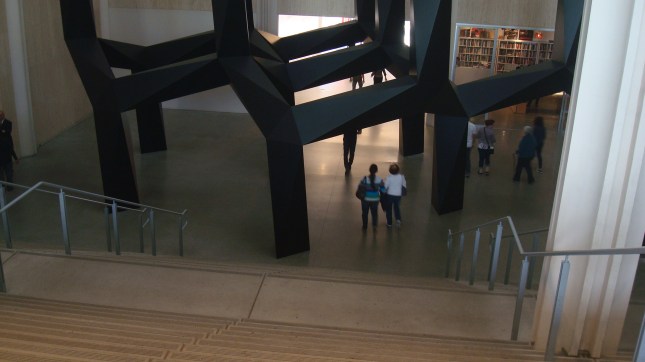
Inside the Ahmanson Building, Tony Smith’s Smoke rises up through the atrium. It’s a cool piece, but it probably needs more room to breathe. Maybe when the new museum is built they’ll create a better space for it.
Smoke by Tony Smith
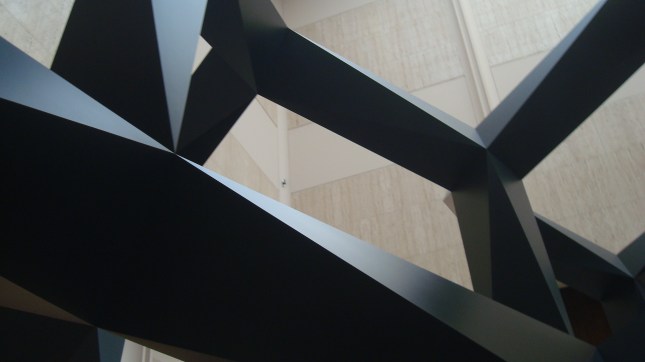
Smoke by Tony Smith

Same as above.

Same as above.

Same as above.

Same as above.

I’m glad that LACMA draws as many people as it does, but sometimes I miss the good old days, before the blockbuster exhibitions, when it was just you and the janitorial staff. Still, some of the galleries are less crowded than others. The spaces where they display contemporary American art are often pretty busy, but if you just head upstairs…

LAC 80 Gallery

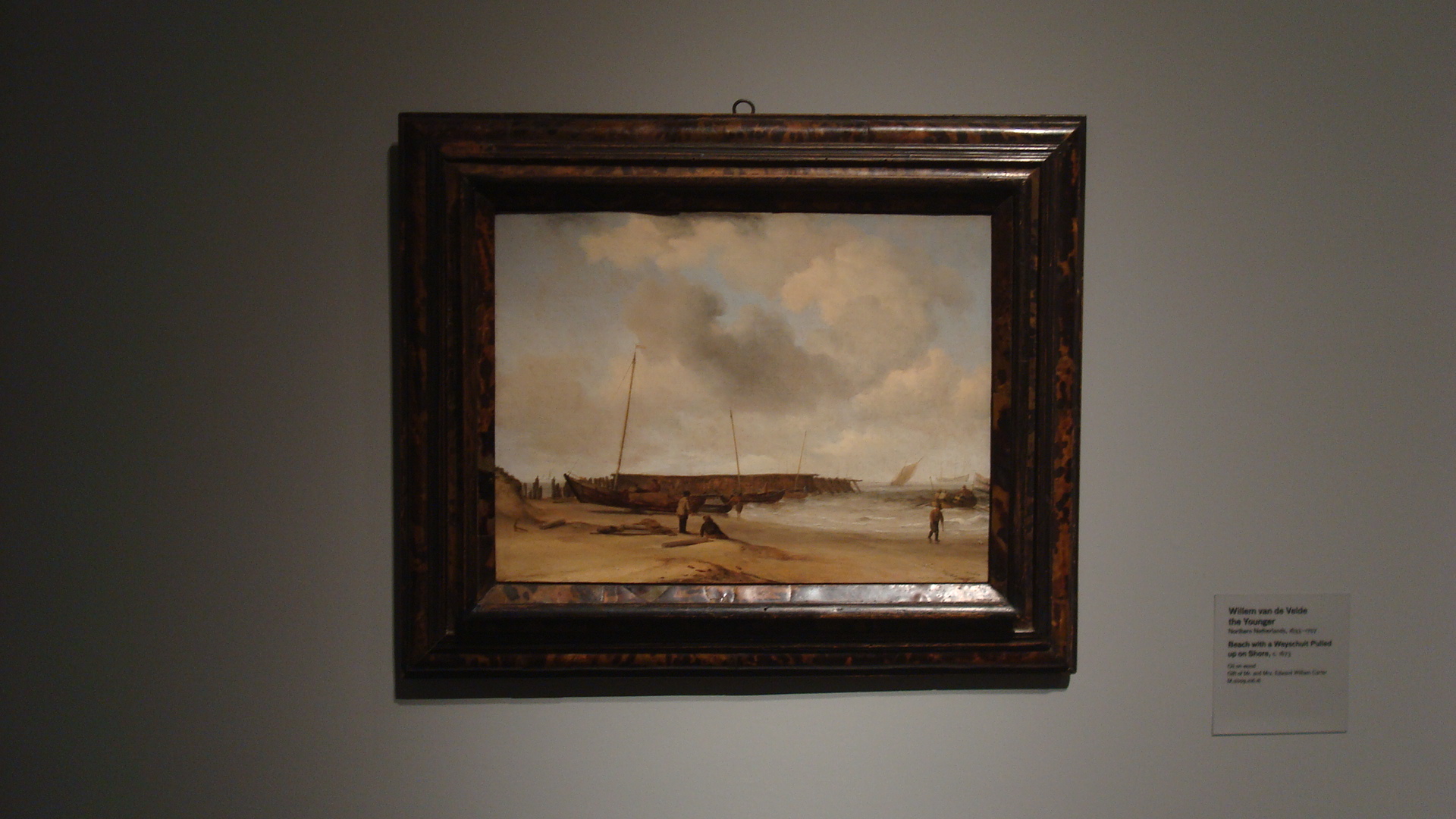
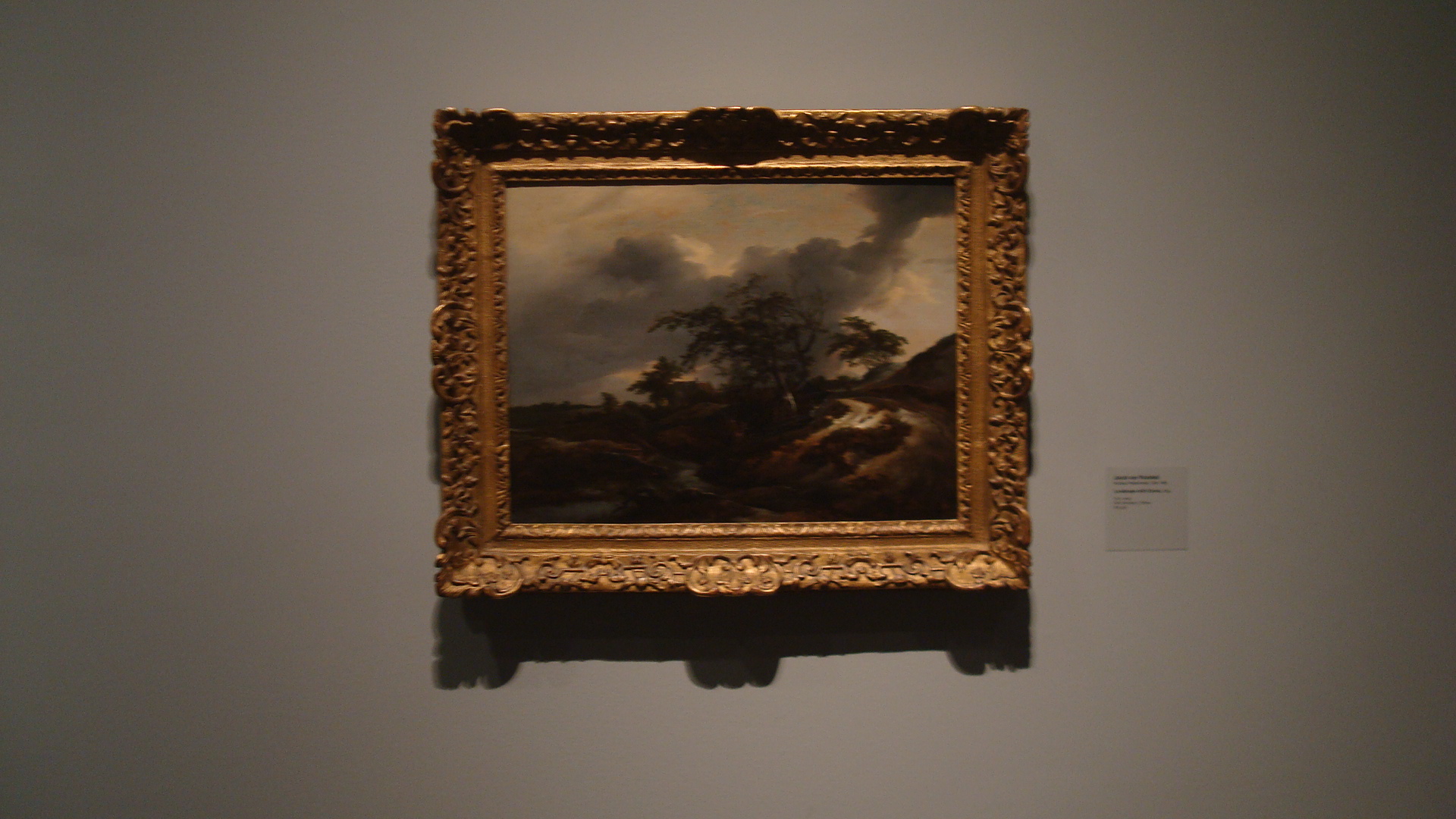
…you’ll find the older European art. I used to mainly look at painting from the last couple of centuries, but lately I’m getting into the older stuff. Like these Dutch landscapes.

Beach with a Weyschuit Pulled up on Shore by Willem van de Velde, the Younger

Beach with a Weyschuit Pulled up on Shore by Willem van de Velde, the Younger

Landscape with Dunes by Jacob van Ruisdael

Landscape with Dunes by Jacob van Ruisdael

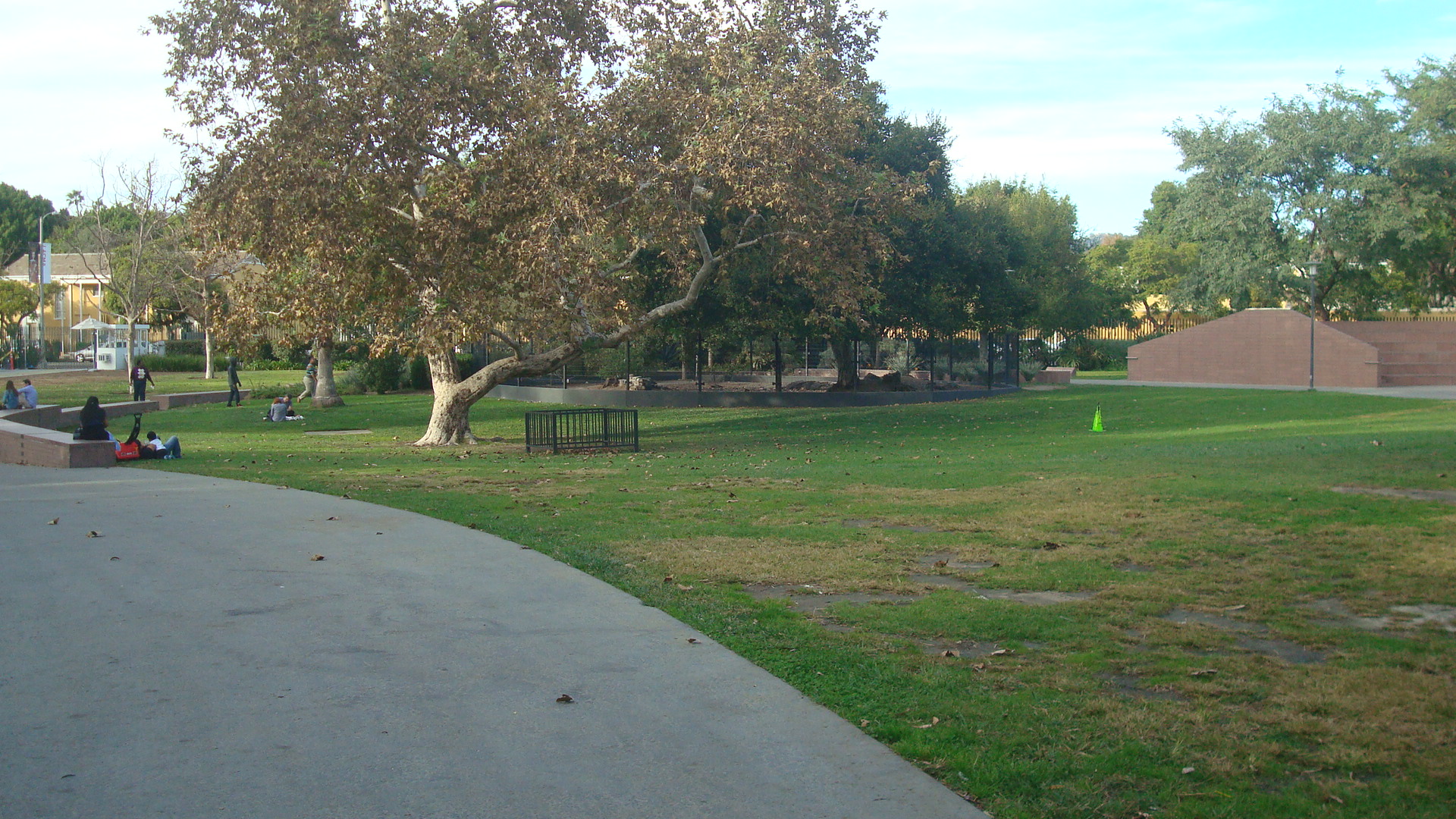
One of the great things about LACMA is that when you’ve maxed out on the art, you can leave the galleries and head for the park just behind the museum.
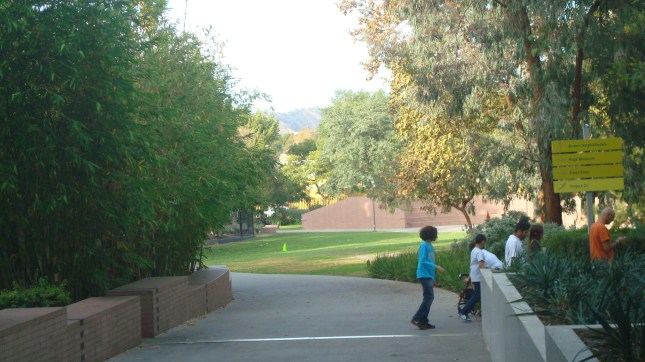
A view of the park from the museum plaza.

A view of the park from the museum plaza.

Another view of the park looking toward the west.

Another view of the park looking toward the west.

And since I’m talking about change, I might as well mention the May Co. building right next door.
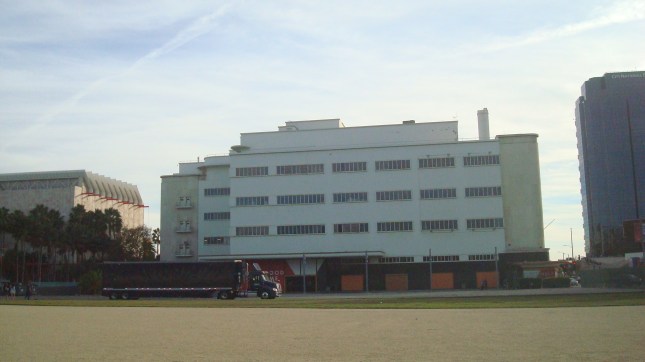
LAC 95 May

The Academy of Motion Picture Arts & Sciences is planning to build a museum devoted to film on this site. The plan is to restore the May Co., and to construct a new wing behind it, which will be designed by Renzo Piano. Not sure when work will start, but you can click on the link below for more info.

Academy Museum

This last shot is a view of Fairfax looking down towards Wilshire.

LAC 97 May Side

It’s interesting that with all the activity happening at LACMA and the May Co., just across the street you have Johnie’s, a classic coffee shop from the fifties designed by Armét & Davis, that’s been neglected for years. Closed since 2000, the City of LA recently declared it a historic landmark, but nobody seems to know what’s going to happen to it. The MTA is currently working on the Purple Line extension, and supposedly there will be a subway stop at Wilshire and Fairfax by 2023. Is it too much to hope that Johnie’s will be open again by then?
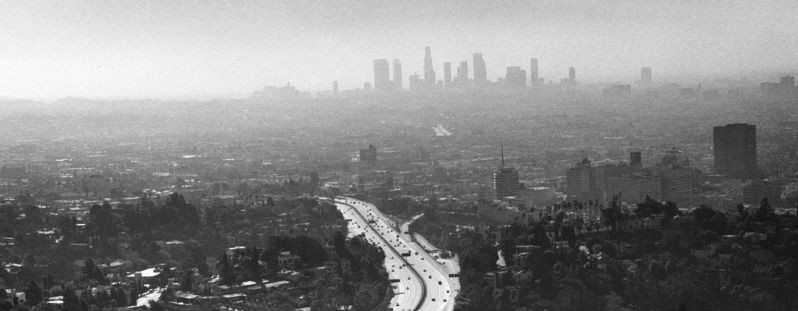
Sucking the Soul out of Hollywood

Hlwd VC Corner Op

I was saddened, but not really surprised, to hear that the Villa Carlotta had been bought by a developer that wanted to turn it into an extended stay hotel. This kind of thing is going on all over Hollywood these days. Developers and real estate interests with tons of cash buying up older buildings, kicking out the tenants, and reinventing the place as a playground for the upscale crowd.

Hlwd VC Edge

It’s especially sad with the Villa Carlotta, though, because of the community that had grown inside those walls. Take a look at this article from Vanity Fair, written by a tenant, to get a sense of what’s being lost as these people are forced out by the owner.

Ciao, Villa

Here’s another article from the LA Times.

Changing Neighborhood Engulfs Their Old Hollywood Home

Hlwd VC Window H

There are larger issues, too. Not only are these people losing their homes, but they’ll have a hard time finding anything else that they can afford. Rents are going up all over LA. Owners of older apartments are jacking up rents, and units in many of the new buildings start at around $2,000 a month.

It’s well known that LA is in an affordable housing crisis, and taking the 50 units in the Villa Carlotta off the market is just one more turn of the screw. Hopefully SB 2222 will put a stop to this. It was recently signed into law by Governor Brown, and requires that developers who acquire a rent-controlled property maintain the same number of affordable units regardless of what they plan to do with the property. But LA has lost thousands of affordable units in recent years. The new law may be too little too late.

Hlwd VC Pots

In The Times piece the writer describes the meeting the developer had with the tenants to let them know they were being evicted. The way they were spinning it was that the tenants should be glad, because the developer was going to spend a lot of money refurbishing the building. This just shows how clueless they are. These people aren’t just losing their home, they’re losing a place where they made friends and partied, a place where they shared food, stories, art and music. For these people it wasn’t just a place to live, it was a community. The Villa Carlotta is a lovely relic of old Hollywood, but even more special than the building are the people who lived there.

Of course, the new owners don’t care about the people. All they care about is money.

Hlwd VC Door

The Ennis House

En 20 Sky

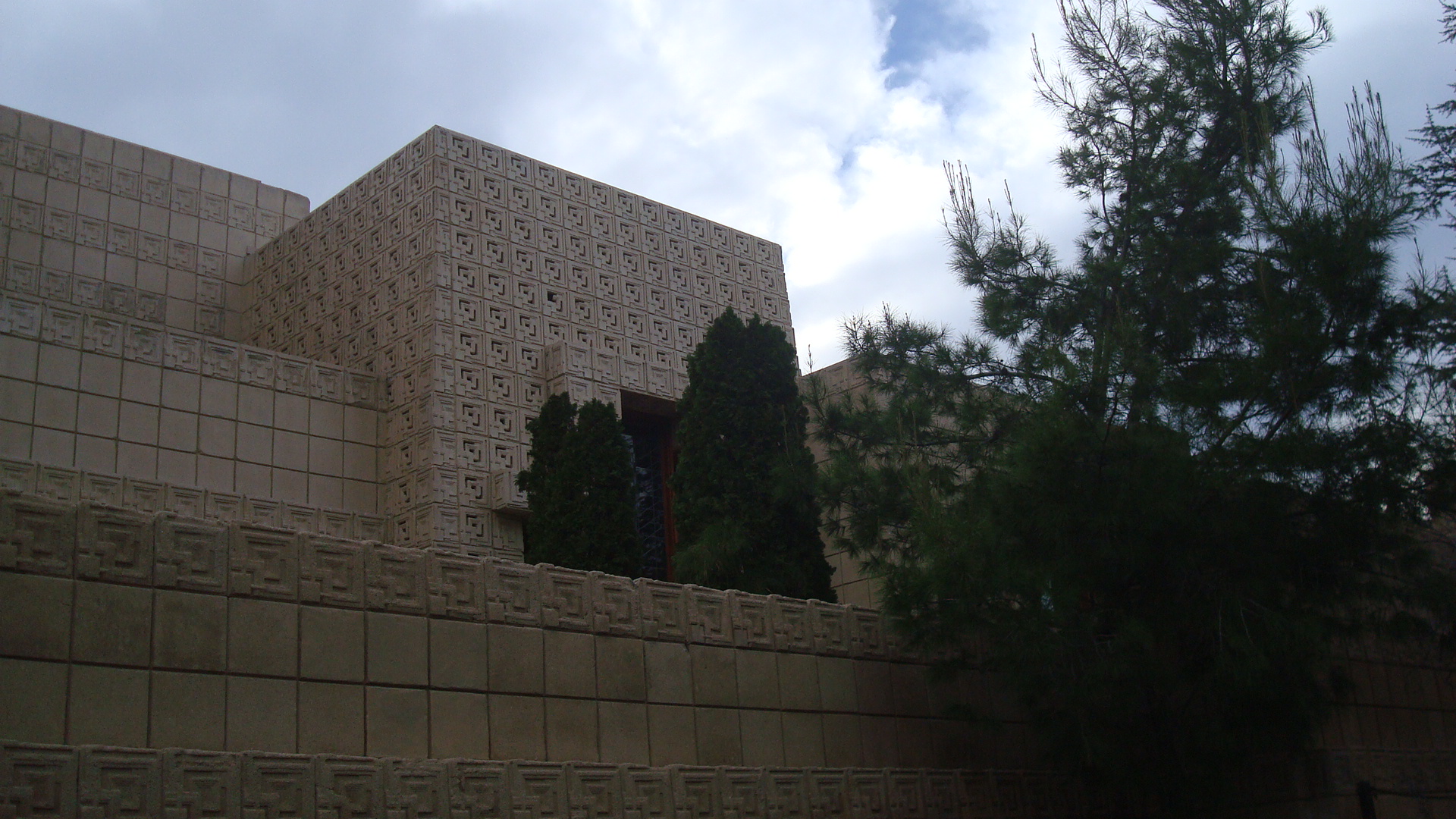
I’d read about Frank Lloyd Wright’s Ennis House for years, but I’d never actually been to see it.  So this last weekend I decided I was going to pay a visit.

The gate at the driveway.

The gate at the driveway.

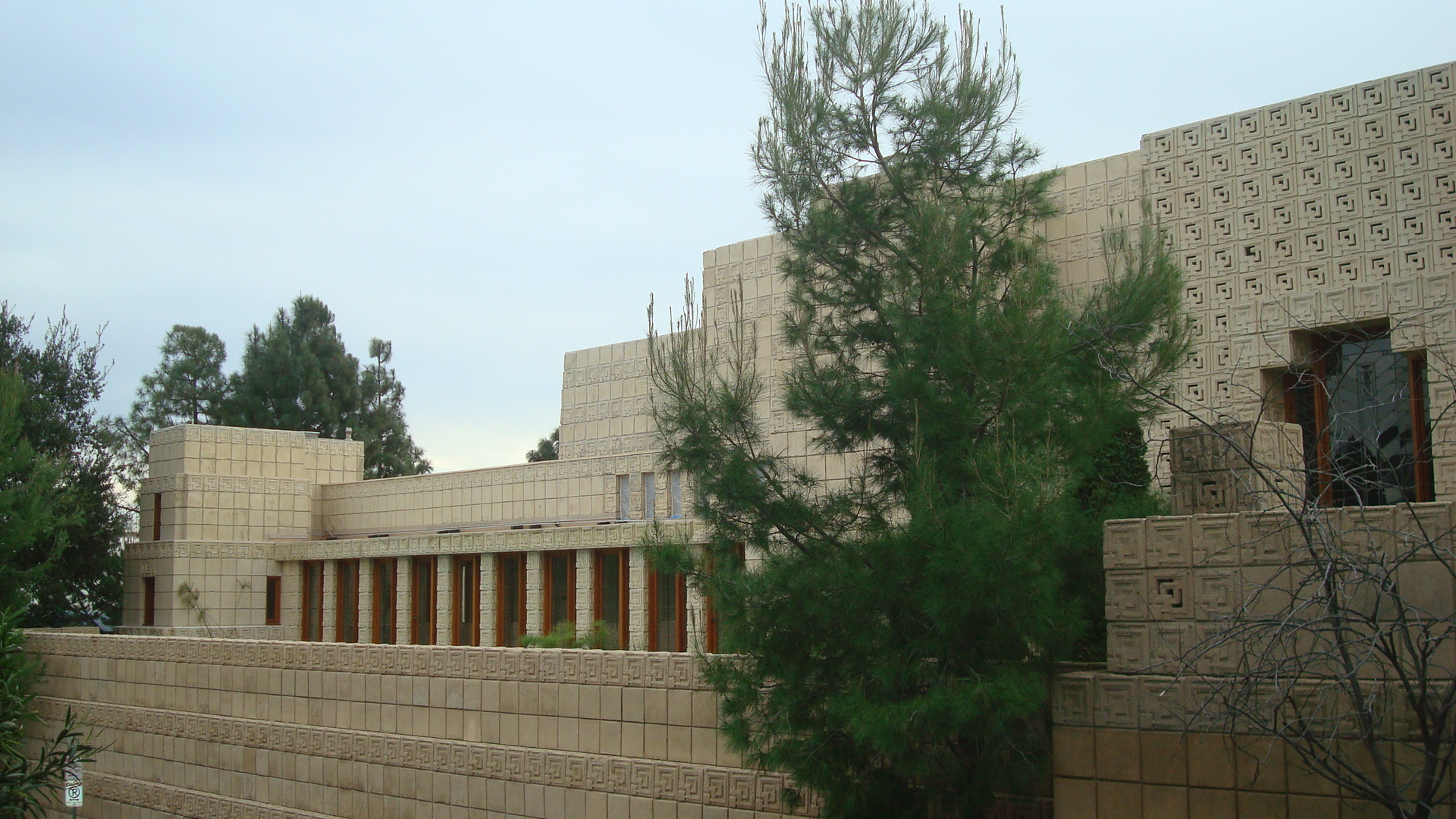
It’s an amazing structure, built using the “textile block” process that Wright explored during his time in the LA area.  Unfortunately, as beautiful as the house is, it started falling apart even before it was finished.  Wright’s idea of mixing granite from the site into the concrete used for the blocks probably sounded like a good idea at the time.  In practice, though, it made the blocks unstable.  Millions have been spent restoring the Ennis House over the years.  For a while, it was owned by a foundation that tried to rehabilitate it, but the process proved too costly and they ended up putting the house on the market.

The front of the house.

The front of the house.

Selling Wright’s LA area houses isn’t as easy as it might seem.  The Ennis House was on the market for years, and the price had to be lowered significantly before a buyer was found.  As far as I can tell, La Miniatura in Pasadena is still on the market.  The problem seems to be that beyond the purchase price, buyers know that they’ll have to spend a fortune on upkeep.  And because the houses are on the National Register of Historic Places, the standards for restoration are very strict.  If you need to patch a wall, you can’t just slap on some spackle.

The back of the house.

The back of the house.

But the Ennis House is lovely, and absolutely one of a kind.  Wright was influenced by Mayan architecture, and the house seems at once both ancient and modern.  To see what it looks like inside, visit the web site by clicking the link below.

The Ennis House

And if you’re not familiar with Wright’s work, you might want to visit the Wikipedia page devoted to him.  Aside from the quality of the work he did himself, he had a huge influence on American architecture.

Frank Lloyd Wright at Wikipedia

Wright thought he was creating a practical approach to constructing homes with his textile block system.  In reality, it turned out to be terribly inefficient and outrageously expensive.  But the fact that people have been willing to invest the time and money to maintain them over several decades is an indication of how precious these homes are.  Their value goes way beyond anything you can measure in dollars.

Another shot of the back of the house.

Another shot of the back of the house.

The Neighborhood Is Changing, and Not for the Better

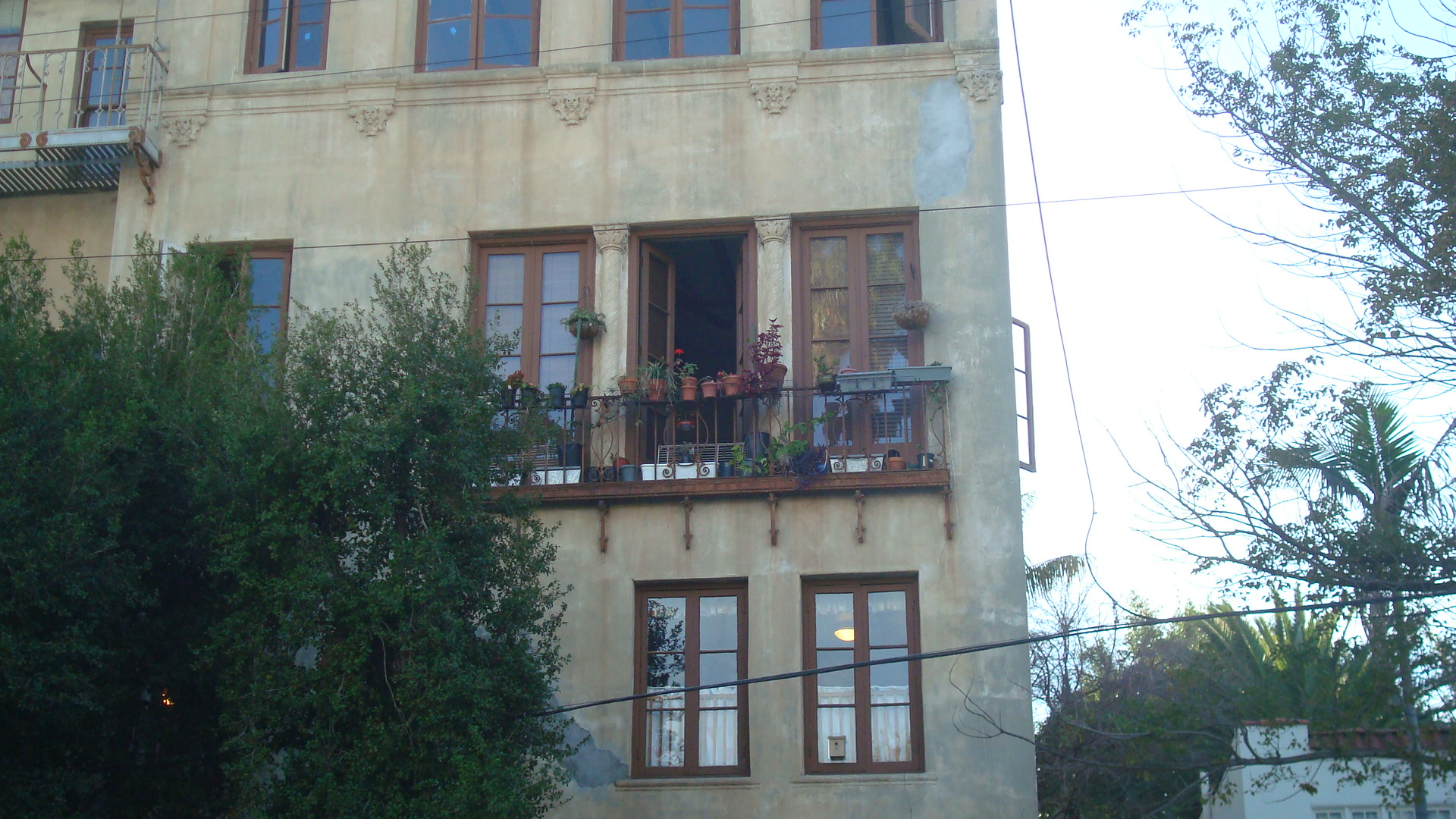
The main gate that used to lead to the Cat & Fiddle.

The main gate that used to lead to the Cat & Fiddle.

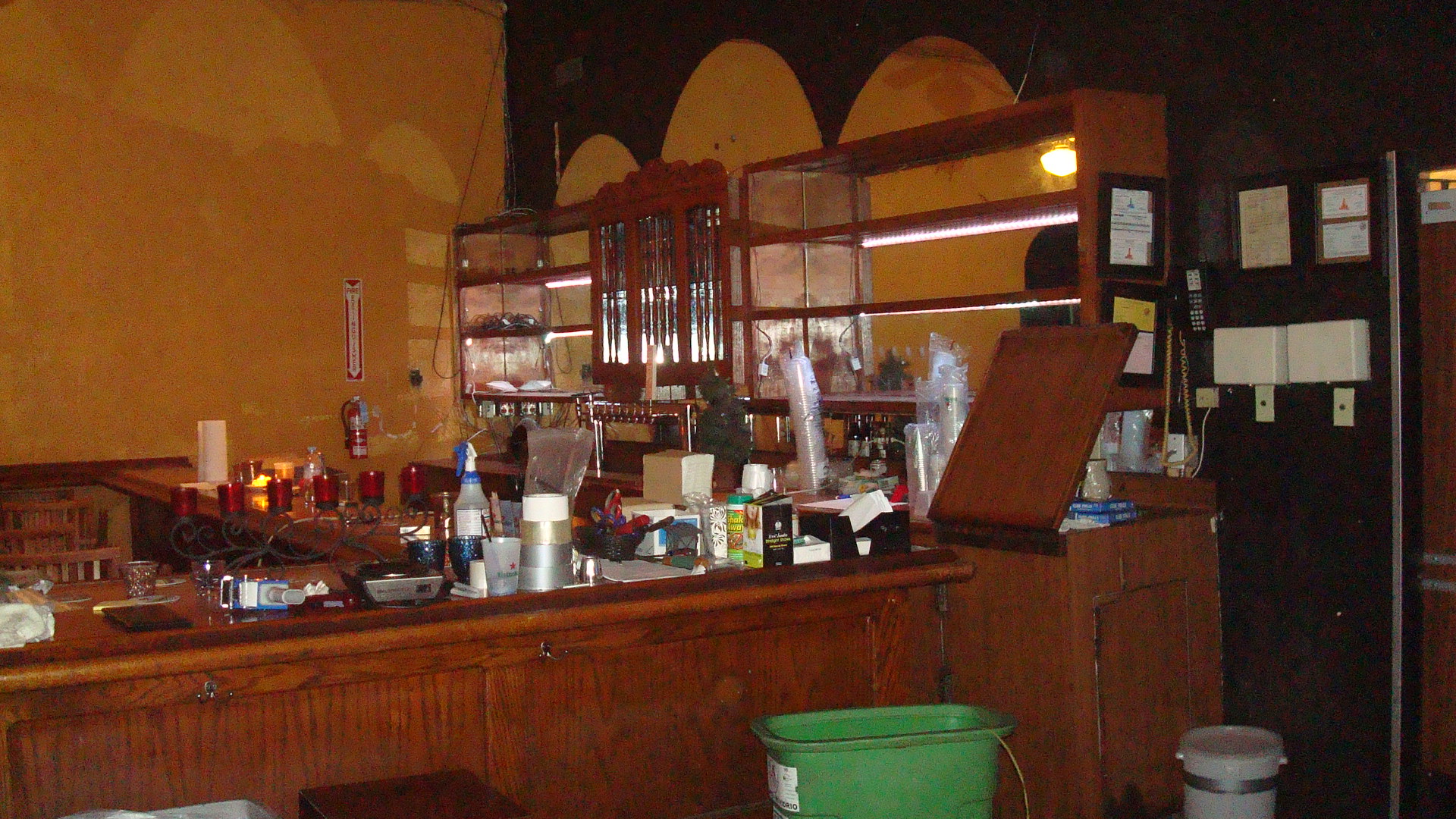
I was with with my brother and my nephew last week when we decided to go to the Cat & Fiddle for dinner. What a shock to find out that they were closing the place down. Apparently the owners are looking for a new location, but at this point they haven’t found anything. When I dropped in a couple days ago, the restaurant was almost cleaned out. I’ve had so many good times at the Cat & Fiddle, hung out there with so many good friends. It was strange to be standing there, surrounded by boxes and furniture. Nobody sitting in the booths. Nobody standing at the bar. No music. No conversation. Just silence.

The silent courtyard.

The silent courtyard.

The empty booths.

The empty booths.

The deserted bar.

The deserted bar.

According to the LA Weekly, the building was purchased by its current owners, an investment group headed by Jesse Shannon, in 2005. When the Cat & Fiddle’s lease was up, apparently Shannon wouldn’t consider renewing it. At this point he has not revealed who the new tenant will be. No doubt one more upscale bar/club/restaurant of the type that’s been spreading like a virus through Hollywood for the past decade. Shannon does say that his group plans to spend millions to renovate the building.

This is good news. I hope he’s serious. The building is a beautiful example of the Spanish Colonial Revival style, with some very cool Churrigueresque decoration. I hope the money Shannon spends is matched by a real desire to restore the building, rather than to make it a glitzy magnet for club-hopping kids.

A few links. The first is to the story in the LA Weekly. Next, a link to a Facebook page that was created in the hope that the Cat & Fiddle could stay at its old location. It has some photos that show how full of life the place was. And last, an article on LA Eater in which Shannon talks about the reasons for not renewing the restaurant’s lease.

Farewell to the Cat & Fiddle

Let’s Save the Cat & Fiddle

Why the Cat & Fiddle Had to Go

I look forward to checking out the next incarnation of the Cat & Fiddle whenever it finds a new location, but I’m really sad to see it leave the building on Sunset. Sad because it was such a great place to hang out. And also sad because it’s just the latest casualty of the gentrification craze that’s sweeping through LA. The new tenant may have an amazing menu and a fabulous bar, but I seriously doubt it will have one tenth of the character that the Cat & Fiddle had.

A photo of the Cat & Fiddle from September of this year.

A photo of the Cat & Fiddle from September of this year.

Another One Bites the Dust

Oswald Bartlett House, Los Feliz

Oswald Bartlett House, Los Feliz

Got this in my e-mail this morning. More bad new for those who care about LA’s history.

Press Advisory, Immediate Release

DEVELOPER SET TO DEMO LA’S CULTURAL HISTORY

Reprieve Denied: Historic Oswald Bartlett House Goes Down Today

WHAT: Demolition of the 100-year-old Oswald Bartlett House is set to begin today and members of the community are expected to be present to document and bear witness to the house’s undeserved and sad destruction in the middle of the season when Jews and Christians celebrate – instead of destroy – their history and traditions.

WHEN: Demolition work is set to begin at 7 am, today, Thursday, December 18, 2014.

WHERE: 1829 N. Kenmore Ave., Los Angeles – the Los Feliz neighborhood

BACKGROUND: The Oswald Bartlett House has been recognized by preservationists as a pristine and rare example of architect A.C. Martin’s work. Martin, one of Los Angeles’ leading architects in the first half of the 20th century, designed LA City Hall and a half-dozen other notable structures now designated as landmarks. The Bartlett House was designed by Martin for a friend and is a rare example of Martin’s youthful work in domestic design; his more lasting reputation was founded on his design of major public and religious buildings. Despite the recognition by experts of the cultural and historic significance of the Bartlett House, City Hall turned a deaf ear to the experts (including the LA Conservancy) and community’s appeals to spare the house from demolition to make way for a six-unit townhome project whose building entitlements were gained through misrepresentations about the historic nature of the Bartlett House. Last Wednesday the City Council gave the developer, a business ally of one of Mayor Garcetti’s top campaign fundraisers, the green-light to proceed with demolition. Today the sledgehammers and bobcats will start taking the house down.

For Additional Information Contact:
John Schwada, MediaFix Associates
john.schwada@gmail.com
310 709-0056
310 597-9345 w

So one more historic building bites the dust. Garcetti seems determined to let developers have their way, no matter the cost to the city’s cultural heritage. Some of you may remember that the Mole-Richardson building on La Brea was recently demolished, in spite of the fact that it was a classic art deco building by Morgan, Walls and Clements. If you missed that story, here’s a link to a piece on Curbed.

Art Deco Buidling Destroyed

Other historic structures currently being threatened are the Warner Pacific Theatre, the Mosaic Church, and the Chase Bank building at the corner of Sunset and Crescent Heights. But who cares about history, when you can have a shiny, new mixed-use skyscraper?

The photo of the Oswald Bartlett House was taken by Michael Locke, who has spent a fair amount of time documenting the Los Feliz area. To see more of his work, click on the link below.

Michael Locke at Flickr

Paying Attention to the Port

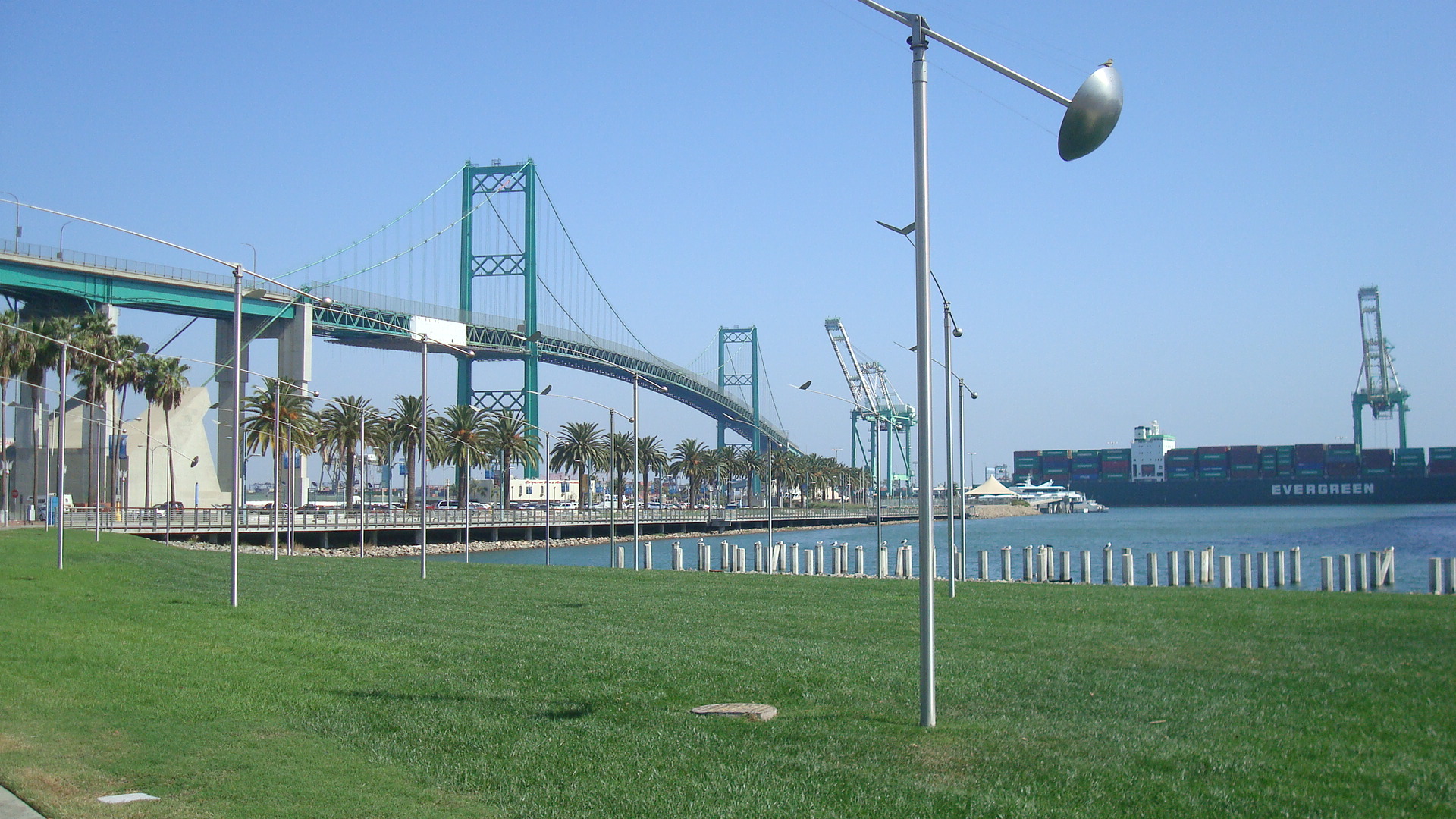
A view of the Vincent Thomas Bridge from Harbor Boulevard.

A view of the Vincent Thomas Bridge from Harbor Boulevard.

Geographically, Los Angeles is a little odd. A map of the city’s boundaries looks kind of like a jigsaw puzzle that somebody forgot to finish. We generally think of it as reaching from Downtown to the beach, the Valley to South LA. But actually there are a handful of smaller cities within that area, including San Fernando, Burbank, West Hollywood and Beverly Hills, that punch some sizable holes in the map. And one of the strangest aspects of the city’s outline is that the boundary stretches a long, thin arm to the south in order to embrace San Pedro and Wilmington, including the Port of Los Angeles.

A park at the water's edge, with the Vincent Thomas Bridge in the background.

A park at the water’s edge, with the Vincent Thomas Bridge in the background.

I imagine that many Angelenos, like me, completely forget that the San Pedro and Wilmington are part of the City of LA. They were annexed by (or consolidated with, depending on which source you consult) Los Angeles in 1909. Around the turn of the century it was becoming increasingly apparent to LA’s business community that the port was an economic powerhouse which would bring tremendous wealth to the region. The City’s leaders courted San Pedro and Wilmington for years, but the two smaller communities were concerned about losing their autonomy. Finally the deal was sealed in 1909, with LA promising to spend $10 million to improve the Port of LA.

Houses on a hill overlooking Harbor Boulevard.

Houses on a hill overlooking Harbor Boulevard.

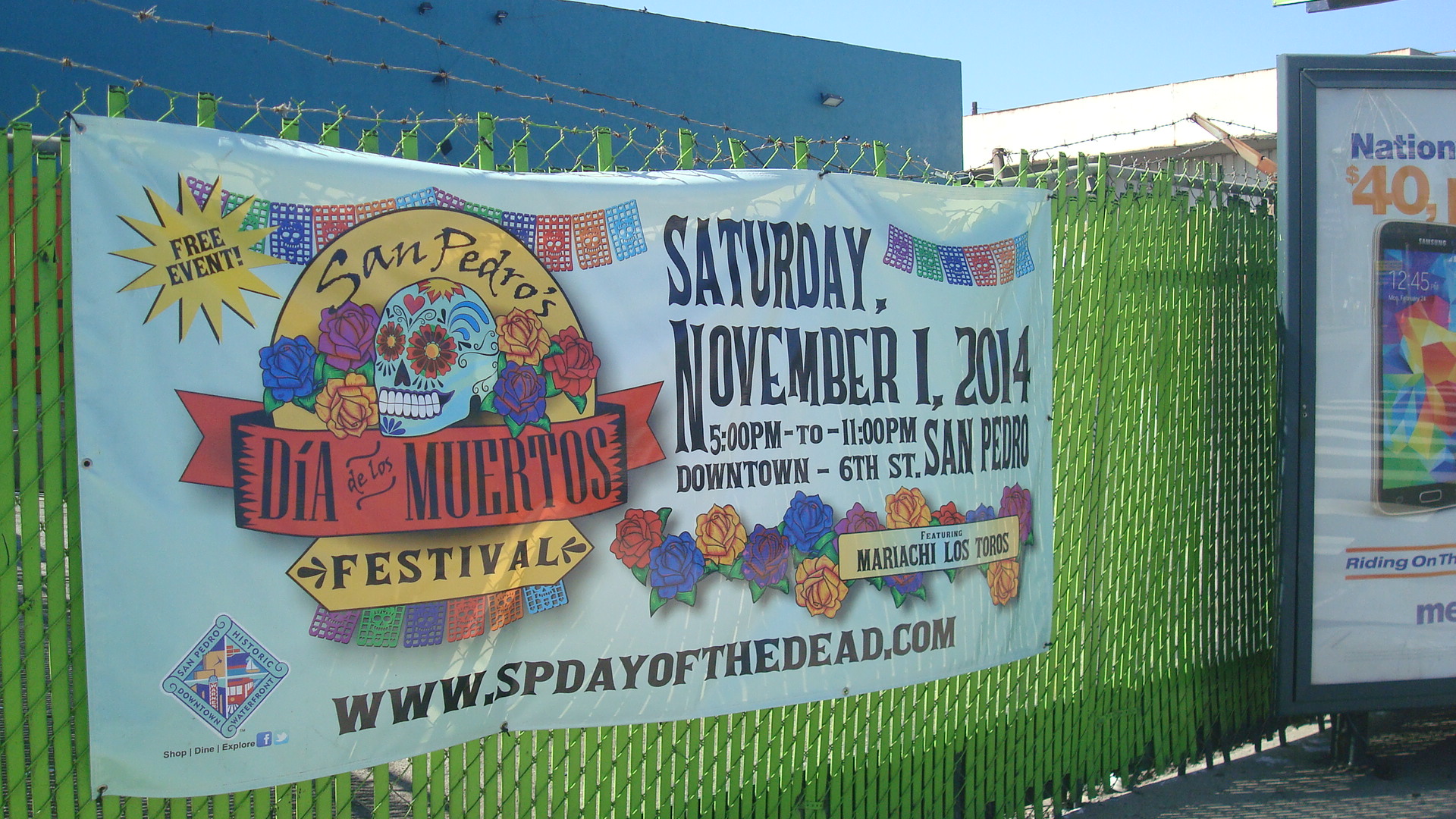
Banner advertising a Dia de los Muertos celebration on Harbor Boulevard.

Banner advertising a Dia de los Muertos celebration on Harbor Boulevard.

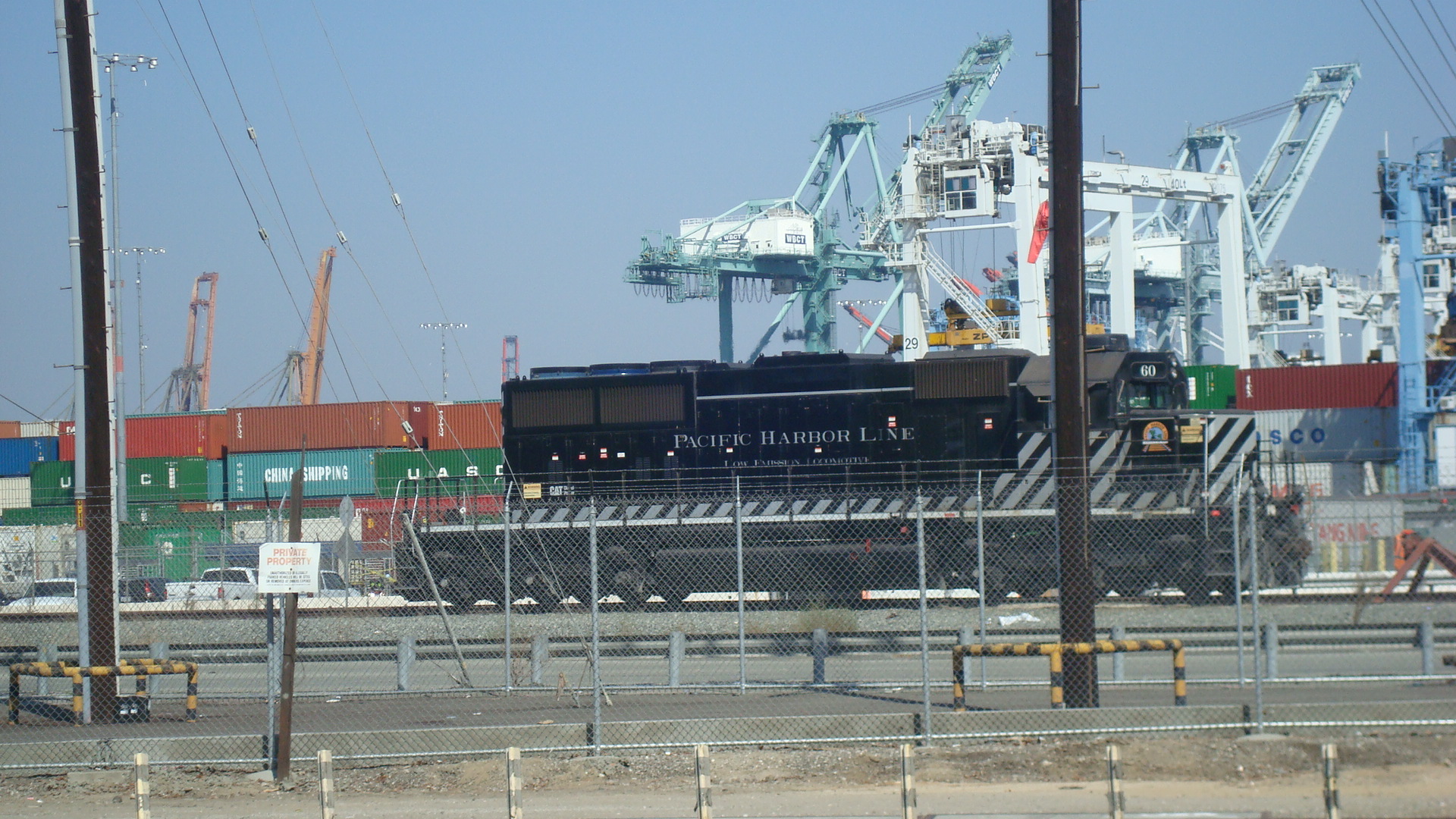
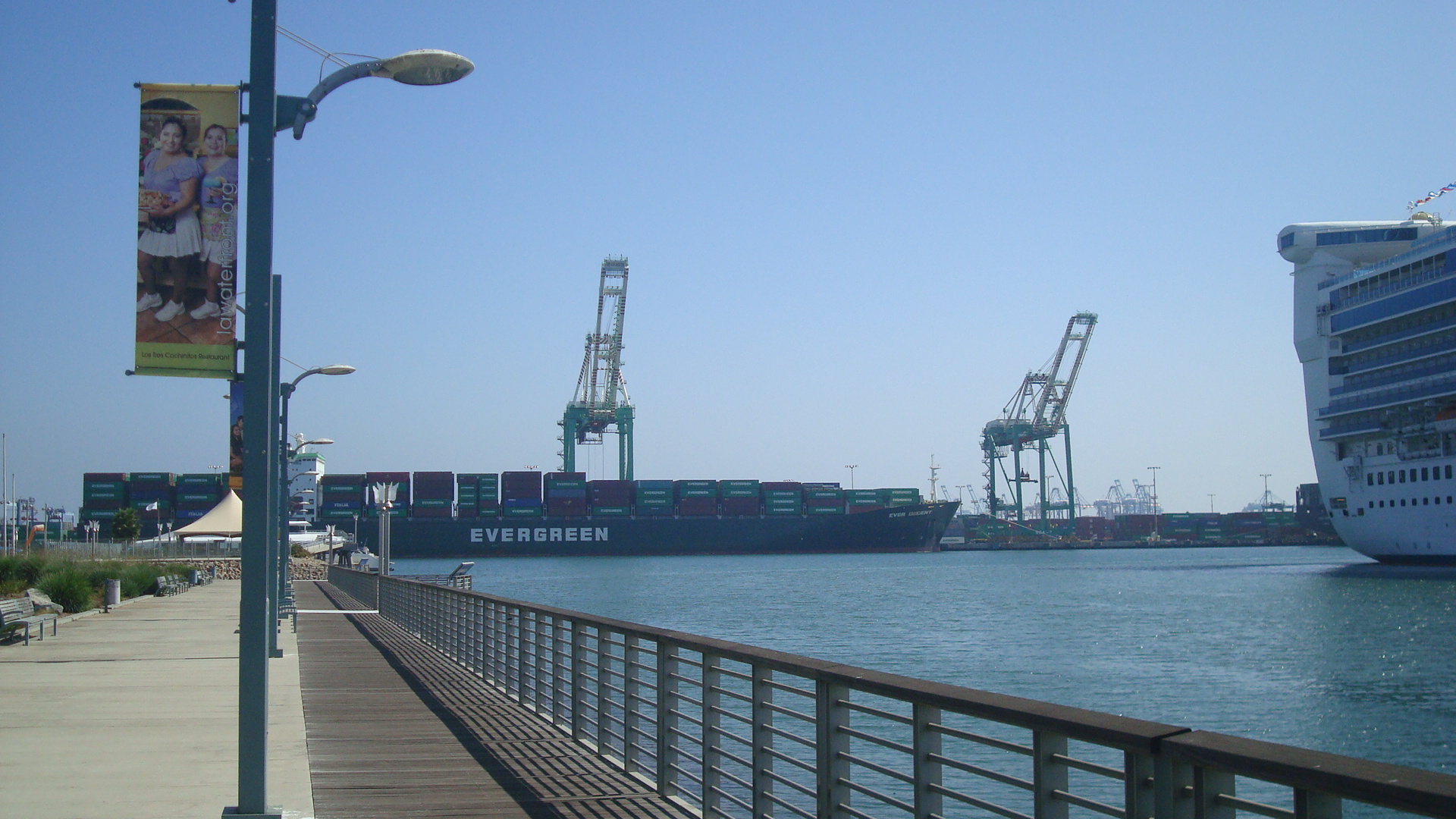
Today the Port of LA is one of the busiest harbors in the world, handling billions of dollars in goods and creating thousands of jobs. It is a major part of the regional economy, which is why we should all be concerned about the current strife between labor and management. The issues are extremely complex, and I don’t pretend to understand them all. To boil it down to the basics, shippers are struggling to cut costs because of increasing competition and workers are afraid of reduced compensation and the loss of jobs. This article from the Daily News offers more background.

Port Congestion Worsens, Labor Talks Escalate

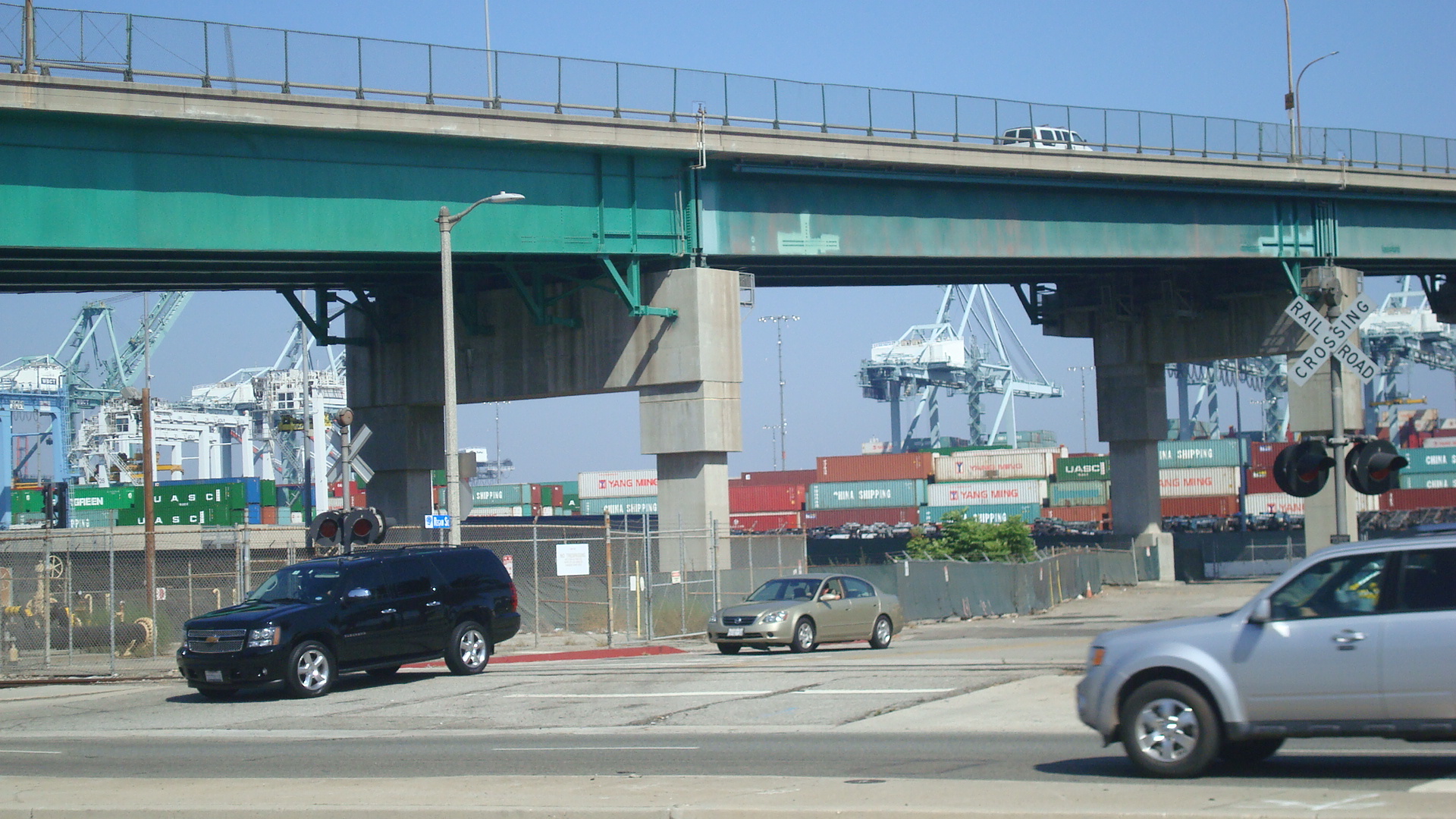
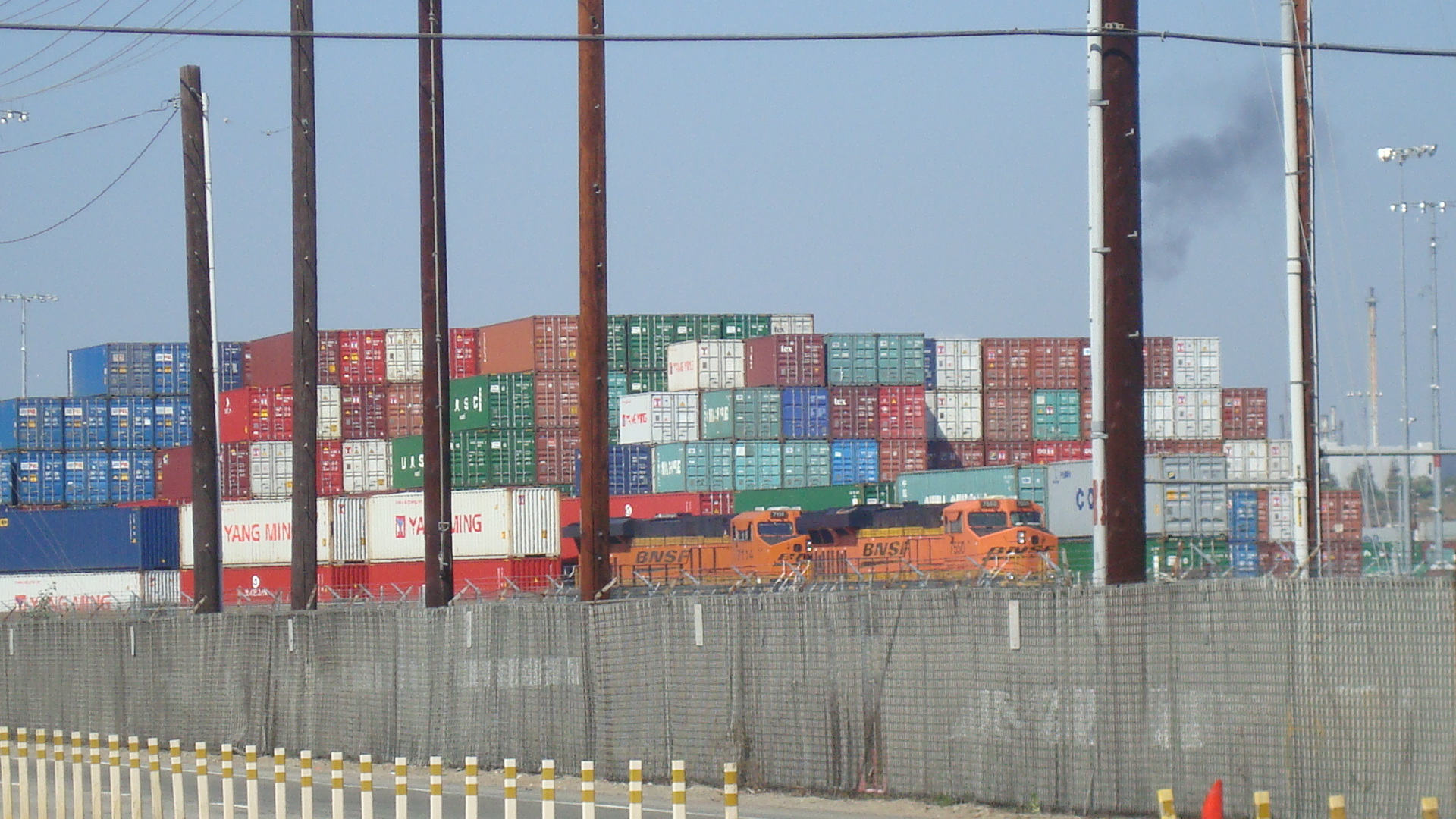
Stacks of containers seen from Harbor Boulevard.

Stacks of containers seen from Harbor Boulevard.

A crisis like this at the Port would be a problem any time of year, but it turns into an even bigger problem when it comes just before the holiday season. This is the period when retailers do most of their business, and there is massive anxiety about inventory not reaching the shelves in time. Tensions are running so high that Mayor Garcetti has stepped in to help, and business interests have sent a letter to President Obama asking him to intervene.

Rail lines carry containers from the Port to destinations throughout the nation.

Rail lines carry containers from the Port to destinations throughout the nation.

Resolving these problems won’t be easy. It’s not just a matter agreeing on a new contract. There are larger issues stemming from the way global markets are evolving, and even if this situation is resolved, there will be many challenges to come. These developments don’t just affect the local economy. The impacts will be felt throughout the state and the nation as well.

For those of us who tend to forget about San Pedro, Wilmington and the Port of LA, this should serve as a reminder that they’re vital part of our city.

A view of the Port from the water's edge.

A view of the Port from the water’s edge.

Taking a Closer Look

Hlwd CS 03 Frnt Hills 2

It’s so strange how you can pass by something a million times, and not really even notice it. Until it’s in danger of disappearing. The Fifth Church of Christ, Scientist, at the corner of Hollywood and La Brea, was built just after I was born. I’ve been driving by it or walking by it all my life. I remember thinking that it was kind of an unusual building, but I never stopped to take to take a closer look. It was always just part of the landscape.

So recently I did take a closer look, and I started to realize what a beautiful building it was. The site is no longer home to a Christian Science congregation. For the last few years it has housed Mosaic, a non-denominational Christian church. The current congregation recently renovated the building, and I’ll talk more about that later.

Actually, the first version of the church was built back in 1915, according to the Pacific Coast Architecture Database. Back then Christian Science was a growing denomination, and the original design stuck to a pretty traditional classical revival style. But in the 1950s the congregation must have decided they needed a different look, and they hired an architect named Howard G. Elwell.

Very little is known about Elwell. One source I found said that he was active in the LA area as early as 1916. I’ve searched the net, but there’s not much documentation of his work. I found a few photos of a movie theatre in Victorville. I found some images of a doctor’s office he may have designed, but the site is unknown. Apparently he also worked on some houses in Pasadena and San Marino.

But the guy definitely had talent. A walk around the church at Hollywood and La Brea shows that it was created by someone fluent in the modern style. Here are a couple photos of the building as it originally appeared.

Fifth Church of Christ, Scientist seen from Hollywood Blvd. circa 1977

Fifth Church of Christ, Scientist seen from Hollywood Blvd. circa 1977

Fifth Church of Christ, Scientist, also from Hollywood Blvd. circa 1977

Fifth Church of Christ, Scientist, also from Hollywood Blvd. circa 1977

It’s too bad they’re in black and white, because the color scheme was one of the unique aspects of the design. If I remember correctly, the curved section at the corner was clad in lavender tile, and the arched windows were painted a similar pastel shade. The effect was subtle and unobtrusive, which is maybe part of the reason it didn’t attract my attention.

Here’s how the church looks today.

Mosaic, Hollywood seen from Hollywood Blvd.

Mosaic, Hollywood seen from Hollywood Blvd.

The Mosaic congregation did a nice job of renovating the building. They didn’t touch the structure, but they completely rethought the textures and colors. Removing the tile cladding to reveal the brickwork gives the corner of the church a rustic look, and painting the arched windows grey creates a nice contrast. The building definitely has more of a presence than it did before.

a view of the church from La Brea Ave.

a view of the church from La Brea Ave.

another view of the church from La Brea Ave.

another view of the church from La Brea Ave.

But the structure still retains Elwell’s design, which is a unique and interesting adaptation of the modern style. The building has the dignity appropriate to a church, but without the rhetorical flourishes that make some other sacred structures look pompous. It occupies the site beautifully, with the curved wall at the corner giving way to symmetrical rows of arched windows on either side. And while some churches are basically a façade stuck on a box, Elwell thought about the whole structure, making sure that the rear of the building adheres to the same pattern of curved surfaces and strong verticals.

a view of the church from the parking lot

a view of the church from the parking lot

another view from the parking lot, this time facing La Brea Ave.

another view from the parking lot, this time facing La Brea Ave.

Now here’s the bad news. This building will probably be gone in a year or so. Developers want to build a project called Horizon Hollywood, which will consist of 400 residential units with retail and restaurants on the ground floor. Some people think the renderings look pretty nice. Honestly, to me the project looks like another set of generic mixed-use towers. But here’s a link to a write-up at Building Los Angeles. You can judge for yourself.

Hollywood and La Brea’s High-Rise Complex

Personally I’d rather have the church. But I don’t think there’s much chance of saving it. The building has not been designated as a historic landmark. And I don’t see any way it could be incorporated into the high-rise project.

But they won’t start construction on the Horizon Hollywood for a while, so if you’re interested in architecture you might want to take a trip over there. It’s a striking example of mid-century modern, and one of the few known buildings by Howard G. Elwell.

The larger concern is that it seems like historic buildings are once again being threatened by the current development boom. We’ve already lost the Morgan, Walls and Clements building on La Brea near Melrose. This one is probably a goner. And there’s talk of demolishing the Pacific Theatre on Hollywood Boulevard. For a while it seemed like LA was getting better at preserving the past. But these days I get the feeling that money is more important than history.

[For an an update on the status of the Mosaic Church, click here.]

Hlwd CS Frnt Angle 1

The two black and white photos above come from the Security Pacific National Bank Collection of the Los Angeles Public Library’s photo archive. No photographer is credited.