We Still Haven’t Crossed the Finish Line

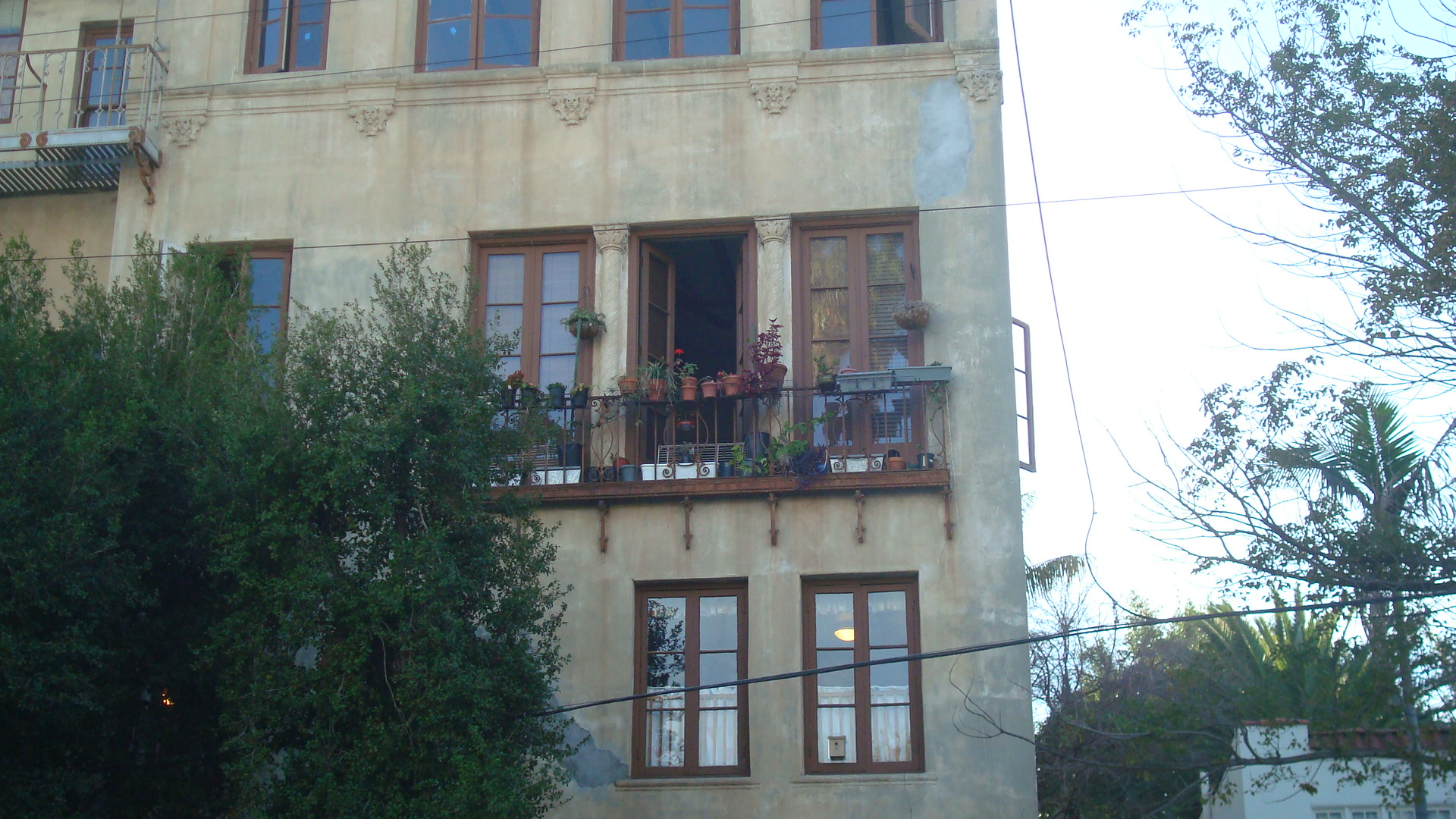
front of N.F. Stokes Residence

front of N.F. Stokes Residence

I was thrilled last week when I heard that LA’s Cultural Heritage Commission voted unanimously in favor of designating the N.F. Stokes Residence a historic cultural monument. The building, at 1905 Grace, dates back to 1917 and is one of the few structures from that era still standing in the Hollywood area. At the same meeting the CHC voted to consider the Mosaic Church, at Hollywood and La Brea, for designation as well. There were a number of people in the community who have worked long and hard to save these buildings, and reading the e-mails from those involved it seemed like everyone was breathing a collective sigh of relief.

But the fight isn’t over yet.

I don’t want to rain on anyone’s parade, but we have to remember that the Stokes house won’t actually be declared a monument until the City Council votes on it. That’s when it becomes official. And as for the Mosaic Church, I was at a meeting last week where a developer’s representative flatly declared that the building did not deserve monument status. Now, you might be thinking, Hey, the CHC vote was unanimous. They clearly believe that both buildings are worth saving! How could the City Council ignore their recommendation?

Better think again. Not too long ago Mayor Garcetti pushed for the demolition of the Oswald Bartlett House over the loud objections of the preservation community, and he got his way. That house is gone. Over the past few months the Mayor has overridden the City Planning Commission to revive two major developments that faced strong opposition from the neighboring communities. There are no guarantees here. Recent history has shown that the Mayor and the City Council will do what they want. Which is often exactly what the developers want.

So we need to keep the pressure on. If you live in Council District 4, where the Stokes Residence and the Mosaic Church are both located, you might want to contact newly elected Councilmember David Ryu. His support will be crucial. Here’s his info.

Councilmember David Ryu
david.ryu@lacity.org
323 957-6415

And if you don’t live in CD 4, you can still contact your councilmember and let them know you think these buildings are worth saving.

Mosaic Church

Mosaic Church

Hollywood Journal – It Wasn’t What I Wanted

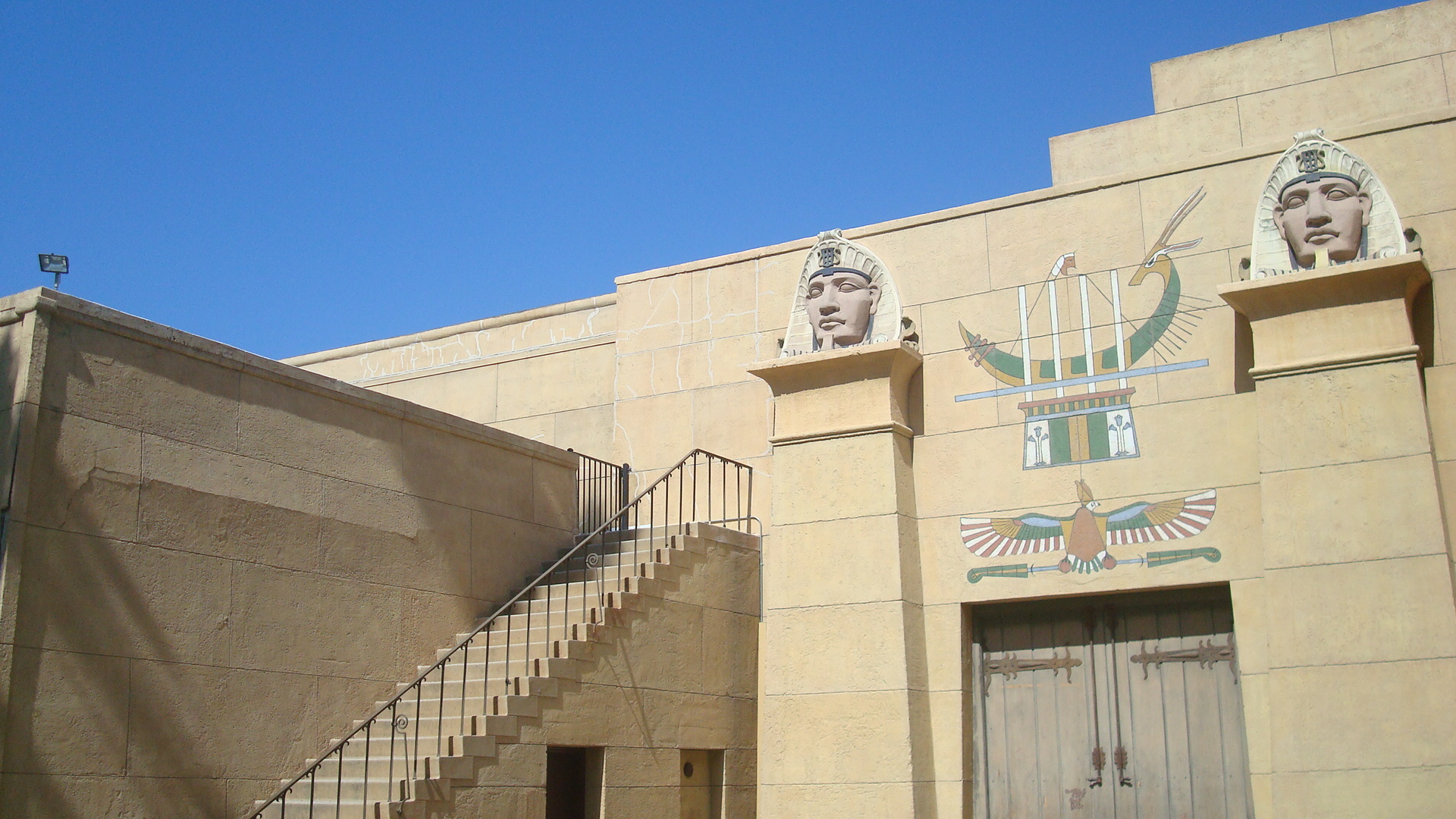
Egyp Pylons Angle

Things change, and sometimes change is hard to accept. Part of the reason I spent years keeping a journal on Hollywood was to record the transformations that were taking place. One of the biggest upheavals was in the way films were exhibited. Hollywood is home to a handful of movie palaces, all of them built over the course of a decade starting in the early twenties. Up through the eighties, those palaces were still playing first run movies, and on opening weekend you might see lines going down the block.

But in the eighties multi-plexes started springing up, and the huge Hollywood theatres couldn’t compete. They either had to change or die. The Egyptian Theatre was shuttered in 1992. I was really upset. I’d seen so many movies there, including 2001, Alien and Point Break. When it suffered major damage in the 1994 Northridge quake, I was sure the next step was demolition. So I was overjoyed when I heard the American Cinematheque had bought the building and was going to renovate it.

Overjoyed, that is, until the theatre reopened and I saw the results. The auditorium was less than half its original size and the screen was significantly smaller. Plus, there were a number of minor changes that bugged me. I wrote it all down in the journal entry below. I was ticked off.

On the plus side, though, the Cinematheque was on Hollywood Boulevard and they were showing some great stuff. I eventually signed on as a volunteer, and ended up giving tours of the theatre, which made me look at the changes in a whole new light. In the first place, there was no way the Cinematheque could run the Egyptian as a 2,000 seat house. It just wasn’t possible to fill an auditorium that big on a regular basis. They had to find a way to solve that problem, and the solution was building two smaller theatres inside the original structure. Second, the theatre I remembered was very different from the theatre Sid Grauman had built in nineteen twenty two. He created a silent movie palace. As soon as sound came in, the theatre had to start adapting to stay viable, and numerous changes had been made over the years. In the process of renovating the Egyptian, the Cinematheque actually revealed parts of the original structure that had been concealed for decades. Third, the process of renovating a historic building is incredibly complex and costly. The Cinematheque had to follow the City’s code for historic preservation and find the money to pay for everything. They were lucky to connect with a couple of very talented architects, Craig Hodgetts and Ming Fung. The team came up with a number of innovative and elegant solutions to some difficult problems.

I love seeing movies at the Egyptian these days. If the screen isn’t quite as big as it used to be, it’s still one of the largest you’ll find in LA. And the sound is way better than it was when the Egyptian was operating as a commercial movie theatre. So while the journal entry below shows my initial disappointment, as the politicians say, my views have evolved. When the theatre first reopened, I wanted it to be the way I remembered it in years past. That wasn’t possible. Things change.

Here’s a link to a page on the American Cinematheque web site that shows images of the Egyptian over the years.

Egyptian Theatre Past

And here’s a link to the Hodgetts and Fung web site that shows images of their renovation/restoration.

H+F Egyptian Theatre

Egyp Hier

January, Nineteen Ninety Nine

Well, last night I finally made it over to the American Cinematheque. And I’ve gotta say I’m pretty disappointed with what they’ve done to the Egyptian. I mean, if you just want to look at it as a modern, mid-sized theatre it’s fine. But, aside from preserving some of the decorative elements, it has nothing to do with what the Egyptian was. It seems like the auditorium is about half its original size. The screen is considerably smaller. The seats are cozy but narrow, and there’s very little leg room. I was more comfortable the other night at the Beverly. Why do they have that sign up that says it’s Grauman’s Egyptian? It’s not. Did any of the people involved seriously think they were restoring or renovating the original theatre? All they’ve done is build a mid-sized auditorium inside the shell of a movie palace. They’ve completely changed the interior and the exterior of the building. The experience of going to this new Egyptian Theatre is totally different, and it’s certainly not a change for the better.

Now that I’ve got that out of my system, I also have to say I’m really glad to have the American Cinematheque on Hollywood Boulevard. I’m pretty impressed by their programming so far. It seems like they really want to offer all kinds of films. In spite of what they’ve done to the Egyptian, I look forward to going back.

Last night we saw Cruising, and Friedkin was there to talk about it. I really liked the film. It was interesting to hear the director’s comments, too.

Egyp Columns

Landmark? What Landmark?

Circus Disco

Circus Disco

When a proposed project might have significant impacts on the surrounding community, state law requires the developer to prepare an Environmental Impact Report (EIR). In theory, this is a good thing. The idea is to make sure that negative impacts are identified so that everyone is aware of how the project will affect the area. In practice, the whole EIR process is questionable. The basic problem is that the developer is the one who pays for the report, which means that it almost invariably focusses on the positive impacts, and either minimizes or ignores the negative impacts.

This is exactly what’s happing with the Lexington Project. The developer wants to build almost 700 residential units on a city block between Lexington, Santa Monica, Las Palmas and Seward. The EIR tells us it’s a terrific project with numerous benefits for the area. But there a lot of the people in the community who see things differently.

The aspect of the project that’s gotten the most media attention is the fact that the developer will be demolishing the Circus Disco. You may be wondering why this is a big deal. Hollywood is full of places to dance. But the Circus is an important landmark for the LGBT community in LA, and especially for non-white gays and lesbians. Back in the 70s, when disco was big, there were plenty of clubs where gay men could party all night long. Unfortunately many of those clubs didn’t admit blacks and Latinos. But the Circus Disco was open to everyone, and it’s been cherished for years by the LGBT community because of that.

But while the EIR mentions the Circus in its survey of structures on the property, the report concludes that, “… [N]one of these buildings appears eligible for listing in the National Register, California Register, or for local City of Los Angeles Historic-Cultural Monument designation.”

This is interesting. Sure, it would be hard to make a case that the Circus was significant enough to make the national or state registers. But are they saying it’s not a significant part of LA history? If so, it seems that the City of LA’s Office of Historic Preservation has a different view. Survey LA is a program initiated by the OHR to document significant buildings. Last year they released a document entitled LGBT Historic Context Statement which gives an overview of the community’s history and identifies potential landmarks. And the Circus Disco is on the list.

LGBT Historic Context Statement from Survey LA

But it’s not just the Circus that’s threatened. The French Market and Catch One, both of which hold a significant place in the LGBT community, may soon be gone. And let’s not forget that back in 2011 the building that originally housed A Different Light, an early gay bookstore, was demolished. That was the same year that the Spotlight, according to some the oldest gay bar in Hollywood, closed its doors. The building still stands, but now it’s just another upscale nightclub. It does seem like the LGBT community is losing a huge chunk of its history.

Not that any of us should be surprised. Preservation has never been a high priority in LA. Groups like the Los Angeles Conservancy and Hollywood Heritage keep fighting to save these buildings, but City Hall seems more interested in keeping the developers happy.

If you want to learn more, this article from the Daily News offers a good summary.

Disco to Become Site for Condominiums

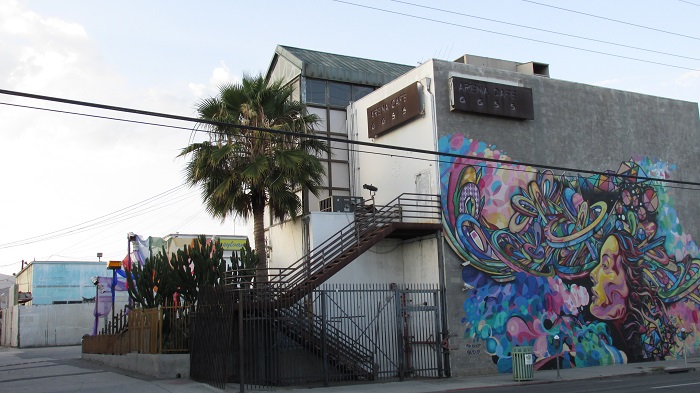
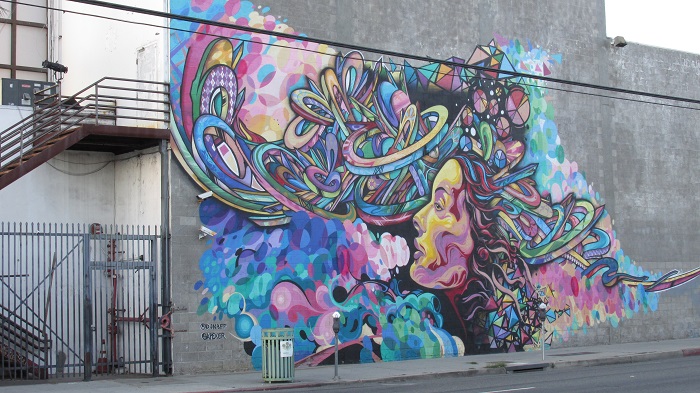
Mural on the front of the building

Mural on the front of the building

Losing the View

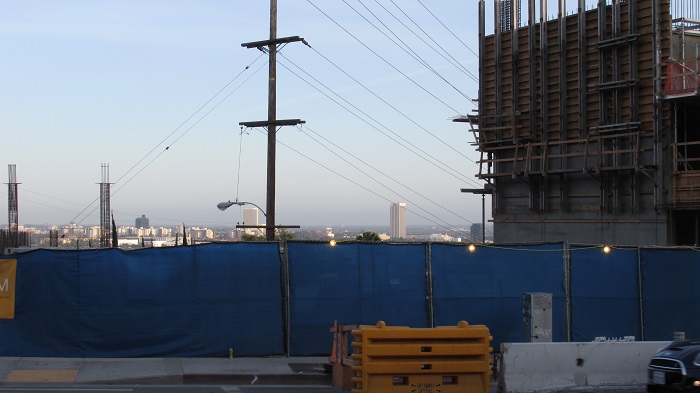
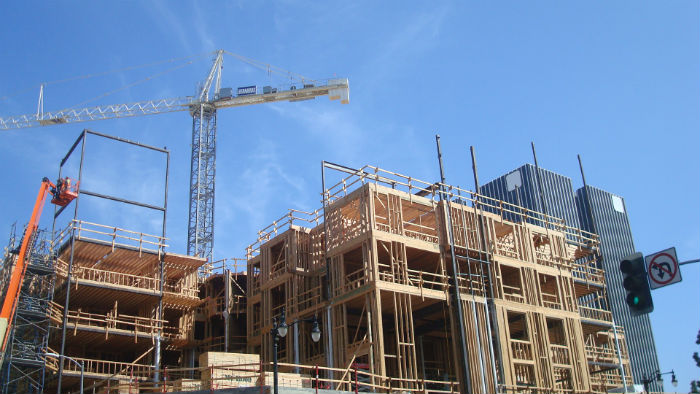
A view of construction underway at Sunset and La Cienega

A view of construction underway at Sunset and La Cienega

People have been building things along the Sunset Strip for a long time now. There are plenty of reasons to want to build there. Probably the people who put up the first houses and apartments along the winding hildside road were drawn by the view. The developers who came along in the twenties had something different in mind. Because at that time the area was unincorporated and beyond the reach of the LAPD, it was a great place to put bars and clubs. In the sixties the nightlife was still a draw, but it also became a hotspot for the counterculture. The clubs attracted bands that were playing all kinds of music, and the Strip in general became a magnet for anyone looking for a different kind of lifestyle.

So even before people began taking LA seriously as a city, the Strip had a reputation for being incredibly hip. Developers saw the potential for profit, and the number of high-rise apartments and hotels grew. Out of towners would come to the Strip to have a drink at the Viper Room or catch a band at the Whiskey. And if they had enough money they could rent a room at one of the hotels that offered a spectacular view of the city spreading out all the way to the horizon.

North side of Sunset at La Cienega

North side of Sunset at La Cienega

I’ve never had enough money to stay in one of those hotels, but I’ve still been able to enjoy the view. I remember ambling along Sunset as a kid, heading for Tower Records or Book Soup, turning my head now and then to gaze out over LA. Though there were a number of high-rises, much of the Strip was lined with one and two-story buildings. There were long stretches that allowed you to gaze out at incredible vistas.

A view of the city from Sunset

A view of the city from Sunset

But these days those views are disappearing. A new spate of development is rising up along the Strip, making it harder and harder to see those breathtaking vistas. There’s a massive project under construction right now which will occupy a good stretch of Sunset on both sides of La Cienega. And there are other projects under consideration, such as 8150 Sunset.

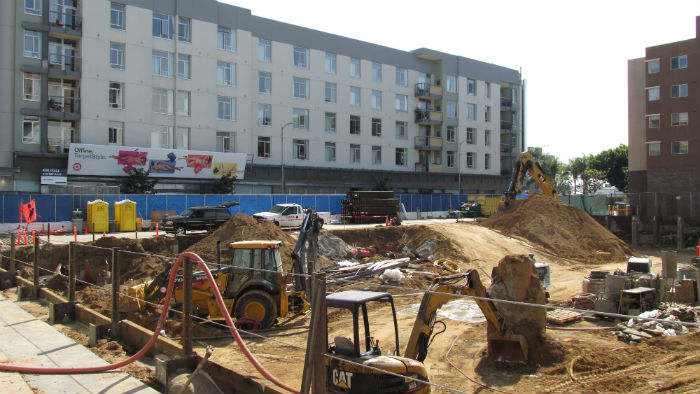
Construction site on Sunset west of La Cienega

Construction site on Sunset west of La Cienega

Many of the hillside residents are freaking out, and one of the reasons they’re upset is that these projects will block their view. (There are other reasons, too, including increased traffic and crumbling infrastructure.) Of course, the fact that the folks in the hills are mad about losing their view has riled the pro-development crowd. They’ve been reviled as elitist snobs who want to stop progress just so that can stand on their deck at sunset and gaze at the vast landscape below. It’s interesting, though, that the developers haven’t been the focus of similar criticism. Let’s get real. One of the main reasons they’re building high-rises along the Strip is so they can sell the view. The hotel rooms and condos in these new projects will go for outrageous prices precisely because they offer fantastic views. And if you think we really need another upscale high-rise in LA, I think you’re completely out of touch with reality. Developers are pushing these projects because they can make a mountain of cash. Meanwhile, there’s a serious shortage of affordable housing, in large part because the current wave of development is driving housing prices sky high.

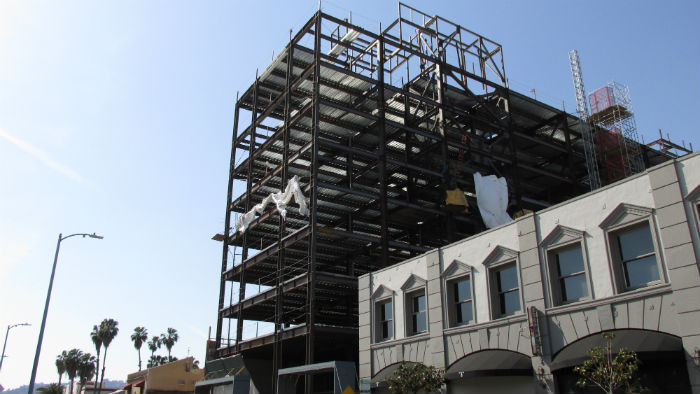
Another view of construction at Sunset and La Cienega

Another view of construction at Sunset and La Cienega

As for me, I do feel like the Strip is losing something. It used to be that just standing on the sidewalk you could see a large swath of the city laid out before you. It was something free that anybody could enjoy. These new projects will make those views harder to find. And beyond that, I feel like the whole Strip is getting so pricey that ordinary people are being squeezed out. While there have always been ritzy restaurants and high-end clothing stores, there were also plenty of places where you could hang without spending a lot of money. Those cheaper places seem to be disappearing.

Another view of construction at Sunset and La Cienega

Another view of construction at Sunset and La Cienega

Maybe it’s just me. Now that I’m older, I do spend a fair amount of time reminiscing about how great things used to be, and I should probably focus more on the present. But back in the seventies when I wandered along Sunset I used to see all kinds of people on the street. There were rich kids in expensive clothes and vagrants without a nickel in their pocket. Beverly Hills types lunching at sidewalk cafes and runaways living on handouts. It seemed like the Strip was open to anyone, that everybody was welcome.

I feel like that’s changing. Is it just me, or is all this new development burying the welcome mat?

Looking down La Cienega from Sunset

Looking down La Cienega from Sunset

Erasing Hollywood’s History

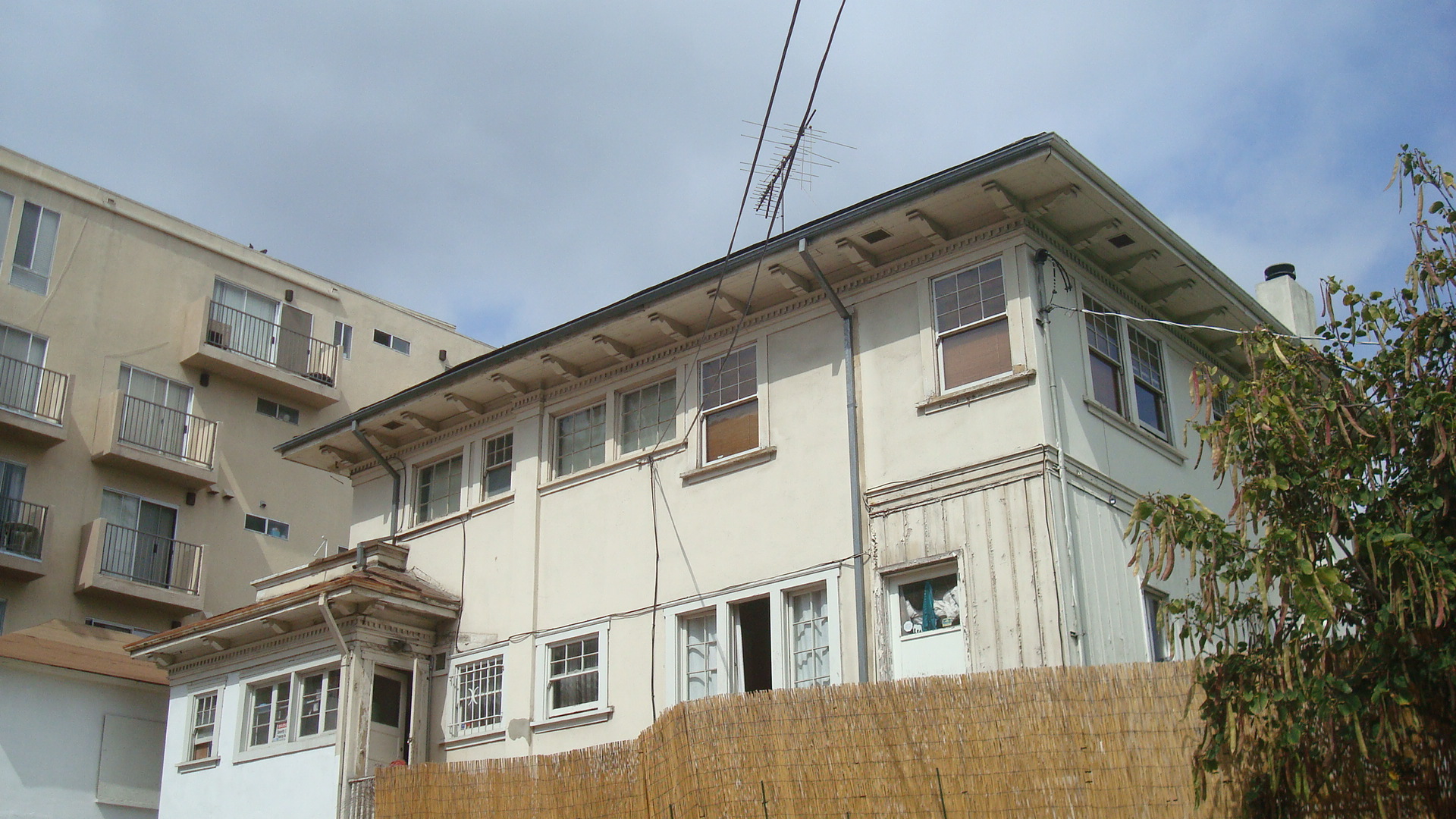
A view of 1905 Grace from Grace Ave..

A view of 1905 Grace from Grace Ave..

UPDATE: A time has been set for the meeting to consider this building as a historic landmark. Here are the details:

CULTURAL HERITAGE COMMISSION
SPECIAL MEETING
Tuesday, May 12, 2015, 10:00 am
200 North Spring St.
Room 1050, City Hall

You might also want to take the time to read the comment at the end of this post from John Girodo of Hollywood Heritage. He gives more information about what’s happening.

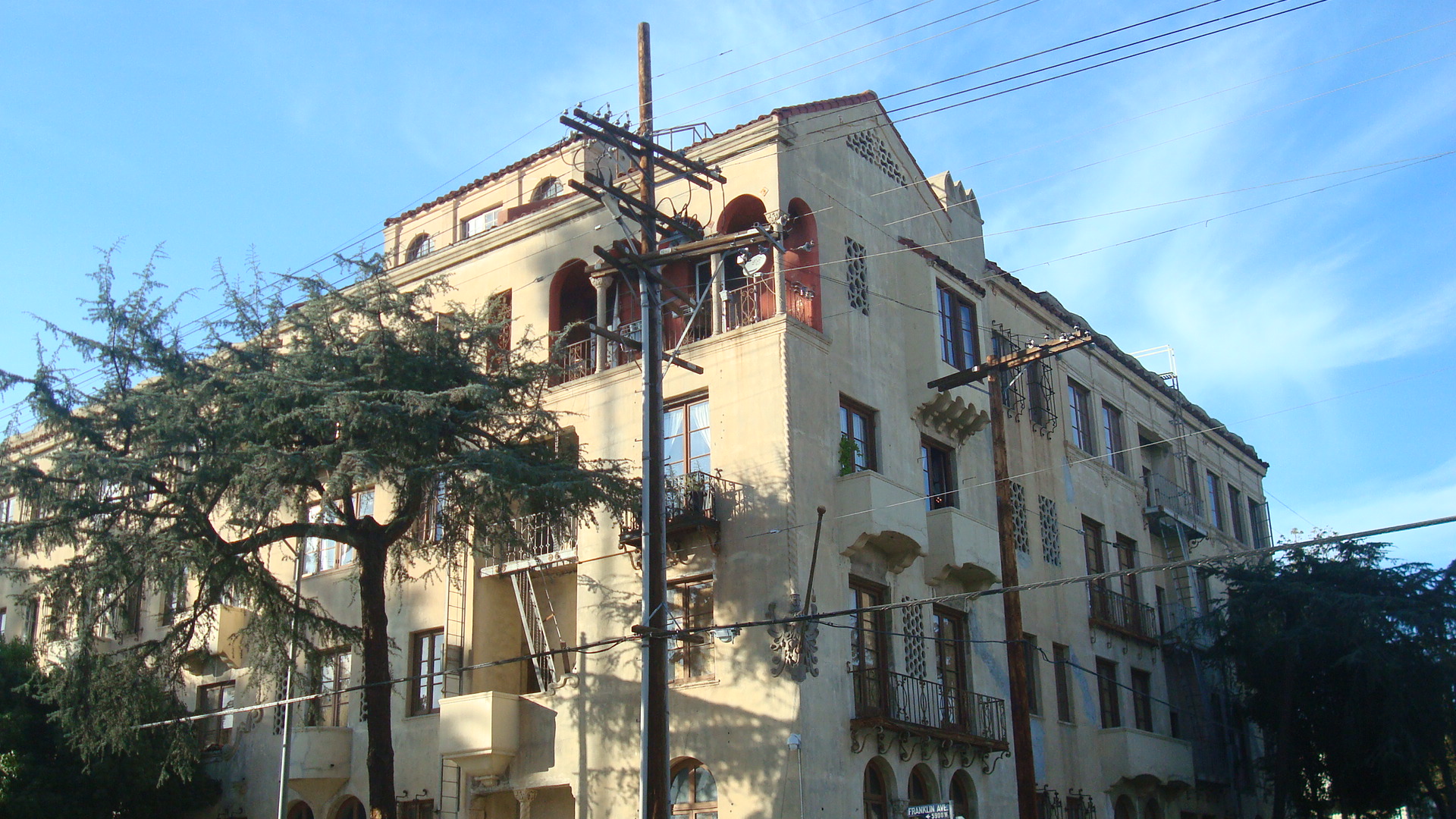
Thursday night I heard some disturbing news. An American Colonial mansion that was built in 1917, located at the corner of Grace and Franklin in Hollywood, is slated for demolition. A developer wants to knock the building down, probably with the intention of constructing high-end residential units.

Hollywood Heritage is trying to have the mansion nominated as a historic monument, but things don’t look good. The Office of Historic Resources will be holding a hearing to consider the nomination, but it’s on such short notice that it will be hard to rally the community. The meeting is scheduled for Tuesday, May 12. The last I heard, the time hasn’t been set.

It seems like the City is trying to rush this through, which doesn’t surprise me given their recent record. In just the last year the City has allowed developers to level the Mole-Richardson Building on La Brea and the Oswald Bartlett House in Los Feliz. Those are just the two most recent casualties of the current wave of development.

Can anybody stop this? I don’t know. It would be great to have a good turnout at the meeting on Tuesday. Hollywood Heritage says people must show up in person to express their views, but it’s hard to plan on attending when the time hasn’t even been set. Hopefully the OHR will nail that down pretty soon. It also might be helpful to find out what CD 4 candidates Carolyn Ramsay and David Ryu have to say about this. They’ve both said they want to preserve Hollywood’s history. Let’s find out if they really mean it.

Carolyn Ramsay

David Ryu

If you can’t make it to the meeting on Tuesday, you might still let the OHR know how you feel about this. The link is below.

Office of Historic Resources

[For an update on 1905 Grace, click here.]

A view of 1905 Grace from Franklin Ave..

A view of 1905 Grace from Franklin Ave..

Where’s the Water Coming From?

The Palladium, with Columbia Square rising in the background.

The Palladium, with Columbia Square rising in the background.

There’s a hearing at City Hall this Wednesday on a project proposed for the site surrounding the Palladium on Sunset. The project is called Palladium Residences, and there are two ways it could go. Either 731 residential units, or 598 residential units and a 250 room hotel. Both options include 24,000 sq. ft. of retail and restaurant space.

My question is, where is the water for this going to come from? I think by now everybody in LA knows there’s a drought going on. In fact, an extreme drought. Gov. Brown has declared a drought state of emergency and soon the Metropolitan Water District will be cutting deliveries to its Southern California customers, including Los Angeles. Angelenos have already been asked to voluntarily cut their water consumption by 20%, but the move by the MWD means we have no choice.

So let’s look at the Palladium project in this context. How will it impact water usage in the Hollywood area?

First, in its current state, the site needs very little water. Aside from the Palladium, it’s pretty much all parking lot, so unless there’s a show going on, consumption is zero. Whatever the developer builds, it’s going to cause a large increase in water usage. Even if we assume that the project will be built utilizing every water conservation measure imaginable, we’re probably looking at a net increase of between 100 and 200 acre feet per year.

But that’s just looking at the Palladium Residences in isolation. The site is surrounded by a number of other projects that are already under construction. Right next door, we have Columbia Square, which includes 200 residential units, over 400,000 sq. ft. of office space and 30,000 sq. ft. of retail.

Columbia Square

Columbia Square

On the opposite side and just to the north the new Camden is going up, offering 287 rooms.

The Camden

The Camden

Just across the street from that is 1601 Vine, an 8-story office building. Relatively speaking, office space doesn’t require a lot of water, but since the site was previously a parking lot, there will still be a net increase in water use.

1601 Vine

1601 Vine

A couple blocks to the west, the new 182-room Dream Hotel is rising over Selma.

The Dream Hotel

The Dream Hotel

And just beyond that is the Mama Shelter Hotel, with 70 rooms, which will occupy a building that was previously vacant.

Mama Shelter Hotel

Mama Shelter Hotel

Remember, all of these projects are being built on sites that previously consumed little or no water. It’s important to say, too, that all these hotels will have at least two restaurants, and will be hosting banquets, which drives water use way up. So putting all this together, conservatively speaking, we’ll probably see a net usage increase of at least 500 acre feet of water per year.

But wait. There’s more. Aside from the projects I’ve already mentioned, there are around 60 others proposed for the Hollywood area, many of them just as large as the ones listed above. So we’re not just talking about 500 additional acre feet of water per year. We’re talking thousands more. And that’s just Hollywood. If you look at Downtown, you’ll see a similar number of projects, some of them way bigger than anything proposed for Hollywood. There are also plans for major developments for Wilshire Blvd., the Crenshaw District and Boyle Heights.

Does anyone see a problem with this?

I’m not saying we should put a halt to development. But we do need to figure out how much development we can actually support. The DWP says that LA is in fairly good shape in the near term, but they’re only looking a couple of years ahead. Some scientists think this drought could last for several more years. By now everybody who lives in California knows that many of our reservoirs are at less than half of capacity, and the snow pack has shrunk to 6% of what’s normal for spring. The wells in the San Fernando Valley that we used to rely on have become contaminated, and it will take years before they’re cleaned up.

We need to figure out a water budget. First the DWP needs to prepare a realistic estimate of how much water we can rely on for at least the next five years. Then the Department of City Planning needs to make sure they have solid numbers regarding the water that will be consumed by each proposed project. With that information, they can make a cumulative assessment of the impact all these projects will have on our water resources, and prioritize them based on how beneficial they’ll be to the community. Let’s get real. We don’t have the water to build all this stuff. Even if we have supplies to last for the next year or two, these projects will be consuming water for decades, and some scientists believe this drought could get much worse than it already is. We need to know how much water we can realistically count on, and then we need to plan accordingly.

The Mayor has been telling us that we need to cut our water use by 20%, but at the same time he’s pushing this aggressive development agenda which is guaranteed to boost water consumption even as Angelenos are told they need to conserve. And let’s be honest. We haven’t made much progress in cutting our water use. Even with the threat of a massive drought, we’re using about as much water as we always have. So residential towers and high-rise hotels are just pushing us farther into the danger zone.

We need development, but it has to be planned development. If the City of LA wants to grow, it needs to find out first how much water we have, and how much each of these projects is going to consume. Much of the reason we’re in trouble today is that for decades the City allowed massive growth without proper planning. We’ve been sucking up water from all over the Southwest to build a vast metropolis in an area that has very little water of its own. We can’t do that any more. We need to start living within our means.

Another view of The Palladium, now with The Camden construction site in the background.

Another view of The Palladium, now with The Camden construction site in the background.

Alcohollywood

Hlwd Bars 1 Rd St

I want to go on record here. I like to drink. I’ve spent a fair amount of time hanging out in bars. But even I’m getting scared of how accessible booze is in Hollywood. The neighborhood is packed with bars and clubs, and it seems like every new restaurant that opens gets a full liquor license. If it was just a matter of dealing with crowded sidewalks and noisy drunks, I might be able to handle that. But the problems we’re seeing are actually much worse.

In fact, it’s getting so bad that last October LAPD Chief Charlie Beck wrote a letter to Linn Wyatt, the City’s Chief Zoning Administrator. In he talks about the “oversaturation of ABC [Alcohol Beverage Control] locations”. He mentions how these establishments “have generated numerous crime reports” which are straining police resources. And the crimes he lists include collisions involving pedestrians, DUIs, assault with a deadly weapon, robberies, thefts, fights, shootings and rapes. But don’t take my word for it. Click on the link to read the letter yourself.

Letter from Chief Beck

It doesn’t seem like anybody at the Department of City Planning read Chief Beck’s letter, because they keep on handing out liquor licenses like they were candy. I get the impression that public safety is something they don’t worry about much at the DCP.

Hlwd Bars 2 Vogue

But we’ve gotta draw the line somewhere. Recently I received a notice from the Department of City Planning regarding a project at the corner of Hollywood and Hudson. Hollywood Dreams, LLC plans to remodel an existing building to house a bar and four restaurants. They’re asking for five — yes, five — full liquor licenses. I was stunned. With all the problems we’re already seeing in the area, they want five more places selling liquor on the boulevard?!

I wasn’t the only one taken aback. Gilbert Mora and Robin Yoo of Behavioral Health Services were so concerned they made a list of existing ABC locations in the same census tract, roughly a half square mile. For this area, the California Department of Alcoholic Beverage Control says that no more than two on-site liquor permits should be authorized. By my count, there are already 15 on the list. (If you include stores and caterers that have off-site liquor permits, the number rises to 21.) So the City of LA has already allowed over 7 times what the state allows. And now this developer is asking for five more permits for a single location. Remember, too, that this is just one tract. There are dozens of other bars, clubs and restaurants that serve alcohol in Hollywood.

But let’s take a look at the actual statistics for crime in the neighborhood around this project. I went to CrimeMapping.Com and entered the address. Click on the link to see what’s happened within a one mile radius over the past two weeks.

6529 Hollywood Blvd.

As you can see, this neighborhood gets a lot of action. The crimes include assault with a deadly weapon, robbery, and vehicle theft. A total of 79 crimes. Still, we need to check out some other location for comparison. So let’s go down the road about a mile and see what it’s like on a stretch of Melrose where there are far fewer bars and restaurants that serve alcohol. I wonder what kind of crime they have down there.

6500 Melrose Ave.

So just a mile down the road, there have been only 38 crimes in the past two weeks. Less than half. Does anybody think that just maybe there’s a link between the amount of alcohol being consumed in Hollywood and the amount of crime that’s occurring there?

Hlwd Bars 3 Fox

And it’s only going to get worse. There are many other developers that want to get permits in the area. Ten more hotels are planned for Hollywood, including three that are under construction right now on Selma Ave., which is just a block south of Hollywood Blvd.. The DCP has already given full liquor licenses to all three.

This is ridiculous. Enough is enough. There’s a hearing on Tuesday, March 10 at 9:30 am, and I’m going to be there. I want to ask the zoning administrator why they keep handing out these permits when there’s a clear threat to public safety. If you feeling like joining me, the more the merrier. Here’s the address.

Los Angeles City Hall
200 North Spring Street, Room 1020
(Enter from Main Street)

And if you can’t make it to City Hall, you can still send an e-mail to the DCP. Here’s the info. It’s a good idea to include the case number in the subject line.

Staff Contact:
Matthew Quan
Matthew.Quan@lacity.org
Case No: ZA 2014-2008(MCUP)

If you do send an e-mail to the DCP, please copy me on it. I’m wondering how many other people out there are as ticked off as I am. Here’s my address.

thehorizonandtheskyline@gmail.com

I’m fine with people coming to Hollywood to have a good time, but this has gotten way out of hand. We need to stop handing out liquor permits to anyone who asks for one.

Hlwd Bars 4 Loaded

Sucking the Soul out of Hollywood

Hlwd VC Corner Op

I was saddened, but not really surprised, to hear that the Villa Carlotta had been bought by a developer that wanted to turn it into an extended stay hotel. This kind of thing is going on all over Hollywood these days. Developers and real estate interests with tons of cash buying up older buildings, kicking out the tenants, and reinventing the place as a playground for the upscale crowd.

Hlwd VC Edge

It’s especially sad with the Villa Carlotta, though, because of the community that had grown inside those walls. Take a look at this article from Vanity Fair, written by a tenant, to get a sense of what’s being lost as these people are forced out by the owner.

Ciao, Villa

Here’s another article from the LA Times.

Changing Neighborhood Engulfs Their Old Hollywood Home

Hlwd VC Window H

There are larger issues, too. Not only are these people losing their homes, but they’ll have a hard time finding anything else that they can afford. Rents are going up all over LA. Owners of older apartments are jacking up rents, and units in many of the new buildings start at around $2,000 a month.

It’s well known that LA is in an affordable housing crisis, and taking the 50 units in the Villa Carlotta off the market is just one more turn of the screw. Hopefully SB 2222 will put a stop to this. It was recently signed into law by Governor Brown, and requires that developers who acquire a rent-controlled property maintain the same number of affordable units regardless of what they plan to do with the property. But LA has lost thousands of affordable units in recent years. The new law may be too little too late.

Hlwd VC Pots

In The Times piece the writer describes the meeting the developer had with the tenants to let them know they were being evicted. The way they were spinning it was that the tenants should be glad, because the developer was going to spend a lot of money refurbishing the building. This just shows how clueless they are. These people aren’t just losing their home, they’re losing a place where they made friends and partied, a place where they shared food, stories, art and music. For these people it wasn’t just a place to live, it was a community. The Villa Carlotta is a lovely relic of old Hollywood, but even more special than the building are the people who lived there.

Of course, the new owners don’t care about the people. All they care about is money.

Hlwd VC Door

Mama Shelter Update

Work continues the building at the corner of Wilcox and Selma.

Work continues the building at the corner of Wilcox and Selma.

Just wanted to follow up on the piece I wrote about the Mama Shelter hotel at the corner of Wilcox and Selma.

I went to a hearing last year to express my concerns over some variances that were being considered for the project. The three issues that worried me were the request to allow live entertainment on the roof, liquor permits for the two restaurants, and the amount of parking required. I got the zoning administrator’s determination a while ago, and these are the results.

They’re not going to allow live entertainment or amplified music on the premises. Very happy about this. While the hotel isn’t close enough to my apartment for the noise to bother me, this is becoming a big concern for residents in the Hollywood area. A few people who attended the meeting complained that they’re already having trouble sleeping because of existing venues that play music far into the night. So I was very glad that the City nixed this.

They did decide to grant a full liquor license for the two restaurants. I was not happy about this. It’s not so much that I’m worried about the hotel itself, as the fact that these days the City is giving out liquor licenses like candy. With so many places in Hollywood for people to get hammered, there’s been a significant increase in crime. In fact, the problems are so serious that LAPD Chief Charlie Beck wrote a letter to the Department of City Planning last year in which he expressed his concern about the number of liquor licenses that are being issued. The City really needs to slow down on this. There are already plenty of places to get a drink in Hollywood.

The last issue was the parking, and this was tricky. The administrator’s decision said that Mama Shelter would be allowed to lease five spaces off-site. Apparently these were for patrons of the restaurant, but it didn’t sound like nearly enough. I also wondered where the hotel guests would be parking. I knew the lot adjacent to the building wasn’t available. I ended up writing to Gary Benjamin at the Council District 13 office and Jared Sopko of Archeon Group, a company that’s working with Mama Shelter on the project. Both of them responded to me quickly, explaining that the hotel has contracted with a valet parking service that has access to 300 off-street spaces in the area. That was good to hear, because parking on the street around Selma and Wilcox can be really challenging. I was afraid local residents would be fighting with valets for spaces, a scenario that’s not uncommon in Hollywood.

All in all, I’m cool with the outcome. I wish they hadn’t granted the liquor permit, but I’m happy with the resolution on the other issues. I’m glad that Mama Shelter is refurbishing a building that’s been vacant for years. That’s definitely a plus. And of all the new hotels that are flooding into Hollywood, Mama Shelter seems like the best fit with the neighborhood.

So I can live with this.

Lots of Questions, But No Answers

DSC08069

Last year I was elected to a seat on the Hollywood Hills West Neighborhood Council. It’s been interesting. On the one hand, I’ve made some good friends, and I have to say I’m impressed by the intelligence and dedication of the council members. On the other hand, it seems like the meetings never stop and the job requires sifting through endless amounts of information. It can be totally exhausting. But it’s gotta be done, because there are important issues that need to be addressed, and we can’t rely on city officials or developers to do the job properly.

Take the 8150 Sunset Blvd. project. The HHWNC held a public meeting a few days ago to give stakeholders a chance to ask questions of the developer reps regarding the Draft Environmental Impact Report. To prepare for the meeting, I had to read as much as I could of the DIER, which runs about a thousand pages. It was a mind-numbing experience, but I’m glad I took the time. There were a number of areas where I felt the information contained in the document was inadequate, but the most troubling omission was in the area of fire safety.

The LA Fire Department assessment states clearly that the 4 hydrants on-site have to provide a flow of 9,000 gallons per minute (gpm) for any of the high-rise alternatives. But the water main currently serving the site can only provide 3,750 gpm. Obviously, the water infrastructure has to be upgraded. So I went looking for specifics about how this was going to be done. The developer apparently has assumed responsibility for completing upgrades that will meet the needs for the project’s daily water usage, but they’ll need to do a whole lot more to satisfy the LAFD code requirements for a high-rise structure.

For projects like this, the DWP has to complete a Service Advisory Request, basically assessing the developer’s needs and stating what needs to be done to satisfy the City’s requirements. The DEIR references SAR Number 38449, approved in July 2013, in a footnote, and says it’s contained in Appendix G. But it’s not in the appendix.

So I thought I should contact the DWP to see if I could get hold of the SAR. On Monday I sent an e-mail to a DWP liaison explaining that the document was referenced in the DEIR, and asking if I could get a copy. The liaison wrote a nice e-mail back saying that he’d be happy to set up a meeting between DWP staff and the HHWNC in order to talk about the community’s water needs. I wrote back saying that I’d love to set up such a meeting, but I’d really like to get a copy of the SAR. That was on Thursday morning. I still haven’t gotten a response.

In the meantime, the HHWNC had it’s meeting where we got to ask developer reps questions about the DEIR. When my turn came, I mentioned that the LAFD code required a 9,000 gpm fire-flow for this kind of high-rise, and asked if there was a specific plan to satisfy this requirement. I also asked about the missing SAR. I may not be quoting them exactly, but basically their answer was, “We invite you to submit your comment on the DEIR.”

Call me paranoid, but I’m getting kind of concerned. We’re not talking about a minor disagreement on landscaping or a few extra cars on the road. This is a basic public safety issue. The LAFD requirements are clearly stated in the DEIR. Any of the high-rise alternatives for this project need a 9,000 gpm fire-flow. If there’s a plan in place to achieve this, that’s great. I’d love to see it. I’d also like to see the SAR that the DWP prepared back in 2013.

Compounding my concern are recollections of the water main rupture that flooded Sunset last year. I’m sure you all remember it, too, because it got plenty of media attention. In October, Wehoville ran an article on the flooding, and they quoted an e-mail from Steven Cole, of the DWP’s Water Distribution Division, to the West Hollywood Heights Neighborhood Association. In his e-mail, Cole said that the DWP was looking at replacing a 4 mile portion of a pipeline running along Sunset. He also said they were still analyzing the best way to accomplish that task. It makes me wonder if the DWP can guarantee that the water infrastructure needed to satisfy the LAFD requirements will be in place before 2018, when 8150 Sunset is supposed to be completed. Here’s the link to the article on Wehoville, in case you want to take a look at it.

LADWP Reveals Plans

Does anybody else see cause for concern here? I’d feel a whole lot better if if could see the DWP’s SAR. I’ve asked them for it twice. I’m still waiting.