Midnight at Wilshire and Fairfax

W&F 1 Scaf

Last week I went to one of the screenings in UCLA’s preservation festival. I think I left around eleven, and then caught the bus on Wilshire. I got off at Fairfax, where I have to transfer. It took a while for the next bus to show up, so I took some photos while I was waiting. It seemed like there was a lot of stuff going on….

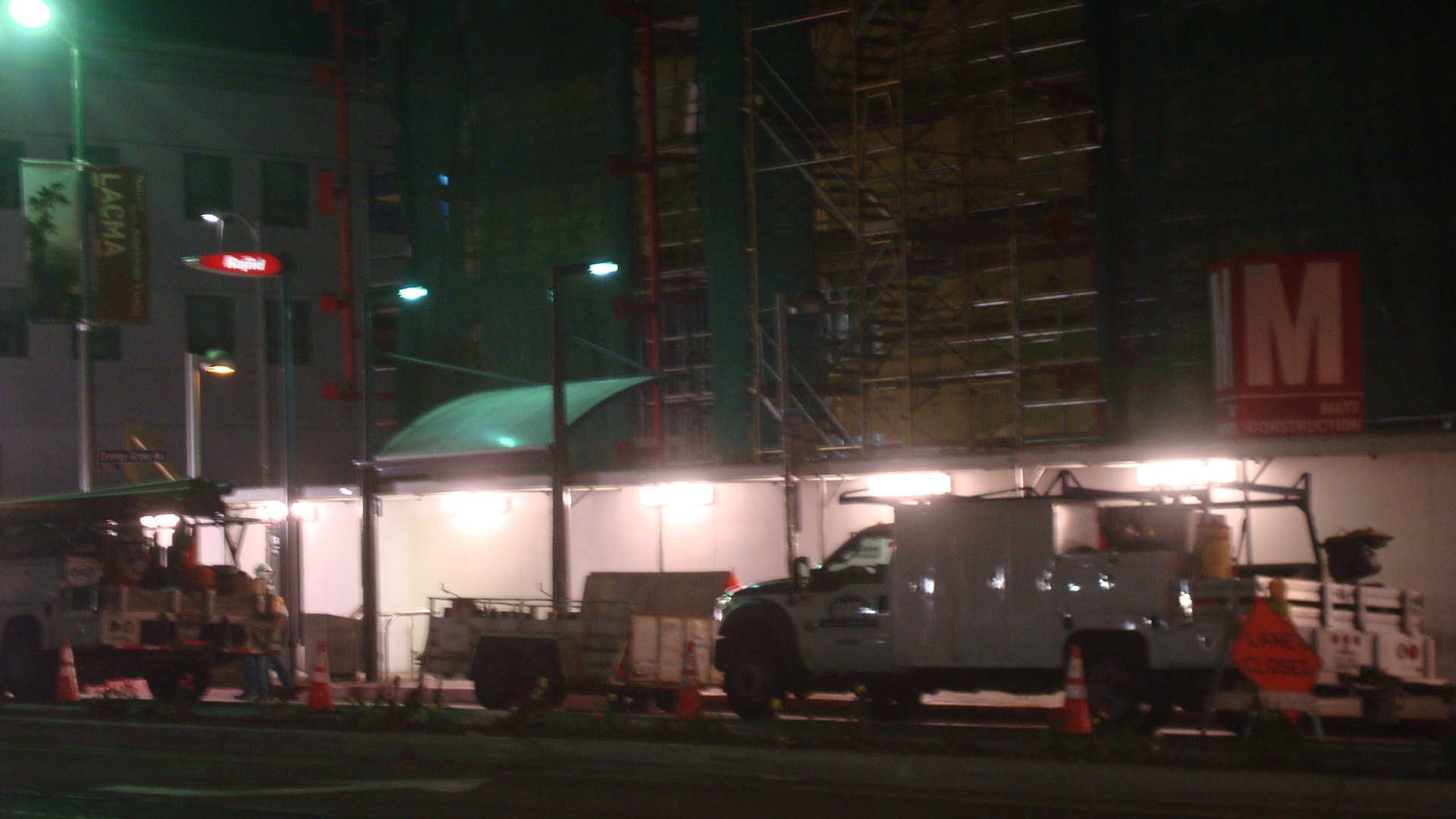
Night time is when the MTA crews show up to work on the Purple Line extension. You don’t see them during the day. Just metal plates lying all over the street. But at night these guys set up their barriers and their lights and go to work.

MTA crews work on the Purple Line at night.

MTA crews work on the Purple Line at night.

Just across the street, the old May Co. building is surrounded by scaffolding. It seems that the Academy is finally starting the process of transforming this dinosaur of a department store into a new museum devoted to film. I have no idea when it’ll be completed, but I’m glad to see that work has begun.

Scaffolding set up on the west side of the May Co. building.

Scaffolding set up on the west side of the May Co. building.

I was standing there on Fairfax snapping photos, when a few runners went speeding past. At first I thought it was just some people who lived in the neighborhood out for some exercise. But then another group ran by, and then another, and then it was a steady stream of people racing down Fairfax. My guess is that a couple hundred people went by, but it could have been more.

Runners stampeding down Fairfax toward Wilshire.

Runners stampeding down Fairfax toward Wilshire.

More runners heading down Fairfax.

More runners heading down Fairfax.

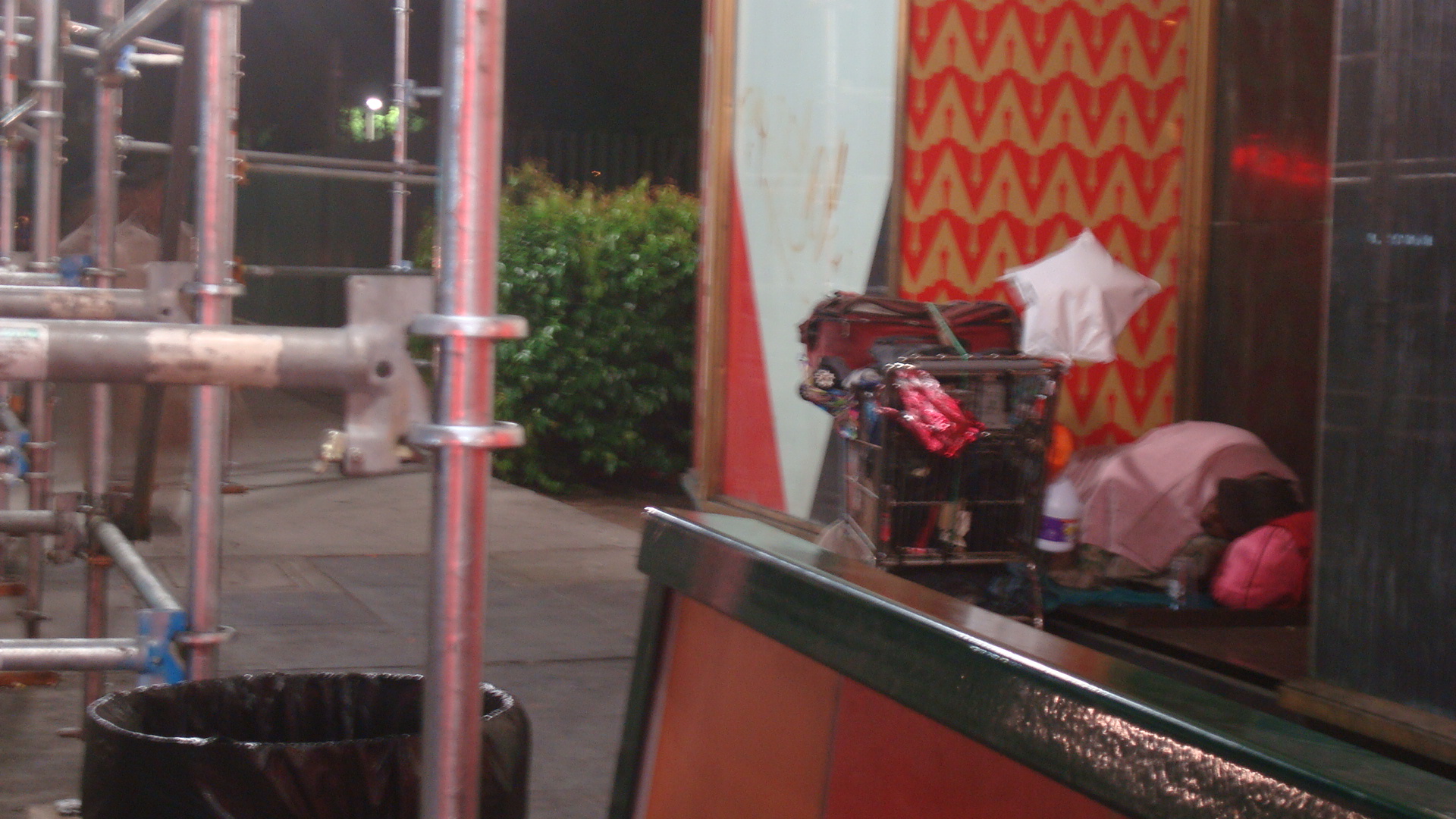
As usual, there was a homeless guy camped out in one of the recessed areas along the side of the May Co. building.

A homeless man taking shelter for the night.

A homeless man taking shelter for the night.

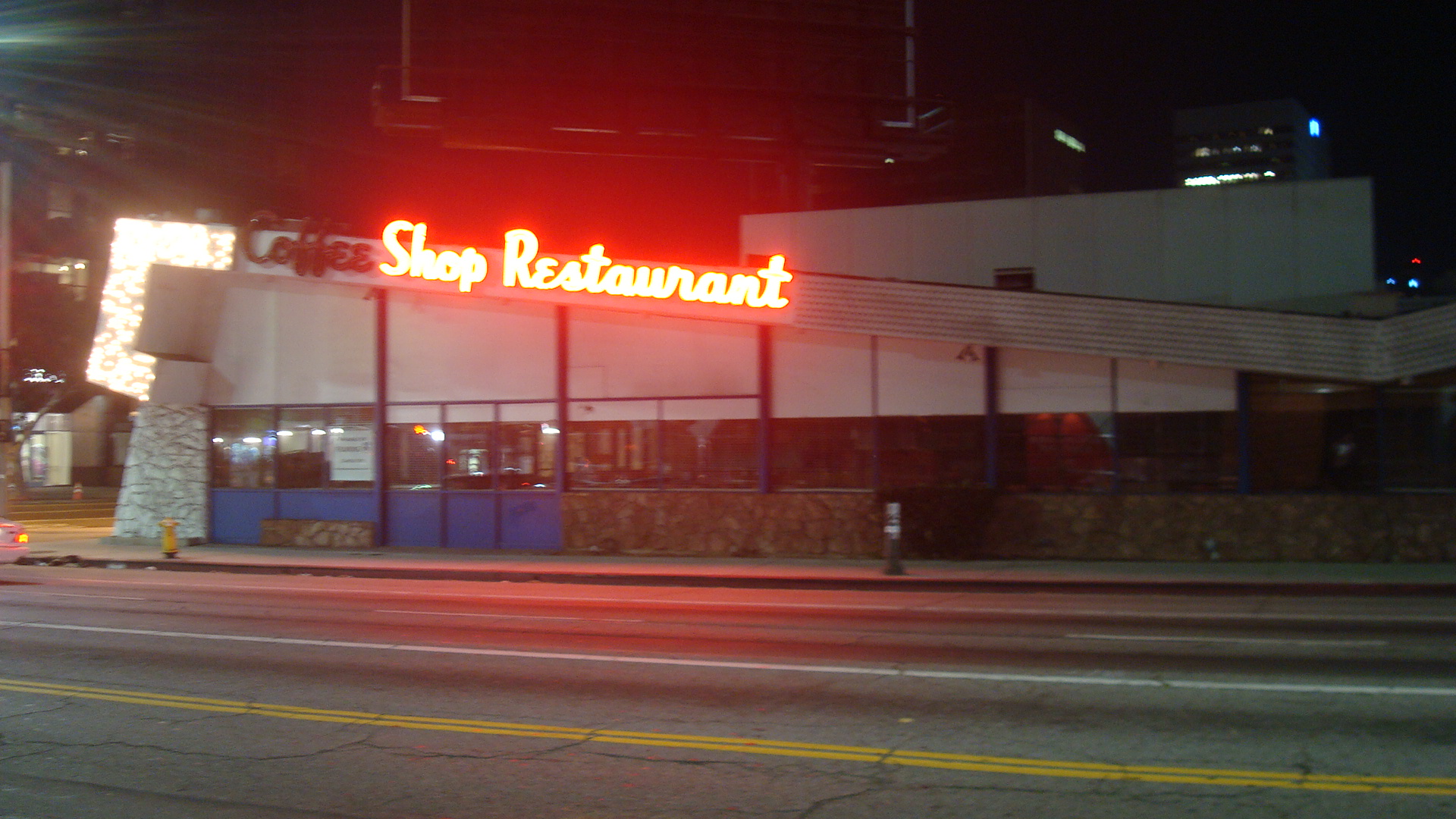
And of course there’s Johnie’s, blazing away in the darkness. The banks of lights that surround the building are slowly going out, but those that are left let you know that this classic coffee shop has not gone away. The place has been closed for years, but the flashing lights seem to be insisting that it’s still open for business. That it’s still alive.

Johnie's refuses to die.

Johnie’s refuses to die.

On-Line Archeology

RG Close 1a

I first saw Renée Green’s work years ago at MOCA. It’s hard to describe what she does, because she uses a variety of different media, and her projects don’t fall into any traditional category. My personal take on her work is that it seems like a meditation on the world around us, but not just her own meditation. She invites us to join her. She wants the audience to be a part of the experience.

I found out just recently about a project of hers called code: survey. There’s a physical installation in the cafeteria at Caltrans in Downtown LA, but that’s just one aspect of the piece. Really it’s much bigger than that. The project gathers images, words and sounds from a variety of sources, and allows the viewer to access all of it on-line. It’s like a multi-media collage of the history of LA, but it allows you to choose what you want to explore.

RG Full a

The link is below. You may have to play with it a little to get the hang of it. Each time you click on an image it allows you to go further, reading texts, listening to voices, choosing your own direction and making your own associations.

code: survey, a project by renée green

One piece of advice. Give yourself some time. Once you get started exploring, you may find it’s easy to get lost.

RG Close 2a

The Ennis House

En 20 Sky

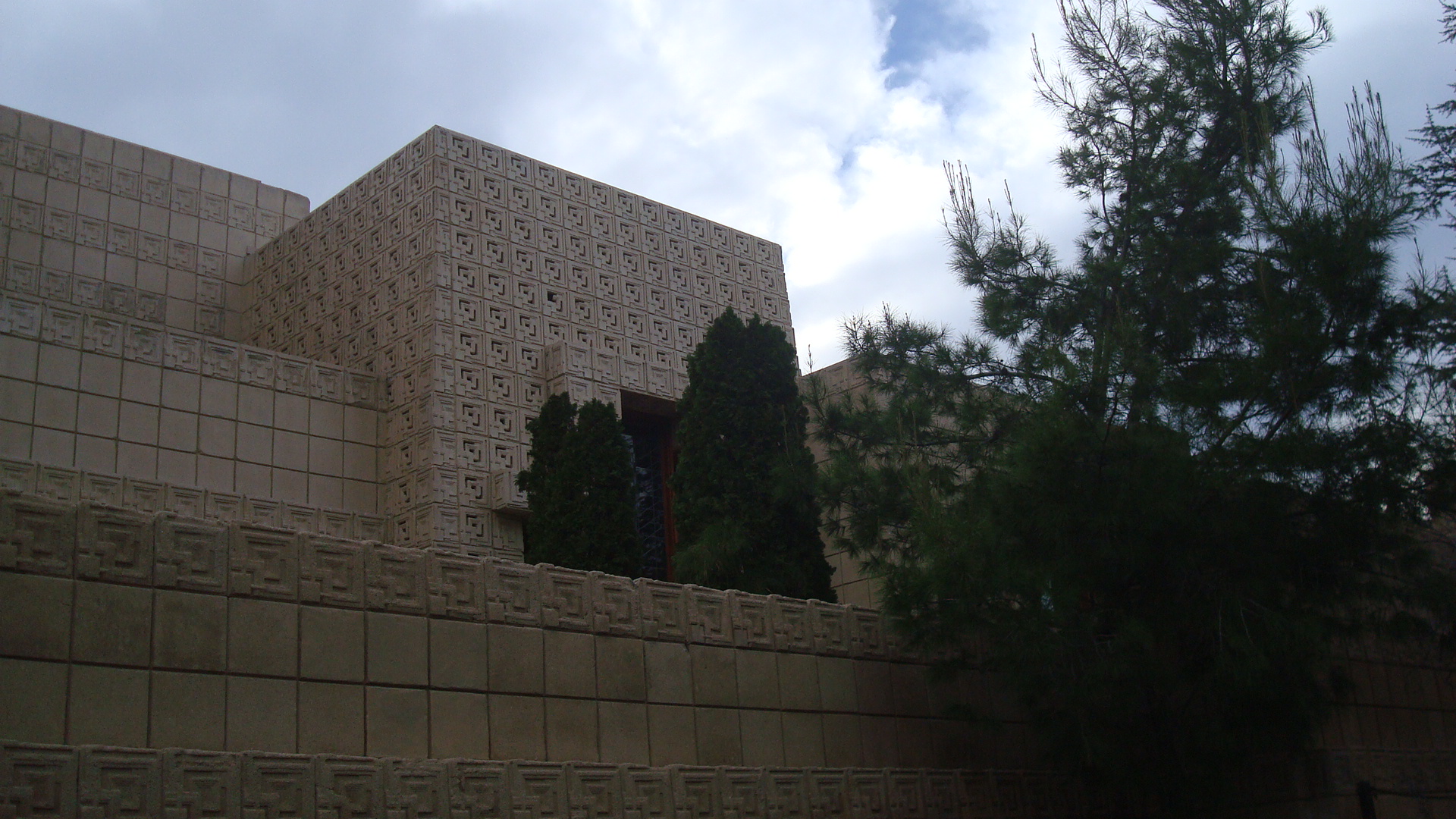
I’d read about Frank Lloyd Wright’s Ennis House for years, but I’d never actually been to see it.  So this last weekend I decided I was going to pay a visit.

The gate at the driveway.

The gate at the driveway.

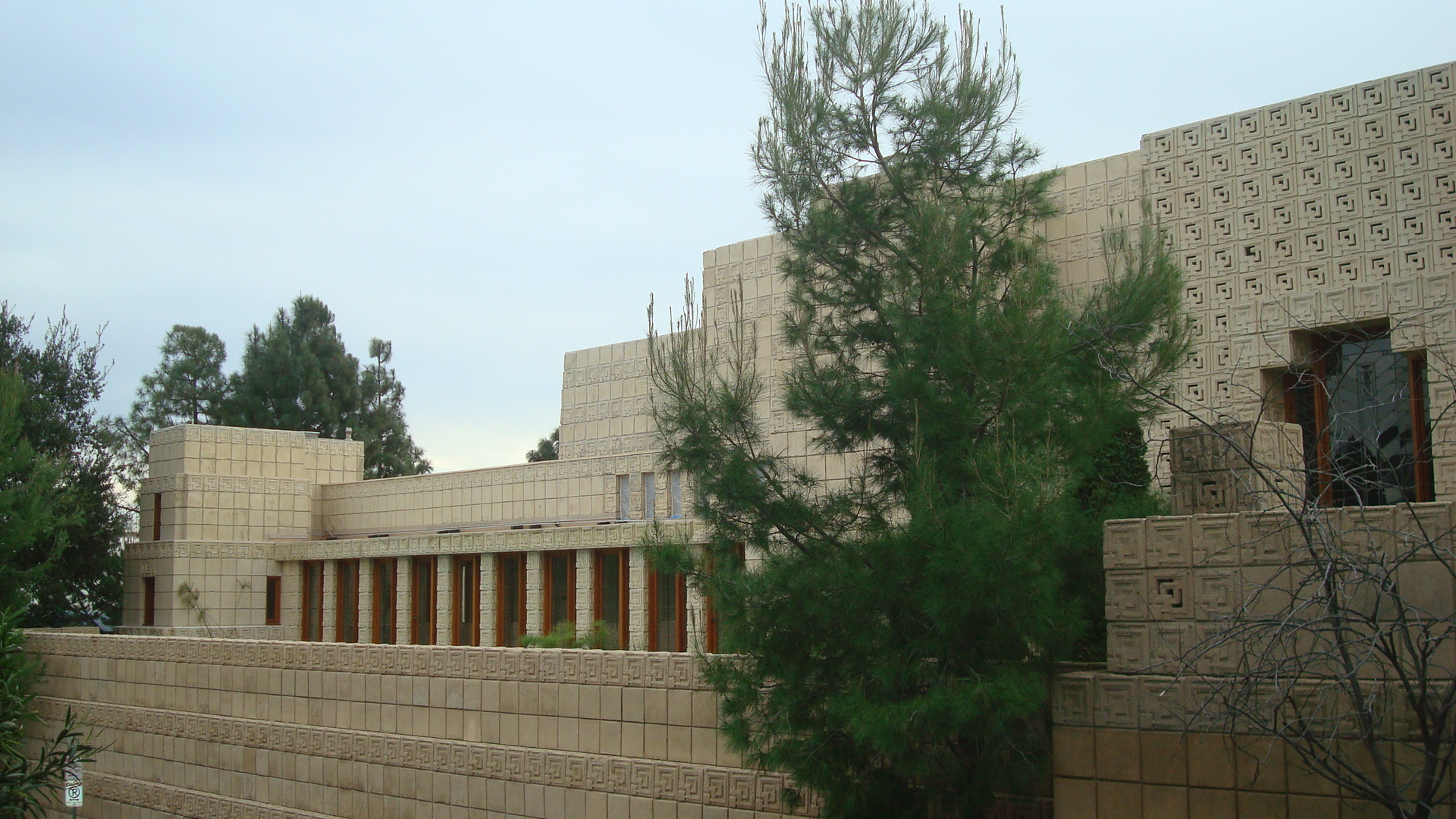
It’s an amazing structure, built using the “textile block” process that Wright explored during his time in the LA area.  Unfortunately, as beautiful as the house is, it started falling apart even before it was finished.  Wright’s idea of mixing granite from the site into the concrete used for the blocks probably sounded like a good idea at the time.  In practice, though, it made the blocks unstable.  Millions have been spent restoring the Ennis House over the years.  For a while, it was owned by a foundation that tried to rehabilitate it, but the process proved too costly and they ended up putting the house on the market.

The front of the house.

The front of the house.

Selling Wright’s LA area houses isn’t as easy as it might seem.  The Ennis House was on the market for years, and the price had to be lowered significantly before a buyer was found.  As far as I can tell, La Miniatura in Pasadena is still on the market.  The problem seems to be that beyond the purchase price, buyers know that they’ll have to spend a fortune on upkeep.  And because the houses are on the National Register of Historic Places, the standards for restoration are very strict.  If you need to patch a wall, you can’t just slap on some spackle.

The back of the house.

The back of the house.

But the Ennis House is lovely, and absolutely one of a kind.  Wright was influenced by Mayan architecture, and the house seems at once both ancient and modern.  To see what it looks like inside, visit the web site by clicking the link below.

The Ennis House

And if you’re not familiar with Wright’s work, you might want to visit the Wikipedia page devoted to him.  Aside from the quality of the work he did himself, he had a huge influence on American architecture.

Frank Lloyd Wright at Wikipedia

Wright thought he was creating a practical approach to constructing homes with his textile block system.  In reality, it turned out to be terribly inefficient and outrageously expensive.  But the fact that people have been willing to invest the time and money to maintain them over several decades is an indication of how precious these homes are.  Their value goes way beyond anything you can measure in dollars.

Another shot of the back of the house.

Another shot of the back of the house.

Paying Attention to the Port

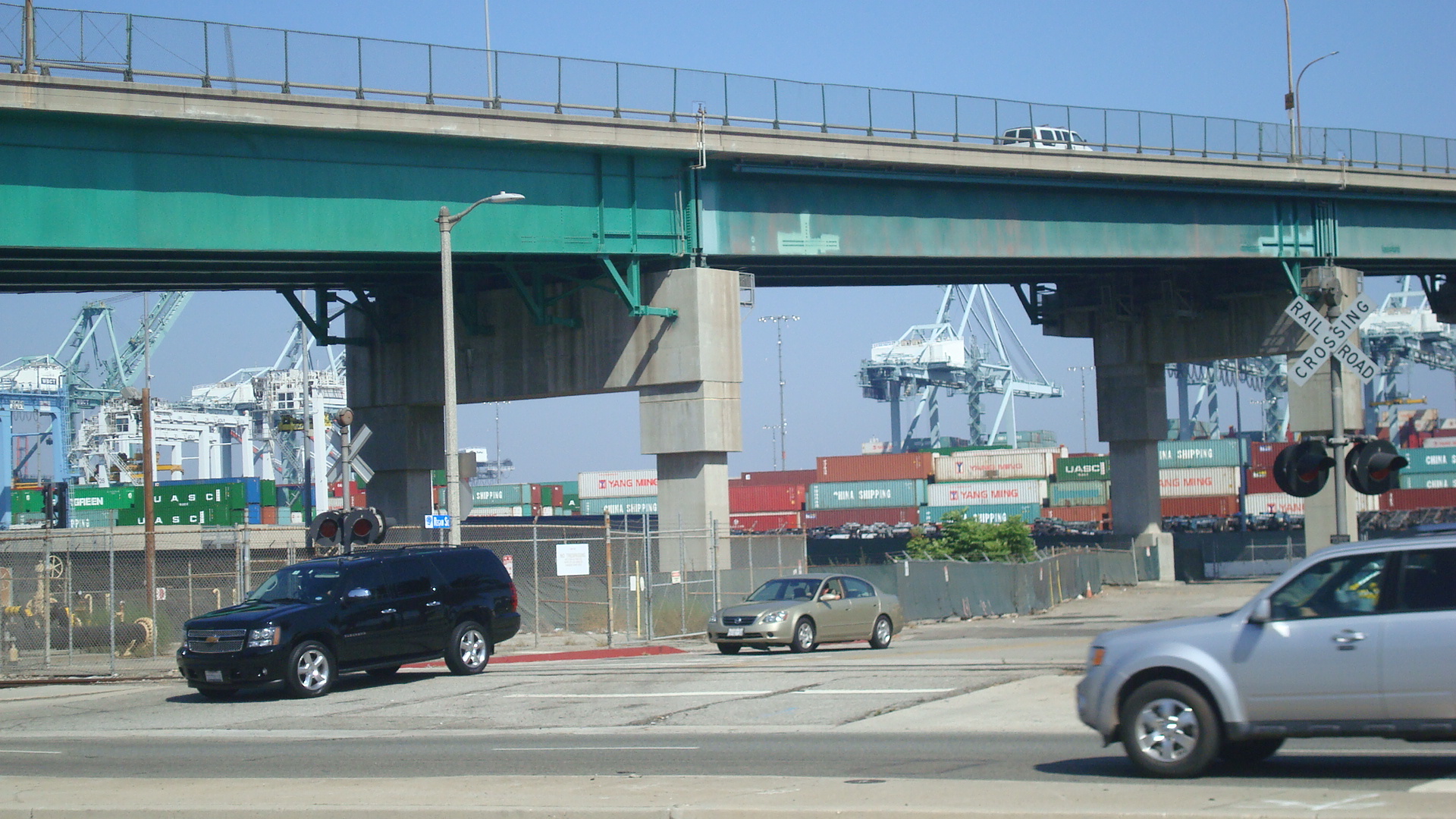
A view of the Vincent Thomas Bridge from Harbor Boulevard.

A view of the Vincent Thomas Bridge from Harbor Boulevard.

Geographically, Los Angeles is a little odd. A map of the city’s boundaries looks kind of like a jigsaw puzzle that somebody forgot to finish. We generally think of it as reaching from Downtown to the beach, the Valley to South LA. But actually there are a handful of smaller cities within that area, including San Fernando, Burbank, West Hollywood and Beverly Hills, that punch some sizable holes in the map. And one of the strangest aspects of the city’s outline is that the boundary stretches a long, thin arm to the south in order to embrace San Pedro and Wilmington, including the Port of Los Angeles.

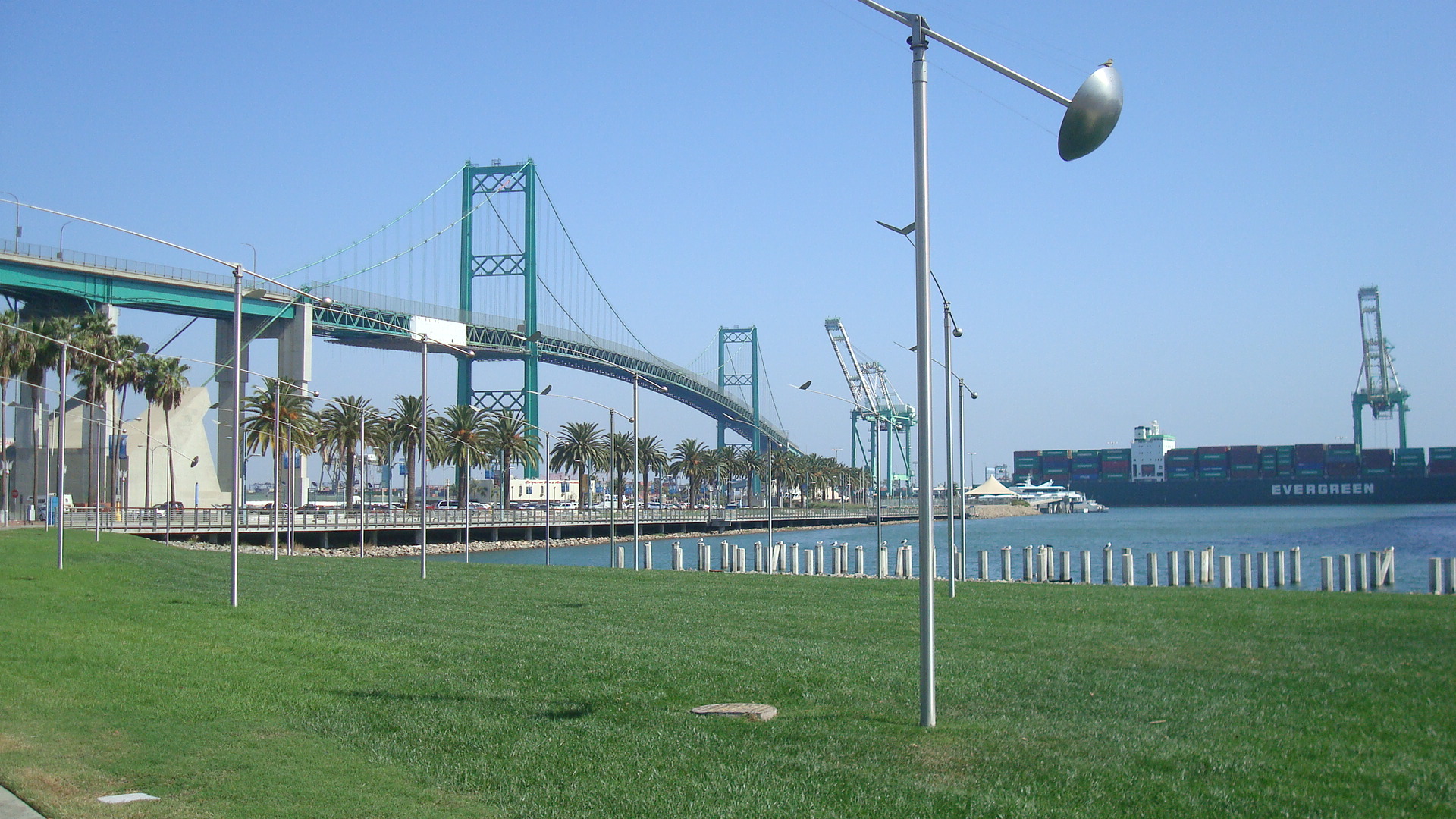
A park at the water's edge, with the Vincent Thomas Bridge in the background.

A park at the water’s edge, with the Vincent Thomas Bridge in the background.

I imagine that many Angelenos, like me, completely forget that the San Pedro and Wilmington are part of the City of LA. They were annexed by (or consolidated with, depending on which source you consult) Los Angeles in 1909. Around the turn of the century it was becoming increasingly apparent to LA’s business community that the port was an economic powerhouse which would bring tremendous wealth to the region. The City’s leaders courted San Pedro and Wilmington for years, but the two smaller communities were concerned about losing their autonomy. Finally the deal was sealed in 1909, with LA promising to spend $10 million to improve the Port of LA.

Houses on a hill overlooking Harbor Boulevard.

Houses on a hill overlooking Harbor Boulevard.

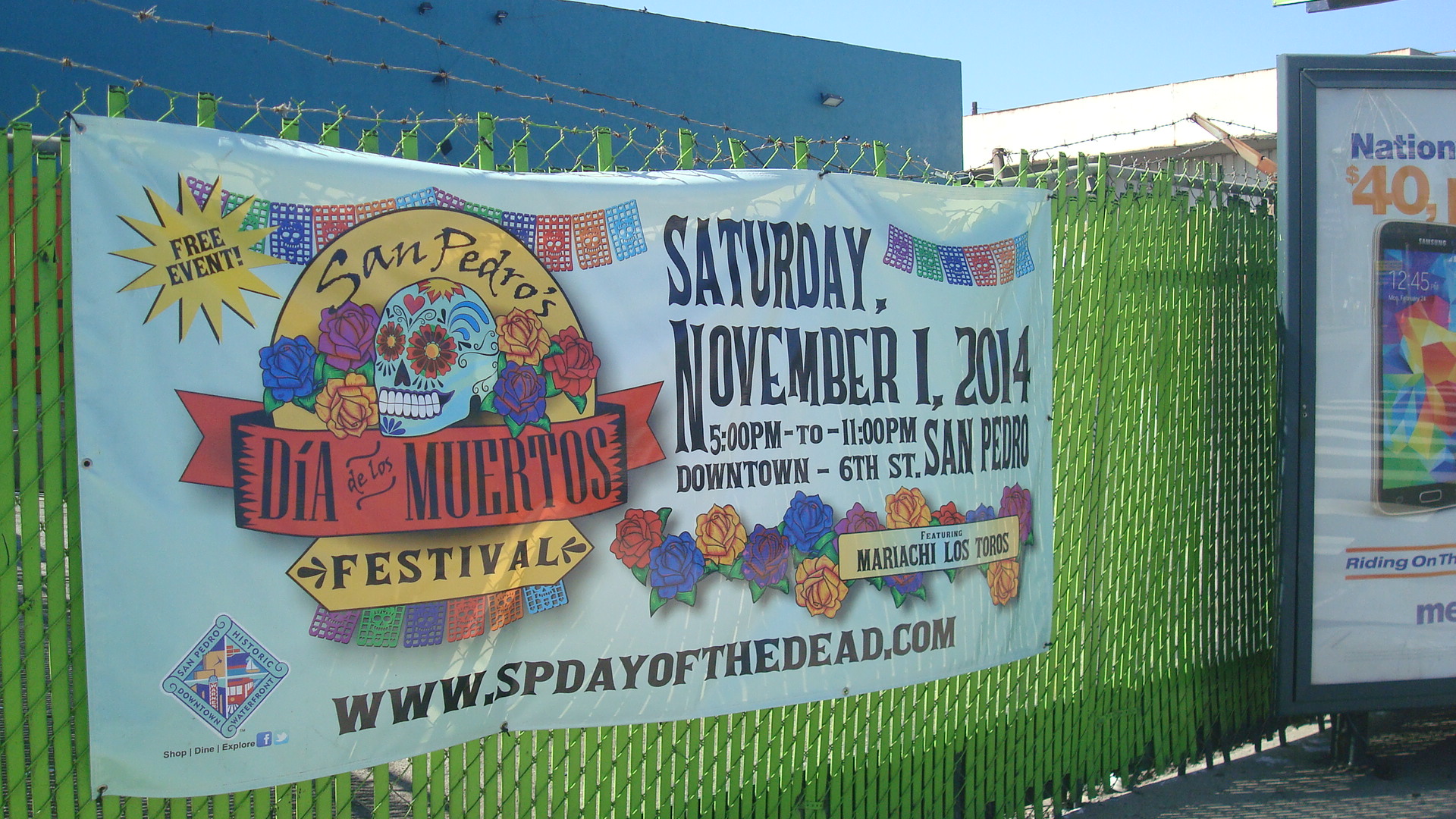
Banner advertising a Dia de los Muertos celebration on Harbor Boulevard.

Banner advertising a Dia de los Muertos celebration on Harbor Boulevard.

Today the Port of LA is one of the busiest harbors in the world, handling billions of dollars in goods and creating thousands of jobs. It is a major part of the regional economy, which is why we should all be concerned about the current strife between labor and management. The issues are extremely complex, and I don’t pretend to understand them all. To boil it down to the basics, shippers are struggling to cut costs because of increasing competition and workers are afraid of reduced compensation and the loss of jobs. This article from the Daily News offers more background.

Port Congestion Worsens, Labor Talks Escalate

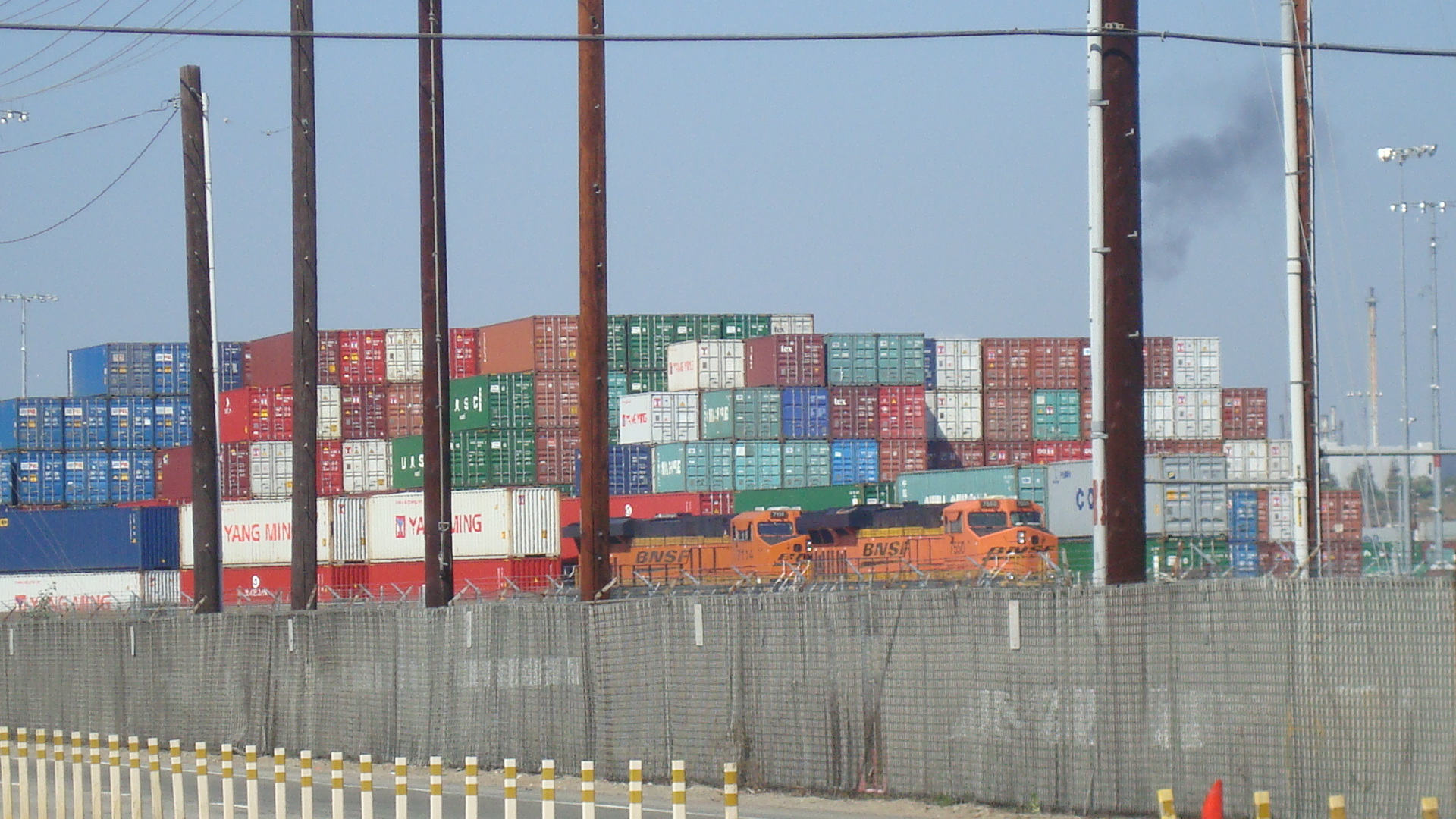
Stacks of containers seen from Harbor Boulevard.

Stacks of containers seen from Harbor Boulevard.

A crisis like this at the Port would be a problem any time of year, but it turns into an even bigger problem when it comes just before the holiday season. This is the period when retailers do most of their business, and there is massive anxiety about inventory not reaching the shelves in time. Tensions are running so high that Mayor Garcetti has stepped in to help, and business interests have sent a letter to President Obama asking him to intervene.

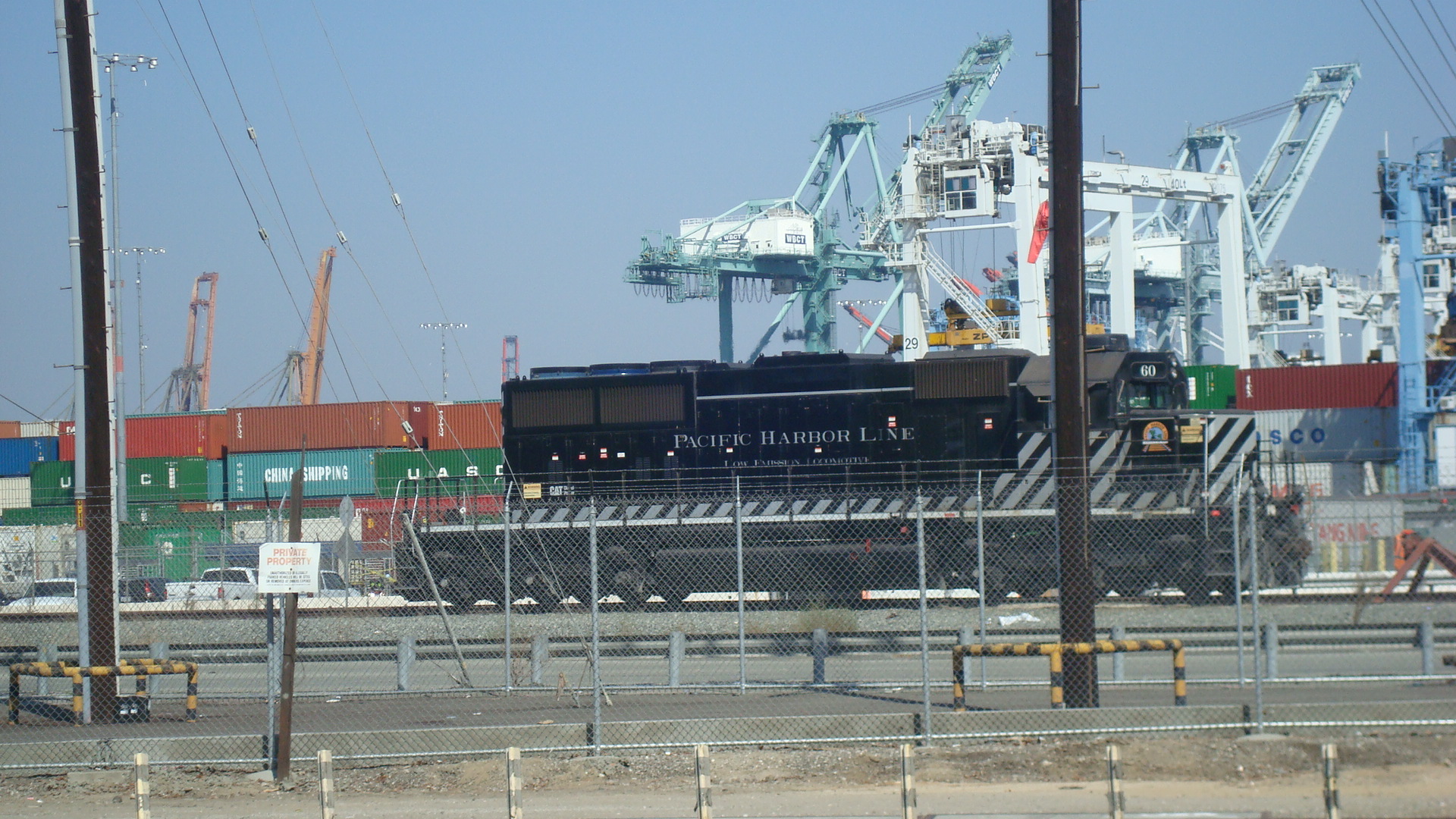
Rail lines carry containers from the Port to destinations throughout the nation.

Rail lines carry containers from the Port to destinations throughout the nation.

Resolving these problems won’t be easy. It’s not just a matter agreeing on a new contract. There are larger issues stemming from the way global markets are evolving, and even if this situation is resolved, there will be many challenges to come. These developments don’t just affect the local economy. The impacts will be felt throughout the state and the nation as well.

For those of us who tend to forget about San Pedro, Wilmington and the Port of LA, this should serve as a reminder that they’re vital part of our city.

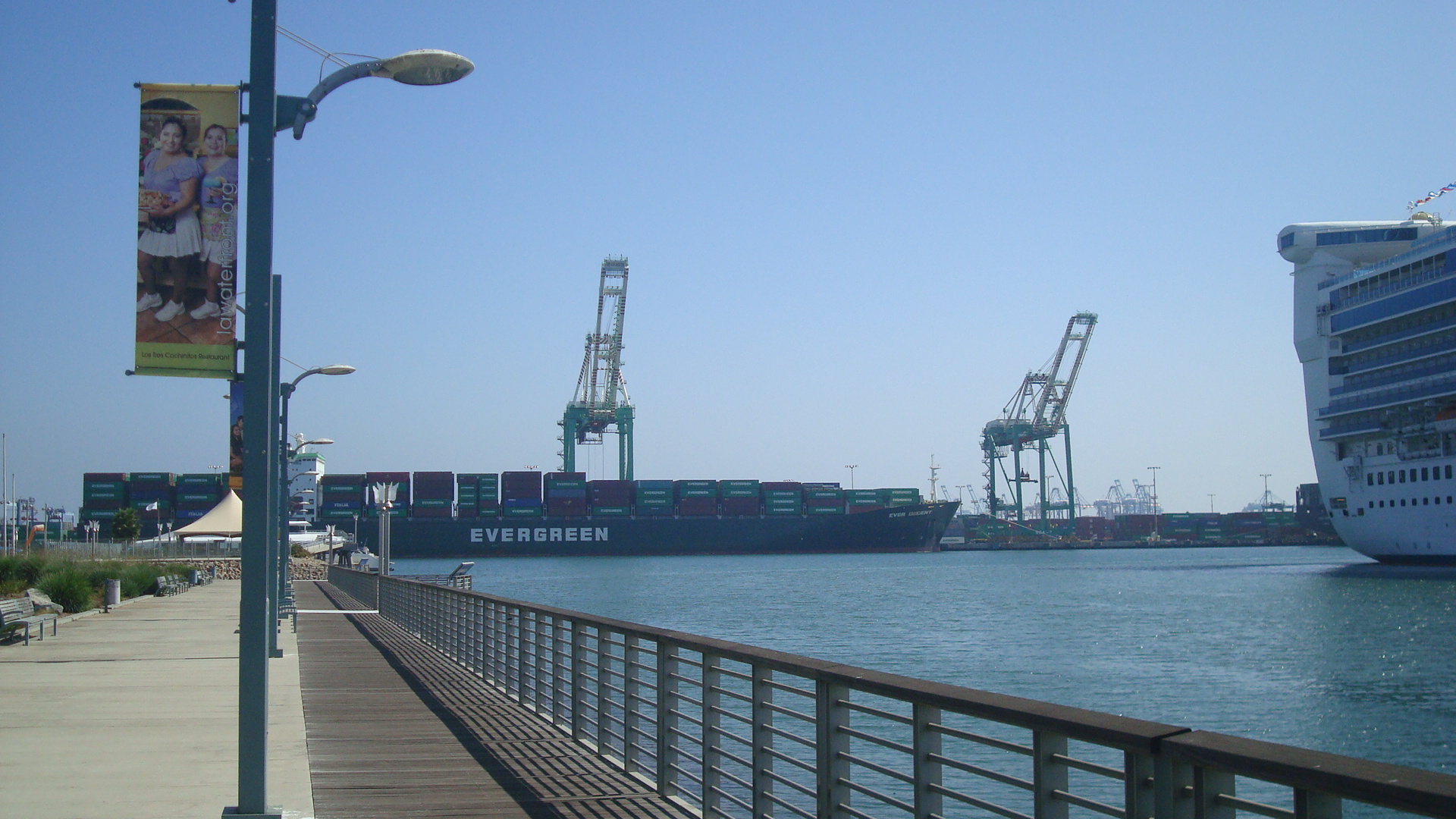
A view of the Port from the water's edge.

A view of the Port from the water’s edge.

Koreatown

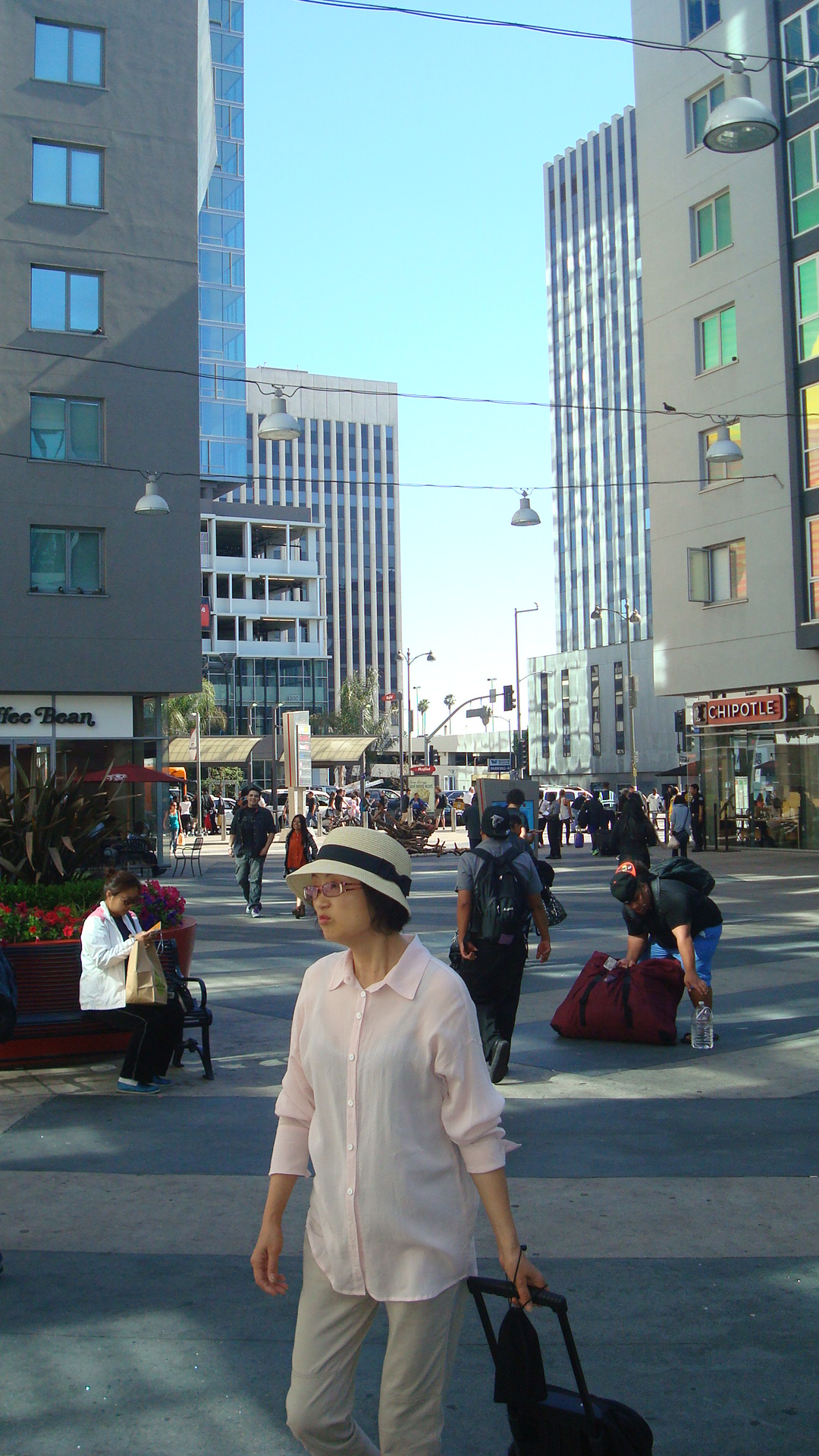
This is the plaza above the Wilshire/Vermont Red Line station.

Ktwn 01 Plaza Woman

And here’s a wider view of the plaza.

Ktwn 10 Plaza Guy

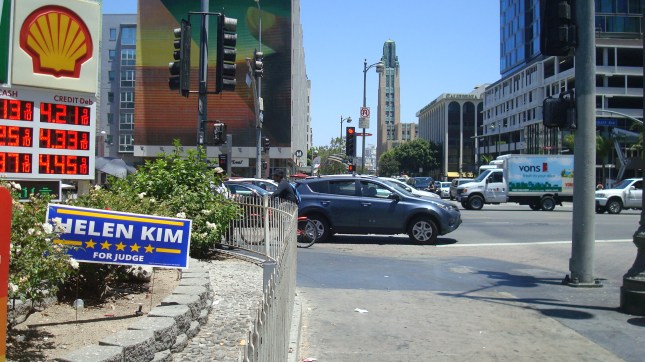
The intersection at Vermont and Wilshire is a busy place. People live here, work here, eat here, shop here.
Ktwn 12 Bldg Bullocks

This is Koreatown. It’s the most densley populated neighborhood in LA County. While the exact boundaries are hard to nail down, roughly speaking the area is bordered by Beverly, Vermont, Olympic and Crenshaw.

It’s important to remember that even though it’s called Koreatown, the majority of the people who live there are Latino. About half the population is of Latin American descent, compared to about a third who are of Korean descent. The area came to be associated with Koreans because the vast majority of businesses are Korean-owned.

Ktwn 13 Vendor

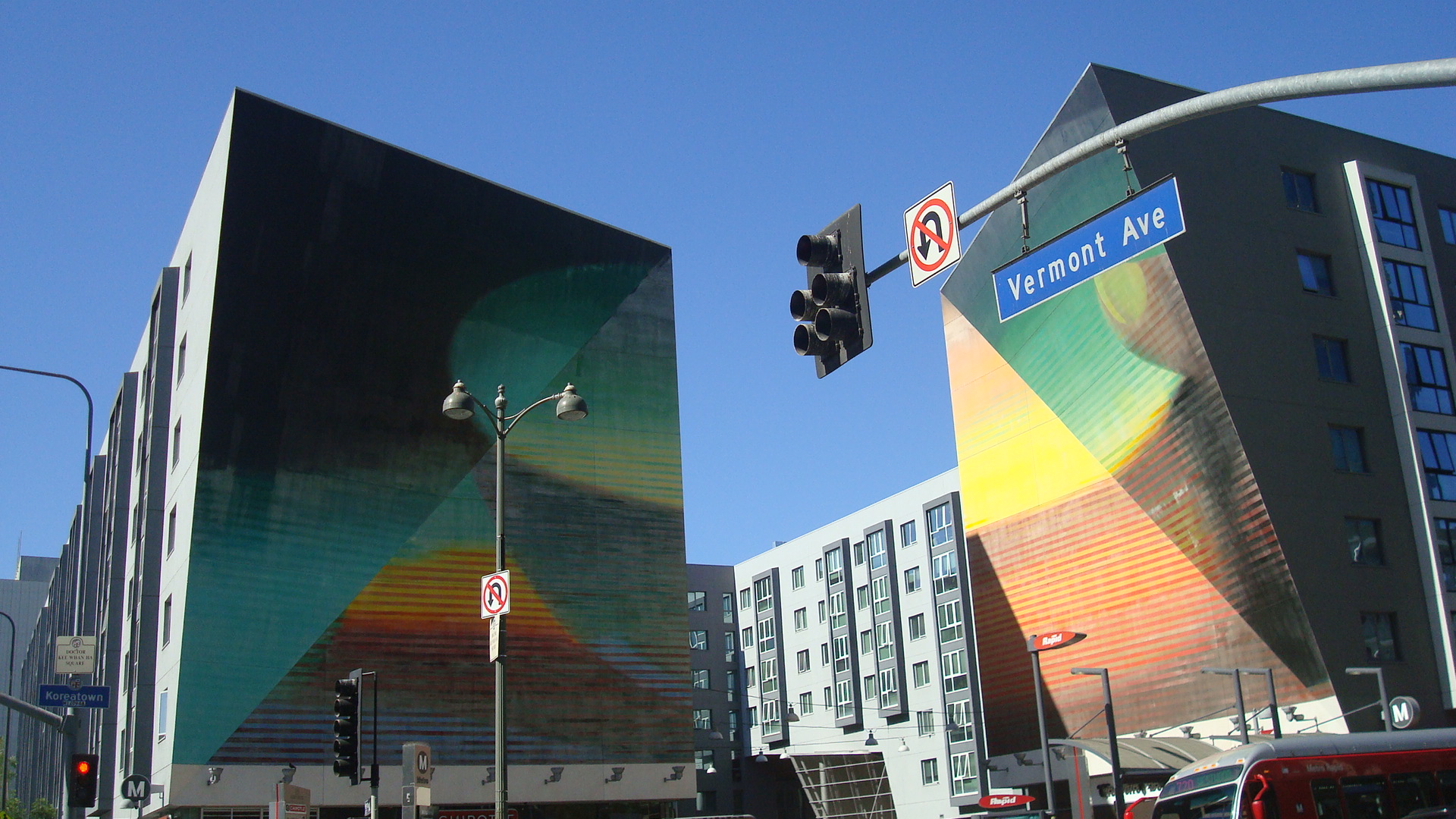
On the sides of the residential complex that rises above the Wilshire/Vermont plaza, you can see April Greiman’s mural “Hand Holding a Bowl of Rice”.

Ktwn 15 Bowl

You can visit the artist’s web site by clicking on the link below.

April Greiman.

Ktwn 16 Bldg New 3Directly across the street is The Vermont, a recently completed residential development comprised of two high-rise towers. This is the kind of high-end project that developers are pushing for all over LA, since they can be extremely profitable. But, not all Koreatown residents are happy about this trend. One concern is that projects like this will push rents up, making it harder for long-time residents to afford housing. Just to give you an idea, a one-bedroom apartment at The Vermont starts at $2,300 a month. In the near future, this trend will almost certainly continue, since The Vermont was recently sold for $283 million. With that kind of money being thrown around, you can be sure that developers will be knocking each other down in their rush to stake a claim in Koreatown.
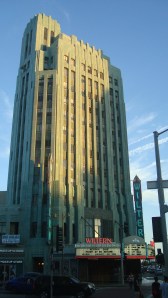
Ktwn 17 Wiltern 2There are some beautiful older buildings in Koreatown, such as the Wiltern Theatre, designed by Stiles O. Clements of Morgan, Walls and Clements. This firm was a major player in LA back in the thirties and forties, designing local landmarks like Chapman Plaza, La Fonda Restaurant, and the El Capitan Theatre. The auditorium was designed by G. Albert Lansburgh, who also created interiors for the Palace and the Orpheum in downtown. I saw Tom Waits there years ago, and I can tell you that the inside is just as impressive as the outside. The Wiltern is actually part of a larger structure called the Pelissier Building, which was completed in 1931. It’s an amazing example of art deco architecture, with its blue-green tile cladding worked into elaborate zig-zag moderne designs. They don’t make ’em like this any more.

And on this stretch of Wilshire you can also find a number of bland office towers occupied by banks and financial services.
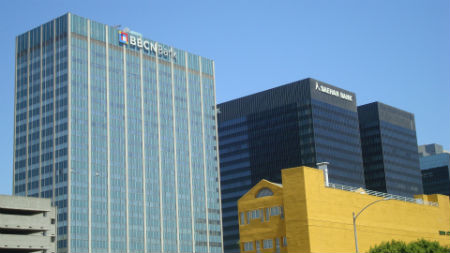
Ktwn 18 Bldgs Tall 2

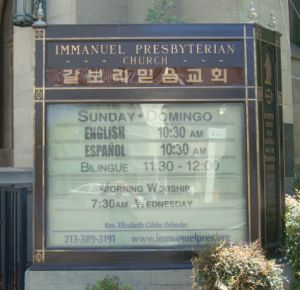
Among the oldest buildings in Koreatown are the churches.

Ktwn 19 Ch Imm Wide

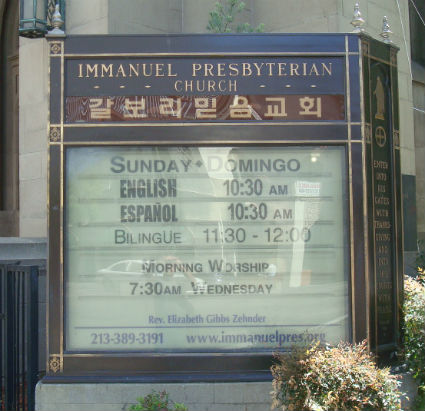
Immanuel Presbyterian Church was constructed in 1928, and for decades was a center for the Anglo community that populated the area up through the middle of the twentieth century. In recent years, many of these older churches have become home to multi-cultural congregations, and have services conducted in multiple languages.
Ktwn 19b Ch Imm Sign

The media has given a lot of attention to Koreatown in recent years, but mostly the stories tend to focus on the night life. Sure, there are plenty of good restaurants, and tons of bars and clubs. But Koreatown is more than just a place where you can scarf kalbi and guzzle soju til you pass out. Like any community, it has many different sides. It’s a place where art, business, technology and politics mingle and collide on a daily basis. Aside from the Korean American population, there are Central Americans, African Americans, Latinos and Anglos. Really it’s impossible to define in terms of a single ethnicity or culture.

Koreatown is relatively young, even by LA standards. The number of Koreans in the city was pretty small until the sixties. It wasn’t until 1965, when the US rewrote its immigration policies, that Koreans started arriving in large numbers. The area we now call Koreatown didn’t really come together until the seventies. Since then it has continued to grow, in terms of both population and area.

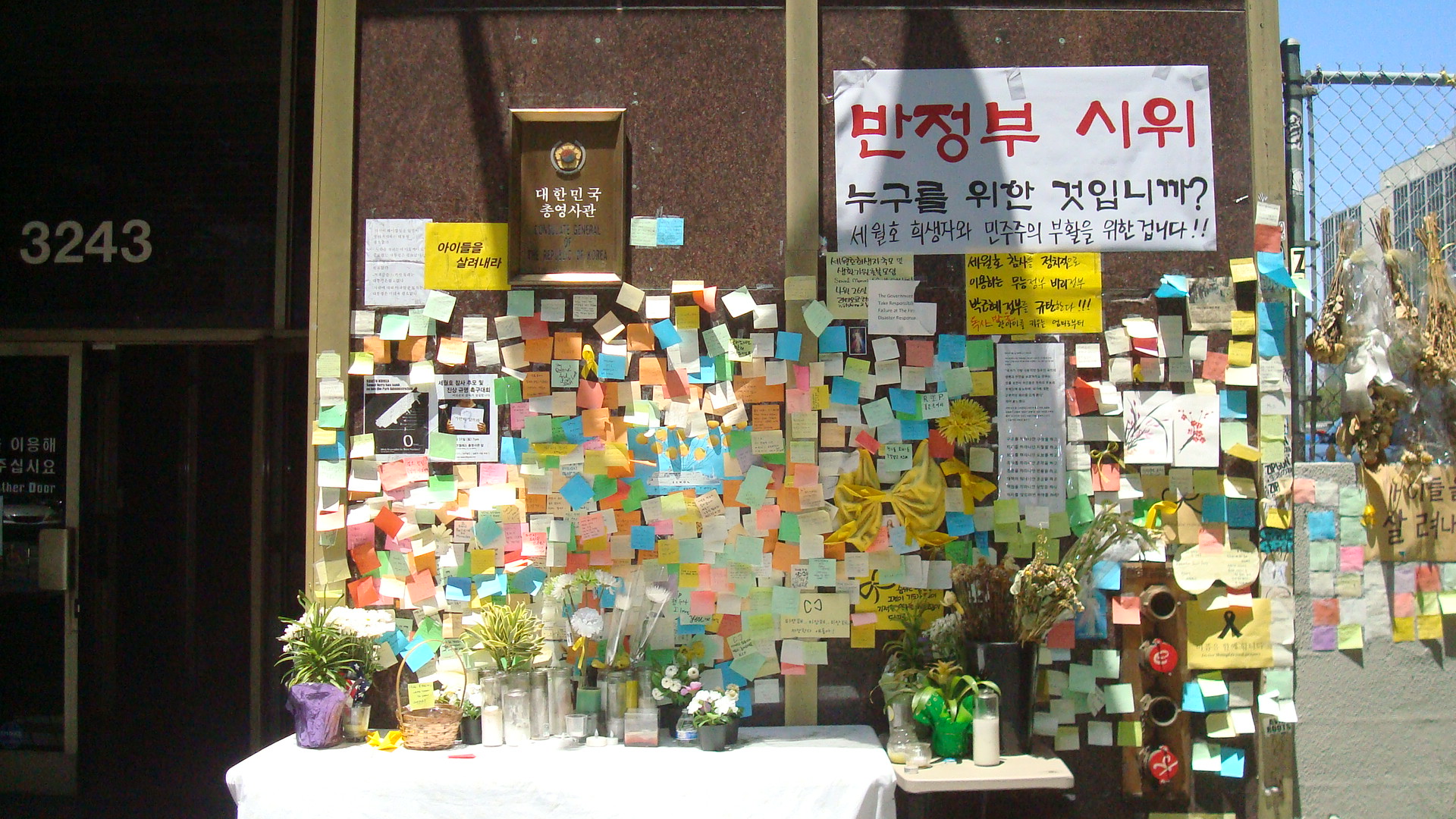
The Korean Consulate is located on Wilshire not too far from Vermont. As I was walking by one day, I saw that community members had created a memorial to the victims of the Sewol ferry disaster.

Ktwn 20 Ferry

Here in the US, the coverage of the Sewol incident was pretty limited and faded from the scene quickly. In Korea, it sparked a huge scandal, as a growing body of evidence suggested it could have been prevented. A series of protests were held in Seoul, with many people accusing the government of a cover-up and demanding that President Park Geun Hye resign. Here’s an article from the Washington Post that gives further details.

Grieving Families Want Independent Probe

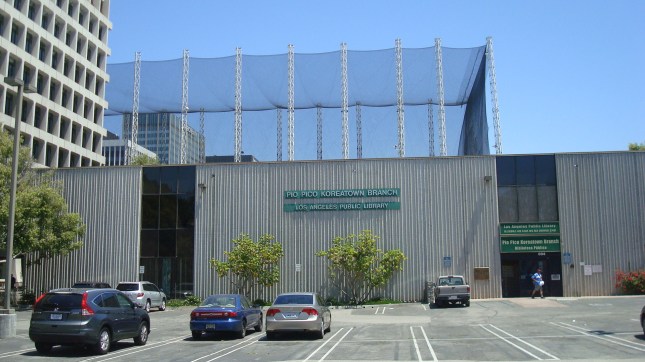
Not too far off Wilshire is the Pío Pico Koreatown branch of the LA Public Library. Pico was the last Mexican governor of California before it was annexed by the United States. For many years he was one of the wealthiest and most influential people in the state, but by the time he died he was living in poverty.
Ktwn 25 Lib Ext

I love libraries. Maybe it’s the quiet. Maybe it’s being surrounded by people reading.

Ktwn 25 Lib Int

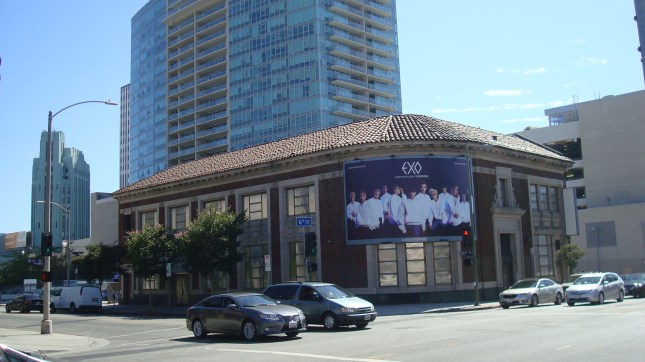
Something about this billboard caught my eye. K-Pop isn’t just huge in Asia. It’s got a significant following in the US, too. EXO is built around an unusual concept. The band actually consists of two groups. EXO-K performs their songs in Korean, and EXO-M performs the same songs in Mandarin.
Ktwn 60 Boy Grp Bldg Wilt

With groups like this, obviously the music is not the focus. Some promoter has gathered a bunch of cute guys that will look good in music videos. People have been doing this for decades, but to me it’s interesting that the Korean media have managed to turn K-Pop into such a cultural phenomenon.

Also on Sixth Street, I dropped in on Red Engine Studios. Actually, that was because of a misunderstanding. I thought the place was a gallery. Turns out it’s a school. The guy at the door seemed uncertain about letting me in, but I guess he finally decided I looked harmless enough. They do have some cool art on the walls, and you can view it by visiting their site.

Red Engine Studios

Ktwn 60 RE Guys 2

There are lots of skateboarders in Koreatown. I saw guys riding up and down the sidewalks everywhere, and there was this vacant lot on Sixth where a bunch of kids were practicing their moves.

Ktwn 60 Skate Comp

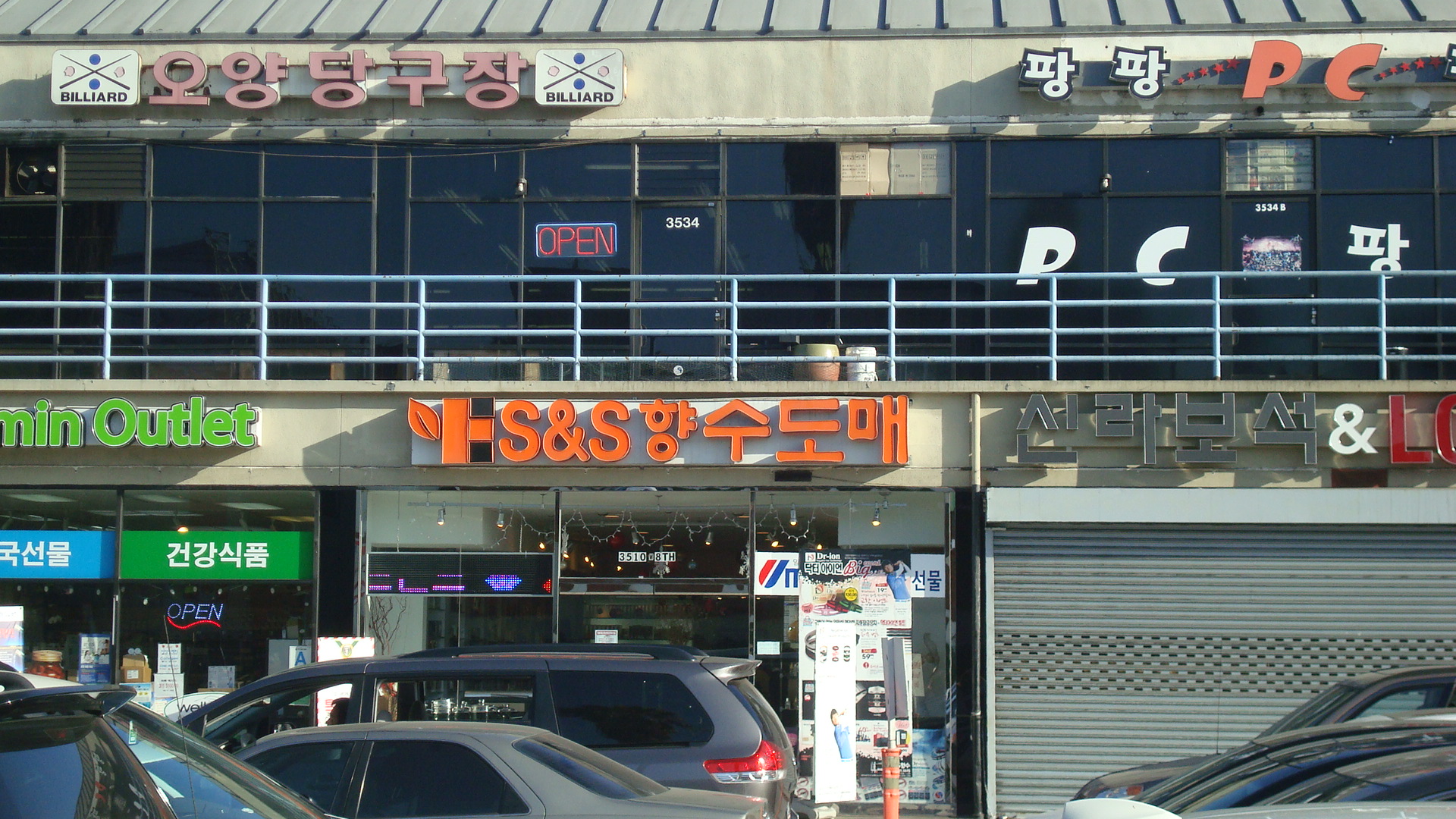
When I think of Koreatown, I think of malls. As I said earlier, Koreatown got its name because Korean entrepreneurs have been spectacularly successful in creating a vibrant community for businesses to thrive.

There are newer malls, that were built to house dozens of small shops.
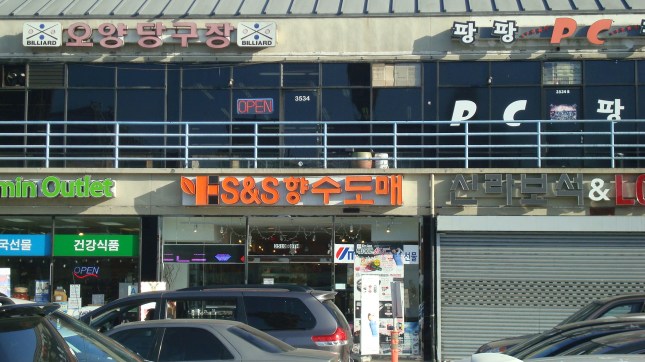
Ktwn 30 Mall S&S

And there are older malls, where a bunch of businesses are crowded around a tiny parking lot.

Ktwn 32 Mall Kids

This one looks like it dates back to the sixties. I’m kind of fascinated by how spaces like this change over time, evolving as the neighborhood changes around them.

Ktwn 32 Mall Rock

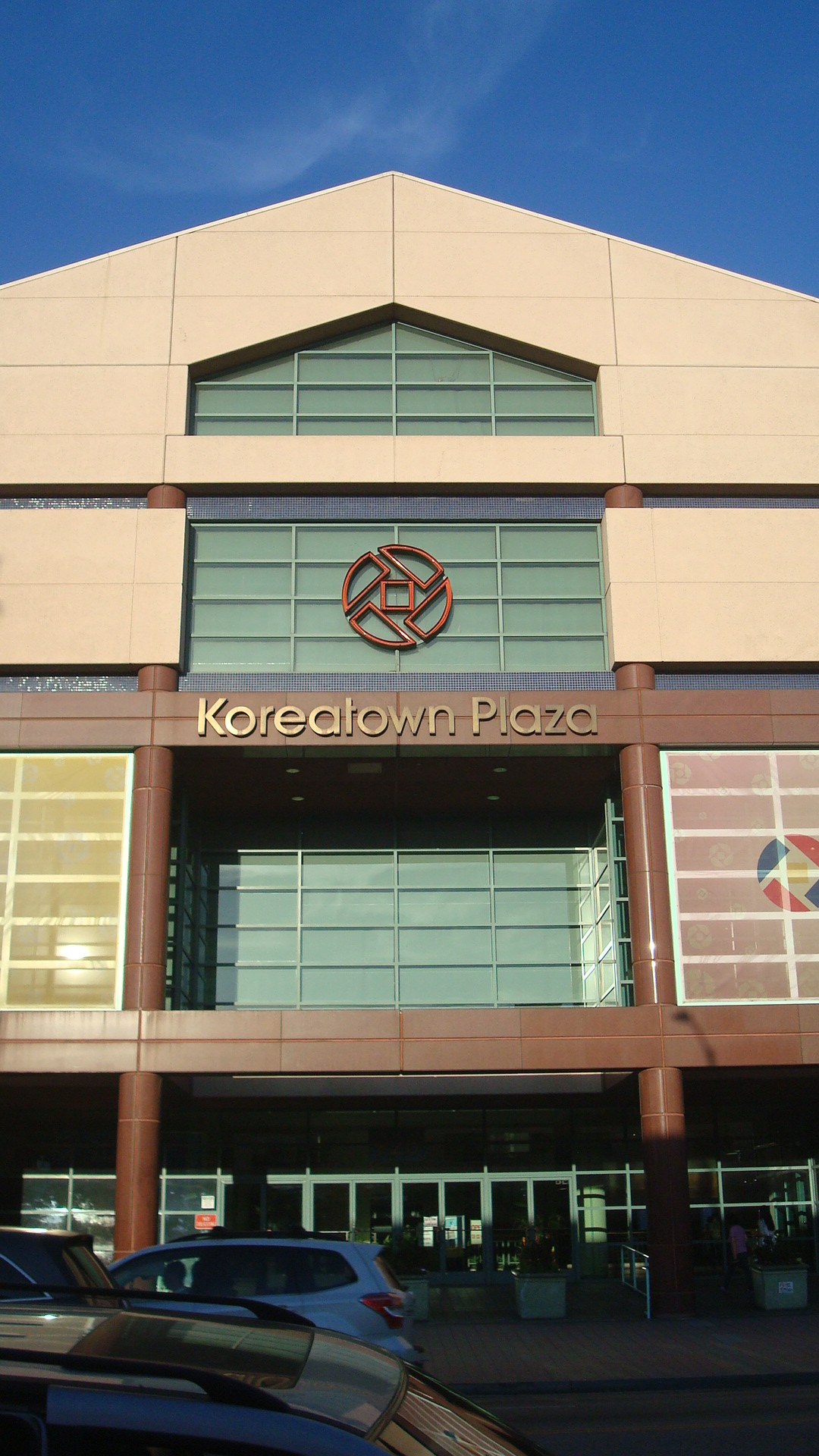
Of course there are also massive indoor malls. Like Koreatown Plaza.
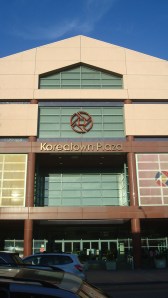
Ktwn 33 K Plaza

I went into Music Plaza looking for traditional Korean Music. They didn’t have much of a selection. But if you’re looking for the latest K-Pop releases, this is the place to be. It may not look too busy in this photo, but I had to stand in line to make my purchase. And I feel pretty certain that they make way more on the merchandise than they do on the music.
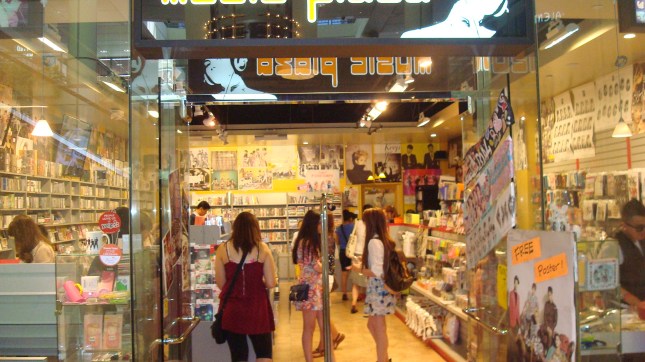
Ktwn 35 Music Plaza

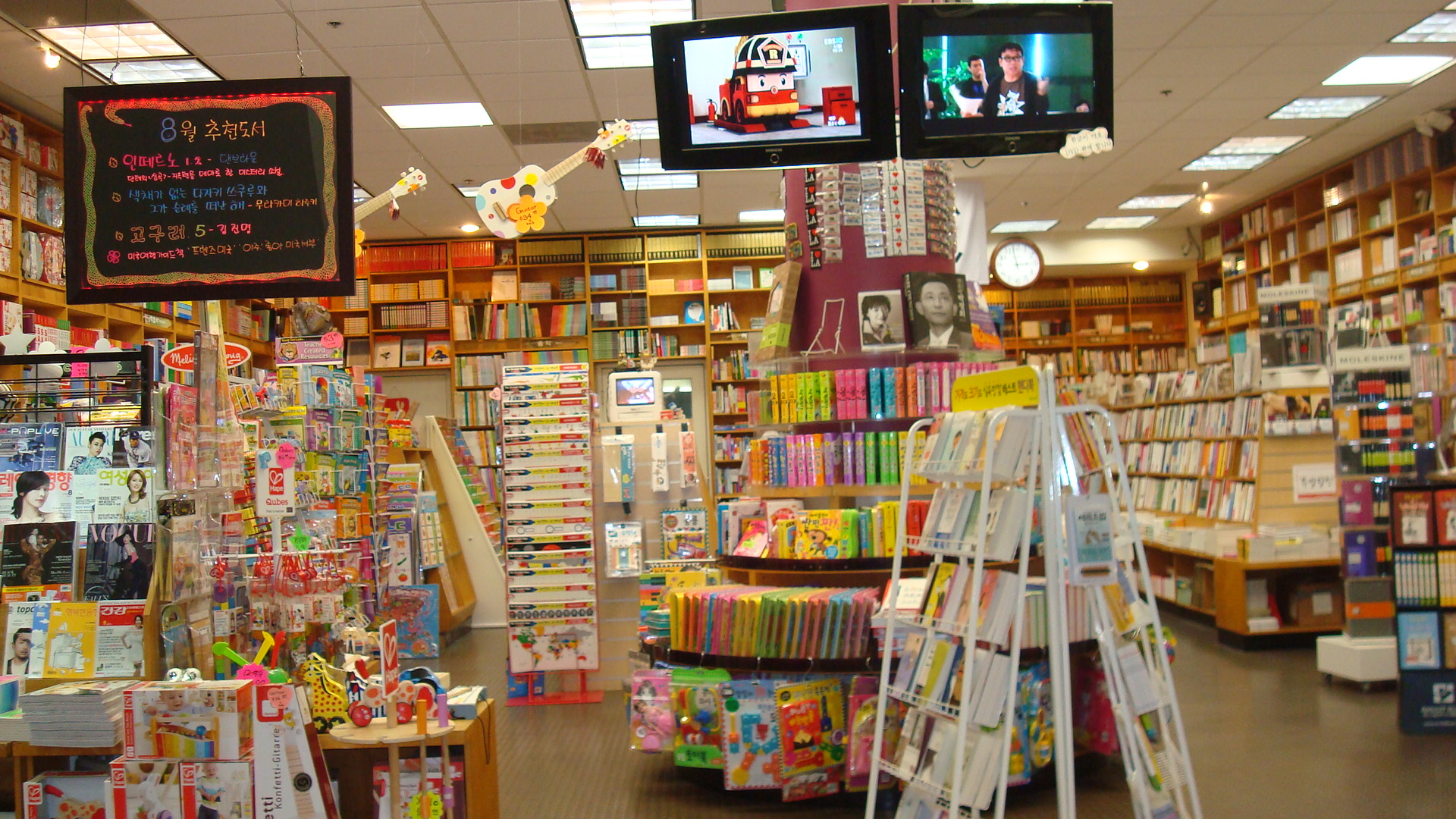
I’m not sure why this bookstore seems quintessentially Korean to me, but it has something to do with the colors.

Ktwn 37 KBC

Like every other mall, Koreatown Plaza has a sizeable food court.

Ktwn 38 K P Court

Walking around the area you see that health and beauty are definitely marketable commodities. There are lots of spas and beauty parlors.

Ktwn 50 Bty All Rev

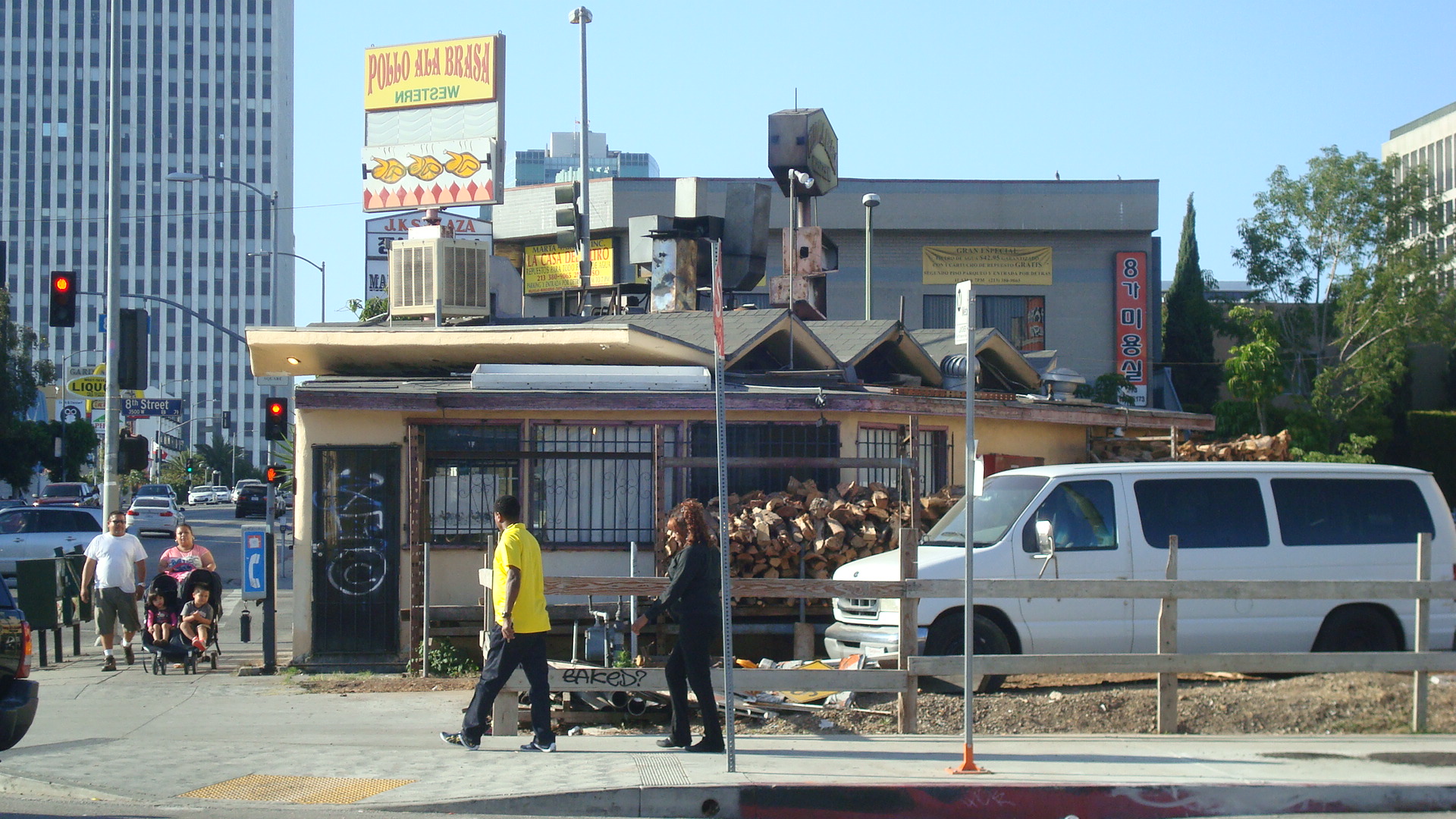
It was the stacks of firewood that made me want to take a picture of Pollo a la Brasa.

Ktwn 68 Pollo

As large swaths of LA get gentrified and prettified, it’s cool to see an old school restaurant that isn’t too worried about its appearance. And in addition to keeping the grills going…

Ktwn 69 Pollo Waiting

…the logs also serve as benches while people wait for the bus.

Yeah, LA’s sidewalks are a mess, but I have to say I have an affection for the huge, overgrown trees that are breaking up the concrete. The thick branches spreading over this stretch of Eighth Street made it seem like a small forest.

Ktwn 70 Eighth Shade

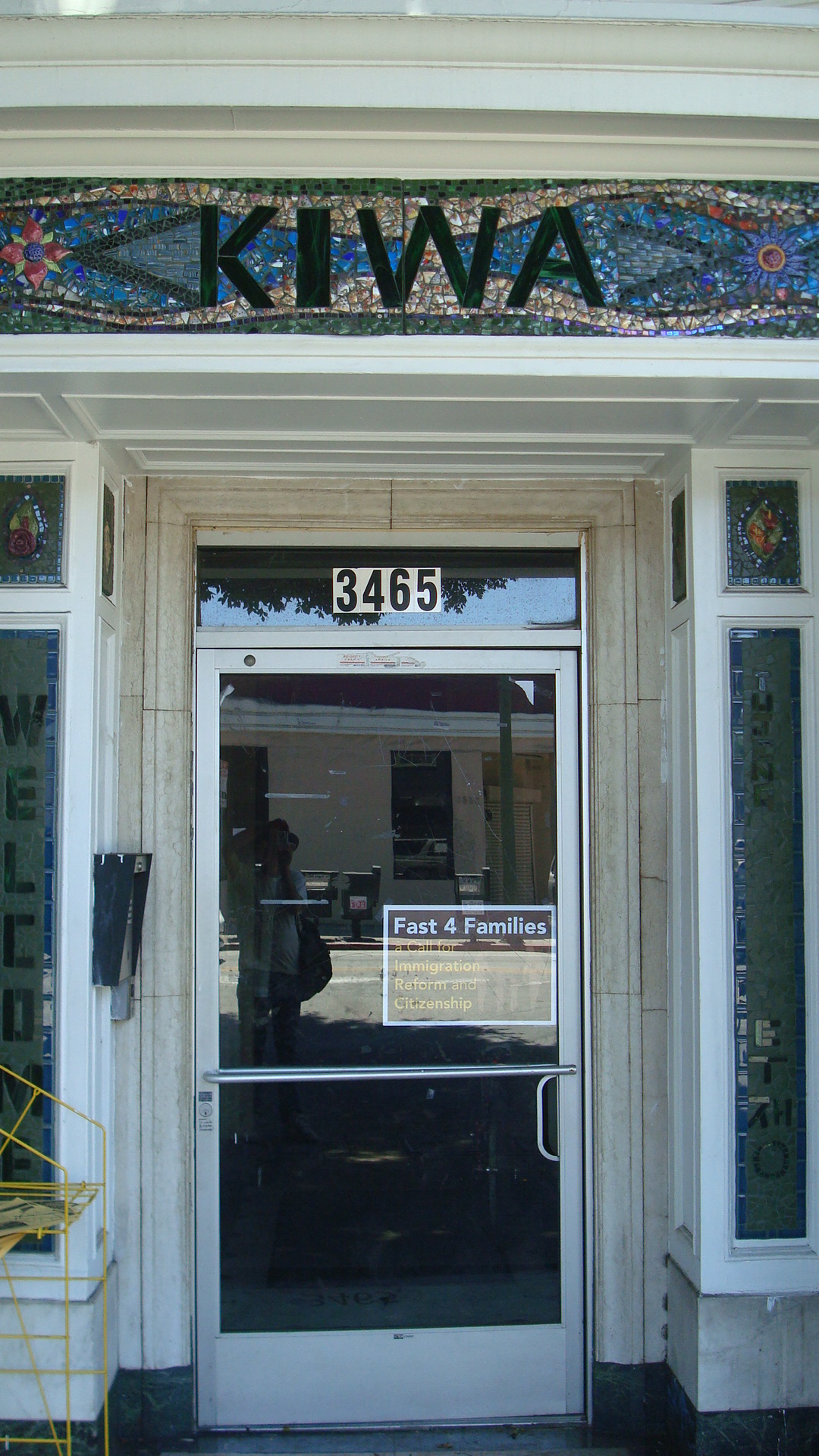
Ktwn 70 KIWAAnd right here on Eighth Street is the Koreatown Immigrant Workers Alliance. KIWA has worked for years to defend the rights of workers, and is currently engaged in a campaign to fight wage theft, which is rampant in LA. One of their notable victories was helping Heriberto Zamora recover wages that had been denied him by Urasawa, a posh restaurant in Beverly Hills. Even after being cited by the California Division of Labor Standards Enforcement for multiple violations related to wage theft, Urasawa resisted paying Zamora what he was owed until just before their final hearing before the DLSE. To find out more about KIWA’s work, click on the link below.

KIWA

Koreatown is changing rapidly, but pieces of the past still remain. I hadn’t been to Dong Il Jang for decades, and I’d been thinking about stopping by for a while.
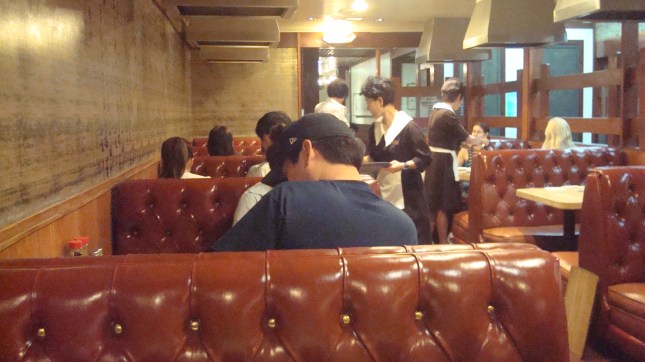
Ktwn 91 Dong Int

The waitresses were friendly. The food was good. Even though I hadn’t been there for years, it felt familiar. And it was just reassuring to know that it was still there.

Ktwn 92 Dong Food

Evergreen Cemetery

EC 01 EntI first saw Evergreen Cemetery in a movie. I was watching Sam Fuller’s 1959 film Crimson Kimono, much of which was shot on location in LA.* There’s a scene where a detective speaks with an elderly Japanese man in a cemetery. It stuck in my mind, and I got on the net to see if I could track the location down.

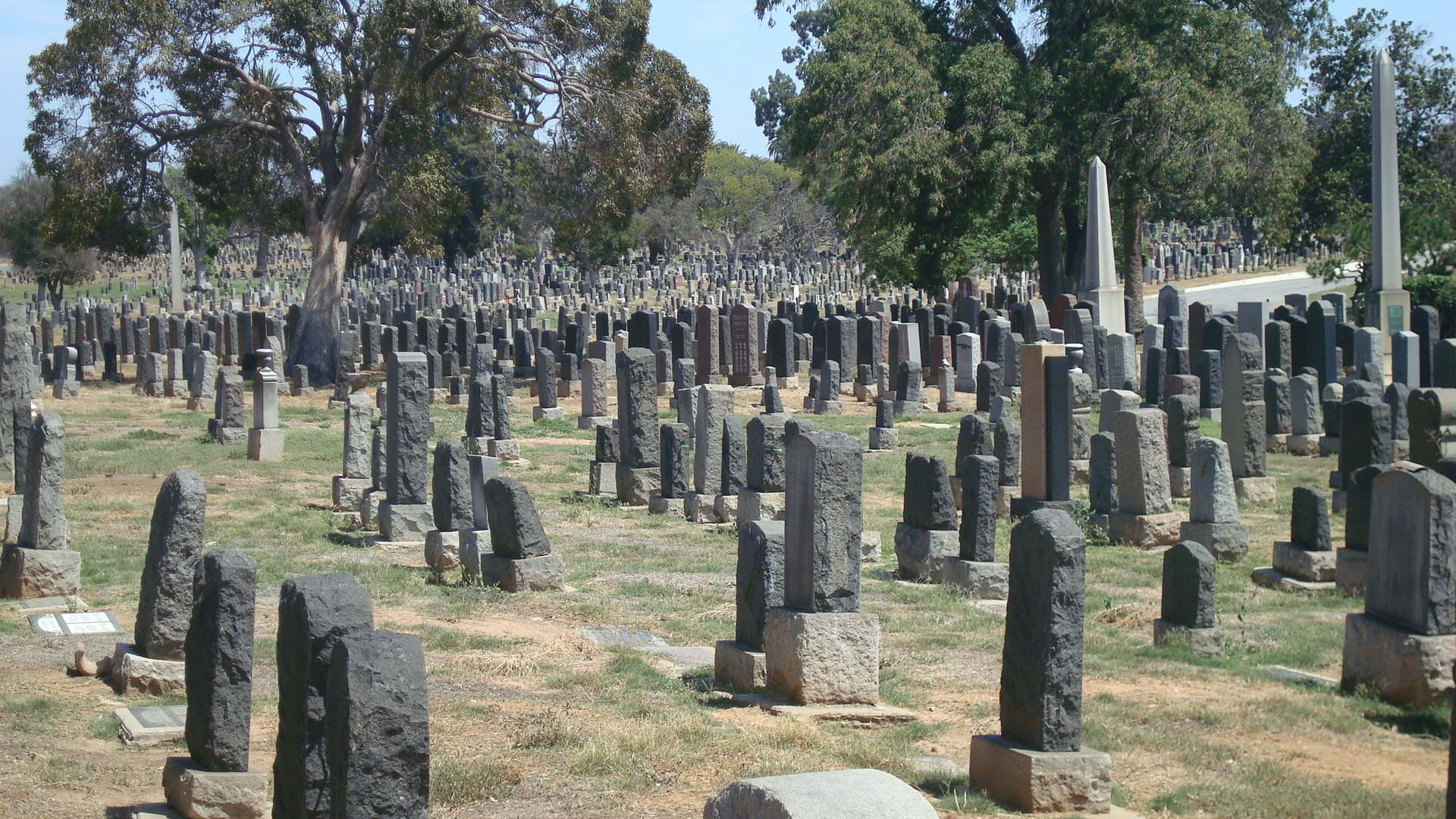
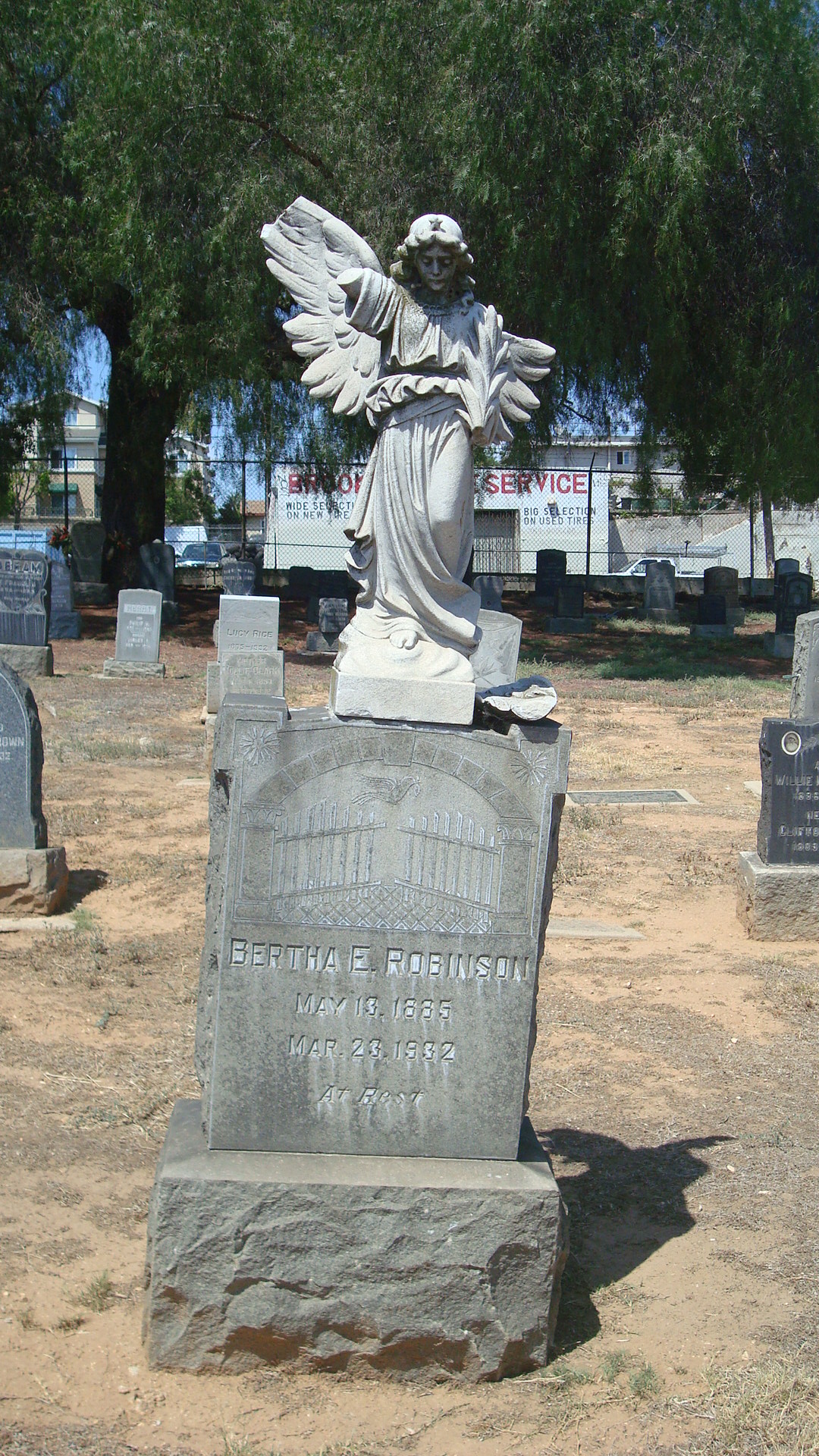
It wasn’t hard. There’s a fair amount of information available on Evergreen Cemetery, and the more I learned, the more I wanted to know. It was founded in 1877, and is located in Boyle Heights. Like every cemetery, it serves as a reminder and a record of the past, but it also holds a special place in LA history for a couple of reasons. First, it was unusual because in addition to serving the white community, it also served the African-American, Mexican and Japanese communities. Evergreen is an important reminder of the city’s multicultural heritage. Second, it’s the final resting place of a number of people who shaped not just LA history, but US history. Tombstones belonging to actors, journalists, business leaders, war heroes, musicians, can all be found at this cemetery.

EC 15 Tmstns Lots

Charlotta Bass, publisher of the California Eagle, an early black-owned newspaper, and vice-presidential candidate for the Progressive Party in 1952 is interred here. So is rancher and farmer Isaac Lankershim, who played a major role in the early development of the San Fernando Valley. You’ll find the grave of Earl Gilmore, who, after taking over his father’s oil company, expanded his business interests in many directions, and created the Farmers Market at Third and Fairfax. The cemetery holds a monument to the 442nd Regimental Combat Unit, made up of Japanese-American soldiers, that served with distinction in World War II. And there is also the Nineteenth Century Chinese Memorial Shrine, which was restored back in the 1990s with the help of the Chinese Historical Society of Southern California.
EC 05 Tmstns Wall

Not too long ago, I went to visit Evergreen Cemetery with some people I know. There were a few others visitors, but most of the time it seemed like we were alone in this vast graveyard. The patchy grass was green in some places, brown in others. The sun was hot when we weren’t standing in the shade of the large trees. A few graves had fresh flowers on them. Many of them seemed like they hadn’t been touched in years. Aside from the occasional murmur of voices, or the sound of traffic passing on Cesar Chavez Ave., it was very quiet. Very peaceful.

EC 06 AngelBelow are a few links to sites I visited while researching the cemetery. The first offers a list of some of the people buried at Evergreen, and also provides a timeline. The second, from the KCET web site, gives a vivid and engaging account of the cemetery’s history. Plus it includes lots of cool photos. Last, a fascinating account of the Chinese Memorial Shrine. This story shows how an important piece of LA’s history was almost lost, and also how difficult preserving the past can be.

Evergreen Cemetery

Evergreen Cemetery at KCET

Nineteenth Century Chinese Memorial Shrine

*
The majority of the location work for Crimson Kimono was shot in Little Tokyo, but Evergreen Cemetery is located in Boyle Heights. If you’re interested in LA history, the film offers extensive views of the city in the fifties, with a focus on the Japanese-American community.

Hollywood Journal – Preservation Prevails

The Cinerama Dome under construction in 1963.

The Cinerama Dome under construction in 1963.

I spent a good part of 1998 freaking out over Pacific Theaters’ plans for “renovating” the Cinerama Dome. The initial proposal involved gutting the auditorium, removing the curved screen and putting a fast food restaurant in the lobby. The film and preservation communities protested loudly. To their credit, the people at Pacific met with the opposition and made a number of important concessions.

If you’re not into film, and if you don’t care about Hollywood history, you might be mystified by the uproar. So let me offer a little background….

Cinerama was a process that revolutionized the production and exhibition of films back in the early fifties. Three strips of film were projected in perfect synchronization to create the illusion of a continuous widescreen image, accompanied by stereophonic sound playback. The image was shown on a huge curved screen to produce an early version of what we now call immersive entertainment.

In the early sixties, Cinerama, Inc. unveiled an ambitious plan to create hundreds of Cinerama theatres based on a radical new model. They would construct geodesic domes using prefabricated panels, which would supposedly allow them to build a theatre in half the time and for half the cost of using conventional methods. They purchased a site on Sunset Blvd. in Hollywood and hired the firm of Welton Becket and Associates to design what would become the Cinerama Dome.

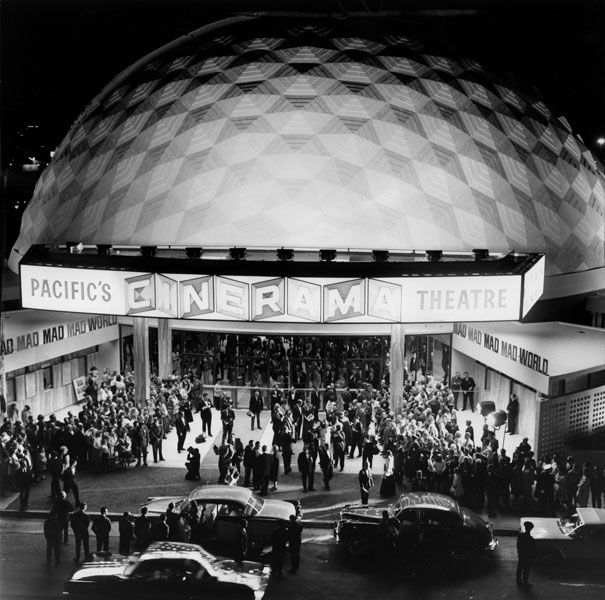
The premiere of It's a Mad, Mad, Mad, Mad World at the Dome in 1963.

The premiere of It’s a Mad, Mad, Mad, Mad World at the Dome in 1963.

Becket’s company was one of the major architectural firms in the city at that time, and played a large part in setting the look and tone of mid-century Los Angeles. To my mind the Dome is something of a companion piece to one of their earlier signature creations, the Capitol Records Building, which is just a few blocks away on Vine. Together these two icons helped to define space age architecture.

Of the theatres that were constructed to show films in the Cinerama process, only a handful are left today. The Dome is a unique creation designed by one of the most important architectural firms in the city’s history. That’s why so many of us got so crazy when we saw the initial plans to renovate it. I will always be grateful to Pacific for listening to the community and preserving the Dome.

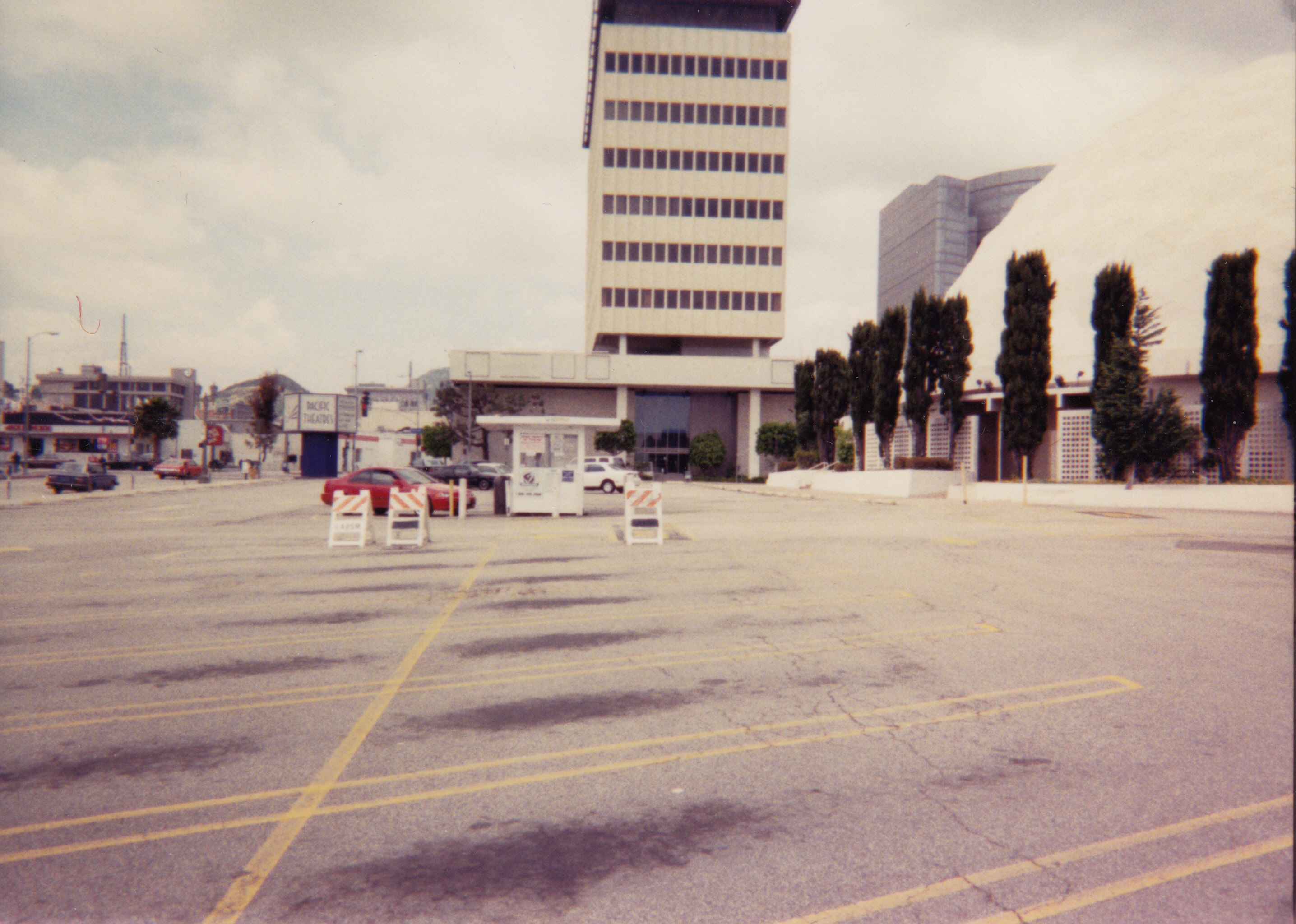
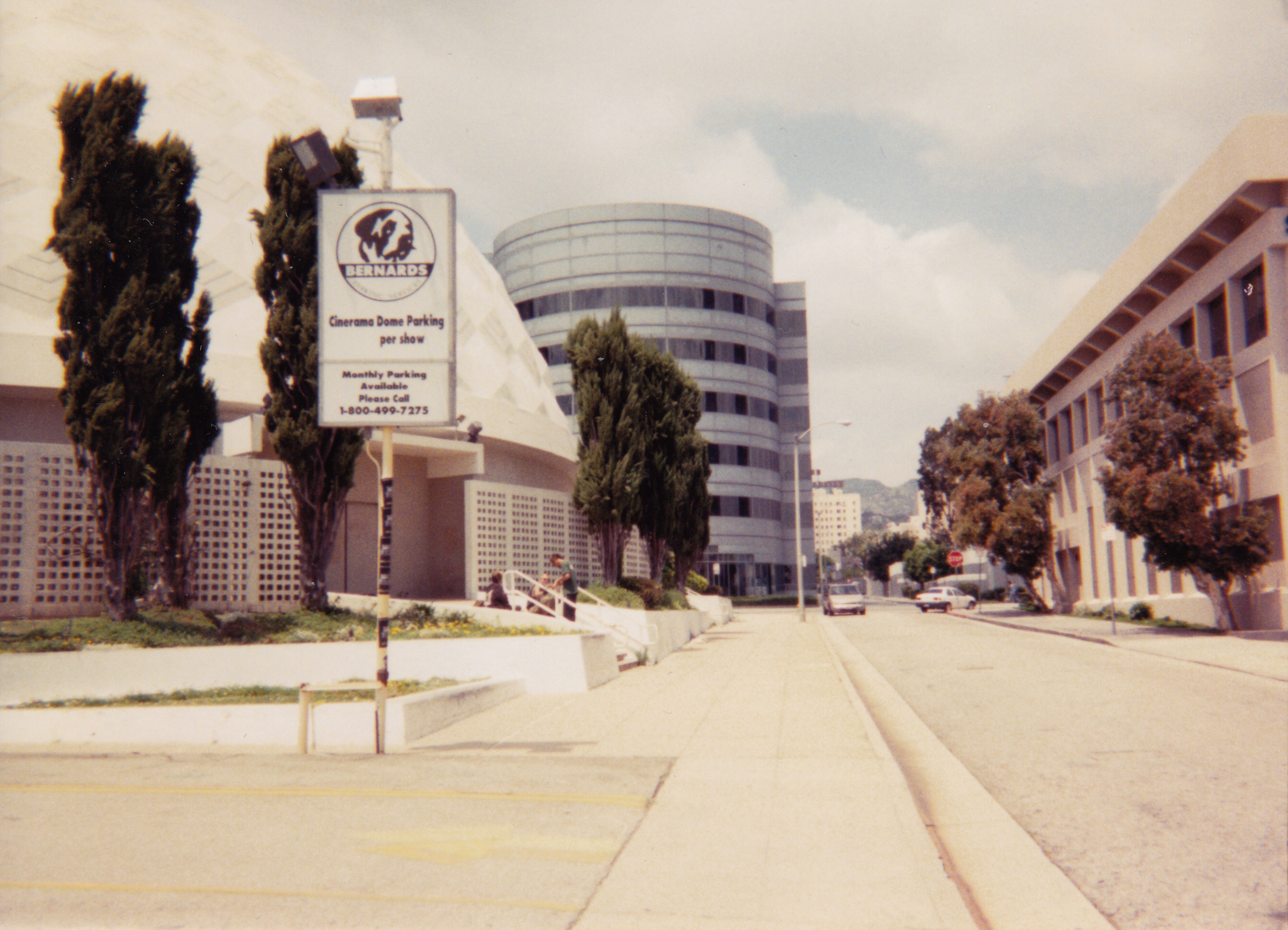
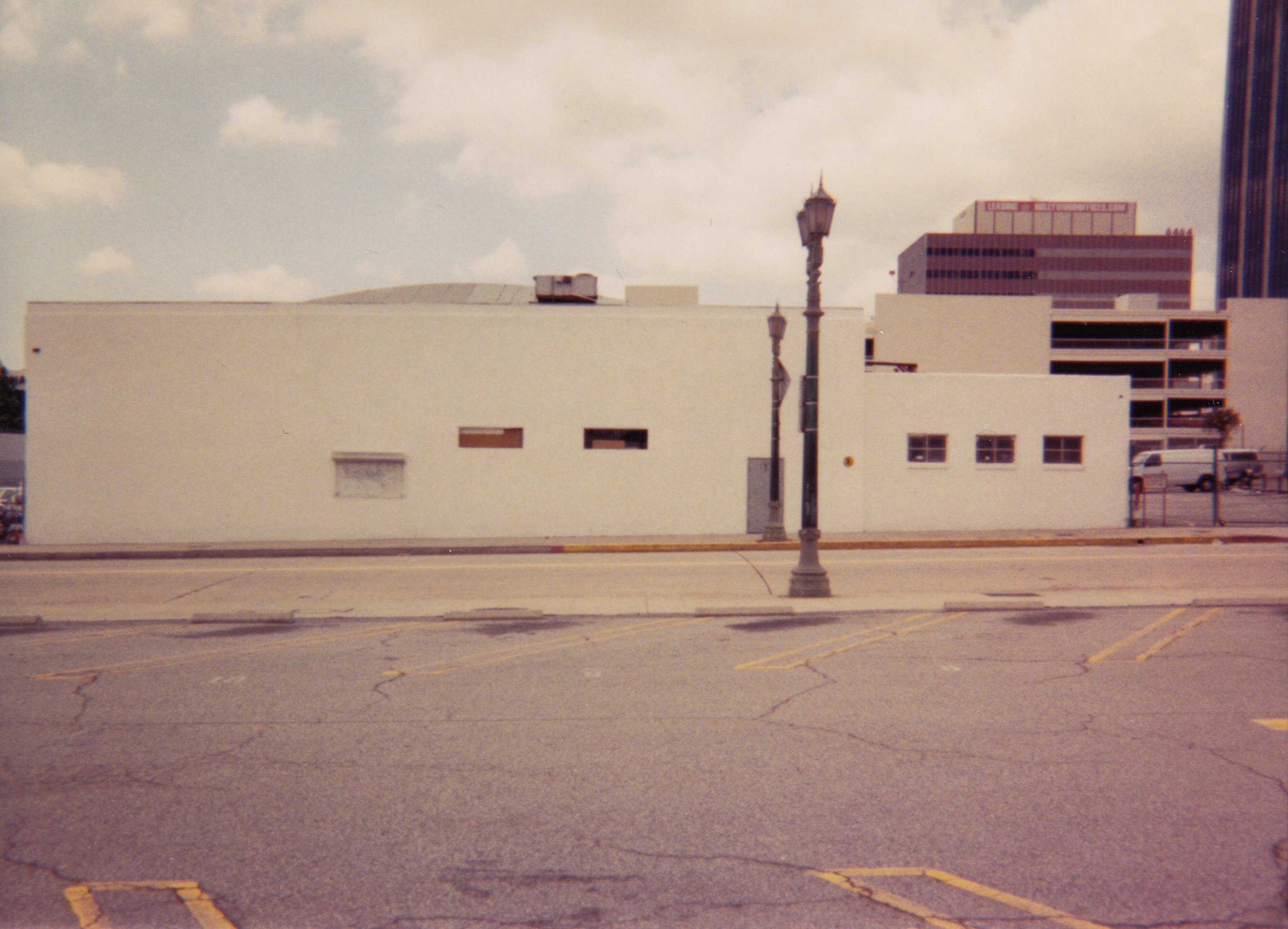
The two pictures above are from the Los Angeles Public Library photo archive. The first shows the dome under construction. It was taken by Howard D. Kelly in 1963. The second shows the premiere of the film that the Dome opened with, It’s a Mad, Mad, Mad, Mad World. It was also taken in 1963, but no photographer is credited. Below are some photos I took of the Dome and the area surrounding it back in 1998. Sorry that the quality isn’t better. They were taken with a disposable camera, and have faded over the years. A couple of photos were taken from Morningside Court, which used to go through to De Longpre, but was closed off with the construction of the Arclight parking structure.

February, Nineteen Ninety Nine

For weeks I’ve been meaning to write abut the latest on the Cinerama Dome. Here it is.

Apparently the people from Pacific Theaters sat down and talked with the preservation people, and the end result was Pacific gave up a lot of the changes they were going to make. As I recall, these are some of the things pacific agreed to.

The entrance will remain at the front of the theatre.

The layout of the seating will stay basically the same, though they will be putting new seats in.

They won’t alter the ceiling of the auditorium.

And —

They’ll keep the curved screen.

I’m actually really grateful to Pacific for giving in on all this stuff. I doubt they understand why the Dome is such a great piece of architecture, so from their point of view the preservationists are going crazy over nothing.

Of course, we still don’t know what the Dome is gonna look like when they’re through. But at this point I’m cautiously optimistic.

The front of the Cinerama Dome in 1998.

The front of the Cinerama Dome in 1998.

Screen walls and landscaping on the periphery of the Dome.

Screen walls and landscaping on the periphery of the Dome.

A shot from the parking lot, looking north to Sunset.

A shot from the parking lot, looking north to Sunset.

A shot of Morningside Court, looking toward Sunset.

A shot of Morningside Court, looking toward Sunset.

Another shot of Morningside Court, this time looking in the opposite direction towards De Longpre.

Another shot of Morningside Court, this time looking in the opposite direction towards De Longpre.

This was taken from the parking lot behind the Dome, facing west.  The site just across the street is where Amoeba now stands.

This was taken from the parking lot behind the Dome, facing west. The site just across the street is where Amoeba now stands.

This shot was taken facing the opposite direction, now looking across the parking lot towards Morningside Court.

This shot was taken facing the opposite direction, now looking across the parking lot towards Morningside Court.

San Fernando Road

SF A1 Desolate

Even if you’ve lived in a city your whole life, you probably only know a small part of it. We tend to stay in our own little worlds. There are the neighborhoods we know, the hangouts where we feel comfortable, the landmarks that are familiar. In our mind that becomes the map of the city. Everything else becomes irrelevant or invisible.

For a long time San Fernando Road was invisible to me. It’s one of the oldest streets in LA, and I’ve been travelling along it since I was a kid, but I never paid any attention to the landscape that was sliding by. It was just a route I’d take to get from one place to another.

Last year I was riding down San Fernando on the bus and I looked out the window. I can’t say I saw anything remarkable, but I started to notice things I’d never paid attention to before. I saw the railroad tracks and the industrial parks. The markets and the restaurants. The trees and the billboards. It’s not a pretty stretch of road, and there’s not much that would attract people from other places, but there’s a lot going on. There are manufacturing and recycling centers, there are auto repair shops and wholesale outlets, and there are trucks and trains that run up and down the road all day long. In other words, there are a lot of things that are made here or processed here or transported through here that touch our lives every day.

San Fernando Road has been called different things over the years. The state and local governments have defined it in different ways. Even now it’s called The Old Road up north in Santa Clarita. In Burbank it’s called San Fernando Boulevard, and it’s interrupted briefly by a mall. When it crosses the LA border again it turns back into San Fernando Road, and it runs all the way into Downtown.

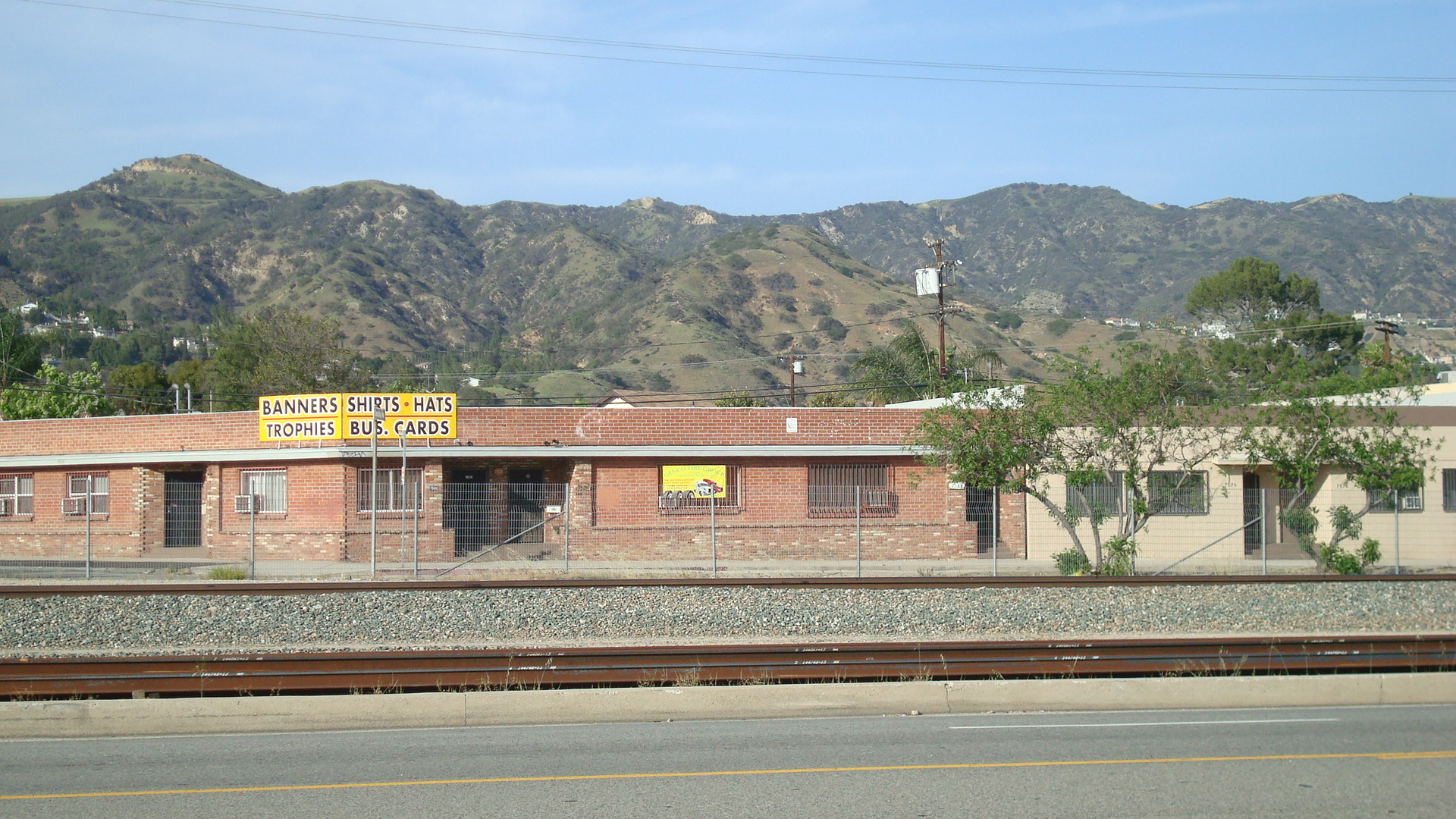
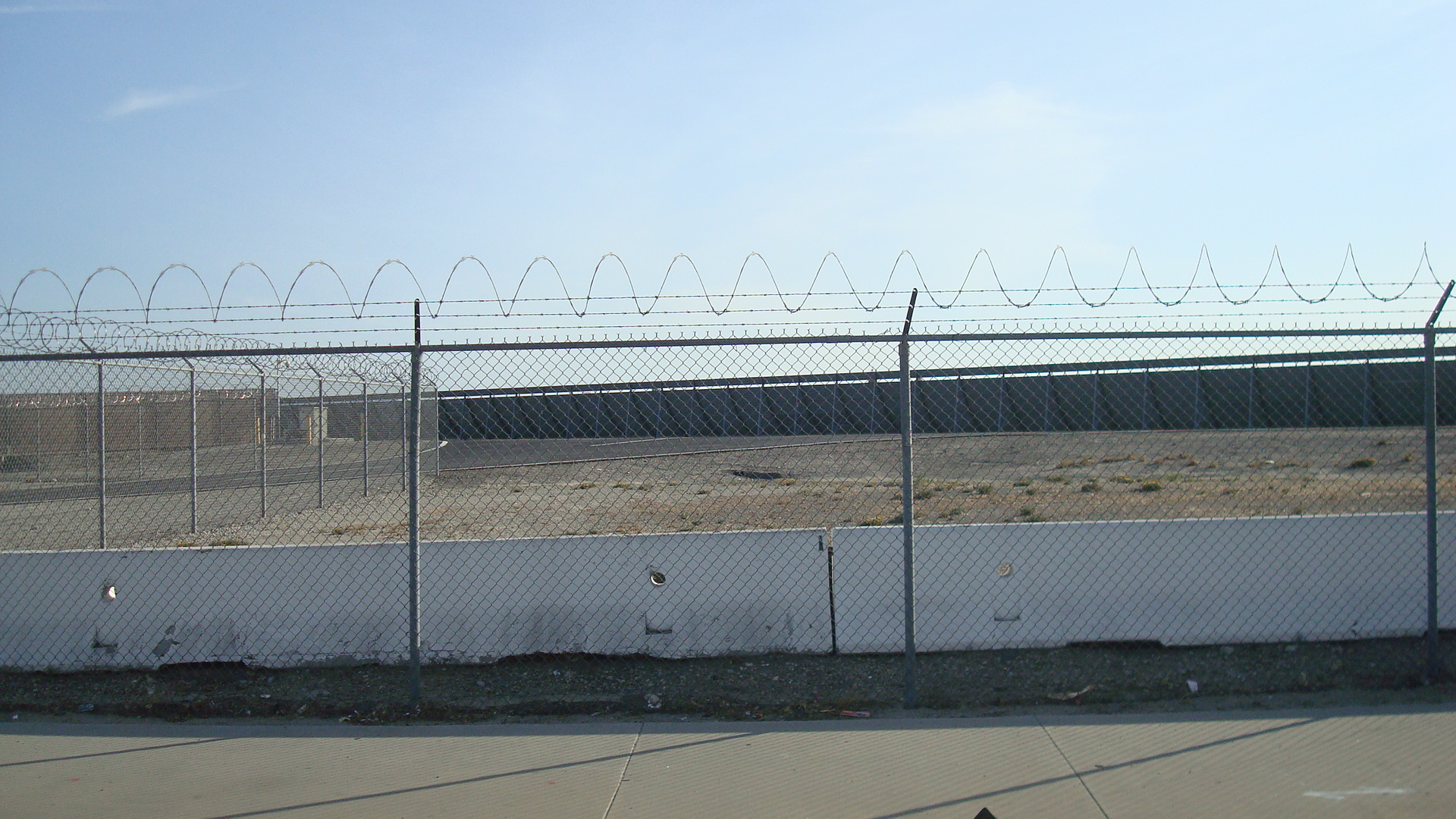
For now I’m just going to focus on the stretch between Hollywood Way and Tuxford. As San Fernando Road leaves Burbank behind, you have the hills on one side….

SF A2 Banners Hills

And Burbank Airport on the other.

SF A3 Airport (2)

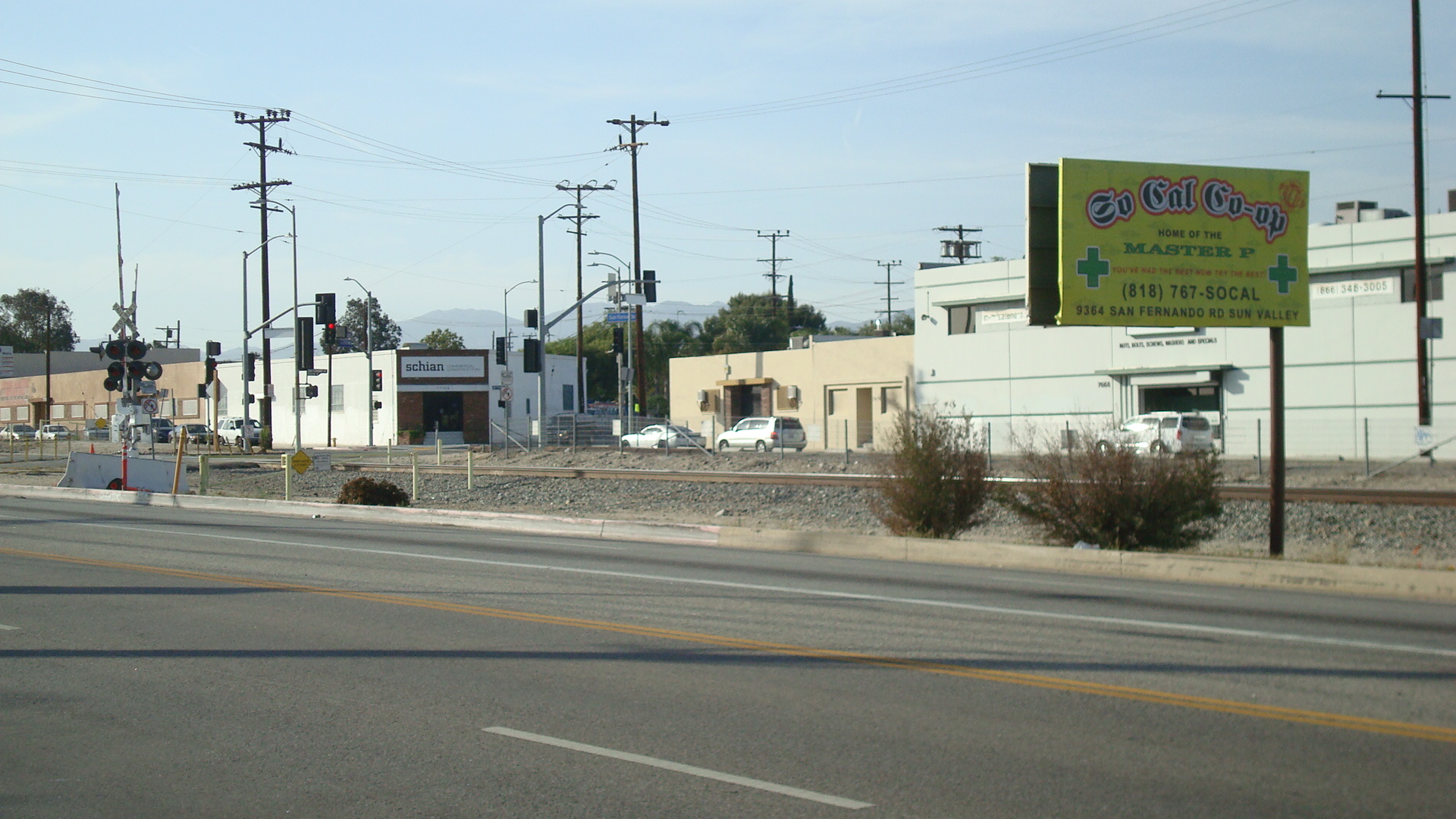
The road is lined mostly with one-story buildings.

SF A4 Coop

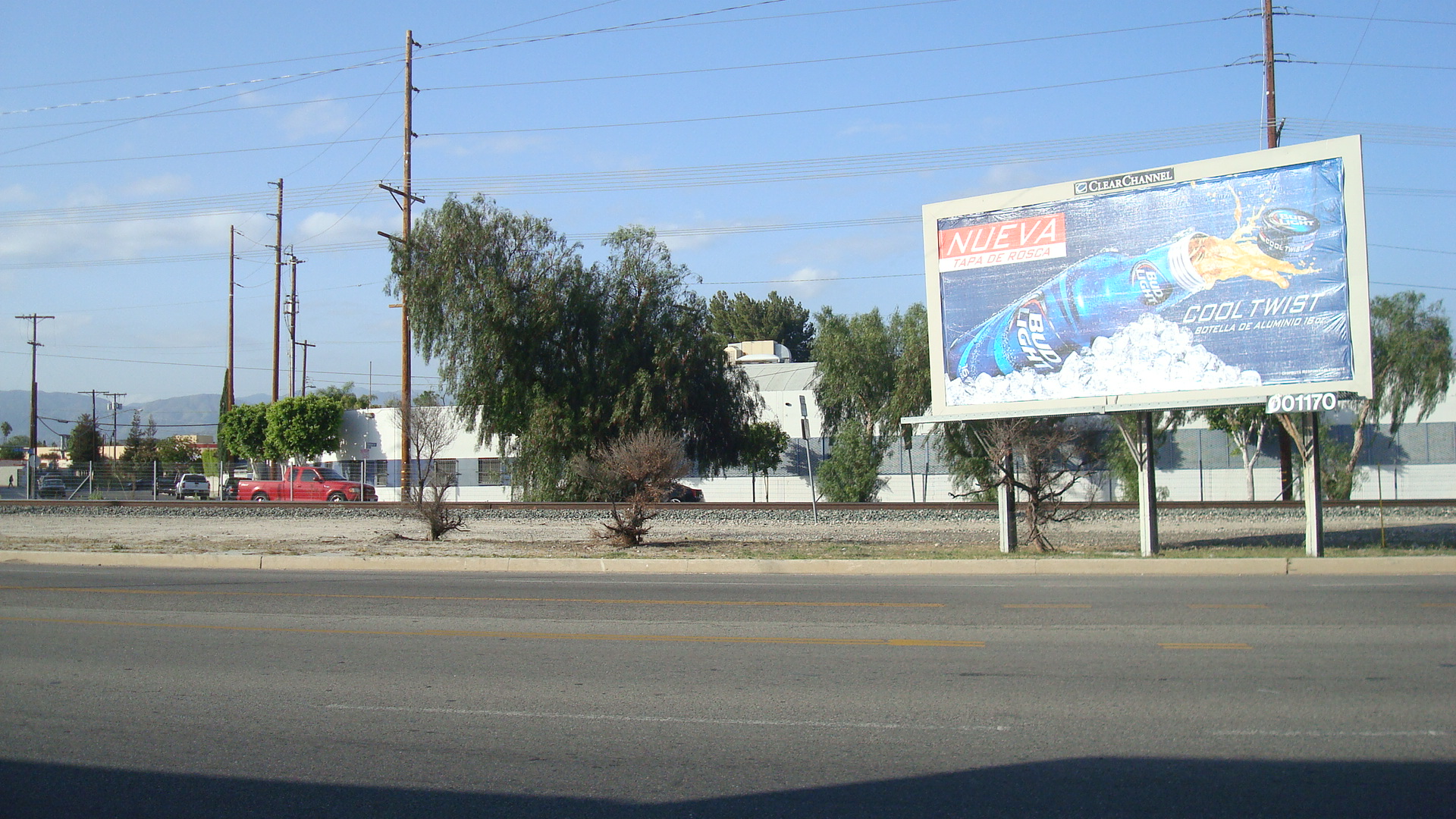
Here and there the monotony is broken by a few trees or a billboard.

SF A5 Beer

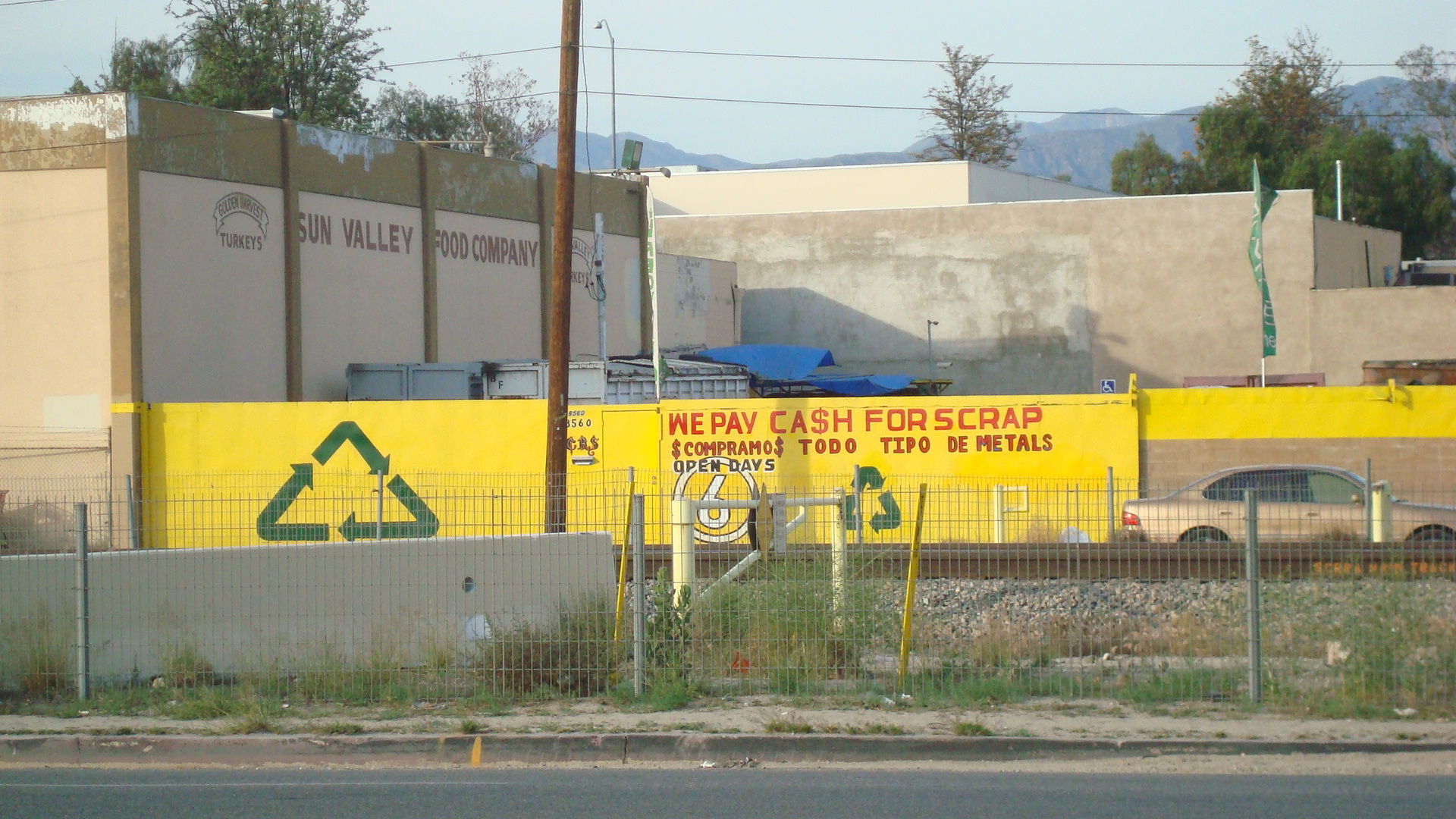
There are all kinds of businesses, many of them dealing with recycling things in one way or another.

a recycling center

a recycling center

La Raza Foods

La Raza Foods

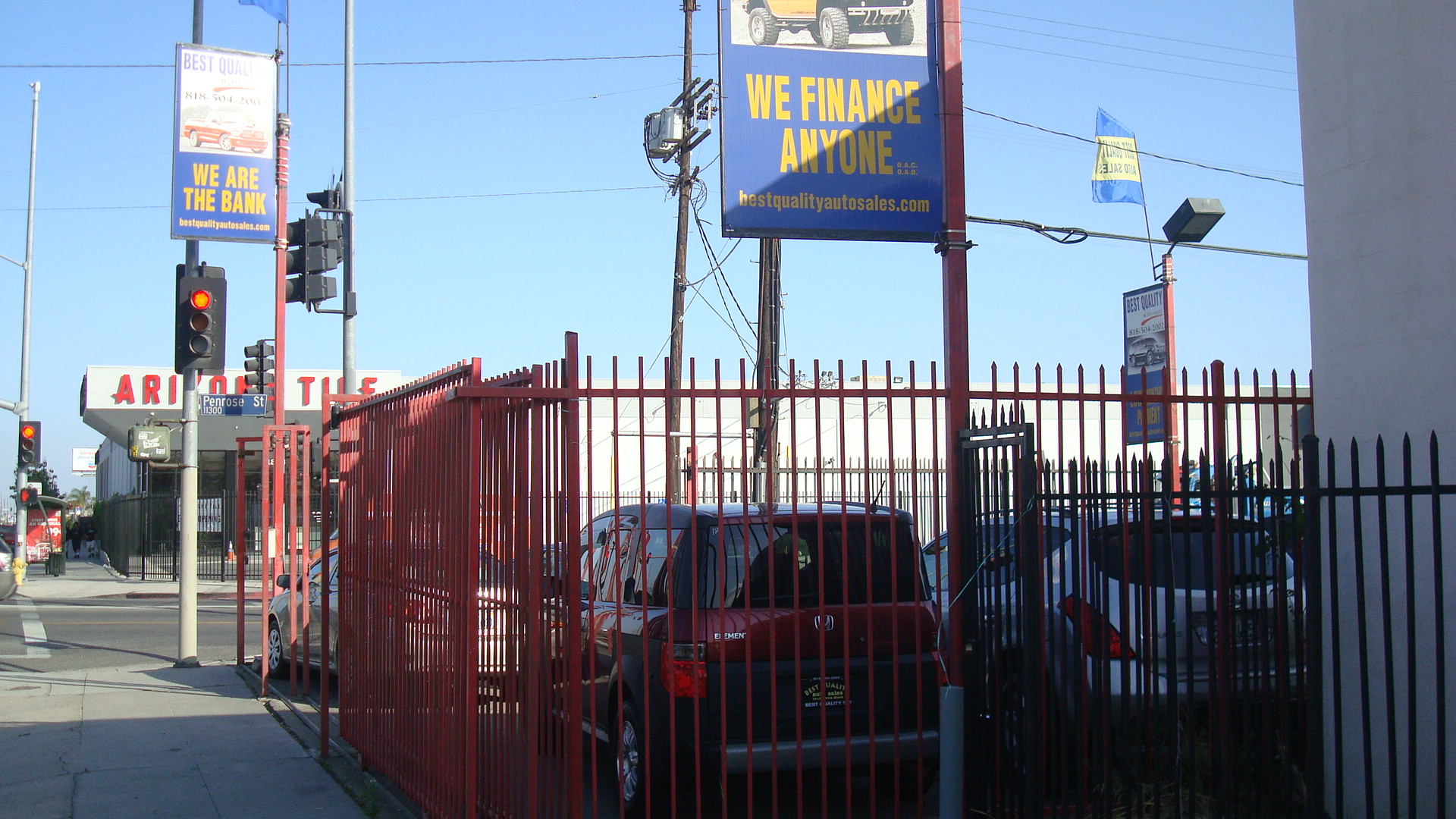
a used car lot

a used car lot

Lite-Weight Tool Mfg.

Lite-Weight Tool Mfg.

The Relic

The Relic

a neighborhood market

a neighborhood market

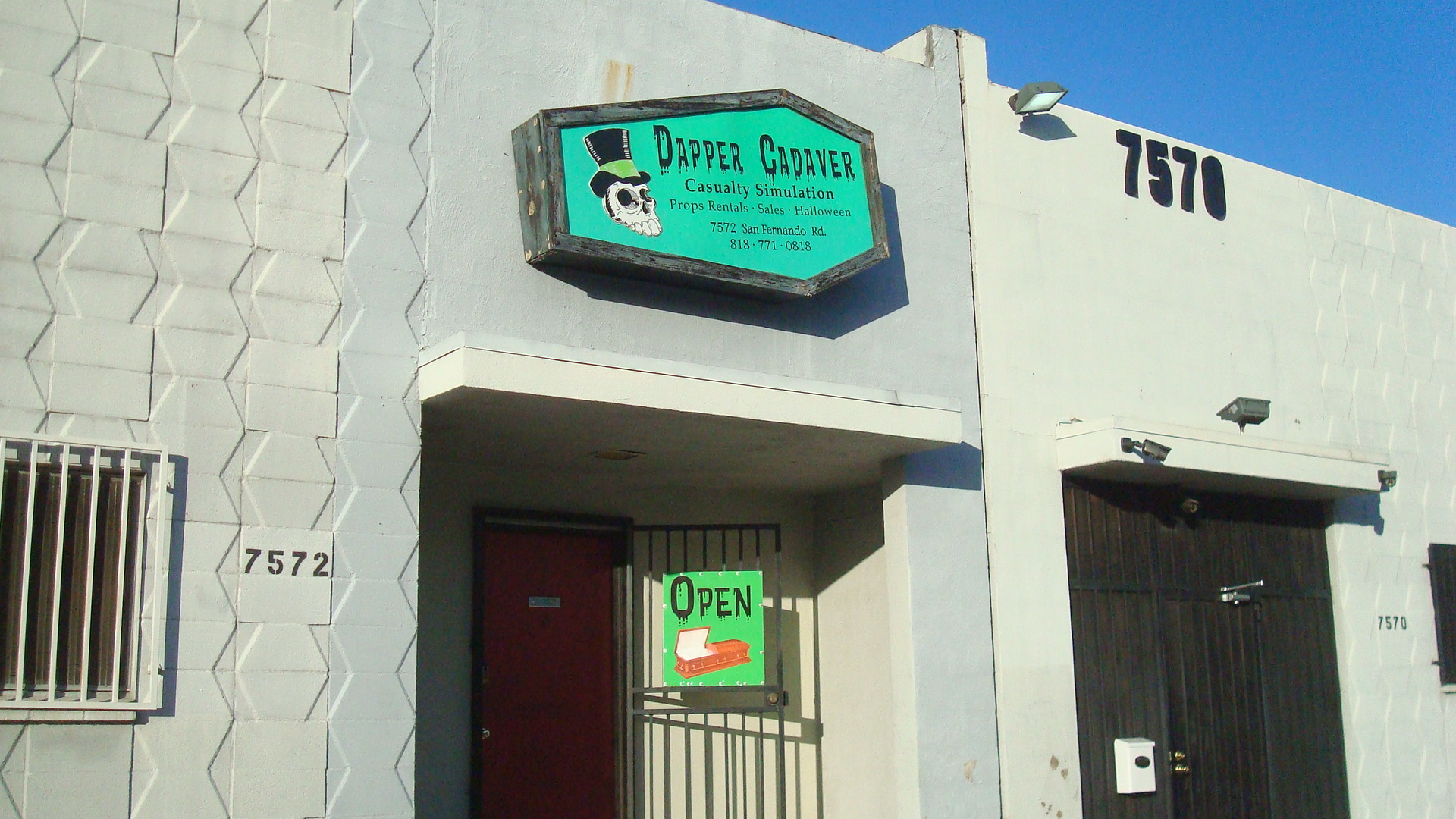
Dapper Cadaver

Dapper Cadaver

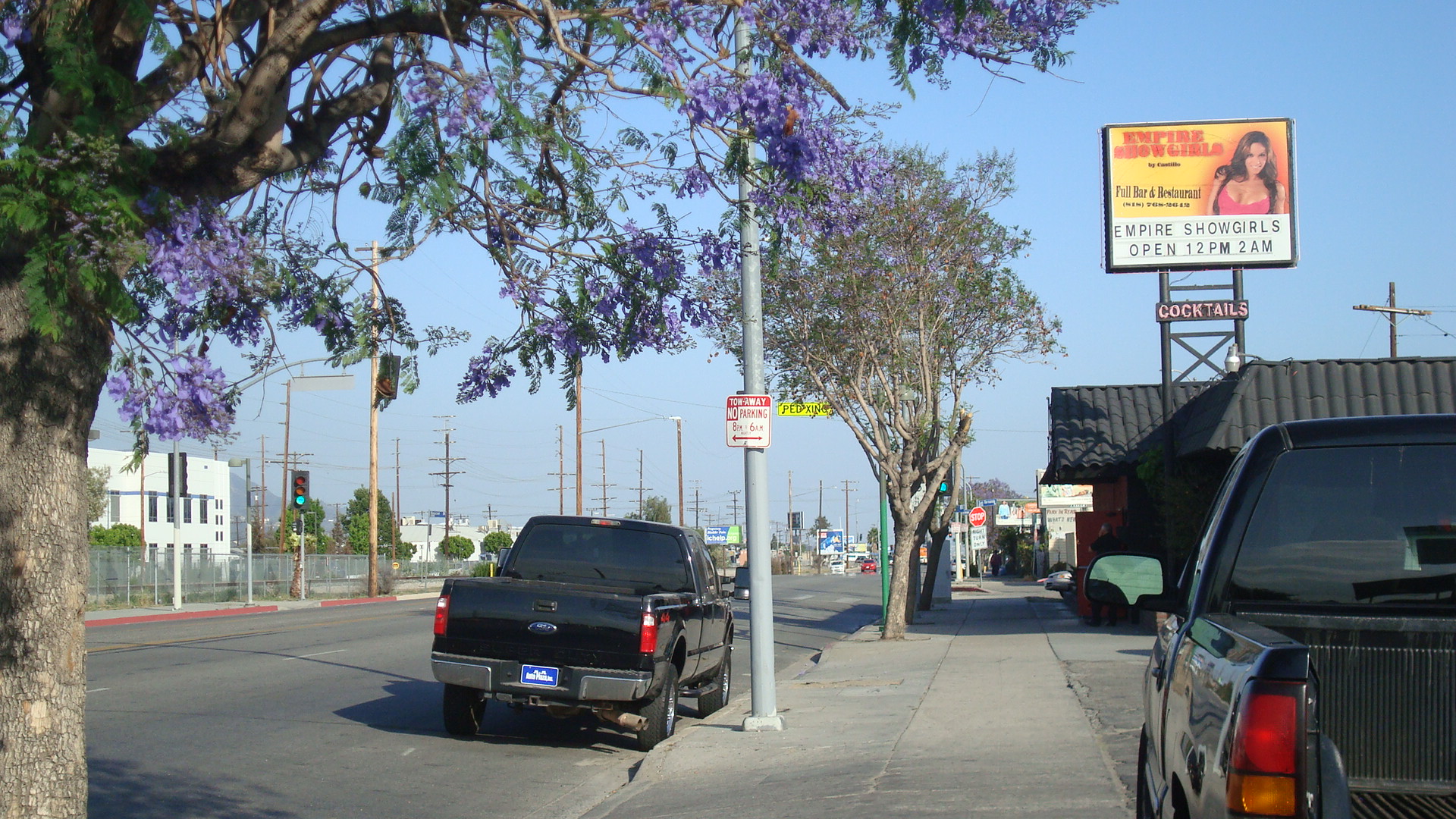
Empire Showgirls

Empire Showgirls

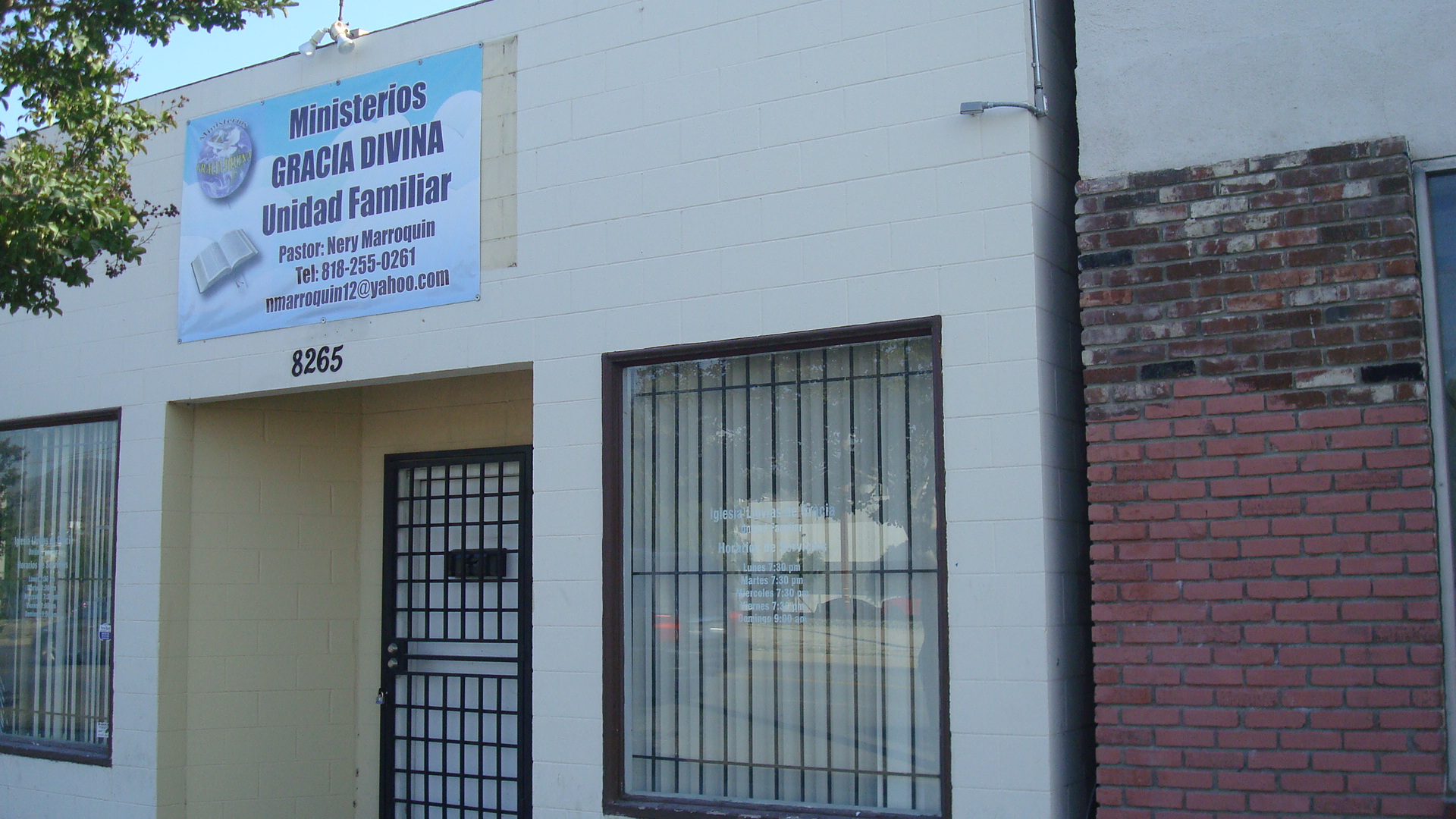
There’s even a couple of places for those seeking a spiritual experience.

Ministerios Gracia Divina

Ministerios Gracia Divina

Burbank Islamic Center

Burbank Islamic Center

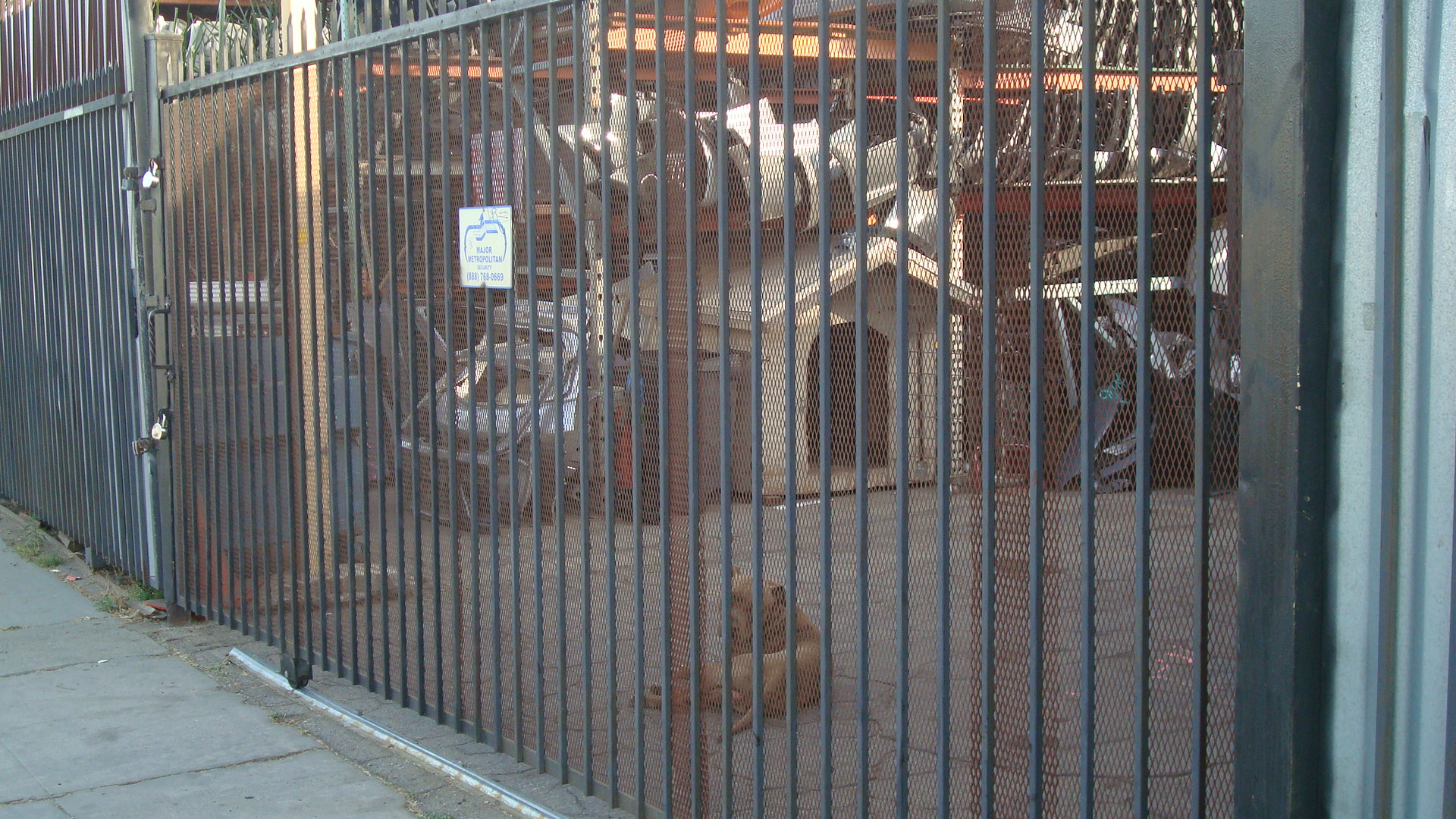
Security is obviously a concern.

bougainvillea and barbed wire

bougainvillea and barbed wire

a guard dog eyes me suspiciously

a guard dog eyes me suspiciously

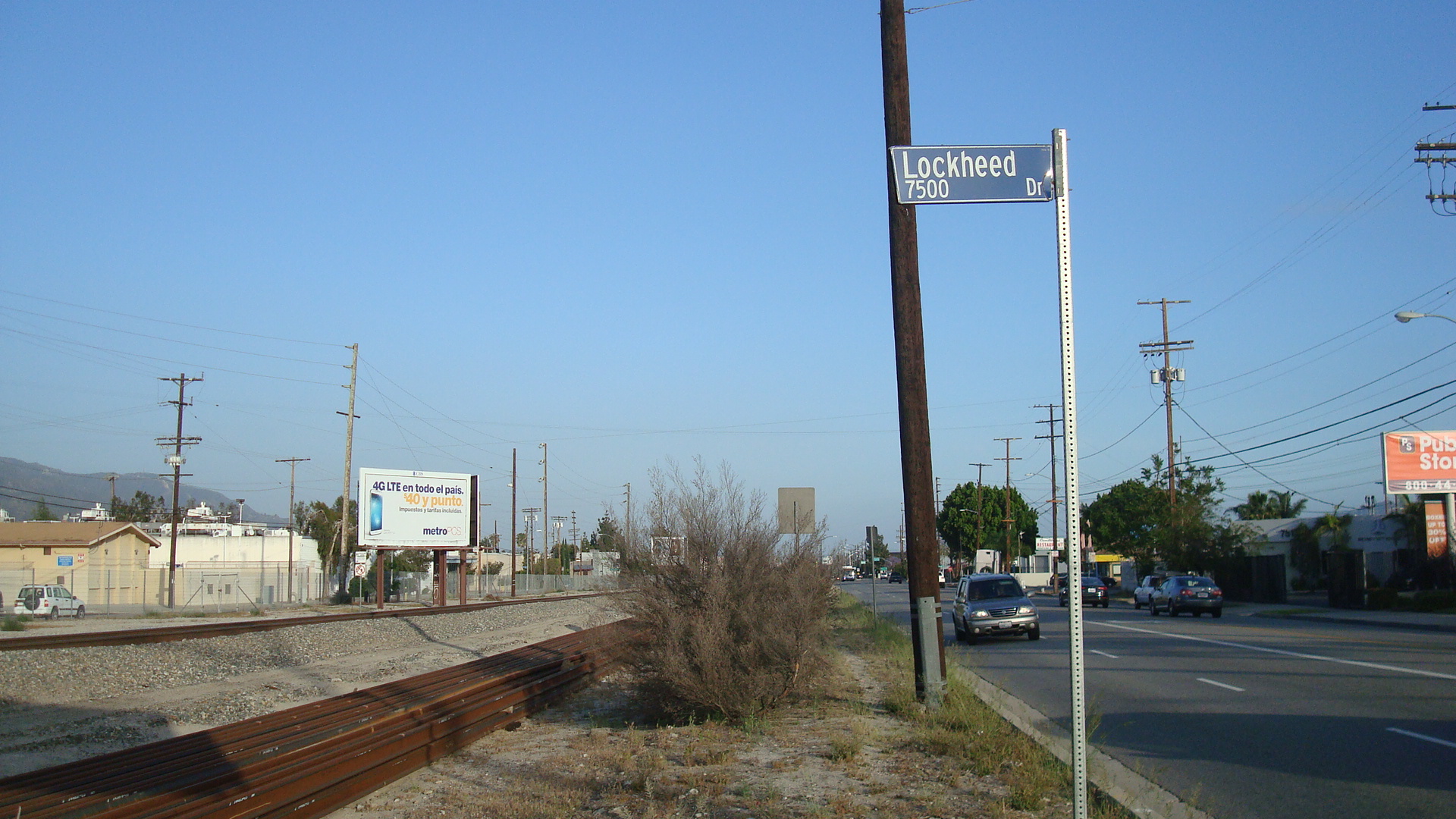
Here’s a relic from the past.

SF C3 Lckd 2

This is one of the few visible reminders of the days when aerospace was a major industry in the area. Lockheed came to Burbank back in the twenties. During and after WWII it employed tens of thousands of workers. The aerospace industry was a major factor in driving the post-war growth of the San Fernando Valley.

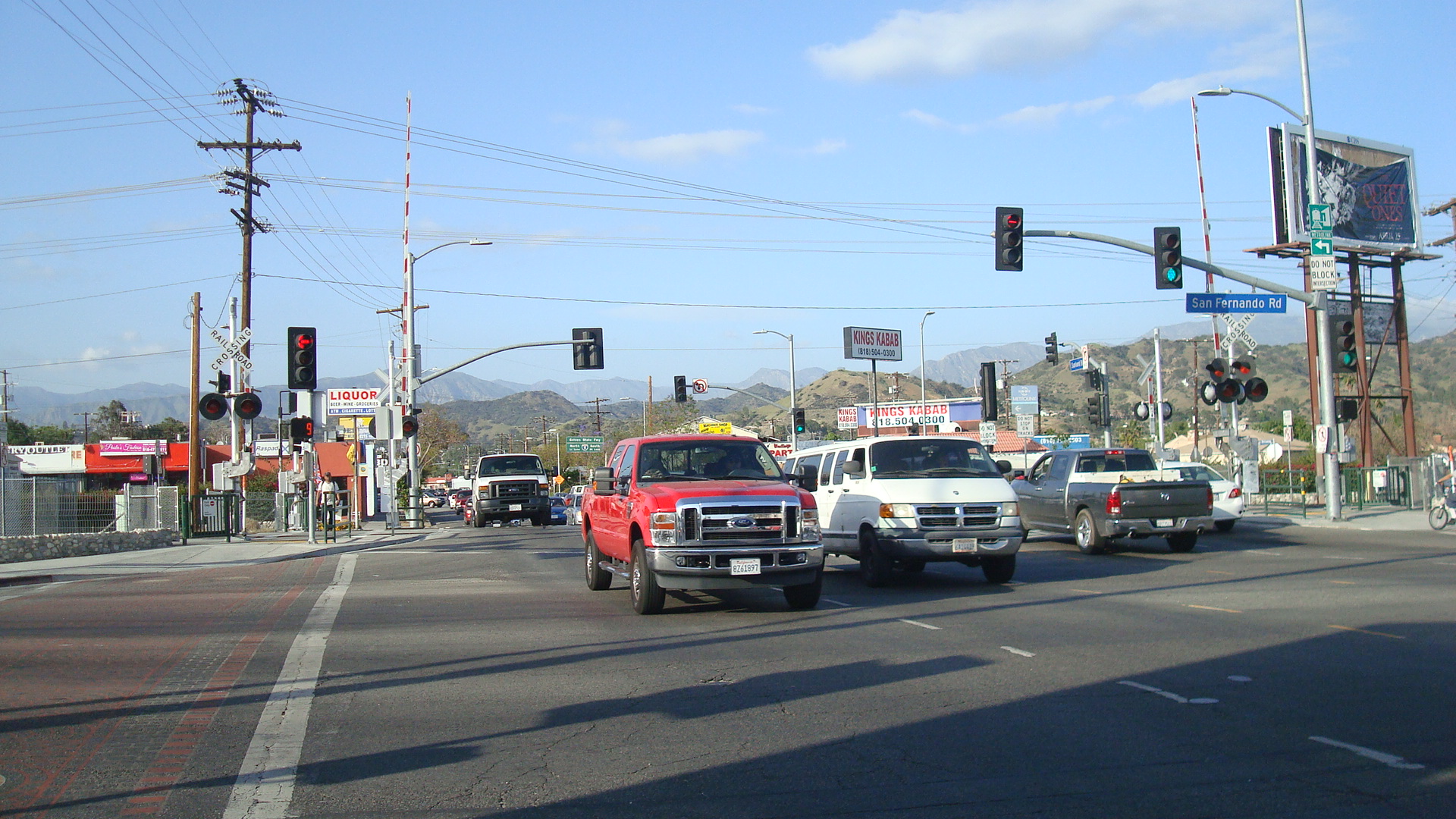
This is the intersection of San Fernando and Sunland.

traffic at San Fernando and Sunland

traffic at San Fernando and Sunland

another shot of San Fernando and Sunland

another shot of San Fernando and Sunland

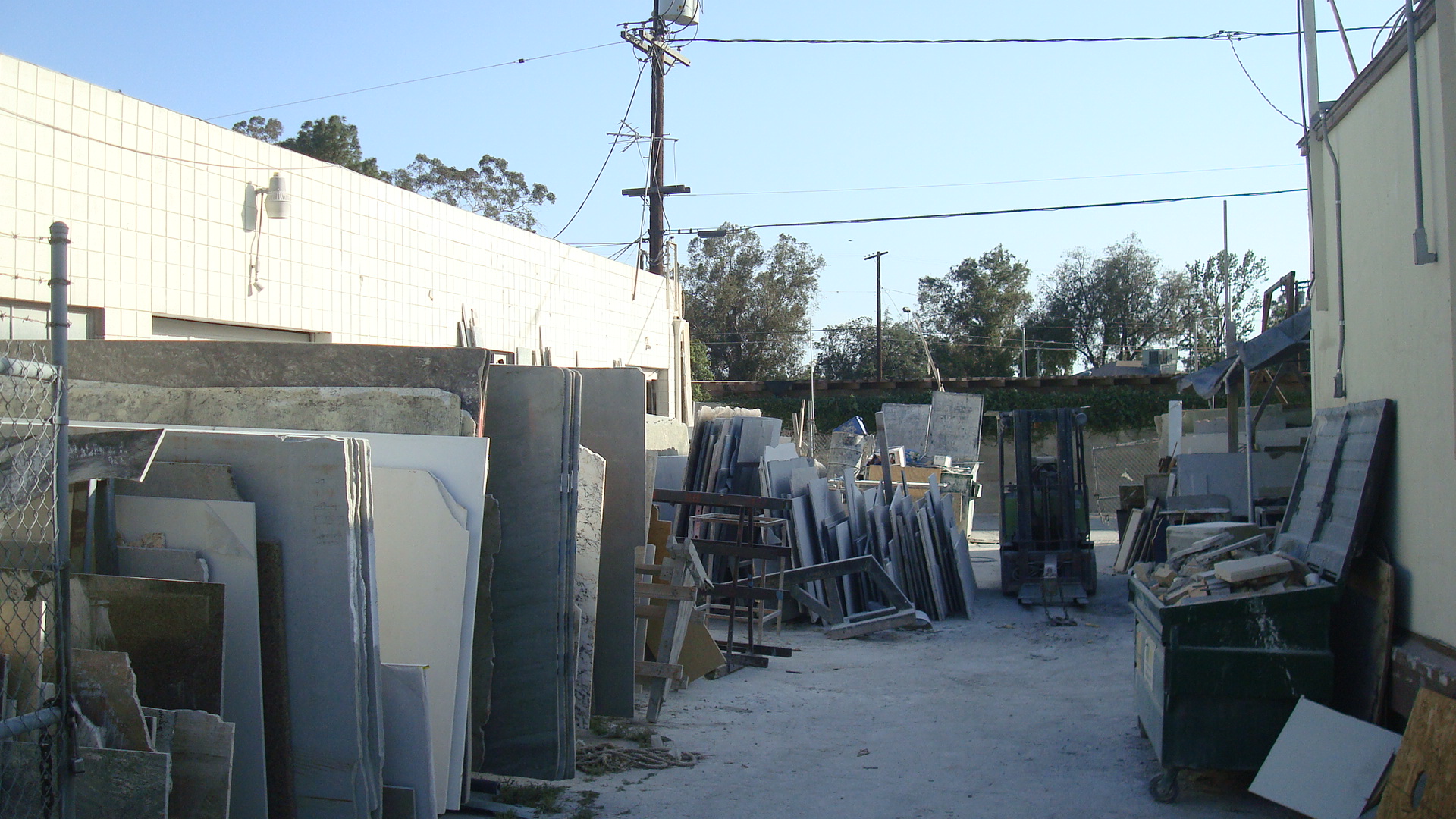
There are a lot of businesses that deal in stone, either polished or pulverized.

sheet rock

sheet rock

paving stone

paving stone

decorative stone

decorative stone

concrete, asphalt, sand and gravel

concrete, asphalt, sand and gravel

The railroad runs right down the middle of San Fernando Road.

tracks originally laid by  Southern Pacific Railroad

tracks originally laid by Southern Pacific Railroad

And here’s the Metrolink, a commuter train that serves Southern California.

northbound Metrolink train

northbound Metrolink train

The entrance to the Golden State Freeway is on Tuxford just a short block from San Fernando. The next few shots were all taken along Tuxford.

SF E1 Fwy Ent

You can see all kinds of trucks going up and down Tuxford.

SF E2 Tux Trucks Fwy

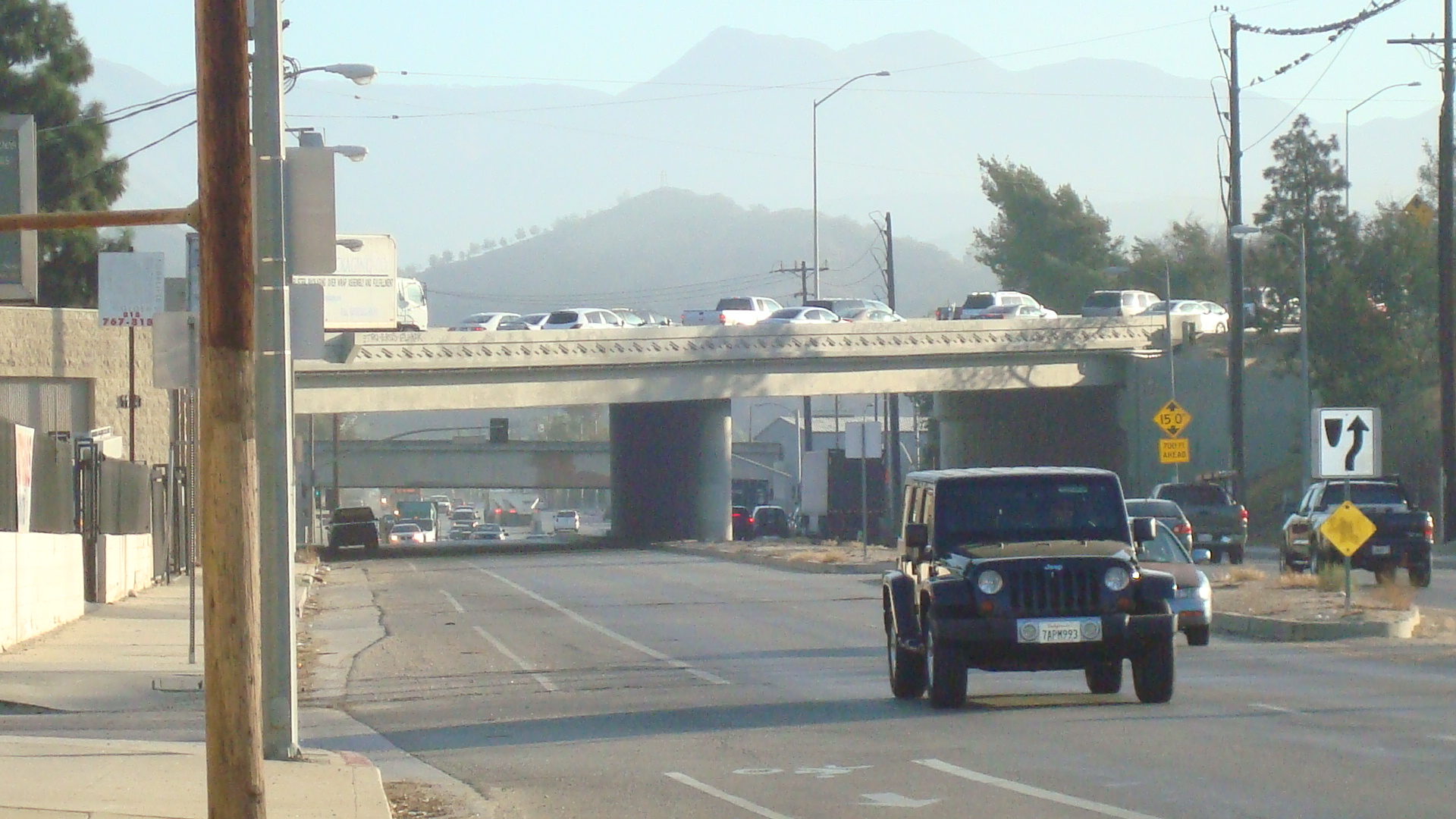
And you can see the traffic on the freeway gets pretty bad at rush hour.

SF E3 Tux Jeep Fwy

I have no idea what this is about, but it seems to be tied to a place that buys junk cars.

SF E4 Big Wheel

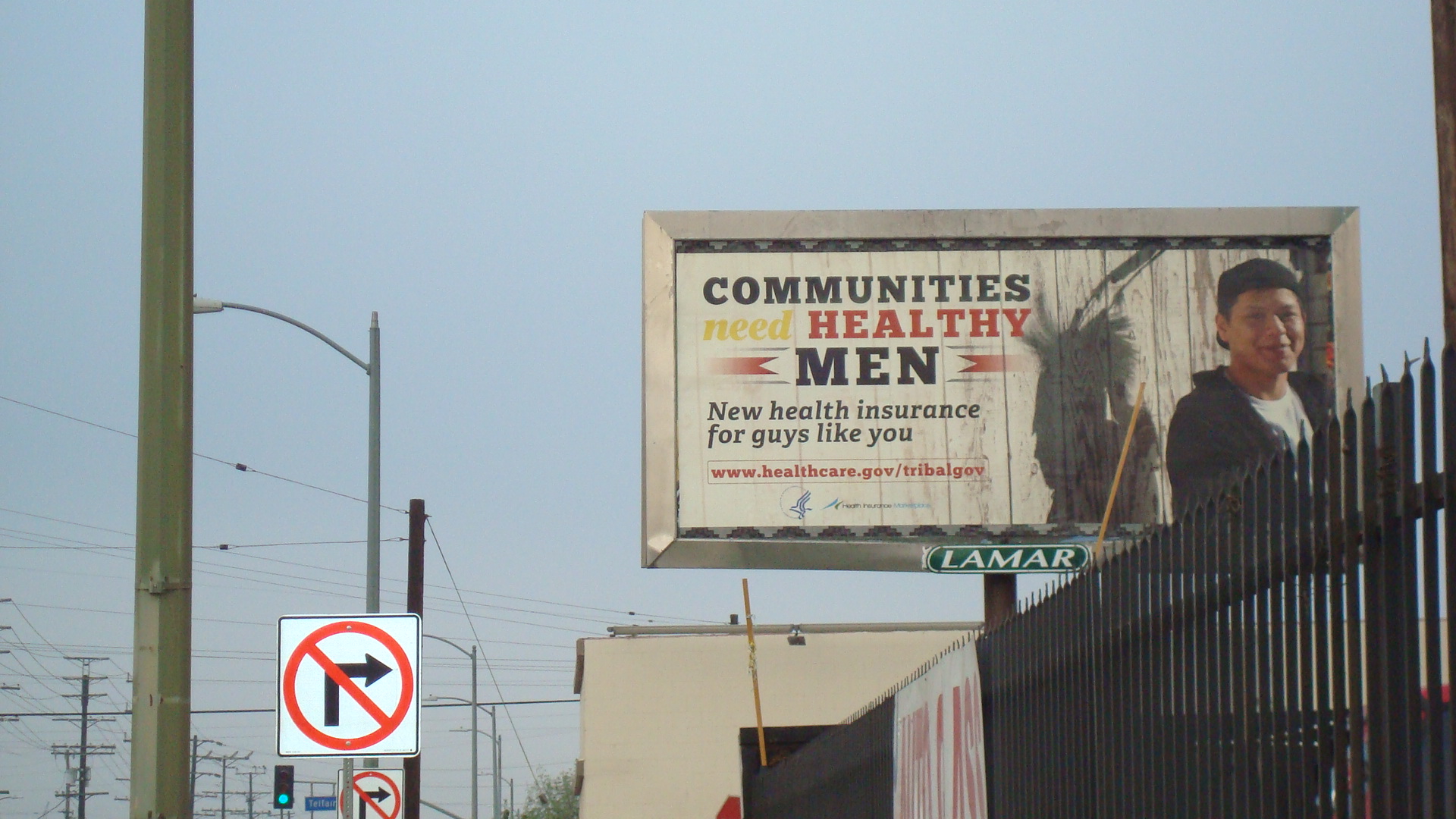
Lots of the billboards in this area carry public service announcements.

SF E5 Communities

A shot of a guy waiting for the bus on San Fernando at Tuxford.

SF F1 Busstop Clouds

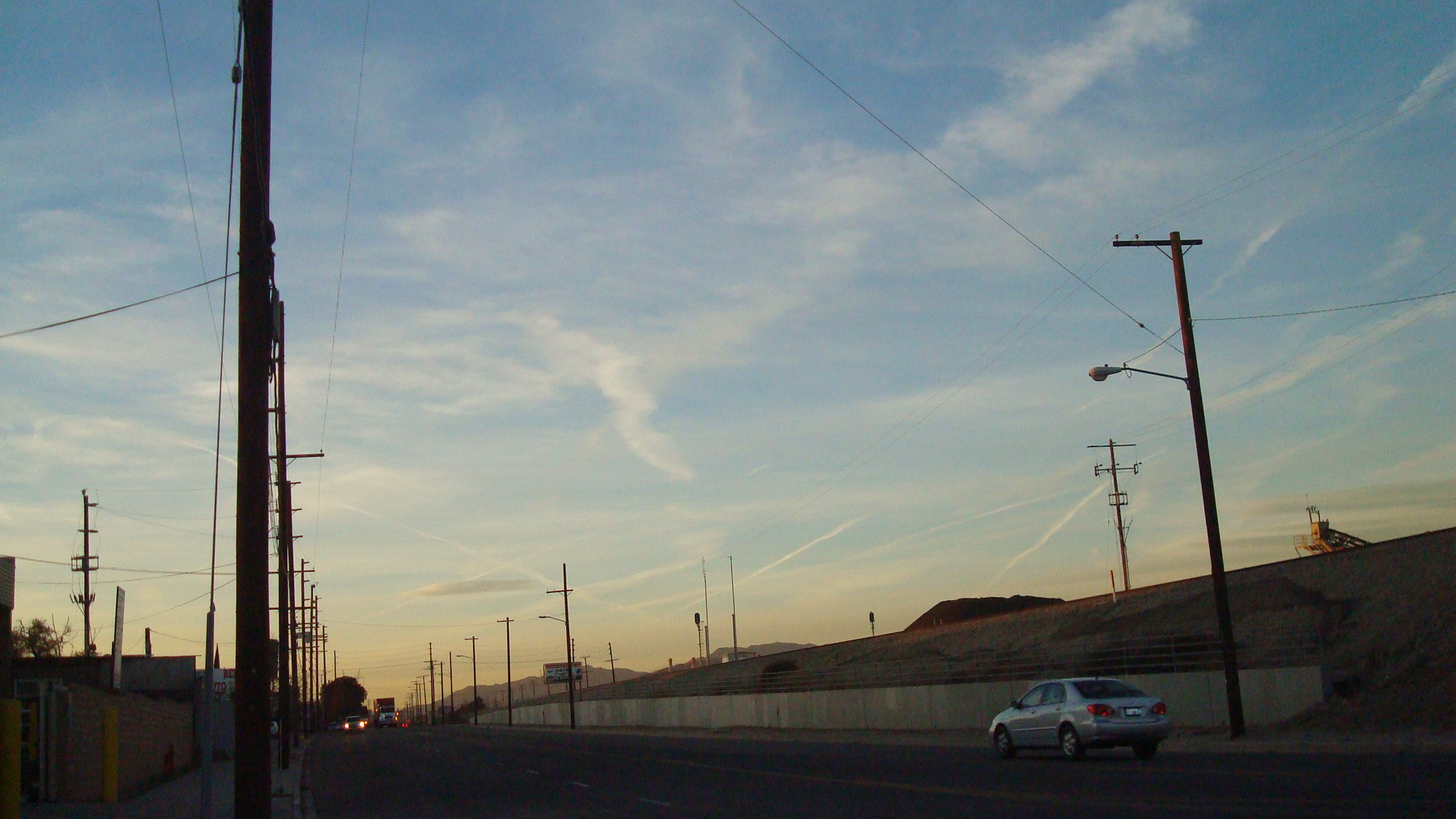
And this is what San Fernando Road looks like as the light starts to fade.

SF F2 Distance Twlght 2

The Cornfield Under Construction

The Cornfield on a day in January.

The Cornfield on a day in January.

You may not be familiar with Los Angeles State Historic Park, AKA the Cornfield. Downtown residents probably know it best, though it’s also hosted a number of popular music festivals. It is kind of off the beaten path, lying on the outskirts of the downtown area, and it’s only been around since two thousand five.

The entrance to the Cornfield.

The entrance to the Cornfield.

Unfortunately, if you haven’t made it down there yet, you’re going to have to wait until next year. Plans to expand and improve the site have been on the drawing board for a while, and the state has finally approved the funds. So the park will be closing this month as work begins. Among the changes will be the creation of a wetlands area, the construction of an amphitheatre and the addition of a space for a farmers market.

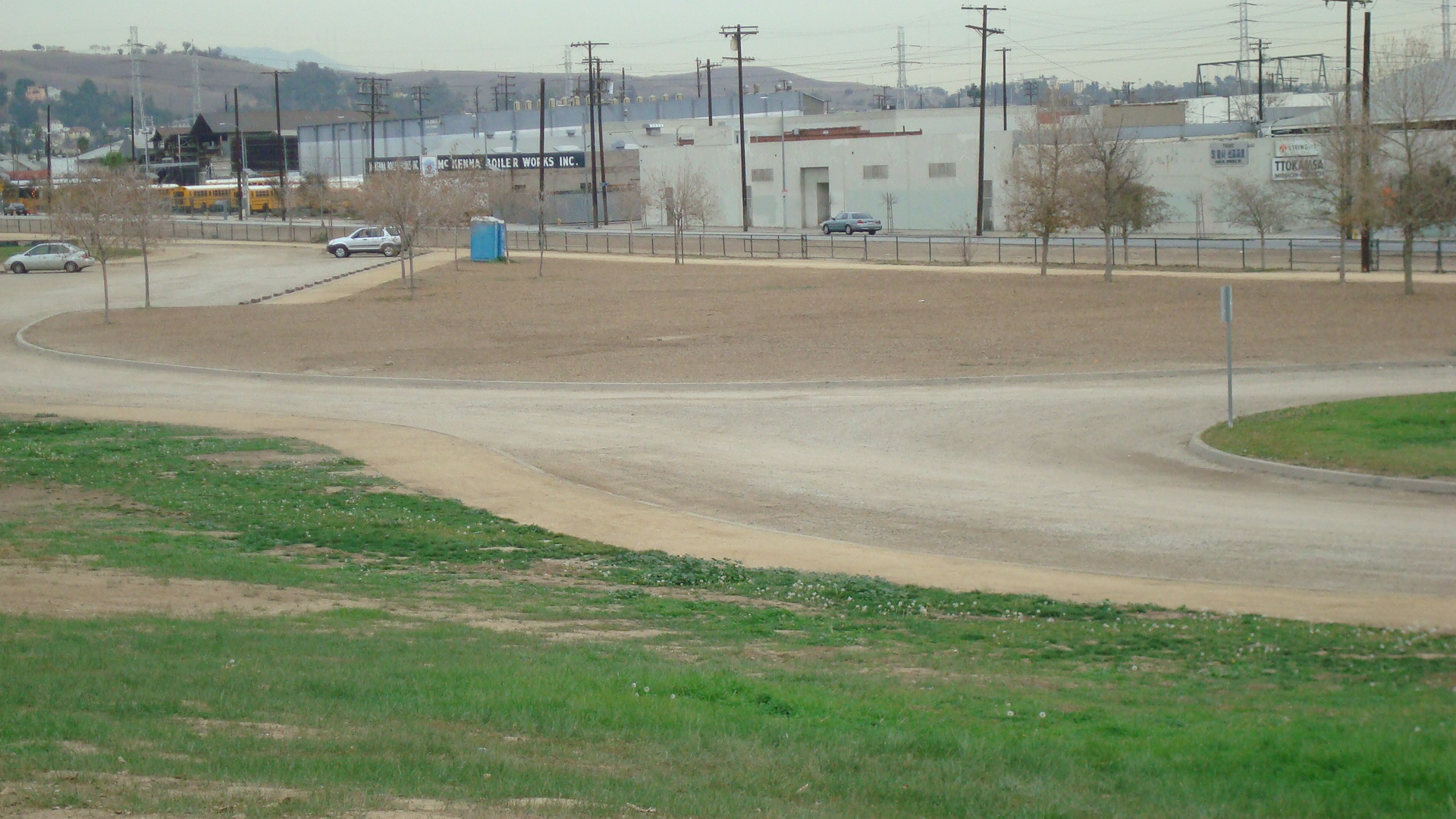
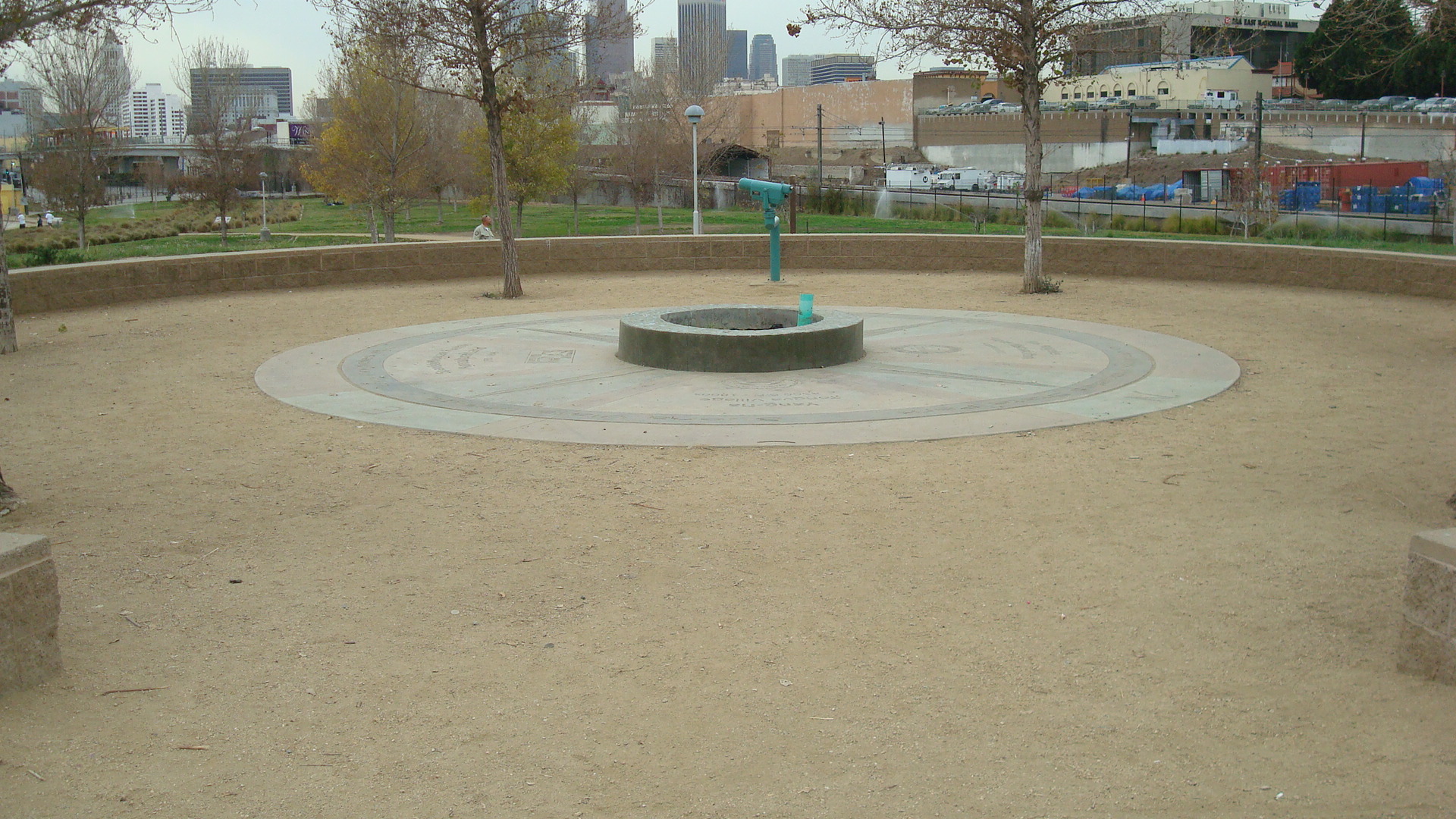
I actually like the park as it is, a plain, open space with grass and trees. So I decided to take some photos of it before the closure. The park was pretty empty on the day I made it down there, probably in part because the sky was overcast.

Downtown is visible off in the distance...

Downtown is visible off in the distance…

...and industrial area lies on one side...

…an industrial area lies on one side…

...and train tracks on the other.

…and train tracks on the other.

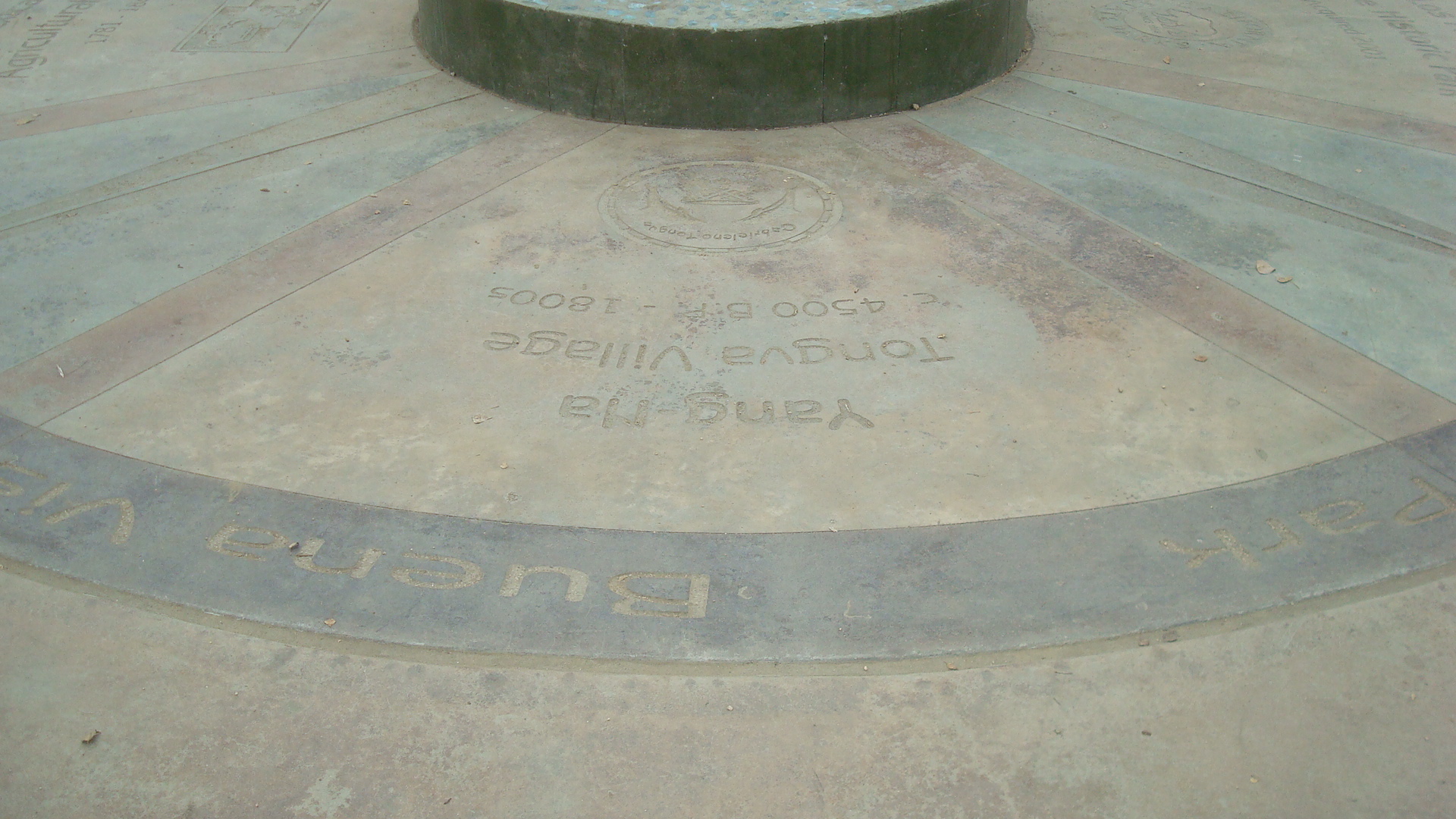
The site that the park is on has a pretty interesting history. Community groups fought with a developer who wanted to build warehouses on the land. This article on the KCET web site offers a good deal of information. The designers who created the park’s current state incorporated markers to commemorate some of the groups that have been a part of LA’s history.

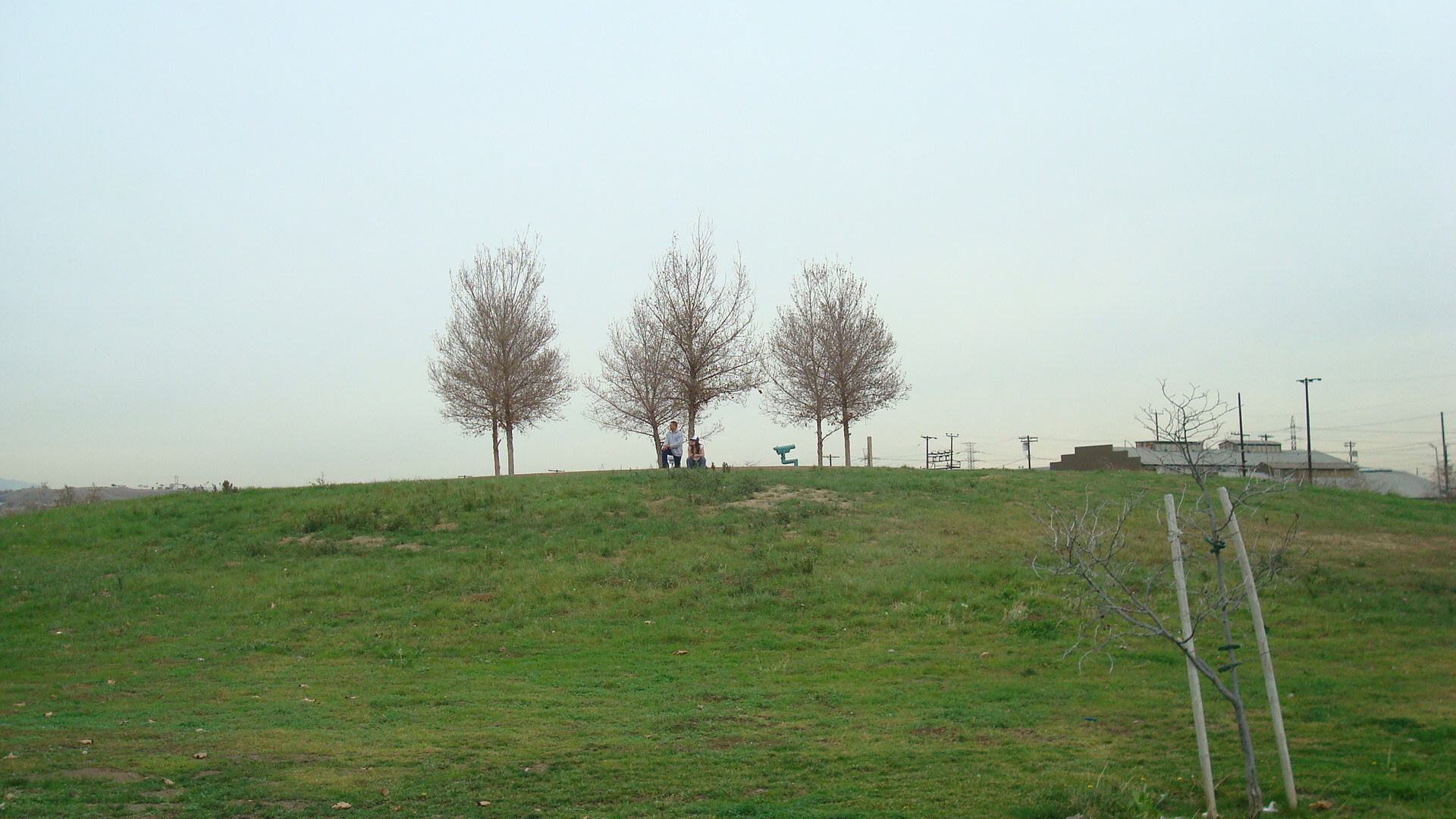
The path leading up to a low hill...

The path leading up to a low hill…

...where you'll find a concrete marker...

…where you’ll find a concrete marker…

...that commemorates some of the people who make up the city's history.

…that commemorates some of the people who make up the city’s history.

Creating the park was a long and difficult process, and there were disagreements among some of the groups involved. This article from the LA Times covers the conceptual art event that re-opened the park, and also details some of the differing points of view.

Not a Cornfield

And for the official story (much less interesting), you can take a look at the state’s web page.

Los Angeles State Historic Park

Corn 10 Hill w Trees

Old and New

DSC02587There were two things I’d been wanting to do for a while. The first was to visit the Natural History Museum to see their show on LA history. The second was to take some photos of the Sixth Street Bridge, which is slated to be demolished and replaced, although that may not happen for a while. So Tuesday morning I took the Red Line down to Seventh and Figueroa, where I transferred to the Expo Line. Pretty soon I was standing on the platform at the Exposition Park station.

It might have been twenty years or more since I’d been to Exposition Park. Walking toward the fountain at the center of the gardens was sort of like walking into the past. In part, that’s because of my memory of visiting the museums as a child. But also, the three buildings that border the park are massive reminders of the ornate, imposing architecture that was considered appropriate for museums a hundred years ago. In fact, the Natural History Museum is celebrating its one hundredth anniversary this year. Their web site offers a brief history, which you can read by clicking here.

The photo above shows the current entrance to the museum, which presents a modern facade. It’s an interesting contrast to the NHM’s original entrance, which is what you see in this next photo.

DSC02590

The exhibition I went to see, Becoming LA, was really good. The curators did a nice job of presenting the area’s multi-layered history, weaving together the threads of all the diverse groups that made the city what it is. Of course Becoming LA is just the latest in the recent onslaught of shows about Los Angeles. Local museums have been giving a lot of attention to the city in the past few years. I’m all in favor of highlighting LA’s art, culture, etc., but at times it seems like we’re crossing the line into bombastic self-promotion. Which, I guess, isn’t really that surprising.

After I was finished with the museum, I took the bus north on Vermont to Olympic, where I had to transfer. This put me right in the heart of Koreatown. There’s an interesting vibe in many parts of Koreatown, which I think has to do with the zillions of small businesses competing for your attention. There are numerous strip malls, and they all seem to be bursting with restaurants, karaoke bars, tech retail outlets, nail salons, etc.. Here’s one example….

DSC02609

But the look of Koreatown is changing. In the image below you’re looking up Vermont toward Wilshire, where you can see two high-rise towers that combine residential and retail. I understand some Koreatown residents aren’t too happy about the wave of high-density development that’s hitting their area. I doubt that bothers the City Council, though, and it certainly doesn’t bother Mayor Garcetti. They are all one hundred percent committed to serving the developers who put them in office. Click here for more info about this massive project.

DSC02625

The bus showed up and I got on. A few minutes later I got off at the end of the line, Sixth and Maple. I headed up Maple and over to Wall. As I was walking along, I heard a voice behind me.

“Excuse me. Are you a tourist?”

He must’ve seen the camera I was holding.

“No, I’ve lived in LA all my life.”

“Oh. Cuz I was just wondering if you knew this is a really horrible area.”

I laughed, but he had a point. The street was filled with people who were living on the sidewalk. The desperation was palpable. I can’t say I was really afraid, though. I spend a fair amount of time downtown, and I’ve walked through skid row now and again. If it was night, I probably would be worried. But in the harsh light of day, these people looked too beaten down, too demoralized, to be a threat.

We walked along together for a block or so. I told him I had the camera because I wanted to shoot photos of the Sixth Street Bridge. He knew the bridge was going to be replaced, but he felt it would be a long time before work actually started. Somehow we got talking about the LA City Council, and we both agreed they have absolutely no respect for the law. Interesting how the one thing that seems to bind Angelenos together is our absolute distrust of the people at City Hall.

Then we went our separate ways. I headed over to Little Tokyo for a bowl of udon and a beer. Then I started walking down Central to Sixth.

It was late afternoon. The streets were mostly deserted. There were few cars and fewer people. I walked past the Woori Market’s empty parking lot. It’s been closed for a while. There were large warehouses, like Los Angeles Cold Storage. A couple small restaurants. A lot of places have security fences, and a few were topped with barbed wire.

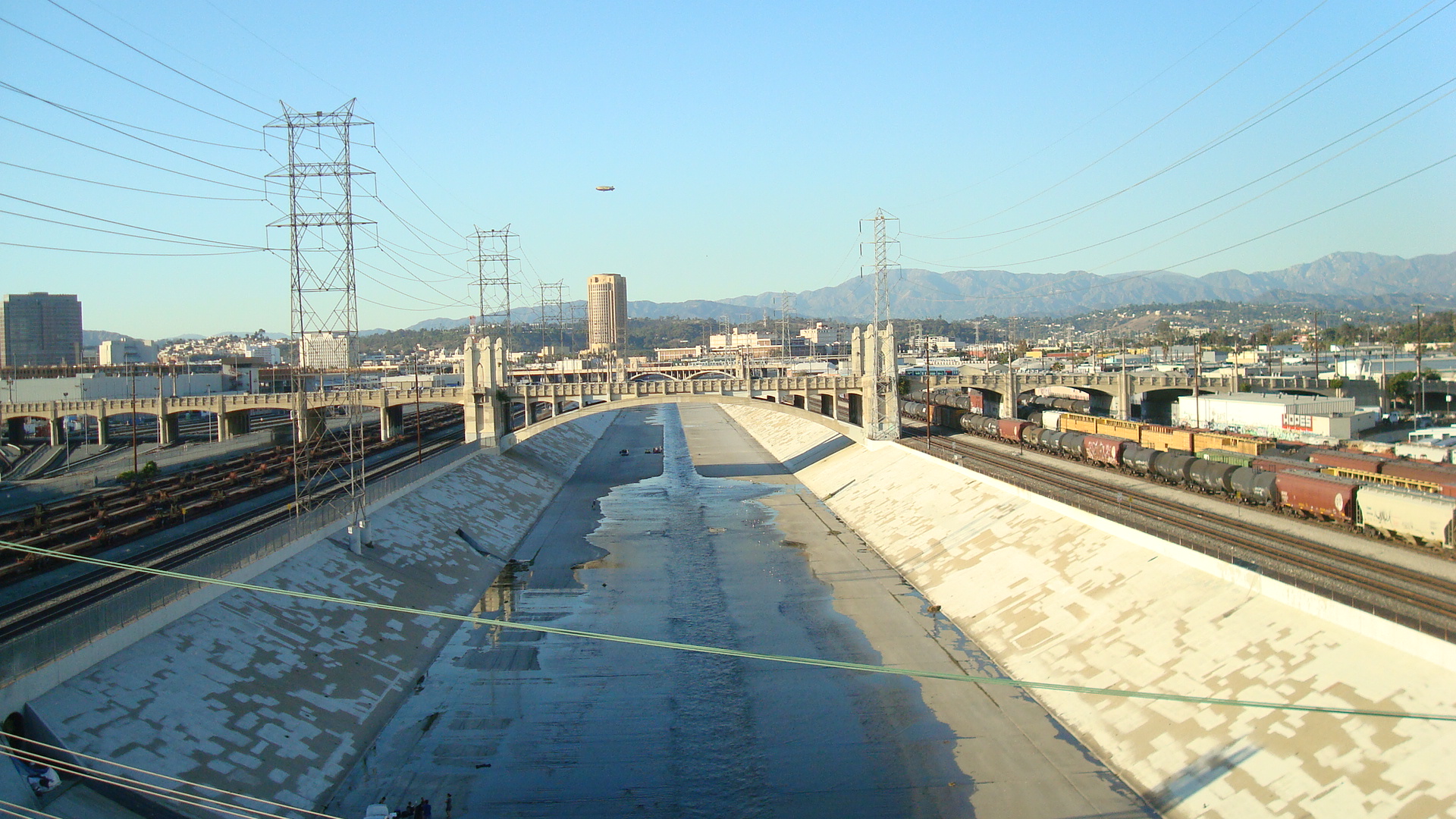
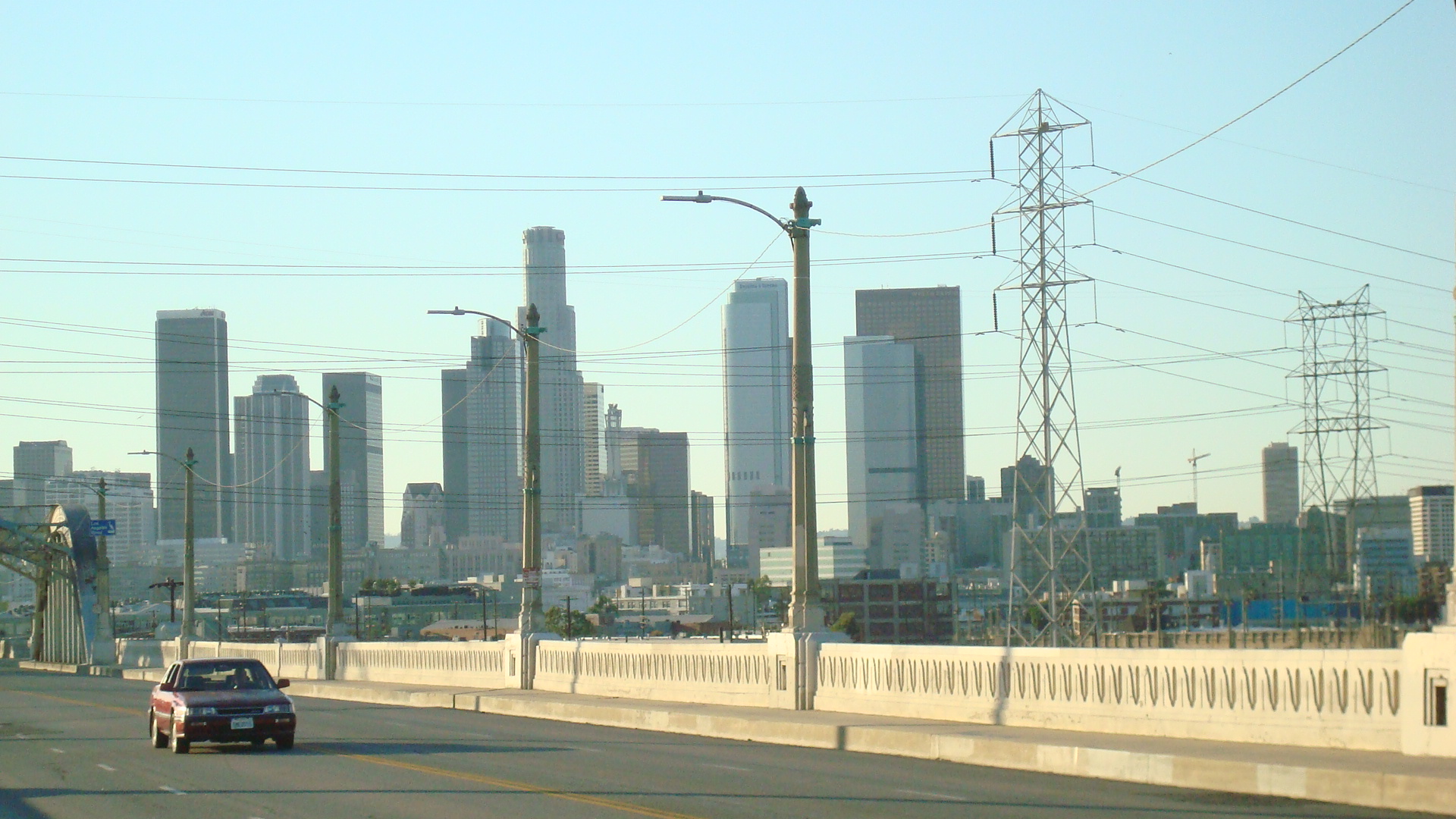
The bridge rises up over the warehouses and the railroad tracks. As you get near the mid-point, the landscape below stretches out for miles in every direction. Here’s a shot of the bridge looking back toward downtown.
DSC02655

And here’s another looking down on the LA River.

DSC02651

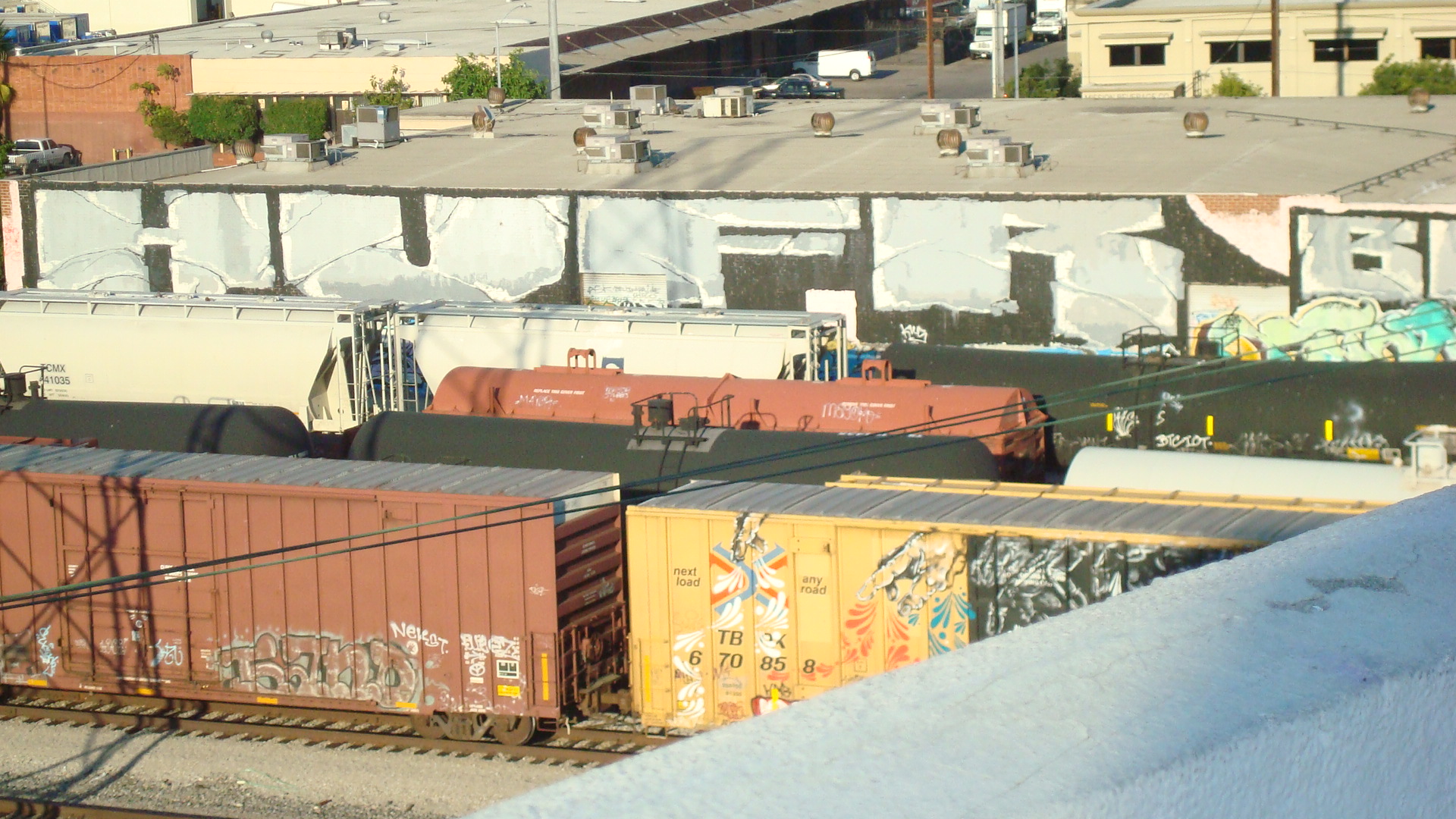
Freight cars covered with graffiti sit lined up below.

DSC02650

And here’s another shot of the downtown area.

DSC02666

On the other side of the bridge, Sixth Street becomes Whittier Blvd., which leads you into Boyle Heights. I waited for the bus in front of Carnitas Michoacán #3, which seemed to be doing steady business. And then the seven twenty showed up to take me home.