Journalist Rubén Salazar Was Killed 55 Years Ago Today

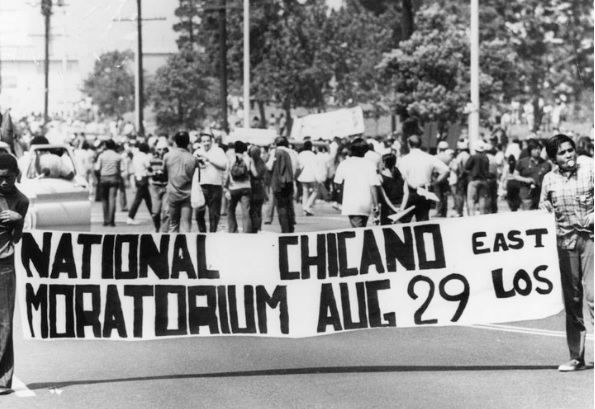
Photo by Sal Castro, Security Pacific Bank Collection, LA Public Library

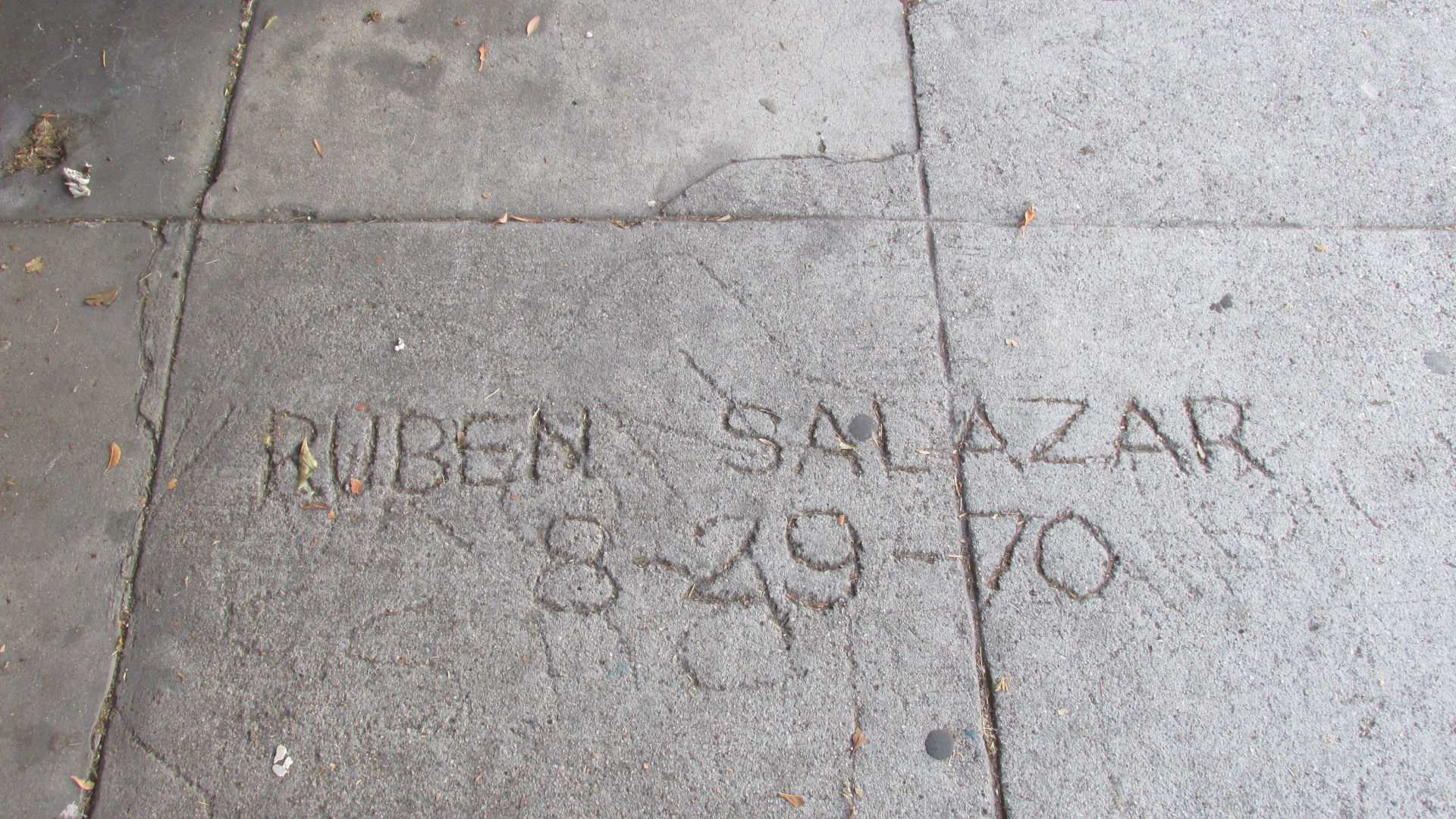
Journalist Rubén Salazar was killed 55 years ago today. He’d been covering a large protest in East LA that was part of the Chicano Moratorium. Salazar was taking a break at the Silver Dollar Cafe when a sheriff’s deputy standing outside fired a tear gas canister into the bar. The canister hit Salazar in the head and killed him instantly.

Salazar worked at the LA Times in several capacities for more than a decade. At the time of his death, he was news director at Spanish-language KMEX-TV, though he still wrote a weekly column for the Times. Salazar reported on tensions between the Latino community and the cops, and it was no secret that law enforcement officials weren’t happy about his reporting.

It’s important to remember Salazar’s work, but also to think about his death in the context of what journalists are facing today. Both in the US and abroad, journalists are increasingly being targeted for doing their job. Beyond that, fair and objective journalism is increasingly threatened by the changing economic landscape and a social media sphere that values likes more than facts.

LA Times columnist Gustavo Arellano wrote an excellent piece on Salazar today. See below. I’m also including a link to Salazar’s own reporting. It’s worth taking some time to think about Rubén Salazar today. Fifty five years later, his life and his death still hold meaning for us.

Slain LA Times Columnist Ruben Salazar Matters More than Ever

Reading Rubén Salazar

Oki Dog Is Gone

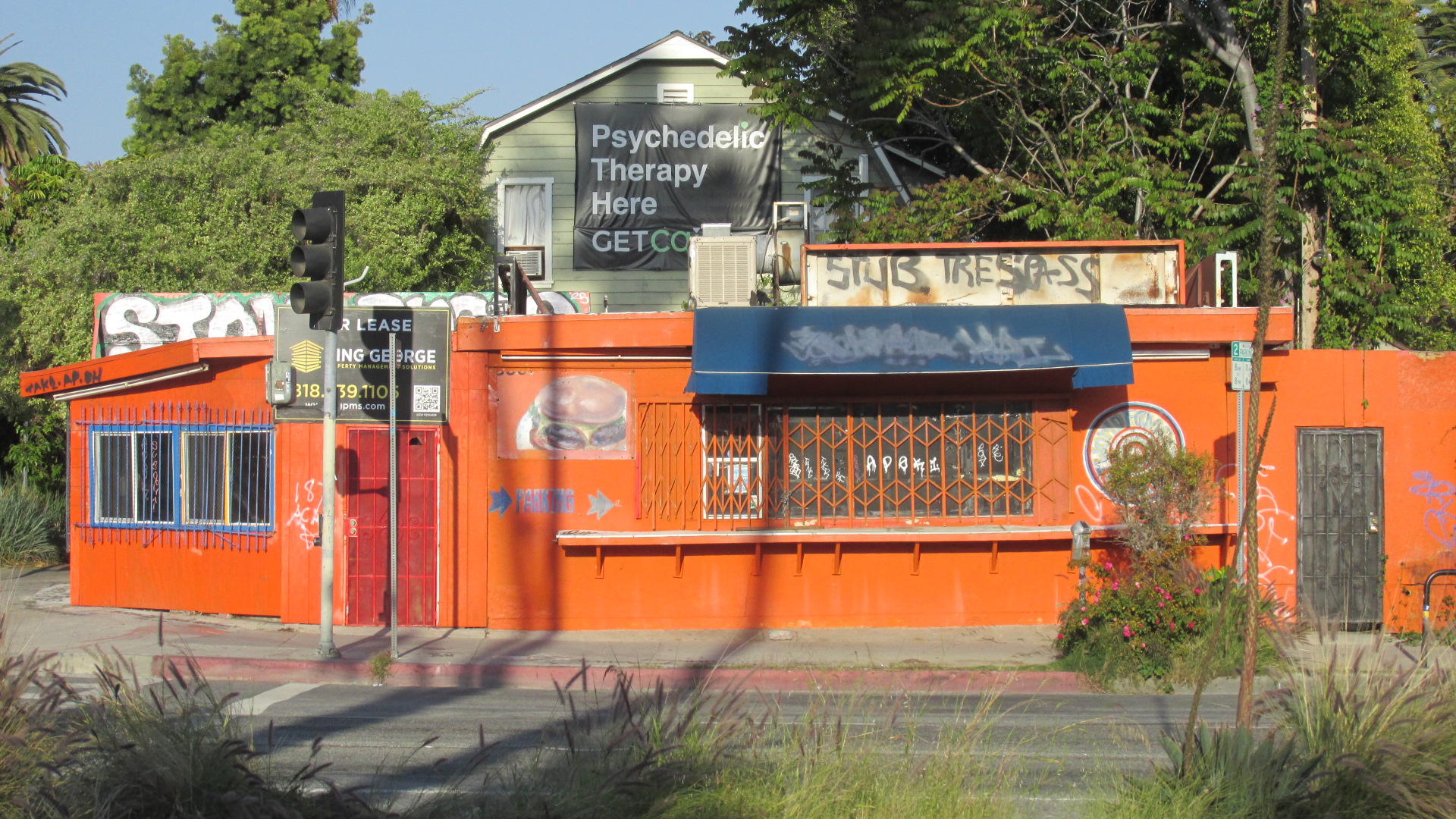
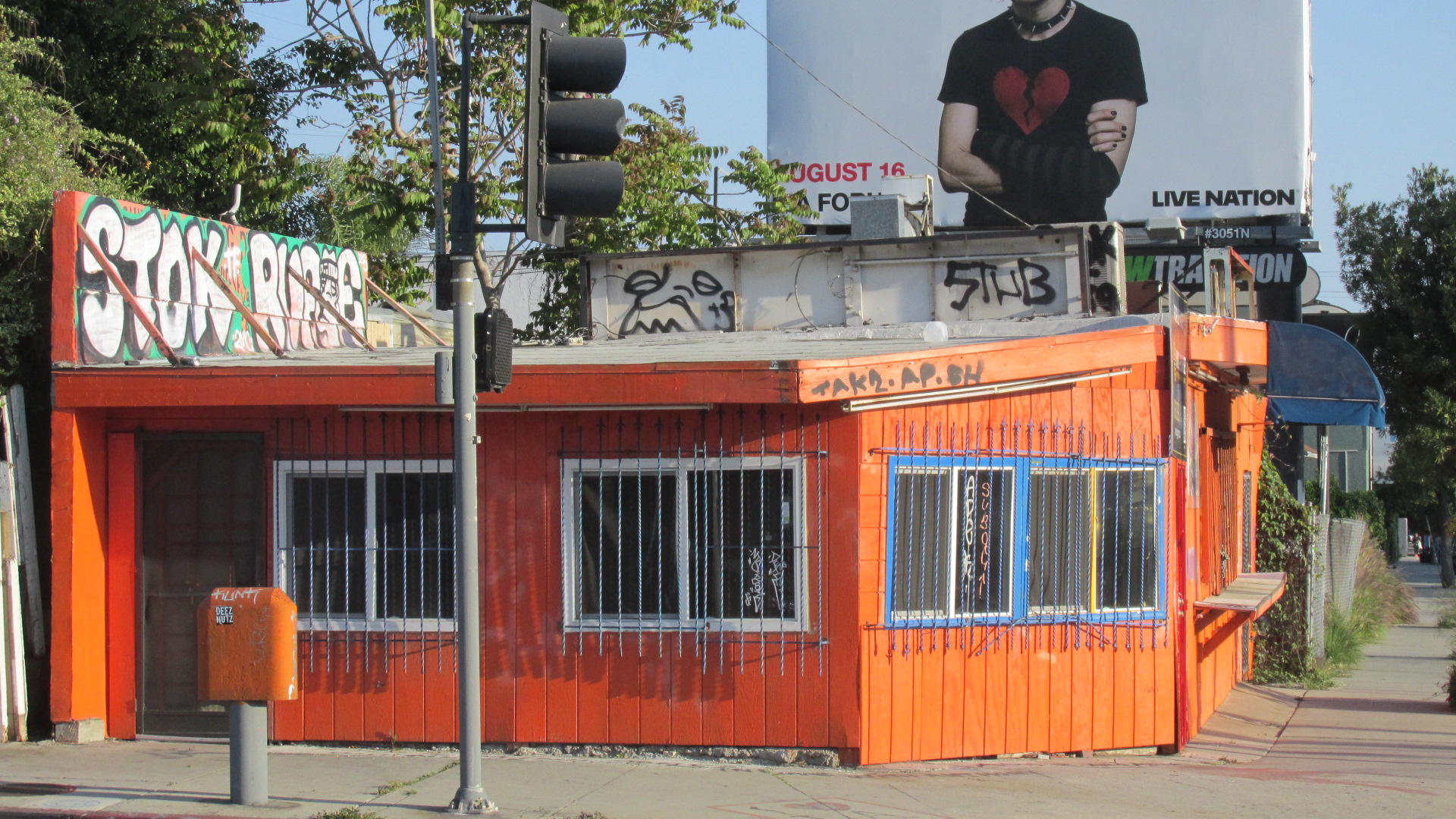
Oki Dog at Fairfax and Willoughby is closed.

We all have places we’re attached to, places that are important to us, places that become part of our landscape.  In most cases it’s easy to explain why they mean so much.  Maybe it’s a restaurant we’ve been going to for years, or a club where we used to hang out with our friends.  Usually, it’s a place where we’ve had a lot of good times, a locale that’s loaded with memories.  But in some cases it’s hard to explain why the place means so much to us.  Why its disappearance feels like a loss.

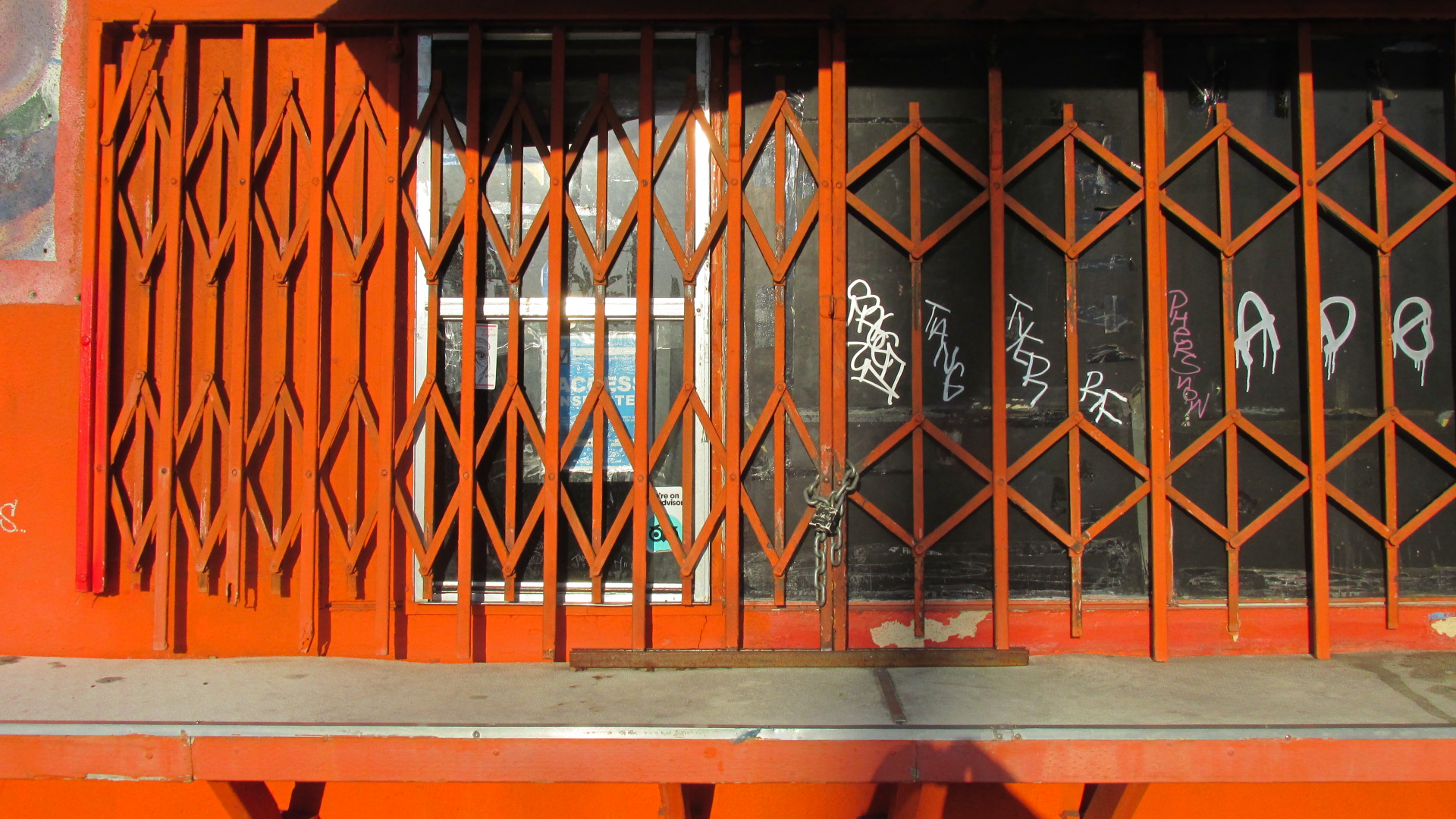
Counter outside the building.

I was riding the bus down Fairfax last week and I saw that Oki Dog had closed.  I can’t say I got choked up, but I did feel like I’d lost something.  I’m not sure why.  I never spent any time there with my friends.  In fact, I never even ate there.  But for decades now I’d seen it sitting there at the corner of Fairfax and Willoughby, a small, ramshackle building that only stood out because it was painted orange.

Painting on the front of the building.

The only reason I paid any attention to it at all was that I knew Darby Crash used to hang out there.  Darby Crash, AKA Bobby Pyn, AKA Paul Beahm, was the lead singer for the Germs, one of the key bands on the LA punk scene back in the late 70s.  They played a lot of shows, put out a few singles and an album, and then Darby killed himself by ODing on heroin on December 7, 1980.  He was 22.

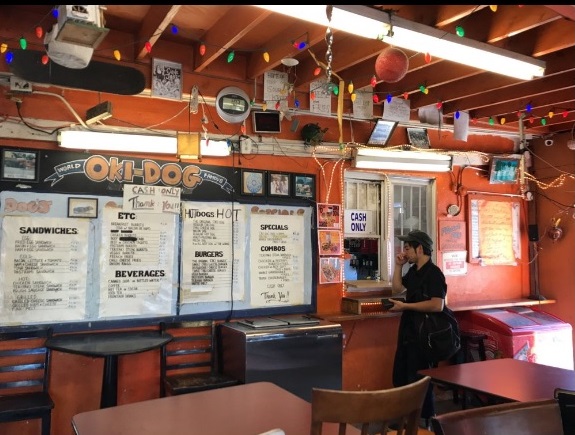
The tables inside are all empty now.

I never ate at Oki Dog because the food didn’t sound like my kind of thing, but the place had many diehard fans who raved about the messy, greasy hot dogs and hamburgers.  I spent some time looking at the reviews on Yelp, and it was kind of hilarious how divided the comments were.  Some commenters thought the food was disgusting, and were creeped out by the place’s grungy décor.  Many of them said they’d never come back.  Other commenters thought the food was amazing and loved the down-at-the-heels vibe.  Many of them said they’d been eating there regularly for years. 

Photo of Oki Dog when it was still open from Yelp by Eric F.
Photo of Oki Dog interior from Yelp by Erica E.

But for me the only connection was knowing that Darby used to hang there with his friends and followers.  I never saw the Germs live, but I’ve got the album, and a few of the singles and live recordings on various compilations.  They were an amazing band.  It’s tempting to say they were gone too soon, but like a lot great bands, they probably couldn’t have maintained the intensity much longer.  When you play that hard and live that crazy, it’s probably impossible to hold everything together. 

So for me, I guess that rundown orange shack at Fairfax and Willoughby that I never stepped inside is like a link to LA in the late 70s, when punk was raging through the clubs and it seemed like some kind of revolution was going on.  And a young guy named Darby Crash was taking things all the way to the edge.  Before he finally decided to jump off the edge.

RIP Darby.

UPDATE: Thanks to Margaret for pointing out that Oki Dog was originally located at 7450 Santa Monica Blvd., about two blocks up and eight blocks over from the location at Fairfax and Willoughby. The original restaurant opened in the late 70s, but I was not able to find out when it moved over to Fairfax. See this article from WeHo Times for more details.

Downtown Loses another Landmark: The Pantry Closes

Photo by Daniel Martinez, from LAist

It’s hard to believe that the Pantry is closed. It’s one of those places that seemed liked it had been around forever, and it seemed like it would go on forever. I think I started going to the Pantry back in the 70s. Back then it was open 24-hours. If you were going to a movie or to see a band in Downtown, it was the perfect place to stop afterwards. They served breakfast all day and the coffee kept coming.

The Pantry is now owned by a trust set up by former LA Mayor Richard Riordan. According to the trust, the Pantry is not profitable, and they’re hoping to sell it to fund the charitable work of the Riordan Foundation. It will be interesting to see who buys it. Obviously, the property, located in the heart of Downtown, is worth a fortune, but demolishing the restaurant to build something larger will probably not be easy. The Pantry is designated as an LA City Historic Cultural Monument. That would complicate any plans for new development.

This all just feels really sad. The older I get, the more I understand that the world is always changing and that nothing lasts forever. But I still feel like I’m losing a piece of my life. And I think a lot of other people are feeling the same way.

For more details, see this article from LAist.

The Pantry Closes

The Fourth Street Bridge

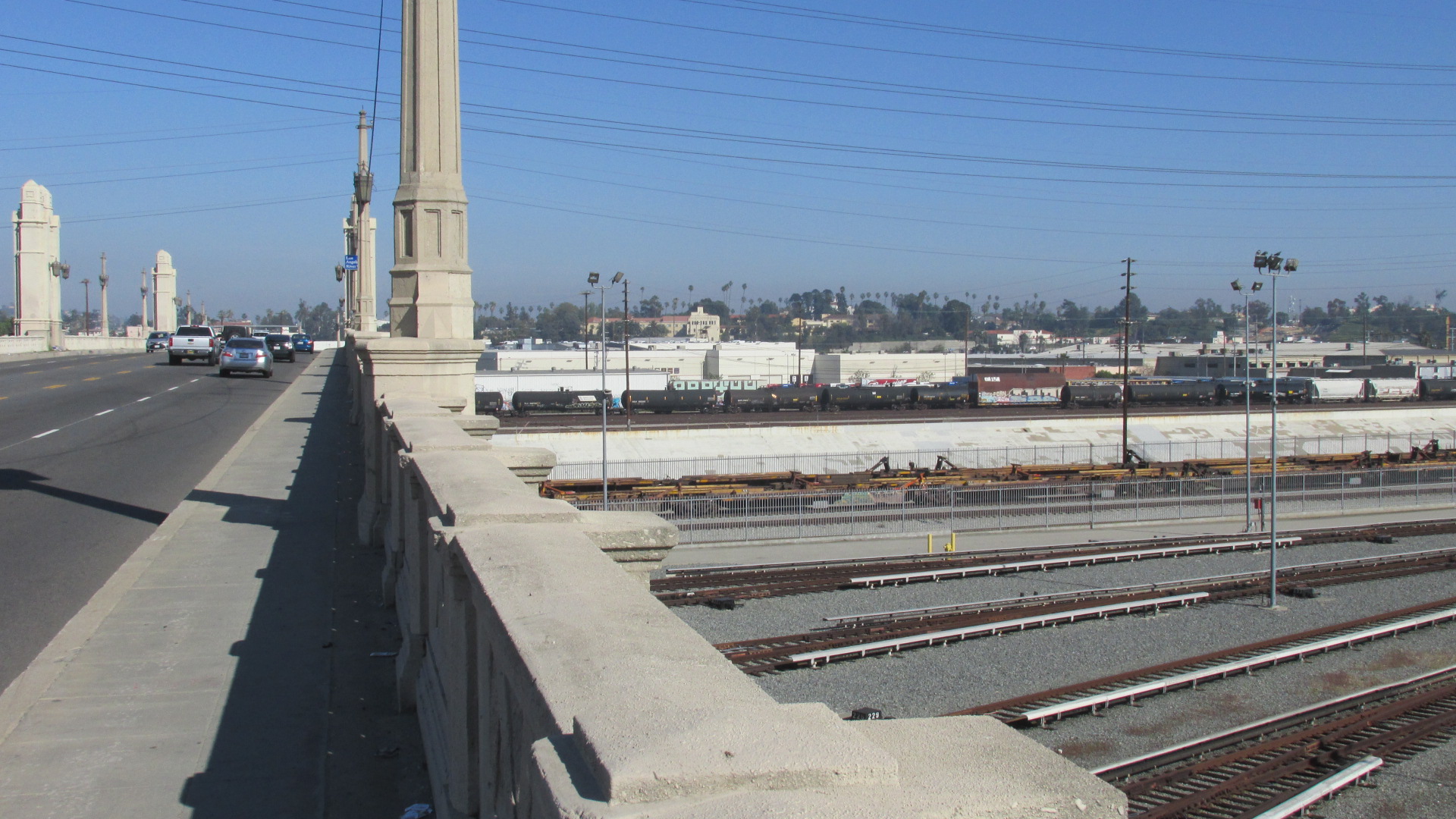
A view of Downtown from the Fourth Street Bridge.

Back in 2017, I walked across the Fourth Street Bridge and took a bunch of photos, thinking it would be a great subject to write about on this blog.  Now, only seven years later, I’m finally getting around to doing this post.  What can I say?  Time flies….

Fourth Place, leading up to the Fourth Street Bridge.

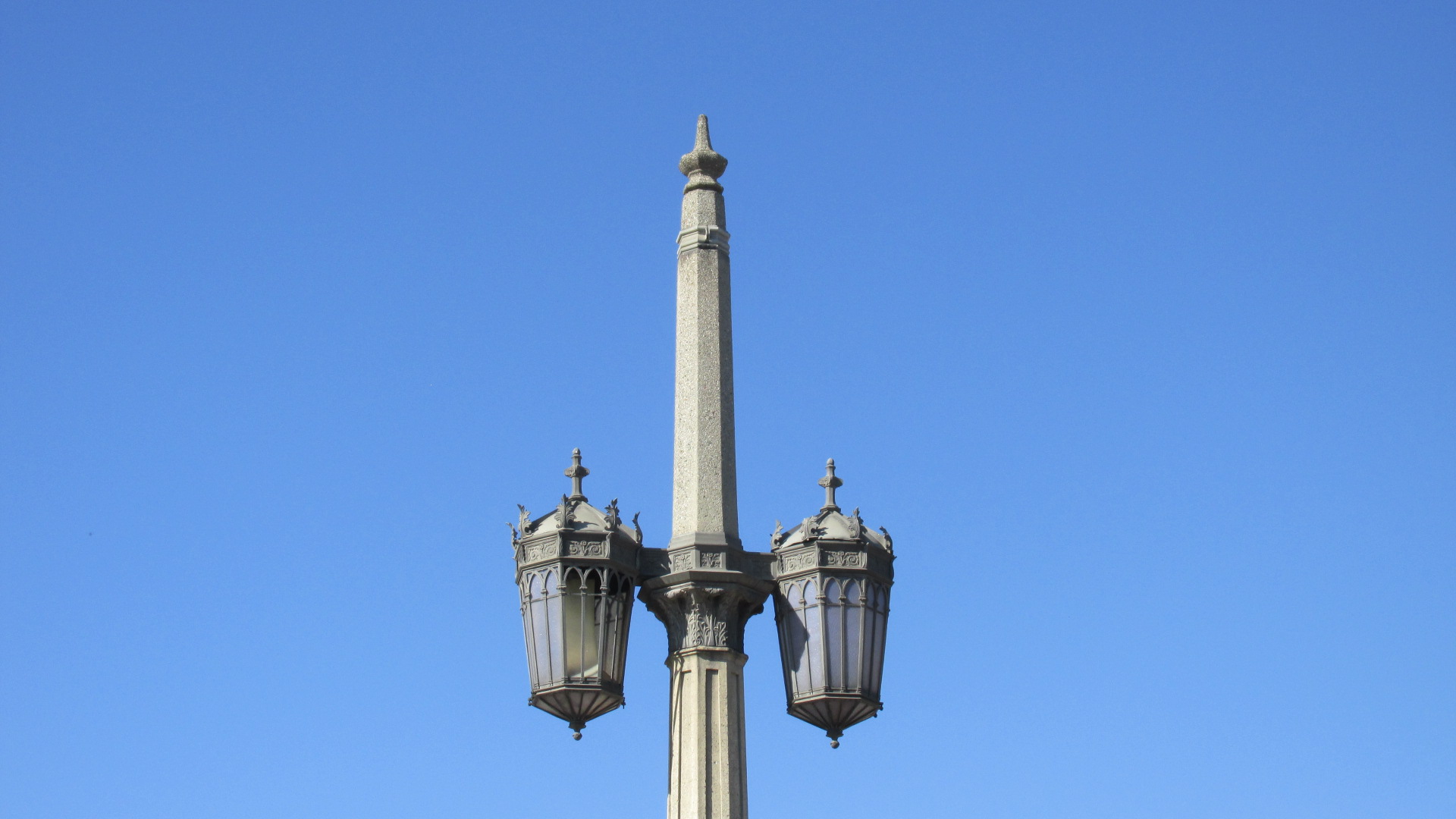
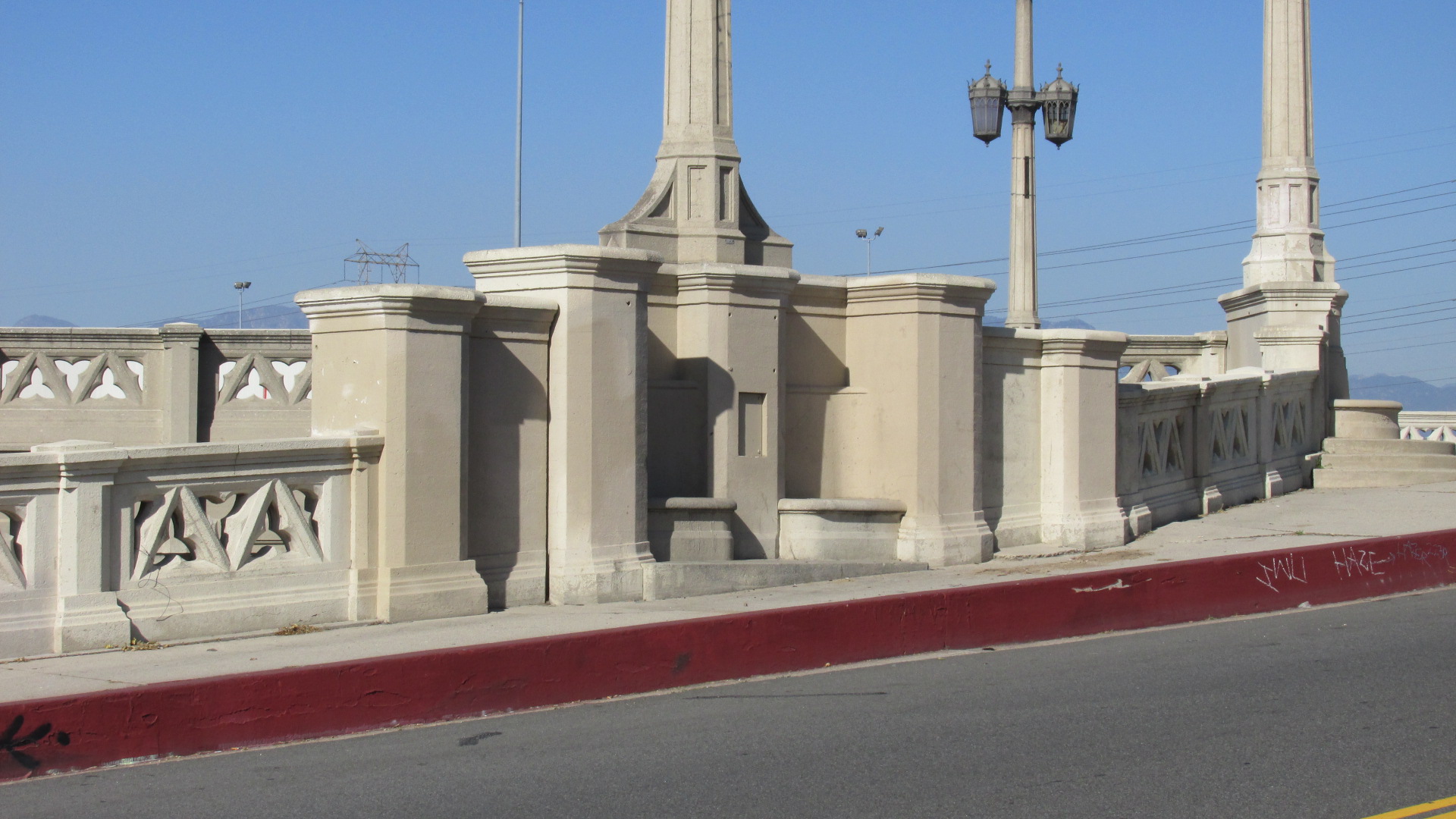
To my mind, the Fourth Street Bridge is one of the most striking bridges in LA.  I don’t claim to be an architecture critic, but it seems like there was unusual amount of care put into the design.  The streetlights, porticos and concrete railing were fashioned in a mix of Beaux Art and Gothic Revival styles that was carefully worked out by the architects.  These aren’t just decorative elements that were tacked on.  They’re well-suited to the scale and the massing of the bridge.

Fourth Place merges with the Fourth Street Bridge.
The streetlights echo European Gothic design.
Some of the piers feature built-in seating.

Constructed in 1931, the bridge was part of a massive investment in infrastructure made possible by the passage in the 20s of LA’s Viaduct Bond Act.  (To show you how ignorant I am, I didn’t know until recently what the difference was between a bridge and viaduct.  Apparently, a bridge is a small structure built to cross a fairly narrow river or ravine.  A viaduct is a larger structure made up of a series of bridges that crosses a wide river or a valley.  But I’m still going to call it the “Fourth Street Bridge”.  Old habits die hard.)

A view of the bridge looking toward East LA.
The San Gabriel Mountains to the north.
Unfortunately, these days many of the porticos are filled with trash.

The Fourth Street Bridge was built by the LA City Bureau of Engineering under the supervision of Bridge and Viaduct Engineer Merrill Butler.  Butler had a long career in LA, working for the City in various capacities until his retirement in 1961.  Over the years the projects designed under his direction included the First Street (now Cesar Chavez) Bridge, the Hyperion Bridge, the Figueroa Street Tunnels and the Hyperion Sewage Treatment Plant.

The series of bridges that connect East LA to Downtown are part of a massive infrastructure nexus that played a key role in LA’s growth.  In the latter part of the 30s, work began on the flood control projects that would shape the LA River as we know it today.  One of the reasons for encasing the River in concrete was to protect the rail lines that ran adjacent to it.  You couldn’t move goods without trains.  And rising above the concrete channel is a vast network of power lines.

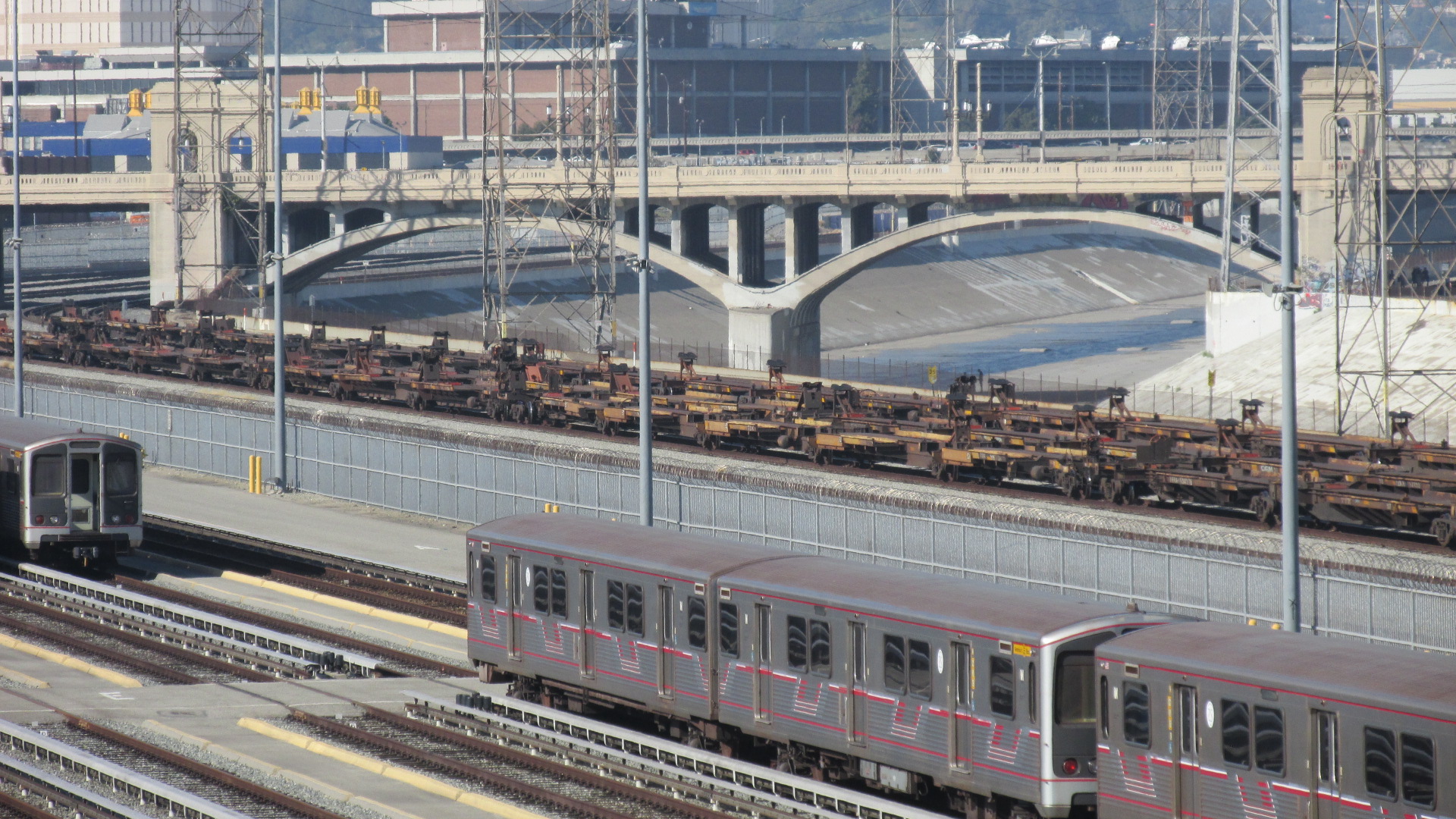
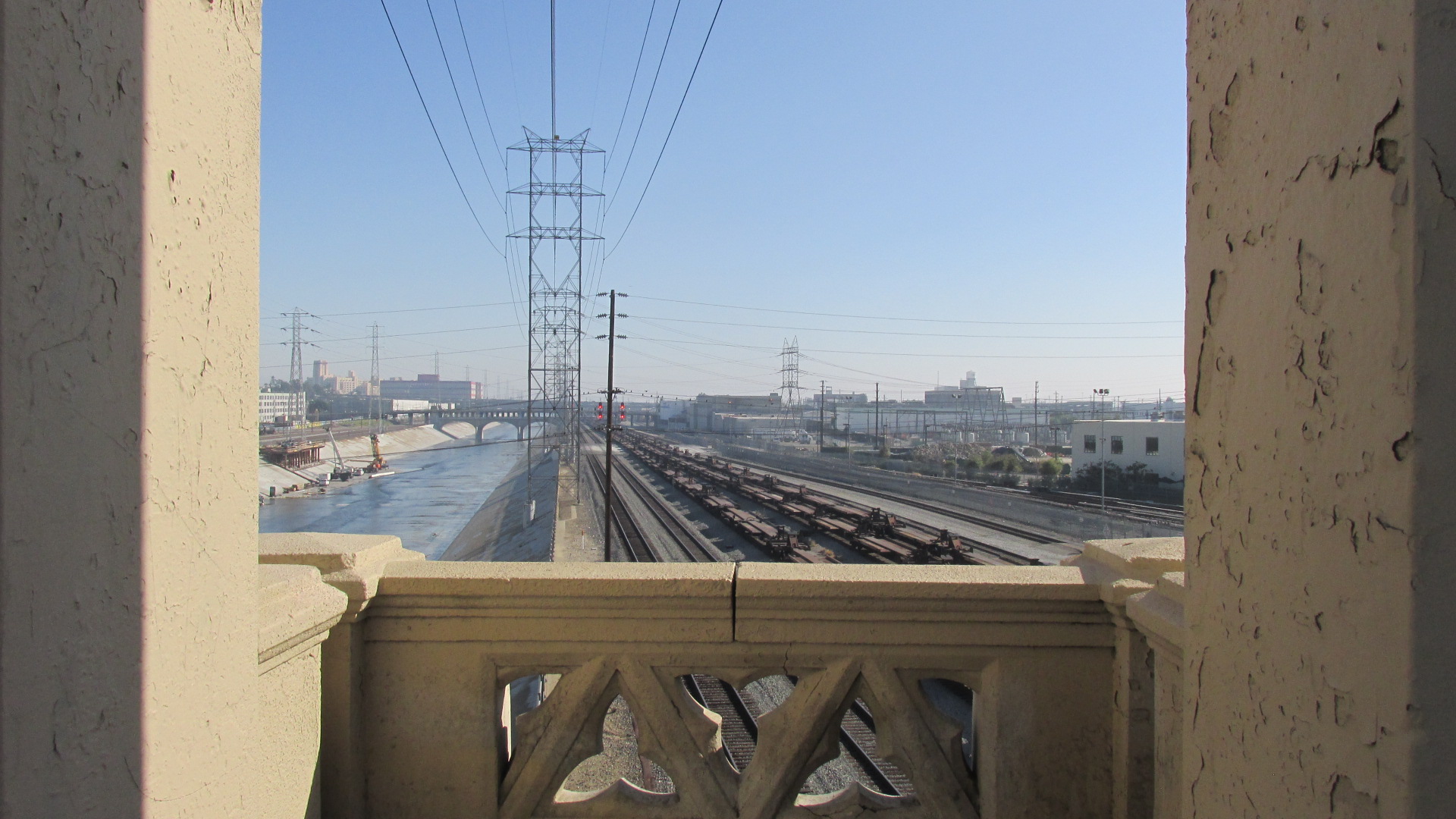
Rail lines next to the LA River.
Miles of power lines run above the River.
Rows of flat cars lying on the tracks below.

In 1995, the Fourth Street Bridge was retrofitted to bring it into compliance with current seismic safety standards.  And in 2008 it was declared a Historic Cultural Monument by the City of LA.

The Cesar Chavez Bridge lies just north of the Fourth Street Bridge.
Looking west toward Downtown.

Here are a couple of links, for anyone who wants to dig a little deeper.  Thie first will take you to Water & Power Associates, which has a number of historic photos of the Fourth Street Bridge.  And if you’re into LA history, check out the Museum tab in the index on the left.  Their virtual museum offers an amazing collection of images and information.

Fourth Street Viaduct at Water & Power Associates

And here’s a brief bio on Merrill Butler that was apparently written at the time of his retirement.  Not surprisingly, it’s pretty superficial, but it also seems to offer a small snapshot of mid-century LA.  A different time, a different culture.

Merrill Butler Bio from LA Public Library

Art Deco Jewel in Hollywood Moves toward Landmark Status

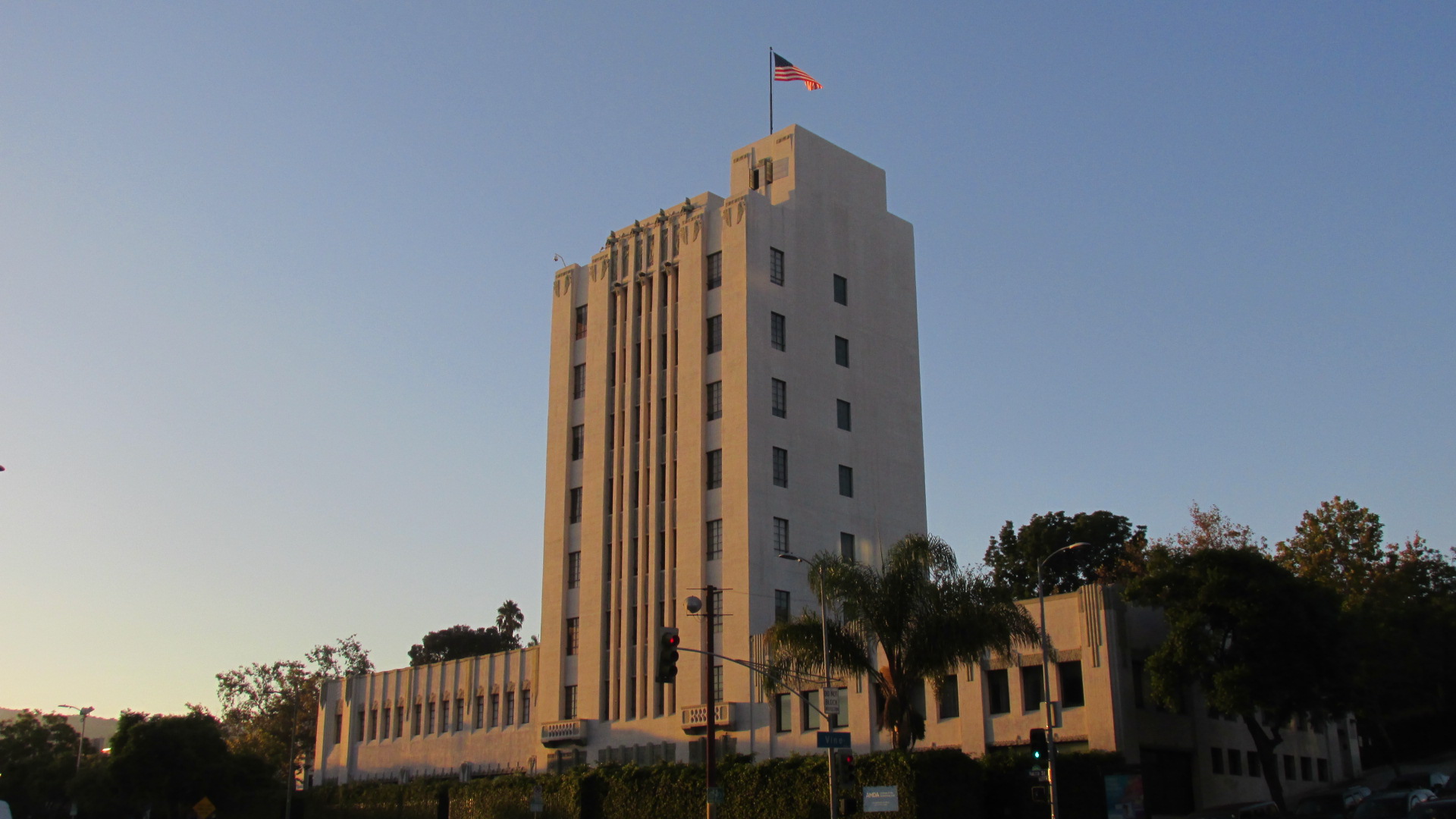
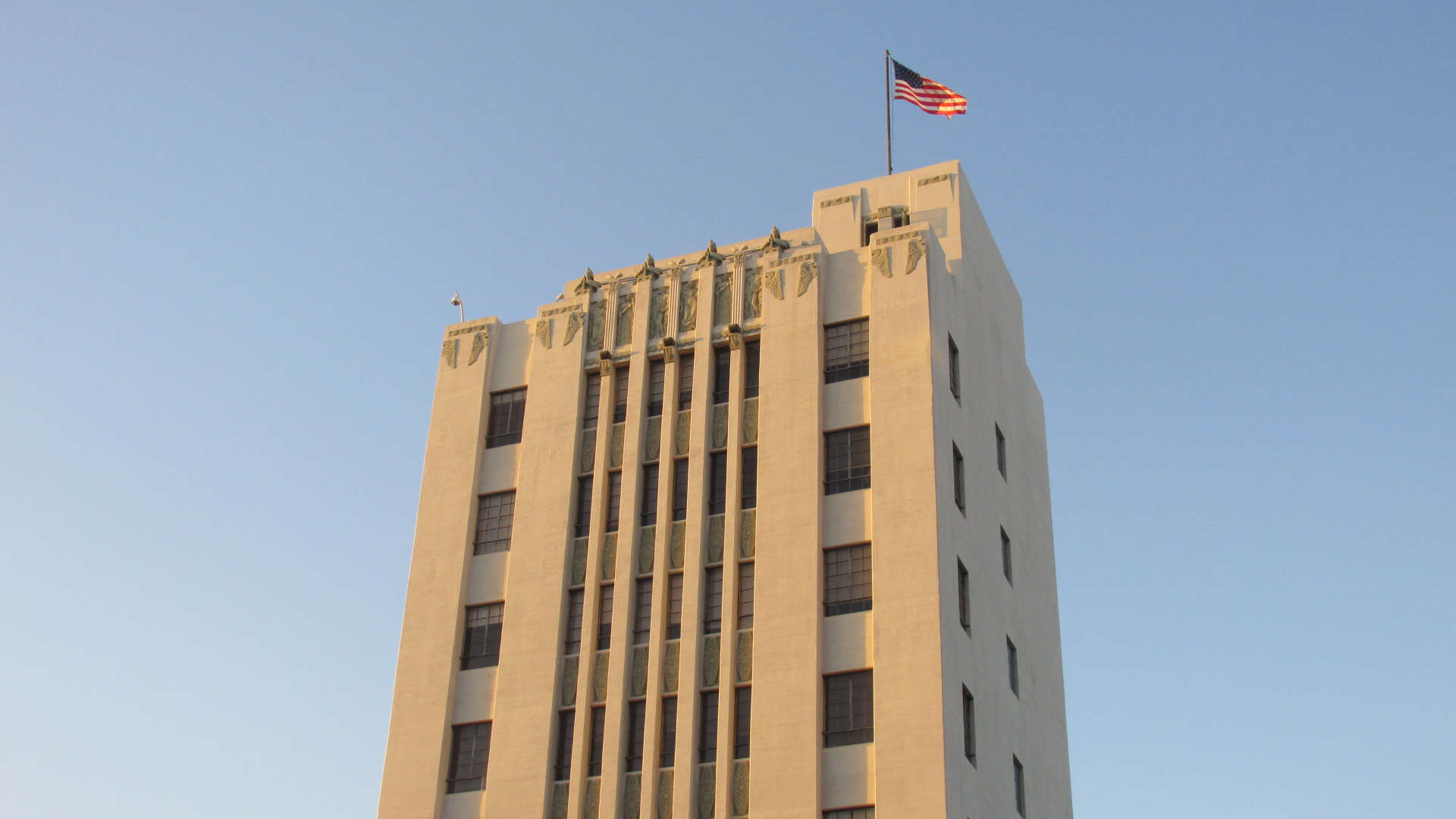
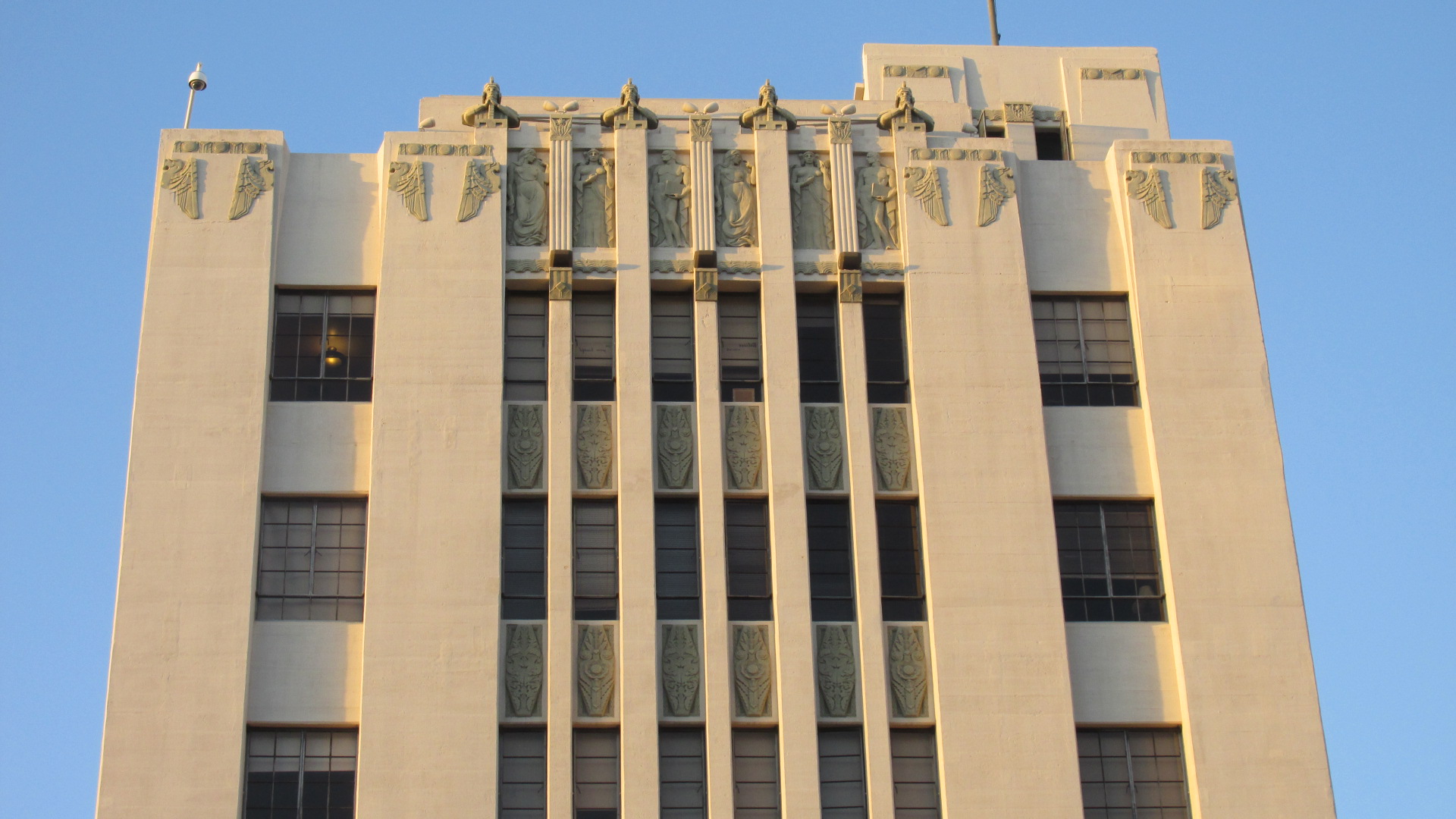
Yucca Vine Tower in Hollywood.

One of Hollywood’s most beautiful buildings is finally getting the recognition it deserves.  On April 18, the City of LA’s Cultural Heritage Commission voted unanimously to recommend that the Yucca Vine Tower be designated a Historic Cultural Monument. 

View of central tower.
Top of central tower.

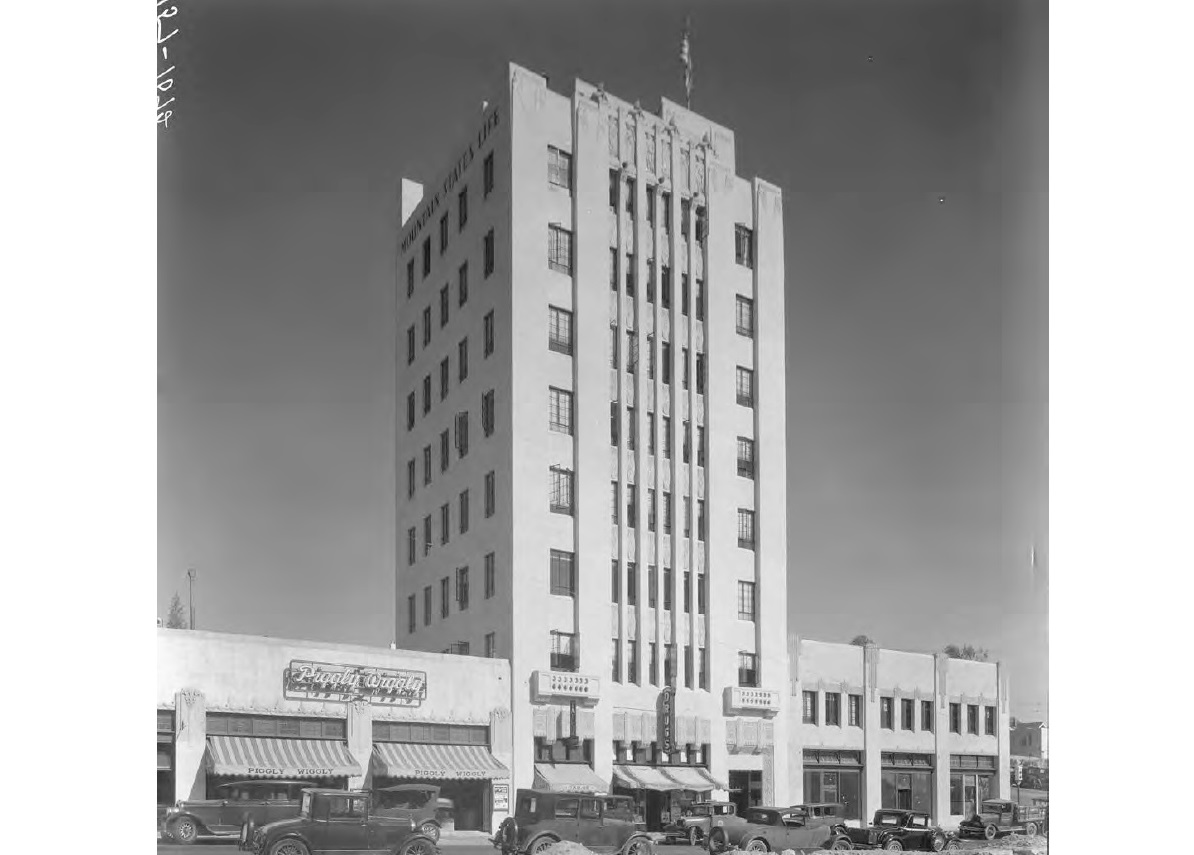
This Art Deco classic, constructed nearly 100 years ago as the Mountain States Life Building, was designed by LA-based architect Henry Gogerty.  Currently occupied by the AMDA College of the Performing Arts, the list of former tenants includes Gene Autry’s Western Music Publishing, Motion Picture Daily, the Hollywood Anti-Nazi League, and Chao Praya, one of the first Thai restaurants in LA.  In addition to designing other notable buildings in the Hollywood area, Gogerty worked on over 350 schools in Southern California.  His firm is also credited with designing the Hughes Aircraft complex in Playa Vista and the Grand Central Air Terminal at the former Glendale Airport.

Historic image of Yucca Vine Tower from California State Library.

Thanks to John Girodo and the Art Deco Society of Los Angeles, who submitted the nomination.  Thanks also to Kathleen Perricone, whose thorough research in preparing the nomination made an excellent case for historic designation.  For more background on this amazing building, take a look at the CHC agenda packet, which is available here.  The packet contains a wealth of historic photos.  You can jump to them by clicking on Historic-Cultural Monument Application in the index on the first page.

View of Yucca Vine Tower from west.
Detail of base.

The designation isn’t final yet.  It still has to be approved by the full City Council.  Hopefully they’ll vote soon to give this gorgeous building HCM status.

Ignacio Lozano, Jr., Former Publisher of La Opinión, Dead at 96

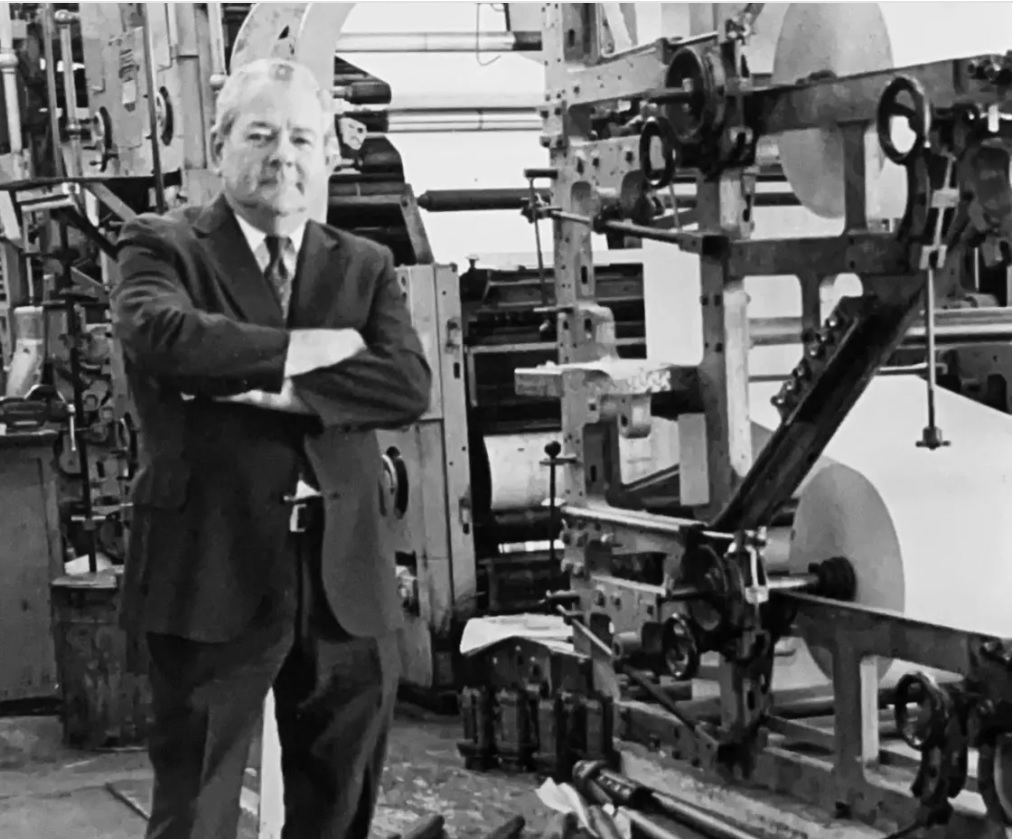
Ignacio Eugenio Lozano, Jr. (1927-2023), photo from La Opinión, courtesy of the Lozano family

Ignacio Eugenio Lozano, Jr., former editor and publisher of La Opinión, has died at 96.  Lozano helped build the family-run newspaper into the most important Spanish-language print publication in Southern California.  He holds a significant place in LA history, and La Opinión played a crucial role in giving voice to the region’s growing Latino population.  Though the Lozano family is no longer involved in running La Opinión, it is still published today.

Muere Ignacio E. Lozano Jr., ícono del periodismo en español e histórico editor de La Opinión

Ignacio E. Lozano Jr., longtime La Opinión publisher, dies at 96

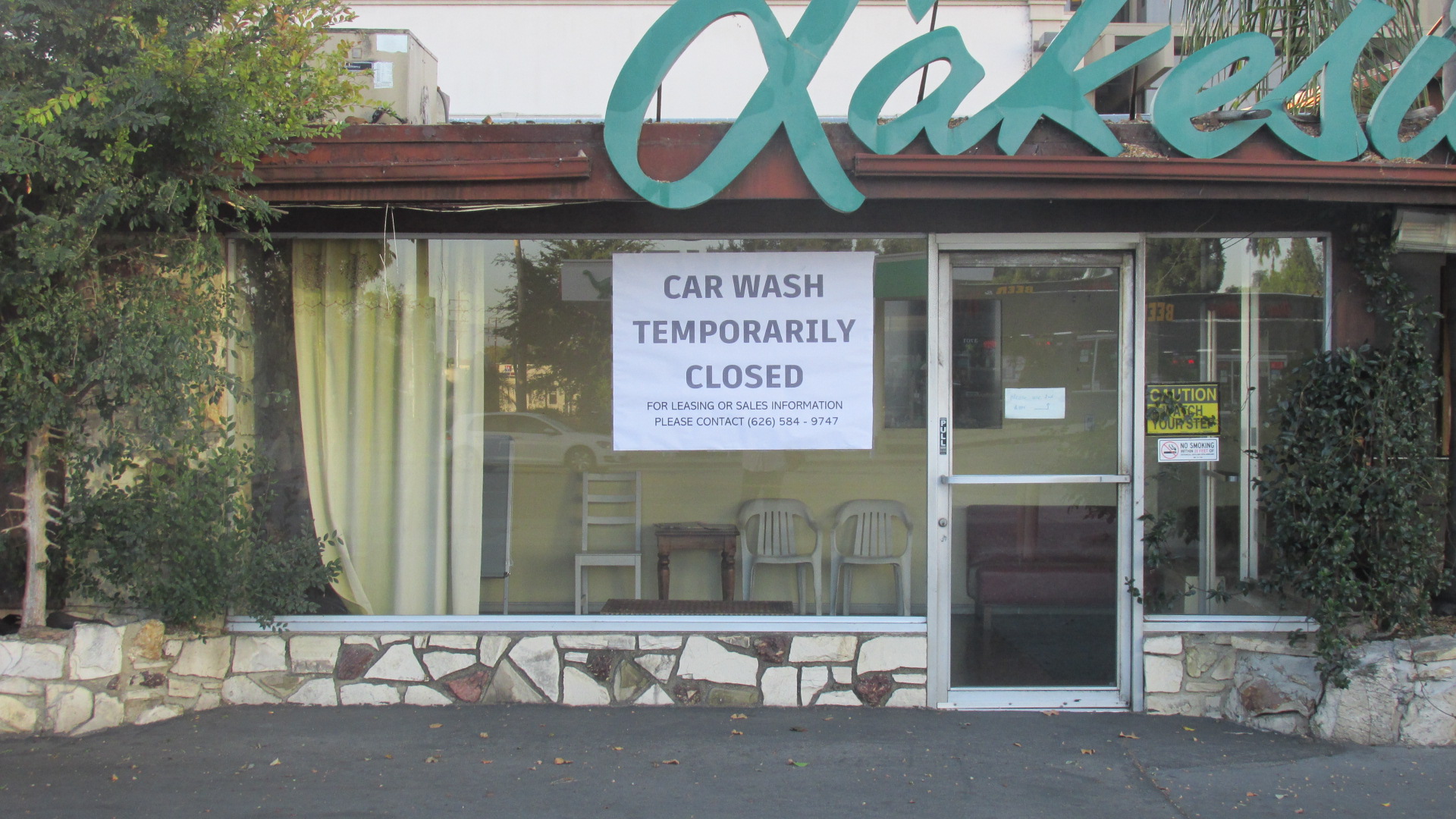
Lakeside Car Wash to Be Replaced by Mixed-Use Project

The LA area grew rapidly in the first half of the 20th century, and after WWII the population continued to climb.  Spurred in part by the growth of the freeway system, subdivisions started springing up all over the place, and LA’s car culture kicked into high gear.  Families went to see movies in drive-in theatres.  Teen-agers spent Saturday night at drive-in restaurants. 

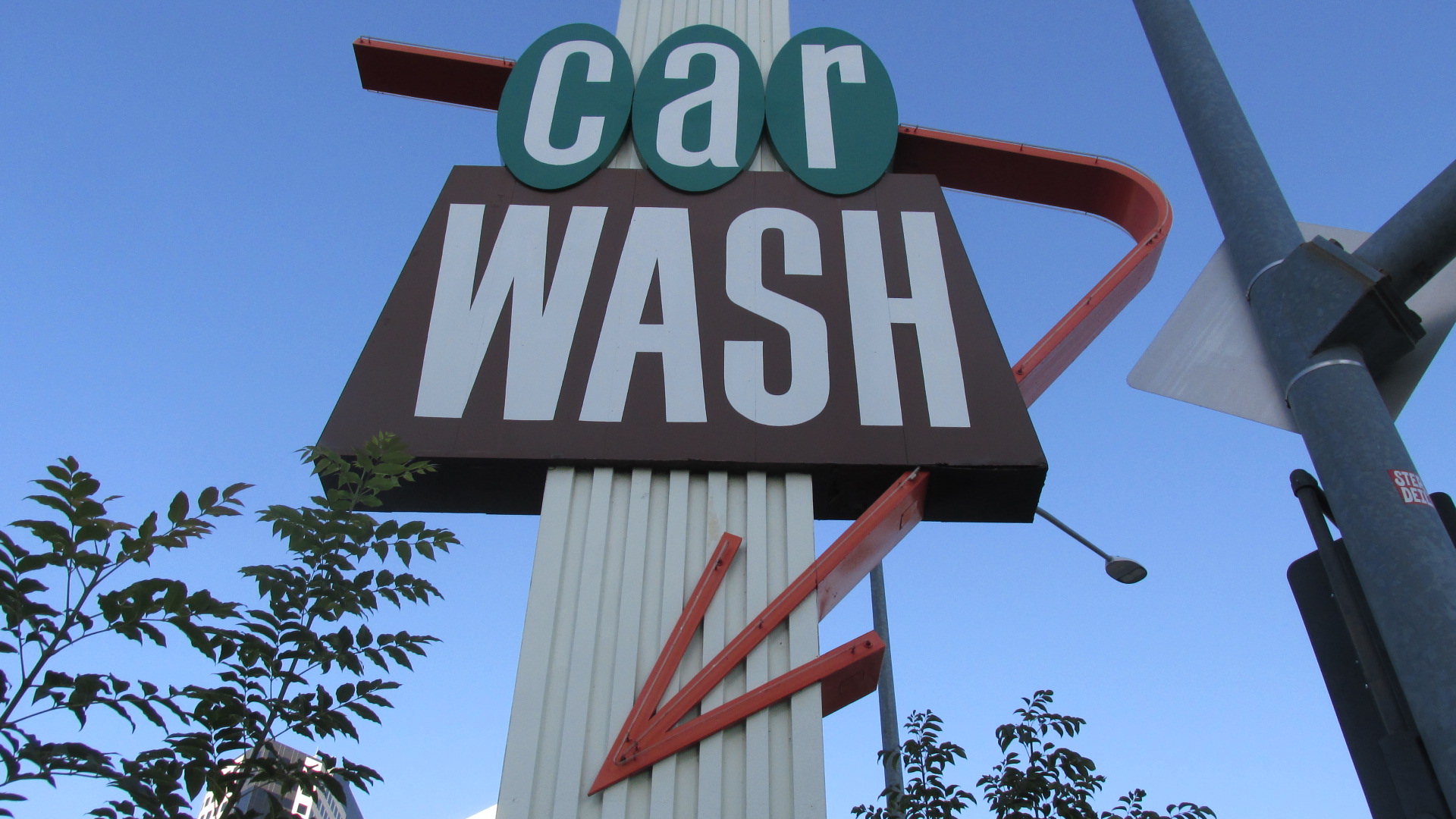
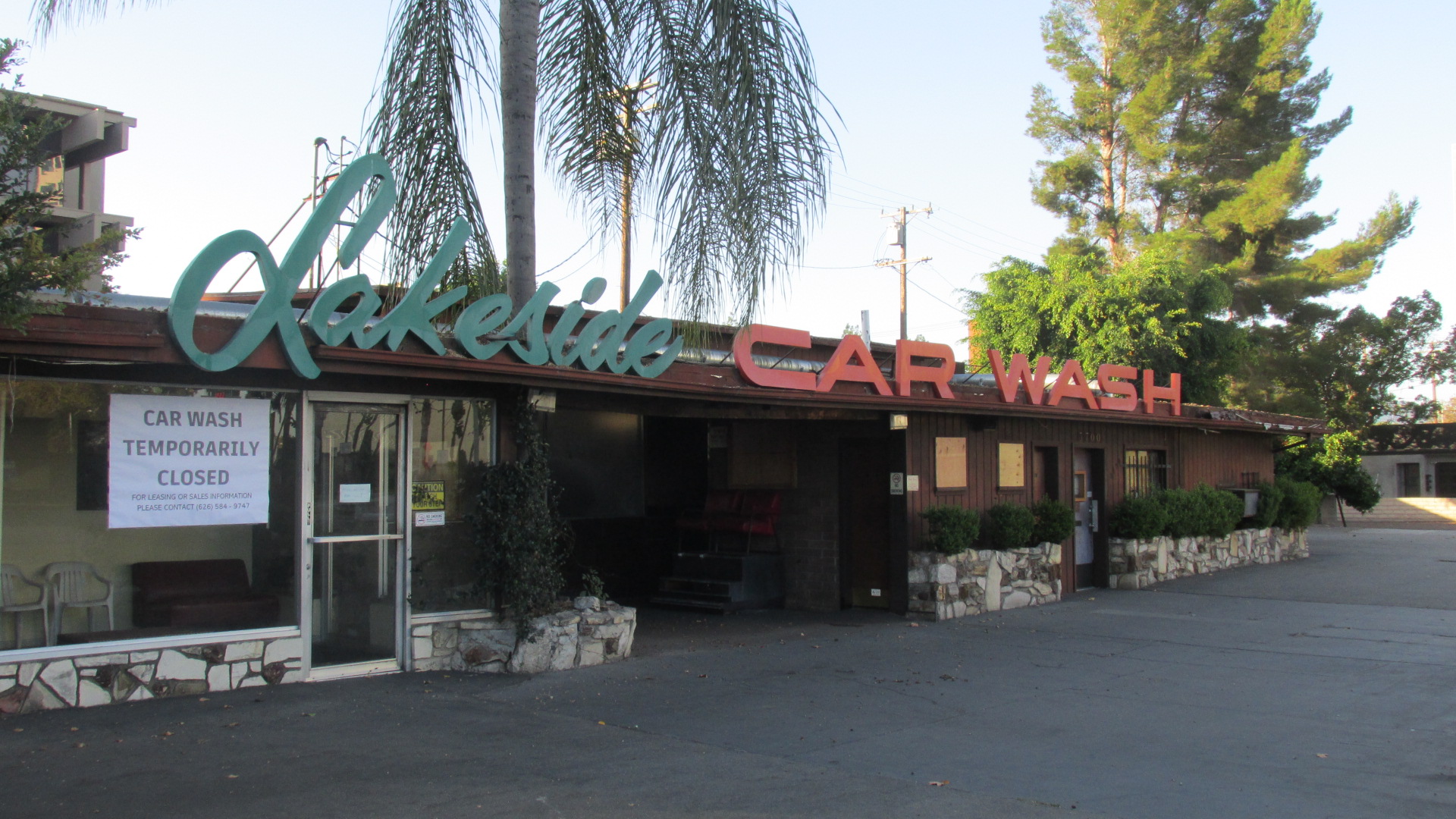
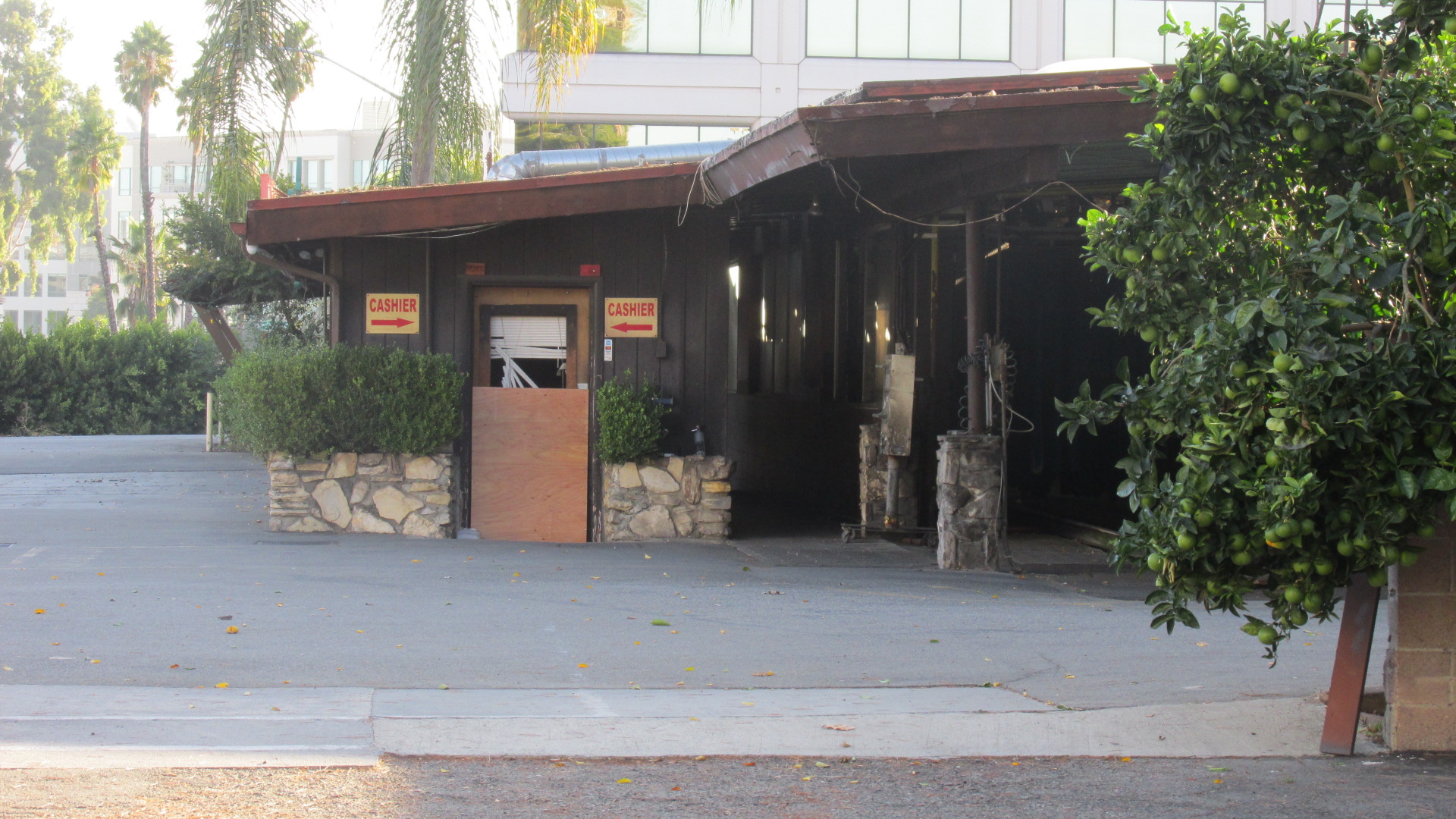
And the car wash became a familiar fixture in these new communities.  According to the LA Conservancy, the Lakeside Car Wash, located at Riverside and Hollywood Way, debuted in 1956.  The architect is unknown, but the structure stands out for its surprising combination of rustic ranch style and mid-century modern.  The Conservancy points out the connections to the Googie coffee shops that were popping up all over LA at the time.

View of Lakeside Car Wash from Riverside Drive.
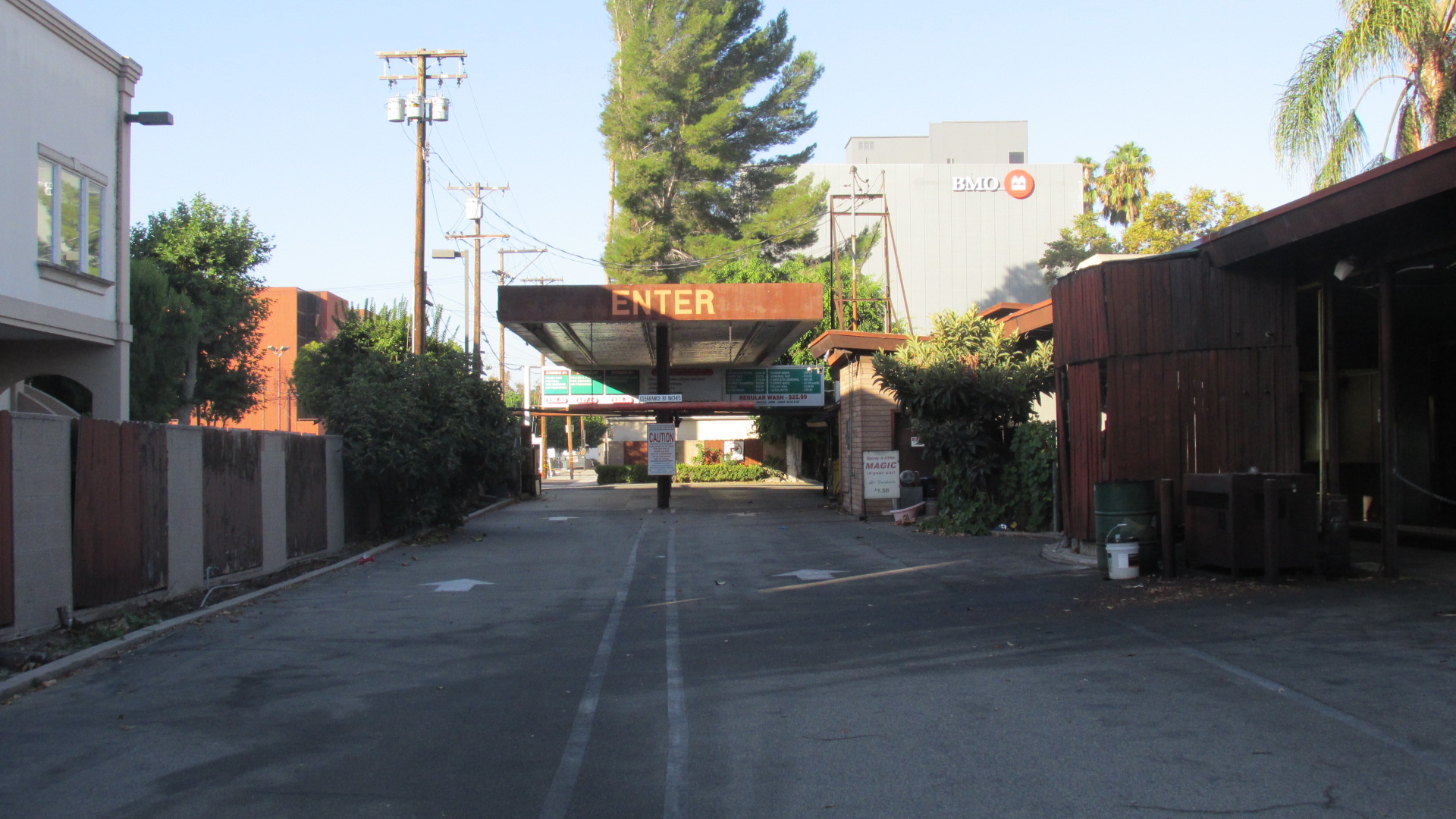
Entrance to car wash

But whatever its architectural merits, the Lakeside Car Wash is now closed and will almost certainly disappear in the not too distant future.  In April 2022, the City of Burbank approved the construction of a mixed-use project on the site, which includes 49 condos and 2,000 square feet of commercial space and open space located at street level. 

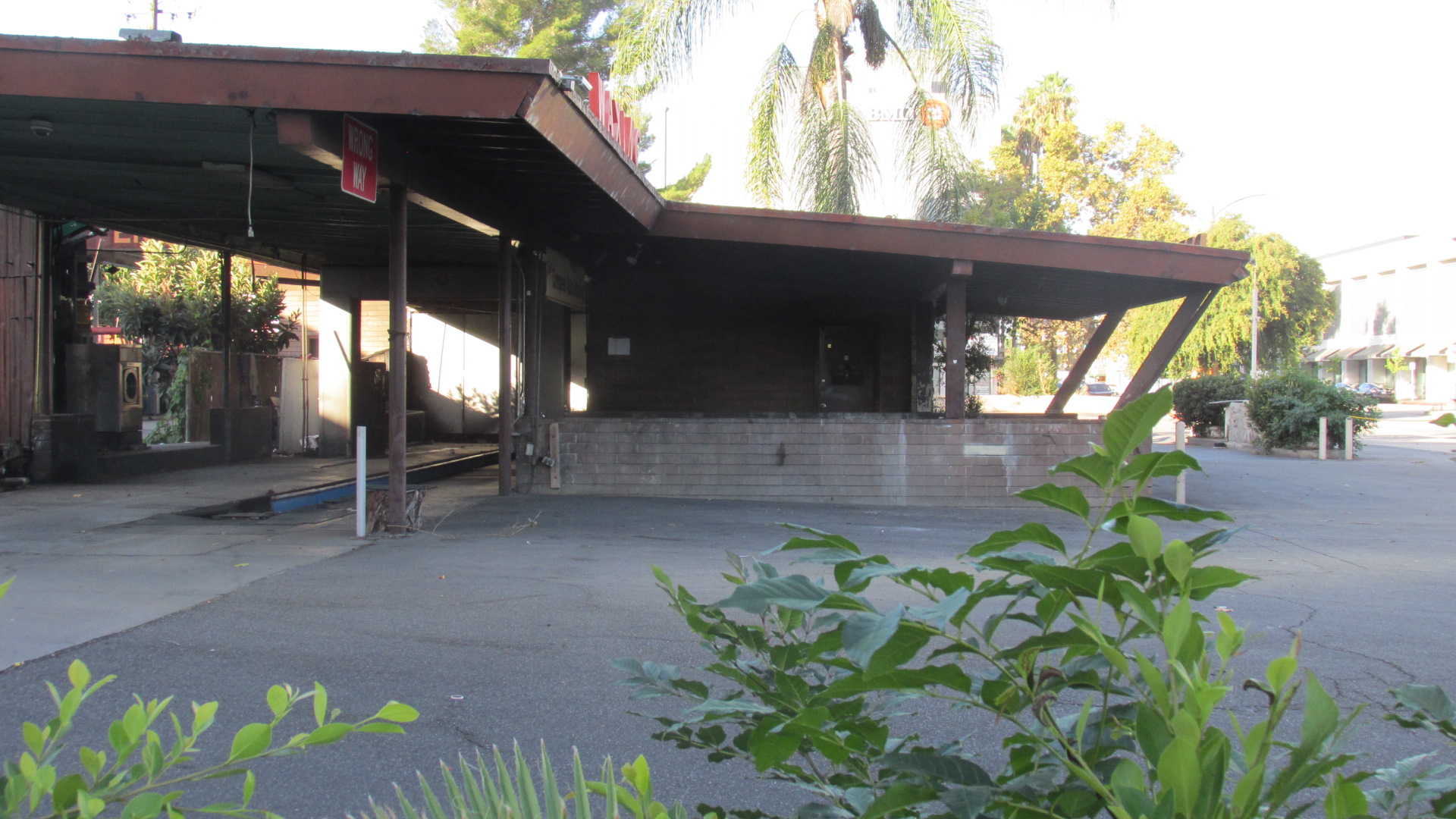
Side view from Hollywood Way
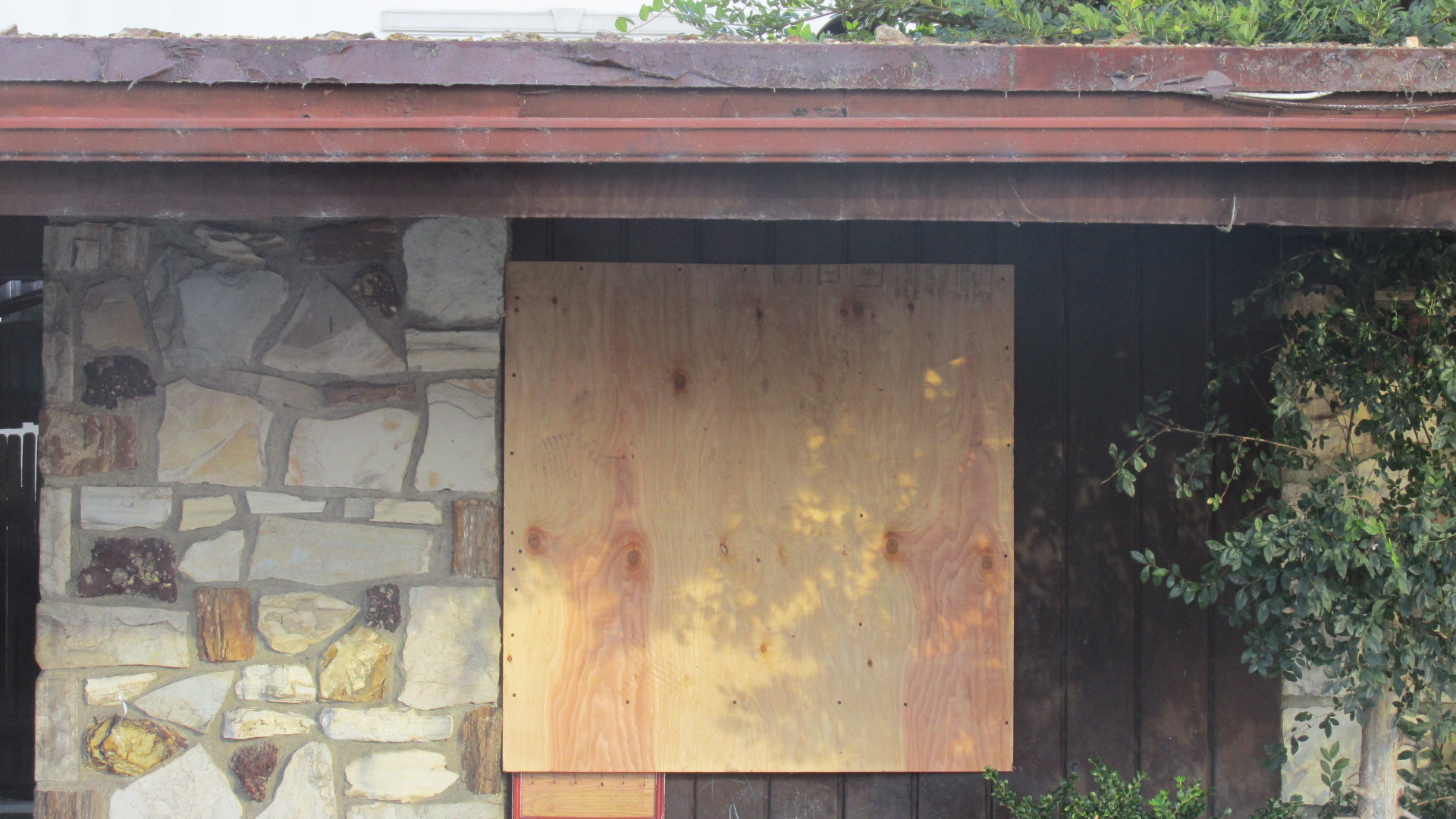
The back of the car wash
Actually, the closure is probably permanent.
The cashier’s office

Remnants of the early days of California’s car culture have been disappearing for years.  The Reseda Drive-In Theatre was shuttered back in the 70s.  The Tiny Naylor’s at Sunset and La Brea, a Googie classic, was demolished in the 80s.  Burbank’s Pickwick Drive-In Theatre went dark in 1989 and is now a shopping center. 

But car culture isn’t disappearing, it’s just changing.  These days more California households have access to cars than ever before.  Check out this quote from Falling Transit Ridership, a study published by UCLA in 2018….

Census summary file data show that from 2000 to 2015, the SCAG region added 2.3 million people and 2.1 million household vehicles (or 0.95 vehicles per new resident). To put that growth in perspective, from 1990 to 2000 the region added 1.8 million people but only 456,000 household vehicles (0.25 vehicles per new resident). The growth of household vehicles in the last 15 years has been astonishing.

The Lakeside Car Wash will soon be gone, but cars are here to stay.  They’ll just have to go somewhere else to get clean.

Art Laboe Tribute in Downtown LA


I don’t listen to the radio much.  I remember hearing Art Laboe’s name when I was a kid.  I knew he was a DJ, and I may have heard his show when I was growing up.  But I really didn’t know much about him until I read his obituary last October. 


Reading about his life, I felt a rush of happiness and sadness.  I’m not sure I can explain why, but I think it had to do with the fact that he spent his time on earth bringing people together.  From the lovers who called in asking him to dedicate a song to someone they cared about, to the kids from East LA, West LA, and South LA who gathered at the live shows he organized.


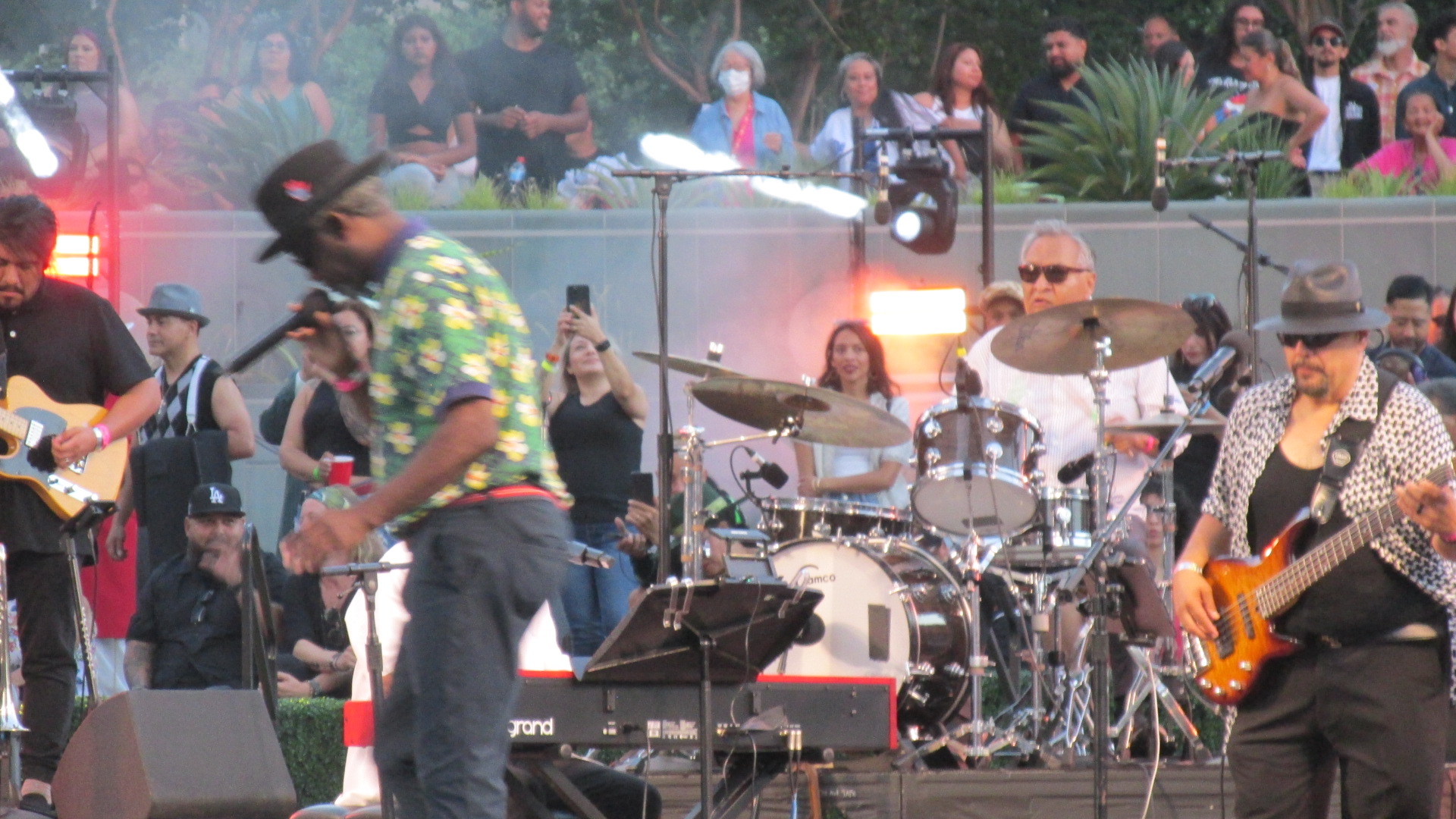
On Saturday, August 5, thousands of people gathered in Downtown LA to pay tribute to Laboe.  DJs spun oldies and live performers took the stage to sing their versions of favorite tunes. People from all over Los Angeles showed up, and everybody seemed to be having a good time.


We are so divided these days.  There are so many voices in the media that seem determined to drive us apart.  We really need voices that can reach across the lines that divide us.  Art Laboe understood the power of music, and he used it to erase those lines.  We need people like him now more than ever.

Dismantling Times Mirror Square: Housing vs. History?

tms 01 p k 3 tree

In late November, the LA City Council’s Planning & Land Use Management (PLUM) Committee considered giving Times Mirror Square landmark status. It was an interesting hearing. The application nominating the site for Historic-Cultural Monument status was submitted by a group of people, including local preservationists Kim Cooper and Richard Schave, as well as architectural historian Alan Hess. There’s really no argument that Times Mirror Square has played a huge part in LA’s history. The debate centered around how much of it should be preserved.

As someone who grew up with newspapers, I have to remind myself that these days most people under 30 see them as a useless holdover from the past. The number of print publications has fallen dramatically over the past 20 years, and while a number of major papers continue to publish on-line, they’re struggling to reach an audience. These days a lot of Americans get their “news” from sources that don’t even claim to be news outlets. Do people under 30 have any idea how powerful and influential major newspapers were before the internet? From the early days of the 20th century the Times had a huge impact on local politics, the regional economy, and the built landscape. If the Times had never existed, LA would probably look very different than it does today.

tms 10 k clock

Los Angeles Times Building at First and Spring, designed by Gordon Kaufman

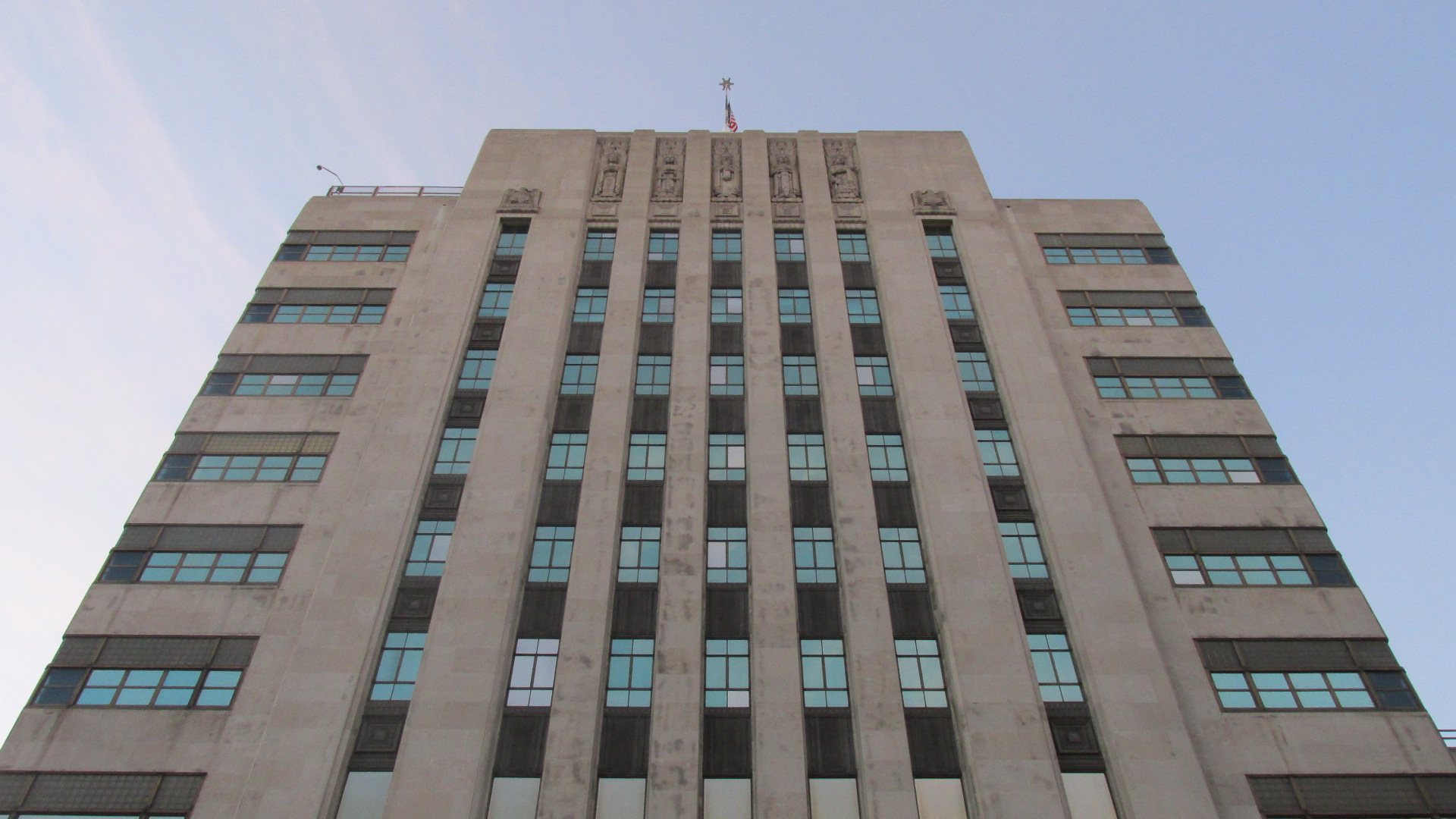
At the PLUM hearing, nobody questioned the site’s historical significance. The debate was all about the structure, or really the structures. Times Mirror Square was actually built in pieces over decades. The first segment, located at First and Spring and designed by Gordon Kaufman, was completed in 1935. In 1948 the owners extended the complex to the corner of Second and Spring, and the architect for this phase was Rowland Crawford. The final segment, built on the west side of the site in 1973, was designed by William Pereira. (And if you really want to dig into the details, you’d also have to count the plant building and the parking structure.)
tms 20 c 2

The Mirror Building at Spring and Second, designed by Rowland Crawford

For those who don’t know much about the Times’ history, here’s a quick summary. The paper was founded at the end of the 19th century and played a major role in LA’s development throughout the 20th. In its early years, editor Harrison Gray Otis made the paper successful through ardent boosterism, pushing hard for LA’s growth. The Times played a key role in advocating for the construction of the LA Aqueduct. Otis’ conservative, pro-business policies were shared by his successors, Harry Chandler and Norman Chandler. But things changed when Otis Chandler took over in 1960. The Times adopted a more independent perspective and expanded its staff, striving to become a national paper on the level of the New York Times. The change was quickly apparent. While in the past the Times had fanned the flames of bigotry, soon after Otis Chandler took over it ran a series exposing racism in the John Birch Society. When Richard Nixon lost the race for California governor, he blamed the LA TImes. Before 1960 the paper had never won a Pulitzer. Since 1960 it’s won 44.

Unfortunately, in 2000 the Times was sold to the pack of idiots at the Tribune Company. They spent over 15 years turning what had been a regional media giant into a pathetic shadow of its former self. In 2018 the paper was finally freed from the toxic grasp of the Tribune when it was purchased by billionaire Patrick Soon-Shiong. Not long after purchasing the Times, Soon-Shiong announced that its offices would be relocating to El Segundo, and that Times Mirror Square would be sold to developer Onni Group.

And this is what the debate at the PLUM hearing was all about. Onni has proposed preserving the Kaufman and Crawford buildings, but getting rid of the Pereira addition in order to build two residential towers. The preservationists who nominated Times Mirror Square wanted to landmark the entire site, which would make development more difficult.

tms 30 p angle

Times Mirror Headquarters at the corner of First and Broadway, designed by William Pereira

tms 32 p bdwy

View of Times Mirror building along Broadway

tms 34p refl csf ch

City Hall and the Clara Shortridge Foltz Criminal Justice Center reflected in the facade of the Times Mirror building

Back in September, the Cultural Heritage Commission (CHC) sided with the preservationists. In spite of a report from GPA Consulting that took great pains to play down the quality of the Pereira building, the CHC voted to include it in their recommendation, saying that all of Times Mirror Square was worthy of landmark status. Interestingly, GPA also dug deep into the Pereira firm’s archives to question whether the architect designed the project himself. They seemed determined to block the nomination of that segment, which is exactly what Onni Group wanted. But it’s commonplace for the principle of an architectural firm to assign a team to complete the bulk of the work on a project. While GPA argued at the hearing that the Pereira building was not a significant example of the architect’s work, many others, including architectural historian Hess, insisted that it was.

This is the second time I’ve run across GPA in covering preservation issues, and I have to say I’m not impressed by their work. When DLJ Capital bought the 800 Traction building and decided to evict the Japanese-American artists who lived and worked there, the new owners brought in GPA to evaluate the structure’s history. While GPA found that the building deserved landmark status, their report managed to avoid any mention of the Japanese-American community that had lived in the area for decades. They also whitewashed 800 Traction’s history by omitting references to the Japanese-American artists who had lived and worked in the building for years, some going back as far as the 80s. And somehow GPA failed to note that some of these artists played a key role in creating the Downtown Arts District. Seems to me that GPA Consulting basically serves as a hired gun, dedicated to helping real estate investors push their projects forward.

History is a complicated thing. Most of us know relatively little about the city we live in. Sometimes it turns out we aren’t even really familiar with the things we think we know well. In early December I went down to Times Mirror Square to shoot some photos. I have to say the visit was an eye-opener. I bet I’ve walked by the building a thousand times, but while I was taking pictures I realized there was a lot that I’d never really seen. Walking past the main entrance on First Street I’d certainly noticed the contrast between the Kaufman and Pereira buildings, but I’d never paid any attention to the Crawford building. I’d never looked closely at the lines or the materials. I’d never read the inscriptions on the First Street facade. I’d never really thought about the way the Pereira building shapes the space.

And I’d never noticed this plaque near the corner of Spring and Second.

tms 60 plaque

Looking at it made me think about the many changes that have happened in Downtown, and reminded me that things will always keep changing. There are whole histories that have been bulldozed and buried. Thousands of stories I’ll never know. And while I believe preservation is important, we can’t save every old building, or even every beautiful building. Inevitably, the City will keep growing. It can’t remain static. So we have to weigh these things, and ask whether the changes are happening for better or for worse.
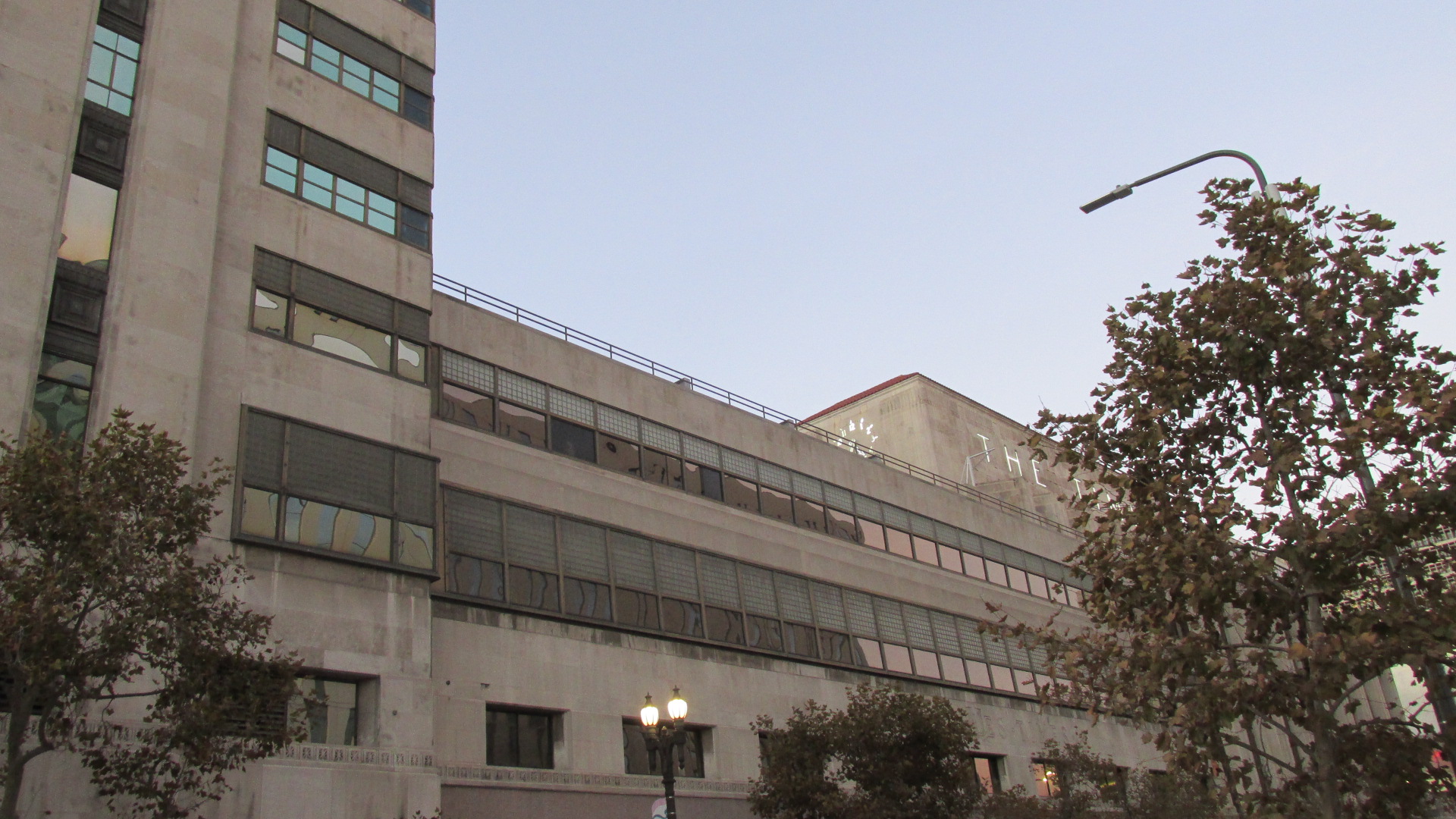
tms 50 spring trees

View of Times Mirror Square from Spring

A number of people spoke at the PLUM Committee hearing, and again, the discussion was pretty all much about whether the Pereira structure should be preserved. Obviously, the developer reps and the business community argued against preserving that portion. The Committee also heard from a number of union workers who shared that view. On the other side you had preservationists arguing that the Pereira addition was an important example of the architect’s work, and an important part of the building’s history.

I agree with the preservationists. While all three architects involved with Times Mirror Square did impressive work, Pereira had the most extensive relationship with the LA area. He played a crucial role in shaping the city’s modernist period, and designed some of its most remarkable structures, including CBS Television City, Otis College of Art & Design (original campus), and the Los Angeles County Museum of Art (original campus). He also made significant contributions to Los Angeles International Airport,
the University of Southern California, and Occidental College. Pereira was a major player in creating the look of mid-century LA.

As for Times Mirror Square, I completely agree with the people who say the Pereira addition has a cold, corporate feel. That doesn’t make it bad architecture. In fact, it has a striking sculptural strength, and the way it shapes the space around it is impressive. Actually, I think it’s an appropriate expression of the power and position the Times held back in the 70s. Does it fit with the older buildings? Depends on what you mean by “fit”. The contrast between the Kaufman and Pereira structures is jarring, and I’m certain that’s what Pereira wanted. And remember, we’re talking about LA architecture. In most other cities this kind of mash-up would stand out as a bizarre oddity. In this city, it’s just one of many examples of extreme stylistic conflict. Over the last hundred years, the story of LA architecture has been all about brash, experimental eclecticism.

tms 65 p k 1

Pereira building in foreground and Kaufman building in background

But it was pretty clear where the PLUM Committee hearing was going. The developer didn’t want the Pereira building to be declared historic, and that was a pretty strong sign the PLUM Committee didn’t want that to happen either. They’re very accomodating. Anybody who thought replacing former Chair Jose Huizar with Marqueece Harris-Dawson might change things was living in a fool’s paradise. At this PLUM hearing the main order of business appeared to be giving real estate investors whatever they asked for, just like when Huizar was running the show.

I did think it was interesting that people kept bringing up housing as an important issue. The developer, the union folks, the PLUM Committee all kept talking about how Downtown needed housing badly, and how Onni’s proposed luxury skyscraper would help ease that need. That’s weird. When I look at web sites for residential buildings in Downtown I find that a lot of them are offering discounts for signing a lease. Some are offering up to two months free rent. You wouldn’t think they’d be offering such great deals if housing was in really short supply.

Something else that’s weird. Onni’s reps are claiming that there’s a housing shortage in Downtown, but at one of their other buildings not too far away they’re turning residential units into hotel rooms. A few years ago the developer opened Level Furnished Living at Ninth and Olive. It was approved as 303 residential units, but in 2017 local activists discovered that Level’s owners were actually offering the units as hotel rooms. At first they were doing it illegally, but City Hall was good enough to grant them a TORS conversion for 97 units. This stands for Transit Occupancy Residential Structure, and basically it means you’re turning housing into hotel rooms. And it looks like were going to see more of this. Another developer has filed an application to build a 27-story high-rise at 949 South Hope. The project description calls it a residential tower, but if you look at the requested approvals you’ll see that the developer is asking for the TORS designation up front. In other words, once the building is open it could be used as housing or hotel rooms.

This is a brilliant way to reduce vacancy rates in Downtown. Obviously Onni is really on to something. If you can’t market your units as apartments or condos, just turn them into hotel rooms. That way you’re turning a profit even if there really is no demand for housing. And the best part is, once you slap on the TORS designation, these units don’t have to be counted when calculating Downtown’s vacancy rate. If an apartment or condo is sitting empty, then it’s a vacant unit. If it’s a hotel room, it’s just an empty hotel room. It’s sheer genius. The City can reduce the Downtown vacancy rate just by calling these units something else.

Of couse, if Onni is turning residential units into hotel rooms at Level, you’ve got to ask if the need for housing in Downtown is really that severe. And at the same time, you have to ask if the PLUM Committee has any real interest in easing LA’s housing crisis. More likely they’re just helping a developer create another valuable asset for their portfolio.

After public comment, the PLUM Committee members spoke briefly, and it was pretty clear they were all on board with Onni’s agenda. They voted to recommend granting historic status to the Kaufman and Crawford buildings, but not to the Pereira building. In early December the full City Council adopted the Committee’s recommendation. Looks like Onni will get to go forward with its two residential towers. And if we find out in a few years that those residential towers have somehow turned into luxury hotels, well, that’s just the way things work in the City of LA.
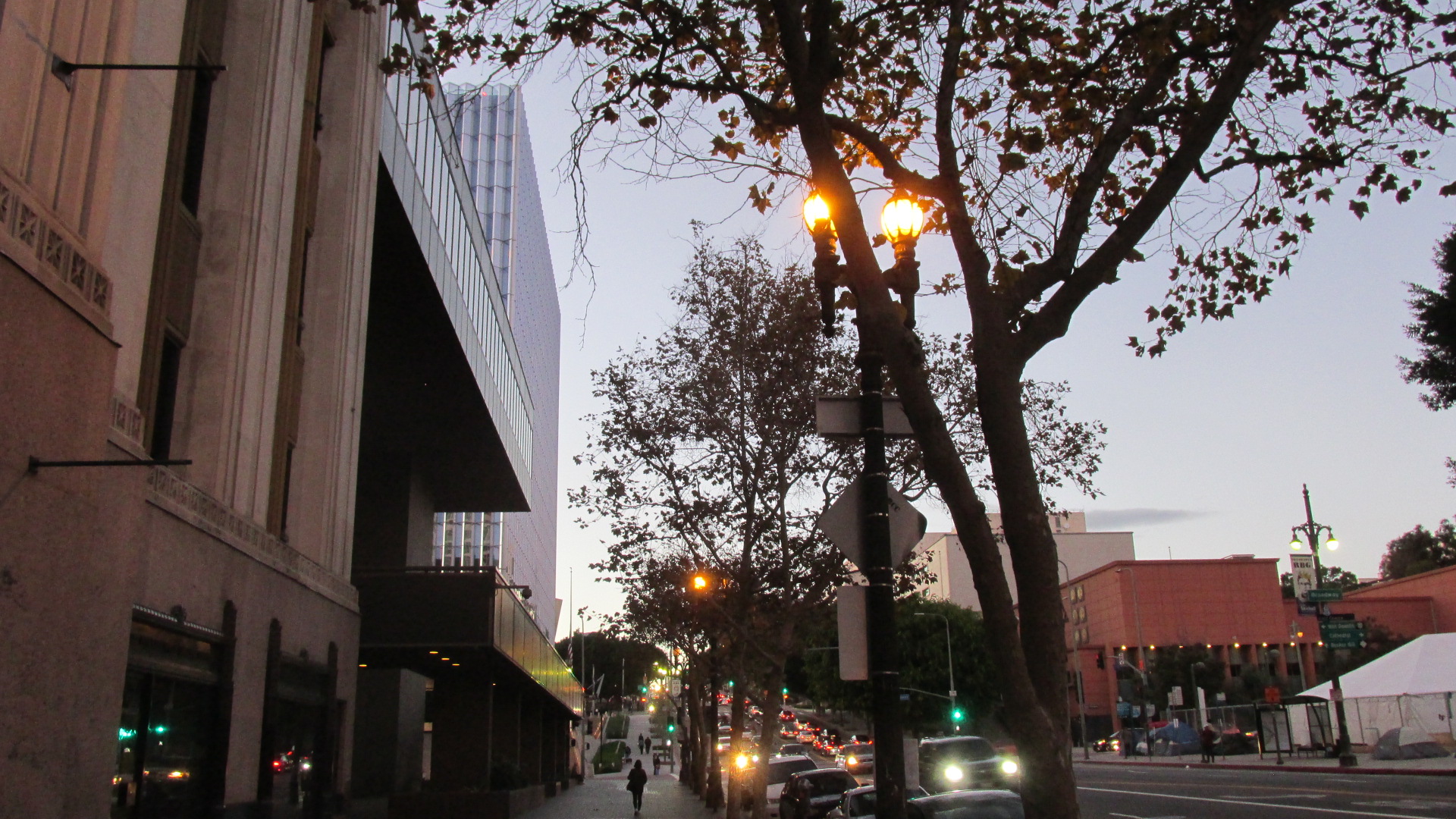
tms 90 1st lights

Help Save the Regal Place Bungalow Court

RP 01 Stairs

LA’s bungalow courts are becoming extinct. In recent years we’ve seen a number of them demolished by developers. Even the Norton Court, which was eligible for the National Register of Historic Places, was torn down by real estate investors who valued cash over culture.
Now another bungalow court complex is threatened, but you can act to save it. The apartments at 3649-3657 Regal Place are slated for demolition, but community members believe the City should designate these units as a Historic Cultural Monument (HCM). Just above Cahuenga Blvd. near the foot of the Hollywood Hills, the first of these apartments were built in 1928. They stand directly across from Universal Studios, and according to film historian Joseph McBride, Steven Spielberg was living in one of these units when he became the youngest director ever to sign a multi-picture deal with a major studio.  McBride also says that Bobby Darin was a former resident.  Records from the County Assessor’s Office show that actress Yvette Mimieux owned the property in 1970.  The Cahuenga Pass Property Owners Association (CPPOA) strongly supports the HCM nomination. In their letter to the Cultural Heritage Commission, the CPPOA states that they believe the complex is the last bungalow court remaining in the Cahuenga Pass.

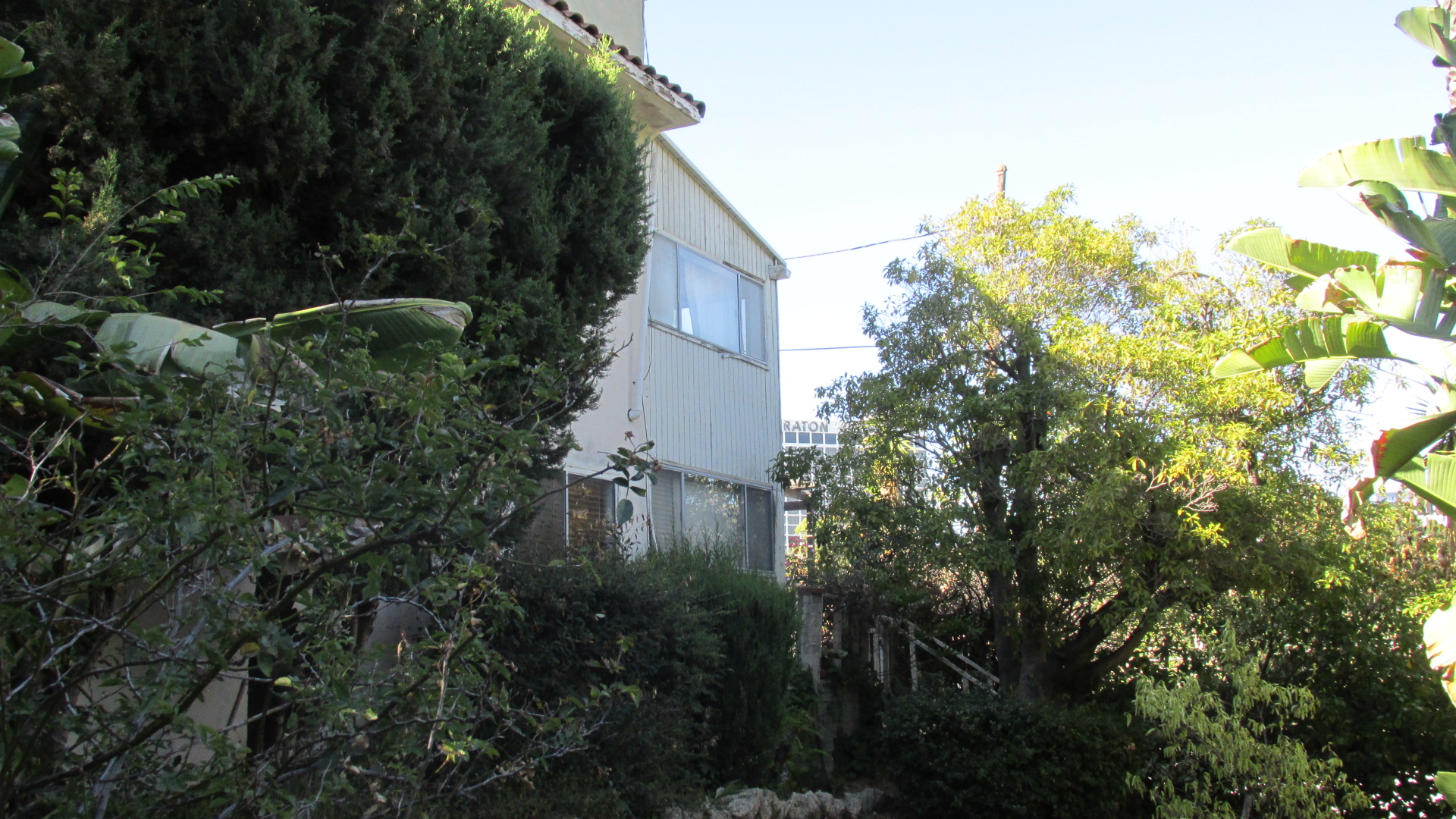
RP 20 Unit Sheraton

One of the units at Regal Place.

RP 30 Stairs Green

Stairs leading to the top of the complex.

RP 32 Top Unit

The complex is filled with trees and shrubs.

RP 40 Trees Wide

Looking down from the highest point in the complex.

Visiting these apartments, it’s easy to understand why bungalow courts were so popular in Hollywood’s heyday. This cluster of small units gathered around a central green space, shaded by tall trees, creates an intimate, peaceful space for tenants. You’d never guess that the Hollywood Freeway was just a few hundred feet away. It’s worth mentioning that the developer also plans to cut down five of the seven protected oaks on the property. While replacement trees will be planted, it would take decades before they could reproduce the shady canopy that currently shelters these units.

RP 50 Apt Frnt

One of the apartments at Regal Place.

RP 51 Randi Int 1

Interior of one of the units.

RP 56 Porch Back

A shady back porch to relax on.

RP 58 Arch

View of the neighborhood from one of the units.

Please ask Councilmember David Ryu to nominate this lovely bungalow court for HCM status.

Councilmember David Ryu:
david.ryu@lacity.org

Please copy Randi Aarons at:
lilrandi@yahoo.com

Be sure to include the address, 3649-3657 Regal Place, in your subject line.

RP 90 Window