LA’s Latest Innovation: Freeway-Adjacent Rooftop Decks

RD Ovrcast

You just never know what the City of LA will come up with next….

There was an empty lot in my neighborhood that had been sitting vacant for years.  After a developer pitched a hotel for the site and got turned down, a new project came along consisting of 18 3-story condos.  It seemed like a good fit, the Hollywood Hills West Neighborhood Council (HHWNC) looked it over and gave it a thumbs up, and construction started last year.

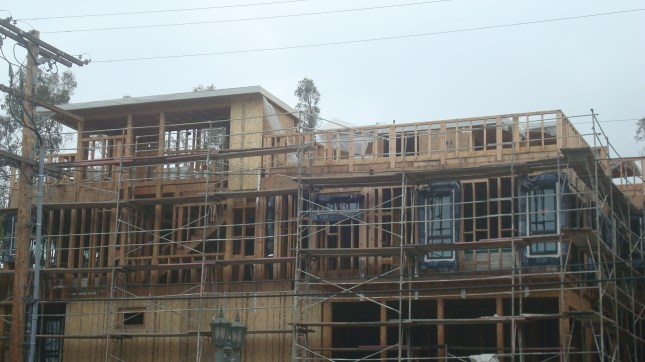
Everything seemed okay until last November when I noticed what looked like a railing going up around the perimeter of the roof.  Were they adding rooftop decks?  That wasn’t mentioned in the hearing notice for the project or the environmental assessment, and it wasn’t part of the project approved by the HHWNC.  Not long after the railing went up, it became clear that the construction crew had added staircases leading to the roof, and soon they were building stairwell coverings.

Why was I concerned?  Well, here in Hollywood people like to give parties.  Nothing wrong with parties in general, but sometimes they get pretty noisy, and sometimes they go on really late.  It’s already an issue in the neighborhood, and building 18 individual rooftop decks seemed like it was just increasing the chances of someone throwing an all-night open-air bash.

So initially my concern was selfish.  I was worried about the noise this project might create, and I was wondering why the rooftop decks hadn’t been included in the package that was presented to the community and approved by the Department of City Planning (DCP).  I called up my City Council office, and talked to a very nice guy who said he’d look into it.  Over the next two months I sent three e-mails to this Council Office staffer asking for an update.  Never got an answer.

But during that time it occurred to me that there might be another problem with this project, a much more serious issue than raucous late night parties….

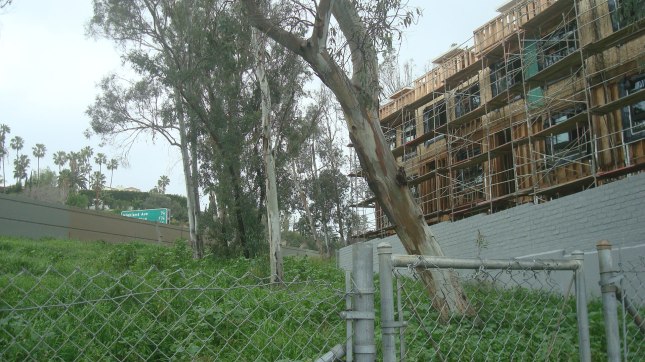
You see, these condos are going up right next to the Hollywood Freeway.  I’d say at the farthest point the structure is about 150 feet from the freeway and at the nearest point about 50.   I started wondering if building so close to a major traffic corridor wouldn’t pose health risks for the future occupants, so I got on the net to do some research.
RD Fwy

The space between the project site and the freeway.

Probably everybody reading this already knows what I found out.  There’s a large body of research showing a higher incidence of respiratory problems among people who live near freeways.  The risk is especially high for children and seniors.  In fact, young people can suffer lifelong damage since ongoing exposure to pollutants from auto exhaust may affect the development of their lungs.  This problem has gotten a lot of media attention recently, but the information has been out there for years.  USC has been studying the effects of air pollution on children since the 90s.  Here’s an article published by USC News back in 2004.

USC Study Links Smoggy Air to Lung Damage in Children, September 2004

Not long after, the California Air Resources Board (CARB) published their Air Quality and Land Use Handbook, warning cities about the risks of building housing near freeways.  Here’s the number one item on the handbook’s list of recommendations.

“Avoid siting new sensitive land uses within 500 feet of a freeway, urban roads with 100,000 vehicles/day, or rural roads with 50,000 vehicles/day.”

So the information has been out there for more than a decade, and the City Council is well aware of the health impacts to people living close to freeways.  They’ve talked about ways to deal with the risks, but very little has happened in the way of concrete action.  In fact, in recent years the Council has approved thousands of residential units in close proximity to freeways.  They argue that LA’s housing shortage is so dire we can’t afford to prohibit construction in these areas even if there are health risks.  Even though I don’t buy that argument, I know that many people would agree.

But rooftop decks?!  Are they crazy?!

After reading up on the potential health risks, the idea of adding rooftop decks to these condos seemed so absolutely insane I thought it was worth making a few phone calls.  I rang up the woman at the DCP who prepared the initial study for the project.  I explained that the rooftop decks hadn’t been included in the project description or the renderings that were shown to the HHWNC, and that the height had increased by 30%.  She said that the project complied with existing zoning and that the Department of Building and Safety (LADBS) had the final authority over what was permitted.  I asked how the DCP could allow this since noise impacts from rooftop decks weren’t considered in the environmental assessment.  She replied that the DCP had considered operational impacts from the project and had approved the assessment.  Finally, I pointed out that the rooftop decks posed significant potential health risks to the future tenants.  Her response was that the California Environmental Quality Act (CEQA) did not require the DCP to consider impacts to those who would live on the site in the future.

I was angry, but not really surprised.  I’ve realized over the last few years that the folks at the DCP really don’t care about how proposed projects will affect the lives of the people who live in this city.  It’s all about keeping the developers happy.
RD Traffic EDITED

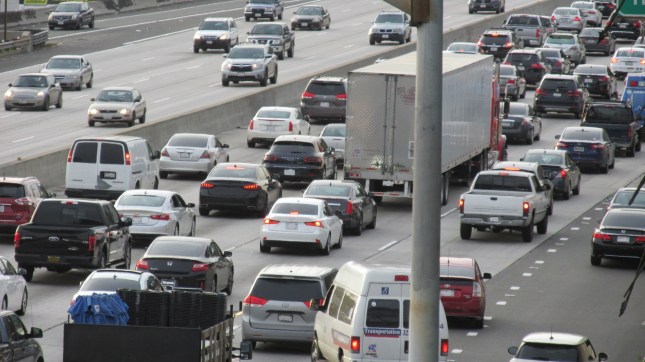
Traffic on the Hollywood Freeway near the project site.

Who knows why I even went on to contact LADBS.  I guess I must get some kind of sick kick out of banging my head against a wall.  Anyway, here’s their response.


The roof top decks and the overall building height of 44.9 feet is allowed by right, therefore LADBS does have the ability to approve the project as proposed.  The Zoning Variance reviewed by City Planning only addressed a parking requirement.  City Planning has approved the plans for the current project.

LADBS’ authority to approve projects is based on Building Code requirements.  The Building Code does not have any restrictions for a rooftop deck near a freeway.


So according to LADBS, they did everything by the book.  They don’t see a problem.

But there is a problem here.  It’s bad enough that a developer is allowed to present one project to the community and then build something substantially different.  But it’s even worse when a developer is allowed to create a clear health risk for the people who will live in the finished building.

I tried arguing with the bureaucrats who approve these projects and got nowhere.  Maybe it’s time to take it to the higher-ups.  If you feel there’s a problem here that needs to be addressed, I hope you’ll feel strongly enough about it to write an e-mail to the three people listed below.  And please use the following subject line….

Freeway-Adjacent Rooftop Decks at 2111 Cahuenga

Eric Garcetti, Mayor

mayor.garcetti@lacity.org

Vince Bertoni, Director of City Planning

vince.bertoni@lacity.org

Frank M. Bush, LADBS General Manager

frank.bush@lacity.org
RD Tight


Oil and Water Don’t Mix

Protesters in front of CNN building on Sunset.

Protesters in front of CNN building on Sunset.

If you haven’t heard about the protests by Native Americans against the Dakota Access Pipeline (DAPL), don’t feel bad. A lot of people haven’t gotten the news because the mainstream media was slow to report the story, and still isn’t giving it the attention it deserves. That’s why a group of Indian activists showed up in front of CNN’s offices on Sunset Blvd. on Saturday to make their voices heard.

To give you a quick update, Energy Access Partners (EAP) is pushing for the construction of a pipeline which would carry crude oil from the Bakken fields in North Dakota and Montana down to South Dakota, Iowa and Illinois. The Standing Rock Sioux and other Indian tribes are fighting the project, citing damage to sacred grounds and the potential for contamination of the Missouri River if the pipeline should rupture.

Protesters claim the mainstream media has failed to highlight the risks posed by the DAPL.

Protesters claim the mainstream media has failed to highlight the risks posed by the DAPL.

I don’t know the area and my knowledge of Native American religion is almost non-existent, so I won’t comment on the first claim. But it doesn’t take much more than common sense to realize that concerns about a possible rupture and massive environmental damage are absolutely valid. EAP claims that the pipeline would be safe, but just last month there was a spill in Alabama which saw the release of over 300,000 gallons of fuel. A link to the story in The Guardian is below. Funny how the incident didn’t get much attention in the US.

Pipeline Rupture in Alabama from The Guardian

And Californians will remember the pipeline leak earlier this summer which spilled 30,000 gallons of crude.

Oil Spill in California from Alternet

But let’s cut to the chase. Pipeline accidents happen all the time. Here’s a list from Wikipedia documenting hundreds that have happened just in the US since 2000. Many of them are small, with no significant damage to life or property, but the list contains a number of major incidents.

List of US Pipeline Accidents Since 2000 from Wikipedia

The petroleum industry keeps saying these accidents won’t happen, yet somehow they keep happening, and sometimes the damage to the environment is severe. What’s worse, when there is a disaster, the oil companies do everything they can to deny responsibility, and spend years in court fighting to reduce their liability.

EAP claims that the pipeline will promote energy independence for the US, but really they’re just feeding the country’s addiction to oil. The best way to foster energy independence is to reduce our use of fossil fuels. A huge body of evidence points to the conclusion that our reliance on fossil fuels is causing the climate to change. Glaciers are disappearing, the snowpacks are receding, and the polar caps are melting. And EAP wants to build another pipeline to boost our domestic oil supply? It’s obvious they just don’t give a damn.

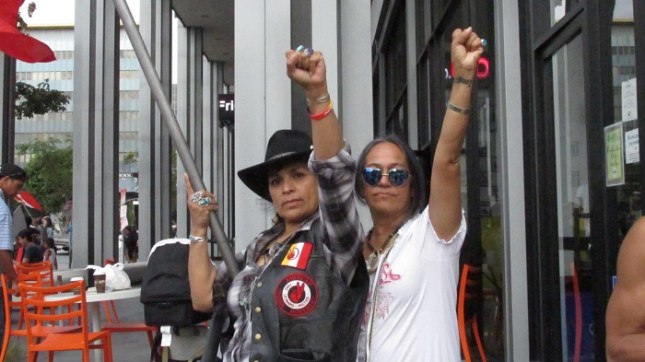
Lydia Ponce, of AIM SoCal, (right) posing with her sister.

Lydia Ponce, of AIM SoCal, (right) posing with her sister.

I spoke to Lydia Ponce of the American Indian Movement (AIM), Southern California. She talked about the multiple incidents where police have used force against the protesters at Standing Rock. She also pointed out that the DAPL is just the latest episode in this country’s long history of allowing big business to exploit land and resources at the expense of native people. It’s actually been going on since the US was founded. Is it ever going to stop?

If you want to support the Indian communities that are fighting the DAPL, contact your elected officials now. Let Congress and the President know that we can’t afford the risks this pipeline poses, and we can’t afford to let oil companies continue to poison our water and our skies.

Click the link below to find out how to contact your elected officials.

Find Your Elected Officials

dapl-50-indian-land-a

Manufacturing the Facts

dsc02694

At a hearing last week, the City Planning Commission gave a green light to the proposed Ivar Gardens Hotel, which is planned for the intersection of Sunset and Cahuenga. But like a lot of projects planned for Hollywood in recent years, it wasn’t a smooth path to approval.

The hearing room was crowded with people. Most of those who were there to speak about the hotel were against, but there were also those who wanted to support it. A representative of the Central Hollywood Neighborhood Council gave it a thumbs up, and a woman from the Hollywood Chamber of Commerce went through the usual spiel about how the hotel will bring jobs and revenue.

Let me say up front, I can see good reasons for making something happen at the corner of Sunset and Cahuenga. The Jack in the Box that ‘s been sitting there for years isn’t exactly an architectural jewel. Sure, the block is underutilized. Could it be a good place for a hotel? Maybe. But a twenty one story hotel? At one of the busiest intersections in the city? I’m not so sure that’s a good idea. Still, I should try to keep an open mind. I should think about the possible benefits. And I should trust that the City of Los Angeles would only approve such a project after the most rigorous review. I should have faith that the City would never approve such a project unless it was absolutely certain that the positive would outweigh the negative.

Yeah, right.

Before I start talking about the Department of City Planning, let me say that I believe that most of the folks who work there are smart and capable. In most of my dealings with them I’ve been impressed by how friendly and helpful they are. But I also believe the culture at the DCP has been warped by outside pressures, and I often get the impression that the state-mandated environmental review process is seen as a pointless waste of time. The documents that are supposed to assess the pros and cons of a project often seem like they’ve been slapped together as quickly as possible. In some cases the data is presented in misleading ways, and in other cases it’s clearly wrong.

Like with this hotel. To begin with, a project of this size really needs the highest level of environmental review, in other words, an Environmental Impact Report (EIR). But the folks at the DCP disagreed, and they went ahead with a much lower level of review, a Mitigated Negative Declaration (MND). By making this choice they’re basically saying that all of the impacts caused by this project can be mitigated to the point where they’re insignificant. Whether or not that’s true is not important to the City. What’s important here is that the MND is much easier to prepare and makes the approval process much faster.

So let’s get back to the hearing. Like I said, there were a few people who supported the project, but a solid majority came out against it, and the speakers represented a wide variety of interests. Many of them belonged to various unions, and they raised a number of issues, but the biggest one was jobs. They couldn’t believe the City was going to approve this project without any requirement for local hire. A woman representing the Los Angeles Film School came to the mike to say they were concerned about impacts during the construction phase. The LAFS is right across the street from the site, and their programs could be severely affected by the project, but apparently the developer has shown little interest in meeting to discuss these issues so far. A number of people expressed concern over increased traffic from the hotel. One group talked about the importance of properly assessing hazardous wastes at the site. Others asked why the City was ready to hand the developer entitlements worth millions, while the developer was offering a pathetically small package of benefits to the community. And yes, the Commission was asked why an MND was being used for a project that clearly required an EIR.

That’s what I wanted to know. And I also wanted to know why the MND being considered was such an inaccurate, dishonest piece of work. I know that’s a strong statement. But let’s take a look together.

The MND supposedly assesses greenhouse gas (GHG) emissions produced by the project. Honestly, I think the numbers are questionable, and the reductions promised by mitigation measures are pretty optimistic. There’s a lot of talk about building clean, green structures these days, but environmentalists are starting to realize that developers don’t always deliver what they promise. Still, let’s pretend the GHG numbers are accurate. The MND offers a table to show how small the impacts are.

sh-ghg

In assessing the production of CO2 emissions, the bottom line says the “project net total” will be 1,921.34 metric tons per year (MTY). But what it should actually say is “project net total increase”. If you look at the table carefully, you can see that the actual total is 3,102.31 MTY. They came up with the 1,921.34 figure by subtracting the estimated emissions produced by the existing fast food restaurant. In reality, the proposed hotel will be spewing out CO2 at a rate of 3,102.31 MTY, or over two and a half times what the site produces now. At a time when the state is struggling to reduce greenhouse gas emissions, and traffic in LA is getting steadily worse, can the DCP really claim that this is not a significant impact?

Under Public Services the MND talks about police protection. Now, the LAPD has been pretty up front in admitting that it’s struggling to deal with increases in crime across the city. The MND includes a table showing that crime has been steadily rising in Hollywood since 2013. In light of the fact that the LAPD has said they don’t have enough staff to deal with current levels of crime, how can the DCP claim this hotel, along with a number of other projects under construction in Hollywood, won’t put an even greater strain on law enforcement? In addition to the hotel’s security lighting and secure parking facilities, the MND claims that, “the continuous visible and non-visible presence of guests staying at the hotel at all times of the day would provide a sense of security during evening and early morning hours.” Actually, there are already plenty of people on the street in this area, and it doesn’t seem to be doing much to discourage crime.

To demonstrate how little the DCP cares about facts, under Population and Housing they say, “The Hollywood Community Plan (HCP) projected a 2010 population of approximately 219,000 persons….” This is true. The HCP did make that projection. What the MND doesn’t say is that the Plan was written back in the 1980s, and that according to the US Census, Hollywood’s actual population in 2010 was 198,228, about 20,000 people less than the figure they reference. The DCP surely knows that the projection was mistaken, because a judge threw out their HCP Update in 2011, largely because the population figures were wildly off base.

One of the biggest problems with the MND is its cavalier approach to cumulative impacts. This project is just one of more than sixty planned for the Hollywood area, but I haven’t seen a single environmental document come out of the DCP in the last five years that sees any significant cumulative impacts. The DCP always inserts endless bureaucratic double-speak citing regional planning reports and state guidelines. And they always find ways to ignore anyone who produces real data to call their conclusions into question. CalTrans has made numerous attempts to get the DCP to do a serious analysis of traffic impacts from all these projects. The DCP’s response is to pretend that CalTrans doesn’t exist.

I’ve saved the best for last, because it’s such a classic example of the City’s shameless dishonesty. Under Transportation/Traffic, a study included in the MND states that PM rush hour traffic at the intersections of Cahuenga/DeLongpre, Cahuenga/Sunset and Cahuenga/Hollywood flows at Level of Service A, in other words that there’s no congestion at all. Here’s a table from the MND.

sh-traffic-pm

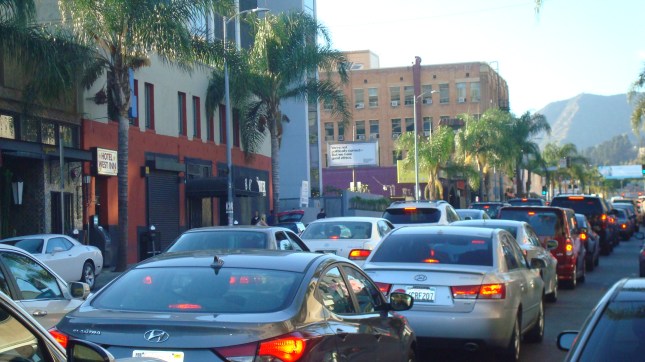
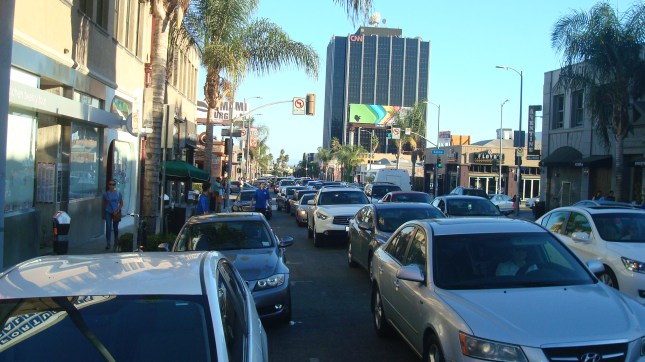
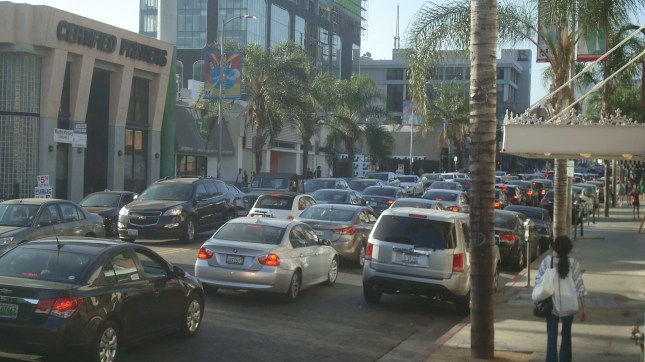
This is so absurd it’s laughable. Anyone who’s travelled north on Cahuenga during evening rush hour knows it’s a parking lot. And in case you don’t live in the area, here are a few photos of what traffic really looks like on Cahuenga after working hours are over.

Rush hour on Cahuenga, July 2014.

Rush hour on Cahuenga, July 2014.

Rush hour on Cahuenga, same day as above.

Rush hour on Cahuenga, same day as above.

Rush hour on Cahuenga, July 2016.

Rush hour on Cahuenga, July 2016.

Rush hour on Cahuenga, same day as above.

Rush hour on Cahuenga, same day as above.

A lot of the people who spoke at the CPC hearing complained that traffic was bad enough and that this project would only make things worse. Knowing that this was a hot topic, Commission President David Ambroz realized he had to do something to prop up the MND’s ridiculous claim that rush hour traffic flowed smoothly. So he called on a guy from the DCP to get up and talk about the traffic study. And this guy rambled on for a few minutes about how the analysis was done in accordance with LA Department of Transportation standards, and that LADOT had approved the analysis, and that any variation may have been due to the fact that counts were taken during a holiday week. In other words, he didn’t claim that the traffic study actually reflected reality. Just that the people who compiled it followed the rules.

But it gets better. At the hearing, Commission President Ambroz mentioned that he lives in Hollywood, and that he’s familiar with the site for the proposed hotel, which means that he must know how bad the traffic is on Cahuenga at rush hour. And that means he also knows that the traffic report in the MND is substantially incorrect. But of course, he would never acknowledge that, because then he’d have to ask for the report to be done again, and done correctly. Instead, Ambroz sat there, somehow keeping a straight face, while the bureaucrat from the DCP went through his routine, trying to legitimize a traffic study that most of the people in the room knew was rubbish.

And then the Commission voted to adopt the MND and send the project on to the City Council. Interestingly, some of the Commissioners did vote no, not because of the MND, but because they felt the community benefits being offered by the developer were totally inadequate. This in spite of the fact that a last minute deal was cobbled together where the developer committed to 50% local hire.

So is the hotel a done deal? Not quite yet. It still has to go before the Planning & Land Use Management Committee (PLUM), and then on to the full City Council. Many of the people in the room were disappointed in the CPC’s decision. Afterwards I wrote to Elle Farmer of Unite Here, a labor group that spoke against the project, to ask how they felt about the outcome. Here’s a quote from their response.

We are still in this, and we still oppose the project as it currently stands, with no real community benefits, and no care for the environmental protection process.

And Unite Here is not satisfied with the last minute promise of local hire, as they feel it’s impossible to enforce.

I also asked for a statement from the Los Angeles Film School. Here’s an excerpt.

We support a vibrant Hollywood community and believe we played a major role in kickstarting the current renaissance. We are also the largest and most impacted stakeholder of this proposed project. Although the Commission did not grant a continuance, representatives for the developer did convey their willingness to sit down with us and discuss the project and its impacts to our campus after the hearing. We look forward to that opportunity.

And what am I looking forward to? The day when the DCP can put together an MND that actually reflects reality. And in the process shows a willingness to put the interests of the community ahead the interests of developers.

Fire Season

Fire 05 Red Sun

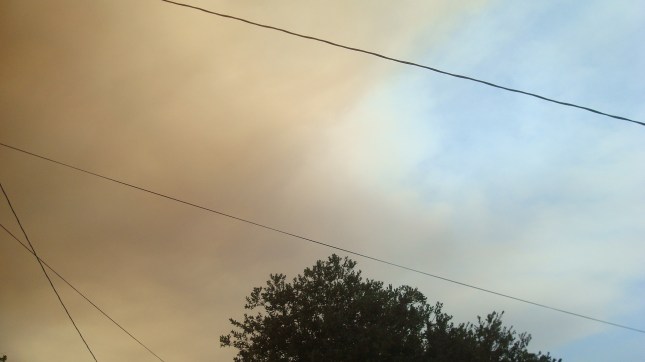
Saturday morning I went outside while it was still dark. As I walked past an overhead light I looked up and saw a stream of tiny particles drifting down to the ground. It was ash. I knew there was a fire somewhere.

It wasn’t until later in the day that I found out the fire was in Santa Clarita. I was in Burbank, and looking toward the north you could see a massive, dark, grey cloud spreading across the sky.

A view of the sky over Burbank on Saturday.

A view of the sky over Burbank on Saturday.

The older I get, the more uneasy I feel during the fire season. I’m not worried about my own safety. The most destructive fires generally happen far away from the center of the city. What really scares me is knowing that thousands of acres and millions of trees are going up in smoke. Tune in to the news and you can see raging infernos sweeping across California’s hills and mountains. Sometimes it feels like the whole state is on fire.

I just mentioned how uneasy I felt during the fire season, but I should have said “seasons”. In California there are actually two periods when fires are likely to burn. The summer season, when high temperatures dry out our forests, and the Santa Ana season, when hot winds drive fast-burning blazes that generally threaten coastal areas. In recent years, both of these periods have grown longer, and the fires have grown larger. See this article from KCET’s web site for more details.

California Has Two Fire Seasons, and Climate Change Will Make Both Worse

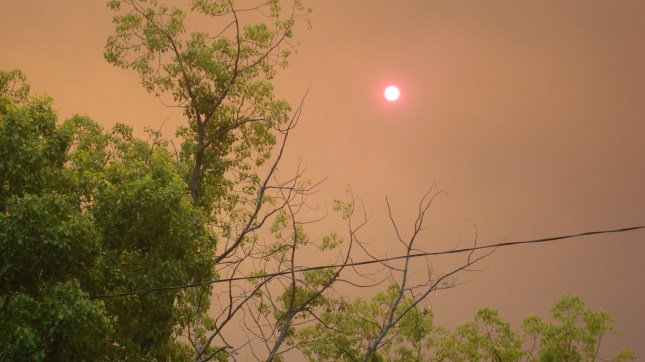
The sun seen through smoke from the Santa Clarita fire.

The sun seen through smoke from the Santa Clarita fire.

There’s a growing body of evidence that suggests that the hotter, drier weather we’ve been experiencing for years now isn’t just a drought, but that the climate in the Western US is changing. Snow packs have been declining for decades, and warmer temperatures are causing the snow to melt earlier. This is one of the reasons that our summer fire season has grown longer and more destructive.

If climate change is a factor in causing more large scale fires, this is doubly disturbing, because these fires also release huge amounts of carbon into the air. More carbon in the atmosphere accelerates climate change, which scientists believe will lead to even hotter, drier weather, which will lead to more intense and more destructive fires. This article from Berkeley News summarizes the findings of a study conducted by the National Park Service and UC Berkeley.

Wildfires Emit More Greenhouse Gases than Assumed

Watching thick, dark smoke billow across the sky on Saturday was scary. But what’s even scarier is what will happen in the years to come if the scientists are right. The evidence has been mounting for years that our addiction to fossil fuels will cause irreversible damage to the planet. We’ve made some progress on reducing greenhouse gas emissions in California, but we need to do a lot more. Otherwise our skies, and our future, will continue to grow darker.

A view of the sky from Riverside Dr. on Saturday.

A view of the sky from Riverside Dr. on Saturday.

Keeping the River Clean

LAR 05 Riv Trees Fwy a

Yesterday I got up earlier than I usually do on a Saturday. It took some effort, but by nine o’ clock I’d made it to Marsh Park so I could take part in the annual LA River clean-up event organized by Friends of the Los Angeles River (FoLAR).

This stretch of the river is bordered by a mix of older stucco homes and industrial buildings. Marsh Park seems to wind its way through the neighborhood, I’m assuming because it was planned to take advantage of unused open space. It’s nicely landscaped, and has a cool play area for kids.

The entrance to Marsh Park.

The entrance to Marsh Park.

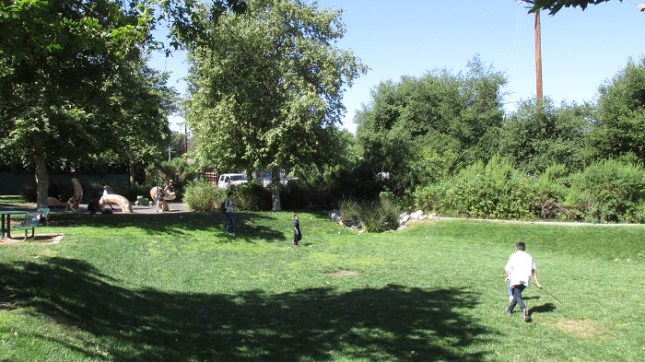
A grassy expanse in the park.

A grassy expanse in the park.

There's a cool play area for kids.

There’s a cool play area for kids.

These yellow flowers caught my eye.

These yellow flowers caught my eye.

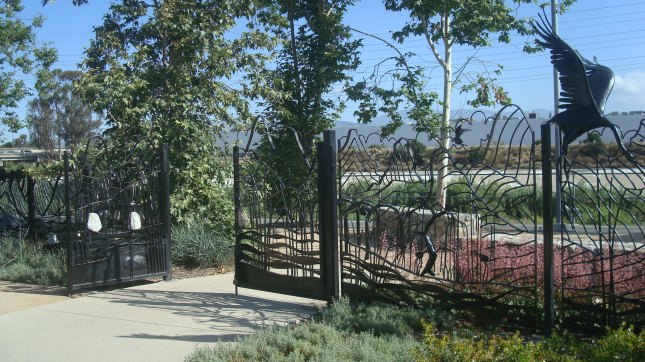
The gate that leads to the river.

The gate that leads to the river.

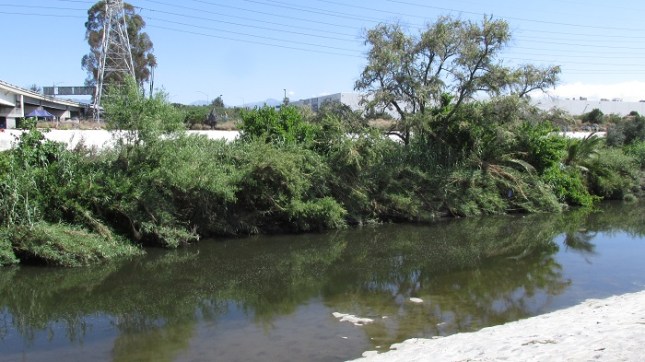
A shot of the river with the freeway in the background.

A shot of the river with the freeway in the background.

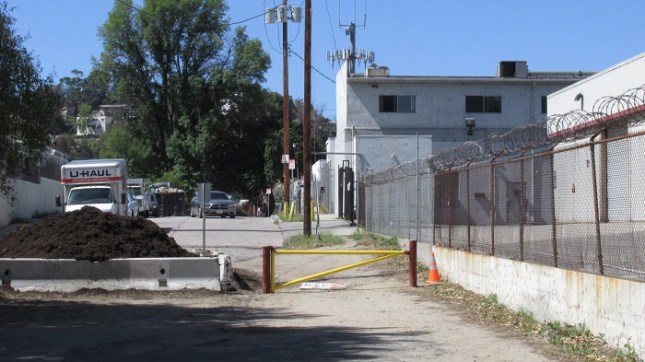
You'll find a mix of residential and industrial on the streets adjacent to the river.

You’ll find a mix of residential and industrial on the streets adjacent to the river.

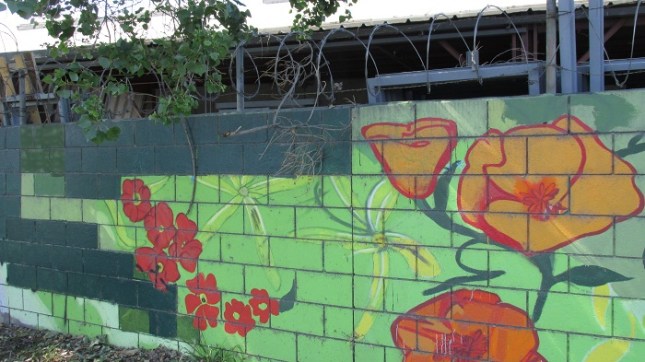
An artist's effort to beautify a wall.

An artist’s effort to beautify a wall.

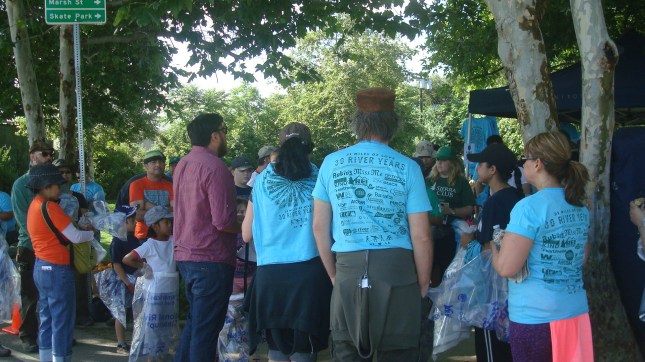
Dozens of people had made it there ahead of me. I got a pair of gloves and a trash bag, and after a brief orientation they set us loose on the river. The guy who gave us the ground rules said that twenty seven years ago, when FoLAR started doing these annual clean-ups, they came across all kinds of things in the river bed. In the early days they’d be hauling out mattresses, shopping carts, and even cars. These days, he went on to say, it was mostly a matter of picking up plastic bags.

A quick orientation before we got started.

A quick orientation before we got started.

Heading out to tackle the trash.

Heading out to tackle the trash.

Exploring the river bed.

Exploring the river bed.

Looking high and low for trash.

Looking high and low for trash.

When the bags were full, we left them along the bike path.

When the bags were full, we left them along the bike path.

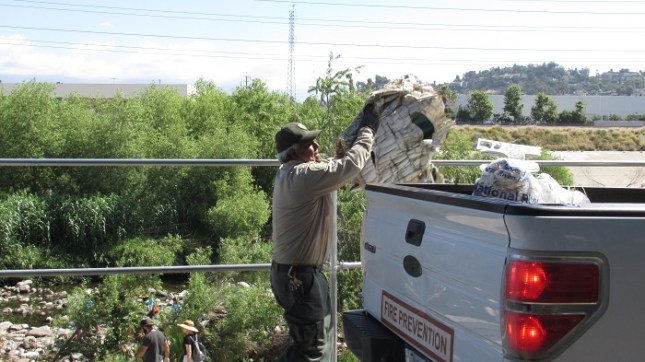
And this guy threw them in the back of a truck.

And this guy threw them in the back of a truck.

FoLAR has been taking care of this long-neglected natural treasure for thirty years. Unlike the Los Angeles River Revitalization Corporation, a latecomer with a pro-development agenda, FoLAR’s members have been trying for decades to realize the river’s tremendous potential as a public resource. Back when most of us were making jokes about this massive concrete channel that wound its way through the landscape, Lewis MacAdams and his cohorts saw what the river had once been and could be again. They’ve been working diligently since the eighties to protect and restore the LA River, and to educate the rest of us about its past and possible future.

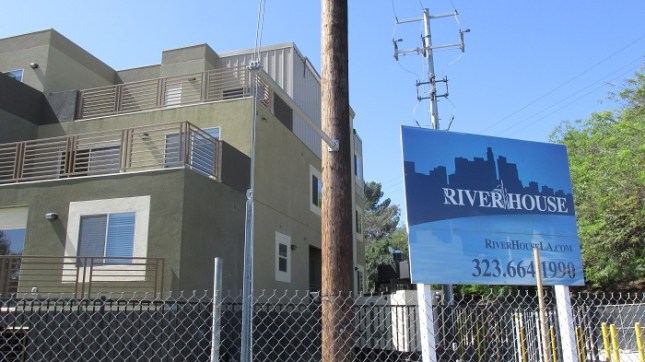
Developers have realized that there's money to be made by building along the banks.

Developers have realized that there’s money to be made by building along the banks.

One of the river's current residents.

One of the river’s current residents.

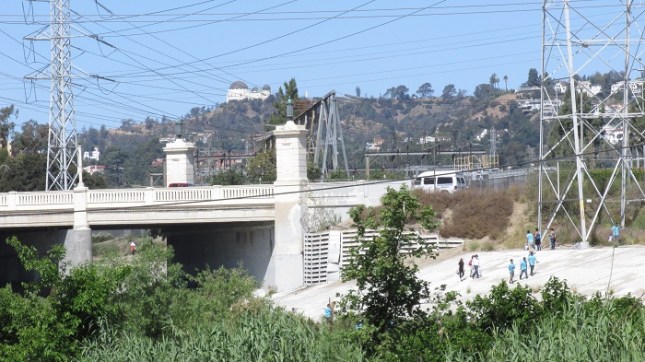
The Griffith Observatory was visible off in the distance.

The Griffith Observatory was visible off in the distance.

Standing under the freeway you could hear the steady din of the cars above.

Standing under the freeway you could hear the steady din of the cars above.

I spent a while collecting trash, and then I wandered off to take pictures. I’d never walked along the river bed before. It was pretty cool. I don’t know about you, but for most of my life I barely noticed the LA River. Encased in concete, bounded by industrial parks and rail lines, running beneath dozens of bridges, it’s as if the river has been buried by the city. We’re only starting to dig it out now. It will be many years before we uncover its real potential.

I’m so glad I made the effort to be there for the clean-up. It was a great day. And it’s just one of many events that FoLAR holds throughout the year. Check out their web site for more info.

FoLAR

LAR 90 Riv Path

You Can’t Drink Paper Water

UWMP Paper Water b

Why should you care what the DWP’s 2015 Urban Water Management Plan says?

You should care because city officials will use the UWMP when making decisions about future development in LA. They will be relying on the plan’s absurdly optimistic projections regarding future water resources to justify approving projects that could burden our dwindling water supply with unsustainable demands.

But first, let’s put this discussion in the right context. People talk about how we’re in the fourth year of the drought, and the assumption is that even if things are really bad now, eventually the drought will end and we’ll be back to normal. This is a big mistake. Everybody has their fingers crossed, hoping that this year’s heavy precipitation in the Sierras will restore the snowpack and we’ll be okay again. Actually, the snowpacks have been declining for decades, and there’s no reason to believe that trend will reverse itself in the near future. If you’re skeptical about this claim, check out these links.

Snowpack in California’s Sierra Nevada Lowest in 500 Years from NY Times

Declining Snowpacks May Cut Many Nations’ Water from Columbia University

This isn’t just a matter of toughing it out through a few dry years. For the foreseeable future, we’re going to have to use a lot less water than we’re used to. And this is not just a matter of taking shorter showers or getting rid of your lawn. We have to change the way we think about water in LA.

But in spite of the fact that we’re playing a whole new game, the people who run this city are determined to cling to the same old rules. Los Angeles was built largely on real estate speculation. For decades developers kept pushing the City’s boundaries outward, and this was only possible because the people who ran LA kept extending the reach of our water infrastructure. Local groundwater only supplies about 10% to 15% of what we need. The rest comes from sources far beyond the city limits.

We’ve gotten so used to living beyond our means that we still haven’t come to terms with the reality of our shrinking water resources. And in spite of all the rhetoric from City Hall about conservation, when it comes to planning for growth, our elected officials are determined to deliver everything the developers ask for.

So what’s wrong with the 2015 UWMP? In broad terms it does a good job of outlining the challenges that the City faces. But when we get down to specifics, the authors manage to avoid spelling out the severity of the situation. And in talking about the future of our water resources, things get very vague.

You want some examples?

The plan does talk about the fact that we’ll be getting much less water from the LA Aqueduct than we have in the past. In order to mitigate severe environmental impacts to the Owens Valley and Mono Lake, the City has agreed to reduce the amount it imports from the area. In the 70s and 80s, the Aqueduct generally brought us over 400,000 acre feet per year (AFY). That number started to drop in the 90s, and while some years have been better than others, the average has continued to decline, especially in the last four years. In 2014/2015 we received only 53,500 AFY. Less than 14% of what we were getting thirty years ago. This is a record low.

Graph showing LA Aqueduct deliveries from the 2015 UWMP.

Graph showing LA Aqueduct deliveries from the 2015 UWMP.

There’s another figure I’d like to cite in connection with the LA Aqueduct, and that’s the amount of water it delivered to us from April through September 2015.

Zero.

Last year the LA Aqueduct was closed for the first time in its history. A temporary dam was put in place so that the City of LA could fulfill its obligations to maintain the Owens Valley and Mono Lake. During this period, we received no water from the aqueduct. I can’t claim to have read the entire UWMP, but in the reading I have done I didn’t come across any references to this closure. Maybe that’s because it’s such a stark symbolic reminder of the gravity of our situation.

So how are we going to replace the water we used to get from the Aqueduct? Of course, there’s the usual talk about recycling and stormwater capture, both of which are certainly worthwhile, but it will be years before they start making a serious difference with regard to our water supply. And then there’s this section from the Executive Summary under the heading Water Transfers.

LADWP plans on acquiring water through transfers of up to 40,000 AFY to replace a portion of the Los Angeles Aqueduct (LAA) water used for environmental enhancements in the eastern Sierra Nevada. The City would purchase water when available and economically beneficial for storage or delivery to LADWP’s transmission and distribution system.

Wow. That’s great. It’s so simple. We’ll can just suck up another 40,000 AFY through water transfers from the Metropolitan Water District (MWD).  But the problem here is that they’re assuming MWD will reliably have access to that much water.  The UWMP mentions transfers of water originally intended for agriculture in the Central Valley.  What?  Have they seen the photos of landscapes collapsing due to overpumping?  In order to justify the claim that we can rely on these water transfers, the UWMP bases its calculations on the historic average of water supplies going back to the 20s.  They offer a chart titled “MWD Forecast Supplies of Groundwater Storage and Transfers in 2040, Average Year (1922 – 2004 Hydrology) “.  In other words, they’re basing their calculations on conditions that existed well before the current crisis began.  And they’re using those figures to project water supplies 25 years into the future.

But what about groundwater? Right now the supplies we get from aquifers within city limits provide between 10% and 15% of what we use annually. But in the Executive Summary under the heading Water Supply Reliability the DWP offers this startling prediction.

The exhibits show that the City’s locally-developed supplies will increase from 14 percent to 49 percent in dry years or to 47 percent in average years.

What a relief! Using purified wastewater and captured stormwater we’re going to more than triple our groundwater resources! But wait. It gets even better.

These local supplies are not influenced by variability in hydrology, and will become the cornerstone of LA’s future water supplies.

This is really amazing. Our local supplies are not influenced by variability in hydrology! In other words, the same factors that affect water resources everywhere all over the world will not affect the groundwater in LA. Though they don’t provide much in the way of explanation, it seems that the folks at the DWP have somehow cast a magic spell over the City. No matter how hot it gets or how little it rains, we can rest assured that our aquifers will soon be supplying us with almost half of the water we need.

I wonder if that same magic spell protects us from toxic chemicals. Because most of our groundwater comes from wells in the San Fernando Valley, and about half of those wells are closed right now because of industrial pollution. The DWP does have a plan to build two treatment plants that will purify the water from these sources, but it could be years before they break ground. At this point they don’t even have the funding lined up.

But rather than subjecting you to more of my ranting, let me turn this over to somebody who knows a lot more about this stuff than I do and who does a way better job of breaking it down. DroughtMath is a blog that digs deep into water issues, and you can find a detailed breakdown of the 2015 UWMP there. I recommend starting with this post, which clearly lays out how the DWP uses “paper water” to pretend that they’ll have no problem supplying the City with everything it needs. What is paper water? It’s water that “utilities claim they have access to, but is difficult or impossible to access for various reasons.” But go ahead and check out what DroughtMath has to say on the subject.

LADWP’s Paper Water Leverages on MWD Supplies from DroughtMath

He also gives a good overview of the UWMP and its many flaws in this post.

Thoughts on the 2015 Draft UWMP from DroughtMath

I want to wrap up by saying that in spite of the anger and sarcasm in my tone, I do not see the DWP as the bad guy here. While the agency has had its share of scandals, the men and women who work there mostly do an amazing job of making sure that we almost always get the water we need. When you think about the fact that the DWP serves an area of about 400 square miles, and that we have little in the way of local resources, it’s remarkable that they have built and maintained a system that reliably brings us water for bathing, washing, cooking, and cleaning with few disruptions.

The bad guys are the developers and politicians who refuse to recognize that there are very real limits to our water resources. The bad guys are those people who are so blinded by greed and ego that they don’t want the citizens of LA to know how seriously compromised those resources are. The UWMP may seem like just another boring technical report, but it has huge consequences for the City’s future growth.

I am not saying we should stop growth. I’m saying we need to have a realistic picture of how much growth we can support. We can only make decisions about future development if we have an accurate picture of our water resources. The draft 2015 UWMP does not provide that.

If you’re as concerned as I am, I urge you to make your voice heard. The first step is to take a look at the UWMP. I know, I know, it’s a lengthy, intricate technical document and probably nobody’s idea of a good read. But you don’t have to go through the whole thing. Just take a look at the Executive Summary, which provides an overview of the contents and conclusions.

2015 UWMP at LADWP

The first public hearing is already past, but there’s a second one on March 9 from 6 pm to 8 pm at the Sepulveda Garden Center, 16633 Magnolia Blvd., in Encino.

If you can’t make it to the meeting, you can still submit comments by e-mail. The deadline is March 16. Here’s the address.

uwmp@ladwp.com

If you’re concerned about development, or if you just care about the city you live in, please let the DWP know your feelings on this issue. If the DWP Board adopts the current version of the 2015 UWMP, it will be one more instance of our city officials placing the needs of developers with deep pockets over the needs of the people of Los Angeles.

Developers Hijack Coastal Commission

CCC Web Page 2

You may have already heard about the California Coastal Commission firing its Executive Director, Charles Lester. This is a statewide issue, and beyond the scope of what I usually cover in this blog, but the CCC’s actions will have direct consequences for LA’s coastline. On top of that, it’s directly related to the threat this city faces from developers who want to gut our laws and public agencies so they can cash in.

On Wednesday the CCC board voted seven to five to fire Lester. The move is widely seen as a coup by the developer-friendly commissioners, and I have to say I totally agree. The commissioners who voted to get rid of Lester claim that this is all about performance, but the charges they’ve made publicly aren’t convincing in the least. Their criticisms of Lester’s management skills were not only disputed by the five members who voted to retain him, but also by numerous people who’ve worked with him. The seven who led the coup against the Director refused to present their complaints at Wednesday’s hearing, claiming that they were protecting Lester’s privacy. This is rubbish. Lester chose to have a public hearing to dispute his dismissal. The Commission’s legal counsel even advised them that they were free to discuss anything relating to his performance at the hearing. They chose not to because they knew their claims were bogus.

The California coastline is one of the state’s major resources. Precisely because it’s breathtakingly beautiful and largely unspoiled, developers see a huge opportunity. With the CCC now controlled by developer puppets, there are billions of dollars to be made, and you can rest assured that investors will not be shy about carving up our shoreline.

It’s real simple. Lester should stay. The seven who voted to fire him should step down. But that’s not likely to happen unless there’s a massive outcry from the public, and that’s where you come in. If you care about California’s coastline, you need to take action. You can start by sending Governor Brown an e-mail telling him how you feel about this.

Governor Brown

Next, contact your state assembly and senate reps and give them a piece of your mind, too. If you don’t know who your reps are, you can find them by clicking on the link below.

Find Your California Representative

For a detailed account of the whole mess, check out this story in the Times.

Firing of Charles Lester Leaves Deep Divisions from LA Times

Numerous individuals and organizations have spoken out about this travesty. You can read the statements from the Sierra Club and Heal the Bay below.

Sierra Club Statement

Lester Ousted as Chief of Coastal Commission

Again, if you care about preserving the coastline, you need to make your voice heard. The only thing that will turn this situation around is a firestorm of public protest. Let’s turn up the heat on the folks in Sacramento.