Wanted: Affordable Housing

DSC02030

I came across this article on Curbed LA, and thought it was pretty interesting. Three people who recently moved from San Francisco to LA explain their reasons for making the change. All three cite skyrocketing rents in the Bay Area. The thing that struck me was that the trends they describe in the San Francisco housing market are happening here, too. Real estate firms are buying existing buildings and jacking up rates. Developers are working furiously to create new high-end buildings. And if you can’t afford to pay the exorbitant prices, tough luck.

Our elected officials aren’t helping the situation. While they’ve made some small moves to create affordable housing, their efforts are shamefully inadequate. Of course, what motivation do they have to protect renters when they’re getting tons of campaign cash from developers who’ve put big money in high-end housing?

Anyway, here’s the article. If things keep going this way, these same people will be forced to move out of LA in a few years.

San Franciscans Explain Why They Moved to LA

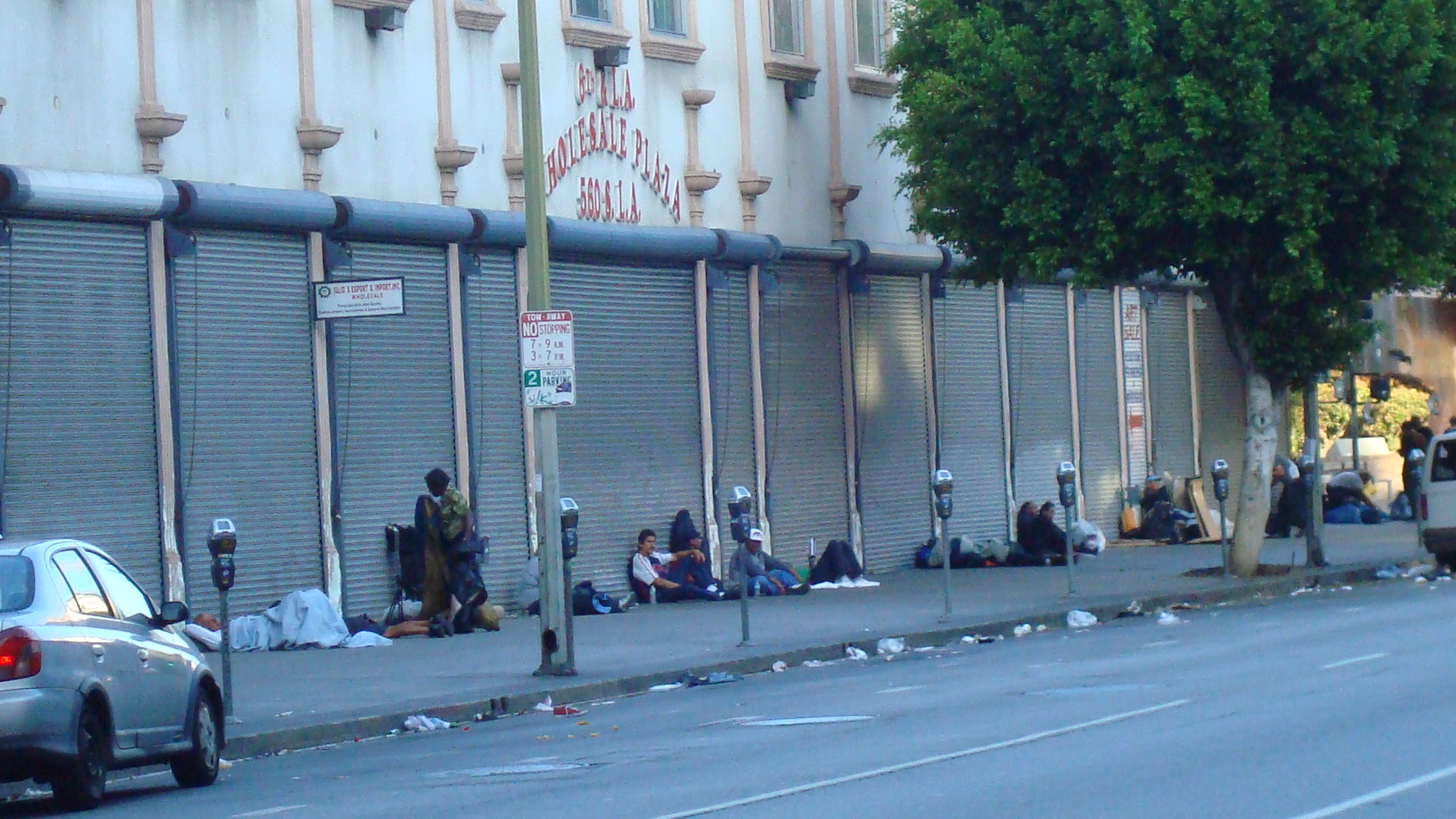
Don’t worry. Garcetti has a plan for those of us who can’t afford the skyrocketing rents. See the picture below for a preview.

010

The Neighborhood Is Changing, and Not for the Better

The main gate that used to lead to the Cat & Fiddle.

The main gate that used to lead to the Cat & Fiddle.

I was with with my brother and my nephew last week when we decided to go to the Cat & Fiddle for dinner. What a shock to find out that they were closing the place down. Apparently the owners are looking for a new location, but at this point they haven’t found anything. When I dropped in a couple days ago, the restaurant was almost cleaned out. I’ve had so many good times at the Cat & Fiddle, hung out there with so many good friends. It was strange to be standing there, surrounded by boxes and furniture. Nobody sitting in the booths. Nobody standing at the bar. No music. No conversation. Just silence.

The silent courtyard.

The silent courtyard.

The empty booths.

The empty booths.

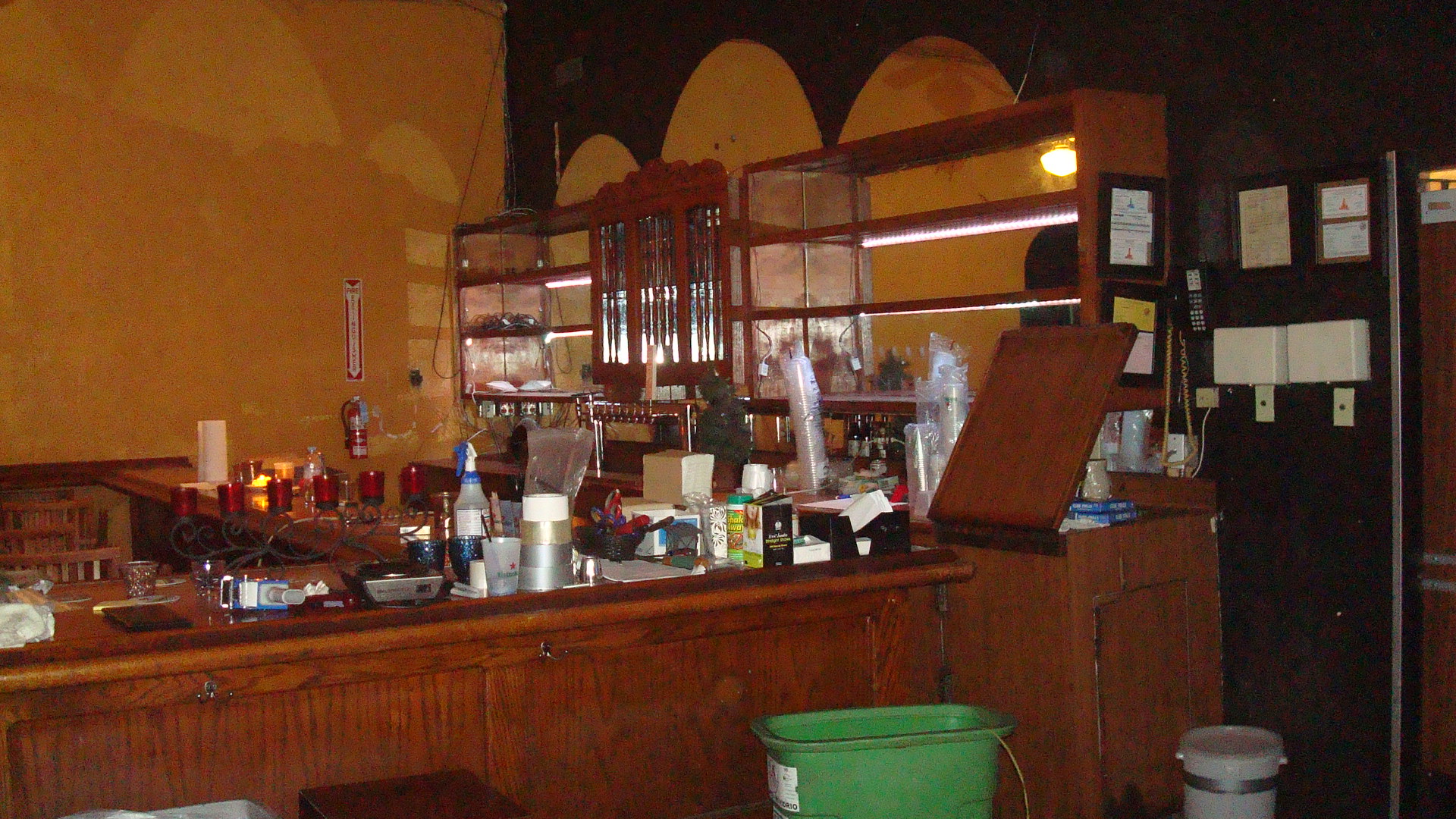
The deserted bar.

The deserted bar.

According to the LA Weekly, the building was purchased by its current owners, an investment group headed by Jesse Shannon, in 2005. When the Cat & Fiddle’s lease was up, apparently Shannon wouldn’t consider renewing it. At this point he has not revealed who the new tenant will be. No doubt one more upscale bar/club/restaurant of the type that’s been spreading like a virus through Hollywood for the past decade. Shannon does say that his group plans to spend millions to renovate the building.

This is good news. I hope he’s serious. The building is a beautiful example of the Spanish Colonial Revival style, with some very cool Churrigueresque decoration. I hope the money Shannon spends is matched by a real desire to restore the building, rather than to make it a glitzy magnet for club-hopping kids.

A few links. The first is to the story in the LA Weekly. Next, a link to a Facebook page that was created in the hope that the Cat & Fiddle could stay at its old location. It has some photos that show how full of life the place was. And last, an article on LA Eater in which Shannon talks about the reasons for not renewing the restaurant’s lease.

Farewell to the Cat & Fiddle

Let’s Save the Cat & Fiddle

Why the Cat & Fiddle Had to Go

I look forward to checking out the next incarnation of the Cat & Fiddle whenever it finds a new location, but I’m really sad to see it leave the building on Sunset. Sad because it was such a great place to hang out. And also sad because it’s just the latest casualty of the gentrification craze that’s sweeping through LA. The new tenant may have an amazing menu and a fabulous bar, but I seriously doubt it will have one tenth of the character that the Cat & Fiddle had.

A photo of the Cat & Fiddle from September of this year.

A photo of the Cat & Fiddle from September of this year.

The Next Step

A recent protest at  the corner of Hollywood and Highland.

A recent protest at the corner of Hollywood and Highland.

Nationwide demonstrations against the use of deadly force by police offers have been going on for months. Protests erupted again after grand juries decided not to file indictments in both the Michael Brown and Eric Garner shootings. If you haven’t seen them on the streets, you’ve seen them in the news. There’s widespread outrage over the fact that police continue to use deadly force against unarmed men, and that our legal system seems incapable of holding anyone accountable.

It’s not just in Ferguson and New York that unarmed men are dying at the hands of the police. The LAPD has still not offered a concrete reason for stopping Ezell Ford as he was walking down the street near 65th and Broadway. They claim he reached for an officer’s gun before he was fatally shot. In Echo Park, David Martinez went out to buy some tacos for his family, and used his cell phone to call 911 when he heard gunshots. When police arrived on the scene, they shot Martinez himself, and months later he died from his injuries. This article from the Daily News offers details on recent shootings by the LAPD, and the resulting protests by angry citizens.

Shooting of Ezell Ford Protested at LAPD Headquarters

Protests are good for expressing outrage and drawing attention to an issue, but protests will only go so far. At some point you have to start thinking about concrete measures to bring about change. That’s exactly what the South Central Neighborhood Council has done. On December 16, the SCNC voted to pass the following resolution….

South Central Neighborhood Council resolves to request the Los Angeles City Council District nine, Councilmember Curren Price, to introduce the following resolution before the Los Angeles City Council chamber:

Whereas, accountability for the Los Angeles Police Department has not been achieved through the establishment of the Police Commmission, an appointed review board with no authority to discipline police officers;

And whereas, accountability for the Los Angeles Police Department has not been achieved through the establishment of the Federal Consent Decree;

And whereas, abuses of power by the Los Angeles Police Department continue to violate the Human and Civil Rights of the residents of Los Angeles;

And whereas, democracy and community control is the only way to ensure accountability for public institutions and to promote the general welfare;

Be it therefore resolved that the South Central Neighborhood Council calls upon Councilman Curren Price to introduce a resolution to the Los Angeles City Council to place on the ballot an amendment to the Los Angeles City Charter establishing democratic, community control over the Los Angeles Police Department through an all-elected, all-civilian, police control board with full authority over the department in all aspects at all levels.

They’re absolutely right. The LA Police Commisson has not been effective. They can hold hearings and talk about solutions, but they have no real power to change anything. We need an elected body that has the authority to effect change within the LAPD. This isn’t just a matter of prosecuting officers involved in shootings. We need to change the culture within the Department. We need elected representatives who will insist on accountability.

The SCNC deserves credit for taking this action. I hope Councilmember Price, and the entire City Council, take this up in the near future. And if they don’t, there are other ways to push this forward. I don’t think we’d have any trouble getting enough signatures to put it on the ballot.

Another One Bites the Dust

Oswald Bartlett House, Los Feliz

Oswald Bartlett House, Los Feliz

Got this in my e-mail this morning. More bad new for those who care about LA’s history.

Press Advisory, Immediate Release

DEVELOPER SET TO DEMO LA’S CULTURAL HISTORY

Reprieve Denied: Historic Oswald Bartlett House Goes Down Today

WHAT: Demolition of the 100-year-old Oswald Bartlett House is set to begin today and members of the community are expected to be present to document and bear witness to the house’s undeserved and sad destruction in the middle of the season when Jews and Christians celebrate – instead of destroy – their history and traditions.

WHEN: Demolition work is set to begin at 7 am, today, Thursday, December 18, 2014.

WHERE: 1829 N. Kenmore Ave., Los Angeles – the Los Feliz neighborhood

BACKGROUND: The Oswald Bartlett House has been recognized by preservationists as a pristine and rare example of architect A.C. Martin’s work. Martin, one of Los Angeles’ leading architects in the first half of the 20th century, designed LA City Hall and a half-dozen other notable structures now designated as landmarks. The Bartlett House was designed by Martin for a friend and is a rare example of Martin’s youthful work in domestic design; his more lasting reputation was founded on his design of major public and religious buildings. Despite the recognition by experts of the cultural and historic significance of the Bartlett House, City Hall turned a deaf ear to the experts (including the LA Conservancy) and community’s appeals to spare the house from demolition to make way for a six-unit townhome project whose building entitlements were gained through misrepresentations about the historic nature of the Bartlett House. Last Wednesday the City Council gave the developer, a business ally of one of Mayor Garcetti’s top campaign fundraisers, the green-light to proceed with demolition. Today the sledgehammers and bobcats will start taking the house down.

For Additional Information Contact:
John Schwada, MediaFix Associates
john.schwada@gmail.com
310 709-0056
310 597-9345 w

So one more historic building bites the dust. Garcetti seems determined to let developers have their way, no matter the cost to the city’s cultural heritage. Some of you may remember that the Mole-Richardson building on La Brea was recently demolished, in spite of the fact that it was a classic art deco building by Morgan, Walls and Clements. If you missed that story, here’s a link to a piece on Curbed.

Art Deco Buidling Destroyed

Other historic structures currently being threatened are the Warner Pacific Theatre, the Mosaic Church, and the Chase Bank building at the corner of Sunset and Crescent Heights. But who cares about history, when you can have a shiny, new mixed-use skyscraper?

The photo of the Oswald Bartlett House was taken by Michael Locke, who has spent a fair amount of time documenting the Los Feliz area. To see more of his work, click on the link below.

Michael Locke at Flickr

Too Much Liquor, Not Enough Parking

Hotel at the Corner of Wilcox and Selma being renovated by Mama Shelter

Hotel at the Corner of Wilcox and Selma being renovated by Mama Shelter

Last week I went down to City Hall to attend a hearing. An old hotel at Wilcox and Selma that hasn’t been occupied for years is being renovated with the intention of turning it into a new boutique hotel run by the Mama Shelter chain. I have no problem with them renovating the hotel, and Mama Shelter seems like it might be a good addition to the neighborhood, but one of the variances they were asking for concerned me. Here’s the text from the hearing notice.

Pursuant to LA Municipal Code Section 12.24-W,1, a Conditional Use to permit the sale of a full line of alcoholic beverages for on-site consumption in conjunction with a proposed ground floor restaurant and a rooftop restaurant, with live entertainment.

Before I go any further, let me give you a little background. I like a having a drink as much as the next guy, and maybe even a little more than the next guy. I certainly don’t want to see Hollywood go dry. But for those of you who don’t live in the area, I can tell you that you couldn’t throw a rock down the street without hitting a bar or a club. The place is crawling with them. Some of you may be familiar with the Cahuenga club scene, which has become a major attraction for people who want to party.

This has caused some problems. In fact, the problems are so serious, that the LAPD recently sent a letter to the Chief Zoning Administrator which complained of the “oversaturation of ABC [Alcohol Beverage Control] locations in the area”. Among the problems caused by this high concentration of bars and clubs are “traffic collisons involving pedestrians, driving under the influence, assault with a deadly weapon, robberies, thefts, fights with serious injuries, shootings and rapes”.

You can see the problems are pretty serious. And while Mama Shelter’s reps at the meeting said that their focus is on serving food, not alcohol, the fact that they want a full liquor license, they want to have live entertainment, and they want to stay open til 2:00 am, seems to indicate that they’ll be drawing the party crowd.

There are other issues. A couple of senior citizens attended the meeting. They live in a building near the proposed hotel, and they both said that they’re already having trouble sleeping because of bars and clubs in the area that have live music. Live entertainment on the rooftop is only going to make it even harder for neighborhood residents to get a good night’s sleep. The noise issue was also brought up by a couple other people who attended, one of whom works for a hostel right across the street.

Then there’s the parking. Here’s another item from the hearing notice.

Pursuant to Los Angeles Municipal Code Section 12.27, a zone variance to permit the five (5) required parking spaces to be provided off-site within 750 feet by lease in lieu of covenant as required pursuant to Section 12.26-E.5.

This makes it sound as though the hotel has almost enough on-site parking, and they’re only asking to have five additional spaces located off-site. But during the hearing there was an exchange between the zoning administrator and the project rep, and it sounded like the hotel has no parking at all right now. The rep said they were still looking to sign a deal, but that parking is difficult to come by in Hollywood. Yep. Sure is. And if Mama Shelter opens their hotel without adequate parking for guests and visitors, that’s going to make it way harder for those who live in the neighborhood to park their cars.

It seemed unbelievable that Mama Shelter could be as close to opening as they are and still not have the parking nailed down. So earlier this week I e-mailed the zoning administrator to ask if I’d understood the situation correctly. I still haven’t heard back from him.

One of the project reps said the renovations are almost completed. Apparently they hope to open early next year. You might ask why anybody who had invested so much money in a project would wait until they were almost ready to open before having this hearing. They’re looking for permits to allow them to sell alcohol and have live entertainment, which apparently is a key part of their business model. And whatever the situation is with the parking, right now they don’t have enough to satisfy the City’s requirements.

So why would they go this far down the road without having resolved these key issues? Why would they spend millions of dollars on renovations before they’d even secured the necessary permits? Unless maybe somebody at City Hall told them not to worry about it. That it would all be taken care of.

The comment period has been extended to Wednesday, December 17. If you live in the area and you’re concerned about any of the issues this project raises, you might want to contact May Sirinopwongsagon at the Department of City Planning. Here’s her e-mail.

may.sirinopwongsagon@lacity.org
Paying Attention to the Port

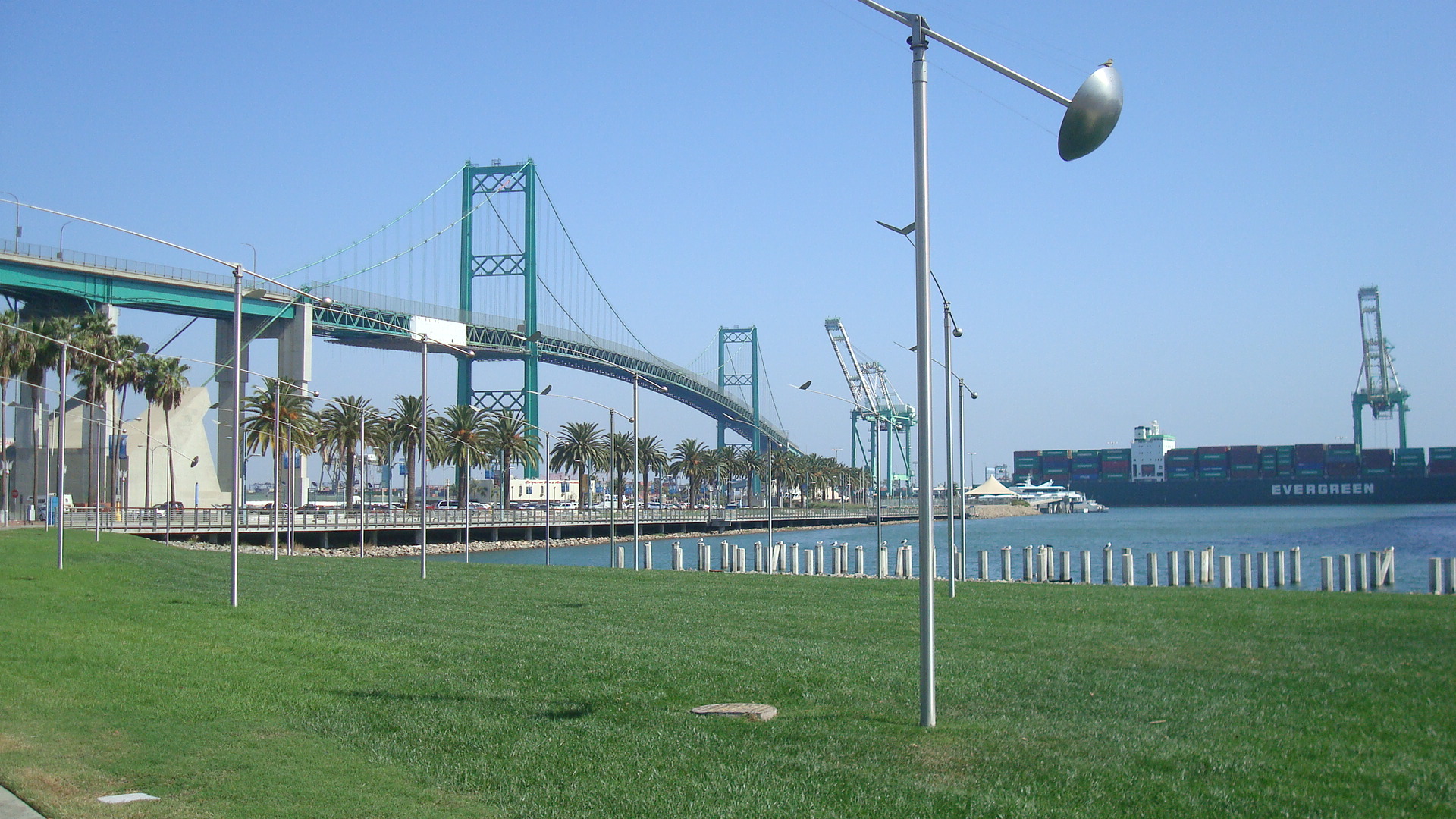
A view of the Vincent Thomas Bridge from Harbor Boulevard.

A view of the Vincent Thomas Bridge from Harbor Boulevard.

Geographically, Los Angeles is a little odd. A map of the city’s boundaries looks kind of like a jigsaw puzzle that somebody forgot to finish. We generally think of it as reaching from Downtown to the beach, the Valley to South LA. But actually there are a handful of smaller cities within that area, including San Fernando, Burbank, West Hollywood and Beverly Hills, that punch some sizable holes in the map. And one of the strangest aspects of the city’s outline is that the boundary stretches a long, thin arm to the south in order to embrace San Pedro and Wilmington, including the Port of Los Angeles.

A park at the water's edge, with the Vincent Thomas Bridge in the background.

A park at the water’s edge, with the Vincent Thomas Bridge in the background.

I imagine that many Angelenos, like me, completely forget that the San Pedro and Wilmington are part of the City of LA. They were annexed by (or consolidated with, depending on which source you consult) Los Angeles in 1909. Around the turn of the century it was becoming increasingly apparent to LA’s business community that the port was an economic powerhouse which would bring tremendous wealth to the region. The City’s leaders courted San Pedro and Wilmington for years, but the two smaller communities were concerned about losing their autonomy. Finally the deal was sealed in 1909, with LA promising to spend $10 million to improve the Port of LA.

Houses on a hill overlooking Harbor Boulevard.

Houses on a hill overlooking Harbor Boulevard.

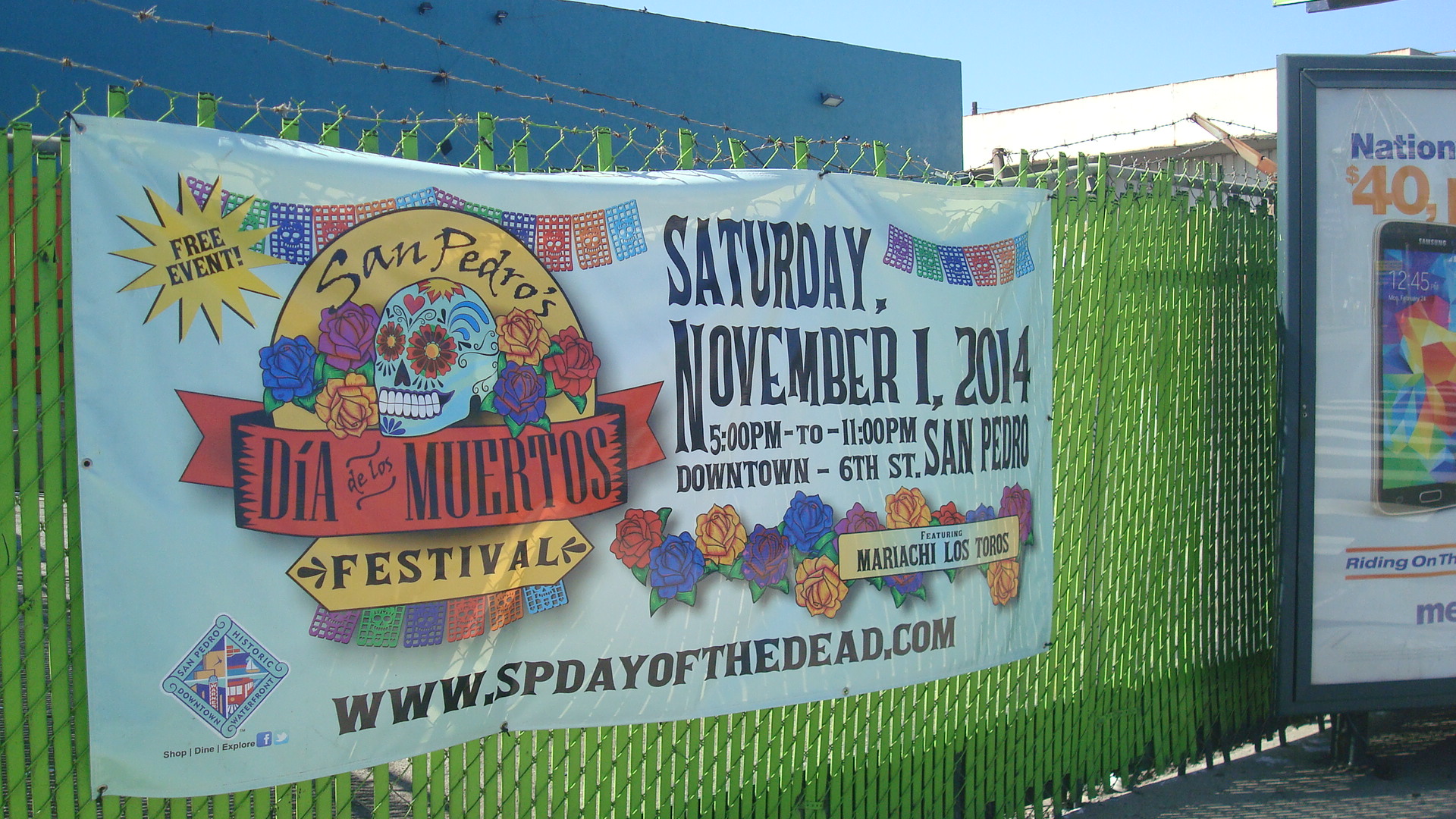
Banner advertising a Dia de los Muertos celebration on Harbor Boulevard.

Banner advertising a Dia de los Muertos celebration on Harbor Boulevard.

Today the Port of LA is one of the busiest harbors in the world, handling billions of dollars in goods and creating thousands of jobs. It is a major part of the regional economy, which is why we should all be concerned about the current strife between labor and management. The issues are extremely complex, and I don’t pretend to understand them all. To boil it down to the basics, shippers are struggling to cut costs because of increasing competition and workers are afraid of reduced compensation and the loss of jobs. This article from the Daily News offers more background.

Port Congestion Worsens, Labor Talks Escalate

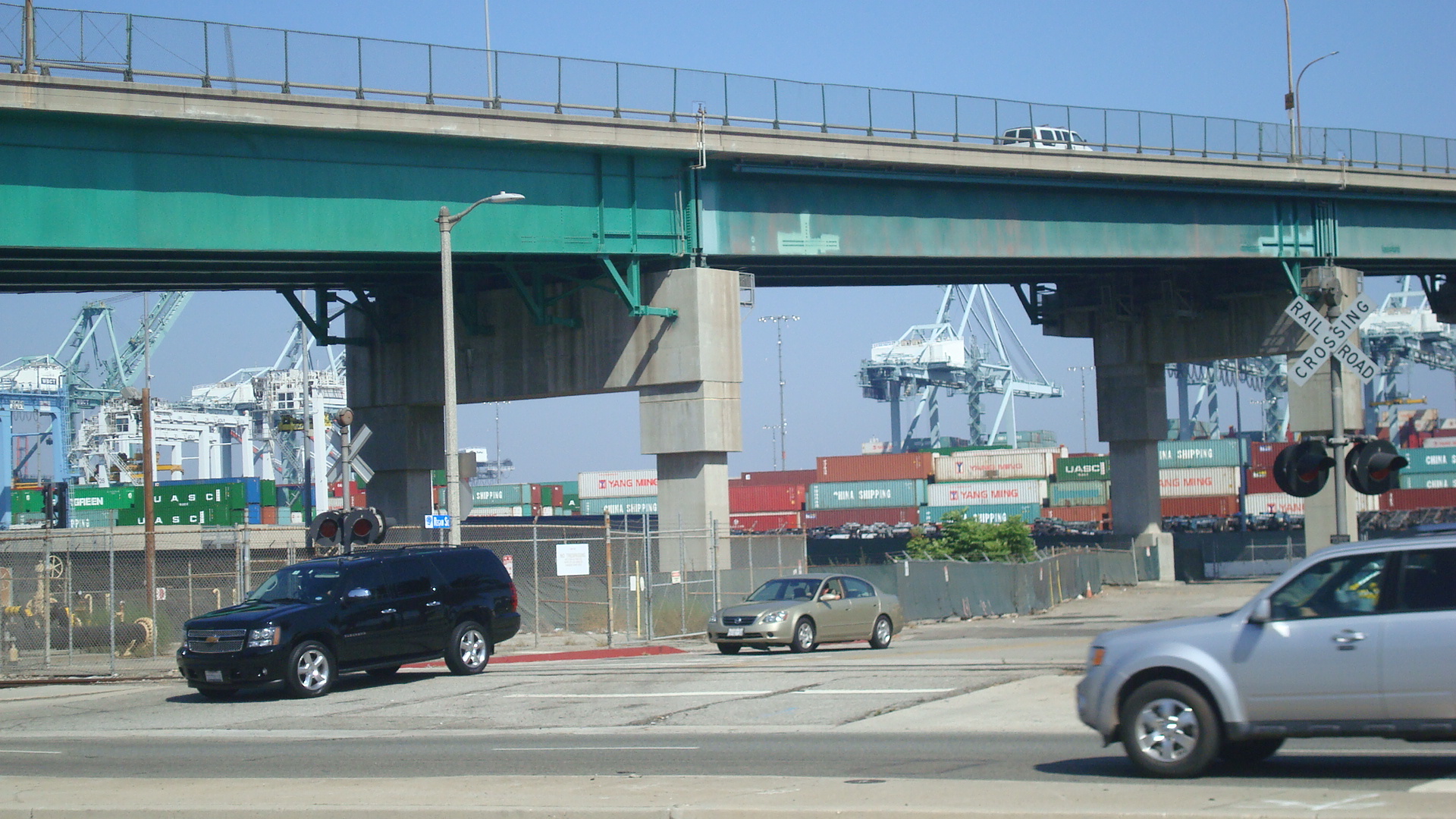
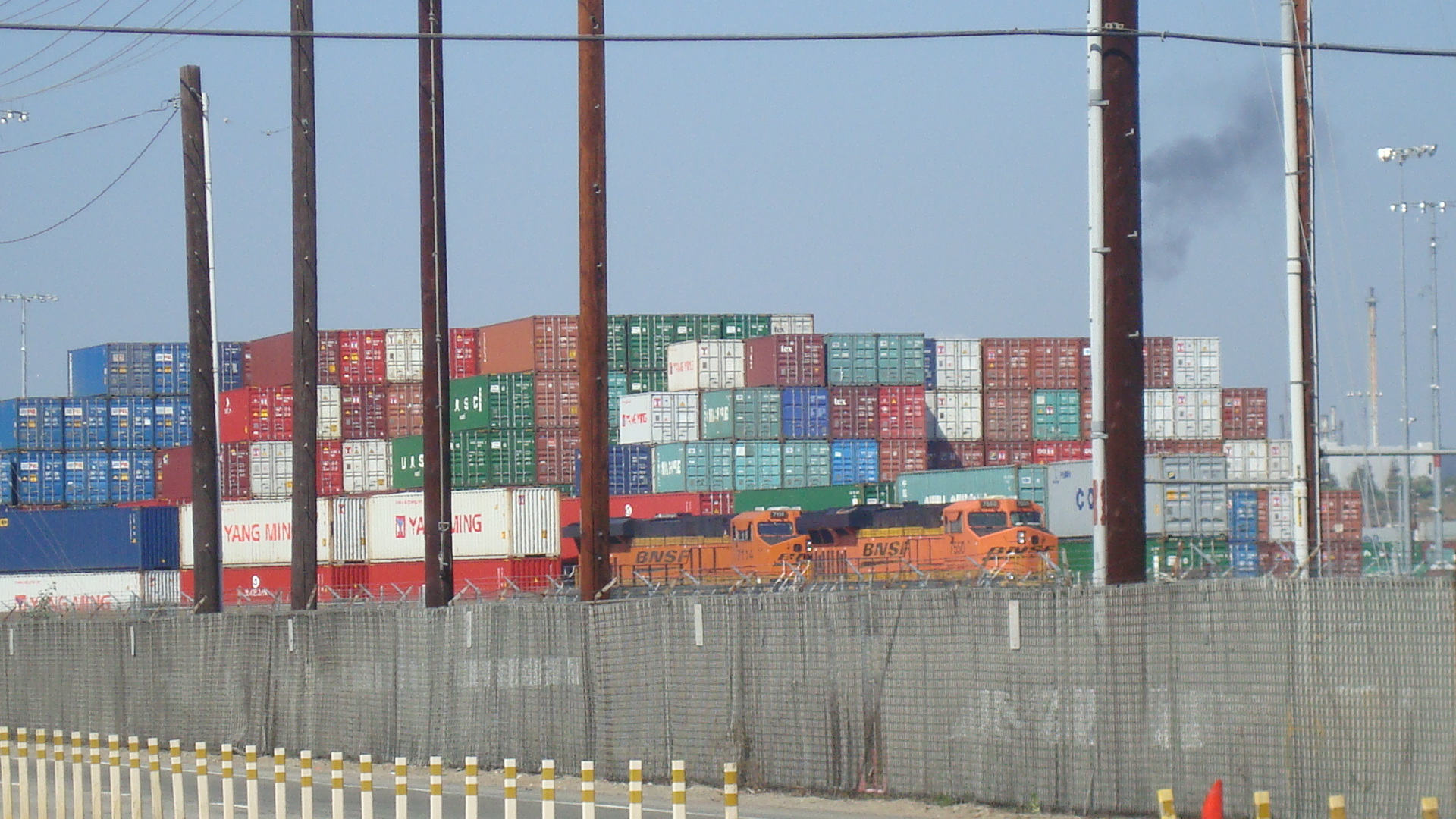
Stacks of containers seen from Harbor Boulevard.

Stacks of containers seen from Harbor Boulevard.

A crisis like this at the Port would be a problem any time of year, but it turns into an even bigger problem when it comes just before the holiday season. This is the period when retailers do most of their business, and there is massive anxiety about inventory not reaching the shelves in time. Tensions are running so high that Mayor Garcetti has stepped in to help, and business interests have sent a letter to President Obama asking him to intervene.

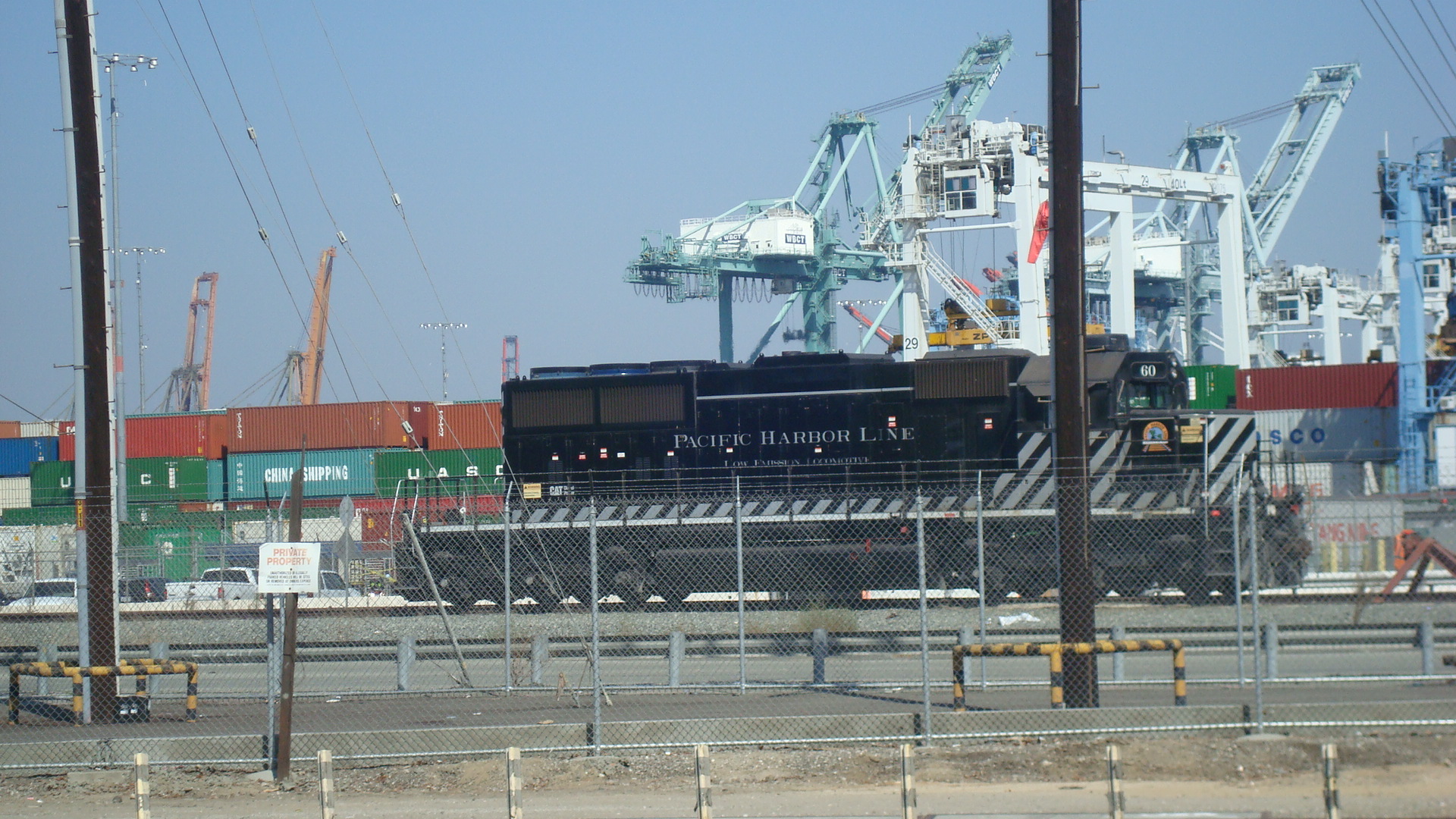
Rail lines carry containers from the Port to destinations throughout the nation.

Rail lines carry containers from the Port to destinations throughout the nation.

Resolving these problems won’t be easy. It’s not just a matter agreeing on a new contract. There are larger issues stemming from the way global markets are evolving, and even if this situation is resolved, there will be many challenges to come. These developments don’t just affect the local economy. The impacts will be felt throughout the state and the nation as well.

For those of us who tend to forget about San Pedro, Wilmington and the Port of LA, this should serve as a reminder that they’re vital part of our city.

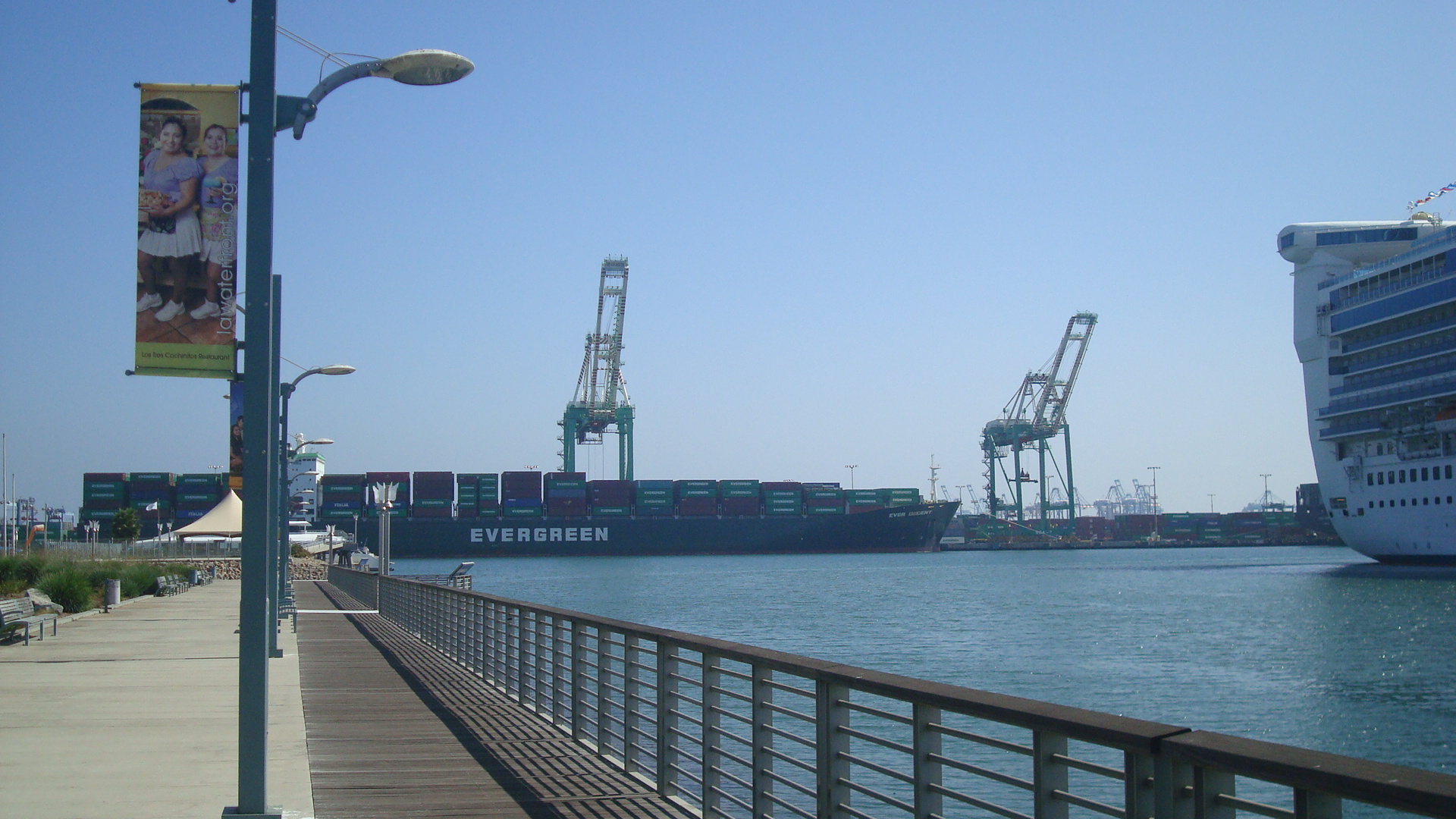
A view of the Port from the water's edge.

A view of the Port from the water’s edge.

MTA Offers a Helping Hand

Crnsw 3

Just a follow-up to a post I did recently on the construction of the Crenshaw/LAX Line. In that post, I mentioned how difficult it was for businesses along Crenshaw to keep their heads above water with street closures and reduced parking. Local merchants have been complaining about a steep drop in revenue, and the Metropolitan Transportation Authority has been listening.

In September the MTA established a fund to aid small businesses affected by the construction. And in October, the MTA approved the creation of the Business Solution Center, which will provide assistance with marketing, financial planning and legal counseling, as well as help in securing loans. Here’s a link to the article in the LA Sentinel.

MTA Awards BSC Contract to Del Richardson & Associates

This is a smart move by the MTA. Sure, the Crenshaw/LAX Line will help the neighborhood in the long run, but it’s important to ensure the survival of existing businesses. By approving these two programs, the MTA has shown a commitment to supporting small merchants as they deal with the challenges of the construction phase.

Taking a Closer Look

Hlwd CS 03 Frnt Hills 2

It’s so strange how you can pass by something a million times, and not really even notice it. Until it’s in danger of disappearing. The Fifth Church of Christ, Scientist, at the corner of Hollywood and La Brea, was built just after I was born. I’ve been driving by it or walking by it all my life. I remember thinking that it was kind of an unusual building, but I never stopped to take to take a closer look. It was always just part of the landscape.

So recently I did take a closer look, and I started to realize what a beautiful building it was. The site is no longer home to a Christian Science congregation. For the last few years it has housed Mosaic, a non-denominational Christian church. The current congregation recently renovated the building, and I’ll talk more about that later.

Actually, the first version of the church was built back in 1915, according to the Pacific Coast Architecture Database. Back then Christian Science was a growing denomination, and the original design stuck to a pretty traditional classical revival style. But in the 1950s the congregation must have decided they needed a different look, and they hired an architect named Howard G. Elwell.

Very little is known about Elwell. One source I found said that he was active in the LA area as early as 1916. I’ve searched the net, but there’s not much documentation of his work. I found a few photos of a movie theatre in Victorville. I found some images of a doctor’s office he may have designed, but the site is unknown. Apparently he also worked on some houses in Pasadena and San Marino.

But the guy definitely had talent. A walk around the church at Hollywood and La Brea shows that it was created by someone fluent in the modern style. Here are a couple photos of the building as it originally appeared.

Fifth Church of Christ, Scientist seen from Hollywood Blvd. circa 1977

Fifth Church of Christ, Scientist seen from Hollywood Blvd. circa 1977

Fifth Church of Christ, Scientist, also from Hollywood Blvd. circa 1977

Fifth Church of Christ, Scientist, also from Hollywood Blvd. circa 1977

It’s too bad they’re in black and white, because the color scheme was one of the unique aspects of the design. If I remember correctly, the curved section at the corner was clad in lavender tile, and the arched windows were painted a similar pastel shade. The effect was subtle and unobtrusive, which is maybe part of the reason it didn’t attract my attention.

Here’s how the church looks today.

Mosaic, Hollywood seen from Hollywood Blvd.

Mosaic, Hollywood seen from Hollywood Blvd.

The Mosaic congregation did a nice job of renovating the building. They didn’t touch the structure, but they completely rethought the textures and colors. Removing the tile cladding to reveal the brickwork gives the corner of the church a rustic look, and painting the arched windows grey creates a nice contrast. The building definitely has more of a presence than it did before.

a view of the church from La Brea Ave.

a view of the church from La Brea Ave.

another view of the church from La Brea Ave.

another view of the church from La Brea Ave.

But the structure still retains Elwell’s design, which is a unique and interesting adaptation of the modern style. The building has the dignity appropriate to a church, but without the rhetorical flourishes that make some other sacred structures look pompous. It occupies the site beautifully, with the curved wall at the corner giving way to symmetrical rows of arched windows on either side. And while some churches are basically a façade stuck on a box, Elwell thought about the whole structure, making sure that the rear of the building adheres to the same pattern of curved surfaces and strong verticals.

a view of the church from the parking lot

a view of the church from the parking lot

another view from the parking lot, this time facing La Brea Ave.

another view from the parking lot, this time facing La Brea Ave.

Now here’s the bad news. This building will probably be gone in a year or so. Developers want to build a project called Horizon Hollywood, which will consist of 400 residential units with retail and restaurants on the ground floor. Some people think the renderings look pretty nice. Honestly, to me the project looks like another set of generic mixed-use towers. But here’s a link to a write-up at Building Los Angeles. You can judge for yourself.

Hollywood and La Brea’s High-Rise Complex

Personally I’d rather have the church. But I don’t think there’s much chance of saving it. The building has not been designated as a historic landmark. And I don’t see any way it could be incorporated into the high-rise project.

But they won’t start construction on the Horizon Hollywood for a while, so if you’re interested in architecture you might want to take a trip over there. It’s a striking example of mid-century modern, and one of the few known buildings by Howard G. Elwell.

The larger concern is that it seems like historic buildings are once again being threatened by the current development boom. We’ve already lost the Morgan, Walls and Clements building on La Brea near Melrose. This one is probably a goner. And there’s talk of demolishing the Pacific Theatre on Hollywood Boulevard. For a while it seemed like LA was getting better at preserving the past. But these days I get the feeling that money is more important than history.

[For an an update on the status of the Mosaic Church, click here.]

Hlwd CS Frnt Angle 1

The two black and white photos above come from the Security Pacific National Bank Collection of the Los Angeles Public Library’s photo archive. No photographer is credited.

We Need to Talk about Water

DSC02222

Recently I posted on Mayor Garcetti’s call for Angelenos to reduce water consumption by twenty percent. As a follow up, I’d like to draw your attention to an article posted by Jack Humphreville on CityWatch. The thrust of the article is that the Mayor’s creation of a Water Cabinet is an attempt to create policy without input from citizens.

Humphreville makes some excellent points. Certainly, given Garcetti’s record, we should be concerned about whether the City will shape its water policy in an open and transparent manner. There’s no question that the DWP will be raising rates significantly in coming years. To some degree this is necessary. Our water infrastructure needs to be upgraded, and we also need to invest in groundwater clean-up. But citizens must be involved in this discussion. A link to Humphreville’s article is below. It’s well worth reading.

Can We Afford the Mayor’s Mandate?

And here’s the link to the Mayor’s Executive Directive 5, which lays out all the measures he wants Angelenos to take to address the water shortage. Many of these steps are reasonable and necessary. It’s the creation of the Water Cabinet that’s worrisome. In LA, too many decisions are already made by insiders, behind closed doors. The Mayor often talks about how we all need to be involved in shaping the city’s future. I wish I could believe he really meant it.

Executive Directive 5

Transit Trauma

DSC07351

I don’t own a car. I take public transit everywhere. Generally it works out pretty well, but I wanted to share a few experiences I had recently….

Last week I spent an afternoon Downtown. I had an important meeting that night, and I figured I’d get on the subway at five, which would leave me an hour to make it back to Hollywood. Should’ve been plenty of time. The Red Line arrived just after five and I got on board. But apparently the brakes on that train had locked up, and after ten minutes the conductor still hadn’t been able to resolve the problem.

I had to make it back to Hollywood by six. Now I had forty five minutes, and it seemed unlikely that a bus travelling at rush hour would get me home in time. So I ended up taking a cab, which cost me twenty five bucks, plus tip.

Monday morning I was heading out to the Panorama City, a trip that takes three busses. Unfortunately, at one of my connecting points, I saw the bus I needed speeding past when I was still a block from the stop. It was five minutes early. I had to wait for the next one, which made me fifteen minutes late.

And then there was Wednesday morning. I got to the Red Line station at Hollywood and Highland. I was waiting on the platform when a voice came over the PA saying that there was no service to the North Hollywood station. Due to a power outage, the trains were only running to Universal City. Immediately I tried to think of other options, but there’s only one bus that goes to North Hollywood and it doesn’t run often. I glanced at the monitor above me to check the time. But the monitor wasn’t working.

I ended up getting on the train to Universal City. Once we arrived, it turned out the escalator to street level was out of order. Actually, it’s pretty common for escalators and elevators serving the subways to be out of commission. This morning it meant that the mass of people climbing the stairs had to contend with the people going down the stairs at the same time.

At Universal I had to get on the 224, which was packed to capacity, to get to North Hollywood. I felt like I was riding in a cattle car. At North Hollywood I got on the Orange Line, which was also packed to capacity, to make the trip out to Van Nuys. Amazingly, I was only fifteen minutes late.

Now I’m not bringing all this up because I want to slag public transit. I like public transit. I definitely prefer it to driving. It’s way cheaper and way less stressful. And most of the time it gets me where I want to go more or less reliably. But I have some serious questions about the direction the MTA is taking things.

In September the MTA raised fares. A day pass went from $5 to $7, and a monthly pass went from $75 to $100, a 40% increase and a 33% increase respectively. I realize that this is the first fare hike in four years, and that the MTA is running a substantial deficit. I also realize that tickets only cover about 28% of operating costs, and that anything less than 33% can jeopardize federal funding. But these are still huge hikes. And the while the MTA has postponed further fare increases for the moment, you can be sure they’re coming. On top of that, the Daily News reports that the MTA is considering further service cuts, even though they’ve already cut hundreds of thousands of service hours in the last few years. Here’s the article.

Fare Hikes Won’t Fix Agency’s Deficit

So here’s what worries me. The MTA seems determined to continue raising fares and cutting service as it struggles to resolve its financial difficulties. I have to ask if this is really going to encourage Angelenos to ride busses and trains. I hear a lot of talk about how people have to abandon cars and embrace public transit, but this course of action seems guaranteed to drive people away. That’s already happened with Metrolink. For the last few years Metrolink ridership has been declining, and customers have cited rising costs and declining service as the reason they’ve gone back to using their cars.

The Mayor and the MTA Board have put Los Angeles on the fast track when it comes to building new transit projects, which sounds good in theory. But these hugely expensive projects are years away from completion, and the MTA seems unable to even maintain current levels of service.

There’s something really wrong here. If the MTA wants us to believe that they’re going to be able to manage a vastly expanded transit system, they need to do a better job of managing the system we’ve got now. Otherwise, instead of attracting new riders, they’re going to lose the ones they’ve got.