Death by a Thousand Cuts

MTA 4

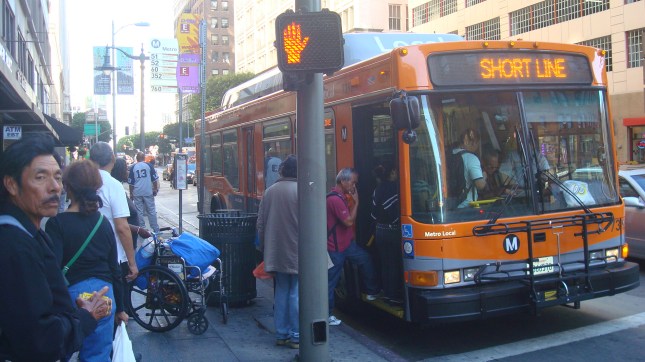
Not too long ago I was riding the bus and saw a pamphlet on display. The title was Public Hearing on Proposed Service Changes. Even before I picked it up, I more or less knew what it was about. The “service changes” are mostly service cuts, yet another round of reductions by the MTA.

This isn’t surprising. Last I checked, the MTA was running an operating deficit of over $30 million a year, and that deficit will continue to grow. One solution would be to raise fares, but the last time they did that there was a decline in ridership. Of course, ridership has been going down for a while now. Some argue that the decline may be reversable, and point to the rail extensions that are currently under construction. New rail stops will bring new riders, but they will also increase operating costs. And actually, fares don’t nearly cover what it takes to run the system. I really doubt that increased ridership from these extensions will make a serious difference in the budget picture.

There’s no simple solution here. While I’m not happy about further cutbacks, I know Metro is probably doing the best they can to balance their budget under challenging circumstances. But I’ve gotta say, it’s getting harder and harder to get around LA on public transit. A number of the lines I use regularly run only once an hour. The Rapid busses, which were great to start with, don’t run as often as they used to. I don’t read when I ride the bus, but I’ve started taking a book with me when I’m going somewhere because I never know how long I’ll be waiting to make a connection.

What I’m leading up to here, is that I’m really starting to question the MTA’s long term strategy. For years now we’ve been told that we need to invest in rail to solve our transit problems. Well, we’ve built a lot of rail, and things don’t seem to be getting any better. Looking at the budget issues and the trend in ridership, I don’t believe the rail we’re building now is going to make a huge difference. At some point we have to ask ourselves if this approach is working.

That brings us to Measure R2, the ballot initiative we’ll be voting on in November, which will increase the sales tax to raise billions for transit. About 40% of the projected revenue will go to rail projects, and looking at the results we’ve gotten from rail so far, I’m increasingly skeptical about whether this is the right way to go. Trains are great if you’re travelling in a straight line from point A to point B, but as soon as you get away from that straight line, things start getting complicated. Rail works great in New York, where the system is centered on a very dense urban core. LA is much more spread out, and even though Downtown is attracting more residents and businesses, it doesn’t function as the City’s center the way Manhattan does. There are those who argue we need to build high density hubs along transit lines, which sounds good, but City Hall has been pushing that policy for years and it’s not producing the promised results. Transit ridership is down. If our leaders had pursued a policy of building affordable housing that would make job centers easily accessible by rail, it might be a different story. But renting near rail stops is pretty pricey. A studio at Noho Commons goes for $1,777. Digs at the Jefferson in Hollywood start at $2,238. And I don’t know what they’ll be charging at the Wilshire Grand, but I’m pretty sure it’ll be more than the average transit rider can afford.

MTA 5 a

Measure R2 will deliver other things besides rail, and I don’t want to say I’m opposed to it, but at this point I can’t say I’ll vote yes. It seems like there are others who have doubts as well. This post on StreetsBlog breaks down the MTA’s 2016 budget, and raises some important issues. The comments are worth reading, too.

A Preview of Metro’s $5.6 Billion Fiscal Year 2016 Budget from StreetsBlog LA

I also came across this article in the Daily News that talks about how the Valley has gotten less than its share of transit infrastructure in the past, and how leaders on that side of town are worried about getting shortchanged again with R2. One of the points the author makes is that with big infrastructure projects, the longer they’re delayed, the more expensive they become.

What the Valley Would Get, and Not Get, in New Transportation Tax from Daily News

LA County is promoting R2 in order to fund a massive expansion of our rail network. Basically I’m asking if rail is really worth the money, time and trouble. Busses are much cheaper and much more flexible. Also, investing in busses won’t saddle the MTA with a huge debt load the way these infrastructure projects will. Debt service already accounts for a significant portion of the agency’s budget, and expanding the rail lines will make that burden even heavier.

You’re going to be hearing a lot about R2 in the coming months. City, County and State officials are already making an aggressive push to promote it. Again, I’m not saying I oppose it, but as you listen to our elected officials give their spiel, ask yourself if our public transit policy is taking us in the right direction. And if not, is it time to change course?

MTA 1

You Can’t Drink Paper Water

UWMP Paper Water b

Why should you care what the DWP’s 2015 Urban Water Management Plan says?

You should care because city officials will use the UWMP when making decisions about future development in LA. They will be relying on the plan’s absurdly optimistic projections regarding future water resources to justify approving projects that could burden our dwindling water supply with unsustainable demands.

But first, let’s put this discussion in the right context. People talk about how we’re in the fourth year of the drought, and the assumption is that even if things are really bad now, eventually the drought will end and we’ll be back to normal. This is a big mistake. Everybody has their fingers crossed, hoping that this year’s heavy precipitation in the Sierras will restore the snowpack and we’ll be okay again. Actually, the snowpacks have been declining for decades, and there’s no reason to believe that trend will reverse itself in the near future. If you’re skeptical about this claim, check out these links.

Snowpack in California’s Sierra Nevada Lowest in 500 Years from NY Times

Declining Snowpacks May Cut Many Nations’ Water from Columbia University

This isn’t just a matter of toughing it out through a few dry years. For the foreseeable future, we’re going to have to use a lot less water than we’re used to. And this is not just a matter of taking shorter showers or getting rid of your lawn. We have to change the way we think about water in LA.

But in spite of the fact that we’re playing a whole new game, the people who run this city are determined to cling to the same old rules. Los Angeles was built largely on real estate speculation. For decades developers kept pushing the City’s boundaries outward, and this was only possible because the people who ran LA kept extending the reach of our water infrastructure. Local groundwater only supplies about 10% to 15% of what we need. The rest comes from sources far beyond the city limits.

We’ve gotten so used to living beyond our means that we still haven’t come to terms with the reality of our shrinking water resources. And in spite of all the rhetoric from City Hall about conservation, when it comes to planning for growth, our elected officials are determined to deliver everything the developers ask for.

So what’s wrong with the 2015 UWMP? In broad terms it does a good job of outlining the challenges that the City faces. But when we get down to specifics, the authors manage to avoid spelling out the severity of the situation. And in talking about the future of our water resources, things get very vague.

You want some examples?

The plan does talk about the fact that we’ll be getting much less water from the LA Aqueduct than we have in the past. In order to mitigate severe environmental impacts to the Owens Valley and Mono Lake, the City has agreed to reduce the amount it imports from the area. In the 70s and 80s, the Aqueduct generally brought us over 400,000 acre feet per year (AFY). That number started to drop in the 90s, and while some years have been better than others, the average has continued to decline, especially in the last four years. In 2014/2015 we received only 53,500 AFY. Less than 14% of what we were getting thirty years ago. This is a record low.

Graph showing LA Aqueduct deliveries from the 2015 UWMP.

Graph showing LA Aqueduct deliveries from the 2015 UWMP.

There’s another figure I’d like to cite in connection with the LA Aqueduct, and that’s the amount of water it delivered to us from April through September 2015.

Zero.

Last year the LA Aqueduct was closed for the first time in its history. A temporary dam was put in place so that the City of LA could fulfill its obligations to maintain the Owens Valley and Mono Lake. During this period, we received no water from the aqueduct. I can’t claim to have read the entire UWMP, but in the reading I have done I didn’t come across any references to this closure. Maybe that’s because it’s such a stark symbolic reminder of the gravity of our situation.

So how are we going to replace the water we used to get from the Aqueduct? Of course, there’s the usual talk about recycling and stormwater capture, both of which are certainly worthwhile, but it will be years before they start making a serious difference with regard to our water supply. And then there’s this section from the Executive Summary under the heading Water Transfers.

LADWP plans on acquiring water through transfers of up to 40,000 AFY to replace a portion of the Los Angeles Aqueduct (LAA) water used for environmental enhancements in the eastern Sierra Nevada. The City would purchase water when available and economically beneficial for storage or delivery to LADWP’s transmission and distribution system.

Wow. That’s great. It’s so simple. We’ll can just suck up another 40,000 AFY through water transfers from the Metropolitan Water District (MWD).  But the problem here is that they’re assuming MWD will reliably have access to that much water.  The UWMP mentions transfers of water originally intended for agriculture in the Central Valley.  What?  Have they seen the photos of landscapes collapsing due to overpumping?  In order to justify the claim that we can rely on these water transfers, the UWMP bases its calculations on the historic average of water supplies going back to the 20s.  They offer a chart titled “MWD Forecast Supplies of Groundwater Storage and Transfers in 2040, Average Year (1922 – 2004 Hydrology) “.  In other words, they’re basing their calculations on conditions that existed well before the current crisis began.  And they’re using those figures to project water supplies 25 years into the future.

But what about groundwater? Right now the supplies we get from aquifers within city limits provide between 10% and 15% of what we use annually. But in the Executive Summary under the heading Water Supply Reliability the DWP offers this startling prediction.

The exhibits show that the City’s locally-developed supplies will increase from 14 percent to 49 percent in dry years or to 47 percent in average years.

What a relief! Using purified wastewater and captured stormwater we’re going to more than triple our groundwater resources! But wait. It gets even better.

These local supplies are not influenced by variability in hydrology, and will become the cornerstone of LA’s future water supplies.

This is really amazing. Our local supplies are not influenced by variability in hydrology! In other words, the same factors that affect water resources everywhere all over the world will not affect the groundwater in LA. Though they don’t provide much in the way of explanation, it seems that the folks at the DWP have somehow cast a magic spell over the City. No matter how hot it gets or how little it rains, we can rest assured that our aquifers will soon be supplying us with almost half of the water we need.

I wonder if that same magic spell protects us from toxic chemicals. Because most of our groundwater comes from wells in the San Fernando Valley, and about half of those wells are closed right now because of industrial pollution. The DWP does have a plan to build two treatment plants that will purify the water from these sources, but it could be years before they break ground. At this point they don’t even have the funding lined up.

But rather than subjecting you to more of my ranting, let me turn this over to somebody who knows a lot more about this stuff than I do and who does a way better job of breaking it down. DroughtMath is a blog that digs deep into water issues, and you can find a detailed breakdown of the 2015 UWMP there. I recommend starting with this post, which clearly lays out how the DWP uses “paper water” to pretend that they’ll have no problem supplying the City with everything it needs. What is paper water? It’s water that “utilities claim they have access to, but is difficult or impossible to access for various reasons.” But go ahead and check out what DroughtMath has to say on the subject.

LADWP’s Paper Water Leverages on MWD Supplies from DroughtMath

He also gives a good overview of the UWMP and its many flaws in this post.

Thoughts on the 2015 Draft UWMP from DroughtMath

I want to wrap up by saying that in spite of the anger and sarcasm in my tone, I do not see the DWP as the bad guy here. While the agency has had its share of scandals, the men and women who work there mostly do an amazing job of making sure that we almost always get the water we need. When you think about the fact that the DWP serves an area of about 400 square miles, and that we have little in the way of local resources, it’s remarkable that they have built and maintained a system that reliably brings us water for bathing, washing, cooking, and cleaning with few disruptions.

The bad guys are the developers and politicians who refuse to recognize that there are very real limits to our water resources. The bad guys are those people who are so blinded by greed and ego that they don’t want the citizens of LA to know how seriously compromised those resources are. The UWMP may seem like just another boring technical report, but it has huge consequences for the City’s future growth.

I am not saying we should stop growth. I’m saying we need to have a realistic picture of how much growth we can support. We can only make decisions about future development if we have an accurate picture of our water resources. The draft 2015 UWMP does not provide that.

If you’re as concerned as I am, I urge you to make your voice heard. The first step is to take a look at the UWMP. I know, I know, it’s a lengthy, intricate technical document and probably nobody’s idea of a good read. But you don’t have to go through the whole thing. Just take a look at the Executive Summary, which provides an overview of the contents and conclusions.

2015 UWMP at LADWP

The first public hearing is already past, but there’s a second one on March 9 from 6 pm to 8 pm at the Sepulveda Garden Center, 16633 Magnolia Blvd., in Encino.

If you can’t make it to the meeting, you can still submit comments by e-mail. The deadline is March 16. Here’s the address.

uwmp@ladwp.com

If you’re concerned about development, or if you just care about the city you live in, please let the DWP know your feelings on this issue. If the DWP Board adopts the current version of the 2015 UWMP, it will be one more instance of our city officials placing the needs of developers with deep pockets over the needs of the people of Los Angeles.
Creating Community

New development in Boyle Heights, right next to the historic Mariachi Hotel.

New development in Boyle Heights, right next to the historic Mariachi Hotel.

I’ve heard people complain that Angelenos don’t know their neighbors. To a large degree that’s true. We tend to build our own little self-contained worlds, and get nervous when outsiders try to invade. In order to make it through the day, I try to keep interaction with strangers to an absolute minimum. In part, this is because I’ve found that some strangers want way more than I’m willing to give. Living in the city, you have to be at least a little wary.

But the downside is that there are very few places in LA where you can find a real sense of community. You might find a scene where you can hang out with people who share your passions, but chances are they’re coming from all over the city. You don’t find too many neighborhoods where everybody knows each other. And because of that, we don’t know our neighborhoods. The tenants in the building next to ours could be getting evicted for a condo conversion, and we might not be aware of it until the construction crews show up. Even when we find out what’s going on, we’re likely so wrapped up in ourselves that we don’t start worrying until the eviction notice shows up in our own mailbox.

So I was really intrigued when I heard about Union de Vecinos (UV), which could be translated as Neighbors United. It’s a grassroots group that’s been working in Boyle Heights for twenty years. They got their start back in 1996 when public housing in Pico Aliso was threatened with demolition, and they worked to protect renters threatened by displacement. But UV isn’t just reactive. They’re also creative. Starting with neighborhood committees, they work within the community for positive change. This is from their web site.

[Union de Vecinos promotes] economic and environmental justice, civic engagement, preservation of housing, and building healthy and stable community neighborhoods. We do this through community organizing, popular education and direct action. In our model, solutions to a problem are developed by those most affected – community – this is what drives us and is at the heart of our work.

The part of this paragraph that jumps out at me is, “solutions to a problem are developed by those most affected.” So often in the City of LA we have elected officials meeting behind closed doors with bureaucrats and business interests to devise plans that really don’t address the needs of the citizens. When they do hold public meetings and ask for input, it’s generally just for show. They’ve already decided what they want to do, and the meeting is really about selling their own agenda.

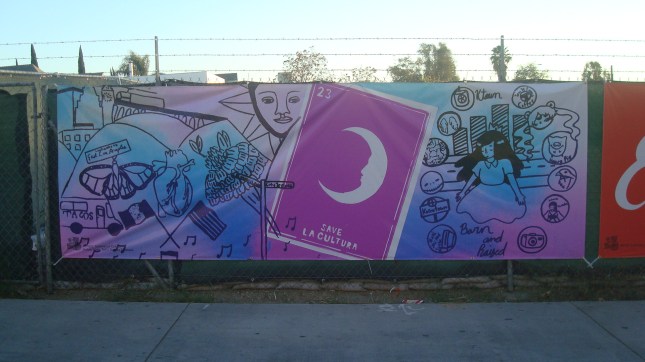
Banner on fence at a construction site on First Street.  Art by Gabriella Claro, Salma Sosa, and Tatei Torres Thomas.

Banner on fence at a construction site on First Street. Art by Gabriella Claro, Salma Sosa, and Tatei Torres Thomas.

So the idea of a neighborhood group that sets its own priorities and creates its own agenda sounded really good to me. I went to Boyle Heights to talk to UV members Leonardo Vilchis and Elizabeth Blaney about the challenges the Boyle Heights community is facing these days. A lot of it has to do with development, and the related problem of gentrification.

In early 2015, the Metropolitan Transit Authority (MTA) announced plans for a project to be built on Mariachi Plaza. Unfortunately, the MTA didn’t bother to ask the community how they felt about it. There was a huge public outcry, and Union de Vecinos was one of the groups that raised their voices in protest. The MTA shelved the project for the time being, but they’re planning to come back with another version. I asked Leonardo if he thought the public would have more of a voice this time.

“They said they’d reach out to us, but it’s really just pro forma,” he said. “The MTA sets up these meetings with focus groups, where you have to be invited.” He didn’t seem optimistic about the process. “They have these meetings, but they don’t really seem to be seeking input.”

Elizabeth spoke about UV’s engagement with the East LA Community Corporation, one of the developers building on and around MTA land. ELACC is working on creating affordable housing in Boyle Heights, but displacement of low-income families is still an issue. “We want affordable housing for the 7,000 families that make less than $25,000 in our community,” she explained, “but if they’re demolishing existing units, we have to make sure that those tenants will be welcome in the new project.” Recently UV negotiated a deal with ELACC to ease some restrictions to allow displaced tenants the right of return.

I asked what kind of projects UV was working on in the neighborhood.

“Garcetti talks about his Great Streets Initiative…,” Leonardo said with a smile, “but we’ve been doing great streets here in Boyle Heights for years.” When local alleys were attracting criminal activity, UV got residents involved in finding a solution. Elizabeth spoke with pride about the way the community turned the situation around. “We held movie nights and swap meets to reactivate these spaces. Residents went on to build street furniture, paint murals and install solar-powered lighting. Before people had been afraid to walk down these alleys, and now they’re gathering places for the community.”

What a concept. People taking responsibility for their neighborhood and working together to make it better. It’s not a new idea, but it’s something many of us who live in LA have forgotten how to do. Maybe we could learn a few things by following Union de Vecinos’ example.

If you want to learn more about what they’re up to, here’s the link to their web site.

Union de Vecinos

Leonardo Vilchis and Elizabeth Blaney of Union de Vecinos.

Leonardo Vilchis and Elizabeth Blaney of Union de Vecinos.

Remaking the May Co.

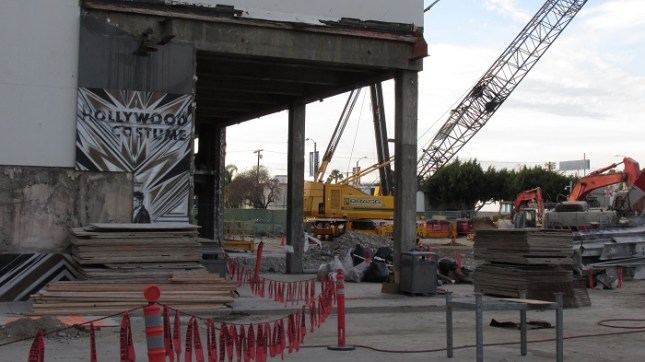
Construction of the new Academy Museum has begun.

Construction of the new Academy Museum has begun.

A while ago I was at LACMA, and as I walked down a flight of stairs on the west side of the campus I looked over at the May Co.. It had a big hole in it. Construction had started on the new museum for the Academy of Motion Picture Arts & Sciences.

May Co. building with a section removed.

May Co. building with a section removed.

Looking through the May Co. to Fairfax.

Looking through the May Co. to Fairfax.

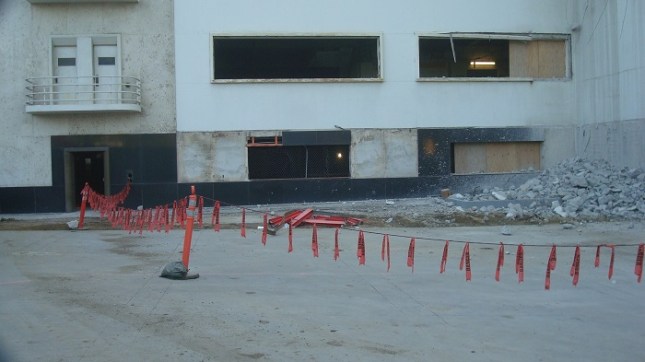
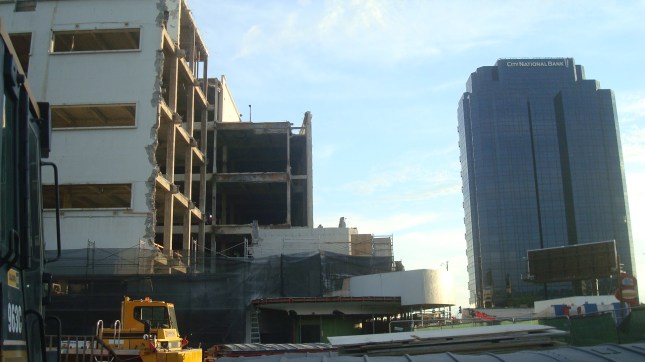
It’s taken a long time to get to this point. The project has been hampered by controversy, ranging from construction impacts on the community to issues with the design. Hopefully all that’s been resolved. At any rate, the May Co. is being taken apart so that it can be put back together again, this time with a massive annex that will contain a state of the art theatre.

A view of the site facing Fairfax.

A view of the site facing Fairfax.

The rear of the building.

The rear of the building.

The original May Co. building was designed by Albert C. Martin and Samuel Marx and it opened in 1939. For decades it was a major department store, but as malls began to draw more shoppers it went into decline. LACMA took it over 1994, but it seemed like they never used it much. In 2014 the Academy made a deal to lease the property with the goal of building a museum. After a long search, Renzo Piano was brought on as architect.

A view of the site facing Wilshire.

A view of the site facing Wilshire.

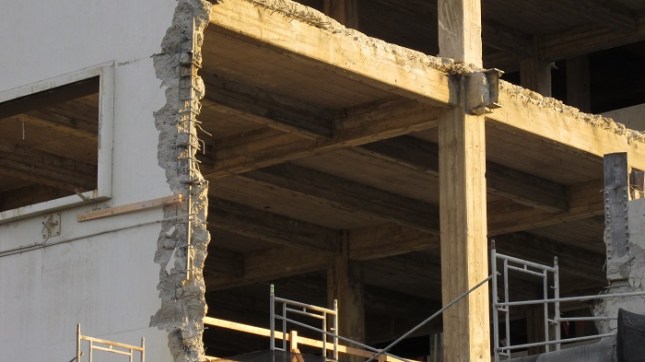
A view of the empty structure.

A view of the empty structure.

And a closer view of the interior.

And a closer view of the interior.

I’m glad things are moving forward. People have been talking for years about how LA should have a museum devoted to film, and it’s high time somebody made this happen. According to the Academy web site, “The Museum will provide interactive, immersive, and engaging exhibitions that will pull back the curtain on moviemaking and highlight the history and future of the arts and sciences of film.” Sounds good to me.

Heavy machinery and piles of debris.

Heavy machinery and piles of debris.

Check out the Academy’s web site to learn more.

Academy Museum

They’ve also got a cool timeline for the May Co., showing photos of the building through the years.

May Co. Building Timeline

I know it hasn’t been easy for the Academy to deal with all the challenges of creating a new museum, but it looks like they’re on their way. Let’s hope it’s smooth sailing from here on.

The corner of the building at Wilshire and Fairfax.

The corner of the building at Wilshire and Fairfax.

Developers Hijack Coastal Commission

CCC Web Page 2

You may have already heard about the California Coastal Commission firing its Executive Director, Charles Lester. This is a statewide issue, and beyond the scope of what I usually cover in this blog, but the CCC’s actions will have direct consequences for LA’s coastline. On top of that, it’s directly related to the threat this city faces from developers who want to gut our laws and public agencies so they can cash in.

On Wednesday the CCC board voted seven to five to fire Lester. The move is widely seen as a coup by the developer-friendly commissioners, and I have to say I totally agree. The commissioners who voted to get rid of Lester claim that this is all about performance, but the charges they’ve made publicly aren’t convincing in the least. Their criticisms of Lester’s management skills were not only disputed by the five members who voted to retain him, but also by numerous people who’ve worked with him. The seven who led the coup against the Director refused to present their complaints at Wednesday’s hearing, claiming that they were protecting Lester’s privacy. This is rubbish. Lester chose to have a public hearing to dispute his dismissal. The Commission’s legal counsel even advised them that they were free to discuss anything relating to his performance at the hearing. They chose not to because they knew their claims were bogus.

The California coastline is one of the state’s major resources. Precisely because it’s breathtakingly beautiful and largely unspoiled, developers see a huge opportunity. With the CCC now controlled by developer puppets, there are billions of dollars to be made, and you can rest assured that investors will not be shy about carving up our shoreline.

It’s real simple. Lester should stay. The seven who voted to fire him should step down. But that’s not likely to happen unless there’s a massive outcry from the public, and that’s where you come in. If you care about California’s coastline, you need to take action. You can start by sending Governor Brown an e-mail telling him how you feel about this.

Governor Brown

Next, contact your state assembly and senate reps and give them a piece of your mind, too. If you don’t know who your reps are, you can find them by clicking on the link below.

Find Your California Representative

For a detailed account of the whole mess, check out this story in the Times.

Firing of Charles Lester Leaves Deep Divisions from LA Times

Numerous individuals and organizations have spoken out about this travesty. You can read the statements from the Sierra Club and Heal the Bay below.

Sierra Club Statement

Lester Ousted as Chief of Coastal Commission

Again, if you care about preserving the coastline, you need to make your voice heard. The only thing that will turn this situation around is a firestorm of public protest. Let’s turn up the heat on the folks in Sacramento.

Watchin’ the Tide Roll Away….

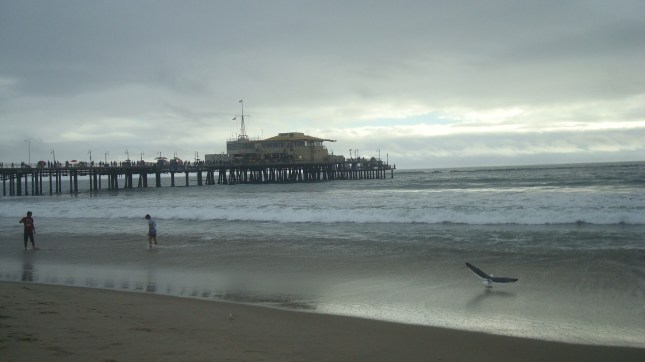
SM 01 Bch Pier

What’s the point of living in LA if you never go to the beach?

That’s a question I’ve been asking myself a lot lately. I love the beach, but I hardly ever get out that way. I guess it’s one of those things, you figure it’ll always be there, so you keep putting it off. But a few weeks ago, I made up my mind I was going out to Santa Monica.

SM 05 Bch Cars

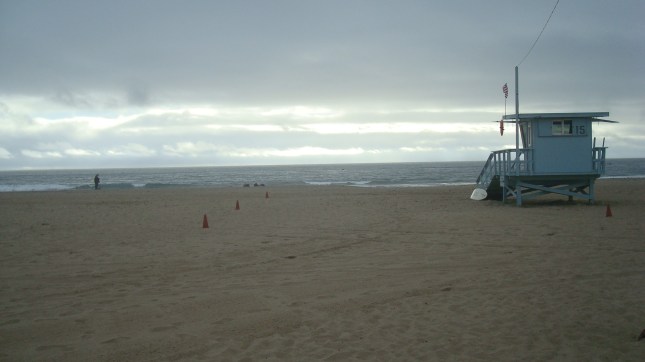
It was a grey day, and I was wondering if anybody else would be out and about. The beach itself wasn’t very crowded.

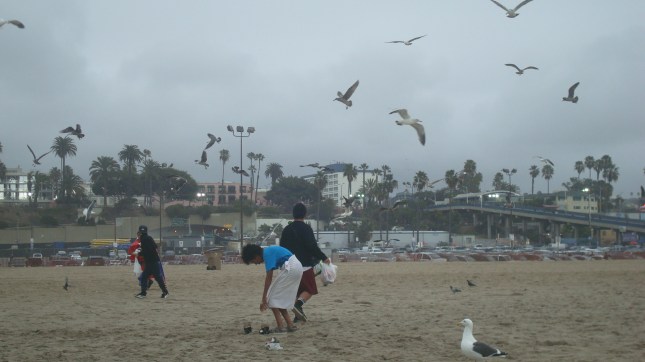
SM 10 Bch Few

Not crowded with people, at least. There were plenty of seagulls.

SM 15 People Gulls

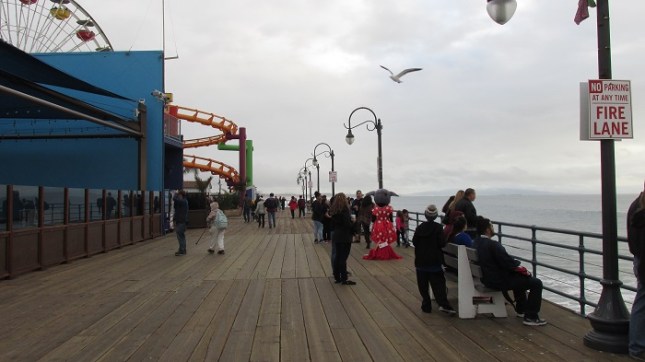
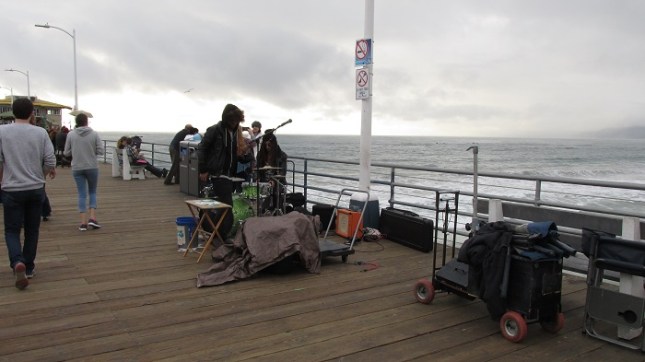
The pier was pretty lively, though. There were lots of folks strolling around, and lots of opportunities for them to spend their money. Aside from the amusement park and the restaurants, there was an artist doing portraits and a band playing for passersby.

People hanging out on the pier.

People hanging out on the pier.

An artist waiting for customers.

An artist waiting for customers.

Musicians setting up their stuff.

Musicians setting up their stuff.

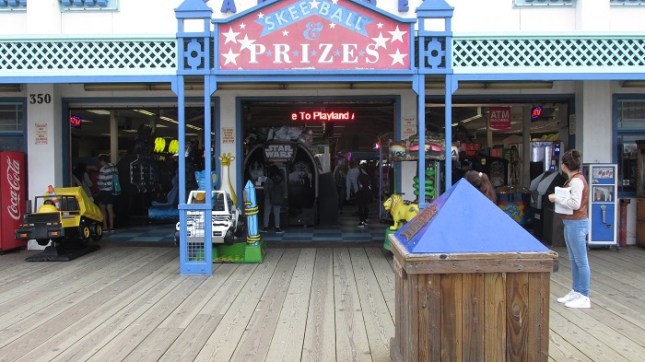
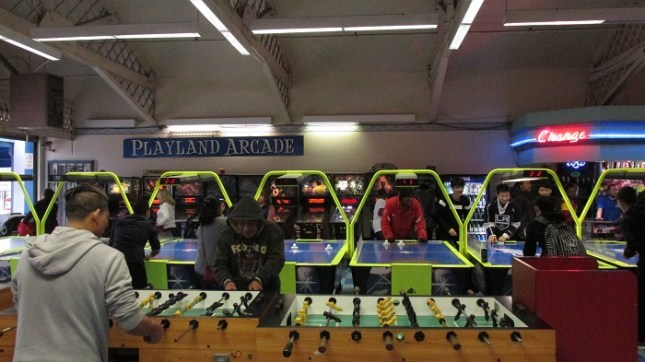
I was glad to see there was still an arcade. These days they’re almost extinct. But this one seemed to be doing decent business.

Entrance to Playland.

Entrance to Playland.

Some people still like the old school games...

Some people still like the old school games…

...though I didn't see anybody playing skeeball.

…though I didn’t see anybody playing skeeball.

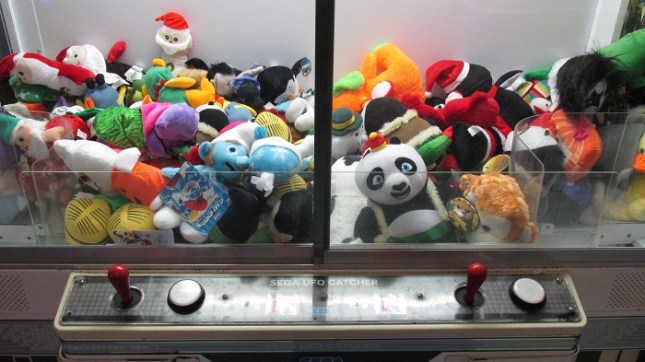
How could you resist?

How could you resist?

I don’t know why I’m so fascinated with arcades. I never play the games, but I like wandering through them. Maybe it’s just a nostalgic thing.

The amusement park was drawing plenty of customers. The kids on the Scrambler seemed to be having a great time.

The entrance to Pacific Park.

The entrance to Pacific Park.

Spinning out on the Scrambler.

Spinning out on the Scrambler.

I love walking along the sand, but what really draws me to the beach is the ocean.

SM 60 Bch Lfgd

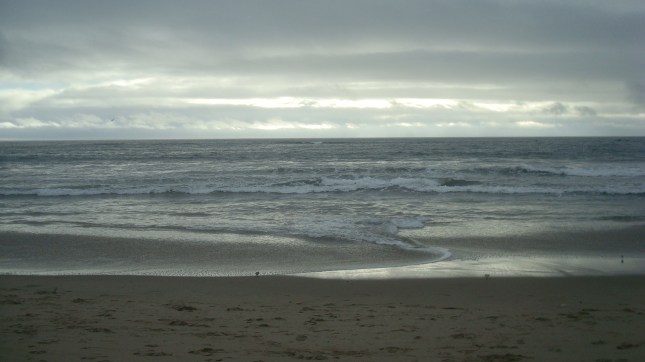
On the day I was there, it looked cold and grey and endless.

SM 70 Bch Two Walk

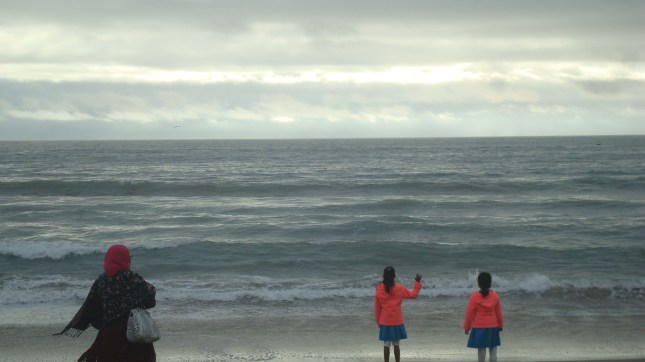
Heavy clouds hung overhead, but there was a rim of silver light lining the horizon.

SM 72 Bch Girls

I was glad I came.

SM 74 Bch Surf 1

1939 Meets 1984

US Wide

Not too long ago I was taking the train to visit some friends. I got to Union Station a little early, so I thought I’d buy a paper to read on the trip. But as I was walking in the direction of the newsstand, I got a small shock. It wasn’t there any more.

The place where the newsstand used to be.

The place where the newsstand used to be.

Now, I know people don’t read papers like they used to, so maybe I’m just a dinosaur living in the past. This newsstand did have a pretty good selection of newspapers and magazines, but it’s not like it was a historic landmark. It was just a tiny little shop that sold the kind of stuff you buy when you’re waiting for a train.

But that isn’t the only thing that’s changed at Union Station. In fact, the whole feel of the place is changing, and I can’t say I like it.

Completed in 1939, Union Station was designed by a group of architects led by John and Donald Parkinson. It brings together a number of different styles that were popular at the time, including Streamline Moderne, Mission Revival and Art Deco, and it has the feel of a massive museum devoted to a bygone era. It used to be a great place to chill. I liked hanging out there. I’d show up early if I was taking the train and relax in the old leather chairs. Read a paper. Have some coffee. Watch the sunlight streaming down through the huge windows.

These days it doesn’t feel so relaxing. In the first place, the chairs are now cordoned off and there are guards making sure that only people with a ticket get in. I know there have been problems with homeless people camping out there and asking travellers for spare change. And I still remember the time I was waiting for a train and there was a guy who kept screaming really loud. He sat on the floor against one of the columns while two guards tried to talk to him, and he just kept on screaming. So I know there’s a reason for maintaining some restrictions, but it makes the place feel a whole lot less inviting. And let’s be honest, this approach is typical of the City of LA. Rather than actually trying to deal with the homeless, the addicted and the mentally ill, the City just shuts them out. Putting up another barrier doesn’t solve the problem. It’s just a way of avoiding it.

Waiting areas are now cordoned off.

Waiting areas are now cordoned off.

And what about the bagel shop? There used to be a little mom and pop place that sold a wide variety of bagels, and often when I was taking the train that’s where I’d stop to pick up some breakfast. It disappeared a while ago. What do we have in its place? You guessed it. Starbucks. We lost a little independent business that sold good bagels, and now we have another corporate coffee house. In fact, more and more Union Station has been taken over by chains.

Corporate coffee...

Corporate coffee…

...corporate sandwiches...

…corporate sandwiches…

...corporate snacks.

…corporate snacks.

I used to like hanging out in Union Station, but not so much any more. These days it’s kind of like spending time in a detention center that’s attached to a strip mall. The vibe of the place has changed. It feels colder. More corporate.

But I shouldn’t be surprised. Isn’t that what’s happening to the whole country?

Pop Culture Past

VR 10 RR

Pop culture wasn’t meant to last. As the twentieth century kicked into high gear, products made for mass consumption were pumped out as fast as possible, generally with the idea that whatever the masses were dying to have one day would be tossed away the very next day. Permanence was considered passé. Forget about making things that would last forever. The idea was to make stuff that would last long enough to make a profit, and then jump on whatever trend came next. Studios threw out prints of old movies to free up storage space. Comic publishers tossed original art when their filing cabinets got too full. And developers bulldozed old buildings when they were past their prime.

But of course, people started falling in love with this stuff. In some cases it was just a sentimental attachment we felt for things we grew up with. In other cases we’d realize that this object we’d taken for granted was actually the product of careful, thoughtful design. And occasionally we’d come across something really beautiful. Some of this stuff was just too cool to throw away.

VR 55 VdK

You can find a staggering display of artifacts from our pop culture past at Valley Relics Museum. Curator Tommy Gelinas has been scouring the San Fernando Valley for twenty years looking for items that have something to say about the area’s history. The museum was set up as a non-profit in 2012, and in 2013 they opened their doors to the public.

Valley Relics is located in a business park in Chatsworth. It’s a small space, but it’s jam packed with objects ranging from the mundane to the bizarre. It’s kind of like if the Valley had an attic where people would put stuff they couldn’t use any more but couldn’t bear to part with. There are custom cars, video games, movie posters and plenty of neon.

VR 35 Ashtrays

But even though a lot of what they have on display belongs to the world of pop culture, Valley Relics has a broader mission. Here’s what they say on their web site.

Our endeavor is to collect, preserve, interpret, and present the history of The San Fernando Valley and surrounding areas in order to share with residents and visitors alike the stories of those who shaped the region and its role in the nation’s development.

So they’re not just trying to build a funhouse for nostalgia freaks. They’re really trying to tell the story of the Valley, and it’s high time somebody did. The massive plain that spreads toward the north from the foot of the Santa Monica Mountains generally gets short shrift when people talk about LA history, but you can’t really talk about the film or aerospace industries without talking about the Valley.

Of course cars played a huge part in the growth of the Valley. There were a couple of custom cars on display that caught my attention. One is the gaudy convertible driven by the owner of Nudie’s, the tailor that created one-of-a-kind outfits for country western luminaries.

VR 20 Car

The other is a humble VW decorated with a dizzying collage of images by artist Kent Bash. According to the text panel, the inside is supposed to be pretty cool, too, but it was hard to get a good look.

VR 25 VW

Music is a big part of the Valley’s history. It warmed my heart too see the sign from the Palomino glowing softly at the back of the building.

VR 45 Palomino

The club itself has been gone for years, but in its heyday it hosted many of the greatest stars of country music. Johnny Cash, Patsy Cline, Willie Nelson and many others played there. I only went a few times, but I will always remember catching the Collins Kids at the Palomino. It was one of the best shows I’ve seen in my life.

VR 40 Joni

Valley Relics is a young museum, and they have a lot of work to do. Right now it seems like the idea is to just display as much stuff as possible. The collection could be better organized, and it would help if there were more text to give visitors some background. Their biggest problem is lack of space. The day I was there I spoke to a guy who said they had tons of objects stored in a warehouse, and that they’re looking for a larger building. I hope they find some place a little closer to the center of the Valley. I’m sure plenty of people would dig the collection, but the location makes it kind of a long trip for most Angelenos.

Still, it’s definitely worth the trouble. Right now their hours are limited, only 10 am to 3 pm on Saturdays, but admission is free. If you do make the trip out there, and if you’re as impressed as I was, I’d urge you to put some money in the box for donations. Gelinas and company have gathered some amazing artifacts, and they’re telling a story that even people who live in this city don’t know much about. Right now they’re trying to take it to the next level. Let’s hope they can pull it off.

Here’s the link to the web site. You should check this place out.

Valley Relics

VR 50  Shoe

Mariachi Plaza

BH 01 Virg 1

Mariachi Plaza isn’t just a place. It’s a part of LA’s history. A piece of the city’s culture. Musicians have been gathering there since the 1930s, making music, looking for work, hanging out with friends, killing time. The plaza is also a gathering place for the community in Boyle Heights, vendors setting up booths to sell their wares, crowds gathering for a celebration.

Mariachi music is the result of hundreds of years of cultural give and take between the indigenous people of Mexico and the colonists from Spain. It started to take the shape we recognize today in the nineteenth century in the state of Jalisco. Mariachi ensembles come in many different sizes. There are the full orchestras with a string section, a couple of trumpets, a variety of guitars and a harp, but the musicians often play in smaller groups, too. It depends on the occasion and how much money’s being offered.

A view of First Street, bordering the plaza.

A view of First Street, bordering the plaza.

On the plaza there’s a large bandstand that was donated by the people of Jalisco, as well as a small amphitheatre which was built in the process of constructing the MTA Gold Line station. There are also a few modest buildings that have stood on the plaza for years, their walls decorated with colorful murals. Aside from the changes that came with the construction of the Gold Line stop, the plaza has looked pretty much the same for decades.

The bandstand.

The bandstand.

The amphitheatre.

The amphitheatre.

But the future of Mariachi Plaza is being hotly debated now, and it’s hard to say who will win in the struggle to shape its future. At the beginning of 2015 there was a huge uproar when the MTA unveiled its plan to develop the site. In the agency’s view, they were doing the community a big favor by bringing in an eight story project that included medical offices, a gym, restaurants and shops. Unfortunately, the MTA forgot to ask the community how they felt about it. Local residents were furious. The people of Boyle Heights were understandably angry about the fact that City and County officials had not brought them into the planning process. The MTA backed down, saying that they were going to start from scratch, and promising to involve residents this time. Some in the community are concerned, though, that all the agency intends to do is hold a few public meetings to steer people towards a plan they’ve already decided on. If that’s what happens, it wouldn’t be surprising. That’s standard operating procedure in LA.

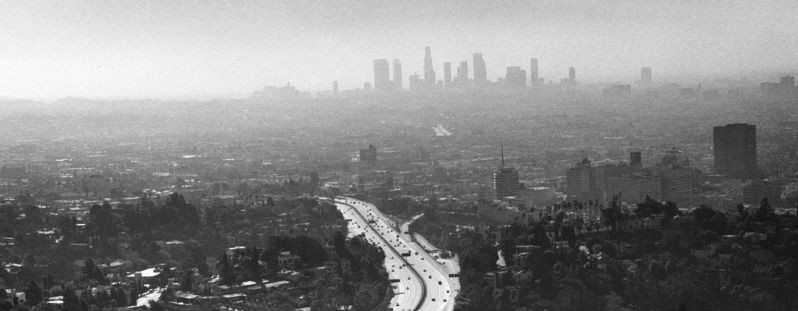
The people of Boyle Heights are used to being ignored. Historically, few people at City Hall have shown much interest in this largely Latino community. It’s only in recent years, with the arrival of the Gold Line and the onset of gentrification that developers have started paying attention to the area. No one would argue that the community needs investment, and some locals feel that Boyle Heights would benefit from “gentefication”, in other words, a push for revitalization that maintained the neighborhood’s Latino character. But the past several years have shown that the City really doesn’t care much about preserving the character of existing communities. Residents of Hollywood, the Crenshaw District, Koreatown, Sherman Oaks and other neighborhoods have been hammered by the unholy alliance between City Hall and real estate speculators.

I went down to Mariachi Plaza a few weeks ago to take some pictures. It was a cloudy day, and not much was happening. This didn’t bother me because I always get a little nervous about shooting photos when people are walking by. I’m not crazy about having my own picture taken, and I don’t want to intrude on other people’s privacy. But then I realized, Hey, you’re at Mariachi Plaza. You’ve gotta get at least one shot of the musicians. And there’s another layer of anxiety here, because I knew some of the guys hanging out on the plaza were probably undocumented. It’s understandable that some immigrants get a little nervous when a stranger with a camera walks up and starts snapping photos. I finally did ask a group six guys if I could take a picture. Three of them walked away, but the other three were cool with it.

Musicians hanging out on the plaza.

Musicians hanging out on the plaza.

On the west side of the plaza you can see the Mariachi Hotel, also called the Boyle Hotel, originally the Cummings Hotel.

The Mariachi Hotel.

The Mariachi Hotel.

It has stood at the corner of Boyle and First since the end of the nineteenth century. Today it’s home to a number of the musicians who populate the plaza. You can see by the sign at the top of the hotel that some residents are concerned about outsiders taking over their community.  It says, “Alto a la Gentrificación.  Un Boyle Heights, Por Boyle Heights, Para Boyle Heights.”  (“Stop Gentrification.  One Boyle Heights, by Boyle Heights, for Boyle Heights.”)

Libros Schmibros

Libros Schmibros

Libros Schmibros is right on the plaza. It’s a lending library dedicated to making books available to everybody. The statement on their web site says that, “Libros Schmibros champions the pleasures of literature and its power to change lives,” which sounds pretty cool to me. Here’s the link if you want to learn more.

Libros Schmibros

Just around the corner I found an artist working on a mural.

Artist working on a mural just off the plaza.

Artist working on a mural just off the plaza.

Another view of the mural.

Another view of the mural.

Sorry, but the alley was really narrow, and I couldn’t get far enough away to take a picture of the whole thing. I guess if you want to see how beautiful it really is, you’ll just have to go down there yourself.

I went back another day and things were much more lively. A band was on stage in the amphitheatre, people were dancing on the plaza, and the place was crowded with booths offering all sorts of stuff.

People having a good time on the plaza.

People having a good time on the plaza.

The plaza crowded with booths.

The plaza crowded with booths.

I don’t think many of the residents of Boyle Heights would argue against the need for development. What they want is to have a voice in the planning. So many of the projects proposed in this city are the result of deals made between politicians and developers behind closed doors. That’s got to stop. The only way to plan for a community is to invite the community’s participation. This can be a long, slow, difficult process, but in the end it’s more efficient than the City’s current approach. If the MTA had talked to the people of Boyle Heights first, they could have avoided the huge embarrassment of having their project shut down. If the MTA had spent some time listening to residents, by now they might be well on the way to building something that they community could really support.

If you want to dig deeper into the history of Mariachi Plaza, check out the web site.

Mariachi Plaza

And this essay with photos is worth taking a look at.

The History of the Cummings Block

Banner by artist Dalia Ruiz.

Banner by artist Dalia Ruiz.

Is the MTA Sending Mixed Messages?

Ford Woman

I was kind of surprised some weeks ago when I walked into the Hollywood/Highland Metro station and saw that the place was plastered with ads for a new line of cars from Ford. Not that I was surprised to see advertising in a Metro station. That’s become pretty routine, and even though I think some of the ads are intrusive and obnoxious, I’ve accepted it because I know the MTA needs the revenue

But advertising cars at subway stops? Isn’t that sending mixed messages to Metro riders? I thought we were supposed to be discouraging Angelenos from driving and encouraging them to take public transit. I don’t know how many subway riders will go out and buy cars because of this campaign, but Ford must think they can line up some customers or they wouldn’t have spent the money.

Ford Bike

This seems especially troubling at a time when transit ridership is dropping. Nobody’s sure exactly why this is happening, but with many MTA lines seeing a decline in the number of riders, do we really want to be tempting the people who do ride the subway with ads for affordable cars?

I know the MTA is dealing with an operating deficit, and the ad revenue is probably really helpful, but I still have to question the wisdom of this strategy. It used to be the MTA was telling us, “Dump your car. Ride public transit.” Now it seems the message is, “Go ahead and get a car. We give up.”

Ford Blur