Farming on a Sliver of Land in the Suburbs

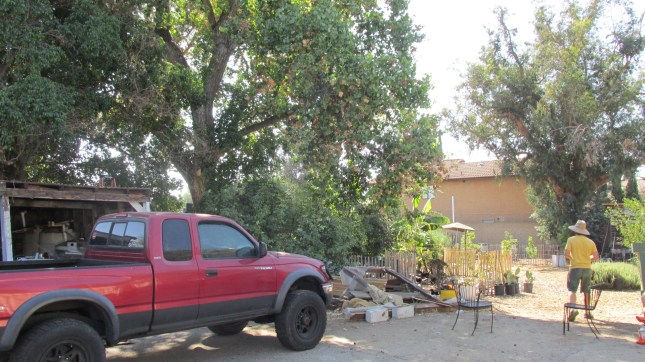
CUF 01 Truck Elliot

I know there are urban farms all over LA, but the last place I would’ve expected to find one was Panorama City. One of the many suburbs that sprang up in the Valley after WWII, the area is a wide, flat expanse of tract homes and strip malls. Initially built in the late 40s, Panorama City was an early experiment in creating a master-planned community, filled largely with pre-fab houses made by Kaiser Homes.

Elliott Kuhn bought this small piece of land near Roscoe Blvd. in 2011, and started Cottonwood Urban Farm (CUF) in 2013. The farm would never have existed had the previous owner done what his neighbors were doing and sold the parcel to developers. Roy Peterson had owned the land since the 60s, and lived in a small house that sat on the back of the lot. It would have been easy for him to take an offer from the investors who were buying up the neighborhood during the last decade, filling the surrounding lots with big, nondescript, stucco boxes. But Peterson didn’t want that to happen to his property, and so when Kuhn approached him about buying the parcel to create an urban farm, he took less than he could’ve gotten elsewhere. The idea appealed to him.

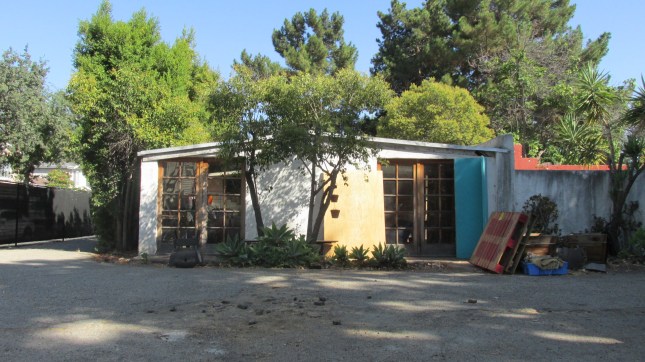
CUF 20 House

The home formerly occupied by Roy Peterson.

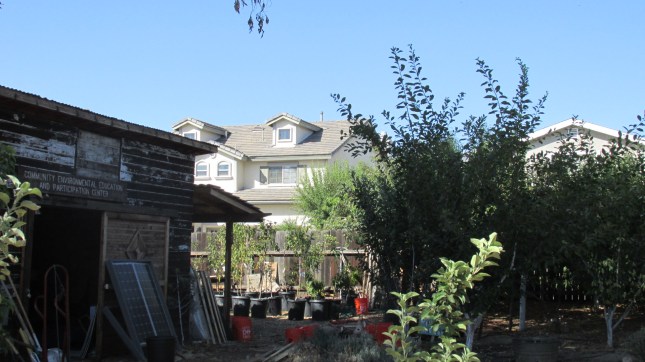
CUF 22 Shack House

Right next door you can see houses built during the construction boom of the last decade.

Kuhn had worked for a while as a teacher, and finally decided it wasn’t for him. He put in some time on farms in Austin, and also did a stint with Tree People. Buying the property in Panorama City was the first step toward starting his own farm, but it took a while to get the land in shape. One of the biggest challenges was clearing the property, which involved hauling off 15 tons of trash.

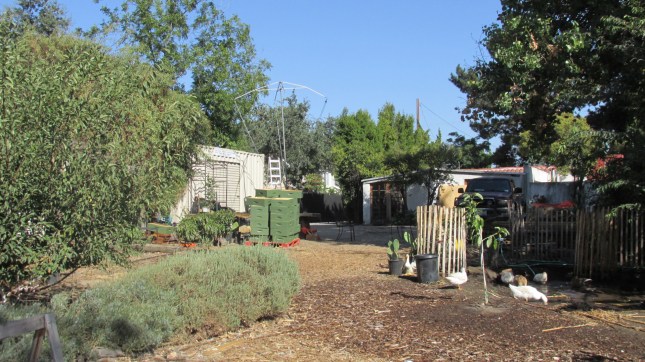
The farm is small, and the layout is compact, so it didn’t take long for Elliott to walk me through it. Toward the back there’s a tiny grove of fruit trees that produce peaches, plums, and nectarines. As we moved toward the front we walked past patches of lettuce, kale, and chard. A crowd of noisy ducks were splashing around in a tiny water hole, and off to one side there were stacks of boxes that serve as bee hives.

CUF 40 Orange Flowers

You can find all kinds of things growing on this farm.

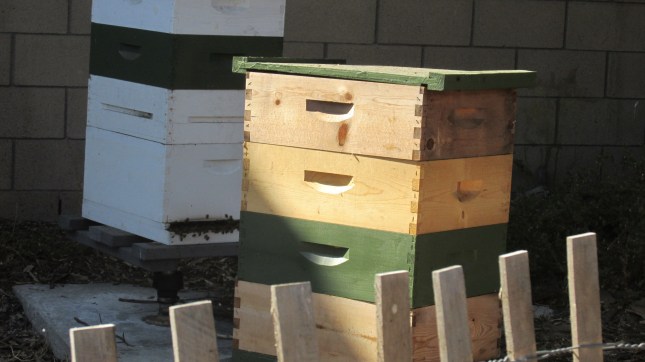
CUF 43 Bees

You can see bees gathered around the opening in the box toward the back.

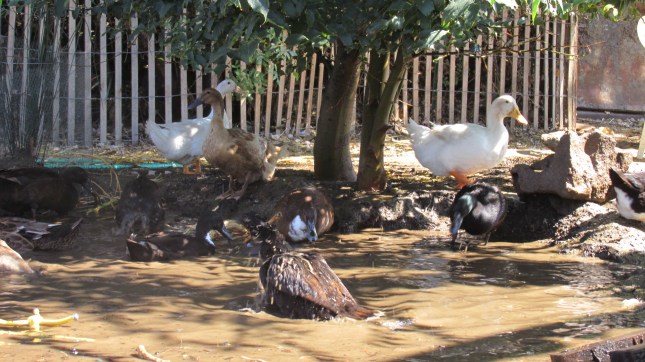
CUF 42 Ducks

The ducks try to keep cool on a hot summer day.

CUF 44 Buddha

A grinning statue of Buddha surrounded by greenery.

The farm gets its name from the giant cottonwood tree that rises high above it. Elliott believes it’s at least a hundred years old. I took a number of photos of the tree, and didn’t get a single image that really captured its beauty, but maybe this one will give you some idea.

CUF 50 Cottonwood Vert

Elliott explained that the produce is not certified organic, but he tries to rely on organic principles. Crop diversity and rotation help make the farm sustainable. I asked if he made his living just by farming, and he said no. He’s hoping to eventually make the farm economically self-sustaining by moving into specialty produce that he can sell for a higher profit. Right now he makes ends meet by patching together a few different gigs, including doing presentations for groups and also working as a gardener.

CUF 60 PLant Magenta Elliot 2

Elliott tending the farm.

CUF 62 Sunflower

Sunflowers are amazing.

When it was time for me to leave, Elliott opened the front gate and I stepped from the soft soil of the farm back onto the hard pavement that covers so much of suburbia. I walked back down to Roscoe Blvd. where rush hour traffic was speeding past in both directions.

I know there are a lot of good reasons to make farms a part of the urban fabric. They can foster a cleaner environment, reduce CO2 emissions and offer communities healthier food. But besides all that, it seems to me that in a sprawling metropolis like LA, it’s also important just to have a place that’s peaceful and green.

If you want to learn more about Cottonwood Urban Farm, here’s the link.

Cottonwood Urban Farm

CUF 90 Farm Wide

Plastic Is a Problem

20 Plastic FINAL

You probably already know that manufacturers use fossil fuel to make plastic.  And you’ve probably already heard the horror stories about how plastic waste is trashing the environment.  Even if you recycle the plastic you use, remember: It’s not biodegradable.  It doesn’t go away.

So there’s only one answer to this problem.  We have to use less plastic.

Can you cut the amount of plastic you use by 20%?  Can you go even further?  You may already be taking reusable bags when you go shopping.  You may already be looking for products that use less packaging.  And there’s one more step you may want to take, if you haven’t already….

STOP BUYING BOTTLED WATER.

Drinking bottled water is one of the most wasteful things we do as a nation.  In addition to producing tons of plastic waste, trucking it around and keeping it cold burn a ridiculous amount of energy.  And with rare exceptions, the water you get from your tap is just as healthy as anything you get out of a bottle.  If you want to know more, check out this article from National Geographic.

Why Tap Water Is Better from National Geographic

So how about it?  Can you use 20% less plastic?

Sure you can.

RIP EPA

20 Harbor Fwy FINAL

If you’ve been following the news, you know that the Environmental Protection Agency is dead.  Founded in 1970 to protect the environment and human health, the EPA has played a major role in making our air clearer and our water cleaner for over four decades.

But that’s over now.  Since the appointment of a climate change denier as the agency’s administrator, the EPA has gutted protections for wetlands, slashed spending on research, and fought to delay enforcement of methane regulations.  And this is only the beginning.

So if you believe climate change is real and that we need to reduce our use of fossil fuels, you can’t look to the federal government any more.

Now it’s up to you.

If you own a car, you could start by driving 20% less.  If all Americans who believe climate change is real took this simple step, it would send a powerful message to the oil companies and the White House.  Ask your boss to let you telecommute on Fridays.  Or take transit one day a week.  Or talk to your co-workers about carpooling.  And there are other things you could do, too.  Think about the trips you take when you go out to shop, have fun, or hang with friends.  If you really put your mind to it, you might be able to reduce your driving by more than 20%.

And make no mistake.  It is down to you.  The federal government is no longer protecting the environment.  It’s now leading an assault on the environment.

If you don’t take action, who will?


Transit Riders Can Do More, Too

20 Bus FINAL

So far this campaign has mostly been about getting car owners to reduce their time on the road by 20%.  Transit riders may be thinking, “Hey, I’m already riding the bus to work.  I’m doing all I can.”

Actually, there is more you can do.

While riding transit instead of driving will help reduce greenhouse gas emissions, busses are still doing plenty of damage to the atmosphere.  You may think that because the Los Angeles MTA has converted its fleet to Compressed Natural Gas (CNG) that we’re doing all we can.

Wrong.  CNG busses produce significant amounts of CO2, in addition to other pollutants.  But we could really make a dent in greenhouse gas emissions by converting the fleet to electric, and the MTA is already studying that possibility.

Not that this will be easy.  The MTA has already tested a few electric busses, and the results were less than stellar.  Electric bus technology is still fairly new, so cost and reliability are both factors.  On top of that, switching the fleet to all electric would require a massive investment in new infrastructure, and that will take years to implement.

So what can you do?  Get involved.  Stay informed about the MTA’s progress on going electric, and don’t be afraid to let them know if you think the process could be moving faster.

Follow the link below to read articles about this issue on the MTA’s blog, The Source.

The Source/Electric Bus News


Be the Light

20 Traffic FINAL H Fwy Dark w Lav Blu Txt

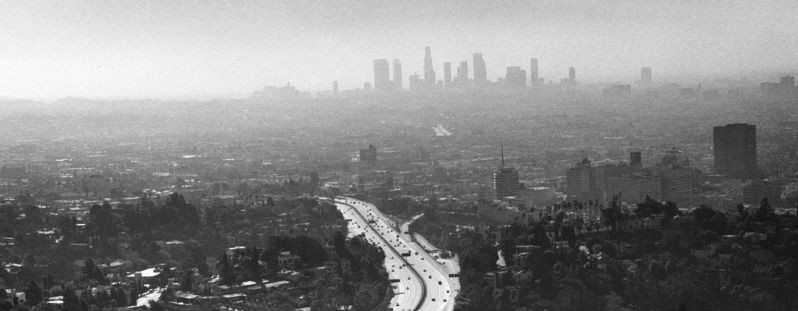
It’s clear that the White House doesn’t care about science. In spite of the fact that the overwhelming majority of scientists agree that climate change is real and that it’s caused by human activity, the current administration has dropped out of the Paris Agreement and is aggressively trying to roll back regulations designed to reduce CO2 emissions.

But just because our government is going in exactly the wrong direction doesn’t mean we have to go along. Millions of Americans understand that we have to reverse the effects of climate change. If Washington isn’t going to act, then we have to act ourselves.

Can you reduce your carbon footprint by 20%? We mostly think of CO2 emissions related to transportation and industry, but there are plenty of other things that contribute to our carbon footprint, from plastic bottles to the appliances we have in our home.

Check out this list from the National Geographic. It offers 14 ways you can reduce your carbon footprint. Take a look and see how you can help. Don’t wait for Washington to change course. Make a commitment to take action yourself.

Fourteen Ways to Reduce Your Carbon Footprint

Fight the darkness. Be the light.


Let’s Stop the Madness

20 Trfc FINAL Hlnd Crowd 2 w Pink Yellow Text

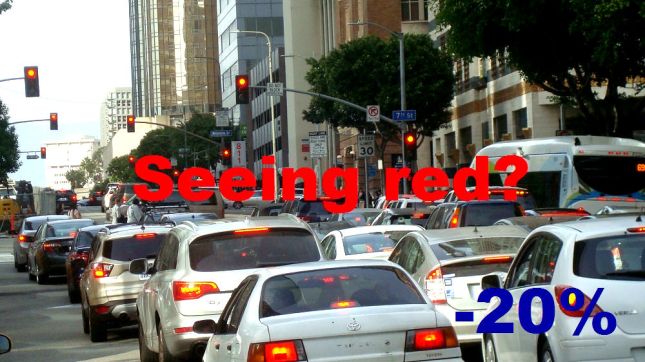
According to an October 2016 poll conducted by the Pew Research Center, 48% of US adults believe climate change is caused by human activity.  And yet millions of those same people get into their car every morning and head off for a commute that often involves a fair amount of time spent sitting in traffic.  We know that climate change threatens the planet, we know we need to reduce emissions, and yet we’re still locked into the same behavior that got us into this mess in the first place.

In the same poll people were asked what would make a big difference in addressing climate change.  Out of six possible responses, the first four were….

> restrictions on power plant emissions

> international agreements

> higher fuel efficiency for cars

> corporate tax incentives

The interesting thing here is that all of these steps would require the government to take action.  And let’s face it, the current administration isn’t gonna do a damn thing about climate change.  So let’s look at the last two responses….

> more people driving hybrids

> people reducing carbon footprints

The people who chose these steps were the people who were ready to take action themselves.  Switching to a hybrid is great, and getting an electric vehicle is even better, but a lot of people can’t afford to buy new car.  So what can they do?

How about cutting your driving by 20%?  Think about how you might reduce the amount of driving you do, either by taking transit, riding a bike, or walking.  Maybe you could find ways to car pool with your friends.

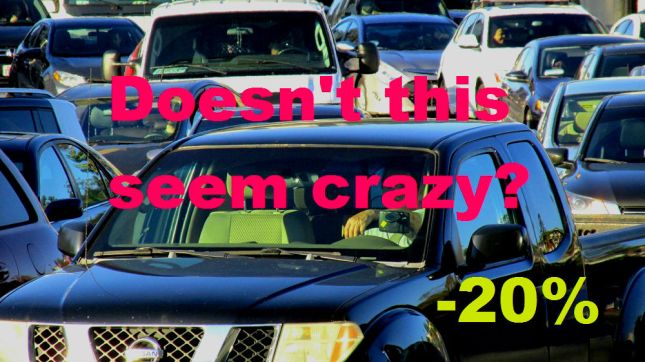
How many times have you been stuck sitting in traffic, staring at an endless line of brake lights, and thought to yourself, “This is crazy!”  And you’re right.  We say we want to fight climate change, but we’re stuck in the same bad habits that created this crisis.

So let’s change our habits.  Let’s stop the madness.


The Climate Is Changing. Can You?

20 Trfc FINAL SD Valley Sized w Yel Text

If you’re waiting for the White House to change its stance on climate change, you’ll be waiting a long time.  And whatever the oil companies say publicly, they’ll do whatever it takes to keep the crude and the profits flowing.

So it’s down to you.

Can you cut your driving by 20%?  If every American citizen who believes climate change is a threat were to spend 20% less time on the road, it would cause a huge reduction in greenhouse gas emissions.  It would also send a message to Big Oil that we want a faster transition to renewable energy.  When their profits start falling, they’ll start listening.

So could you take public transit to work one day a week?  Or car pool with someone you know?  Instead of driving to the park this weekend could you ride your bike?  Instead of taking that epic road trip this summer, could you scale it back a little and go some place closer to home?

You can wait for the government or Big Oil take action, or you can take matters into your own hands.

Stopping climate change starts with you.

Help Koreatown Hang On to Liberty Park

LP 01 Across Med

Los Angeles is notoriously behind the curve when it comes to providing public parks for its citizens. In rating 100 US cities on their park systems, The Trust for Public Land put LA at number 74. And while the city as a whole is lacking in public space for recreation, there are some neighborhoods where the need is especially acute.

Like Koreatown. This dense urban community has plenty of asphalt and concrete, but not much green space. So it’s disturbing news when a proposed project threatens to take away one of the few parks available to residents.

Liberty Park was completed in 1967 as part of Beneficial Plaza on Wilshire Blvd.. Designed by Peter Walker, its graceful curves and striking contrasts make it a unique experience. Walker was just starting his career in the 60s, but has since been become an internationally recognized landscape architect.

LP 10 Walk Pers

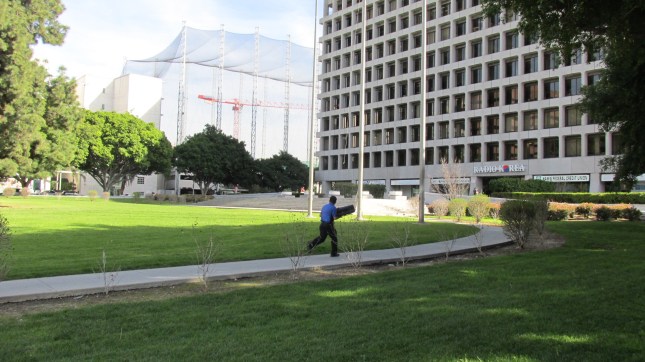
A view of the park facing away from Wilshire.

LP 12 Sm Tree

The park provides much needed green space in Koreatown.


LP 14 Reader

Liberty Park provides a quiet space in the middle of a busy urban area.

LP 20 Steps Const

The park sits at the foot of the former Beneficial Plaza.

But even more important than the park’s design is the place it holds in the community. In an area where parks are scarce, this is one of the few places where people can escape to relax on the grass or read in the shade of a tree. It’s also been a gathering place for the community, whether to celebrate Earth Day or to rally behind the South Korean team during World Cup Soccer.

LP 50 Lawn Shadow

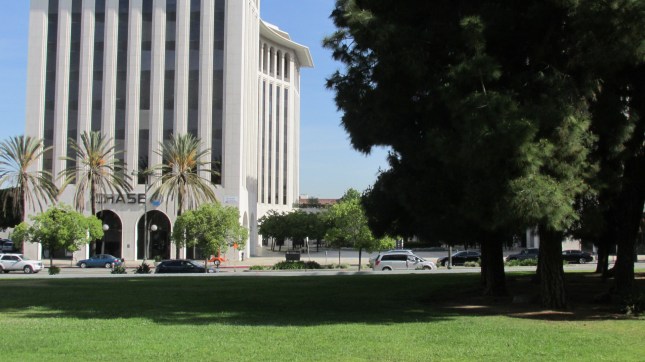
A tall grove of trees provides much-needed shade.

LP 52 Trees Steps Pers

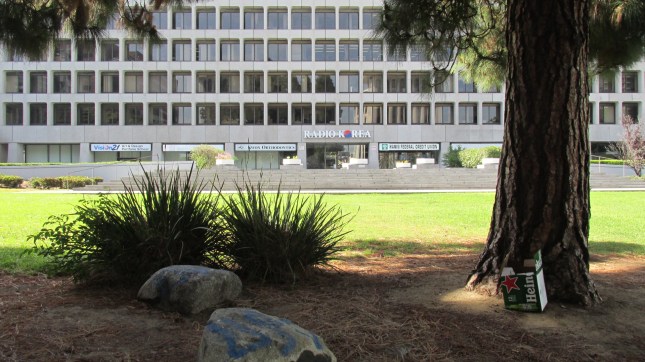
Looking through the trees toward the building that now houses Radio Korea.

LP 56 Trees Beer

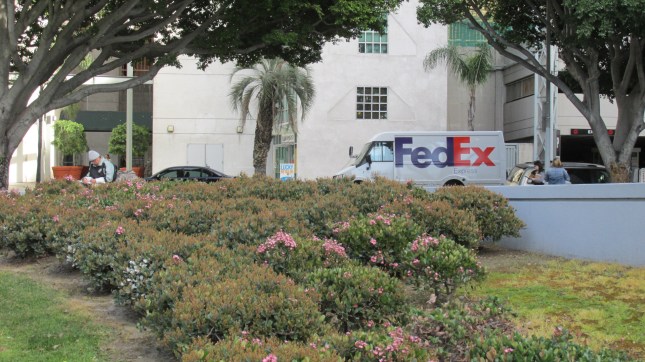
The park’s design offers some interesting contrasts.

LP 58 Trees Bldg

Looking up from beneath the trees.

The proposed project is a mixed-use complex rising 30+ stories, and if approved in its current version it would reduce Liberty Park to nothing more than a few scraps of green space. It’s frustrating that the City of LA only required the developers to prepare a Mitigated Negative Declaration (MND) for this new complex, allowing them to get away with a relatively low level of environmental review. It’s even more frustrating that the MND concludes that this project will have no impact on historic resources. This is ridiculous. Beneficial Plaza as a whole holds in important place in the area’s history, and there’s nothing else like Liberty Park in all of LA.

LP 60 Bush Row Orange

A view of the park facing Serrano.

LP 62 Side Run

A view of the park from the Oxford side.

But it’s not too late to preserve this beautiful and unique public resource. A group called Save Liberty Park has been working hard to raise awareness, and hopefully they can get City Hall to change course on this. They need your help. Here’s the link if you want to get involved.

Save Liberty Park

UPDATE: Liberty Park Saved!

LP 90 Red Car

Pipelines Making You See Red?

20 Trfc FINAL Fig Red

In spite of years of protests, the Keystone and Dakota Access Pipelines are both moving forward.  It’s obvious big oil isn’t listening, and neither is the White House.

So what can we do?

Use less oil.  It’s that simple.  Oil companies build infrastructure based on how much money they think they can make off it.  When oil prices started diving a couple of years ago, the industry cancelled or postponed construction of over 20 major projects.  There’s no point spending money on infrastructure if it’s not going to pay off.

What if everybody cut their driving by 20%?  The oil market is already shaky, with soft prices making investors nervous.  If we use less, supply will increase, and that will drive prices lower.  And it will also make oil companies think twice about plowing billions into building new pipelines.

So how about it?  Can you cut the amount of time you spend behind the wheel by 20%?  Not only would you be helping move the country toward clean energy, but you wouldn’t spend so much time stuck in traffic.  It’s win win.

Start Your Own Paris Agreement

20 Trfc FINAL Wstd w Red Yel Text

Millions of Americans are angry about the White House’s decision to withdraw from the Paris Climate Agreement, and certainly their anger is justified. But just because our government won’t take action on climate change doesn’t mean we can’t.

Cut your driving by 20%. If every American who supports the Paris Agreement were to drive 20% less, it would significantly reduce greenhouse gas emissions. There are a number of steps you can take….

Take transit to work, or try car pooling, one day a week.

Ask your boss if you can work from home one day a week.

Walk to the market instead of driving. Or share the trip with a friend who’s also shopping.

Think about taking local outings instead of longer trips.

Use your imagination. Everybody’s lifestyle is different, but ask yourself if you can change your driving habits to spend 20% less time on the road.

If Americans cut their driving by 20%, it would not only send a powerful message to the White House, but also to the oil companies. As long as we keep using fossil fuels, they’ll keep selling them. A 20% drop in their profits would let them know we want a faster transition to renewable energy.

Start your own Paris Agreement. Commit to cutting your driving by 20%.