Are We Making Any Progress on Homelessness?

Homeless encampment on Hollywood Blvd. near Gower.

The results of the 2024 Homeless Count have been released, and the CEO of the Los Angeles Homeless Services Authority (LAHSA) says “the numbers we are seeing are very encouraging.”  Honestly, I don’t agree.  I guess you could say the fact that the growth in the homeless population appears to have levelled off is a good sign, but the fact that we still have around 75,000 homeless persons in LA County does not seem “encouraging” to me.

If you haven’t already seen it, I highly recommend Tim Campbell’s most recent article in CityWatch.  Campbell digs into the data and points out that, as we’ve spent increasingly large sums on homelessness over the last eight years, the numbers of people living on the streets have continued to rise.  Here’s a quote:

LAHSA’s fiscal year 2016-17 budget was $132.1 million, and it had 200 employees.  The 2016 PIT [Point-in-Time] count showed 46,874 homeless in L.A. County.  By fiscal year 2023-24, LAHSA’s budget ballooned to mor [sic] than $840,000,000 and it had 800 employees.  The 2024 PIT count showed more than 75,000 homeless in the County.  For a six-fold increase in budget, and a quadrupling of staff, the County suffered a 60 percent increase in homelessness.

That doesn’t sound like progress to me. 

In another recent article, Campbell talks about the structural problems with LAHSA.  He points out that the agency doesn’t do a good job of gathering or tracking data, and there’s no meaningful accountability.

In my view, the problems with LAHSA go back to its beginnings.  By the early 90s, LA City and LA County had been bickering for years over who was to blame for homelessness, with each pointing the finger at the other.  So their solution was to create a joint powers authority that would supposedly provide better coordination and more effective services. 

It hasn’t worked, largely because LAHSA was never given the authority to do the job.  LAHSA actually has no power.  It basically serves to funnel public money to various homeless services providers.  Some of them do a good job, some of them don’t, but it doesn’t matter how well they perform because the agency just keeps writing checks.  As Campbell points out, it would be hard for anyone, no matter how smart or talented, to make needed changes because LAHSA’s culture doesn’t allow that.  LAHSA’s culture seems to designed to keep the money flowing and the bureaucracy growing. 

Why is this?  In my opinion, it’s because it’s run by politicians.  The LAHSA Commission is 10-member body made up of politicians and political appointees.  Two LA County Supervisors serve on the Commission, along with three people appointed by the remaining Supervisors.  Mayor Bass also serves on the Commission, along with a Bass appointee, and two Garcetti appointees.  One seat is vacant. 

Of the five non-politicians on the Commission, apparently only one (Dr. Melissa Chinchilla) actually has a background in working with the homeless.  The others are described as “an attorney, equity advocate and mom”, an “educator and community leader”, a “chief impact officer and owner at […] a social-sector consulting firm”, and a “passionate advocate” with a “Bachelor of Science degree in Child Development”.  So on the 10-member LAHSA board, we only have one person who actually has a real background in serving the homeless.  This seems like a serious problem to me.

As long as the agency is run by politicians, decisions will be made based on political considerations.  These people are sitting on top of hundreds of millions of dollars.  If LAHSA were to be restructured to provide better coordination and higher efficiency, it might turn out that it could provide more effective services for less money.  This, of course, is not the outcome most politicians want.  The point is to keep the money flowing, whether the program is effective or not. 

There’s no simple solution to homelessness.  It’s not just a matter of providing housing.  These days homelessness is entwined with a drug abuse crisis and a mental health crisis.  It should be clear by now that if someone’s addicted to fentanyl, just giving them the keys to an apartment is not going to keep them housed.  Someone with serious mental illness needs treatment before they can move to independent living.

So I don’t want to pretend solving homelessness will be easy.  But in my view, we could make more progress if we got the politicians out of the mix.  LAHSA needs to be restructured to give it the power to create and implement policy.  Instead of doling money out to various service providers, it needs to have its own staff working to accomplish definite goals with clear metrics.  And instead of a commission made up of politicians and their appointees, it needs a commission made up of people with credible credentials in homeless services, mental health and substance abuse. 

I realize the chances of something like this happening are close to zero.  But as long as we keep stumbling along with the current, broken system, I doubt we’ll make any real progress on homelessness. 

Apps Are Collecting Your Data. That Could Cost You Money.

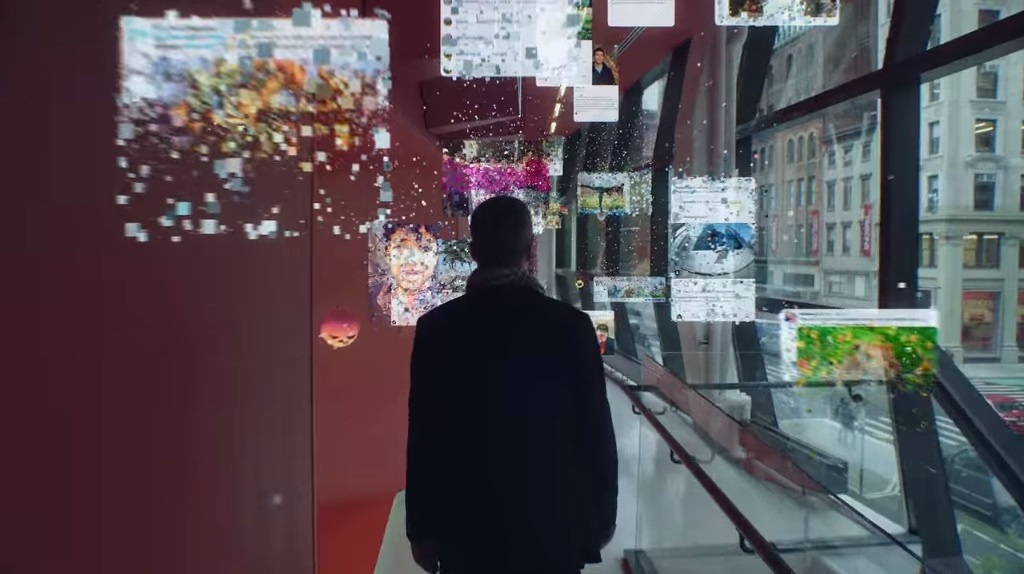
Still from The Great Hack, 2019

In 2021, some customers at the Hollywood Trader Joe’s were surprised when they were told that they now had to download an app in order to park in the underground garage.  Those who took the time to read the privacy policy were even more surprised to learn that by downloading the app they were agreeing to let the company behind the app, Metropolis, track their browsing activity, collect information about services they used, and follow their activities across different devices.

Many landlords are now pushing their tenants to use apps for paying rent, handling complaints, etc., but renters should look at the privacy policy before getting on board.  One such app, Door Loop, collects a lot of sensitive info from its users, including date of birth, job title, e-mail provider with (login info), social media you use (with login info), race, and social security number.  Their privacy policy says they may share that data, along with any other data you provide, with vendors, consultants and third-party service providers.  In other words, their privacy policy seems to describe how they can invade your privacy.

Now, when I talk to people about how their data is being collected by apps and services, their response is usually something like, “Oh, well, they already have all my data anyway.”  Another common response is, “I haven’t done anything wrong, so I don’t care if they’re tracking me.” 

If you don’t think giving up your data can create any problems for you, you need to think again.  For instance….

Consumers who’ve bought cars from GM in recent years have been able to sign up for a service called Smart Driver, which collects data about your driving habits, like how often you brake quickly or whether you go over the speed limit.  Supposedly it was up to customers to choose whether or not they wanted to participate.  But it was recently revealed that GM had been collecting data from people who had never signed up for Smart Driver.  Not only that, the company shared the data with a leading data broker.  Why should this worry you?  A number of GM owners have filed lawsuits alleging, among other things, that their insurance rates went up substantially because insurers had access to the data.

Let’s talk about mental health apps.  There are a number of them out there, and lots of people are relying on them to deal with mental health issues.  But unless the app you’re using is connected to your health care provider, there’s probably nothing to prohibit the company from sharing the data they collect with anyone they like.  A recent report from Duke University found that data brokers advertise their holdings of sensitive mental health data, which includes information on people suffering from depression, ADHD, anxiety and bipolar disorder.  This information is for sale, and there are few meaningful controls on who can access it or how they use it.  Do you think insurance companies might want to know if you’ve been struggling with substance abuse?  Do you think a prospective employer might be interested in knowing whether you’ve been diagnosed with ADHD?  Could there be other folks out there who want to exploit this information for their own ends?

People download apps all the time for all sorts of reasons.  Some apps may be useful, some of them may be fun, but it’s important to remember that many of them are designed and marketed with the sole purpose of collecting data from you.  Collecting and sharing/selling your data is big business. In 2022 data brokers made more than $250 billion by selling consumer data.  That number is only going to grow. 

Apps are a crucial part of this ecosystem.  When you use a browser to surf the net, there are some protections in place to inform you about what information is being collected and you can often choose to opt out of sharing your data.  But with apps, they’re not only collecting your data, they’re sharing it as well, and there are no meaningful protections in place.  When you download the app, you often get a small pop-up that asks you to agree to the company’s terms and conditions.  That’s it.  They generally don’t make any further effort to disclose that they’re going to collect your data.  To learn about what you’re getting into, you’d have to read their terms and conditions, which contains their privacy policy, which usually starts with something like, “We take your privacy seriously.”  The extent of the data they collect and their intent to share it with others is usually buried deep in these documents.  And how many people actually take the time to read these things?  Most people just click “Accept” and move on. 

The best protection is to think carefully about which apps you use, and avoid downloading those that you don’t need.  If in doubt, take the time to read the privacy policy so you at least know what you’re getting into.  If you don’t, you’re taking the chance that the app will collect and share personal info that could have an impact on your life. 

If you have kids, you should also be thinking about the apps they’ve got on their phone.  What data are they sharing?  If the apps are connected to social media, are they collecting info on family and friends?  Are they collecting location data?  Places your kids hang out? 

Data brokers are making big money on this stuff because there are lots of folks out there that want to have access to your personal info, and they’re willing to pay good money for it.  These include insurance companies, employers, government agencies and a host of others.  Don’t assume that any of these people have any interest in protecting your privacy.  In most cases, the only interests they’re protecting are their own.

Art Deco Jewel in Hollywood Moves toward Landmark Status

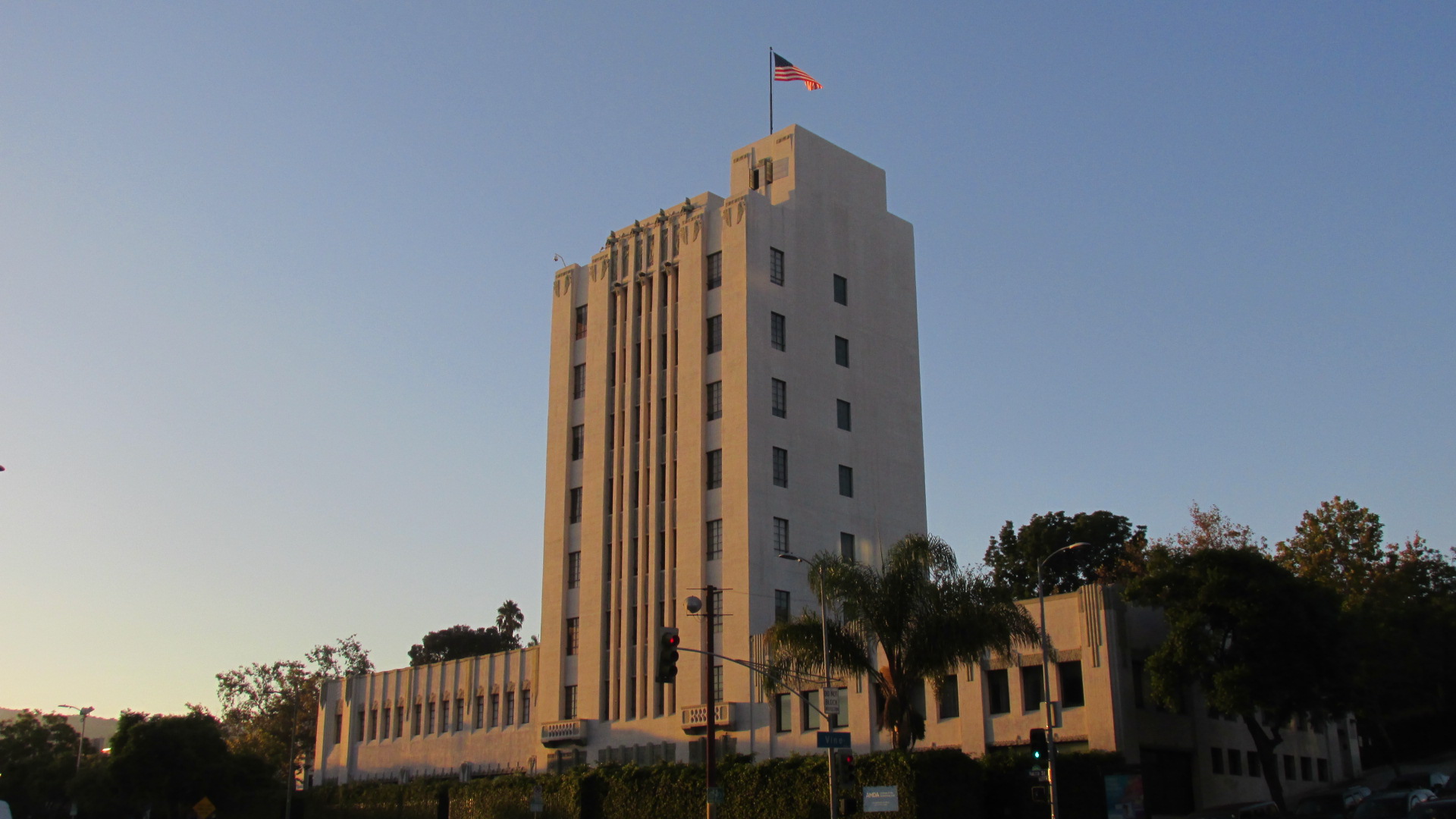
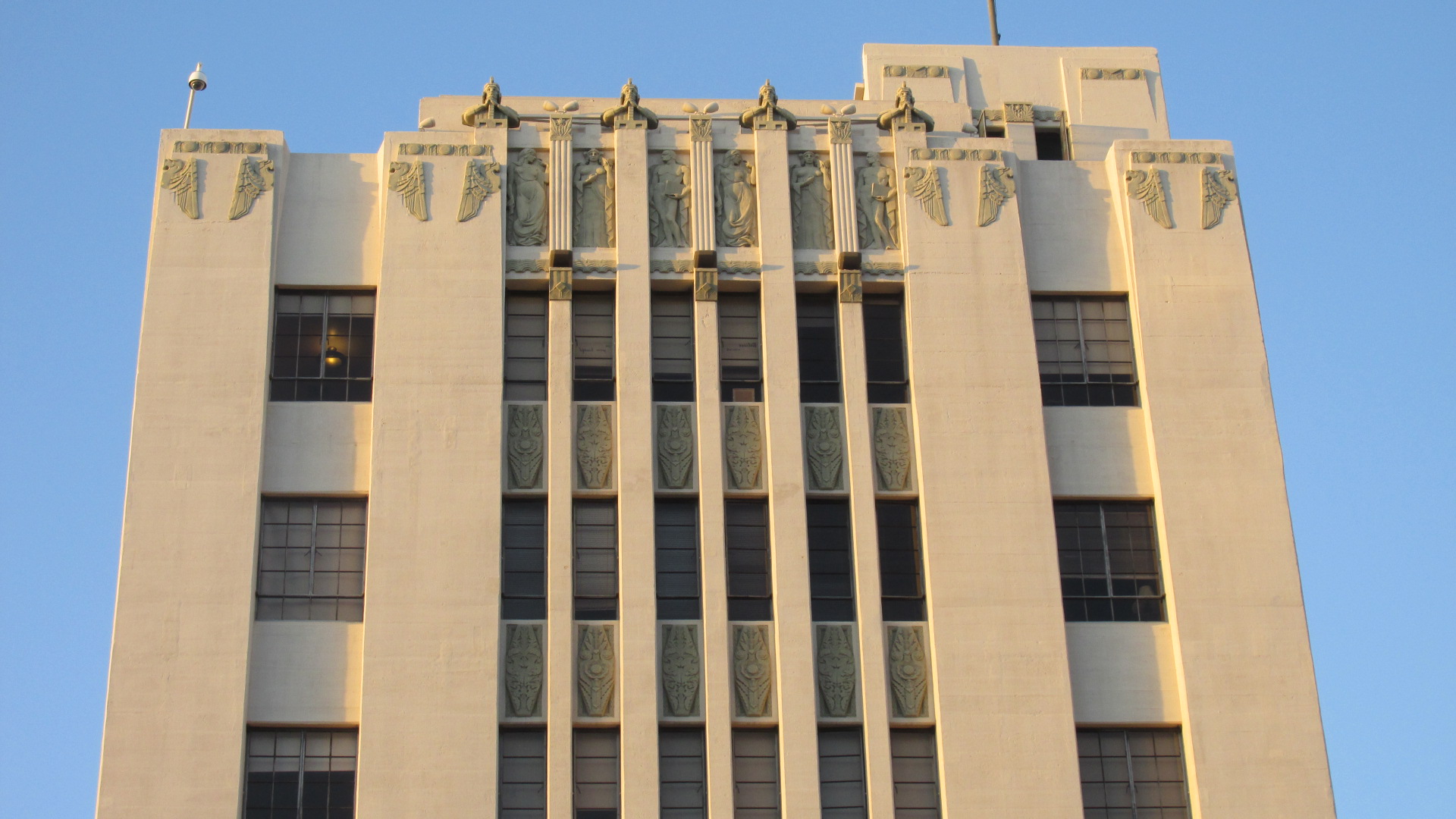
Yucca Vine Tower in Hollywood.

One of Hollywood’s most beautiful buildings is finally getting the recognition it deserves.  On April 18, the City of LA’s Cultural Heritage Commission voted unanimously to recommend that the Yucca Vine Tower be designated a Historic Cultural Monument. 

View of central tower.
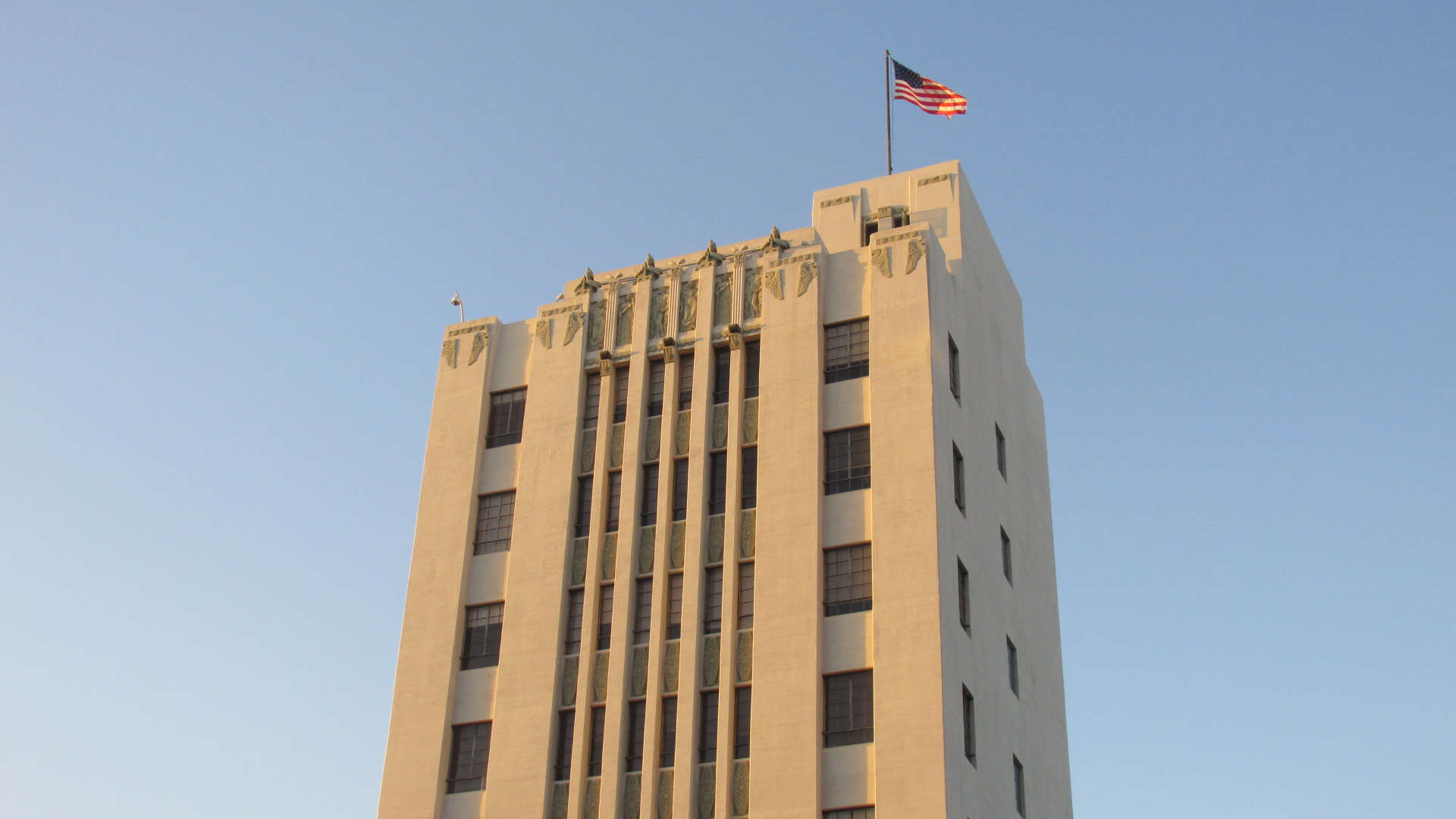
Top of central tower.

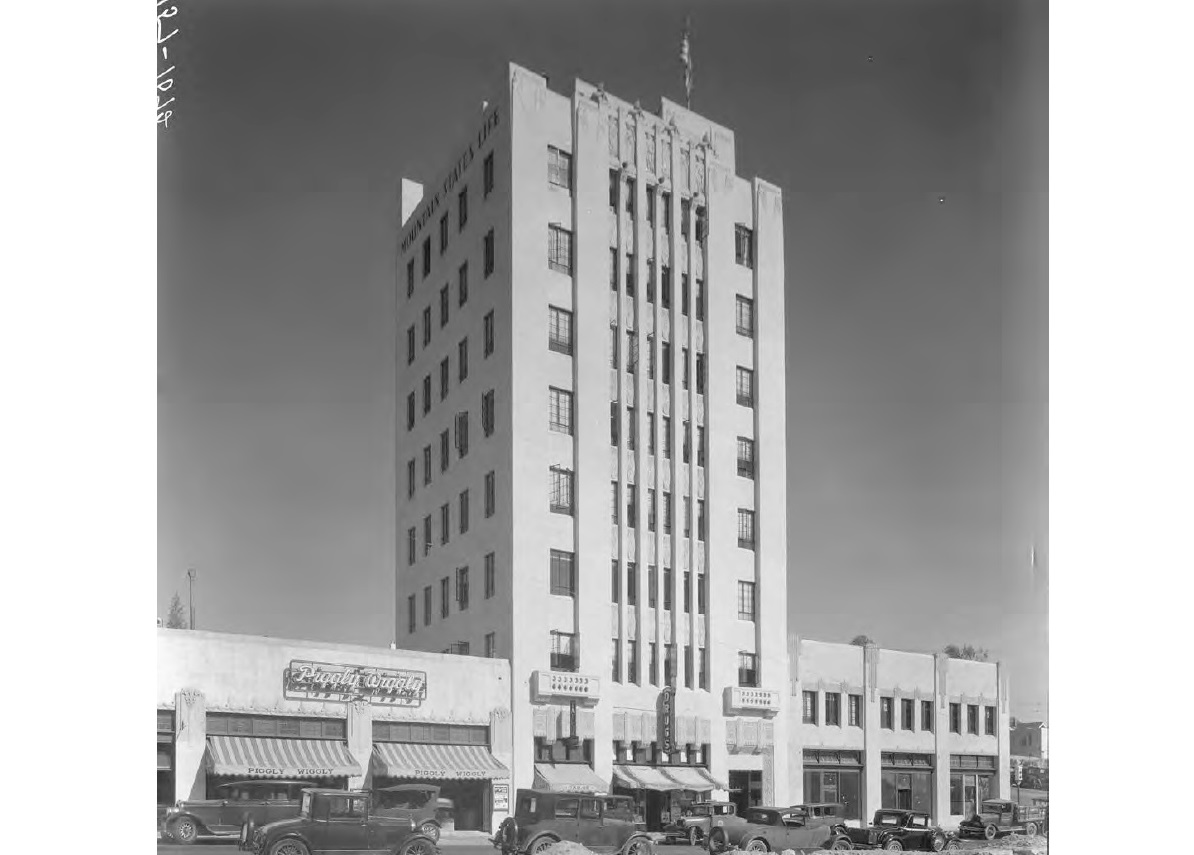
This Art Deco classic, constructed nearly 100 years ago as the Mountain States Life Building, was designed by LA-based architect Henry Gogerty.  Currently occupied by the AMDA College of the Performing Arts, the list of former tenants includes Gene Autry’s Western Music Publishing, Motion Picture Daily, the Hollywood Anti-Nazi League, and Chao Praya, one of the first Thai restaurants in LA.  In addition to designing other notable buildings in the Hollywood area, Gogerty worked on over 350 schools in Southern California.  His firm is also credited with designing the Hughes Aircraft complex in Playa Vista and the Grand Central Air Terminal at the former Glendale Airport.

Historic image of Yucca Vine Tower from California State Library.

Thanks to John Girodo and the Art Deco Society of Los Angeles, who submitted the nomination.  Thanks also to Kathleen Perricone, whose thorough research in preparing the nomination made an excellent case for historic designation.  For more background on this amazing building, take a look at the CHC agenda packet, which is available here.  The packet contains a wealth of historic photos.  You can jump to them by clicking on Historic-Cultural Monument Application in the index on the first page.

View of Yucca Vine Tower from west.
Detail of base.

The designation isn’t final yet.  It still has to be approved by the full City Council.  Hopefully they’ll vote soon to give this gorgeous building HCM status.

The City of LA Keeps Promising Affordable Housing, But Are We Getting It?

In my last post I wrote that the City of LA was thinking about allowing the installation of alcohol vending machines at an apartment building in Hollywood.  In doing some research on the building itself, I found that the owner of 1530 Cassil has partnered with a company that offers both residential and travel lodging, effectively turning at least some of the units into extended stay hotel rooms.  While technically stays of 30 days or more would be legal, this seemed strange given that the building was approved as a housing project.  The City’s determination letter made no mention of hotel rooms.

But the determination letter does state that the project is required to provide 20 units reserved for Extremely Low Income (ELI) households.  The developer got a 70% density bonus to build way beyond what the zoning allowed in return for those 20 affordable units.  I started wondering how many of those units were actually occupied by ELI households, so I submitted a Public Records Act Request to the LA Housing Department. 

The response was disturbing.  As of the end of January, the City had only received verification that three of the 20 affordable units were occupied by ELI households.  What about the other 17 units?  Are they empty? Are they being rented as extended stay vacation lodgings?

The developer of this project received a 70% density bonus under the Transit Oriented Community (TOC) Guidelines, which were the result of the voter-approved Measure JJJ.  The idea was that project applicants would be able to build more than what was allowed under existing zoning in exchange for providing a percentage of affordable units.  They would also benefit from a streamlined approval process.  The City of LA claims that the TOC program is key to providing much needed affordable housing. But how much affordable housing are we really getting if the City isn’t enforcing the affordability covenants?  I’m not the first person to raise this issue.  Back in 2021, Capital & Main did some research and found that the City of LA wasn’t able to provide an accurate inventory of existing affordable units.  They looked at LAHD’s on-line registry of affordable housing, and found that many affordable units were not listed.  Capital & Main also reported that the City doesn’t maintain a centralized inventory of affordable units in mixed-income buildings.  So how are people in low-income households supposed to find these apartments?

LA City Planning gave a 70% density bonus to the developer of 1530 Cassil, which was worth millions of dollars.  In return, the developer agreed to provide 20 affordable units. But if the City’s records are correct, only three of them are occupied.  This is a serious problem.  City Hall likes to claim they’re creating lots of affordable units, but can we really believe their claims?  The waiting list for affordable housing is a mile long, so why aren’t all of these units occupied by low-income households?  And beyond that, why is City Planning handing out valuable density bonusses without following through with necessary oversight?

The politicians and the planners make endless promises, but time after time they’ve failed to deliver. 

Alcohol Vending Machines May Be Coming to an Apartment Building Near You

Sentral at Inspire Hollywood, 1530 Cassil Pl.

If you’ve spent any time at all in Hollywood, you know it’s not hard to get a drink there.  Bars and nightclubs abound, and there are plenty of mini-marts and liquor stores with a wide assortment of booze.  But what if you don’t feel like going out to a bar, and you’re too tired to even walk to the liquor store?  How can you get high without leaving the comfortable confines of the building you live in?

Lucky for you, the owner of a brand-new apartment complex in Hollywood has come up with the answer: A vending machine that offers a full-line of alcoholic beverages!  Yes, the owner of Sentral at Inspire Hollywood, 1522-1538 Cassil Place, has applied to the Department of City Planning for a permit to install two such vending machines in “club rooms” located on the fourth floor and the eighth floor, in both cases with adjacent outdoor decks.  And LA City Planning seems open to the idea.  A hearing was held on Tuesday, January 9, and while the Zoning Administrator agreed to keep the record open for two weeks for further comments, it seems likely that City Planning will approve it. 

Why would you want to install alcohol vending machines in an apartment building?  Well, reportedly the owner of Sentral at Inspire Hollywood feels that it’s a necessary step if he wants to compete with other buildings in the area.  And of course, if City Planning approves this, you can bet that owners of other buildings will decide that they need these machines, too.  (You may be thinking, “Wait a minute.  What if kids try to use the machine to get booze?”  While full details have yet to be revealed, it’s likely that these machines have the capability to do biometric IDs.  Yes, this is legal in California.) 

In other words, even though Hollywood is drowning in alcohol already, LA City Planning wants to jack up alcohol density even further.  Never mind the numerous health harms associated with the consumption of alcohol.  Never mind that research shows increases in violent crime are associated with increased alcohol density.  It’s been clear for years that City Hall feels you can never have too many establishments selling alcohol.  To cite just a few instances: 1) In December 2023 the City approved permits for FIVE restaurants to serve a full-line of alcohol from 6 AM to 2 AM daily at 5780 North Canoga; 2) In 2019 the City approved a Master Permit for TWENTY TWO alcohol-serving establishments as part of the Crossroads Hollywood project (Fortunately not built.  Yet.); 3) In 2022 the City of LA approved the Restaurant Beverage Program (RBP) which allows restaurants to serve alcohol without first obtaining a Conditional Use permit. 

Again, there are decades of research showing the harmful effects of increased alcohol density.  One study titled “Alcohol Availability and Intimate Partner Violence among US Couples” (Alcohol: Clinical and Experimental Research, January 2009) has this to say:

“We found that as alcohol outlet density increases so does the risk of MFPV [Male/Female Partner Violence] and that this relationship may differ for couples who do and do not report alcohol-related problems. Given that MFPV accounts for the majority of injuries related to intimate partner violence, policy makers may wish to carefully consider the potential benefit of limiting alcohol outlet density to reduce MFPV and its adverse consequences.”

The LA County Department of Public Health has also weighed in on this issue repeatedly, and you can read their findings in the report “Alcohol Outlet Density and Alcohol-Related Consequences by City and Community in Los Angeles County” (LA County Department of Public Health, December 2022).  A quick look at Table 1A shows that Council District 13, which includes Hollywood, already has a high alcohol density.  And Table 2A shows that CD 13 has a far higher rate of violent crime than LA County as a whole.  But to give you a general idea of how many harms are associated with drinking too much, let’s just look at this one paragraph on page 24:

Excessive alcohol consumption continues to be a serious public health concern with substantial implications for disease, violent crimes, traffic collisions, work loss, and social relationships. During 2020 in Los Angeles County, alcohol was involved in an estimated 4,060 motor vehicle crashes, 5,745 motor vehicle injuries, 123 motor vehicle fatalities, 50,600 ED visits, 45,726 hospitalizations, and 2,498 alcohol-attributable deaths.

So excessive consumption of alcohol doesn’t just harm the individual who’s doing the drinking.  It has the potential to cause substantial harm to the community. 

The problem here is not just that a couple of alcohol vending machines are going to be approved for one apartment building.  The problem is that this sets a precedent which will allow anyone else who owns a multifamily residential building to do the same thing.  That could mean a substantial increase in alcohol density across Los Angeles, including in areas that are already suffering harms from over-concentration of locations serving alcohol.  It’s likely that there are a number of landlords out there who would see these machines as a great way to increase revenue, and if City Planning says yes to Sentral at Inspire Hollywood, it will probably say yes to other applications that comes along.

If you have thoughts on installing alcohol vending machines in apartment buildings, you can contact the City Planning staff member assigned to this case.

Stephanie Escobar, City Planning Associate

Stephanie.Escobar@lacity.org

Be sure to include the case number in the subject line.

ZA-2023-4977-CUB

Ignacio Lozano, Jr., Former Publisher of La Opinión, Dead at 96

Ignacio Eugenio Lozano, Jr. (1927-2023), photo from La Opinión, courtesy of the Lozano family

Ignacio Eugenio Lozano, Jr., former editor and publisher of La Opinión, has died at 96.  Lozano helped build the family-run newspaper into the most important Spanish-language print publication in Southern California.  He holds a significant place in LA history, and La Opinión played a crucial role in giving voice to the region’s growing Latino population.  Though the Lozano family is no longer involved in running La Opinión, it is still published today.

Muere Ignacio E. Lozano Jr., ícono del periodismo en español e histórico editor de La Opinión

Ignacio E. Lozano Jr., longtime La Opinión publisher, dies at 96

Lakeside Car Wash to Be Replaced by Mixed-Use Project

The LA area grew rapidly in the first half of the 20th century, and after WWII the population continued to climb.  Spurred in part by the growth of the freeway system, subdivisions started springing up all over the place, and LA’s car culture kicked into high gear.  Families went to see movies in drive-in theatres.  Teen-agers spent Saturday night at drive-in restaurants. 

And the car wash became a familiar fixture in these new communities.  According to the LA Conservancy, the Lakeside Car Wash, located at Riverside and Hollywood Way, debuted in 1956.  The architect is unknown, but the structure stands out for its surprising combination of rustic ranch style and mid-century modern.  The Conservancy points out the connections to the Googie coffee shops that were popping up all over LA at the time.

View of Lakeside Car Wash from Riverside Drive.
Entrance to car wash

But whatever its architectural merits, the Lakeside Car Wash is now closed and will almost certainly disappear in the not too distant future.  In April 2022, the City of Burbank approved the construction of a mixed-use project on the site, which includes 49 condos and 2,000 square feet of commercial space and open space located at street level. 

Side view from Hollywood Way
The back of the car wash
Actually, the closure is probably permanent.
The cashier’s office

Remnants of the early days of California’s car culture have been disappearing for years.  The Reseda Drive-In Theatre was shuttered back in the 70s.  The Tiny Naylor’s at Sunset and La Brea, a Googie classic, was demolished in the 80s.  Burbank’s Pickwick Drive-In Theatre went dark in 1989 and is now a shopping center. 

But car culture isn’t disappearing, it’s just changing.  These days more California households have access to cars than ever before.  Check out this quote from Falling Transit Ridership, a study published by UCLA in 2018….

Census summary file data show that from 2000 to 2015, the SCAG region added 2.3 million people and 2.1 million household vehicles (or 0.95 vehicles per new resident). To put that growth in perspective, from 1990 to 2000 the region added 1.8 million people but only 456,000 household vehicles (0.25 vehicles per new resident). The growth of household vehicles in the last 15 years has been astonishing.

The Lakeside Car Wash will soon be gone, but cars are here to stay.  They’ll just have to go somewhere else to get clean.

Art Laboe Tribute in Downtown LA


I don’t listen to the radio much.  I remember hearing Art Laboe’s name when I was a kid.  I knew he was a DJ, and I may have heard his show when I was growing up.  But I really didn’t know much about him until I read his obituary last October. 


Reading about his life, I felt a rush of happiness and sadness.  I’m not sure I can explain why, but I think it had to do with the fact that he spent his time on earth bringing people together.  From the lovers who called in asking him to dedicate a song to someone they cared about, to the kids from East LA, West LA, and South LA who gathered at the live shows he organized.


On Saturday, August 5, thousands of people gathered in Downtown LA to pay tribute to Laboe.  DJs spun oldies and live performers took the stage to sing their versions of favorite tunes. People from all over Los Angeles showed up, and everybody seemed to be having a good time.


We are so divided these days.  There are so many voices in the media that seem determined to drive us apart.  We really need voices that can reach across the lines that divide us.  Art Laboe understood the power of music, and he used it to erase those lines.  We need people like him now more than ever.

LA City Council Ready to Ramp Up Digital Billboards, Ignoring Privacy Concerns

Digital billboard on Sunset Strip

Are you ready to have scores of digital billboards installed in neighborhoods all over the City of Los Angeles?  Well, whether you’re ready or not, the City is moving forward with approval of a new ordinance that would allow exactly that.  LA City Planning has posted the Final Draft Ordinance which would allow LA Metro to install scores of digital billboards throughout the city for its so-called Transportation Communication Network (TCN).  There are reasons to believe that the TCN has been a con from the start, but more about that later.

Under the new ordinance, Metro would be allowed to erect 86 digital billboards at locations throughout the City of LA.  The billboards would range in size from 672 square feet to 1,200 square feet, for a total maximum amount of up to 55,000 square feet.  Metro wants us to believe we’re getting a good deal because they’ll be taking down 110,000 square feet of conventional billboards, but does that really seem like a good trade-off to you?  Since the images on digital billboards are constantly changing, we’ll be subjected to more advertising than ever, and with more ads competing for our attention, it seems likely to cause an increase in distracted driving. 

There are also serious privacy concerns.  One of the reasons digital outdoor advertising is so profitable is that it involves the collection of consumer data to learn about consumer behavior.  Metro claims that no personal data will be collected as part of the program, but can we really trust them?  William Eccleshare, former CEO of Clear Channel Outdoor, has bragged about how the company can follow you to a store, can gather info on what you purchase, and can even find out what you’re watching on TV.  This August 2020 article from the LA Times offers more chilling background on how advertisers are collecting your data.

Billboards that Follow You? It’s Not Sci-Fi. They’re Already Here

Metro has already allowed Clear Channel to install digital billboards in Downey and Long Beach.  Ad companies insist that no personally identifiable information is being collected, but no one really knows what they’re gathering.  And because the data collection industry is almost totally unregulated, you really don’t know where the data goes or who has access to it. 

The digital billboards will be installed in communities all across the city.  Check out these maps from the Environmental Impact Report to see the locations.

TCN digital billboard locations in the Valley
TCN digital billboard locations in Central and South LA
TCN digital billboard locations in Downtown LA

If you want to let your LA City Council rep know how you feel about the Transportation Communication Network Ordinance, and the prospect of opening the door to digital billboards citywide, here’s their contact info.

LA City Council

Don’t know who your Councilmember is?  Click here.

Before going on, in the interest of full disclosure, I should acknowledge that I work with a group called Citizens for a Better Los Angeles that has filed a lawsuit to stop the TCN.  But I’m writing about this as an individual because I’m so disturbed by so many aspects of this program.  I’m concerned about the collection of personal data on a massive level.  I’m outraged by this massive invasion of our public space.  And I’m furious about the level of dishonesty exhibited by both the Metro Board and members of the LA City Council. 

Remember that, although these billboards will all land in the City of LA, the so-called “Transportation Communication Network” is Metro’s project.  The City of LA is preparing this ordinance to change the LA Municipal Code to allow widespread deployment of digital billboards by Metro.  Metro announced it would preparing an Environmental Impact Report for the TCN in 2022.  According to the Notice of Preparation, the TCN would….

[….] provide a network of structures with digital displays (TCN Structures) that would incorporate intelligent technology components to promote roadway efficiency, improve public safety, augment Metro’s communication capability, provide for outdoor advertising where revenues would fund new and expanded transportation programs consistent with the goals of the Metro 2028 Vision Plan, and result in an overall reduction in static signage displays throughout the City of Los Angeles.

The first problem with this is that we already have existing infrastructure that does most of the things that the TCN is supposed to do.  The Regional Integration of Intelligent Transportation Systems (RIITS) is a network of systems that gathers transportation related data throughout Southern California and offers it to local transportation agencies.  Here’s what it says on the RIITS “About” web page….

Vision

RIITS’ vision is to deliver multi-modal transportation information services through a flexible platform to achieve regional mobility, safety and sustainability goals.

Mission

Our primary mission is to support the exchange of transportation information and resources between and within government organizations for regional operational mobility improvements.

If it sounds like RIITS and TCN have a lot in common, it’s because they do.  The existing RIITS network is already doing a lot of the things Metro claims TCN will do.  And Metro could expand the RIITS system without installing a single digital billboard.  Sensors, cameras and wireless infrastructure are already widely deployed across our system of roads and freeways, so TCN isn’t really offering anything new.

Except, of course, digital billboards. 

Remember, according to the 2022 Notice of Preparation, the TCN involved the placement of new advertising structures and a reduction in the number of existing static billboards.  But was this really something new?  Actually, no.  It’s a continuation of Metro’s Billboard Program, which has been in existence for over a decade.  An August 2016 Metro Board Report gives a detailed account of how Metro has been working with a company called Allvision to cut deals with cities where they agree to allow new digital billboards in exchange for the removal of static billboards.  Here’s what the report says about the City of LA….

“All Vision and Metro staff have had preliminary discussions with the City of Los Angeles. The City is considering various options for the adoption of a new billboard ordinance. The City of Los Angeles Project offers Metro the greatest potential for new revenue from the conversion of static billboards to digital billboards.”

So in 2022 Metro announced it was preparing an EIR for the Transportation Communication Network, and also in 2022 Councilmember Paul Krekorian submitted his motion for an ordinance that would allow “digital off-site signs to be displayed on structures that are part of the Transportation Communication Network Program”.  But the Metro Board Report shows they’ve been talking about this since 2016.  By calling it the “Transportation Communication Network” they’re actually just rebranding Metro’s long-standing Billboard Program.  And the “new billboard ordinance” mentioned in the Board Report is obviously the TCN Ordinance which Krekorian proposed.   

Above I suggested that people call their LA City Council rep if they’d like to share their views on the Transportation Communication Ordinance (TCN).  You can also submit something in writing by posting a comment to the council file.

Public Comment Portal

You’ll need the council file number.

Council File: 22-0392

Transportation Communication Network Ordinance

If the City of LA passes the TCN Ordinance, you can bet it won’t just be 86 digital billboards.  This is only the beginning. 

Digital billboard in Downtown LA

Should We Really Remove Limits on Events with Alcohol at Our Parks?

How much alcohol at LA City parks is too much alcohol?  It appears that the City of LA doesn’t believe there’s any such thing as too much alcohol at city parks.  At the April 20 meeting of the Board of Recreation and Park Commissioners, one of the agenda items was a proposal to revise the Recreation & Parks Alcoholic Beverage Policy

The current policy says only beer and wine can be served at public events in LA City parks, and it limits the number of events where alcohol is served to no more than one event per park per year.  The proposed revisions would allow the sale of a full line of alcoholic beverages and remove any limits on the number of events where alcohol is served.

Does that really seem like a good idea?  Opening up our parks to an unlimited number of events that offer booze to attendees?  There are so many problems with this it’s hard to know where to begin.

First, while the revised policy requires that event organizers hire security, the security is only going to be dealing with issues at the site of the event.  What happens when people who’ve had too much to drink leave the area and start wandering around the park?  Or get into their cars and start driving home?  Just last year a cyclist riding through Griffith Park was hit and killed by a motorist.  Police said the driver appeared to have been drinking.

Second, allowing more events that serve alcohol will likely bring a lot more people to LA’s parks, but the Department of Recreation & Parks hasn’t been able to properly maintain these important resources for years.  Sadly, Rec & Parks has been the victim of severe budget cuts, and has been struggling without proper staffing.  Increasing the number of visitors without increasing the budget for Rec & Parks just means the Department will be more burdened than ever.

And then there are the environmental issues.  If increasing the number of events that offer alcohol would increase the number of visitors to LA’s parks, it seems likely that there would be significant impacts to the environment.  This is especially true if the policy change means more live music festivals, which is almost certainly the case.  There’s no sign that Rec & Parks has done any kind of environmental review, and there’s no way they could claim that this policy change wouldn’t have any impacts.

One impact would be traffic.  I know our leaders like to pretend that nobody drives any more and everybody takes transit, but if you believe that’s true, you should check out the full parking lot and the cars lining the street on the periphery of the LA State Historic Park.  You can see the same at many of LA’s other parks.  Unfortunately, the vast majority of Angelenos still drive cars to get where they want to go.

Another impact is solid waste, and again, more music festivals would be a particular problem.  The City will tell you that all the empty aluminum and plastic containers discarded at these events can be recycled, so there’s no impact to the environment.  Sure, they can be recycled, but they’re often not, and the City has been struggling for years to comply with a State mandate that it divert 50% of its solid waste to recycling.  More music festivals would also likely have significant impacts on habitat and wildlife, and these impacts should also be assessed.  

One of the motivations for this policy change may be to generate more revenue for Rec & Parks, and the Department certainly needs more funding.  But the change will probably result in higher costs, too, and there’s no sign that this has been analyzed.  Before even considering increasing the number of events that offer alcohol, the Department should do a study to analyze whether increased revenue would offset the increased costs. 

There may be good arguments for increasing the number of events that offer alcohol at LA’s parks, but lifting the current caps to allow an unlimited number, especially if serving a full line of alcohol is allowed, does not make sense.  It might make sense to allow a small increase in the number of events with alcohol.  Or it might make sense to designate certain parks that could host these events.  Rec & Parks should study a few different options, and weigh the benefits against the costs.  They also need to do environmental review. 

If you’d like to offer input on the proposed revisions to Rec & Parks’ Alcoholic Beverage Policy, you can send an e-mail to the Board of Commissioners:

RAP.COMMISSIONERS@LACITY.ORG

You might also copy General Manager Jimmy Kim and his Administrative Assistant, Desiree Ramirez:

Jimmy.Kim@lacity.org

Desiree.Ramirez@lacity.org

It also couldn’t hurt to contact your LA City Councilmember to let them know how you feel.

There may be ways to update the current policy that would provide benefits, but just opening the door to an unlimited number of events with alcohol is not a good idea.