A Bond Measure to Fund Parks?

Grand Park in Downtown

Following up on my recent posts about funding for parks in the City of LA, I wanted to offer an update on a recent action by the LA City Council. Because of the budget crisis that the City is currently facing, the Council is looking for ways to generate more revenue. Last week they approved a report from the Budget & Finance Committee which asks City departments to report back on a number of possible options, including a bond measure to raise funds for both the LA Fire Department and the Department of Recreation & Parks (RAP). They’re also looking at increasing the base funding formula for RAP in the City Charter. (It’s actually worth reading the whole report. Some of the options are interesting. Some are bound to be controversial.)

Park advocate Ron Bitzer, who serves as a volunteer on the City Park Advisory Board in North Hollywood, also sees a possible opportunity emerging as the City tries to rebuild after the recent fires. Bitzer has written an open letter to Steve Soboroff, who was selected to lead the recovery effort, where he argues that planning for more parks, and creating funding streams, should be part of the process.

Open Letter to Steve Soboroff

In general, I think we should be making sure that open space, green space, and the urban forest are integrated into all of LA’s planning efforts. In recent years both our local and State government have worked to fast-track project approvals, in large part arguing that we just need to build housing as fast as possible. Unfortunately, this has led to the removal of more trees and the loss of more permeable surface area, which will make LA even hotter and drier. Instead of just rushing to build as much as possible, we should be planning to build healthy, sustainable communities.

The “No-Plan” Olympics

Forget about planning for the 2028 Olympics.

UPDATE: This post was originally written prior to the LA City Council meeting on Feburary 21. The item about expediting projects for the Olympics was continued, and will now be heard on Friday, February 28. PLEASE NOTE: This meeting will be held at Van Nuys City Hall, 14410 Sylvan St. Van Nuys. You can also call your councilmember to express your views.

***

When the politicians at LA City Hall first approved hosting the 2028 Olympics, they said LA wouldn’t need to build new sports venues or new infrastructure. A post on the LA28 web site says that “The LA28 Games are designed to fit the city as-is [….]”. The talk was that this would be a “no-build” Olympics. The post goes on to say….

As a global leader in sports, entertainment and technology, LA is built to host large-scale, sustainable, global events that benefit everyone and will be the first-ever Games to not build permanent infrastructure. [Emphasis added.]

Well, anybody who believed that obviously hadn’t spent much time around City Hall. Now the LA City Council apparently wants to build a whole lot of new stuff, and they want to be able to build temporary and permanent venues, training facilities, broadcast and media centers, transit infrastructure, and other projects that could be associated with the Olympics or the Paralympics without having to receive planning approvals, obey zoning regulations, observe height restrictions or setback requirements, or any other regulations that could delay construction. You can read the language from the motion yourself. (Council File 15-0989-S47)

This is just crazy. But tomorrow, Friday, February 21, the City Council will likely approve this motion directing City departments to prepare an ordinance to make this crazy idea a reality. If the ordinance is approved, you can bet we’ll see a barrage of new projects being justified because they’re supposedly associated with the Olympics or the Paralympics. These projects will be approved with no public engagement and no environmental review. In other words, once they’re proposed, they’re approved. And don’t be surprised if they use this to greenlight Frank McCourt’s Dodger Gondola project.

In other words, this has gone from being the “no-build” Olympics to being the “no-plan” Olympics. It was pretty clear even before this that our elected officials were in over their heads. Now it seems they’re trying to dig themselves out by eliminating planning, eliminating environmental review, and cutting the public out of the process.

If you have something you’d like to say to the City Council about this, the best thing to do would be to show up at City Hall before 10:00 am tomorrow, Friday, February 21. (You can’t call in anymore, because Council President Marqueece Harris-Dawson doesn’t want you to.) If you can’t make it down there, I suggest you call your council office when they open tomorrow morning and let them know how you feel.

City of LA Elected Officials

It’s been clear for a long time that the folks at LA City Hall don’t care about planning. Now they apparently aren’t even trying to pretend they care.

Thoughts on LA, Fires and the Future

Map of current fires in LA area from Cal Fire, as of January 12, 2025

If you’re looking for updates on the fires in LA, this post won’t offer anything you haven’t heard already. The LA Times, Daily News, and local news stations have been doing an excellent job reporting on the situation. I’m writing this post because I want to talk about what comes next. While the fires are still burning, and may continue to burn through next week, we do need to start talking about the future of LA. And I think the best way to start talking about the future is to begin with the past….

The City of LA was built on real estate speculation. To some degree, this is true of most cities, but it’s especially true of Los Angeles. Writers have commented on the fact that this area lacks a number of the things that are generally the basis for large scale development, most fundamentally a reliable source of water. Nor did the City of LA initially have a port, and only gained one by annexing San Pedro in 1909. That area is only tenuously connected to the rest of the city by a narrow, 20-mile corridor that’s basically just a rail line.

LA did have oil. Drilling began in the 19th century, and in the early 20th century large sections of the city, including Downtown, were covered with oil wells. But real estate investors saw huge amounts of money to be made by residential and commercial development, and gradually most oil wells were either shut down or hidden. (The majority of wells that are still visible are located in the southern part of LA, and the low-income communities that are impacted don’t have the political clout to shut them down.) The real estate investors promoted Los Angeles aggressively, putting ads in newspapers nationwide, essentially selling the climate. LA had lots of sun and little rain. People came, but the investors knew that to sustain new development they’d need to bring more water to the area. The LA Aqueduct was completed in 1913, after business interests used dishonest means to buy up the rights to the Owens Valley’s water resources. As the city continued to grow, LA snagged more water from the Colorado River with the construction of Hoover Dam during the Depression. Then came the construction of the California State Water Project, which extended from the 50s through the 70s. The bottom line is, the City of LA is only able to support a population of almost four million people because it imports about 90% of its water from areas that are hundreds of miles away.

I’m talking about the way LA was built because I think it’s important to understand the city’s history in talking about the fires that have devastated LA’s communities. Real estate investors built LA because there were fortunes to be made. In the first past of the 20th century, the only efforts at planning were driven by investors looking for profit. In the second half of the 20th century, there was more of an effort to plan for growth, but efforts at responsible planning were often overridden by the same investors looking for more profits. In the 21st century, there’s a lot of talk about planning at City Hall, but really most of it boils down to upzoning large swaths of the city to promote more growth. Planning in the City of LA is still largely driven by investors and their lobbyists. If you don’t believe me, please read up on the recent convictions of former Councilmember Jose Huizar, former Deputy Mayor Ray Chan and others who were caught up in a massive scandal involving bribery, fraud and racketeering. And if you think those convicted were the only ones involved, it’s important to remember that projects backed by Huizar were almost without exception unanimously approved by the LA City Council.

Image from Cal Fire Update, January 11, 2025

The point here is that development in LA is not driven by responsible planning. Development in LA is driven by money. If you want to know why projects were approved and are still being approved in fire-prone areas, follow the money. While there have been individuals who chose to build their own homes in areas where fire risk is high, most of the residential development in these areas is the result of the creation of suburban subdivisions. Even when citizens expressed concern about fire risks in these areas, they were almost always ignored by the politicians, who had often received campaign contributions from the developers. The Porter Ranch area has been repeatedly threatened by fires, but that didn’t stop the City of LA from approving The Vineyards at Porter Ranch, a recent multi-phase mixed-use project that includes apartments, a hotel and a large retail component. The project location has been designated by the LA Fire Department as a Very High Fire Hazard Severity Zone (VHFHSZ). Another example is LA City Planning Director Vince Bertoni’s approval of the initiation of a General Plan Amendment (GPA) to make way for the Bulgari Hotel, a massive luxury hotel project that was to be located in another VHFHSZ in the Santa Monica Mountains. The request for the GPA was submitted by developer representative Stacey Brenner, whose husband served as a deputy to former Councilmember Paul Koretz. The project was in Koretz’ district. The Bulgari Hotel was only stopped because area residents put intense pressure on Koretz’ successor, Councilmember Katy Yaroslavsky, who promised to stop the project during her campaign for the office.

Many of the areas that have been burned in the current spate of fires have burned repeatedly before. In the last few decades there have been multiple fires in Brentwood, Bel Air and the Hollywood Hills. Other communities like Baldwin Hills, Sunland-Tujunga and Chatsworth have all been hit by devastating fires. But, with rare exceptions, the City of LA continues to approve new development in fire prone areas.

As fires continue to rage across Los Angeles County, talk of rebuilding has already begun. I wish our elected officials would take some time to think about this. We need to have a tough conversation about rebuilding. I understand that thousands of people have lost their homes, and their dearest wish would be to rebuild and return to their communities. If individuals have the resources to do this, and if they understand the risks, they should be able to make that choice. But with the death toll from the current fires at 16, and damages worth billions of dollars, our elected officials should think long and hard about pushing for large scale development in fire prone areas. In most of these areas, the question is not whether they’ll burn again but when they’ll burn again. The LA area has always been prone to fires. As climate change continues to make the region drier and warmer, the risks will only increase. And while our firefighters can work miracles when conditions are favorable, we’re now seeing a brutal demonstration of how hard it is to control wind-driven fires.

It remains to be seen how strong the push for rebuilding will be once the fires stop. No doubt the real estate investors are already weighing their options. Some may want to bet on rebuilding. Others may think the risk is too great and decide to put their money elsewhere. But California Governor Gavin Newsom has already announced the suspension of laws that would require environmental review for rebuilding in fire prone areas. This is just crazy. After this disaster we should be insisting on stronger environmental review. The California Environmental Quality Act (CEQA) requires an assessment of whether new development will result in wildfire risks. It also requires cities to ask whether fire departments can provide adequate protection and whether the site can be safely evacuated in an emergency. Instead of brushing these issues aside, we should be insisting on careful scrutiny.

CEQA also requires review of a project’s greenhouse gas emissions (GHGs), because of the growing threat of climate change. Most Environmental Impact Reports I’ve read make no meaningful effort to accurately assess a project’s GHG impacts. Instead, the preparers rely on the State’s CalEEMod platform, which allows them to input whatever numbers they want, thereby pretty much guaranteeing that no project will ever appear to cause significant GHG impacts. In reviewing the EIRs, LA City Planning generally accepts whatever the developers claim without question. While the City of LA and the State of California claim to be fighting climate change, in reality both of them usually support new development regardless of what the GHG impacts are.

Again, I totally understand that many of those who lost homes in the fire are anxious to rebuild. If I were in their situation, I’d probably feel the same way. But LA has been repeatedly hit by deadly and devastating fires. As much as we may want to hear inspiring words about rebuilding, we need to ask: Do we want to be reliving this tragedy over and over again?

Let’s think carefully before we start to build again. And let’s demand that our elected officials do the same.

Image from Cal Fire Update, January 11, 2025

North Hollywood Church Wants Permits for Full Line of Alcohol and Live Entertainment

Architectural drawing for church expansion.

It seems like the City of LA is ready to hand a liquor permit to anybody who asks for one. It used to be City Planning would just approve liquor permits for bars, restaurants and clubs. Recently they took the unusual step of granting a permit to serve alcohol in an apartment building. But now they’re going even farther. It looks like they’re ready to allow a church to serve a full line of alcohol in their new banquet facility. On top of that, the church will offer live entertainment, and they can keep the party going until 2:00 am.

Holy Trinity Armenian Church, located at 11960 Victory Blvd. in North Hollywood, has filed an application to expand their campus, adding a few new buildings. One of the new structures will be a 14,000 sq. ft. accessory use building with a sports gym/banquet hall on the second floor. The banquet hall will provide for the sale of a full-line of alcohol for on-site consumption, with live entertainment and dancing during events associated with the church.

The report prepared for the City Planning Commission recommends approval of the project. They’re claiming it will have no significant impacts on the surrounding neighborhood. This is interesting, because the church is immediately adjacent to a residential neighborhood. It’s hard to believe that a banquet hall serving a full line of alcohol and offering live entertainment, with events lasting until 2:00 am, will have no significant impacts on the folks who live a few hundred feet away. Noise is the first thing that comes to mind, but it also seems likely that people who have been consuming alcohol will be driving down residential streets in the small hours.

If you’d like to submit comments on this project, you can send them to Stephanie Escobar at LA City Planning.

stephanie.escobar@lacity.org

You should include the project address and case numbers in the subject line.

11960 Victory Boulevard, CPC-2023-891-GPA-ZC-BLCUB-CUX, ENV-2023-892-ND

You can also make comments to the City Planning Commission when they meet on December 19. Here’s the agenda.

City Planning Commission Agenda, Thursday, December 19, 8:30 AM

Why Would You Build a 56,000 Sq. Ft. Distribution Center within 300 Feet of an Elementary School?

3505 Pasadena Ave.

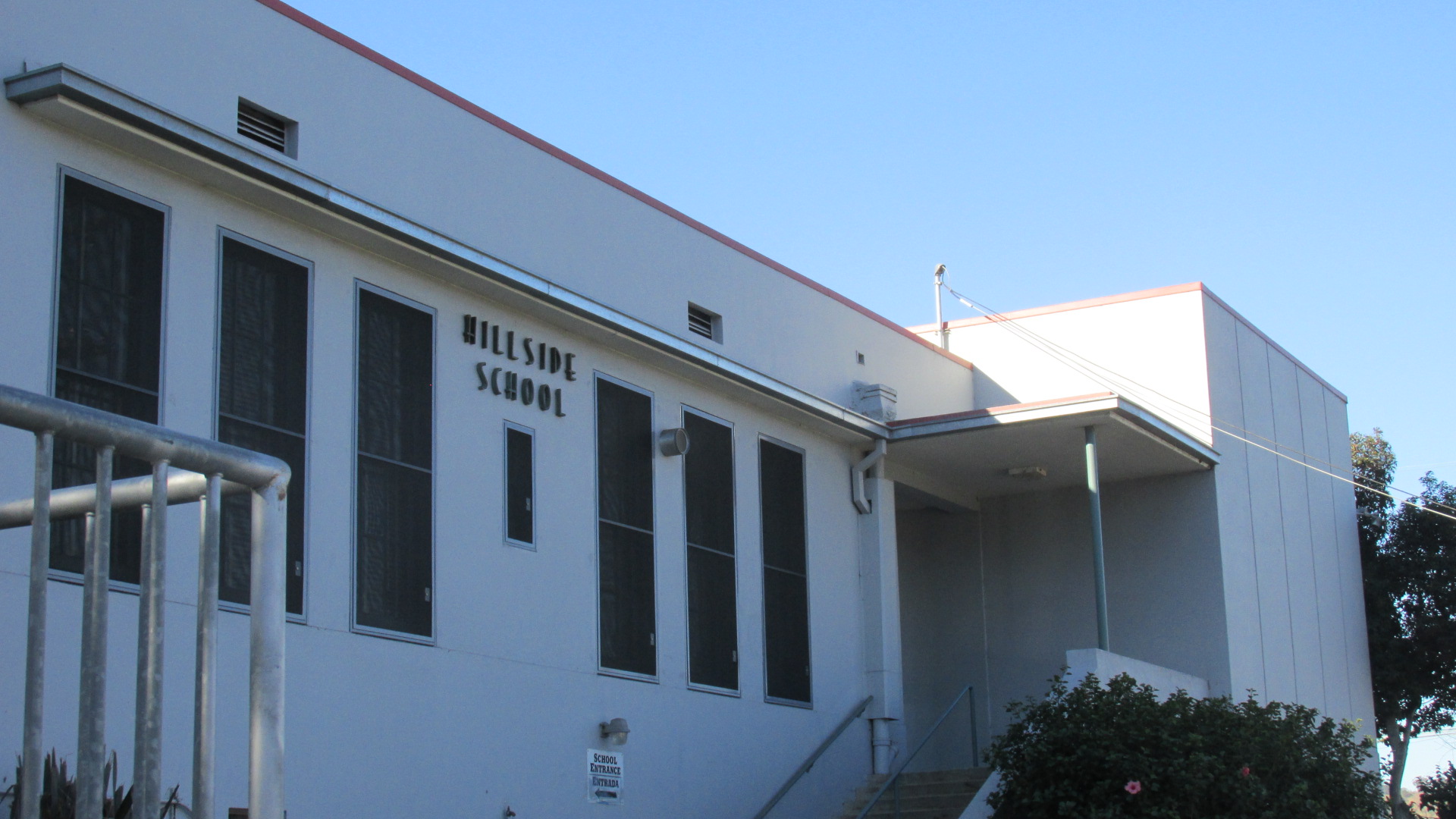
Residents of Lincoln Heights are up in arms over the plan to build a 56,700 square foot e-commerce distribution center at the intersection of Pasadena Ave. and Avenue 35.  Not only is the project in close proximity to houses and apartments, it’s less than 300 feet away from Hillside Elementary.  The community is understandably upset about the potential for a huge increase in truck traffic and diesel emissions.

Hillside Elementary School

At this point, though, the community is uncertain how to stop it.  Xebec, the real estate firm behind the distribution center, believes that the project complies with existing zoning and doesn’t need discretionary approvals from LA City Planning.  They’ve already applied for permits from LA Building & Safety.  Councilmember Eunisses Hernandez, who represents Lincoln Heights, has come out against the project, and she’s proposed changes to the plan that governs the area.  Unfortunately, those changes won’t be approved until December, and Xebec wants to have the permits finalized before then. 

I don’t blame the residents for being angry.  It’s not hard to understand why building an e-commerce distribution center near an elementary school is a problem.  There are decades of research showing that diesel exhaust can have long-term impacts on children’s health.  Children living in areas where they’re exposed to diesel exhaust are at higher risk of respiratory problems, including reduced lung capacity.  Seniors also face higher health risks, and actually, so does everyone living in an area where they’re regularly exposed to diesel emissions.

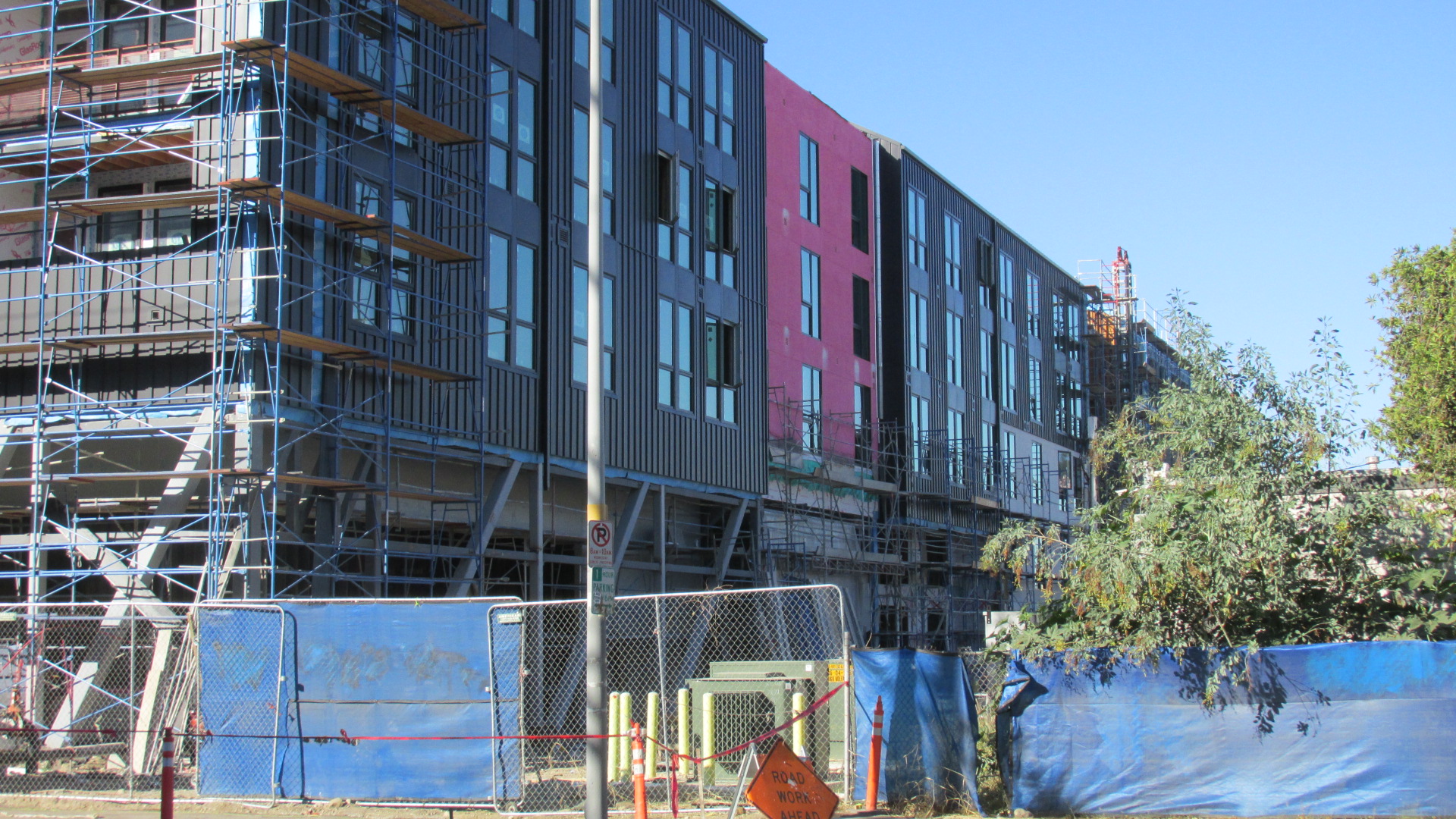
New residential building under construction right next door to 3505 Pasadena

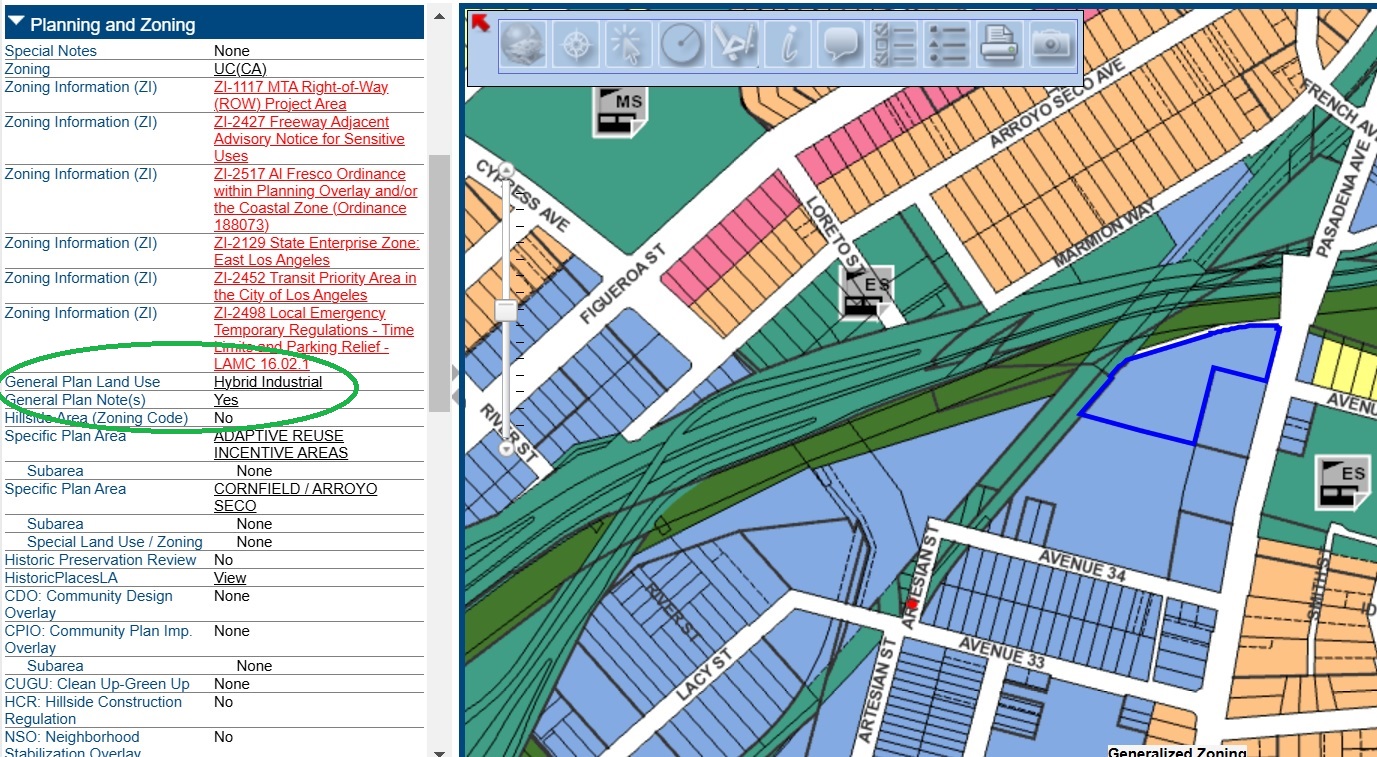
I have to admit, I have trouble understanding the zoning for 3505 Pasadena.  According to ZIMAS, the General Plan Land Use designation for this parcel is Hybrid Industrial.  The Hybrid Industrial designation was created by LA City Planning to allow residential uses in industrial zones.  As a matter of fact, right next door to 3505 Pasadena there’s a massive new residential complex under construction that contains over 460 units.  If the Hybrid Industrial designation was created to spur new housing developments in industrial areas where appropriate, the Xebec project seems to violate the whole intention of this initiative.  And when those new units go on the market, how many prospective tenants are going to sign a lease when they realize they’ll be living next door to an e-commerce distribution center?

General Plan Land Use designation for 3505 Pasadena is Hybrid Industrial

But whatever the zoning is, this project should be stopped.  Just ask yourself if you’d like to have diesel trucks going in and out of a distribution center right across from your home.  Or better yet, ask yourself if you think elementary school kids should be breathing the toxic diesel exhaust from these trucks.

The LA City Council rep for the area is already looking for a way to stop this, but it might help to send a note to some people at the State level.  If you feel like speaking up, here are the e-mail addresses for the two people who represent Lincoln Heights in Sacramento, State Senator Maria Elena Durazo and Assemblymember Miguel Santiago.  I’m also including a staff member at the California Environmental Protection Agency’s Environmental Justice Program.

senator.durazo@sen.ca.gov

assemblymember.santiago@assembly.ca.gov

leticia.syslo@calepa.ca.gov

Here’s a suggested subject line.

Kids Shouldn’t Be Breathing Diesel Exhaust: Stop the Distribution Center at 3505 Pasadena

If you see problems with this project, let the folks in Sacramento know.  The people of Lincoln Heights would appreciate it. 

Are Downtown Residents Really Dumping Their Cars for Transit?

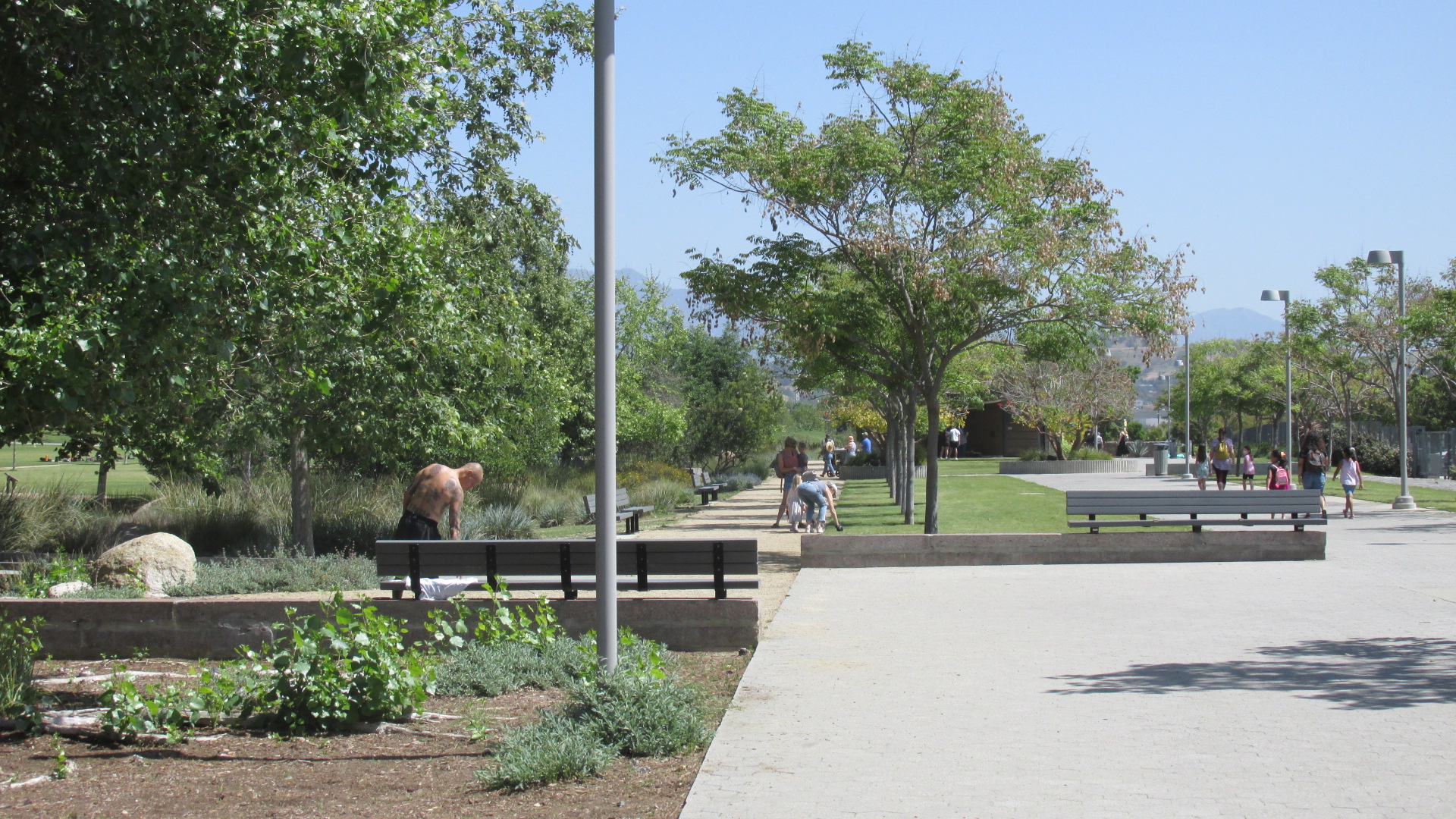
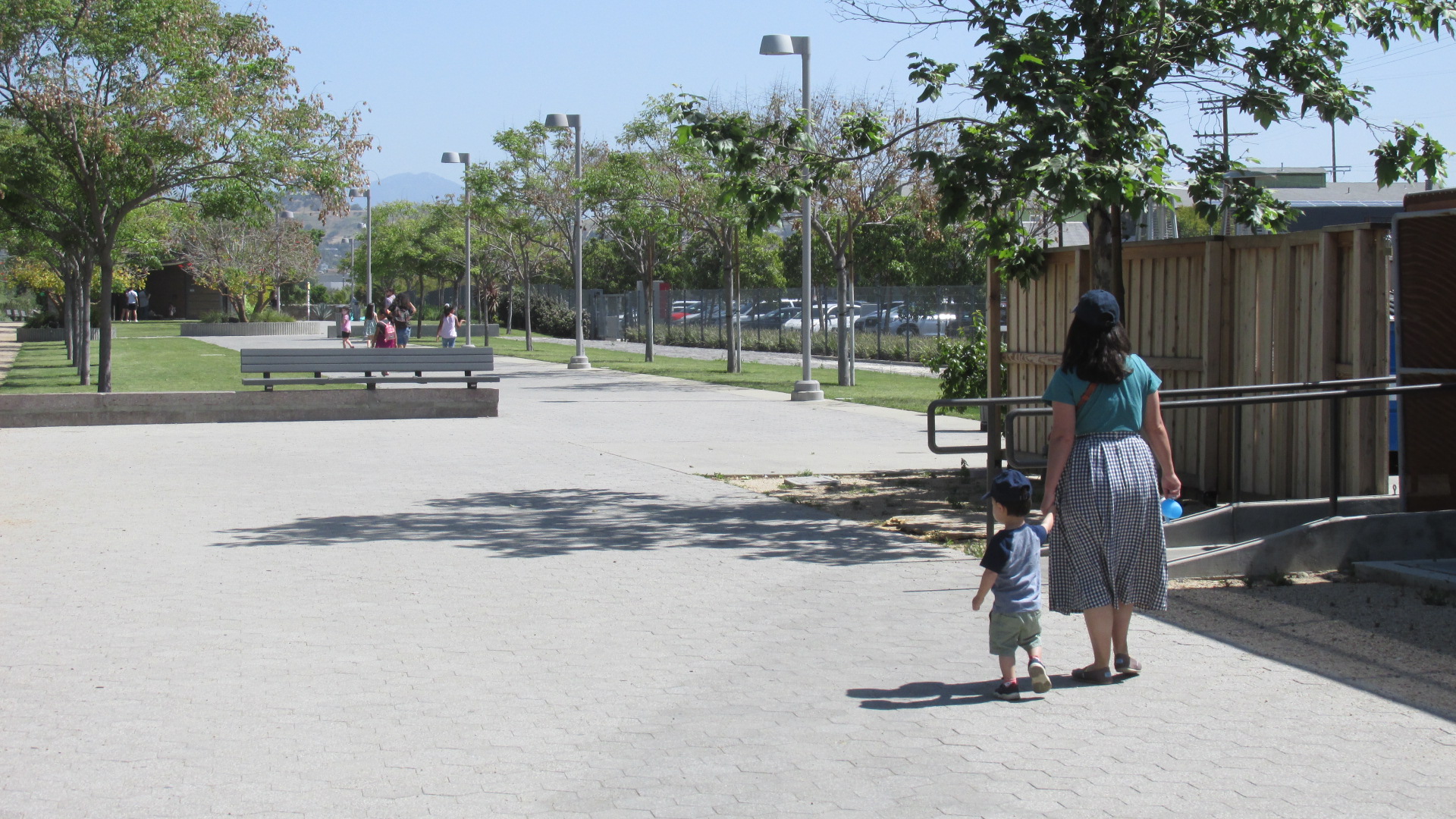
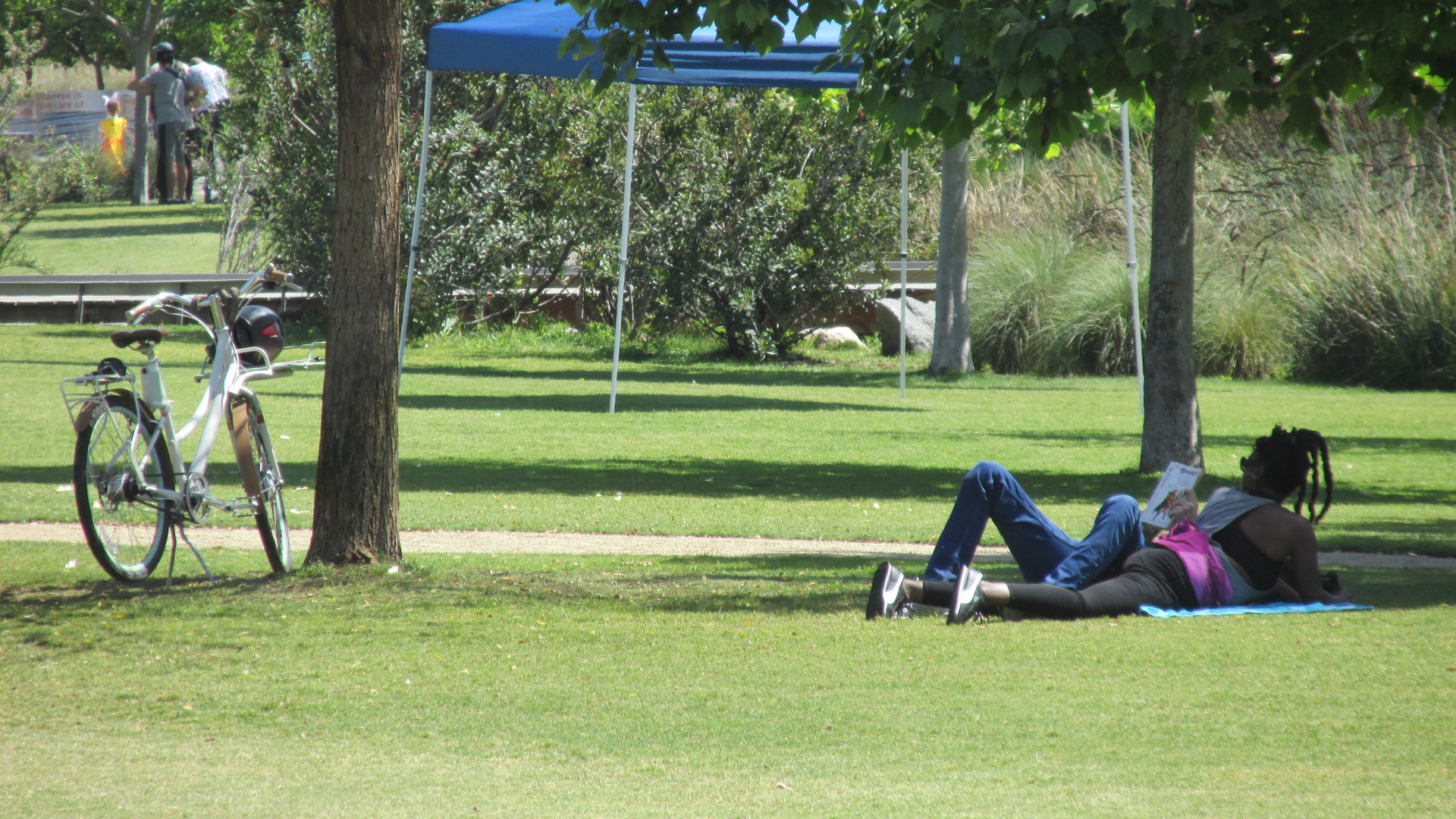
The pandemic wasn’t really over in April, but a lot of people, including me, were tired of being shut up at home. I wanted to get out into the world again. I’d been thinking for a while about paying a visit to Los Angeles State Historic Park on the outskirts of Downtown. I finally just got on the train and headed down there.

The park has been a work in progress for over a decade. I wrote a post about it in 2014, when many people still called it The Cornfield. Back then it was mostly just grass and dirt. Since then, it’s been transformed into a well-manicured open space….

It certainly seems popular. On the day I showed up there were plenty of folks enjoying the park, and it’s not hard to see why. It’s impeccably landscaped, with gently curving paths winding through the grass, and rows of beautiful trees. There’s a good-sized field for those who want to get a game going. It seemed like the crowd was mostly younger, with a number of moms and dads and little kids.

It also seemed like the crowd was mostly made up of relatively affluent millennials. I have no hard data on where they came from, but I suspect that many of them live in Downtown. If that’s the case, they’d have to be making fairly good money. The listings on Apartment.com show that most of the studio apartments in the 90012 zip code start around $2,000, with one-bedrooms going for between $2,500 and $3,000. Rents at the Llewellyn, a fairly new building just across the street from the park, go from $2,450 to $5,155.

The City has had a good deal of success in luring people to Downtown, but let’s face it. Downtown is not open to everybody. If we go with the standard assumption that you’re supposed to spend about a third of your income on housing, you’d need to make $72,000 a year to afford a studio apartment in the area. A small family would probably have to have a combined income close to six figures just to get into a one-bedroom.

Back in March, I was listening in on a meeting of the City Council’s PLUM Committee where Director of Planning Vince Bertoni boasted about how proud he was of the City of LA’s Transit-Oriented Development program. I can’t imagine why. While City Planning has approved numerous residential skyscrapers near transit stops over the last decade, transit ridership has been declining steadily since 2014. Even in 2014, LA Metro was actually serving fewer people than it did back in the 80s, and it’s only been downhill since then.

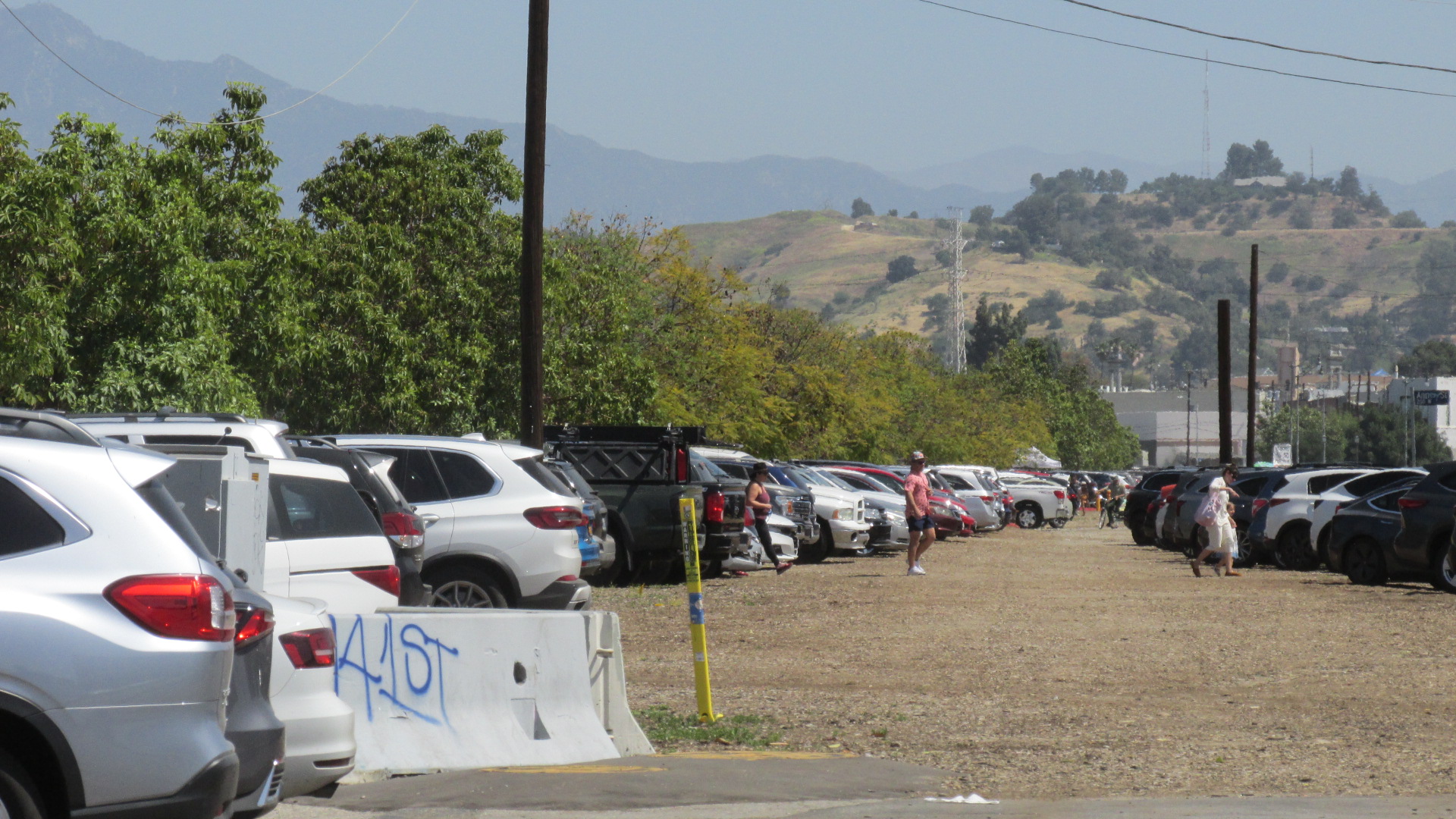
If you want to know how successful LA’s attempts at Transit-Oriented Development have been, take a look at the parking area next to the State Historic Park. It was packed with cars on the morning I was there. And Spring St., which is on the park’s perimeter, was also lined with cars.

Please note in the last photo above that the L Line (Gold Line) Station is visible in the background. I’m sure some of the folks who showed up at the park that day rode the train, but obviously a lot of people decided to drive instead, in spite of the fact that the station is just a few hundred feet from the park entrance.

LA City Planning talks a lot about revitalizing LA’s urban centers, but we need to ask what they actually mean by “revitalization”. The cost of renting an apartment Downtown makes it clear that living there is mostly for the affluent. While thousands of new units have been built in Downtown over the past decade, the vast majority of them are for the upscale crowd. The same is true citywide. According to LA City Planning’s Housing Progress Dashboard, of the more than 184,000 new units that have been approved since July 2013, only about 26,000, or 14%, have been for middle-income, low-income and very low-income households. To be clear, these three categories COMBINED make up just 14% of the new housing approved.

As I said before, the City has been successful in luring people to live in Downtown, and I’m glad of that. Looking at US Census data for the 90012 zip code, which covers much of central Downtown, it’s clear that the area has seen substantial growth. According to the American Community Survey (ACS), the population in 90012 has grown from 29,298 in 2011 to 37,268 in 2020.

Unfortunately, even as Downtown’s population has grown, ridership on transit lines serving the area has been dropping steadily. The graph below shows the changes in ridership on lines serving Downtown in 2014 and 2019. It includes all rail lines serving the area, but only selected bus lines.

You can see there’s been a significant drop. It’s important to point out that the biggest decline was on the A Line (Blue Line), and much of this was due to the fact that portions of the line were closed during 2019 for repairs and upgrades. (They didn’t do much good. Problems arose soon after the line re-opened.)

But even if we pull the A Line out of the chart, we still see a loss in ridership. If the City’s Transit-Oriented Development program is such a success, then why is transit ridership declining in Downtown, even as the population grows. (If you don’t trust my numbers, and you want to do your own research, visit Metro Ridership Stats. Under the heading Systemwide (Bus and Rail), click Details.)

I think the answer has to do with the kind of people who are moving to Downtown. While I hear a lot of hype about young urbanites who love walkable neighborhoods, the crush of cars I saw crowding around State Park leads me to believe that many of Downtown’s new residents own some kind of vehicle. Of course, that’s just my personal view based on my personal experience. To get a more accurate idea of how many Downtown residents are car owners, let’s take another look at the U.S. Census’ American Community Survey.

Looking again at the 90012 zip code, let’s check out the stats for vehicle ownership in 2011.

2011 ACS Data on Vehicles Available to Population in 90012
Workers 16 Years and Over in Households

No vehicle available 10%

1 vehicle available 42.9%

2 vehicles available 36.4%

3 or more vehicles available 10.7%

Now let’s look at the stats for 90012 in 2020.

2020 ACS Data on Vehicles Available to Population in 90012
Workers 16 Years and Over in Households

No vehicles available 6.6%

1 vehicle available 42.4%

2 vehicles available 40.0%

3 or more vehicles available 11.0%

You can see that the number of workers 16 years and over with no vehicle available dropped from 10% to 6.6%. The number with one vehicle available is basically unchanged. Those with two vehicles available went up from 36.4% to 40%. These are not huge changes, but they do show that percentages of workers 16 years and over with access to a vehicle has gone up, not down. And when we consider that the population in 90012 rose from 29,298 in 2011 to 37,268 in 2020, this seems to indicate that there are a lot more cars than there used to be in Downtown. Put this together with the drop in transit ridership, and it’s hard to understand why the City thinks its efforts at Transit-Oriented Development have been a success. (If you believe there are a lot more people walking and biking in the central city, feel free to show me the data. I’ve looked, and I can’t find anything less than six years old.)

I want to emphasize that I’m a transit rider and I don’t own a car. I also want to say that I believe we need to focus new development around transit hubs, in areas where jobs and businesses are close by. In theory all this is great. In reality, though, the City of LA doesn’t seem to have achieved anything. In fact, it seems like the numbers are going in the wrong direction. And if we’re going in the wrong direction, shouldn’t the City assess the situation, find out what’s wrong, and try to do better?

Unfortunately, rather than being used as a strategy to create a more sustainable city, Transit-Oriented Development seems to have become an excuse to approve residential projects that are far too expensive for the average Angeleno. I can’t tell you how many times I’ve been at hearings held by City Planning where staff and/or Commissioners claim that big, new residential projects geared toward the affluent are exactly what the City needs to get people out of cars and onto busses and trains. When I present data showing that transit ridership has been going down since 2014, they don’t seem to hear. I’ve never gotten a response. The projects are always approved.

I think the State Park is cool. I’m glad people are spending time there. But I don’t buy the story that young urbanites are ditching their cars for busses, trains and bikes. The cars lined up across the street from the park seem to tell a different story, one that City Hall doesn’t want to hear.

Hotel Developer Keeps Asking, and City Planning Keeps Giving

Dream 2 Construction Site

Construction site in the foreground, and Dream Hotel in the background.

If you need any more proof that City Hall is ready to give developers whatever they ask for, there’s a block in the heart of Hollywood you should take a good look at. Hollywood International Regional Center (HIRC), a developer that specializes in hotels funded with EB 5 money, has spent years remaking the stretch of Selma between Cahuenga and Wilcox, and they’re not done yet. Richard Heyman, HIRC Managing Partner, filed his first application for this site about ten years ago, and since then he and his associates have come back asking for numerous changes to their project/s. A review of the associated documents seems to show that the Department of City Planning (DCP) has been more than willing to accommodate the developers’ requests. Construction has been going on almost continuously since 2014, and it looks like it’ll be going on a while longer.

Because tourism is thriving these days, there’s a push to build party hotels in Hollywood. HIRC has already finished one and has a few more in the works. In addition to the completed Dream hotel, there are two other HIRC projects under construction, and the City Planning Commission (CPC) just approved a fourth one. All four of these projects are within a one block radius of Selma and Wilcox. Actually, it almost seems like these four hotels could be considered one big project. But more on that later….

HIRC’s latest effort was on the agenda at the CPC hearing on July 12. This is an eight-story hotel to be built at the corner of Selma and Wilcox. Of course, since this hotel is being built in Hollywood, it has to have a rooftop deck with a pool and a bar/lounge, and even though it wasn’t mentioned in the hearing notice, live entertainment is also part of the package. Given the fact that Hollywood is already jammed with bars, and that crime is rising by double digits, and that area residents are complaining about noise from the party scene, you might ask if we really need another party hotel in Hollywood.

But the folks at the DCP don’t seem bothered by the problems Hollywood residents are facing. They apparently weren’t bothered by the fact that this project was already under construction. Yeah, that’s right. The developer had already started to build this hotel, even though it hadn’t yet been approved. How did that happen? It’s complicated. First we have to ask what the project actually is, and there’s no simple answer. Many Hollywood residents feel HIRC has not been honest about what they’re doing, and that the DCP has been too willing to look the other way. The closer you examine it, the more it appears that this new hotel at Selma and Wilcox is actually part of a complex that’s been in the works for years. But to tell this story, we have to go back to the previous decade….

Heyman’s first hotel on Selma was the Dream 1, which was approved back in 2008. According to the original determination letter, the hotel was going to have a total of 120 rooms, and the project would consist of about 73, 814 square feet with two levels of parking. But then the recession hit, and the project got delayed. In 2011 it was back on again, but this time with a few changes. Now it was going to have 136 guest rooms, but the size held about steady at 73,607 square feet. And while the project was originally required to have 107 parking spaces, now the number was reduced to 90.

So far this doesn’t seem like a big deal. A few more rooms, a little less square footage, and 17 less parking spaces. Who cares? But keep your eye on the parking, because it’s about to disappear.

A Zoning Administrator’s letter dated April 2014 shows further changes. “There will be 182 hotel rooms, 77 on-site parking spaces, 14 off-site parking spaces….” And now, while the height is the same, they’ve added another floor, meaning it’s now a ten story hotel with 79,376 square feet of floor area. Obviously the folks at HIRC are prone to changing their minds, and the folks at the DCP are ready to accommodate them.

But you’re probably saying, “What do you mean the parking disappeared? It’s still there. The ZA approved 77 on-site spaces and 14 off-site spaces. They’ve still got plenty of parking.” And that’s the great thing about misdirection. You were busy looking at the ZA’s letter, instead of keeping your eye on the hotel. Next time you’re in Hollywood, take a stroll down Selma past the Dream.

It has no on-site parking at all.

If you didn’t catch on to that trick, don’t worry. The people at the DCP don’t seem to have noticed either. Strangely enough, the Department of Building & Safety (DBS) granted a permit for the change, and apparently the DCP signed off on it, even though they hadn’t approved the change. I tried asking the folks at the DCP how they approved the permit even though they hadn’t approved the project revision. In response they sent a document that had no relation to the question.

Of course eliminating the on-site parking is completely illegal. But there’s another problem. You see, parking isn’t counted in calculating a project’s square footage. This means that the conversion of that space to other uses has boosted the hotel’s square footage significantly. You might think that the DCP would be upset over a developer unilaterally adding several thousand square feet to a project, but you’d be wrong. They’ve taken no action to enforce the terms of the Department’s determination letter.

Some people speculate that maybe HIRC has friends at City Hall. The developer seems to get pretty much everything they ask for. But they’ve made a lot of enemies in Hollywood. The developer’s aggressive push to build party hotels has angered a lot of folks in the community, and these days people are watching their moves much more closely.

In 2015 HIRC applied to build another, more modest project, next to the Dream 1. This was going to be a one-story restaurant, with 6,000 square-feet of retail space, and three levels of underground parking. Who could object to that? But then people who live in the neighborhood took a look at the application and saw that the name of the LLC that HIRC was using for this project was “6421 Selma Wilcox Hotel”. Seemed like an odd choice of names for a project that was supposed to be just a restaurant with some retail. It also seemed odd that a developer who specialized in building hotels was asking City Planning to approve something so much smaller. The DCP, of course, ignored the community’s concerns and signed off on the project.

It was no surprise to area residents when HIRC came back in 2016, now asking the DCP to approve an eight-story hotel on the same site. Again, since the legal entity being used to build the original project was “6421 Selma Wilcox Hotel”, it’s hard to believe that this was an unexpected evolution of HIRC’s plans. And the fact that the papers for this LLC were filed with the State of California in October 2014, well before HIRC applied to build the restaurant/retail project makes it appear that their goal was to build the hotel all along.

And if you spend a little time surfing the web, you’ll find documents indicating that not only was this project conceived as a hotel from the beginning, it was always intended to be the second phase of a complex that began with Dream 1. If you take a look at the web site for Space Global, a firm HIRC partnered with in raising EB 5 money from Chinese investors, the project is repeatedly referred to as Dream 2. In fact, information for investors posted on-line specifically refers to it as an extension of Dream 1, saying construction is expected to begin by the end of 2014. The text not only mentions Tao Restaurant & Lounge, but another restaurant, Beauty & Essex, which is on the far side of the project site. The web site features renderings of the completed project showing both hotels stretched across the length of the block, with Tao sandwiched in the middle.

This seems to be pretty strong evidence that back in 2014, around the time the DCP gave its final approvals for Dream 1, that HIRC already saw the two hotels, the restaurant and the renovated bar as one project. Now, ordinarily if you were going to build a hotel complex with just under 300 rooms, multiple locations selling alcohol, and live entertainment, it would seem reasonable to assume that it could have significant impacts on the neighborhood. HIRC could have revised their original application to reflect the project they apparently intended to build, but that might have meant submitting to a higher level of environmental review. Instead, in 2015 HIRC submitted an application for the property at Selma and Wilcox, directly adjacent to Dream 1, saying they just wanted to build a restaurant, some retail, and three levels of parking. Then in 2016, with the restaurant taking shape and heavy machinery digging a huge hole right next door, they came back and filed the application for the eight-story hotel that their promotional materials refer to as Dream 2.

So let’s get back to the July hearing held by the City Planning Commission (CPC) where they considered the Dream 2. It was actually more entertaining than most CPC hearings. Developer Grant King gave a stirring speech, hypnotizing the crowd with an account of his dramatic effort to rescue Dream 1 in 2012. “I took the last $75,000 I had in the world and bought a one-way ticket to China….” The union workers who attended to protest the failure of King and his partners to hire union labor may not have been moved by his story. I guess it never occurred to the intrepid developer that these union workers had probably never had anything near $75,000 in their bank account. I don’t doubt the Commissioners were enthralled by King’s story, but a number of them had serious reservations about the project. Commissioner Renee Dake-Wilson had some especially harsh words. While she emphasized that she didn’t believe the developer was engaged in “piecemealing” (seeking approvals in pieces, rather than all at once), she stated forcefully that she thought the original restaurant/retail project was “a sham in order to get this hotel going.”

But the last Commissioner to comment was President David Ambroz, who offered a ringing defense of the project. Responding to criticism of the developer’s first structure on Selma, he said, “I think the Dream is a well run hotel.” In response to another Commissioner’s suggestion that the rooftop bar/lounge be restricted just to hotel guests, Ambroz said, “I like going to these rooftops. I would not be in agreement with prohibiting public access.” The Commission President was apparently not impressed with Hollywood when he first arrived years ago, but he feels it’s come a long way because of projects like this. “The renaissance that has occurred there is a testament not just to Grant and his company, but others as well.” Ambroz was definitely sold on the project, and he seemed to be doing his best to sell it to everyone else.

However, there were concerns about parking, and that discussion was really interesting. The project would require a certain amount of off-site parking, and the Commissioners weren’t certain where that would end up. You see, parking is at a premium in Hollywood, and some of the Commissioners wanted to know where the developer would find those off-site spaces within the required 750 feet. Fortunately, HIRC’s rep stepped forward to explain that the developers had two other hotels under construction nearby, and he was certain that one of them could handle the overload. Which is actually really odd, because the CPC approved both those projects and they’re strongly opposed to providing excess parking. There’s also the bizarre idea of creating a covenant to provide parking at a building that doesn’t exist yet. And lastly, if the developer has already made plans to provide additional parking for the Dream 2 at one of these other locations, it makes it sound like these projects were conceived together. That really these hotels, all proposed by the same developer, all within a one block radius of Wilcox and Selma, all approved within the last ten years, should be seen as one project.

In the end, the CPC approved the Dream 2 by a 6-2 vote, with Commissioners Vahid Khorsand and Dana Perlman voting no. We’ll see what actually happens with the parking down the road. But I doubt Grant King is worried. For all the talk during the hearing about how enforcement is key, the Dream 1 was built with none of the required on-site parking, and the City hasn’t taken any action at all. Even if the off-site parking for the Dream 2 never materializes, King knows that the City of LA won’t do a damn thing about it.
Ignoring Danger, City Approves Distillery Next to School

Dist 05 HD

It’s been clear for a while that the Department of City Planning (DCP) doesn’t care much about how new development impacts communities, but a recent project approval shows a new level of reckless disregard for the safety of the people who live in LA.

Last year a company called Hollywood Distillery filed an application asking the City to allow the sale of alcohol for on-site and off-site consumption in conjunction with the operation of a craft distillery.  The distillery is located at 5975 Santa Monica Blvd., at the corner of Santa Monica and Gordon.  The site is zoned for commercial manufacturing, which you might think would include the manufacturing of spirits, and it might seem perfectly reasonable to allow Hollywood Distillery to sell their wares at the place they were being produced.

When I first heard the project was being appealed, I was puzzled.  Lots of places brew alcoholic beverages and have tasting rooms on site.  It seemed totally natural.  I couldn’t see a problem.

But there is a problem.  A serious one.

Distilleries are a special case.  They shouldn’t be considered alongside other typical manufacturing uses. Why?  Because sometimes things explode at distilleries.  Check out the following news articles.  They’re all reporting on incidents that happened in the US within the last year.

Worker Injured in Explosion at Whiskey Distillery, January 2018


Vodka Distillery Explosion Sends Three to Hospital, November 2017


New Jersey Distillery Owner Injured in Explosion, December 2017


So you say, okay, a distillery might be dangerous.  But if the site is zoned for commercial manufacturing, it’s in an industrial area away from crowds of people.  Unfortunately, that’s not the case here.  This distillery is right next to a primary school.

Dist 01 HPC

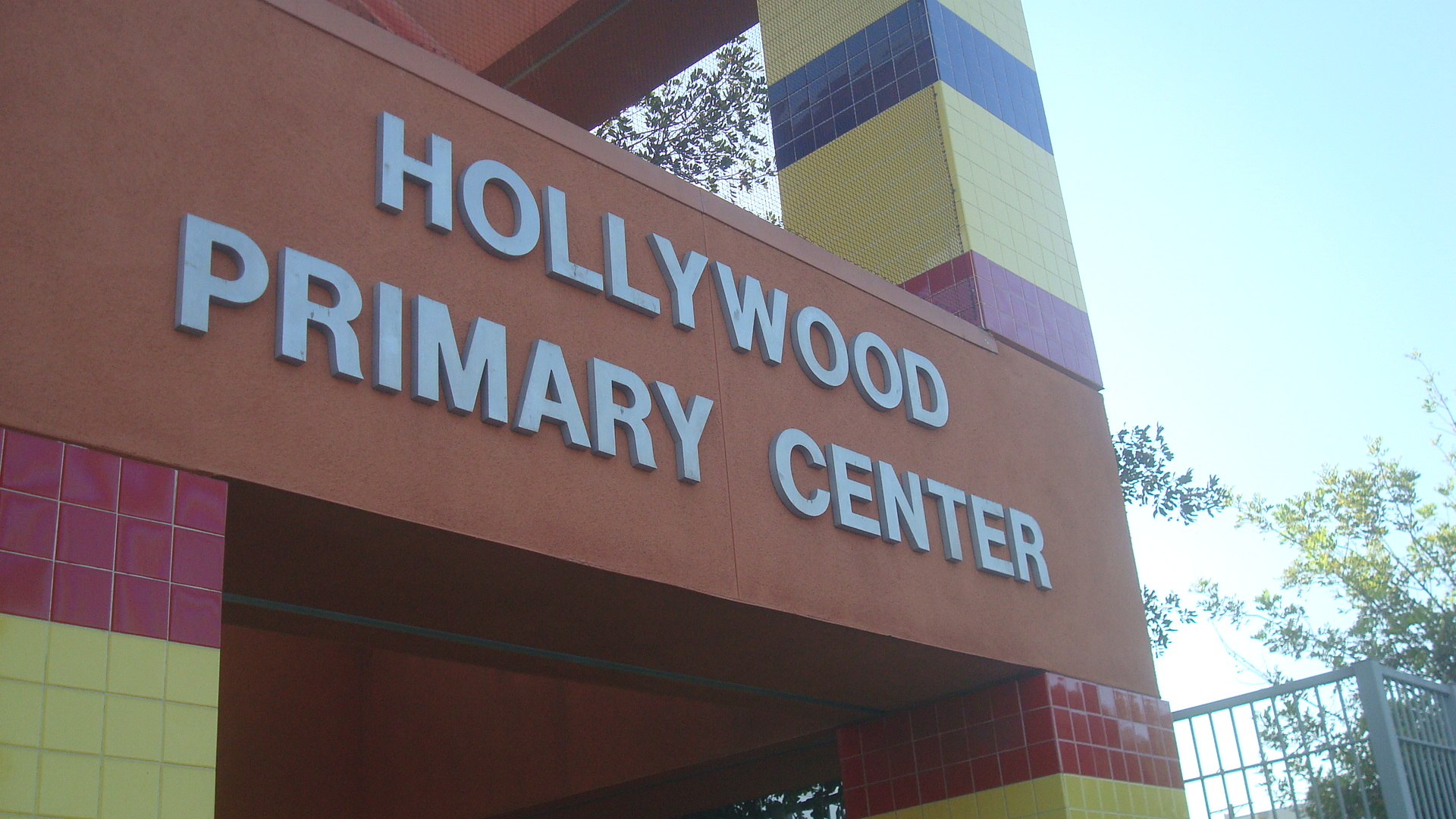
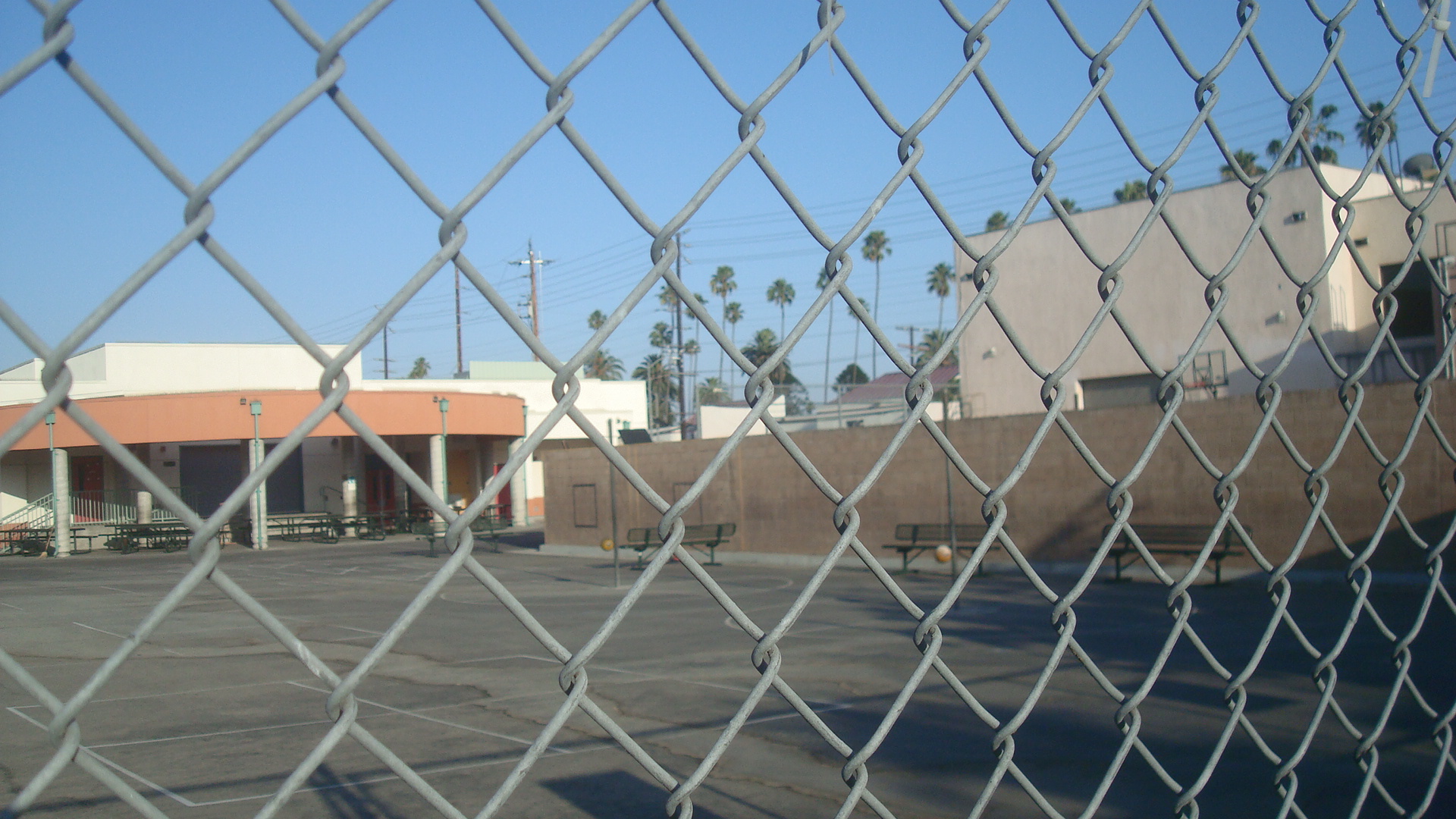
Hollywood Primary Center serves pre-school through third grade students.  It’s located directly behind the distillery.  The only thing that separates the two is a wall about eight feet high.  And while the stories listed above involve a relatively small number of people who were injured or killed, accidents at distilleries can get much worse.  Check out this article from the National Fire Protection Association.  The article specifically mentions the danger of putting a distillery in an area where there could be a risk to the public.

Small Scale, High Proof


Dist 10 HD Bldg

The building that houses Hollywood Distillery at Santa Monica and Gordon.

Dist 15 HD Playground EDITED

The school playground appears to lie about 50 feet from the distillery.

So the Central Area Planning Commission heard the appeal on July 24, and of course they denied it.  The distillery got the green light.  The Commissioners specified that the Department of Building & Safety (DBS) and the LA Fire Department (LAFD) had to review the site before permits were issued, but that’s not good enough.  Property owners violate conditions of approval all the time in LA, and there’s rarely any meaningful enforcement.  And even if everything is in order when City personnel inspect the property, there’s no guarantee things will still be in order six months down the road.  Assuming DBS and LAFD allow this to go forward, we basically have to trust the owners to follow the rules.  I’m sure they have no intention of allowing an explosion, but I’m also sure the owners of the distilleries in Pennsylvania, Texas, and New Jersey had the same intentions.

If you don’t think the City should allow distilleries next to schools, please contact Councilmember Mitch O’Farrell’s Planning Director, Craig Bullock.  Here’s a possible subject line:

No Distilleries Next to Schools!

Craig Bullock, CD 13 Planning Director

craig.bullock@lacity.org

And please copy the City of LA’s Director of Planning, Vince Bertoni.

Vince Bertoni, Director of Planning

vince.bertoni@lacity.org

Dist 20 Playground

Harbor Gateway Community Fights Toxic Project

HG Sm 01 Open

Site at Vermont and Redondo where Prologis wants to build a massive distribution center.

Back in February I was at a City Planning Commission (CPC) hearing.  I’d come to talk about one of the items on the agenda, but while I was waiting for that to come up, I noticed a group of people sitting together holding signs that said “NO on 7”.  These people wanted to voice their opposition to a new distribution center that had been proposed for their community.  Logistics REIT giant Prologis was seeking permission to build a 341,000 sq. ft. warehouse with 36 truck loading positions and parking for up to 71 trailers that would operate 24/7.  Amazingly, the site they had in mind was right across the street from a residential neighborhood in the Harbor Gateway area.

HG Sm 10 Hearing

The community shows their opposition at the City Planning Commission hearing.

A long list of speakers got up to talk.  First there were the applicants and their reps, all of whom boasted about what a great project this was.  There were also a number of union members who came forward to tell the Commissioners that the distribution center would create lots of jobs.  And staff from Councilmember Joe Buscaino’s office showed up to speak in support of the project.

But the people who actually live in the community were dead set against it, talking about impacts from diesel truck exhaust, and noise from a distribution center that was going to operate 24/7.  They explained to the Commissioners that the site was just across the street from apartments and houses.  They pointed out that a healthcare facility, a convalescent home and a public park were all within a few hundred feet of the proposed distribution center.  The CPC listened to all this, and then voted to approve the project.  While Commissioners Vahid Khorsand and Veronica Padilla-Campos voted against, everyone else gave the distribution center a thumps up, and it passed easily.  The final tally was 6-2.

HG Sm 20 Apts

Residential neighborhood directly across the street from the project site.

Even though I’d never heard of the project before that morning, it was pretty easy to see that the approval process was a joke.  The applicant wants to build a 300,000+ sq.ft. warehouse right across the street from a residential neighborhood.  The warehouse will generate hundreds of diesel truck trips every day, and will operate all night long.  This is a project that will have major impacts on the surrounding community, but instead of doing a full Environmental Impact Report (EIR), the Department of City Planning (DCP) allowed the applicant to slide it through with a much less rigorous Mitigated Negative Declaration (MND).  In other words, the DCP is saying that even though there could be negative impacts, don’t worry about it, because we can mitigate them to the point where they won’t be a problem.

HG Sm 30 Kei Ai

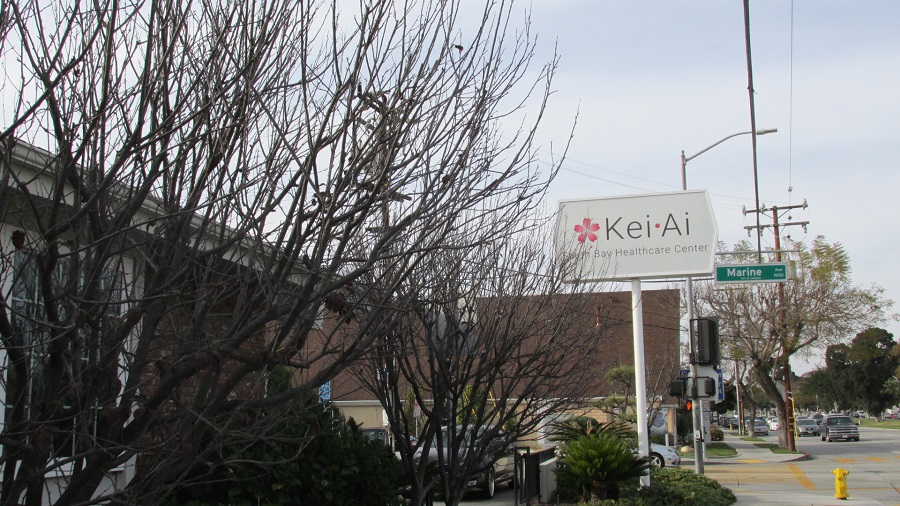
Kei-Ai Healthcare Center sits just across the street from the project site.

It’s a familiar game.  The City of LA plays it all the time.  The DCP lets the applicant run the environmental review process without providing any meaningful oversight.  DCP staff will offer some suggestions, the CPC will set some conditions, but the project that gets approved generally gives the developers pretty much everything they were asking for.  These days most of the Commissioners on the CPC seem to believe their job is to approve projects.  No matter what’s being proposed, the routine is pretty much the same.  They listen to testimony, ask DCP staff a few questions, spend a little time haggling over conditions, and then give it a green light.  Occasionally, as with this distribution center, one or two of the Commissioners will dissent, but almost without exception the majority gives the proposed project a thumbs-up and the developers and their reps walk out smiling.

HG Sm 40 Gard Conv

Gardena Convalescent Center is just over a block away from the project site.

But the people who live in the neighborhood aren’t smiling.  And they’re not taking this lying down.  I contacted one of the residents, Rosalie Preston, to ask if the community was planning to fight the project.  She sent me a copy of the appeal they’d submitted.  Preston points out that the community is already considered disadvantaged by the California Environmental Protection Agency (CalEPA) because of its proximity to the 110.  The freeway carries hundreds of diesel trucks through the area every day, causing CalEPA to rank it in the highest percentile for pollution burden.

I really hope the appeal will be granted, because the community has already spent way too much time opposing this awful project.  But if the appeal is denied and this goes to court, I’ll be laughing my head off on the day the judge hands the City of LA another embarrassing defeat.  The City has lost a number of high-profile cases related to development and planning.  This will just be one more demonstration of how badly broken the approval process is.

But let’s take look at the appeal, and see why the community has a problem with the CPC’s decision to approve the project….

An EIR, Not an MND

There’s really no question about this.  According to State law, an EIR is required if “substantial evidence in the record supports a fair argument that the project may result in significant adverse impacts.”  The Prologis Distribution Center will bring hundreds of diesel trucks in and out of this residential community, all through the day and all through the night.  Prologis argues that they can mitigate air quality and noise impacts to the point where they’re not significant.  It’s not surprising to hear developers make idiotic claims like this, but it’s depressing that the City is happy to take their word for it.  The fact that the DCP allowed Prologis to get away with an MND shows just how little they care about how new development impacts LA’s communities.

Toxic Emissions

Diesel trucks emit a range of harmful substances, and the claim that hundreds of trucks will travel through this community every day without having significant impacts on the health of the residents is absurd.  Among the components of diesel exhaust are particulate emissions.  The California Air Resources Board (ARB) regulates two classes of particulate emissions.

PM2.5: Up to 2.5 microns in size.

PM10: Up to 10 microns in size.

The ARB web site offers this information….

“The ARB is concerned about Californians’ exposures to PM2.5- and PM10-sized particles because of the potential harmful health effects that can result.  PM 2.5 and PM10 particles easily penetrate into the airways and lungs where they may produce harmful health effects such as the worsening of heart and lung diseases. The risk of these health effects is greatest in the elderly and the very young. Exposure to elevated concentrations of PM is also associated with increased hospital and doctor visits and increased numbers of premature deaths.”

The consultants who wrote the MND claim that the PM levels residents will be exposed to fall within the limits set by ARB, but the appeal calls this into question.  To predict the emissions that will be generated by a proposed project, environmental consultants use a program developed by the State known as CalEEMod.  The appellants looked at the numbers used by the authors of the MND for these estimates, and then compared them to the numbers actually given in the MND.  “When we reviewed the Project’s CalEEMod output files, we found that several of the values inputted into the model were not consistent with information disclosed in the IS/MND.”  The appellants believe that the numbers used by Prologis’ consultants represent only about half of the truck trips the project would generate.  This means the actual levels of PM pollution would be double, and the health impacts to the community much more severe than Prologis has stated.

Site Clean-Up

It’s known that former industrial uses on the site left toxic chemicals in the soil, including tetrachloroethylene (a likely carcinogen), trichloroethene (a known carcinogen), total petroleum hydrocarbons and heavy metals.  A Phase I Environmental Site Assessment was done in 2016.  It concluded that the site was rife with contaminants and recommended additional investigation.  Anybody with common sense should understand that there’s no way to talk about mitigating the impacts until all the information is available.

The appeal covers a lot of other issues, but it all boils down to the fact that Prologis isn’t being honest about the impacts that will be caused by the project.  And as usual, the Department of City Planning and the City Planning Commission are letting the developer get away with it.  There’s certainly an argument to be made regarding the jobs the project will create, and the increase in economic activity throughout the area.  But even if the CPC believes the economic benefits outweigh the health concerns, they’re still required by law to fully assess the impacts and to make every reasonable effort to protect the health of the community.  They haven’t done that.  By allowing Prologis to use an MND instead of an EIR, they’ve let the developer off the hook and let the community down.

But that’s nothing new.  Anybody who’s been following development in LA over the years knows about the cozy relationship that business interests have with City Hall, and by extension, with the DCP.  Developers and real estate investors know it’s just a matter of working the machine, and if they play the game right, pretty much anything they ask for will be approved.

City Hall is supposed to protect us.  Instead they’re selling us out.  The people opposing this project are just the latest victims of the City’s disrespect for State-mandated environmental review.  By allowing Prologis to slide through this process without properly assessing the project’s impacts, the DCP is putting residents’ health at risk.

That’s not acceptable.  Unfortunately, once again the CPC has ignored the law, and once again residents have been forced to pursue an appeal and possibly a law suit just to protect their community.  Once again the City of LA has put the interests of developers over the rights of citizens.


HG Rosecrans Rec Ctr from Google by Carmelita Ibarra

Rosecrans Recreation Center, directly north of the project site.   Photo by Carmelita Ibarra from Google Images.

Predatory Development: Crossroads Hollywood

CH Sunset Project Site EDIT

New development is necessary. In order for a city to grow, in order for its economy to stay healthy, it’s important to have new construction to bring investment to communities and adapt to the city’s changing needs. But new development isn’t always a good thing. New projects bring new impacts, and the larger the project the more important it is to consider carefully how it will affect the surrounding community. Most large projects are a mixed bag. Pro-business groups will inevitably argue that they bring tax revenue and jobs, and both of these are important. But large projects can also have serious negative impacts, and we need to weigh those, too. Often it’s a matter of trying to figure out if the good will outweigh the bad, and in many cases it’s hard to say for sure.

On the other hand, in some cases it’s pretty easy to make the call. Crossroads Hollywood is a clear example of predatory development. While the backers of the project tout its benefits in terms of tax revenue, jobs and economic activity, they completely ignore the downside. And the downside is considerable.

First, let’s take a look at what this whole thing entails.

Crossroads Hollywood includes about 1,381,000 square feet of floor area, consisting of 950 residential units (of which 105 are for Very Low Income Households), 308 hotel rooms, and approximately 190,000 square feet of commercial space. The project does include the preservation and rehabilitation of the historic Crossroads of the World mall and the Hollywood Reporter building. All other buildings on the project site would be demolished, including 84 Rent Stabilized apartments. The developers are also asking for a Master Conditional Use Permit to allow the sale of a full line of alcoholic beverages at a total of 22 establishments, and another Master CUP to allow eight uses with public dancing and live entertainment.

I’ve gotta say, it’s pretty ambitious. The investors behind Crossroads, Harridge Development Group, are thinking big. They’re also thinking only of themselves and the massive profits they’ll reap from this project. They don’t really give a damn about the community. If approved, Crossroads Hollywood will be devastating for the environment, devastating for housing, and devastating to the health and well-being of the Hollywood community.

Let’s take a look at the project’s environmental impacts….

These days any developer is going to tell you their project is good for the planet. They learned long ago they need to play that angle to sell it to the public. But Harridge’s claims about Crossroads being environmentally friendly are mostly just hype.

The State of California has designated Crossroads Hollywood an Environmental Leadership Development Project. (ELDP). In order to qualify, the developer has to show that it won’t result in any net additional emissions of greenhouse gases (GHGs). But a project on the scale of Crossroads represents a huge increase in square footage, so it’s to be expected that there will be a huge increase in energy use. The report by the California Air Resources Board (ARB) estimates the Crossroads project will produce 9,440 MTCO2e (Metric Tons of Carbon Dioxide Equivalent) during demolition and construction, and then 14,294 MTCO2e during the first year of operation, though they say that number will decline each year over the life of the project. This is a huge increase in emissions. So how can the State say it achieves a net reduction?

Simple. The developer buys carbon credits. Like many other states, California has an exchange where businesses that aren’t producing their maximum allowed CO2 emissions can sell what they don’t produce as “credits”. Other businesses that want to offset their own emissions can buy the credits to satisfy regulators. So while Crossroads Hollywood will be putting tens of thousands of tons of additional GHGs into the atmosphere, the State says that buying credits actually makes the project carbon neutral. There are people who have reservations about the carbon credit system, but it’s become widely accepted as a tool for reducing global warming, so let’s go along with the idea that this does represent a net reduction in CO2 emissions.

The problem is that this project isn’t just producing massive amounts of CO2. It’s also spewing out tons of ozone, nitrogen dioxide, and particulate matter. This is bad news for the people who live in the area. The South Coast Air Quality Management District (SCAQMD) has evaluated cancer risk from air pollution in its Multiple Air Toxics Exposure Study IV (MATES IV). You can see by the map below that Hollywood is near the top of the scale.

Crossroads Air Quality MATES IV from EIR

But it gets worse. After going through pages of boiler plate language about localized significance thresholds and standard methodologies, the Crossroads Environmental Impact Report (EIR) gets around to analyzing impacts during the construction phase of the project. After listing nearby sensitive uses, including Selma Elementary School/Larchmont Charter School (same campus), Hollywood High, and Blessed Sacrament School, and acknowledging that young people are at higher risk of chronic lung disease from air pollution, the EIR claims, “…, localized construction emissions resulting from the Project would result in a less-than-significant air quality impact.”

Give me a break. Four years of construction, including demolition and excavation, thousands of diesel truck trips and extensive use of heavy machinery will have “less-than-significant” impacts on the kids at these schools? And it’s also important to point out there have been projects under construction on Selma for years now, many of them within three blocks of Selma Elementary. These kids have been inhaling construction dust and diesel fumes since 2015, and the folks behind Crossroads want to keep that going til 2021. But don’t worry. It won’t harm the students a bit.

So let’s talk about transportation. I will give the authors of the EIR credit. Usually traffic assessments for projects like these are ridiculously dishonest. In this case, the EIR acknowledges that traffic is already bad in the area, and that the project will make it worse. Here are a few shots of what it looks like at rush hour.

CH High Red

Northbound traffic on Highland, the western boundary of the project.

CH Selma

Traffic heading west on Selma toward Highland.

CH Traffic LP EDITED

Traffic heading north on Las Palmas toward Selma.

The EIR does analyze existing weekday rush hour conditions as required by the California Environmental Quality Act (CEQA). The problem here is, Hollywood is a special case. In addition to really awful congestion at rush hour, you can also have heavy traffic at night and on weekends because of the constant parade of concerts, movie premieres, food fairs and other miscellaneous events. There are multiple happenings in Hollywood every month, many of them involving street closures. And don’t even ask what it’s like during the Hollywood Bowl season.

I wouldn’t expect the authors of the EIR to include all this, because they’re not required to. But they should at least talk about additional traffic generated by the eight live entertainment venues that are included in the project. Crossroads Hollywood isn’t just meant to be a place where people live and work. It’s intended to be a destination. While I’m sure some of the spaces offering entertainment will be fairly small, it seems likely that at least one of them will be a dance club offering live DJs. And I wouldn’t be surprised if popular singers and bands start showing up on a regular basis. Which means that a community already overwhelmed with events that draw tons of cars and disrupt transit will have to bear an even heavier load once Crossroads is up and running.

CH Apt 1

Apartment building to be demolished if the project is approved.

And what about the impacts that eight places featuring live entertainment will have on the LAPD’s workload? Not to mention the 22 establishments selling alcohol. Incredibly, the EIR doesn’t even discuss these things in the section dealing with police protection. They conclude again that project impacts will be “less-than-significant”. Obviously the authors of the EIR haven’t seen the research indicating that high alcohol outlet density has been linked to higher rates of violent crime.  Back in 2014, LAPD Chief Charlie Beck wrote to the Department of City Planning (DCP) pointing out that the “oversaturation” of alcohol outlets in Hollywood was contributing to increased crime, including robbery, shootings, rape, and assault. The DCP obviously paid no attention, because they’ve gone on granting liquor permits, and violent crime in Hollywood has risen every year since then. LAPD stats for Hollywood as of April 21 show violent crime has gone up 28.9% over the same period last year. The LAPD is understaffed, and doing their best to cope with a difficult situation. Too bad the DCP has no interest in helping them out. Apparently the folks at City Planning have no concern for the safety of Hollywood residents, or for the people who visit the area. And it looks like Harridge shares their total indifference.

This same indifference extends to the project’s noise impacts. Remember, the developer is asking permits for live entertainment in 8 venues. It seems like at least some of these will be outdoors. Check out this table from the EIR that lists the spaces where they plan to have amplified sound.

CH Outdoor Uses

It’s hard to say how much overlap there will be, since they don’t distinguish between those spaces intended for live performances and and those that will just have recorded sounds. But it’s pretty clear that there’s going to be a lot of music, and a lot of it will be outdoors. The EIR acknowledges that there could be significant impacts from noise, but don’t worry, they have a plan to take care of that. What’s their plan? They’re going to build a 12-foot wall on the project’s eastern boundary, between Crossroads of the World and Blessed Sacrament Church. And according to the EIR, that fixes everything.

This is so ludicrous it’s hard to believe they expect people to buy it. A single 12-foot wall is going to addres any concerns about noise. Live outdoor performances have been a problem for years in Hollywood. Area residents can tolerate a lot, and nobody gets bent out of shape if someone puts on a show during the day. But in recent years more and more club owners have been pushing the limits at night. There have been a lot of complaints about DJs ripping it up on rooftop bars in the small hours. The EIR’s claim that amplified music will only be heard in the immediate vicinity is bull. People who live in the hills have told me they can hear late night noise from down on the boulevard, and they’re not happy about it.

But Crossroads Hollywood wasn’t meant to benefit the community. It was meant to benefit the investors who are hoping to reap huge profits. This project will put more cars on the road and more poison in the air. It will create more crime than the LAPD can handle and more headaches for residents trying to get a good night’s sleep. And what do we get in return? Yeah, there’s the tax revenue, but the City is already seeing record revenues and still can’t balance its budget. More housing? Yeah, the vast majority of it priced way beyond the reach of most people who live in Hollywood. When we put the 105 Very Low Income units gained against the 84 Rent Stabilized units lost, we see a net increase of 21 units that will be accessible to the low income families that really need housing. The gain of 21 units will quickly be erased by the project’s gentrifying impact. If Crossroads is built, you can expect to see a lot of other investors buying up apartments and kicking people out. And will the project create jobs? Sure, mostly low-paying jobs in bars, restaurants, and hotels. Most of the people who will work there could never afford to live there.
This is predatory development. A project designed by investors for investors. The reason the EIR doesn’t see any serious problems for the community is because the needs of the community were never considered in any meaningful way.

It’s just about money.

Next week the City will be holding a hearing on Crossroads Hollywood. If you want to show up and speak your mind, here’s the info.

Tuesday, May 15, 2018, 9:00 am

Los Angeles City Hall
200 North Spring St., Room 350

ENTER ON MAIN STREET.

CH Crossroads of the World

Crossroads of the World