Flags

Image from the booklet prepared for Trinket

Image from the booklet prepared for Trinket

Yesterday a friend and I went down to MOCA to check out Trinket, an exhibition by Chicago-based artist William Pope.L. The centerpiece is a giant American flag, which is being continually buffeted by the wind from four large fans. The space grows brighter and darker at intervals as rows of lights go through pre-programmed cycles. It’s a pretty interesting show that raises lots of complicated questions about this country. I can’t say I felt emotionally engaged, and this is a problem I have with a lot of conceptual art. But it was well worth the trip, and it was cool to see work by an artist who’s willing to really dig into this country’s psyche.

After hitting MOCA, my friend and I went next door to check out the Japanese American National Museum. We spent some time in the galleries that document the internment of Japanese Americans during WWII. In a way, it was as though this show was the perfect follow up to the one we’d just seen. Both exhibitions make you think long and hard about this country, and some of the darker aspects of our history.

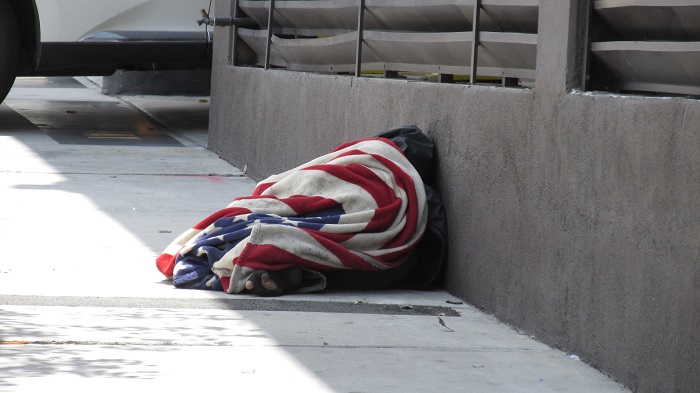
Then we decided to get some lunch. And this was the scene that caught my eye as we started walking down Central.

Man sleeping on Central Ave.

Man sleeping on Central Ave.

A man sleeping on the sidewalk, almost completely covered by an American flag blanket. An odd coincidence, given the shows we’d just seen, bringing up even more questions about where this country’s going.*

If you’re interested in taking a look at William Pope.L’s work, here’s the link for the show at MOCA.

Trinket

And if you haven’t seen the exhibition at the JANM, I urge you to make the trip down there. Even though the internment happened decades ago, the issues the show raises are absolutely relevant to what’s going on in this country now.

Japanese American National Museum

*
Later it occurred to me that the guy on the sidewalk might actually be a part of the show at MOCA. Even if that’s true, it’s a cool way to bring art out of the gallery and into the street.

Dropping in at Tía Chucha’s

Tía Chucha's

Tía Chucha’s

One of the blogs I try to check in with on a regular basis is I Am San Fernando, which covers the East San Fernando Valley. That’s where I found out about Tía Chucha’s, a bookstore and cultural center located in Sylmar. I’ve been meaning to check it out for a while, and yesterday I finally made the trek out there.

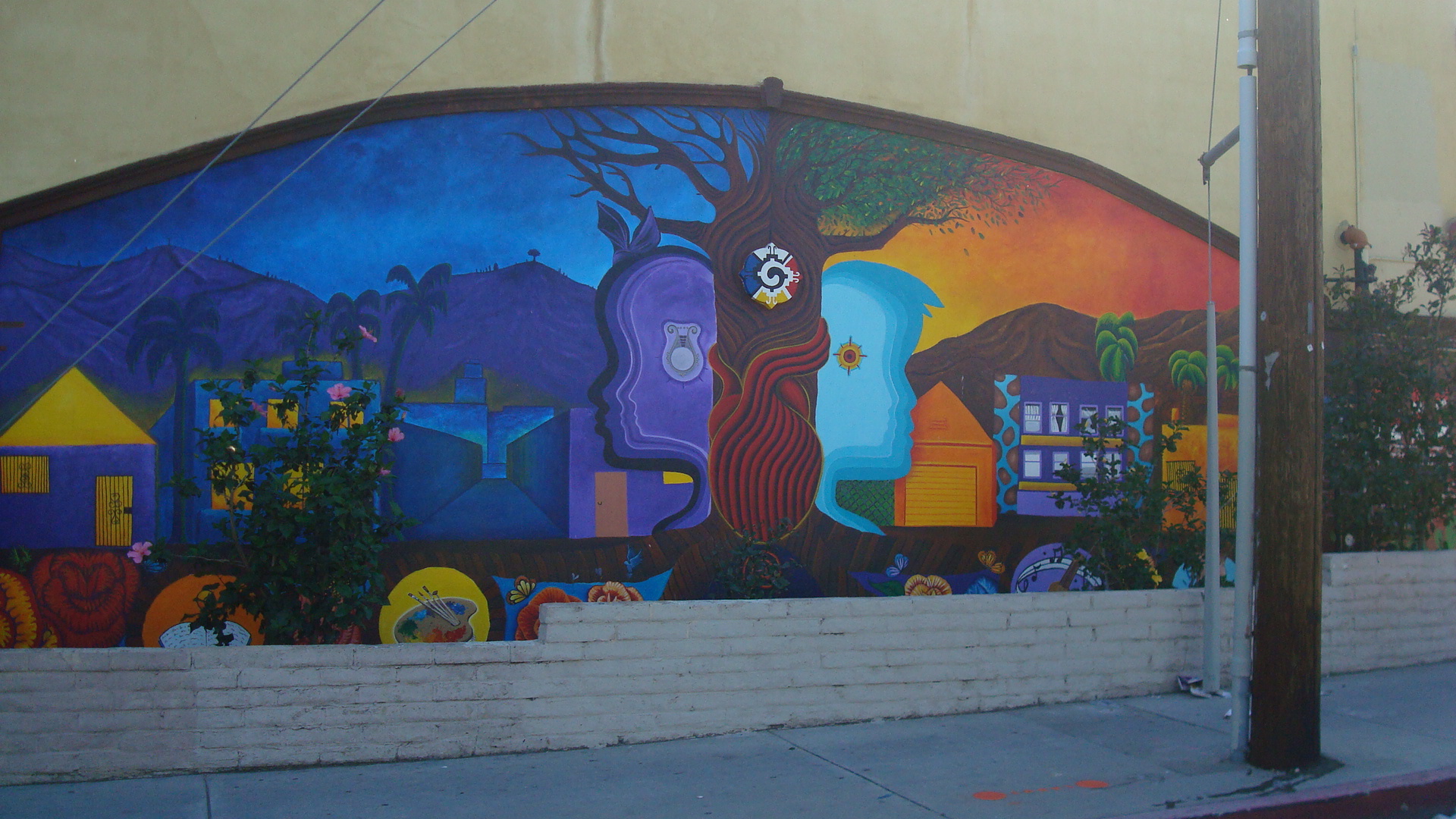
It was worth the trip. The first thing that caught my attention was a mural on the side of the building.

Mural in back of Tía Chucha's.

Mural in back of Tía Chucha’s.

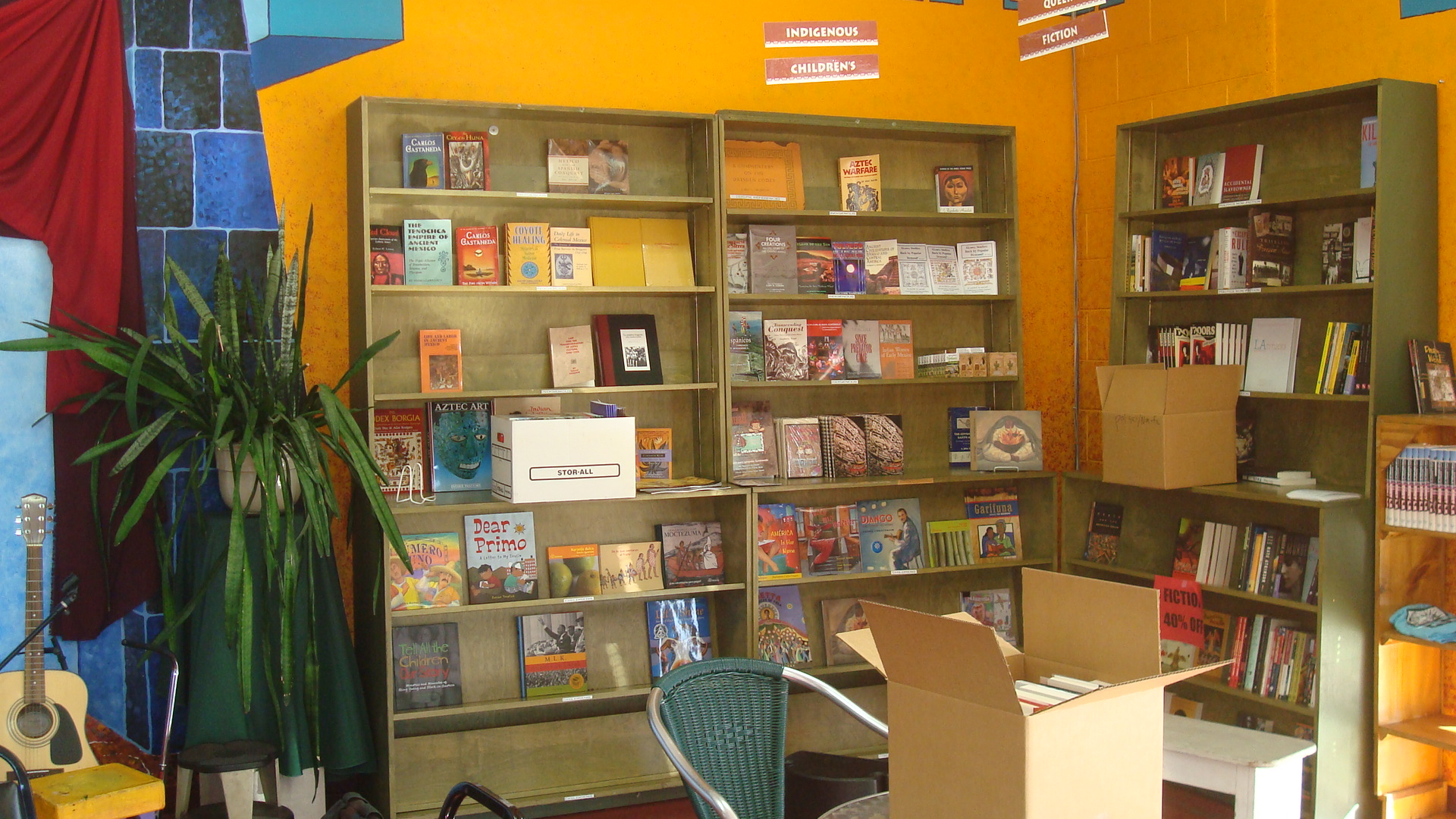
The place was kind of quiet when I got there, but it was afternoon, and most of their events take place in the evening. Tía Chucha’s hosts gatherings of musicians and poets, as well as offering a variety of classes. Right away I liked the place’s vibe, both colorful and comfortable. I took a few photos.

Tía Chucha's offers books...

Tía Chucha’s offers books…

...music...

…music…

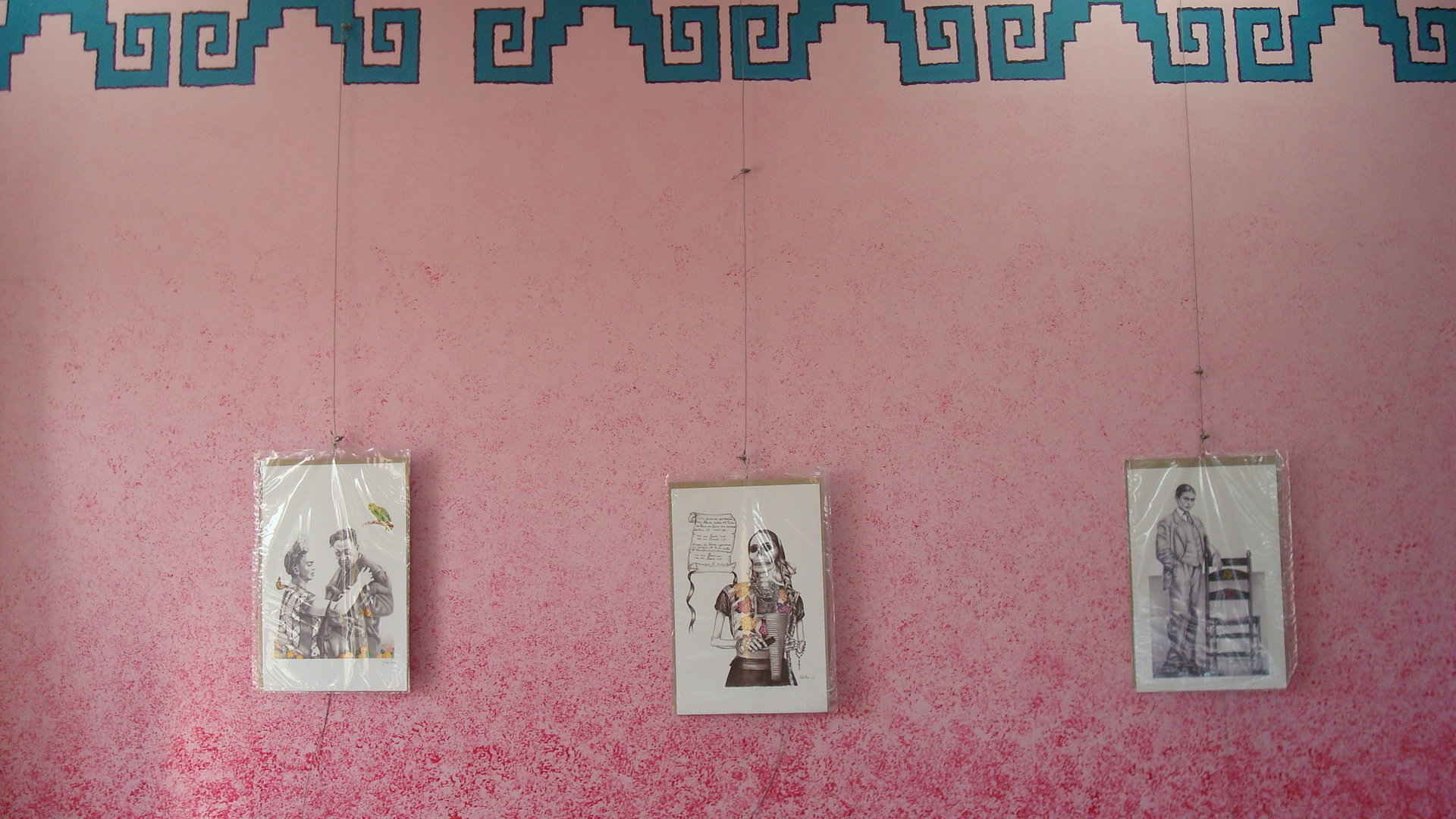
...and art.

…and art.

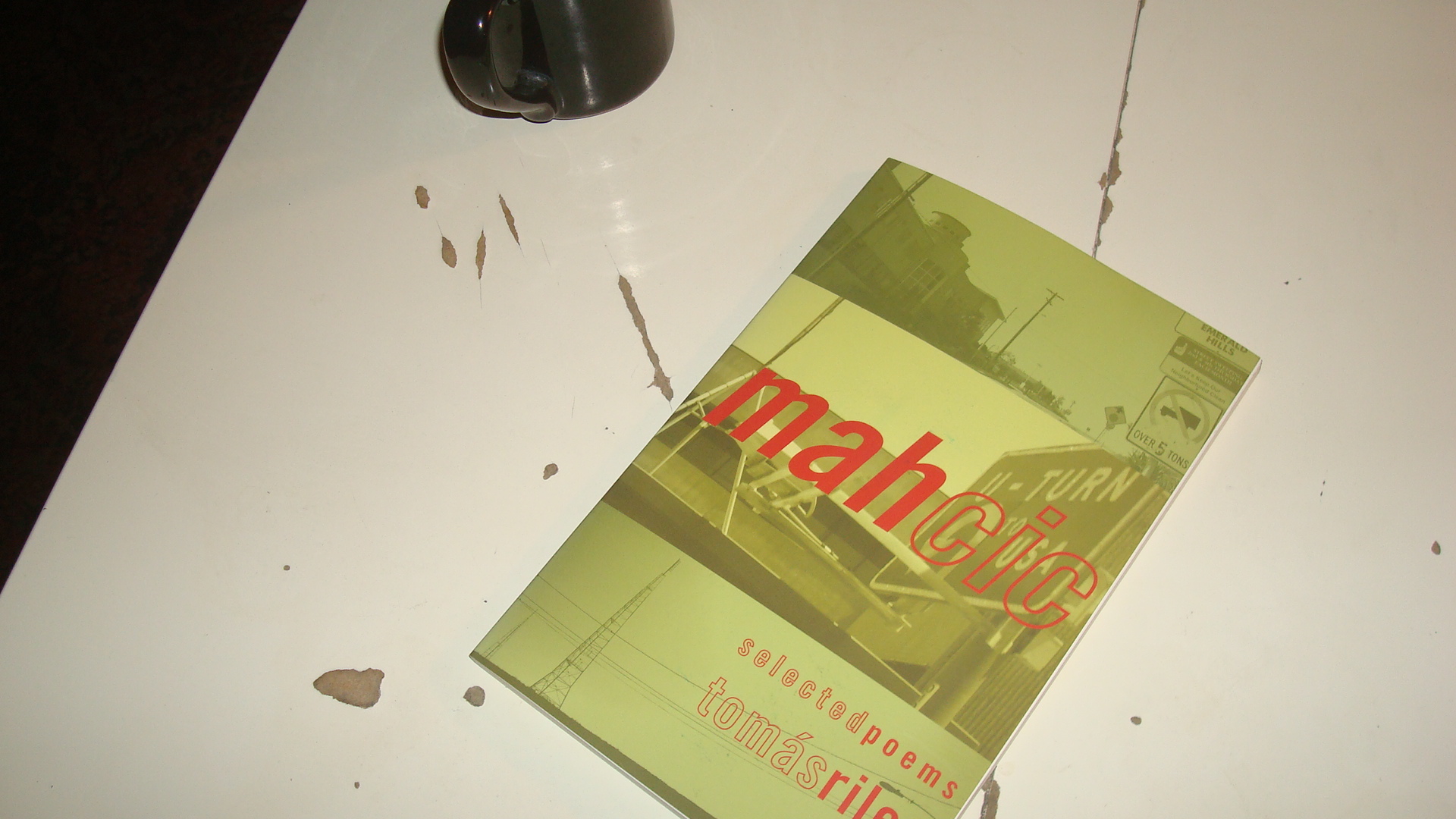
I also flipped through a few books, and ended up buying Mahcic by Tomás Riley. I’ve only read a few of the peoms so far, but his work is pretty cool.

Mahcic by Tomás Riley

Mahcic by Tomás Riley

I liked the place so much I even put my name on their mailing list, which is something I rarely do these days, since I’m already overwhlemed by the amount of stuff that shows up in my inbox. But I was impressed with what Tía Chucha’s has to offer, and I’ll definitely be going back.

If you want to check them out yourself, here’s the link.

Tía Chucha’s

On-Line Archeology

RG Close 1a

I first saw Renée Green’s work years ago at MOCA. It’s hard to describe what she does, because she uses a variety of different media, and her projects don’t fall into any traditional category. My personal take on her work is that it seems like a meditation on the world around us, but not just her own meditation. She invites us to join her. She wants the audience to be a part of the experience.

I found out just recently about a project of hers called code: survey. There’s a physical installation in the cafeteria at Caltrans in Downtown LA, but that’s just one aspect of the piece. Really it’s much bigger than that. The project gathers images, words and sounds from a variety of sources, and allows the viewer to access all of it on-line. It’s like a multi-media collage of the history of LA, but it allows you to choose what you want to explore.

RG Full a

The link is below. You may have to play with it a little to get the hang of it. Each time you click on an image it allows you to go further, reading texts, listening to voices, choosing your own direction and making your own associations.

code: survey, a project by renée green

One piece of advice. Give yourself some time. Once you get started exploring, you may find it’s easy to get lost.

RG Close 2a

Time to Move On

LAC 0B Tunnel

You may already know that LACMA is planning a major overhaul. I think it’s a good idea. The original design has been pretty badly compromised, and the campus is kind of a mess. The biggest mistake was the addition of the Anderson Building, but there are other changes that contributed to the general feeling of chaos. So, yeah, it’s time to hit reset. Peter Zumthor’s design for the new campus is pretty interesting. You never know how these things will work out in the long run, but I’m ready to climb on board. (I do have serious reservations about the plan for funding it, but that’s another story.)

I have to admit, though, I’ve got a fondness for this funky collection of buildings that don’t really fit together. There’s a lot about the current set-up that I’ll miss. So even though we’re probably still a long way away from starting construction, I thought I’d take a trip down to the old place and snap some photos.

The museum was originally designed by William Pereira, and in its first state there was a real sense of space and light. Now the plaza seems claustrophobic. Just to give a sense of Pereira’s orginal concept, take a look at the photo below.

LAC 05 Plz Wom

On the left side you can see the Ahmanson Building, which has been there since the beginning. Back in the 60s you walked up a broad set of stairs onto a wide plaza that was surrounded on three sides by structures like this. It was a fantastic space, and a quintessential example of LA architecture. Now I move the camera to the right….

LAC 10 And Rt

…and you can see the Anderson Building, which was built in the 80s. It was great to have more gallery space, but the building always seemed like a massive intrusion. And if you look at the central plaza…

LAC 25 Plaza Brg

…you can see that the columns and the bridge and the canopy intrude even further. Nowadays this space just seems really odd and awkward. It doesn’t work at all.

But there are still things to enjoy about the plaza. Like Jesús Rafael Soto’s Penetrable.

Penetrable by Jesús Rafael Soto

Penetrable by Jesús Rafael Soto

I love this installation, and kids love wandering through it. I know museums aren’t always a big favorite with children, so I think it’s great that Soto’s work is right out on the plaza, almost like it’s saying, “Come on in and play.”

Another one of the original Pereira buildings houses the Bing Theatre, which I’ll really miss.

LAC 32 Bing Lobby 2

LACMA used to have incredible film programming. They did amazing retrospectives on Marlon Brando, William Wyler, Erich von Stroheim, FW Murnau and others. My friend Brian and I used to joke that there were times we were going there so often it seemed like we were living at LACMA.

LAC 40 Cafe Red

I’ll miss the cafe, too. I’ve spent lots of time there, either taking a break from the galleries or waiting for a movie to begin. Occasionally I’d take a cup of coffee outside…

LAC 27 Red Tbl

…and find a quiet place somewhere. In spite of all the people milling around the campus, it’s not too hard to get away from the crowds.

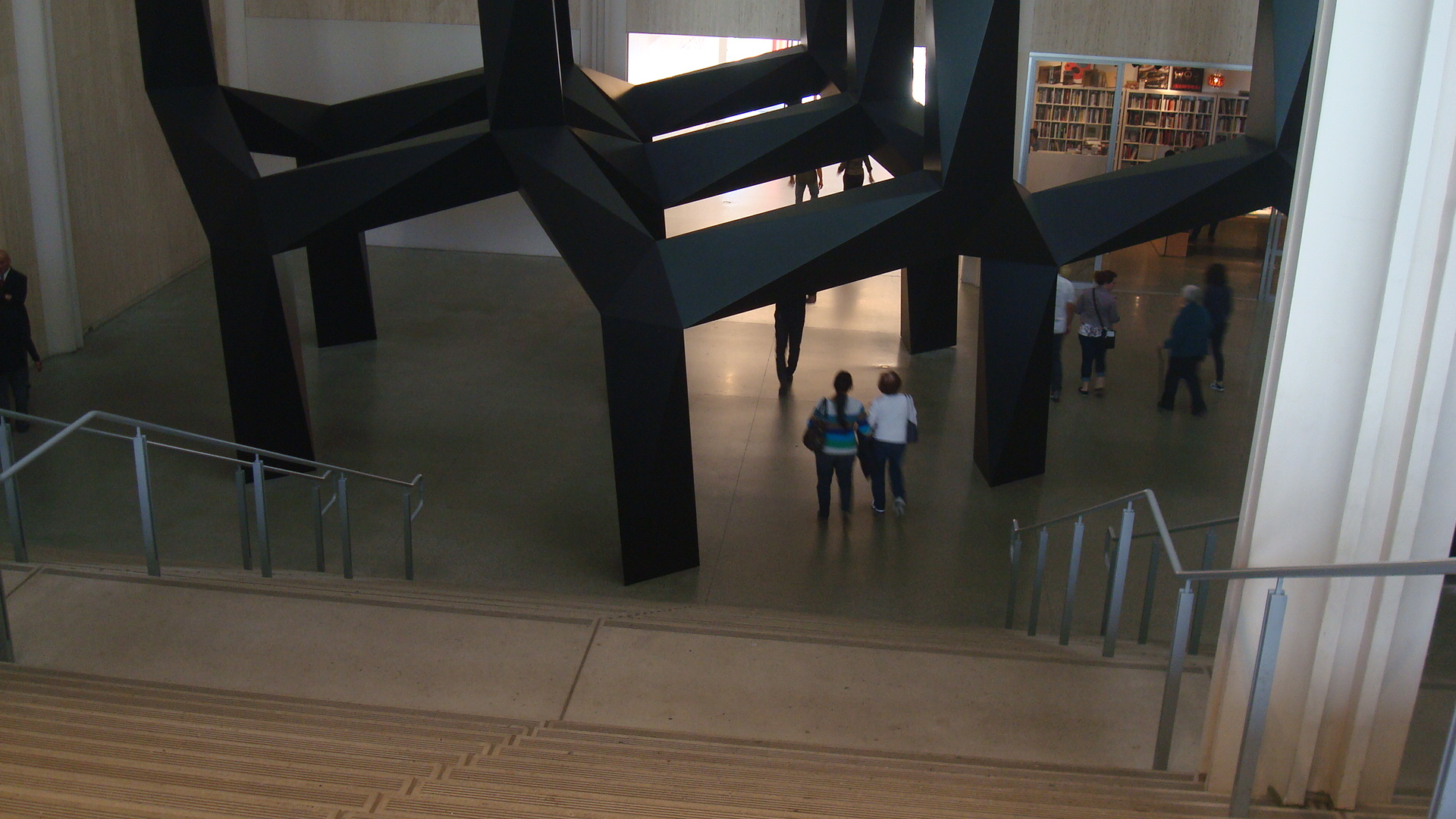
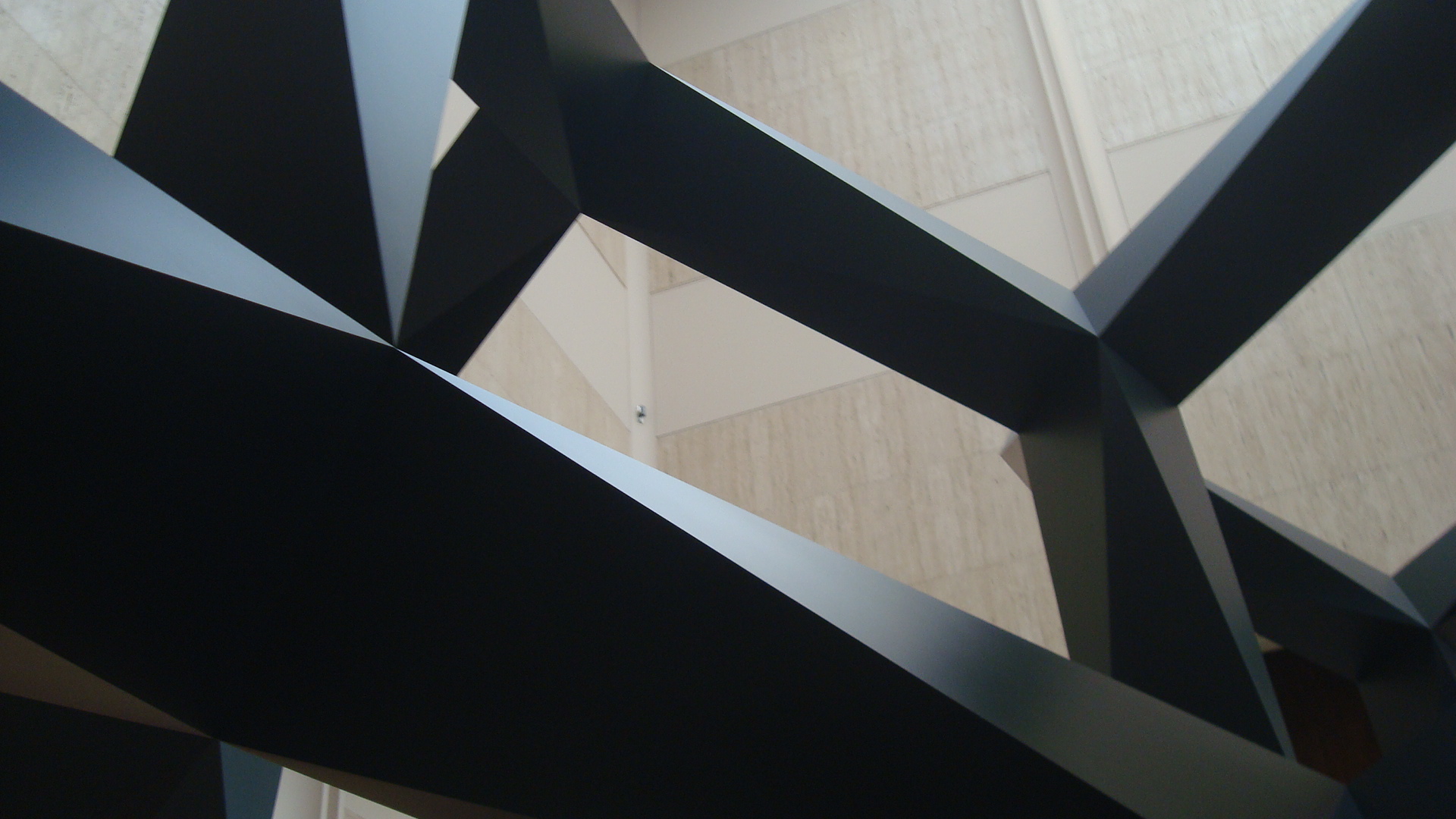
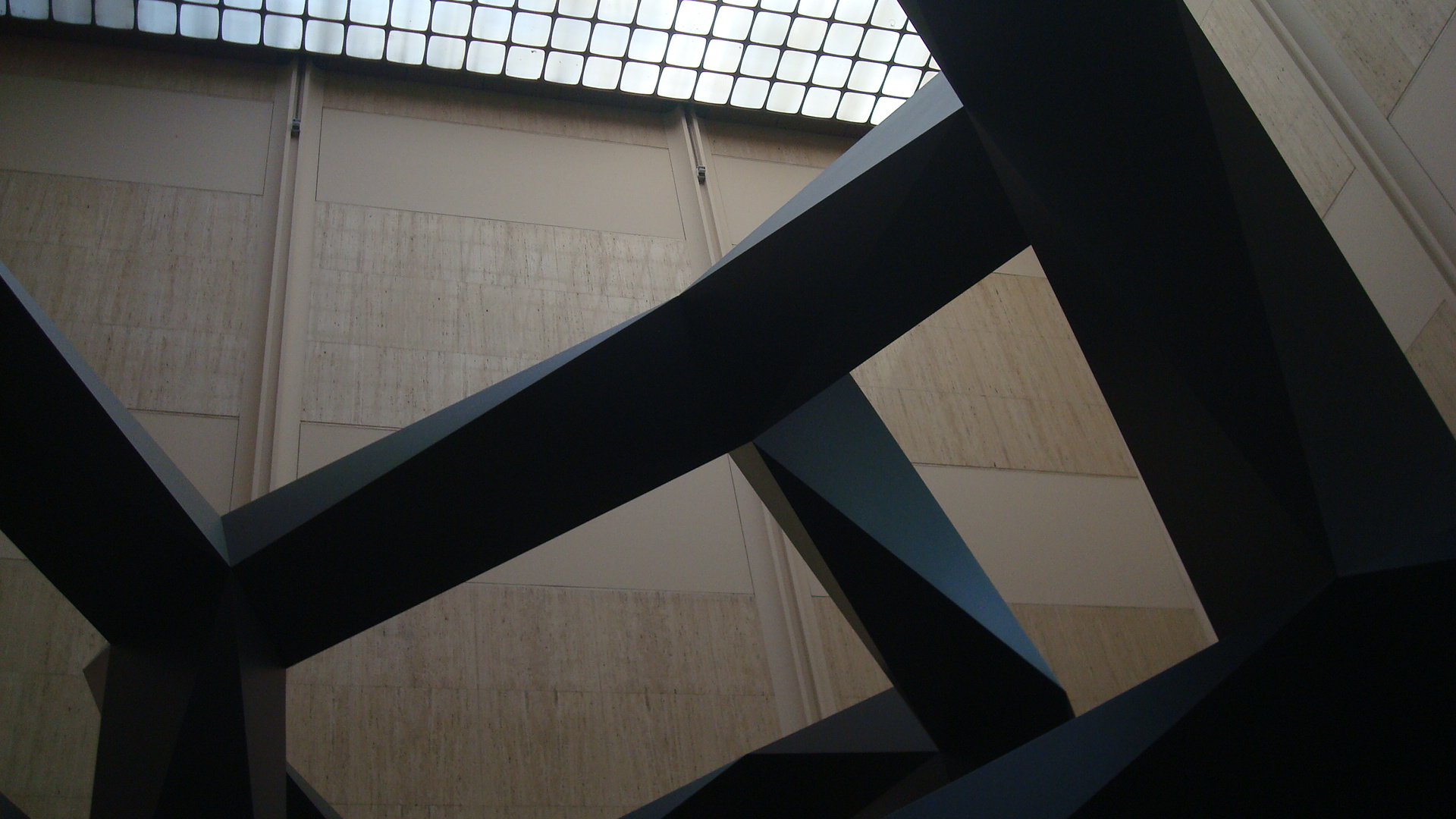
Inside the Ahmanson Building, Tony Smith’s Smoke rises up through the atrium. It’s a cool piece, but it probably needs more room to breathe. Maybe when the new museum is built they’ll create a better space for it.

Smoke by Tony Smith

Smoke by Tony Smith

Same as above.

Same as above.

Same as above.

Same as above.

I’m glad that LACMA draws as many people as it does, but sometimes I miss the good old days, before the blockbuster exhibitions, when it was just you and the janitorial staff. Still, some of the galleries are less crowded than others. The spaces where they display contemporary American art are often pretty busy, but if you just head upstairs…

LAC 80 Gallery

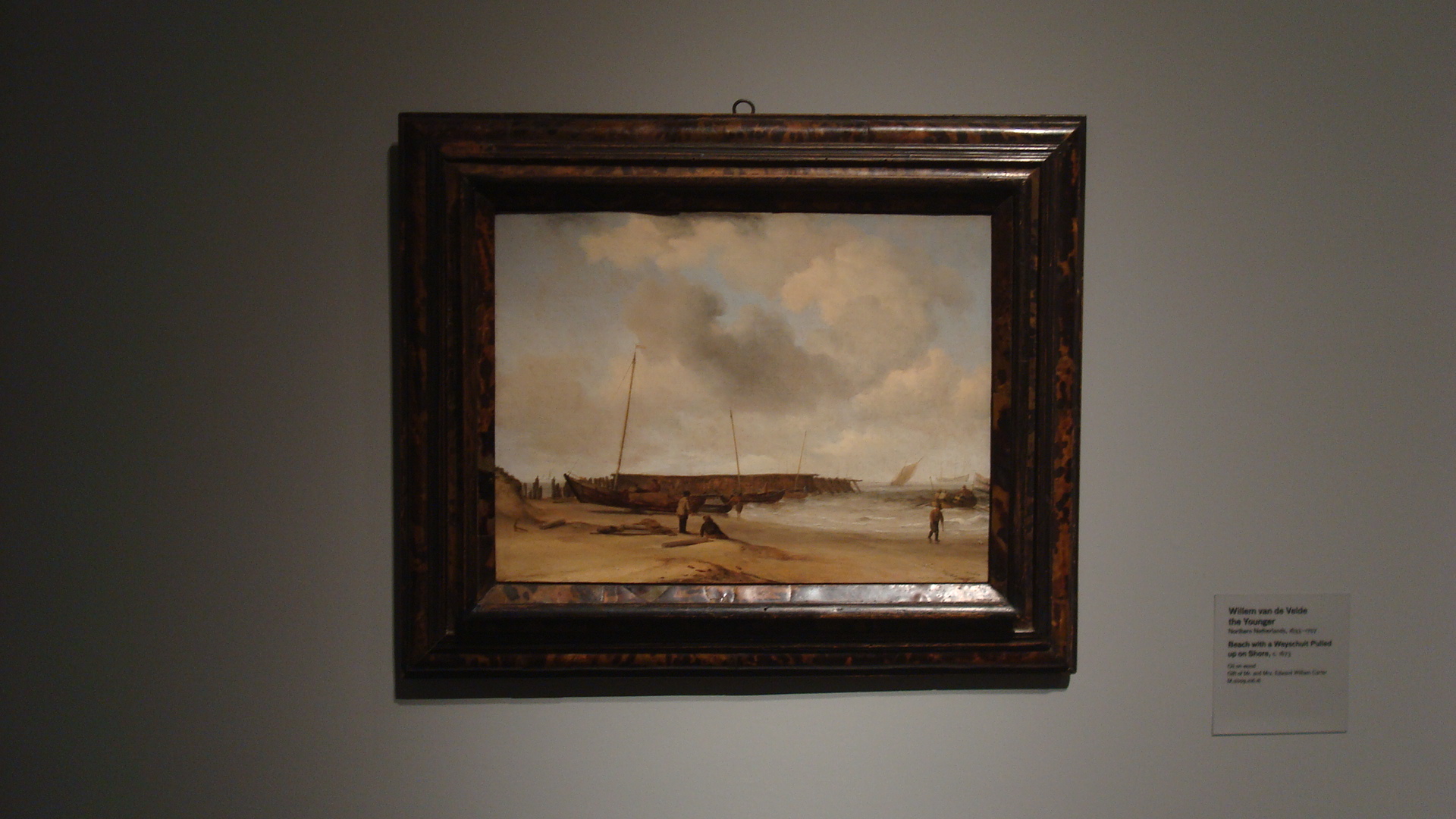
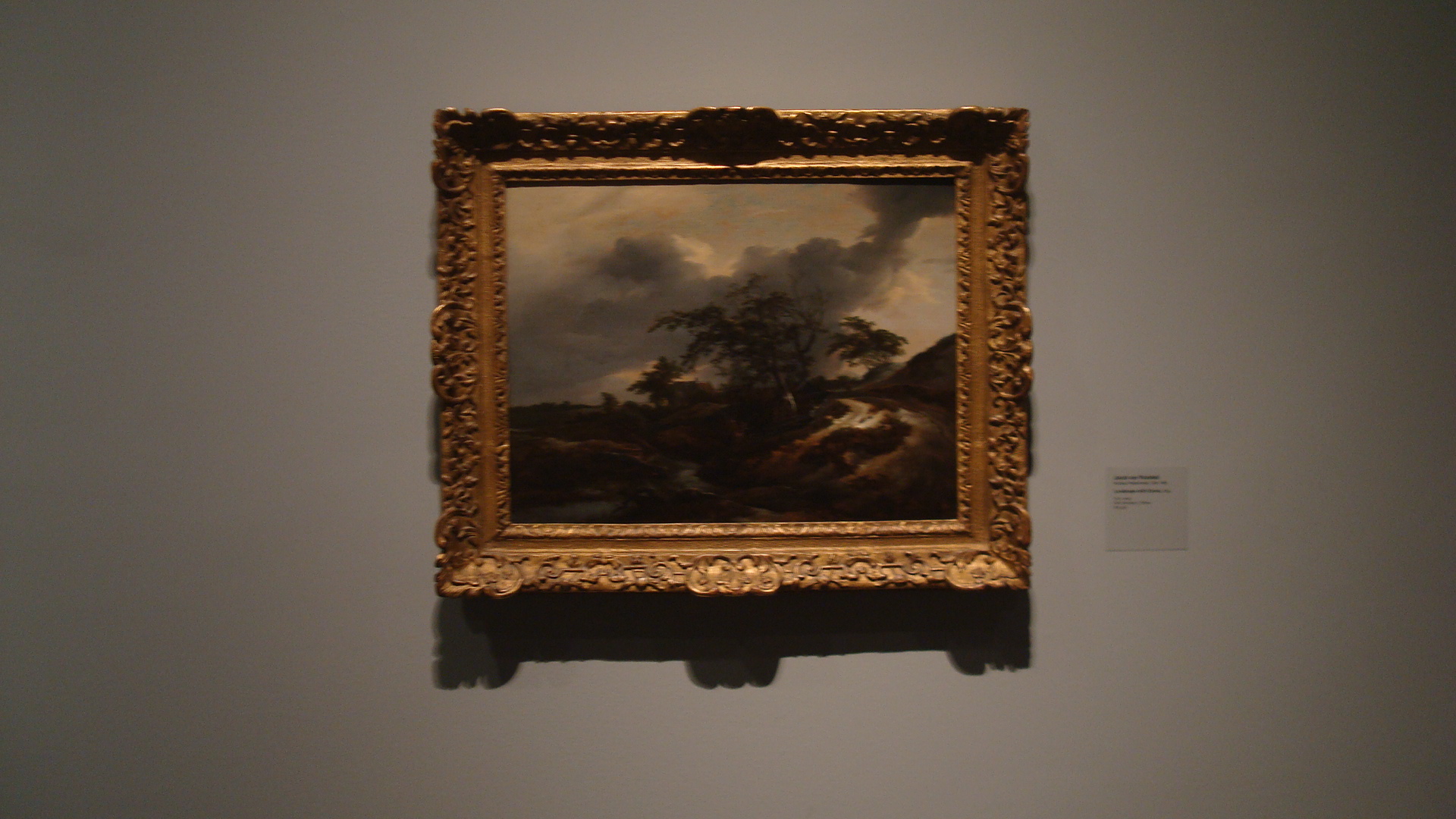
…you’ll find the older European art. I used to mainly look at painting from the last couple of centuries, but lately I’m getting into the older stuff. Like these Dutch landscapes.

Beach with a Weyschuit Pulled up on Shore by Willem van de Velde, the Younger

Beach with a Weyschuit Pulled up on Shore by Willem van de Velde, the Younger

Landscape with Dunes by Jacob van Ruisdael

Landscape with Dunes by Jacob van Ruisdael

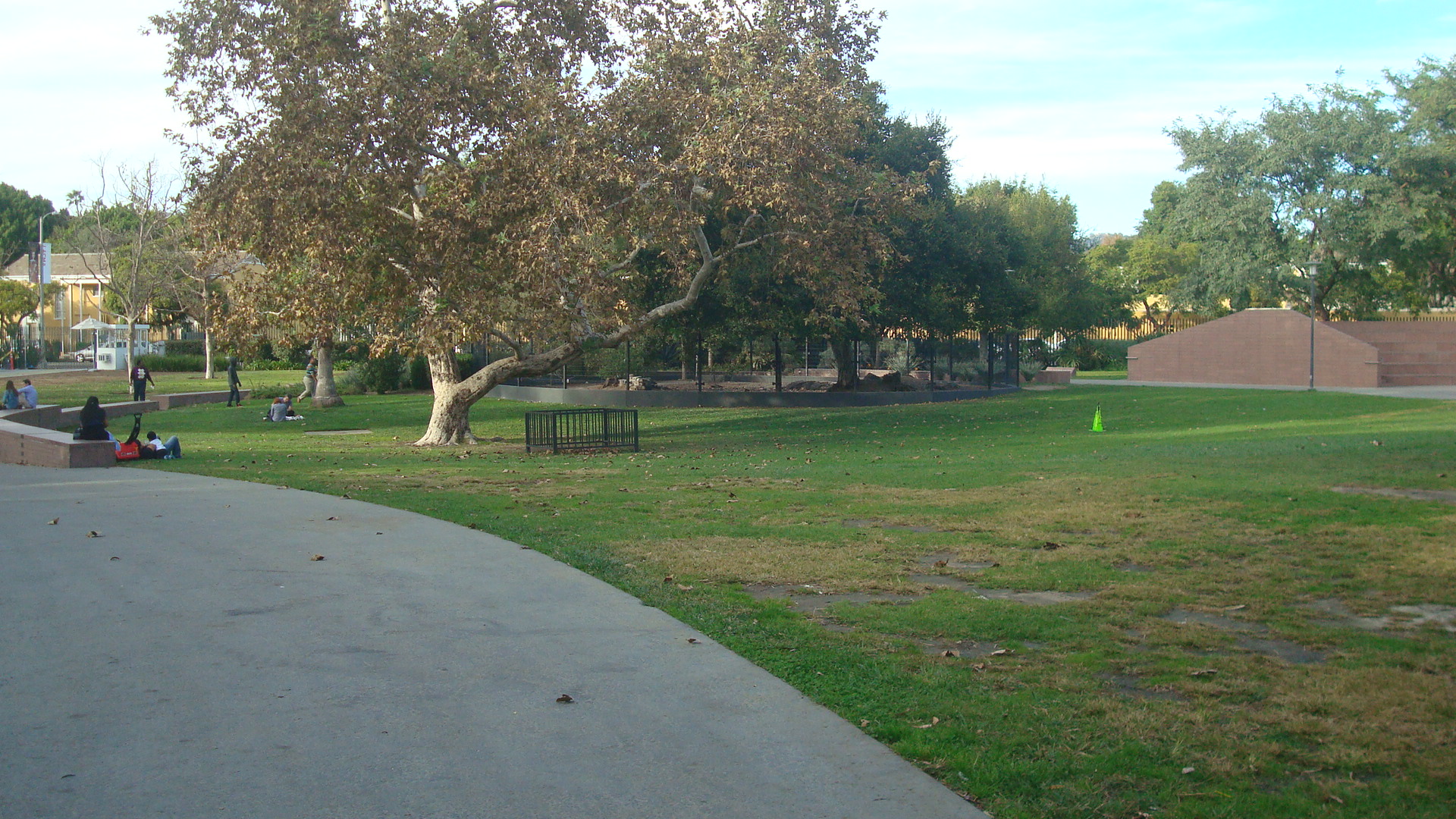
One of the great things about LACMA is that when you’ve maxed out on the art, you can leave the galleries and head for the park just behind the museum.

A view of the park from the museum plaza.

A view of the park from the museum plaza.

Another view of the park looking toward the west.

Another view of the park looking toward the west.

And since I’m talking about change, I might as well mention the May Co. building right next door.

LAC 95 May

The Academy of Motion Picture Arts & Sciences is planning to build a museum devoted to film on this site. The plan is to restore the May Co., and to construct a new wing behind it, which will be designed by Renzo Piano. Not sure when work will start, but you can click on the link below for more info.

Academy Museum

This last shot is a view of Fairfax looking down towards Wilshire.

LAC 97 May Side

It’s interesting that with all the activity happening at LACMA and the May Co., just across the street you have Johnie’s, a classic coffee shop from the fifties designed by Armét & Davis, that’s been neglected for years. Closed since 2000, the City of LA recently declared it a historic landmark, but nobody seems to know what’s going to happen to it. The MTA is currently working on the Purple Line extension, and supposedly there will be a subway stop at Wilshire and Fairfax by 2023. Is it too much to hope that Johnie’s will be open again by then?

Koreatown

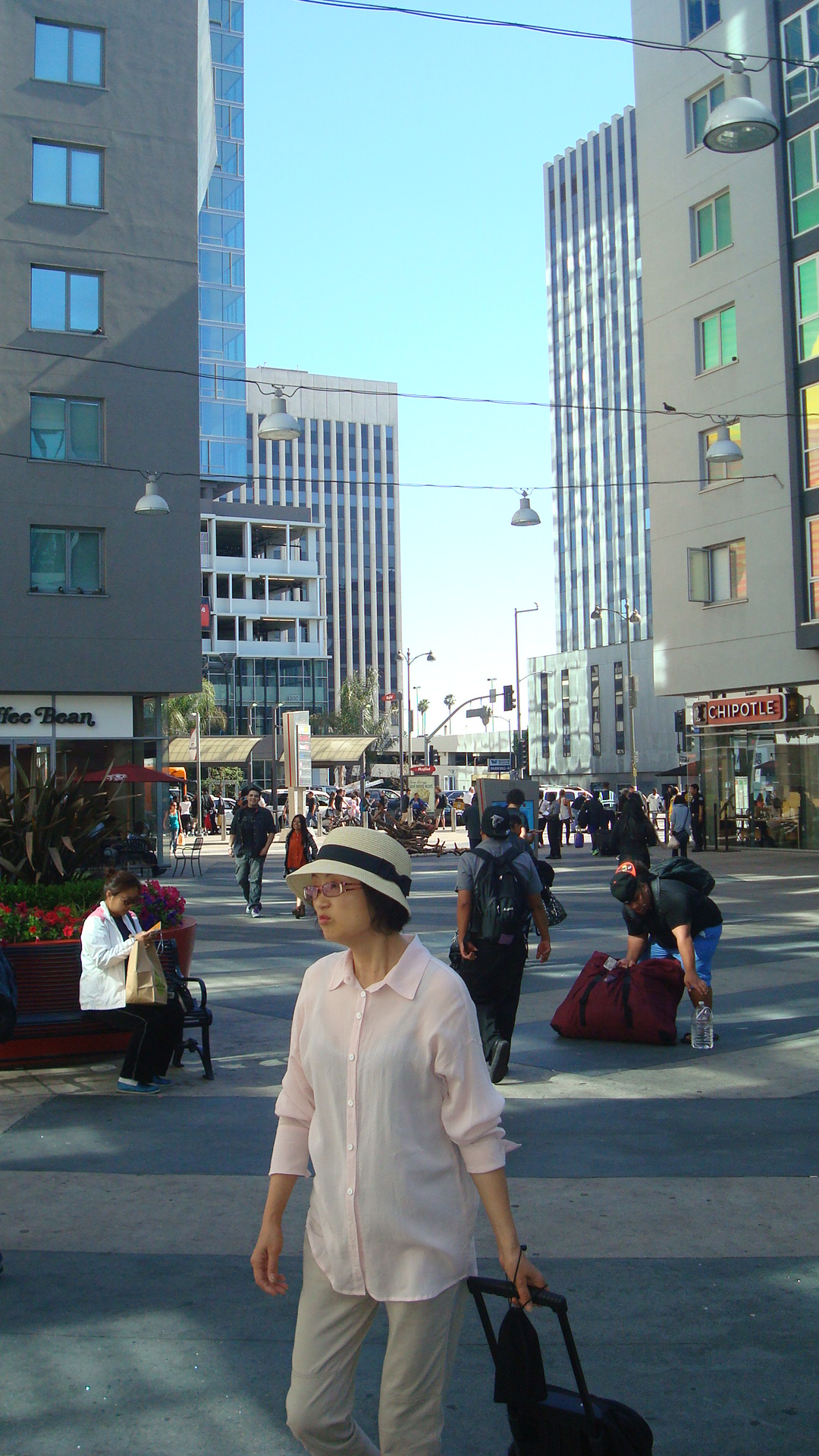
This is the plaza above the Wilshire/Vermont Red Line station.

Ktwn 01 Plaza Woman

And here’s a wider view of the plaza.

Ktwn 10 Plaza Guy

The intersection at Vermont and Wilshire is a busy place. People live here, work here, eat here, shop here.
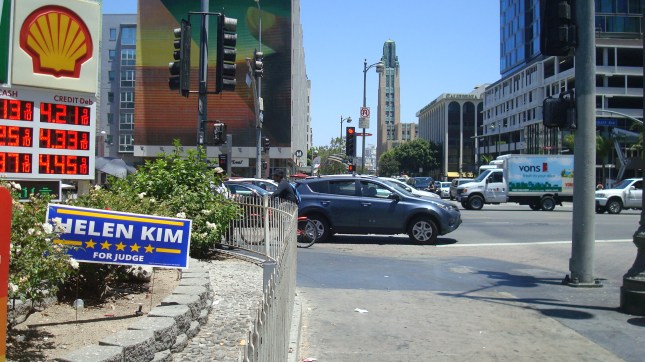
Ktwn 12 Bldg Bullocks

This is Koreatown. It’s the most densley populated neighborhood in LA County. While the exact boundaries are hard to nail down, roughly speaking the area is bordered by Beverly, Vermont, Olympic and Crenshaw.

It’s important to remember that even though it’s called Koreatown, the majority of the people who live there are Latino. About half the population is of Latin American descent, compared to about a third who are of Korean descent. The area came to be associated with Koreans because the vast majority of businesses are Korean-owned.

Ktwn 13 Vendor

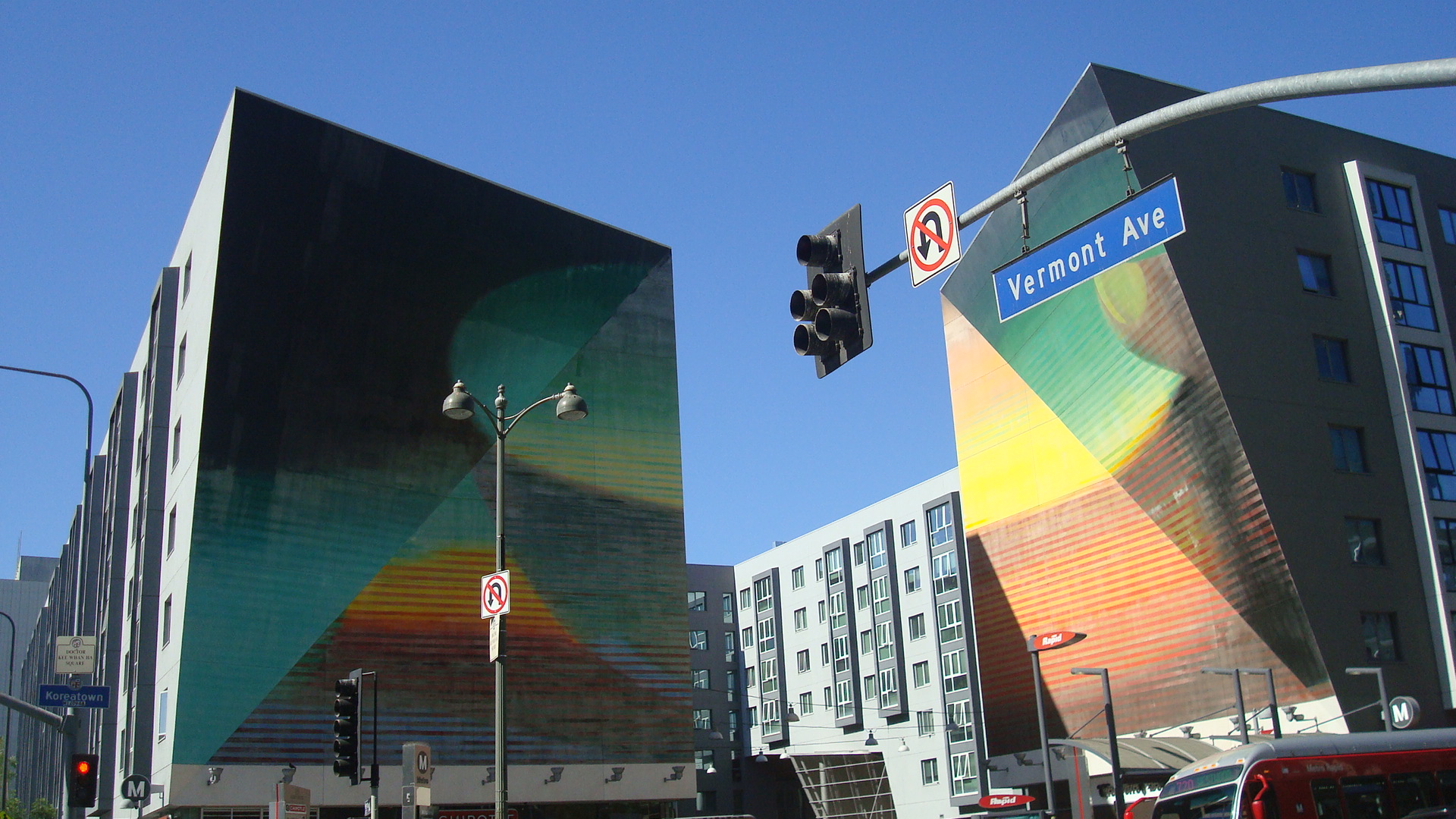
On the sides of the residential complex that rises above the Wilshire/Vermont plaza, you can see April Greiman’s mural “Hand Holding a Bowl of Rice”.

Ktwn 15 Bowl

You can visit the artist’s web site by clicking on the link below.

April Greiman.

Ktwn 16 Bldg New 3Directly across the street is The Vermont, a recently completed residential development comprised of two high-rise towers. This is the kind of high-end project that developers are pushing for all over LA, since they can be extremely profitable. But, not all Koreatown residents are happy about this trend. One concern is that projects like this will push rents up, making it harder for long-time residents to afford housing. Just to give you an idea, a one-bedroom apartment at The Vermont starts at $2,300 a month. In the near future, this trend will almost certainly continue, since The Vermont was recently sold for $283 million. With that kind of money being thrown around, you can be sure that developers will be knocking each other down in their rush to stake a claim in Koreatown.
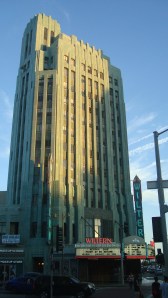
Ktwn 17 Wiltern 2There are some beautiful older buildings in Koreatown, such as the Wiltern Theatre, designed by Stiles O. Clements of Morgan, Walls and Clements. This firm was a major player in LA back in the thirties and forties, designing local landmarks like Chapman Plaza, La Fonda Restaurant, and the El Capitan Theatre. The auditorium was designed by G. Albert Lansburgh, who also created interiors for the Palace and the Orpheum in downtown. I saw Tom Waits there years ago, and I can tell you that the inside is just as impressive as the outside. The Wiltern is actually part of a larger structure called the Pelissier Building, which was completed in 1931. It’s an amazing example of art deco architecture, with its blue-green tile cladding worked into elaborate zig-zag moderne designs. They don’t make ’em like this any more.

And on this stretch of Wilshire you can also find a number of bland office towers occupied by banks and financial services.
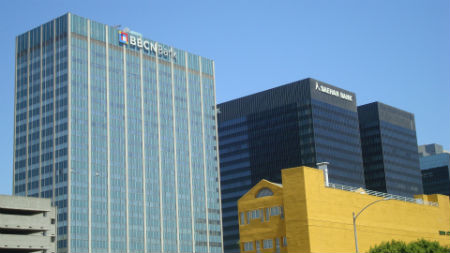
Ktwn 18 Bldgs Tall 2

Among the oldest buildings in Koreatown are the churches.

Ktwn 19 Ch Imm Wide

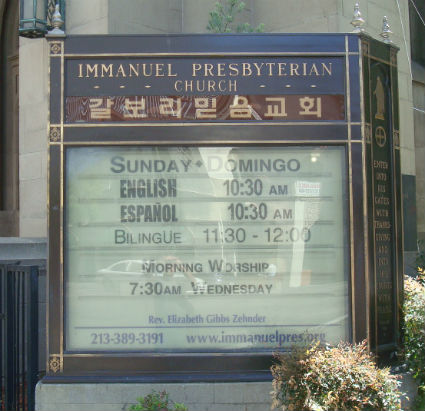
Immanuel Presbyterian Church was constructed in 1928, and for decades was a center for the Anglo community that populated the area up through the middle of the twentieth century. In recent years, many of these older churches have become home to multi-cultural congregations, and have services conducted in multiple languages.
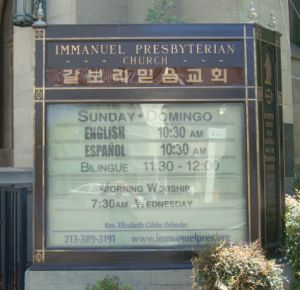
Ktwn 19b Ch Imm Sign

The media has given a lot of attention to Koreatown in recent years, but mostly the stories tend to focus on the night life. Sure, there are plenty of good restaurants, and tons of bars and clubs. But Koreatown is more than just a place where you can scarf kalbi and guzzle soju til you pass out. Like any community, it has many different sides. It’s a place where art, business, technology and politics mingle and collide on a daily basis. Aside from the Korean American population, there are Central Americans, African Americans, Latinos and Anglos. Really it’s impossible to define in terms of a single ethnicity or culture.

Koreatown is relatively young, even by LA standards. The number of Koreans in the city was pretty small until the sixties. It wasn’t until 1965, when the US rewrote its immigration policies, that Koreans started arriving in large numbers. The area we now call Koreatown didn’t really come together until the seventies. Since then it has continued to grow, in terms of both population and area.

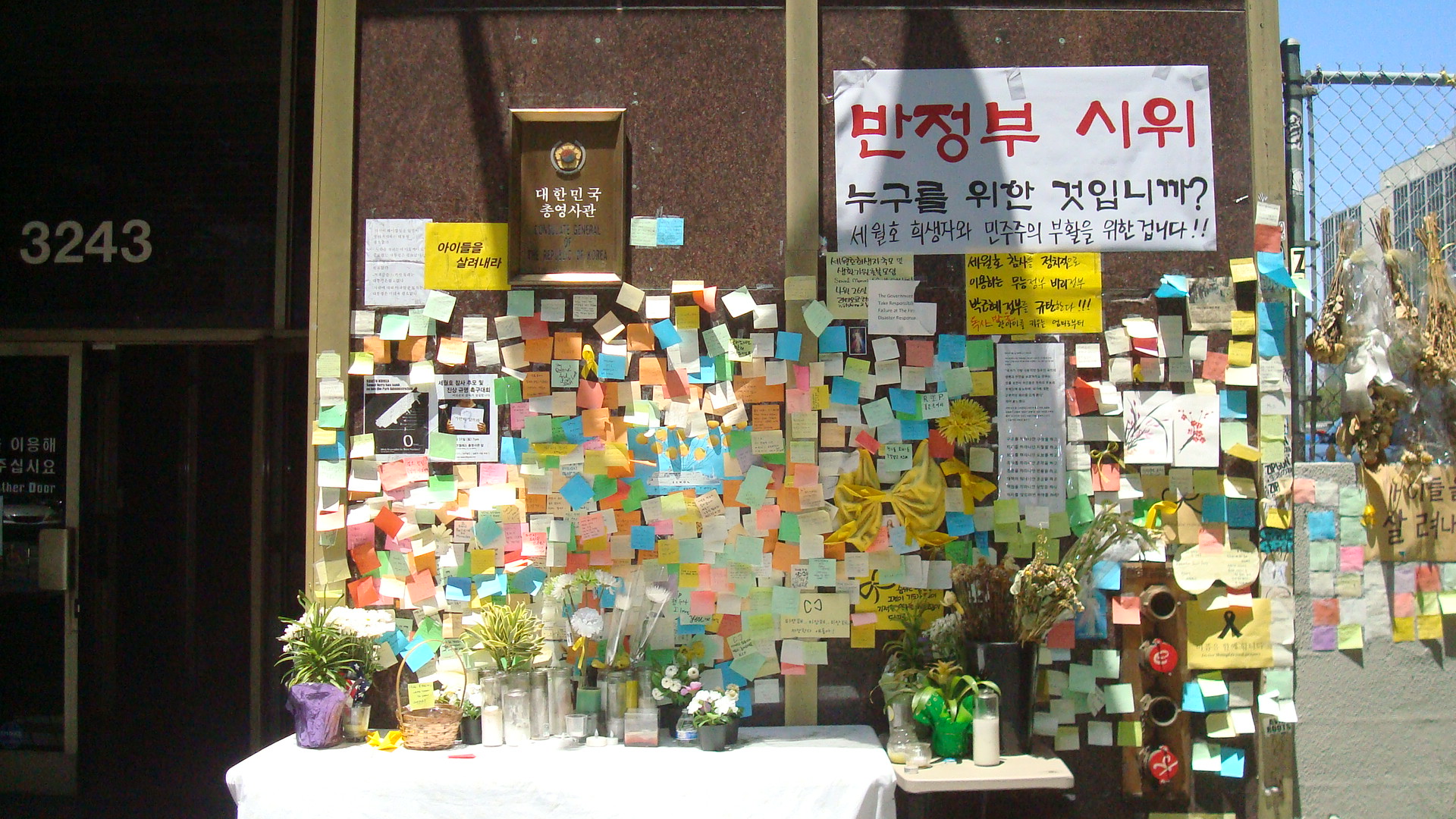
The Korean Consulate is located on Wilshire not too far from Vermont. As I was walking by one day, I saw that community members had created a memorial to the victims of the Sewol ferry disaster.

Ktwn 20 Ferry

Here in the US, the coverage of the Sewol incident was pretty limited and faded from the scene quickly. In Korea, it sparked a huge scandal, as a growing body of evidence suggested it could have been prevented. A series of protests were held in Seoul, with many people accusing the government of a cover-up and demanding that President Park Geun Hye resign. Here’s an article from the Washington Post that gives further details.

Grieving Families Want Independent Probe

Not too far off Wilshire is the Pío Pico Koreatown branch of the LA Public Library. Pico was the last Mexican governor of California before it was annexed by the United States. For many years he was one of the wealthiest and most influential people in the state, but by the time he died he was living in poverty.
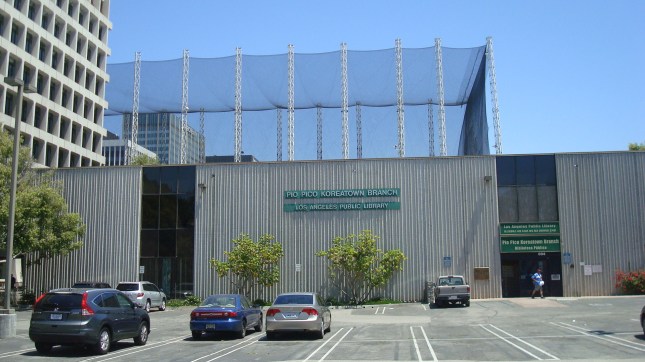
Ktwn 25 Lib Ext

I love libraries. Maybe it’s the quiet. Maybe it’s being surrounded by people reading.

Ktwn 25 Lib Int

Something about this billboard caught my eye. K-Pop isn’t just huge in Asia. It’s got a significant following in the US, too. EXO is built around an unusual concept. The band actually consists of two groups. EXO-K performs their songs in Korean, and EXO-M performs the same songs in Mandarin.
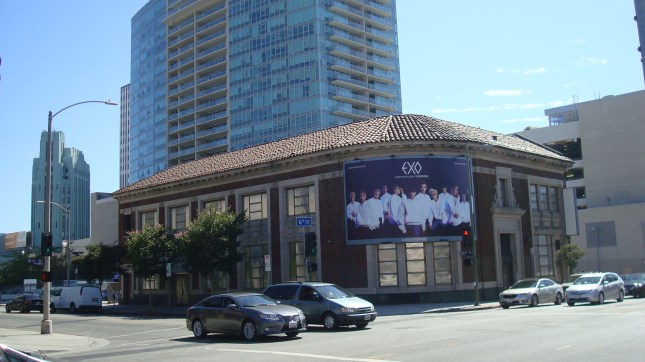
Ktwn 60 Boy Grp Bldg Wilt

With groups like this, obviously the music is not the focus. Some promoter has gathered a bunch of cute guys that will look good in music videos. People have been doing this for decades, but to me it’s interesting that the Korean media have managed to turn K-Pop into such a cultural phenomenon.

Also on Sixth Street, I dropped in on Red Engine Studios. Actually, that was because of a misunderstanding. I thought the place was a gallery. Turns out it’s a school. The guy at the door seemed uncertain about letting me in, but I guess he finally decided I looked harmless enough. They do have some cool art on the walls, and you can view it by visiting their site.

Red Engine Studios

Ktwn 60 RE Guys 2

There are lots of skateboarders in Koreatown. I saw guys riding up and down the sidewalks everywhere, and there was this vacant lot on Sixth where a bunch of kids were practicing their moves.

Ktwn 60 Skate Comp

When I think of Koreatown, I think of malls. As I said earlier, Koreatown got its name because Korean entrepreneurs have been spectacularly successful in creating a vibrant community for businesses to thrive.

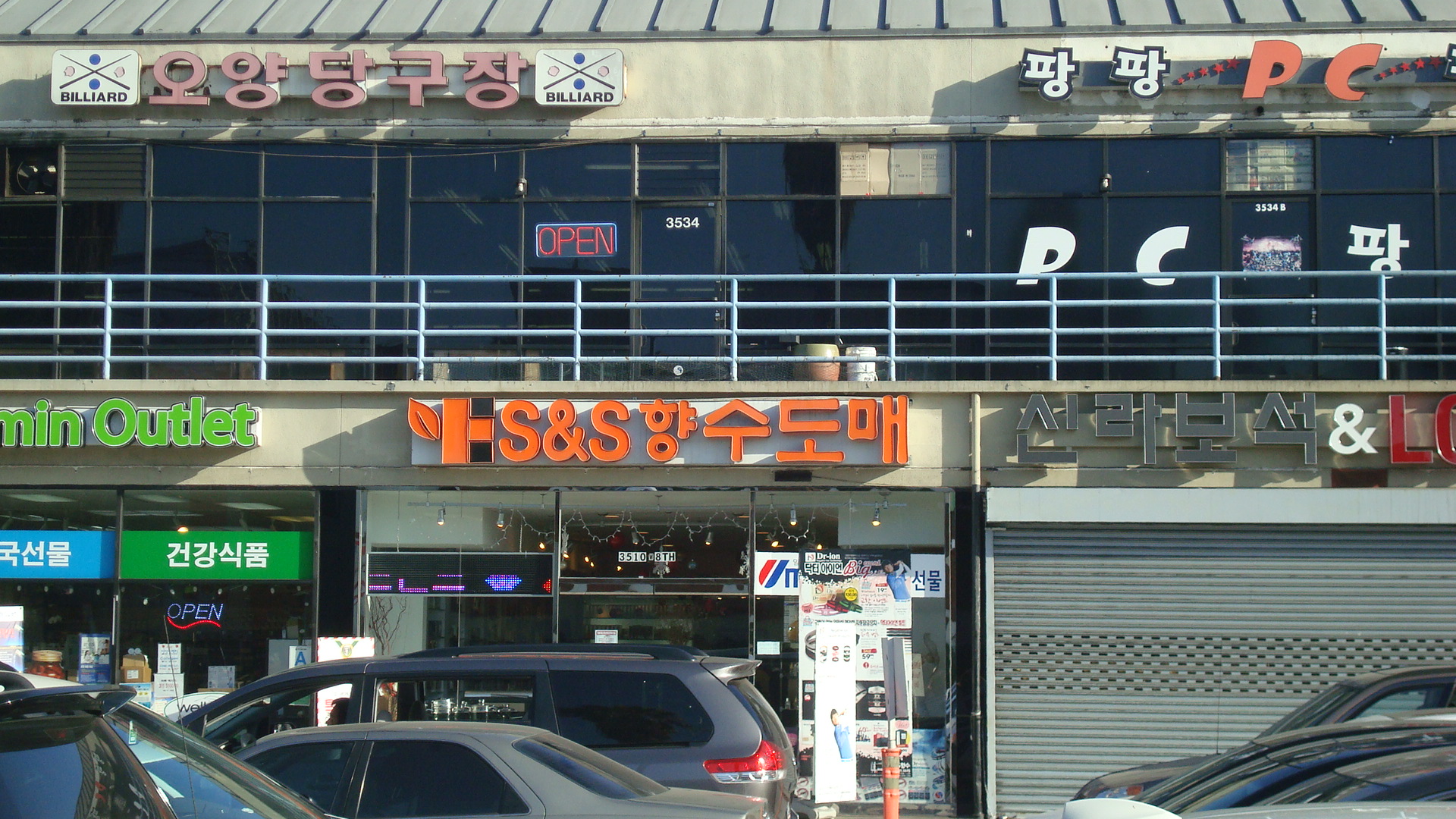
There are newer malls, that were built to house dozens of small shops.
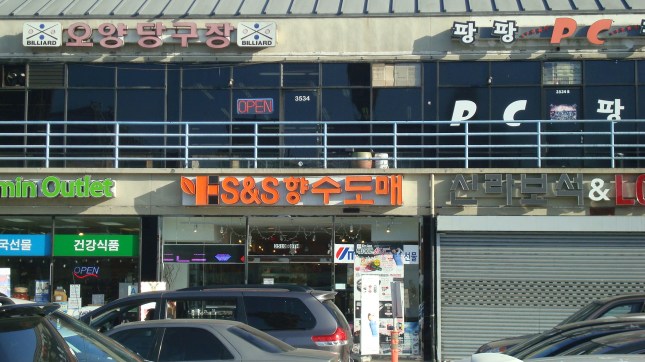
Ktwn 30 Mall S&S

And there are older malls, where a bunch of businesses are crowded around a tiny parking lot.

Ktwn 32 Mall Kids

This one looks like it dates back to the sixties. I’m kind of fascinated by how spaces like this change over time, evolving as the neighborhood changes around them.

Ktwn 32 Mall Rock

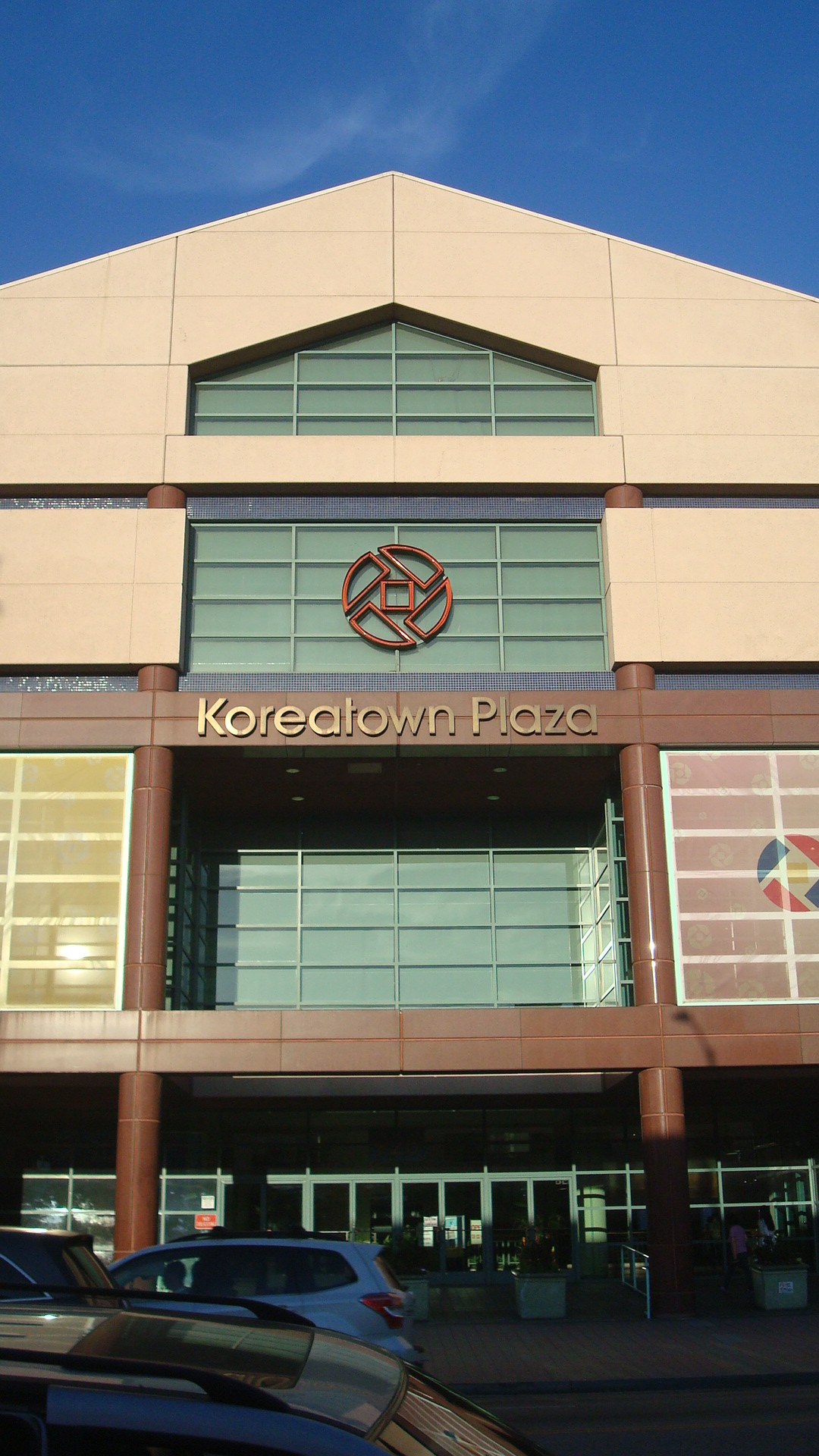
Of course there are also massive indoor malls. Like Koreatown Plaza.
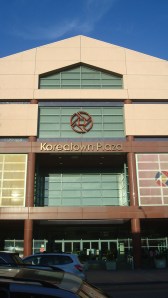
Ktwn 33 K Plaza

I went into Music Plaza looking for traditional Korean Music. They didn’t have much of a selection. But if you’re looking for the latest K-Pop releases, this is the place to be. It may not look too busy in this photo, but I had to stand in line to make my purchase. And I feel pretty certain that they make way more on the merchandise than they do on the music.
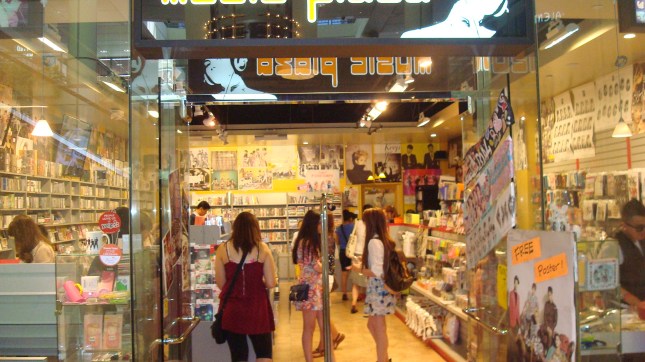
Ktwn 35 Music Plaza

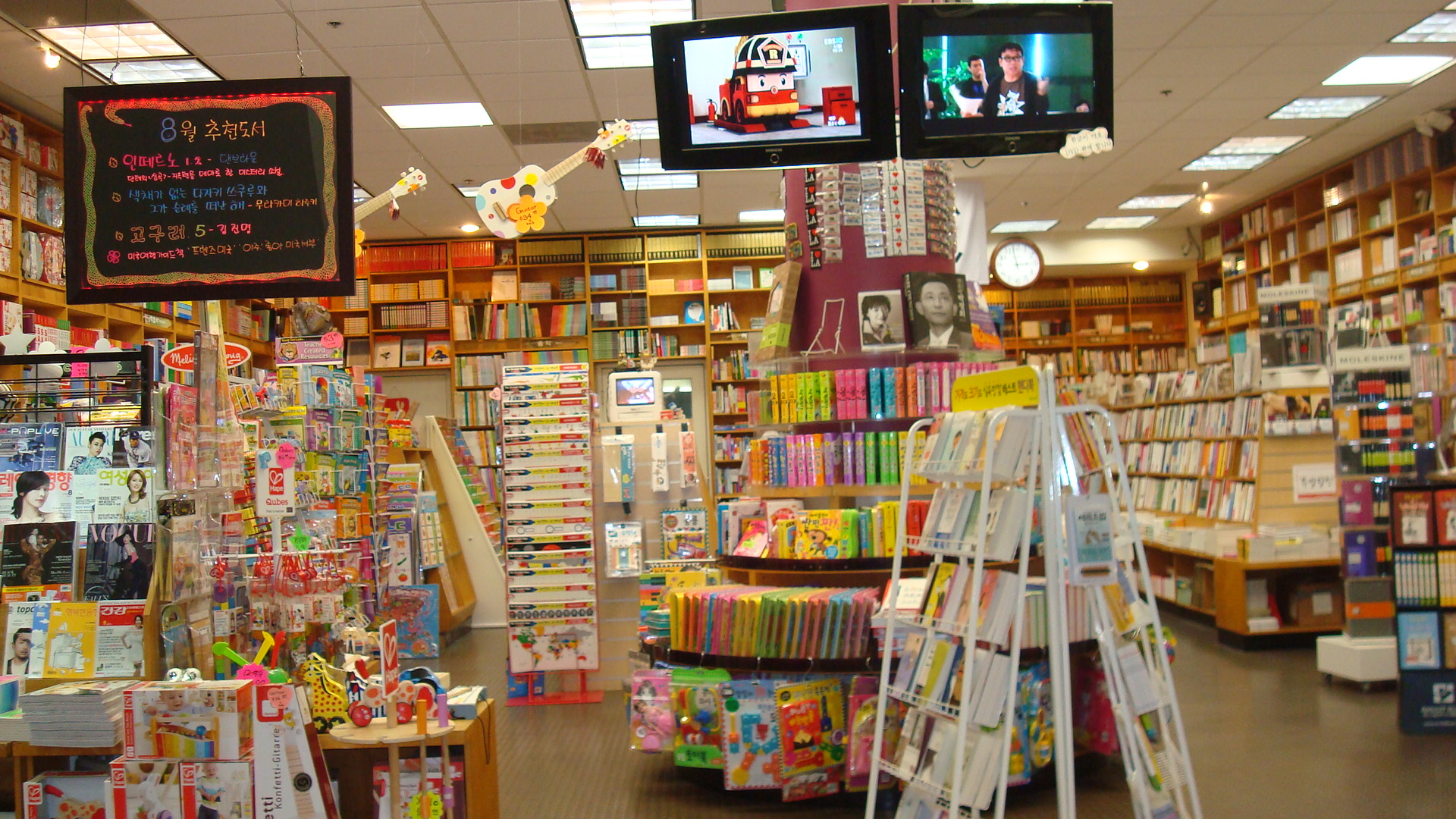
I’m not sure why this bookstore seems quintessentially Korean to me, but it has something to do with the colors.

Ktwn 37 KBC

Like every other mall, Koreatown Plaza has a sizeable food court.

Ktwn 38 K P Court

Walking around the area you see that health and beauty are definitely marketable commodities. There are lots of spas and beauty parlors.

Ktwn 50 Bty All Rev

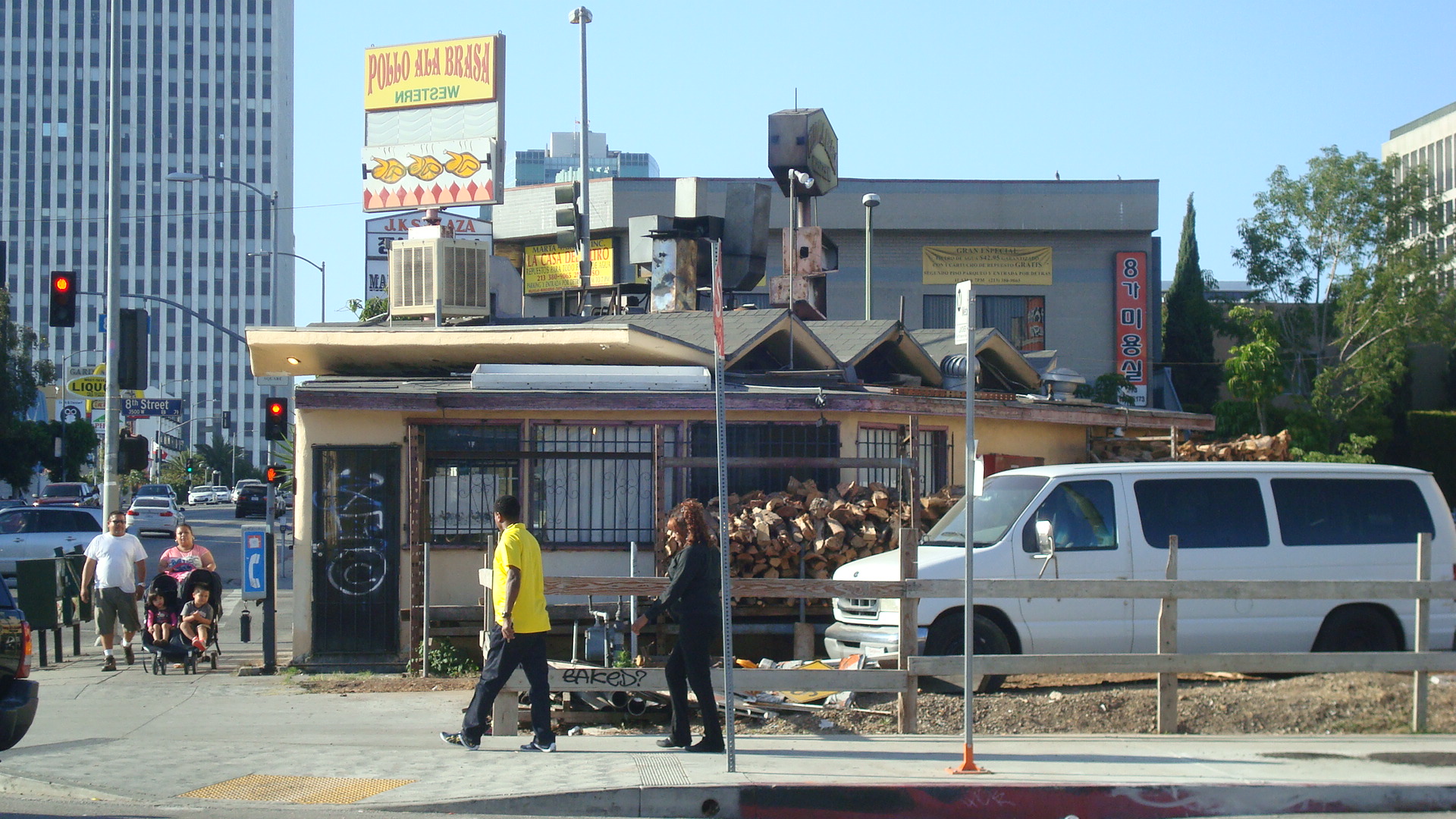
It was the stacks of firewood that made me want to take a picture of Pollo a la Brasa.

Ktwn 68 Pollo

As large swaths of LA get gentrified and prettified, it’s cool to see an old school restaurant that isn’t too worried about its appearance. And in addition to keeping the grills going…

Ktwn 69 Pollo Waiting

…the logs also serve as benches while people wait for the bus.

Yeah, LA’s sidewalks are a mess, but I have to say I have an affection for the huge, overgrown trees that are breaking up the concrete. The thick branches spreading over this stretch of Eighth Street made it seem like a small forest.

Ktwn 70 Eighth Shade

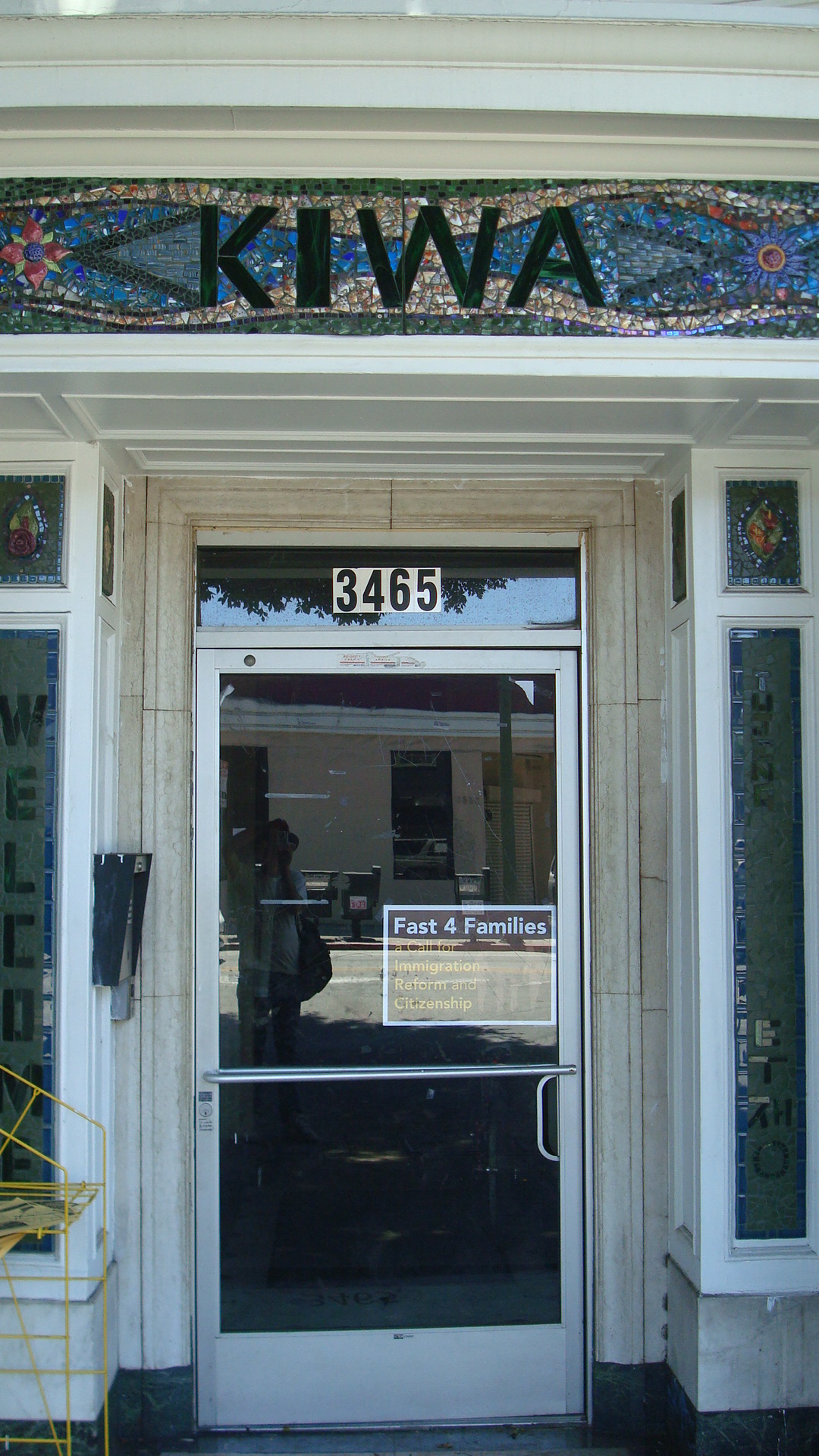
Ktwn 70 KIWAAnd right here on Eighth Street is the Koreatown Immigrant Workers Alliance. KIWA has worked for years to defend the rights of workers, and is currently engaged in a campaign to fight wage theft, which is rampant in LA. One of their notable victories was helping Heriberto Zamora recover wages that had been denied him by Urasawa, a posh restaurant in Beverly Hills. Even after being cited by the California Division of Labor Standards Enforcement for multiple violations related to wage theft, Urasawa resisted paying Zamora what he was owed until just before their final hearing before the DLSE. To find out more about KIWA’s work, click on the link below.

KIWA

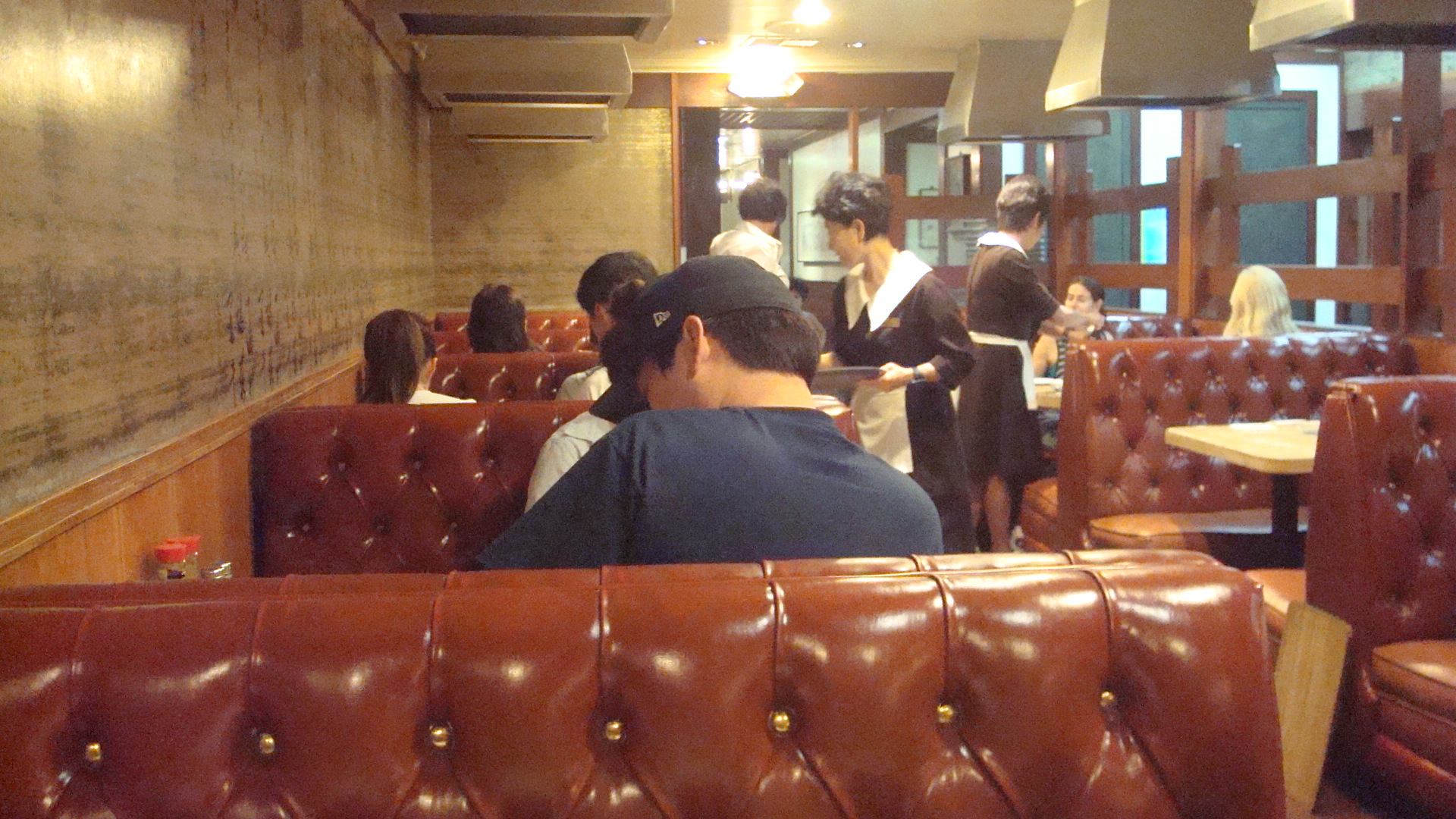
Koreatown is changing rapidly, but pieces of the past still remain. I hadn’t been to Dong Il Jang for decades, and I’d been thinking about stopping by for a while.
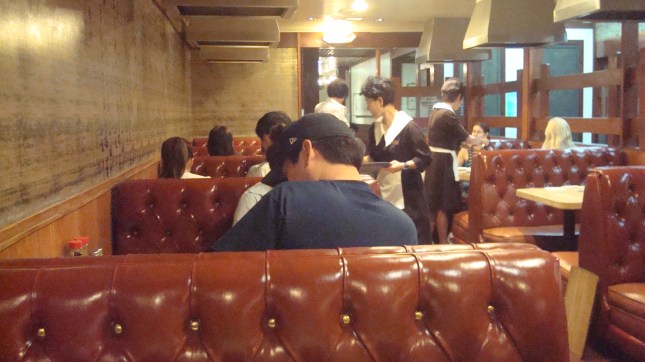
Ktwn 91 Dong Int

The waitresses were friendly. The food was good. Even though I hadn’t been there for years, it felt familiar. And it was just reassuring to know that it was still there.

Ktwn 92 Dong Food

Vincent Price Art Museum

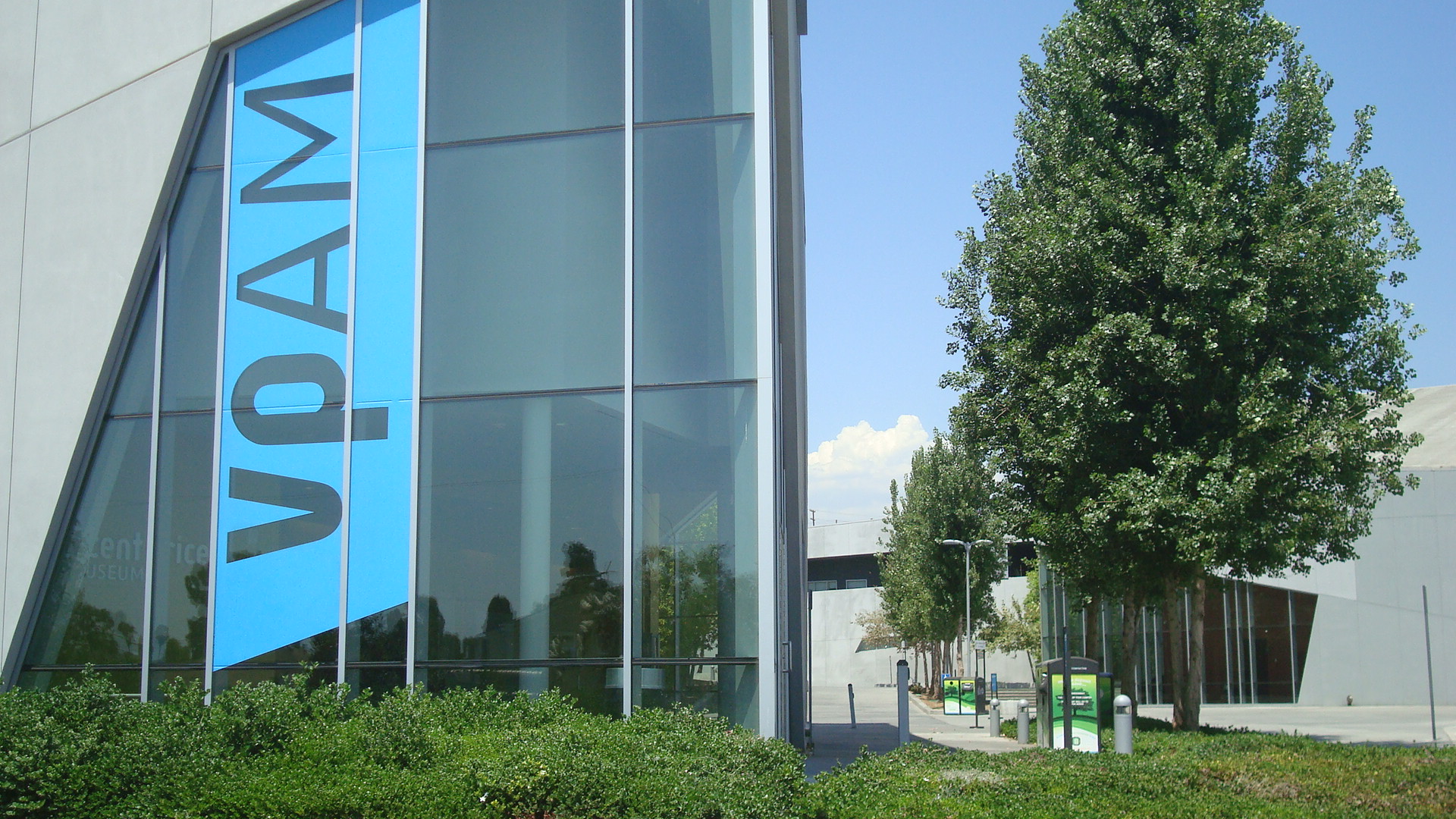
Vincent Price Art Museum at East Los Angeles College

Vincent Price Art Museum at East Los Angeles College

I don’t know how much you know about Vincent Price. If you’re over forty, you probably think of him as somebody who made a lot of horror flicks. If you’re under forty, there’s a good chance you’ve never heard of him. Actually, Vincent Price was a fine actor who worked in film, theatre, radio and TV. Sure, some of the movies he made were lame, but he did a lot of first rate work in films like Laura, Leave Her to Heaven and The Masque of the Red Death.

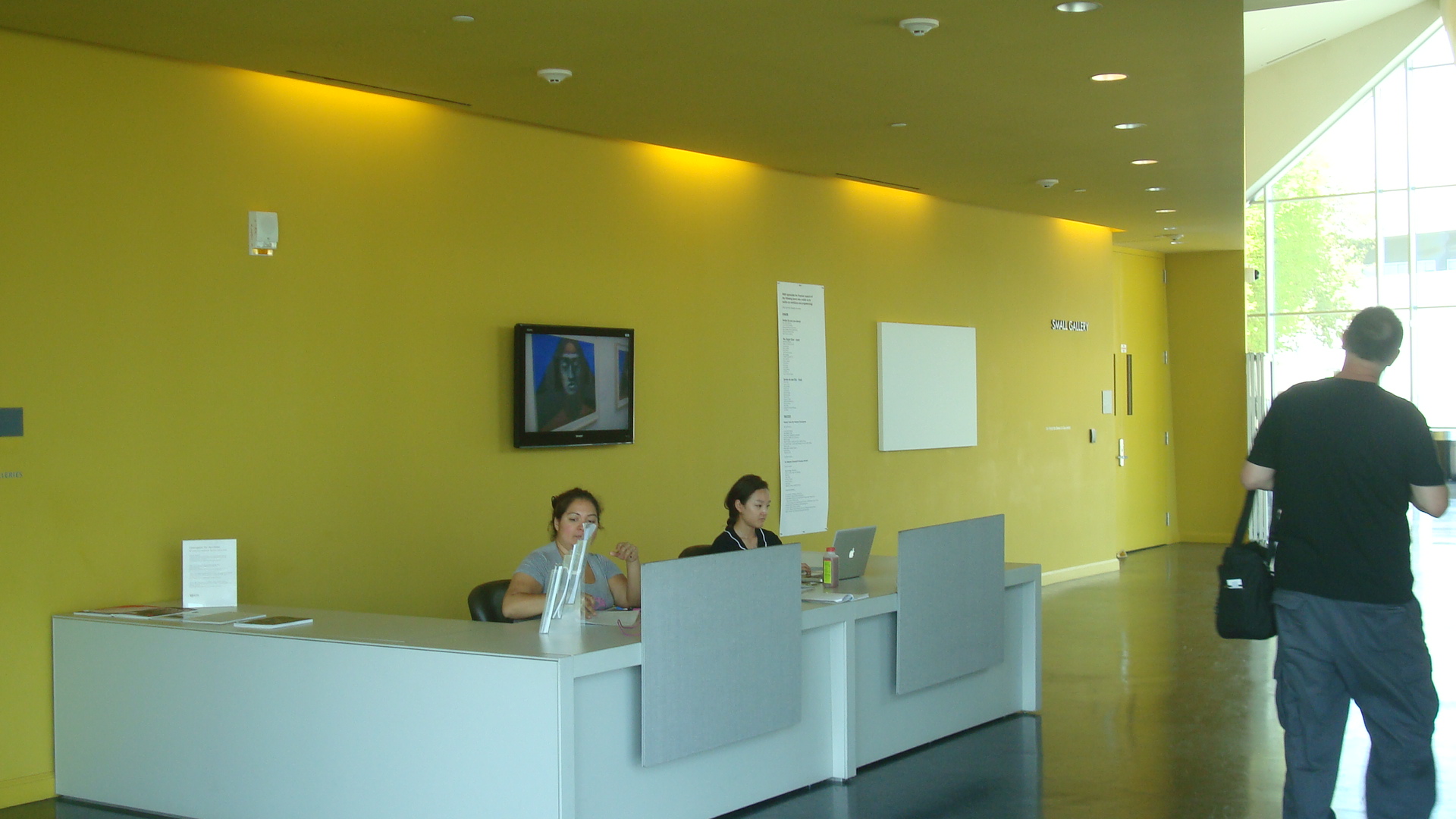
The reception area at VPAM

The reception area at VPAM

But he was also an art collector, and that’s why he has a museum named after him at East Los Angeles College. Before becoming an actor, Price studied art history at Yale, and in later years he travelled extensively giving lectures on the subject. In the fifties he decided it was important for art students to have access to paintings and drawings for their studies, and that was when he and his wife began donating works to ELAC. In 1957 they gave 90 pieces to the college. Now the VPAM collection consists of over 9,000 objects.

Death and Mother Struggling Over Child by Käthe Kollwitz

Death and Mother Struggling Over Child by Käthe Kollwitz

On the day I visited, the museum offered three shows from the permanent collection. The survey of Mexican modernism was excellent. I was also impressed by the twentieth century American and European art on display. (Honestly, I just took a quick stroll through the room full of pre-Colombian stuff. Not my cup of tea.) But the museum also develops its own shows and hosts travelling exhibitions. If you’re interested in checking out their upcoming shows, here’s the link.

Vincent Price Art Museum

No Room in the Inn by Gronk

No Room in the Inn by Gronk

The VPAM is open Tuesday through Saturday, and admission is free. Now that I’ve been there, I’m definitely planning on going back.

Twinka by Arnold Mesches

Twinka by Arnold Mesches

Transformations

TW 00 GW Campus

Around the middle of the twentieth century, over a period of decades, the LA County Flood Control District did their damnedest to encase most of the city’s waterways in concrete. Apparently it seemed like a good idea at the time. From our contemporary perspective, it looks like a colossal mistake. But what can we do? We don’t have the means to break up the hundreds of miles of concrete that were poured back in the last century. So we’re doing what we can, getting behind small projects that we hope will eventually have a cumulative impact.

I’ve lived in LA all my life, and it still amazes me how little I know about this city. The Tujunga Wash runs from the San Gabriel Mountains, across the San Fernando Valley and feeds into the LA River around Studio City. Recently I started paying attention to the stretch that runs along Coldwater Canyon between Burbank and Oxnard. What I found was pretty interesting.

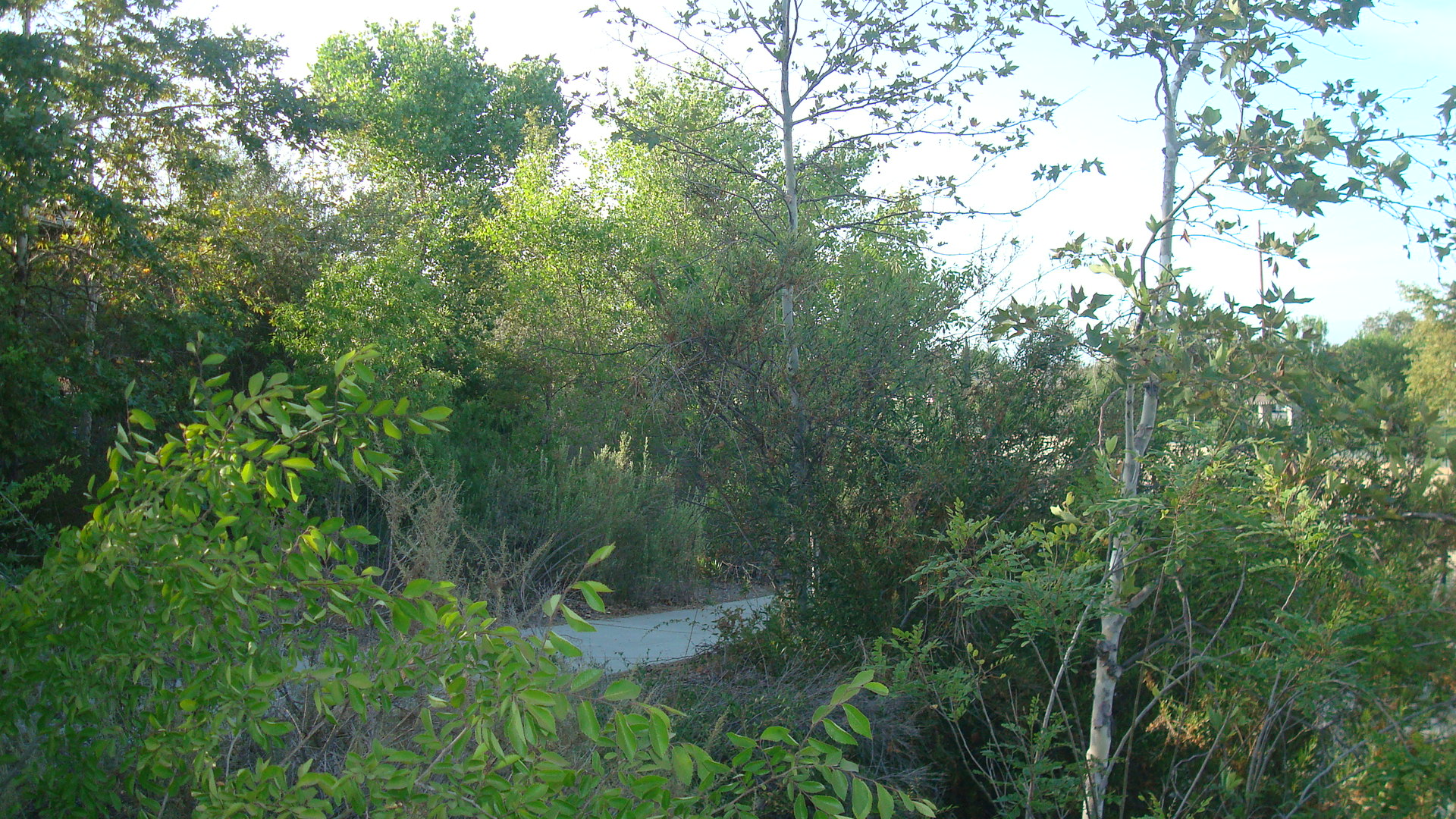
Above Oxnard, I found the Tujunga Wash Greenway and Stream Restoration Project. What used to be a drab stretch of land running alongside a drab stretch of concrete has been transformed into a lush green walkway which helps to replenish our groundwater.

TW 02 Green

For a better explanation than I could give, click on this link to a page at the Landscape Architecture Foundation. They also provide before and after pictures to give you a sense of how dramatic the change has been.

Tujunga Wash Greenway

TW 04 Green Bed

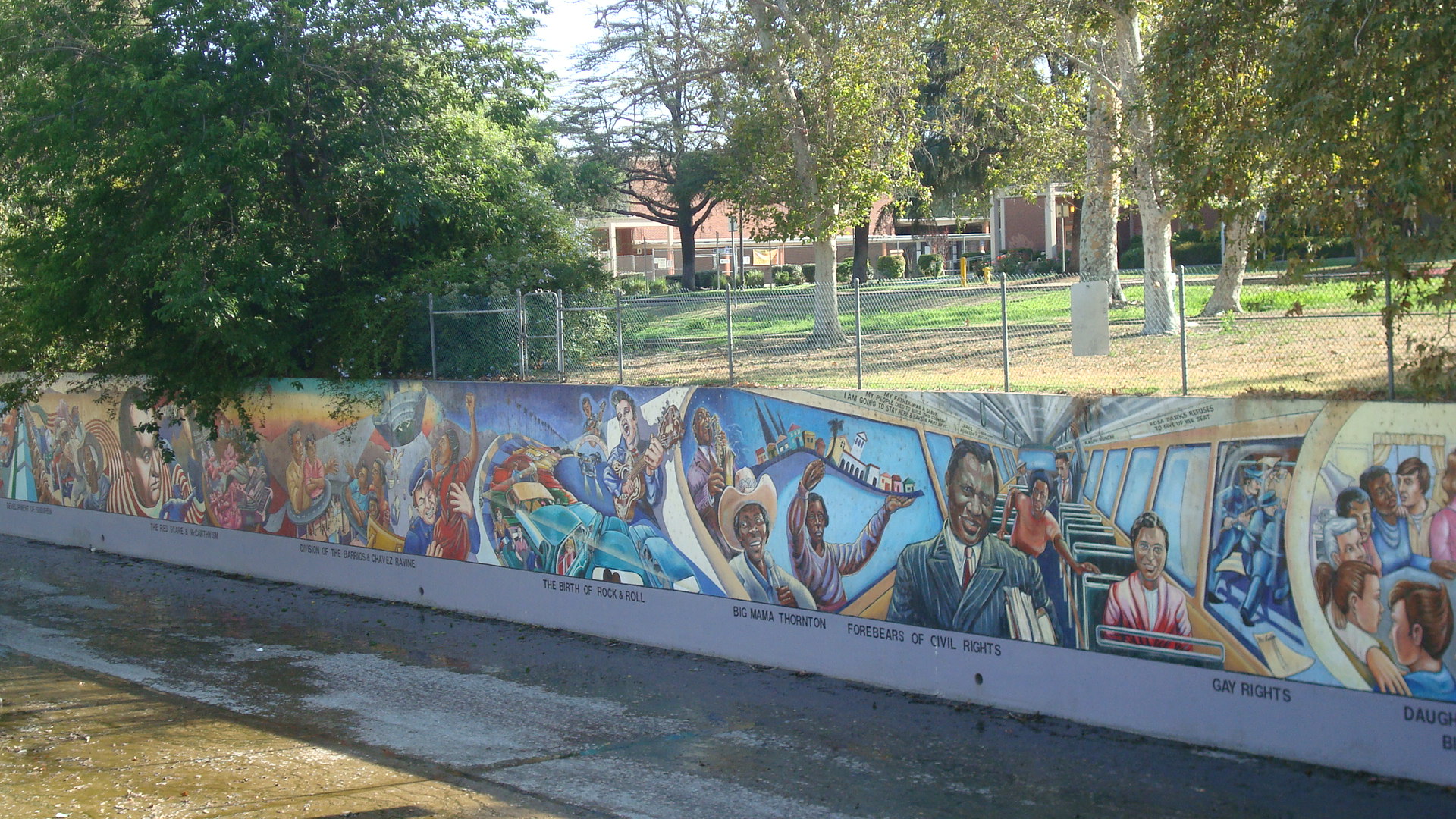
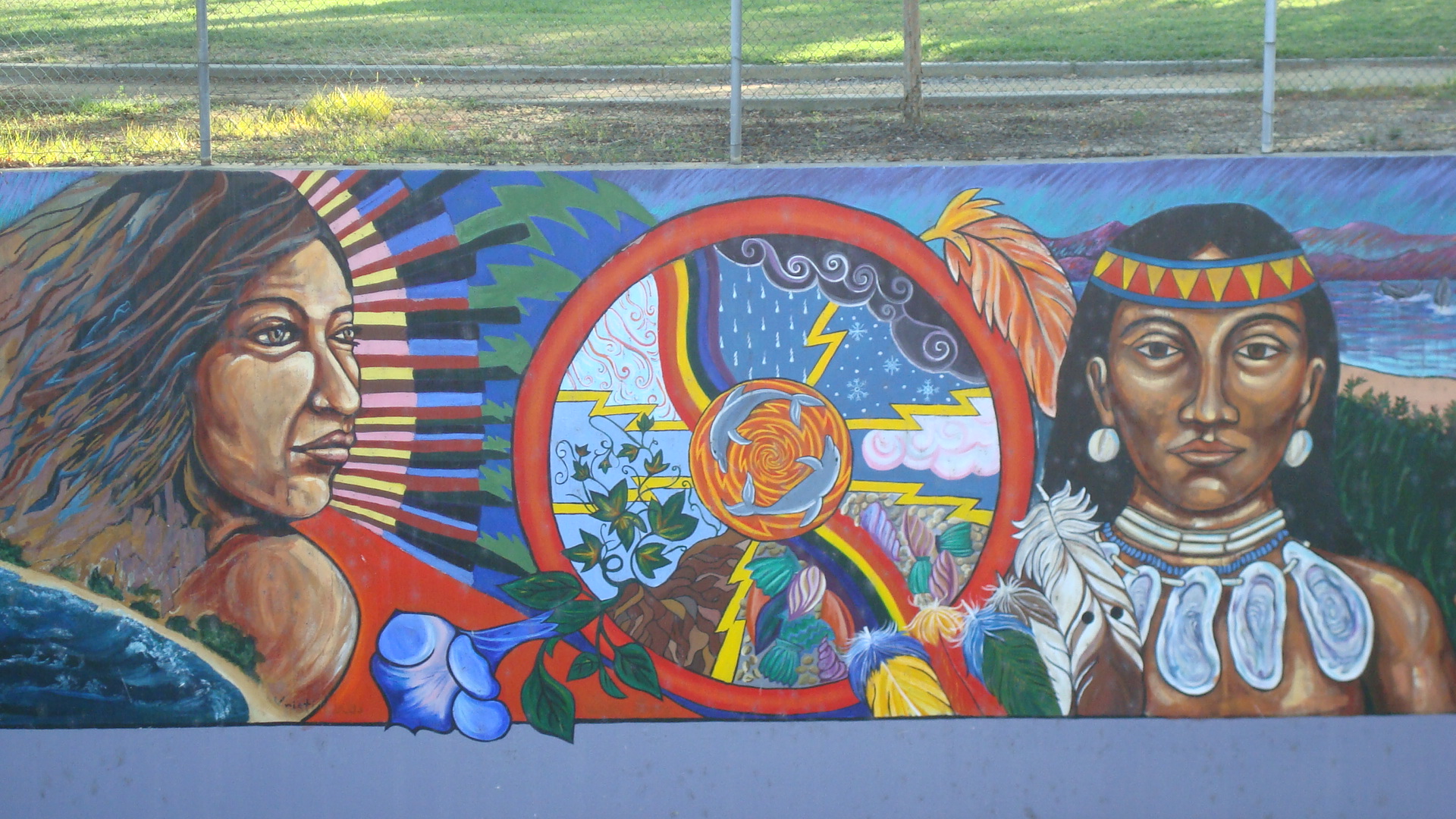
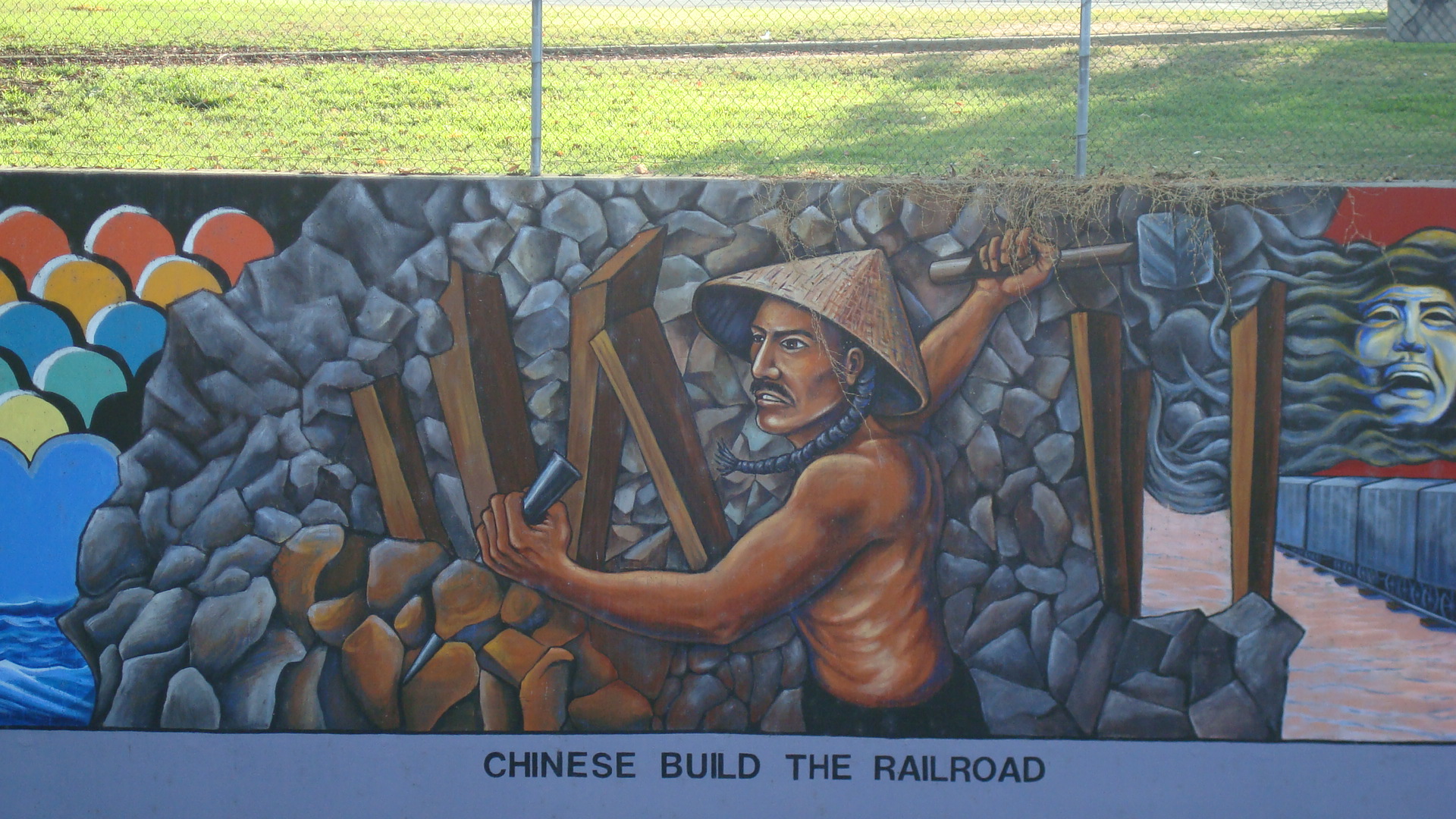
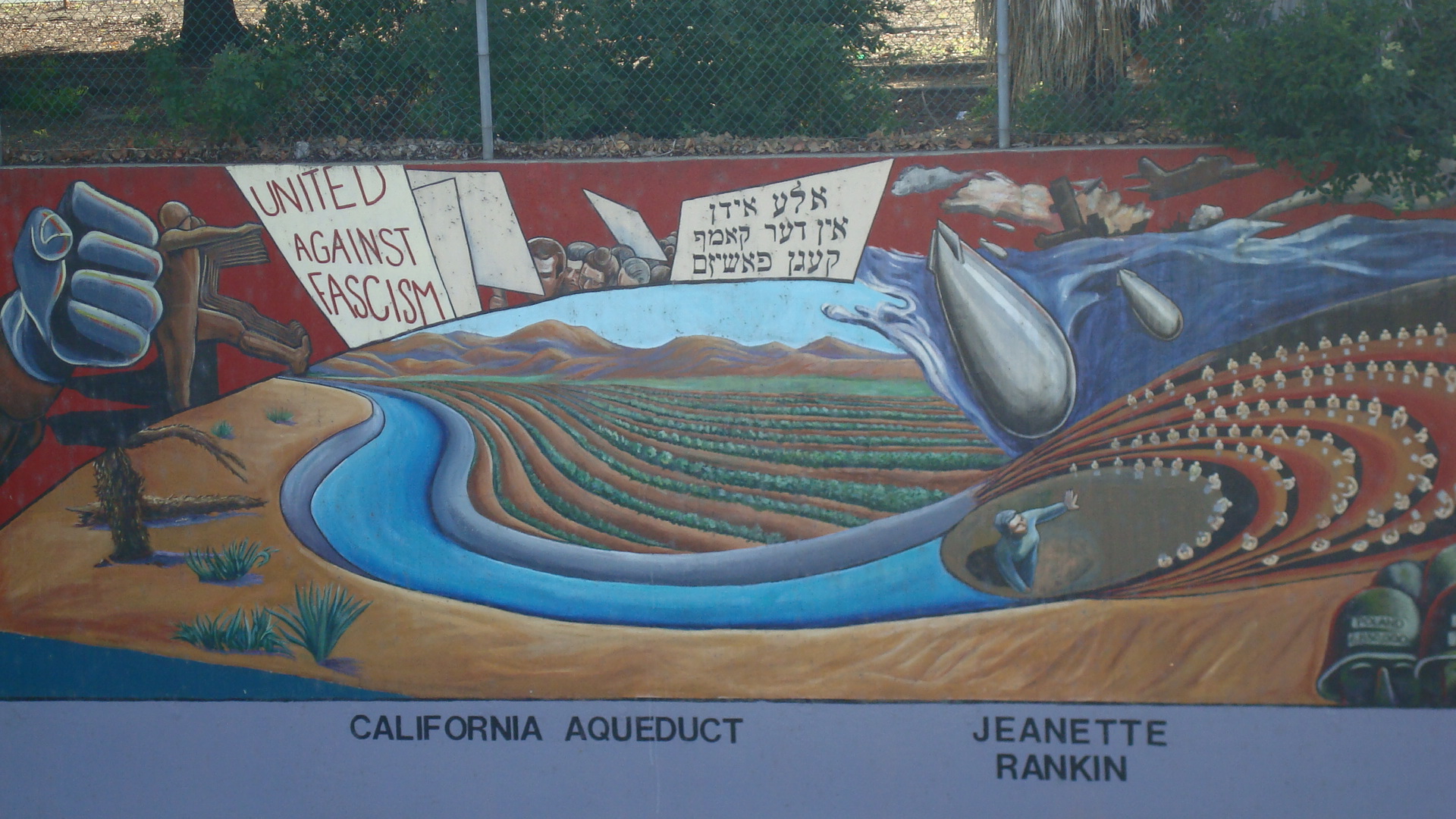
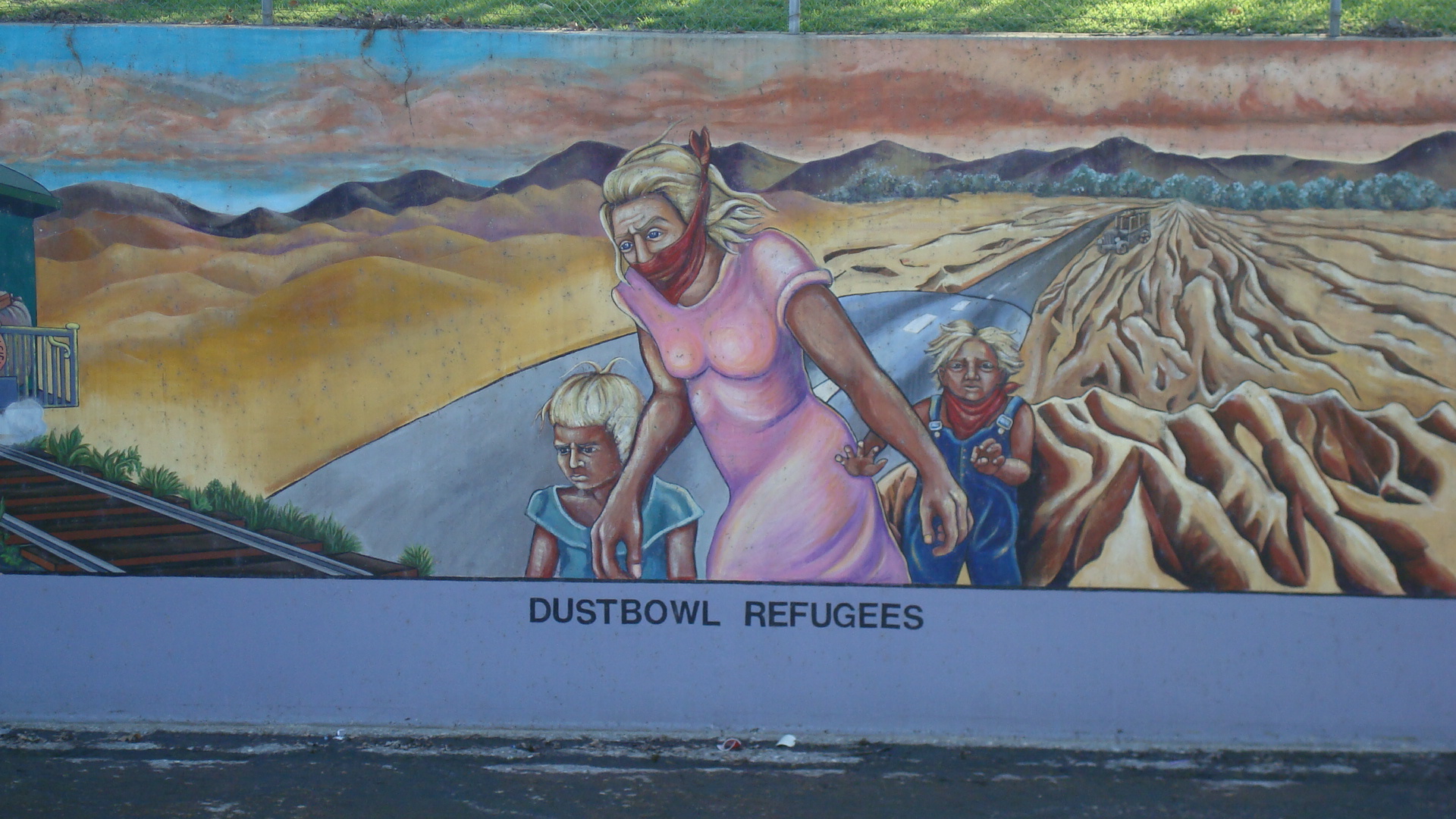
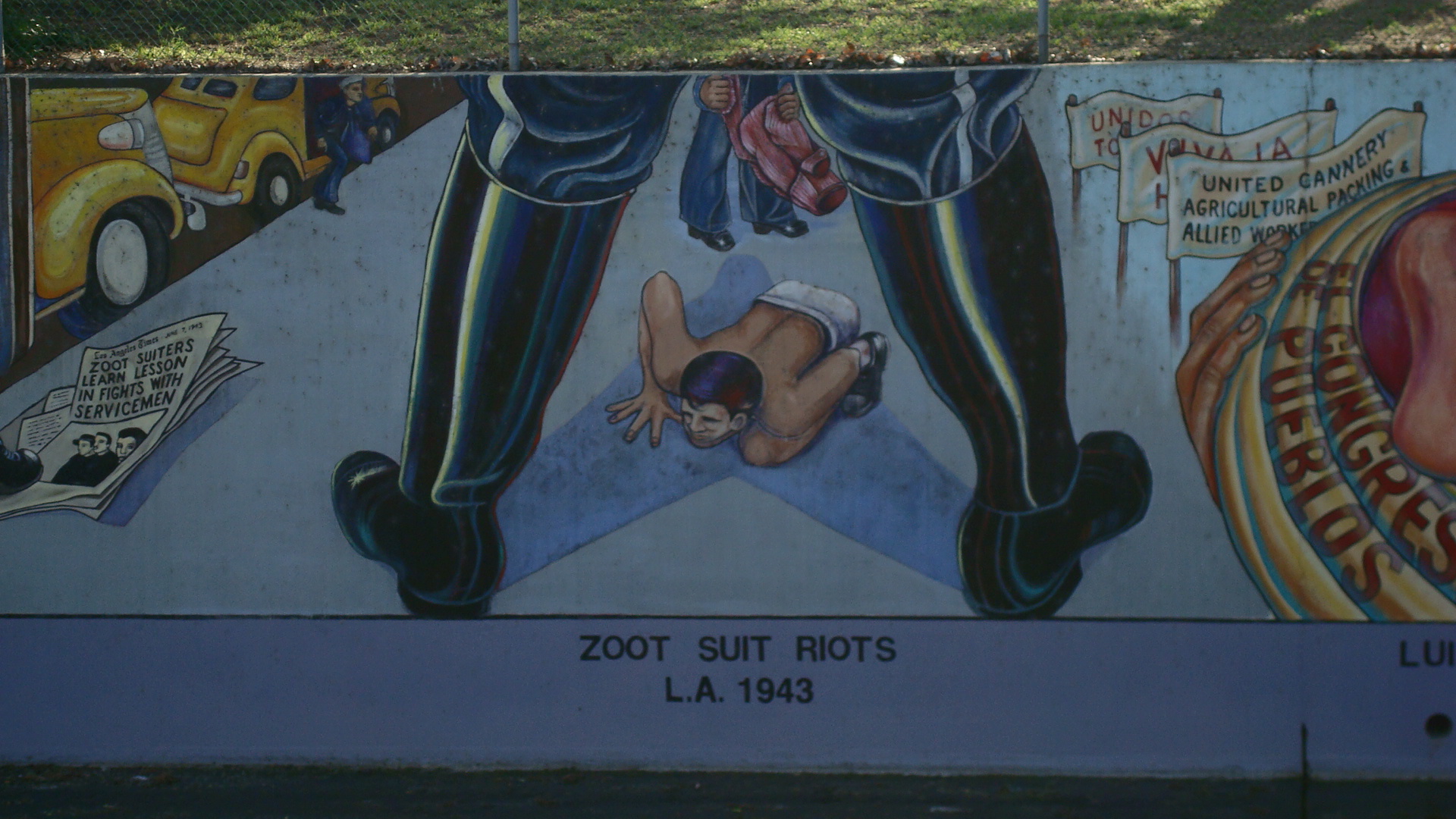
Below Oxnard, I found the Great Wall of Los Angeles. This is a massive, amazing public art project which presents a history of Los Angeles starting with the first people who lived in the area and ending in the fifties. The project is the brainchild of Judy Baca, founder of the Social and Public Art Resource Center (SPARC). It was begun in the seventies, with over 400 young people and their families working over five summers to create the mural that currently covers a half mile of concrete inside the Tujunga Wash.

The mural starts with images of the Chumash Indians.

TW 06 GW Chum

It covers the construction of the the massive projects that helped build the city, like the railroads….

TW 07 GW Chin

….and the aqueduct.

TW 09 GW Aque

It illustrates the multiple waves of migration the populated the area.

TW 09a GW Dust Big

There are images of the traumatic upheavals that shaped LA.

TW GW Zoot

It takes us through the baby boom….

TW 11 GW BB

….and the beginnings of rock n’ roll.

TW 12 GW  R&R

There are plans to paint another four decades, which would bring the project up to the end of the twentieth century. For more information, and to find out how to donate, visit SPARC’s web site.

The Great Wall of Los Angeles

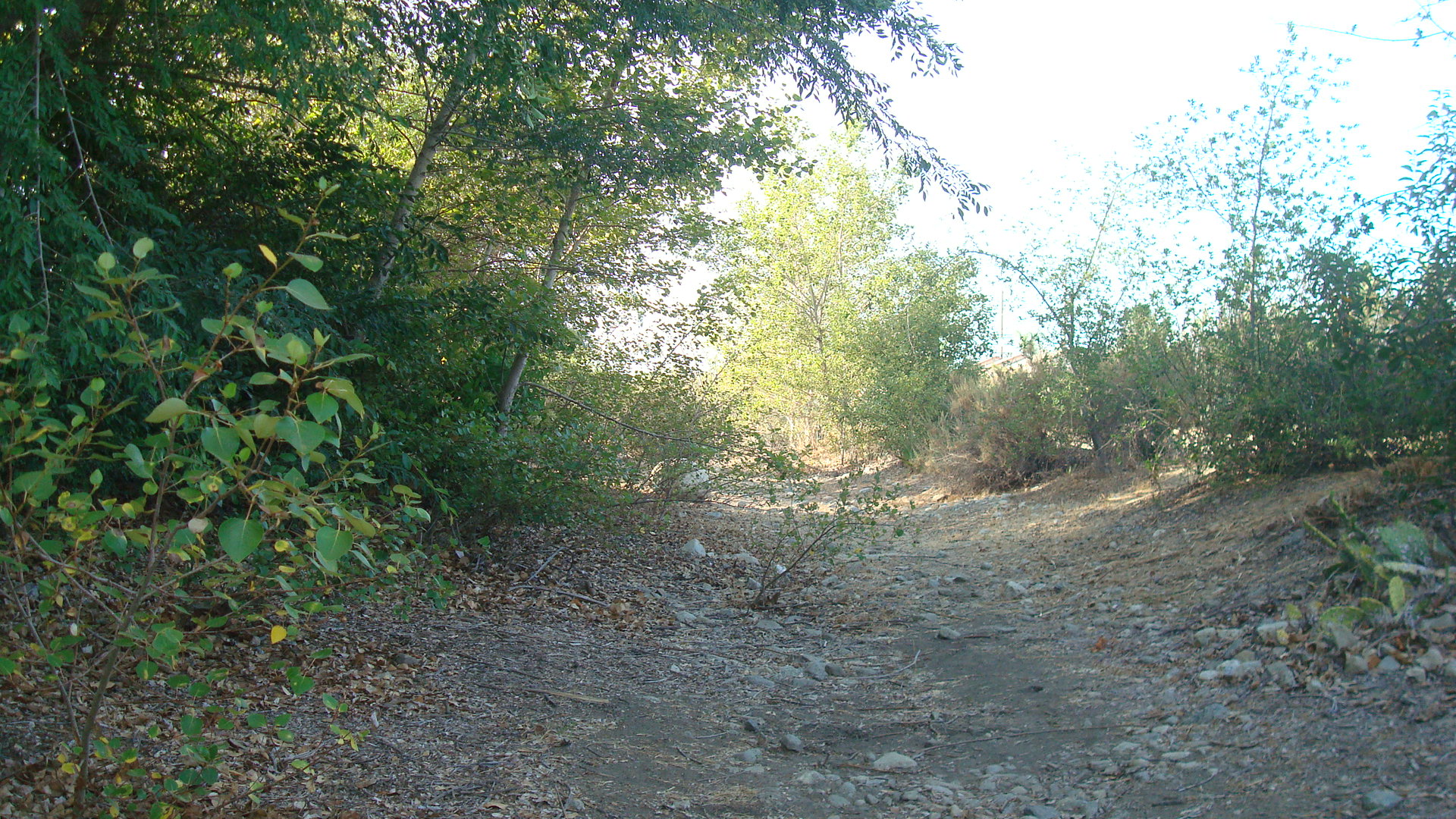
You won’t find much water in the Tujunga Wash these days. But you will find some other things that are worth checking out.

Art Is Everywhere

Sunset & Hillhurst, in the alley behind the Vista

Sunset/Hillhurst, in the alley behind the Vista

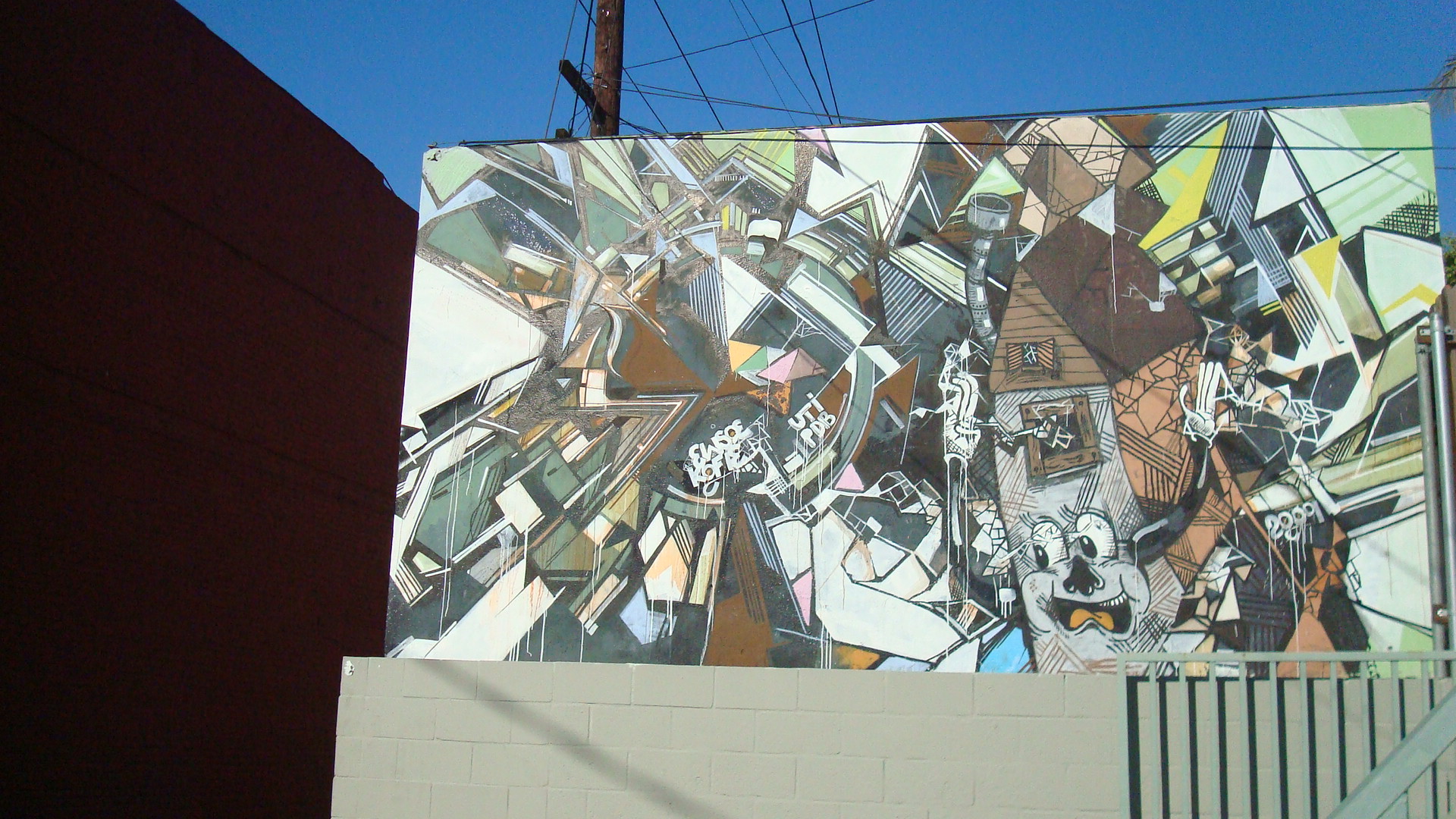
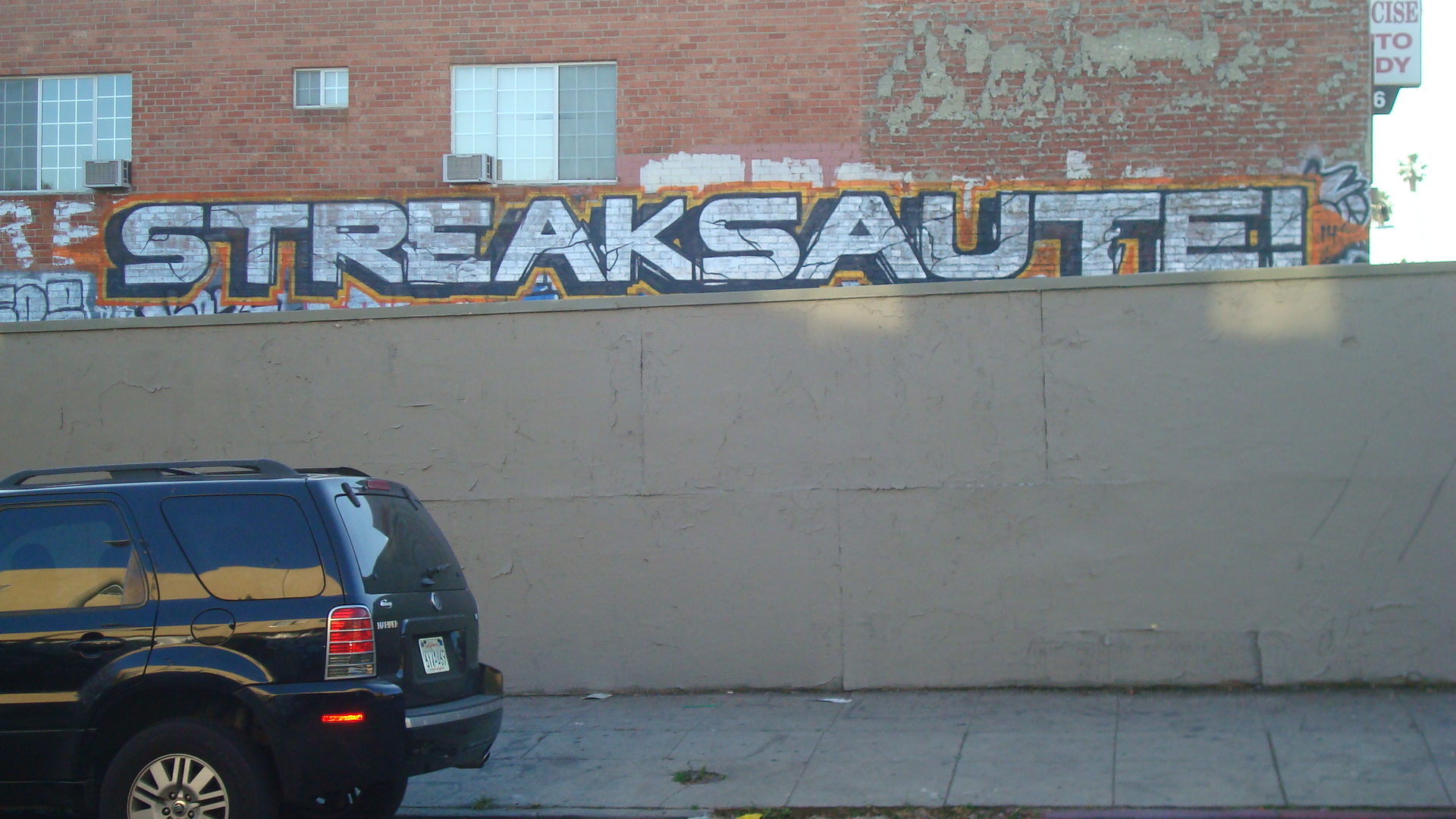
In most major cities, we can see art all around us. Any blank wall can end up being a canvas for a kid with a can of spray paint. I’m not talking about the taggers who just scrawl their name anywhere they can find the space. I’m talking about artists who have an eye and a style and maybe even something to say.

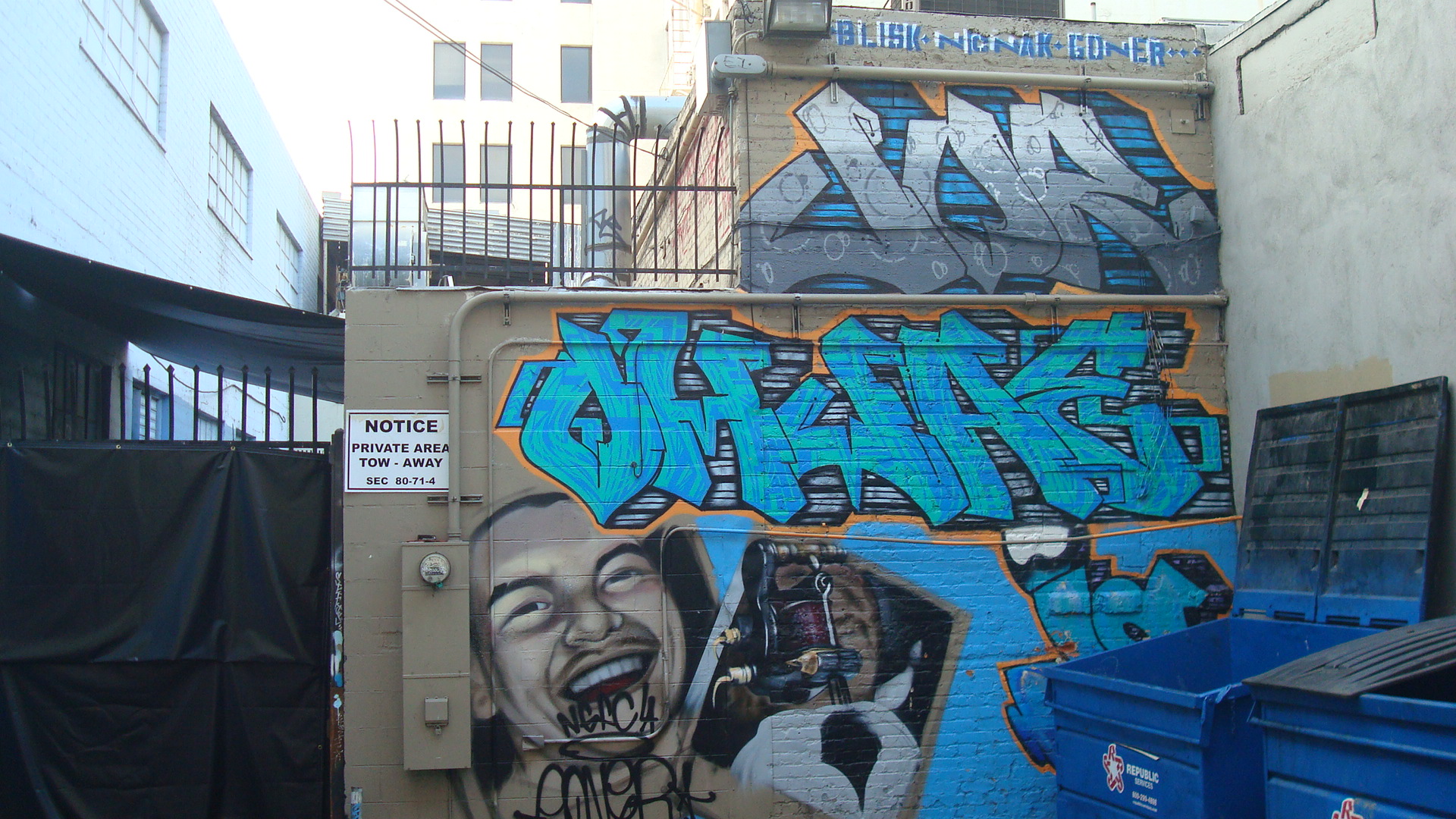
Here are some shots I’ve taken of street art in the Hollywood area. They cover a wide range, from paintings by professional artists who’ve been commissioned to decorate a building, to kids working on a blank wall in a vacant lot in the middle of the night. Below each photo I’ve given the approximate location, and I’ve included the artist’s contact info when it was available.

Hollywood & Normandie

Hollywood/Normandie

Hollywood/west of Normandie

Hollywood/west of Normandie

Hollywood/St. Andrews

Hollywood/St. Andrews

Here’s a guy who knows how to get attention.

Hollywood/St. Andrews

Hollywood/St. Andrews

But, as you can see below, he’s not the only person who’s been working on that wall.

Hollywood/St. Andrews

Hollywood/St. Andrews

Hollywood/Harvard

Hollywood/Harvard

I love this one because it’s totally ephemeral. Drawn in chalk, it’ll be gone the next time it rains. That is, if it ever rains in LA again.

Hollywood/Western

Hollywood/Western

Hollywood & Western

Hollywood/Western

Artist’s Web Site: ELMAC

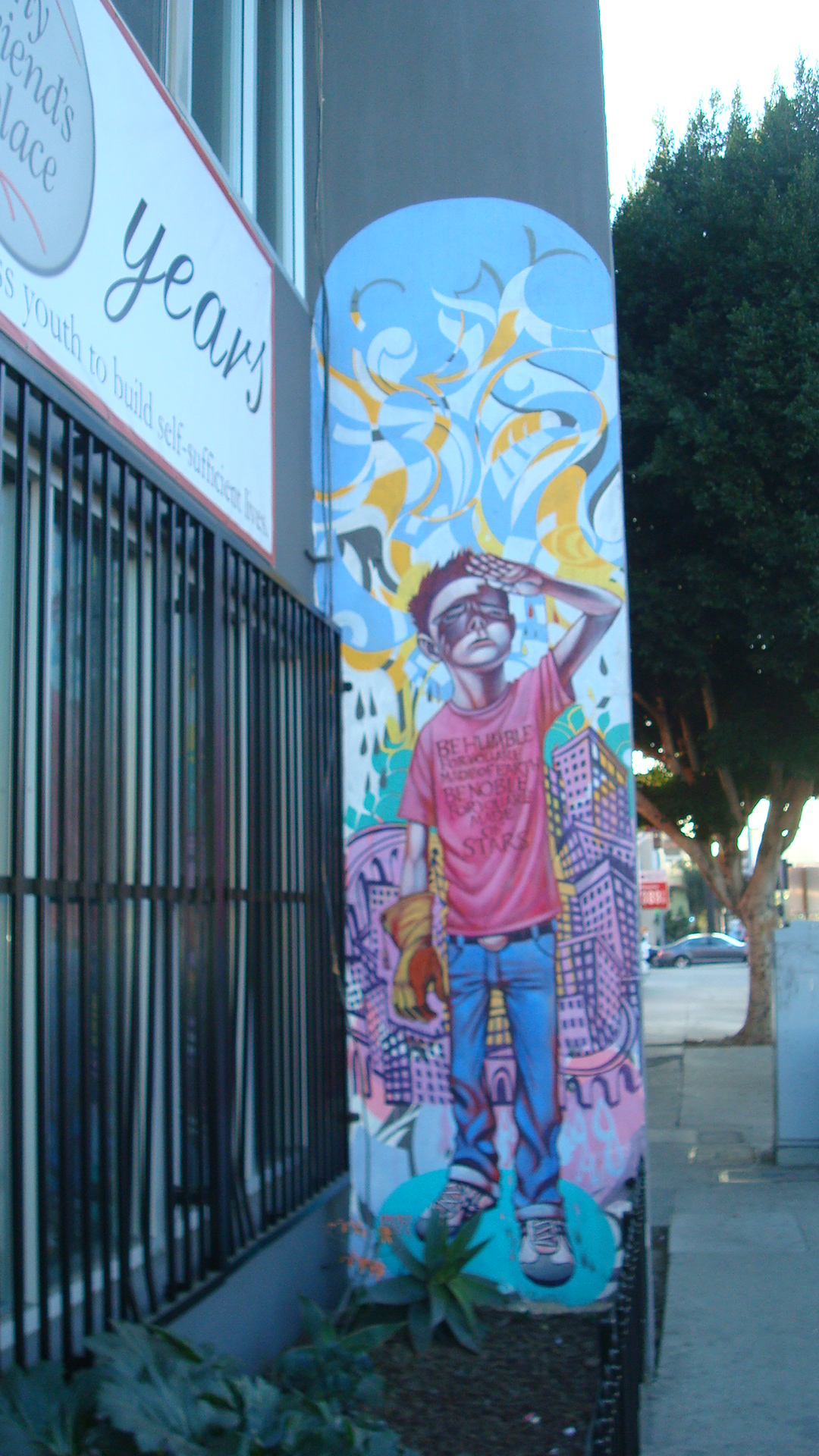
The following images are painted on a building that sits right next to the Hollywood Freeway. I later learned that this was My Friend’s Place, an organization that helps homeless youth. They provide meals, and also assist young people with health care and housing. Sounds pretty cool. For more information, click here.

Hollywood/Hollywood Freeway

Hollywood/Hollywood Freeway

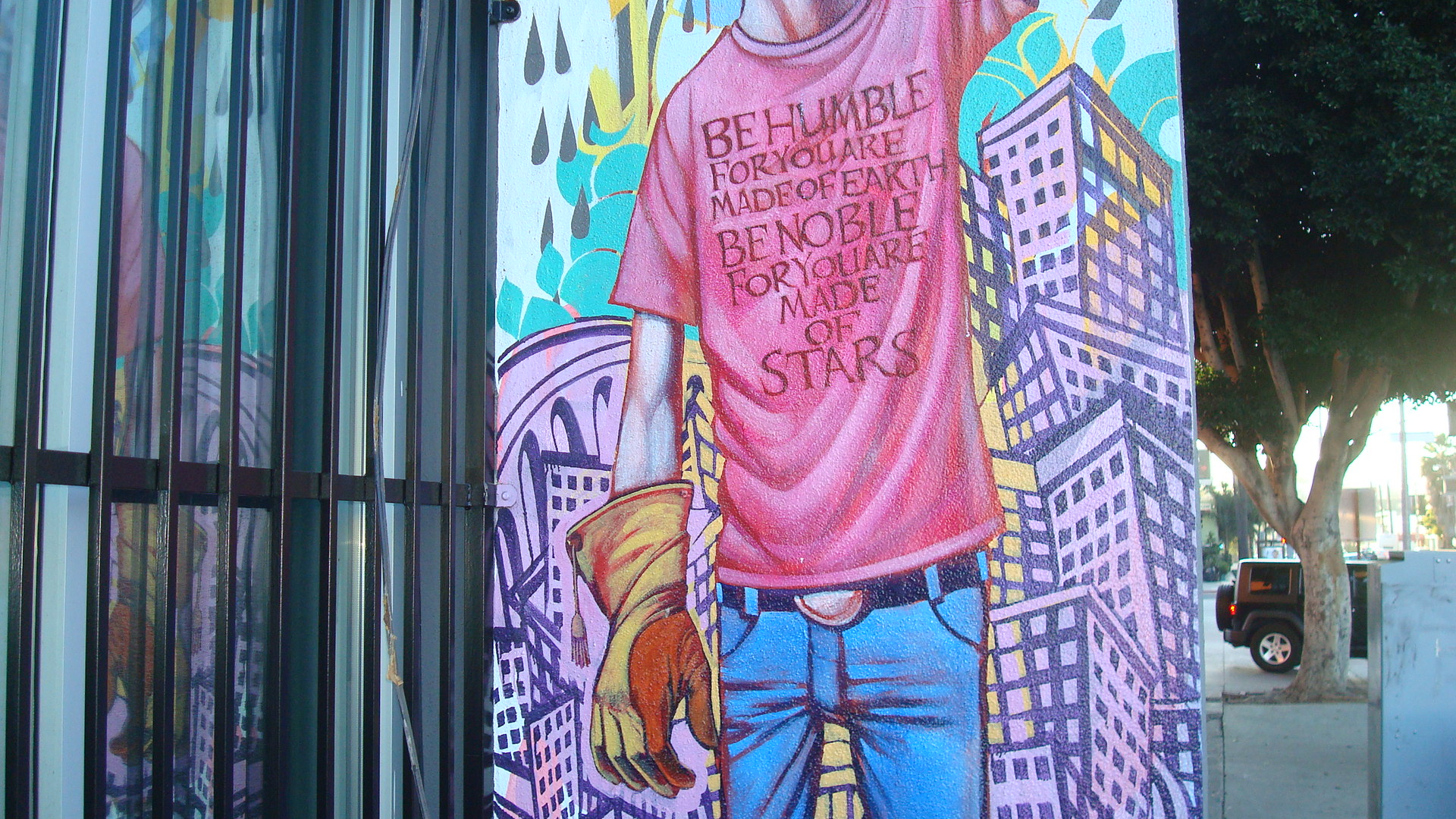
Below is a closer look at the words on the boy’s shirt.

same as above

same as above

same as above

same as above

Artist’s Web Site: Bumblebee

Hollywood/Highland, behind First National Bldg.

Hollywood/Highland, behind First National Bldg.

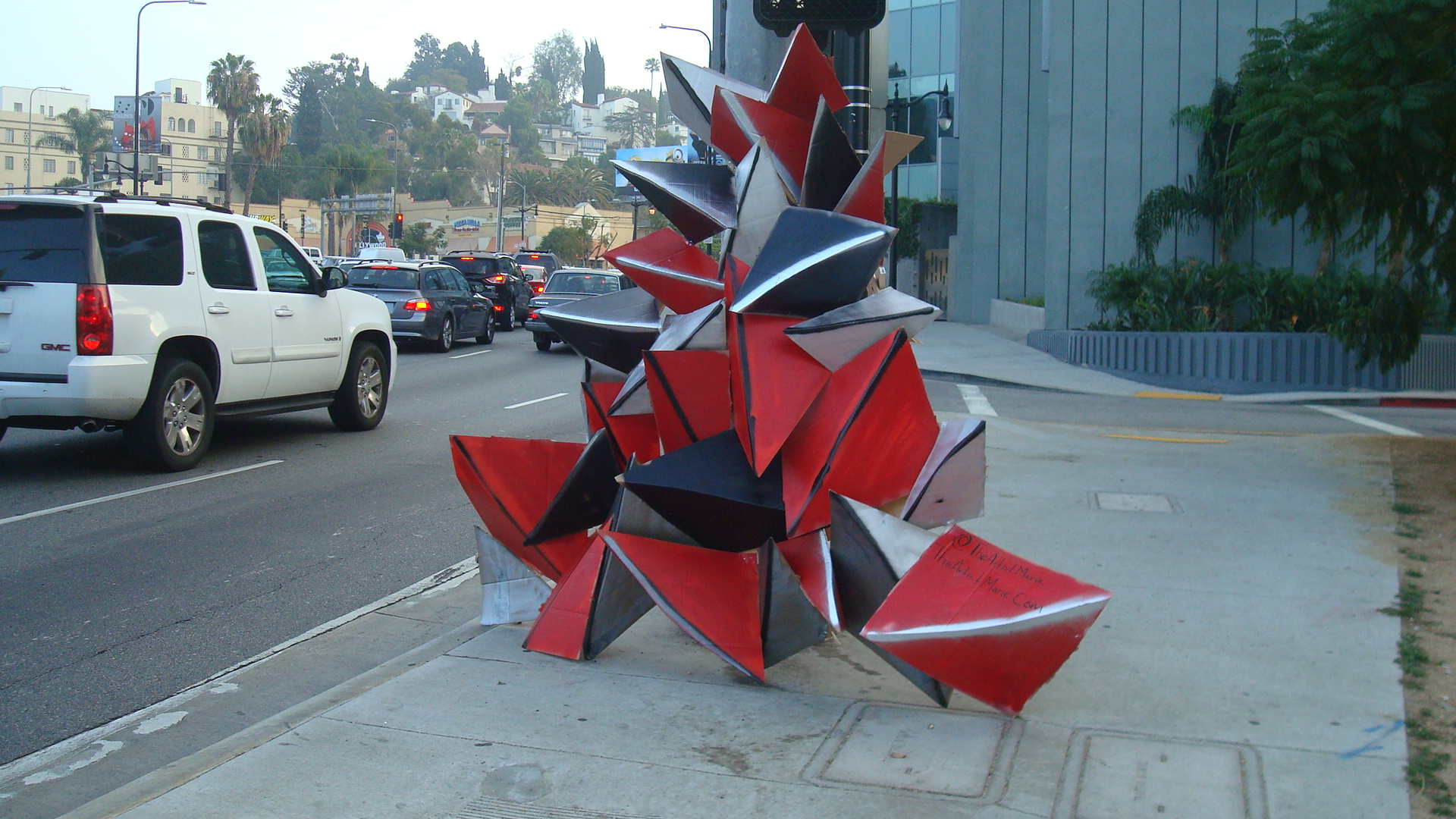
I was walking to the subway one morning and saw this at Highland and Franklin. It didn’t hold up for very long, but it was cool while it lasted.

Highland/Franklin

Highland/Franklin

Artist’s Web Site: The Artist Marie

This image seemed like a good one to close with.

Highland/Franklin, in front of the mini-mall

Highland/Franklin, in front of the mini-mall

Artist’s Web Site: Skechy