I heard that thousands of people showed up for the “No Kings” protest in Downtown LA yesterday, but since I’ve been to a number of the gatherings at LA City Hall, I decided to check out some of the smaller local events. The No Kings organizers reported record turnout across the nation, and while you always have to be skeptical about the numbers given by organizers, it does seem like an increasing number of people are angry and frustrated about the direction the country is going in. The war in Iran, ongoing ICE raids and rising prices seem to be at the top of the list of grievances.
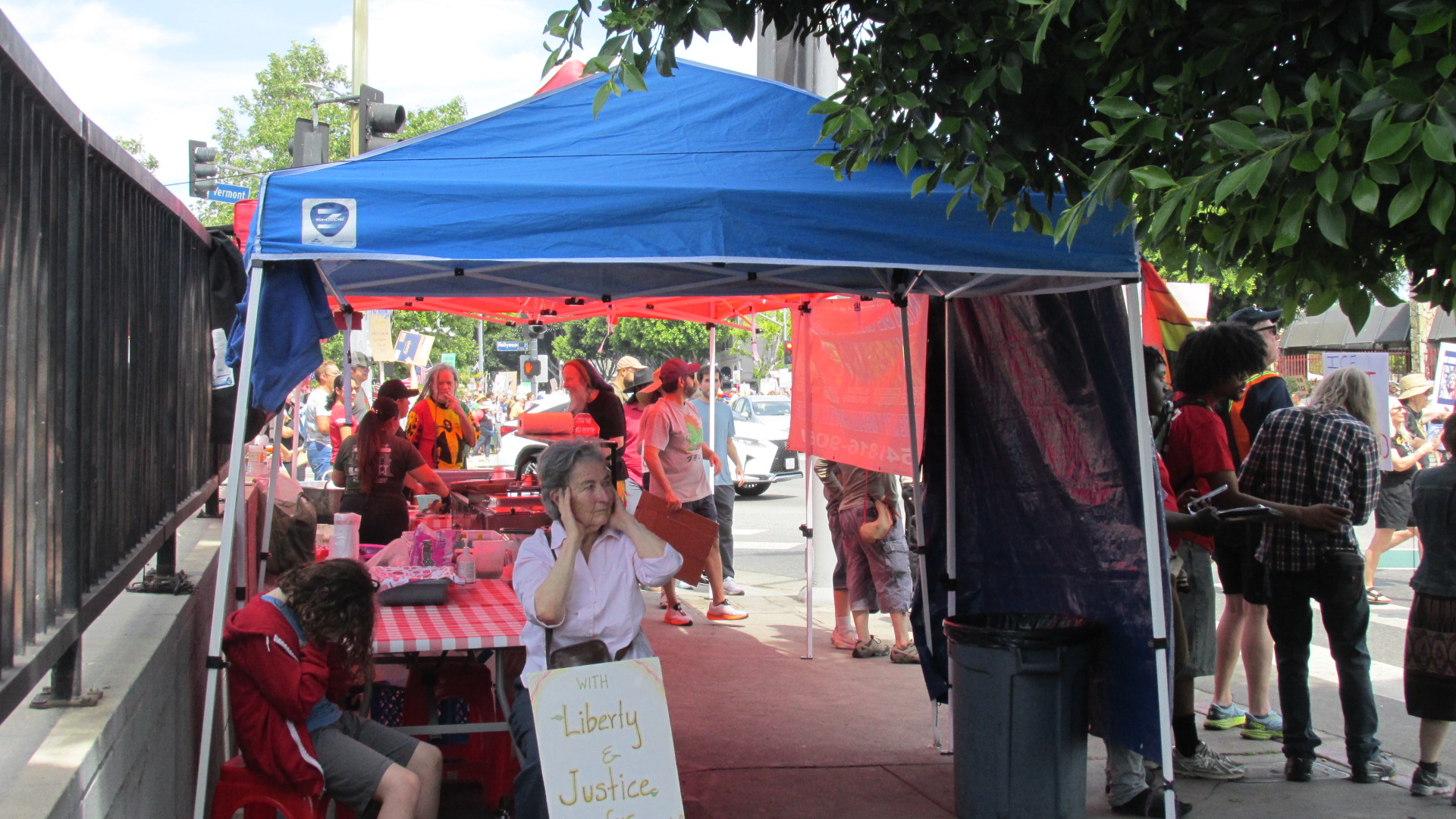
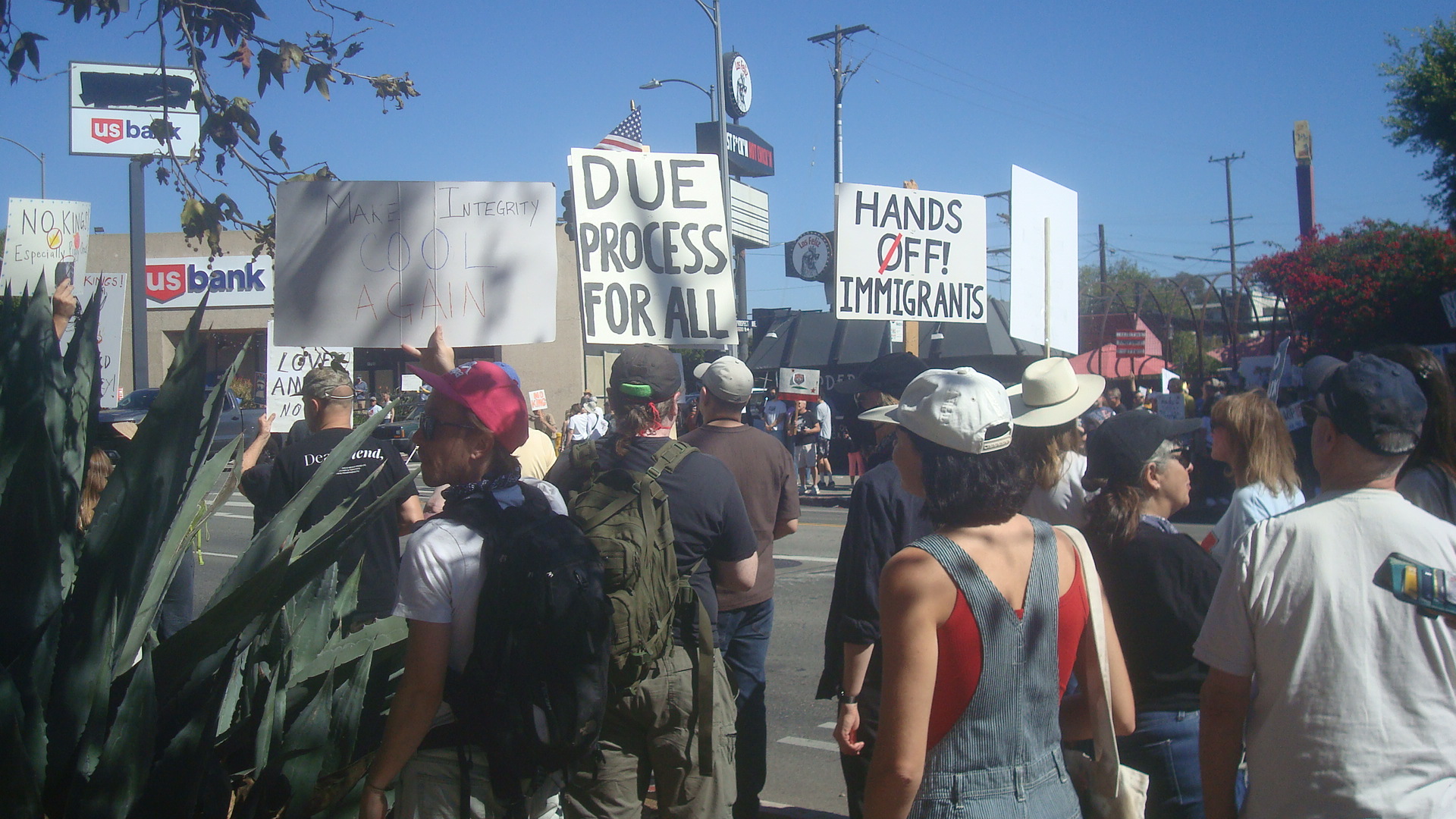
I first went to the protest at Hollywood and Vermont, where it looked like several hundred people showed up. Signs urged passing drivers to honk in support, and lots of drivers responded. I saw one older woman sitting with her hands over her ears. It was pretty loud.
The signs at the Hollywood protest covered a lot of issues.Protesters marched back and forth across the intersection.One woman sat with her hands over her ears. It was pretty loud.
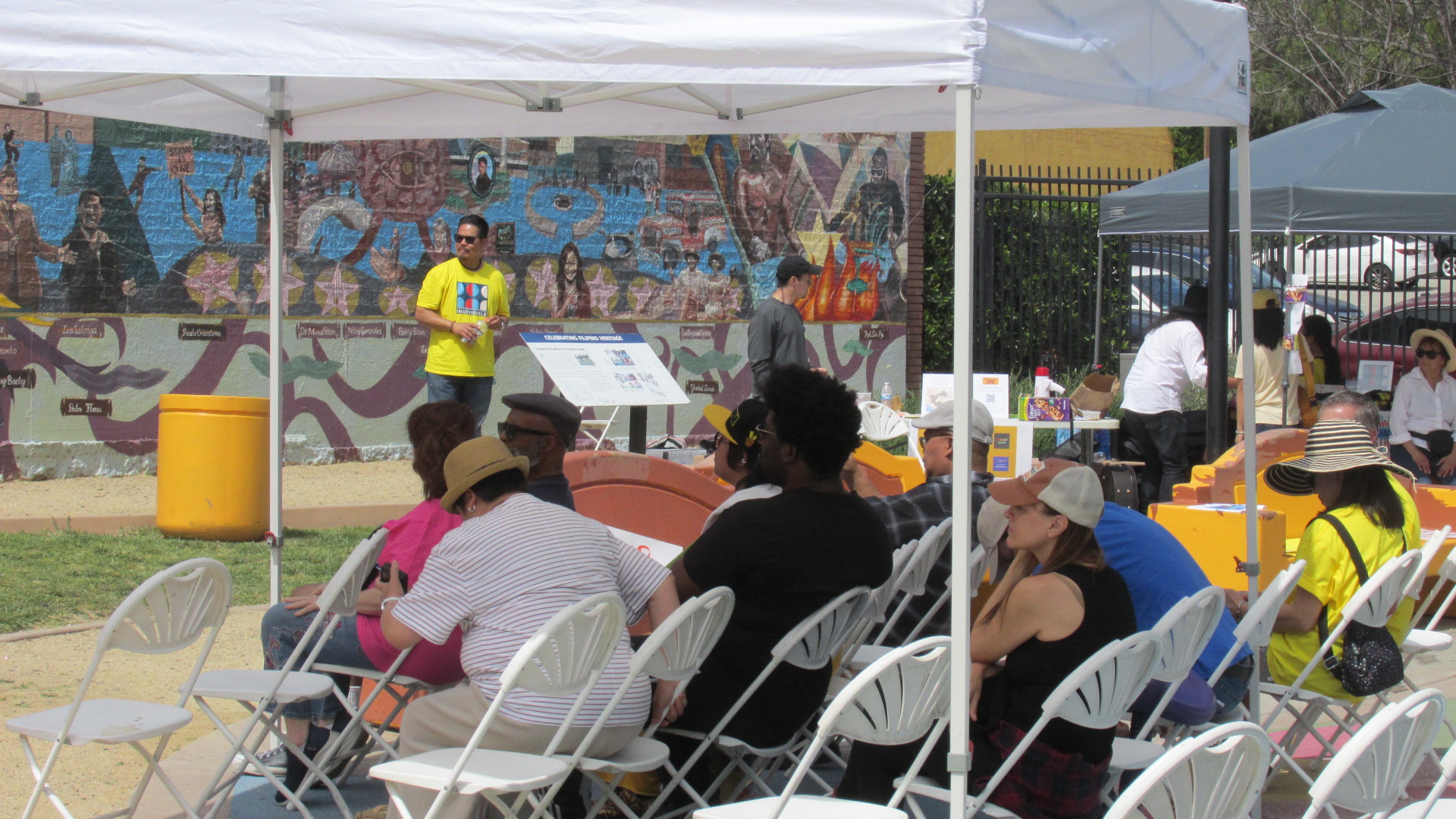
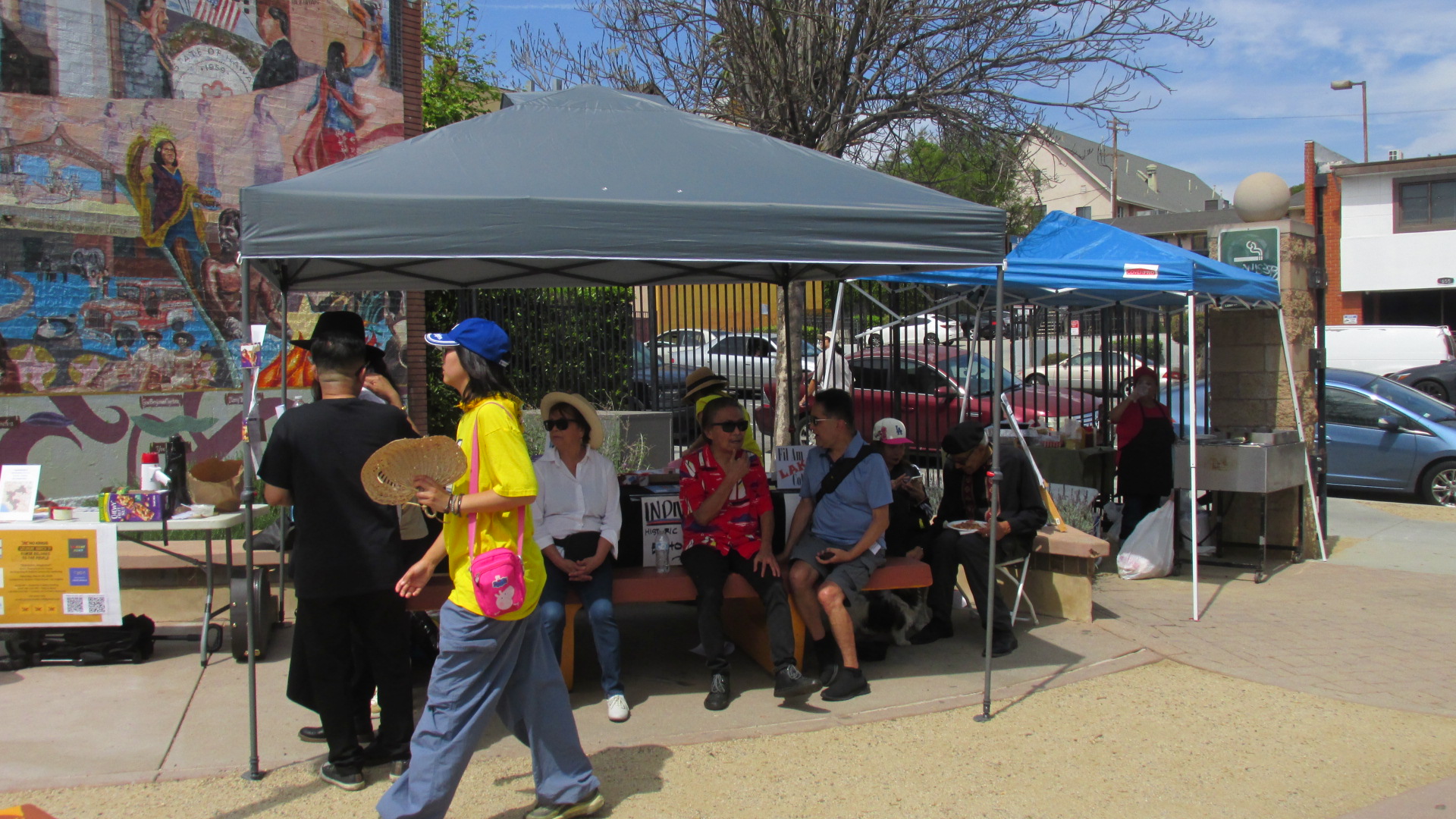
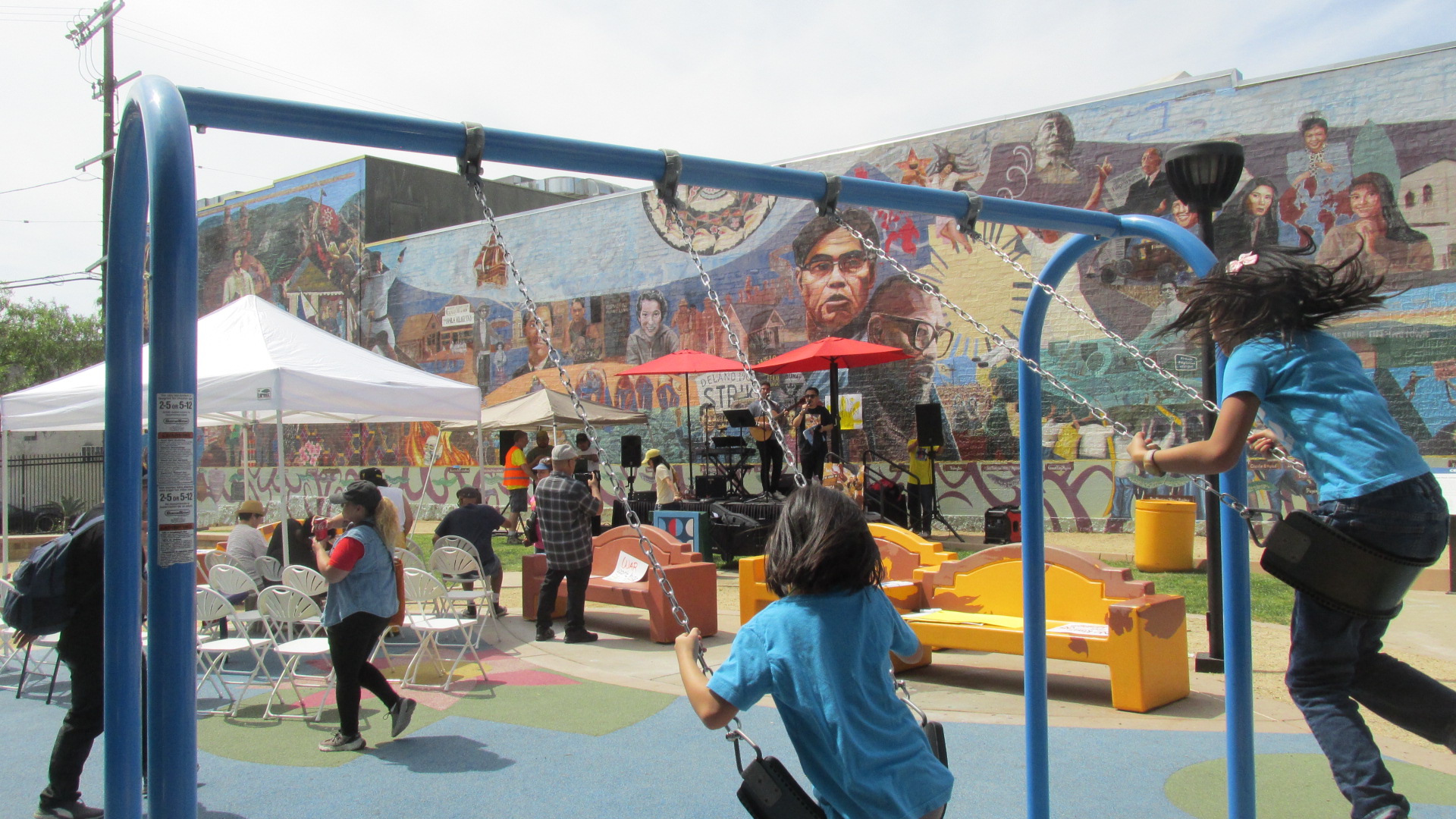
Then I went to small rally held in Unidad Park on Beverly in Filipinotown. I’d say between 50 and 100 people showed up to listen to speeches and music. A number of groups had tables set up where volunteers were engaging attendees on various issues. And some kids were having a great time on the swings.
Attendees gathering in front of the stage at Unidad Park in Historic Filipinotown.
Canopies were set up to shield attendees from the sun.A couple of kids were having a great time on the swings.
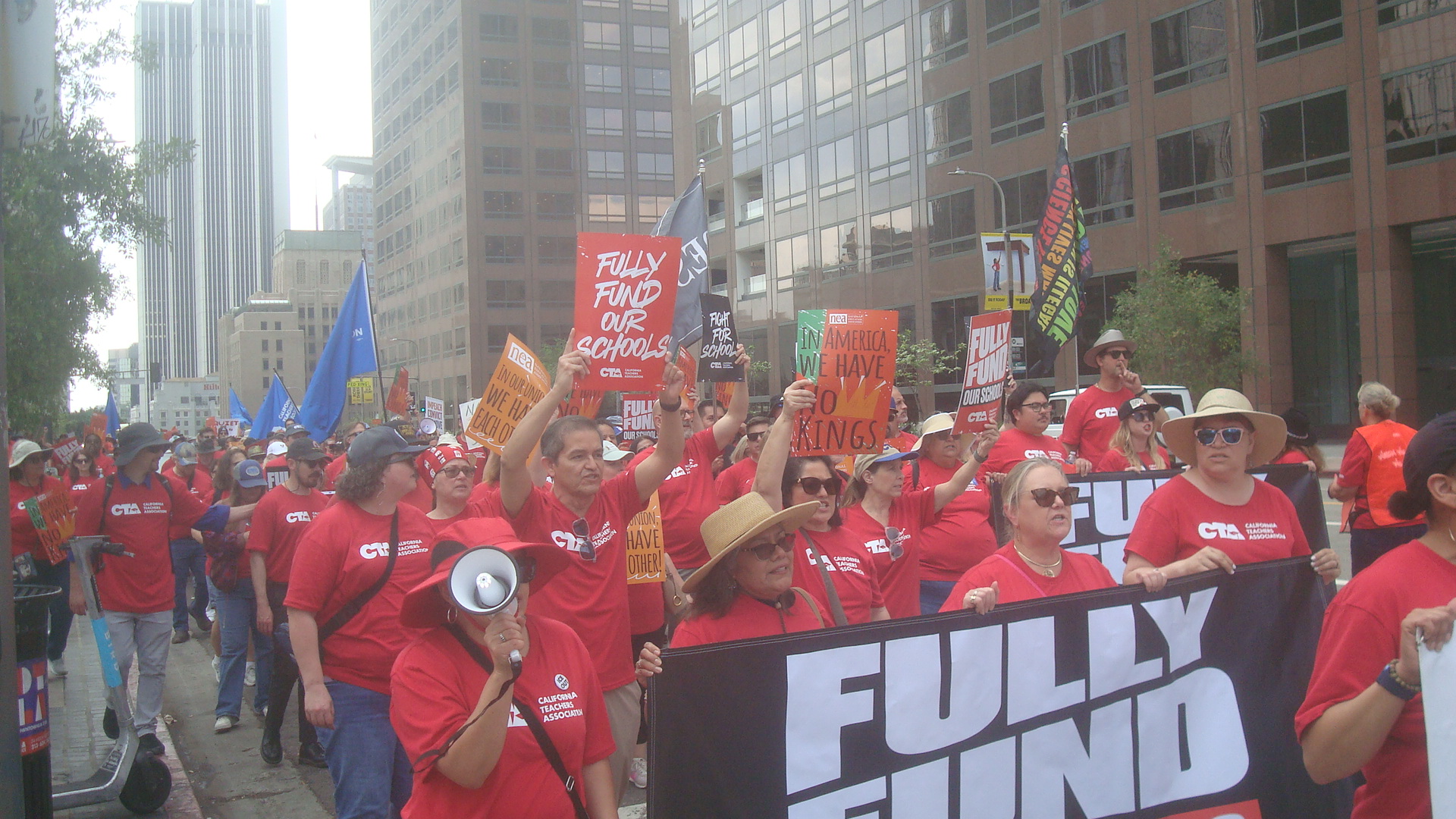
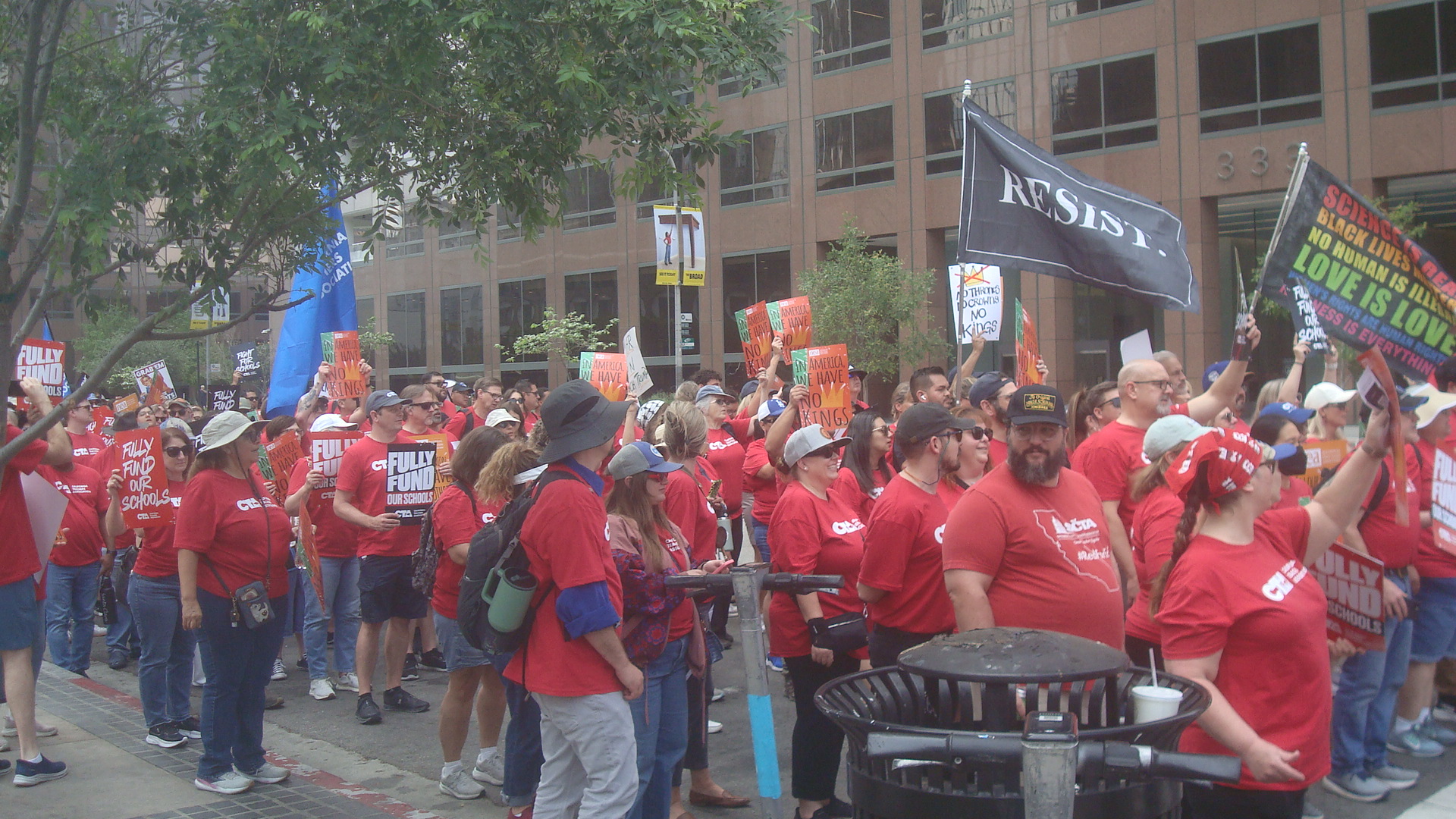
While I didn’t go to the main event at LA City Hall, I did pass through Downtown as I got off the bus to get on the train, and I ran into this group of teachers marching up Grand Avenue. They are not happy about what the current administration is doing to education. I assume they were heading to City Hall to join the crowd at Grand Park.
Teachers marching up Grand Ave. in Downtown LA.The march was well organized and the teachers shouted out slogans as they headed north on Grand.
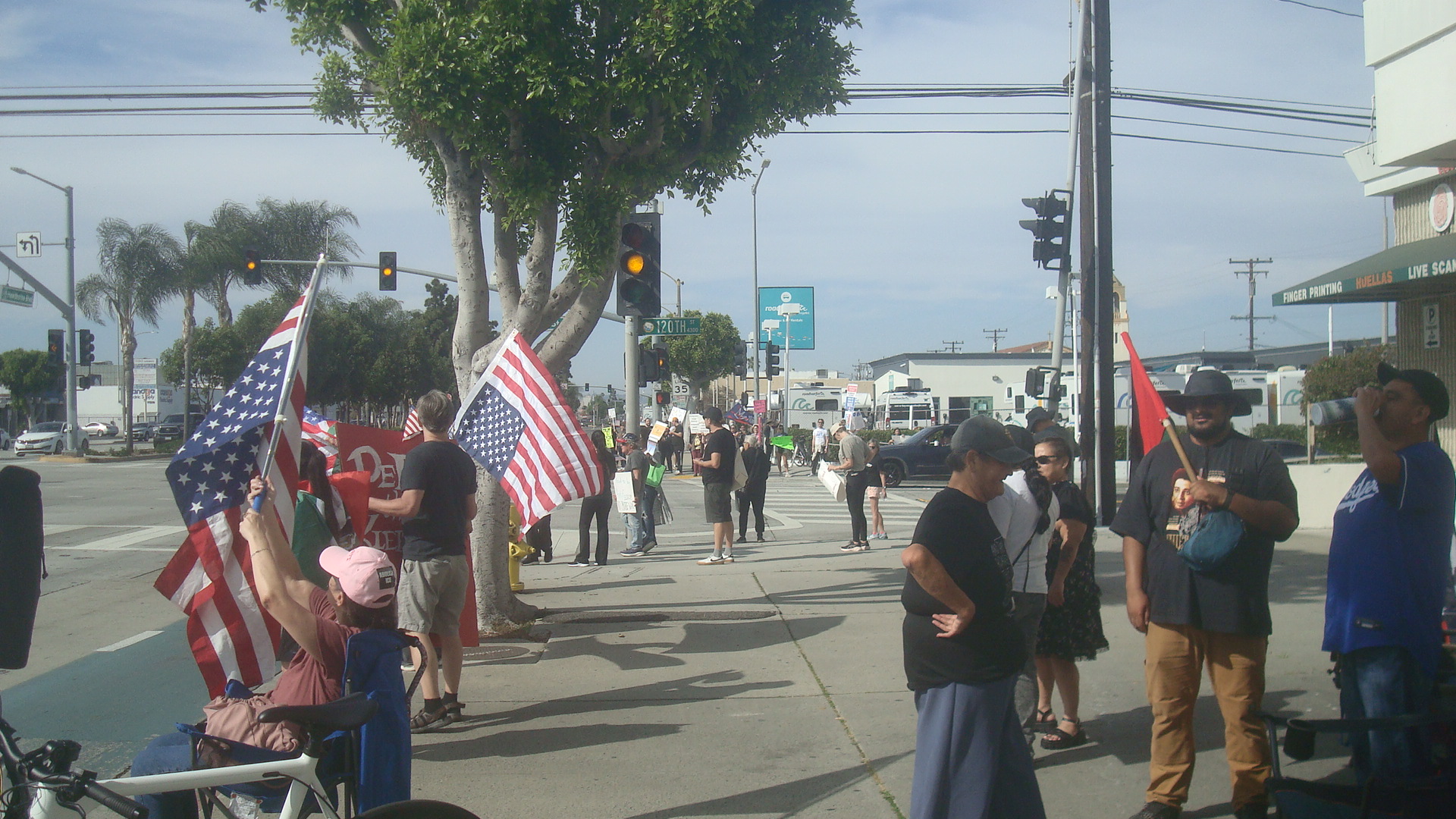
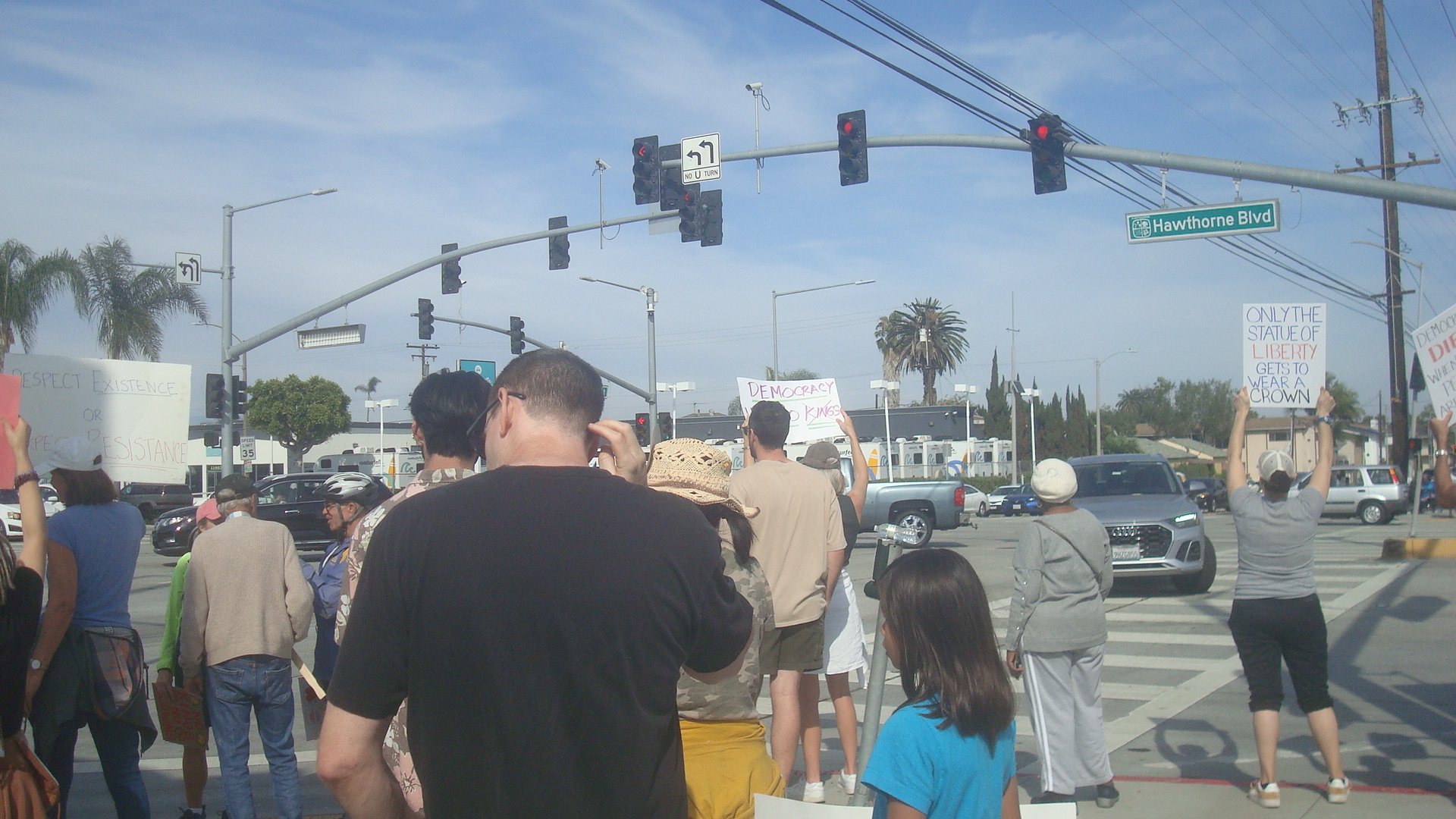
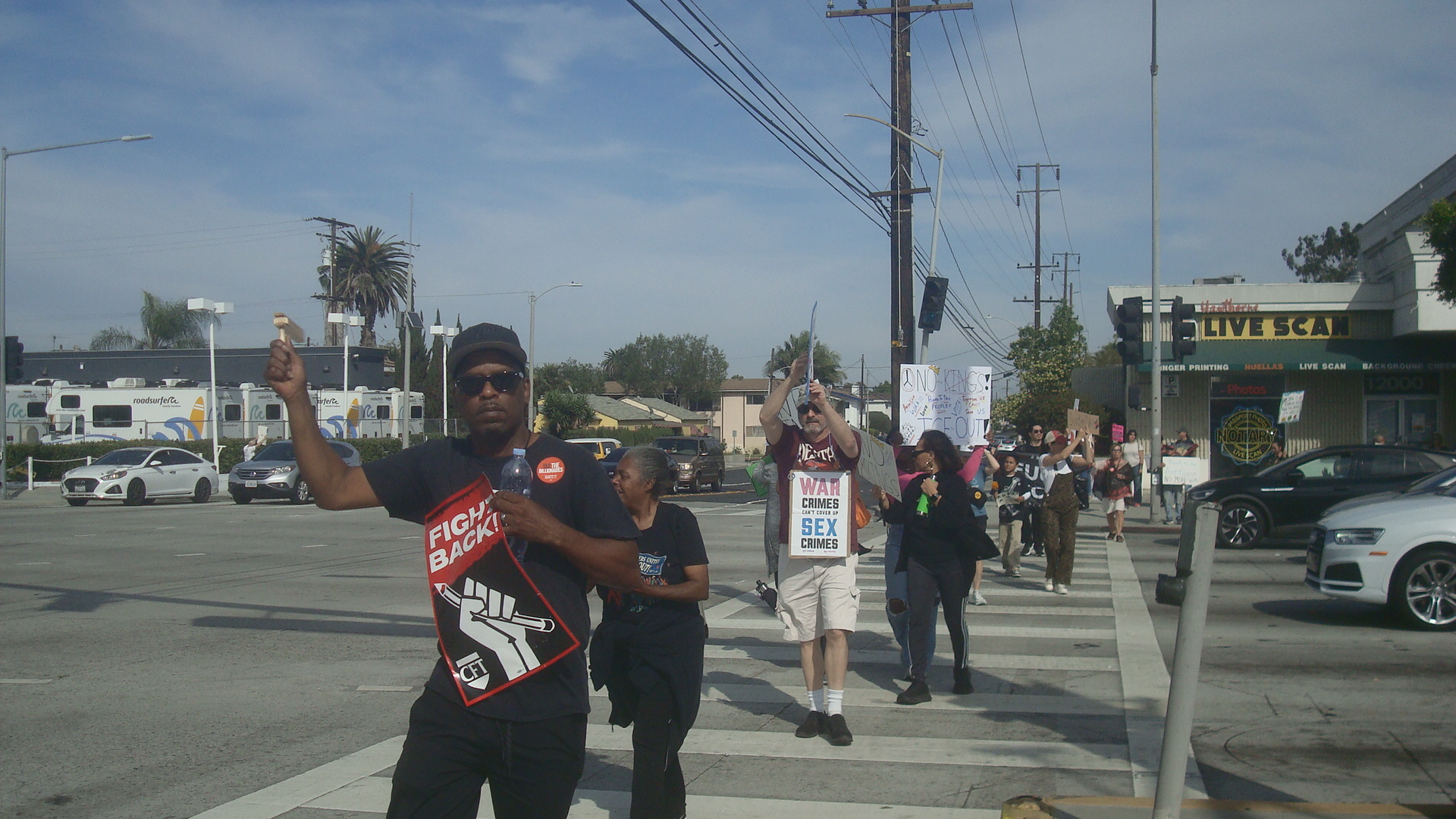
Then I headed down to Hawthorne, where a small but spirited group of protesters gathered at Hawthorne Blvd. And 120th. Attendees stood with signs and flags, marching back and forth across the intersection. They also got some appreciative honks from passing drivers.
Protesters gathered at Hawthorne Blvd. and 120th.
The crowd urged passing drivers to honk in support.
As the lights changed, protesters walked back and forth across the intersection.
I don’t see these protests going away. It seems like there’s growing frustration with the way things are in the US right now. It will be interesting to see what happens in the mid-term elections.
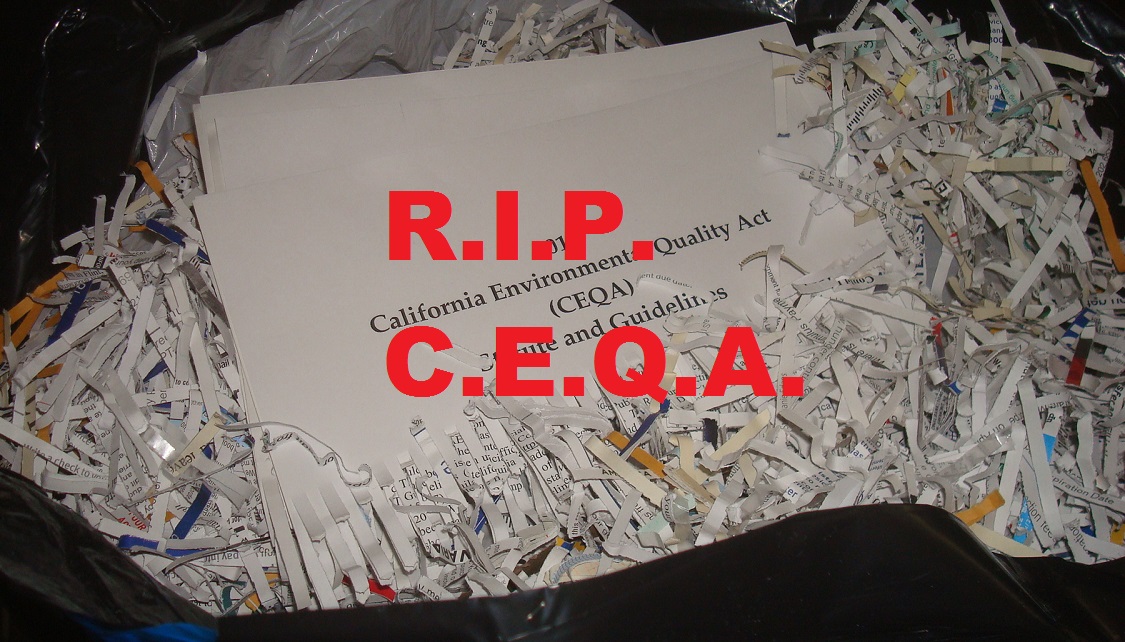
Last year Gov. Gavin Newsom strongarmed the State legislature into gutting the California Environmental Quality Act. Newsom told the legislature that he wouldn’t sign off on the State’s $321 billion spending plan unless they approved his “reforms”.
Many legislators were worried that the bill Newsom was pushing for, SB 131, would create a slew of exemptions from the California Environmental Quality Act (CEQA). While exemptions had already been created for housing and transit projects, SB 131 would allow exemptions for “advanced manufacturing” projects. These legislators were concerned because approval of the bill involved removing language from the State’s Public Resources Code that defined what could be considered an “advanced manufacturing” project. People in leadership said, don’t worry, we’ll fix this before the end of the session.
But of course, nothing got fixed. The definitions weren’t clarified. While there’s a push now in the legislature to clarify the definitions, it will be an uphill battle because well-financed business interests prefer the lack of clarity.
What kinds of “advanced manufacturing” projects might now be exempt from environmental review now that SB 131 has passed? Here’s a partial list from the web site Legal Planet.
aerospace manufacturing animal feed and organic fertilizer plastic bottle manufacturing semiconductor fabrication lithium ion batteries lithium recovery and processing rare earth materials production
Among the most concerning would be last four on the list. Making semiconductors involves the use of toxic materials such as arsenic and antimony, as well as toxic chemicals like sulfuric acid and hydrofluoric acid. Lithium processing involves the production of significant toxic waste, and many rare earth minerals are themselves toxic.
Would you be okay with one of these “advanced manufacturing” projects being approved in your neighborhood? If not, you might want to to contact your representatives in the State Assembly and the State Senate.
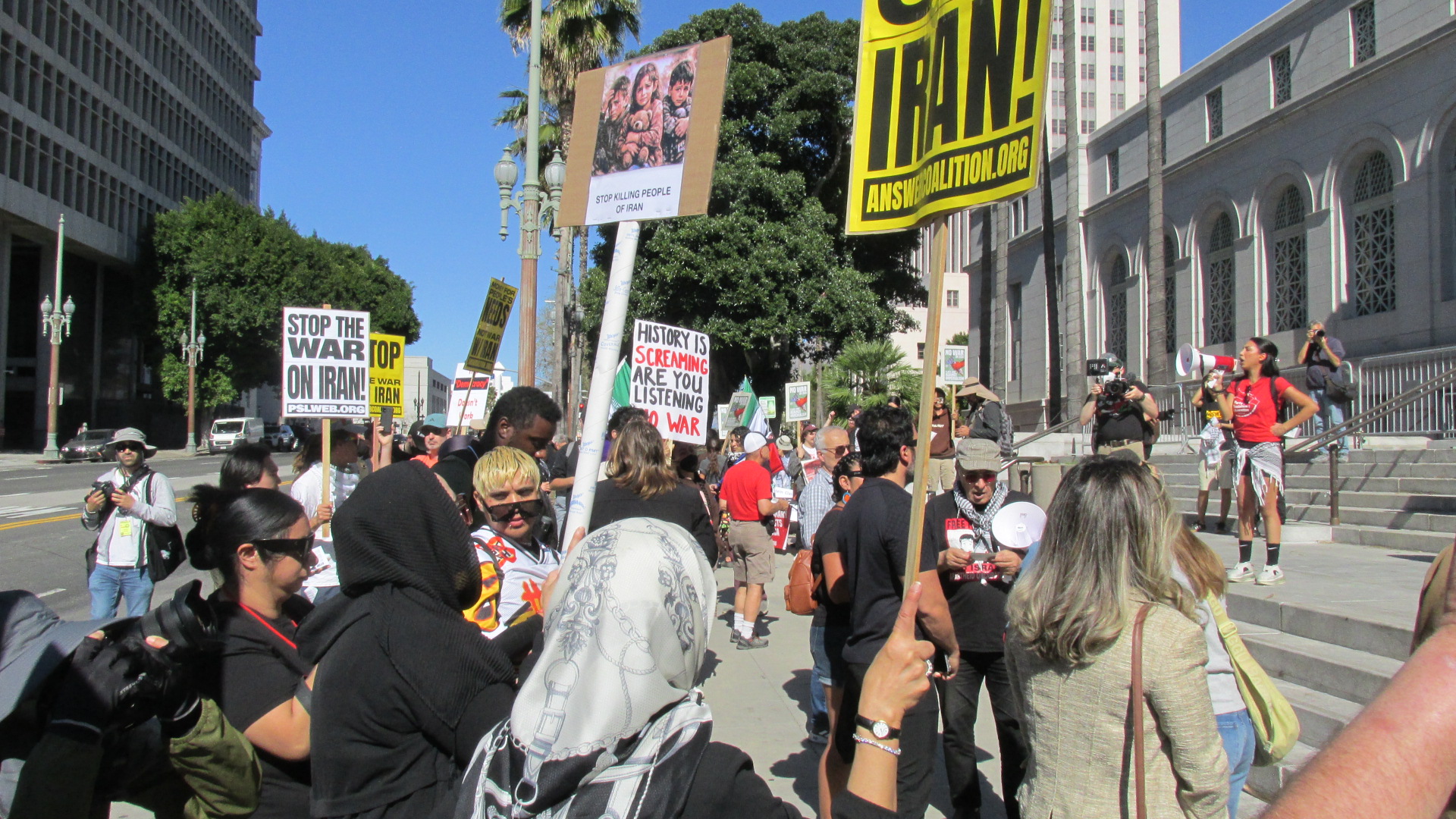
We’re at war again. This time in Iran. For the past week the US and Israel have unleashed punishing aerial attacks, but it’s hard to say why we’re at war or how it’s expected to end. In justifying the air strikes, Trump has offered a few different reasons. He’s said the goal is to destroy Iran’s nuclear weapons program, even though he said it had been obliterated last year. He’s said the US is trying to foment regime change, even though there doesn’t appear to be any Iranian opposition group prepared to step into that role. US officials have also claimed that there was an imminent threat of an attack by Iran on the US, but they haven’t shown any evidence to back up that claim.
Protesters asked why the US is spending money on fighting foreign wars instead of helping Americans at home.
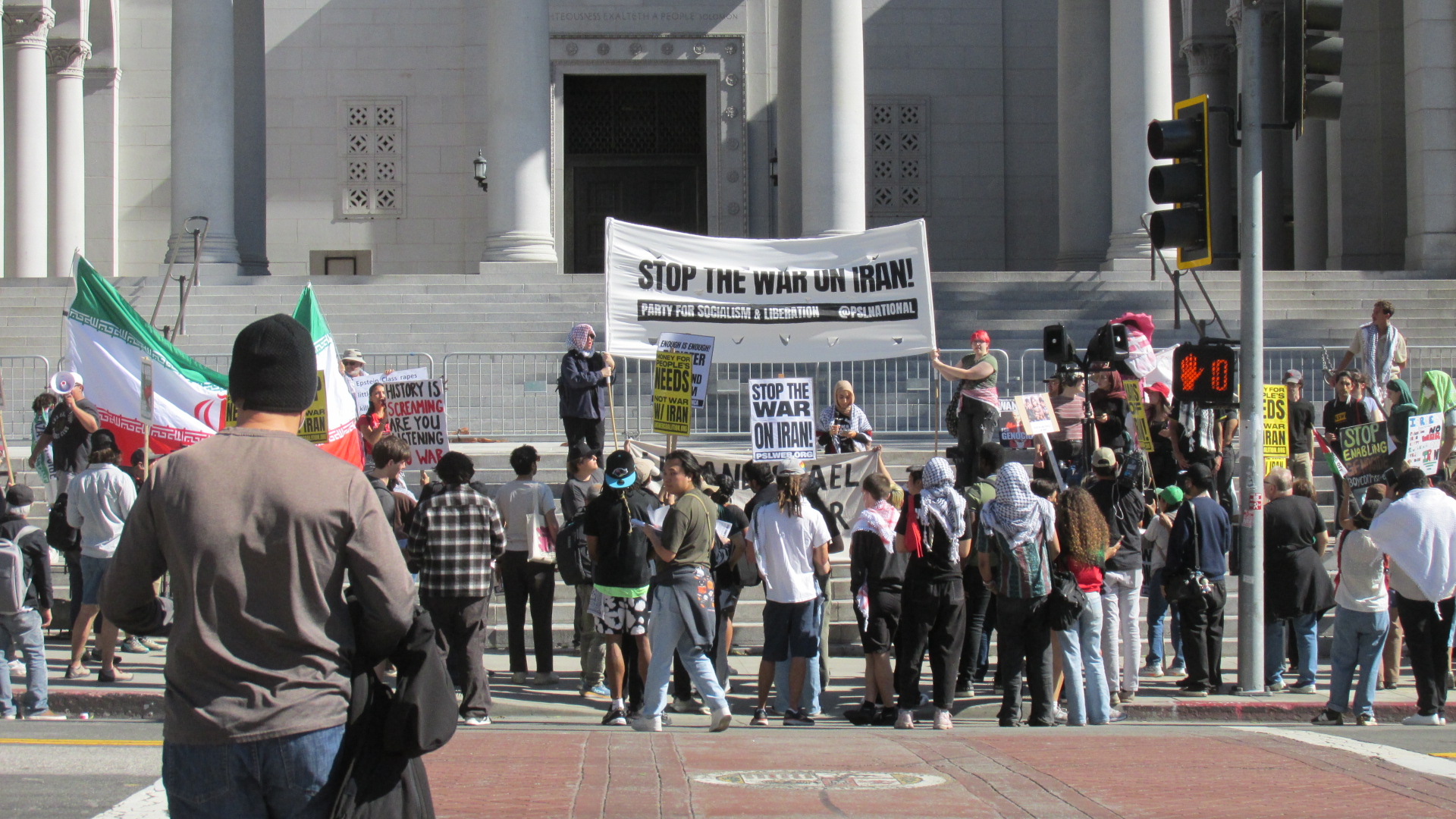
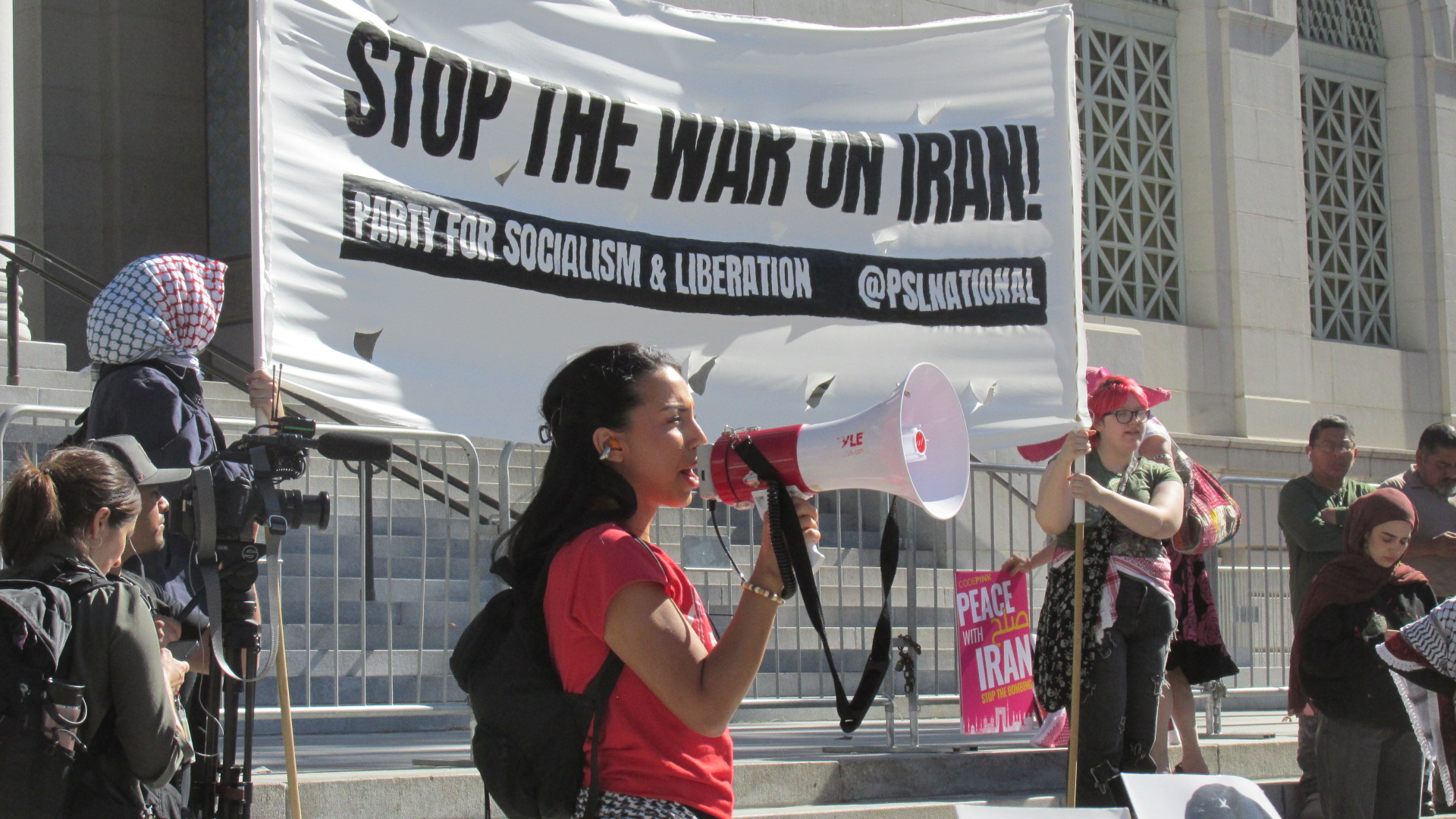
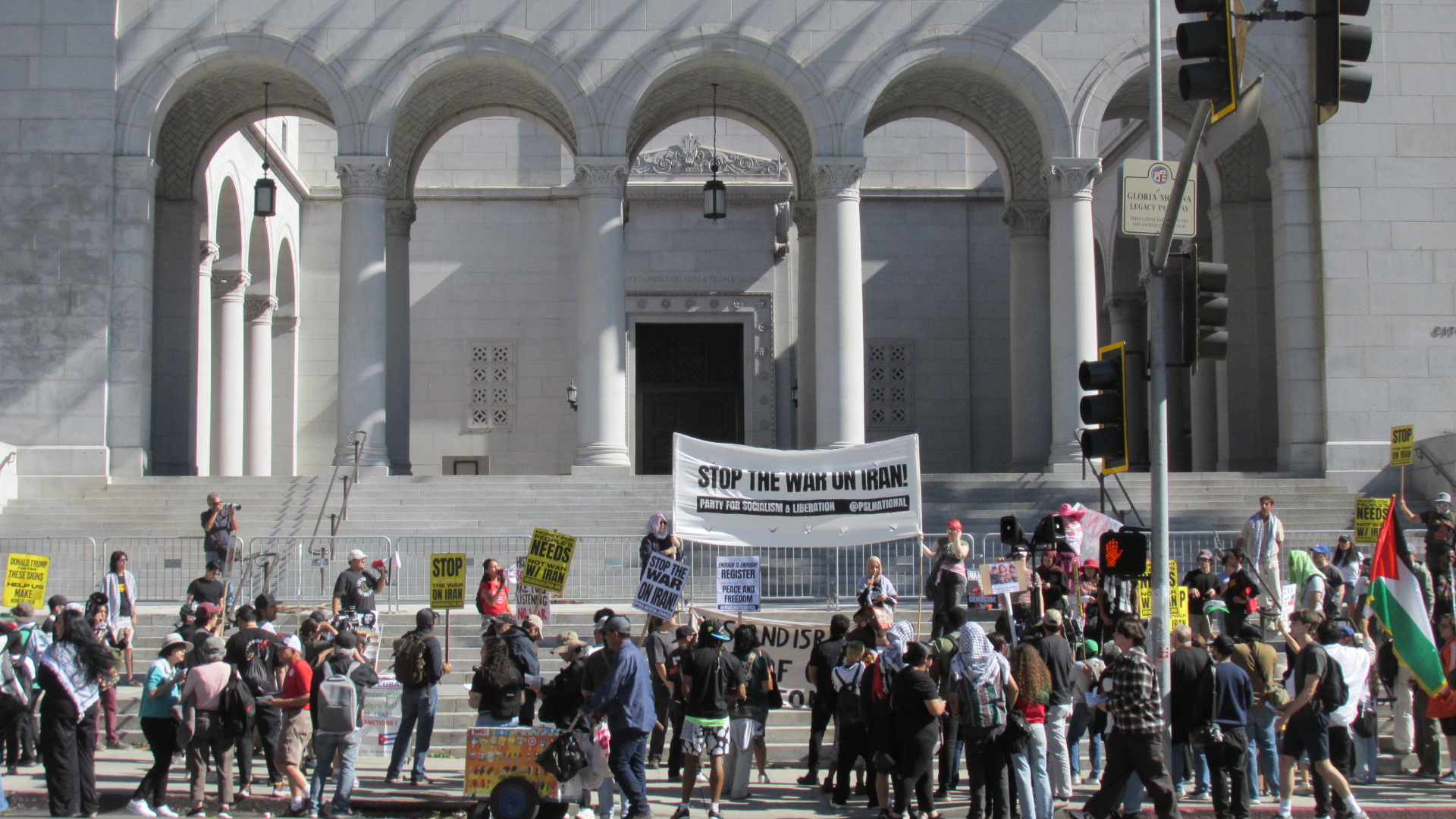
A small group of protesters gathered at LA City Hall on Saturday afternoon to speak out against the war. I’d say there were about 150 people there. It may have grown larger, but I had to leave around two thirty. The protest seemed to have been organized by a few different groups.
The chants were familiar from past anti-war protests, but the questions they asked were still relevant. Analysts have estimated that the first week of the war has cost the US almost $900 million a day. The protesters were asking why we aren’t spending that money on things that would make a real difference in the lives of American citizens, like education or healthcare or housing.
Signs demanded an end to the assualt on Iran.
The US spent between 10 and 15 years fighting in Vietnam, depending on where you draw the line. The war in Iraq officially lasted from 2003 through 2011, though American troops were still active in the region after that date. The war in Afghanistan ran from 2001 through 2021. Many American soldiers died in each of these conflicts, and many more foreign civilians lost their lives. These wars turned farmlands to wastelands, homes to rubble, and left behind toxic chemicals and unexploded ordnance which are still taking lives today. And what did Americans gain from these wars?
The gathering on Saturday was small, but if the conflict continues, I think it’s pretty certain we’ll see the protests growing steadily larger. Americans are tired of war. It’s time to put a stop to it.
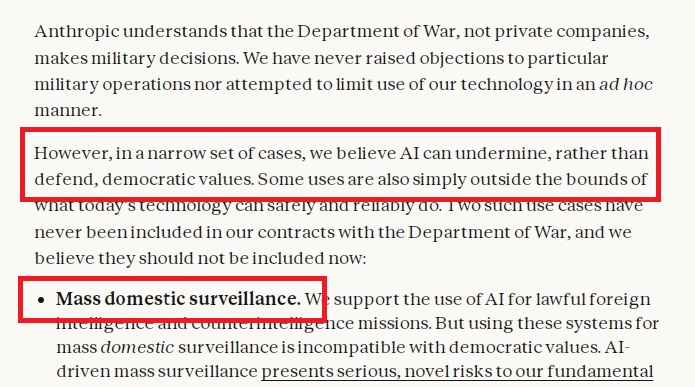
Screenshot of statement issued earlier this week by AI company Anthropic.
I don’t often get into national issues in this blog, but this is something that impacts all Americans, including those of us who live in Los Angeles. Artificial intelligence company Anthropic has come under pressure by the US government to allow the use of its technology for mass domestic surveillance and lethal autonomous weapons. While both are a concern, in this post I’m going to focus on the surveillance issue.
Anthropic seems to have been the first AI company cleared by the US government for use in handling classified information. This came about through its partnership with Palantir, a defense contractor which works with the Pentagon. When this partnership began, Anthropic stressed that its large language model Claude should not be used for surveillance of US citizens or to enable lethal autonomous weapons systems. In January of this year, Anthropic became concerned that the Department of Defense had ignored both of these restrictions. Anthropic CEO Dario Amodei sent a letter outlining his concerns. Secretary of Defense Pete Hegseth responded by saying that, unless Anthropic withdrew its objections to the use of Claude for domestic surveillance and autonomous weapons, the DOD would stop using it and bar Anthropic from receiving further contracts with the Department of Defense. On Thursday, Anthropic issued a statement saying it would reject these demands. Today President Trump ordered all federal agencies to stop using all artificial intelligence technology made by Anthropic.
Now, the first question I’m asking is, Why does the Department of Defense need to do mass surveillance of US citizens? If there’s reason to suspect that a US citizen might be a threat, the government already has the power to conduct surveillance, but only after it has presented evidence of the threat and received a warrant. Concerns about mass surveillance of US citizens aren’t new. Over the past 20+ years the US government has tried (often successfully) to increase its ability to spy on citizens. There has also been pushback (sometimes successful) from privacy groups, and there are court decisions that have kept checks on the government’s ability to gather information on Americans.
But this is crossing a new line. In this case it appears that the US government is asserting that it has a right to conduct mass surveillance of citizens, and that it will only work with AI companies that are comfortable with that kind of surveillance.
This comes at a time when corporations are gathering more of our data than ever. You’ve probably heard that Ring cameras are being enabled to collect biometric information that would allow identification of people who visit your home. You probably haven’t heard that the City of LA may be issuing a request for proposals for digital kiosks to be placed on city streets, and that at least one of the companies interested in getting the contract allows its kiosks to collect personal information, including your IP address, phone number, geolocation data and biometric information.
In the past, the US government has moved slowly and quietly when expanding its surveillance powers. But now, the US government is stating openly that it wants to use AI to conduct mass surveillance of US citizens.
Years ago, the Chinese government implemented a massive surveillance network. It explicitly told Chinese citizens that they were being watched, and that it could grant or limit opportunities for jobs, education and travel based on the data it collected. At the time, I told myself that the US government would never take such a drastic step. I guess I was wrong.
If you’re concerned about our government using AI to keep us under surveillance, you could always write to the White House to let them know you’re worried.
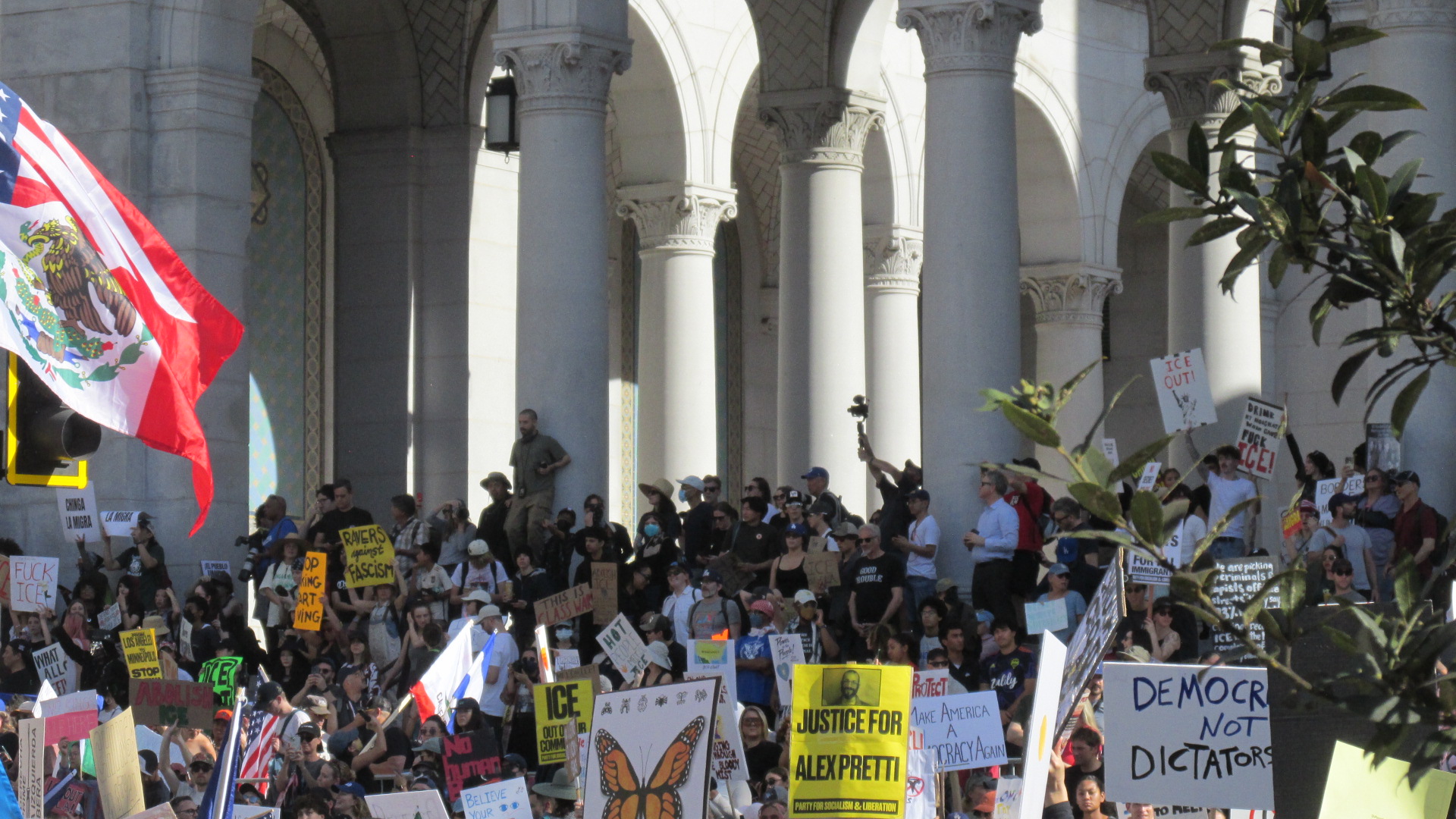
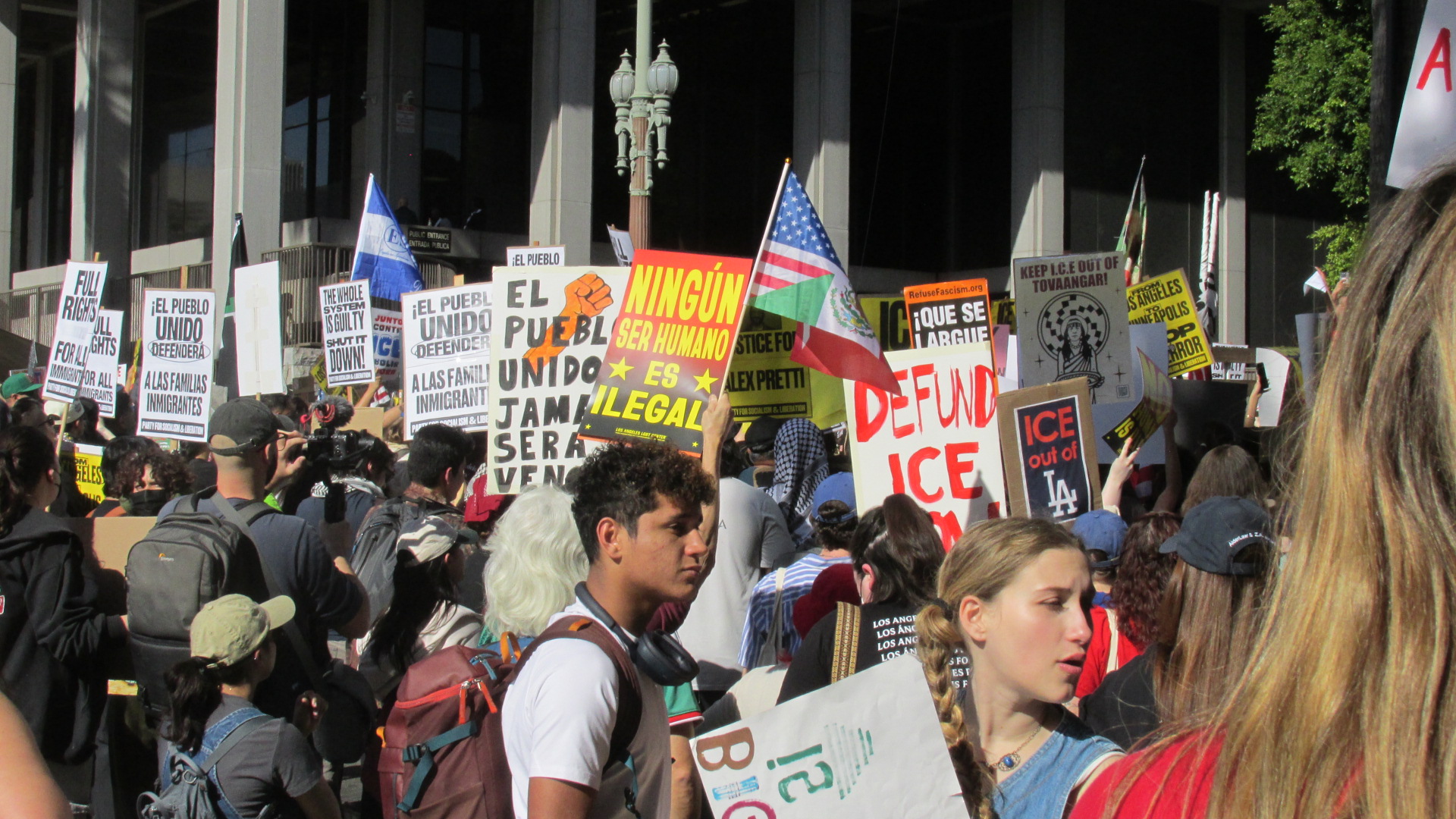
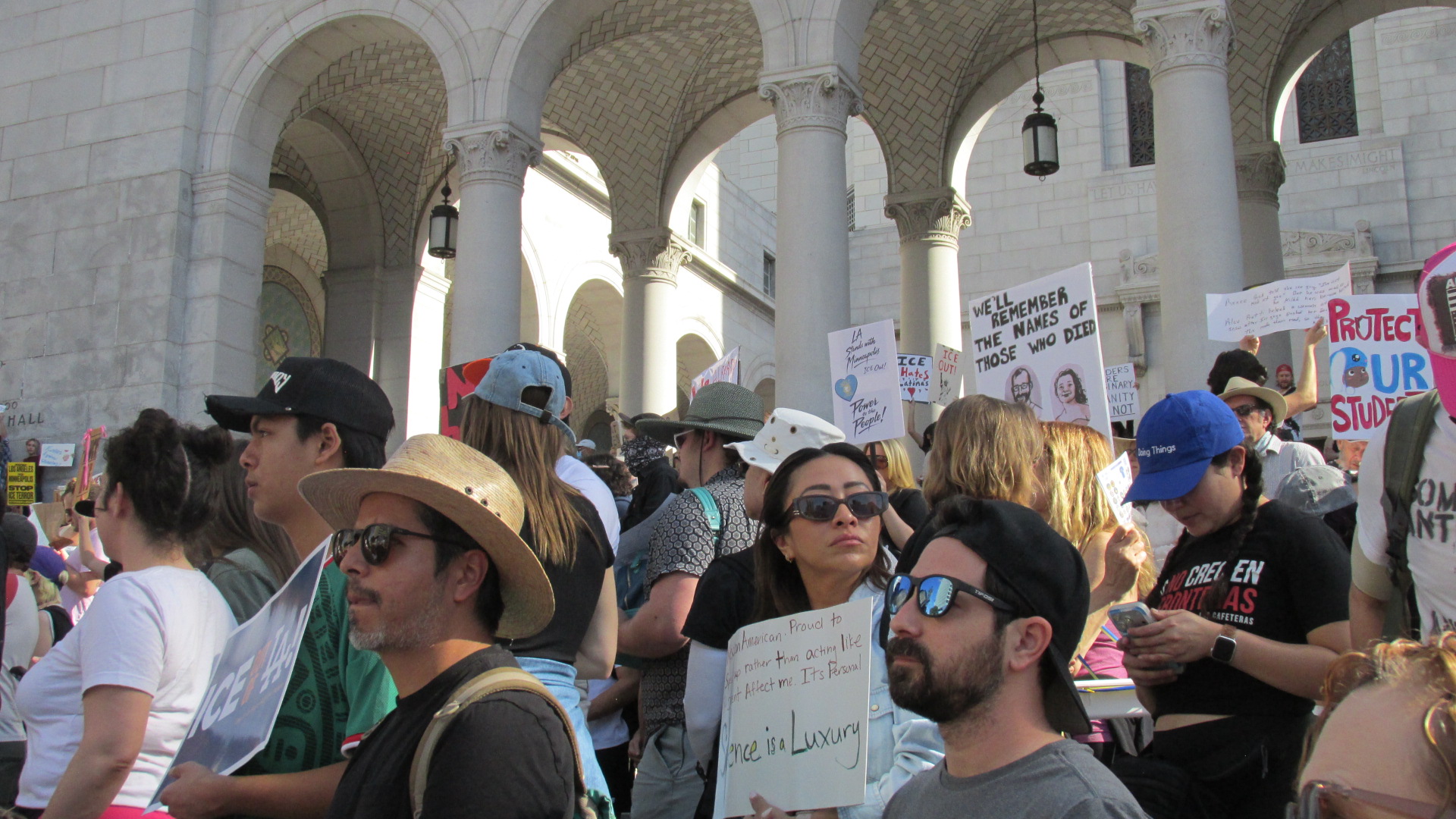
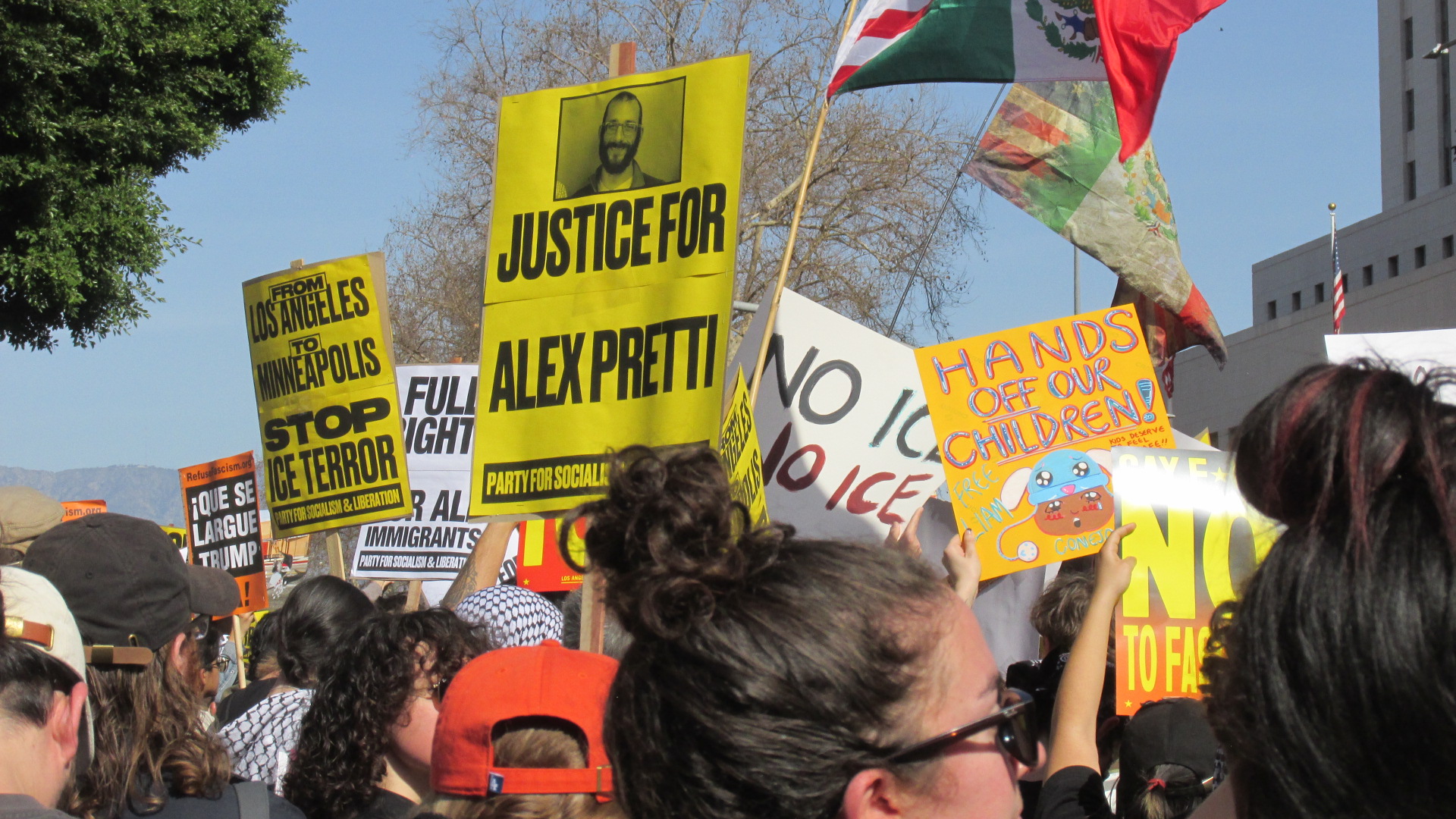
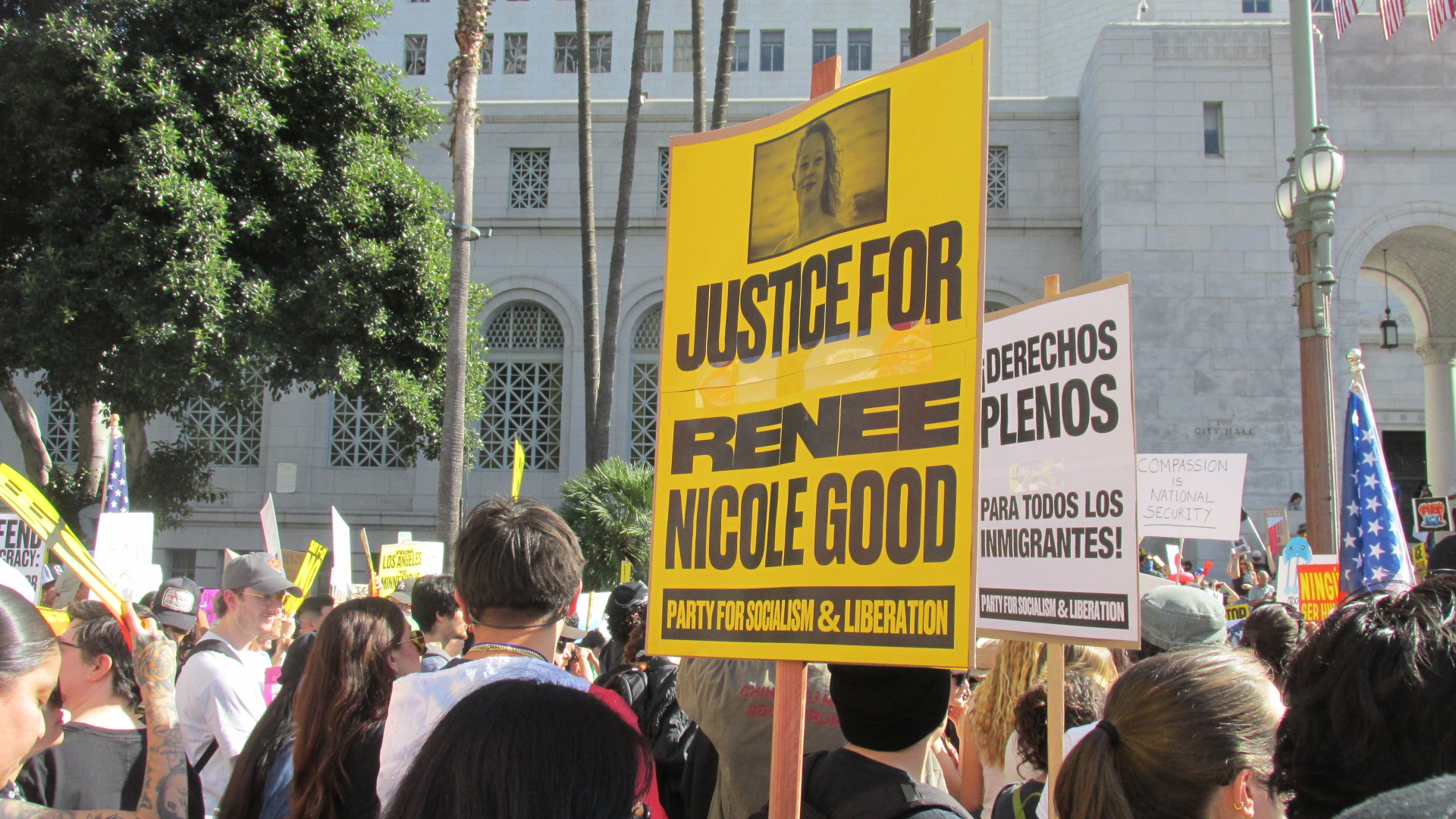
Once again, protesters are turning out across the nation to protest the Trump administration’s violent immigration raids. The deaths of Renee Good and Alex Pretti have thrown more fuel on the fire, putting national attention on the ICE surge in Minneapolis. There were several LA area events on Friday in cities including Culver City, El Monte, Monrovia, Pasadena and Torrance. Thousands of protesters gathered near LA City Hall to give voice to their anger.
Protesters gathered in Grand Park in front of LA City HallYou could feel the outrage in the airThe crowd was thick in front of LA City Hall
I showed up at City Hall around one o’ clock. It was an unusually warm January day. Signs calling out the deaths of Good and Pretti were plentiful, but protesters also called attention to those who have lost their lives in detention facilities. As outrage over the immigration crackdown has spiralled, it seems the Trump administration is trying to rethink its approach, but will the changes amount to anything more than a public relations move? Hard to believe Trump will back down.
Signs asked for justice for Alex Pretti……and for Renee Good……and for those who have died in detention facilities.Speakers railed against the violence of the ICE crackdown.As usual, plenty of folks showed up with cameras to document the event.Still more cameras.
The protests aren’t going away. And the pressure has become so great that even some of the Republicans in Congress are speaking up. No doubt some are worried about how this will impact the mid-term elections. But we need to see meaningful investigations, not just for Good and Pretti, but also for the immigrants who have died in detention facilities. And we need to see ICE get out of Minneapolis. Listening to politicians posturing is a waste of time. We need real change
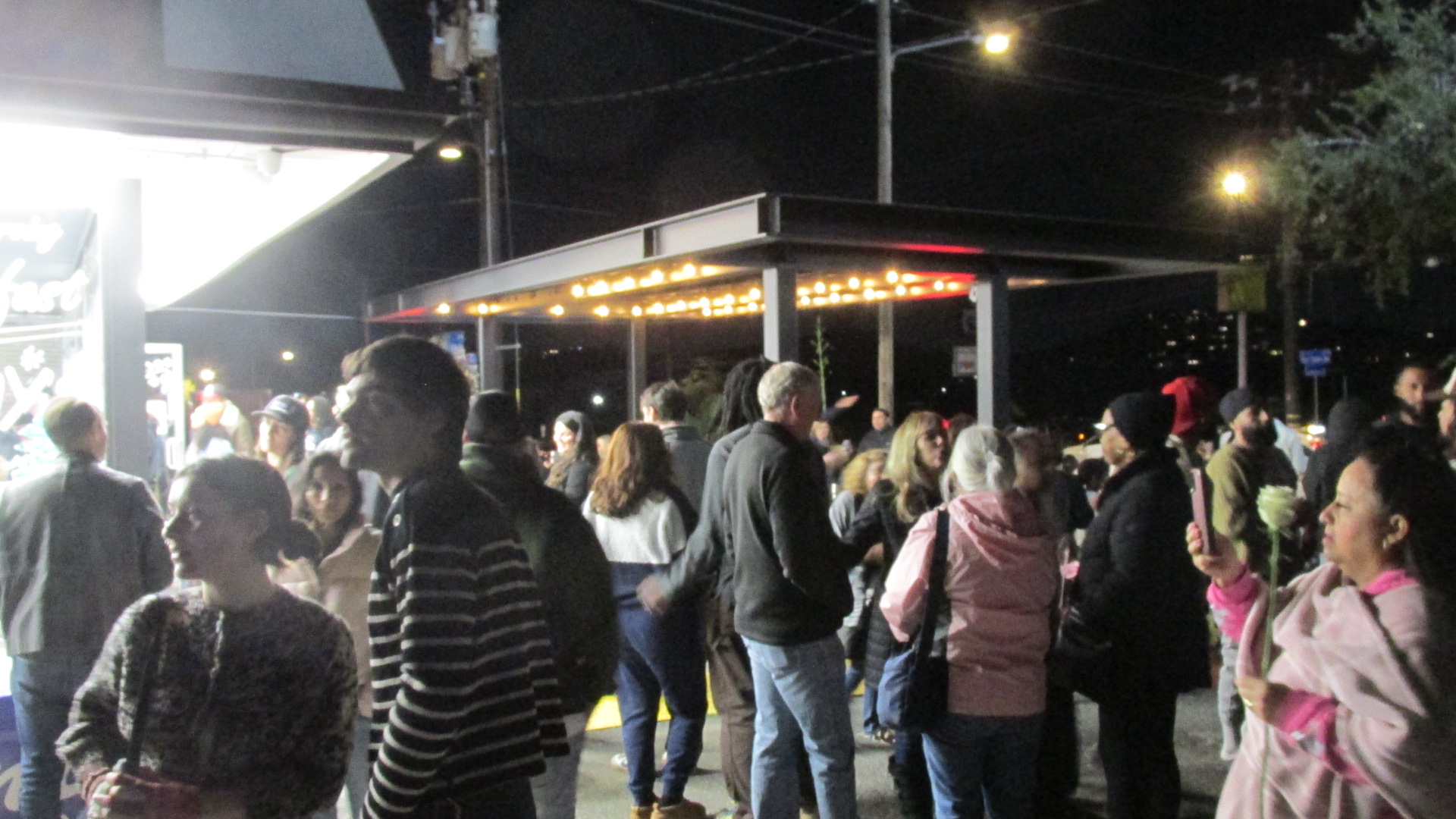
People gather at Fair Oaks Burger in Altadena one year after the fires.
It’s been a year since the fires. As bad as that catastrophe was, with blazes erupting in locations all over the LA area, and the two most devastating conflagrations in Altadena and Pacific Palisades, the year since then has been an ordeal for the thousands of survivors who are trying to rebuild their lives. Some have left LA. Some are working through the arduous process of constructing new homes. Many are still trying to figure out how to move on.
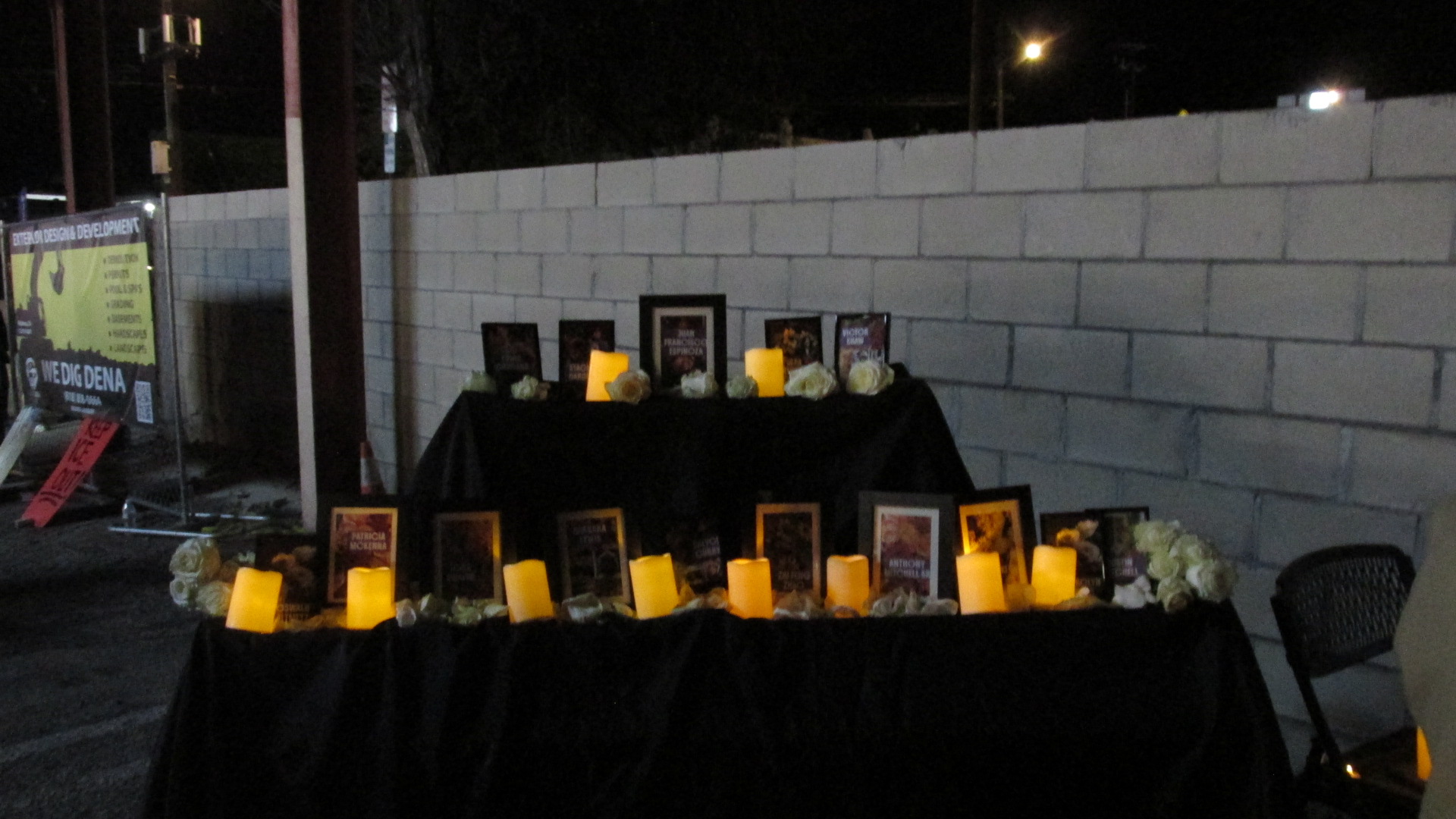
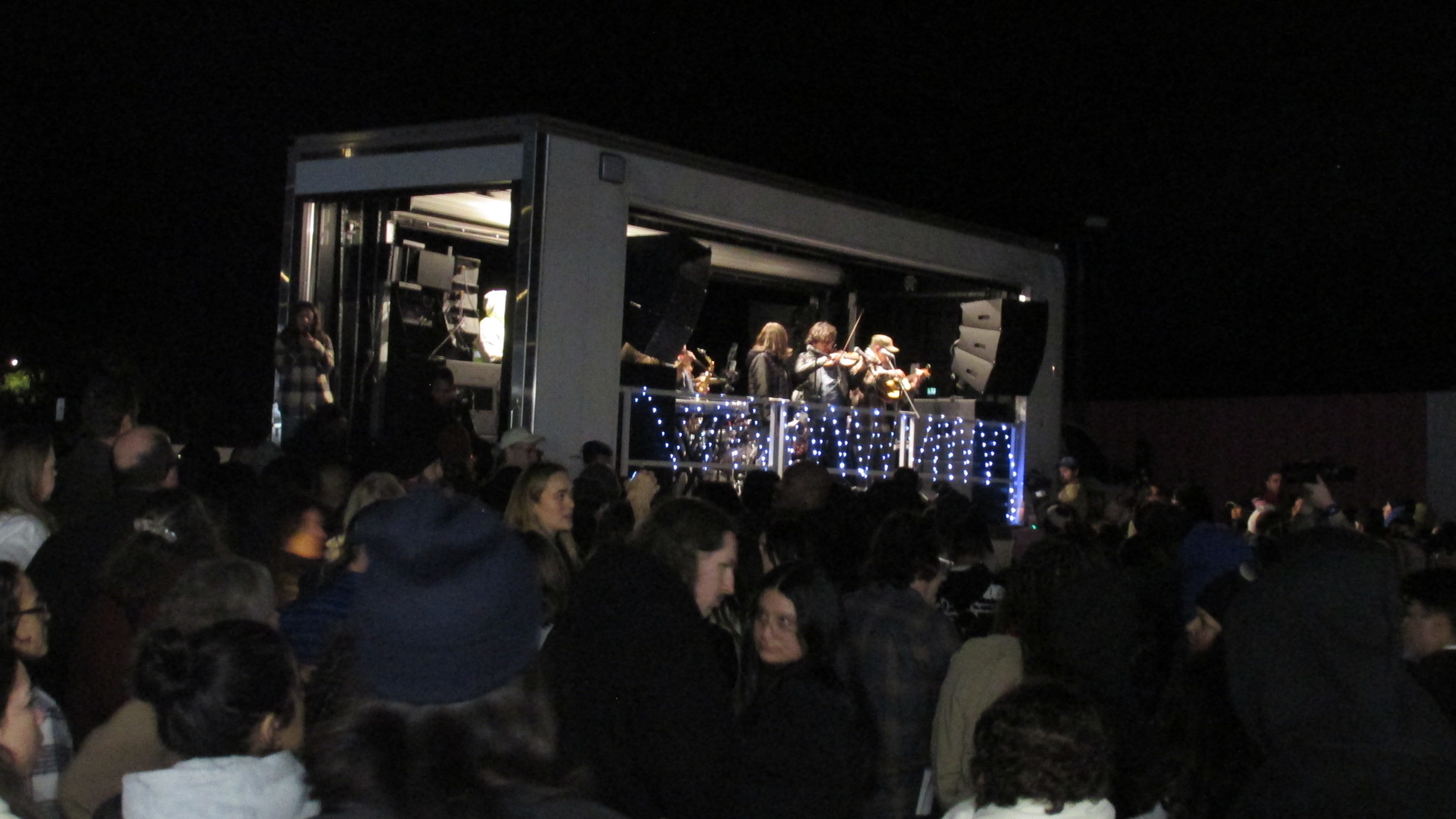
Tonight several hundred people gathered at Fair Oaks Burger in Altadena for a vigil, both to remember those who were lost and to celebrate the community’s resilience as it works to rebuild. Located in the middle of the neighborhoods that were ravaged by the Eaton Fire, Fair Oaks Burger miraculously survived unscathed. As the community struggled to recover, the restaurant partnered with a non-profit to provide free meals to those who needed them.
Before the vigil began, the crowd gathered in the parking lot.A memorial was created to remember those who perished in the fire.Hundreds gathered around the stage as musicians played.Speakers talked about the losses the community had suffered, but also about its tremendous strength.
The mood was both somber and celebratory. Many of those attending lost their homes in the fire. Speakers talked about the losses they had suffered. But they also spoke of the joy they felt as the community came together to support them. It was a cold night, but the vibe was very warm. You could feel the love.
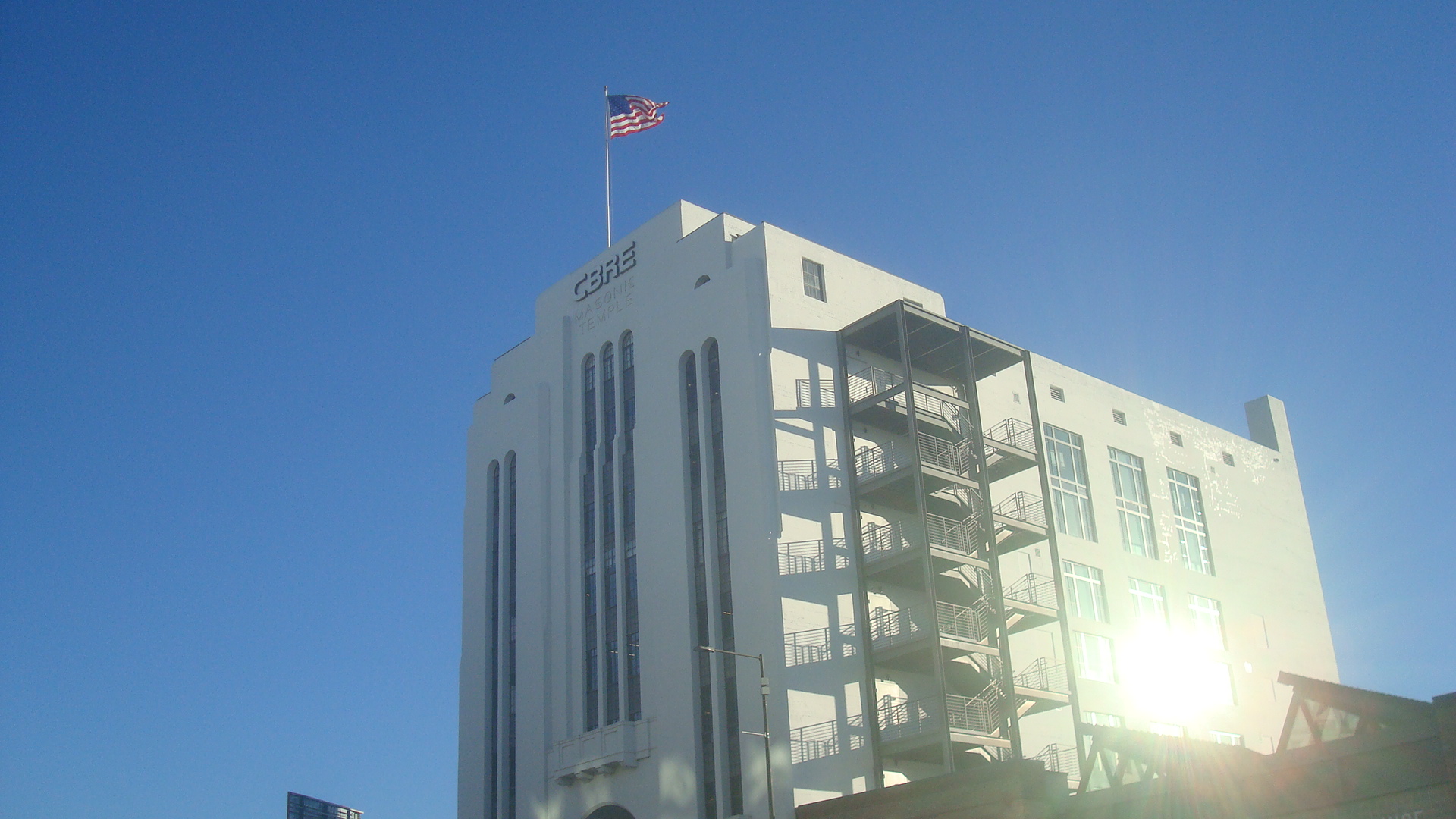
There’s a notice posted on the Glendale Masonic Temple at 234 S. Brand Boulevard. The text says that the City of Glendale is considering an amendment to its Advertising Signage Overlay Zone (ASOZ) which would expand the zone’s boundaries. It gives no further details about the scope of the expansion, or what kind of outdoor advertising is being contemplated.
But I’d be willing to bet that the City of Glendale wants to let advertisers install digital billboards, possibly on the side of the Masonic Temple. You can already find digital signage at the Americana mall on the south side of Brand. Outdoor ad companies are lobbying cities all over the US to open up to bigger and more invasive digital signage. It’s a hugely profitable business that’s growing rapidly.
Personally, I’m against outdoor digital advertising for a few reasons. One reason is that I see it as urban blight. But more importantly, I’m concerned about the way digital advertisers are collecting and sharing cell phone data. There are huge privacy risks here, and most city officials are completely oblivious.
A public hearing is scheduled later this month. If you’re interested in attending, here’s the info….
DATE: Wednesday, November 19, 2025
TIME: 5:00 PM
LOCATION: 633 E. Broadway (MSB), #105, Glendale, 91206
You can also contact Roger Kiesel, of the Glendale Community Development Department, at 818 937-8152.
The Glendale Masonic Temple was dedicated in 1929 and served as a meeting place for different Masonic Lodges into the 50s. It was designed by Arthur Lindley, who also designed the nearby Alex Theatre. Rick Caruso’s company bought the building about a decade ago and refurbished it, making some changes to the design. The building is a Glendale Historical Landmark and also on the National Register of Historic Places.
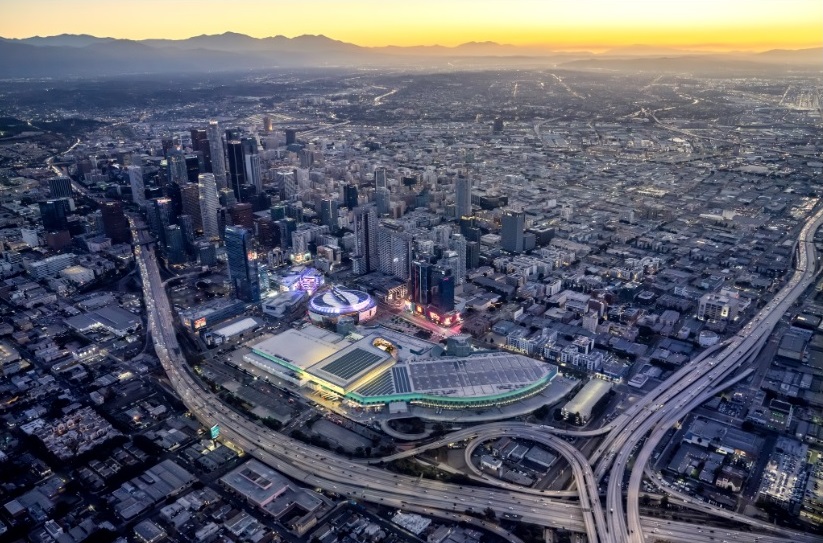
Rendering of Convention Center expansion project recently approved by LA City Council.
I’ve been critical of the LA City Council for years, so I don’t expect a lot from them. But even I was stunned by their vote to approve the LA Convention Center expansion in September. The Council is not known for fiscal responsibility. You may recall that they’ve been struggling to deal with a $1 billion deficit during the current fiscal year. So you’d think the councilmembers would be a little hesitant to plunge the city even further into debt. But on September 19, the LA City Council approved the expansion in an 11 to 2 vote, with two absent. Mayor Bass signed off on it a few days later.
Supporters of the Convention Center expansion promoted it as a great idea, and a crucial step in attracting events to Downtown LA. No one disputes that the Convention Center needed repairs and upgrades, and the expansion could provide benefits. But the cost of the project will bury the City of LA in debt for decades. Don’t take my word for it. Read what LA City Controller Kenneth Mejia had to say about the impacts it will have on the city’s budget….
The City of Los Angeles is currently contemplating a $2.7 billion expansion and modernization of the Convention Center, which will end up costing taxpayers $5.9 billion with borrowing and other costs included, of which $5.45 billion will be paid for by the General Fund. If this plan goes through, the City is projected to need an additional average of $116 million from the General Fund each year for the next 28 years starting in FY2029. $116 million is the equivalent of nearly 1,000 City jobs.
The City isn’t expected to see a related net positive General Fund impact for 30 years (in FY2057 once the debt service payments end). However, at that time, the City will still be down $3.2 billion from the General Fund and will take an additional 25 years or so to truly break even.
Mejia goes on to point out that if the city can’t bring in the revenue necessary to cover the cost of the expansion, it would likely have to make further cuts to funding for city departments, which are already understaffed. The quality of services could decline even further. Beyond that, rating agencies have put the City’s credit rating on negative watch status, which means we could be heading to a rating downgrade. That would make it more expensive to borrow money, raising the deficit even further.
So why did the Council okay this project? Let’s start with a little background. The City has been talking about expanding and modernizing the Convention Center for years, and again, there are certainly good arguments for making that happen. But it was clear that the expansion would be extremely costly, and there were budget conscious folks at City Hall who argued that the City couldn’t afford it. It’s important to remember here that the City of LA has a history of staggering from one budget crisis to the next. Because there’s no meaningful long-term fiscal planning, the City’s budget process invariably involves a lot of wishful thinking and a fair amount of financial sleight of hand.
You would think the fact that the 2025-2026 Budget resulted in a $1 billion shortfall would serve as a clear warning to elected officials that the City was in serious trouble. There were folks at City Hall who saw the flashing red lights and tried to move things in a different direction. On September 16, the Budget & Finance Committee voted to approve a scaled down version of the project, involving repairs and upgrades to the Convention Center now, and deferring the expansion until after the 2028 Olympics. This would have been a much more realistic, much more manageable option. The vote was 3 to 2, with Councilmembers Yaroslavsky, Blumenfield and Hernandez supporting the reduced project. Observers who had been alarmed by the cost of the expansion breathed a sigh of relief. If the City Council accepted the Committee’s recommendations, disaster could be averted.
But on September 19, just three days later, the Convention Center showed up on the Council’s agenda, along with a motion presented by Council President Marqueece Harris-Dawson that ignored the Committee’s action and asked for approval of the expansion. The Council voted 11 to 2 in favor. Councilmembers Blumenfield and Rodriguez were absent. The two no votes were from Nithya Raman and Katy Yaroslavsky. At the meeting, Raman rightly pointed out that the City of LA had just declared a fiscal emergency in June, and spoke about the devastating impacts the project would likely have on funding for public services and homeless programs. Yaroslavsky gave a detailed breakdown of her reasons for opposing, including the likelihood of cost overruns and the unrealistic timetable for completion. Alissa Walker published Yaroslavky’s comments on Torched, and it’s worth taking the time to read them.
The City of LA is becoming increasingly dysfunctional. We have a huge homeless population, and in spite of repeated promises from City Hall, progress has been minimal at best. Transit ridership has been declining since 2014, and still hasn’t even recovered to pre-pandemic levels. Our sidewalks are a mess, and it can take years for repairs to happen. We have a growing solid waste crisis that few people are even talking about, even though illegal dumping has become a chronic problem. And the Palisades fire made it clear that there are serious questions about the City of LA’s ability to deal with disasters.
We could be doing a whole lot better if our elected officials made a serious attempt at planning for the future. Instead, the majority seem determined to ignore reality and pretend that were doing just fine. They give us a lot of talk about their vision for the future, but if you look at the facts, they seem to be flying blind.
US ships are firing on boats off the coast of Venezuela. Masked ICE agents are grabbing people off the street. Troops have been sent into cities governed by Democratic leaders. The Federal government has cut billions in funding for universities that don’t teach what the President wants them to. This is the new reality under Trump, and millions of Americans are seriously concerned about what they believe are grave threats to democracy and the Constitution.
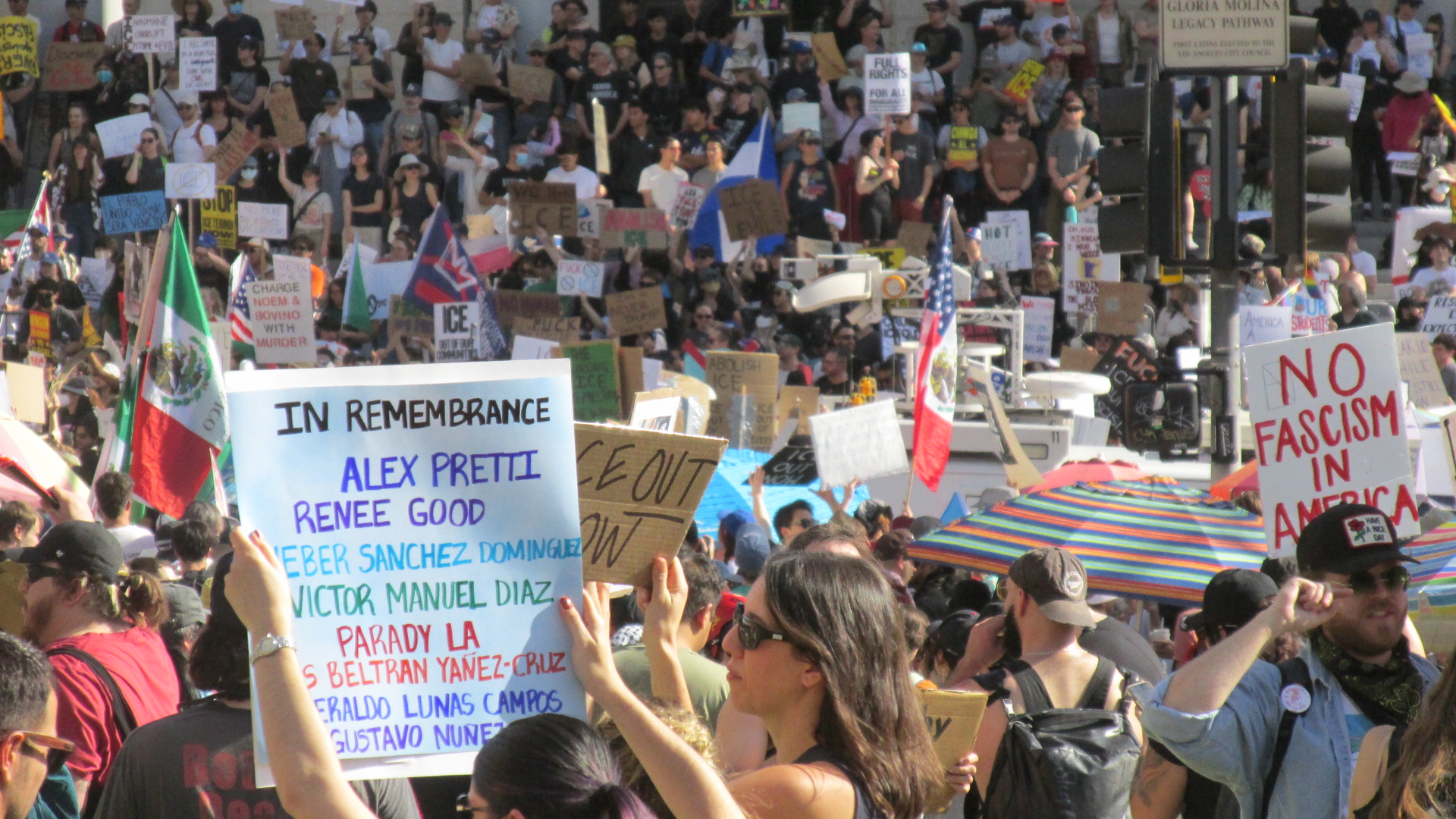
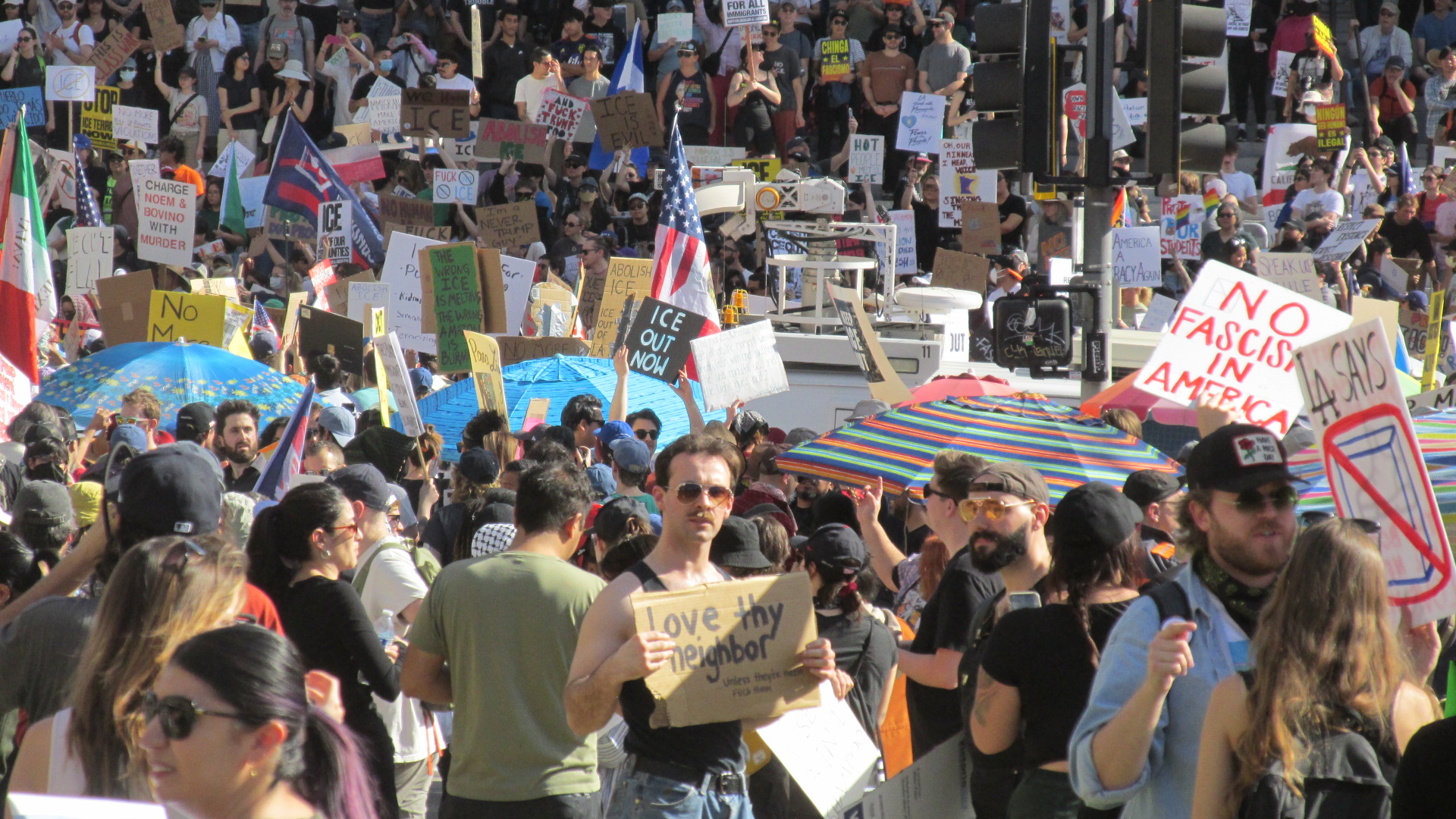
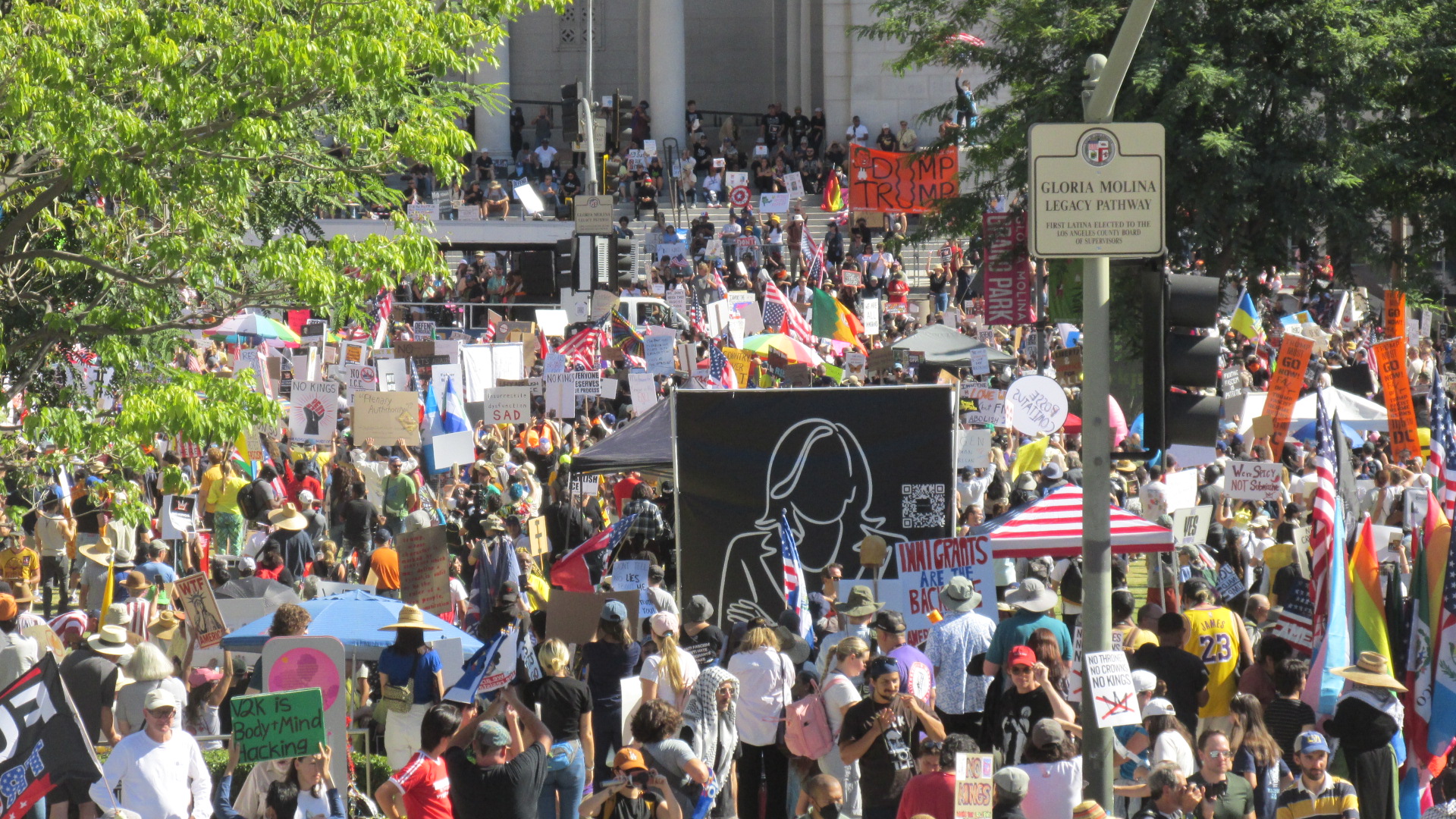
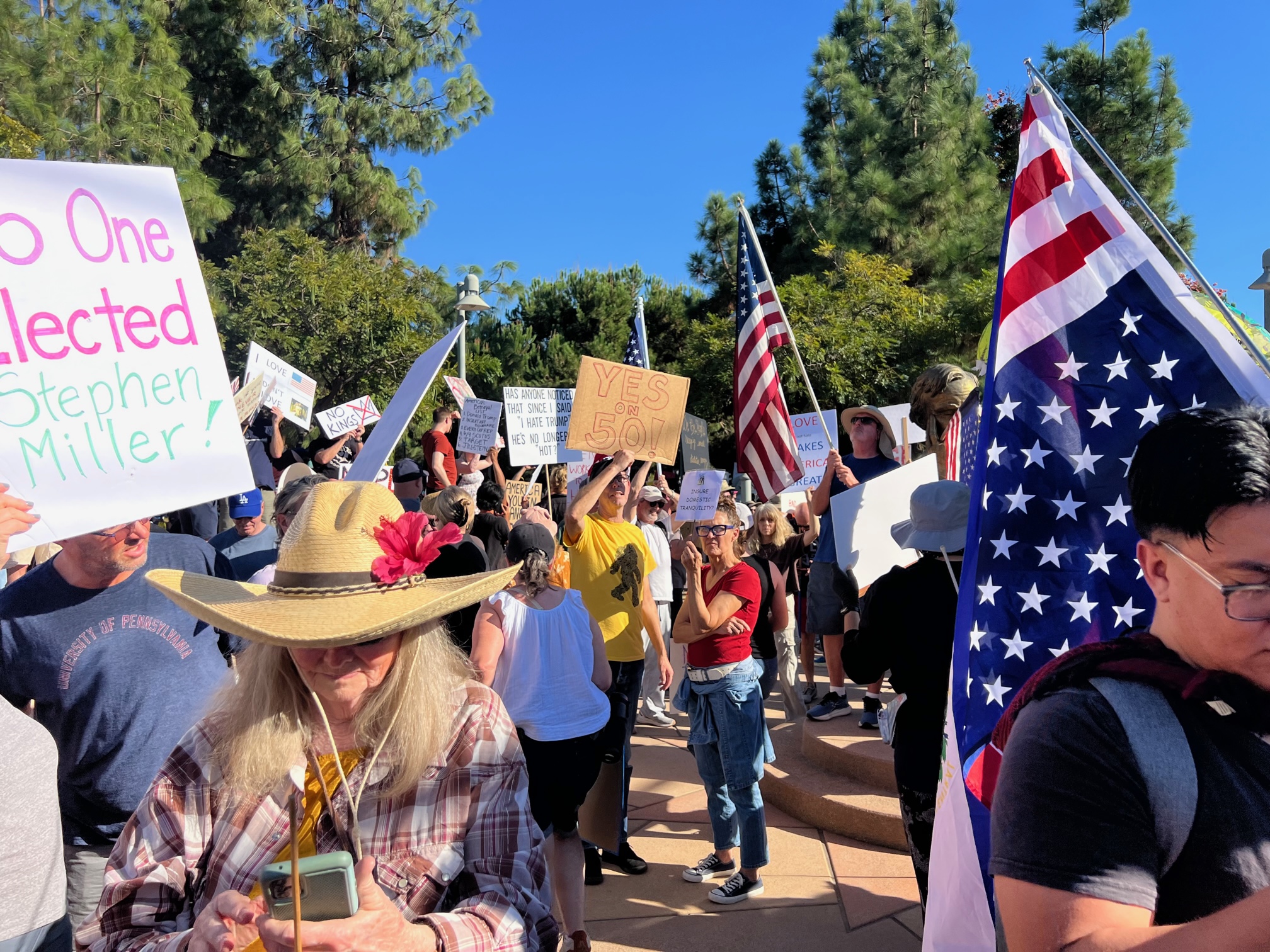
On Saturday people across the US turned out for No Kings rallies to voice their opposition to the current administration. According to the LA Times, 2,700 protests were scheduled to take place, about 600 more than for the previous day of protest in June. According to the No Kings organizers, more than seven million people turned out to protest yesterday. There were events scheduled throughout the LA area, including Beverly Hills, Burbank, Glendale, Hollywood, Lynwood, Long Beach, Torrance and Whittier.
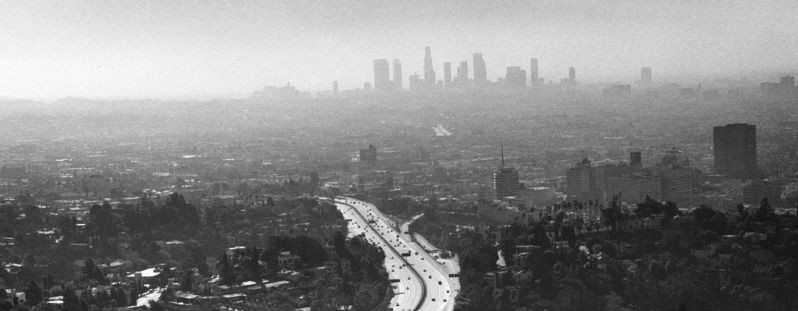
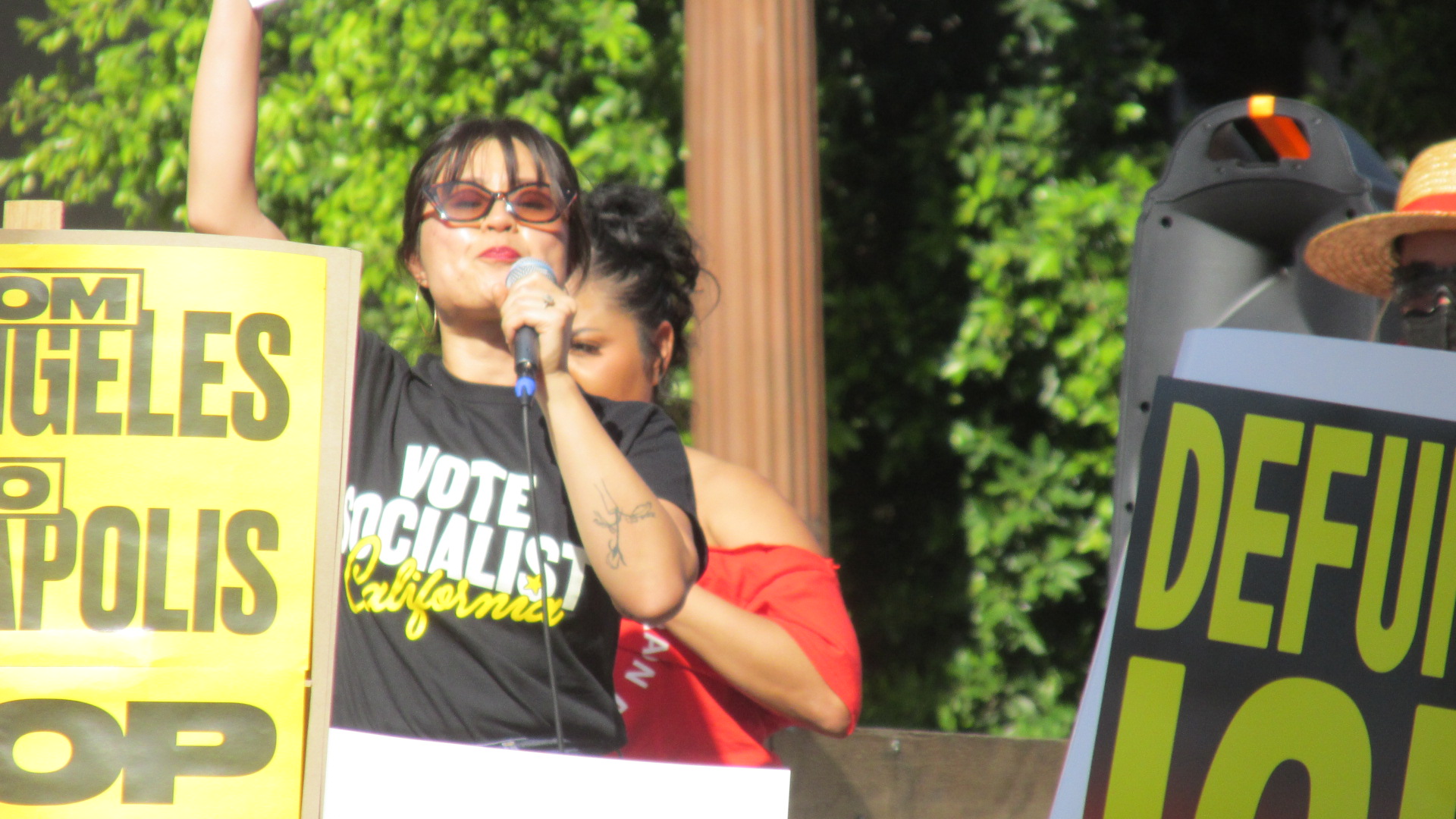
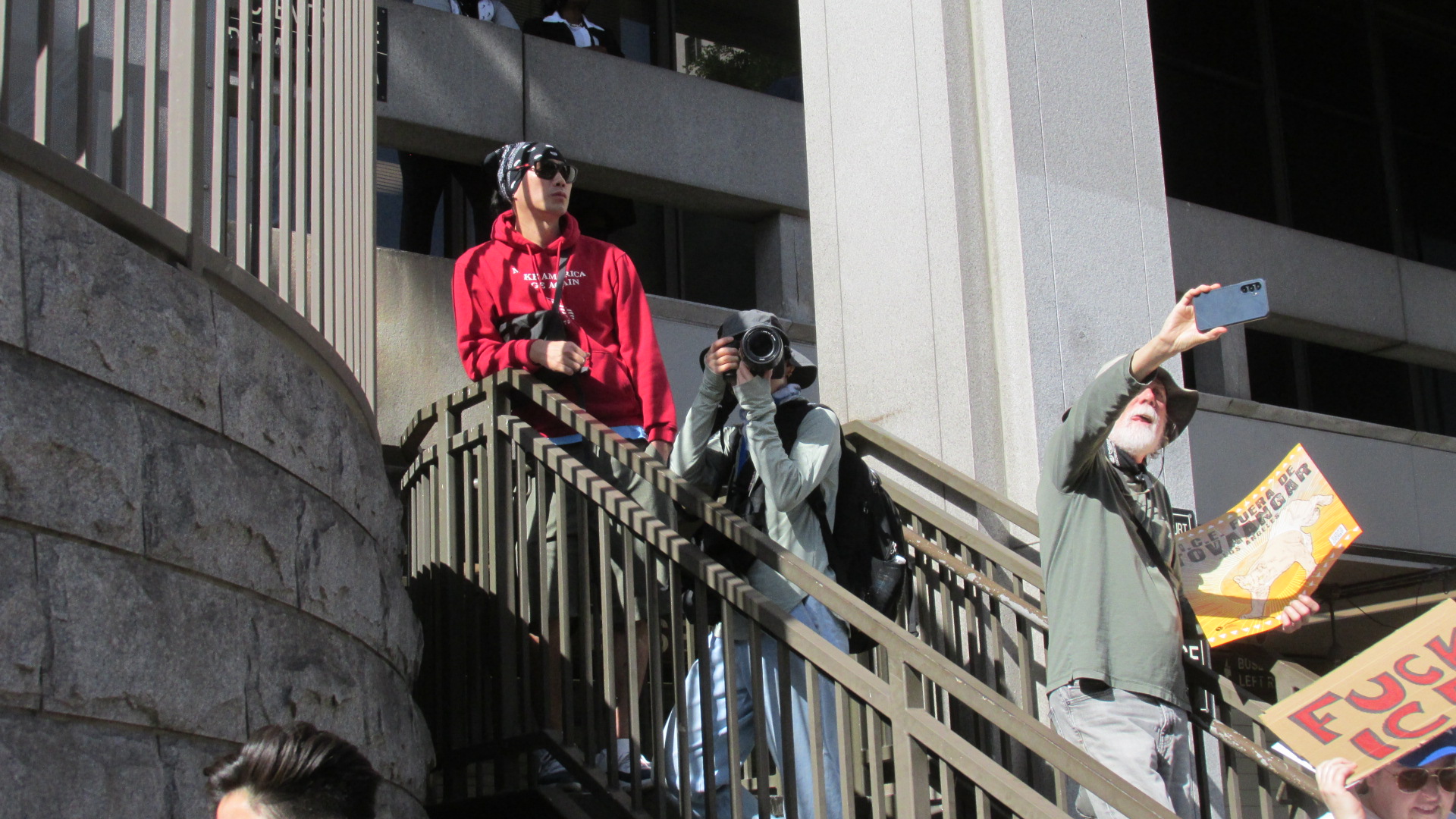
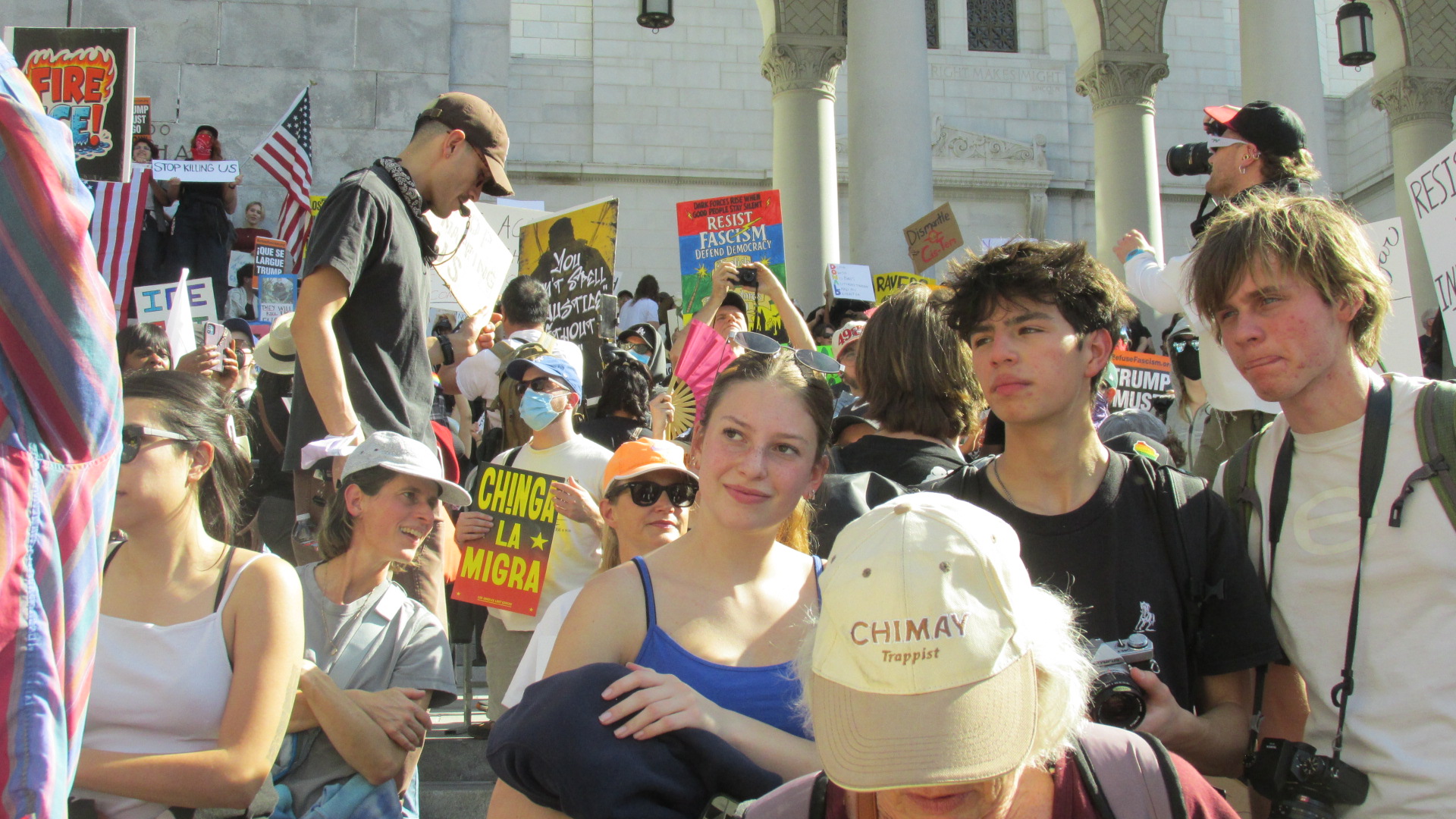
I went to the protest in Downtown LA and took some photos. Actually, the photo at the top of this post was taken several blocks south of the event on Olympic Boulevard. I snapped it while I was on my way to the protest. Something about the size and the colors seemed to capture the urgency of the moment. When I arrived at the Civic Center, crowds were marching into Grand Park carrying all sorts of signs and wearing all sorts of costumes.
Protesters gathered at City Hall in Downtown LA.
Crowd gathered near the steps to LA City Hall.
The fact that many protesters carried US flags seems to undercut the argument that they’re anti-American.
A friend of mine sent me these photos from the protest in Burbank. Looking at these photos it struck me how much that city has changed over the years. When I was growing up in Burbank, it was a fairly conservative town, and I don’t recall ever seeing a protest on this scale in the 60s and 70s. This kind of activism shows how much the city’s politics have shifted. The gathering was held at the intersection of Buena Vista and Verdugo.
Many protesters expressed their anger over troop deployments in US cities.Photo by Michael Golob.I don’t remember seeing anything like this when I was growing up in Burbank.Photo by Michael Golob.Some protesters wore colorful costumes. Photo by Michael Golob.When the introverts are angry, watch out. Photo by Michael Golob.
Thousands gathered at Pasadena City Hall to demonstrate against the Trump administration. Speakers included Congressional Rep Judy Chu, Pasadena Mayor Victor Gordo and Councilmember Rick Cole.
No Kings protest in Pasadena. Photo by Denise Goddard.Another image of Pasadena No Kings protest. Photo by Denise Goddard.
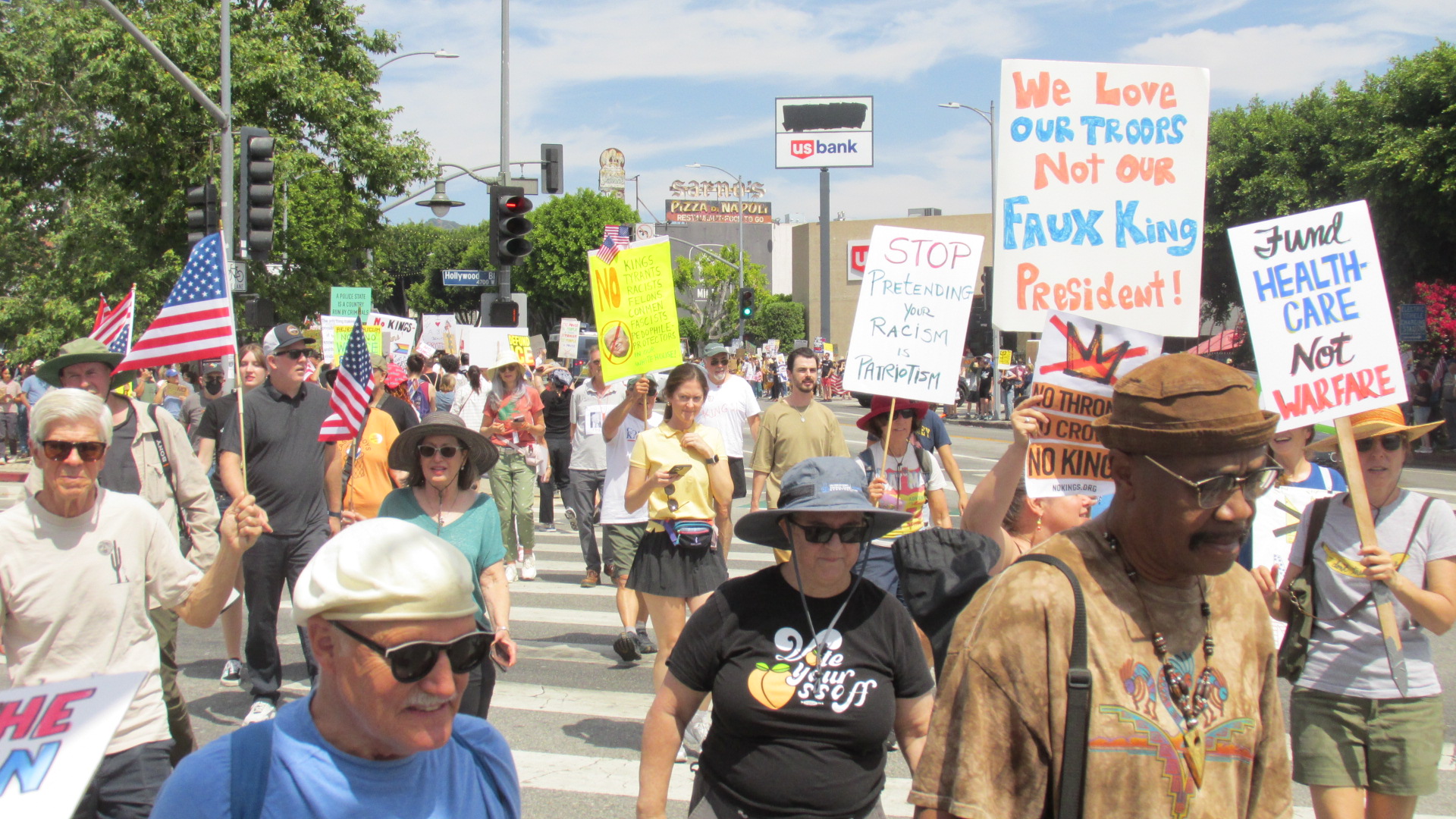
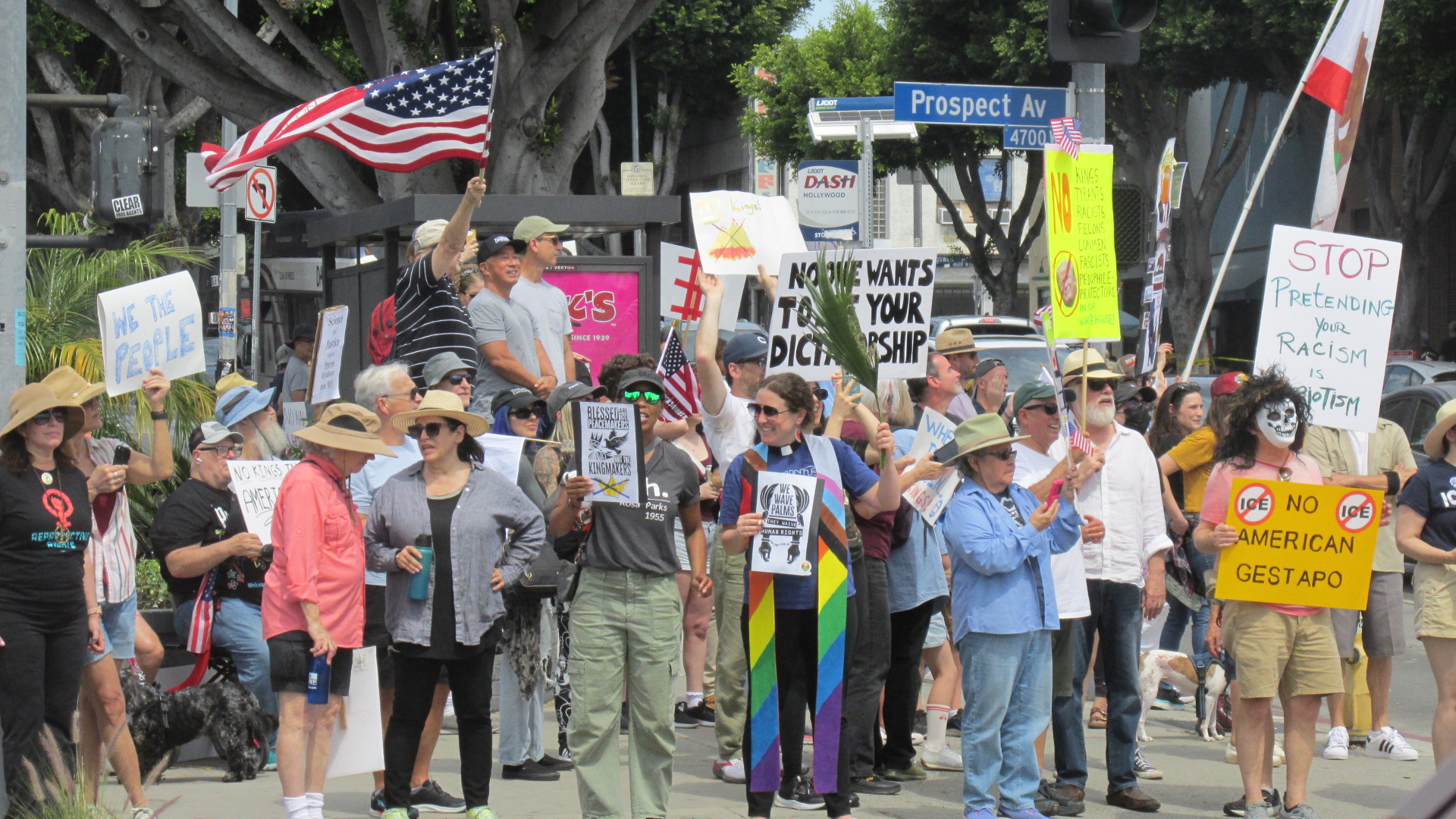
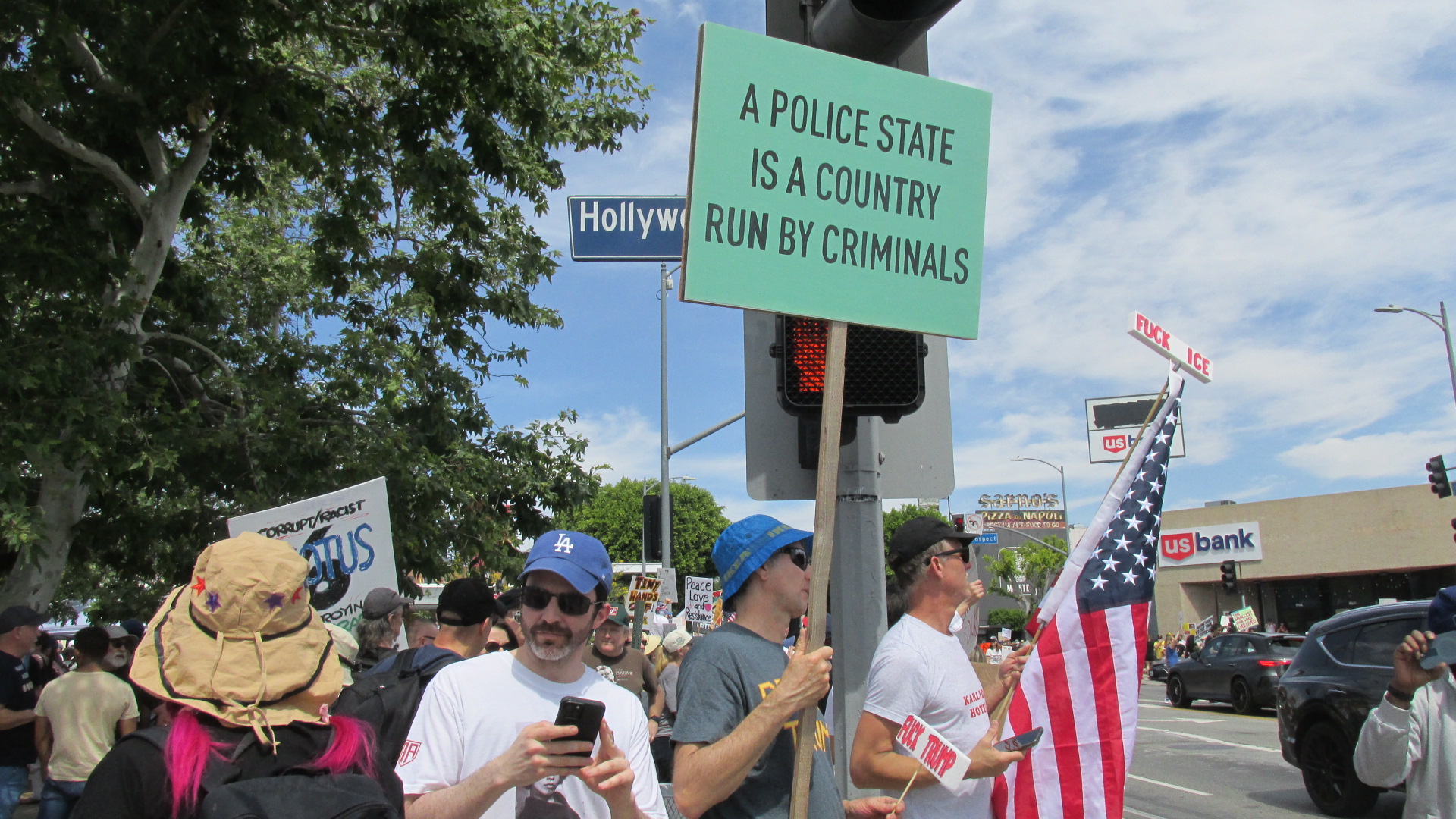
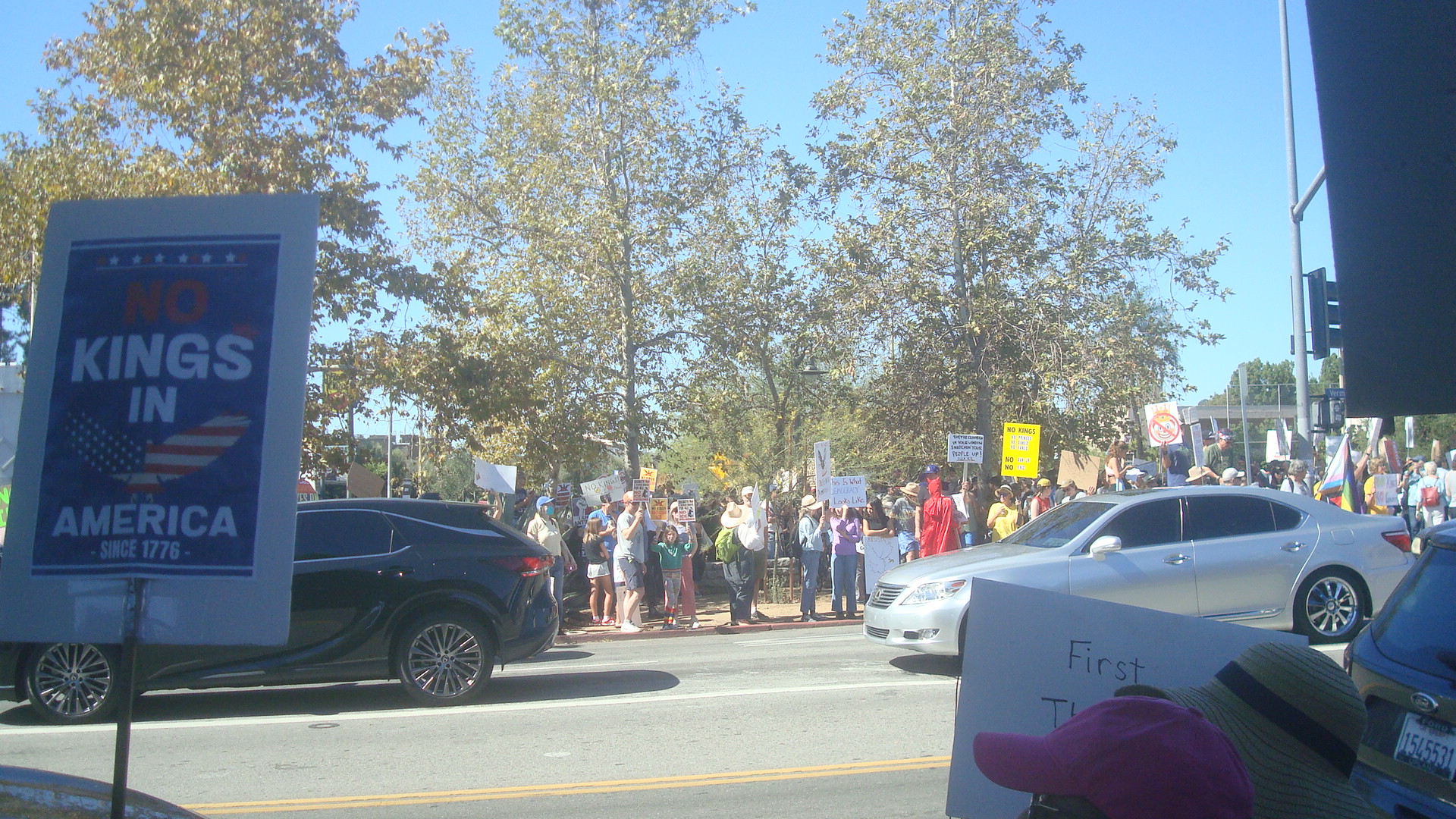
On my way to Downtown, I stopped at the Hollywood event. Protesters gathered at the intersection of Hollywood and Vermont. As people waved signs, drivers passing by honked their horns.
A lively crowd gathered at Hollywood and Vermont.Passing drivers honked their horns in sympathy.
The crowd spilled off the sidewalk and onto the street.
I am really worried about the future of this country, but I’m also really encouraged by the scale of the response. Not only do millions of people think we’re going in the wrong direction, but many of them are willing to show up at events across the country to make their anger known. It ain’t over yet.
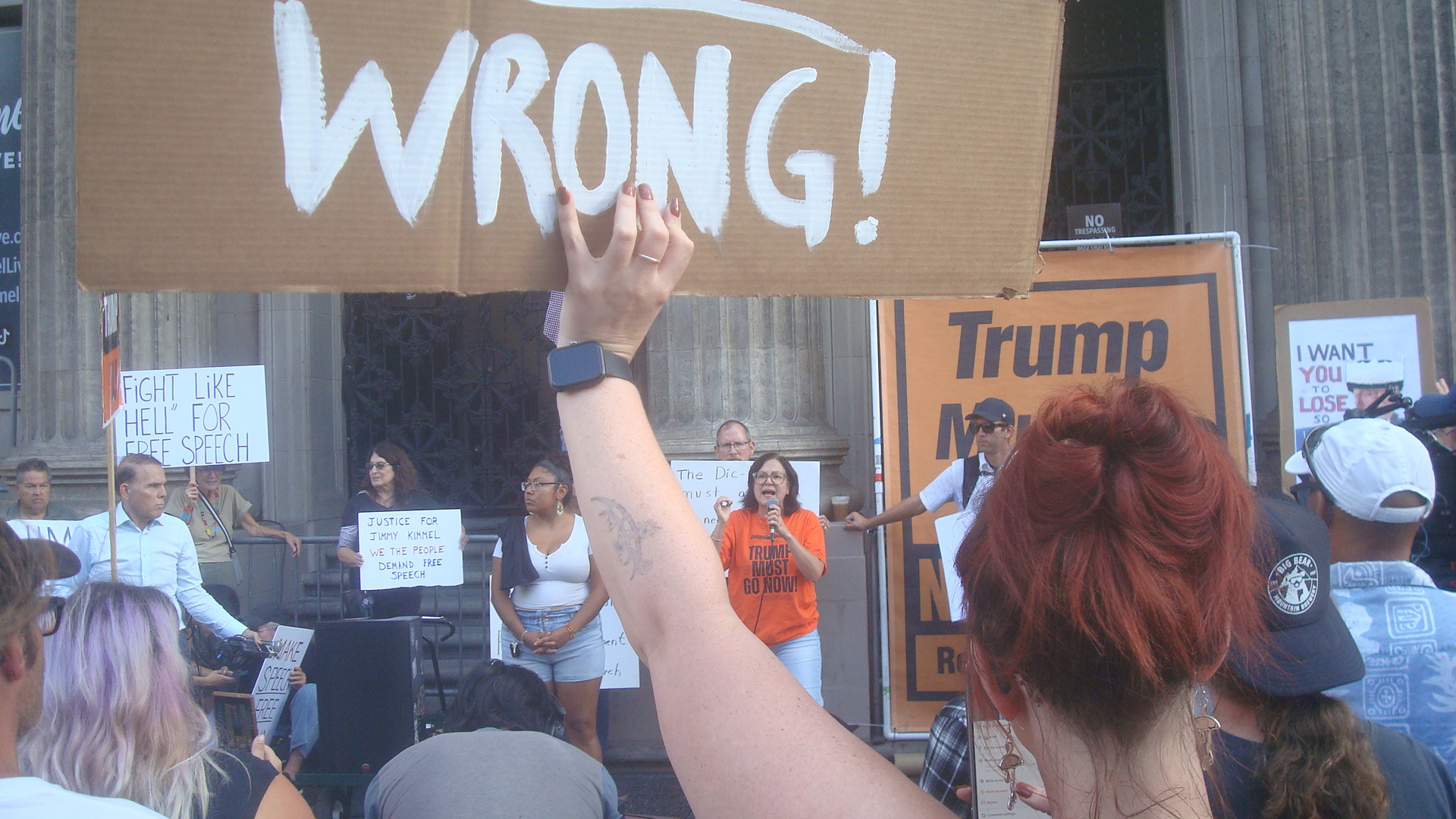
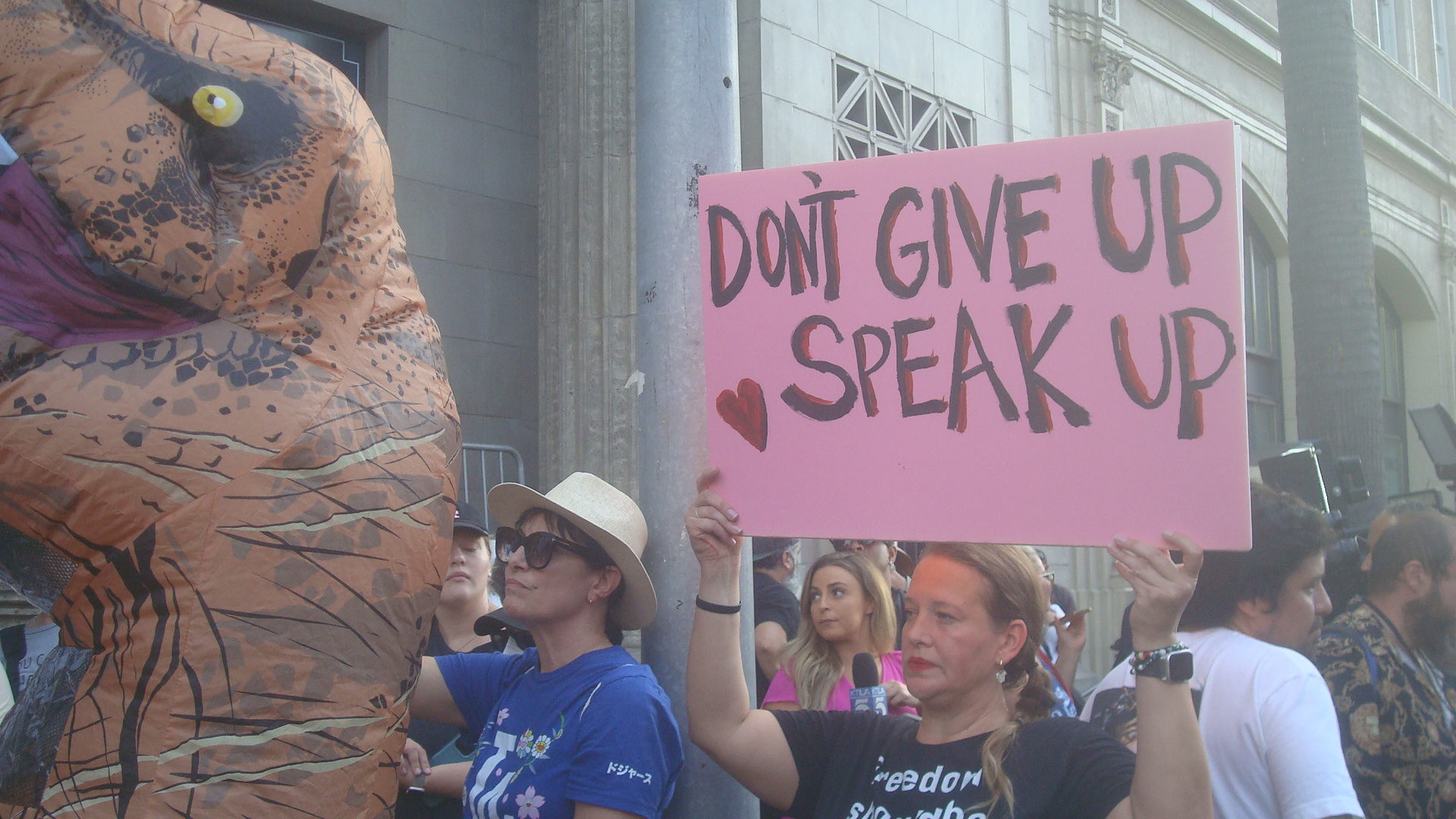
A few hundred protesters gathered in Hollywood on Wednesday night to protest ABC’s decision to pull the Jimmy Kimmel show, at least for the time being. I’ve never seen the show. If I’d heard that he was going off the air for low ratings, it wouldn’t have made any difference to me. But it appears that ABC pulled the show because of pressure from the Trump administration over comments Kimmel made in the wake of the Charlie Kirk shooting. This is really disturbing.
Crowd listening to speaker at protest.
According to both the New York Times and Fox News, in the aftermath of Kirk’s killing, Kimmel said on air that the right was working hard to portray the killer as a leftist in order to score political points. Apparently, Kimmel mistakenly believed that that killer had right wing views. Brendan Carr, the Chair of the Federal Communications Commission appointed by Trump, was angered by Kimmel’s comments, which he believes were part of a concerted effort to lie to Americans. According to the New York Times, Carr stated that broadcast companies needed to “find ways to change conduct and take action”, or the FCC might take action against them.
Unfortunately, while Carr claimed that Kimmel’s statements were part of a “concerted effort to lie to the American people,” I couldn’t find any reports that he gave other example of those lies, or that he talked about who was involved in the effort. No doubt he’s pointing the finger at the “liberal media”, a loosely defined term that seems to include any broadcaster or publisher that presents news that could be seen as critical of Trump.
Plenty of signs objecting to ABC’s action.
None of the published accounts I’ve read quote Kimmel as saying anything negative about Kirk himself, nor does it seem like he made any comments that could be perceived as condoning the killing. He made an inaccurate comment about the killer. TV personalities say things that are inaccurate all the time. They often make inaccurate statements because of their own personal bias. They often say controversial or shocking things because that draws media attention. This is true of celebrities on the right and the left. American popular culture rewards people who create controversy.
As many people have pointed out, when Trump was re-elected he claimed that he was going to restore free speech in America. But just in the last two years, he’s aggressivley gone after news organizations that have published stories he doesn’t like, suing the Wall Street Journal, the New York Times and CBS for billions of dollars. Now it looks like the Trump administration is willing to use the power of the FCC to punish broadcasters that don’t fall in line.
Free speech is under attack. This is a scary time for America.












 The Horizon and the Skyline