City Council Votes to Bury LA in Debt for Decades

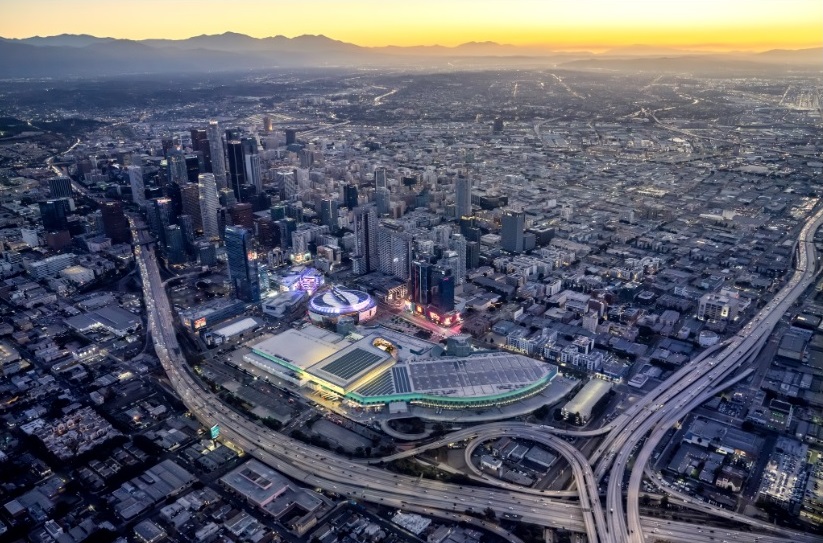
Rendering of Convention Center expansion project recently approved by LA City Council.

I’ve been critical of the LA City Council for years, so I don’t expect a lot from them. But even I was stunned by their vote to approve the LA Convention Center expansion in September. The Council is not known for fiscal responsibility. You may recall that they’ve been struggling to deal with a $1 billion deficit during the current fiscal year. So you’d think the councilmembers would be a little hesitant to plunge the city even further into debt. But on September 19, the LA City Council approved the expansion in an 11 to 2 vote, with two absent. Mayor Bass signed off on it a few days later.

Supporters of the Convention Center expansion promoted it as a great idea, and a crucial step in attracting events to Downtown LA. No one disputes that the Convention Center needed repairs and upgrades, and the expansion could provide benefits. But the cost of the project will bury the City of LA in debt for decades. Don’t take my word for it. Read what LA City Controller Kenneth Mejia had to say about the impacts it will have on the city’s budget….

The City of Los Angeles is currently contemplating a $2.7 billion expansion and modernization of the Convention Center, which will end up costing taxpayers $5.9 billion with borrowing and other costs included, of which $5.45 billion will be paid for by the General Fund. If this plan goes through, the City is projected to need an additional average of $116 million from the General Fund each year for the next 28 years starting in FY2029. $116 million is the equivalent of nearly 1,000 City jobs.

The City isn’t expected to see a related net positive General Fund impact for 30 years (in FY2057 once the debt service payments end). However, at that time, the City will still be down $3.2 billion from the General Fund and will take an additional 25 years or so to truly break even.

Mejia goes on to point out that if the city can’t bring in the revenue necessary to cover the cost of the expansion, it would likely have to make further cuts to funding for city departments, which are already understaffed. The quality of services could decline even further. Beyond that, rating agencies have put the City’s credit rating on negative watch status, which means we could be heading to a rating downgrade. That would make it more expensive to borrow money, raising the deficit even further.

So why did the Council okay this project? Let’s start with a little background. The City has been talking about expanding and modernizing the Convention Center for years, and again, there are certainly good arguments for making that happen. But it was clear that the expansion would be extremely costly, and there were budget conscious folks at City Hall who argued that the City couldn’t afford it. It’s important to remember here that the City of LA has a history of staggering from one budget crisis to the next. Because there’s no meaningful long-term fiscal planning, the City’s budget process invariably involves a lot of wishful thinking and a fair amount of financial sleight of hand.

You would think the fact that the 2025-2026 Budget resulted in a $1 billion shortfall would serve as a clear warning to elected officials that the City was in serious trouble. There were folks at City Hall who saw the flashing red lights and tried to move things in a different direction. On September 16, the Budget & Finance Committee voted to approve a scaled down version of the project, involving repairs and upgrades to the Convention Center now, and deferring the expansion until after the 2028 Olympics. This would have been a much more realistic, much more manageable option. The vote was 3 to 2, with Councilmembers Yaroslavsky, Blumenfield and Hernandez supporting the reduced project. Observers who had been alarmed by the cost of the expansion breathed a sigh of relief. If the City Council accepted the Committee’s recommendations, disaster could be averted.

But on September 19, just three days later, the Convention Center showed up on the Council’s agenda, along with a motion presented by Council President Marqueece Harris-Dawson that ignored the Committee’s action and asked for approval of the expansion. The Council voted 11 to 2 in favor. Councilmembers Blumenfield and Rodriguez were absent. The two no votes were from Nithya Raman and Katy Yaroslavsky. At the meeting, Raman rightly pointed out that the City of LA had just declared a fiscal emergency in June, and spoke about the devastating impacts the project would likely have on funding for public services and homeless programs. Yaroslavsky gave a detailed breakdown of her reasons for opposing, including the likelihood of cost overruns and the unrealistic timetable for completion. Alissa Walker published Yaroslavky’s comments on Torched, and it’s worth taking the time to read them.

The City of LA is becoming increasingly dysfunctional. We have a huge homeless population, and in spite of repeated promises from City Hall, progress has been minimal at best. Transit ridership has been declining since 2014, and still hasn’t even recovered to pre-pandemic levels. Our sidewalks are a mess, and it can take years for repairs to happen. We have a growing solid waste crisis that few people are even talking about, even though illegal dumping has become a chronic problem. And the Palisades fire made it clear that there are serious questions about the City of LA’s ability to deal with disasters.

We could be doing a whole lot better if our elected officials made a serious attempt at planning for the future. Instead, the majority seem determined to ignore reality and pretend that were doing just fine. They give us a lot of talk about their vision for the future, but if you look at the facts, they seem to be flying blind.


The “No-Plan” Olympics

Forget about planning for the 2028 Olympics.

UPDATE: This post was originally written prior to the LA City Council meeting on Feburary 21. The item about expediting projects for the Olympics was continued, and will now be heard on Friday, February 28. PLEASE NOTE: This meeting will be held at Van Nuys City Hall, 14410 Sylvan St. Van Nuys. You can also call your councilmember to express your views.

***

When the politicians at LA City Hall first approved hosting the 2028 Olympics, they said LA wouldn’t need to build new sports venues or new infrastructure. A post on the LA28 web site says that “The LA28 Games are designed to fit the city as-is [….]”. The talk was that this would be a “no-build” Olympics. The post goes on to say….

As a global leader in sports, entertainment and technology, LA is built to host large-scale, sustainable, global events that benefit everyone and will be the first-ever Games to not build permanent infrastructure. [Emphasis added.]

Well, anybody who believed that obviously hadn’t spent much time around City Hall. Now the LA City Council apparently wants to build a whole lot of new stuff, and they want to be able to build temporary and permanent venues, training facilities, broadcast and media centers, transit infrastructure, and other projects that could be associated with the Olympics or the Paralympics without having to receive planning approvals, obey zoning regulations, observe height restrictions or setback requirements, or any other regulations that could delay construction. You can read the language from the motion yourself. (Council File 15-0989-S47)

This is just crazy. But tomorrow, Friday, February 21, the City Council will likely approve this motion directing City departments to prepare an ordinance to make this crazy idea a reality. If the ordinance is approved, you can bet we’ll see a barrage of new projects being justified because they’re supposedly associated with the Olympics or the Paralympics. These projects will be approved with no public engagement and no environmental review. In other words, once they’re proposed, they’re approved. And don’t be surprised if they use this to greenlight Frank McCourt’s Dodger Gondola project.

In other words, this has gone from being the “no-build” Olympics to being the “no-plan” Olympics. It was pretty clear even before this that our elected officials were in over their heads. Now it seems they’re trying to dig themselves out by eliminating planning, eliminating environmental review, and cutting the public out of the process.

If you have something you’d like to say to the City Council about this, the best thing to do would be to show up at City Hall before 10:00 am tomorrow, Friday, February 21. (You can’t call in anymore, because Council President Marqueece Harris-Dawson doesn’t want you to.) If you can’t make it down there, I suggest you call your council office when they open tomorrow morning and let them know how you feel.

City of LA Elected Officials

It’s been clear for a long time that the folks at LA City Hall don’t care about planning. Now they apparently aren’t even trying to pretend they care.

LA City Council Ready to Ramp Up Digital Billboards, Ignoring Privacy Concerns

Digital billboard on Sunset Strip

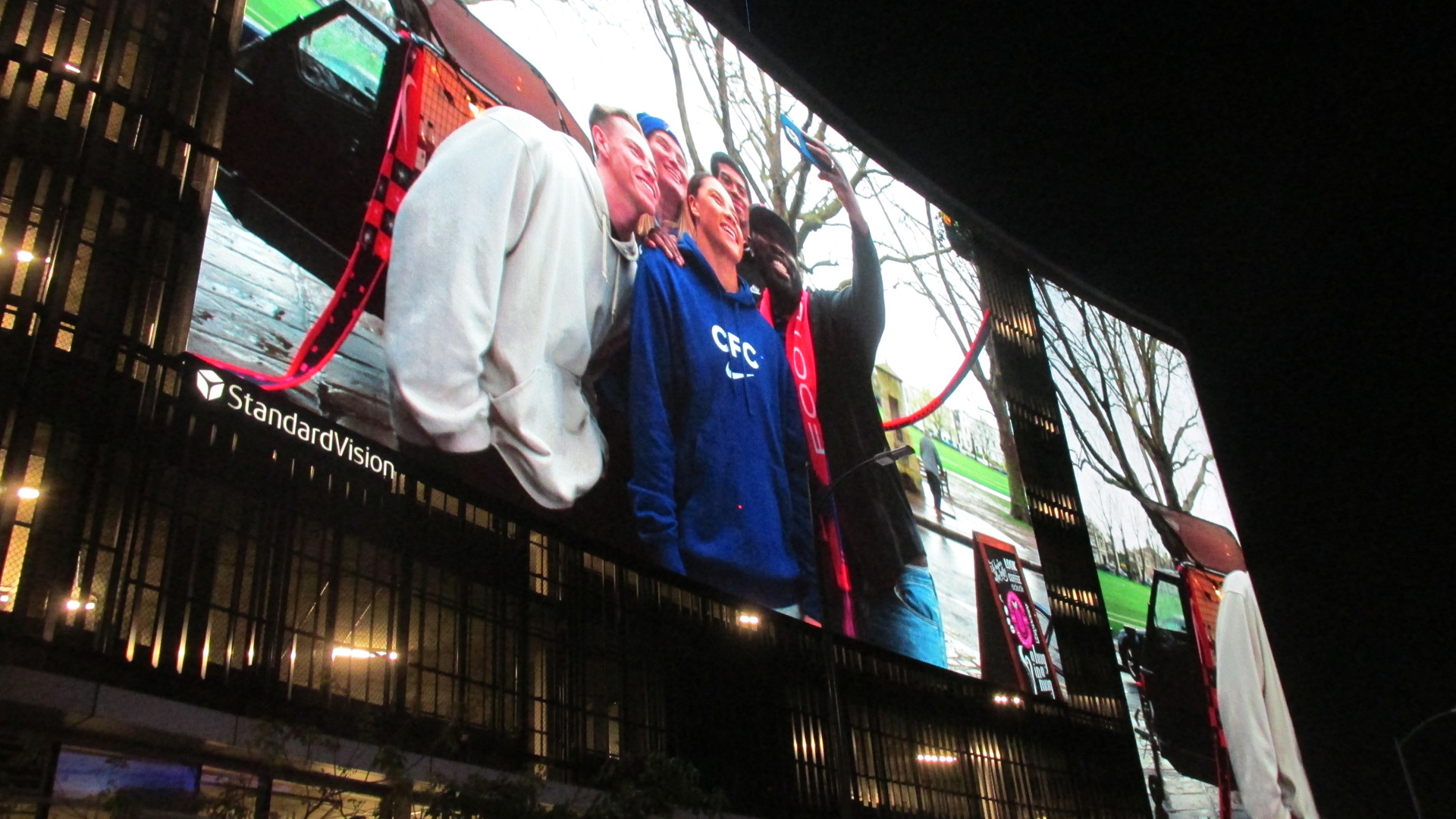
Are you ready to have scores of digital billboards installed in neighborhoods all over the City of Los Angeles?  Well, whether you’re ready or not, the City is moving forward with approval of a new ordinance that would allow exactly that.  LA City Planning has posted the Final Draft Ordinance which would allow LA Metro to install scores of digital billboards throughout the city for its so-called Transportation Communication Network (TCN).  There are reasons to believe that the TCN has been a con from the start, but more about that later.

Under the new ordinance, Metro would be allowed to erect 86 digital billboards at locations throughout the City of LA.  The billboards would range in size from 672 square feet to 1,200 square feet, for a total maximum amount of up to 55,000 square feet.  Metro wants us to believe we’re getting a good deal because they’ll be taking down 110,000 square feet of conventional billboards, but does that really seem like a good trade-off to you?  Since the images on digital billboards are constantly changing, we’ll be subjected to more advertising than ever, and with more ads competing for our attention, it seems likely to cause an increase in distracted driving. 

There are also serious privacy concerns.  One of the reasons digital outdoor advertising is so profitable is that it involves the collection of consumer data to learn about consumer behavior.  Metro claims that no personal data will be collected as part of the program, but can we really trust them?  William Eccleshare, former CEO of Clear Channel Outdoor, has bragged about how the company can follow you to a store, can gather info on what you purchase, and can even find out what you’re watching on TV.  This August 2020 article from the LA Times offers more chilling background on how advertisers are collecting your data.

Billboards that Follow You? It’s Not Sci-Fi. They’re Already Here

Metro has already allowed Clear Channel to install digital billboards in Downey and Long Beach.  Ad companies insist that no personally identifiable information is being collected, but no one really knows what they’re gathering.  And because the data collection industry is almost totally unregulated, you really don’t know where the data goes or who has access to it. 

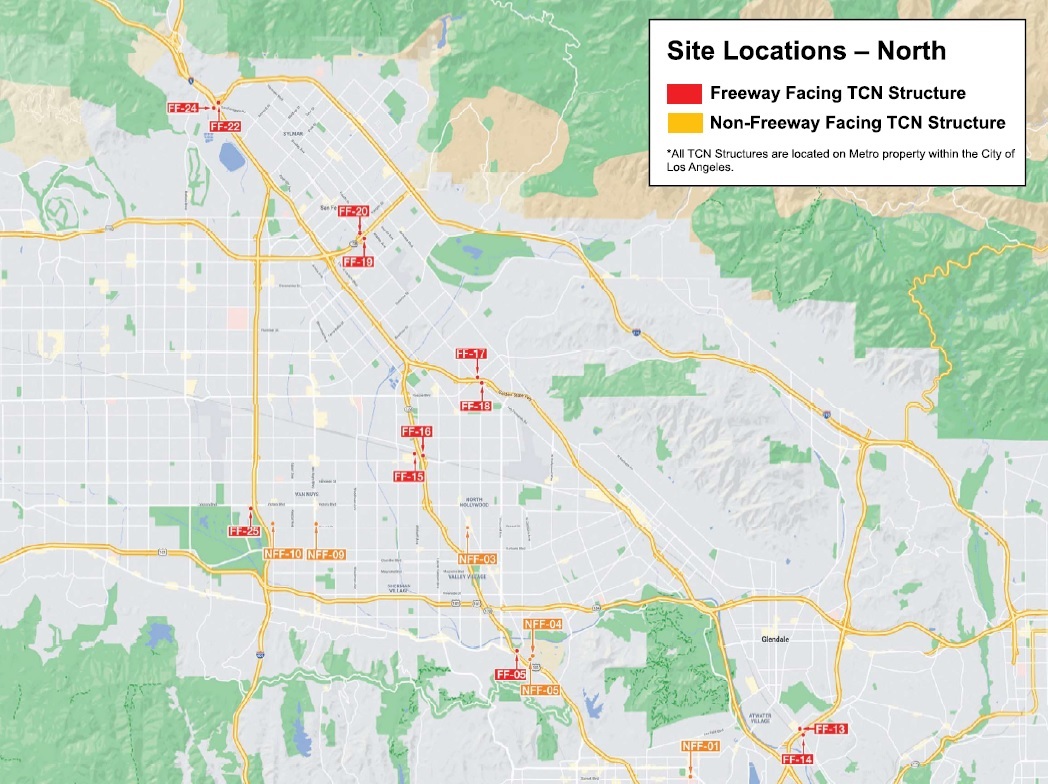
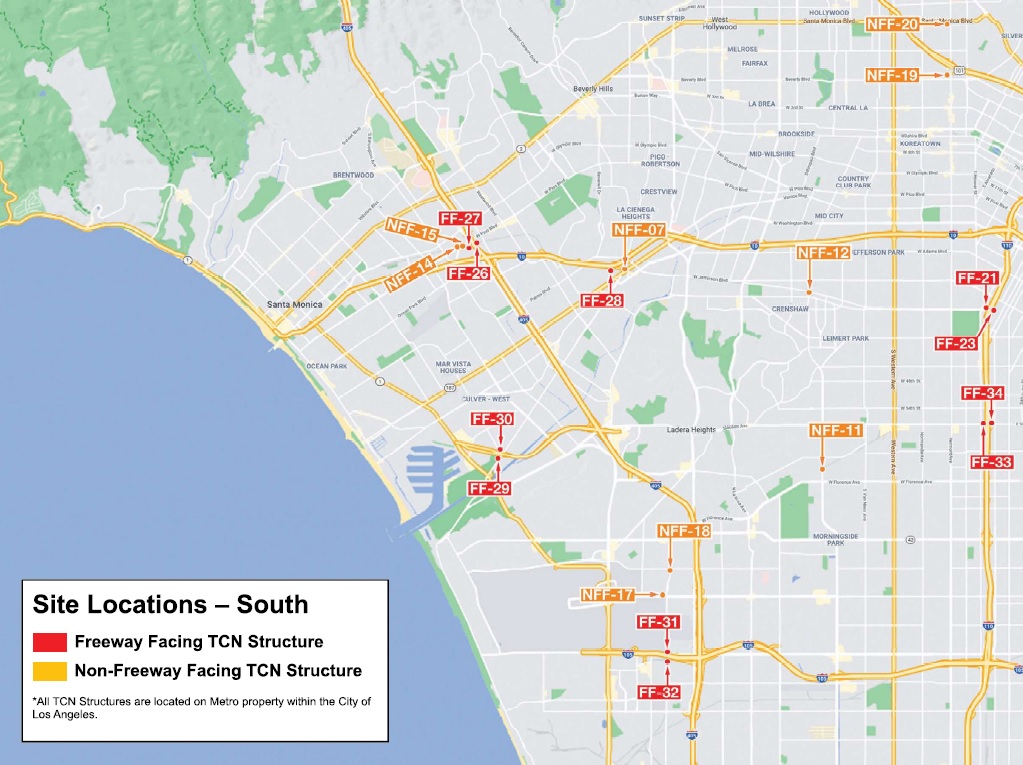
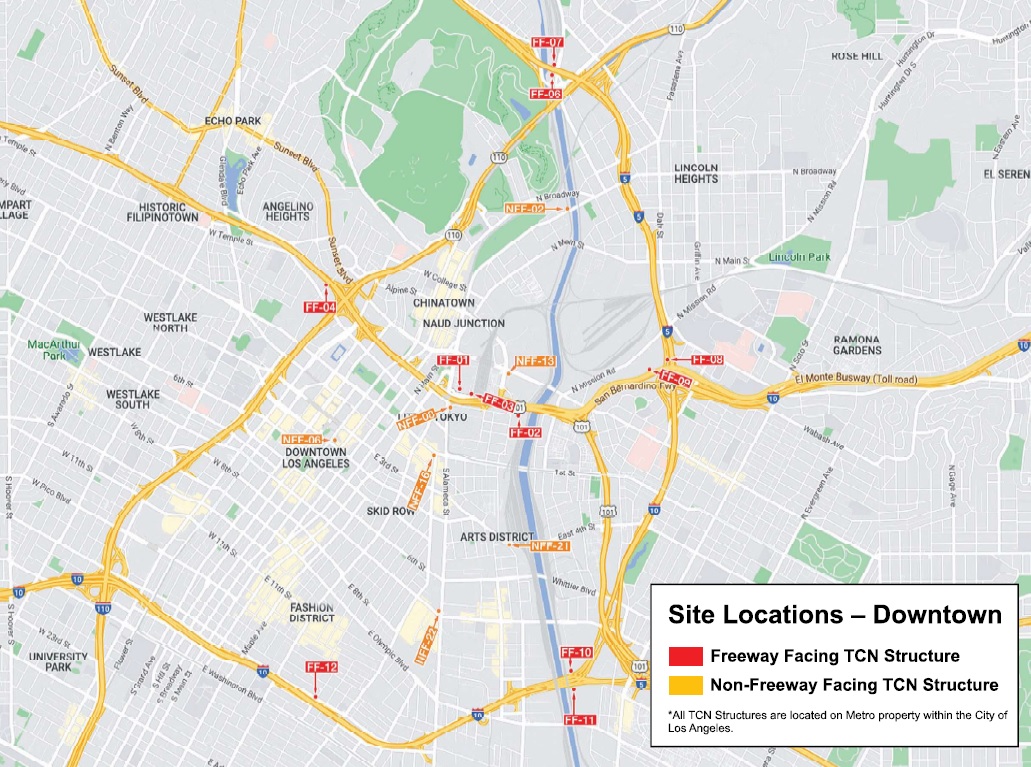
The digital billboards will be installed in communities all across the city.  Check out these maps from the Environmental Impact Report to see the locations.

TCN digital billboard locations in the Valley
TCN digital billboard locations in Central and South LA
TCN digital billboard locations in Downtown LA

If you want to let your LA City Council rep know how you feel about the Transportation Communication Network Ordinance, and the prospect of opening the door to digital billboards citywide, here’s their contact info.

LA City Council

Don’t know who your Councilmember is?  Click here.

Before going on, in the interest of full disclosure, I should acknowledge that I work with a group called Citizens for a Better Los Angeles that has filed a lawsuit to stop the TCN.  But I’m writing about this as an individual because I’m so disturbed by so many aspects of this program.  I’m concerned about the collection of personal data on a massive level.  I’m outraged by this massive invasion of our public space.  And I’m furious about the level of dishonesty exhibited by both the Metro Board and members of the LA City Council. 

Remember that, although these billboards will all land in the City of LA, the so-called “Transportation Communication Network” is Metro’s project.  The City of LA is preparing this ordinance to change the LA Municipal Code to allow widespread deployment of digital billboards by Metro.  Metro announced it would preparing an Environmental Impact Report for the TCN in 2022.  According to the Notice of Preparation, the TCN would….

[….] provide a network of structures with digital displays (TCN Structures) that would incorporate intelligent technology components to promote roadway efficiency, improve public safety, augment Metro’s communication capability, provide for outdoor advertising where revenues would fund new and expanded transportation programs consistent with the goals of the Metro 2028 Vision Plan, and result in an overall reduction in static signage displays throughout the City of Los Angeles.

The first problem with this is that we already have existing infrastructure that does most of the things that the TCN is supposed to do.  The Regional Integration of Intelligent Transportation Systems (RIITS) is a network of systems that gathers transportation related data throughout Southern California and offers it to local transportation agencies.  Here’s what it says on the RIITS “About” web page….

Vision

RIITS’ vision is to deliver multi-modal transportation information services through a flexible platform to achieve regional mobility, safety and sustainability goals.

Mission

Our primary mission is to support the exchange of transportation information and resources between and within government organizations for regional operational mobility improvements.

If it sounds like RIITS and TCN have a lot in common, it’s because they do.  The existing RIITS network is already doing a lot of the things Metro claims TCN will do.  And Metro could expand the RIITS system without installing a single digital billboard.  Sensors, cameras and wireless infrastructure are already widely deployed across our system of roads and freeways, so TCN isn’t really offering anything new.

Except, of course, digital billboards. 

Remember, according to the 2022 Notice of Preparation, the TCN involved the placement of new advertising structures and a reduction in the number of existing static billboards.  But was this really something new?  Actually, no.  It’s a continuation of Metro’s Billboard Program, which has been in existence for over a decade.  An August 2016 Metro Board Report gives a detailed account of how Metro has been working with a company called Allvision to cut deals with cities where they agree to allow new digital billboards in exchange for the removal of static billboards.  Here’s what the report says about the City of LA….

“All Vision and Metro staff have had preliminary discussions with the City of Los Angeles. The City is considering various options for the adoption of a new billboard ordinance. The City of Los Angeles Project offers Metro the greatest potential for new revenue from the conversion of static billboards to digital billboards.”

So in 2022 Metro announced it was preparing an EIR for the Transportation Communication Network, and also in 2022 Councilmember Paul Krekorian submitted his motion for an ordinance that would allow “digital off-site signs to be displayed on structures that are part of the Transportation Communication Network Program”.  But the Metro Board Report shows they’ve been talking about this since 2016.  By calling it the “Transportation Communication Network” they’re actually just rebranding Metro’s long-standing Billboard Program.  And the “new billboard ordinance” mentioned in the Board Report is obviously the TCN Ordinance which Krekorian proposed.   

Above I suggested that people call their LA City Council rep if they’d like to share their views on the Transportation Communication Ordinance (TCN).  You can also submit something in writing by posting a comment to the council file.

Public Comment Portal

You’ll need the council file number.

Council File: 22-0392

Transportation Communication Network Ordinance

If the City of LA passes the TCN Ordinance, you can bet it won’t just be 86 digital billboards.  This is only the beginning. 

Digital billboard in Downtown LA

“This entire city government is in need of an exorcism.”

It’s hard to know where to begin.  The chain of events that’s unfolded in LA over the past few days is extraordinary, but maybe it’s just the logical outcome of the way this city has been run for the past several years.  Honestly, while it’s surprising that the recording of three councilmembers talking about redistricting has been leaked, there’s really nothing surprising about the discussion.  Anybody who’s been following LA City politics over the last decade knows that Los Angeles is run by a corrupt elite that’s rigged the system.  We should all be angry, but I don’t know why anyone would be surprised. 

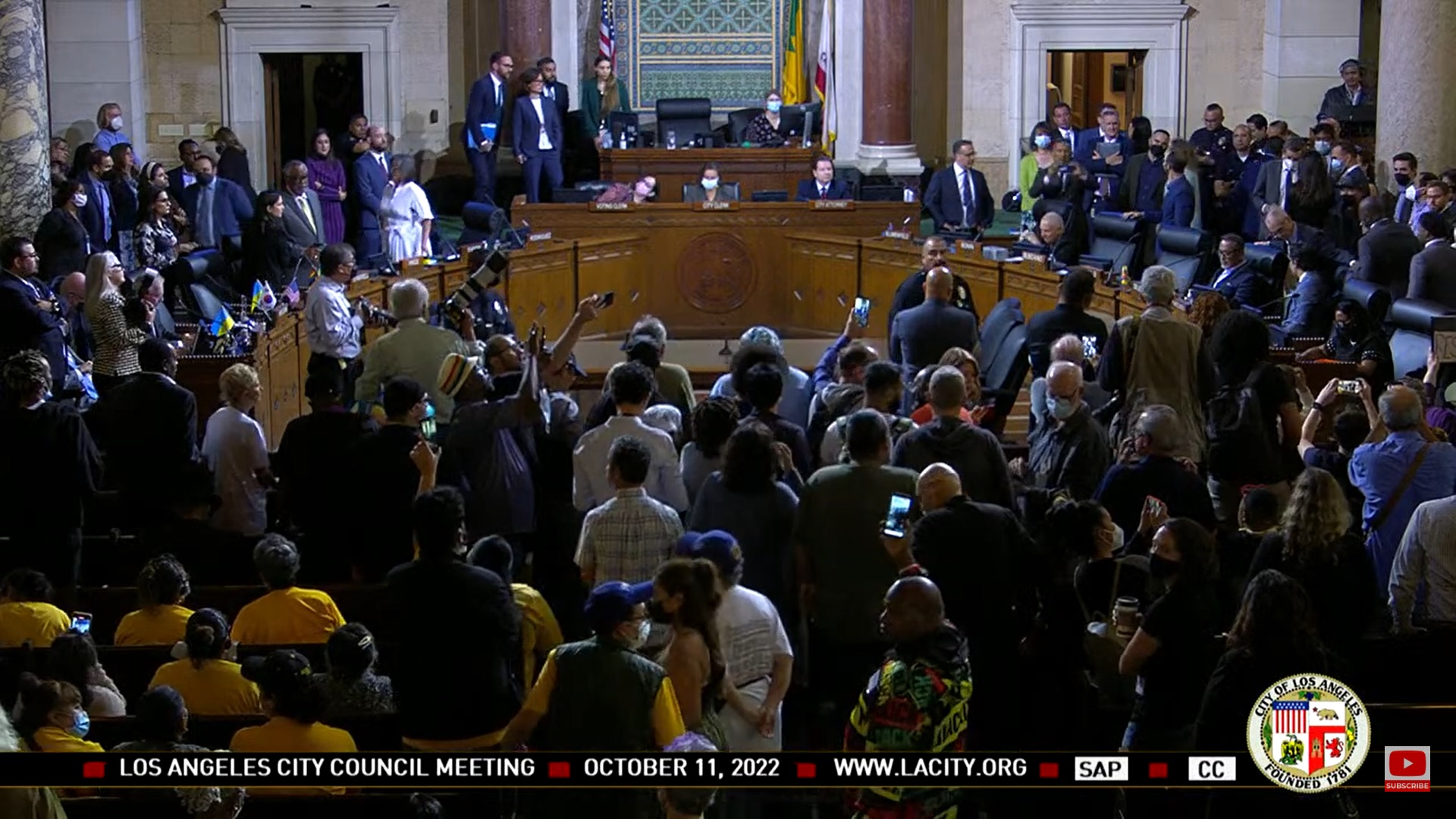
The first City Council meeting after the Times broke the story was intense.  I watched it on video.  The Council chambers were filled with angry people chanting and yelling.  President Pro Tem Mitch O’Farrell kept trying to calm the protesters down, but they were furious and wanted to let the Council know it.  The crowd finally got quiet when it was announced that Councilmember Mike Bonin was going to speak.  Bonin’s son was the target of one of the numerous racist slurs that Nury Martinez utters on the recording, and Bonin was visibly upset.  He gave an emotional speech condemning racism in general, and thanking all those who had reached out to support him and his family since the news broke.

It’s understandable that Bonin was shaken by the release of recording, and I don’t doubt that his speech was heartfelt.  He loves his son, and he knows that this episode will likely cause his son to feel pain and anger.  But I wish Bonin would acknowledge all the pain that he’s inflicted on low-income people of color during his time in office.  When public comment began, I wasn’t surprised to hear one of the speakers accuse Bonin of hypocrisy because of his actions as a member of the City Council.  Referring to Bonin, the speaker exclaimed, “The one that’s pointin’ the finger has done the most name callin’.  Put us off Venice Beach.  All the black people.  He put us all off Venice Beach for some real estate.  Fuck you, Mike Bonin.”

Now, I’ve never heard Mike Bonin use any racial slurs, but there’s no doubt that Venice has grown a lot wealthier and whiter during his two terms on the City Council.  (Bonin didn’t start this trend, but he’s done nothing to stop it, either.) And Bonin has taken plenty of campaign cash from developers and lobbyists during that time.  While Bonin may talk about ending racism and creating a just society, he’s voted over and over again, along with the rest of the City Council, to support policies and projects that promote displacement and gentrification. 

Former Councilmember Jose Huizar is facing trial on corruption charges, in part because he helped a developer reduce the amount of affordable housing required for the 520 Mateo project in Downtown.  Did Mike Bonin object to reducing the affordable housing requirement?  Hell no.  He voted to approve the project. 

Interestingly, many of the biggest residential projects recently approved in Downtown have zero affordable housing, and the developers of these projects are often allowed to skip paying the Affordable Housing Linkage Fee.  Other residential projects in LA have to provide affordable units to get increased density, but in Downtown they can get more density by asking for a Transfer of Floor Area Rights.  Has Bonin spoken out against developers using this loophole to dodge affordable housing requirements?  Hell no.  He voted to approve these projects just like the rest of his colleagues on the Council. 

When a property owner wanted to demolish 40 rent-stabilized units in Hollywood to make way for a new hotel, did Mike Bonin object to the eviction of low-income families in the middle of a housing crisis?  Hell no.  He voted to approve the project.  Mike Bonin has joined his fellow councilmembers over and over again in awarding zone changes and general plan amendments to developers, delivering huge profits for investors and fomenting real estate speculation while thousands of low-income people of color were kicked out of their homes and LA’s homeless crisis spiralled out of control.  During his time on the Council, Mike Bonin has presented himself as a progressive who wants to fight injustice, but if he really wants to learn about the root causes of injustice, maybe he should take a look in the mirror. 

The other speaker who caught my attention was Damien Goodmon, of Downtown Crenshaw Rising.  Damien’s comments at the meeting were thoughtful and incisive, as usual, but one thing he said rang especially true for me….

“This entire city government is in need of an exorcism.”

That sentence really sums up how I feel about City Hall right now.  The environment created by the Mayor and the City Council is so toxic, and the poison has also bled into the City departments and boards and commissions that are supposed to be serving the people. 

Instead of real planning to confront the challenges that LA faces, we get plans formulated by lobbyists and land use attorneys that seemed designed to enrich their clients.  Instead of meaningful debate on the issues by well-informed public servants, we get cheerleaders who pat each other on the back for doing a great job, no matter how bad the outcomes are.

Damien is right.  LA City government needs an exorcism.  But holy water and Latin chants aren’t going to do the job.  Instead, we, the people, are going to have to take action.  This isn’t just a matter of electing a new mayor and a few new councilmembers.  This is a matter of changing the deeply corrupt culture at City Hall.  We need to pay attention to what they’re doing.  We need to call them out when they’re serving themselves instead of the people.  We need to show them that there are consequences for their actions, whether that’s at the ballot box or in the courts. 

And this isn’t a short-term commitment.  This will take much more than a year or two.  This is about long-term, concerted activism with the goal of making sure our public servants really serve us.